
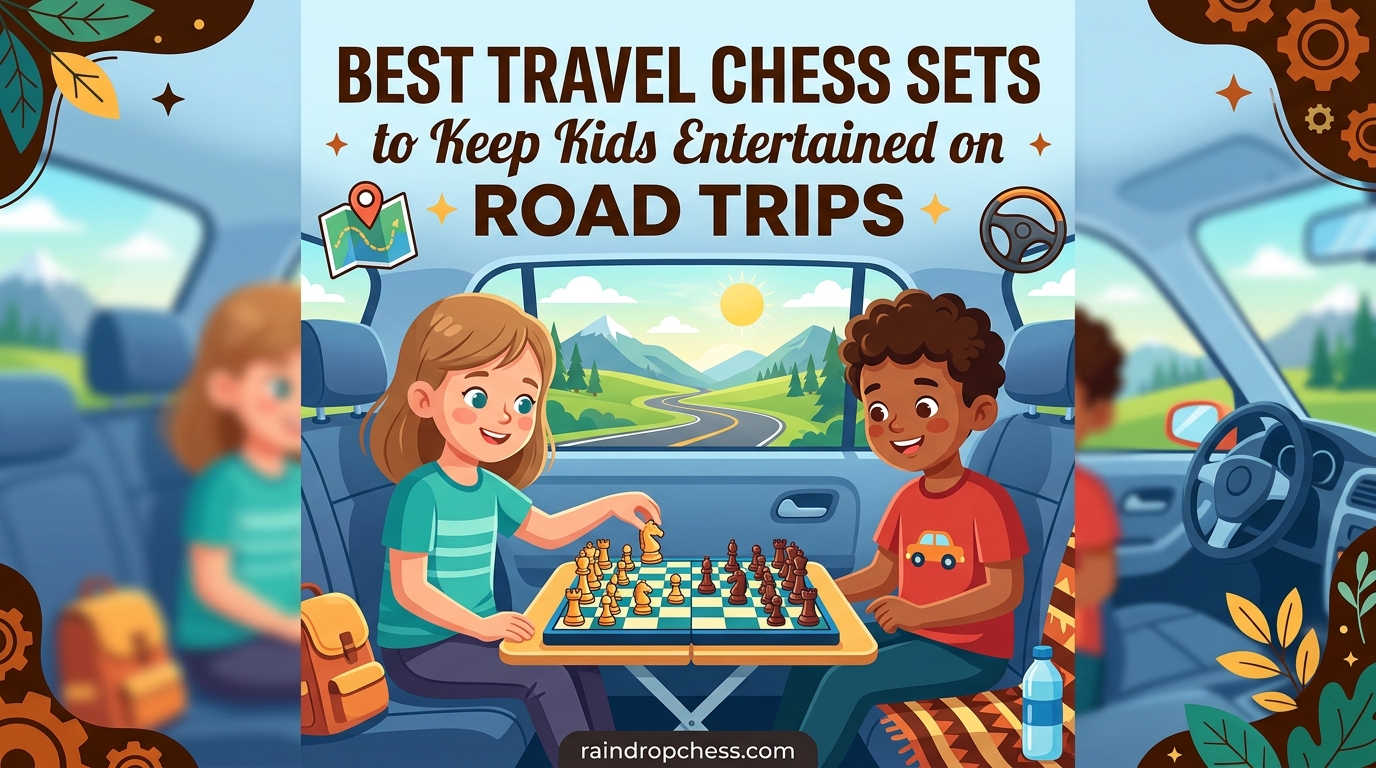
Road trips with kids can be a delightful adventure or a challenging ordeal, depending on how well you plan for the journey. Whether you are heading across the state for a family reunion or embarking on a cross-country expedition, keeping young minds engaged without defaulting to screens can feel like solving a complex puzzle. Enter the travel chess set: a timeless, educational, and genuinely fun way to transform hours of travel time into quality family bonding moments. In this comprehensive guide, we will explore everything you need to know about finding the perfect travel chess set for your children, ensuring that your next road trip is as intellectually stimulating as it is memorable.
Table of Contents
Why Travel Chess Sets Are Perfect for Road Trips with Kids
Long car rides present a unique challenge for parents. The backseat can quickly become a battleground of boredom, sibling squabbles, and the dreaded “Are we there yet?” refrain echoing every few minutes. While tablets and car entertainment systems have their place, there is something uniquely valuable about introducing children to chess during these extended periods of travel.
Travel chess sets offer a portable, screen-free alternative that engages children intellectually while providing genuine quality time with family members. Unlike passive entertainment, chess requires active participation, strategic thinking, and social interaction. When your child plays chess during a road trip, they are not just passing time; they are developing skills that will serve them throughout their lives.
The confined space of a vehicle actually works in chess’s favor. Unlike activities that require running, jumping, or large equipment, chess can be played comfortably on a small folding board balanced on a child’s lap or on the center console (when the car is stationary, of course). Modern travel sets are specifically designed to meet the unique demands of playing in moving vehicles, with features that prevent pieces from scattering when you hit that unexpected pothole or take a sharp turn.
Beyond the practical benefits, road trip chess sessions create lasting memories. Many adults recall learning chess from a parent during a long car ride as a formative childhood experience. These games become part of your family’s story, shared traditions that your children will one day reminisce about with their own families.
What Makes a Great Travel Chess Set for Kids
Not all travel chess sets are created equal, especially when the intended players are children. The best travel chess set for your family depends on several factors, but three qualities stand out as absolutely essential: magnetic pieces, portability, and durability.
The Importance of Magnetic Pieces
If there is one feature that separates travel chess sets from their home counterparts, it is magnetic pieces. When you are playing chess in a moving vehicle, the board and pieces are constantly subject to movement, vibration, and sudden stops. Standard chess pieces will slide, topple, and scatter with every bump in the road, turning what should be an engaging game into a frustrating experience for everyone.
Magnetic travel chess sets address this problem by attaching small magnets to the bottom of each piece and often incorporating a metal board or metal plate beneath the playing surface. This magnetic connection holds pieces firmly in place, even during spirited gameplay on bumpy roads. The pieces still move smoothly when you want them to, but they stay put when you need them to.
When evaluating magnetic strength, consider that stronger magnets provide better stability but can make pieces slightly harder to lift and move. For younger children with less refined motor skills, moderate magnetic strength is often preferable. Look for sets where pieces click satisfyingly into place without requiring excessive force to reposition them.
Portability and Size
Travel chess sets must fit into your travel lifestyle. Whether you are packing them in a suitcase, a backpack, or the glove compartment, the dimensions and weight of your set matter significantly. Most quality travel sets fold down to approximately 12-15 inches in length, making them small enough to store easily while still providing a playing surface large enough for comfortable gameplay.
Weight is another consideration, particularly if your child will be carrying their own bag. A travel chess set that weighs under two pounds is ideal for kids to handle independently. Heavier sets, while sometimes more durable, can become burdensome for smaller children during extended periods of play.
Consider how the set closes and secures. Some travel sets feature elastic straps or magnetic closures that keep the board securely shut during transport. Others come with carrying cases or pouches for added protection. The best option for your family depends on how frequently you travel and how roughly the set will likely be handled.
Durability and Materials
Children are not known for treating belongings with extreme care, and travel sets face more wear and tear than typical home chess sets. The best travel chess sets for kids are built from durable materials that can withstand drops, bumps, and the occasional spilled drink.
Plastic travel sets offer excellent durability and are often the most affordable option. High-quality plastic pieces feel substantial in the hand and resist cracking better than cheaper alternatives. Many plastic sets feature weighted pieces that provide a premium feel despite the compact size.
Wooden travel sets appeal to families who prefer natural materials and a classic aesthetic. Sheesham and hornbeam are common hardwoods used in quality chess sets, offering both beauty and resilience. Wooden boards may require more careful handling than plastic, but a well-made wooden travel set can last for decades with proper care.
Metal travel sets, often featuring zinc alloy pieces, provide exceptional durability and a unique aesthetic. These sets tend to be heavier but offer unmatched longevity. They are particularly popular among serious young players who appreciate the feel of quality game pieces.
Key Features to Look for in a Travel Chess Set for Kids
Beyond the essentials of magnetism, portability, and durability, several additional features can significantly enhance your child’s chess experience during road trips.
Storage Compartments
Many travel chess sets include built-in storage compartments for pieces. These compartments ensure that all pieces stay organized during transport and make setup and cleanup quick and easy. Some compartments are designed to hold pieces in specific positions, making it nearly impossible to lose a single pawn during your journey.
Board Surface Quality
The playing surface of your travel set should provide smooth piece movement while offering enough grip to keep pieces stable. Vinyl roll-up boards are popular for their flexibility and affordability, though they may not provide the same premium feel as wooden or plastic surfaces. Look for boards with clearly defined squares and good color contrast to help young players distinguish between light and dark squares easily.
Piece Proportions
Standard chess pieces may be too large or too small for children’s hands. Travel sets designed for kids often feature pieces with proportions tailored to young players, making it easier for them to grip, move, and manipulate the pieces independently. Larger knobs on pawns and kings, in particular, can make a significant difference for children under eight.
Visual Appeal
Children are more likely to engage with chess when the set appeals to their aesthetic preferences. Some families prefer classic wooden sets with traditional Staunton-style pieces, while others find that colorful sets with unique character designs capture their child’s imagination more effectively. There is no universally correct choice here; the best set is one your child will actually want to play with.
Types of Travel Chess Sets
Understanding the different types of travel chess sets available helps you make an informed decision based on your family’s specific needs and preferences.
Folding Magnetic Chess Sets
Folding magnetic chess sets are the most popular travel option, and for good reason. These sets feature a board that folds in half or quarters, with pieces stored securely inside when closed. The folding mechanism typically includes a magnetic closure that keeps the board shut during transport.
When folded, these sets are approximately the size of a large book, making them easy to store in backpacks, luggage, or the car’s center console. When opened, they provide a playing surface that, while smaller than tournament-size boards, is perfectly adequate for casual gameplay and learning.
Quality folding sets often feature wooden boards with beautiful grain patterns and pieces made from woods like sheesham and hornbeam. The magnetic mechanism is usually concealed within the board’s construction, providing strong piece hold without affecting the board’s appearance.
Magnetic Pocket Chess Sets
Pocket chess sets take portability to the extreme. These compact sets feature tiny boards, often measuring only 3-4 inches square, with correspondingly small pieces. While not ideal for extended gameplay, pocket sets are perfect for brief games during short trips or for children who want to practice chess concepts during downtime.
Some pocket sets fold out to reveal a small playing surface, while others feature a metal case that doubles as the board. The pieces in these sets are truly miniatures, requiring some dexterity to handle, but they can be a convenient option for families who need something ultra-portable.
Vinyl Roll-Up Chess Boards
Roll-up vinyl chess boards offer an interesting alternative to rigid travel sets. These flexible boards can be rolled into a compact cylinder for storage and unrolled for play on any flat surface. While pieces are not magnetic on vinyl boards (and thus not included), you can use any standard chess pieces with them.
This option works well for families who already own quality chess pieces but want a portable playing surface. Vinyl boards are typically the most affordable option and are remarkably durable, resisting wrinkles and maintaining flatness once unrolled.
Pocket Electronic Chess Sets
For families interested in combining traditional chess with modern technology, electronic pocket chess sets offer an intriguing middle ground. These devices feature built-in chess programs with varying difficulty levels, LCD displays, and compact designs. Some models allow you to input moves and receive feedback, making them excellent learning tools for developing players.
However, electronic sets do not provide the same tactile experience as traditional chess and may not satisfy families seeking screen-free entertainment. They can be useful, however, for practicing during downtime when a traditional board setup is not practical.
App-Based Chess on Tablets
While not a physical chess set, chess applications on tablets deserve mention for road trip entertainment. Apps like Chess.com, Lichess, and numerous child-friendly chess learning applications offer sophisticated gameplay, tutorials, and the ability to play against opponents worldwide.
The advantage of apps is their convenience and the instant feedback they provide to learning players. However, apps cannot replicate the tactile satisfaction of moving physical pieces, the visual beauty of a wooden board, or the interpersonal connection of playing across from a family member. Many families find the best approach combines both traditional chess sets for family play and apps for individual practice.
Age-Appropriate Chess Sets and Recommendations
Children develop at different rates, and the appropriate age for chess introduction varies. Here are general guidelines to help you choose the right approach for your child.
| Age Range | Recommended Approach | Key Considerations |
|---|---|---|
| Ages 4-6 | Story-based learning sets, large plastic pieces, simplified rules | Focus on piece recognition and basic movements; use narratives to make learning fun |
| Ages 7-8 | Standard travel sets with larger pieces, magnetic boards | Begin introducing basic strategies; games should be short and positive |
| Ages 9-10 | Quality folding sets, any magnetic option | Ready for full rules; can handle longer games and more complex strategies |
| Ages 11+ | Premium travel sets, tournament-style pieces | Can appreciate quality craftsmanship; ready for competitive play and advanced strategy |
For the youngest learners, consider chess sets that incorporate storytelling elements. These innovative products teach chess concepts through adventures, characters, and narratives that capture young imaginations. While these specialized sets may not be the most portable options, they provide an excellent foundation for later traditional play.
For children in the 6-8 age range, prioritize travel chess sets with larger-than-standard pieces. At this age, fine motor skills are still developing, and struggling with tiny pieces can frustrate young players and detract from the learning experience. A set with pieces featuring larger, easier-to-grip bases will help children place pieces confidently and focus on strategy rather than mechanics.
Educational and Cognitive Benefits of Chess for Kids
Chess has long been recognized as more than just a game; it is a powerful tool for cognitive development. Research consistently shows that regular chess practice provides numerous benefits for young minds that extend far beyond the chessboard.
Critical Thinking and Problem-Solving
Every chess move requires evaluating the current position, considering possible responses, and selecting the option that best advances the player’s goals. This constant exercise in analysis and decision-making strengthens critical thinking skills that apply to academic subjects, personal challenges, and future professional situations. Children who play chess regularly often demonstrate improved abilities to break down complex problems into manageable components.
Patience and Concentration
In an age of instant gratification, chess teaches children the value of patience. Games cannot be rushed; success requires careful thought and consideration. Regular chess play helps children develop the ability to concentrate for extended periods, a skill that proves invaluable in academic settings and throughout life. The discipline of thinking before acting translates into better impulse control in many areas beyond the chessboard.
Spatial Reasoning and Memory
Chess is fundamentally a spatial game. Players must visualize the board in their minds, track piece positions, and anticipate how positions will change with various moves. This mental exercise strengthens spatial reasoning abilities and improves memory function. Studies have shown that children who play chess demonstrate enhanced spatial awareness and better recall of visual information.
Emotional Regulation and Sportsmanship
Chess provides a safe environment for children to experience both victory and defeat. Learning to handle losing gracefully, recover from mistakes, and maintain composure during challenging positions builds emotional resilience. These experiences teach children that setbacks are temporary and that persistence leads to improvement. The game’s clear rules and objective outcomes help children understand fairness and integrity.
Academic Performance
Multiple studies have documented correlations between chess play and academic achievement. Chess students often show improved performance in mathematics, reading comprehension, and analytical writing. The logical thinking required for chess translates directly into stronger academic skills, particularly in STEM subjects. While chess alone is not responsible for academic success, it provides valuable exercise for the analytical reasoning abilities that support learning.
Improved Focus
Chess demands sustained attention, helping children develop longer attention spans over time.
Enhanced Memory
Remembering openings, piece patterns, and game positions strengthens overall memory function.
Creative Thinking
Finding unexpected solutions and visualizing creative strategies exercises divergent thinking.
Planning Skills
Thinking multiple moves ahead builds executive function and strategic planning abilities.
Tips for Teaching Kids Chess on the Go
Road trips provide an ideal opportunity to introduce and develop chess skills, but successful teaching requires approach and patience. Here are proven strategies for making chess education enjoyable during travel.
Start with Piece Recognition
Before introducing rules, help your child recognize each piece by its appearance. Use descriptive narratives: “The King stands tall and important, like the leader of a kingdom.” “The Knight charges into battle on horseback, moving in an L-shape.” Making pieces characters helps children remember them more easily and creates emotional investment in the game.
Teach One Rule at a Time
Avoid overwhelming young learners with the complete rule set on day one. Begin by teaching how pawns move, then add pieces gradually over multiple sessions. A typical progression might be: pawns only, then rooks, knights, bishops, queen, and finally kings. Introducing check and checkmate only after your child is comfortable with basic piece movements ensures solid foundations.
Make Games Short Initially
Young children rarely have the attention span for full 30-minute games. Start with quick games using only a few pieces on one side of the board, gradually increasing complexity as attention spans develop. A five-minute game with just pawns and a king can be thoroughly engaging and teach fundamental concepts without overwhelming young minds.
Narrate Your Thought Process
When playing against your child or demonstrating concepts, verbalize your thinking: “I am moving my knight here because it will attack your pawn and protect my bishop.” This modeling shows children how experienced players think and gives them concrete examples of strategic reasoning in action.
Focus on Positive Reinforcement
Avoid criticizing mistakes harshly during learning. Instead, celebrate good moves and creative thinking, even when games are lost. The goal during road trip chess sessions should be building positive associations with the game, not creating chess prodigies. Children who associate chess with enjoyment will naturally want to learn more and practice more.
Use Mistakes as Teaching Moments
When your child makes an unexpected move, ask questions before correcting: “What were you thinking about with that move?” This approach helps you understand their reasoning and often reveals creative thinking that just needs refinement rather than correction. It also helps children develop self-reflection skills essential for improvement.
Creating a Chess Adventure
Transform chess into an epic journey by creating narratives around your games. Perhaps each game represents a battle between kingdoms, with specific goals beyond simply checkmating the king. Your pawns might be villagers building toward a greater cause, while knights serve as heroic champions. This storytelling approach appeals particularly to younger children and makes abstract strategic concepts more concrete and memorable.
Incorporating Chess Apps as Supplements
While physical chess should be the primary focus during family travel, chess applications can supplement learning during screen time. Many apps offer puzzles, tutorials, and AI opponents calibrated to specific skill levels. These tools are particularly useful for targeted practice of specific concepts, such as checkmate patterns or tactical combinations. Use apps as rewards after successful physical chess sessions rather than replacements for family gameplay.
Screen-Free Entertainment Value
In an era when children spend increasing amounts of time staring at screens, the value of screen-free entertainment cannot be overstated. Road trips present a perfect opportunity to provide extended periods of device-free engagement that benefits both children and family dynamics.
Chess offers a compelling alternative to screens precisely because it provides genuine mental stimulation without passive consumption. Unlike television or videos, which require no participation, chess demands active engagement that exercises cognitive abilities. Unlike many video games, which often isolate players in digital worlds, chess brings family members together in shared intellectual pursuit.
The conversations that emerge during chess games often prove as valuable as the gameplay itself. Discussing strategy, analyzing positions, and even debating game decisions create opportunities for connection that rarely arise during passive entertainment. Parents often discover that their children reveal thoughts, concerns, and ideas more freely during relaxed chess games than during direct conversation.
Additionally, successfully entertaining a child with chess during a road trip reduces the parent’s stress and allows for more relaxed travel. When children are genuinely engaged in an interesting activity, the entire family atmosphere improves. Chess provides a constructive outlet for restlessness that requires no batteries, internet connection, or ongoing subscription.
Maintaining and Caring for Travel Chess Sets
Proper care ensures your travel chess set provides years of road trip entertainment. Simple maintenance habits can significantly extend the life of your set and keep pieces in good condition.
Always store pieces securely before moving the set. Most folding sets include designated storage compartments or slots for pieces. Taking the time to place each piece in its proper location prevents loss and damage during transport. This ritual also provides a natural cleanup activity after games.
Keep your chess set clean by wiping down the board periodically with a soft, dry cloth. Avoid using harsh chemicals or abrasive materials that could damage the playing surface or finish. For wooden boards, occasional treatment with appropriate wood care products can maintain the finish and prevent drying or cracking.
Inspect pieces regularly for signs of wear, particularly if children handle the set frequently. Magnetic strength can diminish over time, and damaged pieces should be replaced promptly to maintain the set’s usability. Many manufacturers sell individual replacement pieces, making it easy to keep your set complete without purchasing an entirely new board.
Frequently Asked Questions
What should I look for in a travel chess set for kids?
Look for magnetic pieces that stay in place during vehicle movement, durable materials that can withstand drops and bumps, compact size that fits in bags or under seats, lightweight design for easy handling by children, and smooth-moving pieces with good proportions for small hands. Storage compartments and clear board markings are also valuable features that enhance the travel experience.
Are magnetic chess pieces important for travel sets?
Yes, magnetic pieces are essential for travel chess sets. They ensure pieces stay in place when the vehicle hits bumps, goes around corners, or brakes suddenly. This prevents interrupted games and lost pieces, making the experience much more enjoyable for children and parents alike. Without magnetic pieces, gameplay in moving vehicles becomes frustrating and impractical.
What age is appropriate for kids to start playing chess?
Most children can begin learning chess between ages 5 and 7. At this age, they typically have the cognitive development to understand basic piece movements and simple strategies. However, even younger children (ages 4-6) can start with simplified versions or games that teach chess concepts through stories and colorful pieces. The key is matching the teaching approach to the child’s developmental level.
How do I teach my child to play chess on a road trip?
Start with the basic movements of each piece using a visual guide or app. Play open games where everyone can see, narrating your thought process aloud. Use positive reinforcement and keep games short initially. Turn chess into a storytelling adventure where pieces are characters with unique abilities. Bring snacks as rewards and make the experience pressure-free. Patience and consistency yield better results than pushing too hard.
What are the benefits of chess for children’s development?
Chess improves critical thinking, problem-solving skills, spatial reasoning, patience, concentration, and emotional regulation. It teaches children to think ahead, consider consequences, and develop strategy. Research has shown that regular chess practice can improve academic performance, particularly in mathematics and reading comprehension. The social aspects of chess also build sportsmanship and interpersonal skills.
Can a non-magnetic travel chess set work for road trips?
While non-magnetic sets can technically be used during road trips, they present significant practical challenges. Every bump, turn, or stop will cause pieces to shift or fall, interrupting gameplay and risking lost pieces. For anything beyond stationary play during rest stops, magnetic sets are strongly recommended. The frustration of non-magnetic sets often discourages children from continuing to play.
How small can travel chess sets get?
Pocket chess sets can be as small as 3-4 inches square when folded or closed. These ultra-compact sets are highly portable but may be difficult for younger children to handle. Folding magnetic sets typically measure 12-15 inches when closed, providing a better balance of portability and playability. Consider who will be carrying and using the set when choosing the appropriate size.
Should I get one chess set for multiple children or individual sets?
For road trips, a single quality set that multiple children can share is usually preferable. Sharing encourages turn-taking, patience, and collaborative learning. However, if children are significantly different ages or skill levels, consider having different resources available. Younger children might use a learning app or picture-based guide while older siblings play with the family set.
Final Thoughts: Making Road Trip Chess a Family Tradition
Introducing your children to chess during road trips opens a world of benefits that extend far beyond entertainment. These mobile game sessions build cognitive abilities, create family bonds, and provide a healthy screen-free alternative to passive entertainment. The perfect travel chess set for your family is one that fits your lifestyle, matches your children’s ages and abilities, and most importantly, gets used regularly.
Whether you choose a premium wooden folding set that will last for decades or a more modest plastic option for younger children, the investment in quality time and skill development pays dividends far exceeding the monetary cost. Chess becomes a companion through countless journeys, a source of conversation, and a cherished collection of family memories.
So as you prepare for your next family adventure, pack that chess set within easy reach. The next stretch of highway might become the place where your child falls in love with the game, where family inside jokes are born, and where important life skills are learned without the journey ever feeling like a lesson. The chessboard awaits, and so does the road.