
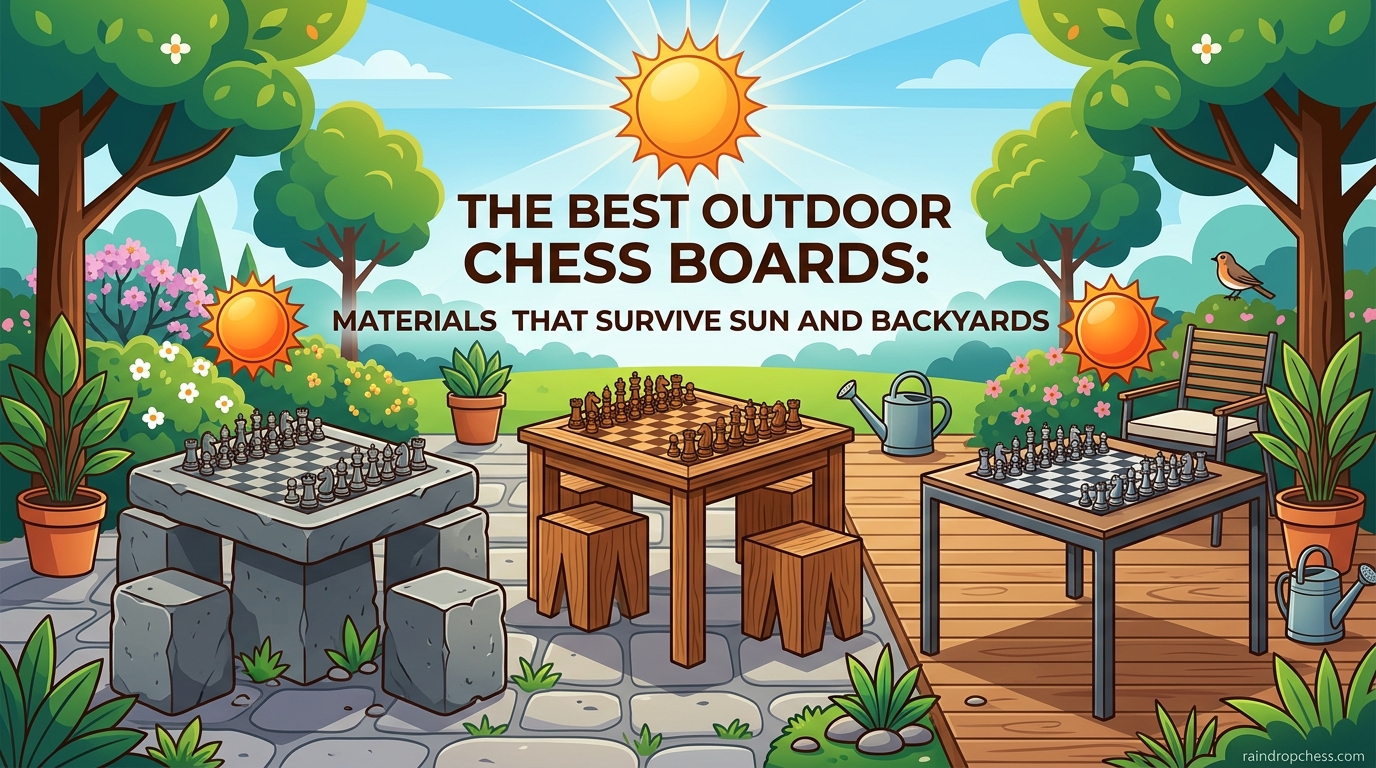
I spent three years watching a beautiful wooden chess board warp beyond recognition on my patio. The sun bleached the squares into an indistinguishable mess, and a single rainy season caused the edges to curl like old paperback pages. That expensive set became a $200 lesson in why outdoor chess board materials matter more than aesthetics.
If you’re considering chess in your backyard, garden, or balcony, the material you choose will determine whether your set lasts months or decades. This guide covers everything I wish I’d known before that first purchase. You’ll learn which materials survive sun exposure, how different climates affect your options, and practical steps to protect your investment.
Whether you want a permanent garden installation or a portable set for weekend games, understanding material properties will save you money and frustration. Let’s break down what actually works outdoors.
Table of Contents
The Outdoor Chess Challenge: What You’re Really Up Against
Outdoor chess boards face enemies that indoor sets never encounter. Understanding these threats helps explain why material choice becomes critical.
UV Radiation and Fading
Sunlight destroys chess boards through ultraviolet radiation. UV rays break down chemical bonds in dyes and finishes, causing colors to fade within months. That rich walnut and maple contrast you paid for can turn into a uniform grayish mess after one summer.
Plastic pieces without UV inhibitors become brittle and crack. Wood finishes peel and powder. Even some metals develop oxidation spots when protective coatings degrade.
Moisture and Humidity
Rain, dew, and humidity cause wood to absorb water, leading to warping, swelling, and rot. Metal pieces rust without proper coatings. Even “waterproof” materials can trap moisture underneath, creating mold and mildew problems.
From my research across chess forums, wood warping and cracking from sun exposure ranks as the number one complaint among outdoor chess owners. Felt bottoms on pieces getting dirty or peeling off comes in second.
Temperature Swings
Materials expand in heat and contract in cold. This constant movement stresses joints, loosens pieces, and causes boards to split. Extreme heat can make vinyl boards sticky and plastic pieces soft enough to deform.
Metal pieces present another problem: they can become too hot to touch in direct summer sun. I’ve seen reports of aluminum pieces reaching temperatures that make play uncomfortable.
Wind and Physical Stability
Light pieces blow away in breezes. Unsecured boards slide across tables. Pieces being too light and blowing away in wind appears consistently in forum discussions about outdoor chess frustrations.
Weighted pieces solve this problem, but the material itself matters too. Heavy wood or stone naturally resists wind better than hollow plastic.
Outdoor Chess Board Materials: The Complete Comparison
Five main material categories dominate the outdoor chess market. Each offers distinct advantages and trade-offs for different situations.
Quick Material Overview
Marine-Grade Plastic (HDPE): The gold standard for durability. High-density polyethylene resists UV damage, moisture, and temperature changes. Commercial installations in parks use this material because it lasts 10-15 years with minimal maintenance.
Teak and Tropical Hardwoods: Beautiful and functional when properly maintained. Teak contains natural oils that resist water and insects. With annual sealing, teak boards last 8-12 years outdoors.
Fiberglass and Resin Composites: Lightweight and highly durable. These materials combine the weather resistance of plastic with aesthetic options that mimic wood or stone. Quality sets last 15-20 years.
Aluminum and Powder-Coated Metals: Excellent durability but with thermal considerations. Metal resists impact and vandalism but gets hot in direct sun. Expect 15+ years with proper coating maintenance.
Stone and Concrete: Permanent installations that last decades. Heavy, expensive, and difficult to move, but indestructible against weather. Concrete and stone boards can work beautifully for fixed garden pieces.
Plastic and Resin Materials: The Practical Choice
Plastic dominates the outdoor chess market for good reason. Modern polymers offer durability at accessible prices.
High-Density Polyethylene (HDPE)
HDPE stands as the most popular material for outdoor chess sets. This plastic resists UV damage through built-in stabilizers that absorb and dissipate ultraviolet radiation. Unlike cheaper plastics, HDPE doesn’t become brittle in cold or soft in heat.
Commercial-grade HDPE sets found in public parks typically last 5-10 years with basic cleaning. Residential-grade versions offer similar durability at lower prices.
Weight matters with plastic pieces. Hollow pieces blow away in wind. Quality outdoor sets include weighted bases filled with sand or metal. Look for pieces weighing at least 2-4 ounces each for stability.
Marine-Grade Plastics
Marine-grade materials take HDPE further with enhanced UV protection and color fastness. Originally developed for boat decking and outdoor furniture, these plastics resist salt, chlorine, and extreme weather.
Silicone boards offer another option. Forum users report silicone is more durable than vinyl, which tends to deteriorate quickly. Soft plastic or hard rubber bottoms on pieces work better than felt outdoors since felt absorbs water and peels.
Fiberglass Composites
Fiberglass combines glass fibers with resin to create lightweight, strong pieces. These resist impact better than pure plastic and maintain color longer. The material accepts detailed molding, creating pieces that look more like traditional carved sets.
Expect to pay more for fiberglass. Quality sets start around $200 but can last 15+ years, making the cost-per-year competitive with cheaper options that need replacement.
Wood Options for Outdoor Chess
Wood offers unmatched beauty for outdoor chess, but requires realistic expectations about maintenance and lifespan.
Teak: The Premium Outdoor Wood
Teak contains natural oils and silica that make it naturally water-resistant and insect-repellent. These properties have made teak the standard for outdoor furniture and boat decking for centuries.
An untreated teak chess board will gradually weather to a silvery-gray patina. Some owners prefer this look, while others maintain the original color with annual oiling. With proper maintenance including sealing and covering during harsh weather, teak chess sets last 8-12 years outdoors.
The downside? Cost. Quality teak sets run $300-800 or more.
Cedar and Weather-Resistant Alternatives
Cedar contains aromatic oils that resist moisture and insects. While softer than teak, cedar works well for outdoor chess when properly sealed. Light woods like maple or oak combined with dark woods like teak can create attractive contrast for outdoor boards.
Other options include ipe, white oak, and black locust. These woods offer varying levels of durability at lower prices than teak.
The Reality of Wooden Chess Boards Outdoors
Can wooden chess boards be used outdoors? Yes, with important caveats. Wood requires more maintenance than synthetic materials. Wooden boards require annual sealing and should come indoors during harsh weather.
Forum discussions consistently report that wood warping and cracking from sun exposure causes the most frustration for outdoor chess owners. If you choose wood, commit to the maintenance schedule or accept a shorter lifespan.
Metal, Stone, and Concrete Options
For permanent installations or maximum durability, heavier materials offer distinct advantages.
Aluminum and Powder-Coated Metals
Aluminum resists corrosion naturally through oxidation that creates a protective surface layer. Powder coating adds color and additional protection. Metal pieces withstand impact and vandalism better than other materials.
The thermal issue matters, though. Metal pieces left in direct sun can reach temperatures that make handling uncomfortable. Dark-colored coatings absorb more heat than light ones. Some users report wrapping metal pieces in cloth during extreme heat.
Metal boards often feature mesh or perforated designs that allow water drainage. These work well for permanent outdoor installations.
Stone and Concrete
Stone chess pieces carved from marble, granite, or soapstone offer permanence. These materials don’t fade, warp, or degrade from weather exposure. A quality stone set can last generations.
Concrete provides similar durability at lower cost. Some manufacturers create concrete pieces that mimic traditional Staunton designs. Pieces must match the scale when using heavy materials like concrete.
The obvious trade-off is weight. Stone and concrete sets often require two people to move. These materials suit permanent garden installations rather than portable play.
Climate-Specific Material Recommendations
Your local climate should drive material selection more than aesthetics. What works in Arizona differs from what works in Florida.
Humid and Coastal Climates
High humidity and salt air create unique challenges. Wood absorbs moisture from the air, leading to swelling and rot. Metal corrodes faster from salt exposure.
For humid coastal areas, marine-grade plastics offer the best performance. These materials resist mold and mildew growth that plagues other options. Fiberglass pieces also perform well in humid conditions.
If you prefer wood, teak withstands humidity better than domestic species. Regular sealing becomes essential in these climates.
Dry and Desert Climates
Extreme heat and intense sun characterize desert environments. UV damage accelerates. Materials that expand in heat may warp or deform.
HDPE plastic handles desert conditions well due to its temperature stability. Stone and concrete resist heat damage but can become uncomfortably hot to touch. Metal pieces should be avoided or limited to shaded areas.
Wood in dry climates faces rapid moisture loss, leading to cracking. If using wood in deserts, choose dense tropical hardwoods and maintain regular oiling.
Cold and Freezing Climates
Freeze-thaw cycles stress materials. Water that seeps into cracks expands when frozen, causing damage. Brittle materials crack more easily in cold.
HDPE remains flexible in cold temperatures where other plastics become brittle. Stone and concrete handle freezing well if properly sealed. Wood can work but requires protection from standing water that freezes in cracks.
Store portable sets indoors during winter months in harsh climates. Permanent installations need elevated foundations to prevent ground moisture damage.
DIY Weatherproofing: Protecting Your Existing Chess Board
You don’t need to buy a new set to enjoy outdoor chess. Several techniques can extend the life of boards you already own.
Step 1: Seal the Wood Properly
Start with a clean, dry board. Sand lightly to remove any existing damaged finish. Apply marine-grade spar urethane or exterior-grade polyurethane in thin coats. Three coats provide good protection. Sand between coats with fine-grit paper for smoothness.
For pieces, focus on the bases where moisture collects. Avoid coating the bottoms if they already have felt, as sealants will harden the felt and create scratching issues.
Step 2: Apply UV-Protective Coatings
Clear UV-resistant coatings help prevent fading. Look for products specifically rated for outdoor furniture. Reapply annually or when water stops beading on the surface.
Spar varnish with UV inhibitors works well for chess pieces. The slight amber tint adds warmth to light woods while protecting against sun damage.
Step 3: Create a Storage Solution
The best protection is removing your set when not in use. A deck box with weather stripping keeps moisture out. Store pieces in individual compartments to prevent scratching.
For permanent installations, consider a waterproof cover. Look for breathable materials that prevent condensation while blocking rain. Simple plastic covers trap moisture and cause more harm than good.
Step 4: Modify Piece Bottoms
Replace felt bottoms with soft plastic or rubber pads. These resist water and don’t peel like felt. Products designed for furniture feet work well. The soft plastic or hard rubber is better than felt for piece bottoms outdoors.
Giant and Commercial-Grade Chess Sets
Oversized outdoor chess creates visual impact for gardens, parks, and resorts. These sets require different material considerations.
For giant sets, plastic and fiberglass dominate due to weight constraints. A 24-inch king in solid stone would weigh hundreds of pounds. Hollow plastic or resin pieces offer manageable weight while maintaining durability.
Commercial installations in public spaces face additional challenges: vandalism, theft, and heavy use. Materials must withstand impact and resist graffiti. HDPE and powder-coated metals work best for these applications.
Parks departments report commercial-grade plastic sets lasting 5+ years with proper care. The key is proper anchoring systems that prevent pieces from walking away while allowing easy repositioning during play.
Maintenance Schedules by Material
Regular maintenance extends the life of any outdoor chess set. Here’s what each material requires.
Plastic and Resin Maintenance
Clean quarterly with mild soap and water. Avoid abrasive cleaners that scratch the surface. Check annually for UV degradation signs like chalking or brittleness. Store indoors during extreme weather if possible.
Cost: $10-20 per year in cleaning supplies. Time: 2 hours annually.
Wood Maintenance
Clean monthly during heavy use seasons. Reapply oil or sealant annually. Check for warping, cracking, or loose joints. Sand and refinish every 2-3 years depending on exposure.
Store indoors during winter in harsh climates. Even “outdoor” wood benefits from protection during extreme weather.
Cost: $30-50 per year in supplies. Time: 8-12 hours annually.
Metal, Stone, and Concrete Maintenance
Clean with appropriate cleaners for the material. Check powder coating annually for chips that could allow corrosion. Stone may need resealing every few years to prevent staining.
These materials require the least maintenance but benefit from periodic inspection.
Cost: $10-30 per year. Time: 2-4 hours annually.
Cost vs. Durability: Making the Smart Investment
Initial price doesn’t tell the full story. Cost-per-year reveals the true value of different materials.
A $50 vinyl set that lasts 2 years costs $25 per year. A $300 HDPE set lasting 10 years costs $30 per year. The “cheap” option costs nearly the same while requiring more frequent replacement.
Premium teak sets at $500+ lasting 10-12 years with maintenance cost $40-50 per year. Fiberglass sets in the $200-400 range lasting 15+ years offer the best long-term value at $13-27 per year.
Budget considerations matter, but factor replacement costs into your decision. Buying durability upfront often saves money over time.
Frequently Asked Questions About Outdoor Chess Board Materials
What type of wood is best for making an outdoor chessboard?
Teak is the best wood for outdoor chess boards due to its natural oil content that resists water and UV damage. Cedar and ipe are good alternatives at lower prices. All outdoor wood requires regular sealing and maintenance.
How can we protect outdoor chess boards from damage caused by water and sunlight?
Apply marine-grade sealant or spar urethane with UV inhibitors. Store the set indoors or under cover when not in use. Use breathable waterproof covers for permanent installations. Replace felt bottoms with rubber or plastic pads.
What materials are outdoor chess sets typically made from?
Outdoor chess sets use HDPE plastic, marine-grade plastics, teak and tropical hardwoods, fiberglass composites, aluminum and powder-coated metals, and stone or concrete. Each offers different durability, cost, and maintenance requirements.
What is the most durable material for outdoor chess pieces?
Stone and concrete offer the longest lifespan but are immobile. For portable sets, marine-grade HDPE plastic and fiberglass composites provide the best durability, lasting 10-15 years with minimal maintenance.
How do you weatherproof a chess board for outdoor use?
Sand the surface lightly, then apply three thin coats of marine-grade spar urethane, sanding between coats. Use UV-resistant clear coatings for additional protection. Store indoors during extreme weather and replace felt bottoms with waterproof alternatives.
How long do plastic outdoor chess sets last?
Quality HDPE plastic sets last 5-10 years with basic care. Marine-grade and commercial-grade plastics can last 10-15 years. Cheap vinyl sets typically last 1-2 years before becoming brittle and faded.
What are the best materials for giant outdoor chess sets?
Giant sets use hollow HDPE plastic or fiberglass resin to keep weight manageable. These materials resist UV damage and moisture while allowing pieces large enough for visual impact without excessive weight.
Can wooden chess boards be used outdoors?
Yes, but with important limitations. Use teak, cedar, or other weather-resistant woods. Apply regular sealant and store indoors during harsh weather. Expect shorter lifespans than synthetic materials, typically 5-10 years with good care.
Conclusion: Choosing Your Outdoor Chess Board Materials
The best outdoor chess board materials match your specific situation. For most homeowners, marine-grade HDPE plastic offers the best balance of durability, cost, and low maintenance. Fiberglass provides premium aesthetics with excellent longevity.
Wood works if you value natural beauty and commit to regular maintenance. Teak specifically offers the best wood performance outdoors. Metal and stone suit permanent installations where movement isn’t required.
Consider your climate, budget, and willingness to maintain your set before purchasing. A few minutes of honest assessment now prevents the disappointment of a warped, faded board next summer.
The perfect outdoor chess set is one you actually use. Choose materials that fit your lifestyle, and you’ll enjoy years of games in fresh air and sunshine.