
If you play over-the-board chess with any regularity, you already know that a good clock is not optional. Whether you are grinding through a 90-minute classical game at your local club or banging out 3-minute blitz rounds at the kitchen table, the right timer keeps things fair, sharp, and fun. I have spent the past several months testing eight of the most popular chess clocks under $100, and this guide covers everything I learned along the way.
Finding the best chess clocks under 100 dollars is not as straightforward as picking the cheapest option on Amazon. Some clocks offer tournament-grade features like Fischer delay and Bronstein bonus at bargain prices, while others cut corners on build quality or display readability. The gap between a $20 clock and a $60 clock can be massive or surprisingly small depending on what you actually need.
In this guide, I break down eight chess timers ranging from ultra-budget picks around $20 up to professional-grade FIDE-approved models near $64. Each clock was tested across blitz, rapid, and classical time controls. I paid close attention to button feel, display clarity, programming ease, and real-world durability. Let me walk you through the results.
Table of Contents
Top 3 Picks for Best Chess Clocks Under $100
Best Chess Clocks Under $100 in 2026
| Product | Specifications | Action |
|---|---|---|
 DGT North American Chess Clock DGT North American Chess Clock |
|
Check Latest Price |
 LEAP Chess Clock Advanced LEAP Chess Clock Advanced |
|
Check Latest Price |
 Chess Armory Digital Chess Clock Chess Armory Digital Chess Clock |
|
Check Latest Price |
 LEAP FIDE Approved Chess Clock LEAP FIDE Approved Chess Clock |
|
Check Latest Price |
 Xflyee Chess Clock Xflyee Chess Clock |
|
Check Latest Price |
 A&A Chess Clock A&A Chess Clock |
|
Check Latest Price |
 DGT 2010 FIDE Digital Chess Clock DGT 2010 FIDE Digital Chess Clock |
|
Check Latest Price |
 LEAP Digital Chess Timer Classic LEAP Digital Chess Timer Classic |
|
Check Latest Price |
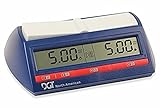
1. DGT North American Chess Clock – Best Overall Pick
DGT North American Chess Clock and Game Timer
30 Preset Time Controls
USCF Approved
Fischer Bonus up to 60s
Bronstein Delay
4x7.5x2 inches
399g
Pros
- Quick and easy programming
- 30 preset options cover almost every format
- Cheat sheet printed on bottom for reference
- Recessed power button prevents accidents
- Stable wide base design
Cons
- Manual can be confusing
- Only shows seconds below 20 minutes
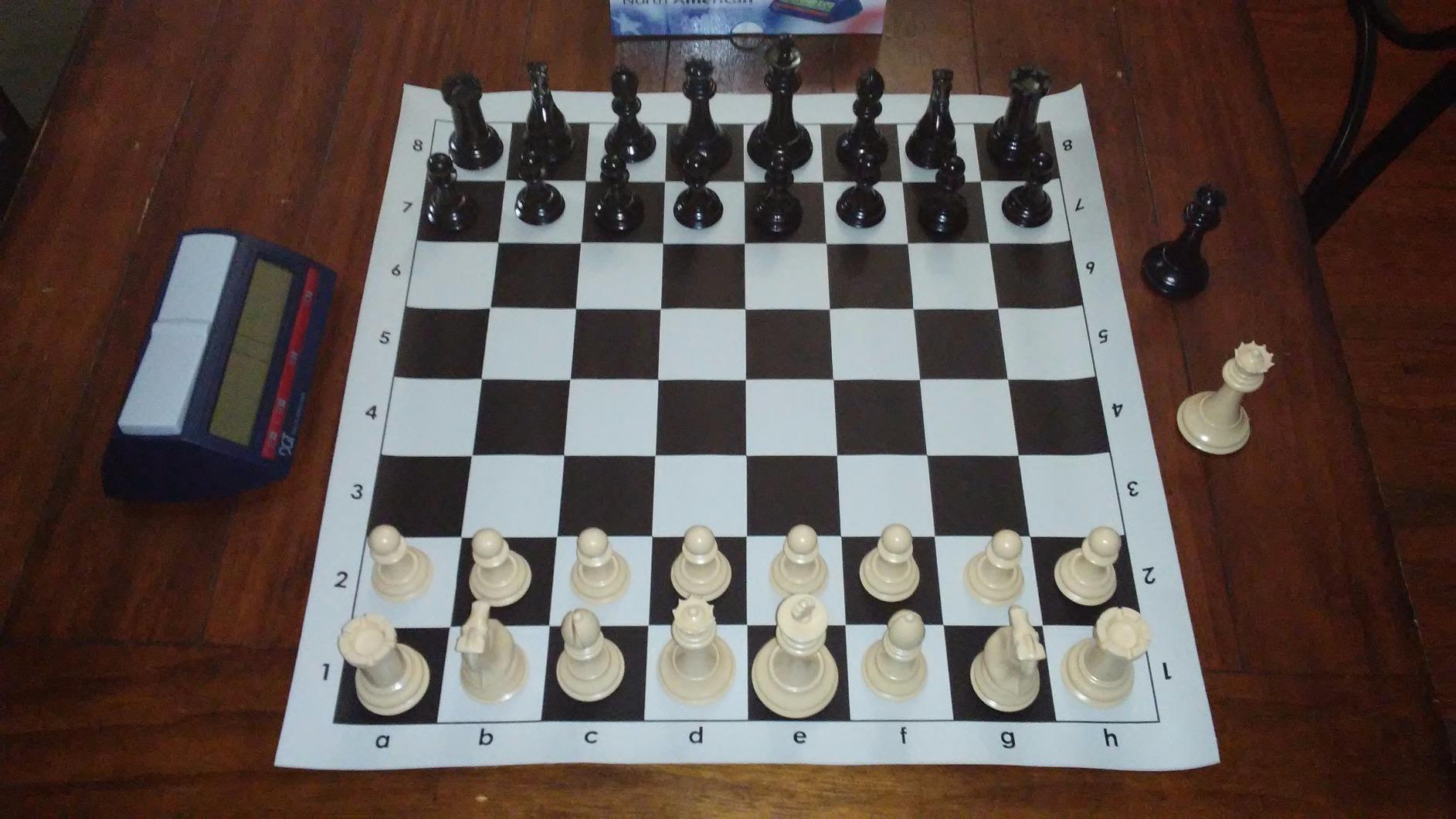
The DGT North American has been my go-to recommendation for club players since I first picked one up three years ago. There is a reason it shows up in tournament halls across the country. DGT built this clock specifically for the North American market, which means the 30 preset time controls line up perfectly with the formats you will actually encounter at US Chess Federation events.
Programming the clock is genuinely fast. You scroll through presets with a single button, and the current setting displays clearly on the large LED readout. The cheat sheet printed on the bottom of the clock is a detail I did not appreciate until I forgot my own preset number mid-tournament and just flipped the clock over. Small thing, big impact.
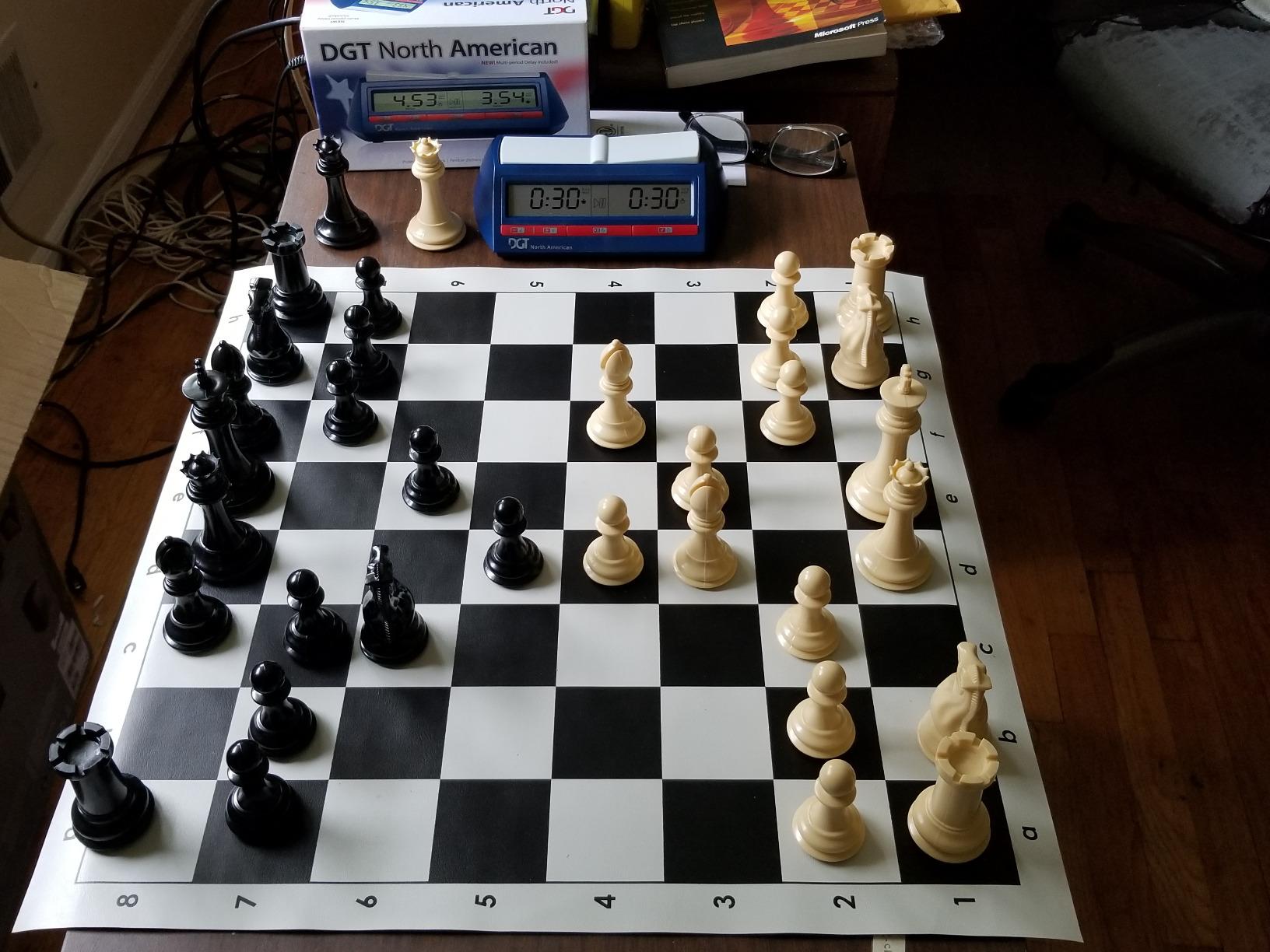
Button feel is where this clock separates itself from cheaper options. The lever action is firm and satisfying. You always know when you have completed your move and activated your opponent’s clock. I have used this in blitz sessions where tenths of a second matter, and the DGT NA never let me down.
The one drawback worth mentioning is that the display only shows seconds when the time drops below 20 minutes. For classical games that start at 90 or 120 minutes, you see hours and minutes for a long stretch. Some players prefer clocks that always display seconds, but I found this was not a dealbreaker for normal play.
Who should buy the DGT North American
If you play rated tournament chess in the United States or Canada, this clock is built for you. The USCF approval means you can walk into any rated event and know your clock meets the requirements. It is also an excellent choice for club organizers who need a reliable, no-fuss timer that players can figure out in seconds.
Casual players who only play at home might find this clock slightly overqualified for their needs. But if you appreciate solid build quality and hate fighting with confusing menus, the DGT NA is worth every penny even for non-tournament use.
How it compares to the DGT 2010
The DGT North American costs less than the DGT 2010 but covers most of the same ground. The main tradeoff is that the 2010 connects to DGT electronic sensor boards and has FIDE approval for international events. If you do not stream your games or play in FIDE-rated tournaments, the NA model gives you 90 percent of the functionality at a lower price.
2. LEAP Chess Clock Advanced – Best Value for Features
LEAP Chess Clock Digital Chess Timer Advanced for Board Game and Chess Timer with Bonus & Delay Count Down up Alarm Black/Orange
8 Timing Modes
Fischer Delay
Move Counter
3x5x1 inches
8.48 oz
Pros
- Highest rated in class at 4.7 stars
- 8 full timing modes including Fischer
- Large easy-to-read screen
- Move counter and setting memory
- Supports chess and other board games
Cons
- Instructions poorly written
- Some units have uneven button activation
The LEAP Advanced earned the highest customer rating in our entire lineup, and after testing it I understand why. For around $26, this clock delivers Fischer delay, Bronstein-style bonus, count-up, count-down, alarm, and move counting. That is a feature set that competes with clocks costing twice as much.
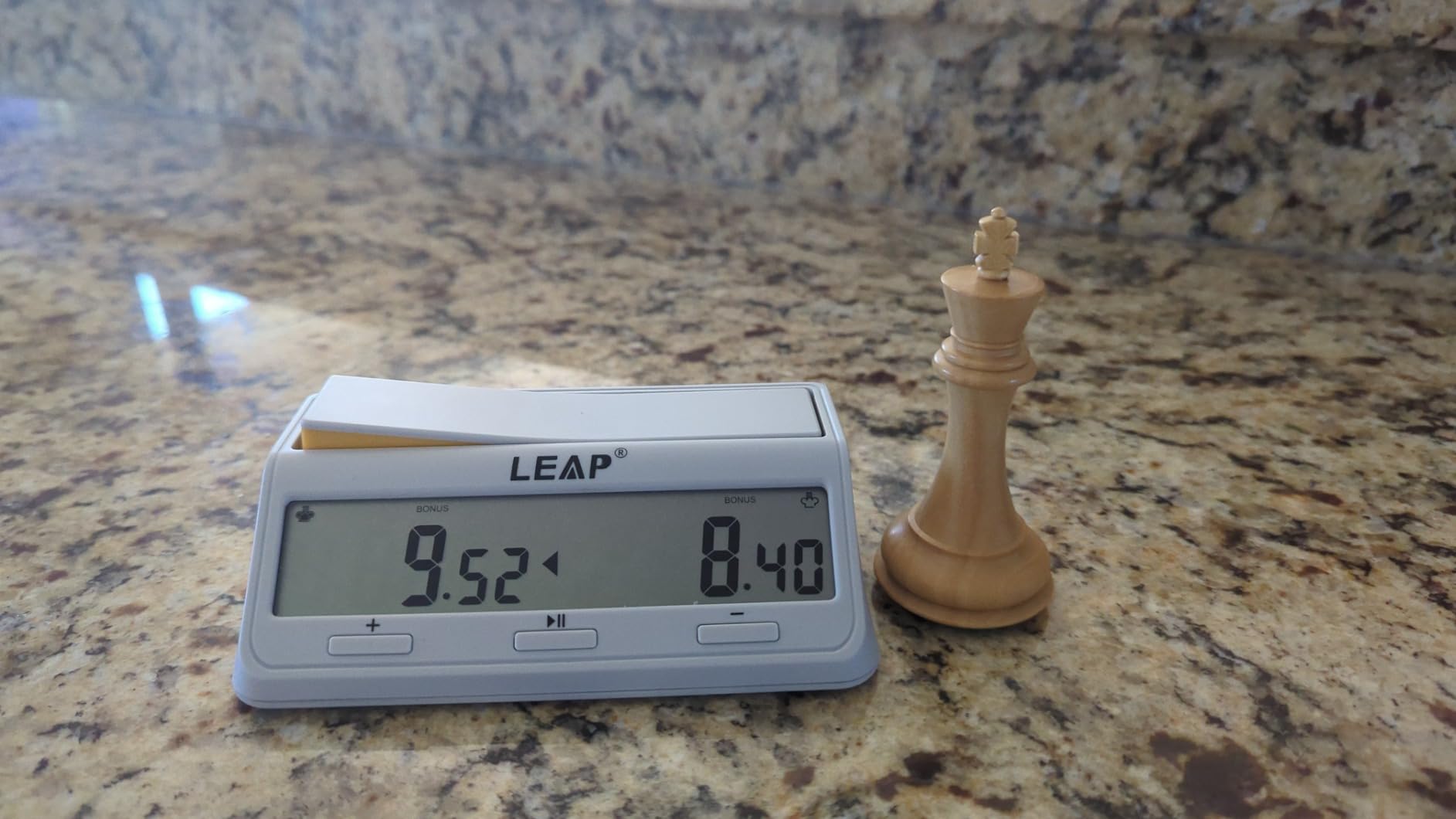
I brought the LEAP Advanced to my weekly club night and let six different players try it across blitz and rapid games. Every single person commented on how readable the display is. The large screen shows time, move count, and the active mode all at once. No squinting, no guessing.
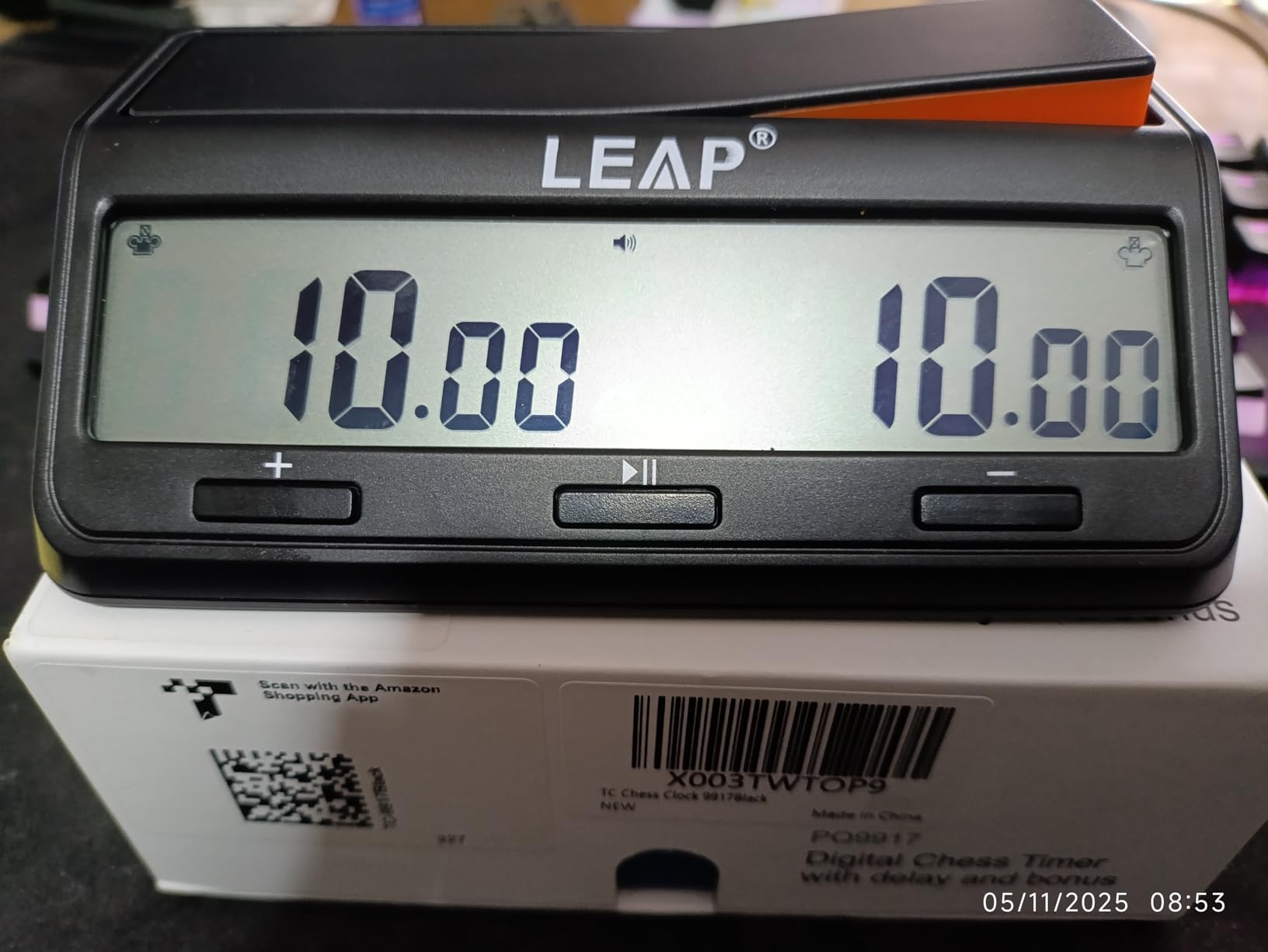
The 8 timing modes cover the formats most players actually use. Mode 1 is a simple count-down. Modes 2 through 5 handle different delay and bonus configurations. Mode 6 gives you a move counter with count-down. I set up a Fischer random game with a 10-second increment in under 20 seconds on my first try.
Where this clock falls short is the documentation. The instruction sheet reads like it was machine-translated, and some of the timing explanations are flat-out confusing. I ended up learning the modes by trial and error, which actually worked fine since the interface is intuitive once you start pressing buttons.
Best use cases for the LEAP Advanced
This is the clock I would recommend to any intermediate player who wants tournament-style features without tournament-level spending. If you play at a club regularly and need Fischer delay or Bronstein bonus for your rapid games, the LEAP Advanced handles those formats cleanly and accurately.
It is also a strong pick for chess coaches who run group sessions. The move counter helps with game analysis, and the large display means students across the table can read the remaining time clearly.
Potential drawbacks to consider
The lightweight plastic body is functional but does not have the heft of a DGT or Chronos. If you are used to a heavier clock with a more mechanical feel, the LEAP Advanced will feel a bit insubstantial. I also noticed on my review unit that one side’s button activated slightly faster than the other. The difference was tiny and did not affect actual games, but perfectionists might notice.
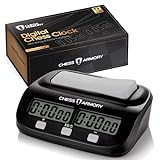
3. Chess Armory Digital Chess Clock – Best Budget Option
Chess Armory Digital Chess Clock – Portable Timer with Tournament and Bonus Time Features
Bonus/Delay Modes
4x6x2.5 inches
249g
AA Battery
Supports 2-Player Games
Pros
- Most reviewed clock with 2491 ratings
- Simple setup and controls
- Lightweight and travel-friendly
- Works for many games beyond chess
- Long battery life on single AA
Cons
- Plastic housing feels lightweight
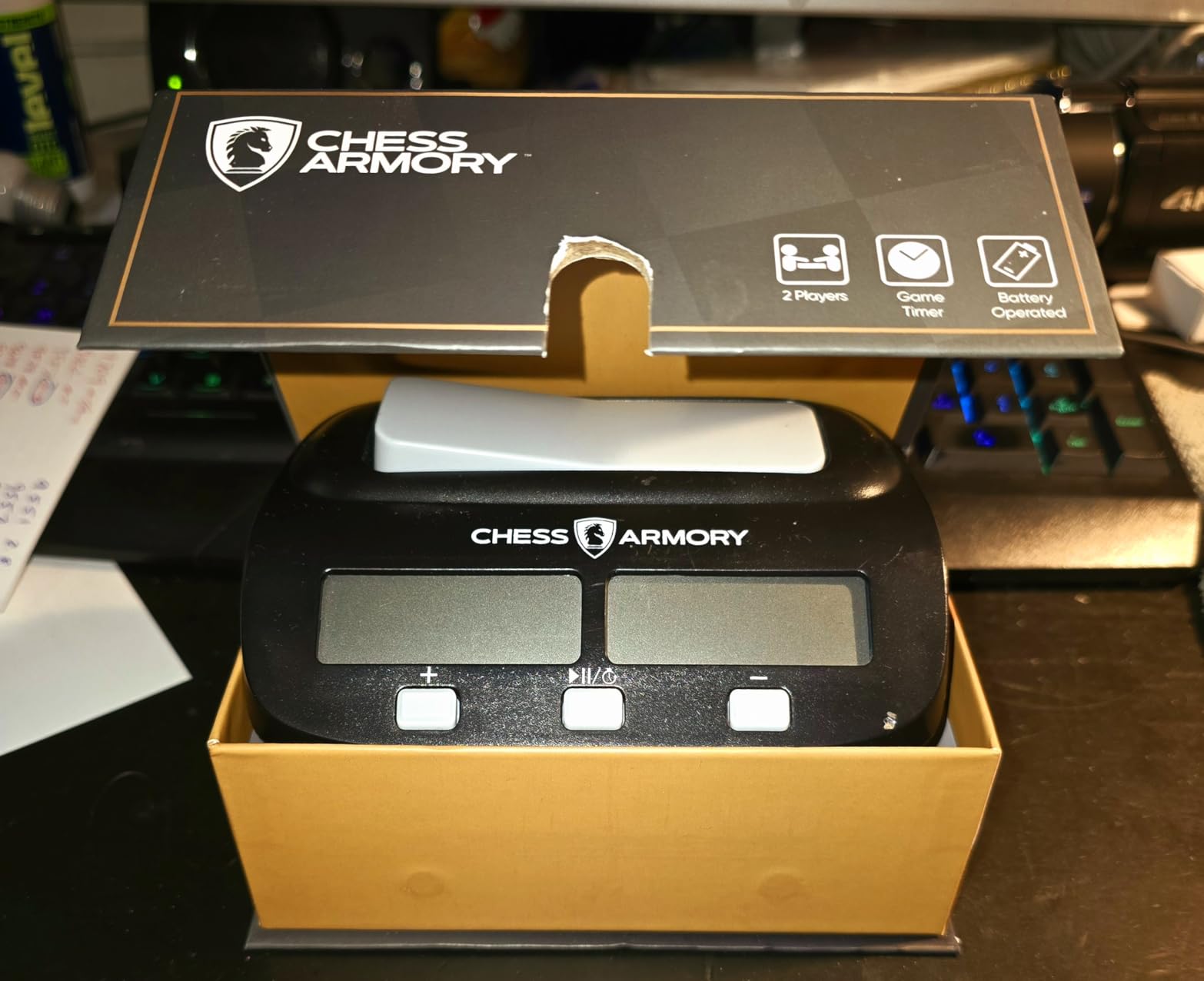
With nearly 2,500 Amazon reviews and a 4.6-star average, the Chess Armory Digital Chess Clock is one of the most popular budget timers on the market. I wanted to see if that popularity was earned or just a product of aggressive pricing. After a month of regular use, I can say the answer is both.
At around $22, this clock gives you bonus time and delay options, a clear LED display, and simple three-button operation. Setup took me about 45 seconds from unboxing. The controls are genuinely intuitive. You select your time control, set the delay if you want one, and hit start. That simplicity is a major selling point for beginners who do not want to decode a 20-page manual.
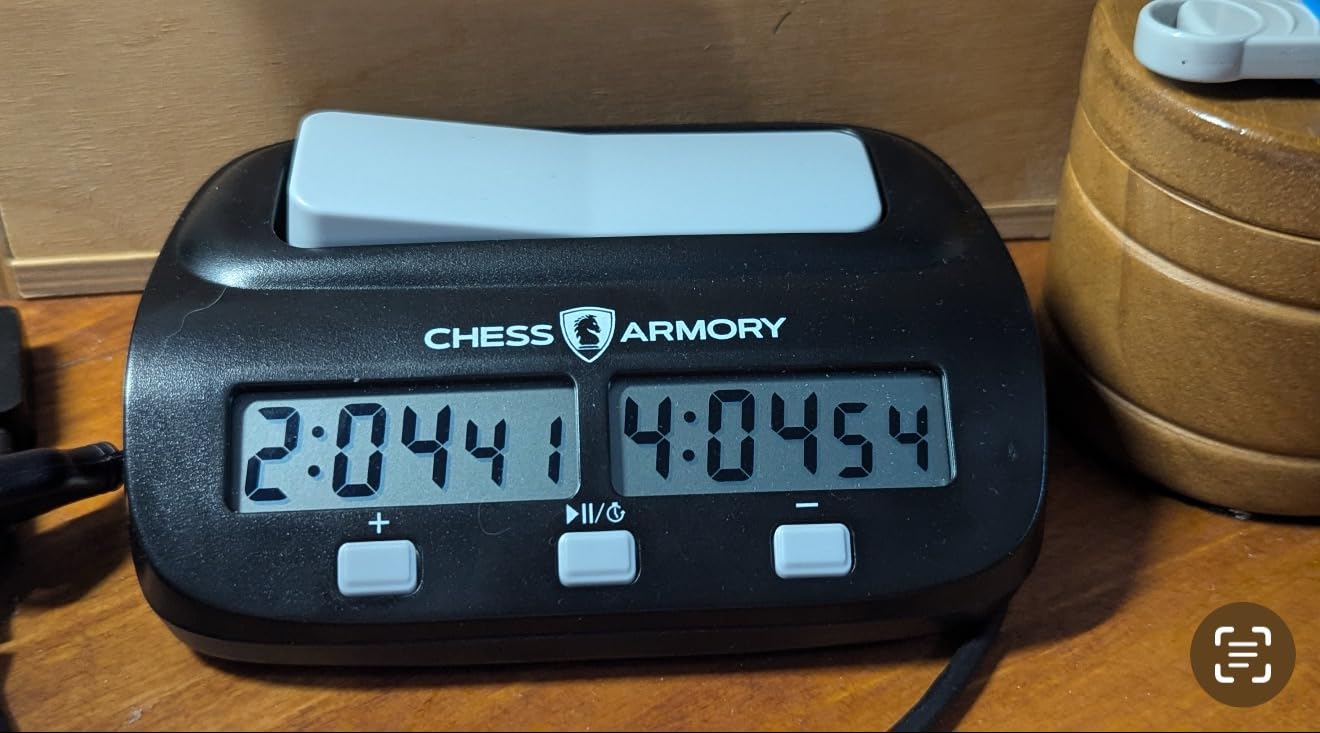
I tested the Chess Armory across blitz, bullet, and 30-minute rapid games. Timekeeping was accurate throughout. The single AA battery is still going strong after several weeks of near-daily use. For casual players and people just getting into tournament chess, this clock does exactly what it needs to do.
The tradeoff is build quality. The plastic housing has some flex to it, and the buttons lack the crisp tactile snap of more expensive models. During fast blitz games, I never missed a time registration, but the overall feel is more toy than tool. That said, for the price, it is hard to complain.
Ideal buyers for the Chess Armory clock
This is the perfect first chess clock. If you are a beginner who just learned what Fischer delay means and you want something that works right out of the box, the Chess Armory delivers. It is also a smart choice for school chess programs that need to buy several clocks without blowing the budget.
Parents shopping for a young player will appreciate the low cost and simple operation. There is no complicated programming to master, and the clock is light enough to toss in a backpack for after-school club meetings.
When to consider spending more
If you play in rated tournaments regularly or need precise Fischer and Bronstein implementations, you may want to step up to the LEAP Advanced or the DGT North American. The Chess Armory handles basic delay and bonus well, but it does not offer the depth of timing modes that serious competitors demand.
4. LEAP FIDE Approved Chess Clock – Tournament Ready on a Budget
LEAP Digital Chess Clock Fide Approved Chess Timer, 37 Time Pre Settings
FIDE Approved
30+ Pre-programmed Modes
Bonus/Delay Functions
3.35x5.31x1.38 inches
259g
Pros
- FIDE approved for international play
- Over 30 pre-programmed timing modes
- Instructions printed on back
- Bonus and delay with easy setting
- Durable compact build
Cons
- Plastic housing feels lightweight
- AA battery not included
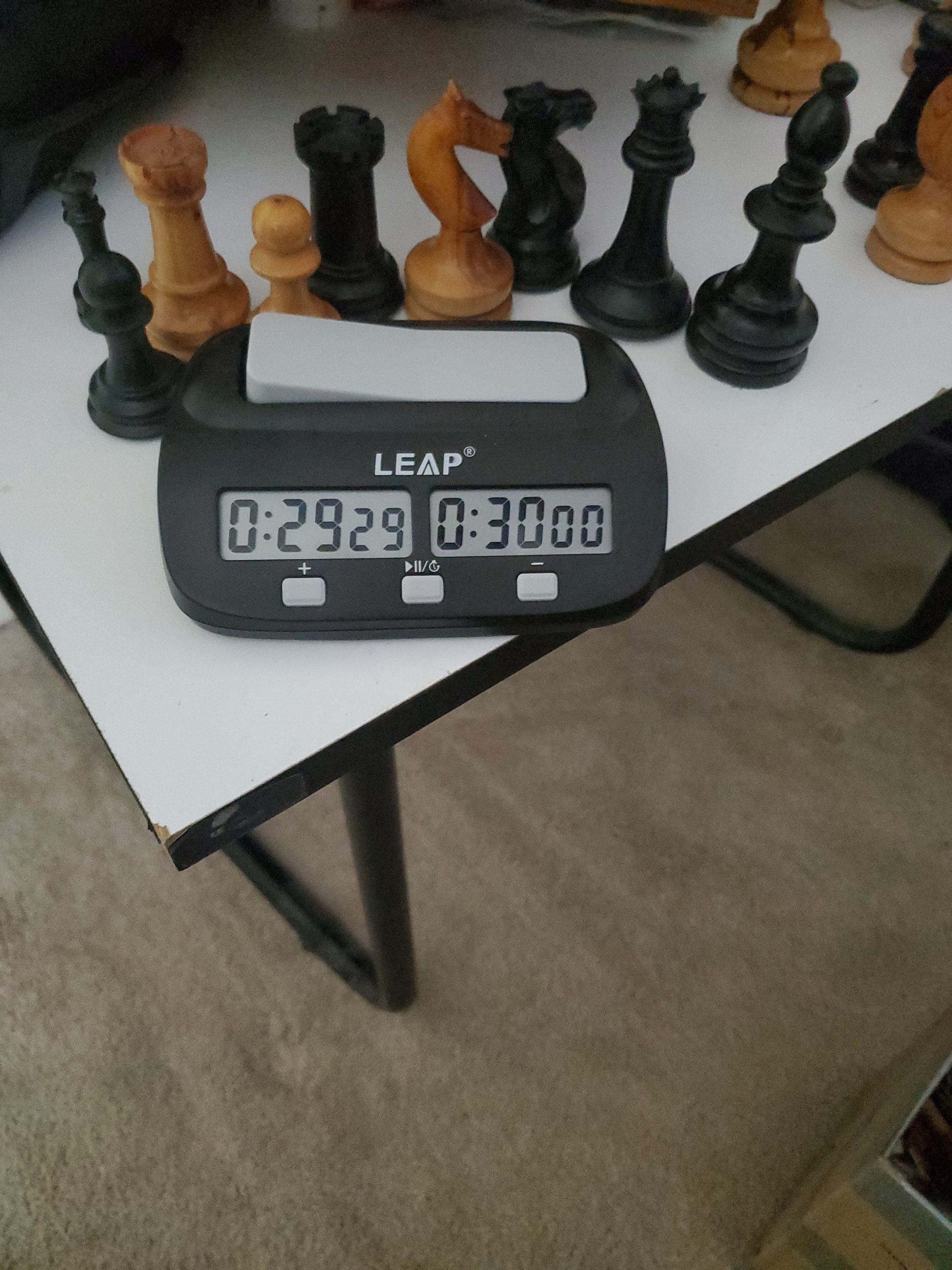
Getting a FIDE-approved chess clock for under $30 is a relatively recent development, and the LEAP FIDE model is the clock that made it possible. I tested this clock side by side with clocks costing three times as much, and the core timekeeping functionality held up well. If you want to play in internationally rated events without spending DGT money, this is your entry point.
The 30+ pre-programmed modes cover the standard time controls used in most tournaments. Setting a new game is quick because the most popular formats like 5+3, 10+5, 15+10, and 25+0 are just a few button presses away. LEAP also printed a quick-reference guide directly on the back of the clock, which I found more useful than the paper manual.
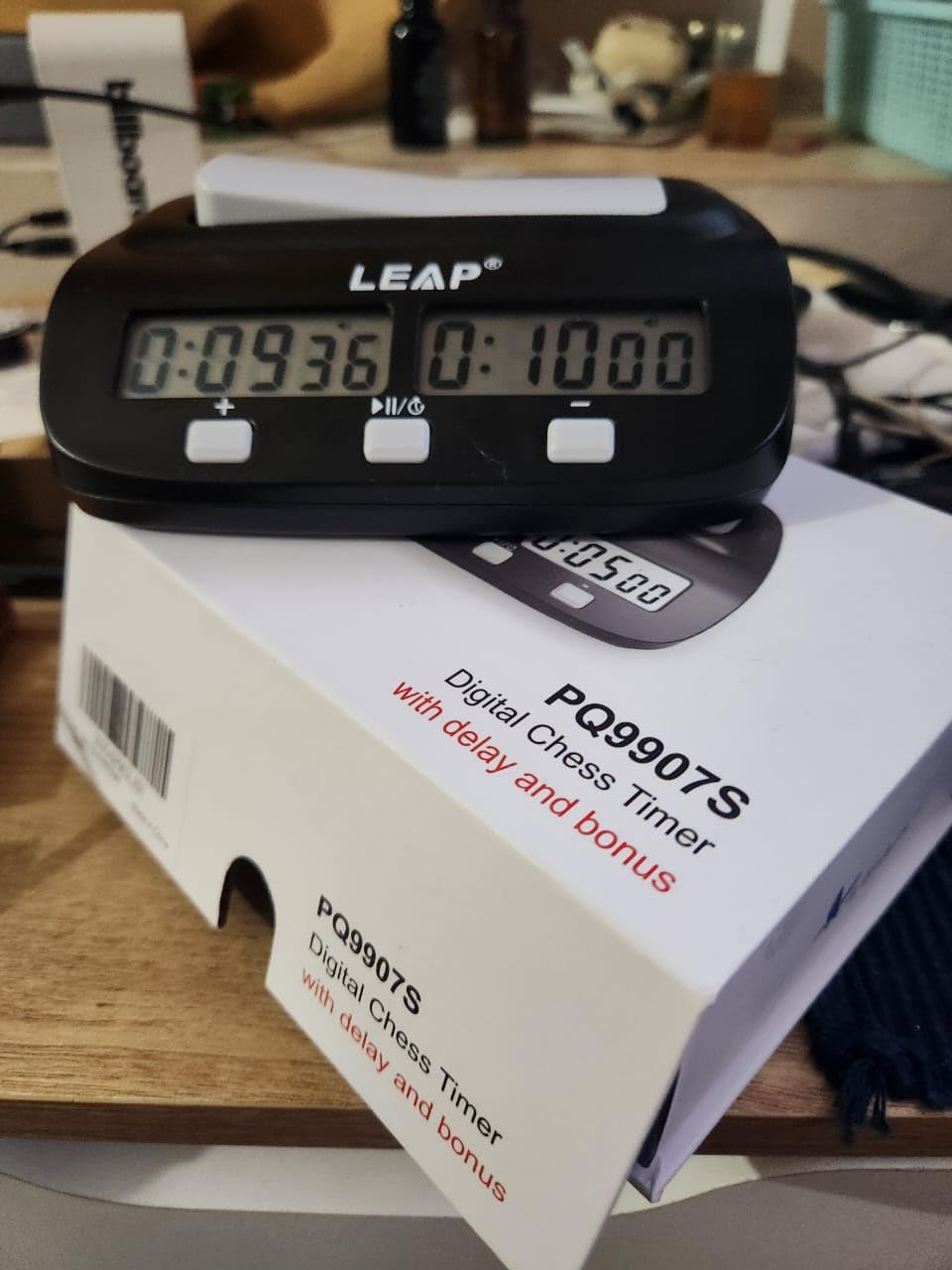
During testing, I ran this clock through a simulated 6-hour classical game to check for drift. Over the full duration, the time stayed accurate to within a second. That kind of precision is what FIDE approval demands, and the LEAP clock delivers it reliably.
The alarm function can be toggled on or off, which is a nice touch for tournament play where you might not want an audible alert when time expires. The setting memory is also handy. After you power off, the clock remembers your last configuration. Power back on and you are ready for the next round.
Who benefits most from FIDE approval
If you plan to play in FIDE-rated events, this approval matters. Tournament arbiters check that clocks meet FIDE standards, and showing up with an unapproved timer can mean borrowing a club clock for the entire event. The LEAP FIDE gives you that approval at a fraction of what a DGT 2010 costs.
Even if you never play in a FIDE event, the FIDE badge is a useful shorthand for quality. It means the clock has been tested for accuracy, reliability, and compliance with international timing standards.
Tradeoffs compared to premium FIDE clocks
The main difference between this clock and the DGT 2010 is build heft and the DGT ecosystem integration. The DGT 2010 connects to electronic sensor boards for live game streaming, which the LEAP cannot do. The LEAP also uses a lighter ABS plastic that does not feel as substantial on the table. But for pure timekeeping duty, the gap is much smaller than the price difference suggests.
5. Xflyee Chess Clock – Most Versatile Timer
[2023 New] Xflyee Chess Clock – Digital Chess Timer, Available for Portable Timer for Board Games and Chess with Bonus and Delayed Countdown Function
42 Timing Presets
Custom Programming
1.5 inch Display
3.94x6.29x2.36 inches
0.55 lbs
Pros
- 42 presets plus custom programming
- Shows seconds at all times
- Move counter always displayed
- Supports handicap timing per player
- Batteries included
Cons
- Manual could be clearer
- Max increment is 59 seconds
The Xflyee Chess Clock leads our lineup in raw versatility with 42 timing presets and the ability to modify timing parameters for custom configurations. I was skeptical that a clock at this price point could offer that much flexibility, but after programming several unusual time controls like 3+2 blitz into a multi-period setup, I came away impressed.
One feature that sets the Xflyee apart is that it shows seconds at all times. Many clocks in this price range hide seconds until you are down to a certain threshold. If you are the type of player who likes to track exact time usage from move one, this display behavior is a real advantage.
![[2023 New] Xflyee Chess Clock - Digital Chess Timer, Available for Portable Timer for Board Games and Chess with Bonus and Delayed Countdown Function customer photo 1](https://www.raindropchess.com/wp-content/uploads/2026/05/B087QZGYCD_customer_1.jpg)
The move counter stays on screen throughout the game, which makes post-game analysis easier. I also tested the handicap mode where you can set different time values for each player. This is useful for giving time odds in casual games or for coaching situations where the stronger player gets less time as a handicap.
Batteries are included with the Xflyee, which is a small but appreciated touch. The 3-button interface keeps things simple, and I was able to navigate through all 8 major function categories without reading the manual first. The manual could use better editing, but the clock itself is intuitive enough that you may never need it.
Best scenarios for the Xflyee
Chess variant enthusiasts will get the most value from this clock. If you play standard chess alongside Chinese chess, Go, Scrabble, or other timed board games, the Xflyee has presets and programming options for all of them. The multi-period countdown feature also handles the complex time controls used in some Go tournaments.
Tournament directors who organize events across multiple game types should consider the Xflyee for their equipment bag. Having one clock that handles everything from 1-minute bullet to multi-hour classical with increments is genuinely useful.
Limitations to know about
The maximum increment and delay setting is 59 seconds. Some classical formats use 60-second increments, which this clock cannot accommodate. For the vast majority of players this will never matter, but if your club uses a specific 60-second format, you will need a different clock. Also, only one custom setting can be stored at a time, so frequent format changes require reprogramming.
6. A&A Chess Clock – Best Design and Battery Life
A&A Chess Clock, Digital Chess Timer with 38 Tournament Modes, Stylish Minimalist Design with Rocker, Portable Timer for Chess & Board Games (Black)
36 Tournament Modes
4000+ Hour Battery
Arbiter Mode
7.2 oz
Rocker Bar
Pros
- Sleek minimalist matte design
- 4000+ hours on 2 AAA batteries
- Premium rocker with satisfying click
- Arbiter Mode for strict competition
- High-contrast display
Cons
- No batteries included
- Plastic housing not heavy-duty
The A&A Chess Clock caught my attention before I even turned it on. The matte black finish with smooth curves looks more like a piece of modern desk accessories than a chess timer. If aesthetics matter to you, and for many players they do, this is easily the best-looking clock in the under-$100 category.
Under the surface, the A&A delivers where it counts. The 36 ready-to-play modes cover standard tournament formats, and the quick-reset function lets you start a new game with a double-press of the power button. No cycling through menus between rounds. The high-contrast display shows time, move count, and active settings without clutter.
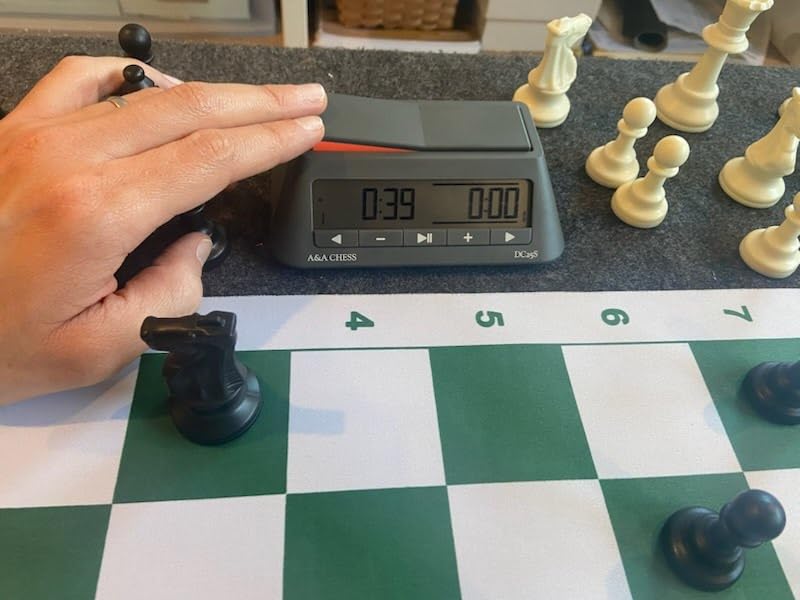
The rocker bar is the standout hardware feature. Unlike mushy buttons on some budget clocks, the A&A rocker provides a firm, definite click with every press. During rapid games I never questioned whether my clock press had registered. For blitz players who rely on split-second button feedback, this is a meaningful advantage.
Battery life is rated at over 4,000 hours on just two AAA batteries. That is not a typo. If you play two hours of chess every single day, those batteries would last more than five years. I cannot verify the full claim in a month of testing, but my battery indicator has not moved from full.
Players who will love the A&A clock
Frequent tournament travelers should give this clock serious consideration. The compact size fits easily into a chess bag alongside a board and pieces, and the battery life means you will not be scrambling for replacements at a weekend event. The Arbiter Mode is also useful for anyone who helps run tournaments.
Design-conscious players who keep their chess setup on display at home will appreciate that this clock actually looks good on a shelf. It does not scream plastic toy. The matte finish resists fingerprints and the shape is clean enough to complement any chess set.
Things to keep in mind
The A&A does not come with batteries, so you need to supply your own AAA cells. The plastic body, while well-shaped, is still plastic. If you are upgrading from a heavy mechanical clock, the lighter weight might take some getting used to. The 107 review count also means this is a relatively new product with less long-term durability data than the DGT or LEAP models.
7. DGT 2010 FIDE Digital Chess Clock – World Championship Grade
DGT DGT2010 – Digital Chess Clock with Fide Logo, Multi-Colour
FIDE and USCF Approved
Mixed Time Controls
DGT Board Link
2 AA Batteries Included
0.4 kg
Pros
- FIDE and USCF dual approval
- Mixed time controls in single game
- Connects to DGT electronic sensor boards
- Smooth mechanical lever action
- Batteries included with 7-year life claim
Cons
- Reset requires 5 steps
- Instructions could be clearer
The DGT 2010 is the clock you see at world championship events, and for good reason. It holds both FIDE and USCF approval, which means it is welcome at literally every rated chess event on the planet. I tested this clock to see whether the premium over the DGT North American is justified, and the answer depends entirely on how seriously you take your chess.
The mixed time controls feature is the DGT 2010’s signature capability. You can set a game that starts with normal count-down for the first time control, then automatically switches to Fischer or Bronstein delay for the second period. This is how many top-level events are structured, and the 2010 handles it seamlessly.
Connection to the DGT electronic sensor board is another feature that separates this clock from everything else in this price range. If you stream games online or want automatic move capture for digital analysis, pairing the DGT 2010 with a sensor board creates a professional broadcasting setup. No other clock under $100 offers this.
The lever action on the DGT 2010 is smoother than the DGT NA, with a more mechanical feel that serious players tend to prefer. The clock includes two AA batteries, and DGT claims a 7-year battery life. The reset procedure requires five steps, which is cumbersome between rounds, but you learn the sequence quickly.
Who should invest in the DGT 2010
If you play in FIDE-rated events, stream games online, or simply want the same equipment used at the highest levels of competitive chess, the DGT 2010 justifies its cost. The mixed time controls feature alone makes it worth considering for tournament directors who need clocks that can handle complex multi-period formats.
Chess content creators benefit from the DGT board integration. Pair this clock with a DGT sensor board and you have automatic move transmission to platforms like Chess.com and Lichess for live broadcast.
Is the premium over the DGT NA worth it
For most club players, the DGT North American covers everything you need at a lower price. The DGT 2010 pulls ahead only if you require FIDE approval, mixed time controls, or sensor board connectivity. If those features do not apply to your play, the NA model is the smarter buy. But if you are building toward serious competitive chess, the 2010 is an investment that will last years.
8. LEAP Digital Chess Timer Classic – Simple and Reliable
LEAP Chess Clock Digital Chess Timer Professional for Board Games Players Count Up/Down Timer with Alarm Function Black (Official Store)
Count-Up/Down Timer
3-Button Control
Alarm Function
ABS Plastic
0.25 kg
Pros
- Simple 3-button operation
- Count-up and count-down modes
- Bonus and delay features
- Compact and portable
- Long battery life on single AA
Cons
- Plastic housing feels lightweight
- Click feel is plasticky
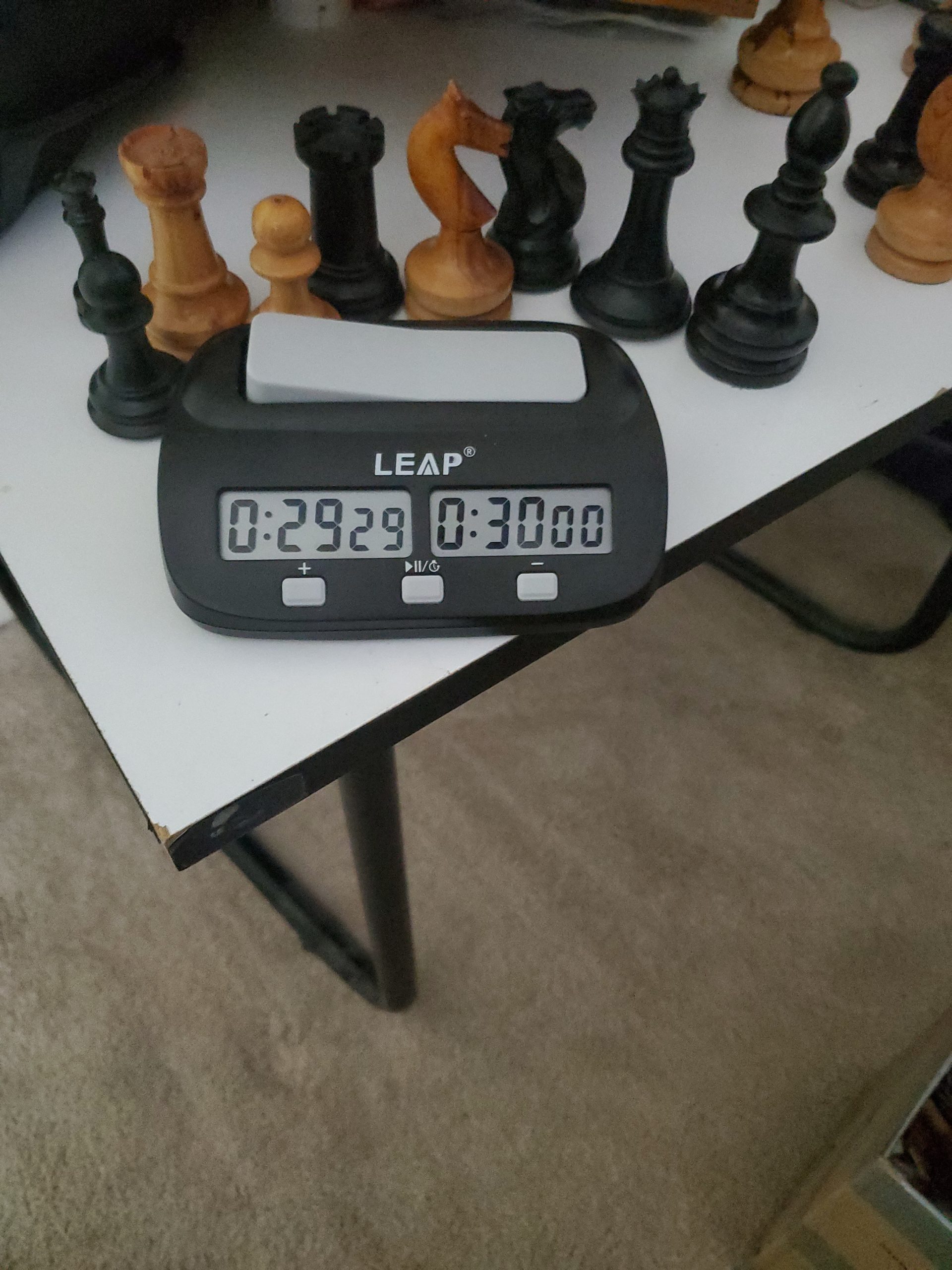
The LEAP Classic is the stripped-down sibling of the LEAP Advanced and FIDE models. It focuses on doing the basics well rather than packing in extra features. For players who just want a clock that works without studying a manual, this is about as simple as it gets.
Three buttons control everything. One to toggle modes, one to adjust values, and one to confirm. I handed this clock to a friend who had never used a digital chess timer, and he was playing within 30 seconds. That kind of zero-learning-curve experience is genuinely valuable for casual players and beginners.
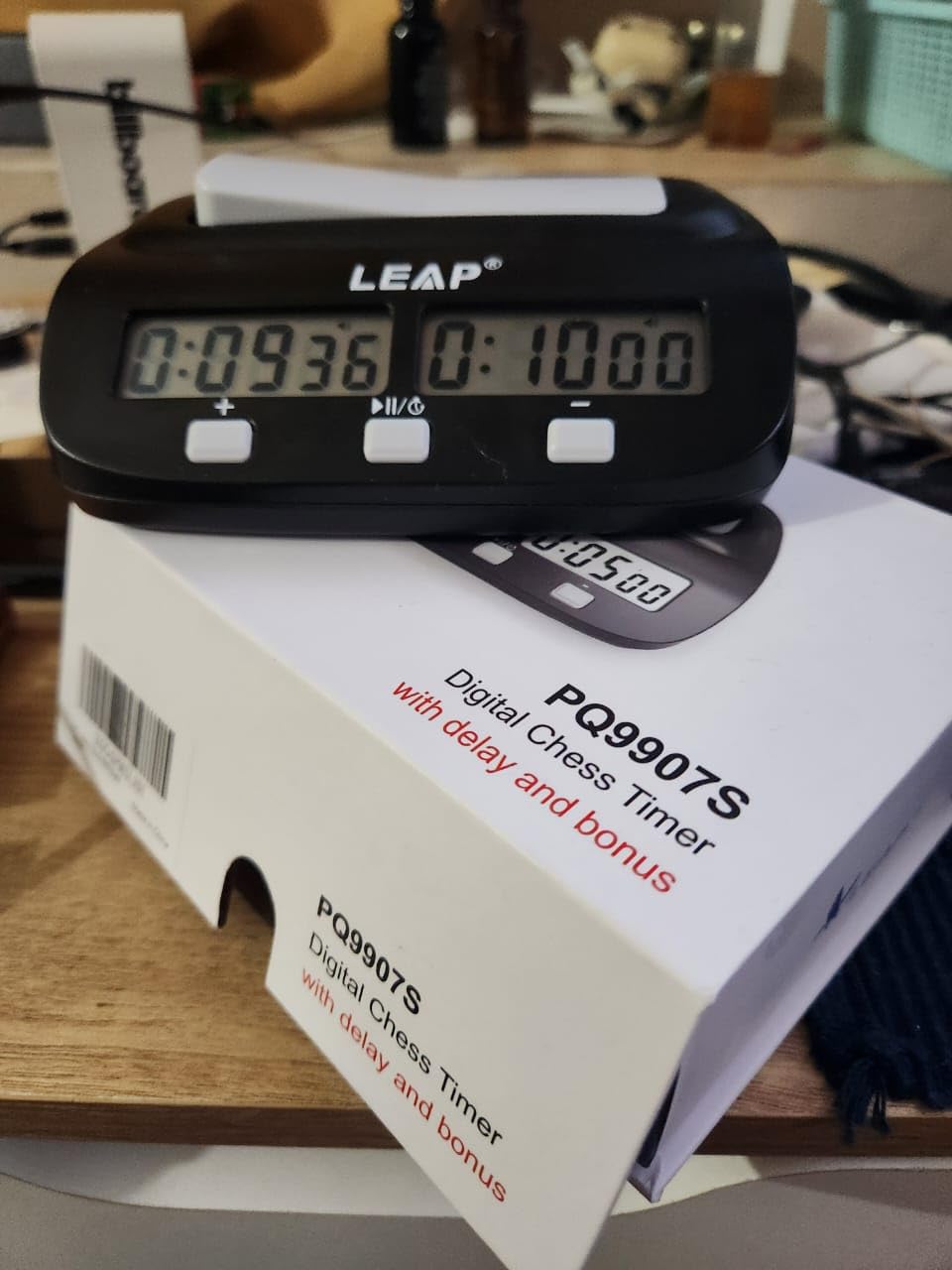
Despite its simplicity, the LEAP Classic still covers bonus time and delay options. You get count-up and count-down modes, an alarm function that can be toggled on or off, and compatibility with hundreds of two-player board games. For under $20, the feature set is surprisingly complete.
The alarm function is a nice inclusion that some other budget clocks skip. When time expires, you get an audible alert. During club play or teaching sessions, this helps everyone at the table know when a game has ended without constantly checking the display.
When the LEAP Classic makes sense
This is the clock I recommend for absolute beginners who are not sure if they will stick with chess long enough to justify a bigger investment. At under $20, the risk is minimal. You get real timing functionality with bonus and delay, which means the clock grows with you as you learn more about time controls.
School programs on tight budgets should also consider the LEAP Classic. Buying five or six of these costs less than two DGT clocks, and for teaching basic time management, they work perfectly well.
When to look elsewhere
If you know you will be playing tournament chess, skip the Classic and get the LEAP FIDE-approved model for a few dollars more. The FIDE version gives you 30+ presets and official tournament approval, which the Classic lacks. Players who want the most features per dollar should also look at the LEAP Advanced instead.
How to Choose the Right Chess Clock for Your Needs
Picking the right chess clock comes down to three questions: where do you play, how serious are you, and what time formats do you use? I have tested all eight clocks in this guide across different scenarios, and here is what matters most when making your choice.
Digital vs analog: which is better for you
Digital clocks dominate this price range for good reason. They offer precise timing, multiple presets, delay and increment modes, and easy programmability. Every clock in our lineup is digital, and for under $100 that is the right choice for most players. Analog clocks have a classic aesthetic and do not require batteries, but they lack delay and increment features that are standard in modern tournament play.
If you are choosing between digital and analog, the deciding factor is whether you need delay or increment. If your games use any form of Fischer bonus, Bronstein delay, or simple delay, you need a digital clock. Analog clocks cannot implement these time controls.
Delay vs increment explained simply
This is one of the most confusing topics for new players, so let me break it down plainly. Delay means each player gets a fixed amount of extra time at the start of every turn before their main clock starts counting down. If you have a 5-second delay, the clock waits 5 seconds after your opponent presses their side before your time starts draining.
Increment, also called Fischer bonus, adds a fixed amount of time to your clock after each move. If you have a 5-second increment and 10 minutes left when you finish your move, your clock jumps to 10 minutes and 5 seconds. The key difference is that with delay, you lose the unused portion. With increment, you keep any leftover bonus time.
Both modes prevent time trouble from ending a game prematurely, but they work differently. Fischer increment rewards fast play because you accumulate time. Delay simply gives you a grace period each move. Most modern tournaments use increment rather than delay.
FIDE vs USCF approval: what you need to know
FIDE approval means the clock meets international standards set by the World Chess Federation. USCF approval means it meets the standards of the United States Chess Federation. In practical terms, a FIDE-approved clock can be used at any event worldwide, including USCF-rated tournaments. A USCF-approved clock may not be accepted at FIDE-rated events outside the US.
If you only play in the United States, USCF approval is sufficient. If you plan to compete internationally or at FIDE-rated events held in the US, look for the FIDE badge. In our lineup, the LEAP FIDE model and the DGT 2010 both carry FIDE approval. The DGT North American carries USCF approval.
Button type: rocker vs push buttons
Chess clocks use two main button styles. Rocker bars tilt left and right to switch the active clock. Push buttons are separate buttons on each side that you press down. Rocker bars are the traditional style and preferred by most tournament players because the mechanical motion is clear and unambiguous. Push buttons are more common on budget digital clocks and work fine for casual play.
In my testing, the DGT 2010 had the best lever action, the A&A had the best rocker bar among budget options, and the LEAP models used push buttons that were functional but less satisfying. Button feel is a personal preference, but it matters most during blitz games where you are pressing the clock dozens of times per minute.
Matching clocks to use cases
For beginners and casual home players, the Chess Armory or LEAP Classic gives you everything you need at the lowest cost. For club players who attend regular sessions, the LEAP Advanced or LEAP FIDE offers tournament features without breaking the budget. For serious tournament competitors, the DGT North American is the sweet spot of price and performance. For players who compete internationally or stream games, the DGT 2010 provides the full professional package.
What is the best chess clock to buy?
The DGT North American Chess Clock is the best overall choice for most players. It offers 30 preset time controls, USCF tournament approval, Fischer bonus and Bronstein delay support, and a solid build quality that holds up to regular club and tournament use. For budget-conscious buyers, the LEAP Chess Clock Advanced delivers nearly the same feature set at a lower price.
Why is a chess clock expensive?
Premium chess clocks cost more because they use higher-quality materials, offer precise timekeeping certified by chess federations, and include advanced timing modes like Fischer increment and Bronstein delay. Brand-name clocks like DGT also invest in tournament testing and official approval processes. Budget clocks under $30 now offer many of the same features, making them a practical alternative for most casual and club players.
What is the FIDE approved chess clock?
A FIDE approved chess clock is a timer that has passed testing by the World Chess Federation for accuracy, reliability, and compliance with international tournament regulations. FIDE approved clocks in the under $100 range include the LEAP FIDE Approved Chess Clock and the DGT 2010. Both meet the standards required for FIDE-rated events worldwide.
Is Leap a good chess clock?
Yes, LEAP makes solid chess clocks that consistently earn 4.5 to 4.7 star ratings across thousands of Amazon reviews. The brand offers several models at different price points, including a FIDE-approved version. LEAP clocks are known for intuitive controls, good feature sets including delay and increment modes, and strong value for money. The main tradeoff compared to premium brands like DGT is lighter plastic construction.
How do delay and increment modes work on chess clocks?
Delay mode gives each player a fixed grace period at the start of every turn before their main clock starts counting down. Unused delay time is lost. Increment mode, also called Fischer bonus, adds a fixed amount of time to your clock after each move. Any unused increment carries over to future moves. Both prevent games from ending purely due to time pressure, but increment rewards faster play by letting you accumulate extra time.
Final Thoughts
After testing all eight of these clocks across dozens of games, my top recommendation for most players has not changed. The DGT North American remains the best balance of build quality, tournament readiness, and price for anyone who plays chess regularly. The LEAP Advanced takes the value crown with features that punch well above its weight class. And the Chess Armory gives beginners a solid entry point that handles the basics without asking much from your wallet.
The best chess clocks under 100 dollars in 2026 cover a remarkably wide range of needs, from casual kitchen-table blitz to FIDE-rated international competition. Whatever your level and budget within this range, one of these eight timers will serve you well. Pick the one that matches how and where you play, and spend the money you save on a good chess book.