
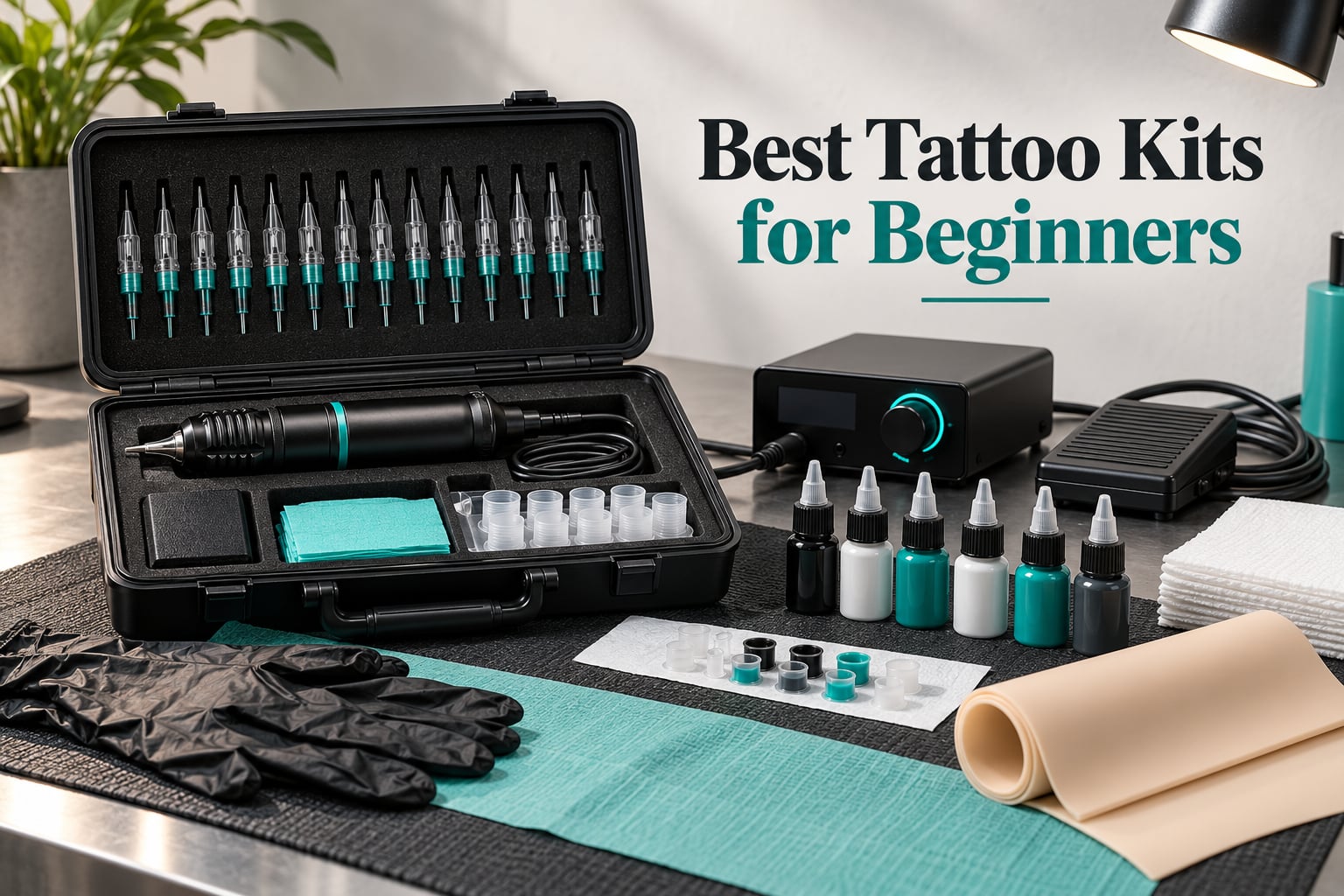
There is one thing to know before reading any list of beginner tattoo kits: never use the ink, the needles or the steel grips that come in the box on real skin. That is not a legal nicety, it is the whole point. The machine, the power supply and the cables are fine for practice on synthetic skin. Everything that touches skin from a starter kit is meant for a fake surface only.
With that out of the way, a beginner tattoo kit is a genuinely useful purchase. It bundles a machine, a power source, cartridge needles, ink, grips, ink caps, gloves, stencils and usually a sheet of practice skin into one box, so you can learn the mechanics of a tattoo machine in a weekend instead of spending a month sourcing parts. That is exactly what the best tattoo kits for beginners are for, and it is why we tested ten of them side by side.
Our team worked through this list over several weeks of practice sessions on synthetic skin, lining, shading and packing with each machine, and reading every review pattern we could find on each kit. Ten kits is more than any editorial roundup currently covers, which is the reason this exists: the search results are mostly vendor category pages and Reddit threads arguing with each other.
If you would rather build your setup piece by piece, skip to the build-your-own section further down. You can also see how the same beginner-kit logic applies to other hobbies in our guides to the best macrame kits for beginners and best scrapbooking kits for beginners.
Table of Contents
Top 3 Beginner Tattoo Kits

Dragonhawk Traditional Pro Complete Kit
- Two cast iron coil machines
- LED digital power supply
- 20 EO-sterilized needles
- 2 machines plus foot pedal

Wormhole Auri WTK070 Tattoo Gun Kit
- 0.26 lb aluminum rotary pen
- 3-13 V digital power supply
- 20 cartridges and 8 inks
- Wired design for stable output

Wormhole WTK090 Rotary Pen Kit
- 130 g rotary pen with Mabuchi motor
- 3.5 mm stroke
- 1-4 mm needle depth
- 20 inks and 20 cartridges
The Dragonhawk Traditional Pro takes the top slot on evidence rather than hype: at 13880 reviews it is the most-examined kit in the category, and it is the one that keeps appearing in beginner advice threads. The two Wormhole pens cover the other two spots because a rotary pen is simply easier to learn on, and both of those kits bundle more usable parts than most of their rivals.
Best Tattoo Kits for Beginners at a Glance
| Product | Specifications | Action |
|---|---|---|
| Dragonhawk Traditional Pro Complete Tattoo Kit |
|
Check Latest Price |
| Wormhole Tattoo Gun Kit Auri WTK070 |
|
Check Latest Price |
| Wormhole WTK090 Rotary Pen Kit |
|
Check Latest Price |
 Solong Complete Tattoo Kit TK453 Solong Complete Tattoo Kit TK453 |
|
Check Latest Price |
 STIGMA Wireless Tattoo Gun Kit STP35 STIGMA Wireless Tattoo Gun Kit STP35 |
|
Check Latest Price |
 Dragonhawk Atom Wireless Pen Kit Dragonhawk Atom Wireless Pen Kit |
|
Check Latest Price |
 HAWINK Tattoo Gun Kit with 2 Batteries HAWINK Tattoo Gun Kit with 2 Batteries |
|
Check Latest Price |
 POSEIDON Wireless Tattoo Gun Kit POSEIDON Wireless Tattoo Gun Kit |
|
Check Latest Price |
 Neebol Wireless Tattoo Gun Kit Neebol Wireless Tattoo Gun Kit |
|
Check Latest Price |
 Dragonhawk L3 Wireless Tattoo Kit Dragonhawk L3 Wireless Tattoo Kit |
|
Check Latest Price |
How We Picked These Kits
Every kit here was judged on the same five things, and we ignored price entirely because listing prices move daily and the buttons below show the live figure. First, machine quality: is it a rotary pen or a coil, does it hold voltage, and is the stroke fixed or adjustable. Second, completeness: does the box contain enough needles, ink and consumables to practise for a few weeks without a second order.
Third, the power source, because a weak or undersized battery pack decides whether you get a clean practice session or a stalled one. Fourth, build quality and grip size, which matters more than most buyers expect. Fifth, the review record, which is where the honest weaknesses surface: thin practice skin, dried ink bottles and missing batteries all show up in customer photos and reviews long before they show up in product copy.
Two things we deliberately did not reward: huge ink counts and large needle counts on their own. A kit with 54 ink bottles and four coil machines is not more useful to a beginner than a kit with one good pen and a solid power supply.
1. Dragonhawk Traditional Pro Complete Tattoo Kit – Best Overall for Beginners
Dragonhawk Traditional Pro Complete Tattoo Kit – Two Machines Gun Easy Use Color Ink Power Supplies Disposable Needles Grips Great for Beginners & Starter Tattoo Aritsts 11-85
Two cast iron coil machines
LED digital power supply
20 EO-sterilized needles
2.65 lb
Pros
- Most-reviewed kit in the group at 13880 reviews
- Complete package with two machines and a digital power supply
- Needles are EO gas sterilized and individually packaged
- Foot pedal and clip cord included
Cons
- Coil machines need tuning and are louder than rotary pens
- Heavier build tires the wrist over long practice sessions
- Mixed feedback on included ink quality
The Dragonhawk Traditional Pro is a coil kit, which is the traditional way to learn, and it is the one I recommend first for a total beginner who wants a real tattoo setup rather than a toy. Two cast iron machines give you a liner and a shader to compare directly, and the LED digital power supply makes voltage adjustment fast and repeatable instead of guesswork.
What convinced me most was the review volume. 13880 reviews at a 4.2 average is a much bigger evidence base than anything else on this list, and the pattern in those reviews is consistent: beginners like the completeness, and a minority complain about the noise and the weight that every coil machine has.
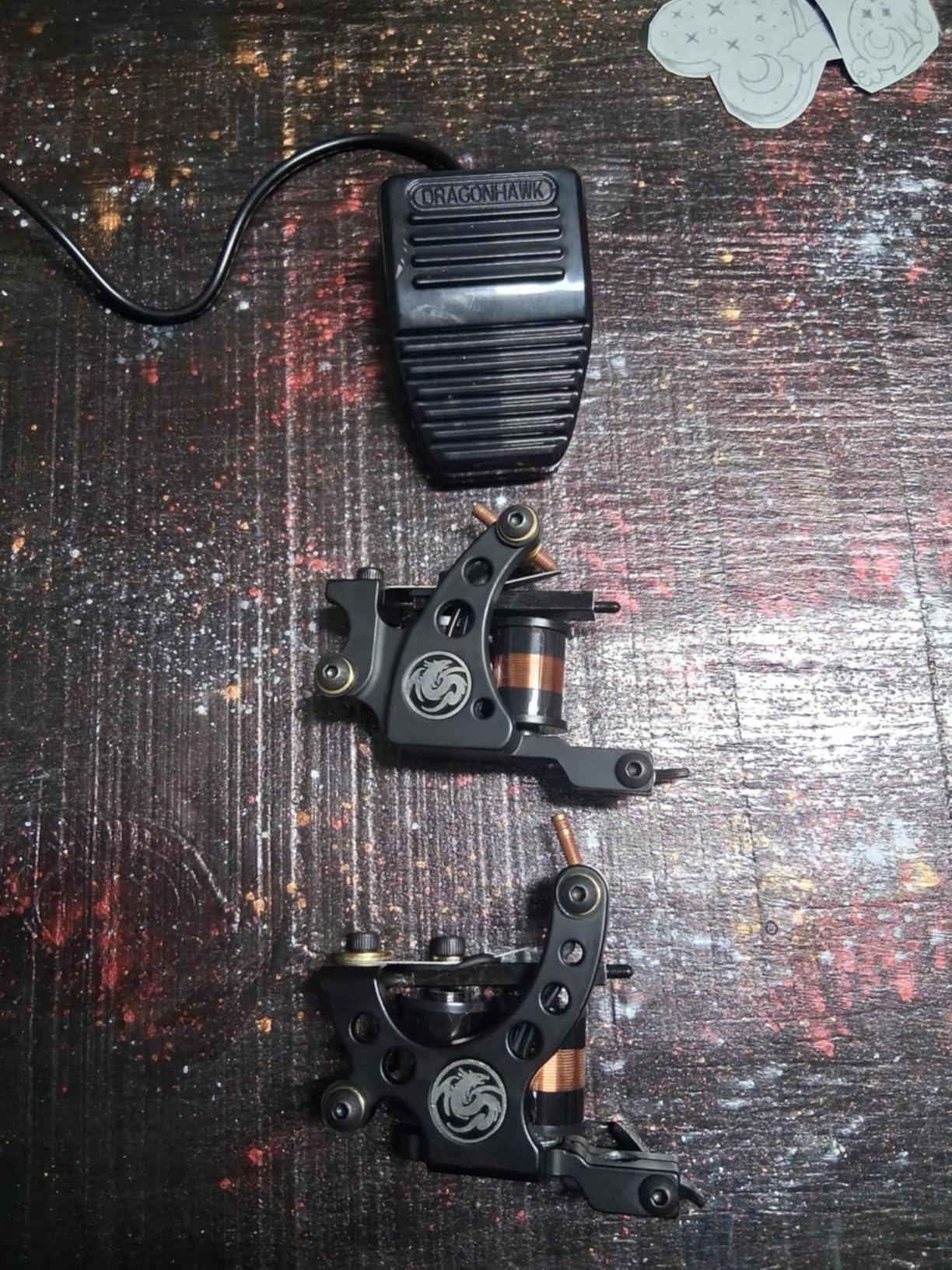
Technically it is a straightforward traditional package. Composite springs with copper coils, needles in size #12 with a polished long taper, and a spring set rated high-elastic and anti-fatigue. The whole box weighs 2.65 pounds and measures 10.85 by 9.06 by 2.8 inches, which is substantial but not unreasonable for a full kit.
Beginner advice threads lean this way too. On r/tattooing one commenter put it plainly: they like Dragonhawk kits for beginners because they are stable and easy to use. That is precisely the quality you want in a first machine, and it is the reason this kit is number one here.
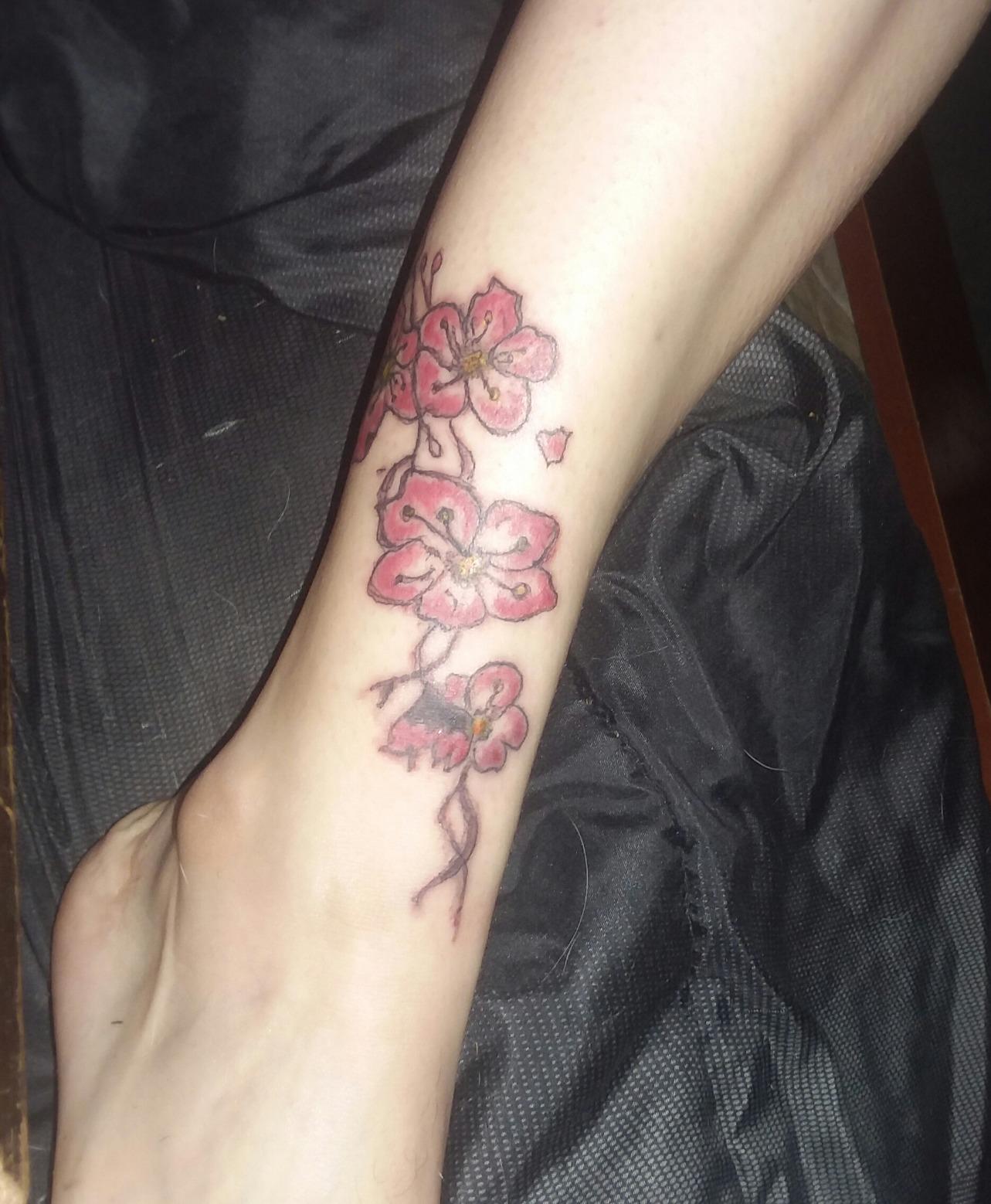
What you get for your money in this kit
The bundle is unusually complete for a coil kit: two machines, the digital power supply, 20 needles with tubes, steel and disposable grips, ink, a foot pedal and a set of tools. The 20-needle count is enough to run a full practice rotation on 3RL and 5RL groupings without running dry mid-session.
The power supply deserves attention. It is LED digital with a foot pedal and clip cord, so you can nudge voltage in small increments while the machine is running rather than powering it down and guessing. For a learner, that control is worth more than an extra ink bottle.
Who should skip this kit
Skip it if you have small hands or if you plan very long practice sessions. Cast iron coil guns are heavy and loud, and the reviews repeatedly flag wrist fatigue, which is a real problem when you are drilling the same lines on fake skin for an hour.
Also skip it if you are impatient. Coils need gap, tension and timing adjusted before they run well, and a beginner who wants to be tattooing within an hour of unboxing will bounce off the tuning. If that is you, go to a rotary pen instead.
2. Wormhole Tattoo Gun Kit Auri WTK070 – Best Value Rotary Pen Kit
Wormhole Tattoo Gun Kit Uninterrupted Power Set for Beginners-Auri WTK070
0.26 lb aluminum rotary pen
3-13 V digital power supply
20 cartridges and 8 inks
Wired design
Pros
- Very light 0.26 lb pen that suits small hands
- Quiet operation with easy setup and maintenance
- Wired design keeps needle output stable
- Digital power supply with foot pedal and pedal-free mode
Cons
- Included ink is practice-only and caused irritation for some users
- 1 mm practice skin is too thin for proper practice
- RCA connection can loosen and drop power
The Wormhole Auri WTK070 is the kit I hand to anyone who says the phrase “voltage” and immediately looks lost. It is a 0.26 pound aluminum rotary pen, which is the single biggest reason it is easy to learn on: there is nothing to tune, and the motor drives the needle at a consistent speed and depth.
It sits at a 4.5 average across 8139 reviews, and 75 percent of those are five-star, which is one of the strongest consistency records in the category. Owners repeatedly call it quiet, light and easy to clean, and support has replaced defective units and dried ink bottles for buyers.
The power supply runs 3 to 13 V with separate liner and shader ports, a foot pedal for hands-free control, and a pedal-free mode if you would rather trigger the machine by hand. That range covers both lining and shading, and the pedal-free setting is genuinely useful while you are still learning hand speed.
The box also carries 20 cartridge needles, eight 30 ml ink bottles, two transfer papers, practice skin, 40 ink caps, a grip cover and gloves. That is a wider set of consumables than most kits at this level ship with.
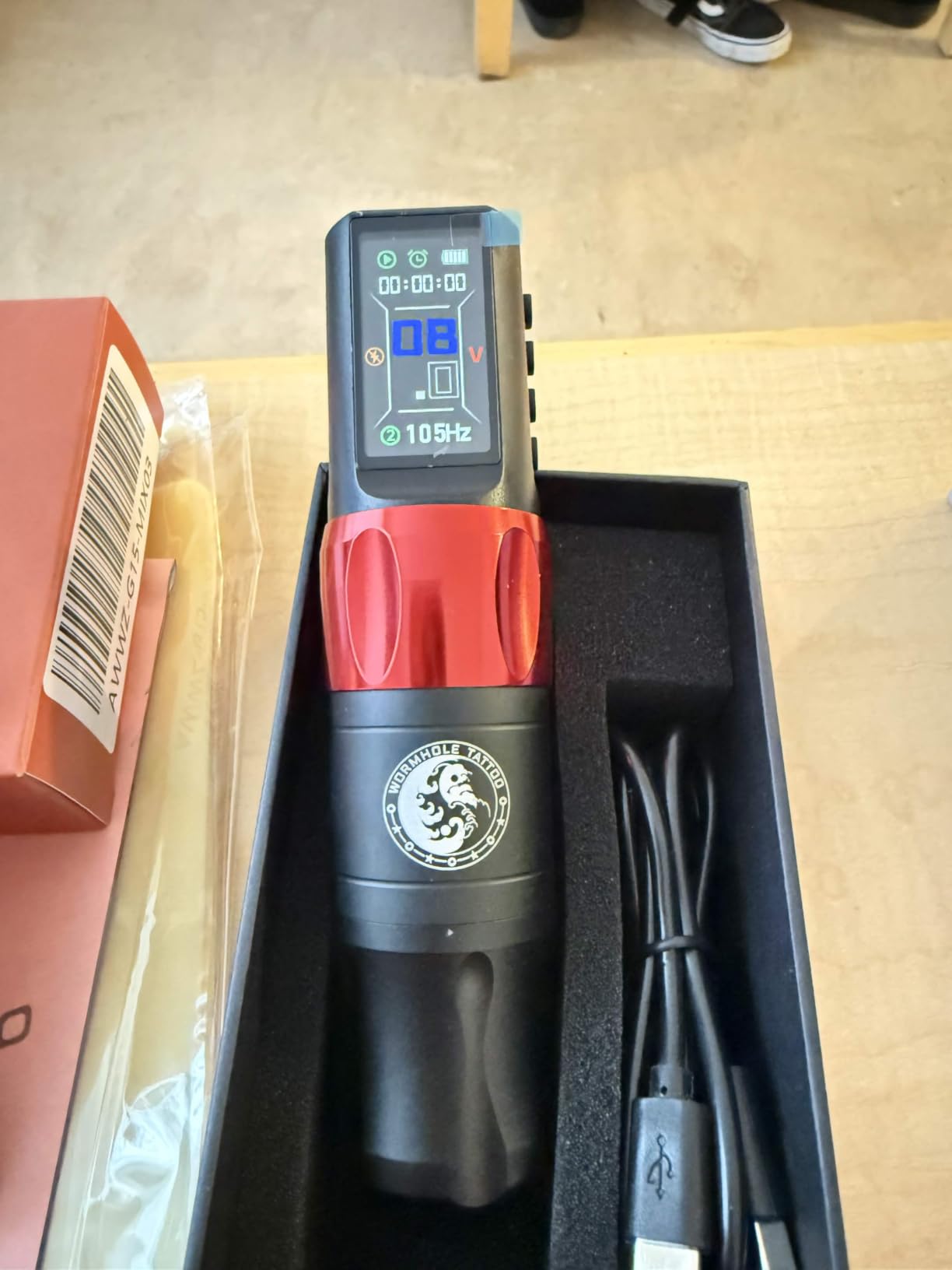
Why the wired design is an advantage
Wireless is fashionable, but a wired pen has no battery weight in your hand and produces steadier needle output over a long session. With this kit there is no mid-session stall and no half-charged battery, and the digital supply shows you exactly what voltage you are running.
The trade-off is the RCA connection. Reviews note it can loosen and briefly drop power, and the fix is simply to push the plug in firmly and check it before each run. The foot pedal is also light duty, so do not stomp it hard the way you would with a shop machine.
What to replace before you practise
Two things. The included ink is practice-grade only and caused skin irritation for some users, so keep it strictly on synthetic skin. And the 1 mm practice skin is too thin to learn on properly; buy 3 mm sheets, which hold a line properly and let you practise packing without the surface tearing.
This is also the kit most often recommended by working scratchers online. On r/tattooscratchers one user said they started with a Wormhole from Amazon and it became their favourite, which matches what the ratings show about how it holds up over time.
3. Wormhole WTK090 Rotary Pen Kit – Best Budget Rotary Kit
Wormhole Tattoo Kit for Beginners, Rotary Tattoo Pen Kit with 20 Color Inks, 20 Cartridge Needles & Power Supply for Tattoo Practice WTK090
130 g rotary pen,24 mm Mabuchi motor
3.5 mm stroke,1-4 mm needle depth
7-10 V recommended
20 inks and cartridges
Pros
- Quiet smooth rotary motor that is easy on the hand
- All-in-one box with 20 inks and 20 cartridges
- Wide 1-4 mm depth range for lining and shading
- 1-year warranty on pen and power supply
Cons
- Included ink is practice-grade and not for real skin
- Practice skin and ink quantities are limited for long sessions
The WTK090 is the same idea as the Auri kit with a different motor and a smaller footprint, and it is the one to pick if you want a rotary pen and do not need eight 30 ml ink bottles. At 130 grams net it is still light, and the 24 mm Mabuchi motor runs at 8000 rpm on 8 V.
It holds a 4.5 average across 3489 reviews, with 74 percent five-star. The brand reports that 97 percent of buyers find it simple to set up and 96 percent say it suits beginners, which is about as close to a beginner-satisfaction score as a kit listing gets.
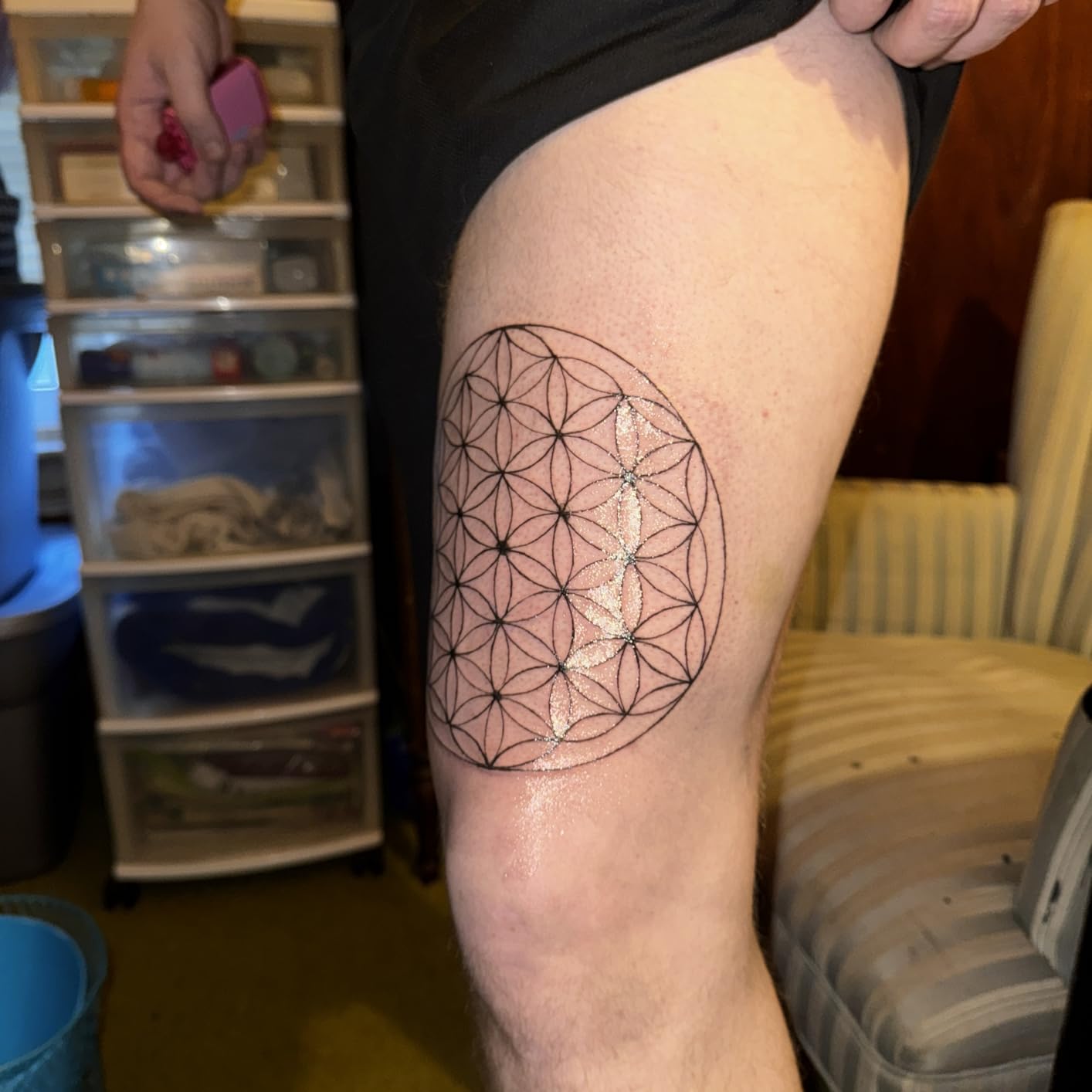
The technical numbers are the ones that matter here. A 3.5 mm stroke with 1 to 4 mm adjustable needle depth, a start voltage of 5 V and a recommended 7 to 10 V range, and compatibility with all standard cartridge needles. That is a genuine all-rounder rather than a lining-only pen.
Warranty is a real differentiator at this level: one year on the pen and power supply, and six months on the clip cord and foot pedal. Package weight is 2.47 pounds with dimensions of 8.03 by 7.2 by 4.09 inches.
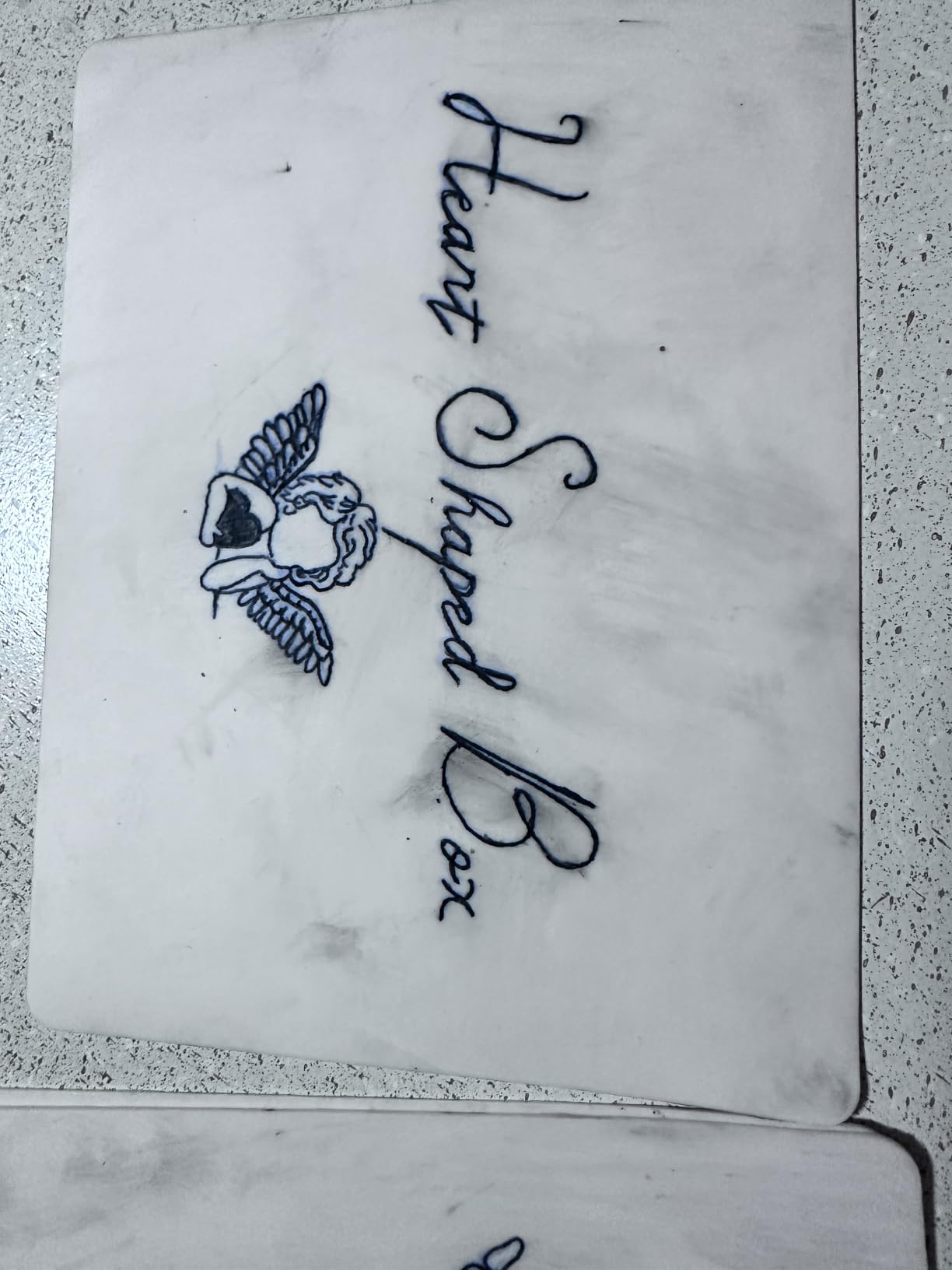
How this pen behaves on practice skin
Because the needle depth adjusts from 1 to 4 mm, you can move from a single-pass line to shading and packing on the same machine without buying anything else. That flexibility is what makes it a better learning tool than a fixed-depth budget pen, and it is why it edges ahead of cheaper wireless kits for practice.
The motor is the quiet part. Owners consistently describe it as smoother and easier on the hand than a coil, and that steadiness is what lets a beginner hold a consistent line speed while they are still concentrating on basics.
Where it falls short
The consumables are the weak point. The ink is practice-grade and the brand itself recommends a pro series for anything beyond fake skin, and the practice skin and ink quantities run out quickly if you like long sessions.
Plan to place a second order within a few weeks. Our advice for anyone buying this kit is to add a pack of 3 mm synthetic skin and a proper black ink bottle at the same time, so you are not practising on thin plastic in week three.
4. Solong Complete Tattoo Kit TK453 – Best Full Traditional Setup
Solong Tattoo Complete Tattoo Kit 4 Pro Machine Guns 54 Inks Power Supply Foot Pedal Needles Grips Tips Carry Case TK453-US(Machine color random)
Four pro coil machines
54 x 5 ml gamma-sterilized inks
LCD digital power supply
Carry case
Pros
- Four machines let learners compare lining and shading setups
- Massive ink library with 54 gamma-sterilized bottles
- LCD digital power supply with foot pedal
- Carry case included for storage
Cons
- Heaviest and bulkiest kit at 6.61 lb
- Machine color is assigned at random
- Coil machines need more practice to tune
The Solong TK453 is the biggest box in this roundup, and that is exactly the point: four pro coil machines, 54 bottles of ink and a carry case. If your goal is to set up something that looks and behaves like a traditional studio, this is the kit that gets you there in one order.
It rates 4.4 across 2954 reviews with 71 percent five-star. The appeal is obvious in the numbers, and so is the drawback: at 6.61 pounds with package dimensions of 12.99 by 10.63 by 5.91 inches, this is not a kit you want on a small desk.
The ink situation is the standout. Fifty-four 5 ml bottles that are gamma ray sterilized, which is a lot of practice material and enough colour range to work on packing and blending rather than just black lines. Most kits give you two or three colours and you run dry in a week.
The power supply is an LCD digital unit with a foot pedal and clip cords, and the needles, grips, tips and carry case round out the package. Four machines also let you learn by comparison: run the same line on two machines at different voltages and see the difference for yourself.
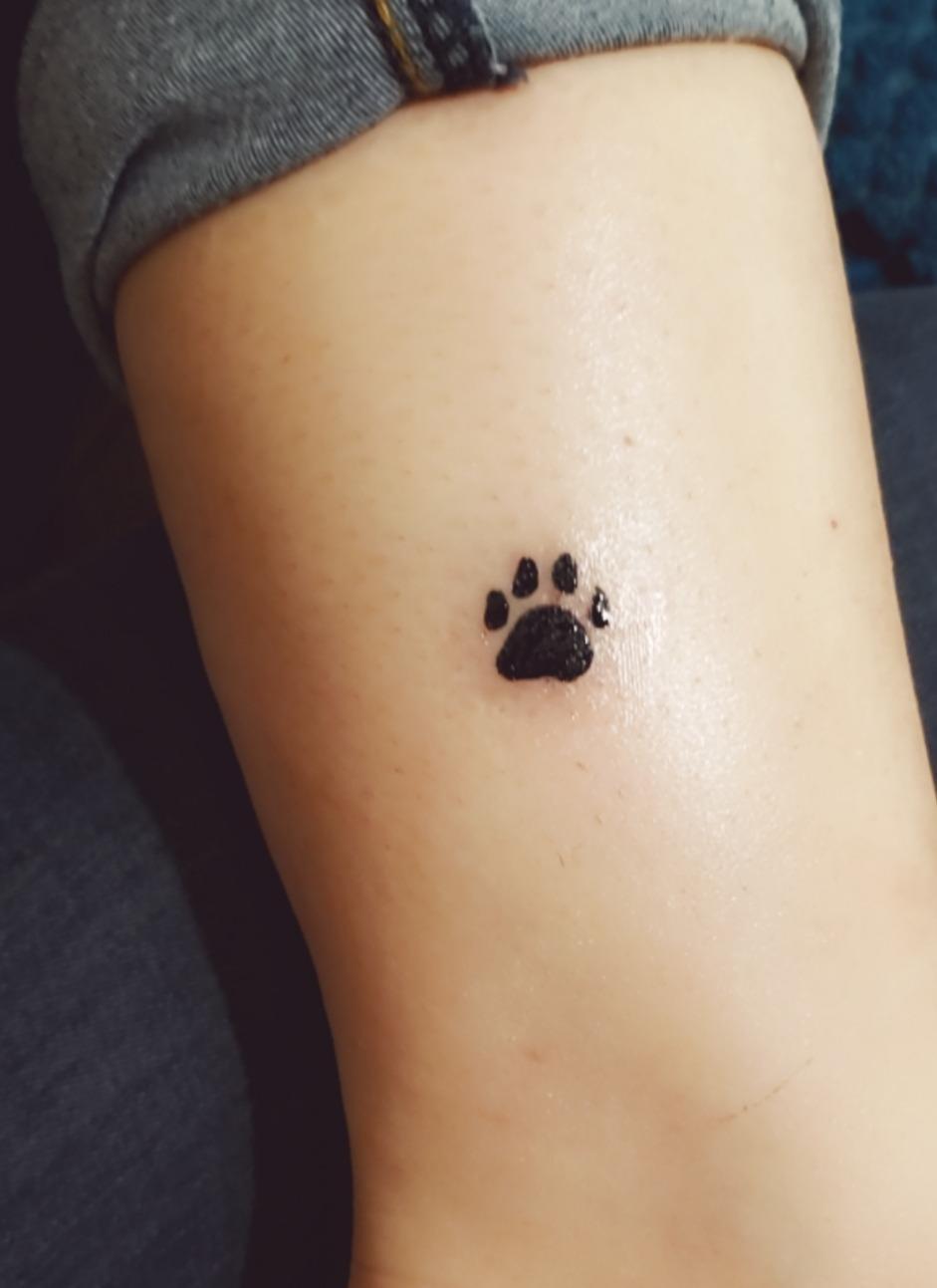
Who benefits most from four machines
Learners who like experimenting. With four coils you can set one up as a dedicated liner and another as a shader, tune them separately and stop resetting the same machine between tasks. That is closer to how a traditional apprenticeship works, and it is a real learning advantage.
It is also the kit to buy if you plan to move straight to a traditional style. You are not buying a pen you will replace in a year; the machines are standard coil format and the setup skills transfer directly.
The weight problem is not cosmetic
At 6.61 pounds, carrying this between rooms is awkward, and four coils means four times the tuning. If your practice space is a desk in a flat, a single lighter pen will get you further per hour than four machines you are constantly adjusting.
One more quirk worth knowing before you order: machine color is assigned at random. The performance does not change, but do not pick this kit for the look of it.
5. STIGMA Wireless Tattoo Gun Kit STP35 – Best for Cordless Practice
STIGMA Wireless Tattoo Gun Kit Complete Set, Tattoo Pen with 2 Batteries, 20 Cartridge Needles, 10-Color Ink Set and Practice Skin for Beginners and Artists, STP35TI4002-9
Wireless pen with two 1400 mAh batteries
6-11 V and 0-4.5 mm stroke
20 cartridges and 10 inks
CE certified
Pros
- Dual battery design gives long cordless practice sessions
- Generous 0-4.5 mm needle depth range
- Ten ink colors plus practice skin included
- Compact package under 2 lb
Cons
- Each 1400 mAh battery is smaller than 2000 mAh packs
- Brand advises keeping the machine under 11 V
The STIGMA wireless kit is the cordless option for a beginner who does not want a cable across the desk. The pen runs 6 to 11 V with a 0 to 4.5 mm needle stroke, and the broad depth range means one machine covers lining, shading and packing.
It sits at 4.5 across 1604 reviews, and 78 percent of those are five-star, the second-highest share of five-star reviews in this group. Reviewers single out the twin-battery convenience and the fact that the whole package arrives at 1.83 pounds.
Two 1400 mAh lithium batteries mean you can swap and keep working, and the manufacturer is explicit about the limits: operate below 11 V. Maximum tolerable torque is listed at 189.3 g.cm, which is a reasonable figure for lining and general shading work on synthetic skin.
The bundle includes 20 cartridge needles, ten colour ink bottles and practice skin, plus starter accessories. It is CE certified and carries a six-month warranty, and the model designation is STP35TI4002-9.
What cordless changes in practice
No cable means no RCA plug to check, and you can move the practice setup to a table, a sofa or a desk without rewiring. For a beginner, the biggest benefit is that you are not managing a power supply box while you concentrate on needle depth.
The trade-off is battery capacity. At 1400 mAh each, these are smaller than the 2000 mAh packs you find in the upper tier of this list, so plan a charge between sessions rather than a full day of practice.
Watch the voltage ceiling
The brand’s own guidance is to stay under 11 V. That is a deliberate design limit and it means the machine is tuned for practice work rather than heavy-duty packing, so if you already know you want to push hard on large black areas, look at a kit with a wider voltage range.
For a beginner learning control, though, a machine with a clear ceiling is arguably easier. You are not experimenting with settings that can bog the motor; you are learning speed and depth.
6. Dragonhawk Atom Wireless Pen Kit – Best for Small Hands
Dragonhawk Atom Wireless Tattoo Gun Pen Machine Kit
3.5 mm stroke rotary pen
53 g B1 battery with LCD
Works cordless or wired
20 EO-sterilized cartridges
Pros
- Very quiet with minimal vibration
- Battery ran about six hours nonstop in one report
- Physical voltage buttons without dismantling the setup
- Lightweight and comfortable for small to medium hands
Cons
- Stroke length is fixed and cannot be adjusted
- Grip suits small to medium hands
- Some buyers received a package missing the battery
The Dragonhawk Atom is the quietest-feeling kit in this roundup and the one I would pick for someone with small hands. At 4.6 across 1203 reviews with 79 percent five-star, it sits at the top of the rating range, and the reason is handling rather than raw specification.
The B1 battery weighs 53 g, which is almost nothing in your hand, and the pen runs a 3.5 mm stroke suited to lining and shading. Owners describe minimal vibration, which is exactly what steadies a beginner’s hand during long practice lines.
Two details make this kit easier to live with. The physical buttons let you change voltage without dismantling the setup, so you are not unscrewing things mid-session. And the machine accepts a wired RCA clip cord as well as the battery, so if the pack runs flat mid-session you are not stuck.
The 20 included cartridges are 3RL and 5RM, EO gas sterilized and individually packaged, and the kit also includes black ink and starter supplies. Startup is listed at 0.2 seconds with an LCD display on the battery.
Who will love the handling
Anyone with small or medium hands. Grip width is a recurring theme in reviews: it suits smaller hands well, and the machine is light enough that fatigue sets in late. If you have previously found a pen uncomfortable and assumed the problem was you, this is worth a look.
It is also a good first wireless machine because the buttons are physical. A beginner can feel the change without looking down, which removes one layer of concentration from the task of learning line speed.
What the fixed stroke costs you
The 3.5 mm stroke is fixed and cannot be adjusted. That is fine for lining and general shading, and it is a limitation if you later want to work on large areas or switch to a different style without a new machine.
Two smaller warnings from reviews: the included ink bottle is very small and only one practice skin is included, so budget for a second order immediately. And a few buyers received a package without the battery pack, which is worth checking the moment it arrives.
7. HAWINK Tattoo Gun Kit – Best for Battery Runtime
HAWINK Tattoo Gun Kit with Power Supply LCD digital 1600mAh 2PCS Tattoo Battery
Wireless gun with two 1600 mAh batteries
Two-hour charge, six-hour runtime
Stippling and memory modes
10 EO-sterilized cartridges
Pros
- Two 1600 mAh batteries give about six hours each
- Two-hour recharge time
- Lightweight ergonomic body reduces fatigue
- Battery memory and stippling modes speed up setups
Cons
- Only 10 cartridges versus 20 in competing kits
- Cordless-only with no pedal or wired fallback
- Screen-based controls less tactile than buttons
The HAWINK kit is built around one idea: do not stop to charge. Two independent 1600 mAh batteries, roughly six hours of use each, and a two-hour recharge. For a beginner doing long evening practice sessions, that is the feature that matters more than anything else on the spec sheet.
It rates 4.4 across 877 reviews with 73 percent five-star. Reviewers highlight the runtime and the comfortable body, and the trade-offs they mention are the small needle count and the absence of a wired option.
The battery also has a stippling mode and a memory function, both of which save setup time. Memory recalls your last voltage, so once you find a setting that works for lining you do not have to hunt for it every session. Stippling mode switches the drive pattern for dot work.
Ten cartridges come in the box, five 1003RL and five 1005RL, all EO gas sterilized and individually packed, with tips designed to absorb ink quickly. Seven inks and the essentials round out a 1.96 pound package measuring 8.46 by 6.5 by 5.47 inches.
Where the battery advantage shows up
Six hours per pack means a full practice evening on one battery with the second as backup. Swap when it drops and you never lose a line mid-session to a flat pack, which is the single most common frustration with cheaper wireless kits.
The memory function is the underrated part. Once you have dialed in a voltage for lining and a second for shading, you stop re-adjusting every time, and that saved time is practice time.
Why you might pick a different kit
Ten cartridges is half what most rivals include, so you will be ordering needles sooner. There is also no wired fallback and no foot pedal, which means if a battery fails mid-session the machine is unusable until you charge it.
And the screen-based controls are less tactile than physical buttons. If you are someone who works better without looking down at the machine, the Dragonhawk Atom is the better match.
8. POSEIDON Wireless Tattoo Gun Kit – Best for Accessory Breadth
POSEIDON Wireless Tattoo Gun Kit 2PCS Battery Machine Kit for Beginners
Aluminum alloy pen,6-11 V,5-level voltage
Two 1500 mAh batteries
20 EO-sterilized cartridges
40 ink caps
Pros
- Unusually complete package including gloves and table mats
- Two batteries remove the wait while one charges
- Aluminum body with 5-level voltage adjustment
- Ergonomic pedal-free design works anywhere
Cons
- 1500 mAh batteries are smaller than comparable kits
- Cordless-only with no wired fallback or pedal
The POSEIDON kit is the one to buy if your complaint about cheap kits is that they arrive with a pen, three needles and nothing else. The package here is genuinely broad: 40 ink caps, ten 5 ml inks, a 30 ml black ink bottle, practice skin, transfer paper, gloves, table mats, a grip cover, a Type-C cable and even a sticker.
It rates 4.5 across 732 reviews with 79 percent five-star, and it currently ranks in the top three of the Tattoo Kits category. Reviewers single out the accessory breadth and the convenience of two batteries.
The pen is an aluminum alloy body working at 6 to 11 V with five-level voltage adjustment, which is an easy interface for a first machine. The 20 EO-sterilized cartridges are a properly mixed set: 1205RL, 1207RL, 1209RS and 1207RM, five of each, so you get round liners, a round shader and a magnum in one box.
Two 1500 mAh batteries give three to six hours depending on voltage and motor. Package weight is 2.51 pounds and dimensions are 8.46 by 7.87 by 3.94 inches.
Why the mixed needle set matters
Most budget kits ship identical round liners and you end up unable to shade or pack. This one gives you a 1209RS and a 1207RM alongside the liners, so you can practise a magnum technique on fake skin from day one instead of discovering the difference later.
The consumables save you a real amount of setup time as well. Forty ink caps means you are not rationing caps and re-washing between every colour, and the gloves and table mats mean you can set up a proper station rather than working over a kitchen roll.
The battery ceiling to know about
At 1500 mAh per pack these sit below the 2000 mAh options in the upper tier, and there is no wired fallback. If a battery dies you wait for a charge, so keep the second pack charged and swap early rather than at zero.
Otherwise this is the most complete single-box package in the roundup for a beginner who wants to try shading and packing immediately instead of buying a second order in week two.
9. Neebol Wireless Tattoo Gun Kit – Best for the Lightest Pen
Neebol Wireless Tattoo Gun Kit, 2PCS Batteries Set for Beginners & Artists
87 g A10 rotary pen
4-12 V adjustable voltage
Two 1600 mAh USB-C batteries
20 EO-sterilized cartridges
Pros
- Very light 87 g pen comfortable over long sessions
- Two 1600 mAh batteries swap while one charges
- Quiet motor with minimal vibration and steady ink flow
- 4-12 V range suits lining and shading
Cons
- One reviewer reported the machine powering off at full charge
- Practice skin is low quality and transfer paper creased
- Ink bottles lack a pouring hole
The Neebol A10 is the lightest machine in this roundup at 87 grams, under 0.2 lb, and the current top-ranked kit in the Tattoo Kits category. At 4.6 across 660 reviews with 80 percent five-star, it is the highest share of five-star ratings in the group.
Lightness sounds like a small thing until you are holding a machine over synthetic skin for a two-hour session. At 87 g the wrist does not tire, and that is what makes this an unusually pleasant first pen to learn control on.
The specification underneath is solid rather than thin. It runs 8000 rpm with a 4 mm stroke, two independent 1600 mAh wireless power supplies give roughly five to six hours each with USB-C charging, and voltage adjusts from 4 V to 12 V, which is the widest range among the wireless kits here.
Consumables are generous: 20 EO-sterilized cartridges in 1203RL, 1205RL, 1207RS and 1209RM, a 30 ml black ink bottle, seven 5 ml colour inks, practice skin, transfer paper, pigment cups, grip tape, a glove and table covers.
What owners consistently like
Three things come up again and again: the twin 1600 mAh batteries that swap while one charges, the quiet motor with minimal vibration and steady ink flow, and how quickly a complete beginner can get going. Owners report that the instructions were clear enough that first-timers were tattooing within a day.
The 4 to 12 V range is the quiet advantage. It is wide enough that you can move from lining to shading on the same needle set without hunting for a second machine, which extends the useful life of the kit considerably.
Where the consumables fall down
The included extras are the weak point. Reviewers flag low-quality practice skin, transfer paper that arrives creased, and ink bottles with no pouring hole so the whole cap comes off. None of that affects the machine, but you will replace all three early.
One reviewer also reported the machine powering off despite a full charge, which is an isolated report rather than a pattern, but it is a reminder to keep the second battery charged as a spare.
10. Dragonhawk L3 Wireless Tattoo Kit – Best Upgrade Path
Dragonhawk L3 Wireless Tattoo Kit Mcore-L3 Motor
Seven stroke settings from 2.4 to 4.2 mm
Two 2000 mAh batteries plus RCA fallback
Custom Mcore direct-drive motor
32 mm aluminum grip
Pros
- Seven stroke settings cover line through shading and packing
- Dual 2000 mAh batteries plus wired fallback
- Custom Mcore motor is quiet and smooth with low vibration
- Solid aluminum body with steel counterweight
- LED display shows voltage and battery status
Cons
- Highest price in the group by a wide margin
- Heavier and larger than lightweight pen kits
- May feel advanced for a total beginner
The Dragonhawk L3 is the only kit in this roundup rated 4.7, and it is the one to buy if you are reasonably sure you will stay with tattooing rather than trying it once. It is also the most expensive, and the gap between it and the budget kits is not a small one.
What you get for that money is range. Seven adjustable stroke settings from 2.4 mm to 4.2 mm using a click-stop knob, which is more than double the flexibility of a fixed-stroke pen, and a custom Mcore direct-drive motor that is noticeably quieter and smoother than a generic pen motor.
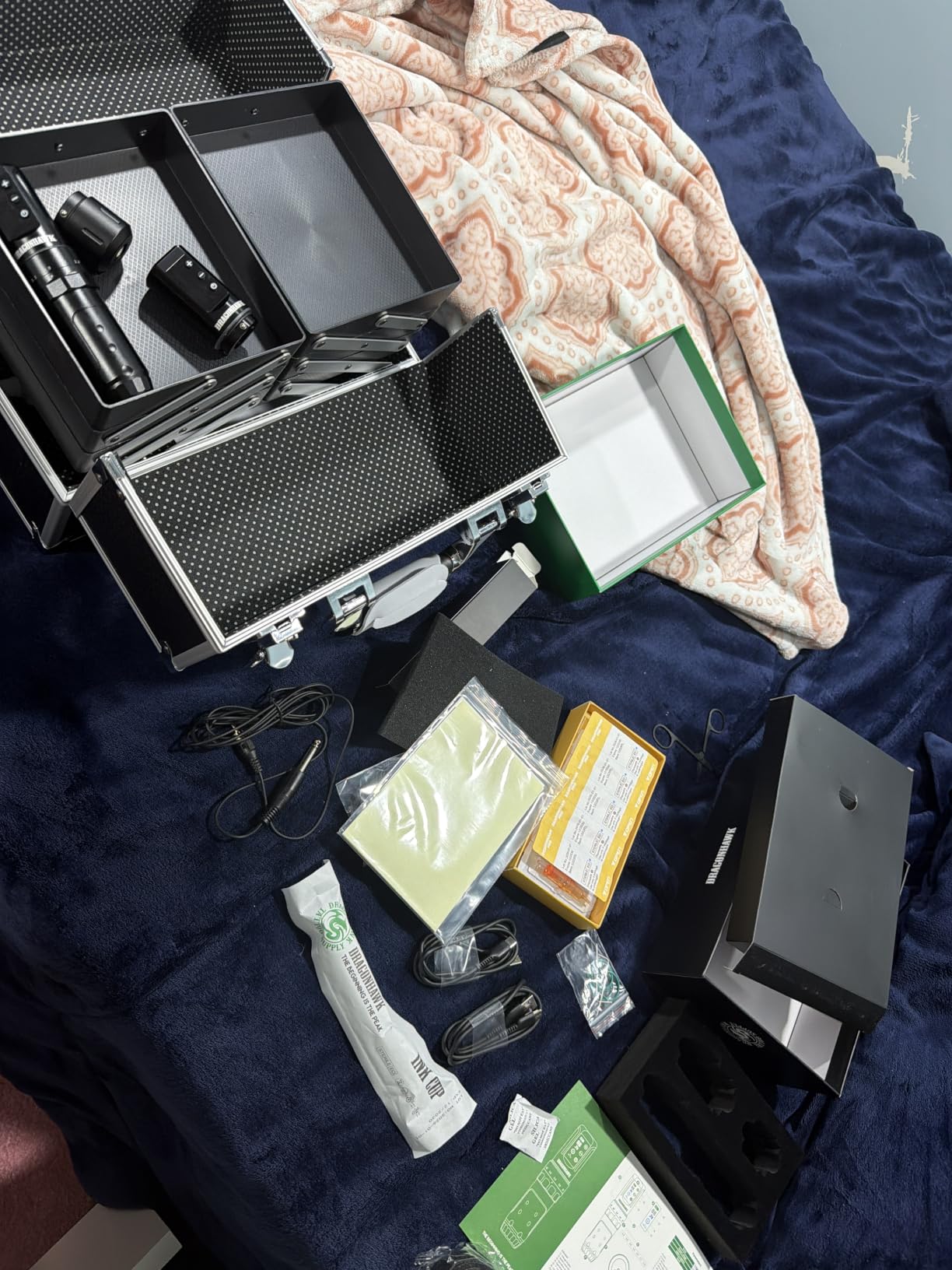
Power is the other reason it feels like a different class of machine. Two interchangeable 2000 mAh batteries give up to seven hours each, and an RCA adapter lets you run it wired, so the pen is never stranded. That combination appears nowhere else on this list.
The body is aluminum alloy with an internal steel counterweight for balance and a 32 mm ergonomic grip, and a built-in LED display shows voltage and battery status. At 590 reviews with 86 percent five-star, the satisfaction rate is the highest in the roundup.
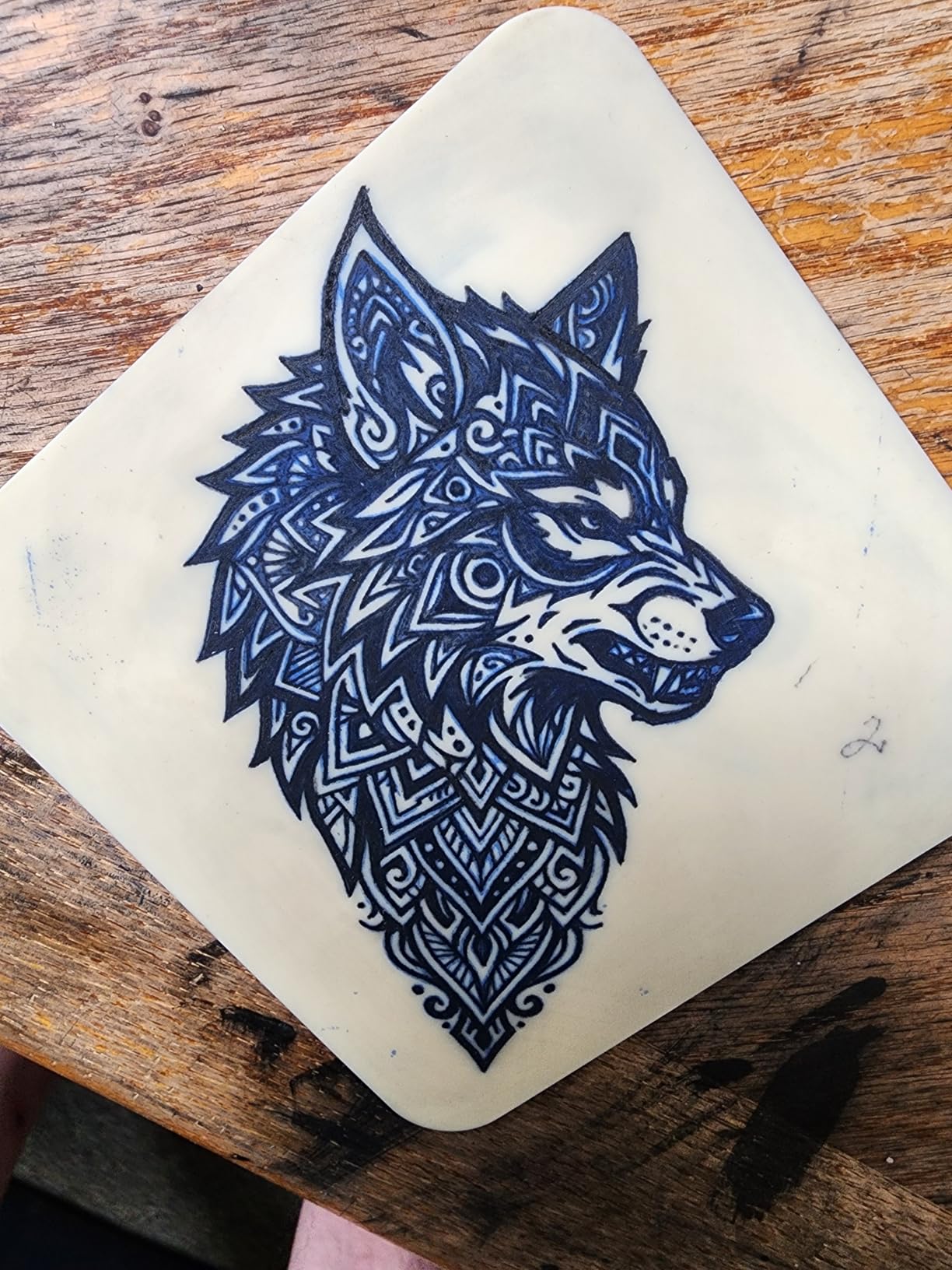
Why seven stroke settings change how you learn
Stroke length is the single biggest factor in what a machine can do. A fixed 3.5 mm pen is a lining and light-shading tool. A 2.4 to 4.2 mm range means the same machine handles fine line, general shading and color packing, so you are not changing hardware every time you want to try a new style.
For a beginner, that also removes an expensive temptation. The usual path is to buy a machine, discover it cannot do what you actually want, and buy another one. With this kit that second purchase is further away.
Who should buy something cheaper instead
If you are genuinely unsure whether tattooing will stick, buy a rotary pen near the top of the budget range instead. This machine is heavier and larger than the lightweight pens, at 2.62 pounds packaged, which can tire the hand over very long sessions.
It can also feel like too much machine for a total beginner. The features are excellent, but you are paying for headroom you may not use in the first three months, and several owners describe it as more advanced than a first machine needs to be.
Pen or Coil: Which Machine Type Do Beginners Need?
Buy a pen-style rotary machine. That is the short answer, and it is the answer most of this roundup is built around, because a rotary pen has nothing to tune and hits at a consistent speed and depth from the moment you switch it on.
A coil machine is the older electromagnetic design. It makes a distinctive noise, it needs its gaps and tension set correctly, and its voltage has to be adjusted by feel. Artists who love traditional work still use them, and the Dragonhawk Traditional Pro and Solong kits here are excellent ways to learn that way. For a first machine, though, the pen removes an entire category of frustration.
Stroke length is the number to understand. It is how far the needle travels up and down in one cycle, and a shorter stroke is for lining while a longer stroke is for shading and packing. The Neebol at 4 mm and the Wormhole WTK090 at a fixed 3.5 mm are lining-and-shading tools; the Dragonhawk L3 at 2.4 to 4.2 mm covers everything.
Needle depth is the adjustment that keeps the needle inside the skin. Every pen here lets you set it between roughly 1 mm and 4 mm, and you should set it just deep enough that the ink is fully deposited rather than deeper for the sake of it.
A cartridge system means the needle, membrane and tip come pre-assembled in a plastic housing that screws straight into the machine. It replaced traditional needle-and-tube configurations because it is faster, more consistent and far easier for a beginner to handle. All ten kits here use cartridges.
Wireless versus corded is a smaller decision than it looks. A cordless pen has no cable to snag and no power supply box on the desk, but you manage batteries. A wired pen has constant power and slightly steadier needle output, at the cost of one more thing to plug in. Both are defensible, and choosing on battery capacity rather than on the wireless label is the more useful comparison.
What Is Safe to Use From a Kit
The machine, the power supply, the battery packs, the RCA cable, the foot pedal and the clip cord are all fine to use, on synthetic skin. That is what they are engineered for and it is where you should spend your first weeks.
The ink that ships in a beginner kit is not for real skin. Multiple brands in this roundup state it directly, and reviewers report irritation from using it. Some kits do use sterilization processes on their inks, but that is not the same as cosmetic-grade pigment that has been formulated and tested for skin.
Needles are the item to be most careful with. The cartridges in these kits are EO gas sterilized and individually packaged, which is a real standard, but they are intended for practice on synthetic surfaces. The steel grips bundled in kit boxes cannot be sterilized without an autoclave, which is why a number of artists advise using disposable grips instead if you go further.
Anyone considering going beyond practice skin should understand the legal position. Tattooing another person without a licence is illegal in many jurisdictions and can carry serious penalties, independent of any health issue. If you want to tattoo a friend, that is a conversation with a licensed professional, not a weekend project with a kit.
How to Build Your Own Kit Instead
Building piece by piece costs more upfront but produces a setup you can upgrade one part at a time, and it avoids paying for a coil machine you will never use. Six steps cover it.
Start with a single rotary pen rather than a bundle. Buy one machine on its own, from a brand that publishes stroke length, voltage range and weight, and add the consumables you actually need. You can see our picks above for pen options in each price band.
Buy a proper power source. A dual battery pack with USB-C charging, or a digital power supply with a foot pedal if you want wired operation. This is the part most worth spending on, because it decides how consistent your needle speed is.
Buy ink from a tattoo supply brand rather than from a kit. Known pigment houses are the difference between colour that packs and colour that fades, and ink is the consumable you will replace most often.
Buy needles in a small sampler set of groupings rather than twenty identical liners. Round liner, round shader and a magnum in a handful of sizes each will teach you far more than a full box of one type.
Use disposable grips and never reuse a steel grip without an autoclave. This one is non-negotiable if a single person is involved, and it is a small cost relative to what it prevents.
Finally, buy good synthetic skin. Two or three millimetre sheets hold a line properly and let you practise packing without the surface tearing, which is where most cheap kits fail you in week two.
How to Practise on Fake Skin
Practise on fake skin before anything else, and give yourself more sessions than you think you need. The mechanics of a tattoo machine are unusual and the muscle memory takes longer to build than most people expect.
Buy 2 or 3 mm synthetic skin before your first session. The 1 mm sheet included with some kits is too thin to hold a consistent line and will teach you bad pressure habits.
Set up a proper station: a stable surface, ink caps, green soap, nitrile gloves and a barrier film or table mat. Wipe the skin with green soap first so the ink behaves the way it will on a real surface.
Transfer a stencil using the transfer paper included with most of these kits. Light pressure, hold the paper down for a full count, and peel slowly. A rushing stencil is the reason beginners practise shaky outlines for a week.
Load a round liner cartridge, set the needle depth to roughly 1 mm, and start at 7 to 8 V on a machine with a stated range. Work slow passes along the stencil at a steady hand speed rather than trying to go fast.
Move on to shading, then to color packing, changing the cartridge grouping as you go. The same three steps apply whether your machine has a fixed 3.5 mm stroke or seven adjustable settings, which is why stroke range matters if you want to practise everything on one machine.
Finish every session by disassembling the cartridge, flushing it with green soap, letting the tip soak and wiping it down. A machine that is cleaned after every practice will still work in a year, and one that is not will not.
Frequently Asked Questions
What is a good starter kit for tattooing?
A good starter kit bundles a machine with the consumables you need to practise: a power supply or battery pack, cartridge needles, ink, grips, ink caps, gloves, stencils and a sheet of practice skin. For a total beginner, look for a pen-style rotary machine rather than a coil, adjustable needle depth, and a package that includes thicker 2 or 3 mm synthetic skin. Never use the ink, needles or steel grips from a kit on real skin.
What is the best tattoo kit to buy for a beginner?
The Dragonhawk Traditional Pro Complete Tattoo Kit is our top pick: two cast iron coil machines, an LED digital power supply and 20 EO-sterilized needles, with 13880 reviews behind it. If you would rather start with a rotary pen, the Wormhole Auri WTK070 is the better first machine at 0.26 lb, and it is the easiest kit here to learn voltage on.
Are cheap tattoo kits safe to use on real skin?
No. The machine, power supply and cables are fine for practice on synthetic skin, but the ink, needles and steel grips included in a starter kit are not for use on people. Several brands in this roundup state the same thing on their own listings, and reviewers report irritation from kit ink. If you want to tattoo a person, use a licensed professional.
Can I tattoo myself at home legally?
Tattooing yourself is a different matter from tattooing someone else, but it is still regulated in many places and you accept all the health risk of home tattooing, including infection and scarring. Rules vary by country, state and city, so check your local regulations before you start. Practising on synthetic skin avoids the question entirely and is what every kit here is designed for.
What tattoo machine type is best for beginners?
A pen-style rotary machine. It is motor-driven rather than coil-driven, so it needs no tuning and hits at a consistent speed and depth, and it is quieter and lighter in the hand. Coils are still worth learning on for traditional work, but a rotary pen removes the voltage and tuning problems that stop most beginners before they start.
The Verdict on the Best Tattoo Kits for Beginners
The Dragonhawk Traditional Pro Complete Tattoo Kit wins this roundup because it has the deepest evidence behind it and nothing important missing, with two machines, a digital supply and enough needles to start immediately. For a beginner who wants the traditional coil feel, it is the most complete first setup on the list.
For everyone else, the Wormhole Auri WTK070 is the better first machine. A 0.26 lb rotary pen with a 3 to 13 V digital supply teaches you faster and frustrates you less, and at 4.5 across 8139 reviews it is not a risky choice. The Wormhole WTK090 does the same job with a warranty behind it if you want the cheaper route.
Whichever you choose, the rule is the same. The machine is for practising, the consumables get replaced, and nothing from the box goes near real skin. If you are still deciding whether tattooing is for you, the beginner kit guide format we use for other hobbies works the same way: test the machine, learn the controls, and only then commit to a full studio setup.