
I have spent years building a personal library of chess books, and the ones that keep me coming back are the ones that tell the story behind the moves. The best chess history books do something special: they take a game that has survived for over 1,500 years and turn it into a living narrative about power, genius, politics, and the human mind.
Whether you are a casual player who wants to understand why the queen became the most powerful piece on the board, or a tournament competitor looking for the definitive account of Fischer versus Spassky, this guide has you covered. Our team reviewed dozens of titles and narrowed the field to 10 books that stand out for their research, writing quality, and lasting impact on chess literature.
In this guide, you will find everything from sweeping histories that trace chess from its Indian and Persian roots to the digital age, to intimate biographies of the game’s most fascinating personalities. We included books for every reader level, so whether you are picking up your first chess book or adding to a shelf of 50, you will find something worth your time here.
Table of Contents
Top 3 Picks for Best Chess History Books

Chess Story (NYRB Classics)
- Classic novella by Stefan Zweig
- 1590+ reviews
- Elegant prose about chess and the human spirit

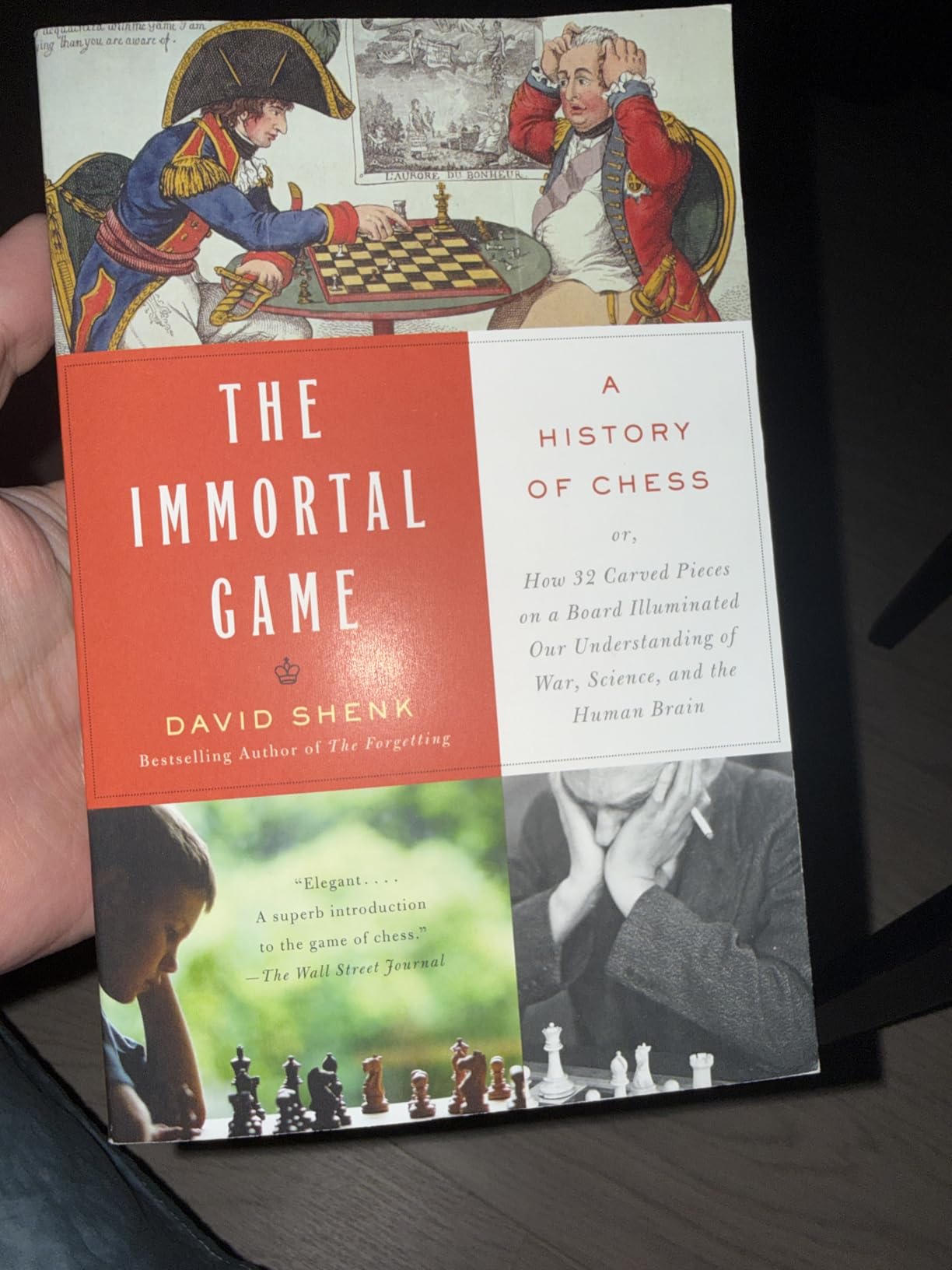
The Immortal Game: A History of Chess
- Broad survey from ancient to modern era
- Engaging narrative style
- Move analysis included
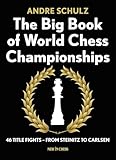
Big Book of World Chess Championships
- 46 title fights covered
- Highest rated at 4.7 stars
- Steinitz to Carlsen
Best Chess History Books in 2026
| Product | Specifications | Action |
|---|---|---|
| The Immortal Game: A History of Chess |
|
Check Latest Price |
 Chess Opening Names: The Fascinating History Chess Opening Names: The Fascinating History |
|
Check Latest Price |
 Bobby Fischer Goes to War Bobby Fischer Goes to War |
|
Check Latest Price |
 Endgame: Bobby Fischer Rise and Fall Endgame: Bobby Fischer Rise and Fall |
|
Check Latest Price |
 Birth of the Chess Queen: A History Birth of the Chess Queen: A History |
|
Check Latest Price |
| Big Book of World Chess Championships |
|
Check Latest Price |
 The Chess Revolution: Ancient to Digital The Chess Revolution: Ancient to Digital |
|
Check Latest Price |
| Chess Story (NYRB Classics) |
|
Check Latest Price |
 A History of Chess: Chaturanga to Present A History of Chess: Chaturanga to Present |
|
Check Latest Price |
 Paul Morphy: Pride and Sorrow of Chess Paul Morphy: Pride and Sorrow of Chess |
|
Check Latest Price |
1. The Immortal Game: A History of Chess – Sweeping Narrative From Ancient Origins to Modern Masters
The Immortal Game: A History of Chess
Author: David Shenk
531+ reviews
4.5 star rating
Broad historical survey
Pros
- Engaging narrative style covering chess from ancient times to today
- Uses the famous Immortal Game as central thread with move analysis
- Covers psychology philosophy and cultural significance of chess
- Accessible to both chess experts and complete novices
Cons
- Small print in some editions
- Some philosophical digressions feel excessive
- Limited deep technical chess analysis
David Shenk accomplished something few authors manage: he wrote a chess history book that reads like a novel. I picked this up expecting a dry academic timeline and instead found myself staying up past midnight to finish the next chapter. The book uses the famous 1851 Immortal Game between Adolf Anderssen and Lionel Kieseritzky as a narrative backbone, weaving the move-by-move action through centuries of chess history.
What makes this book work so well is how Shenk connects chess to the broader human story. He traces the game from its origins in India through Persia, the Islamic world, and into medieval Europe, showing how each culture shaped the game and how the game shaped each culture. You learn not just how the pieces moved but why they moved the way they do, and what that says about the societies that played the game.
The sections on chess and psychology were a genuine surprise. Shenk explores how the game has been used as a tool for understanding cognition, artificial intelligence, and even madness. It gives the book a depth that goes beyond simple historical chronicle.
Shenk’s writing is strongest when he is telling stories about specific people and moments. His account of how chess survived the Dark Ages in monasteries and courtly circles is vivid and specific. The Cold War chapters connecting chess to geopolitical tensions are gripping even if you already know the history.
On the technical side, the book does include some chess notation and diagrams, but you do not need to be a strong player to follow along. Shenk explains positions in plain language. That said, advanced players looking for deep game analysis will find the chess content lighter than what they might expect from a book with “Immortal Game” in the title.
Who Should Read This Book
This is the ideal starting point if you want one book that covers the entire sweep of chess history. It works beautifully for history enthusiasts who may not even play chess seriously, because Shenk makes the human stories compelling regardless of your board strength. If you have a friend or family member who does not play chess but wants to understand why you are so obsessed with the game, hand them this book.
Intermediate and advanced players who already know the broad strokes of chess history will still enjoy the psychological and philosophical discussions, though they may skim through sections covering familiar ground. Beginners looking for chess history books will find this the most approachable entry on our list.
What Could Be Better
The philosophical digressions, while interesting, slow the narrative down in the middle third of the book. Some readers on forums specifically mentioned wanting less abstract discussion and more historical storytelling. The small print in certain print editions is also a real drawback that multiple reviewers flagged. And if you are hoping for serious chess analysis, you will want to pair this with a game collection book rather than relying on it alone for that purpose.
2. Chess Opening Names: The Fascinating History Behind the First Few Moves – Stories Behind What We Call the Openings
Chess Opening Names: The Fascinating & Entertaining History Behind the First Few Moves
Author: Nathan Rose
416+ reviews
4.5 star rating
Opening name history
Pros
- Truly unique approach no other book covers this ground
- Well-researched with genuine humor and entertaining stories
- Includes diagrams and grandmaster photographs
- Easy and fun to read even for casual players
Cons
- Informal writing style may not appeal to all readers
- Could go deeper into opening variations
- Limited move-order specifics for serious study
Nathan Rose had a simple but brilliant idea: why do chess openings have the names they do? The Ruy Lopez, the Sicilian Defense, the King’s Gambit, the English Opening, every single one has a story behind it, and Rose tracked those stories down with the dedication of a detective and the wit of a late-night host. I found myself laughing out loud at several points, which is not something I expected from a chess book.
The book covers dozens of openings, tracing how each got its name. Some are named after players, some after places, some after the strategic idea they represent, and some have genuinely surprising origins that Rose uncovered through careful research. The Ruy Lopez section alone taught me things I did not know despite playing the opening for years.
Rose includes clear diagrams for every opening he discusses, along with photographs of the grandmasters whose names are attached to various lines. This gives the book a visual richness that many chess books lack. You feel like you are meeting the people behind the moves.
The writing style is conversational and breezy, which works most of the time but occasionally felt a bit too casual for my taste. Serious chess scholars might find it lacking in depth, but that misses the point entirely. This book exists to entertain and inform in equal measure, and it succeeds at both.
Who Should Read This Book
This is a fantastic gift for any chess player who already knows the basics and wants to add some color to their understanding of the game. Tournament players who have memorized opening lines without ever knowing the stories behind them will get a lot of enjoyment from filling in those gaps. It is also great for club players who want entertaining stories to share between rounds.
If you are buying your very first chess book, this should not be it, because it assumes you already know what openings are. But as a second or third book, or as a break from heavy technical study, it hits the sweet spot between education and entertainment.
What Could Be Better
The informal tone occasionally undercuts the serious research that clearly went into this book. Some reviewers on chess forums wished Rose had gone deeper into the actual variations instead of staying at the surface level with the naming stories. The book also does not function as an opening reference, so you will need other resources if you want to actually learn the lines behind the names. Think of it as a companion to your opening study, not a replacement for it.
3. Bobby Fischer Goes to War – The Cold War Chess Showdown That Stopped the World
Bobby Fischer Goes to War: The True Story of How the Soviets Lost t
Authors: David Edmonds and John Eidinow
457+ reviews
4.3 star rating
1972 World Championship
Pros
- Exceptional detailed account of the 1972 Fischer-Spassky match
- Rich Cold War political context and behind-the-scenes drama
- Well-researched with extensive background on both players
- Engaging narrative that reads like a thriller
Cons
- Focuses more on Spassky than Fischer in some sections
- Limited actual chess game analysis
- Some sections feel long and meandering
The 1972 World Chess Championship in Reykjavik was not just a chess match. It was a geopolitical event that captured the attention of millions who had never cared about chess before. Edmonds and Eidinow capture that moment with the pacing and tension of a spy novel, and I found myself genuinely anxious about how the match would turn out even though I already knew the result.
What sets this book apart from other accounts of Fischer’s career is the depth of its reporting on the Soviet side. The authors spent considerable time researching Boris Spassky’s background and the enormous pressure the Soviet chess machine placed on him to defend their honor. You get a real sense of both players as complex human beings rather than caricatures.
The behind-the-scenes details are what make this book special. The negotiations, the demands, the near-cancellations, the mind games, all of it is documented with a level of detail that feels exhaustive without becoming tedious. You learn about Henry Kissinger’s phone call to Fischer, the FBI’s interest in the match, and the Soviet delegation’s internal conflicts.
The Cold War context is woven throughout rather than bolted on as background. Edmonds and Eidinow show how the match became a proxy battle between two superpowers and why both governments cared so deeply about the outcome of 64 squares and 32 pieces.
Who Should Read This Book
This is essential reading for anyone fascinated by the intersection of chess and politics. If you watched “The Queen’s Gambit” and want the real story of what a world championship match actually feels like, this delivers. It is also a strong pick for Cold War history buffs who may not be serious chess players, because the political drama drives the narrative as much as the games do.
Chess players who want deep game analysis should know this book focuses on the human and political story rather than move-by-move breakdowns. Pair it with a Fischer game collection for the complete picture of what happened on and off the board in Reykjavik.
What Could Be Better
Some readers, particularly those primarily interested in Fischer, have noted that the book spends more time on Spassky and the Soviet perspective than expected. This is not necessarily a weakness, but it is worth knowing going in. A few sections in the middle feel slow, particularly the extended background chapters before the match begins. And chess players hoping for annotated games will need to look elsewhere, because the authors deliberately chose narrative over analysis.
4. Endgame: Bobby Fischer’s Remarkable Rise and Fall – The Definitive Fischer Biography
Endgame: Bobby Fischer’s Remarkable Rise and Fall—from America’s Brightest Prodigy to the Edge of Madness
Author: Frank Brady
955+ reviews
4.5 star rating
Complete Fischer life story
Pros
- Most comprehensive Fischer biography covering his entire life
- Thoroughly researched with deep documentation
- Reads like a page-turner despite being a biography
- Accessible to chess players and general readers alike
Cons
- Limited technical analysis of Fischer's games
- Some readers wanted deeper psychological insight
- Writing can feel dry in certain passages
Frank Brady knew Bobby Fischer personally, and that intimate connection gives this biography a texture that no other Fischer book matches. I have read several accounts of Fischer’s life, and Brady’s is the one that feels most complete and most honest about both the genius and the tragedy. With over 950 reviews, this is also one of the most widely read chess biographies ever published.
The book traces Fischer’s life from his childhood in Brooklyn through his meteoric rise, the 1972 world championship, and his long, painful decline into reclusion and paranoia. Brady does not sanitize the darker chapters, but he also does not sensationalize them. The result is a portrait of a deeply troubled genius that inspires both admiration and sadness.
What surprised me most was how much of Fischer’s early life felt fresh and new. Brady uncovered details about Fischer’s relationship with his mother, his education, and his early tournament career that I had not encountered in other accounts. The chapters covering Fischer’s teenage years and his first attempts to qualify for the world championship are particularly compelling.
The later chapters, covering Fischer’s years in hiding and his eventual return to play Spassky again in 1992, are handled with restraint and sensitivity. Brady avoids easy judgments and instead presents the facts with enough context for readers to draw their own conclusions about what happened to one of the greatest chess minds in history.
Who Should Read This Book
Anyone who wants to understand Bobby Fischer as a complete person rather than just a chess player needs to read this book. It is the standard against which all other Fischer biographies are measured, and for good reason. The 955 reviews from other readers confirm that this book resonates far beyond the chess community.
General readers who enjoy biographies of complex figures will find this accessible even without deep chess knowledge. The chess content is present but not overwhelming, and Brady explains enough about the game to keep non-players engaged throughout.
What Could Be Better
Readers looking for detailed analysis of Fischer’s chess games will not find it here. This is a biography of the man, not a game collection. Some forum users also expressed a wish for more psychological depth, particularly around Fischer’s mental health in his later years. Brady presents the facts of Fischer’s behavior but stops short of clinical analysis, which some readers found unsatisfying. A few passages in the middle feel procedural rather than gripping, though the overall pacing is strong.
5. Birth of the Chess Queen: A History – How One Piece Changed the Game and the World
Birth of the Chess Queen: A History
Author: Marilyn Yalom
136+ reviews
4.2 star rating
Queen piece evolution
Pros
- Truly unique topic no other book covers this angle
- Connects chess evolution to real political history of women
- Beautiful scholarly writing with thorough research
- Fascinating exploration of medieval European culture
Cons
- Some historical claims are hypothetical not proven
- Kindle edition missing illustrations
- Limited relevance to actual chess gameplay improvement
Marilyn Yalom asked a question that most chess players never think to ask: why is the queen the most powerful piece on the board? The answer turns out to be a fascinating story about medieval European politics, the rise of powerful female monarchs, and the cultural evolution of a game that reflected the world around it. This book fills a gap that almost no other chess history book addresses.
Yalom traces the chess queen from its origins as a weak advisor piece called the firzan in Islamic chess through its gradual transformation into the most powerful piece on the board. She connects this evolution to specific historical figures, including Queen Isabel of Castile and Eleanor of Aquitaine, making a persuasive case that real-world female power influenced the game’s design.
The writing is elegant and scholarly without being dense. Yalom brings a historian’s rigor to the project while keeping the narrative accessible and engaging. I found myself thinking about the book long after I finished it, which is always a sign of writing that matters.
This book also addresses one of the biggest content gaps in chess literature: the role of women in chess history. Forum discussions repeatedly show readers searching for books that cover this topic, and Yalom’s work is the best answer available.
Who Should Read This Book
This is a must-read for anyone interested in the intersection of games and culture. If you enjoyed books like “The Immortal Game” and want to go deeper into a specific aspect of chess evolution, this is the natural next step. It is also an excellent choice for readers interested in women’s history and medieval European politics who happen to have a connection to chess.
Chess players who want to improve their game should understand that this book will not help with that. It is a cultural history, not a chess manual. But understanding why the pieces move the way they do adds a dimension of appreciation that pure tactical study cannot provide.
What Could Be Better
Some of Yalom’s claims about the direct connection between specific queens and changes to the chess queen piece are speculative rather than conclusively documented. Scholars have debated whether the causation runs as cleanly as Yalom suggests. The Kindle edition also lacks the illustrations that enrich the print version, which is a significant loss for a book that relies heavily on visual evidence from medieval manuscripts. And at 136 reviews, this book has not received the wider attention it deserves, partly because its topic is so specialized.
6. The Big Book of World Chess Championships – Every Title Fight From Steinitz to Carlsen
The Big Book of World Chess Championships: 46 Title Fights – from Steinitz to Carlsen
Publisher: New in Chess
64+ reviews
4.7 star rating
46 championship matches
Pros
- Most comprehensive championship history available
- Excellent photographs and biographical material
- Well-annotated game per match included
- Covers every world champion from Steinitz to Carlsen
Cons
- Print size is smaller than typical paperback
- Games take back seat to narrative
- Not focused on complete game analysis
This book holds the highest average rating on our list at 4.7 stars, and after spending time with it, I understand why. The Big Book of World Chess Championships covers 46 title fights from the first recognized world champion, Wilhelm Steinitz, through the modern era of Magnus Carlsen. No other single volume gives you this much championship history in one place.
Each championship match gets a dedicated chapter with biographical background on both players, the political and personal context surrounding the match, and one well-annotated game. The photographs are excellent and add visual texture that helps you connect with the players as real people rather than just names in a record book.
Published by New in Chess, one of the most respected chess publishers in the world, the production quality is high throughout. The biographical and anecdotal material is well-written and draws from sources that casual fans may not have encountered before.
I found myself learning things about early championship matches that I had never come across in other books. The chapters covering the relatively unknown early champions like Steinitz, Lasker, and Capablanca were particularly valuable, because most chess writing focuses heavily on Fischer and Kasparov while giving the pioneers short shrift.
Who Should Read This Book
This is the definitive reference for anyone who wants to understand the complete lineage of world chess champions. Tournament players and serious chess students will benefit from having this as a companion resource when studying championship games. It also makes an excellent gift for chess enthusiasts who want a single volume that covers the entire history of the world championship.
If you are working through Kasparov’s “My Great Predecessors” series and want a lighter, more visual companion, this book pairs well with that deeper study. The photographs and concise match summaries provide helpful context without requiring the commitment of Kasparov’s multi-volume work.
What Could Be Better
The small print size is the most common complaint, and it is a legitimate one. Reading this book for extended periods can strain your eyes. The focus on narrative over game analysis also means that serious students who want to study every game from every championship match will need supplementary resources. Each match gets only one annotated game, which is enough to capture the flavor of the contest but far from comprehensive for analytical purposes.
7. The Chess Revolution: From the Ancient World to the Digital Age – Chess Meets AI and the Internet
The Chess Revolution: From the Ancient World to the Digital Age
Authors: Peter Doggers and George Weightman
59+ reviews
4.4 star rating
Ancient to digital age
Pros
- Covers chess history all the way to AI and online chess
- Excellent narrative documentation
- Explores Fischer Kasparov and Carlsen in depth
- Informative and insightful for modern developments
Cons
- Focuses primarily on Fischer Kasparov and Carlsen
- Online chess sections feel less engaging to some readers
- Newer book with fewer reviews
Peter Doggers has been covering chess for years as a journalist, and that professional perspective gives this book a different flavor from the academic histories on our list. The Chess Revolution covers the full sweep of chess from ancient origins to the digital age, but its real strength is the modern era, where Doggers has firsthand experience and sources that other authors simply do not have access to.
The first half of the book, covering chess from its ancient beginnings through the Fischer and Kasparov eras, is strong and well-documented. But where this book really shines is the second half, which tackles topics most chess history books ignore: the rise of online chess, the impact of chess engines and AI, the cheating scandals that have rocked the professional game, and what the future might hold.
For a community that discusses these modern topics endlessly on Reddit and chess forums, having a book-length treatment from a knowledgeable journalist fills a genuine gap. Doggers writes clearly and keeps the narrative moving, even when covering complex technical subjects like engine evaluation and online cheating detection.
The sections on Fischer, Kasparov, and Carlsen are the most detailed in the book, which makes sense given their outsized impact on the modern game. But some readers may wish that other important figures received more attention.
Who Should Read This Book
If you are specifically interested in how chess has evolved in the internet age, this is the best book on our list for that topic. Players who joined the chess world through Chess.com or The Queen’s Gambit will find this an engaging introduction to the deeper history while also getting the modern context they care about. It is also valuable for chess content creators and streamers who want to understand the ecosystem they are part of.
Readers who want a more traditional, comprehensive chess history may prefer “The Immortal Game” for the ancient-to-modern narrative and should consider this book as a supplement that extends the story into the present day.
What Could Be Better
The heavy focus on three players, Fischer, Kasparov, and Carlsen, means that significant portions of chess history get compressed. The sections about Chess.com and online chess platforms, while informative, felt less compelling to some reviewers who were more interested in the human drama of over-the-board chess. At 59 reviews, this is also one of the newer books on our list, which means it has not yet been vetted as extensively by the chess community as some of the older titles.
8. Chess Story (New York Review Books Classics) – Stefan Zweig’s Masterpiece About Chess and the Human Spirit
Chess Story (New York Review Books Classics)
Author: Stefan Zweig
1590+ reviews
4.5 star rating
Classic novella
Pros
- Widely considered a literary masterpiece
- Powerful depiction of trauma and the human spirit
- Elegant prose that transcends typical chess writing
- Short and accessible at 84 pages
Cons
- Fiction rather than non-fiction history
- Short at 84 pages
- Some plot elements strain credulity
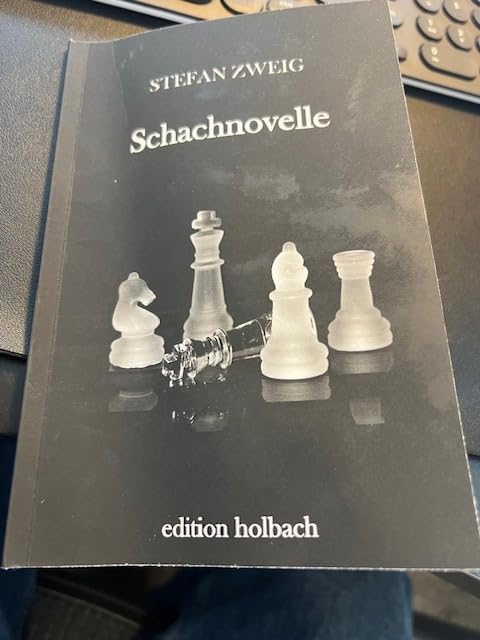
Stefan Zweig wrote this novella in 1942, the last work he completed before his death, and it carries the weight of that moment in history. With over 1,590 reviews, it is the most widely read book on our entire list, and it is not even close. Chess Story is not a history book in the traditional sense. It is a work of fiction, but it captures something essential about chess and the human mind that no factual account has matched.
The story follows a world chess champion named Czentovic, a prodigy with limited intellectual range outside of chess, who encounters a mysterious passenger named Dr. B on a cruise ship. Dr. B, a refugee from the Nazi regime, survived his imprisonment by playing chess against himself in his mind for months, developing an obsessive relationship with the game that nearly destroyed him.
Zweig’s prose is elegant and precise, carrying emotional weight in every sentence. The chess match between Czentovic and Dr. B becomes a metaphor for the struggle between mechanical genius and tortured human spirit, between tyranny and resistance. It is the kind of book you can read in one sitting and then think about for weeks.
What makes this book so powerful for chess players specifically is how accurately Zweig captures the obsessive quality of chess thinking. Dr. B’s descent into chess madness, playing endless games against himself in isolation, resonates with anyone who has ever stayed up too late studying positions or analyzing variations. Zweig understood something fundamental about the psychology of chess obsession.
The New York Review Books Classics edition includes helpful contextual material about Zweig’s life and the circumstances under which he wrote this final work. Knowing that Zweig completed it while in exile, shortly before his suicide, adds a layer of poignancy that makes the story even more affecting.
Who Should Read This Book
Everyone. That sounds hyperbolic, but with 1,590 reviews and a 4.5-star rating, the consensus is clear. This is one of those rare books that works for every reader, chess player or not. If you love chess, you will recognize yourself in Dr. B’s obsession. If you love literature, you will appreciate Zweig’s craftsmanship. If you love history, the World War II context gives the story a devastating personal dimension.
For chess players looking for gift ideas for non-chess-playing friends and family, this is the book. It communicates why chess matters and what it feels like to be consumed by the game without requiring the reader to know a single opening line.
What Could Be Better
At 84 pages, some readers feel shortchanged, especially since the story is so gripping that you want it to continue. The central plot device, that Dr. B could play at world-champion level after 25 years of only playing against himself, strains credulity for experienced chess players. And this is fiction, not history, so readers seeking factual chess history will need to pair it with something like “The Immortal Game” or “Bobby Fischer Goes to War” to get the non-fiction perspective.
9. A History of Chess: From Chaturanga to the Present Day – A Soviet Master’s Perspective on Chess Origins
A History of Chess: From Chaturanga to the Present Day
Publisher: Russell Enterprises
33+ reviews
4.0 star rating
Chaturanga origins focus
Pros
- Authentic voice from the Soviet chess tradition
- Good color photographs throughout
- Well-edited with quality illustrations
- Interesting cultural history perspective
Cons
- Main content ends at 16th century
- Short at under 90 pages
- No index for reference
- Organized by country rather than chronologically
This is a niche book with a specific focus that sets it apart from everything else on our list. Written by a Soviet chess master, it concentrates heavily on the earliest origins of chess: the Indian game of Chaturanga, its Persian evolution into Shatranj, and its spread through the Islamic world and into medieval Europe. If you want to understand where chess actually came from, this is the most focused resource available.
The author’s Soviet chess background gives the book an authenticity that is hard to replicate. He draws on sources and perspectives from the Russian and Soviet chess tradition that Western readers may not have encountered. The color photographs, mostly of ancient chess pieces and historical manuscripts, are genuinely beautiful and add visual evidence to the textual arguments.
At under 90 pages, this is a quick read, but it is dense with information. The author clearly knows his subject deeply and has packed a remarkable amount of detail into a compact format. The cultural history of how chess moved between civilizations and adapted to each new culture is fascinating and well-presented.
However, the title is somewhat misleading. The book proper ends around the 16th century, with only a brief three-and-a-half-page epilogue covering everything from that point to the modern era. If you are expecting a comprehensive history through the present day, you will be disappointed.
Who Should Read This Book
This book is ideal for readers who are specifically curious about chess origins and the early evolution of the game. If you have read broader chess histories and want to go deeper into the Chaturanga and Shatranj periods, this fills that niche perfectly. It is also valuable for chess players interested in the Soviet perspective on chess history, which differs in interesting ways from Western accounts.
Academic readers and chess historians will appreciate the cultural and linguistic analysis of how chess terminology and rules evolved across different civilizations. It is a scholarly contribution despite its short length.
What Could Be Better
The gap between the title’s promise and the book’s actual content is the biggest issue. A 3.5-page epilogue covering everything from the 16th century onward feels like an afterthought rather than a proper conclusion. The organization by country rather than chronological order also makes it harder to follow the overall timeline of chess evolution. The lack of an index is frustrating for a book that readers might want to reference repeatedly. And at only 33 reviews, this book has not received the level of community scrutiny that other titles on our list have.
10. Paul Morphy: The Pride and Sorrow of Chess – The Definitive Biography of Chess’s First Great Genius
Paul Morphy: The Pride and Sorrow of Chess
Publisher: University of Louisiana
131+ reviews
4.3 star rating
398 pages
Pros
- Definitive biography researched from primary sources
- Corrects myths and misconceptions from earlier works
- Detailed correspondence and historical documents
- Most thorough account of Morphy's life available
Cons
- Modern edition omits Morphy's actual games
- Large gap covering last 20 years of Morphy's life
- Academic style lacks personalization in places
Paul Morphy is chess’s first great tragedy: a prodigy who conquered the chess world in his early twenties and then walked away from the game, spending the rest of his life in growing isolation and eccentricity. David Lawson’s biography is the most thoroughly researched account of Morphy’s life, drawing on primary sources that earlier biographers either ignored or never found. At 398 pages, it gives the subject the space it deserves.
What impressed me most about this book is how carefully Lawson separates fact from fiction. Morphy’s life has been clouded by myth for over a century, and earlier biographies passed along stories that had no basis in evidence. Lawson went back to original documents, correspondence, and newspaper accounts to build a more accurate picture of who Morphy actually was.
The sections covering Morphy’s European tour in 1858-1859, where he defeated the best players in the world in a series of matches that stunned the chess community, are thrilling. Lawson captures the excitement of Morphy’s dominance and the bewilderment of the European chess establishment at this young American who played with a speed and clarity they had never seen before.
Lawson also does an excellent job explaining why Morphy’s retirement from chess was not the simple story of a disappointed genius that many accounts suggest. The reality is more complicated and more interesting, involving Morphy’s family expectations, his legal career, and the social context of a gentleman who viewed professional chess as beneath his dignity.
Who Should Read This Book
Chess players who want to understand the history of their game at its highest level need to know Morphy’s story, and this is the book to tell it. Tournament players who study Morphy’s games will gain a richer appreciation of the positions by understanding the man behind the moves. It is also valuable for anyone interested in 19th-century American cultural history, because Morphy’s story is inseparable from the world of ante-bellum New Orleans.
Readers who enjoyed “Endgame” about Fischer will find a natural companion here. Morphy and Fischer share the pattern of chess genius followed by withdrawal from the game, and comparing the two stories through these biographies reveals how the pressures of chess excellence have remained remarkably consistent across centuries.
What Could Be Better
The most frustrating gap is the missing coverage of Morphy’s final 20 years. Lawson researched Morphy’s youth and chess career exhaustively but provides relatively little about the long period of decline and isolation that followed. The modern edition also omits Morphy’s actual games, which means you need a separate game collection to study his play. Some readers found the academic prose style lacking in warmth, and the dense documentation occasionally slows the narrative pace.
How to Choose the Right Chess History Book for You
With 10 books covering everything from ancient origins to AI-driven modern chess, picking the right one depends on what you want to get out of it. Here is a breakdown to help you match the book to your goals.
By Reader Level
If you are new to chess or new to reading about chess, start with The Immortal Game by David Shenk. It provides the broadest overview with the most accessible writing. Chess Opening Names by Nathan Rose is another excellent beginner-friendly option because it entertains while educating without requiring deep chess knowledge.
Intermediate players who already know the basic history should gravitate toward Bobby Fischer Goes to War or Endgame for detailed accounts of specific eras and personalities. The Chess Revolution is particularly valuable for players who want to understand the modern landscape of online chess and engines.
Advanced players and chess scholars should consider The Big Book of World Chess Championships as a reference work, Paul Morphy: The Pride and Sorrow of Chess for deep historical biography, and A History of Chess: From Chaturanga to the Present Day for the scholarly treatment of chess origins.
By Category
Narrative History: The Immortal Game and The Chess Revolution both tell the story of chess as a continuous narrative, but they cover different time periods. The Immortal Game is stronger on the ancient and medieval periods, while The Chess Revolution excels in the modern era.
Player Biographies: Endgame (Fischer), Paul Morphy: The Pride and Sorrow of Chess (Morphy), and Bobby Fischer Goes to War (Fischer and Spassky) each focus on individual players. Endgame is the most comprehensive single-player biography, while Bobby Fischer Goes to War captures a specific moment in chess history better than any other book on our list.
Cultural History: Birth of the Chess Queen stands alone in this category. If you care about how chess reflects and influences culture, politics, and gender dynamics, this is the book. Chess Opening Names takes a lighter approach to cultural history through the entertaining lens of opening nomenclature.
Literature: Chess Story by Stefan Zweig is the only fiction on our list, but it is also the most widely read and highest rated by review count. It belongs on every chess player’s shelf regardless of what other books you choose.
What to Look For in a Chess History Book
Consider the time period you care about most. Some books cover centuries of chess history while others focus on a single player or match. Think about whether you want game analysis alongside the history, because some of these books include annotated games while others focus purely on narrative. Check the page count if you want something you can finish in a weekend versus a reference volume you will keep on your shelf for years.
Forum discussions consistently show that readers value engaging writing over comprehensive coverage. A well-written book about one match or one player will teach you more and hold your attention longer than an encyclopedic treatment that reads like a textbook. Our list is weighted toward books that earn consistently positive reviews for their writing quality, because that is what keeps readers turning pages.
FAQ
What are the best books about the history of chess?
The best chess history books include The Immortal Game by David Shenk for a broad narrative overview, Bobby Fischer Goes to War by Edmonds and Eidinow for Cold War chess drama, Endgame by Frank Brady for the definitive Fischer biography, The Big Book of World Chess Championships for comprehensive championship history, and Chess Story by Stefan Zweig for a literary masterpiece about chess and the human spirit. Each covers a different aspect of chess history, from ancient origins to modern championships.
What is the best book about chess history for beginners?
The Immortal Game by David Shenk is the best chess history book for beginners. It covers the full sweep of chess history from ancient India to the modern era using an engaging narrative style that does not require deep chess knowledge. The book uses the famous 1851 Immortal Game as a central thread, making the historical content easy to follow. Chess Opening Names by Nathan Rose is another strong beginner option because it focuses on entertaining stories behind opening names rather than technical analysis.
Which chess history book has the most reviews?
Chess Story by Stefan Zweig has the most reviews at over 1,590 with a 4.5-star rating. It is a classic novella about a chess match between a world champion and a mysterious refugee, exploring themes of trauma and obsession. Endgame by Frank Brady follows with 955 reviews, making it the most widely reviewed non-fiction chess biography on the market.
Are there chess history books about women in chess?
Birth of the Chess Queen by Marilyn Yalom is the best book about women in chess history. It traces the evolution of the queen piece from its weak origins in Islamic chess to its current status as the most powerful piece on the board, connecting this transformation to the rise of powerful female monarchs in medieval Europe like Queen Isabel of Castile and Eleanor of Aquitaine. It is a unique contribution that most other chess history books do not address.
What chess history book covers the modern digital era?
The Chess Revolution by Peter Doggers is the best chess history book for coverage of the modern digital era. It covers chess from ancient beginnings through Fischer, Kasparov, and Carlsen but dedicates significant attention to the rise of online chess platforms, chess engines, artificial intelligence, cheating scandals, and the future of the game. No other book on the market provides comparable coverage of chess in the internet age.
Final Thoughts on the Best Chess History Books in 2026
Finding the right chess history book comes down to what draws you to the game in the first place. If you want the sweeping story of how chess evolved across 1,500 years, The Immortal Game delivers that in an engaging, accessible package. If the human drama of a single match captivates you, Bobby Fischer Goes to War captures the Cold War showdown that transfixed the world. And if you want a literary experience that transcends chess entirely, Stefan Zweig’s Chess Story is a masterpiece you will remember long after the last page.
Our top pick, Chess Story, earned its Editor’s Choice badge through a combination of extraordinary writing, universal appeal, and the highest review count on our list. But every book here earned its place through genuine quality. The best chess history books do not just tell you what happened. They make you feel what it was like to be there when it happened.
Pick the one that matches your interests, clear a weekend, and prepare to see the game you love through entirely new eyes. Chess has been telling stories for over a millennium. These books finally let you hear them.