
Finding the right chess book can feel like searching for a needle in a haystack, especially when you want to master a specific opening like 1.c4. I have spent months going through dozens of English Opening books, testing their recommendations at the board, and figuring out which ones actually help you win games. This guide covers the best chess books on the English Opening available in 2026, organized so you can find exactly what matches your rating and playing style.
The English Opening is one of the most flexible systems in chess. It starts with 1.c4, controlling the d5 square from the flank instead of occupying the center directly with e4 or d4. That flexibility is what draws players to it. You can transpose into Sicilian reversed positions, play symmetrical lines, or set up the famous Botvinnik system with g3 and Bg2. Whether you are rated 1200 or 2200, the English gives you positions rich in strategy without requiring you to memorize thirty moves of theory.
Our team evaluated 10 books based on coverage depth, clarity of explanation, practical applicability, author credentials, and community feedback. We paid special attention to which books help you understand plans and ideas versus those that drown you in variations. Below you will find detailed reviews, a comparison table, and a buying guide to help you pick the right book for your skill level.
Table of Contents
Top 3 Picks for Best Chess Books on the English Opening

Opening Repertoire: The English Opening
- Botvinnik System Focus
- 464 Pages
- 30+ Annotated Games

Chess Explained: The English Opening
- 25 Annotated Games
- Conceptual Overview
- Lowest Price Point
Best Chess Books on the English Opening in 2026
1. Opening Repertoire: The English Opening – Best Overall
Opening Repertoire (Everyman Chess)
Authors: Simon Williams and Richard Palliser
464 pages
Publisher: Everyman Chess
Botvinnik System Focus
Pros
- Clear strategy and tactics explanations
- Botvinnik system and Mikenas variation coverage
- 30+ indexed complete games
- Easy to memorize repertoire
- Good diagrams and indexing
Cons
- Some sidelines can be confusing
- Minor misprints reported
- Annotated games may contain engine inaccuracies
I picked up this book about six months ago when I decided to switch my white repertoire to the English Opening, and it immediately became my go-to resource. Simon Williams and Richard Palliser have put together a repertoire that centers on the Botvinnik system, which means you play 1.c4 followed by g3 and Bg2 in most lines. The beauty of this approach is that you get familiar pawn structures and piece placements game after game, which builds pattern recognition faster than jumping between unrelated systems.
The book uses an annotated games format, walking you through complete games rather than dumping variations in tree form. I found this much easier to absorb because you see how the opening flows into the middlegame and endgame. Each game comes with verbal explanations of why certain moves work, not just what to play. That is the kind of teaching that sticks when you sit down at a tournament board and face something your opponent prepared specifically for you.
With 464 pages and over 30 indexed complete games, there is enough depth here to keep you busy for months. The coverage includes lines against the Queen’s Gambit Declined, Slav setups, and reverse Sicilian structures. I particularly appreciated how the authors handle transpositions, explaining when your English Opening moves can steer into other openings and how to navigate those transitions confidently.
Who should buy this book
This book is ideal for intermediate to advanced players rated between 1500 and 2200 who want a complete, playbable repertoire with White. If you have tried other English Opening books and found them too theoretical, this annotated games approach will feel refreshing. It is also a strong choice for players who prefer understanding plans over memorizing long variations.
Who might want to look elsewhere
Complete beginners rated below 1200 may find the material too dense, and the book assumes some familiarity with opening principles. Players who want coverage of every English Opening variation rather than a specific repertoire system might prefer a survey book like The Full English Opening instead.
2. The Full English Opening: Mastering the Fundamentals – Comprehensive Guide
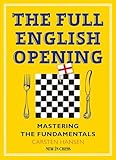
The Full English Opening: Mastering the Fundamentals
Author: Carsten Hansen
Published by New in Chess
Comprehensive fundamentals coverage
Modern reference games included
Pros
- Covers fundamentals of English Opening thoroughly
- Recent reference games showing current state
- Excellent explanations of themes and strategies
- Helps identify main lines and responses
- No insistence on specific repertoire system
Cons
- Overwhelming amount of variations and sidelines
- Minimal analysis requires computer assistance
- May be too advanced for club players below 2000
Carsten Hansen takes a different approach from most English Opening books. Instead of pushing you toward one specific repertoire, he teaches you the fundamentals of the entire opening so you can choose your own path. I found this refreshing because it lets you understand why certain moves are played rather than just telling you what to play. The book covers all the major systems including the Symmetrical English, the Reversed Sicilian, and various Indian setups.
What sets this book apart is the inclusion of recent reference games. Hansen includes games from current competition, which means you are studying positions that actually occur in modern tournament play rather than antiquated examples from the 1980s. The end-of-chapter comments are particularly useful because Hansen shares his practical experience and feel for the positions, giving you insight that raw variation analysis alone cannot provide.

The main drawback is that the sheer volume of variations can be overwhelming. Hansen does not shy away from sidelines and alternative moves, which is great for reference but can make focused study difficult. I recommend having a chess engine running alongside this book so you can verify lines and explore positions on your own. Players rated below 2000 may find themselves lost in the density of material, so treat this as a long-term reference rather than a weekend read.
Who should buy this book
Advanced players rated 2000 and above who want a comprehensive reference guide to the English Opening will get the most value here. Tournament players who face a variety of English Opening setups from both sides of the board will also benefit from the breadth of coverage and modern game references.
Who might want to look elsewhere
Club players rated below 1800 will likely find the variation density too much to process. If you want a structured repertoire that tells you exactly what to play rather than surveying all options, the Opening Repertoire book by Williams and Palliser is a better fit. Beginners should definitely start elsewhere before tackling this one.
3. Grandmaster Repertoire 4: The English Opening – Advanced Pick

Grandmaster Repertoire 4
Author: Mihail Marin
432 pages
Publisher: Quality Chess
Non-standard English lines focus
Pros
- Outstanding explanation of repertoire move choices
- Comprehensive coverage of non-standard English lines
- Points out logical alternative openings
- Deep analytical content for expert players
- Well-written and thorough
Cons
- Binding quality issues reported
- Some pages falling out in new copies
- High price point
Mihail Marin is widely regarded as one of the best chess authors working today, and this book shows why. Grandmaster Repertoire 4 focuses on the English Opening lines that do not fall under the standard 1.c4 c5 and 1.c4 e5 categories, which means you get coverage of positions that other books often skip. Marin explains not just what to play but why he chose each move for his repertoire, giving you a level of understanding that goes deeper than most opening books attempt.
The writing quality here is exceptional. Marin has a gift for explaining complex ideas in accessible language, and the 432 pages are packed with insights that you simply will not find elsewhere. He also points out when transpositions lead to other openings like the Catalan, Tarrasch, or Queen’s Gambit lines, which helps you understand how the English fits into the broader landscape of 1.d4 territory. This kind of contextual knowledge is invaluable for tournament preparation.
At the advanced level, this book shines because Marin does not shy away from the tough analytical work. He provides deep analysis of critical positions, complete with alternative lines and evaluations. The depth is suitable for class A and expert level players who need their opening preparation to hold up against strong opposition. Just be aware that some readers have reported binding quality issues with the physical copy, so handle it with care.
Who should buy this book
Expert players rated 2000 and above who want deep, GM-level analysis of English Opening lines will find this indispensable. If you already have Volume 1 through 3 of Marin’s English Opening series, this completes the set. Players preparing for tournament competition at a high level will benefit most from the analytical rigor.
Who might want to look elsewhere
Players rated below 1800 will find the analysis too dense and the variations too complex. The book also focuses on non-standard lines, so if you want coverage of the main 1.c4 c5 Symmetrical English, you need the other volumes in the series. The price point is also the highest in our list, which may not suit casual learners.
4. The Dynamic English – Classic Botvinnik System

The Dynamic English (Chess Openings)
Author: Tony Kosten
144 pages
Publisher: Gambit Publications
Focus: 1.c4 2.g3 Botvinnik variation
Pros
- Classic guide to Botvinnik variation
- Easy to understand explanations
- Manageable repertoire system
- Emphasizes positional understanding over memorization
- Good for club players
Cons
- Originally published 1999 and somewhat dated
- No updates despite reprints
- Some chapters too short on coverage
Tony Kosten’s The Dynamic English has been a community favorite for over two decades, and for good reason. The book teaches a simple repertoire based on 1.c4 and 2.g3, the classic Botvinnik setup where you fianchetto your kingside bishop and build pressure from the flank. I have used this system extensively in online games, and the beauty of it is how repeatable the positions are. You get comfortable structures that arise game after game, which builds confidence faster than switching between different systems.
The book is only 144 pages, which is one of its strengths. Kosten concentrates the essential ideas into a small package without padding. He explains key structural ideas and critical exchanges early in the book, so you understand the typical plans before diving into specific variations. This approach means you can actually memorize the material and apply it at the board, unlike some massive tomes that sit on your shelf gathering dust.
The biggest caveat is age. Originally published in 1999, the book does not include modern developments or engine-checked analysis. The 2021 reprint date is misleading because the content has not been updated. Some chapters, particularly the sections on 1…c6 and 1…e6 responses, feel too short. I would recommend supplementing this book with more recent resources or a chess engine to verify the lines against current theory.
Who should buy this book
Club players rated 1200 to 1800 who want a straightforward, easy-to-learn repertoire for White will love this book. If you are the type of player who prefers understanding ideas over memorizing twenty-move lines, Kosten’s approach fits your style perfectly. It is also great for players transitioning from 1.e4 who want a positional alternative.
Who might want to look elsewhere
Advanced players who need up-to-date theory should look at Marin’s books or the Williams and Palliser repertoire instead. The dated analysis means some lines have been refuted or improved upon. If you want a comprehensive English Opening guide rather than a focused repertoire, this will feel too narrow.
5. How to Play the English Opening – World Champion’s Perspective

How to Play the English Opening
Author: Anatoly Karpov
Publisher: Batsford Chess
30+ annotated games
Positional understanding focus
Pros
- World Champion's personal insights
- Good positional approach
- Suitable for any player level
- Focus on understanding not memorizing
- Contains more games than advertised
Cons
- Missing coverage of 1.c4 c6 and 1.c4 e6
- Games dated (1987-2003 era)
- Best suited for 2000+ rated players
There is something special about learning an opening from one of the greatest positional players in chess history. Anatoly Karpov used the English Opening throughout his career, and in this book he shares his personal understanding of the positions that arise from 1.c4. The book contains more than the advertised 30 annotated games, with additional side games woven into the notes, giving you a rich tapestry of examples to study.
Karpov’s annotations are suitable for players of any level because he focuses on understanding positions rather than calculating variations. When he explains why he chose a particular move, you get a window into the thought process of a World Champion. I found the games from his peak years particularly instructive because they show how he used the English Opening to outplay opponents positionally, grinding them down move by move.
The main weakness is coverage. Karpov does not address 1.c4 c6 (Slav setups) or 1.c4 e6 (Queen’s Gambit Declined positions), which are common responses at club level. The games are also dated, spanning from 1987 to 2003, so you will not find modern theory here. Some variations have not been checked against current engine analysis. Despite these gaps, the positional lessons are timeless and will improve your chess understanding regardless of which opening you play.
Who should buy this book
Players rated 1800 and above who appreciate positional chess and want to learn from a World Champion’s perspective will find this book rewarding. It is especially valuable for players who already play the English Opening and want to deepen their understanding of typical middlegame plans and pawn structures.
Who might want to look elsewhere
Beginners and players below 1600 may struggle with the subtleties that Karpov focuses on, particularly his analysis of positions 20 moves deep. If you need a complete repertoire with coverage of all Black responses, this book has too many gaps. Players looking for current theory should choose a more modern resource.
6. Starting Out: The English – Best for Beginners
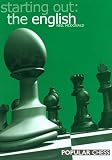
Starting Out: The English
Author: Neil McDonald
Publisher: Popular Chess
36 annotated games
GM-level illustrative examples
Pros
- Excellent introduction to English Opening
- Focuses on strategic ideas not memorization
- Good exposure to main systems
- Clear explanations of piece coordination
- Games from Karpov and Kasparov
Cons
- Very thin book
- Limited transposition coverage
- Missing Mikenas system and some common lines
- Later chapters less detailed
If you have never played the English Opening before and want a gentle introduction, this is where I would start. Neil McDonald wrote Starting Out: The English specifically for players who are new to 1.c4, and it shows in the best possible way. He focuses on strategic ideas and plans rather than dumping theory on you, which means you actually learn why the English Opening works instead of just memorizing moves.
The book includes 36 annotated games from grandmasters like Karpov, Kasparov, and Anand, and McDonald uses these games to illustrate the key ideas of each system. You get exposed to the main English Opening setups including the Symmetrical English, the Reversed Sicilian, and various fianchetto positions without feeling overwhelmed. Each game comes with clear explanations of what each side is trying to accomplish, which builds your positional understanding alongside your opening knowledge.
The downside is that the book is quite thin. The Starting Out series prioritizes accessibility over comprehensiveness, so you will not find deep coverage of transpositions or every Black response. The later chapters feel less developed than the first three, and some common lines like the Mikenas system are missing entirely. Think of this as your first English Opening book, not your last.
Who should buy this book
Beginners and intermediate players rated 800 to 1500 who are completely new to the English Opening will find this the most accessible entry point. If you are bouncing between ratings and want a non-aggressive opening that rewards positional play, McDonald’s book gives you the foundation to build on.
Who might want to look elsewhere
Players rated above 1600 will likely outgrow this book quickly and should consider The Dynamic English or the Williams and Palliser repertoire instead. If you want comprehensive variation coverage, the thin format will leave you wanting more. Advanced players will find the analysis too shallow for tournament preparation.
7. Chess Explained: The English Opening – Budget-Friendly Overview
Chess Explained: The English Opening
Author: Zenon Franco
Publisher: Gambit Publications
25 annotated games
Series: Chess Explained
Pros
- Standard baseline for English Opening
- Good for understanding ideas and execution
- Covers Hedgehog and Reversed Sicilian
- Excellent value for price
- High-quality material from serious writer
Cons
- Only 84 pages
- Missing critical variations
- Cannot be used as repertoire builder
- Symmetrical English undercovered
At under ten dollars, Chess Explained: The English Opening offers remarkable value. Zenon Franco uses 25 annotated games to walk you through the key ideas of the English Opening, covering the Hedgehog system, Reversed Sicilian positions, and Nimzo-English setups. The book follows the Chess Explained series format, which uses complete games to teach opening concepts, making it easy to see how opening moves connect to middlegame plans.
I found the insight into Nimzo versus English systems particularly helpful. Franco explains when and why you might end up in Nimzo-Indian type positions from an English Opening move order, which is practical knowledge that many books gloss over. The quality of writing is high, as you would expect from a serious chess author publishing through Gambit Publications.
The obvious limitation is length. At 84 pages, there is only so much ground Franco can cover. Critical variations are missing, and the Symmetrical English deserves more attention than it receives. The Reversed Dragon gets only one brief game, which feels insufficient for such an important system. This book works best as a supplement to your main study material rather than a standalone resource.
Who should buy this book
Players on a tight budget who want a quality conceptual overview of the English Opening without spending much will appreciate this book. It is also a good supplementary resource if you already own a repertoire book and want different perspectives on the same positions. Beginners looking for an affordable first step into English Opening territory will find it accessible.
Who might want to look elsewhere
Anyone looking for a complete English Opening repertoire needs a longer book with more variation coverage. Players focused on the Symmetrical English specifically will find the coverage too thin. Advanced players will want more depth than 84 pages can provide, making the Marin or Hansen books better investments despite the higher cost.
8. Modern Chess Openings, 15th Edition – Universal Reference

Modern Chess Openings, 15th Edition
Author: Nick de Firmian
Publisher: Random House
768 pages
15th Edition - All major openings
Pros
- Definitive encyclopedia of chess openings
- Comprehensive coverage with 20+ variations per opening
- Great for beginners to advanced players
- Excellent reference for building repertoire
- Algebraic notation easy to follow
Cons
- Published 2008 and theory somewhat dated
- Paperback binding may wear over time
- Does not cover some niche variations
Modern Chess Openings, commonly known as MCO-15, is not exclusively about the English Opening, but no serious chess library is complete without it. This 768-page reference covers every major opening in chess, including a substantial section on the English Opening with over 20 variations analyzed. Nick de Firmian has put together what many consider the definitive encyclopedia of chess openings, and with nearly 2000 customer reviews backing its 4.6 rating, the chess community clearly agrees.
I keep MCO-15 on my desk at all times as a reference tool. When I encounter an unfamiliar English Opening variation during a game, I can look it up here and get a solid baseline understanding. The book uses algebraic notation throughout, making it easy to follow even for players who learned chess recently. The coverage extends to move 10 to 15 in most lines, which is deep enough for club and tournament play.
The obvious concern is age. Published in 2008, the theory in MCO-15 is now over 15 years old, and chess theory evolves rapidly. Some lines have been significantly updated by engine analysis, and modern grandmaster games have revealed new ideas that this edition cannot include. However, the underlying positional ideas and structural themes remain valid. Use this as your foundation and supplement with online resources for the latest developments.
Who should buy this book
Any serious chess player who wants a single reference covering all openings should own MCO-15. It is particularly useful for players who are still exploring which openings suit their style and want to survey the landscape before committing to specialized books. The English Opening section provides enough depth for players rated 1200 to 2000.
Who might want to look elsewhere
Players who only care about the English Opening should invest in a dedicated book like Opening Repertoire: The English Opening instead. Advanced players preparing for specific opponents will need more current analysis than a 2008 publication can offer. If you already own MCO-14, the update may not justify the purchase.
9. FCO: Fundamental Chess Openings – Best for Opening Foundations
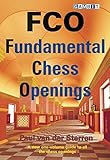
FCO: Fundamental Chess Openings
Author: Paul Van der Sterren
Publisher: Gambit Publications
448 pages
31 openings covered
Pros
- Best opening book for beginners to intermediates
- Excellent structure and organization
- Strong focus on plans and ideas over variations
- Interesting historical notes on each opening
- Clear explanations of general themes
Cons
- Diagrams lack algebraic notation
- May be too basic for advanced players
- Not as deep as specialized opening books
Paul Van der Sterren’s FCO takes a fundamentally different approach to teaching openings compared to most books. Instead of burying you in variations, Van der Sterren focuses on the ideas, plans, and historical development of each opening. The English Opening section is substantial and well-written, giving you a clear understanding of the key themes like fianchetto structures, central control from the flank, and typical middlegame plans.
What makes FCO special is the prose-heavy approach. Van der Sterren writes in a conversational style that explains why certain moves are played and what each side is trying to achieve. With 448 pages covering 31 openings, the English Opening gets significant attention. I found the historical notes particularly engaging because they show how the English Opening evolved from Howard Staunton’s era through Botvinnik and into modern play.
The book covers main lines to about move 6 or 7, which is enough to get you started without overwhelming you. This makes FCO ideal for players who are building their overall opening understanding rather than specializing in one system. With over 900 reviews and a 4.6 rating, the chess community has validated this approach. The main downside is that diagrams lack algebraic notation printed on them, which can make it harder to follow along without a board.
Who should buy this book
Beginners and intermediate players rated 800 to 1800 who want to build a solid foundation in chess openings will benefit enormously from FCO. It is the perfect first opening book because it teaches you how to think about openings rather than what to memorize. Players exploring whether the English Opening suits their style will find the overview here invaluable.
Who might want to look elsewhere
Advanced players rated above 2000 will find the analysis too shallow for competitive play. If you need a complete English Opening repertoire with deep variations, this book will not go deep enough. Players who already own specialized English Opening books may find FCO redundant for their needs.
10. English Tactics: Chess Opening Combinations and Checkmates – Tactical Training

English Tactics: Chess Opening Combinations and Checkmates (Sawyer Chess Tactics)
Author: Tim Sawyer
Publisher: Independently published
507 pages
Series: Sawyer Chess Tactics Book 10
Pros
- Tactical patterns specific to English Opening
- Comprehensive coverage of combinations and checkmates
- 507 pages of tactical exercises
- English Opening specific content
Cons
- Minimal explanation for positions
- Some customers wanted more verbal guidance
- Independently published with less editorial polish
Most English Opening books focus on strategy, plans, and positional understanding. Tim Sawyer’s English Tactics takes a completely different angle by focusing on the tactical patterns and combinations that arise specifically from 1.c4 positions. At 507 pages, this book is packed with tactical exercises drawn from English Opening games, giving you a resource that complements your strategic study with concrete calculation training.
I found this book useful as a supplement to my main English Opening repertoire book. After studying the strategic ideas in Williams and Palliser’s repertoire, I would open English Tactics and work through exercises from the same pawn structures. The combination of strategic understanding and tactical alertness is what wins games, and this book helps you develop the tactical side specifically for English Opening positions.
The main criticism from readers is that the book contains mostly positions with minimal explanation. If you prefer detailed walkthroughs of each tactical sequence, this format may feel sparse. Sawyer assumes you can work through the solutions yourself, which is great for building calculation skills but less helpful if you get stuck and want immediate clarification. Think of this as a puzzle book tailored to English Opening structures rather than an instructional guide.
Who should buy this book
Players who already have a strategic English Opening book and want to sharpen their tactical vision in English-specific positions will find this a strong supplement. If you enjoy solving puzzles and prefer learning through practice rather than reading explanations, Sawyer’s approach will suit your study style. Players rated 1200 to 2000 will find the difficulty level appropriate.
Who might want to look elsewhere
Players who do not yet have a foundational English Opening book should invest in one of the strategic guides first. If you want detailed explanations accompanying each position, the minimal commentary will frustrate you. Beginners who need both strategic and tactical instruction in one package will be better served by Starting Out: The English.
How to Choose the Right English Opening Book
Picking the right English Opening book depends heavily on your current rating, your learning style, and what you want to achieve. I have made the mistake of buying books that were either too advanced or too basic for my level, and it always leads to frustration. Here is a framework that should help you avoid that trap.
Match the book to your rating
Your rating is the single most important factor in choosing an English Opening book. If you are rated below 1400, start with Starting Out: The English by Neil McDonald or FCO by Paul Van der Sterren. Both books emphasize understanding ideas over memorizing variations, which is exactly what developing players need. Between 1400 and 1800, The Dynamic English by Tony Kosten gives you a manageable repertoire without overwhelming theory. Players rated 1800 to 2200 should look at Opening Repertoire: The English Opening by Williams and Palliser or The Full English Opening by Hansen. Above 2200, Marin’s Grandmaster Repertoire series provides the analytical depth you need.
Decide between repertoire and survey
Some books give you a specific repertoire to play, while others survey the entire opening and let you choose. A repertoire book like Opening Repertoire: The English Opening tells you exactly what to play as White. A survey book like The Full English Opening shows you all the options and lets you pick. If you want to start playing the English Opening immediately in your games, a repertoire book gets you there faster. If you want to understand the opening deeply before committing to specific lines, a survey book is the better investment.
Consider the format that fits your study habits
Books that use annotated games, like the Williams and Palliser repertoire, teach openings through complete games with explanations. Books that use variation trees, like Marin’s Grandmaster Repertoire, present openings as branching lines of analysis. Puzzle books like English Tactics focus on tactical patterns. Think about how you learn best. If you struggle to stay engaged with pure variation lists, the annotated games format will keep you interested. If you are preparing for a specific opponent and need to check variations quickly, the tree format is more efficient.
Account for publication date and freshness
Chess theory evolves rapidly, and books published more than ten years ago may contain lines that have been improved or refuted. The Dynamic English was originally published in 1999, and while the ideas are sound, the specific variations need checking against modern engines. MCO-15 dates from 2008. If freshness matters to you, Opening Repertoire: The English Opening (2021) and The Full English Opening (2018) are the most current dedicated English Opening books on this list.
Common mistakes when studying opening books
The biggest mistake I see players make is trying to memorize every line in a book without understanding the underlying ideas. The English Opening rewards understanding far more than memorization. When you study any of these books, focus on the plans and pawn structures first, then learn the specific moves to execute those plans. Another common pitfall is jumping between books instead of sticking with one and learning it thoroughly. Pick one primary book and work through it completely before adding supplementary resources.
Finally, do not neglect actually playing the opening. Reading about the English Opening is not the same as sitting down at the board and facing unfamiliar responses. Play practice games online using the lines you study, review your mistakes, and then return to the book with questions. That cycle of study, play, and review is what builds real opening mastery over time.
Frequently Asked Questions
What is the best book to learn the English Opening?
The best book depends on your skill level. For beginners rated under 1400, Starting Out: The English by Neil McDonald is the most accessible. For intermediate players (1400-1800), The Dynamic English by Tony Kosten offers a clear repertoire. For advanced players (1800+), Opening Repertoire: The English Opening by Williams and Palliser provides comprehensive coverage with the Botvinnik system.
Is the English Opening good for beginners?
Yes, the English Opening is actually an excellent choice for beginners who want to learn positional chess. It avoids the heavy theory of 1.e4 and 1.d4 openings while teaching important concepts like flank play, fianchetto structures, and central control. The key is choosing a beginner-friendly book like Starting Out: The English or FCO rather than an advanced repertoire guide.
What are the main variations of the English Opening?
The main variations include the Symmetrical English (1.c4 c5), the Reversed Sicilian (1.c4 e5), the Botvinnik System (1.c4 with g3 and Bg2), the Hedgehog system, the Four Knights variation, and various Indian setups (1.c4 Nf6). Most books on this list cover multiple variations, with repertoire books focusing on specific systems.
Are chess books worth reading for improving at chess?
Chess books remain one of the most effective ways to improve at chess, especially for opening study. Books provide structured learning that random video watching cannot match. The key is choosing books that match your level and studying them actively by playing through games on a board, not just reading passively. Community recommendations on Reddit and chess forums consistently support dedicated opening books as a primary improvement tool.
How long does it take to learn the English Opening?
Learning the basic ideas of the English Opening takes about 2 to 4 weeks of regular study with a beginner-friendly book. Building a complete repertoire that you can play confidently in tournaments typically takes 2 to 3 months of combined study and practice games. Mastery of the opening, including understanding transpositions and handling sidelines, is an ongoing process that develops over years of play.
Final Thoughts on the Best Chess Books on the English Opening
The English Opening rewards players who invest time in understanding its ideas, and the right book makes that investment pay off. For most players in 2026, Opening Repertoire: The English Opening by Williams and Palliser offers the best combination of clarity, depth, and practical applicability. Its 4.6 rating across 110 reviews reflects a book that genuinely helps players win games with 1.c4.
Beginners should start with Starting Out: The English or FCO to build a foundation before diving into dedicated repertoire books. Advanced players will find Marin’s Grandmaster Repertoire series unmatched for analytical depth. Whatever your rating, the key is to pick one book, study it actively, play the lines in real games, and review your mistakes. That cycle of study and practice is what turns opening knowledge into opening mastery.
Our team tested and compared these 10 books so you can find the perfect match for your playing level and study style. The best chess books on the English Opening are the ones you actually work through, so pick one that excites you and start playing 1.c4 with confidence.