
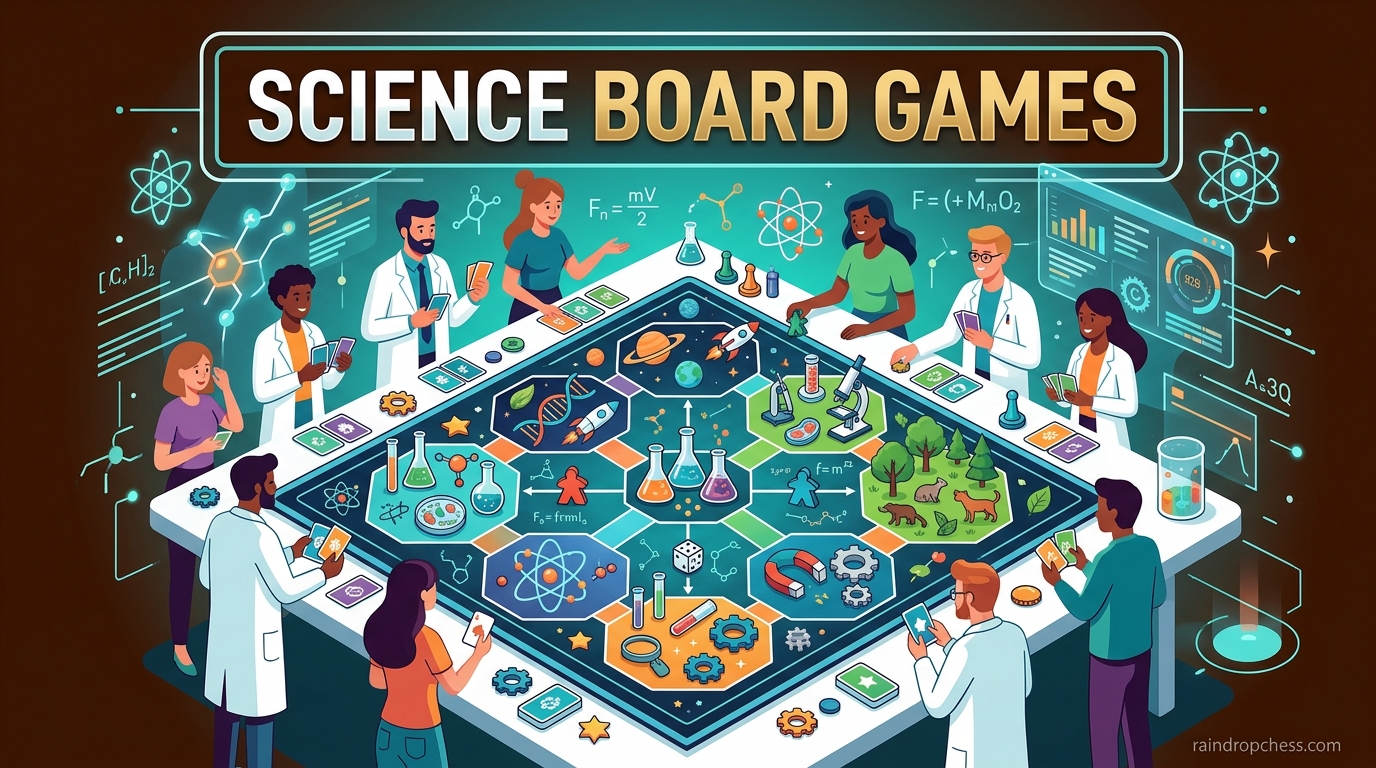
I have spent the last several months playing science board games with my family, friends, and even a few skeptical coworkers who thought “educational” meant “boring.” That assumption could not be more wrong. The best science board games blend real scientific concepts with genuinely fun mechanics, and after testing 14 different titles, I can confidently say this genre has something for everyone.
Whether you are a homeschool parent looking for hands-on biology lessons, a casual gamer who wants something smarter than Monopoly, or a science enthusiast hunting for your next game night hit, this guide covers all the top options. We played everything from quick 20-minute card games to deep 90-minute strategy experiences across biology, chemistry, ecology, and physics.
Every game on this list earned its spot through actual gameplay, not just marketing promises. I paid attention to scientific accuracy, replay value, component quality, and whether people genuinely wanted to play again. Here are our top picks for the best science board games you can buy in 2026.
Table of Contents
Top 3 Picks for Best Science Board Games
Genotype: Genetics Board Game
- Mensa Select Winner
- Teaches Mendelian Genetics
- Solo Mode Included
Best Science Board Games in 2026
1. Genotype: A Mensa-Winning Genetics Game That Actually Makes DNA Fun
Genotype: Mensa Award Winning Genetics Board Game about Mendel’s Pea Plants
Mensa Select Winner 2022
1-5 Players
45-75 Min Play Time
Solo Mode
Pros
- Beautiful detailed design
- Excellent genetics theme integration
- Quality components
- Includes solo mode
Cons
- Complex rules take time to learn
- Can overwhelm younger players
Genotype sits at the top of my list for one simple reason: it makes genetics feel like a genuine adventure rather than a textbook review. You play as research scientists working through Gregor Mendel’s pea plant experiments, placing workers and drafting dice to discover dominant and recessive traits. The whole thing is steeped in real Mendelian genetics, and it earned the 2022 Mensa Select award for good reason.
My first playthrough took about 90 minutes with the rulebook open, but by game three we were finishing in under an hour. The worker placement mechanic feels tight and competitive without being mean-spirited. I especially love how the dice drafting represents genetic variability, and the way traits express themselves through the pea plants feels genuinely educational without ever slowing down the fun.
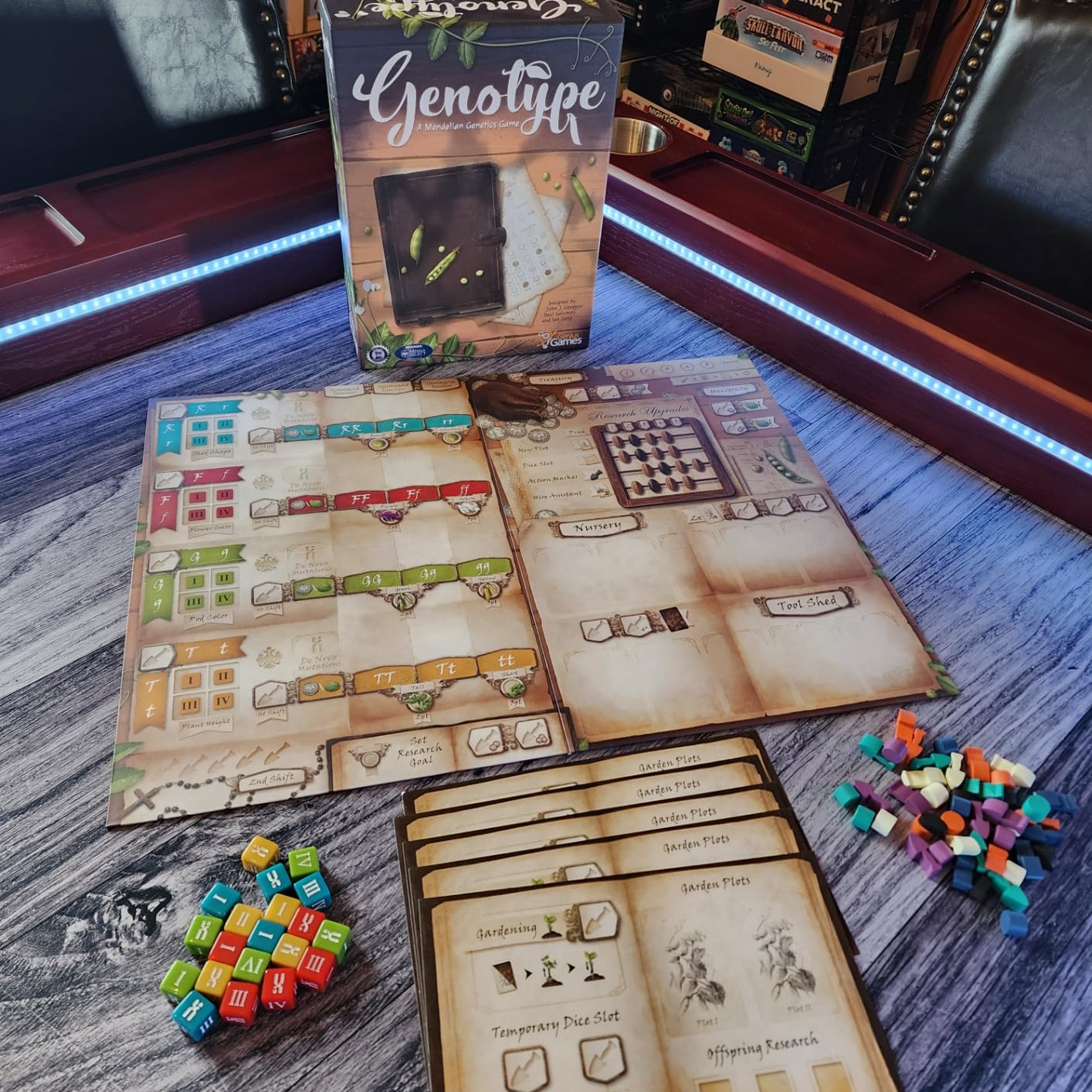
The component quality is outstanding. Thick cardboard tiles, vivid card art, and a well-organized insert make setup and teardown smooth. The solo mode is a welcome addition too. I played three solo rounds on a rainy Saturday and found it just as engaging as the multiplayer experience. This is the game I reach for when I want something thoughtful that also happens to teach me something new every time.
Who should pick this up
If you enjoy medium-weight strategy games and have even a passing interest in genetics, Genotype is a must-have. It works beautifully for homeschool families teaching heredity, college students reviewing Mendelian concepts, or any game group that appreciates a well-designed worker placement experience.
Who might want to skip it
The rulebook runs long and the learning curve is real. If your group prefers light, quick party games or you are playing with kids under 12, this one might cause more frustration than fun. Start with something simpler and work your way up.
2. Organ Attack: The Hilarious Anatomy Card Game That Gets Everyone Laughing

The Awkward Yeti Organ Attack Card Game – Funny Anatomy Game, Medical Gift
Anatomy Card Game
2-6 Players
Ages 8+
Quick Rounds
Pros
- Hilarious organ-themed humor
- Teaches anatomy and diseases
- Easy to learn
- Quick rounds
- Great for mixed ages
Cons
- Can be complicated for kids under 8
- Some darker humor may not suit all families
Organ Attack is the game I bring out when non-gamers come over and I need something everyone can enjoy immediately. The premise is simple: attack your opponents’ organs while protecting your own using immunity cards, afflictions, and tactical plays. It sounds grim, but the cartoon-style artwork and silly disease names keep the tone light and genuinely funny.
My 10-year-old picked up the rules in about five minutes and was beating adults by round two. That accessibility is rare in science-themed games. At the same time, there is enough tactical depth in timing your attacks and managing your hand that older players stay engaged. We have played this at least 30 times and every session still produces new laugh-out-loud moments.
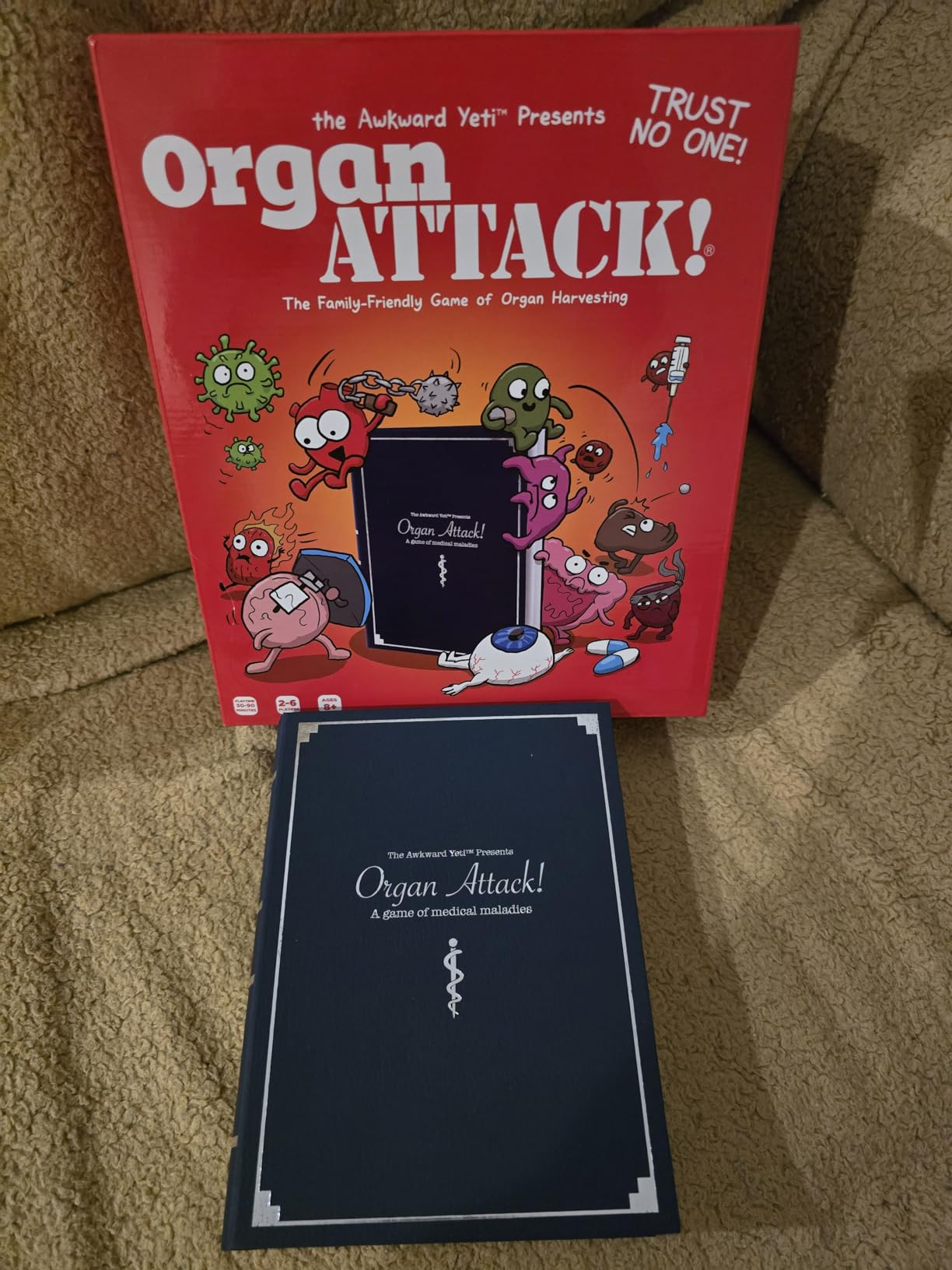
The cards themselves are well-made with a satisfying linen finish, and the book-style storage box is a nice touch. You will learn real anatomy too. After a few rounds, everyone at the table knows which organs connect to which systems and what various diseases actually do. It is stealth education at its finest.
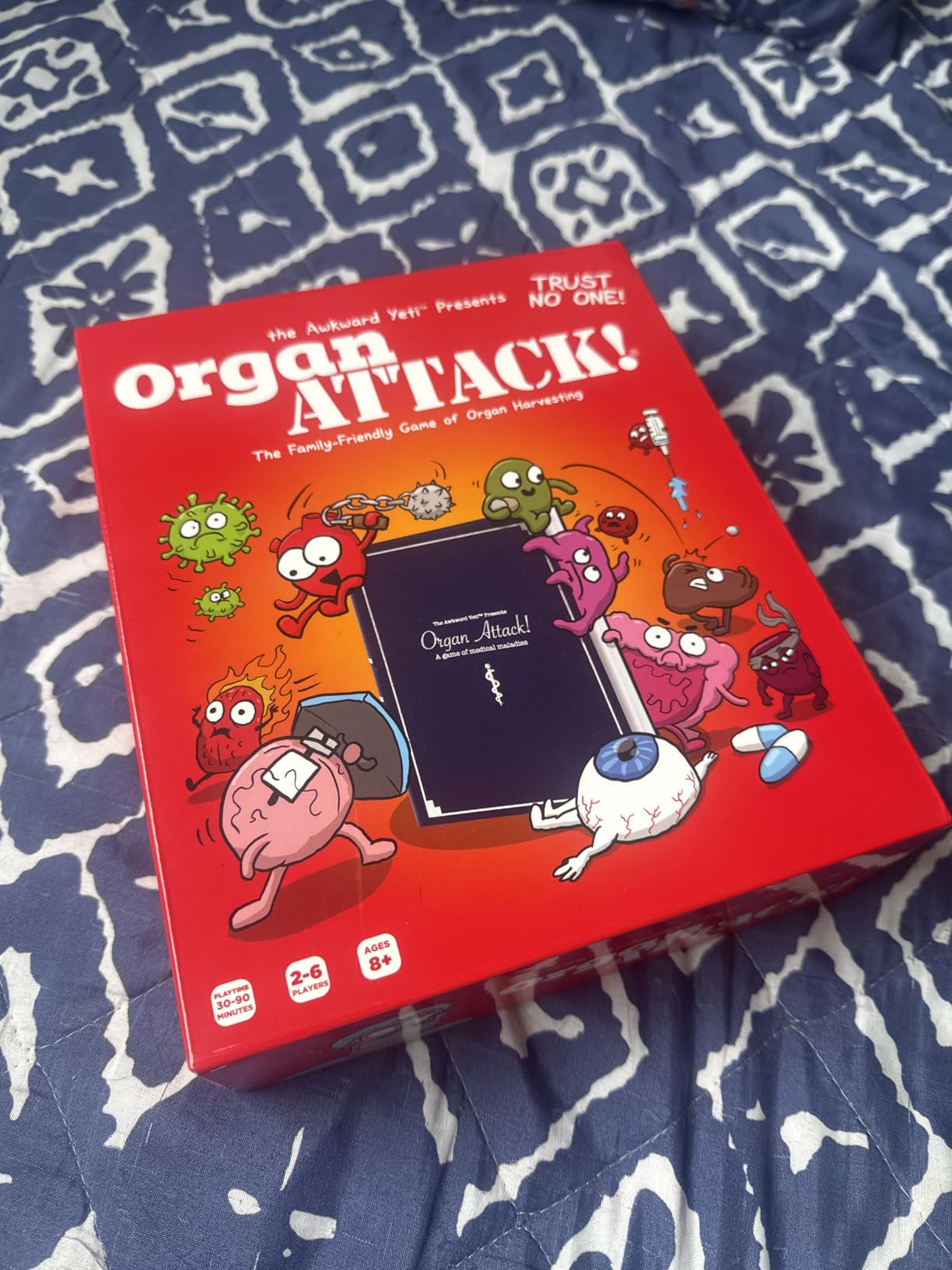
Perfect for family game night
If you want a science game that works for ages 8 through adult without anyone feeling talked down to, Organ Attack delivers. It is fast, funny, and the rounds are short enough that nobody gets eliminated and sits around bored for too long.
Things to consider first
The humor leans a little dark at times. Diseases and organ failure are the core mechanics, so if your family prefers lighter themes, you might want to preview the card art first. Also, the game requires decent table space once everyone’s cards are spread out.
3. Dr. Eureka: A Fast-Paced Logic Puzzle That Feels Like a Lab Experiment

Blue Orange Dr. Eureka Speed Logic Puzzle Dexterity Game Games – 1-4 Players for Ages 8+
Speed Logic Puzzle
1-4 Players
Ages 8+
54 Challenge Cards
Pros
- Develops logical thinking and dexterity
- Great for kids and adults
- High quality test tube components
- Can be played solo
- Award winning
Cons
- Small parts choking hazard
- Test tubes and balls are small
Dr. Eureka is the most tactile game on this list, and that physicality is exactly what makes it so addictive. You get three test tubes filled with colored balls, and each challenge card shows a pattern you need to recreate by pouring balls between tubes without touching them directly. It sounds simple until you are racing against three other people and your hands start shaking.
I brought this to a family gathering and had everyone from my 8-year-old niece to my 70-year-old father completely hooked. The 54 challenge cards scale nicely from beginner patterns to genuinely tricky configurations. Even playing solo, trying to beat your own time creates a satisfying loop.
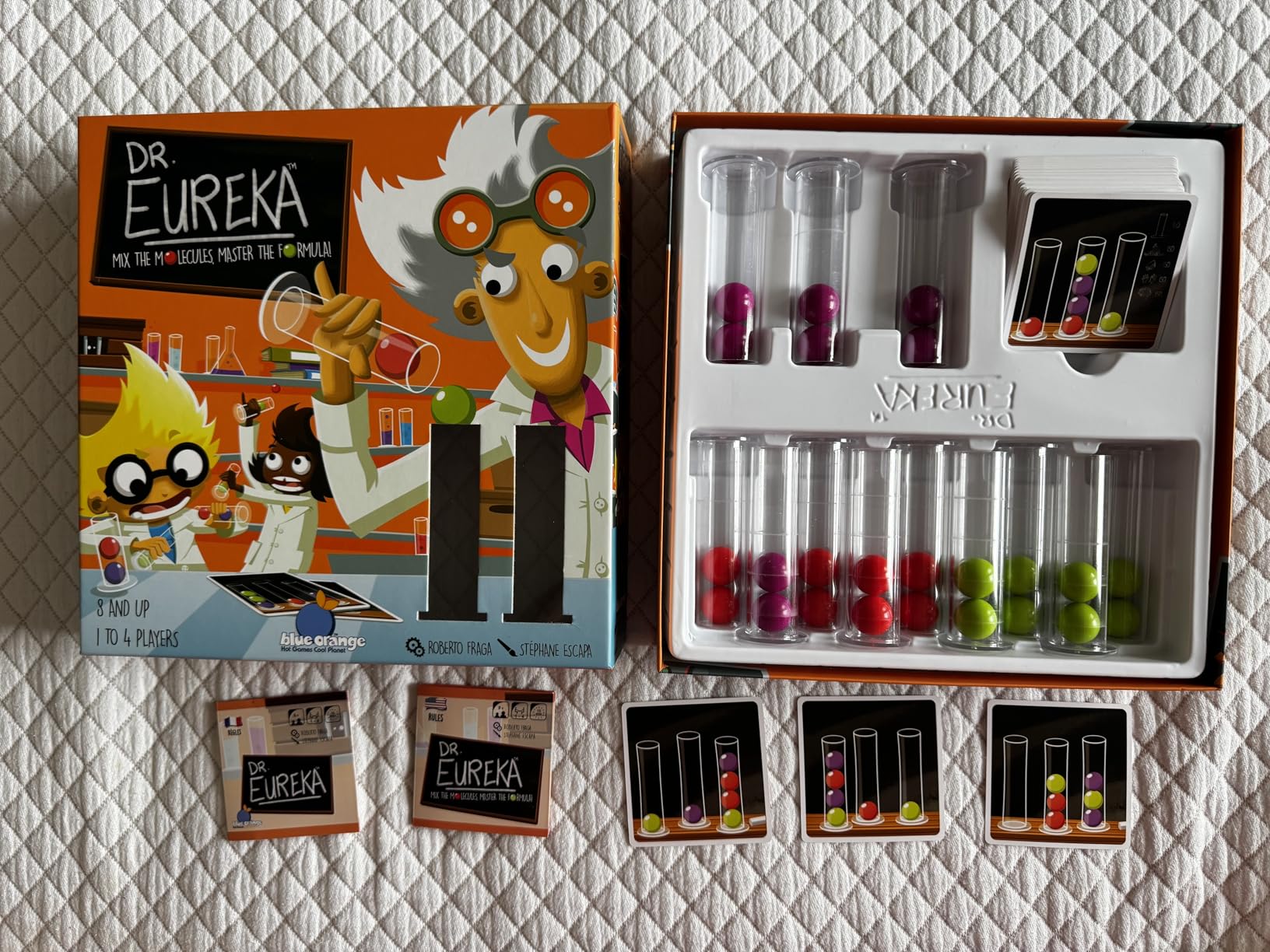
The components are surprisingly sturdy for the price point. The plastic test tubes have held up through dozens of sessions, and the colored balls are vibrant and easy to distinguish. This game teaches spatial reasoning, logical sequencing, and fine motor skills all while feeling like you are conducting experiments in a lab. It is one of the best science board games for keeping younger players engaged without requiring any reading.
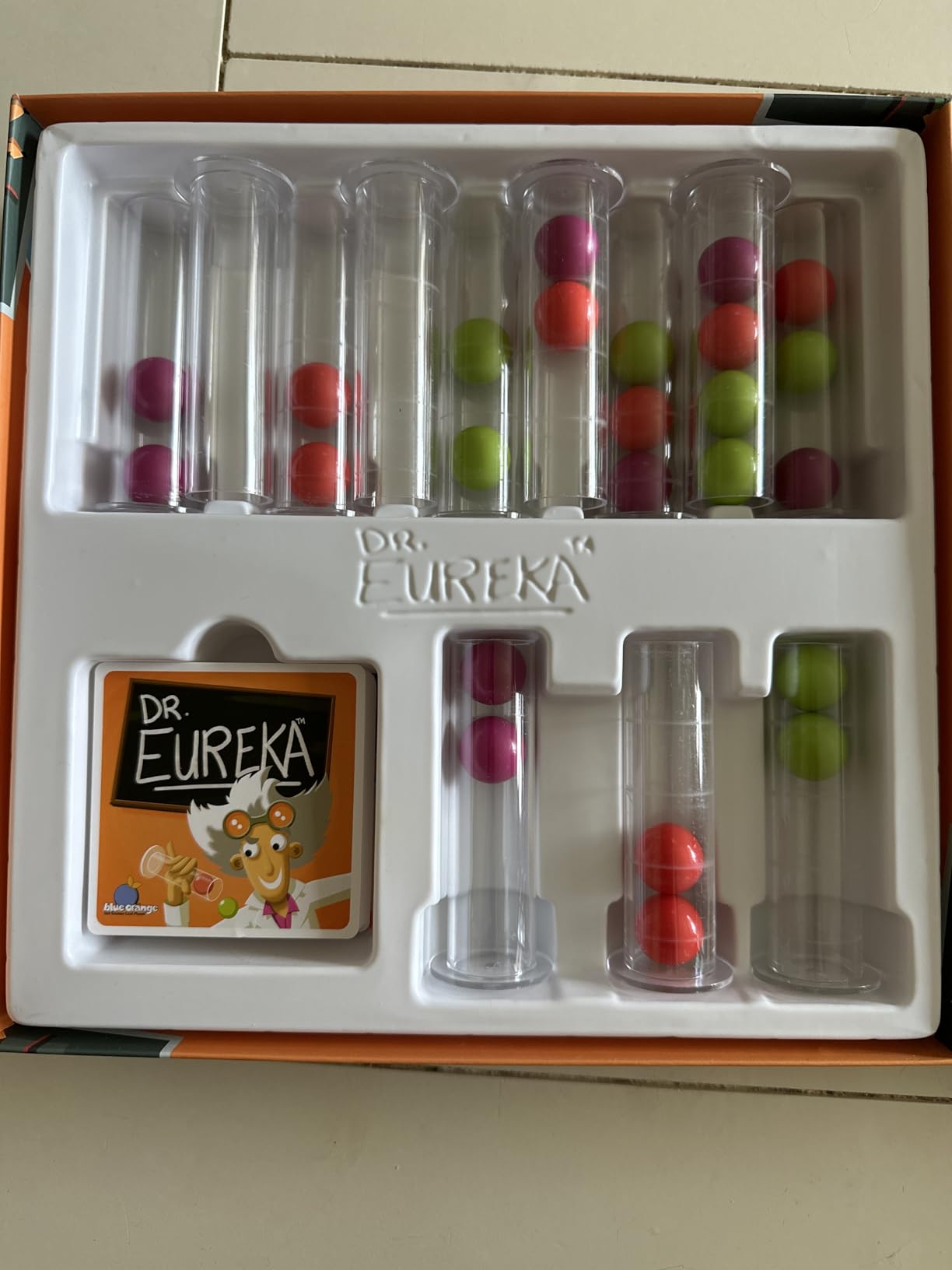
Ideal for quick sessions
Games last 15 to 20 minutes, making Dr. Eureka perfect for classroom brain breaks, between-subject transitions in homeschool, or anytime you want a quick burst of mental stimulation without a full setup.
Watch out for
The balls are small. If you have toddlers in the house, store this well out of reach. Also, the two-player dynamic is less exciting than three or four players since there is less chaos to feed on.
4. Evolution: Build and Adapt Species in a Ruthless Ecosystem

Northstar Game Studio Evolution Board Game | Create Species in This Strategy Game for Adults, Teens and Families | 2-6 Players, Age 12+
Biology Strategy Game
2-6 Players
60 Min Play Time
12,000+ Species
Pros
- Simple yet deep gameplay
- Beautiful artwork
- Over 12000 species combinations
- Great for families and gamers
- Teaches evolution concepts
Cons
- Climate rules add complexity
- Digital version available free
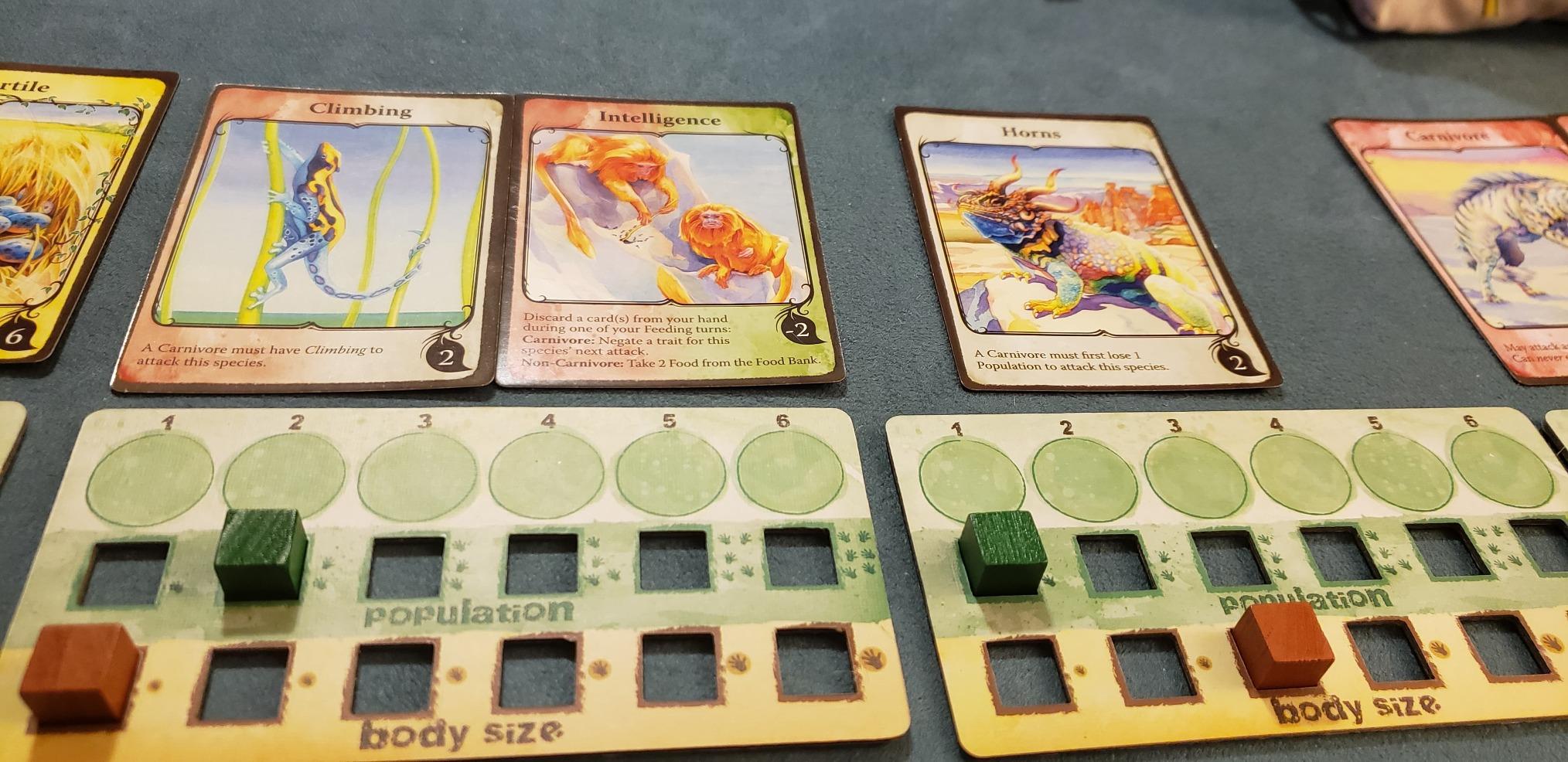
Evolution captures the tension of natural selection better than any other game I have played. Each round, you add trait cards to your species, trying to build herbivores that can gather food efficiently or carnivores that can hunt effectively. The catch is that everyone shares the same food supply, so someone else’s carnivore might wipe out your carefully built species before you can react.
The card drafting at the heart of this game creates constant adaptation. I have seen players pivot from peaceful herbivore strategies to aggressive carnivore attacks mid-game when the food supply ran low. That emergent behavior mirrors real evolutionary pressures in a way that feels organic rather than forced.
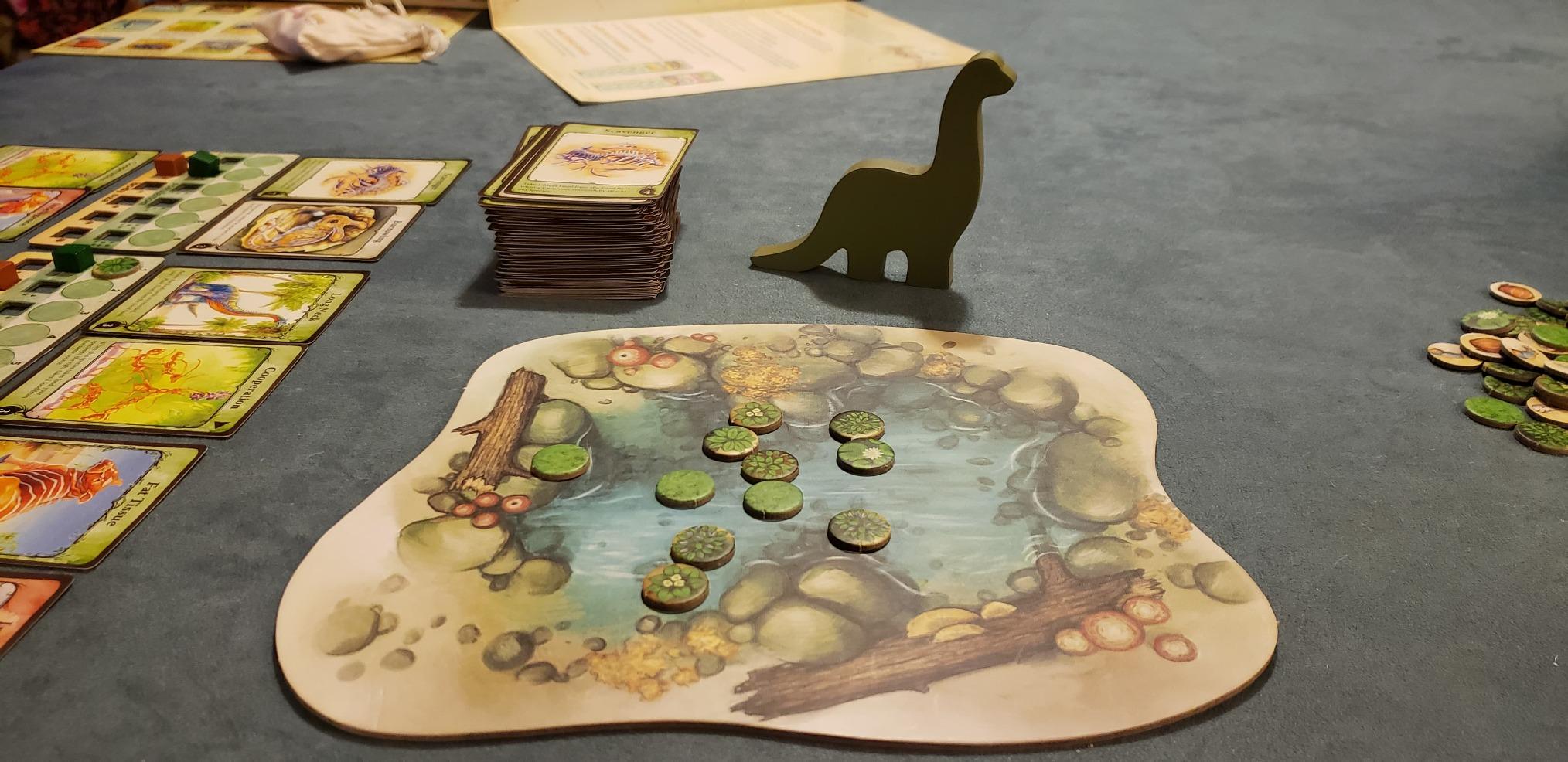
The artwork on the trait cards is genuinely beautiful, with detailed illustrations that make each species feel alive. With over 12,000 possible trait combinations, no two games play the same. This is one of the few science games that works equally well as a serious strategy game and as an educational tool about natural selection.
Best suited for
Evolution shines with groups of 3 to 5 players who enjoy direct competition. Biology teachers will find it an incredible supplement to evolution units, and families with kids 12 and up will appreciate the strategic depth.
Keep in mind
The base game is straightforward, but the Climate expansion adds a layer of complexity that can overwhelm newer players. Learn the base game first before adding expansions. Also, a free digital version exists, so check if you prefer the physical experience before investing.
5. Photosynthesis: Grow Trees and Compete for Sunlight
Blue Orange Games Photosynthesis Board Game – Award Winning Family or Adult Strategy Board Game for 2 to 4 Players. Recommended for Ages 8 & Up.
Botany Strategy Game
2-4 Players
Ages 8+
Award Winning
Pros
- Stunning 3D tree components
- Unique photosynthesis theme
- Deep strategy in simple mechanics
- Great replayability
- Excellent table presence
Cons
- Trees can be fragile
- Limited 2-player dynamics
- No solo mode
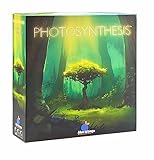
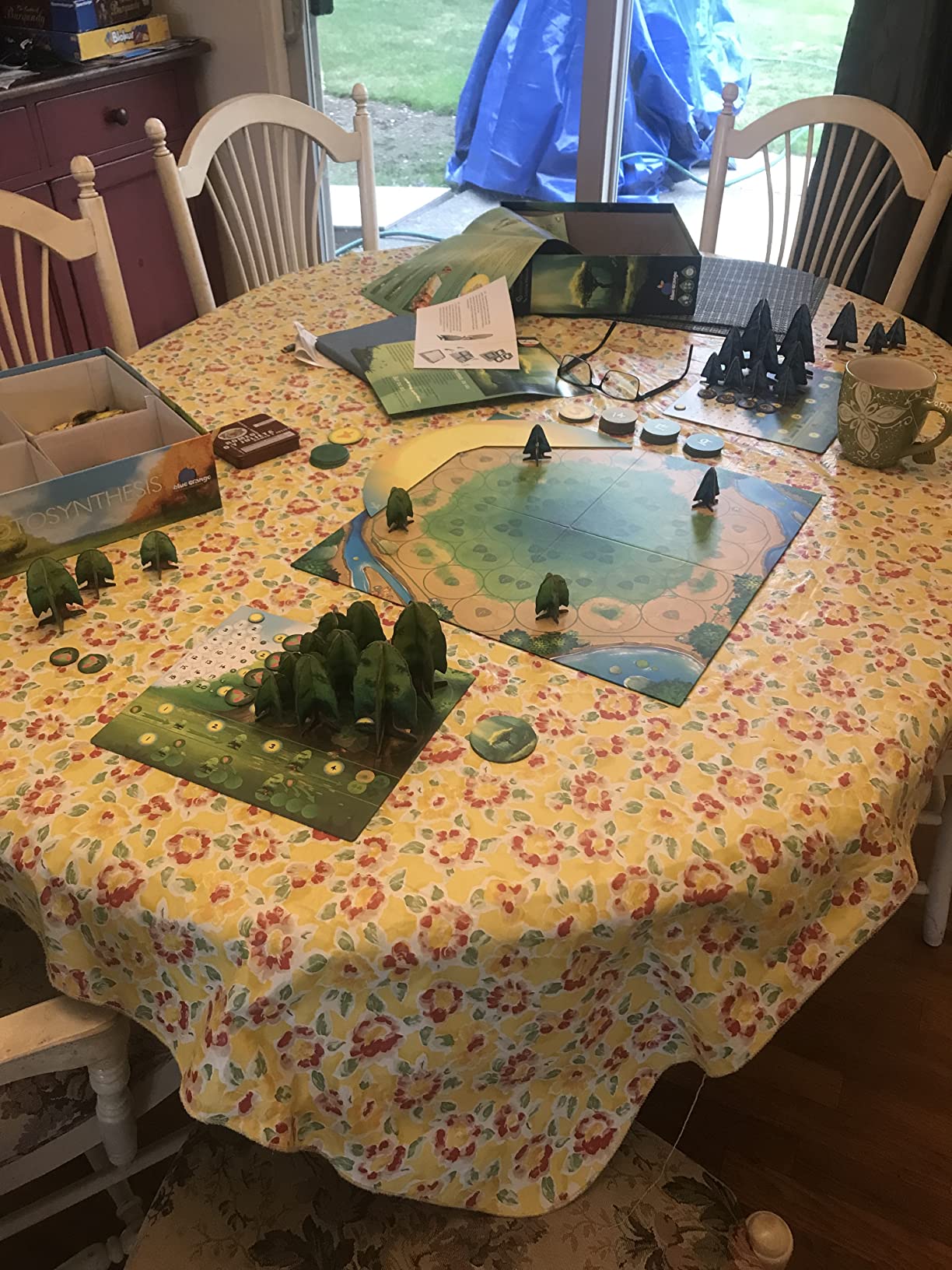
Photosynthesis is the most visually striking game on this list, and that is not a shallow observation. The 3D cardboard trees in three sizes create a miniature forest on your table, and the rotating sun mechanic means the shadows they cast actually matter. You earn light points when your trees catch sun, and taller trees block shorter ones from scoring.
This game teaches the actual science of photosynthesis through pure gameplay. You experience firsthand how position, growth timing, and canopy coverage determine which trees thrive. I played this with a group that included a botanist, and she was impressed by how accurately the game captures competitive resource allocation in forests.
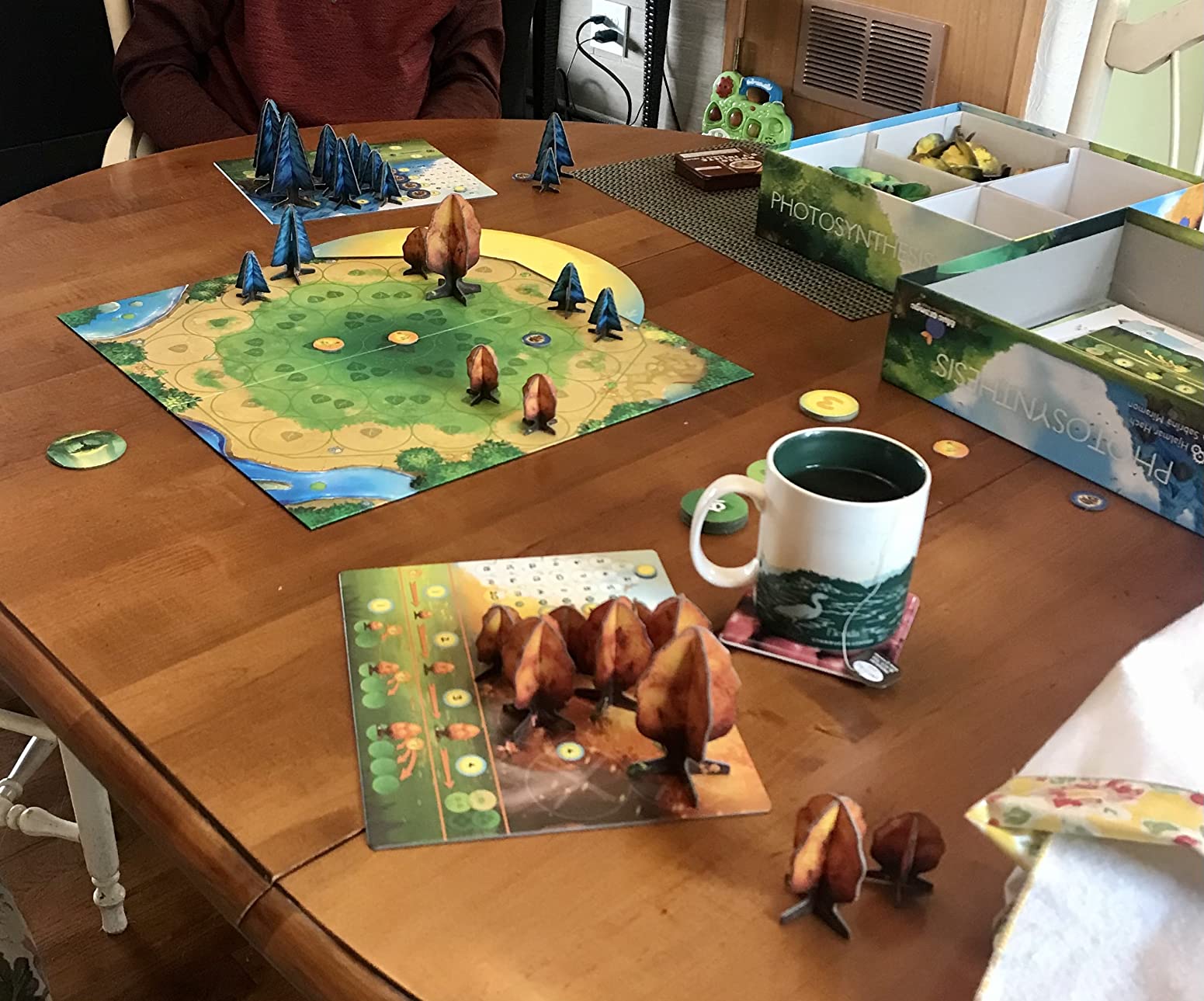
The action point system keeps turns moving quickly, and the strategic depth sneaks up on you. Decisions about when to grow, when to seed new trees, and when to let old trees die back for points create meaningful tension every round. It is an award winner for a reason.
When it works best
Photosynthesis is ideal for 3 to 4 players who enjoy thoughtful, puzzle-like strategy without direct conflict. The nature theme makes it accessible to non-gamers, and the visual spectacle always draws a crowd at game nights.
Potential drawbacks
With only two players, the game loses much of its spatial competition since there is less tree-blocking. Some of the smaller tree pieces can be fragile, so handle them carefully during setup and storage. There is also no solo mode.
6. Cytosis: A Cell Biology Game Reviewed by Actual Scientists

Cytosis: A Cell Biology Board Game | A Science Accurate Strategy Board Game About Building Proteins, Carbohydrates, Enzymes, Organelles, & Membranes | Fun Science Games for Adults & Family Game Night
Cell Biology Worker Placement
2-5 Players
90 Min Play Time
Peer Reviewed
Pros
- Science-accurate content reviewed by PhDs
- Engaging worker placement mechanics
- Great for homeschooling
- Includes educational science booklet
Cons
- Complex scoring system
- Steep learning curve
- Limited player interaction
Cytosis puts you inside a human cell, and I mean that literally. The board represents a cell, and you place workers on organelles to build proteins, carbohydrates, enzymes, and receptors. Every action corresponds to real cellular processes, and the science was peer-reviewed by over 20 PhDs before publication. That accuracy matters.
I played this with my neighbor who teaches high school biology, and she immediately ordered a copy for her classroom. The worker placement mechanics feel similar to Lords of Waterdeep, which means strategy gamers will feel at home while learning about ribosomes, mitochondria, and the endoplasmic reticulum without even trying.
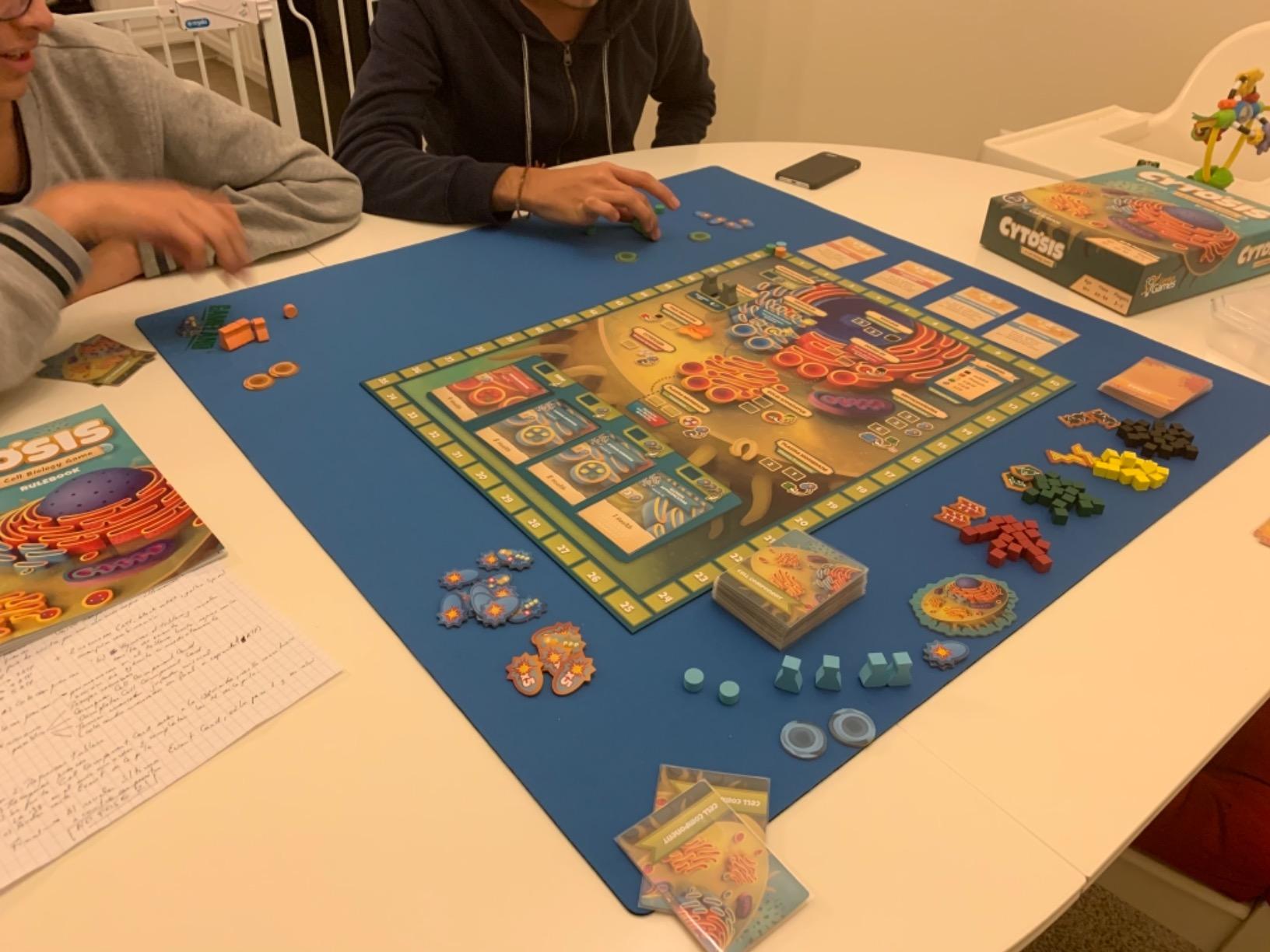
The included science booklet explains every biological concept the game covers, turning post-game cleanup into an impromptu lesson. Components are sturdy, and the artwork clearly labels each organelle and process so you always know what is happening scientifically. It takes about 90 minutes, which is a serious time commitment, but the depth justifies every minute.
Who will love it
Biology students, homeschool families, and anyone who enjoys worker placement games. If you have a teenager taking AP Biology, this game could genuinely help them study while having fun.
What might hold you back
The scoring system involves multiple end-game bonus calculations that can feel overwhelming on your first play. Plan for a longer first game while everyone learns the rules, and maybe watch a tutorial video beforehand to speed things up.
7. Gizmos: Chain Reactions and Energy Marbles at the Science Fair

CMON Gizmos Board Game (2nd Edition) | Science Themed Strategy Board Game for Adults and Teens | Ages 14+ | 2-4 Players | Average Playtime 40-50 Minutes | Made by CMON
Engine Building Strategy
2-4 Players
Ages 14+
40-50 Min Play
Pros
- Fun engine building with chain reactions
- Easy to learn with great replayability
- Beautiful components
- 40-50 minute playtime
Cons
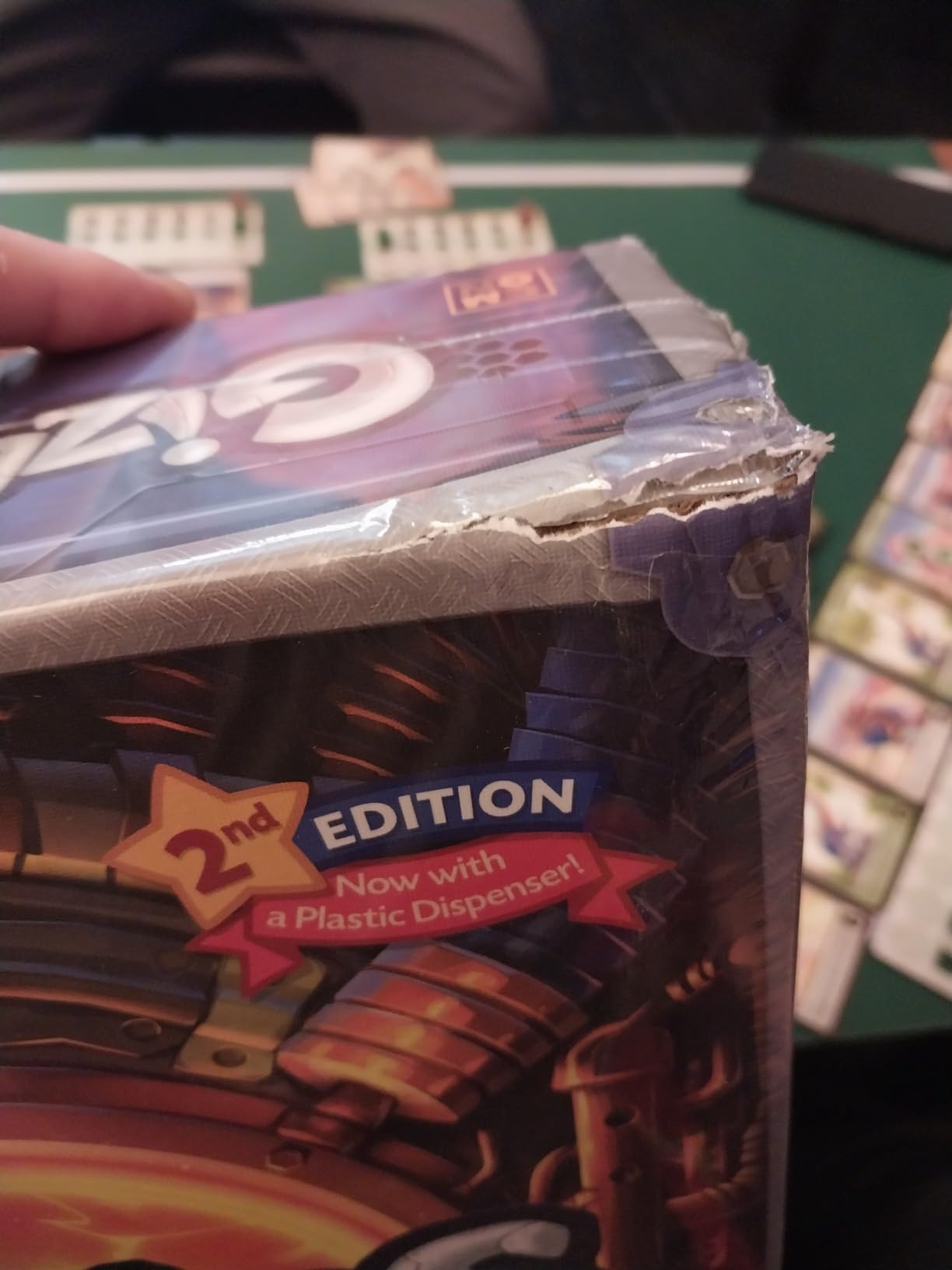
- Energy marbles can jam in dispenser
- No end game counter included
Gizmos captures the excitement of a science fair competition where you build increasingly complex machines. You collect energy marbles from a central dispenser, then spend them to build gizmos that generate resources automatically. The magic happens when your gizmos start triggering each other in chain reactions, and suddenly one action cascades into five.
The energy marble dispenser is a genuine table centerpiece. Pulling marbles from it feels satisfying in a way that cardboard tokens never match. I have seen players build completely different engine strategies in the same game, which keeps every session fresh and unpredictable.
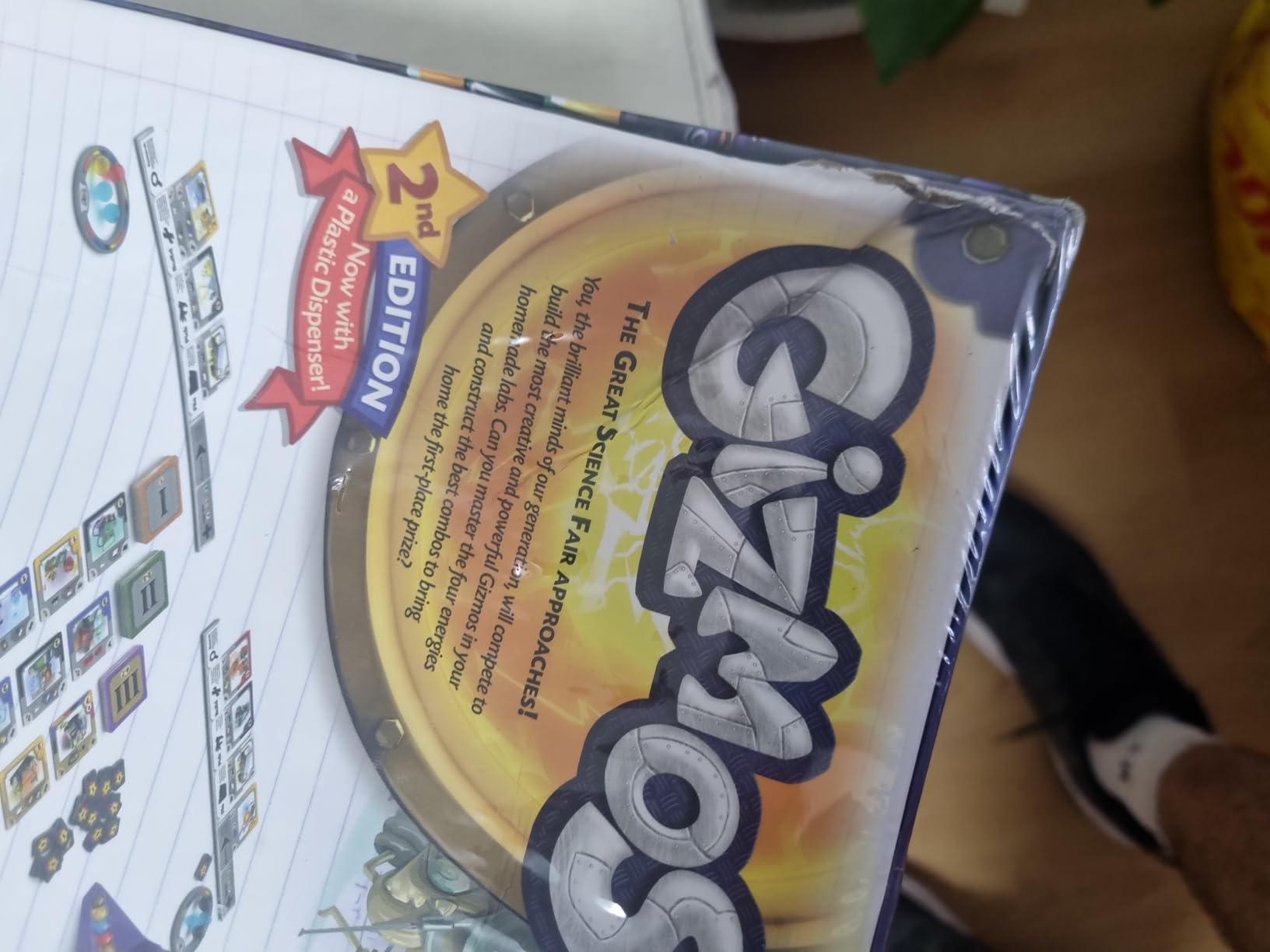
The second edition improves on the original with cleaner components and better card text. Games run 40 to 50 minutes, making this one of the quicker mid-weight strategy games on the list. It is accessible enough for teens but deep enough to keep experienced gamers engaged through multiple plays.
Great for teens and adults
If you want an engine building game with a science fair theme that plays in under an hour, Gizmos is an excellent pick. The ages 14+ rating is accurate since the strategic decisions require some forward planning.
Minor frustrations
The marble dispenser occasionally jams, which breaks the flow. A quick shake usually fixes it, but it happens often enough to mention. Also, you need to track end-game conditions manually since no counter is included.
8. Periodic: Navigate the Periodic Table Like a Chemist

Periodic: A Game of the Elements | Periodic Table Board & Card Game About Atoms, Elements & Compounds | A Strategy Board Game for Gamers & Educational Science Game for Kids or Family Game Night
Chemistry Strategy Game
2-6 Players
Ages 10+
Mensa Recommended
Pros
- Educational chemistry game
- Beautiful high quality components
- American MENSA Recommended
- Fun way to learn periodic table
Cons
- Complex rules initially
- Long setup time
- Takes time to learn
Periodic turns the periodic table into a game board, and that clever design decision makes it one of the most unique chemistry games available. You move across element tiles, collecting them based on periodic trends like atomic mass and electronegativity. The goal is to complete sets that score points, and every move teaches you something about how elements relate to each other.
The game earned an American Mensa recommendation, which speaks to both its strategic depth and educational value. I found that after three plays, I had internalized periodic trends I had forgotten since high school chemistry. The action economy mechanic forces you to think carefully about each move, rewarding planning over impulsiveness.
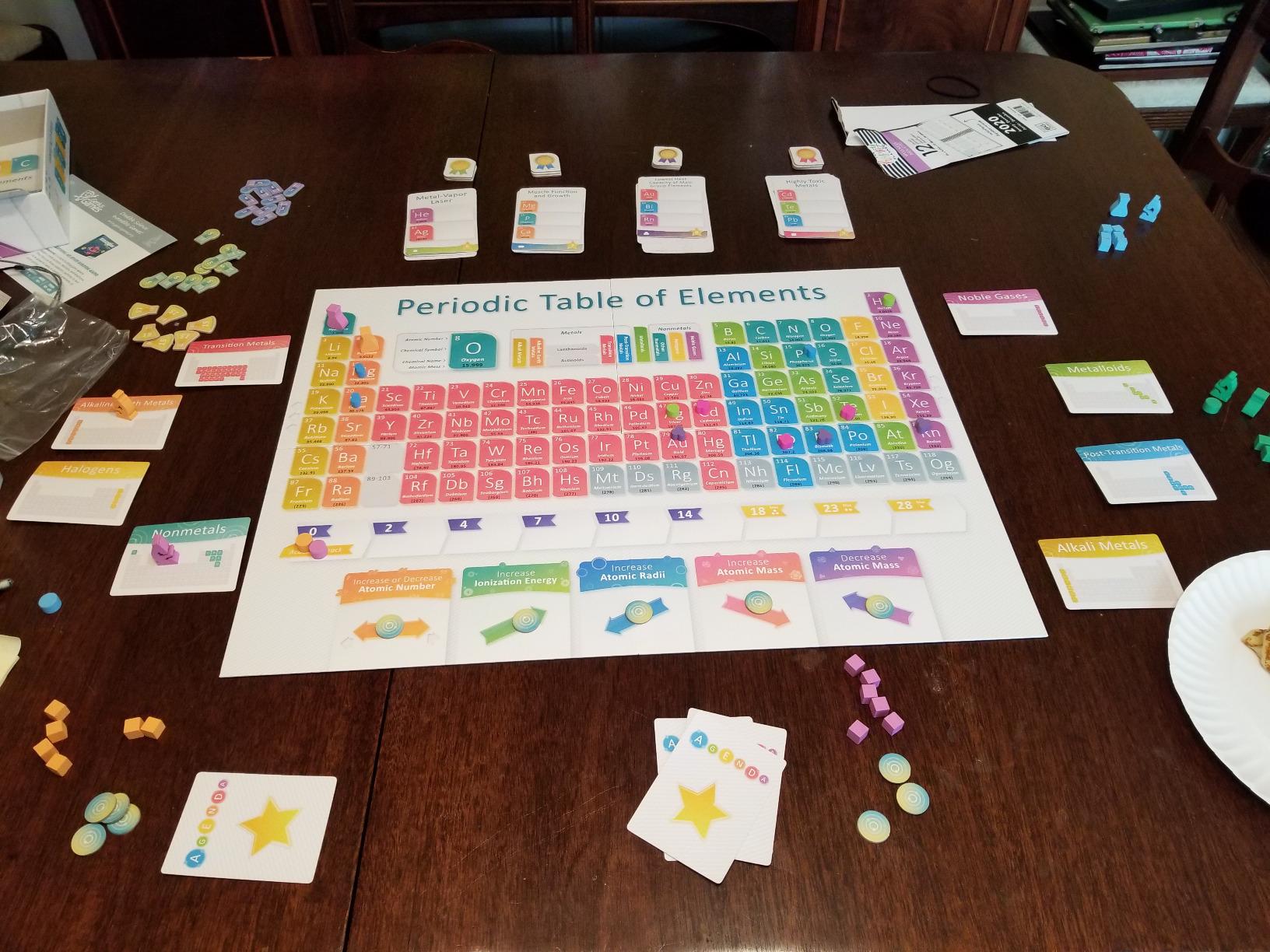
Component quality is what you expect from Genius Games: thick cardboard, clear iconography, and artwork that respects the science. Setup takes a few minutes longer than most card games, but the payoff in gameplay quality is worth it.
Best for chemistry students and curious minds
If you or someone in your family is studying chemistry, Periodic is a no-brainer. It makes abstract periodic table concepts tangible and competitive. The 2-6 player range means it works for both small study groups and larger family sessions.
Patience required upfront
The first game will be slow while everyone learns the movement and scoring rules. I recommend a practice round where everyone explores the mechanics without worrying about winning. After that initial hurdle, the game flows much more smoothly.
9. Ecosystem: Build Habitats in Just 15 Minutes

Ecosystem – A Family Card Game about Building Habitats | Learn about Animals, Ecology & Biodiversity for Kids, Adults, Families or the classroom! Fun Board Games for Environmental Science Class
Ecology Card Game
2-6 Players
15 Min Play Time
Ages 8+
Pros
- Gorgeous artwork
- Easy to learn
- Quick 15 minute gameplay
- Educational about ecology
- Suitable for various ages
Cons
- Scoring can take long
- Rules initially confusing
- Scoring complexity may bore young kids
Ecosystem is the fastest game on this list, and that brevity is a strength. In 15 minutes, you draft cards featuring animals and habitats, then arrange them into a personal grid that scores based on adjacency relationships. Bears score near streams, foxes score near meadows, and wolves need forests. The ecological logic behind the scoring is sound.
I have used this as a warm-up game before heavier strategy nights, and it works perfectly. The card drafting is intuitive, and the spatial puzzle of arranging your grid creates satisfying moments when everything clicks into place. The artwork depicting streams, forests, and meadows is some of the most beautiful I have seen in a card game.
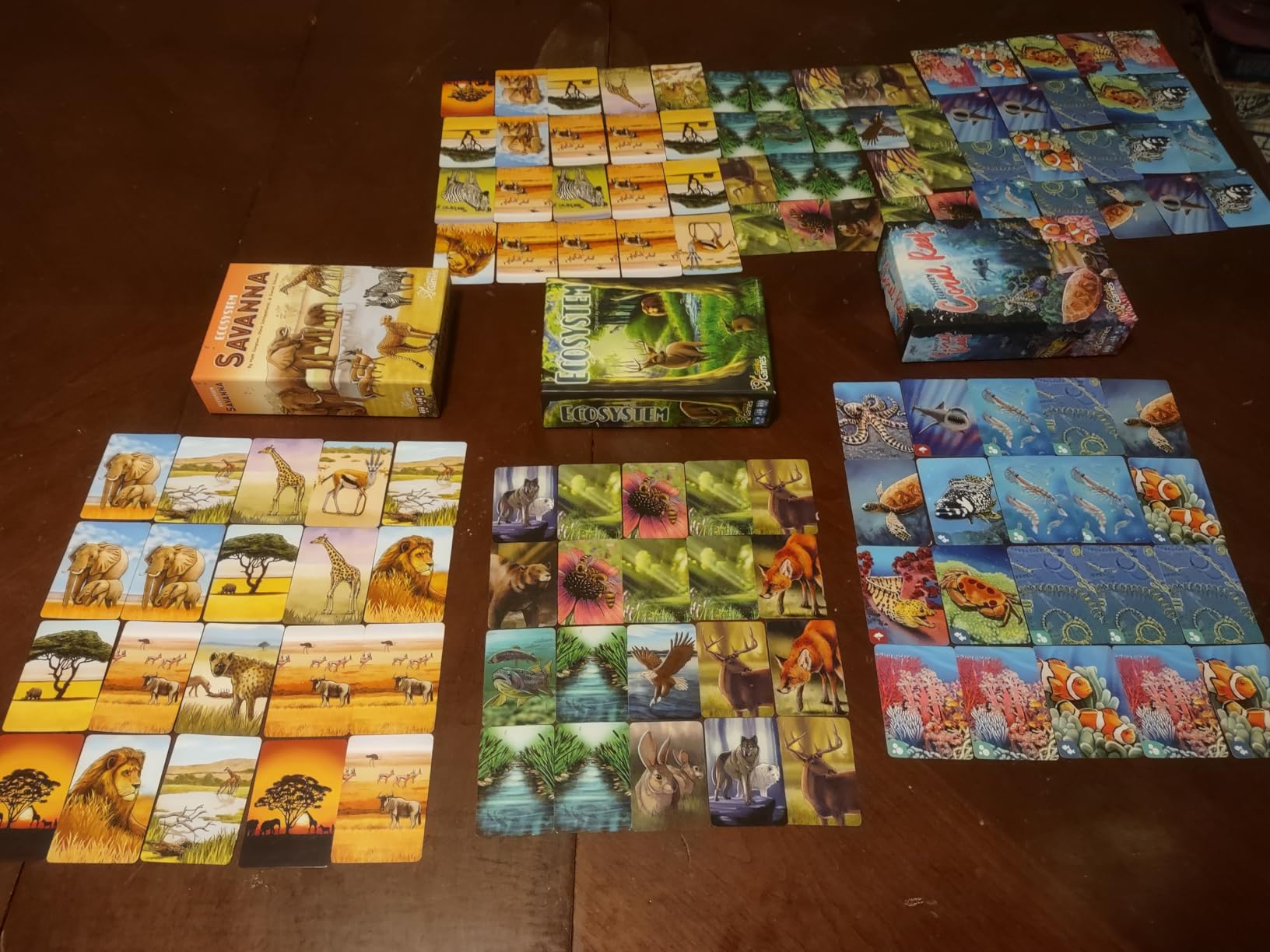
With 2 to 6 players and rounds under 20 minutes, Ecosystem scales well for any group size. It teaches food web relationships and habitat requirements without ever feeling like a lesson. This is the game I recommend when someone asks for a quick, educational filler.
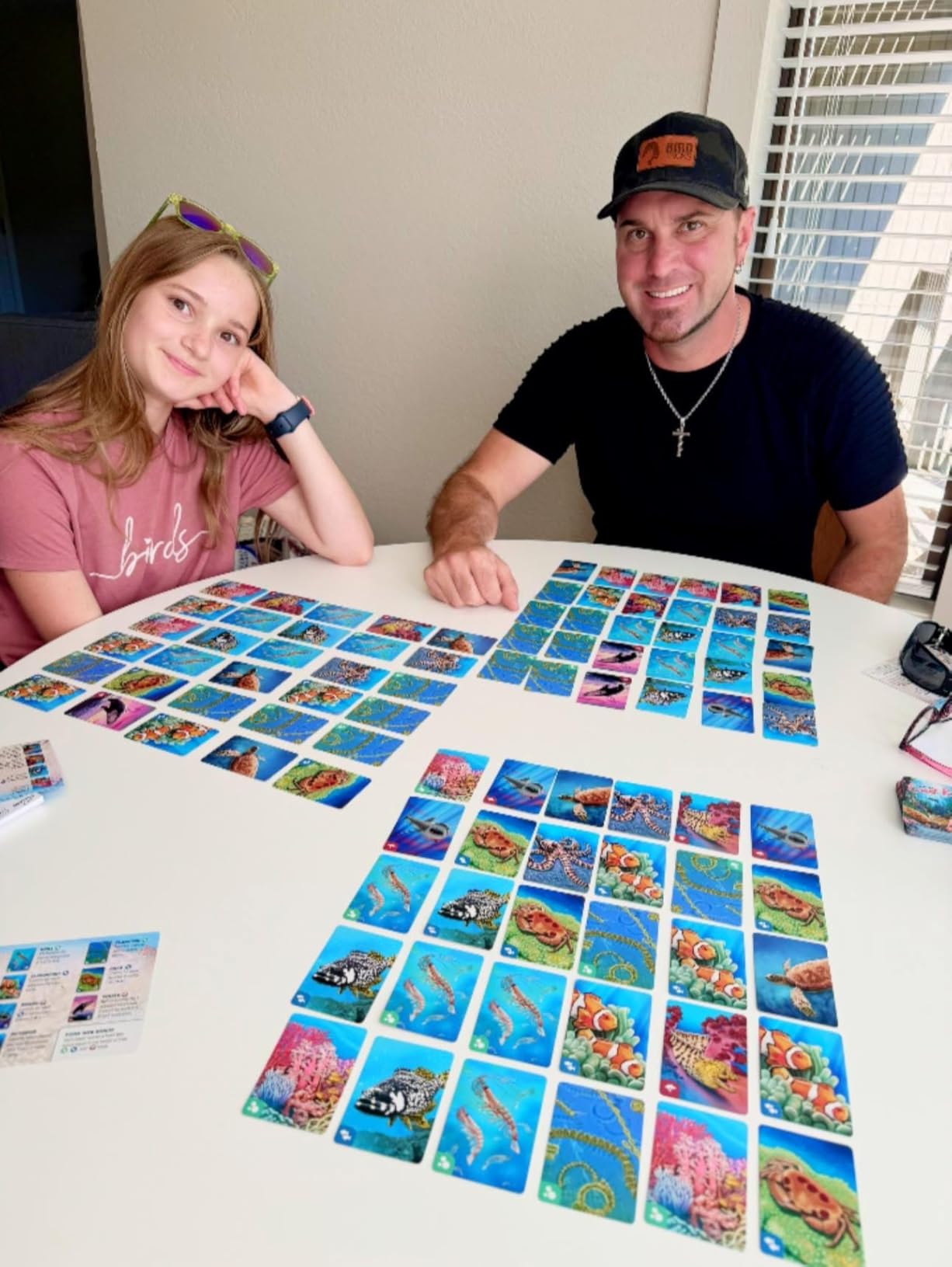
Perfect as a quick filler
Need something between longer games or a 15-minute classroom activity? Ecosystem fits perfectly. The rules take two minutes to explain, and even first-graders can participate with some guidance on scoring.
Scoring slows things down
End-game scoring involves checking multiple adjacency conditions across every player’s grid, which can take longer than the actual gameplay with larger groups. A scoring reference card would help speed this up.
10. Ecologies: Build Food Webs Across 7 Biomes
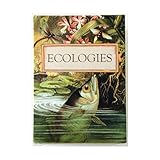
Montrose Biology Ecologies Card Game – Use Science to Build Food Webs in 7 Biomes – Beautiful Vintage Nature Art for The Classroom or Game Night
Ecology Food Web Game
1-6 Players
60 Min Play Time
Solo Mode
Pros
- Beautiful vintage Victorian art
- Simple and relaxing gameplay
- Educational about ecology
- Solo mode available
- Designed by a biology teacher
Cons
- Slow gameplay pace
- Rule book could be clearer
- Draw situations with 2 players
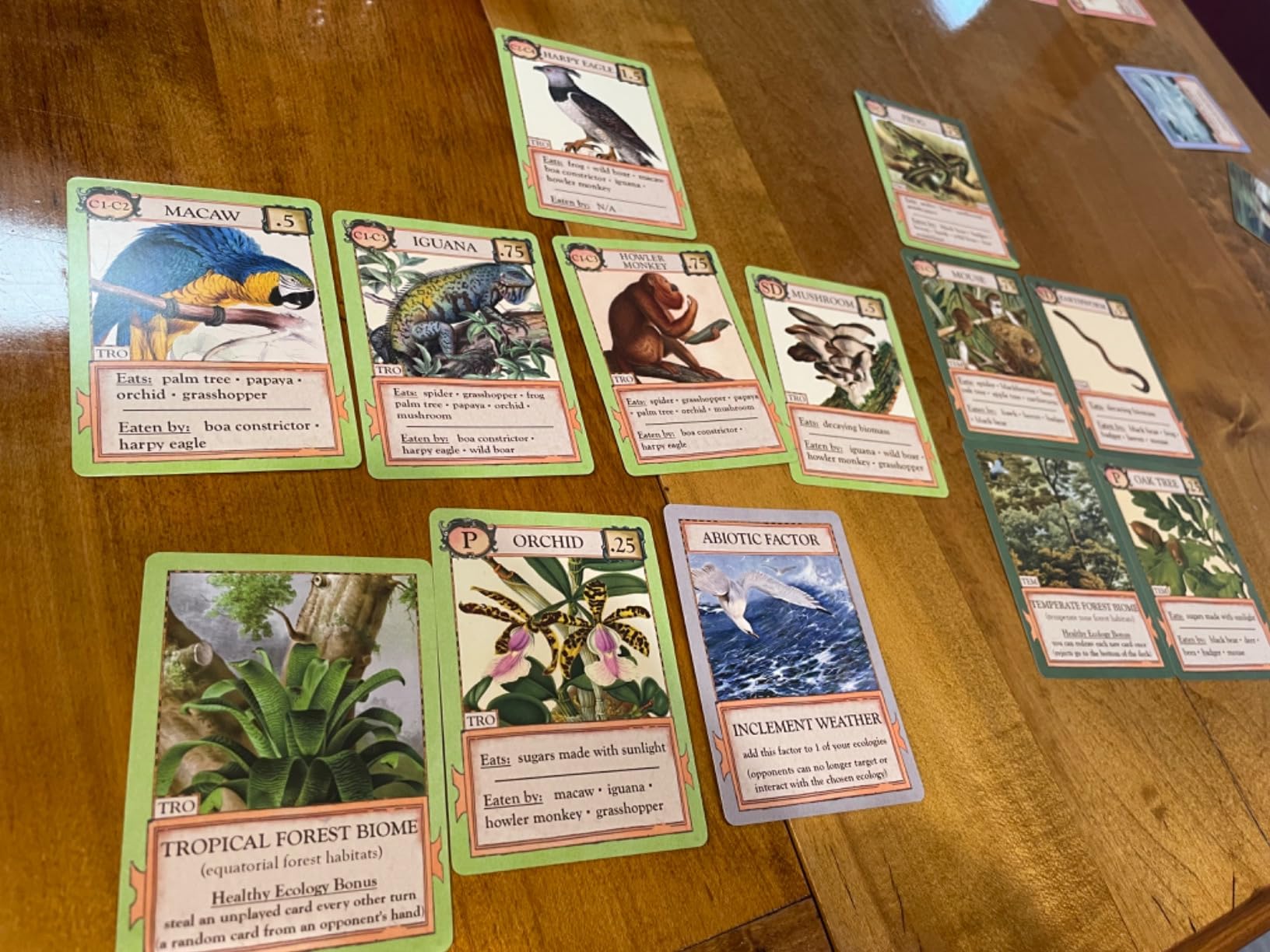
Ecologies takes a different visual approach from most science games by using vintage Victorian-style nature illustrations, and the result is stunning. Each card features a hand-drawn organism rendered in classic naturalist style. The 77 unique organisms span 7 different biomes, from Arctic tundra to tropical rainforest, and building food webs that match real ecological relationships is the core challenge.
The game was designed by an actual biology teacher, and that expertise shows in how accurately the food web connections mirror real ecosystems. Predators need prey, prey need plants, plants need specific conditions. When you successfully build a functioning food chain, it feels like assembling a living system rather than just playing cards.
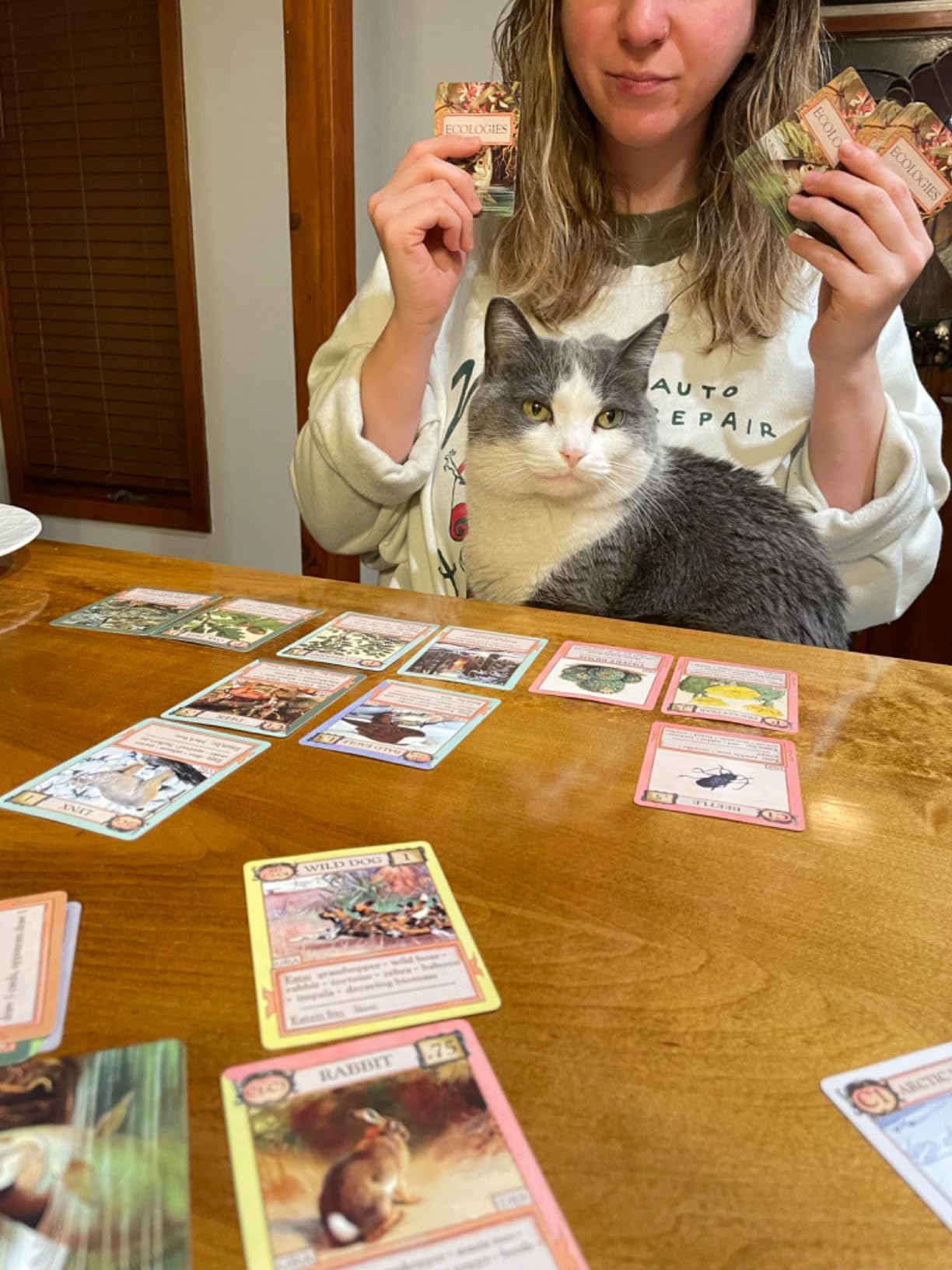
The solo mode is a welcome addition for quiet evenings. I found it meditative in a way that competitive games rarely achieve. The pacing is slower than most games on this list, which some players will love and others will find too relaxed.
For nature lovers and art enthusiasts
If you appreciate beautiful artwork and want a game that teaches ecology without time pressure, Ecologies is an outstanding choice. The biology teacher design pedigree means the science is accurate and the educational value is high.
Know your group preferences
This is not a high-energy, competitive game. The slower pace and detailed food web construction appeal to thoughtful players, but competitive gamers looking for tension and direct conflict might find it too gentle.
11. Valence: Chemistry Made Accessible for Kids 8-12

Valence Periodic Table for Kids 8-12 Chemistry Games – Periodic Table of Elements, Science Gifts, Educational Science Games Molecules, Chemistry Gifts, Elements Toys, Basic Educational Card Game
Chemistry Card Game
2-4 Players
Ages 8-12
PhD Designed
Pros
- Makes chemistry fun and engaging
- Teaches periodic table and bonding
- Created by PhD engineers
- Durable linen-finish cards
- Great for classrooms
Cons
- Price feels high for a card game
- Many rules to learn at first
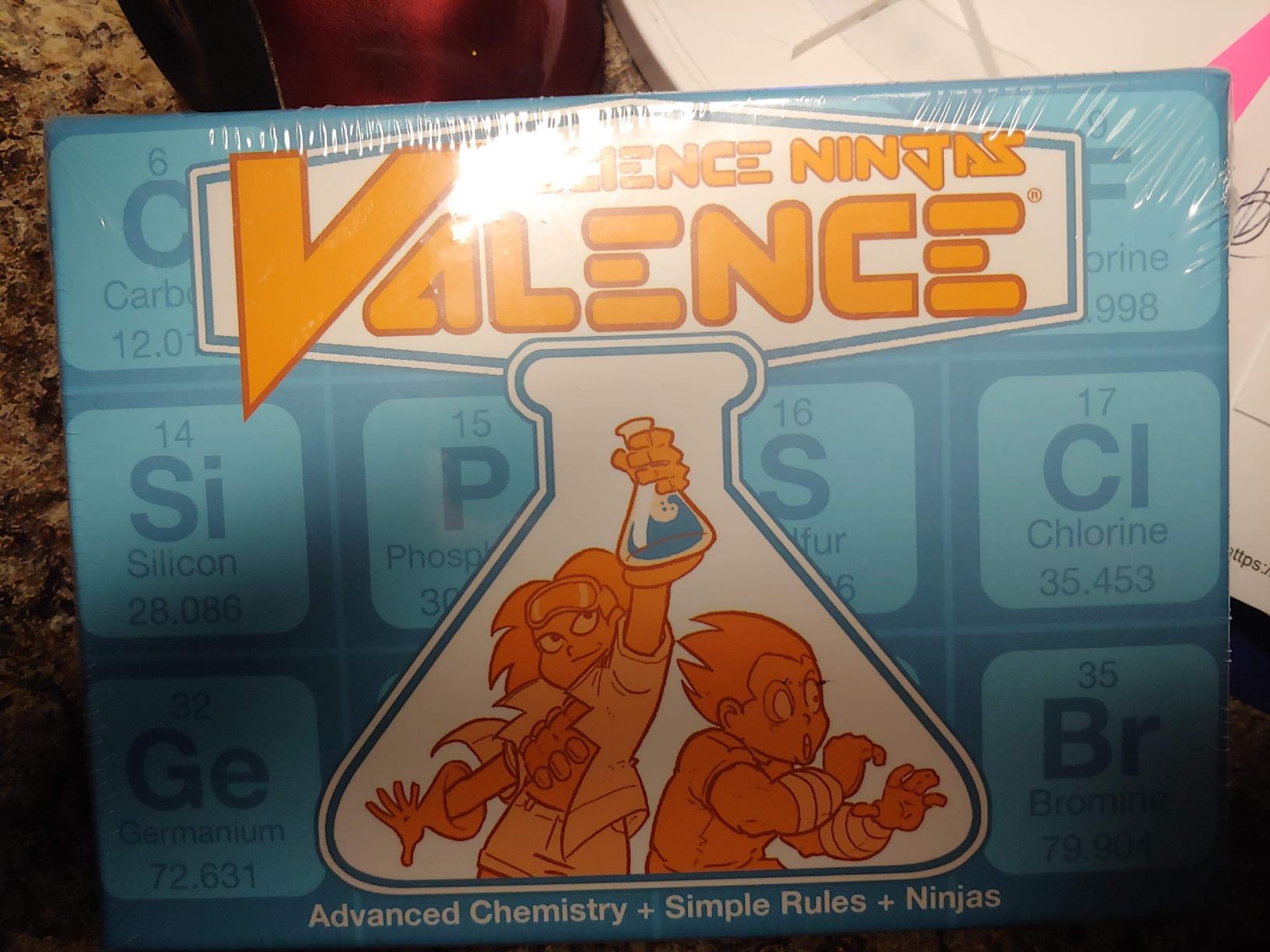
Valence was created by PhD chemical engineers specifically to make chemistry accessible to kids, and they nailed it. Players use element cards to build molecules, and the properties of each element are baked into the gameplay. Noble gases are stable and hard to react, alkali metals are aggressive, and halogens react with almost everything. My daughter started recognizing element properties after just two games.
The linen-finish cards feel premium and hold up to repeated shuffling. Each card shows the element name, atomic number, and a clever illustration that hints at its chemical behavior. The game targets kids 8 to 12, but I have played with adults who learned just as much about molecular bonding.
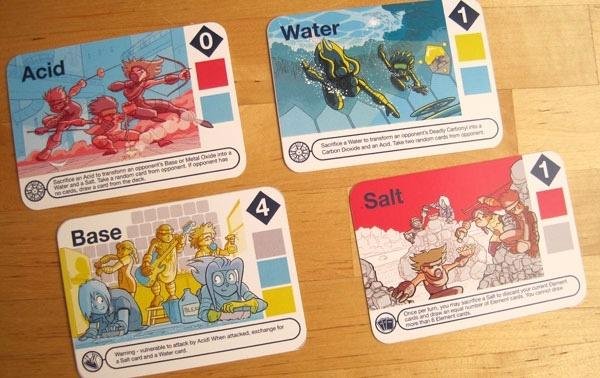
What sets Valence apart from other chemistry games is how it makes abstract concepts like valence electrons and ionic bonding feel intuitive. You do not need to understand the science to play, but playing inevitably teaches you the science. That is the hallmark of a well-designed educational game.
Ideal for elementary and middle school
Valence hits the sweet spot for kids ages 8 to 12 who are just encountering chemistry concepts. It works wonderfully in classrooms, homeschool settings, and as a parent-child activity that actually teaches something valuable.
First impression hurdle
The rulebook is denser than you might expect for a kids’ game. Plan to learn the rules yourself before teaching others, and start with simpler card interactions before introducing the full rule set.
12. Planet: Build a World on Magnetic 3D Globes

Blue Orange Games Planet Board Game – Award Winning Kids, Family or Adult Strategy 3D Board Game for 2 to 4 Players. Recommended for Ages 8 & Up.
3D Tile Placement
2-4 Players
Ages 8+
Award Winning
Pros
- Beautiful 3D magnetic planet cores
- Easy to learn with deep strategy
- Great replay value
- Teaches environmental science
- Award winning design
Cons
- Animal cards lack names and facts
- Habitat scoring can be confusing
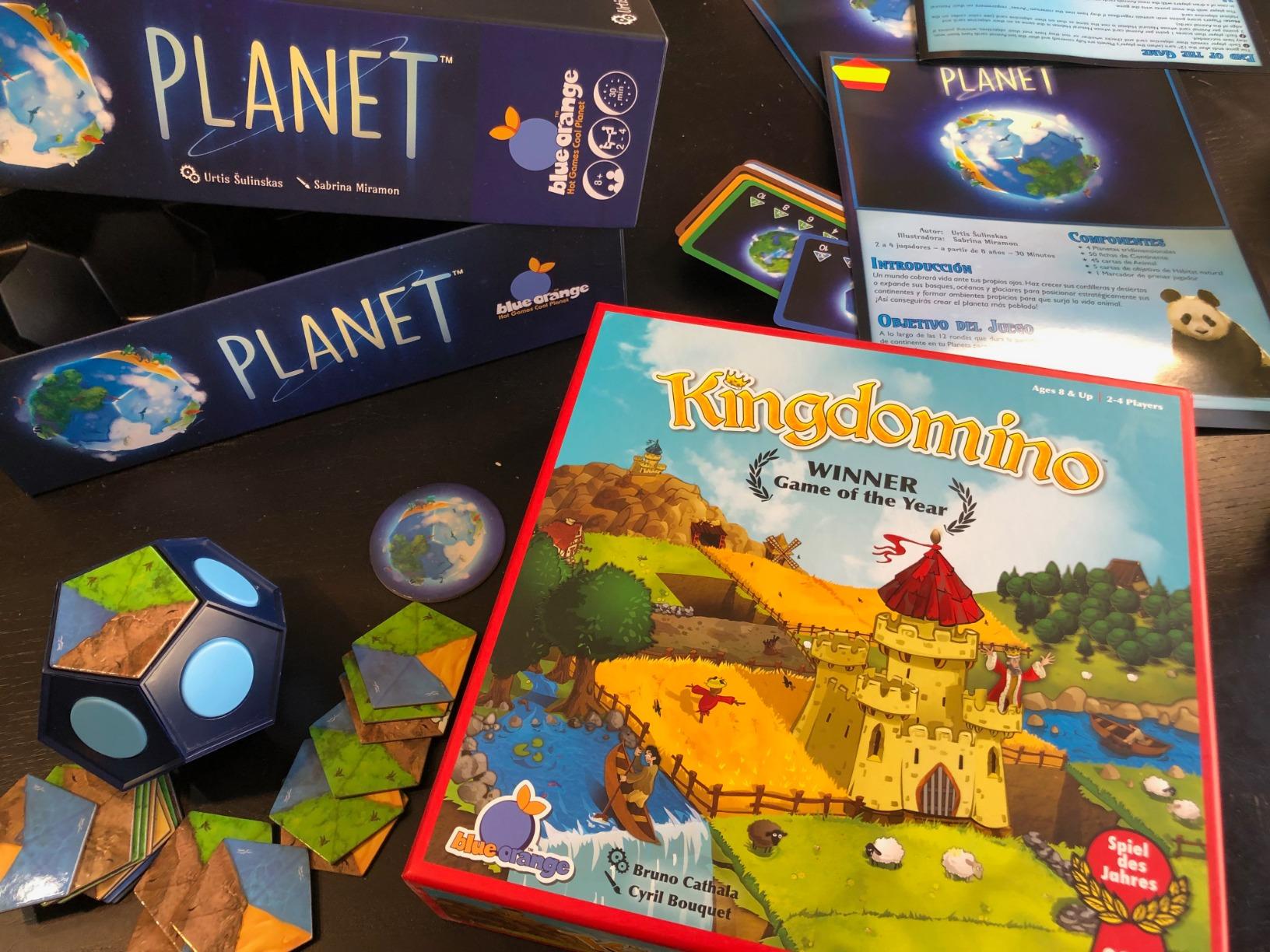
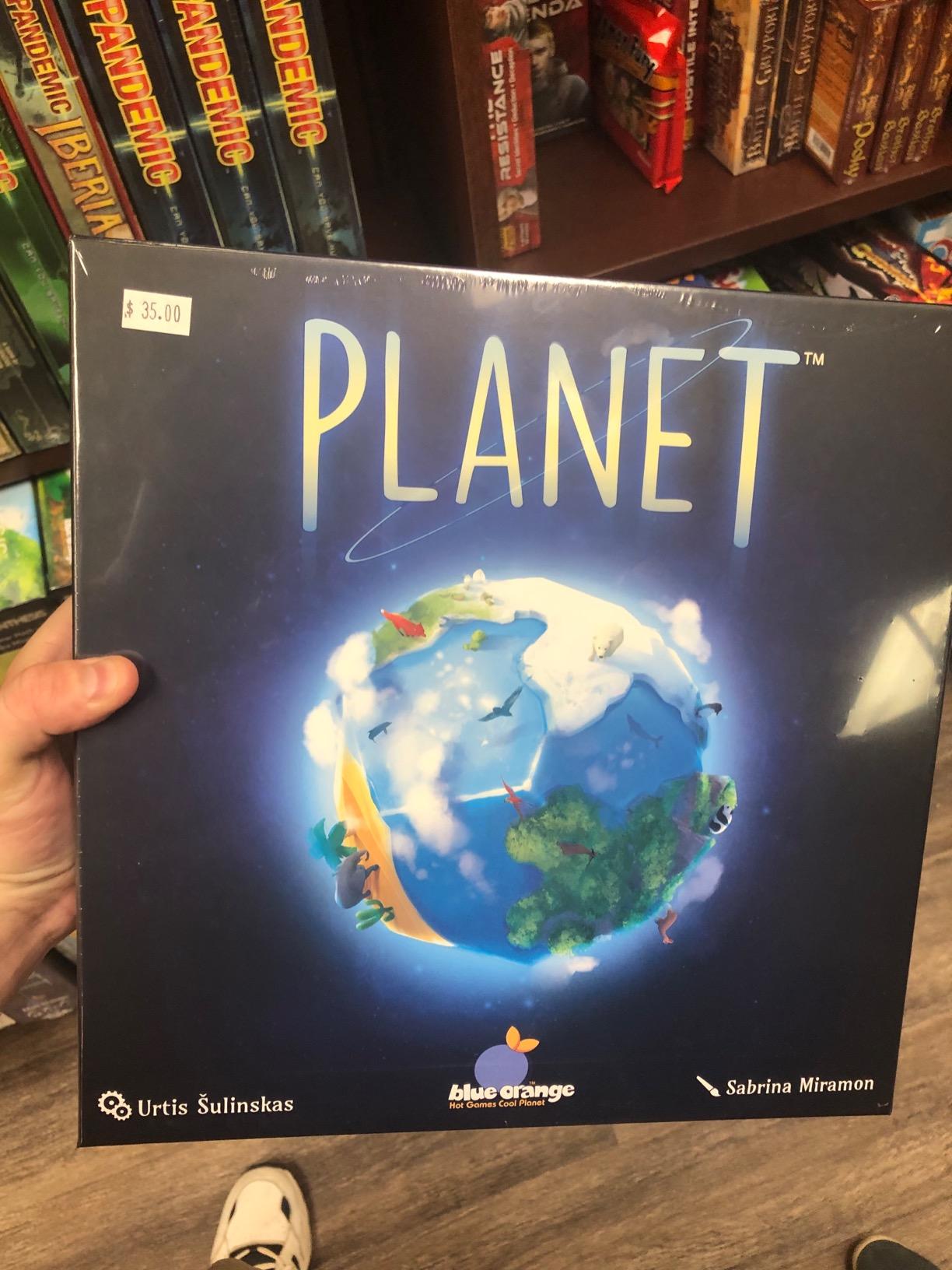
Planet gives you actual 3D magnetic globes as your game board, and that gimmick works brilliantly. You draft continent tiles and attach them to your planet core, trying to create the right environmental conditions to attract specific animals. Each animal card requires certain habitat configurations, so you are constantly balancing competing needs on a limited surface.
The magnetic tiles click satisfyingly into place on the dodecahedron-shaped planet cores, and watching everyone’s worlds take shape over the course of the game is genuinely delightful. My kids treated their completed planets like collectibles after the game ended, which speaks to how engaging the physical components are.
The environmental science content is woven into the gameplay naturally. You learn about habitats, ecosystems, and the conditions animals need to survive by trying to create them yourself. It is an award winner for its innovation, and the tile-drafting mechanics offer enough strategy to keep adults interested while staying accessible for kids 8 and up.
Great for visual learners
If you have kids who learn by doing and seeing, Planet is an exceptional choice. The 3D planets make spatial concepts tangible in a way that flat boards simply cannot match. It also photographs beautifully for anyone who likes sharing game night moments.
Wish the cards had more info
The animal cards show habitat requirements but lack species names or fun facts. Adding brief descriptions would have boosted the educational value significantly without changing the gameplay.
13. Ion: A Fast Chemistry Card Game with Real Science

Genius Games Ion: A Compound Building Game (2nd Edition) – A Chemistry Card Drafting Game About Cations, Anion, Noble Gases – Science Accurate Board Game for High School Students, Teachers and Adults
Chemistry Card Drafting
2-7 Players
20-30 Min Play
STEM Compliant
Pros
- Fast-paced 20-30 minute gameplay
- Accurate chemistry science
- Easy to learn
- Hardcore mode with radioactivity
- STEM and NGSS compliant
Cons
- Passing mechanic can be confusing
- Rules wording unclear at times
Ion is a card drafting game where you pair positive and negative ions to build neutrally charged compounds. The science is straightforward and accurate: match cations with anions to form stable molecules. Rounds take 20 to 30 minutes, making this one of the quickest games in the Genius Games lineup.
What makes Ion special is the advanced difficulty mode that introduces radioactive elements and nuclear chemistry concepts. This optional mode adds real tension and teaches isotopes and radioactivity in a way that feels like a natural extension of the base game rather than a tacked-on addition.
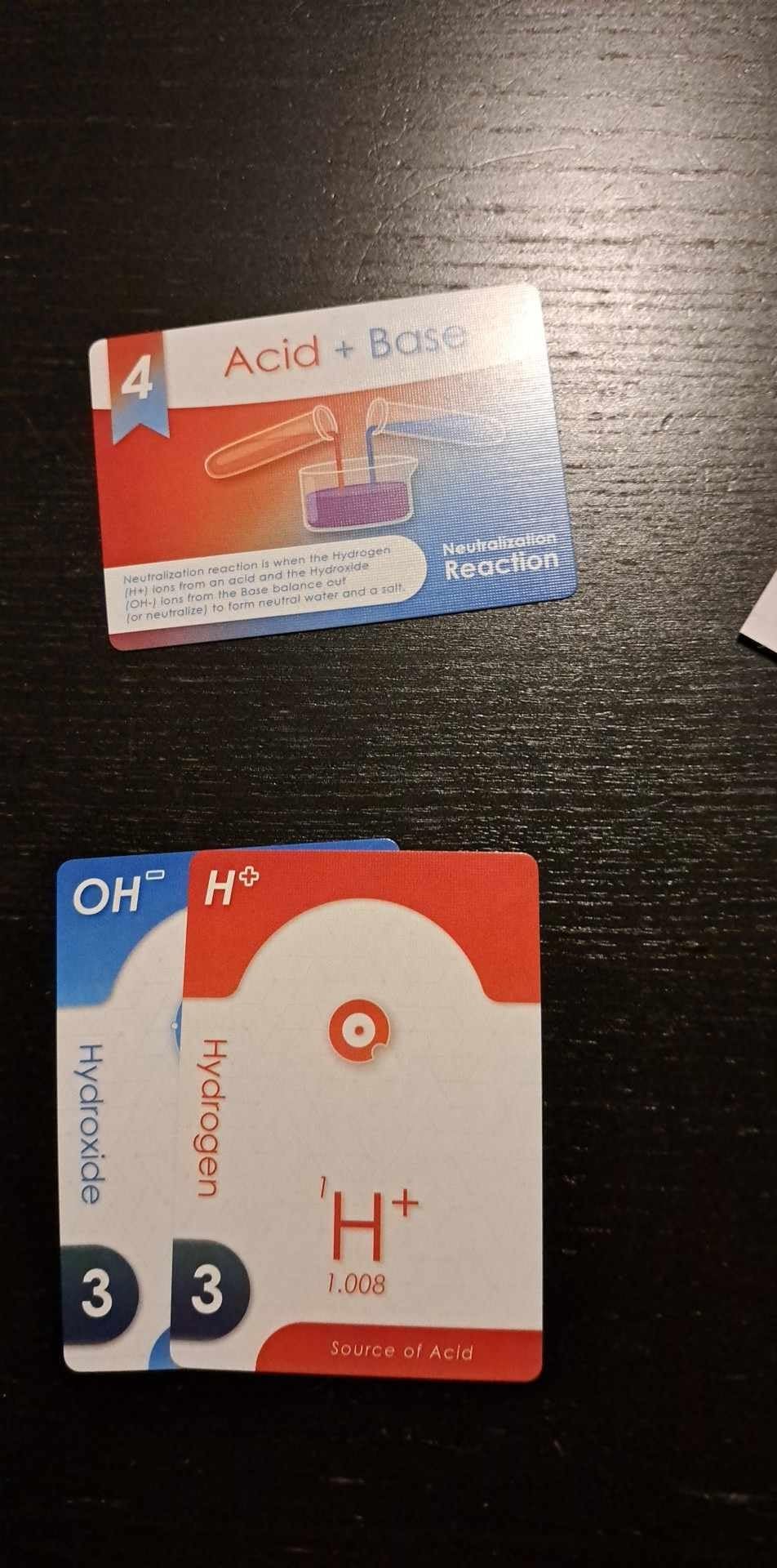
The game supports 2 to 7 players, which gives it unusual flexibility for different group sizes. The card drafting is fast and interactive, with every round presenting meaningful choices about which ions to keep and which to pass. After a few plays, you start recognizing compound formulas automatically.
Quick chemistry fix
For a fast chemistry lesson disguised as a card game, Ion is hard to beat. It fits easily into classroom periods or game night schedules and teaches ionic bonding through direct experience rather than memorization.
Learning curve on the drafting
The pick-and-pass drafting mechanic confused several people I taught. The rules explanation could be clearer, so I recommend playing one open-handed practice round before starting for real.
14. Peptide: Learn Protein Synthesis Through Card Play

Genius Games Peptide: A Protein Building Game | A Strategy Card Game with Accurate Science for Gamers and Teachers | Teaches Amino Acids, mRNA, Organelles
Biology Card Game
2-6 Players
Ages 10+
Portable Size
Pros
- Accurately teaches protein synthesis
- Portable card game size
- Great for students learning cell biology
- Suitable from ages 10 through college
- Easy to learn mechanics
Cons
- Winner-take-all scoring feels harsh
- Initial rules confusion
Peptide tackles one of the most complex topics in biology, protein synthesis, and makes it playable in a compact card game. You use amino acid cards, mRNA strands, and organelle resources to build peptide chains. The biology is accurate enough that biochemistry professionals have praised it, yet the rules are simple enough for a 10-year-old to follow.
I tested this with a college student studying molecular biology, and she said it helped her visualize the translation process better than her textbook diagrams. That is high praise for a card game. The RNA-to-protein pipeline becomes intuitive when you physically build the chain yourself.
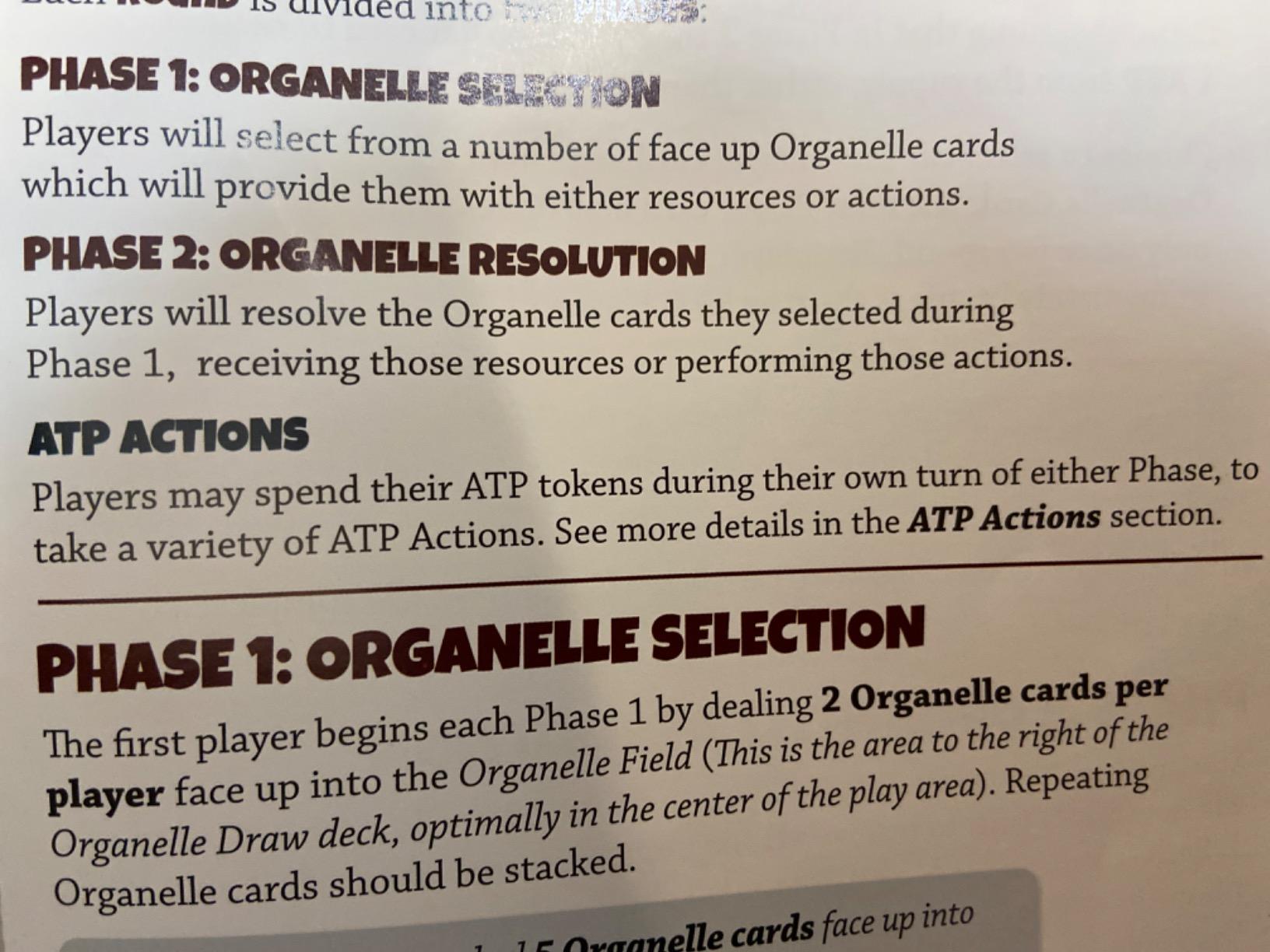
The small box makes Peptide easy to carry for study sessions or tutoring. It plays in about 30 minutes and supports 2 to 6 players. The scoring system can feel punishing for players who fall behind, but the educational value more than compensates. This is the best science board game option for anyone specifically studying protein synthesis.
Perfect for biology classrooms
Teachers covering transcription and translation will find Peptide an invaluable hands-on supplement. Students who play this game understand the roles of mRNA, tRNA, and ribosomes through direct experience rather than abstract diagrams.
Scoring caveat
The winner-take-all endgame can feel discouraging for players who are not competitive by nature. Consider modifying the scoring for purely educational sessions where the goal is learning rather than winning.
How to Choose the Best Science Board Game
Finding the right science board game depends on three main factors: the scientific field you want to explore, the age range of your players, and the type of gameplay experience you are after. Here is how I break down the decision.
Match the game to the science discipline
The games on this list cover four main scientific disciplines. For biology, Evolution, Cytosis, Peptide, and Genotype are your best bets. Chemistry enthusiasts should look at Periodic, Ion, and Valence. Ecology and environmental science are well-represented by Photosynthesis, Ecosystem, Ecologies, and Planet. If physics and engineering appeal to you, Gizmos and Dr. Eureka hit that mark. Pick the discipline that matches your interest or curriculum needs first, then narrow down by gameplay style.
Consider the age range honestly
Most of these games list ages 8 and up, but that minimum can be misleading. Dr. Eureka, Organ Attack, Ecosystem, and Planet genuinely work well for 8-year-olds with simpler mechanics and shorter play times. Games like Genotype, Cytosis, and Periodic are better suited for ages 12 and up due to complex rules and longer sessions. For kids ages 8 to 12 specifically, Valence was designed with that age group in mind and hits the perfect difficulty sweet spot.
Gameplay style matters as much as theme
Think about what kind of gaming experience your group enjoys. Worker placement fans will love Cytosis and Genotype. Card drafters should try Evolution, Ion, or Ecosystem. If you want quick filler games, Dr. Eureka and Ecosystem both play in under 20 minutes. For longer, more immersive sessions, Genotype and Cytosis deliver 60 to 90 minutes of strategic depth. Matching the game mechanic to your group’s preference is just as important as matching the science topic.
Check for educational features
Several games on this list go beyond entertainment with built-in educational features. Genius Games titles like Cytosis, Periodic, Ion, and Peptide all include science booklets explaining the real concepts behind the gameplay. Ecologies was designed by a biology teacher with classroom use in mind. Genotype is a Mensa Select winner, giving it credibility as both a game and a learning tool. If educational value is your primary goal, prioritize games with these added features.
FAQ
What are the top 3 most popular science board games?
Based on our testing and community feedback, the three most popular science board games are Evolution (biology strategy with 12,000+ species combinations), Photosynthesis (award-winning botany game with stunning 3D trees), and Organ Attack (anatomy-themed party card game with broad age appeal). All three balance educational content with genuinely fun gameplay.
Which board game is best for the brain?
Strategy-heavy science games like Genotype and Cytosis provide the most cognitive benefits because they require planning, resource management, and adapting to changing conditions. Genotype won the 2022 Mensa Select award specifically recognizing its intellectual challenge. Dr. Eureka also excels at developing logical thinking, spatial reasoning, and fine motor skills through its speed puzzle mechanics.
Are science board games actually educational?
Yes, especially games from publishers like Genius Games, which have their content peer-reviewed by PhD scientists. Cytosis was reviewed by over 20 PhDs, and teachers report that students grasp cell biology concepts faster after playing. The key is that these games teach through direct experience rather than memorization, making the science stick in a way textbooks often cannot.
What is the best science board game for homeschooling?
For homeschooling, I recommend Cytosis for cell biology, Evolution for natural selection and adaptation, Periodic for chemistry, and Ecosystem for ecology. These games cover major science disciplines with built-in educational booklets and accurate content. For younger students ages 8 to 10, start with Dr. Eureka, Planet, or Valence before moving to the more complex titles.
Final Thoughts on the Best Science Board Games
The best science board games prove that education and entertainment do not have to compete. After playing all 14 titles on this list, my top recommendation for most people is Genotype, thanks to its Mensa-awarded design that teaches genetics through genuinely compelling worker placement gameplay. For families with younger kids, Organ Attack and Dr. Eureka offer accessible fun that sneaks in real learning.
What surprised me most during testing was how often players asked to play again, which is the ultimate test of any game. Whether you are supplementing a homeschool curriculum, looking for smarter game night options, or just want to understand photosynthesis while building a miniature forest, there is a science board game here that will deliver both knowledge and enjoyment in 2026.
Pick the discipline that interests you most, match the complexity to your group, and let the learning happen naturally through play.