
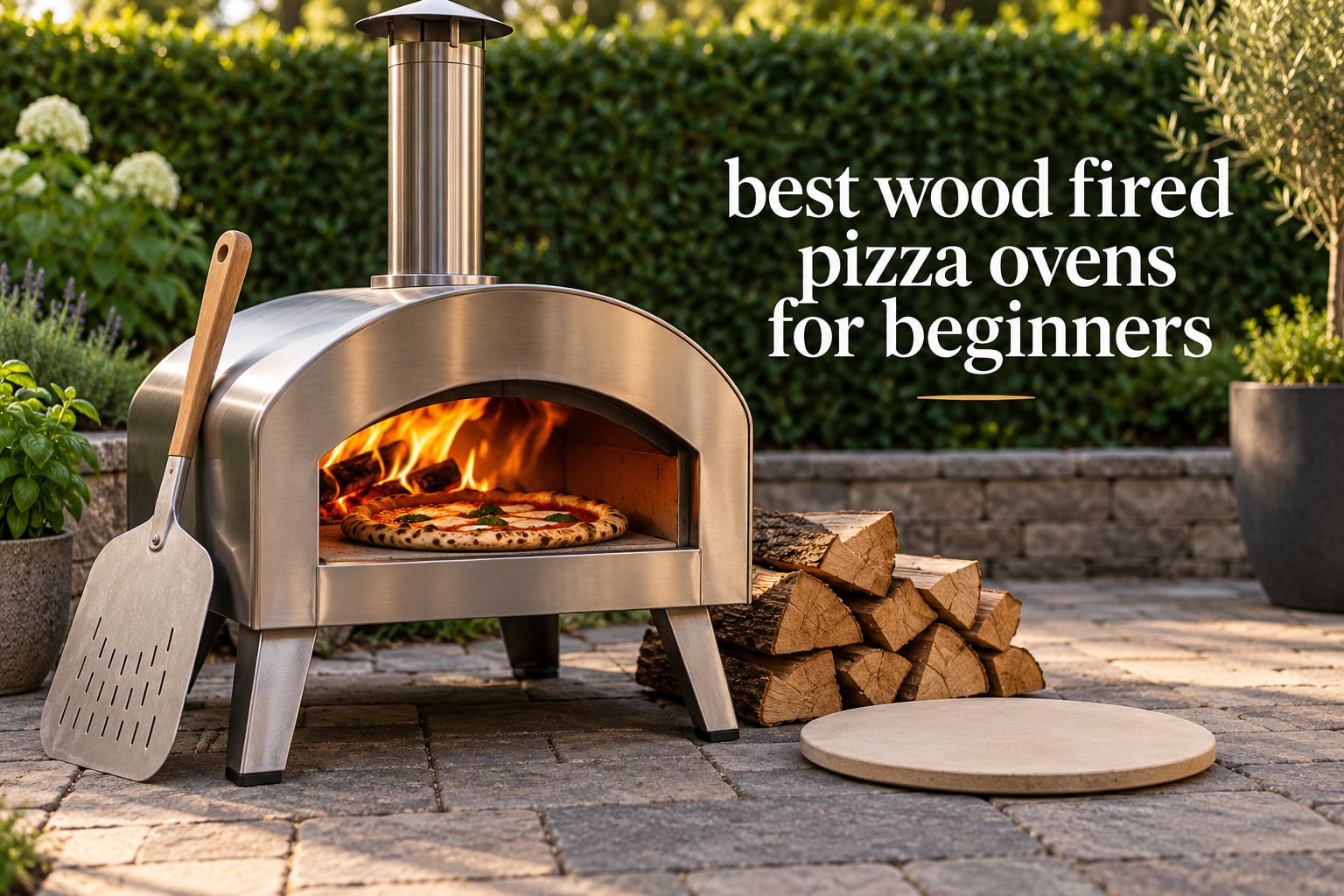
A wood fired pizza oven is an outdoor cooking chamber that burns hardwood, hardwood pellets or charcoal hard enough to push a cordierite baking stone past 700°F, and that is the whole difference between a pizza that looks homemade and one that tastes like it came off a Naples street cart. Your home oven tops out near 500°F, which bakes the toppings before the crust can puff, blister and char.
The catch for beginners is that a wood fired pizza oven is not a plug-and-play appliance. Someone has to build a fire, feed it, judge the heat by eye or by thermometer, and accept a little ash and soot as part of the deal. That is why the best wood fired pizza ovens for beginners are not necessarily the hottest or the biggest ones. They are the ones that get you to a good pizza on your third attempt rather than your thirtieth.
We compared 12 wood fired pizza ovens for this guide, grouping them by the fuel path that matters most to a first-time owner: gravity-fed pellets, multi-fuel chambers that also take gas, and chunk-wood and charcoal burners. Every spec in this article comes from the manufacturer listing and the customer review data, and we flag the three ovens that ship without a wood burner included, because that single detail causes more beginner confusion than any other.
Table of Contents
Top 3 Wood Fired Pizza Ovens for Beginners


BIG HORN 12 inch
- Wood pellet with optional burners
- Ready in 18-20 minutes
- 25 lbs tool-free setup
The Roccbox is the one we would hand a nervous beginner because it recovers heat faster between pizzas than anything else here, and a forgiving oven matters more than a powerful one when you are still learning how long a bake actually takes. The Karu 12 takes the value slot: it burns wood, charcoal or an optional gas burner and it is light enough for one person to carry around the yard. The BIG HORN is the budget answer, and with more than 2600 reviews behind it, its quirks are well documented rather than a surprise.
All 12 Wood Fired Pizza Ovens at a Glance
| Product | Specifications | Action |
|---|---|---|
| Gozney Roccbox |
|
Check Latest Price |
| Ooni Karu 12 |
|
Check Latest Price |
| BIG HORN 12 inch |
|
Check Latest Price |
 Ooni Karu 2 Ooni Karu 2 |
|
Check Latest Price |
 BIG HORN 16 inch BIG HORN 16 inch |
|
Check Latest Price |
 Mimiuo Auto-Rotating Mimiuo Auto-Rotating |
|
Check Latest Price |
 PIZZELLO 16 inch PIZZELLO 16 inch |
|
Check Latest Price |
 Pellethead 13 inch Kit Pellethead 13 inch Kit |
|
Check Latest Price |
 Mimiuo 12 inch Mimiuo 12 inch |
|
Check Latest Price |
 EDOSTORY Patio Oven EDOSTORY Patio Oven |
|
Check Latest Price |
 Ooni Karu 2 Pro Ooni Karu 2 Pro |
|
Check Latest Price |
 GIANTEX 2-Layer Oven GIANTEX 2-Layer Oven |
|
Check Latest Price |
How We Picked These 12 Ovens
Every oven here ships from a brand with a large body of customer reviews, from 156 reviews up to 2651, which means the cons we list come from actual owners rather than from a marketing sheet. We used review volume and rating distribution as the first filter, then read the one-star and three-star comments closely for each model, because that is where the beginner traps show up.
We then checked every specification against the manufacturer listing: fuel type, stone size, preheat time, peak temperature, weight and what is actually inside the box. Nothing in this guide is estimated. Where a listing claims a temperature we cannot reconcile with owner reports, we say so rather than repeating the claim.
Finally, we asked a beginner question of every oven: if someone had never lit a fire before, could they get a decent pizza on the third try? That framing is what reordered this list. It is why the lightest 23-pound oven appears here and why a 42-pound stainless model with a built-in thermometer also earns a place.
1. Gozney Roccbox: Best Overall Wood Fired Pizza Oven for Beginners
Gozney Roccbox Outdoor Pizza Oven, Portable, Gas & Wood Fired – Black
950°F max
60-second 12 inch bakes
Stone floor
21.98 kg
Pros
- Highest average rating in the set at 4.7
- Fastest heat-up and most forgiving of the ovens listed
- Excellent heat retention for back-to-back pizzas
- Compact low-profile footprint suits small patios
- Stone floor delivers consistent restaurant-style results
Cons
- Wood-fired cooking requires the separately sold wood burner attachment
- Heavier and bulkier than lightweight pellet ovens
- Stone and cast iron parts need care when hot
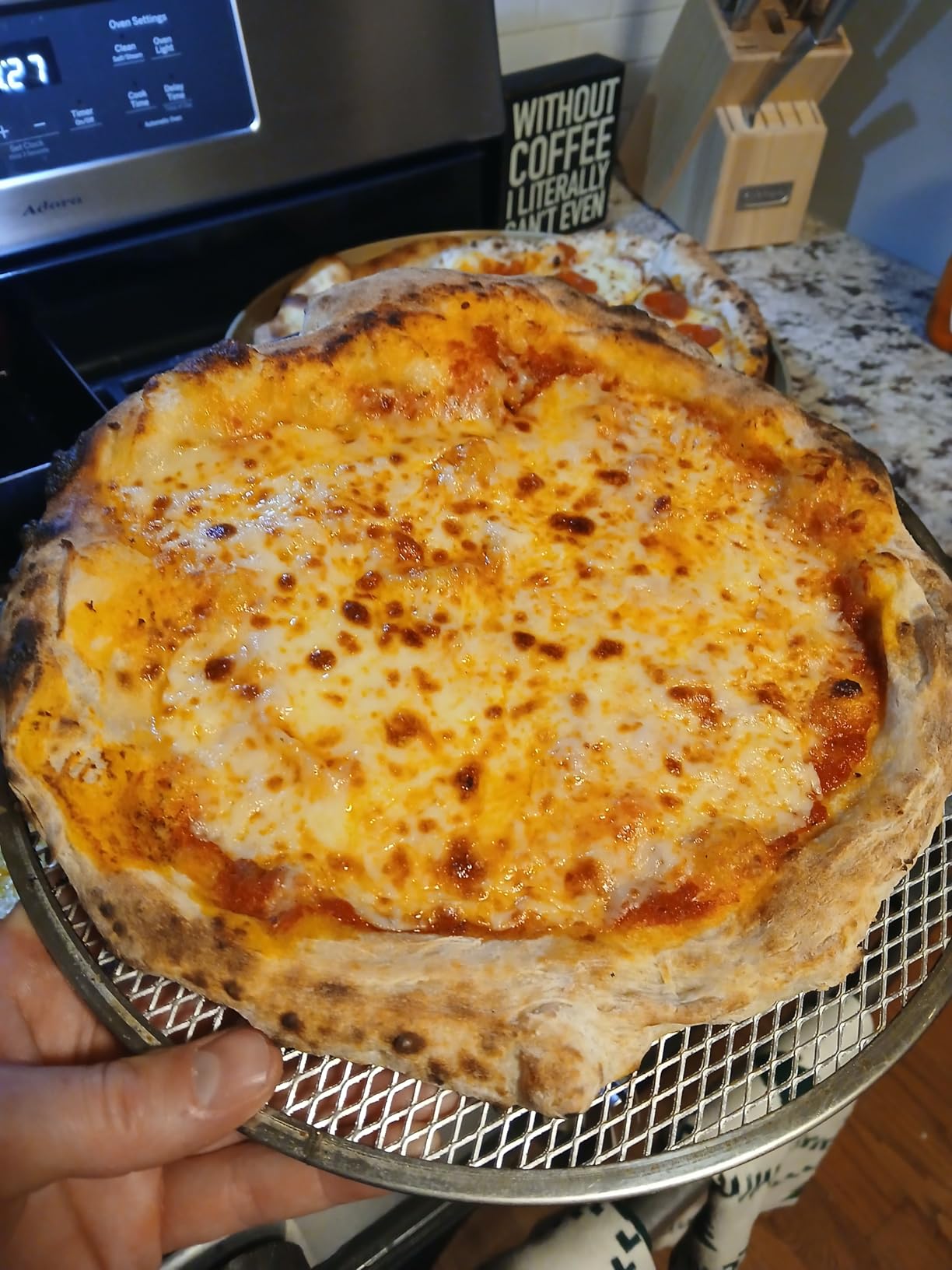
The Roccbox carries the highest average rating in this group at 4.7 across 1905 reviews, with 87% of those ratings landing at five stars and only 3% at one star. That distribution is unusual. Most ovens here have a long tail of disappointed first-timers, and this one does not.
What earns it the top slot is heat recovery. Reviewers describe back-to-back pizzas coming out consistently, which is the single thing that makes pizza nights fun rather than frustrating. The stone floor is what does that work, and it is the reason the oven reaches a usable pizza temperature so quickly after lighting.
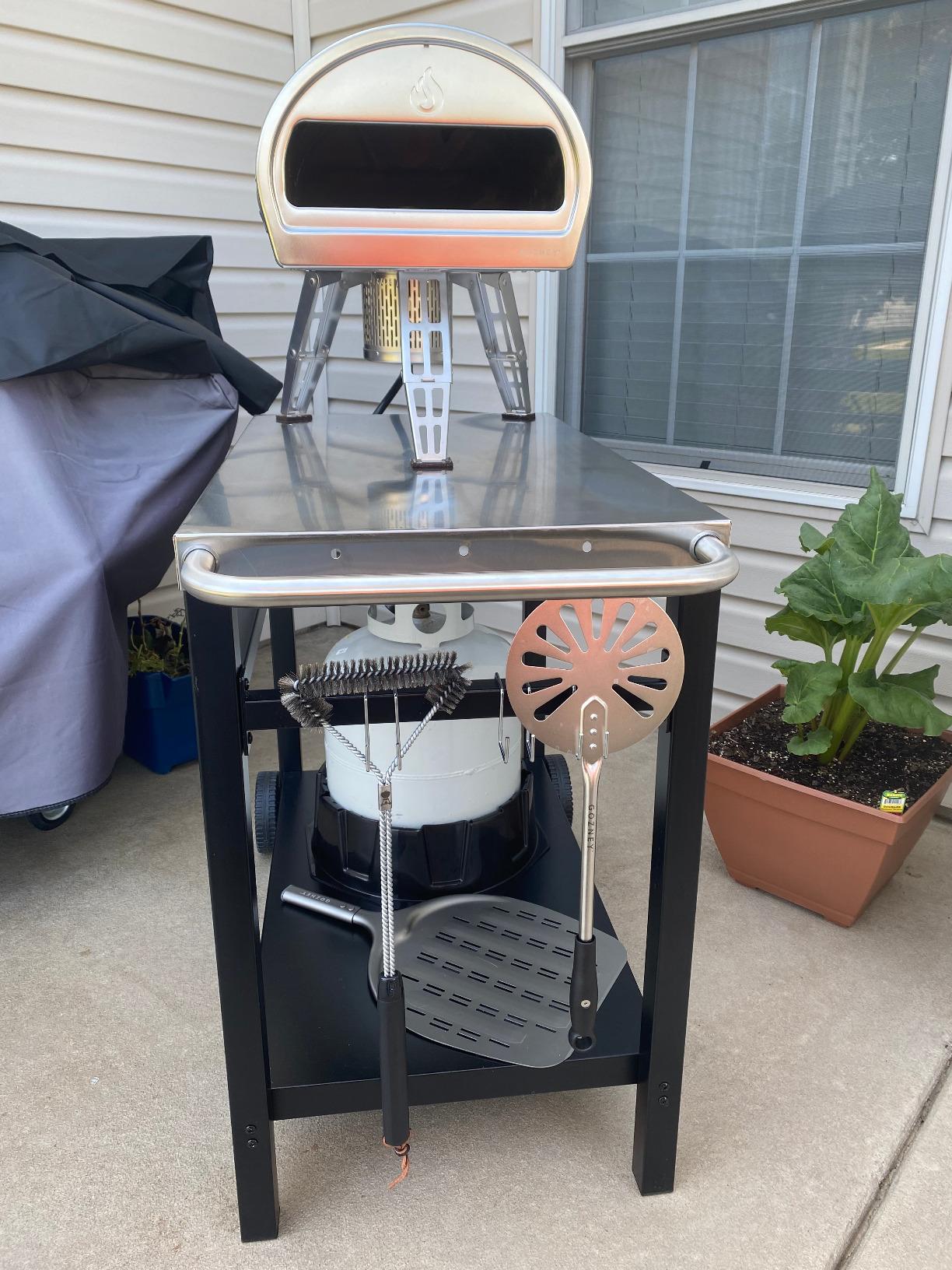
The one thing to understand before you buy is the fuel path. Out of the box the Roccbox fires on gas, and wood-fired cooking runs through an optional wood burner attachment that is a separate purchase. For a roundup about wood fired ovens, that makes it the product I most want to explain rather than hide.
Even so, it belongs here. The stone floor geometry that makes wood burning awkward is the same geometry that gives the forgiving, even bake that beginners need, and owners who fit the wood burner report the same quick, consistent results. If you want wood flavour from the start and you never plan to touch gas, look at the Karu 12 instead.
At 21.98 kg and 24.8 inches long, it is heavier than the pellet ovens in this list but still compact enough for a small patio or a tailgate. The low 14.6-inch profile means you are looking down into the chamber rather than standing over it.
Is the Roccbox the easiest oven for a first pizza?
Yes, of the twelve tested here. It reaches 950°F and cooks a 12 inch pizza in 60 seconds, and the flat stone floor means you are not fighting an uneven heat zone. Owners consistently describe the first session as uneventful, which is the highest compliment you can pay an oven aimed at beginners.
The learning curve is not in the oven. It is in your dough. A 60-second bake is unforgiving of a slack, over-proofed ball, so most early failures blamed on the oven are actually fermentation problems. Practice the dough on a home oven first and the Roccbox will feel easy from night one.
Where the Roccbox will disappoint you
If you want a true wood-only oven with the burner chamber built in, this is the wrong purchase and you should read the Ooni Karu 12 entry. The attachment approach adds cost and a separate part to store, and reviewers who expected wood firing out of the box rate it lower for exactly that reason.
It is also not the oven for someone who wants to move it alone regularly. Nearly 22 kg is a two-handed lift on a bad day, and the stone floor needs careful handling when hot. Everything else about it is beginner-friendly; weight and fuel path are the two caveats.
2. Ooni Karu 12: Best Value Wood Fired Pizza Oven for Beginners
Ooni Karu 12 Multi-fuel Outdoor Portable Pizza Oven – Reaches 950°F and Cooks 12 Inch Pizzas in 60 Seconds. Versatile Wood or Propane Gas Fired Grill with Pizza Stone
950°F in 15 minutes
Wood charcoal or gas
12 inch pizza
26.4 lbs
Pros
- Ready in 15 minutes with strong heat retention
- Burns wood charcoal or an optional gas burner
- Light at 26.4 lbs and easy to move around the yard
- Well-engineered build that handles repeated high heat
- Compact enough for a back porch
Cons
- Propane burner is a separate purchase which some buyers found misleading
- Included pizza peel fits too snugly to work well
- Wood and charcoal take longer to reach temperature than gas
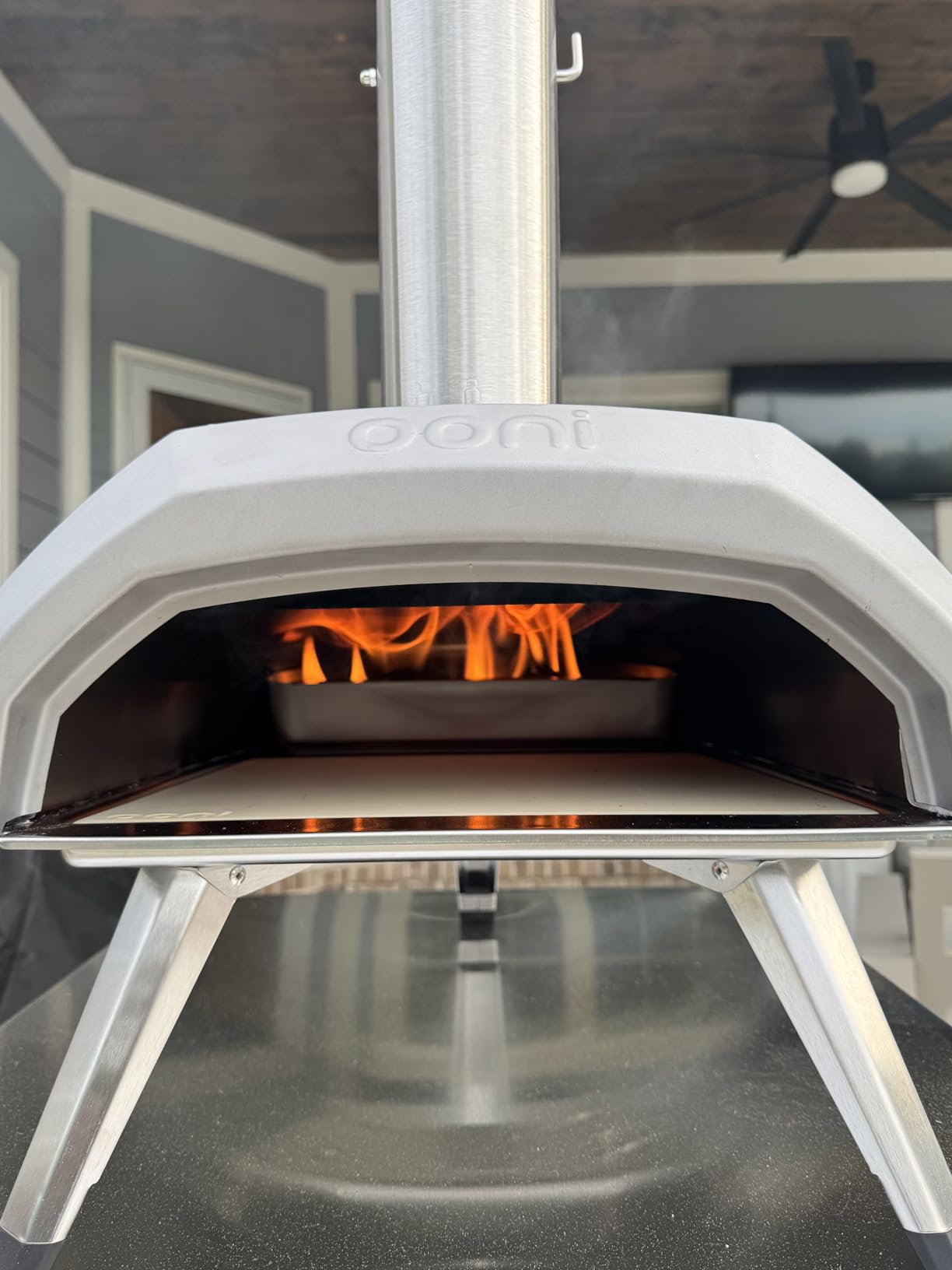
The Karu 12 is the oven most beginners end up on, and for good reason. It burns wood and charcoal in the built-in fuel tray out of the box, so it is a genuine wood fired oven with no accessory purchase, and it still lets you add gas later if you want a fast warm-up before a party.
Owners report a 15-minute warm-up to 950°F and 60-second 12 inch pizzas, with 84% of reviews at five stars. The build quality draws the most consistent praise. At 26.4 lbs it is light enough to carry with one hand once the legs are folded, which matters if your cooking spot is not next to where the oven lives.
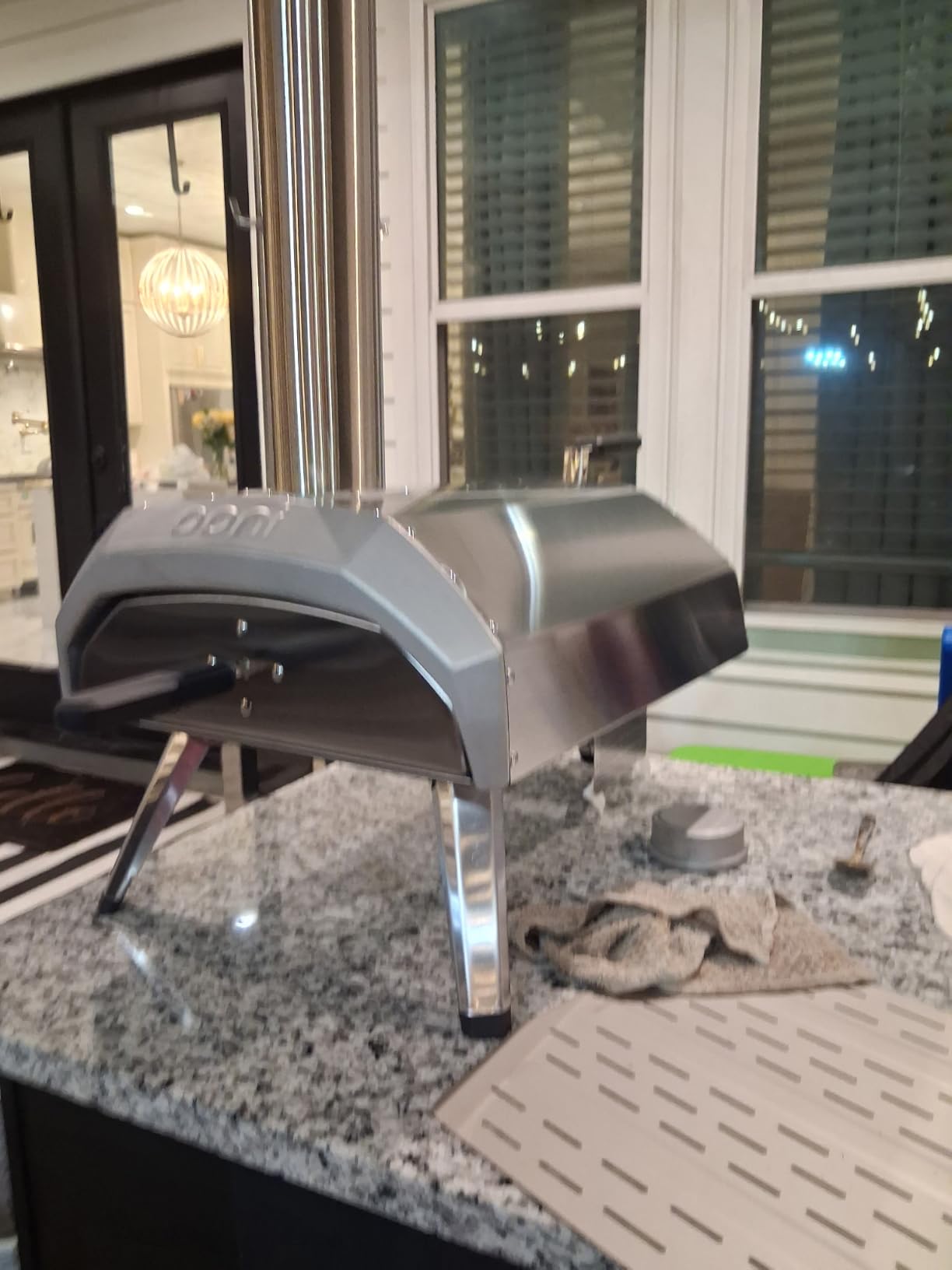
The custom fuel tray is the part worth understanding. It is sized to let air move under the wood so you get flame rather than smouldering ash, and it means burning a whole pizza at high heat does not fill the chamber with ash the way a flat tray design does.
The chimney is removable and the legs fold flat, so storage in a garage or shed is straightforward. It also works with Ooni cast iron cookware, which is how most owners discover that the oven is not only a pizza machine.
Two honest complaints come up repeatedly. First, the gas burner is not in the box, and some buyers report reading the listing differently. Second, the included peel fits so snugly that many owners buy their own. Neither affects the oven; both affect the first pizza night.
Should a beginner buy the Karu 12 or the Roccbox?
If wood is the reason you are reading this, the Karu 12 is the cleaner path. The fuel chamber is built for wood and charcoal, you get flame from the tray, and nothing extra has to be bought before your first cook. The Roccbox wins on heat recovery and ease, not on wood readiness.
The Karu 12 is also the one most often recommended to people crossing over from gas. Burn a small fire on one side, let the flame build, then rotate the oven to spread the heat rather than trying to build a fire that fills the chamber evenly from the start.
Where the Karu 12 will disappoint you
It will not heat as fast as a gas burner, and owners who try to reach 950°F in five minutes get frustrated. Budget 15 minutes plus a few more if you are starting from cold wood rather than a hot fire.
There is also no built-in thermometer in the Karu 12, which is the single most common piece of beginner advice we saw: buy an infrared thermometer. Without one you are guessing, and guessing is what makes people think the oven is underperforming when the dough is the problem.
3. BIG HORN 12 Inch: Best Budget Wood Fired Pizza Oven
BIG HORN 12″ Outdoor Pizza Oven, 1110°F, Wood Pellet, Gas & Electric
Ready in 18-20 minutes
1110°F max
12 inch stone
25 lbs stainless
Pros
- 3-in-1 fuel flexibility with optional gas or electric burners
- Tool-free assembly with folding legs
- Stainless steel build reviewers call well constructed
- Crispy crust with real wood pellet flavour
- Strong customer service and fast replacement stones
Cons
- Steep learning curve for lighting pellets and managing heat
- No built-in thermometer
- Hopper burns through quickly and needs frequent feeding
With 2651 reviews, the BIG HORN 12 is the most thoroughly documented oven in this roundup, and that is exactly why it suits a first purchase. When something goes wrong with a cheap oven, you can usually find out whether it goes wrong for everyone. Here, 70% of ratings are five stars and 7% are one star.
It is a 3-in-1 design: wood pellets work out of the box, and gas and electric burner attachments bolt on separately. Owners like that flexibility because it gives you a fallback when the weather is against you, without changing ovens.
At 25 lbs with folding legs and no tools required for assembly, it is the easiest oven here to set up and move. Ready in 18-20 minutes, it reaches a claimed 1110°F at maximum and cooks 60 to 90 second pizzas on a 12 inch square stone.
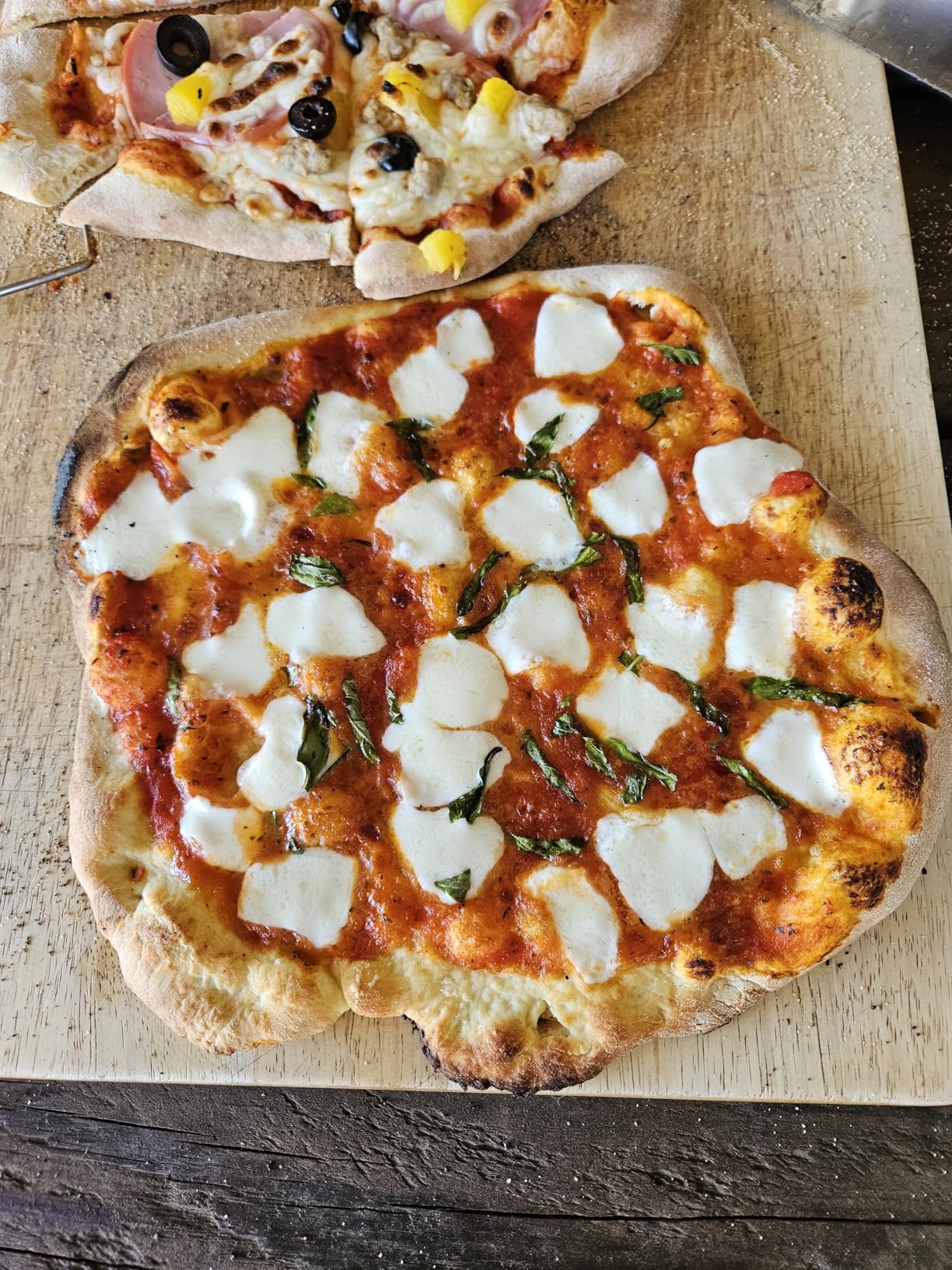
The most common criticism is not quality, it is fire management. Nearly every reviewer mentions a learning curve for lighting pellets and holding temperature, and the hopper needs topping up more often than you would expect. Some owners add the electric burner attachment specifically to stop restarting the fire between pizzas.
The second criticism is heat, not fire. Owners report the top of the pizza browning before the base is done, which on a radiant design like this is the classic fix: move back slightly from the flame arc, and check the stone rather than the air temperature with an infrared thermometer.
It ships without a peel or a spatula, so budget for one. A two year warranty and reviewers reporting fast replacement stones shipped on request are genuine advantages at this tier.
Is the BIG HORN 12 good enough for a beginner?
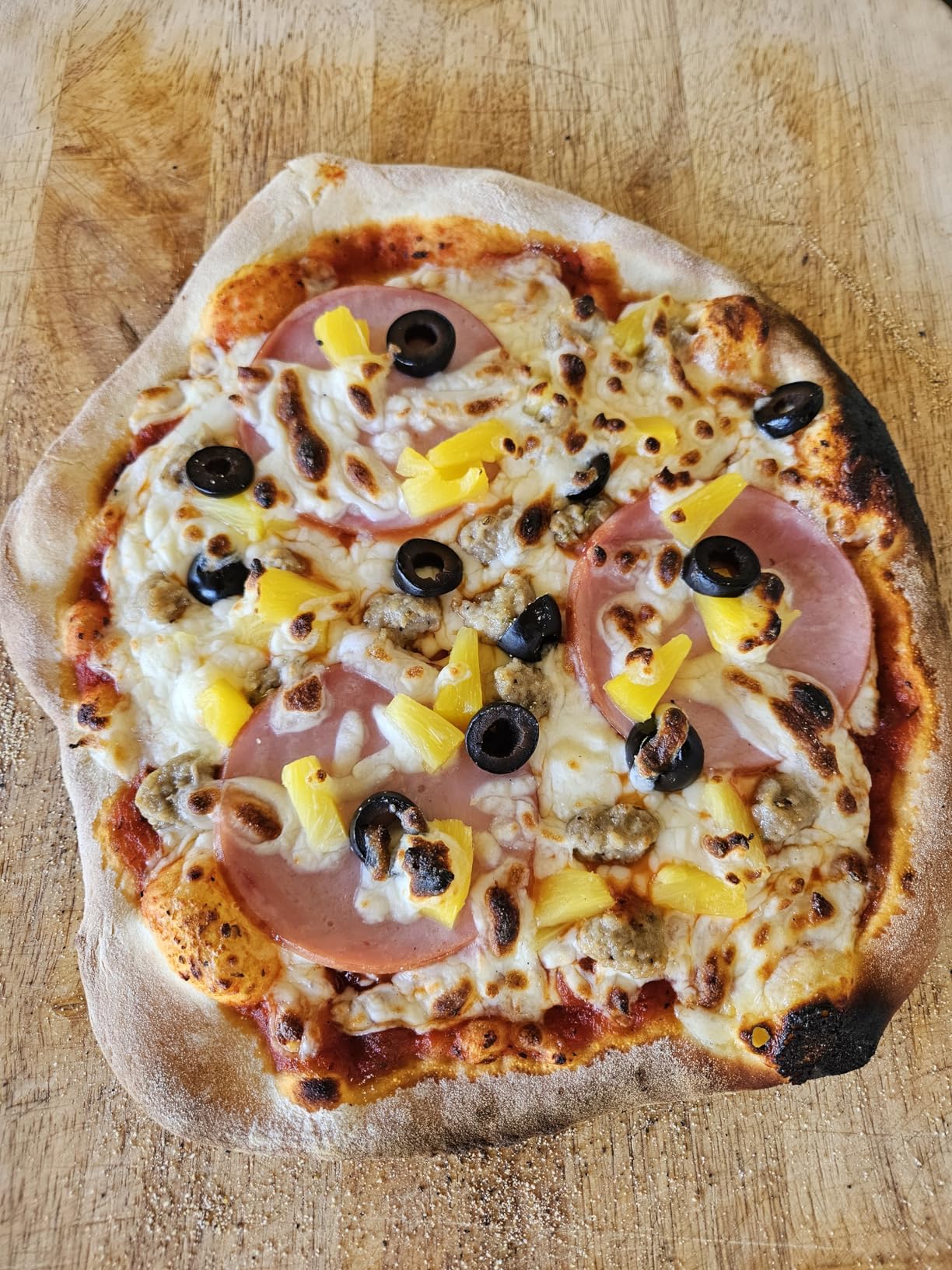
Yes. It makes real wood fired pizza with leopard spotting and a smoky edge, and the review volume means you will find answers to almost any question about it before you buy. The stainless body is the reason owners report years of service rather than one good summer.
It is also the oven to buy if you want a small patio. At 21.6 by 14 by 28 inches and 25 lbs, it stores against a wall in winter without needing a dedicated stand, which many of the larger models here do.
Where the BIG HORN 12 will disappoint you
It will not be the oven you hand to someone who wants zero involvement. Pellet feeding and flame control are hands-on, and there is no built-in thermometer, so if you dislike fiddling you will be frustrated within two cooks.
The gas and electric burners are extra purchases, so treat this as a pellet oven with options rather than a genuinely multi-fuel unit. If you want to cook on gas first and wood later with no commitment, look at the Karu 12, where the wood chamber is already built in.
4. Ooni Karu 2: Best Step-Up Wood Fired Pizza Oven With a Glass Door
Ooni Karu 2 Multi-Fuel Outdoor Pizza Oven – Wood and Gas Outdoor Pizza Oven with Pizza Stone & Intergrated Thermometer, Pizza Oven Outdoor, Dual Fuel 12 Inch Pizza Maker, Outdoor Cooking Grill
950°F in 15 minutes
ClearView glass door
Integrated thermometer
12 inch pizza
Pros
- Integrated thermometer removes temperature guesswork
- Glass door lets you watch the pizza without opening
- Ready in about 15 minutes with 60-second bakes
- Extra large fuel tray simplifies wood and charcoal
- Gas burner option runs more efficiently
Cons
- Gas burner is a separate purchase
- Higher cost than entry multi-fuel ovens
- Wood firing still has a learning curve
The Karu 2 is the version of the Karu with the two beginner complaints engineered out. It has an integrated thermometer and a borosilicate glass door, so you can see your pizza cooking without cracking the door and dropping the temperature.
Owners with 217 reviews rate it 4.5, and the most common praise is specifically about the thermometer. It is the feature that turns temperature management from an opinion into a number, and for a first wood fire that matters more than any other single specification.
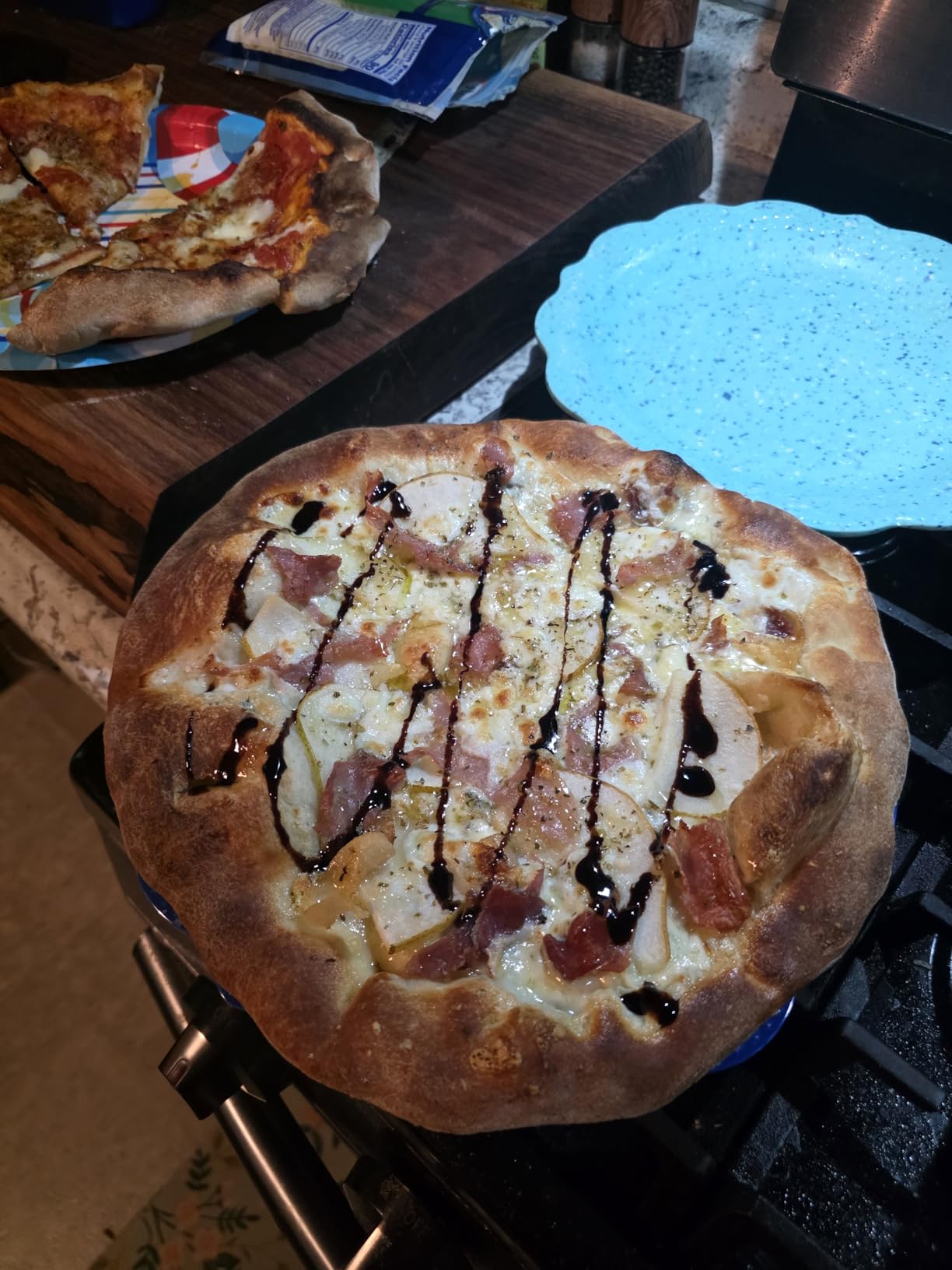
It still reaches 950°F in as little as 15 minutes and cooks a 12 inch pizza in 60 seconds. The extra large fuel tray takes wood or charcoal and is easier to load than the tray on the Karu 12, which reduces the frustration of getting a chunk to sit where the flame can reach it.
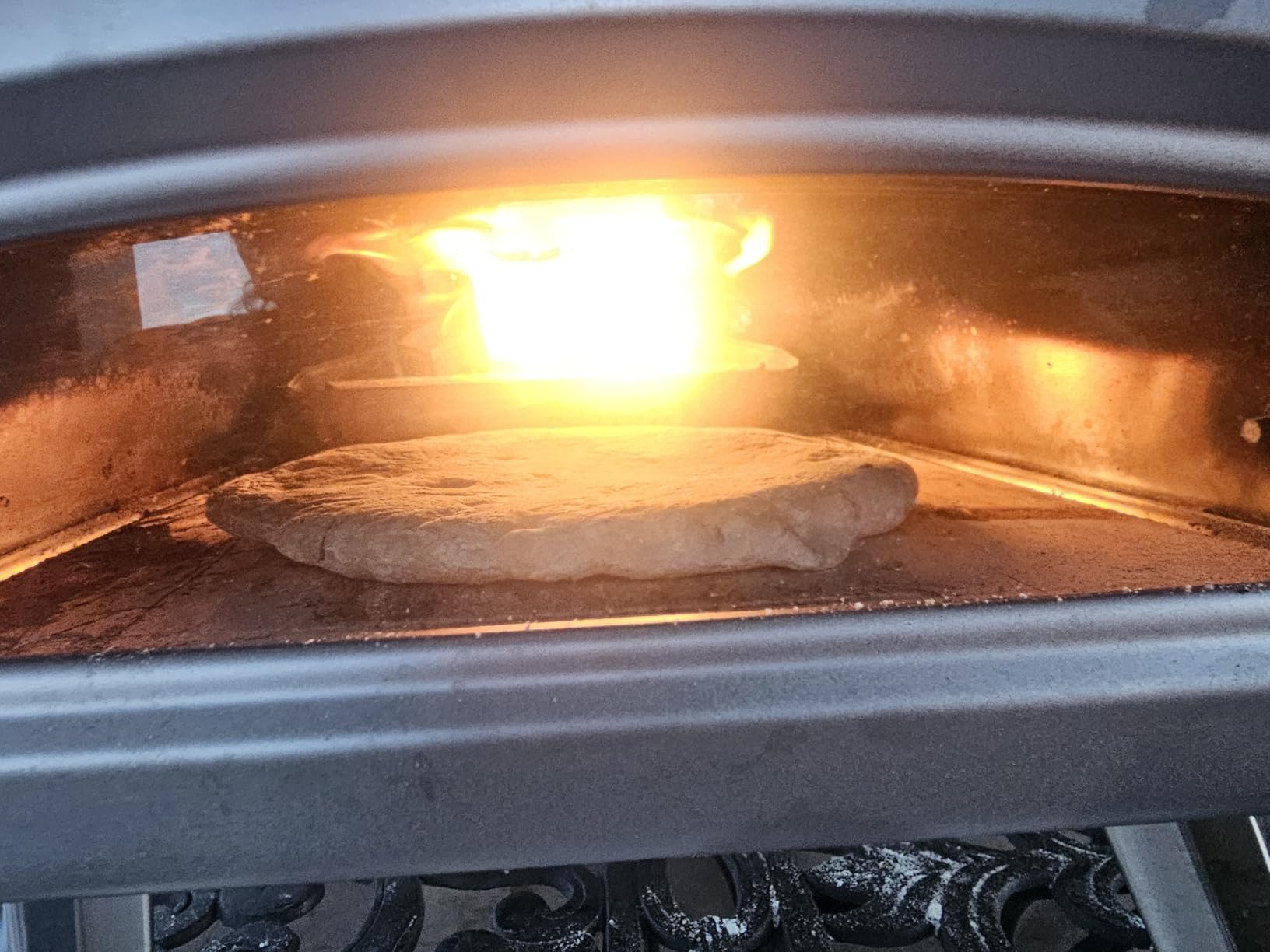
The glass door changes cooking technique more than you would expect. You can watch for edge lift and leopard spotting forming instead of guessing at 60 seconds, which is where most beginners burn their first three pizzas.
What you give up is nothing much beyond cost. It is heavier in the hand and more expensive than the entry multi-fuel ovens, and the gas burner remains a separate purchase if you want that mode.
Is the Karu 2 too advanced for a first oven?
No, it is the opposite of too advanced. The thermometer is the single feature that makes an unfamiliar fire easier to learn, and the glass door turns a 60-second cook from a guess into something you can see happening.
Choose it over the Karu 12 if you are worried about managing temperature without a gauge. Choose the Karu 12 if weight and cost matter more, and you are comfortable buying an infrared thermometer instead.
Where the Karu 2 will disappoint you
If you were expecting gas capability in the box, it is not there. The gas burner is an optional extra across the Ooni multi-fuel range, and owners who assumed otherwise rate the purchase experience lower even when they rate the oven highly.
It is also still a wood oven. Nothing here removes the need to learn a fire. The thermometer tells you what the chamber is doing; it does not build the flame for you.
5. BIG HORN 16 Inch: Best Wood Fired Pizza Oven With a Built-In Thermometer
BIG HORN OUTDOORS 16″ Multi-Fuel Outdoor Pizza Oven – 2-in-1 Wood-Fired & Gas Compatible (Burners Sold Separately), 1112°F Outdoor Stainless Pizza Cooker, Portable for Party Usage, Sliver
16 inch stone
1112°F rated max
Built-in thermometer
42.5 lbs
Pros
- 16 inch stone and larger combustion chamber suit family pizza nights
- Built-in front thermometer and glass flame window
- Stainless steel body with long reported service life
- Clear instructions and quick assembly
- Responsive service that replaced a warped pellet drawer
Cons
- Does not always reach the advertised 1112°F
- Pellets are consumed quickly and need refilling
- 42 lb weight is hard to transport solo
The 16 inch BIG HORN is the one to buy if your group is bigger than two. The stone is 16 inches, the combustion chamber is larger than the 12 inch models, and it preheats to 300°C in about 15 minutes with 60 to 90 second cooks.
It also has the two features most first-time owners here lack: a front-facing built-in thermometer and a glass viewing window into the flame. At this tier that combination is unusual, and owners with 289 reviews call it out by name.
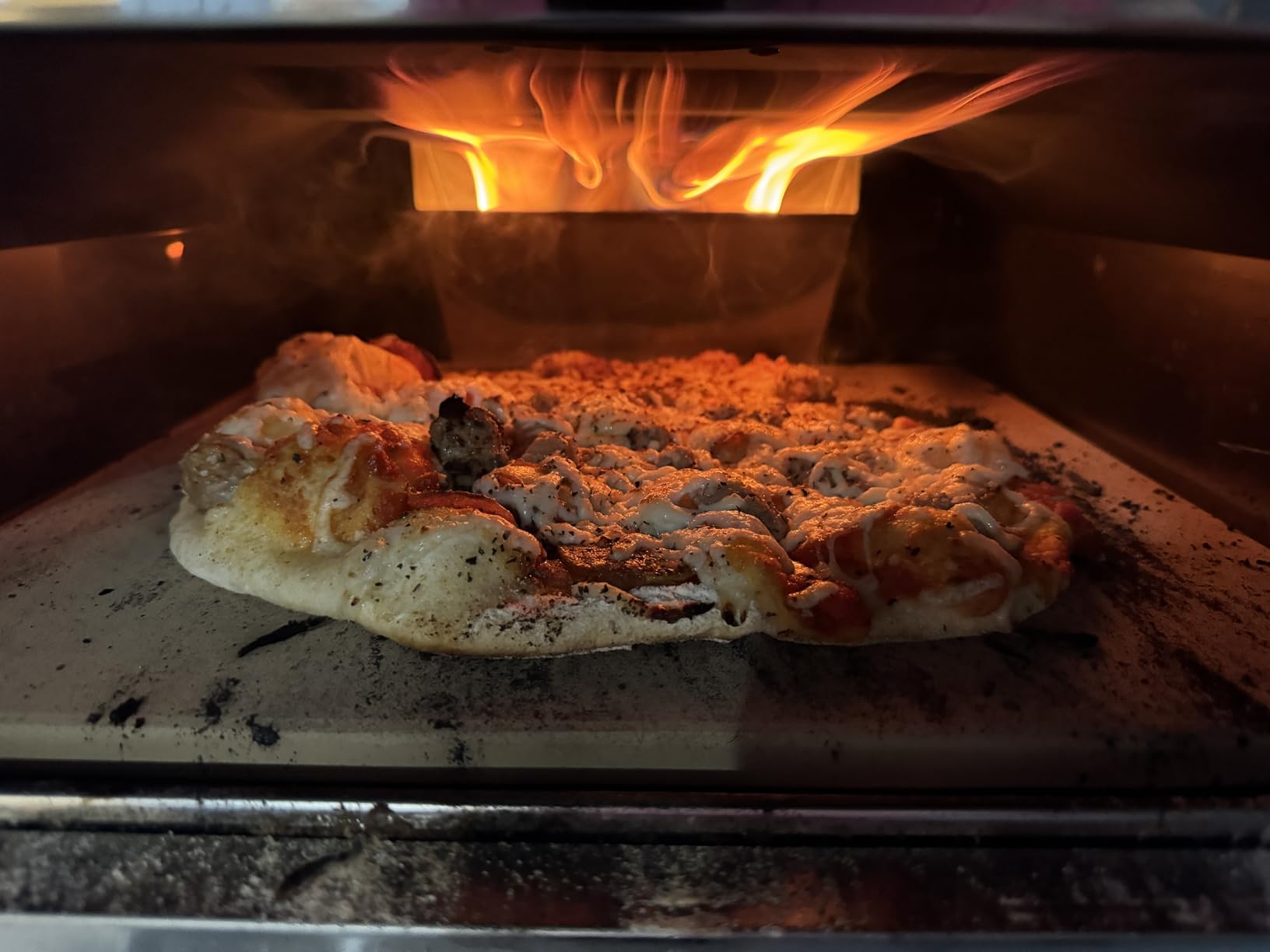
The adjustable air intake plate in the combustion chamber is a genuinely useful control. Moving it changes how much air reaches the fire, which is how you push a pellet oven from 300°C to a searing flame without opening the door and losing your heat.
Stainless steel throughout, four foldable legs, and reviewers reporting service life of two years and more with responsive replacement of a warped pellet drawer and a chimney cap. That kind of after-sales record matters for a heavy outdoor appliance.
Be realistic about the weight at 42.5 lbs. This is not a tailgate oven and it is not something you carry up steps solo. It is a patio oven with a stable footprint at 25 by 18 by 36 inches.
Should a beginner buy 16 inch instead of 12 inch?
Buy 16 inch if you are feeding four or more people regularly. The extra floor area means two pizzas can be in the chamber workflow more easily, and the larger combustion chamber holds heat more steadily through a long cook.
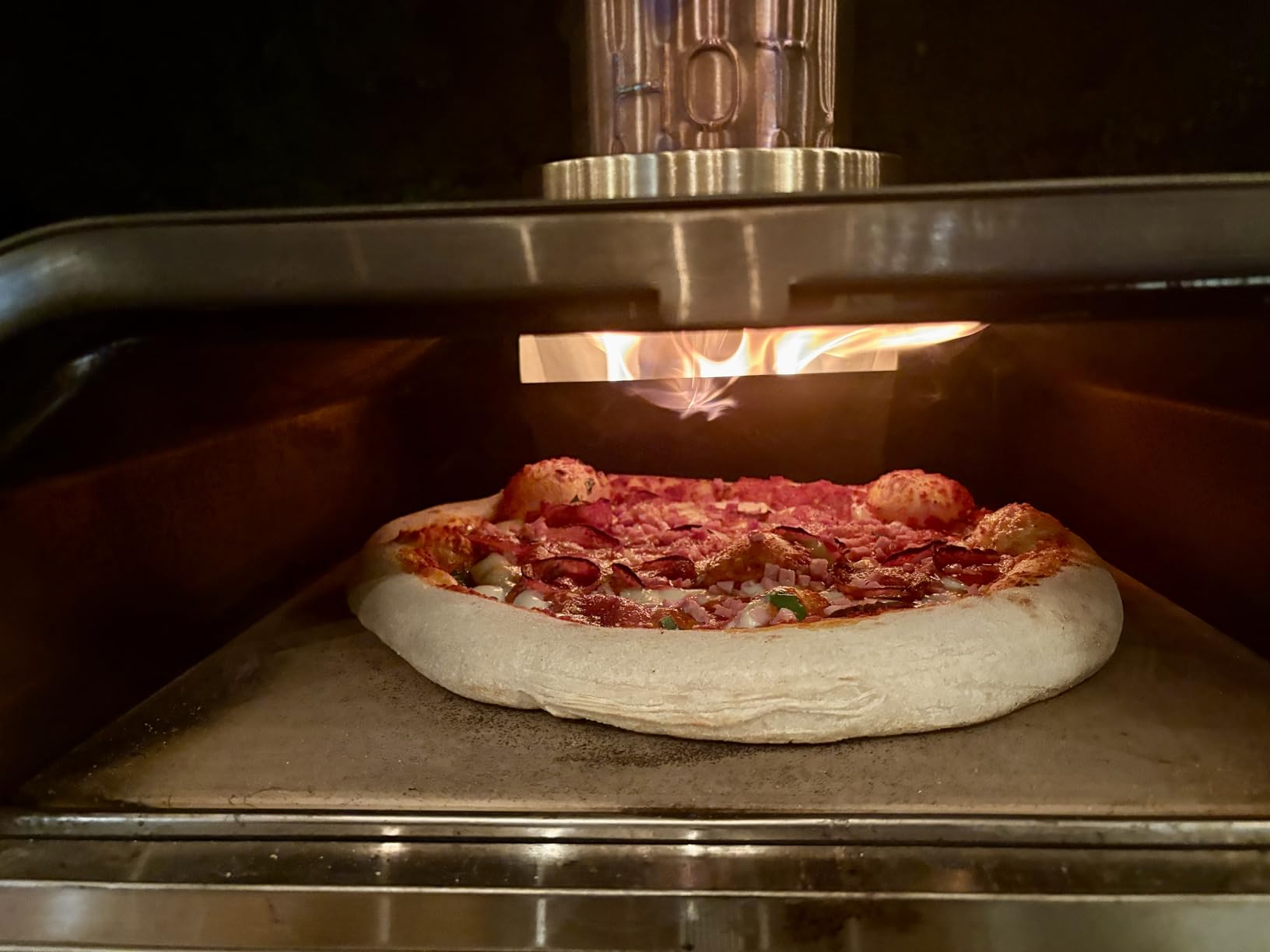
Buy 12 inch if you are cooking alone or in pairs. Smaller stones are more forgiving while you are learning launch technique, and a 12 inch pizza on a 16 inch stone ends up with a cooler, drier centre and a burnt rim.
Where the 16 inch BIG HORN will disappoint you
The 1112°F figure is a rated maximum, and owners report not reaching it in practice under normal conditions. Judge it on the 60 to 90 second cook claim instead, which owners do confirm.
Pellet consumption is heavy and the drawer needs regular refilling, and the hot firebox handle and hopper both need care when opening. If pellet upkeep bothers you, a hardwood oven suits you better.
6. Mimiuo Auto-Rotating: Best Wood Fired Pizza Oven for Skipping the Peel Turn
Mimiuo Auto-Rotating Wood Pellet Pizza Oven Outdoor 40Lbs, 60S Bake w/Stone
Rotating 13 inch stone
900°F in 15 minutes
40 lbs steel
Pellet or charcoal
Pros
- Motorised rotating stone removes manual turning
- Even baking without opening the oven
- Heavy insulation holds heat steadily
- Owners report hotter and faster heating than older ovens
- Good value for the rotating feature
Cons
- Rotation motor has failed for some buyers within months
- Consumes pellets quickly with constant feeding
- No built-in thermometer or door window
- Sooty combustion can deposit soot on the pizza
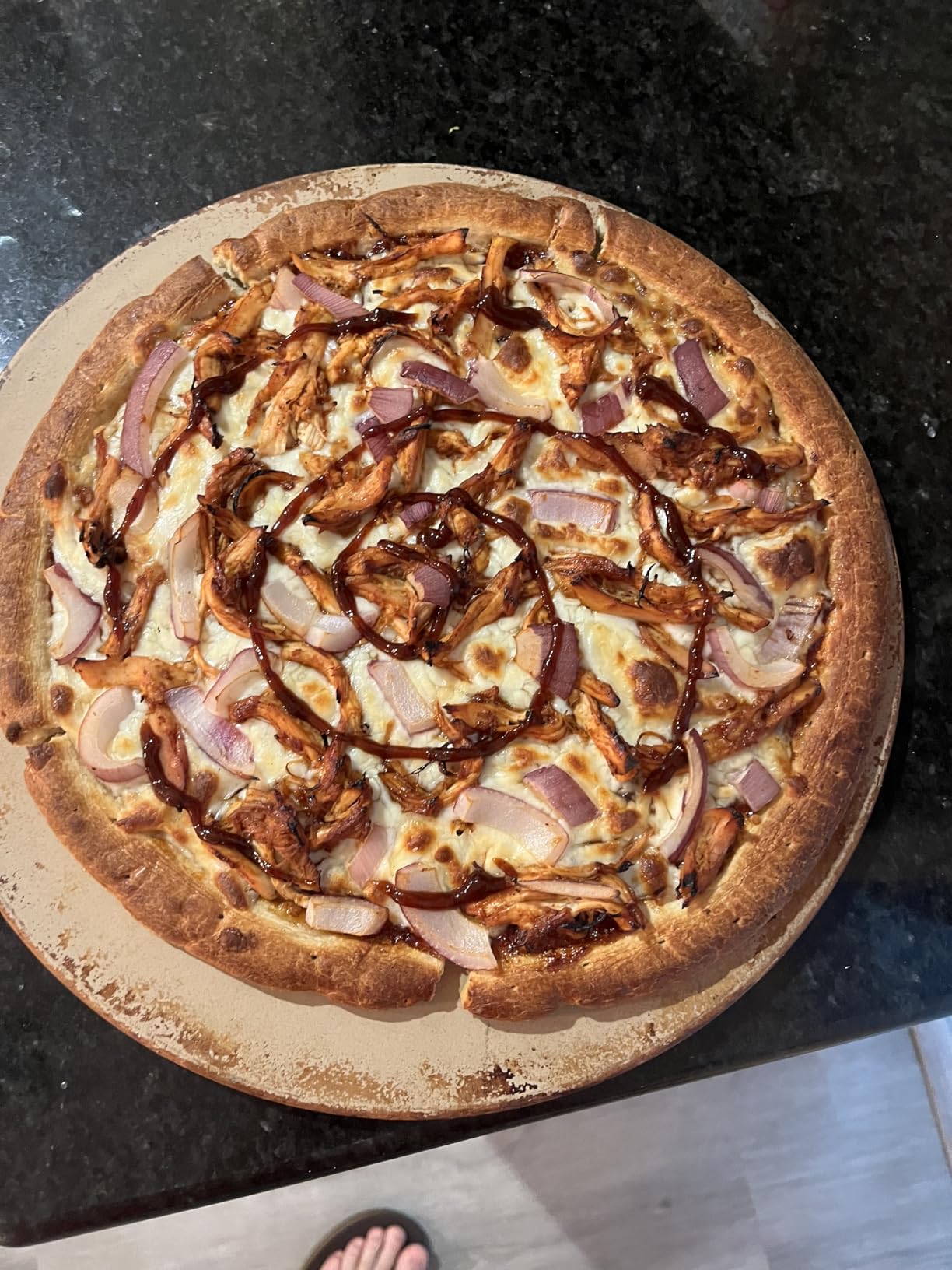
Rotating stones exist to solve one specific beginner failure: forgetting to turn a pizza that is 30 seconds into a 60-second cook. The motorised stone on this oven turns for you, so the crust cooks evenly on both sides without you opening the door at the halfway point.
It reaches 900°F in about 15 minutes and bakes in 60 seconds on a 13 inch round stone, with 40 lbs of steel and high-density ceramic insulation holding temperature more steadily than lighter builds. Owners with long-term units say they prefer it to older ovens they owned.
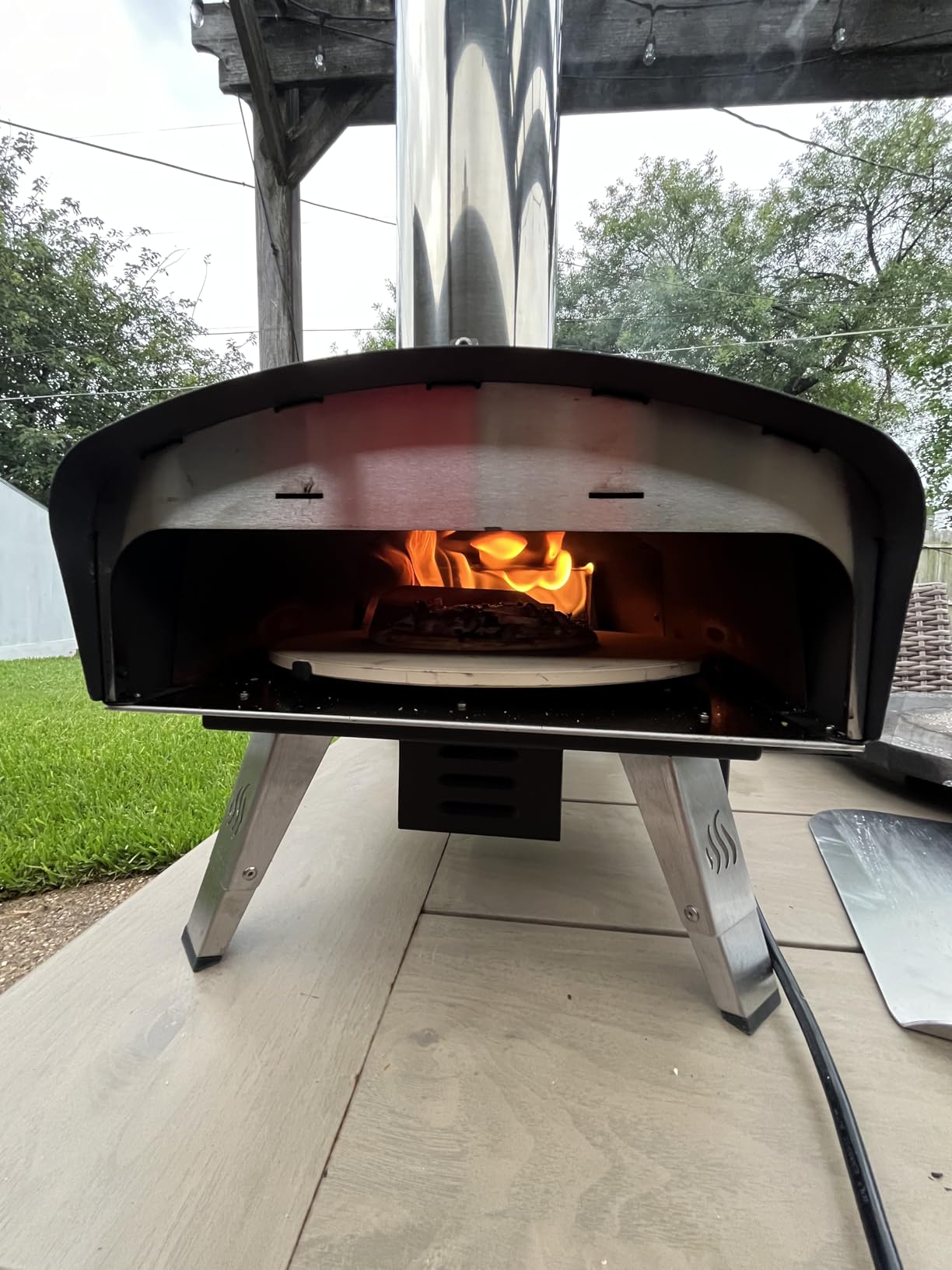
That insulation is the second quiet advantage. An oven that holds its heat lets you cook four or five pizzas in a row without rebuilding the fire, which is what turns a novelty into a weekly habit.
The trade-offs are real. At 4.1 across 188 reviews it sits in the lower half of this group, and the reason is concentrated in one place: some buyers report the rotation motor failing within months, and the shaft needs occasional oiling. Owners also mention no thermometer, no window, and a pellet tray that burns through quickly.
Soot is worth noting. A thin pellet tray can produce a smokier combustion than a chunk-wood chamber, and a few reviewers report soot landing on the pizza. Keep a brush nearby.
Is a rotating stone worth it for a beginner?
Yes, if turning pizzas is the part that defeats you. Removing the manual turn removes the most common cause of a scorched top and a raw base, and it lets you watch the pizza through the opening without losing heat on a door swap.
It is not essential if you are disciplined. Rotating by hand every 20 to 30 seconds works on every other oven in this guide, and many owners do it with a peel and a pair of heat-resistant gloves quite happily.
Where the rotating oven will disappoint you
It adds a mechanical part that can fail, and the reviews here show that happening. That is the single biggest argument against a rotating stone at this price, and it is the first thing to check before the warranty expires.
It is also the heaviest square-footage option at 40 lbs, and the pellet appetite means more refilling than the chunk-wood chambers in this list. Buy it for the rotation, not for the fuel efficiency.
7. PIZZELLO 16 Inch: Best Wood Fired Pizza Oven With Both Burners in the Box
PIZZELLO 16″ Outdoor Pizza Oven, Propane & Wood Fired Steel Pizza Grill
Wood and propane burners
752°F in 25-30 minutes
16 inch stone
Full accessory kit
Pros
- Wood and propane burners both ship in the box
- Accessory bundle includes peel cutter pellet scoop and carry bag
- 16 inch cooking area good for families
- Double-walled stainless steel with insulation cotton
- Folds down and detaches the chimney for transport
Cons
- Lower peak temperature than the Ooni and Gozney ovens
- 12% one-star rating is high in this set
- Heavy and awkward to move alone
The PIZZELLO is the most complete box in this roundup. Wood burner, propane burner, 16 inch stone, pizza peel, cutter, pellet scoop and a waterproof carry bag all ship together, so there is nothing to buy before your first cook.
That matters more than it sounds. The single most common beginner regret in oven reviews is not the oven itself; it is realising mid-afternoon that you have no peel, no thermometer and no cover, and that shipping them separately costs you the whole weekend.
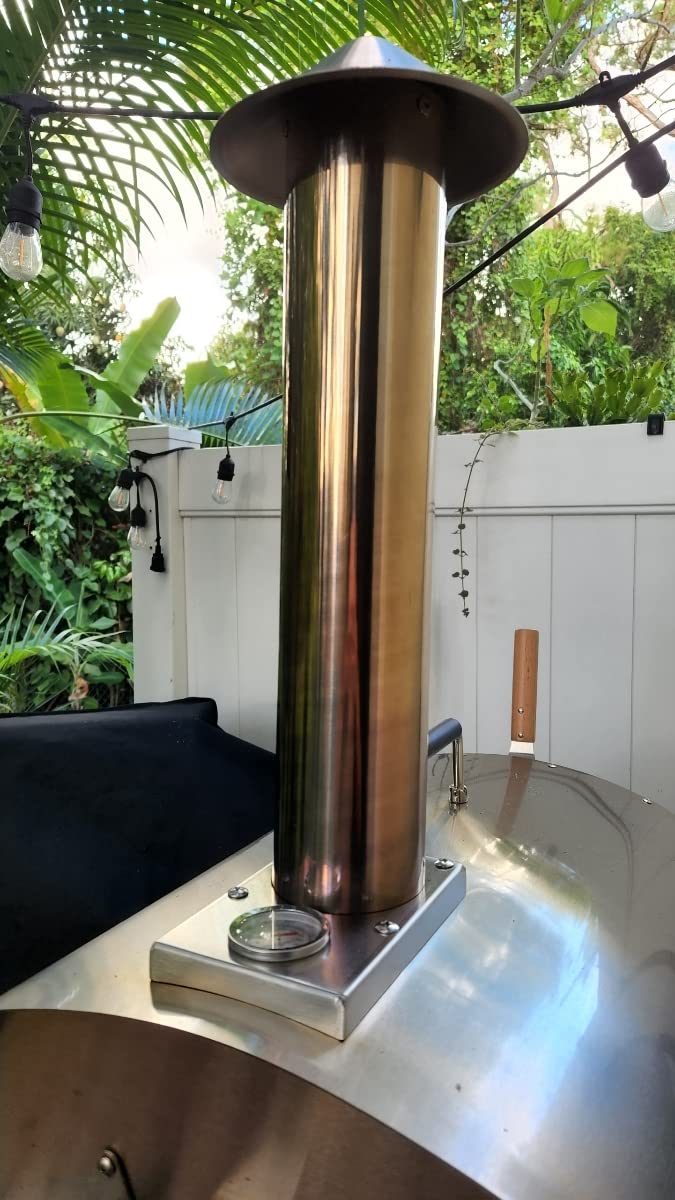
The trade-off is temperature. It reaches 752°F in 25 to 30 minutes, well below the 950°F ovens here, and the preheat is a longer commitment. Bakes still land around 60 seconds once you are up to temperature, but the recovery between pizzas is slower.
Insulation cotton sits between double-walled stainless steel, which holds heat better than a single-wall design of the same price. Fold-up legs and a detachable chimney mean it packs down for winter storage.
With 879 reviews at 4.2, the rating spread is wider here than most: 67% five stars but 12% one stars. Owners who ran out of patience during the 30-minute preheat rate it lowest. Owners who plan ahead rate the box highly.
Is the PIZZELLO 16 the best value oven for a family?
On included equipment, yes. No other oven in this guide gives you two burners plus a full accessory kit in the box, and the 16 inch floor handles a family pizza night with room to manoeuvre.
On temperature, no. At 752°F you are cooking closer to a New York thin crust than a leopard-spotted Neapolitan, and the 25 to 30 minute preheat is a real patience test on a cold day.
Where the PIZZELLO 16 will disappoint you
If your goal is a fast 60-second Neapolitan bake with heavy char, the cooler chamber makes that harder than it should be. You can still make excellent pizza; it will just not blister the way a 950°F chamber does.
It is also heavy and awkward to move alone, and it does not fold down to true travel size despite the carry bag. Plan its position before you build the fire, not after.
Our portable pizza oven guide for camping covers the lower-commitment ovens if this size still feels like too much.
8. Pellethead 13 Inch Kit: Best All-In-One Wood Fired Pizza Oven Kit
Pellethead Portable Wood-Fired Pizza Oven Kit, 800°F, 13″ Stone
800°F with 13 inch stone
Includes peel, thermometer and blower
Chimney with draft control
18.76 kg
Pros
- Stone peel laser thermometer blower and fire starters all included
- Owners report 850-900°F in about 15 minutes with bakes under 2 minutes
- Thick gauge steel with ceramic wool insulation
- Hinged insulated door is more convenient than slide-in designs
- Good value against larger named brands
Cons
- Pellets burn fast so temperature needs constant feeding
- Front-to-rear stone temperature equalises only briefly
- Small burn pot relative to the pellet appetite
- Some burrs and sharp edges reported
The Pellethead kit answers the most practical beginner objection: accessories. The box includes the 13 inch stone, a peel, a laser thermometer, a battery blower, fire starters and a chimney with draft control. Nothing else needs buying.
That included laser thermometer is worth more than its price suggests. Temperature guesswork is the number one frustration among first-time wood oven owners, and this oven ships with the tool that fixes it.

Owners report 850 to 900°F in roughly 15 minutes and bakes under two minutes, held by thick gauge steel with ceramic wool insulation. The hinged insulated door is a small design decision that makes loading a pizza noticeably easier than a slide-in door.
The battery blower feeds air to the burn pot, which speeds ignition and keeps the pellet flame clean. It needs regular battery changes, and the chimney uses a twist lock that some owners report loosening after disassembly.
Reviews split on fire management rather than on quality. At 4.1 across 501 reviews, with 59% five stars, the recurring themes are constant pellet feeding, a stone that equalises front to back only briefly, and occasional scorching on top.

Is the Pellethead kit a good first wood fired oven?
Yes, if your priority is owning everything you need on day one at a sensible cost. The stone, thermometer and blower in the box remove three separate purchases and two of the three most common beginner regrets.
The 23.5 by 17.4 by 11 inch profile is a low tabletop format that suits camping, tailgating and small patios, and at 18.76 kg it is one of the lighter ovens here.
Where the Pellethead kit will disappoint you
Temperature stability is the weak point. The small burn pot relative to how fast pellets burn means you are feeding it while you cook, and the stone temperature across the floor evens out only for a short window. Plan your first pizzas on the section of stone that has settled first.
Some reviewers also report burrs on handles and sharp edges out of the box. Wear gloves the first few cooks until you know where those edges are.
9. Mimiuo 12 Inch: Best Wood Fired Pizza Oven for a Cordierite Stone
Mimiuo 12″ Wood Pellet Pizza Oven Outdoor 35 Lbs – 60 Sec Bake, Stone/Peel
900°F in 15 minutes
13 inch square cordierite stone
34.8 lbs
Peel and cover included
Pros
- Heavy stainless steel build that holds and recovers heat well
- 13 inch square stone gives more usable area than a 12 inch round
- Peel and cover included so no extra purchases
- No-tool assembly and easy stainless cleaning
- Owners compare results favourably to a more expensive named brand
Cons
- Small pellet box burns through quickly and causes temperature swings
- Sensitive to wind which kills heat and produces smoke
- Needs close supervision and reheating between pizzas
- Included cover tore on first removal
The square 13 inch cordierite stone is the reason to look at this oven. Square gives you more usable baking area than a 12 inch round stone of the same nominal size, and cordierite tolerates thermal shock far better than standard ceramic, so it survives the repeated heat cycles that crack cheaper stones.
It preheats to 900°F in 15 minutes and bakes 60-second pizzas, with 34.8 lbs of stainless steel holding and recovering heat well. Owners with 390 reviews rate it 4.2 and several report preferring it to the more expensive oven they replaced.
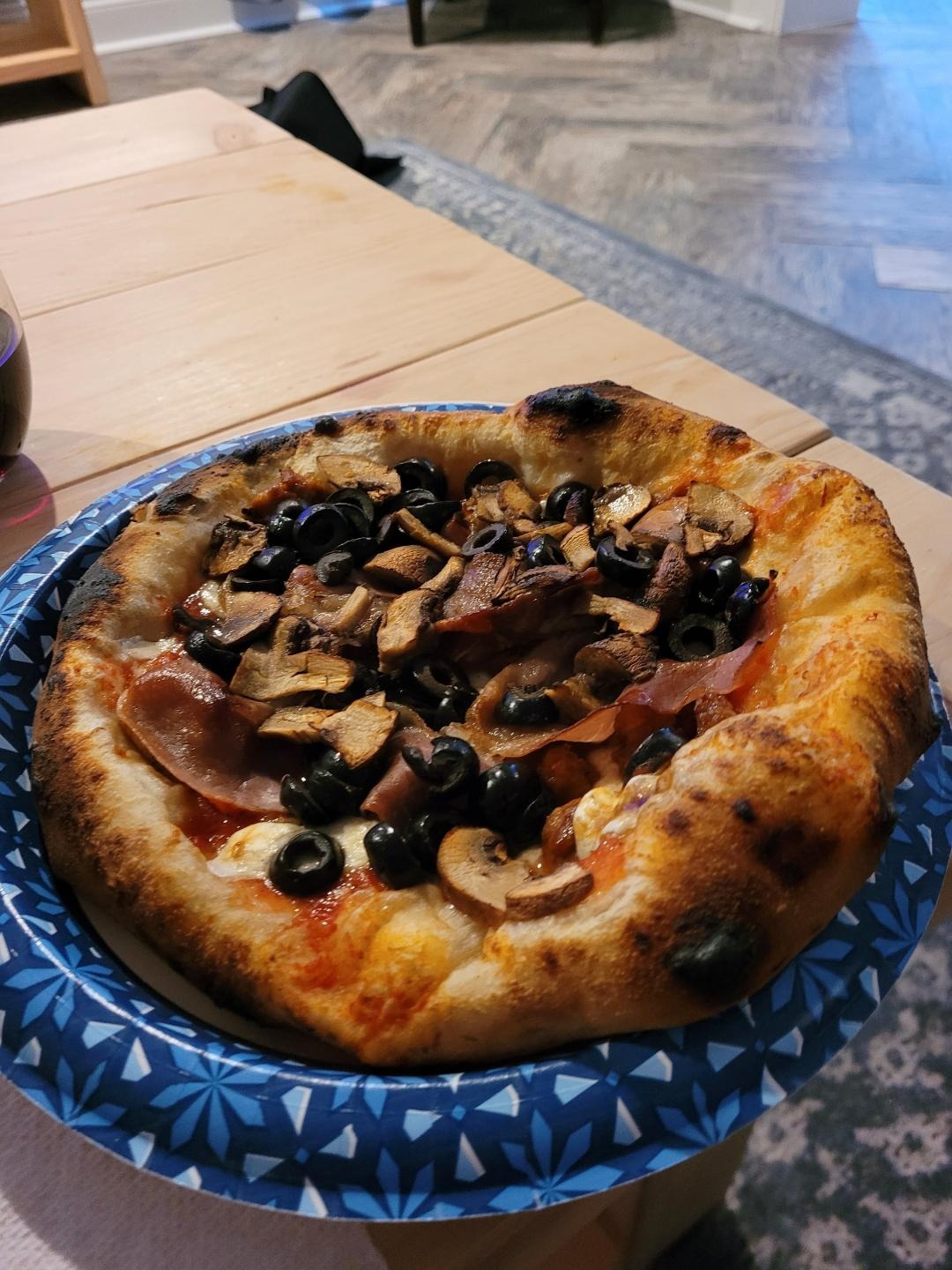
The kit includes the stone, a foldable 12 by 14 inch peel and a protective cover, so again there is nothing to buy before the first session. Assembly needs no tools and the stainless surfaces wipe clean.
The weakness is the fuel box, and it is the same weakness the other pellet ovens here share. It is small, it burns through quickly, and the temperature swings that follow mean you reheat between pizzas. Wind sensitivity is the other one: a gust can drop chamber heat fast and push smoke toward your face.
Instructions are thin, and most owners learn the pellet routine from videos instead. Plan two practice cooks before you invite people over.
Why does the stone matter more than most buyers think?
Because the pizza cooks from both sides. Radiant heat from the flame browns and chars the top, and conduction from the stone sets the base. A stone that holds heat evenly is the difference between a crisp base and a pale, floppy one.
Cordierite also survives being heated to oven temperature repeatedly without degrading the way a standard ceramic stone does. Over a multi-season life that matters more than the initial cost difference.
Where the Mimiuo 12 will disappoint you
If you cook in windy conditions, this is not the oven. Owners specifically report wind killing heat and generating heavy smoke, and the small pellet box makes recovering temperature harder when it happens.
It also needs more supervision than its 60-second bake time suggests. You will be refilling pellets and watching the fire, not just cooking. That is a fair trade for the flavour; it is only fair if you enjoy it.
10. EDOSTORY Patio Oven: Best Wood Fired Pizza Oven for the Fastest Warm-Up
EDOSTORY Outdoor Wood-Fired Pizza Oven Patio Pizza Maker for Backyard
Ready in 10 minutes
Built-in thermometer
Up to 550°F
53 lbs with wheels
Pros
- Large accessory bundle with stone and peel plus brush and glove
- Built-in thermometer at this tier is rare
- Ready in 10 minutes which is the fastest warm-up here
- Wheels and a side handle plus a wood shelf make it easy to move
- Doubles as a grill as well as a pizza oven
Cons
- Lowest ceiling temperature in the set at 550°F
- Tall 62.7 inch vertical design is bulky for a small patio
- 53 lbs makes it one of the heaviest units listed
- 14% one-star rating is among the highest
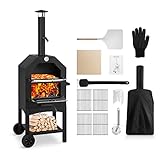
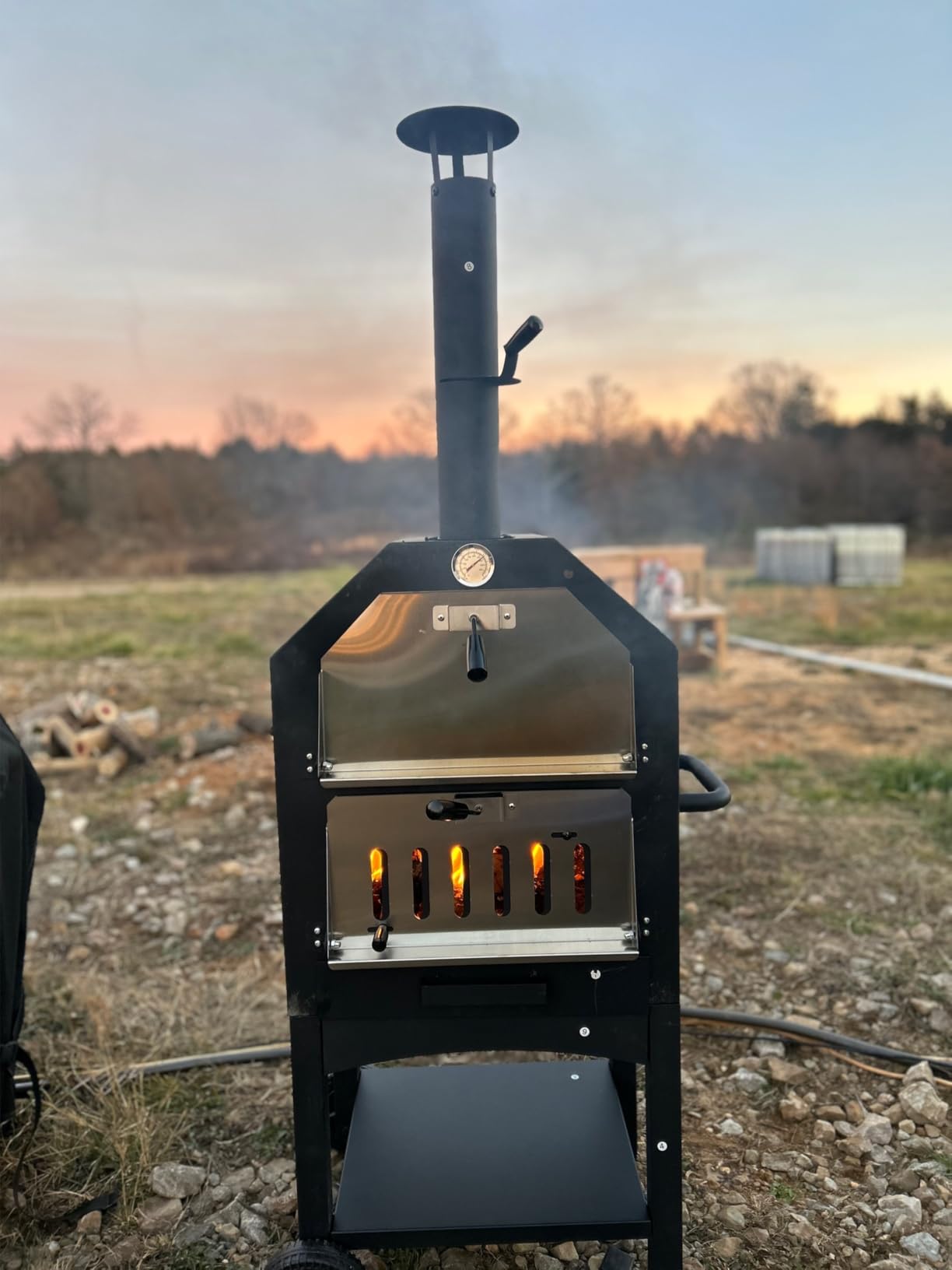
This oven is a different shape of proposition. It is a vertical cart-style unit with a wood shelf underneath, two wheels and a side handle, and it is ready to cook in 10 minutes, the fastest warm-up among the twelve.
It also has a built-in thermometer, which is genuinely rare at this price and solves the guesswork problem most budget ovens create. Adjustable chimney and air outlet give you two real controls over the fire.
The accessory list is long: cover, stone, peel, cutter, brush, glove, stands, trays and meshes. For a first cook on a tight budget, having a brush and glove included is the kind of detail that prevents a ruined pizza on night one.
Here is the honest problem. The ceiling is 550°F, the lowest in this group, so a pizza takes 6 to 7 minutes rather than 60 to 90 seconds. That is a different cooking experience entirely: you are roasting a pizza, not flashing it, and you will not get leopard spotting.
At 62.7 inches tall and 53 lbs, it is also the bulkiest and one of the heaviest. Its 14% one-star rating is among the highest here, and size is the reason most of those reviews exist.
Is this oven good for beginners who want to cook more than pizza?
Yes, and that is its real strength. At 550°F with a grill rack and detachable ash storage, it works as an outdoor grill and cooker for steaks, fish, bread and vegetables. Owners who bought it as a pizza oven often use it as a grill.
The 10-minute warm-up also changes the economics. You can light it after dinner starts rather than planning the evening around a 30-minute preheat.
Where the EDOSTORY oven will disappoint you
If you bought it for high-char Neapolitan pizza, the 550°F ceiling will disappoint you. Nothing you do inside that chamber reaches the 900°F plus range where leopard spotting forms.
The 62.7 inch vertical footprint is the bigger practical problem. On a small patio it dominates the space, and at 53 lbs you will want the wheels rather than your back.
11. Ooni Karu 2 Pro: Best Wood Fired Pizza Oven for 16 Inch Pizzas
Ooni Karu 2 Pro Multi-Fuel Pizza Oven – Wood and Gas Outdoor Pizza Oven with Pizza Stone & Integrated Thermometer, Pizza Oven Outdoor, Dual Fuel 16 Inch Pizza Maker, Outdoor Cooking Grill
16 inch dual-fuel surface
950°F in 15 minutes
Mounted digital thermometer
ViewFlame glass door
Pros
- Largest cooking area in the Ooni range for family-size pizzas
- Mounted digital thermometer reads in F or C
- ViewFlame glass door and improved insulation hold temperature
- 950°F in 15 minutes with 60-second bakes
- App connectivity adds guided cooking
Cons
- Highest cost in the roundup
- Gas burner is a separate purchase
- Still requires learning wood fire management
The Karu 2 Pro is the oven to buy when you are confident you will cook with it constantly and you want family-size pizzas. The 16 inch dual-fuel cooking surface is the largest here among the multi-fuel designs, and it reaches 950°F in 15 minutes with 60-second bakes.
It has the most complete instrumentation in this group: a mounted digital thermometer reading in Fahrenheit or Celsius, a full ViewFlame glass oven door, and Ooni Connect app support with guided cooking. Owners rate it 4.4 across 156 reviews with 77% at five stars.
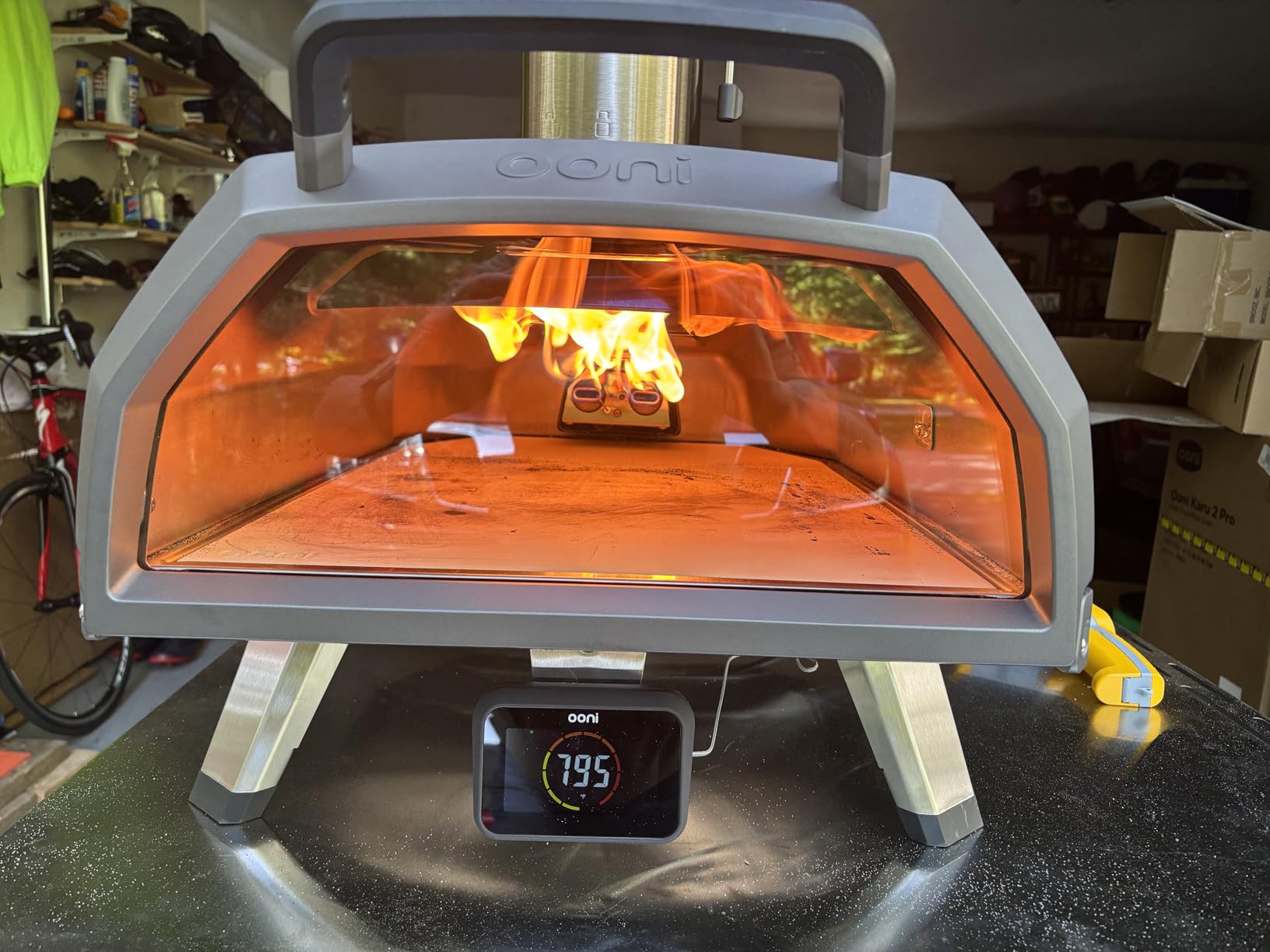
Wood and charcoal work out of the box from the fuel tray, so it is a genuine wood fired oven as standard. The gas burner remains an optional purchase, which is the consistent caveat across the Ooni range.
For a beginner this is a second oven, not a first oven. There is nothing wrong with buying it first if you cook for a crowd weekly, but the price and the footprint are harder to justify for two people making pizza on a Tuesday.
The app is a genuine aid rather than a gimmick. Guided cooking takes the guesswork out of your first few sessions, which for someone nervous about live fire is worth more than another 300 degrees of temperature.
Is the Karu 2 Pro worth the step up from a Karu 12?
Worth it if you cook 16 inch pizzas for four or more people, and if a built-in digital thermometer and a full glass door will save you from managing an external one. Both features are cited by owners as the reasons to move up.
Not worth it if you are still deciding whether you will use the oven weekly. The 12 inch multi-fuel ovens here reach the same 950°F and cook a 12 inch pizza just as fast.
Where the Karu 2 Pro will disappoint you
The cost is the first thing, and it is the highest in this roundup. There is a real chance you outgrow a 16 inch surface in your first season and are cooking 12 inch pizzas anyway.
It also has not removed the wood fire learning curve. Owners still describe managing a fire as the adjustment period. A thermometer tells you the temperature; it does not tell you when to add fuel.
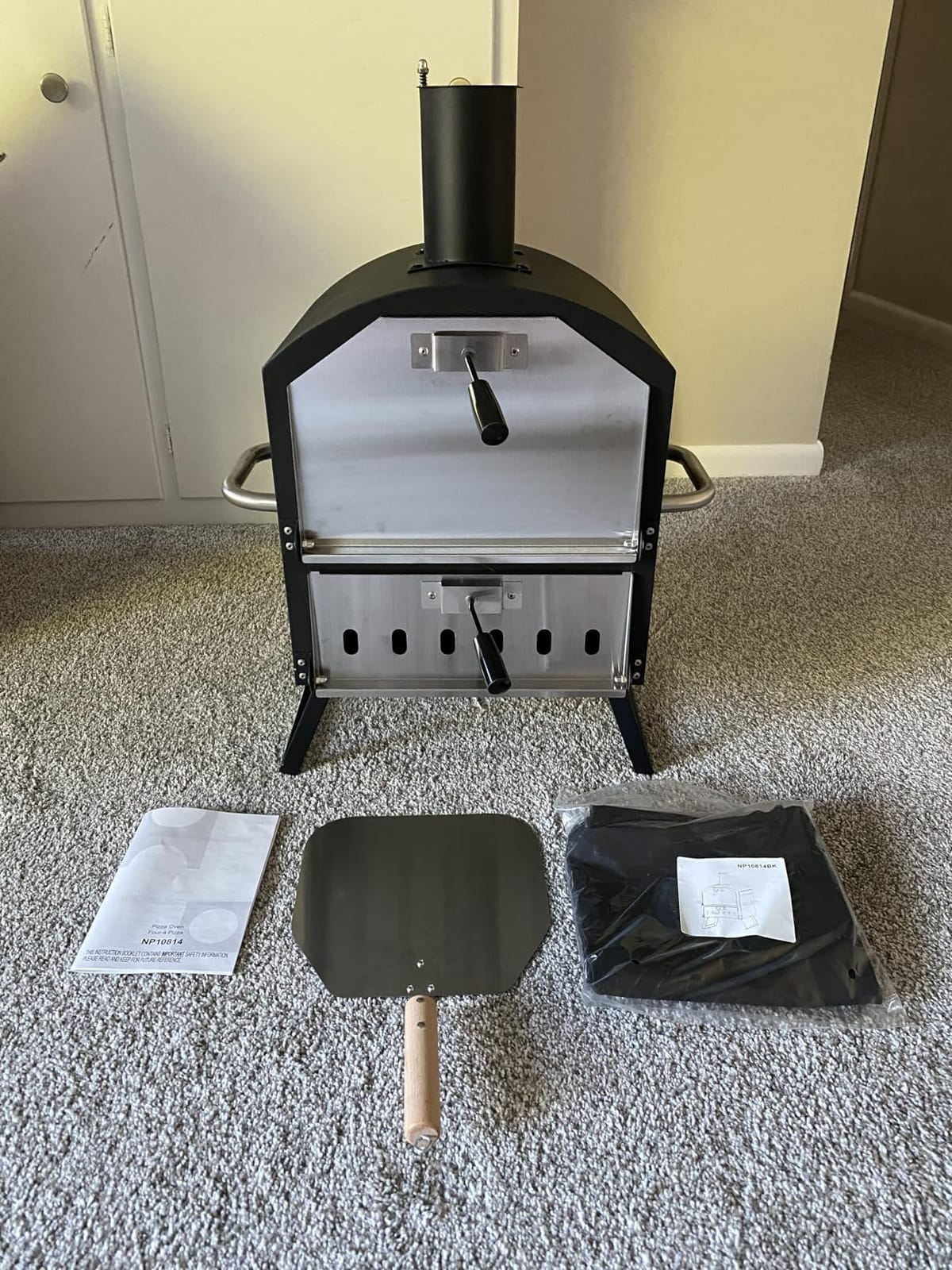
12. GIANTEX 2-Layer Oven: Best Lightweight Wood Fired Pizza Oven for Small Spaces
Giantex Outdoor Pizza Oven Wood Fired, 2-Layer Outside Pizza Maker
Wood charcoal or pellet
Two layers 288 sq in
23 lbs with folding legs
Stone peel and cover included
Pros
- Quick to assemble and simple to set up
- 23 lbs with folding legs makes it genuinely portable
- Two layers let you cook two things at once
- Includes stone rack peel and a waterproof cover
- Adjustable vents make airflow straightforward
Cons
- Difficult to push past 600°F
- No built-in thermometer
- Small fire box below the stone is hard to load with pellets
- Top door can warp under high heat
At 23 lbs this is the lightest oven in the roundup, and the folding legs and stainless side handles make it the easiest to carry from a car boot to a picnic table. If your cooking spot is a long walk from the house, weight is the spec that decides your day.
The two-layer layout gives 288 square inches of total cooking area across the layers, which means you can hold a pizza on one level and roast vegetables on another. Owners use it for steak, sausage, wings and vegetables as much as for pizza.
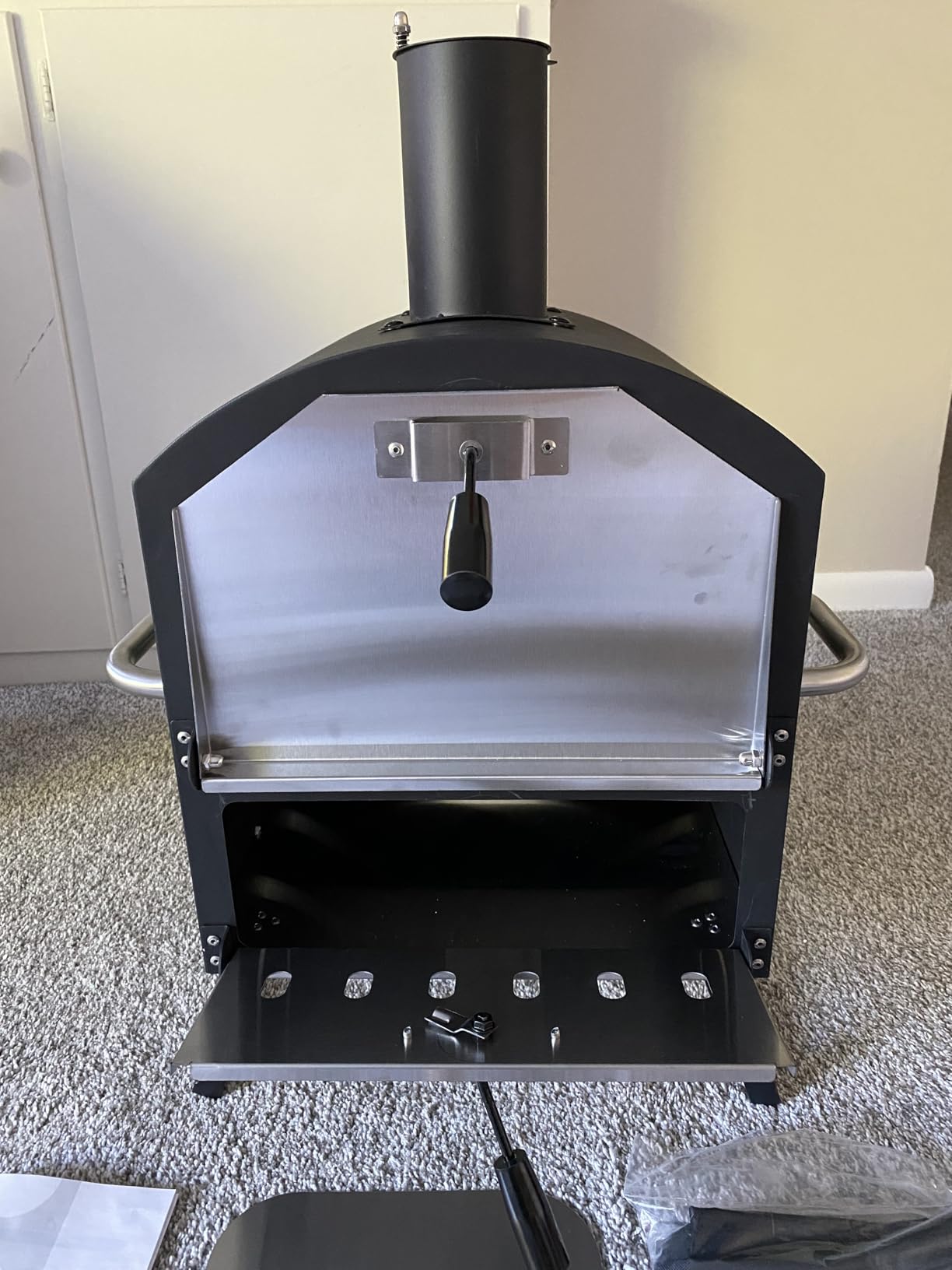
The box includes a 12 inch stone, a cooking rack, a peel and a waterproof 600D Oxford cover. Adjustable door and chimney vents give you airflow control, and the dual layer vents are straightforward to work once you understand the airflow path.
It accepts wood, charcoal or pellets, which sounds like flexibility but in a small fire box means less of each. Owners report the fire box is cramped to load with pellets, and it is genuinely difficult to push past 600°F.
Two durability notes from the 169 reviews: the top door can warp under high heat and loses heat until it cools, and some units arrive with a damaged ceramic base. Check the base on arrival.
Is the GIANTEX 2-Layer good enough for a first cook?
Yes for learning the rhythm. At around 600°F you are nowhere near the 950°F ovens, but you can absolutely make a good pizza and you will learn dough handling, fire building and topping without the pressure of a 60-second cook.
The two layers are the sleeper feature. Cooking a pizza above and vegetables below in the same session is a genuinely useful first-oven skill that most single-level ovens cannot teach you.
Where the GIANTEX will disappoint you
If your ambition is leopard spotting and charred crust, this oven will not get you there. Everything above 700°F stone temperature is where those blisters form, and the reviews describe owners topping out around 600°F.
There is no built-in thermometer, which at this level is expected but means you are guessing unless you buy an infrared one. The warped door issue also shows up as lost heat between cooks.
How to Choose Your First Wood Fired Pizza Oven
The decision comes down to one question: how much do you want to be hands-on? Everything else is a detail of the answer.
Some questions come up in every beginner thread we read: is a wood fired oven worth starting with, which fuel path should a first-timer take, and whether a 12 inch or 16 inch oven is easier to learn on. The short answers are yes with patience, pellets or multi-fuel if you want less fuss, and 12 inch unless you are feeding a crowd.
Which fuel should a beginner start with?
Start with pellets if you want the least effort. A gravity-fed hopper removes the need to build and tend a fire; you fill the tray and close the door. You give up the ritual and some of the smoke character, and you gain consistency.
Start with multi-fuel if you want wood but value options. The Karu 12 and BIG HORN designs burn wood and charcoal in the chamber and accept an optional gas or electric burner for days when you do not want to manage a fire.
Start with chunk wood if the ritual is the point. Wood and charcoal give the most authentic flavour and the most authentic experience, and they demand the most attention of the three.
12 inch or 16 inch for a beginner?
Go 12 inch. Community experience is consistent on this: smaller pies are more forgiving during the learning phase, and a 12 inch pizza on a 16 inch stone gives you a burnt rim and a cool centre. Move up once you are launching cleanly.
Choose 16 inch only if you regularly feed four or more people. The larger stone is more efficient for volume and less forgiving of technique.
What does a pizza night actually cost in fuel?
Pellets are the cheapest per pizza hour because you feed them in small amounts and stop when you stop. Hardwood burns faster and hotter, so a two-hour session with a full fire uses noticeably more wood than a pellet session of the same length.
Neither fuel dominates the economics, so choose on convenience and flavour rather than on running cost. What does add up is wasted fuel from an oven that is never seasoned properly and holds heat poorly, which is an argument for the heavier steel builds here.
Which wood should you burn, and which should you avoid?
Burn hardwood: oak, beech, birch, maple or apple. Cut it to roughly fist-sized chunks that fit your fuel chamber without forcing, and use dry seasoned wood, because wet wood smoulders and makes smoke instead of heat.
Avoid pine and other resinous softwoods, which throw heavy sap smoke and can soot your stone. Never burn painted or treated lumber, and never burn wood with chemicals on it from a demolition site.
Ambient temperature or stone temperature?
Measure the stone. Ambient temperature in the chamber can read 950°F while the surface your pizza touches is still well below what the crust needs. Most first-timer burns happen because the air reading was high and the stone reading was not.
Use an infrared thermometer aimed at the stone surface, in the middle of the floor and at the edges. An oven with a built-in thermometer like the Karu 2, the BIG HORN 16 inch or the EDOSTORY saves you the separate purchase.
Cordierite or standard ceramic stone?
Cordierite, if you have the choice. It handles rapid temperature changes far better, which matters when you fire a cold oven and then cool it with a lid. Standard ceramic stones crack more often in exactly that scenario.
The Mimiuo 12 inch is the one model here whose listing names a cordierite stone outright, a 13 inch square. Check the box contents on any other model before you assume a stone is included, and assume a standard ceramic one unless the listing says otherwise.
Which pizza style suits which temperature?
Neapolitan wants the most heat: 900°F plus stone, 60 to 90 second cooks, and leopard spotting. That is the range the Ooni, BIG HORN, Mimiuo and Pellethead ovens reach.
New York thin crust suits a slightly cooler floor around 700 to 750°F and benefits from a longer bake, which is where the PIZZELLO 16 sits. Detroit deep dish wants a long bake in a pan rather than a stone flash, so treat the mid-temperature ovens here as a fit.
What is actually in the box?
This is where first-time buyers are caught out. The PIZZELLO and EDOSTORY ship the most complete kits with stone, peel and cover included. The BIG HORN 12 and the Ooni Karu 12 ship without a gas burner, and the BIG HORN 12 also ships without a peel.
Budget for an infrared thermometer on anything without a built-in gauge, and for a cover on anything without one. Our patio wood fired pizza oven guide and backyard oven roundup cover placement in more detail if you are working out where the oven will live.
If your priority is the ritual of a wood fire and you want the wider landscape of options, our guide to the best wood fired pizza ovens covers the full spread, including the hardwood and stainless designs that sit above this set.
How to Use a Wood Fired Pizza Oven for the First Time
The first fire is where most beginners get anxious, and the anxiety is almost always about ruining an expensive oven. It is hard to ruin one. What you are doing is burning off manufacturing oils, and the process is meant to be smoky.
The first fire burn-off, step by step
Build a small fire and let it burn for 30 to 90 minutes with the door closed, per the manufacturer’s guidance. Keep it modest. You are cooking off the finish, not reaching pizza temperature, and a small fire reaches the same surfaces more evenly.
The smell is normal. Expect a strong smell of protective oils, sealant and manufacturing residue for the first hour, and expect it to drift. Do it on a day with wind, and keep people and pets away until it settles. If the smell persists after several burns, check that a protective film or packing residue has not been left on the stone.
Let the oven cool fully before touching the stone, and brush off ash and loose debris rather than washing the floor. Never put a cold stone into a hot chamber, and never put a wet stone anywhere near the fire.
How to tell when the oven is hot enough
Use an infrared thermometer on the stone. Aim at the centre of the floor and each corner. You are waiting for the stone to reach your target, not the chamber air to reach its maximum.
Watch the flame behaviour. A flame arcing across the floor from a side burner or a split log fire is what you want; a flame that has died back to the fuel chamber means the stone is losing heat.
Do the floor sizzle test last. Flick a drop of water onto the stone. If it evaporates almost instantly with a hiss, the chamber is ready.
Your first pizza in five steps
Preheat, then confirm with the thermometer. Preheat times on the listings are close to reality, but they assume dry fuel and a still day.
Stretch the dough on a floured surface, leaving a 1 to 2 inch border, and launch it onto a floured peel in one motion. If it sticks, you stretched too thin in the centre or the peel was not floured enough.
Cook for 60 to 90 seconds, rotating every 20 to 30 seconds. The rotation matters more than the exact time; the far side of the stone cooks faster than the near side.
Watch for edge lift and leopard spotting rather than browning. When the crust edge lifts and darkens in spots, it is done. Pull it from the far side and let it cool for two minutes before slicing.
If the top burns first, move the fire to one side and cook on the cooler half. If the base stays pale, give the stone another five minutes before launching. Most early failures are stone temperature, not oven quality.
Safety, Storage and Weatherproofing
Outdoor ovens reach flame temperatures and stay hot for hours. Treat the chamber, the chimney and the outer shell as hot long after the fire is out, and keep the cooking area clear of children and pets.
Place the oven on a non-combustible surface, never on a wooden deck or against a fence or wall, and leave clearance on all sides. Wind is the underrated danger: a gust can blow a flame out and send smoke and ash toward people standing at the chamber opening. If your spot is exposed, a simple windbreak changes the whole experience.
For storage, let the stone cool completely before covering. A cover over a warm oven traps condensation, which is how you get mould and rust on a stainless body and a cracked stone on the way into spring. Clean out the ash drawer, and store the oven indoors if you can.
Keep pellets dry and sealed in their bag, away from moisture, and never store kindling or loose wood under a hot oven. Our backyard pizza oven roundup covers the off-season storage setup in more detail.
What to Avoid When Buying Your First Wood Fired Pizza Oven
Avoid buying for headline temperature. A 1110°F rating tells you very little when owner reviews say the oven rarely gets there, which is the case with the 16 inch BIG HORN and the EDOSTORY at the opposite end.
Avoid ovens that ship without a stone, a peel or a way to check temperature. You will spend your first week waiting for parts instead of cooking.
Avoid anything whose fire box is too small for the fuel. The most consistent complaint across the pellet ovens here is not quality but a small fuel chamber that burns through faster than you can feed it.
Do not skip the accessories list. Before you buy, write down whether a peel, a stone, a cover and a thermometer are included, and what you will still need on day one. If you want to test live fire before committing to a permanent patio spot, the portable pizza oven guide for camping covers the ovens built to move.
Frequently Asked Questions
Is a wood fired pizza oven worth it for a beginner?
Yes, if you are willing to spend 15 to 20 minutes on preheat and manage a fire. A wood fired pizza oven reaches 800 to 1,000°F with a 700°F-plus stone, which is the range where a crust puffs, blisters and chars in a 60 to 90 second bake. A home oven tops out around 500°F and bakes the toppings before the crust can crisp. It is worth it for high-char results; it is not worth it if you want an appliance that needs no attention.
How long does a wood fired pizza oven take to heat up?
Between 10 and 30 minutes depending on the oven and the fuel. The multi-fuel ovens listed reach working temperature in about 15 minutes, the EDOSTORY is ready in 10 minutes, and the PIZZELLO 16 inch takes 25 to 30 minutes. Wood and charcoal take longer than gas. A 30-minute preheat is normal, not a fault.
Do wood fired pizza ovens make pizza taste smoky?
Less than most buyers expect. A pizza cooks in 60 to 90 seconds, which is not long enough to absorb much wood flavour, so the smoke character you notice on the oven does not carry strongly into the crust. What you do get is leopard spotting, char at the cornicione and a blistered, chewy texture that a conventional oven cannot produce.
What wood do you use for wood fired pizza?
Dry hardwood: oak, beech, birch, maple or apple. Cut it to roughly fist-sized chunks that fit the fuel chamber without forcing it, and use seasoned wood because wet wood smoulders and produces smoke rather than heat. Avoid pine and other resinous softwoods, which sap the stone and soot the pizza. Never burn painted or treated lumber.
Why does my new pizza oven smell bad when I first light it?
The smell is protective oils, sealant and manufacturing residue burning off the shell and stone during the first fire, and it is expected. Burn a small fire for 30 to 90 minutes with the door closed, on a windy day, and keep people and pets away until it settles. If the smell persists after several burns, check for packing film left on the stone.
Do I need a pizza peel and a thermometer for a wood fired oven?
A peel is effectively required, and some ovens ship without one, so check the box contents before your first cook. An infrared thermometer is the other essential purchase, because ambient chamber readings do not tell you the stone surface temperature that sets the crust. Ovens with a built-in thermometer, such as the Ooni Karu 2 and the BIG HORN 16 inch, save you that purchase.
Bottom Line: Which Wood Fired Pizza Oven Should You Buy First?
Buy the Gozney Roccbox if you want the easiest path to a good pizza and you are willing to add a wood burner attachment for the wood flavour. Buy the Ooni Karu 12 if you want wood and charcoal out of the box at the sharpest price in this group. Buy the BIG HORN 12 if you want the lowest commitment and the best documented record of long-term ownership.
Whatever you choose in 2026, buy a stone that is sized for the pizzas you will actually cook, expect a 15-minute preheat, keep an infrared thermometer in the box, and give yourself three practice cooks before you invite anyone over. If your space is smaller than that, the patio roundup and backyard roundup cover the placement questions, and our gas pizza oven guide covers the alternative path.