
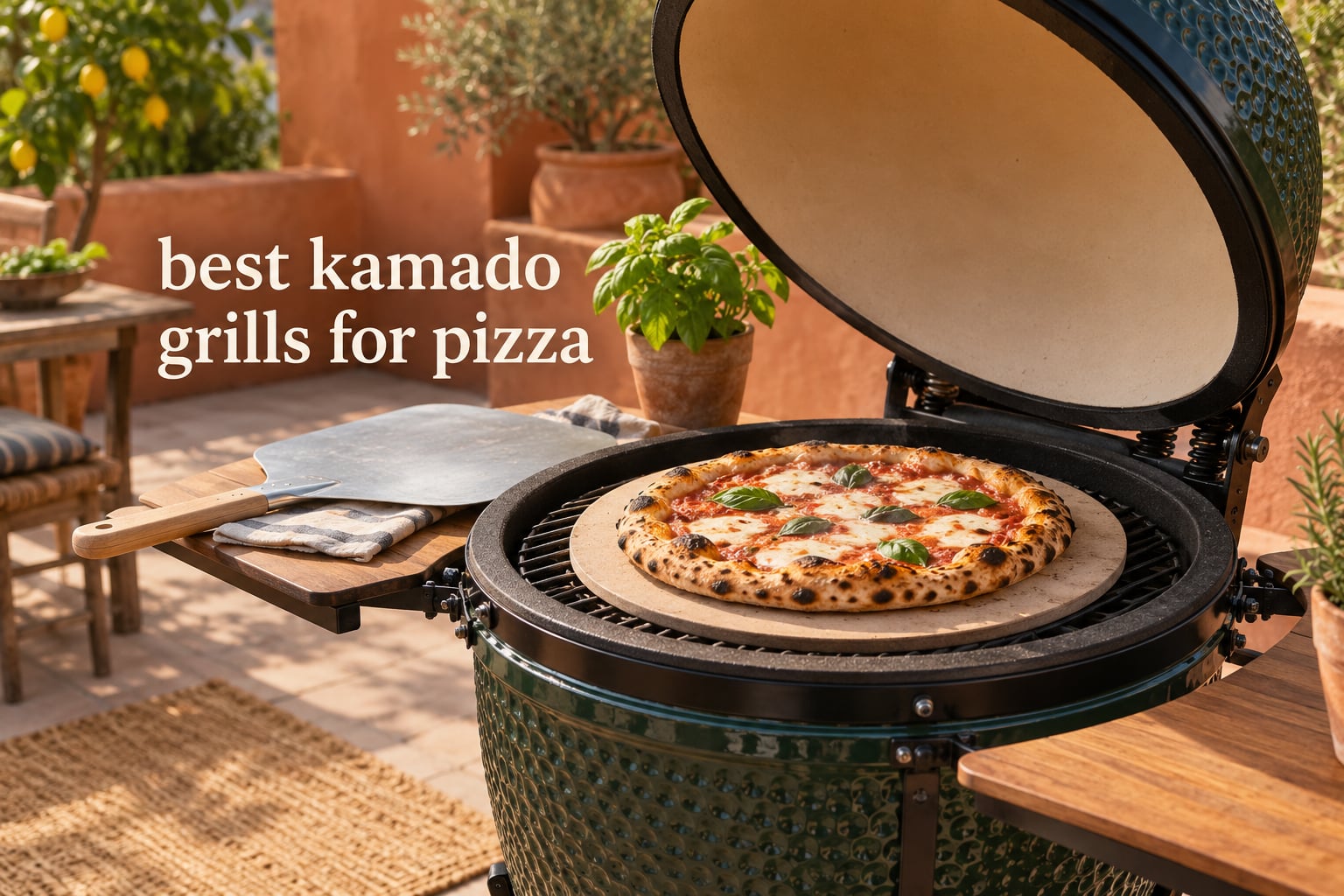
Cooking restaurant-style pizza at home usually comes down to one question: where do you get 700 degrees Fahrenheit that stays there? A kamado grill answers it better than anything else in your patio’s price bracket. The best kamado grills for pizza trap heat in thick ceramic walls, and once preheated, that stored energy bakes a Neapolitan-style pie in six to eight minutes with a leopard-spotted crust and a melted, blistered top.
We spent weeks comparing eight kamado grills on the things that actually decide a pizza bake: grate diameter, how fast the dome comes to temperature, whether you can raise a stone, and whether the unit holds heat steady through a multi-pie session. What we found is that most of the hype belongs to the three big American ceramic brands, but two of the real pizza workhorses on this list come from much less obvious places. If you want a broader view of ceramic cooking first, our guide to the best kamado grills for home covers the buying fundamentals. If you are still weighing a kamado against a dedicated oven, the best outdoor pizza ovens for backyards is worth ten minutes of your time.
A kamado is not magic, and it is not a purchase for everybody. It demands a 20 to 35 minute preheat, a lump charcoal habit, and enough patience to learn where your vents sit at 650 degrees. Get those three right and it is the best pizza appliance you can own. Get them wrong and you are burning hardwood for nothing. This guide covers all eight grills in 2026, the technique that works, and the honest limits of each one.
Top 3 Kamado Grills for Pizza in 2026
The three picks below are the ones we would put on a patio first: the widest grate in the steel-bodied options, the most capable small ceramic, and the best all-round package. Every one of the eight grills further down is genuinely usable for pizza, but these three cover the widest range of homes and budgets.

Char-Griller AKORN 20-Inch
- 445 sq. in. cooking area
- 200°F to 700°F range
- Triple-wall insulated steel
- Locking casters

Kamado Joe Joe Jr
- 150 sq. in. cooking area
- 13.5-inch ceramic dome
- Two heat deflectors included
- Portable at 75.6 lb

Kamado Joe Classic Joe I
- 250 sq. in. cooking area
- Divide and Conquer racks
- Control Tower vent 225°F to 750°F
- Slide-out ash drawer
The 8 Best Kamado Grills for Pizza at a Glance in 2026
Grate diameter decides how big a pizza stone you can fit, and everything else follows from that. These are the eight kamado grills for pizza we compared, ordered by grate size rather than by rank, so you can see the shape of the whole field at once.
| Product | Specifications | Action |
|---|---|---|
| Char-Griller AKORN 20-Inch Kamado |
|
Check Latest Price |
| Kamado Joe Joe Jr 13.5-inch |
|
Check Latest Price |
| Kamado Joe Classic Joe I 18-inch |
|
Check Latest Price |
 London Sunshine 13-Inch Ceramic Kamado London Sunshine 13-Inch Ceramic Kamado |
|
Check Latest Price |
 London Sunshine 15-Inch Ceramic Kamado London Sunshine 15-Inch Ceramic Kamado |
|
Check Latest Price |
 Kamado Joe Big Joe II 24-Inch Kamado Joe Big Joe II 24-Inch |
|
Check Latest Price |
 BRANDMAN Steel Kamado Grill BRANDMAN Steel Kamado Grill |
|
Check Latest Price |
 Outvita 13-Inch Round Kamado Outvita 13-Inch Round Kamado |
|
Check Latest Price |
1. Char-Griller AKORN 20-Inch Kamado Is Our Best Overall Pick for Pizza
Char-Griller AKORN 20-Inch Kamado Charcoal Grill and Smoker, Triple-Wall Insulated Steel with Cast Iron Grates, Warming Rack and EasyDump Ash Pan, 445 Sq. In. Cooking Area, Graphite
445 sq. in. cooking area
200°F to 700°F range
Triple-wall insulated steel
97 lb with locking casters
Pros
- Large 20-inch grate suits a full-size pizza stone
- Reaches 600°F and above while still holding steady low heat
- Very economical on charcoal
- Locking casters and foldable side shelves make it easy to reposition
Cons
- Lid thermometer is not accurate so add a separate probe
- Steel body and paint need regular oiling and a cover to fight rust
- Vent learning curve is real and the manual explains it poorly
The AKORN is the pizza kamado we keep coming back to. Its 445 square inch cast iron grate is the second largest in this group, which means a 14 to 15 inch stone drops straight onto it without a fiddly half-rack shuffle. Reviewers with 2349 ratings give it 4.6 stars, and heat retention with low charcoal use is the most consistent praise across those reviews.
For pizza specifically, the triple-wall steel body matters less for pure radiation than ceramic would and more for something else: fuel economy. It reaches 600°F and above comfortably and then coasts, so a 45 minute session does not mean feeding it a full chimney of lump charcoal twice. The dual adjustable dampers and built-in gauge are indexed, which makes it easier to dial in a repeatable 700 degree soak than a grill with vague vents.
The catch is that steel is not ceramic, and the difference shows up in recovery. A thick ceramic dome comes back to temperature in seconds after you open the lid; the AKORN takes noticeably longer, so rapid-fire pie launches are harder. It also needs its vents managed more carefully to stop temperature run-up, and reviewers report a genuine learning curve on the damper positions for lower-temperature work. The metal also rusts if you leave it exposed, and the removable grate center section has been reported dropping into the coals.
How the AKORN handles a 700 degree pizza bake
Working from a small fire of lump charcoal set to one side, owners let the dome soak for a full 20 to 30 minutes before the first launch. Once the stone is at temperature, bakes land in the same 6 to 8 minute window as a ceramic kamado, with a set, blistered base. The 20 inch grate gives you room to run two stones side by side if you are feeding four or more people.
The one spec you should upgrade yourself is the thermometer. The built-in dial reads consistently high or low depending on the owner, and a separate probe costs a fraction of what the grill does. Once you have that, the AKORN becomes a genuinely dependable high-heat pizza oven.
Who should and should not buy the AKORN
Buy it if you want a big stone, want to serve a group, and would rather not chase a specific brand name. The 20 inch grate is the single most useful number here, and the AKORN delivers it with the highest review count in the group, which means its weaknesses are well documented rather than hidden.
Pass on it if your patio is tiny, if you cook two pizzas back to back with zero pause, or if you refuse to oil the body and buy a cover. Rust is the price of the steel shell, and skipping maintenance is how the paint fails early.
2. Kamado Joe Joe Jr Is the Best Kamado for a Small Patio
Kamado Joe Joe Jr 13.5-inch Portable Ceramic Charcoal Grill with Grill Stand, Stainless Steel Cooking Grate, Heat Deflectors and Ash Tool in Red, Model KJ13RH
150 sq. in. cooking area
13.5-inch thick ceramic dome
Two heat deflectors included
75.6 lb portable
Pros
- Thick ceramic holds and recovers heat faster than any steel body
- Reaches 500°F and above quickly for Neapolitan-style pizza
- Very fuel efficient on a small load
- Two cooking levels with included deflectors add real range
- Lifetime warranty on the ceramic
Cons
- Heavy enough that two people should lift it onto the stand
- Ceramic can arrive cracked if it was crated with cheap straps
- With deflectors in place it no longer reaches maximum temperature
The Joe Jr is the lightest true ceramic kamado in this roundup that still fits a 13 inch pizza stone, and it is the most honest small-pizza machine here. At 150 square inches it fits a 13.5 inch stone, which is exactly the size most home pizza recipes assume. It holds a 4.6 rating across 788 reviews, and reviewers repeatedly name pizza as the reason they are happy with the purchase.
Because it is real ceramic with a thick-walled dome, the heat behavior is on another level from the steel units. Owners report it reaching 500°F and climbing quickly, with a 13.5 inch stone on the grate producing a properly cooked Neapolitan-style pie faster than a home oven could. The included heat deflectors let you set up an indirect tier roughly 10 cm above the coals, which is exactly the raised-stone trick kamado bakers use to let radiant heat finish the top of the crust.
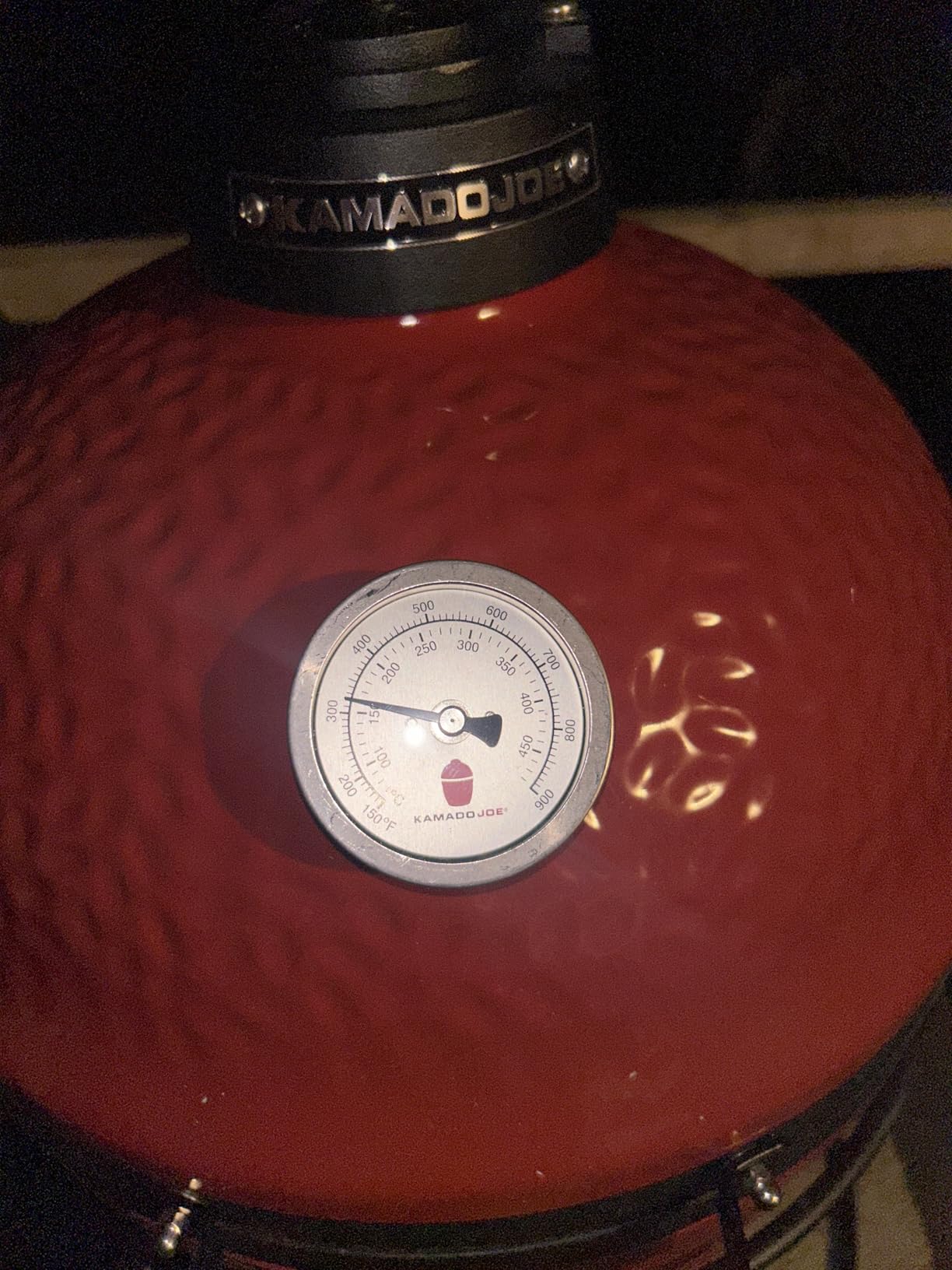
Two caveats matter. The first is weight: at 75.6 pounds it is a two-person lift onto its stand in most cases, and the cast iron base and dome do not enjoy being wrestled around a porch. The second is that the included deflectors steal headroom. With a deflector in place the dome sits closer to the fire, so the top vent stays closed and the unit will not reach its top temperature. For straight pie baking, run it direct on the grate and skip the deflectors entirely.
Does a 13.5 inch kamado make a real pizza?
It makes a 12 to 13 inch pizza, which is larger than the 10 or 11 inch pies most home ovens cap out at. A 13.5 inch stone plus the ceramic walls gives you enough thermal mass for leopard spotting, and the grate gap is tight enough that direct radiant heat keeps the top moving. The limit is quantity, not quality: two or three people is a comfortable load.
If you want to stretch to four, start the session with a low dome soak and keep the top vent open. The ceramic will hold 650 to 700°F for far longer than you need, so a ten minute gap between pies costs you nothing.
Who the Joe Jr suits and who it does not
It suits apartment patios, couples, tailgating setups, and anyone who wants real ceramic heat behavior without a 400 pound commitment. Owners also value that it is the same interior diameter as other kamado accessories, so stones and racks carry over.
It does not suit a family pizza night for six, nor anyone who wants to smoke brisket on the same grill. Reviewers also caution that ceramic can arrive already cracked when crated with cheaper green straps, so inspect the dome the moment it is delivered.
3. Kamado Joe Classic Joe I 18-Inch Is the Best Value Ceramic Kamado
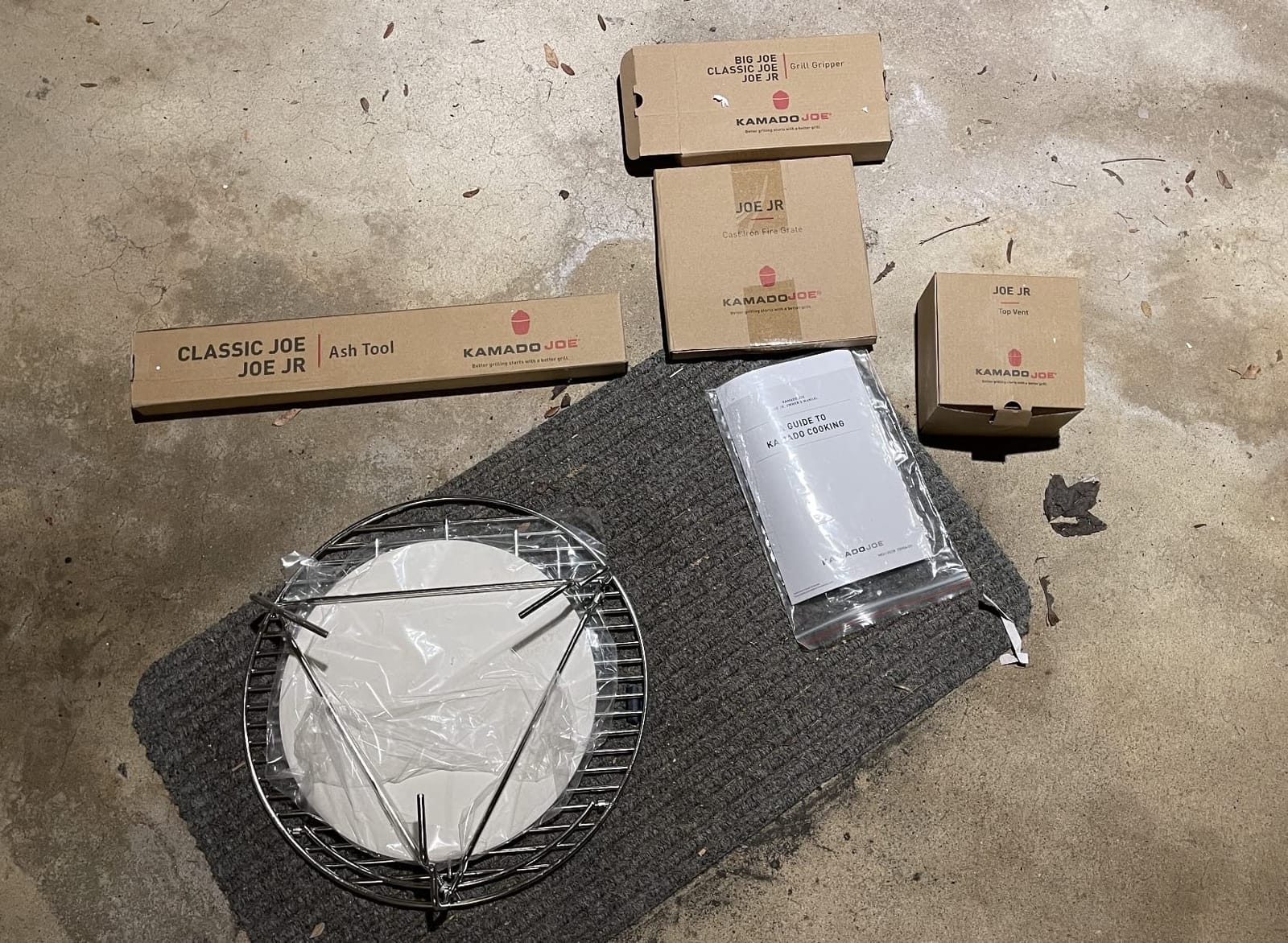
Kamado Joe® Classic Joe™ I Premium 18-inch Ceramic Charcoal Grill and Smoker in Red with Cart, Side Shelves, Grill Gripper, and Ash Tool. 250 Cooking Square Inches, 2 Tier Cooking System, Model KJ23RH
250 sq. in. cooking area
Divide and Conquer two-tier system
Control Tower vent 225°F to 750°F
Slide-out ash drawer
Pros
- Holds temperature steady for hours once the vents are dialled in
- Divide and Conquer racks run direct and indirect side by side
- Slide-out ash drawer makes cleanup simple
- Cart side shelves gripper and ash tool all included
- Lifetime warranty on the ceramic body
Cons
- Very heavy at 188 lb so plan for a two-person lift
- Built-in thermometer is hard to read and often replaced
- Series I top vent shifts position each time the lid opens
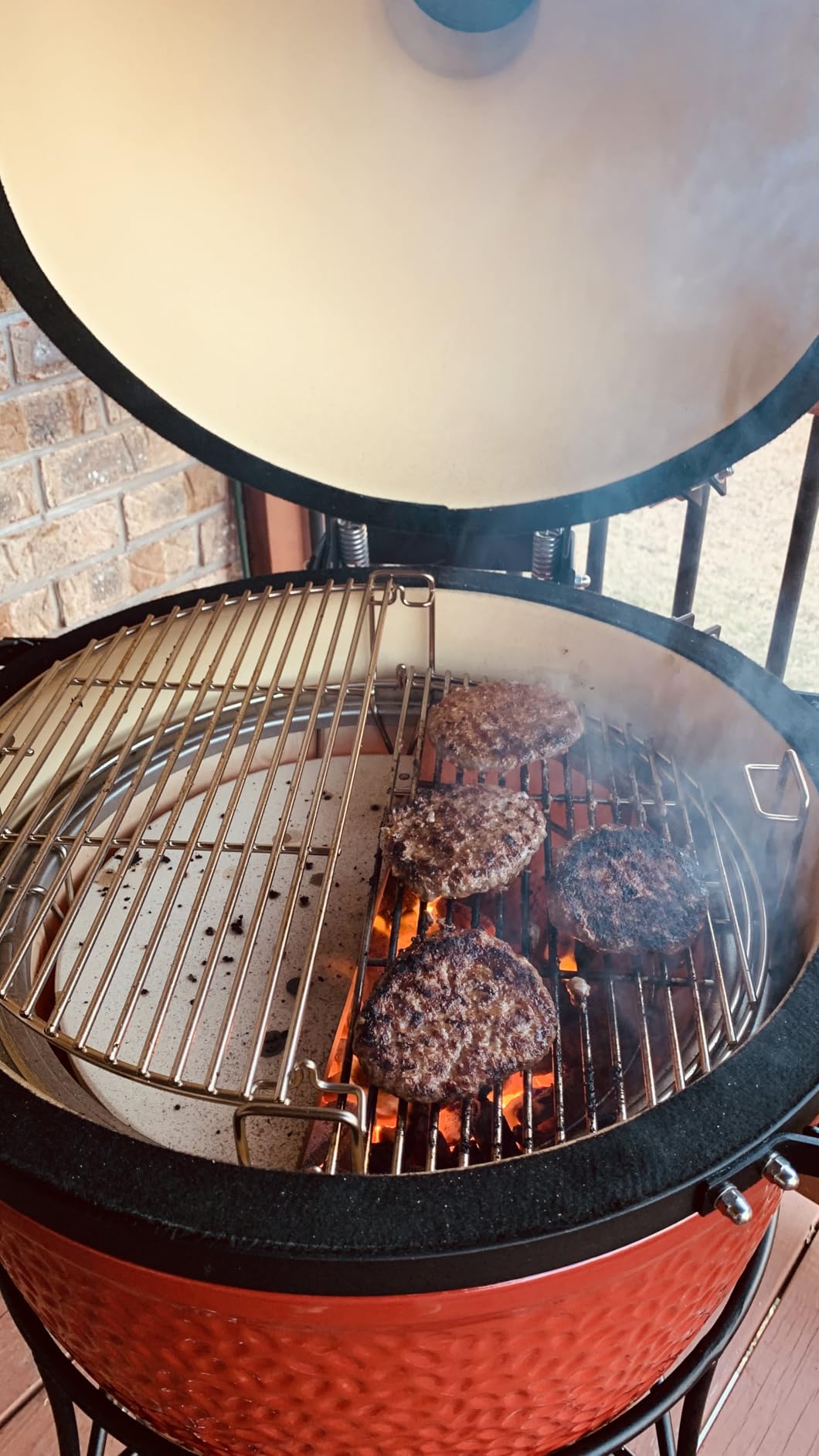
The Classic Joe I is the version of the Kamado Joe that most people should actually buy. The 18 inch ceramic dome is dimensioned around the official 15 inch Kamado Joe pizza stone, and with 250 square inches of grate you can run a stone plus meat on the same cook. The Control Tower top vent is rated from 225°F for smoking up to 750°F for searing, so one grill covers the whole temperature range pizza demands.
What makes it the value pick in this group is the Divide and Conquer two-tier system. The half-moon racks let you put the stone on a raised level for even top-and-bottom cooking while leaving a direct zone open on the other side, and they let you drop coals in without hauling the grate out. The slide-out ash drawer also removes the single most disliked chore in kamado ownership, which is why buyers regularly compare this grill favorably to the Big Green Egg on both accessories and included equipment.
The honest drawback is the 188 pound total weight on a cart. Two or three people are needed to lift the vessel onto its stand, and the Series I top vent in this specific model tends to migrate when the lid comes down, which throws off a carefully set airflow. Reviewers also flag the built-in thermometer as hard to read in daylight and the ceramic heat deflector as fragile in the box.
Fuel choice matters more here than on the steel units. Briquettes leave an odor on the crust, and lump or chunk charcoal is the right fuel for a clean Neapolitan bake.
Why the two-tier system matters for pizza specifically
Most home pizza failures are top-versus-bottom imbalance. The bottom cooks from conduction off the stone, the top cooks from radiant heat off the dome, and a single-level grate gives you no control over the gap between them. Raise the stone one level and you shorten the top’s cooking distance without losing stone temperature.
which is why kamado bakers on r/KamadoJoe stack elements to lift a stone close to the dome, and why the two-tier rack on this model saves you from improvising. Put the stone on the upper level, put the deflector under it, and open the top vent for airflow through the bake.
Where the Classic Joe I falls short
It is not a two-pizza-at-once grill. At 250 square inches you can fit one 15 inch stone or a 13 inch stone plus a second smaller one, but you will not fit two full-size pies side by side the way the 24 inch model can. Reviewers with 360 ratings also note the assembly of the vent and thermometer takes patience.
Skip it if you plan to smoke a full pack of brisket, since 250 square inches is a modest grate for long cooks. For pizza, it is the sweet spot in the Kamado Joe lineup.
4. London Sunshine 13-Inch Is the Best First Ceramic Kamado on a Budget
London Sunshine 13-Inch Ceramic Kamado Grill, Waterproof Vent Cap, Green
0.8-inch thick ceramic wall
180°F to 750°F range
11-inch stainless grate
43.4 lb portable
Pros
- Thick ceramic walls heat up quickly and hold well
- A single charcoal load stretches across multiple cooks
- Compact enough for one to four people
- Body and lid come pre-assembled
- Strong value against the smallest premium ceramic kamados
Cons
- Cooking grate runs about an inch undersized and feels cheap next to the rest
- Not suited to indirect cooking without adding a deflector
- Requires a break-in seasoning process before first use
The London Sunshine 13-inch is a genuine surprise in this roundup. It has a genuine 0.8 inch ceramic wall, a glass fiber gasket, a waterproof cast iron top vent, and a claimed 180°F to 750°F range, and at 43.4 pounds it is the lightest kamado here. Owners who own larger egg-style grills say it performs comparably for small-batch direct cooking, and it holds a 4.5 rating across 473 reviews.
For pizza the constraints are the grate and the dome. The 11 inch stainless grate leaves room for a single 10 to 11 inch stone, which is a small but legitimate pizza. The dome will climb to baking temperature, but the smaller volume means less stored heat, so you need to be more disciplined about not opening the lid mid-bake.
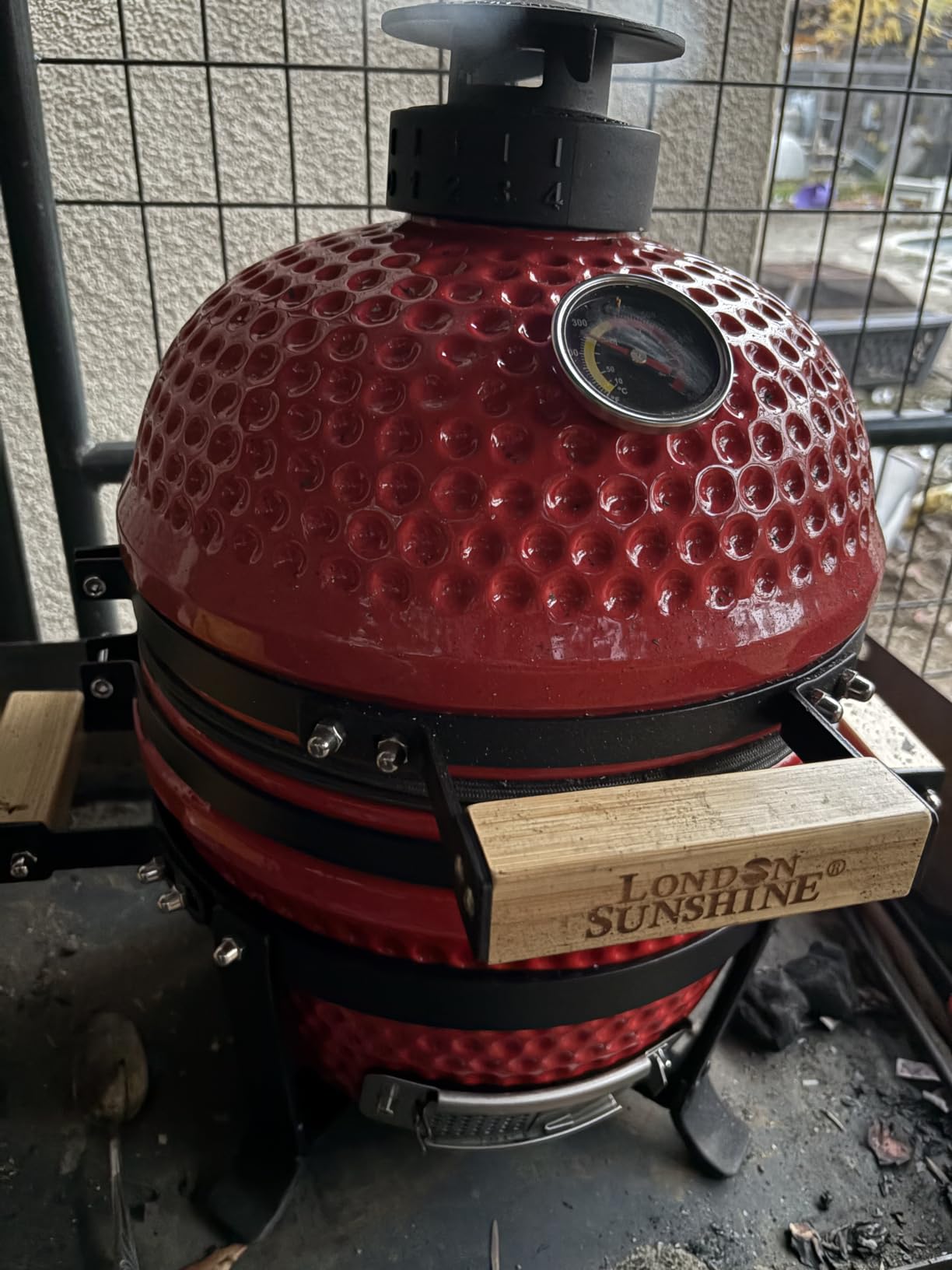
The recurring complaint is the grate. Reviewers describe it as roughly an inch undersized relative to the body and cheaper than the rest of the build, and that mismatch is exactly what limits pizza size here. There is no heat deflector included, and without one you are running direct heat only, so this is not the grill to learn two-zone cooking on.
Budget for a seasoning burn before the first real cook, as you would with any cast and steel component.
Is a 13 inch ceramic kamado worth it as a first grill?
Yes, if your goal is learning ceramic heat management cheaply and your household is one to four people. The fuel efficiency is the standout: owners report a single load of charcoal lasting across multiple cooking sessions, which is the real running cost of kamado ownership. The 0.8 inch wall also recovers temperature faster than the steel-bodied grills here.
It is the wrong first grill if your family eats four 12 inch pizzas on a Friday. Build quality that holds a 4.5 is not the same as a grate that will carry a large stone.
Where this grill gets used badly
Grillers who try to run indirect cooking on it without a deflector report uneven results, because there is no shield between the coals and the food. Reviewers also mention that it is heavier than its portable size suggests, so plan where it will live before you haul it out to the patio.
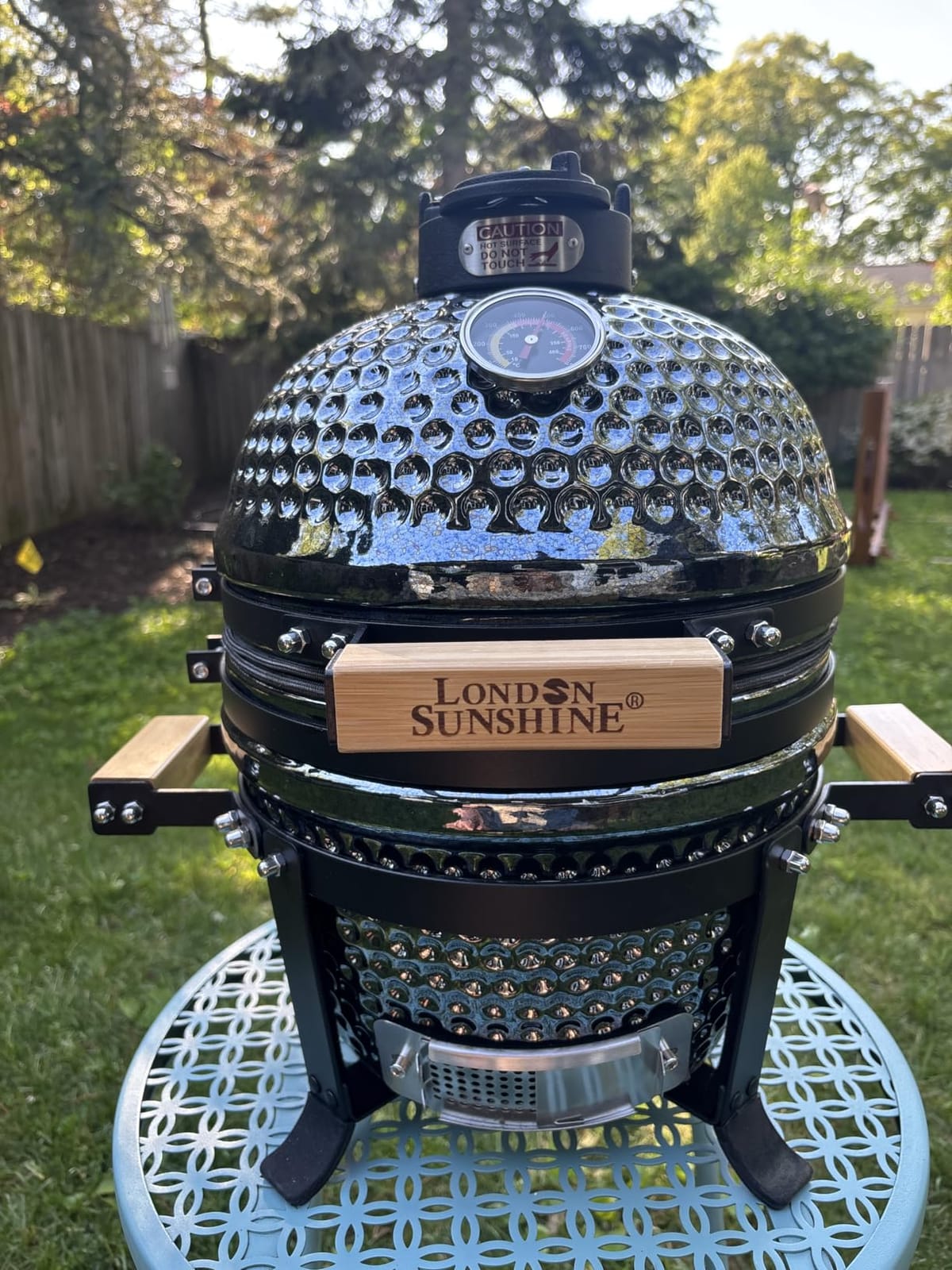
5. London Sunshine 15-Inch Is the Best Kamado for a 13-Inch Pizza Stone
London Sunshine 15″ Ceramic Kamado Charcoal BBQ Grill and Smoker, Green
1-inch ceramic wall
180°F to 750°F range
13.2-inch stainless grate
Foldable grate centers
92 lb stand
Pros
- 1-inch ceramic wall is thicker than the 13-inch model
- 13.2-inch grate pairs naturally with a 13-inch pizza stone
- Build quality widely praised for the money
- Heats up quickly with easy temperature control
- Foldable grate centers let you add charcoal mid-cook
Cons
- Interior cooking diameter is smaller than it looks from the outside
- No heat deflector included so indirect cooking needs a separate purchase
- Around 92 lb it is awkward to reposition on its own
The 15 inch London Sunshine solves the exact problem the 13 inch model creates. Its wall is a full inch of ceramic, its grate measures 13.2 inches across, and that pairing with a 13 inch pizza stone is the most practical configuration in this roundup for a cook who wants a real stone under a real pie. It carries a 4.6 rating on 174 reviews, and owners who have assembled egg-style kamados in dealer settings rate the build quality as equal to or better than they remember.
For a pizza workflow, the foldable grate centers are a real convenience. You can open a section, drop lump charcoal onto the fire without pulling the whole grate out, and close it again, which keeps the stone and your hands away from the coals. The claimed 180°F to 750°F range covers everything from a slow smoke to a fast bake.
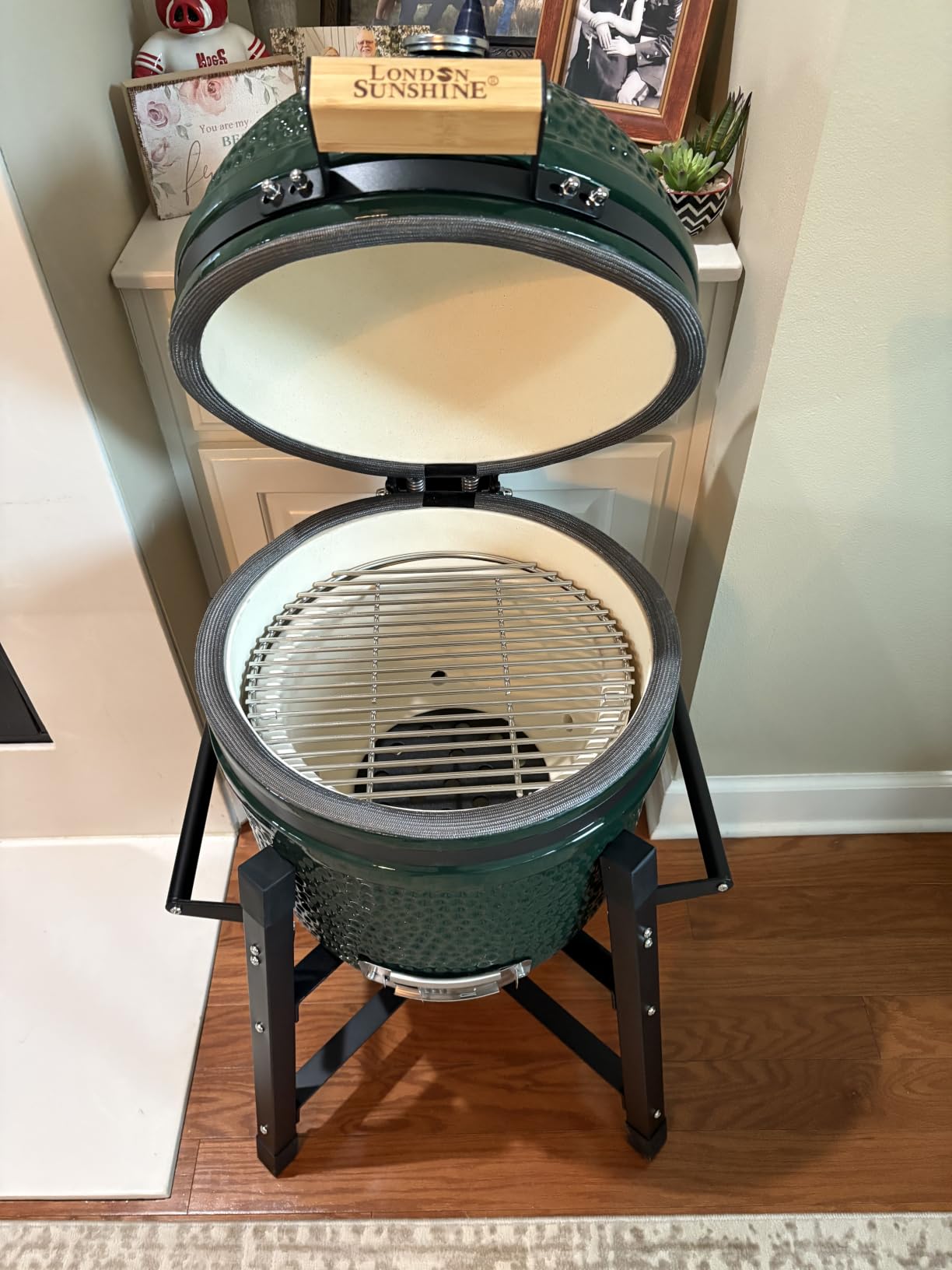
The most common complaint is that the interior cooking diameter is smaller than the unit looks from the outside, so measure your stone before you commit. The second is the missing deflector, which is sold separately and is required if you want to run a two-zone cook. At roughly 92 pounds on a tall four-leg stand, it is also not a grill you will move casually.
One reviewer reported a unit arriving broken with no screws in the box, so inspect the hardware and the ceramic before the first fire.
How this grill performs for a 13 inch pie
A one-inch ceramic wall holds a 700°F soak better than the thinner 13 inch body, so the recovery after a lid open is noticeably crisper. Owners report heating up quickly and holding temperature with the top and bottom vents dialled in, which is what you want for a 6 to 8 minute bake.
The limit is quantity. A 13.2 inch grate is a one-stone grill, and a 13 inch stone covers the whole surface, so you are cooking one pie at a time. Plan the session accordingly.
Who should buy this over a Kamado Joe
Buy it if your pizza ambition stops at a 13 inch pie, you are buying a first ceramic grill, and you want thick walls without a brand premium. Build quality at this level is genuinely surprising, and the whole unit is lighter than a Classic Joe on its cart.
Do not buy it if you want to add a deflector later, smoke large cuts of meat, or host groups. It is a pizza and vegetables grill, and it is very good at that.
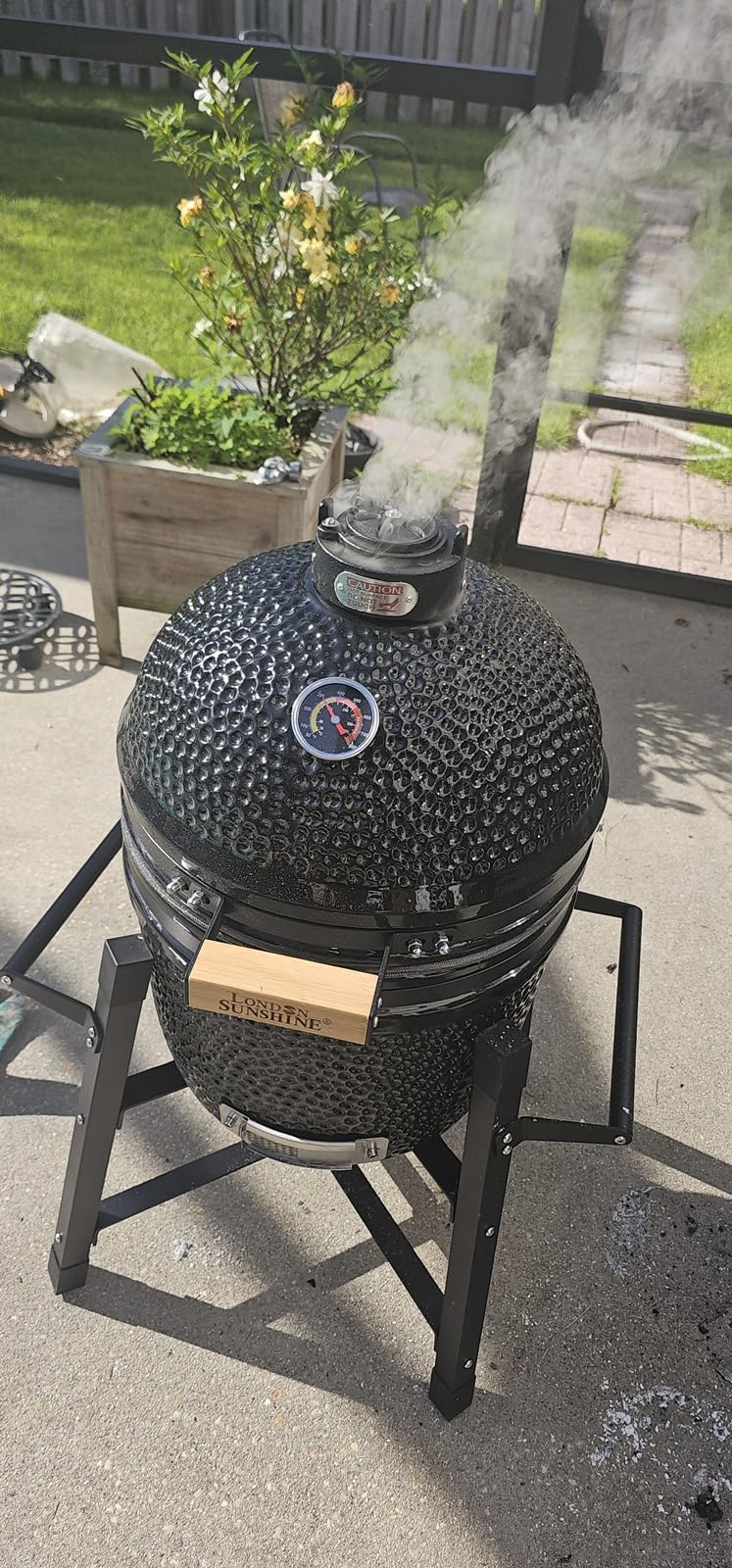
6. Kamado Joe Big Joe II 24-Inch Is the Best Kamado for High-Volume Pizza
Kamado Joe Big Joe Series II 24-inch Ceramic Charcoal Grill and Smoker with Cart, Side Shelves, Stainless Steel Grates and 450 Cooking Square Inches in Red, Model BJ24RHC
450 sq. in. cooking area
24-inch ceramic dome
Air Lift hinge
Divide and Conquer half-rack
394 lb total
Pros
- Largest grate in the group so multiple pies or stones fit at once
- Air Lift hinge opens the heavy dome with one finger
- Divide and Conquer racks give two zones side by side
- Aluminum top vent and double-thick fiberglass gasket
- Lifetime ceramic warranty for the original owner
Cons
- Extremely heavy at 394 lb and needs a dedicated footprint
- Highest price in this lineup
- Smallest review base in the group at 83 ratings
The Big Joe II has the largest cooking surface in this roundup, and at 450 square inches on a 24 inch dome it is the only unit here that can bake several pizzas at once. The Divide and Conquer half-rack system lets you run two large stones at the same time or cook a pizza while searing steaks on the other half. The Air Lift hinge, which is the main upgrade over earlier models, raises that very heavy dome with one finger, and that matters more than it sounds when you are launching dough at 700°F.
Hardware is premium across the board: an all-aluminum rain-proof control tower vent, a double-thick wire mesh fiberglass gasket rated well beyond the industry norm, and a six-piece multi-panel firebox designed to prevent the cracking that plagues cheaper ceramic fireboxes. The warranty is the strongest here, with a lifetime on ceramic parts for the original owner.
At 394 pounds, this is not a grill you reposition. It needs a permanent patio footprint, and reviewers uniformly name weight as the reason buyers hesitate. It also has the smallest review base in this group at 83 ratings and the lowest average rating here at 4.4, so there is less long-term data behind it than the other seven.
The other trade is height. A 24 inch dome with a stone on a raised rack gives you a very different clearance profile than an 18 inch, which is excellent news for even top-and-bottom cooking and bad news if your patio has a low overhang.
When a 24 inch dome actually pays off
It pays off when you are feeding six or more people, cooking for competition, or running a pizza night where pies come out one after another without a long gap. The surface area means you can load two stones and stagger launches, so you are not waiting on a single 8 minute bake to finish before starting the next.
Reviewers note it holds Neapolitan baking temperatures across the whole large surface, which is the specific quality you are paying for. On a smaller grill, the edge of the grate runs cooler and the corners of an oversized pie suffer for it.
Who should stretch for this model
Buy it if pizza is a weekly event for a crowd, if you already know how to manage vents, and if your patio can host 394 pounds of ceramic. The Air Lift hinge and the lifetime ceramic warranty make it the lowest-risk long-term ownership option in the roundup.
Skip it if this is your first kamado. You will spend the first month learning airflow on a 400 pound appliance, and the learning curve is not cheaper at that weight.
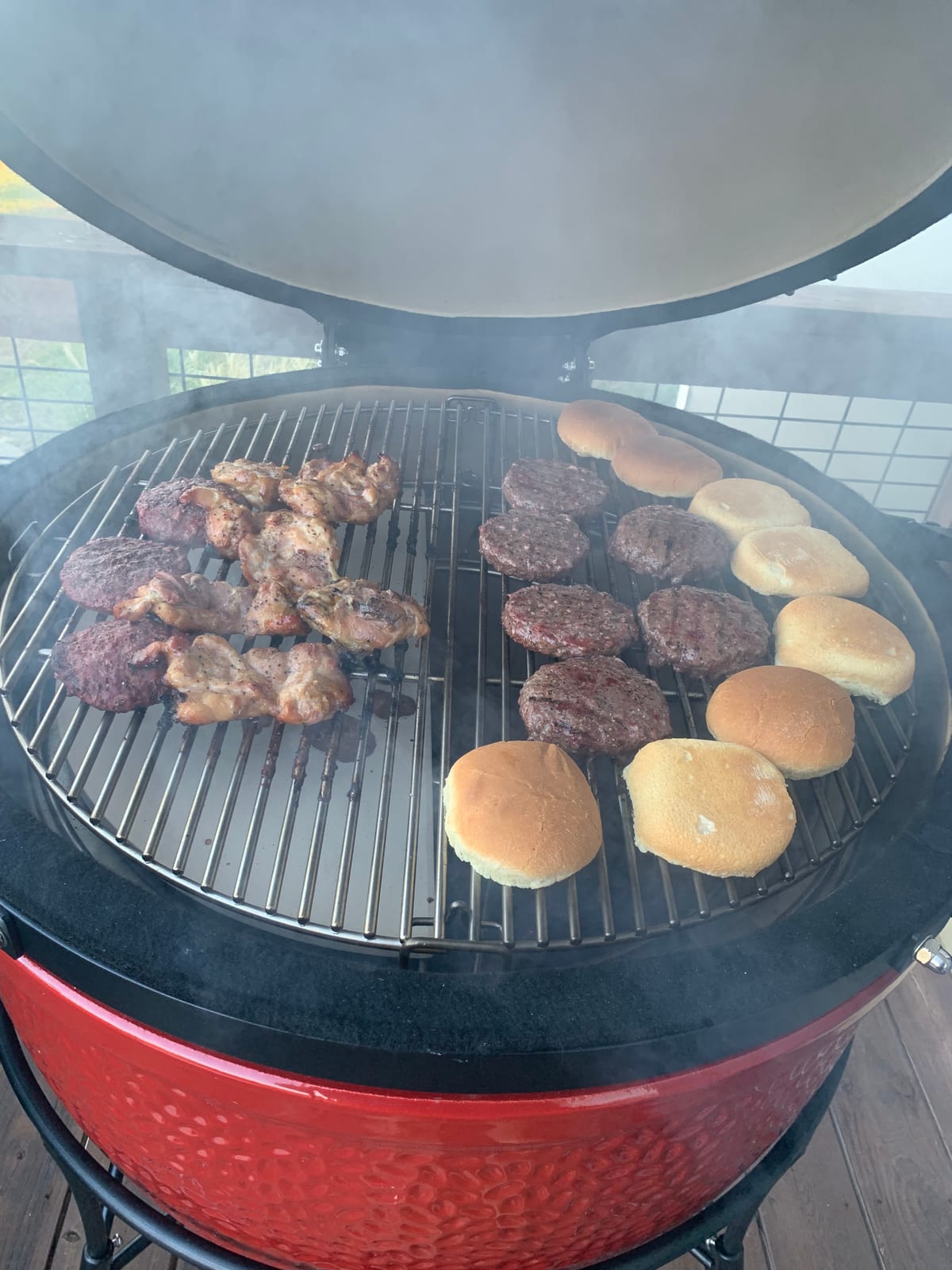
7. BRANDMAN Steel Kamado Delivers a Large Grate Without the Ceramic Premium
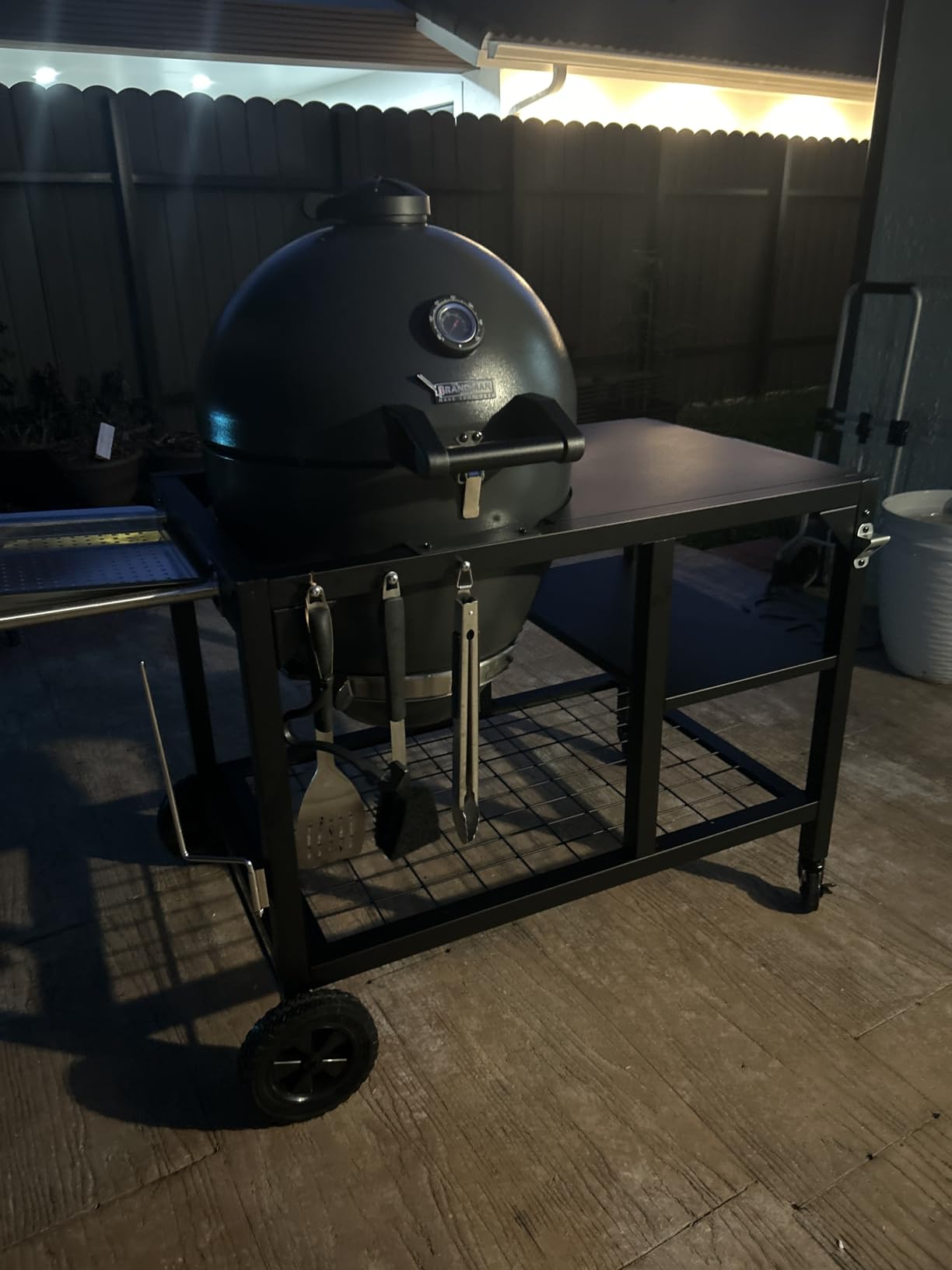
Brand-Man Steel Kamado Charcoal Grill & Smoker
400 sq. in. cast iron grate
Double-layer steel body
5-position airflow damper
105.4 lb with prep cart
Pros
- Highest average rating in the group at 4.7 stars
- Reaches temperature in about 30 minutes then stabilizes in five
- Holds heat for 24 hours or more on one load
- 400 sq. in. cast iron grate with a roomy prep cart included
- Five-year rust-through warranty on the firebox and body
Cons
- Assembly takes a few hours and demands close attention to the diagrams
- Build quality on the cart and stand is less refined than the firebox
- Steel heat behavior differs from true ceramic
The BRANDMAN carries the highest average rating in this group at 4.7 stars, and while the base is small at 51 reviews, the specific pizza numbers are good. Owners report reaching temperature in about 30 minutes with a chimney starter and stabilizing within five minutes after that, then holding heat for 24 hours or more once the dampers are set. For a pizza session that means one load of lump charcoal covering the whole evening.
The 20 inch cast iron grates give 400 square inches of cooking area, which is nearly the same as the 24 inch ceramic kamado on this list, and the included trivet and half-moon warming rack mean you have an indirect tier from day one without buying anything. The double-layer steel body with a mesh fiberglass gasket and the five-position airflow damper give more control than most steel-bodied kamados, and the large prep and storage cart is genuinely useful for a pizza workflow where you are juggling dough, peel, and toppings.
Two things temper the rating. First, assembly takes a few hours and requires close attention to the diagrams, which is a real weekend project rather than an afternoon one. Second, the stand and cart hardware is noticeably less refined than the firebox itself, and components have been reported needing adjustment after the build. The warranty is also narrower than the Kamado Joe offerings, with five years on the firebox and outer body against rust-through and only two years on the grates and finish.
It is steel, not ceramic, so recovery after opening the lid is slower and the top vent is not the precision instrument the ceramic models get.
How this grill handles a pizza session
With 400 square inches you can fit a 16 inch stone, which is larger than anything else in this roundup except the Big Joe II. The five-position damper is the feature to learn first, because it is what lets you hold a soak instead of chasing temperature. Owners describe coming off a kettle grill and finding this behaves much closer to an egg-style kamado than the price would suggest.
Expect to build your fire a little larger than on a ceramic and to add charcoal a little more willingly. It runs hot once it is up.
Who this works for
Buy it if you want maximum cooking area per dollar, you are comfortable with a build-it-yourself assembly, and you want the trivet and warming rack already included. A five-year rust-through warranty is a meaningful signal on a steel body, which is where this construction usually fails.
Pass if you want the crack resistance of a multi-panel ceramic firebox, or if you would rather not spend a weekend with a hex key. It is a steel-bodied kamado, so the heat behavior is a compromise rather than a match for the ceramic units.
8. Outvita 13-Inch Is the Least Expensive Way to Try Kamado Cooking
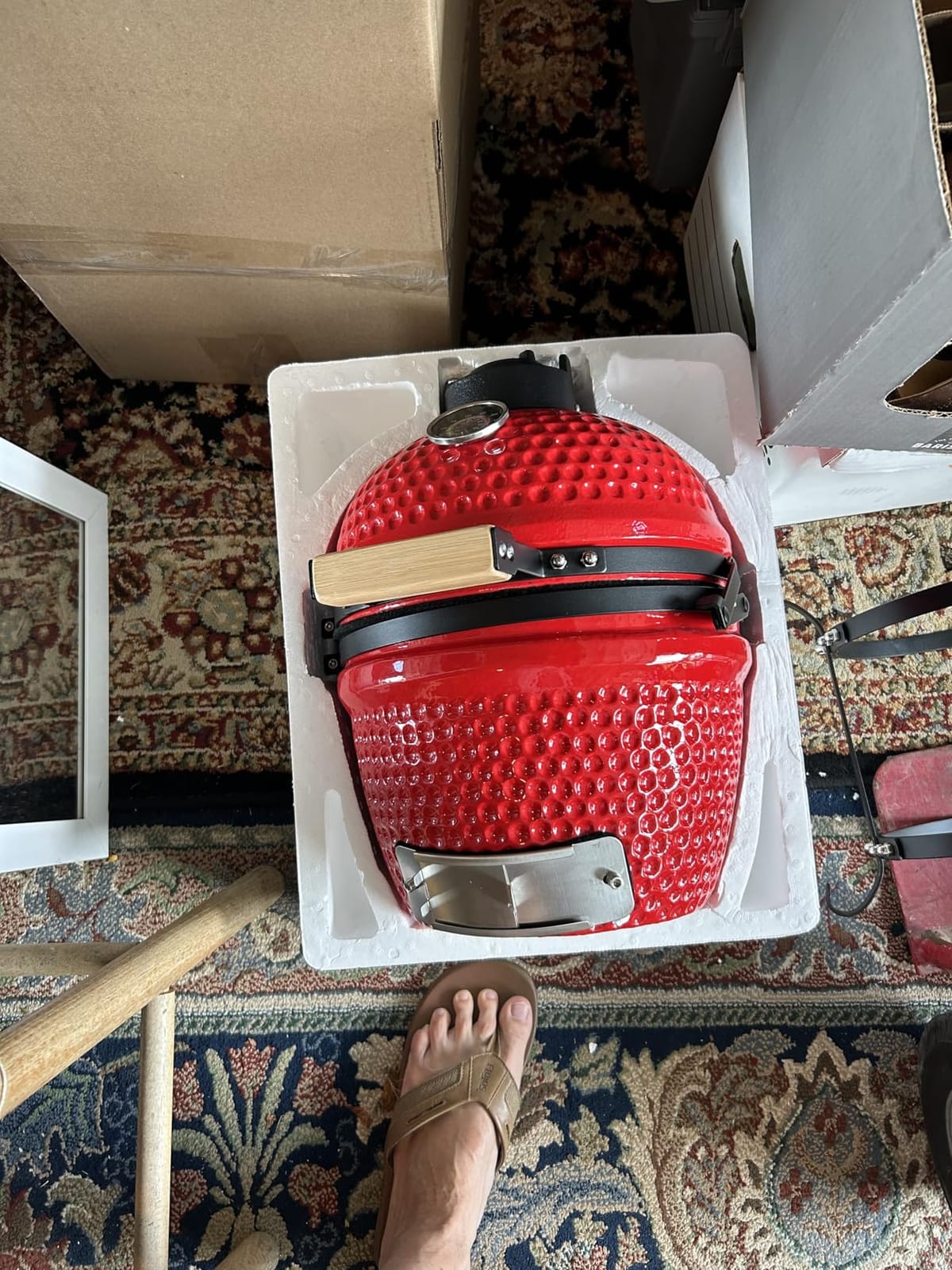
Outvita 13″ Round Kamado Charcoal Grill, Portable, Red
Ceramic heat-retention wall
About 8.5-inch round cooking surface
Top and bottom vents
About 50 lb portable
Pros
- Lowest price in the group and excellent charcoal efficiency
- Reaches 700°F in about 15 minutes then holds for hours
- Vent settings carry over from larger kamado-style grills
- Seals tightly with no visible smoke leaks
- Bamboo side handles stay cool during a cook
Cons
- About an 8.5-inch surface is too small for most pizza stones
- No removable ash box so ash removal means lifting the ceramic insert
- One owner reports the ceramic body cracking in half on the third use
The Outvita is the lowest-rated grill in this roundup at 4.2 stars across 128 reviews, and it earns that rating for a specific reason: the cooking surface is about 8.5 inches across. That is a burger grill, not a pizza grill. Any pizza stone worth having will not fit inside the dome, so the honest read on this one is that it is a charcoal-efficiency curiosity rather than a pizza machine.
What it does well is heat. Owners report reaching 700°F in roughly 15 minutes and holding it for hours after venting, with a tight seal and no visible smoke leaks. The vent positions translate directly from larger egg-style kamados, so if you learn on this you transfer the skill to anything bigger. At roughly 50 pounds it is one of the most portable units here, with bamboo side handles that stay cool during a cook.
The durability reports are the real concern. One owner reports the ceramic body cracking in half on the third use, and at this price point the ceramic wall thickness and firing quality are not something you can inspect. There is also no removable ash box, so ash removal means moving the ceramic insert, which is exactly the kind of thermal shock cycle that produces the cracking above.
Assembly involves a large number of bolts and a hidden second ring in the packaging, which has caught out more than one owner.
Can this grill bake pizza at all?
Only very small ones. On an 8.5 inch round surface you are looking at a 7 or 8 inch pie, and you would be cooking it directly on the enamel grate rather than on a stone, because a stone will not fit. That is a perfectly good shingle-style pizza, but it is not the Neapolitan result the rest of this guide is about.
The charcoal efficiency is genuinely excellent, so as a compact high-heat cooker for fish, shrimp, or flatbreads it earns its place.
Who should buy it anyway
Buy it if you are working to a strict budget, you want to learn kamado airflow cheaply, and you live somewhere hot and dry where portability matters. The 15 minute heat-up is among the quickest in this roundup.
Do not buy it for pizza, and do not buy it if you want a warranty. The stated warranty is not specified, and that is the clearest signal of where it sits relative to the other seven grills here.
How to Cook Pizza on a Kamado Grill
Kamado pizza is a 6 to 8 minute process wrapped in a 25 minute preheat. The sequence below is what the kamado community converges on, and it works on any of the eight grills above as long as your stone or steel fits.
Build a small, concentrated fire. Start a chimney of lump charcoal, dump it into the firebox, and let it burn down to a bed of coals rather than flaming logs. Too much fuel pushes the temperature past what the crust can take before the top browns.
Open both vents and soak for 20 to 35 minutes. The top vent goes wide open and the lower damper stays mostly closed. Wait until the dome thermometer reads 650 to 750°F and then keep waiting, because the stone is the last thing to catch up.
Place your stone or steel across the firebox before the soak ends. Putting it in at the start of the preheat is what gets the cooking surface to temperature. On grills with a Divide and Conquer system, use the raised half-rack and a heat deflector underneath so the stone sits closer to the dome.
Verify with a quick hand test rather than the thermometer. Hover your palm a few inches over the surface. If you can hold it there comfortably, you are nowhere near ready. If you need to pull it back after two seconds, launch.
Shape the dough on a floured surface, then stretch it onto a well-floured peel. Never use a rolling pin, and keep the rim slightly thicker. A pizza peel matters more here than any kamado-specific attachment.
Launch the pizza away from you with a decisive forward snap so the peel does not drag under the dough and fold it into a calzone. The wide heavy domes on kamados are notorious for turning a hesitant launch into a folded pizza.
Bake 6 to 8 minutes with the top vent open. Open the dome once at the halfway point only if you need to check doneness. Every lid open bleeds dome temperature, which is why thick ceramic recovers faster than steel.
Watch for leopard spotting. Dark blistered char on the cornicione is the sign of a proper 700°F bake, and it comes from radiant dome heat, which is the entire argument for a kamado over a gas oven.
Rotate the pizza after a few minutes if your build has a hot spot. Turning it also helps even out the top without dropping the temperature.
Wait about 20 minutes between bakes rather than rushing. The ceramic will still be above 650°F with the vents set, and the stone stores enough heat for the next pie to bake nearly as fast as the first.
Two rules keep this consistent. Use lump or chunk charcoal, never briquettes, because binder residue gives the crust an off flavor. And never spray water on a hot kamado, the grate, or a hot stone. Thermal shock from water is the leading cause of cracked fireboxes and cracked pizza stones on these grills.
Pizza Stone vs Pizza Steel on a Kamado: Which Should You Use?
A pizza steel is the better surface for a kamado, and the reason is heat. A steel moves heat into the crust far faster than a stone does, so it pulls heat from the firebox and drives it into the dough within seconds, then keeps supplying heat as the dough absorbs energy. On a kamado that means a bake in 4 to 6 minutes with a base that sets fast. A stone stores less energy, releases it more slowly, and gives a 6 to 8 minute bake with a softer, more tender crumb.
The community consensus on r/Pizza is blunt: a steel will not crack, and it cooks faster than a baking stone. That is a real advantage at 700°F, where the risk of a stone failing is highest.
There is a genuine case for a stone. A 1 inch cordierite stone can reach 900°F in a home oven, which is well beyond the 750°F ceiling of the grills in this roundup, so a good stone is rated safely for kamado use. A thin, cheap stone is not. Thermal shock from a stone rated below your actual dome temperature is the single most common cause of cracking.
The practical answer is to buy a steel if you bake at the top of the range regularly, and a good thick stone if you want the classic slower bake and prefer a softer center. Many owners keep both and switch based on the dough. If you are still deciding on the grill itself, our guides to the best portable pizza ovens for camping and the best gas pizza ovens for beginners cover the very different physics of those appliances.
Do not waste money on a kamado-specific DoJoe pizza attachment. Owners on r/KamadoJoe are consistent on this point: a stone or steel on the grate, or on the raised half-rack, is preferred by nearly everyone, and the money is better spent on a proper pizza peel. If you cook pizza more than anything else on a kamado, a peel is the accessory that changes your results.
What to Look for When Buying a Kamado Grill for Pizza
Grate diameter is the number that decides everything else. It determines the largest stone you can fit, how many pies you can bake at once, and whether your pizza has room to launch without touching the dome wall. A 15 inch stone needs at least a 16 inch grate, and anything smaller limits you to a 10 or 11 inch pie. The Char-Griller AKORN at 445 square inches and the Big Joe II at 450 square inches give you the most room to work; the Outvita at 8.5 inches gives you none.
Heat retention and temperature stability come second. Thick ceramic stores more energy and recovers faster after a lid open, which is why the ceramic models handle back-to-back pies better than the steel ones. A 1 inch wall, as on the 15 inch London Sunshine, sits above the 0.8 inch walls used in compact models. A triple-wall steel body, as on the AKORN, gets you much of the way there without the weight.
Rack tiering determines how much control you have over the top-versus-bottom balance. A single grate forces you to choose a stone height and live with it. A Divide and Conquer or half-moon system lets you run the stone raised over a deflector, which shortens the radiant distance to the top of the crust and is the single biggest technique upgrade you can make. Three of the eight grills here use a tiered rack design, and several others ship with a deflector or trivet in the box.
Accessory compatibility matters if you plan to move up. The Joe Jr uses a standard small-kugel interior, so third-party stones, racks, and grates carry across to larger Kamado Joe bodies. Compact models rarely have an ecosystem at all, and the 13 inch London Sunshine has no deflector in the box.
Weight and footprint are the things buyers regret most. These grills range from about 43 pounds on the compact London Sunshine 13 inch to 394 pounds on the Big Joe II. Anything past 180 pounds means a two or three person lift at minimum, and past 350 means a permanent location. Measure your patio clearance against the closed height, not the open one.
Warranty length is a reasonable proxy for build quality. A lifetime ceramic warranty covers the most expensive failure mode. The Akorn carries one year, the London Sunshine models carry one year, the BRANDMAN carries five years on the firebox against rust-through, and the Outvita does not state one at all.
Finally, think about what else the grill will do. A kamado that also smokes and roasts earns its patio space over years. A kamado bought purely for pizza, used for pizza, is a pizza oven that happens to be very heavy. If you want a dedicated oven instead, the best outdoor pizza oven stands guide covers building a proper station for one.
Who Should Not Buy a Kamado Grill for Pizza
Do not buy a kamado if you want pizza in ten minutes on a weeknight. The 20 to 35 minute preheat is not optional, and it is not something a lighter charcoal amount fixes.
Do not buy one if you are not willing to use lump charcoal. Briquettes are the most common fuel sold, and they give a noticeably worse crust on a kamado than on a gas grill.
Do not buy a ceramic-lined metal knockoff hoping it will behave like a real kamado at high heat. The walls are thin, the temperature swings wide, and the pizza suffers. Everything in this roundup is either thick ceramic or genuinely multi-wall steel.
And do not buy one if your patio cannot take the weight or the loss of a patio chair space. The heaviest unit here is 394 pounds, and that is a permanent commitment.
Frequently Asked Questions
Which kamado grill has the highest rating?
Among the eight grills we compared, the BRANDMAN Steel Kamado has the highest average rating at 4.7 stars, though its review base is small at 51 ratings. The Char-Griller AKORN is the highest-rated grill backed by a large review base, with 4.6 stars across 2349 ratings. Rating alone is not everything: the AKORN also offers the best combination of grate size, heat range and price for pizza.
How do you cook a pizza on a kamado grill?
Build a small concentrated coal bed, open the top vent wide and leave the lower damper mostly closed, then soak the dome at 650 to 750°F for 20 to 35 minutes with your stone already in place. Stretch the dough on a floured peel, launch with a decisive forward snap, and bake 6 to 8 minutes with the top vent open. Rotate once if you have a hot spot, and wait about 20 minutes between bakes rather than rushing.
Can I use a pizza stone on my Kamado Joe grill?
Yes. The 18 inch Classic Joe I is dimensioned around the official 15 inch Kamado Joe pizza stone, and the 13.5 inch Joe Jr fits a 13 inch stone. Place the stone on the grate for a direct bake, or on the raised half-rack above a heat deflector to bring it closer to the dome so the top and bottom cook evenly. Only buy a thick cordierite stone rated well above 750°F, since a cheap stone will crack from thermal shock.
Is Big Green Egg better than Kamado Joe for pizza?
For pizza they are close, and the community consensus leans Kamado Joe on price and included accessories. The Classic Joe I ships with a cart, side shelves, heat deflectors, a grill gripper and an ash tool, and its Divide and Conquer two-tier system gives more control over a raised stone. Big Green Egg holds temperature slightly better once it is up and has a stronger dealer network. Either holds a 700°F soak fine; accessories and price usually decide it.
Should I use a pizza stone or a pizza steel on a kamado?
A steel is better for kamado pizza because it conducts heat faster, never cracks, and cuts a 700°F bake down to 4 to 6 minutes. A thick cordierite stone rated above 900°F is the safe alternative if you want a slower 6 to 8 minute bake with a softer crumb. Avoid thin or low-rated stones, which crack from thermal shock. Many owners simply keep both and switch based on the dough.
The Verdict on the Best Kamado Grills for Pizza in 2026
The Char-Griller AKORN takes the top spot in 2026 for one reason: 445 square inches of cast iron grate, a working 700°F range, and 2349 ratings behind it, all wrapped in a body that does not need a moving crew. If your patio is small, the Kamado Joe Joe Jr gives you real ceramic heat behavior on a 13.5 inch stone and weighs 75.6 pounds. If you want the full kit and a 15 inch stone, the Classic Joe I is the value pick, with the Divide and Conquer system and a slide-out ash drawer included.
Beyond those three, the 15 inch London Sunshine is the sleeper for a 13 inch stone at a one-inch wall thickness, the Big Joe II is the only unit here that bakes multiple pies at once, and the BRANDMAN pairs 400 square inches of cast iron with a five-year rust-through warranty and a prep cart. Use a steel if you bake at the top of the range, soak the dome for a full 25 minutes, and buy a proper peel. That combination is what turns a kamado into the best kamado grill for pizza in your backyard.