
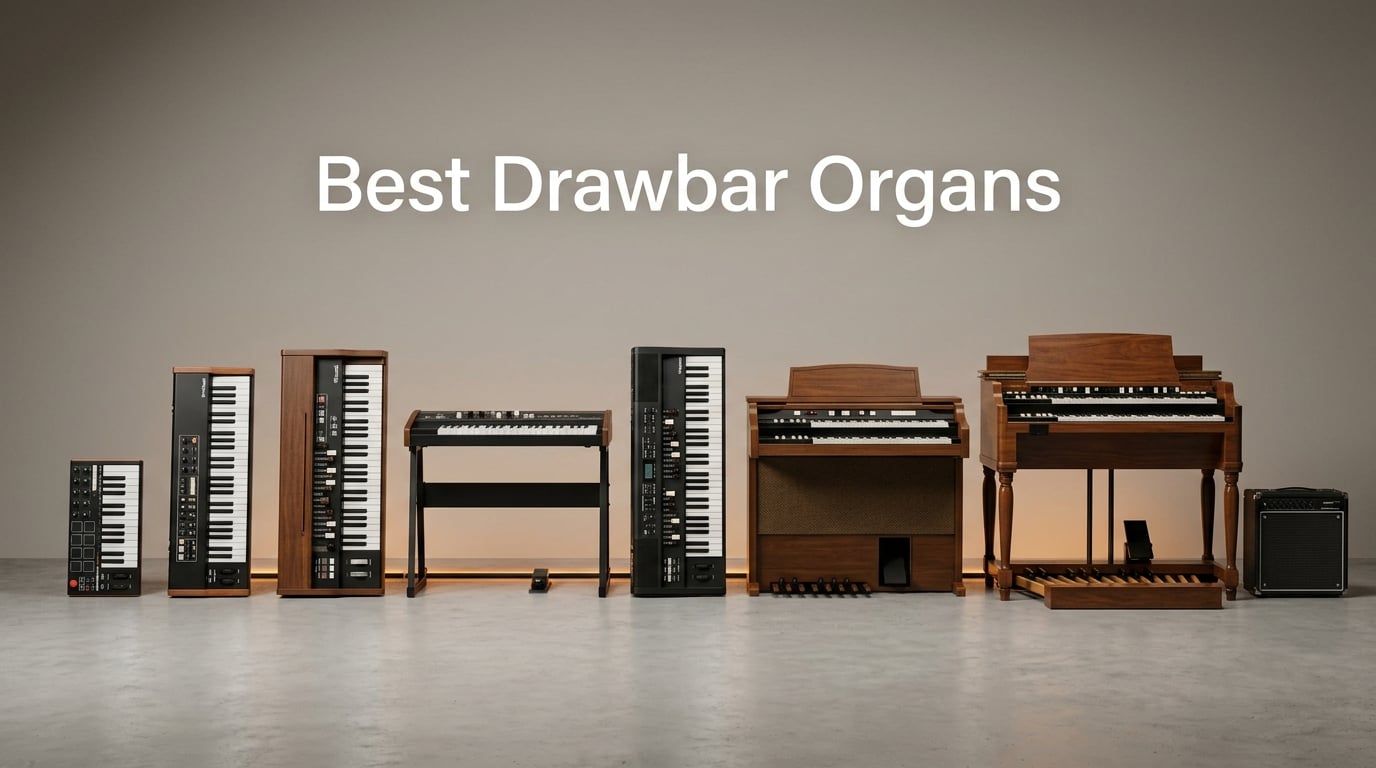
A drawbar organ is an electronic keyboard that creates its tone using sliding levers called drawbars, each pulling in a different harmonic of the fundamental note so you can build registrations from mellow and reedy to full and growling. That single idea is what separates a drawbar organ from a piano sound on a stage keyboard, and it is why players ask for one by name.
We spent weeks putting these seven instruments side by side to work out which of the best drawbar organs on the market today actually suit a real player. Some nail the tone and fall down on the levers, some nail the levers and the keybed feels like a toy, and a couple of them do both better than anything else in this price band.
Before the reviews, a quick word on what you are listening to. A genuine vintage tonewheel organ is spinning metal against a metal pickup with a rotating tonewheel for every harmonic. Almost everything sold today models that behaviour electronically instead. Understanding which kind of engine you are buying explains most of the tonal differences you will hear between the instruments below.
Everything in this guide was written in 2026, and the spec details come from the manufacturers plus what owners report back after living with the instruments. Where owner feedback is thin, we say so rather than dressing up a single review as a consensus.
Table of Contents
How Drawbars Work
Every drawbar organ runs on the same three-part logic, and once you know it you can read any registration on any of these instruments without a manual.
Harmonic control: each drawbar pulls in one harmonic of the note you are playing. The drawbar nearest the middle of the block is the fundamental, the ones below it are lower sub-harmonics that thicken the sound, and the ones above add the bright reed and quacky colour that organ players chase.
Volume levels: every drawbar moves from 0 to 8, and 8 is the loudest setting. The art is not pulling everything out; it is pulling the right ones out far enough and holding the rest down so the registration stays balanced under your hands.
Footage measurements: the numbers above the drawbars are pipe lengths from a pipe organ, so 16′, 8′, 4′, 2 2/3′, 1 1/3′ and the rest. Whole-number drawbars sit on octaves and the fundamental of the note, while fractional drawbars add the colour overtones that make a sound read as a Hammond rather than a church organ.
The combination you dial in is called a registration, and getting from a bare 8′ to a full B-3 gospel setting is the single most useful thing a new drawbar player can practise. Every organ in this roundup stores registrations, but the ones that let you save your own and recall them mid-song save the most time.
Top 3 Picks for Drawbar Organs in 2026
Our three standouts cover very different budgets and playing situations, which is why they are the three to look at first. The REFACE YC is the one most beginners should hear, the YC61 is the stage workhorse, and the XK-5 is the closest any current board gets to a real Hammond manual layout.

Every Organ in This Roundup Compared in 2026
All seven instruments, side by side, with the features that actually change how they sound or play. The comparison table below is the fastest way to narrow the field before you read the individual reviews.
| Product | Specifications | Action |
|---|---|---|
| Yamaha REFACE YC |
|
Check Latest Price |
 Yamaha YC61 Yamaha YC61 |
|
Check Latest Price |
 Hammond XK-5 Hammond XK-5 |
|
Check Latest Price |
 Hammond SK Pro 73 Hammond SK Pro 73 |
|
Check Latest Price |
 Hammond SKX Pro Hammond SKX Pro |
|
Check Latest Price |
 Crumar Sorrento Crumar Sorrento |
|
Check Latest Price |
 Nord Organ 3 Nord Organ 3 |
|
Check Latest Price |
1. Yamaha REFACE YC – Five Organ Voices in a Travel Case
Yamaha REFACE YC Portable Combo Organ with Vintage Organ Waves and Effects
37 mini keys
Five vintage organ waves
9 drawbars
Speakers included
Pros
- Five distinct vintage organ waves with genuine drawbar control
- Excellent foldback character on the Hammond setting
- Runs on batteries or USB bus power
- Full MIDI in and out
- Built-in stereo speakers
Cons
- 37 unweighted mini keys are tiny for sustained playing
- Leslie emulation sounds somewhat forced
- No MIDI thru and incoming MIDI cannot be transposed
The REFACE YC is the instrument we kept coming back to while putting this roundup together, and for one simple reason: it is the only board here where the drawbars are genuinely there and genuinely live. You pull them, you hear the change, and it happens at the speed of your hand. Most competitors ask you to accept a touchstrip, a screen, or a page of controls instead, and players notice immediately.
Weighing in at 6 pounds and running for hours on six AA batteries, it is also the only organ in this roundup you can genuinely take anywhere. There is a 1/4 inch TRS output for stereo, mini-DIN MIDI in and out, USB type-B, an expression pedal input, a headphone jack and an AUX input, which is a startling amount of connection for something this small.
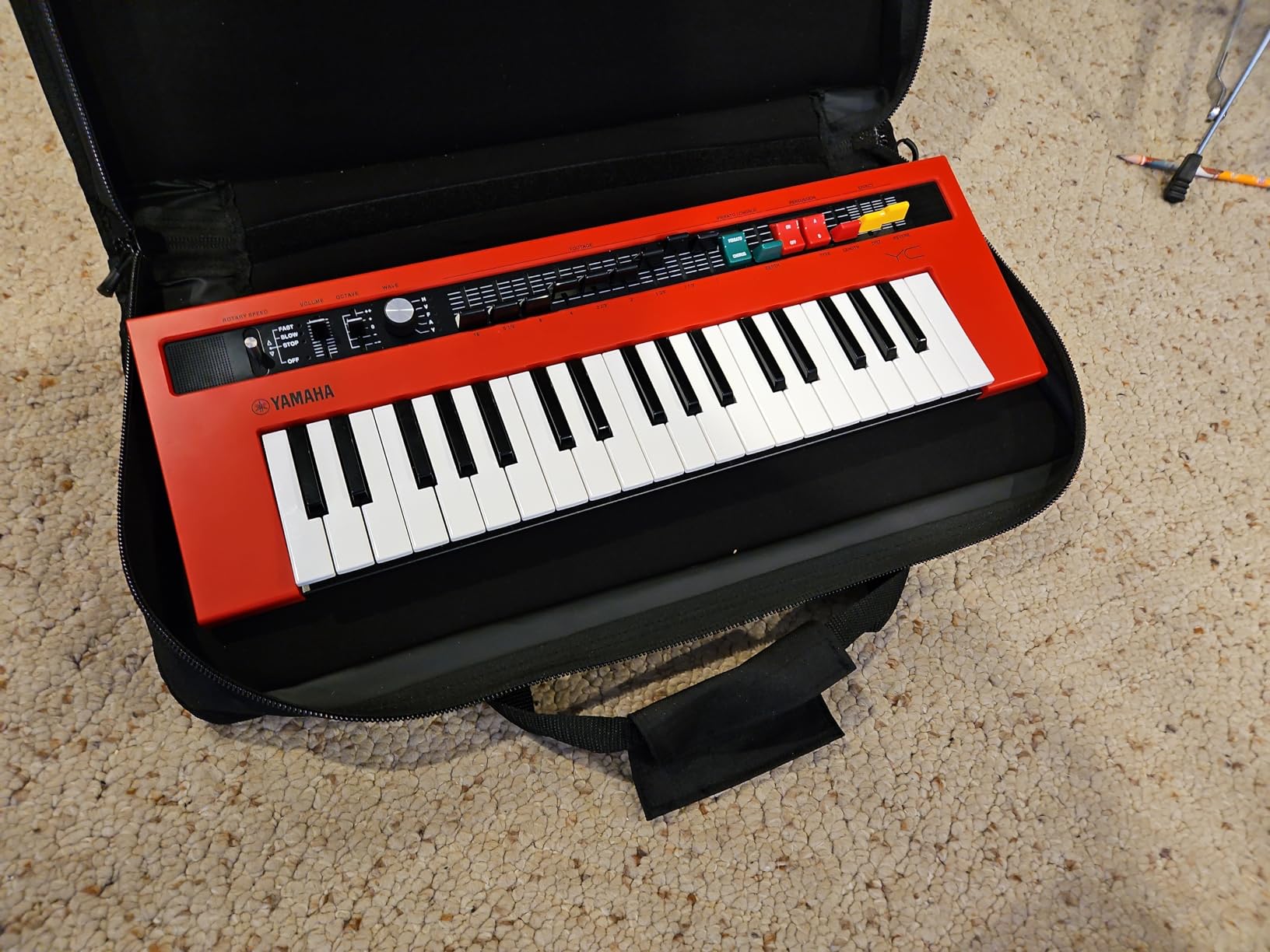
Under the hood you get a combo organ engine with five vintage waves named H, V, F, A and Y, covering Hammond, Vox, Farfisa, Ace Tone and Yamaha character, plus percussion, vibrato and rotary speaker control. The Hammond wave is the one that earns the organ its place, with foldback emulation that reviewers consistently single out as convincing for a board this size.
What you give up is the keybed. Thirty-seven unweighted mini keys with no velocity or aftertouch are fine for melodies, bass lines and song structures, but they are genuinely small for the sustained chords and single-note bass pedals that organ music depends on. If you sit down expecting to emulate a Jimmy Smith record, the keybed will remind you that this is a travel instrument.
Who the REFACE YC suits
A beginner who wants to learn drawbars without spending real money, or a gigging player who needs a backup organ that fits in a rucksack. Five different organ waves also make it a genuinely useful teaching tool, because you can hear the difference between a Hammond voice and a Farfisa voice on the same key.
The MIDI implementation matters more than the spec sheet suggests. With full MIDI in and out, this thing can sit under a laptop or a DAW as a controller, which makes it a low-cost way into organ sounds without buying a second instrument.
Who should skip the REFACE YC
Anyone playing long church or jazz service on a single instrument. Sustained legato work across a full range will exhaust those mini keys, and there is no internal way to add a second manual or expand the note range without layering a controller.
Also skip it if you need a bass pedal or MIDI thru in the same rig. Owners report that the modulation section is the weakest part: the rotary emulation can sound forced and the chorus lacks shimmer, and the levers are small enough that precise registrations need steady hands.
2. Yamaha YC61 – Semi-Weighted Stage Organ With VCM Tone
Yamaha YC61 61-Key, Organ Focused Stage Keyboard
61 keys
VCM organ engine
Two rotary simulations
USB audio and MIDI
Pros
- VCM engine models component-level circuit behaviour
- Semi-weighted waterfall keys handle glissandos well
- Two-channel USB audio and MIDI for recording
- Dual 1/4 inch AUX inputs
Cons
- Output level is low against other Yamaha instruments
- Keys are softer than Hammond XK or Nord waterfall action
- No organ bass pedal emulation for external MIDI pedals
The YC61 is one of the boards to beat if you play out. Its VCM organ engine does not imitate a Hammond by sampling one; it models the behaviour of the circuitry inside vintage organs, which is why the tone keeps improving after firmware updates rather than staying static. Owners regularly place it alongside the Nord Electro as the reference other organs are measured against.
Sixty-one semi-weighted waterfall keys are the correct compromise for organ work. They are heavy enough to play chords with authority and light enough to run glissandos and fast runs, and the waterfall front edge is what a lot of players mean when they say the keybed feels right for this instrument.
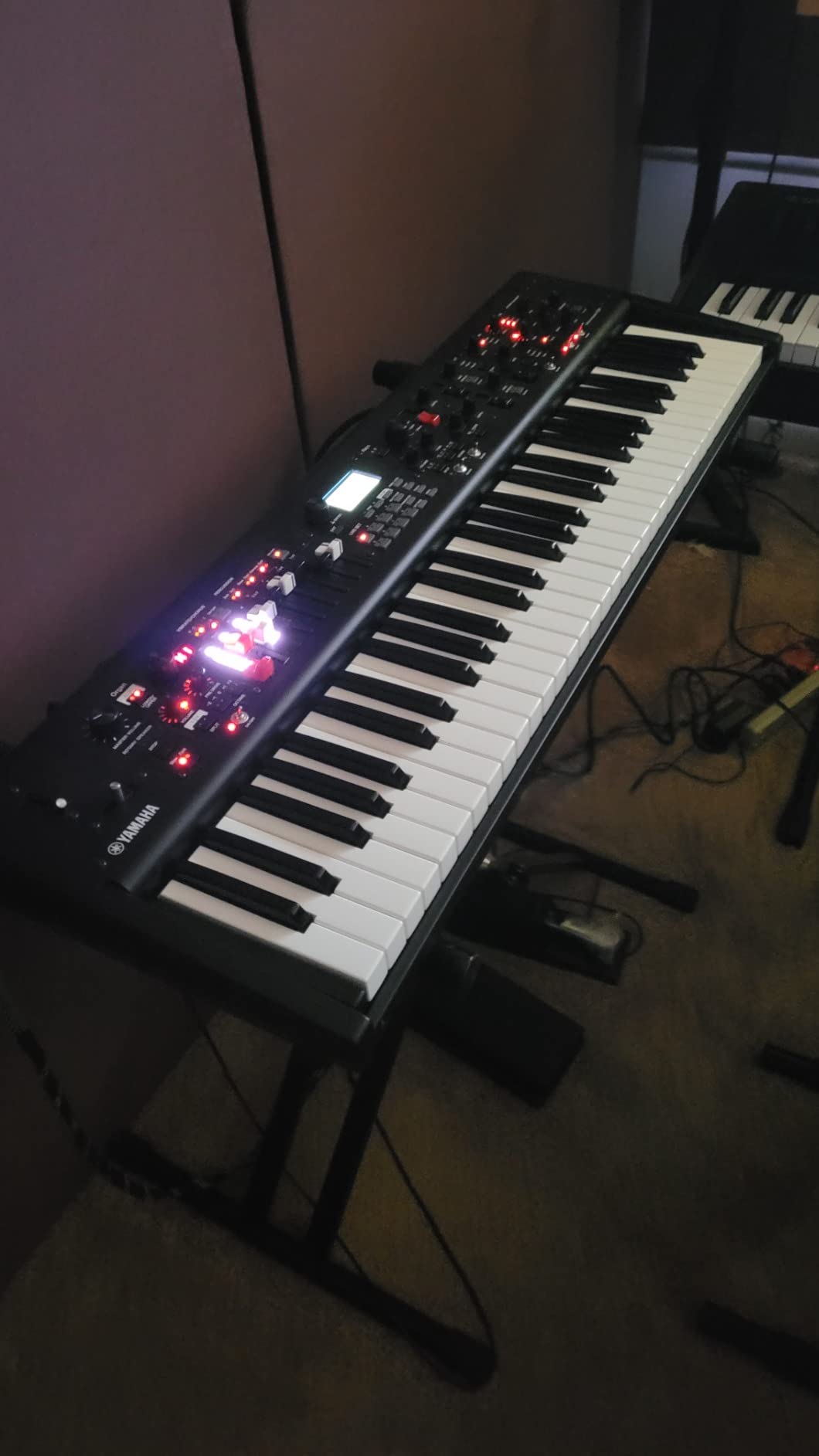
For live and studio use, the connection set is the real headline. A two-channel USB audio and MIDI interface handles recording, playback and control in one cable, dual 1/4 inch AUX line inputs let you add a second keyboard or a phone, and a four-zone master keyboard mode lets this run external hardware and software at the same time.
The rotary speaker section gives you two authentic VCM simulations with independent speed and balance control, which matters more than it sounds. A slow chorale at half speed and a fast tremulant at full speed are different instruments, and having both on a single board is a genuine advantage over a fixed rotary emulation.
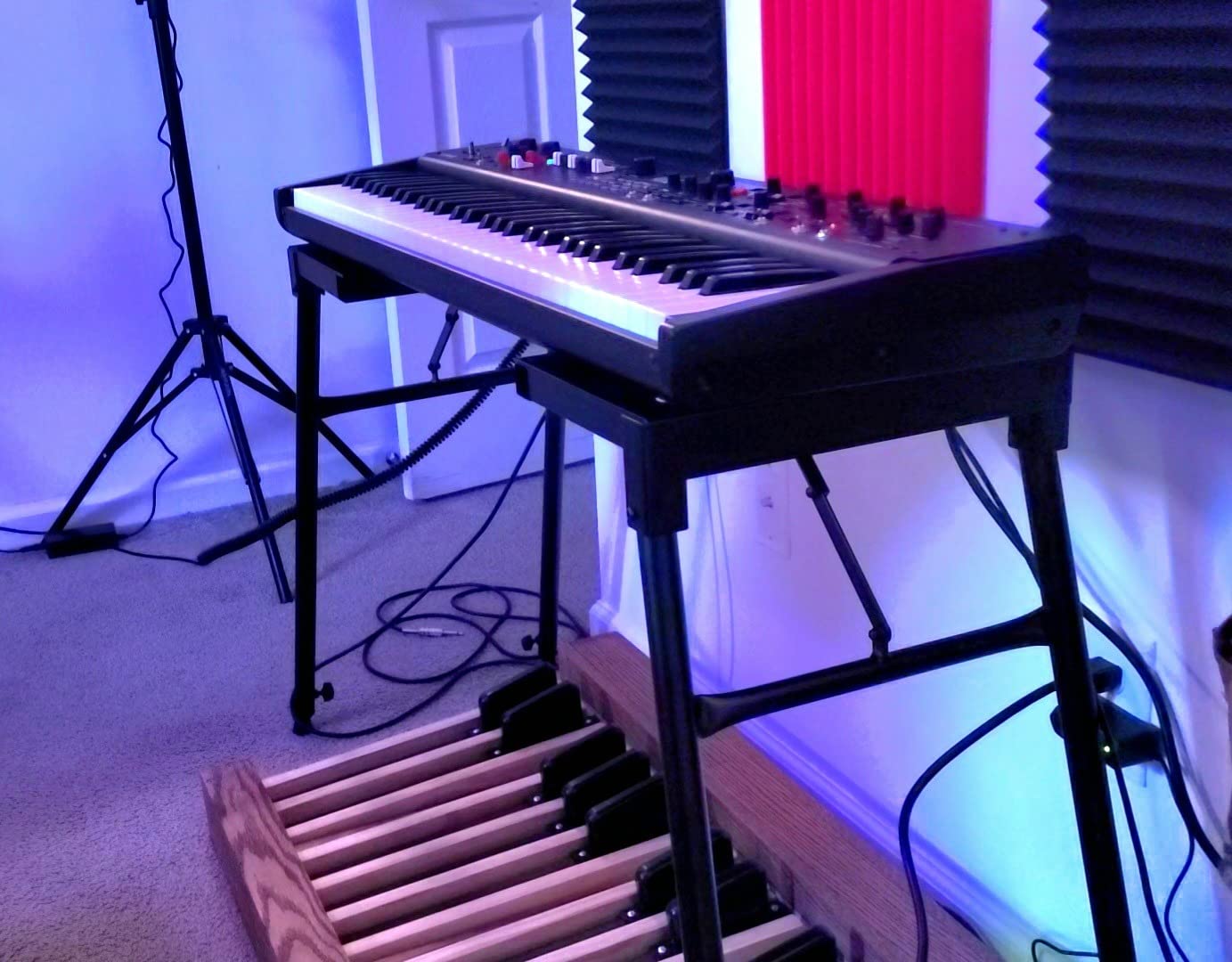
That 3.6 average rating comes down to one recurring technical complaint rather than a tone problem. The output stage lacks headroom next to Yamaha’s own PA-equipped instruments, so you will be turning gain up on the desk or the amp, and a handful of owners report that some USB drives simply are not recognised.
Who the YC61 suits
Working keyboardists who need one box to cover organ, record a show and control a laptop. The USB audio interface alone removes an interface from the shopping list, and the four-zone mode means it can front a synth rig without a separate controller.
It is also a strong first serious organ board. A semi-weighted waterfall keybed teaches good technique, the engine sounds credible in a band mix, and the price sits below the premium Hammond models without dropping into toy territory.
Who should skip the YC61
Players who want a second manual. This is a single-manual board, so gospel players accustomed to thumb and toe bass or a jazz player used to a full pedalboard will be constrained no matter how good the tone is.
Skip it if you plan to run an external MIDI bass pedal for a pedalboard arrangement, because there is no organ bass pedal emulation option. Also weigh the companion sounds carefully: the pianos, pads, brass and guitars are competent but unremarkable, and this is an organ-focused instrument, not an arranger.
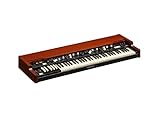
3. Hammond XK-5 – Two Manuals and the MTW Tonewheel Engine
Hammond XK-5 Portable Keyboard
Dual 73-note manuals
MTW tone generator
Four drawbar voicings
Waterfall keybed
Pros
- Genuine upper and lower manual layout
- MTW modelled tonewheel engine
- Four manual voicings including A-100 and C-3
- Virtual multi-contact keybed supports half-seconding
Cons
- Only eight customer ratings so reliability data is thin
- AC power only with no battery option
- Large and heavy compared with compact organ keyboards
The XK-5 is the closest thing to a real Hammond you can carry in two hands, and the two-manual layout is the reason. Each manual carries 73 notes, made up of 61 playing keys plus 12 preset keys, which is how Hammond reproduces the extended range of a vintage B-3 without physically widening the cabinet.
Underneath, the MTW tone generator is Hammond’s modelled tonewheel engine, the same family used across the current Hammond line. You choose between four manual voicings, A-100, B-3, C-3 and Mellow, which is not a sound preset button as much as a different starting point for the whole harmonic profile.
The mechanical waterfall keybed is the part that separates this from cheaper boards, and the virtual multi-contact system is the clever bit. Real tonewheel organs let you quickly restrike a note with another finger while the first is still held, and multi-contact sensing reproduces that spread of attacks instead of forcing one clean note-on.
Who the XK-5 suits
Gospel and church players who actually use two manuals, and anyone raised on a Hammond who finds single-manual boards feel like a compromise. A foot-operated pedal section with its own five-note polyphony makes it possible to actually play the instrument rather than fake it with one hand.
It is equally at home for a player who learned on an A-100 or a C-3, because both of those voicings are selectable rather than approximated. The assignable split point on the SPLIT panel control lets you set the upper and lower manual division where you want it.
Who should skip the XK-5
Anyone who needs to carry it. At 30 pounds and 46.8 inches wide, it is a two-person lift for most people and a permanent fixture rather than a portable rig, and AC power means it is not a battery instrument in any sense.
Be careful with expectations built on owner reviews. There are only eight ratings on record, and while they are strongly positive, that is not enough long-term data to judge build quality over years. If you want a second opinion, ask an owner in a Hammond community forum before committing, and factor in that the cheapest used vintage route has its own costs.
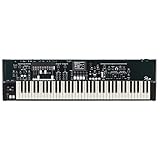
4. Hammond SK Pro 73 – Four Engines and an 11-Pin Leslie Output
Hammond SK Pro 73-key Keyboard/Organ with 4 Sound Engines
73 keys
Drawbar engine with percussion
Digital Leslie
Overdrive effects
Pros
- Full 73-key span with authentic drawbar engine
- Four engines including pipe organ and transistor
- 11-pin Leslie output for a real cabinet
- Two-year warranty
Cons
- Only four customer ratings from very few owners
- AC adapter power only
- About 30.6 pounds limits truly portable use
The SK Pro 73 answers a question a lot of players ask without quite phrasing it: can a modern organ board still behave like an organ rather than a synth with an organ patch? The 11-pin Leslie connector is the clearest answer, because that is the same connection a vintage Hammond used to drive a real rotating speaker cabinet.
Four sound engines are bundled here. The drawbar and percussion engines handle the classic tonewheel voices, the digital Leslie engine covers the cabinet simulation, and pipe organ, piano, transistor and string engines round out the palette. The overdrive multi-effects processor adds organ-appropriate distortion rather than a guitar-style amp model.
Seventy-three keys is the right number for a player who needs a bass pedal register, and it matches the span of the boards serious jazz and gospel players tend to gravitate to. At roughly 30.6 pounds it stays portable enough for a small stage crew, and a two-year warranty is a little longer than most of the field.
On the Gearspace boards, owners repeatedly frame this model as the sensible way to get Hammond’s top-of-the-line modelled tonewheel engine without stepping up to the XK-5, accepting the loss of the XK-5’s mechanical multi-contact keybed and the broader feature set that comes with it. If you want the Hammond voice and not the Hammond furniture, this is the pick.
Who the SK Pro 73 suits
Church and gospel players who own or can borrow a Leslie cabinet, because the 11-pin output turns this into the control centre for a proper organ rig. MIDI, USB and audio connections cover the rest of the stage and studio needs.
It also suits players who want organ-adjacent instruments in the same box. The pipe organ, transistor and piano engines cover a lot of church repertoire that a pure drawbar engine cannot, and the overdrive section covers the grittier 70s tones that weaker organ drives leave out.
Who should skip the SK Pro 73
Skip it if you need two manuals, and skip it if you play mostly through headphones in a small apartment, because the digital Leslie emulation is a smaller part of the appeal without a cabinet in the room. AC power only, so plan cable runs.
On reviews, the honest caution is that only four owners have rated it, all of them giving five stars. That is encouraging but thin, so treat the rating as a signal rather than a verdict, and check the current owner feedback on a specialist forum before you decide.
5. Hammond SKX Pro – Two 61-Key Manuals in One Cabinet
Hammond SKX Pro Dual 61-key Stage Keyboard/Organ
Two 61-key manuals
Tonewheel organ engine
Digital Leslie
DSP multi-effects
Pros
- Two independent 61-key manuals in one cabinet
- Organ voices with piano and ensemble engines
- Digital Leslie plus mono synth voices
- Professional build for stage use
Cons
- Only two customer ratings
- so owner feedback is minimal
- About 51.2 pounds in a single cabinet
- AC adapter power only
The SKX Pro takes the dual-manual idea and pushes it further than the XK-5 does in one direction: two complete 61-key keyboards, not one extended manual plus a shorter companion. If your playing involves genuinely independent upper and lower parts rather than a split on a single board, that difference is the whole point.
Each manual runs the virtual tonewheel organ engine, so you can hold a registration on the lower manual and change the upper one mid-song. The organ voices sit alongside piano and ensemble sounds, which is useful when a song moves from an organ verse to a band chorus, and a mono synth voice covers lead lines that would otherwise need a second instrument.
The DSP multi-effects processor handles the signal shaping, and the digital Leslie covers the cabinet character when you are not running a real one. Connectivity runs through 3.5 mm and 6.35 mm jacks with a headphone output, which is fine for stage work where everything runs into a desk.
Who the SKX Pro suits
Players who rehearse with a keyboard at home and want the manual layout they will actually face on a church or theatre instrument. Two full 61-key manuals also make it a workable teaching instrument, since a student can see how upper and lower parts relate.
For band work it is a single-box solution: organ, ensemble texture and a mono lead voice without stacking three instruments, and the two-year warranty is a reasonable long-term comfort.
Who should skip the SKX Pro
Anyone who has to load it in and out alone. At 51.2 pounds the whole instrument is in one cabinet, so loading and unloading is a two-person job, and unlike the XK-5 the mass cannot be divided across a frame.
Be cautious about buying on review evidence: only two ratings exist. The concept is clearly sound and the owners who have rated it are satisfied, but nobody has yet written a detailed long-term account of this model, so find a way to play one in a shop.
6. Crumar Sorrento – Compact Spinet With an External Rotary Unit
Crumar Sorrento Spinet Organ
Dual 49-key manuals
Physical modeling engine
Three sound engines
External rotary FX unit
Pros
- True dual 49-key spinet manual layout
- Physical modeling engine for spinet voicing behaviour
- External rotary and reverb unit in the box
- Onboard FX plus two-year warranty
Cons
- Only a single customer rating
- About 40.5 pounds for its compact footprint
- 49-key manuals are shorter than 61- and 73-key options
The Crumar Sorrento is the odd instrument out here, and that is exactly why it is worth a look. Instead of a Hammond or a stage board, it is a compact spinet organ with dual 49-key manuals, 98 keys in total, built around a physical modeling engine designed to capture how spinet organs actually voice rather than how a tonewheel spins.
Three sound engines are available, which broadens the palette well beyond a single spinet voice, and the external rotary and reverb FX unit is a separate box rather than a software toggle. That physical unit is a genuinely old-school approach: the modulation and spring reverb live in hardware you can reach for and adjust, which is closer to how the original instruments behaved.
Owners describe the keybed as exceptionally responsive and the Leslie emulation as realistic enough to capture wind noise and motor hum, which are the small artefacts that make a simulation convincing. The same owners report real practical problems though, including drawbars that were not properly aligned out of the box, no built-in Leslie, and no Vox or Farfisa voicings to lean on.
Who the Sorrento suits
Players who love 60s British and Italian spinet records and want an instrument that sounds like that cabinet rather than like a Hammond. The dual 49-key manuals also make it a compact way to practise upper and lower manual independence at home.
The external FX unit is a real advantage for anyone who wants a rotary character they can adjust by hand during a gig, and a two-year warranty is included.
Who should skip the Sorrento
Gospel players who need a full pedalboard or a long bass register, because 49-key manuals are short and there is no organ bass pedal emulation on board. Players who want a reliable main instrument for paid work should also weigh the alignment complaints carefully and ask for a unit to be checked before accepting it.
Do not buy it on rating evidence. There is a single five-star review, which tells you almost nothing about long-term reliability, and this is an instrument where hardware quality varies from one instrument to the next. Inspect the drawbars yourself.
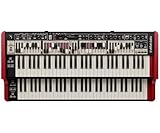
7. Nord Organ 3 – Dual Manuals With LED Drawbar Indicators
Nord Organ 3 Dual Combo Organ
Two 61-key manuals
Three-sensor keybeds
LED drawbar indicators
Rotary emulation
Pros
- Two full 61-key combo organ keyboards
- LED indicators show voicings at a glance
- Manipulable rotary emulation per manual
- Per-program transpose and OLED display
Cons
- The single customer rating is 3 stars the lowest here
- Very thin owner feedback
- At 45 pounds it needs a robust stand
The Nord Organ 3 is built around a practical stage problem: knowing where your drawbars are set when the lights are low. Each manual carries LED drawbar indicators above the keys, so a registration is readable at a glance without looking down at a screen, and that matters more in front of an audience than any headline spec.
Two 61-key combo organ keyboards with three-sensor keybeds give you real upper and lower manual playing, and the rotary speaker emulation is manipulable rather than fixed, so it can be varied per manual and driven while you play instead of being set in advance.
Per-program transpose functionality and an OLED screen handle the fiddly setup work, and USB Type-A connectivity covers updates and preset management. It is a complete dual-manual organ rig in a single box rather than a keyboard that needs a companion instrument to make sense.
We want to be straight about the evidence here. There is one customer rating on record and it is three stars, the lowest in this roundup, which is not enough to characterise the experience. We also noticed some listing metadata on this product carrying spec fields populated with unrelated accessory data, so confirm the details with the manufacturer before you rely on them.
Who the Nord Organ 3 suits
Church and stage players who need readable controls in poor lighting and a genuine two-manual layout. The three-sensor keybeds also mean aftertouch and velocity response are available for expressive playing rather than simple on and off.
Per-manual rotary control makes it a good fit for players who alternate between a slow chorale setting and a fast tremulant between songs, and USB keeps preset management straightforward.
Who should skip the Nord Organ 3
Anyone who wants a proven instrument with a deep owner history. With a single rating and some unclear listing metadata, the responsible move is to try one in person and confirm the specification sheet directly, rather than ordering blind.
It is also a heavy commitment at 45 pounds, and it needs a stand rated for that weight. If portability is a priority, the REFACE YC or the YC61 are far easier to move, and the single-manual layout of the YC61 is the safer all-round starting point for most players.
How to Choose a Drawbar Organ in 2026
With seven credible options spread across a wide range of instrument types, the fastest route to the right answer is to work through a short list of decisions in order. Each one eliminates a group of instruments before you fall in love with a particular voice.
Decide on the engine first. A real vintage tonewheel organ spins metal discs against a pickup, and a small number of these are still serviced rather than newly built. Nearly everything current is modelled: the Hammond MTW generator in the XK-5, SK Pro and SKX Pro is Hammond’s own modelled tonewheel engine, the Yamaha VCM engine in the YC61 models the behaviour of vintage organ circuitry component by component, the Crumar Sorrento uses physical modeling aimed at spinet voicing, and the REFACE YC offers five waves covering different vintage organ families in one small box.
Pick the key count around your lowest note. If you play bass lines on the keyboard itself, 61 keys is the practical floor. Church and gospel players who use a separate pedalboard or need a long manual range should aim for 73 keys, and anyone coming from a real dual-manual instrument will find 49-key manuals like the Sorrento’s restrictive quickly.
Test the action, not the spec. A great many organ boards in this class use the same semi-weighted Fatar-style action, which is why the feel of a mid-range board and a premium one can be nearly identical. That is a good thing, but it also means a spec sheet tells you nothing. Play something with sustained chords and a few glissandos before you sign anything, and check whether the keys are velocity responsive.
Check the drawbar control honestly. This is the most-discussed question in every organ forum and the one most product pages dodge. Physical drawbars that are live to their position let you hear the registration as you build it. A touchstrip, touchscreen or a row of page buttons asks you to select something and then believe the result. The REFACE YC and the Hammond boards give you real levers; the YC61, Sorrento and Nord Organ 3 present drawbars graphically, with LED indicators on the Nord making on-stage readability the best of that group.
Decide how much speaker simulation you need. Leslie and rotary character comes from the cabinet, not the organ, and the quality varies enormously. The YC61 offers two authentic VCM rotary sounds with speed and balance control, the SK Pro and SKX Pro pair digital Leslie with a real 11-pin Leslie output if you own a cabinet, and the Sorrento ships an external rotary and reverb unit in the box. If you play amplified at modest volume, any of these will do, and an outboard rotary simulation pedal remains a cheap add-on that owners on music forums recommend to gigging players.
Look at connectivity before the sound. The YC61’s two-channel USB audio and MIDI interface is the standout in this roundup because it replaces a separate interface, and every board here has MIDI. The REFACE YC lacks MIDI thru and cannot transpose incoming MIDI internally, which matters if you plan to chain it with a controller. Check the output stage too, since some instruments need more gain than others to reach a full level into a mixer.
Set your budget against the vintage alternative. The boards in this roundup span everything from a genuinely portable mini keyboard to a professional dual-manual cabinet. A used vintage Hammond is a real option for a serious player with transport and workshop access, and the honest calculation includes freight on a very heavy instrument, ongoing servicing, and finding a technician who still works on them. For most home players, a modern modelled engine gets you most of the sound for a fraction of the logistics.
Be honest about owner evidence. Review counts on these instruments vary enormously, and we have flagged the thin ones throughout. A board with a deep review history tells you how it holds up over years; one with a handful of ratings tells you the current owners are happy and very little else. Where feedback is scarce, the sensible move is to play the instrument in a shop and ask long-term owners in a specialist forum.
Drawbar Registration Settings to Start With
Once you have a board, the fastest way to get comfortable is to memorise three registrations. Pull them from memory rather than from a preset list, and your hands will learn where the tone lives without you staring at the panel.
Jazz, in the style of the organ trios: start with 16′ lightly drawn, 8′ out further as the main voice, then 4′ and 2 2/3′ as colour, and finish with 1 1/3′ adding bite. Keep 2′ down at the start and add it when you need to cut through a band. The classic lesson is that the bottom drawbar carries the foundation and the top ones carry the character.
Gospel: this is the full B-3 sound. Draw 16′, 8′ and 4′ well out, add 2 2/3′ and 2′, and finish with 1 1/3′ and 1 1/5′ for the shout. Turn the percussion on, because the second and third harmonic percussion is what stops the sound sounding thin under pressure, and push the vibrato and chorus up as the service builds.
70s rock: pull 8′ and 4′ hard, add 2 2/3′ and 1 1/3′, and leave 16′ down so the sound stays forward. The rotary speed matters more than the drawbars here, and a slow rotating speed with a touch of overdrive is the sound most players are chasing on those records. Check your board’s overdrive section, because weaker organ drives cannot get there.
Two habits will speed all of this up. Change registrations while holding a chord so you hear the transition, and record a minute of yourself on the same settings each week. Your ear improves faster than your eyes, and the registrations stop needing thought.
Frequently Asked Questions
What is a drawbar on an organ?
A drawbar is one of the sliding levers on a drawbar organ, and each one pulls in a single harmonic of the note you are playing. The drawbars are labelled with pipe lengths from 16 inch down to 1 1/3 inch, and each moves from 0 to 8 to set how loud that harmonic sits. The combination you set is called a registration.
Which Hammond organ is best for most players?
For most players the Hammond SK Pro 73 is the balance point. It runs Hammond’s MTW modelled tonewheel engine with a full 73-key span, adds a digital Leslie engine and an 11-pin output for a real cabinet, and carries pipe organ, piano, transistor and string engines alongside the drawbar voices. The XK-5 is the step up when two manuals and multi-contact keys matter more to you than portability.
Are tonewheel organs still made?
Very few genuine tonewheel organs are built new today, but the technology survives in two forms. Vintage Hammond instruments are still serviced and rebuilt by specialists, and most new drawbar organs use modelled tonewheel engines that recreate the behaviour electronically. The Hammond MTW generator and the Yamaha VCM engine both fall into the modelled category.
Are physical drawbars better than a touchscreen?
Most experienced players prefer them, and the reason is speed and feedback rather than nostalgia. Physical levers let you build a registration with both hands while hearing every change as it happens, which builds muscle memory. A touchstrip or screen asks you to select a position and then hear the result, so the sound arrives after the movement rather than with it.
What keyboard has the best Hammond B3 sound?
The Yamaha YC61 is regularly rated alongside the Nord Electro as the most convincing modern B3 emulation, because its VCM engine models the circuitry of vintage organs and improves with firmware updates. Owners also rate the Hammond SK Pro 73 highly for tone. The REFACE YC is a strong budget option, with a Hammond wave reviewers single out for its foldback character.
Can you still buy a real Hammond B3?
Yes, mostly through the used market and specialist dealers rather than new retail. A vintage B3 is a serious logistics commitment because these instruments weigh around 450 pounds and need careful freight, and servicing depends on finding a technician who still works on them. For most players a modern modelled engine delivers much of the sound without any of that, which is why we focused this roundup on current instruments.
The Drawbar Organ to Start With in 2026
If you take one recommendation from this roundup of the best drawbar organs, take the Yamaha REFACE YC. It carries the deepest owner feedback of any instrument here, gives you five different vintage organ waves behind real live drawbars, and costs you nothing in effort to carry. It is the fastest route to understanding what a drawbar organ is.
Move up to the Yamaha YC61 when you need a semi-weighted keybed, a stage-ready output stage and USB audio in one box. Move up again to the Hammond SK Pro 73 or the XK-5 when you want the modelled tonewheel engine, a wider key range and real two-manual playing, and choose the Sorrento or the Nord Organ 3 when a compact spinet or a dual-manual rig with stage-readable drawbar lights is the priority.
Whichever you choose, learn three registrations by ear before you buy anything else. That is the fastest way to make a drawbar organ yours in 2026.