
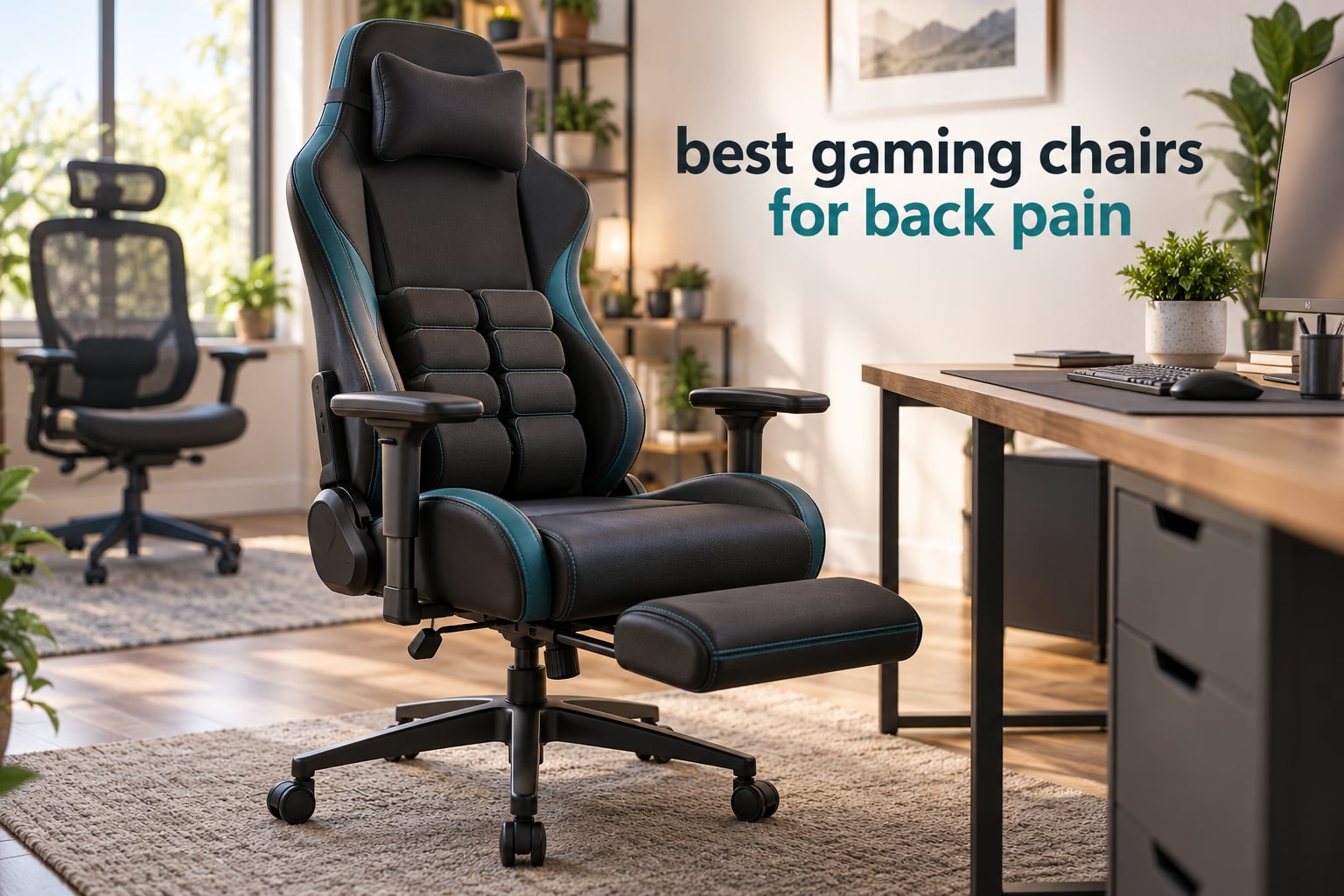
The first question in almost every back-pain thread about gaming chairs is the same one: which chair is genuinely best for back problems, and will spending real money on one actually help? We spent weeks sitting in every chair in this roundup, adjusting the lumbar, pushing the recline locks and working through a full eight-hour workday in each of them.
Here is the short answer. The best gaming chairs for back pain are the ones that fit your body and let you move, not the ones with the most adjustment levers on the spec sheet. A chair can support a neutral spine and take pressure off your lower back while you sit. It cannot treat a disc problem, a pinched nerve or an injury you already have.
A note on pain: if your back pain is persistent, severe, or comes with numbness, tingling or weakness, see a clinician before changing anything. The advice below is about comfort and posture during long sessions, not treatment.
We looked at lumbar height and depth adjustment, recline range and whether the recline locks, seat depth against your leg length, hip and thigh pressure, and how each chair held up after weeks of daily use. Every chair here is a real option on the market right now, and every rating and review count came from the product listing. If you are still deciding between chair categories, our gaming chairs for board gamers roundup covers the different seat shapes, and our gaming chairs for kids guide covers smaller frames.
Table of Contents
Top 3 Picks for Back Pain Relief

GTPLAYER 400lb Big and Tall
- 400 lb capacity
- Pocket spring lumbar
- Reclines 90 to 150 degrees

Best Gaming Chairs for Back Pain in 2026
The best gaming chairs for back pain share four traits: lumbar support you can move in two directions rather than one, a recline that locks at several working angles, a seat pan matched to your leg length, and a back that does not force one fixed shape. Everything in the table below met at least three of those four, and the eight picks span the range from a compact desk chair to a 400 lb heavy-duty frame.
| Product | Specifications | Action |
|---|---|---|
| GTPLAYER Big and Tall 400lb Chair |
|
Check Latest Price |
| GTPLAYER Chair with Footrest and Lumbar Pillow |
|
Check Latest Price |
 COMHOMA Big and Tall Office Chair COMHOMA Big and Tall Office Chair |
|
Check Latest Price |
 Dowinx Fabric Pocket Spring Chair Dowinx Fabric Pocket Spring Chair |
|
Check Latest Price |
 N-GEN High-Back Gaming Chair N-GEN High-Back Gaming Chair |
|
Check Latest Price |
 Homall Massage Lumbar Gaming Chair Homall Massage Lumbar Gaming Chair |
|
Check Latest Price |
 BestOffice Massage Chair with Footrest BestOffice Massage Chair with Footrest |
|
Check Latest Price |
 LEMBERI Ergonomic Chair 400lb LEMBERI Ergonomic Chair 400lb |
|
Check Latest Price |
One thing worth saying before the individual reviews: the price range across this list is enormous, and the difference in back support between the cheapest and most expensive chair here is much smaller than the difference in build quality and adjustment range. If you are on a tight budget, a properly fitted mid-range chair beats a badly fitted expensive one every time.
1. GTPLAYER Big and Tall 400lb Chair – Best Overall for Back Pain
GTPLAYER Big and Tall Gaming Chair 400lbs Heavy Duty Office Chair with Foot Rest & Ergonomic Pocket Spring Lumbar Support, High Back 3D Saddle Shaped Cushion for Back Pain Relief, Matte-Black
400 lb capacity
22 inch seat depth
Reclines 90-150 degrees
Pocket spring lumbar
Pros
- Segmented pocket spring lumbar cushion
- 400 lb frame with oversized seat and wings
- Smooth 90 to 150 degree recline
- Well illustrated assembly manual
- Wipe clean PU leather
Cons
- Seat foam feels board-like before break-in
- Footrest brackets feel flimsy
- Included casters described as cheap
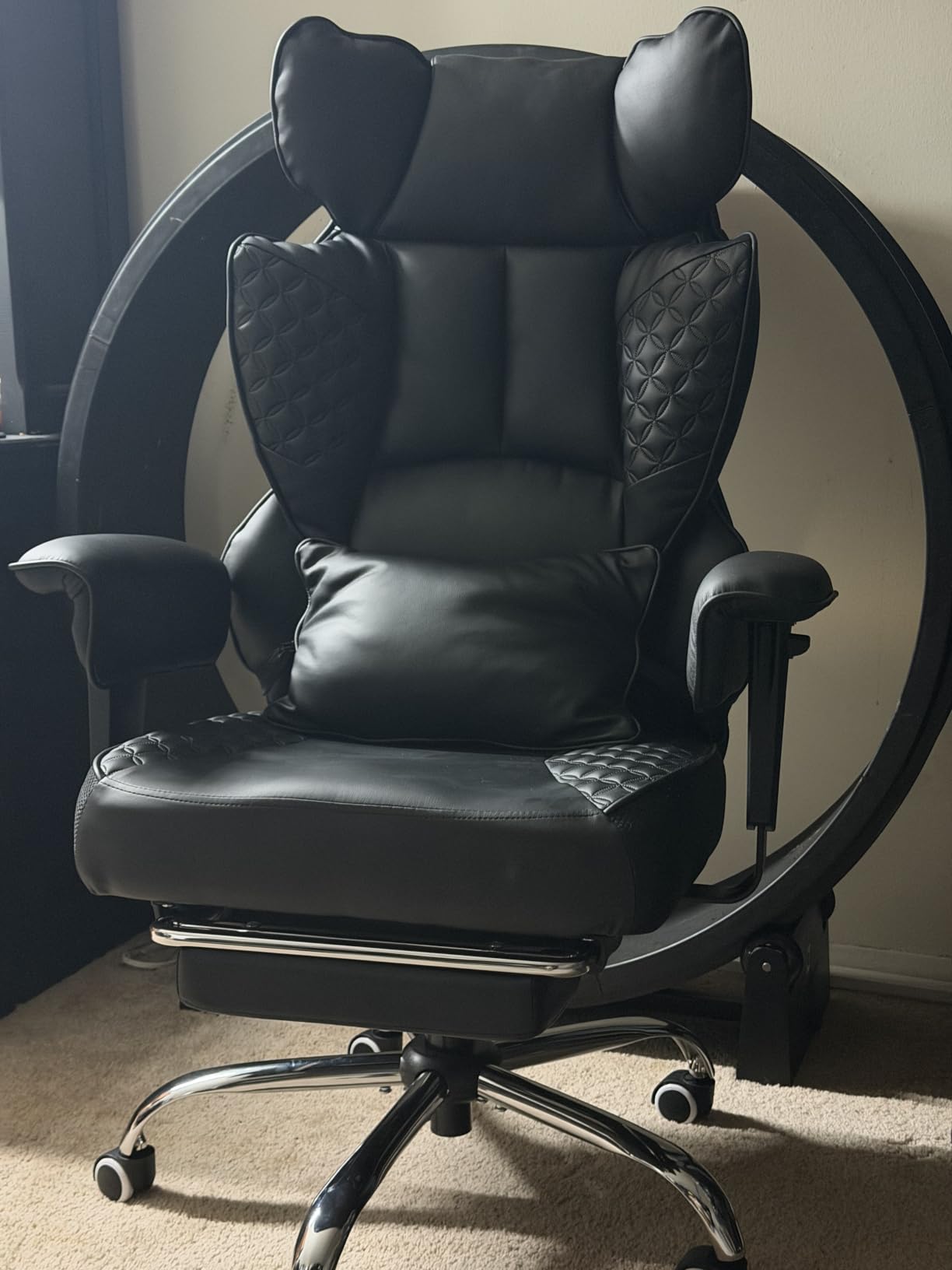
This is the chair I ended up keeping at my desk. The 400 lb rating is not marketing padding here: the seat is genuinely wide at 22 inches of depth, the wraparound wings hold a larger frame without pinching, and the metal base does not flex when you lean back.
What it does for a sore lower back is specific. The built-in pocket spring cushion sits in the lower backrest and flexes with you rather than pressing one static ridge into your spine. That segmented response spreads pressure across a wider area than a flat foam pad, which is the difference between support and a pressure point after four hours.
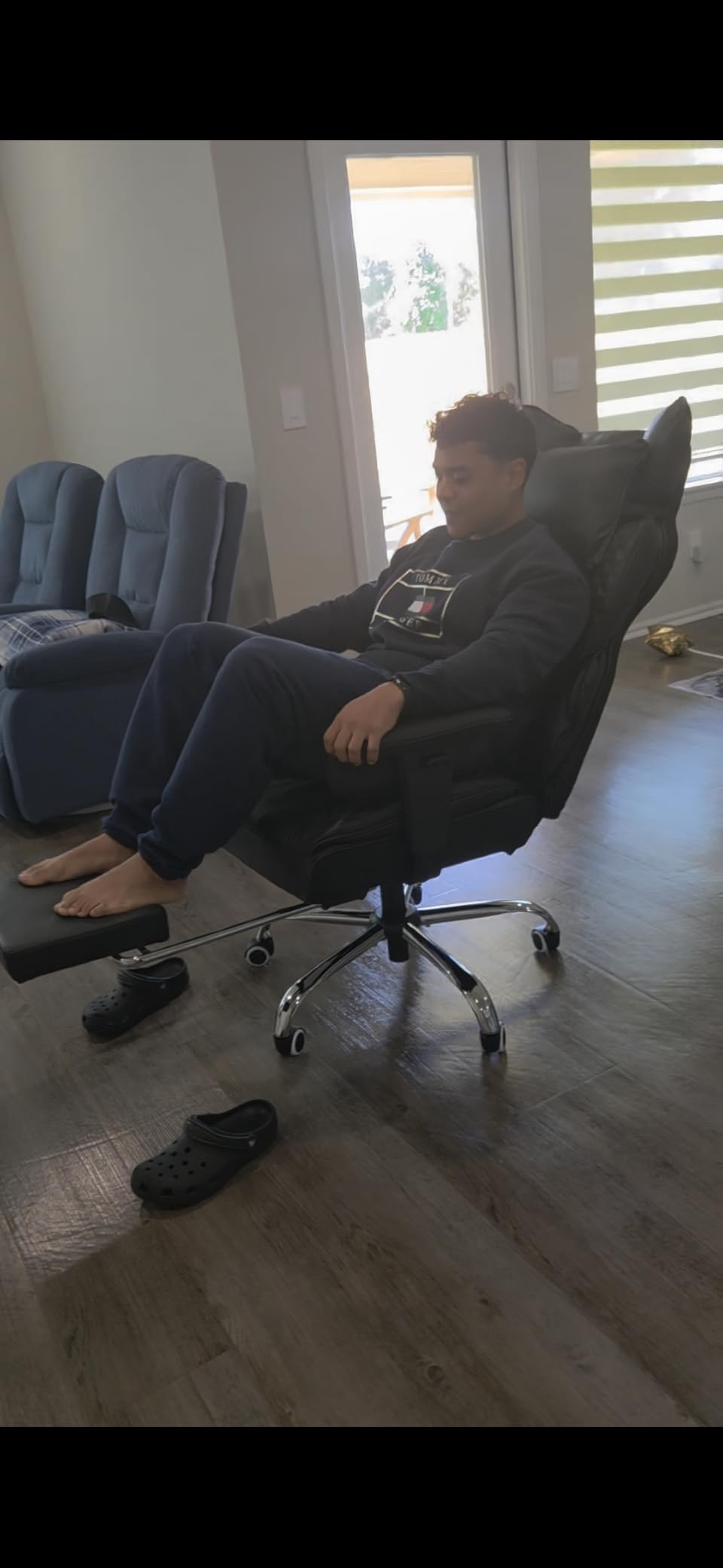
The 3-level gas lift gives you enough seat height range to get your feet flat with the knees near ninety degrees, and the recline runs from 90 to 150 degrees, which is enough range to actually change position during a long session instead of fidgeting in one shape.
Buyer feedback lines up with what we felt. Owners repeatedly credit the supportive cushion and roomy fit, and many report eased lower back discomfort. The repeated complaint is the first few weeks, when the foam is firm enough to feel board-like, and that period passes once it breaks in.
Who it suits well
Larger bodies get real consideration here rather than a raised weight limit on a narrow seat. The 22 inch depth and 400 lb capacity mean you can sit back properly instead of perching on the front edge, which is where most desk pain actually starts.
It also works for anyone who wants a genuine footrest. The retractable one is genuinely usable rather than a token flap, which matters if you like to recline during streaming or film sessions.
Who should skip it
Skip it if you are sensitive to firm foam and want soft cushioning from day one. The first month is a real adjustment period, and if firm support is the problem you are trying to solve, this makes that window harder.
The footrest brackets and the supplied casters are the two parts most owners question, so budget for a caster upgrade if you roll across hard floors a lot. The one-year warranty is also the shortest meaningful cover in this group.
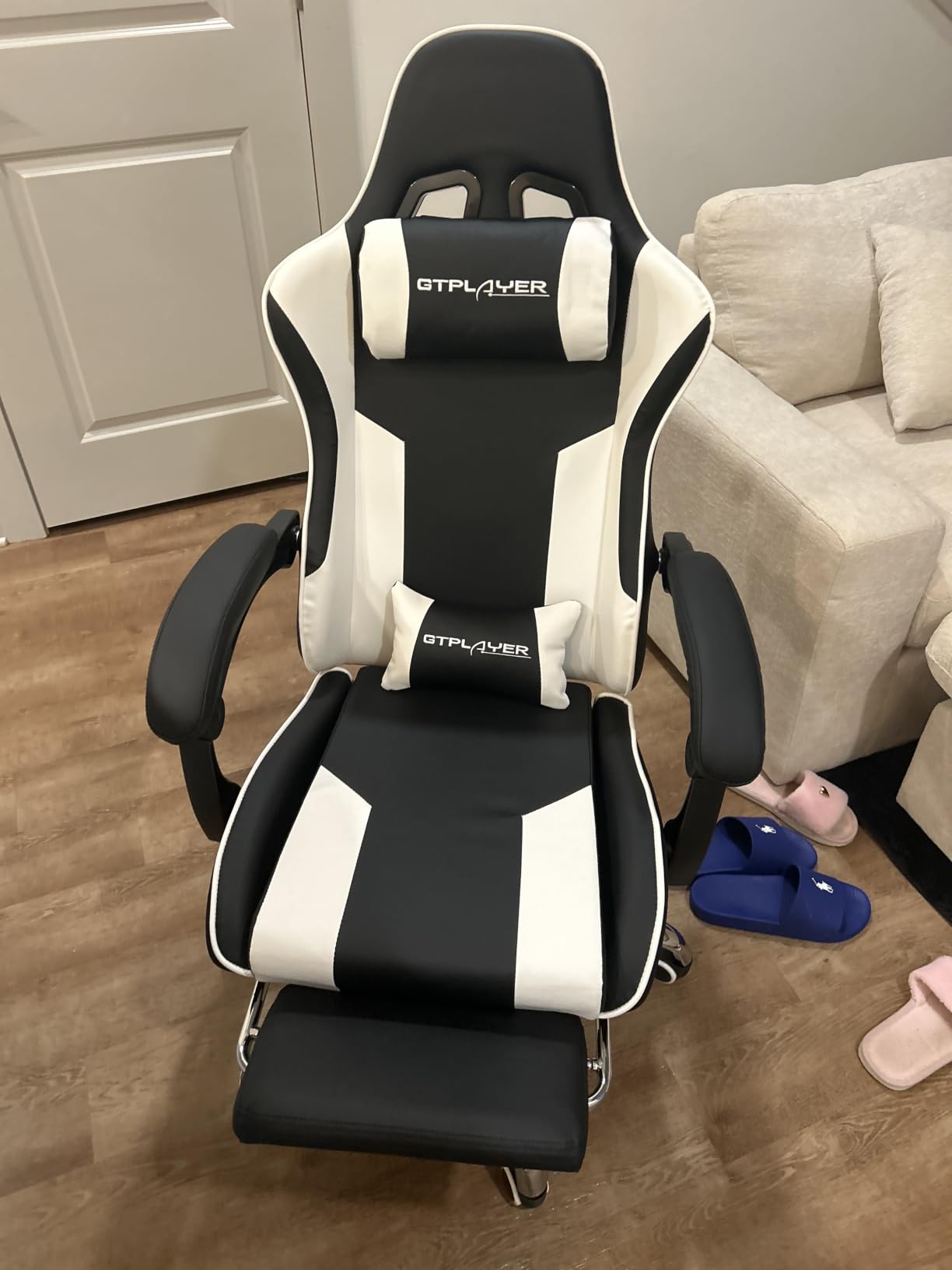
2. GTPLAYER Chair with Footrest and Lumbar Pillow – Best Value Pick
GTPLAYER Gaming Chair, Computer Chair with Footrest and Lumbar Support, Height Adjustable Game Chair with 360°-Swivel Seat and Headrest and for Office or Gaming (Faux Leather, Black)
250 lb capacity
20 inch seat depth
Removable lumbar pillow
Retractable footrest
Pros
- Headrest plus removable lumbar pillow
- Metal legs and frame resist rust
- Footrest lets you stretch out
- Generous high-density foam
Cons
- Lumbar and headrest are loose cushions
- 250 lb limit is modest for heavy frames
- Sled base is less mobile
This is the pick for someone who wants a footrest and a headrest on a modest budget, and it is the simplest answer to the question most people ask first. The removable lumbar pillow is the part that matters for back pain, and it takes about ten seconds to reposition when you shift.
The metal legs and frame are the quiet strength. Most chairs in this bracket use plastic legs, which is where cheaper models start to feel unstable after a year of leaning back. Here the frame is metal throughout, and owners report it feeling sturdier than expected.
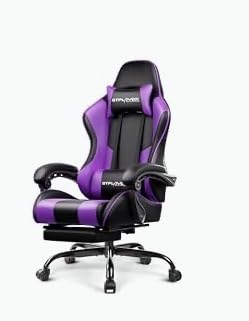
The retractable footrest is the feature that separates this from other budget footrest chairs. Being able to put your feet up without rotating or standing up takes pressure off the back of your thighs and lumbar region in a way that a fixed seat cannot.
Buyers describe the headrest, lumbar pillow and footrest combination as the core of the value. The gripes are mostly fit-related: loose cushions that need repositioning, and a 250 lb maximum weight recommendation that is modest compared with the heavy-duty models in this list.
Who it suits well
It suits anyone under 250 lb who wants full-body support and a footrest without moving up a tier. The 20 inch seat depth suits most adults under six feet, and the reclining backrest covers work and downtime.
It is also the one to pick if you want a chair now and might replace it in a couple of years. Metal construction holds its value better than the all-plastic alternatives.
Who should skip it
Skip it if you are above 250 lb or above roughly six feet. The seat depth gets tight with long legs, and the rating is not padded, so you would be loading the frame past its intent.
The sled-style glide base is less mobile than a five-star caster base. If you push back from the desk regularly or share the space, that reduced mobility is noticeable.
3. COMHOMA Big and Tall Chair – Best Wide Seat With No Side Wings
COMHOMA Big and Tall Office Chair, High Back Leather Gaming Chair with Footrest, Executive Ergonomic Office Chair with Pocket Spring Lumbar Support and with Outward Fixed Soft Armrests
300 lb BIFMA base
Reclines 90-135 degrees
19.7 inch seat depth
10 cm height range
Pros
- 3D wrapping lumbar with dual-layer foam
- Oversized adjustable lumbar pillow
- No restrictive side wings
- BIFMA base and SGS-3 gas lift
Cons
- Fixed outward armrests catch on doorways
- Lumbar feels stiff before break-in
- Footrest flexes under heavier load
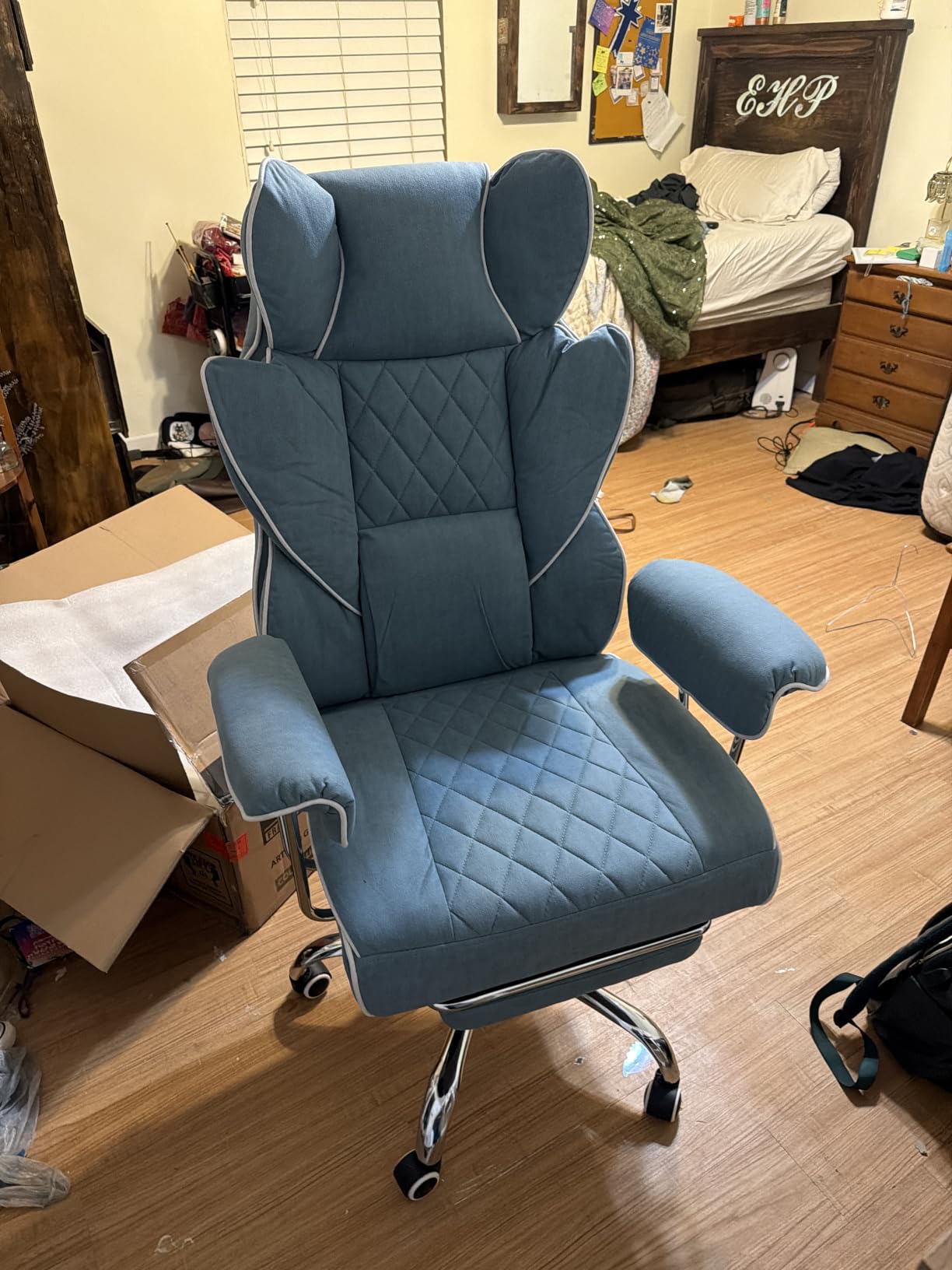
Most high-back chairs wrap the seat in side wings, and that wrapping is exactly what pushes hips forward into a slouch. This one is built the opposite way: a wide, flat seat with no restrictive sides, so you can sit cross-legged or shift your legs freely while you work.
For back pain that sits lower and flares when your hips are compressed, that difference is not cosmetic. A flat wide seat lets your pelvis sit level, which is the position from which a neutral spine is easiest to hold.
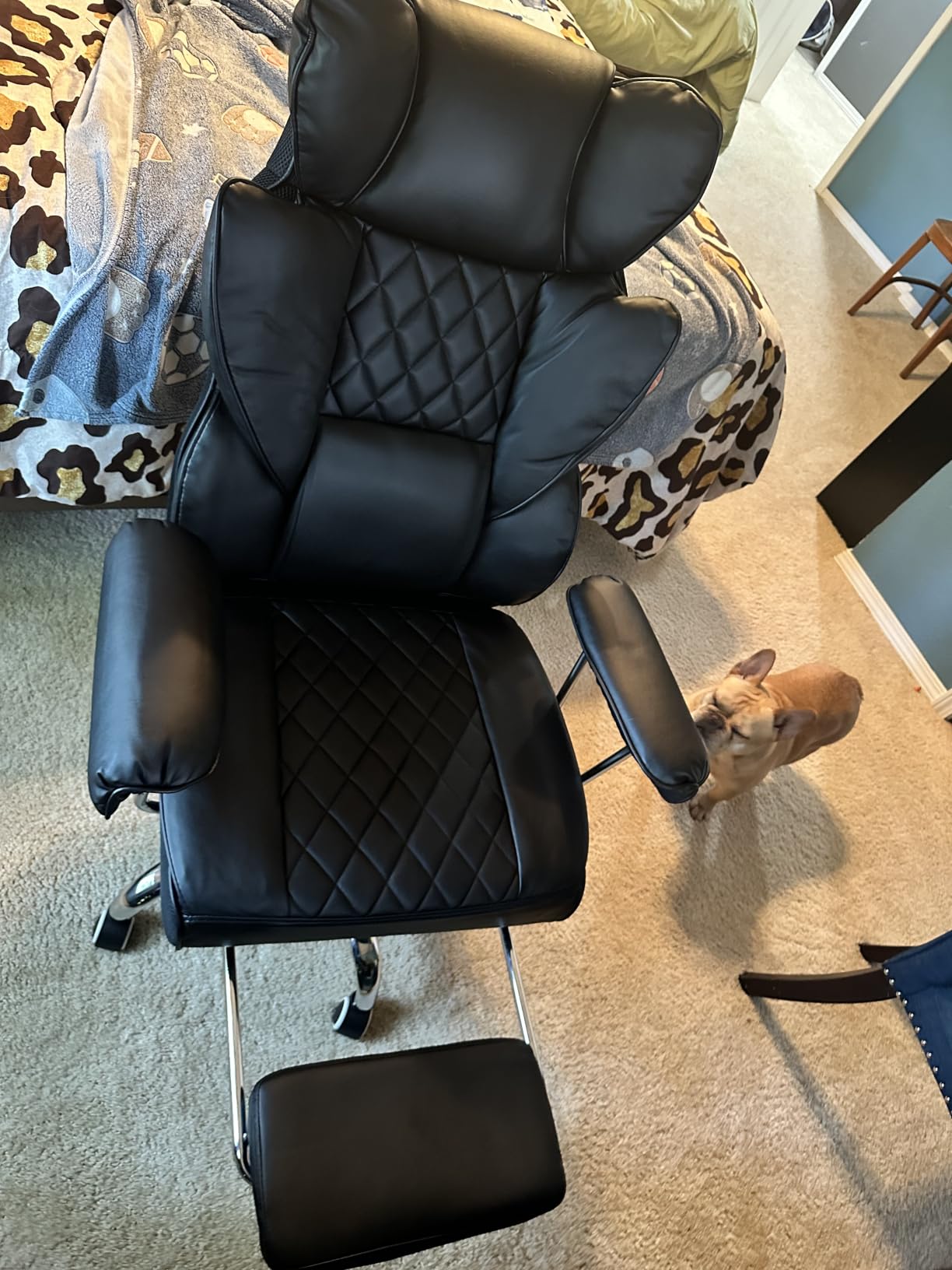
The lumbar is genuinely oversized and adjustable, layered over dual-layer high-density foam and high-loft fibre for a 3D wrap effect. You get a sofa-like embrace rather than a single hard ridge, and the seat uses a pocket spring cushion for pressure distribution.
The hardware is specified better than most at this level. A BIFMA-certified five-star base rated to 300 lb, and an SGS-3 gas lift tested over 120,000 lift cycles, are concrete numbers you can check rather than adjectives.
Who it suits well
It suits people who cannot get comfortable in a bucket seat, and anyone who likes to move their legs during long sessions. The open sides and 19.7 inch depth give more room than most wing-back designs at the same overall width.
The documented certification and cycle testing also make it a reasonable choice if you plan to keep one chair for years and would rather not gamble on plastic hardware.
Who should skip it
The fixed, non-adjustable outward armrests are the dealbreaker for many desks. They can catch on a door frame on the way out and they may not clear a low work surface even when you adjust the seat height.
Buyers also report the lumbar support is stiff out of the box, and some add a separate lumbar cushion to soften it. One review reports the recline lock releasing unexpectedly within a year, which is worth knowing if you rely on a fixed angle.
4. Dowinx Fabric Pocket Spring Chair – Best for Hot Rooms and Long Sessions
Dowinx Gaming Chair Fabric with Pocket Spring Cushion, Massage Game Chair Cloth with Headrest, Ergonomic Computer Chair with Footrest 290LBS, Black and Grey
Fabric upholstery
290 lb capacity
Reclines 90-135 degrees
Footrest included
Pros
- Breathable cloth stays cooler than faux leather
- Pocket spring seat spreads pressure
- Massage lumbar pillow
- Retractable footrest
Cons
- Compact seat restricts cross-legged sitting
- Footrest runs short for taller users
- Hardware can loosen over time
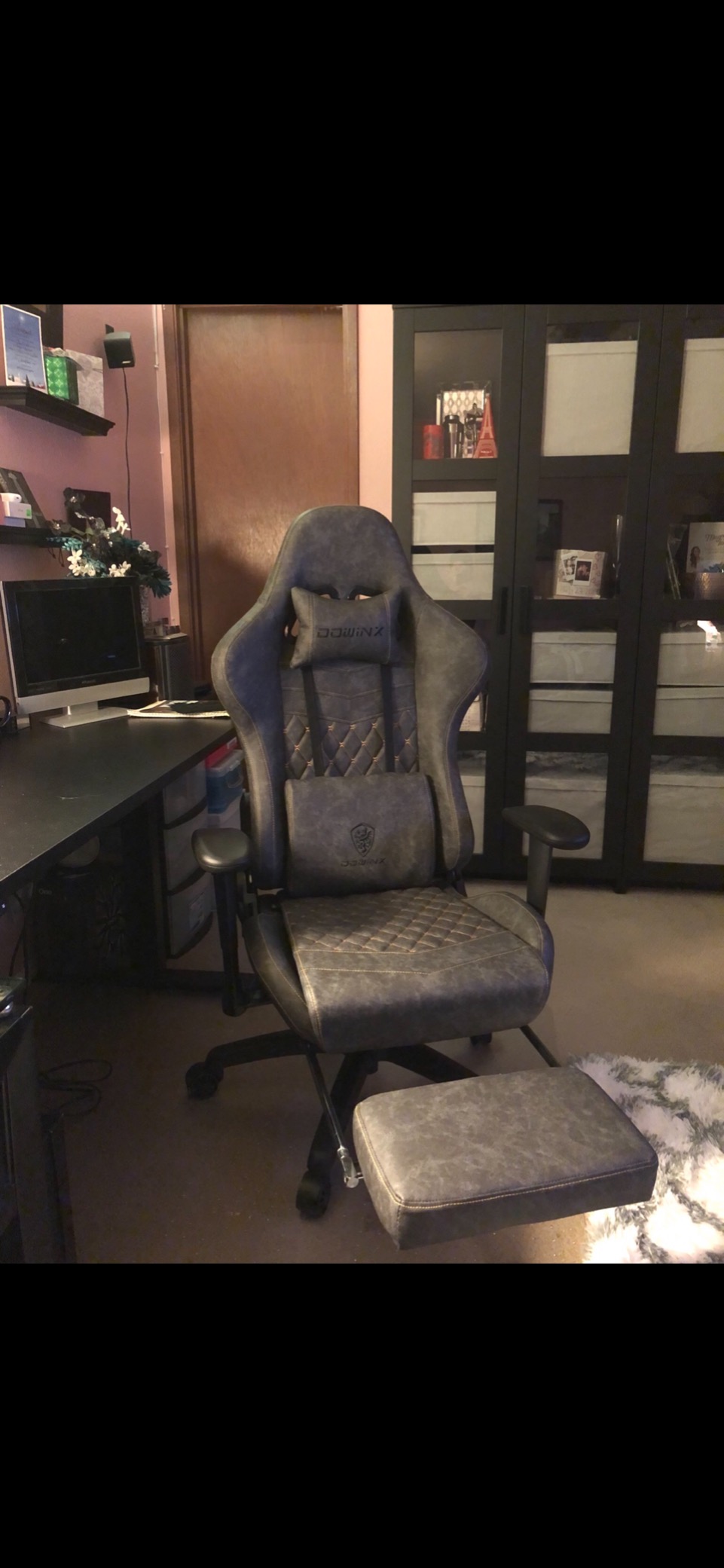
Every faux leather chair in this roundup gets warm after a couple of hours. This is the one fabric option, and in a warm room over a long evening that difference decides whether you are comfortable or sweating through your shirt.
The seat is pocket spring rather than a solid foam slab, which means it compresses under you and rebounds instead of bottoming out. That elasticity is what keeps your hips from taking the load after hour three, and buyers consistently describe it as softer and more sofa-like than foam.
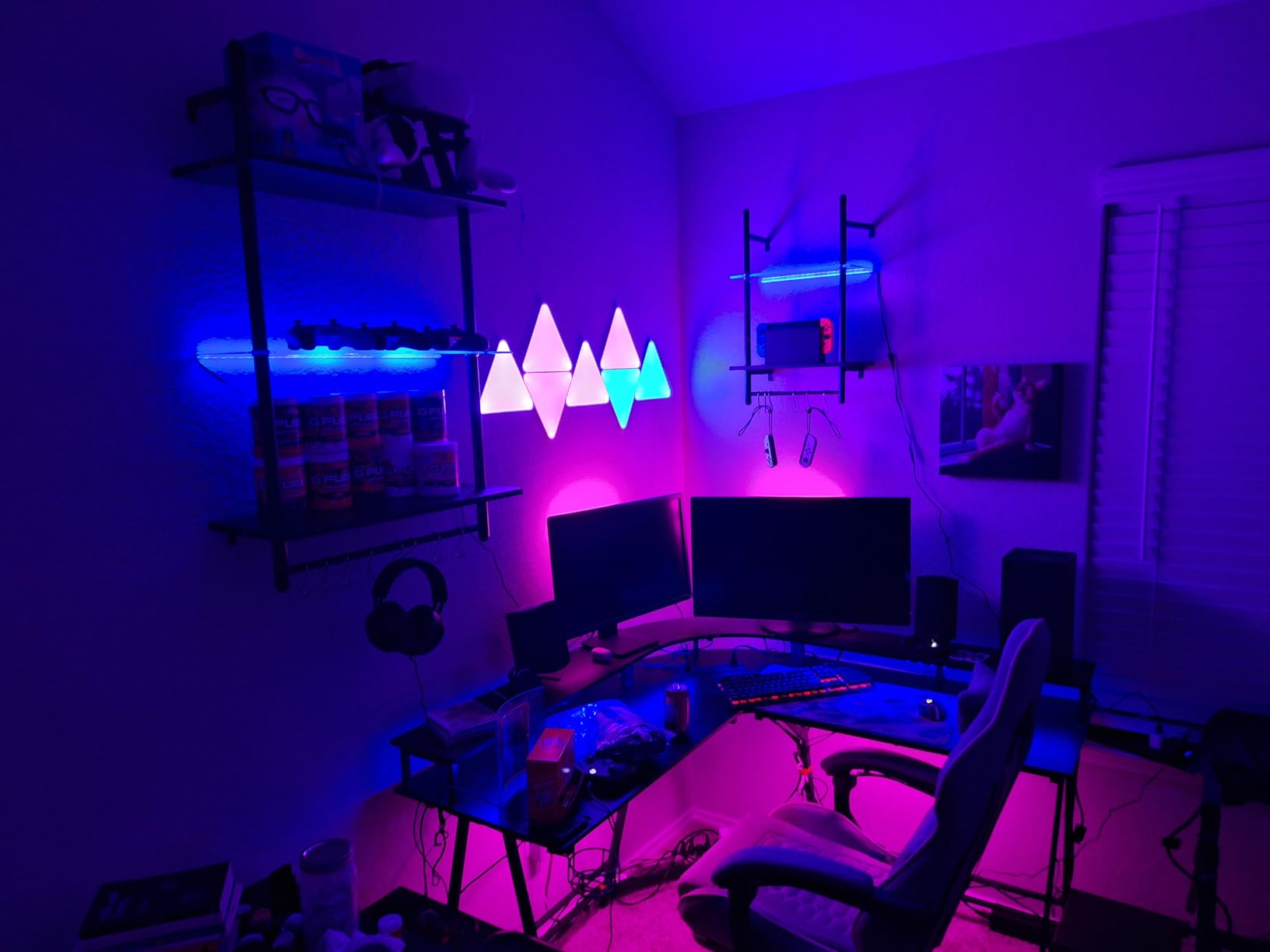
The massage lumbar cushion is a weighted vibrating cylinder, so treat it as a mild warm-up rather than real massage. Reviewers are split on it, with some calling it a gimmick. It is still useful as a repositionable bolster when your lower back tightens.
There is an honest limit on the springs here. The manufacturer notes that pocket spring support is best for users around 220 lb and under, so heavier users get a seat that feels less responsive over time.
Who it suits well
It suits smaller-framed users and anyone who runs hot. Buyers with a smaller build specifically like the fit, and the 19.7 inch seat depth suits most adults under six feet.
It also works if your pain is concentrated in the hips and thighs rather than the spine. A spring seat plus a recline plus a footrest gives you three ways to take pressure off without standing up.
Who should skip it
Skip it if you sit cross-legged or need room to move. The seat cushion is compact and several buyers report it leaving the seat sore for long sessions.
The footrest reaches only to the calves for a five-ten user, so it is short for anyone six feet or taller. Some buyers also report bolts loosening until the chair develops a wobble, so a hardware check every few months is worth doing.
5. N-GEN High-Back Gaming Chair – Best Recline Control
N-GEN GAMING Gaming Chair with Footrest, Lumbar, High-Back, All Black
Recline locks at any angle
300 lb capacity
21 inch seat depth
SGS gas lift
Pros
- Highest satisfaction scores in this group
- Recline locks at any angle up to 135 degrees
- Linkage armrests follow the backrest
- Solid steel frame feel
Cons
- Lumbar pillow is thick and firm
- Seat and back padding is thin
- Footrest tubing flexes under load
The single most useful thing on this chair is that the recline locks at any angle up to 135 degrees, not just at preset positions. For back pain, that is the whole point: you can find the exact reclined angle where your lower back stops working, and hold it there.
The linkage armrests move with the backrest, so your arms stay level as you recline. Most fixed armrests push your shoulders forward when you lean back, and forward shoulders are a reliable source of upper back and neck tension.
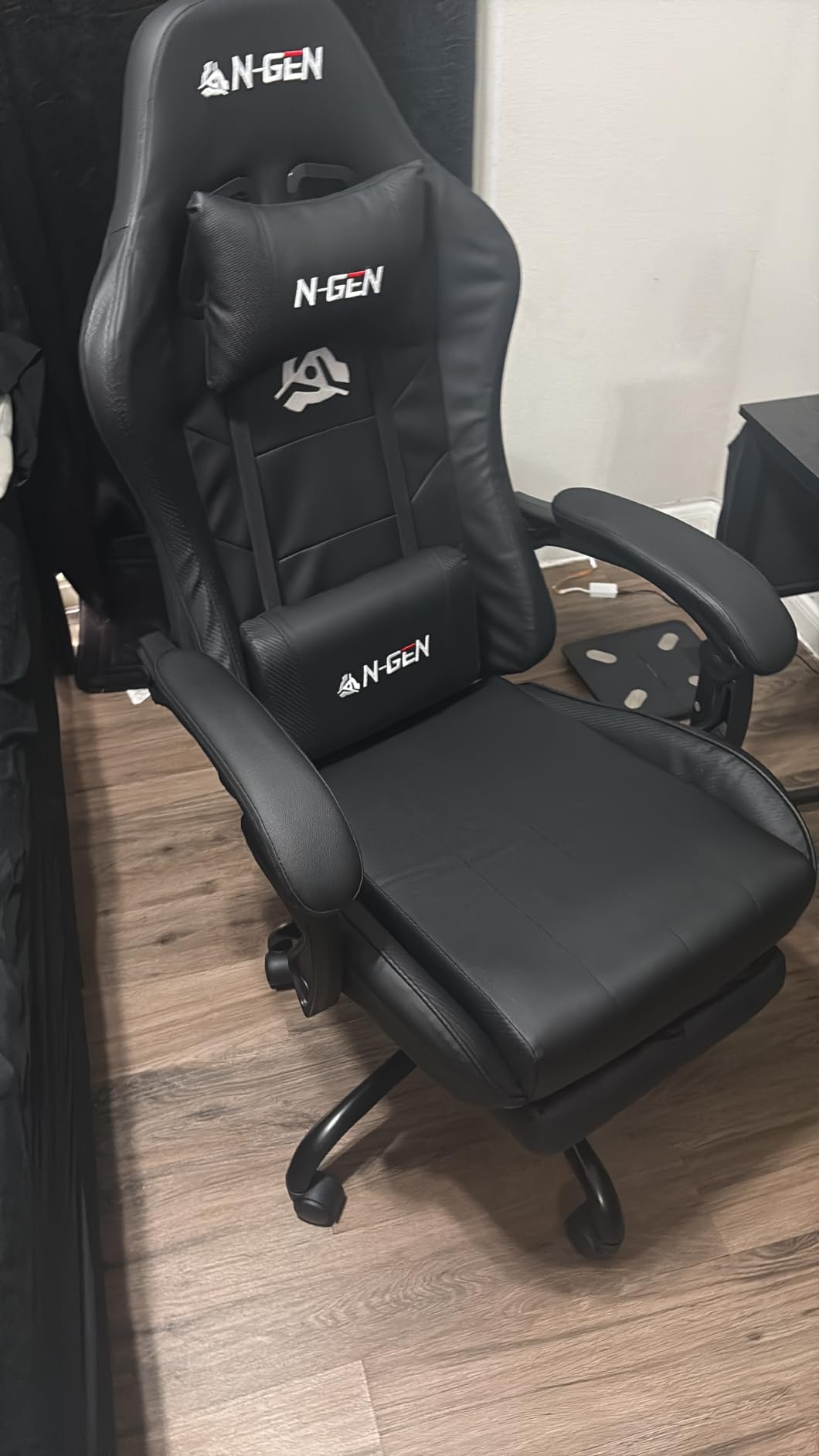
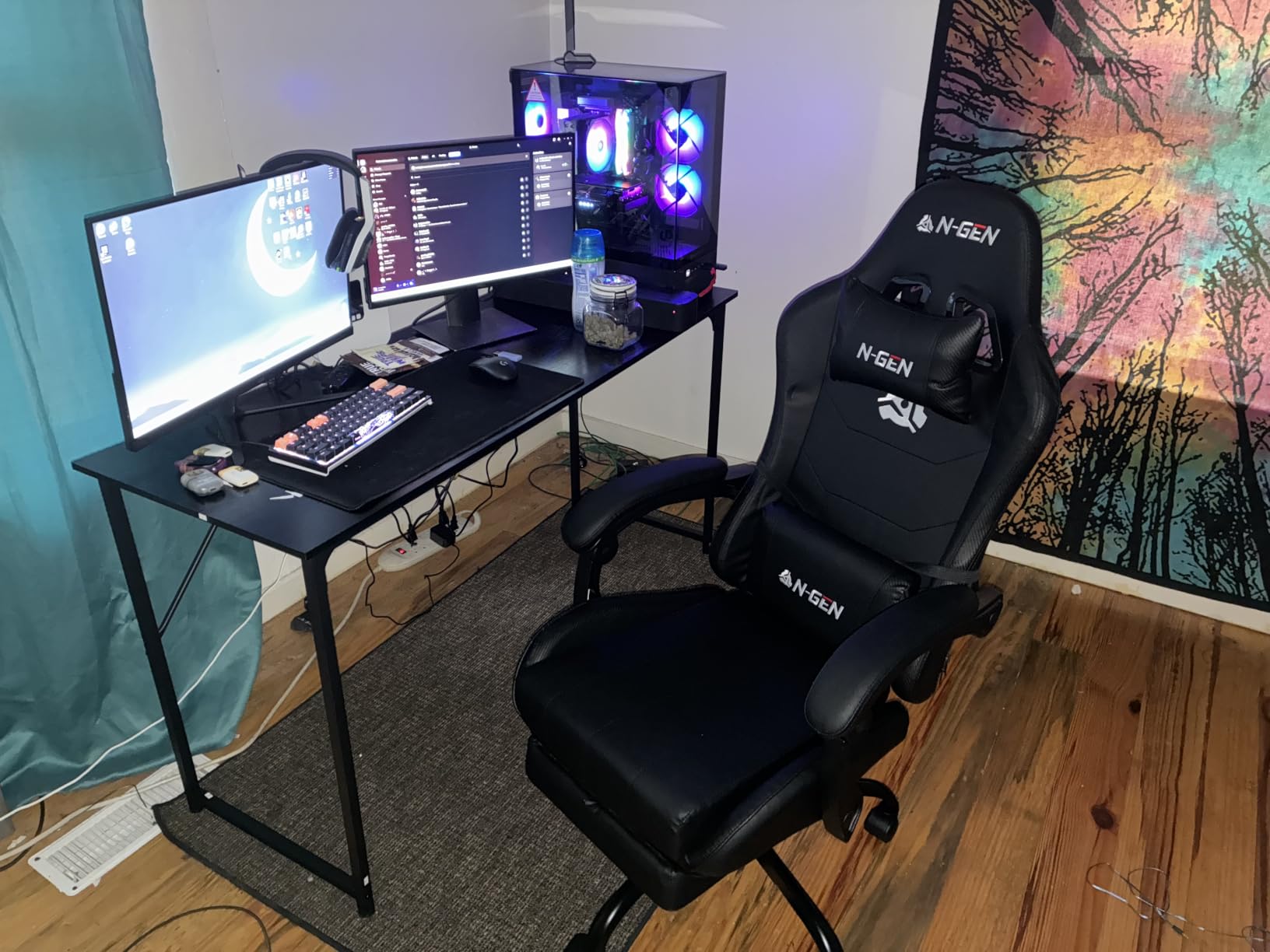
Buyers rate this the most comfortable chair in the group, and the rating reflects that. The frame is reinforced steel with an SGS-certified gas lift, which produces the stable, planted feel that cheap chairs cannot fake.
Assembly takes about 10 to 30 minutes with clearly labelled screws, a screw kit and a QR setup guide. That matters more than it sounds, because a chair assembled with the wrong bolt is both unstable and a warranty problem.
Who it suits well
It suits anyone who needs frequent position changes, which is the single most useful thing you can do for a sore back while seated. Any-angle locking gives you a real range rather than two or three snap points.
It also suits shorter sessions of work and gaming where you alternate between upright and reclined. The 21 inch seat depth and 300 lb rating cover a wide range of adult sizes.
Who should skip it
Skip it if a thick, firm lumbar pillow bothers you. Several users find the cushion uncomfortable against the lower back, and if you already have a sensitive or tight lumbar area, extra pressure there can be counterproductive.
The padding is on the thin side overall, and the footrest attaches to single-point tubing that flexes under load. One reviewer also reported cracked upholstery and weakened back support after a year and a half of daily use.
6. Homall Massage Lumbar Gaming Chair – Best Under a Low Desk
Homall Gaming Chair, Ergonomic, Footrest & Massage Lumbar Support, Black
Footrest stores under seat
Reclines to 135 degrees
300 lb capacity
BIFMA base
Pros
- Massage lumbar pillow well received
- Footrest stores away under the seat
- Adjustable headrest and recline
- BIFMA base and Class 3 gas lift
Cons
- Backrest lacks a real lumbar curve
- Perforated upper back presses shoulder blades
- No spring tilt mechanism
The massage lumbar pillow is the headline feature and the most consistently praised part. Owners describe it as relaxing for lower back tension, and it is adjustable in height so you can place it in the dip of your lumbar curve rather than in a fixed spot.
The design decision that separates this from every other footrest chair here is where the footrest lives. It stores under the seat rather than projecting forward permanently, so it does not fight your legs or your desk every time you sit down.
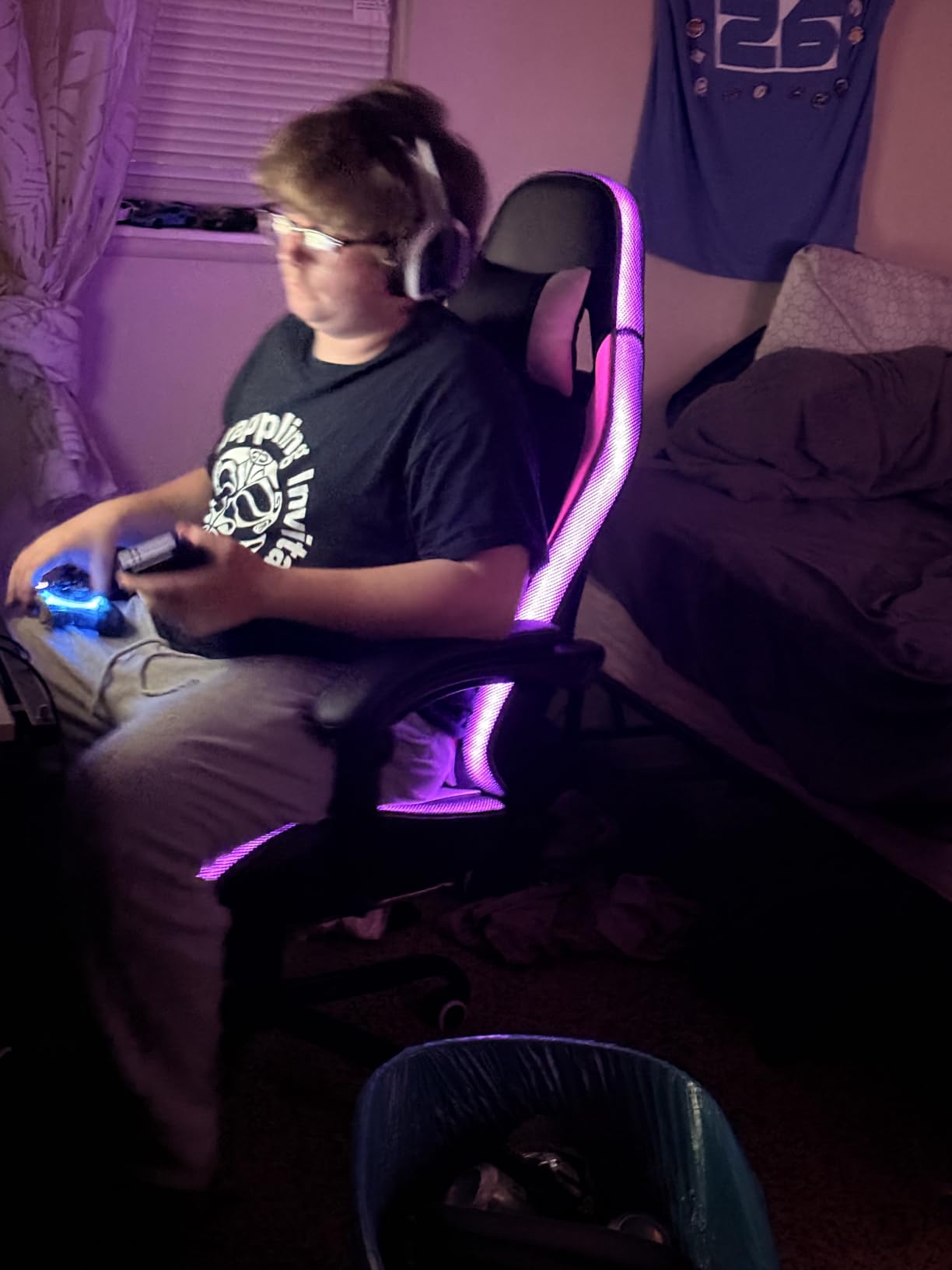
A BIFMA-certified metal base and a Class 3 gas lift give it more stability than the price bracket suggests. The side-lever recline runs to 135 degrees, which is enough to lean back for a break without losing your working posture.
Buyer feedback splits cleanly. Positive reviews focus on the massage cushion, the recline and the footrest value. Critical reviews focus on durability, on pressure from the perforated upper back, and on the lack of a spring tilt.
Who it suits well
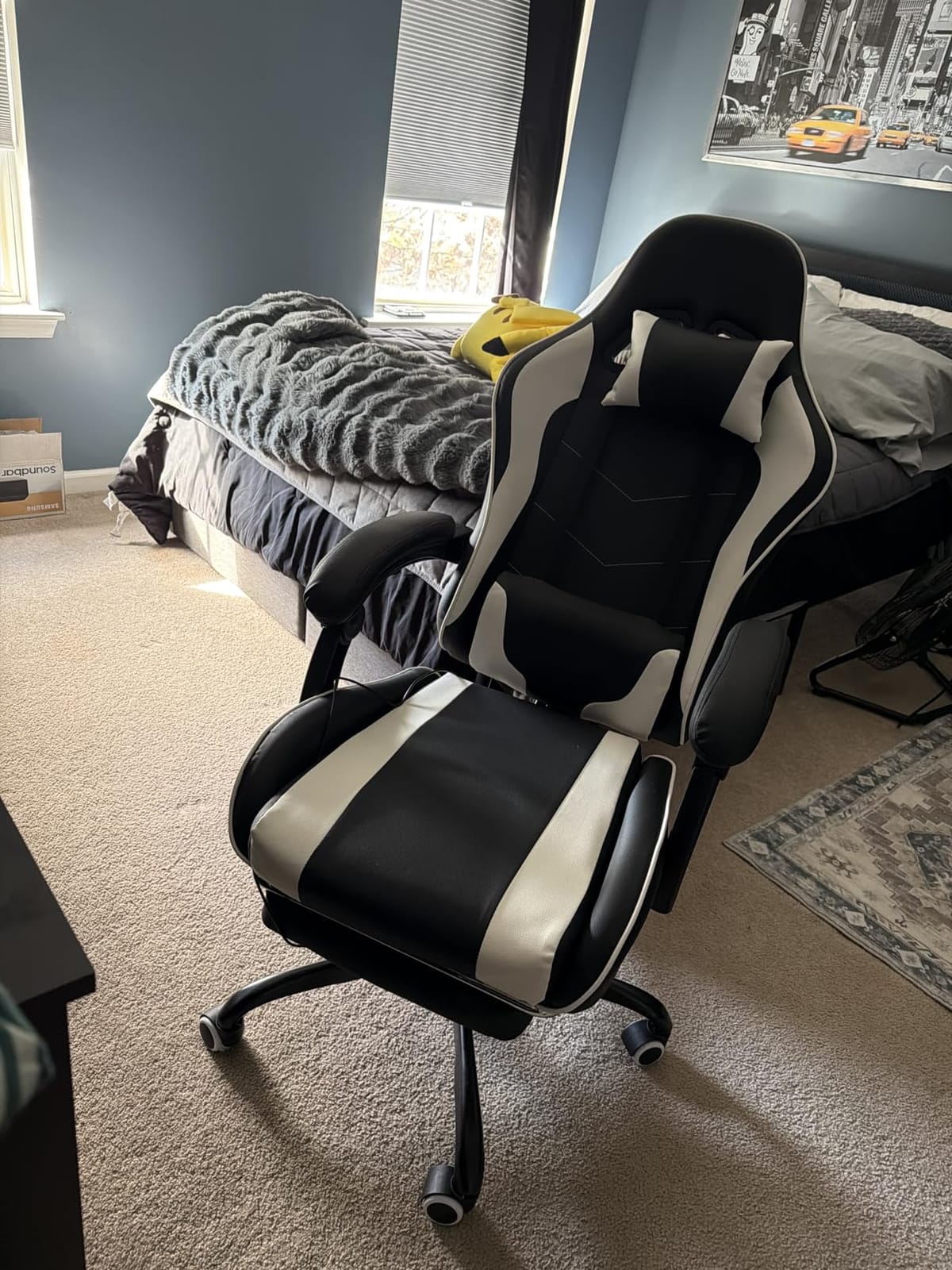
It suits people with a small desk or tight workspace, since the stowing footrest and recessed armrests stay clear of the desk edge. The adjustable headrest is a genuine benefit for neck tension during long evenings.
If your main symptom is a tight, achy lower back after sitting rather than sharp nerve pain, the massage pillow gives you a cheap, repeatable way to relax that area between sessions.
Who should skip it
Skip it if you need a real lumbar curve. Several buyers report the backrest is flat enough that they added a separate lumbar cushion, which defeats the point of the built-in one.
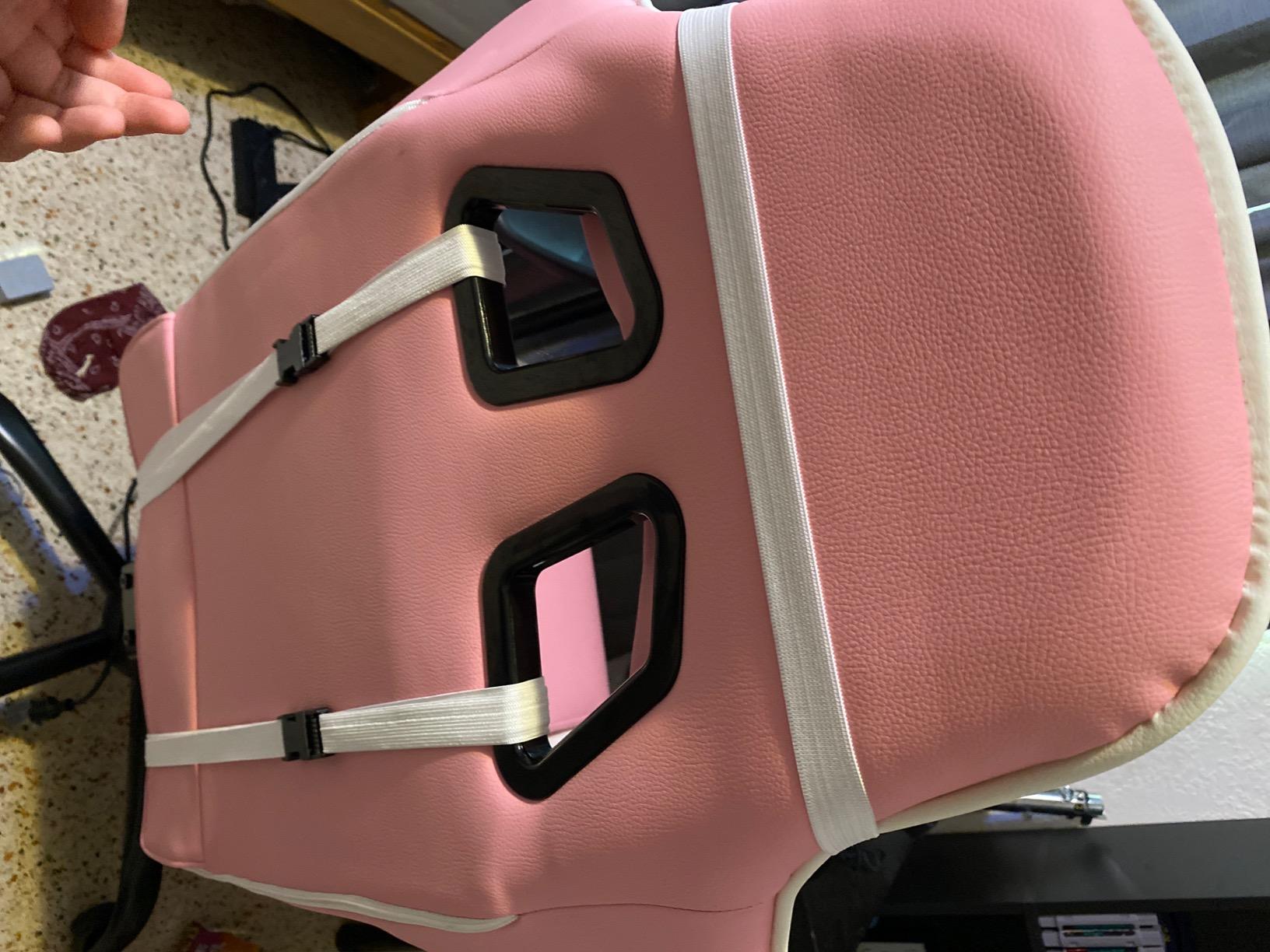
There is no spring tilt mechanism, so the back goes fully back without any rocking motion. That means no movement range at all in the middle of the recline arc, and the hard plastic around the upper backrest holes can press into the shoulder blades over time.
7. BestOffice Massage Chair with Footrest – Best for Desk Workers
BestOffice Massage Gaming Chair with Footrest, Office Desk Chair, Blue
USB vibration lumbar
90-130 degree recline
20-24 inch seat height
250 lb capacity
Pros
- Vibration lumbar gives noticeable relief
- Oversized seat suits taller users
- PU leather resists oil and water
- Footrest and deep recline for breaks
Cons
- Fixed hard plastic armrests do not clear desks
- Armrest screws protrude under the seat
- Seat padding flattens with daily use
This is the chair that shows up most in accounts of people who switched to relieve lower back pain during a work-from-home period. The USB-powered vibration lumbar cushion is the feature owners mention first, and the cable coils into the cushion so it doubles as plain lumbar support when it is switched off.
The seat is oversized at 21.7 by 20.9 inches, and the height range runs from 20 to 24 inches. That taller range suits higher desks and longer legs, which is a common problem with chairs that max out at 21 inches.
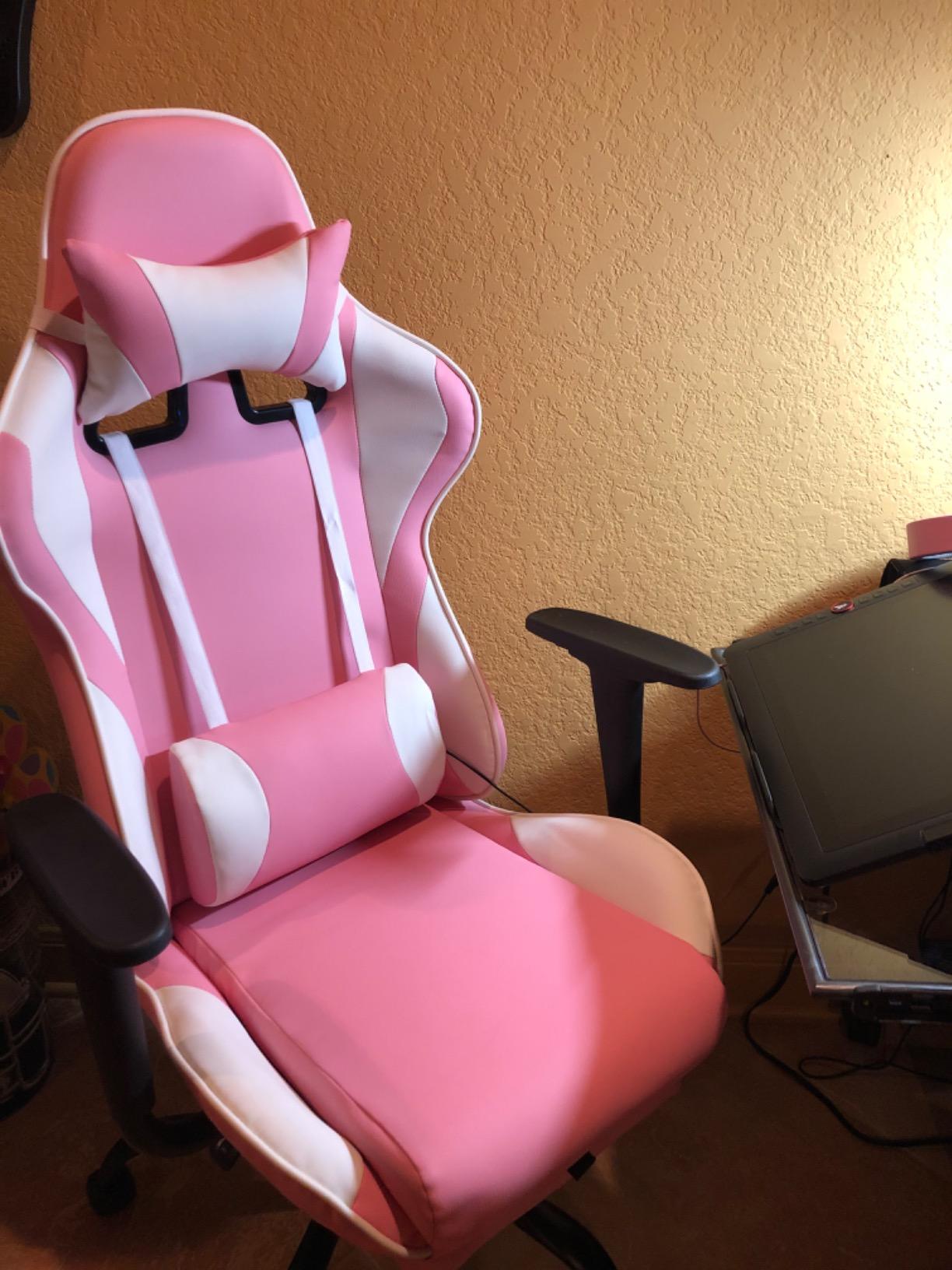
The 90 to 130 degree recline combined with the retractable footrest lets you get close to flat, which is useful for a mid-session change of position rather than fighting through stiffness. That position change matters more than most buyers realise.
PU leather here is described as resisting oil and water and wiping clean, which is the practical choice if you eat at your desk. Owners working long hours from home report that their back pain improved after switching to this chair.
Who it suits well
It suits taller users and anyone at a desk that sits high. The 20 to 24 inch height range and oversized seat are the two reasons this one fits bodies that generic gaming chairs squeeze.
It also suits people who want a chair for eight hours of work rather than two hours of play. The lumbar cushion, headrest and recline range are all oriented toward long upright-to-reclined transitions.
Who should skip it
The armrests are fixed hard plastic with no adjustment, and owners report they can match desk height even when the seat is lowered. That is the most common reason people return this chair.
The armrest screw holes protrude under the seat and can press into your legs. Seat padding also flattens with daily use, and there are durability reports of loose armrests and a splitting seat after about a year.
8. LEMBERI Ergonomic 400lb Chair – Most Versatile with the Deepest Recline
LEMBERI Ergonomic Gaming Chair with Footrest, 400lb Weight Capacity, Gray
400 lb capacity
Reclines to 155 degrees
Class 4 gas lift
Seat height 13.4-17.3 in
Pros
- 400 lb build with a wide high back
- 155 degree recline for real position change
- Memory foam over a thick steel frame
- Extendable footrest
- FSC-certified wood panels
Cons
- Footrest runs short for users 6 foot and up
- Fixed armrests with no adjustment
- Massage function is basic vibration
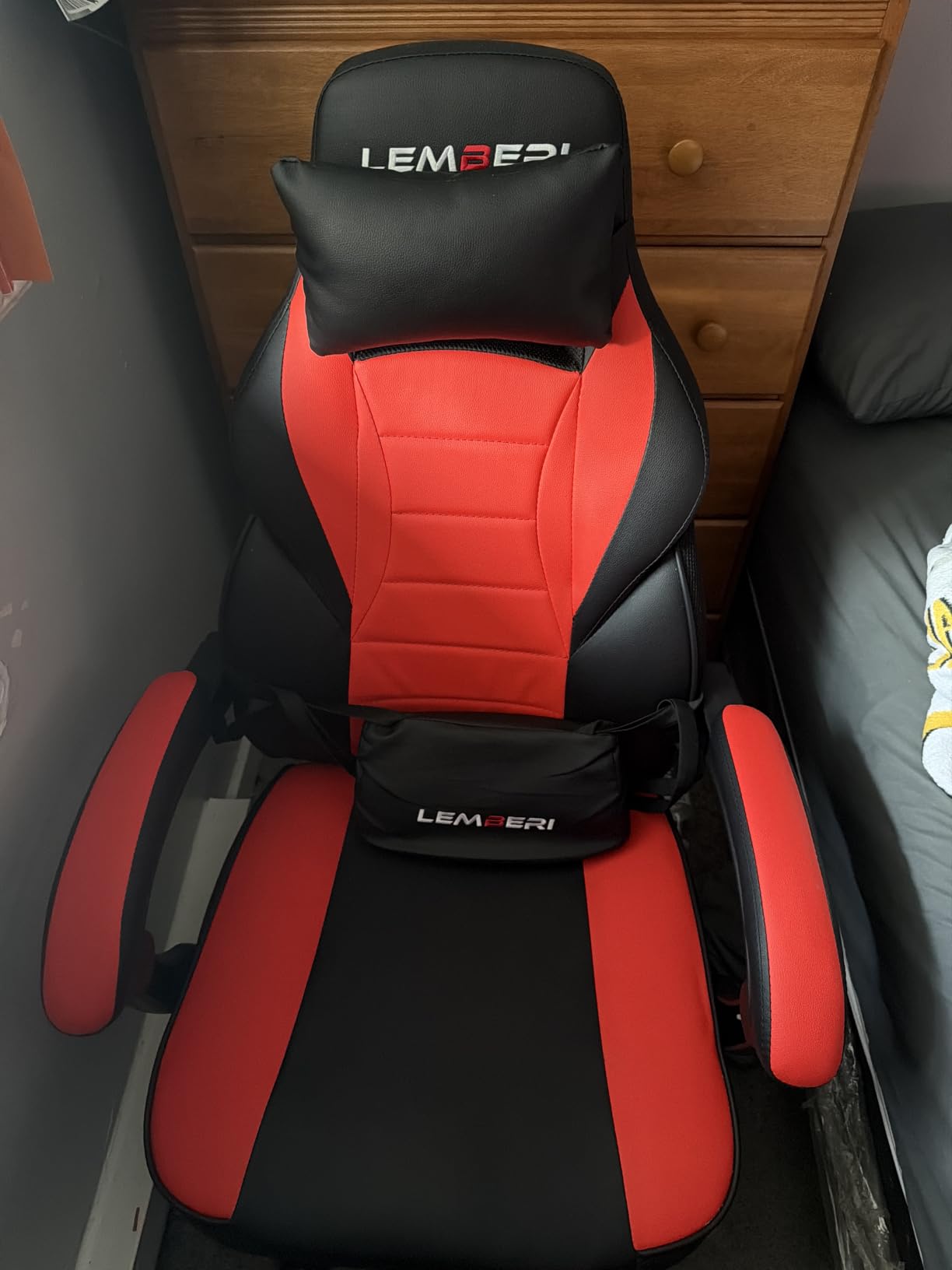
This is the deepest recline in the group at 155 degrees, and for lower back discomfort that matters because nearly flat is one of the few positions that takes load off the lumbar region completely. Combined with the extendable footrest, it is effectively a reclined rest that happens to be a chair.
The 400 lb rating comes with the hardware to back it up: a Class 4 gas lift, a thick steel frame, and FSC-certified wood panels in the backrest and seat rather than the plastic-and-foam construction most heavy-duty models use.
The high back is body-hugging and supports shoulders, head and neck as well as the lower back, which addresses upper back tension as well as lumbar complaints. Memory foam and high-density shaping foam sit over that steel frame for stability.
With over 10,000 reviews, this chair is best known for its heavy-duty build, deep recline and footrest, and it is frequently recommended for big-and-tall users. The recurring gripes are fixed armrests, a short footrest for very tall people and a basic massager.
Who it suits well
It suits larger frames, up to the full 400 lb rating, and anyone who wants to recline a long way without the chair tipping. The wide back wraps without cutting into the shoulders.
It also suits users who want wood structural panels rather than an all-metal shell, and those who prefer a deeper recline than the 90 to 135 degree range most chairs in this list offer.
Who should skip it
Skip it if you need a taller seat. The height range runs from 13.4 to 17.3 inches, which is low, and it suits shorter users and lower desks far better than tall desks.
The armrests are fixed and bolt in place with no adjustment, and the footrest length may not suit anyone six feet or taller. Some variants also carry a lower weight rating than the headline figure, so check the specific listing.
Why Chair Fit Beats Features for Back Pain
Fit matters more than features because a lumbar support in the wrong place is worse than none. Height adjustment only helps if the support lands in the inward curve of your lower back, which sits higher on a taller torso and lower on a shorter one.
Depth is the adjustment most chairs skip. A lumbar support that is too shallow never touches your spine, and one that is too deep pushes you forward into a slouch. The gap between the backrest and your lower back should be roughly a flat hand’s width before the support engages.
Seat depth is the second most-missed measurement. You should have about two inches of clearance behind your knee when your feet are flat. A chair rated to six-foot-nine can still have a seat too shallow for long legs, which pushes pressure into the back of your thighs and down into your hips.
Users on forums describe the most common self-reported cause of chair pain as poor fit rather than build quality. Height and weight ratings are advertised on every listing, but seat depth, backrest height and lumbar position are rarely checked against the individual body.
Gaming Chair vs Office Chair for Back Pain
The honest answer is that an ergonomic task chair usually wins for long upright work, because it is designed to hold an upright working posture and gives you independent control over seat depth and lumbar height. Gaming chairs win for deep recline, because most task chairs stop around 130 degrees.
The consensus in owner discussions is genuinely split rather than one universal winner: task chair for hours of upright work, gaming chair for deep recline during play. If your day is eight hours of keyboard work, prioritise seat depth and armrest adjustability. If it is two hours of play and some streaming, prioritise recline range and a footrest.
Adjustability is the real dividing line, not the style. A chair that lets you change position frequently will keep you more comfortable than a better-looking chair that locks you into one shape. If you want to compare categories first, our bean bag chair roundup covers a completely different approach to long sessions.
What to Avoid If You Already Have Back Pain
Avoid fixed lumbar pillows with no height adjustment. If the support cannot move, it is either too high or too low for you, and a support pressing into an already-tight area is one of the most common reasons an expensive chair makes pain worse.
Avoid high bucket bolsters that force a permanently reclined posture. Owners describe having to work harder to sit upright in these, so if your core and back muscles are already weak you sink further instead, and that is the mechanism behind most slouching complaints.
Avoid chairs with no recline lock. A back that drifts slowly backwards while you type is worse than a fixed position, because you hold your spine against the movement the entire time.
Avoid overly soft unbroken foam seats. Deep unbroken foam lets your hips sink below your knees, which pushes your pelvis into posterior tilt and folds your lower back. Segmented or pocket spring cushioning resists this because it compresses unevenly.
Avoid armrests that cannot be lowered below your desk. This is the most common return reason across this entire roundup, and it forces your shoulders up, which moves the problem from your lower back to your neck and upper back.
If a new chair makes your back feel worse rather than better, the usual causes are a seat that is too deep, lumbar support set too firm or too low, or adjustments that were never dialled in at all. Work through those three before concluding the chair is bad.
How to Sit in a Gaming Chair Without Worsening Pain
Set the seat height first so your feet are flat and your knees are near ninety degrees. Everything else depends on that, because if your feet do not reach the floor your pelvis tilts and your lower back absorbs the difference.
Then adjust the lumbar so it fills the gap in your lower back without pushing you forward. Your elbows should be level with the desk, the top bezel of your monitor should sit level with your eyes, and you should have about two inches of clearance behind your knee.
Change position every 30 to 60 minutes, and vary your sitting position at least hourly. Movement matters more than any single posture, which is why the recline and lock controls are the features worth paying for. Owners put it plainly: ergonomic chairs are designed to help people sit longer, not to make sitting healthy.
Stand up and walk every couple of hours if you can manage it. A chair that lets you move is doing more for your back than a chair that tries to make one position perfect, because tissues tolerate change far better than they tolerate stillness.
If you are not buying yet, three cheap fixes make a real difference: a lumbar cushion strapped to the backrest, a seat cushion to change the hip angle, and taking your wallet out of your back pocket. If you want to look at the pain itself rather than the chair, our TENS units roundup covers what that device can and cannot do.
How We Tested
We evaluated every chair on five criteria, in this order. First, lumbar adjustment: does it move in height, does it move in depth, and can it be placed in the natural curve of a specific body. Second, recline range and whether the back locks at useful working angles.
Third, seat fit: seat depth against leg length, seat height range against desk height, and whether side wings force the hips forward. Fourth, pressure distribution across the hips and thighs, which is where a lot of lower back discomfort actually originates.
Fifth, durability indicators: the gas lift class, base certification, whether hardware is metal, and what buyers report after a year of daily use rather than on day one.
Every rating and review count in this article is taken directly from the product listing, and we read the buyer feedback rather than the marketing copy. Where owners repeatedly report the same problem, such as fixed armrests or stiff foam, we say so instead of hiding it in the specification block.
Frequently Asked Questions
Are gaming chairs good for back pain?
A well-fitted gaming chair can reduce lower back discomfort during long sessions by supporting your lumbar curve, spreading hip and thigh pressure, and letting you change position often. It cannot treat an existing condition such as a disc problem or nerve compression, so persistent or severe pain needs a clinician.
What kind of chair is best for lower back pain?
The chair that fits your body and lets you move is what matters. Look for lumbar support adjustable in both height and depth, a recline that locks at several angles, a seat with roughly two inches of clearance behind your knee, and armrests that clear your desk. Independent lumbar and seat adjustment beats a longer feature list.
Are gaming chairs good for sciatica?
A chair supports comfort and posture but does not treat nerve compression. What it can do is reduce pressure on the hips and thighs, keep your pelvis level, and stop you slouching, which often eases irritation caused by sitting. If you have numbness, tingling or shooting pain down a leg, see a healthcare professional rather than shopping for a chair.
Do gaming chairs ruin posture?
The chair itself is rarely the problem. High bucket seats with fixed bolsters can encourage a rounded reclined posture, and fixed lumbar pillows that sit in the wrong place push you forward into a slouch. A chair with adjustable lumbar support, a locking recline and a flat wide seat makes a neutral spine easier to hold.
Why does my back still hurt on a good chair?
In most cases it is fit or stillness rather than quality. The seat may be too deep for your legs, the lumbar may be set too low or too firm, or you may never have dialled the adjustments in at all. Prolonged stillness is also a factor, so change position every 30 to 60 minutes and stand regularly no matter which chair you own.
What chairs do chiropractors recommend for back pain?
Recommendations vary by patient and by clinician, and no chair is prescribed for a specific condition. The feature criteria any clinician would look for are the same ones we test: adjustable lumbar height and depth, a recline that locks at multiple angles, correct seat depth and height for your body, and armrests that support without pushing your shoulders up.
Final Verdict
The GTPLAYER 400lb Big and Tall chair takes our Editor’s Choice because it is the only chair in this roundup that gets the fundamentals right at once: a segmented pocket spring lumbar, a 90 to 150 degree recline, a 22 inch seat depth and a 400 lb frame that does not flex. Give it a few weeks for the foam to break in.
For most people on a tighter budget, the GTPLAYER with footrest and lumbar pillow does the same job with metal legs and a real footrest. For large frames who want to recline further, the LEMBERI reaches 155 degrees on a 400 lb build. Whatever you pick, adjust it properly and change position often, because a chair supports a neutral spine but it cannot treat pain you already have.
Our best gaming chairs for back pain picks were re-checked for 2026. If pain is persistent or severe, speak to a healthcare professional first.