
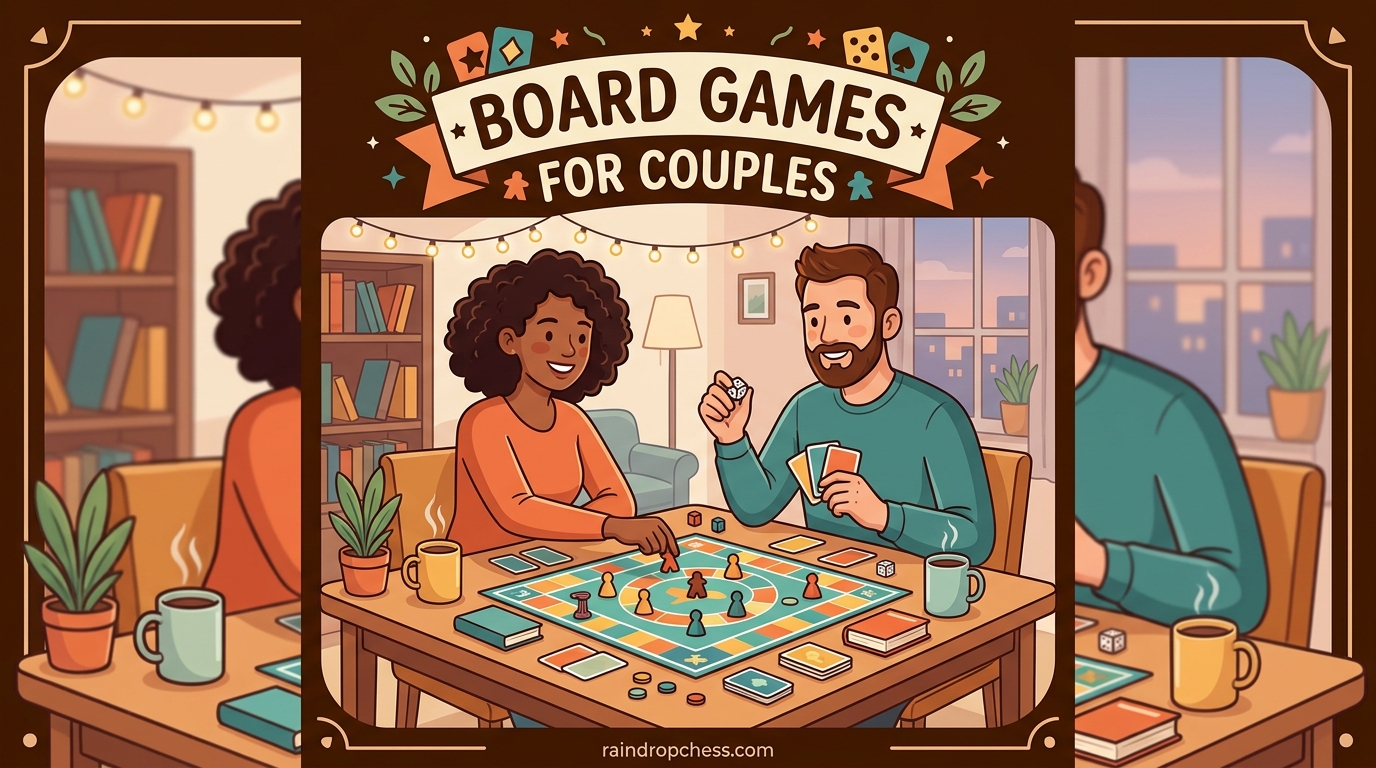
My partner and I started playing board games together a few years ago, and it completely changed our date nights. Instead of scrolling through streaming menus for 30 minutes, we actually talk, laugh, and sometimes get genuinely competitive over a tabletop showdown. Finding the best board games for couples took some trial and error, though. Some games sparked arguments instead of connection. Others sat on the shelf because they took too long to set up.
That is exactly why I put together this guide. Our team tested over a dozen two-player board games across multiple date nights, coffee shop visits, and quiet Sunday afternoons at home. I narrowed it down to 11 games that genuinely work for couples, whether you want a quick 20-minute round before dinner or a deeper strategy session on a rainy weekend. Every pick on this list earned its spot through real play sessions, not just spec sheets.
From cooperative adventures where you work as a team to competitive card games that keep things lively, these selections cover a range of styles and skill levels. I included portable options for brewery dates, quick games for busy weeknights, and deeper strategy picks for couples who love a mental challenge. Let me walk you through the ones worth your table time in 2026.
Table of Contents
Top 3 Picks for Best Board Games for Couples
Best Board Games for Couples in 2026
| Product | Specifications | Action |
|---|---|---|
 Sky Team Sky Team |
|
Check Latest Price |
 Jaipur Jaipur |
|
Check Latest Price |
 Fox in the Forest Fox in the Forest |
|
Check Latest Price |
 Azul Azul |
|
Check Latest Price |
 Splendor Splendor |
|
Check Latest Price |
 Splendor Duel Splendor Duel |
|
Check Latest Price |
 Carcassonne Carcassonne |
|
Check Latest Price |
 Forbidden Island Forbidden Island |
|
Check Latest Price |
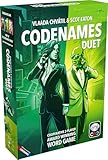 Codenames Duet 2nd Ed Codenames Duet 2nd Ed |
|
Check Latest Price |
 BOOP BOOP |
|
Check Latest Price |
 Ultimate Date Night Game Ultimate Date Night Game |
|
Check Latest Price |
1. Sky Team – Cooperative Dice Rolling at Its Best
Sky Team | Work Together to Land the Plane | Ages 12+ | 2 Players
2 Players
20 Minutes Playtime
Cooperative Dice Game
2024 Game of the Year
Pros
- Won Game of the Year 2024
- Unique limited-communication mechanic
- 20 scenarios for variety
- Quick 15-20 minute sessions
- Works at any venue
Cons
- Can feel tense and sweaty-palmed
- Dized app recommended for first setup
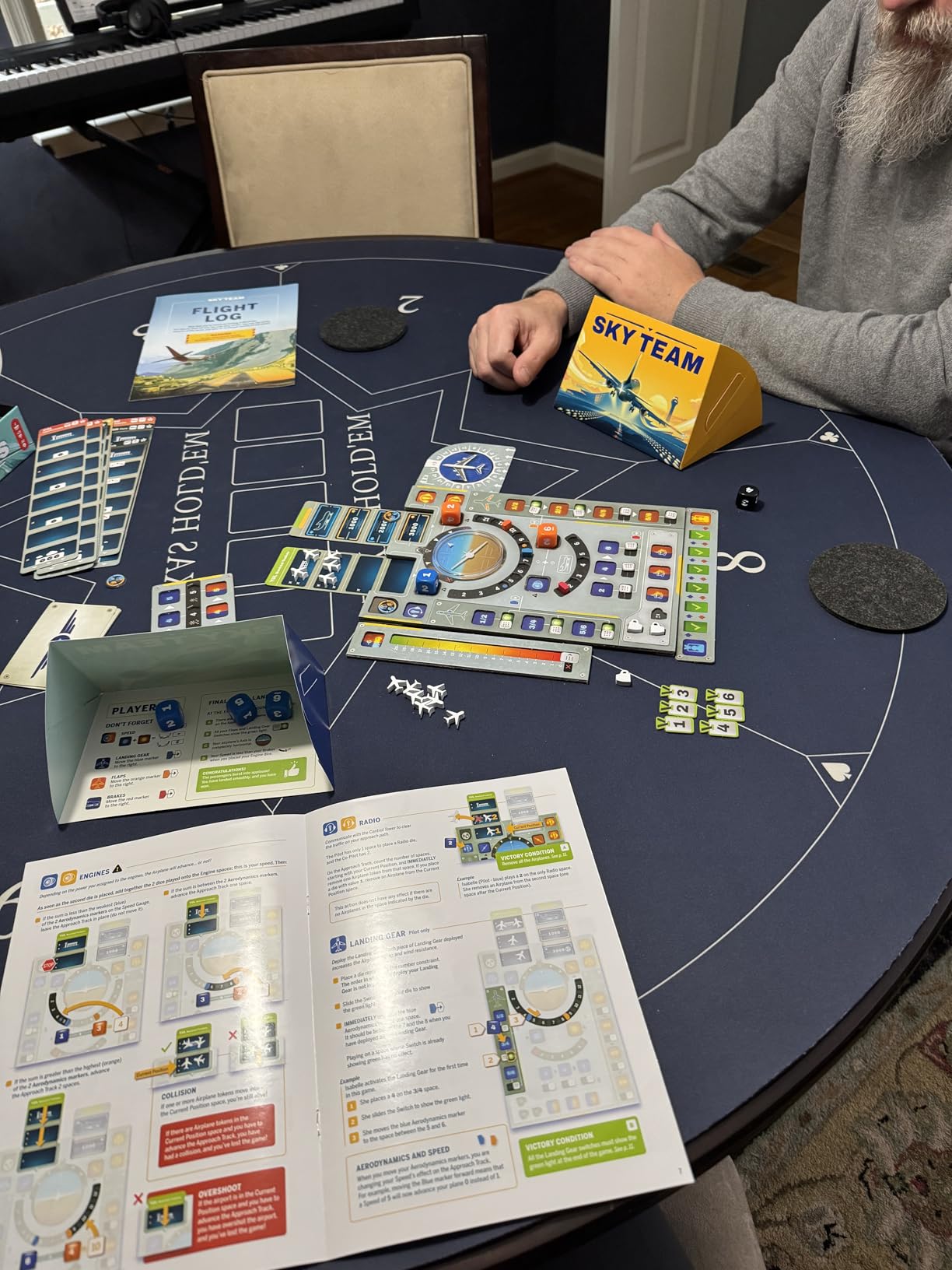
The first time my partner and I played Sky Team, we landed on the wrong runway and almost crashed. Twice. But we immediately started a second round because the tension felt electric, not frustrating. You play as co-pilots trying to land a commercial airplane, rolling dice in secret while communicating only through brief glances and setup discussions between rounds. That limited-communication mechanic forces you to trust your partner, which is what makes it such a standout among board games for couples.
Each round, you secretly roll your dice behind a screen, then place them on the instrument panel to adjust speed, angle the flaps, and manage the landing gear. You cannot talk during the rolling phase, so you learn to read each other’s intentions from the dice already placed. It sounds simple, but the time pressure and hidden information create genuine suspense. I have never felt so relieved as when we finally touched down safely after a nail-biting final approach.

Twenty different scenarios keep the game fresh over dozens of plays. Early scenarios teach the basics with gentle difficulty curves, while later ones introduce fog, ice, and other hazards that demand tighter coordination. The components are solid, and the cockpit board layout is clean and intuitive once you get past the initial rulebook read. The Dized app tutorial genuinely helps with that first setup, so I recommend using it.
The only downside is that some scenarios can feel almost too intense for a relaxing date night. If you and your partner prefer chill, low-stress gaming, the sweaty-palmed tension might catch you off guard. But for most couples, that tension is exactly what makes Sky Team so memorable.
Best for couples who thrive on teamwork under pressure
Sky Team shines when both players enjoy a shared challenge rather than competing against each other. You win or lose together, which removes the sting of defeat and doubles the celebration of victory. I found it especially good for couples who sometimes argue during competitive games because there is no opponent to blame.
The 20-minute playtime also means you can easily fit in two or three rounds on a weeknight. It scales perfectly for a quick session after dinner or as the centerpiece of a longer game night.
Consider a different pick if you dislike time pressure
If real-time decision-making or countdown timers stress you out, Sky Team might feel more like a test than a date night activity. The core loop involves rolling dice and placing them under time pressure, which some couples find anxiety-inducing rather than fun.
Couples who prefer methodical, think-ahead gameplay with no hidden information will likely enjoy Jaipur or Azul more. Sky Team rewards quick adaptation and trust, not careful planning.
2. Jaipur – Fast-Paced Trading Duel for Two
Asmodee Jaipur 2-Player Trading Card Strategy Game, Ages 10+
2 Players Only
30 Minutes Playtime
Card Drafting and Set Collection
Compact Travel Size
Pros
- Designed exclusively for two players
- Quick 30-minute rounds
- Compact and travel-friendly
- Easy to learn with real depth
- Beautiful theme and components
Cons
- Setup requires organizing chips
- Some luck in market card draws
Jaipur has been a staple on our date nights for over two years now, and it never gets old. You play as rival merchants in Rajasthan, buying and selling goods like spices, silk, and gems to become the Maharaja’s personal trader. The trading card mechanics are simple to explain but create surprisingly tough decisions every single turn. Do you sell now while the price is high, or hoard goods for a bigger bonus at the risk of the market flooding?
What I love most about Jaipur is how evenly matched it feels. Unlike some games where experience guarantees a win, the market card draws and camel token dynamics introduce enough variability that newer players can absolutely beat veterans. My partner and I trade wins constantly, which keeps both of us engaged and neither of us sulking. The compact box means we have tossed it into backpacks for coffee shop dates and even played it at a brewery patio on a Sunday afternoon.
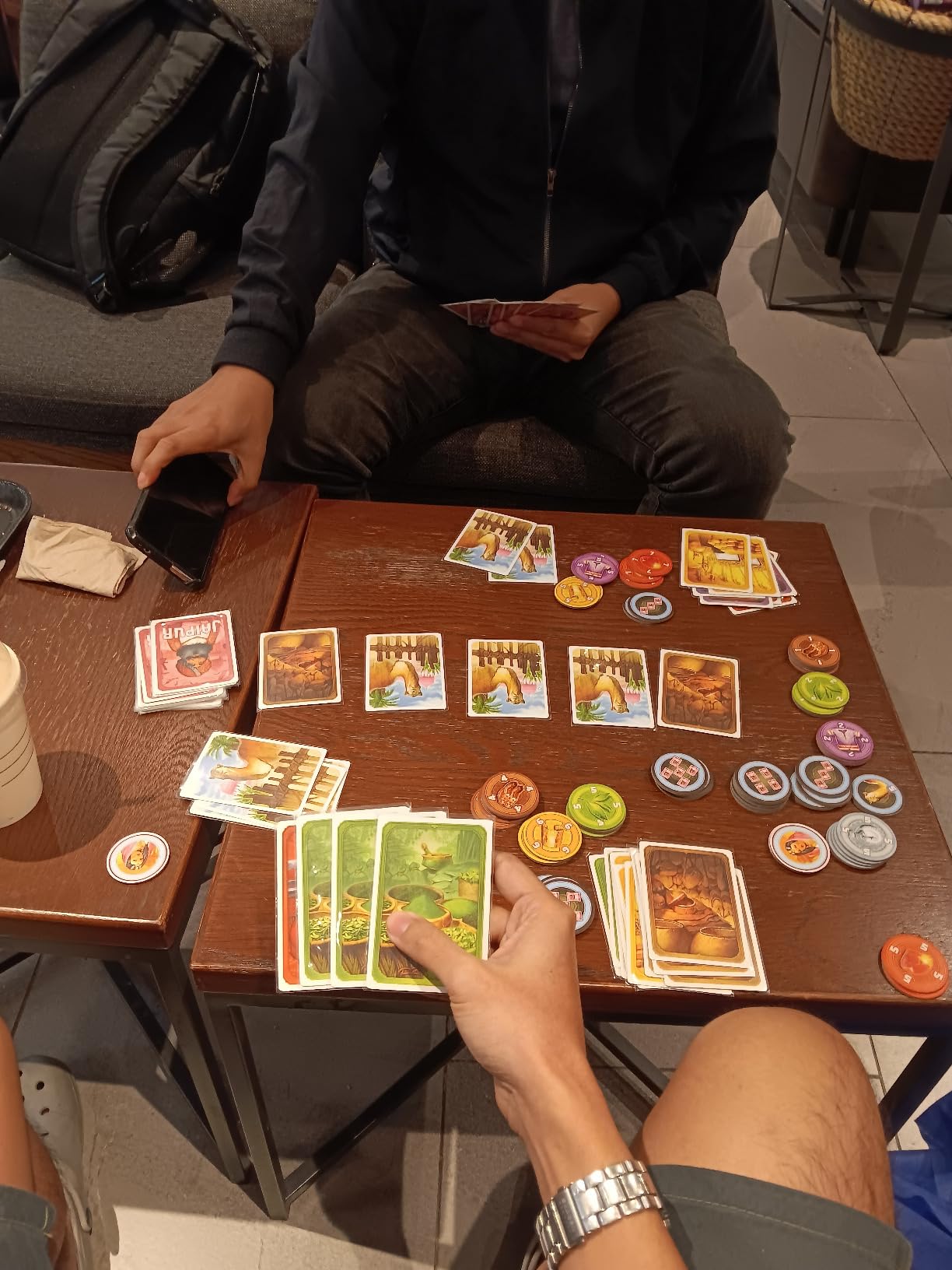
The component quality punches above its weight class. The linen-finish cards feel premium, and the chipboard tokens for goods and bonuses have a satisfying heft. Setup does take a couple of minutes because you need to sort the tokens by type and shuffle the deck, but it becomes second nature after a few plays. Each game is best two out of three rounds, which takes about 30 to 40 minutes total.
The only drawback is that some couples might find the set-collection luck factor frustrating on occasion. Drawing the wrong cards at the wrong time can feel punishing, but in my experience, smart trading and camel management usually outweigh bad draws over a full match.
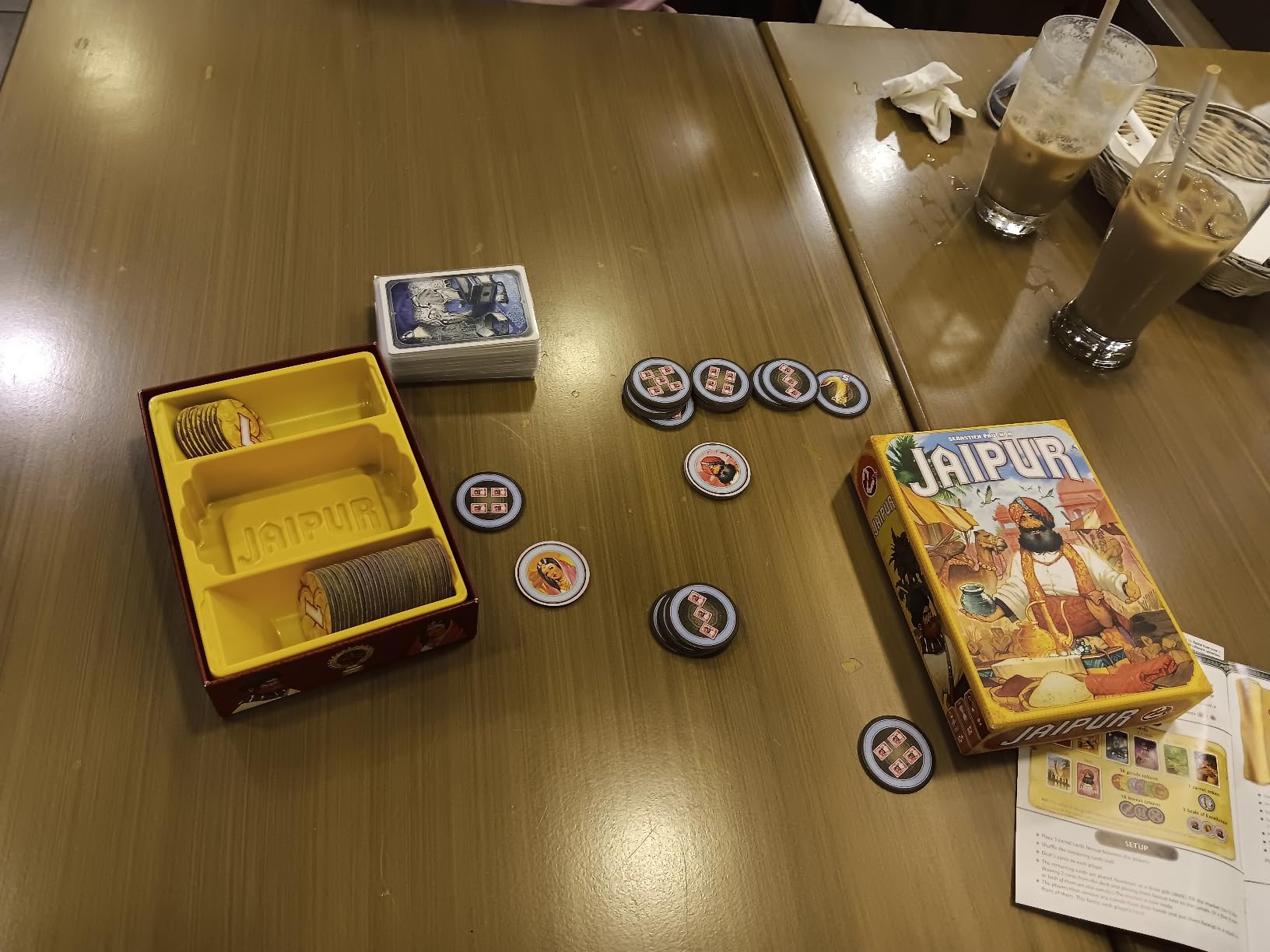
Perfect for couples who want a portable date night game
Jaipur fits in a jacket pocket and plays on a surface no bigger than a placemat. That makes it one of the best board games for couples who want to game outside the house. I have played it at coffee shops, restaurant tables, and even on an airplane tray table. The quiet, non-verbal-heavy gameplay means you will not bother people at neighboring tables.
It also scales nicely in intensity. You can play casually while chatting, or you can concentrate hard and treat it like a serious head-to-head duel. The choice is yours, which makes it adaptable to whatever kind of date night you are having.
May feel too light for hardcore strategy gamers
If you and your partner are the type who enjoy 90-minute strategy epics with branching decision trees, Jaipur might feel a bit too breezy. The decisions are meaningful but not brain-burning, and some hardcore gamers find the market randomness reduces the strategic depth.
For a heavier two-player strategic duel, I would recommend Splendor Duel instead, which adds more layered engine-building on top of a similar competitive framework.
3. Fox in the Forest – Trick-Taking Magic for Two
Renegade Game Studios Fox in the Forest ,2 Player Card Games, Trick-Taking Strategy Game for Adults, Compact Travel Board Game, 30 min
2 Players Only
30 Minutes Playtime
Trick-Taking Card Game
Fairy Tale Theme
Pros
- Affordable price point
- Beautiful fairy tale artwork
- Unique trick-taking for two
- Compact and travel-friendly
- Quick rounds
Cons
- May lack depth for core gamers
- Can feel repetitive after many plays
I grew up playing trick-taking card games with my family, so Fox in the Forest felt instantly familiar yet completely fresh. Most trick-taking games fall apart with only two players, but this one was designed specifically for pairs from the ground up. The fairy tale theme adds charm without getting in the way of the strategy. Each card features gorgeous artwork depicting characters from classic fairy tales, which makes every hand a visual treat.
The genius twist is that winning too many tricks actually hurts you. If you take more than half the tricks in a round, your opponent gains bonus points instead. This creates a fascinating dance where sometimes you want to win and sometimes you want to lose on purpose, which leads to genuinely surprising tactical decisions. My partner and I found ourselves laughing at how often we accidentally won tricks we were trying to throw.

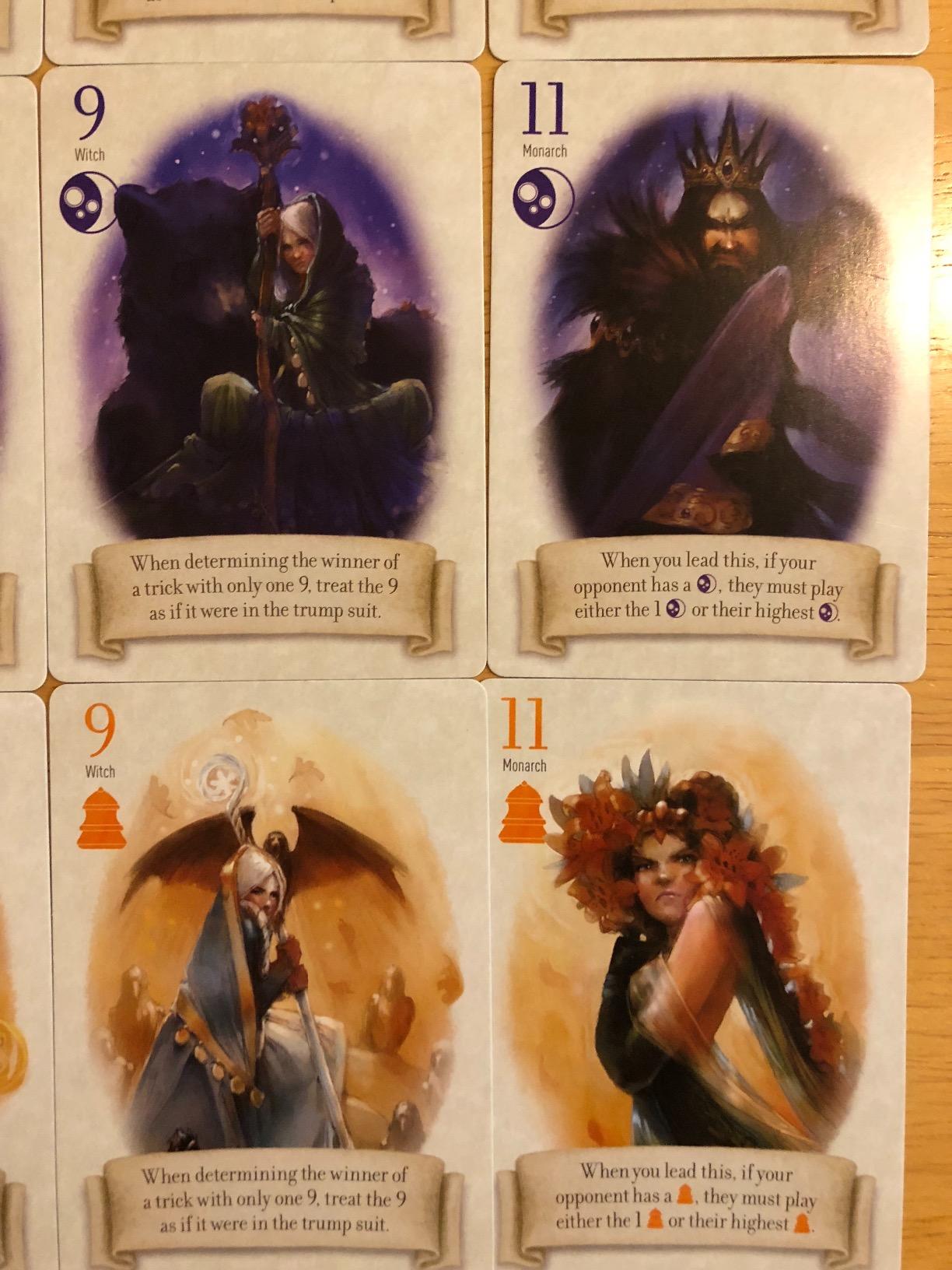
Odd-numbered cards have special abilities that shake up the standard trick-taking formula. The Fox lets you swap the trump suit, the Woodcutter lets you draw and discard, and the Witch acts as a trump card when played. These abilities reward creative play and keep each round feeling different from the last. Games run about 30 minutes across multiple hands, so it fits easily into a date night without monopolizing the whole evening.
At this price point, Fox in the Forest is one of the best values in two-player gaming. The card quality is excellent, the rules take about three minutes to explain, and the strategy depth grows with every play session. It has become my go-to recommendation for couples who want something fun without a big investment.
Ideal for couples new to strategy games
If one or both of you are newer to tabletop gaming beyond Monopoly or Uno, Fox in the Forest is a gentle on-ramp. The trick-taking rules are easy to grasp, and the special card abilities add just enough complexity to keep things interesting without overwhelming anyone. I taught it to my non-gamer sister and her husband in under five minutes, and they immediately asked to play again.
The compact size also makes it a great stocking stuffer or small gift. You can literally carry it in a pocket, so spontaneous game nights at a coffee shop are always an option.
Not the best pick if you want deep, engine-building strategy
Couples who enjoy building long-term strategies across a game will find Fox in the Forest too tactical and short-term. Each hand is essentially a self-contained puzzle, and there is no carryover between rounds. If you prefer games where decisions compound over time, look at Splendor or Azul instead.
Additionally, after dozens of plays, some couples report that the card pool starts to feel predictable. There are only 33 cards in the deck, so experienced players will eventually see most combinations.
4. Azul – Stunning Tile Placement Strategy
Azul Mosaic Tile-Placement Strategy Board Game, 2-4 Players, 30-45 Min
2-4 Players
30-45 Minutes Playtime
Tile Placement and Pattern Building
2018 Spiel des Jahres Winner
Pros
- Award-winning design
- Beautiful mosaic tiles
- Scales perfectly for two players
- Easy to learn with deep strategy
- High-quality resin components
Cons
- Rule book could be clearer
- Some scoring edge cases feel fiddly
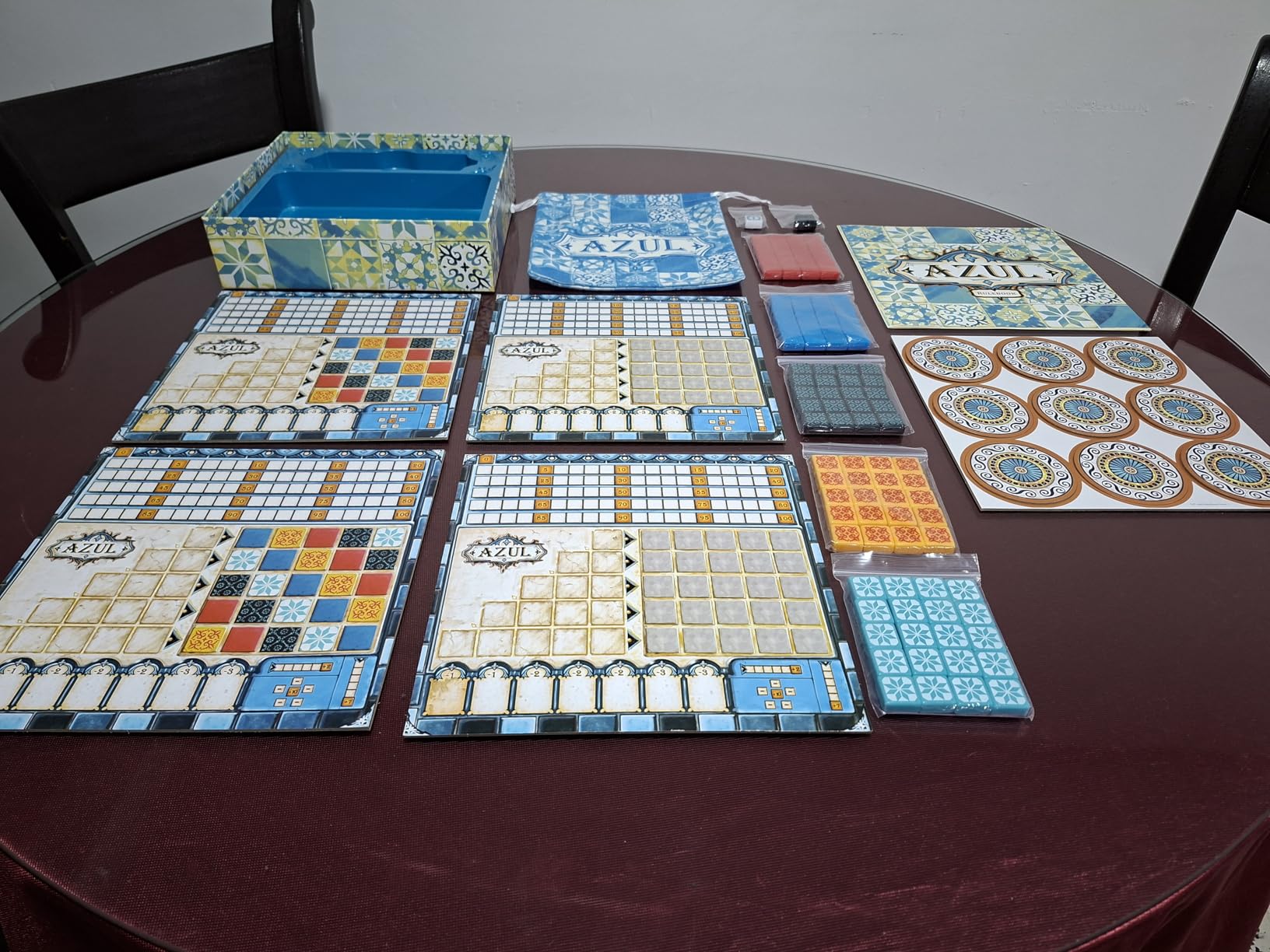
Azul is the game that made me realize board games could be genuinely beautiful. The resin mosaic tiles have real weight to them, and clicking them into place on your player board feels satisfying in a way that cardboard punch-out tokens never do. You draft tiles from shared factory displays, trying to complete rows on your mosaic pattern. It sounds straightforward, but the drafting creates delicious tension because taking tiles you need often gives your opponent exactly what they want.
My partner and I have played Azul probably 50 times now, and the two-player experience holds up brilliantly. With fewer players, you can plan ahead more effectively because you know exactly which tiles your opponent is collecting. Blocking becomes a real strategy, and the drafting phase feels like a constant negotiation between building your own pattern and denying theirs. Rounds take about 30 to 45 minutes, which is long enough to feel meaningful but short enough for a weeknight.
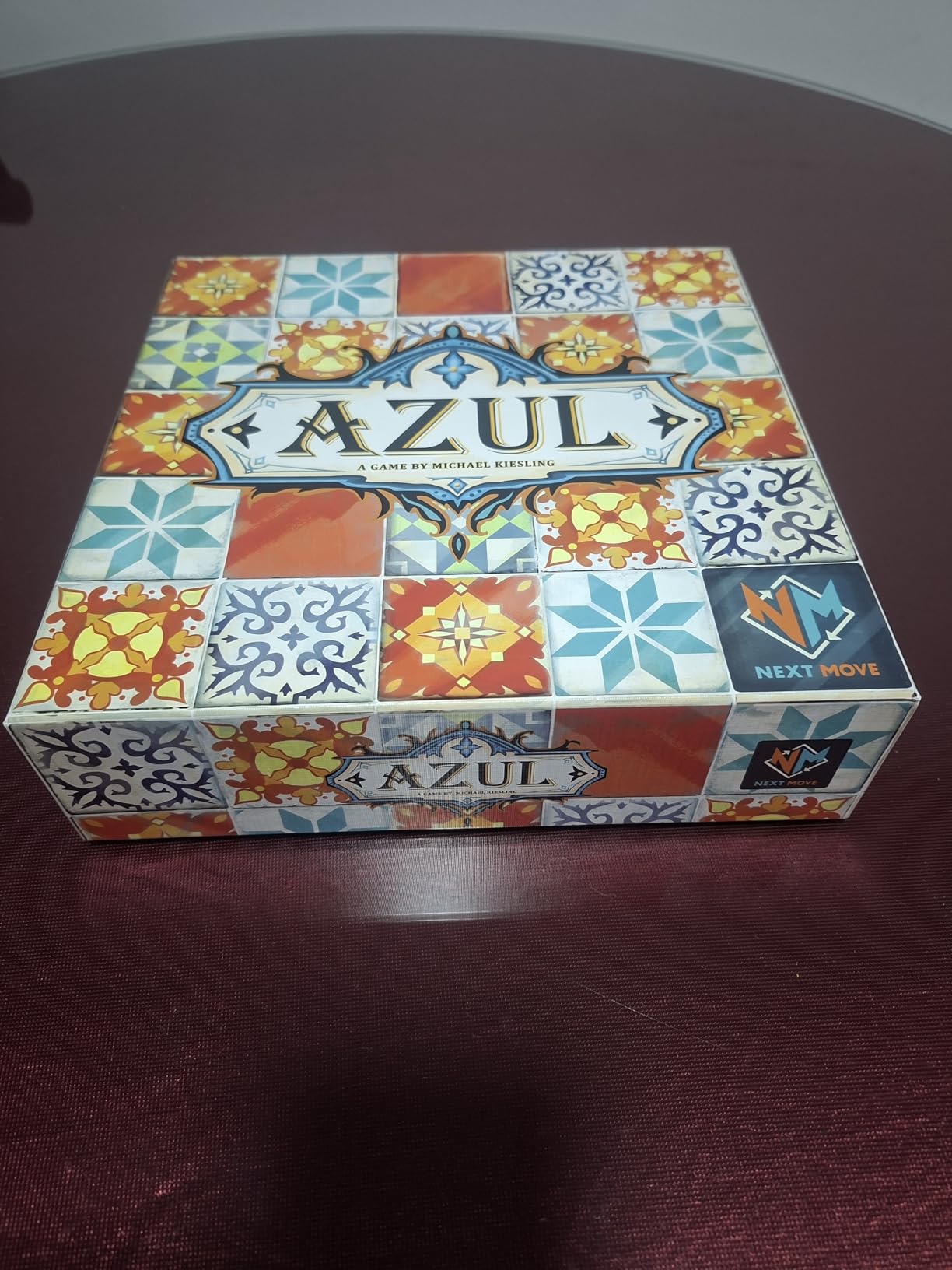
The 2018 Spiel des Jahres award is well deserved. The rules can be explained in under five minutes, but the strategy emerges naturally through play rather than through complex rulebooks. Scoring involves matching tile colors in rows and columns, creating cascading point bonuses when you plan well. My partner tends to go for safe, consistent rows, while I gamble on high-risk column completions. Neither approach dominates, which speaks to the balance.
The main downside is the rulebook, which could be more intuitive. I recommend watching a quick tutorial video before your first game. Once you get through the initial scoring explanation, everything clicks and you will not need the rules again.
Great for couples who enjoy visual and tactile experiences
Azul appeals to couples who appreciate aesthetics as much as strategy. The finished mosaic patterns look genuinely pretty on the table, and there is a meditative quality to placing tiles that makes it feel more relaxing than cutthroat. It works especially well at home on a larger table where you can spread out the factory displays.
The game also rewards repeated play because you start recognizing optimal patterns and tile distributions. Our games have gotten tighter and more competitive over time, which keeps us coming back.
Requires decent table space and lighting
Azul is not the best choice for coffee shop or brewery dates. You need a reasonably flat surface with good lighting to distinguish tile colors, and the factory displays spread out across a fair amount of table space. In dim restaurants or cramped tables, the dark blue and black tiles become difficult to tell apart.
If portability is a priority, pair Azul with a compact game like Fox in the Forest or Jaipur for on-the-go date nights, and save Azul for home sessions.
5. Splendor – Gem Trading Engine-Building Perfection
Asmodee Splendor Gem Trading Strategy Board Game, 2-4 Players
2-4 Players
30 Minutes Playtime
Engine-Building Strategy
Gem Token Collecting
Pros
- Incredibly smooth engine-building mechanic
- High-quality poker-style gem chips
- Fast 30-minute playtime
- Scales well from 2 to 4 players
- Excellent replay value
Cons
- Theme feels pasted on
- Cards may benefit from sleeves
Splendor might have the most satisfying tactile experience of any game on this list. The gem tokens are heavy, poker-style chips that clink when you stack them, and hoarding a pile of them in front of you feels genuinely rewarding. The gameplay loop is deceptively simple: collect gem tokens, buy development cards, attract nobles for bonus points. But the engine-building progression creates a snowball effect where your early decisions pay dividends later in the game.
With nearly 15,000 reviews and a 4.9 rating, Splendor has earned its reputation as one of the best strategy board games available. My partner and I play it at least once a month, and the two-player dynamic is tighter and more competitive than the group version. With only one opponent to watch, you can predict what they are building toward and strategically block their path. The 30-minute playtime hits the sweet spot for date nights.

The learning curve is remarkably gentle. I have taught Splendor to friends in under five minutes, and they are making strategic decisions by their second turn. Yet after dozens of plays, I am still discovering new card combinations and engine-building paths. The nobles add a racing element, and the tension of whether to reserve a card your opponent needs versus building your own engine creates constant meaningful choices.
The theme is admittedly thin. You are technically Renaissance gem merchants, but nothing about the gameplay feels particularly thematic. If you need immersive storytelling, this is not your game. But if you enjoy pure, elegant mechanics with almost no downtime between turns, Splendor delivers in spades.

Perfect for couples who enjoy building something together, separately
Splendor is competitive but low-conflict. You are each building your own engine of development cards, racing to 15 points, but you never directly attack your opponent. The interaction comes through shared card markets and noble competition, which feels strategic rather than personal. I have never seen Splendor cause an argument, which is rare for a competitive game.
The relaxed pace also lets you chat while playing. Turns are fast, there is no hidden information, and the table talk adds to the experience rather than distracting from it.
Less engaging if you want direct player interaction
Some couples prefer games where you actively negotiate, trade, or cooperate with your partner. Splendor is essentially multiplayer solitaire with shared resources. You watch what your opponent does and adapt, but you never truly interact on their turn.
If you want more direct back-and-forth, Jaipur offers head-to-head trading in a smaller package, or Sky Team provides full cooperative interaction.
6. Splendor Duel – Head-to-Head Gem Battles
Splendor Duel Board Game – Two-Player Strategy Game for Intense Gem Collecting Battles – Fun Family Game for Kids and Adults, Ages 10+, 2 Players, 30 Minute Playtime, Made by Space Cowboys
2 Players Only
30 Minutes Playtime
Competitive Engine-Building
Compact Design
Pros
- Designed specifically for two players
- New victory conditions beyond points
- High-quality gemstone tokens
- Compact and travel-friendly
- Deep tactical gameplay
Cons
- Pearl gems can feel overpowered
- Familiarity with original Splendor helps
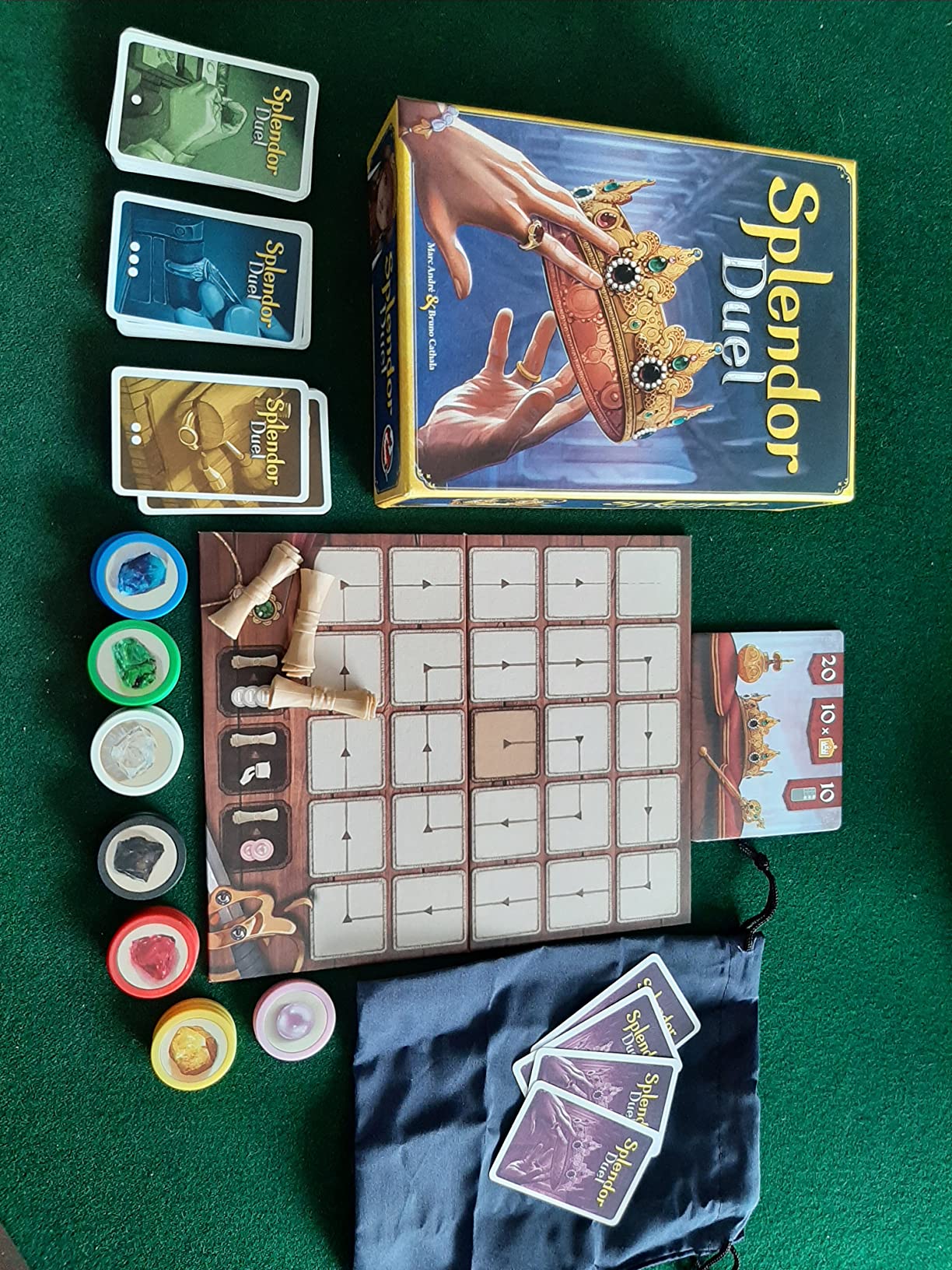
If Splendor is the family-friendly version, Splendor Duel is the spicy two-player remix that dials up the competition. It takes the gem-collecting engine-building core of the original and adds three distinct win conditions: collecting 10 gems of one type, claiming prestige from development cards, and racing to fill specific objectives on a shared victory tile. This means you can never coast on one strategy because your opponent might win through a completely different path.
I found the shared board layout more engaging than the original Splendor’s individual player setup. Gems are placed on a common board in a honeycomb pattern, and you can only take gems adjacent to ones you already control. This creates a spatial puzzle on top of the engine-building, adding a layer of strategy that feels fresh even if you have played the original dozens of times. My partner prefers Duel over the base game now because the head-to-head tension is more immediate.
The components maintain the same premium feel as the original Splendor, with heavy gemstone tokens and well-printed cards on sturdy stock. The compact box makes it significantly more portable than the original, which is a welcome improvement for couples who like to game on the go. We have taken it to coffee shops multiple times without any table space issues.
The privilege scrolls are a clever addition. They give the player who has fewer gems a chance to take extra actions, which creates a natural catch-up mechanism without feeling forced. The pearl gems do lean strong, and some reviewers feel they can dominate if left unchecked, but our group has found that awareness and strategic denial keep things balanced.
Best for couples who loved Splendor but want more direct competition
If you already own Splendor and enjoy it, Splendor Duel is the natural upgrade for two-player sessions. The shared board creates more direct interaction, and the multiple win paths prevent the multiplayer-solitaire feeling that some couples dislike about the original. It is our go-to competitive two-player game when we want something with weight but still under 30 minutes.
Even if you have never played the original Splendor, Duel stands completely on its own. The rules are self-contained and arguably easier to teach than the base game.
Skip if you strongly prefer cooperative games
Splendor Duel is purely competitive. There is no team option or cooperative variant. If competitive games create tension in your relationship, this one will not help. For a cooperative alternative with similar card-drafting satisfaction, Sky Team is the better pick.
Also, if you already own the original Splendor and rarely play with just two people, the overlap might feel redundant. The games share enough DNA that owning both only makes sense if you primarily play as a couple.
7. Carcassonne – Timeless Tile-Laying Classic
Carcassonne Tile Placement Strategy Board Game, 2-5 Players, 35 Min
2-5 Players
35 Minutes Playtime
Tile-Laying Strategy
2001 Spiel des Jahres Winner
Pros
- Classic tile-laying with proven design
- Endlessly replayable with randomized tiles
- Scales well for 2 players
- High-quality wooden meeples
- Dozens of expansions available
Cons
- Some reports of missing pieces in packaging
- Abbot and River expansions add complexity
Carcassonne is the game that got me into modern board gaming, and it still holds up years later. The premise is simple: draw a tile, place it adjacent to an existing tile, and optionally place one of your wooden meeples on a feature like a city, road, or field. The medieval landscape grows organically on the table, and by the end of the game, you have built something that looks uniquely different every single time. No two games of Carcassonne are ever the same.
The two-player experience is tighter and more strategic than the group version. With only one opponent, you can focus on blocking their cities and stealing their fields in ways that feel personal but not mean-spirited. My partner loves completing long roads for big scores, while I focus on finishing walled cities. Our contrasting strategies create a push-and-pull that keeps every game interesting. The 35-minute playtime is perfect for a relaxed date night without feeling rushed.
As a 2001 Spiel des Jahres winner with over 11,000 reviews, Carcassonne has proven its staying power. The base game is accessible enough for beginners, and the massive library of expansions means you can gradually add complexity as you get comfortable. I recommend starting with just the base game and adding expansions one at a time rather than jumping into the Big Box immediately.
The only quality issue worth noting is that some users report missing pieces in newer print runs. Check your box when it arrives, and contact the publisher if anything is missing. They have generally been responsive about replacements.
Ideal for couples who enjoy relaxed strategy with conversation
Carcassonne is one of the most conversation-friendly strategy games I have played. Turns are quick, there is no hidden information, and the tile-drawing mechanic creates natural pauses where you can chat without losing track of the game state. I have had some of the best conversations with my partner while casually placing tiles and sipping wine on a Friday evening.
The growing landscape on the table also creates a shared visual experience. You both built this medieval world together, and there is something satisfying about surveying the completed map at the end of the game.
May feel too gentle for couples who want intense competition
Carcassonne can be played aggressively with heavy blocking and field stealing, but the default play style tends toward a more relaxed, build-your-own-thing approach. If you and your partner thrive on direct confrontation and head-to-head battles, games like Jaipur or Splendor Duel deliver more of that competitive bite.
The expansions do add more interaction, but they also add complexity. If you want a simple game that plays in 30 minutes, the base game is where Carcassonne shines brightest.
8. Forbidden Island – Cooperative Survival Adventure
Gamewright Forbidden Island, 1st Edition Board Game, 2-4 Players, Ages 14+
2-4 Players
30 Minutes Playtime
Cooperative Strategy Survival
Multiple Difficulty Levels
Pros
- Cooperative gameplay builds teamwork
- Sinking island mechanic creates tension
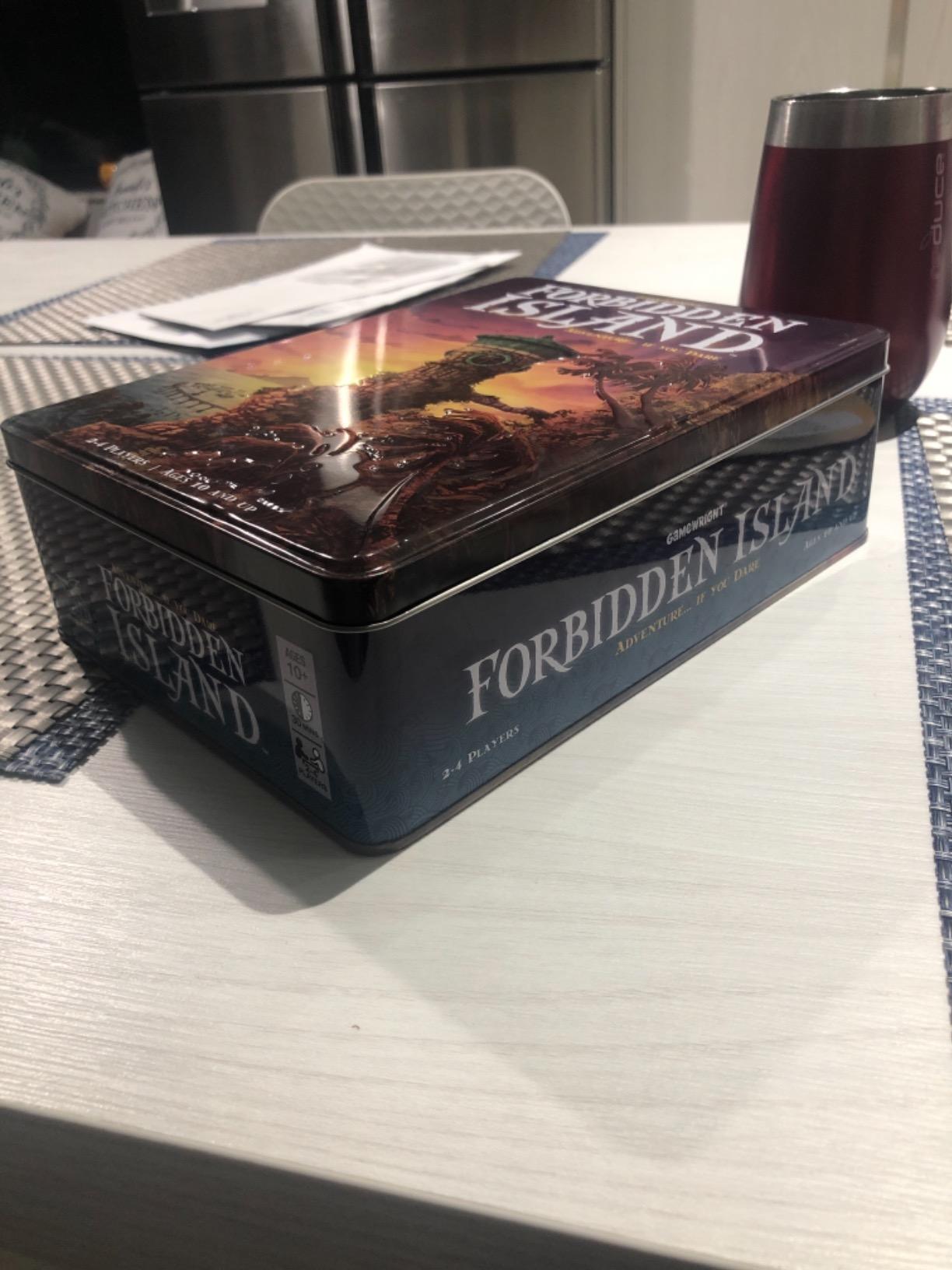
- Beautiful artwork and metal tin packaging
- Works great with 2 players
- Quick 20-30 minute sessions
Cons
- May feel too light for serious gamers
- Tin box can be awkward to store
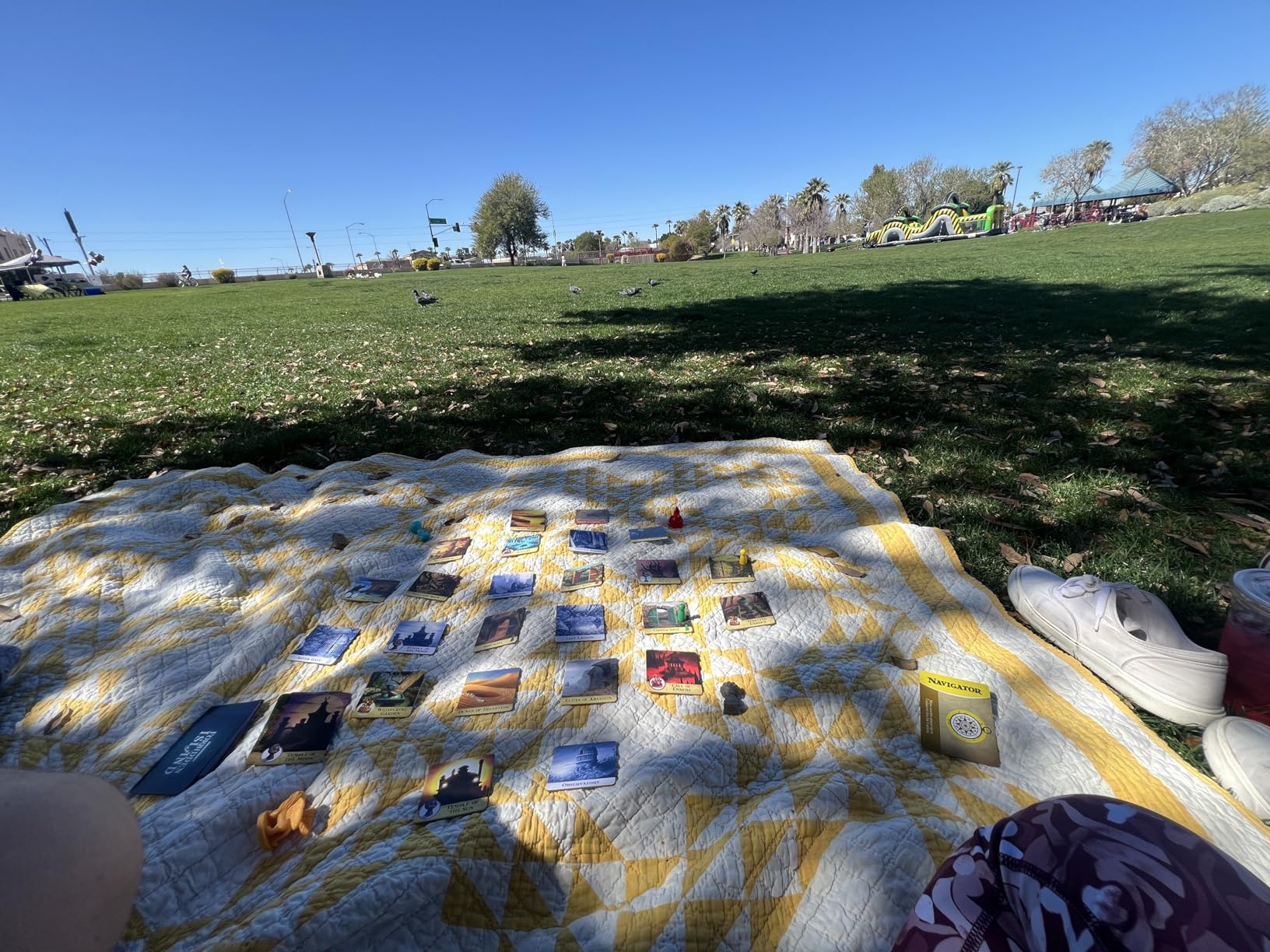
Forbidden Island was designed by Matt Leacock, the same designer behind Pandemic, and it shows. You and your partner play as adventurers racing to collect four treasures from a sinking island before it disappears beneath the waves. Each turn, tiles flood and sink, cutting off paths and forcing you to adapt your plans on the fly. The sinking mechanic creates genuine urgency without requiring a timer, which I appreciate on date nights when I want excitement without stress.
Each player gets a unique role with special abilities, and figuring out how your powers complement your partner’s is half the fun. My partner usually plays the Navigator, moving me around the board efficiently, while I take the Engineer, shoring up flooded tiles twice as fast. The cooperation feels natural and rewarding, and winning always feels like a shared accomplishment. Games typically run 20 to 30 minutes, so you can easily play a couple of rounds in one sitting.
The adjustable difficulty is a thoughtful touch. You start with novice level and work your way up to elite, which makes Forbidden Island accessible for couples where one person is more experienced than the other. The first few games on easy mode let both players learn the mechanics without getting crushed, and the higher difficulty levels provide genuine challenges for experienced teams. The components are solid, and the game comes in a sturdy metal tin that looks great on a shelf.
The main limitation is depth. After you have beaten elite difficulty a few times, the strategic variety starts to flatten. There are only so many ways the island can sink, and experienced gamers may find the decisions become routine after 20 or more plays.
Perfect entry point for cooperative couples gaming
If you have never played a cooperative board game before, Forbidden Island is the ideal starting point. The rules are straightforward, the theme is engaging, and the difficulty scaling means you will not get stuck on a frustrating learning curve. It is also one of the most affordable cooperative games available, making it a low-risk way to test whether you and your partner enjoy working together at the table.
The cooperative format eliminates winner-loser dynamics entirely. You both celebrate victories and process defeats together, which makes it a genuinely bonding experience.
Too light for experienced cooperative gamers
If you have already played through Pandemic, Spirit Island, or other heavy cooperative games, Forbidden Island will feel like a warm-up act. The decisions are meaningful but not complex, and the game state is fully visible at all times. There is no hidden traitor mechanic or role-playing element to add variety.
For couples wanting a more substantial cooperative challenge, Sky Team delivers more tension and variety in a similar playtime. Forbidden Island is best viewed as a gateway game that introduces cooperative mechanics gently.
9. Codenames Duet (2nd Edition) – Words That Connect You
CGE Codenames: Duet Board Game (2nd Edition)
2 Players Only
15 Minutes Playtime
Cooperative Word Association
400 New Words
Pros
- Cooperative word game built for two
- Reveals how well you think alike
- 400 new words with revised art
- Quick 15-minute rounds
- Compatible with original Codenames
Cons
- Word repetition after many plays
- Some prefer the 4+ player version
Codenames Duet is the game that will tell you exactly how well you and your partner think alike. Each player sees half the key showing which words on the grid are friendly agents, and you take turns giving one-word clues with a number to help your partner identify your agents while avoiding the assassin. When your partner nods and says, “Oh, I get it,” after your clue, it is a genuinely satisfying moment of connection. When they pick the wrong word and you both groan, it is equally funny.
The second edition upgrades are welcome: better insert, revised word list, refreshed artwork, and a streamlined rulebook. The 400 new words are compatible with the original Codenames, so if you already own that, you can mix and match for even more variety. Games take about 15 minutes, making this one of the quickest options on the list for a spontaneous round between activities or while waiting for dinner to cook.
The grid of 25 words on a 5 by 5 board means setup is fast and the spatial element of the grid adds a layer of strategy. You are not just thinking of good clues. You are thinking about which words are adjacent to dangers, how many targets you can safely reach with one clue, and whether your partner will interpret your hints the same way you intended. It is communication as a game mechanic, and it works beautifully for couples.
Best for couples who love conversation and mental connection
If your ideal date night involves talking, laughing, and discovering new things about how each other thinks, Codenames Duet is hard to beat. The clue-giving mechanic reveals thought patterns in a way that normal conversation does not. I learned that my partner associates “orbit” with their childhood science project, not with space, which changed how I give clues. These small discoveries accumulate over time and genuinely improve communication outside the game.
It is also incredibly quiet and low-key, making it perfect for coffee shops or waiting areas where you want something to do without causing a scene.
Word repetition can become an issue for frequent players
After 20 or more games, you will start seeing the same words appear on the grid. When a word has been used as a clue target in a previous game, it carries baggage that affects future rounds. Some couples find this adds depth, while others find it reduces the freshness of the experience.
Combining the word deck with the original Codenames doubles the variety, but that requires owning both games. If you plan to play this frequently, that investment is worth considering.
10. BOOP – Adorable Cat Strategy With a Twist
Smirk and Dagger BOOP 2-Player Cat Strategy Board Game
2 Players
20 Minutes Playtime
Tactical Pattern Strategy
32 Wooden Cat Pieces
Pros
- Unique boop chain-reaction mechanic
- Adorable wooden cat and kitten pieces
- Quick to learn with surprising depth
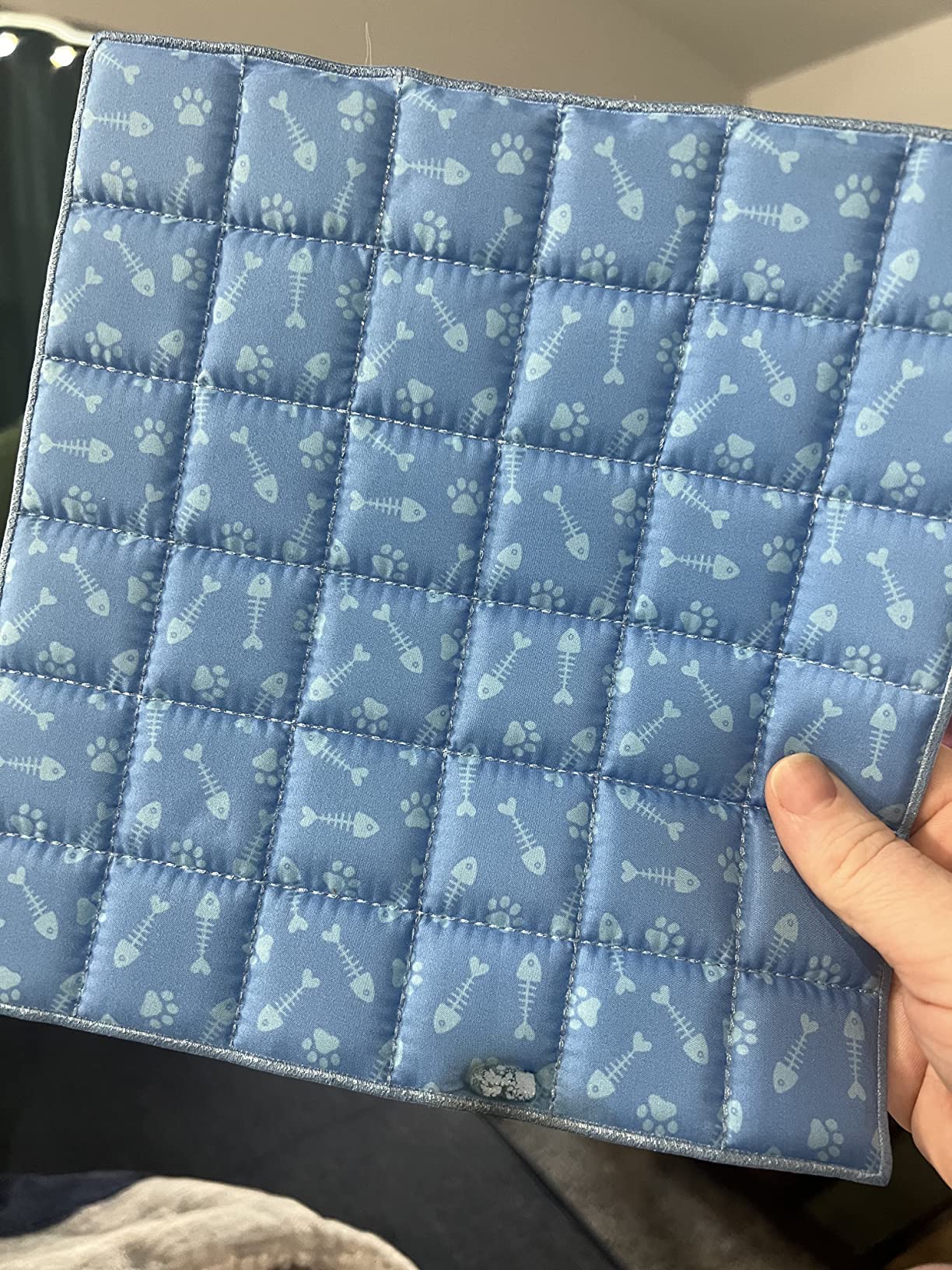
- Quilted board with premium feel
- Perfect 20-minute playtime
Cons
- Board surface can make pieces slide
- May feel light for complex strategy fans
BOOP is the most adorable game I have ever played, and I do not say that lightly. The 32 wooden cat and kitten pieces have genuine personality, and placing them on the soft quilted board feels like tucking cats into bed. But beneath the cute exterior lies a genuinely clever strategy game. Every time you place a piece, it boops all adjacent pieces one space in any direction. That single mechanic creates chain reactions that can completely rearrange the board on every turn.
The goal is to line up three cats in a row, but the boop mechanic means your carefully arranged lines can get scattered by your opponent’s placements. Kittens graduate into adult cats when they reach the back row, which adds a progression system that rewards forward thinking. I have lost count of the times I thought I had a winning line set up, only to watch my partner boop it apart with one well-placed kitten. The table talk and laughter this game generates are unmatched.
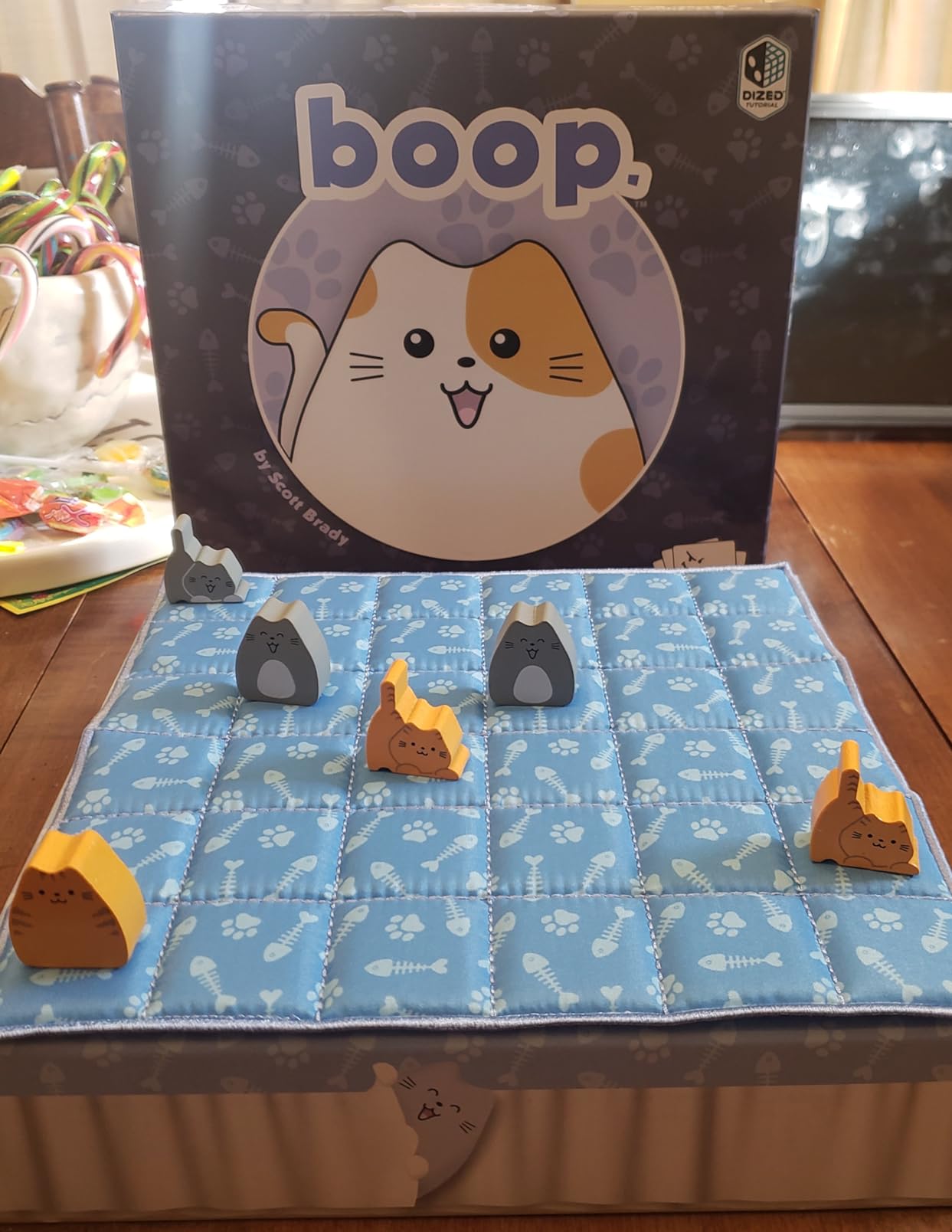
Games take about 20 minutes, which makes BOOP perfect for a quick date night round or a palate cleanser between heavier games. The rules take two minutes to explain, but the strategic depth sneaks up on you. My partner and I started treating it casually and quickly realized that planning two moves ahead is the minimum for competitive play. The quilted board and wooden pieces give it a cozy, craft-fair quality that looks great on the table.
The soft board surface can sometimes cause pieces to slide when you are placing new ones, which occasionally disrupts positions. It is a minor annoyance that becomes second nature to manage after a few plays, but it is worth knowing upfront.
Best for couples who want lighthearted fun with hidden depth
BOOP is the perfect game for couples who want to smile and laugh while still making meaningful strategic decisions. The cat theme disarms any competitive tension, and the chain-reaction boop mechanic creates surprises that keep both players engaged. I have seen couples who normally avoid competitive games get genuinely invested in their BOOP matches.
It is also an excellent gift game. The charming presentation and simple rules make it easy to introduce to any couple, gamer or not.
Look elsewhere for deep, thinky strategy
BOOP is tactical and reactive, not strategic and planned. You are responding to the board state each turn rather than executing a long-term plan. Couples who enjoy the engine-building satisfaction of Splendor or the spatial planning of Azul may find BOOP too chaotic and short-term.
The game also maxes out at two players, so it does not double as a group party game. For similar chaotic fun with more players, look at party-oriented games instead.
11. The Ultimate Date Night Game – Conversation Sparks for Couples
The Ultimate Date Night Game, A Fun Couples Game by Relatable
2+ Players
45 Minutes Playtime
Party and Conversation Game
200 Cards with Spinner
Pros
- Sparks genuine conversation between couples
- Easy to learn with no strategy barrier
- Quality heavyweight cards
- Great value for the price
- Excellent gift for couples
Cons
- Some cards may feel too American-focused
- Not deep enough for long-established relationships
- Some risqué content
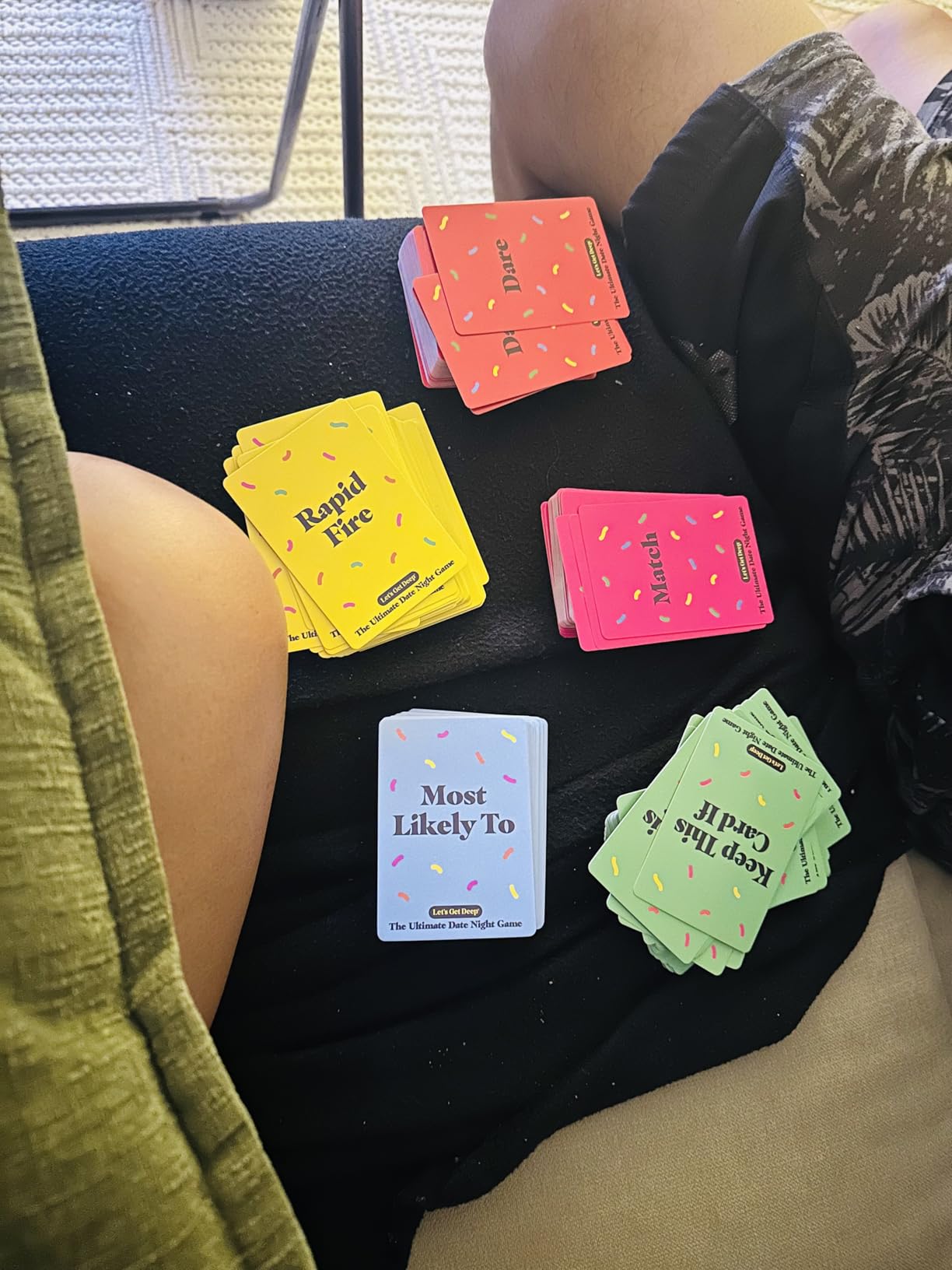
The Ultimate Date Night Game is not a traditional board game, and that is exactly the point. It is a conversation-driven card game with 200 cards across five categories and a spinner that determines which deck you draw from. The first player to collect 25 cards wins, but honestly, the scoring feels secondary to the conversations the cards spark. My partner and I learned things about each other during our first playthrough that we had never discussed in five years of being together.
The categories range from lighthearted to intimate, and the mix keeps the energy moving so no single round drags. Some cards ask you to share memories, others prompt small physical challenges or reveal preferences. It is structured enough to avoid awkward silences but open-ended enough to feel natural rather than scripted. The heavyweight card stock and clean design feel premium, and the rules take about 30 seconds to explain.
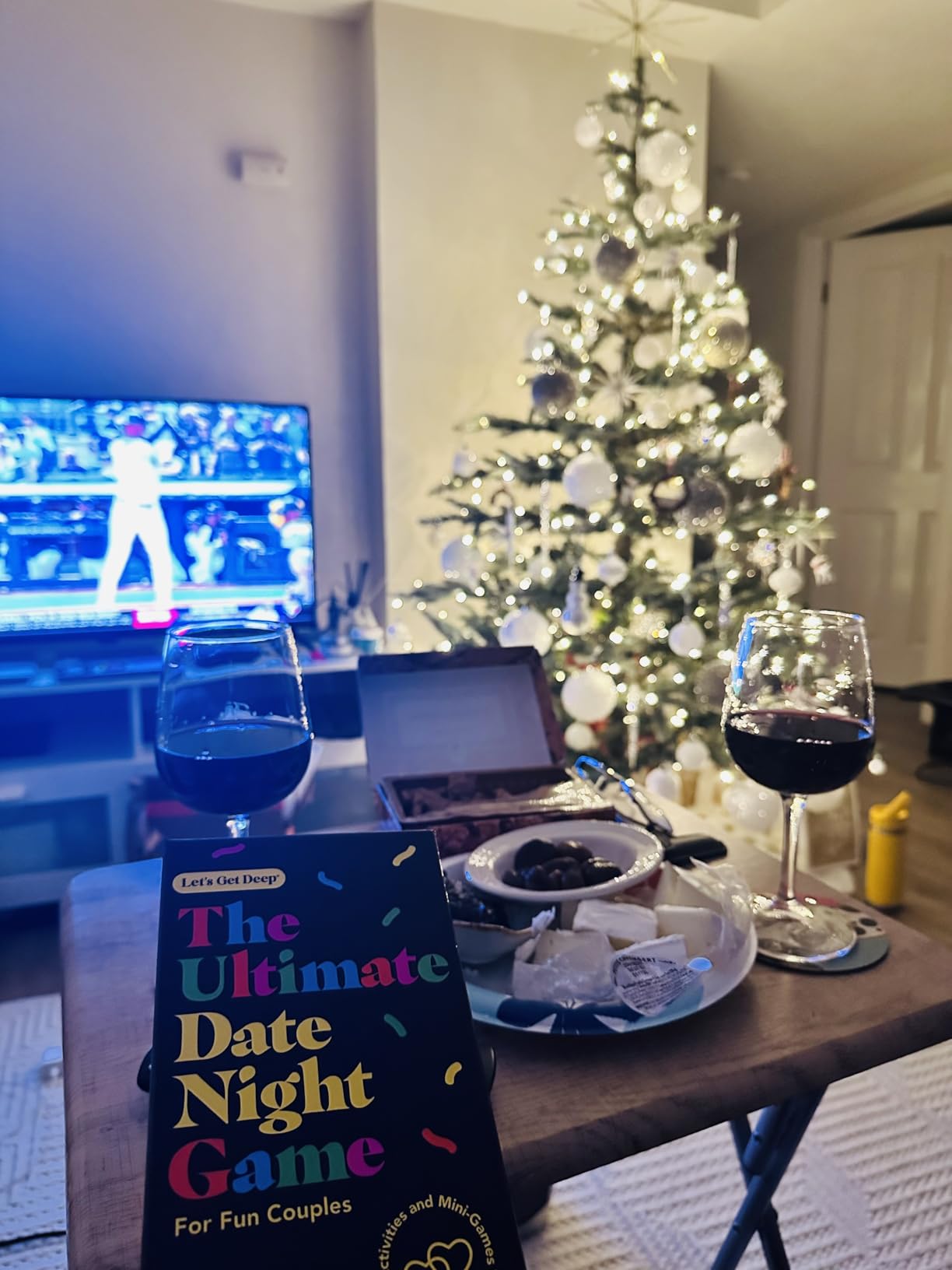
With over 800 reviews and a 4.6 rating, this game has resonated with a lot of couples. It is particularly good for newer couples who are still learning about each other, or for established couples who want to break out of conversation ruts. The 45-minute playtime is long enough to feel like a complete activity but short enough for a weeknight. I recommend pairing it with a nice dinner or drinks to set the mood.
The main caveat is that some of the cultural references skew American, which international couples may find less relatable. A few reviews also mention that couples in very long-term relationships might find some questions too surface-level for their history together.
Perfect for couples seeking connection over competition
If traditional board games feel too game-y for your date night, The Ultimate Date Night Game bridges the gap between an activity and a conversation. It gives you structure without feeling forced, and the spinner mechanic adds just enough randomness to keep things unpredictable. I have recommended this to multiple friends who do not consider themselves gamers, and every couple has enjoyed it.
It also travels well. The card box is compact enough for a weekend getaway, and you can play it anywhere without needing table space or special setup.
Not for couples who want deep strategic gameplay
This is a conversation game, not a strategy game. If you and your partner get your date night satisfaction from outsmarting each other or solving puzzles together, this will feel too lightweight. There are no meaningful decisions to make beyond how honestly you answer the prompts.
Also be aware that some cards contain risqué content. While nothing explicit, the tone is clearly aimed at adults. Couples looking for family-friendly game content should look at Azul, Carcassonne, or Splendor instead.
Buying Guide: How to Choose the Best Board Game for Your Date Night
Picking the right board game for date night is not just about finding the highest-rated option on Amazon. It is about matching the game to your relationship dynamic, your schedule, and where you plan to play. I have made the mistake of buying a 90-minute strategy game for a Tuesday date night when we only had 30 minutes of energy left after work. Here is what actually matters when choosing.
Cooperative versus competitive
This is the single most important decision. Cooperative games like Sky Team, Forbidden Island, and Codenames Duet eliminate the winner-loser dynamic entirely. You win together or lose together, which makes them ideal for couples where competitive games cause friction. Competitive games like Jaipur, Splendor Duel, and Azul create head-to-head tension that some couples find exciting and others find stressful. Know your relationship dynamic before choosing.
If you are unsure, start with a cooperative game and see how it feels. You can always add competitive games later once you know how gaming together works for your partnership.
Playtime matters more than you think
On busy weeknights, a game that takes 20 to 30 minutes gets played far more often than one that takes 60 to 90 minutes. Sky Team, BOOP, and Fox in the Forest all clock in at 20 to 30 minutes and are perfect for spontaneous sessions. Longer games like Azul and Carcassonne work better for dedicated game nights when you have set aside time. Be honest about how much time you realistically have.
Consider where you will play
If you plan to game at coffee shops, breweries, or restaurants, portability and table space become critical. Jaipur, Fox in the Forest, and Codenames Duet all play on tiny surfaces with minimal setup. Azul, Carcassonne, and Splendor need real table space and good lighting. I have seen couples struggle to play tile-based games at dim brewery tables because they could not distinguish the colors. Match your venue to your game.
Skill level balance
If one partner has much more gaming experience, look for games where luck and experience balance each other. Jaipur is excellent for this because market draws create enough randomness that newer players can win. Cooperative games also handle skill gaps gracefully since both players contribute to a shared goal. Avoid games like Splendor Duel where experience advantages compound over the course of play.
Sound and communication levels
Some games require verbal communication that feels awkward in public. Codenames Duet involves giving clues that require talking, while Sky Team limits communication deliberately. Pure strategy games like Azul and Splendor are nearly silent, making them ideal for quiet venues. Think about where you will play and whether you want to chat freely or keep things low-key.
FAQ
What is the best 2 person board game for adults?
Sky Team is our top pick for two-player board gaming. It won the 2024 Game of the Year award and offers a unique cooperative experience where you and your partner work together to land a plane using dice rolls and limited communication. For competitive play, Jaipur and Splendor Duel are both excellent choices designed specifically for two players.
What’s a good game for couples to play together?
It depends on your dynamic. Cooperative couples love Sky Team and Codenames Duet because you work as a team. Competitive couples tend to enjoy Jaipur, Azul, or Splendor Duel for the head-to-head excitement. If you want something lighthearted that sparks conversation, The Ultimate Date Night Game is designed specifically for couples wanting to connect.
What are the top 10 most popular board games?
Among the most popular board games for couples, our top recommendations include Sky Team, Jaipur, Fox in the Forest, Azul, Splendor, Splendor Duel, Carcassonne, Forbidden Island, Codenames Duet, and BOOP. These games consistently rank highest in customer ratings and are the most recommended by couples on forums like Reddit’s r/boardgames community.
What is the #1 board game in the world?
By review volume and ratings, Splendor holds a 4.9-star average across nearly 15,000 reviews, making it one of the highest-rated board games ever produced. For the two-player category specifically, Sky Team won the prestigious Game of the Year award in 2024 and has quickly become the top-rated cooperative game for couples.
Wrapping Up: Our Top Picks for Couples in 2026
After months of testing these games across date nights at home, coffee shop outings, and brewery visits, a few clear winners emerged. Sky Team takes the top spot as the best board game for couples because it creates genuine shared tension and triumph in just 20 minutes. Jaipur earns our best value pick for its perfect balance of accessibility, strategy, and portability. Fox in the Forest delivers the most fun per dollar of anything on this list.
Whether you want a cooperative adventure, a competitive head-to-head duel, or a conversation starter for your next date night, one of these 11 games will fit the bill. Pick the one that matches your play style and relationship dynamic, clear off the table, and enjoy the kind of quality time that screens simply cannot replace.