
Preparing for a chess tournament can feel overwhelming for both kids and parents, especially if it is your child’s first time competing. Knowing exactly what to pack in your kid’s chess tournament bag can make the difference between a smooth, enjoyable experience and a stressful day filled with forgotten essentials. This guide walks you through everything you need to ensure your young chess player is fully prepared for tournament day, from the essential items that should always be packed to the practical logistics of tournament survival.
A well-packed chess tournament bag does more than just carry equipment—it helps your child maintain focus, stay energized, and feel confident throughout the competition. Chess tournaments can last several hours, with multiple rounds requiring intense concentration. When kids have everything they need within reach, they can concentrate on what matters most: playing their best game. This article provides a comprehensive packing checklist specifically designed for young chess players competing in tournaments, based on recommendations from experienced tournament directors, chess coaches, and veteran chess parents.
Table of Contents
The Essential Chess Tournament Packing List
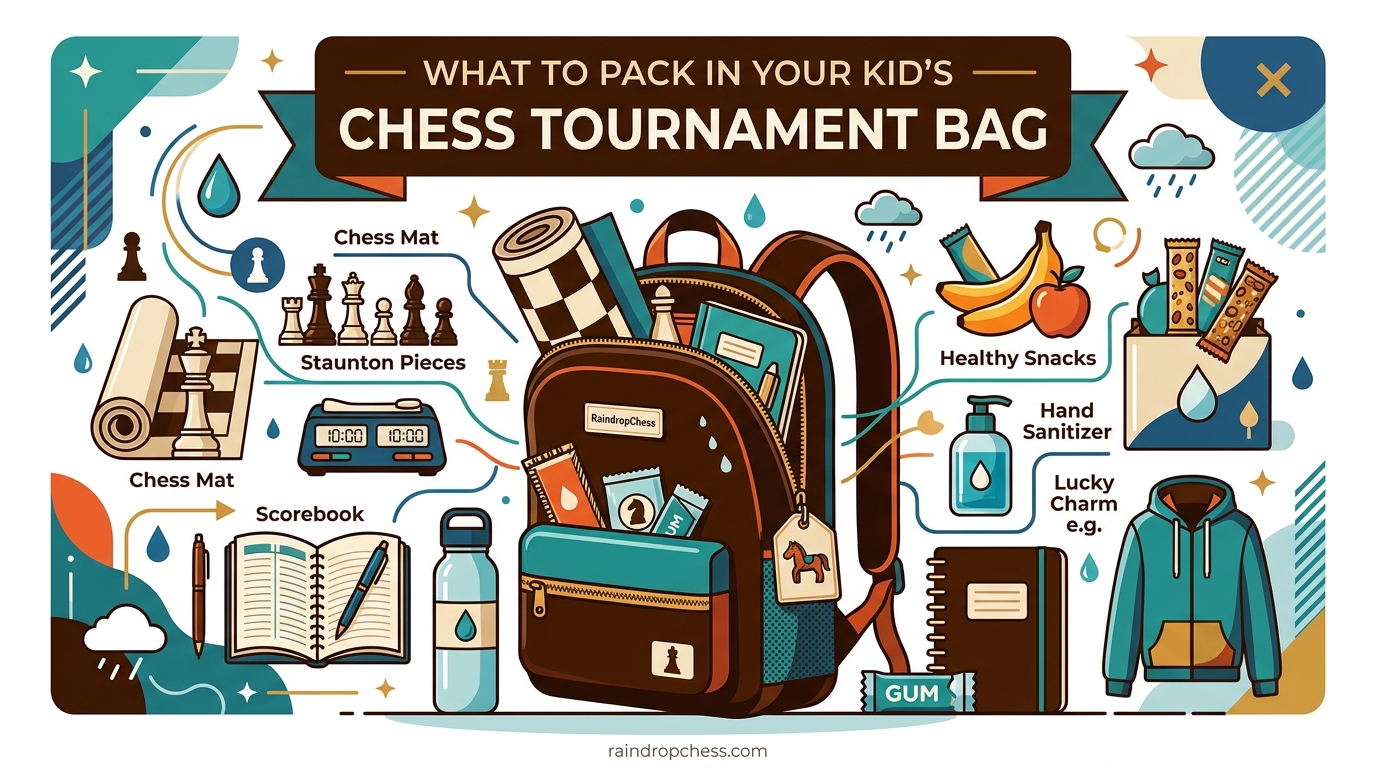
Every young chess player needs a dedicated tournament bag packed with these non-negotiable items. These essentials form the foundation of tournament preparation and should never be forgotten:
Writing and Notation Supplies
Your child will need to record their games using algebraic chess notation, which is required at most rated tournaments. Pack at least two working pens—black or blue ink only, as some tournaments require specific colors. Bring a backup pen in case one fails during a game. A small notebook or scoresheet pad allows your child to practice notation between rounds and review their games afterward. Some players prefer mechanical pencils for notation, but always include at least one pen as a backup since pencils can smudge and may not be accepted at all venues.
Hydration and Nutrition
Chess tournaments demand sustained mental energy, and hungry or dehydrated children cannot concentrate effectively. Pack a reusable water bottle labeled with your child’s name to prevent it being confused with another player’s drink. Avoid sugary sodas and energy drinks, which can cause energy crashes—water and natural fruit juices are better choices. Bring healthy, non-perishable snacks that provide sustained energy without sugar spikes. Good options include granola bars, trail mix, crackers with cheese, fresh fruit, sandwiches, and nuts. Avoid messy or smelly foods that could distract other players. Tournament venues often have limited food options or prohibit outside food, so packing adequate snacks is essential.
Comfort and Weather Preparedness
Tournament halls can be unpredictable—some are overly heated while others are drafty and cold. Pack a lightweight, packable warm layer such as a fleece jacket or hoodie that your child can easily put on or remove. This is especially important for early morning rounds when the venue may not be fully heated. Comfortable clothing is essential: avoid tight jeans, scratchy materials, or anything that could distract your child during play. Many tournaments have dress codes, typically requiring collared shirts or neat casual attire. Check the specific tournament rules beforehand and ensure your child has appropriate options. Comfortable shoes are also important since players may be standing and moving around between rounds.
Chess Equipment
While most tournaments provide chess sets and boards, having your own travel chess set can be valuable for practice between rounds. If your child uses a digital chess clock or a favorite wooden set, confirm whether personal equipment is allowed before packing it. Some tournaments require specific clock types or forbid personal equipment. A small chess book or puzzle book can keep your child’s mind engaged during breaks without exhausting their chess energy before the next round. Many experienced players bring a tournament bag specifically designed to protect their equipment and keep everything organized.
What NOT to Bring to a Chess Tournament
Knowing what to leave behind is just as important as knowing what to pack. Most chess tournaments have strict rules about prohibited items, and violations can result in penalties or disqualification.
Electronic Devices
Modern chess tournaments strictly prohibit mobile phones, smartwatches, tablets, and any electronic devices capable of receiving communications. These devices must be completely turned off—not just silenced—before entering the tournament hall. If your child brings a phone for emergencies, it must stay in their bag and cannot be visible during play. Some tournaments offer supervised phone storage, while others require phones to be given to tournament officials until the event concludes. Failure to comply with electronics policies can result in immediate forfeiture of games. Even calculators or computers capable of playing chess are prohibited at the playing venue.
Notes and Reference Materials
Outside notes, opening books, chess engines, and any prepared analysis are strictly forbidden during games. Your child should not bring any written materials containing chess moves, strategies, or analysis into the playing hall. After the tournament concludes, children can review their games and study as much as they want, but during play, all preparation materials must stay at home or in a bag that is not accessible during games.
Distracting Items
Avoid packing noisy items such as toys with sounds, crinkly snack wrappers, or anything that could disturb other players. Strong-smelling foods, Cologne or perfume, and bulky items that take up too much space at the board should also be left at home. Your child should bring only what they need—this helps them stay focused and keeps the playing environment respectful for all participants.
The Night Before Checklist
Proper preparation the evening before the tournament can prevent morning panic and ensure a confident start. Establish a consistent routine that becomes habit for every tournament.
Begin by reviewing the tournament details including start time, location, parking information, and any special requirements. Confirm your child’s USCF membership is current if the tournament requires it, and ensure you have the confirmation number or membership card. Print or download any necessary registration documents and verify you know the tournament director’s contact information in case of emergencies or delays.
Pack the tournament bag together with your child using a checklist—this teaches responsibility and ensures nothing is forgotten. Lay out clothing the night before including a backup outfit in case of spills or weather changes. Set multiple alarms to ensure plenty of time for breakfast and arrival at least 30 minutes before the scheduled start time. A well-rested child performs better, so enforce an early bedtime and limit screen time before sleep.
Discuss the tournament schedule with your child, including approximately how many rounds there will be, how long each round lasts, and what happens between rounds. Explain that touch-move rules will be enforced and that they should think carefully before touching any piece. Address any anxiety your child might have about the competition and emphasize that the goal is improvement and good sportsmanship, not just winning.
Tournament Day Timeline
Understanding the flow of a tournament day helps both parents and children feel more prepared and reduces anxiety about the unknown.
Before the First Round
Wake your child with enough time for a protein-rich breakfast that will provide sustained energy—eggs, oatmeal, yogurt, and fruit are excellent choices. Avoid sugary cereals or pastries that might cause an energy crash mid-morning. Dress your child in comfortable, tournament-appropriate clothing and ensure they use the restroom before leaving home. Arrive at the venue at least 30 minutes before the scheduled start time to allow for registration, finding your child’s section, and settling in.
Once at the venue, locate the pairing board or display screen to find which board your child has been assigned for round one. Introduce yourself and your child to the tournament director if possible, and identify the parent waiting area so you know where to wait during play. Remind your child of the touch-move rule, the importance of maintaining good posture, and to take their time thinking through moves.
Between Rounds
After each round, give your child space to decompress. Some children want to discuss the game immediately while others prefer silence—follow your child’s lead. Encourage light physical activity such as walking around, stretching, or finding a quiet space to sit. This helps reset their mental state before the next game. Offer a healthy snack and ensure they stay hydrated. Avoid reviewing games with your child in the playing hall or near other competitors who may still be playing.
After the Tournament
Once all rounds conclude, acknowledge your child’s effort regardless of the outcome. Ask open-ended questions about what they enjoyed or found challenging rather than focusing solely on wins and losses. If trophies or prizes are awarded, celebrate everyone’s achievements. Many tournaments offer post-tournament analysis sessions or allow children to review their games with coaches—participating in these can accelerate improvement. Finally, let your child rest and recover, as the mental exhaustion from tournament play can be significant.
Age-Specific Packing Tips
Children of different ages have varying needs when it comes to tournament preparation. Tailoring your packing approach to your child’s age and maturity level ensures they have what they need without being overwhelmed.
Younger Children (Ages 6-9)
Young children often need more hands-on support and reassurance. Pack an extra set of snacks since younger kids may eat more frequently. Include a small comfort item such as a favorite stuffed animal or lucky charm that fits in their pocket—ensure it will not distract others or violate any rules. Bring hand sanitizer and tissues since young children may need more frequent breaks for hygiene. Consider packing a simple watch or small clock so they can gauge time remaining, if age-appropriate and allowed by tournament rules.
Pre-Teens (Ages 10-12)
Pre-teens typically have longer attention spans but may experience increased tournament anxiety. Pack puzzle books, chess calendars, or non-electronic entertainment for between rounds. Include a phone for emergencies but review the electronics policy thoroughly—many children this age can be responsible with a phone if the policy allows supervised storage. Encourage pre-teens to take ownership of their packing list and check it themselves, building independence while you provide oversight.
Teenagers (Ages 13+)
Teenagers can generally manage their own preparation with minimal oversight but still benefit from parental support. Ensure they have all necessary documentation including USCF membership numbers and registration confirmations. Encourage them to pack professional attire if the tournament has a dress code, and remind them that electronics policies are strictly enforced. Teenagers may prefer to discuss strategy and games with peers—provide appropriate space for this while maintaining safety awareness.
Managing Tournament Anxiety for Sensitive Children
Chess tournaments can trigger significant stress for children who are sensitive to pressure or new situations. Preparing both practically and emotionally helps anxious children have a positive experience.
Before the tournament, discuss what to expect in age-appropriate terms. Explain that feeling nervous is normal and even experienced grandmasters feel butterflies before important games. Teach simple breathing techniques your child can use if anxiety spikes during play. Practice visualization—ask your child to imagine walking into the tournament hall, sitting at their board, and playing their best game with confidence.
During the tournament, resist the urge to hover or check on your child frequently—this can increase anxiety. Establish a clear meeting point between rounds so your child knows where to find you. If your child becomes visibly distressed during a game, speak quietly with tournament officials to determine if a brief break is possible. After the tournament, validate your child’s feelings regardless of outcome and help them process the experience constructively.
The Parent’s Role During a Chess Tournament
Understanding your role as a parent at a chess tournament prevents common mistakes and helps create a supportive environment for all participants.
Unless you are serving as a tournament official or arbiter, you will not be permitted in the playing hall during rounds. This separation can be difficult for both parents and children, especially younger kids. Trust the tournament staff and your child’s preparation. Focus your energy on being available during breaks, providing healthy snacks and encouragement, and maintaining a calm, positive presence.
Do not attempt to coach your child during the tournament—this is not allowed and can create pressure that harms performance. Avoid asking about the game immediately after each round; let your child lead the conversation if they want to discuss it. Respect other players and their families by staying quiet in common areas and following venue rules. Remember that your child’s tournament experience should be about growth and enjoyment, not just results.
Post-Tournament Wind-Down
The conclusion of a tournament is an important time for processing, recovery, and planning for future improvement. How you handle the post-tournament period affects your child’s long-term relationship with competitive chess.
Allow adequate recovery time before scheduling other activities. The mental fatigue from tournament play can be profound, especially for younger children—avoid immediately jumping into homework, sports practice, or other demanding activities. When your child is ready to discuss the tournament, ask open-ended questions about what they learned, what they enjoyed, and what they might do differently next time.
If post-mortem analysis is available through the tournament or with a coach, encourage participation. Reviewing games helps children identify mistakes and patterns without the emotional pressure of competition. Celebrate the effort your child put in and focus on improvement over results. Consider setting goals for the next tournament, whether related to performance, behavior, or personal growth such as managing anxiety better or showing good sportsmanship regardless of outcome.
Frequently Asked Questions
How do I prepare my child for their first chess tournament?
Start by ensuring your child understands the basic rules and etiquette of tournament play, including touch-move, good sportsmanship, and notation. Visit the tournament venue beforehand if possible, or at least review photos of similar venues to reduce anxiety about the unknown. Pack the tournament bag together using a checklist, emphasizing the essential items: pen, water, snacks, and a warm layer. Discuss what to expect regarding the number of rounds, time controls, and breaks between games. Most importantly, frame the experience as an opportunity for growth rather than a test that determines worth—children who associate tournaments with positive experiences develop lasting enthusiasm for chess.
What should a child bring to a chess tournament?
A child should bring writing supplies for notation (at least two pens), a water bottle, healthy snacks, a warm layer for unpredictable venue temperatures, and comfortable clothing. Optional but helpful items include a personal chess set for practice between rounds, puzzle books, and a reusable scoresheet pad. Confirm whether the tournament allows personal chess clocks or equipment before bringing them. Leave all electronic devices, notes, and reference materials at home or in checked bags to avoid accidental penalties.
What do parents do during a chess tournament?
During tournament rounds, parents typically wait in designated spectator areas and cannot enter the playing hall. Parents should be available between rounds to provide snacks, emotional support, and encouragement. Some venues have parent lounges or nearby coffee shops where families can wait. Avoid coaching your child or discussing their games in earshot of other competitors. After the tournament, help your child wind down, celebrate their effort, and plan any post-tournament analysis or review sessions.
What is the dress code for children’s chess tournaments?
Dress codes vary by tournament but generally require neat, comfortable casual attire. Some scholastic tournaments are quite relaxed while others, especially USCF-rated events, may require collared shirts or business casual. Avoid athletic wear, torn jeans, revealing clothing, or anything with distracting graphics or slogans. When in doubt, err on the side of being slightly dressier—presenting well helps children feel more serious about their play and shows respect for the tournament environment.
How long do chess tournaments typically last for kids?
Scholastic chess tournaments typically run from morning to early afternoon, usually between 4-6 hours total. The number of rounds varies by age group and tournament format, commonly ranging from 4-7 rounds for one-day events. Each round may last 30-90 minutes depending on the time control. Swiss system tournaments, which are most common for scholastic events, pair players based on previous round performance. Plan for children to arrive 30 minutes before the first round and expect breaks of 15-30 minutes between rounds.
Conclusion
Knowing exactly what to pack in your kid’s chess tournament bag transforms tournament day from a source of stress into an opportunity for growth and enjoyment. A well-prepared tournament bag containing essential writing supplies, hydration, nutrition, comfort items, and appropriate equipment sets your child up for success. Equally important is the night-before preparation, understanding tournament logistics, and knowing what to leave at home—especially electronic devices and unauthorized reference materials.
Age-specific preparation ensures that whether your child is six or sixteen, they have exactly what they need to perform their best. Managing tournament anxiety, maintaining appropriate parental involvement, and planning for post-tournament wind-down all contribute to a positive chess tournament experience that will keep your young player coming back for more. Remember that the goal of youth chess tournaments extends beyond winning trophies—it’s about building confidence, developing strategic thinking, learning sportsmanship, and fostering a lifelong love of the game.
With this comprehensive packing guide and tournament preparation checklist, you and your child are ready to approach your next chess competition with confidence and excitement. Pack thoughtfully, support appropriately, and most importantly—have fun watching your child grow as both a chess player and a person.