
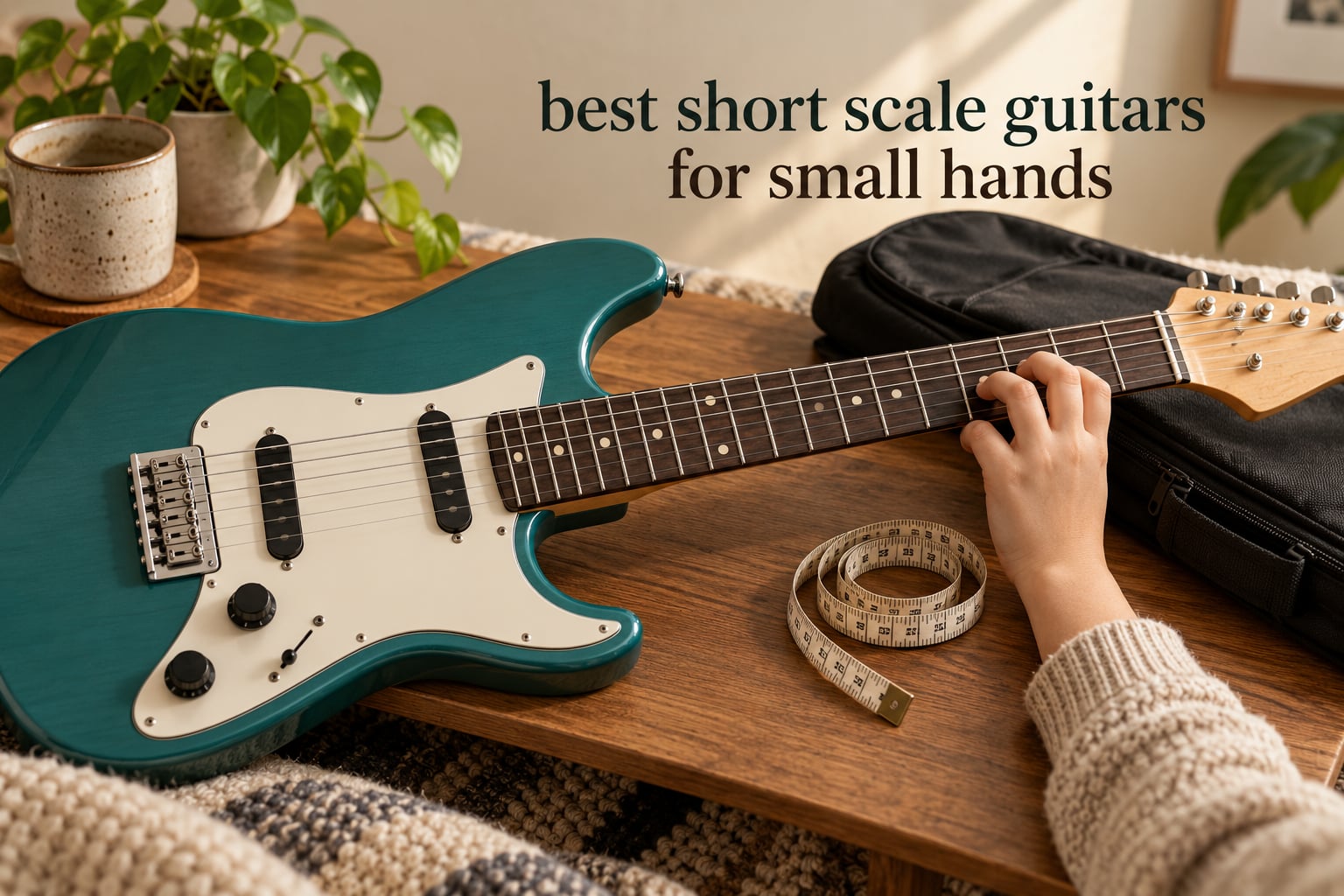
If your fingers struggle to wrap around a full-size guitar neck, the fix is almost always the same: less distance between the bridge and the nut. The best short scale guitars for small hands sit at 22 to 24.75 inches of scale length instead of the standard 25.5, which brings the frets closer together and lowers string tension so you press harder strings with less force. Our team compared nine compact instruments for this roundup, spanning 3/4-size electrics, a short scale travel guitar, and a parlor acoustic built for the same problem.
Small hands and short scale guitars are not the same thing, and that distinction matters more than any spec sheet. A short scale neck can still be wide at the nut, which is where most of the stretching happens, while a narrow-nut full-size instrument can be perfectly playable. We looked at scale length, nut width, neck profile, body weight, and how each guitar holds tuning so you can pick for your hands rather than for a number.
One honest note before the list. Two of the nine guitars here carry a 25.5-inch scale, and one is a headless travel model that some players find awkward. We kept them because they earn their place for specific players, and we flag the trade-off in every section. If you want a short scale guitar strictly for reach, the first and sixth picks are the ones to read first.
Top 3 Short Scale Guitar Picks (2026)
Our team’s number one pick is the Ibanez RG MiKro GRGM21 because it pairs the shortest scale in this lineup with the highest average rating and the largest review base, which is a combination none of the other eight match. The Traveler Guitar Ultra-Light takes the travel slot on weight alone, and the Squier Mini Stratocaster is the most forgiving instrument here for a first-time player.
All Nine Short Scale Guitars Compared (2026)
| Product | Specifications | Action |
|---|---|---|
 Ibanez RG MiKro GRGM21 Ibanez RG MiKro GRGM21 |
|
Check Latest Price |
 Jackson JS Series Dinky JS11 Jackson JS Series Dinky JS11 |
|
Check Latest Price |
 Traveler Guitar Ultra-Light Traveler Guitar Ultra-Light |
|
Check Latest Price |
 Ibanez PSM10 Paul Stanley MIKRO Ibanez PSM10 Paul Stanley MIKRO |
|
Check Latest Price |
 Gretsch Jim Dandy Deltoluxe Parlor Gretsch Jim Dandy Deltoluxe Parlor |
|
Check Latest Price |
 Squier Mini Stratocaster Squier Mini Stratocaster |
|
Check Latest Price |
 Jackson JS1X RR V Minion Jackson JS1X RR V Minion |
|
Check Latest Price |
 Squier Sonic Mustang Squier Sonic Mustang |
|
Check Latest Price |
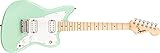 Squier Mini Jazzmaster Squier Mini Jazzmaster |
|
Check Latest Price |
Scale length on this list runs from 22 inches to 25.5 inches, and that single number explains most of the differences in feel. Everything at or under 24 inches is a genuine reach fix. The 24.75-inch Traveler Guitar sits in between, and the 25.5-inch Jackson Dinky is a compact body rather than a compact neck.
1. Ibanez RG MiKro GRGM21 – Shortest Scale in the Lineup
Ibanez RG MiKro GRGM21 – Black
Scale: 22 inch
24 frets
Poplar body
Dual humbucking pickups
Pros
- Shortest scale here at 22 inches
- Easily the most reviewed guitar in the group
- Dual humbuckers give a fat rock and metal tone
- Lightweight poplar body suits travel
- Highest average rating in the roundup at 4.5
Cons
- Compact body gives up some acoustic volume
- Fretwork and setup may need adjustment out of the box
- Humbucking only limits tonal variety
The Ibanez RG MiKro GRGM21 has a 22-inch scale, which makes it the most compact neck of the nine guitars we tested. That matters more than the 3/4-size body, because the gap between frets shrinks with the scale length and a chord shape stops asking your hand to travel as far. Reviewers with hand and joint pain single this model out as the guitar that solved their reach problems.
What surprised us was the range it covers. A 24-fret neck is usually the first thing trimmed on a compact instrument, and this one keeps the full fret count with a maple neck and a rosewood fingerboard. That means the upper register stays available for lead work instead of stopping short.
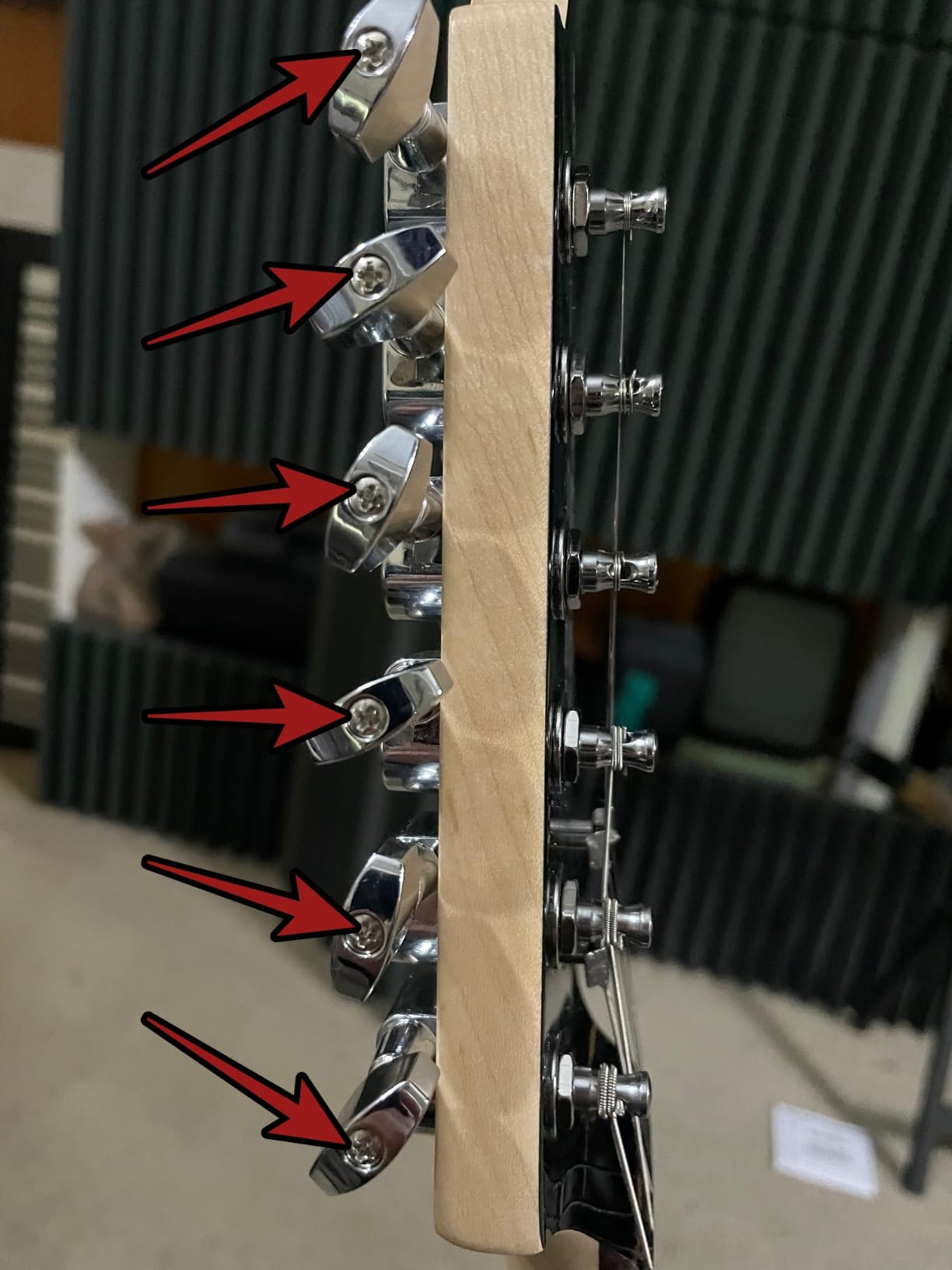
Tonally, the two humbucking pickups give it a thicker, louder voice than most compact guitars manage. With the neck that thin and light at 7.5 pounds, this is the guitar we would hand to an adult with small hands who wants to practise for an hour without their shoulder complaining. It is also the version most often recommended to children who have outgrown a toy.
The honest drawback is output. A poplar body of this size simply cannot move air the way a full-size solidbody does, so unplugged volume is thin. Through an amplifier it disappears as an issue. Owners also report that a quick setup is worth budgeting for, since fretwork quality varies unit to unit.

Who the MiKro GRGM21 suits
This is the pick for a player whose hand span bottoms out around five inches, or for any guitarist who wants low string tension on a full-size-feeling instrument. The 24 frets and humbuckers mean it grows with the player, so nobody outgrows it in a year. Parents buying a first guitar for an eight to twelve year old will find the weight and neck width manageable right away.
Who should skip the MiKro GRGM21
If you want single-coil clarity or a clean neck pickup tone, you will not get it here. Players chasing a big unplugged sound should look at the Gretsch parlor acoustic in section five instead. It also rewards a setup, so if you want zero tinkering out of the box, the Mini Stratocaster with its single coils is a better mood match even though it needs setup too.
2. Jackson JS Series Dinky JS11 – Small Body, Full Scale
Jackson JS Series Dinky JS11 – Black with Amaranth Fingerboard
Scale: 25.5 inch
Maple neck
Amaranth fingerboard
Tremolo bridge
Pros
- Compact Dinky body sits well when seated
- Dual humbuckers deliver the fattest tone here
- Amaranth fingerboard feels smooth and fast
- Two-year warranty is longer than most rivals
- Under 9 lb for a full-size scale instrument
Cons
- 25.5 inch scale is longer than the true short scale models
- Tremolo bridge adds maintenance and can drift
- Basswood body is serviceable but not premium tonewood
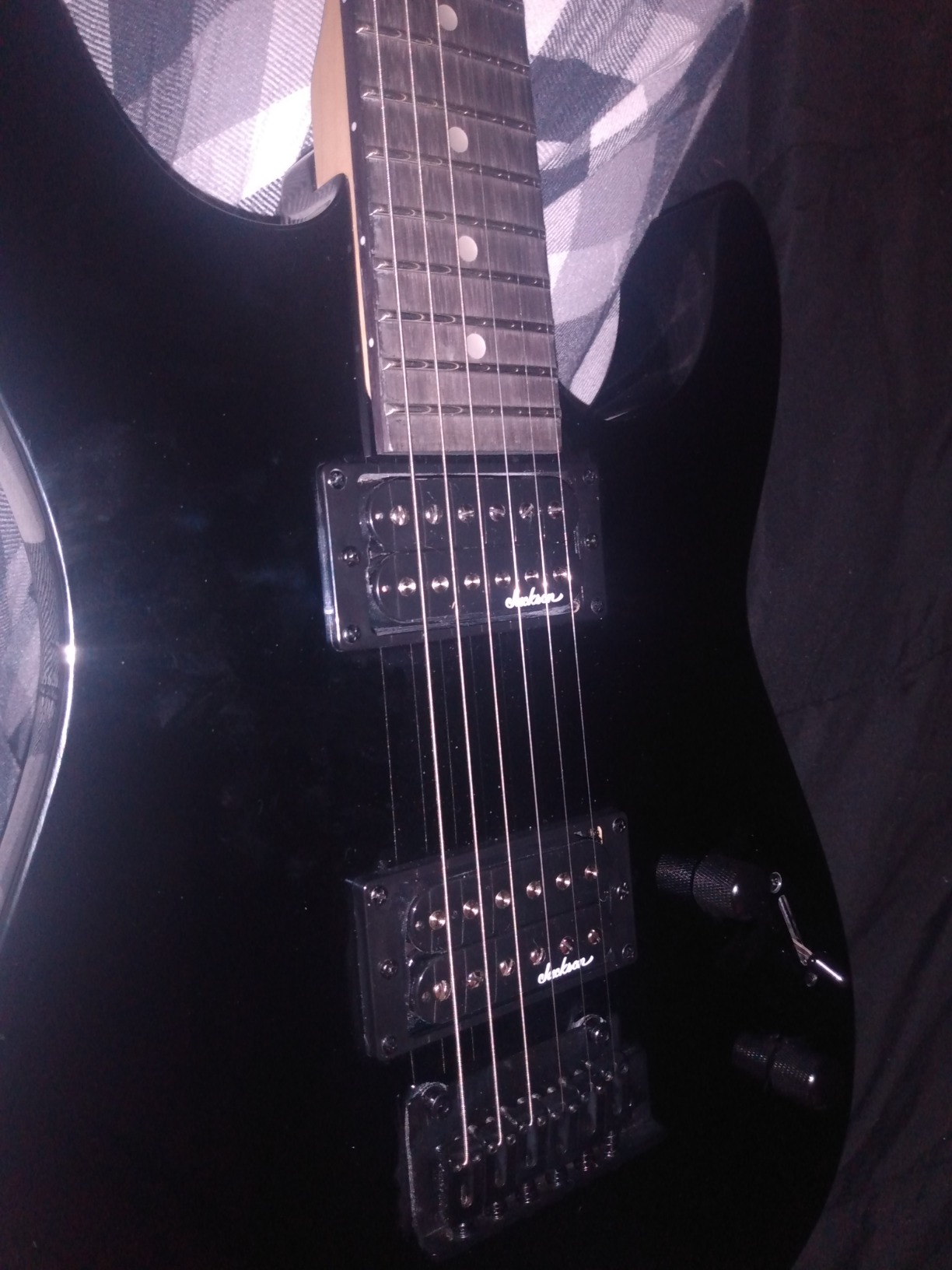
The Jackson JS Series Dinky JS11 is the item in this roundup that most often gets mislabelled. The body is genuinely compact and the guitar weighs just under nine pounds, but the scale is a full 25.5 inches. Nothing about the neck gets shorter, so this is a comfortable guitar for small bodies rather than a solution for small hands.
Where it does deliver is tone. Two humbucking pickups in a basswood body give it more girth and clarity than anything else in the lineup, and reviewers repeatedly point to the sound as the reason to keep playing it. The amaranth fingerboard is smooth under a damp hand and holds a bend well.
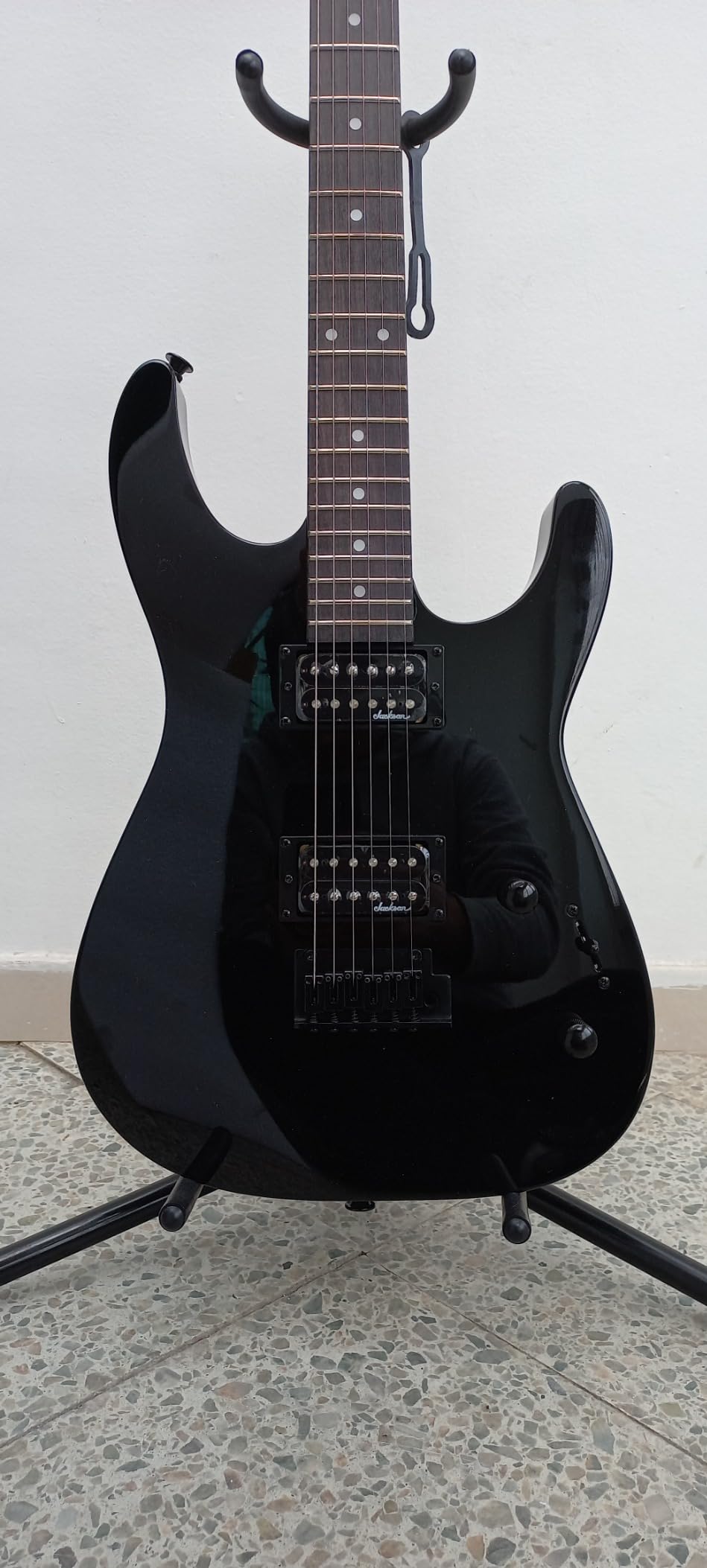
A few owners note that the scale is longer than they expected from a body this small, and that is the honest summary. A tremolo bridge also needs occasional tuning work and introduces a small amount of instability that a hardtail design avoids. For a first electric guitar, that is one complication more than a beginner needs.
What you get instead is an instrument that looks and sounds like a full-size guitar, which matters to players who are wary of the toy objection. It sits well on a lap and plays easily seated, and the two-year warranty outlasts most of its direct competitors.
Who the Dinky JS11 suits
Buy this if your hands are fine and your frame is not, or if you are a parent looking for an electric that does not look like a toy at a school recital. Players who write, gig small rooms, or simply prefer a familiar full-size neck will find the transition from a bigger instrument painless.
Who should skip the Dinky JS11
Skip it if reaching a chord is what hurts. A 25.5-inch scale with a full-size nut width does nothing about either problem, and you would be better served by the MiKro GRGM21. It is also the wrong first instrument for a player who wants simple hardware, since the tremolo needs more attention than a string-through hardtail.
3. Traveler Guitar Ultra-Light – Built to Travel
Traveler Guitar Ultra-Light Electric Guitar Matte Black | Portable Electric with Removable Lap Rest | Full 24 3/4″ Scale Headless Guitar | Custom Gig Bag Included
Scale: 24.75 inch
22 frets
Maple neck-through
3 lb 2 oz
Pros
- Lightest guitar here at 3 lb 2 oz and 28 inches long
- Full 24.75 inch scale plays like a normal guitar
- Neck-through maple body sounds far bigger than it is
- Gig bag and removable lap rest included
- Limited lifetime warranty
Cons
- Headless layout is unfamiliar to new players
- Compact body limits tonal variation
- Walnut fingerboard is narrower and shorter than players expect
The Traveler Guitar Ultra-Light weighs 3 lb 2 oz and measures 28 inches end to end, which makes it the lightest instrument on this list by a wide margin. It is the only one that fits in a carry-on gig bag without a fight, and it comes with that bag plus a detachable lap rest in the box.
Despite the headless shape, the neck is a 24.75-inch scale across 22 frets, so the spacing feels close to a standard guitar rather than a toy. Players moving from a full-size instrument report a short adjustment period and then no problem. Tuning is handled by an in-body system, so there are no tuning machines on a headstock to snag.
The neck-through maple construction is the surprise here. Reviewers consistently describe more volume and sustain than a body that size should produce, and it feeds a standard quarter-inch output jack into amps, recording gear, or headphone amplifiers. The limited lifetime warranty also removes any risk from an unfamiliar format.
The walnut fingerboard is the part to try before buying. Owners describe it as narrower and shorter than they expected, and that is the single most common reason buyers return this guitar. Balanced against that, nothing else on this list travels as easily.
Who the Ultra-Light suits
This is the pick for the player who practises in short bursts, travels for work, or wants an instrument that lives on a couch rather than a stand. Small hands benefit from the compact body and the low weight on the shoulder, even though the scale is closer to full size than the true short-scale models here.
Who should skip the Ultra-Light
Skip it if you are learning chord shapes and want every visual cue a familiar headstock gives you. There is no tuning peg to look at, which catches beginners out, and the short overall length caps how much tonal variation you can pull from the pickup. For pure playability gains, a 22-inch instrument does more for your hands than portability does.
4. Ibanez PSM10 Paul Stanley MIKRO – The Showpiece Mini
Ibanez PSM10BK Paul Stanley Signature MIKRO Black Short Scale Electric Guitar
MIKRO short scale body
Maple neck
Medium frets
Full Tune III bridge
Pros
- Short scale ergonomics that let very small hands reach full chord shapes
- Crisp clean sound that does not sound like a 3/4 instrument
- Holds tuning well with good string action
- Iconic styling that doubles as a display piece
Cons
- Stock pickups are not hot enough for heavier tones
- Does not hold tuning reliably in drop C
- Heaviest listed weight in the group at 9 lb
- Mirror finish flaws reported by some owners
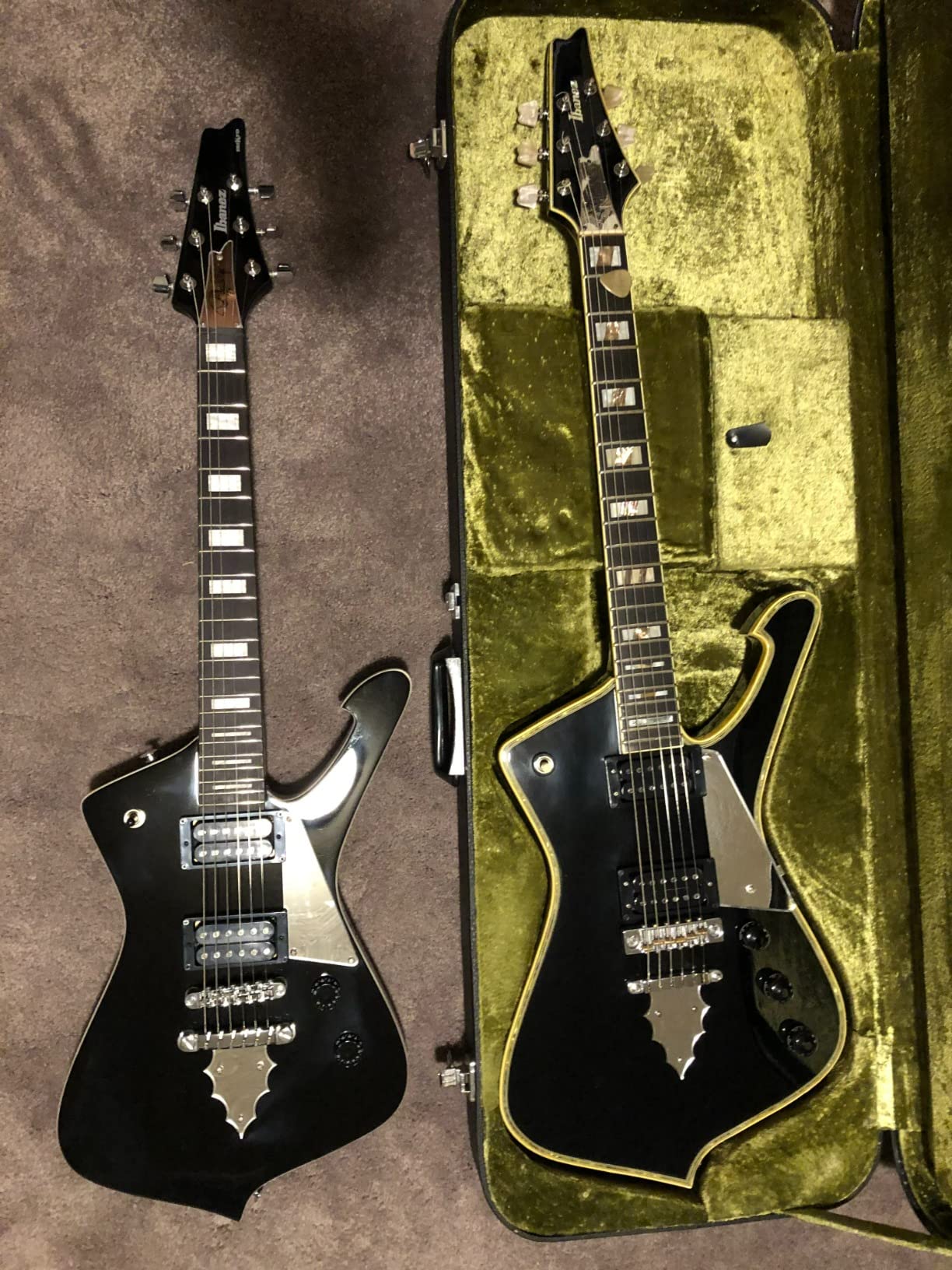
The Ibanez PSM10 is built on the MIKRO short scale body, the same reduced-size platform as our top pick, with a maple neck, medium frets, and a poplar body. It exists because of its association with Paul Stanley, and that is the honest reason most owners buy it.
That said, players who do play it report a crisp, clean sound with comfortable action, and two distinct groups show up in the reviews. Some bought it for small-hand comfort and found the reach problem solved. Others bought it as memorabilia and never took it out of the case.
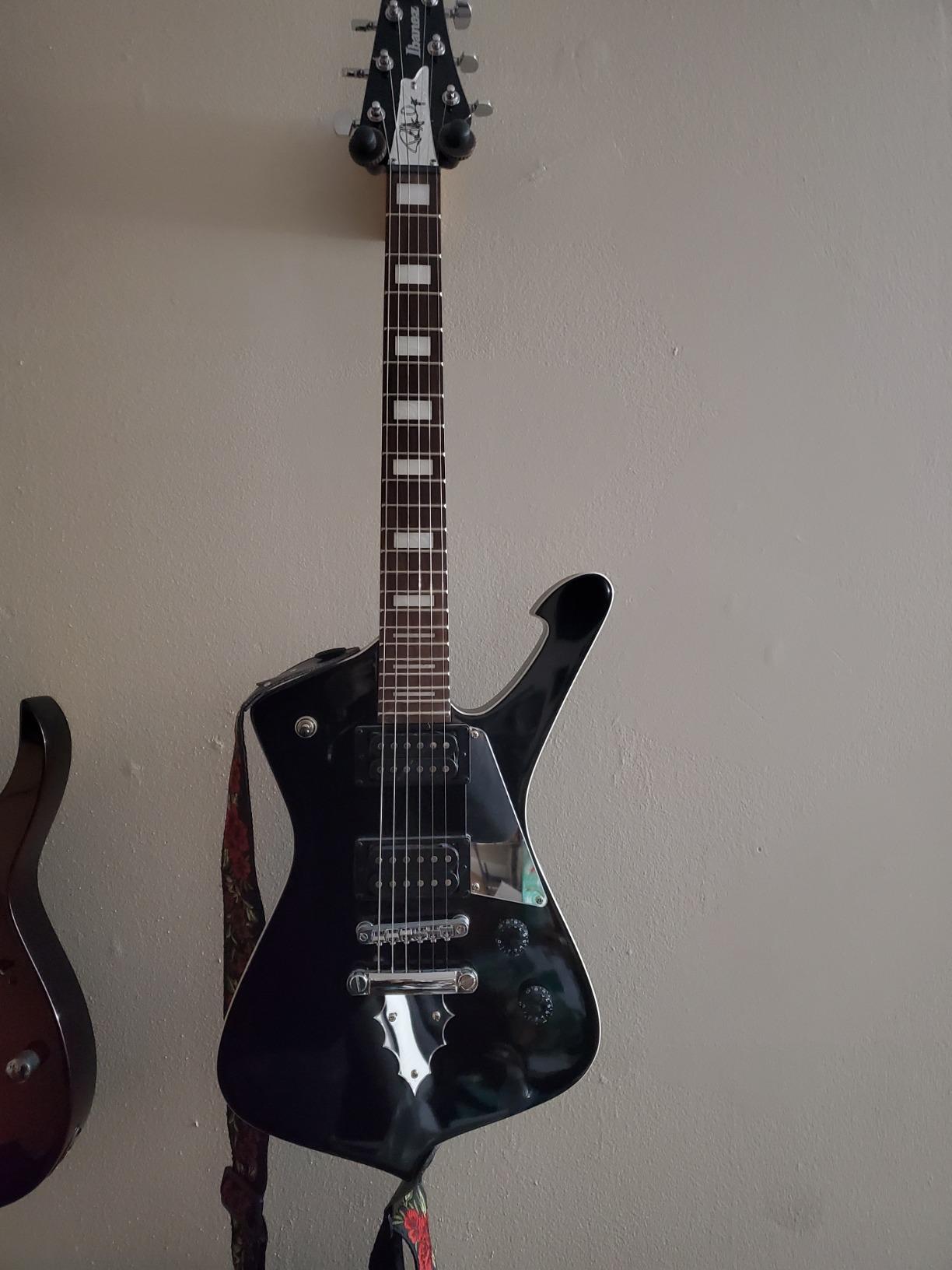
At 9 pounds this is the heaviest guitar we looked at, which is worth knowing before you order it for a child. The Full Tune III bridge works well, and the treated New Zealand Pine fingerboard with white block inlays feels fine for chord work even though it is not the fastest surface for fast playing.
The stock pickups are the weak point if you play anything heavier than pop and blues. They are not hot, and adding drop C on the existing tuners pushes tuning stability past what the machine handles. A pickup swap fixes the tone without replacing the guitar.
Who the PSM10 suits
Pick this one for a small-handed adult who wants a short scale electric with a distinctive look and a modest brand footprint. It also works as a second instrument once a player has outgrown something simpler, because the MIKRO proportions still feel compact next to a full-size guitar.
Who should skip the PSM10
Skip it if you want an upgrade path from a first guitar, because a plain small-body electric will do the same job without the weight. The style appeal is real but narrow, and you will find far more owner feedback on the GRGM21 in the same family.
5. Gretsch Jim Dandy Deltoluxe Parlor – Short Scale Acoustic
Gretsch Jim Dandy Deltoluxe Parlor Short Scale Acoustic-electric Guitar – Black Top
Scale: 24 inch
C-shape neck
Sapele top
Built-in Deltoluxe pickup
Pros
- Only acoustic here with a 24 inch scale and shallow C-shape neck
- Built-in magnetic pickup means it works plugged in or clean
- Warm woody parlor tone with clear highs suits blues and folk
- Two-year warranty
- X-braced compact body resonates well
Cons
- Limited low-end volume compared with a dreadnought
- Small parlor body projects less when soloing
- Single-pickup configuration limits tonal range
The Gretsch Jim Dandy Deltoluxe Parlor is the one acoustic in the roundup, and it solves the same problem the electrics do. Its 24-inch scale and shallow C-shape neck profile give small hands a short stretch and a thin grip, and the 1.69-inch nut is narrower than most parlor acoustics ship with.
It is also the only guitar here that works unplugged and plugged in without extra gear. The built-in Gretsch Deltoluxe magnetic pickup means it goes straight into a small amp or a PA, and phosphor bronze strings keep the acoustic tone conventional. Owners like it for blues and folk fingerstyle rather than strumming volume.
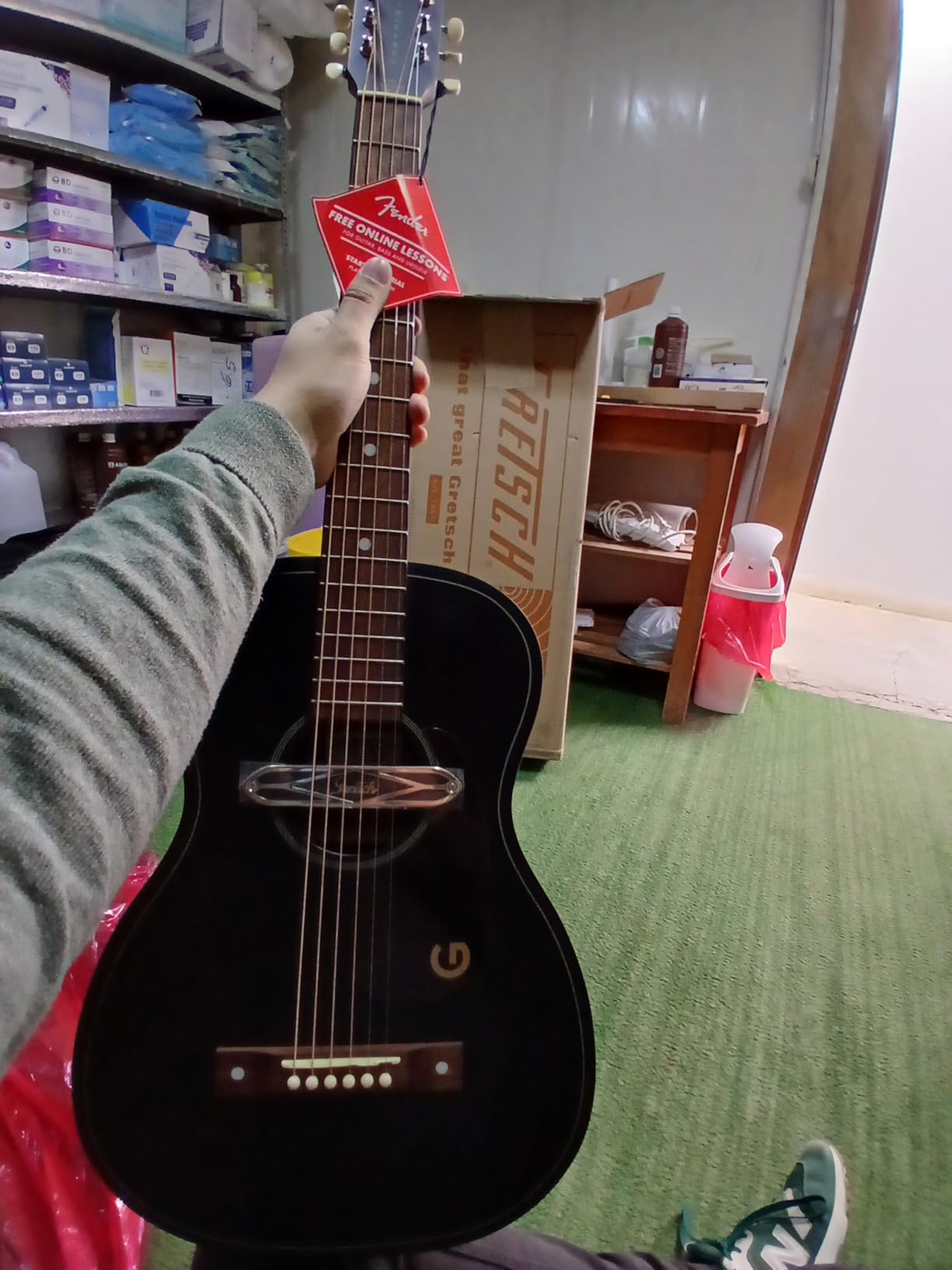
Sapele across the top, back, and sides with a walnut fingerboard gives it a warm, woody voice that reviewers describe in unusually consistent terms, and roughly three quarters of the ratings are five stars. The two-year warranty is a good fit for a first instrument. It weighs 7.6 pounds, which is light for a steel-string acoustic.
Where it stops is volume. A compact parlor body simply cannot match a dreadnought for bass and projection, and a single pickup leaves less tonal range than a two-pickup acoustic would give you. If you play in a room where you need to be heard over other instruments, this is the wrong body shape.
Who the Deltoluxe Parlor suits
This is the pick for someone whose hands are small and who wants to play acoustic without an amplifier in the room. It is equally at home as a first guitar for a teen who is still growing, since the short scale leaves headroom as their reach extends.
Who should skip the Deltoluxe Parlor
Skip it for campfire strumming or band rehearsals, where volume is the whole point. If you want to practise silently with headphones, an acoustic with a pickup plus a small amp is the cheaper route to the same place. Players who want a large sound and a playable neck would be better served by a thinline electric.
6. Squier Mini Stratocaster – Best Starting Point for Kids
Squier Mini Stratocaster Electric Guitar, with 2-Year Warranty, Black, Laurel Fingerboard
Scale: 22.75 inch
Three single coils
Thin poplar body
Hardtail
Pros
- 22.75 inch scale and narrower string spacing cut hand strain
- Three single coils deliver authentic Strat tone
- Thin light body is easy on the shoulder for long sessions
- Backed by a two-year Squier warranty
- Lighter strings included are easier on new fingertips
Cons
- Arrives needing setup with high action and sharp frets
- Tuning stability is inconsistent and many owners move to 11 gauge
- Pickups are noticeably noisy at higher gain
- No tremolo arm or accessories included
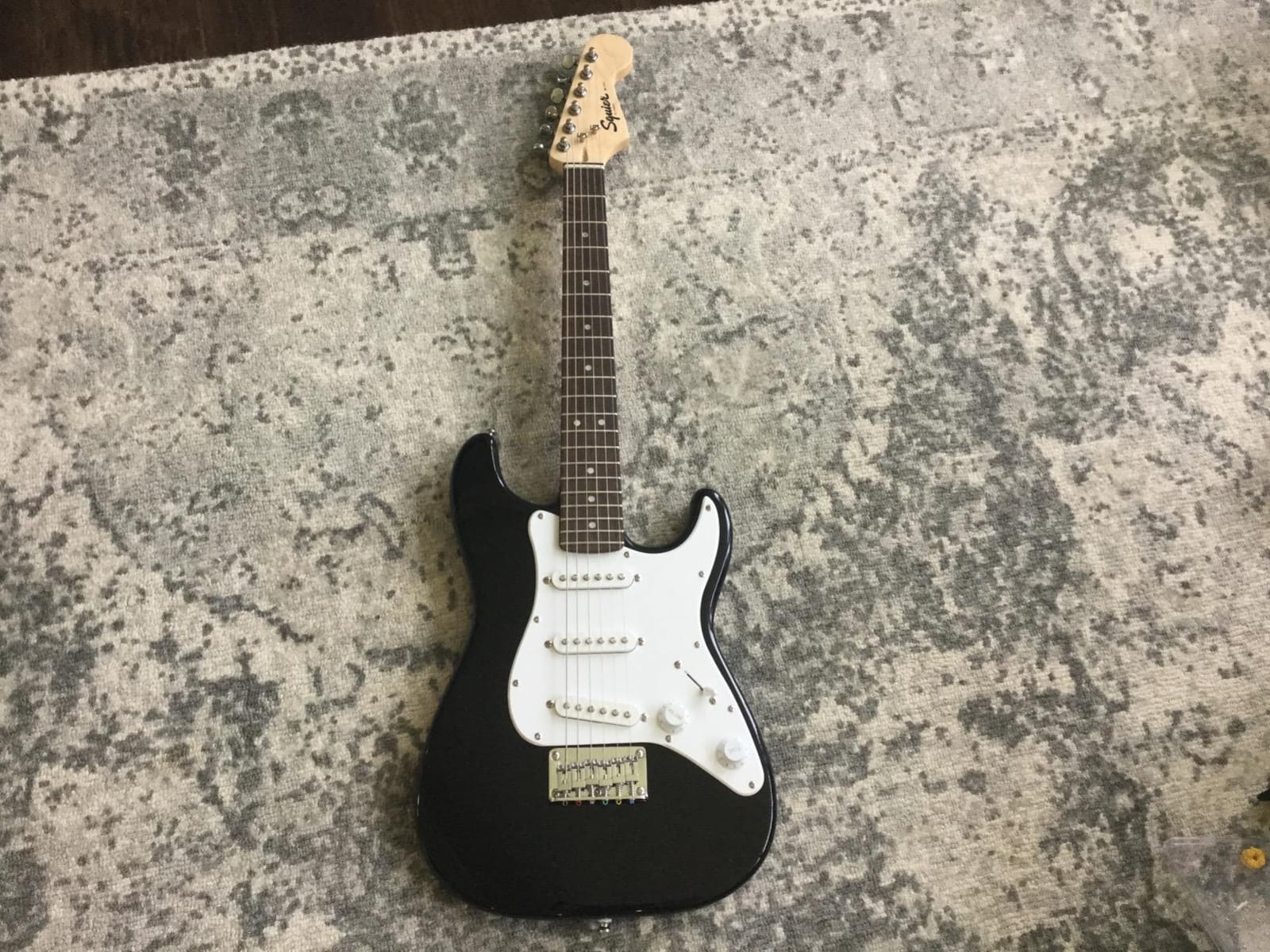
The Squier Mini Stratocaster has a 22.75-inch scale and narrower string spacing than a full-size Stratocaster, which together remove the two things that make standard electrics painful for small hands. Parents buying a first guitar around eight to twelve years old mention this model constantly, and adults with hand pain do too.
The three single-coil pickups give you the classic Strat positions, which matters over time because a beginner can grow into the middle and bridge pickups rather than being boxed in by one fixed tone. The hardtail bridge needs no maintenance, and sealed die-cast tuners keep the instrument simple.
The most common piece of advice in the reviews is to budget for a setup. Units often arrive with high action and rough or slightly sharp frets, and there is a visible tail of one-star feedback about exactly that. Heavier strings are the other common fix, and many owners move to an 11 gauge to stop the tuning drift.
At 1.5 kg this is a guitar a child can lift one-handed, and the thin body sits comfortably on a lap for lessons. Pickups get noisy at high gain, so it suits clean-to-overdrive playing far better than heavy metal. Those limits are not a problem for a first instrument.
Who the Mini Stratocaster suits
Buy this as a first electric for a child, a teen, or an adult who has never played. The lighter strings included are kinder to fingertips that have never held down a fret, and the two-year warranty covers the early learning years when things get dropped. It is also a comfortable instrument for players who find humbuckers physically bulky under the strumming hand.
Who should skip the Mini Stratocaster
Skip it if you already play and want a low-noise instrument for high-gain work, because the single coils hum. If your hand pain comes from tension rather than reach, the lighter strings help but they will not fix a high action setup you did not correct. Budget for the setup or pick a model with better arrival consistency.
7. Jackson JS1X RR V Minion – Hardware You Can Grow Into
JACKSON JS1X RR V MINION SBK
Scale: 22.5 inch
Humbucker pickup
String-through hardtail
6 lb weight
Pros
- 22.5 inch scale and small body designed for smaller hands
- Very light at 6 lb and barely noticeable on a strap
- String-through hardtail holds tuning better than most at this level
- Humbucker stays clean at low gain with no feedback
- Two-year warranty
Cons
- Lowest average rating in this lineup at 4.1 stars
- Recurring tuning drift reported by several owners
- Finish chips reported on arrival by multiple buyers
- Stock pickup is average for brighter tones
The Jackson JS1X RR V Minion pairs a 22.5-inch scale with a six-saddle string-through hardtail bridge, and that combination is the most upgradeable setup in this roundup. Experienced players recommend it to kids and to anyone who wants a mini they can keep rather than replace.
At 6 pounds it is the second lightest guitar here and the one most often described as invisible on a strap. The single humbucker with a three-way blade switch produces a full, even response without noise, which makes it a straightforward rock and metal starting point.
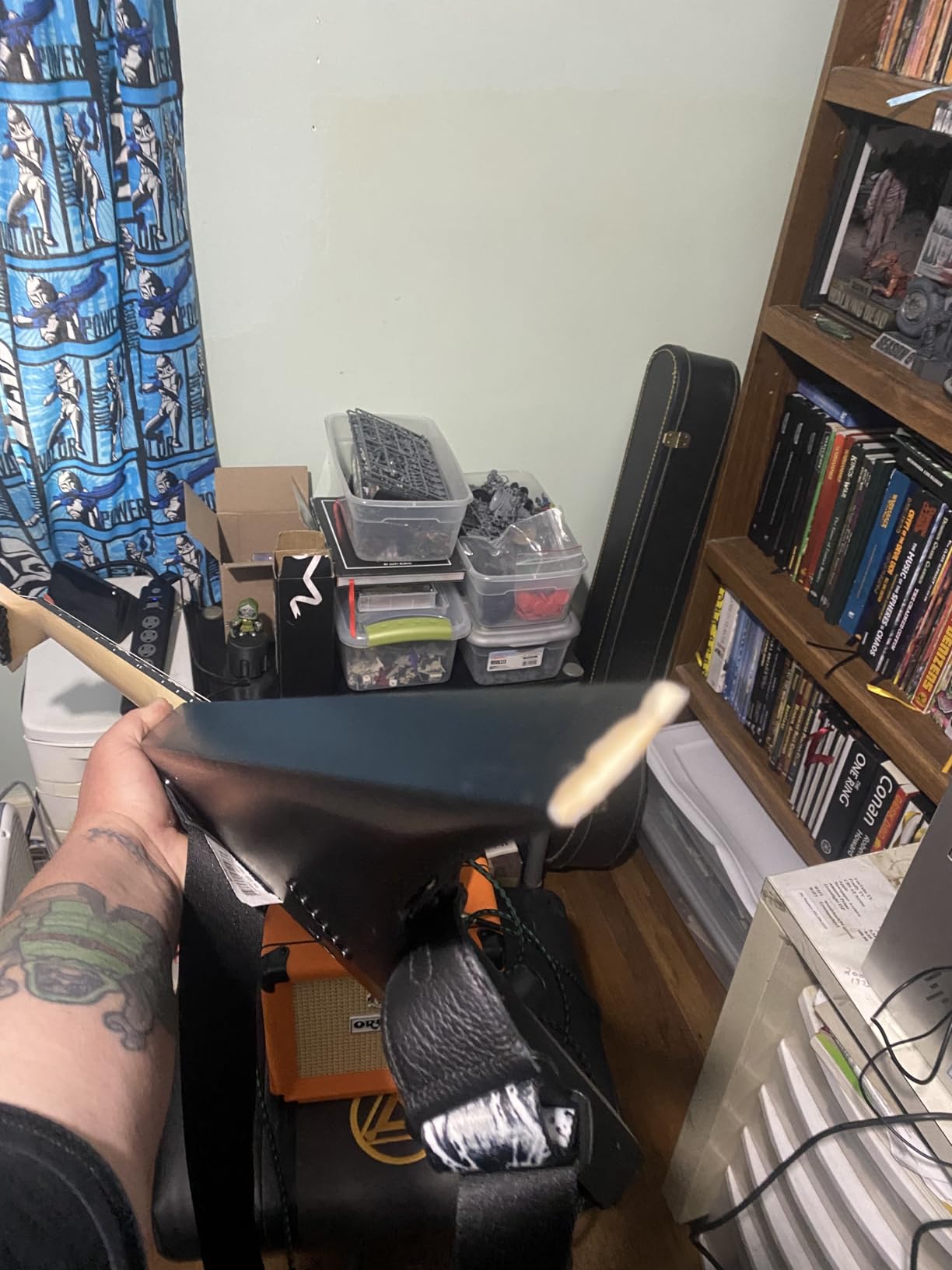
Consistency is the weak spot. Several reviews describe chipped finish or an instrument that arrived damaged, and tuning drift is the single most common complaint. Heavier gauge strings are the usual fix, and a technician can address the rest at setup.
At 4.1 stars this is the lowest-rated guitar we picked, with roughly one review in eight at one star. That reflects quality control variance at this level rather than a bad design, and it is the reason this model sits below the Squier Minis despite good hardware.
Who the JS1X RR V Minion suits
This is the pick for a player who wants short scale ergonomics without giving up metal-ready hardware, and for anyone who plans to swap pickups later. The string-through bridge and six saddles are the parts you would find on a full-size instrument, so nothing caps your progress.
Who should skip the JS1X RR V Minion
Skip it if you want a guitar that arrives ready to play without inspection. If joint pain is your main concern, the neck profile and scale here are good, but the tuning drift adds a small extra source of frustration. Check the unit carefully on arrival and get it set up before you rely on it.
8. Squier Sonic Mustang – Classic 24 Inch Feel
Squire Sonic Mustang Electric Guitar, California Blue, Laurel Fingerboard
Scale: 24 inch
Dual humbuckers
1.65 inch nut
Hardtail bridge
Pros
- 24 inch scale gives a noticeably low tension feel that reduces fretting effort
- Dual humbuckers deliver more punch than typical entry level pickups
- Fretwork on many units is reported as excellent with no sprout issues
- Lightweight body is comfortable for long sessions
- Two-year warranty plus Fender Play lessons included
Cons
- Hardtail bridge limits string changing options for beginners
- Units can arrive with high action or a bent neck needing setup
- Body finish nicks and scratches easily if handled roughly
The Squier Sonic Mustang runs a 24-inch scale with a 1.65-inch nut, which is the classic short-scale combination and the one most often recommended to adults with shorter arms. The reduced string tension is immediate. You press less hard and the guitar feels slinky from the first chord.
Dual humbucking pickups are unusual at this level and they are the reason owners compare it favourably to more expensive instruments. The tone suits indie rock and anything with drive, and reviewers repeatedly single out the humbuckers as better than expected.
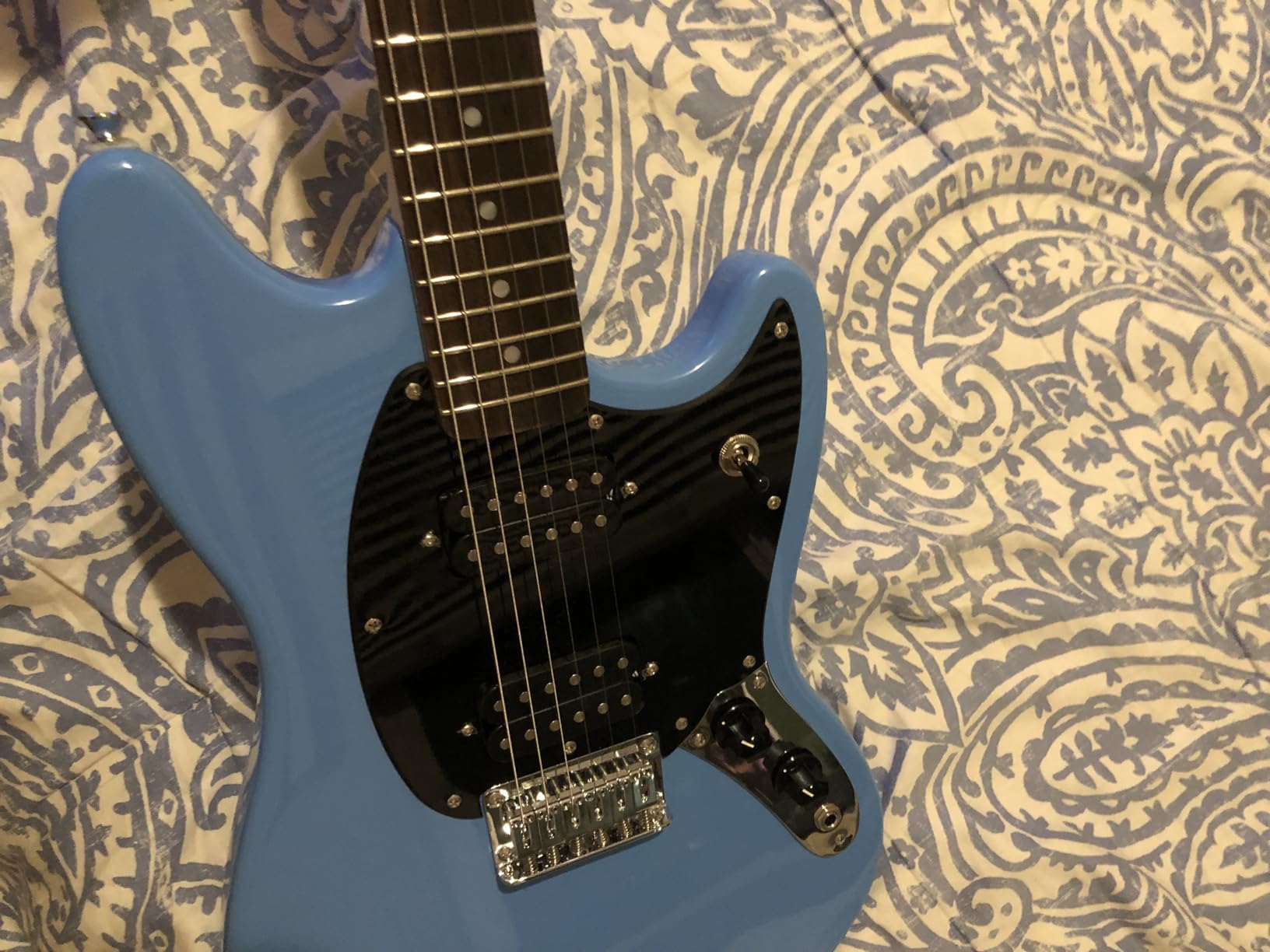
Fretwork is another strength. Many owners report clean fret ends and no sprout issues, which is not a given at this tier. The hardtail bridge needs no maintenance and adds nothing to your workload, and two-year warranty coverage matches the better rivals.
Beginners should know that a hardtail means no tremolo arm, so string changes take longer than on a whammy-equipped guitar. Some units also arrive with high string action, a bent neck, or a high final fret, so the setup conversation from the Mini Stratocaster applies here too. The finish also marks easily if the guitar gets knocked around.
Who the Sonic Mustang suits
Buy this if you want the least extreme short scale and a familiar brand name, particularly if your hand span is closer to average than very small. The 1.65-inch nut is narrow enough to relax a grip without feeling like a toy. It is also a good fit for adults upgrading from a ukulele or a keyboard.
Who should skip the Sonic Mustang
Skip it if your reach is severely limited. A 24-inch scale helps, but the 22-inch MiKro GRGM21 gives you more margin, and the difference is noticeable on the first few chord shapes. Players who want single-coil clarity should know that this model is humbucker only.
9. Squier Mini Jazzmaster – Offset Style, Small Hands
Squier Mini Jazzmaster Electric Guitar, with 2-Year Warranty, Surf Green, Maple Fingerboard
Scale: 22.75 inch
Dual humbuckers
Maple fingerboard
Offset body
Pros
- 22.75 inch short scale and compact body make it one of the most comfortable here
- Dual humbuckers give a warm fat tone with reduced hum
- Lightweight at 3 kg and easy on the shoulders
- Maple fingerboard is smooth and fast
- Hardtail bridge helps tuning stability
Cons
- Lowest average rating in this lineup at 4.0 stars
- Requires setup work on arrival with high action reported
- Compact body produces less volume than a full-size guitar
- Entry-level construction shows finish and hardware limitations
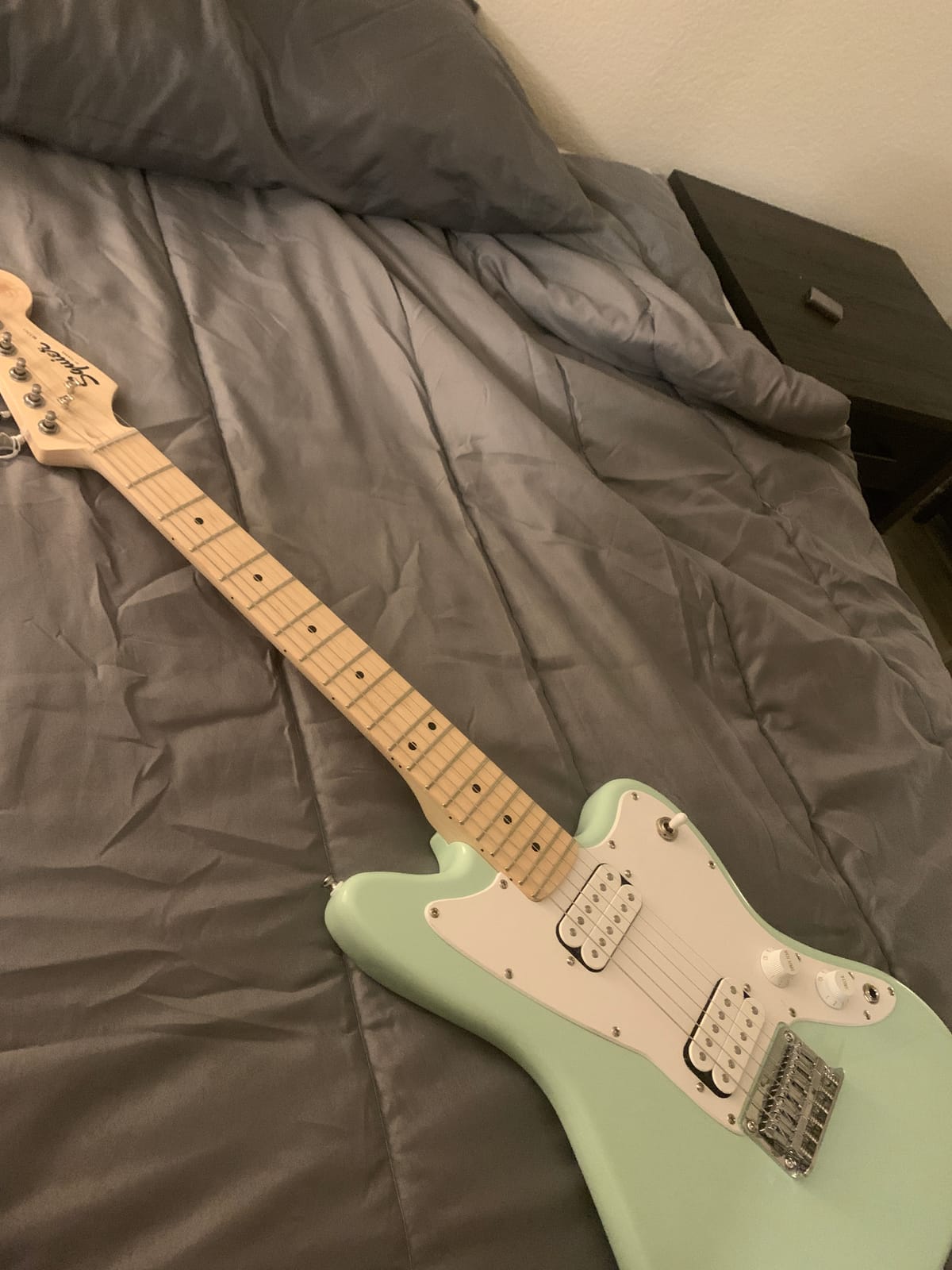
The Squier Mini Jazzmaster combines a 22.75-inch scale with the offset Jazzmaster body, and the combination is unusual at this size. The dual humbuckers deliver a warm, fat tone with much less hum than the Mini Stratocaster’s single coils, which makes it the better choice if you play in a noisy room or with gain.
At 3 kg it is light, and the maple fingerboard is smooth under a picking hand. Sealed die-cast machines and a hardtail bridge keep maintenance simple. The Surf Green finish and offset shape are the parts reviewers mention most in positive terms even when they criticise the setup.
This is the most polarised listing in our set. Eleven percent of ratings are two stars and another eleven percent are three stars, which pulls the average to 4.0 and below everything else we picked. Nearly all of that comes down to setup quality and the entry-level tier rather than the design itself.
Volume is the other limit. A compact offset body does not project like a full-size Jazzmaster, so this is a practice and recording instrument more than a campfire one. Players moving from a full-size offset often find the shorter scale a relief after a stretch.
Who the Mini Jazzmaster suits
Pick this if offset style appeals to you and your hands need the reach relief. It suits players who want humbucking warmth on a 22.75-inch neck and do not need a lot of acoustic volume. The maple fingerboard also responds well to fast left-hand movement.
Who should skip the Mini Jazzmaster
Skip it if you want a clean setup on arrival or plan to play loudly and unamplified. Of the three 22.75-scale instruments here, the Mini Stratocaster has the most consistent owner feedback. If joint pain is your main issue, test the thinner neck profile against the Strat before deciding, since comfort varies between hands.
How to Measure Your Hand Span and Match It to a Scale Length
Forum threads ask this question constantly, and the answer takes about a minute to find. Here is the method we use, and it costs nothing.
Take a tape measure or a piece of paper and a pen.
Extend your picking hand straight out in front of you, palm facing you, fingers together.
Measure from the tip of your middle finger to the crease where your thumb meets your palm.
Write the number down. Most adult men land between 7 and 9 inches, and most adult women between 6 and 8 inches.
Match your span to the range below and read the recommendation.
A span below 5.5 inches is genuinely small, and that is the group short scale instruments were designed for. Between 5.5 and 6.5 inches, a 24-inch scale usually solves the problem and you can keep a more familiar body. Above 6.5 inches, a full-scale guitar with a slim neck profile will probably serve you better, which is why the Jackson Dinky in section two exists.
Scale length only handles part of the reach. Nut width decides how much you have to stretch around the neck at the first fret, and it is an independent measurement. A short-scale guitar with a wide nut still asks you to turn your thumb behind the neck. Always check both numbers before buying.
If you want the same measurement-first approach applied outside music, we use the same rule of thumb when picking office chairs for short people: check the actual dimensions rather than the label. Labels are exactly what trip people up on guitar sizes too, since a 3/4-size body tells you nothing about how wide the neck feels.
What Actually Makes a Guitar Easy for Small Hands
Four variables decide how a guitar feels in your hand, and only one of them is scale length. Here is how to read them in order of impact.
Scale length. This is the vibrating distance between the nut and the bridge, measured in inches, and it sets how far apart the frets sit. Shorter scale means tighter fret spacing, lower string tension at the same tuning, and less stretch to hold a barre chord. Everything at or below 24 inches on our list qualifies; 25.5 inches does not.
Nut width. The distance across the top of the first fret is what your fingers have to span. Values around 1.65 inches are the common entry point, and the Squier Sonic Mustang lists that figure explicitly. Wider nuts feel easier to grip for players who fret with the fingertips rather than the pads, which is worth considering if you have joint pain.
Neck profile. The depth and shape of the back of the neck changes how much your thumb has to arch. Shallow C and D shapes suit small hands better than deep V or chunky U shapes. The Gretsch Deltoluxe Parlor is the clearest example here, since its shallow C profile is part of why owners with small hands find it comfortable for long sessions.
Body size and weight. A smaller body sits better on a lap, which matters more for a child than for an adult. Weight matters for shoulder comfort over long sessions, and the difference between a 6-pound instrument and a 9-pound one is obvious after an hour. Neither factor fixes reach, so treat them as comfort items rather than solutions. If your practice chair is the other half of the problem, our picks for gaming chairs for short people cover the same idea of measuring the seat before buying the gear.
String gauge belongs in the same conversation. Lighter strings need less finger pressure, which is why the Mini Stratocaster ships with them and why several owners move to heavier gauges to solve tuning drift rather than stretch. A thinner gauge and a shorter scale compound each other, so you do not need both at maximum. If a sweaty grip is what makes the neck feel slippery mid-session, our guide to golf gloves for sweaty hands explains the grip fix that transfers directly to the fretting hand.
When a Short Scale Guitar Is the Wrong Choice
Small hands are frequently framed as a hardware problem when they are often a technique problem, and buying a smaller instrument can delay the fix. Experienced players on the forums point out that most reach issues come from hand position and thumb placement rather than neck length, and that the habit carries over to any guitar.
A short scale is also the wrong answer if your hand span is above about 6.5 inches, if you want a wide range of tones from single coils, or if you play bends and vibrato where tighter fret spacing works against you. Players who dislike being asked why they play a small guitar should know that the offset and thin-body alternatives here sound full-sized.
If your hands hurt because of arthritis rather than size, a slim neck profile matters more than any scale length. Get the instrument comfortable first, and check whether a luthier can adjust a full-size guitar you already own before replacing it.
Guitar Terms You Will See on Every Spec Sheet
Scale length: the distance from the nut to the bridge in inches, which sets fret spacing and string tension.
Nut width: the width of the neck at the first fret, measured in inches, which sets how wide a chord your fingers must span.
Neck profile: the shape and depth of the back of the neck, from slim D through C to deep U.
Action height: how far the strings sit above the fretboard, and the most common reason a new guitar needs a setup.
String gauge: the thickness of the strings, where lower numbers mean thinner and easier-to-press strings.
Fretboard radius: the curvature of the fretboard, which affects how comfortably you can bar chords and play bends.
3/4 size versus 1/2 size: body and scale categories sold for children, where 3/4 is the larger and more adult-usable of the two.
Hardtail bridge: a fixed bridge with no tremolo, which needs less maintenance and holds tuning more reliably.
Frequently Asked Questions
What kind of guitar is best for someone with small hands?
For most players, a short scale electric between 22 and 24 inches with a nut width near 1.65 inches and a slim neck profile. The Ibanez RG MiKro GRGM21 at a 22-inch scale is our top pick, and the Squier Mini Stratocaster at 22.75 inches suits players who want single coil tone. Measure your hand span first, because scale length alone does not fix a wide nut.
What is the best nut width for small hands?
Around 1.65 inches is the common entry point for players with small hands, and most of the guitars on our list sit at or below it. The Squier Sonic Mustang lists a 1.65-inch nut explicitly. Wider nuts are easier for players who fret with their fingertips, so pair nut width with neck profile rather than treating either number alone as the answer.
Is a wider nut width easier to play?
For some players yes. A wider nut gives your fingers and thumb more room, which helps if you fret with the fingertips or have joint pain. For players with genuinely small hands the opposite is usually true, since a wide nut forces you to stretch further. The safest move is to try both and pay attention to what your hand does at the first three frets.
Can a nut slot be too wide?
Yes. A nut slot wider than the strings leaves extra lateral play, which makes notes feel sloppery and harder to articulate cleanly. On a small guitar this is rarely the problem, since compact instruments are usually built with proportionally narrower nuts. It can appear on a full-size guitar that has been set up for someone else, which is one reason to test before committing.
What is the best small acoustic electric guitar?
The Gretsch Jim Dandy Deltoluxe Parlor is the pick in this roundup, with a 24-inch scale, a shallow C-shape neck, and a built-in magnetic pickup so it works plugged in or clean. Its limitation is volume, since a compact parlor body cannot match a dreadnought for projection. If you need to be heard in a band, add a small amplifier rather than a larger guitar.
Do 3/4 guitars tune the same as full size ones?
They can. Any guitar can be tuned to standard pitch with the right strings, and most short scale guitars are set up that way. Some players detune 3/4 instruments slightly for slack feel and easier bends. What does change with scale length is string tension at a given pitch, so lighter gauges are usually fitted to compensate.
What gauge strings are easiest for small hands?
Lighter gauges are easiest because they need less finger pressure to fret. The Mini Stratocaster ships with light strings that suit new players. Going too thin causes tuning instability, which is why several owners of the Mini Stratocaster and the Jackson Minion move to heavier gauges. On a 22-inch scale you can usually stay lighter than on a 25.5-inch instrument.
Final Thoughts on Short Scale Guitars for Small Hands
The best short scale guitars for small hands come down to two picks for most readers. Take the Ibanez RG MiKro GRGM21 if reach is your problem, and take the Squier Mini Stratocaster if you want single coil versatility and a first instrument a child can grow into. Add the Gretsch parlor acoustic if you want steel strings, and the Traveler Guitar Ultra-Light if your practice spot changes every week.
Whatever you choose, measure your hand span, check the nut width as well as the scale length, and budget a setup on any of the entry guitars here. Comfort is what keeps people playing past 2026, not brand names.