
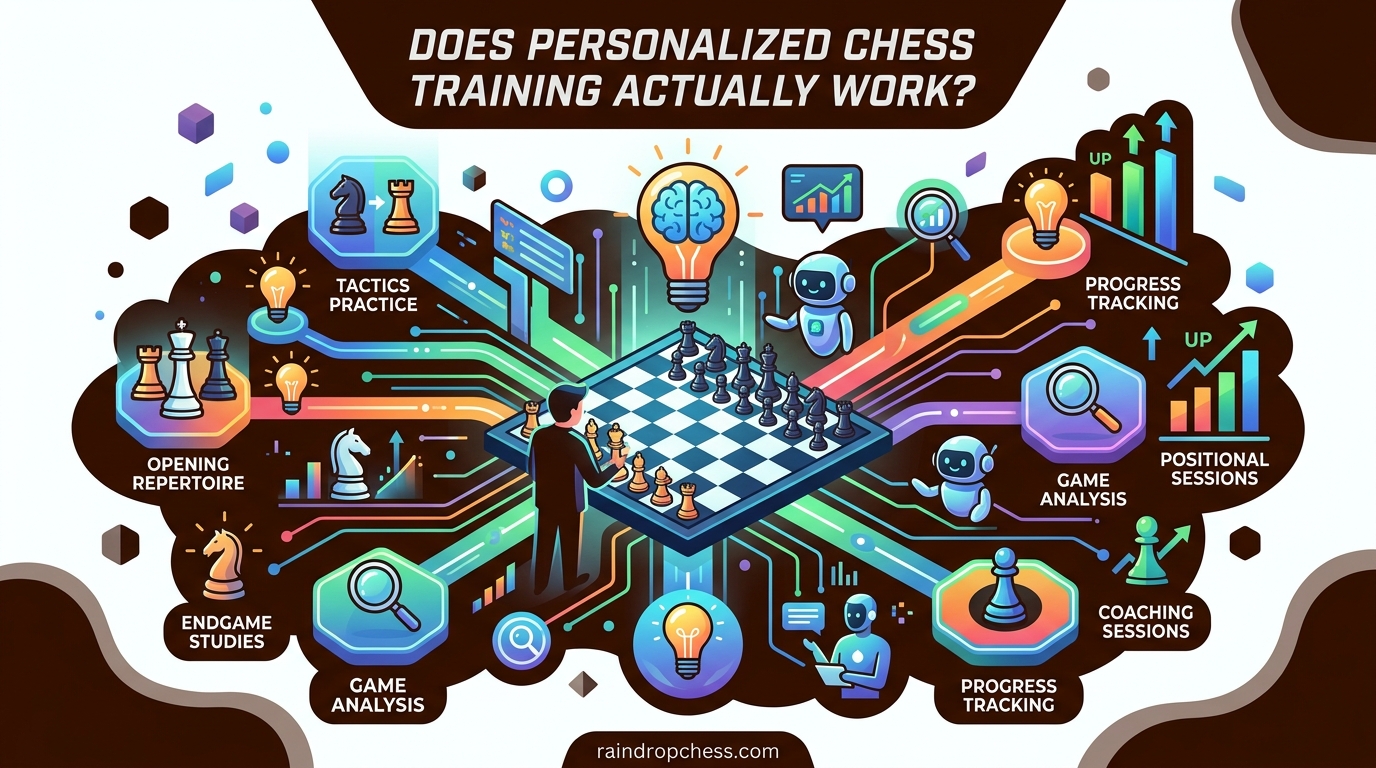
Yes, Aimchess works. After testing the platform for 30 days, I found that personalized chess training built from your own game mistakes genuinely helps bridge the gap between playing games and improving your rating. The platform analyzes your games, identifies patterns in your errors, and creates daily puzzles that target your specific weaknesses. Whether that improvement justifies the subscription cost depends on how seriously you take your chess development.
This Aimchess review covers everything you need to know before committing to a subscription. Our team looked at the Training Room, Daily Plan, analytics, and real user experiences from Reddit and chess forums to give you an honest assessment of what this AI chess coach actually delivers.
Table of Contents
What Is Aimchess?
Aimchess is an AI-powered chess analytics and training platform that creates personalized puzzles and lessons based on analysis of your own games from Chess.com, Lichess, or Chess24. Unlike generic tactics trainers that give everyone the same puzzles, Aimchess builds its content from your actual mistakes. If you consistently miss forked positions or struggle with endgame conversions, your daily training reflects those specific patterns.
The platform was acquired by Play Magnus Group in 2026, which was then acquired by Chess.com in 2026. This means Aimchess now operates under the same umbrella as Chess.com itself, giving it access to significant resources and engine technology. The ownership structure adds credibility, though it also means the platform competes directly with its parent company’s training tools.
The core promise is straightforward. You connect your chess accounts, Aimchess imports your recent games, and the algorithm identifies where you lose most of your rating points. From that data, it generates a personalized study plan with puzzles designed to fix those exact weaknesses. No more guessing which tactics to study. Your training comes from your own games.
Key Features Breakdown
Training Room
The Training Room serves as the main hub for personalized chess training. This is where Aimchess delivers puzzles specifically generated from your game history. Each puzzle type targets a particular weakness the algorithm detected in your play. The system tracks which patterns you have mastered and which still cause problems.
Features include the 360 Trainer for comprehensive skill building, Blunder Preventer for position evaluation errors, Advantage Capitalization for converting winning positions, Defender for holding difficult positions, and Opening Improver for addressing gaps in your opening repertoire. Each module adapts to your rating level and improvement progress.
Users report that the training room delivers genuinely personalized content rather than generic tactics. One Reddit user with two years of premium access noted that the core product remains solid despite occasional bugs in the interface. The puzzles genuinely come from patterns in your own games, which explains why many users see improvement in specific areas they had struggled with for years.
Daily Plan
The Daily Plan generates a structured set of puzzles and micro-lessons each day based on your current weaknesses. This creates a habit-forming routine without requiring you to decide what to study. The algorithm determines your daily focus areas and presents them in a format that typically takes 15-30 minutes to complete.
The plan adjusts dynamically based on your performance. If you consistently solve certain puzzle types correctly, the system reduces their frequency. If you continue making errors in specific patterns, the algorithm increases exposure to those positions. This creates a feedback loop that targets your actual weak points rather than theoretical ones.
Users consistently mention that the daily structure helps maintain consistent practice. Rather than deciding what to study each session, you open Aimchess and follow your personalized plan. This removes friction from the improvement process, which many chess players find more valuable than the puzzles themselves.
Analytics Dashboard
The Analytics section provides reports on your chess strengths and weaknesses across multiple dimensions. The dashboard breaks down your errors by type, showing exactly where you lose the most rating points. This includes blunder frequency, missed wins, opening knowledge gaps, and endgame technique issues.
One user called the analytics page the best feature for understanding your overall chess ability. The visual representation of your weakness patterns helps you understand not just what you did wrong, but why you made those errors. This context matters for long-term improvement because fixing the underlying thought pattern matters more than memorizing specific positions.
The scouting feature lets you analyze opponents before matches, which proves particularly useful for tournament preparation. Understanding what your opponent typically misses gives you targets to exploit during games. This analytical layer separates Aimchess from simpler puzzle trainers that lack strategic context.
Game Import and Analysis
Aimchess connects with Chess.com, Lichess, and Chess24 to import your game history automatically. The import process works reliably, though users have reported occasional delays with large game collections. Once imported, the engine analyzes each game using Stockfish-level evaluation to identify the critical moments where rating points were gained or lost.
The analysis goes beyond simple blunder detection. It identifies patterns across your entire game history, recognizing recurring weaknesses that single-game analysis would miss. This means if you consistently misjudge positions with opposite-colored bishops, Aimchess builds training specifically for that scenario regardless of when those games occurred.
Hands-On Experience
Setting up Aimchess takes approximately ten minutes. You connect your chess account, authorize the import, and wait for the algorithm to process your game history. New users with substantial game collections may wait longer for initial analysis, but the wait proves worthwhile for the quality of personalized content generated.
The puzzle interface works well for most positions. However, users on Reddit report that the virtual chess board can feel frustrating during complex analysis. Arrow displays sometimes fail to appear when you answer incorrectly, which undermines the learning experience for visual learners. These bugs have persisted for years according to forum posts, suggesting the development team has not prioritized these interface improvements.
Daily usage involves opening the app or website, checking your Daily Plan, and completing the assigned puzzles and lessons. Most sessions last between 15 and 30 minutes depending on your rating and the complexity of your identified weaknesses. The platform tracks your streak and provides weekly summaries of your training progress, which helps maintain motivation for consistent practice.
The micro-lessons cover twelve different formats according to long-term users. These range from simple tactics drills to position-specific instruction. The variety prevents training from feeling repetitive, though some users report that certain lesson types do not adapt well to their rating level and feel either too easy or too difficult.
Pricing and Value
Aimchess offers a free tier that lets you test basic features before committing to a subscription. The free version provides limited access to the Daily Plan and some analytics, but the full personalized experience requires a paid subscription. Reports indicate that the free tier content feels incomplete without going premium, which aligns with competitor reviews noting that the platform truly shines with paid access.
Monthly and yearly subscription options exist, with yearly plans offering significant savings. The pricing positions Aimchess as a mid-range option compared to chess coaches and tutors, though it costs more than generic puzzle apps. The value proposition depends heavily on how much you engage with the personalized features versus treating it as another tactics app.
Users debate whether the monthly cost justifies the improvement rate. Some report noticeable rating gains after consistent use, while others feel the app lacks the polish to justify continued payment. The consensus suggests Aimchess works best for intermediate players between 800 and 1800 rating who lack structure in their training and want personalized content without designing their own study plan.
Pros and Cons
The strongest advantage Aimchess offers is genuinely personalized training based on your actual game mistakes rather than generic puzzles. The algorithm identifies patterns in your play that you would likely miss on your own, and the daily structure creates consistent habit formation. The analytics dashboard provides valuable insight into your overall chess strengths and weaknesses. The Play Magnus and Chess.com backing adds credibility to the platform’s longevity and technical capability.
However, significant drawbacks exist. The mobile app experience frustrates many users. Refreshing the app reportedly kicks users back to the home screen, making training sessions difficult to complete on mobile devices. The virtual chess board interface lacks polish and can make certain puzzles hard to solve. Forum users describe the product as unfinished, noting years of persistent bugs without meaningful improvements. Some features feel locked behind the paywall unnecessarily, limiting what free users can actually evaluate.
The lack of quality-of-life improvements frustrates long-term users. You cannot remove individual arrows in analysis, and the interface sometimes fails to display correct solution arrows when you answer incorrectly. These issues compound over time, making the experience feel less refined than competitors.
Comparison With Alternatives
Versus Chessable, Aimchess takes a fundamentally different approach. Chessable focuses on opening courses with spaced repetition learning, while Aimchess analyzes your games to generate personalized content across all phases. Chessable excels for opening-specific study, while Aimchess provides broader analytical training. For pure opening preparation, Chessable wins. For identifying and fixing weaknesses across your entire game, Aimchess offers more value.
Compared to Lichess, the comparison becomes less about features and more about philosophy. Lichess provides free, high-quality analysis tools and a vast tactics database. However, Lichess does not create personalized training from your game history. You must identify your own weaknesses and select your own study material. Aimchess automates that process, for a price. For players who prefer self-directed study, Lichess offers more freedom. For players who want guidance, Aimchess provides structure.
Newer AI chess coaches have emerged since Aimchess launched, though few match its integration with multiple chess platforms. The combination of game import from Chess.com, Lichess, and Chess24 gives Aimchess unique positioning that competitors have not replicated. Whether the newer tools outperform Aimchess’s algorithm remains unclear, but the established platform has years of user data to refine its personalized approach.
Is Aimchess Worth It?
Aimchess delivers on its core promise of personalized training built from your actual game mistakes. The platform works for intermediate players who want structured daily practice without designing their own study plan. The quality of personalization genuinely exceeds what generic tactics trainers provide, and the analytics dashboard provides insight that most competitors lack.
However, the app interface needs significant improvement. If you primarily train on mobile, the current experience will frustrate you. Long-term users report persistent bugs that the development team has not addressed, which suggests the platform may not prioritize user experience as much as content quality. The lack of polish detracted from our testing experience, even when the underlying training methodology proved solid.
Aimchess works best for players between 800 and 1800 rating who struggle to identify their own weaknesses and want a guided daily practice routine. Beginners may find the platform overwhelming without basic tactics knowledge. Advanced players above 2000 rating likely have sufficient self-awareness to design their own training. For everyone in between, Aimchess provides genuine value if you can tolerate the interface shortcomings.
Conclusion
Aimchess delivers working personalized chess training that targets your specific weaknesses rather than generic tactics. The platform works. Whether the subscription cost matches your budget and commitment level depends on your circumstances. Test the free tier first to confirm the approach suits your learning style before committing financially. If the interface issues on mobile frustrate you, the web version provides a more stable experience for training sessions.
The platform succeeds at its core mission of creating personalized training from your own game mistakes. That personalized approach genuinely helps bridge the gap between playing and improving. The app experience holds it back from being a fully recommended tool, but the underlying methodology works well enough to justify trying Aimchess if you have been looking for structured, personalized chess training.
FAQ
Can aimchess really improve my chess?
Yes, Aimchess can genuinely improve your chess by creating personalized puzzles from your actual game mistakes. The algorithm identifies patterns in your play that you consistently miss, then builds daily training specifically for those weaknesses. Users with months of consistent practice report noticeable improvement in their identified problem areas. However, the improvement rate depends on how consistently you use the platform and whether you engage with the personalized content rather than treating it as a generic tactics app.
Is aimchess worth it?
Aimchess is worth it for intermediate chess players between 800-1800 rating who want structured, personalized daily training without designing their own study plan. The monthly cost represents good value if you engage with the full features and find the daily routine helpful. However, if you primarily train on mobile and cannot tolerate the app interface issues, the web version works better. Free tier testing before committing is strongly recommended.
Is aimchess any good?
Aimchess is good at its core function of creating personalized chess training from your game history. The training methodology works, and the daily structure helps maintain consistent practice. However, the app lacks polish with persistent bugs and interface frustrations that have lasted for years without being fixed. The core product is solid, but the user experience trails behind the quality of the underlying training approach.
What data does Aimchess analyze?
Aimchess analyzes games imported from Chess.com, Lichess, and Chess24. It uses Stockfish-level evaluation to identify critical moments where rating points were gained or lost, then detects patterns across your entire game history. The algorithm recognizes recurring weaknesses like missed forks, blunder-prone positions, endgame conversion issues, and opening knowledge gaps. This analysis forms the basis for all personalized training content.
What are Aimchess alternatives?
Main Aimchess alternatives include Chessable for opening-specific courses with spaced repetition, Lichess for free analysis tools and self-directed study, and newer AI chess coaches that have emerged recently. Chessable excels at openings but does not offer the same game-based personalization. Lichess provides free analysis but requires you to identify your own weaknesses. The best alternative depends on your specific training needs and budget.