
Finding the right board game for your group should not feel like solving a puzzle before you even open the box. Our team spent over three months testing, teaching, and playing dozens of titles to put together this list of the best board games under 100 dollars for 2026. We focused on games that deliver genuine value: strong replayability, quality components, and mechanics that keep everyone at the table engaged from start to finish.
Whether you are shopping for a family game night staple, a brain-burning strategy experience for your regular group, or a quick party game that works with almost any crowd, you will find a match below. Every game on this list comes in well under the $100 mark, with prices ranging from about $32 to $84. That means you could pick up two or even three of these and still stay within budget. If you are also looking for something more traditional, check out our guide to chess sets under $100 for more options.
We paid close attention to what real players say on BoardGameGeek, Reddit, and Amazon reviews. A game that looks beautiful on the shelf but gathers dust is not a good value. Every pick below earned its spot through consistent praise for fun factor, teachability, and long-term replay appeal. We also considered how well each game scales across different player counts, because the best game in your collection is the one that actually hits the table.
Table of Contents
Top 3 Picks for Best Board Games Under 100 Dollars

Best Board Games Under 100 Dollars in 2026
| Product | Specifications | Action |
|---|---|---|
| Splendor |
|
Check Latest Price |
 CATAN 6th Edition CATAN 6th Edition |
|
Check Latest Price |
 Wingspan Wingspan |
|
Check Latest Price |
 Azul Azul |
|
Check Latest Price |
 Carcassonne Carcassonne |
|
Check Latest Price |
 Ticket to Ride 2025 Refresh Ticket to Ride 2025 Refresh |
|
Check Latest Price |
 Root Root |
|
Check Latest Price |
 Terraforming Mars Terraforming Mars |
|
Check Latest Price |
 Scythe Scythe |
|
Check Latest Price |
 Wavelength Wavelength |
|
Check Latest Price |
1. Splendor – The Perfect Gateway Strategy Game
Asmodee Splendor Gem Trading Strategy Board Game, 2-4 Players
2-4 Players
30 Min Playtime
Ages 10+
Engine-Building Strategy
Pros
- Easy to learn with deep strategy
- High quality poker-style gem chips
- Quick 30-minute games
- Excellent replay value
- Works well at all player counts
Cons
- Theme feels a bit thin on narrative
- Cards may need sleeves for heavy use
I brought Splendor to a game night with friends who had never played a modern board game before. Within five minutes of explaining the rules, everyone was reaching for gem tokens and eyeing development cards on the table. That instant accessibility is what makes Splendor such a standout. You collect gem tokens, purchase development cards, and try to attract noble patrons before your opponents do. The mechanics click together like puzzle pieces.
What surprised me most is how much depth hides behind those simple rules. On your turn you only have three possible actions: take gems, reserve a card, or buy a card. But the decision space opens up quickly as development cards start generating permanent gem discounts. By round three you are building an engine that can feel incredibly satisfying when the pieces line up right.

The component quality deserves special mention. The gem tokens are heavy, poker-style chips that clink satisfyingly when you stack them. There is something tactile and premium about holding a handful of these that makes every transaction feel rewarding. For a game at this price point, the production value punches well above its weight.
Our group has played Splendor well over 40 times now, and no two sessions have felt identical. The random distribution of development cards and noble tiles creates enough variety that you cannot rely on a single strategy every time. It scales beautifully from two players to four, though I personally prefer it at three where the competition for cards feels just right.

Who Should Pick Up Splendor
If you are new to modern board games or shopping for someone who is, Splendor is the single best starting point under $100. It teaches engine-building concepts without overwhelming players with rules. It also works wonderfully as a couples game or a lunch-break option since sessions finish in about 30 minutes.
Experienced gamers will find a tight, competitive race under the surface. Tournament-level play exists for Splendor, which tells you something about the strategic ceiling. It is one of those rare games that genuinely works for both casual and serious audiences at the same table.
When Splendor Might Not Be the Right Fit
Players who want strong narrative themes or lots of direct player interaction may find Splendor a bit dry. You are mostly building your own engine and occasionally blocking an opponent by taking a card they wanted. If your group thrives on negotiation and trash talk, something like CATAN might be a better first choice.
The theme of Renaissance gem merchants is functional but not particularly immersive. Some players in my group treat it more as an abstract puzzle, which is fine, but if you want to feel transported to another world, Wingspan or Root deliver more on that front.
2. CATAN (6th Edition) – The Classic That Started It All
CATAN Board Game (6th Edition) Trade, Build & Settle in the Classic Strategy Game for Family, Kids & Adults, Ages 10+, 3-4 Players, 60-90 Min Playtime
3-4 Players
60-90 Min Playtime
Ages 10+
Trading and Resource Strategy
Pros
- Modular board for endless replayability
- Engaging trading mechanics
- Great for families ages 10+
- 6th Edition includes card trays
- 39k+ positive reviews
Cons
- Dice rolls introduce luck factor
- Hard to catch up when falling behind
CATAN is the game that pulled me into the board gaming hobby, and I am not alone in that. With over 39,000 reviews and a 4.8-star rating, it remains one of the most popular board games in the world. The 6th Edition freshens things up with updated artwork and practical additions like card trays that make organizing your hand much smoother than older versions.
The core loop is straightforward and addictive. You place settlements at the intersections of terrain hexes, and those hexes produce resources based on dice rolls. Brick, wood, wheat, ore, and sheep are the currencies of the island, and you trade them with other players to build roads, upgrade to cities, and earn victory points. Every game unfolds differently because the modular hex board rearranges each time you play.

Trading is where CATAN truly shines. There is nothing quite like trying to convince your friend that two sheep for one ore is a fair deal when you both know it absolutely is not. Those negotiations create the kind of table talk and laughter that make game nights memorable. I have seen alliances form and dissolve over a single brick trade.
The 6th Edition quality of life improvements are welcome. The card trays keep your resource cards organized and hidden from other players, which sounds minor but makes a real difference during intense trading phases. The updated artwork on the hex tiles is vibrant and clear, making the island feel alive on the table. For the price, you are getting a massive amount of entertainment per dollar.

Ideal Groups for CATAN
CATAN works best with 3 to 4 players who enjoy friendly competition and negotiation. It is an exceptional family game for kids aged 10 and up, because the trading mechanics teach negotiation skills without feeling educational. If you want a game that gets people talking and wheeling and dealing, CATAN delivers that experience better than almost anything else in this price range.
It also makes a fantastic introduction to strategy board games for people who have only played Monopoly or Scrabble. The rules take about 10 minutes to explain, but the strategic decisions around where to build and when to trade keep improving with repeat plays.
Things to Consider Before Buying
The dice-driven resource production means luck plays a real role. Sometimes your numbers simply do not roll, and watching everyone else collect resources while you sit empty-handed can be frustrating. The expansion pack adds support for 5-6 players if your group regularly exceeds 4, but that is an additional purchase.
Comeback mechanics are limited. Once a player pulls ahead with city upgrades, it can feel difficult to close the gap. If your group prefers games where everyone stays competitive until the final turn, Azul or Splendor might be better options.
3. Wingspan – Award-Winning Bird Collection Engine Builder
Stonemaier Games: Wingspan by Elizabeth Hargrave
1-5 Players
70 Min Playtime
Ages 14+
Engine-Building Bird Collection
Pros
- 170 unique bird cards for massive variety
- Beautiful artwork and components
- Relaxing yet strategic gameplay
- Excellent solo Automa mode
- Kennerspiel des Jahres winner
Cons
- Lower player interaction than competitive games
- Complex for first-time board gamers
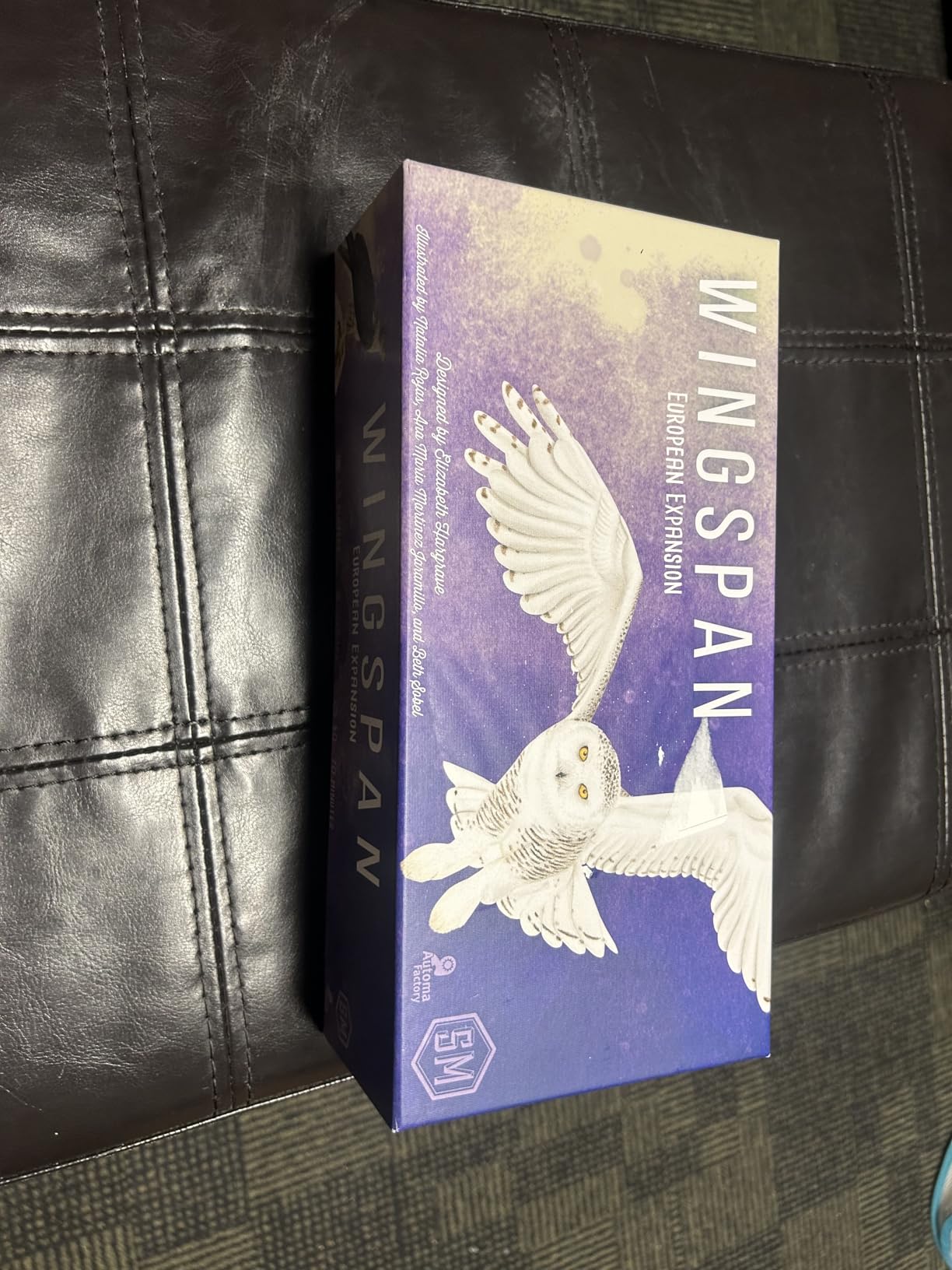
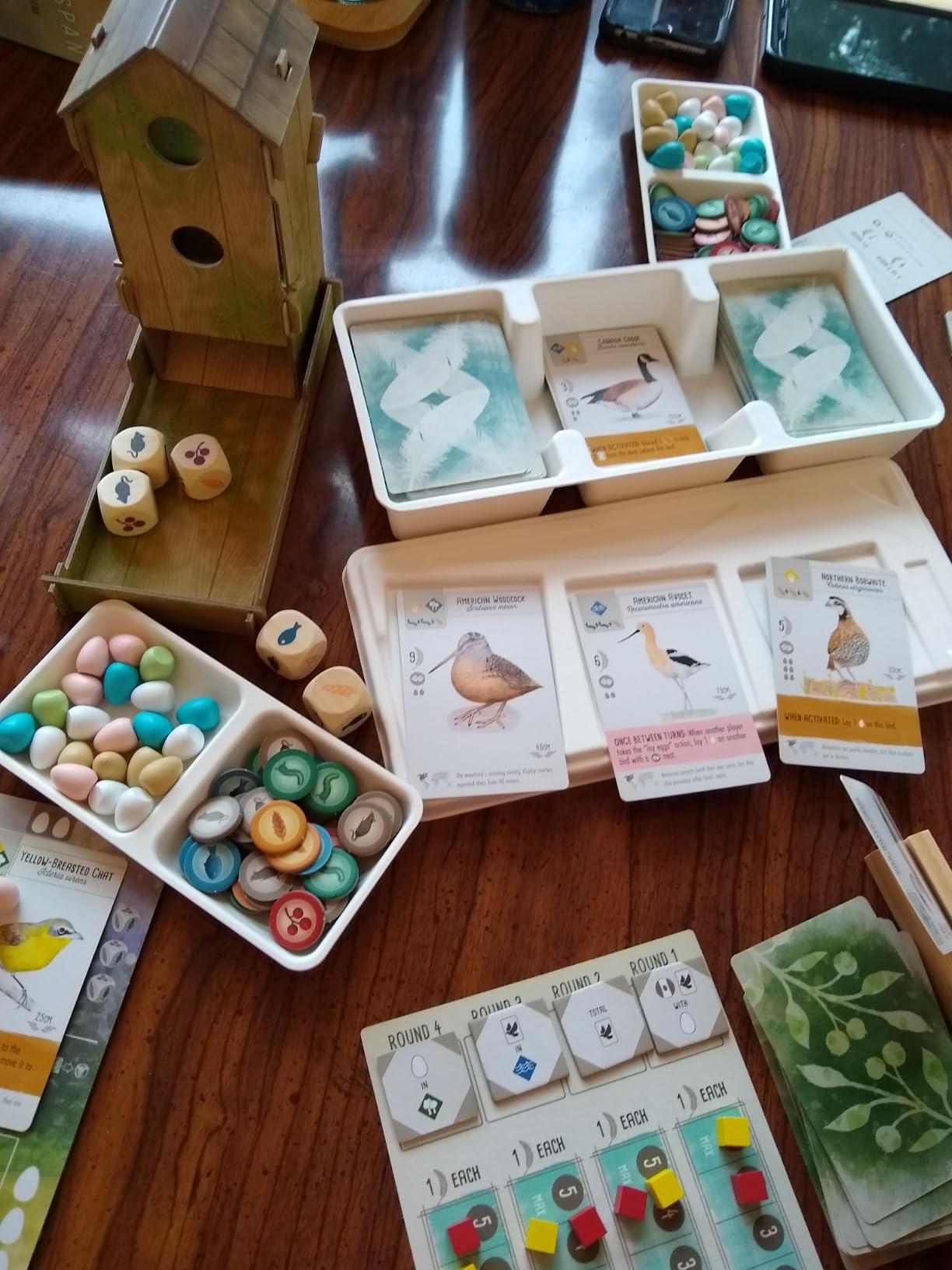
Wingspan is the kind of game that makes people stop and stare when you set it up on the table. The bird cards feature stunning illustrations drawn from real species, the egg miniatures come in five pastel colors, and the custom birdfeeder dice tower is a centerpiece that sparks conversation before the game even begins. It won the Kennerspiel des Jahres in 2019, and that recognition is well deserved.
At its core, Wingspan is an engine-building game where you collect food tokens, lay eggs, and draw bird cards to populate three habitats on your player mat: forest, grassland, and wetland. Each bird card has a unique ability, and with 170 different birds in the base game, the combinations are enormous. I have played dozens of times and still discover new card synergies that make me rethink my approach.
The gameplay strikes a rare balance between relaxing and competitive. You are never directly attacking other players, which means the table atmosphere stays friendly throughout. But the scoring is tight enough that every decision matters. Choosing between drawing an extra bird card or spending food to play one creates genuine tension turn after turn.
The solo mode using the Automa system is genuinely excellent, not an afterthought. When I cannot get a group together, playing against Automa provides a satisfying puzzle that mirrors the multiplayer experience. The Automa cards simulate an opponent efficiently without requiring you to manage a second board state.
Who Will Love Wingspan
Wingspan is perfect for players who enjoy building something beautiful while competing on points. If you appreciate nature themes, gorgeous artwork, and games where you focus on your own board rather than attacking opponents, this is a top choice. It also works well for couples, as the two-player game is fast-paced and satisfying.
Bird enthusiasts and educators will appreciate that every card includes real facts about each species. Our group has actually learned to identify several birds just from playing. It is one of those rare games that is both a genuine hobby experience and a conversation starter.
Potential Drawbacks to Consider
The learning curve is steeper than games like Splendor or Azul. Your first game will likely run 90 minutes to two hours as everyone learns the card interactions. Player interaction is also lower than competitive games; you are mostly building your own engine and occasionally competing for bonus objectives.
At 14+ age recommendation, Wingspan is not ideal for younger children. The iconography on bird cards requires some reading comprehension, and younger players may lose interest during the longer play sessions.
4. Azul – Stunning Mosaic Tile Strategy Game
Azul Mosaic Tile-Placement Strategy Board Game, 2-4 Players, 30-45 Min
2-4 Players
30-45 Min Playtime
Ages 8+
Tile Drafting Strategy
Pros
- Gorgeous resin tile components
- Spiel des Jahres 2018 winner
- Easy to teach with deep strategy
- Perfect balance of planning and denial
- Scales well 2-4 players
Cons
- Rulebook could be clearer
- Scoring system takes a few rounds to fully grasp
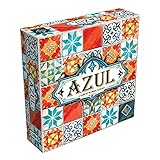
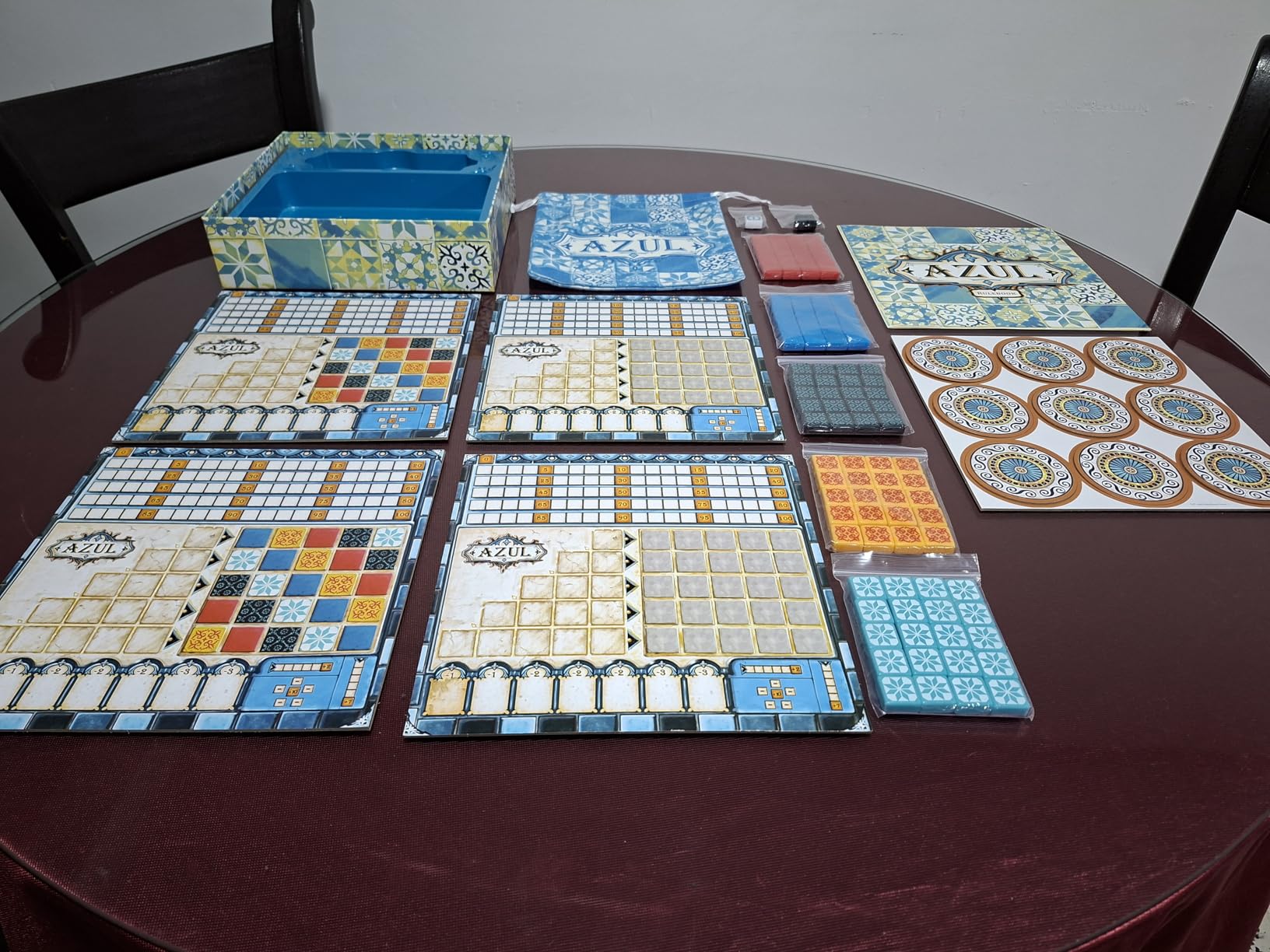
Azul is the game I reach for when I want something visually stunning that still plays in under an hour. The thick resin tiles are tactile and beautiful, clinking against each other as you draft them from factory displays to your player board. It won the Spiel des Jahres in 2018, and the moment you open the box you understand why the judges were impressed.
The drafting mechanism is simple but creates constant tension. You pick tiles from central factory displays, and any tiles you do not take go to the center pool for other players to grab. This means every selection you make affects what becomes available for your opponents. I have seen entire strategies crumble because someone took a row of blue tiles just to block the player next to them.
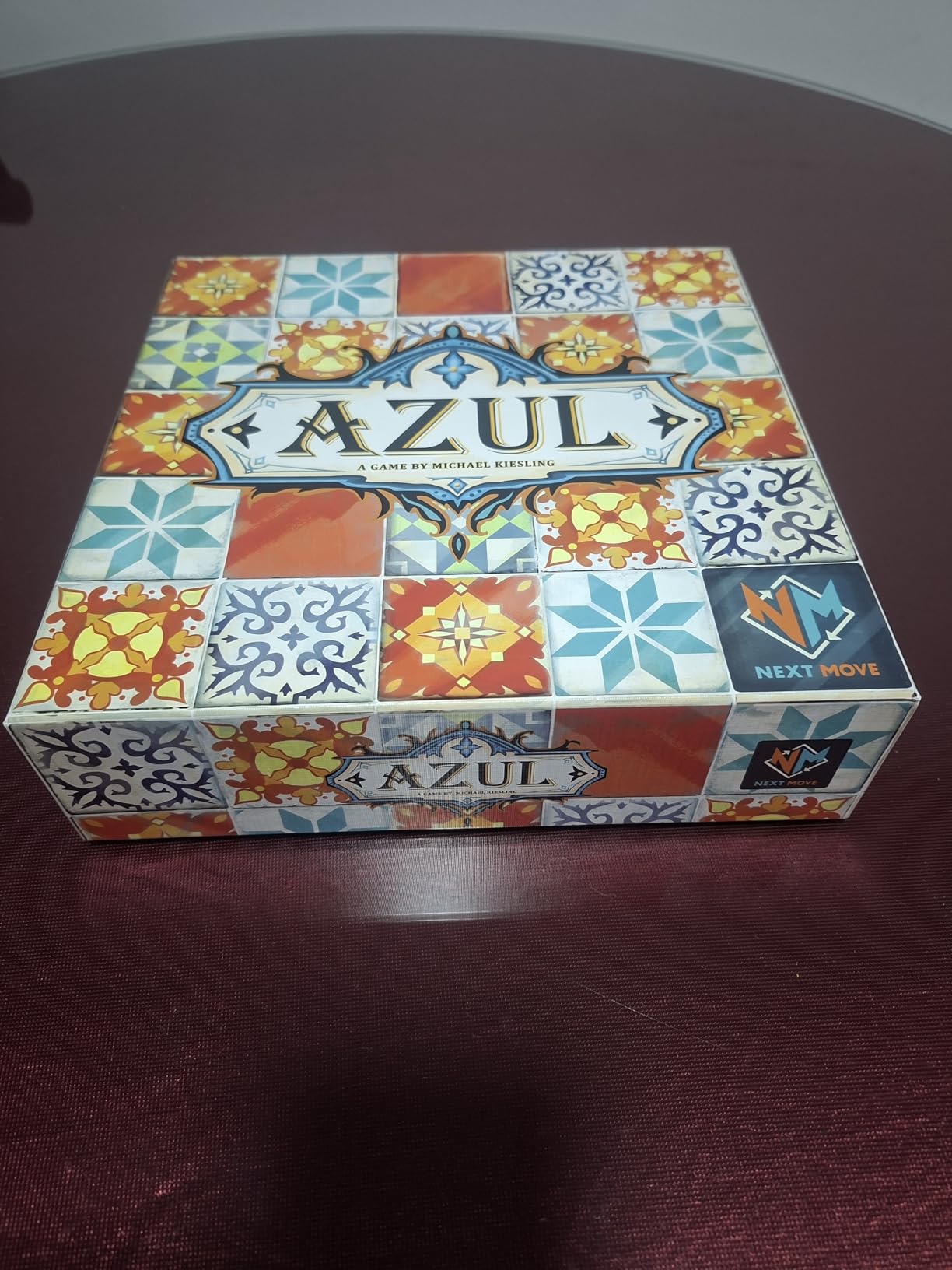
Scoring involves placing tiles on your mosaic wall in specific patterns. Completing rows and columns earns bonus points, while leftover tiles penalize you. The pattern-building aspect appeals to anyone who enjoys puzzles or visual design. My partner, who usually avoids competitive games, asked to play Azul three nights in a row after we first learned it.
Games finish in 30 to 45 minutes, which makes Azul perfect for weeknights or as a warm-up before a longer game. The short playtime does not sacrifice strategic depth. You are constantly calculating whether to play safe or take risks that could pay off big or leave you with negative points.
Best Use Cases for Azul
Azul shines as a couples game and a family game for ages 8 and up. The tactile tiles and visual scoring make it accessible for younger players while still engaging adults. It also works beautifully as a gateway game for friends who are new to modern board games, because the rules take about three minutes to explain.
If you want a game that looks impressive on your coffee table and plays quickly enough for a school night, Azul delivers. The component quality alone makes it feel like a premium product despite being one of the most affordable games on this list.
When Azul May Disappoint
The scoring rules have some complexity around pattern completion and floor-line penalties that can confuse first-time players. I recommend playing one practice round before scoring seriously. Also, at four players the drafting can feel more chaotic because tiles disappear faster, reducing your control over long-term planning.
Players who enjoy direct conflict or negotiation in their games may find Azul too quiet. The interaction comes from denial and tile selection rather than trading or combat, which some groups find less engaging.
5. Carcassonne – Timeless Tile-Laying Classic
Carcassonne Tile Placement Strategy Board Game, 2-5 Players, 35 Min
2-5 Players
35 Min Playtime
Ages 7+
Tile Placement Strategy
Pros
- Intuitive tile-laying mechanics
- Includes River and Abbot mini-expansions
- Spiel des Jahres 2001 winner
- Works for ages 7 and up
- Endless replayability
Cons
- Missing pieces reported occasionally
- Two-player games can feel cutthroat
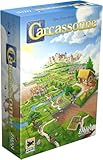
Carcassonne has been on my shelf for over a decade, and it still gets played regularly. There is something deeply satisfying about drawing a tile, finding where it fits on the growing landscape, and placing your wooden meeple to claim a city, road, or monastery. Every game creates a unique medieval map that looks different by the time the last tile is placed.
The rules are among the simplest of any game on this list: draw one tile, place it, optionally place one meeple. Yet the strategic decisions around when and where to commit your limited meeples create genuine depth. Do you finish a small city quickly for guaranteed points, or gamble on a large city that an opponent might share? Those choices define every session.
This edition includes The River mini-expansion and The Abbot, both of which add welcome variety without complicating the rules. The River changes how the landscape forms at the start of each game, and The Abbot adds a meeple type with its own scoring rules. These additions make an already excellent game even more replayable.
At ages 7 and up, Carcassonne is one of the few games on this list that genuinely works for young children alongside adults. My niece learned to play at age 8 and now regularly beats the adults at family gatherings. The spatial thinking required is intuitive enough for kids but nuanced enough to challenge experienced gamers.
Families and Casual Gamers Will Love This
If you want a game that everyone from grandparents to young children can enjoy together, Carcassonne is hard to beat. The age range of 7+ is genuinely accurate, and games finish in about 35 minutes, which keeps younger players engaged. It also supports up to 5 players with the base game, making it versatile for different group sizes.
The included mini-expansions add real value. Many games charge extra for this kind of content, but here it comes in the box. For families building their first board game collection, Carcassonne delivers exceptional value per dollar spent.
What to Watch Out For
Some customers have reported missing pieces in their deliveries, so check your copy when it arrives. The two-player experience can be surprisingly intense because every tile directly impacts your opponent. If you want a more relaxed two-player game, consider Azul instead.
The scoring track can loop around the board with higher scores, which gets awkward when meeples overlap. This is a minor complaint but worth knowing about before your first game.
6. Ticket to Ride – The Ultimate Train Adventure
Asmodee Ticket to Ride Board Game (2025 Refresh) – A Cross-Country Train Adventure for Friends and Family, Strategy Game for Kids & Adults, Ages 8+, 2-5 Players, 30-60 Minute Playtime
2-5 Players
30-60 Min Playtime
Ages 8+
Route Building Strategy
Pros
- Easy to learn in under 10 minutes
- Beautiful North America map board
- Miniature train pieces feel premium
- Multiple winning strategies
- Great for families and beginners
Cons
- Newer edition with fewer reviews
- Rulebook only available as PDF
Ticket to Ride is the game I recommend when someone says they want to try board games but does not know where to start. The concept is simple and compelling: you collect train cards in various colors and use them to claim railway routes across a map of North America. The 2025 Refresh edition brings updated components and the same beloved gameplay that has made this a worldwide hit.
Each turn you either draw train cards, claim a route, or draw destination tickets. That simplicity means you can teach the rules in under 10 minutes, which is a huge advantage when playing with mixed-experience groups. Yet the strategic decisions around which routes to claim and when to draw new destination tickets create meaningful choices every turn.
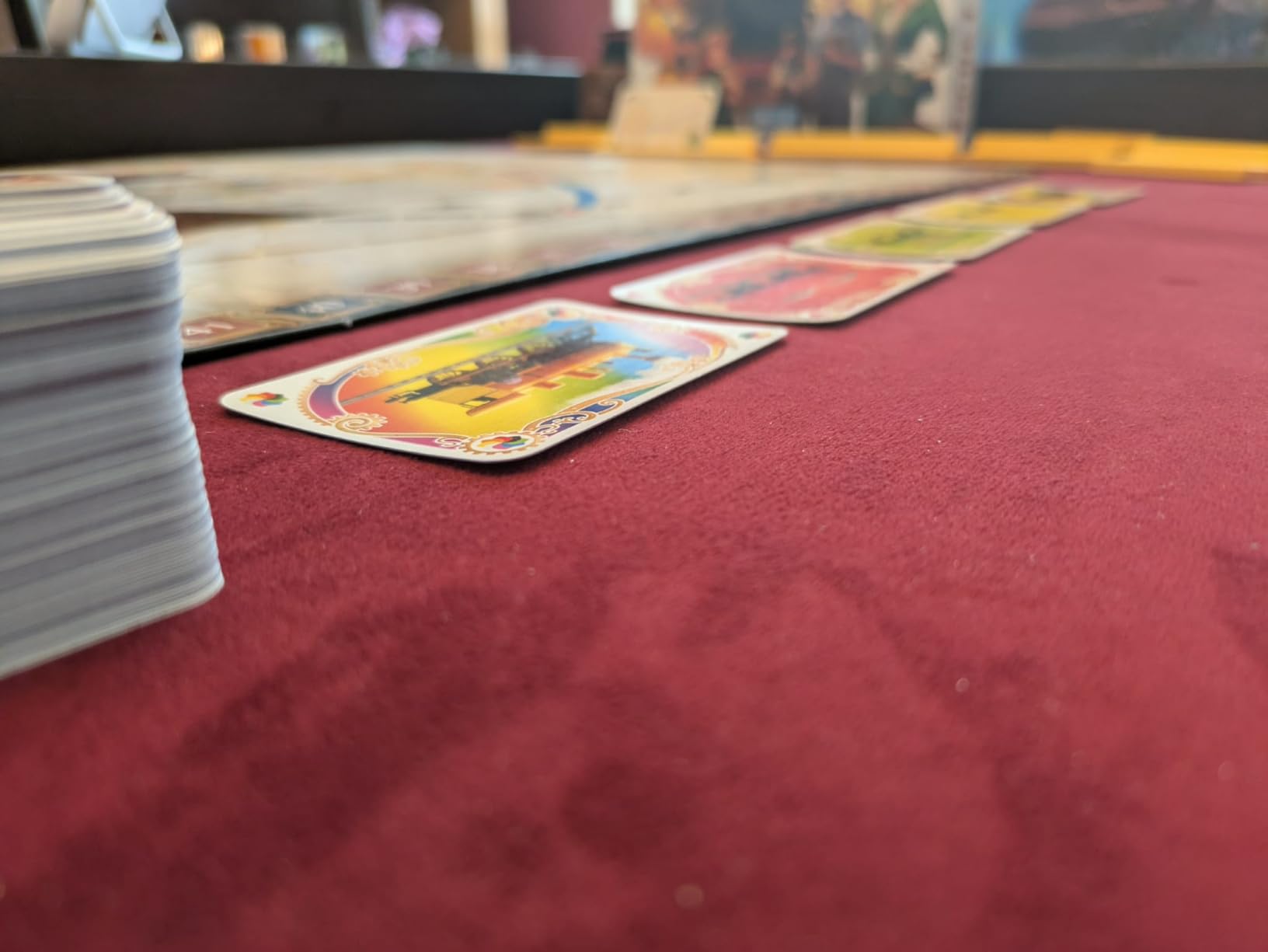
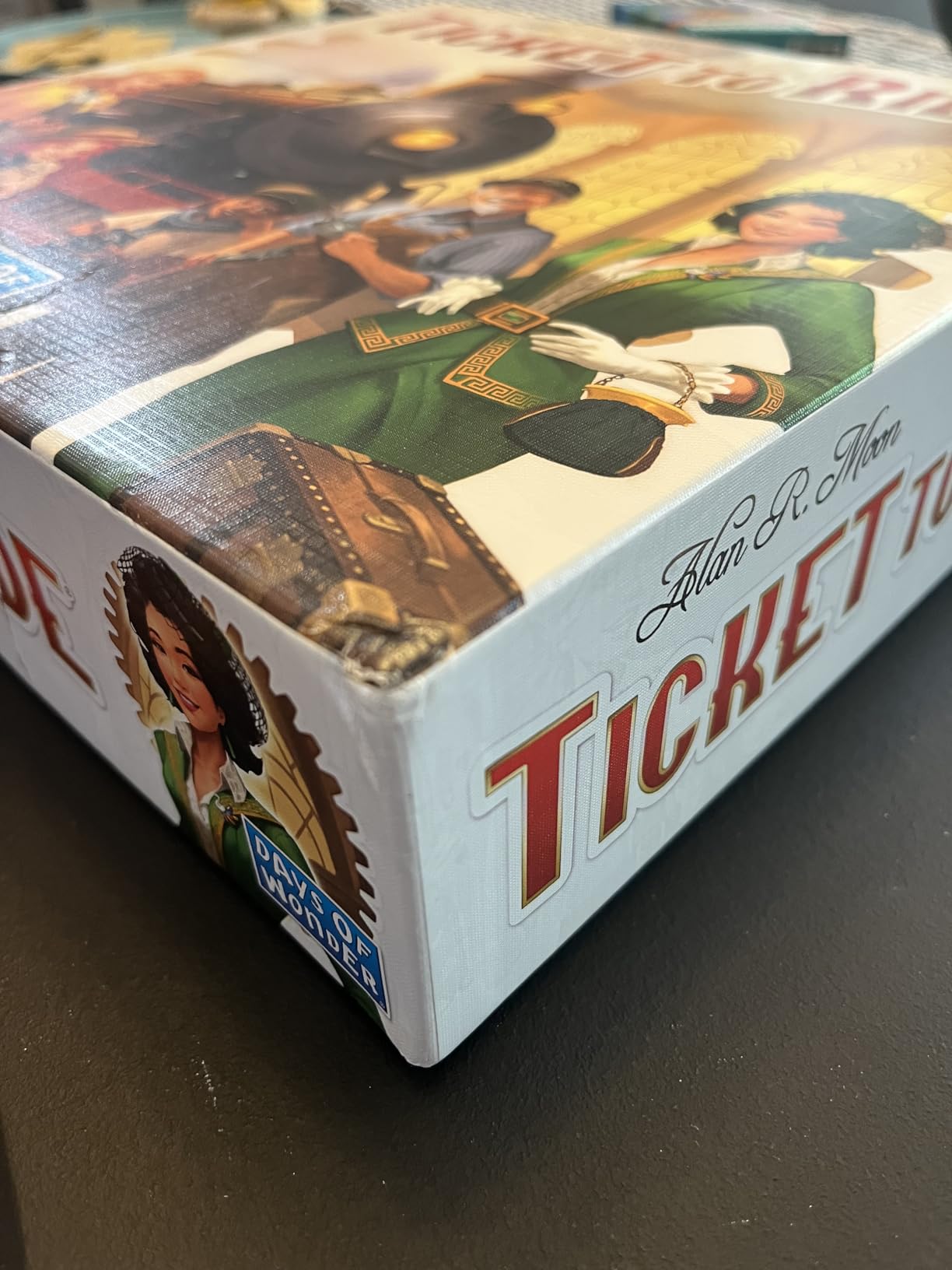
The physical components are a big part of the experience. The board features a detailed map of North America with vibrant route colors, and the miniature train pieces in five player colors feel satisfying to place. Claiming a long route across the map and seeing your trains stretch from city to city is visually rewarding in a way that few games match.
I have played Ticket to Ride with hardcore strategy gamers and with people who have never touched a board game, and both groups enjoy it equally. The competitive tension of someone claiming a route you needed creates memorable moments without the mean-spiritedness that some games encourage. It is competitive but never personal.
Perfect for New Board Game Collections
If you are building a board game collection from scratch, Ticket to Ride should be one of your first three purchases. It teaches route-building and set-collection mechanics in an approachable way, and the North America map provides enough strategic variety to stay interesting after dozens of plays. The 2-5 player count means it works for most group sizes.
The 2025 Refresh edition keeps all the gameplay that made the original a classic while updating components for a more polished feel. The plastic train pieces are durable and the board is clear and readable from any seat at the table.
Limitations to Keep in Mind
As a newer refresh, this edition has fewer reviews compared to the original version, which may concern some buyers. The rulebook is only available as a PDF rather than a printed booklet, which is an inconvenience. Some users have also reported occasional missing pieces, so verify your copy upon delivery.
Advanced gamers may find the strategic depth limited compared to games like Scythe or Terraforming Mars. Ticket to Ride is a gateway game first and foremost, and experienced players might want something heavier for their regular group.
7. Root – Asymmetric Woodland Warfare
Root: A Game of Woodland Might and Right | Asymmetric Strategy Board Game by Leder Games | 2–4 Players | Ages 14+ | Adventure, Conflict & Area Control
2-4 Players
90 Min Playtime
Ages 14+
Asymmetric Area Control
Pros
- Four completely different factions with unique play styles
- Stunning woodland artwork
- Highly replayable asymmetric design
- Deep strategic gameplay
Cons
- Steep learning curve
- Not suitable for casual gamers
- Complex rules for each faction
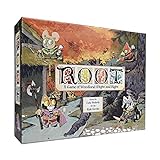
Root is not like any other board game I have played. Each of the four factions operates under entirely different rules, plays differently, and wins differently. The Marquise de Cat builds buildings across the forest map, the Eyrie Dynastie follows a rigid programming system, the Woodland Alliance spreads sympathy through hidden supporters, and the Vagabond roams the board completing quests. Understanding how your faction works is only half the battle; understanding how everyone else’s works is the other half.
The learning curve is real, and I will not pretend otherwise. My group needed three full games before we felt comfortable with all four factions. But once everything clicks, Root delivers an experience that no symmetric game can match. Each matchup feels like a completely different game depending on which factions are at the table and who is playing them.
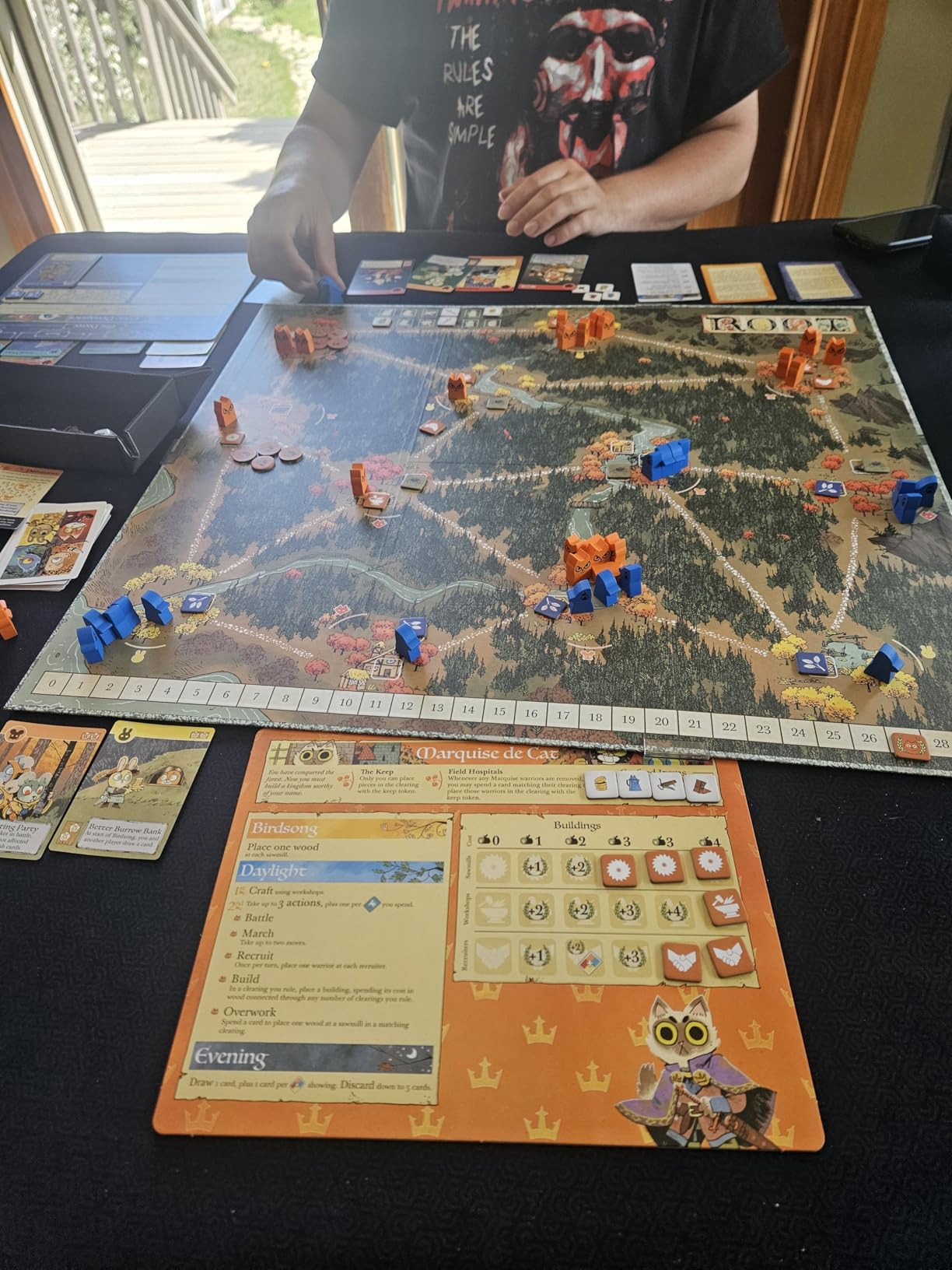
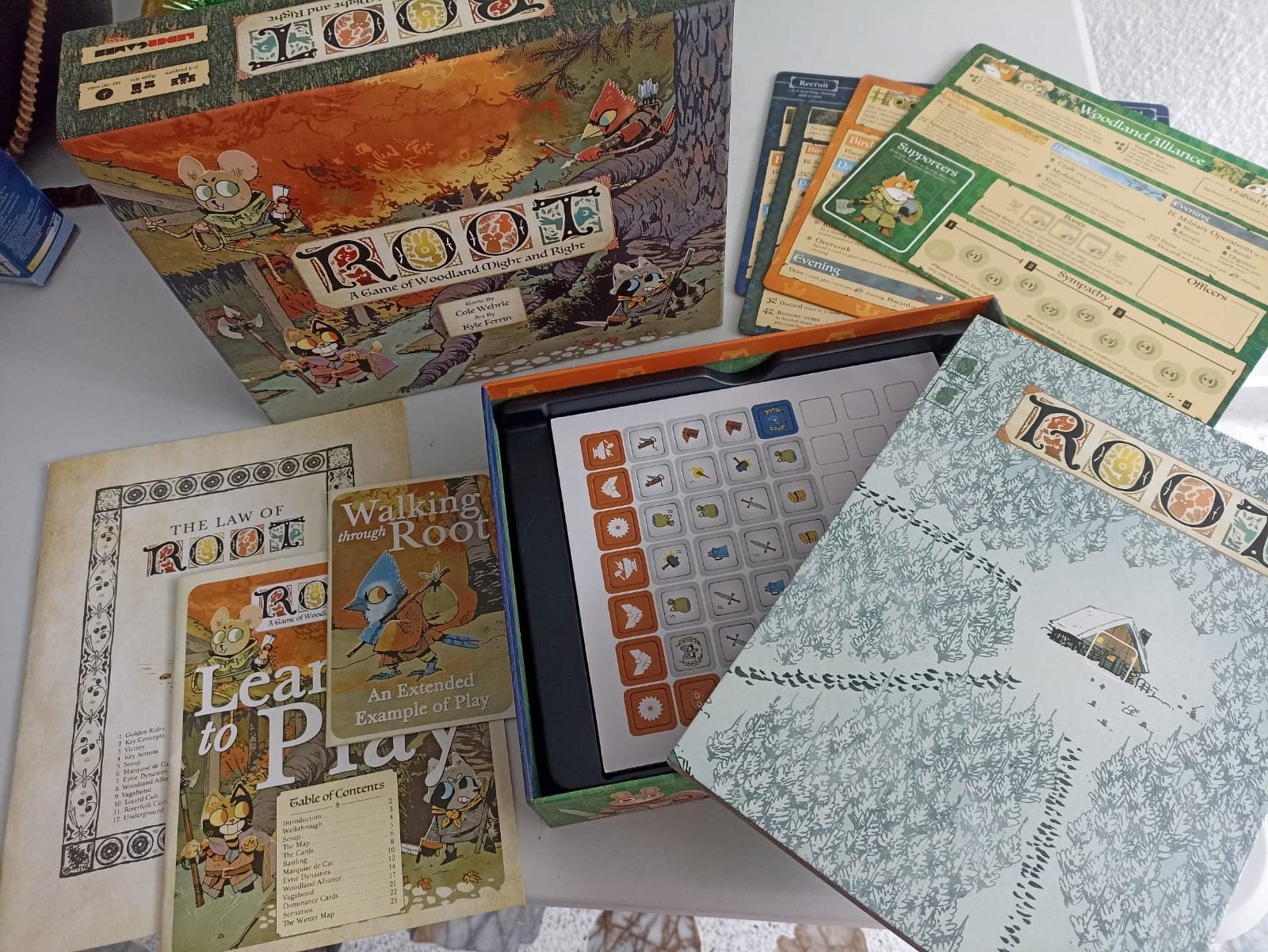
The production quality is outstanding. The woodland-themed artwork by Kyle Ferrin gives every card and token personality and charm. The faction pieces are visually distinct and easy to distinguish on the board, which matters when you are tracking multiple competing forces across a shared map. The game looks as good as it plays.
What keeps me coming back to Root is how differently each session unfolds based on player behavior. The Marquise might dominate one game through rapid expansion, then get crushed in the next because the other players coordinated against them. The dynamic balance shifts naturally based on who is winning, creating a self-correcting system that rewards adaptability.
Who Should Take on Root
Root is ideal for experienced board gamers who want something truly different from the standard Eurogame formula. If your group enjoys games like Scythe or Terraforming Mars and wants even more strategic depth and player interaction, Root delivers. The asymmetric design means it stays fresh game after game because you can always try a different faction.
It is also a fantastic game for groups that enjoy table talk and political maneuvering. Because each faction has different strengths and weaknesses, players naturally form temporary alliances and rivalries that evolve as the game progresses.
Why Root Might Not Work for Your Group
The complexity is the biggest barrier. Every player needs to understand not just their own faction but all four factions to play well. This makes Root a poor choice for casual game nights or mixed groups with inexperienced players. The 90-minute playtime also requires commitment, and your first few games will likely run longer.
Root works best with a consistent group that plays it repeatedly. If your gaming group changes frequently or you only play occasionally, the learning investment may not pay off as quickly as with simpler games on this list.
8. Terraforming Mars – Epic Space Colonization
Terraforming Mars by Stronghold Games, Strategy Board Game
1-5 Players
120 Min Playtime
Ages 14+
Engine-Building Strategy
Pros
- Massive card variety for high replayability
- Multiple paths to victory
- Excellent solo mode
- Engaging sci-fi theme
- Evergreen community favorite
Cons
- Player mats can be flimsy
- First games can run 3-4 hours
- Complex rulebook
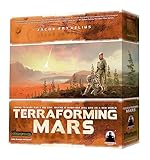
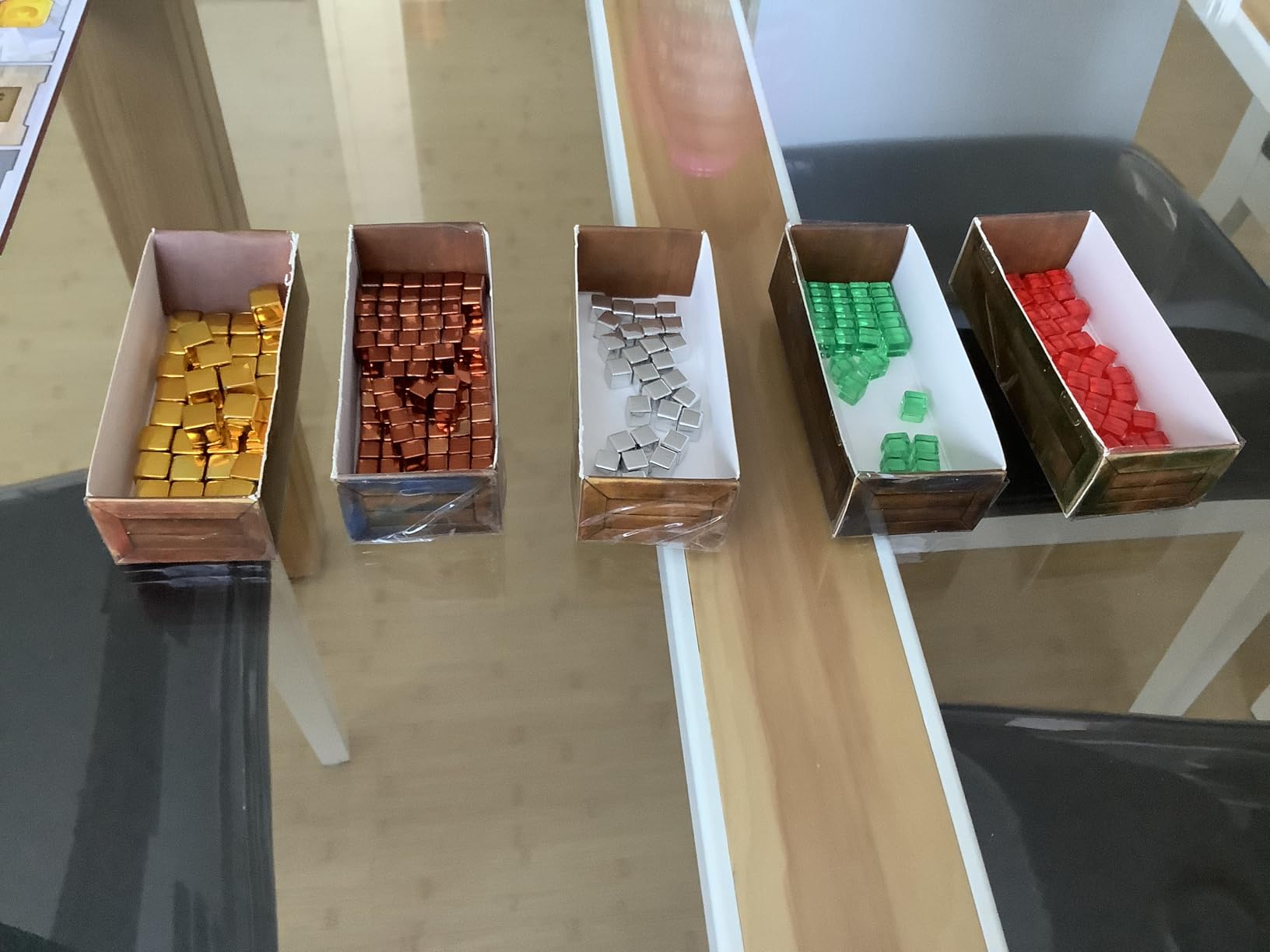
Terraforming Mars puts you in charge of a corporation racing to make the Red Planet habitable. You raise the temperature, increase oxygen levels, and place ocean tiles across the Martian surface while competing for milestones and awards. The theme alone sets it apart from most games in this price range, and the execution lives up to the premise.
The engine-building mechanics are where Terraforming Mars truly excels. You play project cards that generate resources, grant abilities, and interact with each other in surprising ways. Building a production engine that lets you play increasingly powerful cards each turn feels like assembling a machine that gains momentum until it rockets past the finish line.
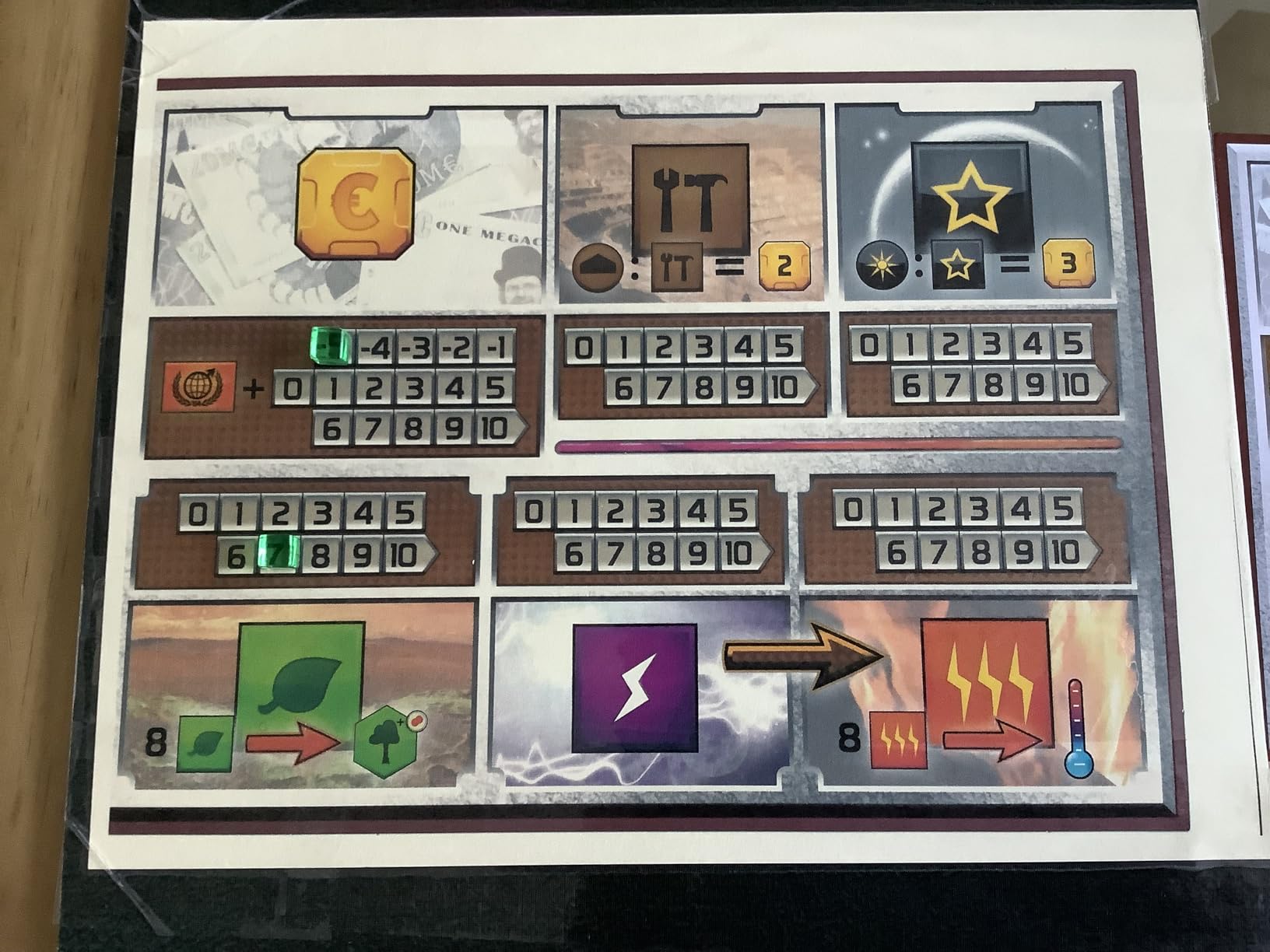
With hundreds of project cards in the base game, no two sessions play the same. I have focused entirely on plant production in one game, then pivoted to titanium-heavy space projects in the next. Both strategies worked, which speaks to how many viable paths to victory exist. The drafting variant adds even more strategic depth for experienced groups.
The solo mode is one of the best in the business. You race against a timer to complete terraforming before time runs out, and it provides a genuine challenge that took me several attempts to beat. For players who enjoy solo board gaming, Terraforming Mars ranks among the top experiences available.
Who Will Get the Most from Terraforming Mars
Science fiction fans and players who enjoy long, thinky strategy sessions will find Terraforming Mars deeply rewarding. If your group likes games where you build something impressive over two hours and then compare scores, this is one of the best options under $100. The multiple expansions also add significant replay value for groups that fall in love with the base game.
Solo gamers should consider Terraforming Mars a priority purchase. The solo challenge is engaging and replayable enough to justify the purchase price on its own, and the multiplayer experience is an excellent bonus.
Factors That May Deter Some Players
The player mats are the most common complaint. They are thin cardboard with sliding resource cubes that can easily get bumped and lose track of your production levels. Many players use aftermarket overlays to solve this issue, which adds extra cost. The card stock is also on the thinner side, so frequent players may want card sleeves.
First games regularly run three to four hours as players learn the cards and mechanics. If your group prefers games under 90 minutes, Terraforming Mars will test your patience initially. The playtime does shorten significantly with experience, but the learning investment is substantial.
9. Scythe – Dieselpunk Mech Strategy
Stonemaier Games: Scythe – A Strategy Board Game by Jamey Stegmaier
1-5 Players
115 Min Playtime
Ages 14+
Engine-Building Area Control
Pros
- Beautiful dieselpunk artwork and theme
- Low-luck combat system
- Satisfying engine-building progression
- Five asymmetric factions
- Excellent solo Automa mode
Cons
- Long playtime of 2+ hours
- Complex rules with many components
- Rulebook can be unclear on certain mechanics
Scythe is the most visually striking game on this list, and I say that without hesitation. The dieselpunk artwork by Jakub Rozalski depicts an alternate-history 1920s Europa where towering mechs loom over farmers in fields, and every card and component in the box carries that aesthetic. It is a game that looks like a work of art even before you start playing.
The gameplay combines engine-building with area control in a way that minimizes luck. There are no dice in Scythe; combat is resolved through power cards and popularity mechanics that reward strategic planning. You choose actions from your player mat, and the order you take them in determines how efficiently your faction develops throughout the game.
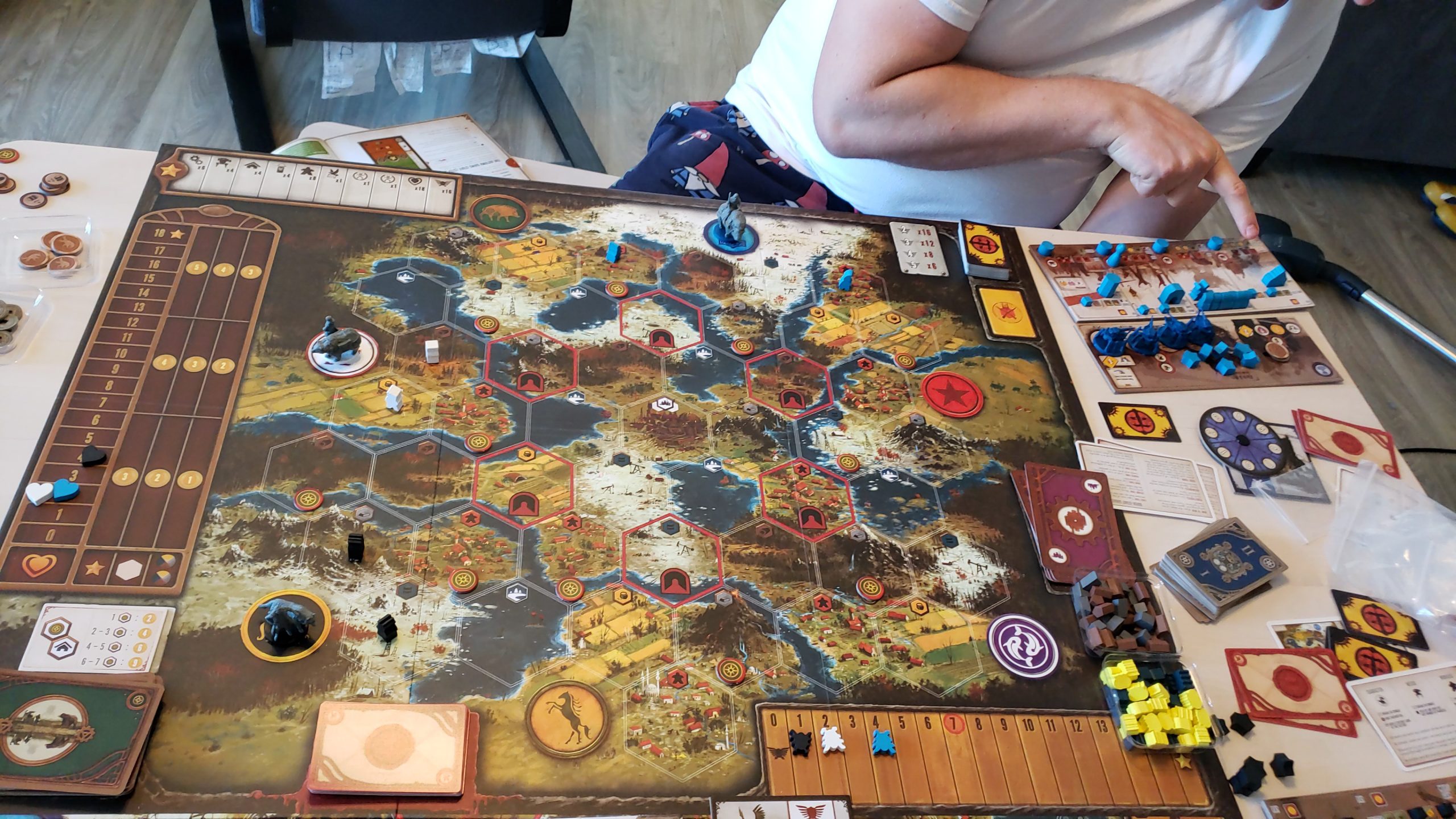
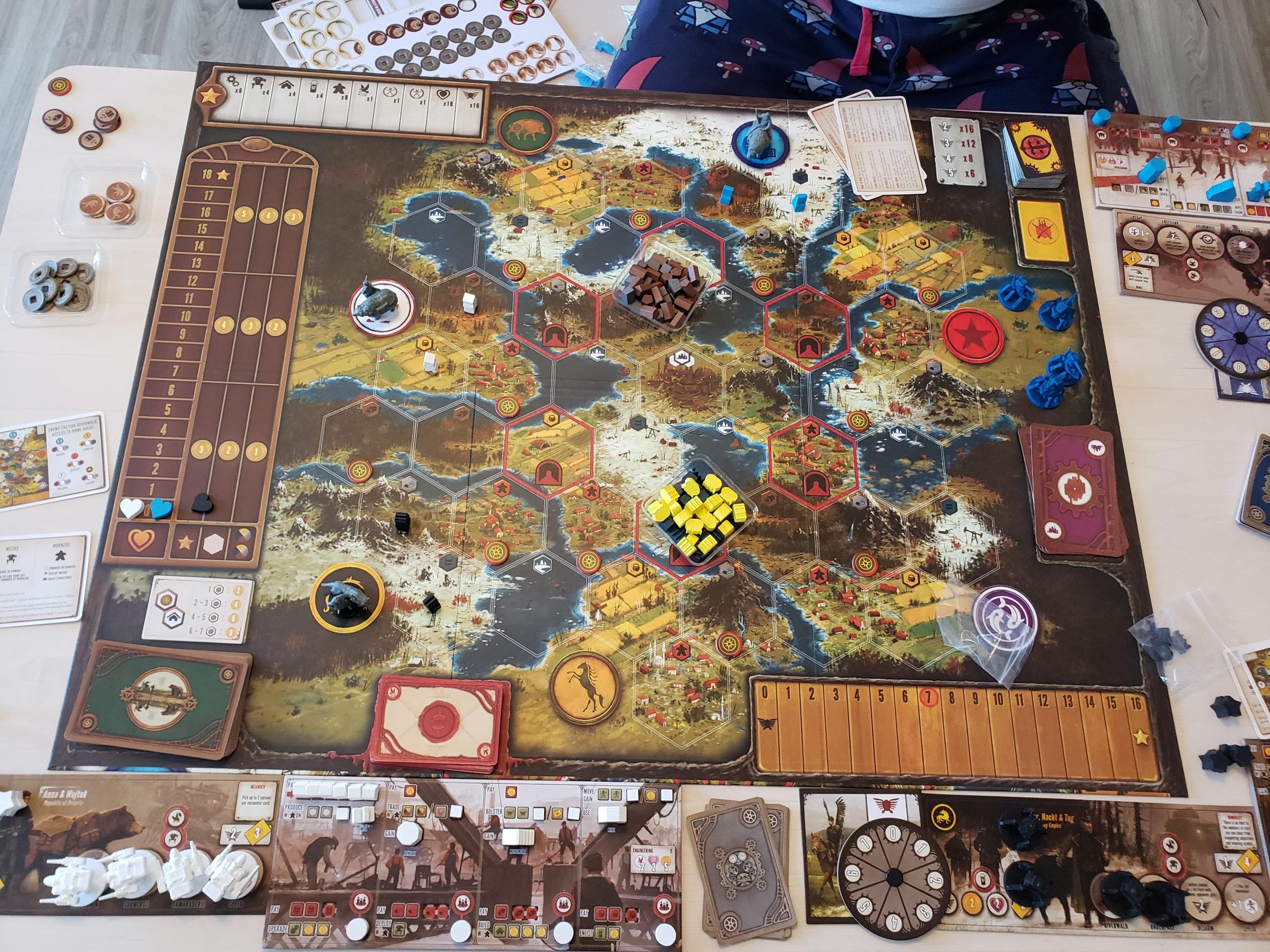
Each of the five factions starts in a different corner of the board with unique abilities and starting resources. The Rusviet Union can repeat actions, the Nordic Kingdoms can cross rivers, the Republic of Polania gets extra encounter cards, and so on. These asymmetries are more subtle than Root, but they create meaningful differences in how each faction approaches the same map.
The component count is enormous. Five player mats, five faction mats, 20 mech miniatures, 5 character miniatures, and piles of resource tokens, workers, and cards. Setting up takes a few minutes, but the payoff is a game that feels substantial and immersive. Every piece has a purpose, and the board state tells a visual story of territorial expansion and industrial development.
Who Will Appreciate Scythe Most
Experienced gamers who enjoy long strategic sessions with minimal luck will find Scythe deeply satisfying. If you dislike dice rolls determining outcomes and prefer games where careful planning wins over random chance, Scythe is one of the best options available under $100. The dieselpunk theme also makes it a standout gift for fans of that aesthetic.
The solo Automa mode is excellent and provides a genuine challenge. I have spent many evenings playing solo Scythe and found it just as engaging as the multiplayer experience. For solo gamers who want something meatier than Wingspan’s Automa, Scythe delivers.
Challenges to Be Aware Of
The learning curve is significant. The rulebook runs over 30 pages and some mechanics are explained unclearly, which led to several rules disputes in my early games. Watching a tutorial video before your first session is strongly recommended. The 2+ hour playtime also means you need a group willing to commit a full evening to a single game.
Scythe is the most expensive game on this list, and while it is still well under $100, it occupies the premium tier of this budget range. If you are trying to maximize the number of games you can buy with $100, you could get two or three of the less expensive options instead.
10. Wavelength – The Mind-Reading Party Game
CMYK Wavelength – A Mind Reading Party Game
2-12+ Players
30 Min Playtime
Ages 14+
Social Deduction Party Game
Pros
- Works with 2 to 12+ players
- 5 second setup and 1 minute to learn
- Hilarious discussions and debates
- Endorsed by NYT Wirecutter
- Portable design
Cons
- Wheel can shift slightly when opening
- Advanced cards may not suit all groups
Wavelength is the party game I bring out when I want guaranteed laughter within the first five minutes. The concept is brilliant in its simplicity: one player knows where a dial is set on a spectrum between two opposing concepts, and the rest of the team tries to guess where it lands. The dial rotates on a wheel hidden inside a plastic device, and the guessing team discusses and debates before committing to their answer.
The prompts are what make Wavelength unforgettable. A card might say “Hot to Cold” and the psychic player has to think about something specific, like “jazz music,” and decide where it falls on that spectrum. The resulting debate about whether jazz is more hot or more cold is where the magic happens. Every round produces genuine surprises and arguments that reveal how differently people think about the same concepts.
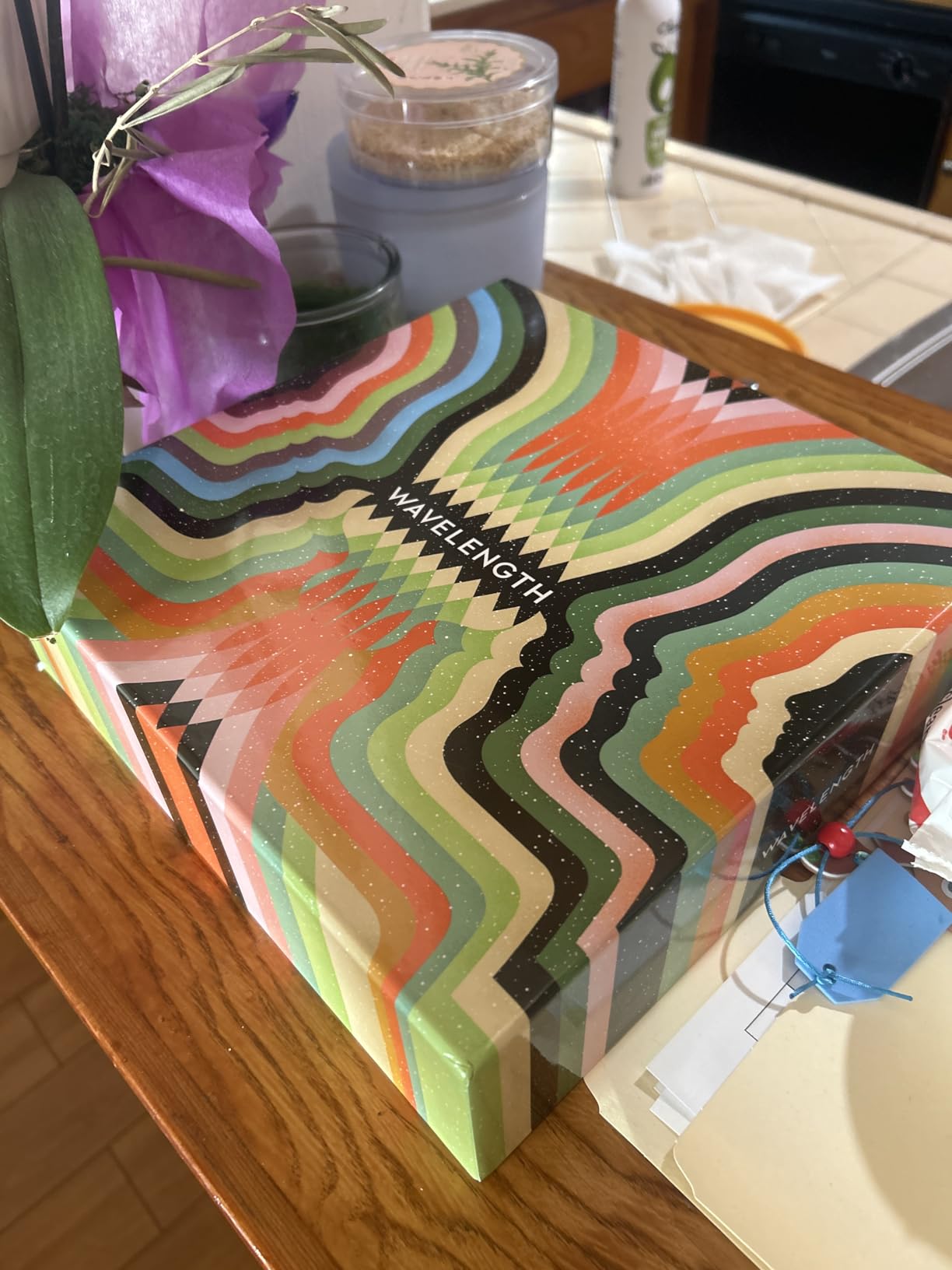
Setup takes five seconds and the rules take one minute to explain. I have played Wavelength with groups of 4 and groups of 12, and it scales perfectly because the discussion format naturally accommodates any number of voices. It works at dinner parties, office events, family gatherings, and even as a warm-up before a heavier strategy game.
The component design is clever. The plastic device holds the spectrum wheel and a window that reveals the dial position only when you open it. The cards come in standard and advanced varieties, with the advanced prompts pushing into more subjective and sometimes controversial territory that sparks even wilder discussions.

Best Occasions for Wavelength
Wavelength excels at any social gathering where you want to break the ice or get people talking. It is perfect for parties, team-building events, holiday gatherings, and casual game nights where not everyone wants to learn complex rules. The NYT Wirecutter endorsement speaks to how broadly it appeals across different audiences.
It also works surprisingly well as a two-player game, where the discussion becomes more intimate and the debates more personal. Couples and close friends will discover new things about how each other thinks, which is a rare quality in a party game.
When to Choose a Different Party Game
The wheel mechanism can shift slightly when opening the window, which occasionally causes borderline answers to feel ambiguous. This is a minor hardware issue but can frustrate competitive players. The advanced cards also touch on subjective topics that might not suit every group or workplace setting.
If you want a party game with more structure and scoring, or one where individual players compete rather than cooperate in teams, Wavelength may feel too freeform. It prioritizes conversation and laughs over strategic competition, which is its strength but also its limitation depending on what your group enjoys.
How to Choose the Best Board Game Under $100
Picking the right board game is not just about finding the highest-rated option. The best game for you depends on who you play with, how much time you have, and what kind of experience you want. Here is how I think about choosing the right game for different situations. You can also browse our comprehensive buying guides for more recommendations across different categories.
Consider Your Player Count
The most important factor is how many people will typically play. Games like Splendor and Azul work best with 2 to 4 players, while CATAN needs at least 3. Wavelength is the only game on this list that handles groups larger than 5, supporting up to 12 or more players. If you mostly play as a couple, Wingspan and Azul both have excellent two-player modes. For solo gamers, Wingspan, Terraforming Mars, and Scythe all include highly rated solo variants with dedicated Automa systems.
Match the Game Duration to Your Schedule
Be honest about how much time your group can commit. Splendor, Carcassonne, and Azul all play in 30 to 45 minutes, making them perfect for weeknights or as warm-up games. CATAN and Wingspan sit in the 60 to 90 minute range, which works well for weekend afternoons. Terraforming Mars and Scythe require two hours or more, so save those for dedicated game nights when everyone has time to settle in.
Evaluate the Learning Curve
Who is going to play this game? If your group includes casual gamers, children, or people new to modern board games, start with Splendor, Azul, Carcassonne, or Ticket to Ride. These games teach in under 10 minutes and still deliver satisfying strategic depth. Root and Scythe require significant upfront investment in learning rules and mechanics, which pays off for experienced groups but can frustrate newcomers.
I always recommend learning the rules yourself before teaching others. Watching a 10-minute tutorial video and playing a practice round solo makes teaching much smoother. Nothing kills the excitement of a new game like spending 30 minutes reading a rulebook while everyone waits.
Think About Replayability and Value
A board game that gets played 50 times at $40 is a better value than a $30 game played twice. Splendor and Azul offer some of the highest replay value on this list because their short playtime and variable setups make them easy to return to. Games with solo modes like Wingspan and Terraforming Mars also deliver exceptional value because you can enjoy them even when you cannot gather a group.
BoardGameGeek users consistently emphasize this point: the best game is the one that hits your table most often. Consider which game your specific group is most likely to request again and again.
Choose a Theme and Mechanic That Fits Your Group
Theme matters more than most people expect. Some players connect immediately with Wingspan’s nature theme but feel nothing for Terraforming Mars’ sci-fi setting, and vice versa. If your group enjoys negotiation and table talk, CATAN and Root create those moments naturally. If you prefer focused, less interactive gameplay where everyone builds their own engine, Wingspan, Terraforming Mars, and Splendor are stronger choices. Party groups should look at Wavelength first, as it generates more laughs per minute than anything else on this list.
FAQ
What board games can you get for $100?
What is the top 10 most popular board game?
What is the #1 board game?
What board game should I buy with $100?
What is the best board game for a family with kids?
Final Thoughts on the Best Board Games Under 100 Dollars
Finding the best board games under 100 dollars does not mean settling for less. Every game on this list delivers outstanding value, from Splendor’s elegant engine-building at under $35 to Scythe’s sprawling dieselpunk warfare at $84. The $100 price ceiling gives you plenty of room to grab a single premium title or build a varied collection with two or three games that cover different moods and player counts.
For most buyers, I recommend starting with Splendor as your anchor game. It is the easiest to teach, plays quickly, and has the highest rating on this list at 4.9 stars. From there, add CATAN if your group loves negotiation, Wingspan if you want something beautiful and relaxing, or Wavelength if you need a party game that works with large groups. The combination of any two or three of these will give you a versatile collection that covers nearly every gaming occasion.
The best board game is ultimately the one your group will play again and again. Whether that is a 30-minute round of Splendor after dinner or a full evening commanding mechs across Europa in Scythe, every title on this list has earned its place through consistent quality and passionate communities. Pick the one that matches your group, and you will have years of entertainment ahead.