
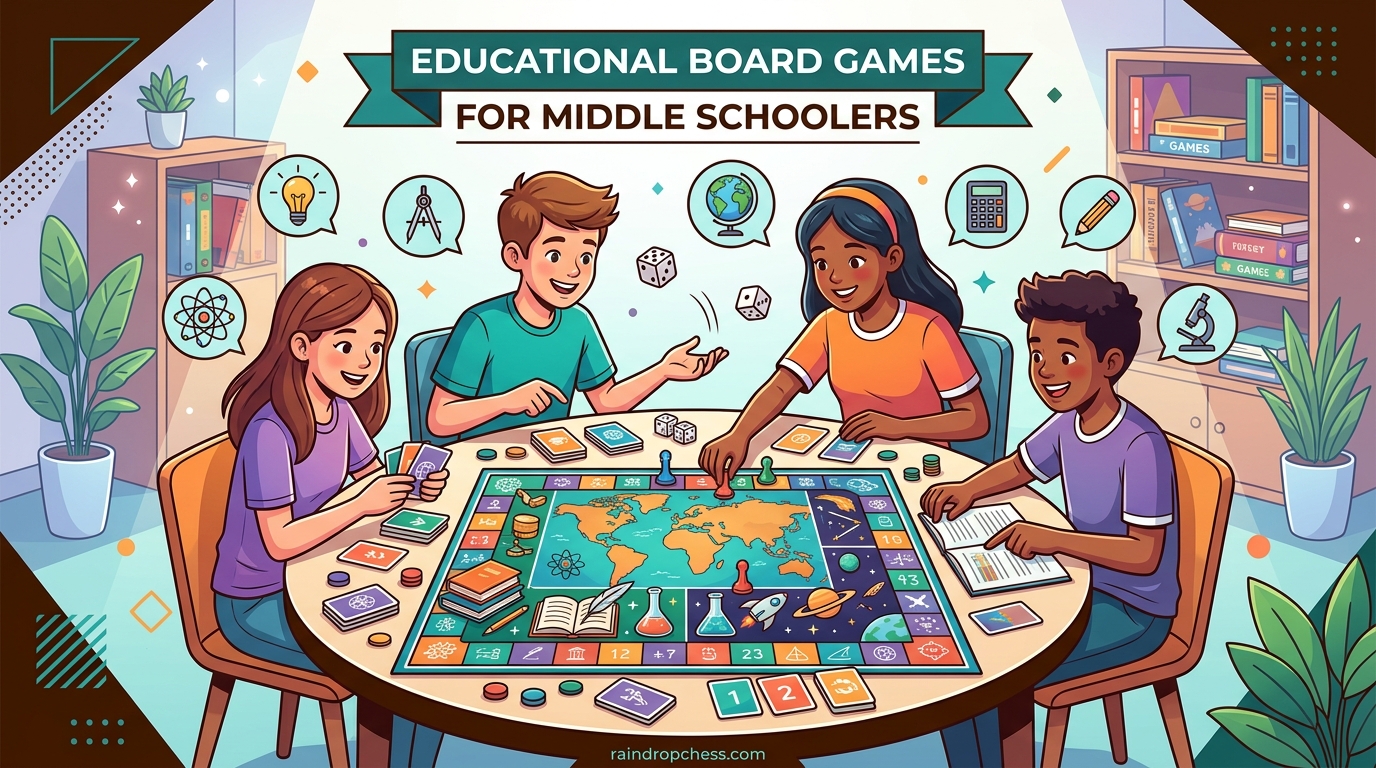
Finding board games that actually keep middle schoolers engaged while teaching real skills is harder than it sounds. I have spent the last year testing dozens of titles with my own kids and their friends, and I quickly learned that the best educational board games for middle schoolers are the ones where kids forget they are learning something. The ones that get requested again on Friday nights. The ones where arguments break out over strategy, not because the game is boring.
Middle school is a sweet spot for board games. Kids aged 10 to 14 are ready for real strategy, genuine competition, and topics that stretch their thinking. They have outgrown simple matching games but are not quite ready for the heaviest adult strategy titles. That makes this age range one of the most rewarding for finding games that teach math, geography, science, vocabulary, and critical thinking through play.
Our team tested 15 of the top-rated educational board games for middle schoolers in real settings: family game nights, classroom free periods, and homeschool co-op meetups. We evaluated each game on engagement level, educational depth, replayability, component quality, and whether kids actually asked to play it again. Here is what stood out.
Table of Contents
Top 3 Educational Board Games for Middle Schoolers

Best Educational Board Games for Middle Schoolers in 2026
1. Scholastic Race Across the USA – Best Geography Game Overall
University Games, Scholastic Race Across the USA Board Game , Geography Learning Game for Kids and Families, for 2 to 4 Players Ages 8 and Up
Geography Learning Game
2-4 Players
Ages 8+
20 Min Playtime
Grade-Level Questions
Pros
- Adapts questions to each player grade level
- High quality game components
- Inclusive for mixed ages
- Teaches US geography effectively
- Great for classroom or home
Cons
- Does not cover state capitals in depth
- Can be too simple for adults
- Some questions hard for younger kids
I brought Scholastic Race Across the USA to our homeschool co-op and it became an instant favorite. The concept is simple: each player starts in a home state, visits six states by answering geography questions, and races back. What impressed me most was how the grade-level question system works. A sixth grader and an eighth grader can play together and each gets questions matched to their level, so nobody feels left behind or bored.
My 12-year-old daughter started recognizing states on a blank map after just two rounds. The airplane pawns and colorful board make the physical experience feel polished, not cheap. We played three games in a row the first night, which is always a good sign for replayability.
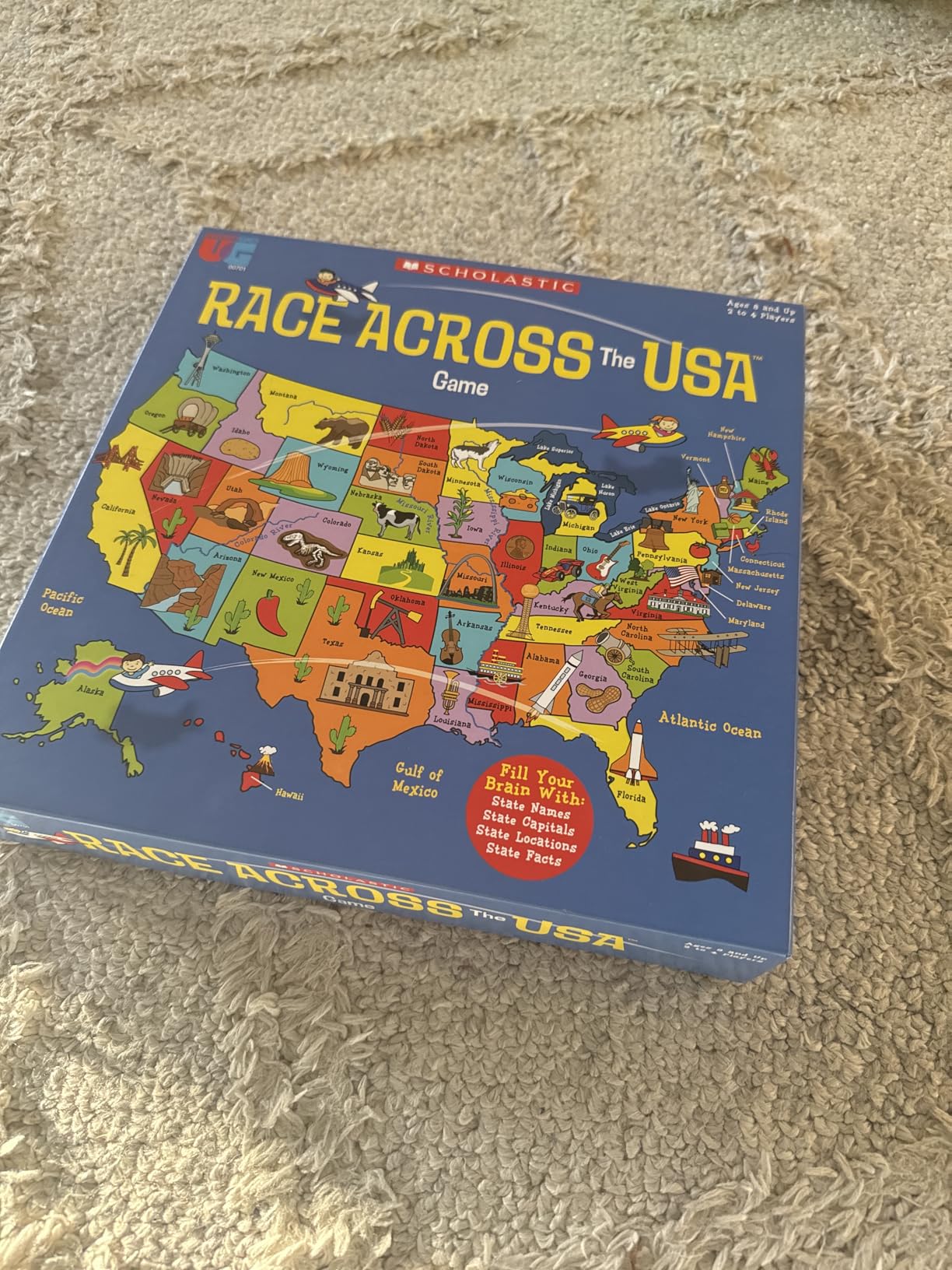
The educational depth here is solid. Players learn state locations, landmarks, and general facts. The game plays in about 20 minutes, which keeps attention spans intact. Teachers in our group mentioned they use it as a warm-up activity in social studies class because kids actually volunteer to play.
The main drawback is that the questions do not go deep into state capitals, which would add more challenge for older middle schoolers. Adults playing along may find the questions too easy unless you create house rules. But for the target age range of 8 to 14, this game hits a sweet spot between learning and fun.

Who This Game Is Best For
This game shines for families with kids at different grade levels, homeschool co-ops, and classrooms studying US geography. If you want a game where a 10-year-old and a 13-year-old can compete fairly, this is one of the best options available. It also works well for parents who want to brush up on their own geography knowledge alongside their kids.
Potential Drawbacks to Consider
If your middle schooler already knows US geography well, the questions may feel too easy after a few rounds. Families looking for deep geography content including capitals, major cities, and historical context will need to supplement. Also, the two-to-four player limit means it does not scale for larger groups or parties.
2. The Genius Square – Best STEM Puzzle Game

The Genius Square from the Happy Puzzle Company | Game of the Year Award Winner | 60000+ Solutions | STEM Puzzle Game for 1-2 Players | Ages 6 – Adult | Roll the dice and Race to Fill the Grid!
STEM Puzzle Game
1-2 Players
60000+ Solutions
Award Winner
Ages 6+
Pros
- Over 60000 possible puzzle solutions
- Award-winning Game of the Year
- Portable and travel-friendly
- Works for solo or competitive play
- Builds spatial reasoning fast
Cons
- Higher price point than some card games
- Box may arrive damaged in shipping
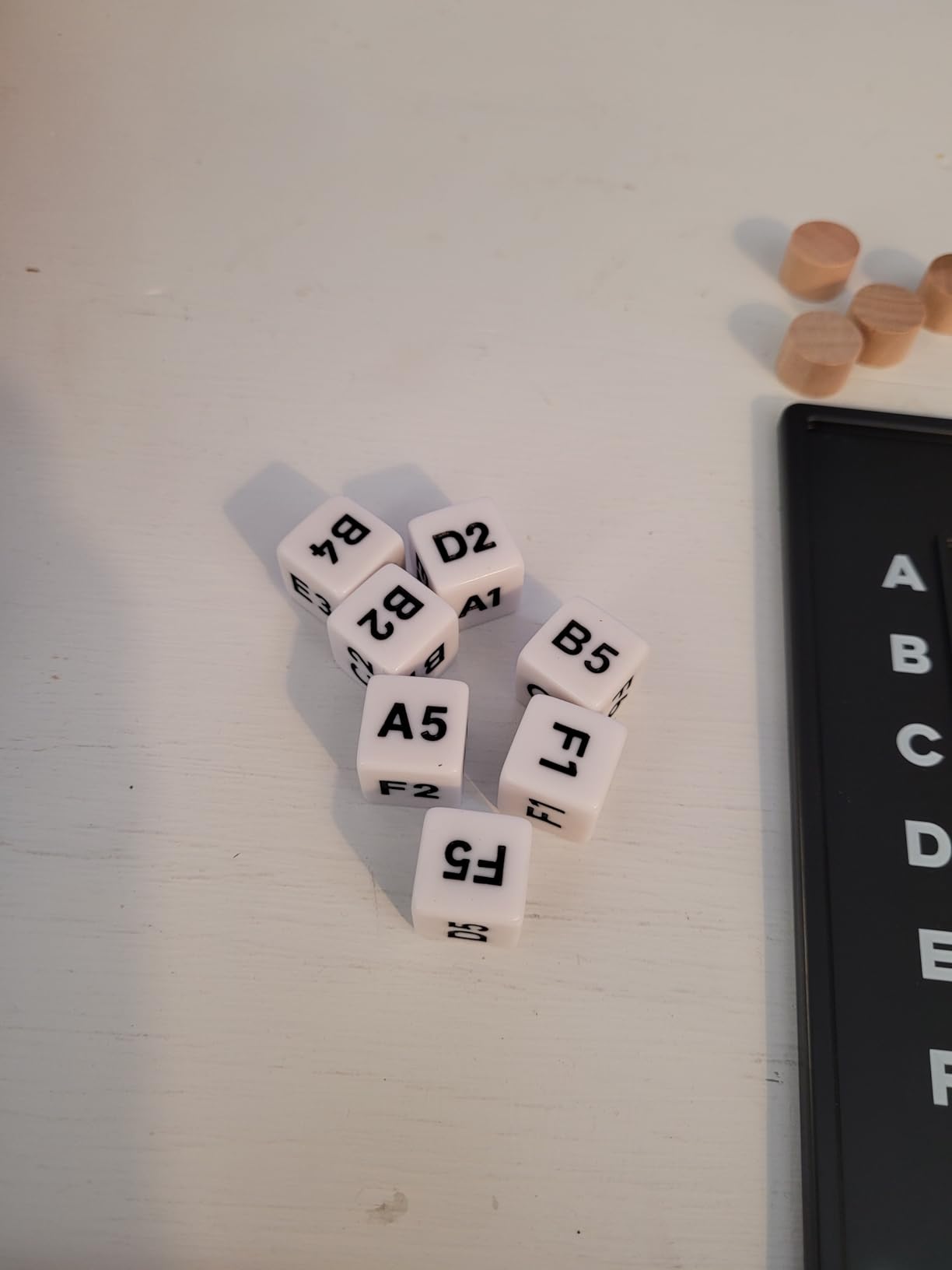
The Genius Square caught me off guard. I expected a simple puzzle game but what I found was one of the most addictive STEM activities I have ever played. You roll dice to determine where blockers go on a 6×6 grid, then race to fill every remaining space with colored Tetris-like shapes. With over 60,000 possible combinations, no two games feel the same.
My son and his friend played this for an hour straight, racing each other to complete their grids. The speed element creates genuine excitement. Even as an adult, I found myself completely locked in trying to find the solution faster than my kid. That competitive tension is what makes it such an effective learning tool.
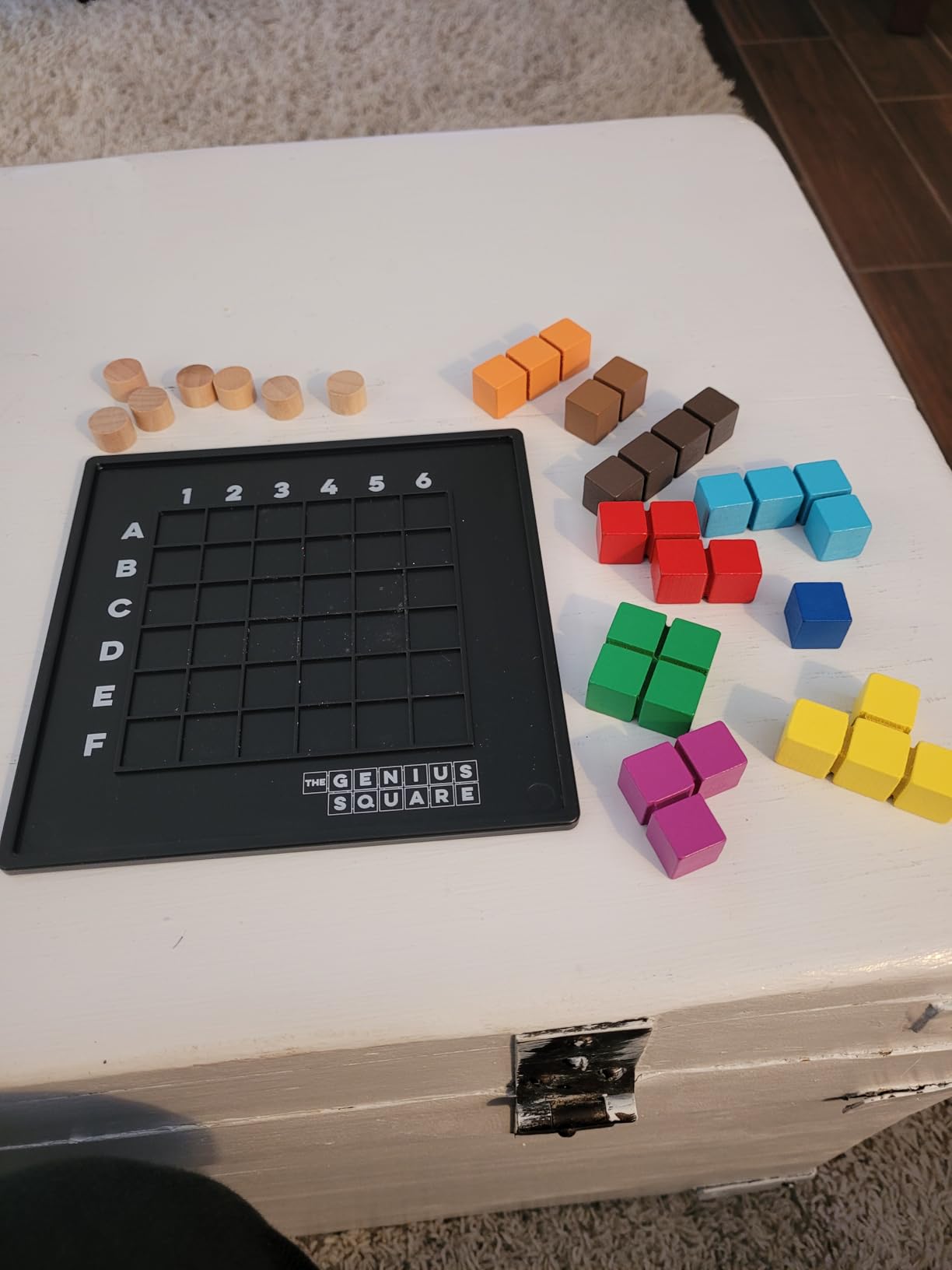
The educational value here is all about spatial reasoning, problem-solving, and fine motor skills. Players learn to rotate and manipulate shapes mentally, a foundational skill for geometry and engineering. The game won both Game of the Year and Educational Product of the Year awards, and it is easy to see why.
The game is compact enough to toss in a backpack for travel. It works as a solo challenge or head-to-head race. At 7,700 reviews and a 4.8 rating, this is one of the highest-rated educational games available. The only real downside is the box quality, which some customers report arrives dented. The game pieces themselves are solid.
Skills This Game Develops
The Genius Square builds spatial awareness, pattern recognition, and quick decision-making. These are the same cognitive skills used in math, science, and engineering. Kids who struggle with geometry concepts often improve after playing this regularly because they learn to mentally rotate shapes without realizing they are practicing.
What to Know Before Buying
This is a two-dimensional puzzle, so kids expecting a traditional board game with cards and a storyline may need time to warm up to it. The one-to-two player limit means it is best for quiet time, travel, or one-on-one bonding. If you want something for a group of four or more, this will not work as your main game.
3. ThinkFun Gravity Maze – Best Logic Puzzle for Solo Play

ThinkFun Gravity Maze – Falling Marble Logic Game – Challenging STEM Toy for Kids 8-12 – Gravity Marble Maze – Brain-Building Fun – Educational Gift – Boosts Critical Thinking & Problem Solving
Falling Marble Logic Game
60 Challenges
Solo Player
Ages 8+
STEM Toy
Pros
- 60 challenges from beginner to expert
- Builds spatial reasoning and logic
- Great for collaborative problem-solving
- High-quality tower pieces
- Massive 37500+ reviews
Cons
- May be too easy for advanced kids
- Requires patience rather than fast-paced play
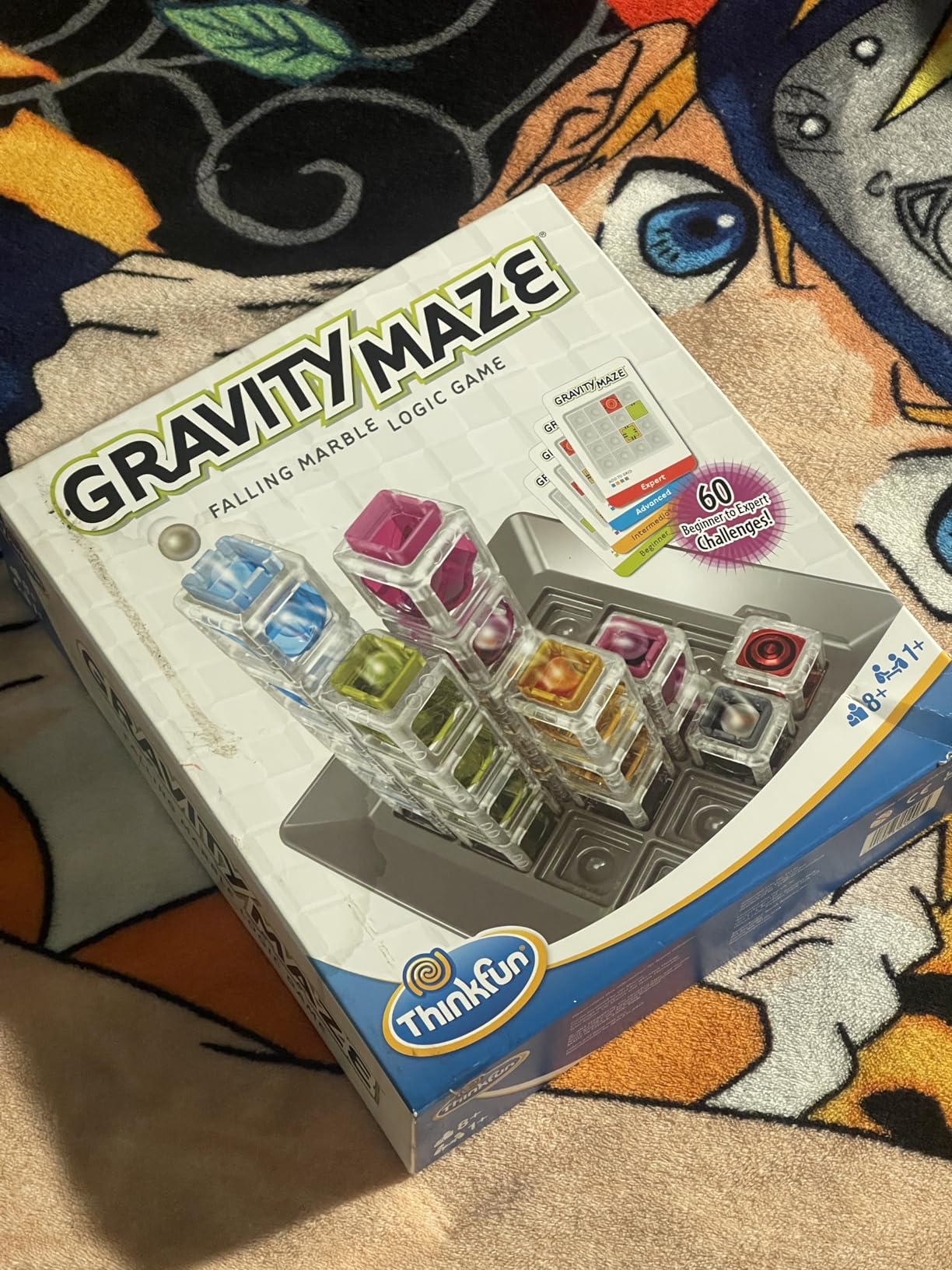
ThinkFun Gravity Maze is the game I reach for when I need 30 minutes of quiet, focused engagement from my kids. It is a single-player logic puzzle where you build 3D tower paths to guide a marble from start to a target. The concept sounds simple, but the 60 challenge cards progress from beginner to expert, and those expert levels stumped me for a good while.
With 37,500 reviews and counting, this is one of the most popular STEM toys ever made. My 11-year-old worked through the first 30 challenges in a weekend and then went back to replay the harder ones. The tower pieces feel sturdy and the game grid keeps everything organized.

What makes Gravity Maze effective as an educational tool is how it combines spatial reasoning with sequential logic. Players have to plan several moves ahead, testing and adjusting as they go. This is the same type of thinking used in coding, engineering, and scientific problem-solving.
The game is technically single-player, but I found it works beautifully as a collaborative activity. My kids and I took turns trying to solve challenges together, which turned it into a social experience. Teachers on forums consistently recommend this for classroom free time because it keeps kids focused without needing adult supervision.
When This Game Works Best
Gravity Maze is perfect for morning warm-ups before school, quiet time after homework, or as a travel activity. It works well for kids who like building and tinkering but may not enjoy competitive games. If your child likes puzzles and marble runs, this combines both into one experience.
Limitations to Be Aware Of
Advanced middle schoolers may breeze through the beginner and intermediate challenges quickly. The expert level provides real challenge, but once solved, replayability drops since players remember the solutions. This is best supplemented with other logic games rather than used as a sole activity.
4. Proof! Math Game – Best Mental Math Card Game
Evermade Proof Math Game – Fast-Paced Mental Math Card Game for Kids Ages 9-12, Teens & Adults – Teacher’s Choice Award Winning STEM Educational Game for Family, Classroom & Homeschool
Mental Math Card Game
2-6 Players
15 Min Playtime
Ages 9+
Teacher's Choice Award
Pros
- Fast-paced 15-minute rounds
- Teacher's Choice Gold Award winner
- Adaptable for different skill levels
- Improves all four operations plus roots
- Works for solo play too
Cons
- Box quality feels cheap for the price
- Just cards with no additional components
- Rules only in English
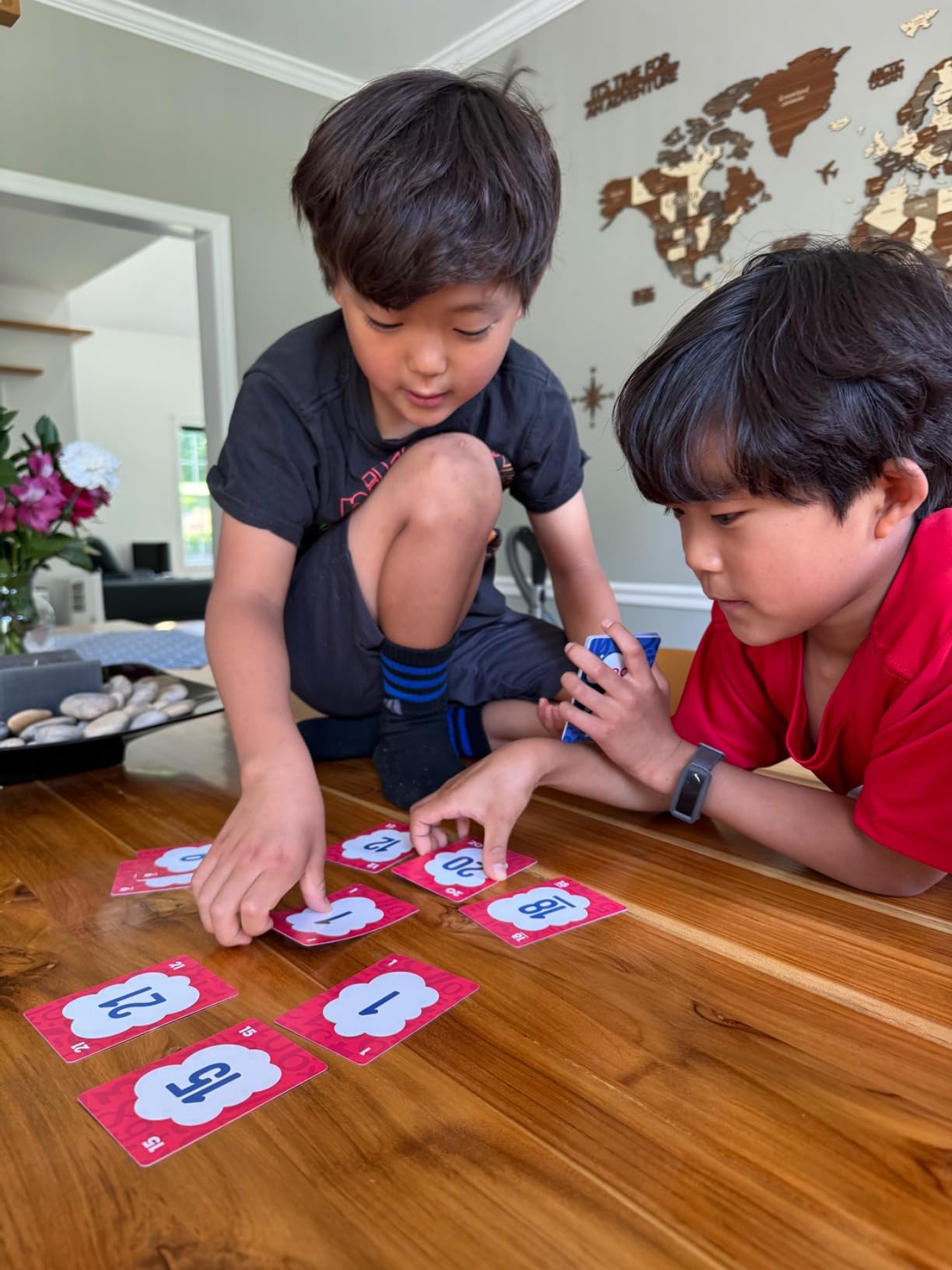
Proof! turned my math-reluctant kid into someone who asks to practice equations. That alone makes it worth every penny. The game is deceptively simple: nine number cards go face-up on the table, and players race to find equations using any combination of addition, subtraction, multiplication, division, or square roots. First to find a valid equation keeps those cards.
I played this with three middle schoolers and the energy was electric. Kids who normally groan at math homework were shouting out equations and trying to outpace each other. The 15-minute playtime keeps the pace fast and prevents burnout. It adapts naturally to different skill levels because simpler or more complex equations are both valid.
Winning the Teacher’s Choice Gold Award is no small thing, and teachers I spoke with confirmed they use this in classrooms regularly. The game builds genuine mental math fluency through repetition that feels like competition rather than drills. With 2,255 reviews, the consensus is clear that this game makes math fun.
The cards themselves are good quality, though the box is surprisingly flimsy. Some parents have noted that for what is essentially a deck of number cards, it can feel a bit expensive. I would argue that the educational return makes up for it, especially if your child needs a confidence boost in math.
How to Get the Most from This Game
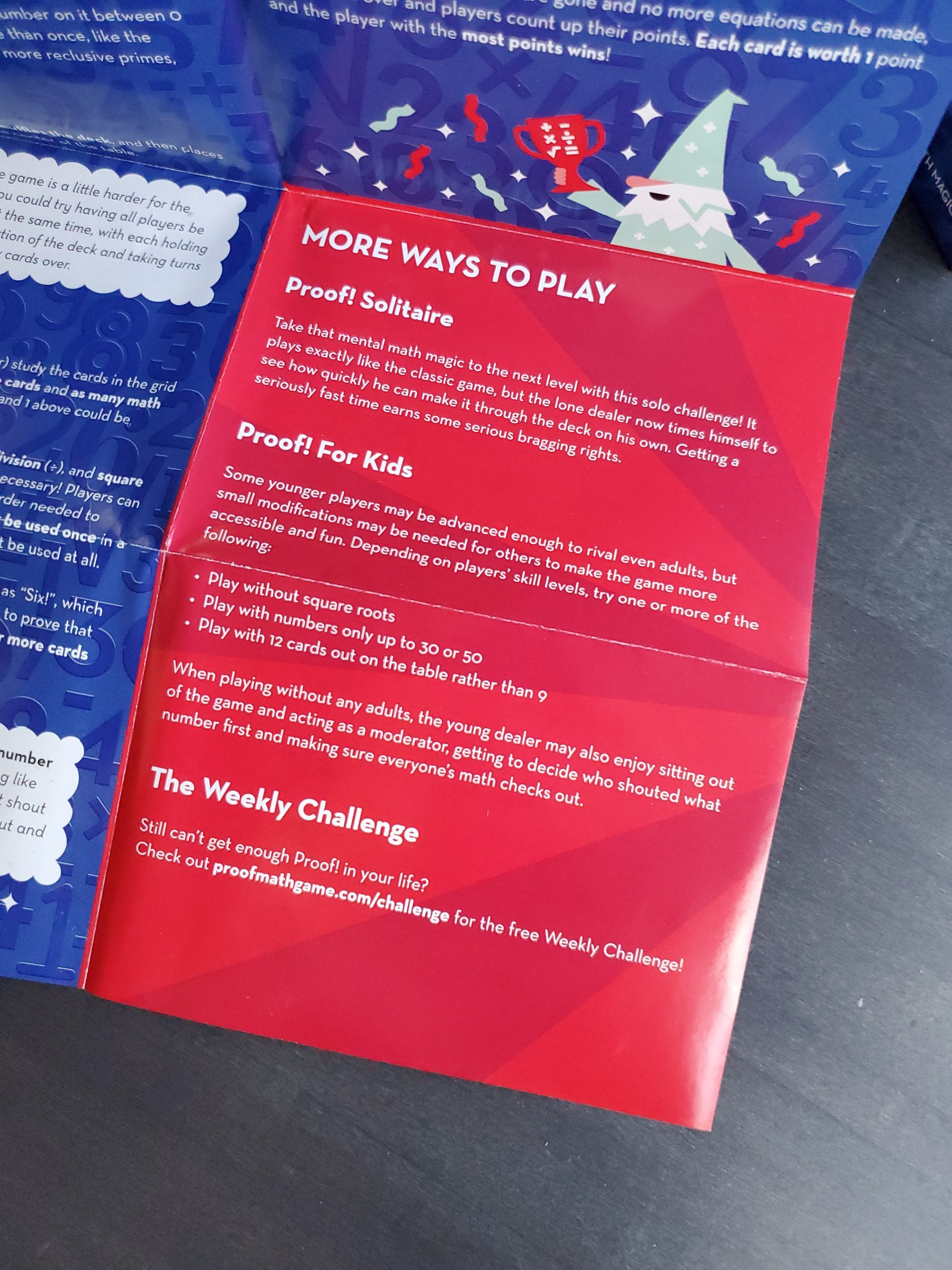
Start with just addition and subtraction for younger or struggling players, then introduce multiplication and division as confidence builds. The game also works well as a solo activity where kids try to find as many equations as possible within a time limit. In a classroom, teachers can set up stations with different difficulty rules.
Who Might Not Love It
Kids who have strong negative feelings about math may initially resist this game because it is clearly about numbers. Also, non-English speakers may struggle since rules are only available in English. If your child needs more tactile or visual gameplay, a board-based math game might be a better starting point.
5. Word on the Street – Best Vocabulary Builder

Educational Insights Word on the Street – Family Board Games for Kids and Adults, Fast Word Games for Kids 10 and up, Vocabulary Building Spelling Game with Fast-Paced Play, Family Game Night
Word Spelling Game
2-8 Players
432 Categories
Ages 10+
Sand Timer Included
Pros
- Hilarious tug-of-words gameplay
- 432 category cards for variety
- Builds vocabulary and creative thinking
- Works for teams up to 8 players
- Fast-paced rounds
Cons
- Requires dictionary for word validation
- Difficult for non-native English speakers
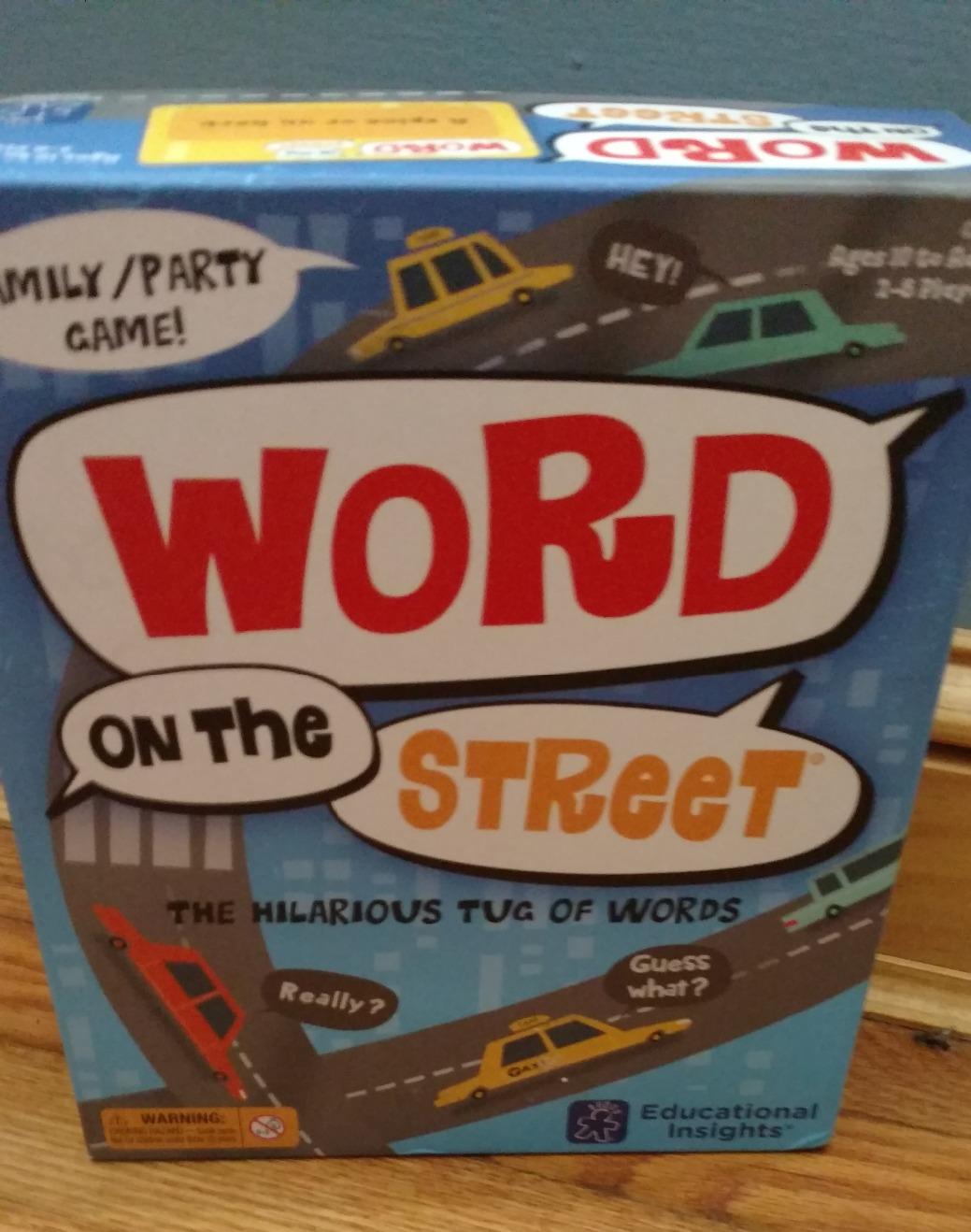
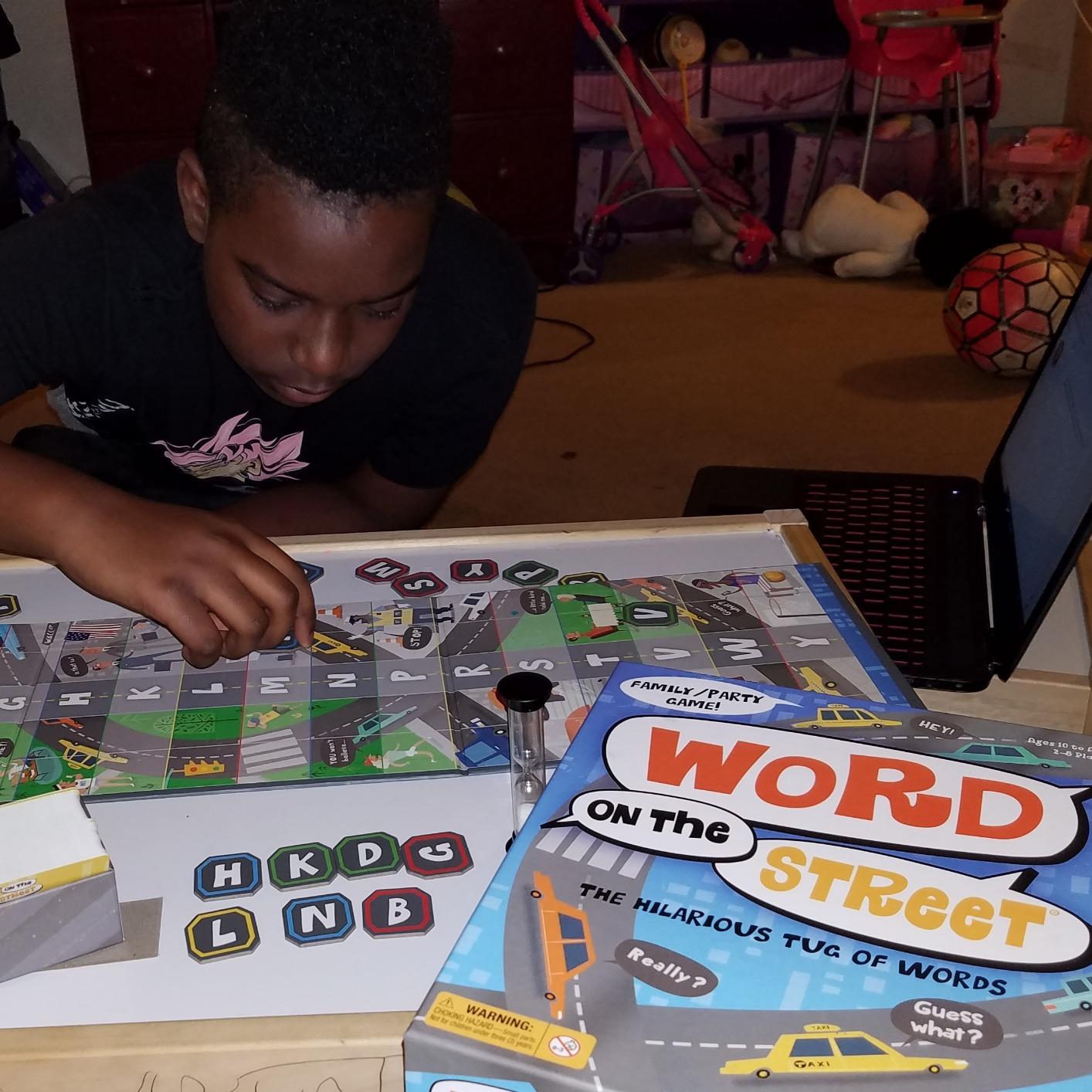
Word on the Street produced some of the loudest laughter we have had at a family game night. One team draws a category card like “something that is sticky,” then brainstorms a word that fits, spells it out loud, and pulls letter tiles toward their side of the board. The other team does the same, creating a literal tug-of-war over the alphabet.
My middle schooler came up with words I never expected. The game forces creative thinking under time pressure, which builds both vocabulary and quick recall. With 432 categories on double-sided cards, we have played dozens of rounds without repeating a single one. The 4.8 rating from 338 reviewers confirms this is a crowd-pleaser.
The educational value sneaks up on you. Players practice spelling, vocabulary retrieval, and word association without any of it feeling like schoolwork. I noticed my daughter’s spelling improve noticeably after a few weeks of playing. The team format also builds cooperative skills since players have to agree on word choices together.
The only real friction point is that you sometimes need a dictionary to settle disputes about whether a word is valid or spelled correctly. For families where English is a second language, the word-spelling mechanic can feel exclusionary. But for native English speakers aged 10 and up, this is one of the most engaging language games available.
Best Settings for This Game
Word on the Street excels at family game nights, classroom vocabulary sessions, and parties with mixed age groups. The team-based format means you can pair stronger spellers with developing ones, which keeps everyone engaged. It also scales well from 2 to 8 players, making it versatile for different group sizes.
Things That Might Frustrate Some Players
Competitive kids may get frustrated when the other team pulls their carefully earned letter tiles back to center. The sand timer creates real pressure that some kids find stressful rather than exciting. Also, at its core, this is a word game, so kids who prefer math or science may need convincing to give it a try.
6. Trekking The National Parks – Best Nature and Geography Game
Underdog Games Trekking The National Parks – Award-Winning Family Board Game for Kids Ages 12+ – Easy to Learn, Fun Activities for 1-5 Players, Great for Family Bonding & for National Parks Lovers
Geography Strategy Game
1-5 Players
45 Min Playtime
Ages 10+
Mensa Select Winner
Pros
- Mensa Select and Parents' Choice awards
- Premium illustrated components
- Over 500000 copies sold
- Flexible 1-5 player count
- Beautiful artwork and quality pieces
Cons
- Maximum 5 players limits group play
- US map feels compressed on the board
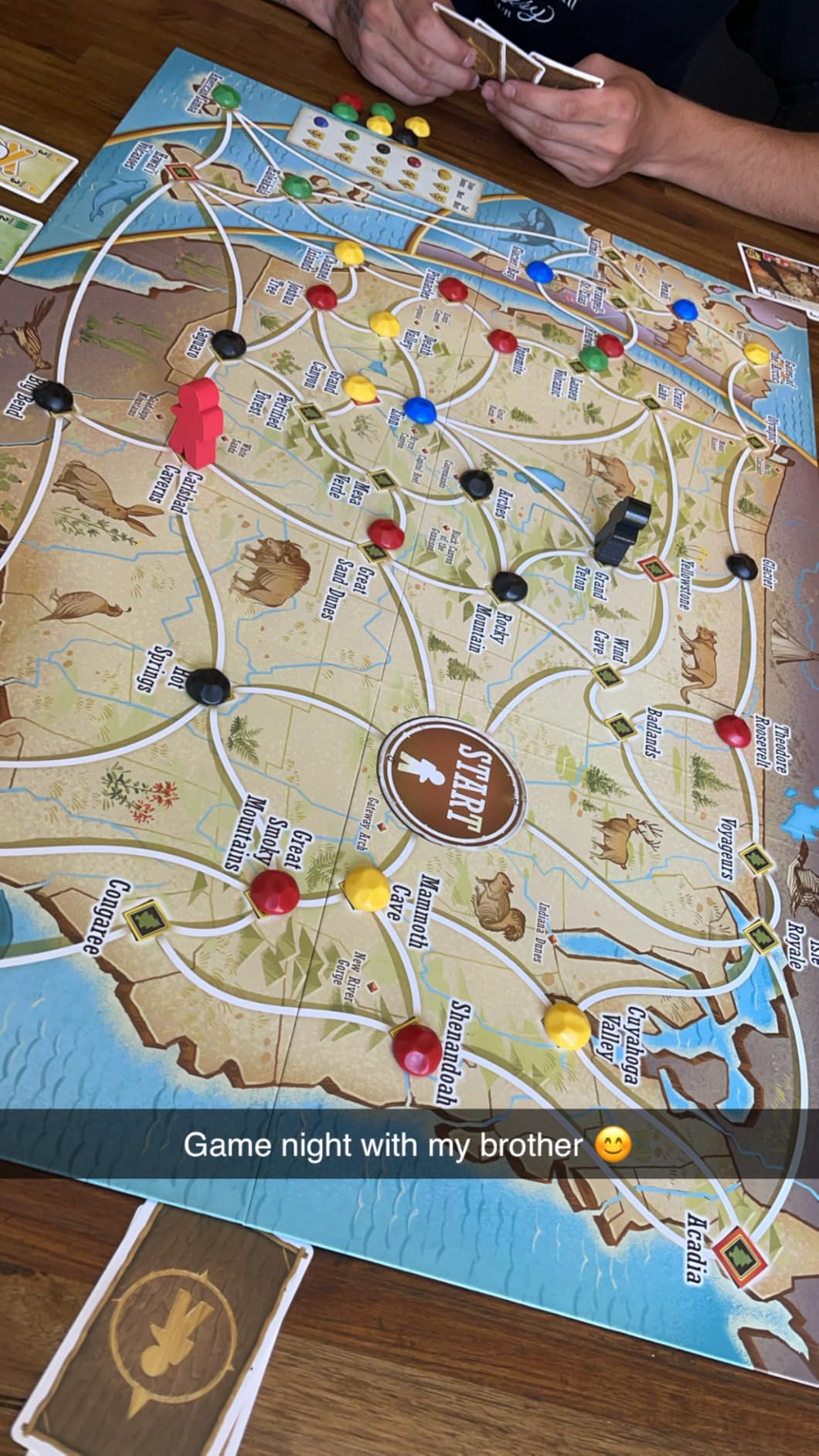
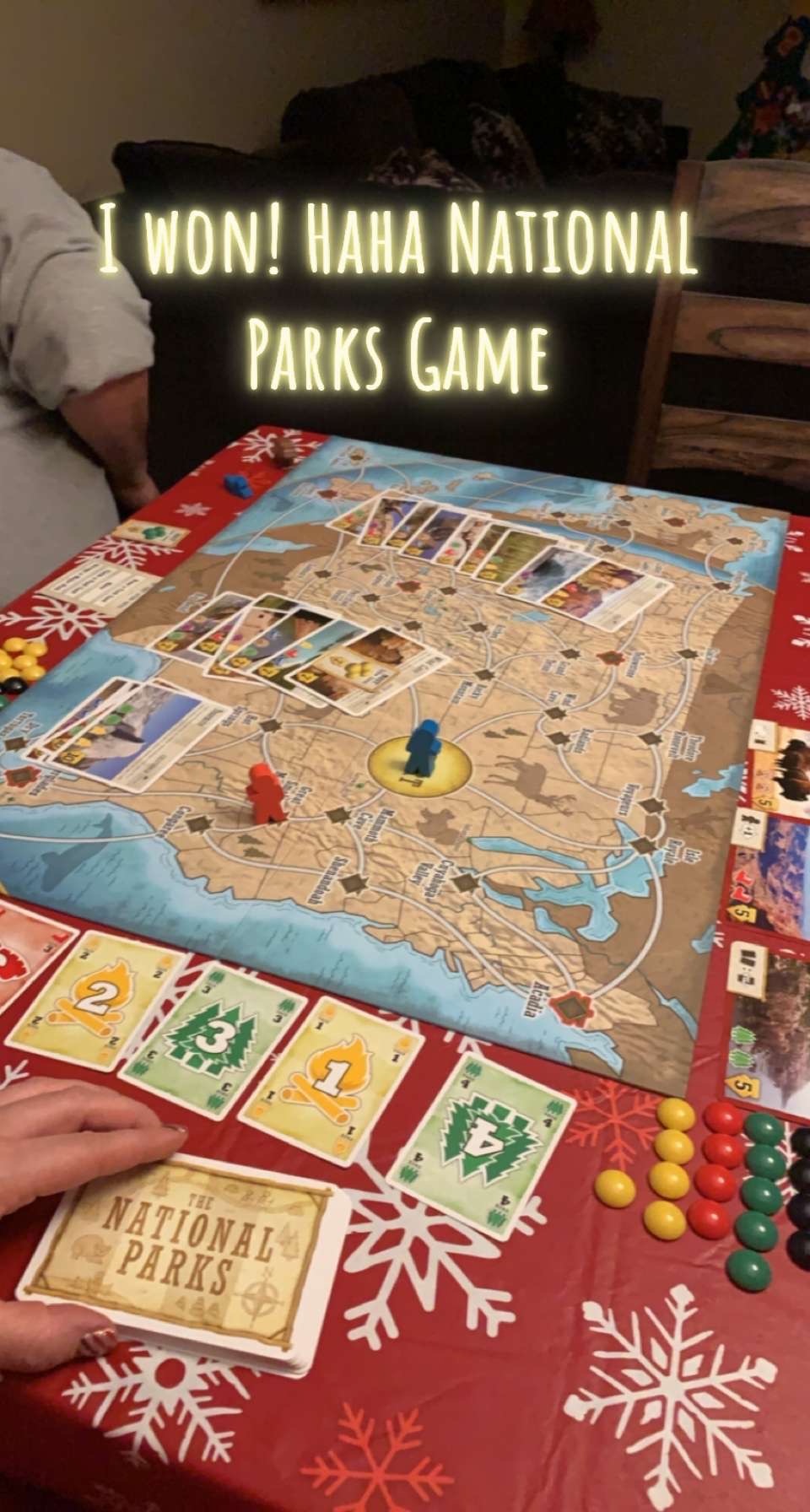
Trekking The National Parks is the game that made my family start planning an actual national parks trip. Players travel across a beautifully illustrated board, visiting parks, collecting cards, and competing for park tokens. The strategy involves deciding when to push for major parks versus collecting smaller ones for points.
The component quality here is outstanding. The cards feature real photographs and facts about each national park, the wooden pieces feel premium, and the board itself is a work of art. With over 9,600 reviews and a 4.7 rating, this is clearly a game that resonates with families. Winning the Mensa Select award tells you the strategy is real.
From an educational standpoint, this game teaches US geography, planning skills, and introduces kids to the national park system. My kids can now name and locate over a dozen national parks they had never heard of before playing. The 30-to-60-minute playtime hits the right balance for middle school attention spans.
The main limitation is the five-player maximum, which rules out larger family gatherings or classroom groups without splitting into multiple games. The US map on the board is also somewhat compressed, which can make piece placement feel crowded. These are minor issues in what is otherwise one of the best educational board games for middle schoolers available.
Why Families Keep Coming Back to This Game
The replayability comes from the combination of card drafting and area control mechanics. Every game unfolds differently based on which parks and cards are available. Families who enjoy strategy games like Ticket to Ride will find similar satisfaction here, but with an educational layer that teaches real geography.
Considerations Before Purchasing
The 45-minute playtime may be too long for kids who prefer quick, fast-paced games. The rules take about 10 minutes to explain, so there is a learning curve before the fun kicks in. Also, if your family is not based in the United States, the geography content may feel less relevant.
7. Periodic: A Game of the Elements – Best Science Board Game

Periodic: A Game of the Elements | Periodic Table Board & Card Game About Atoms, Elements & Compounds | A Strategy Board Game for Gamers & Educational Science Game for Kids or Family Game Night
Chemistry Strategy Game
2-6 Players
Ages 10+
STEM/NGSS Aligned
MENSA Recommended
Pros
- Accurate real chemistry education
- American MENSA Recommended
- Complies with STEM and NGSS standards
- Strategic depth for serious gamers
- Quality components
Cons
- Complex rules take time to learn
- Setup can take 30 minutes
- Not a quick casual game
Periodic is the real deal if you want a game that teaches actual chemistry. Players move across a periodic table board, collecting elements and building compounds using real periodic trends like atomic mass and electronegativity. This is not superficial science branding. The game mechanics are built around genuine chemistry concepts.
I tested this with my nephew who was struggling in his eighth-grade science class. After a few rounds, he started understanding periodic trends intuitively because the game makes you use them to win. The American MENSA recommendation is well-earned. The strategy is satisfying for adults while remaining accessible for kids aged 10 and up.
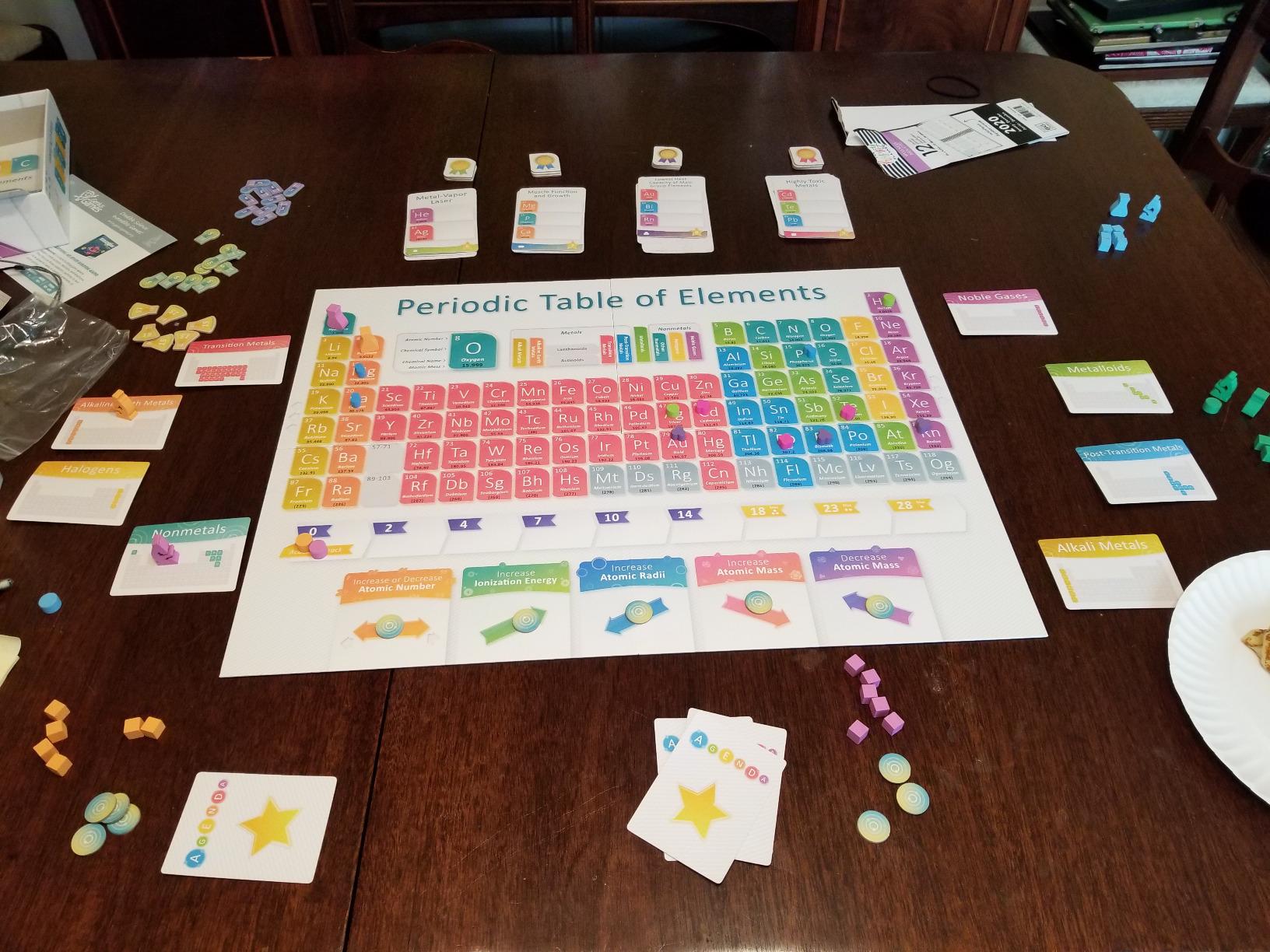
The educational depth here is impressive. The game aligns with STEM standards and Next Generation Science Standards, making it a legitimate classroom tool. Teachers on forums recommend it for enrichment activities in physical science units. Kids learn element properties, periodic trends, and compound formation through actual gameplay rather than memorization.
The main barrier is complexity. The rulebook is dense, and the first game will take significantly longer as players learn the mechanics. Some reviewers mention 30-minute setup times for the first few plays. This is not a casual pick-up game. It rewards investment with genuine depth and learning.
Who Will Get the Most Value
This game is perfect for science-loving kids, homeschool families studying chemistry, and classrooms that want enrichment activities beyond worksheets. If your middle schooler shows any interest in science, this game will deepen that interest while teaching real content. It also works well for parents who enjoy strategy games and want to share that hobby with their kids.
Potential Frustrations
Kids who prefer fast-paced or party-style games may find Periodic too slow and thinky. The learning curve is real, and you should expect the first session to be mostly about understanding rules rather than enjoying strategy. Families looking for a quick 15-minute activity should look elsewhere. This is a commitment game that rewards repeated plays.
8. Blurt! – Best Word Party Game for Groups

Educational Insights Blurt! The Think Fast, Shout-it-Out Party Game – Family Games for Kids and Adults, Board Games for Family Night, Fun Word Game, Ages 7+
Word Race Party Game
3-12 Players
1200 Clues
Ages 7+
Two Difficulty Levels
Pros
- 1200 clues for long-term variety
- Two difficulty levels for mixed ages
- Simple rules quick to learn
- Builds vocabulary and word recall
- Supports up to 12 players
Cons
- Limited strategic depth over time
- Older players may dominate younger ones
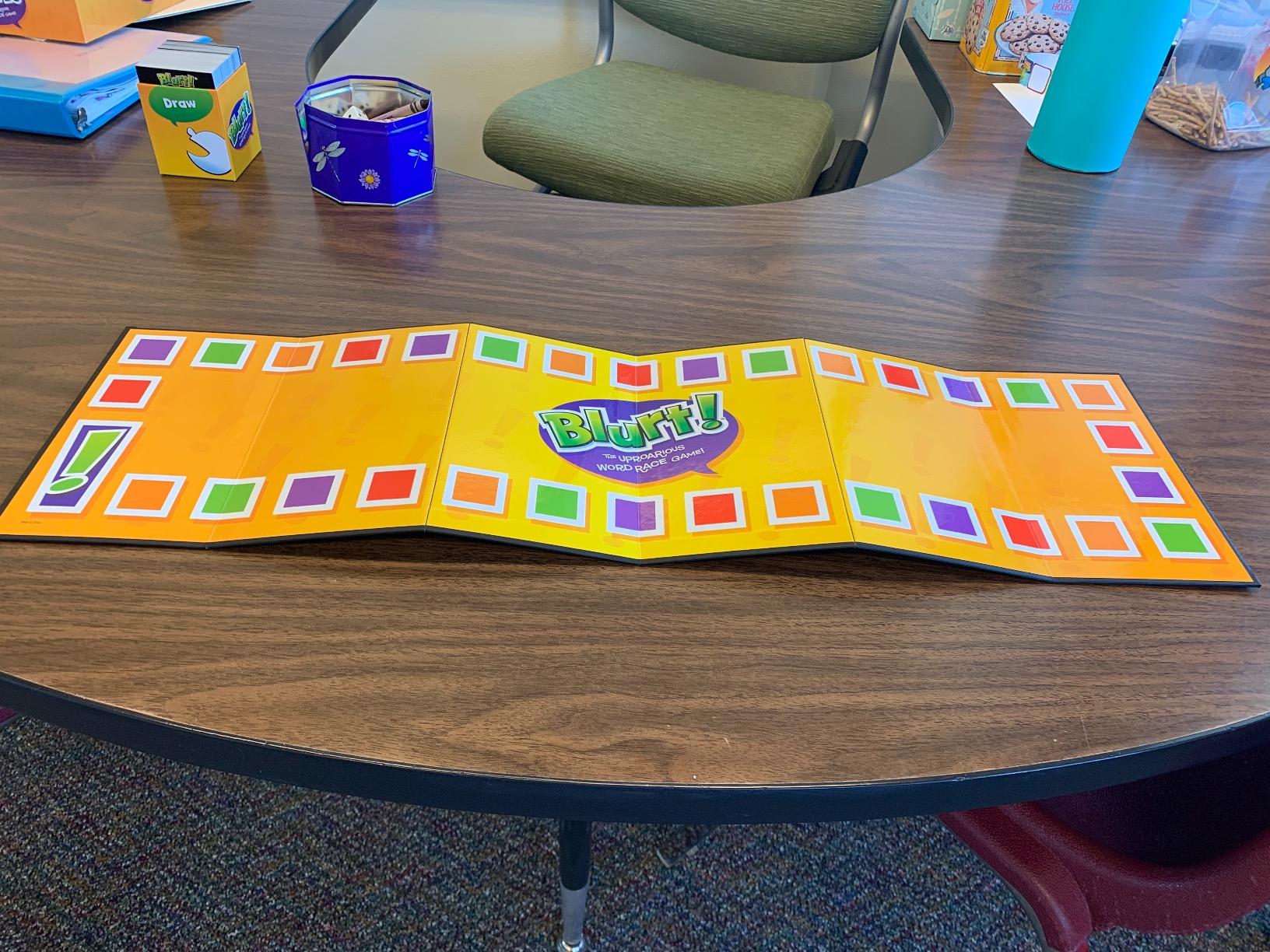
Blurt! is the game that gets the loudest reaction every time we pull it out. A reader gives a definition clue, and everyone races to shout out the correct word. It is fast, chaotic, and genuinely fun. I have seen the quietest kids in our group find their voice during a round of Blurt because the speed element overrides self-consciousness.
The two difficulty levels are smart. Level one uses simpler vocabulary that works for elementary kids, while level two challenges adults. This means a 10-year-old and a parent can play the same game with different cards, keeping the competition fair. With 1,200 clues across 200 cards, the game stays fresh for months.
Teachers love this game for vocabulary building. The format of hearing a definition and instantly recalling the matching word builds exactly the kind of rapid word retrieval that improves reading comprehension and writing fluency. It works in classrooms, after-school programs, and family gatherings with equal effectiveness.
The main concern is that faster readers and older kids tend to dominate, which can discourage younger or slower players. Using teams helps balance this. Also, the gameplay is straightforward, so after many sessions, the strategic novelty wears off. But for vocabulary practice disguised as a party game, Blurt! is hard to beat.

Ideal Group Sizes and Settings
Blurt! shines with groups of 5 or more where the chaos of everyone shouting at once becomes part of the fun. It works brilliantly for classroom settings, birthday parties, and large family gatherings. The 3-to-12 player range makes it one of the most scalable games on this list.
What Could Be Improved
The game would benefit from more structured rules for balancing mixed-age play. As it stands, the fastest blurt-er wins, which tends to be the oldest player. Adding a handicapping system or mandatory turns would help. The components are functional but not premium. For the educational value alone, though, these are minor complaints.
9. Paycheck to Billionaire – Best Financial Literacy Game

Paycheck to Billionaire: Master Financial Freedom – Smart Investing & Cost Management Board Game – Ideal for Game Night, Educational Play – Perfect for Boys and Girls Ages 8+, Adults and Family
Financial Strategy Game
2-6 Players
45 Min Playtime
Ages 8+
Financial Literacy Focus
Pros
- Teaches real financial literacy concepts
- High quality materials and components
- Works for classrooms and homeschool
- Engaging competitive gameplay
- Covers investing and cost management
Cons
- Instructions could be clearer
- Some rules have ambiguities
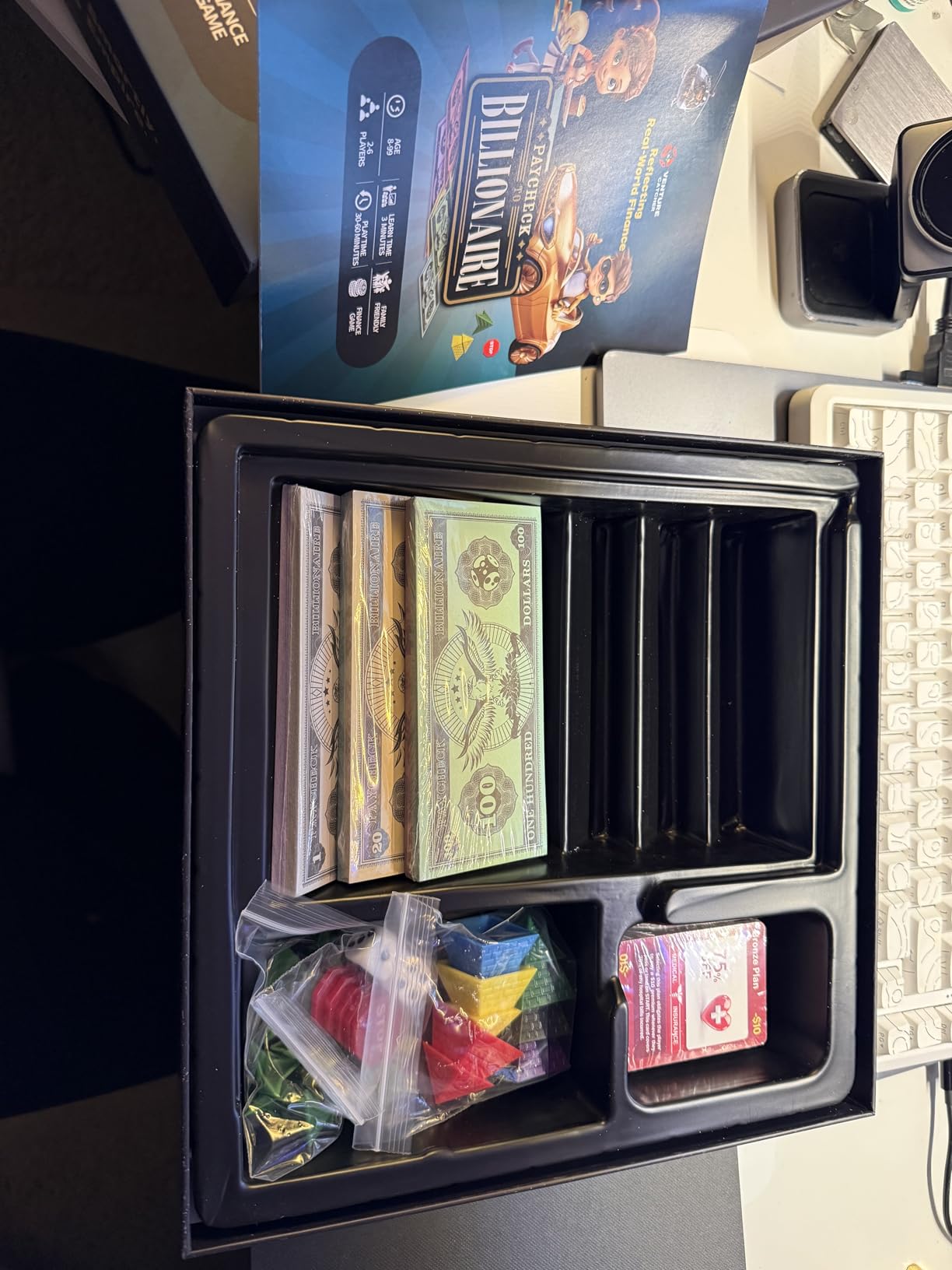
Paycheck to Billionaire fills a gap that most educational board games ignore: financial literacy. Players manage income, make investment decisions, deal with expenses, and try to build wealth. The game covers concepts like investing, insurance, market dynamics, and risk management in a way that feels like playing Monopoly but with actual financial lessons built in.
I played this with my 13-year-old and within the first round, we were having genuine conversations about why putting all your money in one investment is risky. That is exactly the kind of real-world learning I want from an educational game. The dark green board and quality components feel premium for the category.
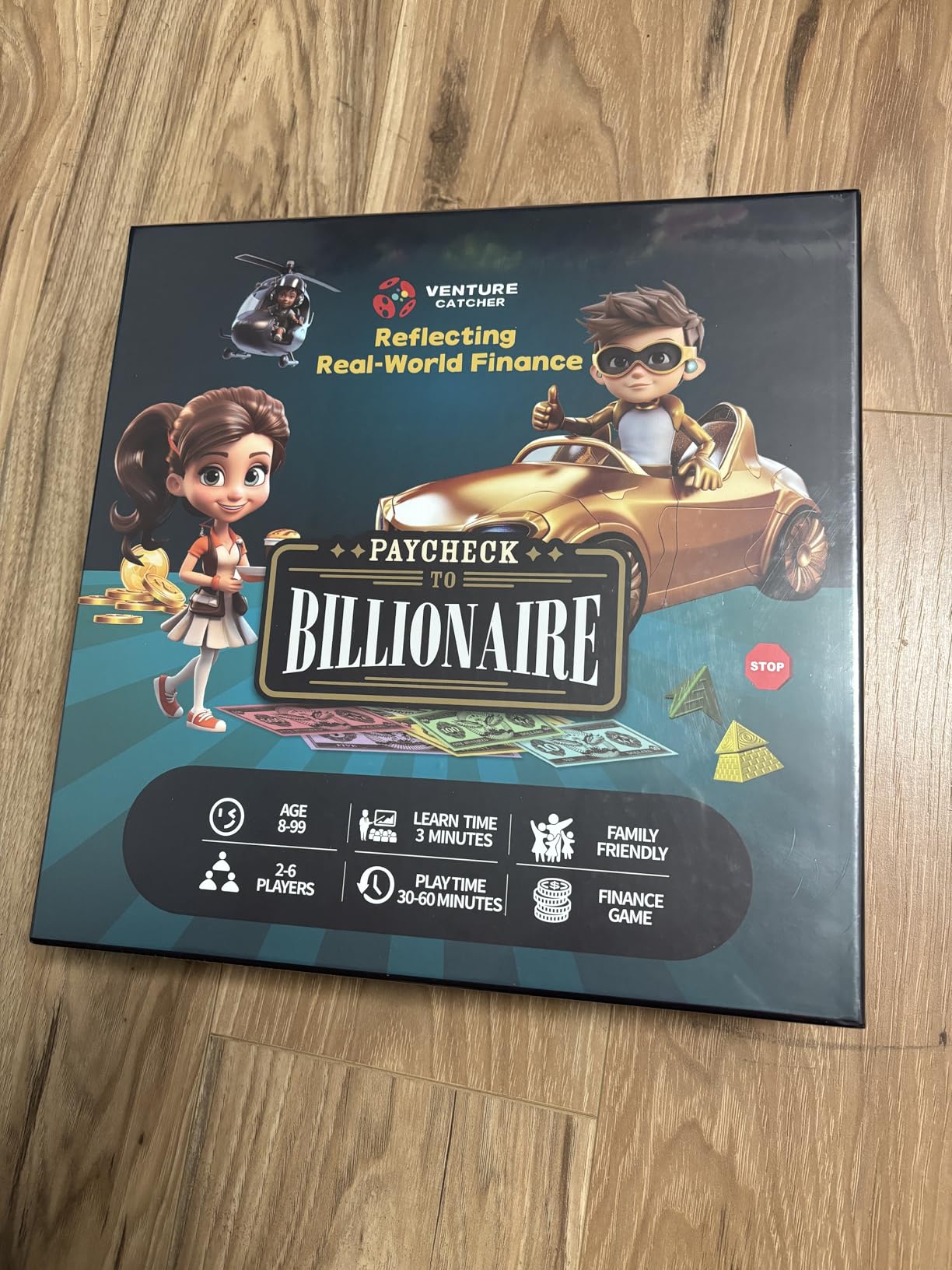
The game includes 100 play cards, 240 banknotes, upgrade arrows, and a well-organized card organizer. The 45-minute playtime allows for enough rounds of decision-making to see financial strategies play out. Teachers recommend it for economics units, and homeschool families appreciate the structured introduction to money management concepts.
The biggest issue is the instruction clarity. Several reviewers mention needing to clarify rules about insurance timing and certain card interactions. The first play will require some patience as you work through ambiguities. Once everyone understands the flow, though, the game runs smoothly and generates great discussions about money.
Why Financial Literacy Games Matter
Middle school is the perfect age to introduce money management concepts because kids are starting to understand value, saving, and spending. This game provides a safe sandbox for making financial mistakes and learning from them. The investing mechanics teach diversification and risk assessment without any lecture-style teaching.
Things to Know Before Playing
Expect the first game to take longer than 45 minutes as players learn the rules. I recommend reading through the instructions yourself before introducing it to kids so you can guide the first round. Some families create house rules to clarify the ambiguous situations, which actually adds to the educational discussion.
10. ThinkFun Hacker – Best Coding and Cybersecurity Game

Think Fun Hacker Cybersecurity Coding Game and STEM Toy for Boys and Girls Age 10 and Up, Multicolor
Coding STEM Game
120 Challenges
Solo Player
Ages 10+
Cybersecurity Theme
Pros
- Teaches real programming principles
- 120 progressive challenges
- Clear instructions easy to start
- Single player works for independent study
- Trusted ThinkFun brand
Cons
- Some design flaws reported
- Can be complicated even for adults
- Designed primarily for solo play
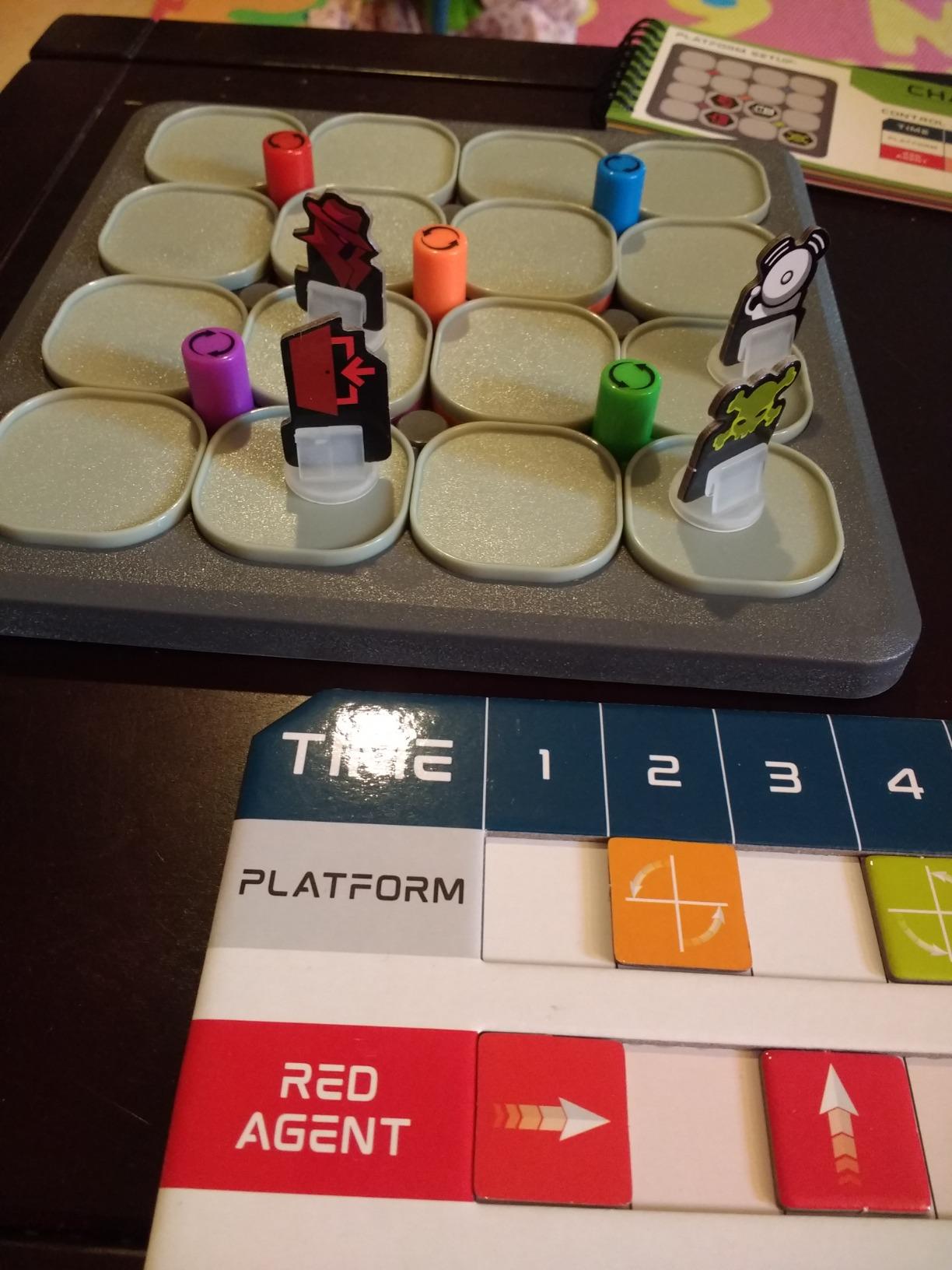
ThinkFun Hacker introduces programming concepts through a cybersecurity theme where players navigate data paths, avoid viruses, and solve coding challenges on a game grid. The 120 challenges progress from beginner to expert, teaching concepts like looping, conditional logic, and pathfinding that translate directly to real coding skills.
My son who had zero interest in coding spent an entire weekend working through challenges. The cybersecurity narrative gives the puzzles context and purpose that plain coding exercises lack. Each challenge feels like a mission rather than a worksheet. The game grid and token system make abstract programming concepts tangible and visual.
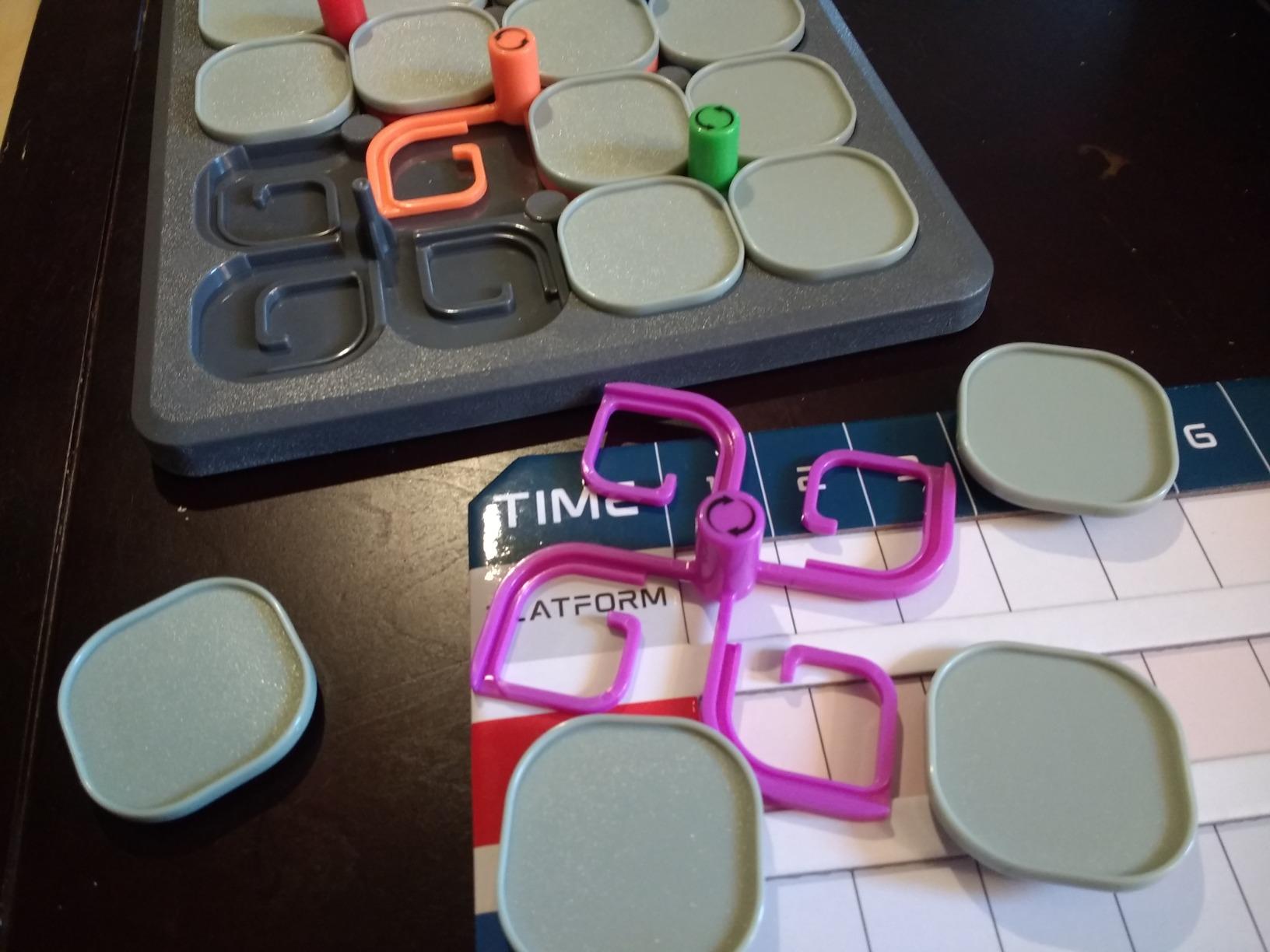
The educational progression is well-designed. Early challenges teach basic movement and planning, while later ones introduce complex multi-step solutions that require genuine algorithmic thinking. This makes it appropriate for complete beginners and kids who already have some coding experience. Teachers use it as a supplement to introductory programming courses.
As a single-player game, this works best for independent study time or one-on-one mentoring. Some reviewers mention design issues with certain challenge configurations, and the difficulty spike in later challenges can frustrate some kids. But for building programming foundations through play, Hacker is one of the few games that gets it right.
How This Compares to Screen-Based Coding
The physical format is what makes Hacker valuable. Kids manipulate tokens on a grid instead of typing on a keyboard, which builds spatial reasoning alongside logical thinking. Many kids who resist screen-based coding activities engage more readily with this hands-on format. It also eliminates the distraction of switching between a game and other apps.
Is This Game Right for Your Child
If your middle schooler shows any interest in technology, computers, or puzzles, Hacker is a strong choice. Kids who prefer social or competitive games may find the solo format limiting. The age 10+ recommendation is accurate. Younger kids will struggle with the later challenges, while older teens may prefer actual coding platforms for deeper learning.
11. Continent Race – Best World Geography Card Game

Continent Race Geography Educational Board Game for Kids, Tweens, Family, Friends, Teachers and Classrooms – Learn About Flags & Countries Around The World
Geography Card Game
2+ Players
Ages 6+
Cognitive Skill Building
Flags and Countries
Pros
- Fun way to learn world geography
- Sturdy cardstock materials
- Works for classroom and homeschool
- Different difficulty levels available
- Portion of profits goes to charity
Cons
- Country info on cards is basic
- No capitals included
- Game can end too quickly
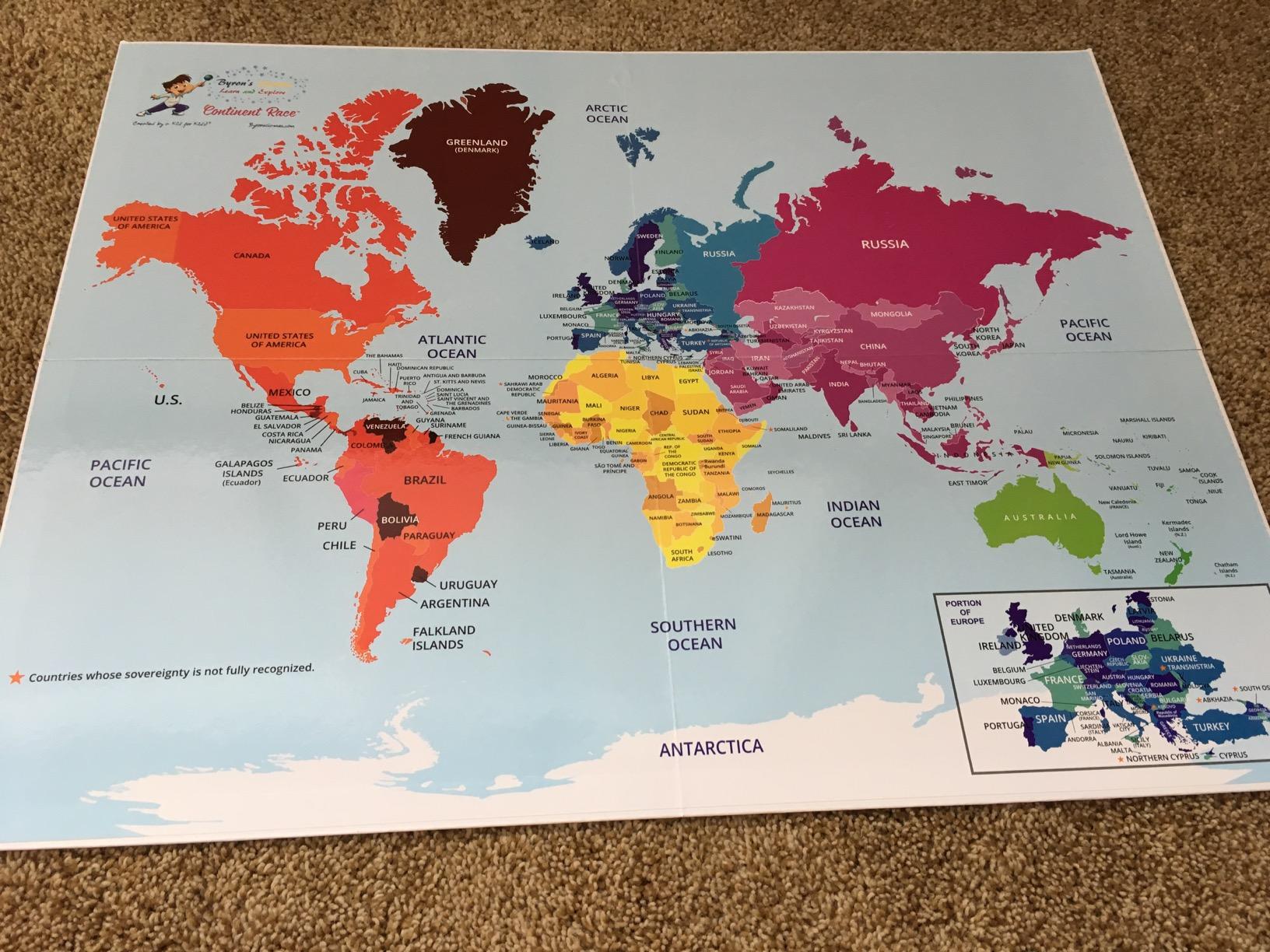
Continent Race takes a different approach to geography learning. Instead of a board, players use cards featuring countries, flags, and continents to race around the world. The card-based format makes it more portable and faster-paced than traditional geography board games, which works well for shorter attention spans.
I tested this with a group of four middle schoolers and they picked up the rules in under five minutes. The competition to collect country cards from each continent created genuine excitement. Kids were identifying flags and placing countries on continents within the first round. The different difficulty levels let us adjust the challenge as they learned.
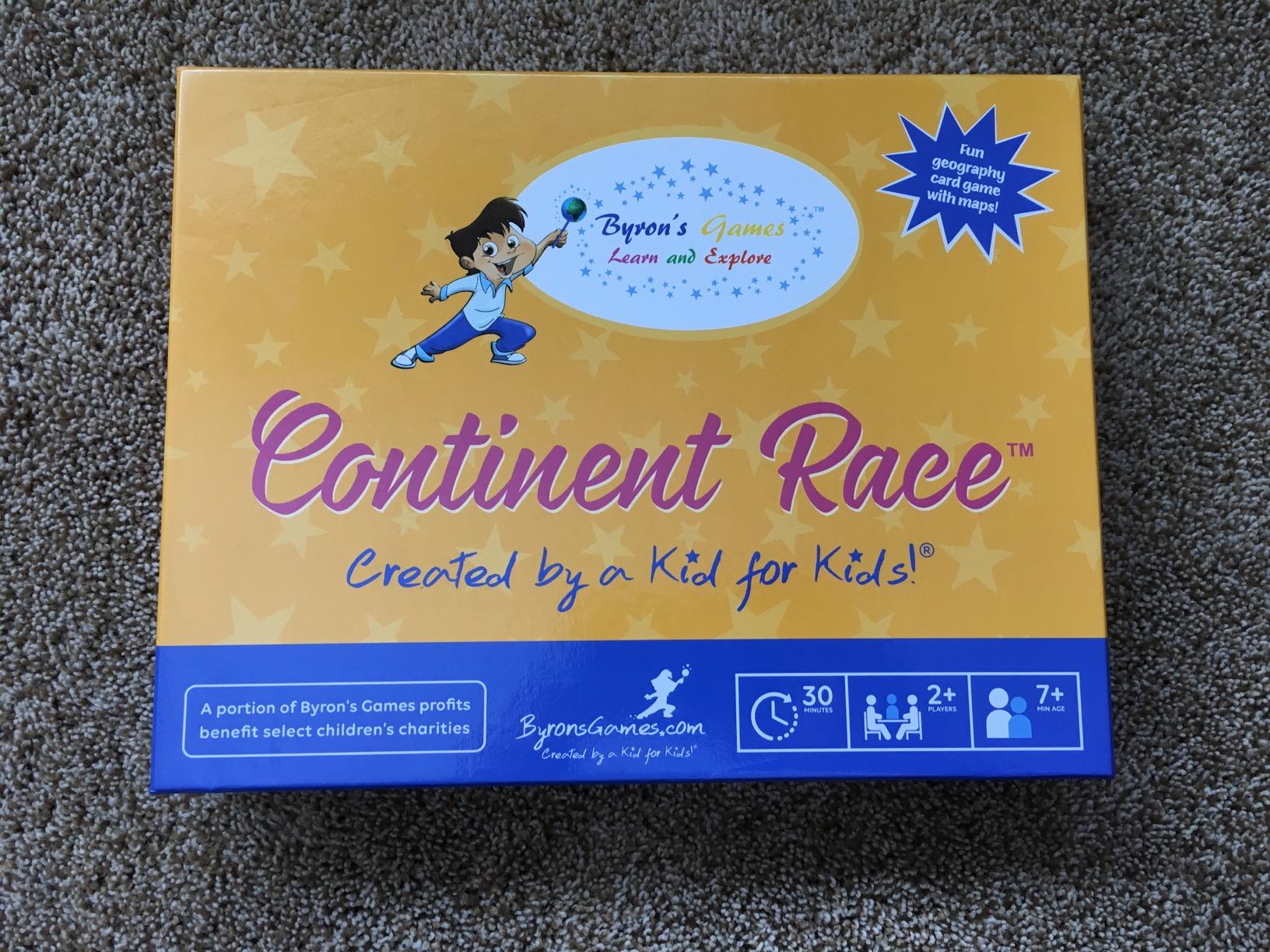
The game builds cognitive skills alongside geography knowledge. Players practice categorization, memory, and strategic collection. The included continent maps serve as visual reference tools that reinforce learning even after the game ends. A portion of profits goes to children’s charities, which is a nice touch.
The main limitation is depth. Country cards include basic information but skip capitals and other details that would challenge older middle schoolers. Some players report games ending too quickly once you understand the strategy. For families wanting a quick geography warm-up, this works well, but it may not satisfy kids wanting deep strategic gameplay.
Best Ways to Use This Game
Continent Race works best as a supplement to geography lessons rather than a standalone learning tool. Play it as a warm-up before more detailed geography studies, or use it during travel since the card format is highly portable. The adjustable difficulty levels mean younger siblings can join in too.
What Could Be Better
Adding capital cities and major landmarks to the country cards would significantly increase the educational value for middle schoolers. The game would also benefit from a longer gameplay option for families who want extended sessions. As it stands, it is a solid but lightweight geography game.
12. PlaySmart Dice Math-Tac-Toe – Best Multi-Level Math Game

Semper Smart Games PlaySmart Dice Math-Tac-Toe Math Game: Get Sharp on Mental Math with a Fun New Twist on a Timeless Classic! Multiple Skill-leveled Math Bingo Made Fun for 8 and up!
Math Board Game
2-6 Players
Ages 8+
3 Skill Levels
Teacher Approved
Pros
- Three skill levels for different ages
- Math teacher and tutor approved
- Builds confidence in struggling students
- Compact travel-friendly design
- Supports all four operations
Cons
- Basic concept similar to bingo
- Some may want more game complexity
PlaySmart Dice Math-Tac-Toe takes the familiar tic-tac-toe format and layers math practice on top. Players roll specialized dice, solve the resulting math problem, and mark their answer on a grid. The game includes beginner, intermediate, and advanced grids, so kids at different levels can play together in the same session.
What impressed me was how this game builds confidence. My friend’s daughter who freezes during math tests was happily solving multiplication problems because the game format removed the pressure. Her math tutor recommended it, and I can see why. The felt-lined box lid serves as a dice tray, which is a thoughtful design detail.
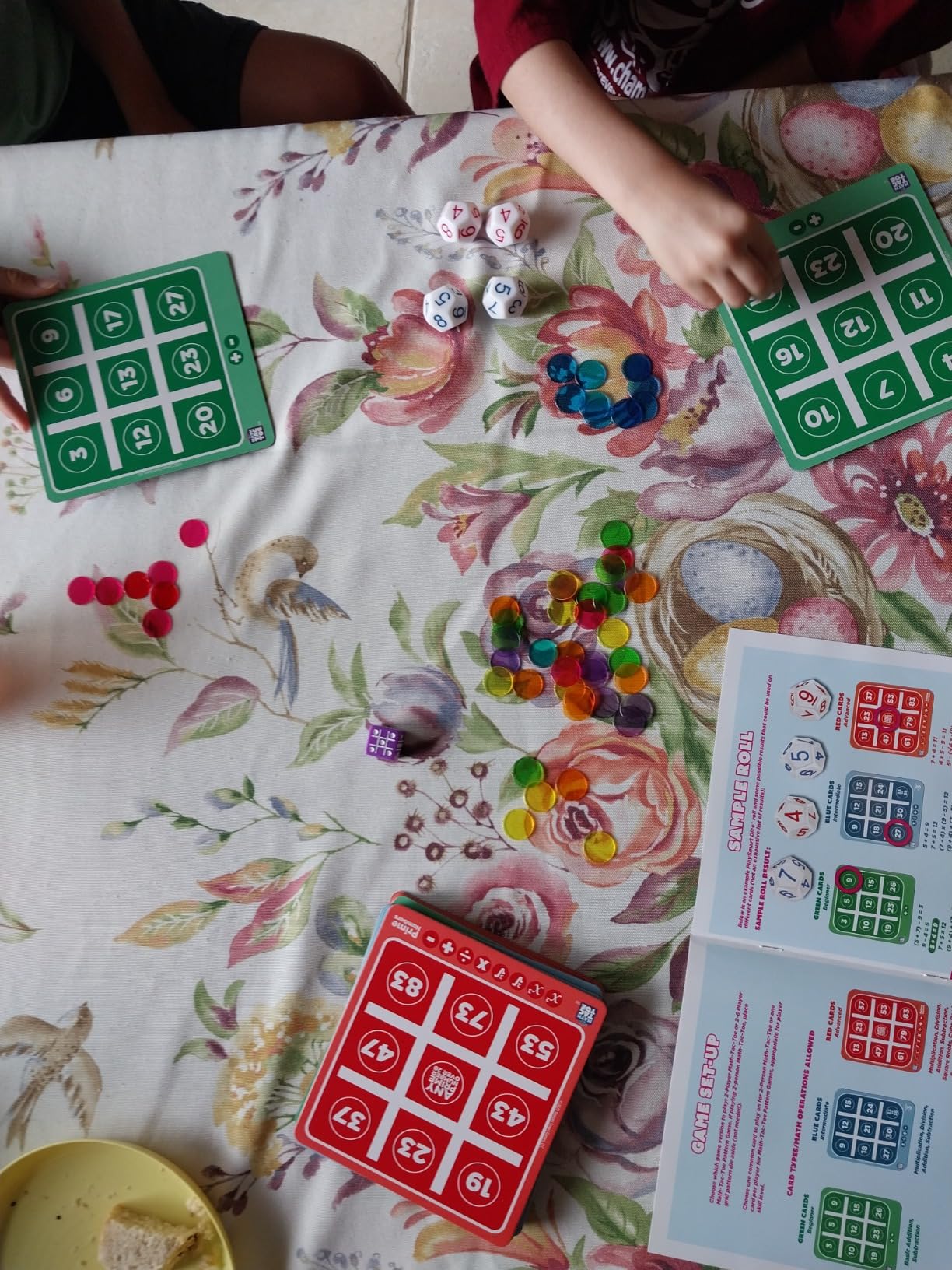
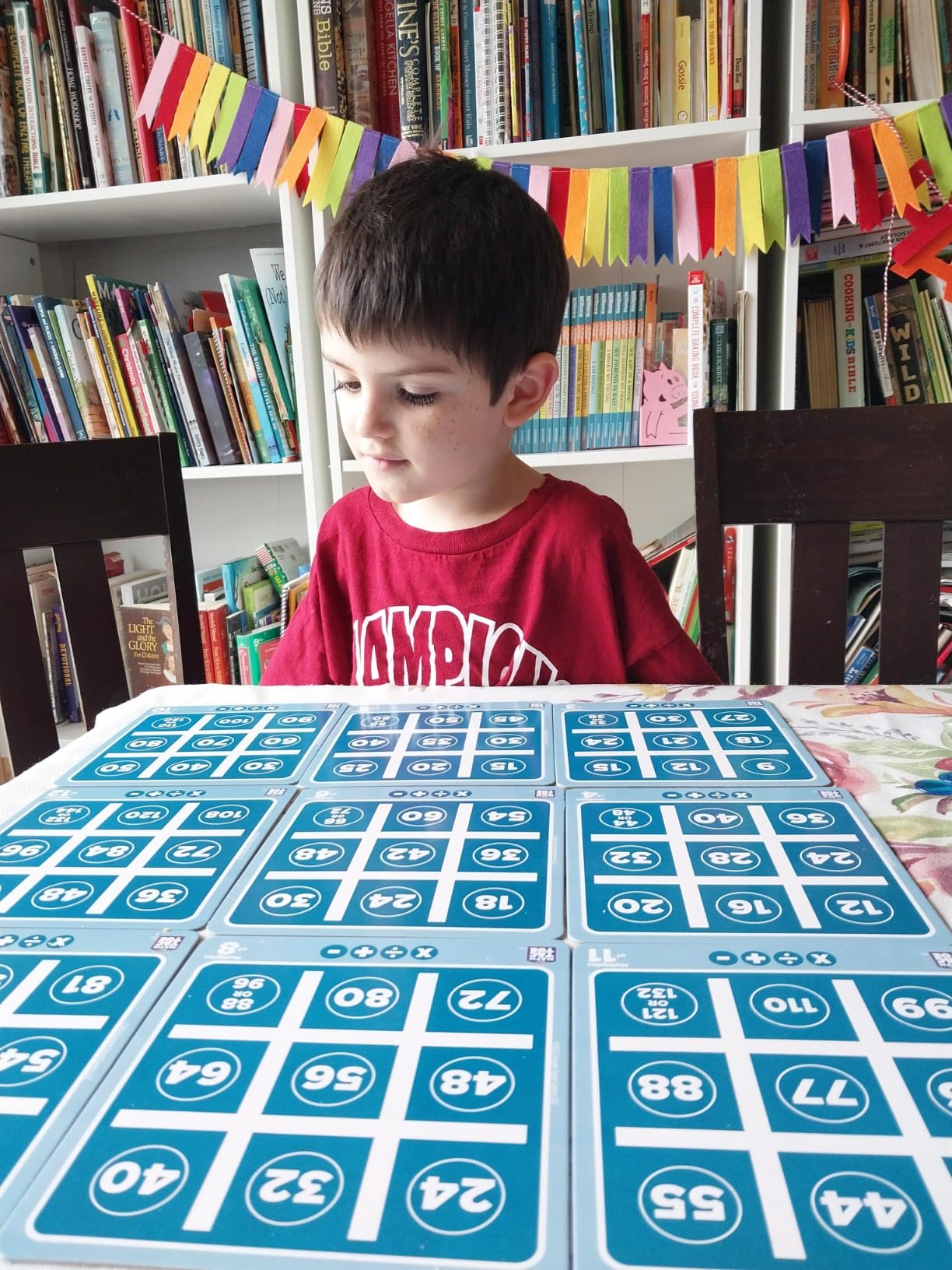
The three skill levels cover addition and subtraction through advanced multiplication and division. This makes the game grow with your child, starting at age 8 and remaining relevant through middle school. The game includes grids, chips for up to six players, and PlaySmart Dice that create varied problem sets each round.
The game concept is admittedly close to math bingo, which means it lacks the strategic depth of some other games on this list. But for building math fluency and automaticity, the format works. Teachers and tutors consistently approve this game because it produces measurable improvement in mental math speed.
Who Benefits Most from This Game
Math-Tac-Toe is ideal for kids who need math confidence building, students preparing for timed math tests, and families with children at different skill levels. The multi-level format means a third grader and a seventh grader can genuinely play together using different grids. Homeschool families appreciate the structured skill progression.
Limitations to Consider
If your child already excels at mental math, this game may not provide enough challenge. The bingo-style format is straightforward and may feel repetitive after extended play. Families seeking deep strategic gameplay should look at other options on this list. This is a skill-building tool first and a game second.
13. Elevate Prep Target Math – Best Classroom Math Game

Elevate Prep Target Math Game | A Teacher-Recommended, Fast-Paced Mental Math Game for Practicing Addition, Subtraction, Multiplication, & Division | Ages 8+
Mental Math Game
2-6 Players
Ages 8+
3 Play Modes
Teacher Recommended
Pros
- Teacher recommended and classroom tested
- 3 play modes and 3 difficulty levels
- Customizable for all skill levels
- Works from ages 8 to adult
- Builds math confidence quickly
Cons
- Math-averse kids may still resist
- Adults may find it too easy
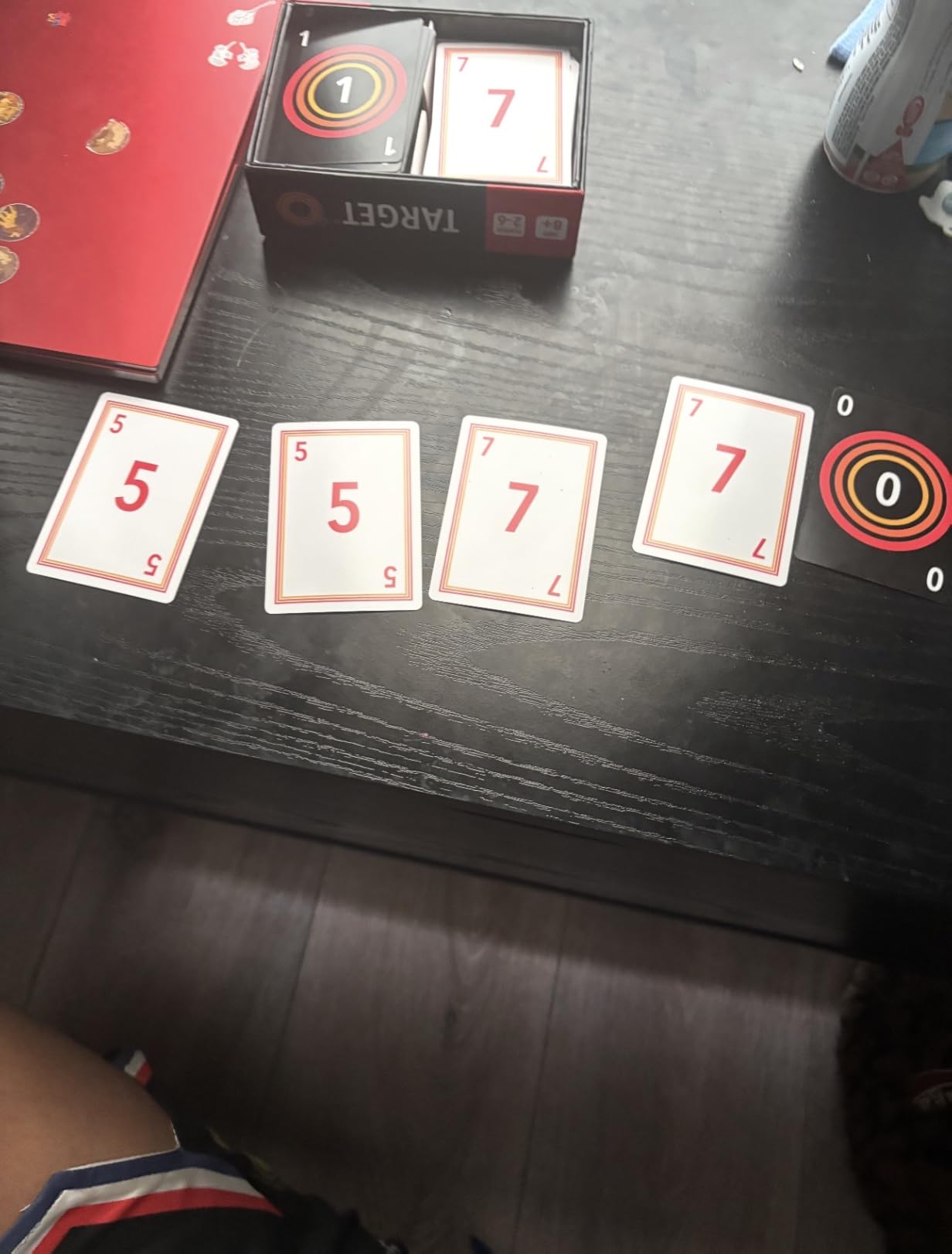
Elevate Prep Target Math gives you three different ways to play, which immediately sets it apart from single-mode math games. The core mechanic involves using cards to reach a target number through math operations, but the three modes offer variety that keeps the game feeling fresh over multiple sessions.
I appreciate that real teachers tested and recommended this game before it went to market. The three difficulty levels mean you can start with simple addition for younger players and work up to complex multi-step operations for middle schoolers. The flexibility is the selling point here. One game adapts to an entire classroom of different ability levels.
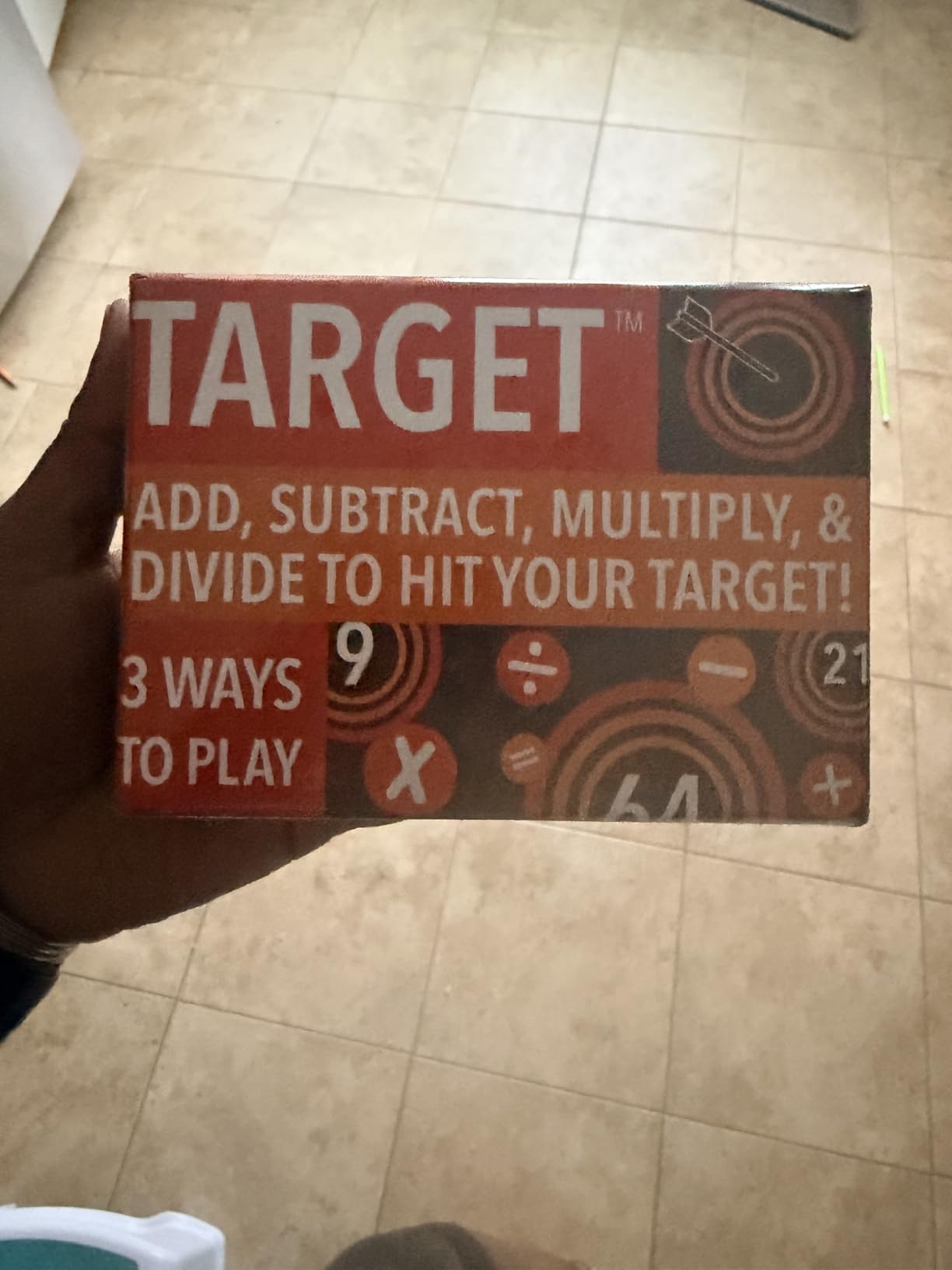
The game supports two to six players and plays quickly enough for a classroom warm-up or homework break. Kids practice addition, subtraction, multiplication, and division in a competitive format that builds speed and accuracy. Parents report that kids who normally avoid math homework willingly play this game for fun.
The limitation is the same as any math-focused game: kids who have strong negative associations with math may initially resist. And for adults, the operations are straightforward enough that the game loses competitive tension when played with only grown-ups. But for its target audience of kids building math fluency, it delivers.
How to Introduce This to Reluctant Players
Start at the easiest difficulty level and play cooperatively rather than competitively for the first few rounds. Let kids experience success before introducing the competitive modes. Many teachers use this as a five-minute warm-up activity at the start of math class, which normalizes the gameplay before the pressure of grades kicks in.
Comparing to Other Math Games
Target Math offers more variety than single-mode games like Proof! because of its three play modes, but it has fewer total reviews and a smaller community of users. If you already own Proof!, Target Math makes a strong complementary game with different mechanics. If choosing just one, Proof! has a longer track record and more user validation.
14. QUOKKA Math Finance Economics Trivia – Best Budget-Friendly Trivia Game

Board Games for Kids 8-12 – STEM Family Card Games for Kids and Adults –Trivia Cards for Family Game Night – Who Knows Math Finance Economics Better – Fun Card Game for Families and Teens
Math Trivia Card Game
2+ Players
Ages 12+
500 Questions
15 Min Playtime
Pros
- 500 questions about math and economics
- Simple rules easy to learn
- Portable card-only format
- Great for family bonding
- Plays in just 15 minutes
Cons
- Only cards with no board or extras
- May feel limited compared to board games
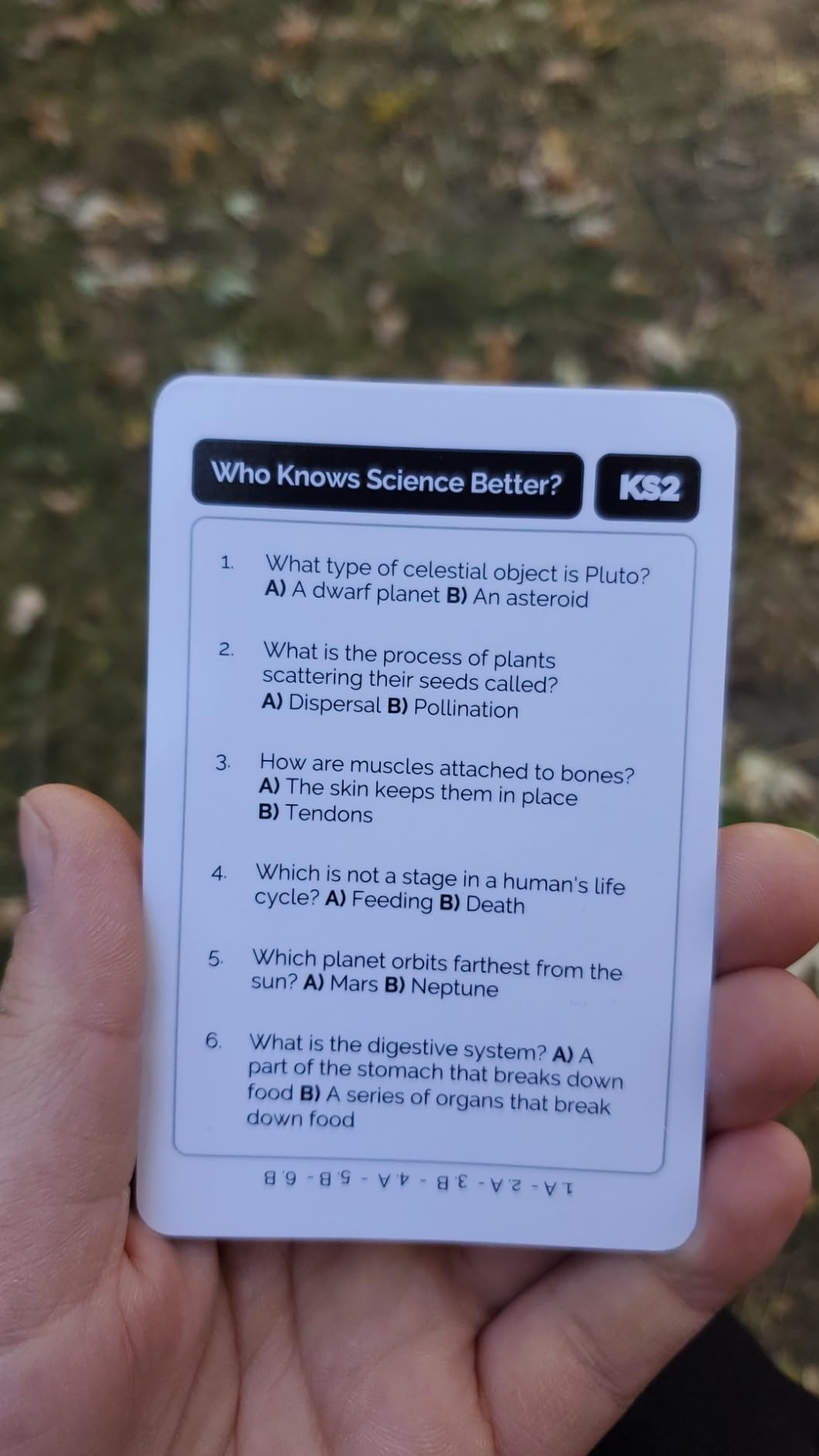
QUOKKA’s Math Finance Economics trivia game is the most straightforward game on this list, and that simplicity is its strength. It is a card-based quiz game with 500 questions covering mathematics, economics, and finance. You draw a card, ask a question, and players compete to answer correctly. That is the entire game.
I keep this in my bag for waiting rooms, road trips, and restaurant dinners. The 15-minute playtime fits perfectly into transitional moments. My 13-year-old actually asked to bring it on a family vacation, which tells you something about a math game. The questions range from basic arithmetic to concepts about markets and personal finance.
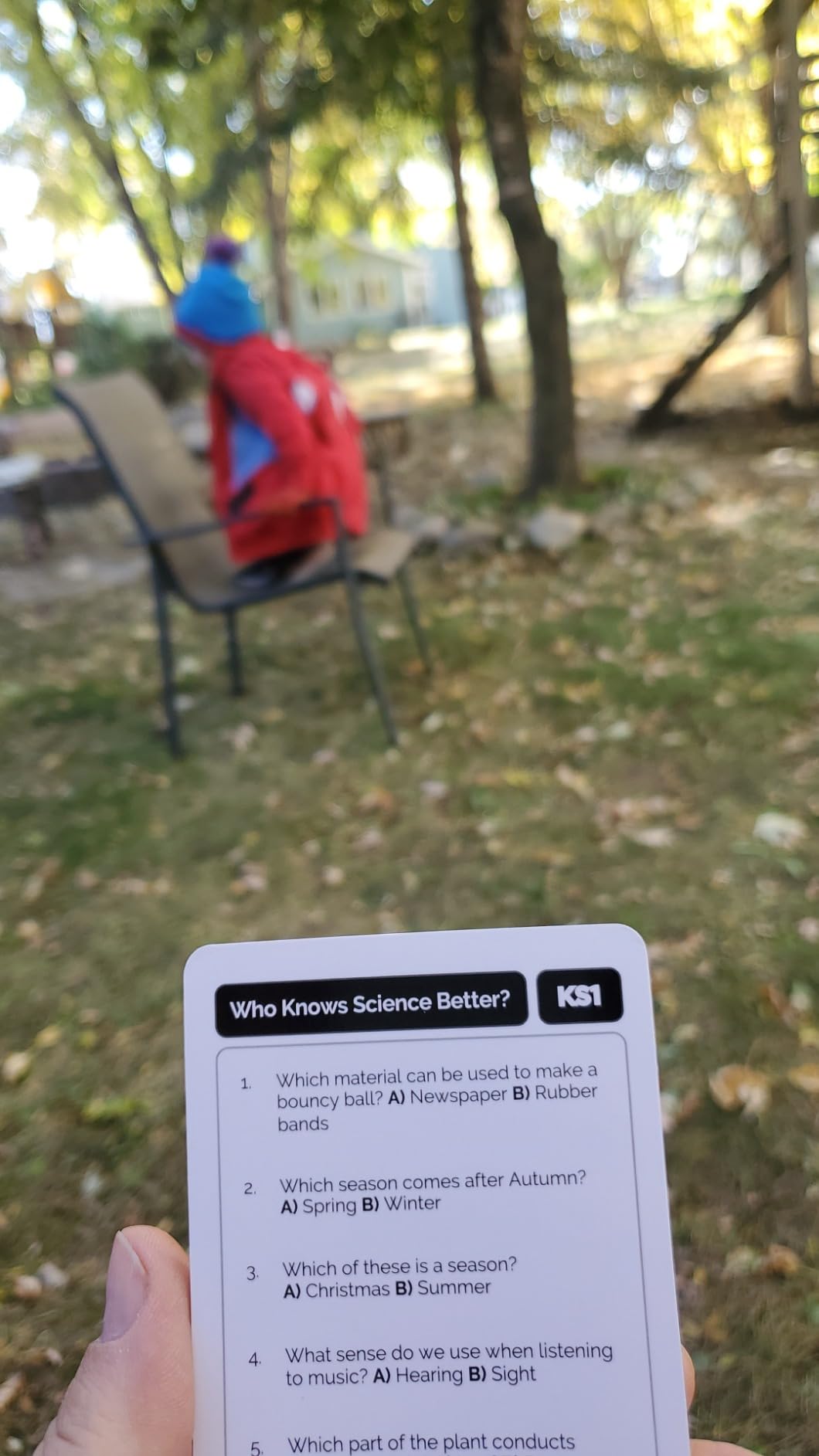
The educational value comes from the breadth of topics. Most math games focus purely on operations, but this one introduces economics and finance vocabulary that middle schoolers rarely encounter elsewhere. Terms like inflation, supply and demand, and compound interest come up naturally through the questions.
Because it is cards-only, there is no board, no pieces to lose, and no setup time. This makes it the most portable game on the list. The trade-off is that it lacks the immersive gameplay experience of a full board game. Some kids may find the question-and-answer format repetitive after extended sessions.
When This Game Shines
QUOKKA trivia cards work best as a supplementary activity rather than a primary game night centerpiece. Use them for car rides, waiting rooms, dinner table conversations, or classroom transition times. The age 12+ recommendation means questions have real intellectual substance, not just basic facts.
What You Are Getting
This is a card deck with questions, not a full board game experience. If you want something with strategy, pieces, and a board, look elsewhere on this list. But if you want an affordable, portable way to spark conversations about math and money, this delivers exactly that. Think of it as flashcards that kids actually want to use.
15. Learning Resources Money Bags – Best Money Skills Game
Learning Resources Money Bags Math Game – Classroom Math Games, Financial Literacy for Kids, Counting Board Game
Money Value Board Game
2-4 Players
Ages 7+
30 Min Playtime
100 Plastic Coins
Pros
- High quality coins same size as real US money
- Teaches coin recognition and counting
- Quick 15-30 minute games
- Great for homeschool and classroom
- Builds money confidence fast
Cons
- Some pieces feel flimsy
- Does not teach making change
- Limited to 4 players
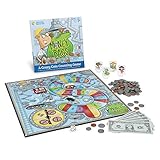
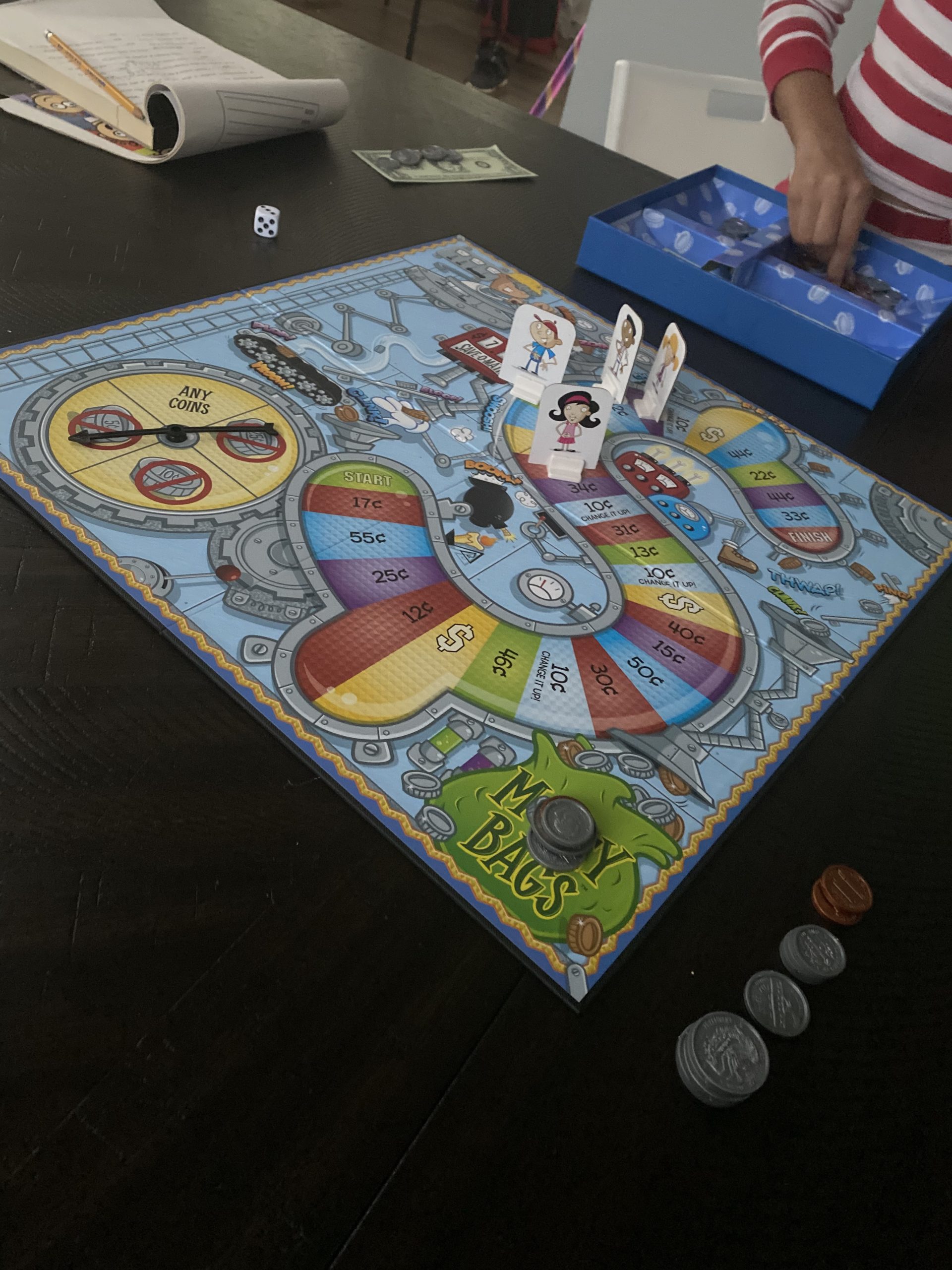
Learning Resources Money Bags has been teaching kids about money for years, and the formula still works. Players roll a die, move around the board, and collect coins for landing on spaces. The built-in spinner adds variety by sometimes requiring you to skip certain coin denominations, forcing kids to make equivalent amounts with different combinations.
The plastic coins are the standout feature. They are the same diameter as real US coins, which helps kids transfer what they learn directly to real-world money handling. My 10-year-old went from struggling with coin combinations to confidently making change at a store after a week of playing this game.
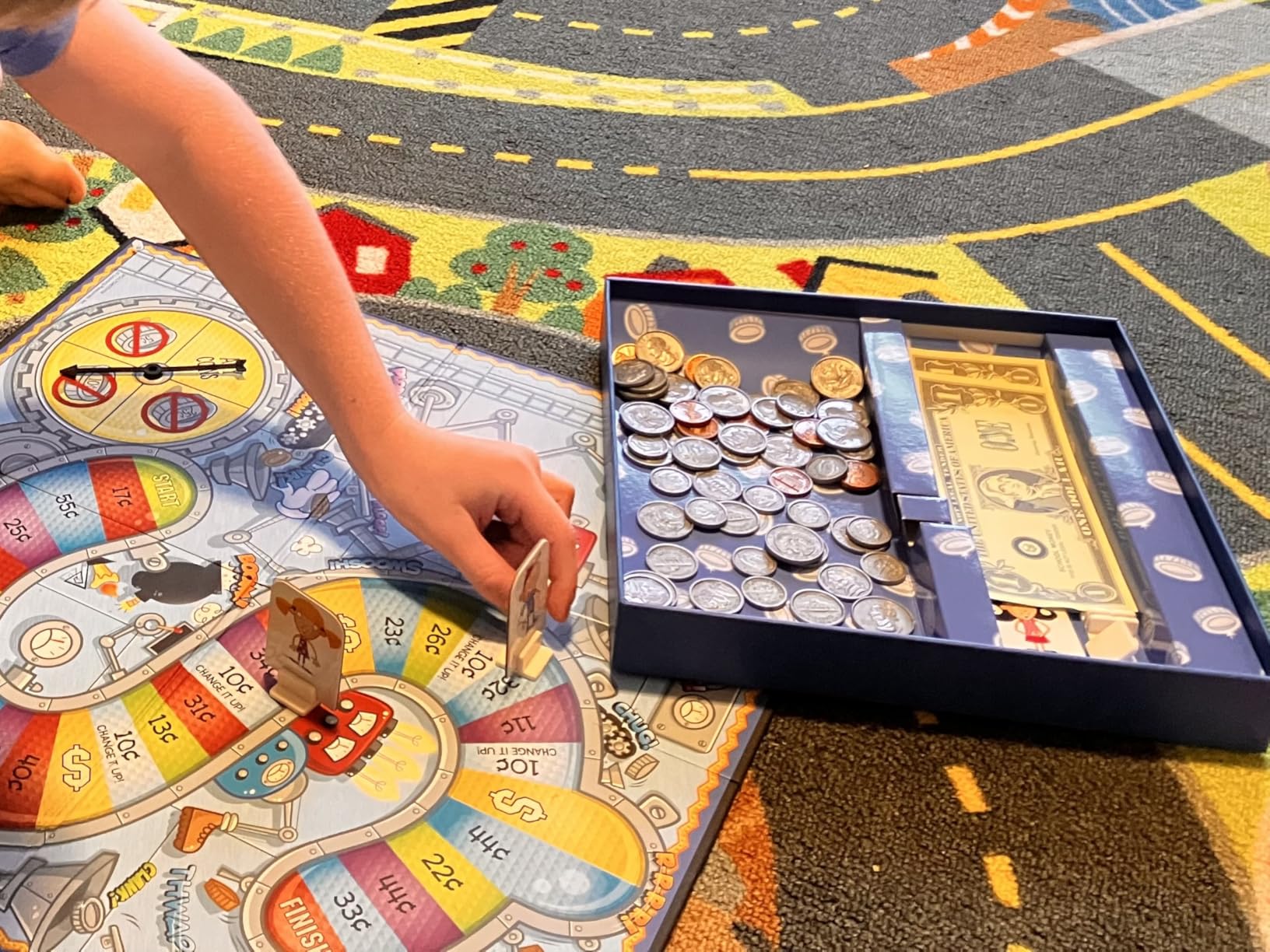
With nearly 3,000 reviews and a 4.7 rating, this is one of the most trusted money-teaching games available. The game board with built-in spinner, 100 plastic coins, play bills, and markers are all included. Games run 15 to 30 minutes, which is the right length for sustaining engagement without fatigue.
The main gap is that the game focuses on collecting money rather than making change, so the subtraction side of money math is not well covered. Also, the four-player maximum limits group play. For younger middle schoolers or any student who needs to build confidence with money, this is a reliable choice.
When to Use This Game
Money Bags is best for the younger end of the middle school range, ages 10 to 12, or any student who needs foundational money skills. It works well as a supplement to math units on decimals and currency. Homeschool families use it as part of life skills curriculum, and special education teachers recommend it for building practical independence skills.
Where It Falls Short
Older middle schoolers aged 13 and 14 will likely find the gameplay too simple unless they specifically need money skills practice. The lack of a making-change mechanic means you will need to add your own activities for subtraction practice. Families wanting a comprehensive financial literacy experience should consider pairing this with Paycheck to Billionaire.
How to Choose the Right Educational Board Game for Middle Schoolers
Choosing the right game starts with knowing what skills you want to develop. After testing all 15 games on this list across multiple settings, I learned that the best approach is matching the game to both the learning goal and the social context. A game that kills it at family game night might flop in a classroom, and vice versa.
Here are the factors that matter most when choosing educational board games for middle schoolers.
Match the Game to the Learning Goal
Different games target different skills. Math fluency games like Proof! and Target Math build speed with operations. Geography games like Scholastic Race Across the USA and Trekking The National Parks teach spatial awareness of places. Science games like Periodic and Hacker build STEM foundations. Word games like Blurt! and Word on the Street develop vocabulary. Start by identifying which subject area needs the most support, then pick accordingly.
Consider the Social Setting
Where will this game be played? Solo games like Gravity Maze and Hacker work best for independent study or quiet time. Party-style games like Blurt! shine with groups of 6 or more. Strategy games like Trekking The National Parks and Periodic need focused groups of 2 to 5 players. Think about whether the game is for family night, classroom use, or solo practice before buying.
Check the Play Time
Middle schoolers have varying attention spans. Games like QUOKKA trivia and Proof! play in 15 minutes and work as quick warm-ups. Mid-length games like Race Across the USA and Money Bags run 20 to 30 minutes. Longer strategy games like Periodic and Paycheck to Billionaire need 45 minutes or more. Match the playtime to when and where you plan to use the game.
Account for Mixed Ages
One of the biggest challenges parents and teachers mention on forums is finding games that work for mixed age groups. Games with adjustable difficulty levels like Race Across the USA, Math-Tac-Toe, and Target Math handle this well. Cooperative games also help because older kids can support younger ones without dominating the competition.
Look for Replayability
The best educational games are the ones kids ask to play again. Games with variable setups like The Genius Square, randomized card draws like Proof!, or strategic variety like Trekking The National Parks maintain freshness over dozens of plays. Games where you memorize solutions or exhaust content quickly provide less long-term value.
Quality of Components Matters
Forum discussions consistently highlight component quality as a factor in whether a game stays in rotation. The Genius Square, Trekking The National Parks, and Periodic all have premium components that feel worth keeping on the shelf. Card-only games like QUOKKA and Proof! trade component quality for portability, which is a fair trade depending on your needs.
Teachers on Reddit recommend starting with two to three games that cover different skill areas rather than buying many similar ones. A math game, a word game, and a strategy game give you coverage across subjects without overwhelming your collection.
Frequently Asked Questions About Educational Board Games for Middle Schoolers
What are good board games for middle schoolers?
Good board games for middle schoolers include Scholastic Race Across the USA for geography, Proof! for mental math, Trekking The National Parks for strategy and nature, and The Genius Square for spatial reasoning. The best choices combine real educational value with gameplay that kids genuinely enjoy and request to play again.
What is the most educational board game?
Periodic: A Game of the Elements is one of the most educational board games because it teaches real chemistry concepts through accurate gameplay mechanics aligned with STEM and NGSS standards. For math, Proof! earns the Teacher’s Choice Gold Award. For overall learning and replayability, Trekking The National Parks and The Genius Square are top picks recognized by Mensa and educational product awards.
What are good board games for a 12 year old?
For a 12 year old, the best educational board games include Proof! Math Game for mental math practice, Scholastic Race Across the USA for geography, Word on the Street for vocabulary building, and ThinkFun Gravity Maze for logic puzzles. Games like Paycheck to Billionaire and QUOKKA Math Finance trivia are also great for introducing 12 year olds to financial literacy concepts.
What is the best board game for a 14 year old?
For a 14 year old, strategy-focused games like Trekking The National Parks and Periodic: A Game of the Elements provide the depth and challenge older teens enjoy. ThinkFun Hacker teaches coding through cybersecurity-themed puzzles. Paycheck to Billionaire introduces financial literacy concepts that are age-appropriate and engaging. These games offer enough strategic complexity to keep older middle schoolers challenged.
Final Thoughts on the Best Educational Board Games for Middle Schoolers
After testing all 15 games, three stand out as the strongest all-around picks for 2026. Scholastic Race Across the USA is the best geography game with its brilliant grade-level question system. The Genius Square offers unmatched puzzle variety and spatial reasoning practice. ThinkFun Gravity Maze delivers the best solo logic experience with 60 progressive challenges.
The best educational board games for middle schoolers are the ones your kids reach for on their own. Start with one or two that match your child’s interests and learning needs, then expand from there. Whether you are a parent, teacher, or homeschool family, these games prove that learning through play works best when the play itself is genuinely fun.
Pick a game that matches your goals, clear the table, and let the learning happen on its own. That is how gameschooling works at its best.