

Finding the right educational board games for your family can feel like searching for a needle in a haystack. With shelves packed with options promising to teach everything from math to geography, how do you know which ones actually deliver? Our team spent months testing dozens of titles with kids ranging from toddlers to teens to find the ones that genuinely make learning fun.
The concept of gameschooling has exploded in popularity among homeschool families and educators who want to blend play with learning. Instead of forcing kids through flash cards and worksheets, you can teach addition, spelling, geography, and even cell biology through gameplay that children actually request. The best educational board games are the ones your kids pull off the shelf on their own, not the ones gathering dust in the closet.
In this guide, we have rounded up 13 of the best educational board games available in 2026, covering every age from 3 to adult. Whether you need a math game for your kindergartener, a geography challenge for your middle schooler, or a cooperative game the whole family can enjoy together, we have tested and reviewed each one. We also break down exactly what makes each game worth your time and which learning skills it targets, so you can pick the perfect fit for your situation.
Table of Contents
Top 3 Picks for Best Educational Board Games

Best Educational Board Games in 2026
1. ThinkFun Zingo Bingo – Best for Pre-Readers and Early Readers
ThinkFun Zingo Bingo Award Winning Preschool Game for Pre-Readers and Early Readers Age 4 and Up – One of the Most Popular Board Games for Boys and Girls and their Parents (97700)
Ages 4+
2-6 Players
Reading Readiness
Includes Zinger Device
Pros
- Builds language and matching skills
- Perfect for pre-readers who cannot read yet
- Fast-paced gameplay keeps kids engaged
- Durable materials with thick board pieces
- Supports up to 7 players with extra card
Cons
- Limited to basic word recognition
- No advanced difficulty settings
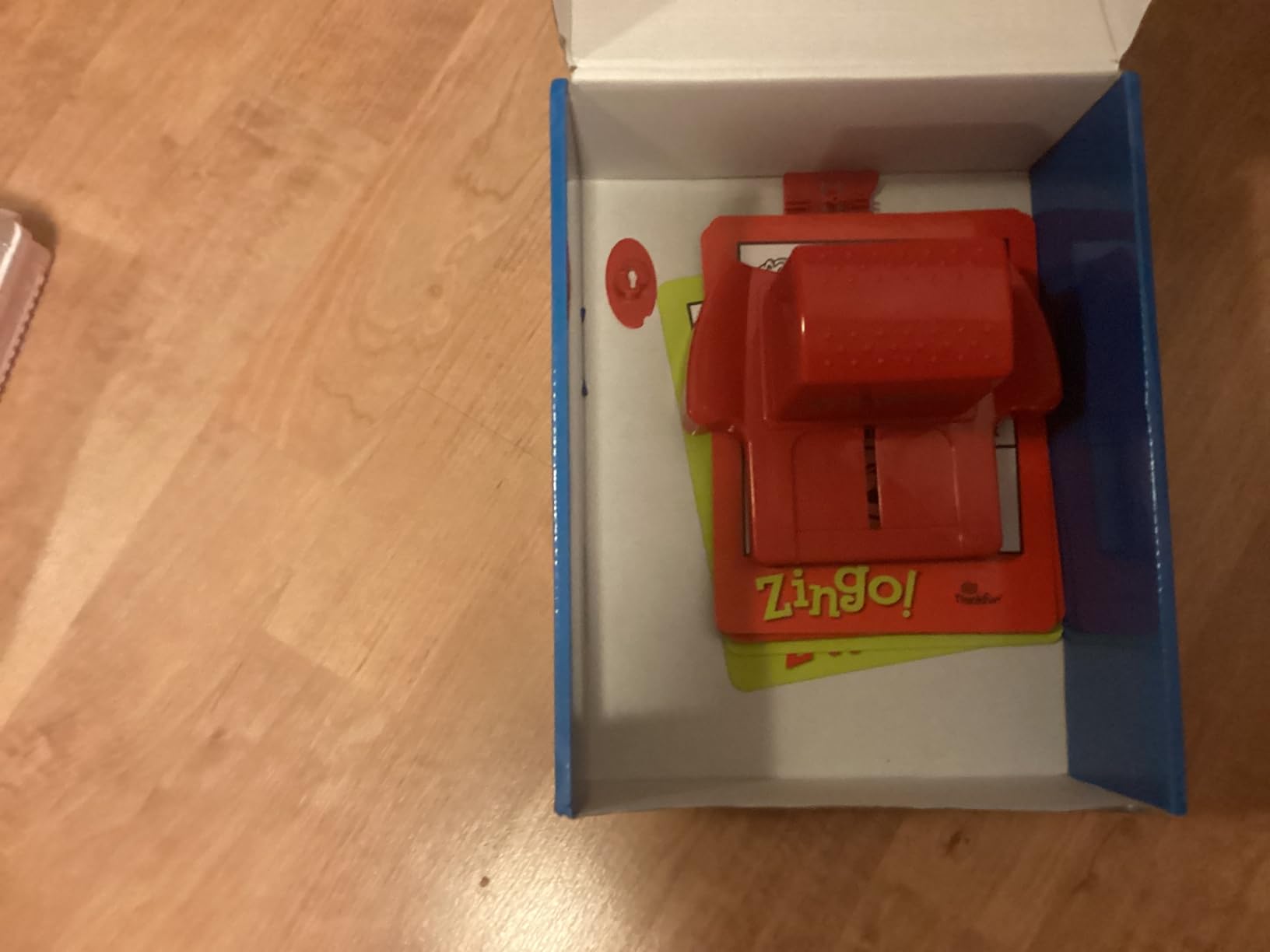
I first brought ThinkFun Zingo into our house when my oldest was barely four years old, and it immediately became the most-requested game in our collection. The concept is simple enough that even a preschooler can grasp it: you load tiles into the Zinger device, slide it forward, and two tiles pop out. Kids race to match the tiles to the pictures and words on their cards.
What makes Zingo stand out from other matching games is how it scaffolds learning. The green side of the cards shows pictures and words together, while the red side shows only words. This means the game actually grows with your child as they transition from picture recognition to actual reading. My youngest started on the green side and graduated to the red side within about three months of regular play.
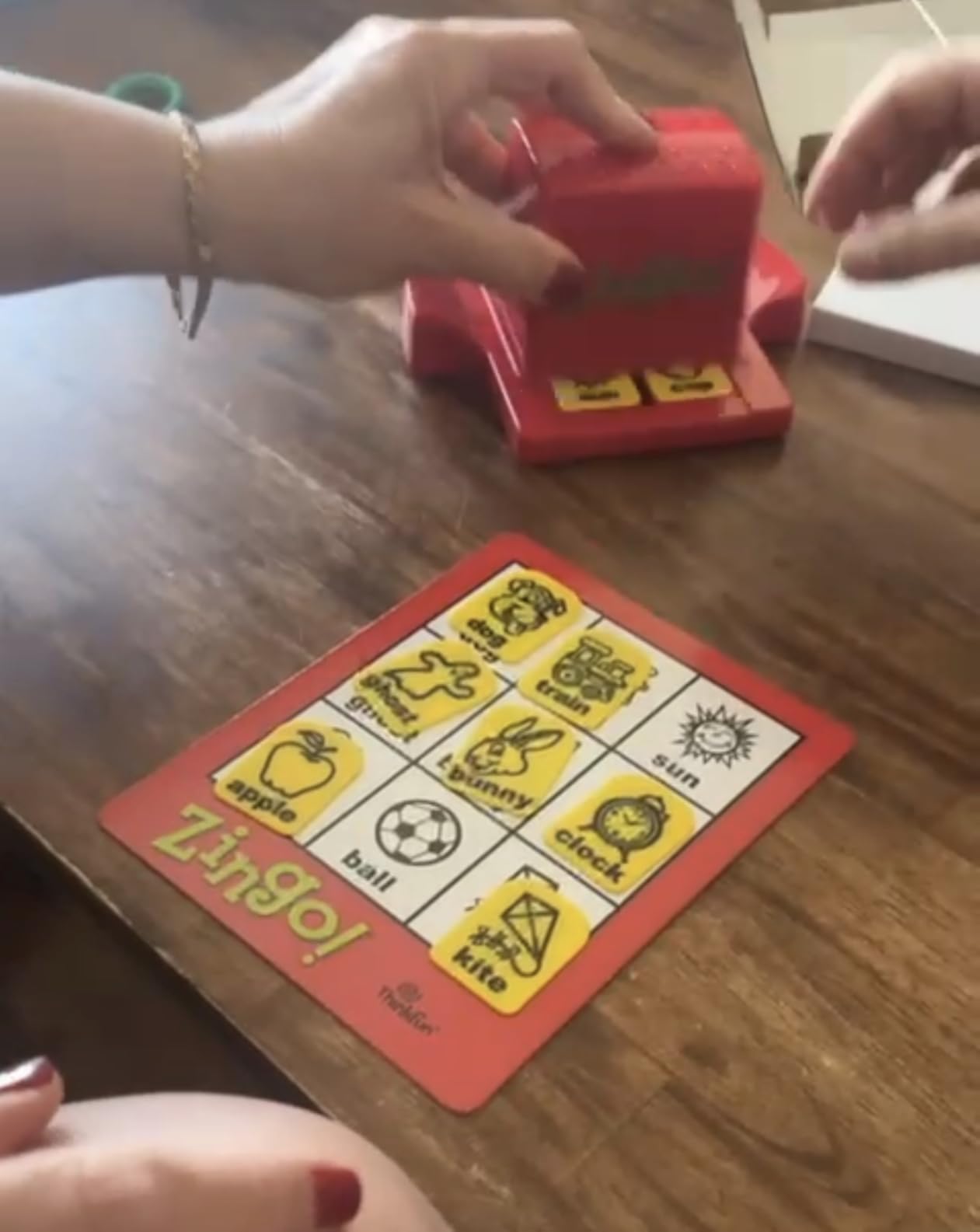
The Zinger device deserves special mention because it is genuinely fun to operate. Kids love sliding it and watching tiles appear. It turns what could be a boring matching exercise into something that feels like a real game. After hundreds of rounds of play, our Zinger still works perfectly, and none of the tiles have shown any wear despite being dropped, stepped on, and left on the floor overnight more times than I can count.
With over 17,000 reviews and an almost perfect 4.8-star rating, Zingo has clearly earned its reputation. The game accommodates 2 to 6 players (or even 7 with the extra card included), making it work for small families and larger groups alike. Each round takes about 10 minutes, which is the right length for young attention spans.
Who Should Get This Game
Families with children ages 3 to 7 who are in the pre-reading or early reading stage will get the most value from Zingo. It is especially useful for kids who resist traditional reading practice because it does not feel like a learning activity to them. If your child likes bingo-style games or anything with a physical gadget component, this will be a hit. It also works well in classroom settings where teachers need a game that multiple children can play simultaneously.
Things to Consider
The vocabulary in Zingo is limited to common everyday words like apple, ball, and cat. Once your child masters these words, the game loses some of its educational challenge, though kids still enjoy playing it for fun. If you are looking for a game that will challenge advanced readers, you might want something like Bananagrams or Tapple instead. Also, while the components are durable, the tiles are small enough that you will want to keep them away from babies and pets.
2. Learning Resources Math Island – Best for Addition and Subtraction
Learning Resources Math Island Addition & Subtraction Game – Math Manipulatives, Educational Board Toys, Classroom Flash Cards , Volcano Toy, STEM Kids, Gifts for Boys And Girls , Montessori
Ages 6+
2-4 Players
Addition & Subtraction
Volcano Popper Mechanism
Pros
- Turns math practice into an adventure
- Volcano popper launches dice for excitement
- Builds math confidence with essential facts
- High-quality durable components
- Simple rules kids can follow independently
Cons
- Large gaps between players can occur
- Math feels less exciting when falling behind
Math homework was a daily battle in our house until we discovered Math Island. Instead of worksheets and flash cards, this game turns addition and subtraction into a race across a volcanic island. Kids roll two ten-sided number dice and one operation die, solve the resulting equation, and move their adventure character piece that many spaces across the colorful game board.
The volcano popper mechanism is the star of the show. When players land on special spaces, they get to press the volcano, which launches the dice into the air. My kids would literally cheer when they landed on a volcano space, which is not something I ever expected to hear during math practice. The popper adds a physical, tactile element that makes the game feel like an adventure rather than a lesson.
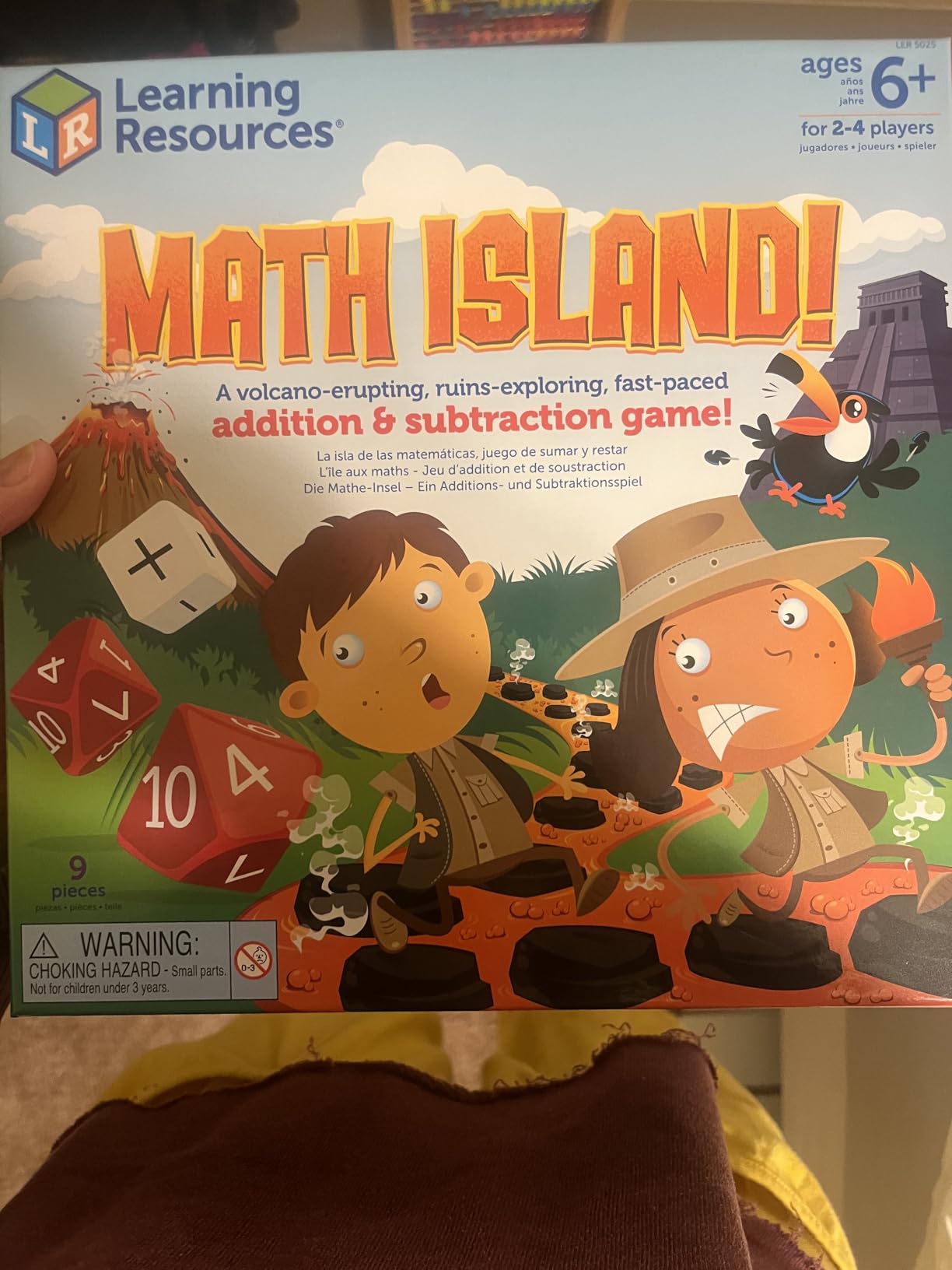
The game covers addition and subtraction up to 20, which is right in the sweet spot for first and second graders who are building fluency with basic math facts. I noticed my daughter started solving the equations faster after just a few weeks of playing. The math facts started sticking without the tears that usually accompanied math practice.
Learning Resources is a brand that homeschool parents recommend consistently, and the build quality here reflects that reputation. The game board is sturdy, the character pieces are chunky and easy to handle, and the volcano popper has held up through dozens of game sessions. With nearly 1,000 reviews and an impressive 4.8-star rating, other families clearly share our experience.

Who Should Get This Game
Math Island is ideal for kids ages 6 to 9 who are working on addition and subtraction fluency. It works especially well for children who are visual or kinesthetic learners and need hands-on activities to grasp math concepts. Homeschool families will appreciate how it replaces tedious math drills with something kids actually ask to play. It is also great for family game night since adults can play along and model good sportsmanship around math.
Things to Consider
Because movement depends entirely on dice rolls, some games can feel lopsided when one player pulls far ahead. This can be frustrating for kids who are already struggling with math confidence. The game only covers addition and subtraction, so once your child masters those facts, you may need to move on to something that covers multiplication and division. Plan on about 20 to 30 minutes per game, which is reasonable but longer than some quick-play options.
3. Scholastic Race Across the USA – Best for Geography Learning

University Games, Scholastic Race Across the USA Board Game , Geography Learning Game for Kids and Families, for 2 to 4 Players Ages 8 and Up
Ages 8+
2-4 Players
US Geography
Grade-Level Questions
Pros
- Teaches states/ capitals/ and fun facts
- Grade-appropriate questions for mixed ages
- Inclusive gameplay for different grade levels
- Quality game components
- Great for classroom and family use
Cons
- Limited to US geography
- Question cards can become repetitive over time
Race Across the USA takes a dry subject like US geography and turns it into a competitive state-hopping adventure. Each player chooses a home state and then races to visit six other states, answering geography questions along the way before returning home to claim victory. The trick is that the questions are tailored to each player’s grade level, which means a third grader and a sixth grader can play together and both be challenged appropriately.
What impressed me most about this game is how much my kids absorbed without realizing they were learning. After a few rounds, my son started pointing out states on a real map and sharing fun facts he remembered from the question cards. The game covers state locations, capitals, landmarks, and interesting trivia that sticks with kids long after the game ends.
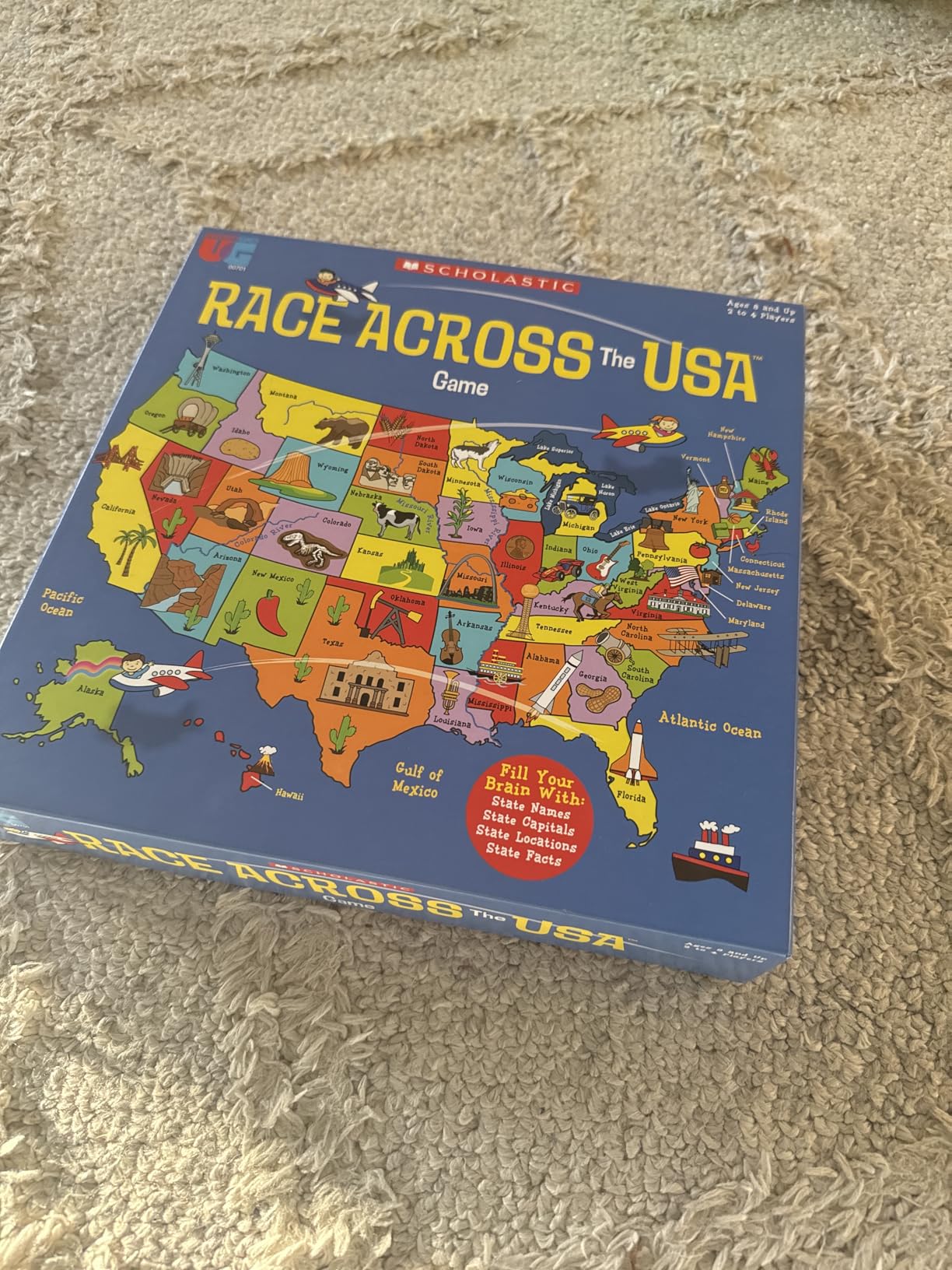
The components are solid for the price range. The game board is a colorful map of the United States with clearly marked states and flight paths. Airplane pawns serve as game pieces, which adds to the travel theme. The card deck includes questions at two difficulty levels, one set for grades 3 to 4 and another for grades 5 to 6, so the game genuinely works for a wide range of ages.
With 1,558 reviews and a 4.7-star rating, families and teachers have validated what we found in our testing. Games typically last about 20 minutes, which keeps things moving without dragging. It is a solid choice for parents who want their kids to learn US geography without resorting to apps or videos.

Who Should Get This Game
Families with children in grades 3 through 6 who need to learn US geography will benefit most from Race Across the USA. It is particularly valuable for homeschool families covering state history and geography units. Teachers will find it useful as a classroom station activity or review game. The mixed-grade question system makes it one of the few games that genuinely works when siblings of different ages play together.
Things to Consider
The game focuses exclusively on United States geography, so if you are looking for world geography coverage, you will want to pair this with something like The World Game. After many play sessions, the question cards can start to feel repetitive since there is a finite number of them. The game requires at least basic reading ability, so it is not suitable for kids under about 8 unless a parent reads the questions aloud.
4. Skillmatics Guess in 10 National Geographic Animals – Best for Animal Trivia
Skillmatics Guess in 10 National Geographic Animals, Educational Card Game for Kids & Families, Animal Trivia & Travel Game, Screen-Free Fun, Gifts for Ages 6, 7, 8, 9 and Up
Ages 6+
2+ Players
Animal Trivia
Travel-Friendly
Pros
- National Geographic photos on every card
- Builds logical thinking through yes/no questions
- Lightweight and portable for travel
- 28K+ reviews with 4.7 stars
- Screen-free entertainment kids actually want
Cons
- Only 50 animal cards
- Some animals may be too obscure for younger kids
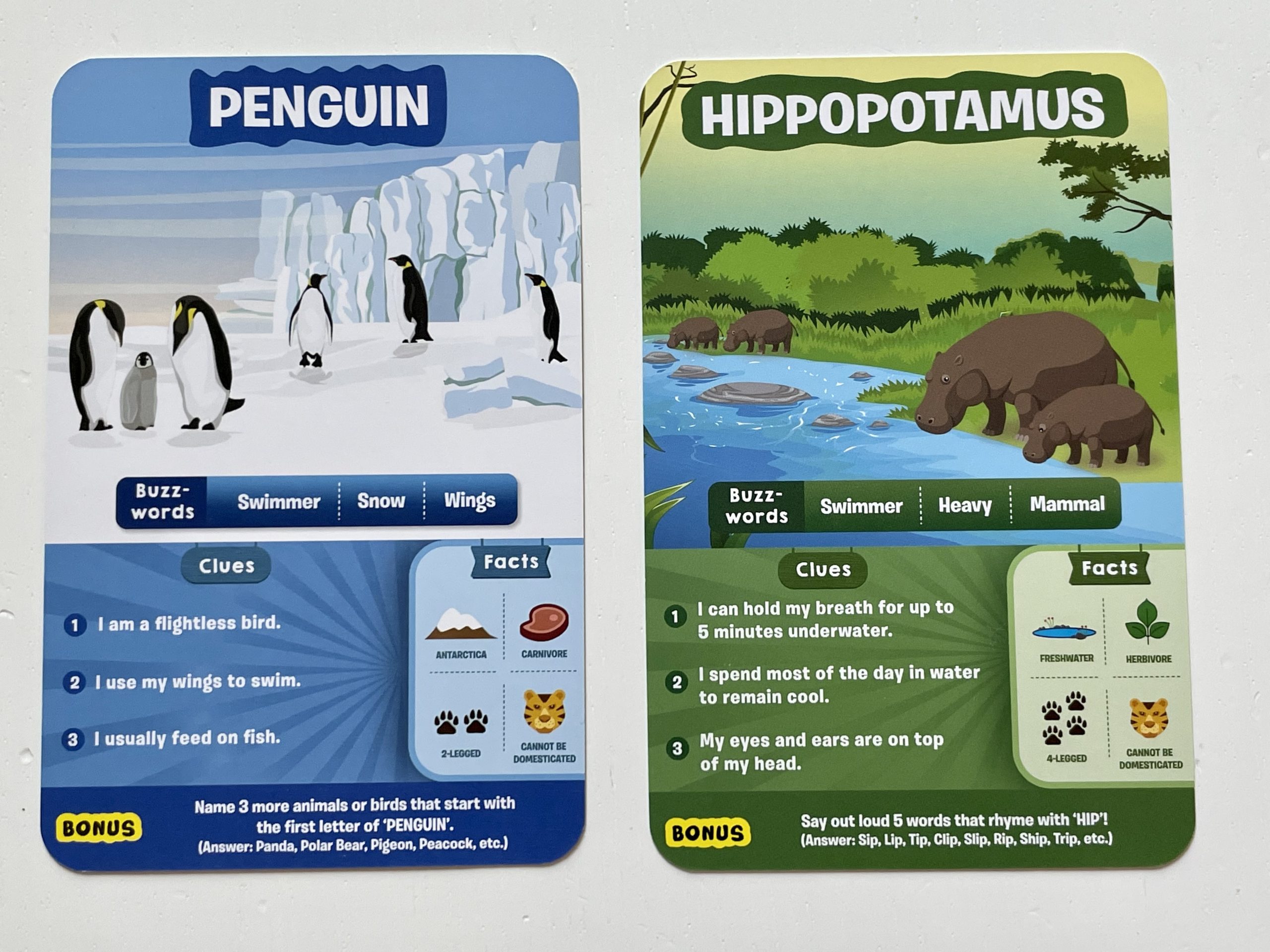
Skillmatics Guess in 10 is the game that lives in our car. Literally. We bring it on every road trip, every restaurant visit, and every appointment where we might have to wait. The premise is beautifully simple: one player draws a card with an animal on it, and the other players take turns asking up to ten yes-or-no questions to figure out what animal it is.
The National Geographic photography on these cards is stunning. Each card features a high-quality image of the animal along with facts about its habitat, diet, and characteristics. My kids have learned about animals they never would have encountered in their regular science lessons, from pangolins to axolotls. The game naturally teaches classification skills because kids learn to ask smart questions like “Does it live in the ocean?” or “Is it a mammal?”
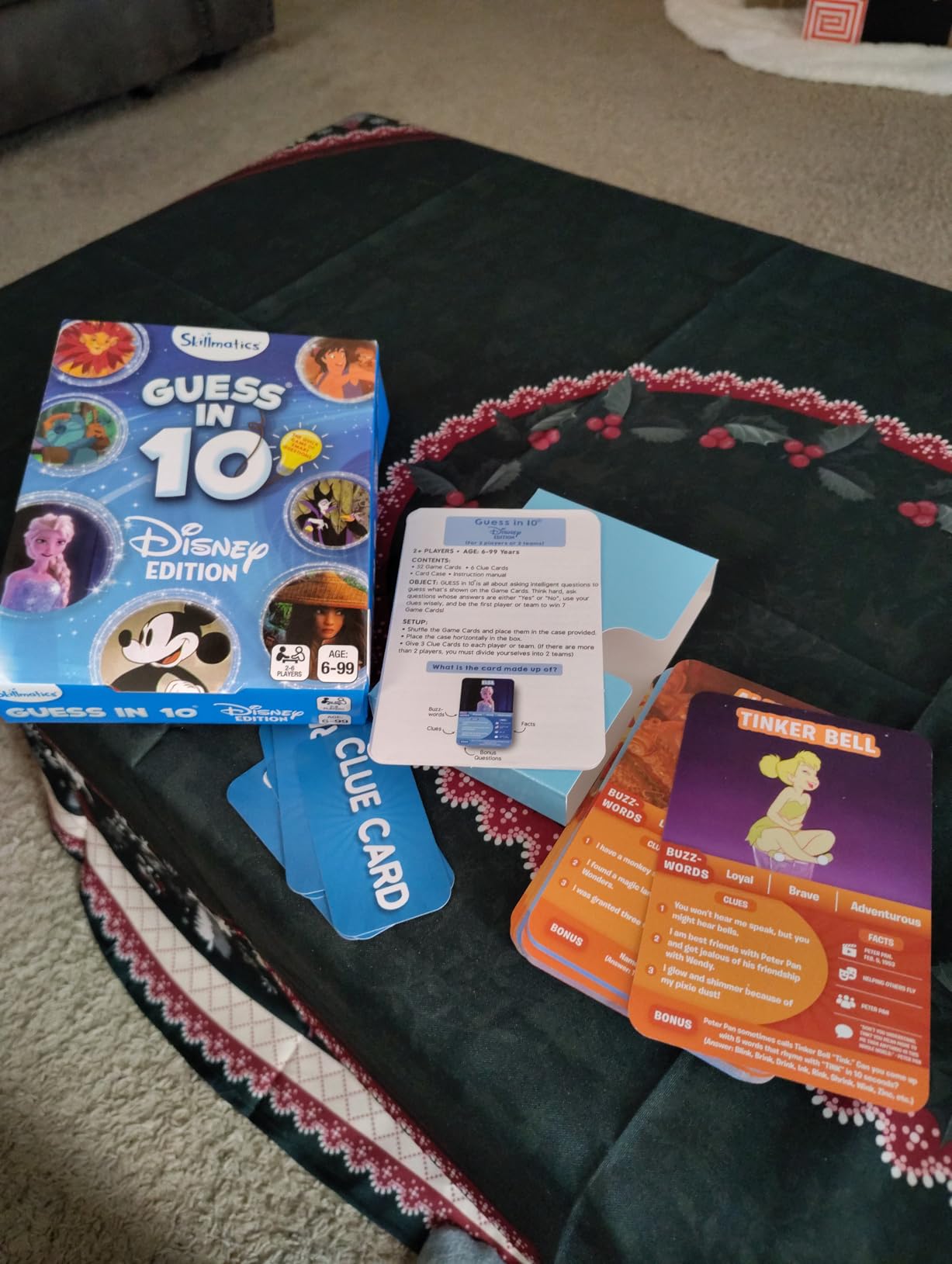
With over 28,000 reviews and a 4.7-star rating, Guess in 10 is the best-selling travel game for a reason. The box is small enough to fit in a purse or backpack, the rules take about 30 seconds to explain, and games last about 15 to 20 minutes. The clue cards add a strategic layer because players can use them to get hints when they are stuck, which prevents frustration.
I have seen this game work with kids as young as 5 and adults well into their 60s, all enjoying the same round. That kind of multi-generational appeal is rare in educational games. The logical thinking and deduction skills it builds are transferable to almost every academic subject, making it one of the best educational board games for building critical thinking.
Who Should Get This Game
Families who travel frequently or need a compact game for on-the-go entertainment will love Guess in 10. It is also ideal for kids ages 5 to 12 who are animal lovers and enjoy asking questions. Teachers can use it as a warm-up activity in science class or as a brain break between lessons. If you need a gift that works for any child regardless of their academic level, this is a safe bet.
Things to Consider
The game includes 50 animal cards, which provides good variety but can eventually feel familiar after many rounds. Some of the animals are obscure enough that younger children may not recognize them even after the answer is revealed. The game also requires at least basic verbal communication skills, so very young children may need a partner to help them formulate questions.
5. Learning Resources Money Bags – Best for Financial Literacy
Learning Resources Money Bags Math Game – Classroom Math Games, Financial Literacy for Kids, Counting Board Game
Ages 7+
2-4 Players
Coin Value & Money Skills
Includes Play Money
Pros
- Excellent for learning to make change and count money
- Realistic plastic coins match real US coin sizes
- Builds confidence with coin identification
- Short 15-minute game sessions
- Highly effective for homeschool math
Cons
- Some pieces reported as slightly flimsy
- Limited to basic money concepts
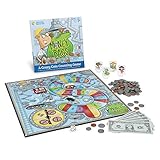
Teaching kids about money is one of those things that is easier said than done. You can explain coins and bills all day, but until kids actually handle money and make transactions, the concepts do not stick. Money Bags solves this problem by giving kids a pile of realistic play money and having them collect, count, and exchange it throughout the game.
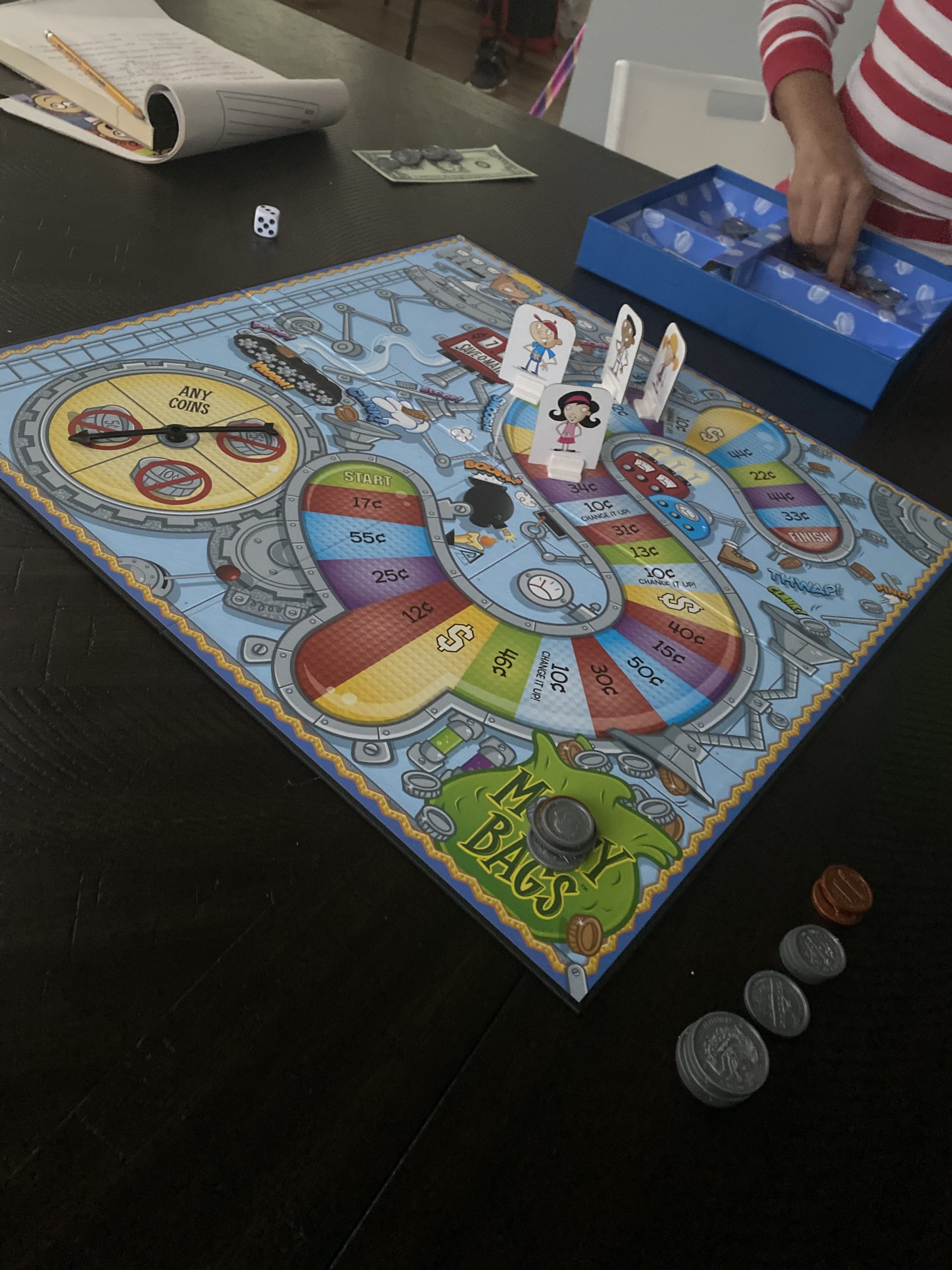
The plastic coins in this game are the same diameter as real US coins, just thicker and easier to handle. This means kids are learning the actual relative sizes of pennies, nickels, dimes, and quarters while they play. The game board has a built-in spinner that adds variety to how much money players earn on each turn, and the play bills are realistic enough to help kids understand paper currency denominations.
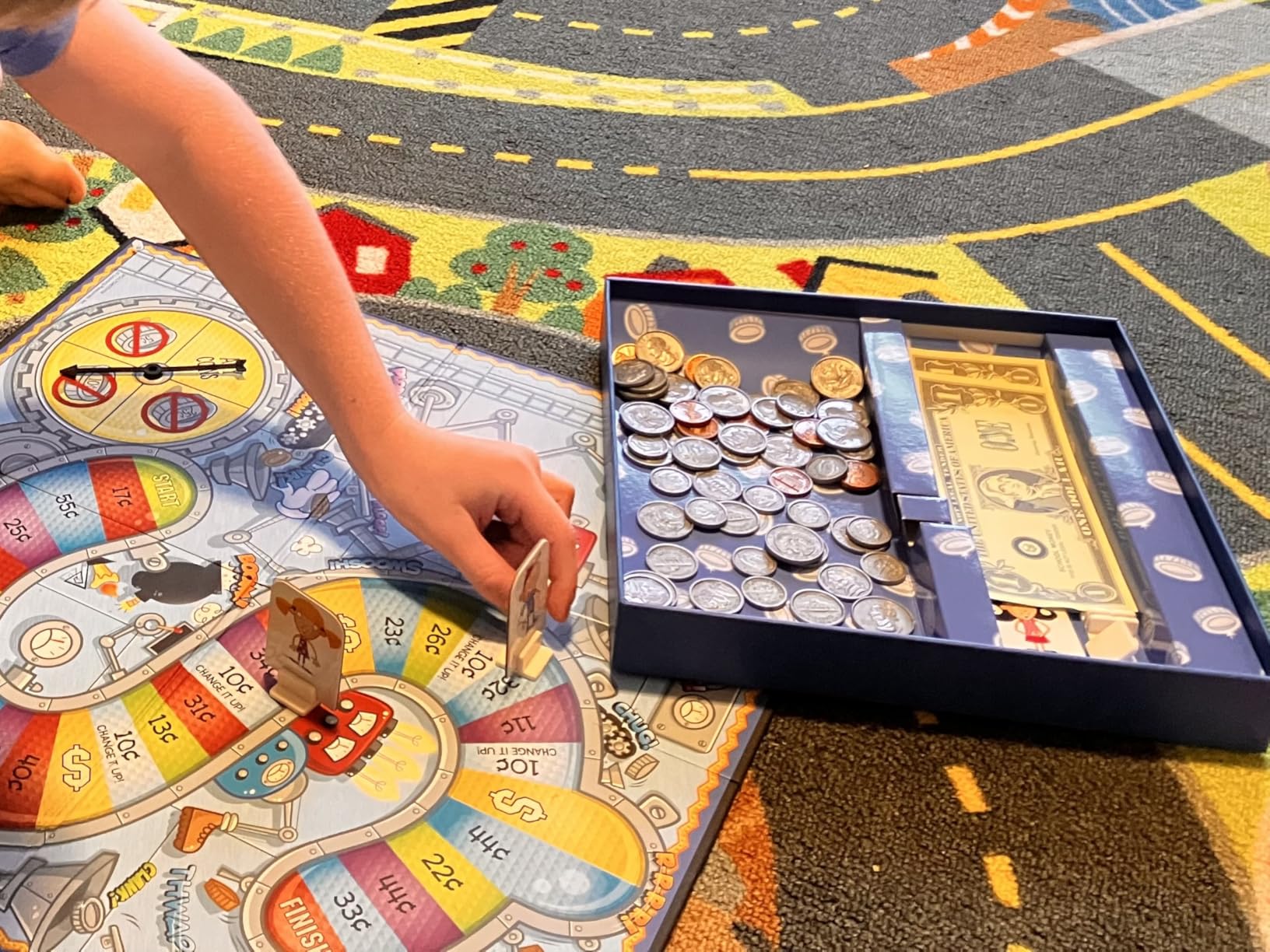
What I appreciate about Money Bags is how it naturally teaches the skill of making change. Players regularly need to exchange coins for equivalent amounts in different denominations, which is a fundamental financial literacy skill. My daughter went from barely being able to identify a dime to confidently making change for a dollar after about two weeks of playing this game.
With nearly 3,000 reviews and an 81 percent five-star rating, Money Bags has proven itself as a reliable tool for teaching money skills. Each round takes about 15 minutes, making it easy to fit into a homeschool day or a weeknight routine. Learning Resources designed this game specifically for kids ages 7 to 9, which is exactly when most children are ready to grasp these concepts.
Who Should Get This Game
Money Bags is perfect for kids ages 6 to 10 who are learning to identify coins, count money, and make change. It is especially useful for homeschool families covering money math units and for parents who want to introduce basic financial literacy. Occupational therapists also recommend it for children who need practice with fine motor skills and practical life skills.
Things to Consider
The game focuses on basic coin and bill identification and making change, so it will not teach advanced financial concepts like budgeting or saving. Some reviewers mention the spinner can be a bit loose, and a few pieces in their sets felt less sturdy than expected. The game includes many small pieces, so you will want a storage system to keep everything organized between sessions.
6. USAOPOLY The Original Tapple – Best for Vocabulary Building

USAOPOLY The Original TAPPLE, The Fun & Fast-Paced Family Word Game
Ages 8+
2-8 Players
Vocabulary & Word Skills
15 Min Play Time
Pros
- Fast-paced word game the whole family enjoys
- Portable with built-in card storage
- Quick 15-minute game sessions
- Adaptive rules for younger children
- Improves vocabulary and word association
Cons
- Not all alphabet letters on the wheel
- Some reports of flimsy card quality
- Requires 2 AA batteries
Tapple is the game that gets loudest at our family game nights. The concept is wonderfully simple: draw a category card, press the timer button, and then players race to shout out words that fit the category and start with different letters. Once you use a letter, you tap it down on the wheel so nobody else can use it. The timer adds pressure that makes everyone think faster and laugh harder.
What makes Tapple such an effective vocabulary builder is that it forces kids to search their mental word bank under time pressure. When the category is “things at the beach” and someone already used S for sand, your child has to dig deeper and come up with something like towel, tide, or umbrella. This kind of rapid word retrieval is a genuine language skill that helps with reading fluency and expressive language.
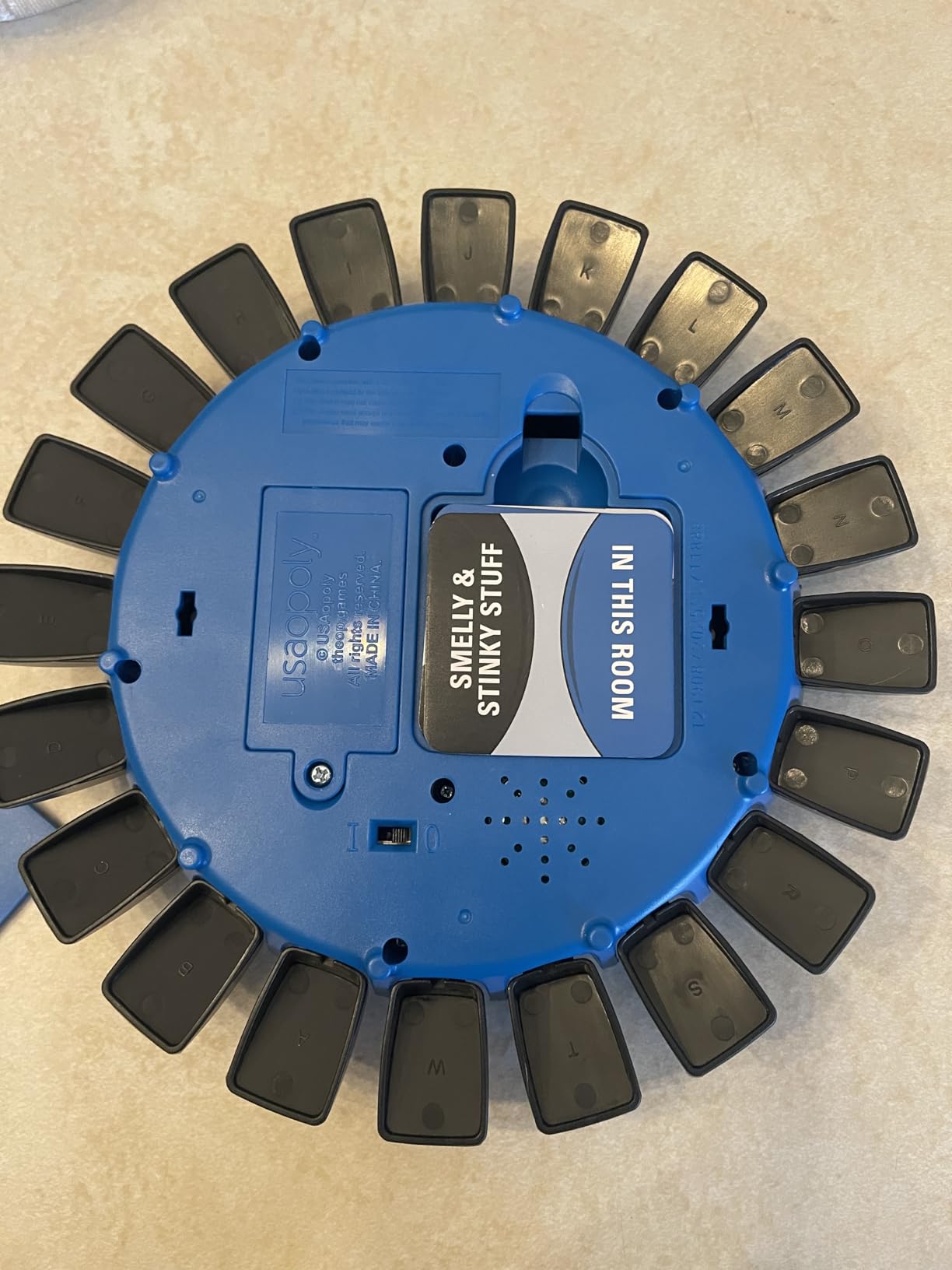
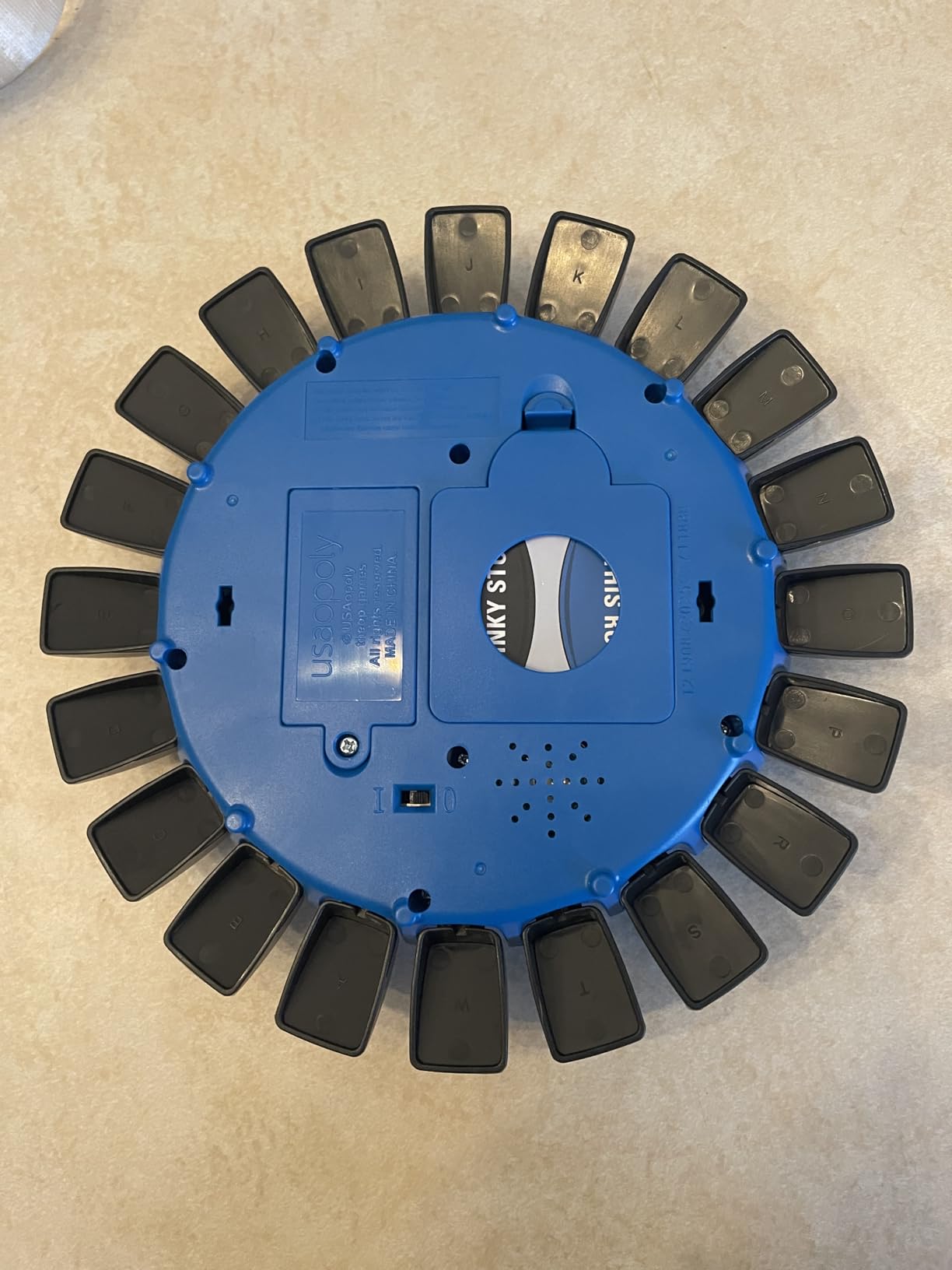
The portable design is another big plus. The Tapple wheel stores all the category cards inside it, so you are not dealing with a bulky box. With 144 categories across 36 cards, there is plenty of variety to keep things interesting. Games last about 15 minutes, which means you can easily fit in a round before bedtime. It supports 2 to 8 players, making it one of the most flexible games on this list for group size.
With over 11,000 reviews and a 4.7-star rating, Tapple has clearly resonated with families. The rules can be adapted for younger children by giving them more time or allowing simpler words. Some families even create their own category cards to extend the replayability. For building vocabulary and quick thinking skills, it is one of the best educational board games for families with mixed ages.
Who Should Get This Game
Families with kids ages 7 and up who enjoy word games and fast-paced play will get the most from Tapple. It works particularly well for kids who are building vocabulary and need practice with word retrieval. Large families and groups will appreciate that it supports up to 8 players. It also makes a great party game for adults, so you are getting double duty from a single purchase.
Things to Consider
The wheel does not include every letter of the alphabet, which means some answers that kids might think of simply cannot be played. Some users report that the card quality from certain third-party sellers feels flimsy, so make sure you are buying from a reputable source. The game requires 2 AA batteries for the timer, which is a minor ongoing cost to keep in mind. Younger kids under 7 may struggle with the time pressure.
7. The Genius Square – Best STEM Puzzle Game

The Genius Square from the Happy Puzzle Company | Game of the Year Award Winner | 60000+ Solutions | STEM Puzzle Game for 1-2 Players | Ages 6 – Adult | Roll the dice and Race to Fill the Grid!
Ages 6+
1-2 Players
Pattern Recognition
62K+ Solutions
Pros
- Over 62000 possible solutions for endless replayability
- Game of the Year award winner
- Easy to learn but genuinely challenging
- Compact and travel-friendly
- Works for solo play or competitive racing
Cons
- Slightly pricey for the component count
- Packaging may arrive damaged
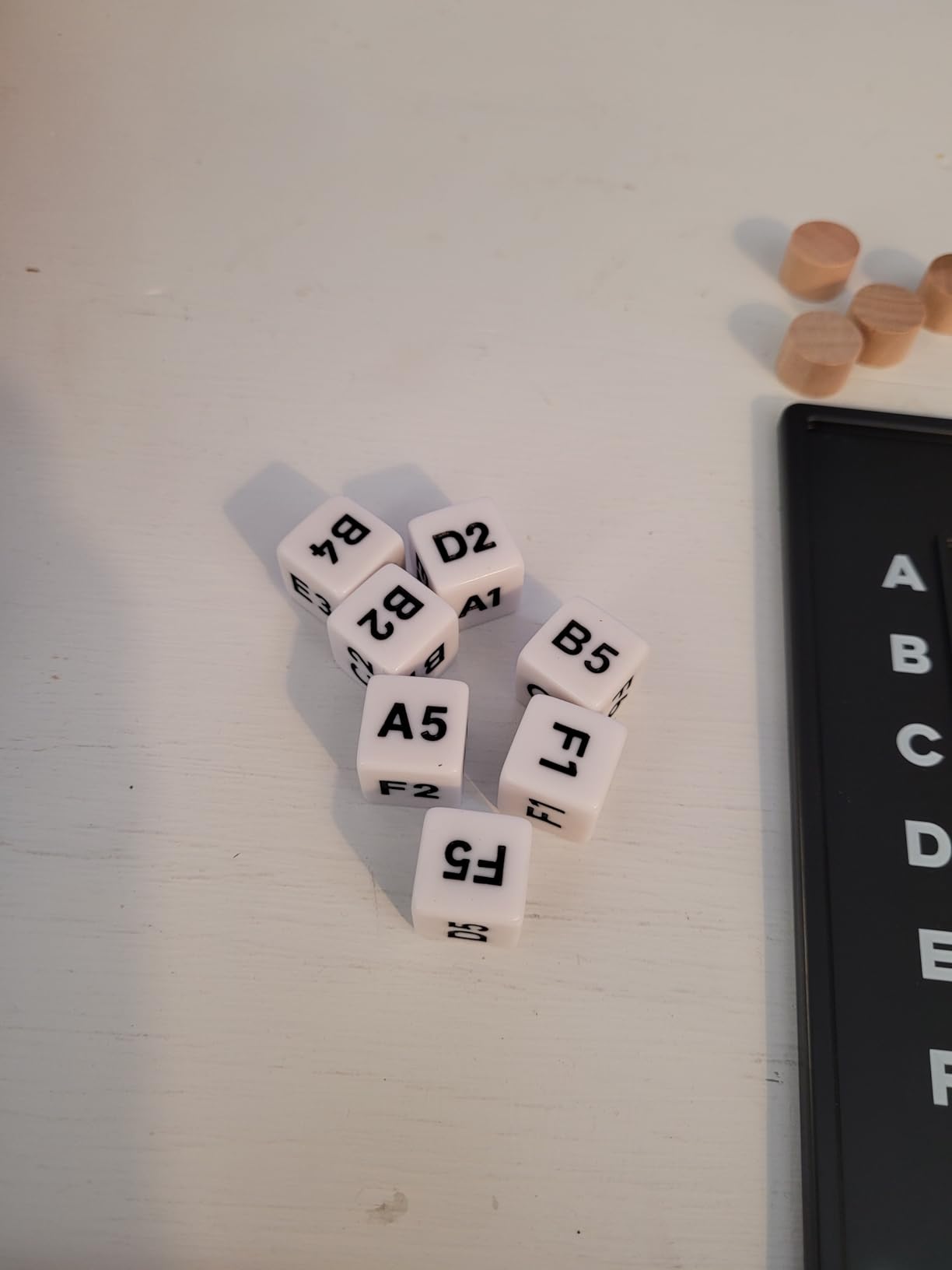
The Genius Square is one of those games that looks deceptively simple but ends up absorbing everyone who tries it. You roll dice to place blocker pegs on a 6-by-6 grid, and then race to fill the remaining spaces with colored shape pieces. Every single arrangement has at least one solution, and there are over 62,000 possible combinations, which means you will never play the same game twice.
I have seen this game captivate a 6-year-old and a 40-year-old with equal intensity. The spatial reasoning and problem-solving skills it builds are genuinely valuable for STEM development. Kids learn to rotate shapes, plan ahead, and think about how different pieces fit together in a constrained space. These are the same cognitive skills that underpin engineering, architecture, and computer science.
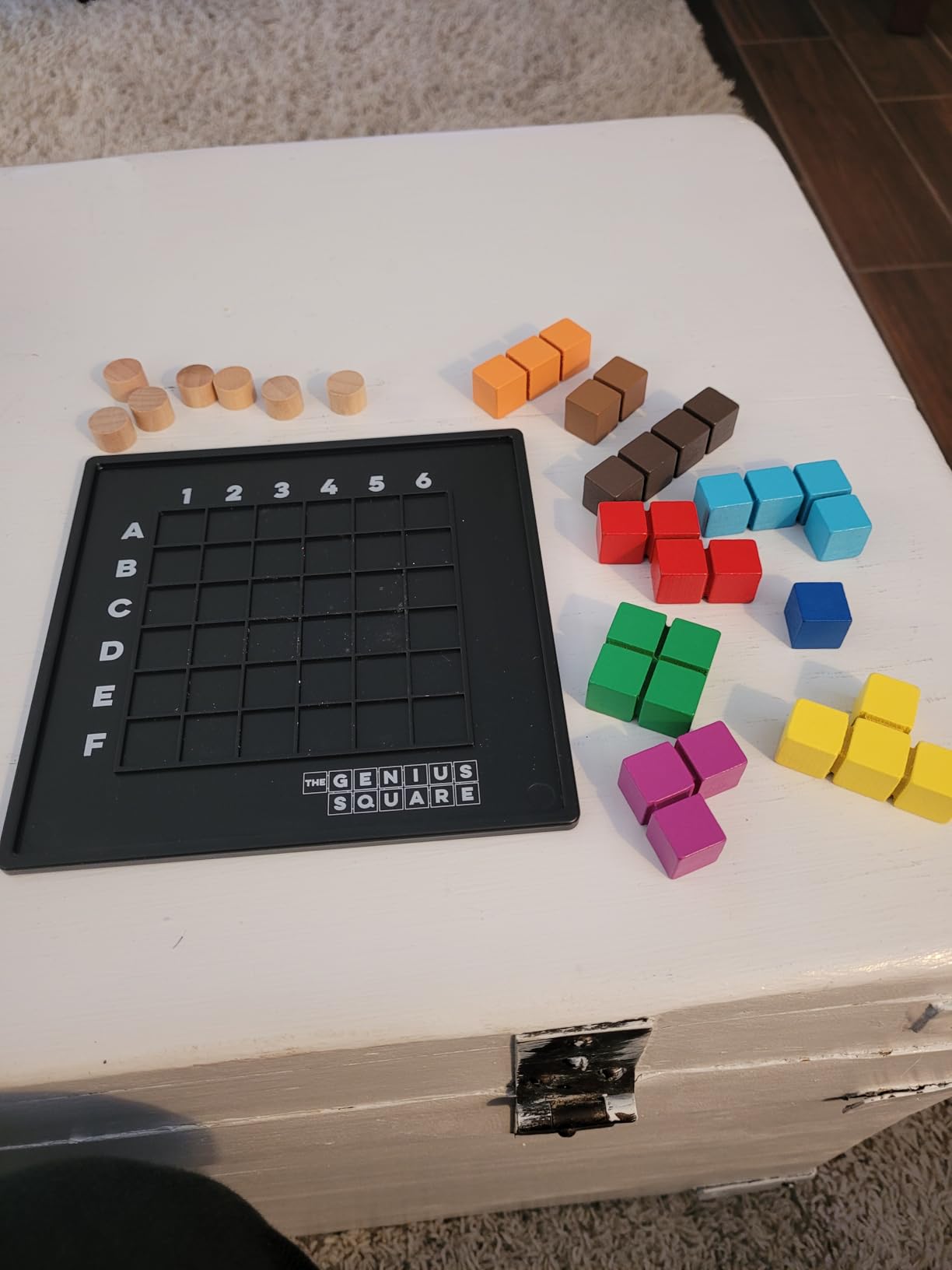
The game works as a solo puzzle or as a head-to-head race between two players. In the competitive mode, both players face the same blocker arrangement and race to complete their grid first. My kids love this format because it feels like a sporting event rather than a learning activity. Each round takes about 5 to 10 minutes, so it is easy to fit into a busy schedule.
With multiple awards including Game of the Year and Educational Product of the Year, plus a 4.8-star rating across 7,741 reviews, The Genius Square has earned its reputation. The wooden pieces have a satisfying tactile quality that plastic components just cannot match. It is compact enough to toss in a bag for travel, and the rules are simple enough that kids can explain them to friends without adult help.
Who Should Get This Game
The Genius Square is ideal for kids ages 6 through adult who enjoy puzzles, logic challenges, and spatial reasoning tasks. It is especially good for children who gravitate toward STEM activities and need a screen-free way to build those skills. Parents who want a quiet activity that kids can do independently will appreciate the solo play option. It is also a fantastic game for waiting rooms and travel because it is compact and mess-free.
Things to Consider
While the game offers incredible replayability, the basic mechanic is always the same: fill the grid. Some kids who prefer variety might lose interest after extended play. The component count is relatively low for the price point, though the quality justifies the cost. A few customers have reported receiving damaged packaging, so check your order when it arrives. The game only supports 1 to 2 players, so it is not ideal for group game nights.
8. Wildcraft! – Best Cooperative Nature Game

Wildcraft! Board Game – Cooperative Educational Board Game for Kids 4–6 & Families – Nature & Herb Learning Game – Family Board Games for Kids – Herbal Adventure Cooperative Game
Ages 4+
1-4 Players
Nature & Herb Learning
Cooperative Gameplay
Pros
- Cooperative gameplay eliminates winner-loser pressure
- Teaches 25 edible and medicinal plants
- No reading required for young players
- Made with sustainable non-toxic materials
- Includes bonus printable storybook and coloring book
Cons
- Digital bonuses must be printed separately
- Game sessions can run long with traditional rules
- Limited to 4 players maximum
Wildcraft! stands out from almost every other game on this list because it is fully cooperative. Instead of competing against each other, all players work together to climb the mountain and gather herbs before nightfall. This means no hurt feelings, no gloating, and no tears about losing. For families with kids who struggle with competitive games, this alone makes Wildcraft! worth considering.
The educational content is genuinely unique. Players learn about 25 real edible and medicinal plants as they move around the board. Each plant card includes information about what the plant looks like and what it can be used for. My kids started pointing out dandelion and plantain on our walks after playing this game, which was a pretty remarkable transfer of knowledge from a board game to the real world.
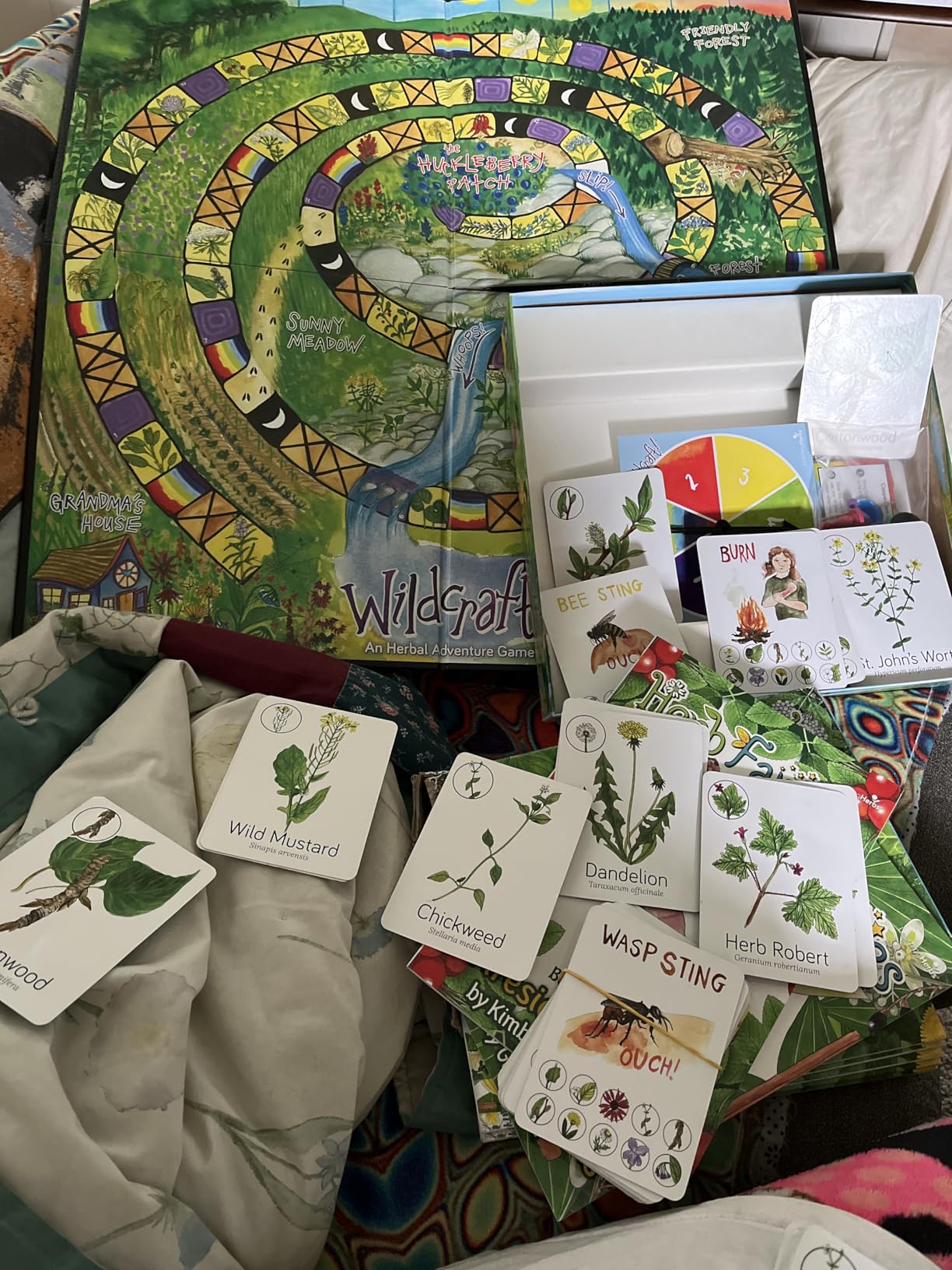
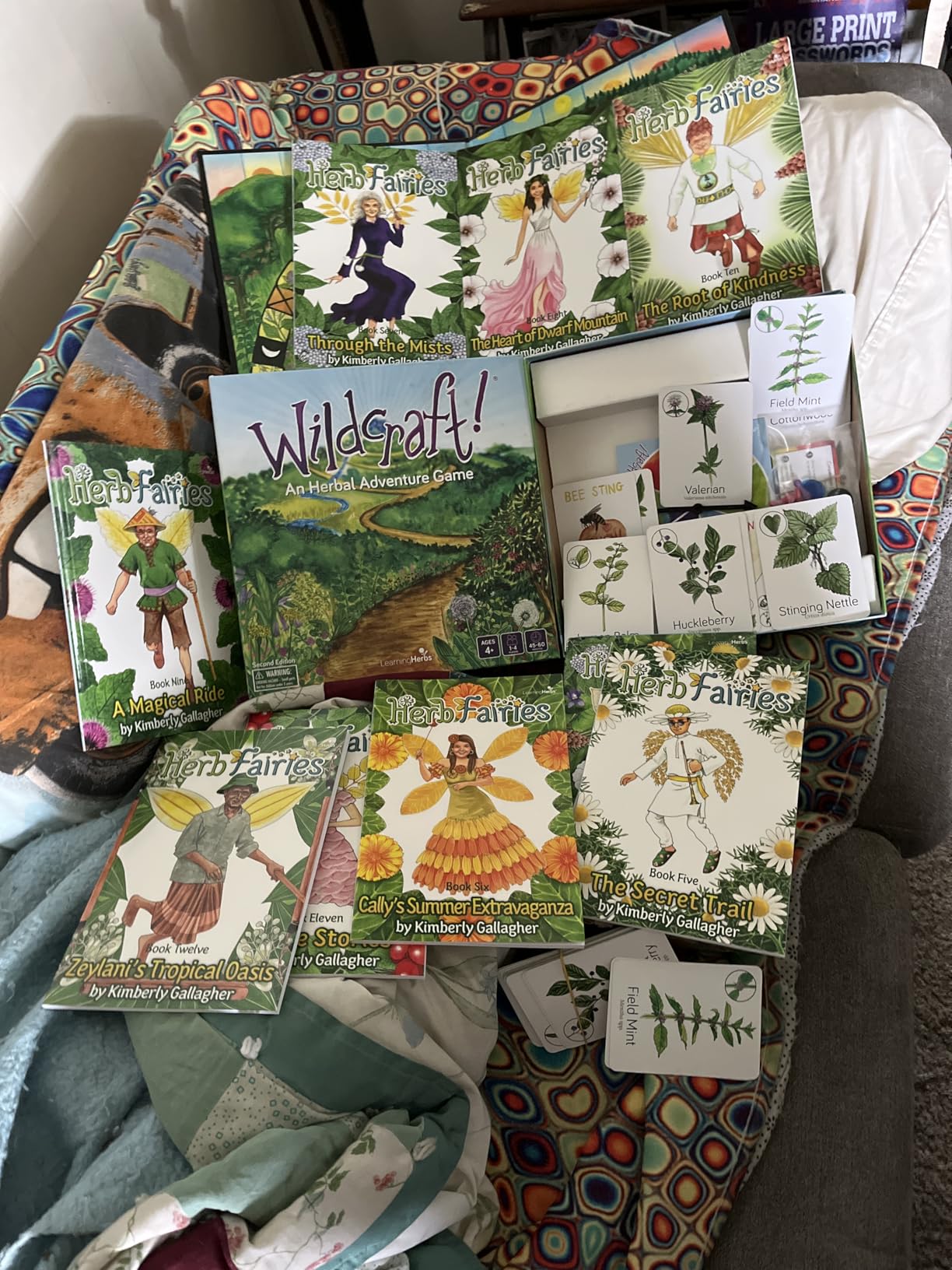
The game is designed so that children as young as 4 can play without needing to read anything. The board and cards use clear illustrations that make the gameplay accessible to pre-readers. The included bonus materials are a nice touch: a downloadable illustrated storybook, a plant pocket guide, and a botanical coloring book that extend the learning beyond the game itself.
LearningHerbs made this game with sustainable, non-toxic materials including recycled components and vegetable-based ink. With 1,577 reviews and a 4.7-star rating, families clearly appreciate the combination of cooperative play and nature education. The game supports 1 to 4 players and works well for ages 4 through adult, making it one of the most age-flexible cooperative games available.
Who Should Get This Game
Wildcraft! is perfect for families with young children ages 4 to 10 who want a cooperative, non-competitive game experience. It is especially valuable for homeschool families studying botany, nature, or ecology. Families who spend time outdoors hiking and foraging will find it directly relevant to their lifestyle. It is also a great choice for kids who get upset by competitive games, since everyone wins or loses together.
Things to Consider
The bonus materials (storybook, pocket guide, and coloring book) are digital downloads that you need to print yourself, not physical items included in the box. Some families find the game can drag on if played by the traditional rules, so you may want to set a timer or modify the rules for shorter sessions. The game only supports up to 4 players, which may be limiting for larger families. The plant knowledge is specific to North American species, which may not translate well to other regions.
9. Learning Resources Sum Swamp – Best for Kindergarten Math
Learning Resources Sum Swamp Game Addition & Subtraction Board Game – Educational Homeschool, Elementary Math Classroom Must Haves, Kindergarten, Gifts for Kids, Numbers for Boys and Girls
Ages 5+
2-4 Players
Addition & Subtraction
Swamp Theme
Pros
- Makes math practice genuinely fun for young kids
- Cute swamp creature game pieces
- Teaches even and odd numbers too
- Quick game sessions under 20 minutes
- Easy to adapt for different skill levels
Cons
- Max addition fact is 6+6
- Endless loop mechanic can frustrate some players
- Game pieces are small and simple
Sum Swamp is the game I recommend most often to parents of kindergarteners and first graders who are just starting to learn addition and subtraction. The concept is straightforward: roll two number dice and one operation die, solve the equation, and move your swamp creature piece along the winding path through the swamp. But the way the game introduces math concepts feels entirely natural, not forced.
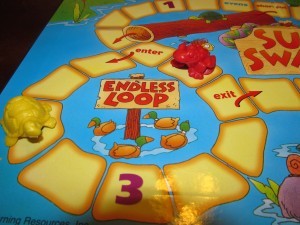
What sets Sum Swamp apart from other math games is the clever board design. The swamp path includes special spaces that teach even and odd numbers, and there is an Endless Loop section that gives trailing players a chance to catch up by solving extra equations. While some parents find the Endless Loop frustrating, I actually think it is one of the best features because it provides built-in extra math practice for the kids who need it most.
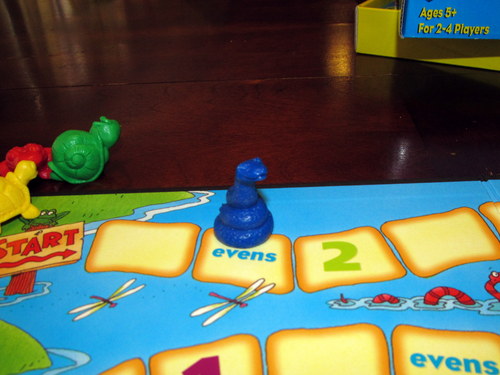
The four swamp creature game pieces (a turtle, snake, frog, and snail) are charming enough to make kids want to play. The game board features vibrant swamp-themed graphics that appeal to young imaginations. Each game takes about 15 to 20 minutes, which hits the sweet spot for young attention spans. My kids rarely wanted to stop at just one round.
With 5,640 reviews and an outstanding 4.8-star rating, Sum Swamp has been one of the most trusted educational math games for years. Learning Resources has designed it specifically for ages 5 and up, and the simplicity of the rules means kids can play independently once they understand the basics. For building addition and subtraction fluency in young children, it is hard to beat.
Who Should Get This Game
Sum Swamp is best for kids ages 5 to 8 who are learning basic addition and subtraction facts. It is especially helpful for kindergarten and first-grade students who need extra math practice but resist traditional worksheets. Homeschool families love it for daily math warm-ups. It also works well in classroom settings as a math center activity where kids can play in small groups.
Things to Consider
The number dice only go up to 6, which means the maximum addition fact is 6+6 (12) and the maximum subtraction is limited. This keeps the game accessible for beginners but means advanced learners will outgrow it quickly. Some children get stuck in the Endless Loop for several turns, which can feel discouraging. The game pieces are small and could be mistaken for pencil toppers, so keep track of them carefully.
10. Educational Insights Sneaky Snacky Squirrel – Best for Toddlers

Educational Insights The Sneaky, Snacky Squirrel Game – Toddler Board Games for 3 Year Olds, Fine Motor Skills Toys for Toddlers, Color Matching Preschool Games, Tweezer Tool Fine Motor Game
Ages 3+
2-4 Players
Fine Motor Skills
Color Matching
Pros
- Perfect introduction to board games for toddlers
- Excellent for building fine motor skills
- Self-contained tree-shaped storage box
- Quick games fit toddler attention spans
- Durable rubber-like acorn pieces
Cons
- Not Prime eligible
- Spinner numbers can confuse very young kids
- Windstorm feature may cause frustration
If you have a three-year-old and you are wondering whether they are old enough for board games, the answer is yes, and the Sneaky Snacky Squirrel Game is where you should start. This game teaches color matching, counting, taking turns, and fine motor skills all wrapped up in a package that toddlers genuinely enjoy. My youngest played this game hundreds of times before she moved on to anything else.
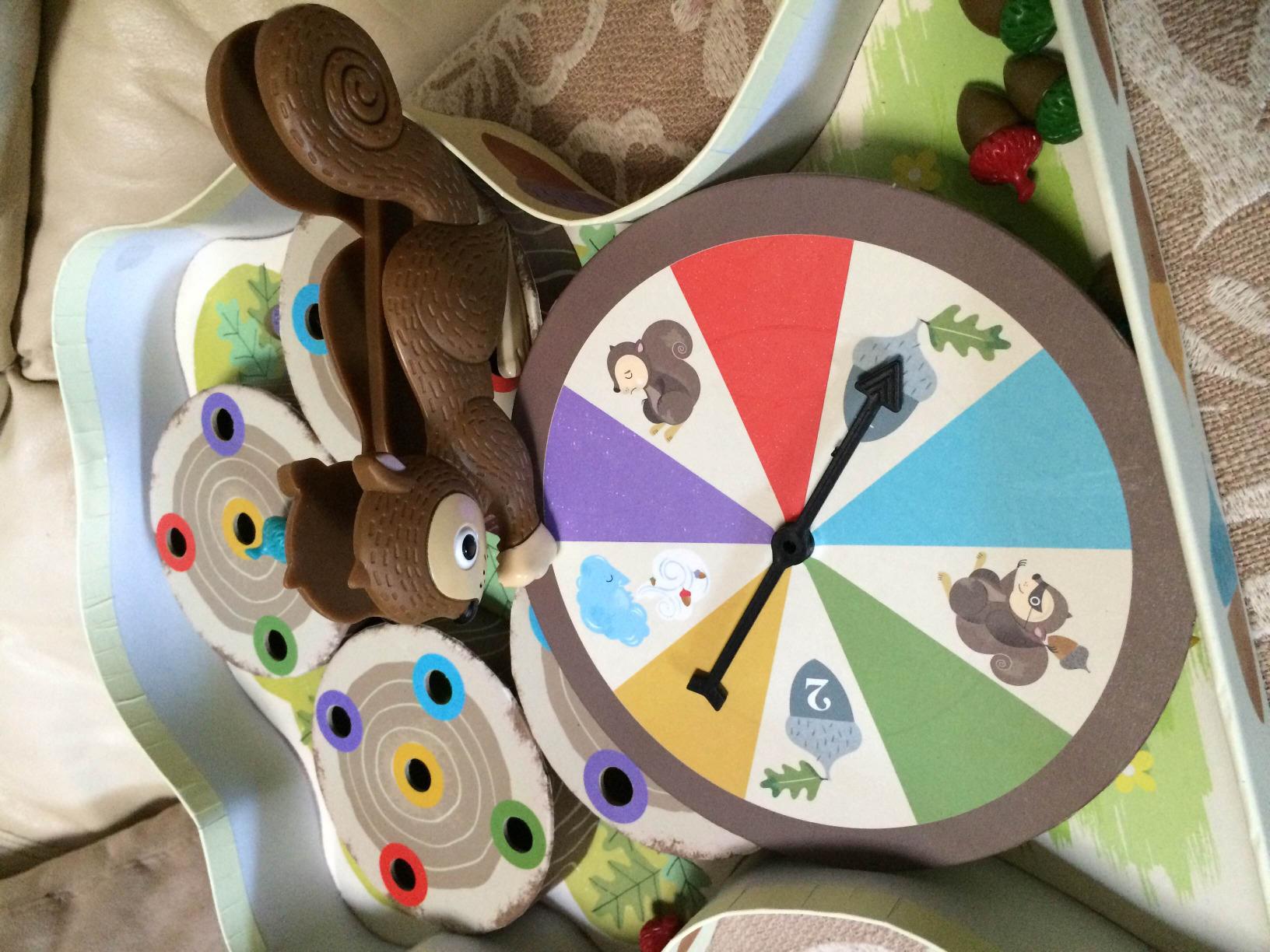
The gameplay is simple: spin the spinner, use the squirrel-shaped squeezer (which is essentially a pair of tweezers shaped like a squirrel) to pick up the matching colored acorn, and place it on your log. The first player to collect all five colors wins. The squirrel squeezer is the magic component because it builds the exact hand muscles kids need for writing, without feeling like therapy.
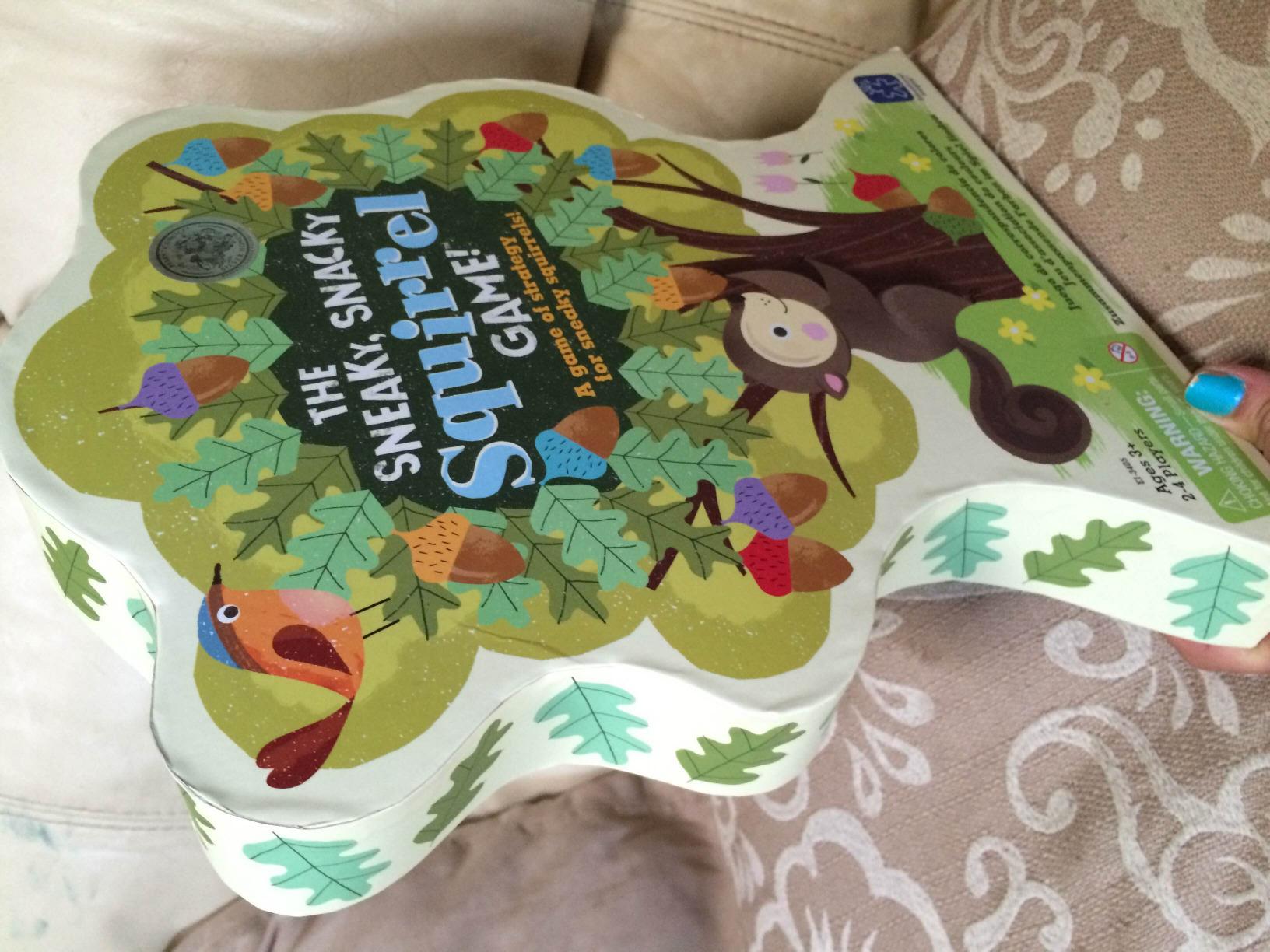
I love the design of this game from a parent’s perspective. The tree-shaped game board doubles as the storage box, so cleanup is built into the design. The acorns are made from a rubber-like material that is satisfying to hold, not hollow plastic. There are no tiny pieces to lose track of, and the game is self-contained enough that a three-year-old can set it up and put it away with minimal help.
With 11,382 reviews and a 4.8-star rating, the Sneaky Snacky Squirrel Game has proven itself with thousands of families. Occupational therapists frequently recommend it for building fine motor skills and hand-eye coordination. Games last about 10 to 15 minutes, which perfectly matches a toddler’s attention span. For ages 3 to 5, this is about as good as educational board games get.
Who Should Get This Game
This game is designed specifically for toddlers and preschoolers ages 3 to 5. It is the ideal first board game for any child because the rules are simple, the physical actions are engaging, and there is no reading required. Parents of children with fine motor delays will find it particularly helpful. It also works well in preschool classrooms and therapy settings as a fun way to build coordination.
Things to Consider
The spinner includes numbers 1 and 2, which can confuse some two-year-olds who do not yet recognize numerals. The windstorm feature, which makes players return all their acorns, can be frustrating for young children who are still learning to handle disappointment. The game is not Prime eligible, so shipping may take a bit longer than your usual Amazon orders. A few customers have reported missing pieces, so check the contents when it arrives.
11. Ticket to Ride First Journey – Best for Strategy and Geography

Ticket to Ride First Journey Kids Train Game, 2-4 Players, 15-30 Min
Ages 6+
2-4 Players
Strategy & Route Planning
15-30 Min
Pros
- Excellent introduction to strategy games for kids
- Teaches US geography through route planning
- High-quality board and train pieces
- Symbols help kids who cannot read yet
- Ideal game length for young players
Cons
- Rulebook can be initially confusing
- Only supports 2-4 players
- Some setup time required
Ticket to Ride First Journey is the kids version of one of the most popular board games in the world, and it succeeds at something few children’s games manage: it is actually a real strategy game, just simplified enough for young minds. Players collect train cards and claim routes across a beautiful US map, racing to complete destination tickets that connect one city to another.
The educational value here is layered. On the surface, kids learn US geography as they identify cities and plan routes between them. But underneath, they are developing genuine strategic thinking: deciding which routes to claim, when to block an opponent, and how to manage limited resources. These are the same cognitive skills that chess and other classic strategy games build, but packaged in a format that a six-year-old can actually enjoy.
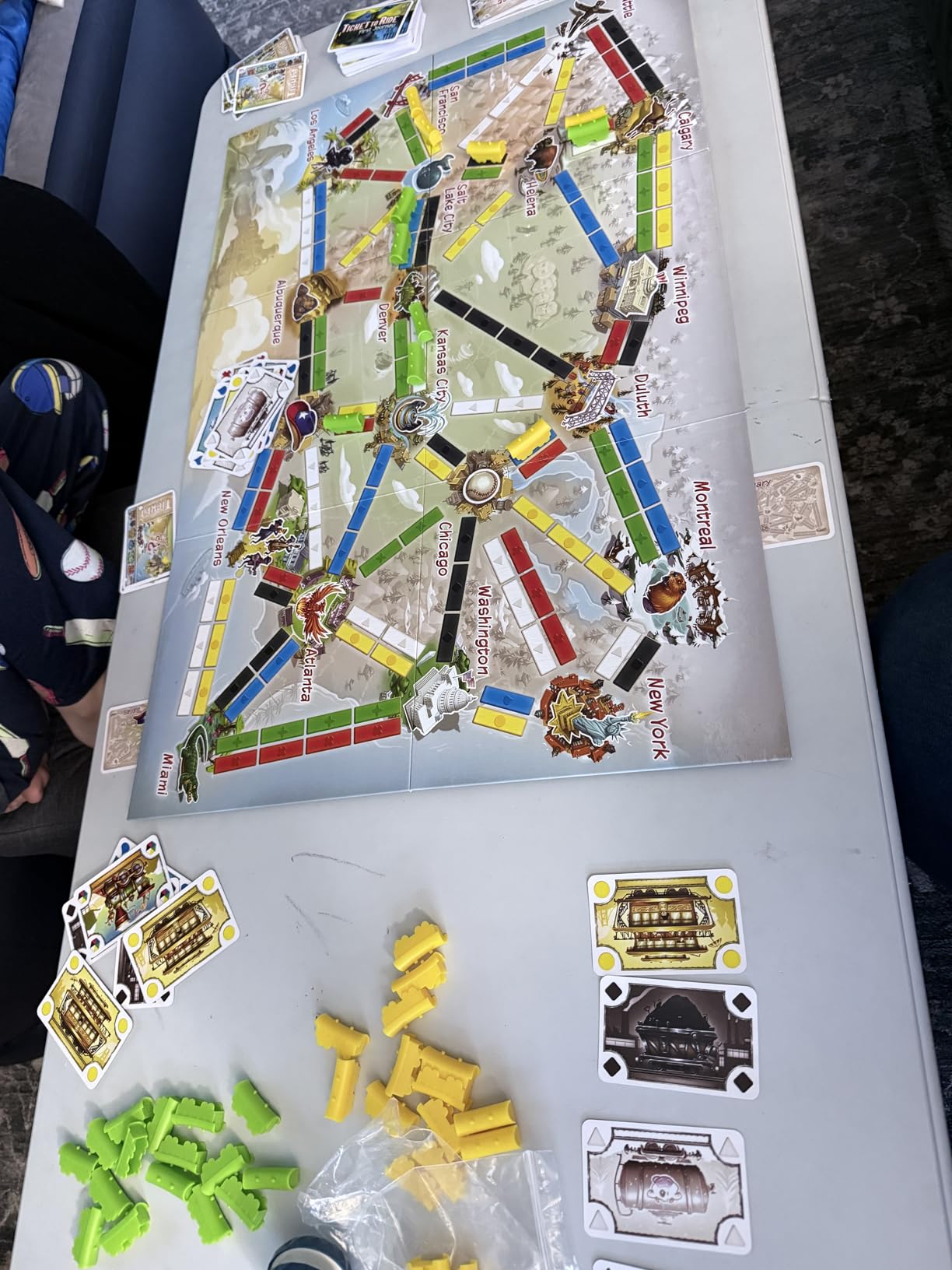
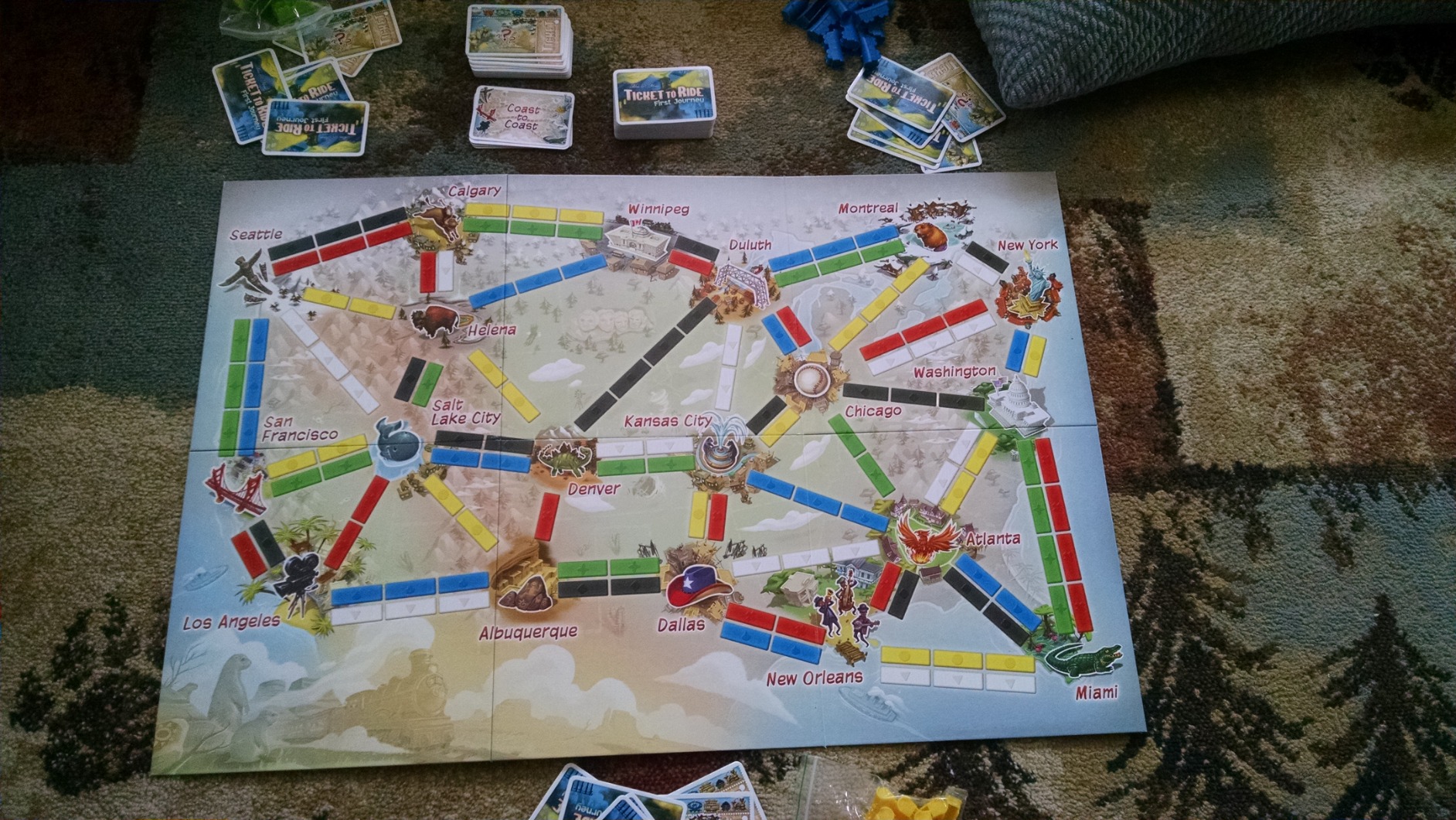
The component quality is outstanding. The board is sturdy and features a colorful US map with city names and symbols, so kids who cannot read yet can still identify locations. The plastic train pieces are chunky and satisfying to place on the board. Each game takes 15 to 30 minutes, which is the right length for young players who might lose interest in longer strategy games.
With 5,807 reviews and a 4.8-star rating, First Journey has proven that the Ticket to Ride formula works for kids too. Many families report that this game became a stepping stone to the original Ticket to Ride, which is one of the best family strategy games available. If you want to raise a strategic thinker, this is where to start.
Who Should Get This Game
Ticket to Ride First Journey is ideal for kids ages 6 to 10 who are ready for their first real strategy game. It is perfect for families who already enjoy board games and want to include their younger children. Parents who value geography and planning skills will appreciate the educational content. It is also a great introduction to the broader Ticket to Ride series for families who game together.
Things to Consider
The rulebook is a bit confusing on first read, and it takes a practice game for most families to feel comfortable with the rules. The game supports only 2 to 4 players, unlike the original Ticket to Ride which supports up to 5. Some younger kids may need help reading the city names on their ticket cards, though the symbol system helps mitigate this. Setup takes a few minutes, so it is not a grab-and-play game like some others on this list.
12. Cytosis: A Cell Biology Board Game – Best for Advanced Science

Cytosis: A Cell Biology Board Game | A Science Accurate Strategy Board Game About Building Proteins, Carbohydrates, Enzymes, Organelles, & Membranes | Fun Science Games for Adults & Family Game Night
Ages 10+
2-5 Players
Cell Biology
Worker Placement
Pros
- Scientifically accurate cell biology content
- Worker placement mechanics appeal to strategy gamers
- Includes fact booklet peer-reviewed by over 20 PhDs
- Useful for homeschool and classroom science
- Works as both a game and a study tool
Cons
- Takes significant time to learn the rules
- Scoring system is overly complex
- May not work well for younger kids
- Less player interaction than some games
Cytosis is the most scientifically ambitious game on this list. It is a worker placement game set inside a human cell, where players use their workers to build enzymes, hormones, and receptors while managing cellular resources like proteins, carbohydrates, and lipids. If that sounds like a biology textbook, that is because it basically is one, disguised as a genuinely engaging strategy game.
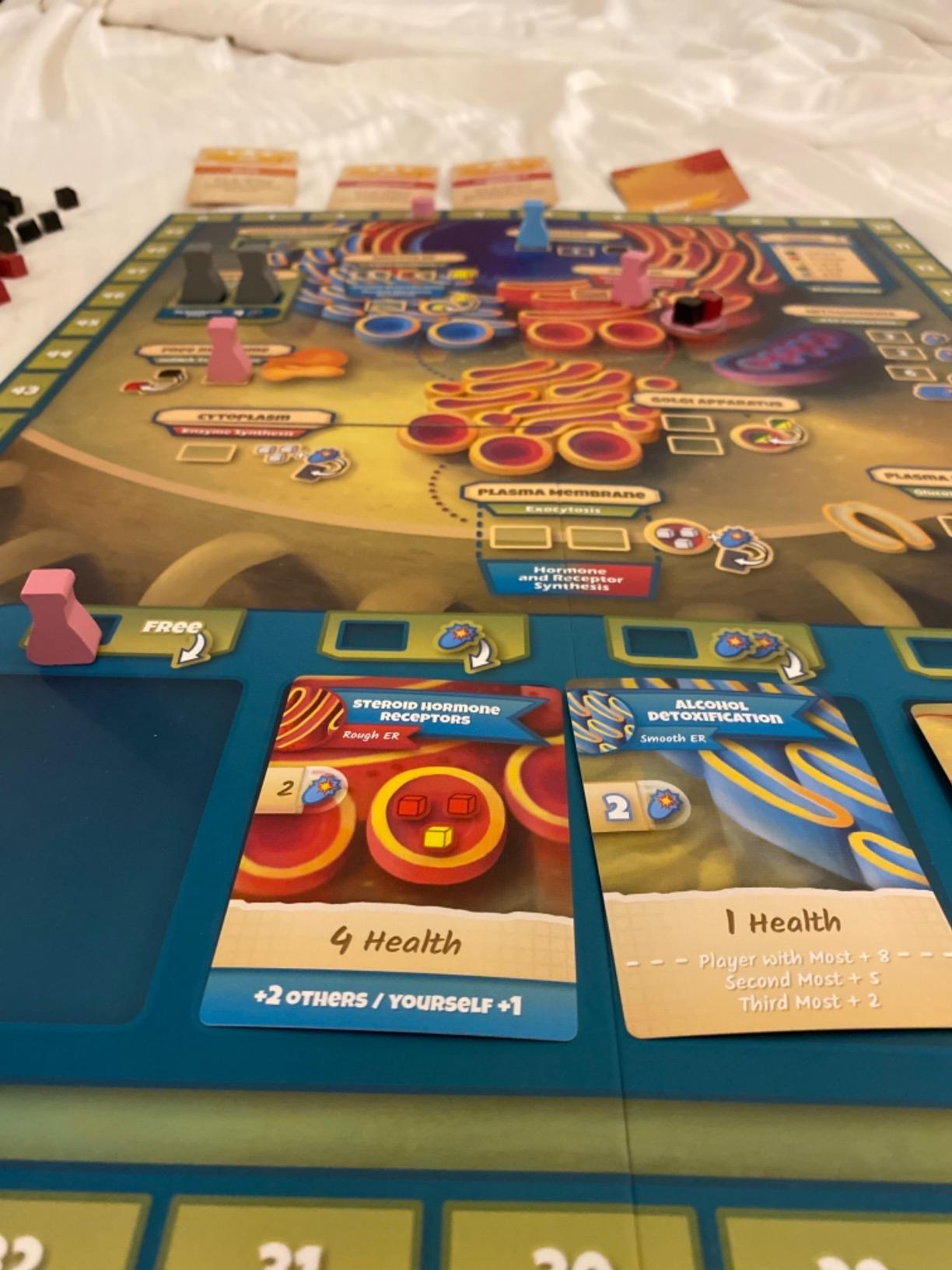
What makes Cytosis special is the level of scientific accuracy. Every mechanic maps to a real cellular process. When you place a worker on the ribosome, you are building proteins. When you send workers to the Golgi apparatus, you are modifying and sorting macromolecules. The included science booklet was written and reviewed by over 20 PhDs, so the educational content is legitimate enough to use in a high school biology class.
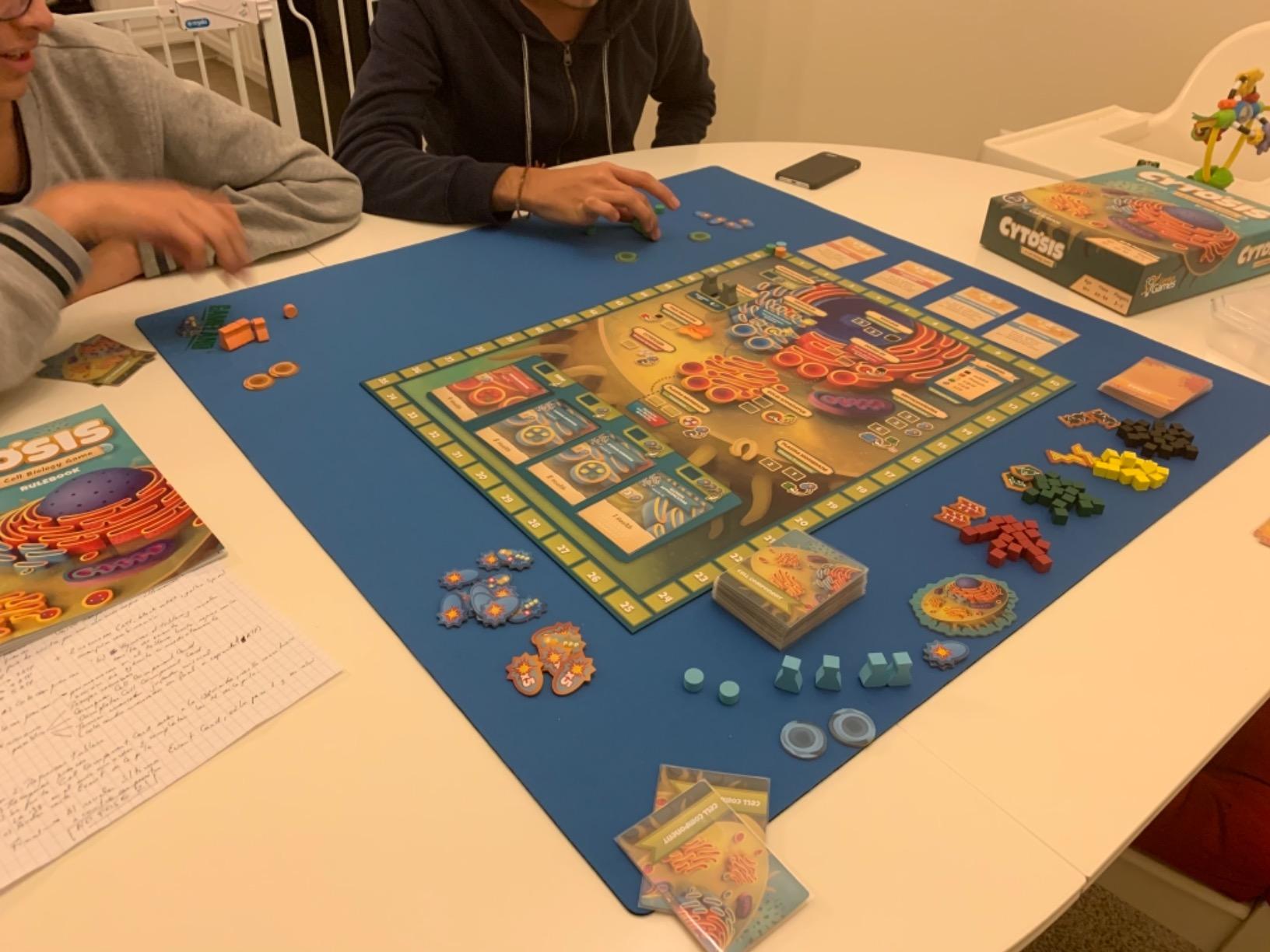
The worker placement mechanics will feel familiar to anyone who has played games like Lords of Waterdeep. Each round, players place their workers on different organelles to collect resources and complete objectives. The strategic depth is real, and experienced board gamers will find plenty to think about. However, this also means the learning curve is steeper than most educational games.
With 372 reviews and a 4.4-star rating, Cytosis occupies a niche that no other game on this list fills: serious science education wrapped in serious strategy. The lower review count reflects its specialized audience rather than any quality issue. For families with science-loving teenagers, or for homeschool families covering biology, this game is an invaluable resource. Games take about 60 to 90 minutes, so it is best suited for dedicated game sessions rather than quick play.
Who Should Get This Game
Cytosis is best for kids ages 10 and up, teens, and adults who have a genuine interest in biology or science. It is an outstanding resource for homeschool families covering high school biology. Board game enthusiasts who also happen to be science nerds will appreciate the elegant integration of accurate biology with solid game mechanics. Teachers looking for an engaging way to review cell biology concepts will find it valuable as a classroom tool.
Things to Consider
The rules take significant time to learn, and the first game will be slow as everyone figures out the mechanics. The scoring system is more complex than it needs to be, which can be frustrating. There is limited direct player interaction beyond competing for worker placement spots. The game is not suitable for children under 10 due to both complexity and the advanced scientific vocabulary. At 60 to 90 minutes per game, it requires a bigger time commitment than most educational games.
13. The World Game – Best Geography Card Game for Families

The World Game – Geography Card Game – Educational Games for Kids, Family and Adults – Cool Learning Gift Idea for Teenage Boys & Girls 8-12 with Map
Ages 7+
2-5 Players
World Geography
All 194 Countries
Pros
- Covers all 194 countries with flags and capitals
- Portable card game great for travel
- Can be used as flash cards or trivia
- Up-to-date geography data
- Works for kids/ teens/ and adults
Cons
- Some users report missing country cards
- Occasional duplicate cards in decks
- Does not include disputed territories
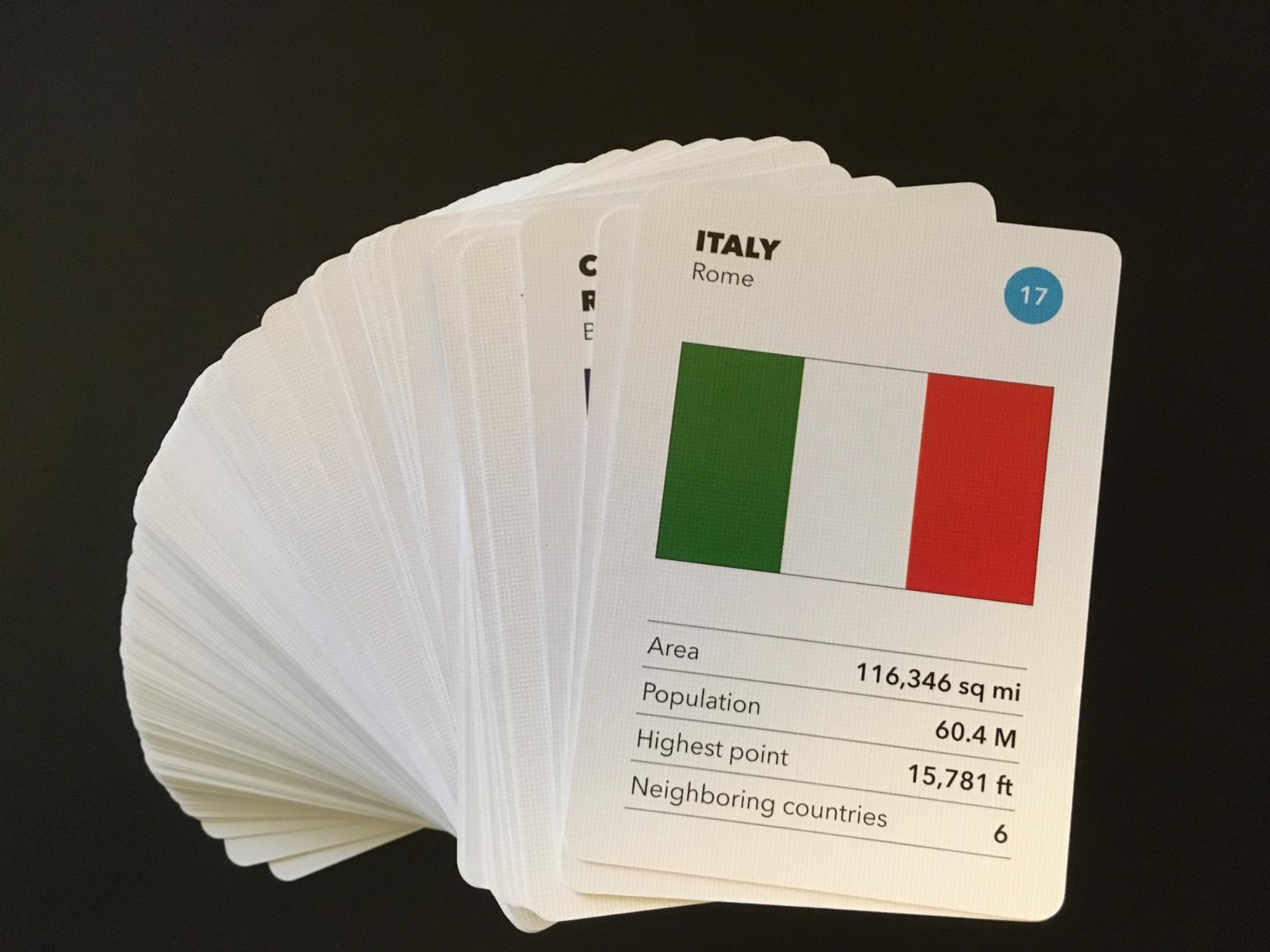
The World Game takes the ambitious goal of teaching geography for all 194 countries and packages it into a compact card game you can play anywhere. Each card features a country with its flag, capital city, continent, population data, and a world map showing its location. Players compete by comparing facts about their countries, with the strongest fact winning the round.
What makes this game effective is how naturally the learning happens. Kids start memorizing flags and capitals without even trying because they see them every round. My son went from barely knowing where Brazil was to rattling off capitals of Southeast Asian countries after a few weeks of playing. The competitive format means kids are motivated to remember facts because knowing more countries and their details gives them a strategic advantage.

The game is flexible enough to work in multiple ways. You can play the standard competitive game, use the cards as flash cards for studying, or play trivia-style by asking each other questions. This versatility makes it useful for homeschool families who want to squeeze extra educational value out of every purchase. The compact box is travel-friendly, making it easy to bring on road trips and vacations.
With 2,823 reviews and a 4.6-star rating, The World Game has proven itself as a reliable geography learning tool. It is one of the few games that covers world geography comprehensively, including smaller countries that most educational materials ignore. For families who want their kids to have genuine global awareness, this is an excellent resource.
Who Should Get This Game
The World Game is ideal for kids ages 8 to adult who are learning world geography. It works particularly well for homeschool families covering social studies and for kids who are curious about different countries. Travel-loving families will enjoy playing it before trips to learn about destinations. It is also useful as a study aid for students preparing for geography bees or social studies tests.
Things to Consider
Some customers have reported missing country cards or duplicates in their decks, so quality control can be inconsistent. The game does not cover disputed territories like Kosovo or Western Sahara. Because it relies on comparing numerical facts like population and area, some rounds feel repetitive in strategy. The game works best with 2 to 5 players, and larger groups may find it less engaging.
How to Choose the Best Educational Board Games
With so many options available, picking the right educational board game for your family comes down to understanding your child’s age, interests, and the skills you want to develop. Our team has tested dozens of games and spoken with homeschool parents and educators to identify the factors that matter most when making this decision.
Match the Game to Your Child’s Age
Age-appropriateness is the single most important factor when choosing educational games. A game that is too easy will bore your child, and one that is too hard will frustrate them. For toddlers ages 3 to 4, look for games like the Sneaky Snacky Squirrel Game that focus on fine motor skills and color recognition with minimal rules. Kids ages 5 to 7 are ready for games that introduce academic skills like Zingo for reading and Sum Swamp for math. Children ages 8 and up can handle genuine strategy games like Ticket to Ride First Journey and The Genius Square that build critical thinking alongside specific academic content.
Consider Cooperative vs. Competitive Games
Some kids thrive on competition, while others shut down when they start losing. Cooperative games like Wildcraft! eliminate the winner-loser dynamic entirely, making them ideal for younger children and kids who struggle with competitive play. Competitive games like Tapple and The World Game teach valuable lessons about sportsmanship, resilience, and gracious winning and losing. Having a mix of both types in your collection gives you options for different moods and group dynamics.
Think About Skill Development Goals
Different games target different skills, and knowing what you want to focus on helps narrow your choices. For math skills, Sum Swamp and Math Island are the best options. For language and reading, Zingo and Tapple lead the pack. Geography skills are covered well by Race Across the USA, Ticket to Ride First Journey, and The World Game. Science education ranges from the nature-focused Wildcraft! to the advanced cell biology of Cytosis. Critical thinking and logic skills are the strength of The Genius Square and Guess in 10.
Factor in Player Count and Session Length
The best educational board game is the one your family will actually play. If you have a large family, look for games that support more players like Tapple (up to 8 players). If you need quick activities for busy weeknights, focus on games with 15 to 20 minute sessions like Zingo, Sum Swamp, or Guess in 10. For dedicated family game nights when you have more time, deeper games like Ticket to Ride and Cytosis provide richer experiences.
Games for Kids with ADHD
Forum discussions from homeschool communities consistently highlight that kids with ADHD do best with games that have short rounds, tactile components, and fast pacing. The Genius Square works beautifully because each puzzle takes under 5 minutes and involves hands-on manipulation of physical pieces. Zingo keeps fidgety hands busy with the Zinger device. Tapple provides rapid-fire engagement with its built-in timer. Cooperative games like Wildcraft! are also excellent because they remove the pressure of competition that can overwhelm children who are already struggling to focus.
Travel-Friendly Options
If you need games for road trips, flights, or waiting rooms, size and portability matter. Skillmatics Guess in 10 is the top pick for travel because it fits in a purse and requires no game board. The World Game is another compact option that packs 194 countries worth of geography into a small card box. The Genius Square is small enough for travel and offers quiet, focused play. Tapple has built-in card storage, making it easy to grab and go.
Building a Game Collection Over Time
You do not need to buy every game at once. Start with one or two that match your child’s current age and interests, then expand as they grow. A good starter collection for a family with a 5-year-old might include Zingo for reading, Sum Swamp for math, and the Sneaky Snacky Squirrel Game for fine motor skills. As your child gets older, add strategy games and subject-specific titles. Many of these games have been played for years in our house, which makes the per-play cost incredibly low compared to most educational purchases.
FAQ
What is the most educational board game?
The most educational board game depends on the skill you want to develop. ThinkFun Zingo is the top choice for pre-readers, Sum Swamp excels at math fundamentals, and The Genius Square builds spatial reasoning. For a single game that covers multiple skills, Ticket to Ride First Journey teaches geography, strategy, and planning all at once.
What is the most fun educational game?
The most fun educational game varies by age, but the Skillmatics Guess in 10 series consistently ranks as the most enjoyable across our testing. With 28,000+ reviews and a 4.7 rating, families love the fast-paced guessing mechanic. For younger kids, the Sneaky Snacky Squirrel Game is hilarious and engaging while building fine motor skills.
What games do ADHD kids like?
Kids with ADHD tend to thrive with games that have short rounds, tactile elements, and fast pacing. The Genius Square works well because each round takes under 5 minutes with hands-on puzzle solving. ThinkFun Zingo uses a physical Zinger device that keeps fidgety hands busy. Tapple provides rapid-fire wordplay with a built-in timer that maintains momentum. Cooperative games like Wildcraft! also work great because they remove the pressure of competition.
What age should kids start playing educational board games?
Children can start playing simple educational board games as young as age 3. The Sneaky Snacky Squirrel Game is designed for ages 3 and up, teaching color matching and fine motor skills. By age 4 to 5, games like ThinkFun Zingo introduce reading readiness. Around age 6, kids can handle strategy games like Ticket to Ride First Journey and math games like Sum Swamp. By age 8 to 10, complex games like Cytosis become accessible.
Final Thoughts on the Best Educational Board Games
The best educational board games are the ones your kids actually want to play, not the ones that look good on a curriculum list. After testing all 13 games on this list, our top recommendation for most families is ThinkFun Zingo for younger children and The Genius Square for older kids, because both deliver genuine learning wrapped in gameplay that children request on their own. For families focused on specific skills, Sum Swamp handles math beautifully, Race Across the USA covers geography, and Cytosis provides serious science education for teens.
The gameschooling movement has shown us that kids learn more when they are having fun, and the right board game can teach more in 20 minutes than an hour of worksheets. Whether you are a homeschool parent building a curriculum, a teacher stocking a classroom, or just a family looking for screen-free entertainment, investing in the best educational board games for 2026 is one of the smartest decisions you can make for your children’s learning journey.