

The best golf drivers for beginners are large-headed, lightweight game-improvement models with 10.5 to 12 degrees of loft and a regular or senior flex graphite shaft. That combination gives you a big sweet spot, an easy launch on slow swings, and a driver that stays straight even when your contact is poor. Every pick below is a right-handed configuration, so if you golf with your right hand on top, look for a mirrored version of the same model.
Most first-year golfers do not need a tour driver with a movable weight track. They need a 460cc head, a low center of gravity, and a shaft they can actually swing. Get those three right and the ball goes further and straighter than you expected, which is the whole point of a good beginner golf driver.
We compared 12 drivers for this roundup, weighing the published specifications against what owners report after real range sessions and a season of golf. You can see the full list in our beginner golf club set guide if you are still building a bag from scratch, and the budget impact drivers guide covers the shorter, easier alternative that many beginners actually hit better than a driver.
Table of Contents
Loft
Ten and a half to twelve degrees is the beginner band. Extra loft gets the ball airborne without a fast swing, which is the difference between a playable drive and a shank into the trees.
Head Size
Look for the maximum legal 460cc volume. Bigger head means more forgiveness on off-center strikes, and 460cc is the largest size allowed under the rules of golf.
Shaft Flex
Regular flex suits most beginners with genuine clubhead speed, and senior or light flex is the safer choice if your swing is slower than that. Too stiff a shaft is the single most common reason a beginner driver feels impossible to hit.
Top 3 Beginner Driver Picks in 2026
These three cover the realistic scenarios we saw most often. One is the all-rounder, one is the value pick, and one is the forgiving titanium-feel option for golfers who strike the face all over the place.

TaylorMade SIM2 MAX Driver
- Forged Ring Construction
- SIM Inertia Generator
- Speed Injected Twist Face
- 10.5 degrees regular flex
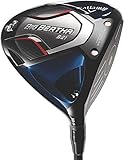
Callaway BB B21 Driver
- Ultra-low forward center of gravity
- Draw-bias weighting
- A.I.-designed Flash Face
- 10.5 degrees regular flex

MAZEL Titanium 460CC Driver
- CNC cup face
- Variable-thickness titanium face
- Low and deep center of gravity
- 10.5 degrees regular flex
Two quick notes before the full list. The TaylorMade SIM2 MAX and the Callaway Big Bertha B21 are the only picks here from major manufacturers with current-generation engineering, and both are right-handed regular flex 10.5 degree builds. Everything else in the lineup is a value-tier design aimed at high-handicap golfers, which is exactly the market most beginners shopping for a first driver sit in.
All 12 Beginner Drivers Compared at a Glance
Every driver in the roundup appears below with its core technology. Scan the loft and head volume columns first, because those two numbers decide whether a club suits your swing before any other feature matters.
| Product | Specifications | Action |
|---|---|---|
| TaylorMade SIM2 MAX Driver |
|
Check Latest Price |
| Callaway BB B21 Driver |
|
Check Latest Price |
 Intech Tec Plus 460cc Driver Intech Tec Plus 460cc Driver |
|
Check Latest Price |
 Intech Behemoth 520cc Driver Intech Behemoth 520cc Driver |
|
Check Latest Price |
| MAZEL Titanium 460CC Driver |
|
Check Latest Price |
 Money Club High Launch Driver Money Club High Launch Driver |
|
Check Latest Price |
 Cleveland Launcher XL 2 Driver Cleveland Launcher XL 2 Driver |
|
Check Latest Price |
 Orlimar Slice Killer Driver Orlimar Slice Killer Driver |
|
Check Latest Price |
 Performance Golf SF1 Driver Performance Golf SF1 Driver |
|
Check Latest Price |
 Powerbilt TPS Blackout Max Driver Powerbilt TPS Blackout Max Driver |
|
Check Latest Price |
 Cleveland HiBore XL Lite Driver Cleveland HiBore XL Lite Driver |
|
Check Latest Price |
 COOLO Golf Driver COOLO Golf Driver |
|
Check Latest Price |
How We Chose These Beginner Drivers
Our approach was specification first, owner feedback second. We read the loft, head volume, flex, face construction, and weighting description for every club, then weighed those numbers against the consistency of what buyers reported in reviews. A driver that looks forgiving on paper but frustrates real golfers does not belong on a beginner list, no matter how good the engineering sounds.
The criteria were simple. Every pick had to launch easily at a beginner swing speed, hold its line on mishits, and be available in a configuration a newcomer can actually order without a custom fitting. We also flagged which clubs are conforming under the rules of golf and which are not, because a non-conforming head is a real limitation for anyone who will enter an event.
Two honest caveats. We did not run launch-monitor testing on these clubs, so every performance figure quoted in this article comes from owner reports and published specifications rather than from our own ball-flight numbers. And every product here is a right-handed build as listed; golfers who swing with their right hand on top will need to look for the mirrored version of each model.
As an Amazon Associate we earn from qualifying purchases, which does not change the order of the picks or the presence of the cons we list for each driver.
1. TaylorMade SIM2 MAX Driver – Best Overall for Beginners
TaylorMade Golf SIM 2 MAX DRIVER 10.5 DEGREE MENS RIGHT HAND GRAPHITE REGULAR
10.5 degrees loft
Regular flex graphite
Ventus Blue shaft
Plumber neck hosel
2 year warranty
Pros
- Very large sweet spot that keeps mishits on target
- Draws noticeably fewer slices than older game-improvement drivers
- Well-balanced at address and through impact
- Forged ring construction with carbon sole and crown
Cons
- No adjustment tool included with the club
- Sliding weight removed compared with earlier SIM generations
- Only a headcover included in the box
The SIM2 MAX is the driver we would hand to a beginner who is buying one quality club and intends to keep it. It is a 10.5 degree regular flex right-handed build with a Ventus Blue graphite shaft, and it is balanced enough at address that a new golfer can stand over it without fiddling.
Forged Ring Construction is the headline feature: a milled aluminum ring unifies the rear weight, carbon sole, carbon crown, and a new milled back cup face. On top of that sits the SIM Inertia Generator, an asymmetric weight structure, and a Speed Injected Twist Face calibrated to the legal speed limit so heel and toe mis-hits hold up.
Owners consistently describe it as forgiving, balanced, and easy to launch, with several reporting 20 to 30 yards of added distance and a big drop in slices versus their previous drivers. The Thru-Slot Speed Pocket adds ball speed specifically on low-face strikes, which is where beginners lose the most yardage.
Split Mass Weighting keeps the club forgiving while letting a fitter dial in swing weight later. For a beginner who will improve, that matters more than a movable weight track, because shaft fitting changes your delivery far more than head weight does.
Why it earns the top spot on a beginner list
It is the rare flagship-style head that does not punish a high handicap. The sweet spot is genuinely large, and the ball does not stop rolling out when contact drifts. That forgiveness is what the best golf drivers for beginners are really selling.
Owners also report the club stays predictable through a bad swing, which builds the confidence a first-season player needs more than raw distance does.
Where it falls short for a total beginner
The loft is 10.5 degrees, not 12, so if your swing is genuinely slow you may be leaving a little launch on the table. The warranty is two years, which is short for a premium head, and the two year coverage is the shortest of the major-brand builds here.
Right-handed only in this configuration, and the hosel is a plumber neck with no included adjustment tool, so there is no factory loft or lie tuning in the box.
2. Callaway BB B21 Driver – Best Current-Generation Value
Callaway BB B21 Driver, 10.5°, Graphite, Regular
10.5 degrees loft
Regular flex graphite
Synthetic rubber grip
2 year warranty
Silver head
Pros
- Easier to get the ball airborne without a higher-lofted driver
- Large face makes the sweet spot easy to find
- Draw-bias weighting keeps shots tracking straight
- Firm solid impact feel
Cons
- Draw bias can be too strong for golfers who already hook the ball
- Some golfers find the head shape polarizing
- Right-handed configuration only
The Big Bertha B21 is the pick if you want current-generation design from a major brand without buying the flagship. It is a silver 10.5 degree right-handed regular flex graphite build with a synthetic rubber grip and a two year manufacturer warranty.
The high launch design uses an ultra-low forward center of gravity to cut spin, and the large Big Bertha head carries internal draw-bias weighting to hold the ball straighter. The A.I.-designed Flash Face is engineered to deliver fast ball speed across a wide area of the face rather than a pinpoint sweet spot.
Owners praise it for launching easily and staying straight, with several reporting roughly 15 more yards than their old club. The face architecture uses lighter, stronger-than-titanium materials, which is how the weight gets saved and moved forward.
It weighs 55 grams as shipped and measures 6 inches by 6 inches by 48 inches, which is a large, confidence-inspiring profile. Nothing but the driver itself is included, so plan on buying a headcover separately.
Best moments we saw in owner feedback
The recurring theme is forgiveness. A large face with draw-bias weighting means a beginner can swing loosely and still find a straight, playable ball flight. That is the single feature that separates this from a cheaper budget head.
Golfers who had moved up from a low-loft driver reported the ball getting airborne with less effort, which is the most common beginner complaint we saw.
Where it falls short for a total beginner
The draw bias is strong. Several owners who already hook the ball returned the club after one round because the corrective bias pushed their misses further toward the hook side. If your misses go in both directions, this is not your club.
With 183 ratings averaging 4.4, the review pool is decent but far smaller than the TaylorMade, so the long-term data is thinner. There is no adjustable hosel to change launch later.
3. Intech Tec Plus Driver – Best for a First Season of Golf
TEC Plus 460 cc Ti Matrix Golf Driver with Cover, Men’s Right-Handed
460cc cavity-back head
10.5 degrees loft
Regular flex graphite
Standard or offset
1 year warranty
Pros
- Very low entry point for a full 460cc cavity-back driver
- Easy to launch and produces straighter drives for high-handicap golfers
- Lightweight graphite shaft makes it easy to swing
- Standard and offset versions cover both hand positions
Cons
- Entry-level build quality and feel compared with premium drivers
- Sound and impact feedback described as basic
- Only a headcover is included in the box
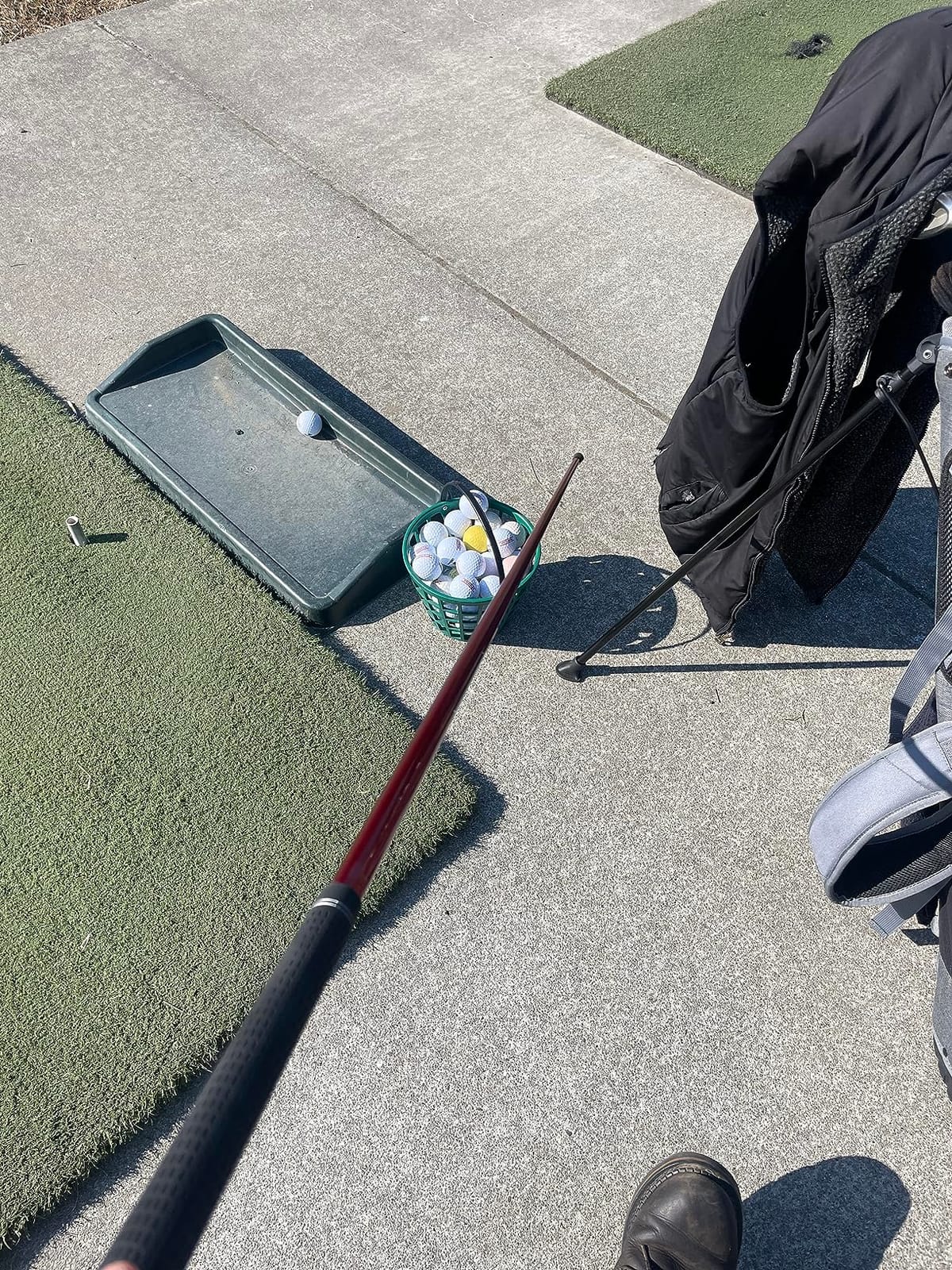
With more than a thousand ratings, the Tec Plus is the most heavily reviewed club in this roundup, and that review volume tells you something useful. It is a dependable first driver for a high-handicap golfer who wants a full 460cc cavity-back head without spending much.
It is a 10.5 degree regular flex graphite build with a textured grip, offered in both standard and offset hosel configurations, and it is explicitly positioned for golfers with a 20-plus handicap. The Xtreme Distance III lightweight graphite shaft is matched to the head, and the whole club weighs 16 ounces.
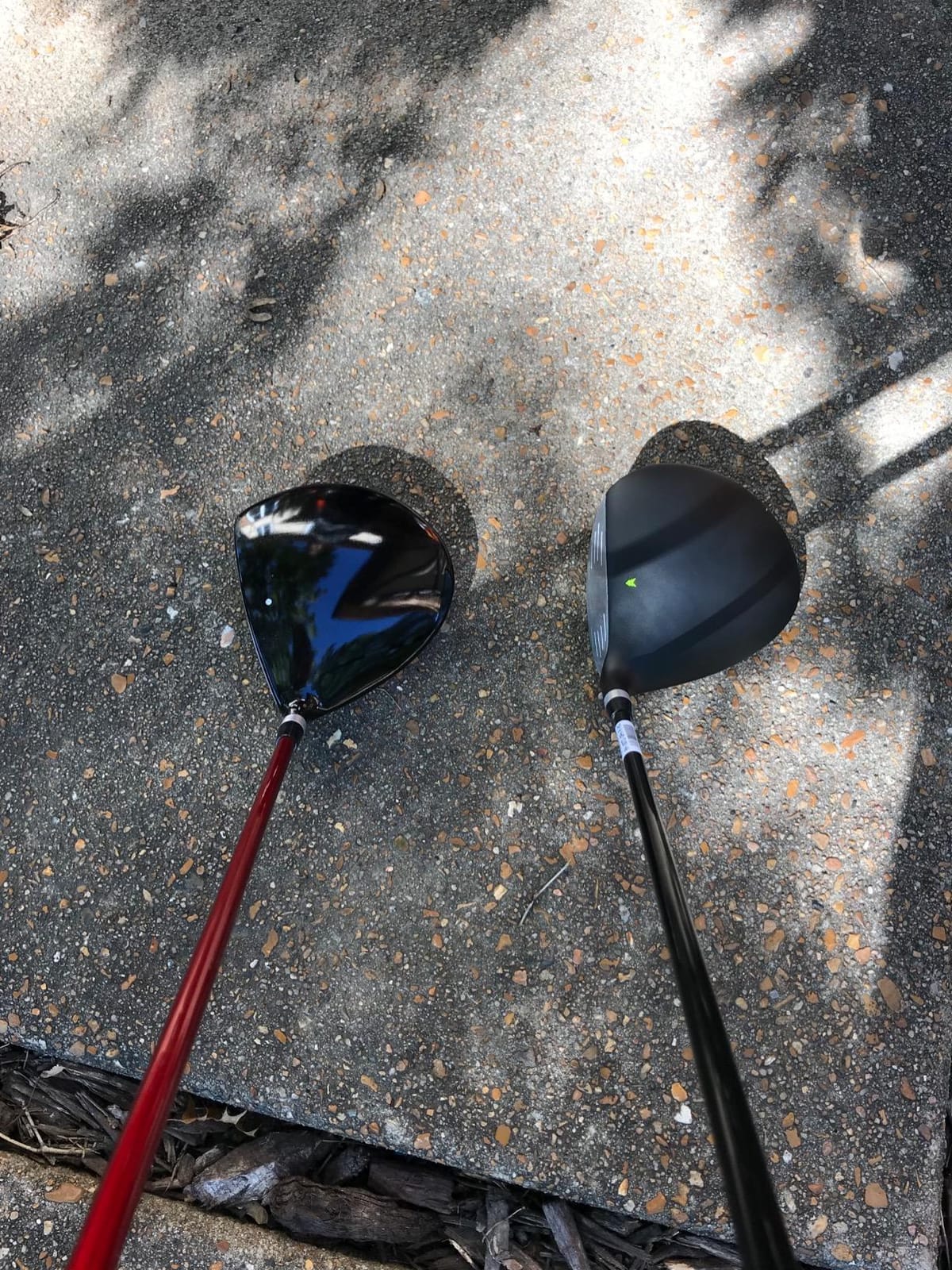
Owners treat it as a dependable first club or a range beater. The most common feedback is that it helps high-handicap golfers get the ball airborne and straighter, which is precisely the job a beginner driver has to do.
The cavity-back design and maximum legal 460cc volume give you more usable face than most entry-level clubs, and the offset version is worth considering if you struggle to square the face on a standing address.
Why budget buyers keep coming back to it
The forgiveness level is listed as mid, which in this category still means a head that rescues contact. For a golfer whose handicap is 20 or higher, that is the only measurement that really matters on a first tee shot.
Owners who upgraded from an even cheaper club report the difference in launch being obvious within a few rounds.
Where it falls short for a total beginner
Sound and impact feedback are described as basic, and the finish is clearly budget-tier. If you are sensitive to sound and feel, the premium picks will feel completely different in the hands.
It is right-handed only in this configuration, and the one year warranty is the shortest on the major-brand models here. The loft is a fixed 10.5 degrees, so there is no tuning later.
4. Intech Behemoth 520cc Driver – Best for Very Slow Swings
Intech Behemoth Non-Conforming Driver, Right Handed, Senior Flex, 10.5°
520cc non-conforming head
10.5 degrees loft
Senior flex graphite
16 ounces
1 year warranty
Pros
- Very straight ball flight even with a sloppy beginner swing
- Oversized 520cc head makes contact easy on off-center strikes
- Senior flex lets slower swingers accelerate without losing distance
- Protective headcover included
Cons
- Non-conforming and therefore not legal for tournament play
- Senior flex can rob distance for golfers with real clubhead speed
- Occasional durability complaints on head and shaft
The Behemoth solves one problem better than anything else on this list: making contact on a really slow swing. Its 520cc head exceeds the legal maximum by 13 percent, and that extra size produces an exceptionally large sweet spot for a slow swing.
It is a 10.5 degree senior flex right-handed graphite build in blue and silver, weighing 16 ounces, with a textured grip and a one year manufacturer warranty. Military-grade 6061 aluminum construction is the budget alternative to titanium, and a headcover is included.
Owners report straighter, more confident drives and many golfers claim 150 to 200 yard shots without extra effort. The senior flex is the reason it works: a softer shaft lets a slower swinger load the club and release it instead of leaving it behind the ball.
The high moment of inertia design is what keeps the head from twisting when contact is off-center, so a mishit still goes roughly where you aimed.
Who this suits better than a conforming driver
If your clubhead speed is genuinely low, a legal 460cc head may feel like it is not going anywhere. The Behemoth’s extra volume and softer shaft get the ball up and out of trouble far more often.
Several owners bought it specifically as a first club and reported immediate improvement in fairway hits.
Where it falls short for a total beginner
The 520cc head is not conforming under the rules of golf, so it cannot be used in tournament or league play. That is fine for a practice bag but a dealbreaker if you plan to compete.
Senior flex robs distance from golfers who have real clubhead speed, and a minority of owners report durability problems with the head or shaft. Right-handed only in this configuration.
5. MAZEL Titanium 460CC Driver – Best Titanium-Style Face on a Budget
MAZEL Titanium Golf Drivers for Men,Right Handed,460CC (Graphite(Golden Head II), Regular (R), 10.5, Degrees, Right)
460cc head
10.5 degrees loft
Regular flex graphite
45 inch club length
CNC cup face
Pros
- Large lightweight head makes center contact easy for beginners
- Reduces slices and drives straighter versus older clubs
- Variable-thickness titanium face rated for high rebound
- Forgiving across the face
Cons
- Gold finish wears off quickly with normal use
- Loud tinny sound at impact
- No headcover included and only a 2-month warranty
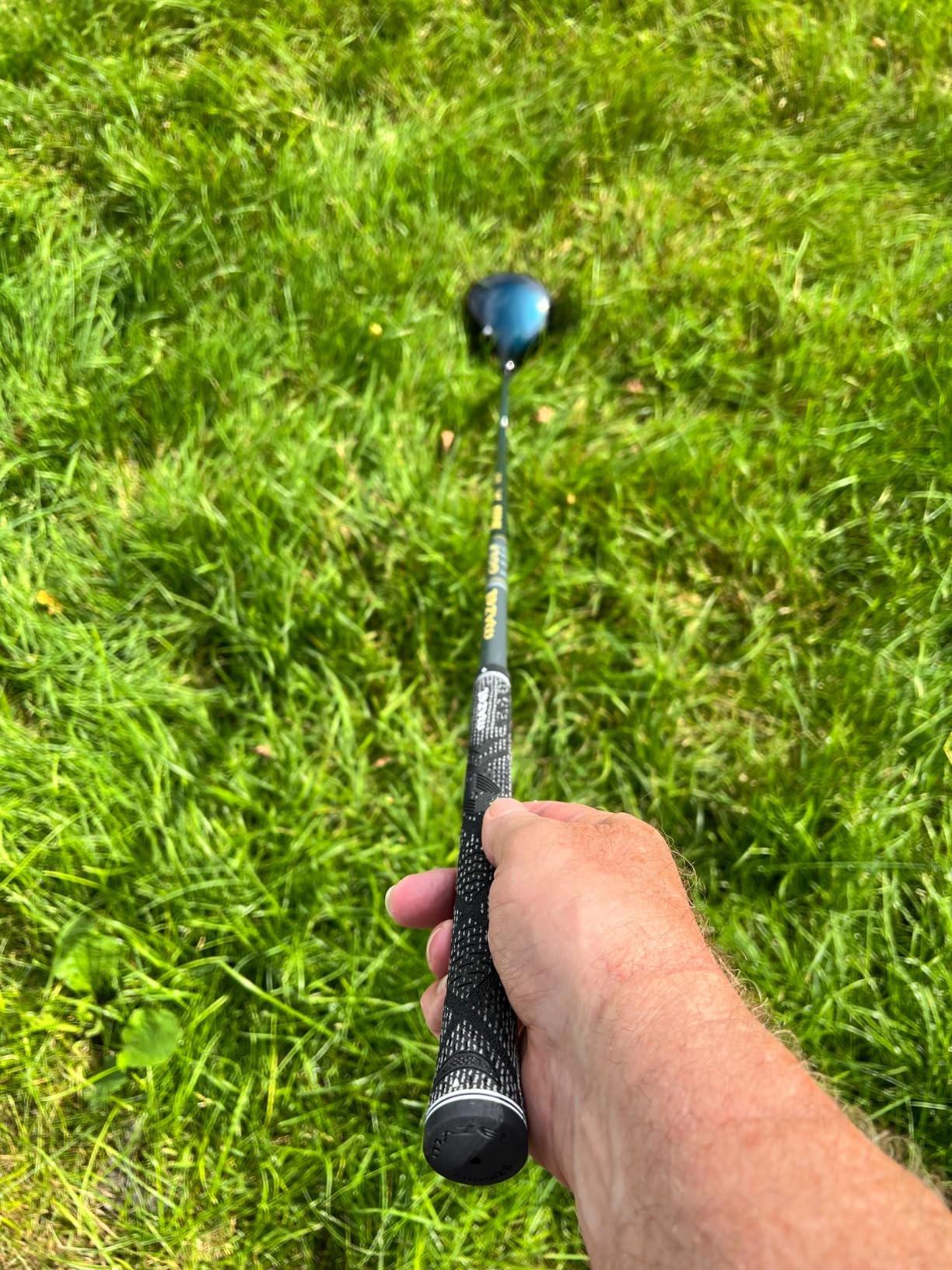
The MAZEL is the one budget pick that uses a variable-thickness titanium face, and that face design is why it hits as well as it does. Most entry-level clubs use a cast aluminum face that deadens contact, and this one does not.
It is a 10.5 degree regular flex right-handed build with a 45 inch length, a wrap grip, and a Golden Head II graphite shaft. The head is 460cc with a deep face designed to expand the sweet spot, weighted low and deep, and wrapped by a speed channel trench around the face.
Owners consistently praise forgiveness and slice reduction in this budget tier, and several report long service life. A CNC cup face with high rebound is doing real work here, keeping ball speed up even on mis-hits.
The variable-thickness face also reduces overall head weight, which helps a slow swing generate clubhead speed. That is a bigger effect than most beginners expect from a club in this category.
Why the face technology matters here
Beginners mis-hit the face more than anything else, and a cup face with a speed channel is one of the few ways to protect ball speed when that happens. Owners report reduced slices versus their older drivers, which is often the first sign the club is working.
The deep 460cc profile and low center of gravity combine to make contact feel stable rather than twitchy.
Where it falls short for a total beginner
The sound is loud and tinny at impact, which some golfers find off-putting once they get used to a nicer sound. The gold finish wears off quickly with normal use, so it will not look new for long.
There is a minority of durability complaints on shafts and clubheads, the warranty is only two months, and no headcover is included. Right-handed configuration only.
6. Money Club High Launch 12.5 Degree Driver – Best for Seniors
Senior Men’s Money Club High Launch 520cc 12.5° Golf Driver. Right Handed Premium Ultra Forgiving Senior Lite Flex Graphite Shaft with Tour Velvet Grip
12.5 degree loft
520cc oversized head
Senior lite flex graphite
Premium velvet grip
Headcover included
Pros
- High 12.5 degree loft gets the ball airborne with minimal swing speed
- Lightweight senior lite flex suits slower senior swings
- Oversized head improves accuracy on mishits
- Tour velvet grip feels comfortable
Cons
- Non-conforming head size means it cannot be used in tournaments
- Limited brand recognition and support compared with major manufacturers
- Right-handed only in this configuration
This is the highest loft in the roundup, and for a specific golfer that is exactly right. At 12.5 degrees, the Money Club High Launch gets the ball airborne with almost no swing speed, which is what makes it a strong pick for seniors and for anyone whose driver shots barely leave the ground.
It pairs that loft with a 520cc oversized head and a senior lite flex graphite shaft. The club comes in black and red with a premium black velvet grip, and a headcover is included. Total weight is listed at 1.13 kilograms.
Reviewers buying for older or slower-swinging golfers report easy launch and more fairway hits from the 12.5 degree head. The senior lite flex is lighter than a standard senior shaft, which helps a golfer accelerate without over-stressing the shoulder and elbow.
Club length is listed at 48 inches by 4 inches by 4 inches, so check that against your height before ordering. A driver that is too long for you is the fastest way to push the ball right.
Where the extra loft pays off
Loft is a launch-angle tool. If your problem is that shots stay low and run out, twelve and a half degrees adds roughly a full launch window compared with a 10.5 degree head, and the senior lite shaft keeps the club on plane.
Owners report the oversized head also improves accuracy, since a bigger face is easier to keep centered.
Where it falls short for a total beginner
The 520cc head is non-conforming under the rules of golf, so no tournament or league play. Brand recognition and support are thin compared with major manufacturers, which matters if something arrives damaged.
There is no published model number, and the club is right-handed only. The velvet grip is comfortable but offers less grip in wet conditions than a traditional rubber grip.
7. Cleveland Launcher XL 2 Driver – Most Forgiving
Cleveland Golf Launcher XL 2 Driver, Graphite, Senior, 12 Degrees (Draw), Right Hand
12 degrees loft
Senior flex graphite
Mallet titanium head
45.5 inch length
Adjustable hosel
Pros
- Very high MOI makes off-center strikes stay in play
- High-launching ball flight that suits slower swing speeds
- Counterweight makes the club feel light and stable through impact
- Hosel adjustability allows launch tweaks as the swing improves
Cons
- Hosel adjustment wrench is sold separately
- Bulky mallet profile can block the view of the ball at address
If forgiveness is the only thing you care about, the Launcher XL 2 is the model we would point you to. Twelve degrees of loft on a mallet titanium head gives it the highest launch in the conforming group here, and the XL head design carries more moment of inertia than the previous generation.
It is a right-handed senior flex graphite build with a standard rubber grip, a one year manufacturer warranty, and a club length of 45.5 inches. The MainFrame XL face uses a variable thickness pattern to maximize flex at impact while moving weight low and deep.
The Rebound Frame adds alternating flex zones that return more energy to the ball, and an 8 gram Action Mass CB counterweight in the head makes the takeaway feel easier and keeps the club stable through impact. Owners specifically mention that the counterweight makes the club feel light in the hands.
The adjustable hosel offers 12 loft, face, and lie positions, which matters more than beginners expect. Most golfers change their swing within a season or two, and a hosel lets you add loft or flatten the face without buying a new head.
Why high MOI matters most for a beginner
MOI is the resistance of the clubhead to twisting on an off-center hit. The higher it is, the less direction and speed you lose when contact is imperfect, and that is the number that separates a forgiving driver from a tour driver.
Owners highlight forgiveness, easy launch, and stability as the club’s defining strengths, with the hosel adding long-term value.
Where it falls short for a total beginner
The adjustment wrench is sold separately, so there is an extra step before you can change the loft. The bulky mallet profile can block your view of the ball at address, which unsettles some beginners more than it helps them.
At 110 ratings the review pool is small, so the long-term picture is thinner than the SIM2 MAX data. Right-handed configuration only.
8. Orlimar Slice Killer Offset Driver – Best for Slicers
Orlimar Slice Killer Offset Driver, Men’s Right Handed Regular Flex 10.5°
7 degree closed face angle
Offset hosel
460cc titanium head
10.5 degrees
Regular flex graphite
Pros
- Closed face and offset hosel visibly reduce slicing
- Draw-bias weighting keeps balls closer to the fairway center
- USGA-legal 460cc titanium head delivers real distance
- Headcover included
Cons
- Strong corrective bias will hook the ball for golfers who already hook
- Dark PVD finish shows wear quickly
- Lowest average rating in this lineup at 3.9 stars
The Orlimar Slice Killer is the most deliberately corrective club in the roundup, and it works on a geometric principle rather than a marketing one. The face is closed by 7 degrees, and the hosel is offset, which delays the face relative to the hands and squares it more naturally at impact.
An anti-slice weighting screw in the heel adds draw-enhancing spin to that geometry. The head is 460cc titanium with a high coefficient of restitution just below the legal limit, so you get real distance without breaking the rules. It is 10.5 degrees, right-handed, regular flex graphite, with a textured grip and a one year warranty.
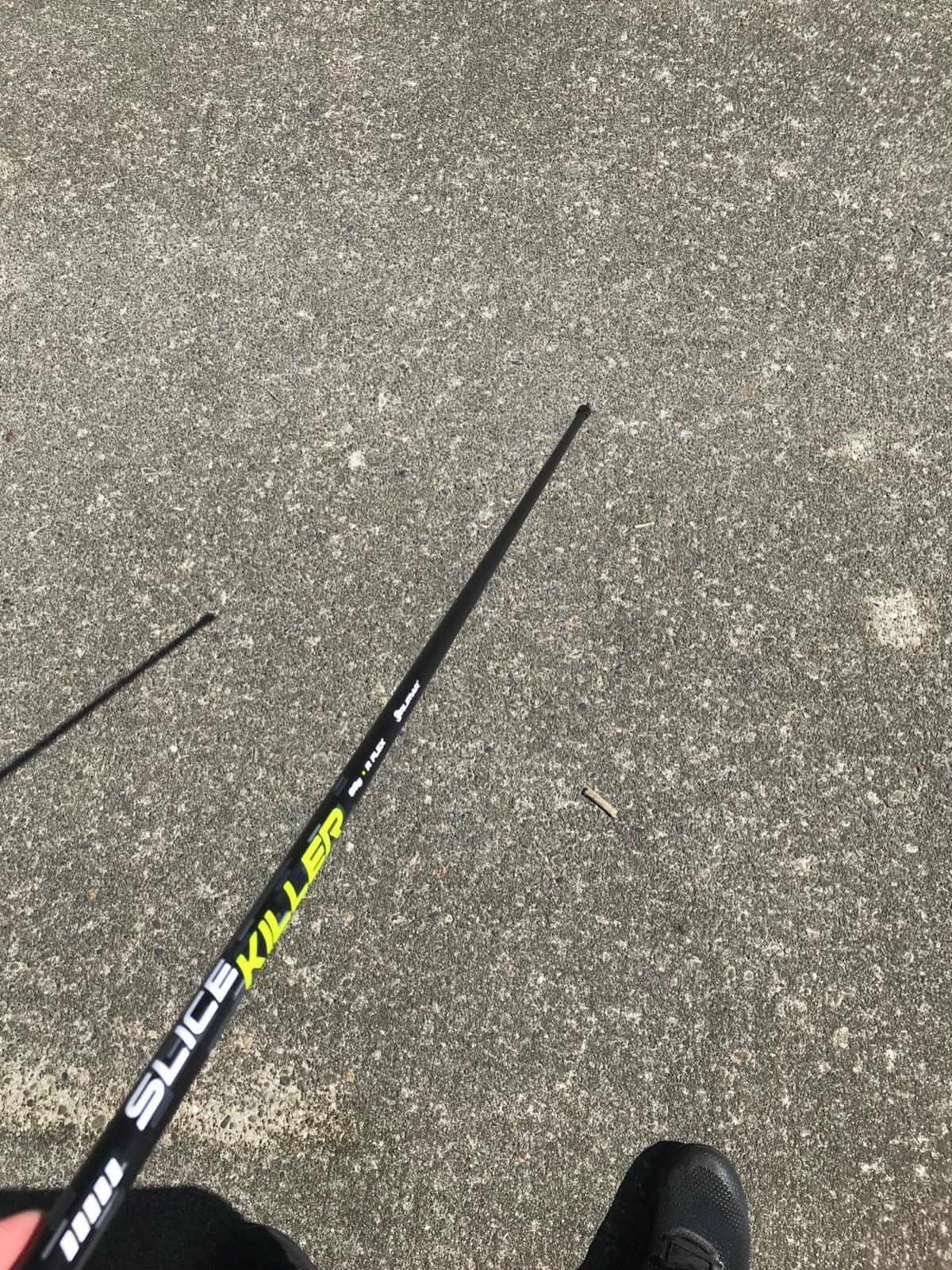
Manufacturers claim 29.7 yards of slice prevention based on independent robot testing. We did not verify that number, but the pattern in owner reports is consistent: slicers say the closed face and offset hosel do tame right-hand misses, and the club is available in an all-black PVD finish with a headcover included.
The club weighs 16 ounces, which is light for a titanium head, and it is a legal 460cc design, so unlike the oversized value picks it can be used in competition.
When offset geometry beats draw weighting
Offset moves the whole clubhead behind the hands so the face closes slightly before impact. For a golfer who leaves the face open through the takeaway, that physical delay is often more effective than adding weight to the heel.
It also changes your visual of the ball at address, so give yourself a few range sessions before judging whether the position feels comfortable.
Where it falls short for a total beginner
The corrective bias is strong enough that golfers who already hook the ball find it excessive. It is not a general-purpose game-improvement head, and its 3.9 star average is the lowest in this lineup, reflecting a wide spread of experiences.
The PVD finish shows wear quickly, and a recurring forum caveat is that offset drivers can cause shanks if a golfer stands too close to the ball. Right-handed configuration only.
9. Performance Golf SF1 Driver – Best for Straightness
Performance Golf SF1 Driver – Square Face Technology (Senior, Right)
12 degrees loft
Senior flex
Carbon fiber construction
Square Face Technology
Counterbalance shaft
Pros
- Square face design measurably reduces slices for many golfers
- Forgiving across the face including toe and heel strikes
- Adds roughly 10 to 15 yards of distance for beginners
- Sleek modern look with a quality headcover included
Cons
- Slice correction is not universal and takes practice
- Advertised refund policy is not honored for Amazon purchases
- Some buyers report needing an adjustment period
The SF1 attacks the same slice problem as the Slice Killer with a different theory. Instead of offsetting the hosel, it uses Square Face Technology, a draw-calibrated face angle and weight distribution designed to hold a straight or slight draw flight.
The AeroSquare crown is inspired by race car cornering aerodynamics, closing the toe section at impact to keep the face square. A premium counterbalance shaft helps stabilize the head through the downswing, and the whole club is 12 degrees on a senior flex right-handed carbon fiber build weighing 65 grams.
Owners report the square face measurably reduces slices for many golfers, forgiveness across the face including toe and heel strikes, and roughly 10 to 15 yards of added distance for beginners. The headcover that comes with it is better than most budget inclusions.
The reception is genuinely split, and it is worth being straight about that. Many golfers report straighter, longer drives and more confidence off the tee, while a minority see no change at all. Slice correction from any head is a training aid, not a fix, and the SF1 will not rewrite a swing that is still moving.
Why 12 degrees helps a beginner more than it hurts
The extra loft over a 10.5 degree head widens your launch window, which is the single biggest factor in whether you can hit a driver at all in year one. If you already make contact, the higher loft simply adds airtime and reduces the run-out.
Owners buying for beginners frequently mention the confidence gain off the tee, which matters more than the yardage.
Where it falls short for a total beginner
The correction is not universal and takes practice, and some buyers report needing an adjustment period to get used to it. There is also a documented complaint that the manufacturer’s advertised unconditional refund policy is not honored on Amazon orders, so check the return terms carefully before ordering.
Senior flex on a 12 degree head is a slow-swinger build, and it is a right-handed configuration only.
10. Powerbilt TPS Blackout Max Driver – Best Budget Practice Driver
Powerbilt TPS Blackout Max Driver, Men’s Right Handed Black/Red
460cc legal head
10.5 degrees loft
Regular flex graphite
Alloy construction
Headcover included
Pros
- Maximum 460cc head gives a large forgiving sweet spot
- Retro black and red scheme stands out from typical budget clubs
- Matching headcover included
- Familiar feel compared with older Callaway-style drivers
Cons
- Some durability complaints including heads loosening or breaking during heavy range use
- Limited distance gain over mid-tier drivers
- Simple alloy build with basic feel
Not every driver in a bag needs to be the one you keep forever. The Blackout Max is a full-size 460cc legal head with a high moment of inertia alloy build, and it makes a sensible spare club that takes the beating instead of your good driver.
It is a 10.5 degree regular flex right-handed graphite build in black and red, with a custom rubber grip, a matching headcover included, and a one year manufacturer warranty against defects. The club length is listed at 46 inches by 5 inches by 5 inches.
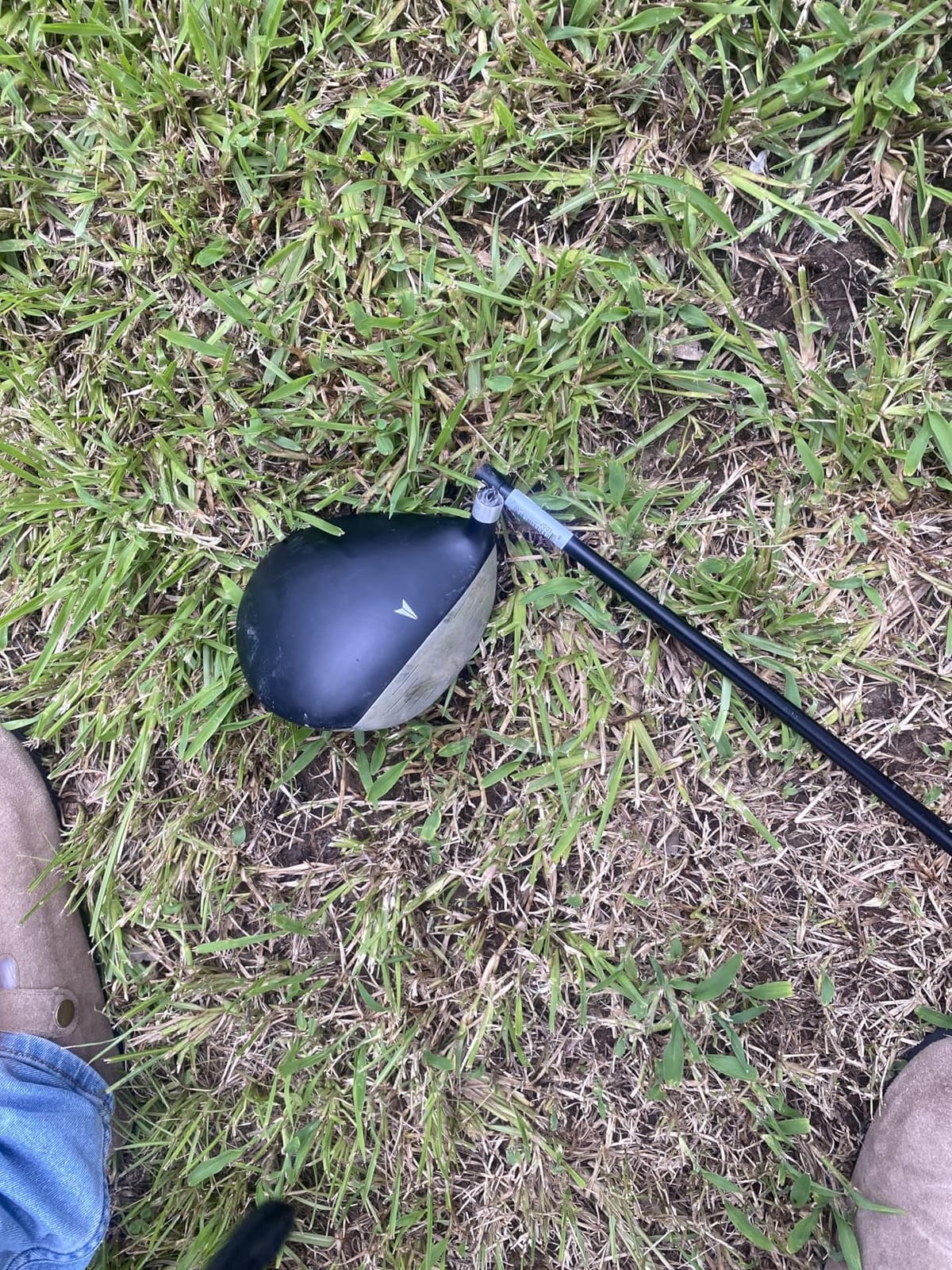
Owners like the retro black and red scheme, which stands out from the usual budget clubs, and several describe the feel as familiar compared with older Callaway-style drivers. That sense of a normal golf club in the hands is useful for a beginner who is still building coordination.
Because 460cc is the maximum legal head volume, there is nothing to give up on conformity here. This is a fully legal driver, unlike the oversized value picks, which is unusual at the entry price point.
Why you might want two drivers in year one
Beginners hit a lot of balls, and a practice club absorbs the damage while the real driver stays clean. A full-size legal head means you are still training your swing on a driver profile, not a toy.
Owners use it as an entry-level practice or beginner driver and report the large sweet spot doing most of the work.
Where it falls short for a total beginner
There are durability complaints, including heads loosening or breaking during heavy range use, which is exactly where a practice club gets worked hardest. The simple alloy build has basic feel, and several owners report limited distance gain over mid-tier drivers.
With 92 ratings the review pool is small, and the club is right-handed only in this configuration.
11. Cleveland HiBore XL Lite Driver – Best Lightweight Build
Cleveland Golf HiBore XL Lite Driver, Graphite, Regular, 10.5 Degrees, Right Hand
460cc head
10.5 degrees loft
Regular flex graphite
16 ounces
1.5 degree adjustable hosel sleeve
Pros
- Extremely forgiving across the face including toe shots
- Lightweight build adds clubhead speed for slower swingers
- Internal draw weighting makes slicing nearly impossible
- Several owners report 40 to 60 yards of added carry distance
Cons
- Large head profile is aesthetically polarizing
- Some arrived with grip assembly problems
The HiBore XL Lite is built around one number: 32 grams lighter than the standard HiBore XL. Total club weight is 16 ounces, and that low mass is the whole point. Less mass in the head means more clubhead speed for the same swing effort, which is the gap a beginner most needs to close.
It is a 10.5 degree regular flex right-handed graphite build with a synthetic rubber grip and a one year manufacturer warranty. The A.I.-designed chassis carries one of the largest ball-striking areas in the industry, and the MainFrame XL variable-thickness face repositions weight low and deep.
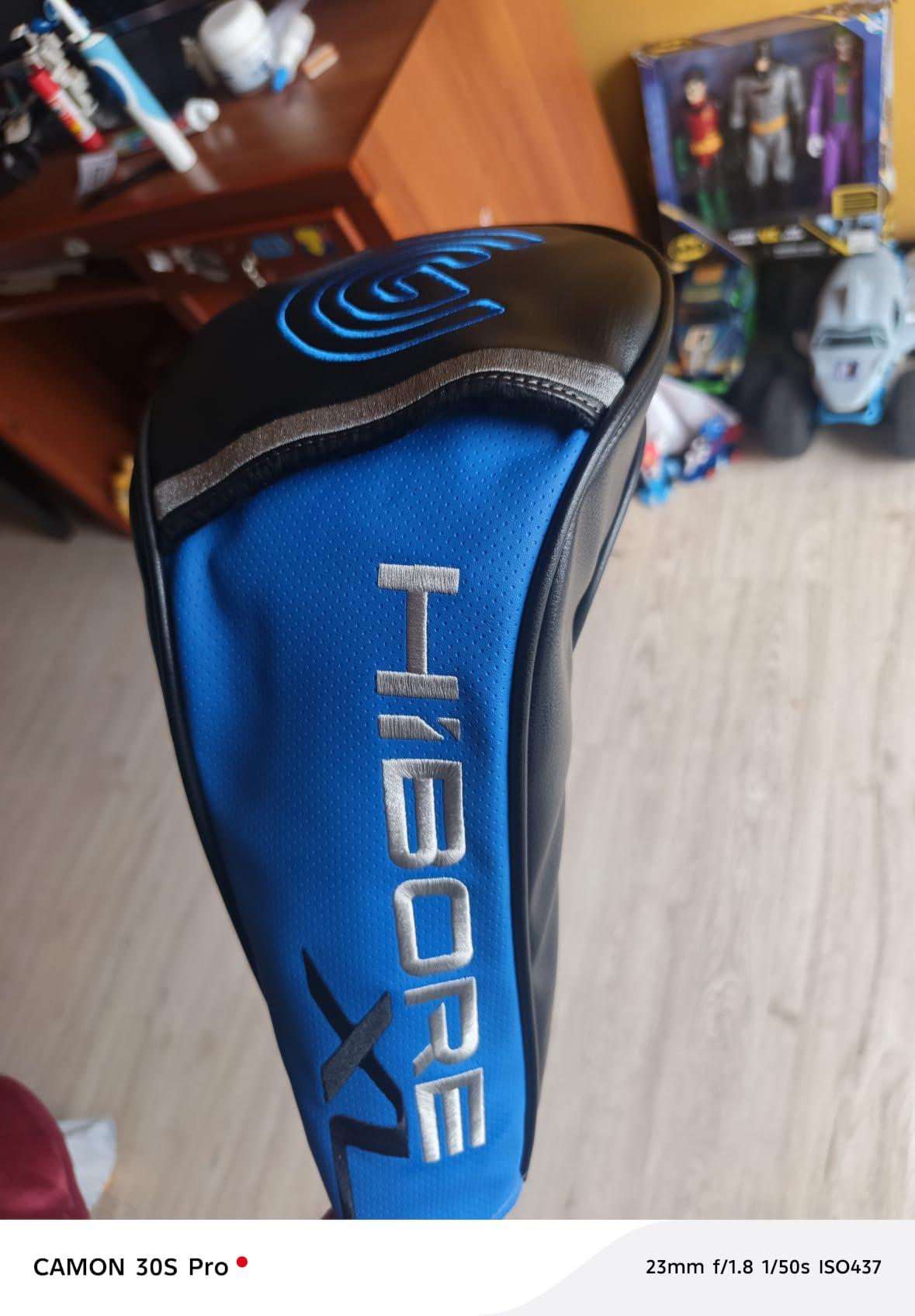
Internal draw-biased weighting helps correct slices, and the 1.5 degree hosel sleeve gives you loft, face, and lie adjustability. An ACTIVWING airfoil stabilizes the clubhead through the downswing, which is a subtle stabilizer that helps you keep the face square longer.
Owners report the club is extremely forgiving across the face including toe shots, and several describe 40 to 60 yards of added carry distance alongside much better fairway accuracy. That is a large claim, but it comes with a caveat: the review pool here is only 41 ratings.
Why low mass matters for a slow swing
Clubhead speed is a function of the energy you put in divided by the mass you have to move. A lighter head converts the same swing into more speed, and more speed is what adds carry distance without changing your technique.
For golfers who get tired mid-round, a light club also reduces fatigue, which protects the swing on the back nine.
Where it falls short for a total beginner
The large head profile is aesthetically polarizing, and a few arrived with grip assembly problems, so inspect the grip on arrival. With 41 ratings, this is the thinnest review base in the roundup, and the distance claims come from owners rather than instrumented testing.
It is a right-handed configuration, and the material listing lists carbon steel in the build, which is a specification worth double-checking against what arrives.
12. COOLO Golf Driver – Best Explicitly Built for Beginners
COOLO Golf Driver for Beginners & Intermediate, Forgiving & Easy Launch(10.5°, Regular, Right, Black)
460cc head
10.5 degrees loft
Regular flex graphite
340 grams
47 inch club length
Pros
- Explicitly tuned for beginners and intermediate golfers
- Deep face and high loft get the ball airborne easily
- Solid non-mushy impact feedback
- Durable enough for range use over many sessions
Cons
- Some golfers still slice with it
- Isolated durability reports of the clubhead separating
- No headcover listed in the box
The COOLO is the only club in this roundup whose manufacturer states plainly that it is designed for beginners and intermediate golfers. That positioning shows up in the engineering: increased loft, face depth, and a sole, crown, and weight layout that lowers the center of gravity for slower swing speeds.
It is a 10.5 degree regular flex right-handed graphite build in black, 47 inches long, and the whole club weighs 340 grams. The head sits at the maximum legal 460cc volume with a deep face intended to expand the sweet spot.
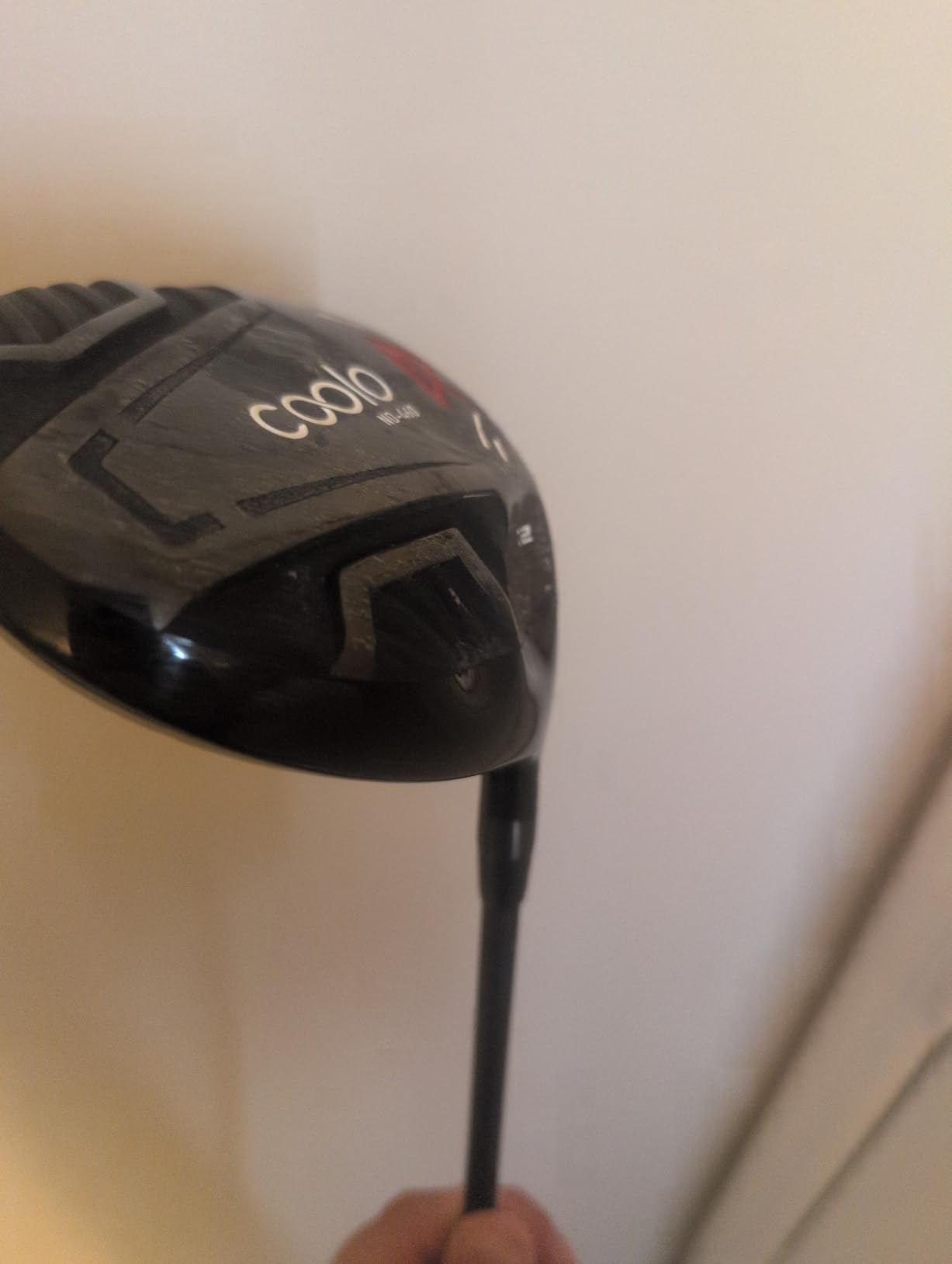
Owners back the beginner positioning with reports of easy launch, good feel, and solid durability over about a year of use. The impact is firm and responsive rather than mushy, which matters because a dead-feeling impact makes beginners think they missed a good shot when they actually struck it well.
The 160 ratings average 4.2, and the most common feedback is that the deep face and high loft get the ball airborne easily. Slicing persists for some golfers even with this design, and there are isolated reports of the clubhead separating from the shaft.
Why a beginner-labelled club is worth a look
A club built for high handicap golfers prioritizes the two things a new player lacks: launch and stability. This one raises loft and face depth together, which widens the margin for error on contact.
Owners report solid durability over many sessions, which matters for a golfer who hits a bucket of balls every week in practice.
Where it falls short for a total beginner
Some golfers still slice with it, so the head shape is not a cure for a genuine swing-path problem. There are isolated durability reports of the clubhead separating, and no headcover is listed among the contents.
Brand support is minimal compared with major manufacturers, and the club is right-handed only in this configuration.
What Loft Should a Beginner Driver Be?
Ten and a half to twelve degrees is the right band for a beginner, and most beginners should start in the middle of it. Loft controls launch angle: a higher lofted face points the ball up more, so a slower swing still gets it airborne. Ten and a half degrees is a sensible all-round default, twelve degrees is the forgiving end, and anything below nine and a half is where beginners start struggling to get the ball off the ground.
Forum consensus on r/golf and GolfWRX matches what the specifications suggest. Golfers repeatedly report that very low loft, in the eight and a half to nine degree range, leaves them unable to get the ball airborne at all. A 10.5 degree head is usually the sweet spot for slower swing speeds, and 12 degrees adds forgiveness for the golfers who need it.
If you are still choosing, use this guide:
9.5 degrees – the lowest loft we would consider for a beginner. It suits a golfer with a genuinely fast swing who still wants a large head. If you are unsure of your speed, this is not the loft to start with.
10.5 degrees – the default beginner loft. Easy launch, long carry, and the most common choice in this roundup. Nine of the twelve clubs here are 10.5 degrees.
12 degrees – the forgiving end. A wider launch window and more spin, which helps contact stay in the air longer on poor strikes. Slightly less roll out, which is a fair trade for accuracy.
12.5 degrees – the senior and very slow swing end, represented by the Money Club High Launch. Maximum air, minimum distance roll out.
Is a 10.5 degree driver too high? No. It is the most common beginner loft on the market precisely because it balances launch and roll out. A golfer with genuine clubhead speed can go lower, and a golfer who never gets the ball off the ground should go higher.
How to Match Shaft Flex to Your Swing Speed
Shaft flex is the most important variable on the entire driver, and beginners get it wrong more often than they get the head wrong. Multiple r/golf threads report that the wrong flex, not the wrong clubhead, is what ruined a new golfer’s experience. A shaft that is too stiff cannot be loaded, which means a low strike and a face that stays open. A shaft that is too soft costs you control and, over time, distance.
The rule of thumb is the slow-to-fast principle. If your swing feels like the club lags behind your hands and the strike is late, the shaft is too stiff. If the face feels unstable and you cannot keep the ball direction, it may be too soft.
Here is how to estimate your swing speed without a launch monitor:
Use your longest shot as a yardstick – note your longest drive over a full swing rather than your best one, and compare it with the carry distances owners report for the clubs on this list. A beginner whose longest drive sits far short of the 200 yard range owners describe is almost certainly swinging a shaft that is too stiff.
Check the ball flight shape – a low, running shot with no height usually means the shaft is too stiff for your speed, or the loft is too low.
Test two flexes – if a club shop is nearby, hit one regular flex and one senior flex driver. The club you can launch consistently is the right one, regardless of what the label says.
Start at regular or senior – under roughly 95 mph of clubhead speed, senior or light flex is the safe call. Above that, regular flex is fine and stiff becomes an option.
Light flex and ladies flex are lighter shafts for the same reason. Lower mass means more clubhead speed for the same effort, which helps golfers with slower swings. The Cleveland HiBore XL Lite makes the same point in a different way, at 32 grams lighter than its standard sibling.
One piece of free advice from the forums worth repeating: beginners say the wrong flex, not the wrong clubhead, ruined their experience. If you can only change one thing about a driver before buying, match the flex first.
Head Size, MOI and What Forgiveness Actually Means
Forgiveness is the reason this entire category exists, and it comes down to two measurements. Moment of inertia, or MOI, is how strongly the clubhead resists twisting when you miss the center of the face. A higher MOI means a heel or toe strike loses less direction and less speed, so the ball still goes roughly where you aimed.
The second measurement is center of gravity position. Weight placed low and deep in the head makes it harder to launch from the wrong part of the face, because the low point of the swing matters more. A low, deep CG is the design feature behind most game-improvement drivers, and several picks here list it explicitly.
Head size is the visible half of the story. The maximum legal volume under the rules of golf is 460cc, and every conforming club in this roundup is built at or near that ceiling. Anything larger, such as the 520cc heads on two of these picks, is non-conforming and cannot be used in tournament or league play, but it will give a slow swing more help than a legal head can.
Draw bias is a third forgiveness tool. Weight added to the heel of the head or a face closed by a few degrees makes the club bias toward a straight or slightly hooked flight. That is exactly what a slicer needs, and exactly what a hooker should avoid.
Adjustability is worth thinking about if you expect to improve quickly. The Cleveland Launcher XL 2 and the HiBore XL Lite both have hosel sleeves that change loft, face, and lie settings. For most beginners that flexibility is not needed in year one, but it stops a good club from becoming obsolete in year two.
Draw Bias vs Offset: Which One Fixes Your Slice
Draw bias and offset both fight a slice, and they do it in different ways. Draw bias adds weight to the heel of the head or closes the face slightly, so the ball hooks more. Offset moves the entire clubhead behind your hands at address, delaying the face until impact and squaring it naturally. Slicers often report that an offset head helps them relax at address rather than needing a technical fix.
Pick draw bias if your misses are consistent to the right and you want the head to do the correcting. Pick offset if you struggle with the physical timing of the face, because the geometry works whether or not you understand it. Avoid both if you already hook the ball, since the corrective bias will simply move your misses to the other side.
Both approaches in this roundup have a documented downside. The Callaway B21’s internal draw bias is strong enough that hookers returned it, and the recurring forum caveat on offset drivers is that they can cause shanks if a golfer stands too close to the ball. The Orlimar Slice Killer and the Performance Golf SF1 are the two clearest corrective picks here, and the SF1’s reception is split precisely because slice correction from a head is a training aid rather than a cure.
New Model, Previous Generation or Used?
Used and previous-generation recommendations dominate forum threads, and the logic is sound. Multiple r/golf threads advise that any driver from roughly the last five years performs essentially the same, and that flex is the variable that actually matters. A previous-generation or used driver delivers the same forgiveness as a new flagship for far less.
Used and previous-generation buying checklist:
Check the face for grooves and deep marks – cosmetic wear is fine, but grooves and deep pitting change ball speed and the ball can stop digging in at impact.
Check the sole and crown for cracks – carbon fiber crowns can hide impact damage. Press firmly on the crown and the sole plate.
Look for a loose or rattling head – hold the hosel and twist the head. Any movement means the bonding has failed.
Check the shaft for kinks and scrapes – especially near the grip and the tip. A damaged shaft changes the delivery more than a damaged head.
Check the grip condition – a slick grip is the most avoidable reason to lose clubhead speed, and a regrip is inexpensive.
Confirm loft and flex from the markings – old forum advice often points at discontinued models, so verify what you are actually buying.
One caution about used advice specifically. Older forum threads recommend long-dead models that cannot be bought new, so treat any recommendation naming a discontinued head as historical. Judge the club in front of you by its specifications, not by the model name.
How much should a beginner spend on a golf driver? A previous-generation or used model gives you the same forgiveness as a new flagship for far less, which is why the used route is the most common recommendation in the forums. The picks at number three, four, five, and ten on this list are the budget end of the lineup, and all of them still deliver a large, forgiving head. Use the check price button on each review to see the current figure.
Do Beginners Even Need a Driver?
Some beginners should skip the driver entirely, and that is a legitimate answer rather than a failure. If the intimidation of a 460cc head is stopping you from playing at all, a 3 wood or a hybrid is easier to hit and still covers the same holes from a slightly shorter distance. This objection comes up constantly in forum threads from people building their first set.
The practical test is simple. If you can make contact with a driver seven or eight times out of ten and the ball is in the air, keep the driver. If you are shanking it into the trees or hitting it five yards, start with a hybrid and add the driver later.
Beginners also ask whether the driver is worth upgrading. A beginner driver stays relevant for a long time, and the forums are fairly consistent that a well-built club from the last few model years is not outgrown quickly. The thing that changes is your fit, not the club, and a loft or lie adjustment is often enough.
If you are building out the rest of the bag, our beginner golf club set guide covers the shorter clubs that make driving one of the easier things to fix, and the rangefinders for beginners guide helps you get real numbers on your own distance instead of guessing.
Where to Buy a Beginner Driver
National retail chains and golf specialty stores are the sensible starting point for a first club, because you need somewhere to hit the driver before you commit to it. Borrow a used driver of the same loft, or take a spare from a friend, and test regular flex against senior flex in person before you commit. Many of the value picks in this roundup also come direct from the manufacturer, which is convenient if there is no shop nearby.
Pre-owned marketplaces are the strongest value path, and it is the most common recommendation in the forums for a reason. A previous-generation major-brand head from a reputable certified refurbisher gives you flagship forgiveness without the flagship tier. Check the return policy before buying used, because grip condition and hidden shaft damage are the two things you cannot see in photos.
For practice at home between trips, our golf simulators for home practice guide covers launch monitors at a range of budgets, and the push carts for walking golfers guide matters more than most people expect once you are walking nine holes with a bag you have just filled.
Frequently Asked Questions
What is the easiest driver to hit for a beginner?
The easiest drivers to hit are large-headed, high-loft game-improvement models in 10.5 to 12 degrees with a regular or senior flex graphite shaft. Look for a 460cc head with a low, deep center of gravity and high moment of inertia, because those two features keep mishits on target. In this roundup the Cleveland Launcher XL 2, with 12 degrees and a high-MOI mallet head, is the most forgiving option.
Is 10.5 degree loft good for beginners?
Yes, 10.5 degrees is the most common beginner loft and the default we recommend. It gives a slow swing enough launch to get the ball airborne without giving up all of the roll out that a lower lofted head produces. Nine of the twelve drivers in this roundup are 10.5 degrees. If your ball flight stays low and you never get height, move up to 12 degrees instead.
What shaft flex should a beginner choose?
Start with regular flex if your clubhead speed is roughly 95 mph or above, and use senior or light flex below that. Too stiff a shaft cannot be loaded, which produces a low strike and an open face. A simple test is to check whether your shots fly low and run out, which points to a shaft that is too stiff for your speed.
What is the most forgiving driver for beginners?
The most forgiving drivers for beginners combine the maximum legal 460cc head with the highest possible moment of inertia and the deepest center of gravity. Among these picks, the Cleveland Launcher XL 2 is the most forgiving conforming option at 12 degrees with a high-MOI mallet design. If conformity does not matter to you, the oversized 520cc heads are even more forgiving but cannot be used in tournament play.
Should a beginner buy a new driver or a used one?
A previous-generation or used driver gives you the same forgiveness as a new flagship, and forum consensus is that any driver from the last five years performs similarly. If you buy used, inspect the face for grooves, press the carbon crown for cracks, twist the head to check for looseness, and check the shaft and grip condition. Expect to regrip either way.
Do beginners need a driver or can they use a hybrid?
Many beginners can play well with a hybrid or 3 wood instead of a driver, and it is a legitimate choice rather than a failure. A shorter club is easier to launch and easier to control. If you make contact with a driver seven or eight times out of ten and the ball is airborne, keep the driver. If you are shanking it or hitting it only a few yards, start with a hybrid and add the driver later.
Final Verdict: The Best Golf Driver for Beginners in 2026
The TaylorMade SIM2 MAX is our pick for the best golf drivers for beginners in 2026, because it is the only club here that combines major-manufacturer forgiveness with a stable, balanced feel that does not punish an inconsistent swing. The Callaway Big Bertha B21 is the smarter value route to the same forgiveness if you are buying at the upper end of your budget. The Intech Tec Plus and the Powerbilt Blackout Max are the practical choices when cost decides everything, and both still give you a full 460cc head.
Match the rest to your problem rather than your ego. Slicers should look at the Orlimar Slice Killer or the Performance Golf SF1. Seniors and very slow swings should look at the 12.5 degree Money Club High Launch. Golfers who strike the face everywhere should look at the MAZEL titanium cup face. Practicing golfers who want a legal spare should look at the Powerbilt. And anyone whose misses go in both directions should skip the draw-bias clubs entirely and take the TaylorMade or the Cleveland HiBore XL Lite.
Whatever you choose, get the flex right before you get the head right. It is the one decision that beginners most often get wrong, and it is the one that matters most over a season of practice.