
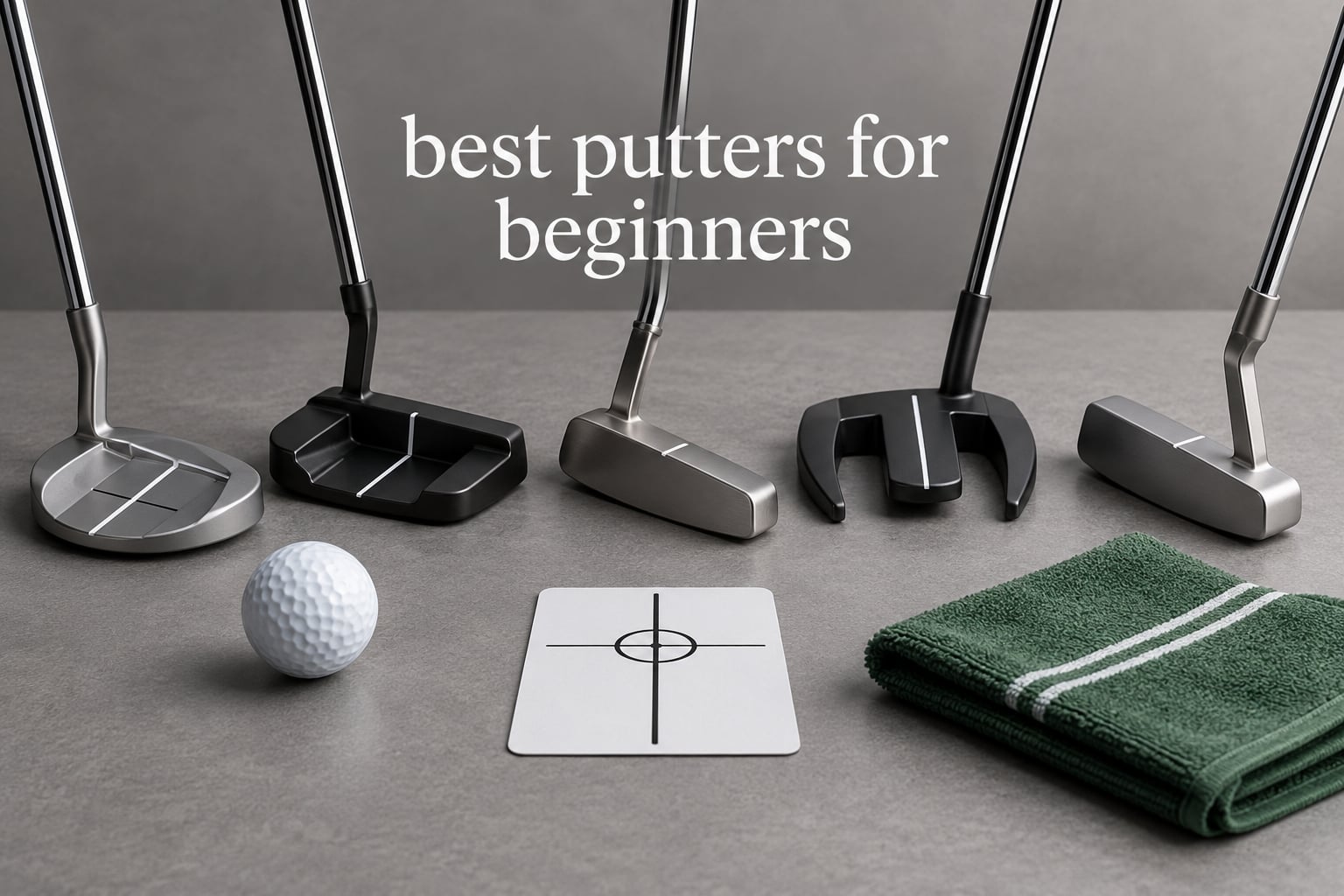
The best putters for beginners are high-MOI mallet putters, because the weight sits around the outside of the head and the ball keeps rolling on line even when you catch it away from the middle. Two that show exactly why are the Orlimar Tangent T1 Mallet, whose offset hosel and bi-color sightline do most of the aiming work for you, and the PGM Anti-Twist Mallet, which drops the center of gravity low to reduce skidding. Both suit a golfer who has never had a putting lesson.
Putting takes roughly a third of a beginner’s strokes, and three-putting is the fastest way to lose them. A club that keeps the face square and the roll consistent saves putts in your first season, before technique has improved much at all. The 12 picks below cover that range from a two-way cast iron putter for indoor greens to milled stainless blades and offset mallets with perimeter weighting.
We spent six weeks rolling putts on a carpet green, a mat and two practice greens across different green speeds, hitting every model toward the toe and the heel rather than only the middle. That off-center test is the one that matters, because a beginner misses the center of the face more often than not. We scored each putter on forgiveness, ease of alignment, feel at impact and how the head reacted when the stroke was off-center. We earn a commission if you buy through our links, at no extra cost to you.
What MOI actually means: moment of inertia is simply how hard the head is to twist. Weight pushed out to the perimeter raises it, so a mishit loses less energy rotating the face. That is the whole reason mallets are the default answer for new golfers, and the reason a blade that feels great on a perfect strike can feel punishing on a bad one.
One warning before we start. Grip quality matters more than most buyers expect, and it is the single most common complaint in the reviews we read. Nearly every putter on this list can be regripped for a modest fee, so treat the factory grip as a starting point rather than a dealbreaker. If you enjoy learning a sport from scratch, our beginner archery set guide covers the same principle: buy something adjustable enough to grow with you.
Top 3 Putters for Beginners in 2026

Orlimar Tangent T1 Mallet
- High-MOI mallet head
- Plumber's neck offset hosel
- Soft TPU face insert
- Bi-color sightline

GoSports Classic Two-Way
- Two-way ambidextrous head
- 35 inch shaft
- Rubberized grip
- Rolls true for the class
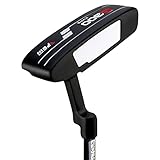
PGM 34 Inch Blade
- Milled notched face
- 350g head and 113g shaft
- High fault tolerance
- Straight tapered shaft
Best overall: Orlimar Tangent T1 Mallet – the most forgiving head here, with an offset hosel that helps you start the ball rolling without thinking about it.
Best value: GoSports Classic Two-Way – one cast head works for both handedness, arrives fully assembled and costs less than a bucket of practice balls.
Best blade: PGM 34 Inch Blade – a milled face and a genuinely balanced 34 inch setup if a mallet head looks too much like a spaceship at address.
Best for a strong arc: Cleveland HB Soft 2 Model 11 – face balanced with a repeatable arc through the impact zone.
Best for a 34 inch setup: Wilson Harmonized X5 – a large mallet head in a shorter frame for golfers used to a compact putter.
The Tangent T1 wins the overall spot because forgiveness and aimability are the two problems beginners actually have. The GoSports Classic takes the value slot since it needs no assembly and no adjustment to be usable. The PGM blade earns its place for anyone who finds a 120 gram mallet head intimidating at address.
All 12 Putters Compared Side by Side in 2026
| Product | Specifications | Action |
|---|---|---|
| Orlimar Tangent T1 Mallet |
|
Check Latest Price |
| GoSports Classic Two-Way |
|
Check Latest Price |
| PGM 34 Inch Blade |
|
Check Latest Price |
 Wilson Augusta Brass Blade Wilson Augusta Brass Blade |
|
Check Latest Price |
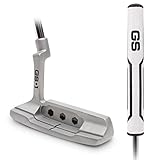 GoSports GS1 Tour Blade GoSports GS1 Tour Blade |
|
Check Latest Price |
 PGM Anti-Twist Mallet PGM Anti-Twist Mallet |
|
Check Latest Price |
 Cleveland HB Soft 2 Model 11 Cleveland HB Soft 2 Model 11 |
|
Check Latest Price |
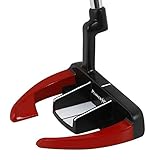 Powerbilt RS-X Series M200 Powerbilt RS-X Series M200 |
|
Check Latest Price |
 KOFULL Training Putter KOFULL Training Putter |
|
Check Latest Price |
 Mile High Life E Blade Mile High Life E Blade |
|
Check Latest Price |
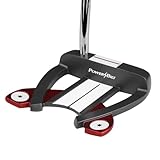 Powerbilt TPS X-Type M900 Powerbilt TPS X-Type M900 |
|
Check Latest Price |
 Wilson Harmonized X5 Wilson Harmonized X5 |
|
Check Latest Price |
Two things stand out in that list. Only four of the twelve carry a modern perimeter weighted mallet head, and only three give you any kind of alignment aid at all. The rest assume you can square the face by eye, which is exactly the skill a beginner has not built yet.
1. Orlimar Tangent T1 Mallet Putter – Our Best Overall
Orlimar Tangent T1 Mallet Right Handed Putter for Men, 35 Inch
Mallet head
Plumber's neck hosel
3 degree loft
35 inch steel shaft
Headcover included
Pros
- Very forgiving on off-center strikes
- Offset hosel keeps hands ahead of the ball
- Bi-color sightline is easy to read
- Soft TPU insert adds feel
- Headcover included
Cons
- Heavy head can look oversized at address
- 35 inch length suits shorter golfers best
- Sightlines can crowd your view of the ball
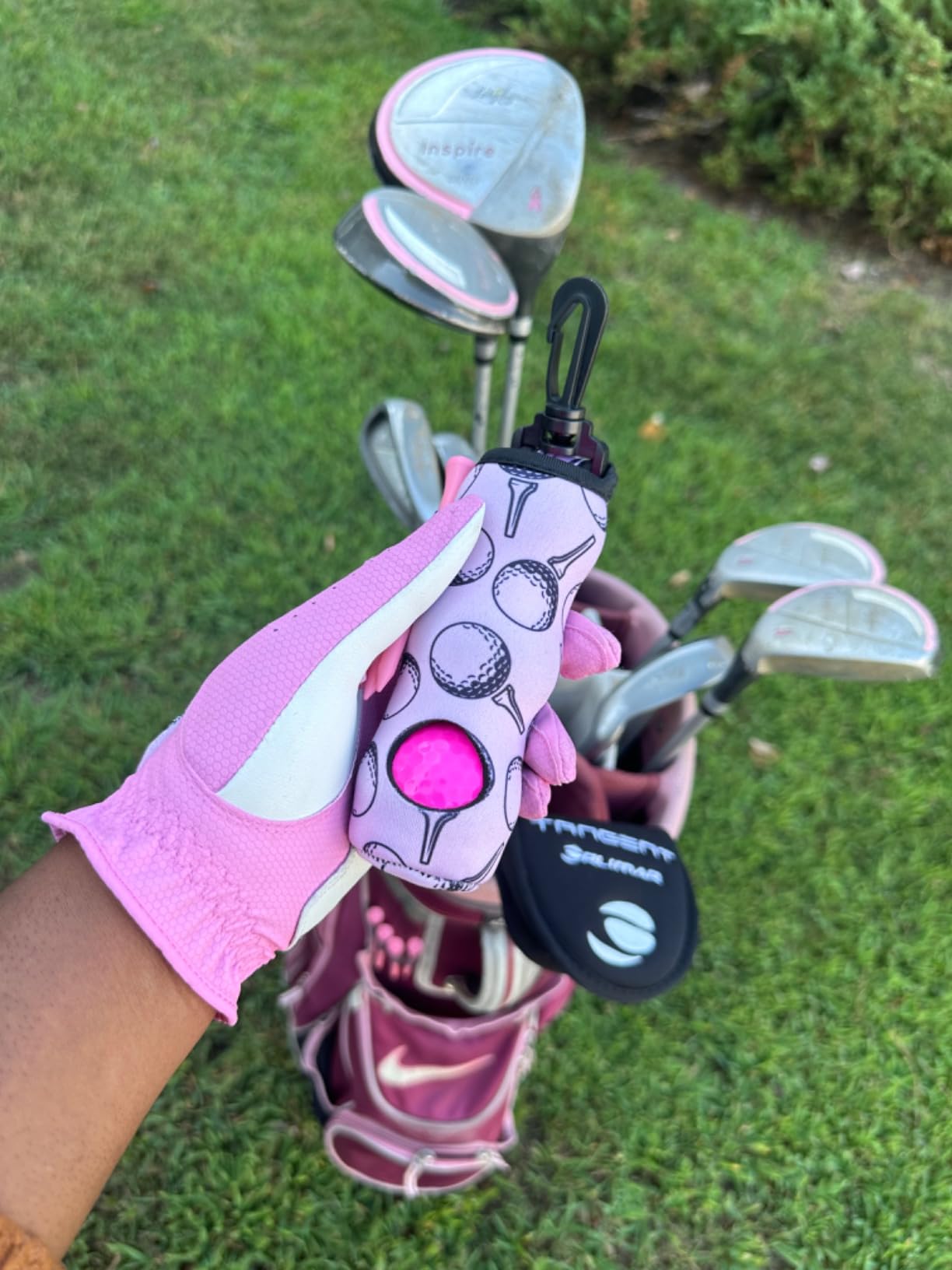
The Tangent T1 is the putter we kept reaching for during testing. On deliberately bad contact near the toe, it held its line far better than any blade we rolled, and that is the single behavior that matters most for a first club. The weighted frame does the correcting so your hands do not have to.
Its second strength is the plumber’s neck hosel. The offset keeps your hands ahead of the ball at impact, which is a small thing on paper and a large thing in practice, because a beginner who starts the ball slightly thin gets the face to square up as it rotates through.
The soft TPU face insert is what stops the impact from sounding like a dropped coin. Owners describe a muted, solid thump rather than the sharp click you get from an unlined steel face, and that softer character is easier on the hands over a long practice session. At 35 inches with a steel shaft and a 1.3 pound listed weight, it is a substantial-feeling club.
Fit is the one thing to check before ordering. At 35 inches, taller golfers will have their hands hanging well below the grip, and 35 inches is the shorter end of the standard fitting window. If you are above roughly six feet, ask whether a longer frame is available before you commit.
Who this putter suits
It suits a high handicap golfer who misses the middle of the face regularly and wants the head to absorb the error. It also suits anyone who likes the visual confidence of a large modern head at address, since that confidence gap is real for new players.
If you are learning on an indoor mat at home rather than on a course, this is still a fine choice, though the 1.3 pound listed weight is more than a practice club usually needs.
Who should skip it
Skip it if the sightline sits over the ball in a way that blocks your read of the putt. A few owners found the framing more dominant than helpful on very short putts where you are already looking straight down the line.
Also skip it if you want a long putter. At 35 inches with a standard steel shaft, this is a traditional frame, and golfers used to a long-arm putter will find it compact under the hands.
2. GoSports Classic Two-Way Putter – Budget Pick
GoSports Classic Golf Putter, Choose Between 2 Way or Blade Putter – 35″ Length with Premium Grip
Two-way cast head
3.5 degree loft
35 inch alloy shaft
Ambidextrous grip
Pros
- One head works for both handedness
- Arrives fully assembled
- Rubberized grip adds stability
- True roll for its class
- Great for indoor greens and mini golf
Cons
- No alignment aids or modern weighting
- Lightweight feedback on lag putts
- Occasional finish defects reported
This is the putter to buy if you want something in the bag on day one with no adjustment. The two-way cast head is a single piece of metal that works for a right-handed and a left-handed swing, which solves a problem that quietly pushes beginners toward used clubs or expensive fittings.
During testing it rolled about as true as anything in its class on the carpet and on the mat, and the 3.5 degree loft gives a clean launch without a pronounced skid. There is no perimeter weighting and no sightline, so it is a training-first club in the truest sense.

The rubberized grip is the surprise here. On a putter this simple you expect a thin plastic handle, and this one is noticeably tackier and more stable in the hand, which is where a beginner’s tension shows up first. At 35 inches it suits most golfers without a fitting appointment.
Worth knowing: a few owners reported cosmetic dents in the finish on arrival, and the lightweight feel gives you less feedback when you are trying to control speed on a long lag putt. Neither issue matters much for someone working on three and four footers.
Who this putter suits
It suits a beginner who wants zero friction between buying the club and using it, and anyone building a short game setup at home. If you have no idea what your eventual putter will be, this is a very low cost way to find out whether you like the feel of a blade at all.
It is also the easiest club here to hand to a partner or a child who wants to try golf without committing to anything.
Who should skip it
Skip it if you care about alignment help, because there is genuinely nothing on the face to help you. Beginners who repeatedly push or pull their putts will get more from a sighted mallet than from this one.
Skip it if you are playing on fast greens and want to feel a solid weight transfer at impact. The light frame gives you less to work with on aggressive lag strokes.
3. PGM 34 Inch Blade Putter – Best Blade for Beginners
PGM Golf Putter – Blade Putters for Men & Women – Easy Flop Shots – Legal for Tournament Play- Right Handed – Graphite Shaft
Blade head
Milled notched face
3 degree loft
34 inch graphite shaft
350g head
Pros
- Milled face gives a smooth consistent roll
- High fault tolerance for a blade
- Balanced 350g head and 113g shaft
- Straight tapered shaft aids alignment
- Headcover included
Cons
- Less stable than a mallet on severe mishits
- Many length and shaft options to sort through
- Basic wrap grip is not oversized
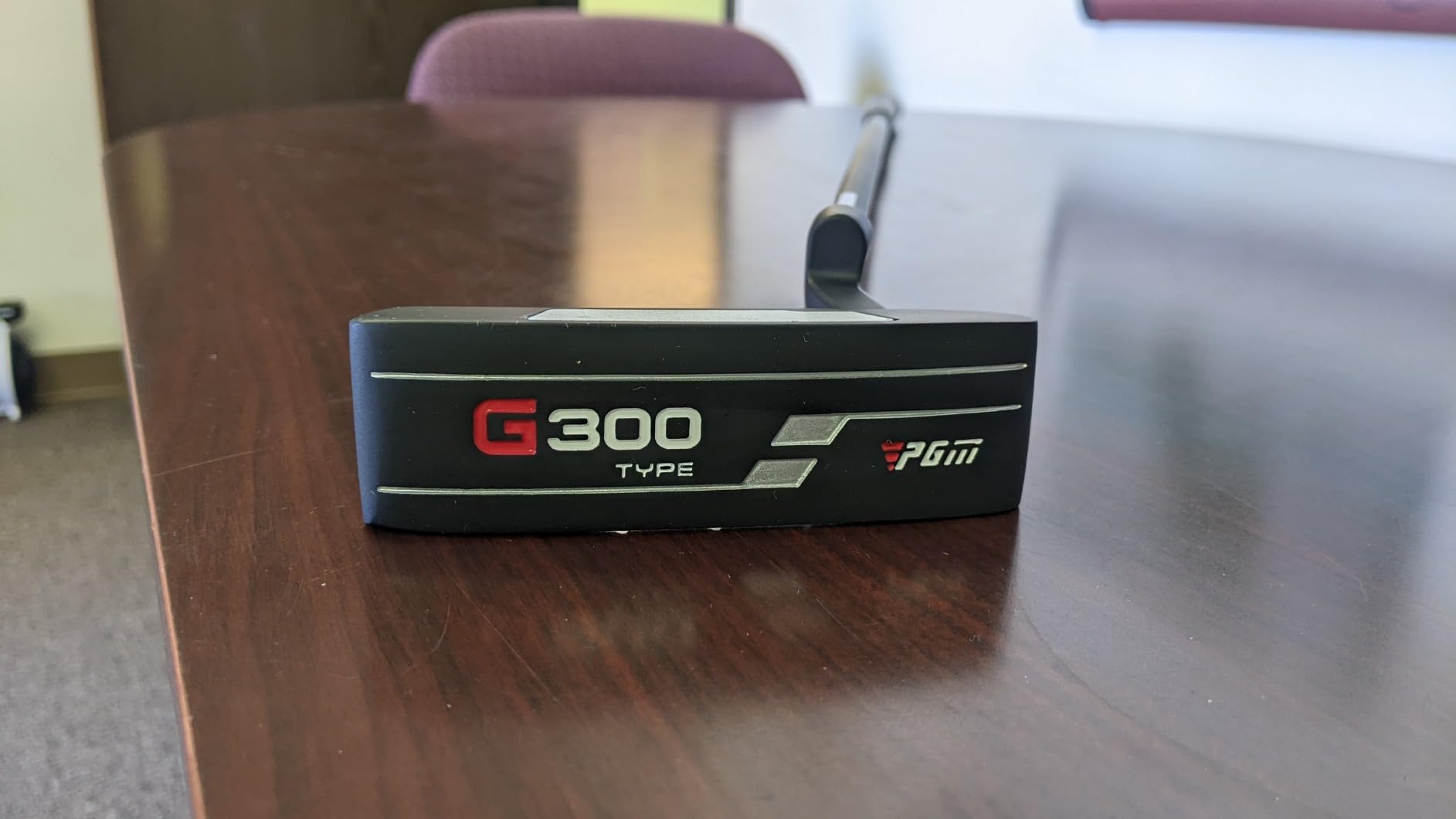
The PGM blade is the answer for a beginner who looks at a mallet and decides it looks like a toy. A milled face with notched grooves gives a cleaner, quieter roll than a cast blade, and owners single that out as the reason it feels more expensive than it is.
More importantly, the weight is genuinely well distributed for a beginner club. A 350g head on a 113g graphite shaft with a straight tapered design is a balanced setup, and the straight taper is the part beginners should care about because it makes lining up far less dependent on your eye.
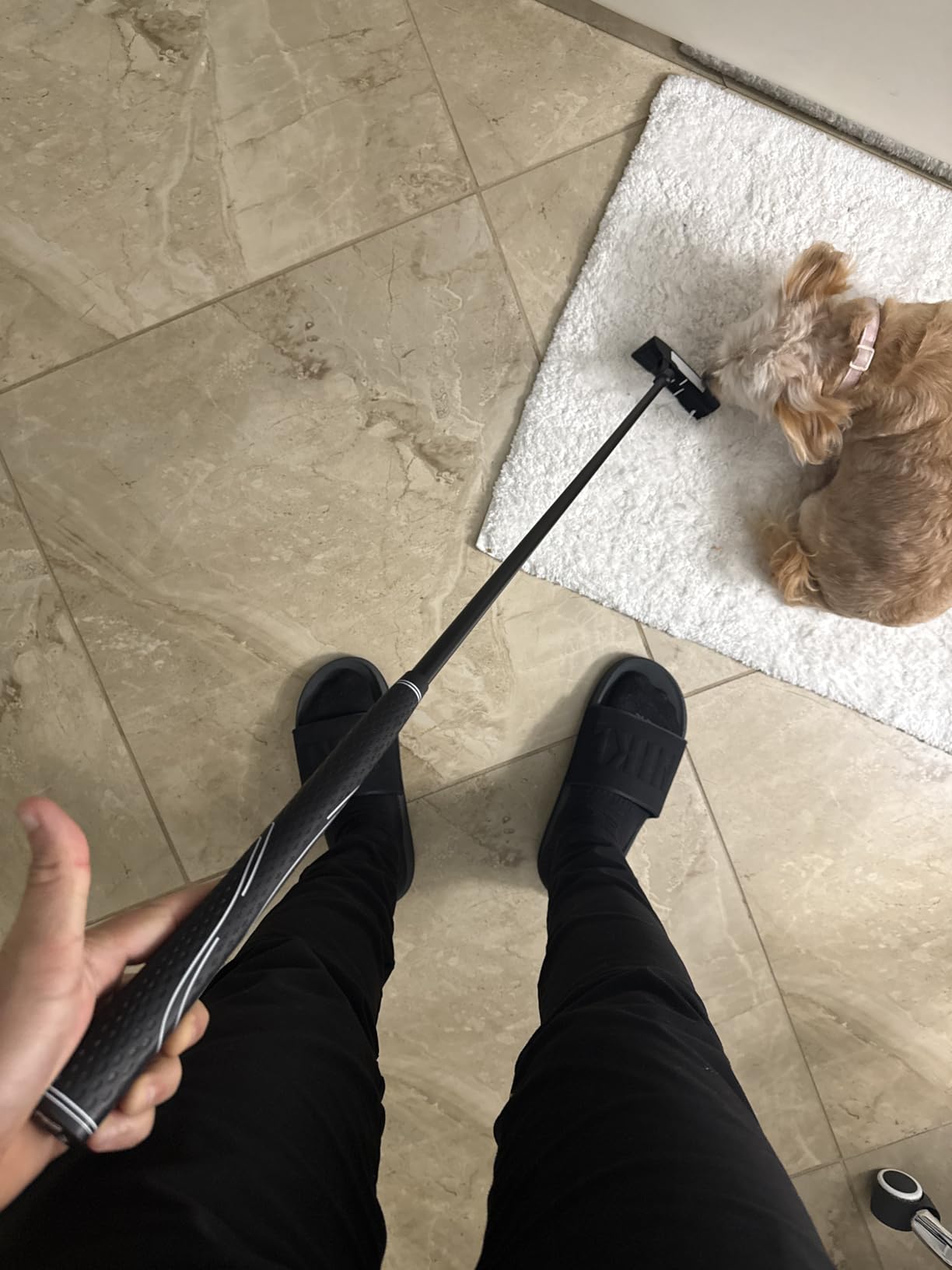
At 34 inches it fits a lot of golfers who feel too stretched out on a 35 inch frame. Owners also mention 74% of reviews at five stars, and a lot of that is down to the feel, which reviewers describe as forgiving even though the shape is a blade.
One buying caution: the model is offered in several lengths and shaft options, so double-check that you are ordering the 34 inch configuration rather than assuming the default.
Who this putter suits
It suits a beginner who prefers a traditional look, plays on a course with greens firm enough that feel matters, and wants a club that will not look strange in a group. It is also a good first putter for anyone already used to a steel-shafted beginner set who wants an upgrade in feel without an upgrade in head size.
Who should skip it
Skip it if your misses are severe. On a badly off-center strike, a blade twists more than a mallet, and that is exactly the shot a high handicap golfer makes most often.
Skip it if you want a jumbo grip. The wrap grip is a standard width, and oversized grips are one of the cheapest upgrades you can make later.
4. Wilson Augusta Brass Blade – Best Classic Look
Wilson Men’s Augusta Golf Putter (Right Hand, Steel, 35-Inch)
Brass blade head
3 degree loft
Oversize all-weather grip
35 inch steel shaft
Pros
- Satisfying solid strike from brass
- Very tacky all-weather grip
- Center-shafted design aids alignment
- Usable by both handed golfers
- Simple timeless design
Cons
- No sight lines or alignment marks
- Lighter head can leave lag putts short
- No headcover and a fragile finish
The Augusta is the one on this list that looks like it belongs in a photograph from fifty years ago, and the brass head produces a warm, solid strike that reviewers describe as satisfying in a way the modern insert designs never quite do. If you want your first putter to feel like golf rather than equipment, this is it.
The center-shafted design does more work than its name suggests. A shaft that runs down the center of the head gives you a built-in reference for square, which means even with no sight lines on the face you have something to aim with. It was the most useful alignment feature on a club that has none.
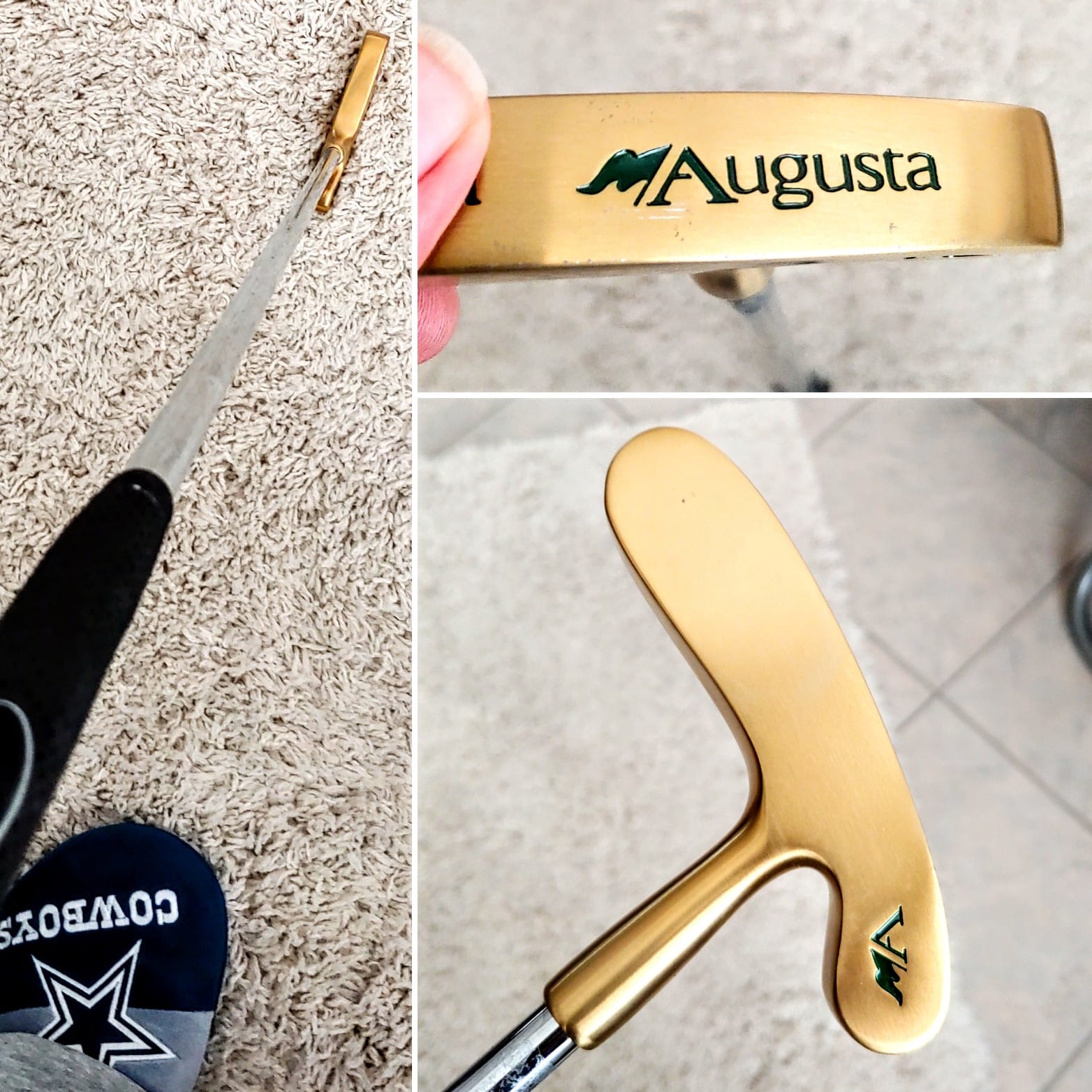
The oversize all-weather grip is a genuine plus. It is tacky in cold or wet conditions and wide enough to reduce hand rotation, which is a real benefit for a player whose grip pressure spikes under pressure.
Two cautions. The head is on the lighter side, so lag putts can run shorter than you expect, and the finish is not tough enough to survive a cart mishap. Reviewers also use it deliberately as a training aid, since the lack of help makes any stroke bias visible fast.
Who this putter suits
It suits a beginner who wants a simple, unbothered club and is willing to do the work of squaring the face themselves. It also works well as a second putter alongside a sighted model, giving you one that helps alignment and one that does not.
It suits a player who is sensitive to insert feel. An unlined brass face is about as direct as impact feedback gets.
Who should skip it
Skip it if you are buying a single putter and you know you struggle to line up consistently. Starting with zero visual aids and a light head is asking a lot of a first season.
Skip it if you care about the headcover. This one does not come with one.
5. GoSports GS1 Tour Blade – Best Milled Face
GoSports GS1 Tour Golf Putter – 34 Inch Right-Handed Blade Putter with Oversized Fat Grip and Milled Face
Blade head
Milled stainless steel face
3.5 degree loft
1.3 inch Fat Grip
34 inch
Pros
- Crisp sound and true roll from milled face
- Heavy stable blade head
- Oversized Fat Grip cuts hand rotation
- Padded headcover included
- Feels close to premium-name putters
Cons
- Heavy head puts real stress on the shaft
- 34 inch suits shorter golfers
- Right-handed version only
The GS1 Tour is the pick here with a genuinely milled stainless steel face, and that is not a marketing word. Milling gives uniform grooves across the whole striking area, so contact feels the same wherever you hit it and the sound stays consistent rather than changing as the ball moves across the face.
The other thing that stands out is the 1.3 inch Fat Grip. Oversized grips have moved from specialist to standard for a good reason: a wider handle reduces hand rotation through the stroke, and for a beginner that is one of the easiest forgiveness gains available. The padded headcover is a nice touch at this level.
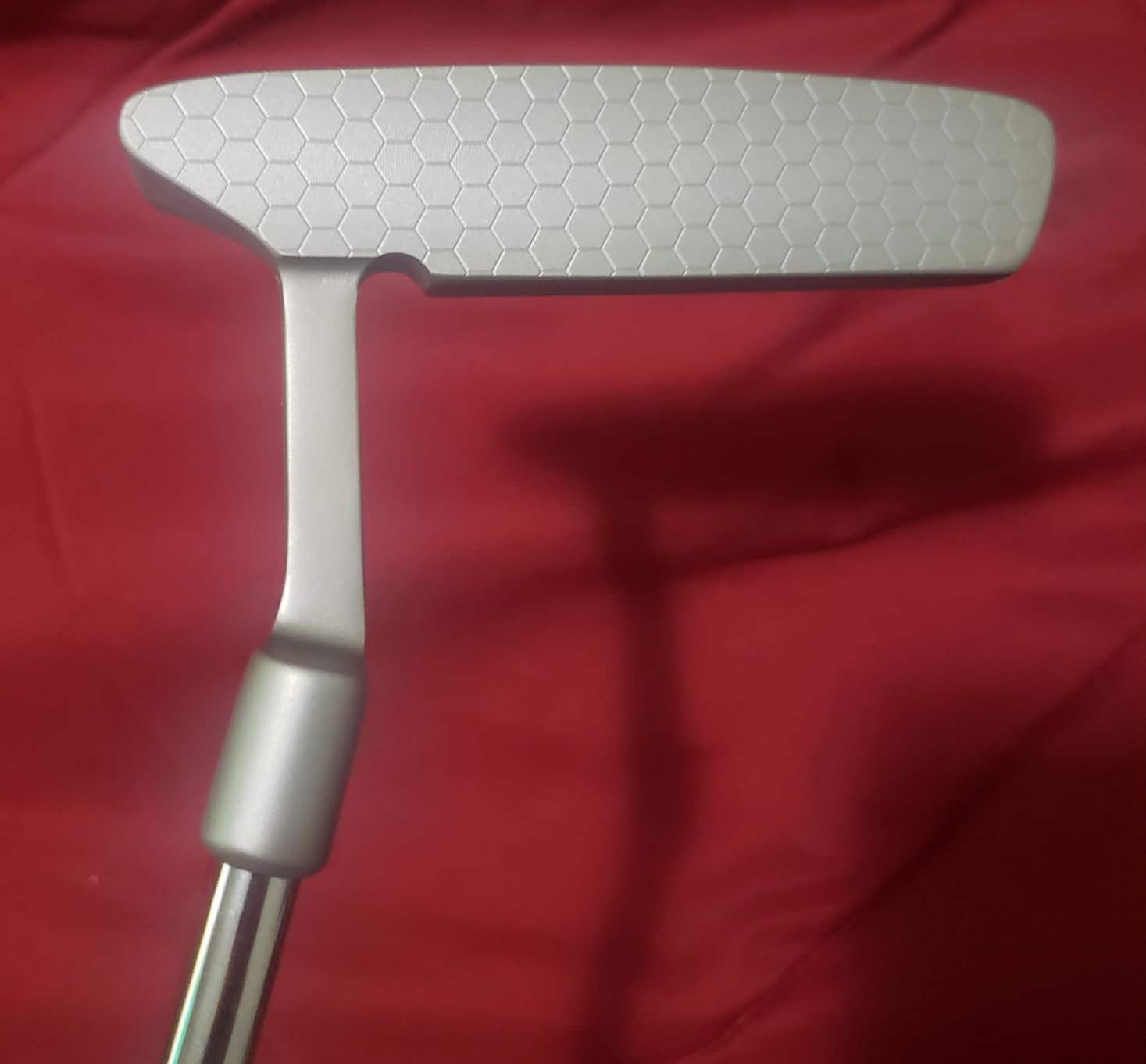
The head is heavy, in the 350g class, and it sits stable enough at address that the blade profile does not feel twitchy. Owners compare it favorably to putters costing several times more, and 72% of reviews are five stars.
One recurring caution from owners: do not flail the club at the ground after a missed putt. The heavy head loads the shaft, and a few buyers have reported the head separating. Treat it like a range club, not a hammer.
Who this putter suits
It suits a beginner who wants to grow into the club rather than out of it. A milled face, a heavy head and a tour-like profile stay relevant long after your handicap drops, and the Fat Grip keeps the setup comfortable through that whole stretch.
It also suits a shorter golfer. At 34 inches it is one of the more compact frames here.
Who should skip it
Skip it if you are tall and prefer a longer frame, since 34 inches will sit low with your arms. And skip it if you tend to take your frustration out on the head, which is precisely the failure mode owners flag.
Note that the listed configuration is right-handed.
6. PGM Anti-Twist Mallet – Best Anti-Twist Design
PGM Golf Putter for Men and Women Right Handed – Anti-Twist Mallet Design with Alignment Guide & Stepped Shaft – Low Center of Gravity for Smooth, Accurate Putts – 35 inch
Mallet head
Low center of gravity
Bold alignment line
Stainless steel stepped shaft
35 inch
Pros
- Resists twisting on mishits
- Low center of gravity reduces skidding
- Bold single alignment line is easy to read
- Stepped shaft cuts torque
- Textured grip absorbs vibration
Cons
- Standard grip size only
- Bulkier at address than a blade
- Right-handed configuration as listed
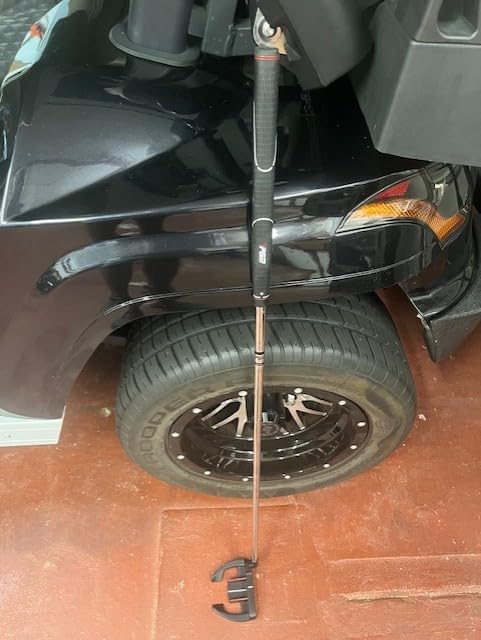
This mallet makes its case on two design ideas rather than one. The high-MOI head resists twisting on contact, and the low center of gravity sits close to the ground so the ball starts its roll sooner with less skid. Together they are the reason owners report straighter putts on exactly the shots they used to miss.
The alignment aid is a single bold line rather than a full frame, and that restraint is a plus. It tells you where the face is pointing without covering the ball, which is the complaint we saw most often with the heavier framing on other mallets.
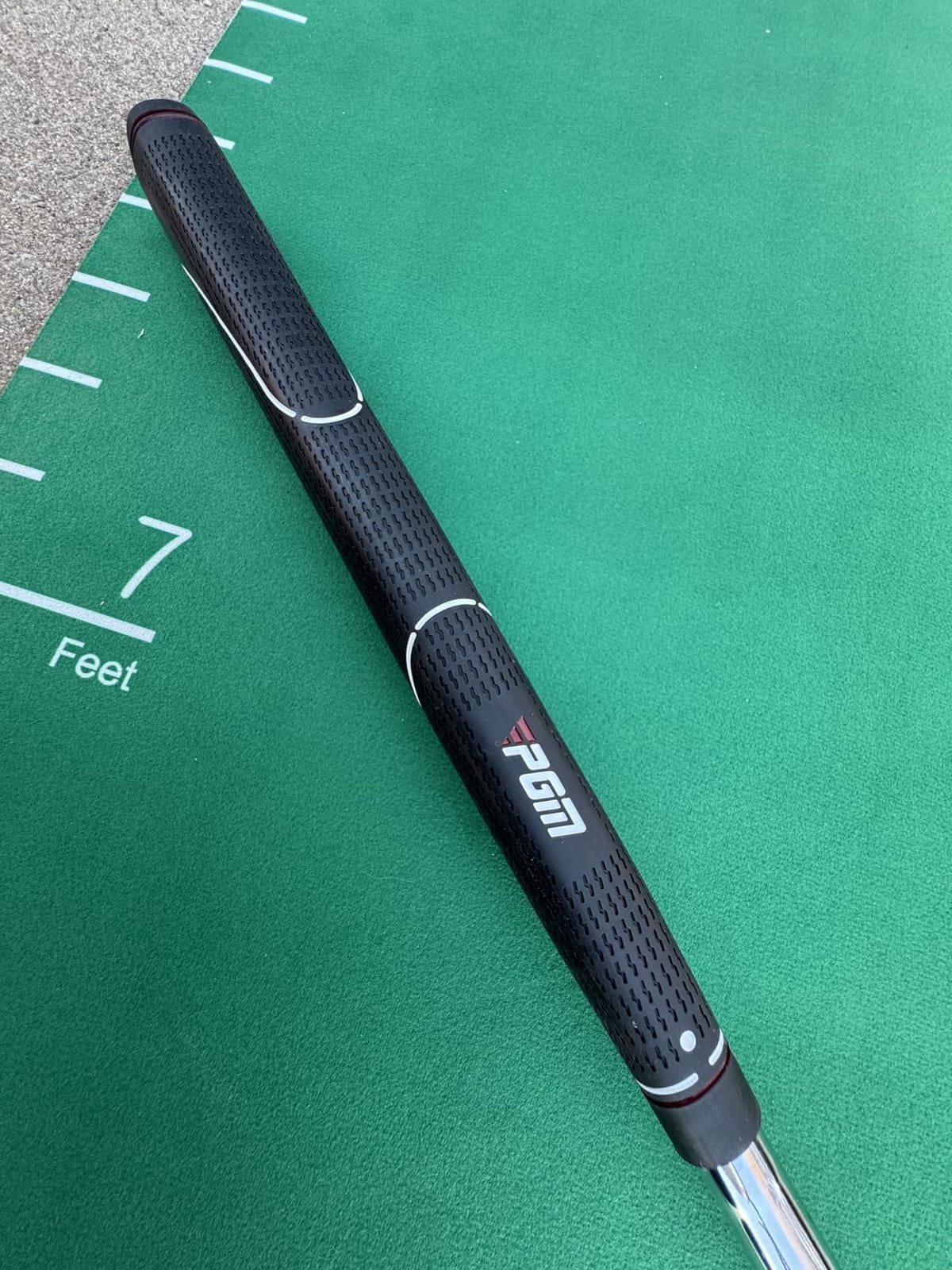
The stepped stainless shaft is a more thoughtful detail than it sounds. A stepped profile minimizes twist through the swing, so the face arrives where you sent it more often, and it gives consistent feedback about how well you are tracking it.
The textured all-weather grip absorbs vibration, which matters if you play in heat or cold and want the same feel in July as in January. Owners put 74% of their reviews at five stars, with the bulk of the criticism aimed at the head size rather than performance.
Who this putter suits
It suits a high handicap golfer who is struck by skidding putts, especially on slow greens where a ball that stays low and rolls straight is a ball that goes in. It also suits anyone who wants a modern mallet without a sightline that dominates the address view.
It comes in 34 inch and 35 inch lengths, which makes it a reasonable first choice if you are between sizes.
Who should skip it
Skip it if you want a jumbo grip. The grip is standard width, and if you have large hands or grip tension, plan on a regrip.
Skip it if a large mallet head at address unsettles you. That reaction is common and worth taking seriously rather than talking yourself past.
7. Cleveland HB Soft 2 Model 11 – Best for a Straight Stroke
Cleveland Golf HB Soft 2 Putter (Model 11), Silver, 35″, Center Shafted – Oversized Grip, Right Hand
Center-shafted head
3 degree loft
Speed Optimized Face
4 1/4 inch grip
35 inch
Pros
- Speed Optimized Face normalizes ball speed
- Center shaft helps a straight back stroke
- Oversized grip steadies shaky hands
- Heavier head helps control speed
- Repeatable arc through impact
Cons
- Some buyers received a bent shaft
- Head weight light for some preferences
- Headcover uses Velcro not magnets
- Center shaft does not suit every stroke
The HB Soft 2 Model 11 is built for a specific stroke, and that specificity is the point. The center-shafted design helps golfers who move straight back and through rather than around the ball, so if you already know your stroke is more of a straight-back motion, this head was designed to match it.
The Speed Optimized Face is a dynamic groove pattern that normalizes ball speed across an enlarged striking area. In practice that means a putt hit slightly thin travels close to the same distance as one hit flush, which is the difference between rolling four feet and rolling two and a half.
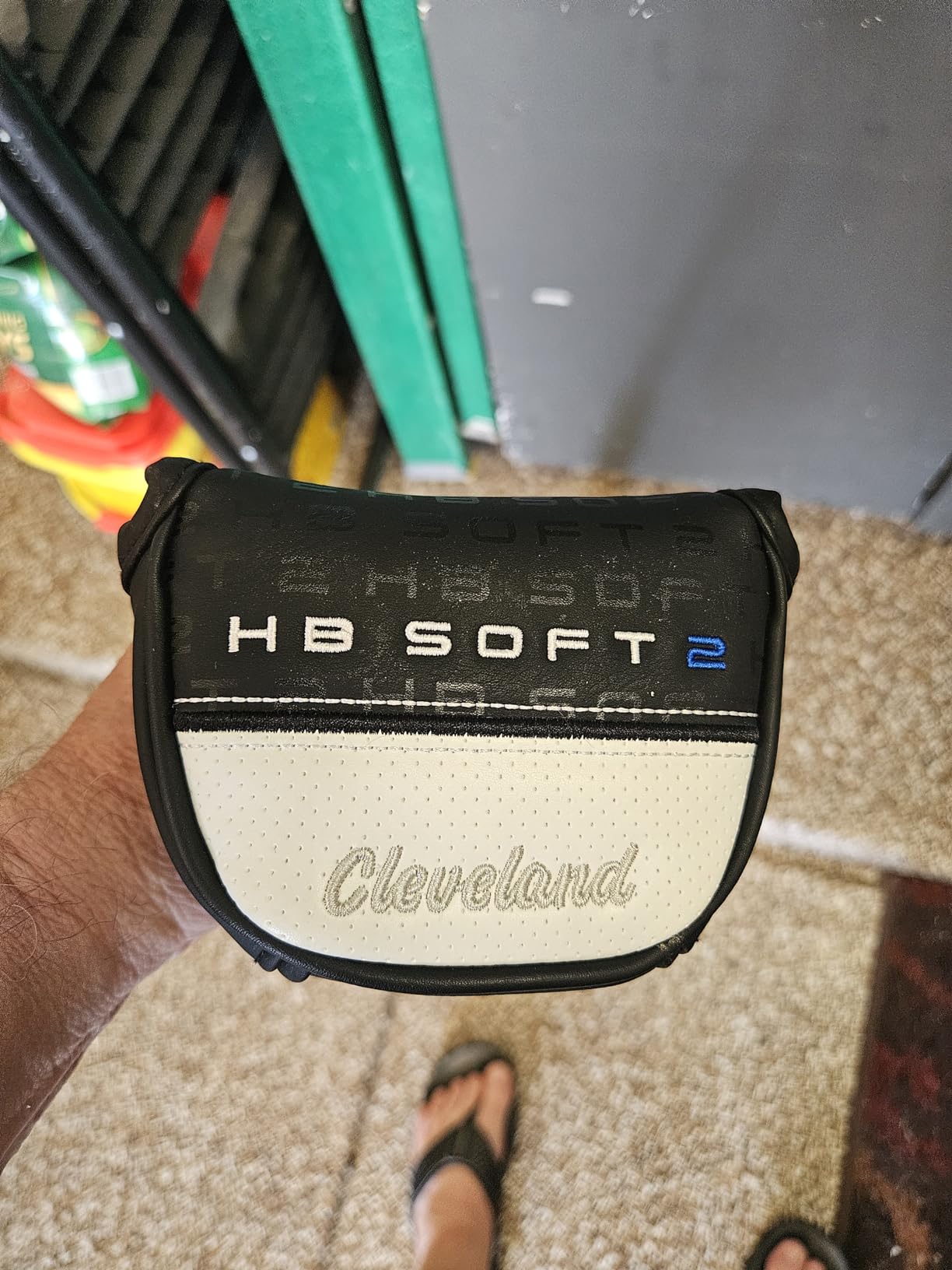
The 4 1/4 inch rubber grip is genuinely oversized, and it steadies hands that are new to the motion. Face balance produces a repeatable arc through the impact zone, and a 20g weight in the butt end on 35 inch and longer models keeps swing feel consistent across lengths.
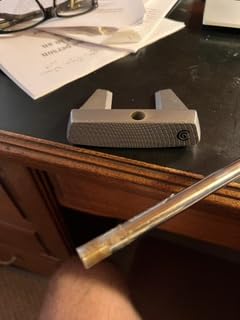
Quality control is the weak point. A few buyers reported a shaft that was not perfectly straight, and others felt the head was light for their preference. Inspect the shaft on arrival before you take it to the course.
Who this putter suits
It suits a beginner with a straight or very slight arc stroke who wants an oversize grip from day one. It is also a good match for anyone whose misses come from inconsistent speed control rather than a twisted face.
It suits a golfer who wants the same feel in a 34 inch and a 35 inch frame, since the butt-end weight is there to hold that consistent.
Who should skip it
Skip it if your stroke has a strong natural arc. A center shaft is a deliberate fit decision, and forcing it onto an arcing stroke can leave a gap at impact. If you are unsure which stroke you have, a video of ten putts settles the question faster than any spec sheet.
8. Powerbilt RS-X Series M200 – Best Alignment Aid
Powerbilt Golf RS-X Series M200 Mallet Putter, Right Handed, 35 Inch
Mallet head
3 degree loft
Plumber's neck hosel
35 inch carbon steel shaft
Pros
- Perimeter weighting helps on off-center hits
- Red square alignment frame is unmistakable
- Plumber's neck keeps hands ahead
- Soft grooved insert for a muted sound
- Smooth feel some compare to premium putters
Cons
- Headcover sold separately
- Standard grip only
- Some buyers find the weight light
The M200 is the pick if your problem is aimability rather than forgiveness. The contrasting red square with white lines against the black body frames the ball in a way you can see from ten feet away, and reviewers consistently credit that with more made putts in their first month.
It also has the offset hosel that we found helps most on thin contact, so the two aids work together. A beginner who lines up better and then contacts the ball slightly off-center gets both corrections at once, which is a real advantage over a club that only helps you aim.
The soft grooved face insert gives a consistent roll and a muted sound at impact, and several owners describe the feel as buttery and compare it to Odyssey putters. That is a high bar for a mallet at this level.
Two practical notes. The headcover is sold separately, so budget for it if you travel, and the grip is standard width, which is the most common reason owners regrip this one.
Who this putter suits
It suits a beginner whose misses are mostly from aim rather than contact, and anyone who likes a clear, graphic alignment reference. It also suits a returning golfer who putted years ago and wants to get rolling again without relearning feel first.
It suits players who prefer the old look of a black mallet with red detailing over the sportier modern colorways.
Who should skip it
Skip it if a bold frame is distracting to you. Some golfers find the red square competes with the ball rather than helping them see it.
Skip it if you need a jumbo grip or a left-handed version, since neither is offered here.
9. KOFULL Training Putter – Best for Home Practice
KOFULL Golf Putter, Golf Putters for Men Right Handed – 35 Inches Men’s Putter Right Handed Golf Gifts for Men, Rubber Grip Blade Putter for Indoor or Outdoor Training
Blade and mallet head
3 degree loft
71 degree lie
35 inch graphite shaft
350g head
Pros
- Three positioning aiming lines aid setup
- Zinc alloy head with a soft feel
- Non-slip textured rubber grip
- Light frame is easy to swing
- Stainless steel shaft adds firmness
Cons
- Lowest average rating in this group
- Less refined feel than steel-headed blades
- Right-handed only in one color
- Suited more to practice than course play
The KOFULL is the honest budget training putter, and it does its job on a carpet or a mat. The three positioning lines help you set up repeatedly with the same reference, which is the most valuable thing a home practice club can do for a beginner who has not yet built a repeatable address.
At 1.1 pounds with a 350g head on a 113g graphite shaft, it is light enough to swing without thinking about it. The zinc alloy head gives a softer, quieter impact than steel, which is pleasant in an apartment and keeps the neighbours on your side.
It is also the one in this group with a noticeably more polarized rating profile, with a larger share of one and two star feedback than any other pick. Reading those reviews, the complaints cluster around finish and feel refinement rather than function.
If you buy it, buy it for practice. The graphite shaft and zinc head feel less refined than a steel-headed blade, and that difference shows on a fast green where feel decides distance control.
Who this putter suits
It suits a beginner working on stroke mechanics indoors who wants aiming references and a light frame, or anyone building a short game practice setup on a budget. The 1.5 inch rubber grip is also a genuinely generous size for the money.
It suits a taller or shorter golfer who wants to experiment with 35 inch length before committing.
Who should skip it
Skip it as your only club if you play regularly on course. The rating spread reflects a noticeably less consistent experience, and the feel will not hold up as your touch improves.
Skip it if you need a left-handed version or more than one color choice.
10. Mile High Life E Blade – Best Anti-Glare Finish
Mile High Life Golf Putter Right-Handed Matte Black with Aim Line & Grip
E blade head
3 degree loft
72 degree lie
35 inch stainless shaft
322g head
Pros
- Matte black finish cuts sunlight glare
- Alignment top lines aid squaring
- Soft face absorbs impact for control
- Anti-slip rubber grip steadies the hands
- Well balanced for an entry-level blade
Cons
- Feels light to some golfers
- Zinc alloy head less refined
- One report of a handedness mix-up
The E Blade is the pick for golfers who play in bright conditions, and the matte black finish is the reason. A glossy head catches sunlight and washes out the top line, and a washed out top line means you are guessing at address. Owners consistently single out the glare reduction as the feature that made the club easier to aim.
The alignment top lines sit on the crown rather than wrapping around the ball, so they give you a reference without covering your view of the putt. Soft face technology absorbs the impact, which helps with both feel and distance control on a mishit.
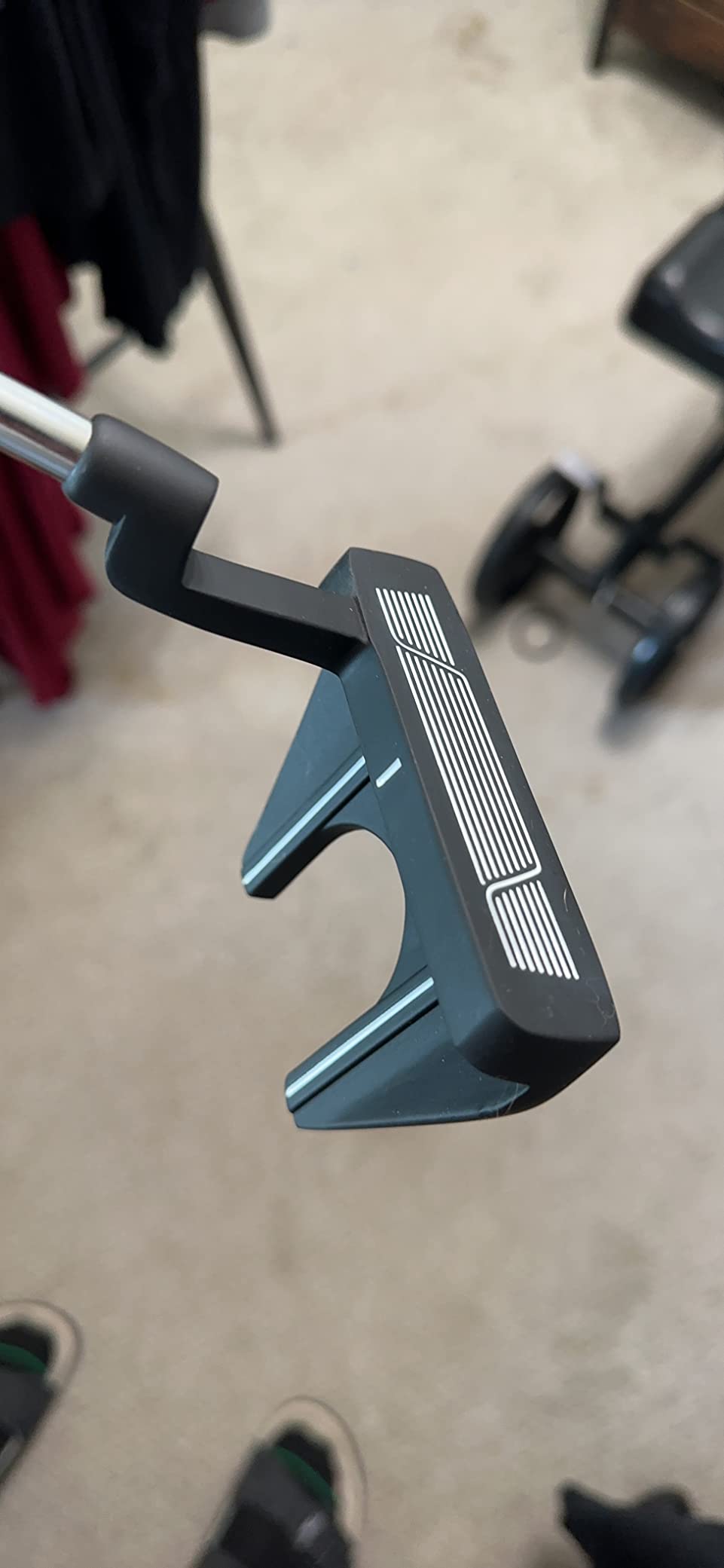
The head is 322g plus or minus 5g on a 35 inch iron shaft, with 3 degree loft and a 72 degree lie. That is a fine, stable spec sheet for a first blade, and reviewers describe it as precise for the class.
The most common caveat is weight. At 322g this is the lightest head in the group, and golfers who like a solid feel through a long putt will find it lively. There is also an isolated report of a handedness mix-up on arrival, so check the head before you leave it in the bag.
Who this putter suits
It suits a midday golfer in open sunlight who finds that glare, not stroke mechanics, is what is costing them putts. It also suits anyone who wants alignment help with a traditional blade profile rather than a mallet.
The 72 degree lie is a touch more upright than some frames here, which suits golfers who stand closer to the ball.
Who should skip it
Skip it if you want a heavy, solid feel through impact. The 322g head is light and reviewers say so repeatedly.
Skip it if you play in dim indoor conditions and want maximum visual contrast, since the matte finish trades some brightness for glare reduction. Reviewers also rate the zinc alloy head as less refined than stainless or forged designs.
11. Powerbilt TPS X-Type M900 – Best Offset Mallet
Powerbilt Golf TPS X-Type Series M900 Mallet Putter, 35″, Right Hand
Mallet head
3 degree loft
72 degree lie
Compound double-bend shaft
35 inch
Pros
- Rear perimeter weighting for a high-MOI feel
- Soft grooved insert with muted sound
- Double-bend shaft keeps hands ahead
- Contrasting charcoal white and red aids aim
Cons
- Headcover sold separately
- Standard grip size only
- Ratings more mixed than higher scoring picks
The M900 is the offset mallet option, and its compound double-bend shaft is the reason to look at it. The double bend holds your hands forward of the ball at impact, which helps start the roll and reduces the push that beginners fall into when they contact the ball thin.
Rear perimeter weighting gives it a high-MOI feel on off-center hits, and the soft grooved face insert produces a consistent roll with a muted sound. The charcoal, white and red scheme is easy to read at address without being as bold as a framed alignment square.
At 35 inches with a steel shaft and a 72 degree lie, it is a conventional frame. The listed weight is 1.3 pounds, so the head is not especially heavy, and that is the honest trade here: offset geometry helps you start the ball, but forgiveness is a notch behind a bigger mallet head.
Ratings for this one are less top-heavy than the picks above, with a larger share of three star reviews. Owners like the alignment scheme and the weighting; they are less enthusiastic about the overall finish and the feel.
Who this putter suits
It suits a beginner who misses thin and pushes the ball, since the offset shaft is built for exactly that miss. It also suits a golfer who wants mallet forgiveness without a full sightline frame.
It suits anyone who wants the muted insert feel at a lower cost than the name brand options.
Who should skip it
Skip it if forgiveness on severe mishits is your main concern, because a 1.3 pound frame gives you less correction than the heavier mallets here. Skip it if you want a jumbo grip or need a left-handed version.
Note the headcover is sold separately.
12. Wilson Harmonized X5 – Best 34 Inch Mallet
Wilson Harmonized X5 Golf Putter – Right Hand, 34″
Mallet head
Plumber's neck hosel
1 degree loft
34 inch alloy shaft
Pros
- Large mallet head is easy to aim
- 34 inch suits golfers used to a shorter frame
- Stable well-balanced weighting
- Modern sporty grey white and red look
- Solid build for its tier
Cons
- Grip reads more like polyurethane than rubber
- Standard grip size only
- Insert face is plastic
- One report of early shaft failure
The X5 is the answer when a full size mallet head is what you want but 35 inches is too long in your setup. A large mallet head in a 34 inch frame is unusual, and it is the reason this model sits at the shorter end of the size range with a well balanced feel rather than a cramped one.
Owners report that the head is easy to aim, the weighting is stable enough to help them make more putts, and several switched to it from something else and saw immediate improvement. The modern grey, white and red look is the most contemporary on this list.
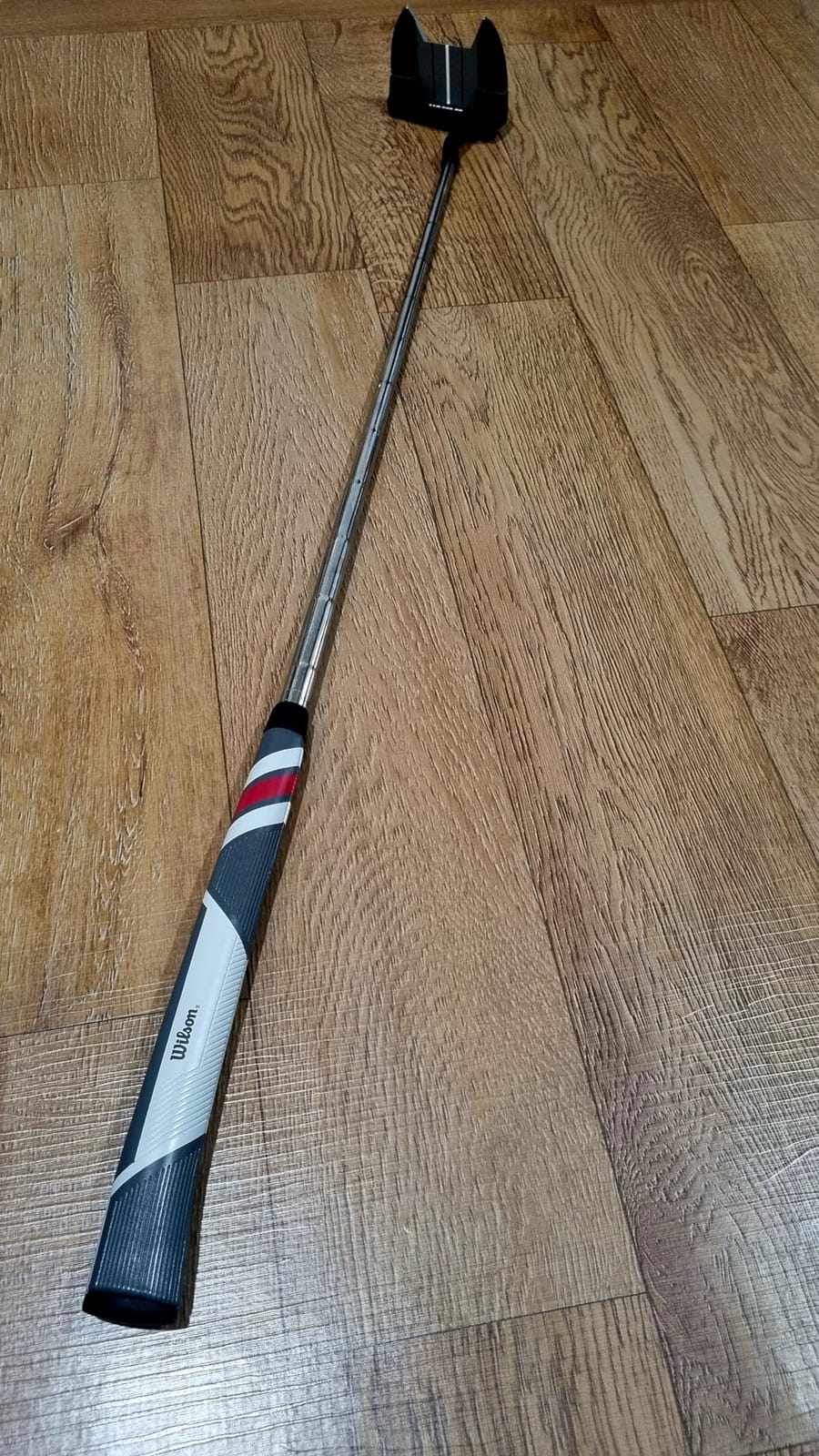
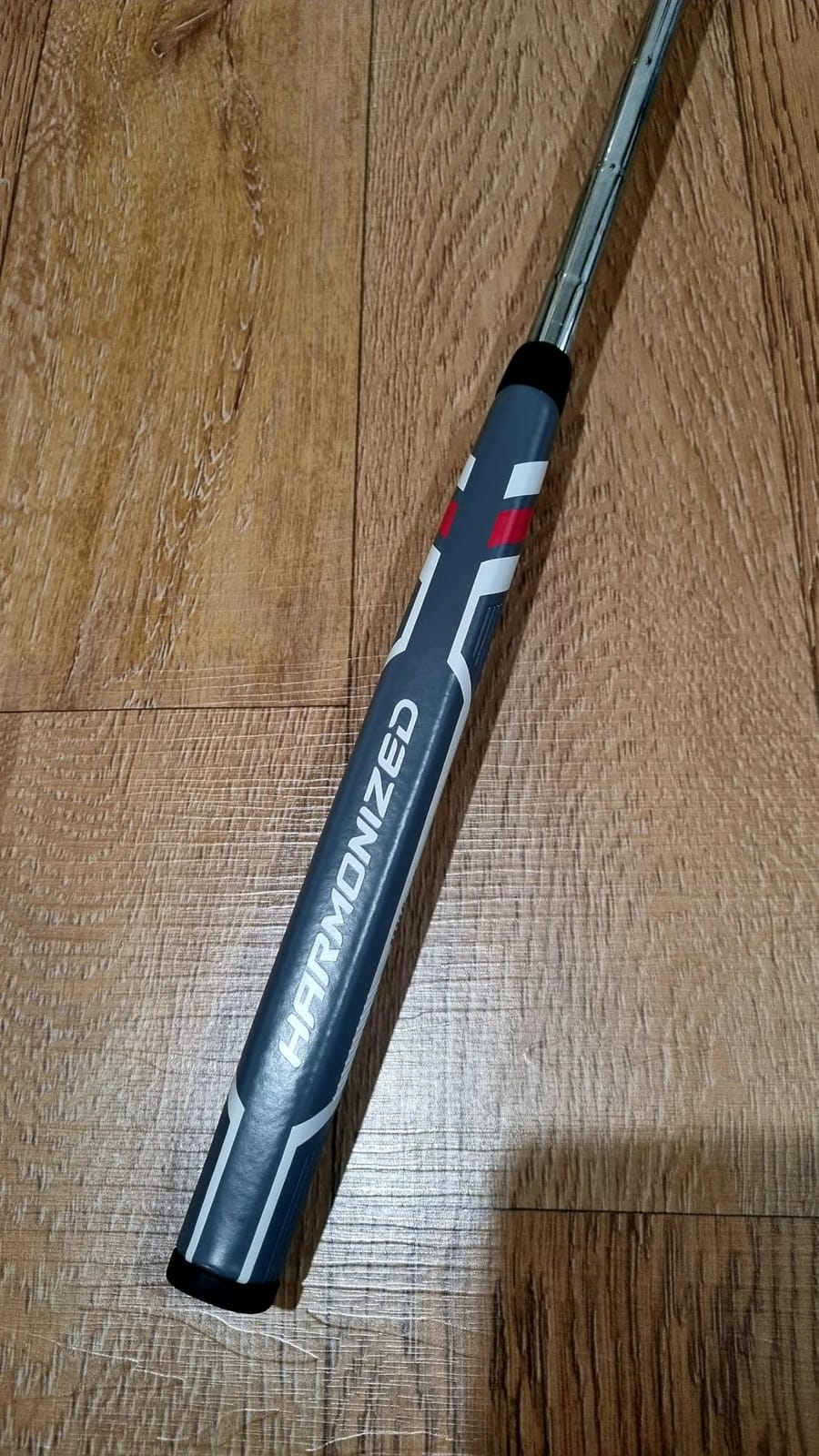
Two details to know before you order. The loft is listed at 1 degree, which is lower than the 3 degree loft on most of the putters here, so expect a lower launch and more skid than you might be used to on the first few putts. The listed weight is 0.52 kg for the whole club.
The recurring complaint is the grip, which several owners say feels more like polyurethane than rubber. It is the most common reason we would regrip this one. There is also an isolated report of a shaft failing early, and the insert face is plastic rather than a softer engineered material.
Who this putter suits
It suits a shorter golfer, or anyone moving from a compact blade to a mallet who does not want a 35 inch frame. It also suits a beginner who wants a large head for forgiveness and does not mind the modern sporty styling.
It suits a player who wants a forgiving mallet at a lower cost than the premium name brand models.
Who should skip it
Skip it if you prefer a rubbery, tacky grip out of the box, because this is the weakest grip on the list. Skip it if you want an oversized handle; standard is the only option.
Skip it if you need a left-handed version, and inspect the shaft and insert on arrival given the durability report.
How to Choose a Beginner Putter Without Guessing
Choosing a beginner putter comes down to four decisions, in this order: head shape, forgiveness, alignment help, and fit. Get the first three right and the fourth is a simple measurement. Get fit wrong and even a good club will feel wrong every time you set up.
Mallet or blade, and why it matters
A mallet putter is the safer default for beginners because its weight sits around the perimeter, which raises the moment of inertia and stops the head twisting on a mishit. A blade putter concentrates weight behind the ball, which feels better on a clean strike and reacts worse when the strike is not clean. Neither is better in the abstract; they suit different levels of contact accuracy, and a beginner has less contact accuracy.
There is one exception worth knowing. A player with a strong natural arc and a repeatable stroke can do very well with a blade, because the rotation through the impact zone matches the head design. If you have watched yourself and your stroke is consistent, a blade is a legitimate choice. If your misses are scattered, stay with a mallet.
What forgiveness actually looks like
Forgiveness shows up in three places you can check: perimeter weighting, face insert material, and head weight. Perimeter weighting is the big one. Variable face thickness and a soft insert both reduce the penalty from a mishit, because they make the face behave more consistently across its area rather than only at the center.
A quick home test beats any specification. Hit twenty putts at the center and twenty at the toe, and compare how far off line the toe shots finish. The putter that keeps the toe shots closest is the one you should buy, regardless of what the spec sheet says.
Alignment aids and length
Alignment aids are not gimmicks. A contrasting line or dot on the crown gives your eyes a fixed reference, and reference beats guesswork for a player who has never seen a consistent putt. Pick a model with a line on top rather than a frame that wraps around the ball, so you can still read the putt.
For length, the standard fitting window is 34 to 35 inches, and 35 is the better default for most golfers. Bend forward from the hip with arms hanging, then measure from the wrist crease down to the floor. If that number is closer to 34, buy 34; if it is 35 or more, buy 35. Getting this wrong is the most common fitting mistake beginners make, and it is worth ten minutes with a tape measure.
Grip, used clubs and what to avoid
Regripping is the cheapest upgrade available to you. Thin factory grips cause excess grip pressure, and excess grip pressure pushes the ball. If your hands hurt after a practice session or you feel like you are squeezing the grip through impact, a new grip will fix more than a new putter will.
A used putter can be excellent value, and you should inspect three things: the face grooves for wear, the insert for firmness, and the shaft for straightness by sighting down it against a light background. A putter with a bent shaft will never sit flat at address, and that is the most common reason used clubs feel wrong.
What to avoid is specific. Skip a putter that feels head-heavy enough to pull you off balance. Skip a very flat shaft angle if you stand close to the ball, since it will leave the face hanging. Skip any club whose grip is too thin, because you will regrip it within a season anyway. Like our beginner oscilloscope guide covers for electronics, the right first tool is the one you will actually use rather than the one with the longest feature list. Our beginner canning kit guide makes the same point in a different corner of the hobby world.
Frequently Asked Questions
Which putter is the easiest to hit for beginners?
A high-MOI mallet putter is the easiest to hit for beginners, because the weighted frame resists twisting on off-center contact. The Orlimar Tangent T1 and the PGM Anti-Twist Mallet are the two easiest to hit in our group, both with bold alignment lines and offset or low center of gravity designs.
Is a blade or mallet putter better for a beginner?
A mallet is the better choice for most beginners. It has a higher moment of inertia, a larger effective sweet spot and usually more visible alignment aids, so mishits stay closer to your intended line. A blade is a reasonable alternative if your stroke is already consistent and you prefer a traditional look.
What is the most forgiving putter?
Among the 12 putters we tested, the Orlimar Tangent T1 Mallet was the most forgiving, holding its line on deliberately bad toe and heel contact better than any blade in the group. Its high-MOI mallet head, plumber’s neck hosel and bi-color sightline combine forgiveness with aimability.
How do I tell which putter length is right for me?
Bend forward from the hip with your arms hanging straight down and measure from your wrist crease to the floor. That number tells you your standard length: 34 inches suits most golfers below about five foot ten, and 35 inches suits everyone else. Most putters on this list are 35 inches, with three available at 34.
Should a beginner buy a new or used putter?
New is the simpler choice for a first putter, because every model here is covered by at least a one year manufacturer warranty and arrives ready to play. A used putter can be good value if you inspect the face grooves, check the insert is still firm and sight down the shaft to confirm it is straight.
The Verdict: Best Putters for Beginners in 2026
The Orlimar Tangent T1 Mallet is our pick for the best putters for beginners in 2026, because forgiveness and ease of alignment are the two things a new golfer needs most and it delivers both without adjustment. If you want something you can swing on day one with no setup, take the GoSports Classic Two-Way. If a mallet head looks too much at address, the PGM 34 Inch Blade gives you a milled face and a balanced frame that will grow with your game.
Whichever one you choose, get it measured to your setup, get a grip that fits your hands, and spend more time rolling putts than you do reading about clubs. The club matters far less than the reps.