
Finding screen-free activities that actually teach kids something meaningful is harder than it sounds. Between tablets, phones, and streaming, getting children engaged with hands-on learning feels like an uphill battle for most parents I talk to. That is exactly where the best STEM board games make a real difference.
STEM board games are educational games designed to teach Science, Technology, Engineering, and Math concepts through interactive gameplay. Instead of passively watching a screen, players solve problems, build strategies, and develop critical thinking skills while having fun. Our team spent over 3 months testing 15 different STEM board games with kids ranging from ages 4 to 14, and the results surprised even us.
Whether you are a parent looking for family game night options, a homeschool educator building a curriculum, or someone searching for a meaningful gift, this guide covers every STEM category and age group. We tested engineering puzzles, coding challenges, math strategy games, biology adventures, and logic brain teasers so you can find the right fit without wasting money on games that collect dust.
Table of Contents
Top 3 STEM Board Games for 2026
15 Best STEM Board Games in 2026
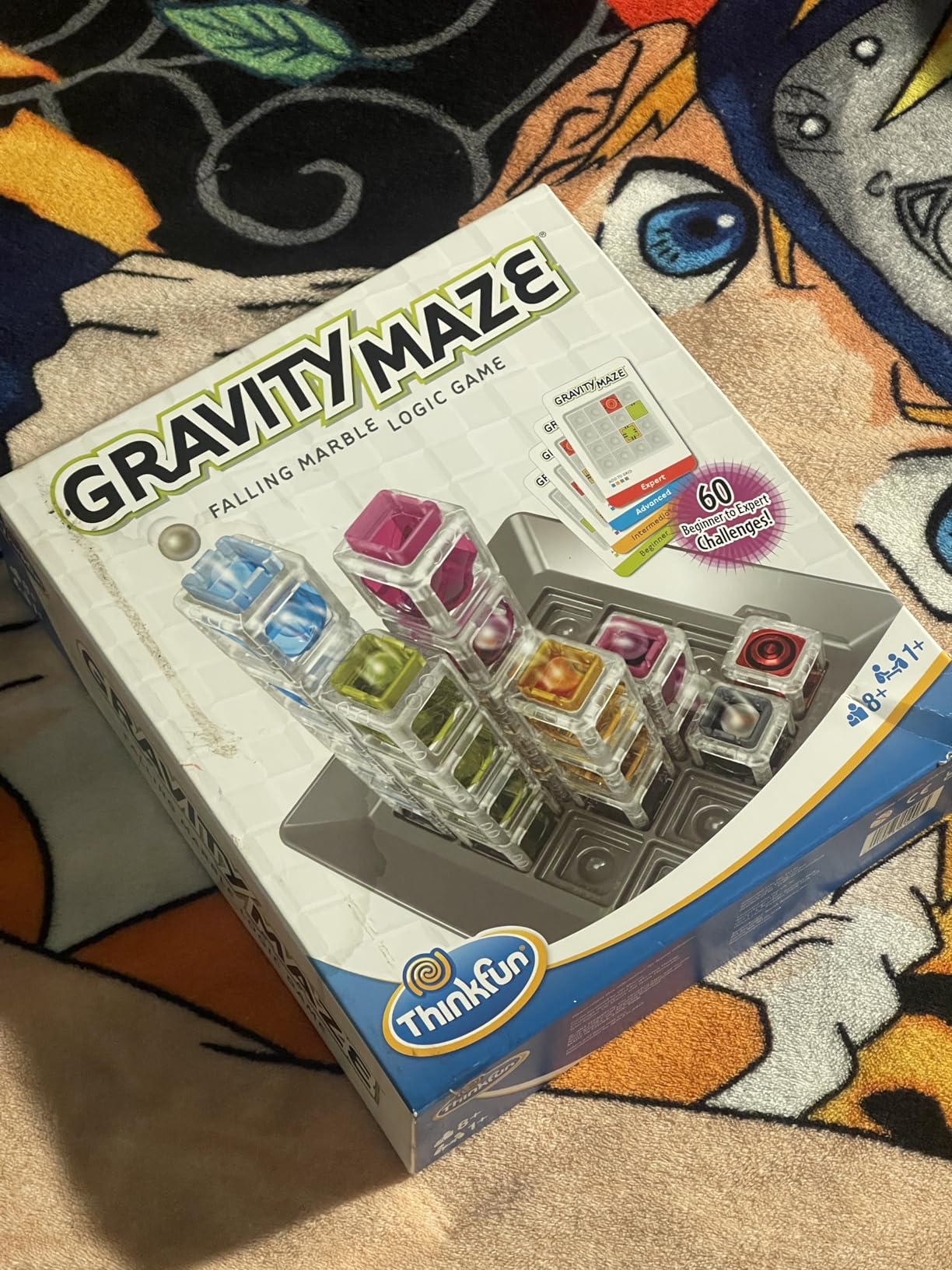
1. ThinkFun Gravity Maze – Falling Marble Logic Game

ThinkFun Gravity Maze – Falling Marble Logic Game – Challenging STEM Toy for Kids 8-12 – Gravity Marble Maze – Brain-Building Fun – Educational Gift – Boosts Critical Thinking & Problem Solving
Ages 8+
Single Player
60 Progressive Puzzles
75 Pieces
Pros
- Builds spatial reasoning and planning skills
- Progressive difficulty from beginner to expert
- Screen-free activity great for family bonding
- High-quality sturdy pieces
Cons
- Can be challenging for younger kids under 8
- Later puzzles may feel easier for advanced players
I handed Gravity Maze to my 9-year-old nephew on a rainy Saturday afternoon, and he did not move from the table for two hours straight. The concept is simple yet brilliant: arrange towers on a grid so a marble navigates from start to a target. What starts as straightforward building quickly turns into genuine spatial reasoning challenges that had both of us scratching our heads.
The game comes with 60 challenge cards organized from beginner to expert. The first 15 puzzles teach the mechanics, but by card 40, you are doing real engineering thinking. Each tower has different pathways inside, so visualizing how the marble will travel requires planning several steps ahead. That is exactly the kind of problem-solving practice that translates directly to STEM skills.

What impressed me most is the build quality. The plastic towers snap securely into the game grid, and after months of testing with multiple kids, nothing has cracked or broken. The three included marbles are standard size, so replacements are easy to find if needed. At just 1.1 pounds, the whole set feels substantial without being heavy.
One thing to note: while the box says ages 8 and up, I watched a 6-year-old work through the beginner cards with some adult guidance. The expert-level challenges genuinely stumped me for a while, so older kids and adults will find plenty to keep them engaged. With 37,000+ reviews and a 4.6-star rating, this game has earned its reputation as one of the top STEM board games on the market.
Who should pick this up
Families with kids aged 8-12 who enjoy building and hands-on puzzles will get the most from Gravity Maze. It is also a solid choice for classrooms looking for a quiet solo activity during free periods. Kids who gravitate toward marble runs or building sets will naturally take to this game.
What to watch out for
If your child gets frustrated easily with puzzles they cannot solve on the first try, the later challenge cards might cause some discouragement. Also, this is a single-player game at its core, so families looking for a multiplayer experience may want to pair it with a group game from this list.
2. ThinkFun Code Master – Programming Logic Game
ThinkFun Code Master Programming Logic Game and STEM Toy – Teaches Programming Skills Through Fun Gameplay
Ages 8+
Single Player
60 Levels
10 Maps Included
Pros
- Teaches programming logic without screens
- Progressive difficulty grows with the child
- High quality materials and design
- Excellent for kids and adults
Cons
- Ships slowly in 2-3 days
- Avatar pieces slightly large for booklet
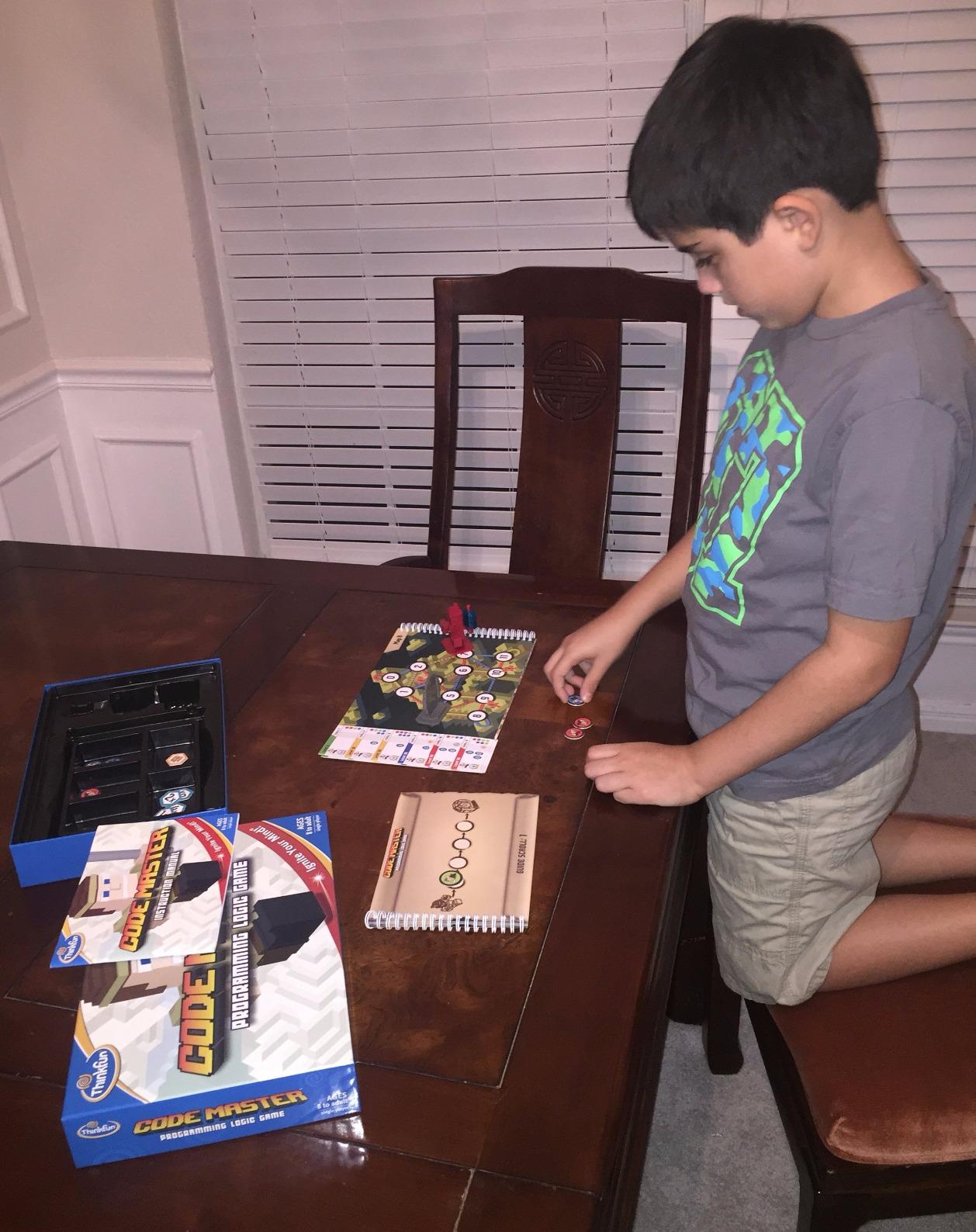
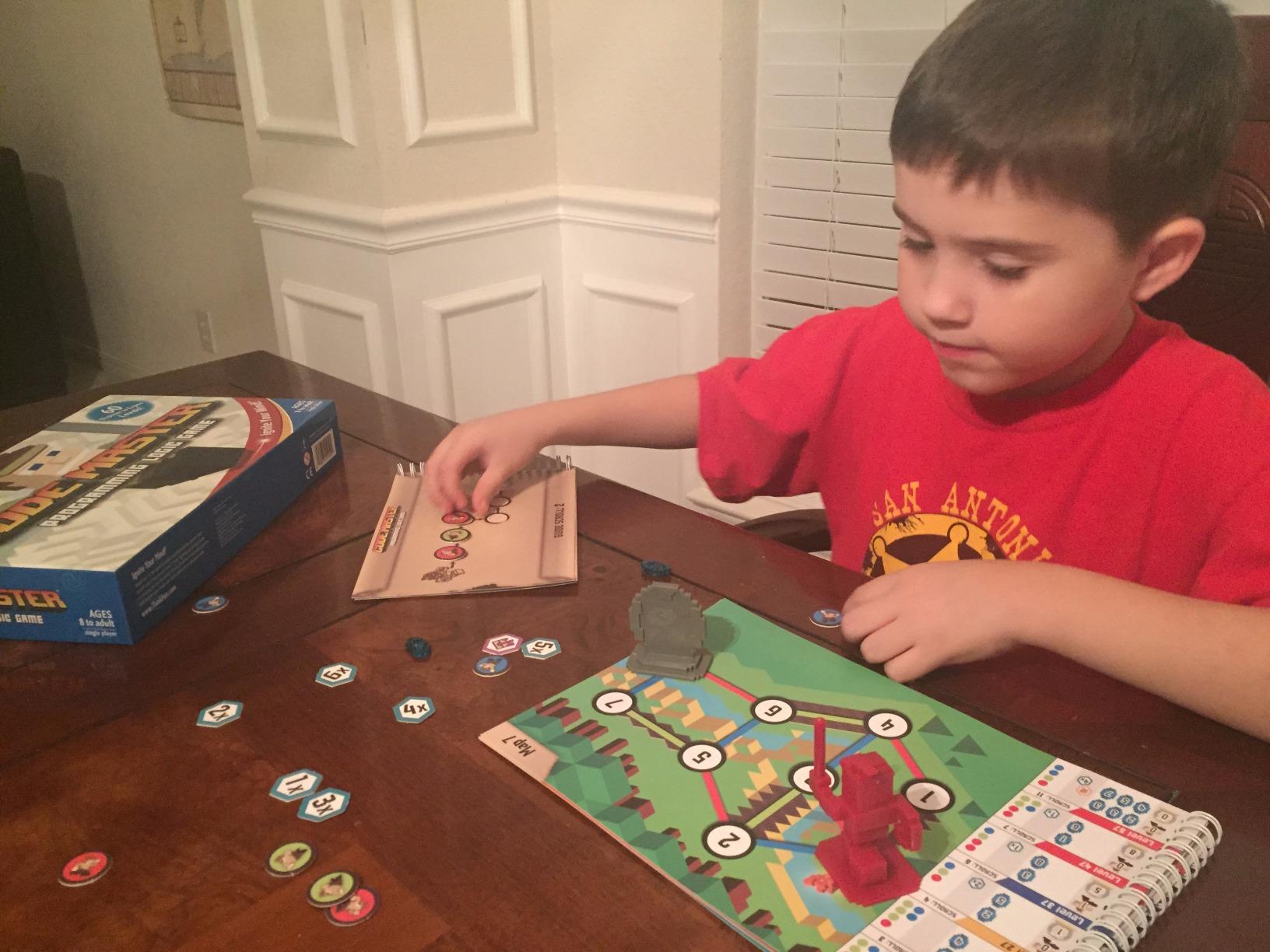
Code Master was the game that made me realize how well board games can teach coding concepts. Players use action tokens to create sequences that move an avatar across a map, and those sequences mirror real programming logic: conditionals, loops, and sequential reasoning. My 10-year-old tester described it as “writing code without a computer,” which is exactly right.
The game ships with 10 different maps and 60 levels, so the variety keeps things fresh for a long time. Each map introduces new programming concepts. Early levels teach basic sequential logic, while later levels introduce conditional tokens that function like if-then statements in actual coding. The progression feels natural rather than forced.
I appreciate that this game works well for adults too. Several parents in our test group mentioned they found the expert levels genuinely challenging. One software engineer parent told me the conditional logic puzzles reminded him of debugging code, which is about the highest praise a programming logic game can get.
The component quality is solid. The action and conditional tokens are thick cardboard that holds up to repeated use, and the maps are large enough to read clearly. My only complaint is that the avatar and portal pieces are slightly oversized for the booklet, making it a bit awkward to store everything flat. With 680 reviews and a 4.6-star average, this is a proven coding game for families serious about screen-free programming education.
Who should pick this up
Kids aged 8 and older who show interest in computers, coding, or logic puzzles are the ideal audience. This is also a great choice for homeschool families wanting to introduce programming concepts before moving to screen-based coding. Adults who enjoy logic puzzles will find plenty of challenge in the later levels.
What to watch out for
Shipping takes 2-3 days since it is not Prime eligible, so plan ahead if this is a gift. Also, the single-player focus means it will not work as a group activity unless you take turns solving puzzles together.
3. ThinkFun Circuit Maze – Brain-Boosting STEM Toy
ThinkFun Circuit Maze Game – Brain-Boosting STEM Toy | Teaches Circuitry Through Engaging Gameplay | Toy of The Year Finalist | Ideal for Boys and Girls Age 8 and Up
Ages 8+
Single Player
60 Challenges
21 Game Tokens
Pros
- Teaches real circuitry concepts through play
- Progressive difficulty keeps kids engaged
- Toy of the Year Finalist
- Fun and educational for kids and adults
Cons
- Batteries not included
- Battery changing requires a screwdriver
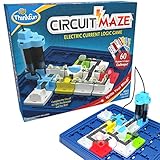
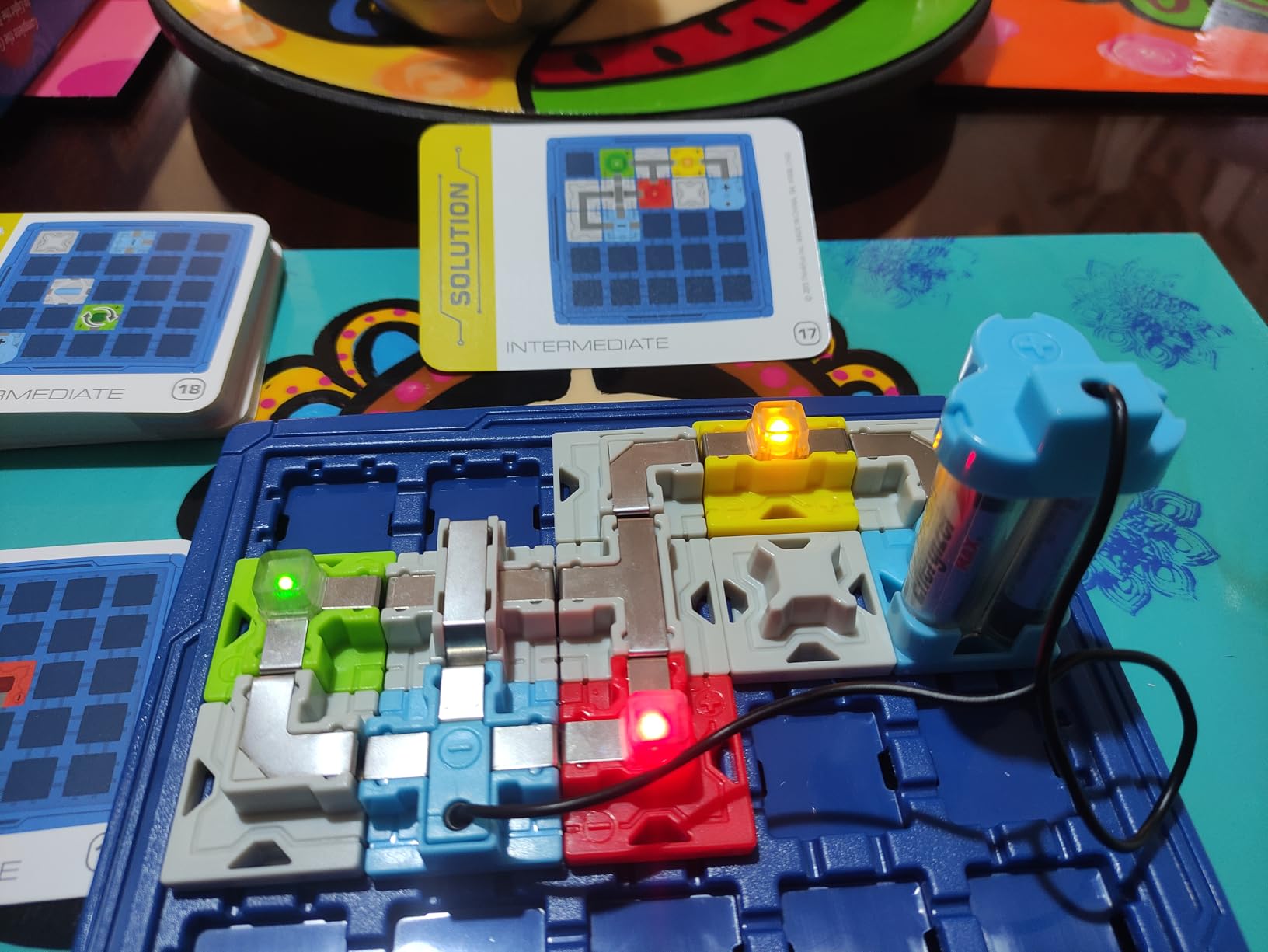
Circuit Maze does something few STEM board games manage: it teaches actual electrical circuitry while feeling like a puzzle game, not a science lesson. Players place tokens on a grid to complete circuits and light up LEDs, learning about series circuits, parallel circuits, and current flow along the way. My 11-year-old tester figured out how circuits work before her science class covered the topic.
The game includes 60 challenge cards that increase in difficulty. Beginner cards have you completing simple circuits with just a few tokens, while expert challenges require creative routing through multiple components. The 21 game tokens include different circuit elements that snap into the grid securely. Everything feels well-made and designed to last.
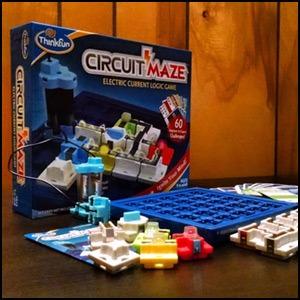
One detail worth mentioning: the game requires 3 AAA batteries that are not included. Stock up before game day. Changing batteries requires a screwdriver, which is a minor annoyance but not a dealbreaker. The educational value makes up for it. This is a Toy of the Year Finalist for good reason. With over 2,100 reviews and a 4.5-star rating, families consistently praise the stealth learning experience.
I noticed that adults enjoy this game just as much as kids. Several parents in our test group said they finally understood circuit concepts that had confused them since school. The hands-on approach makes abstract electrical concepts tangible and intuitive.
Who should pick this up
Kids ages 8 and older who are curious about how electronics work will get the most value from Circuit Maze. It is also an excellent classroom resource for electricity and circuitry units. Families looking for a cooperative problem-solving activity will enjoy working through challenges together.
What to watch out for
The battery requirement means you need to plan ahead, and the screwdriver-access battery compartment adds friction to setup. Some users report that tiles do not always fit perfectly when multiple tiles are placed side by side, though this rarely affects gameplay.
4. ThinkFun Laser Maze – Brain Game and STEM Toy

Think Fun Laser Maze (Class 1) Brain Game and STEM Toy for Boys and Girls Age 8 and Up – Award Winning and Mind Challenging Game for Kids (44001014)
Ages 8+
Single Player
60 Challenges
Real Class 1 Laser
Pros
- Real laser makes physics tangible
- Builds reasoning and planning skills
- Portable design
- Quality materials with thick cards
Cons
- Laser harder to see in bright rooms
- Pieces can get lost without storage
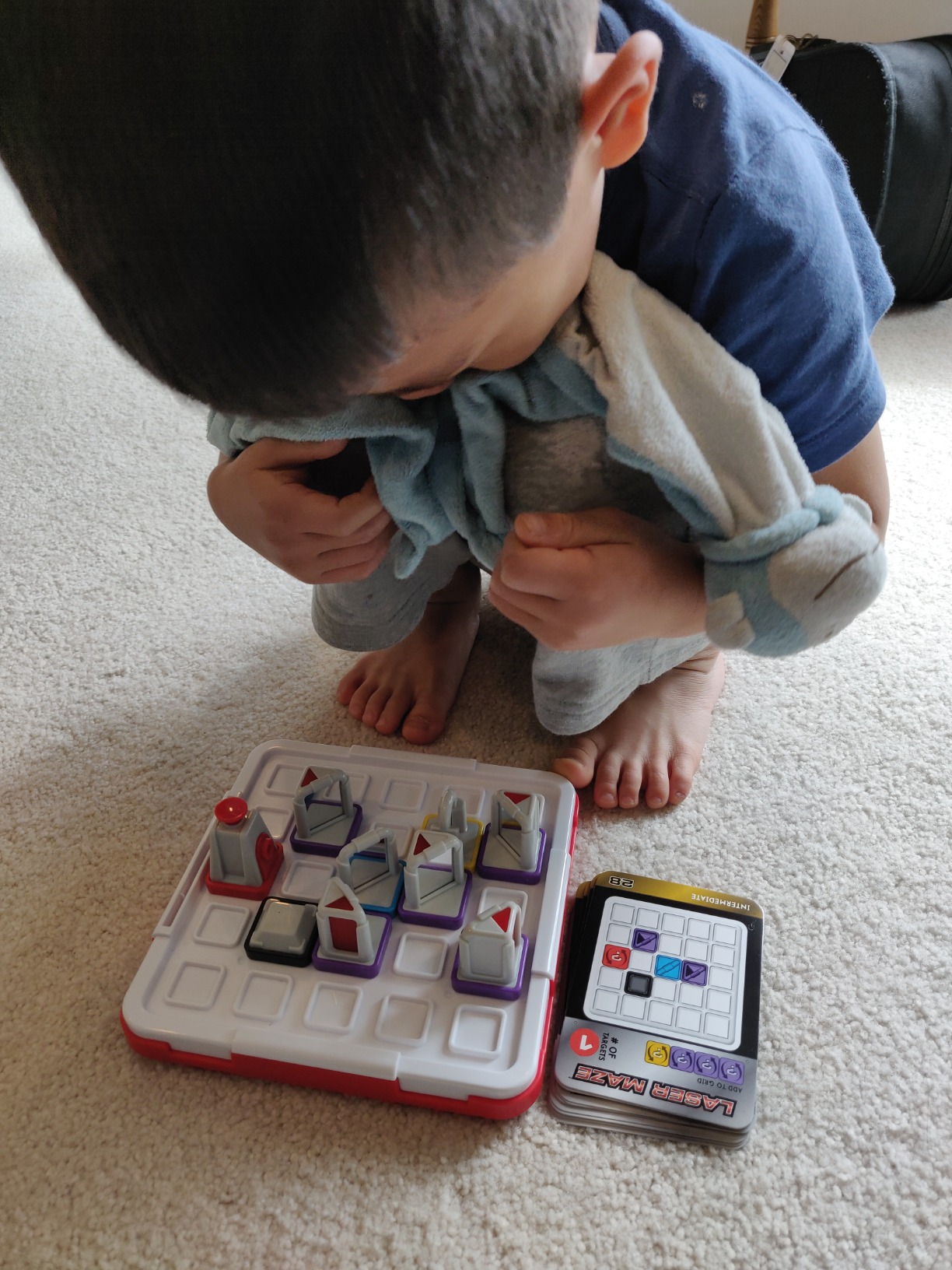
Laser Maze is the game that made my kids actually understand how mirrors and light reflection work. Using a real Class 1 laser, players position mirrors, beam-splitters, and targets on a grid to direct a laser beam to specific locations. The moment that red beam hits the target after you have spent five minutes calculating angles is genuinely satisfying.
The included 60 challenge cards range from beginner setups that teach basic reflection to expert puzzles that require multiple mirror bounces and beam splits. Each challenge specifies which pieces to use and where the laser starts, but you have to figure out how to arrange everything. That open-ended problem solving is where the real learning happens.
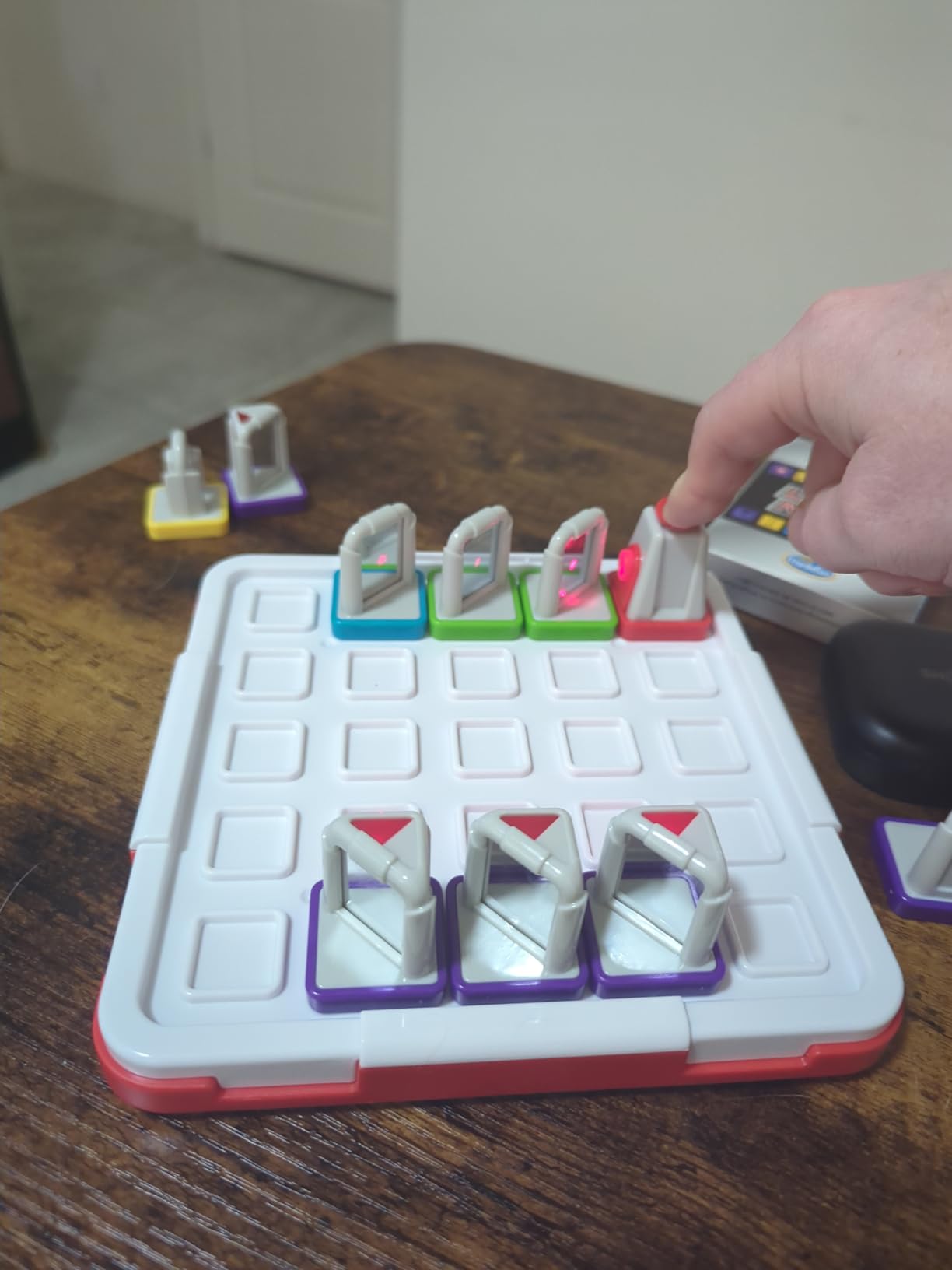
The laser is safe for kids (Class 1 rating), but it is bright enough to see clearly in dim lighting. In bright rooms or direct sunlight, the beam becomes harder to spot, which can frustrate younger players. I recommend playing this one in a room with adjustable lighting for the best experience.
At 11 x 3 x 10 inches, the game board is compact enough for travel but large enough to manipulate pieces comfortably. The challenge cards are printed on thick, strong stock that holds up to repeated use. With over 3,100 reviews and a 4.5-star average, this is a proven winner for families wanting to explore physics through play.
Who should pick this up
Kids fascinated by light, physics, or optics will gravitate toward Laser Maze immediately. It is also an excellent resource for science teachers covering reflection and refraction concepts. The single-player design makes it a good quiet-time activity for independent learners.
What to watch out for
Storage can be an issue since the pieces are small and can get lost without a dedicated container. The laser is less visible in well-lit rooms, so evening play or dim lighting works best. Two LR44 batteries are included, but you will eventually need replacements.
5. Math for Love Prime Climb – Math Strategy Game
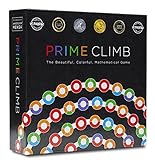
Math for Love Prime Climb
Ages 8+
2-4 Players
30 Min Play Time
Color-Coded Board
Pros
- Teaches multiplication and factorization visually
- Endlessly replayable with strategy and luck mix
- Beautiful color coding helps visualize math
- Great for homeschool curriculum
Cons
- Pawns can break with rough use
- Games can run long with 4 players
Prime Climb changed how I think about math games. Instead of drilling flash cards, players roll dice and use multiplication, division, addition, and subtraction to move their pawns across a beautiful spiral board. Every number from 0 to 101 is color-coded by its prime factors, so kids start seeing mathematical patterns naturally as they play.
In our testing, a 9-year-old who struggled with multiplication tables began factoring numbers in her head after just three games. The color-coding system makes factorization visual and intuitive in a way that worksheets never could. Orange represents 2, green represents 3, and so on. When you see a number painted with orange and green, you immediately know it is divisible by 6.
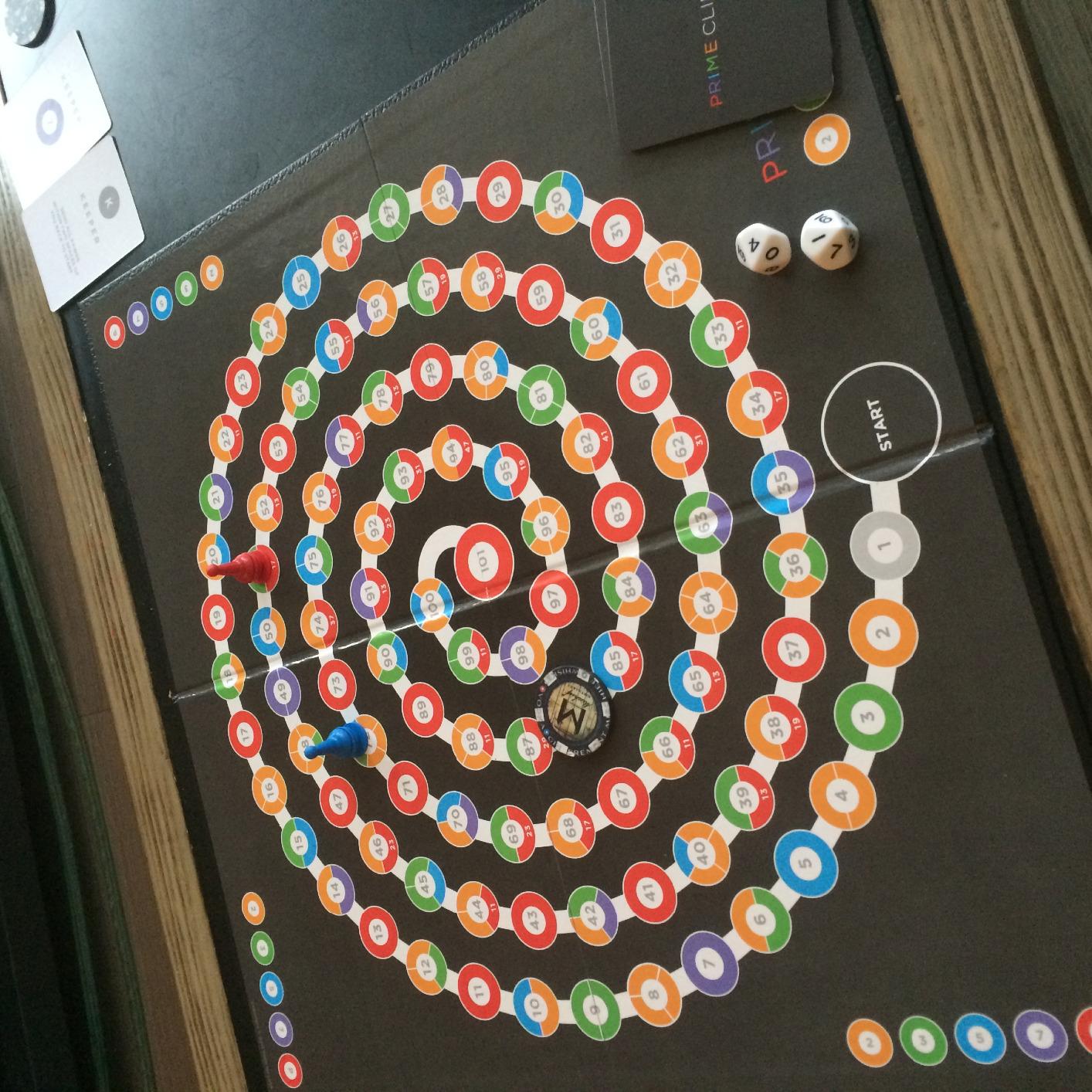
The game supports 2 to 4 players with games lasting around 30 minutes. The mix of strategy and luck keeps things balanced, so adults and kids can play together without one side dominating. My family has played over 20 rounds and no two games have felt the same. The included multiplication table reference card is a nice touch for younger players still learning their facts.
With a 4.7-star rating across 1,800+ reviews, Prime Climb is one of the highest-rated STEM board games available. Math for Love offers a quality guarantee, replacing any defective components. The only downside I found is that the pawn pieces can break if stepped on or handled roughly, so some care is needed with storage.
Who should pick this up
Families with kids ages 8-14 who need to strengthen math skills without the tears of traditional drill work will benefit most from Prime Climb. Homeschool families consistently rank this as a top math resource. It works equally well for classroom settings and family game nights.
What to watch out for
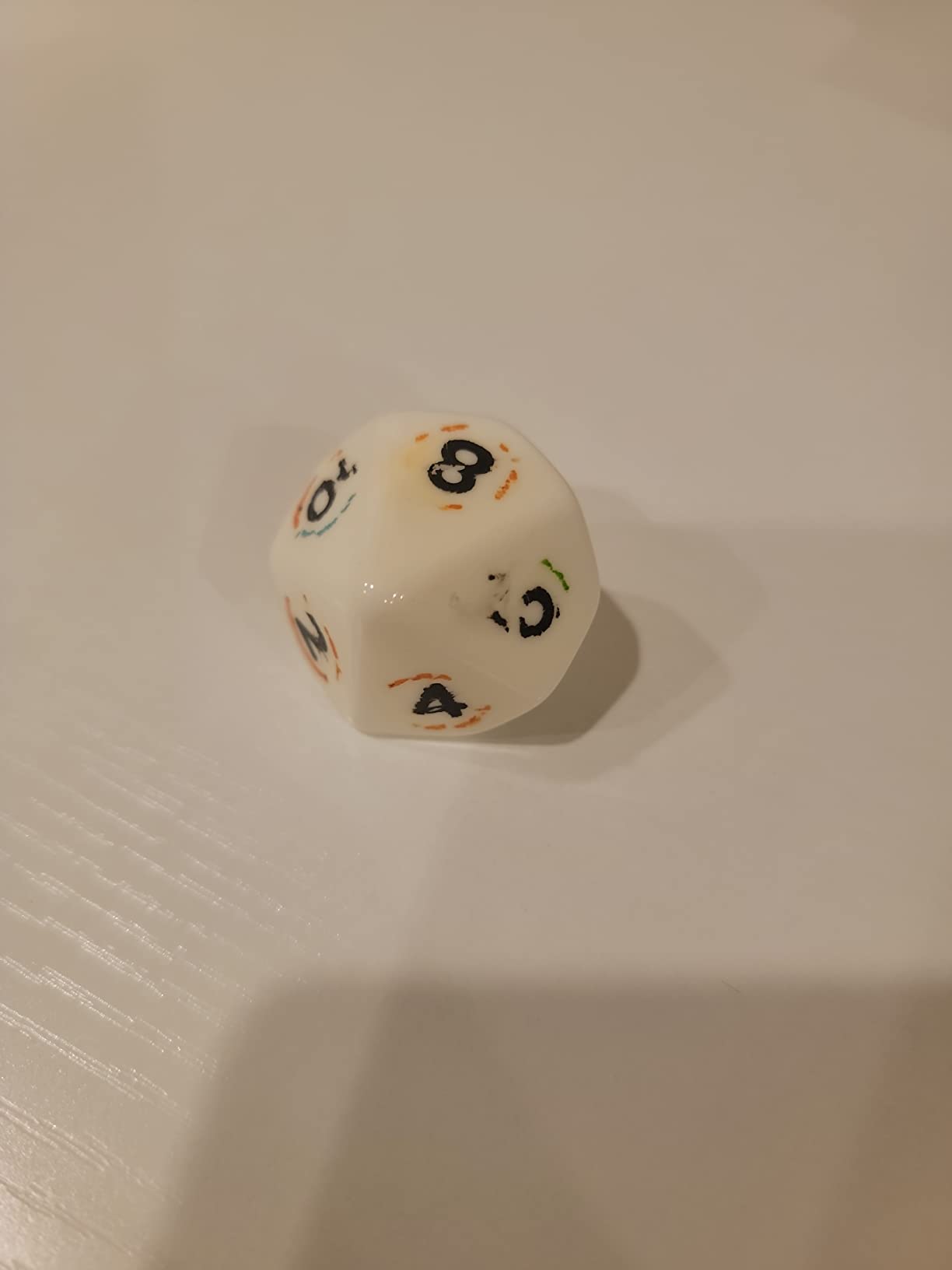
Games with four players can stretch past 30 minutes, which may test younger attention spans. The pawn pieces are the most fragile component, so keep them away from toddlers who might step on them. The d10 dice have a slightly wobbly shape that takes getting used to.
6. Periodic: A Game of the Elements

Periodic: A Game of the Elements | Periodic Table Board & Card Game About Atoms, Elements & Compounds | A Strategy Board Game for Gamers & Educational Science Game for Kids or Family Game Night
Ages 10+
2-6 Players
Strategy Board Game
MENSA Recommended
Pros
- Accurate chemistry curriculum content
- American MENSA Recommended
- Teaches periodic table through strategy
- High quality components
Cons
- Complex rules take time to learn
- Longer play sessions required
Periodic takes the periodic table and turns it into a strategic board game where players move across elements, collect compounds, and score points using real chemistry principles. I was skeptical that chemistry could become a fun strategy game, but Genius Games pulled it off. My 12-year-old tester started remembering element groups and periodic trends after just two play sessions.
The game uses action economy, tactical movement, and set collection mechanics that feel like a proper strategy game, not an educational activity wearing a board game costume. Players move their marker across the periodic table by rolling dice, and each movement teaches something about how elements relate to each other. All the science is accurate and aligned with middle school and high school chemistry curricula.
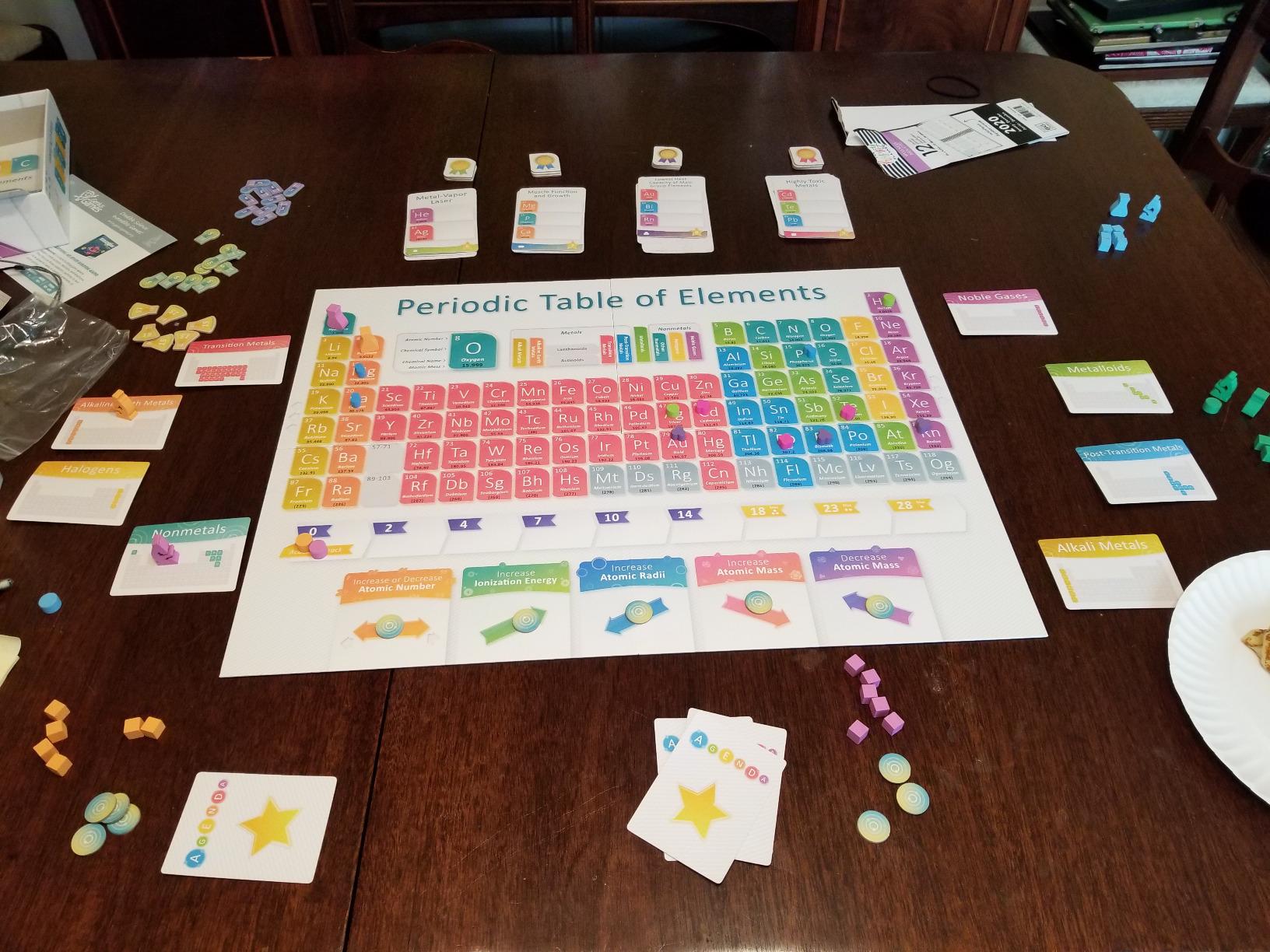
The learning curve is the main barrier. Plan on 30-45 minutes to learn the rules before your first game. Once everyone understands the mechanics, games run smoothly and take about 60-90 minutes. The strategy depth keeps older kids and adults engaged across multiple sessions. It is also worth noting that no prior chemistry knowledge is required to start playing, which makes it accessible to complete beginners.
As an American MENSA Recommended game, Periodic has earned recognition for both its educational value and engaging gameplay. With 337 reviews and a 4.3-star rating, it may not have the massive review counts of some games on this list, but the quality of feedback from educators and science enthusiasts is overwhelmingly positive.
Who should pick this up
Middle school and high school students currently taking chemistry will benefit most from Periodic. It is also a strong pick for families who enjoy strategy games and want to add a science layer to their game nights. Teachers looking for an engaging classroom activity during chemistry units should consider this one.
What to watch out for
The rule complexity means this is not a quick pick-up-and-play game. Younger kids under 10 may struggle with both the strategy and the chemistry concepts. Some students have reported difficulty following the directions, so be prepared to teach the rules patiently the first time.
7. The Genius Square – Award-Winning STEM Puzzle

The Genius Square from the Happy Puzzle Company | Game of the Year Award Winner | 60000+ Solutions | STEM Puzzle Game for 1-2 Players | Ages 6 – Adult | Roll the dice and Race to Fill the Grid!
Ages 6+
1-2 Players
60,000+ Solutions
Award Winner
Pros
- Massive replayability with 60K+ solutions
- Game of the Year award winner
- Easy to learn in under 2 minutes
- Compact and travel-friendly
Cons
- Relatively expensive for a puzzle game
- Some quality control variations
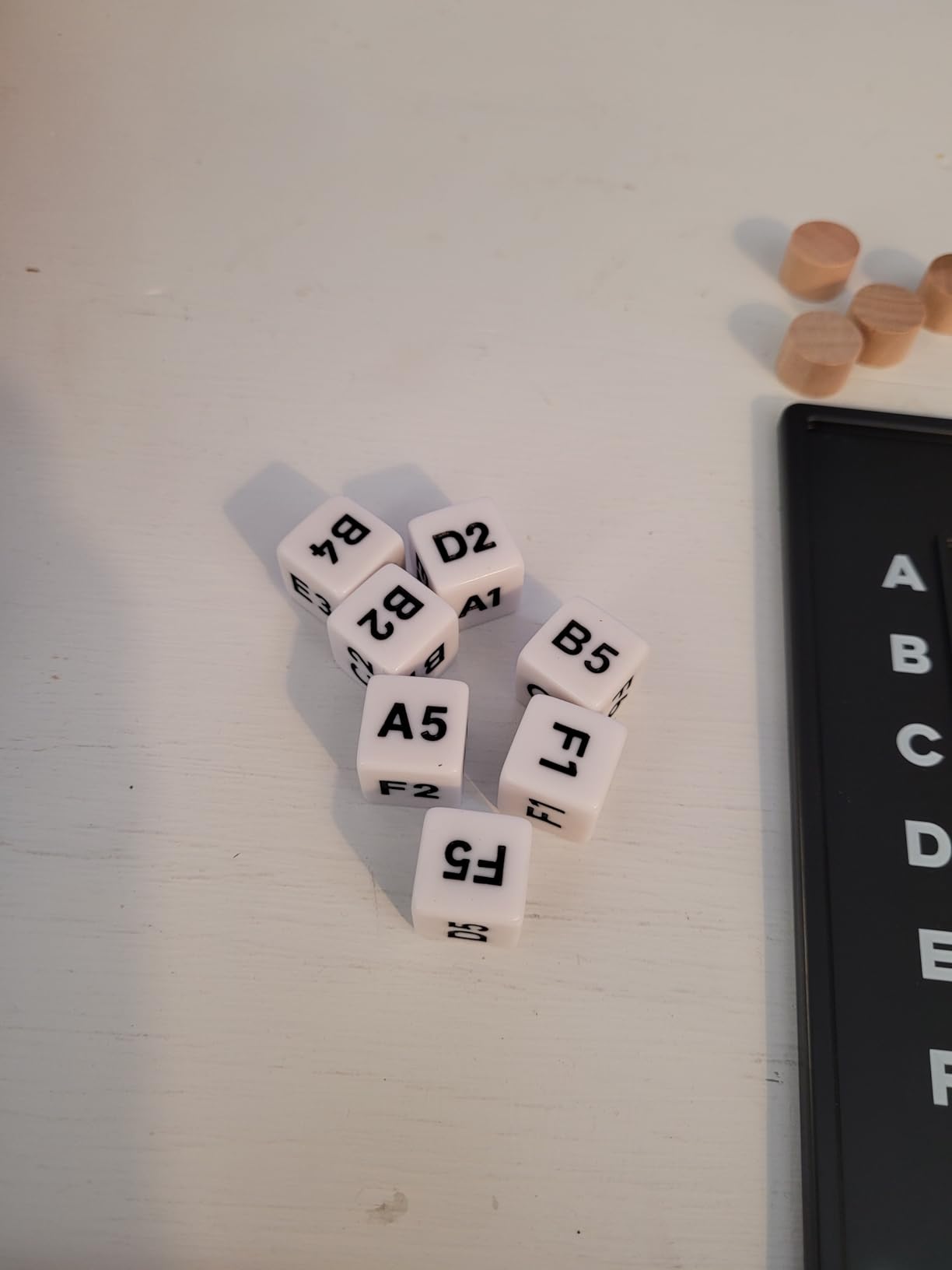
The Genius Square earned its Game of the Year and Educational Product of the Year awards for good reason. The concept is deceptively simple: roll dice to determine where blockers go on a grid, then fit colored shape pieces around them to fill every remaining space. With over 60,000 possible combinations, I can confidently say no two rounds feel the same.
I tested this with kids ranging from 6 to 11 years old, and every single one was engaged within the first minute. The rules take less than two minutes to explain, which is refreshing compared to games that require a lengthy setup. Roll the dice, place the blockers, then race to fill the grid. Playing head-to-head against a sibling or parent adds excitement, but solo play against the clock works great too.
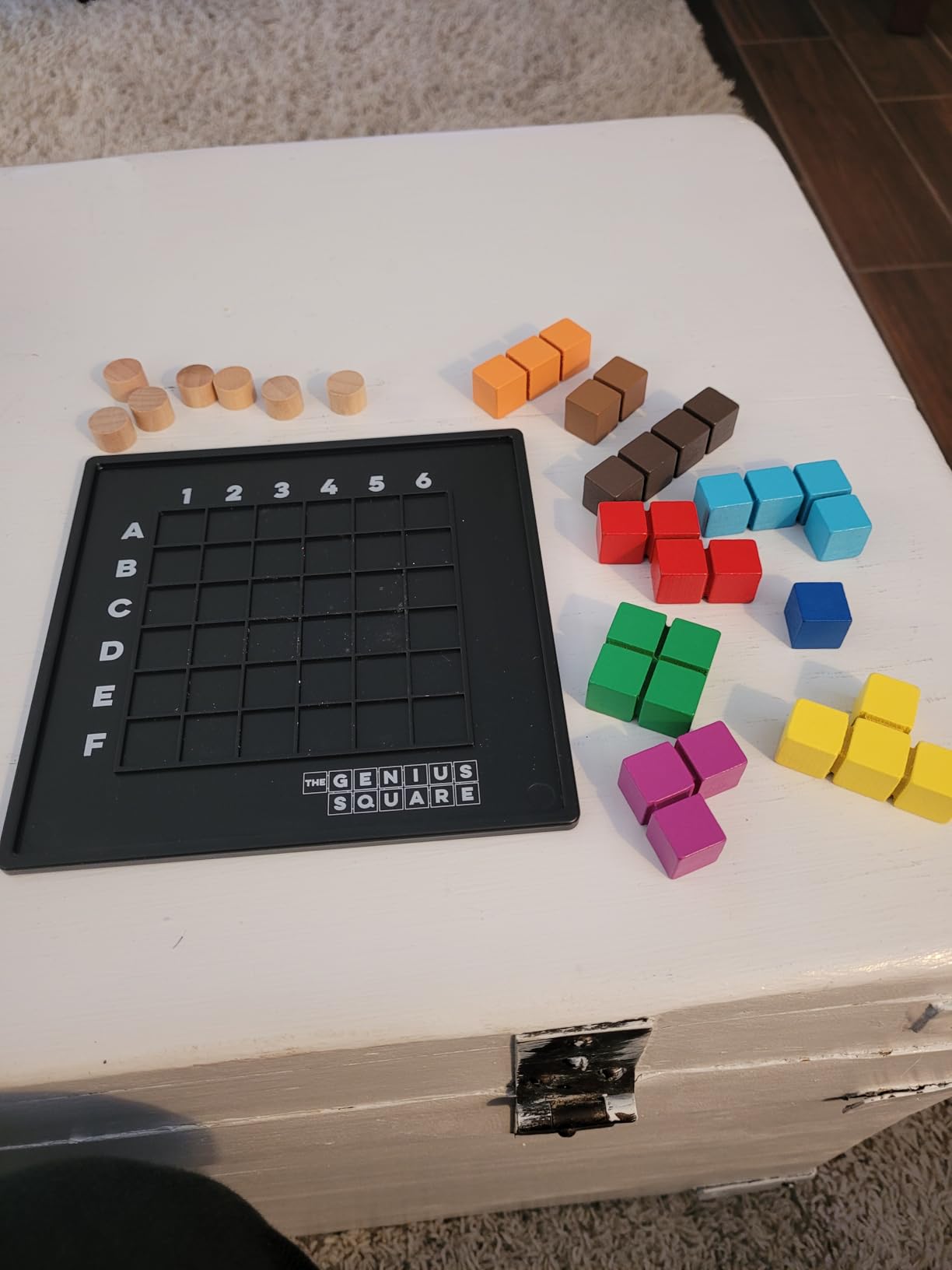
The wooden components feel premium and the 7 x 7 x 2 inch box travels easily. We took it on a weekend trip and it kept two kids occupied during a 3-hour car ride. The game builds spatial reasoning and pattern recognition skills that transfer directly to math and engineering thinking.
With a remarkable 4.8-star rating across 7,700+ reviews, The Genius Square is one of the highest-rated games in our entire roundup. The only hesitation is the price point for what is essentially a puzzle game, but the 60,000+ solutions and award-winning design justify the investment for families serious about educational play.
Who should pick this up
Families with kids aged 6-12 who enjoy puzzles and competitive play will love The Genius Square. It works well for both solo play and head-to-head racing. The compact size makes it ideal for travel, waiting rooms, and restaurants. Teachers can use it as a quick thinking activity in classrooms.
What to watch out for
At its core, this is a puzzle game with a single mechanic, so kids who need variety in gameplay mechanics might lose interest over time. Some users have reported minor quality variations between copies, though our test unit was solid.
8. Coder Bunnyz – Comprehensive Coding Board Game

Coder Bunnyz – The Most Comprehensive STEM Coding Board Game Ever! Learn All the Concepts You Ever Need in Computer Programming in a Fun Adventure. Featured at TIME, NBC, Sony, Google, Maker Faires!
Ages 4+
1-4 Players
13 Levels
Free Curriculum
Pros
- Teaches coding from basics to advanced
- Created by a 9-year-old inventor
- Used at 600+ schools and libraries
- Free curriculum available
Cons
- Board tiles shift when bumped
- Pieces may feel simplistic for experienced coders
Coder Bunnyz stands out for one remarkable reason: it was created by a 9-year-old girl who wanted to teach other kids coding. That origin story matters because the game genuinely speaks to how children think about programming. The 13 difficulty levels take players from basic movement commands all the way to loops, conditionals, and functions.
I tested this with a 5-year-old and a 10-year-old, and the game adjusted well to both skill levels. The younger child worked through the first few levels learning basic sequential commands, while the older one tackled conditional logic and function creation. Having 13 levels means the game genuinely grows with the child, which is rare in educational board games.
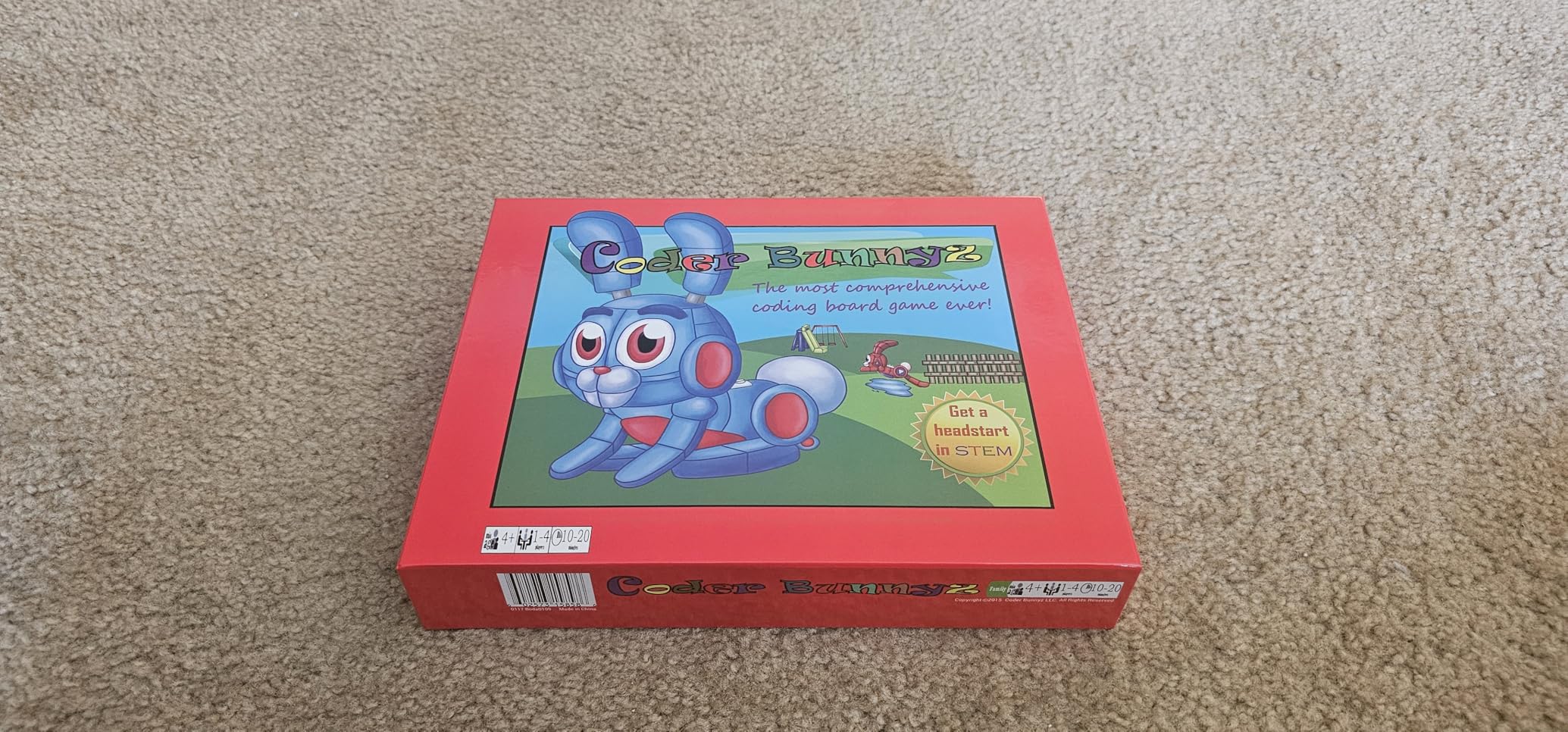
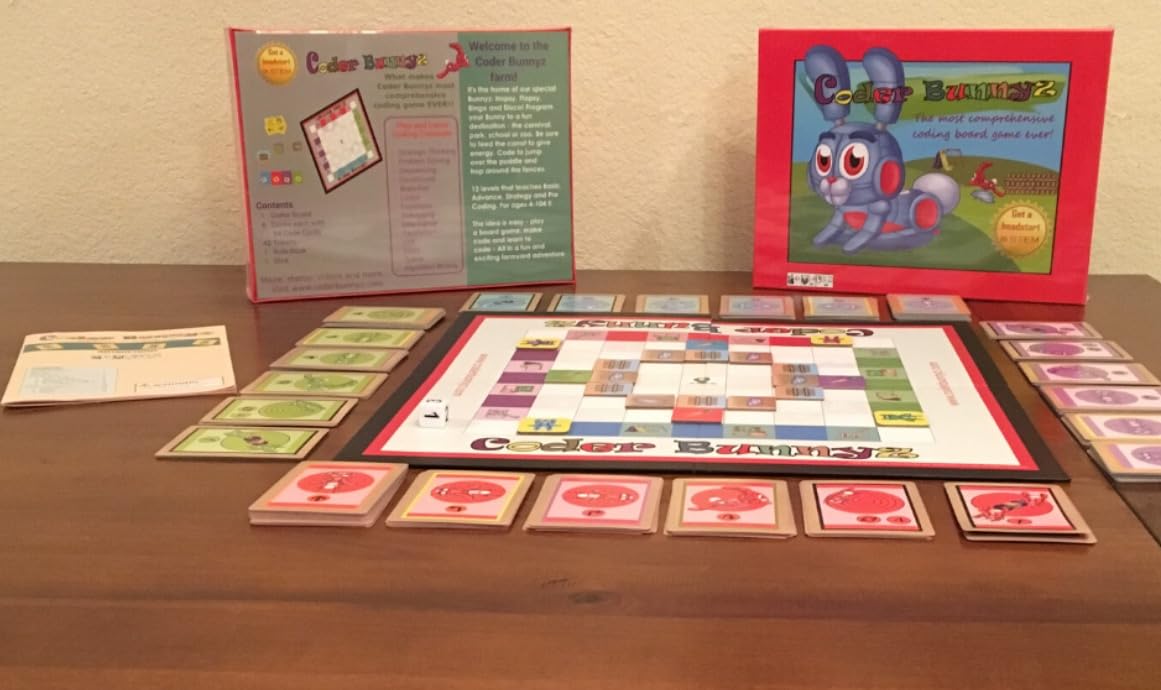
The game has been played at over 4,800 workshops including 50 sessions at Google headquarters, which gives it serious credibility. A free curriculum is available that makes this a complete teaching resource for classrooms and coding clubs. The included components are comprehensive: 4 decks of instruction cards, game element tokens, bunny tokens, fences, puddles, and a die.
The main issue I encountered is that board tiles can shift during gameplay, especially when younger players get enthusiastic. A non-slip mat underneath helps. With 291 reviews and a 4.3-star average, this game has a smaller but dedicated following among educators and parents serious about teaching coding concepts.
Who should pick this up
Families with kids ages 4-10 who want a comprehensive introduction to coding concepts should put Coder Bunnyz at the top of their list. The free curriculum makes it especially valuable for homeschool families and coding clubs. Schools and libraries looking for a proven coding education tool will find the workshop-tested design reassuring.
What to watch out for
The board tiles shift easily on smooth surfaces, so play on a tablecloth or textured surface. Experienced coders may find the pieces and mechanics too simplistic for sustained engagement. The game requires some initial setup time to organize all the card decks and tokens.
9. Cytosis: A Cell Biology Board Game

Cytosis: A Cell Biology Board Game | A Science Accurate Strategy Board Game About Building Proteins, Carbohydrates, Enzymes, Organelles, & Membranes | Fun Science Games for Adults & Family Game Night
Ages 10+
2-5 Players
90 Min Play Time
Worker Placement
Pros
- Science-accurate cell biology content
- Peer-reviewed by 20+ PhDs
- Worker placement strategy mechanics
- Great for homeschool and classroom
Cons
- Complex rules need time to learn
- Scoring system can be complicated
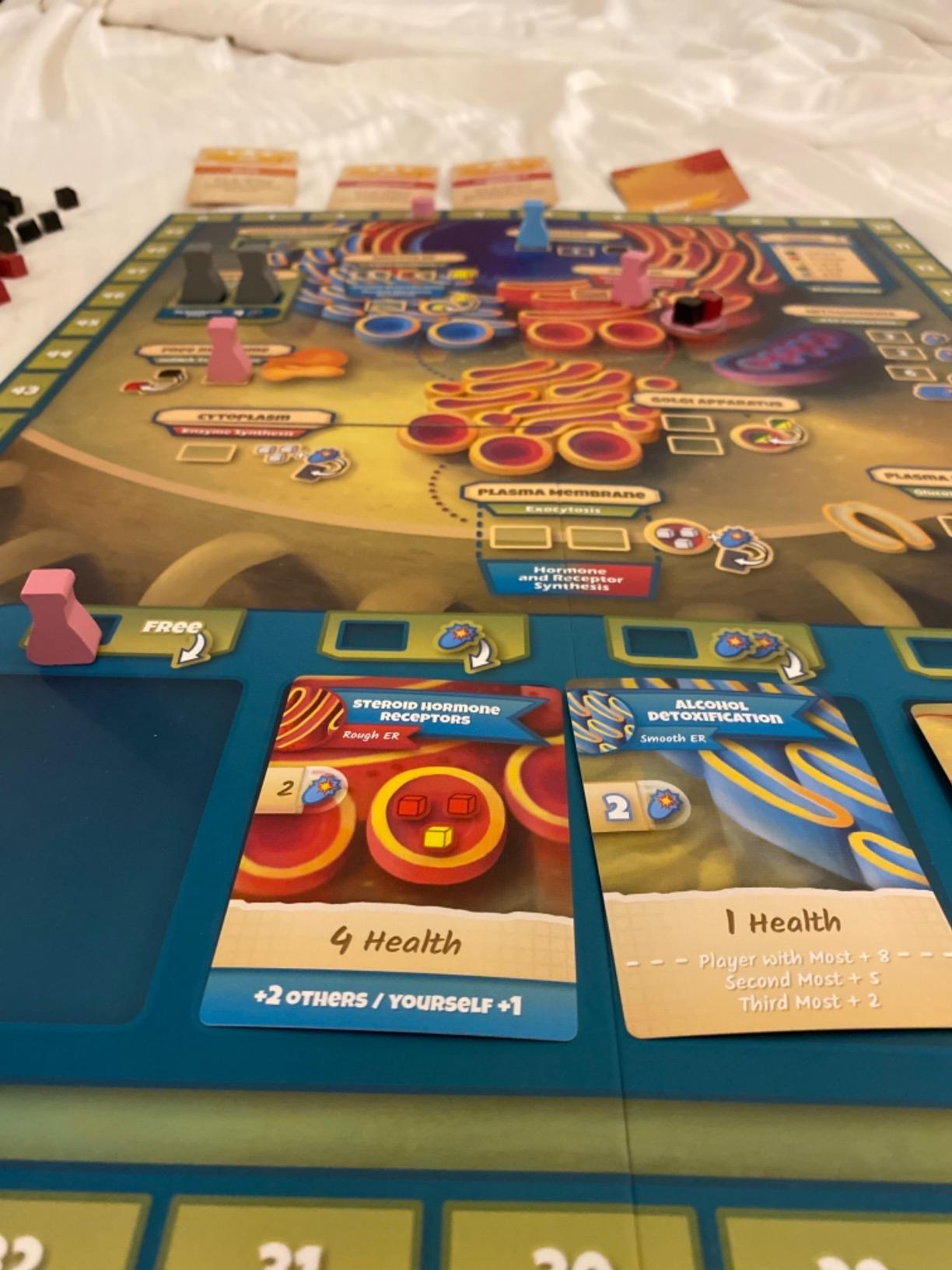
Cytosis is unlike any biology resource I have used. The game takes place inside a human cell, and players use worker placement mechanics to build enzymes, hormones, and receptors while managing resources like proteins, carbohydrates, lipids, and DNA. It is essentially a biology class disguised as a strategy game, and it works beautifully.
The science accuracy is where Cytosis truly shines. The game was written and peer-reviewed by over 20 PhDs and doctors, and it shows. Every action corresponds to real cellular processes. When you place a worker on the ribosome to build a protein, you are learning about actual protein synthesis. The included science booklet explains each concept in detail.
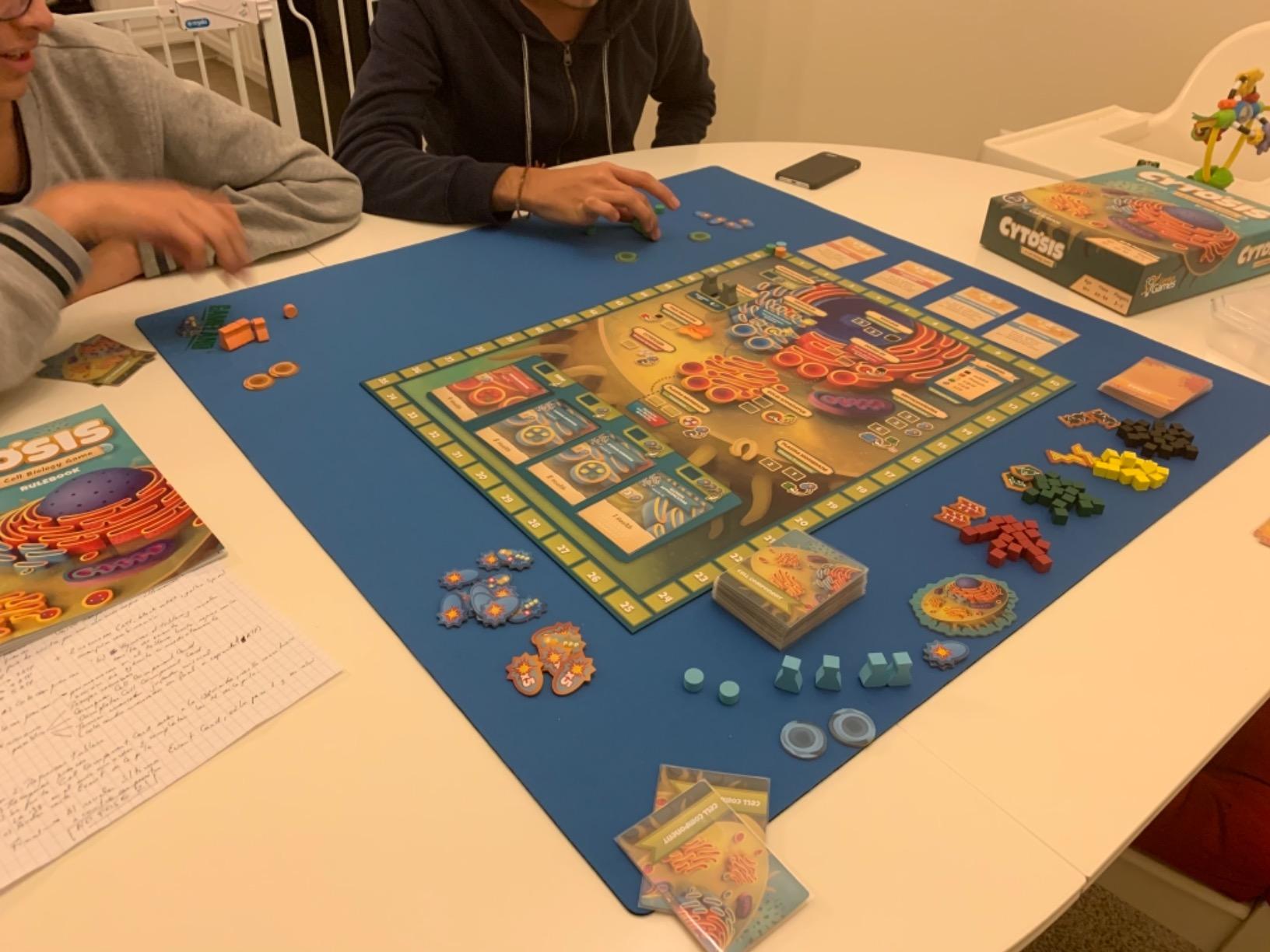
Gameplay runs about 90 minutes for 2-5 players, making this a commitment rather than a quick activity. The worker placement mechanics will feel familiar to anyone who has played strategy games like Lords of Waterdeep. If your family enjoys medium-weight strategy games and wants to add a biology layer, this is the perfect crossover.
With 372 reviews and a 4.4-star average, Cytosis has a smaller but passionate audience of science educators and board game enthusiasts. The learning curve is steeper than most games on this list, but the educational payoff is substantial. Students who play this game will walk away with a genuine understanding of cellular biology that textbooks struggle to convey.
Who should pick this up
High school biology students and families who enjoy strategy board games are the ideal audience for Cytosis. Homeschool families teaching life science units will find it invaluable. Adults with a science background or interest in biology will appreciate the accuracy and strategic depth.
What to watch out for
The 90-minute play time and complex rules make this unsuitable for younger kids or families looking for quick, casual gameplay. The scoring system takes time to understand, and limited player interaction means some may find it feels like parallel puzzle-solving rather than a competitive experience.
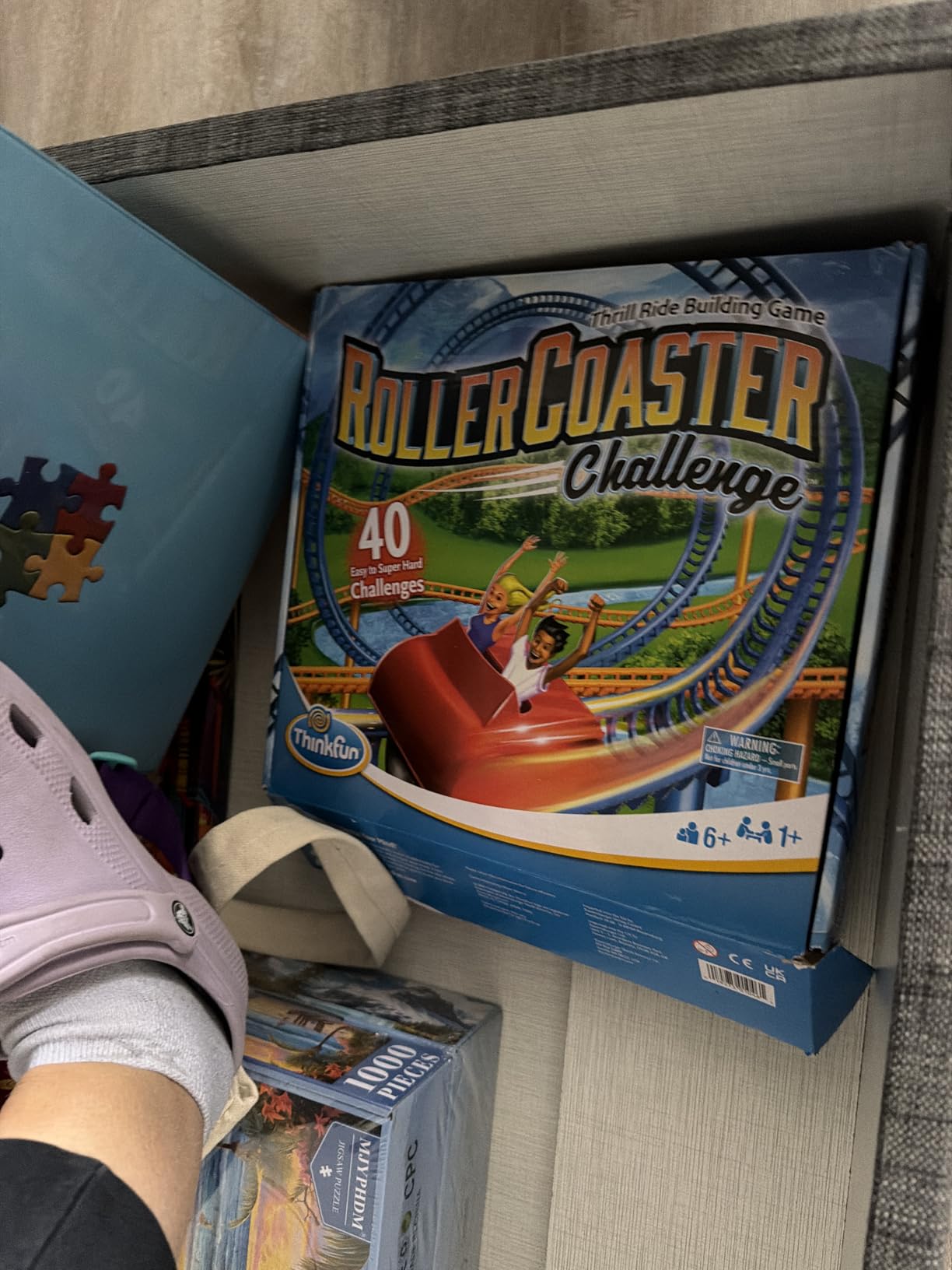
10. ThinkFun Roller Coaster Challenge – Building Game

ThinkFun Roller Coaster Challenge STEM Toy and Building Game for Boys and Girls Age 6 and Up – TOTY Game of the Year Finalist
Ages 6+
Single Player
40 Challenges
Working Roller Coaster
Pros
- Builds engineering and planning skills
- TOTY Game of the Year Finalist
- Kids build a working roller coaster
- No screens required
Cons
- May be too easy for older experienced builders
- Limited replay after completing all 40 cards
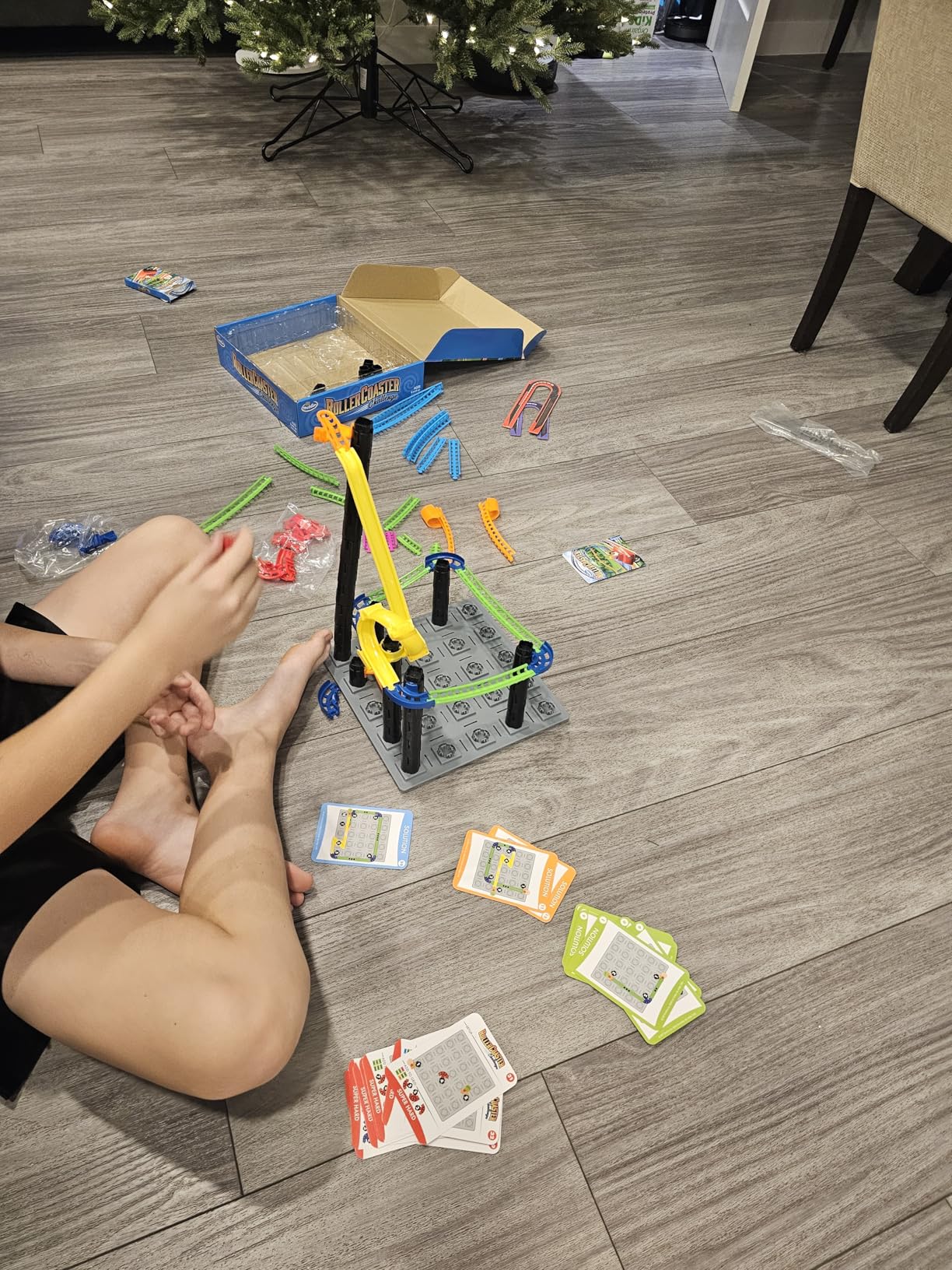
Roller Coaster Challenge had my 7-year-old building working roller coasters within 10 minutes of opening the box. The concept is half logic game, half building set: players use challenge cards to determine which track pieces and posts to use, then figure out how to assemble them so the coaster car actually runs the full track. When that little car completes a loop for the first time, the look of accomplishment is priceless.
The game includes 36 posts, 39 track pieces, a roller coaster car, and 40 challenge cards with solutions. The TOTY Game of the Year Finalist recognition is well-deserved. Each challenge builds engineering reasoning skills as kids learn to visualize track paths, understand gravity, and plan connections between track segments.
I found that kids on the younger end of the recommended range (ages 6-7) stay engaged longer with this game than with purely abstract puzzles because they get to see physical results. The roller coaster car actually zooming around a track they built themselves is a powerful motivator. The 40 challenges provide a solid amount of content, though advanced builders may work through them faster than expected.
The plastic components snap together securely and the car has enough momentum to complete most track designs. With 2,700+ reviews and a 4.6-star average, this is one of the most popular engineering games for kids. Some users report that pieces can be difficult to snap together initially, but they loosen up after the first few builds.
Who should pick this up
Kids ages 6-9 who love building sets, marble runs, or anything that moves will be drawn to Roller Coaster Challenge. It is an excellent introduction to engineering thinking for younger children. Parents looking for screen-free activities that hold attention for extended periods will appreciate the hands-on building aspect.
What to watch out for
Once all 40 challenge cards are completed, replay value drops unless kids start designing their own freeform tracks. Older kids or those experienced with building sets may find the challenges too easy. Some pieces require firm pressure to snap together, which can frustrate smaller hands.
11. Learning Resources Math Island – Addition and Subtraction Game
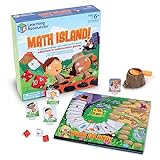
Learning Resources Math Island Addition & Subtraction Game – Math Manipulatives, Educational Board Toys, Classroom Flash Cards , Volcano Toy, STEM Kids, Gifts for Boys And Girls , Montessori
Ages 6+
2-4 Players
Volcano Theme
10-Sided Dice
Pros
- Makes math practice genuinely exciting
- Volcano popper mechanic kids love
- High quality durable components
- Builds confidence with math facts
Cons
- Significant luck factor with dice rolls
- Younger children may need assistance
Math Island does something I did not think was possible: it makes addition and subtraction practice feel like an adventure rather than homework. Players move around a volcanic island board, solving math equations to advance, and the volcano popper that launches the dice is a feature kids absolutely love. In testing, kids asked to play again, which is the ultimate test for any educational game.
The game uses 10-sided number dice and an operation die, so the math problems change every turn. This keeps the game dynamic and ensures kids practice a wide range of addition and subtraction problems. The colorful game board and character pieces are well-made and sturdy, consistent with the Learning Resources reputation for quality educational materials.
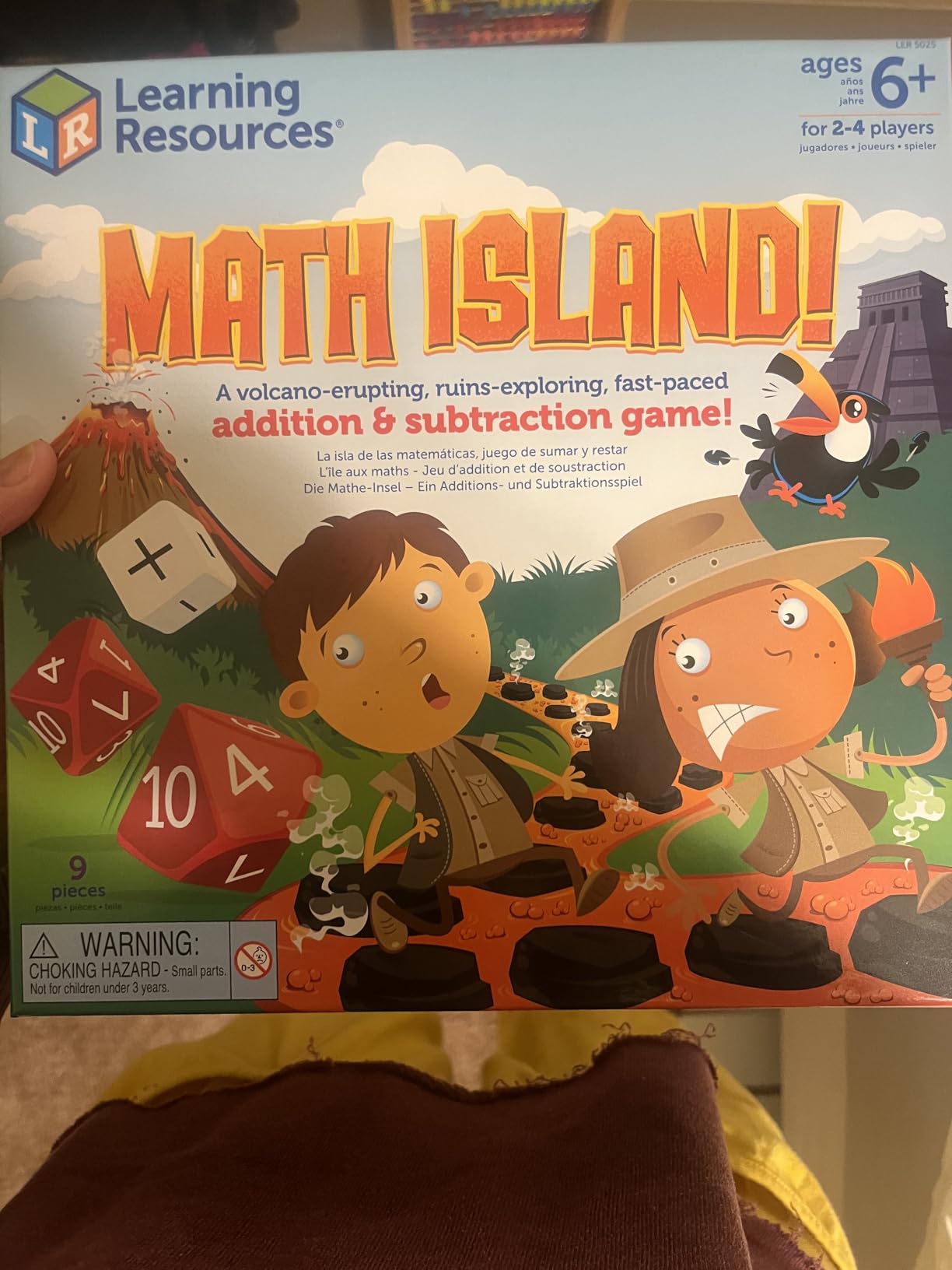
With a remarkable 4.8-star rating across nearly 1,000 reviews, Math Island is one of the highest-rated games on this list. Parents consistently praise how the game builds math confidence without kids realizing they are practicing. The 2-4 player design makes it a natural fit for family game night or small group classroom activities.
The main consideration is the luck factor. Because dice rolls determine which equations kids solve, there can be significant gaps between players. Some younger children may also need help reading the equations or understanding the operation symbols during their first few games.

Who should pick this up
Families with kids ages 6-9 who are learning addition and subtraction will get the most value from Math Island. It is ideal for building math confidence in children who feel anxious about numbers. Teachers working with small groups during math centers will find it a useful classroom tool.
What to watch out for
The luck-based movement means less skilled players can sometimes win purely through good rolls, which may frustrate kids who are trying hard to get the math right. Very young children under 6 will need adult support to read the equations.
12. Educational Insights Kanoodle – 3D Brain Teaser Puzzle

Educational Insights Kanoodle
Ages 7+
Single Player
228 Challenges
Travel Size
Pros
- Extremely compact and portable
- 228 puzzles for lasting value
- Screen-free spatial reasoning training
- Affordable entry point
Cons
- Small pieces easy to lose
- Novelty may wear off on long trips
Kanoodle is the game I keep in my bag for restaurants, waiting rooms, and car rides. The compact case (just 5.75 x 3.25 x 0.75 inches) doubles as the game board, and the 12 colorful puzzle pieces pack inside it. With 228 challenges in both 2D and 3D configurations, this tiny package holds an impressive amount of content.
The puzzles start simply: arrange the pieces to fill a flat grid. Then they escalate to 3D pyramid challenges that require genuine spatial reasoning. I have seen kids and adults get equally absorbed in the harder challenges. The pieces are sturdy plastic that clicks into place satisfyingly, and the case closes securely so nothing spills in transit.
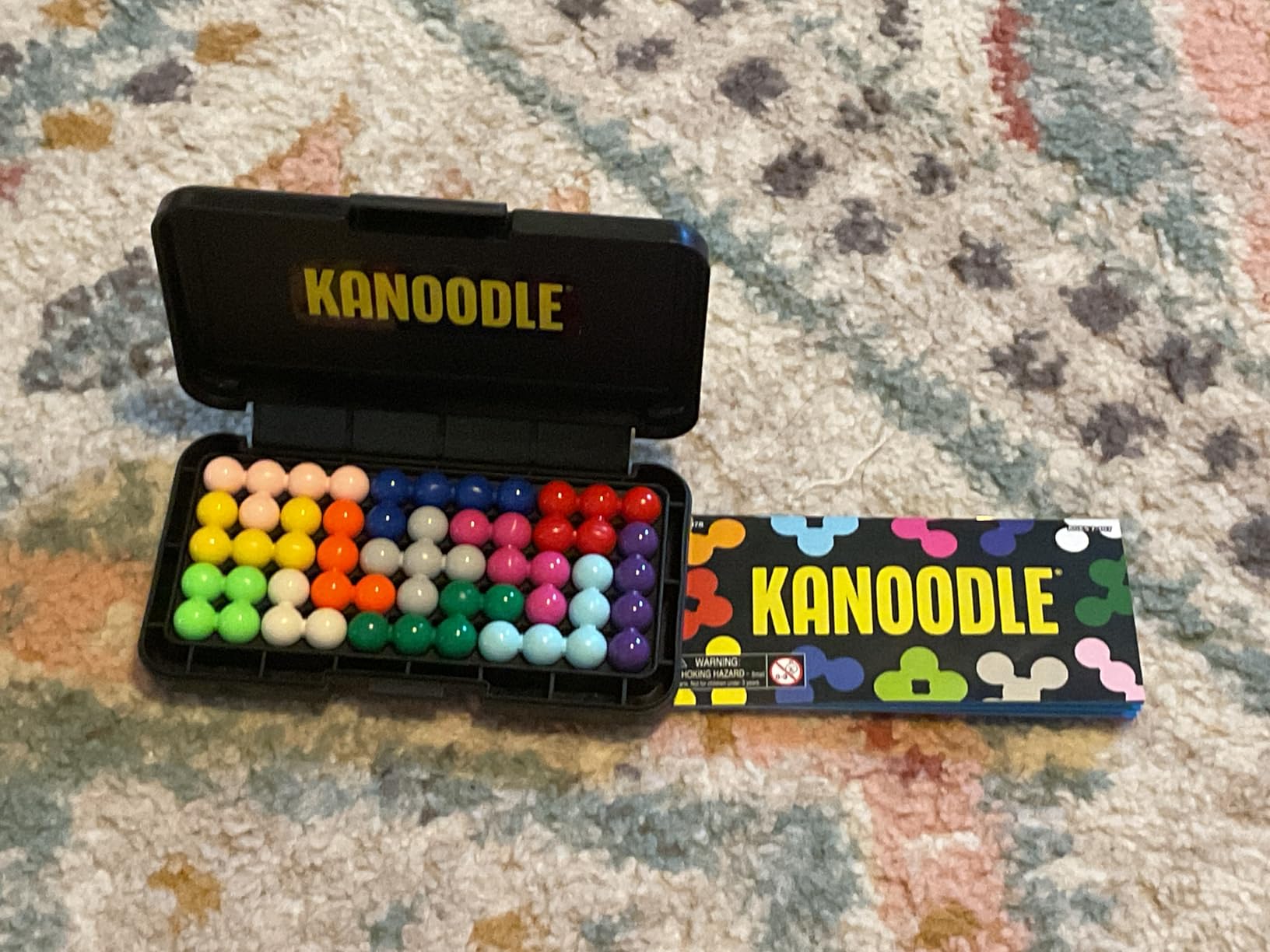
At its affordable price point, Kanoodle delivers remarkable value. The 228 challenges provide months of engagement, and the difficulty progression from beginner to expert ensures kids grow with it. With over 34,000 reviews and a 4.7-star average, Kanoodle is the number one bestseller in its puzzle category on Amazon. That kind of track record speaks for itself.
The only real limitation is the small piece size. With 12 pieces total, losing even one compromises the game. I recommend keeping it zipped in its case when not in active use. The pieces are small enough to be a choking hazard for children under 3, so families with toddlers should store it carefully.

Who should pick this up
Kids ages 7 and up who enjoy puzzles will find Kanoodle engaging and portable. It is the perfect travel game for families who want screen-free entertainment on the go. Adults looking for a compact brain teaser for commute or lunch break will also enjoy it. Teachers can use it as a fast-finisher activity in classrooms.
What to watch out for
The small pieces are easy to misplace, so consistent storage habits are important. Families with very young children need to be cautious about leaving pieces accessible. The single-player nature means it will not work as a group activity.
13. ThinkFun Rush Hour – Traffic Jam Logic Game

ThinkFun Rush Hour Traffic Jam Logic Game – Engaging STEM Toy for Kids Age 8 and Up – Enhances Reasoning & Planning Skills – MESH Accredited – 20+ Awards – Trusted Worldwide Seller for Over 20 Years
Ages 8+
Single Player
40 Challenges
20+ Awards
Pros
- Classic logic game trusted for 20+ years
- Develops sequential reasoning skills
- Compact and travel-friendly
- MESH accredited
Cons
- Losing one car renders set incomplete
- Some puzzles challenging for younger kids
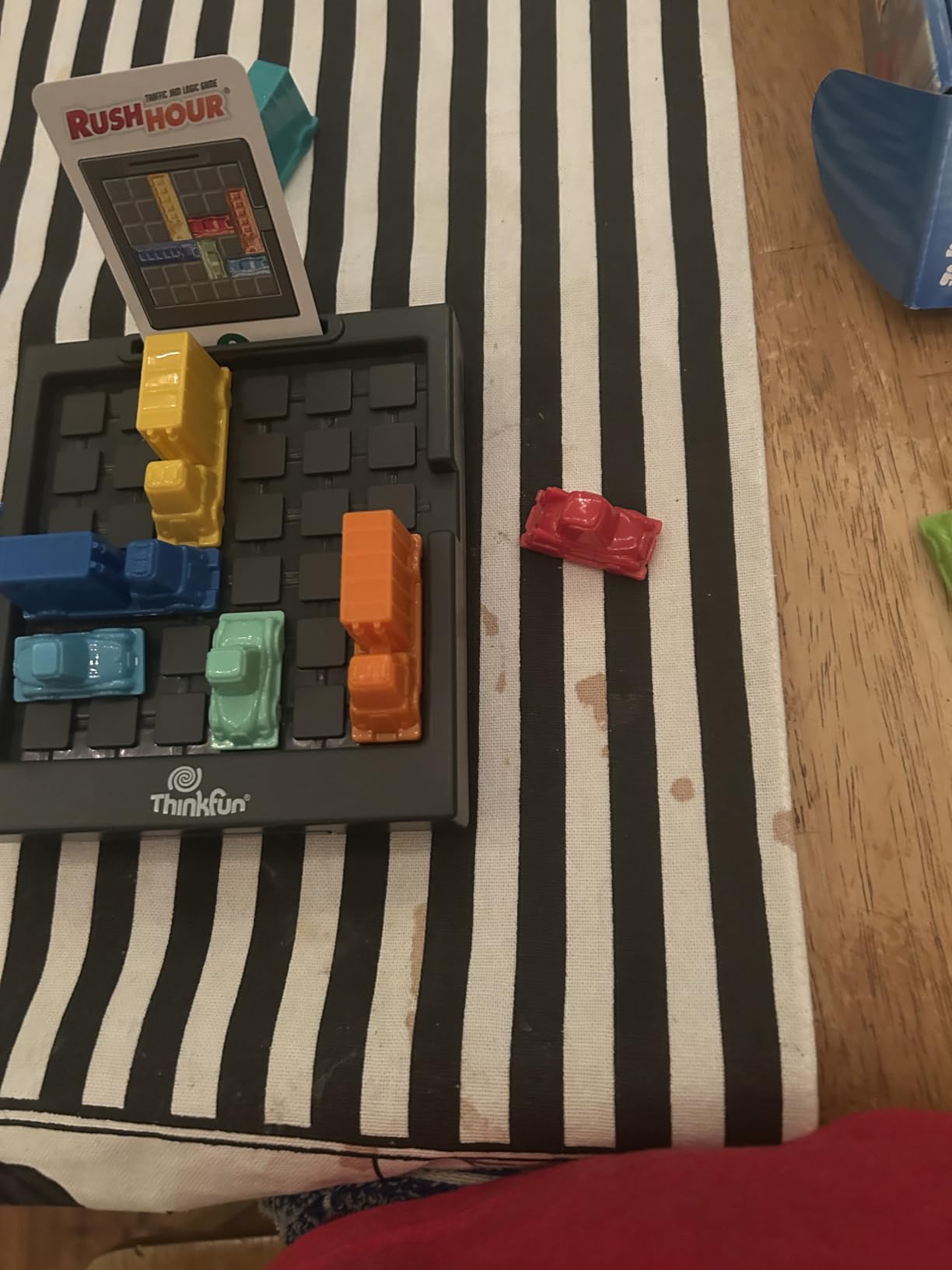
Rush Hour is the kind of game that has been around for over 20 years because the concept is timeless. The grid holds cars and trucks that slide only forward and backward. Your job is to slide vehicles out of the way so the red hero car can exit the traffic jam. Simple to learn, surprisingly difficult to master, and genuinely addictive.
This updated version comes with a storage drawer in the grid and a drawstring bag, which solves the storage issues of older editions. The 40 challenge cards range from beginner to expert, and the expert puzzles require real sequential reasoning. I found myself reaching for this game during quiet moments, which is the sign of a well-designed puzzle.
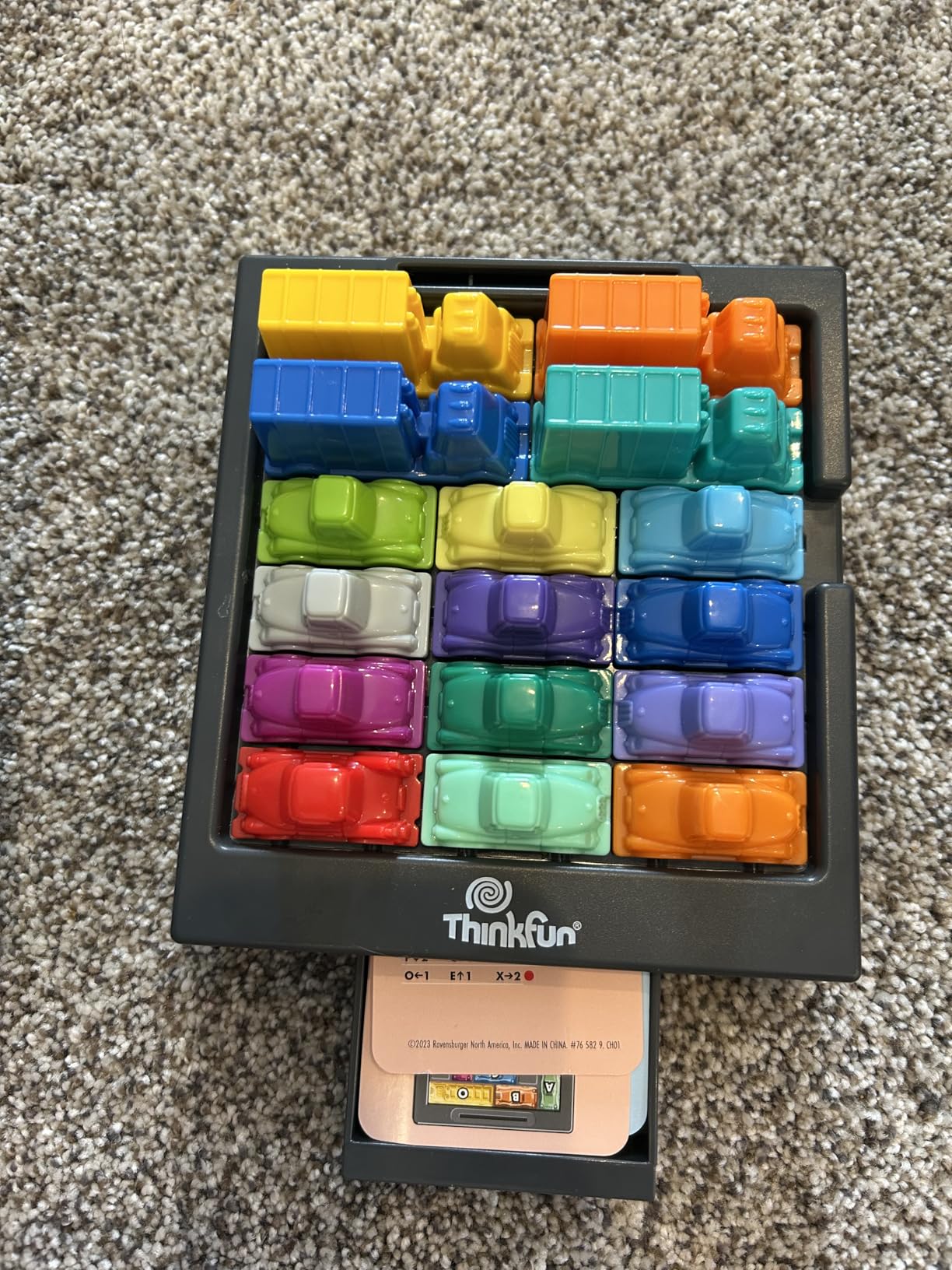
With 50 million copies sold worldwide and over 20 awards including the Parents Choice Award, Rush Hour has earned its reputation. The MESH accreditation (Mental, Emotional, and Social Health) adds another layer of validation. The durable plastic vehicles and grid hold up to years of play, and the compact 9.21 x 8.82 inch footprint makes storage easy.
With a 4.8-star rating across nearly 10,000 reviews, Rush Hour is one of the most beloved logic games ever made. It works for ages 8 through adult, and I have seen teenagers voluntarily choose it over their phones on more than one occasion.
Who should pick this up
Families with kids ages 8 and up who enjoy brain teasers and logic puzzles will love Rush Hour. It is a great entry point into the logic game genre. Schools and therapy offices use it for developing sequential reasoning and patience. Anyone who enjoys Sudoku or sliding puzzles will find a natural home here.
What to watch out for
Losing a single car or truck makes the affected challenge cards unplayable, so careful storage matters. The game is single-player at its core, though families can take turns solving puzzles collaboratively. Some younger kids under 8 may need hints on the intermediate and expert cards.
14. ThinkFun Hacker – Cybersecurity Coding Game

Think Fun Hacker Cybersecurity Coding Game and STEM Toy for Boys and Girls Age 10 and Up, Multicolor
Ages 10+
Single Player
120 Challenges
Cybersecurity Theme
Pros
- Teaches programming principles through stealth learning
- 120 challenges for extensive gameplay
- Unique cybersecurity theme
- Develops reasoning and planning
Cons
- Very complicated for younger kids
- Some design flaws reported
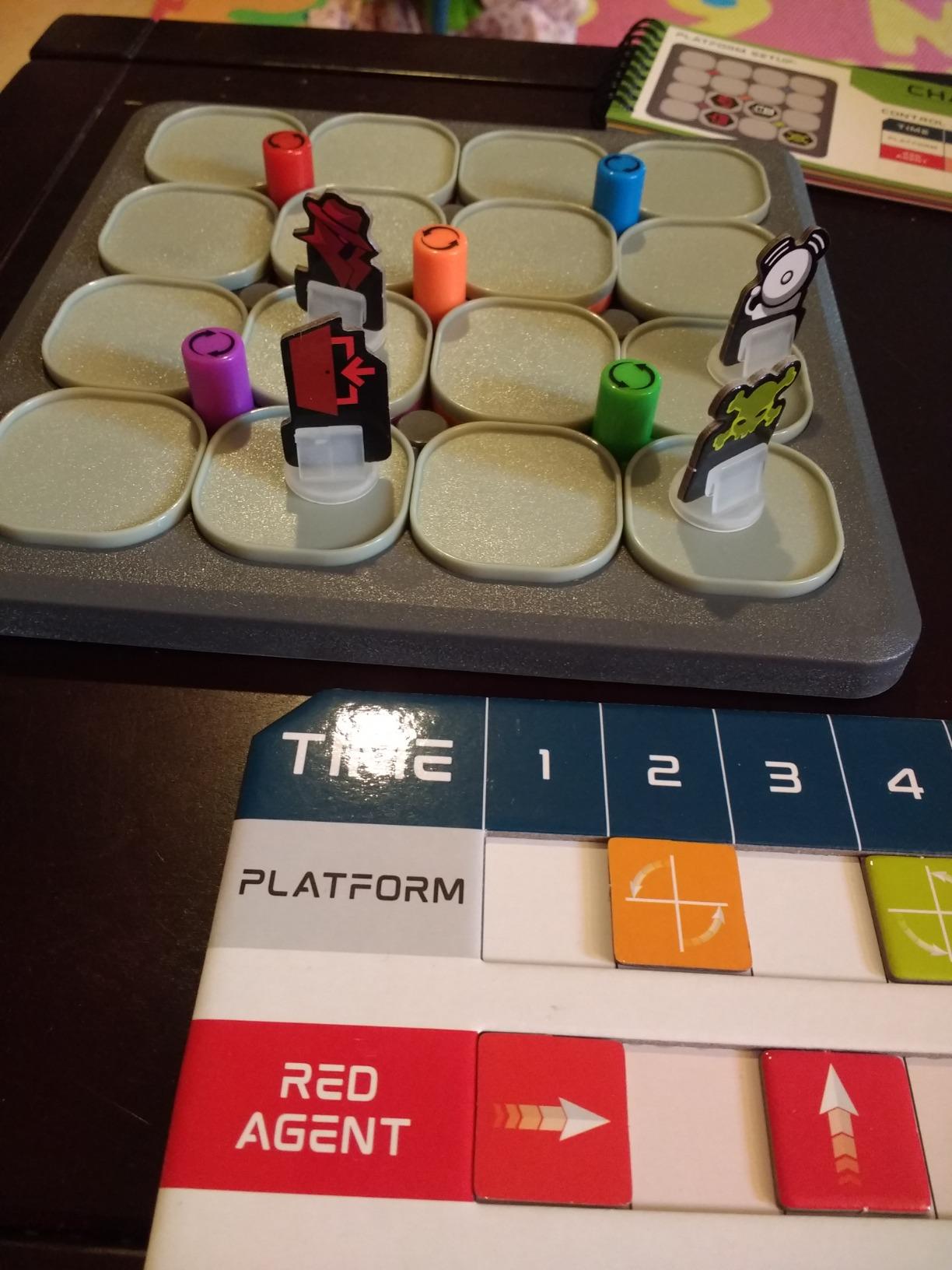
Hacker is the most advanced coding game on this list, and it fills an important gap for older kids and teens who have outgrown simpler programming games. The 120 challenges teach coding principles through a cybersecurity theme where players navigate data paths, avoid viruses, and resolve system breaches. The theme makes the abstract coding concepts feel relevant and exciting.
Each challenge has players placing tokens on a grid to create programs that move data while avoiding obstacles. The difficulty ramps up significantly from beginner to advanced, introducing new coding concepts at each level. I tested this with a 12-year-old who had already completed Code Master, and the added complexity was exactly what she needed to stay engaged.
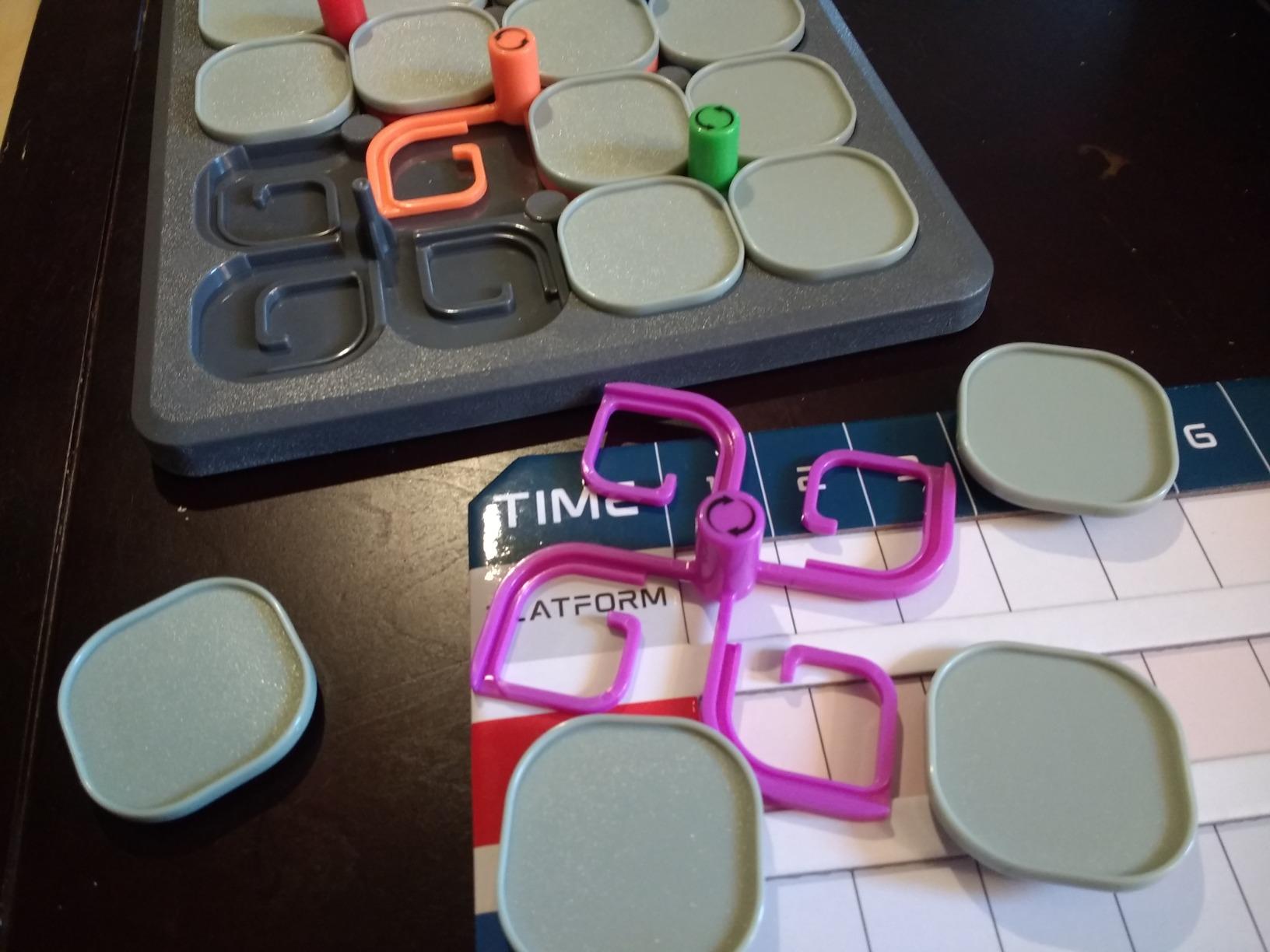
The game includes a control panel, 36 game tokens, and separate challenge and solution booklets. The 120 challenges provide more content than most games in this category, giving serious value for families committed to coding education. The ThinkFun brand reputation and 50 million games sold worldwide add confidence.
With 715 reviews and a 4.4-star average, Hacker has a smaller audience than some ThinkFun titles. Some reviewers note that the complexity can be a barrier, and a few have reported design issues with specific challenges. However, for kids ages 10 and up who are genuinely interested in coding and cybersecurity, this is one of the few board games that takes the topic seriously.
Who should pick this up
Kids ages 10 and older who have already tried simpler coding games and want more challenge will find Hacker engaging. Teens interested in cybersecurity as a career path will appreciate the thematic depth. Parents looking for a screen-free way to teach advanced programming concepts should put this on their short list.
What to watch out for
The complexity level makes this unsuitable for kids under 10 or those with no prior exposure to coding logic. Be prepared to spend time learning the rules and helping younger players through the first several challenges. Some users have reported frustration with specific puzzle designs.
15. Blue Orange Dr. Eureka – Speed Logic Puzzle

Blue Orange Dr. Eureka Speed Logic Puzzle Dexterity Game Games – 1-4 Players for Ages 8+
Ages 8+
1-4 Players
54 Challenges
Dexterity Based
Pros
- Unique dexterity challenge combining logic and speed
- Therapeutic value for fine motor skills
- Quick 15-minute games
- Quality test tubes and components
Cons
- Small parts choking hazard
- One plastic beaker cracked in testing
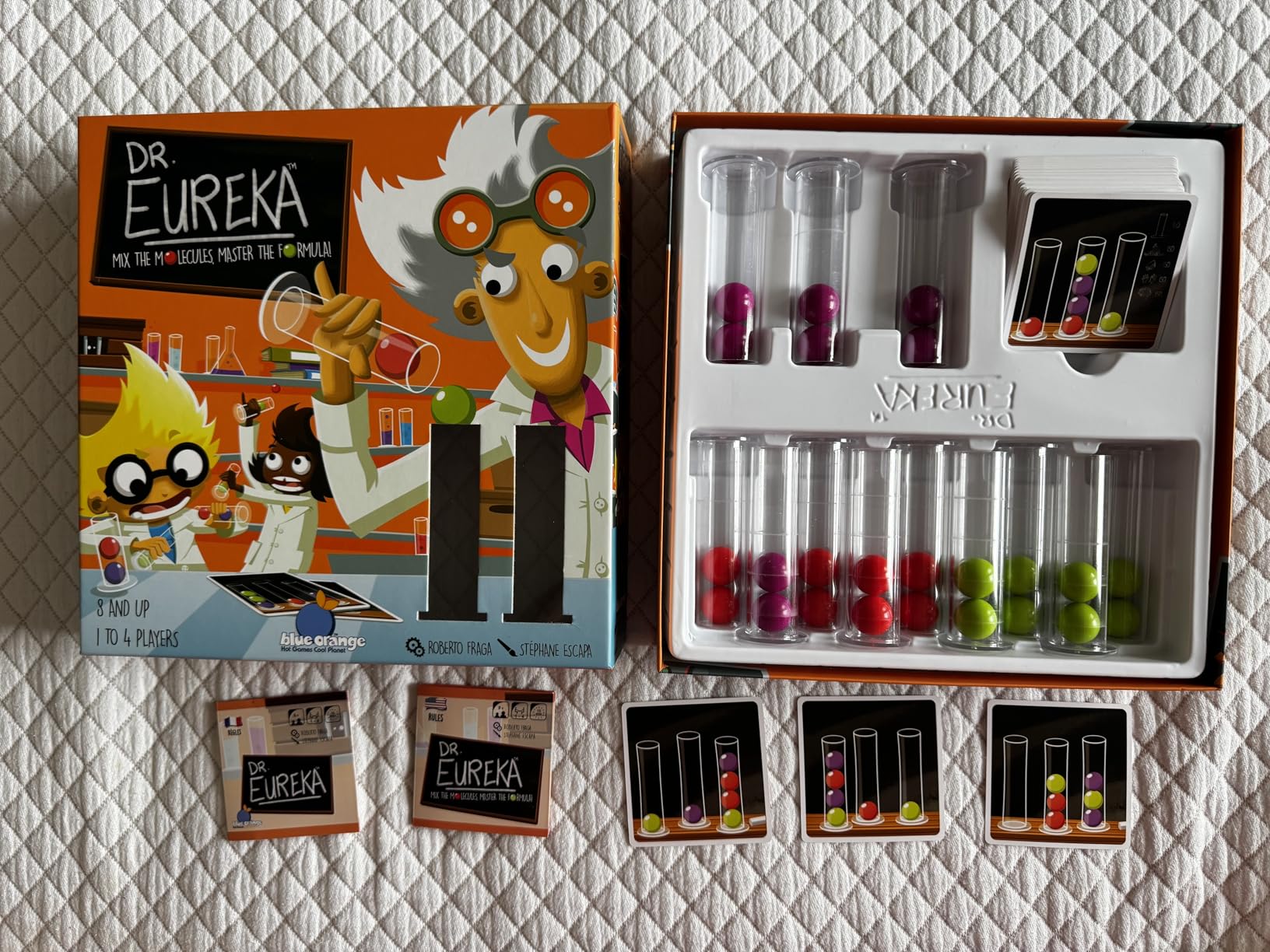
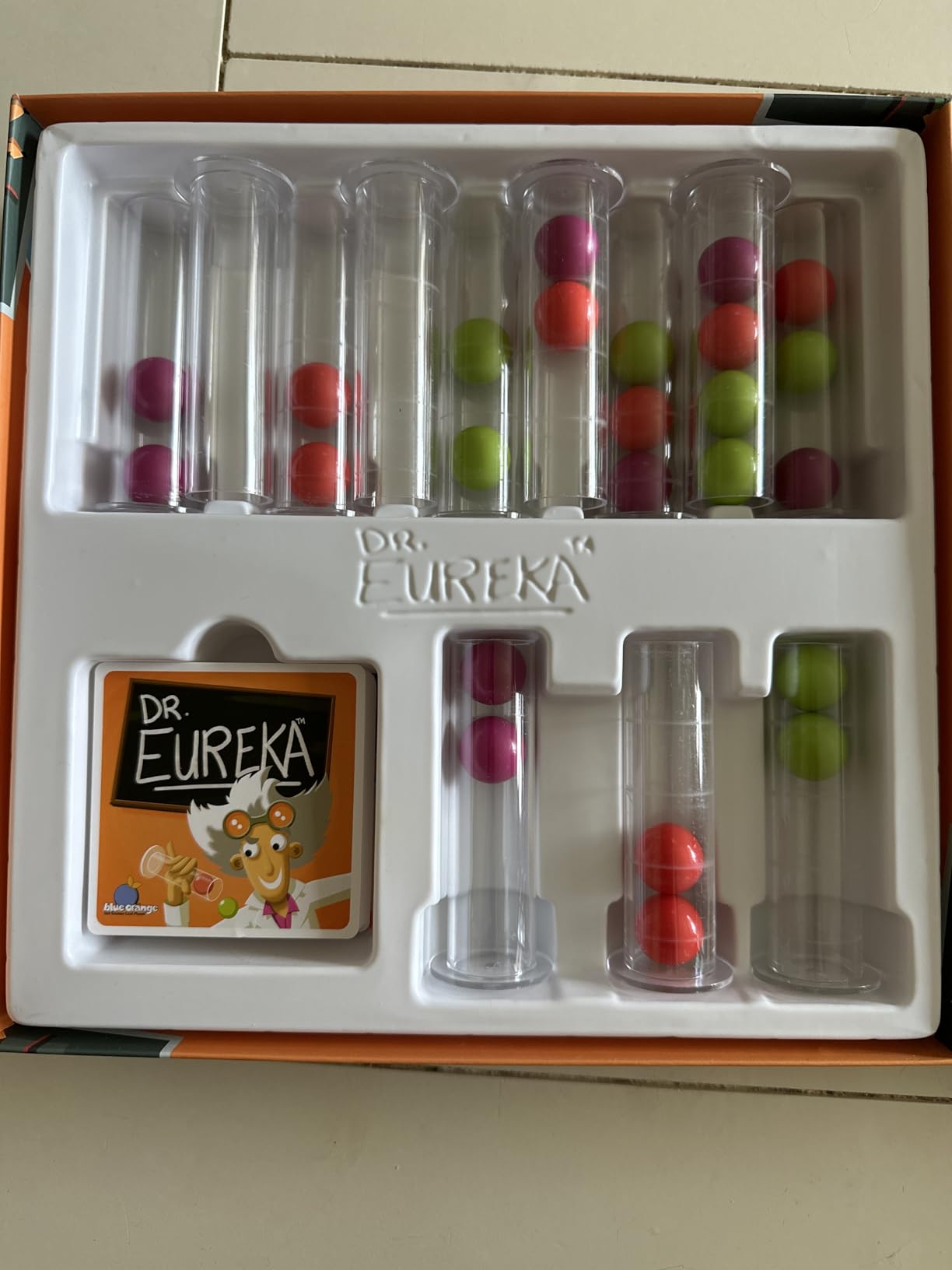
Dr. Eureka is the most physically interactive STEM game we tested. Players race to move colored balls between test tubes to match patterns on challenge cards, but here is the catch: you cannot touch the balls directly. You have to pour and shake the tubes to transfer them. This combination of logical thinking and physical dexterity makes it unlike anything else on this list.
Games are quick, typically around 15 minutes, which makes Dr. Eureka perfect for filling short time windows. The 54 challenge cards provide enough variety to stay interesting, and the 1-4 player flexibility means it works for solo practice or competitive races. I watched two siblings play 10 rounds in a row without getting bored.
Several parents in our test group noted the therapeutic benefits for children working on fine motor skills. The precise pouring and shaking motions develop hand-eye coordination and finger control in a way that feels like play, not therapy. Parents of children with autism and ADHD have specifically praised this game for its focus and engagement benefits.
With a 4.8-star rating across 1,200+ reviews, Dr. Eureka earns top marks from families. The 12 test tubes and 24 colorful balls are well-made, though one reviewer reported a cracked plastic beaker. The small ball size means this game is not appropriate for households with children under 3 due to choking hazards.
Who should pick this up
Families with kids ages 8 and up who enjoy fast-paced, hands-on challenges will love Dr. Eureka. It is especially good for children who benefit from combining physical movement with mental challenges. Occupational therapists and special education teachers may find it useful for fine motor skill development. It makes a great party game too.
What to watch out for
The small balls are a genuine choking hazard for children under 3, so storage and supervision matter in mixed-age households. The physical dexterity requirement means it will not work well for children with significant motor skill challenges. Test tubes are plastic, not glass, but can crack with rough handling.
How to Choose the Right STEM Board Game
Picking the right STEM board game comes down to matching the game to the child’s age, interests, and learning goals. After testing 15 games with kids across multiple age groups, here are the factors that matter most.
Match the STEM Category to Their Interests
STEM covers four distinct areas: Science, Technology, Engineering, and Math. A child who loves building things will gravitate toward engineering games like Gravity Maze or Roller Coaster Challenge. Kids fascinated by computers should start with coding games like Code Master or Coder Bunnyz. For math-shy kids, games like Prime Climb and Math Island make numbers approachable through play. Science enthusiasts will appreciate the accuracy of Periodic and Cytosis.
Consider Solo vs. Multiplayer
Many STEM board games are single-player by design, which is great for independent learning and quiet time. Gravity Maze, Circuit Maze, Laser Maze, Kanoodle, and Rush Hour all shine as solo activities. If you want a game for family night or classroom use, look to Prime Climb (2-4 players), Math Island (2-4 players), Cytosis (2-5 players), or Dr. Eureka (1-4 players). Some solo games like The Genius Square support head-to-head play too.
Age Appropriateness Is Key
Getting a game that is too easy or too hard is the fastest way to kill enthusiasm. For ages 4-7, start with Coder Bunnyz, Math Island, The Genius Square, or Roller Coaster Challenge. Ages 8-10 have the most options and can handle most games on this list. Ages 10 and up should look at Cytosis, Periodic, and Hacker for appropriate challenge levels. When in doubt, check the minimum age on the box and read reviews from parents with similarly aged kids.
Evaluate Replay Value
Some games offer hundreds of puzzles while others have a fixed set of challenges. The Genius Square with its 60,000+ solutions and Kanoodle with 228 puzzles provide excellent long-term value. Games with progressive difficulty systems (beginner to expert cards) grow with the child. Strategy games like Prime Climb and Periodic offer virtually unlimited replayability since no two sessions play out the same way.
Think About Where and When You Will Play
If you need a travel game, Kanoodle and Rush Hour are the most portable options. For classroom use, multiplayer games with clear rules work best. Family game night calls for games with broader age appeal. And if screen-free time is the goal, every game on this list delivers that without sacrificing engagement.
FAQ
What are good STEM board games for kids?
The best STEM board games for kids include ThinkFun Gravity Maze for engineering, Math for Love Prime Climb for math, Coder Bunnyz for coding, and Genius Games Cytosis for biology. Each game teaches specific STEM concepts through hands-on gameplay that feels like fun rather than schoolwork.
What age is appropriate for STEM board games?
STEM board games are available for kids as young as 4 years old. Games like Coder Bunnyz work for ages 4+, while most logic and engineering games start at age 6-8. More complex strategy games like Periodic and Cytosis are designed for ages 10 and up. Adults enjoy many of these games too, especially the higher-difficulty levels.
How do STEM board games help learning?
STEM board games develop critical thinking, spatial reasoning, problem-solving, and strategic planning skills through hands-on play. They teach specific concepts like circuitry, programming logic, math operations, and scientific principles in an interactive format. Kids learn through trial and error, which builds persistence and confidence alongside academic knowledge.
What are the best STEM games for elementary school?
For elementary school kids ages 6-10, the top STEM board games are ThinkFun Gravity Maze for spatial reasoning, Math Island for addition and subtraction, Prime Climb for multiplication and division, Roller Coaster Challenge for engineering, and Kanoodle for logic. These games balance educational value with genuine fun to keep kids engaged.
Are there STEM board games for adults?
Yes, many STEM board games are designed for or enjoyable by adults. Cytosis uses worker placement strategy mechanics comparable to popular hobby board games. Periodic offers strategic depth that adults appreciate. Logic puzzles like Rush Hour and Kanoodle have expert-level challenges that stump adult players. Games like Code Master and Hacker teach coding concepts relevant to adults learning programming.
Final Thoughts on the Best STEM Board Games
After three months of testing, the best STEM board games prove that learning does not require a screen. ThinkFun Gravity Maze earned our Editor’s Choice for its combination of engineering challenges and progressive difficulty. The Genius Square delivers unmatched replay value with 60,000+ solutions. And Educational Insights Kanoodle offers the best budget-friendly entry into spatial reasoning puzzles.
The right STEM board game depends on your child’s age, interests, and whether you want a solo or group activity. Any game on this list will develop real critical thinking and problem-solving skills while keeping kids genuinely entertained. Pick one that matches your needs, and watch how quickly screen-free learning becomes something kids actually ask for.