
Our team has spent the last three years playing over 40 different tabletop strategy games across weekly game nights, solo sessions, and tournament-style weekends. After logging hundreds of hours pushing cardboard, rolling dice, and arguing over rule interpretations, we have narrowed down the absolute best tabletop strategy games worth your shelf space in 2026. Whether you are a complete beginner looking for your first gateway game or a seasoned strategist hunting for the next brain-burner, this guide covers six exceptional titles that deliver genuine strategic depth and memorable table moments.
Tabletop strategy games are board games that reward planning, decision-making, and tactical adaptation over pure luck. Unlike party games or simple roll-and-move titles, the best strategy board games give you meaningful choices every single turn. You build engines, manage resources, control territory, and outmaneuver opponents through clever play rather than lucky dice rolls. The genre has exploded in popularity over the past decade, with modern titles blending gorgeous artwork with mechanical innovation that keeps players coming back for hundreds of sessions.
We selected these six games based on three criteria: strategic depth that rewards repeated plays, component and production quality that justifies the investment, and broad appeal across different group sizes and experience levels. Each game on this list has been played by our group at least a dozen times, and we are confident recommending them to anyone serious about tabletop strategy games.
Table of Contents
Top 3 Picks for Best Tabletop Strategy Games
These three games represent the best of what modern tabletop strategy has to offer. Whether you want an accessible family game, a visually stunning collector experience, or a deep strategic challenge, one of these picks will be the right fit for your table.

CATAN Board Game (6th Edition)
- Modular hex board
- 3-4 players
- 60-90 min playtime
- Trading mechanics

Wingspan by Stonemaier Games
- 170 unique bird cards
- 1-5 players
- 70 min playtime
- Award-winning

Best Tabletop Strategy Games in 2026
| Product | Specifications | Action |
|---|---|---|
| CATAN Board Game (6th Edition) |
|
Check Latest Price |
| Wingspan by Stonemaier Games |
|
Check Latest Price |
 Terraforming Mars by Stronghold Games Terraforming Mars by Stronghold Games |
|
Check Latest Price |
| Scythe by Stonemaier Games |
|
Check Latest Price |
 Root by Leder Games Root by Leder Games |
|
Check Latest Price |
 Spirit Island by Greater Than Games Spirit Island by Greater Than Games |
|
Check Latest Price |
1. CATAN Board Game (6th Edition) – Classic Gateway Strategy Game
CATAN Board Game (6th Edition) Trade, Build & Settle in the Classic Strategy Game for Family, Kids & Adults, Ages 10+, 3-4 Players, 60-90 Min Playtime
3-4 Players
60-90 Min Playtime
Ages 10+
Modular Hexagonal Board
Trading and Resource Management
Pros
- Easy to learn with straightforward rules
- High replayability with modular board
- Excellent family game for ages 10+
- Quality upgraded components in 6th Edition
- Strategic trading and negotiation gameplay
Cons
- Some luck involved with dice rolls
- Can feel frustrating when blocked by robber
- Mixing with old edition expansions may have compatibility issues
CATAN was the game that hooked our entire group on modern board gaming, and the 6th Edition is the best version yet. After playing dozens of sessions over the past two years, I can tell you that this game earns its reputation as the ultimate gateway strategy game. The modular hexagonal board means every game feels different, and the trading mechanics create those tense, memorable table moments where you are trying to convince your friend to give up that one brick they have been hoarding.
The core loop is beautifully simple: roll dice to generate resources, trade with other players, and build roads, settlements, and cities to earn victory points. But beneath that simplicity lies genuine strategic depth. Do you expand aggressively toward the longest road, or do you invest in city upgrades for steady point generation? Every decision matters, and the trading phase creates emergent diplomacy that no other game in our collection replicates as well.

The 6th Edition brings quality-of-life improvements that matter more than you might expect. The upgraded card trays keep everything organized during play, and the chunkier wooden pieces feel substantial in your hands. Our group particularly appreciates the updated rulebook, which is clearer and more accessible than previous editions. If you are buying CATAN for the first time, this is absolutely the version to get.
Where CATAN truly shines is its teachability. I have successfully taught this game to my parents, my neighbors, and coworkers who had never touched a modern board game before. Within ten minutes of explanation, everyone at the table understands what to do. That accessibility, combined with genuine strategic choices, makes it the game I reach for when introducing anyone to the hobby. It earns our Editor’s Choice because no other game on this list balances approachability with engagement as effectively.

Setup and Learning Curve
Setting up CATAN takes about five minutes once you are familiar with the process. The hex tiles snap together quickly, and the number tokens are placed according to the alphabetical system in the rulebook. The 6th Edition includes a helpful reference card that speeds up initial setup considerably. I recommend keeping the hexes in a bag between sessions so you can randomize the board layout each time without digging through the box.
The learning curve is remarkably gentle. Most new players grasp the core mechanics within their first turn or two, and the strategy layers reveal themselves naturally over subsequent games. The rulebook is well-organized with clear examples, and Asmodee provides a digital PDF version that you can reference on your phone during play. Expect your first game to run about 90 minutes, with subsequent sessions tightening to the 60-minute range once everyone knows the rules.
Replayability and Expansion Options
The modular board alone guarantees that no two games of CATAN are identical. The hex placement, number distribution, and port locations all change between sessions, forcing you to adapt your strategy every time. Our group has played well over 50 games and we still encounter new tactical situations and trading dynamics. The base game supports 3-4 players out of the box, and the official 5-6 player extension adds two more seats if you have a larger group.
CATAN has one of the most robust expansion ecosystems in all of tabletop gaming. Seafarers adds ship-building and island exploration, Cities and Knights introduces deeper city development and barbarian defense, and Traders and Barbarians offers modular scenarios. Note that the 6th Edition has some compatibility differences with older expansion printings, so check the edition numbers before mixing components. The expansions keep the game fresh and add strategic complexity for groups that have mastered the base game.
2. Wingspan by Stonemaier Games – Award-Winning Bird Collection Game
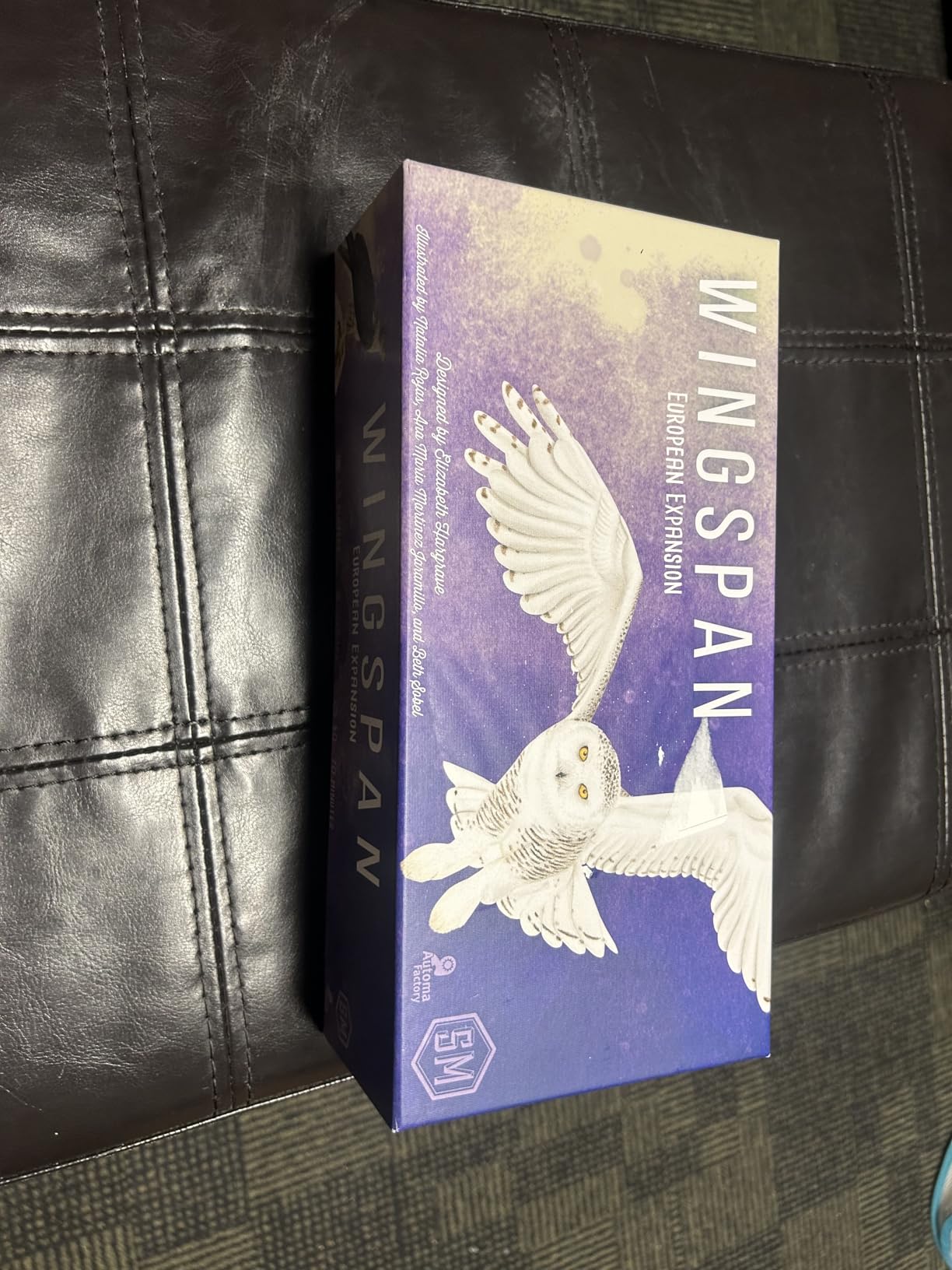
Stonemaier Games: Wingspan by Elizabeth Hargrave
1-5 Players
70 Min Playtime
Ages 14+
170 Unique Bird Cards
Award-Winning Kennerspiel des Jahres 2019
Pros
- Gorgeous bird artwork and illustrations
- Award-winning gameplay
- High replayability with 170 unique bird cards
- Excellent solo mode with Automa
- Educational with real bird facts on cards
Cons
- Dice tower birdfeeder can be flimsy
- Card trays may not fit sleeved cards
- Expansions can become an addictive rabbit hole
Wingspan is the game I bring out when I want to convert someone who thinks board games are boring. The moment you open the box and see those beautifully illustrated bird cards spread across the table, the reaction is always the same: genuine awe. Elizabeth Hargrave designed something special here, and our group has played it over 30 times across every player count from solo to five players. It won the Kennerspiel des Jahres in 2019 for good reason.
The gameplay revolves around building a wildlife preserve by attracting birds to three habitats: forest, grassland, and wetland. Each round you choose between gaining food, laying eggs, drawing bird cards, or playing birds to your mats. The engine-building is incredibly satisfying because every bird you add creates cascading benefits. One bird might give you bonus food when activated, which feeds into another bird that lets you lay extra eggs, which triggers a third bird that tucks cards for victory points. Watching your engine hum after four rounds is deeply rewarding.
What surprises people about Wingspan is the strategic depth hiding beneath the serene artwork. There are 170 unique bird cards in the base game, and each one has different abilities, habitat requirements, and point values. Planning which birds to play and when to activate them requires genuine forethought. Our most competitive sessions have come down to single-point margins decided by endgame scoring bonuses that someone planned for three rounds in advance.
The educational aspect is a genuine bonus. Every bird card includes real facts about the species, from wingspan measurements to nesting behaviors. I have learned more about North American birds from this game than from any documentary. It does not feel forced or tacked on; the educational content is woven naturally into the gameplay. This makes Wingspan an especially good choice for families with curious kids or adults who appreciate nature.
Solo Play and Automa Quality
The solo mode in Wingspan is one of the best implementations I have encountered in any board game. The Automa system simulates an opponent by drawing cards from a dedicated deck that tells you which actions the Automa takes and how many points it scores. It is fast to run, taking maybe 30 seconds per turn, and it creates genuine pressure without requiring you to manage a complex artificial opponent.
I have played about 15 solo sessions of Wingspan and the challenge scales nicely. The Automa deck includes different difficulty levels, so you can start easy and increase the challenge as your engine-building skills improve. Solo games typically run 45-50 minutes, making Wingspan an excellent lunchbreak option. If you are someone who cannot always gather a group, Wingspan delivers a full strategic experience at any player count.
Artwork and Component Quality
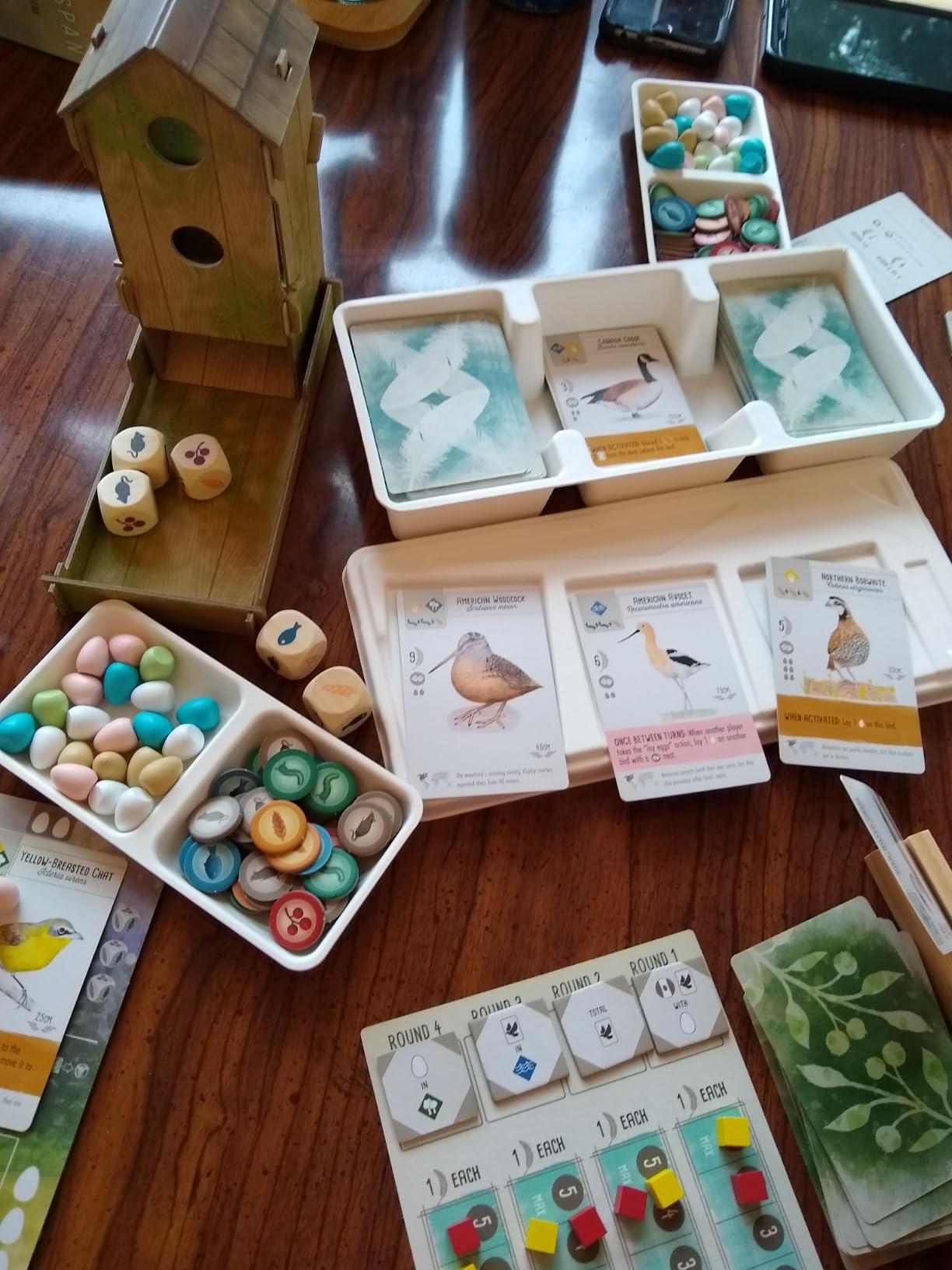
The component quality in Wingspan is outstanding for its price point. The bird cards are printed on quality stock with vivid, detailed illustrations by Natalia Rojas, Ana Maria Martinez Jaramillo, and Beth Sobel. The custom dice are chunky and satisfying to roll. The egg miniatures come in multiple colors and add a tactile element that makes the game feel premium on the table.
The one component worth mentioning is the dice tower birdfeeder. It is a clever thematic touch shaped like a birdfeeder, but it can be a bit flimsy if not assembled carefully. Our group eventually replaced it with a small dice tray, which works just as well and is less prone to tipping over. The card trays are functional but may not accommodate sleeved cards if you prefer to protect your set. These are minor issues in an otherwise beautifully produced game.
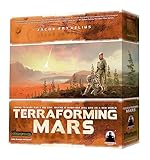
3. Terraforming Mars by Stronghold Games – Deep Engine-Building Experience
Terraforming Mars by Stronghold Games, Strategy Board Game
1-5 Players
120 Min Playtime
Ages 12+
Engine Building
Mars Terraforming Theme
Pros
- Deep engine-building strategy
- Excellent solo mode
- High replayability with many corporations and cards
- Cooperative terraforming goal
- Multiple paths to victory
Cons
- Player mats and cards can be thin
- Steep learning curve
- Player boards may shift during play
- Rules can be overwhelming initially
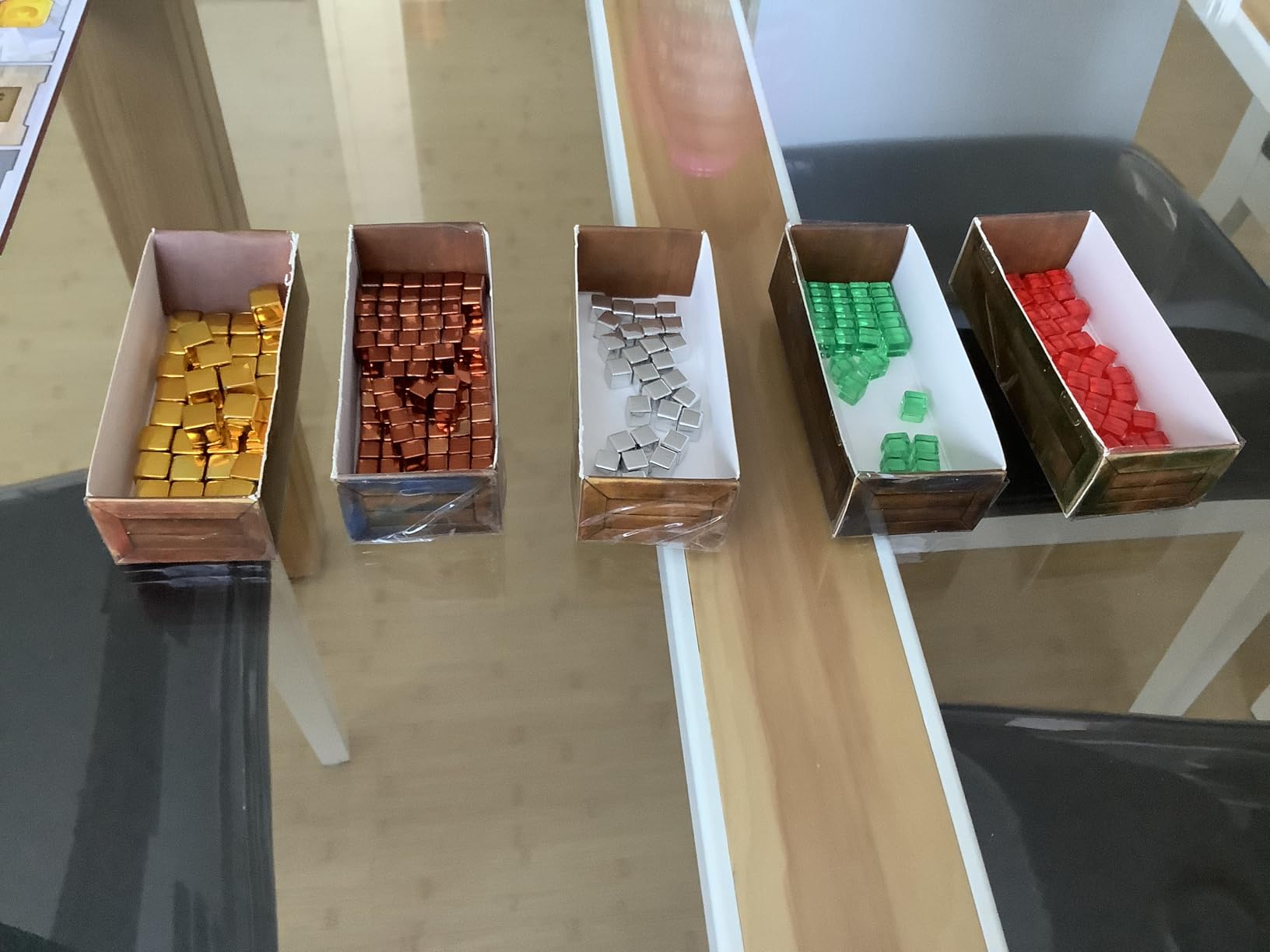
Terraforming Mars is the game that made our group fall in love with heavy strategy. Every player controls a corporation racing to make Mars habitable by raising temperature, oxygen levels, and ocean coverage. The engine-building is on another level compared to lighter titles. Your corporation starts with basic resource generation, and by the end of the game you are running production chains that convert heat into temperature raises, plants into greenery tiles, and titanium into space projects worth bonus victory points.
What makes Terraforming Mars special is how many viable strategies exist. In one game I focused entirely on plant production and covered the board with greenery tiles. In another, I went all-in on city building and card-based scoring. A friend of mine won by maximizing Jovian tags and space projects. Every game feels like a different puzzle because the corporation you draft and the project cards you draw create unique strategic constraints. With over 200 project cards in the base game, the combinations feel nearly limitless.
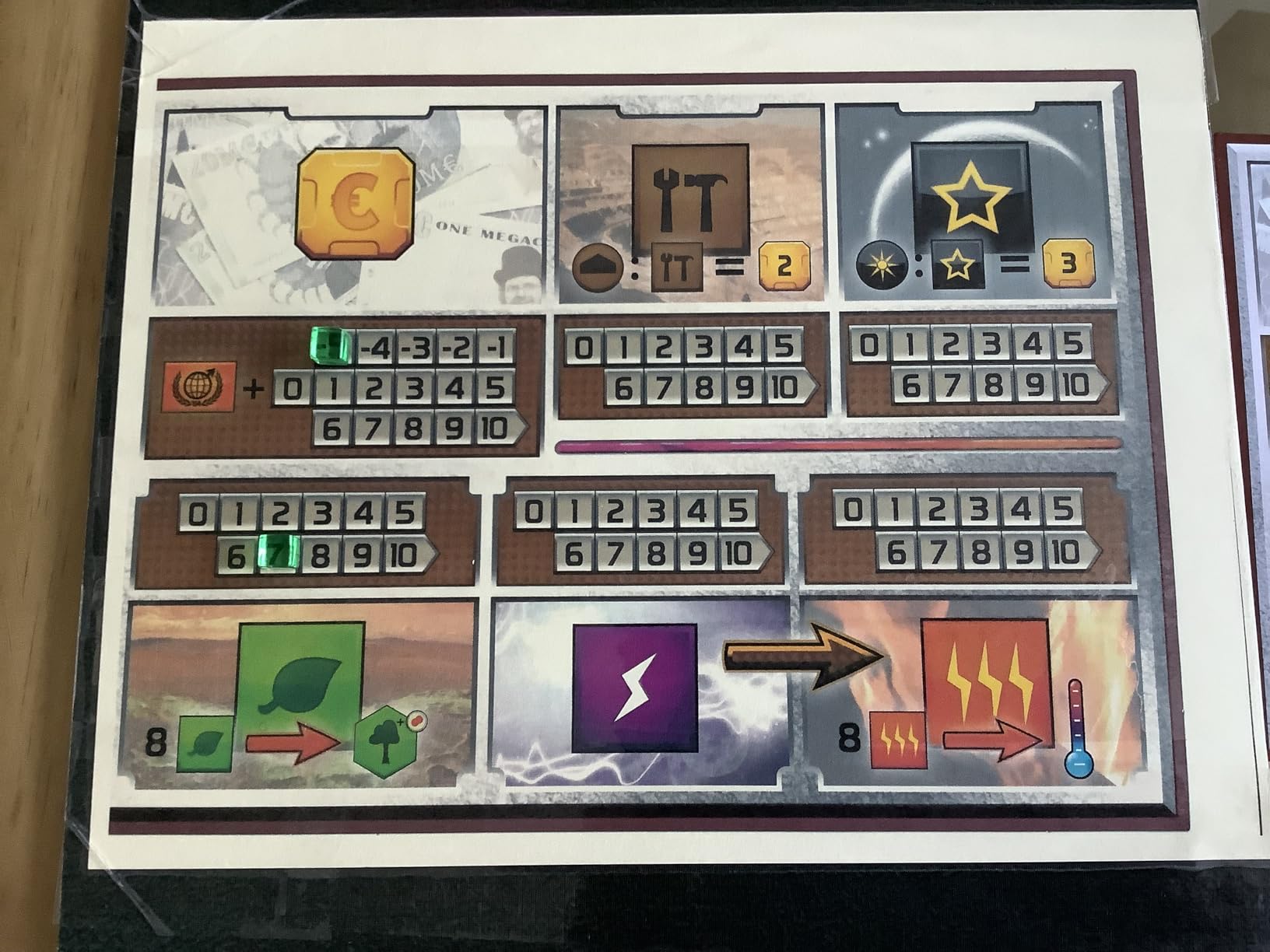
The theme integration is exceptional. You are genuinely simulating the terraforming of Mars across generations. The board tracks global parameters that all players contribute to, creating a shared cooperative goal beneath the competitive structure. When someone raises the temperature enough to unlock ocean placement, it changes the board state for everyone. This shared progress creates a narrative arc that most strategy games cannot match.
After 20-plus plays, I still discover new card combinations and strategic approaches. The game rewards long-term planning and punishes shortsighted play. If you enjoy the feeling of building something complex and watching it click into place over two hours, Terraforming Mars delivers that satisfaction better than almost anything else on the market. It is our top recommendation for experienced gamers who want serious strategic depth.
Learning Curve and Complexity
I will be upfront: Terraforming Mars has a steep learning curve. Your first game will probably take three hours as you reference the rulebook repeatedly and try to parse what each project card does. There are many icons, multiple resource types, and several phases to track each generation. I recommend playing your first game with someone who already knows the rules, or watching a 15-minute tutorial video before sitting down to play.
However, the complexity curve flattens quickly. By your third or fourth game, most of the iconography becomes second nature and you start thinking strategically instead of mechanically. The rulebook is comprehensive once you know how to navigate it, and the player reference boards summarize the key information well. The intellectual investment required upfront pays enormous dividends over dozens of replay sessions.
Solo Mode and Expansions
The solo mode in Terraforming Mars is a genuine challenge. You have 14 generations to complete terraforming Mars by reaching all three global parameter targets, which creates intense time pressure. I have won roughly half my solo games, and each victory feels earned because the difficulty is calibrated to push your strategic skills. The solo mode also teaches you optimization strategies that transfer directly to multiplayer games.
The expansion ecosystem for Terraforming Mars is extensive and high quality. Prelude accelerates the early game by giving each player starting projects, Hellas and Elysium adds two new maps with different board layouts and milestones, and Colonies introduces trade routes with outer solar system settlements. Each expansion adds meaningful strategic options without bloating the game. If you enjoy the base game, Prelude is the essential first expansion to pick up.
4. Scythe by Stonemaier Games – Dieselpunk Area Control Masterpiece
Stonemaier Games: Scythe – A Strategy Board Game by Jamey Stegmaier
1-5 Players
115 Min Playtime
Ages 14+
5 Asymmetric Factions
Engine Building and Area Control
Pros
- Beautiful alternate-history artwork
- High replayability with asymmetric factions
- Minimal luck with card-based combat
- Excellent solo Automa mode
- Quality miniatures and components
Cons
- Steep learning curve
- Difficult to teach new players
- Long playtime of 2-4 hours
- Complex rulebook
Scythe is the most visually striking game on this list. Set in an alternate-history 1920s dieselpunk Europe where mechs roam the countryside, every component from the player boards to the miniatures to the encounter cards features Jakub Rozalski’s breathtaking artwork. Our group was drawn in by the aesthetic and stayed for the deep asymmetric gameplay. Each of the five factions plays differently enough that mastering one feels like learning an entirely new game.
The gameplay blends engine building with area control in a way that creates constant tension. You expand your territory across the board, deploy workers to gather resources, build structures to unlock upgrades, and field mechs to defend your borders. The economy is tight and punishing: every action has an opportunity cost, and falling behind in the early game can be difficult to recover from. Our most memorable sessions involved cold wars where two players stared each other down across contested territory for three rounds before a single combat resolved everything.
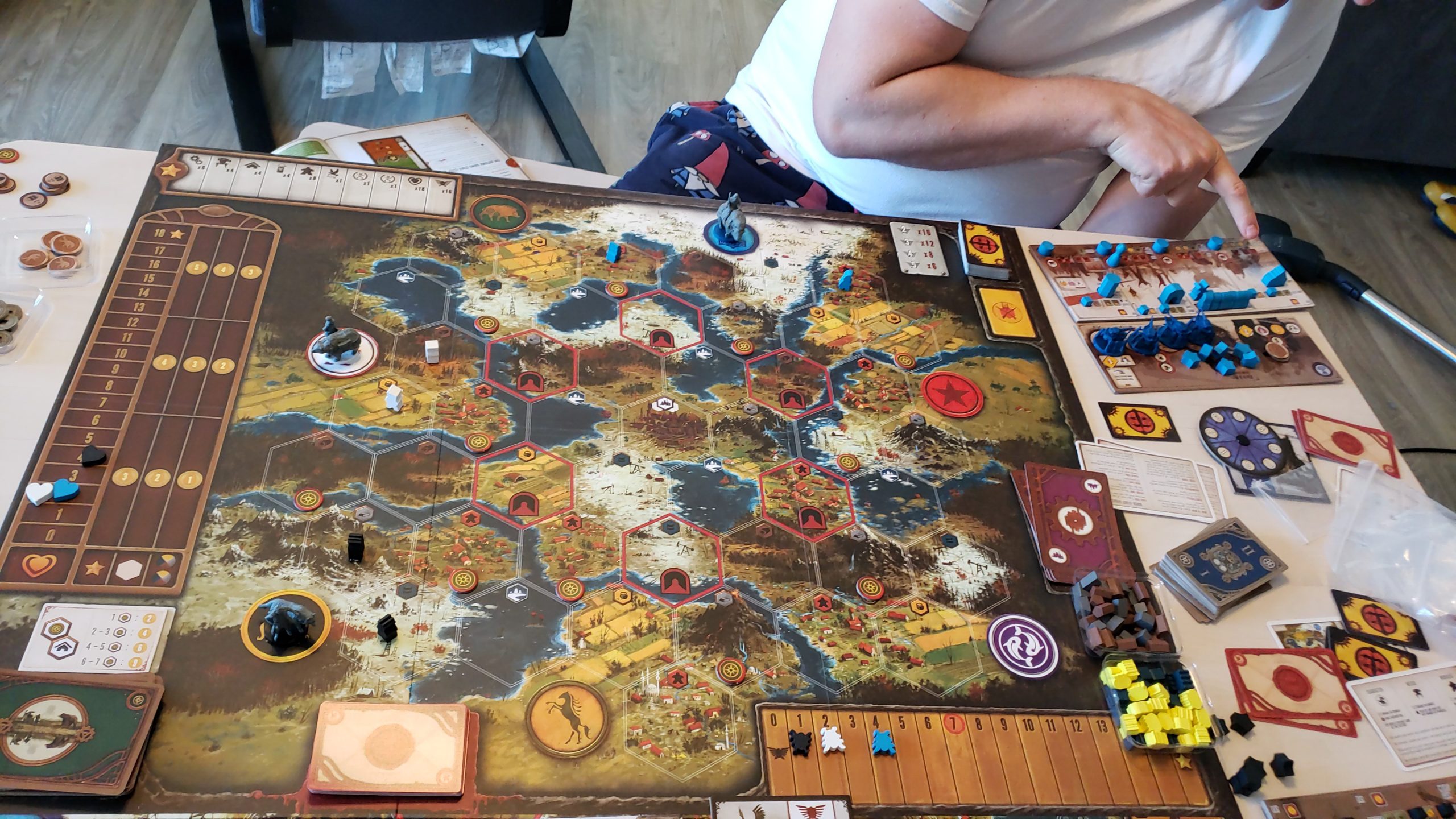
Combat in Scythe is unlike most area control games. There are no dice. Instead, you secretly commit combat cards from your hand alongside any power you have stored, and the higher total wins. This means combat is predictable enough to plan around but uncertain enough to create genuine tension. The loser retreats rather than being eliminated, so aggressive play has consequences without being devastating. Our group appreciates that skill and timing matter more than lucky die rolls.
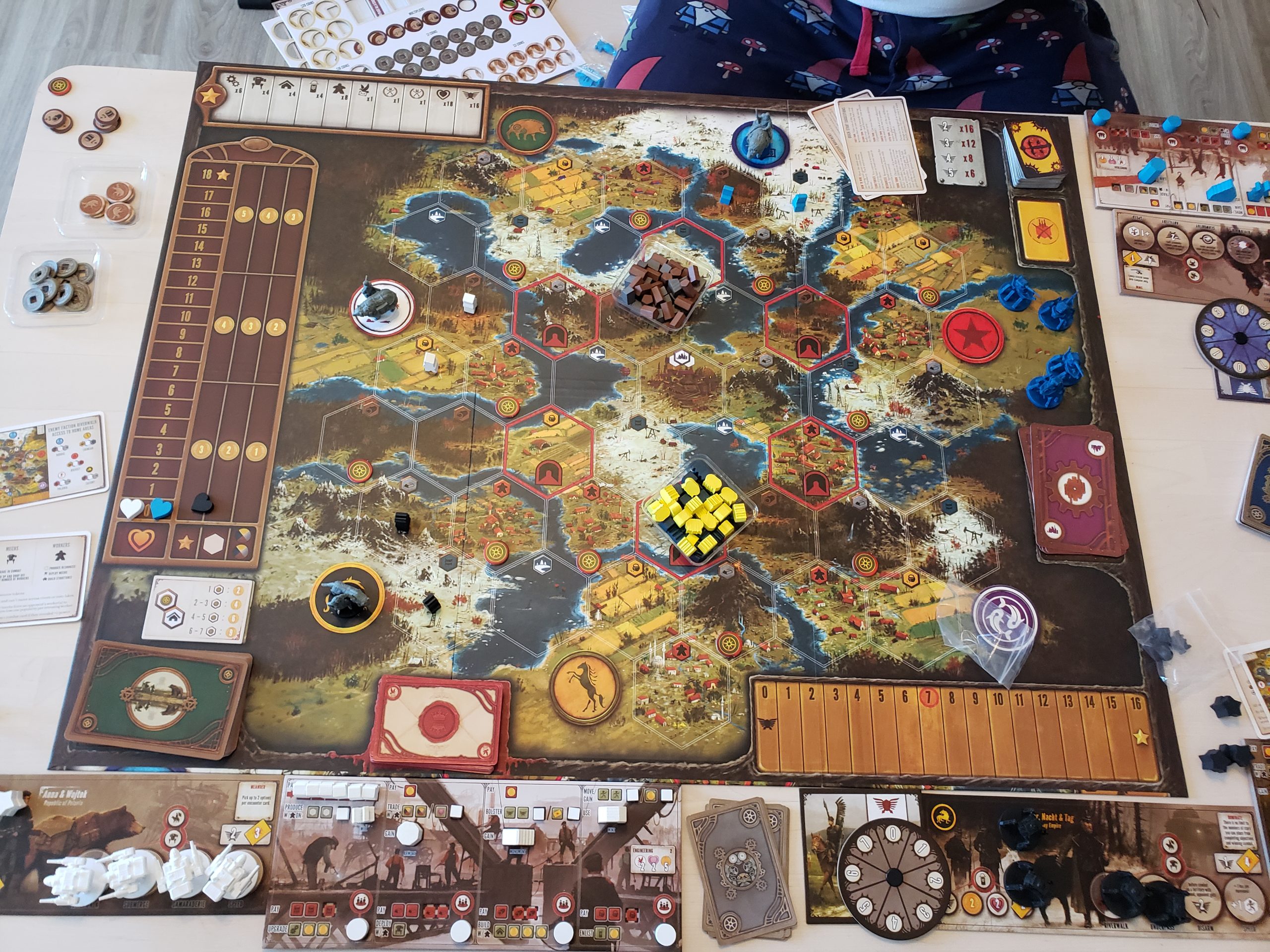
The five factions are genuinely asymmetric. The Rusviet Union excels at rapid mobilization, the Nordic Kingdoms dominate rivers, the Republic of Poland tunnels under mountains, the Crimean Khanate leverages trade, and the Saxony Empire rewards combat victories. Each faction pairs with a unique player mat that determines your action efficiency, creating 25 possible combinations in the base game. This variety keeps Scythe fresh across dozens of plays and makes it our premium pick for gamers who want a deep, visually stunning strategy experience.
Combat and Player Interaction
Scythe manages to make player interaction feel consequential without being punishing. Territory control matters because it determines where you can place workers and structures, but the game never devolves into the elimination-style warfare that ruins friendships. Combat costs resources on both sides, so the winner also pays a price. This economic dimension makes every potential conflict a calculated decision rather than an impulsive skirmish.
The encounter cards add another layer of interaction with the game world. When you move to certain spaces, you draw an encounter card that presents a narrative choice with mechanical consequences. These encounters give you resources, popularity boosts, or combat advantages at a cost. They break up the strategic planning with thematic moments that reinforce the dieselpunk setting and create stories our group still references months later.
Solo Automa Experience
The Automa system in Scythe is widely considered one of the best solo modes in all of modern board gaming. It simulates a full opponent that expands territory, deploys mechs, and scores victory points using a streamlined card-based system. Running the Automa takes about one minute per turn, which is remarkably efficient for the depth of play it creates. I have played over a dozen solo games and the Automa consistently provides a genuine strategic challenge.
The difficulty scales across multiple levels, from a learning mode that teaches you the mechanics to expert settings that push experienced players to their limits. Solo games run roughly 90-100 minutes, which is shorter than multiplayer sessions because you are not waiting for other players. If you enjoy heavy strategy but cannot always coordinate a group, Scythe’s Automa delivers a satisfying alternative that captures the full tactical experience.
5. Root by Leder Games – Asymmetric Woodland Warfare
Root: A Game of Woodland Might and Right | Asymmetric Strategy Board Game by Leder Games | 2–4 Players | Ages 14+ | Adventure, Conflict & Area Control
2-4 Players
90 Min Playtime
Ages 14+
4 Asymmetric Factions
Area Control and Crafting
Pros
- Stunning artwork and production quality
- Truly asymmetric gameplay where each faction plays differently
- Excellent replayability
- Narrative-driven gameplay with emergent stories
- Deep strategic depth
Cons
- Very steep learning curve
- Difficult to teach to new players
- Can feature aggressive player interaction
- Requires a dedicated gaming group
Root is the most unique game on this list. It looks like a charming woodland adventure with cute animal factions, but beneath that adorable exterior lies one of the most strategically demanding asymmetric games ever designed. Each faction operates by completely different rules: the Marquise de Cat builds workshops and recruits soldiers, the Eyrie Dynasties programs a decree that grows more complex over time, the Woodland Alliance spreads sympathy through hidden supporters, and the Vagabond adventures alone completing quests and forming alliances. Playing each faction genuinely feels like playing a different game.
Our group’s first few sessions of Root were rough. Everyone was essentially learning four different rule sets simultaneously, and games ran long as players referenced faction boards trying to remember what they could do. But once we got past that initial barrier, something clicked. Root became our most requested game for weekend sessions because the asymmetric design creates emergent narratives that no other game replicates. The Cats build an economic engine while the Birds try to maintain their decree, the Alliance plots rebellion from the shadows, and the Vagabond plays everyone against each other for personal glory.
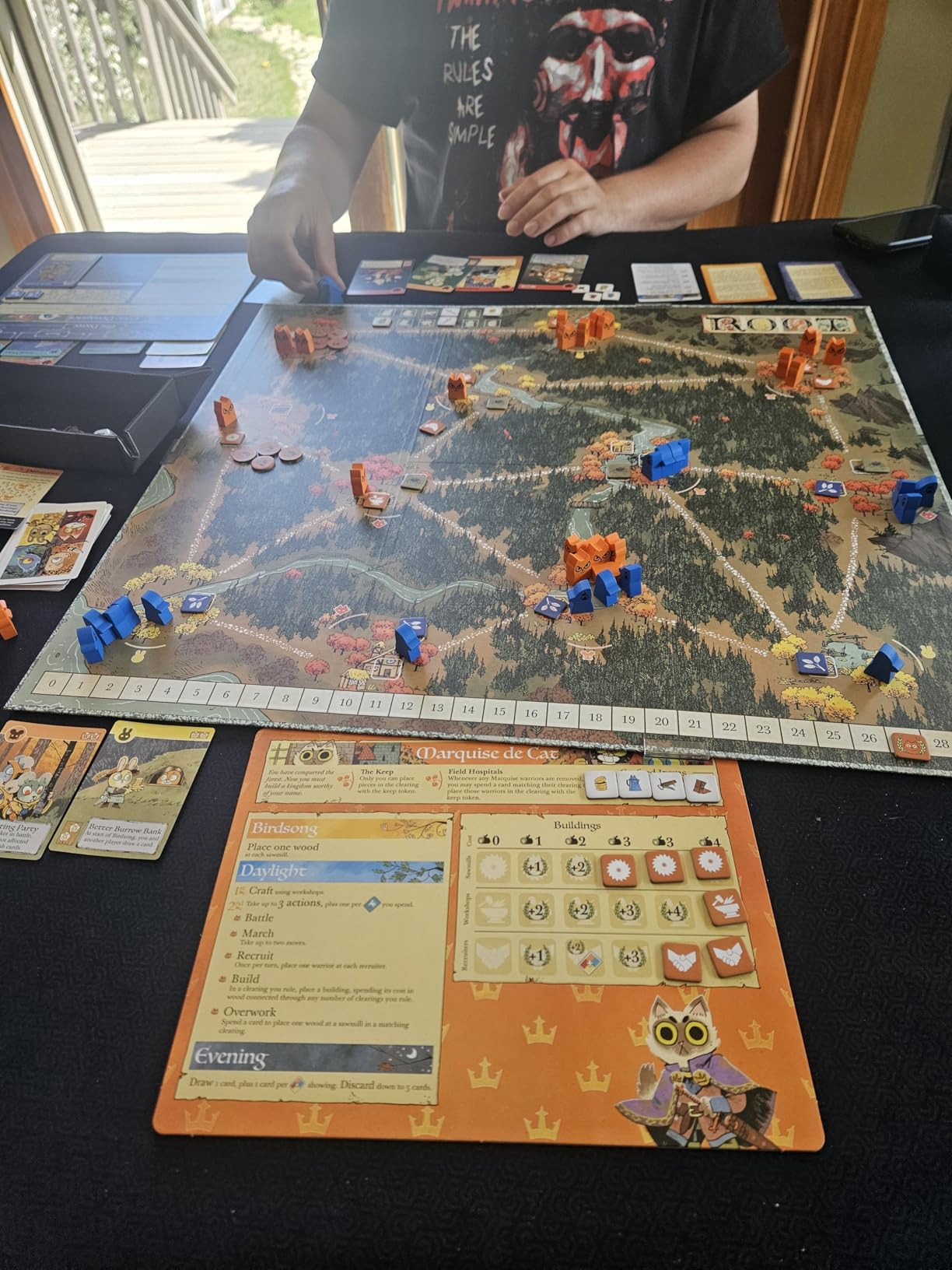
The card-driven action system is elegant despite its complexity. Every card has a suit that corresponds to one of four clearings on the board, and you must match suits to take actions in those locations. The crafting system lets you spend cards to unlock permanent special abilities, which adds another layer of strategic consideration to every card you hold. Do you use that Fox card to craft an item, or save it to take actions in Fox clearings where the Alliance is gaining ground?
Victory in Root is a race to 30 points, and the tension ramps up dramatically as players approach the threshold. Our games routinely feature dramatic swings in the final two rounds as players suddenly realize the Alliance is about to topple the Marquise’s empire, or the Vagabond has been quietly stockpiling favor tokens for a surprise win. These moments of collective realization around the table are what make Root an unforgettable experience and why it earns a permanent spot on our shelf.
Teaching New Players
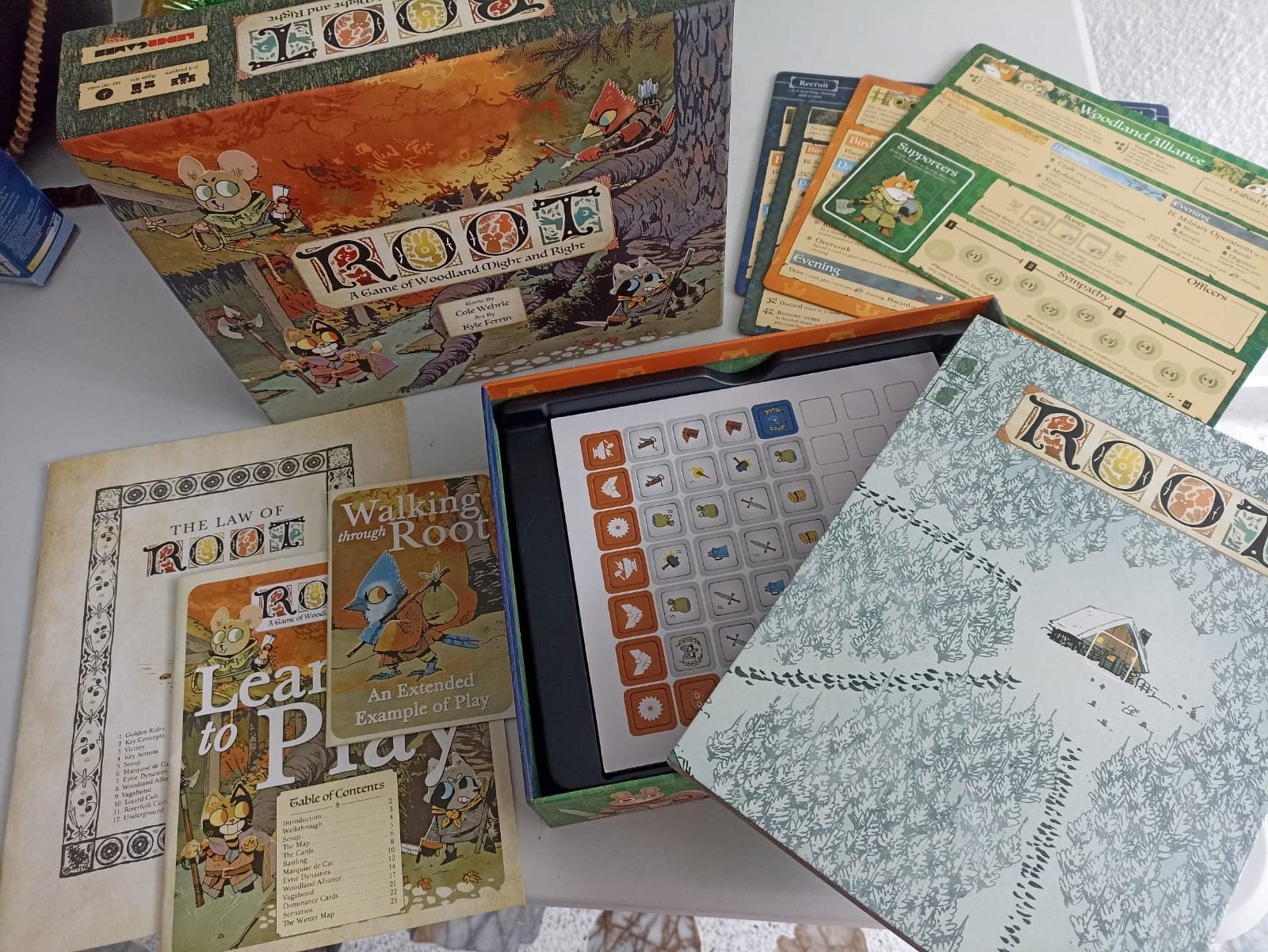
Teaching Root requires patience and a structured approach. I recommend having each player read their faction’s reference card before the game starts, then walking through one sample turn for each faction at the table. Expect the first game with any new player to run two to three hours. The good news is that once someone understands their faction, subsequent games move much faster. Our regular group now completes games in about 75 minutes.
A helpful approach is to start players with simpler factions. The Marquise de Cat is the most straightforward because it follows traditional area control mechanics most gamers recognize. The Eyrie Dynasties require planning ahead but have a clear structure. Save the Woodland Alliance and Vagabond for players who have seen at least one game played, because their mechanics are the most different from conventional board game design.
Faction Balance and Replayability
Root achieves remarkable balance despite its extreme asymmetry. No single faction dominates across our group’s play history, though certain matchups favor specific factions depending on player count and group dynamics. The game includes a recommended faction setup for each player count that ensures competitive balance, and the community has developed extensive analysis on optimal faction pairings. The base game supports four factions for 2-4 players, and expansions add the Riverfolk Company, Lizard Cult, Corvid Conspiracy, and Keepers in Iron, bringing the total to eight unique factions.
The replayability is exceptional because the faction combinations alone create dramatically different game experiences. Playing the Marquise against the Eyrie and Woodland Alliance feels completely different from facing the Vagabond and an expansion faction. The board state, card distribution, and player decisions compound to ensure no two games unfold the same way. After 25-plus plays, our group is still discovering new tactical approaches and diplomatic strategies that keep Root fresh and exciting.
6. Spirit Island by Greater Than Games – Cooperative Anti-Colonial Defense
Greater Than Games Spirit Island – Cooperative Strategy Board Game
1-4 Players
90+ Min Playtime
Ages 14+
8 Unique Spirits
Cooperative Area Control
Pros
- Best-in-class cooperative gameplay
- Highly thematic and unique premise
- Excellent solo mode controlling multiple spirits
- Outstanding replayability with 8 spirits
- Scalable difficulty with adversaries
Cons
- Very steep learning curve
- Complex rules with heavy bookkeeping
- Long playtime of 2+ hours
- Not suitable for casual players
Spirit Island is the most intellectually demanding game on this list, and also the most rewarding cooperative experience I have had in tabletop gaming. You play as powerful island spirits defending your homeland against colonizing invaders. Unlike most cooperative games where players share similar abilities, each spirit in Spirit Island has a fundamentally different playstyle that shapes how you contribute to the team’s defense. Lightning’s Swift Strike focuses on rapid attacks, while Ocean’s Hungry Grasp drowns invaders in coastal lands, and Keeper of the Forbidden Wilds creates sacred sites that repel exploration.
The invader phase follows a predictable pattern: ravage, build, and explore. This predictibility lets you plan multiple rounds ahead, but the sheer volume of threats spreading across the island means you can never address everything. The strategic core of Spirit Island is triage. You and your teammates must constantly communicate about which threats to handle immediately, which to let escalate, and which to ignore entirely. Every round involves difficult collective decisions that test your ability to prioritize under pressure.
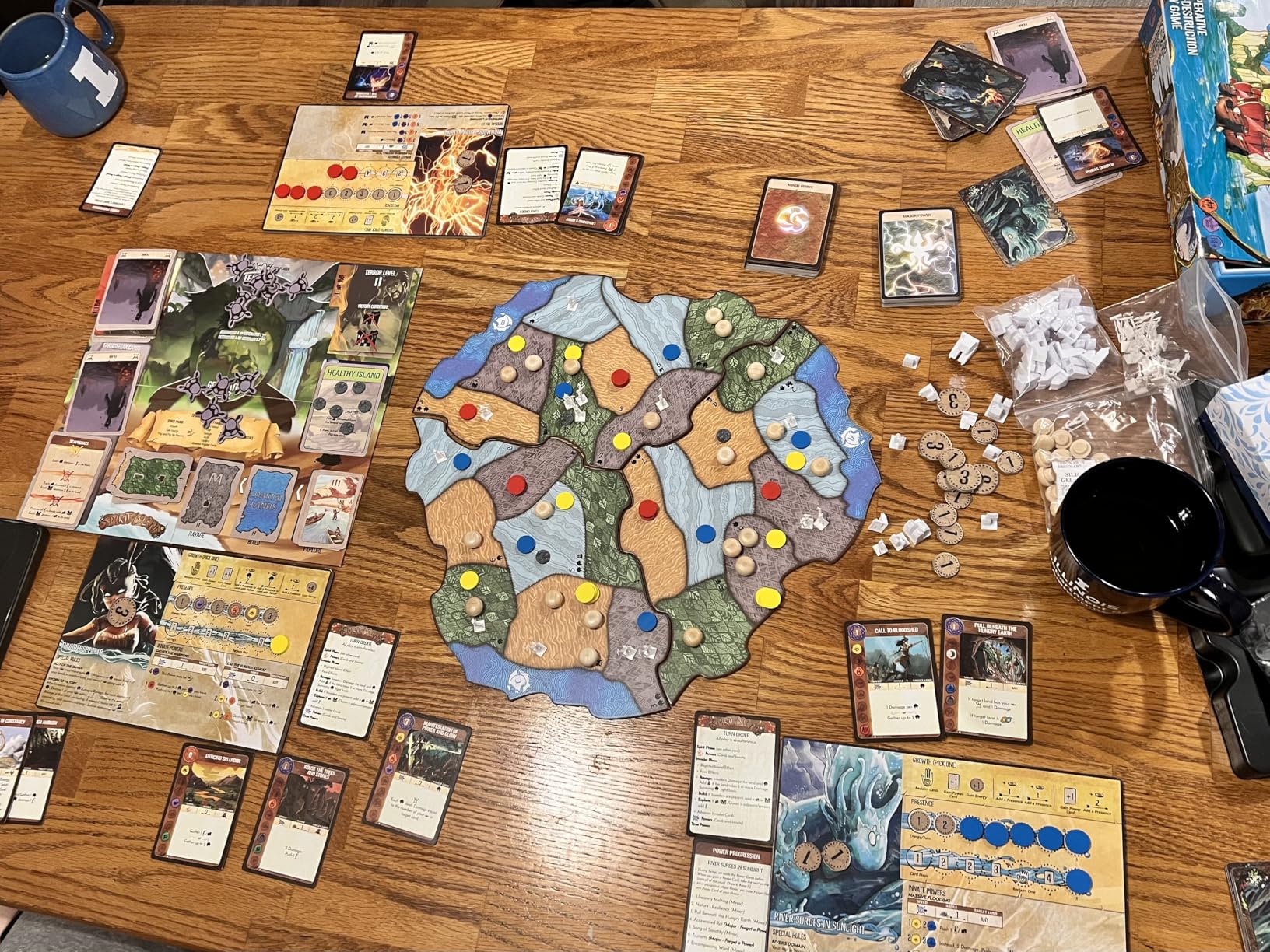
What sets Spirit Island apart from other cooperative games is how it avoids the quarterback problem. Because each spirit has unique powers and a different board presence, no single player can see the optimal move for everyone. You must communicate your capabilities and limitations, then trust your teammates to handle threats in their territory. This creates genuine teamwork rather than one person dictating moves to the table. Our most satisfying gaming moments of 2026 have come from coordinated Spirit Island turns where three players executed a perfectly timed sequence of fear generation, town destruction, and explorer removal.
The fear mechanic adds a brilliant strategic layer. Destroying invaders and their buildings generates fear cards that advance a shared fear track. Reach certain thresholds and the invaders lose morale, making them easier to defeat and eventually causing them to abandon the island entirely. This means you have two victory conditions: destroy enough invaders to win directly, or generate enough fear to cause the invaders to flee. Balancing these two paths creates fascinating strategic decisions throughout the game.

Difficulty Scaling and Adversaries
Spirit Island includes a remarkable difficulty scaling system that keeps the game challenging regardless of your experience level. The base game provides several difficulty levels through invader stage composition, and the adversary system introduces named opponents like Brandenburg-Prussia or England that modify how invaders behave. Each adversary has multiple difficulty levels, effectively giving you dozens of challenge settings to work through as your team improves.
Our group started at difficulty 0 and has gradually worked our way up over the past year. Each difficulty jump forces you to refine your strategy and coordinate more effectively. The progression feels natural and rewarding rather than punitive. Even at lower difficulties, the game never feels easy because the threat escalation creates constant pressure. This scalability is why Spirit Island has staying power that most cooperative games lack after a dozen plays.
Teamwork and Communication
Spirit Island demands more communication than any other game on this list. Each round includes a spirit phase where players discuss their plans, share insight about incoming threats, and coordinate power usage across territories. You need to tell your teammates what you can handle and what you cannot, because a miscommunication about who is defending a critical land can cascade into a devastating ravage that destroys presence and sets the team back significantly.
The growth phase at the start of each round gives you limited options for improving your spirit’s capabilities. Choosing between gaining new powers, reclaiming spent cards, or adding presence to the board is a personal decision that affects the whole team. I have found that the best Spirit Island sessions happen when players are honest about their limitations and willing to adapt their plans based on what the team needs. The game rewards flexibility and collective problem-solving in a way that builds genuine camaraderie around the table.
How to Choose the Best Tabletop Strategy Game
Picking the right strategy board game depends on who you are playing with, how much time you have, and what kind of decisions you enjoy making. Our team has put together this buying guide based on the questions we get asked most often by friends looking to buy their first serious tabletop game. Here are the key factors to consider before making your choice.
Complexity Level: Gateway to Heavyweight
Strategy games span a wide complexity range, and choosing the wrong level for your group will lead to frustration. Gateway games like CATAN and Wingspan teach fundamental mechanics without overwhelming new players. These games typically explain in under 15 minutes and play in 60-90 minutes. Medium-weight games like Terraforming Mars add more systems and longer playtimes but remain accessible to motivated learners. Heavyweight titles like Scythe, Root, and Spirit Island require dedicated learning sessions and experienced players willing to invest multiple hours. If you are buying for a group that includes non-gamers, start with a gateway title and work your way up.
Player Count and Group Size
The games on this list support different player ranges, and the experience can change dramatically depending on headcount. CATAN plays best at 4 players, Wingspan shines at 3-4 but supports up to 5, and Root hits its stride at 4 players. If you primarily play with 2 players, prioritize Wingspan or Terraforming Mars, both of which offer strong two-player experiences. For larger groups, Scythe with the Invaders from Afar expansion supports up to 7 players. Always check the recommended player count, not just the listed range, because many games are technically playable at certain counts but not particularly good at them.
Playtime and Session Length
Be honest about how long your group is willing to sit at the table. CATAN and Wingspan run 60-90 minutes, which fits comfortably in a weeknight session. Terraforming Mars and Root typically take 2 hours, which works for weekend afternoons. Scythe and Spirit Island can stretch to 3 or more hours with newer players. The listed playtimes on boxes tend to be optimistic for first games. As a rule of thumb, add 30-50% to the printed playtime for your initial session. Our group plans game nights around these time commitments to ensure nobody feels rushed or trapped in a game that is running long.
Solo Play Availability
If you play alone frequently, solo mode quality should be a major factor in your decision. Wingspan, Terraforming Mars, and Scythe all include excellent solo modes that deliver the full strategic experience. Spirit Island can be played solo by controlling two spirits simultaneously, though this increases the mental load considerably. Root does not include a solo mode in the base game but has an Automa expansion available. Based on our testing, Wingspan and Scythe offer the most accessible and enjoyable solo experiences, while Terraforming Mars and Spirit Island provide the deepest solo strategic challenges.
Key Mechanics to Consider
Understanding basic game mechanics helps you choose a game that matches how you like to play. Engine building, where you create systems that generate increasing returns over time, is the core of Wingspan and Terraforming Mars. Area control, where you compete for territory on a map, defines Scythe and Root. Worker placement, where you assign limited workers to action spaces, appears in several popular strategy games not on this list. Deck building, where you construct a card deck during play, features prominently in Spirit Island. If you enjoy one mechanic more than others, lean toward the game that emphasizes it.
Expansion Ecosystem
Consider whether the game has expansions available and how they affect the experience. All six games on this list have active expansion support, but the depth and quality vary. CATAN has the largest expansion library with decades of content. Wingspan has three expansions that add new bird cards and habitats. Terraforming Mars expansions add meaningful new mechanics without overwhelming the base system. Scythe expansions include new factions and modular boards. Root expansions add new factions that change the game dynamics. Spirit Island’s Branch and Claw expansion adds significant new mechanics. If longevity matters to you, all six titles offer years of expanded gameplay.
FAQ
What are the best strategy board games?
The best strategy board games include CATAN for gateway gameplay, Wingspan for engine-building and accessibility, Terraforming Mars for deep strategic depth, Scythe for area control with minimal luck, Root for asymmetric warfare, and Spirit Island for cooperative defense. Each game on this list has earned ratings above 4.8 stars from thousands of player reviews and offers genuine strategic depth that rewards repeated plays.
What is the top 5 strategy board games ever?
Based on community ratings, tournament presence, and lasting influence, the top 5 strategy board games ever are CATAN, Wingspan, Terraforming Mars, Scythe, and Root. These five titles consistently appear at the top of BoardGameGeek rankings and community polls. Spirit Island deserves honorable mention as the best cooperative strategy game ever designed.
What kind of strategy board games build tension the most?
Games with direct player interaction and high-stakes decisions build the most tension. Root creates tension through asymmetric conflict where every move threatens another faction. Scythe generates cold-war tension through territory disputes and potential combat. Spirit Island builds cooperative tension through escalating invader threats that force difficult triage decisions. Terraforming Mars creates racing tension as players compete to complete terraforming objectives first.
Are there good solo strategy board games?
Yes, several excellent tabletop strategy games include robust solo modes. Wingspan features an Automa system that simulates an opponent in under 30 seconds per turn. Scythe includes one of the best-rated Automa systems in modern board gaming. Terraforming Mars offers a challenging solo mode with a 14-generation time limit. Spirit Island can be played solo by controlling multiple spirits. All four deliver genuine strategic depth comparable to their multiplayer experiences.
What strategy board game is best for beginners?
CATAN is the best strategy board game for beginners because it teaches fundamental mechanics like resource management, trading, and spatial planning in an accessible 60-90 minute package. Wingspan is the best alternative for beginners who prefer a calmer, less confrontational experience with beautiful artwork. Both games have straightforward rules that can be explained in under 15 minutes while still offering genuine strategic depth that keeps players engaged over dozens of sessions.
Conclusion
After hundreds of hours testing these six titles across every player count and experience level, we are confident that this list represents the best tabletop strategy games available in 2026. CATAN remains our top recommendation for most buyers because it balances accessibility with strategic depth better than any other game on the market. Wingspan offers the best value for players who want a visually stunning, relaxing engine-builder with exceptional solo support. Scythe is the premium pick for experienced gamers craving deep asymmetric strategy with minimal luck.
For players seeking heavier strategic experiences, Terraforming Mars delivers unmatched engine-building depth, Root provides the most unique asymmetric gameplay in the hobby, and Spirit Island stands as the gold standard for cooperative strategy. Each of these six games has earned its place through consistently high ratings, active communities, and genuine replayability that keeps our group coming back session after session.
Pick the game that matches your group’s experience level and time commitment, and you will have a title that delivers memorable table moments for years to come. The best tabletop strategy games are not just purchases; they are investments in shared experiences that build friendships and sharpen minds.