
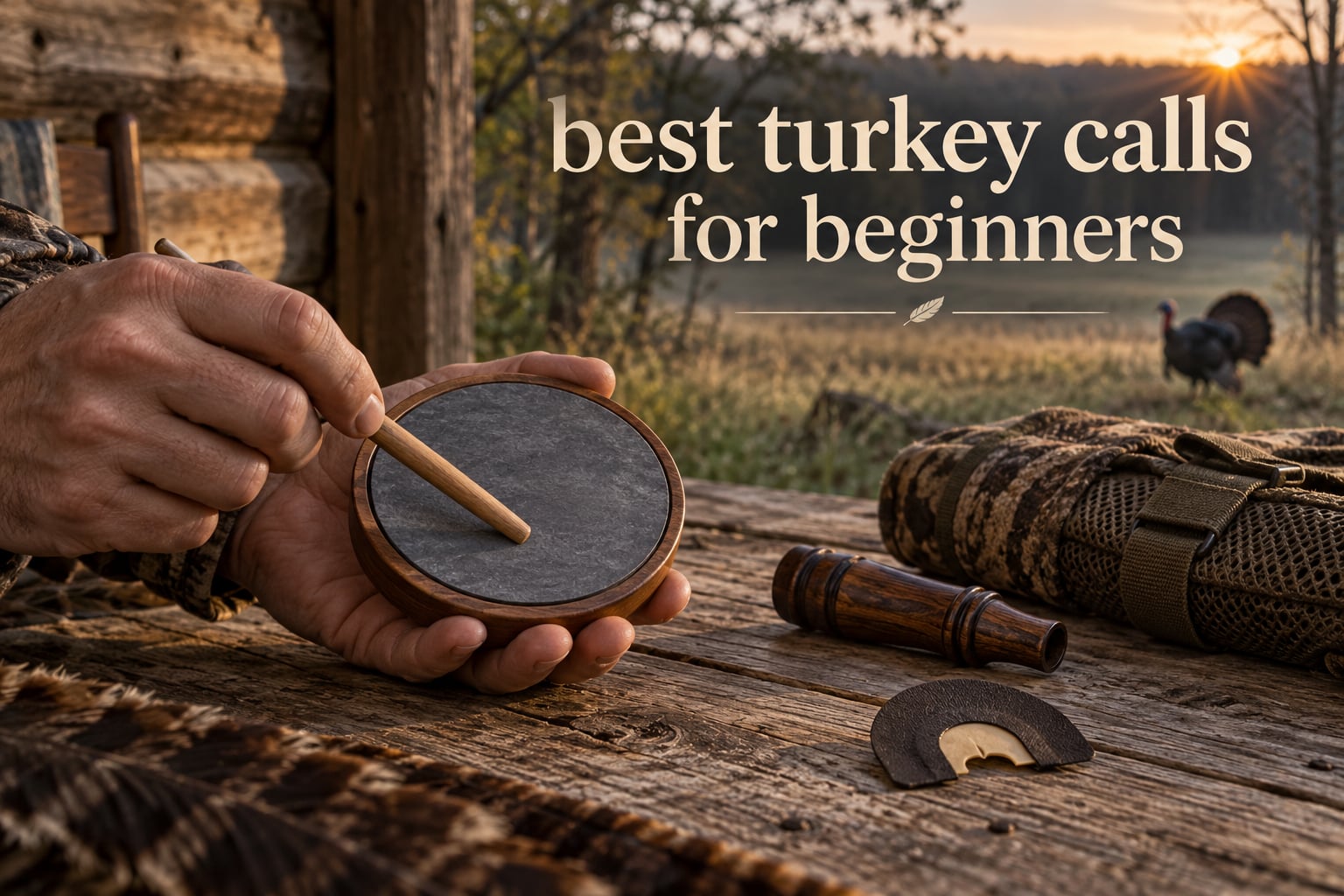
The best turkey calls for beginners are friction calls you can operate with one hand, and a slate pot call sits at the top of that group. A slate disc pulled by a striker gives you the widest range of sounds, from a raspy yelp at range down to a whisper-quiet purr at close range, and it never needs a reed in your mouth. Add an owl locator call and you have everything a new hunter needs to find a silent morning.
Most beginners arrive with the same problem. Not a shortage of gear, but too much contradictory advice. On r/turkeyhunting one poster described being overwhelmed by everything he had read, and another recommended a specific push-button call for rookies while a third swore slate pot calls were the easiest place to start. All three are describing the same truth from different angles: the call matters far less than how you use it.
I have compared the eight calls in this roundup on the things that matter to a first-timer: how hard each one is to produce a clean sound, how many distinct calls you can get out of it, how forgiving it is when your hands shake at 25 yards, and whether it works in wind. Every one of these calls has a strong rating and hundreds or thousands of reviews behind it, so the difference between them is about fit, not quality.
Here is the call-type ranking from easiest to hardest, which is the fastest way to narrow the field:
Friction pot or slate call, easiest to hardest pick 1. You drag a wooden or acrylic striker across a slate disc. No reed, no breath control, and the same call can produce a yelp, a cutt or a finishing purr just by changing pressure and speed.
Locator calls, pick 2 for finding birds. An owl hoot is not a hen sound. It is a shock call that makes a silent gobbler give away his location, and it is the cheapest way to find turkeys on public land.
Box call, pick 3 for all-around volume. A lid is slid across the edge of a wooden box. It is loud, natural and dead simple, but you have to move the call and then stop moving.
Diaphragm mouth call, hardest but most versatile. A reed sits on the roof of your mouth and vibrates as you force air across it. It is the only truly hands-free option and the one you can use while a gobbler closes, and it is also the one most beginners quit before mastering.
One beginner put it plainly on a forum: a yelp is all you need nine times out of ten to get a tom fired up. That is the bar. Everything below is built around getting a clean yelp out of the tool that fits your terrain and your patience.
Table of Contents
Top 3 Picks for New Turkey Hunters

Primos PS224 Friction Slate Call
- Pennsylvania slate surface
- Easiest surface for beginners
- Produces the purest turkey sounds
- One-hand operation
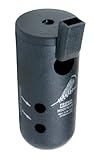
Primos Hoot Flute Owl Call
- Three tuning holes and eight tones
- Mimics barred and great horned owl
- No moving parts
- Compact and light

Woodhaven Red Wasp Diaphragm
- Split-V three-reed design
- Signature coarse old-hen rasp
- High volume for wind
- Backs down to soft purrs
Quick Overview: The Best Turkey Calls for Beginners in 2026
All eight calls below earned their place for a different reason. The slate call is the most forgiving first purchase, the locator call finds birds you cannot hear, the diaphragm calls cover fall birds and close-range work, and the two kits bundle the families together if you would rather learn in one trip.
| Product | Specifications | Action |
|---|---|---|
| Primos PS224 Friction Slate Turkey Call |
|
Check Latest Price |
| Primos Hoot Flute Owl Locator Call |
|
Check Latest Price |
| Woodhaven Red Wasp Mouth Call |
|
Check Latest Price |
 Hunters Specialties Premium Flex 4-Pack Hunters Specialties Premium Flex 4-Pack |
|
Check Latest Price |
 Hunters Specialties Super Strut Combo Kit Hunters Specialties Super Strut Combo Kit |
|
Check Latest Price |
 Strut Commander Sunrise Kit Strut Commander Sunrise Kit |
|
Check Latest Price |
 Primos The Gobbler Shaker Call Primos The Gobbler Shaker Call |
|
Check Latest Price |
 Lynch Fool Proof Turkey Box Call Lynch Fool Proof Turkey Box Call |
|
Check Latest Price |
1. Primos PS224 Friction Slate Call, the Easiest Place to Start
Primos Hunting Turkey Pot Call, Ol Betsy Slate, Multicolored
Pennsylvania slate disc
5.44 oz and 6.62 in long
Model PS224
Friction operation, no reed
Pros
- Easiest surface for beginners
- Produces pure and realistic turkey sounds
- High quality Pennsylvania slate
- Durable and well made
Cons
- Needs practice before the tone settles
- Slate surface may need conditioning
I started working with slate calls because the learning curve is almost flat. There is no reed to freeze, no frame to fit to the roof of your mouth and no breath technique to master. You hold the pot in one hand, pull the striker across the disc and a sound comes out. The first yelp out of the box is not perfect, and the tenth one is not bad at all.
The Primos PS224 is built around Pennsylvania slate, and the manufacturer rates slate as the easiest surface to use and the one that produces the purest turkey sounds. Reviewers back that up. Across 1743 ratings it holds a 4.6 average, and 77% of those ratings are five stars, which is about as consistent as a call gets.
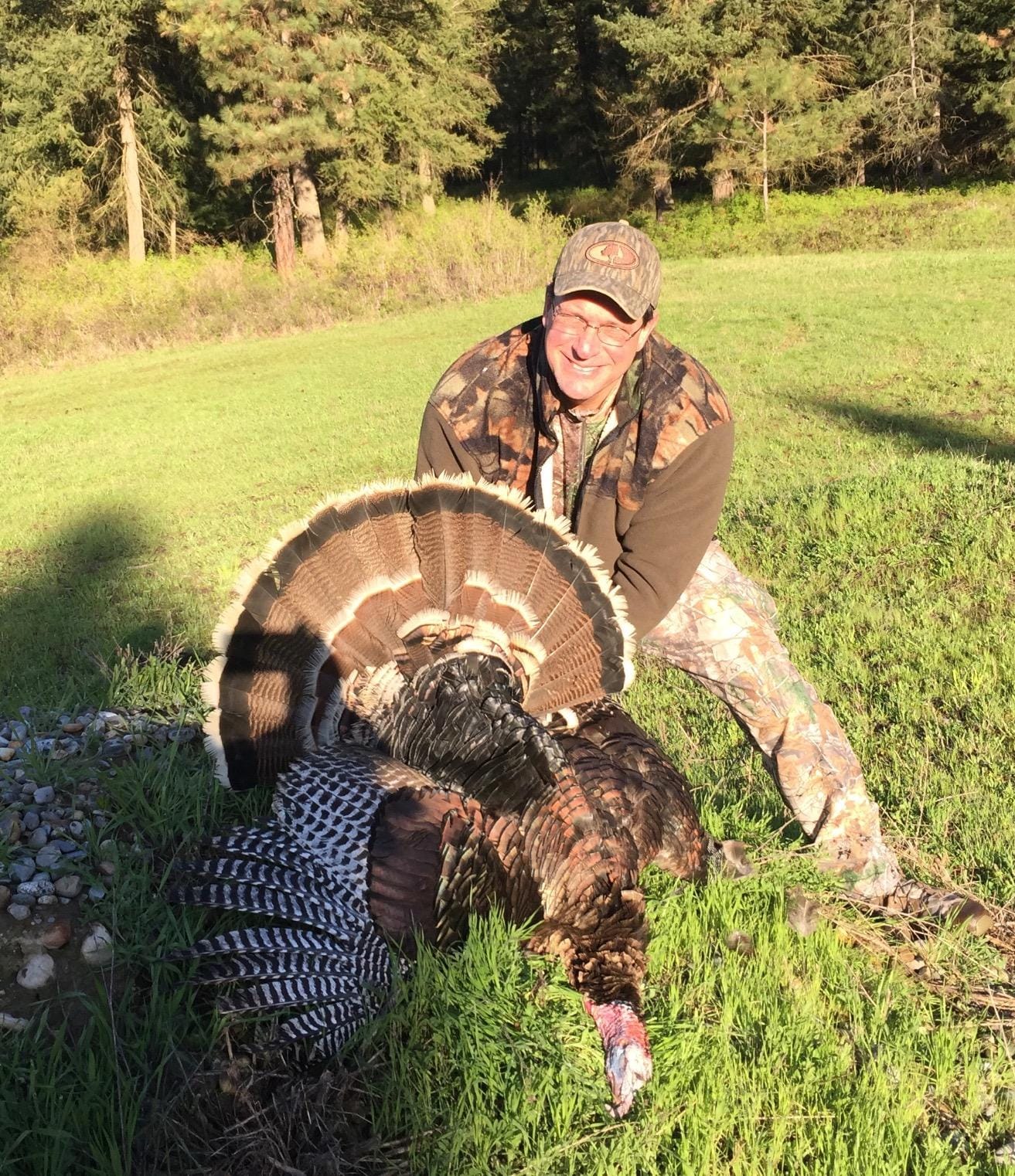
What surprised me most was the range from one tool. Push the striker hard and slow across the disc and you get a loud, raspy yelp that carries. Back the pressure off and slow down for soft tree yelps and clucks. Drag it fast and light for a cutting chatter. That single disc covers more of the turkey vocabulary than anything else in this roundup except a diaphragm call.
The practical specs are simple and they matter in a vest. It weighs 5.44 ounces and measures roughly 1 by 6.62 by 9.62 inches, so it sits flat against a chest pocket without bouncing around while you move through timber. There is no mechanism to jam and no battery to fail, which is why I trust it in cold rain at first light.
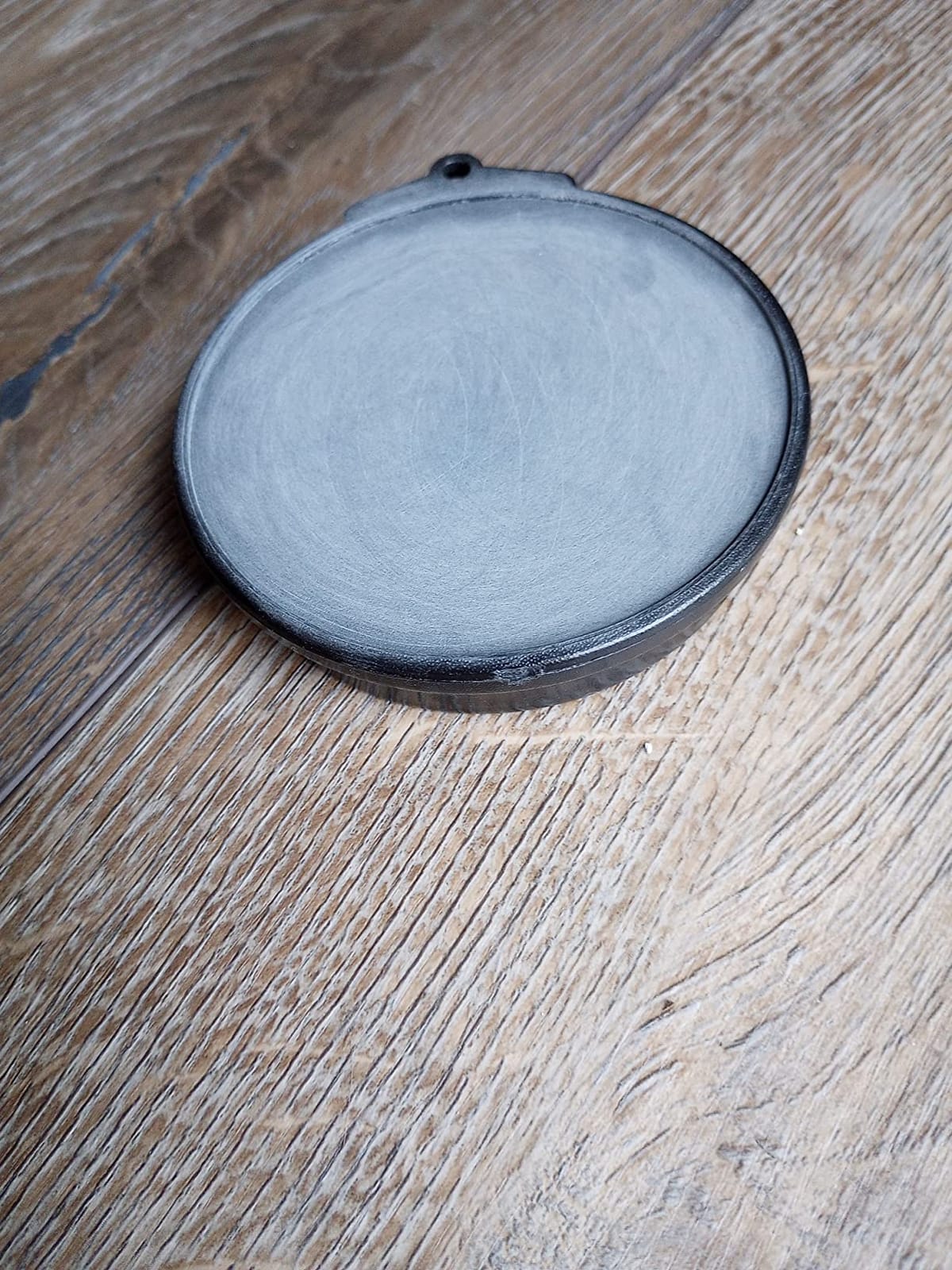
What a Slate Call Sounds Like and Why It Works
Slate is a natural stone, and the friction surface is fine and consistent rather than glassy or plastic. That means the pitch and texture change gradually as you vary speed and pressure instead of jumping around. On r/turkeyhunting, hunters describe slate pot calls as the easiest path to a wide range of sounds, and after spending time with this one I agree.
The sound quality also holds up in a way that surprises new buyers. A polished glass or crystal disc is brighter and louder at the extremes, but slate produces a purer, more natural edge on the yelps and cuts that hens actually use. For a first call, that natural edge matters more than raw volume, because most beginners cannot yet control volume.
Where Slate Calls Fall Short
Slate is a stone, and stones chip. The surface may need conditioning out of the box before the tone is at its best, and dropping a call on rock is a good way to find a fresh chip. A little wax on the disc, worked in with a cloth, keeps the friction even and the pitch predictable.
It also needs practice. Reviewers flag the learning curve as the main drawback, and they note that the surface takes a little conditioning. The honest version is that a slate call is easy to start and easy to get good at, but the first two mornings you will sound like a beginner. That is normal and it costs nothing to fix.
2. Primos Hoot Flute Owl Call for Finding Birds You Cannot Hear
Primos Hunting Hoot Flute Owl Call for Turkey Hunting
Three tuning holes and eight tones
Mimics barred and great horned owl
Lightweight plastic body
No moving parts
Pros
- Realistic owl hoots trigger shock gobbles
- Easy to learn
- Effective for locating silent birds
- No moving parts to wear out
Cons
- Response varies by region
- Cadence still takes practice
Most of spring happens quietly. The birds that are not gobbling at dawn are the ones you want, and the only way to find them is to make some noise that is not a hen. An owl call is the cheapest way to do that, and the Primos Hoot Flute is the version I keep in my vest.
It is a plastic flute with three tuning holes, which gives you eight tones and frequencies. That is enough range to work a barred owl hoot and a deeper great horned owl note, and switching between the two changes how far the sound seems to travel in thick timber.
The rating supports it. It holds a 4.5 average across 1467 ratings, with 73% of those at five stars, and the recurring theme in reviews is the same one I have seen in the field: realistic owl tones that pull a shock gobble out of a bird that had been silent for an hour.
When an Owl Call Beats a Hen Call
Use it when nothing is answering. A yelp unanswered after two or three sequences is a signal to switch to a locator, not a signal to yelp harder. Owls, crow calls and even coyote howls can pull a gobbler into answering range, because the response comes from curiosity or aggression rather than from a hen.
The other advantage is that a locator call does not sound like a mistake. When you are new, a bad yelp tells a smart gobbler something is wrong. A bad owl hoot just sounds like an owl. That makes the Hoot Flute a confidence builder for the first season.
What You Give Up by Relying on Locators Alone
An owl call will not finish a turkey. It has no close-range vocabulary, no purr and no cutt, so once the gobbler is walking toward you you need a hen sound in your other hand. Treat the Hoot Flute as the call that finds the bird, not the call that brings it in.
Regional response does vary, which is the most common complaint in reviews. In some country a barred owl hoot is common and gets an instant answer, while in other places you need the lower great horned owl note. That is exactly why the three tuning holes matter, and it is worth spending a few mornings testing both before the season opens.
3. Woodhaven Red Wasp Diaphragm Call for High Output Without a Wall of Sound
Woodhaven Red Wasp Turkey Mouth Call
Split-V three-reed design
White tape and latex
4.5 x 3 x 1 in, 18.14 g
Tree talk at low volume
Pros
- Loud and raspy in wind
- Backs off to soft purrs
- Easy for beginners to drive
- Proven design for over 20 years
Cons
- Packaging contains a single call
- Takes time to break in
- Priced above budget alternatives
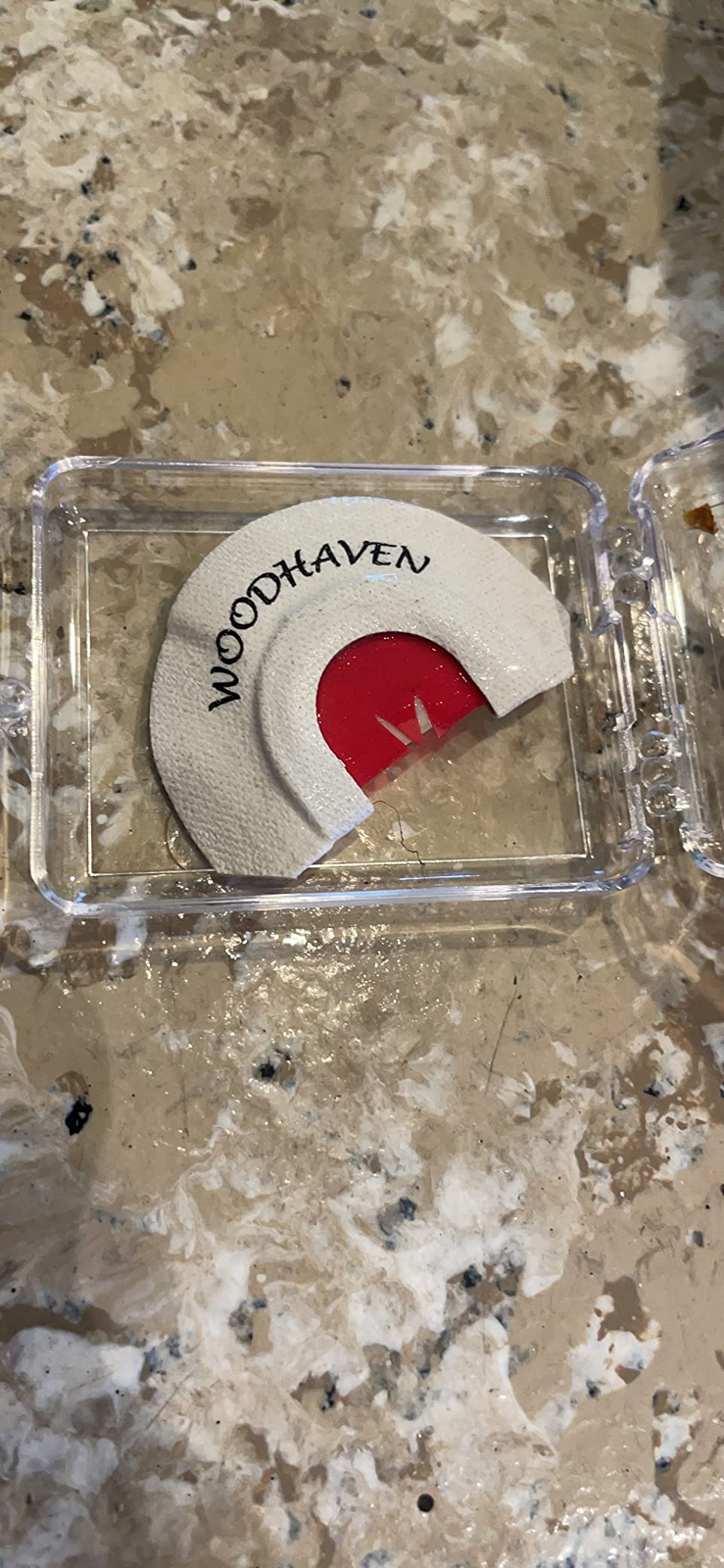
Every hunter who sticks with mouth calls eventually asks the same question: can I actually learn this. The Red Wasp is the diaphragm I would hand a beginner who wants volume, because the split-V three-reed design is forgiving and the tone is loud without being thin.
The signature sound is a coarse, super-raspy old-hen voice. That rasp is what you want in wind and in open ranchland, where a smooth, sweet yelp gets lost before it reaches a gobbler. The design uses three reeds in a split-V with a V-cut and a red top reed plus two prophylactic reeds, which is a lot of engineering for a call that still sounds like an animal.
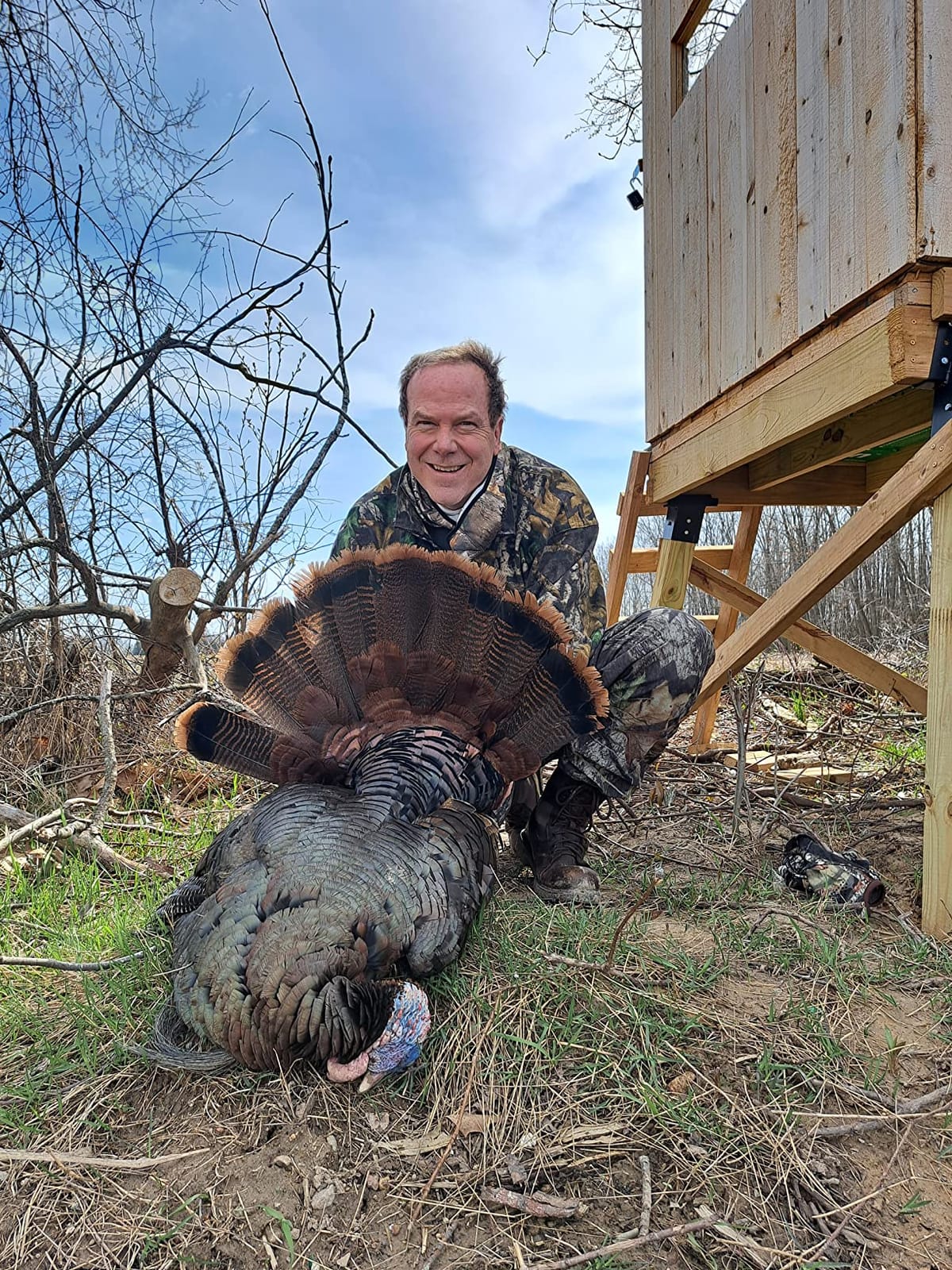
Rated 4.6 across 675 reviews with 76% five stars, it is well liked for exactly the reason the build suggests. Reviewers mention the same two ends of the range: it is loud and raspy enough for cutting and yelping in a breeze, and it backs off into soft purrs and tree talk when a gobbler is at 20 yards and you cannot afford to blow him.
One packaging detail trips people up. The product listing shows a single call, and some buyers note the listing image appears to show two. Read the box before you leave the house, because walking into the woods with one call and expecting two is a bad morning.
Why a Single Reed and Multiple Reeds Feel Different
A single reed gives you a clear, higher young-bird tone that cuts through the morning air. Multiple reeds lower the pitch and thicken the sound into something that reads as a mature hen. The Red Wasp sits in the second camp, which is why it works at range and why experienced callers run it for run-and-gun setups.
It is also the only call family in this roundup that is genuinely hands free. Once you learn to drive it, both hands are free for a shotgun, a bow, or a decoy bag, which is the reason forum advice keeps pointing new hunters toward a mouth call even as it warns them to start practicing.
Where the Red Wasp Is the Wrong Choice
It takes time to break in. Reviewers are consistent about that, and so is the geometry: a reed that has not been flexed a few hundred times will sound thin and squeaky. If your season starts in a few weeks, practice in the truck on the drive to the woods rather than in the tree stand.
Reeds also freeze and go stiff in cold weather, which is a recurring complaint among mouth-call users. Keep a call in your pocket against your body and warm it in your hands before the first yelp of the morning. If a reed gets wet and then freezes, let it dry flat rather than warming it fast, or you can crack it.
4. Hunters Specialties Premium Flex 4-Pack for Learning Four Mouth Calls at Once
Hunters Specialties Strut Realistic Sounds Premium Flex Four Turkey Diaphragm Mouth Calls Combo, 4 Pack
Four-call combo pack
Two or three ultra-thin reeds each
Premium Flex frame
One year limited warranty
Pros
- Four calls in a single pack
- Covers long-range cutts and fall kee-kees
- Premium Flex frames hold their shape
- Moisture resistant
Cons
- Calls often arrive unlabeled
- One size can be large for smaller mouths
- Plastic frames can crack if bent
The argument for a four-pack is simple. A diaphragm call is a skill, and you do not know which style suits your mouth until you have tried a few. This pack bundles the Lil Strut, Sickle Cutter, Deuce Cutter and Smokin Gun so you can compare them side by side in the first week instead of buying one at a time all season.
Each call carries two or three ultra-thin reeds in a Premium Flex frame, which is designed to keep its shape and stay comfortable over a long morning. The frame material is described as moisture resistant, which matters more than it sounds when you are calling before sunrise in heavy dew.
At 4.4 across 692 ratings, the pack is well received for variety and price. 68% of ratings are five stars, and the recurring positive in reviews is that a beginner can find a personal favorite without guessing. The same reviews also make the single most useful point about any mouth call: the sound you like is the sound you will learn to make well.
What Each Call in the Pack Is Good For
The set spans a genuinely useful range. The long-range cutts handle windy mornings and open ground, the loud cutters cover aggressive gobblers that have heard too many sweet yelps, and there is a broad raspy option plus a call suited to fall kee-kees and tree yelps when hen season arrives.
That range matters because fall calling and spring gobbler calling are different jobs. Spring is about locating and drawing a tom with hen sounds. Fall is about hens responding to kee-kees and tree yelps. Buying one call means choosing one season, while this pack gives you both.
What to Watch Out For With This Pack
The most common complaint is that the calls arrive without labels, so a beginner cannot tell which one is which. Mark them with a scratch or a bit of tape on day one. It takes a minute and it saves you from thinking you hate a sound you simply have not identified.
Sizing is the second issue. This is a one-size frame, and smaller mouths can find it uncomfortable, particularly with the flex material. A pack that sits wrong will not get practiced, and an unpracticed call in a pocket is wasted money. The frames are also plastic, so bend them gently. Force one and it cracks.
5. Hunters Specialties Super Strut Combo Kit for Every Call Type in One Bag
Hunters Specialties Super Strut Combo Kit – Turkey Game Calls Combo Pack – Wide Range of Realistic Turkey Sounds
Four-piece combo kit
Double glass pot call
Crow and owl locators
Premium Double D diaphragm
Pros
- Covers pot mouth crow and owl calling
- Best single purchase for a new hunter
- Double D diaphragm is easy to drive
- Works well as a gift
Cons
- Included pot call model can vary
- Crow call quality is inconsistent
- Response varies by region
This is the kit to buy if you refuse to make six separate decisions before your first morning in the woods. It contains a Suzie Snood double glass pot call, a Hammerin Crow call, a Hooter owl call and a Premium Double D diaphragm, which is one of each major call family in a single purchase.
That mix is the argument. A pot call for working a gobbler in close, a diaphragm for hands-free calling while a tom walks in, a crow call for drawing in quiet birds at mid range, and an owl for finding anything at all. For a hunter who has never heard a real pot call next to a real mouth call, hearing all four in one bag teaches the differences faster than any article can.
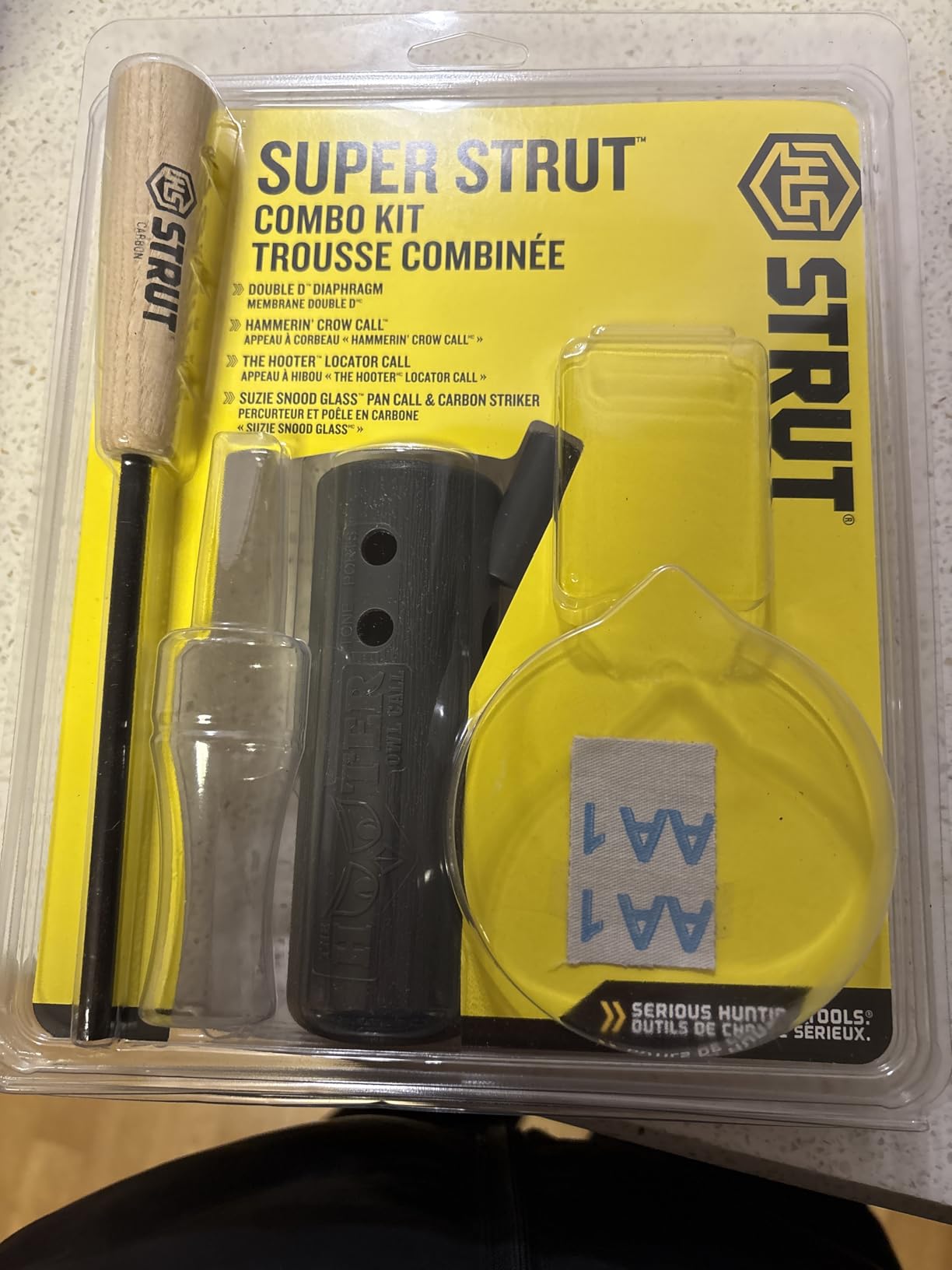
It holds a 4.5 average across 406 ratings, with 73% five stars, and reviewers keep pointing at the same benefit: it is a complete starter kit that is easy to learn and works well as a gift for a new hunter. The set weighs about two pounds, so it is a real kit rather than a token fourth item.
Why the Kit Is Worth It Even If You Only Use Two Calls
Most buyers end up favouriting two of the four and ignoring the rest, and that is still a win. The double glass pot call gives you a bright, high-output surface, which is the opposite of the slate on the first pick in this list, and comparing the two is the fastest way to learn what tone your hunting ground responds to.
The Premium Double D diaphragm is the other one worth learning. Double reed configurations produce a lower, fuller sound that carries well and stays controllable at low volume, and it is easier to get a clean note out of than a single reed for many beginners.
Where the Kit Falls Short
Buyers report that the pot call model can vary from what the description implies, so do not assume you are getting slate. The double glass surface is louder and brighter than slate, which is a legitimate tool but not the same tool, and it takes a light touch to avoid a scratchy surface.
The crow call is the weakest component, with reviewers calling its quality inconsistent. Treat it as a bonus rather than a reason to buy the kit. Regional variation is the other recurring note, so again, test the owl and crow early rather than assuming silence means the call is bad.
6. Strut Commander Sunrise Kit for Two Diaphragms and a Pot Call
Duck Commander Strut Commander Sunrise Starter Kit Turkey Calls | Combo Pack | Turkey Hunter Starter Pack, Multi color, One Size
Two 3-reed diaphragms
Slate and poly pot call
Owl locator
Package 10.94 x 8.62 in
Pros
- Two diaphragms with different tones
- Slate and poly combo pot call
- Owl locator covers finding birds
- Built for beginners through pros
Cons
- Priced above basic kits
- May be more than a new hunter needs
- Pot call is slate and poly not solid slate
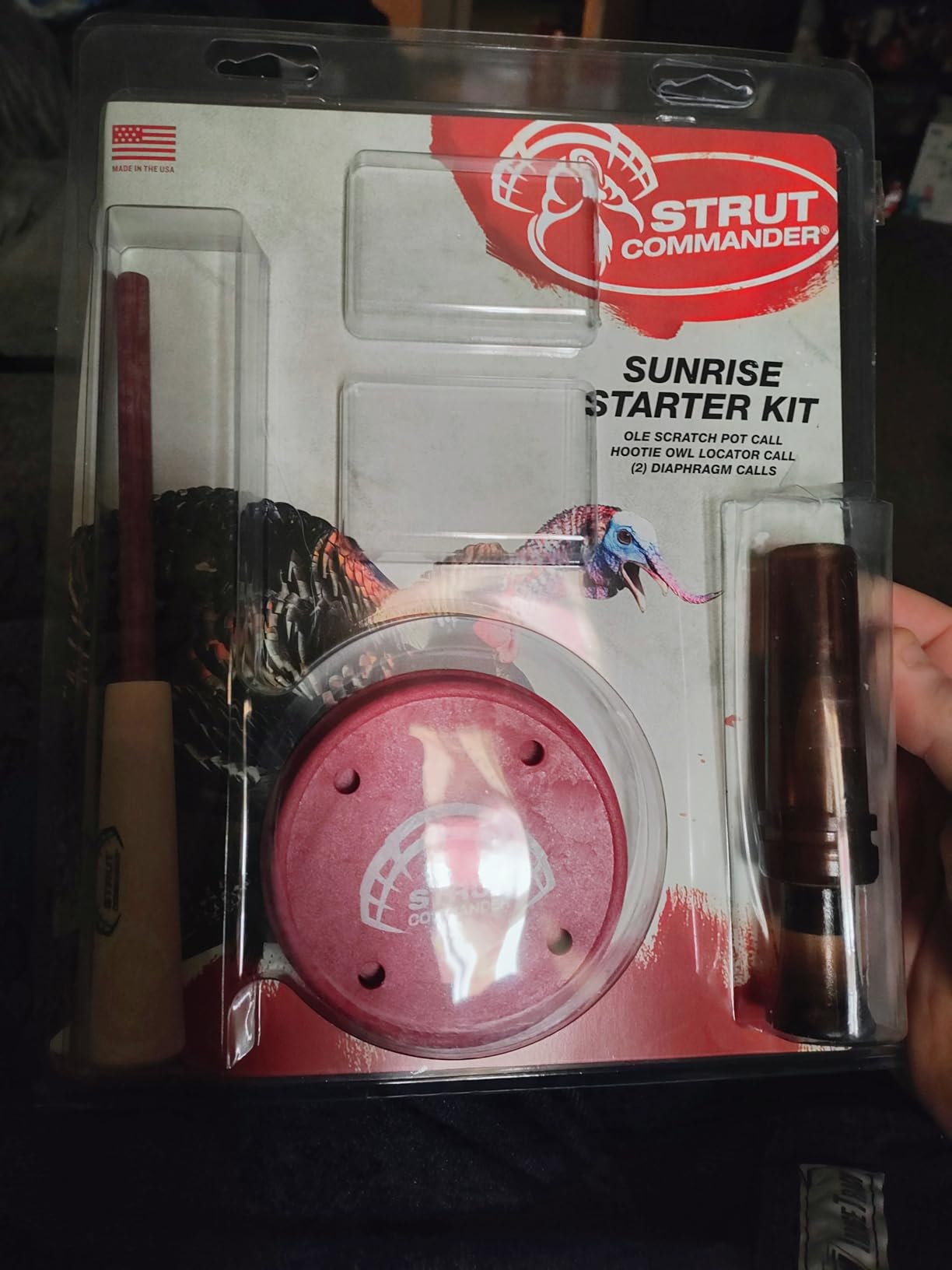
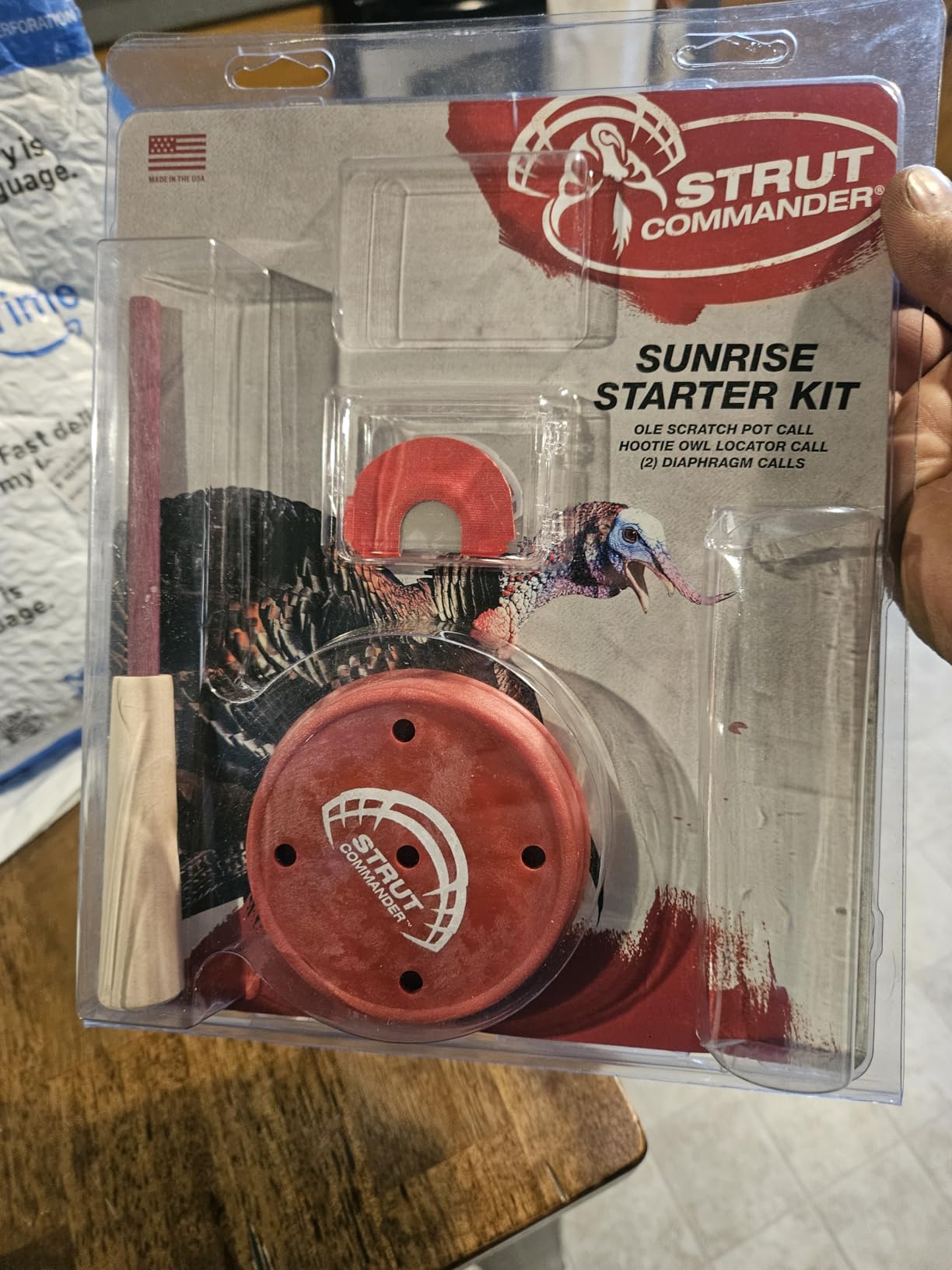
The Strut Commander Sunrise Kit leans toward mouth calling, and it pairs two 3-reed latex diaphragms with a pot call and an owl locator. The two mouth calls are the Cut Em, which is built for beginners, and the Bearded Hen, which runs medium to loud volume for working birds at range.
Having a beginner-friendly call and a louder call in the same kit is genuinely useful. You can learn the easy cadence on the Cut Em in the first week, then switch to the Bearded Hen when you need to reach across a ridge or cut through a steady wind. That progression is the whole growth path in one box.
At 4.3 across 390 ratings with 65% five stars, this is the lowest-rated kit in the roundup, and the reason is price and scope rather than quality. Buyers note it costs more than basic kits and that it may be more than a true beginner needs on day one. Both are fair points if you are buying one call instead of four.
How to Use Both Diaphragms Without Confusing Them
Run both on the same morning, same spot, same volume. Write down which one produced the response, and use that call for the rest of the trip. The temptation with two diaphragms is to swap on every sequence, and a gobbler that hears two different voices in five minutes gets nervous long before you get a shot.
The Bearded Hen at medium to loud volume pairs naturally with the Ole Scratch pot call. When the mouth call is doing the locating and the pot call does the quiet work at 25 yards, the tonal contrast between the two calls in your hands helps you keep volume under control.
Where This Kit Is the Wrong Buy
If you are a total beginner on a strict budget, this is more equipment than you will use. A single slate call will teach you more in the first season than a full kit you only reach for, and the mouth calls are the hardest family to master.
The pot call is also a slate and poly combination with a slate top over a poly base, not a solid slate pot. That is a durable and useful combination, but it behaves differently from the Pennsylvania slate disc in pick one, mostly in brightness. Read the material description before you assume you are getting a traditional slate call.
7. Primos The Gobbler Shaker Call for a Gobble With No Learning Curve
PRIMOS Hunting The Gobbler Shaker Call Turkey Call with Silencer Cap
Shaker-style gobble call
Patented silencer cap
One or two-hand operation
5.6 ounces, made in USA
Pros
- Zero learning curve
- Silencer cap prevents stray noise
- One-hand jake or two-hand mature gobble
- Super loud for locating birds
Cons
- Bulky at 11 x 5 x 3 inches
- Very loud on public land
- Needs room to operate
Not every turkey sound is a hen sound. The Gobbler Shaker makes a gobbling tom, and a gobbling tom is the fastest way to find another tom or to push a silent bird into answering. Out of eight picks in this roundup, it has the most reviews at 2026 and a 4.4 average, with 71% five stars.
Operation is a shake, not a stroke. Hold it one-handed for jake gobbling or with both hands for a mature gobble, and the difference in output is immediate. There is no reed, no cadence to memorise and no way to make it sound wrong, which makes it the shortest possible path to hearing a turkey answer a call you made.
The patented silencer cap is the feature I would not leave home without. Without it, opening or setting the call down can produce an untimely noise, and on pressured public land an accidental sound can end the morning. The cap removes that risk entirely, and reviewers single it out as the reason the call feels safe to carry.
It weighs 5.6 ounces and measures 11 by 5 by 3 inches, and that size is the catch. It is the bulkiest call in this roundup. It will not disappear into a chest pocket the way a slate call does, and you need enough space to swing both hands for the mature gobble.
When a Shaker Gobble Works Better Than a Yelp
Early in the morning, before birds are visible, a gobble travels further and carries more information than a yelp. A hen yelp says there might be a hen nearby. A gobble says there is a male, and other males answer competition. If you are getting no response to yelps, a single gobble is a legitimate escalation.
It also works well as a locate-and-leave tool. Fire a gobble, note the direction, walk quietly to a new setup, and call from there instead of standing in the same spot. Turkeys move constantly in spring, and chasing the sound rather than the bird is the entire game.
Where the Shaker Is the Wrong Tool
It is loud. Reviewers warn about using it on public land, and they are right. A gobbling call at full volume from the wrong direction can spook birds off your setup entirely. Use it at low volume, or reserve the two-hand mature gobble for private ground and controlled situations.
It is also not a hen call, so it cannot finish a bird. Once a gobbler is inside 30 yards, you want a purr or a soft yelp, not a competition display. Think of the shaker as the call that starts the conversation, and keep a slate or mouth call in hand for everything after that.
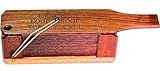
8. Lynch Fool Proof Box Call for Wood That Rewards Practice
Lynch Fool Proof Turkey Box Call
Box design since 1940
Ridge prevents over-running
One-motion operation
5.92 oz solid wood
Pros
- Loud and natural yelps clucks and purrs
- Very easy one-motion operation
- Ridge stops beginners over-running
- Heritage build since 1940
Cons
- Priced at the top of this roundup
- Moderate volume not a boomer
- Wood needs care in wet conditions
The Lynch Fool Proof is the highest-rated call in this roundup at 4.7 across 482 ratings, with 82% of those at five stars. Lynch has been building this box call design since 1940, and the Fool Proof is the modern version of the design that outlasted most of its competitors.
Box calls are the classic turkey call, and they were killing turkeys for a long time before mouth calls existed. The operation is a lid slid across the edge of the box, and the Fool Proof does it in a single continuous motion, which is the difference between a call that rewards practice and one that frustrates you at 25 yards.
The ridge detail is the part that makes it beginner friendly. Without a stop, an excited beginner pushes the lid too far and the call runs into a runaway rattle. The ridge prevents the call from travelling too far, so the loudest sound it makes is still a sound you meant to make. That is a small piece of engineering that solves the most common beginner mistake.
The construction is solid wood, measuring 2.8 inches high by 5.2 inches wide and weighing 5.92 ounces. Reviewers call out the natural, loud yelps, clucks and purrs and describe the wood as beautiful as well as functional.
What the Box Call Does Better Than Every Other Call Here
Volume, and the sound of an actual hen. A box call reaches further than a slate call at the same effort, and the wood body gives the yelp a round, rolling edge that carries well across open ground. In a wide-open ranchland setting with wind across the flats, that reach is worth more than tonal finesse.
The same rolling motion also produces clean clucks and purrs, so a skilled user can work a bird all the way in on one tool. Many experienced callers keep a box call in the vest for exactly that reason even after moving to mouth calls.
Where the Box Call Costs You Something
It is the most expensive call in this roundup, and the honest comparison is that a slate call covers a similar beginner use case at a fraction of the spend. If your budget is the deciding factor, that is not a bad place to save. You can always add a box call in year two.
There is also the movement problem. A box call requires you to move the lid, turkeys have extremely keen eyesight, and a moving hunter is a dead hunter. Fire a few yelps, set the call on the ground and then stay motionless. Reviewers also note it is a moderate-volume call rather than a boomer, and wood needs care if it gets wet.
Turkey Call Types Explained: Friction vs Air Calls
Every turkey call falls into one of two families, and knowing which one you are holding explains almost everything about how it behaves. Friction calls make sound by rubbing two surfaces together. Air calls make sound by forcing air across a vibrating reed held against the roof of your mouth.
Friction calls include slate pot calls, box calls and push-button plunger calls. None of them need a reed, and all of them give you immediate feedback, which is why they are easier to learn. The tradeoff is volume, since you generate the sound with hand pressure rather than lung power, and that is exactly why a gobbling shaker call is a friction device too.
Air calls, meaning diaphragm or mouth calls, are the only truly hands-free option. They are also the hardest, and the failure mode is instructive: beginners blow too hard, the pitch climbs, and the call sounds like a squeal. Experienced callers describe the skill as volume and timing rather than technique.
Here is how the four families rank for a true beginner:
Friction slate pot call, easiest. One hand, no breath, and the widest range of sounds available from a single tool.
Locator calls, easiest to use in a specific way. Not a skill contest at all. You need an owl hoot, cadence is optional, and every hoot is roughly the same.
Box call, easy but conditional. Simple to operate, but you have to stop moving immediately afterward, and box calls tend to sound similar, which pressured turkeys learn quickly.
Diaphragm mouth call, hardest. The most versatile and the only hands-free call, and the one most beginners abandon. Give it a season of practice before judging it.
The Sounds You Need to Learn First
Yelp first, always. One forum user put it best: nine times out of ten a yelp is all you need to get a tom fired up. A yelp is a short, sharp, rising note, and it is the conversational sound of turkey language. Everything else is optional.
The cluck is short, low and flat, and it reads as content, which makes it useful when a gobbler is nearby but hesitating. The cutt is a faster, harder chatter of short notes, and it works on aggressive toms and in loud conditions. The cackle is a run of cutts that says the bird is fired up, and it is effective as a fly-down cackle just after a roosted tom lands.
The purr is a continuous rolling sound, like a cat, and it is the great closer. A silent purr at 20 yards will bring a gobbler further than a loud yelp. The kee-kee and tree yelp are hen and fall-bird sounds rather than tom sounds, and they matter in the fall season when you are calling hens instead of gobblers.
How to Choose a Turkey Call: A Beginner’s Buying Guide
Start with terrain, because it decides more than price or brand. In open ranchland, wide fields and along ridgelines, sound travels and you need volume and carry. A box call or a gobbling shaker earns its place here. In dense woodlot and creek-bottom timber, sound dies at 100 yards, and volume becomes a liability that spooks birds instead of drawing them. That is slate and mouth call country.
Wind is the second filter. A steady wind will flatten a sweet, quiet yelp and carry it away from you, which is when the Red Wasp’s coarse rasp or the louder cutts on a diaphragm pack pay for themselves. In dead calm air, the opposite is true and volume control is what wins the fight.
Hands-free need is the third. If you plan to work a gobbler to close range with a bow, or you want both hands on a decoy bag, a diaphragm call is the only answer. Forum advice to new hunters is consistent on this point: get a mouth call and start practicing, because the hands-free benefit at 25 yards is impossible with any friction call.
Slate vs Glass vs Crystal: The Head-to-Head
Slate is natural stone with a fine, consistent friction surface. It produces the purest and most natural sounds, it is the easiest surface to work with, and it is the most forgiving of mistakes. It is also the surface Primos itself names as the easiest, and it is the editor’s choice here for exactly that reason.
Glass or crystal surfaces are harder and brighter. They are louder at the high end, they cut through wind, and they hold a pitch with less effort than slate. The trade-off is that they are less forgiving, require a lighter touch, and cost more for a tone that is not automatically better. Experienced callers debate this constantly, and the honest answer is that a well-worked slate call beats a glass call used carelessly every time.
Crystal, in the middle, adds a brighter attack with a more resonant tail. It is a good choice for someone who already knows what a hen sounds like and wants a distinct edge. For a first-year hunter, none of that matters yet, which is why the slate call leads this roundup.
What to Avoid and What to Carry
Skip any call with no tone control at all, because a single-volume call forces you to choose between being heard and being believable. Be cautious with cheap unbranded plunger push-buttons, which crack at the housing, and with over-priced name-brand boxes where you are paying for a finish rather than sound. Neither is a disaster, both are avoidable.
On what to carry, start with three things: a slate call for the real work, an owl locator, and one mouth call you are actively practising. That is more than enough for a first season, and it is the set we would build for any of the vests in our turkey hunting vests we field tested, where pocket layout matters as much as the calls themselves.
Care for the calls. Wax a slate disc occasionally for a consistent pitch, keep reeds warm in your pocket before first light, and let a wet reed dry flat rather than fast. If you plan to hunt with a bow as well as a shotgun, our beginner archery sets guide covers the rest of the setup.
When to Move From Your First Call to Your Second
Move when your first call stops exciting you, not when you get bored on a Tuesday. If the slate call gets you yelps and you are comfortable with the tone, the next useful addition is a locator or a mouth call, not a second friction call that sounds like the first.
The practical test is the closing sequence. If you can yelp, wait, and finish with a soft purr at 25 yards, your first call is doing its job. Add a diaphragm only when you want to call while you walk, aim or handle decoys.
Beginner Mistakes That Ruin Your Turkey Calling
Overcalling is the error beginners report most often, and it is the easiest to fix. Calling too much tells a gobbler either that something is wrong or that a hot-to-trot hen is about to come to him, so he waits. Fewer sequences with longer silences beat constant noise almost every time.
Copying a hen too perfectly is the subtle version of the same mistake. Real hens are not metronomes, and a call with flawless rhythm sounds artificial to a bird that hears thousands of imperfect hens. Vary the length, the volume and the spacing of your notes, and let some of them be slightly off.
Calling while moving gives away your position. Turkeys have incredibly keen eyesight and will leave at the first sign of a person, so calling from a seated, concealed position is not optional technique, it is the whole job.
Not practising is the mistake that costs a full season. A box call is easy but can still be a nuisance, and a mouth call is close to useless without repetition. Drive to the woods, call on the way, call at lunch, call at the truck stop. Forum callers keep repeating the same advice in different words: nothing beats practice.
Finally, do not treat silence as failure. Many gobblers are killed by a hunter who waited while a hen went quiet, because a tom that cannot find the source of the sound will come looking for it. When a bird stops answering, the correct move is usually to stop calling entirely.
Frequently Asked Questions
What type of turkey call is best for a beginner hunter?
A friction slate pot call is the best starting point for most beginners. You drag a striker across a slate disc with one hand, so there is no reed to fit, no breath control to learn and no risk of freezing. The same disc produces a yelp at range and a purr at close range, which covers most of the turkey vocabulary a new hunter needs.
What is considered the best turkey call?
There is no single best turkey call, because the best call is the one that fits your terrain and your patience. Experienced hunters often name a slate pot call as the best single call because one tool covers the widest range of sounds. For maximum volume and a loud, natural roll, a wood box call is hard to beat. Most beginners do well owning two calls in different families.
Why are gobblers not gobbling?
Common causes include too much calling pressure, unrealistic number decoys, hunting in the midday lull when birds feed quietly, nearby hens that have not committed, and pressure from other hunters in the area. A gobbler that has heard too many hens going silent learns to hold back. Trying an owl or crow locator often gets a response when hen sounds stop working.
Why do gobblers go silent?
A gobbler goes silent when he has heard too many hen yelps without a hen ever showing up, when he is pressured by other toms, when a dog or a person disturbs him, or when he simply reaches a point in the breeding cycle where he is ready to breed and no longer needs to advertise. Missing a gobbling window early is common, so listen every hour and do not assume he left the area.
What’s better, slate or glass turkey call?
Slate is easier to use, more forgiving and produces purer, more natural sounds. Glass or crystal is louder, brighter and cuts through wind, but it needs a lighter touch and costs more. For a first call, slate is the better buy. For a hunter who already controls volume and wants maximum carry across open ground, a glass or crystal surface is a legitimate upgrade.
Should beginners use a mouth call?
Yes, but not as their only call. A diaphragm is the only truly hands-free option and the most versatile call available, yet it is also the hardest family to learn. Most beginners get more from a slate call for a full season, then add a mouth call and practise. If you plan to close to 25 yards with a bow, start the mouth call now.
How many times should you call for a turkey?
Call a few times, then stop and be quiet. Two or three short sequences spaced by long silences is a good rhythm for a beginner. If a gobbler is answering but not coming, call less rather than more. Remember that many turkeys are killed by a hunter who waited while the hen went quiet and the tom came looking for her.
Conclusion: Buy One Call and Learn It
Start with the Primos PS224 friction slate call, add an owl locator like the Primos Hoot Flute, and leave the rest for later. That pairing covers finding a silent bird and then talking to it, which is the entire beginner game. Learn the yelp, learn to stop calling, and give it a full season before you decide you need anything else.
When you are ready for a second call, make it a diaphragm such as the Woodhaven Red Wasp or the Hunters Specialties four-pack, and practise it on the drive to the woods. Spring gobbler season and fall bird season are both worth the prep, and a call you have actually practised is worth more than any call on this list.