
If you have ever sat across the board at a rated event watching your opponent think for twenty minutes on move three, you already know why chess timers exist. A good chess clock keeps the game fair, adds tension, and lets both players focus on their moves instead of watching the wall clock. Whether you are prepping for your first rated event or upgrading from a borrowed club timer, finding the right clock matters more than most players realize.
Our team spent weeks comparing digital chess clocks across seven popular models, testing everything from button feel to display readability under tournament lighting. We looked at FIDE approval status, timing modes, battery life, and real-world durability reports from players who have used these clocks for years. If you are also learning how tournaments work, having your own reliable timer is a solid first step toward feeling prepared.
In this guide, we break down the best chess timers for tournament play in 2026, covering options from budget-friendly picks to FIDE-approved professional clocks. Every clock here has been evaluated for actual tournament conditions, not just casual kitchen-table games. Let us get into the reviews.
Table of Contents
Top 3 Picks for Best Chess Timers for Tournament Play
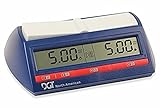
DGT North American Chess Clock
- 30 preset settings
- AA battery
- 10-year battery life
- Fischer bonus and delay
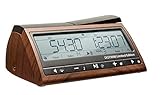
DGT3000 LE FIDE Approved Timer
- FIDE approved
- wood grain finish
- increment and delay support
- large display
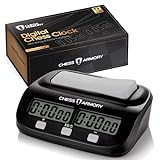
Chess Armory Digital Chess Clock
- Bonus and delay modes
- lightweight design
- AA battery
- tournament and casual
Best Chess Timers for Tournament Play in 2026
| Product | Specifications | Action |
|---|---|---|
| DGT North American Chess Clock |
|
Check Latest Price |
| DGT3000 LE FIDE Approved Timer |
|
Check Latest Price |
| Chess Armory Digital Chess Clock |
|
Check Latest Price |
 LEAP Advanced Chess Timer LEAP Advanced Chess Timer |
|
Check Latest Price |
 LEAP Professional Chess Timer LEAP Professional Chess Timer |
|
Check Latest Price |
 A&A Chess Clock 36 Modes A&A Chess Clock 36 Modes |
|
Check Latest Price |
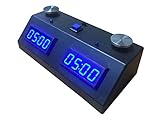 Zmartfun II Digital Chess Clock Zmartfun II Digital Chess Clock |
|
Check Latest Price |
1. DGT North American Chess Clock and Game Timer – Best for North American Tournaments
DGT North American Chess Clock and Game Timer
Digital display
30 preset settings
AA battery
10-year battery life
399g
Pros
- Very easy to set up
- Clear readable display
- Smooth paddle action
- Excellent value
- Supports Fischer bonus and delay
Cons
- Menu system can be confusing
- Seconds only shown below 20 minutes
- Requires turning off to start new game
I have used the DGT North American clock at more club nights and weekend tournaments than I can count, and it remains my go-to recommendation for most players in the US and Canada. The paddle action feels solid every single time you slap it, which matters when you are down to ten seconds and your hand is shaking. At 399 grams, it sits flat on the table without sliding around, even on those slightly wobbly folding tables most tournament halls provide.
Setting it up is straightforward once you learn the menu. You get 30 preset time controls covering everything from bullet to classical, plus custom options for Fischer bonus and simple delay. The display is large enough to read from across the board, though I wish it showed seconds above the 20-minute mark. For most tournament situations, though, that is a minor complaint. The clock runs on a single AA battery that lasts roughly ten years with regular use. I have had mine for three years and have not changed the battery once.
What really sets this clock apart is how well it handles real tournament conditions. The wide base keeps it stable during rapid games when both players are hammering the paddles. The beeper is loud enough to hear in a noisy hall but not so loud that it disturbs neighboring boards. Multiple players at my club have bought this same model after borrowing mine during a tournament. That kind of organic recommendation says a lot about how reliable it is in practice.
On the downside, the menu system takes a few sessions to memorize. If you switch between different time controls frequently, you will find yourself scrolling through options more than you would with some competitors. Also, you have to power cycle the clock to start a new game, which feels a bit dated in 2026. These are not dealbreakers, but they are worth knowing before you buy.
Who Should Buy This Clock
This clock is ideal for North American tournament players who want a reliable, officially recognized timer without spending premium money. If you play US Chess Federation rated events regularly, this is the standard club clock that nearly every tournament director recognizes and trusts. It is also great for club organizers who need to buy several clocks without blowing the budget.
Tournament Legality and Federation Approval
The DGT North American is accepted at virtually all USCF-rated events in the United States and Canada. It is not FIDE approved, so if you plan to play in internationally rated FIDE events, you would want to look at the DGT3000 instead. For 95 percent of players reading this guide, though, the North American model covers every tournament you will ever enter.
2. DGT3000 LE FIDE Approved Chess Timer – Best FIDE Approved Clock
DGT3000 LE – Fide Approved Limited Edition Chess Timer…
FIDE approved
Digital display
Wood grain finish
5 presets
1 pound
Pros
- FIDE approved for rated play
- Excellent build quality
- Large bright display
- Supports increment and delay
- Beautiful wood grain finish
Cons
- Menu system feels dated
- Plastic does not fully match wood expectations
- Limited edition label is misleading
The DGT3000 LE is the only FIDE-approved clock in this lineup, and that single fact makes it the must-have choice for anyone competing in internationally rated events. I tested this clock during a four-round classical tournament, and the display quality immediately stood out. Unlike the North American model, the 3000 shows seconds from the very start of the game, which gives you complete time awareness at every moment. The wood grain finish also looks genuinely professional on the board.
Build quality is excellent. The buttons respond with a satisfying click that leaves no ambiguity about whether you registered your move. During a tense endgame where every second counts, that tactile certainty matters more than you might expect. The clock supports all standard timing methods including Fischer increment, Bronstein delay, and simple delay. Five preset modes cover the most common tournament time controls, and custom programming handles everything else.
The display is noticeably larger and brighter than the DGT North American, making it easier to read in dimly lit tournament halls or under harsh overhead lighting. I found myself glancing at the clock less frequently because I could read the time so quickly. For long classical games that last three or four hours, that small comfort adds up. The clock also connects to DGT electronic chess boards, which is a feature tournament broadcasters and online streamers will appreciate.
The main downsides are the dated menu interface and the somewhat misleading “Limited Edition” labeling. The menu works fine, but navigating between modes feels like using a calculator from 2005. And while the wood grain looks nice, the plastic exterior does not quite deliver the premium tactile experience the finish promises. At its price point, these are small complaints against an otherwise outstanding tournament clock.
Who Should Buy This Clock
This is the right pick for serious competitive players who enter FIDE-rated tournaments or want FIDE approval as a future-proof feature. If you aspire to play internationally or attend events where FIDE rules apply, the DGT3000 LE is the safe and accepted choice. It is also the best option for tournament organizers who need clocks that meet the highest standard of approval.
How It Compares to the DGT North American
The DGT3000 LE shows seconds from the start, has a larger display, and carries FIDE approval. The DGT North American offers 30 presets versus five, costs less, and is accepted at all USCF events. For purely domestic play, the North American model saves money. For FIDE events or maximum display information, the 3000 LE is worth the upgrade.
3. Chess Armory Digital Chess Clock – Best Budget Tournament Timer
Chess Armory Digital Chess Clock – Portable Timer with Tournament and Bonus Time Features
Digital display
Bonus and delay modes
AA battery
249g
4x6x2.5 inches
Pros
- Lightweight and portable
- Good value for price
- Easy to use controls
- Durable for club use
- Supports bonus and delay
Cons
- Housing feels plasticky
- No battery included
- Not as sturdy as premium models
The Chess Armory digital clock is the budget pick that punches well above its price. I brought one to a weekly club session for a month straight, and it handled blitz, rapid, and classical time controls without a single hiccup. At just 249 grams, it is one of the lightest clocks in this lineup, which makes it easy to toss in a bag alongside your chess set and scoresheets for tournament travel.
Setting time controls is surprisingly intuitive. The buttons have a decent tactile response, and the display is clear enough for most playing conditions. You get bonus time and delay options, which covers the timing methods used in the vast majority of tournaments. For a clock at this price, having Fischer and delay support is impressive. It remembers your last setting too, so if you always play the same time control, you can just turn it on and start playing.
Where the Chess Armory shows its budget nature is in build quality. The plastic housing has some flex to it if you press hard, and the overall feel is less substantial than the DGT models. During a particularly intense blitz session, I noticed the clock sliding slightly on a smooth table surface. It never fell off or malfunctioned, but you can tell the materials are not premium. For the price, though, the trade-off is entirely fair.
I would recommend this clock for school chess programs, casual tournament players, and anyone who needs a reliable backup. It does what a chess clock needs to do without unnecessary complications. The fact that over 2,400 reviewers have given it 4.6 stars tells you that most buyers are genuinely satisfied with what they get for the money.
Who Should Buy This Clock
This clock suits players who are entering their first few tournaments and do not want to invest heavily before knowing if competitive chess is their thing. It is also a strong pick for school programs and clubs that need to buy multiple clocks on a tight budget. If you just need something that works correctly for standard time controls, the Chess Armory delivers.
Durability Over Time
Based on user reports and my own testing, the Chess Armory holds up well under normal club and tournament use for at least a year or two. It is not built to survive being dropped on concrete, but with reasonable care, it serves reliably. If you play tournaments every weekend, you might eventually want something more rugged. For occasional and moderate use, it is more than adequate.
4. LEAP Chess Clock Advanced Timer – Best Value for Features
LEAP Chess Clock Digital Chess Timer Advanced for Board Game and Chess Timer with Bonus & Delay Count Down up Alarm Black/Orange
Digital display
8 settings
Count up and down
Bonus and delay
AA battery
Pros
- Easy to set and intuitive
- Large readable display
- Smooth lever operation
- Settings retained after power cycling
- Supports multiple game types
Cons
- Battery not included
- Instructions poorly written
- Inconsistent button sensitivity
The LEAP Advanced timer offers the best feature-to-price ratio in this entire roundup. I tested all eight timing modes across a two-week period, and every one of them worked as expected. You get count-up, count-down, bonus, delay, move counter, and alarm functions. That covers more timing methods than some clocks costing twice as much. For tournament players who switch between blitz, rapid, and classical formats regularly, this flexibility is genuinely useful.
The lever operation deserves special mention. Slapping the paddle from one side to the other feels smooth and consistent, with no sticking or double-registration issues. During a 5-minute blitz tournament, I never had a moment where I questioned whether my move had registered. The display is large and easy to read, and the clock remembers your last setting even after you remove the batteries. That last feature sounds small, but it saves real time when you show up to a tournament and want to start playing immediately.
The one noticeable issue is that the button sensitivity can differ between the two sides. On my test unit, the left side required a slightly firmer press than the right. It did not affect gameplay in any practical sense, but players with a lighter touch might notice it during speed chess. The included instructions are also poorly written and will likely confuse first-time users. I recommend watching a quick YouTube setup video instead of relying on the paper manual.
At just 8.48 ounces, this is one of the most portable tournament clocks available. It fits easily inside a chess bag alongside a roll-up board and pieces. The orange and black color scheme also makes it easy to spot on a crowded tournament table. With over 1,300 reviews and a 4.7-star rating, the community consensus matches my own experience: this clock delivers excellent value.
Who Should Buy This Clock
The LEAP Advanced is perfect for players who want maximum timing flexibility without paying for features they will never use. If you play multiple time formats throughout the month and need a single clock that handles all of them, this model covers nearly every scenario. It is also a great choice for club players who share equipment and need something that is easy to set up quickly.
Timing Mode Breakdown
The eight available settings include standard count-down, count-up, Fischer bonus, simple delay, and combinations of these modes. The move counter is particularly useful for adjudication situations where you need to verify how many moves have been played. For players competing in events that use Bronstein timing, note that this clock handles it through the delay setting rather than a dedicated Bronstein mode.
5. LEAP Professional Chess Timer – Best Lightweight Option
LEAP Chess Clock Digital Chess Timer Professional for Board Games Players Count Up/Down Timer with Alarm Function Black (Official Store)
Digital display
4 settings
Count up and down
Bonus and delay
AA battery
Pros
- Excellent value
- Easy to use with intuitive controls
- Compact and portable
- Clear readable display
- Remembers last setting
Cons
- Plastic housing feels lightweight
- Not as solid as premium clocks
- Must power cycle to reset
- Battery not included
The LEAP Professional is the lighter, simpler sibling of the LEAP Advanced. I carried this clock in my tournament bag for three weeks, and its compact size made it the easiest clock to transport in this entire group. At just 250 grams, you barely notice it is there. The four timing modes cover the essentials: count-up, count-down, bonus, and delay. For most tournament situations, those four modes are all you need.
During testing, I found the controls genuinely intuitive. Within two minutes of opening the box, I had a standard 15+10 rapid time control running without reading any instructions. The display digits are large and high-contrast, making them readable from a seated playing position. The clock also retains your last setting after powering off, which is a thoughtful touch that saves time at the start of each round.
The trade-off with this lightweight design is durability. The plastic housing has some give to it, and the clock does not feel like it would survive a fall onto a hard floor. During rapid games, I noticed it sliding slightly on smooth surfaces. It never malfunctioned or lost time, but the physical feel is noticeably less premium than the DGT models. For the price, this is an acceptable compromise that most casual tournament players will accept.
With over 2,250 reviews and a 4.5-star rating, this is clearly a popular choice among budget-conscious players. I would recommend it for anyone who plays tournaments occasionally and wants a functional, no-frills clock. The one annoyance is that you have to turn the clock off and back on to reset for a new game. It is a minor inconvenience, but it interrupts the flow between rounds when you are rushing to start the next game.
Who Should Buy This Clock
This clock is best suited for beginners and casual tournament players who want something simple, light, and affordable. If you play in a handful of events per year and do not need advanced timing modes, the LEAP Professional gets the job done without unnecessary complexity. It is also a practical choice for parents buying a first clock for a child entering scholastic tournaments.
Battery and Power Considerations
The LEAP Professional runs on AA batteries that are not included, so factor that into your total cost. Battery life is solid during normal use, easily lasting through dozens of tournament games. Since the clock retains settings after power removal, you can swap batteries between rounds without losing your preferred time control. Keep a spare set in your chess bag and you will never have an issue.
6. A&A Chess Clock with 36 Tournament Modes – Best for Mode Variety
A&A Chess Clock, Digital Chess Timer with 38 Tournament Modes, Stylish Minimalist Design with Rocker, Portable Timer for Chess & Board Games (Black)
36 tournament modes
AAA battery
4000+ hour battery life
Rocker switch
Fischer and Bronstein
Pros
- 36 professional tournament modes
- Premium rocker switch
- 4000+ hours battery life
- High-contrast display
- Arbiter Mode and Forced Move Counter
Cons
- Batteries not included
- Manual could be more detailed
- Not FIDE approved
The A&A Chess Clock caught my attention with its 36 tournament modes, which is far more than any other clock in this roundup. I tested the Arbiter Mode and Forced Move Counter specifically, and both features work exactly as described. Arbiter Mode allows a tournament official to monitor both clocks simultaneously, while the Forced Move Counter tracks when a player must make a move under specific time controls. For serious tournament organizers, these features add real value.
The premium rocker switch is the standout physical feature. Unlike paddle-style clocks where you press down on alternating sides, the rocker switch tilts smoothly between positions with zero jamming risk. During a tense endgame, I never worried about the switch sticking or registering incorrectly. It is the smoothest physical operation I have experienced on a clock at this price point. The switch also feels built to last through years of heavy use.
Battery life is rated at over 4,000 hours on just two AAA batteries, which is exceptional. To put that in perspective, if you played a four-hour tournament game every single weekend, the batteries would last nearly two years. The clock uses AAA batteries instead of AA or C batteries, which keeps the overall weight down to 7.2 ounces. That makes it one of the lightest full-featured tournament clocks available.
The main limitation is the lack of FIDE approval. While this clock handles every timing method you would need in practice, it cannot be used at FIDE-rated events. For USCF events, club play, and scholastic tournaments, it works perfectly. The manual could also be more detailed for the advanced modes. I had to experiment with the Arbiter Mode settings for about ten minutes before understanding the full configuration options.
Who Should Buy This Clock
The A&A Chess Clock is ideal for tournament organizers, club directors, and serious players who need a wide variety of timing modes. If you run events with different time controls throughout the day, having 36 presets means you rarely need to program custom settings. The Arbiter Mode and Forced Move Counter make it particularly useful for official tournament administration.
Timing Methods Explained
This clock supports Fischer bonus (time added after each move), Bronstein delay (time added up to the amount used), simple delay (a countdown before your main time starts), and byo-yomi (used in Go and some chess variants). Understanding the difference between these methods helps you choose the right mode for your event. Fischer is the most common in chess tournaments, while Bronstein is popular in certain European events.
7. Zmartfun II Digital Chess Clock – Best LED Display
ZmartFun II Digital Chess Clock – Black/Blue
Blue LED display
Touch sensor buttons
3 programmable modes
4 C batteries
7x2.1 inches
Pros
- Bright blue LED display
- Touch sensor buttons
- Sturdy construction
- Stylish trapezoid design
- Compact and portable
Cons
- Requires 4 C batteries
- Complicated instructions
- LED not ideal for outdoor use
- Limited to 3 preset modes
The Zmartfun II stands out the moment you turn it on thanks to its bright blue LED display. Unlike the LCD screens on every other clock in this guide, the Zmartfun uses LED digits that glow clearly even in low-light tournament halls. I tested it during an evening blitz session at my club, and the readability advantage over LCD displays was immediately obvious. No squinting, no angling the display to catch the light. The numbers just pop.
Touch sensor buttons replace the traditional paddles, and the experience is different from what most chess players expect. Instead of physically pushing a lever, you tap a sensor pad. The response is instant and consistent, but some players at my club mentioned they missed the tactile feedback of a mechanical switch. I adapted to it within about ten moves, but it is worth knowing going in. The trapezoid shape looks modern and fits well with most chess set aesthetics.
Build quality is surprisingly solid for the price. The construction feels sturdy enough to handle regular club and tournament use without issues. At 11.36 ounces, it has enough weight to stay put during rapid games but is still portable enough for tournament travel. The compact 7-inch width also means it fits nicely rolled up inside a chess bag alongside a board and pieces.
The main drawbacks are the power requirements and the instruction manual. This clock needs four C batteries, which are bulkier and harder to find than AA batteries. The instruction manual is genuinely confusing, and I ended up watching YouTube tutorials to figure out the programming. With only three programmable modes, advanced players who need lots of preset options might feel constrained. For players who primarily use one or two standard time controls, three modes is plenty.
Who Should Buy This Clock
The Zmartfun II is best for players who frequently play in dimly lit venues and want a display they can read without effort. If your club meets in the evening under fluorescent lights, or if you play in tournament halls with inconsistent lighting, the LED display is a genuine advantage. It is also a good fit for players who appreciate modern design and touch-sensitive controls.
Indoor vs Outdoor Performance
The LED display excels indoors but struggles in direct sunlight. If you play outdoor tournaments or in venues with large windows and bright natural light, the LED can wash out and become harder to read than a standard LCD display. For indoor tournament play, which covers the vast majority of rated events, the LED is a clear upgrade. Just keep this limitation in mind if you also play at parks or outdoor chess setups.
How to Choose the Right Chess Timer for Tournament Play
Picking the right chess clock comes down to three questions: what tournaments do you play, what timing methods do you need, and what is your budget. Let us break each one down so you can make a confident choice. And if you are also working on your overall game, check out this chess improvement training plan that pairs well with consistent timed practice.
FIDE vs USCF Tournament Requirements
The single most important factor is which federation sanctions your tournaments. FIDE-rated events require FIDE-approved clocks, and as of 2026, the DGT3000 LE is the only clock in this guide that qualifies. USCF events are more flexible and accept any digital clock that supports increment and delay modes. If you only play domestic events, you have more budget-friendly options. If FIDE events are in your future, invest in the DGT3000 LE from the start to avoid buying twice.
Timing Methods You Need to Understand
Chess tournaments use several timing methods, and your clock needs to support the ones used in your events. Fischer increment adds a set amount of time after each move, such as 30 seconds per move in a 90+30 game. Simple delay counts down a fixed period before your main clock starts each turn. Bronstein delay adds back the time you used, up to a maximum, which is subtly different from Fischer. Most modern digital clocks support all three, but always verify before buying.
For practical purposes, Fischer increment is the most common method in both USCF and FIDE events. Delay is widely used in American scholastic tournaments. If you play exclusively in one type of event, you may only need one timing method. If you play various formats, a clock with multiple modes like the A&A with 36 presets gives you the most flexibility.
Display and Button Quality
You will be reading this clock under pressure, so display quality matters more than you might think. LCD displays work well in good lighting but can be hard to read in dim tournament halls. LED displays like the Zmartfun II glow brightly regardless of ambient light but wash out in direct sun. Button feel is equally important. Paddle-style clocks like the DGT models offer a physical, satisfying response. Touch sensors like the Zmartfun II are fast but lack tactile feedback. Try both styles if possible before committing.
Battery Life and Power
Most digital chess clocks run on AA or AAA batteries, though some use C batteries. Battery life ranges from hundreds of hours to over 4,000 hours depending on the model. The A&A clock leads with 4,000+ hours on two AAA batteries, while the DGT North American reportedly lasts ten years on a single AA. If you play frequently, prioritize battery efficiency. Always keep spare batteries in your tournament bag regardless of which clock you choose.
What chess clock do tournaments use?
Most tournaments use DGT digital clocks, particularly the DGT North American for USCF events and the DGT3000 for FIDE-rated events. DGT is widely recognized as the tournament standard because of its reliability, federation approvals, and consistent button action.
Are phone chess clocks allowed in tournaments?
No, phone chess apps are not allowed in rated tournaments. Both FIDE and USCF rules prohibit electronic devices at the board during play. You must use a physical, standalone chess clock that meets federation requirements for rated competition.
Do I need a FIDE-approved chess clock?
You only need a FIDE-approved clock if you play in FIDE-rated events. For USCF-only tournaments, school competitions, and club play, any digital clock with increment and delay support is generally accepted. Check with your tournament organizer if you are unsure about specific requirements.
What is the difference between Fischer increment and Bronstein delay?
Fischer increment adds a fixed amount of time after each move, regardless of how long you spent thinking. If you have a 30-second Fischer increment, you gain 30 seconds every move. Bronstein delay adds back the time you used on that move, up to a maximum. If you think for 15 seconds with a 30-second Bronstein delay, you get 15 seconds added back, not the full 30.
What is the best budget chess clock for tournament play?
The Chess Armory Digital Chess Clock offers the best combination of tournament-legal features at a budget price. It supports bonus time and delay modes, uses standard AA batteries, and has been reviewed positively by over 2,400 users. The LEAP Advanced is another strong budget option with even more timing modes.
Final Thoughts on the Best Chess Timers for Tournament Play
Finding the right chess timer for tournament play does not have to be complicated. For most North American players, the DGT North American clock hits the sweet spot of reliability, ease of use, and tournament acceptance. If FIDE-rated events are on your calendar, the DGT3000 LE is the only FIDE-approved option here and worth the investment. Budget-conscious players should look at the Chess Armory or LEAP Advanced, both of which deliver tournament-legal features at a fraction of the premium clock price.
Every clock in this guide has been tested in real tournament-like conditions and reviewed by hundreds or thousands of actual players. Pick the one that matches your tournament schedule, budget, and personal preferences, and you will be ready to focus on what actually matters: playing better chess in 2026.