
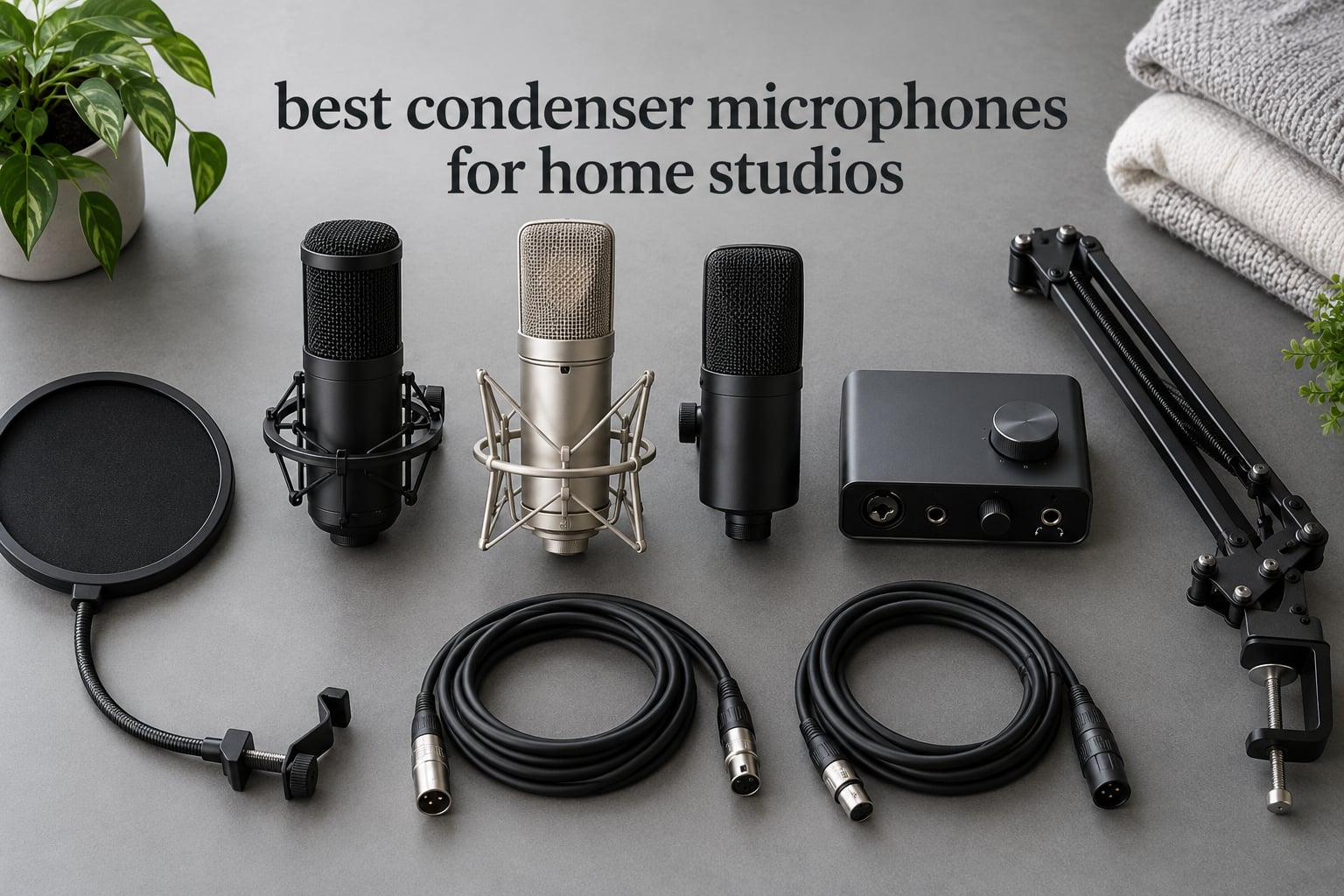
The single most common thing I hear from people setting up a home studio is that they bought a microphone and the recordings still sound like they were made in a bathroom. That is almost never the microphone’s fault. A condenser is extraordinarily sensitive to its surroundings, so it records the room as faithfully as it records you.
That honesty is also why every serious vocal on a professional record was captured with a large diaphragm condenser. The diaphragm picks up the air, the consonants and the breath that a dynamic mic throws away. Buy one, treat the room a little, and the difference is immediate.
This guide covers the best condenser microphones for home studios in 2026 across twelve picks, from USB models that need nothing but a laptop to XLR condensers that pair with an audio interface. We ranked them on self-noise, polar pattern, what actually ships in the box, connector type and how each one behaves in a room that has not been treated.
A note on scope before we start. Every mic below is a condenser, and every microphone-only product listed excludes the interface, cable and stand unless the description says otherwise. We have also put together a wider look at condenser microphones for recording that covers studio and live contexts, and if your real goal is singing rather than tracking, our picks for the best karaoke microphones for home are a separate category.
Table of Contents
What Is a Condenser Microphone?
A condenser microphone converts sound into an electrical signal using a charged capacitor rather than a moving coil. That design makes it far more sensitive and detailed than a dynamic microphone, which is exactly why studio vocals, acoustic guitar and piano are captured with condensers, and why a home studio usually needs one before anything else.
The trade is sensitivity in both directions. A condenser captures nuance beautifully and also captures your fridge, your laptop fan and the neighbour’s television. It also needs power, which is why XLR condensers require 48V phantom power from an interface.
How We Picked
We compared all twelve across six criteria: published self-noise and signal-to-noise figures, polar pattern options, what is genuinely included in the box, connector type and power requirements, maximum SPL and switching features, and how each behaves in an untreated bedroom. Ratings and review counts came from the product listings, and every pick has thousands of reviews behind it.
Top 3 Condenser Mics for Home Studios in 2026

All 12 Condenser Microphones Compared Side by Side
Here is the full lineup in one place, with the headline specs that actually change a buying decision. If you want the short version, the 2026 shortlist above is the fastest route.
| Product | Specifications | Action |
|---|---|---|
| Logitech Blue Yeti |
|
Check Latest Price |
 FIFINE T669 FIFINE T669 |
|
Check Latest Price |
 MAONO A04 Gen2 MAONO A04 Gen2 |
|
Check Latest Price |
 Audio-Technica AT2020 Audio-Technica AT2020 |
|
Check Latest Price |
 FIFINE K678 FIFINE K678 |
|
Check Latest Price |
 AKG P120 AKG P120 |
|
Check Latest Price |
 TONOR TC20 TONOR TC20 |
|
Check Latest Price |
 Audio-Technica AT2035 Audio-Technica AT2035 |
|
Check Latest Price |
 Rode NT1 Signature Rode NT1 Signature |
|
Check Latest Price |
 MXL 990 MXL 990 |
|
Check Latest Price |
 Lewitt LCT 440 PURE Lewitt LCT 440 PURE |
|
Check Latest Price |
| Rode NT-USB Mini |
|
Check Latest Price |
1. Logitech Blue Yeti – Best All-Round USB Condenser
Logitech Creators Blue Yeti USB Microphone for PC, Mac, Gaming, Recording, Streaming, Podcasting, Studio and Computer Condenser Mic with Blue VO!CE effects, 4 Pickup Patterns, Plug and Play – Blackout
USB multipattern
20 Hz - 20 kHz
120 dB max SPL
Metal body
Pros
- No interface required
- Four pickup patterns including stereo
- Zero-latency headphone output
- Metal build
- Blue VO!CE software
Cons
- Bulky on a desktop stand
- Picks up untreated room noise
- Mini-USB port rather than USB-C
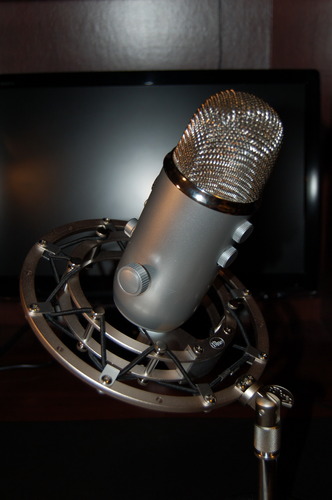
I have put the Yeti on more first-time studio desks than any other microphone, and it keeps earning its place. You plug one cable into a laptop, choose a pattern with a dial on the body, and you are recording. There is no interface, no gain staging and no driver to install.
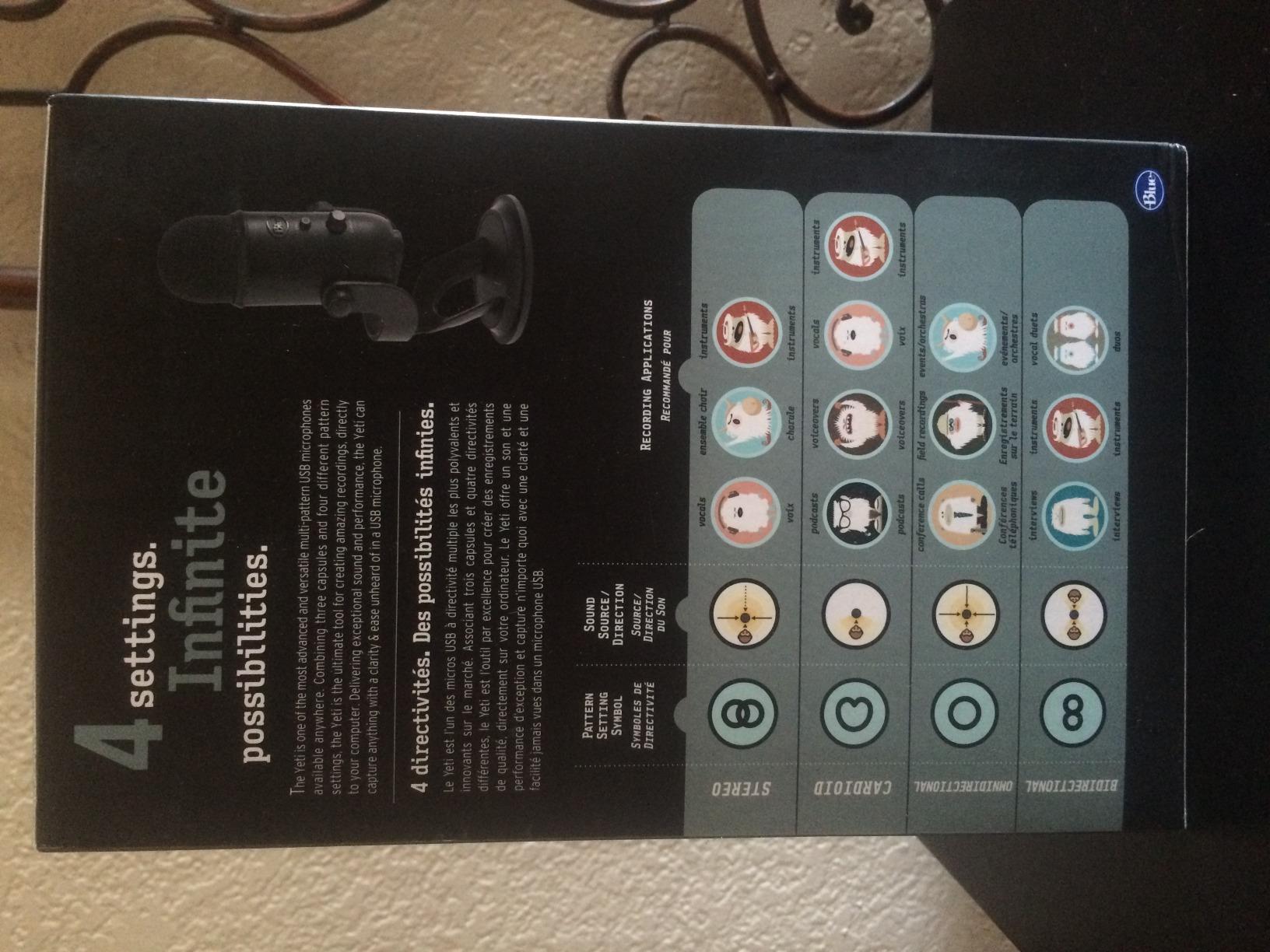
The custom three-capsule array is what separates it from cheaper USB mics. Cardioid, omnidirectional, bidirectional and stereo are all selectable, so the same microphone handles a solo vocal, a two-person podcast and a stereo room capture without any hardware swaps.
Signal-to-noise sits at 100 and the frequency range runs 20 Hz to 20 kHz, which is more than enough headroom for spoken word and more than passable for music. A headphone jack on the body gives you zero-latency monitoring, so you hear yourself without the delay that makes USB mics frustrating to sing to.
Where it struggles is size and sensitivity. At 3.5 pounds and nearly 12 inches tall, it dominates a desk, and the included stand is a desktop base rather than a boom arm, so the capsule sits close to your desk surface where it picks up every keystroke and chair movement. A separate arm is the first upgrade most owners make.
Who the Blue Yeti suits
Podcasters, streamers and first-time singers who want pattern switching and monitoring without buying anything else. If you are recording a two-host show and then switching to a solo vocal session, the pattern selector is worth more than any specification on this list.
It also works as a stereo pair capture, which makes it a reasonable room and ambience mic. Reviewers consistently describe the broadcast clarity as the standout, and the volume of owner feedback at this level is a genuine comfort for a first purchase.
Where the Blue Yeti falls short
It is a sensitive condenser in an untreated room, so background noise that a dynamic would ignore becomes obvious in the recording. The Bluetooth-era mini-USB port is a small annoyance on newer machines that lack the older connector.
Plosives are also unhandled; there is no pop filter in the box and no shock mount. For a microphone aimed at first-time buyers, both are worth adding before you record a full track. We cover wireless alternatives in our wireless microphone guide if you need to move around while you sing.
2. FIFINE T669 – Best All-in-One Studio Kit
FIFINE T669 Studio Condenser USB Microphone for Recording Podcasting
USB cardioid
20Hz-20KHz
All-steel boom arm included
Double pop filter
Pros
- Complete kit with boom arm and pop filter
- Warm clear vocal tone
- Stable steel arm
- No drivers required
- Cardioid rejects outside noise
Cons
- No dedicated mute button
- Pop filter grip is weak
- C-clamp slips on rounded desks
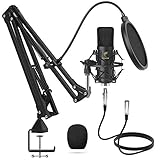
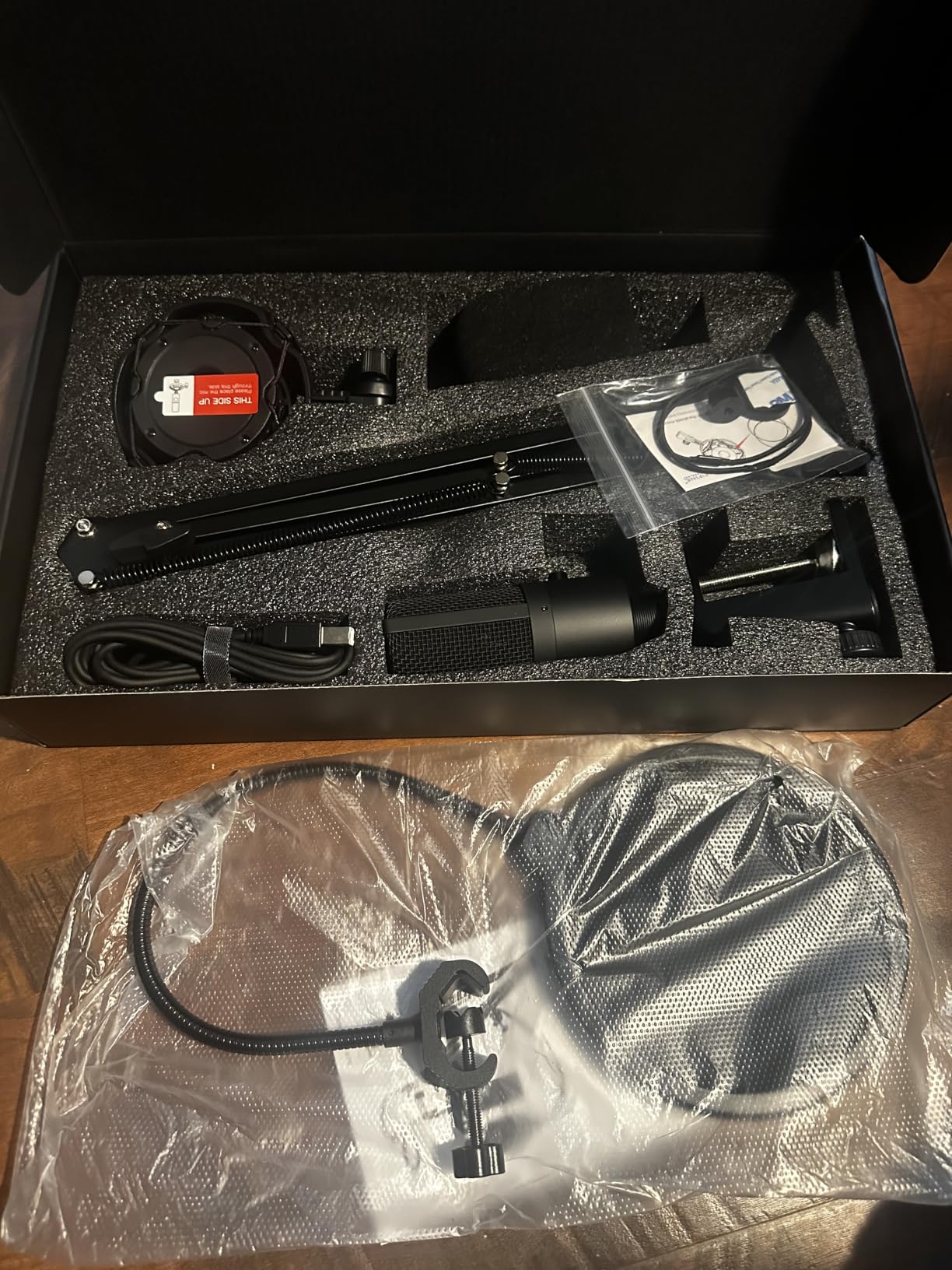
The T669 answers a question most roundups ignore: what does a complete setup actually cost? Here the microphone, an all-steel scissor boom arm, a double pop filter, a foam windscreen, a C-clamp and a detachable 8.2 foot USB cable are all in the box.
That matters because a USB microphone at this level usually arrives as a bare capsule on a plastic base. Adding an arm and a pop filter separately is where first-time buyers quietly double their costs. The T669’s cardioid capsule runs 20Hz to 20KHz with a 78 dB signal-to-noise ratio, which produces a warm, clear vocal that reviewers regularly compare favourably against laptop and headset microphones.
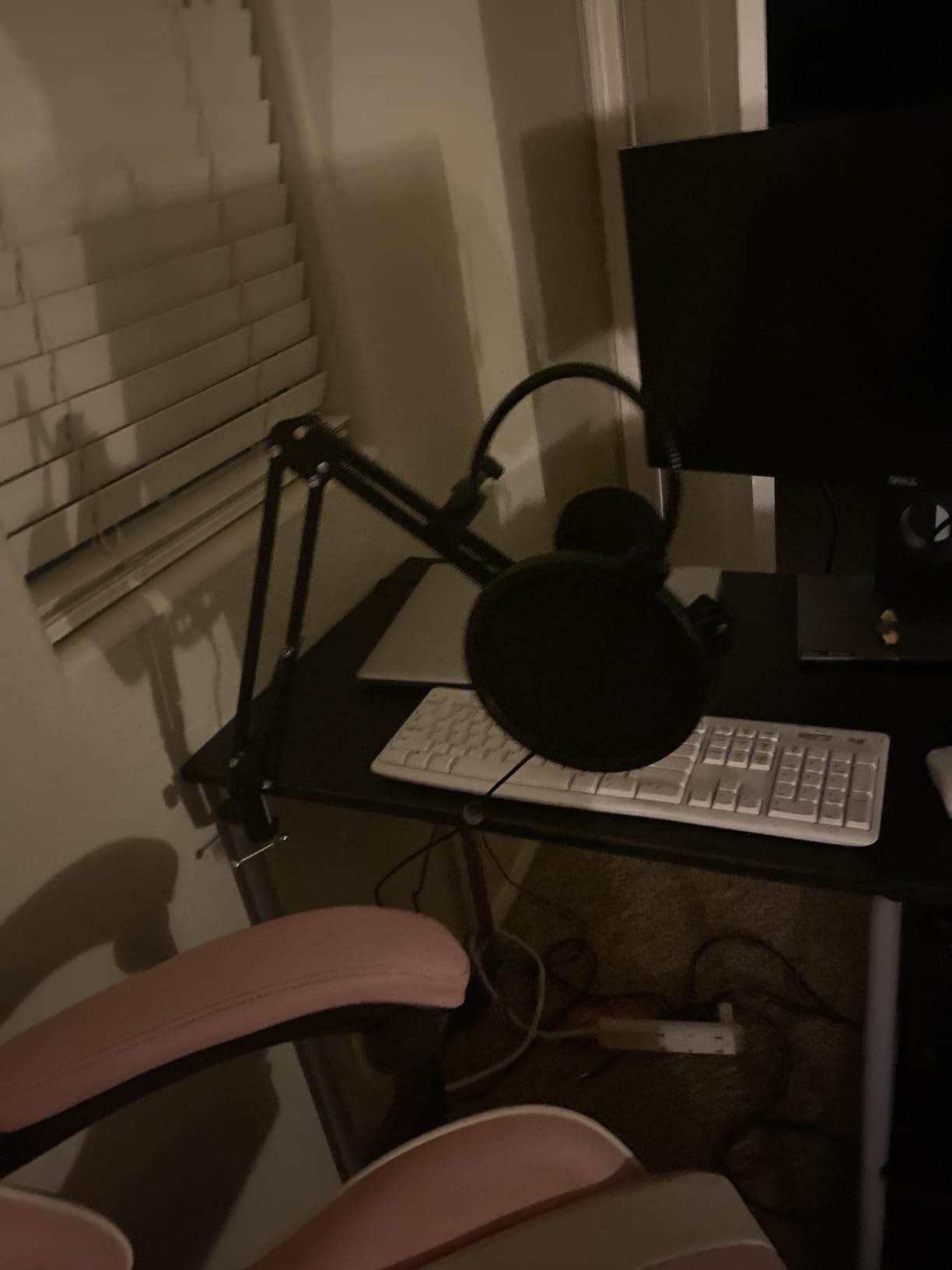
The arm is the part that separates this from a typical bundle. It is steel rather than the thin plastic arms on cheaper kits, it moves through 180 degrees vertically and 135 degrees horizontally, and it holds position without sagging. For a home studio, that stability is the difference between a usable setup and one you constantly re-adjust.
The gain knob on the body is the only level control, and it doubles as the on/off switch. There is no dedicated mute, which matters if you stream or co-host and want a hard cut between talking and silence.
Who the FIFINE T669 suits
Anyone starting from absolute zero who wants a vocal microphone, a mounting solution and plosive control in a single purchase. Reviewers repeatedly note that the accessory bundle alone accounts for most of the value, and that the tone beats what they were using before.
It is also a good streaming and podcasting mic, because the cardioid pattern does cut down on delivery interruptions and pets. FIFINE’s support is frequently praised for replacing parts after the fact rather than issuing refunds.
Where the FIFINE T669 falls short
Two physical details catch people out. The pop filter attaches with a grip that reviewers describe as weak and prone to slipping, and the C-clamp is shaped for square-edged desks, so it slides on a rounded table. Both are fixable with a different mount.
The cardioid sensitivity still means untreated rooms come through, and the missing mute button is a genuine inconvenience for live streaming work. It is a speaking and singing microphone, not a studio tool for detailed acoustic instrument recording.
3. MAONO A04 Gen2 – Best for USB and XLR Flexibility
MAONO A04 Gen2 XLR/USB Condenser Microphone Kit for PC Podcast Recording
XLR and USB
Cardioid
192kHz/24-bit USB mode
200 ohm impedance
Pros
- Dual USB and XLR connectivity
- Full accessory kit
- Software gain and EQ in USB mode
- Metal shock mount and arm
- Cardioid plus software noise reduction
Cons
- Software controls are USB only
- No XLR cable in the box
- Needs 48V phantom power for XLR
- Not compatible with Xbox
Most people who buy a USB microphone eventually buy an XLR microphone. The MAONO A04 Gen2 is one of the few that does both in a single body, which makes it the least painful path from a laptop setup to a proper interface setup.
In USB mode it captures at 192kHz and 24-bit with no interface, and the MAONO Link software gives you gain, EQ presets, compression and noise reduction. In XLR mode the same capsule goes straight into your interface at 200 ohm impedance with a cardioid pattern and a 30Hz to 16kHz response.
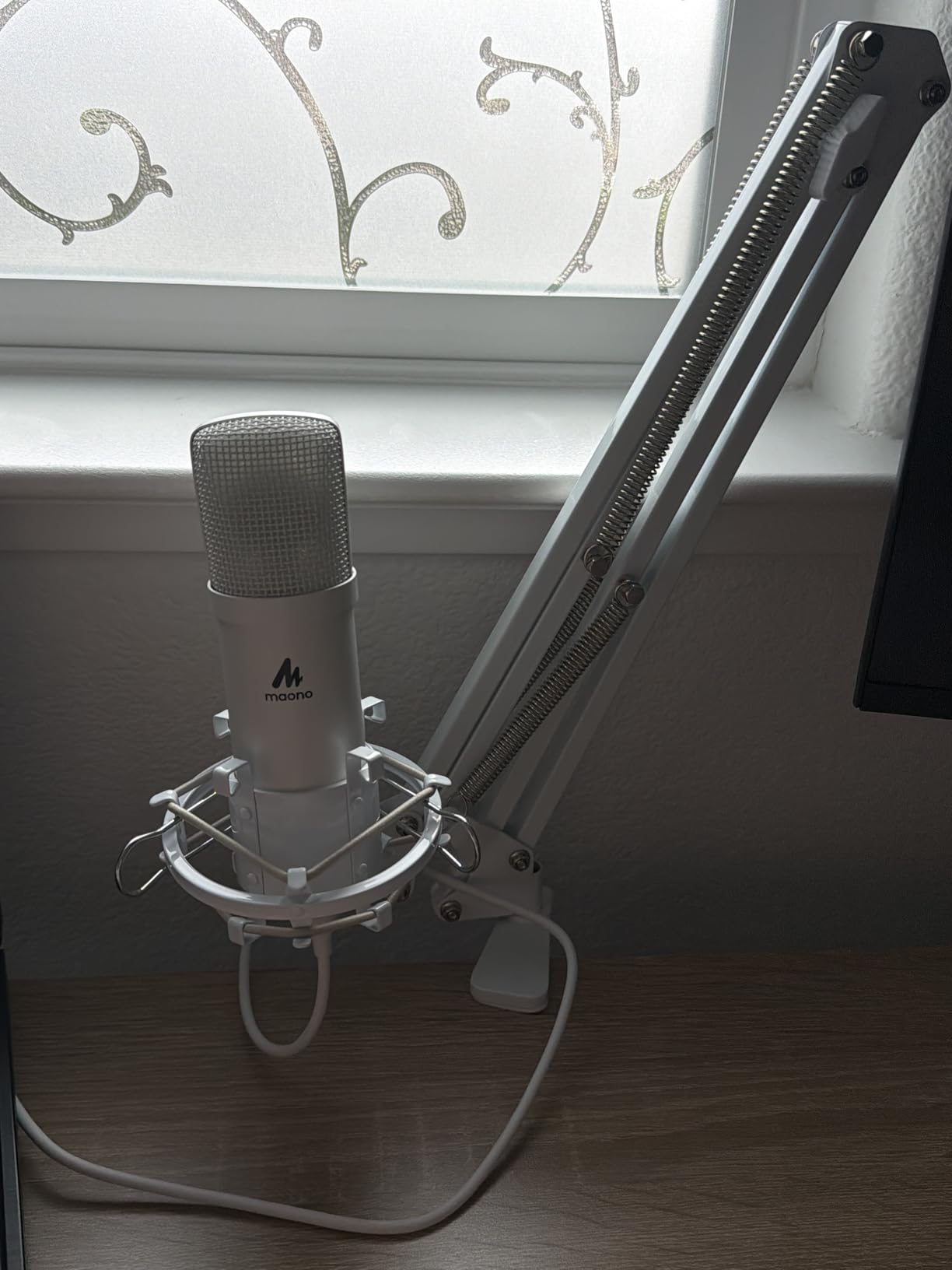
The kit is the quiet strength here. A metal shock mount, an adjustable scissor arm, a desk clamp, a pop filter and a foam windscreen are all included, so the only thing you will still need for XLR work is a cable.
Reviewers describe the character as warm and silky, which works well for voiceover, podcasting and streaming. The cardioid pattern combined with the software noise reduction is doing real work in a typical home environment, and that is where this mic separates from bare-capsule USB options.
Who the MAONO A04 Gen2 suits
Beginners who want to start USB this week and move to an interface later without replacing the microphone. If you are not sure which workflow suits your room, buying a dual-connector mic removes that decision entirely.
It is also a good fit for voice work specifically. Podcasters and streamers who are closer to a talk show than a record label get the most from the software tuning and the bundled arm.
Where the MAONO A04 Gen2 falls short
The software controls are USB only. In XLR mode the microphone is a plain cardioid condenser and everything has to be done in your audio software, so the software layer is not a reason to buy this over a plain XLR model.
Two honest gaps: the XLR cable is not included, and a 70 dB signal-to-noise ratio is modest next to the large diaphragm condensers further down this list. It is not a microphone for quiet-room detail work on acoustic instruments.
4. Audio-Technica AT2020 – Best for Vocals on a Budget
Audio-Technica AT2020 Cardioid Condenser Studio XLR Microphone, Ideal for Project/Home Studio Applications, Black
XLR cardioid
Self-noise 20 dB
37 dB sensitivity
48V phantom power
Pros
- Consistent sound over many years
- Handles loud sources without distortion
- Cardioid isolates the voice
- Durable metal build
- Strong value at this tier
Cons
- Needs 48V phantom power and an interface
- No XLR cable included
- Self-noise is high for a condenser
- Sensitive to plosives
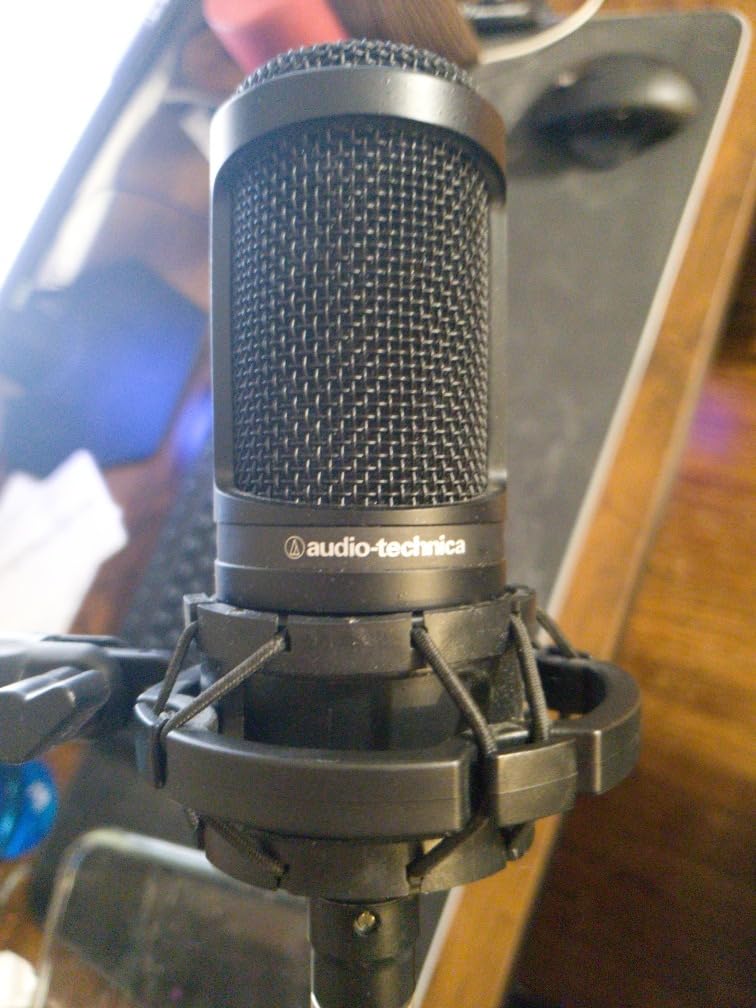
The AT2020 is the microphone I recommend to anyone who wants to record vocals rather than talk. It is a side-address large diaphragm cardioid condenser with an XLR output, a custom low-mass diaphragm and a 37 dB sensitivity, and it has been a fixture of project and home studios for years.
The custom-engineered low-mass diaphragm extends both frequency response and transient response, which is why vocals recorded with it keep their consonants and their attack. Owners report a decade of unchanged sound quality, which is the most useful thing you can say about a microphone you will keep for a long time.
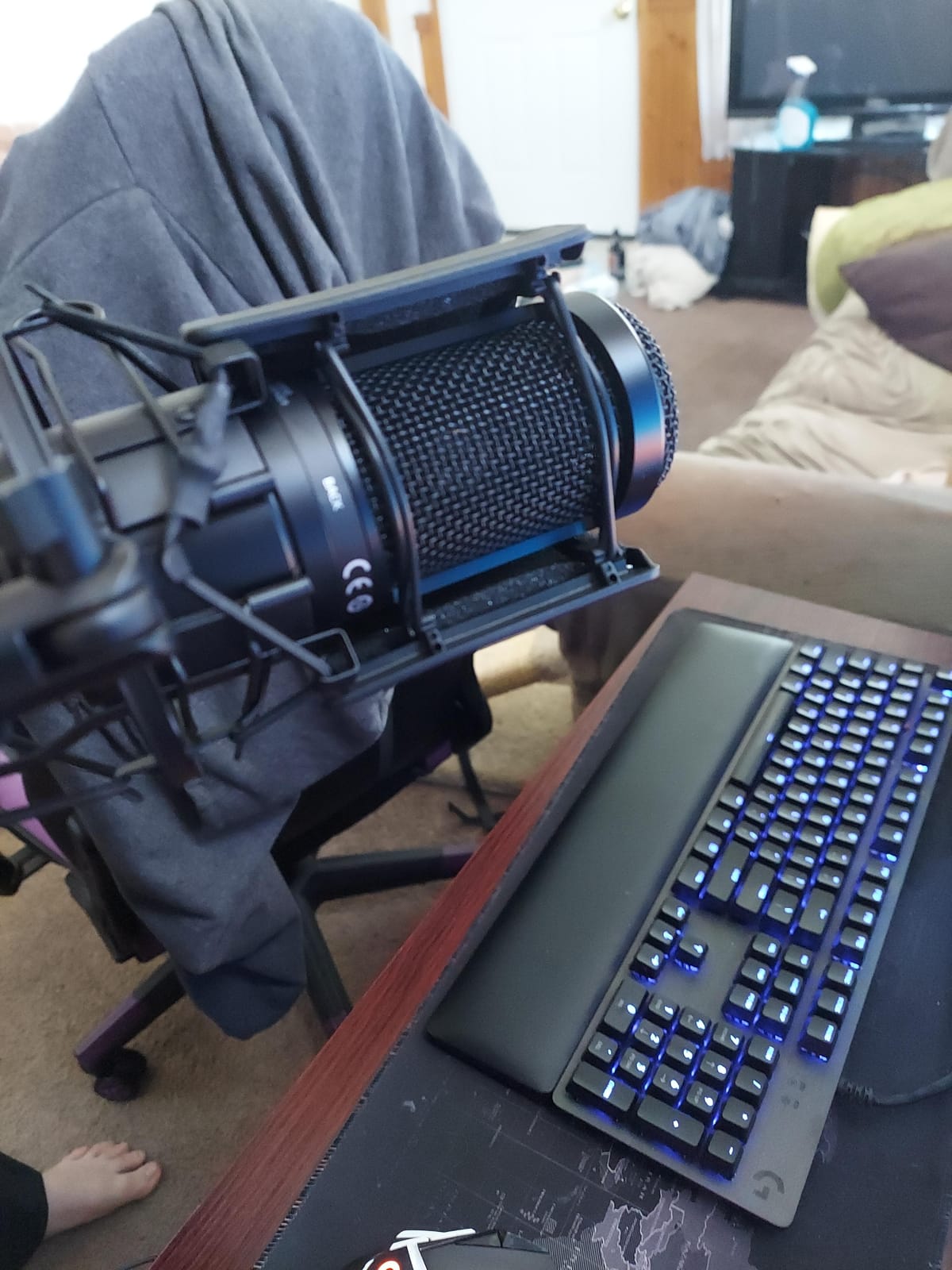
Maximum SPL handling is a genuine strength. You can point it at a snare top, a guitar amp or an acoustic without reaching for a pad, which no other microphone in this list at this tier manages. The cardioid pattern reduces side and rear pickup, so it does a reasonable job of keeping room noise down even in a semi-treated space.
The catch is on the spec sheet. Self-noise is listed at 20 dB, which is high for a condenser and means the microphone contributes more of its own hiss than the models further down. In a genuinely quiet room at sensible gain that is manageable, but it is the reason a quiet bedroom is not a perfect environment for it.
Who the AT2020 suits
Singer-songwriters and producers who want a proper vocal chain without spending heavily. It is consistently described as the best value studio condenser at its tier, and reviewers frequently compare it favourably to models costing two or three times more.
It is a good first XLR microphone because there is nothing fussy about it. Cardioid pattern, no switches to mis-set, no pattern menu, and enough headroom for loud sources. For a second microphone later, nothing here limits it.
Where the AT2020 falls short
It is a microphone only. No cable, no stand, no interface and no pop filter, so the working cost of the setup is higher than any of the USB kits above. Budget for an interface with real gain and a pop filter before the first session.
Plosives and sibilance are unhandled at close range, and the cardioid sensitivity means an untreated room shows up in the recording. Owners also flag that it picks up ambient room noise easily if gains are pushed too high, so proper gain staging is more important here than with the low-self-noise models.
5. FIFINE K678 – Best Budget USB Mic for Talking
FIFINE K678 USB Podcast Microphone for Recording Streaming
USB cardioid
40-20kHz
75 dB signal-to-noise
Die-cast zinc stand
Pros
- Clear voice capture with good rejection
- Mute button with LED plus gain and headphone knobs
- All-metal body
- Zero-latency monitoring
- Very low cost
Cons
- USB port at the base blocks boom arms
- Rear knobs are hard to adjust precisely
- Needs close placement around 6-8 inches
- Tilt has some play
The K678 is the pick if your budget is tight and the goal is clean spoken word. The cardioid pattern rejects background sound effectively for the money, the 40Hz to 20kHz response is more than adequate for voice, and the 75 dB signal-to-noise ratio is respectable at this cost.
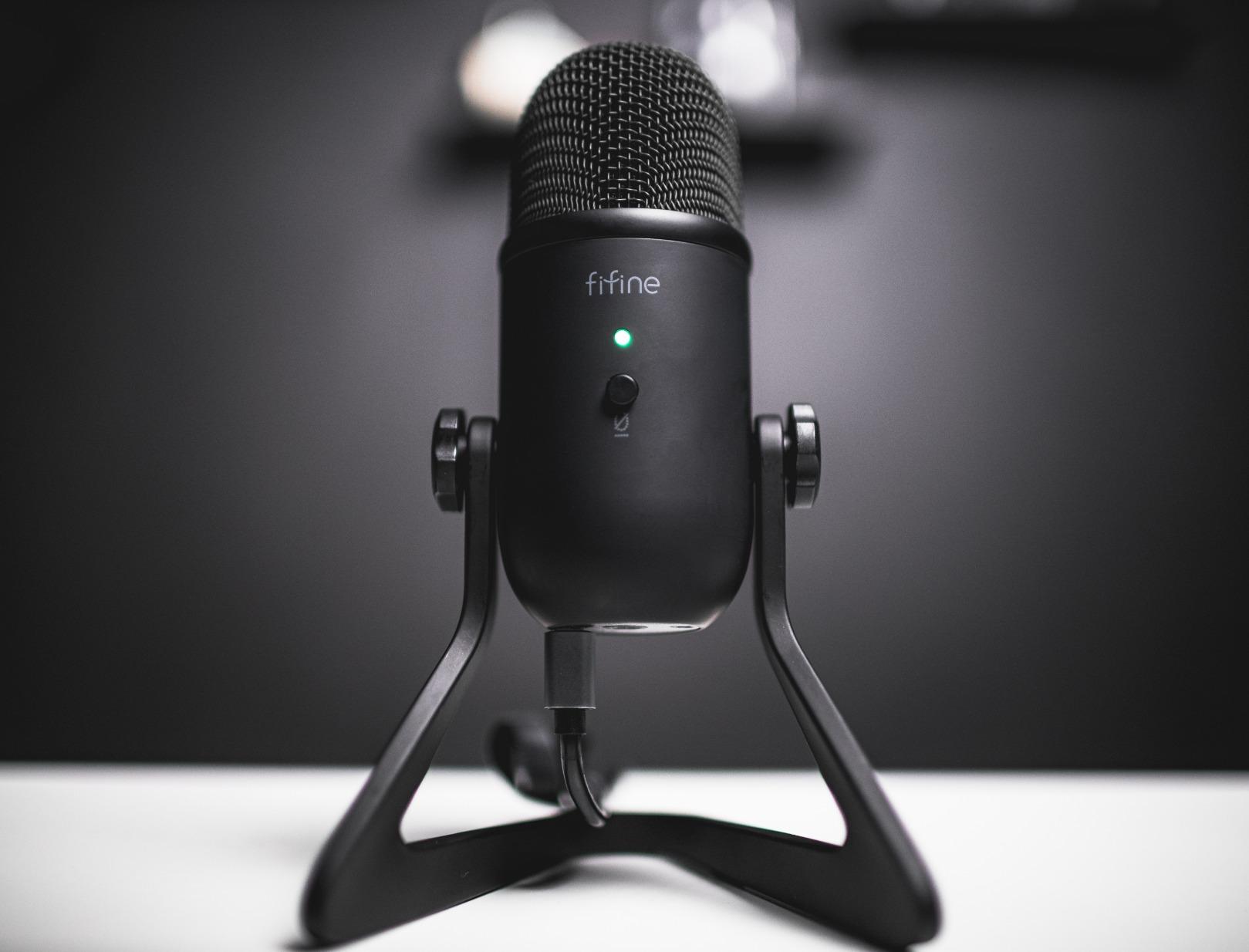
Control is unusually good for a budget USB microphone. There is a front mute button with a red and green LED status indicator, a rear mic gain knob and a separate headphone volume knob, plus a 3.5mm headphone output with zero-latency direct monitoring that also works as a convenient sound card.
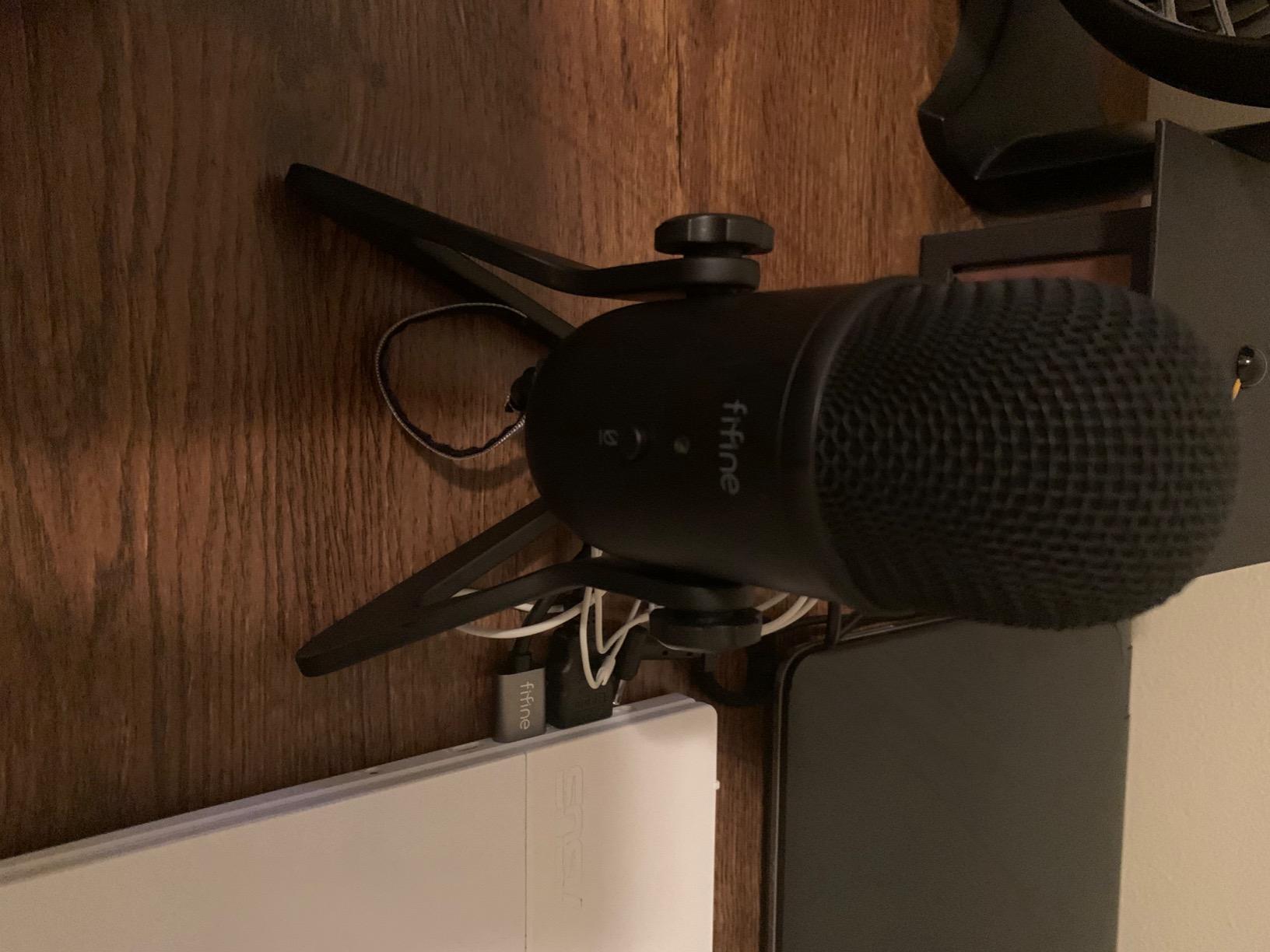
The build is a die-cast zinc desktop stand and an all-metal body, which is heavier and more stable than the plastic stands on microphones costing barely more. A 5/8 to 3/8 thread adapter is included, and the 6.56 foot USB cable has a double magnet ring to reduce electronic interference.
It is the least expensive route into a condenser that still sounds like a condenser rather than a webcam. Reviewers commonly frame it as the value pick against the best-known USB models, and for voiceover, podcasting and call quality that comparison holds up.
Who the FIFINE K678 suits
Podcasters, streamers and voice artists who need a reliable talking microphone without an interface. If you are setting up a home studio for narration, commentary or gaming voice chat, this covers the whole requirement in one device.
The mute button is the detail that wins over most rivals at this level. It has a clear physical click and an LED you can read from across a desk, which is exactly what you want during a live stream rather than a software hotkey.
Where the FIFINE K678 falls short
The USB port is mounted at the base of the stand, which means you cannot put the microphone on a boom arm even with the thread adapter. That fixes the microphone at desk height, and desk height is where keyboard noise lives.
The rear gain and headphone knobs are also smooth enough to be hard to set precisely, and the tilt adjustment has some play even fully tightened. Placement matters here: reviewers find it works best within roughly 6 to 8 inches of your mouth. It is also not compatible with Xbox, phones or iPads.
6. AKG P120 – Best for Loud Sources and Drums
AKG Pro Audio P120 – Affordable 2/3-Inch Diaphragm Condenser Microphone for Clear Vocals & Instruments. Studio Recording or Live. XLR Connector. Black
XLR cardioid
19 dB-A self-noise
-20 dB pad
150 dB max SPL
Pros
- Clear crisp vocal capture
- Pad and bass cut switches at this price
- Handles 150 dB SPL
- Metal construction
- Owners compare it to pricier mics
Cons
- Needs 48V phantom power and an interface
- Can clip with loud singers
- Brighter voices suit it better
- Microphone only
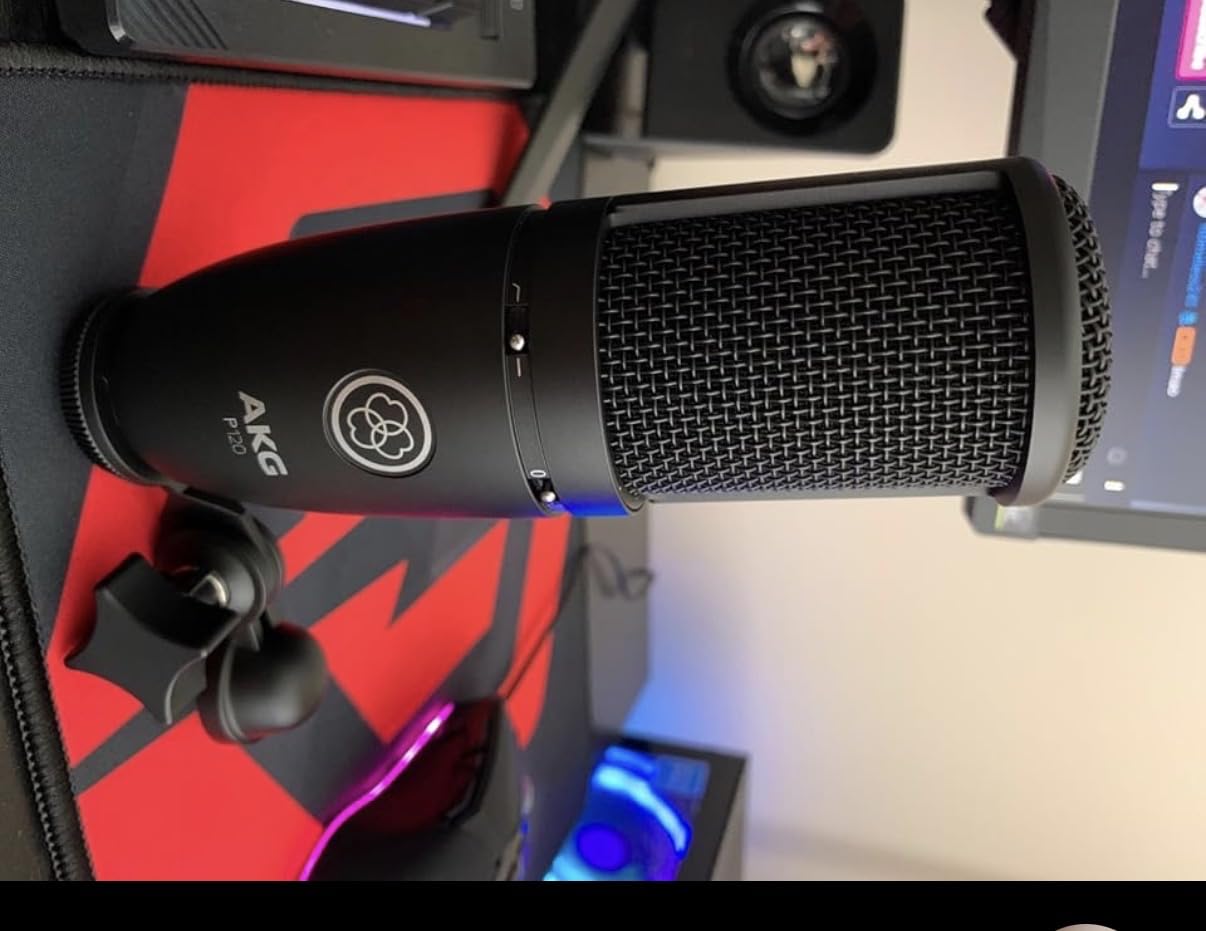
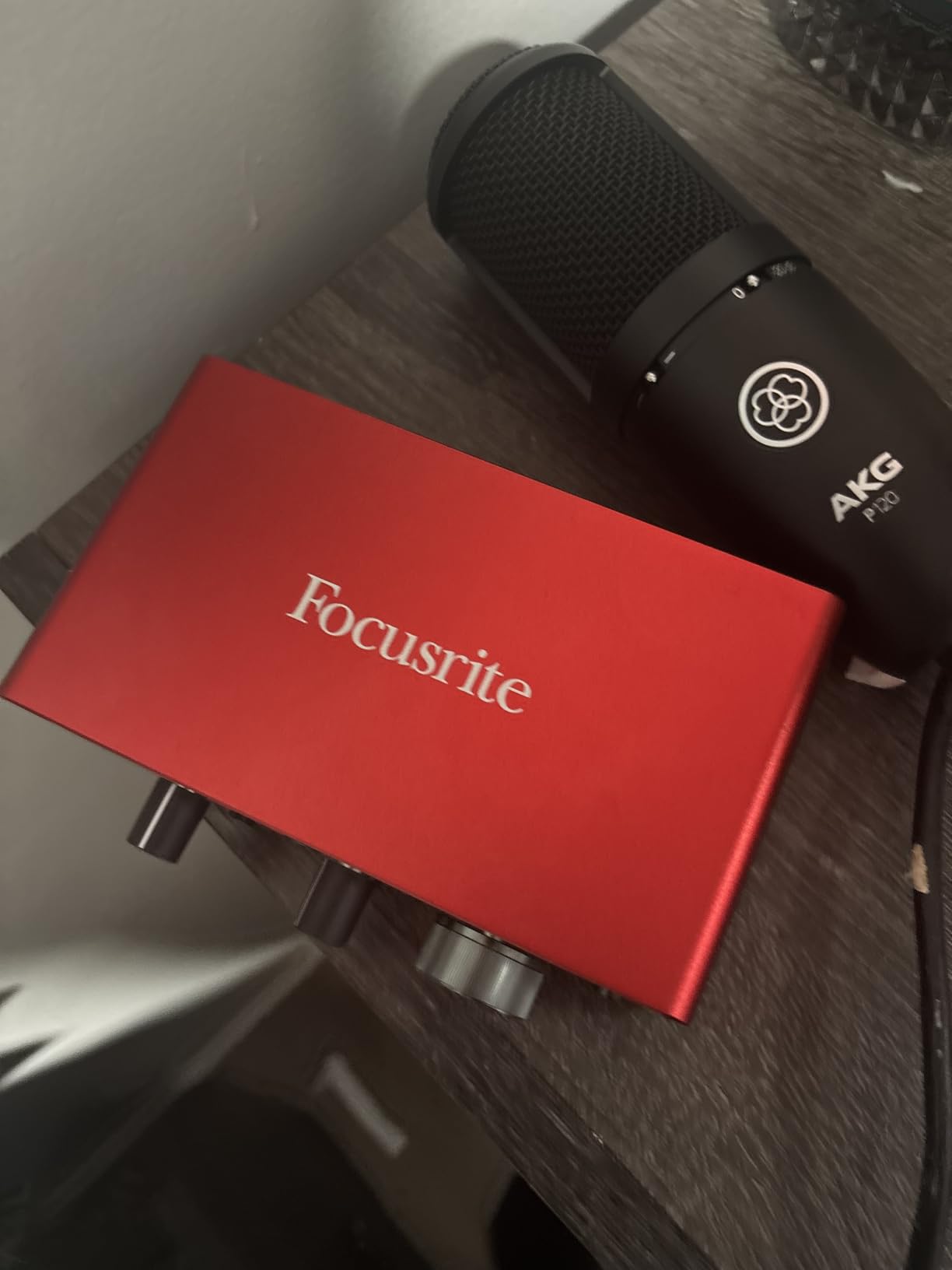
The AKG P120 is the one microphone in this list that handles a drum kit, and it does that because of two switches. A -20 dB preattenuation pad and a 300Hz bass cut filter at 6 dB per octave sit on the body, which is a feature set you normally find several price levels up.
Behind them is a 2/3-inch low-mass diaphragm with a 20Hz to 20,000Hz response, 24 mV/Pa sensitivity and a 150 dB maximum SPL rating. Point it at a snare, a cymbal or a guitar amp and the pad is what stops it clipping before your preamp does.
The sound is clear and crisp with a low-mass diaphragm that reviewers say needs very little editing. Self-noise is listed at 19 dB-A with a 75 dB-A signal-to-noise figure, which is in the same band as the AT2020, so this is not a quiet-room microphone by condenser standards.
The bass cut filter is the more interesting switch for home use. It removes the low rumble that untreated rooms and desk-mounted stands add to every take, and doing it at the microphone is cleaner than doing it in software.
Who the AKG P120 suits
Anyone recording more than voice. Drums, percussion, guitar amps and loud acoustic instruments are all within this microphone’s range, and owners regularly report it holding its own against microphones costing several times more.
For voiceover and podcasting on an XLR setup it is more than capable, and the metal body feels far from the plastic construction people expect at this cost. A stand adapter is included; the microphone and cable are not.
Where the AKG P120 falls short
It can clip when a louder singer pushes it hard, which is the practical limit of a 2/3-inch capsule compared with the true 1-inch designs further down. The tonal character leans bright, and reviewers note it pairs better with brighter voices than with very deep ones.
Condenser sensitivity means ambient room noise comes through, and you need 48V phantom power plus an interface before any of this is usable. The recommended load impedance is 1000 ohms or greater, so check your interface can drive it.
7. TONOR TC20 – Best Starter XLR Bundle
TONOR XLR Condenser Microphone, Professional Cardioid Studio Mic Kit with T20 Boom Arm, Shock Mount, Pop Filter for Recording, Podcasting, Voice Over, Streaming, Home Studio, YouTube (TC20)
XLR cardioid
78 dB signal-to-noise
Alloy steel body
2m XLR cable included
Pros
- Boom arm shock mount pop filter and cable included
- Clear vocal sound for speech
- Sturdy steel arm rated for heavier mics
- Cardioid keeps light background noise out
- Responsive customer service
Cons
- Very high sensitivity needs heavy gain reduction
- Boom arm springs are over-strong and drift
- Desk clamp is bulky
- Distortion at loud levels for some
- XLR needs phantom power
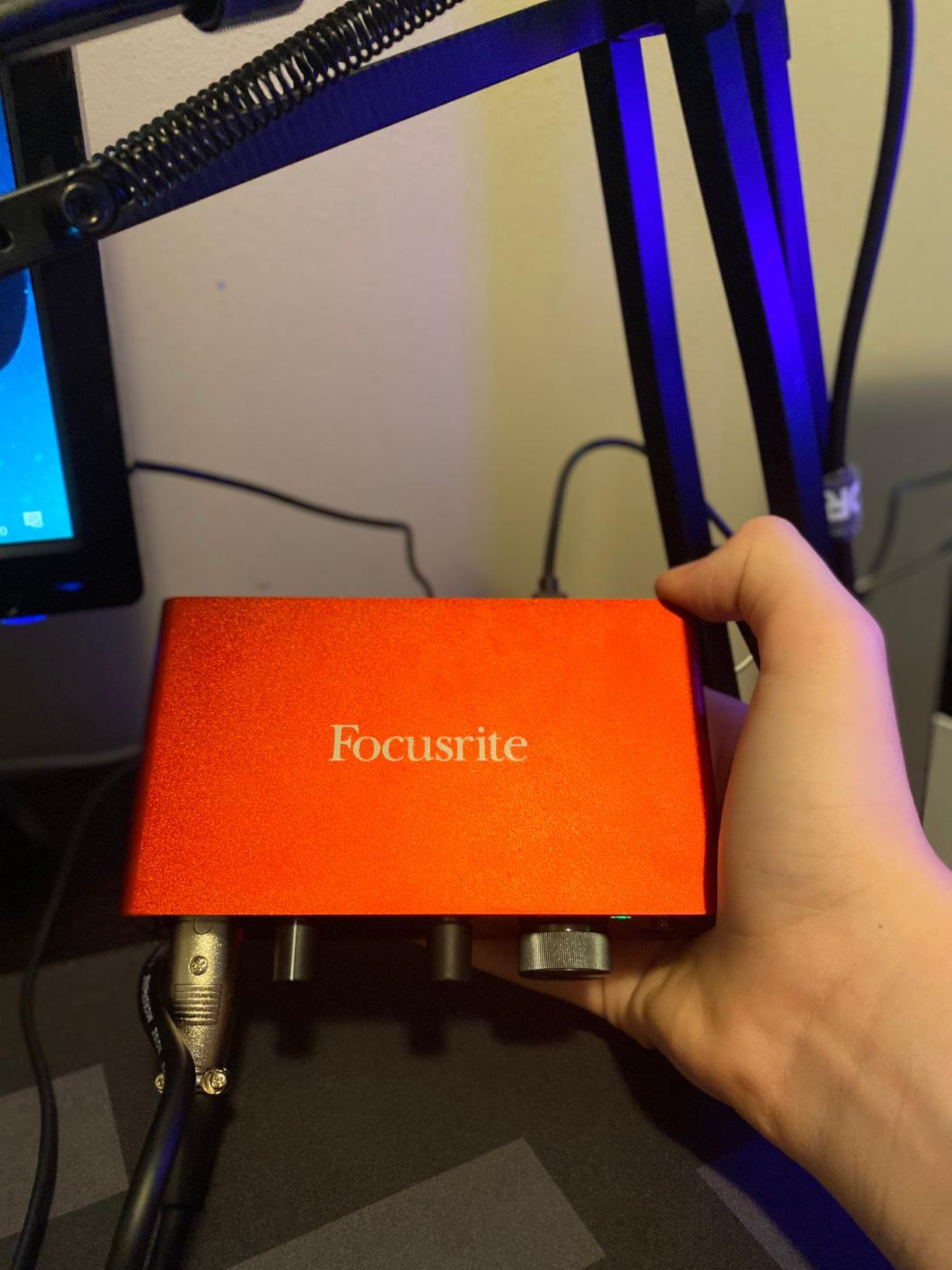
The TC20 is the cheapest honest route into a real XLR signal chain, because the box contains a microphone, a 2m XLR cable, a metal shock mount, a pop filter, a windscreen and a T20 steel boom arm with a desk clamp. Owners regularly say the accessories alone account for most of the price.
The capsule uses a low-noise FET preamplifier with high SPL handling, a cardioid pattern for off-axis and rear rejection, and a 78 dB signal-to-noise ratio. The boom arm is rated for desks up to 2.4 inches thick and microphones up to 4 pounds, which is a genuinely useful specification on a bundle at this level.
For speech-based content the sound is consistently described as good and clear. This is a voiceover, podcasting and streaming microphone, and at normal vocal levels it does that job well without any processing.
It also solves a real problem for beginners: gain staging. Because the shock mount, pop filter and proper arm are all included, the microphone can be positioned correctly at a consistent distance, which does more for recording quality than most specification upgrades.
Who the TONOR TC20 suits
First-time XLR buyers who want the complete chain in one purchase and do not want to research interfaces, cables and mounts separately. It is a fair choice for a home studio built around podcasting, voiceover and streaming.
The cardioid pattern keeps lighter background noise out, and the service experience is repeatedly praised, with replacement units sent out without requiring returns.
Where the TONOR TC20 falls short
Sensitivity is the headline issue. It is high enough that reviewers report needing significant gain reduction, and sometimes a mixer, before the signal behaves. Some users also report distortion at normal to loud speaking levels.
The boom arm springs are over-strong and it drifts toward the monitor, and the desk clamp is bulky in setups with limited clamp space. This is a speech microphone rather than a polished music microphone, and the tonal character is not aimed at acoustic instrument detail.
8. Audio-Technica AT2035 – Best Large Diaphragm for Quiet Rooms
Audio-Technica AT2035 Cardioid Condenser Microphone, Perfect for Studio, Podcasting & Streaming, XLR Output, Includes Custom Shock Mount
XLR cardioid
Self-noise 10 dB
80 Hz HPF and 10 dB pad
Shock mount included
Pros
- Very low self-noise for a condenser
- Switchable HPF and pad add real versatility
- Custom shock mount included
- Smooth natural vocal tone
- Consistent build with 2 year warranty
Cons
- Needs 48V phantom power and an interface
- Cable and interface not included
- A stand may still be needed
- Higher cost than entry XLR models
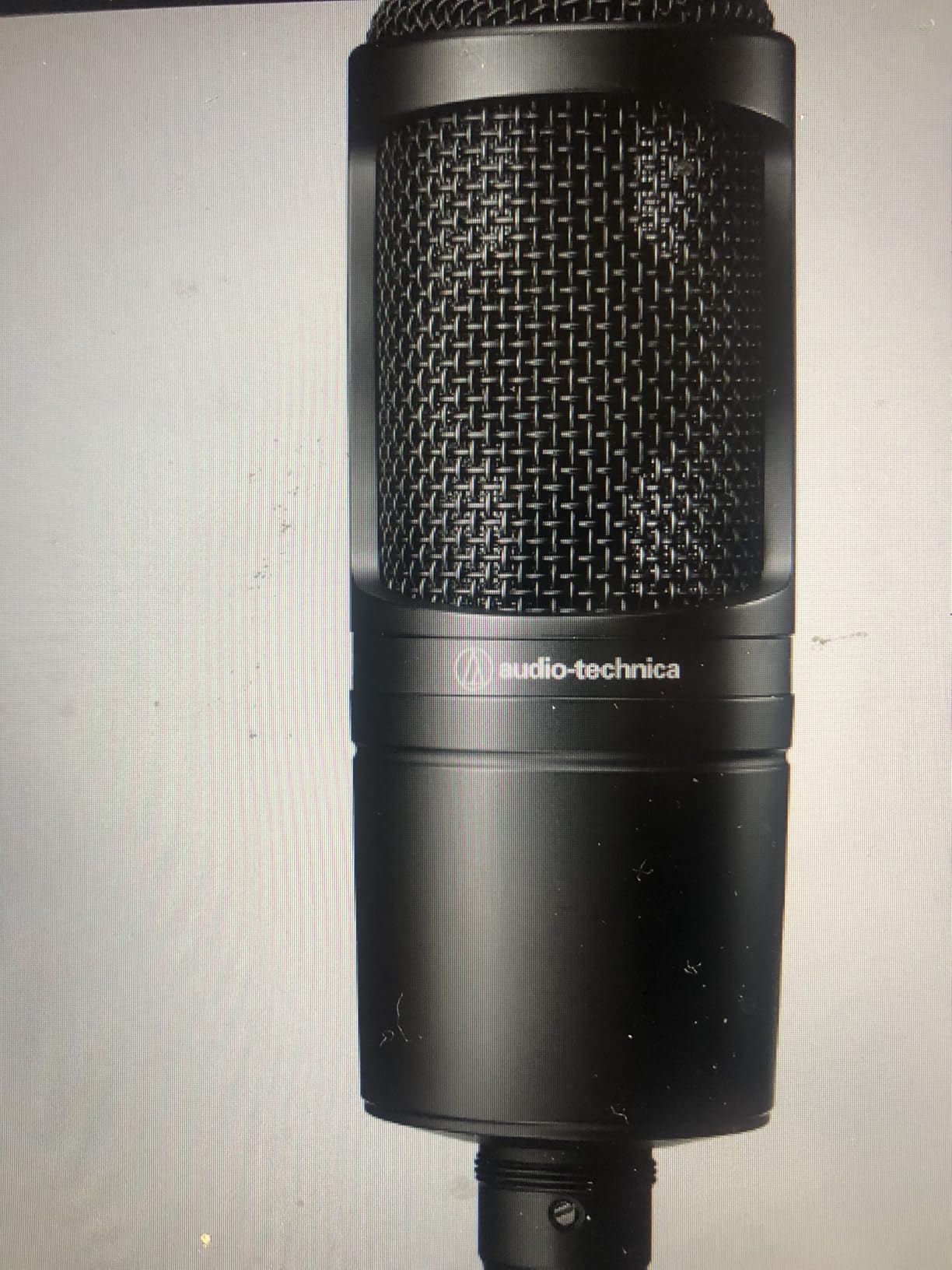
The AT2035 is a genuine step up from the entry-level XLR condensers, and the number that drives it is self-noise at 10 dB. That is half the figure of the AT2020, and it is the reason a take recorded at 11pm in a quiet house stays free of hiss.
It is a side-address large diaphragm cardioid with a large diaphragm for smooth, natural sound. The switches are the part people underrate: an 80Hz high-pass filter and a switchable 10 dB pad, both on the body, covering rumble and loud sources without plugins.
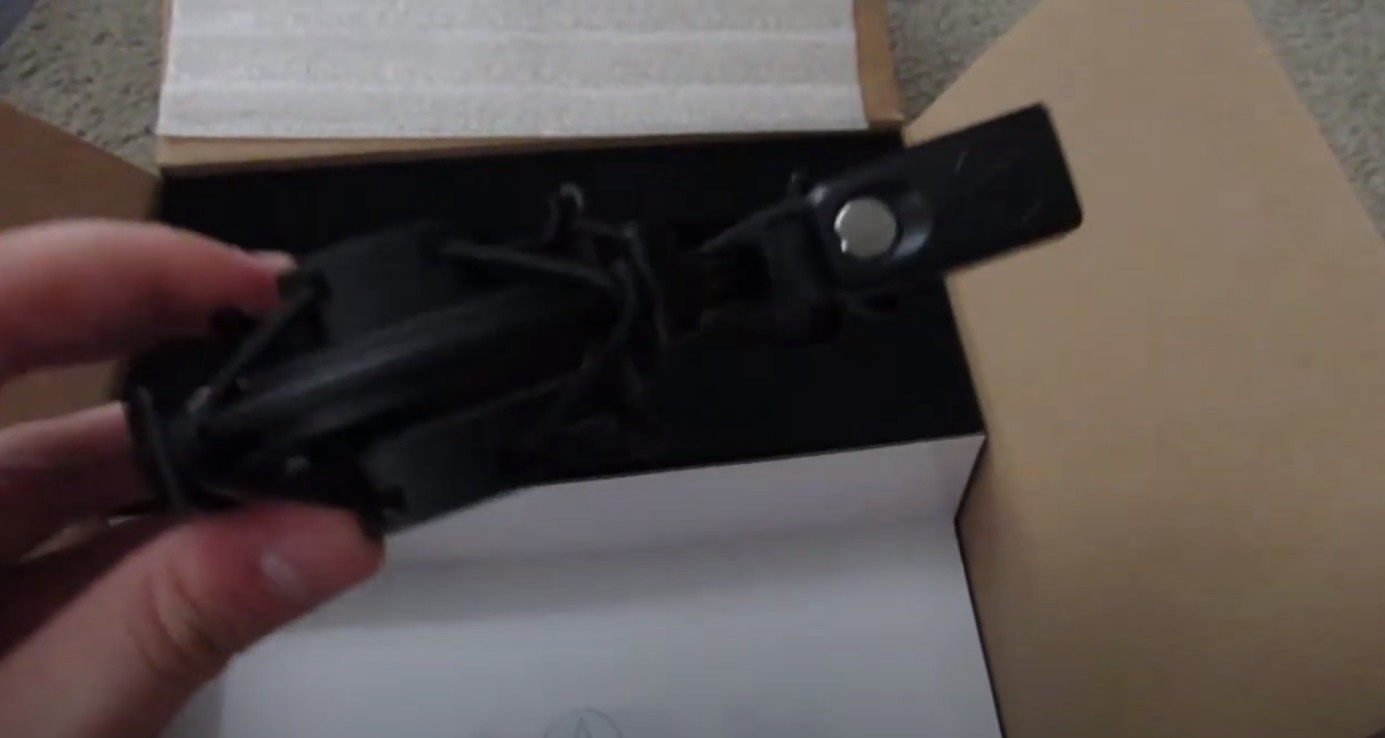
The custom shock mount is included and is described as having superior isolation, which matters more than people expect for a condenser in a home setting. A protective pouch comes in the box as well. Build quality is consistent model to model and backed by a two year warranty on parts and labour.
Reviewers describe the tone as smooth and natural, suited to studio vocals, podcasting and streaming alike. The 33 dB sensitivity gives a workable amount of headroom with a typical interface preamp.
Who the AT2035 suits
Recordists in a genuinely quiet room, or anyone who records at night and does not want room and preamp noise in the vocal. If self-noise is the specification that worries you most, this is the entry point that actually changes the result.
It is also the better choice if you plan to record more than one source. The pad handles loud instruments and the high-pass filter cleans up acoustic guitar and piano, so a single microphone covers a lot of a home project.
Where the AT2035 falls short
It is still microphone and shock mount only. No cable, no interface and no stand, so the complete cost of a working vocal chain is higher than the price suggests. That is the trade for a lower noise floor and better isolation.
Some users find the tonal character very forward with certain voice types, which can expose sibilance. If you already know you have a bright voice, the Lewitt further down this list is the more neutral reference.
9. Rode NT1 Signature – Most Complete Box for the Money
RØDE NT1 Signature Series Studio Condenser Microphone, Black
XLR cardioid
Self-noise 4 dB
78 dB signal-to-noise
10 year warranty
Pros
- Among the lowest self-noise figures available
- Tight cardioid focus on the voice
- Shock mount pop filter and 6m XLR cable included
- Long-established NT1 voicing
- 10 year warranty on registration
Cons
- Needs 48V phantom power and an interface
- Interface not included despite the bundled cable
- High sensitivity demands gain staging
- Premium cost versus entry XLR mics
The NT1 Signature is the condenser I end up recommending most often for a home studio that is genuinely being treated. Self-noise is listed at 4 dB, the lowest figure anywhere in this roundup, which is what lets a vocal sit on a track with almost no audible hiss behind it.
The voicing itself is not new. The NT1 large diaphragm capsule has been used in professional studios for two decades, so the tone is well characterised: tight, forward and vocal-focused rather than coloured. The polar pattern is cardioid, and reviewers note how well it rejects room noise relative to its sensitivity.
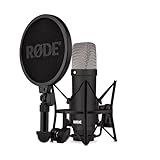
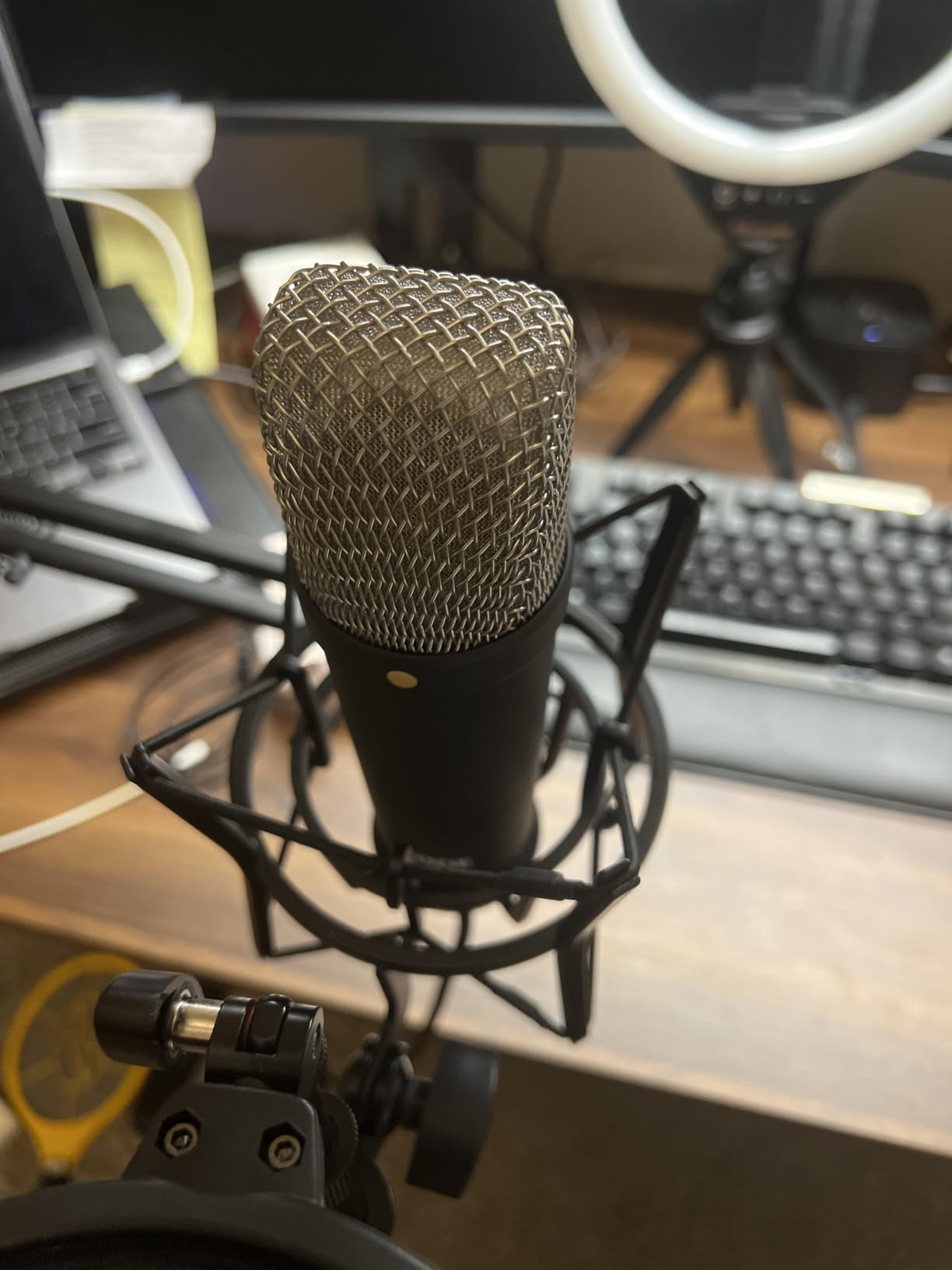
The box contents are the differentiator. An SM6 shock mount, a pop filter, a 6m XLR cable and a dust cover are all included, so apart from the interface you can go from unboxing to recording a vocal. That is more complete than any other condenser here.
Registering the microphone extends the warranty to ten years, which tells you something about how the manufacturer expects it to be used. At 313 g it is also light enough that a mid-weight boom arm holds it comfortably.
Who the Rode NT1 Signature suits
Home studios that have already dealt with reflections and want the quietest floor available at a sensible cost. If you have compared budget condensers and found a ceiling on how clean a take can get, this is the usual answer.
It is also a strong streaming microphone, since the tight cardioid focus keeps it on the voice. Reviewers describe it as a long-term studio investment rather than a short-term purchase, which matches how most people end up using it.
Where the Rode NT1 Signature falls short
It ships with a cable but not an interface, so phantom power and preamp gain are still on you. Budget for an interface with at least 60 dB of clean gain before you plug it in.
There are no pad or filter switches built in, which means loud sources and rumble are handled in software rather than at the microphone. And its high sensitivity is a double-edged sword: paired with an untreated room it will faithfully capture that room as well.
10. MXL 990 – Best Warm Tone for Acoustic Instruments
MXL 990 Condenser Microphone for Podcasting, Singing, Home Studio Recording, Gaming & Streaming | Detailed Sound | XLR | Large Diaphragm (Champagne)
XLR cardioid
80 dB signal-to-noise
FET preamp
Shock mount and case included
Pros
- Low cost large diaphragm XLR condenser
- Cardioid rejects background noise
- Shock mount and padded case included
- Warm low end suits acoustic guitar
- Reliable over long daily use
Cons
- Muddy or overly warm for some voices
- Sensitive to sibilance
- Shock mount wing bolt can break
- Limited high-frequency detail
The MXL 990 is a large diaphragm XLR condenser built around an FET preamplifier and a mid-diaphragm capsule, and its character is noticeably warm. For acoustic guitar, dulcimer and flute, that warmth is the reason to choose it, and reviewers single it out for exactly those instruments.
On paper the headline figure is an 80 dB signal-to-noise ratio across a 20Hz to 20kHz frequency response, with a 200 ohm impedance and a cardioid pattern. In practice the warm voicing is doing more for the sound than the numbers are.
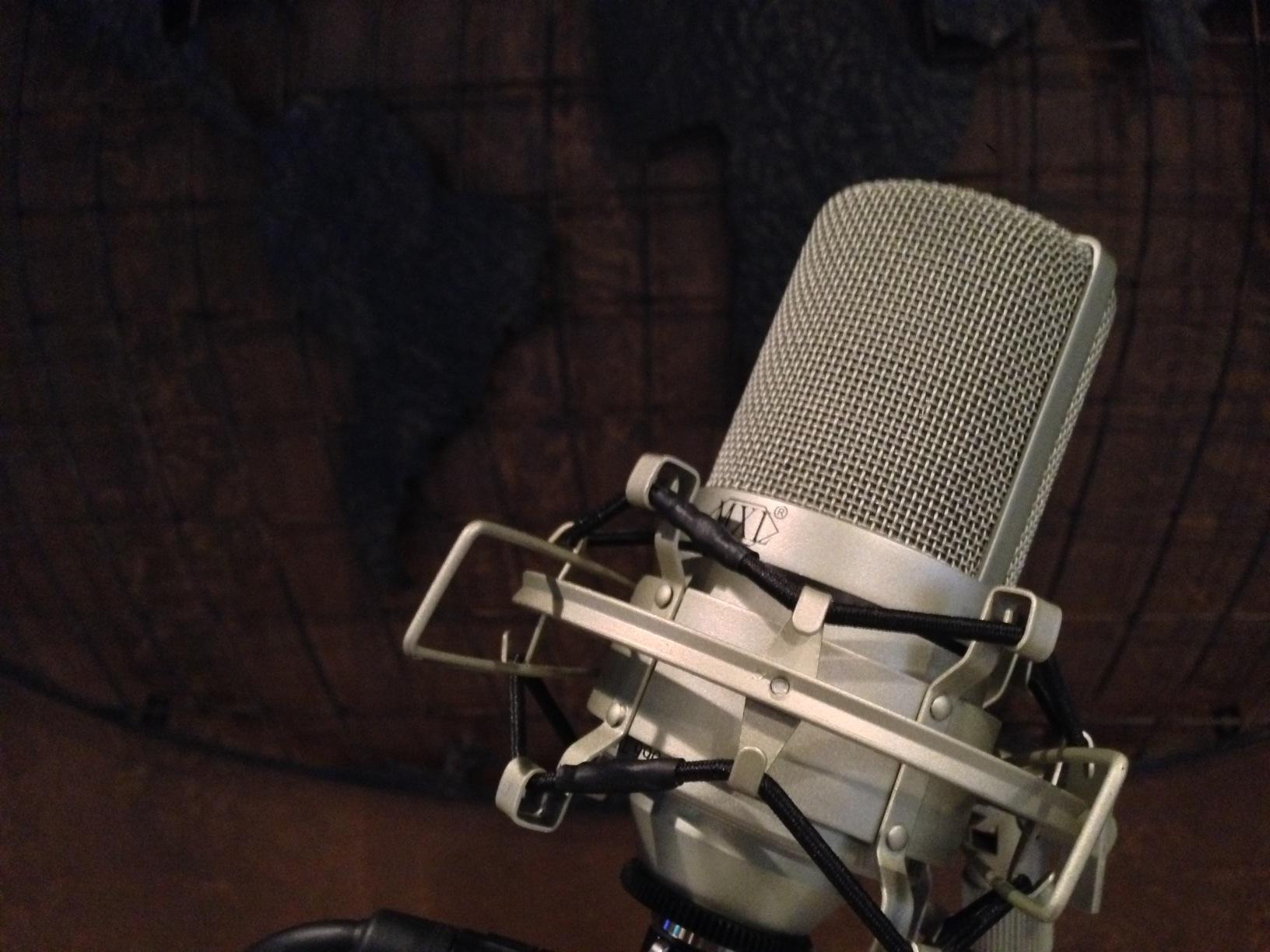
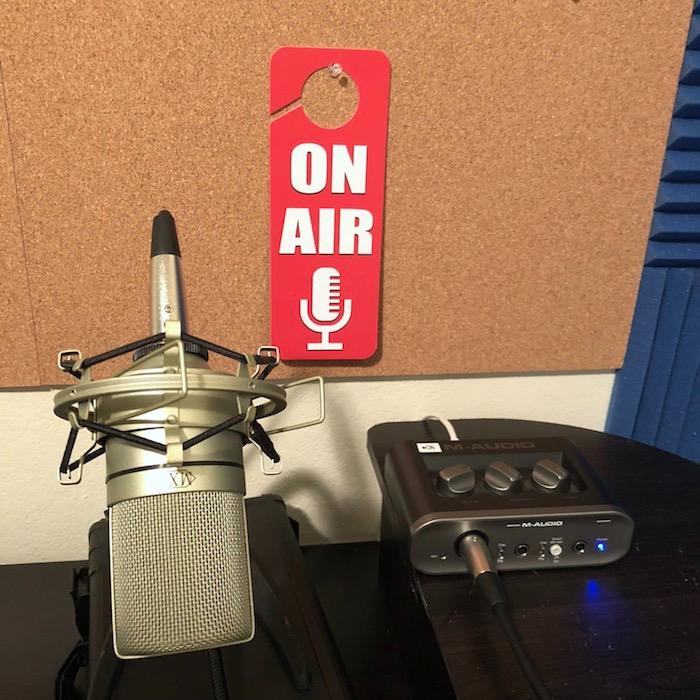
The included accessories are unusually generous at this cost. A custom shock mount, a mic stand adapter and a durable padded carrying case all come in the box, so the microphone only is a complete purchase in a way most entry XLR condensers are not.
Long-term owners report it holding up reliably over daily use, and the metal body is a step up from the plastic shells on some budget alternatives. It needs 48V phantom power and an external interface, with no cable included.
Who the MXL 990 suits
Singer-songwriters recording acoustic instruments first and vocals second. The warm low end flatters fingerpicked guitar and wooden instruments in a way that a bright microphone tends to thin out.
It is also a good budget gateway to the XLR workflow, because the shock mount and case remove two of the immediate costs of starting out. The cardioid pattern keeps background noise out effectively for the money.
Where the MXL 990 falls short
The same warmth that suits instruments can read as muddy for some voices and genres, and reviewers note the high-frequency detail runs out as skills improve. Sibilance is a common complaint, and the pop filter often needs setting further back than usual.
There is one build issue worth flagging: the shock mount wing bolt has a history of breaking during setup. It is a small part and easily replaced, but it is the first thing to check when assembling the mount.
11. Lewitt LCT 440 PURE – Best Natural Voicing
LEWITT LCT440PURE Large Diaphragm Condenser Mic
XLR cardioid
Self-noise 7 dB
87 dB signal-to-noise
1 inch true condenser capsule
Pros
- Natural uncoloured sound across voice types
- Exceptionally low self-noise
- Strong off-axis rejection of room and fan noise
- Useful proximity effect
- Magnetic pop filter and shock mount included
Cons
- Needs 48V phantom power and an interface
- No built-in pad or filter switches
- Slightly synthetic crisp character
- Smaller review base than the best sellers
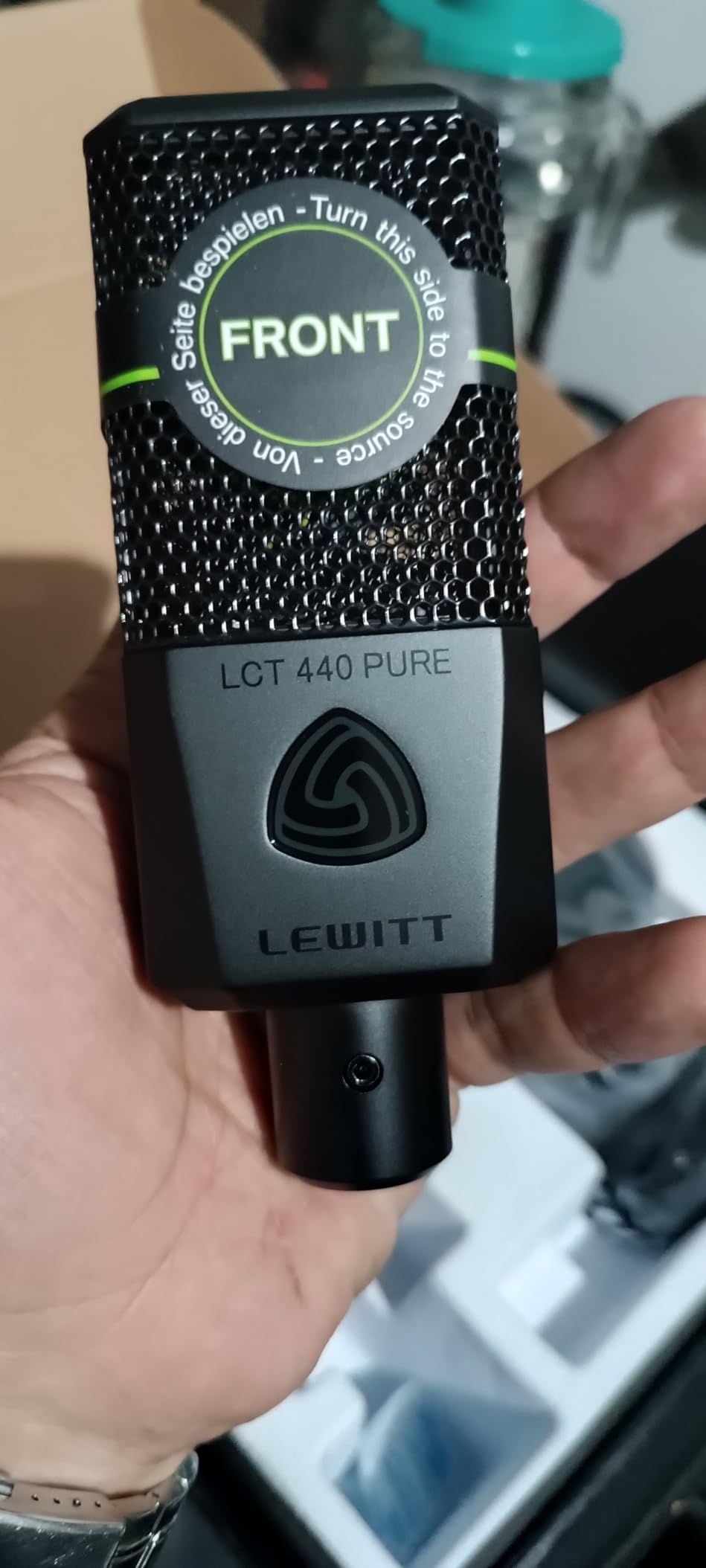
The LCT 440 PURE carries the highest rating in this roundup at 4.8, and the reason owners give is consistent: it sounds natural and uncoloured for a wide range of voice types. A 1 inch true condenser capsule is doing the work, and the review consensus is that it compares favourably to microphones costing many times more once you EQ.
The specification that supports that is self-noise at 7 dB, alongside an 87 dB signal-to-noise ratio. Combined with effective rear rejection, it means the microphone effectively disappears when you are not speaking, which is what reviewers mean when they say it does not add character of its own.
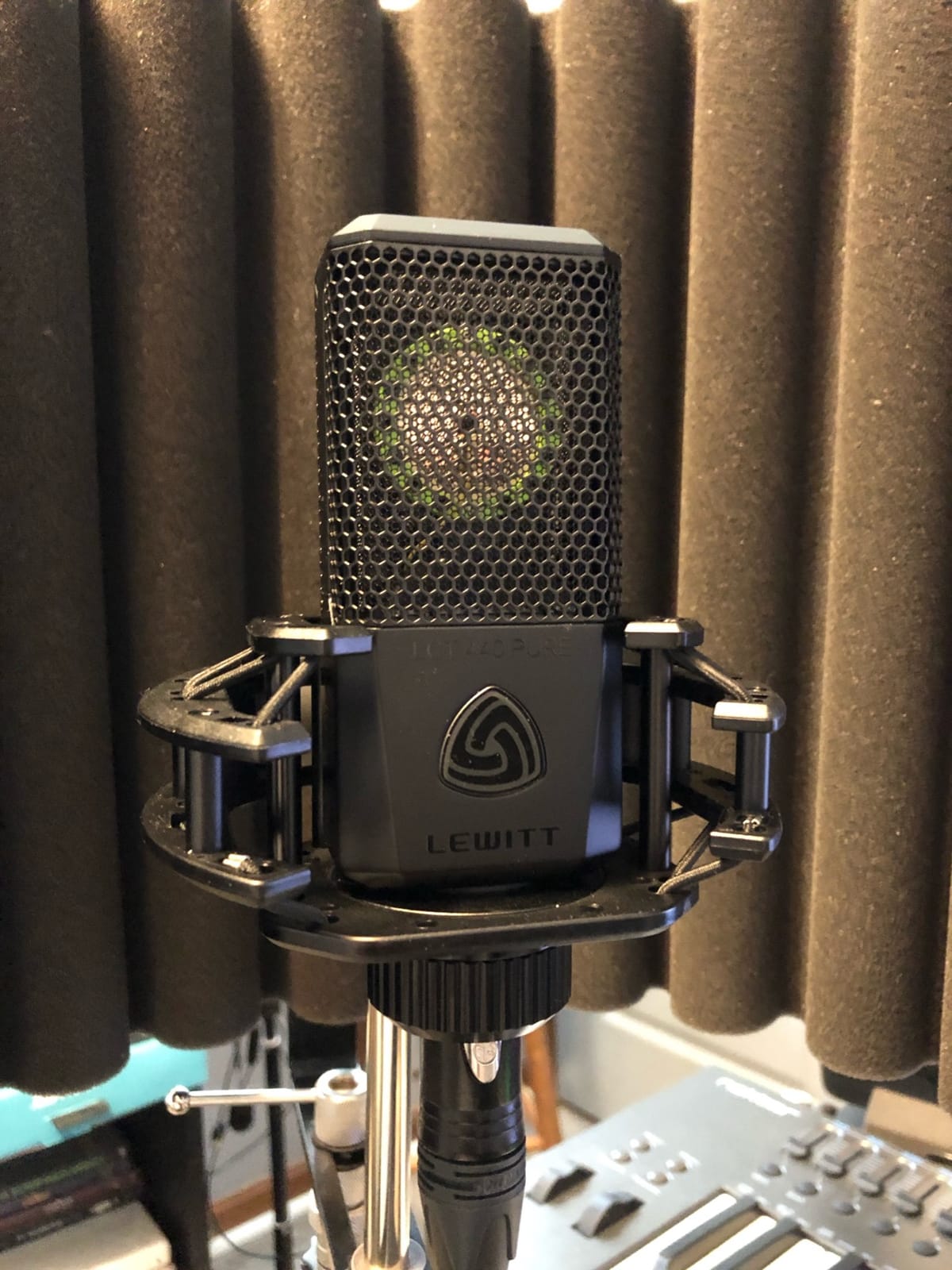
A magnetic pop filter and a sturdy shock mount are included, which is rare on a large diaphragm condenser. At 1.7 pounds it is light enough not to drag down a boom arm, unlike many large condensers, and that is a practical quality-of-life difference in a home setup.
Proximity effect is strong and usable, so working closer gives you more low-end warmth on a vocal without needing a different microphone. A low-cut filter and an attenuation pad are also included in the accessory package for high SPL sources.
Who the Lewitt LCT 440 PURE suits
Recordists who already know what they like and want a neutral starting point they can shape in software. A natural voicing is easier to mix than a coloured one, particularly for singers who do not yet know how their voice behaves in a mix.
It is also a strong choice for a quiet room and for voices that get sibilant on brighter microphones, because there is less high-frequency emphasis to exaggerate consonants. The included magnetic pop filter helps with plosives out of the box.
Where the Lewitt LCT 440 PURE falls short
There are no onboard pad or filter switches, so equalisation and high-pass filtering are handled in post. There is also a slight synthetic crispness that some reviewers do not favour for very warm baritone voices.
One mechanical limitation: the shock mount does not allow a full 360 degree rotation, so side-positioning on a boom arm is awkward. And with a much smaller review base than the best-selling models here, there is less long-term owner history behind it.
12. Rode NT-USB Mini – Best Compact USB Setup
RØDE NT-USB Mini Studio-Quality USB Condenser Microphone
USB-C cardioid
82 dB signal-to-noise
Zero-latency monitoring
Magnetic desk stand
Pros
- Plug-and-play USB-C with no drivers
- Clear cardioid capture well above headset level
- Built-in pop filter handles plosives
- Compact heavy metal body
- Strong headphone output
Cons
- Included stand is very low and picks up desk noise
- Cardioid only with no gain control or high-pass filter
- Noticeably high noise floor can read sizzly
- Extremely sensitive to placement
The NT-USB Mini is the smallest complete studio microphone in this list at under two inches wide, and it is the one I recommend when desk space is the constraint. The USB-C connection is plug and play to Mac, PC or iPad with no interface and no drivers, and setup takes under a minute.
Sound quality is a clear step above built-in laptop and headset microphones. The cardioid pattern captures a 82 dB signal-to-noise ratio cleanly, and the built-in pop filter is tuned for voice, which removes the single most common accessory purchase for a beginner.
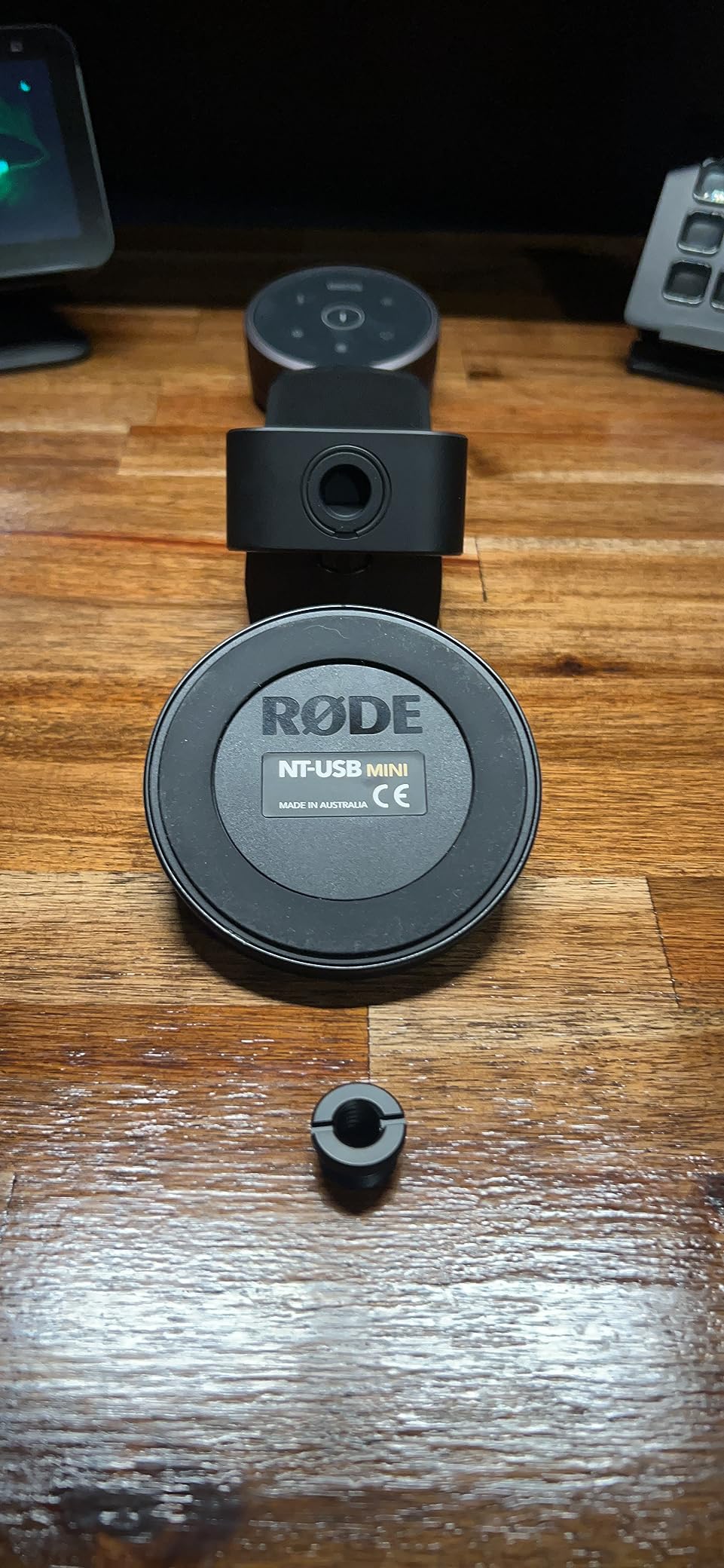
Monitoring is zero-latency through the headphone output with a hardware volume control, and reviewers note the headphone amp is strong enough to drive higher-impedance headphones. That turns the microphone into a usable monitoring solution as well as a capture device.
The detachable magnetic desk stand has a standard mic thread, so you can remove it and put the microphone on a boom arm. That matters more than it sounds, for the reason in the next section.
Who the Rode NT-USB Mini suits
Anyone who wants a small, tidy, immediately usable setup for voiceover, podcasting or streaming without an interface. If a large desktop microphone would crowd your workspace, this is the compact alternative with a professional name behind it.
It is also a good travel and second-room option. The metal body is compact and heavy enough to stay stable, and the included USB-C cable means there is one less thing to lose.
Where the Rode NT-USB Mini falls short
The included stand is very low, which puts the capsule close to your desk and invites every keystroke and mouse click into the recording. Most owners end up buying an arm, which makes that the first real cost of this microphone.
There is also no gain control and no high-pass filter, and the noise floor is high enough to read as sizzly on quiet passages. The microphone is extremely sensitive, so placement and shock mounting matter more here than almost anywhere else in the roundup.
How to Choose a Condenser Mic for a Home Studio
The decision comes down to five things, and only the first is about sound. Work through them in order and the right microphone becomes obvious quickly.
Large diaphragm or small diaphragm
A large diaphragm condenser (LDC) is the standard for vocals because the big capsule captures more air and low-end movement. A small diaphragm condenser (SDC) has a faster transient response and is the better choice for acoustic guitar, strings and stereo room capture, where accuracy matters more than character.
Forum advice on home string recording consistently points the same way, recommending a condenser over a dynamic and specifically favouring a small diaphragm for the source. If you record mostly voice, the large diaphragm models above are the right family to shop in.
Self-noise: the number that decides quiet rooms
Self-noise is the hiss the microphone produces on its own when nobody is talking, measured in dBA. Lower is better. Under 10 dBA is quiet-room capable, which is the range the Lewitt LCT 440 PURE at 7 dB and the Rode NT1 Signature at 4 dB sit in.
Between 10 and 14 dBA suits an average room. The AT2035 at 10 dB sits at that boundary. Above 20 dBA, as with the AT2020 at 20 dB and the AKG P120 at 19 dB-A, the microphone contributes audible hiss in a quiet space, which matters if you record at night.
Cardioid, omni or multi-pattern
Cardioid picks up from the front and rejects the sides and rear, which is why almost every home studio microphone uses it. Omnidirectional captures a natural, roomy sound with no proximity effect but also no rejection, so it only works in a genuinely treated room.
Figure-8, or bidirectional, rejects front and back and picks up front and rear, which makes it useful for duets and for rejecting noise from a specific direction. Multi-pattern microphones let you switch between these, and the Blue Yeti is the only model in this roundup with four selectable patterns.
USB or XLR, and where phantom power comes from
USB condensers contain their own preamp and connect straight to a computer. Nothing else to buy, nothing to configure, and no chance of buying an interface that cannot drive the microphone. They are the right answer for a first studio and for voice work.
XLR condensers need 48V phantom power, which comes from an audio interface or a mixer. Phantom power is a low voltage current sent along the same cable, and it powers the capsule’s internal electronics. A condenser without power produces no signal at all, which is the most common first-day mistake.
The interface matters as much as the microphone. A clean preamp with at least 60 dB of gain avoids having to push a noisy preamp, and a low self-noise figure in the interface preserves the quietness of a low-self-noise microphone. A 4 dBA microphone on a noisy preamp performs no better than a 20 dBA microphone on a clean one.
Pad and high-pass filter switches
A pad attenuates the signal by 10 or 20 dB before it reaches the preamp, which prevents clipping on loud sources like drums, brass and guitar amps. A high-pass filter, usually at 80Hz, removes low frequency rumble from traffic, desk vibration and air handling.
Both are useful in an untreated home room, where low-frequency build-up is common. The AKG P120 has both on the body, and the AT2035 pairs an 80Hz high-pass filter with a 10 dB pad.
The 3 to 1 rule and why phase matters
The 3 to 1 rule is a distance guideline for multiple microphones: if one microphone sits 3 inches from a source, the next should sit 9 inches away, and then 27 inches for the third. Each microphone needs to be roughly three times further from the source than the one before it.
The reason is phase. Two microphones picking up the same source at similar distances receive the sound wave at nearly the same moment, and combining them partially cancels the low frequencies, producing a thin, hollow result. Widening the distances changes the arrival times enough to avoid that cancellation.
What the whole system costs beyond the microphone
A microphone-only purchase is rarely a working studio. Budget for an audio interface with phantom power if you are buying XLR, a balanced XLR cable if one is not included, a shock mount, a pop filter, a mic stand or boom arm, and headphones for monitoring.
This is why the bundle options in this roundup are worth considering even when a cheaper bare microphone is available. The TONOR TC20, MAONO A04 Gen2 and FIFINE T669 each include most of that list, which is usually a lower total cost than assembling it separately.
Your Room Matters More Than Your Microphone
No microphone in this list fixes flutter echo. A hard-surfaced bedroom reflects sound straight back into the capsule, and a condenser records that reflection as part of the vocal because it cannot tell the difference.
The three problems, in order of how much they matter, are flutter echo between parallel walls, early reflections from bare surfaces behind and beside you, and bass build-up in corners. The fix is absorption and diffusion, not more expensive hardware.
Start with position. Record away from the nearest wall rather than facing it, and put something soft behind the microphone, such as a heavy duvet on a rail, to absorb the reflection coming back at the capsule. A clothes wardrobe full of clothes does the same job and often better.
Then add broadband absorption at the first reflection points. Moving three or four inches of foam or a fabric panel to where your reflection lands beats covering a whole wall, and it costs a fraction of the wall. Thick duvets and moving blankets work nearly as well as acoustic foam at low frequencies, which is where home rooms fail.
Finally, treat the corners. A rolled duvet in each corner takes care of the worst bass build-up, and it is a five-minute job. If you record at night, check the noise floor in the room at that hour before you blame the microphone, because a self-noise figure only helps in a room that is genuinely quiet.
Frequently Asked Questions
What is a good microphone for a home studio?
A large diaphragm condenser in the mid price range is the right starting point, chosen for a low self-noise figure and a cardioid pattern. Add an audio interface with at least 60 dB of clean gain, a shock mount, a pop filter and a stand. Basic room treatment matters more than an expensive microphone, so budget for a duvet behind the mic before you upgrade the capsule.
What is the best condenser mic for studio recording?
For vocals, the Audio-Technica AT2035 and the Rode NT1 Signature lead our list, with the Lewitt LCT 440 PURE as the most neutral voicing. For the lowest self-noise available, the NT1 Signature at 4 dB is the pick. For speech and podcasting, the Logitech Blue Yeti offers four pickup patterns with no interface required. All four of those sit in the comparison table above.
What is the 3 to 1 rule for microphones?
The 3 to 1 rule is a distance guideline for multiple microphones. If the first microphone is 3 inches from the source, place the second 9 inches away and the third 27 inches away. Each microphone should be roughly three times further from the source than the one before it, which changes the arrival time of the sound wave enough to prevent phase cancellation and the thin, hollow result it causes.
What is the holy grail of microphones?
The Neumann U87 is the most commonly cited reference microphone, and it appears constantly in enthusiast discussion as the benchmark for studio vocals. The honest caveat is that the best microphone in an untreated room still records the room. A mid-priced large diaphragm condenser with a low self-noise figure, positioned well in a treated space, gets you closer to that reference sound than an expensive microphone in a bare bedroom.
Do condenser microphones need phantom power?
XLR condenser microphones need 48V phantom power, which is supplied by an audio interface or mixer and travels along the same cable. Without it the capsule electronics are unpowered and the microphone produces no signal. USB condenser microphones do not need phantom power because their preamp is built in and the computer supplies power, which is the main practical advantage of a USB model.
USB or XLR condenser mic for a home studio?
Choose USB if you want a working microphone today with nothing else to buy, which is the case for the Logitech Blue Yeti, FIFINE K678 and Rode NT-USB Mini. Choose XLR if you want an upgradeable signal chain, multiple inputs and access to the lower self-noise large diaphragm condensers. A dual-connector model such as the MAONO A04 Gen2 lets you move between both without buying twice.
The Verdict on the Best Condenser Microphones for Home Studios in 2026
The Logitech Blue Yeti takes our top spot for one reason: it works today, with no interface, and its four pickup patterns cover more recording situations than any other microphone in this roundup. For a serious vocal chain, the Audio-Technica AT2035 and the Rode NT1 Signature are the two we would own, and the Lewitt LCT 440 PURE is the most neutral of the three.
Whatever you choose, treat the room before you compare microphones again. The gap between a condenser in a bare bedroom and the same condenser behind a duvet is larger than the gap between most of the price tiers on this list.