
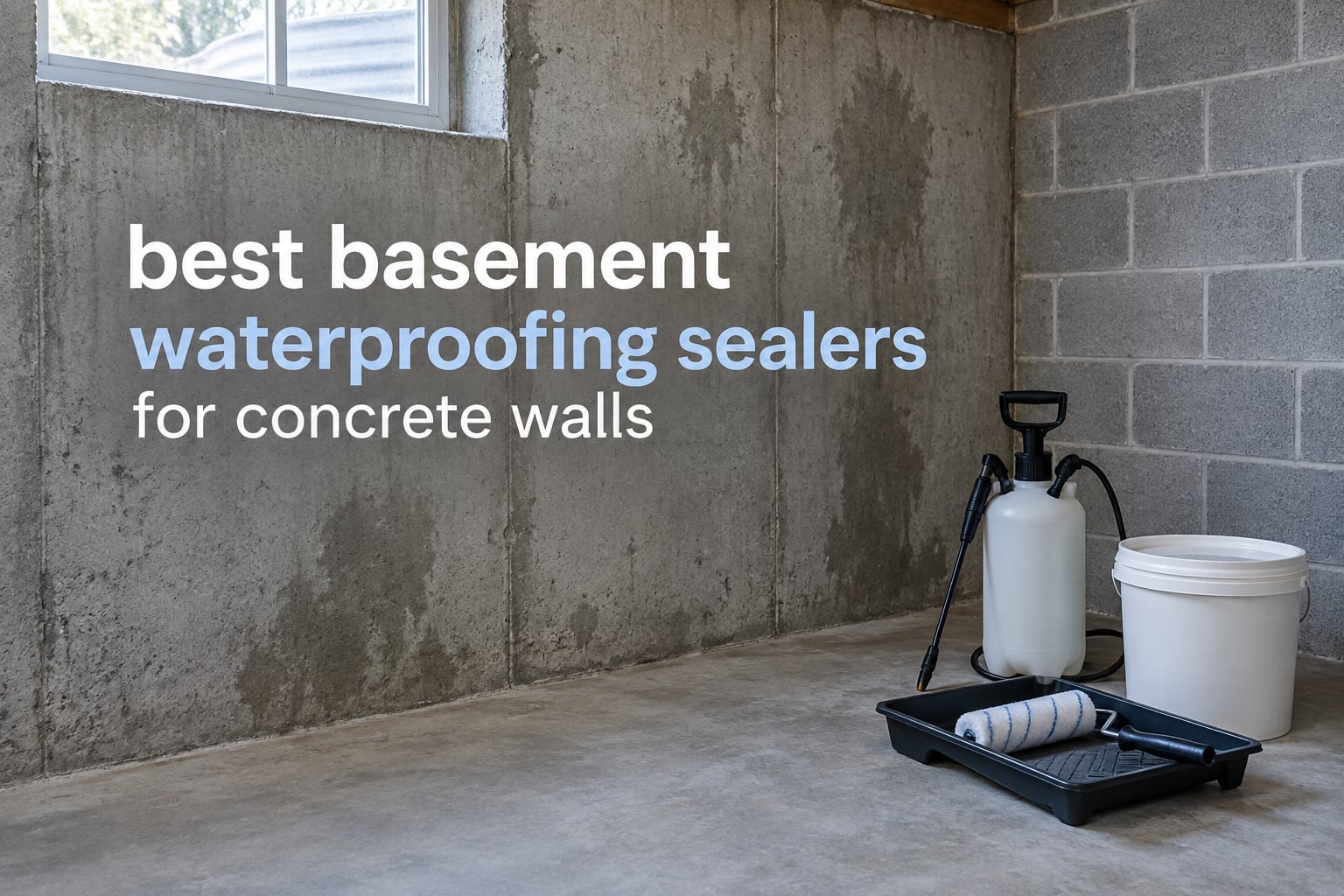
The best basement waterproofing sealers for concrete walls fall into four groups: penetrating silane-siloxane treatments that soak into the pores and leave no film, surface coatings that build a barrier you can paint, flexible rubber membranes that stretch and bridge cracks, and cementitious densifiers that do both jobs at once. Our pick for 2026 is the Liquid Rubber Foundation Sealant, a 900% elongation membrane built for damp walls and light seepage.
One limitation comes before any product list. No interior sealer stops an active leak under hydrostatic pressure, and every contractor and forum user we found says the same thing. Sealers handle damp walls, efflorescence, musty air and salt intrusion. Active water pushing through the wall needs drainage, an exterior membrane, or a sump pump.
We went through twelve sealers that cover concrete and masonry, comparing chemistry, pressure claims, coverage, VOC level and how they behave on painted versus bare walls. Below you will find which one fits a damp finished basement, which one disappears without changing the look of the concrete, and which ones are worth skipping for block walls. We also added an interior paint sprayer guide for applying coatings evenly on large walls.
Top 3 Basement Waterproofing Sealers for Concrete Walls in 2026
Liquid Rubber Foundation Sealant
- 900 percent elongation rubber membrane
- Zero VOC water-based formula
- Bridges cracks on damp walls

Nanoprotect Concrete Sealer
- Deep penetrating silane-siloxane
- Invisible film-free finish
- Water-based ultra-low VOC

KILZ Basement Waterproofing Paint
- Blocks up to 12 PSI of water pressure
- Alkali and mildew resistant matte finish
- Dries to touch in 1 hour
Best Basement Waterproofing Sealers Compared in 2026
Every sealer below works on concrete, block or masonry. The columns that actually decide the choice are chemistry and pressure rating. A penetrating silane product leaves the wall looking identical, while a surface coating or rubber membrane changes the appearance and adds a film you can see.
| Product | Specifications | Action |
|---|---|---|
| Liquid Rubber Foundation Sealant |
|
Check Latest Price |
| Nanoprotect Concrete and Stone Sealer |
|
Check Latest Price |
 Rain Guard Concrete Sealer Rain Guard Concrete Sealer |
|
Check Latest Price |
 Ghostshield Siloxa-Tek 8500 Ghostshield Siloxa-Tek 8500 |
|
Check Latest Price |
 Foundation Armor SX5000 WB Foundation Armor SX5000 WB |
|
Check Latest Price |
| KILZ Basement and Masonry Waterproofing Paint |
|
Check Latest Price |
 MasonryDefender Concrete Sealer MasonryDefender Concrete Sealer |
|
Check Latest Price |
 Eco Advance Siloxane Waterproofer Eco Advance Siloxane Waterproofer |
|
Check Latest Price |
 Ghostshield Lithi-Tek 9500 Ghostshield Lithi-Tek 9500 |
|
Check Latest Price |
 AMES Blue Max Liquid Rubber AMES Blue Max Liquid Rubber |
|
Check Latest Price |
 Ames Block and Wall Liquid Rubber Ames Block and Wall Liquid Rubber |
|
Check Latest Price |
 RadonSeal LastiSeal Brick and Masonry RadonSeal LastiSeal Brick and Masonry |
|
Check Latest Price |
Note that only one product on this list carries a stated pressure figure in PSI. KILZ blocks up to 12 PSI, and Lithi-Tek 9500 is described as reducing hydrostatic pressure without giving a number. The rest are rated water repellent rather than waterproof, which is a different and lower claim.
How Basement Waterproofing Sealers Work on Concrete
Concrete is porous by design. Water moves through the pore network and through hairline cracks by capillary action, and dissolved salts carried out with that moisture deposit as the water evaporates. That white chalk is efflorescence, and it is the clearest sign that a wall is moving water.
Hydrostatic pressure is the reason interior products have limits. Saturated soil beside the foundation pushes inward, and pressure rises with depth of water. A coating rated at 12 PSI sounds impressive until you realise it only resists a head of water about 28 feet high, and that assumes the wall is perfectly prepped.
The four categories differ mainly in where they work and how they fail.
Surface coatings such as KILZ form a barrier film on the wall face. They are paintable and bright, they are the easiest to apply with a roller, and they are the most likely to peel if moisture is still pushing from behind.
Penetrating silane-siloxane sealers absorb into the pores and react chemically inside the concrete matrix. Nothing sits on top, so nothing peels, and the surface stays invisible and non-slippery.
Flexible rubber membranes cure to an elastomeric layer with enormous elongation. These bridge hairline cracks and move with the wall, and they are the best interior option when seepage is the problem.
Cementitious densifiers and waterproofers bond chemically to the concrete, hardening and sealing it at once. They handle floors and poured walls well and suit basements where the concrete is dusty or friable.
One more category sits outside the coatings entirely: vapor barriers and radon products. Those slow moisture and gas movement rather than blocking liquid water, and they work best combined with a sealer rather than instead of one.
1. Liquid Rubber Foundation Sealant – Best Overall Basement Sealer for Damp Walls
Liquid Rubber Foundation Sealant – Basement Waterproof Sealer, Black, 5 Gal
900 percent elongation rubber membrane
Zero VOC water-based formula
50 sq ft per gallon indoors
Pros
- Bridges cracks with 900 percent elongation
- Zero VOC and safe for indoor application
- Adheres to concrete masonry wood and metal
- Covers 50 sq ft per gallon on interior surfaces
Cons
- Cured surface is tacky and not suited to foot traffic
- Needs two to four coats for full protection
- Goes on brown and only dries black
This is the one we keep coming back to for damp basement walls. It is a polymer liquid rubber that cures to a real elastomeric membrane, and 900 percent elongation is the figure that explains why it survives a wall that flexes between seasons.
Reviewers frequently describe it as the coating that finally stopped a recurring damp patch on a wall that had sweated through every season.
The chemistry matters more than the marketing. Liquid Rubber goes on as a brown liquid and cures black, so do not judge the colour mid-application. It accepts poured concrete, CMU, ICF, pre-cast and permanent wood foundations, which makes it a broad choice for mixed basement walls.
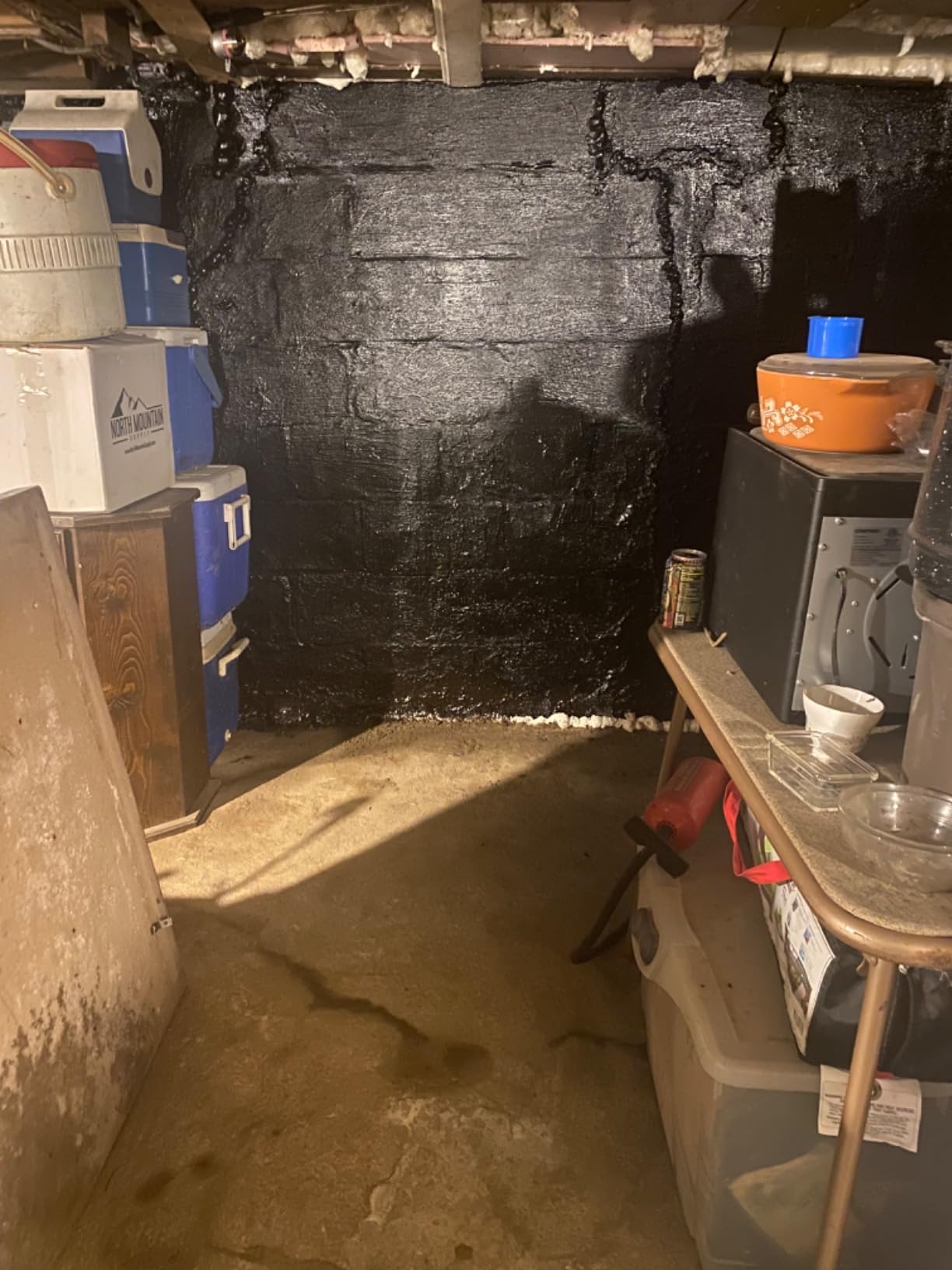
Coverage is honest and easy to plan around: about 50 sq ft per gallon on interior basement surfaces over two to three coats, and 20 sq ft per gallon outside over three to four. Application window is 50F to 90F, and no mixing is needed.
The one thing that trips people up is the cured finish. It stays slightly tacky, so this is a wall coating and not a walkable floor surface. Plan on two to four coats, and you have a well-suited interior membrane for cracks and light active seepage.
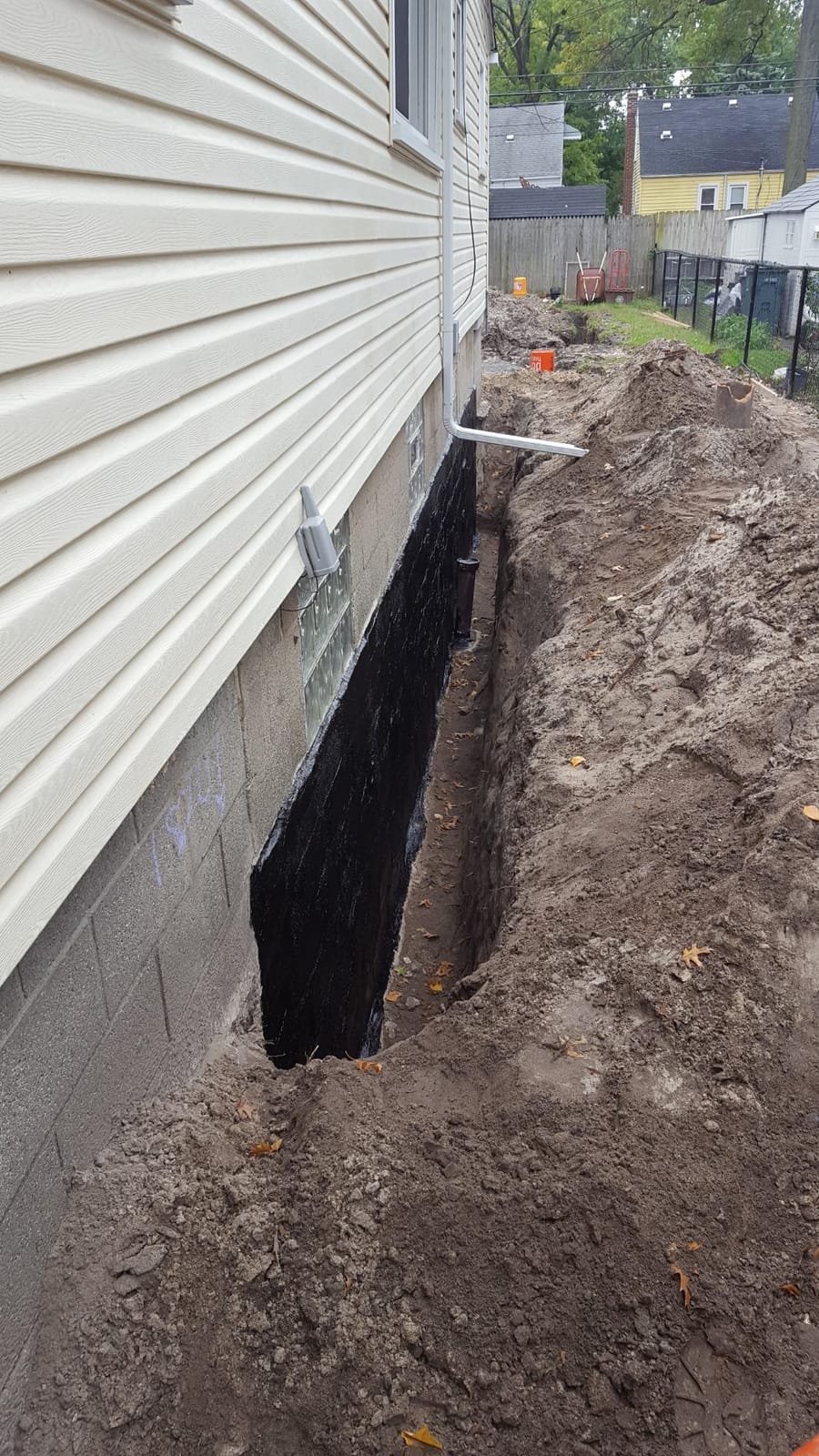
Where Liquid Rubber earns its spot
This is the pick for a finished basement where the wall is already painted or trimmed and you want a bright, cleanable surface. It bonds over most sound existing coatings, covers hairline cracks, and handles the damp-and-drippy wall that a penetrating sealer alone will not satisfy.
It also suits cold or wet basements where you cannot control humidity during application, because the zero-VOC water-based formula is safe to roll out in a closed space with ventilation.
Where Liquid Rubber is the wrong tool
It is the wrong choice for a floor you need to walk on daily, and the tacky cured surface is the reason. Plan on two to four coats, which adds labor time on a large wall, so a small repair is easier with a one-gallon penetrating sealer.
And it will not defeat a wall that is actively running water. Forum users with basements cut into a hill report that interior-only coatings, including this one, eventually fail when the surrounding drainage was never addressed.
2. Nanoprotect Concrete and Stone Sealer – Best Value Penetrating Sealer
Nanoprotect Concrete & Stone Sealer Indoor & Outdoor | Long-Term Protection Against Water, Stain & Dirt | for Driveway, Patio, Pavers and Any Absorbent Stone | 1 Gal
Silane-siloxane deep penetration
About 200 sq ft per gallon
Ultra-low VOC water-based
Pros
- Invisible film-free protection that cannot peel
- Applies with a standard pump sprayer
- Tested outdoors for 32 plus months
- Suitable for indoor and outdoor absorbent surfaces
Cons
- One coat can be thin on very porous concrete
- Can leave temporary residue or puddle marks
- Coverage runs short on highly absorbent stone
This is a straightforward fix for a dry-ish wall with damp patches and no visible cracks. It is a silane-siloxane treatment that absorbs into the pore network instead of forming a surface layer, which means the concrete looks exactly the same before and after.
The marketing claim we like is the durability testing: the manufacturer reports over 32 months of real-world outdoor exposure, rather than a laboratory number. On a basement wall, that means it keeps working without a film to crack or flake.
Application is genuinely simple. Pump sprayer, wet-on-wet method, about 24 hours before the wall takes moisture. Coverage is roughly 200 sq ft per gallon for a single coat, and closer to 135 sq ft per gallon with the wet-on-wet approach the instructions call for.
Two limitations to plan for. It is only for absorbent surfaces, so it does nothing on polished, sealed or painted masonry, and on rough walls you have to wipe off puddles before they dry to avoid temporary white marks.
Where Nanoprotect earns its spot
This is the best value pick when you want to treat a whole wall of bare concrete cheaply and keep the industrial look. It is also a good option for a basement with pets, children or a planting bed directly above, since the formula is water-based, solvent-free, acrylic-free and PFAS-free.
Pair it with a spray application on non-coated block and you get even coverage without a roller tray in a tight space, which makes it easy to go back over the same wall later as a maintenance coat.
Where Nanoprotect is the wrong tool
It cannot fix a wall that already has paint or a sealer on it. Reviewers report that a single coat is thin on water-blasted or very porous concrete, and that actual coverage lands under the stated square footage on absorbent stone.
It also has nothing to say to efflorescence that has already bloomed. That needs removing and a dry wall before you spray, and if the wall is actively seeping, no penetrating sealer will hold.
3. Rain Guard Concrete Sealer – Budget Pick for Bare Concrete Walls
Rain Guard Concrete Sealer 1 Gallon | Ready to Use | Natural Finish | Deep Penetrating Protection Against Water and Salt Damage for All Concrete Surfaces | Silane/Siloxane Waterproofer
Water-based silane and siloxane
Clear natural finish
Covers 200 sq ft per gallon
Pros
- Low cost per gallon for full wall coverage
- Invisible finish with no gloss or colour shift
- Resists salt and efflorescence
- Soap and water cleanup
Cons
- Needs two flood coats for reliable results
- Coverage varies with surface porosity
- Lowest average rating among these picks
Rain Guard is the pick if the job is a small damp area on unpainted concrete and you want to finish in an afternoon. It is a ready-to-use silane/siloxane waterproofer with a clear finish, made for walls, steps and other concrete surfaces indoors and out.
Two things stand out for basement work. It lists resistance to efflorescence, which matters on a wall that salts up every wet season, and it dries within an hour at 75F, so you can apply a second coat the same day.
The claimed service life is up to five years, which is respectable for a single-gallon penetrating treatment, and it is safe for people, pets and plants once dry. Coverage is up to 200 sq ft per gallon depending on porosity.
This is also the product on our list with the widest rating spread. The 4.3 average comes with a meaningful share of one-star reviews, and the pattern in those reviews is usually coat count and surface porosity rather than a faulty product.
Where Rain Guard earns its spot
Use it on a budget, on unpainted concrete, block, brick or stucco, and it does exactly what it claims. It is a sensible first line of defence in a relatively dry basement that has never had a treatment, which is how owners describe using it.
It is also useful as a topcoat on a driveway or garage floor, where you want water beading without any change to the colour of the slab.
Where Rain Guard is the wrong tool
Do not expect one coat to do it. Two flood coats are needed for reliable protection, and on porous or previously water-blasted concrete the second coat is what makes the difference between a good result and a disappointing one.
It is also the wrong choice for an active leak, a hairline-crack wall, or a painted surface. For those problems you need a membrane rather than a water repellent.
4. Ghostshield Siloxa-Tek 8500 – Best Penetrating Sealer for Salty and Damp Conditions
Siloxa-Tek 8500 Ready to Use – 1 Gallon Penetrating Concrete Sealer, Water and Salt Repellent. Clear, Water-Based DOT Approved Silane/Siloxane for Concrete, Brick, Masonry & Pavers
D.O.T. approved silane and siloxane
250 sq ft per gallon per coat
100 percent breathable
Pros
- Never peels flakes or delaminates because there is no film
- Resists chlorides deicing salts and freeze-thaw
- No slick gloss or colour change
- Covers 250 sq ft per gallon per coat
Cons
- Not intended for stained concrete
- Ready-to-use size leaves surplus on small jobs
- Some buyers report coverage running short
Siloxa-Tek 8500 is a strong all-round penetrating sealer, and the specification page backs that up. It claims six times the active content of other water-based concrete sealers, which is a fairly specific and checkable claim about penetration depth.
Because it is non-film-forming and 100 percent breathable, it cannot peel, flake or delaminate. That removes a failure mode we hear about often with basement coatings, and it is why we recommend it for long-term preventive work.
Coverage is among the best figures on this list at up to 250 sq ft per gallon per coat, and the manufacturer states up to 10 years on vertical applications when installed by a certified applicator. It is D.O.T. approved and resists chlorides, deicing salts, pitting, spalling and freeze-thaw damage.
Verified buyers document visible beading on damp basement steps and confirm the finish stays invisible and non-slippery, which matters on a wall you walk past daily. A small number of reviews report leaks on foundation walls, which tells you where its limit sits.
Where Siloxa-Tek 8500 earns its spot
This is the choice for a basement in a freeze-thaw region, or one where road salt and chlorides track in from outside. It holds up on vertical below-grade surfaces and on block, brick and stone alike, so one product covers a mixed wall.
It is also the pick when the concrete must stay invisible. No gloss, no colour shift, no surface profile change, and you can paint over the wall later without stripping anything.
Where Siloxa-Tek 8500 is the wrong tool
It is a water repellent, not a leak repair. On a wall that is already seeping or where you need to bridge cracks, this will not hold, and it is not intended for stained concrete where you want the stain gone.
The ready-to-use format also works against small jobs. For a large wall area the concentrate version is the more sensible buy, and surplus product from a one-gallon can is difficult to store or pass on.
5. Foundation Armor SX5000 WB – Premium Pick for Long-Term Protection
Armor SX5000 WB Natural-Look Penetrating Water-Based Silane Siloxane Concrete Sealer for Concrete, Brick, Pavers, and Natural Stone – 5 Gallon
Water-based silane siloxane
Reduces absorption up to 95 percent
7 to 10 year barrier life
Pros
- Reduces water absorption by up to 95 percent
- No change to colour texture or surface feel
- Works below the surface so there is no film
- 0 VOC odorless and soap-and-water cleanup
Cons
- 5 gallon size suits only larger wall areas
- Needs a properly cleaned unsealed surface
- Surplus bulk product is awkward to store
Foundation Armor SX5000 has one of the most consistent review profiles here, at 4.6 out of 5 with a 78 percent five-star share across more than 1,200 reviews.
The claim to check is the absorption reduction. The manufacturer states it reacts below the surface to cut water and liquid absorption by up to 95 percent, which is what makes the barrier last 7 to 10 years rather than a single wet season.
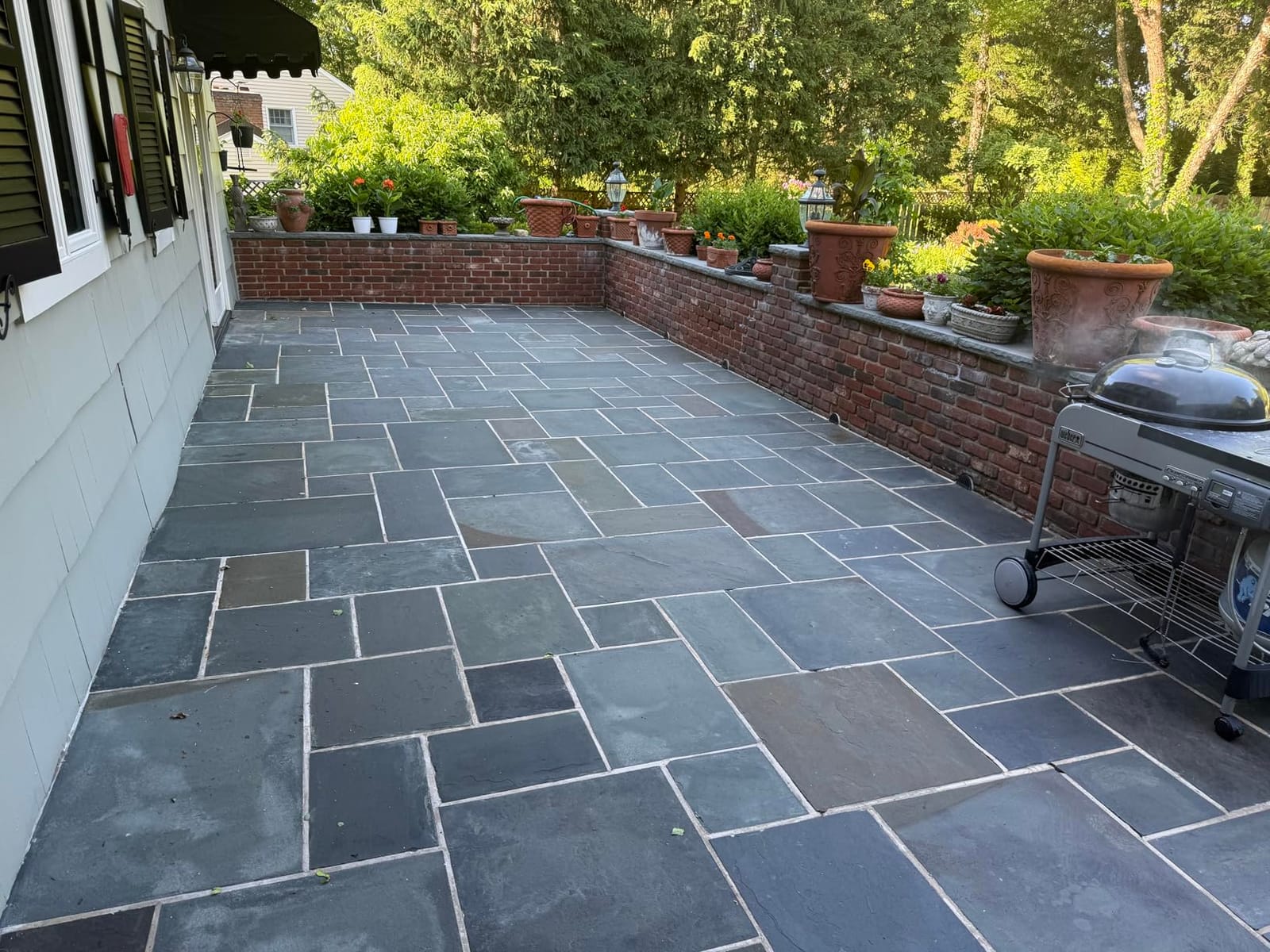
It suits unsealed concrete, brick, pavers, bluestone, flagstone, slate and natural stone, so it handles a basement wall that was part patched with different masonry. One gallon covers 175 to 225 sq ft, applied with a pump sprayer.
It is 0 VOC and odorless with soap-and-water cleanup, which makes it comfortable in a closed basement with the door shut. Owners emphasise long service life and a one-step spray application as the two things that matter most.
Where SX5000 earns its spot
This is the pick for a whole-basement treatment where you want to spray once and think about it for years. It also suits walls with no cracks, where damp is the only symptom.
Because nothing forms on the surface, it is safe under a finished floor or behind a planned drywall build, and it will not create a slick surface on a stair or walkway.
Where SX5000 is the wrong tool
It is a five-gallon pail. For a single small wall or a repair area, that volume is impractical, and surplus product from a bulk container is awkward to store or pass on.
It also needs a properly cleaned and prepped unsealed surface to perform. Paint, sealer, dirt or a chalky surface all reduce the absorption the chemistry depends on, and those are exactly the surfaces homeowners most often want to treat.
6. KILZ Basement and Masonry Waterproofing Paint – Top Rated for Painted Basement Walls
KILZ Basement and Masonry Waterproofing Paint, White, Interior/Exterior for Concrete, Brick & Cinder Block Walls, 1 Gallon
Nanotechnology water barrier
Blocks up to 12 PSI
Matte white alkali-resistant finish
Pros
- Highest average rating in the group at 4.7 out of 5
- Covers 75 to 125 sq ft per gallon
- Interior and exterior masonry use
- Dries to the touch in 1 hour
Cons
- White only so it cannot match a coloured wall
- Some users report a strong odour
- Cracks need hydraulic cement before painting
KILZ is the finish that turns a basement wall into a room you would not mind looking at. It posts the highest average rating of the twelve products we looked at, at 4.7 out of 5 from roughly 1,260 reviews with 81 percent five-star.
It is also the only product here with a clear pressure number other than the densifier category: a nanotechnology water barrier rated to block up to 12 PSI. That rating applies only on a properly prepped wall with cracks filled.
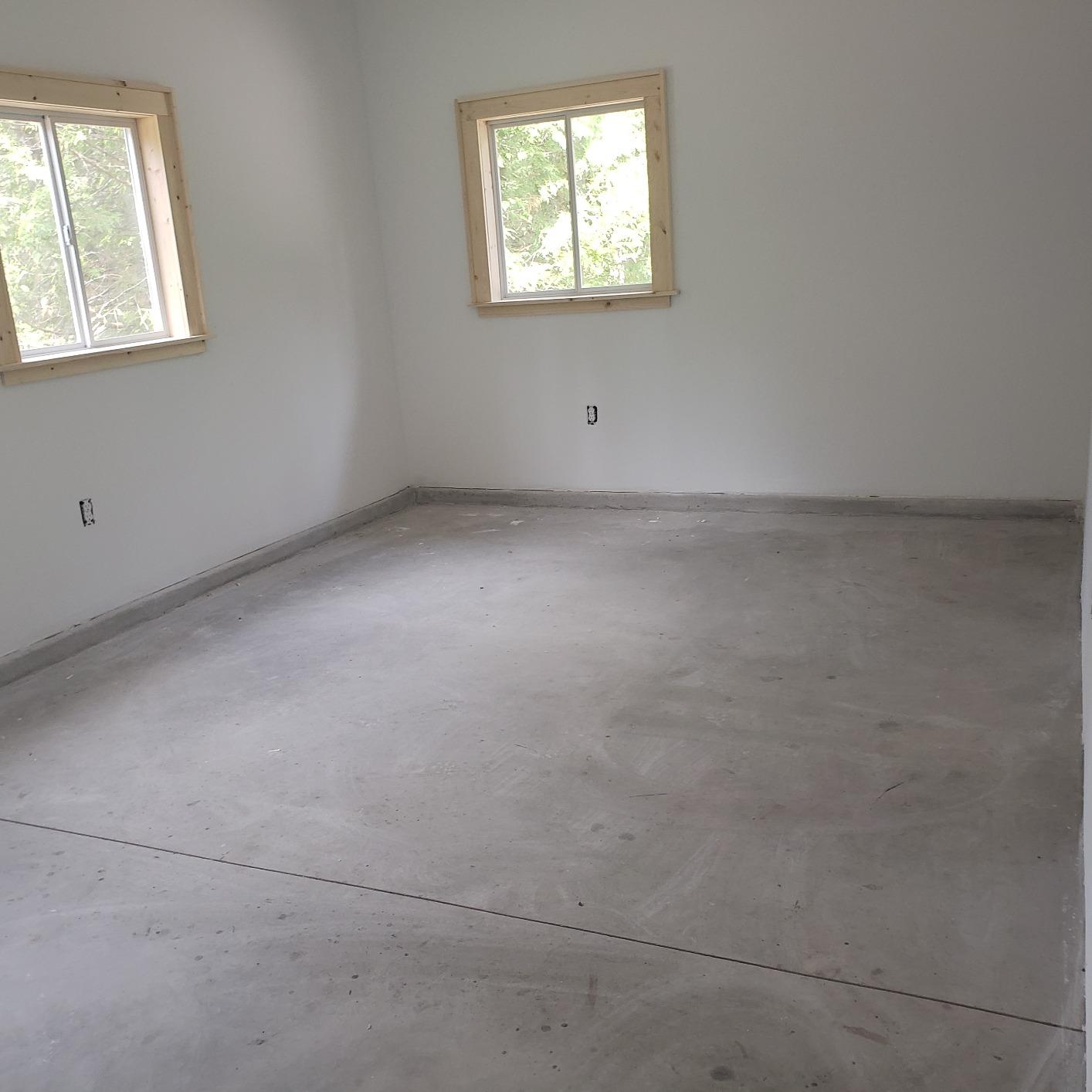
Coverage is 75 to 100 sq ft on rough surfaces and 100 to 125 sq ft on smooth ones. It dries to the touch in 1 hour, recoats in 4 hours, and fully cures in 7 to 14 days, so plan your coat count around cure time rather than dry time.
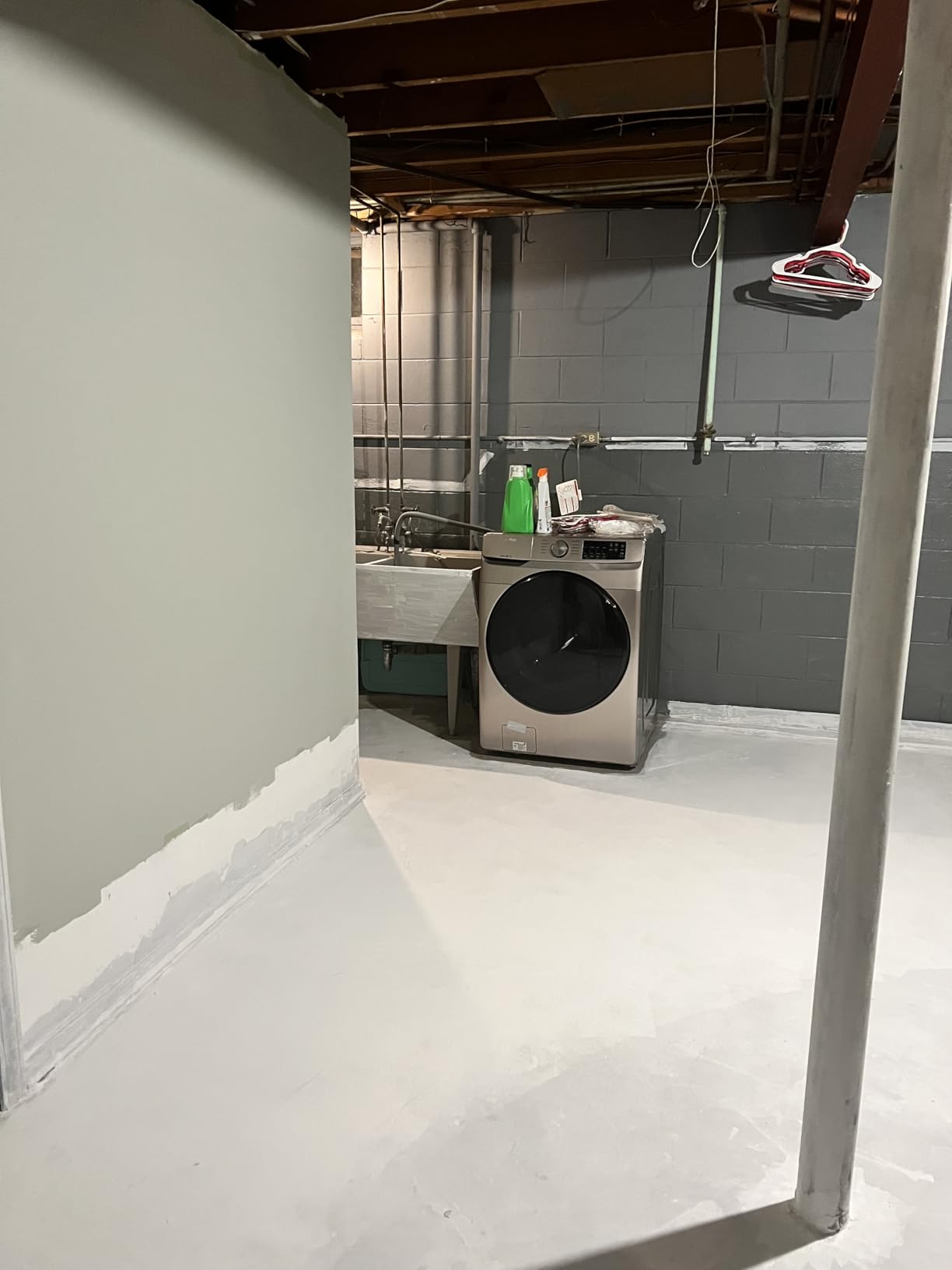
The finish is matte, alkali-resistant and mildew-resistant, which suits high-moisture rooms. Reviewers frequently praise how much it brightens a dark basement and how evenly it lays off the roller without dripping.
Where KILZ earns its spot
Choose it when the appearance of the finished wall matters as much as the moisture control. It is a genuine paint product, so you can colour it, topcoat it, and put drywall or trim against it later.
It is also the right pick for retaining walls, stucco and above-grade masonry, since it carries both interior and exterior approval and suits new construction and remodel work.
Where KILZ is the wrong tool
It will not stop an active leak. The manufacturer states this plainly, and the required prep is filling holes and cracks with hydraulic cement before painting below grade. Skipping that step is a frequent reason coatings fail early.
It is white only, so a dark or coloured wall is out of reach. Some users also report a stronger odour than the low-odour claim suggests, and porous cinder block frequently needs a third coat to cut streaking.
7. MasonryDefender Concrete Sealer – Best for Efflorescence-Prone Block Walls
MasonryDefender Concrete Sealer – Deep Penetrating Water Repellent, Silane Siloxane – 1 Gallon
Silane siloxane deep penetration
90 to 150 sq ft per gallon
Clear non-glossy finish
Pros
- Invisible non-glossy finish that keeps the natural look
- Breathable formula with no film to peel
- Resists freeze-thaw salts and efflorescence
- Works on driveways and patios with clear beading
Cons
- Coverage of 90 to 150 sq ft is below most rivals
- Needs careful surface cleaning before application
- Recommends a low-pressure garden sprayer only
MasonryDefender is built for exactly the symptom that brings most people to this category: white salt deposits blooming across a block wall. Its listed protection list names pitting, cracking, ice melt salts, chloride ions, freeze-thaw cycles and efflorescence in one line.
The chemistry is a silane siloxane that bonds with the surface to repel water while leaving the concrete free to breathe. Penetrating sealers that trap vapor inside the wall are what cause peeling coatings, and this is the opposite approach.
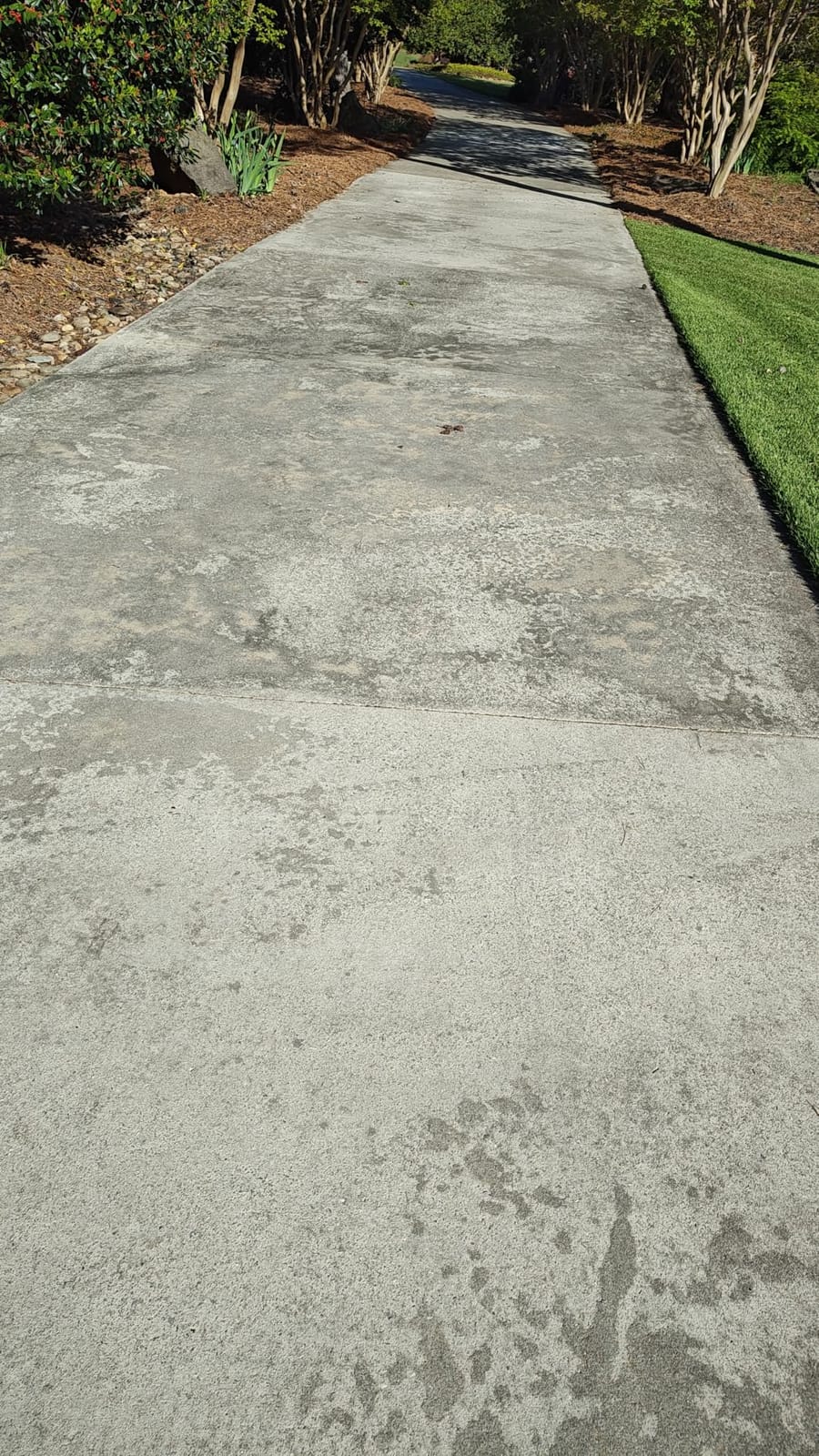
Application is a low-pressure garden sprayer, and the stated coverage is 90 to 150 sq ft per gallon. Owners confirm clear water beading on outdoor concrete and masonry with a natural, film-free result.
Budget the quantity honestly rather than by the label figure. On porous block walls the real number lands near the bottom of that range, and running short halfway up a wall means a visible change in absorption.
Where MasonryDefender earns its spot
Pick it for older block basements with recurring efflorescence and no structural cracks. It is also a sensible treatment for the same concrete on a driveway or patio, since one product covers both surfaces.
For a furnished basement where you do not want to change the look of the walls at all, the invisible non-glossy finish is a real advantage over any painted option.
Where MasonryDefender is the wrong tool
Coverage is the honest drawback here. At 90 to 150 sq ft per gallon it will take noticeably more product than the 200 to 250 sq ft competitors claim, so measure before you start.
It also requires careful cleaning beforehand and a low-pressure sprayer rather than a brush or roller. On a wall with hairline cracks or active seepage, you want a membrane coating instead.
8. Eco Advance Siloxane Waterproofer – Best for Basements With Pets and Plants
Eco Advance Concrete/Masonry Siloxane Odorless Spray-On Application Waterproofer, Safe for Use Around Plants, Pets, and People, 1 Gallon
Odorless non-toxic siloxane
Spray-on with pump sprayer
Vapor permeable
Pros
- Odorless and non-toxic for people and pets
- Safe for landscape plantings
- Sprays on fast with a standard pump sprayer
- Vapor permeable so new concrete still cures
Cons
- Listing mixes concentrate and ready-to-use language
- Coverage is stated less clearly than rivals
- Applies to absorbent surfaces only
Eco Advance is the pick when the wall sits next to a garden bed, a pet pen or a play area, or when you simply cannot stand the smell of a coating in a closed basement. It is water-based, non-toxic and non-flammable, and it will not harm plantings.
Technically it is a commercial-grade siloxane waterproofer that also resists oil, stains, de-icing salts and pool or spa chemicals. That chemical resistance is what separates it from a cheap driveway sealer.
It goes on with a standard garden pump sprayer, dries clear with no film, and stays vapor permeable, so it can be used on new concrete that is still curing. Reviewers regularly single out the absence of odour as the reason they bought it.
One documentation wrinkle to flag. The listing carries concentrate wording while marketing the product as ready to use, and some buyers report being unsure whether to dilute it. Confirm the dilution instruction on the container before you mix anything.
Where Eco Advance earns its spot
Use it on walls near soil, planters, pets or children. Between the non-toxic formula and the plant-safe claim, it removes the argument about fumes that comes up constantly on homeowner forums.
It is also versatile across surfaces: concrete, brick, stucco, natural and synthetic stone, EIFS and pavers all appear in the approved list, so one product covers a mixed basement wall.
Where Eco Advance is the wrong tool
It is a water repellent for absorbent surfaces, not a crack-bridging membrane. Hairline cracks, running water and a wall you want to keep painting are all reasons to pick something else.
Coverage is stated less clearly than the competition, and the concentrate wording on the listing can lead to over-dilution, which quietly reduces the protection you paid for.
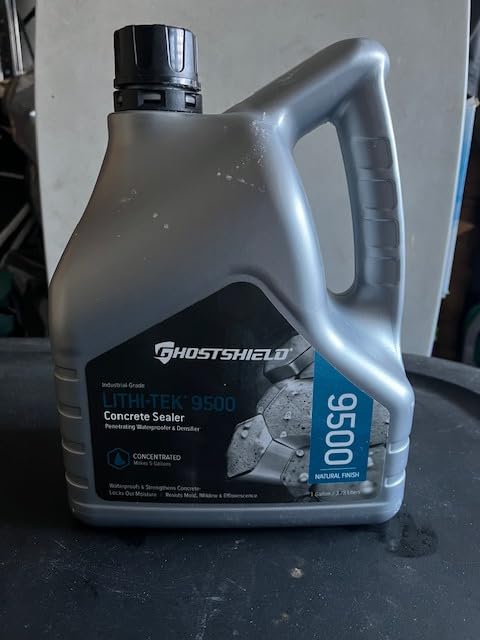
9. Ghostshield Lithi-Tek 9500 – Best for Large Basement Floors and Walls
Lithi-Tek 9500 Ultra Concentrate – 1 Gallon (Makes 5 GALLONS) Penetrating Concrete Sealer, Waterproofer Plus Densifier
Waterproofer and densifier combined
1 gallon makes 5 gallons
Up to 1000 sq ft per coat
Pros
- Densifies and waterproofs in the same step
- Strengthens concrete up to 50 percent
- Concentrate format covers large areas cheaply
- Reduces efflorescence and vapor transmission
Cons
- Must be diluted with 4 gallons of water first
- Not for surfaces exposed to deicing salts
- Mixing ratio must be followed exactly
Lithi-Tek 9500 is the value play if you are treating an entire basement floor and both walls. One gallon mixes with four gallons of water to make five gallons, treating up to 1,000 sq ft per coat.
It also does something the other penetrating products here do not: it densifies. The manufacturer states it strengthens concrete by up to 50 percent while increasing abrasion resistance, which matters if you plan to install tile or hardwood over the slab.
It is listed specifically for basement floors and poured basement walls, and it reduces hydrostatic pressure, water vapor transmission, moisture intrusion and alkali-silica reaction while preventing efflorescence.
Two constraints matter. It must be diluted with four gallons of water before application, and the ratio has to be exact or you lose the performance you are paying for. It is also not recommended where surfaces see deicing salts.
Where Lithi-Tek earns its spot
It is the pick for a slab you intend to finish. Because it hardens and strengthens the surface as well as sealing it, it is a better base for tile, resilient flooring or self-leveling concrete than a water repellent alone.
It is also the economical choice for a poured-concrete wall, where the concentrate format stretches a single gallon across a large area and keeps the material cost down.
Where Lithi-Tek is the wrong tool
It is not for exterior surfaces exposed to road salt, and it is not a crack-bridging membrane. If your wall has structural cracks or active seepage, this is a companion product rather than the fix.
The dilution step is also a genuine stumbling block. Mix it at the wrong ratio and you have wasted a gallon, so measure rather than eyeball it.
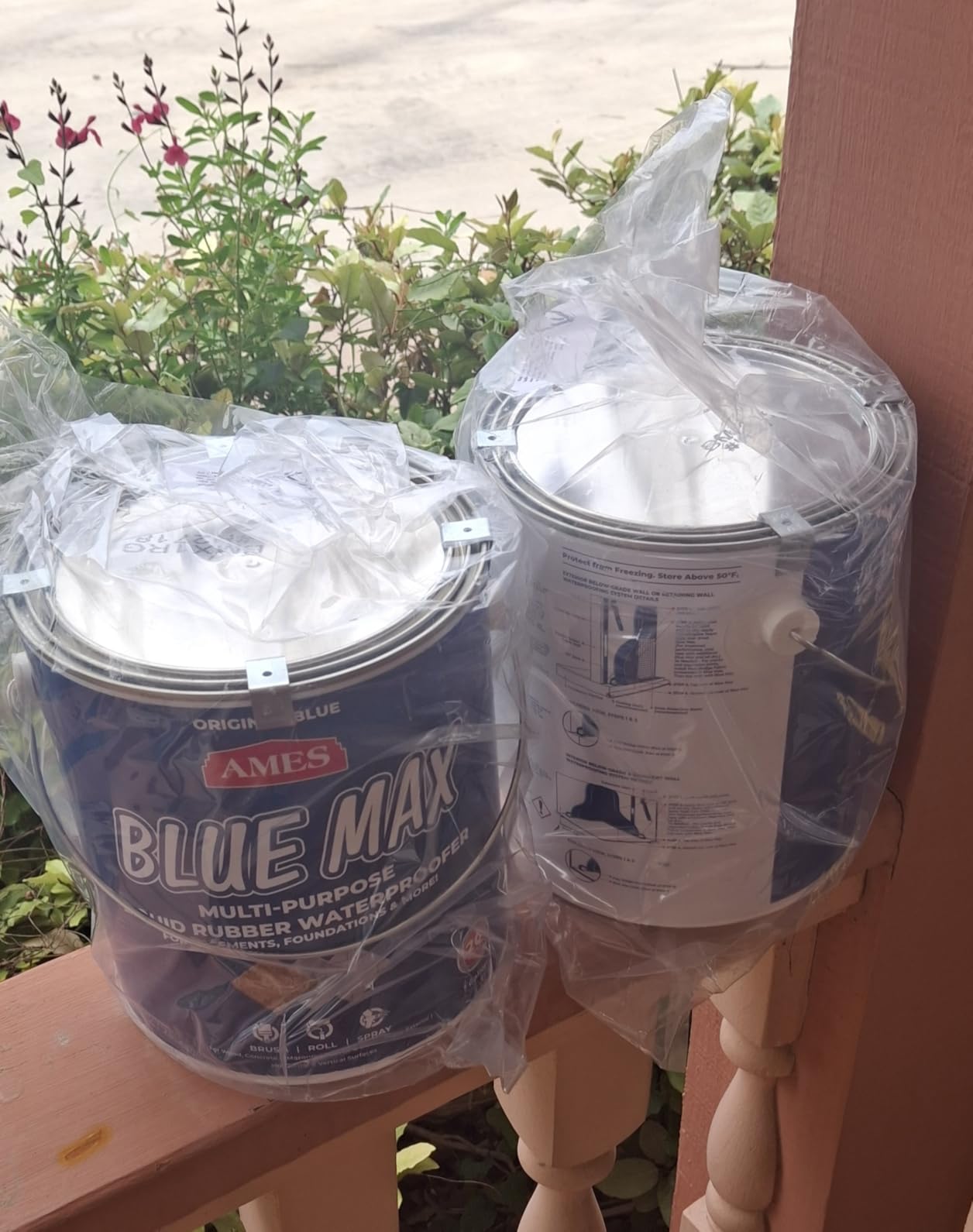
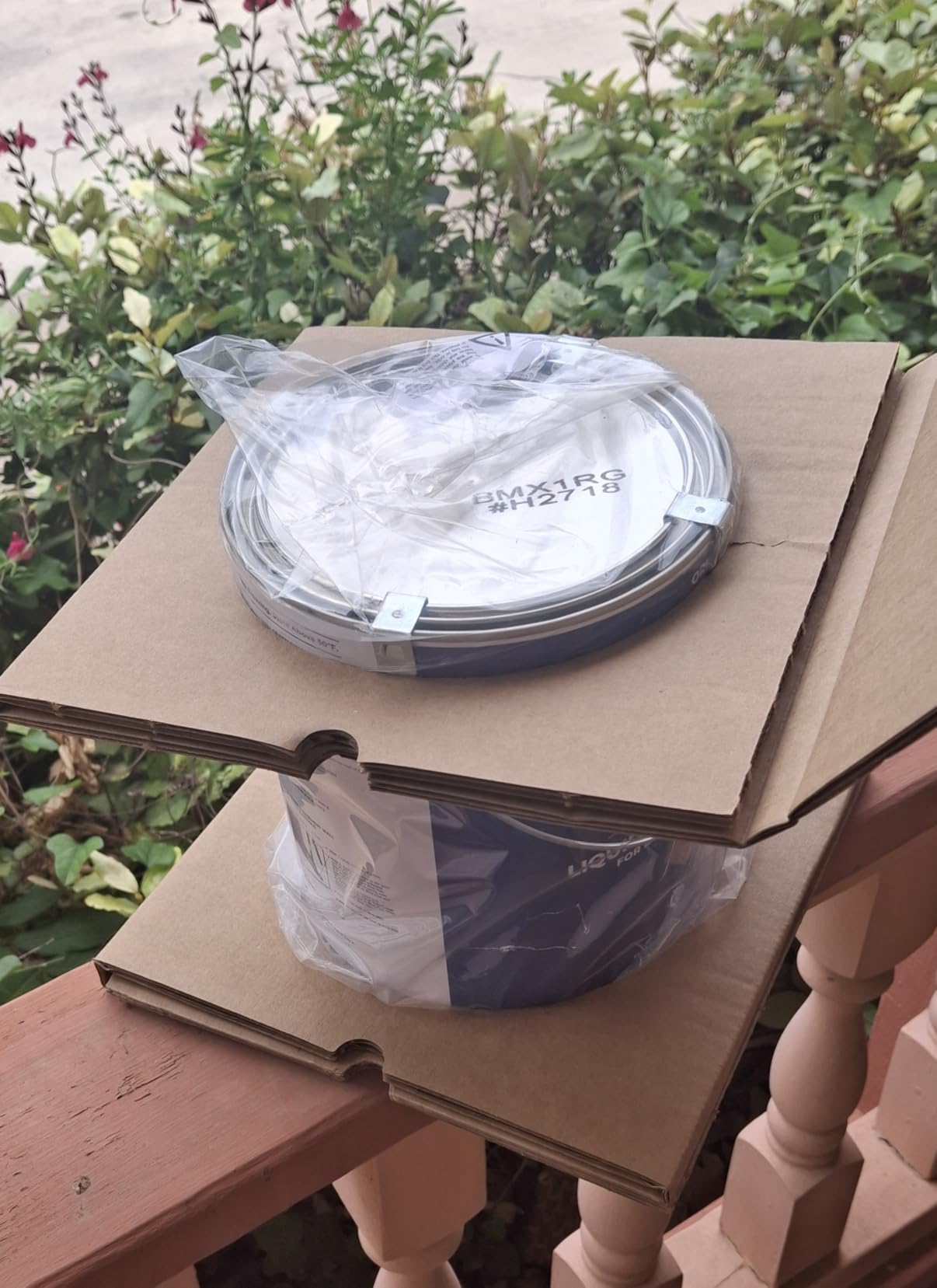
10. AMES Blue Max Liquid Rubber – Best for Below-Grade Foundation Walls
AMES Blue Max White Liquid Rubber Waterproofer,1 Gal
Elastomeric liquid rubber
900 percent elongation
24 hours between coats
Pros
- 900 percent elongation resists cracking and peeling
- Made for below-grade and insulated concrete foundations
- Brush roller or spray on vertical or horizontal
- Non-toxic and VOC compliant in all 50 states
Cons
- Cured rubber surface stays tacky
- Needs a 24 hour wait between coats
- One gallon pail is small for a full wall
AMES Blue Max is a liquid rubber membrane aimed squarely at below-grade work: foundations, basements and underlayment. Like the Liquid Rubber option, it stretches to 900 percent of its original length, which is what lets it bridge movement cracks instead of tearing.
It accepts concrete, metal, rubber and wood, and applies by brush, roller or spray on vertical or horizontal surfaces. That flexibility makes it easy to work around a cove joint or a basement stair where a roller is awkward.
The 24-hour interval between coats is the number to plan around. It is slower to fully build a film than a fast-drying paint-style coating, so start earlier if the wall needs to be dry before a weekend is over.
Reviewers describe it as an effective below-grade coating with a 79 percent five-star share, and the recurring trade-off is the same one as the other rubber membranes: the cured surface stays tacky and is not suited to foot traffic.
Where Blue Max earns its spot
Choose it for foundation walls with hairline cracking, or for ICF and insulated concrete form walls where the surface is less forgiving than plain poured concrete. It also works on metal and wood, so it covers a mixed foundation.
It is a good second coat over a penetrating sealer on a stubborn damp wall, since the penetrating treatment slows the water and the rubber layer takes the movement.
Where Blue Max is the wrong tool
Do not plan on walking on it. The tacky cured finish rules out floors and any surface that gets foot traffic, which is a real limitation in a basement stairwell.
The one-gallon pail is also small for a full foundation wall, and the 24-hour wait between coats means you need more wall area than the product covers in a single session.
11. Ames Block and Wall Liquid Rubber – Best for Movement Cracks in Block Walls
Ames Block & Wall™ Liquid Rubber Waterproofer,5 Gal, White
Elastomeric liquid rubber
Up to 1800 percent elongation
Fills cracks up to 1/8 inch
Pros
- Highest elongation on this list at up to 1800 percent
- Fills cracks and crevices up to 1/8 inch
- Works on cinder block ICF concrete wood and metal
- Low odour with roller brush or sprayer application
Cons
- 5 gallon pail is oversized for small repairs
- Two coats recommended which doubles material use
- Smallest customer photo set in the group
This is the product to reach for when cracks are the problem. At up to 1,800 percent elongation it is the most elastic coating here, and it fills cracks and crevices up to 1/8 inch rather than just spanning them.
It was formulated for concrete walls and cinder block, which is the most common basement wall type in older homes. It also coats ICF, metal, wood and plain concrete, so it handles a patched or mixed foundation.
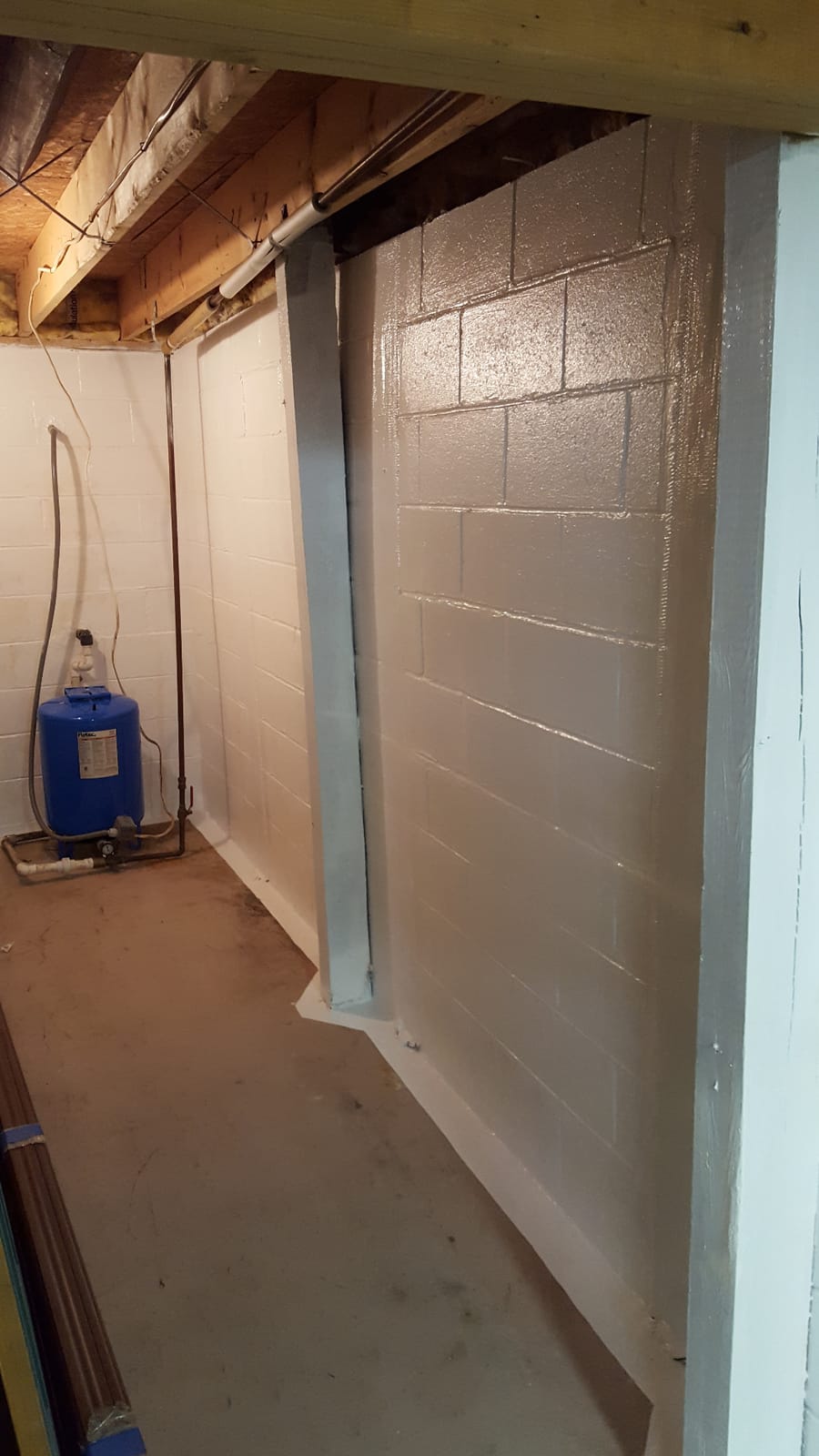
The high-solids formula dries to a tough elastic membrane and gives about 100 sq ft of coverage per gallon per coat, with two coats recommended. Application is by sprayer, roller or brush, and the odour is low enough for an enclosed basement with ventilation.
At 4.6 out of 5 with an 81 percent five-star share, the ratings are strong, though this is a smaller review base than most of the list. Buyers consistently cite the crack-filling ability as the reason they bought it.
Where Ames Block and Wall earns its spot
It is the pick for cinder block and brick basements with visible movement cracks and light seepage through those cracks. Elasticity this high tolerates seasonal wall movement that would split a rigid cementitious coating.
It is also a good match for a workshop or utility basement where you want a tough, cleanable membrane and the wall is not going to be painted afterwards.
Where Ames Block and Wall is the wrong tool
The five-gallon pail is genuinely oversized for a repair job, and two coats are recommended, so the material use on a small area is wasteful. Buy it when you have a whole wall to cover.
Like the other rubber membranes, the cured surface is not designed for foot traffic, and it will not replace hydraulic cement repair on a crack that is still moving.
12. RadonSeal LastiSeal – Best for Dusty and Crumbling Concrete
LastiSeal Brick & Masonry Sealer – Deep-Penetrating Sealer for Brick, Concrete, Stone & Masonry – Water-Resistant Protection for Interior & Exterior Surfaces – 15-Year Service Life (1 Gallon)
Deep penetrating polyester polymer
15 year service life claim
Ultra-low VOC water-based
Pros
- Works inside the pores to bind crumbling surfaces together
- Invisible finish that will not peel chip yellow or fade
- Ultra-low VOC and low odour for indoor use
- Applies with a low-pressure sprayer or roller
Cons
- Smallest review base here at 236 reviews
- Rated water resistant rather than waterproof
- 15 year life claim has less long-term buyer evidence
LastiSeal is the odd one out in this group because it treats the concrete itself rather than just repelling water. It works inside the pores to bind crumbling brick and dusty concrete together, improving surface integrity as it seals.
That makes it a strong candidate for a very old basement wall where the surface powders under your hand or where a coating would delaminate from a weak substrate. Strengthening first is the difference between a coating that lasts and one that peels off.
It is a polyester polymer and polyurethane formula, water-based, low odour and ultra-low VOC, so it is fine indoors. Application is with a low-pressure sprayer or a roller, and the finish is flat and natural with no yellowing or fading.
Two honest caveats. It is classified as water resistant rather than fully waterproof, and the 15-year service life is a manufacturer claim with less long-term buyer evidence behind it than the 7 to 10 year figure from the densifying silanes.
Where LastiSeal earns its spot
Choose it for old masonry that is friable, dusty or starting to crumble, where a film-forming coating would sit on top of weak concrete. It suits brick, concrete, pavers and stone, indoors and out.
It is also a sensible pairing product: run it on a weak substrate first to stabilise it, then follow with a penetrating sealer or membrane for the moisture control.
Where LastiSeal is the wrong tool
It is not the answer for pressure-driven water movement. The water-resistant classification makes that clear, and it will not bridge a crack or handle active seepage.
Its review base is the smallest of any product here, which means less long-term evidence when you are relying on a durability claim. For a heavily used wall we would pair it with a proven coating rather than trust it alone.
How to Choose the Best Basement Sealer for Your Wall
Start with the symptom rather than the brand. Water that beads on the wall and dries is a different problem from water running down it, and matching the product to the symptom is what separates a 20-minute fix from a failed weekend.
If the wall is damp but not leaking, you want a penetrating silane-siloxane. Nanoprotect, Siloxa-Tek 8500, Rain Guard, MasonryDefender and Eco Advance all sit in this group, and none of them will change the look of the concrete.
If the wall seeps or has hairline cracks, you want an elastomeric membrane. Liquid Rubber Foundation Sealant is our first choice, with AMES Blue Max and Ames Block and Wall as the alternates. Elongation is the number that matters, and all three stretch dramatically.
If you want a bright, finished look, use a surface coating such as KILZ. It is the one product here meant to be painted or tinted, but it also has the strictest prep requirement and the lowest tolerance for unfixed cracks.
If the floor is going to be covered later, start with a densifier. Lithi-Tek 9500 seals and hardens the slab at the same time, which is what a resilient flooring or self-leveling application needs.
If the concrete is dusty or crumbling, stabilise before you seal. LastiSeal is built for that, and skipping this step is why many coatings peel off older walls within a couple of years.
Three questions settle most remaining cases. How much water is moving through the wall, because penetration stops nothing. Is the wall painted, since penetrating chemistry needs bare absorbent concrete and a film coating needs a sound surface. And how large is the area, because coverage figures on penetrating products range from 90 to 250 sq ft per gallon.
For painted walls, owners on r/DIY and r/HomeMaintenance ask the same question: strip it or seal over it. If the existing paint is sound, a membrane like Liquid Rubber bonds over it. If it is peeling, no coating will hold, and the stripping comes first. Forum users with basements built into a hill consistently report higher failure rates with interior-only solutions, and they pair interior sealing with grading and drainage fixes.
If you are finishing the basement, an accent wall finish guide covers the decorative side of a finished basement once the moisture problem is handled.
How to Prepare and Seal a Basement Wall Step by Step
Preparation decides the outcome. Most sealer failures we read about trace back to a wall that was never cleaned, or efflorescence that was painted over instead of removed.
Find the source. Check gutters, downspouts and grading before sealing anything. Water that runs toward the house defeats any interior product.
Dry the wall. Let damp areas dry for several days first, and ventilate with a fan and dehumidifier if you can. Sealers need a dry substrate to penetrate.
Remove efflorescence. Wash the white salt deposits off with a masonry cleaner and stiff brush, then let the wall dry fully. Sealing over efflorescence locks the salts into the surface.
Fill cracks and holes. Use hydraulic cement on structural cracks, mortises and tie holes before any coating. Fillers are not structural repair, but a membrane can only bridge what is filled.
Clean the surface. Remove dust, dirt, paint flakes and old sealer film. Penetrating products need bare absorbent concrete to work, and coatings need mechanical adhesion.
Then apply in the order the label specifies. Penetrating sealers go on with a pump or garden sprayer in a wet-on-wet pass and need about 24 hours before moisture exposure. Surface coatings go on with a roller or brush and follow the label’s dry and recoat times.
Rubber membranes need more patience. Budget two coats with a 24-hour interval, and expect a fuller cure beyond that. Always work the cove joint where the wall meets the floor last, because that joint is the most common path for water and the easiest place for a coating to thin out.
Finally, keep the wall dry for the full cure window before you install flooring or drywall. KILZ for example fully cures in 7 to 14 days even though it is dry to the touch in one hour, and covering it early traps moisture against the coating.
Frequently Asked Questions
What is the best sealer for concrete basement walls?
For damp but not leaking walls, a penetrating silane-siloxane sealer such as Nanoprotect or Ghostshield Siloxa-Tek 8500 works best because it leaves no film to peel. For walls that seep or have hairline cracks, an elastomeric rubber membrane like Liquid Rubber Foundation Sealant bridges cracks and stretches with wall movement. For a bright finished look, KILZ Basement and Masonry Waterproofing Paint blocks up to 12 PSI of water pressure.
Should basement concrete walls be sealed?
Yes, if your walls are damp, show efflorescence, smell musty or will be covered by new flooring. Sealing reduces water absorption, blocks the salts that cause efflorescence and gives mould and mildew less surface to grow on. It is a preventive measure on a dry wall and a remedial measure on a damp one. It does not help a wall with an active leak.
Will waterproof basement paint work on a wet wall?
Not reliably. Surface coatings and penetrating sealers both need a dry, clean, absorbent substrate to bond and penetrate. Damp walls should be dried first with ventilation and a dehumidifier, and any efflorescence removed with a masonry cleaner. Painting over a wet or salt-covered wall is the most common cause of early peeling.
What are the downsides of using concrete sealer?
The main limits are that no interior sealer stops an active leak under hydrostatic pressure, that surface coatings can peel if moisture still pushes from behind, and that penetrating sealers only work on bare absorbent concrete. Poor preparation also causes early failure, and film-forming rubber membranes leave a tacky surface that is not suitable for foot traffic.
How long do basement waterproofing sealers last?
It depends on the type and the wall. Penetrating silane-siloxane sealers commonly claim 7 to 10 years, and Foundation Armor SX5000 states a 7 to 10 year barrier life while RadonSeal LastiSeal claims 15 years. Film-forming rubber membranes are often expected to last 20 years or more but can fail early on poorly prepared walls. Actual lifespan depends far more on drainage and grading than on the product.
Do I need to prep concrete before applying sealer?
Yes. Remove efflorescence with a masonry cleaner, fill cracks and mortises with hydraulic cement, and clean off dust, dirt and any old sealer film. Penetrating sealers need bare absorbent concrete to soak into, and surface coatings need a sound surface to grip. Skipping preparation is a leading cause of sealers failing within a year or two.
Our Pick for Best Basement Waterproofing Sealers in 2026
Liquid Rubber Foundation Sealant is the best basement waterproofing sealer for concrete walls in 2026 because it handles the widest range of real basement problems: damp walls, hairline cracks and light seepage, with a membrane that stretches rather than tears. It is zero-VOC, safe indoors and bonds over sound existing coatings.
If the wall is damp but structurally sound and you want it to look untouched, go with Ghostshield Siloxa-Tek 8500 or Nanoprotect. If you want a bright, paintable finish, KILZ is the pick after the cracks are filled. If the slab will be covered later, Lithi-Tek 9500 does the sealing and the hardening in one step.
Whatever you choose, dry the wall, remove efflorescence and fix the cracks first, then address grading and drainage outside. That preparation does more for a wet basement than any gallon of sealer.