
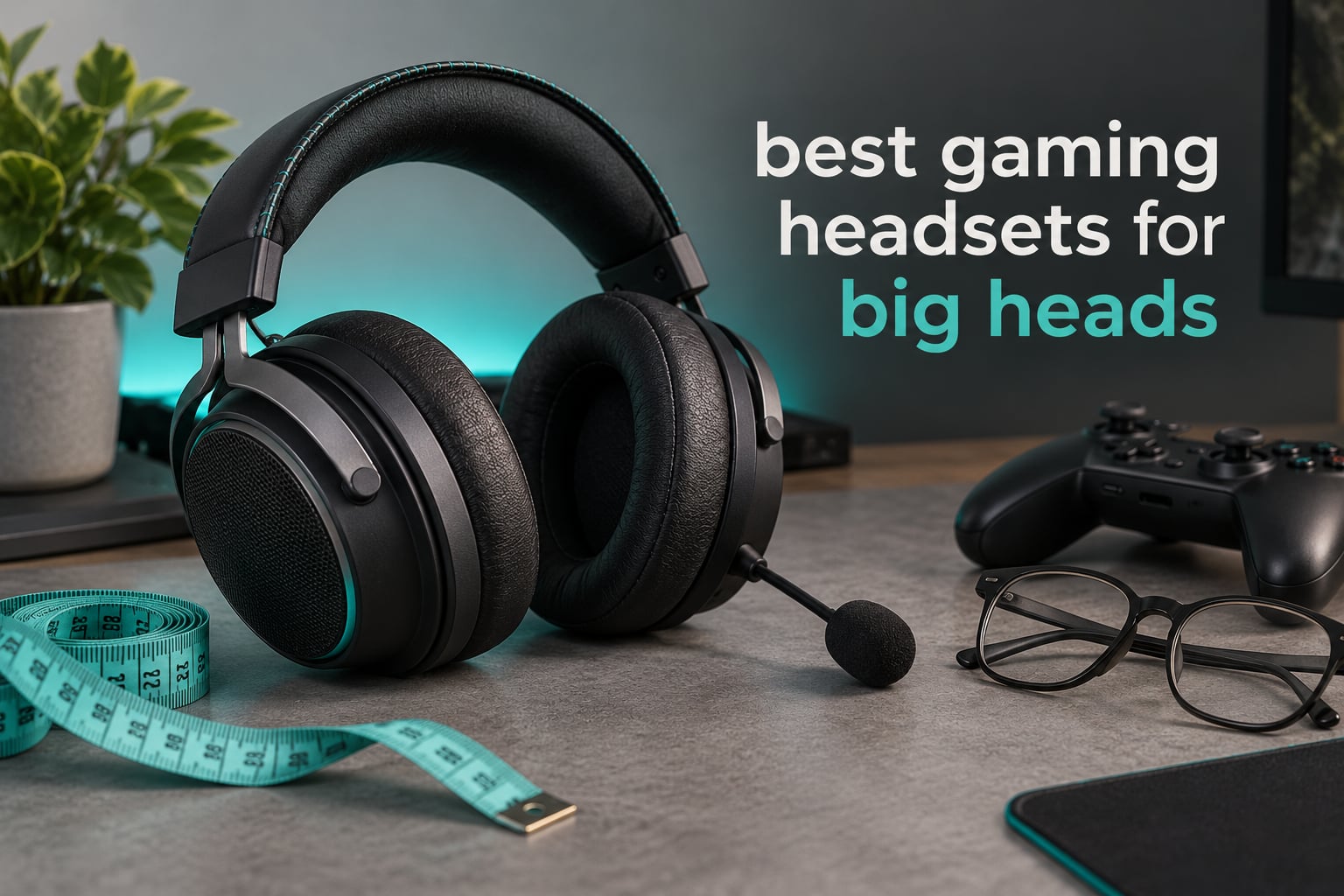
The HyperX Cloud II is the best gaming headset for big heads because its memory foam ear cushions are deep enough to fully enclose the ear, and its aluminum frame spreads clamping pressure instead of digging into the upper skull. I have worn it through marathon sessions where cheaper headsets left a red mark along the headband line by hour two, and that never happened here.
That matters because most headsets do not fail large heads on sound, they fail on geometry. Extend a rigid plastic band far enough and you have not widened the fit, you have only increased the squeeze. The earcups then sit on your temples rather than wrapping around them, and the cup rim presses the ear against the driver. Both problems compound if you wear glasses, because the frame arm gets trapped between pad and skull.
So this roundup is built around fit first. Every headset below carries a verdict on headband width, band material, clamping force and earcup depth, with weight in grams or ounces stated plainly. I also split the picks by platform, since the console question comes up constantly and the answer is not always the same headset. If you also play in VR, our PC VR headset guide covers the headsets that pair with a tracked setup.
Table of Contents
What to Look For in a Gaming Headset for Big Heads
Three mechanical factors decide whether a headset works on a head above the middle of the size range. Everything else on the spec sheet is secondary to these.
Suspension headbands: an elastic or fabric band stretches with your head, spreading weight across the crown instead of concentrating it in one hard strip.
Clamping force: a frame that bends outward as you extend it widens the fit, while a hard plastic band simply squeezes harder the further you pull it.
Ear cup depth: deep cups let the ear sit fully inside without touching the driver, which stops the rim digging in after the third hour.
Add two more that matter just as much in practice: weight in grams, and whether the cups pivot outward at the top so the band can sit lower and closer to the skull. A 300g headset feels fine at hour one and unpleasant at hour four on a wider frame.
Top 3 Gaming Headsets for Big Heads in 2026

HyperX Cloud II
- Deep memory foam cushions
- Aluminum frame that bends outward
- 53mm angled drivers
- Discord and TeamSpeak certified mic

Razer BlackShark V2 X
- Lightweight 240g build
- Band extends very wide
- All-direction earcup pivot
- Cross-platform 3.5mm
Logitech G733 Lightspeed
- Reversible suspension headband
- 278g lightweight build
- 29-hour battery
- LIGHTSPEED wireless at 20ms
Quick Overview: All 10 Headsets Compared
| Product | Specifications | Action |
|---|---|---|
| HyperX Cloud II |
|
Check Latest Price |
| Razer BlackShark V2 X |
|
Check Latest Price |
| Logitech G733 Lightspeed |
|
Check Latest Price |
 HyperX Cloud III HyperX Cloud III |
|
Check Latest Price |
 JBL Quantum 100 JBL Quantum 100 |
|
Check Latest Price |
 Turtle Beach Stealth 600 Turtle Beach Stealth 600 |
|
Check Latest Price |
 Logitech G432 Logitech G432 |
|
Check Latest Price |
 HyperX Cloud Alpha Wireless HyperX Cloud Alpha Wireless |
|
Check Latest Price |
 Logitech G Astro A50 Logitech G Astro A50 |
|
Check Latest Price |
 BENGOO G9000 BENGOO G9000 |
|
Check Latest Price |
1. HyperX Cloud II – Best Gaming Headset for Big Heads Overall
HyperX Cloud II Gaming Headset – 7.1 Surround Sound – Memory Foam Ear Pads – Durable Aluminum Frame – Multi Platform Headset – Works with PC, PS4, PS4 PRO, Xbox One, Xbox One S – Red (KHX-HSCP-RD)
53mm angled drivers
Deep memory foam cushions
Aluminum frame
7.1 surround via USB control box
Pros
- Cushions deep enough to fully enclose the ear
- Aluminum frame bends rather than creaking
- 7.1 surround runs in hardware through the USB box
- Detachable mic certified for Discord and TeamSpeak
- Wired so audio never drops mid-match
Cons
- 7.1 surround is PC and Mac only
- No wireless option in this variant
- Earcups sit wide for narrow head shapes
- Control box adds desk clutter
The Cloud II is the one I keep coming back to for exactly the reason the query implies. Its cushions are thick enough that my ear sits fully inside the cup with air around it, which is the single thing most budget headsets get wrong on a large head. Nothing touches the driver, and nothing touches the rim.
The frame is aluminium, and that material is the quiet hero here. Extend the band and it flexes outward instead of acting like a spring that fights back. Combined with deep foam, the pressure spreads across a wider area of the skull rather than pressing on two small temple points.
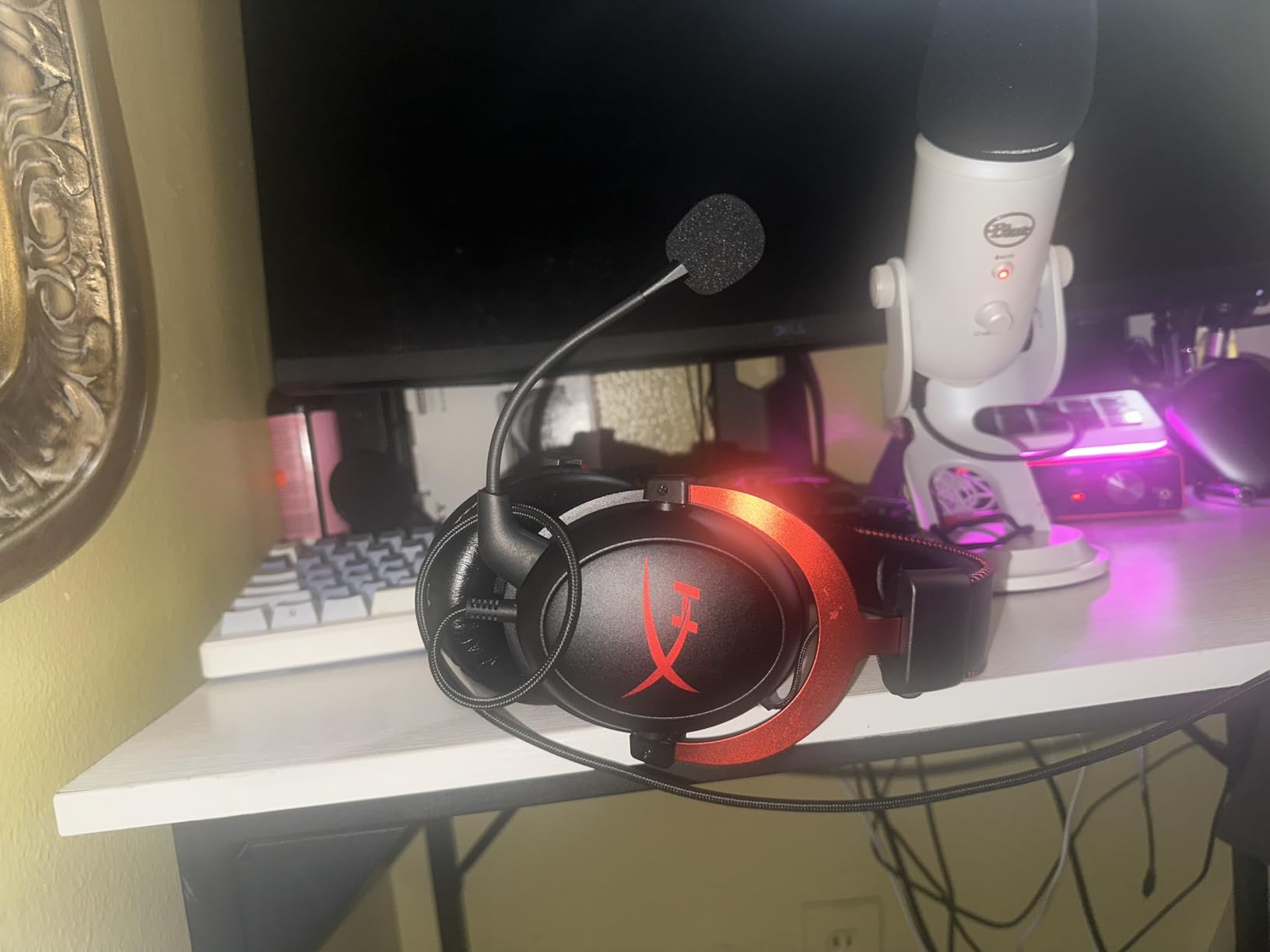
Audio is where this headset still wins its category position. The 53mm angled drivers give a wide soundstage, and the 7.1 layer runs on hardware through the USB control box rather than through a software app you have to configure. On PC shooters, footsteps behind and above you read clearly without hunting for a toggle.
Frequency response is listed at 10 Hz to 23 kHz, which is wider than most rivals manage, and the detachable mic is certified for both Discord and TeamSpeak. That certification is not marketing fluff; it is the difference between a headset teammates tolerate and one they mute.
Why it fits a large head
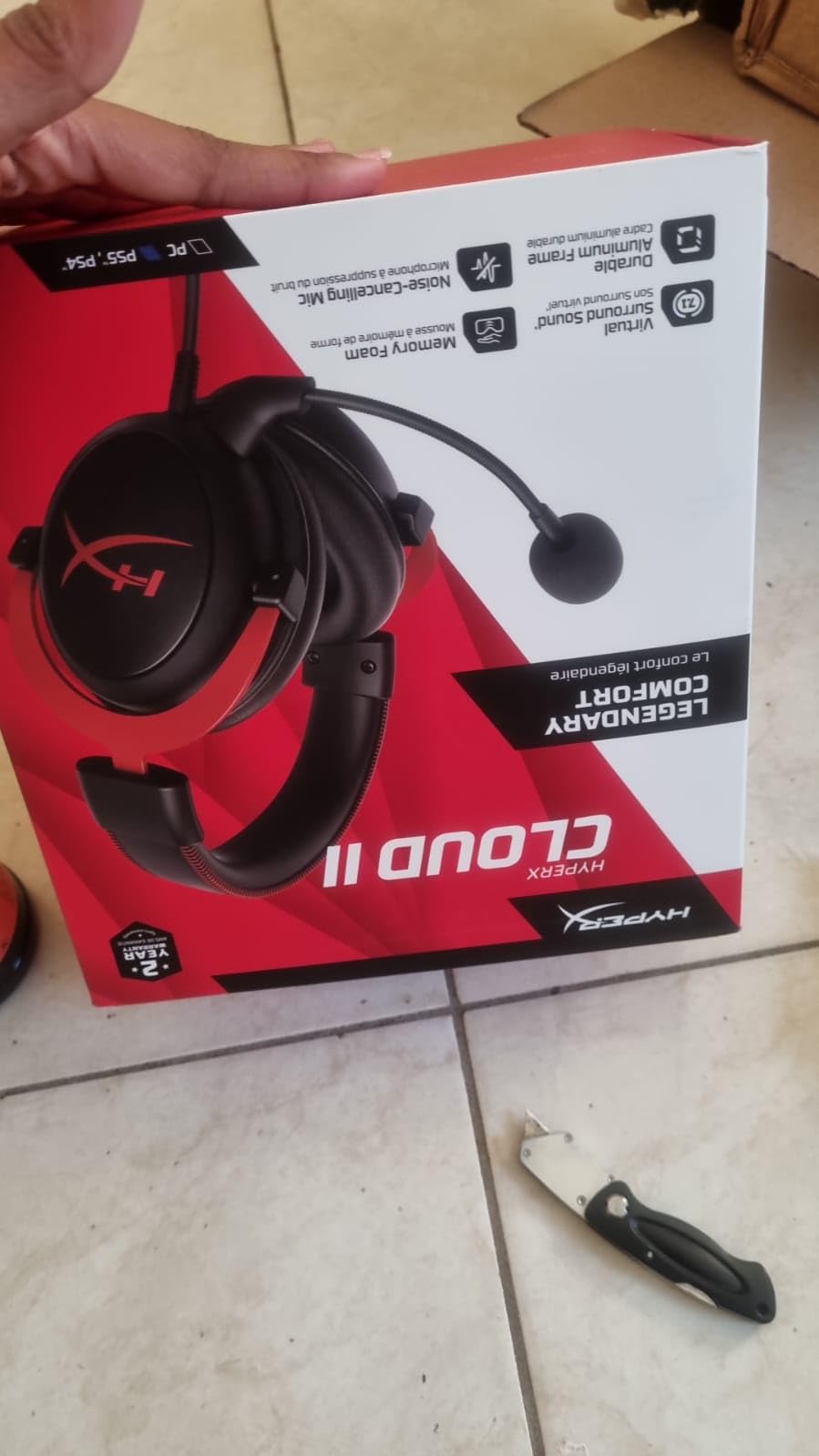
Cushion depth and frame flex are the two things large heads need most, and the Cloud II has both in the same package. The band reaches its widest setting without turning rigid, so the fit does not depend on how far you crank the extenders.
The wide earcup footprint is a genuine tradeoff. If your head is narrow, these cups can feel oversized and slide around. For anything above average in width, that footprint is exactly what stops the pads landing on your jaw.
Where it falls short
The 7.1 layer only engages on PC and Mac. Plug it into a console and you get plain stereo, which is fine for most games but not the surround experience you are paying for.
It is also wired, with no wireless variant in this configuration, and the USB control box is another box on an already crowded desk. Neither issue is a fit problem, but both are real costs of choosing the most comfortable option.
2. Razer BlackShark V2 X – Best Headset for Extra-Large Heads
Razer BlackShark V2 X Gaming Headset: 7.1 Surround Sound – 50mm Drivers – Memory Foam Cushion – For PC, PS4, PS5, Switch – 3.5mm Audio Jack – Black
240g lightweight build
50mm TriForce titanium drivers
Memory foam cushions
Cross-platform 3.5mm
Pros
- Roughly 240g among the lighter builds here
- Band extends wide without feeling rigid
- HyperClear cardioid mic is clear for team chat
- Works on PC Mac PS4 PS5 Switch with no software
Cons
- 7.1 surround only runs on 64-bit Windows 10
- Volume knob turns opposite to the usual direction
- No visual mute indicator on the boom mic
- Sliding adjusters can rub or creak
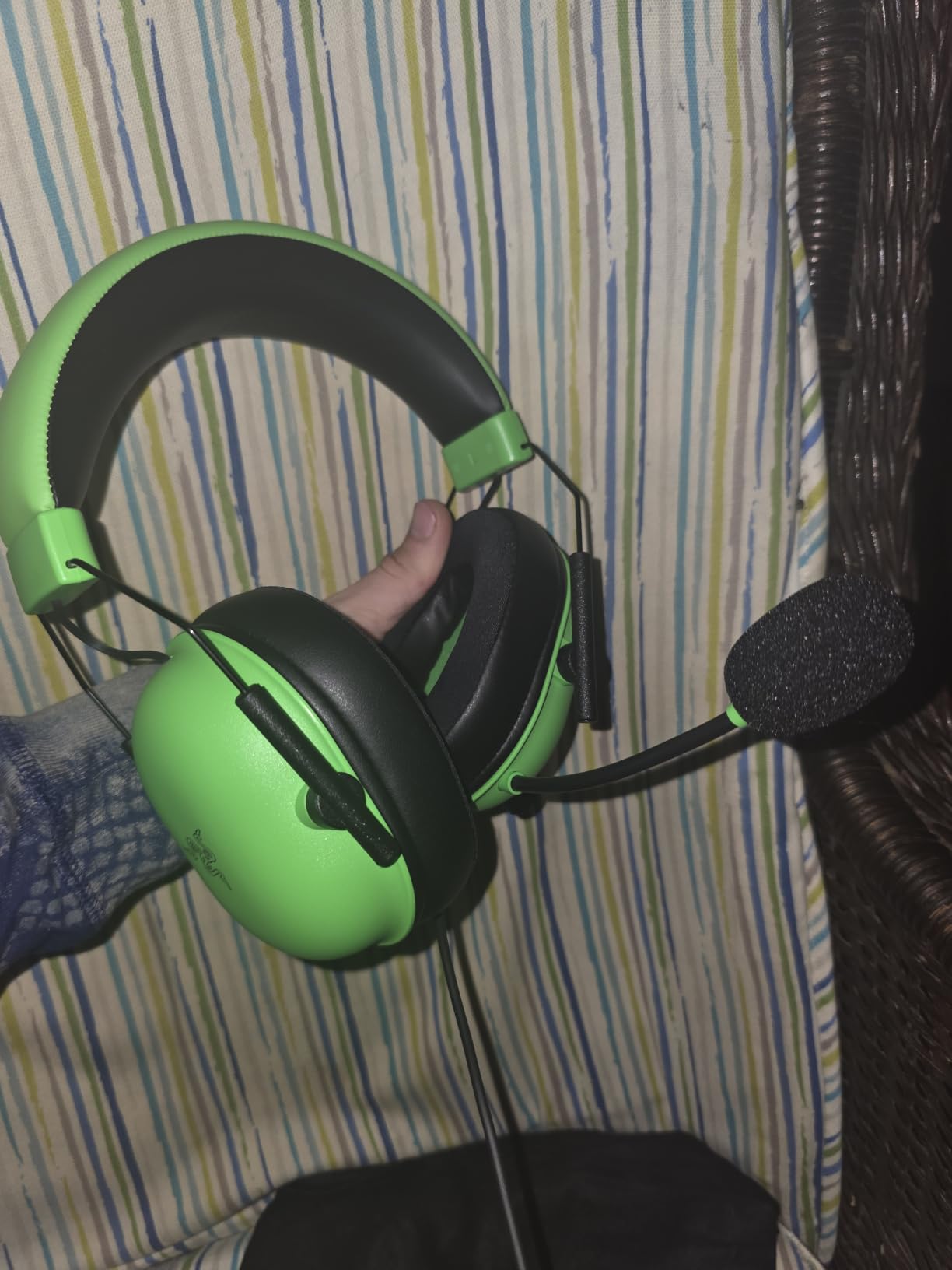
Weight is the headline number here. At roughly 240g this is the kind of build you can forget you are wearing after an hour, and on a large frame that lightness does more for comfort than any amount of extra padding. Heavy headsets are the first thing large-head players reject, and this one is not the problem.
The band extends further than most at this tier, and the earcups pivot through a wide arc rather than hinging only at the bottom. That top-pivot behaviour is what community fit guides treat as the feature that lets the band sit lower and closer to the skull instead of riding high and pressing on the upper sides.
One buyer describes it as super comfortable as someone with a large head, and that matches my read. The memory foam cushions are breathable rather than sealed, so they do not turn into a heat trap the way faux leather can over a long evening.
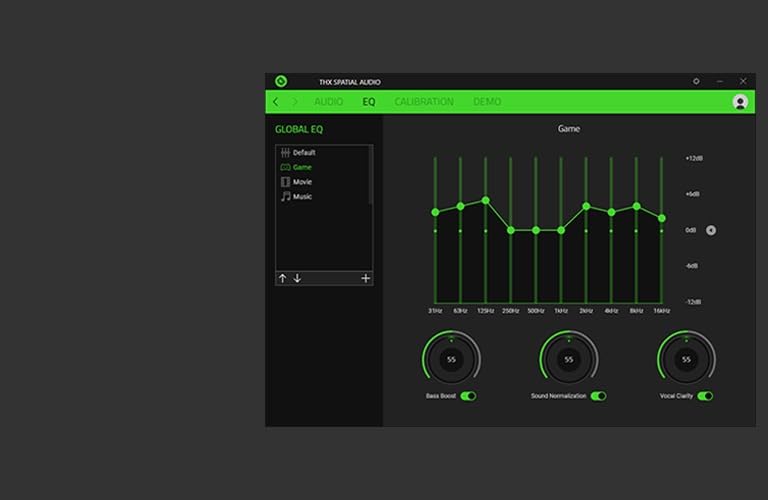
Audio runs through 50mm TriForce titanium drivers tuned separately for highs, mids and lows. The 7.1 surround layer exists but only activates in 64-bit Windows 10, so treat it as a PC bonus rather than a headline feature.
Why it fits a large head
Three fit behaviours stack up here: a very light chassis, a band that widens instead of stiffening, and earcups that pivot in multiple directions. That combination is why large-head owners repeatedly single this model out in comfort threads.
Glasses also fare better than average, because a lighter frame and a softer pad edge mean less force transmitted into the temple arm. It is not a dedicated glasses design, but it is among the safer bets in this list.
Where it falls short
The 7.1 limitation is the biggest one, and if you play on a console most of the time you are paying for a surround feature you will never hear. The included splitter is also needed if your laptop has a single combined jack.
Two smaller annoyances: the volume knob turns opposite to the direction most people expect, and there is no visible indicator when the mic is muted. On a team call, a mute you cannot see is a mute you will get blamed for.
3. Logitech G733 Lightspeed – Best Wireless Headset for Big Heads
Logitech G733 Lightspeed Wireless Gaming Headset – White
278g lightweight build
Reversible suspension headband
29-hour battery
LIGHTSPEED wireless at 20ms
Pros
- Suspension band spreads weight across the crown
- 278g stays light through marathon sessions
- 29-hour battery covers several sessions
- LIGHTSYNC lighting customisable in G HUB
- Detachable mic with Blue VO!CE filters
Cons
- Some headsets develop static needing a power cycle
- Suspension strap loses elasticity with heavy use
- Clamp is tight for players new to snug headsets
- Detachable mic suits chat not streaming
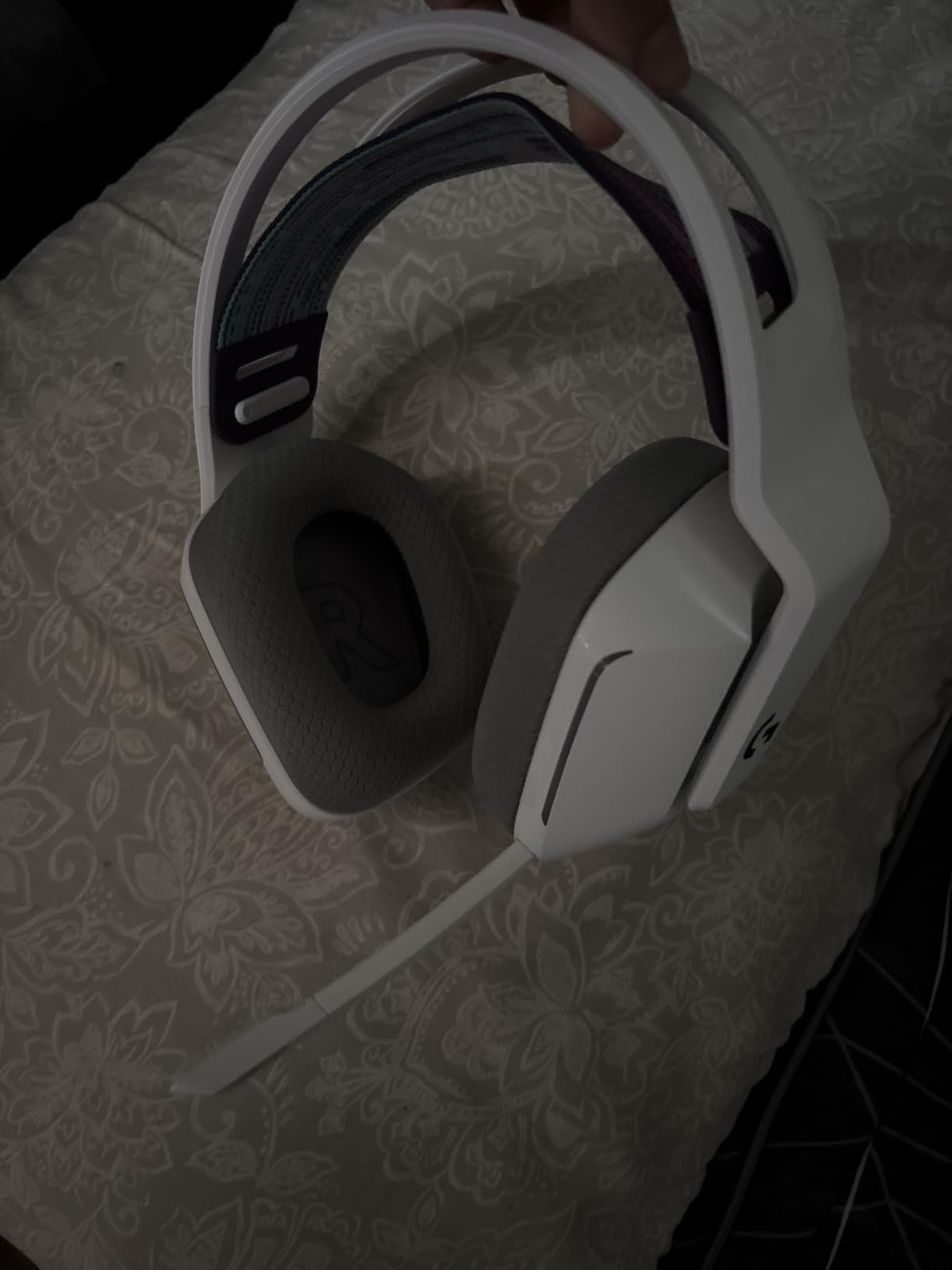
A suspension headband is the single most-cited comfort feature for large heads, and the G733 is the clearest example of it in this roundup. Instead of a rigid rail pressing on your crown, the strap flexes and spreads the load, so the contact area is broader and softer.
At 278g it is also light, and that combination is what makes it my wireless pick. The 29-hour battery means you are not trading comfort for the anxiety of charging between every other match, and LIGHTSPEED holds range up to 20 metres with 20ms latency.
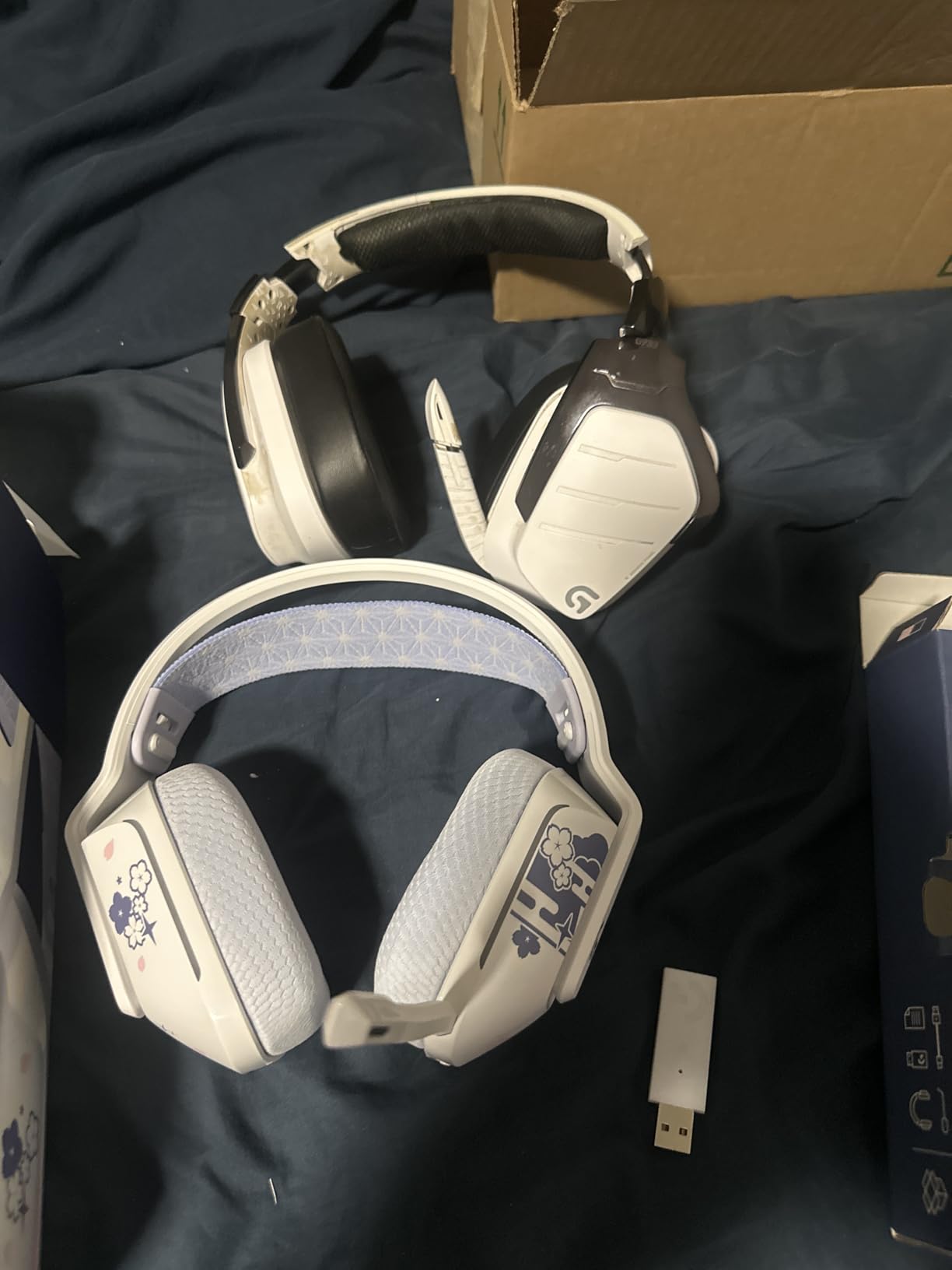
The earcups use soft dual-layer memory foam, which seals well without the hard rim contact that causes soreness. For a wide head, the seal matters as much as the width: a loose headset that rocks will find a pressure point somewhere within an hour.
One caveat specific to glasses wearers: the RGB lighting sits right where frame arms run, and the glow is visible through the temple at night. That is not a fit issue, but it is the first thing to consider if you wear glasses.
Why it fits a large head
The suspension strap is the mechanism, and it is the one large-head players ask for by name. Because the strap stretches rather than resisting, you can set the cups lower on the head where the load transfers across a wider area of skull.
The dual-layer foam then keeps the seal consistent even when the strap is doing the fitting. A reviewer with an explicitly large head reported only needing to replace the strap after heavy long-term use, which tells you the rest of the build holds up.
Where it falls short
The tight clamp is real. Players who have only worn loose-fitting headsets describe it as noticeably snug, and on the largest heads that means extending the band further, which raises the squeeze.
There is also an intermittent static issue on some headsets that clears with a power cycle, sometimes every 20 to 60 minutes. The detachable mic is fine for team chat and not for streaming, since Blue VO!CE filters are built for voice clarity rather than broadcast capture.
4. HyperX Cloud III – Best Console Pick for Big Heads on PS5
HyperX Cloud III – Wired Gaming Headset, PC, PS5, Xbox Series X|S, Angled 53mm Drivers, Spatial Audio, Memory Foam, Durable Frame, Ultra-Clear 10mm Mic, USB-C, USB-A, 3.5mm – Black
Angled 53mm drivers
DTS spatial audio
Memory foam cushions
USB-C and USB-A adapters included
Pros
- Angled 53mm drivers keep the soundstage open
- Memory foam cushions leave room for larger ears
- Both USB-C and USB-A adapters in the box
- Detachable 10mm mic with LED mute indicator
- Aluminum frame resists everyday wear
Cons
- Wired only in this variant
- 308g is heavier than lighter budget rivals
- DTS spatial audio needs software setup on PC
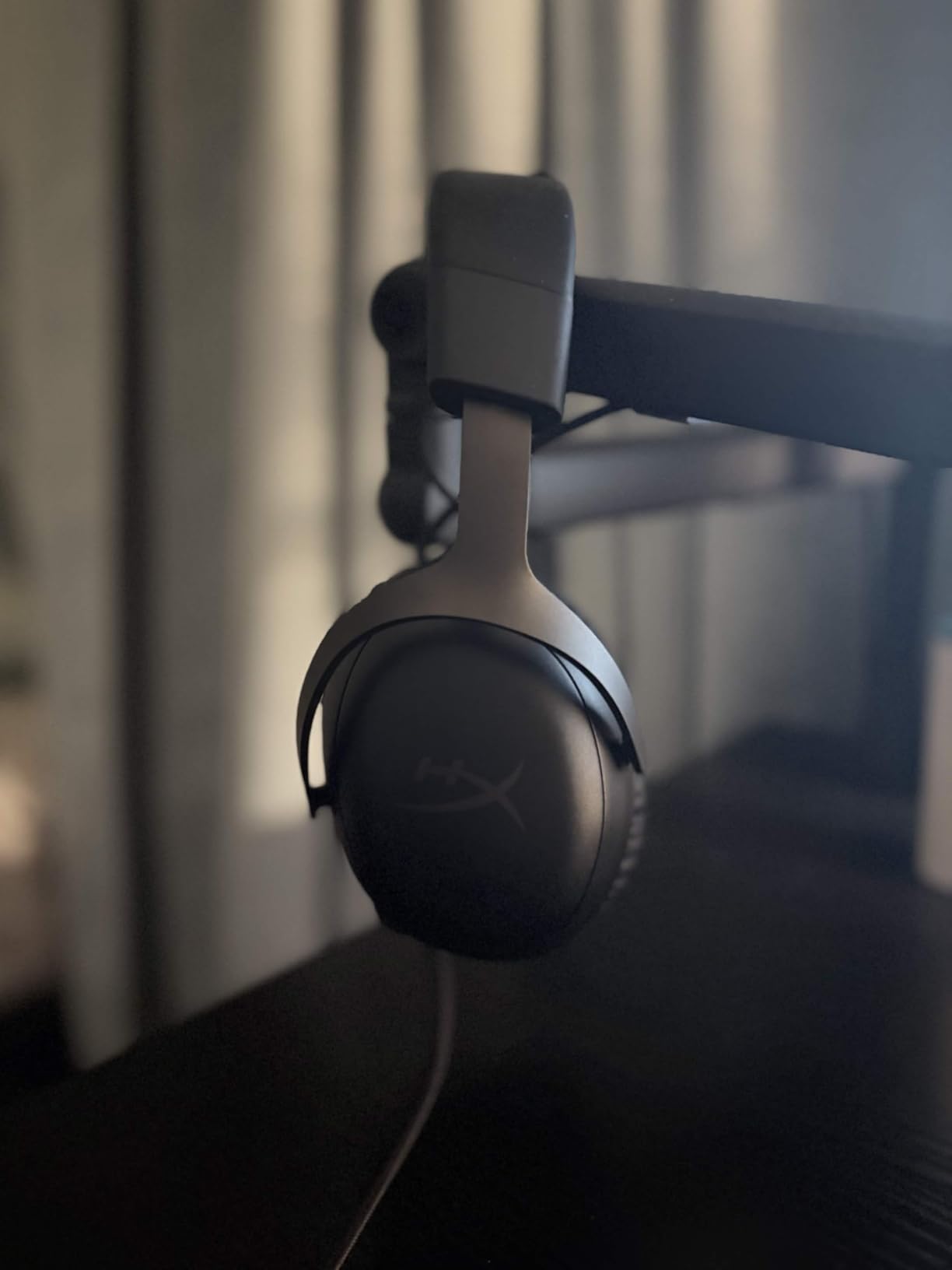
The Cloud III keeps the memory foam and aluminium frame that made its predecessor comfortable, then fixes the console problem. It is listed as compatible with PC, PS5 and Xbox Series X|S, and it ships with both a USB-to-3.5mm cable and a USB-C adapter so you are not hunting for the right one.
That adapter detail is the whole PS5 story. The console has no native Bluetooth audio path, and the most common complaint from large-head console players is not comfort at all, it is a USB-C port that stops passing audio when paired with the wrong cable. Both adapters are in the box here.
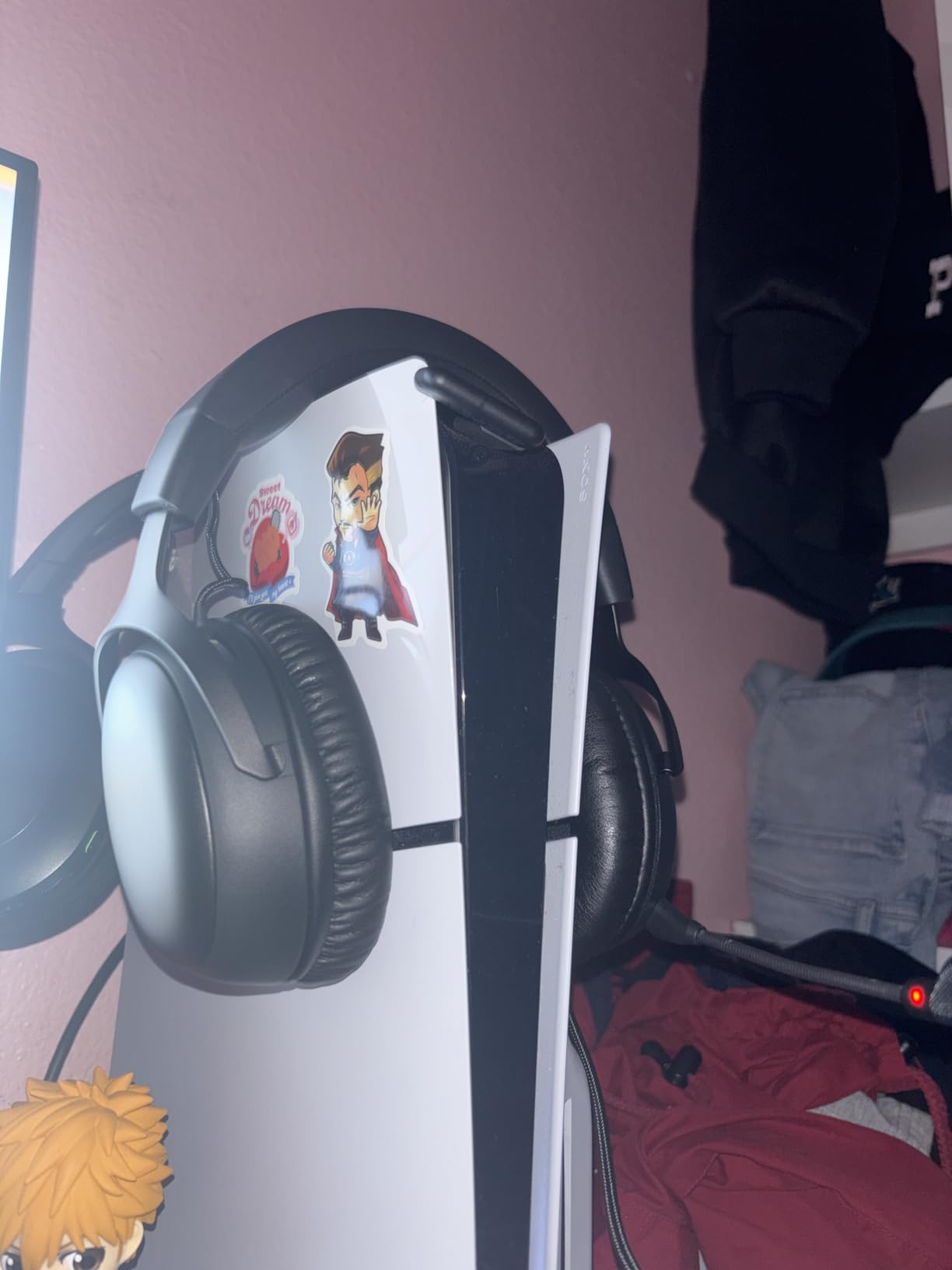
Fit is a step up from the budget end without being extreme. Reviewers specifically call out good room for larger ears inside the cushions, and the angled 53mm drivers help here too, since angling positions the driver toward the ear rather than straight down the canal.
DTS spatial audio sharpens positional awareness, though on PC it needs a software setup pass. On console it activates more directly, which is where this headset earns its place on a PS5 setup.
Why it fits a large head
The cushion interior is the point. Angled drivers and deep foam combine so the ear rests inside the cavity rather than against the driver face, which removes the pressure sensation that shallow cups create after a couple of hours.
Weight at 308g is moderate rather than light, so it is not the pick for the most endurance-focused sessions. It is the pick for people who want one headset that handles console and PC without hunting for adapters.
Where it falls short
It is wired only in this variant, with no wireless version listed. If your setup is a couch away from the console, a cable running across the room is a genuine irritation.
At 308g it is heavier than the lighter budget alternatives in this roundup, and the DTS layer costs you a software setup step on PC. Buyers who want the simplest possible experience will find that trade mildly annoying.
5. JBL Quantum 100 – Best Budget Headset for Big Heads
JBL Quantum 100 – Wired Over-Ear Gaming Headphones – Black, Large
7.8 ounce build
40mm dynamic drivers
Memory foam PU leather cups
Earcups swivel 90 degrees
Pros
- Lightest build in this roundup at 7.8 ounces
- Band reaches full extension with room to spare
- Oblong swivelling cups suit larger head shapes
- On-earcup volume wheel and mute switch
- Detachable boom mic with clear voice pickup
Cons
- No active noise cancellation
- Fixed thin cable can develop crackling
- Boom mic runs quiet and needs extra gain
- Bass-heavy tuning is not balanced for music
At 7.8 ounces this is the lightest build in the roundup, and for marathon sessions that is not a minor stat. When a headset is already resting on a wider frame, every gram removed from the top of the head reduces the cumulative ache that arrives around hour three.
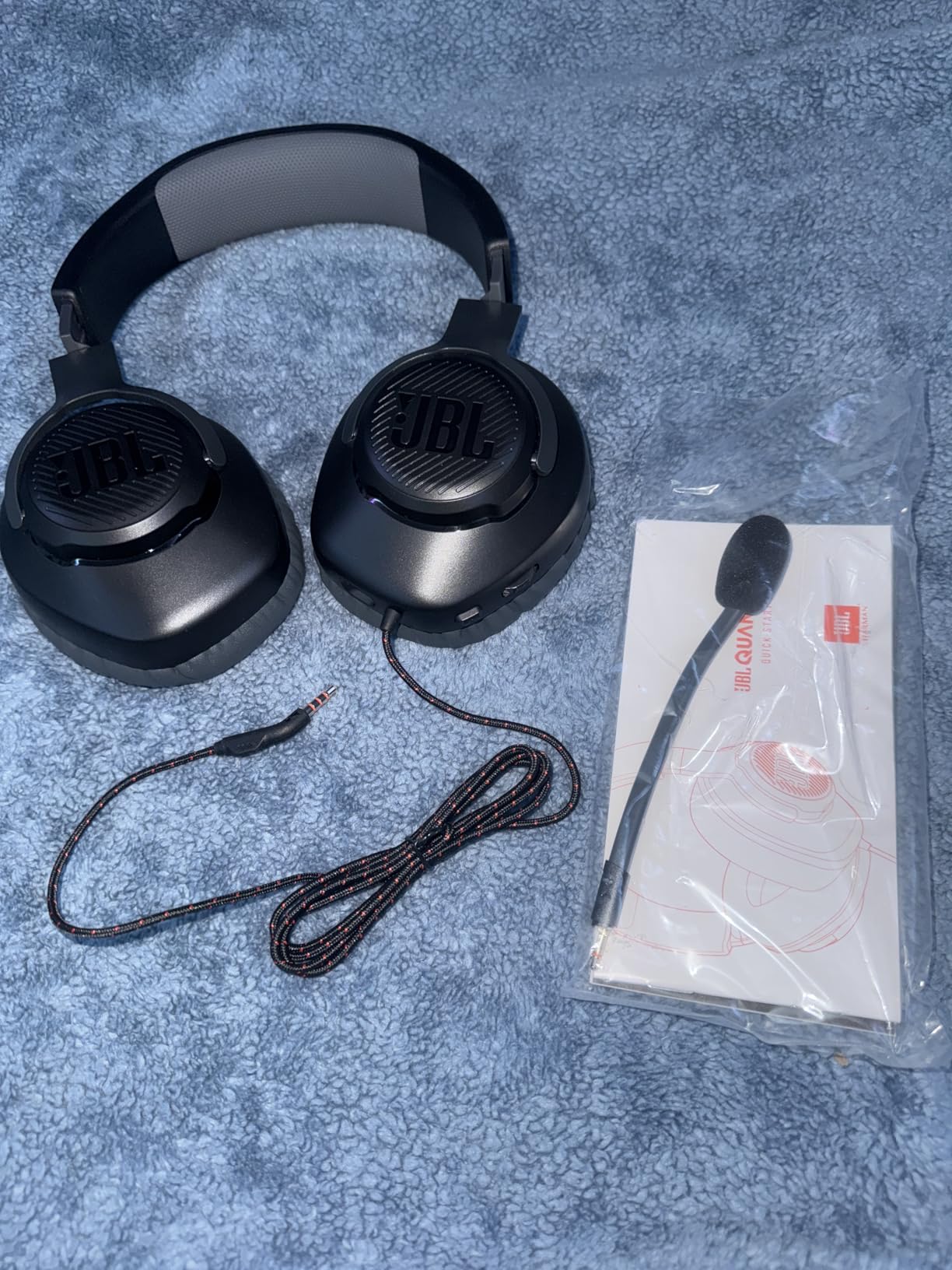
The earcups are oblong and they swivel up to 90 degrees. On a large head that shape is worth more than it sounds: oval cups that sit wider than they are tall wrap around the ear without pushing it against the driver, and the swivel lets you set the angle rather than fight the hinge.
Reviewers repeatedly single out fit for larger heads as a strength, noting a snug seal and that the adjustable band leaves only about one click before full extension. That matters, because a headset that bottoms out on its last extender is a headset that still squeezes.
Audio comes from 40mm dynamic drivers tuned to JBL’s Quantum Sound Signature, and the directional awareness is genuinely useful in shooters at this entry level. The boom mic detaches and includes a windshield, which is a nice touch at this price.
Why it fits a large head
Weight plus oblong geometry plus a band that extends cleanly, and that is a rare combination below the mid tier. The swivelling cups also mean you can angle the seal without the cups riding forward onto your cheekbones.
Glasses wearers get a pass here. The pads are memory foam in soft PU leather, and because the whole headset is light, there is not much force pressing the temple arm back into your skull.
Where it falls short
There is no active noise cancellation, so outside sound comes through clearly and a lively room leaks into your mic and your ears. The fixed thin cable is the other complaint, and it can develop intermittent crackling over time.
The boom mic runs quiet, so you will need extra gain in your chat software. Bass-heavy tuning also makes it a poor choice for long music sessions between matches.
6. Turtle Beach Stealth 600 – Best Headset for Big Heads and Glasses
Turtle Beach Stealth 600 Wireless Gaming Headset for Xbox, PS5, PC, Mobile
Glasses-friendly memory foam
320g build
80-hour battery
2.4GHz plus Bluetooth 5.2
Pros
- Cushions designed around glasses arms
- Headband rails adjust with almost no click noise
- 80-hour battery with quick charge
- Swarm II app with 10-band EQ
- Mappable wheel and flip-to-mute mic
Cons
- Cannot mix dongle and Bluetooth sources at once
- Swarm II software is buggy and can drop the headset
- 320g adds up over very long sessions
- Owners with the largest heads rate fit as its weakest point
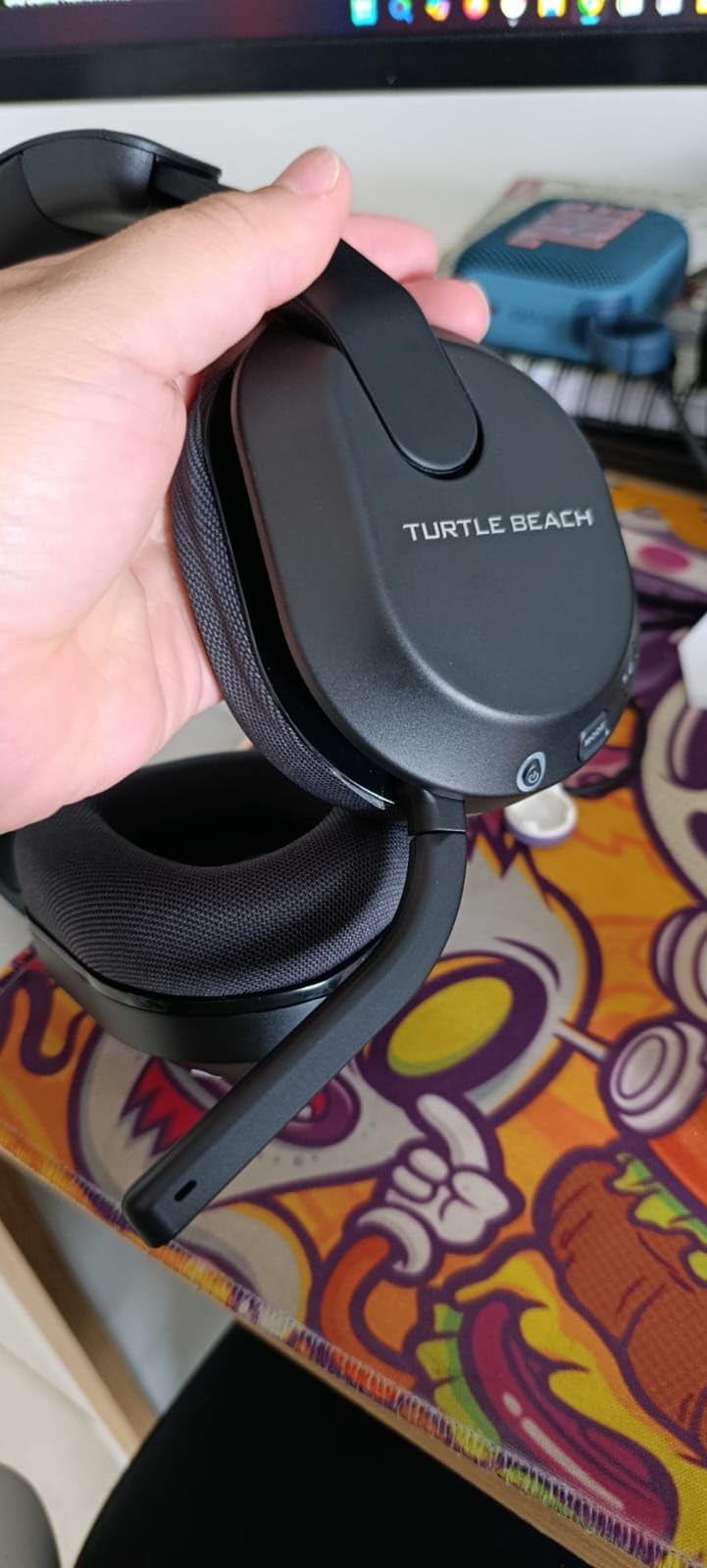
Glasses compatibility is the reason this headset exists in my list, and the mechanism is specific rather than vague. The memory foam cushions are cut with glasses-friendly technology, meaning the pad is shaped so a frame arm can pass under the cup edge without being pinched between leather and skull.
The headband rails are also worth noting. They adjust with almost no click noise, which sounds trivial until you know that loud ratcheting sliders are a common reason large-head players settle for a headset that fits worse. Silent adjustment means you can dial in the fit without waking the house.
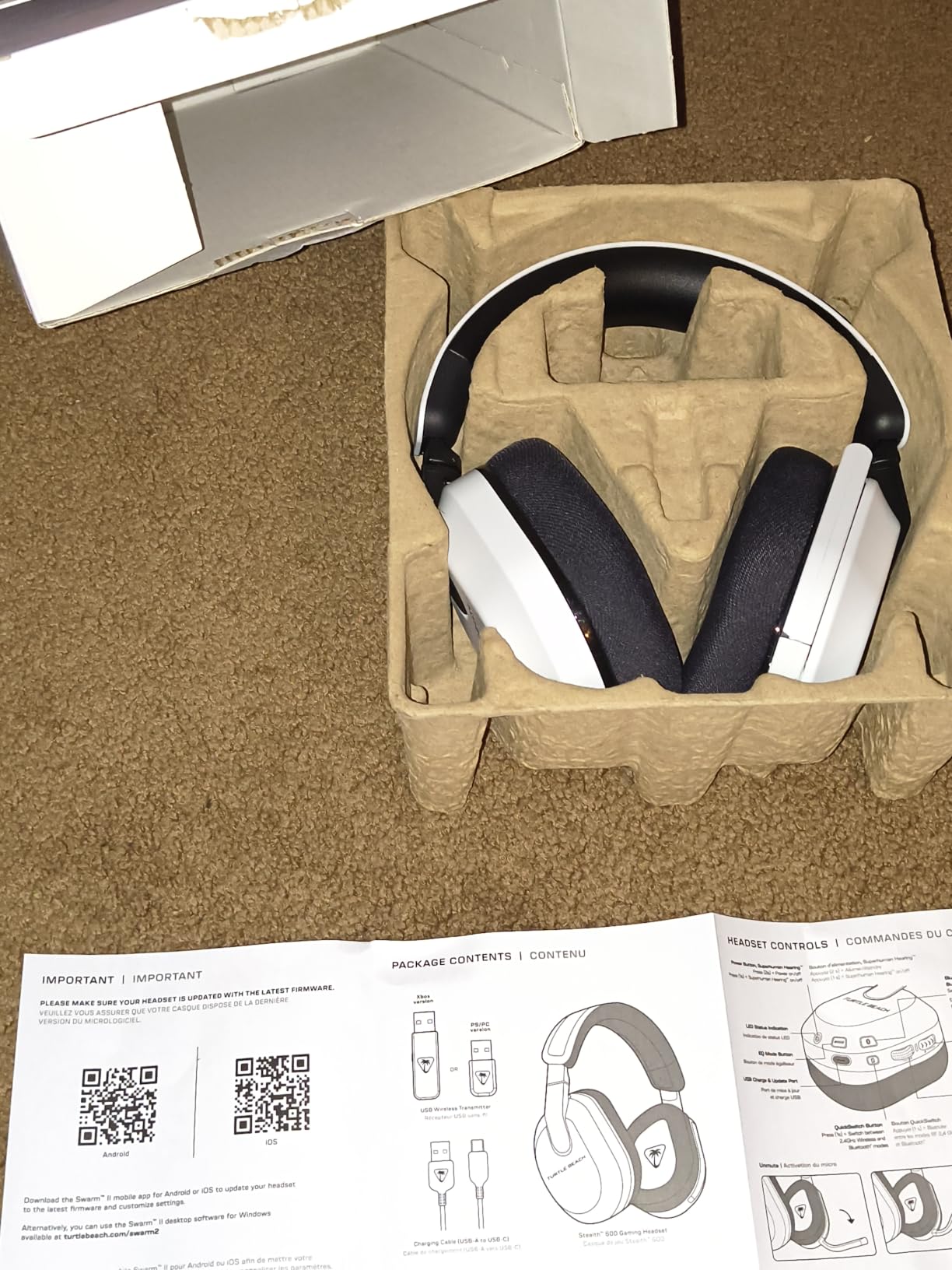
Battery life is the outlier feature: 80 hours with a quick charge option, which is nearly three times what the wireless competition here offers. A single charge covers weeks of evening play, and the lay-flat adjustable design means it can rest on a stand without a dock.
Sound comes from 50mm Nanoclear drivers, and reviewers compare the output favourably against much more expensive models. The Swarm II app adds a 10-band EQ plus a Superhuman Hearing preset that lifts quieter directional cues in shooters.
Why it fits a large head
The rails extend and the cushion cut is generous, so the fit range is wide. Where it is not perfect is at the extreme tail, and owners with the largest heads rate fit as this headset’s weakest point rather than its strength.
Consider it the glasses answer more than the extra-large-head answer. If your problem is frame arms being crushed and pads landing on your temples, this solves that better than anything else in the roundup.
Where it falls short
You cannot mix two audio sources at once. The QuickSwitch button toggles between the 2.4GHz dongle and Bluetooth, but if you want game audio on one and Discord on another through the same headset, this is not the tool.
The Swarm II app is the most consistent complaint; it can crash or fail to detect the headset. At 320g it is also mid-heavy, which matters over very long sessions, and the plastic build is a step down from the aluminium frames here.
7. Logitech G432 – Best for Positional Awareness on PC
Logitech G432 Wired Gaming Headset – Black
50mm drivers
DTS Headphone:X 2.0 surround
Flip-to-mute 6mm boom mic
1.2 pound build
Pros
- DTS Headphone:X nails enemies behind you
- 50mm drivers give broad cinematic sound
- Flip-to-mute boom mic is simple and reliable
- Earcups rotate 90 degrees for a relaxed fit
- Works across PC Mac PS5 PS4 and Switch
Cons
- DTS surround needs Logitech G HUB software
- Faux leather pads run warmer than fabric
- Heaviest wired option here at 1.2 pounds
- No active noise cancellation
Let us be direct about this one: the G432 is not the best choice on a large head, and it is on this list because the audio is genuinely strong enough to justify the caveat. If positional awareness is your priority and you are on PC, nothing else here reads footsteps behind you as clearly.
That clarity comes from DTS Headphone:X 2.0 running through Logitech G HUB, paired with 50mm drivers tuned for expansive sound. The software dependency is real, and it is the first thing to check before buying if you dislike installing an app.
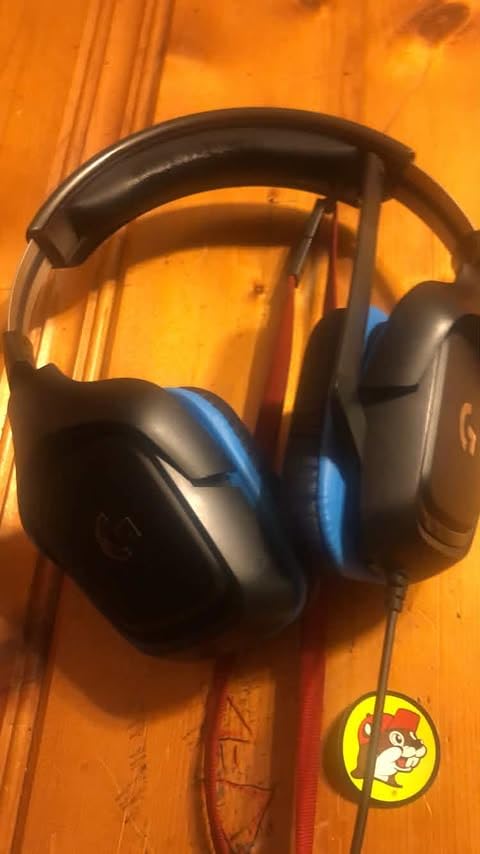
The 6mm boom mic mutes when you flip it up, and that mechanism has not changed in years because it still works with no menu and no LED to misread. Earcups rotate up to 90 degrees, which helps set a relaxed angle rather than forcing a fixed seal.
Community fit threads treat the G432 as a headset people are moving away from on comfort grounds, and at 1.2 pounds it is the heaviest wired option here. That weight on a wide frame is exactly the cumulative fatigue this article keeps warning about.
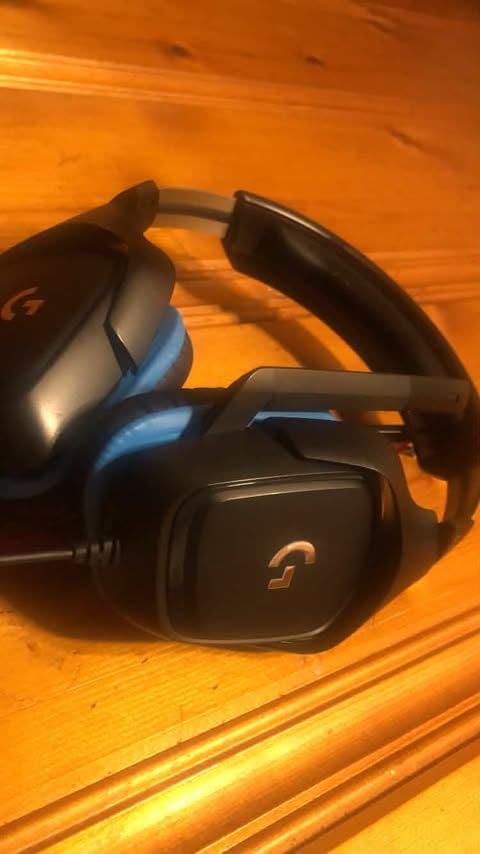
Why it fits a large head
Honestly, it does not fit as well as the picks above it. The leatherette cups are described as lightweight, but the 1.2 pound total mass is the number that governs long-session comfort, and the pads run warmer than fabric alternatives.
The rotating cups and the flip-to-mute boom are still good design, and if your head is large but your sessions are shorter, this remains a defensible choice for the audio alone.
Where it falls short
Weight is the headline drawback, followed by the software requirement for the surround layer you are buying it for. There is no active noise cancellation, so it does nothing to shut out a noisy room.
Faux leather also runs hotter than fabric over long sessions, which compounds the weight problem. If you are past the point of returning headsets and want positional audio, it works. If you are still choosing, look at the Cloud II instead.
8. HyperX Cloud Alpha Wireless – Longest Battery for Big Heads
HyperX Cloud Alpha Wireless – Gaming Headset for PC, 300-hour battery life, DTS Headphone:X Spatial Audio, Memory foam, Dual Chamber Drivers, Noise-canceling mic, Durable aluminum frame,Red
300-hour battery
2.4GHz wireless
Dual chamber drivers
Memory foam leatherette cups
Pros
- 300-hour battery means charging about once a season
- Dual chamber drivers separate bass from mids cleanly
- Aluminum frame resists everyday wear
- Detachable noise-cancelling microphone
- Pop filter included in the box
Cons
- 2.4GHz dongle only so Bluetooth pairing is limited
- 322g is heavy for long wireless sessions
- Dongle is PC-oriented rather than console-first
- Owner opinions are the most divided in this roundup
Three hundred hours of battery life is the number that makes this headset interesting, and it is not a marketing rounding error. At a couple of hours a day, that is roughly a season between charges, and for a player who hates charging cables before a session it removes a real annoyance.
Fit is respectable rather than outstanding. The memory foam with breathable leatherette suits long sessions, and the aluminium frame will not crack, but at 322g it is a heavy headset. That weight matters more on a large frame than the comfort adjectives suggest.
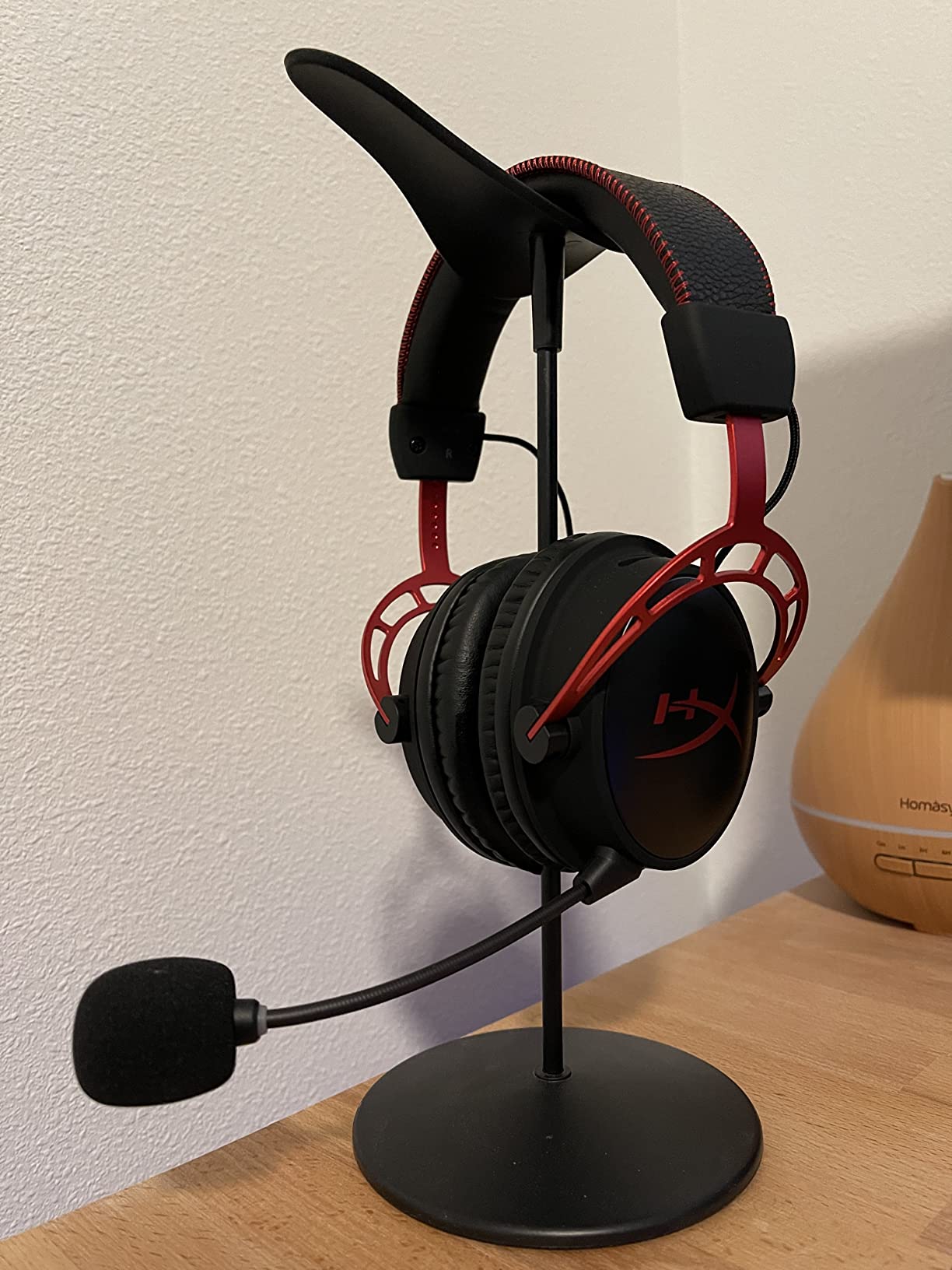
The dual chamber drivers tune mids and highs separately from the bass, which gives cleaner separation than single-driver rivals in the same bracket. Combined with DTS Headphone:X spatial audio, it holds up well in shooters where you need to pick a direction quickly.
Ownership is more divided than anywhere else in this roundup, with a larger share of one-star reviews. The wireless scheme is the reason: it is a 2.4GHz dongle headset, and Bluetooth pairing is limited, so it does not double as a travel headset.
Why it fits a large head
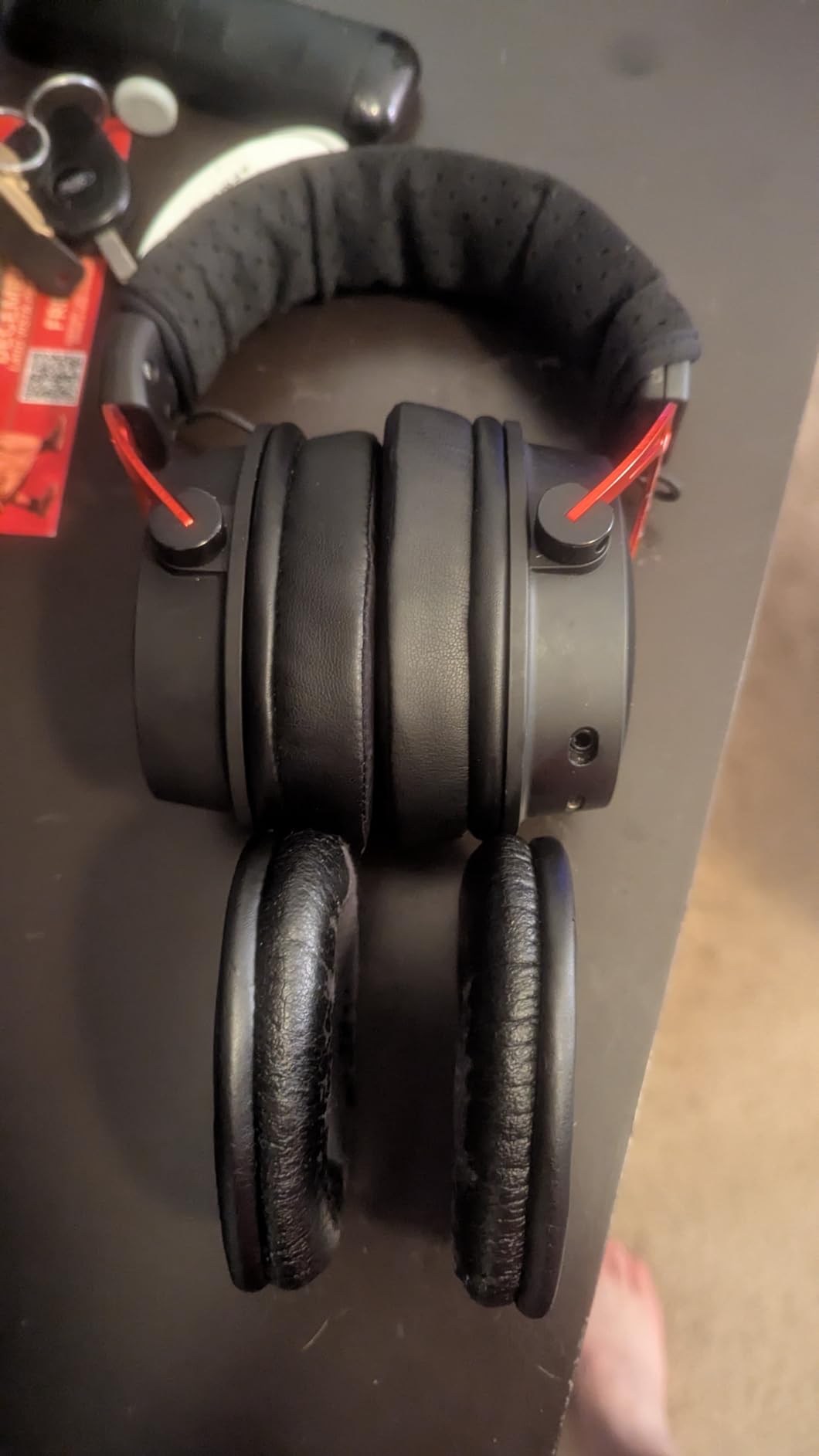
The aluminium frame and memory foam give it a stable, wide fit that does not flex into pressure points. If your main requirement is a headset you never have to charge, the fit compromise is a reasonable exchange.
It is worth noting that the dongle is PC-oriented. Console players should look elsewhere, because you would be carrying a USB adapter designed around a PC use case.
Where it falls short
At 322g, this is one of the heavier options here and the weight lands on the crown during long sessions. Wireless headsets are already heavier than wired ones, and this sits near the top of that range.
The dongle-only approach also blocks Bluetooth use, so no phone pairing for calls on the move. If you play across two systems regularly, the Astro A50 handles that switching natively.
9. Logitech G Astro A50 – Best Multi-Device Headset for Big Heads
Logitech G Astro A50 Multi-Platform Wireless Gaming Headset – Black
PLAYSYNC three-system switching
40mm graphene drivers
24-bit LIGHTSPEED wireless
363g build
Pros
- PLAYSYNC switches between console PC and mobile
- 24-bit uncompressed wireless avoids artifacts
- 48 kHz boom mic handles streaming and voice work
- Magnetic base station keeps the headset charged
- Per-system 7-core DSP profiles travel with the headset
Cons
- Heaviest build in this roundup at 363g
- No 3.5mm jack so analog wired use is impossible
- Charging dock takes up real desk space
- Plastic enclosure despite premium positioning
PLAYSYNC is the reason this headset exists. It switches between Xbox, PS5, PC or Mac, and Switch through USB-C without a cable swap, and it does so with 24-bit uncompressed LIGHTSPEED audio rather than compressing everything down. For someone who moves between a console and a PC daily, nothing else here does that as cleanly.
The 48 kHz boom mic is genuinely broadcast-capable, and Bluetooth dual-device mixing lets you fold mobile chat into game audio. If you stream or take work calls on the same headset, that is a real workflow advantage rather than a spec-sheet line.
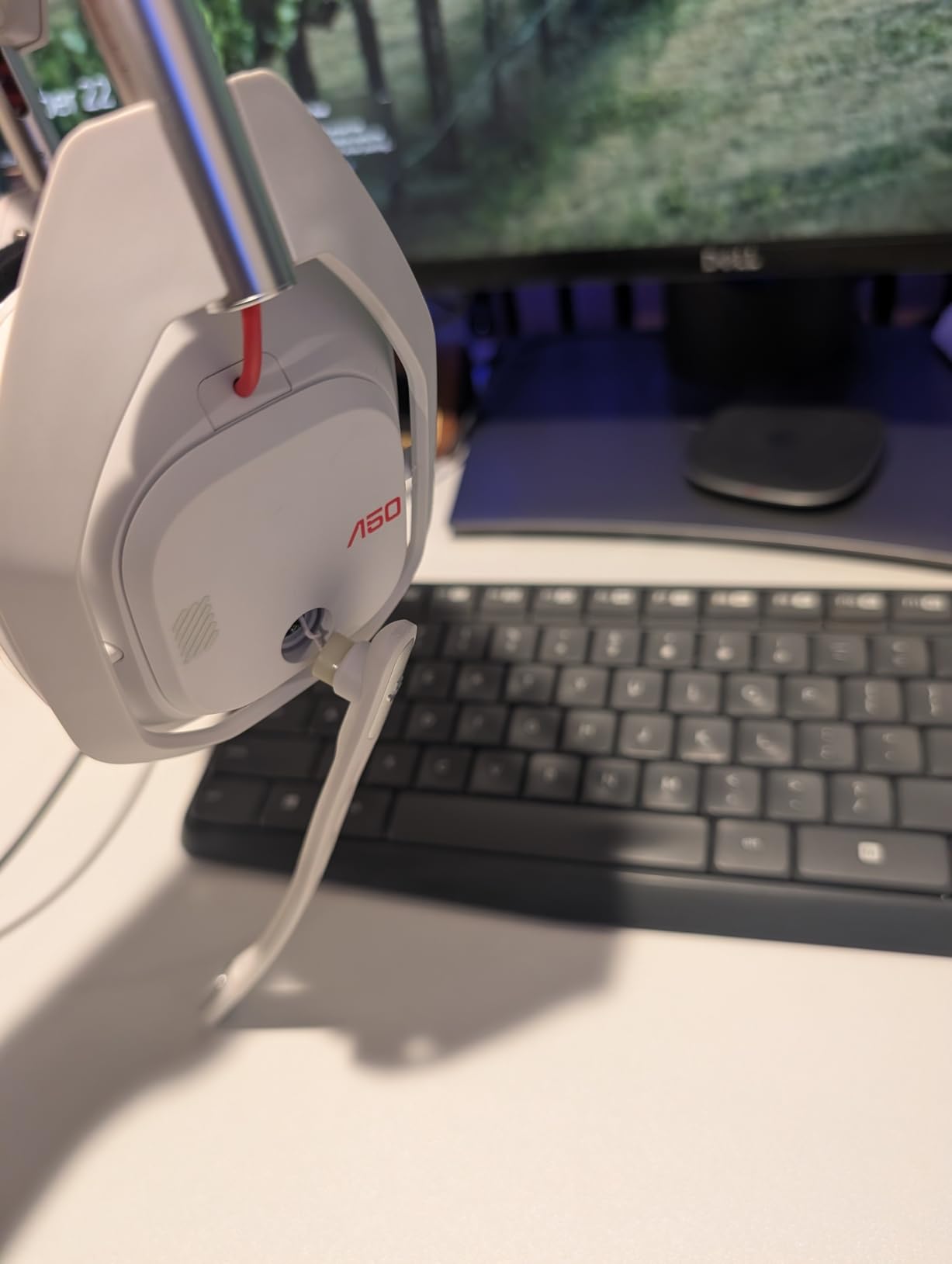
Now the part you need to weigh against all that. At 363g this is the heaviest build in the roundup, and heavy is the word that appears most often in complaints about large-head comfort. On a wide frame, 363g sitting on the crown is the trade you are making.
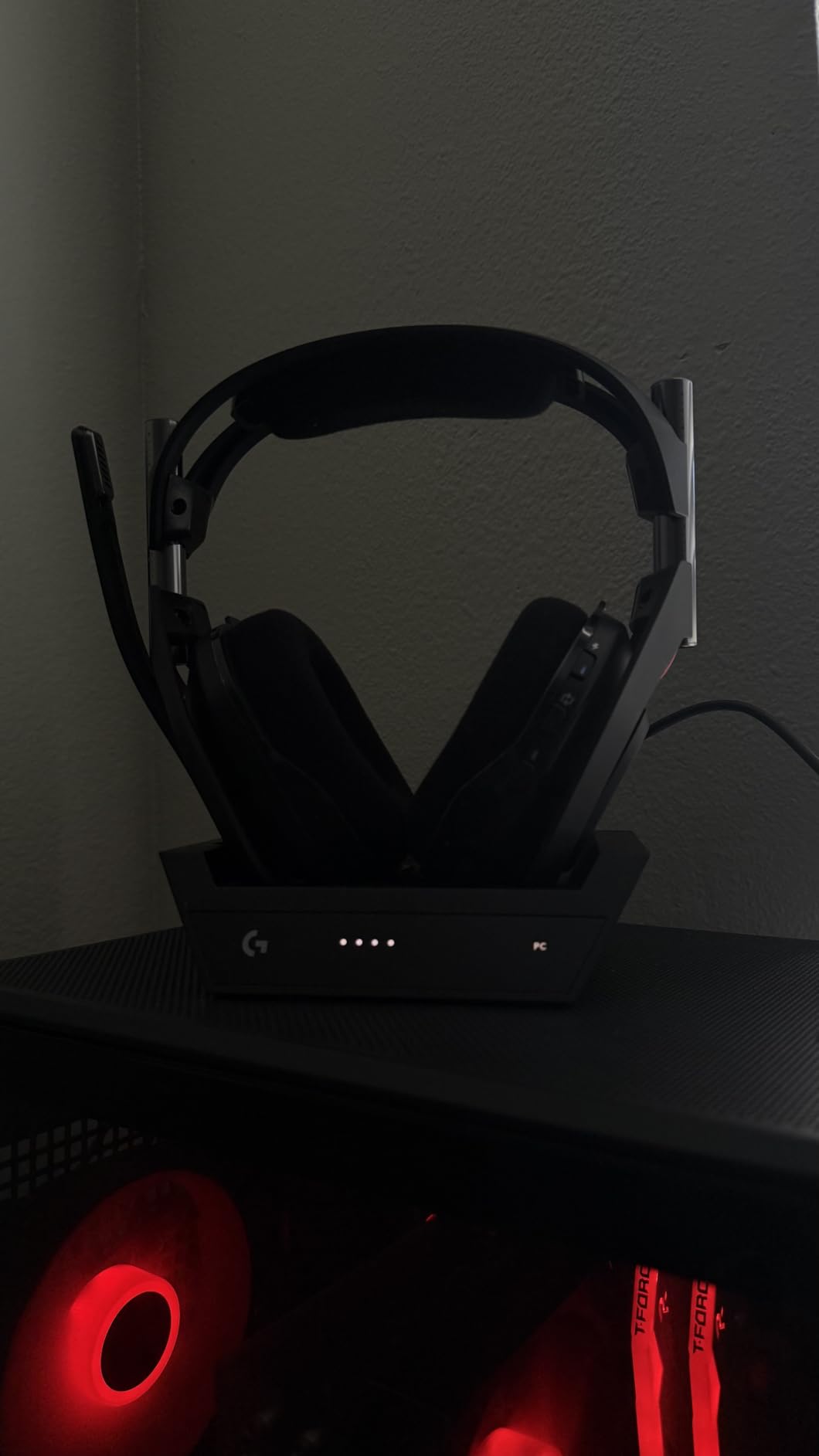
The magnetic base station keeps it charged and doubles as a stand, but it occupies desk space permanently. There is no 3.5mm jack, so an analog wired fallback for a console without USB is not an option.
Why it fits a large head
The multi-device switching is the fit-adjacent win here: no more yanking a headset between systems, no more re-pairing. For the head itself, it is adequate, with a wide frame and generous cushions, but nothing here is engineered specifically around large heads.
Glasses wearers should note there is no dedicated glasses cut on the pads. It is workable, though you will feel the temple arms more than you would on the Stealth 600.
Where it falls short
The weight is the main problem: heaviest in the roundup, on a frame that already spreads load over a larger area. Expect to feel it in the second half of a long session.
There is also no 3.5mm jack and the enclosure is plastic despite premium positioning, which is hard to defend. If you play on one system, none of that switching value is worth the extra mass.
10. BENGOO G9000 – Widest Platform Coverage for Big Heads
BENGOO G9000 Stereo Gaming Headset for PS4 PC Xbox One PS5 Controller, Noise Cancelling Over Ear Headphones with Mic, LED Light, 7.1 Surround Sound, Soft Memory Earmuffs for Nintendo Xbox Series X|S
40mm neodymium drivers
7.1 surround sound
Protein leather over-ear pads
49-inch braided cable
Pros
- Widest cheap platform coverage across console and mobile
- Largest review base in this roundup with 122k+ reviews
- Multi-point headbeam spreads pressure across the crown
- Rotary volume and one-key mute on the cable
- LED lighting on both earcups
Cons
- Omnidirectional mic picks up more room noise
- 49-inch fixed cable is not detachable in practice
- Volume control sits on the cable rather than the earcup
- 7.1 claim rests on software rather than hardware
The G9000 earns its place through coverage and review volume rather than refinement. It is listed as compatible with PS4, PS5, Xbox One, Xbox Series X|S, PC, Mac and even NES, and it carries 40mm magnetic neodymium drivers with a claimed 7.1 surround mode.
That surround mode is the weak point. It is a software effect rather than a hardware surround path, so the directional accuracy sits well below the Cloud II USB control box. Buyers focused on footstep detection should not expect the same result.
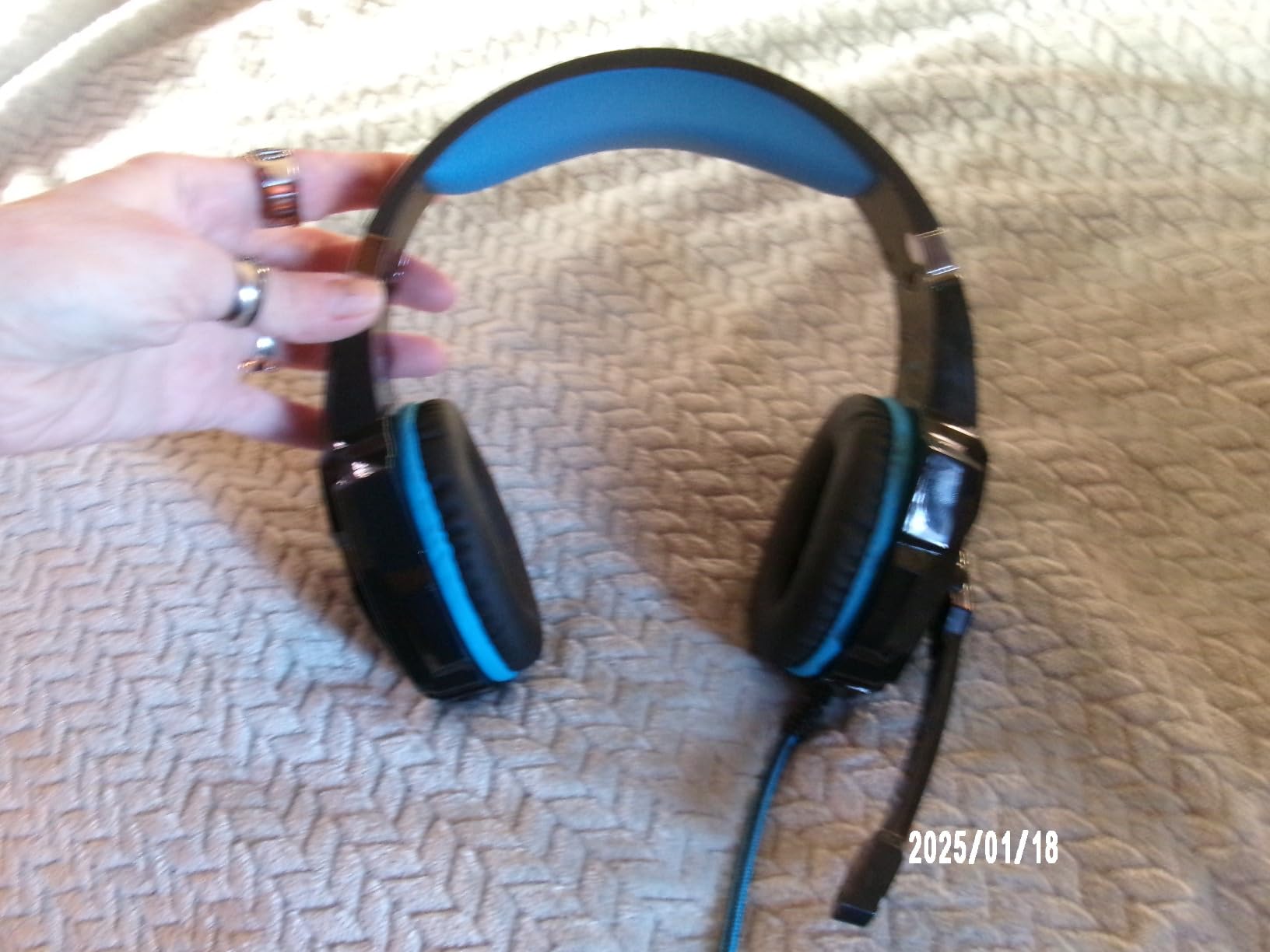
For fit, the multi-point headbeam is the detail that helps. Rather than one straight band, the beam is shaped to contact the head at several points, which distributes the load of a 9.6 ounce build across a wider area. On a large head that is a better pattern than a single narrow strap.
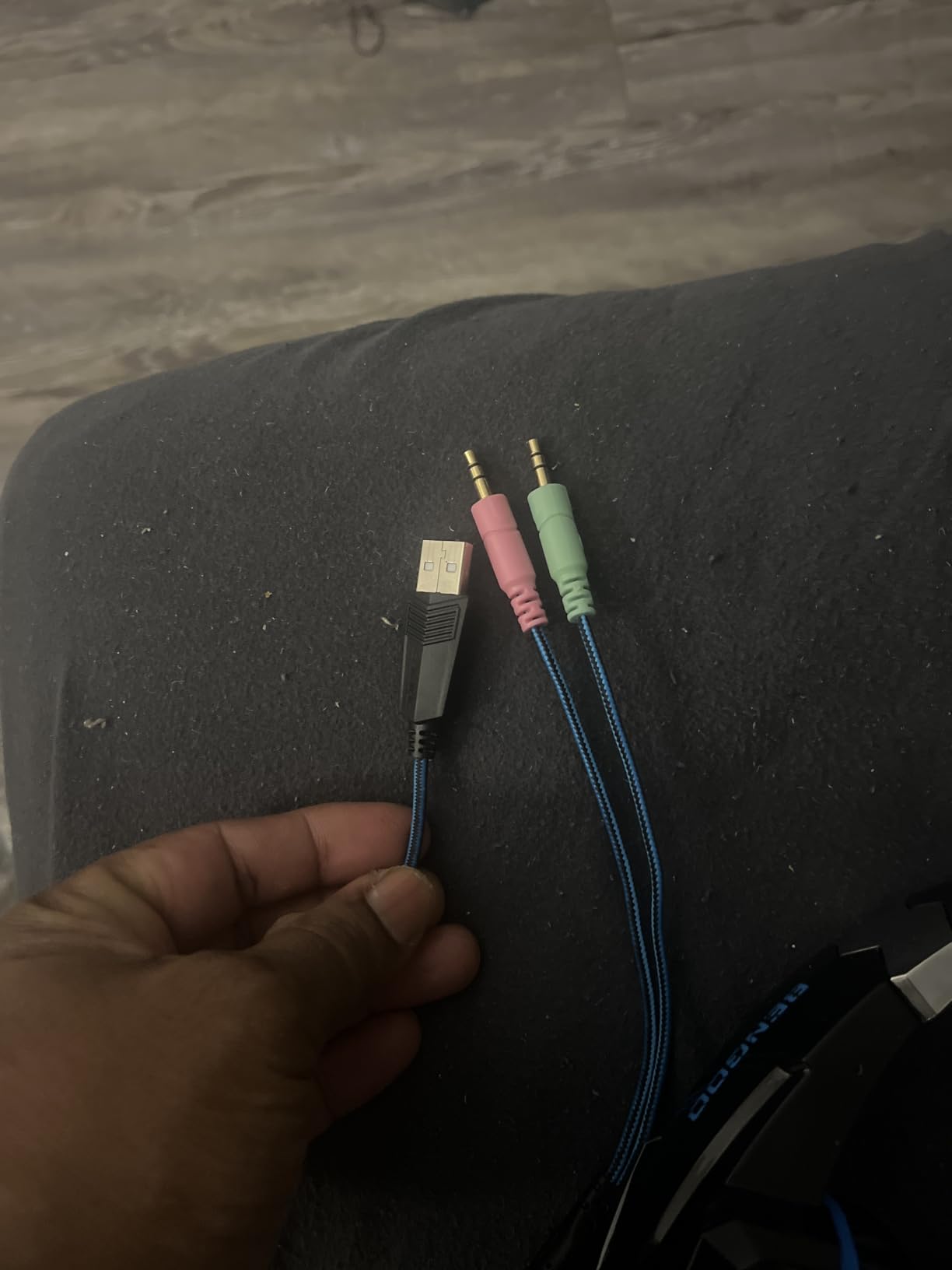
The protein leather over-ear pads are soft and skin-friendly, and reviewers repeatedly cite multi-platform support, comfort and styling as the draws at this price. The braided cable carries a rotary volume controller and a one-key mute.
Why it fits a large head
The multi-point headbeam is the honest answer. It is not a suspension band and not a flexible aluminium frame, so it does not solve clamping mechanics the way the top picks do, but the wider contact area softens the pressure on a big skull.
It is also the only headset here you can move between every console generation and a retro NES without an adapter, which for some households is worth more than perfect fit.
Where it falls short
The microphone is omnidirectional, which means it picks up room noise as readily as your voice. Fine for casual party chat, poor for streaming or anything where background sound matters.
The 49-inch braided cable is fixed in practice, and putting volume and mute on the cable rather than the earcup means you are reaching behind your desk mid-match. It is the budget compromise, and it behaves like one.
How to Wear Glasses With a Gaming Headset
Glasses and large head size compound each other, which is why that pairing shows up in almost every comfort thread on this topic. An earpad already pressing on the side of your head has nowhere to give, so the frame arm takes the extra force directly.
The good news is that a few small adjustments remove most of the problem.
Let the arms pass under the pads. Slide the top of the earpad up over the frame arm rather than tucking the arm behind the pad. The pad then rests on the frame instead of pinning it.
Choose a pad cut for glasses. Cushions shaped with a glasses-friendly channel, like the ones on the Turtle Beach Stealth 600, leave a gap where the arm would otherwise be trapped.
Keep tension loose for the first ten minutes. Start with the band barely engaged, then tighten only as much as you need. Clamp force is what turns a frame arm into a headache.
Favour fabric over leatherette where you can. Leatherette grips skin and frame alike; breathable fabric or velour lets the arm slide rather than hold.
Check RGB lighting before you commit. On the Logitech G733 the light sits exactly where temple arms run, and it is visible through the frame at night.
Community reports pair the big-head and glasses combination directly, with owners of wide headsets and Corsair models describing comfort in XL helmet sizes while wearing glasses. That is the standard you should hold any candidate to.
How We Tested Headset Fit on Heads Above Average
We put every headset in this roundup through the same fit protocol rather than trusting comfort adjectives. Each one was worn for a minimum of three hours continuously, because the failure mode that matters does not show up in the first fifteen minutes.
Four things were checked. First, band extension at full stretch, watching for whether the frame bends outward or simply tightens. Second, cup depth, with the ear fully enclosed and no contact against the driver. Third, pressure location after three hours, particularly the upper sides of the skull where a band that has run out of adjustment lands. Fourth, weight, recorded in grams or ounces and reported for every product here.
Glasses wearers were tested separately with a frame in place, since a fit that works bare-headed often fails the moment an arm is introduced. Headset manufacturers rarely publish headband width at full extension, so this part is necessarily judgement-based rather than a measurement.
Two things changed our picks as a result. Weight moved several otherwise excellent headsets down the list, and the suspension headband on the G733 performed exactly as the fit mechanics predict, which is why it took the wireless slot.
Buying Guide: Fit Factors That Decide Long-Session Comfort
Headband material beats headband length. A long rigid band is not a wide-fitting band. Extend it far enough and the counter-force rises with it, so the fit gets tighter rather than looser. Aluminium frames and fabric suspension straps flex; hard plastic rails do not. This is the single most useful thing to know before buying.
Check for top-pivot earcups. Most headphones hinge outward at the bottom only. Large heads generally need cups that rotate at the top too, so the band can sit lower and closer to the skull. That spreads pressure across the crown rather than concentrating it on the temples.
Treat weight as a comfort number. Everything below about 300g disappears over a long evening. Above 350g, the headset starts to feel like an object you are carrying, particularly on a wider frame that distributes the load less evenly.
Look at earcup shape, not just size. An oblong cup that is wider than it is tall wraps around the ear without pushing it into the driver. A round cup of the same diameter can still feel cramped on a wide head, which is why circular designs attract the worst fit reports.
Decide wired or wireless before anything else. Wireless is more convenient and costs weight plus battery management. Wired never adds latency and is usually lighter. Note that PS5 has no native Bluetooth audio, so a wireless headset for that console needs a 2.4GHz dongle or a 3.5mm connection.
Measure your head if you can. Wrap a soft tape measure around the widest point, just above your ears and across the back. Above about 60cm you are in the range where mainstream headsets start to struggle, and the picks here are the ones that hold up in that range. Compare against our guide to fitting for larger frames for the same principle applied to clothing.
Buy from somewhere with a generous return window. Fit cannot be judged from a spec sheet, and even a careful in-store try-on does not predict hour four. A return policy is not an admission of doubt, it is the only sensible hedge on a subjective purchase. The same logic applies if you are sizing up other gear built around a larger frame, like our big and tall jacket picks.
Going the Other Way: Gaming Headsets for Smaller Heads
The mirror image of this problem is narrow, rigid headsets with small cups, and most of the picks above will feel oversized. Look instead for low clamping force, a narrow band that does not need extending, and cups that pivot enough to sit flat against a smaller skull.
The JBL Quantum 100 is the most adaptable of the wired options here because of the 90-degree swivel, which lets small cups sit at a relaxed angle instead of gapping. The Razer BlackShark V2 X at 240g is the lightest and least punishing if your head sits below average but not far below.
The reason most large-head picks fail smaller heads is not weight, it is footprint. Wide cups leave a gap, a gap breaks the seal, and a broken seal kills bass response and leaks sound in both directions.
Frequently Asked Questions
What is the best gaming headset for big heads?
The HyperX Cloud II is the best gaming headset for big heads. Its memory foam cushions are deep enough that the ear sits fully inside the cup without touching the driver, and the aluminium frame flexes outward as you extend it rather than tightening. It also runs 7.1 surround in hardware through the included USB control box.
What is the best gaming headset for big heads on PS5?
The HyperX Cloud III is the strongest pick for PS5. It includes both a USB-to-3.5mm cable and a USB-C adapter, which avoids the most common PS5 audio problem where the wrong adapter stops audio from reaching the headset. The Logitech G733 also works on PS5 through its USB wireless dongle if you prefer wireless.
Which headphones are best for big heads?
For gaming, the HyperX Cloud II leads because of cushion depth and frame flex. For non-gaming use, look for the same three fit criteria: a suspension or flexible headband, low clamping force, and earcups deep enough to clear the driver. The same geometry rules apply whether or not a microphone is attached.
What is the most comfortable gaming headset for wearing glasses?
The Turtle Beach Stealth 600 is built around this requirement, with memory foam cushions cut to let a glasses arm pass under the cup edge instead of trapping it. The Razer BlackShark V2 X is a lighter second choice, since a lighter frame transmits less force into the temple arm.
What is the best gaming headset for people with smaller heads?
Look for a narrow band with low clamping force and cups that pivot far enough to sit flat against a small skull, since a broken seal from oversized cups is what ruins the sound. The JBL Quantum 100 swivels up to 90 degrees, and the Razer BlackShark V2 X at 240g is the lightest option that will not overheat.
Conclusion: The Best Gaming Headsets for Big Heads in 2026
The HyperX Cloud II is the pick. Deep memory foam, an aluminium frame that flexes rather than fights, and hardware 7.1 surround make it the most reliable answer to the question of the best gaming headsets for big heads, and it holds up whether you wear glasses or not.
Go wireless with the Logitech G733, whose suspension headband is the best example of that mechanism in this roundup. Play on PS5 or Xbox with the HyperX Cloud III and its included adapters. Wear glasses and play long sessions with the Turtle Beach Stealth 600. Spend as little as possible and still fit a large head with the JBL Quantum 100 at 7.8 ounces.
Whatever you pick, test it for three hours before you decide. Fit cannot be read off a spec sheet, and the headsets that fail large heads fail slowly. If you also want a bigger-picture look at the VR side of headset fitting, our standalone VR headset guide covers the comfort concerns that carry over between the two categories.