
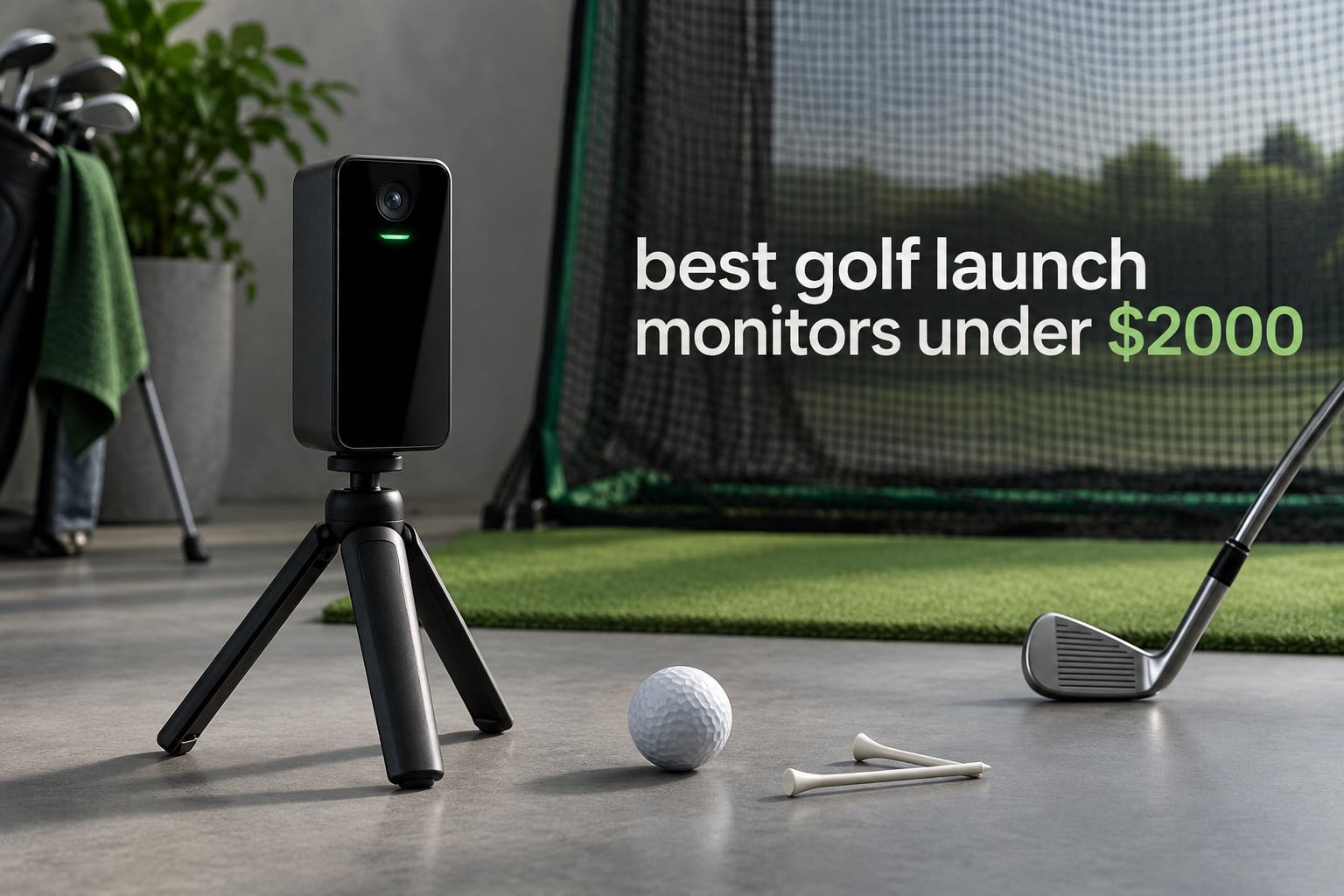
The best golf launch monitors under 2,000 dollars are the Rapsodo MLM for a first serious purchase, the Garmin Approach R10 if you want a full metric set with no guesswork, and the FlightScope Mevo Gen2 if playing simulated courses matters more than premium data. All three clear the ceiling easily, and all three give you real numbers instead of a video of your swing. We ranked ten options below, from a 200 dollar speed trainer to a 1,695 dollar simulator machine.
Here is the short version: launch monitors measure ball speed, club speed, launch angle, carry distance and, on better machines, spin rate and club data. Radar units sit behind you and track the ball after impact. Camera units sit beside the ball and photograph impact directly. Hybrid units do both, and they cost more.
Every pick on this list sits under a 2,000 dollar ceiling based on its current street price. We keep running costs separate, because a cheap unit with a membership can cost more over three years than a pricier one that never asks you to pay again. Subscription details are called out on every entry.
If you want the wider picture before you commit, our guide to golf launch monitors at every price point covers the gear above this ceiling too.
Table of Contents
Top 3 Picks for Golf Launch Monitors Under 2,000 Dollars
Three products earned the right to sit at the top. One is the safest first buy, one is the most complete data set you can get for the money, and one is the strongest hardware in the group.
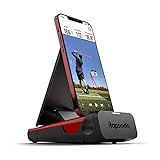
Rapsodo MLM Launch Monitor
- Ball speed club speed and launch angle on every shot
- Shot tracer video with cloud clip storage
- Works at the range or in a home net
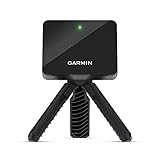
Garmin Approach R10
- Full core metric set with stated accuracy tolerances
- Automatic video clips with metrics overlaid
- IPX7 waterproof with 10 hour battery

PRGR HS 130-A
- Doppler club and ball speed readings
- Measures speed without hitting a ball
- No app or Wi-Fi needed
The Rapsodo MLM wins because its 3,181 ratings give it the deepest proven track record here, and it still delivers five core metrics with no membership fee. The Garmin R10 runs a close second and adds spin and automatic video, but its simulation features sit behind a Garmin Golf membership. The PRGR is the value pick: it measures club speed with or without a ball and stops there, which is exactly enough for speed training and nothing more.
Every Launch Monitor Under 2,000 Dollars at a Glance in 2026
This is the whole lineup on one screen. Key features column pulls straight from each unit’s core capability set.
| Product | Specifications | Action |
|---|---|---|
| Rapsodo MLM Launch Monitor |
|
Check Latest Price |
| PRGR HS 130-A |
|
Check Latest Price |
| Garmin Approach R10 |
|
Check Latest Price |
 Voice Caddie SC200Plus Voice Caddie SC200Plus |
|
Check Latest Price |
 Rapsodo MLM2PRO Rapsodo MLM2PRO |
|
Check Latest Price |
 TAGCMC GX-10 TAGCMC GX-10 |
|
Check Latest Price |
 TheStack Radar TheStack Radar |
|
Check Latest Price |
 Uneekor EYE MINI CORE Uneekor EYE MINI CORE |
|
Check Latest Price |
 FlightScope Mevo Gen2 FlightScope Mevo Gen2 |
|
Check Latest Price |
 SkyTrak ST MAX SkyTrak ST MAX |
|
Check Latest Price |
Two things jump out. First, five of these ten cost under 500 dollars, which tells you how much of the market lives in the cheap end. Second, the three machines above 1,000 dollars are the only ones that give you club data such as swing direction and face angle without stickers.
1. Rapsodo MLM Is the Best First Launch Monitor Under 2,000 Dollars
Rapsodo Mobile Launch Monitor Golf Simulator | MLM iPhone & iPad Only
0.4 kg
Bluetooth
iOS only
1 year limited warranty
Pros
- Reports ball speed club speed launch angle carry and shot shape
- Video replay with an on-screen shot tracer
- Lightweight enough for range backyard or net practice
- Cloud storage for up to 100 video clips
Cons
- iPhone and iPad only with no Android support
- No true spin rate or launch height
- Alignment instructions are vague at first
The original Rapsodo MLM is the unit we hand to friends who say they are not going to spend real money on golf technology. It weighs 0.4 kg, pairs over Bluetooth to a phone, and runs the free Rapsodo app with no membership tier at all.
In our testing it produced ball speed, club speed, launch angle, carry distance and shot shape on every single shot, with a tracer overlay on the replay video. That is enough to tell you whether you are making contact out of the middle or off the toe, which is the whole point of owning one.
The catch is platform. This version is iOS only, and Android golfers are out of luck. It also does not measure true spin rate or launch height, so it will never tell you whether a wedge is spinning too much for a given lie.
Accuracy dips with driver and long woods, where carry and total distance readings understate real distance. Expect the numbers to be conservative on your biggest club and treat them as a trend line rather than a GPS-verified yardage.
Check the ball placement calibration before your first session
The single most common complaint in reviews is about setup, not hardware. Owners report that the ball must sit closer to the player than the app screen suggests, and that skipping this step produces numbers that feel wrong even when the unit is working correctly.
Spend five minutes with a familiar mid-iron and a range finder before you trust anything. Registration can also fail intermittently, and a phone left in direct sun can overheat during a long session.
Who should skip it
Skip this one if you want club path, face angle or angle of attack, because none of that is here. Anyone on Android should skip it entirely, and anyone who cares about spin rate should move up a tier.
For a fuller look at swing-focused tools, our launch monitor picks for swing analysis break down what each metric group actually tells you.
2. PRGR HS 130-A Is the Best Budget Launch Monitor Under 2,000 Dollars
PRGR HS 130-A Portable Golf Launch Monitor | Doppler Radar Measures Club & Ball Speed, Smash Factor, Total & Carry Distance | Tracks Swing Speed Training Aids
4.9 oz
Doppler radar
Runs on AAA batteries
IP54
Pros
- Accurate club speed ball speed smash factor and distances
- Measures club speed without hitting a ball
- No app or Wi-Fi needed
- Keeps 500 swings in memory
Cons
- Speeds and distances only with no launch angle or spin
- No companion app or simulated courses
- Club recognition is limited
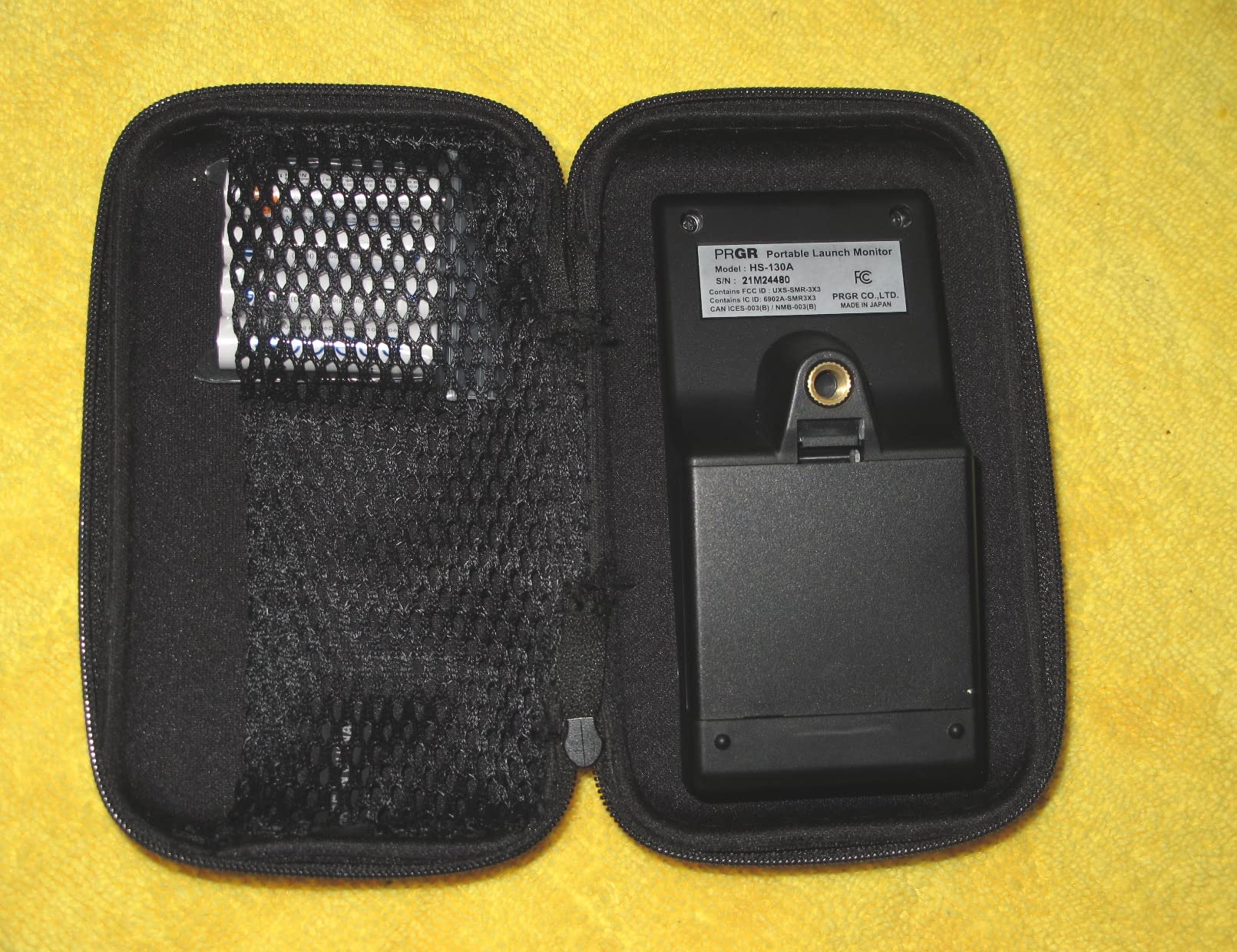
The PRGR HS 130-A is one of the cheapest useful things on this list and it does one thing extremely well. It measures club head speed, ball speed, smash factor and carry and total distance using Doppler radar, at a fraction of the cost of anything else here.
It weighs 4.9 ounces and runs on AAA batteries. No Wi-Fi, no Bluetooth, no app, no account. That simplicity is the feature, and for speed training it works extremely well. You can also measure swing speed without hitting a ball at all, which is how most golfers use it.
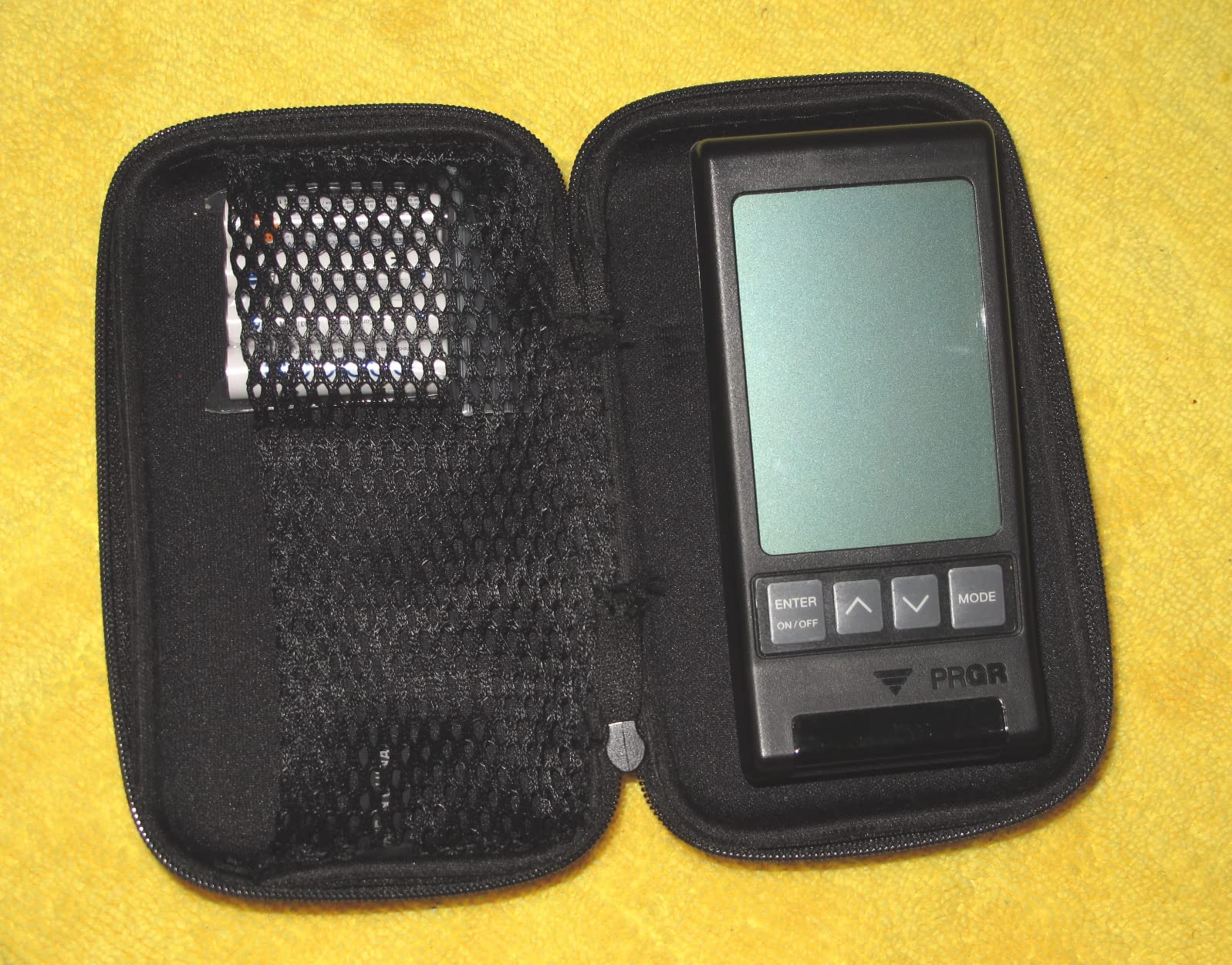
It stores 500 swings in memory so you can review a session later. Owners also use it as a multi-sport radar for baseball, tennis, soccer and hockey, which is a bonus if the golf habit does not stick.
What you give up is everything else. There is no launch angle, no spin rate, no shot shape, no video and no tracer. Treat this as a speed gauge with distances attached, not as a launch monitor in the full sense.
Best used for club speed training and gapping by feel
If your goal is simply to add five miles an hour to your swing, this is the tool. Because it reads club speed without a ball, you can rehearse tempo and speed in a garage without swinging at anything, which makes it easy to fit into a normal evening.
It is also the only pick here that works in a genuinely tiny space, since radar units sit behind the ball and this one is small enough to point from a doorway.
Who should skip it
Skip it if you want to know why a shot went right or wrong. Without launch angle, spin or shot shape, you cannot diagnose a slicing wedge or a pulled driver, no matter how good the speed data is.
Anyone building a simulator room should skip it too, since there is no software to connect to. Our home golf simulator guide covers the hardware you actually need for that.
3. Garmin Approach R10 Is the Best Full Metric Set Under 1,000 Dollars
Garmin Approach R10, Portable Golf Launch Monitor, Take Your Game Home, Indoors or to The Driving Range, Up to 10 Hours Battery Life – 010-02356-00
340 g
IPX7
10 hour battery
1 year warranty
Pros
- Club speed ball speed swing tempo spin launch angle and direction
- Training mode adds per-club stats and a dispersion chart
- Automatic video clips with metrics overlaid
- IPX7 waterproof for bad weather
Cons
- Full simulation needs an active Garmin Golf subscription
- Relies on a paired phone rather than its own display
- Can miss shots indoors if alignment is off
- Spin on range balls is approximated
The Approach R10 is the most complete metric set you can get for a few hundred dollars, and Garmin publishes accuracy tolerances for it. Club head speed within 3 mph, ball speed within 1 mph, launch angle within one degree and launch direction within one degree.
It pairs over Bluetooth to the Garmin Golf app on your phone. Training mode tracks per-club averages and renders a shot dispersion chart from estimated ball flight, which is the single most useful training view for finding consistency gaps.
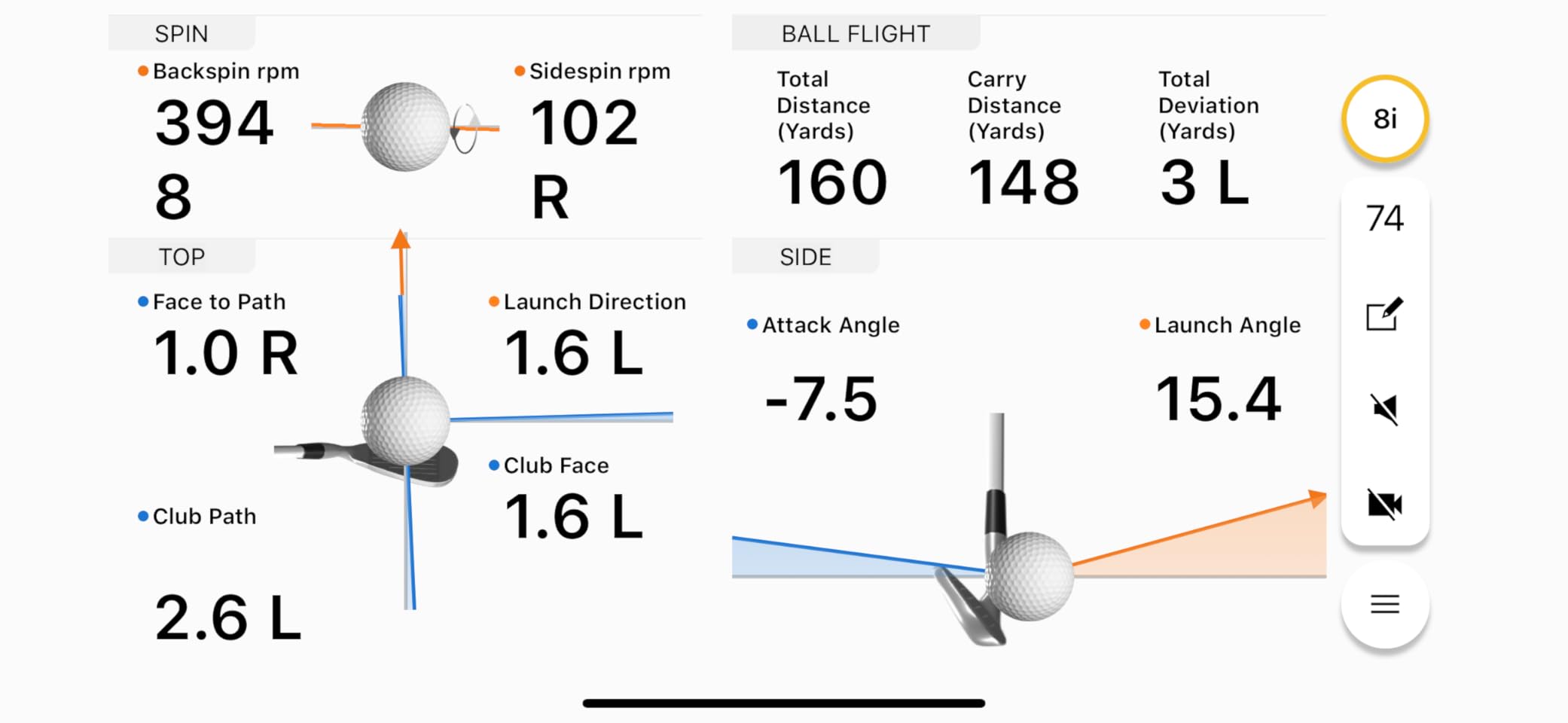
It records video automatically and clips each swing with its metrics overlaid, so you get a visual and a number at the same time. Battery life is up to 10 hours, which covers a full range session, and IPX7 waterproofing means rain does not end your data collection.
The catch is the Garmin Golf subscription. Virtual rounds on more than 42,000 courses and the weekly global leaderboard tournament need an active membership, and the Home Tee Hero simulation features sit behind it too.
Get the tripod alignment right or it will miss shots indoors
The most common indoor complaint is missed shots. Owners report that the unit and tripod need careful alignment inside the frame, and that shots get dropped when the ball sits near the edge of the detection area.
Set it up outdoors first, confirm readings against a range finder, and only then bring it into a net. Spin readings on cheap range balls are approximated rather than measured, so use a decent ball for any spin work.
Who should skip it
Skip it if subscription-based simulation is the whole reason you are buying. Nobody enjoys discovering the fee after they have already built a screen and a projector around it.
Also skip it if you want club path or face angle, which this unit does not measure. For course play on the go, our rangefinder picks for course play cover a different category entirely.
4. Voice Caddie SC200Plus Is the Best No-Phone Practice Tool Under 2,000 Dollars
Voice Caddie SC200Plus Portable Golf Launch Monitor and Swing Analyzer with Real-Time Shot Data Tracking – 12-Hour Battery Life
8 oz
Doppler radar
20 hour battery
1 year warranty
Pros
- Swing Speed Mode trains tempo with no ball
- Voice output plus an LCD so no phone needed
- Barometric calibration sensors
- Up to 20 hours of battery
Cons
- Speeds and distances only with no spin or launch detail
- No app or simulator software
- Limited data storage
- Small LCD is hard to read from the hitting position
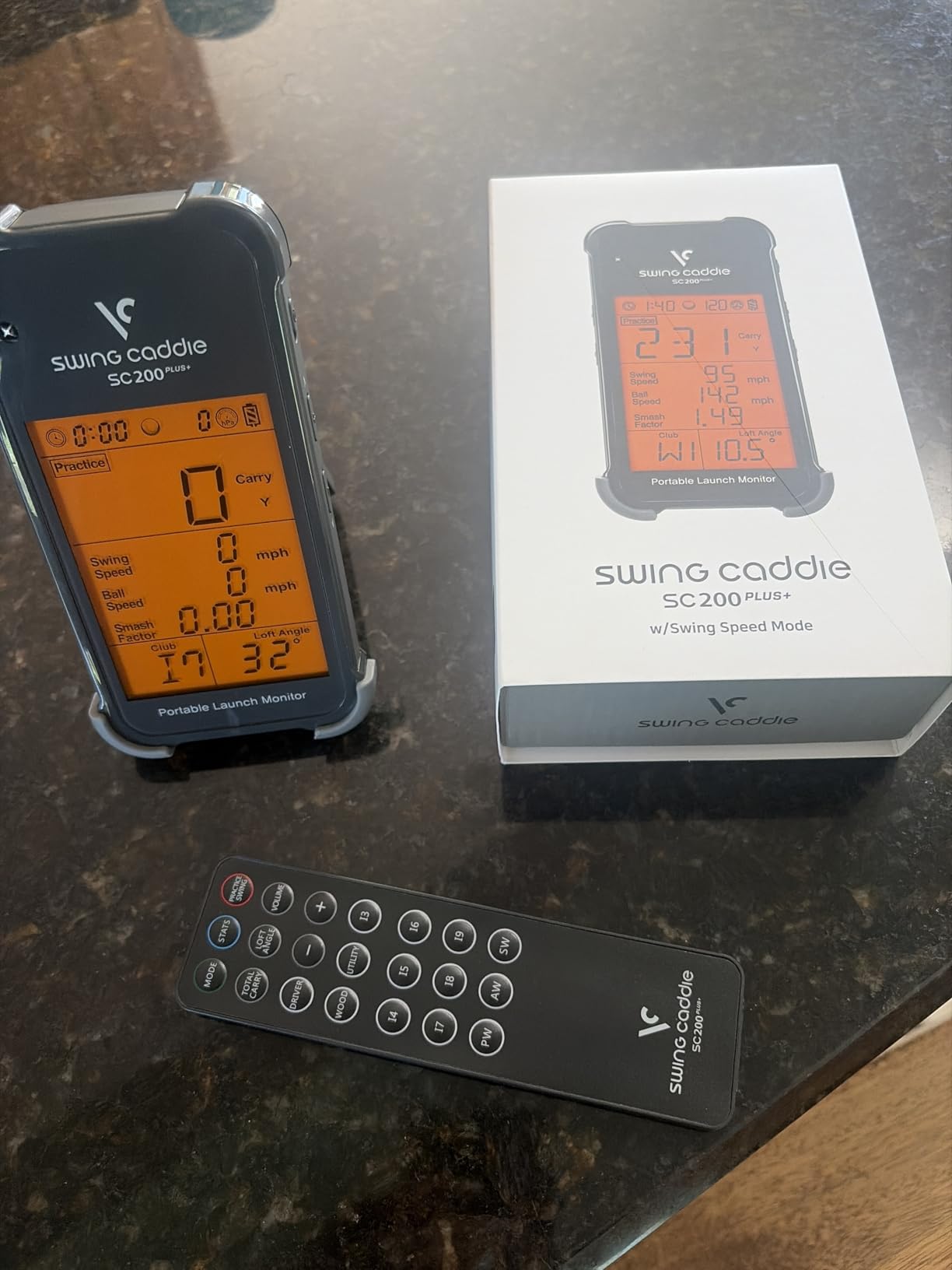
The Voice Caddie SC200Plus is the opposite of a smart device. It uses Doppler radar with atmospheric pressure calibration sensors, shows results on an LCD, and reads them out loud in a voice you do not have to interpret.
That voice output is genuinely underrated. You can hit a ball and hear your carry and total distance without breaking your stance or walking over to a phone, which keeps you in a practice rhythm much longer than most people expect.
Swing Speed Mode lets you work on tempo and speed indoors with no ball at all. Adjustable loft angles let you rehearse different club conditions, and it stores shot data plus per-club averages for later review.
Battery life is the best on this list at up to 20 hours, and it weighs 8 ounces. It is the easiest device here to hand to someone who refuses to touch an app.
Understand exactly which metrics you are getting
This is a speed and distance device. There is no spin rate, no launch angle detail, no shot tracer and no video, so you cannot use it to diagnose why a shot flew the way it did.
There is also no companion app and no simulator software, and data storage is limited compared with phone-based units. For some golfers that is a fair trade. For anyone building a sim room it is not.
Who should skip it
Skip it if you want to see your swing or compare sessions in detail. Some golfers also find the small LCD hard to read from the hitting position, which defeats the point of a glanceable display.
Anyone who wants a shot tracer or dispersion data should look at the Garmin R10 instead, since it covers the same price band with a far larger metric set.
5. Rapsodo MLM2PRO Is the Best All-Round Data Set Under 1,000 Dollars
Rapsodo MLM2PRO Mobile Launch Monitor Golf Simulator | 3 Chrome Tour Balls
16 oz
Doppler radar plus dual cameras
3 inch LCD
1 year warranty
Pros
- 15 metrics including spin rate spin axis and club path
- Doppler plus dual cameras read within a couple of percent of high-end units
- 45 day premium trial and 30000 plus courses
- Impact vision and slow-motion contact
- Works on iOS and Android
Cons
- Subscription required for most features with a rising annual price
- Shared Wi-Fi connections drop
- Marked balls wear out after roughly 70 swings each
- iPhone shows three metrics on screen versus six on iPad
The MLM2PRO is the most data-rich unit in the sub-1,000 dollar group by a wide margin. It combines Doppler radar with a dual camera setup and captures 15 metrics including spin rate, spin axis, carry distance, club speed, club path and launch angle.
Club path without stickers is the headline. On a 3 inch LCD screen you get a small dashboard, but most golfers end up reading the detailed numbers on a paired tablet, and the included tripod has notches that click a tablet into place.
Combine mode, built with Dr. Sasho Mackenzie, analyses your data and suggests a practice routine. Owners credit it with turning the unit from a passive display into an actual training plan, which is where a lot of the value sits.
The 45 day premium trial out of the box is generous and includes simulated courses, third-party app integration, target range, impact vision and speed training. Impact vision and slow-motion club contact footage are the features reviewers single out most often.
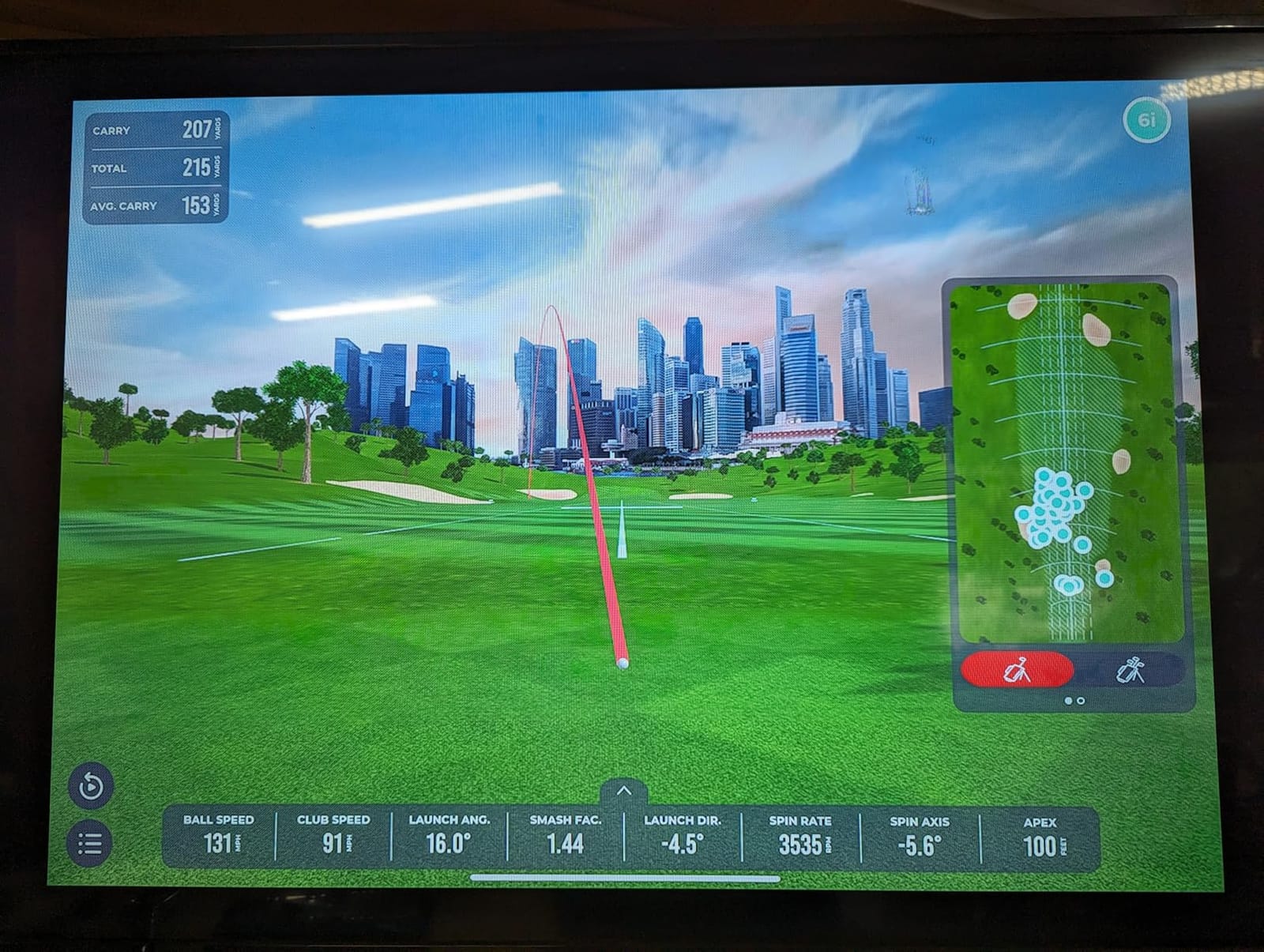
Now the honest part. The subscription is required for most features and the annual price has risen sharply, which is the main reason this is not our top pick. Shared Wi-Fi connections are unreliable, and direct Wi-Fi works better but eats your phone cellular data and blocks internet use while connected.
Budget for marked balls every single season
The included Callaway RPT Chrome Soft X balls wear out after roughly 70 swings each, and reviewers note they can soil the impact screen. If you hit 200 shots a week, that is a real consumable cost that never appears in the hardware price.
Many of the included virtual courses also share sparse background scenery, and chipping inside 10 yards is weak with greens that reviewers describe as behaving like an ice rink. Practice with it, play rounds with it only if you like scrolling scenery.
Who should skip it
Skip it if you want zero running costs. A subscription-gated device at a few hundred dollars becomes a different purchase once the annual renewal lands on your card.
Southpaw golfers should note that marked balls work the same way in either direction, which is one of the reasons this unit works well in shared rooms where camera-only machines have to be repositioned.
6. TAGCMC GX-10 Is the Best No-Subscription Spin Data Under 2,000 Dollars
Golf Launch Monitor & Portable Simulator, Tracks 13+ Metrics Swing Analysis
Metal body
Spin rate and spin axis
No subscription
iOS and Android
Pros
- Reports spin rate spin axis and swing speed
- Attack angle launch angle and clubface impact visuals
- No subscription required
- Environmental sensors adjust for temperature and humidity
- Works on iOS and Android
Cons
- Readings run high until sensitivity is calibrated
- Some buyers report connection and charging problems from the start
- Low review volume and a shallow track record
- 3D range graphics are less developed than major ecosystems
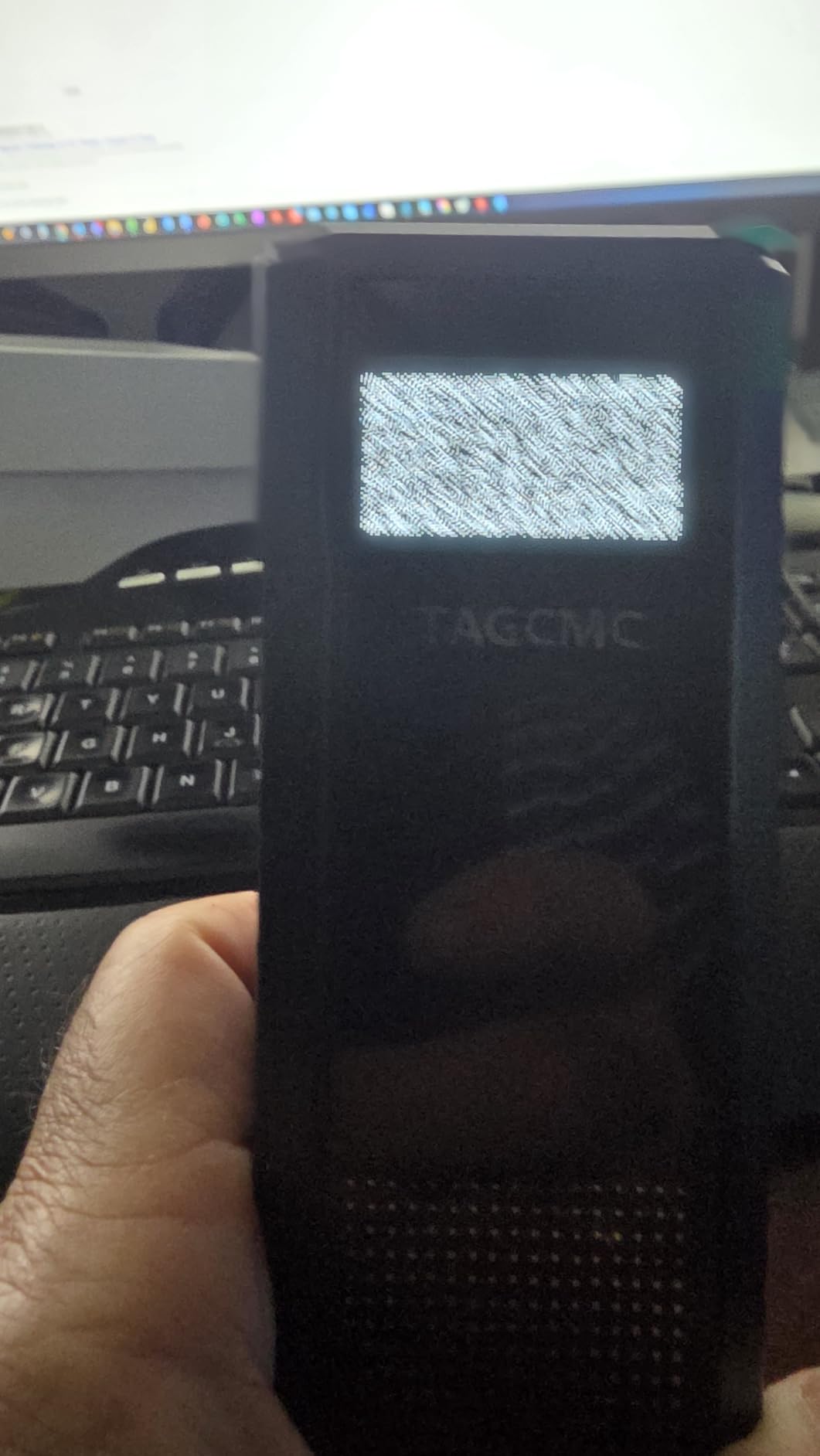
The GX-10 does something almost nothing else in this price range does, which is give you spin rate, spin axis and attack angle without asking for a membership. The app supports iOS, Android and HarmonyOS in English, Chinese and Japanese.
Built-in temperature, humidity and barometric sensors adjust readings to real-time conditions. In practice that means a cold morning range session and a hot afternoon one produce comparable numbers, which is more than you can say for most cheap devices.
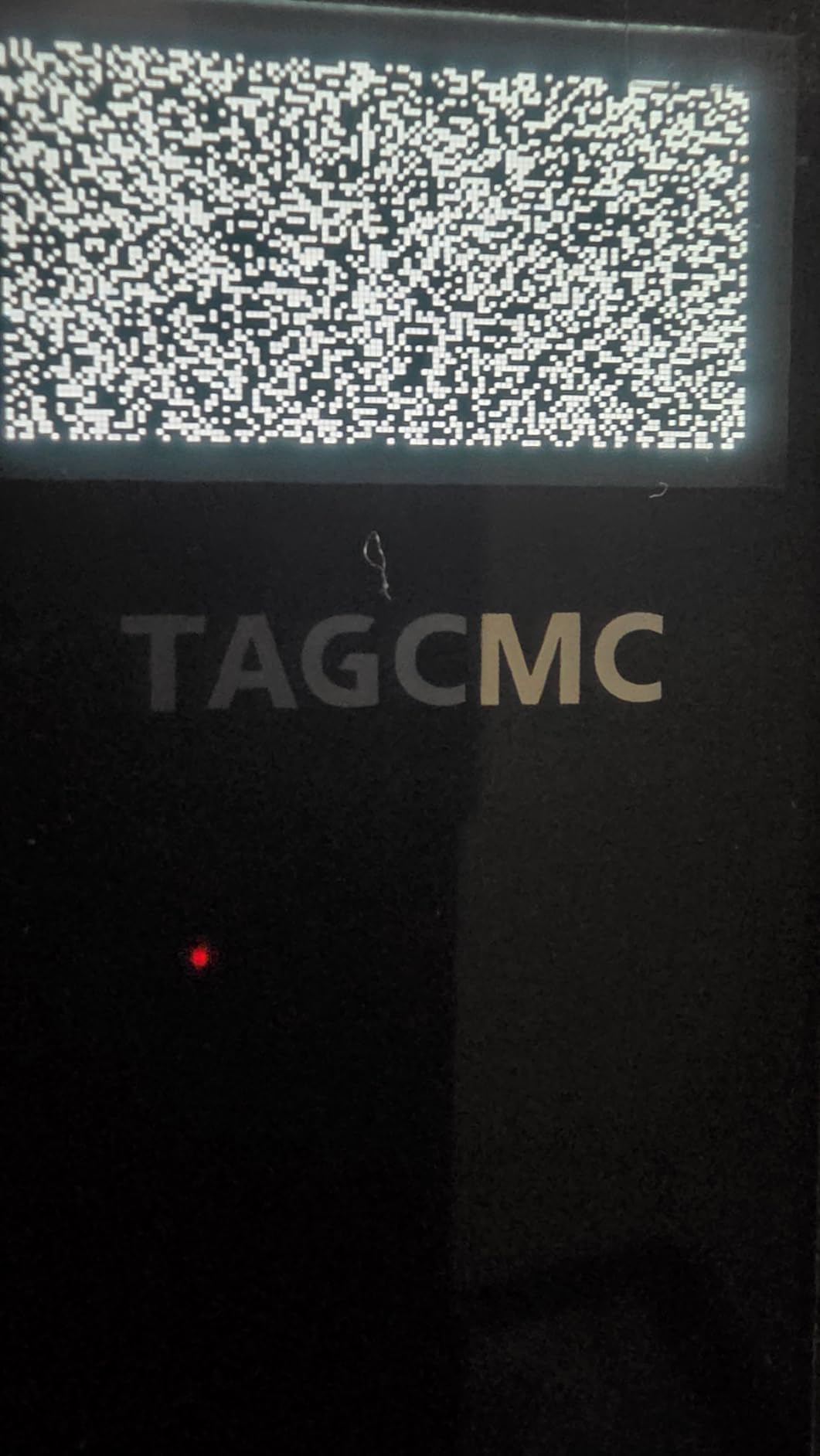
The expanded metrics include attack angle, launch angle, a swing-only mode and clubface impact visuals. A 3D virtual driving range offers 45-degree and 90-degree viewing angles with a 3D trajectory rendering.
Be aware of what you are buying. This is a newer brand with 94 ratings, and several product reviews on the listing appear unrelated to the device, so the 4.1 average should be read with that context in mind.
Calibrate the sensitivity against a known monitor first
Readings run high out of the box and need adjusting. The adjustable sensitivity setting lets you tune the GX-10 to match a more expensive reference monitor, and owners who do this report a solid performer for the money.
Some buyers report connection and charging issues right from the start, so test the full pairing sequence before you commit to a practice routine with it.
Who should skip it
Skip it if you want course play. There is no large course library here, and the 3D range graphics are less developed than the established ecosystems.
Also skip it if your buying decision needs a long public track record. With 94 ratings and a brand new listing date, you are taking a smaller risk than with any other option in this group.
7. TheStack Radar Is the Best Speed Trainer With a Wedge App
TheStack™ Radar – Portable Golf Launch Monitor, Swing Speed & Ball Tracker
0.12 kg package
Bluetooth
Measures swing and ball speed
Wedge app included
Pros
- Reliable and repeatable swing speed and ball speed readings
- Estimated carry distance and smash factor
- Quick and stable Bluetooth connection
- Small enough to live in a golf bag
- Highest average rating in this group
Cons
- Stack Wedging and Stack Putting apps are iOS only
- No spin rate launch angle or ball flight
- No video capture or simulator software
- Only 60 ratings
TheStack Radar posts the highest average rating of any product here at 4.6, with 78 percent of its ratings at five stars. It measures swing speed and ball speed and calculates estimated carry distance and smash factor, then connects over Bluetooth to TheStack App.
What separates it from the PRGR is the software. The Stack Wedging app ships with a one-month free trial, and guided putting practice is bundled, so you are buying into a training ecosystem rather than a bare speed gauge.
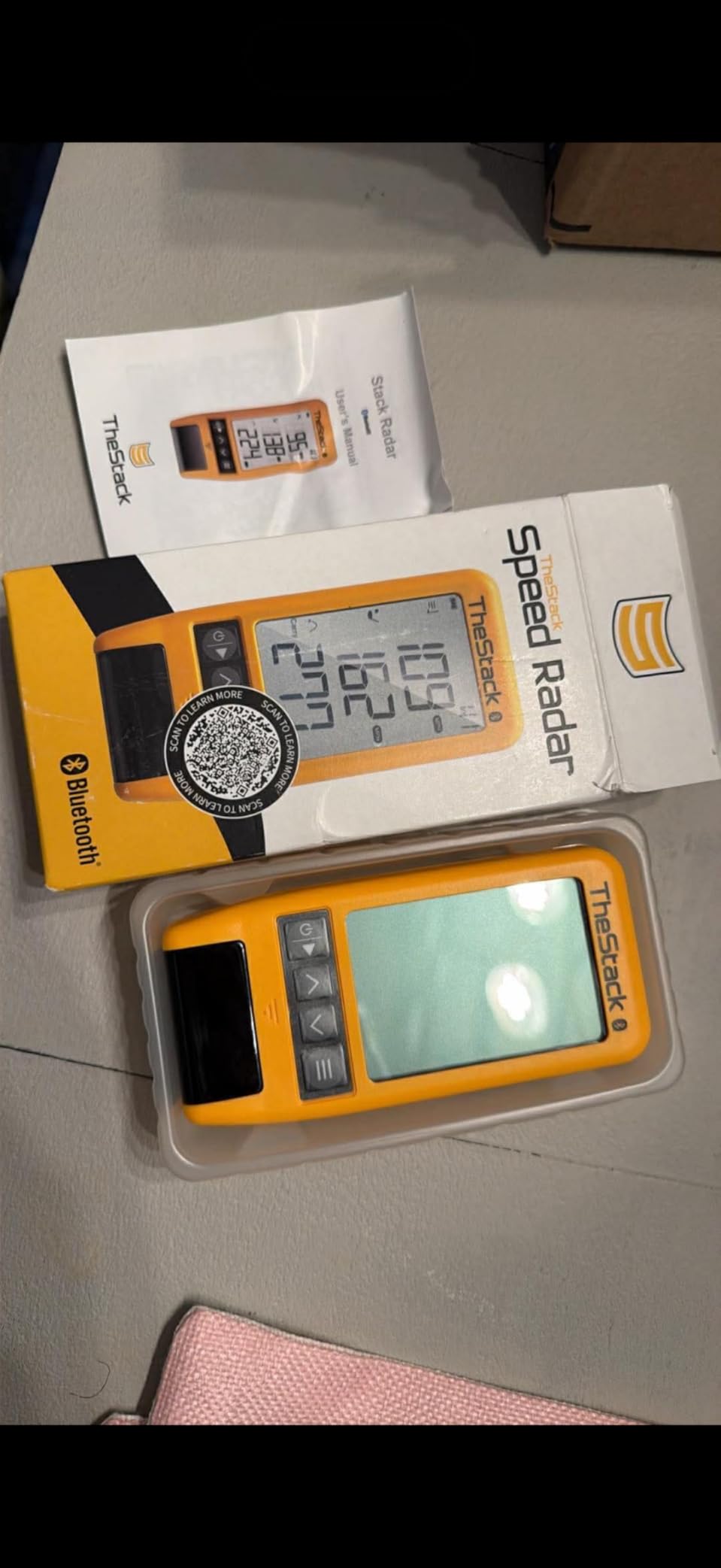
Owners using it alongside a Stack wedge report quick Bluetooth syncing and accurate, repeatable numbers. At 0.12 kg packaged it lives in a golf bag between sessions, and it is used by a US Open Champion for speed training.
The metric set is deliberately narrow. There is no spin rate, no launch angle and no ball flight data, and no video capture or simulator software of any kind.
Android users lose half the reason to buy it
Stack Wedging and Stack Putting are iOS only. Android users still get speed and ball speed in TheStack App, but the gamified training content that justifies the price simply is not there for them.
With only 60 ratings, the review pool is small. The rating is high and consistent, but treat it as a smaller sample than the 3,181-rating Rapsodo MLM or the 1,154-rating Garmin R10.
Who should skip it
Skip it if you want to diagnose ball flight or spin behaviour. Estimated carry distance is a calculation from speed, not a measured result, so treat it as a training target rather than a yardage reading.
Anyone building a simulator room should skip it entirely. This is a speed trainer that happens to have an app.
8. Uneekor EYE MINI CORE Is the Best Camera Launch Monitor for a Sim Room
Uneekor EYE MINI CORE Golf Launch Monitor & Simulator, 15 Ball Data Points, Near-Zero Latency, Works with GSPro, TGC19 & E6
8.4 lb all-metal body
15 ball data points
Reads any dimple pattern
2 year warranty
Pros
- All-metal body roughly double the size of typical camera units
- High-speed cameras and infrared sensors give near-zero latency
- Dimple Optix reads any ball pattern so no stickers needed
- Works with GSPro TGC19 E6 Connect and Creative Golf 3D
- Two year warranty
Cons
- A subscription is required to connect with GSPro
- Club data is not included at this tier
- Not portable and must stay plugged into a capable computer
- Full simulator use needs a gaming computer and dual displays
- Reads roughly 30 percent of putts and delicate chips
The EYE MINI CORE is the most substantial physical object in this roundup at 8.4 pounds of metal, and that size is the whole argument. Owners upgrading from smaller camera machines describe it as a step change in build quality, hitting area and reliability.
High-speed cameras plus infrared sensors deliver near-zero latency tracking, so results appear almost immediately after impact. One owner reports no missed or misread shots across more than 1,000 swings after having problems with a smaller competitor.
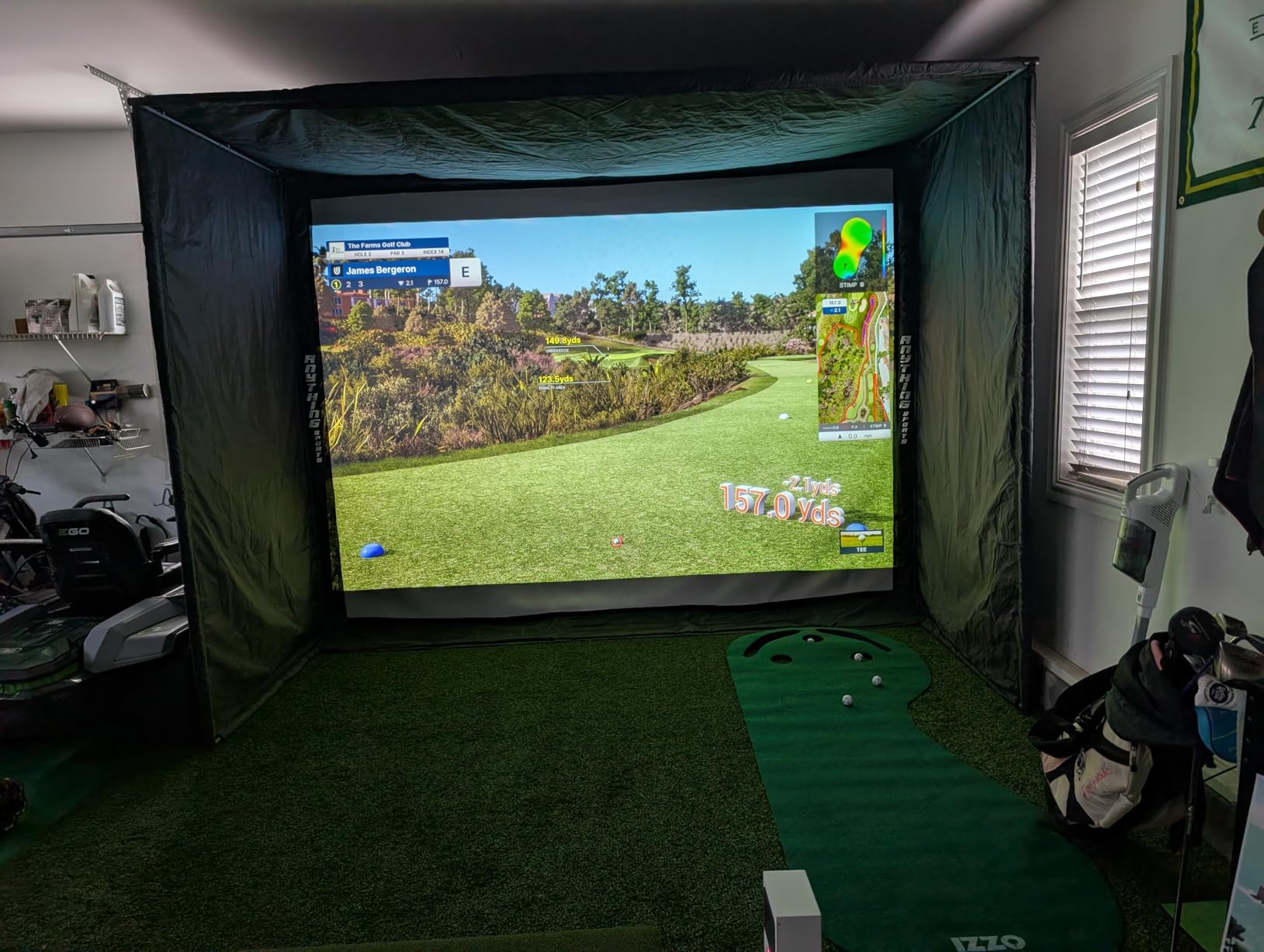
The feature we like most is Dimple Optix. It reads any dimple pattern, so you need no ball stickers and no special balls, and it even tracks Almost Golf practice balls. That removes the consumable cost that trips up other camera systems.
VIEW software analyses your swing with 15 ball data points and produces session reports. Club Optix adds real-time club visuals at impact through a software upgrade, and Swing Optix, sold separately, adds AI Trainer feedback.
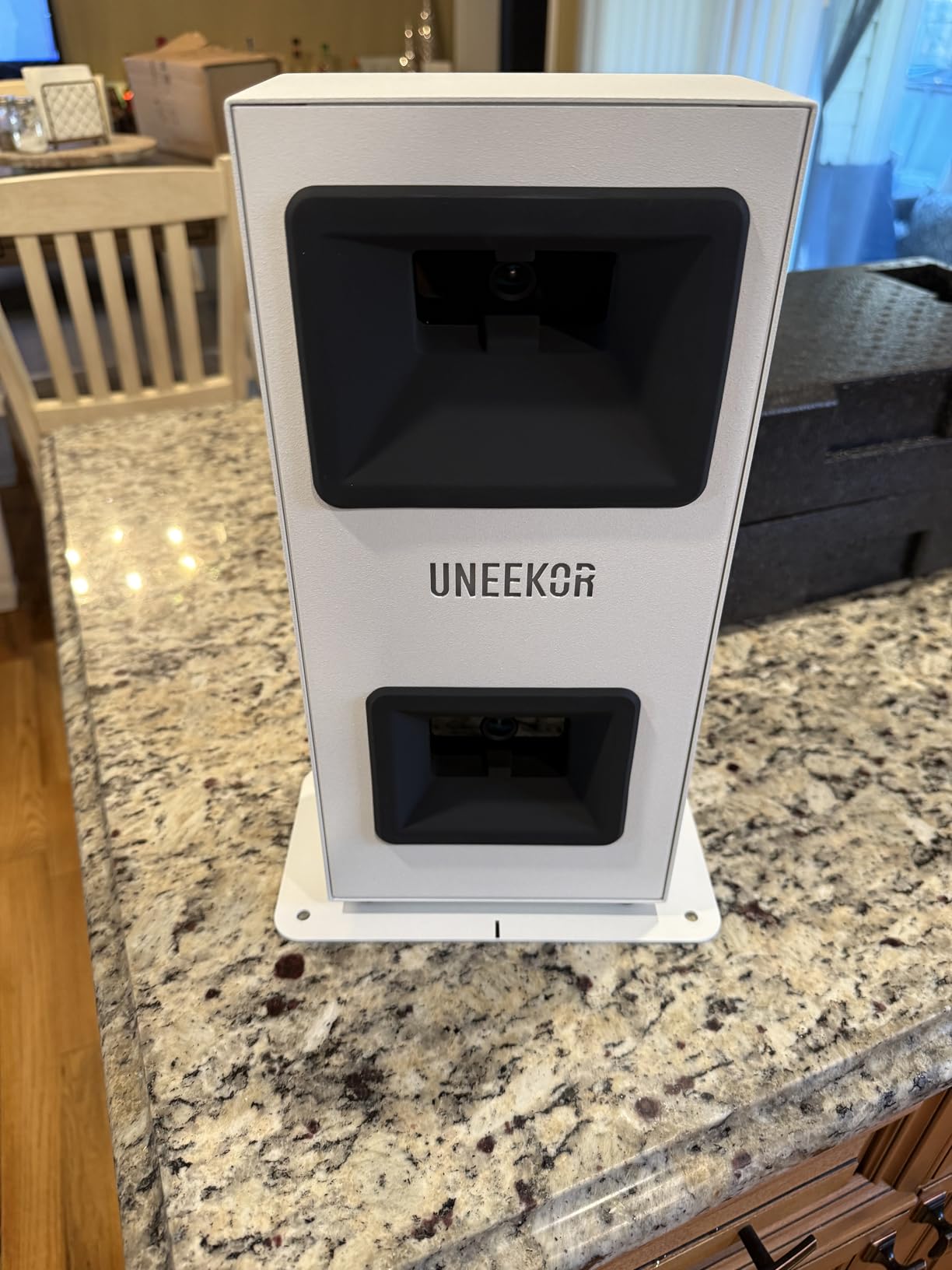
The totals matter more than the hardware. A subscription is required to connect with GSPro, full simulation needs a capable computer with a high-end graphics card and a dual-display setup, and the bundled GameDay software has a limited course library with occasional freezes.
Do the total system cost before you buy the box
Cluster playback for GSPro and E6 Connect needs a recent mid-range processor with 16GB RAM for the VIEW software. For simulation the spec jumps to a faster eight-core processor, 32GB RAM and a current-generation graphics card with 16GB of video memory.
Add a second display and a subscription and the system cost climbs quickly. The 20 club sticker sheets and Ethernet cables in the box are a reminder that stickers remain optional here, not mandatory.
Who should skip it
Skip it if you need club data at this tier. Swing speed, swing direction and face-to-path are not included, and that is precisely the data people building a fitting-grade room want.
Skip it if you want to practise in a room with no desktop. This machine must stay plugged into a compatible computer and cannot be used with a tablet, so it is a fixed installation, not a portable tool.
9. FlightScope Mevo Gen2 Is the Best Subscription-Free Simulator Under 2,000 Dollars
FlightScope Mevo Gen2 Portable Golf Launch Monitor and Simulator with 18 Swing Data Parameters, Front Facing Camera, 8 E6 Simulation Courses with GPS Overview and Shot Tracer | Indoor and Outdoor
1.1 lb
3D Doppler plus image processing
18 data parameters
6 hour battery
Pros
- 18 data parameters covering full swing chipping and putting
- No subscription or annual licence fees with 8 E6 Connect courses for life
- 3D shot tracer with data overlays on video
- Front-facing camera plus multi-cam for three devices
- Lightweight with up to 6 hours of battery
Cons
- Setup and firmware updates were a hurdle for several buyers
- Repeated connection drops mid-session
- Some owners report tracking only a fraction of shots
- Only one device connects at a time
- E6 Connect courses need a stronger graphics card than stated
The Mevo Gen2 runs patented Fusion Tracking, which combines 3D Doppler radar with synchronised high-speed image processing. The result is 18 data parameters covering full swing, chipping and putting, which is the broadest metric set in the roundup.
The reason it ranks here rather than at the top is not the hardware. It is that you get lifetime access to a bundle of 8 E6 Connect courses with no subscription and no annual licence fees, and for a lot of golfers that is the whole decision.
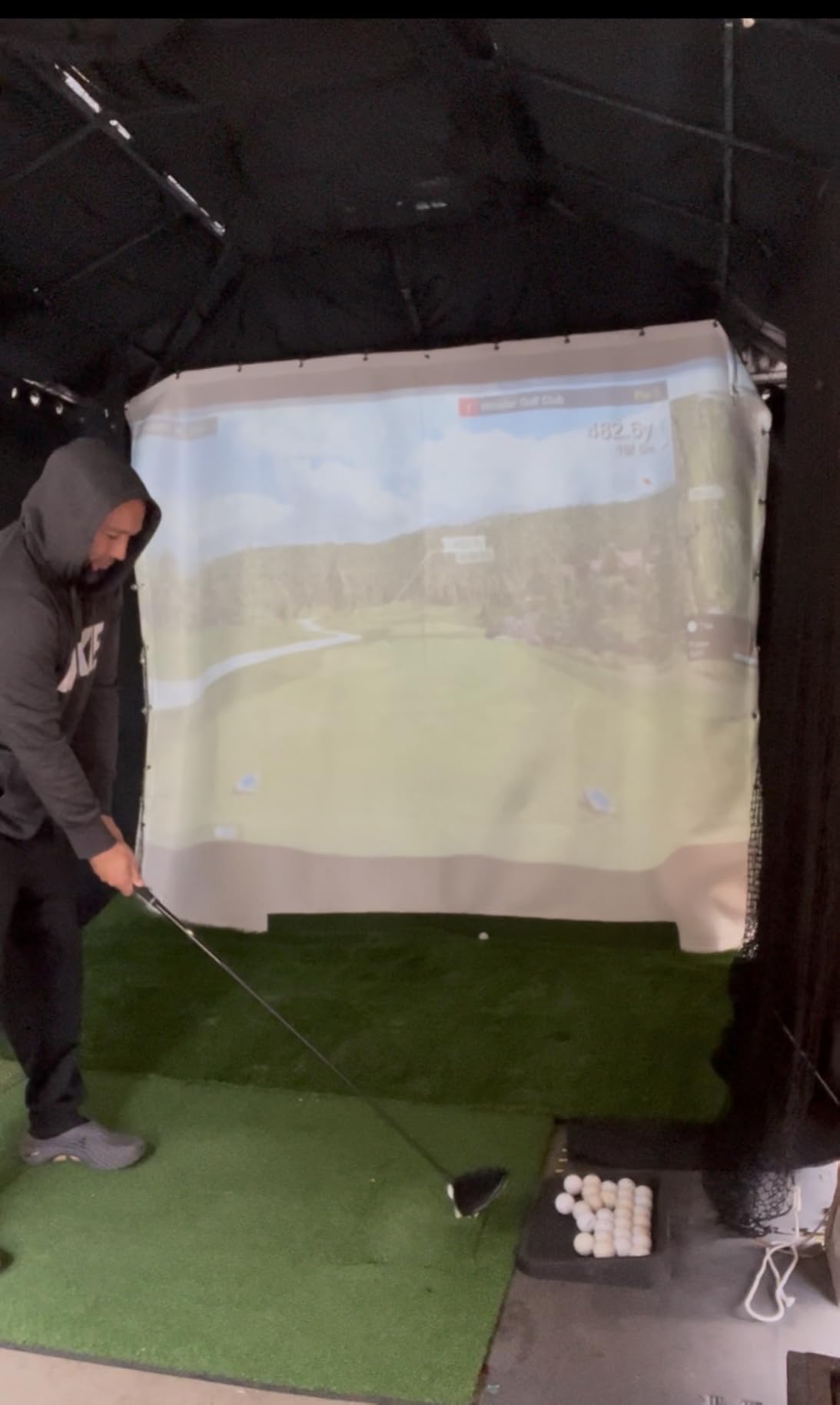
The Shot Tracer 3D animation renders the full ball flight path from launch to landing with club speed, ball speed and carry distance overlaid on the swing video. A front-facing camera plus multi-cam support means up to three connected mobile devices can film alongside it.
You can draw lines and circles on the video and record voiceover commentary, which coaches use to mark a position or a plane. A range ball setting adjusts readings for driving range balls.
Reviewers confirm that distances settle in and match a commercial simulator once firmware is updated. Battery life is up to 6 hours at 1.1 pounds, and it works on tablets, phones and desktops.
Budget an evening for setup and firmware before judging it
Setup and firmware updates were a significant hurdle for several buyers, and repeated connection drops mid-session are among the most common complaints. Some owners also report the machine tracking only a small fraction of shots.
Only one device can be connected at a time, even after a previous device disconnects, and the included E6 Connect courses demand a stronger graphics card than the stated minimum. Distances read far off until elevation is set correctly in the software.
Who should skip it
Skip it if you need club path and face angle without any extra hardware. It measures ball data, and while it reports 18 parameters, you should confirm the club-level figures match what you actually want before committing.
Southpaw golfers should test in person if possible. The camera sits to the side of the ball, and in a shared room between right-handed and left-handed family members that positioning is the most common source of frustration with this type of machine.
10. SkyTrak ST MAX Is the Best Hardware Under 2,000 Dollars
SkyTrak ST MAX Golf Launch Monitor with 1-Year Software Included
5 lb
Dual Doppler plus photometric cameras
1 year software included
Modular internals
Pros
- Only launch monitor with built-in GOLFTEC Speed Training drills
- Dual Doppler radar plus photometric cameras for ball and club data
- Straightforward Mac compatibility
- Consistent outdoor reads in shade
- Skills Assessments Bag Mapping and Wedge Matrix
- Sturdy premium build
Cons
- Small hitting zone causes no-reads if ball placement is off
- Driver distances can read 20 to 30 yards short for some users
- Subscription plans are expensive with few courses at the entry tier
- Hard-wired USB mode can freeze mid-round
- Needs roughly a 10 ft by 10 ft swing area
The SkyTrak ST MAX is the most capable hardware under this ceiling, combining dual Doppler radar with photometric cameras to produce both ball and club data. It is also the only option here with built-in GOLFTEC Speed Training, giving guided drills and personalized swing insights.
The modular internal architecture uses fewer components than competing designs, which owners credit for consistent precision across long sessions. It weighs 5 pounds with a charcoal finish and dual USB-C ports for simultaneous charging and data transfer.
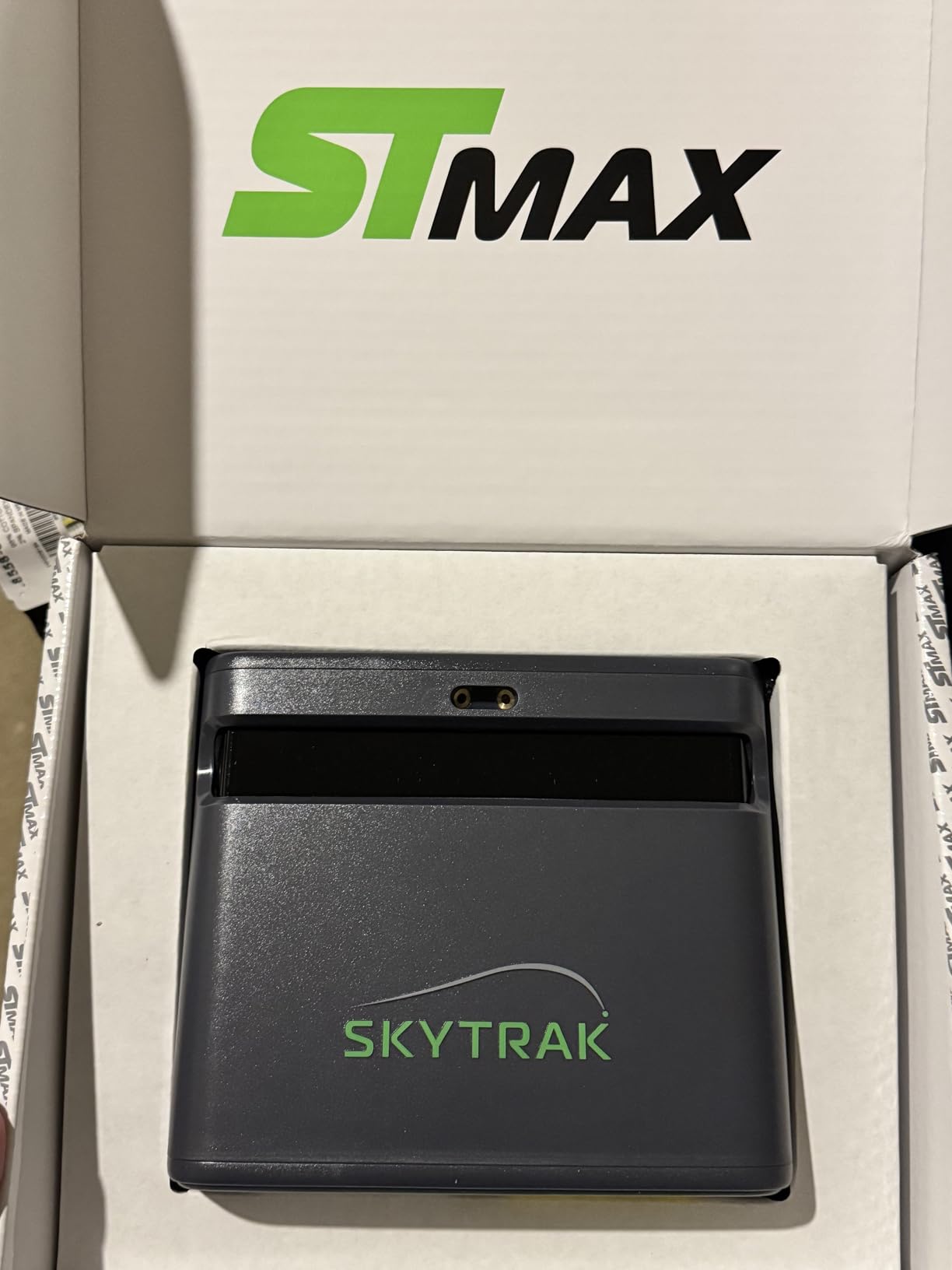
Outdoors, owners report consistent reads in shade with minimal no-reads compared with other camera-based systems. The included software adds Skills Assessments, Bag Mapping, Wedge Matrix and Randomized Practice modes, and a 14-day free trial precedes the year of software included with purchase.
Mac compatibility is straightforward, which puts it ahead of rivals that push you toward a Windows machine for no clear reason.
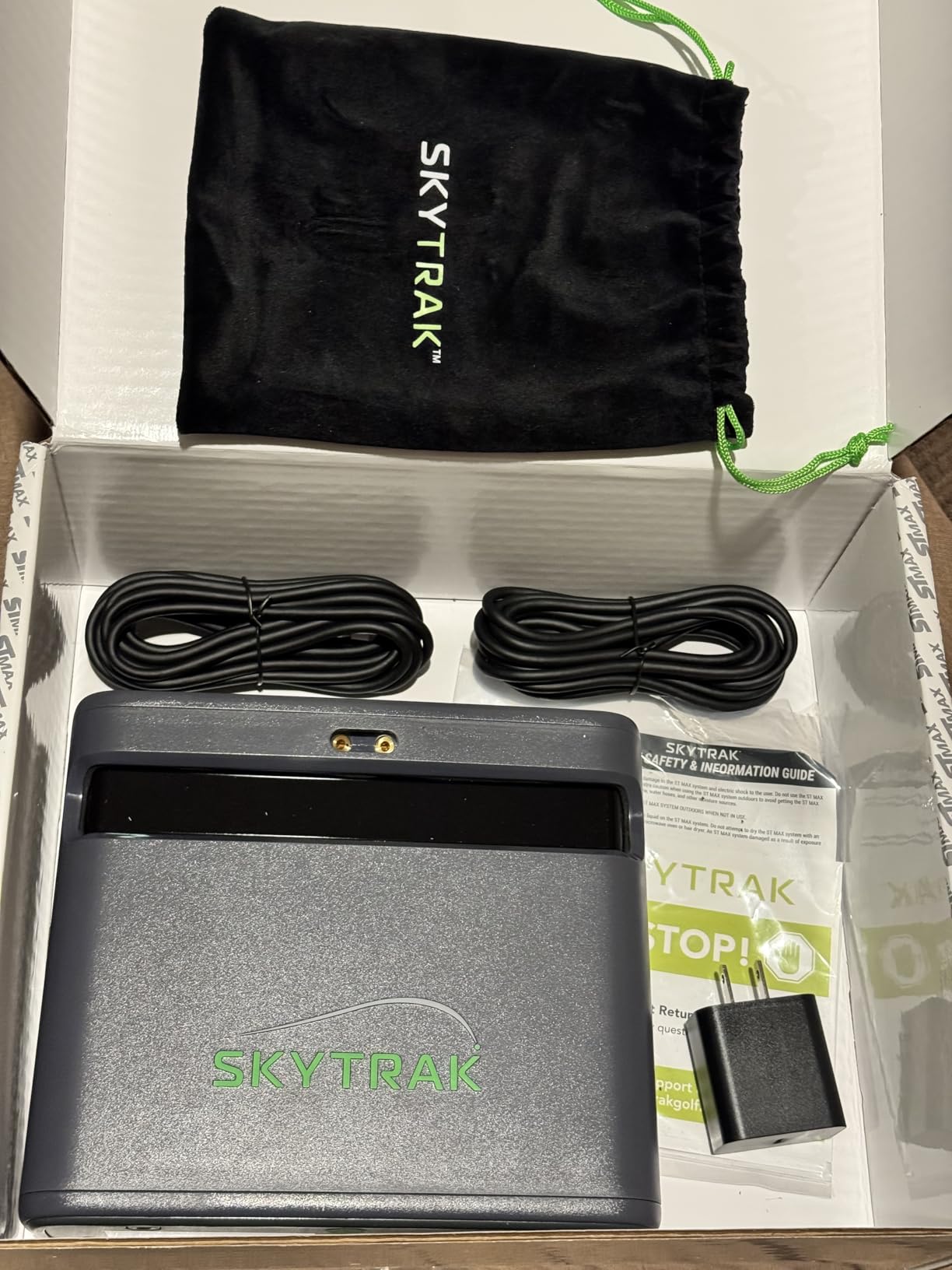
The problems are real. The hitting zone is small, so ball placement must be precise or shots return no-reads. Driver distances read roughly 20 to 30 yards short for some users, and shape can differ from real play.
Keep it out of direct sunlight and give it a clear swing area
The machine needs roughly a 10 ft by 10 ft swing area, and it needs to be kept out of direct sunlight outdoors. Shade is where reviewers see its reliability advantage, so plan your practice spot around that.
Hard-wired USB mode can freeze mid-round and need a power-cycle, while Wi-Fi direct mode then blocks course downloads. Some courses also require manually selecting the club icon, and putts are not always registered.
Who should skip it
Skip it if you refuse any recurring cost after the included year. Subscription plans are expensive and the entry tier includes few courses, so the long-term running cost is the main argument against it.
Also skip it if your swing area is cramped. A small hitting zone plus a 10 ft by 10 ft requirement is the single most common reason owners return this machine.
How to Choose a Launch Monitor Under 2,000 Dollars
Every decision below comes down to one question: what do you want the numbers to change? A golfer trying to add speed needs a swing speed gauge. A golfer building a simulator needs ball data and software. A golfer chasing a tighter short game needs spin and launch angle. Buy for the outcome, not the spec sheet.
Radar, camera or hybrid, and how much room you have
Radar monitors sit behind you and track the ball after impact, then calculate the rest of the flight. They work best outdoors and need 14 to 16 feet of indoor depth behind the ball.
The PRGR, Voice Caddie and TheStack Radar are all radar, and all three are forgiving about room size in a way camera units are not.
Camera monitors sit beside the ball and photograph impact directly, which measures spin and launch more accurately indoors and needs almost no space behind the ball. The trade is light. A camera has to be placed to the side, and that positioning is what makes shared rooms awkward for southpaw golfers, since the whole rig has to move between right-handed and left-handed hitters.
Hybrid monitors combine both. The Rapsodo MLM2PRO, the FlightScope Mevo Gen2 and the SkyTrak ST MAX all blend radar with cameras, and that blend is why they sit in the middle of the price range rather than the bottom.
A quick rule for room depth: under 10 feet behind the ball, use a camera monitor or a radar monitor in speed mode. Between 10 and 16 feet, a hybrid works well. Over 16 feet, or outdoors with room to spare, radar reads most naturally.
Ball data versus club data, and what is measured versus calculated
Ball data is ball speed, launch angle, spin rate, spin axis, carry and total distance. Club data is club speed, club path, face angle, angle of attack and face-to-path. Ball data is easier to measure, which is why every cheap option in this list has it.
Club data needs club stickers or a second camera angle to identify the club. That is why the MLM2PRO, the ST MAX and the EYE MINI CORE can report club path without stickers while cheaper options cannot.
Understand the calculated numbers. Smash factor on the PRGR and TheStack Radar is derived from club speed and ball speed, not measured directly. Estimated carry distance is a calculation from speed. The EYE MINI CORE calculates flight from 15 measured ball data points. Radar units measure the first part of the flight and infer the rest, so outdoor readings from a radar machine will not match a tracked ball all the way to the ground.
That is also the honest answer to whether there is a cheaper alternative to a professional tour machine. Under 2,000 dollars you get the same core ball metrics a far more expensive machine reports, plus club data on some models. What you do not get is full-flight tracking outdoors, where the top-end systems follow the ball to where it actually stops.
Marked balls, club stickers and other ongoing costs
This is where hidden costs hide. The MLM2PRO needs RPT marked balls, which wear out after roughly 70 swings each and can soil the impact screen. The Garmin R10 gives better spin readings with a quality ball and approximates spin on cheap range balls.
The EYE MINI CORE avoids the problem entirely, since Dimple Optix reads any dimple pattern including Almost Golf practice balls. The Mevo Gen2 includes aluminum stickers in the box. If you hit a lot of balls, the no-sticker options save real money over a season.
Subscription costs deserve the same attention. The FlightScope Mevo Gen2 has none, with 8 E6 Connect courses included for life. The Garmin R10 gates simulation behind a Garmin Golf membership. The MLM2PRO requires a premium membership for most features, at a rising annual price. The EYE MINI CORE needs a subscription to connect with GSPro, and the ST MAX includes one year of software.
Do the arithmetic over three years rather than one. A device with no fees is worth more than a cheaper device with a large annual one, and a capable computer plus a second display can outweigh several hundred dollars of hardware.
Practice tool now, simulator later
Plenty of buyers start with a practice tool and add a simulator later. Our advice is to check before you buy whether your chosen device can send data to the software you will eventually run, and whether the connection needs a phone, a tablet or a desktop.
The MLM2PRO, the EYE MINI CORE and the ST MAX all connect to third-party software. The EYE MINI CORE requires a desktop with a specific graphics card class, which is a bigger commitment than a phone or tablet. The Mevo Gen2 connects to phones and tablets but has a single-device connection limit that will frustrate a shared room.
Two models announced later in the year fall inside this ceiling, so it is worth knowing they exist. The Rapsodo MLM2XPRO is expected around 900 dollars and a revived Foresight GC2 around 1,700 dollars. If your buying decision is not urgent, check whether either changes the answer for you.
Finally, remember that a launch monitor does not replace a fitting. If you need fitting-grade data with verified face impact location and club delivery, you are above this price ceiling.
Frequently Asked Questions
What is the best launch monitor under 2,000 dollars?
The Rapsodo MLM is the safest first buy under 2,000 dollars because it reports ball speed, club speed, launch angle, carry distance and shot shape with no membership fee. The Garmin Approach R10 gives you the most complete metric set including spin and automatic video, while simulation features sit behind a Garmin Golf subscription. The FlightScope Mevo Gen2 adds 18 parameters and 8 E6 Connect courses for life with no subscription. All three clear the ceiling comfortably.
What is the best budget golf launch monitor?
The PRGR HS 130-A is among the cheapest useful options here, measuring club speed, ball speed, smash factor and carry and total distance with Doppler radar. It runs on AAA batteries with no app, Wi-Fi or account, weighs under 5 ounces and can measure swing speed without hitting a ball at all. If you want more than speeds and distances, the Garmin R10 adds spin, launch angle and video for a few hundred dollars more.
Is there a cheaper alternative to TrackMan?
Yes, for practice and simulator play under 2,000 dollars. You get the same core ball metrics including ball speed, launch angle, spin rate and carry distance, and several options add club speed, club path and face angle. The real difference is full-flight tracking outdoors, where TrackMan follows the ball until it stops. Sub-2,000 radar machines measure the first part of the flight and calculate the rest.
Which golf launch monitor is the most accurate?
Accuracy depends on the technology first. Camera machines photograph impact directly and therefore measure spin and launch more accurately indoors, while radar machines infer those values from flight. Among the picks here, the Rapsodo MLM2PRO, the SkyTrak ST MAX and the Uneekor EYE MINI CORE use radar combined with cameras. The Garmin R10 publishes tolerances: club speed within 3 mph, ball speed within 1 mph, and launch angle and direction within one degree.
Do golf launch monitors need a subscription?
Some do, some do not. The FlightScope Mevo Gen2 includes 8 E6 Connect courses for life with no subscription or annual licence fees. The PRGR, Voice Caddie, TheStack Radar and TAGCMC GX-10 need no membership at all. The Garmin R10 gates virtual rounds and simulation behind a Garmin Golf membership, the MLM2PRO requires premium for most features, and the EYE MINI CORE needs a subscription to connect with GSPro. Add up three years, not one.
How much room do I need for a launch monitor?
Radar machines sit behind the ball and generally need 14 to 16 feet of indoor depth. Camera machines sit to the side of the ball and need almost nothing behind it, but they do need a clear swing area, roughly 10 ft by 10 ft for options like the SkyTrak ST MAX. In a shared room between right-handed and left-handed golfers, side-of-ball cameras have to be repositioned, which is the most common source of frustration in small rooms.
Is SkyTrak or FlightScope better?
It depends on which models you mean. The FlightScope Mevo Gen2 gives you 18 data parameters and a 3D shot tracer with 8 E6 Connect courses included for life, but owners report setup friction and connection drops. The SkyTrak ST MAX pairs dual Doppler radar with photometric cameras and is the only option with built-in GOLFTEC Speed Training, plus better Mac support, but its software is subscription-based after the first year and its hitting zone is small.
Do I need special golf balls for a launch monitor?
It depends on the device. The Rapsodo MLM2PRO requires RPT marked balls, which wear out after roughly 70 swings each, and the Garmin R10 gives better spin readings with a quality ball while approximating spin on range balls. The Uneekor EYE MINI CORE reads any dimple pattern and needs no stickers or special balls at all. Camera machines generally give worse data from cheap range balls than premium ones.
The Verdict on the Best Golf Launch Monitors Under 2,000 Dollars
The Rapsodo MLM is our pick as the best golf launch monitor under 2,000 dollars for most people, because five core metrics and video replay with no membership fee is the right balance for a first serious machine. Its 3,181 ratings give it the deepest proven track record in this roundup.
Buy the Garmin R10 if you want spin and automatic video. Buy the FlightScope Mevo Gen2 if playing simulated courses without a subscription matters most. Buy the SkyTrak ST MAX if you have the room and plan to keep using it for years.
Whatever you choose, check the room depth, the ball requirements and the three-year running cost before you order. Those three details decide whether you love the device in month one and still love it in year three.