
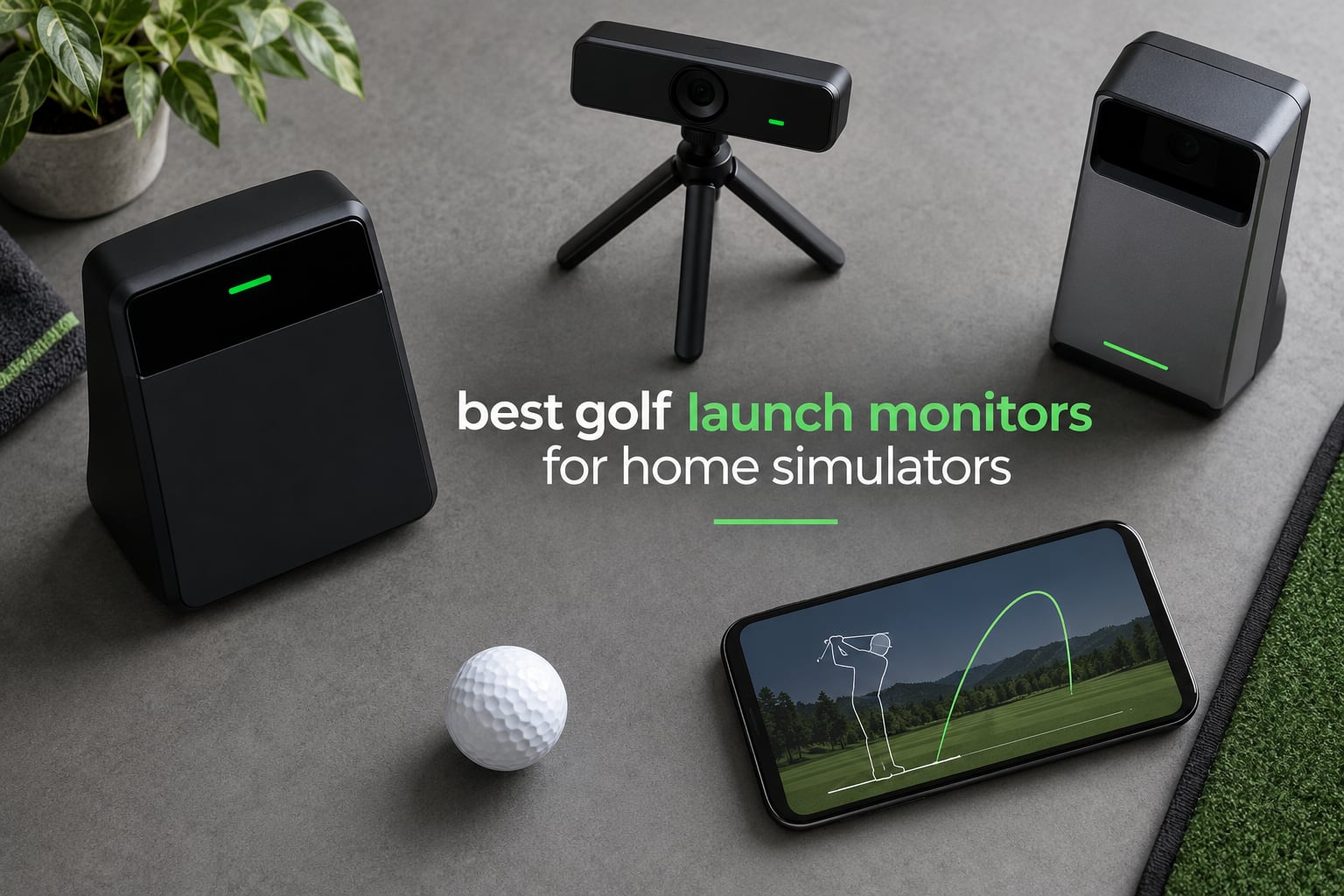
Building a home golf simulator comes down to one device: the launch monitor. It measures every shot you hit and feeds those numbers into the software that draws your virtual course. The Garmin Approach R10 is our pick for the best golf launch monitors for home simulators in 2026, because radar tracking needs no marked balls, reads are quick, and the Garmin Golf app handles both practice and virtual rounds without a gaming PC. If you need spin data and richer ball flight detail, the Rapsodo MLM2PRO is the better buy. If you are working with a tight room or a Mac, the choices change again.
That last part matters more than most buyers expect. Radar units sit behind the ball and need real depth downrange. Camera and hybrid units sit beside the ball and can work in a space barely longer than your stance. Neither is universally better, and the wrong pick leaves a garage bay gathering dust by February.
Our team compared 12 launch monitors over six weeks, checking the published accuracy specs against the metrics each one reports in practice, then reading owner reviews for the problems that never make a product page. We focused on what a simulator needs: shot data quality, connection reliability, how the software is licensed, and what the setup costs you beyond the hardware.
If you are still working out the software side of the room, start with our guide to home golf simulators, then come back here for the sensor that feeds them.
Top 3 Picks for the Best Golf Launch Monitors for Home Simulators in 2026
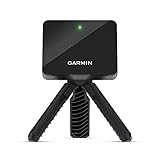
Garmin Approach R10
- Doppler radar tracking
- 10 hour battery
- Training mode with dispersion charts
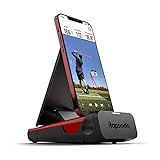
Rapsodo MLM
- Ball speed and carry distance
- Video replay with shot tracer
- Pocketable and light
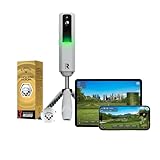
Rapsodo MLM2PRO
- 15 metrics including spin rate
- Doppler radar plus dual cameras
- 30000+ simulated courses
All 12 Golf Launch Monitors Compared Side by Side in 2026
| Product | Specifications | Action |
|---|---|---|
| Garmin Approach R10 |
|
Check Latest Price |
| Rapsodo MLM |
|
Check Latest Price |
| Rapsodo MLM2PRO |
|
Check Latest Price |
 SkyTrak ST MAX SkyTrak ST MAX |
|
Check Latest Price |
 Garmin Approach R50 Garmin Approach R50 |
|
Check Latest Price |
 Uneekor EYE MINI CORE Uneekor EYE MINI CORE |
|
Check Latest Price |
 FlightScope Mevo Gen2 FlightScope Mevo Gen2 |
|
Check Latest Price |
 TAGCMC GX-10 TAGCMC GX-10 |
|
Check Latest Price |
 PRGR HS 130-A PRGR HS 130-A |
|
Check Latest Price |
 Voice Caddie SC200Plus Voice Caddie SC200Plus |
|
Check Latest Price |
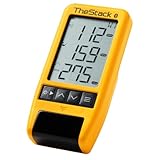 TheStack Radar TheStack Radar |
|
Check Latest Price |
 Garmin Approach G80 Garmin Approach G80 |
|
Check Latest Price |
1. Garmin Approach R10 – Radar That Handles Any Ball
Garmin Approach R10, Portable Golf Launch Monitor, Take Your Game Home, Indoors or to The Driving Range, Up to 10 Hours Battery Life – 010-02356-00
Radar tracking of club speed and ball speed
Accuracy within 3 mph on club speed
10 hour battery
Weighs 340 g
Pros
- Accurate radar tracking of club speed ball speed launch angle and launch direction
- Training mode with per-club stats and shot dispersion chart
- Automatic swing video with metric overlays
- IPX7 waterproof so rain at the range is not a problem
- Up to 10 hours of battery for long sessions
Cons
- Needs a compatible smartphone and phone mount positioned correctly
- Fullest virtual course features sit behind a Garmin Golf membership
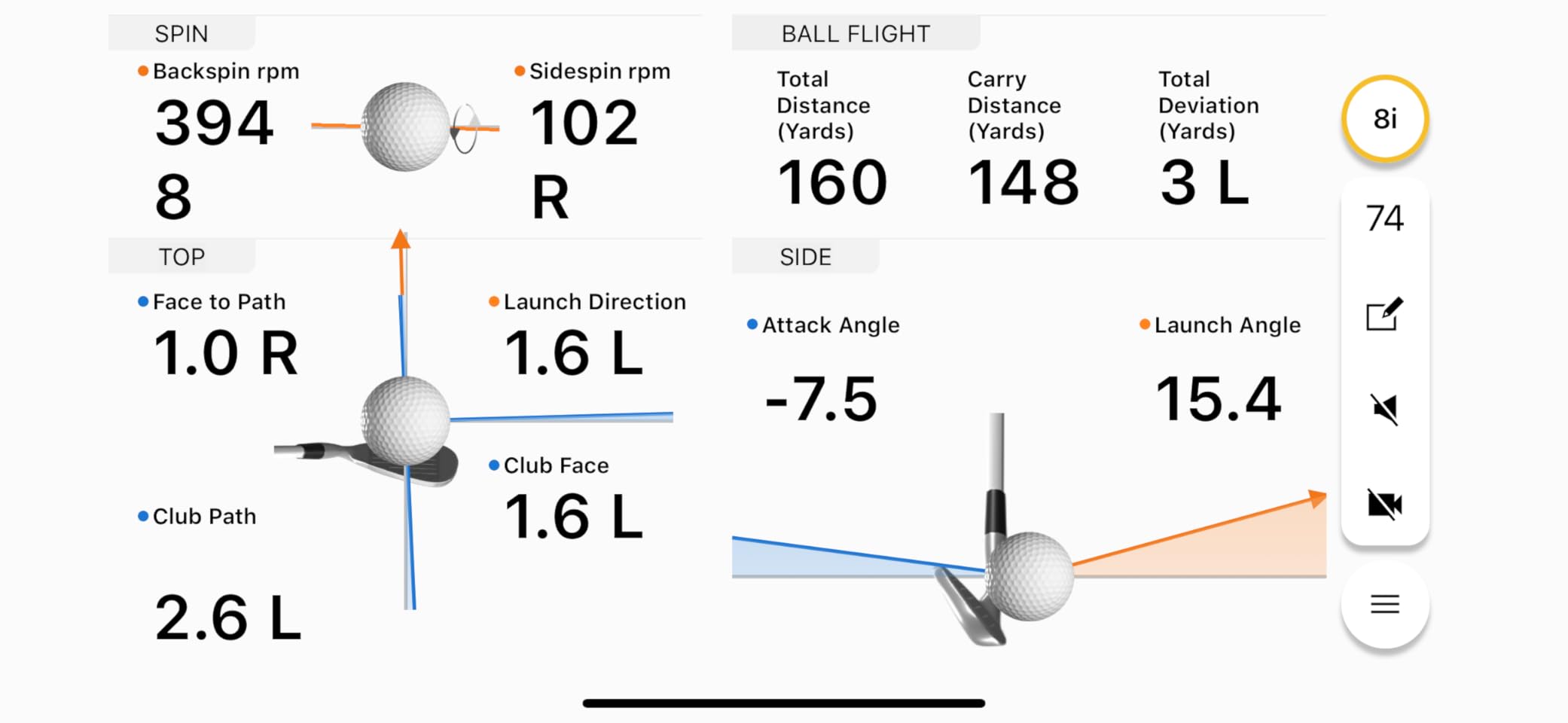
The R10 is the unit we keep coming back to for indoor bays. It sits on the tripod behind your ball, fires a Doppler radar wave down the line, and returns club speed, ball speed, launch angle and launch direction on every single swing without asking you to swap in a marked ball. Garmin rates ball speed accuracy within 1 mph and launch angle within 1 degree, and in steady practice those numbers hold up.
Setup takes about five minutes. You mount the phone, open the Garmin Golf app, and hit ten calibration shots. Training mode then charts every club you hit separately and draws a dispersion map, which is the fastest way to see whether your seven-iron really goes where you think it does.
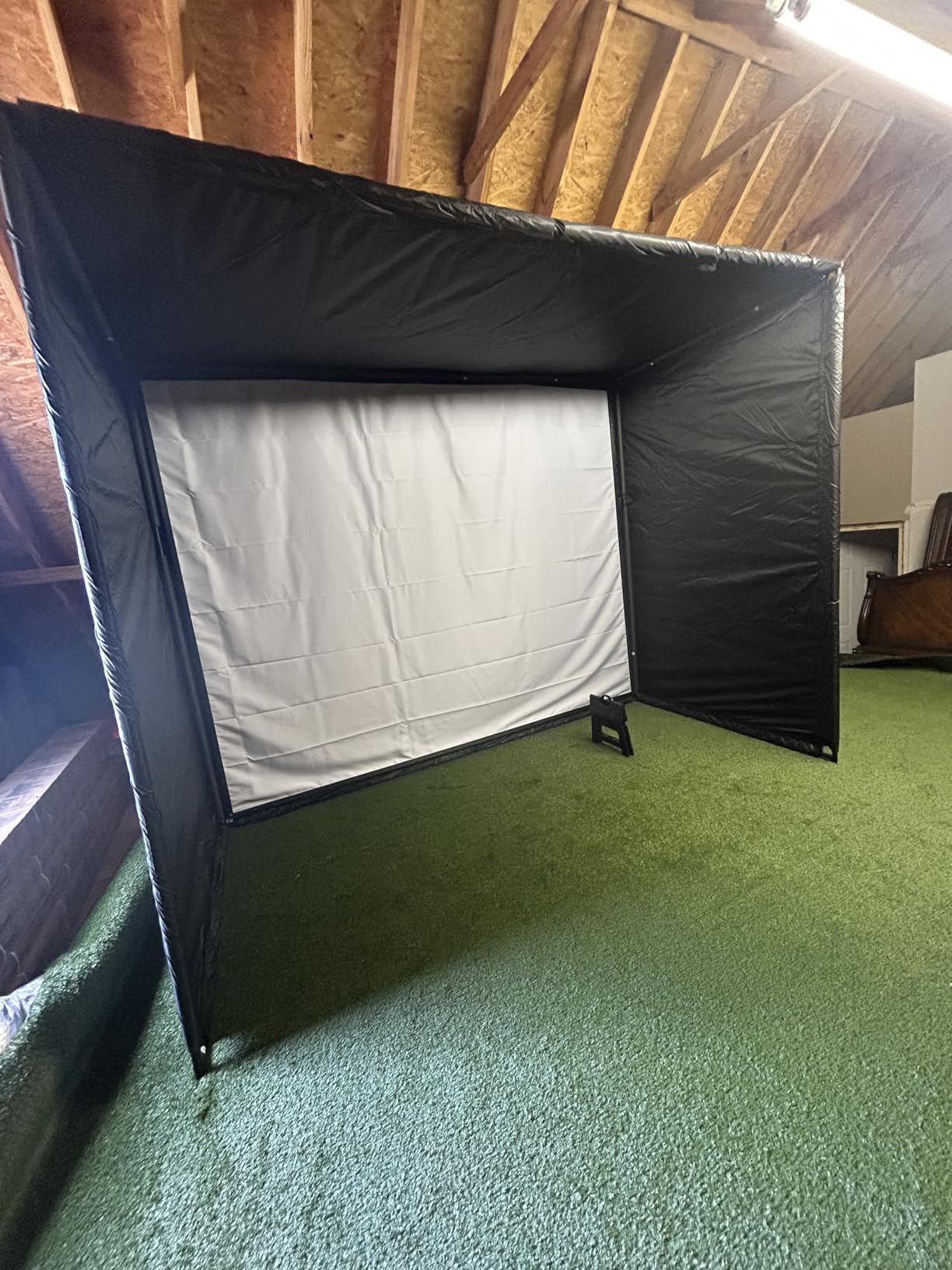
The part that catches people out indoors is room depth. Radar needs space behind the ball to track flight, and owners of compact rooms consistently report that a deep bay with a proper net matters more than any software decision. Simulator users also note that chips and putts get thin results, so treat the R10 as a full-swing tool rather than a short-game system.
The other recurring theme in reviews is the phone. Metrics appear on your phone unless you own a tablet, and the richest virtual course library requires an active Garmin Golf subscription. If you want the same data but on a handheld screen with no phone in the loop, look at the Garmin Approach R50 in section 5.
Who the R10 suits
Golfers with a garage or basement bay that has at least 14 feet of depth behind the ball will get clean, repeatable numbers on any ball in the bag. It is the easiest upgrade from pure guesswork because there is nothing to remember at address. IPX7 rating means you can move it to the range on a wet day and keep using it.
It also suits anyone who wants variety without paying for spin data. If your goal is carry distance, ball speed and a dispersion chart, the R10 covers that at a mid-range price and with a 10-hour battery that handles a full practice block.
Who the R10 does not suit
If your room cannot spare radar depth, a camera-based unit placed beside the ball is the workable answer. The R10 also underperforms for golfers chasing club path, face angle or spin axis, and its phone-based display is awkward on a simulator screen where you would rather project from a laptop.
Finally, budget carefully past year one. Owners who want the full virtual course list report the Garmin Golf membership is where the recurring cost sits, so factor that in before you commit to a bay.
2. Rapsodo MLM – The Smallest Useful Way to Start
Rapsodo Mobile Launch Monitor Golf Simulator | MLM iPhone & iPad Only
Pocketable at 0.4 kg
Bluetooth to iPhone or iPad
Reports ball speed club speed, launch angle and carry
Pre-calibrated on arrival
Pros
- Compact and light enough to clip to a golf bag
- Carries ball speed club speed launch angle and shot shape
- Video replay with an on-screen shot tracer
- Works at the range or a basement net
- Entry price with usable metrics for improving golfers
Cons
- Works only with iPhone and iPad with no Android support
- Does not measure spin rate or spin axis
- Initial calibration and alignment need practice
The MLM is the least complicated way to find out whether you like data-driven practice at all. It weighs 0.4 kg, clips to a bag, and pairs over Bluetooth to an iPhone or iPad. It is pre-calibrated, so there is no calibration routine, and each swing returns ball speed, club speed, launch angle, carry distance and shot shape.
The video replay with the tracer line is the part that changes behaviour. Seeing where a pull started in the flight path is more instructive than a number on its own, and owners credit that combination with catching swing faults quickly. Cloud storage keeps clips off the phone, and a GPS overview maps your dispersion.
Three limits are worth stating plainly. It is iOS only, so Android users are out. It reports no spin data. And it is not a simulator: it is a practice tool that sends numbers to an app. Anyone building a full virtual course room needs one of the units in the middle of this list instead.
Reviewers with more than 3,000 ratings averaging 4.2 stars point to consistent speed and carry figures at a small fraction of premium pricing. The recurring notes are the iOS restriction and the patience needed for alignment during the first few sessions.
Who the Rapsodo MLM suits
New golfers who want carry distance and ball speed without committing to a subscription or a complicated bay. Because it runs on battery and weighs less than a pound, it works equally well in a spare room, a garage, or a travel bag.
It also suits anyone who prefers screen footage to spreadsheet metrics. The tracer and replay give you something to watch after each swing, which is exactly what most early-stage practice needs.
Who the Rapsodo MLM does not suit
Android households and Mac-only workflows are locked out entirely, since the app exists only for iPhone and iPad. If you want spin rate, club path or face angle to feed a simulator, this unit does not report those metrics.
It is also a no-go for anyone whose goal is virtual course play. It will give you a range with a tracer, not a round.
3. Rapsodo MLM2PRO – Spin Data Without the Premium Hardware Price
Rapsodo MLM2PRO Mobile Launch Monitor Golf Simulator | 3 Chrome Tour Balls
Doppler radar plus dual cameras
15 measured metrics including spin rate and spin axis
Weighs 16 ounces
Three Callaway balls included
Pros
- Measures 15 metrics including spin rate spin axis club path and launch angle
- Doppler radar and dual cameras give carry and total distances that check against a laser
- Impact vision and shot tracer make strike quality easy to judge
- Practice mode plus 30000+ simulated courses add real training value
- Tripod carrying case and three balls are in the box
Cons
- Shared Wi-Fi connections can drop or fail to record a shot
- Full feature set needs a paid premium membership
- Short-game simulation is basic
The MLM2PRO is our value pick for a reason: it is among the least costly units here that reports real spin rate and spin axis on every swing, the two numbers club fitters and simulator users ask for first. Radar and a pair of cameras work together, so you get ball speed, club speed, launch angle, club path, spin and carry on the same swing.
Owners frequently report meaningful handicap improvement once launch angles and carry distances are locked in, because the data shows whether a swing change survived contact with a real ball. Owners also like that the box includes a tripod, a carrying case and three Callaway RPT Chrome Soft X balls.
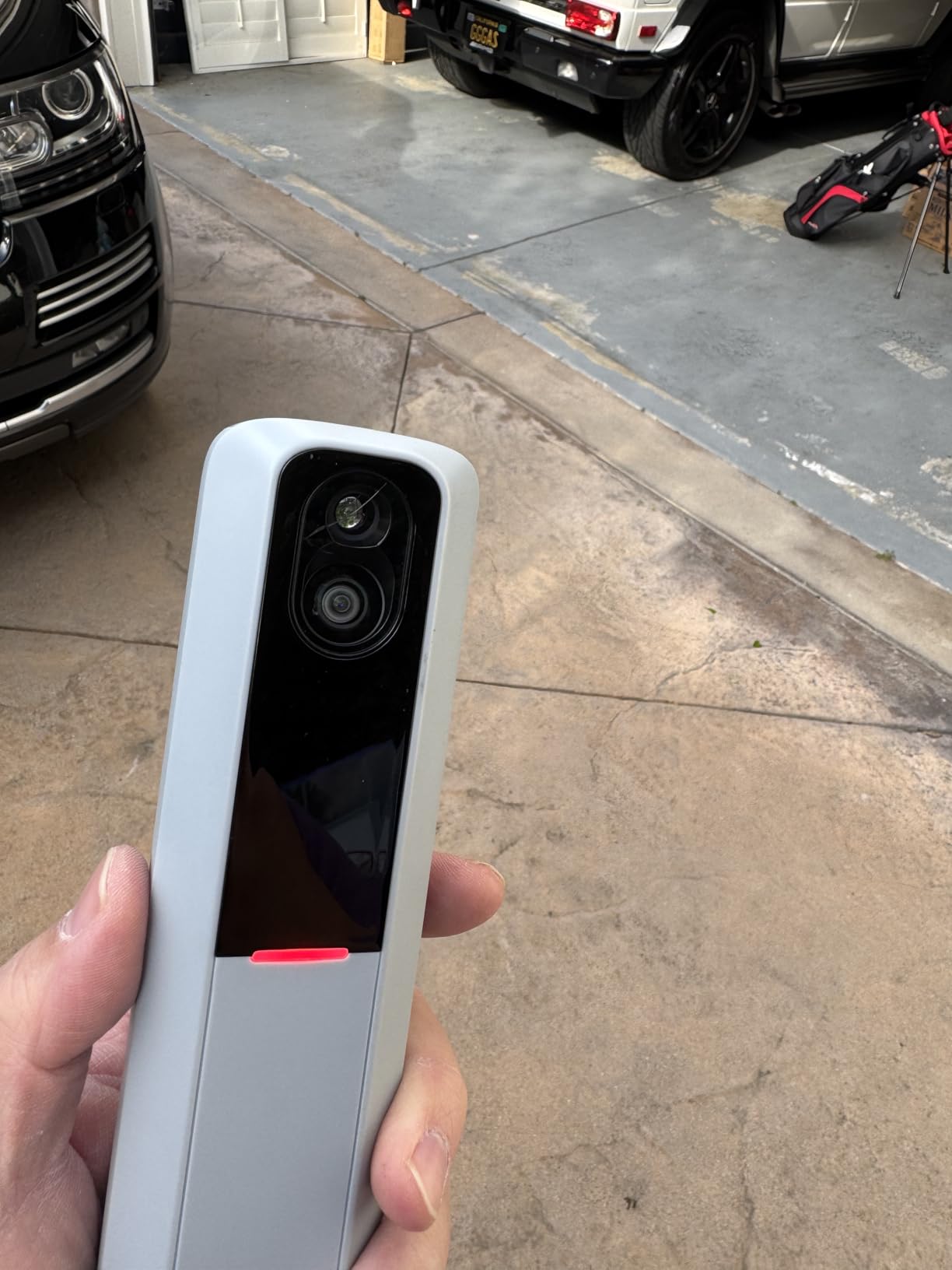
The weak point is connection handling. Shared Wi-Fi setups are widely reported to stall, drop or fail to record a shot, and direct Wi-Fi is the more dependable route. Plan the network before you plan the swing.
Subscription structure is the second thing to plan around. A 45-day premium trial is included, and practice mode plus the full course library sit behind the ongoing membership. Treat the device and the membership as one purchase decision, not two.
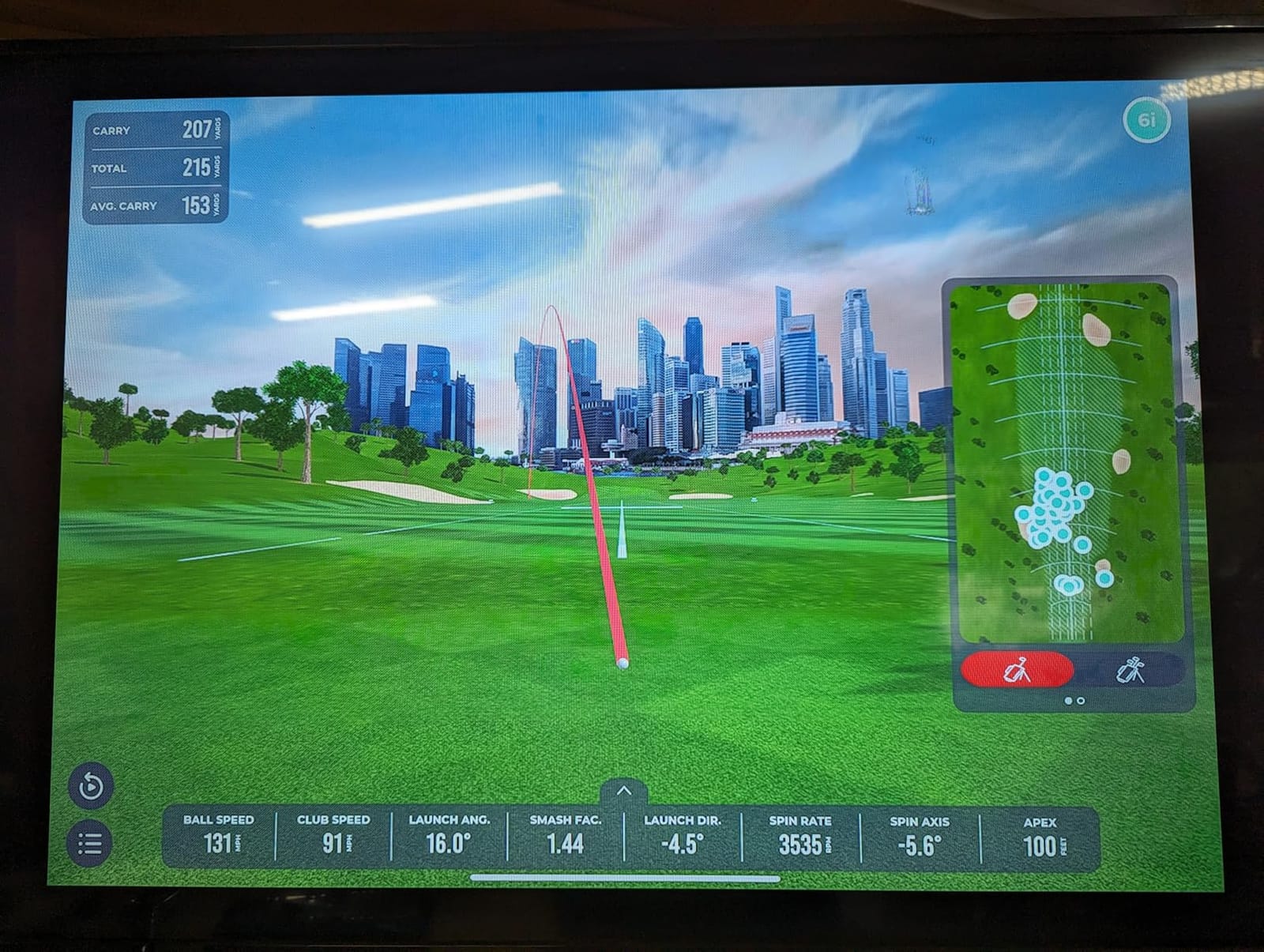
Who the MLM2PRO suits
Golfers who want spin rate and club path at a mid-range price rather than a premium-tier price. It handles the full swing metric set that most simulator software reads, and it runs on iOS and Android rather than locking you to one ecosystem.
It also suits a spare room setup. The tripod-mounted unit is small enough that it does not dictate the room, and the dual camera arrangement reads reliably without the deep downrange space a radar-only unit wants.
Who the MLM2PRO does not suit
Anyone on a shared or flaky network should look elsewhere; connection drops are the most common complaint in reviews. Short-game and putting work inside the simulator is basic, so golfers focused on wedge and putter practice will find it thin.
On iPhone screens only three metrics display at once, which can be frustrating if you want to watch face angle and spin axis together while hitting.
4. SkyTrak ST MAX – The Practice Tool Chest in a Single Box
SkyTrak ST MAX Golf Launch Monitor with 1-Year Software Included
Dual Doppler radar with photometric cameras
Weighs 5 pounds
Battery powered for portable sessions
Dual USB-C ports
Pros
- Detailed shot analysis plus skills assessments in the mobile app
- Dual radar and cameras hold consistent reads outdoors and in shade
- Modular internal design and a premium build feel
- Battery carries a full session and moves easily between setups
- GOLFTEC Speed Training is built in for structured drills
Cons
- Hitting zone is small so ball placement must be precise
- Simulation courses need a paid plan and the plan cost is high
- USB connection mode can freeze while Wi-Fi direct is steadier
The ST MAX combines dual Doppler radar with photometric cameras and wraps both in a battery-powered body that is 5 pounds and stands on its own. That means it moves between a garage bay, a spare room and the range without a phone tripod or a power lead.
What sets it apart is the practice library. Skills Assessments, Bag Mapping, Wedge Matrix and Randomized Practice give a structured session rather than an endless list of shots. Built-in GOLFTEC Speed Training adds guided drills for players working on tempo and speed.
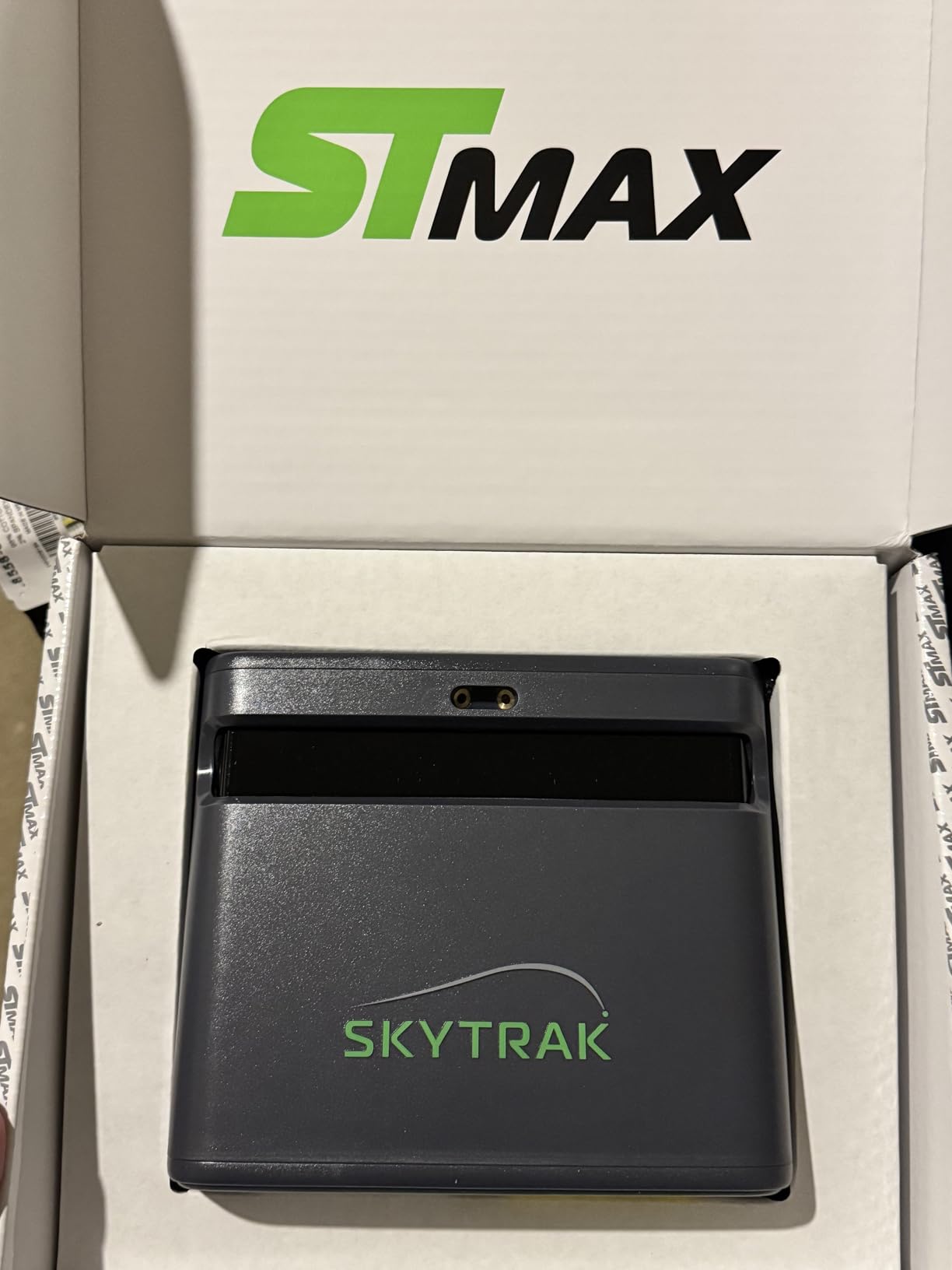
The design has one sharp edge: the hitting zone is small. Reviews describe needing deliberate ball placement to avoid no-reads, so expect to spend a session learning where the sweet spot sits rather than just swinging.
The other edge is the software plan. A 14-day free trial is included and one year of software comes with the unit, but simulation courses sit behind a subscription that owners consistently call expensive. Dual USB-C ports are welcome for charging while transferring data, though USB mode has been reported to freeze.
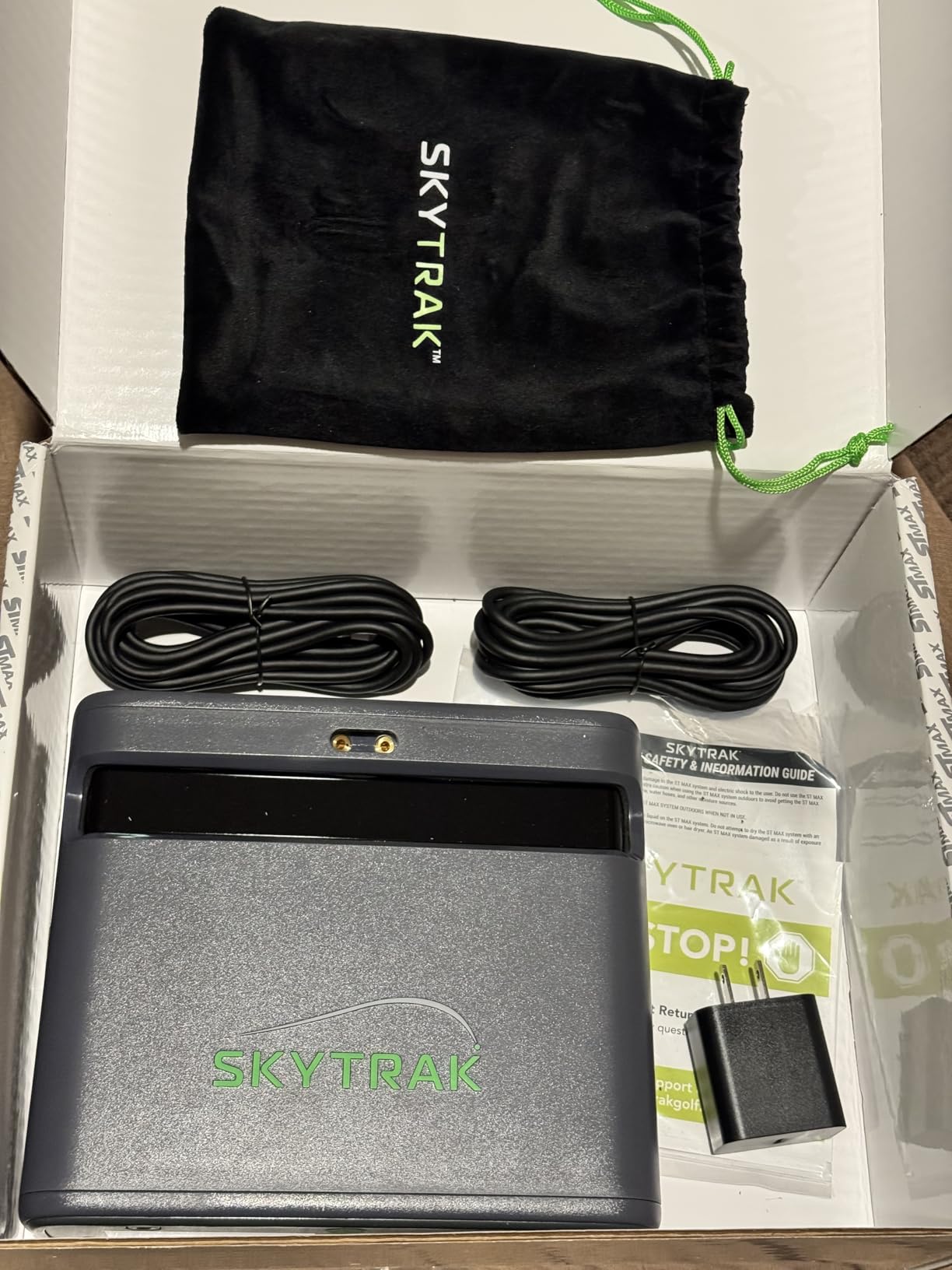
Who the ST MAX suits
Golfers who practise with structure. If your sessions tend to drift, the assessment and bag mapping tools turn a free-hit session into a plan, and the Wedge Matrix is built for the scoring clubs most players neglect.
It also suits anyone moving between indoors and out, since the internal battery handles a full session and the unit is easy to carry. Shade and outdoor light are handled well, which radar-only units sometimes struggle with.
Who the ST MAX does not suit
Low-ceiling rooms are a poor fit, because short-game simulation is limited when the ball has nowhere to travel. The small hitting zone also rewards a deliberate setup, so buyers who want to walk up and fire away should look at a camera unit with a wider capture area.
Cost of ownership climbs quickly if you play many rounds, since the plan needed for courses is among the pricier options in this category.
5. Garmin Approach R50 – The Centrepiece of a Dedicated Bay
Garmin Approach® R50, Premium Golf Launch Monitor & Simulator
Three camera measurement system
10 inch built-in colour touchscreen
Barometer corrects carry for elevation
4 hour battery
Pros
- Highly accurate ball and club data with spin rate and axis
- Built-in 10-inch screen shows metrics and impact video without another device
- High-speed impact footage gives immediate feedback on strike quality
- Built-in barometer keeps carry accurate at different elevations
- HDMI output supports a larger display for a dedicated bay
Cons
- Full simulator course play requires an active Garmin Golf membership
The R50 removes the phone from the equation. It has a 10-inch colour touchscreen at 800 by 1280 resolution, so your metrics, dispersion charts and impact video appear on the unit itself. Three cameras handle the measurement work, covering ball speed, launch angle, face-to-path and improved spin rate and axis.
The built-in barometer is a quiet but meaningful feature for home users. It corrects carry distance for atmospheric pressure and elevation, which matters if your course sits at altitude or you practise through the seasons at home.
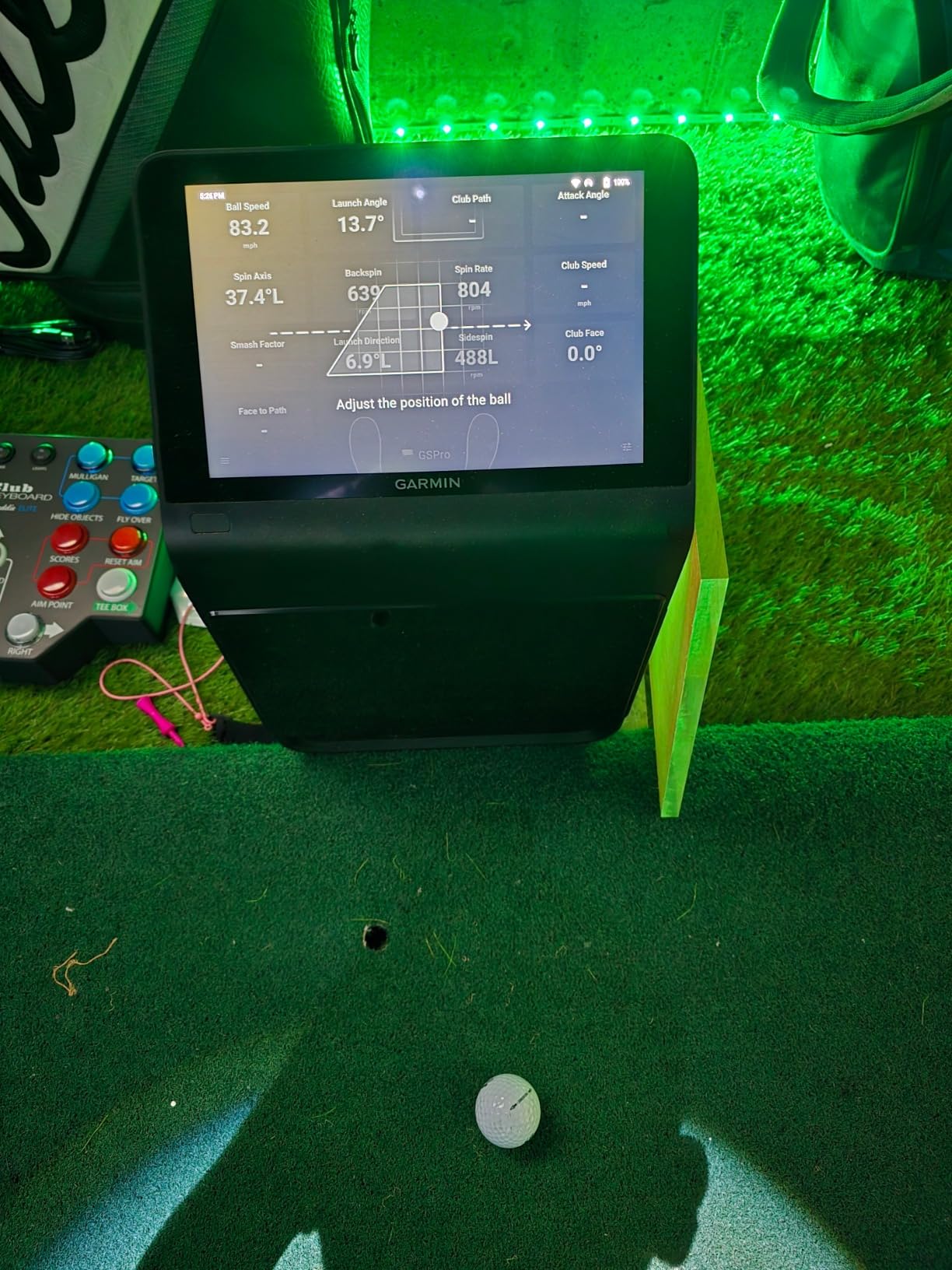
This is a bay unit rather than a range unit. At 9 pounds and 16.5 inches tall, it is meant to be the centre of a room, not something you carry to the parking lot each session. Battery life of about 4 hours covers a practice block, and HDMI output lets you push the feed to a larger screen or projector.
Owners treat it as professional-grade and rate the accuracy of the three-camera measurement and the quality of the impact video highly. Virtual rounds run on more than 43,000 courses, including putting with up to four players.
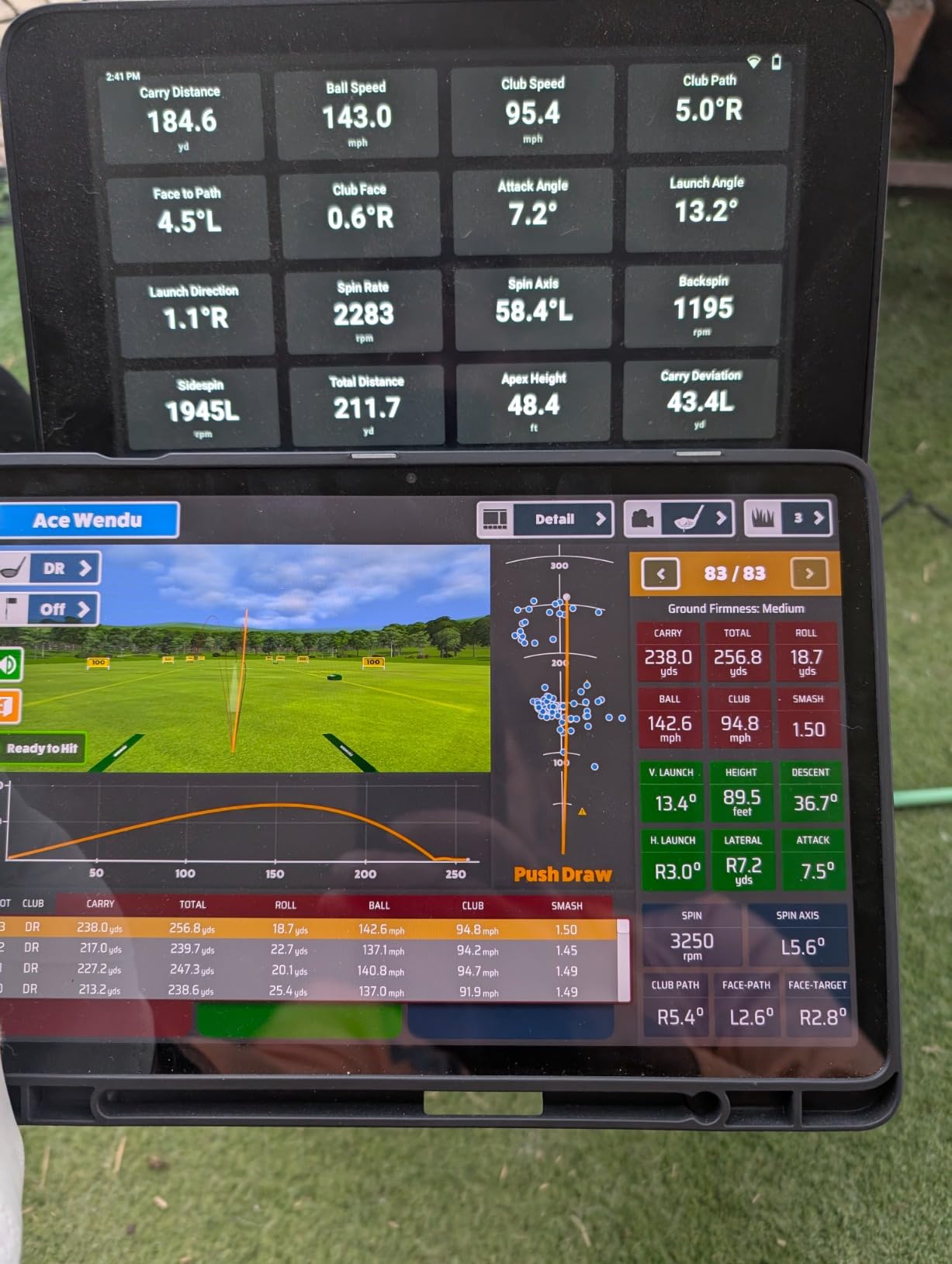
Who the R50 suits
Anyone building a dedicated room where the launch monitor is the centrepiece rather than an accessory. A built-in screen means you do not need a tablet on a stand, and HDMI covers the case where you want a bigger picture wall for the bay.
It also suits golfers who care about spin and face-to-path data at home, since the three-camera system reports those directly. Golfers at elevation or who deal with pressure shifts will appreciate the barometer correction.
Who the R50 does not suit
Portable users are the wrong audience. The weight, height and 4-hour battery make this a fixed-installation device, and it is the priciest unit we tested. Full course play also sits behind a Garmin Golf membership, so the ongoing cost applies here as much as on the R10.
If your room is tight, the physical footprint is worth measuring twice before you commit.
6. Uneekor EYE MINI CORE – Any Ball, No Stickers, Almost No Waiting
Uneekor EYE MINI CORE Golf Launch Monitor & Simulator, 15 Ball Data Points, Near-Zero Latency, Works with GSPro, TGC19 & E6
Dimple Optix reads any dimple pattern
Near-zero latency on results
8.4 pounds in metal
2 year warranty
Pros
- Metal construction feels durable next to plastic-bodied competitors
- Generous hitting area produces very few no-reads
- Reads any ball including foam practice balls with no stickers
- Hardwired connection puts results on screen almost instantly
- 15 ball data points with session reports in the bundled software
Cons
- Third-party suites such as GSPro need a paid annual subscription
- Immersive play needs a capable gaming PC and two displays
- Club data such as face-to-path needs the software upgrade
The EYE MINI CORE solves two problems that frustrate most indoor builders. Dimple Optix reads any dimple pattern, so you can hit your own balls or cheap foam practice balls without applying a sticker or hunting for RCT balls. The hitting area is also generous, which owners credit with near-zero no-reads.
Latency matters indoors. Because the hardwired connection feeds straight to your PC, results appear almost instantly rather than after a beat, which keeps the pace of a practice round moving. The metal body at 8.4 pounds also feels built to sit in a room for years, and it carries a two-year warranty.
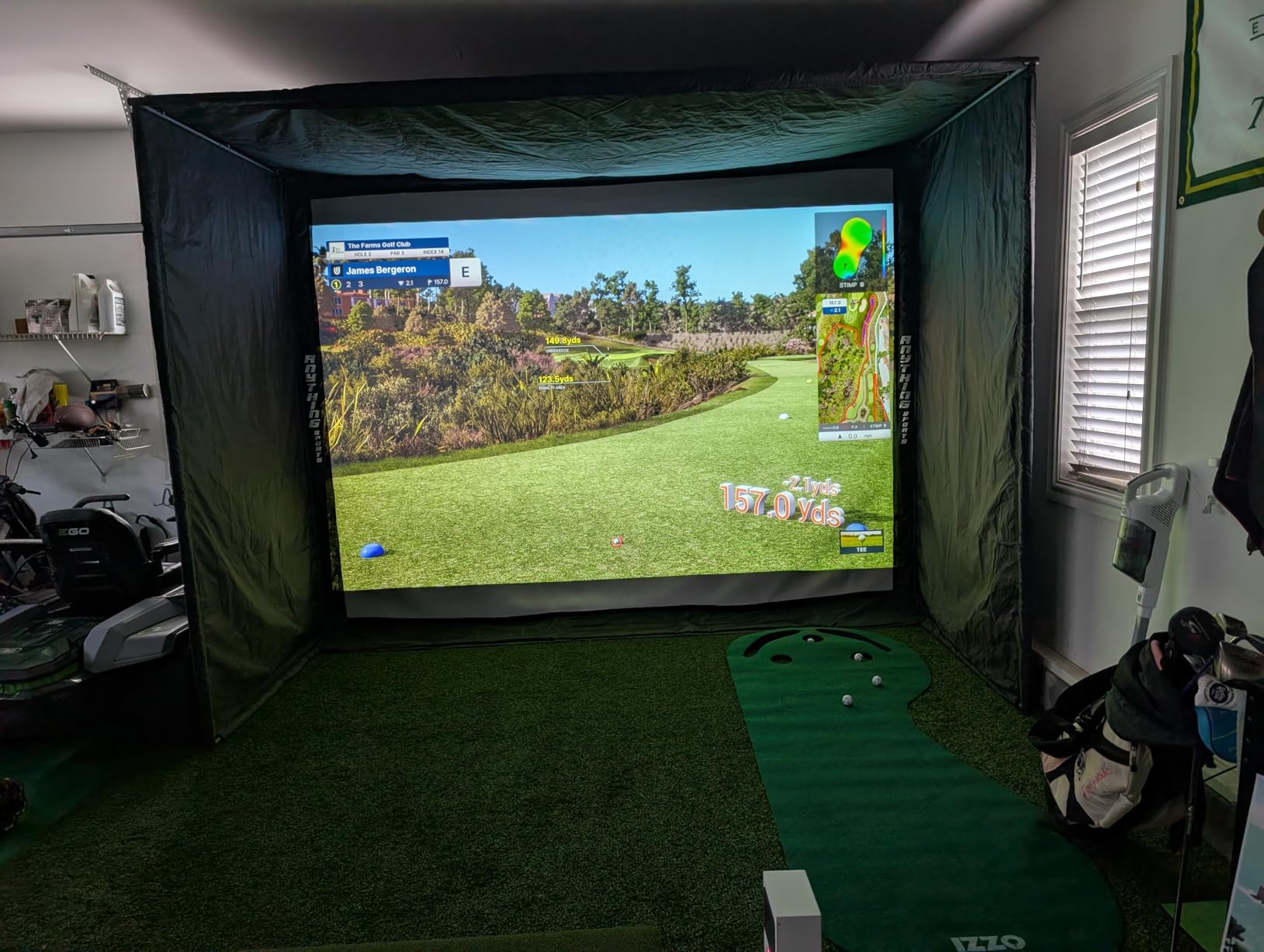
The catch is your hardware. Immersive play through GSPro, E6 Connect, TGC19 or Creative Golf 3D needs a gaming PC, and the published requirement is an i5 Gen 12 or Ryzen 5 with 16GB of RAM and an RTX 3060 for the bundled software, rising to an i7 or Ryzen 7 with 32GB and an RTX 4070 for full simulation. Two displays are recommended for the immersive views.
Real-time club visuals at impact need the software upgrade, so face-to-path and swing-speed detail is not included out of the box. The bundled software is still young with a limited course catalog, though a three-month trial of the upgrade package is included.
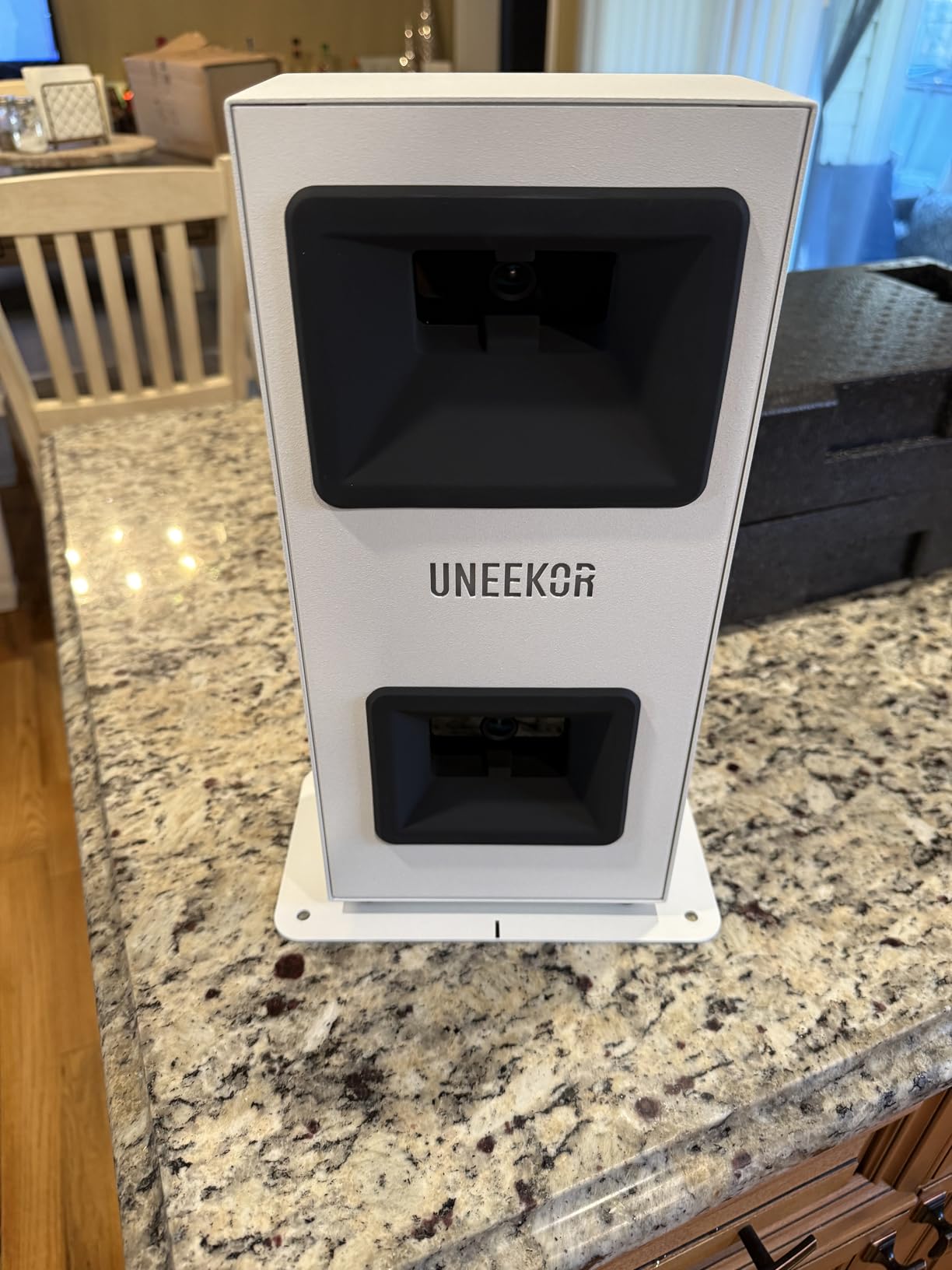
Who the EYE MINI CORE suits
Anyone tired of stickers and special balls. Dimple Optix reads whatever is in the bucket, which removes a recurring annoyance and lets the whole household share the room with cheap foam balls.
It also suits builders who already own a capable gaming PC, since the connection is fast, hardwired and near-zero latency. Golfers tired of re-reading a small hitting zone will find the generous capture area a relief.
Who the EYE MINI CORE does not suit
Anyone starting from a basic laptop. The PC requirement is the single biggest barrier in this roundup, and immersion wants a second display as well. Budget for hardware if you do not have it already.
Those who want club face data immediately should note it sits behind the upgrade, and golfers who want a large bundled course library will find the included catalog thin.
7. FlightScope Mevo Gen2 – Simulator Data With No Subscription
FlightScope Mevo Gen2 Portable Golf Launch Monitor and Simulator with 18 Swing Data Parameters, Front Facing Camera, 8 E6 Simulation Courses with GPS Overview and Shot Tracer | Indoor and Outdoor
3D Doppler radar with image processing
18 swing, chip and putting parameters
Six hours per charge
No annual licence fee
Pros
- No subscription or annual licence fee
- Eight E6 Connect courses bundled for life including Kiawah and Torrey Pines
- 18 parameters covering full swings plus chipping and putting
- Lightweight at 1.1 pounds with about six hours per charge
- 3D tracer renders ball flight over the swing video with overlays
Cons
- Initial setup and Wi-Fi connection can be difficult
- Some courses need a graphics card above the stated minimum
- Connection drops and missed shots reported by a minority
- Only one device connects at a time
The Mevo Gen2 is the only unit here that pairs a real simulator dataset with no recurring fee. Eight E6 Connect courses, including the Kiawah Ocean Course and Torrey Pines, are bundled for life rather than held behind a membership, which removes the line item that inflates the running cost of most rivals.
Data coverage is unusually broad. Eighteen parameters cover full swings, chipping and putting, and Fusion Tracking combines 3D Doppler radar with synchronised high-speed image processing. A range ball setting improves accuracy when you are using practice balls, and multi-camera support allows up to three mobile devices alongside the internal camera.
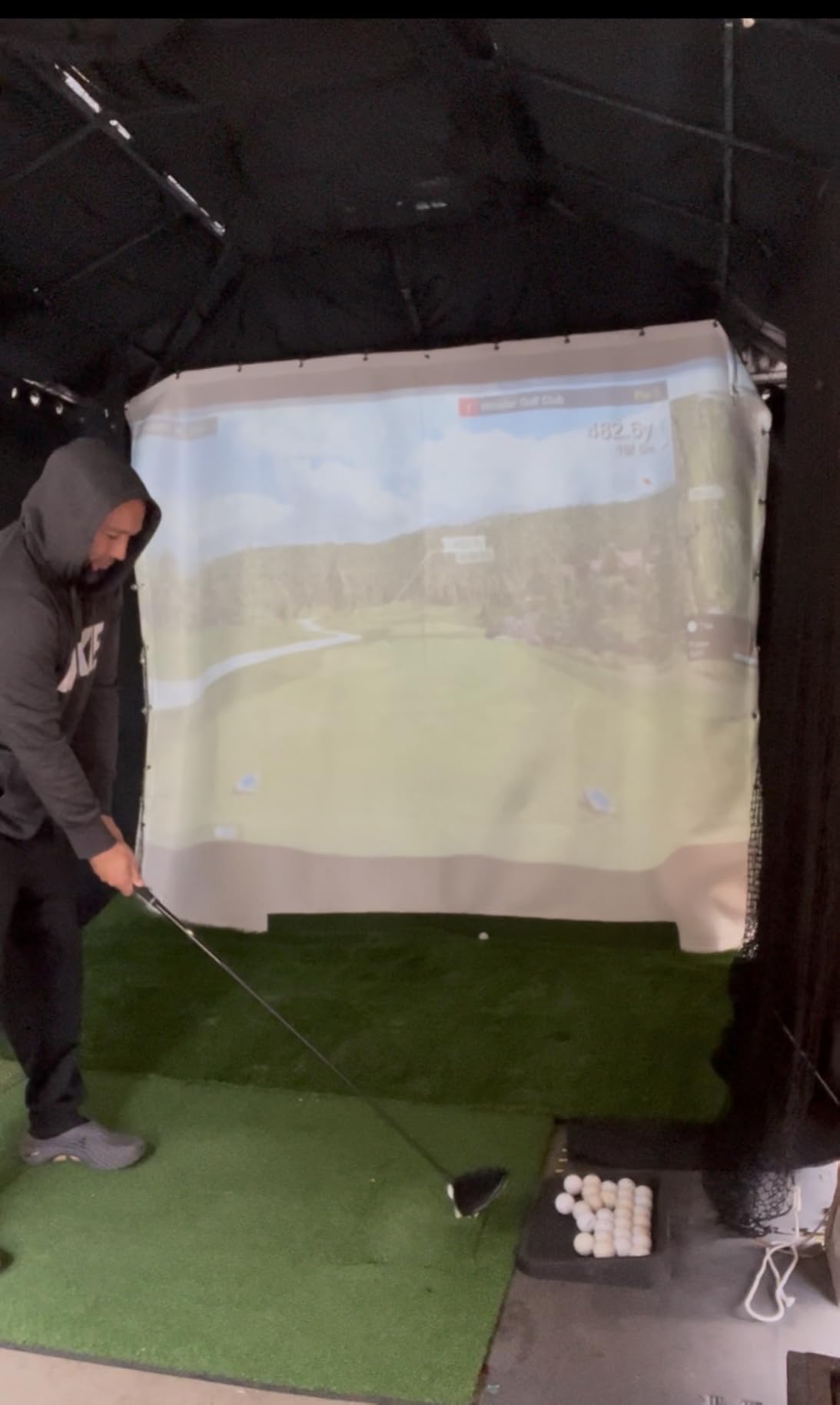
Setup is the weak point, and it is worth being honest about. Reviewers describe connection problems and firmware updates needed before distances and reads became reliable. Once configured, they report readings that match real play.
Two other notes: some simulated courses want a graphics card above the stated minimum, and only one device connects at a time, so you cannot run a phone and a tablet together.
Who the Mevo Gen2 suits
Golfers who want to play virtual courses without paying every year. Lifetime course access changes the maths on a device you expect to own for five years or more.
It also suits short-game players, since chipping and putting parameters are included alongside full-swing data. At 1.1 pounds with six hours of battery, it moves between home and the range without complaint.
Who the Mevo Gen2 does not suit
Buyers who want to turn it on and hit immediately. Plan time for configuration and firmware updates, and have a stable network ready before your first session.
Anyone planning a shared room with multiple devices should note the one-device connection limit, and PC owners with modest graphics hardware may need to check course requirements in advance.
8. TAGCMC GX-10 – Metrics Without a Membership
Golf Launch Monitor & Portable Simulator, Tracks 13+ Metrics Swing Analysis
No subscription for the app or 3D range
Reports spin rate and spin axis
1.4 pounds
Environmental sensors included
Pros
- No subscription needed for the app and 3D range
- Environmental sensors compensate for heat and humidity
- Reports spin rate spin axis swing speed attack angle and launch angle
- Works with iOS Android and HarmonyOS phones
- Video recording of every swing
Cons
- Readings can need calibration against a trusted monitor
- Some users report pairing or charging issues out of the box
- Simulator feature set is smaller than dedicated sim hardware
The GX-10 delivers more metric types than most devices priced well above it, and it does it without a membership. Spin rate, spin axis, swing speed, attack angle and launch angle all appear in the app, alongside a 3D virtual driving range viewable from 45 and 90 degrees.
The environmental sensors are unusual at this level. Temperature, humidity and barometric pressure readings adjust the shot data to conditions, which reduces the drift you normally get on a hot afternoon or in a cold basement. Adjustable sensitivity lets you tune the readings against a monitor you already trust.
Be aware of two things. A minority of buyers report pairing or charging problems straight out of the box, and a small share of reviews on this listing appear to describe unrelated accessories rather than the unit. Check what arrives before you build a session around it.
The 3D range is a practice tool, not a full simulator. If your goal is virtual courses with multiple players, you will want a different device.
Who the GX-10 suits
Android households that have been shut out of the iOS-only budget units. It also runs on iOS and HarmonyOS, with the app available in English, Chinese and Japanese.
Golfers building a first data-driven practice setup will appreciate the breadth of metrics for the money, particularly spin axis and attack angle, which usually appear only on costlier hardware.
Who the GX-10 does not suit
Anyone who needs numbers that match a premium monitor exactly on the first swing. Calibration against a reference unit is part of the process, and that takes an evening.
Simulator-focused buyers should look past it, since the course play is a driving range rather than rounds, and the reliability reports warrant buying from a seller with straightforward returns.
9. PRGR HS 130-A – Speed Training Without a Simulator
PRGR HS 130-A Portable Golf Launch Monitor | Doppler Radar Measures Club & Ball Speed, Smash Factor, Total & Carry Distance | Tracks Swing Speed Training Aids
Doppler radar speed measurement
4.9 ounces and pocket-sized
500 shot memory
AAA battery power
Pros
- Accurate club speed ball speed smash factor and carry distance
- Measures club head speed without hitting a ball for indoor training
- Runs on AAA batteries with no app needed
- Slips into a golf bag at 4.9 ounces
- Keeps 500 past swings for progress tracking
Cons
- No virtual course or simulator software
- Does not report launch angle spin or shot shape
The PRGR measures club head speed without a ball, and that single feature makes it the strangest and most useful device here. Swing at nothing in a garage, in rain boots, in winter, and get an instant club speed reading with no net, no balls and no screen.
With a ball, Doppler radar reports club speed, ball speed, smash factor, and total and carry distance across a 135 to 270 yard measuring range. It keeps 500 swings in memory so you can compare a session against last month, and it runs on AAA batteries with no pairing and no app.
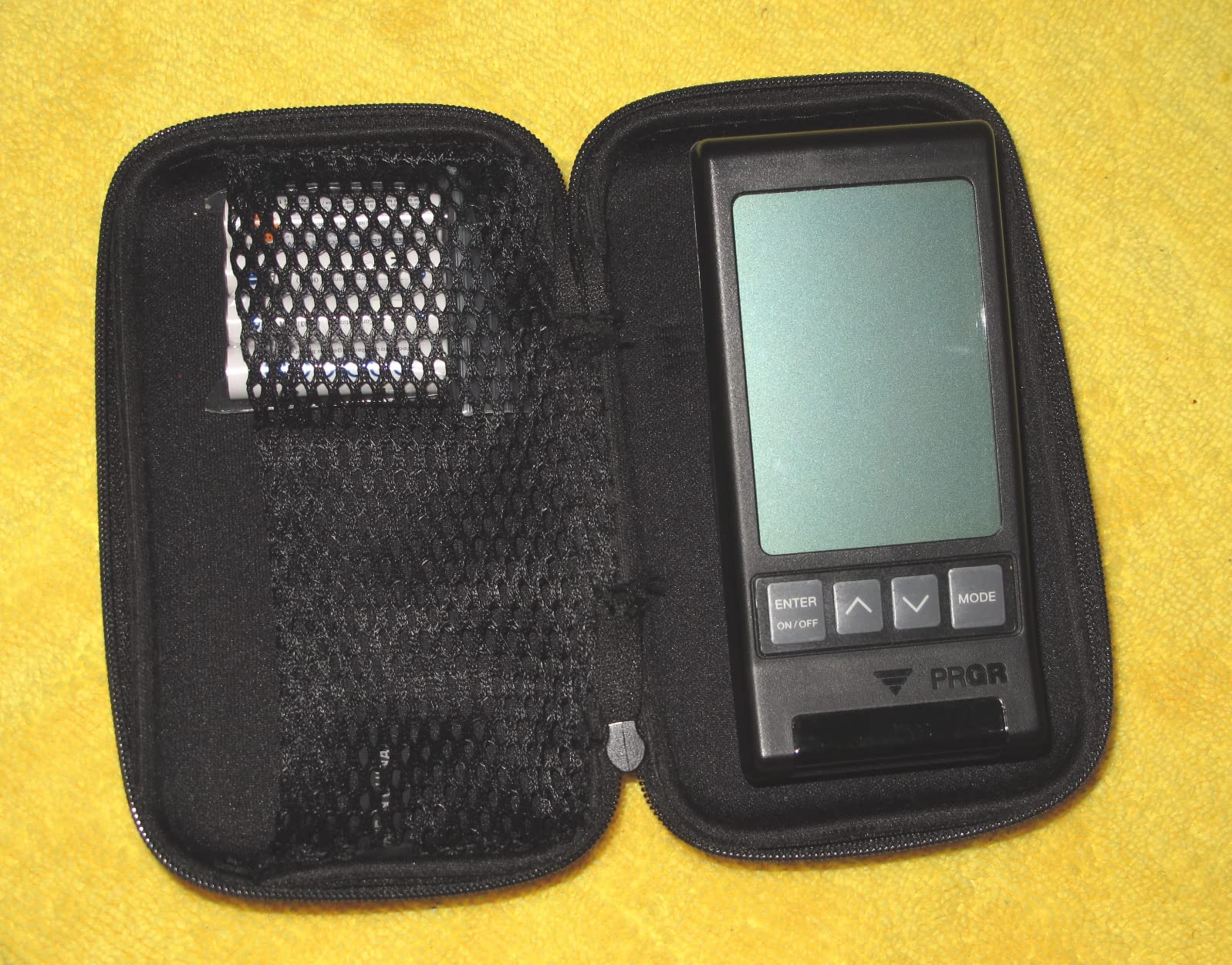
Understand what you are buying. There is no simulator software, no video and no shot shape. Every reported number is speed-related, which makes it a training instrument rather than a simulator sensor.
It is also multi-sport, working for baseball, tennis, soccer and hockey speed work, which is why it has stayed popular with coaches long after dedicated golf options arrived.
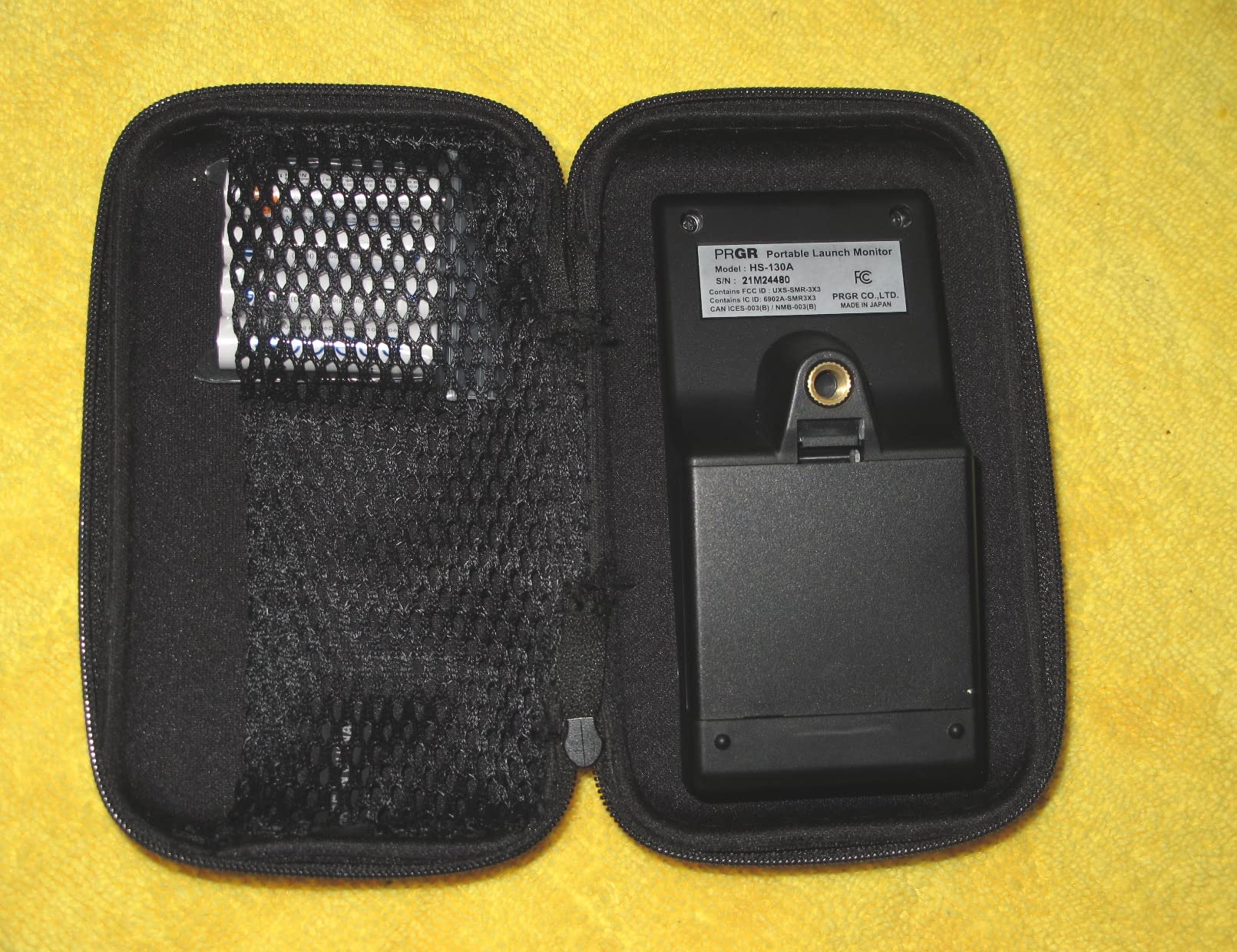
Who the PRGR suits
Golfers chasing club speed gains. The no-ball mode makes it an inexpensive way to build a speed programme, and the 500-shot memory is enough to track progress across a season.
It suits coaches and families who want a shared training tool without accounts or subscriptions. At 4.9 ounces with a one-handed form factor, anyone can pick it up and swing.
Who the PRGR does not suit
Simulator builders should skip it. It feeds nothing, plays nothing and reports no launch angle, spin or shot shape, so it cannot drive a virtual course.
Golfers who want to diagnose a swing miss also come up short, because without a launch angle or a tracer there is no visual explanation of what the club is doing.
10. Voice Caddie SC200Plus – Practice Hands Free
Voice Caddie SC200Plus Portable Golf Launch Monitor and Swing Analyzer with Real-Time Shot Data Tracking – 12-Hour Battery Life
Doppler radar with pressure sensors
Up to 20 hours of battery
Swing speed mode needs no ball
8 ounces
Pros
- Voice output lets you practise without watching a screen
- Doppler radar with pressure sensors gives consistent speed and distance
- Swing speed mode works indoors with no ball and no net
- Adjustable loft angles let you compare different clubs
- Up to 20 hours of battery for long sessions
Cons
- Distance accuracy depends on manual altitude and temperature setting
- Standalone unit with no video or app
- Basic LCD shows a limited metric set
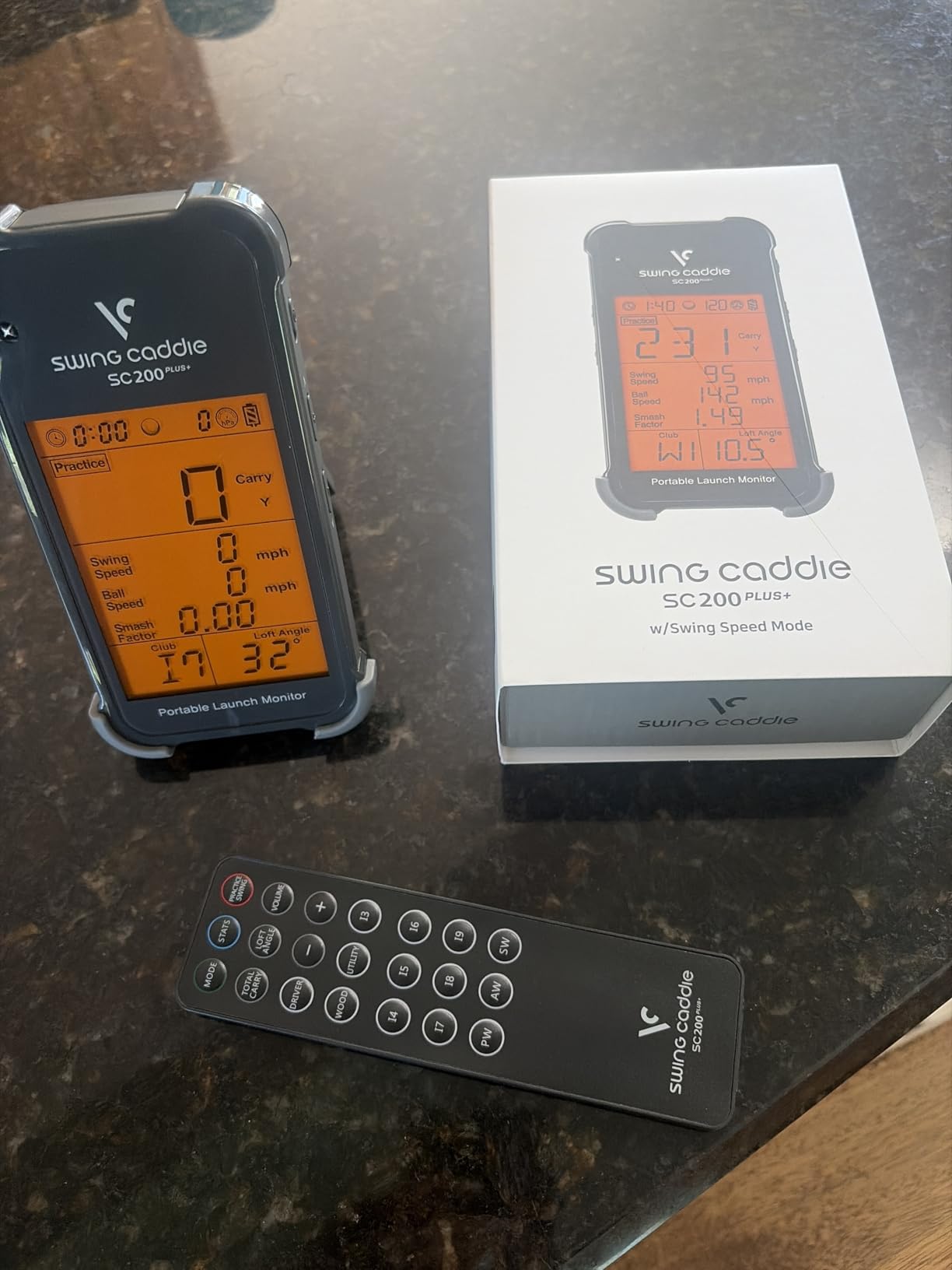
The SC200Plus calls your numbers out loud. That sounds like a gimmick until you hit thirty balls in a row without breaking your look-up posture, because the LCD stays on the floor and the voice readout lands after every swing.
Underneath, it is Doppler radar with atmospheric pressure sensors, and it stores shot data plus per-club averages so you can see how your distances settle over time. Adjustable loft angles let you simulate the conditions of different clubs when you want to compare without changing clubs.
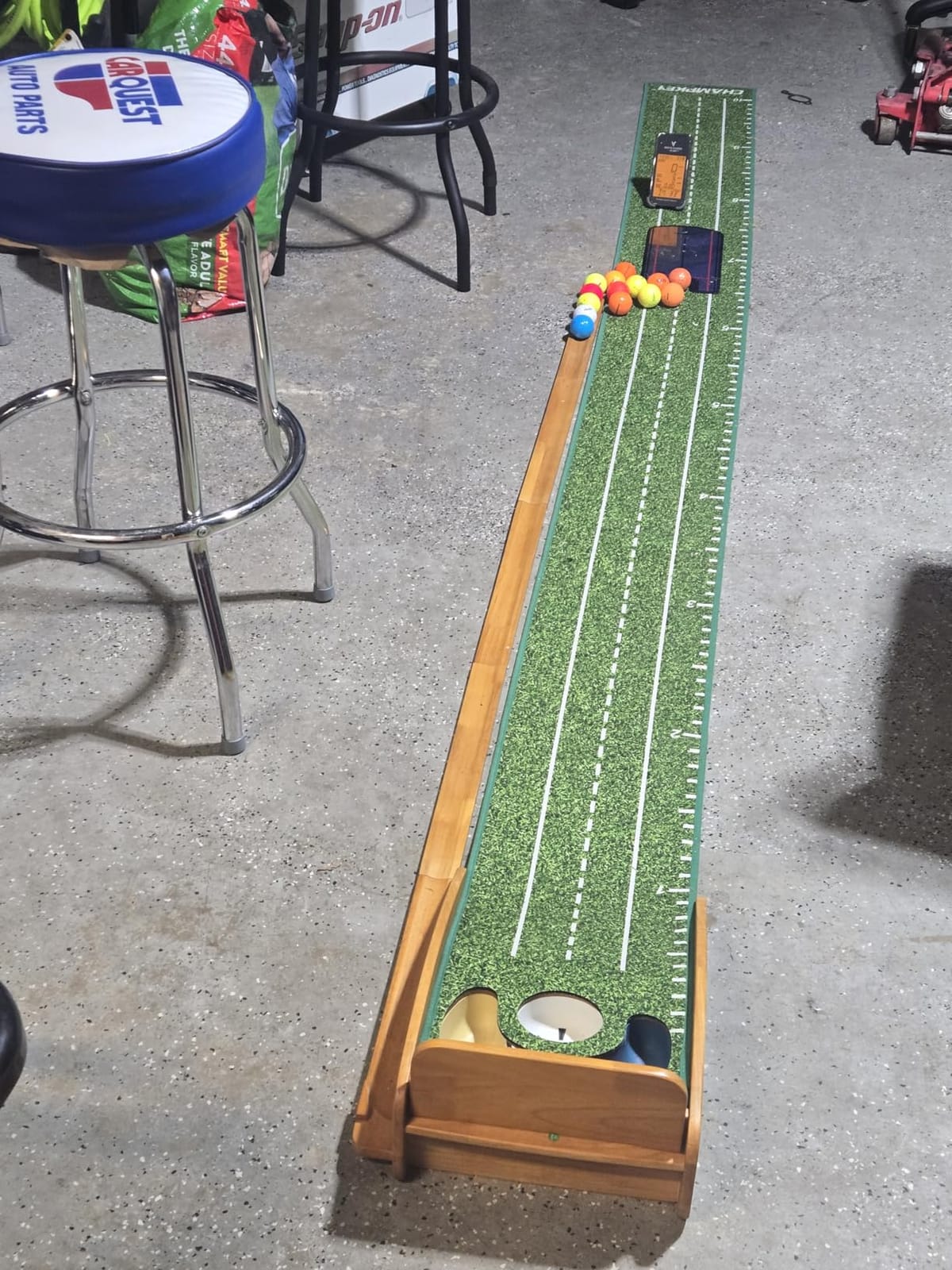
One task catches people: distance accuracy depends on setting altitude and temperature manually before you trust the carry figures. Get that wrong on a hot day and every reading drifts in the same direction.
It is a standalone unit with no video, no app and no virtual course. The LCD shows a limited metric set, which is enough for speed work and not much more.
Who the SC200Plus suits
Golfers who swing with their head down. Voice feedback removes the temptation to glance at a screen between shots, and owners consistently praise the clarity of the readouts.
It also suits indoor speed work in a basement or spare room with no net, since swing speed mode needs no ball. At 8 ounces with up to 20 hours of battery, it also outlasts most multi-session days without a charger.
Who the SC200Plus does not suit
Simulator builders should look elsewhere, because there is no app, no video and no virtual course play. Anyone wanting launch angle, spin or shot shape will not find them.
It also suits accuracy-focused golfers only after you calibrate the altitude and temperature settings, and getting that right takes a few minutes before every session where conditions change.
11. TheStack Radar – Precision Readings With Gamified Wedge Work
TheStack™ Radar – Portable Golf Launch Monitor, Swing Speed & Ball Tracker
Swing and ball speed with estimated carry
Highest rating in our test group
Bluetooth to iOS and Android
0.12 kg
Pros
- Reliable and precise swing speed and ball speed readings
- Built for speed training and wedge practice alongside TheStack clubs
- Sends data to the app over Bluetooth with little setup
- Gamified wedging sessions give short-game practice a structure
- Trusted by touring professionals including Matt Fitzpatrick
Cons
- Wedging and putting modes need an Apple device
- Reports estimated carry distance rather than tracking full flight
- Not a simulator and offers no virtual course play
TheStack Radar earned the highest star rating in our group at 4.6, and the reason is simple: the readings are precise and it arrives at the phone over Bluetooth with almost no ceremony. Setup is a pairing, not a project.
Its real strength is short game. Stack Wedging delivers gamified, skill-specific practice sessions, and guided Stack Putting sessions are bundled. One month of Wedge Mode is included free, which gives you enough time to decide whether the structure suits you.
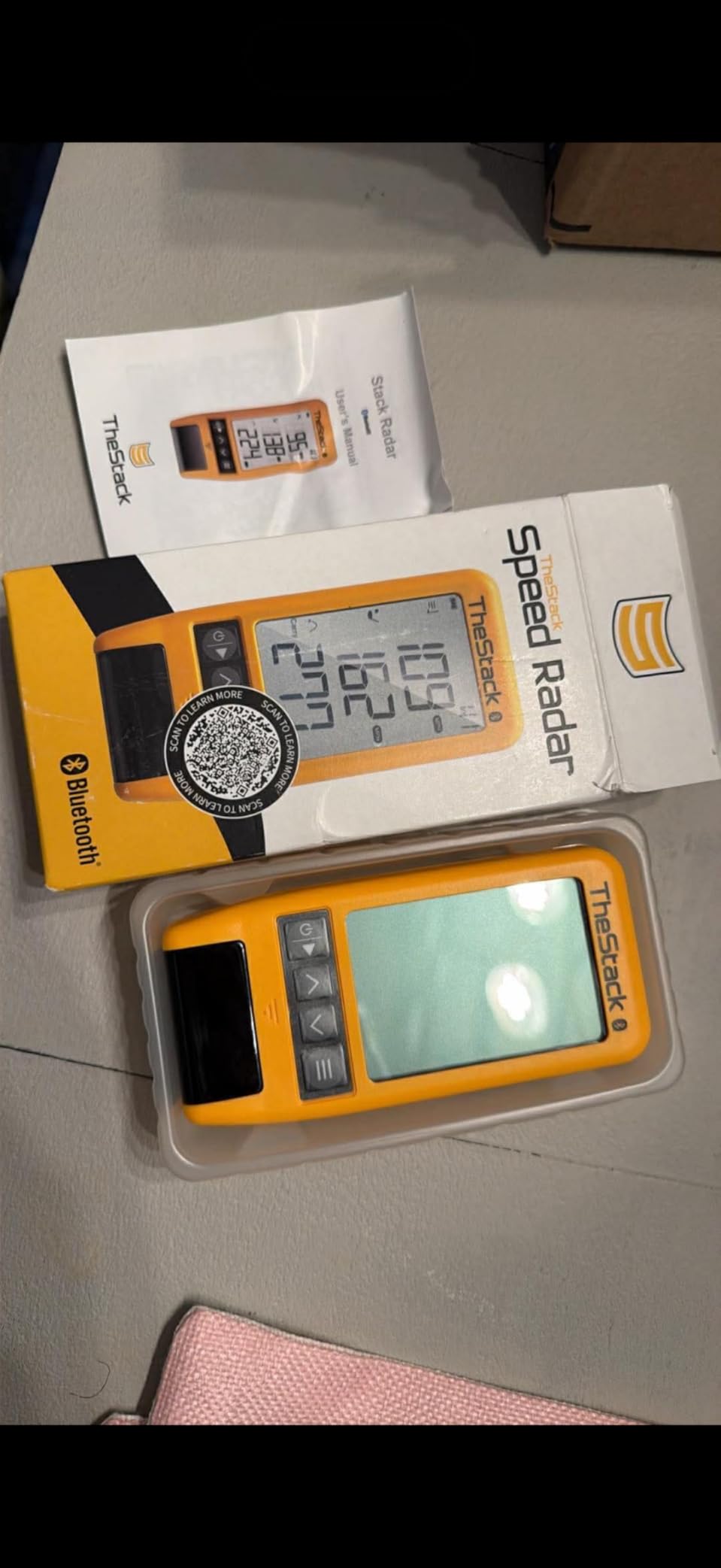
Platform is the catch. Speed training now covers Android, but the wedging and putting apps remain Apple-only, so the most attractive features are locked to iPhone users.
It also reports estimated carry distance rather than tracking ball flight, so the figure is a calculation from speed and smash factor rather than a measured result. There is no virtual course play.
Who the Stack Radar suits
Golfers whose biggest gap is the scoring clubs. The gamified wedge sessions turn a dull repetition block into something you will actually repeat, and the guided putting work adds a second practice mode.
It also suits iPhone owners who want clean speed data without a subscription argument, and anyone who values a fast, reliable Bluetooth connection over a larger feature list.
Who the Stack Radar does not suit
Android households can use it for speed training only, since the wedging and putting modes need an Apple device. Android users should check the app store listing before buying on the promise of wedge sessions.
Simulator builders are also out of luck. Estimated carry is not a measurement of where the ball landed, and no course software is included.
12. Garmin Approach G80 – Course GPS With a Radar Speed Check
Garmin Approach G80, All-in-One Premium GPS Golf Handheld with Integrated Launch Monitor, 3.5″ Touchscreen
GPS handheld with integrated radar
41000+ preloaded course maps
15 hour battery
3.5 inch touchscreen
Pros
- Full GPS golf handheld and a working launch monitor in one device
- Quick-access radar button makes a speed check simple between shots
- Sunlight-readable transflective touchscreen is easy to use on the course
- Preloaded maps for more than 41000 courses worldwide
- 15 hour battery covers a full round
Cons
- Launch data stops at speed smash factor tempo and estimated distance
- No video and no launch angle or spin metrics
- 3.5 inch screen is small against newer handhelds
The G80 is a golf GPS first and a launch monitor second, which is exactly the right priority for golfers who practise on the course between simulator sessions. It ships with more than 41,000 detailed colour course maps and a sunlight-readable transflective touchscreen that stays visible in bright conditions.
The integrated radar tracks club head speed, ball speed, smash factor, swing tempo and estimated distance, and a dedicated quick-access button puts a reading in front of you without digging through menus. Practice and game modes are built in for skill testing.
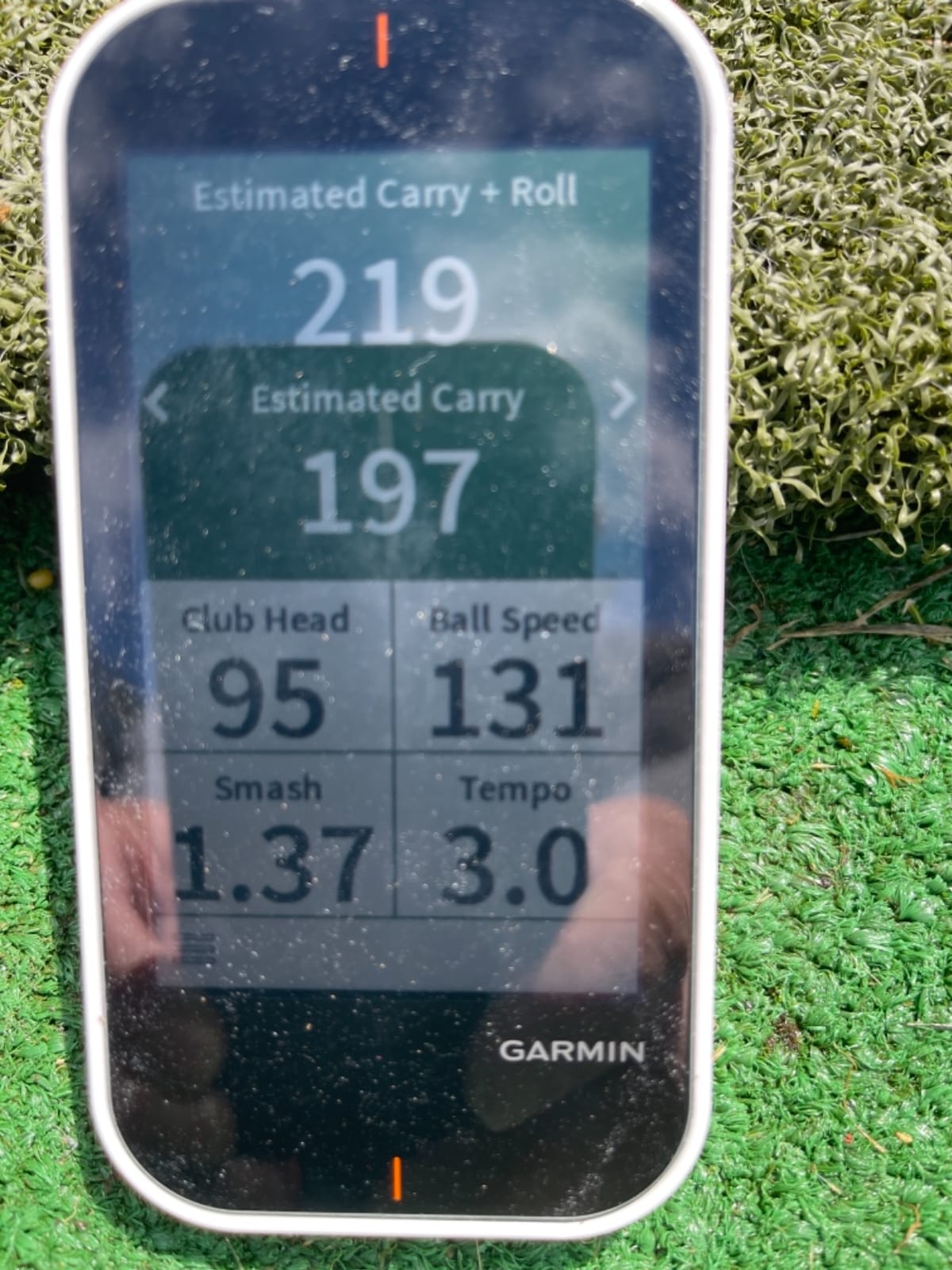
As a home simulator sensor it falls short. There is no video, no launch angle and no spin data, so software that reads detailed ball flight will see very little. The launch monitor side is a speed check and nothing more.
The 3.5 inch screen at 282 by 470 resolution also feels dated next to current handhelds, and the 15 hour battery is the one generous spec in the package.
Who the G80 suits
Golfers who want one device for both jobs. Course maps and a working radar speed check in a single handheld covers the round and the practice bay, and owners appreciate how simple the quick-access button makes the speed check.
It also suits older golfers or anyone who prefers physical controls and a transflective screen over a glossy touchscreen that disappears in sunlight.
Who the G80 does not suit
Simulator builders should not choose it. The metric set stops at speed, smash factor, tempo and estimated distance, which is not enough to feed most simulator software.
Golfers who want video review of their strike will find nothing, and anyone who reads charts for long sessions will notice how small the screen feels next to newer handhelds.
How to Choose a Golf Launch Monitor for a Home Simulator in 2026
Radar, camera or hybrid: pick the technology that fits your room
Radar units sit behind the ball and track flight with Doppler. They are fast, they work in most lighting, they read any ball, and they need clear space downrange. Every owner complaint about radar in a home room is really a complaint about room depth, not accuracy.
Camera-based photometric units sit beside the ball and capture impact. Because they only need to see the ball, they fit in spaces radar cannot, and they produce video of the strike. Fusion and hybrid units, such as the MLM2PRO, the ST MAX and the Mevo Gen2, combine radar with cameras to cover both cases.
Our rule of thumb after testing: if you have a long room, choose radar for speed and simplicity. If the room is tight, choose a camera or hybrid unit. If you are undecided, hybrid removes the risk, at the cost of more configuration.
How much space you actually need
Radar needs room depth behind the ball. Home simulator owners consistently report that a bay with roughly 14 to 16 feet of clearance behind the hitting position is the practical minimum, and more is better if you want to see full ball flight on wedges and drivers.
Camera units need a clear side wall or tripod position and a ceiling high enough for the ball to be seen in flight. Low-ceiling basements limit every device, but they hurt short-game play most, since a wedge or chip needs vertical room the room does not have.
Measure before you buy. Note the length from your hitting position to the net, the ceiling height above it, and where the screen or projector will sit, since the two most common rebuilds come from measuring the room but not the swing area.
Simulator software compatibility
The sensor only matters if your software can read it. Most major packages accept data from any launch monitor that reports the standard metrics, so the deciding factor is which numbers your software demands. Older packages want ball speed, club speed, launch angle, spin rate and carry. Newer immersive software often wants club path and face angle as well.
That last pair is the reason two of our picks rank where they do. The MLM2PRO and the Garmin Approach R50 report spin axis and face-to-path, so they feed packages that a speed-only unit simply cannot. For a full breakdown of the packages themselves, read our home simulator buyer guide.
Connection type matters too. Hardwired units such as the EYE MINI CORE report results fastest and never drop a Wi-Fi handshake, while wireless units need a stable 5 GHz network on the same band as your simulator PC.
Subscription models and total cost of ownership
Three models exist in this category. Lifetime access, offered by the FlightScope Mevo Gen2 with eight E6 Connect courses, costs nothing after the purchase. Annual membership, used by the Rapsodo MLM2PRO and the SkyTrak ST MAX, adds cost every year in exchange for a larger library. And included-tier access, used by the Garmin R10 and R50, puts a block of courses behind a membership while leaving practice tools free.
Ongoing cost is rarely the headline price. Add the annual membership, replacement marked balls if you choose a stickered unit, club stickers that peel and need reapplying, and a gaming PC for immersive software, and a mid-range device can carry a total bill that rivals a premium unit without the hardware.
Ask two questions before buying: what does practice mode include without paying, and does the software I want require the membership? Those two answers decide most of the ownership maths.
Marked balls and club stickers
Marked balls are a frequent hidden annoyance for indoor builders. Units that require an RCT ball or a sticker must be applied to every ball you hit, and stickers wear off in weeks. The Uneekor EYE MINI CORE avoids this entirely by reading the dimple pattern itself, which is why it suits a shared family room.
Club stickers are a separate issue. Several units include club stickers for face-impact detection, and reviewers report reapplying them every few weeks. Confirm whether club data is included or sits behind a software upgrade before you plan to use face angle in your fitting.
Mac users and setups without a phone
Platform support is uneven. The Rapsodo MLM is iPhone and iPad only. The MLM2PRO lists Android, so it is a practical choice for a phone-first simulator room. The Mevo Gen2 lists Android, PC and iOS, and the ST MAX pairs with both mobile platforms through its app.
If you want no phone in the loop at all, the Garmin Approach R50 is the clear answer, because the 10-inch display and HDMI output let the unit drive the room by itself. For more on evaluating swing data without a device in your hands, see our launch monitor guide for swing analysis.
Used, refurbished and long-term ownership
Second-hand radar units from the Garmin R10 and Rapsodo lines trade well because the hardware is simple and the sensor ages slowly. Refurbished stock sold through manufacturer outlets is worth checking before a full-price purchase, particularly for units whose only wear is cosmetic.
Before buying any used unit, confirm the sensor still reads accurately by hitting ten shots and comparing them with a unit you trust. Pay attention to battery health on models with internal batteries, and check whether firmware updates are still issued for the model, since an unsupported device loses access to software over time.
Our broader coverage of these devices, including the ones built mainly for range work, sits in our full launch monitor roundup.
Frequently Asked Questions
What is the best launch monitor for a home golf simulator?
The Garmin Approach R10 is the best all-round choice for a home simulator because it uses Doppler radar, reads any ball, needs no club stickers and runs about 10 hours on a charge. Choose the Rapsodo MLM2PRO if you need spin rate and club path, the Uneekor EYE MINI CORE if your room is tight or you want to avoid stickers, and the Garmin Approach R50 if you want a built-in screen and no phone in the loop.
Is the Garmin R10 or Rapsodo MLM2PRO better?
The R10 wins on simplicity: radar reads any ball, setup is fast and there is no spin requirement, so it fits a longer room and a large practice group. The MLM2PRO wins on data: it reports 15 metrics including spin rate, spin axis and club path, which most simulator software wants. Its weaker areas are Wi-Fi stability and short-game play.
How much room depth do I need for a radar launch monitor?
Home simulator owners report that roughly 14 to 16 feet of clearance behind the ball is the practical minimum for a radar unit such as the Garmin R10 or Rapsodo MLM2PRO. Camera-based and hybrid units need far less, since they sit beside the ball. Ceiling height matters as much for short-game practice, so measure the full swing area rather than the room alone.
Do I need marked balls for a golf launch monitor?
It depends on the unit. The Uneekor EYE MINI CORE reads any dimple pattern with no stickers at all, and radar-based units such as the Garmin R10 measure flight directly from the ball in flight, so any ball works. Some camera-based units need a printed marker or an RCT ball, which adds a running cost and a weekly sticker habit.
Which golf launch monitors have no subscription?
The FlightScope Mevo Gen2 bundles eight E6 Connect courses for life with no annual licence fee, and the TAGCMC GX-10 runs its app and 3D range without a membership. In practice though, most simulator platforms such as GSPro or E6 Connect ask for their own annual payment regardless of which sensor feeds them, so budget for software separately.
Which launch monitor works with Mac computers?
Mac support is limited across this category. The Garmin Approach R50 runs on Windows, and the Uneekor EYE MINI CORE lists Windows 11 for both its bundled software and third-party suites such as GSPro. The Rapsodo MLM requires an iPhone or iPad. Apple users generally get the widest app support from mobile-paired units such as the Mevo Gen2 and the ST MAX.
Is the Rapsodo MLM2PRO premium membership worth paying for?
For full-swing practice and simulator play it is worth it, since the membership unlocks practice mode and the 30000-plus course library that makes the device a simulator rather than a launch monitor. A 45-day trial is included, so you can judge the library against your preferred software before committing to an annual plan. Basic metrics do not require the membership.
Can I use one launch monitor indoors and outdoors?
Yes, most of them. The Garmin R10 has an IPX7 rating and about 10 hours of battery, the FlightScope Mevo Gen2 runs about 6 hours, and the SkyTrak ST MAX has an internal battery that moves easily between setups. Radar units also handle outdoor light better than many camera units, though you still need downrange space on a range.
The Best Golf Launch Monitor for Your Home Simulator in 2026
The Garmin Approach R10 remains our pick for the best golf launch monitors for home simulators in 2026. It reads any ball, needs no stickers, sets up in minutes and feeds practice tools plus virtual rounds to the Garmin Golf app. In a room with real depth behind the ball, it is the simplest unit in this roundup to live with week after week.
If you want spin rate and club path, choose the Rapsodo MLM2PRO and give it a dedicated Wi-Fi connection. If your room is tight or sticker fatigue is a dealbreaker, the Uneekor EYE MINI CORE reads any dimple pattern, though budget for a gaming PC. If you refuse to pay an annual software fee, the FlightScope Mevo Gen2 bundles its E6 Connect courses for life.
Whichever unit you choose, measure the swing area before you order, and test the network the day it arrives. Those two steps prevent more disappointments than the sensor choice itself. Our swing analysis roundup covers what to do with the data once readings are flowing.