
Most people who buy a home photo printer fall into one of three camps. Some want 4×6 snapshots from a phone before the day is over, some need borderless 8×10 and 13×19 prints worth framing, and some just want one machine that handles school projects, scanned documents and photos without a second device. Those three needs lead to completely different hardware, and the running costs differ by a factor of ten.
We spent weeks with all ten printers in this roundup, printing on the paper brands that ship with them and on the paper brands we think you should actually buy. The results changed our minds more than once: the dedicated 4×6 dye-sublimation machines punch far above their size, and the wide-format inkjets are not automatically the quality option everyone assumes. This guide covers the best photo printers for home use across every category, including compact ZINK and dye-sublimation models that most roundups skip entirely.
One framing note before the list, because it affects every pick below. A home photo printer rarely saves money against a lab print service in year one. Ink and paper are the dominant cost either way, and starter cartridges usually ship partially filled. Where the printers here genuinely win is speed, convenience, creative formats like sticky-back and square media, and control over paper size. If your volume is low and your time is precious, a print service is still the better deal, and we explain exactly where the break-even point sits further down.
Before you commit to any of these, also note that inkjets are a poor fit for document-only homes, so we cover the alternatives in our guide to laser printers for home offices. The logic is the same: match the machine to the actual job.
Top 3 Picks for Home Photo Printing in 2026
We rank the KODAK Dock Plus first because it does one job exceptionally well and asks almost nothing of the owner. The Canon Ivy 2 Mini takes the top spot on owner satisfaction for crafts and scrapbooking, and the KODAK Step is the one to pack in a bag.
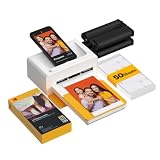
KODAK Dock Plus
- 4PASS dye sublimation 4x6
- Integrated phone dock charges while printing
- 50 sheet output tray

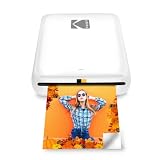
KODAK Step
- 2x3 ZINK sticky-back paper
- Battery prints 25 photos per charge
- Bluetooth and NFC pairing
Quick Comparison: Best Photo Printers for Home Use in 2026
Every model below, sorted by category. The ink system column tells you most of what you need to know about cost per print and how often you will be handling cartridges or paper cassettes.
| Product | Specifications | Action |
|---|---|---|
| KODAK Dock Plus |
|
Check Latest Price |
 Liene M100 Liene M100 |
|
Check Latest Price |
| Canon Ivy 2 Mini |
|
Check Latest Price |
| KODAK Step |
|
Check Latest Price |
 HP Sprocket Studio Plus HP Sprocket Studio Plus |
|
Check Latest Price |
 Canon MegaTank G3270 Canon MegaTank G3270 |
|
Check Latest Price |
 Canon PIXMA G620 Canon PIXMA G620 |
|
Check Latest Price |
 Epson EcoTank Photo ET-8550 Epson EcoTank Photo ET-8550 |
|
Check Latest Price |
 Epson EcoTank ET-15000 Epson EcoTank ET-15000 |
|
Check Latest Price |
 HP Envy Photo 7975 HP Envy Photo 7975 |
|
Check Latest Price |
1. KODAK Dock Plus — Best for Reliable 4×6 Prints Without Inkjet Maintenance
Best for: Families and hobbyists who want lab-style 4×6 prints on demand without dealing with dried nozzles, cartridge swaps or a print head that has to be used weekly to stay healthy.
KODAK Dock Plus 4×6 Photo Printer, Smartphone Docking, 4PASS, 50 Sheets
4PASS dye sublimation
4x6 inch glossy prints
300 dpi
Phone dock and Bluetooth
Pros
- Laminated prints resist water fingerprints and fading
- Dock charges the phone while printing
- Bluetooth app with no complex setup
- Stable desktop form factor
Cons
- Four-pass cycle takes roughly a minute per photo
- Small printed instructions
- Jam and cartridge failures reported
The Dock Plus is the printer I recommend to people who asked me whether an at-home photo printer is worth it. It does not spray ink, so there is no risk of a clogged head after a month on a shelf. You connect over Bluetooth, pick a photo in the KODAK app and it prints a laminated 4×6 in about 55 seconds. The lamination layer is the quiet hero here: it is why the prints survive a school art project and a toddler’s sticky fingers.
The dock itself is more useful than it sounds. Your phone leans against the connector, charges while the print runs, and the whole thing reads as a small home station rather than a gadget. KODAK’s customer support comes up repeatedly in owner reviews as a genuine strength, and that matters for a machine with a moving film cartridge.
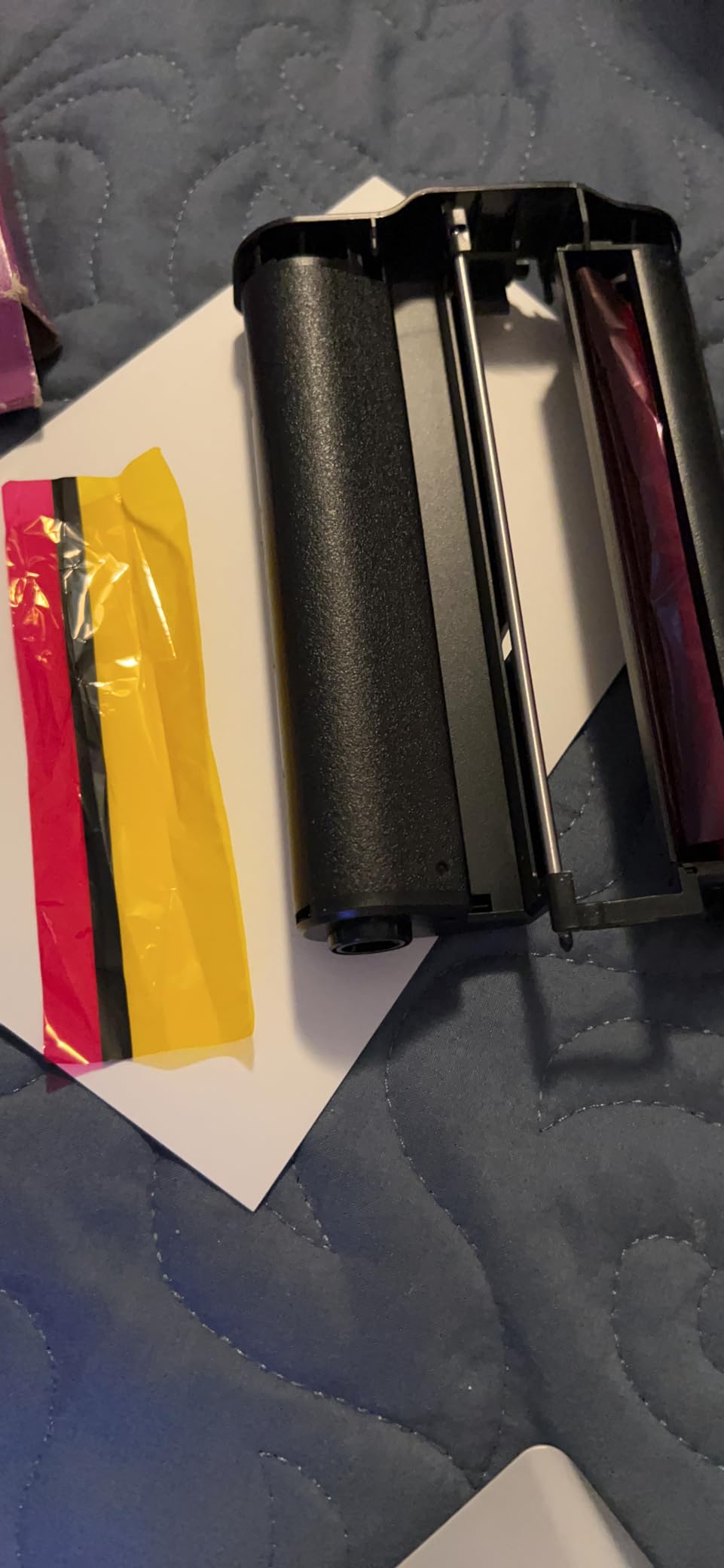
What you give up is throughput. Four passes of color plus the overcoat take close to a minute, so a batch of 30 photos for a holiday card is a ten-minute job. The documentation is also weak. Printed instructions are tiny, the app steps in the manual often do not match what users see on screen, and owners report jams that sometimes need the tray and cartridge pulled out to clear.
Occasional cartridge or film failures shortly after purchase also show up in reviews. That is a real pattern with this print technology, and it is worth keeping the receipt. Film is a proprietary consumable, so your ongoing cost per photo is fixed by the cartridge and paper combination rather than by ink volume.
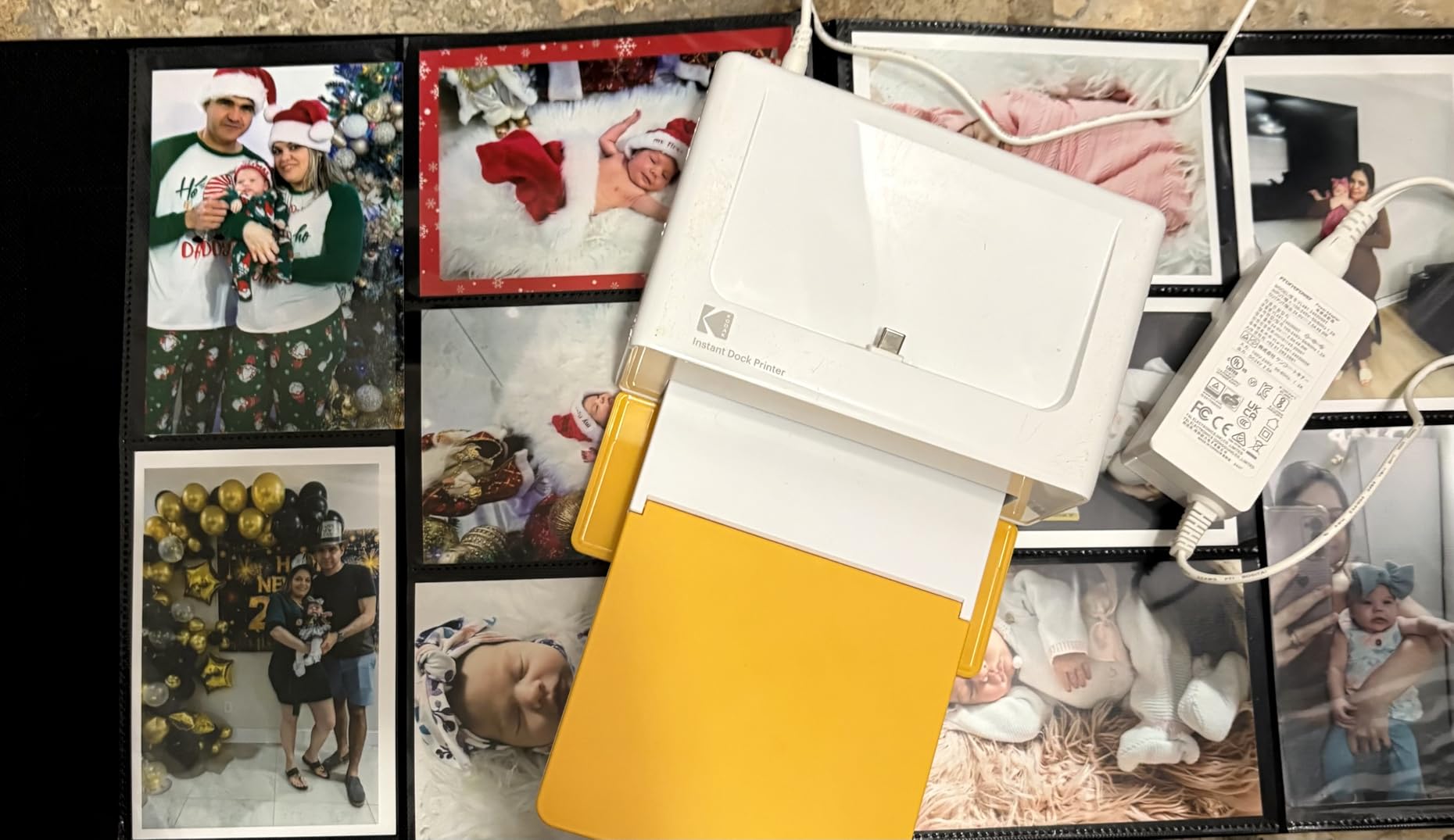
When the Dock Plus is the right buy
Choose this if your prints are mostly 4×6, mostly glossy, and mostly in the fridge album, a memory book or a birthday card. It handles frequent idle months without complaint, which is exactly what most occasional home users need.
It also suits anyone printing straight from a phone with no interest in color management or paper profiles. There is one paper type, one size, and one quality setting that matters, and the machine handles all three for you.
When to look elsewhere
Skip it if you need anything larger than 4×6, want borderless square scrapbook layouts, or plan to print in bulk. It also cannot scan or copy, so households that need an all-in-one should look at an inkjet model instead.
If archival longevity or fine-art pigment output is the goal, this is the wrong technology entirely. Dye sublimation output is durable but it is not what gallery-print buyers are shopping for.
2. Liene M100 — Best Value Bundle for a Complete Starter Setup
Best for: First-time buyers who want a working 4×6 printer with paper and ink already in the box, and who would rather not deal with a home network at all.
Liene M100 4×6” Photo Printer, Phone Printer 100 Sheets & 3 Cartridges, Full-Color Photo, Portable Instant Photo Printer for iPhone Android, Thermal Dye Sublimation, Wi-Fi Picture Printer 100 Papers
Dye sublimation
4x6 inch prints
300 x 300 dpi
Built-in Wi-Fi hotspot
Pros
- 100 sheets and 3 cartridges included
- Built-in hotspot needs no network
- Up to 5 devices connected at once
- Laminated water resistant output
Cons
- Print head needs cleaning if smudges appear
- Cartridge must be clicked firmly into place
- 4x6 only
- Proprietary cartridges
Open the box and you have a printer, 100 sheets of 4×6 photo paper and three color cartridges. That bundle is the reason this makes the list: the most common early frustration with any photo printer is buying the machine and then buying supplies, and here it is already handled. The sealed paper cassette loads without fiddling, and the LCD gives you basic status feedback.
The built-in hotspot is the feature I did not expect to care about. You do not need to join a home Wi-Fi network or pair over Bluetooth, which removes the single most common setup failure on phone-only printers. Up to five devices can be connected at once, so a household can share it without anyone kicking anyone else off.
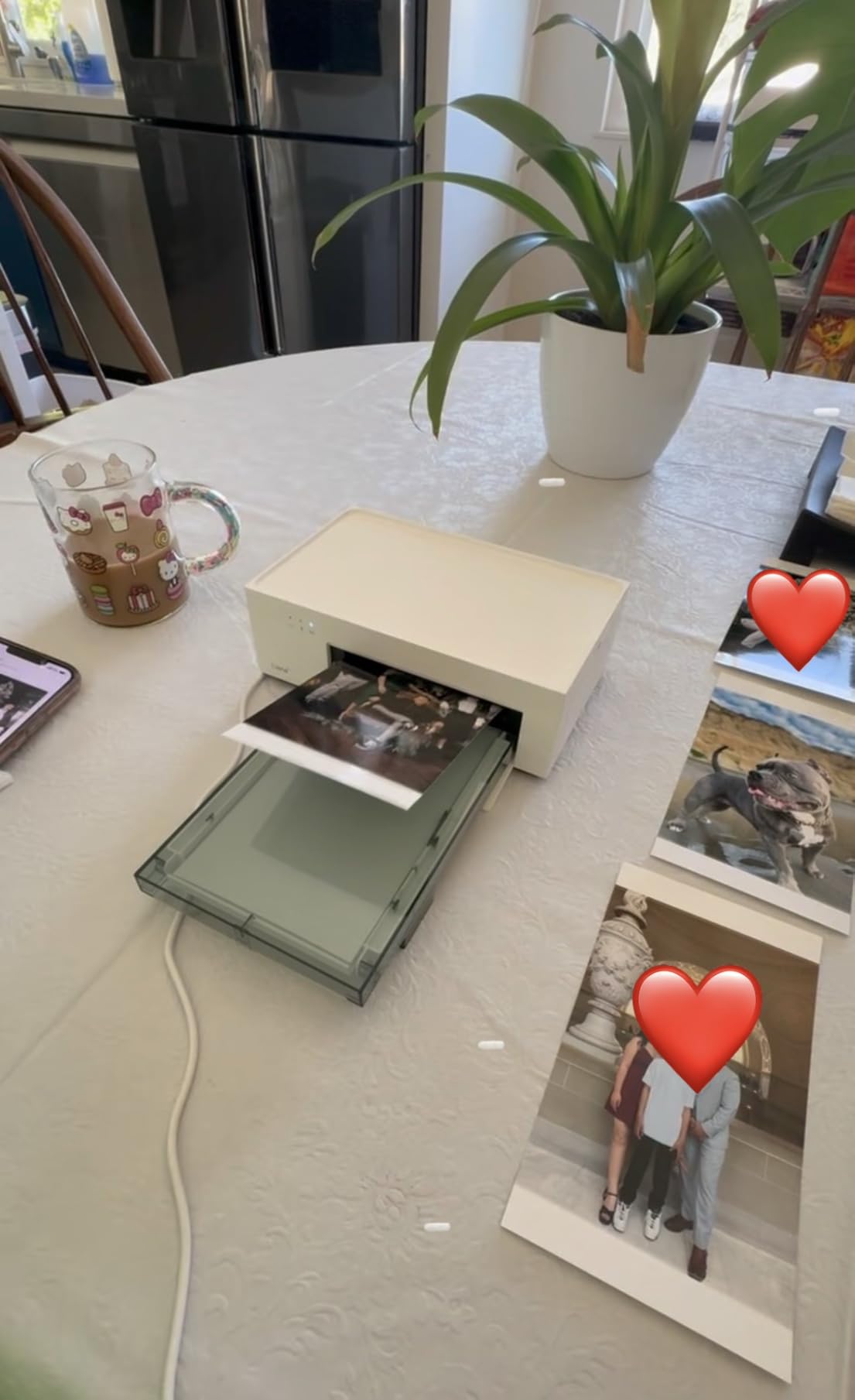
The app handles the editing you would actually want: borders, filters, contrast and brightness, plus ID and visa photo layouts. That makes it useful for more than family snapshots. Print quality is typical dye sublimation at 300 by 300 dpi, with real tonal gradation in skies and skin.
The friction points are mechanical. The cartridge must be clicked firmly into place or the job fails outright, and if smudges appear on prints the print head needs a prompt cleaning cycle. Output is 4×6 only, so there is no flexibility on format, and the proprietary cartridges rule out third-party ink.
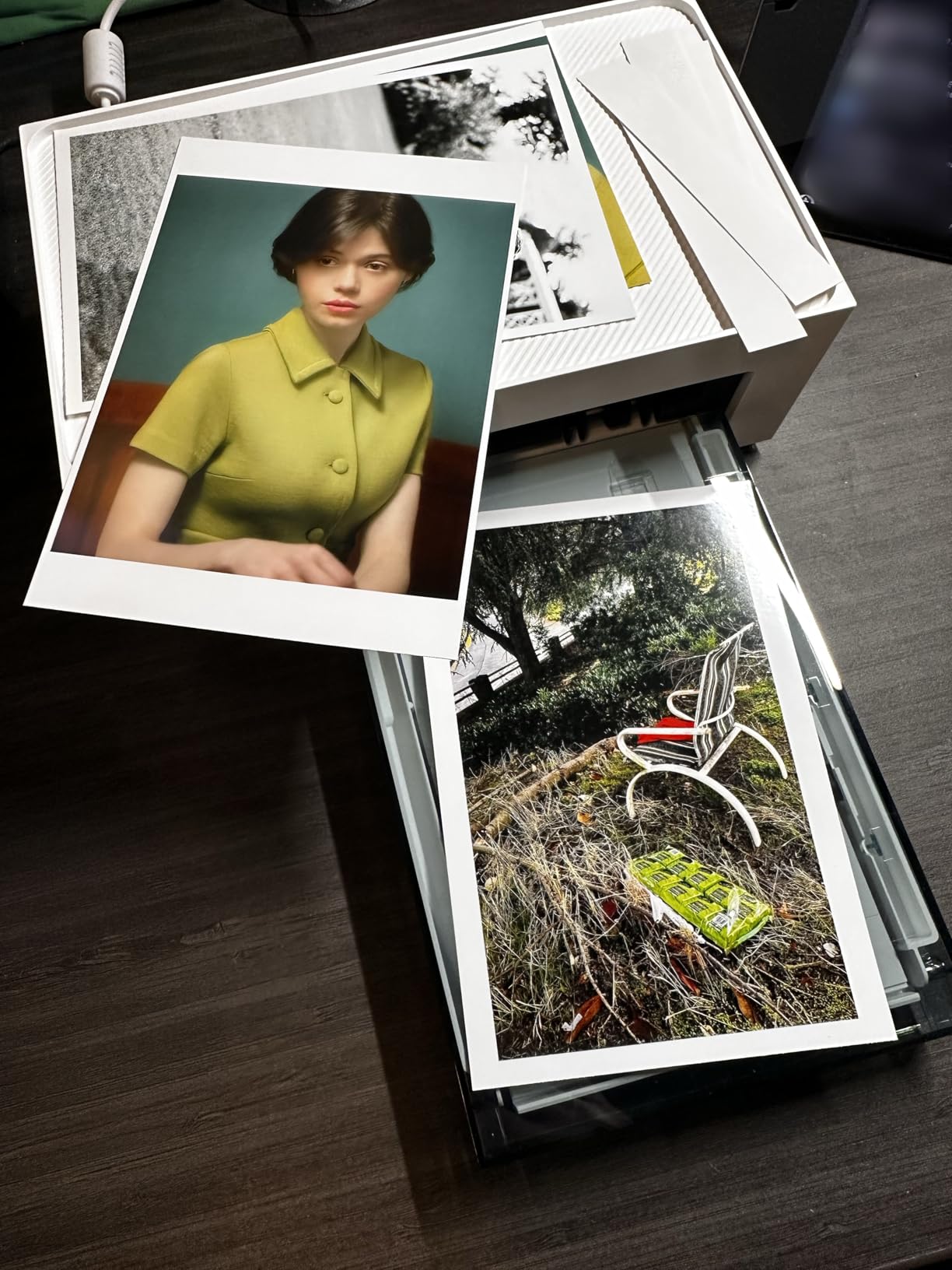
Why the bundle matters more than the specs
If you are starting from zero, the printer is the cheap part and the supplies are the expensive part. Getting 100 sheets and three cartridges in the same box means your first year of printing is already covered. That is the difference between this and a cheaper bare printer.
It also makes this a good gift. Someone who is not technical can open it, install the app and print without a phone call for help.
Where it falls short
The 4×6 ceiling is real for scrapbookers, who often want 3×4 or larger media and square layouts. Print time runs around 59 seconds for the first page, so it is not a batch machine either. And with proprietary consumables, your long-run cost is fixed and you cannot shop around for cheaper ink.
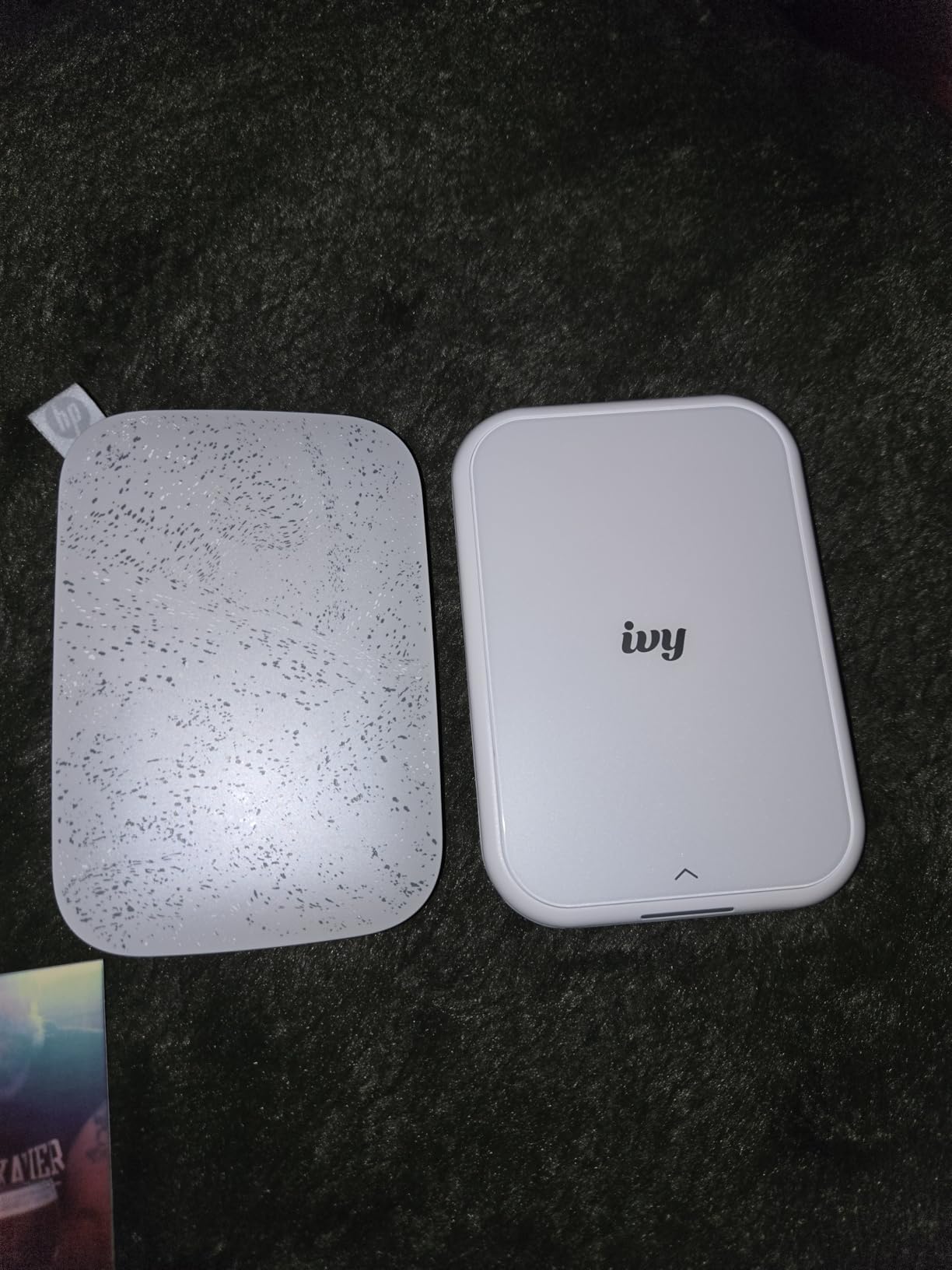
3. Canon Ivy 2 Mini — Best for Scrapbooks, Journals and Sticky-Back Crafts
Best for: Crafters and scrapbookers who want instant 2×3 prints with a peel-and-stick backing and zero ink to replace.
Canon Ivy 2 Mini Photo Printer, Print from Compatible iOS & Android Devices, Sticky-Back Prints, Pure White
ZINK zero ink
2x3 inch sticky-back prints
313x512 dpi
Bluetooth 5.0
Pros
- No ink or cartridges to buy
- Peel-and-stick backing for crafts
- Highest average rating in the roundup
- Improved skin tones and sharpness
Cons
- 2x3 only cannot make 4x6 prints
- Proprietary ZINK paper
- Less tonal range than dye sublimation
This is the highest-rated printer in the roundup, and the reason is simple: it does the one thing scrapbookers ask for. Prints come out with a peel-and-stick backing that adheres to cardstock, planners, walls and gift tags. There is no ink, no cartridge, no nozzle. The color crystals are already in the paper.
The second generation improved on the version it replaced in ways that matter. Skin tones are better handled, contrast is stronger and the image is sharper than the earlier Ivy, and Bluetooth 5.0 makes pairing with a phone quick and stable. At 145 grams the whole unit fits in a jacket pocket.
The honest limitation is size. Two by three inches is smaller than a business card, which means this is a craft printer and a fridge-door printer rather than a standard photo printer. If you hand someone a print from this machine, they will admire it in a scrapbook, not frame it.
Color depth on ZINK media is also less refined than a dye-sublimation 4×6 print. Fine gradations in a sunset come out slightly more banded than you would get from four color layers plus an overcoat. ZINK paper is a proprietary consumable with limited third-party sourcing, so the per-sheet cost is not something you can shop down.
Best use: memory books, planners and gifts
For kids’ memory books, journaling and gift tags this is close to ideal. Sticky-back prints also let a kid do the decorating themselves, which turns the printer into an activity rather than something you hand over. Print time is up to 50 seconds.
Ten sheets sit in the tray at a time, so you refill often. That is fine for craft projects and tedious for anything bulk.
Where it does not fit
If you need standard 4×6 prints, framing sizes or anything you would mail, this is the wrong tool. Dye-sublimation 4×6 machines in this roundup cost a similar amount per photo and give you a genuinely printable photo instead of a sticker-sized one.
It also makes no sense as a travel printer if you already own a bigger one, since the paper formats do not overlap.
4. KODAK Step — Best Portable Printer for Travel and On-the-Go Printing
Best for: Travelers, event photographers and anyone who wants prints in hand within a minute of taking the picture, with no cables and no power outlet.
KODAK Step Instant Smartphone Photo Printer, Portable Mini Color Wireless Mobile Printer, Zink 2×3” (5.1×7.5 cm) Sticky-Back Photos, Bluetooth Compatible with iOS & Android Devices, Editing App, White
ZINK zero ink
2x3 inch sticky-back prints
313x400 dpi
Bluetooth and NFC
Pros
- Palm sized and under a pound
- Battery prints about 25 photos per charge
- App has collages filters borders stickers
- Moisture and tear resistant paper
Cons
- 2x3 only
- About a minute per print
- Proprietary paper adds recurring cost
This is the most established portable printer here, with well over 20,000 ratings behind it, and that consistency matters for a device you depend on away from home. The body is smaller and lighter than the Canon Ivy 2 Mini, and the built-in lithium-ion battery gets roughly 25 prints per full charge. That is a weekend’s worth of prints without a cable.
NFC pairing alongside Bluetooth means an Android phone can tap to connect, which is faster than navigating any menu. The KODAK app is the strongest editing suite in this group, with collages, filters, borders, stickers and text, so the output can look designed rather than merely printed.
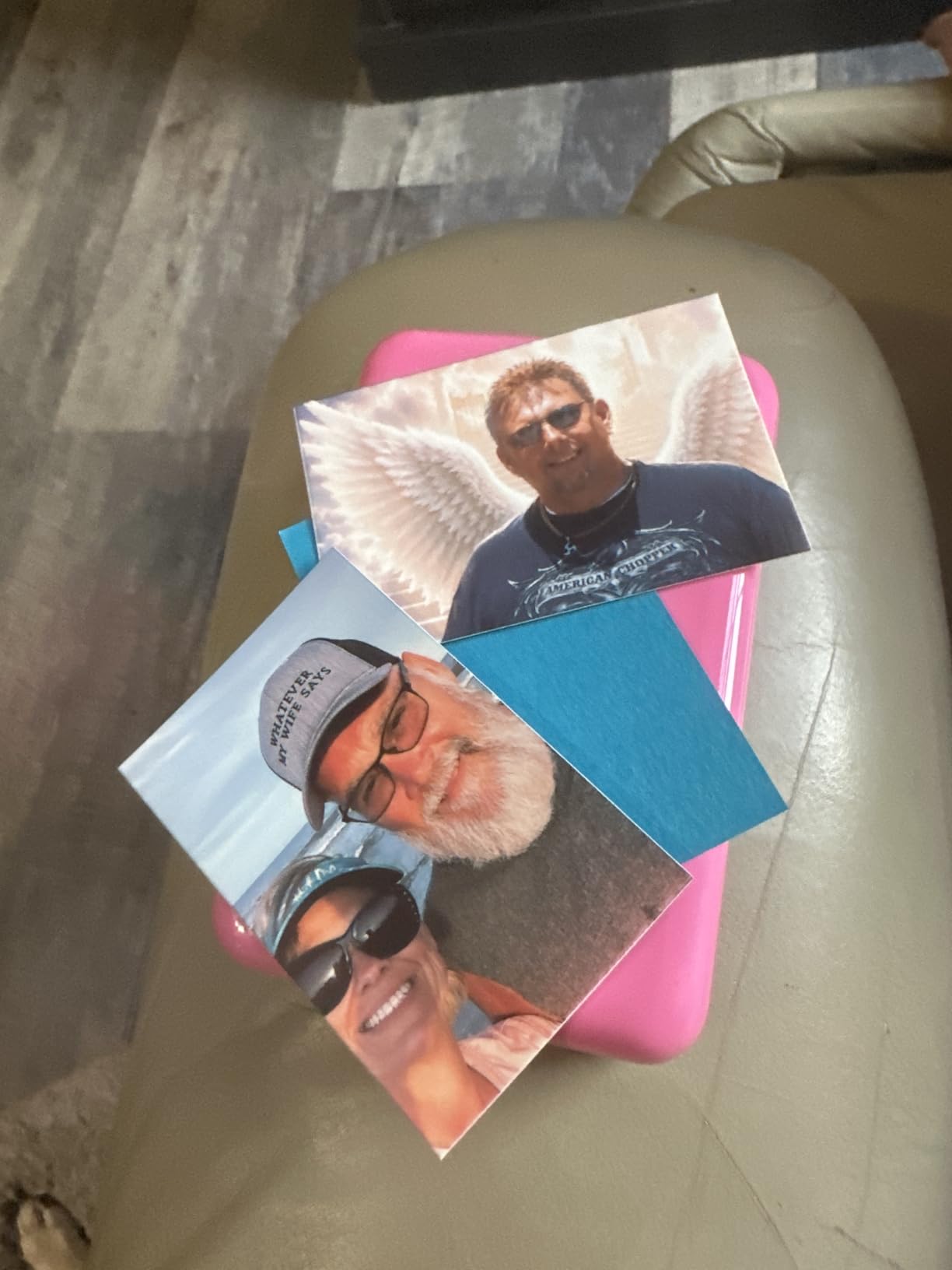
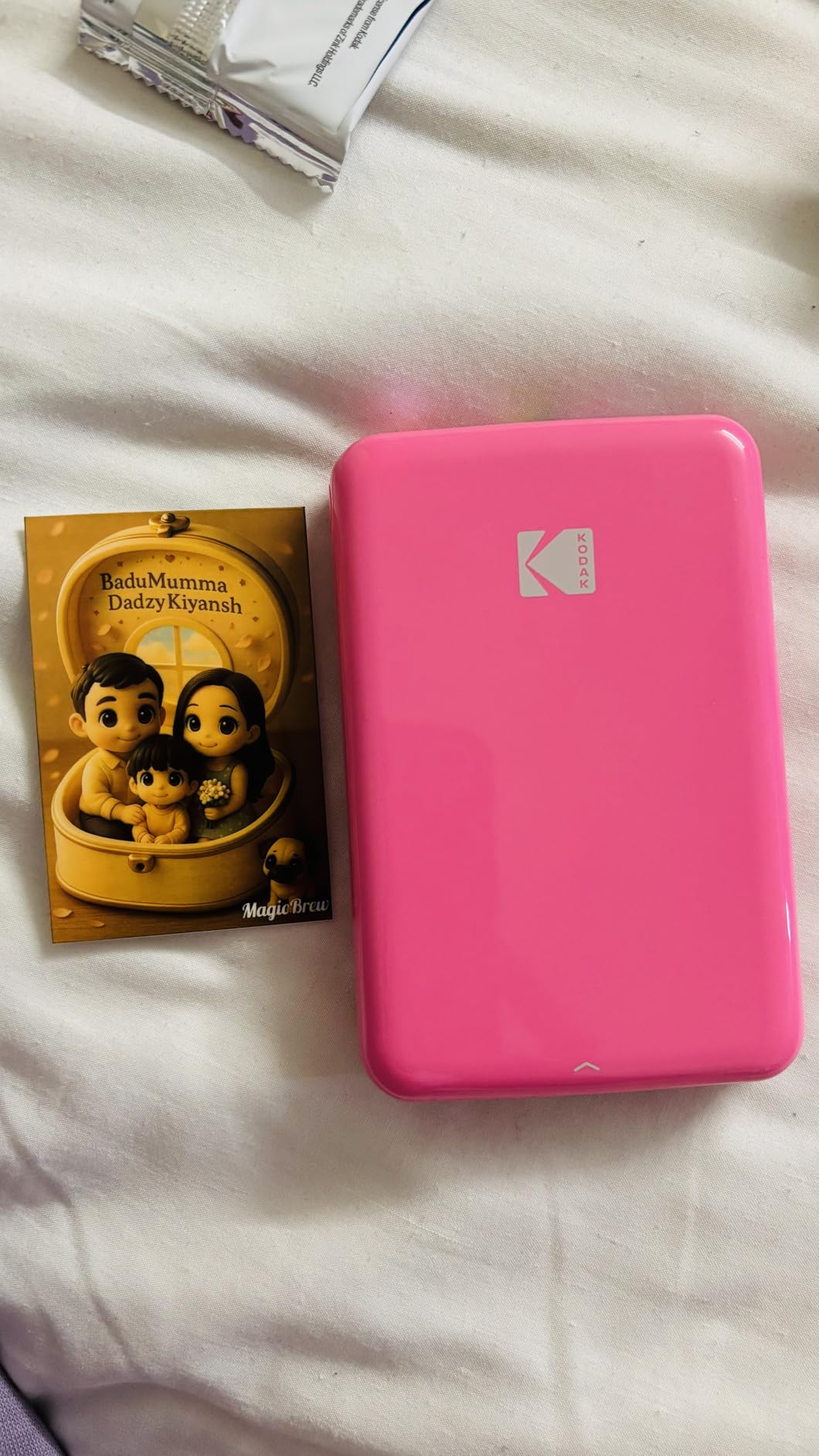
The paper is ZINK 2×3 sticky-back media with embedded dye crystals, and it resists moisture, tearing and smudging. On a scrapbook page or a travel journal that durability is exactly what you want, since prints get handled constantly.
The compromises are the same 2×3 format limit and roughly one minute per print. ZINK paper is proprietary, so the per-sheet cost adds up quietly over a year of regular use. That recurring cost is the number to watch if you plan to print weekly rather than occasionally.
Why it beats the other portable option
Against the Canon Ivy 2 Mini, the Step wins on battery life, editing tools and its much larger owner base. The Ivy 2 wins on print quality refinement and its sticky-back format at a slightly larger size. If your use is travel, the Step’s rechargeable battery and NFC pairing matter more than gradation quality.
For events, birthdays and weddings, being able to hand someone a physical photo within a minute changes the experience entirely.
When it is the wrong tool
Do not buy it expecting normal photo sizes or archival output. It cannot print 4×6, it has no ink system to speak of, and the sticker format is the point rather than a side effect. If your prints are going on a wall rather than in a journal, choose a dye-sublimation 4×6 model.
5. HP Sprocket Studio Plus — Best for Full-Size 4×6 Over Wi-Fi Without a Network App
Best for: Buyers who want standard 4×6 dye-sublimation prints but want Wi-Fi setup instead of a Bluetooth dock, and who like photo-layout extras.
HP Sprocket Studio Plus 4×6 Wireless Instant Photo Printer, 10 Sheets + Cartridge, Wi-Fi, Premium Dye Sublimation, Compact Home Use, Prints Vibrant Color Pictures, Editing App for Creative Photos
Dye sublimation
4x6 inch prints
300 dpi
Wi-Fi and Bluetooth
Pros
- Waterproof and smudge proof 4x6 output
- Dry to the touch straight out
- Wi-Fi setup through the HP Sprocket app
- Collage and photo ID layouts
Cons
- Only 10 sheets in the tray
- Lowest average rating here at 4.0
- Print only with no scan or copy
- Proprietary cartridges
The Sprocket Studio Plus prints true 4×6 dye-sublimation photos, which puts it in a different class from the 2×3 portable models. Prints come out laminated, waterproof and smudge-proof, and they are dry to the touch immediately, so a child can pick one up the second it lands.
Setup is where this one earns its place. It joins over Wi-Fi or Bluetooth through the HP Sprocket app and connects in seconds, which suits a household where several phones want to print without pairing each time. The app also handles collages, photobooth layouts and photo ID creation, so school form season is covered.
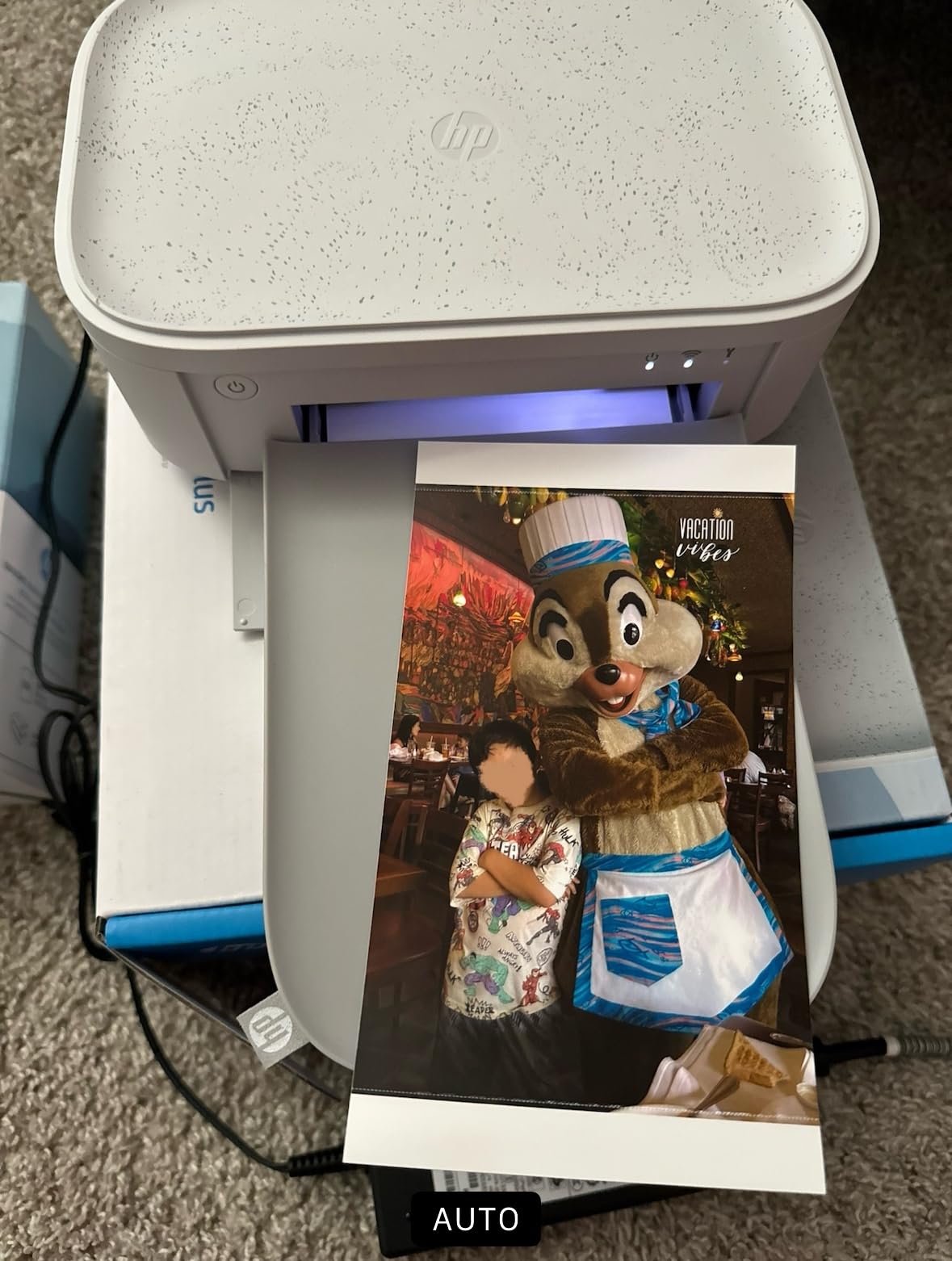
Physical size is genuinely compact for a 4×6 machine at 5.45 by 6 by 3.9 inches and three pounds. It reads as a home photo station you can put on a shelf rather than a printer you hide in a closet.
It is the least proven model in this roundup, with 806 ratings and a 4.0 average that leaves a 16 percent one-star share. The most common complaints are the 10-sheet paper capacity forcing constant refills, and proprietary cartridges that push the cost per print well above tank-based inkjets. There is no scanner or copier, so this is not a general-purpose machine.
Where it beats the Liene M100
Both are dye-sublimation 4×6 machines at a similar weight class. The Sprocket Studio Plus adds Wi-Fi and comes with ten sheets and a cartridge in the box, while the Liene M100 bundles 100 sheets, three cartridges and a built-in hotspot. Choose Sprocket if you want wireless convenience, and Liene if you want maximum paper in the box.
Sprocket also has the stronger layout tools for making collages and photo IDs, which is where its editing app earns its keep.
When to skip it
If you print in batches, a 10-sheet tray will frustrate you. If ink cost per print is the deciding factor, tank-based inkjets are far cheaper over a year. And if you need scanning or copying, this printer does not do either.
6. Canon MegaTank G3270 — Best for Square 3.5 and 5-Inch Prints on a Low Budget
Best for: Home users who print scrapbook-sized square layouts on real inkjet photo paper and want low ink cost without a dedicated photo printer.
Canon MegaTank G3270 All-in-One Wireless Color Printer
Four color MegaTank inkjet
Square 3.5 and 5 inch formats
4800x1200 dpi
USB and Wi-Fi
Pros
- MegaTank system includes about 2 years of ink
- Supports square 4x6 5x7 and 8x10 sizes
- Borderless printing
- Print copy and scan in one unit
Cons
- No automatic duplex
- Only 100 sheet paper capacity
- Four color set aimed at documents not photos
The G3270 is a general-purpose MegaTank all-in-one that handles photo paper as one of several jobs, and its selling point is the ink economics. A full set of bottles covers up to 6,000 black or 7,700 color pages, which is a lot of headroom for a household printing homework and photos together.
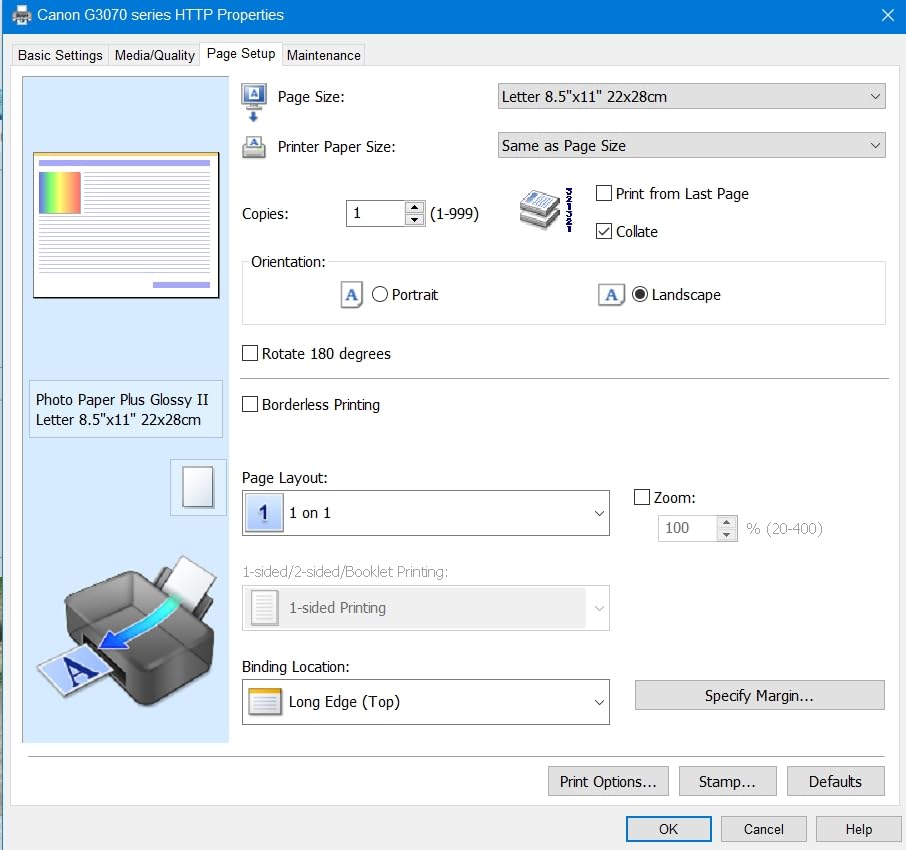
The paper size list is unusually good for scrapbookers. It accepts 3.5 by 3.5 inch and 5 by 5 inch square media alongside 4×6, 5×7, 7×10 and 8×10, plus borderless printing on all of them. Square formats are the thing most home inkjets drop, and they are the reason scrapbookers pick this model.
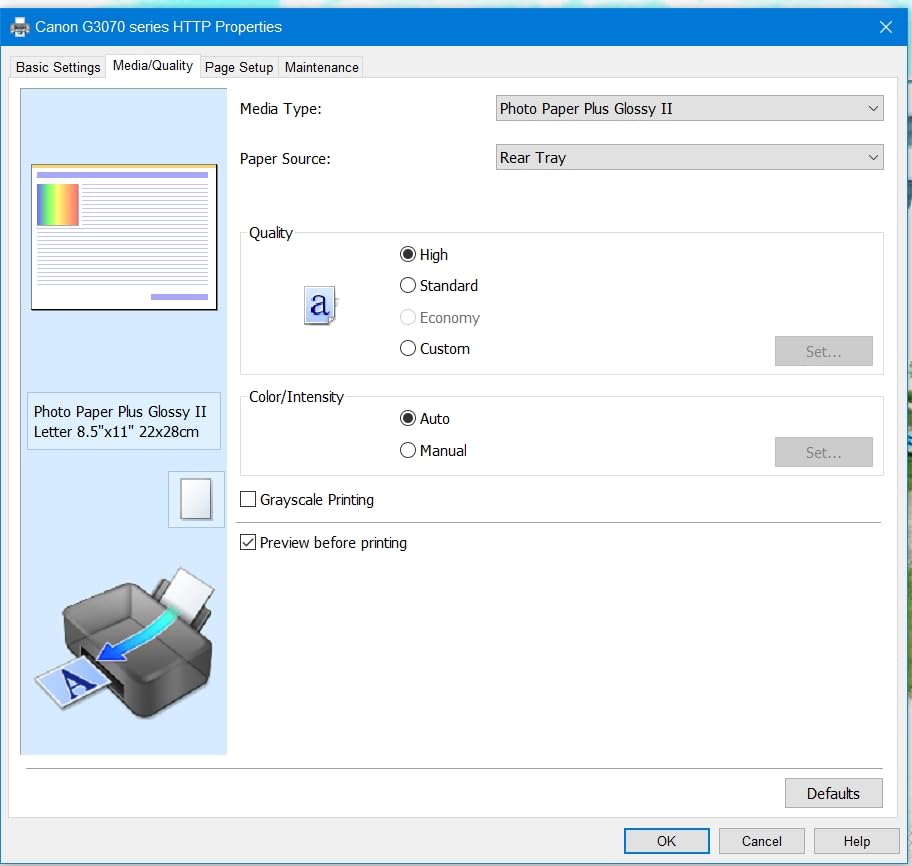
The 1.35 inch square LCD gives you ink status and basic navigation, and the flatbed scanner turns the machine into a copier for school paperwork. Automatic duplex is absent, so double-sided documents mean flipping the stack by hand, and the 100-sheet tray is modest.
Be realistic about photo quality. This is a four-color pigment-and-dye set tuned for general home documents. Prints on good photo paper look respectable and are dramatically cheaper than cartridge output, but this is not the machine that produces a print you hang in a gallery. Skin tones can look slightly flat next to a six-color dye system.
Best use: cheap prints, square formats, mixed household jobs
Pick this if you want a single machine for documents, scanning and photos, you print square scrapbook pages, and ink cost per print is your main concern. The MegaTank bottles change the economics of home photo printing more than any other single feature on this list.
It is also a reasonable low-cost first printer. If your photo volume grows and you outgrow the four colors, you can add a dedicated photo printer later without the machine being wasted.
When it falls short
No automatic duplex, a 100-sheet tray and a document-focused four-color set mean this is not the answer for color-critical work or for anyone framing large prints. Print speed is also modest at 6 pages per minute in color.
7. Canon PIXMA G620 — Best for Six-Color Dye Ink and Low Running Cost
Best for: Printers who want true six-color dye output including red and gray inks, and who value cost per photo more than print speed.
Canon PIXMA G620 Wireless MegaTank Photo All-in-One Printer [Print, Copy, Scan], Black,Works with Alexa
Six color dye ink
MegaTank tanks
4800x1200 dpi
Automatic duplex
Pros
- Six colors including red and gray widen the gamut
- Running cost of a couple of cents per 4x6 photo
- Up to 3800 4x6 prints per ink set
- CHROMALIFE 100 ink for longevity
Cons
- Slow at 3.9 pages per minute
- Lowest average rating here at 3.9
- Only 50 sheet paper capacity
- Older design without a large touchscreen
The G620 is the only model in this roundup with a six-color dye-based ink system that includes red and gray, and that is why its color is different from the four-color machines. Red and gray expand the gamut in skin tones and in natural greens, which is exactly where four-color inkjets run out of room. CHROMALIFE 100 ink adds a fade-resistant layer for prints you intend to keep.
The running cost figure is the headline of owner reviews here. A 4×6 color photo lands at a couple of cents on a full ink set, with a yield of up to 3,800 4×6 prints.
![Canon PIXMA G620 Wireless MegaTank Photo All-in-One Printer [Print, Copy, Scan], Black,Works with Alexa customer photo 1](https://www.raindropchess.com/wp-content/uploads/2026/07/B08XZQVWZW_customer_1.jpg)
Alexa integration is unusual for a photo printer. You can connect it for low-ink notifications and optional smart reorders with no subscription, which is a tidy way to handle the one thing MegaTank printers otherwise leave to you.
The compromises are real. Print speed is 3.9 pages per minute in both color and black and white, which is genuinely slow, and it is the lowest-rated model here at 3.9 with a 16 percent one-star share. Paper capacity is limited to 50 sheets, and the PIXMA G-series design is older, so there is no large color touchscreen for on-device editing.
![Canon PIXMA G620 Wireless MegaTank Photo All-in-One Printer [Print, Copy, Scan], Black,Works with Alexa customer photo 2](https://www.raindropchess.com/wp-content/uploads/2026/07/B08XZQVWZW_customer_2.jpg)
Why six colors beat four at the same price of ink
Four-color sets are built around cyan, magenta, yellow and black, so printing a warm skin tone means mixing magenta and yellow, and printers handle that mix inconsistently. Adding red and gray inks gives the machine direct, accurate ways to produce those colors rather than approximating them.
It also gives smoother gradients and less visible banding in skies and skin, which matters if you are printing portraits of people you actually know.
When to pass on it
Do not buy the G620 if speed matters. At 3.9 pages per minute, a batch of prints will take a while, and speed complaints are the most common thread in its reviews. If you want the same six-color dye idea with a wider maximum print size and a much larger review base, the EcoTank Photo ET-8550 covers it.
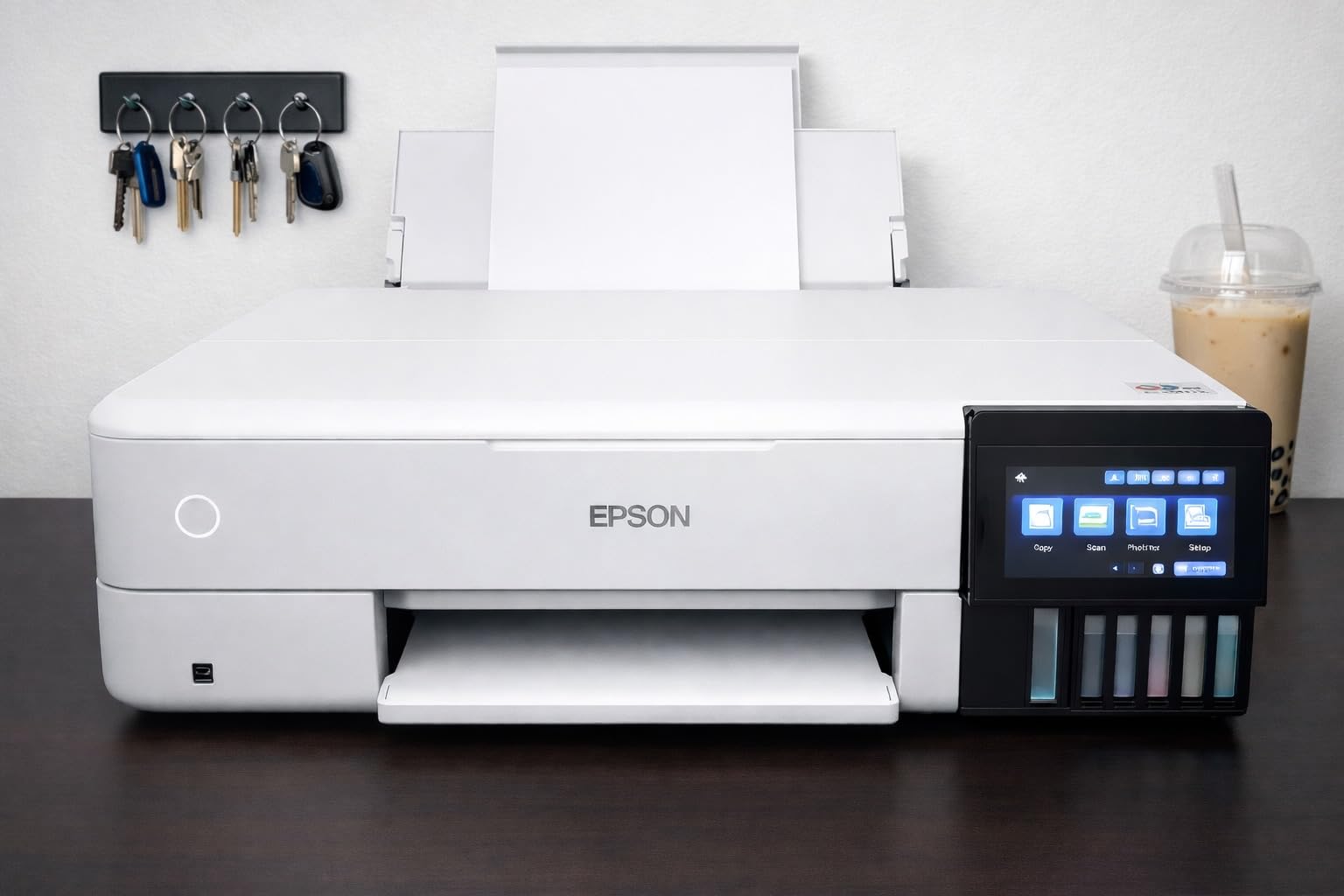
8. Epson EcoTank Photo ET-8550 — Best for 13×19 Prints and Scrapbooking
Best for: Hobbyist photographers and scrapbookers who print 13×19 art prints, need a built-in scanner, and print often enough for running cost to matter.
Epson EcoTank Photo ET-8550 Wireless Wide-Format All-in-One Tank Printer
Six color Claria ET Premium dye ink
13x19 inch maximum
1440 dpi
Built-in flatbed scanner
Pros
- Prints up to 13x19 with six color dye ink
- A few cents per 4x6 print versus 40 with cartridges
- Up to 2 years of ink in the box
- Scanner and large color touchscreen built in
Cons
- Heavy at 24.5 pounds
- Manual feed of thick media is finicky
- Auto tray selection sometimes picks the wrong source
- Ink drop and head clog reports
This is the printer to buy if your photos need to get bigger than 8×10. The ET-8550 handles 13×19 sheets, 11×17, 8×10, 5×7 and 4×6, with borderless capability on the photo sizes and Claria ET Premium six-color dye inks doing the work. For a scrapbooker building large square layouts, that maximum sheet size is the whole point.
The ink economics are dramatic. Refillable bottles bring the cost of a 4×6 print down to a few cents, against roughly 40 cents with sealed cartridges. A full replacement set covers up to 6,200 color pages, and there are no cartridges to throw away. Bottle sets print the same page counts as roughly 100 individual cartridges.
It is also a complete machine. The flatbed scanner and 2.5 inch color touchscreen sit in the same unit, and there is a dedicated 4×6 paper slot plus a rear sheet-feed for gloss and a lower tray for plain paper. Automatic duplex handles double-sided documents without manual flipping.
Physical reality matters here. At 24.5 pounds and roughly 29.8 by 20.6 by 16.9 inches, this needs a sturdy dedicated surface rather than a shelf above a desk. Paper handling is where the negative reviews concentrate: manual feed of thick media is finicky, print head alignment can be unreliable, and automatic tray selection sometimes grabs the wrong paper source and needs setting manually. Some owners also report ink drop issues and head clogging that require deep cleans.
Best use: gallery prints, scrapbook layouts and small print sales
Anyone framing prints or building large scrapbook pages will outgrow every other option here. The combination of 13×19 media, six-color dye ink and low per-print cost makes it viable to print quantities, which is why small print sellers gravitate to it.
The built-in scanner also makes it useful as a copier and film-scanner, so you do not need a second device for documents.
When it is too much machine
Do not buy it for occasional 4×6 snapshots. The size, weight and wide-format paper requirements are wasted on that, and infrequent use is exactly what causes head clogging. If your prints never exceed 8×10, the Canon MegaTank G3270 is a more sensible footprint.
9. Epson EcoTank ET-15000 — Best Wide-Format Option That Doubles as a Document Workhorse
Best for: Home offices and busy households that print 11×17 documents and photos together, and need a 250-sheet tray with an automatic document feeder.
Epson EcoTank ET-15000 Wireless All-in-One Wide-Format Supertank Printer
Four color EcoTank inkjet
11x17 inch maximum
4800x2400 dpi
Wi-Fi and Ethernet
Pros
- 250 sheet tray plus 50 sheet document feeder
- 11x17 printing at 4800x2400 dpi
- Cheap ink bottles keep cost per page low
- Auto duplex on letter paper
Cons
- Only four colors so photo quality trails the ET-8550
- Duplex limited to 8.5x11
- Sheetfed scanner with no flatbed
- Booklet printing needs layered PDF software
The ET-15000 is an office machine that happens to print photos, and that framing is accurate. A 250-sheet main tray, a 50-sheet automatic document feeder and 17 pages per minute in black mean it chews through school paperwork, invoices and forms without constant refilling. Wi-Fi reaches reliably across a home, and auto duplex handles letter-size double-sided jobs.
Ink economics stay competitive with tank systems rather than cartridges, with throughput of 17 ppm black and 9 ppm color. For a household that prints a hundred documents a month alongside occasional 8×10 photos, that balance is genuinely efficient.
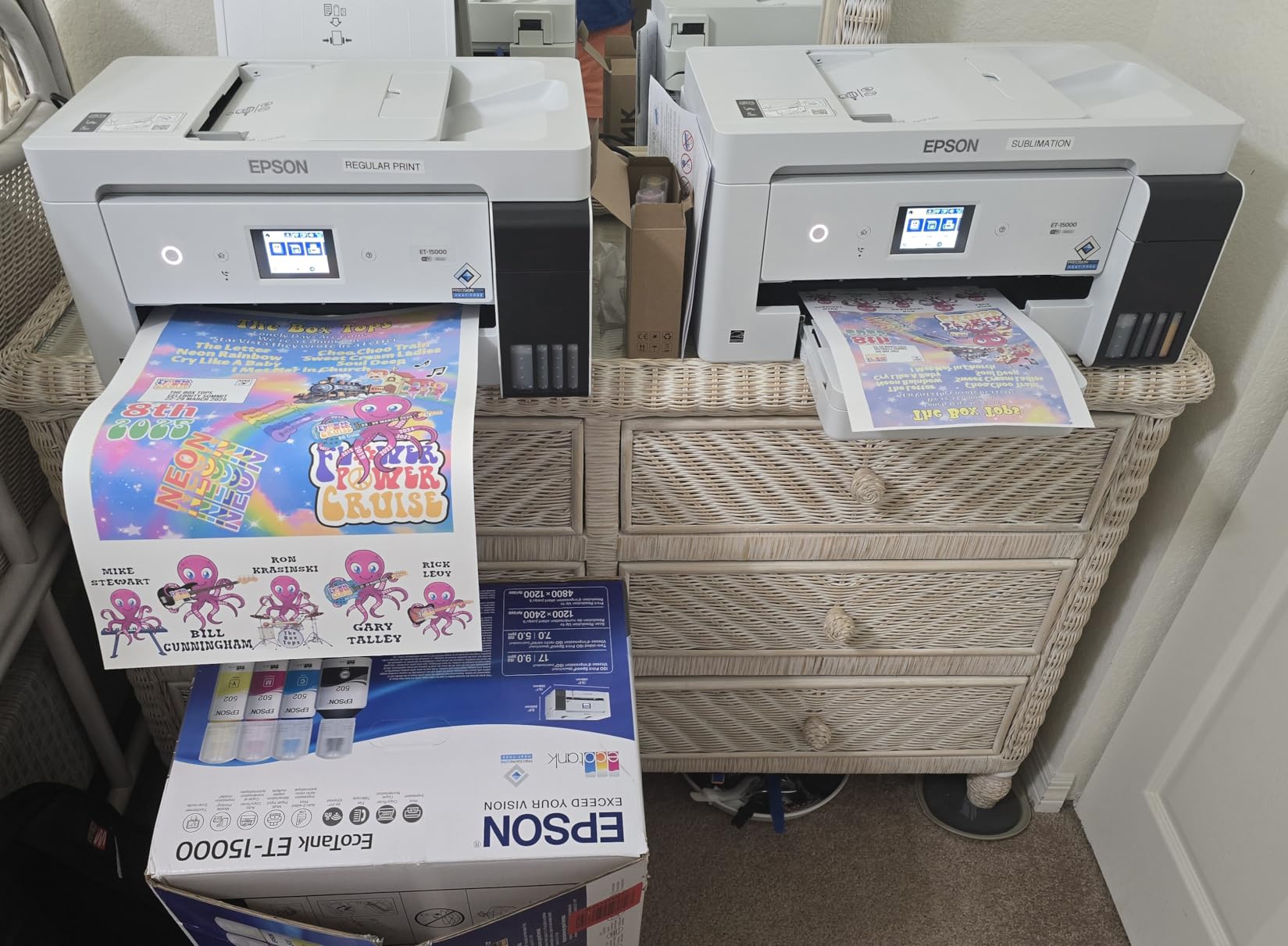
The important limitation is photo quality. Four colors means no red or gray ink, so color-critical prints trail the six-color EcoTank Photo ET-8550, and most owners pair this with a dedicated photo printer rather than relying on it for anything framed. Its listed media is plain paper, not photo paper, which tells you where it sits.
Auto duplex is limited to 8.5×11 inch paper, so larger sheets need manual flipping. The scanner is sheetfed only, with no flatbed for photos or artwork. Booklet and pamphlet printing requires working through layered PDF software and the Epson driver rather than a simple checkbox.
Best use: high-volume home office with occasional photos
Choose this when documents dominate your printing and photo output is a bonus rather than the point. The tray capacity and document feeder remove the most annoying part of home printing, which is refilling paper mid-job.
It also suits anyone already invested in the Epson ink bottle ecosystem, since the bottles are cheap and widely available.
When to skip it
If photography is your actual reason for buying, this is not it. You would be paying for a 250-sheet tray and a document feeder you do not need, on a printer whose ink set cannot deliver six-color photo quality. Save your money for a dedicated photo machine.
10. HP Envy Photo 7975 — Best All-in-One for Households That Print Everything
Best for: Families who want one machine for homework, documents and photos, and who prefer a touchscreen and cartridge convenience over lowest ink cost.
HP Envy Photo 7975 Wireless Color Inkjet Photo Printer, Print, scan, Copy, Easy Setup, Mobile Printing, Best-for-Home, 3 Month Instant Ink Trial Included, AI-Enabled (B63K3A)
Four color inkjet
Letter size borderless photos
4800x1200 optimized dpi
2.7 inch touchscreen
Pros
- Dedicated photo tray with borderless printing
- Auto duplex plus 35 sheet document feeder
- Large 2.7 inch color touchscreen
- HP AI formatting cleans up web pages
Cons
- HP 64 cartridges cost more per page than tanks
- Smallest review base at 514 ratings
- Limited borderless sizes beyond standard photo paper
Most home photo printer questions are really document questions in disguise, and this is the machine that answers both. The Envy Photo 7975 prints, copies, scans, does automatic two-sided printing and has a 35-sheet automatic document feeder, with a separate photo tray for borderless prints and a 2.7 inch color touchscreen for setup and navigation.
Setup is the easiest in this roundup. HP’s AI formatting strips web banners, cookie notices and email headers so a page prints the way it looked on screen rather than the way the web page was built. Speeds of up to 15 ppm black and 10 ppm color with a 125-sheet capacity keep it moving.
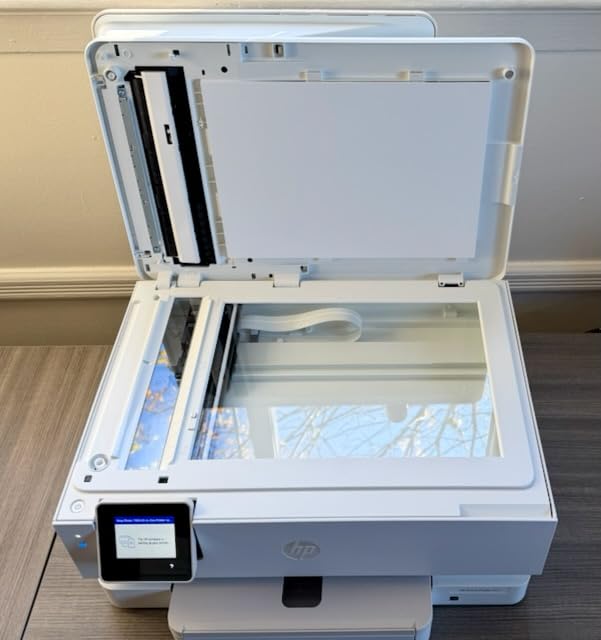
The honest catch is ink cost. HP 64 cartridges work out to more per page than any tank-based printer here, and that gap widens if you print a lot of photos. It also has the smallest owner base in this roundup at 514 ratings, so there is less long-term reliability data than the Canon and Epson models carry.
On size formats, this is a letter-size printer. It handles standard photo paper through the photo tray, but it is not built for 8×10 borderless output or anything larger, and its four-color set is document-focused.
Best use: one printer for the whole household
If your printing is homework, recipes, scanned receipts and the occasional family photo, this is the sensible single device. The touchscreen means nobody needs a phone app or a computer to change settings.
For people who print rarely, cartridges are not actually a bad thing. You are not paying to maintain tanks that sit unused, and a cartridge that dries out costs you one cartridge rather than a whole set.
When it is the wrong choice
Buy a tank-based model instead if you print photos regularly, because the per-page ink difference compounds quickly. And if you want framed prints or scrapbook formats, look to a Canon MegaTank or the EcoTank Photo ET-8550, which accept larger photo media this machine does not.
How to Choose a Photo Printer for Home Use
Decide the print size first. Nothing else matters as much. If every print is 2×3 inches for a scrapbook, the Canon Ivy 2 Mini and KODAK Step are the entire decision. If prints are 4×6 snapshots, you want a dye-sublimation machine like the Dock Plus or the Sprocket Studio Plus. Anything you plan to frame needs 8×10 at minimum, and gallery prints mean 13×19, which narrows the field to the EcoTank Photo ET-8550.
Pick your technology. Dye sublimation lays three color layers plus a clear overcoat on the paper, which is why those prints are waterproof, smudge-proof and dry instantly with no ink to dry. ZINK embeds dye crystals in the paper itself and needs no ink at all, which makes it durable but limits size and tonal range. Inkjet sprays microscopic droplets and is the only technology that gives you large formats, multiple specialty inks and archival pigment options. Laser is not a photo option.
Count the inks. Four colors is fine for documents and casual snapshots. Six colors, usually adding gray or red, produce measurably better skin tones, smoother gradients in skies and less banding. The Canon PIXMA G620 and the Epson EcoTank Photo ET-8550 both use six-color systems for that reason.
Choose tanks or cartridges by volume. Refillable tanks and MegaTank bottles cost a fraction per page and remove cartridge waste, but they require consistent use. Cartridges are better if you print in bursts with long idle gaps, since they are cheap individually and a neglected tank can dry out.
Spend carefully on paper. The premium a good glossy or luster sheet costs over plain inkjet paper is smaller than the disappointment from printing photos on standard office paper. Matte and luster surfaces hide fingerprints better than high-gloss. Use the manufacturer’s ICC profiles if you care about matching your monitor.
If your household prints documents more than photos, compare the all-in-one options in our home office printer roundup before committing to a photo-focused machine.
Is a Home Photo Printer Worth It? The Honest Math
A dedicated photo printer rarely saves money in year one. Print services and retail labs have ink and paper costs baked into a rate that already reflects high volume purchasing. Refillable tank machines can genuinely land lower per print, but on cartridge-based hardware you will almost certainly spend more. This is the point most competitor roundups skip, and it changes the recommendation for anyone printing a handful of photos a month.
Where home printing clearly wins. Convenience is the real return. A print exists the moment you want it, in the size you want, without a shipping wait. Formats like 3.5 inch and 5 inch square media, sticky-back ZINK prints and 13×19 borders are either impossible or expensive through a lab. Scrapbookers, memory-book makers and event photographers get capabilities no print service offers.
Watch the starter cartridge trap. Most inkjet printers arrive with partially filled setup cartridges rather than full ones, which is why low-ink warnings show up after a handful of prints and why first-year cost runs higher than the headline figure suggests. Refillable tank machines sidestep this entirely because the bottles in the box are full. It is the single biggest hidden cost difference in this roundup.
Infrequent use is what kills these printers. Print heads clog when a machine sits unused for weeks, and the fix is a maintenance cycle every couple of weeks whether you are printing or not. Forum discussions on printing and photography consistently identify infrequent use as the main reason home photo printers get abandoned. If you will print once a quarter, buy a 4×6 dye-sublimation printer instead. There is nothing to clog.
Who should not buy a dedicated photo printer. If you print under 50 photos a year and do not care about size or format, a print service will be cheaper and produce better results with no maintenance. Large photo inkjets also weigh 24 to 27 pounds and need dedicated surface space, which matters in a small apartment. Measure the footprint before you order.
Frequently Asked Questions
Which type of printer is best for printing photos?
For 4×6 prints, a dye sublimation printer such as the KODAK Dock Plus gives laminated, waterproof, smudge-proof output with zero ink maintenance. For prints larger than 8×10 that you intend to frame, a six-color inkjet such as the Epson EcoTank Photo ET-8550 is the better choice. ZINK models like the Canon Ivy 2 Mini are for 2×3 craft and scrapbook prints only.
What is the best quality photo printer for home use?
Quality at home comes from six or more ink colors combined with good photo paper. The Epson EcoTank Photo ET-8550 and the Canon PIXMA G620 both use six-color dye systems that widen the gamut in skin tones and smooth gradients. Dye sublimation 4×6 machines match them for small prints and add a protective overcoat.
Is it worth having your own photo printer?
Rarely on price alone. A print service is usually cheaper for low volume, and ink plus paper will not always beat a lab rate. Home printing wins on convenience, on-demand availability, unusual formats like 3.5 inch square and sticky-back media, and on large sizes such as 13×19. If you print rarely, a print service is the better deal.
Which photo printer is the best value for money?
Among 4×6 dye sublimation printers the Liene M100 offers the most complete package, bundling 100 sheets of photo paper and three color cartridges with a built-in hotspot that needs no network setup. Among inkjets, the Canon MegaTank G3270 delivers refillable ink economics and square photo formats on a modest footprint.
Are EcoTank printers good for photos?
Yes, particularly for high-volume printing. Refillable bottles cut the cost of a 4×6 print to a few cents against roughly 40 cents with sealed cartridges. Quality depends on the ink count, so choose a six-color model like the EcoTank Photo ET-8550 for color-critical work rather than a four-color model built for documents.
How long do printers typically last?
Longevity depends far more on usage pattern than on brand. Printers used weekly with regular maintenance cycles tend to last many years, while machines left idle for months are more likely to develop clogged heads or failed ink paths. Cartridge printers are generally lower risk for occasional use, and tank-based printers suit regular high-volume printing.
Conclusion
The KODAK Dock Plus is our pick for the best photo printers for home use because it delivers clean, laminated 4×6 prints with nothing to maintain, which is the combination most households actually need. Go bigger with the Epson EcoTank Photo ET-8550 for 13×19 output, cheaper with the Canon MegaTank G3270, and smaller with the Canon Ivy 2 Mini for scrapbook crafts. Match the printer to your print size and volume, and print something this week.