
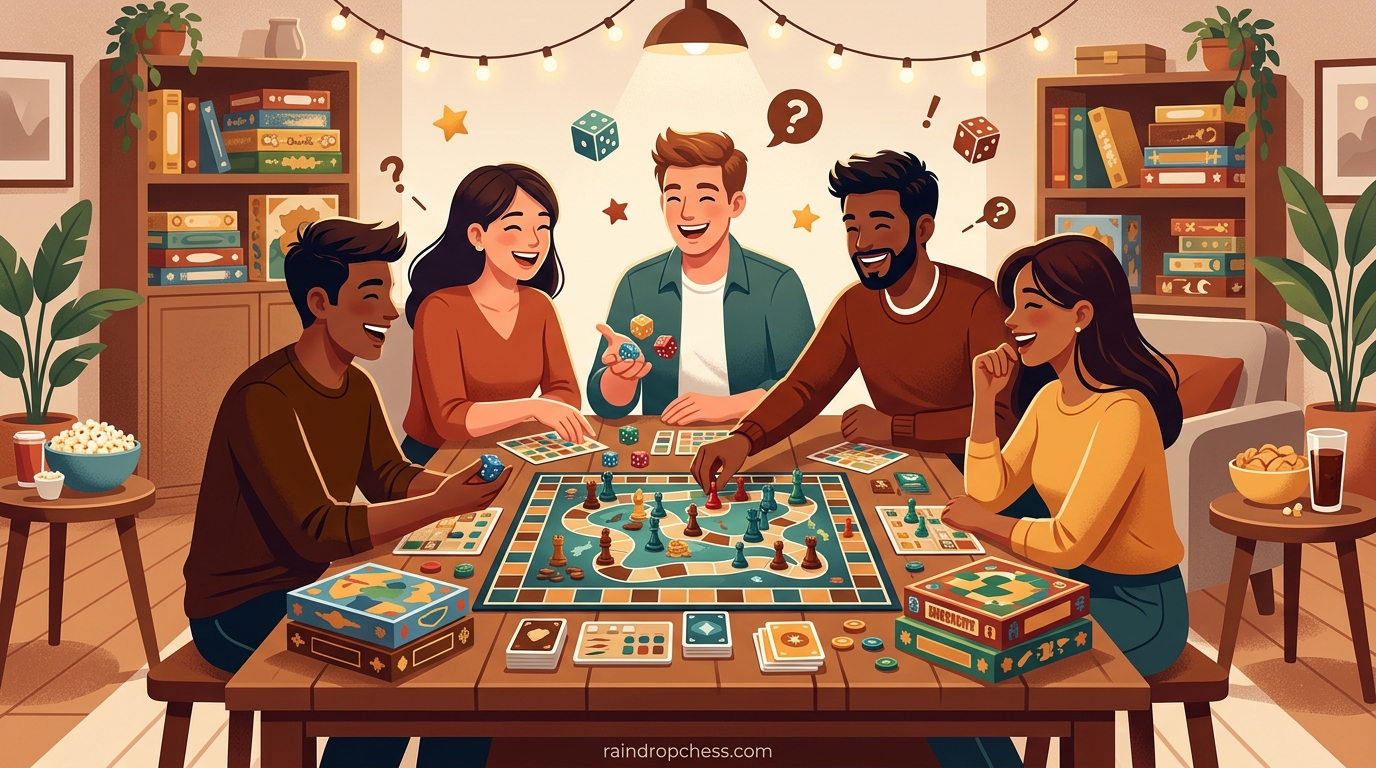
Game night should be the highlight of your week, not a stressful planning session where you wonder if everyone will actually have fun. I have hosted dozens of game nights over the years, and the single biggest factor in whether the evening is a hit or a dud comes down to one thing: picking the right board games for the group.
Finding the best board games for game night parties means looking for games that are easy to teach, accommodate your group size, and keep everyone laughing and engaged from start to finish. The best party games for adults share a few traits in common: quick setup, short rounds, flexible player counts, and near-zero learning curves so nobody feels left out.
Our team tested and compared 12 of the most popular party board games available in 2026, ranging from fast-paced social deduction titles to creative word association games and laugh-out-loud card games. Whether you are hosting six friends for a casual Friday night or planning a big holiday gathering with 12 people, this guide has a game that fits. I will walk you through each one with honest, firsthand impressions so you can pick the perfect match for your next game night.
Table of Contents
Top 3 Picks for Best Board Games for Game Night Parties
Best Board Games for Game Night Parties in 2026
| Product | Specifications | Action |
|---|---|---|
 Secret Hitler Secret Hitler |
|
Check Latest Price |
 Codenames 2nd Edition Codenames 2nd Edition |
|
Check Latest Price |
 Taco Cat Goat Cheese Pizza Taco Cat Goat Cheese Pizza |
|
Check Latest Price |
 One Night Ultimate Werewolf One Night Ultimate Werewolf |
|
Check Latest Price |
 Wavelength Wavelength |
|
Check Latest Price |
 The Chameleon The Chameleon |
|
Check Latest Price |
 Just One Just One |
|
Check Latest Price |
 Monikers Monikers |
|
Check Latest Price |
 Blank Slate Blank Slate |
|
Check Latest Price |
 Hues and Cues Hues and Cues |
|
Check Latest Price |
 Tapple Tapple |
|
Check Latest Price |
 A Fake Artist Goes to New York A Fake Artist Goes to New York |
|
Check Latest Price |
1. Secret Hitler – The Ultimate Social Deduction Showdown
Pros
- Creates genuine tension and paranoia
- Beautiful wooden components and foil boards
- Extremely replayable
- Free companion app for narration
Cons
- Theme may not suit all groups
- Best with 7+ players
I brought Secret Hitler to a game night with eight friends, and it completely took over the evening. We played four rounds back-to-back because nobody wanted to stop. The game splits players into liberals and fascists, with one fascist secretly acting as Hitler. The liberals need to pass five liberal policies to win, while the fascists try to sneak through six fascist policies or get Hitler elected chancellor.
What makes this game special is how it turns every conversation at the table into a suspect interrogation. You start doubting people you have known for years. The voting mechanism means everyone has to publicly commit to choices, which creates these incredible moments where someone’s body language betrays their role. I have seen friendships playfully tested in the best way possible.
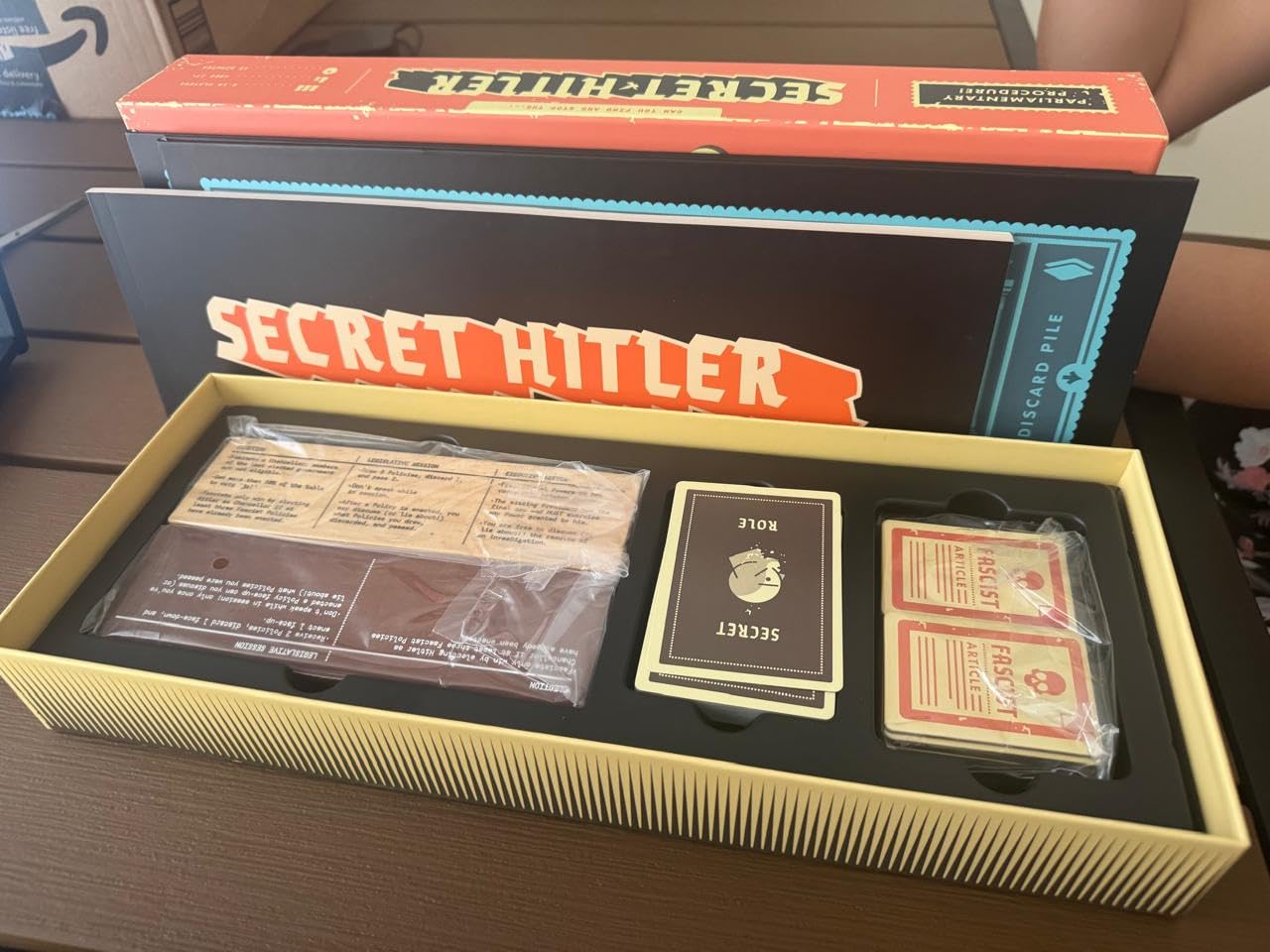
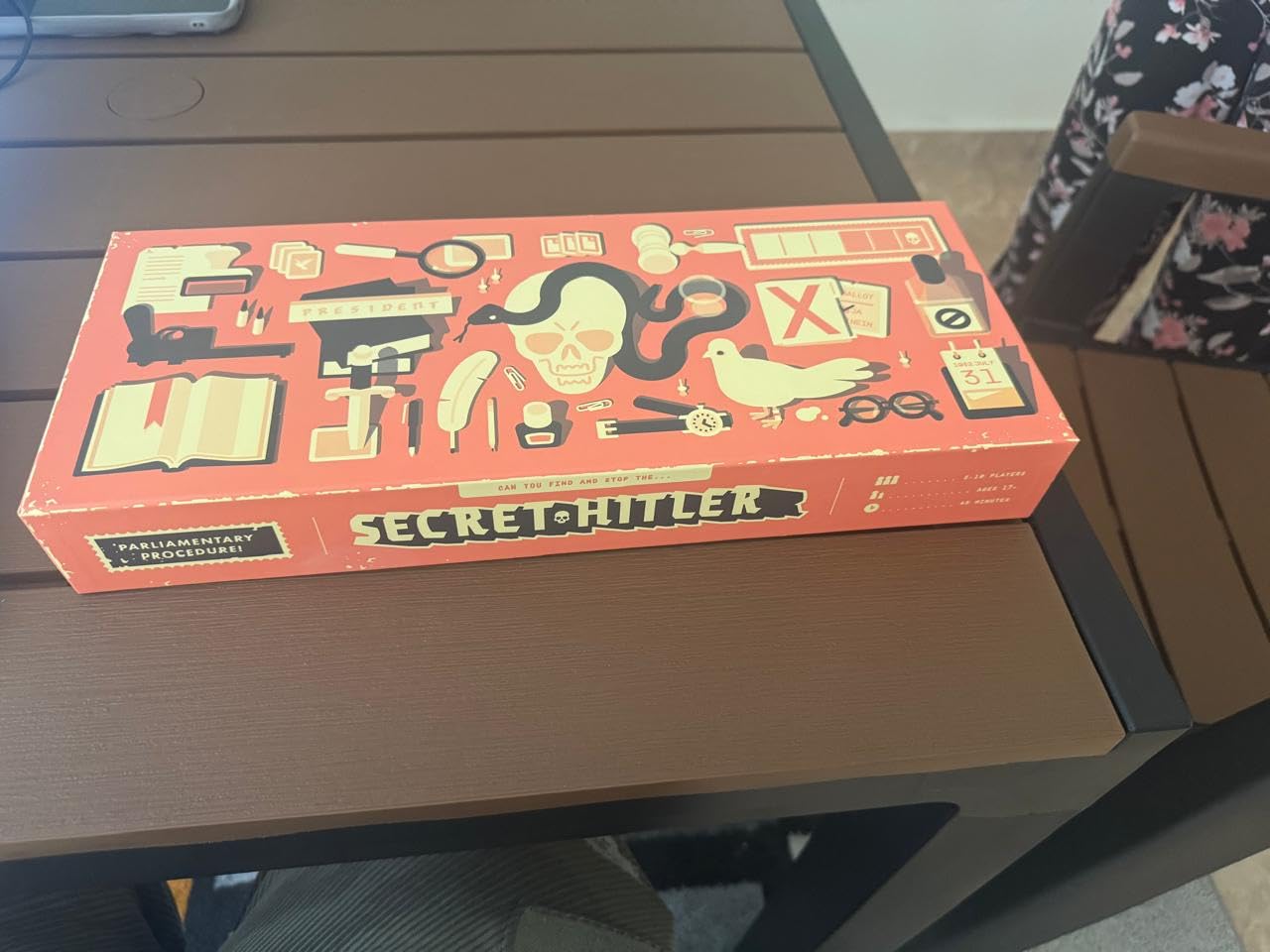
The production quality is outstanding. The wooden boards have a satisfying heft, the foil inlay looks gorgeous, and the secret envelopes feel appropriately dramatic when you are passing them around. Everything about the physical game communicates quality. The companion app adds narration that really amps up the atmosphere, though it is not required to play.
My main caution is that this game truly shines with seven or more players. With five or six, the dynamics are less interesting because there are fewer people to suspect. Also, the historical theme involving fascism and Hitler is deliberately provocative. Most groups handle it fine because it is clearly satirical, but it is worth knowing your audience before bringing it out.
What player count works best
Secret Hitler peaks at seven to nine players. At that range, there are enough hidden fascists to create real confusion, and the table dynamics get deliciously complicated. With fewer than seven, it becomes easier to deduce roles, which reduces the tension that makes the game great.
I would rank it as one of the best board games for game night parties specifically because it works so well with larger groups where many party games start to struggle. If you regularly host groups of seven or more, this should be in your collection.
How it compares to other social deduction games
Unlike One Night Ultimate Werewolf, which resolves in ten minutes, Secret Hitler builds tension over 30 to 45 minutes of careful political maneuvering. The policy-passing mechanic gives the game a strategic backbone that pure voting games lack. You are not just guessing who is lying; you are tracking a chain of decisions that reveals information over time.
It is more accessible than games like Blood on the Clocktower, which requires a dedicated storyteller and takes much longer to set up. Secret Hits hits the sweet spot of depth and accessibility for a party setting.
2. Codenames 2nd Edition – The Word Association Classic
CGE Codenames Board Game (2nd Edition)
4-8+ Players
15-30 Min Playtime
Ages 14+
400 Codenames
Pros
- Two teams compete with creative clues
- Excellent replay value with 400 words
- Quick to learn
- Strategic but accessible
Cons
- Spymaster downtime while thinking
- Requires at least 4 players
Codenames has been a staple at my game nights for years, and the second edition brings refreshed artwork and revised words that keep the experience feeling current. The concept is brilliantly simple: two rival spymasters know the secret identities of 25 agents displayed on the table, and they each give their team one-word clues to help them find their agents while avoiding the other team’s agents and the game-ending assassin tile.
What I love most about Codenames is how it rewards creative thinking without requiring any special knowledge. I have played with engineers, artists, teachers, and teenagers, and everyone brings a different association style. One person’s clue of “weather” for storm and cloud might seem obvious to them but baffling to their team. Those mismatches create the best moments of the game.
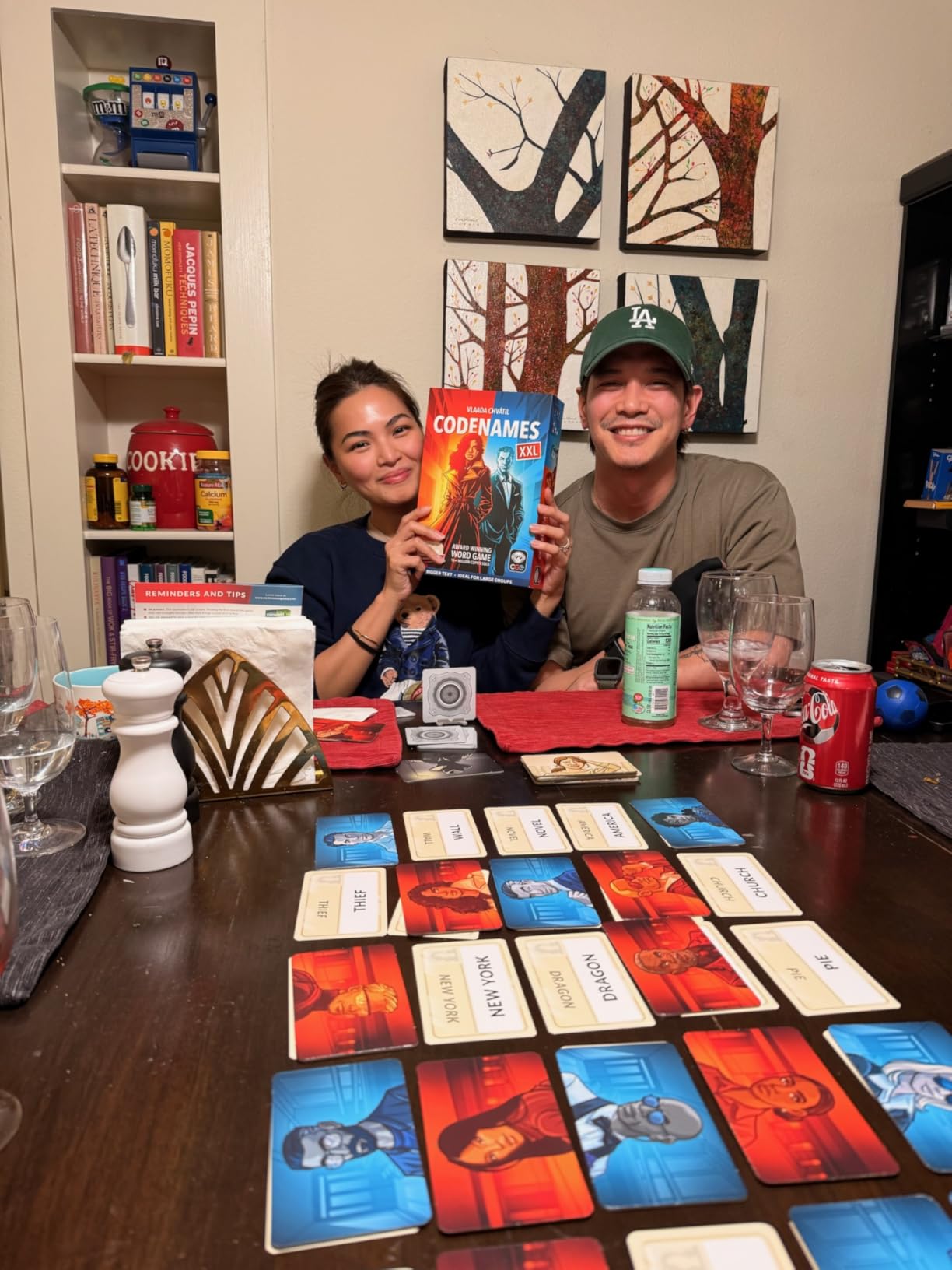
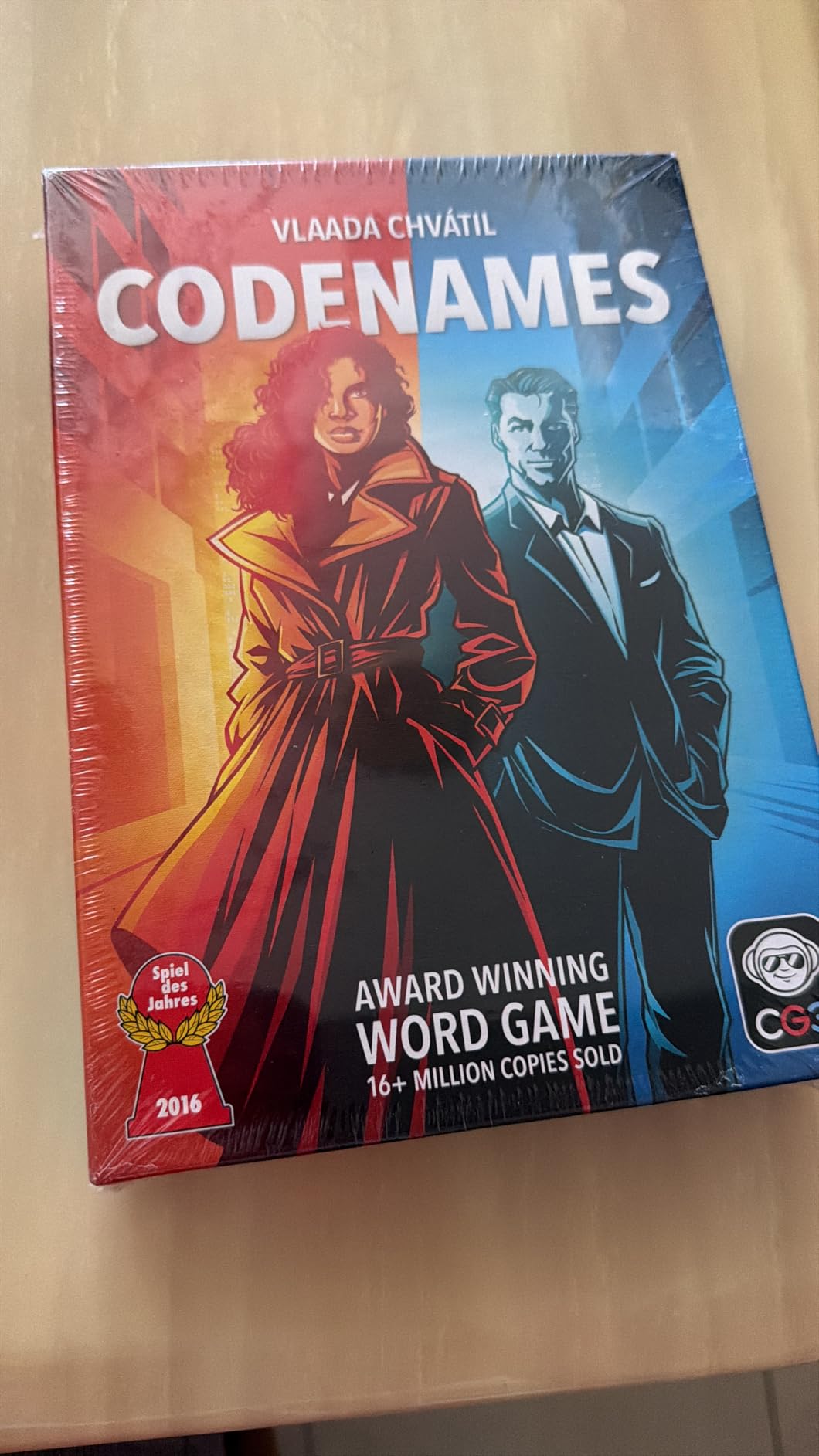
The second edition includes 400 codenames across 200 cards, which gives you a staggering number of unique combinations. I have played dozens of times and never felt like I was repeating the same game. The rulebook is clear and concise, and most groups can be playing within five minutes of opening the box.
The main downside is that being the spymaster can feel slow when you are staring at the grid trying to connect three unrelated words with a single clue. With the right group, though, even the other team’s downtime is entertaining because you get to watch them debate your clues in real time.
Team size and group dynamics
Codenames works best with six or more players, split into two teams of two to four. With four players total, it is functional but less exciting because each team only has one guesser. The sweet spot is six to eight, where teams can debate clues together and the energy stays high.
For larger gatherings, you can have people rotate in as spymasters between rounds. The game handles big groups well because non-active players can kibitz and enjoy the show without needing to be deeply involved every second.
Why the second edition matters
The revised word list in the second edition replaces some outdated and potentially confusing terms from the original. The artwork on the cards is cleaner and easier to read from across a table. If you already own the first edition, the upgrade is nice but not essential. If you are buying for the first time, definitely get the second edition for the improved experience.
Codenames earns its place as one of the best party board games because it works for nearly every group. It is competitive without being aggressive, strategic without being complex, and social without forcing uncomfortable interactions.
3. Taco Cat Goat Cheese Pizza – The Ultimate Party Icebreaker
Taco Cat Goat Cheese Pizza Card Game by Taco Cat Games, Age 7+, 2-8 Players
2-8 Players
10-15 Min Playtime
Ages 8+
Ultra-Portable
Pros
- Under $10 with 53K+ reviews
- Teaches in under a minute
- Portable pocket-sized box
- Great for all ages
Cons
- Cards are thinner quality
- Can get loud and chaotic
- Hands may get sore
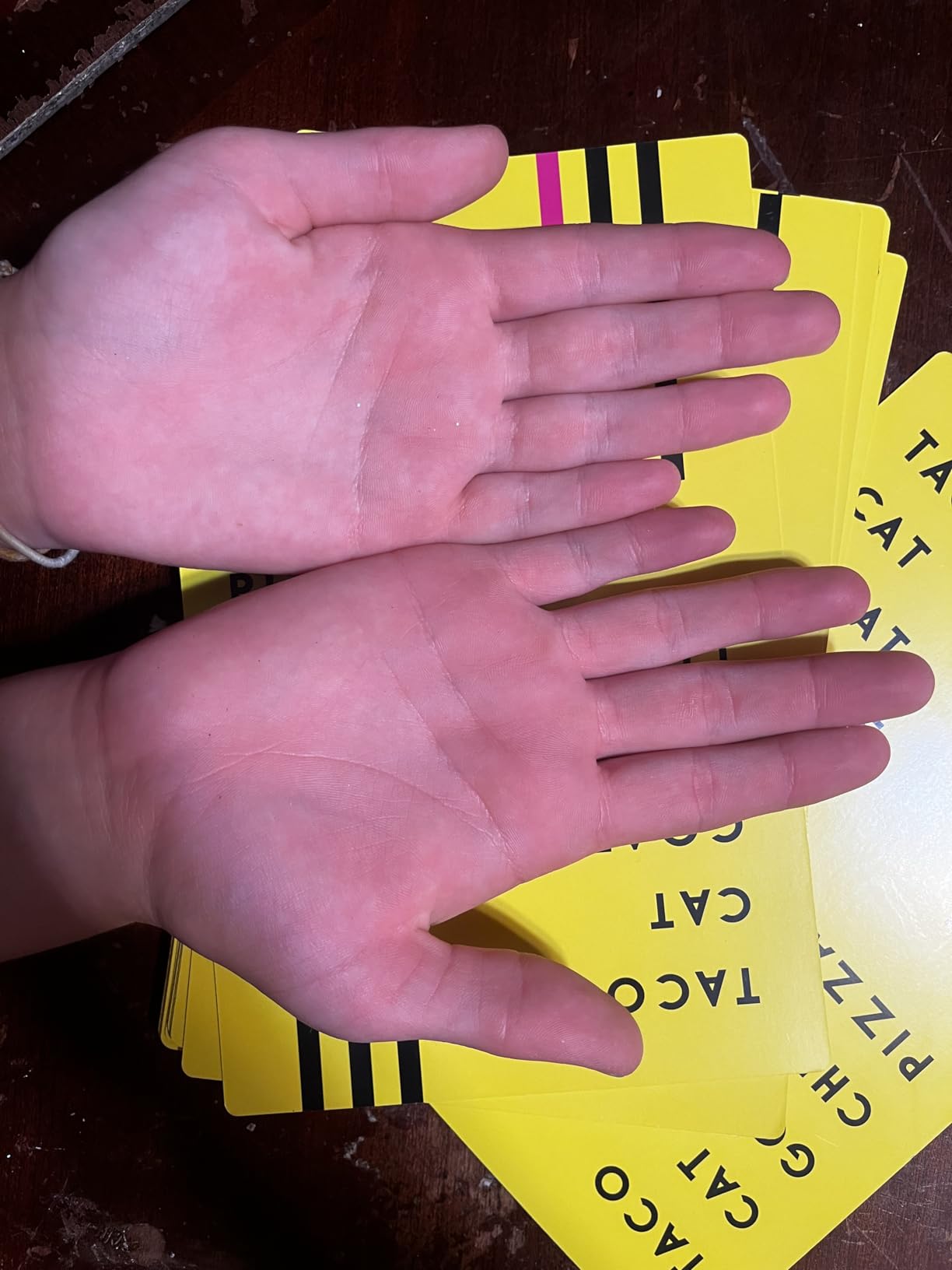
Taco Cat Goat Cheese Pizza is the game I reach for when I need to warm up a crowd fast. The rules take literally 30 seconds to explain: everyone takes turns flipping cards while saying “taco,” “cat,” “goat,” “cheese,” “pizza” in order. When the spoken word matches the card, everyone races to slap the pile. Last one to slap takes the cards, and the first person to get rid of all their cards wins.
It sounds too simple to be fun, but I have never seen this game fail to get people laughing. The combination of chanting nonsense words and then suddenly having to react creates these hilarious moments where people slap when they should not, or hesitate when they should. It is pure reflex chaos in the best way.
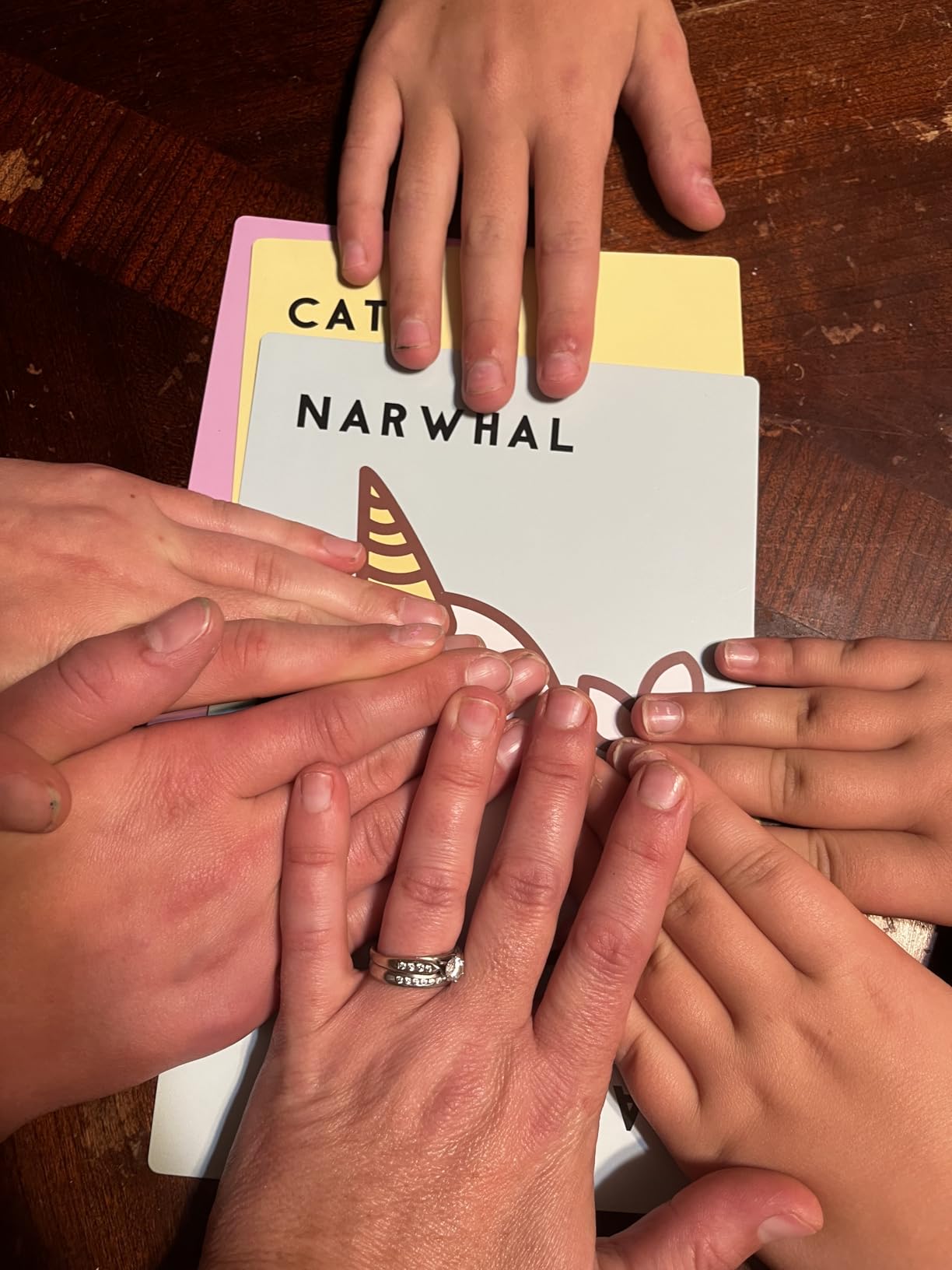
At under ten dollars, this is one of the best values in board gaming. Over 53,000 Amazon reviewers agree, giving it a 4.8-star rating. The tiny box fits in a jacket pocket, making it perfect for bringing to parties, camping trips, or vacations. I keep a copy in my bag at all times.
The main thing to know is that this game gets physical and loud. If you are looking for a quiet, thoughtful experience, this is not it. People will slap the table, shout, and generally cause a scene. For some groups, that is exactly the energy a game night needs.
Age range and family friendliness
One of the best things about Taco Cat Goat Cheese Pizza is that it genuinely works for ages five and up. Kids can compete with adults on equal footing because the game is about reflexes, not knowledge or strategy. This makes it a fantastic choice for mixed-age family gatherings where you need something everyone can play together.
For adult-only game nights, it serves as a perfect opener or palate cleanser between heavier games. Two or three rounds take about 15 minutes and get everyone energized for whatever comes next.
Durability and components
The cards are thinner than standard playing cards, which is the most common complaint. After many sessions of aggressive slapping, the cards do show wear. At this price point, though, replacing a copy every year or two is completely reasonable. Some groups play on a towel or mouse pad to soften the slapping surface and protect both cards and hands.
Despite the thin cards, the game delivers incredible value. It is the best board game for game night parties when you need something cheap, quick, and universally fun.
4. One Night Ultimate Werewolf – Quick Deception in 10 Minutes
Bezier Games One Night Ultimate Werewolf Fast-Paced Bluffing Party Game
3-10 Players
10 Min Playtime
Ages 8+
Companion App
Pros
- Quick 10-minute rounds
- No elimination mechanic
- Free narration app
- Highly expandable
Cons
- Cards prone to scuffing
- Needs 4+ players for best experience
- Requires comfort with lying
One Night Ultimate Werewolf solves the biggest problem with classic werewolf games: nobody likes sitting out after getting eliminated in the first five minutes. In this version, everyone plays every round, and the entire game resolves in about ten minutes. Each player gets a hidden role, performs a special night action, and then the group has five minutes to debate who the werewolves are before voting.
I have used the free companion app for narration during the night phase, and it makes the experience so much smoother than having a moderator. The app walks everyone through their actions with atmospheric sound effects. It handles timing too, so you never have arguments about whether someone took too long.
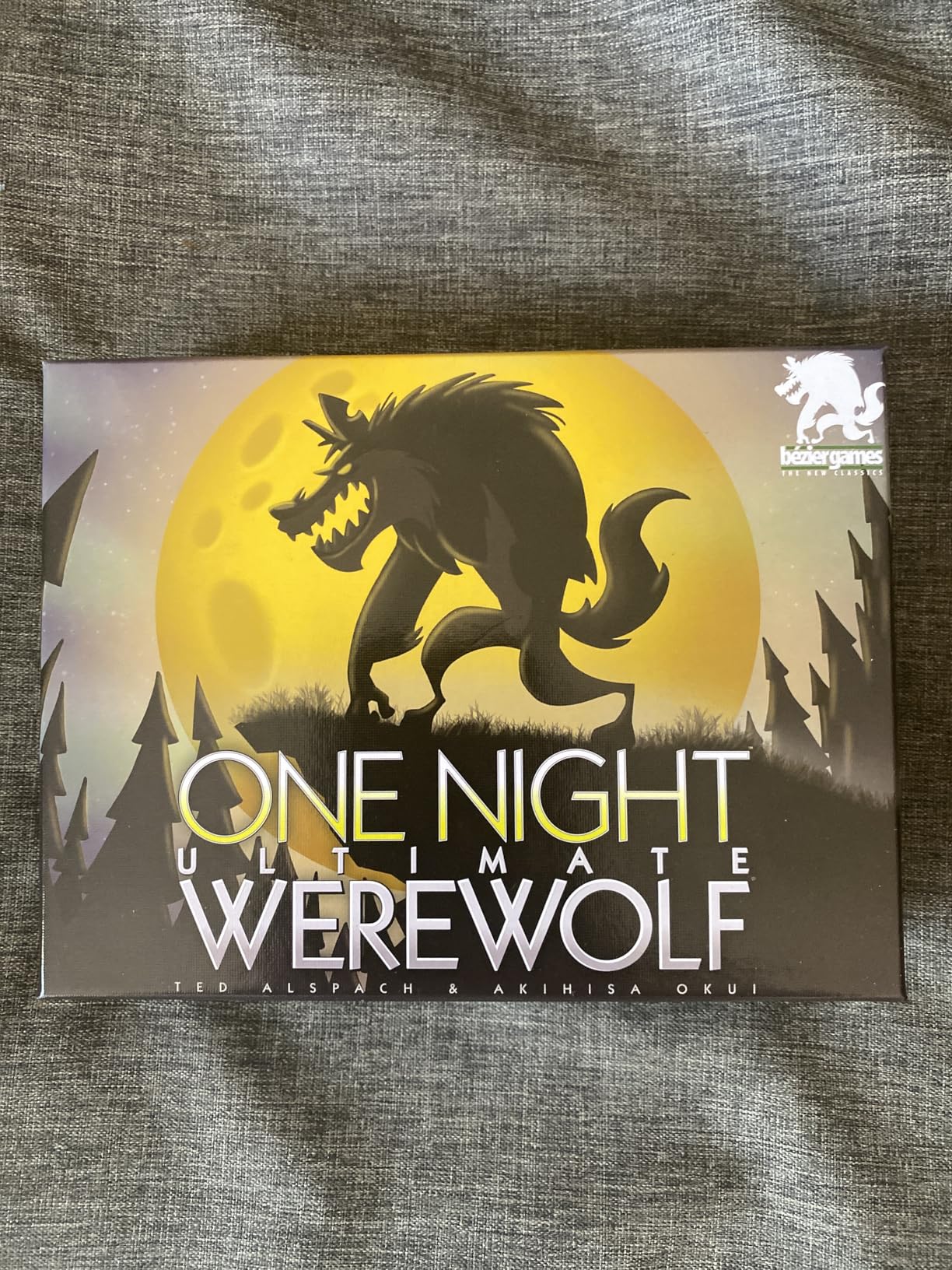
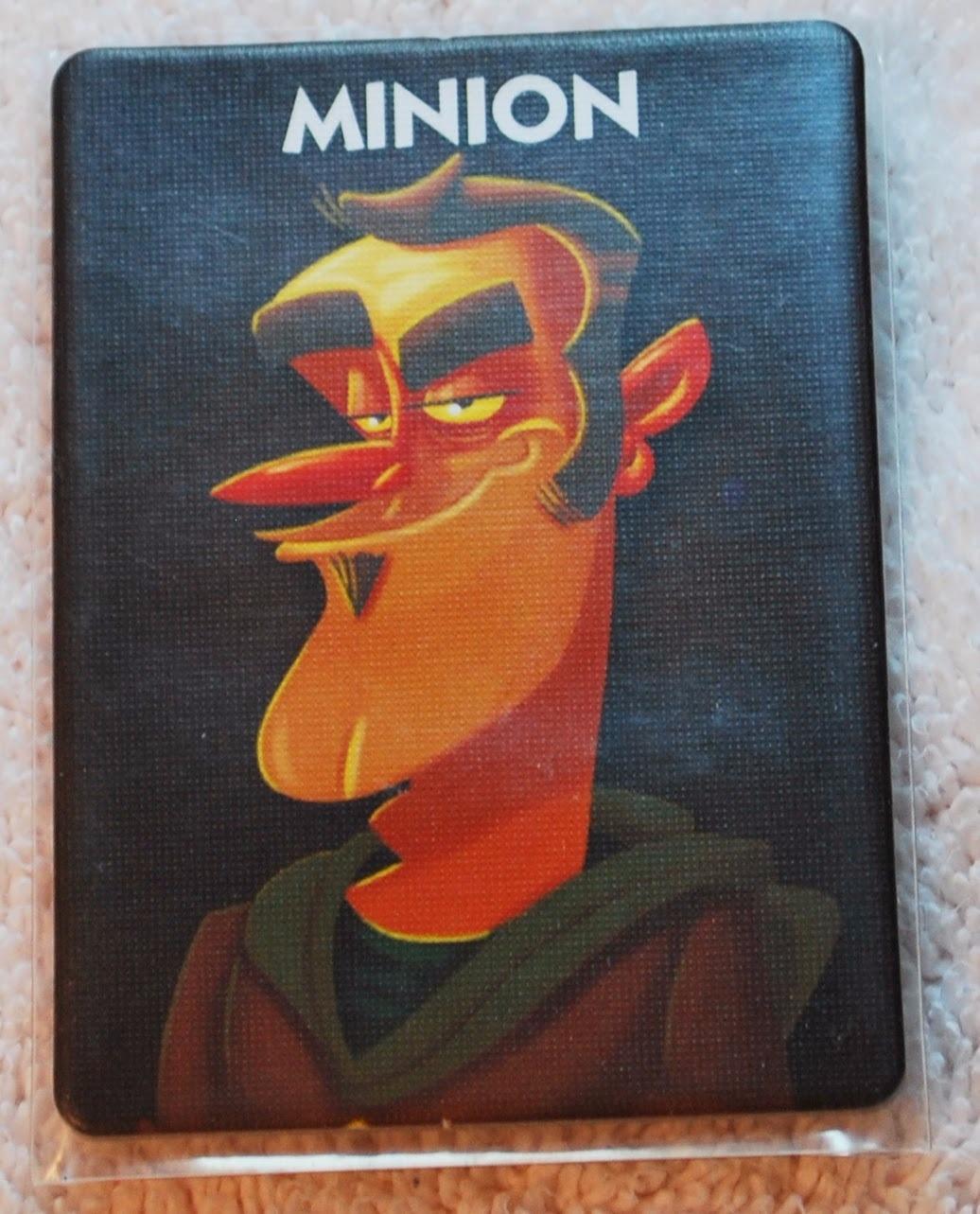
The role variety is where this game shines. With characters like the Seer, Troublemaker, Robber, and Insomniac, the information landscape shifts every game. The Troublemaker can swap two players’ roles without them knowing, which means someone might think they are a villager but actually became a werewolf during the night. Those twists keep the game fresh even after dozens of plays.
The game handles three to ten players, but I find the sweet spot is five to eight. With three or four, there is not enough confusion to make the deduction interesting. The box is incredibly compact too, making it easy to toss in a bag for any social gathering.
Expansion potential
One Night Ultimate Werewolf has three expansions: Daybreak, Vampire, and Alien. Each adds new roles and mechanics that mix seamlessly with the base game. Daybreak is my favorite because it adds roles that create even more chaos during the night phase. You do not need any expansion to have a great time, but they significantly extend the game’s replayability if your group falls in love with it.
The expandability makes this one of the best board games for game night parties because you can adjust the complexity based on your group’s experience level.
Who should avoid this game
This game requires everyone to lie convincingly, and some people genuinely dislike that kind of social pressure. If your group includes people who feel uncomfortable with deception mechanics, consider Just One or Codenames instead. Also, the card stock is not the most durable, so you may want to sleeve them if you play frequently.
For groups that enjoy social deduction and want quick rounds that keep everyone engaged, One Night Ultimate Werewolf is hard to beat.
5. Wavelength – The Mind-Reading Party Game
CMYK Wavelength – A Mind Reading Party Game
2-12+ Players
30 Min Playtime
Ages 14+
Plastic Dial Device
Pros
- Unique telepathic concept
- Works for 2-12+ players
- 5-second setup
- Sparks hilarious discussions
Cons
- Higher price at $34.99
- Dial can shift during reveals
- Some advanced cards divisive
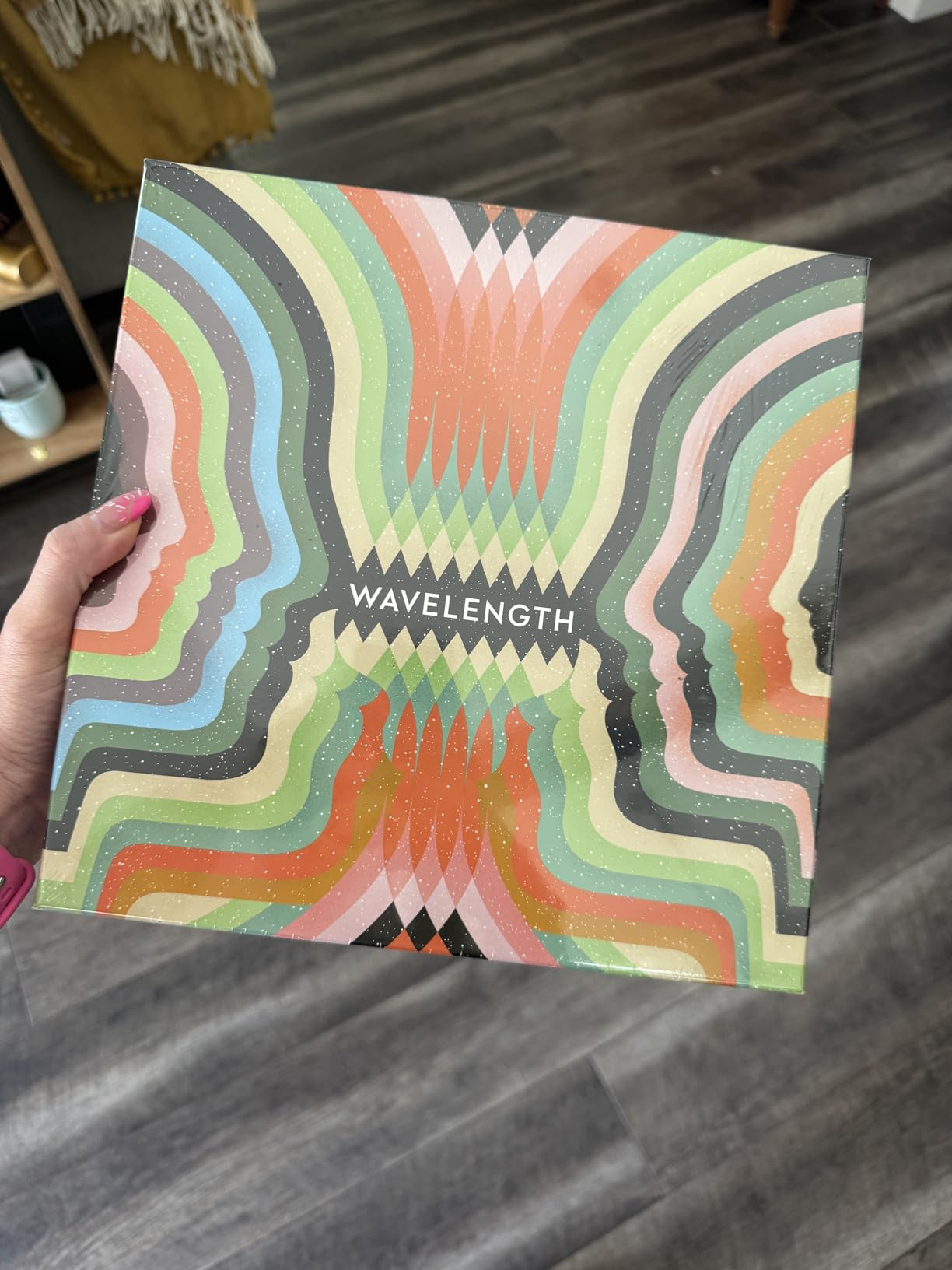
Wavelength is unlike any other party game I have played. One player knows where a secret target sits on a spectrum between two extremes (hot to cold, useful to useless, good to evil), and they give a single clue to help their team guess the position. The team then turns a physical dial on this beautiful plastic device to indicate where they think the answer falls, and the reveal of the actual target position always sparks a conversation.
The discussions are the real game here. When someone gives “blanket” as a clue for the spectrum of hot to cold, half the table thinks it means warm and the other half thinks it means barely warm at all. Watching people passionately argue about whether a blanket is more hot or more cold is genuinely hilarious and reveals how differently everyone thinks.
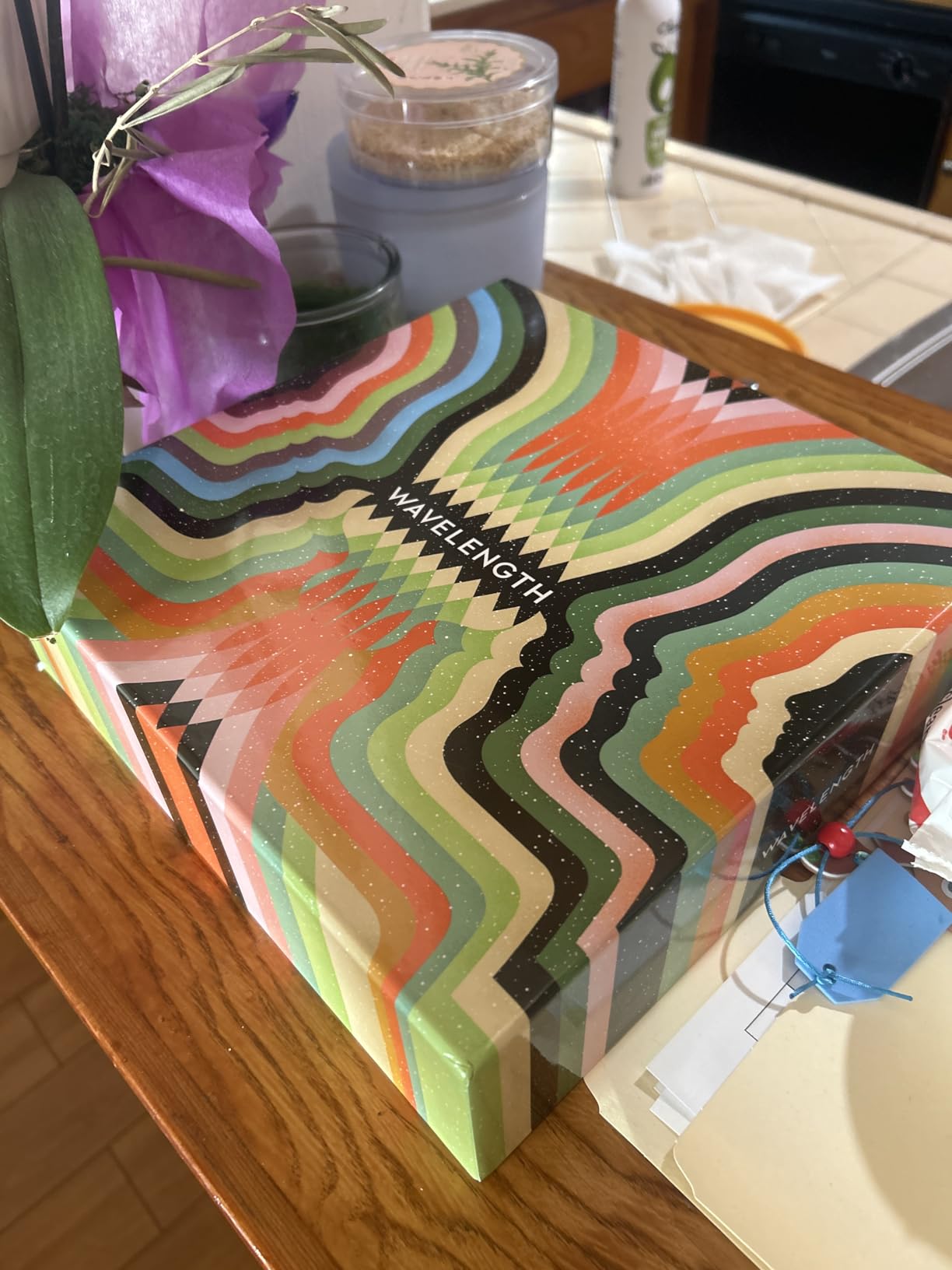
The production quality matches the price. The plastic dial device feels sturdy and satisfying to use, and the cards include both standard and advanced decks. The advanced cards feature more polarizing spectrums that can lead to even more heated debates, though some groups might find certain topics uncomfortable.
Wavelength supports two to twelve or more players, which makes it incredibly versatile. I have played it with four people and with a crowd of fifteen, and it works in both settings. For smaller groups, each person guesses individually. For larger groups, you split into teams.
Setup and learning curve
The setup literally takes five seconds: open the box, place the dial on the table, and draw a card. The rules take about a minute to explain. This makes Wavelength one of the easiest games to bring out spontaneously, which is exactly what you want for a party setting where people might be skeptical about learning something new.
The 30-minute playtime is perfect for fitting in a full game without it overstaying its welcome. You can also play fewer rounds if you are short on time.
Best group size for Wavelength
Wavelength works well at any size, but I think it is most fun with six to ten players. At that size, you get enough diverse opinions to make the discussions interesting, but it is not so crowded that people feel left out. For really large groups, you can have teams huddle and debate before locking in their guess on the dial.
This is one of the best board games for game night parties when you want something that gets people talking and laughing without any competitive stress.
6. The Chameleon – Find the Imposter
The Chameleon Social Deduction Board Game for Adults, Ages 12+
3-8 Players
15 Min Playtime
Ages 14+
80 Extra Words
Pros
- Award-winning party game
- 2-minute learning curve
- Quick 15-minute rounds
- No vulgar content
Cons
- Younger players struggle vs adults
- Mixed ages can be uneven
- Needs deception skills
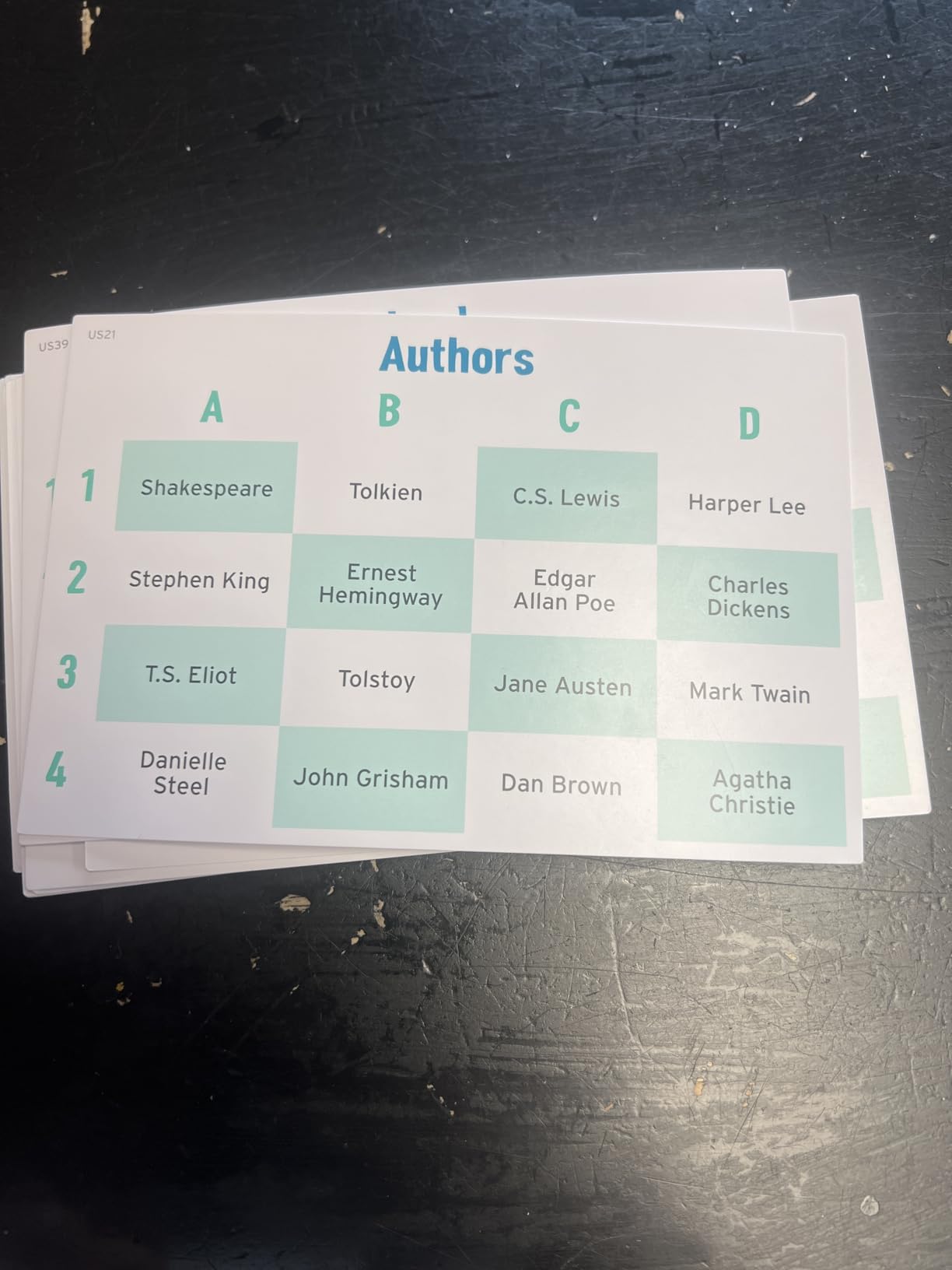
The Chameleon gives everyone at the table a secret word from a grid of options, except one player who has no idea what the word is. Each person gives a one-word clue related to the secret word, and then the group debates who the chameleon is before voting. If the group catches the chameleon, the chameleon gets one last chance to guess the secret word and escape.
What I find brilliant about this game is how it forces everyone to be subtly specific without being too obvious. If the word is “shark” and you say “fish,” that could apply to half the grid. But if you say “jaws,” the chameleon immediately knows the word. Walking that line between helpful and hidden creates genuinely tense and funny moments.
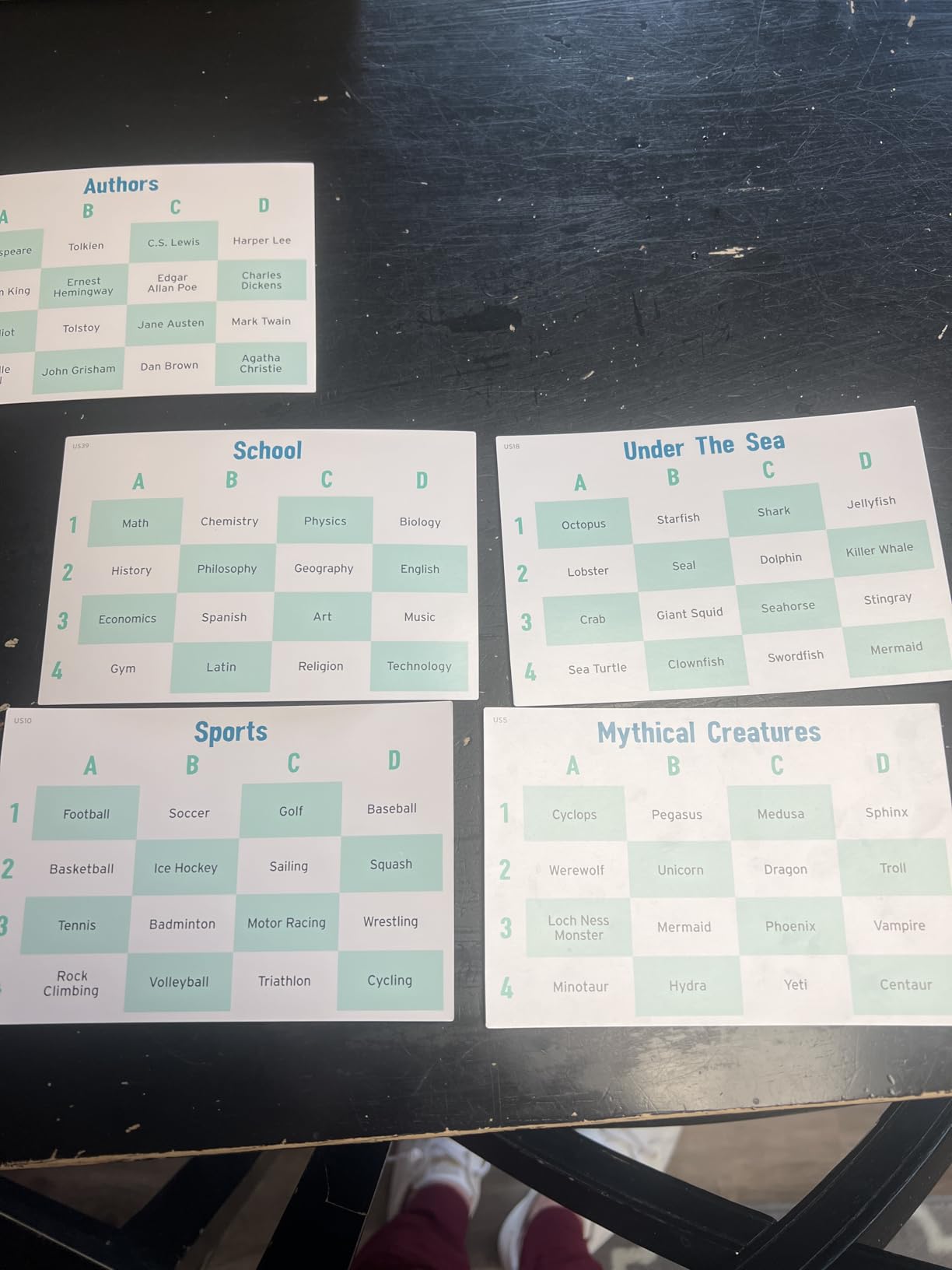
The game won Best Party Game at the UK Games Expo, and it is easy to see why. The rules take about two minutes to explain, rounds last 15 minutes, and there is no content that would make anyone uncomfortable. This makes it one of the safest picks for game night parties with mixed company.
The included 80 extra secret words extend the life of the game considerably. Even after many plays, you will not run out of fresh combinations. The compact box is also easy to transport, fitting nicely in a bag alongside other party games.
How it handles different group sizes
The Chameleon supports three to eight players, and the experience changes meaningfully at different counts. With three to four players, there is more pressure on each clue because there are fewer data points to work with. With six to eight, the chameleon has more cover and the debates become more entertaining as multiple people get suspected.
I recommend it most for groups of five to seven, where the balance between information and deception feels just right.
Family-friendly considerations
While the game is rated for ages 14 and up, I think the main concern is that younger players may struggle to give nuanced clues that do not immediately give away the word. Adults with strong vocabulary and life experience have an advantage. For family play with younger kids, consider teaming them up with an adult to level the playing field.
For adult game nights, The Chameleon is an easy recommendation. It is clean, fast, and consistently generates laughs without the intensity of full social deduction games like Secret Hitler.
7. Just One – Cooperative Word Fun for Everyone
Asmodee Just One Party Game (2025 Refresh) – Cooperative Mystery Word Guessing Fun for Family & Friends, Kids & Adults, Ages 8+, 3-7 Players, 15 Minute Playtime
3-7 Players
15-20 Min Playtime
Ages 8+
2025 Refresh Edition
Pros
- Cooperative gameplay for groups
- Easy rules for all ages
- Quality dry-erase components
- High replayability
Cons
- Markers may need replacement
- Black crayon low contrast on dark trays
- Some words culturally specific
Just One is the most wholesome game in this lineup, and I mean that as a genuine compliment. One player turns away while everyone else sees a secret word. Then everyone writes one clue on their dry-erase slate to help the guesser. The twist: if two or more people write the same clue, all those matching clues get erased before the guesser sees them. You have to be creative and avoid the obvious answers.
This cancellation mechanic is genius. It forces you to think about what other people might write and choose something different. If the word is “pizza,” half the group wants to write “cheese” and the other half wants to write “Italy.” The person who writes “toss” or “delivery” ends up being the hero, and the guesser gets to see a fascinating collection of unique perspectives.
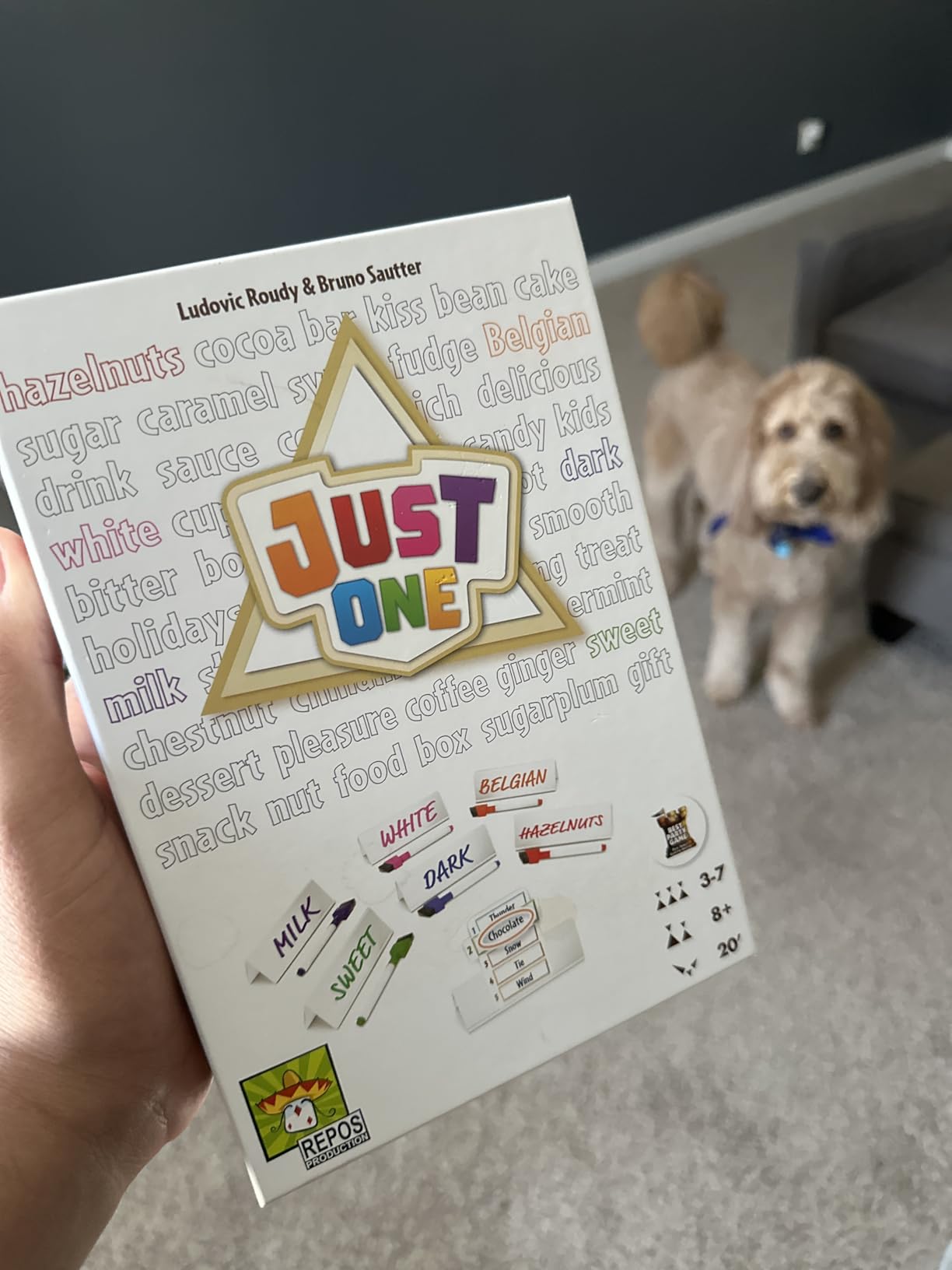
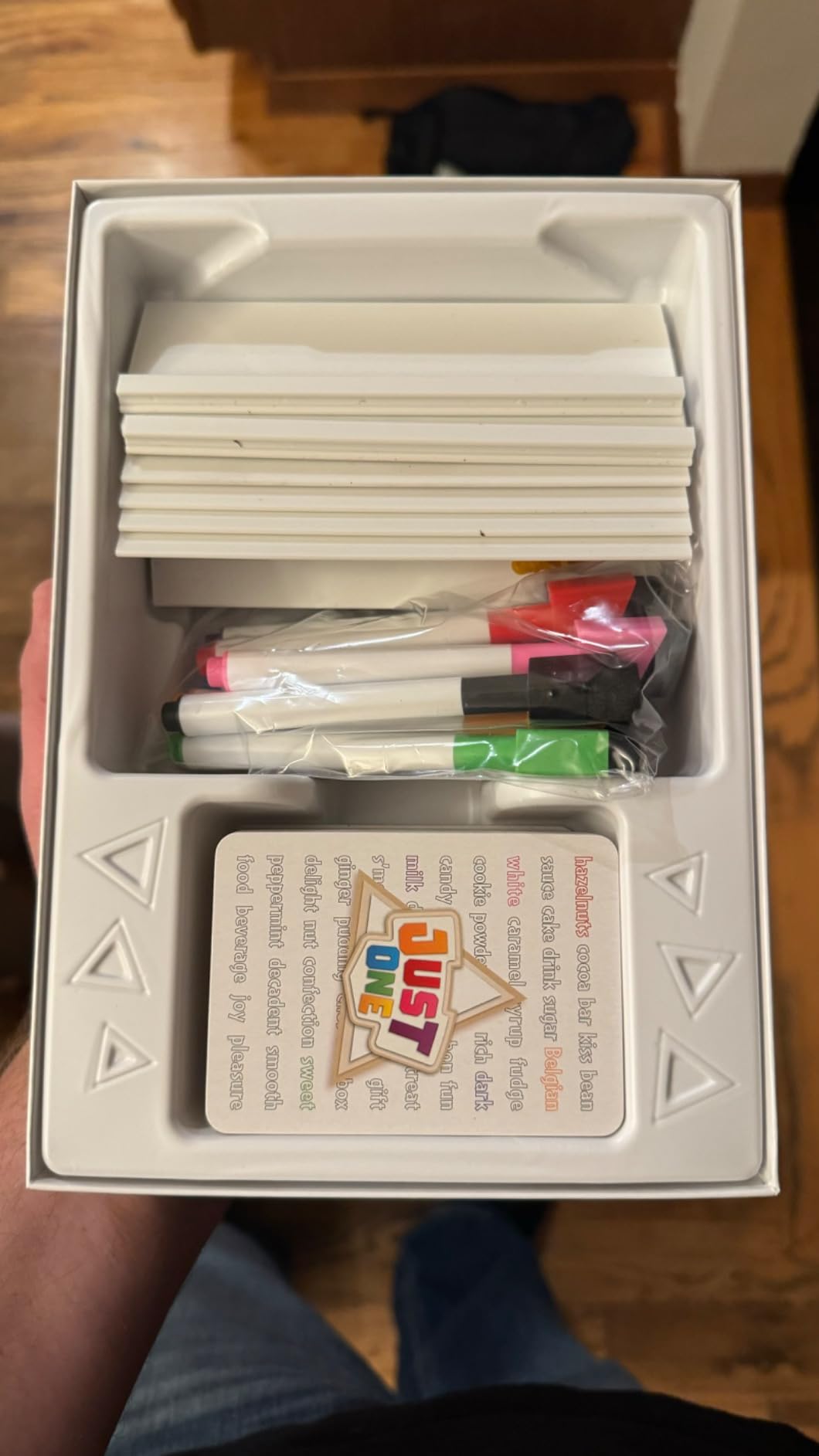
The 2025 refresh edition comes with colorful plastic stands, erasable crayons, and wipes that feel like a noticeable upgrade over the original. The components are solid, and the game is fully playable right out of the box with no additional supplies needed.
Because it is cooperative, there is zero social pressure or confrontation. Nobody is lying, nobody is getting voted against, and everyone wins or loses together. This makes Just One the ideal game for groups that include shy people, younger players, or anyone who dislikes competitive tension.
Best player count for Just One
Just One supports three to seven players, and it actually works well at every count. With three players, the cancellation mechanic is less impactful because there are fewer chances for duplicate clues, but the guesser has fewer hints to work with. With five to seven, duplicates happen frequently and the challenge of finding unique clues becomes the central puzzle.
Five or six players is the sweet spot where the game feels most dynamic. You get enough overlapping ideas to make cancellations common, but enough unique thinkers to give the guesser a real shot.
Language and accessibility
Some words in the deck may be culturally specific, particularly for players outside North America. The game handles this gracefully if you simply allow players to skip words they do not recognize and draw a new one. The age rating of eight and up seems accurate; kids can absolutely contribute clues and enjoy the guessing aspect.
For a cooperative, stress-free option at your next game night, Just One is one of the best party games for adults and families alike.
8. Monikers – The Perfect Party Game, Redesigned
Monikers Party Game – Guess the Name on the Card
2-12+ Players
30 Min Playtime
Ages 17+
Three-Round Format
Pros
- Called perfect party game by NY Times
- Three rounds build inside jokes
- Supports up to 12+ players
- 5 minutes to learn
Cons
- Some uncommon words difficult to explain
- Needs 4+ for best experience
- Print errors in some copies
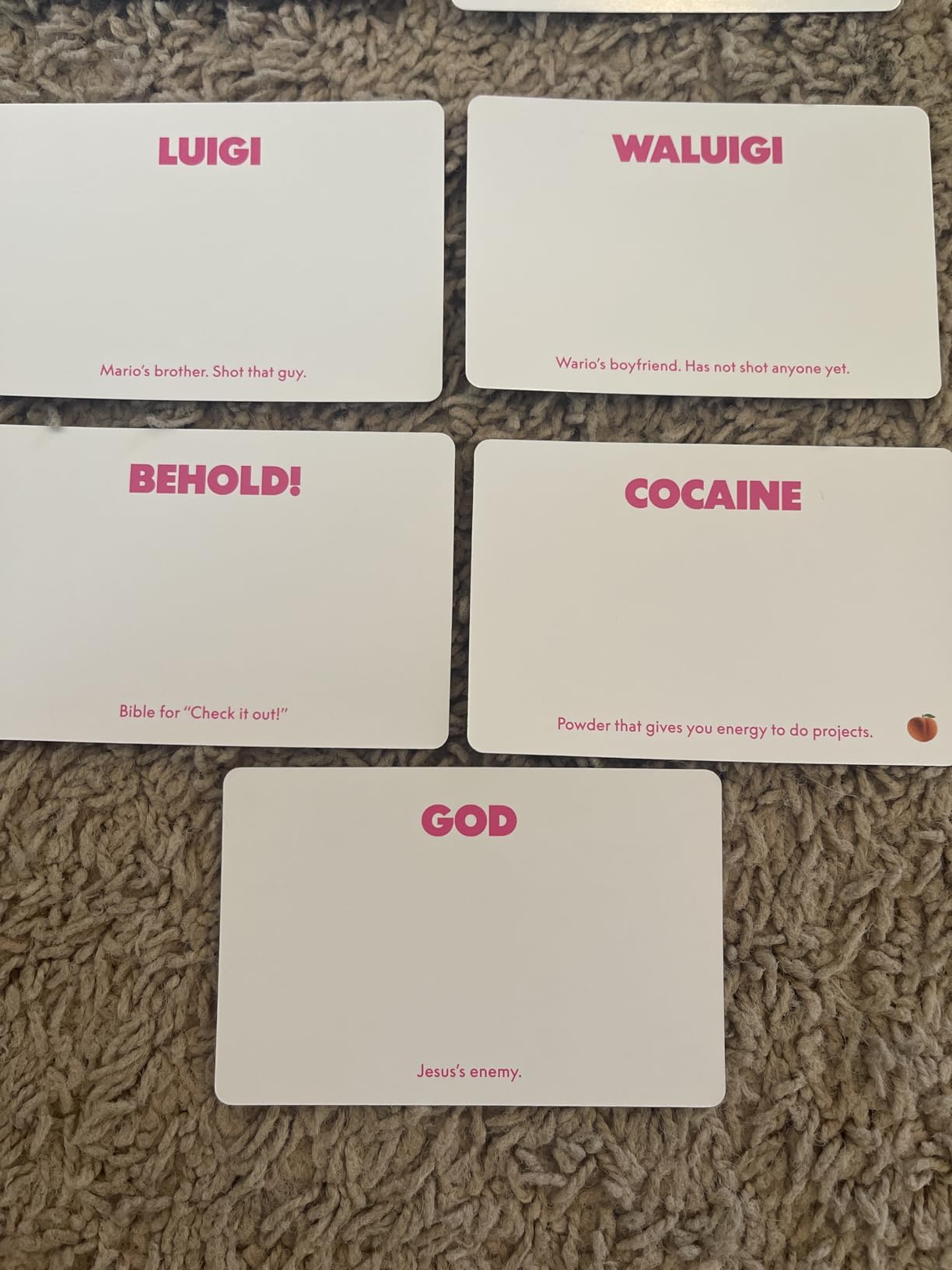
The New York Times called Monikers “the perfect party game,” and after playing it at half a dozen game nights, I understand why. The game takes 330 cards with absurd names and concepts, splits players into teams, and has you play through three increasingly challenging rounds with the same set of cards.
In round one, you can say anything to get your team to guess the card. In round two, you can only say one word. In round three, you cannot speak at all and must use charades. By round three, everyone has seen all the cards twice, so you are building on shared references and inside jokes that formed in earlier rounds. It gets funnier every time you play it.

The inside-joke factor is what sets Monikers apart from other guessing games. By the third round, someone holds up three fingers and the entire room erupts because they all remember the card from round one. That shared history creates a kind of group comedy that few other games can match.
Monikers supports two to twelve or more players, though it is best with six or more where you can split into multiple teams. The game takes about 30 minutes per session, but I have never played just one session. Groups always want to go again with fresh cards.
How the three-round format creates comedy
The genius of Monikers is the escalating difficulty across rounds. Round one establishes the baseline: everyone sees the cards and learns what they are. Round two forces creative one-word associations that often become running jokes. Round three turns those jokes into physical comedy through charades.
This progression means the game naturally builds energy over 30 minutes rather than peaking early. It is the perfect centerpiece for a game night because it sustains momentum without requiring constant rule changes or new setups.
Content and audience fit
The cards range from historical figures to bizarre concepts to pop culture references. Most are universally accessible, but some require specific knowledge. The age rating of 17 reflects some mature content, so screen the deck before playing with younger audiences. You can easily remove cards that do not fit your group.
For groups that love Charades or Taboo, Monikers is a natural upgrade. It is one of the best board games for game night parties because it scales effortlessly and creates the kind of memorable moments people talk about for weeks.
9. Blank Slate – Where Great Minds Think Alike
Blank Slate Board Game, A Party Game of Addicting Predictions
3-8 Players
20-35 Min Playtime
Ages 8+
250 Word Cue Cards
Pros
- Low-pressure and easy to play
- Great for mixed skill levels
- High replay value with 500 prompts
- Quick to learn
Cons
- Erasers that come with are not great
- More fun with 4+ players
- Markers can dry out
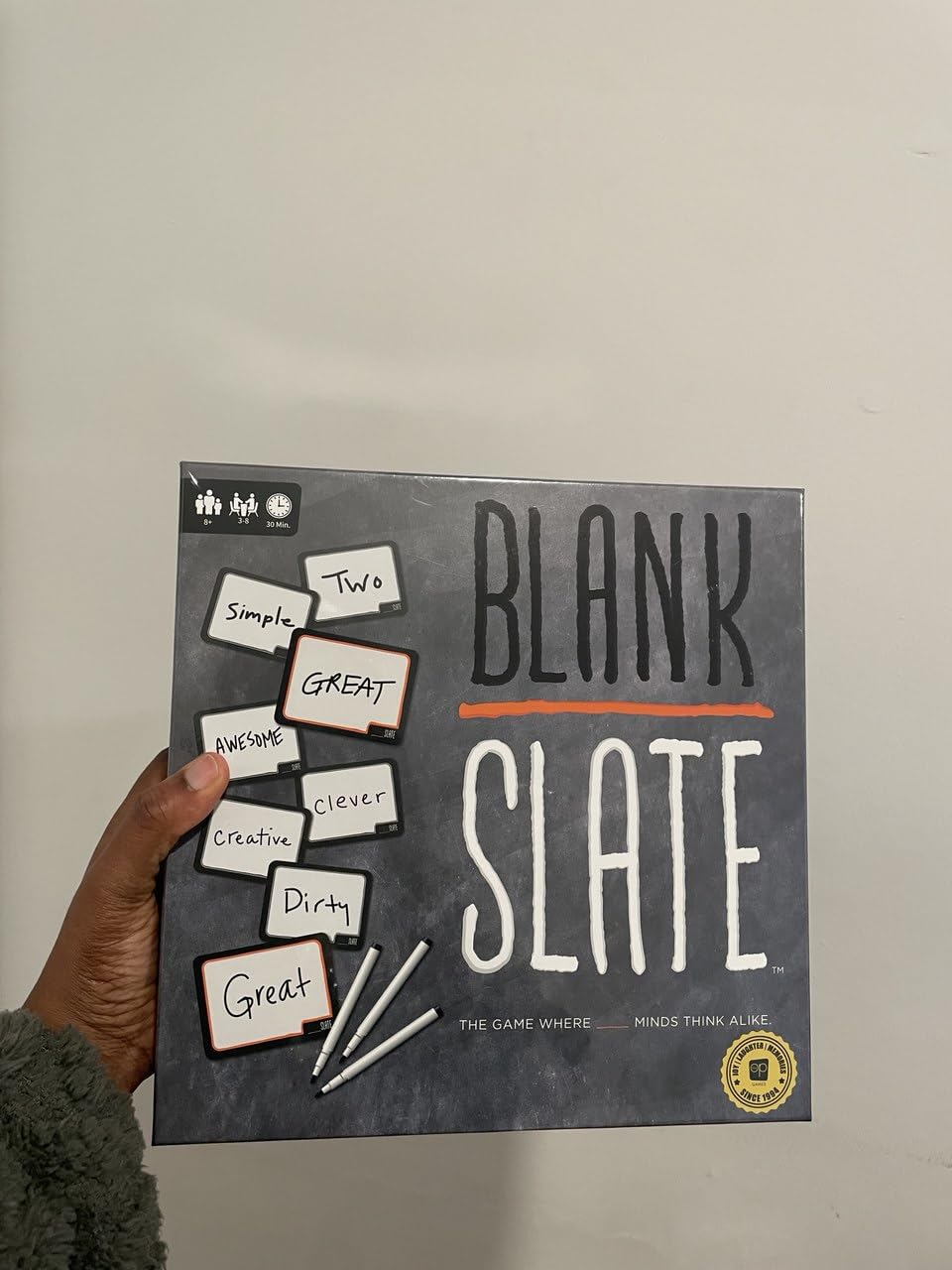
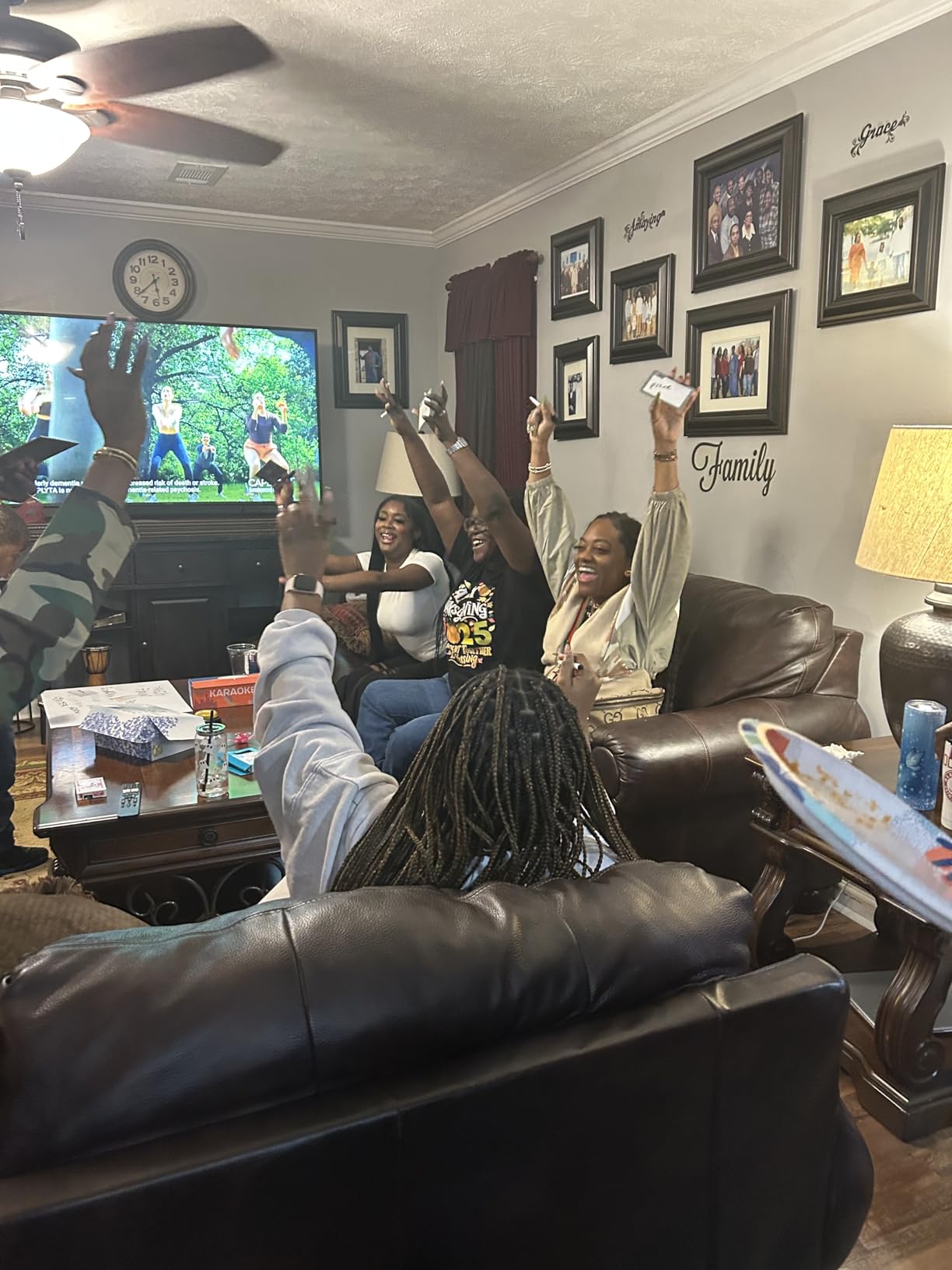
Blank Slate is a word association game where a cue card presents a phrase with a blank, and everyone writes the word they think best fills it. You score points when your word matches exactly one other player’s word. If three or more people write the same word, nobody scores. If you match one person, you both score. If nobody matches you, you score nothing.
This scoring system creates a fascinating tension between being obvious and being creative. A card like “_____ & _____” could be “rock & roll” or “salt & pepper,” and if everyone writes the same common answer, nobody gets points. The players who think one step further and write something like “thunder & lightning” or “peanut butter & jelly” are the ones who end up scoring.
I have played Blank Slate with my family multiple times, and it is one of the few games that genuinely works for everyone from eight-year-olds to grandparents. The rules are simple enough that kids can jump right in, but the scoring keeps adults engaged because there is a surprising amount of strategy in reading the room.
The game includes 250 double-sided word cue cards, giving you 500 unique prompts. That is enough variety to keep the game fresh for months of regular play. The dry-erase slates and scoreboard are functional, though you may want to replace the included markers with higher-quality ones if you play frequently.
How Blank Slate compares to similar games
Blank Slate fills a similar niche to Just One but with a competitive twist. Where Just One is cooperative, Blank Slate lets you compete while still keeping the atmosphere light and social. The word association mechanic also differs from Codenames because there are no teams and no spymaster role to manage.
If you want a low-pressure word game that anyone can play, Blank Slate is the better choice. If you want something with more strategic depth, Codenames wins.
Practical tips for game night
Blank Slate plays best with four to eight players. With three players, the matching dynamics are too limited. Keep spare dry-erase markers on hand because the included ones can dry out if not capped tightly. Also, give everyone a few seconds to finish writing before revealing, as some prompts naturally take longer to think about than others.
For game night parties, Blank Slate is an excellent middle-game option. It keeps the energy up without being as chaotic as Taco Cat Goat Cheese Pizza or as intense as social deduction games.
10. Hues and Cues – The Color Guessing Challenge
HUES and CUES – Vibrant Color Guessing Board Game for 3-10 Players Ages 8+, Connect Clues and Guess from 480 Color Squares
3-10 Players
30 Min Playtime
Ages 8+
480 Color Squares
Pros
- Visually stunning board
- No reading required
- Works for mixed ages
- Interactive without being competitive
Cons
- Player pieces could be easier to handle
- Color perception is subjective
- Describing colors can be tricky
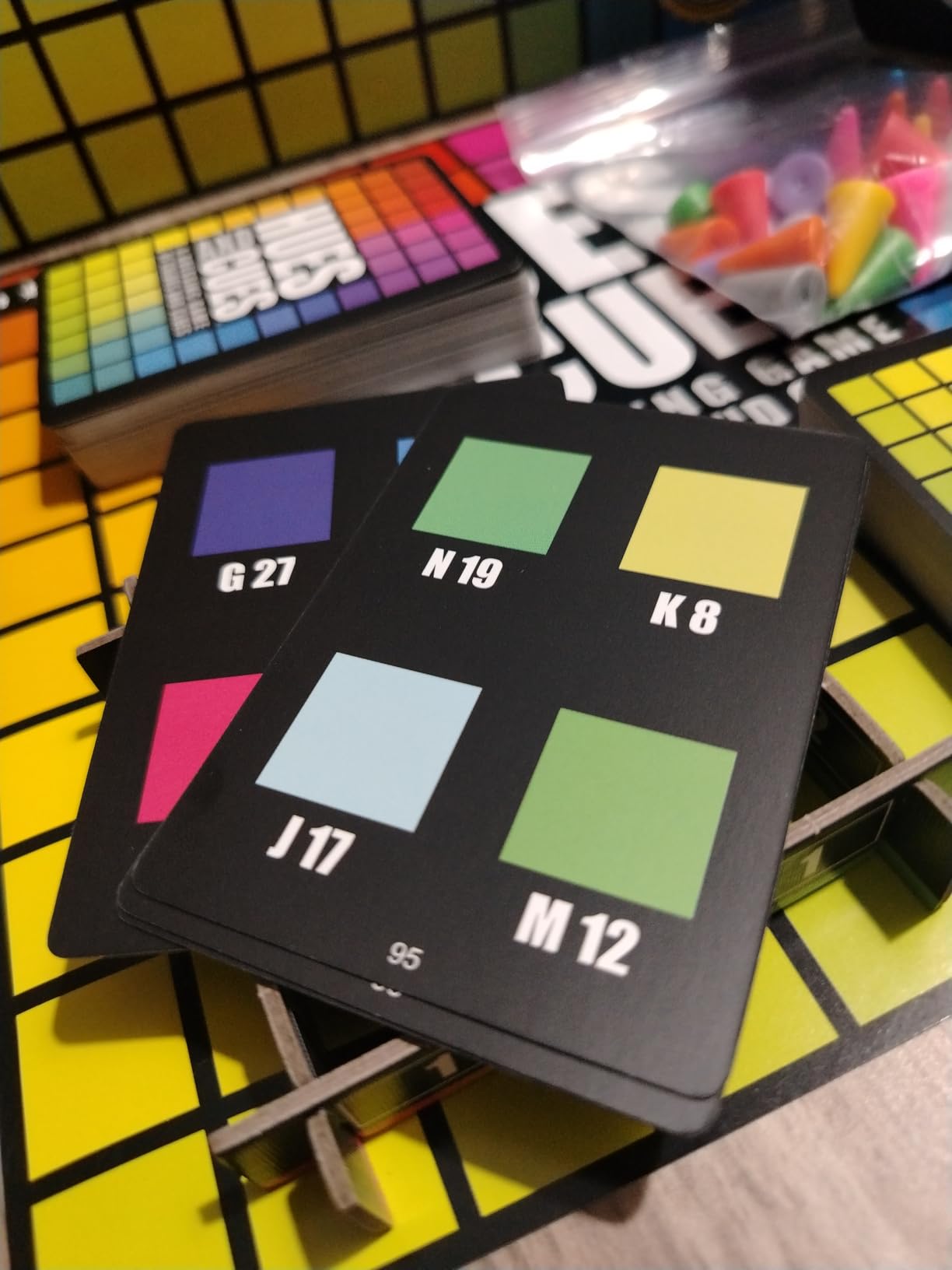
Hues and Cues is one of the most visually striking games I have ever brought to a game night. The board displays 480 color squares arranged in a gradient grid, and one player tries to guide the others to a specific target color using just one-word clues. In the second round, they can use two words. The closer other players place their pieces to the target color, the more points everyone scores.
What surprised me is how challenging it actually is to describe colors in just one word. When the target is a specific shade of teal, do you say “ocean,” “mint,” or “green”? Each player interprets the clue differently, and watching people place their pieces on wildly different squares is both frustrating and hilarious.
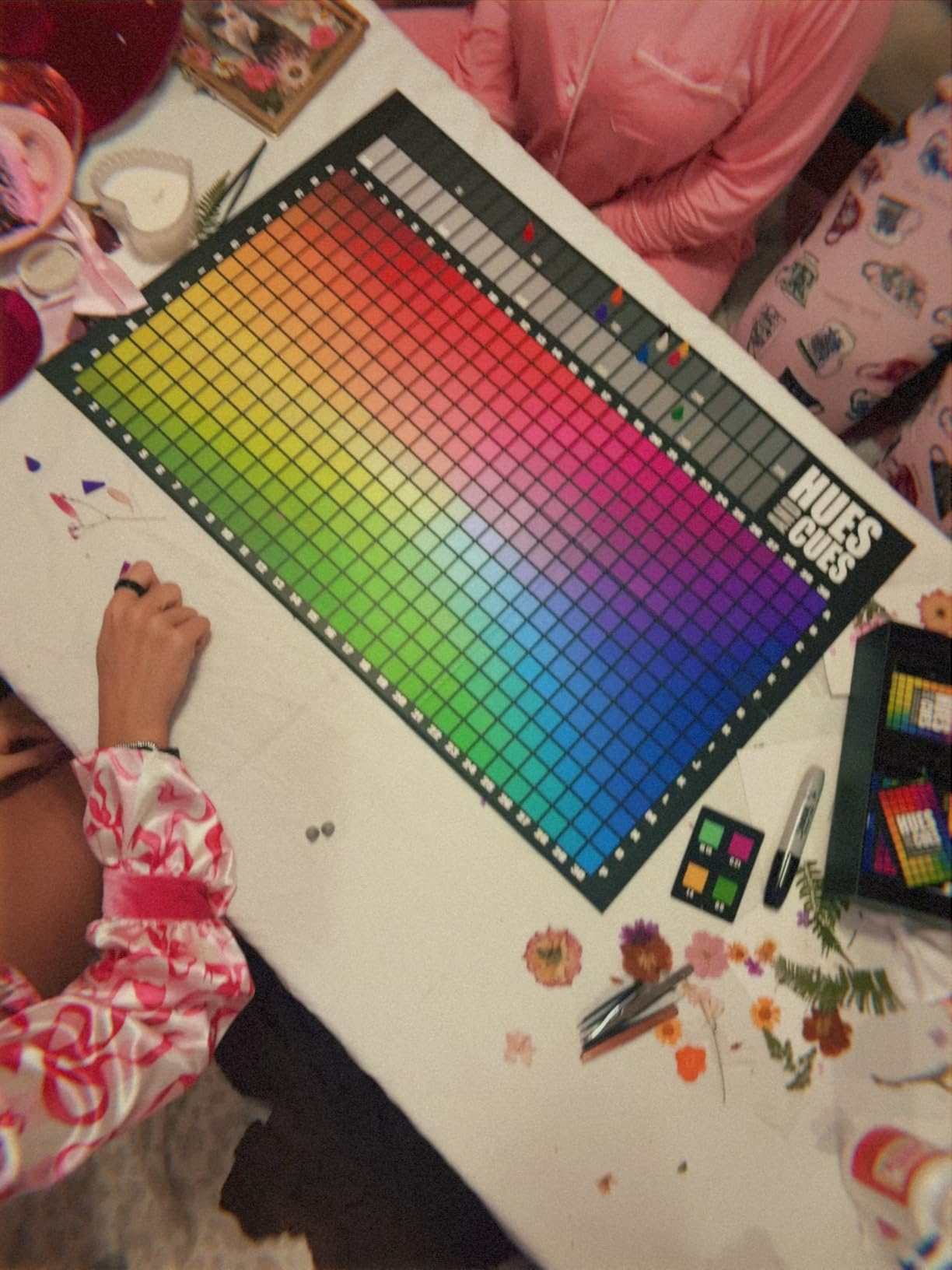
The game works for ages eight and up, and because no reading is required beyond the clue cards, even younger children can participate fully. I have seen kids beat adults at this game because they have different color associations that happen to be more accurate for certain shades.
The game board itself is beautiful, and the scoring frame that marks the target area is a clever design touch. Games take about 30 minutes, which is long enough to feel substantial but short enough to keep attention from wandering.
Accessibility and color blindness
One concern with a color-based game is how it handles color blindness. Impressively, Hues and Cues can still be played by people with some forms of color blindness because the clues are word-based rather than visual. Players with color vision deficiencies may not be able to distinguish all the hues on the board, but they can still participate in giving and interpreting clues.
The game is more about communication and shared perception than pure color accuracy, which makes it more accessible than you might expect.
Best use in a game night lineup
Hues and Cues is a great warm-up or cooldown game. It is low-stress, visually engaging, and does not require any deception or quick reflexes. I like to play it between more intense games to give the group a breather. The colorful board also looks great on a table and tends to attract curiosity from people who are not even playing.
For groups who enjoy creative communication games, Hues and Cues is a refreshing alternative to word-based party games that feels completely different from anything else in your collection.
11. Tapple – Race Against the Timer
USAOPOLY The Original TAPPLE, The Fun & Fast-Paced Family Word Game
2-8 Players
15-20 Min Playtime
Ages 8+
144 Categories
Pros
- Award-winning word game
- Timer adds excitement
- Portable with card storage
- Easy to learn
Cons
- Not all letters on wheel
- Some quality concerns
- Wheel may shift during play
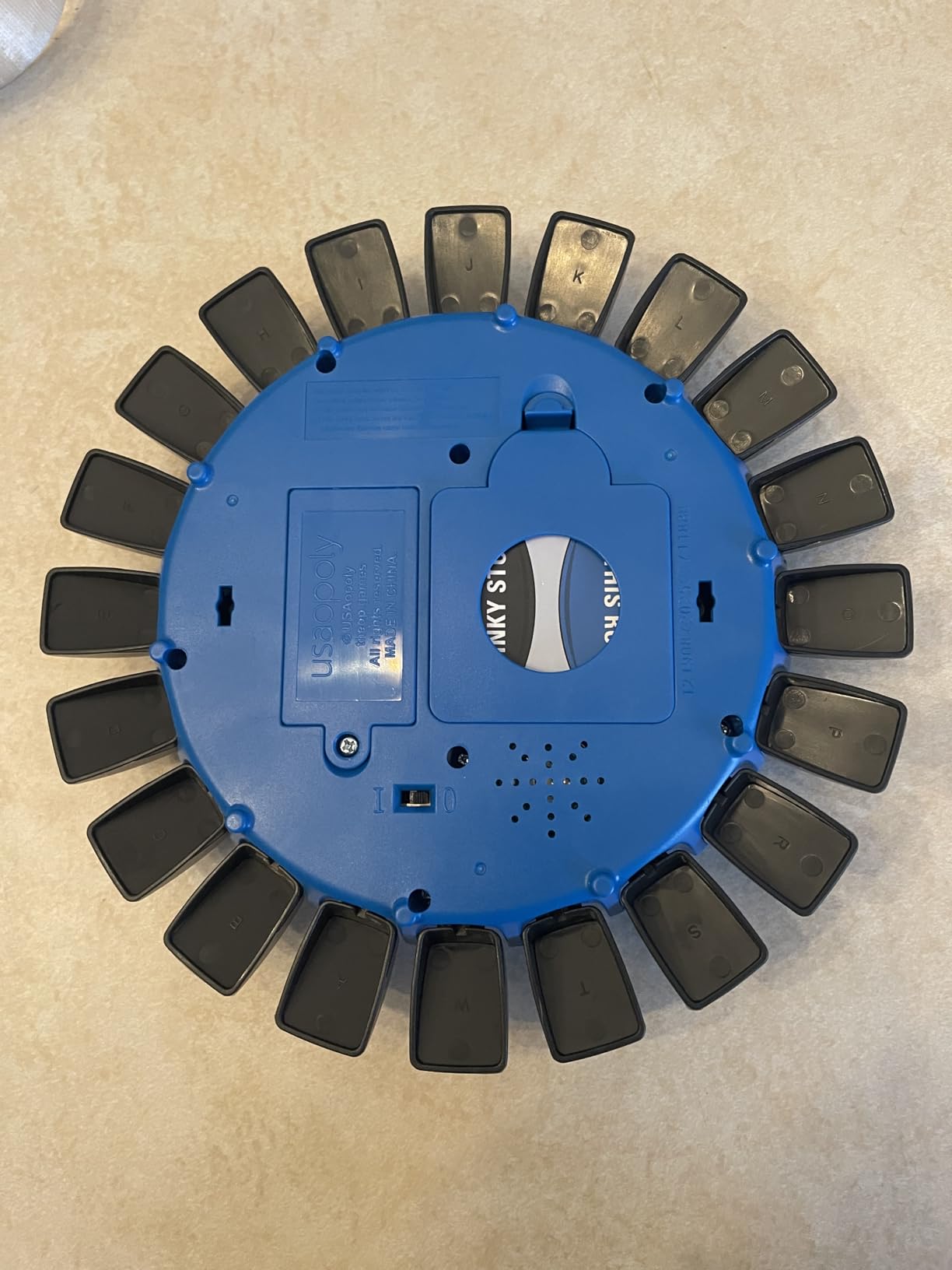
Tapple is a fast-paced word game that adds real-time pressure to the classic category game format. A category card is revealed (things like “on a pizza,” “at the beach,” or “in the kitchen”), and each player must press a letter on the wheel and shout out a word that fits the category and starts with that letter. You only get a few seconds before the timer runs out.
The physical wheel with its pop-down letter buttons is satisfying to use and adds a tactile element that makes the game more engaging than a pure card game. Once a letter is pressed, nobody else can use it for that round, so the available options shrink quickly. The ticking timer creates genuine urgency that gets people shouting out answers they would never normally say.
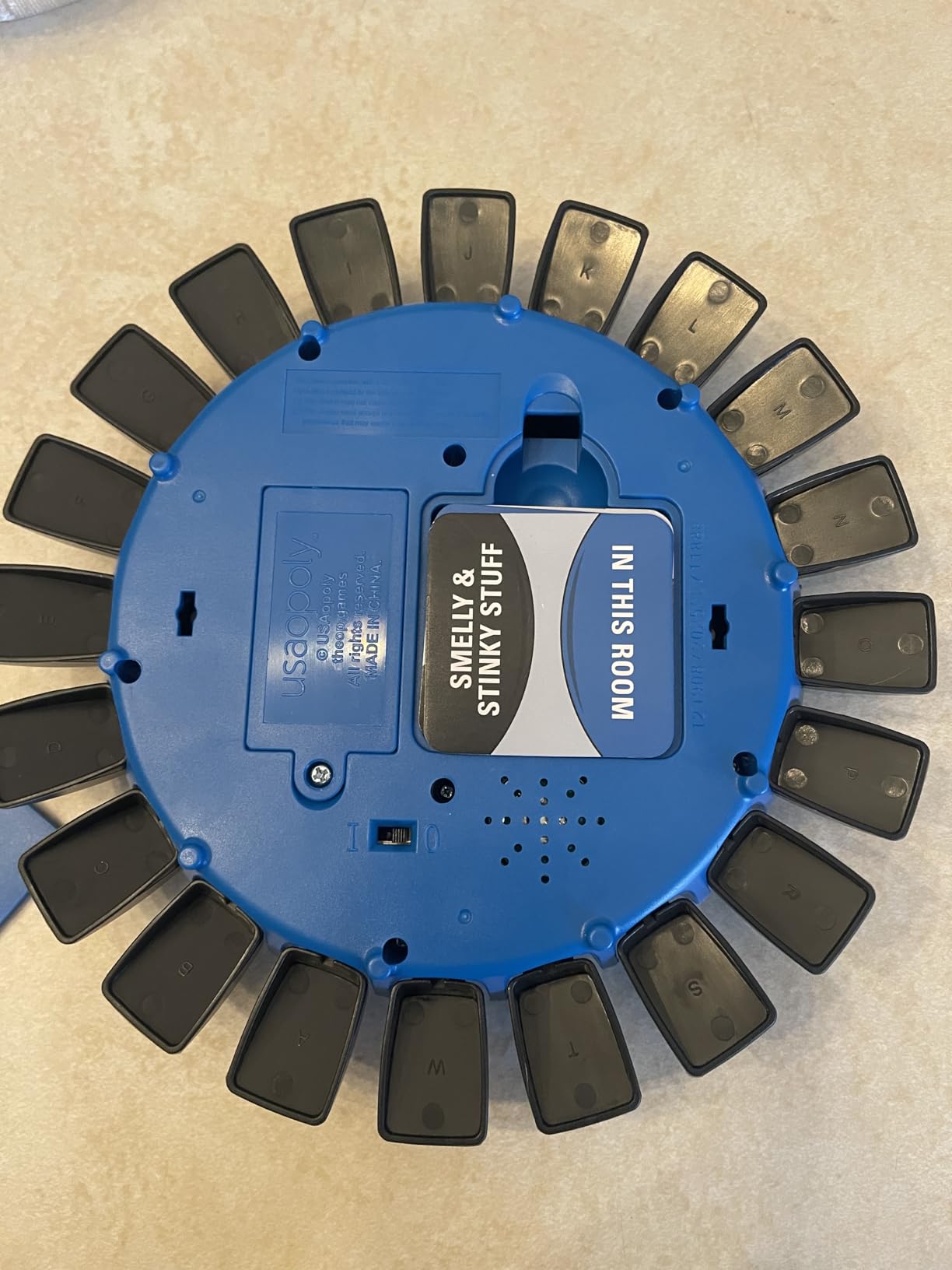
With 144 categories across 36 double-sided cards, Tapple offers plenty of variety. You can also create your own categories, which extends the life of the game significantly. The portable design stores all the cards inside the wheel, making it easy to bring anywhere.
The game requires two AA batteries for the timer, which is a minor inconvenience but worth it for the excitement the ticking clock adds. There is an on/off switch to preserve battery life between sessions.
Player count and round dynamics
Tapple supports two to eight players, and the experience scales well across that range. With two to three players, you have more time to think and the game feels more strategic. With six to eight, the letters disappear fast and the pressure ramps up dramatically. Each round takes just a few minutes, so you can play multiple rounds in a 20-minute session.
The sweet spot for game night is five to six players, where there is enough competition for letters to create tension but enough turns to keep everyone involved.
Custom categories and replayability
The included 144 categories cover a good range of topics, but the real value comes from creating your own. Having each player contribute a custom category before the game starts adds a personal touch that makes the game feel tailored to your group. Our team made categories specific to inside jokes and shared experiences, which made the answers even funnier.
Tapple is one of the best quick board games for game night parties when you want something fast and engaging between longer, more involved games.
12. A Fake Artist Goes to New York – Creative Deception
Oink Games A Fake Artist Goes to New York
5-10 Players
Quick Rounds
Ages 8+
Tiny Portable Box
Pros
- Combines creativity and deception
- Perfect for 5-10 players
- Compact and portable
- Works for mixed ages
Cons
- Very small box with minimal components
- Expensive for what you get
- Rulebook can be confusing
A Fake Artist Goes to New York is a Japanese party game with a wonderfully simple premise. Everyone gets to see a secret word and a color, except one person who only gets the color and a fake label. All players take turns drawing one or two strokes on a shared piece of paper, contributing to a collaborative drawing. The fake artist has to blend in without knowing what they are drawing.
The resulting artwork is usually terrible in the most entertaining way possible. You have five to ten people each adding one or two strokes to draw something, and the result often looks like abstract chaos. The fake artist’s challenge is to make strokes that look confident and deliberate without knowing the subject. Watching someone confidently draw a random line that accidentally fits the image perfectly is comedy gold.
After two rounds of drawing, everyone votes on who the fake artist is. If the fake artist gets caught, they can still win by correctly guessing what the word was. This two-layer deduction keeps both the drawing and the voting phases tense and engaging.
Group size and game night fit
The game requires five to ten players, with no flexibility below five. This makes it specifically suited for medium-to-large game night gatherings. With fewer than five players, there is not enough cover for the fake artist to hide. With eight to ten, the drawings become gloriously chaotic and the voting discussions get heated.
I recommend this for groups that enjoy social deduction but want something lighter and more creative than Secret Hitler or One Night Ultimate Werewolf. The drawing element adds a unique creative dimension that most party games lack.
Component quality and value
The most common criticism of A Fake Artist Goes to New York is the value proposition. The box is tiny and contains essentially just cards. You provide your own paper and pens. For the price, some people expect more physical components. However, the gameplay experience delivers far more than the components suggest. If you judge games by how much fun your group has rather than the weight of the box, this one earns its keep.
The rulebook can also be a bit confusing on first read, but the actual gameplay is straightforward once you play one practice round. For creative groups looking for something different, this is a worthy addition to any game night collection.
How to Choose the Right Board Game for Your Game Night
Picking the right game can make or break your evening. After testing all 12 games in this guide across dozens of game nights, I have learned that the most important factor is matching the game to your specific group. Here is what to consider before you buy.
Player count is your first filter
Start by counting how many people you expect. Games like Just One cap at seven players, while Wavelength and Monikers handle twelve or more comfortably. If you regularly host large groups, prioritize flexible player counts. The best board games for game night parties are the ones everyone can actually play together.
For groups of three to five, Codenames, The Chameleon, and Blank Slate work great. For groups of six to eight, almost everything on this list shines. For nine or more, focus on Wavelength, Monikers, One Night Ultimate Werewolf, and Secret Hitler.
Match the complexity to your crowd
Not every group wants to think hard. If your friends are casual gamers who want to chat and laugh, reach for Taco Cat Goat Cheese Pizza, Blank Slate, or Tapple. These games require almost no strategic thinking and let conversation flow naturally during play.
If your group enjoys deeper engagement and does not mind a learning curve, Secret Hitler and Codenames offer more substance. The social deduction category in particular rewards repeat plays because groups develop meta-strategies and inside jokes over time.
Consider the energy level you want
Taco Cat Goat Cheese Pizza and Tapple are high-energy, loud games that get people physically involved. Wavelength and Just One are conversational and thoughtful. Secret Hitler creates dramatic tension. Think about the mood you want for your evening and pick accordingly.
A great game night often flows from high-energy openers to more strategic mid-game choices and back to light closers. Starting with Taco Cat Goat Cheese Pizza, moving to Codenames, and finishing with Monikers is a reliable three-game sequence that hits every note.
Plan your game night flow
One thing most guides miss is how to sequence multiple games over an evening. Here is a framework that works well for a three-hour game night. Start with a 15-minute icebreaker like Taco Cat Goat Cheese Pizza to break the ice. Move to a 30-minute main event like Codenames, Secret Hitler, or Wavelength. Finish with a closer like Monikers that everyone can enjoy while winding down.
Have at least one backup game ready in case the group loves or hates the first pick. The games in this guide cover enough variety that you can build a full evening from just three or four of them.
FAQ
What are some good games for a game night?
The best games for a game night depend on your group size and preferences. For large groups of 8 or more, Wavelength, Monikers, and One Night Ultimate Werewolf are excellent choices. For smaller groups of 4 to 6, Codenames, The Chameleon, and Blank Slate work perfectly. For a quick icebreaker, Taco Cat Goat Cheese Pizza gets everyone laughing in under 15 minutes. The key is picking games with simple rules, short play times, and high social interaction.
What board games work best for large groups?
For groups of 8 or more players, the best options are Wavelength (supports 2 to 12+), Monikers (2 to 12+), One Night Ultimate Werewolf (3 to 10), Secret Hitler (5 to 10), and Hues and Cues (3 to 10). These games scale well because they use team mechanics or simultaneous play that keeps everyone involved without long wait times between turns.
What are good party games for adults?
Top party games for adults include Secret Hitler for social deduction fans, Codenames for word puzzle lovers, Wavelength for creative thinkers, and Monikers for groups who enjoy charades-style fun. For adults who want something quick and silly, Taco Cat Goat Cheese Pizza delivers fast laughs. The Chameleon is another strong choice for groups that enjoy light deception without heavy strategy.
How do I choose a board game for a party with mixed skill levels?
For mixed skill levels, choose games based on luck, reflexes, or word association rather than deep strategy. Taco Cat Goat Cheese Pizza, Just One, Blank Slate, and Hues and Cues are ideal because no gaming experience is needed. Cooperative games like Just One remove competitive pressure entirely. Avoid social deduction games with complex role interactions if your group includes non-gamers, as these can feel intimidating.
Wrapping Up: Our Top Picks for Game Night
The right board game can turn an ordinary evening into an unforgettable game night. After testing all 12 games in this guide, my top three recommendations stand out: Secret Hitler for groups that love tension and deception, Codenames for the best all-around word game experience, and Taco Cat Goat Cheese Pizza for a budget-friendly icebreaker that works for literally everyone.
The best board games for game night parties in 2026 share one thing in common: they bring people together through shared laughter, friendly competition, and memorable moments. Pick two or three from this list based on your group size and energy preferences, and you will have everything you need for a great evening. Your next game night is about to get a serious upgrade.