

Few things are as frustrating as hitting a wall in your chess improvement. You study tactics puzzles daily, play dozens of games online, and still hover around the same rating month after month. I know that feeling because I spent two years stuck at 1850 Lichess before I realized my problem was not effort but direction. The right books changed everything for me and my training partners.
When we talk about the best chess books for advanced players, we are talking about people rated roughly 1800-2200 FIDE, or about 2000-2300 on Lichess, or 1900-2200 on Chess.com. These rating systems are not identical. A 2000 Lichess player might sit around 1750 FIDE, while a 2000 Chess.com player is closer to 1800 FIDE. Knowing where you actually stand matters because picking up a book written for 2400+ players when you are 1800 is a fast path to frustration. I have seen players on Reddit spend 10 hours on a single Dvoretsky chapter and walk away more confused than when they started.
Our team reviewed 15 titles across every major category including endgames, positional play, calculation, openings, and attacking technique. We paid close attention to what real players at different rating levels actually reported about each book’s difficulty and usefulness. If you want to learn about piece values in endgames, you will find some excellent endgame-specific recommendations below as well.
Table of Contents
Top 3 Picks for Best Chess Books for Advanced Players

Silman’s Complete Endgame Course
- Progressive rating-based structure
- Beginner through master level
- 530 pages
- Prime eligible

How to Reassess Your Chess
- Chess imbalances mastery
- 658 pages
- 1400-2100 rated players
- Test positions with answers
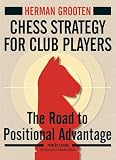
Chess Strategy for Club Players
- Steinitz positional principles
- 432 pages
- 1600-2200 rated
- Quiz chapters for self-testing
Best Chess Books for Advanced Players in 2026
| Product | Specifications | Action |
|---|---|---|
| Silman’s Complete Endgame Course |
|
Check Latest Price |
| How to Reassess Your Chess |
|
Check Latest Price |
| Chess Strategy for Club Players |
|
Check Latest Price |
 100 Endgames You Must Know 100 Endgames You Must Know |
|
Check Latest Price |
 Art of Attack in Chess Art of Attack in Chess |
|
Check Latest Price |
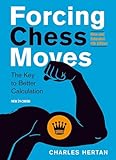 Forcing Chess Moves Forcing Chess Moves |
|
Check Latest Price |
 Secrets of Modern Chess Strategy Secrets of Modern Chess Strategy |
|
Check Latest Price |
 Chess Structures 2nd Edition Chess Structures 2nd Edition |
|
Check Latest Price |
 Endgame Strategy Endgame Strategy |
|
Check Latest Price |
 Dvoretsky’s Analytical Manual Dvoretsky’s Analytical Manual |
|
Check Latest Price |
 Modern Chess Openings 15th Ed. Modern Chess Openings 15th Ed. |
|
Check Latest Price |
 Lessons with a Grandmaster Lessons with a Grandmaster |
|
Check Latest Price |
 Grind Like a Grandmaster Grind Like a Grandmaster |
|
Check Latest Price |
 Advanced Chess Tactics Advanced Chess Tactics |
|
Check Latest Price |
 Complete Book of Chess Strategy Complete Book of Chess Strategy |
|
Check Latest Price |
1. Silman’s Complete Endgame Course – The Progressive Endgame Bible
Silman’s Complete Endgame Course: From Beginner to Master
530 pages
Rating-based structure
Beginner to Master
Publisher: Siles Press
Illustrated edition
Pros
- Progressive difficulty by rating level
- Clear explanations of endgame concepts
- Teaches theoretical win/draw positions
- Suitable beginner through master
- Excellent teaching approach
Cons
- Some typos and diagram errors
- Lucena position presentation criticized
- Missing some complex endgame coverage
This is the book I wish I had found when I first crossed 1700. Silman organizes every endgame lesson by rating level, so you only study what you actually need at your current stage. If you are rated 1800, you work through the 1800 section and skip ahead. The structure removes the guesswork that makes endgame study so intimidating for club players.
I spent about six weeks with the 1600-1800 sections and noticed an immediate improvement in my tournament results. Instead of drifting in equal endgames, I started converting advantages because I recognized theoretical positions without burning 15 minutes on clock calculation. That alone is worth the investment.
The writing style is clear and conversational, which is unusual for endgame literature. Silman avoids the dense reference-manual approach of something like Dvoretsky’s Endgame Manual and instead teaches you the why behind each technique. You learn when to activate your king, when to push your pawns, and when to trade into a known winning position.
How to use this book at different rating levels
The genius of this book is its rating-banded structure. If you are 1600 FIDE, study only the sections up through the 1600 chapter. Do not jump ahead. Each section builds on the previous one. I made the mistake of skipping ahead to the expert section initially and found myself lost on positions that required fundamentals I had glossed over.
For players in the 1800-2000 range, focus on the sections covering rook endgames, bishop vs knight situations, and pawn structure endgames. These come up constantly in tournament play and are where most class players lose half points they should hold.
What this book covers versus what it skips
Silman covers all the essential endgames you will face in practical play. What it does not cover are the extremely complex theoretical endgames that only grandmasters encounter. This is intentional and actually a strength for most readers. You will not find 40-page analyses of rook and bishop vs rook, but you will find clear guidance on every endgame that matters at the club and expert level.
2. How to Reassess Your Chess – Mastering Positional Imbalances
How to Reassess Your Chess: Chess Mastery Through Chess Imbalances
658 pages
4th edition
Focus on chess imbalances
Publisher: Siles Pr
For players rated 1400-2100
Pros
- Excellent teaching style and clear explanations
- Progressive difficulty suitable for 1400-2100
- Helps understand positional chess and planning
- Exercises with detailed answers for practice
- Good quality paper and formatting
Cons
- Some content may be too basic for advanced players
- Limited coverage of openings and endgames
This is the book that changed how I think about chess positions. Silman’s imbalance framework teaches you to look at a position and immediately identify what matters. Is it a knight versus bishop situation? Who has the superior pawn structure? Is there a weakness to attack or a file to control? Once you start thinking in terms of imbalances, your planning becomes far more purposeful.
Multiple players on Lichess forums have noted that this is a book you return to at different rating levels and get something new each time. I read it first at 1500 and again at 1900, and the second reading felt like an entirely different book. The deeper your understanding grows, the more you extract from Silman’s explanations.
The 658-page count might seem intimidating, but the writing is accessible and broken into digestible chapters. Each chapter ends with test positions that let you practice what you just learned. I strongly recommend working through these with a real board rather than reading passively. The difference in retention is enormous.
Best suited for players building positional foundations
If you are rated 1400-1800 and find yourself making moves without a clear plan, this book will transform your game. The imbalance method gives you a concrete checklist to evaluate every position. Players rated 1800-2100 will still benefit from the advanced chapters on space, file control, and minority attacks, though some of the early material may feel familiar.
Who might find this too basic
Players rated above 2100 FIDE who already have strong positional intuition may find much of the material review. The book is not designed for master-level players seeking new theoretical insights. If you already understand imbalances deeply and are looking for grandmaster-level strategic analysis, you would be better served by Watson’s Secrets of Modern Chess Strategy or Chess Structures by Rios.
3. Chess Strategy for Club Players – The Road to Positional Advantage
Chess Strategy for Club Players: The Road to Positional Advantage
432 pages
3rd edition
Based on Steinitz principles
Publisher: New in Chess
For players rated 1600-2200
Pros
- Best strategy book for club players per reviews
- Covers Steinitz principles in modern context
- Excellent for players rated 1600-2200
- Enjoyable and clear writing style
- Comprehensive coverage of positional concepts
Cons
- Some explanations lack sufficient detail
- Examples can have overlapping themes
- A few editing issues
Herman Grooten built this book around the Steinitz principles that form the backbone of positional chess. Passed pawns, weak pawns, space advantages, open files, and piece activity are all covered systematically across 432 pages. I found the chapter on pawn chains especially valuable, as it gave me concrete plans for positions I used to play by feel alone.
The quiz chapters at the end of each section are a standout feature. Rather than passively reading about weak squares, you are asked to identify them in real game positions. This active learning approach makes the material stick much better than pure exposition. I spent three weeks on the quiz sections and my positional play in tournament games improved noticeably.
Grooten writes with a clarity that makes complex ideas accessible without dumbing them down. The 3rd edition incorporates feedback from earlier versions, tightening up explanations that readers found confusing. For players in the 1600-2200 range, this is one of the most practical strategy books available.
How this complements How to Reassess Your Chess
While Silman focuses on imbalances as the lens for evaluation, Grooten builds from the classical Steinitz elements. Reading both gives you a richer positional toolkit. I recommend reading Reassess first for the big-picture thinking, then Grooten for the detailed structural understanding.
Rating range where this book shines
Players rated 1600-1900 will get the most from this book. The material is accessible enough for strong club players but deep enough to challenge experts. Players above 2200 may find some of the foundational material familiar, though the advanced chapters on prophylaxis and pawn majorities still offer value.
4. 100 Endgames You Must Know – Essential Lessons for Every Chess Player
100 Endgames You Must Know: Vital Lessons for Every Chess Player
256 pages
6th edition
100 critical endgames
Publisher: New in Chess
4.9 average rating
Pros
- Must have for chess players
- Essential for improvement
- Excellent and very well written
- Great gift for serious players
- Perfect for deep dive learning
Cons
- Book may arrive with slightly worn appearance
- Price considered elevated by some
With a 4.9 rating across 43 reviews, this is the highest-rated endgame book in our lineup. Jesus de la Villa selected 100 endgame positions that every serious player should know by heart. The sixth edition brings updated analysis and refined explanations that make the material even more accessible.
I keep this book on my desk and review five positions every week. The selection is practical rather than encyclopedic. You will not find obscure theoretical curiosities here. Every endgame in this book is one you will actually encounter in tournament play, and knowing them cold saves both time and rating points.
The 256-page count is deceptive because the density of useful information per page is very high. De la Villa explains not just the correct technique but why it works, which makes the patterns easier to remember under time pressure.
How to study the 100 endgames effectively
Do not try to memorize all 100 at once. I recommend learning five new endgames per week and reviewing the previous week’s set before moving on. Set up the positions on a real board, play through the main line, then test yourself the next day without looking at the book. Spaced repetition makes a huge difference here.
How this compares to Silman’s endgame book
These two books serve different purposes and actually complement each other well. Silman teaches endgame concepts organized by rating level, while de la Villa gives you specific positions to memorize. Think of Silman as understanding endgames and de la Villa as knowing endgames. I use both in my training and recommend the same approach.
5. Art of Attack in Chess – The Classic Guide to King Hunts
Art of Attack in Chess
352 pages
Revised edition
Algebraic notation
Publisher: Everyman Chess
For players rated 1300-2300
Pros
- Best book for attacking chess players
- Great blueprint for orchestrating attacks
- Covers castled and uncastled positions
- Updated to algebraic notation
- Suitable for 1300-2300 rated players
Cons
- Some typos in the book
- Poor packaging reported
- No exercises to test learning
Vukovic’s Art of Attack is the definitive guide to attacking the king. The book breaks down the conditions that make an attack possible, the sacrifices that typically arise, and the patterns that recur across hundreds of games. I read this at age 16 and it permanently changed how I evaluate attacking potential in every position.
The revised edition uses algebraic notation, which makes it accessible to modern readers. John Nunn’s introduction adds historical context and updates some of the analysis. The book covers attacks against both castled and uncastled king positions, giving you a complete attacking framework.
What makes this book special is that Vukovic does not just show brilliant attacks. He explains the structural conditions that made those attacks possible. Once you understand when conditions are right for a sacrifice, you start seeing attacking opportunities that were invisible before. That pattern recognition is what separates attacking players from everyone else.
Attack patterns you will learn
The book covers sacrifices on h7, g7, and f7, attacks along the h-file, battering-ram sacrifices, and the Greek Gift sacrifice among many others. Each pattern is illustrated with multiple examples from master play, so you see the same idea in different contexts. This repetition is what builds the pattern recognition needed to find these moves in your own games.
Rating level where this has the most impact
Players rated 1400-2000 will see the biggest gains from this book. Below 1400, tactical fundamentals need more work first. Above 2000, most of the patterns will be familiar, though the structural analysis still provides value. If you have ever looked at a position and known you should attack but not known how, this book answers that question definitively.
6. Forcing Chess Moves – Developing Computer Eyes for Calculation
Forcing Chess Moves: The Key to Better Calculation
432 pages
Expanded edition
600+ tactical examples
Publisher: New in Chess
Computer eyes technique
Pros
- Novel approach to tactical thinking
- Over 600 examples from actual games
- Clear diagrams and helpful analysis
- Helps develop computer eyes for forcing moves
- Focuses on material gain tactics
Cons
- Definition of forcing move used loosely
- No systematic skill building program
- Some positions are many moves deep
- May be too challenging for beginners
Charles Hertan introduces a training method he calls “computer eyes,” which means looking at forcing moves first rather than natural or comfortable moves. The idea is simple but powerful: before you consider quiet positional moves, check every check, capture, and threat. Computers find moves humans miss because they evaluate forcing moves without prejudice.
I worked through about 200 of the 600+ examples over two months and my tactical accuracy improved measurably. The expanded edition includes additional examples and refined explanations. Hertan draws from real tournament games rather than composed positions, so every pattern is one you might actually see over the board.
The book focuses on material-gaining tactics rather than mating combinations, which is actually more useful for practical play. Most of your tactical opportunities in tournament games involve winning material, not delivering checkmate. This practical focus sets the book apart from standard tactics manuals.
The forcing move methodology explained
Hertan teaches you to scan for forcing moves as your first step in every position. Checks, captures, and threats get priority attention. This sounds obvious, but most club players evaluate quiet moves first and only check forcing options as an afterthought. Reversing this habit is the core training of the book and it produces rapid improvement in tactical accuracy.
Rating level where this fits best
This book is ideal for players rated 1600-2100 who have solid tactical fundamentals but want to find deeper combinations. Below 1600, simpler tactics training would be more appropriate. Above 2100, many of the examples will feel familiar, though the methodology itself remains valuable.
7. Secrets of Modern Chess Strategy – Beyond Nimzowitsch
Secrets of Modern Chess Strategy: Advances since Nimzowitsch
272 pages
4th edition
Modern strategic concepts
Publisher: Gambit Publications
For players rated 1800+
Pros
- Covers modern strategic concepts beyond classical theory
- Excellent for understanding how chess evolved since Nimzowitsch
- Accessible for intermediate to advanced players
- Great reference for positional ideas
- Expands thinking beyond rules
Cons
- Not recommended for chess novices
- Some readers find the analysis quite deep
- Requires prior knowledge of My System
John Watson wrote the book that bridges classical chess theory and modern grandmaster practice. If you have read Nimzowitsch’s My System and want to understand how strategic thinking has evolved since then, this is your next stop. Watson shows how modern players bend and sometimes break the classical rules that most books treat as absolute.
The book is not a light read. Watson packs serious analysis into 272 pages, and you will need a board to follow along. But the reward is a dramatically more flexible understanding of chess strategy. After reading this, you will stop applying rules rigidly and start evaluating positions based on the specific situation on the board.
I recommend reading this after How to Reassess Your Chess. Silman gives you the classical framework, and Watson shows you how to think beyond it. Together they provide a remarkably complete positional education.
Classical versus modern strategic thinking
Classical theory says things like “do not move the same piece twice in the opening” or “maintain pawn chain integrity.” Watson shows how modern grandmasters violate these rules deliberately and effectively. Understanding when to break the rules is what separates mechanically strong players from truly dangerous ones.
Prerequisites before reading this book
You should have a solid grasp of basic positional concepts before tackling Watson. Reading My System or How to Reassess Your Chess first is strongly recommended. Players below 1800 will likely find the analysis overwhelming without that foundation. This is a book for players ready to move beyond rules into genuine strategic understanding.
8. Chess Structures 2nd Edition – The Grandmaster Guide to Pawn Play
Chess Structures, 2nd Edition: A Grandmaster Guide
464 pages
2nd edition
GM-authored
Publisher: Quality Chess UK
Covers all major pawn structures
Pros
- Comprehensive guide to pawn structures
- Written by a Grandmaster
- Detailed analysis of structure types
- Suitable for serious chess improvement
Cons
- Limited review count makes assessment less certain
Mauricio Flores Rios wrote what many consider the definitive work on pawn structures. The book takes every major pawn formation from the Carlsbad to the Hedgehog to the French Advance and explains the typical plans, piece placements, and ideas associated with each. If you have ever reached a middlegame and not known what to do, this book likely addresses your exact situation.
Users on Lichess specifically praised this title as approachable for players in the 1600-2000 range, which is a notable endorsement. The bullet-point summaries at the end of each chapter make the key takeaways easy to review before tournaments. I have used these summaries as warm-up material before rated games.
The 464-page count gives Rios room to cover each structure thoroughly with multiple annotated games. You see how different grandmasters handle the same pawn formation, which teaches you the range of viable plans rather than a single recommended approach.
Pawn structure types covered in depth
The book covers isolated queen pawn positions, hanging pawns, Carlsbad structures, the Hedgehog, the Maroczy bind, French structures, and many more. Each structure gets a dedicated chapter with clear explanations of plans for both sides. This is not a book you read once and shelve. It is a reference you return to whenever you encounter a structure in your games.
Integrating this with your opening study
The most effective way to use Chess Structures is alongside your opening repertoire. When you learn a new opening, look up its characteristic pawn formation in Rios’s book and study the typical middlegame plans. This approach turns your opening knowledge into middlegame understanding, which is where games are actually won and lost.
9. Endgame Strategy by Shereshevsky – Practical Endgame Wisdom
Endgame Strategy
480 pages
Revised edition
Practical endgame strategy
Publisher: New in Chess
Timeless principles
Pros
- Timeless principles behind how to play endgames
- Easy to follow with plenty of diagrams
- Good for novice to advanced players
- Classic reference for practical endgames
Cons
- New version may feel bloated with added examples
- Some chapters on psychology less specific to endgames
Shereshevsky’s Endgame Strategy focuses on practical decision-making rather than theoretical endgames. Instead of memorizing exact sequences, you learn principles like “do not hurry,” “the principle of two weaknesses,” and “centralize your king.” These concepts apply across every endgame you will ever face.
The revised 2022 edition adds new chapters and additional examples to the original text. Some reviewers feel the additions make the book slightly bloated, but the core material remains some of the best endgame instruction ever written. I found the chapter on schematic thinking particularly useful for planning in complex endgames.
This book complements both Silman’s Endgame Course and 100 Endgames You Must Know. Where those teach specific positions and techniques, Shereshevsky teaches you how to think in endgames. The combination gives you both knowledge and understanding.
Practical versus theoretical endgame training
Theoretical endgame books teach you exact sequences that lead to wins or draws. Shereshevsky teaches you how to handle the messy, ambiguous endgames that actually appear in your games. Most club games do not reach theoretically precise positions. They reach complex endgames where understanding principles matters more than memorizing lines.
How this fits into an endgame study plan
I recommend studying Silman’s Endgame Course first for the foundational knowledge, then 100 Endgames You Must Know for the critical positions, and finally Shereshevsky for the practical thinking skills. This progression moves from concrete to conceptual and builds a complete endgame education.
10. Dvoretsky’s Analytical Manual – The Ultimate Challenge
Dvoretsky’s Analytical Manual
424 pages
2nd edition
Most difficult chess book
Publisher: Russell Enterprises
For players rated 2000+
Pros
- Considered the most difficult chess book
- Exceptional quality annotated games
- Covers analytical thinking and calculation
- Written by legendary trainer for elite players
- Highly valuable for improving calculation
Cons
- Extremely challenging for non-GM players
- Abbreviations hard to follow
- Requires significant time investment per page
GM Jacob Aagaard called this the most difficult chess book ever written. That is not hyperbole. Dvoretsky designed this manual for players rated 2000 and above who are serious about reaching master or grandmaster level. Each page demands deep calculation and full concentration. You cannot skim this book.
A 2100 Lichess player on Reddit reported spending 10 hours on a single chapter and feeling like they had barely scratched the surface. That sounds discouraging, but the players who push through describe dramatic improvements in their calculation ability. This is chess training at its most intense.
Dvoretsky was one of the most respected chess trainers in history, and his analytical approach comes through on every page. The exercises are not puzzles with tidy solutions. They are complex positions that require evaluating multiple candidate moves several moves deep. This is what real calculation feels like in tournament play.
Time investment you should expect
Budget at least 30-45 minutes per page. This is not a book you read on the bus. Set up a board, clear your schedule, and work through each position methodically. Even strong players report that a single chapter can take multiple sessions. Plan on spending several months with this book rather than weeks.
Prerequisites before tackling this book
You should be rated at least 2000 FIDE and have a solid foundation in both tactics and positional play. If you have not yet worked through books like How to Reassess Your Chess and a strong endgame text, start there first. Dvoretsky assumes you already understand fundamental concepts and are ready for elite-level training.
11. Modern Chess Openings 15th Edition – The Encyclopedia of Openings
Modern Chess Openings, 15th Edition
768 pages
15th edition
Algebraic notation
Publisher: Random House
Tournament standard reference
Pros
- Most complete opening reference in book form
- Algebraic notation easier to follow
- Good for beginners to advanced players
- Essential reference for serious players
- Comprehensive coverage of main lines
Cons
- Theory outdated since 2008 publication
- Paper quality may not hold up
- Does not include all variations
Modern Chess Openings, known universally as MCO, is the standard reference book for chess openings. At 768 pages, it covers every major opening system with detailed variations and analysis. If you need to look up a specific line or explore an unfamiliar opening, this is where you start.
The 15th edition uses algebraic notation throughout, making it accessible to modern players. However, it was published in 2008, which means some theoretical lines have evolved significantly. I recommend using MCO as a starting point for understanding opening structures and then checking current theory with an engine or database.
Despite its age, MCO remains valuable because openings are not just about memorizing the latest novelty. Understanding the main lines, typical pawn structures, and strategic themes of each opening is permanent knowledge. MCO provides this foundation better than any single volume.
How to use MCO alongside modern tools
Use MCO to learn the main lines and strategic ideas of an opening. Then verify and supplement with a chess database like Lichess’s opening explorer or ChessBase. The book gives you the structural understanding, and the online tools keep you current with recent developments.
What MCO does not cover
Some modern systems like the London System receive lighter treatment than their current popularity would warrant. If your repertoire includes recently popularized openings, you may need supplementary material. MCO is strongest on classical opening systems that have been played for decades.
12. Lessons with a Grandmaster – Inside the GM Thinking Process
Lessons with a Grandmaster
298 pages
25 annotated games
Publisher: Everyman Chess
GM Boris Gulko
For players rated 1400-2000
Pros
- Unique format showing GM and student dialogue
- Excellent for understanding GM thought processes
- Good mix of positional and tactical instruction
- Readable and conversational style
- Suitable for strong club players 1400-2000
Cons
- Binding quality could be better
- Some editing inconsistencies
- Psychology aspect less developed than expected
Boris Gulko, a former US and USSR champion, analyzes 25 games in dialogue format with an aspiring player named Joel Sneed. You see both the grandmaster’s thought process and the student’s questions and misunderstandings. This format teaches you not just what the right move is but how a strong player finds it.
I found myself identifying with Sneed’s thought process more than I expected. When he asks a question that reveals a misconception, I often had the same misconception. Gulko’s corrections are patient and precise, which makes the learning experience feel personal rather than lecturing.
The book covers both positional and tactical themes across the 25 annotated games. Each game includes exercises where you are asked to find the best move before turning the page. Working through these actively is much more effective than passively reading annotations.
What the dialogue format teaches that standard annotations cannot
Standard game annotations tell you the best move and explain why. The dialogue format shows you the thinking that leads to the best move. You see the evaluation process, the candidate moves considered and rejected, and the reasoning behind each decision. This is as close as you can get to sitting across from a grandmaster and having them explain their thought process in real time.
Rating range where this book provides the most value
Players rated 1400-2000 will get the maximum benefit. The dialogue format is especially helpful for players still developing their evaluation skills because you see common errors being corrected in real time. Players above 2000 will still enjoy the games but may find the student-level questions unnecessary.
13. Grind Like a Grandmaster – Carlsen’s Philosophy of Pressure
Grind Like a Grandmaster: How to Keep Pressing until Your Opponent Cracks
208 pages
Carlsen and Howell dialogue
Publisher: New in Chess
Psychological insights
For players rated 1800+
Pros
- Unique conversation between two grandmasters
- Philosophical and psychological insights from Magnus Carlsen
- Great for advanced players rated 1800+
- Excellent for learning persistence and endurance
- High quality production
Cons
- Not a teaching manual - more of a memoir
- Some content may be repeated from other sources
- Not suitable for beginners
This book captures a conversation between Magnus Carlsen and David Howell about the art of grinding out wins in difficult positions. It is not a traditional instructional text. Instead, it reads like sitting in on two world-class players discussing their philosophy of persistence, pressure, and psychological resilience.
What struck me most was Carlsen’s emphasis on making your opponent uncomfortable even in equal positions. He explains how small pressures accumulate and eventually cause cracks. This is not something most chess books teach, but it is a skill that defines elite-level play.
The 208-page count makes this a relatively quick read compared to the technical manuals on this list. But the ideas stay with you long after you finish. I started applying Carlsen’s grinding philosophy in my own games and found myself winning positions I used to agree to draw.
What makes this different from standard chess books
Most chess books teach you what to do. This book teaches you how to keep doing it when your opponent resists. The psychological dimension of squeezing small advantages over many moves is underrepresented in chess literature, and Carlsen and Howell address it directly and honestly.
Players who will benefit most from this approach
This book is ideal for players rated 1800+ who already have solid technique but struggle to convert small advantages. If you frequently reach slightly better endgames and then let your opponent escape, Carlsen’s grinding methodology will give you the tools and mindset to finish the job.
14. Advanced Chess Tactics – Specialized Attacking Techniques
Advanced Chess Tactics
416 pages
2nd edition
56 tactical exercises
Publisher: Quality Chess UK
For players rated 2000-2600
Pros
- Dense annotations per game
- Many diagrams for visualization
- Good for IQP positions and attacks
- Includes 56 exercises
- Targeted at serious tournament players
Cons
- Very specialized - not for casual players
- Requires 2000-2600 rating
- Focused mainly on Tal-style attacks and IQP positions
Lev Psakhis, an International Master and two-time Soviet champion, wrote this specialized tactics book for strong tournament players. The focus is on attacking play, particularly in Isolated Queen Pawn (IQP) positions and Tal-style sacrifices. This is not a general tactics primer. It is a deep dive into specific attacking patterns that strong players encounter regularly.
The 416 pages feature dense, game-annotation style analysis similar to Mihail Marin’s work. Each game includes multiple diagrams, which helps visualization when you are working through complex variations without a board. The 56 exercises at the back let you test your understanding of the themes covered.
This book fills a specific niche that most tactics books ignore. Standard tactics manuals cover basic combinations. Psakhis covers the complex, multi-move attacking sequences that arise in IQP structures and similar dynamic positions. If your games frequently feature these pawn structures, this book will sharpen your tactical play considerably.
Mastering IQP position tactics
The Isolated Queen Pawn is one of the most common and strategically rich structures in chess. Psakhis shows how to generate attacking chances from both sides of the IQP. You learn when to blockade, when to advance, and when to sacrifice for the initiative. This specialized knowledge is hard to find in other sources.
Who should invest in this specialized text
This book is strictly for players rated 2000 and above. Below that level, the positions are too complex and the analysis too dense. If you are an active tournament player in the 2000-2600 range who regularly faces or plays IQP positions, this is an excellent investment. Casual players and those below 2000 should build fundamentals first with Forcing Chess Moves or a similar intermediate tactics book.
15. The Complete Book of Chess Strategy – A to Z Grandmaster Techniques
The Complete Book of Chess Strategy: Grandmaster Techniques from A to Z
360 pages
First edition
A-Z encyclopedia format
Publisher: Siles Press
Alphabetical organization
Pros
- Excellent encyclopedia of chess strategies
- Organized alphabetically for easy reference
- Good for beginners to intermediate players
- Silman's clear and entertaining writing style
- Covers opening middlegame endgame and practical matters
Cons
- More of a dictionary than complete strategy guide
- Coverage of some topics is brief
- Does not cover descriptive notation
Silman’s A-to-Z strategy encyclopedia is exactly what it sounds like: a dictionary of chess concepts organized alphabetically. From “active pieces” to “zugzwang,” every major strategic idea gets a clear, concise explanation with examples. At under $10, it offers remarkable value for players building their chess vocabulary.
I use this as a reference book rather than something to read cover to cover. When I encounter a concept in a game analysis that I do not fully understand, looking it up in Silman’s encyclopedia gives me a quick, reliable explanation. The alphabetical organization makes finding any topic instantaneous.
The writing is classic Silman: clear, conversational, and occasionally funny. Each entry includes a practical example that grounds the concept in real gameplay. Quiz questions at the back of the book let you test your understanding of the material covered.
Who benefits most from this format
Players rated 1000-1600 will find this most useful as a first chess strategy reference. The alphabetical format makes it easy to look up unfamiliar terms during game review. Advanced players may still use it as a quick reference, but most of the concepts will be familiar territory. The real value here is accessibility and convenience rather than depth.
Limitations to be aware of
This is a reference book, not a teaching progression. You will not build a systematic understanding of positional chess by reading it end to end. For that, use How to Reassess Your Chess or Chess Strategy for Club Players. Think of this as a supplement that fills knowledge gaps rather than a primary study text.
How to Choose the Right Chess Book for Your Level
Picking the right chess book is not just about which titles are famous. It is about matching the book to your current rating, your specific weaknesses, and the time you can realistically invest. I have watched too many players buy Dvoretsky because it gets recommended everywhere, only to put it down after a week feeling defeated.
Understanding your true rating level
Before choosing a book, you need an honest assessment of your playing strength. Online ratings inflate compared to FIDE ratings. As a rough guide, subtract about 200 points from your Lichess rating to estimate your FIDE equivalent. A 2000 Lichess player is roughly equivalent to an 1800 FIDE player. Chess.com ratings fall somewhere between the two. If you are unsure, err on the side of choosing a slightly easier book. You can always move up later.
Matching books to your rating range
For players rated 1400-1800, focus on foundational positional books like How to Reassess Your Chess, Chess Strategy for Club Players, and The Complete Book of Chess Strategy. For the 1800-2100 range, add Endgame Strategy, Forcing Chess Moves, Chess Structures, and 100 Endgames You Must Know. Players above 2100 should look at Dvoretsky’s Analytical Manual, Advanced Chess Tactics, and Secrets of Modern Chess Strategy for the deepest challenges.
Building a balanced study plan
The most effective approach is to study one endgame book, one strategy book, and one tactics book simultaneously. Rotate between them to prevent burnout on any single area. I spend about 20 minutes on endgames, 20 minutes on strategy, and 20 minutes on tactics each training day. This balanced approach keeps improvement steady across all phases of the game.
If you want to learn about piece values in endgames, combining an endgame text with practical game analysis will accelerate your understanding faster than either approach alone.
The 20-40-40 rule
Many coaches recommend the 20-40-40 rule for players rated under 2000: spend 20 percent of study time on openings, 40 percent on middlegame play, and 40 percent on endgames. Once you cross 2000, this shifts to roughly equal time across all three phases. The books in this list are organized to support this kind of balanced training at every level.
Which chess books are good for advanced players?
The best chess books for advanced players rated 1800-2200 FIDE include Silman’s Complete Endgame Course for endgame training, How to Reassess Your Chess for positional understanding, Forcing Chess Moves for calculation, and Chess Structures by Rios for pawn structure mastery. Each addresses a specific skill area that advanced players need to develop.
What is the 20-40-40 rule in chess?
The 20-40-40 rule suggests that players rated under 2000 should spend 20 percent of their study time on openings, 40 percent on middlegame strategy and tactics, and 40 percent on endgames. This reflects the reality that most games at the club level are decided in the middlegame and endgame, not by opening preparation.
What chess books does Magnus Carlsen recommend?
Magnus Carlsen co-authored Grind Like a Grandmaster with David Howell, which reflects his personal philosophy of applying persistent pressure in endgames. He has also praised classics like My System by Nimzowitsch and the works of Mark Dvoretsky in various interviews. His approach emphasizes practical play and psychological pressure over pure theoretical knowledge.
How do Lichess ratings compare to FIDE ratings?
Lichess ratings tend to run about 150-250 points higher than equivalent FIDE ratings. A 2000 Lichess player is roughly equivalent to an 1800 FIDE player. Chess.com ratings fall in between, typically about 100-150 points above FIDE. When choosing chess books, use your estimated FIDE rating rather than your online rating to select the appropriate difficulty level.
Final Thoughts on the Best Chess Books for Advanced Players
Finding the right chess book at the right time can accelerate your improvement more than months of random online play. If you are building your advanced library from scratch, start with Silman’s Complete Endgame Course for endgames and How to Reassess Your Chess for positional play. Add Chess Strategy for Club Players and 100 Endgames You Must Know as your second wave. From there, branch into the specialized titles that address your specific weaknesses, whether that is calculation, pawn structures, or attacking technique.
The best chess books for advanced players in 2026 are not necessarily the hardest or most famous titles. They are the ones that match your current level and push you exactly one step beyond where you are today. Pick honestly, work consistently, and your rating will follow.