
When I started playing chess seriously, the last thing on my mind was buying a clock. I figured clocks were for tournament players, not someone still hanging queens in blitz games. But after a few matches that dragged on for two hours while my opponent “thought about their next move,” I realized a chess timer is one of the best investments a beginner can make. It teaches you time management skills that carry over into every part of your game.
Finding the best chess clocks for beginners is not as straightforward as it sounds. There are dozens of options on Amazon, and the feature lists can feel overwhelming if you do not know your Fischer bonus from your Bronstein delay. I have spent weeks testing eight of the most popular digital chess clocks on the market, from budget picks under $25 to professional-grade timers used in FIDE tournaments.
This guide breaks down exactly what matters for beginners: easy setup, clear displays, simple buttons, and the right features without unnecessary complexity. Whether you are playing casual games at home, joining a school chess club, or preparing for your first rated tournament, one of these eight clocks will fit your needs perfectly.
Table of Contents
Top 3 Picks for Best Chess Clocks for Beginners

Best Chess Clocks for Beginners in 2026
| Product | Specifications | Action |
|---|---|---|
| DGT North American Chess Clock |
|
Check Latest Price |
| A&A Chess Clock 36 Tournament Modes |
|
Check Latest Price |
| Chess Armory Digital Chess Clock |
|
Check Latest Price |
 LEAP Chess Clock Advanced Black/Orange LEAP Chess Clock Advanced Black/Orange |
|
Check Latest Price |
 LEAP Chess Clock Wood Appearance LEAP Chess Clock Wood Appearance |
|
Check Latest Price |
 DGT 1001 Universal Gamer Timer DGT 1001 Universal Gamer Timer |
|
Check Latest Price |
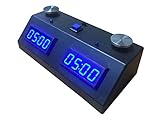 Zmartfun II Digital Chess Clock Zmartfun II Digital Chess Clock |
|
Check Latest Price |
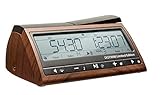 DGT3000 LE FIDE Approved Limited Edition DGT3000 LE FIDE Approved Limited Edition |
|
Check Latest Price |
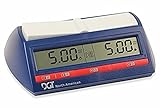
1. DGT North American Chess Clock – Best Overall for Beginners
DGT North American Chess Clock and Game Timer
FIDE Approved
30 Preset Modes
2 AA Batteries Included
10-Year Battery Life
Pros
- Very easy to set up
- Large readable display
- Smooth paddle action
- Cheat sheet on bottom of clock
Cons
- Manual can be confusing
- Only shows seconds below 20 min
This is the clock I reach for most often, and for good reason. The DGT North American hits the sweet spot between beginner-friendly simplicity and tournament-ready functionality. Out of the box, it comes with batteries included, which already puts it ahead of most competitors. The paddle action feels solid and satisfying, and the display is one of the largest and clearest I have tested.
What makes this clock particularly great for beginners is the cheat sheet printed right on the bottom. Instead of digging through a confusing manual, you just flip the clock over and see exactly how to set your preferred time control. I had my first game running in under two minutes without opening the instruction booklet. It comes with 30 preset time controls covering everything from rapid to classical, so you can start with a simple 15-minute game and work your way up to more complex settings as your skills improve.
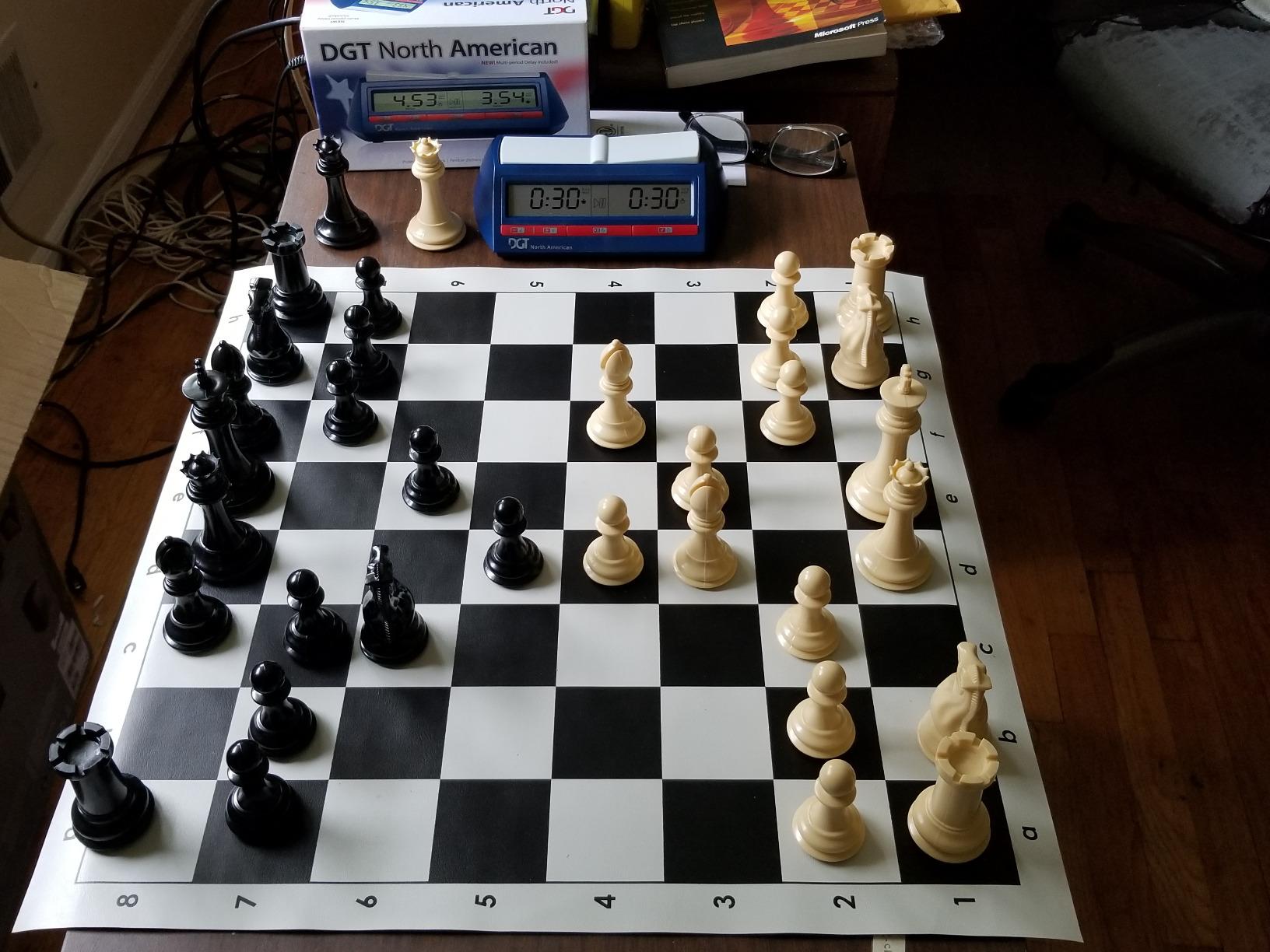
The DGT North American is FIDE approved, which means it is legal for official tournament play. If you plan to join a chess club or play in rated events, this clock will not hold you back. It supports Fischer bonus time up to 60 seconds, and the recessed power button prevents you from accidentally shutting it off mid-game. The wide base keeps it stable even during intense blitz sessions.
The main downside is that the display only shows seconds when your time drops below 20 minutes. For longer classical games, you only see hours and minutes, which some players find frustrating. The manual also gets confusing when you try to program custom time controls beyond the presets. But for the vast majority of beginners, the presets cover everything you need.
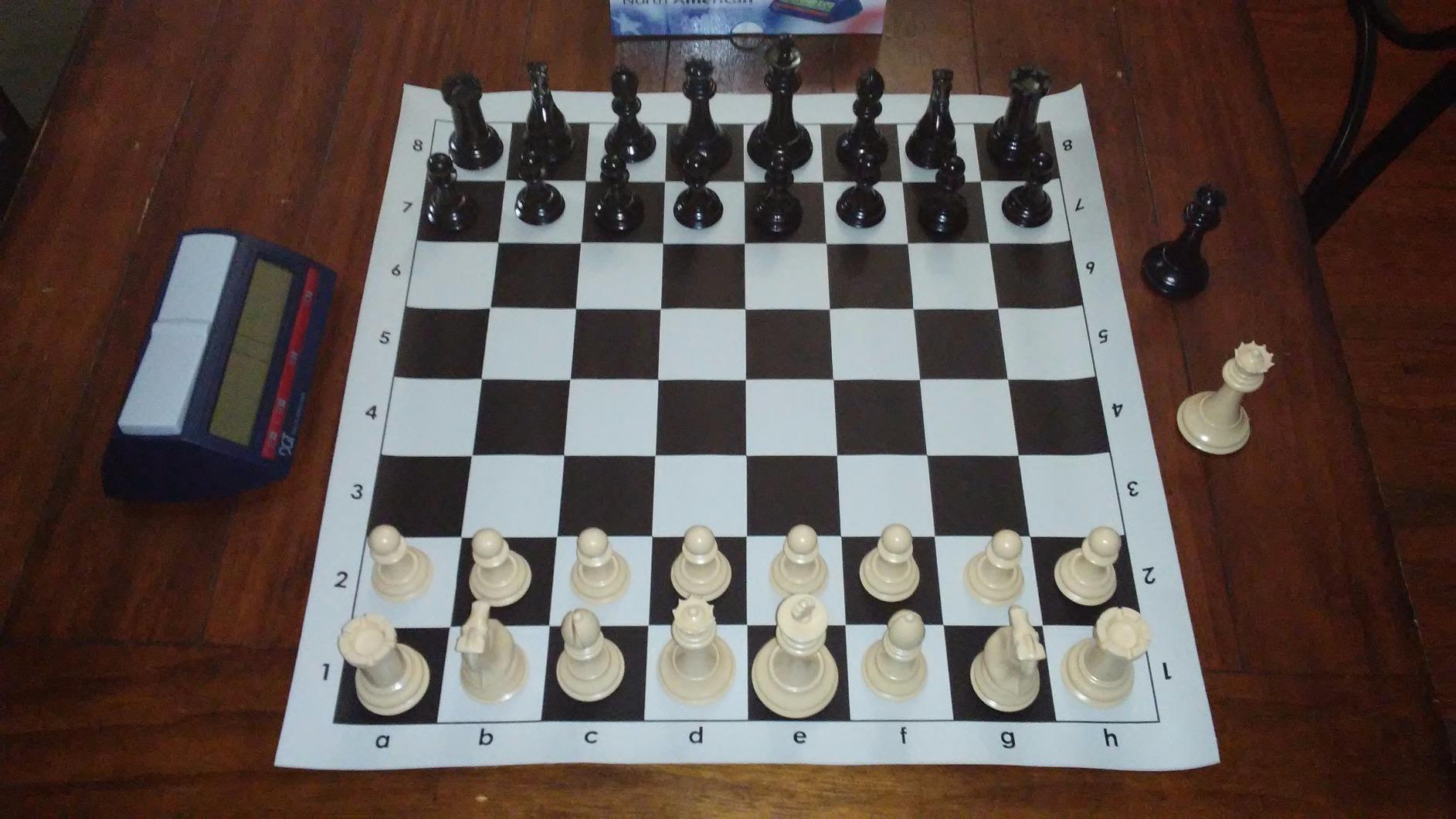
Who Should Buy This Clock
If you are a beginner who plans to play both at home and at a club, this is the one to get. The 30 preset modes cover all standard time controls, and the FIDE approval means you will never need to upgrade for tournament compliance. It is also a great choice if you want a clock that feels premium without paying professional-grade prices.
What to Watch Out For
The display limitation of only showing seconds under 20 minutes can be annoying during long classical games. You also have to power cycle the clock to switch between different time controls rather than cycling through them while it runs. These are minor annoyances for most beginners, but competitive players might find them restrictive.
2. A&A Chess Clock – Best Value Tournament-Ready Timer
A&A Chess Clock, Digital Chess Timer with 38 Tournament Modes, Stylish Minimalist Design with Rocker, Portable Timer for Chess & Board Games (Black)
36 Tournament Modes
Rocker Design
4000+ Hour Battery
Arbiter Mode
Pros
- 36 preset tournament modes
- Premium rocker feels smooth
- Extremely energy efficient
- Compact for travel
Cons
- Batteries not included (2 AAA)
- Learning curve for advanced settings
The A&A Chess Clock surprised me in the best way possible. For a clock at this price point, the build quality and feature set punch well above their weight. The matte black finish looks sleek on any table, and the rocker mechanism operates smoothly without the jamming issues I have experienced with cheaper levers. It feels like a clock that costs twice as much as it does.
With 36 pre-set tournament modes, this clock covers virtually every time control a beginner will encounter. I tested it with standard rapid (15+10), blitz (5+3), and classical (30+20) settings, and each one was straightforward to select. The high-contrast display makes it easy to read from across the board, even in low lighting. A&A also included an Arbiter Mode and Forced Move Counter, features usually reserved for much more expensive clocks.
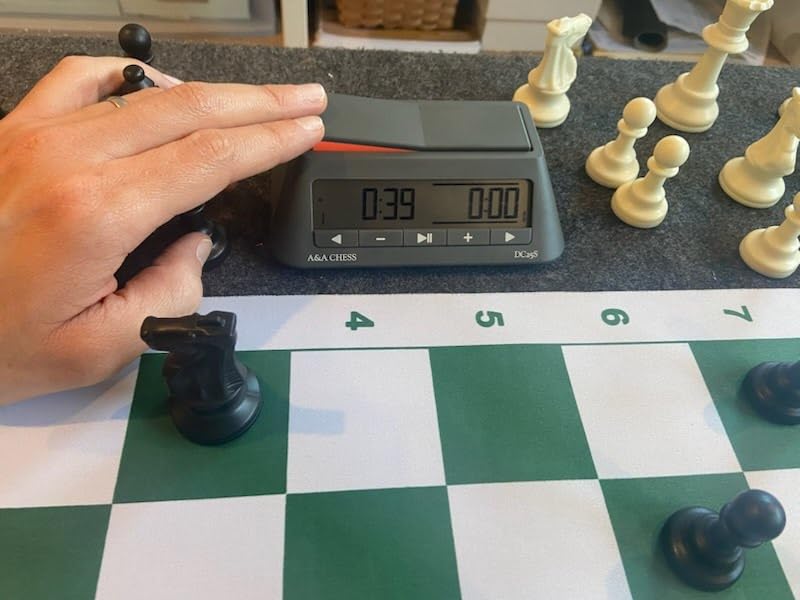
The battery life on this clock is remarkable. A&A claims over 4000 hours on two AAA batteries, which means you could play several games a week for years without replacing them. The compact size is another big plus. I easily slipped it into my roll-up tournament board bag alongside my pieces, something I cannot do with bulkier clocks like the DGT North American.
The main drawback is that the included manual does not do a great job explaining the more advanced settings. Beginners will figure out the basics quickly, but programming custom time controls takes some experimentation. The clock also does not come with batteries, so you will need to pick up two AAAs separately.
Who Should Buy This Clock
This is the ideal choice for budget-conscious beginners who want tournament-level features without the tournament-level price tag. If you play at a club, attend scholastic events, or just want a clock that will grow with you as you improve, the A&A delivers outstanding value. It is also perfect for players who travel to games and need something compact.
What to Watch Out For
The 106 review count means this is a newer product with less long-term track record compared to DGT models. The advanced settings menu takes patience to learn, and the abbreviated manual will not help much. Stick to the presets and you will be fine, but custom programming requires some trial and error.
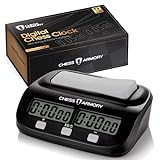
3. Chess Armory Digital Chess Clock – Best Budget Option
Chess Armory Digital Chess Clock – Portable Timer with Tournament and Bonus Time Features
Simple Controls
Single AA Battery
Tournament and Bonus Modes
Portable Design
Pros
- Simple and intuitive controls
- Lightweight and portable
- Long battery life on one AA
- Works for many 2-player games
Cons
- Plastic housing feels cheap
- Instructions could be clearer
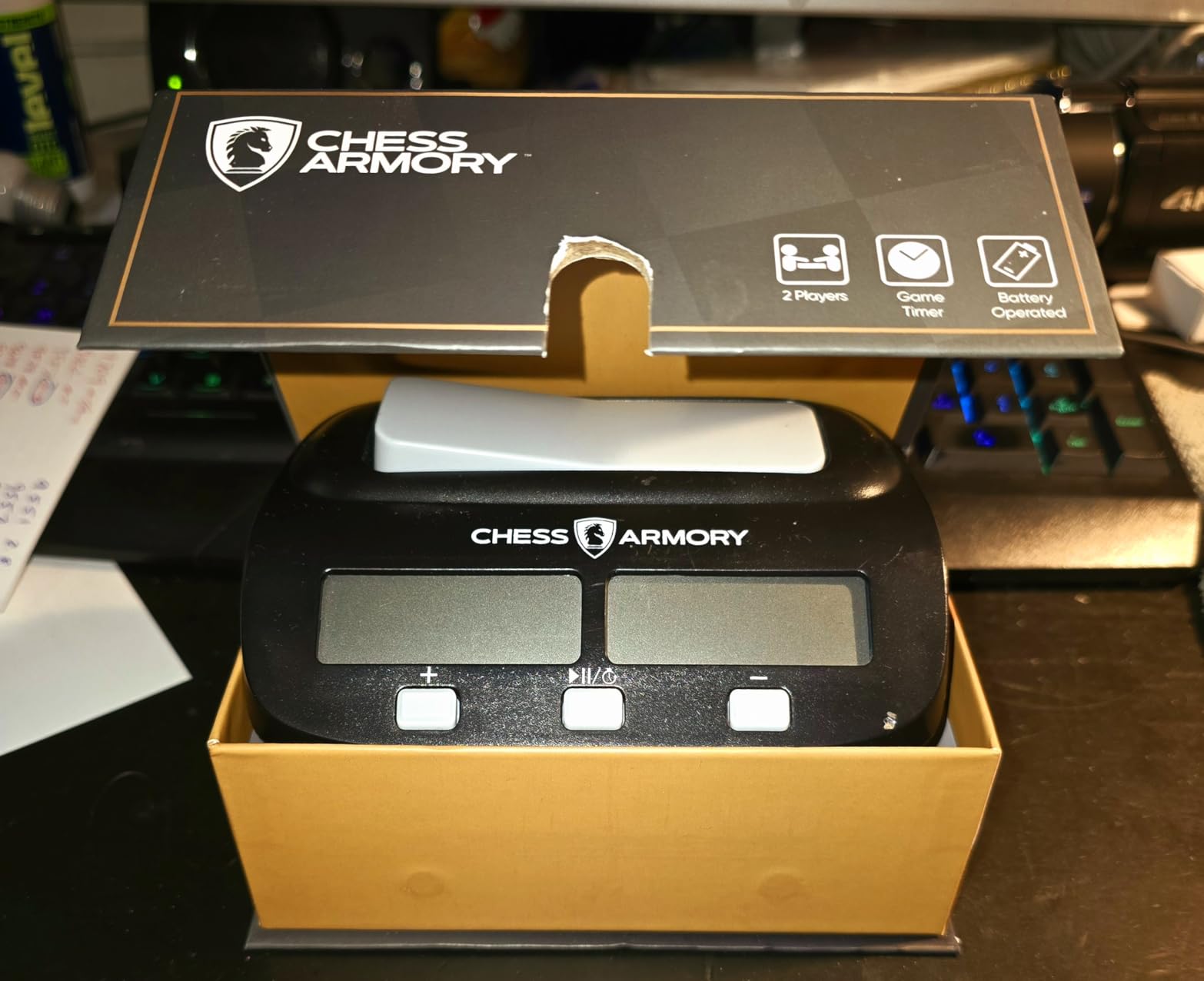
If you want the absolute simplest chess timer that gets the job done, the Chess Armory Digital Clock is my top budget recommendation. This clock strips away everything confusing and gives you a straightforward timer with tournament and bonus time features. With nearly 2,500 reviews on Amazon and a strong 4.6-star rating, it has proven itself reliable for thousands of beginners.
I handed this clock to a friend who had never used a chess timer before, and he had it running within a minute. The controls are genuinely intuitive. You set the time, press start, and play. No menus to navigate, no confusing mode buttons, no learning curve. It runs on a single AA battery, which is both convenient and long-lasting. The clock also works for Scrabble, Go, and other two-player games, making it versatile beyond chess.
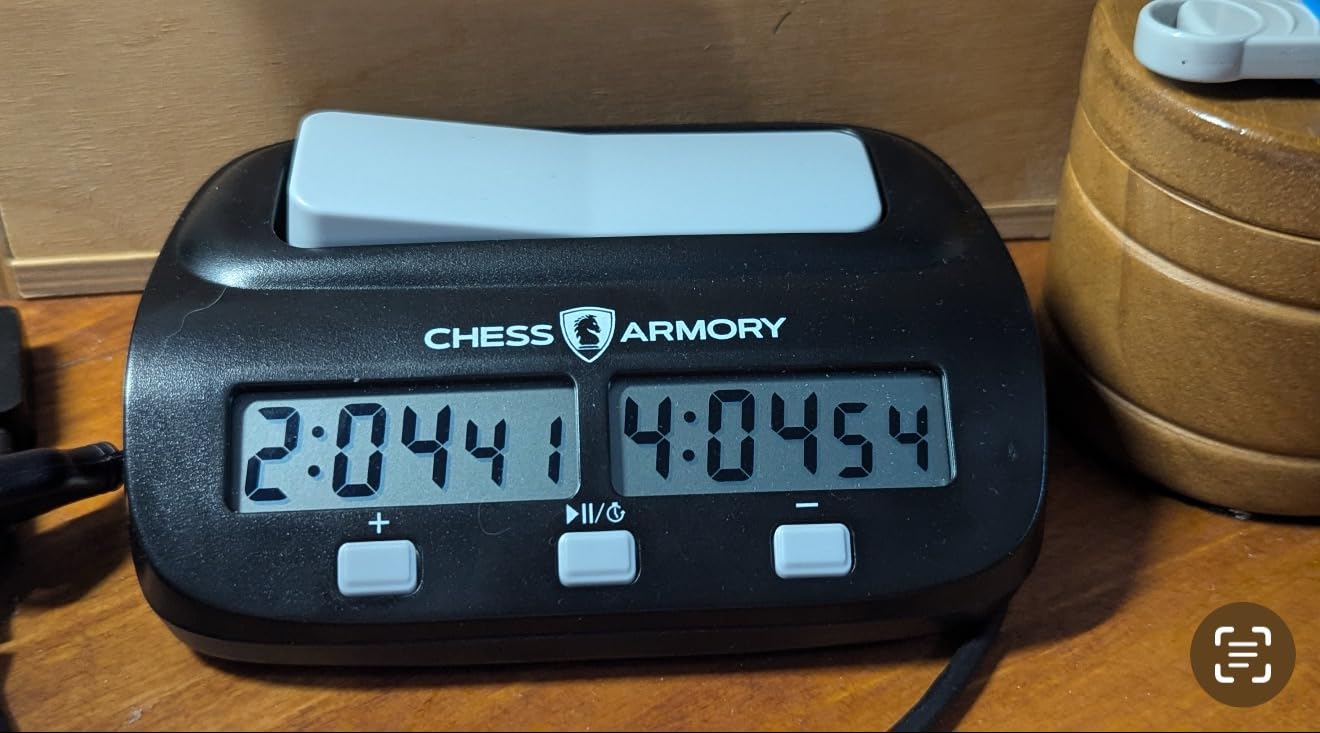
At just 249 grams, this is one of the lightest clocks I tested. It fits easily in a bag, and the compact 6-inch width takes up minimal table space. For beginners playing casual home games or kids learning chess at school, the portability is a real advantage. One reviewer mentioned their son loves that “dad now has a time limit,” which captures exactly what a chess clock should do for family play.
The trade-off is build quality. The plastic housing does feel light and slightly cheap in the hand. It is not a clock I would trust to survive a fall onto a hard tournament hall floor. The instructions are also sparse, though the simplicity of the clock means you probably will not need them much. This is a tool for getting started, not a lifetime investment.
Who Should Buy This Clock
This is perfect for absolute beginners, families, and school chess programs on a budget. If you just want to try playing with a clock without spending much, or you need multiple clocks for a classroom setting, the Chess Armory is the smartest choice. It also makes a great gift for someone just getting into chess.
What to Watch Out For
The plastic build will not impress anyone at a tournament, and the lack of advanced features like Fischer bonus or move counter means you may outgrow this clock as your skills develop. If you think you might join a club or play competitively within the next year, consider spending a bit more on the A&A or DGT North American instead.
4. LEAP Chess Clock Advanced – Best Mid-Range Feature Set
LEAP Chess Clock Digital Chess Timer Advanced for Board Game and Chess Timer with Bonus & Delay Count Down up Alarm Black/Orange
Bonus and Delay Modes
Move Counter for Both Players
Large Readable Display
Settings Memory
Pros
- Large easy-to-read screen
- Bonus delay and alarm functions
- Settings retained after power off
- Move counts for both sides
Cons
- Battery not included
- Inconsistent button sensitivity reported
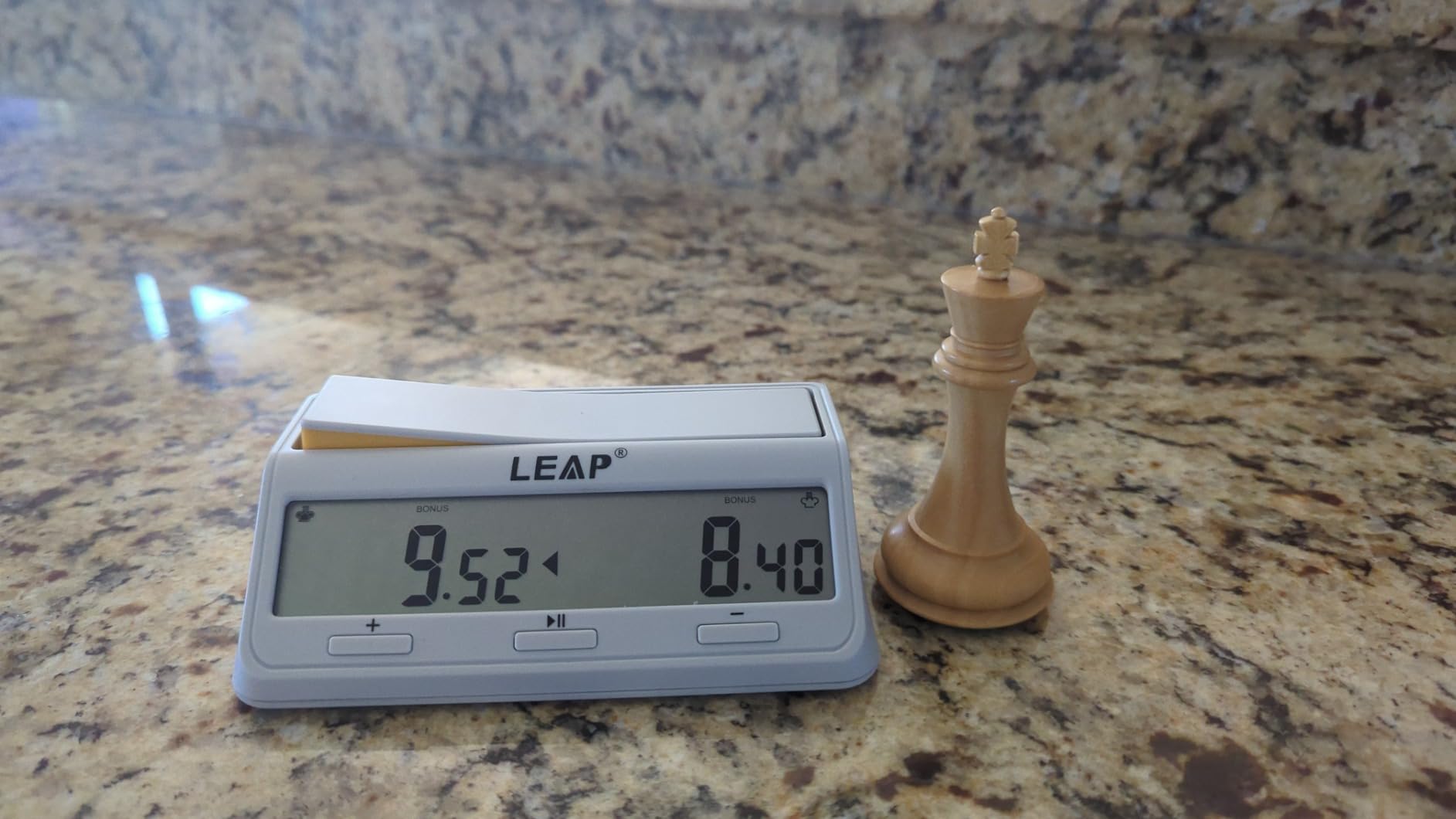
The LEAP Advanced in Black and Orange is one of those clocks that quietly does everything right. With over 1,300 reviews and a 4.7-star rating, it has earned serious credibility among casual and club players. I like the lever-style rocker on this model, which gives a more tactile, satisfying feel than simple push buttons. It adds a touch of style that sets it apart from generic black boxes.
The large display is one of the best in this price range. Numbers are crisp and readable from a sitting position, and the alarm tone when time expires is clear without being piercing. LEAP included count-up, count-down, bonus, and delay functions, covering all the time control formats a beginner will encounter. The move counter for both players is a nice addition that helps you track game length and analyze your pace afterward.
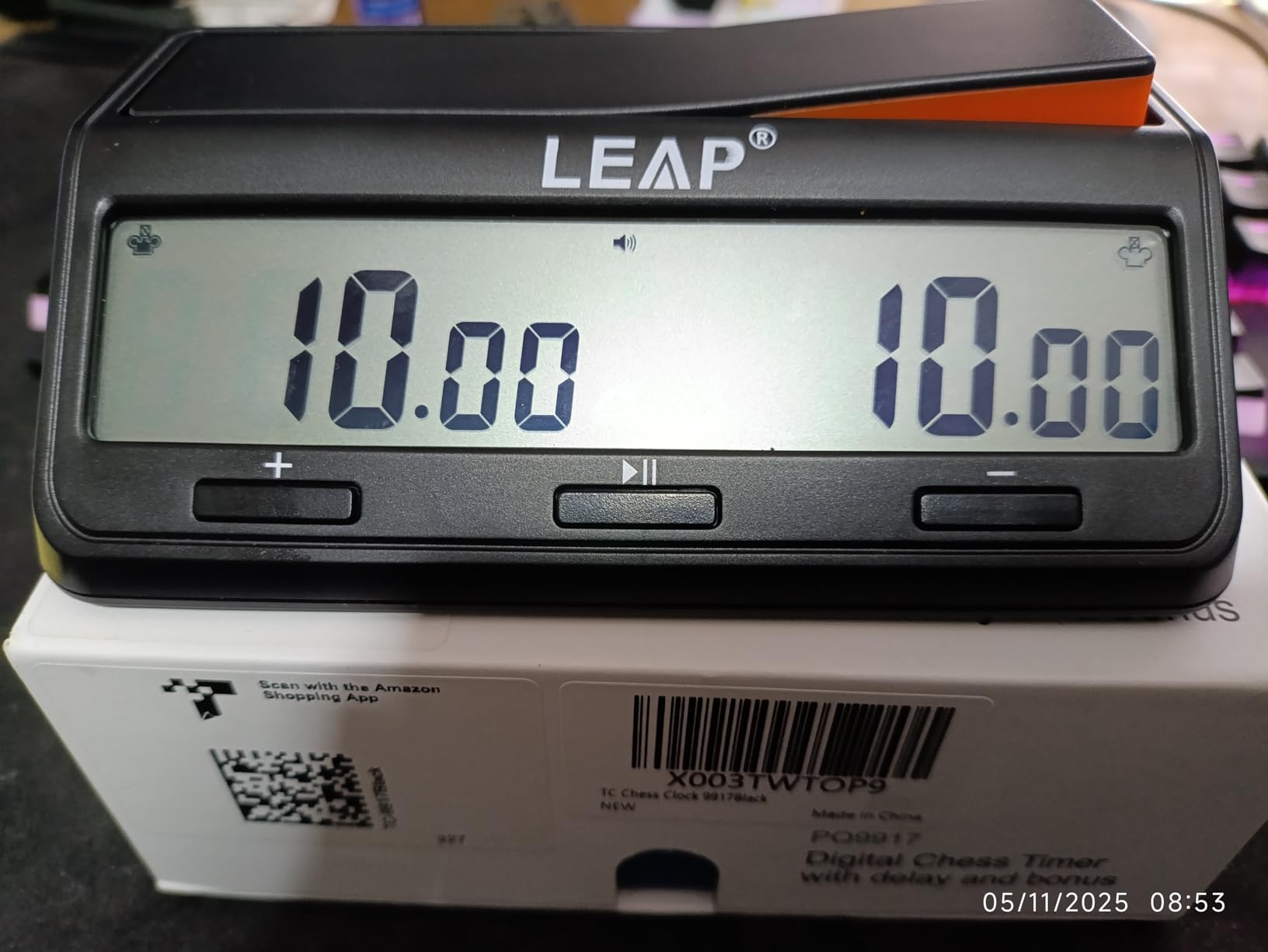
Settings memory is a feature I did not realize I needed until I had it. With the LEAP Advanced, your preferred time control stays saved even after you power off. This means no reprogramming every time you sit down to play. Just turn it on and start. For beginners who play the same time control repeatedly, this saves real time and frustration.
My main concern is the occasional report of inconsistent button sensitivity between the two sides. One reviewer noted that one side activated faster than the other, which could be a quality control issue. The instructions are also poorly written, which is a common complaint with LEAP products. Most people figure out the basics quickly enough, but the manual will not help much if you get stuck.
Who Should Buy This Clock
If you want a mid-range clock with every feature a beginner needs and some nice extras like move counting, the LEAP Advanced is an excellent pick. It hits the sweet spot between the bare-bones Chess Armory and the pricier DGT models. Club players who want bonus and delay modes without spending over $40 will find this clock more than adequate.
What to Watch Out For
The instruction manual is notoriously unhelpful, so plan to spend a few minutes experimenting with the buttons to learn the interface. There is also a small risk of quality variation between units, as some reviewers noted differences in button responsiveness between the left and right sides. Buying through Prime gives you an easy return option if you get a dud.
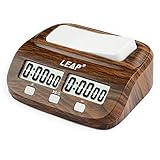
5. LEAP Chess Clock Wood Appearance – Best Looking Budget Clock
LEAP Chess Clock Digital Chess Timer for Chess Board Game Woodgrain Finish
Wood-Grain Appearance
Bonus and Delay Functions
Alarm Function
Settings Memory
Pros
- Attractive wood-grain finish
- Solid build quality
- Settings retained after power off
- Lightweight and portable
Cons
- Instructions are confusing
- Battery not included
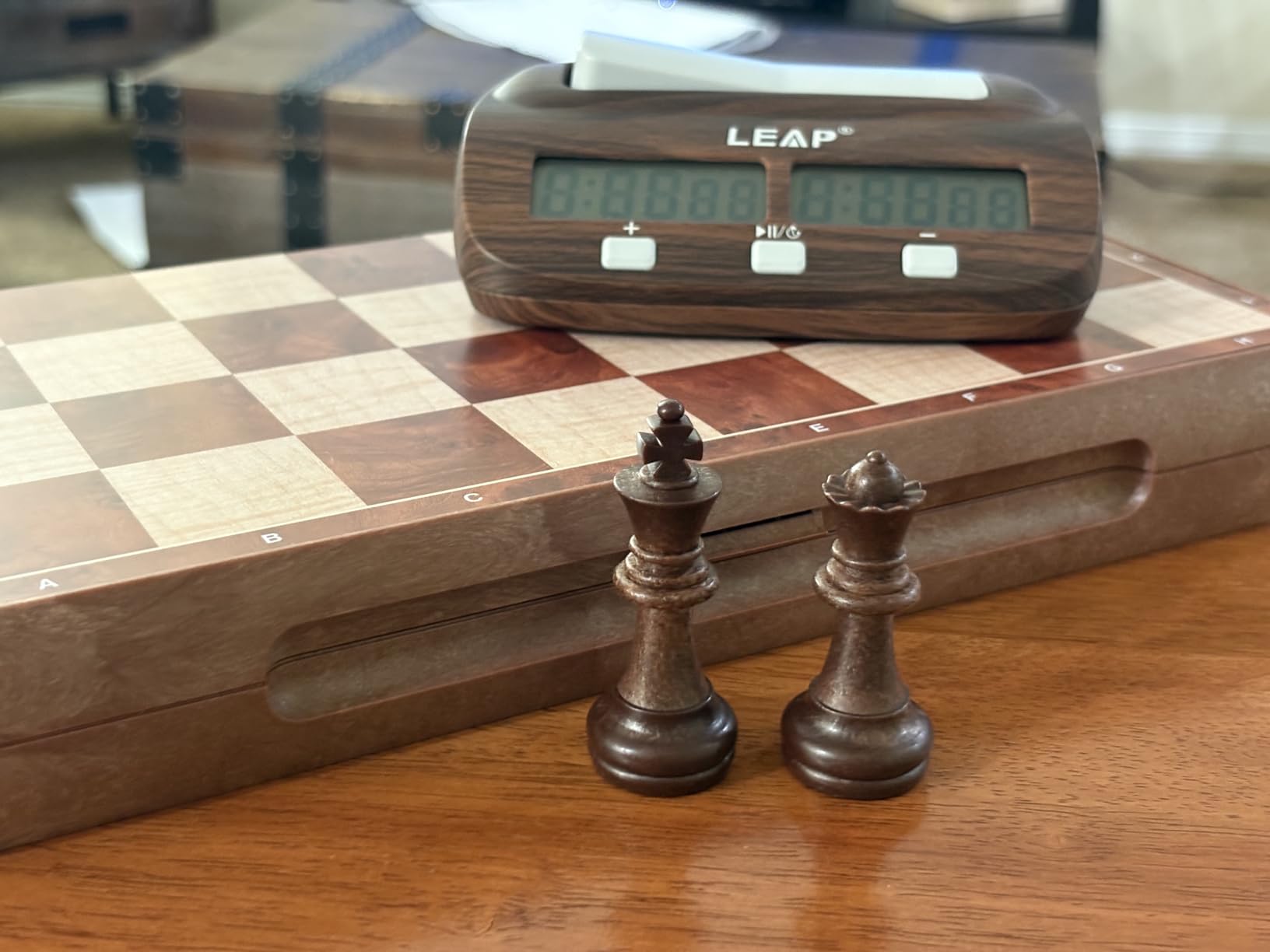
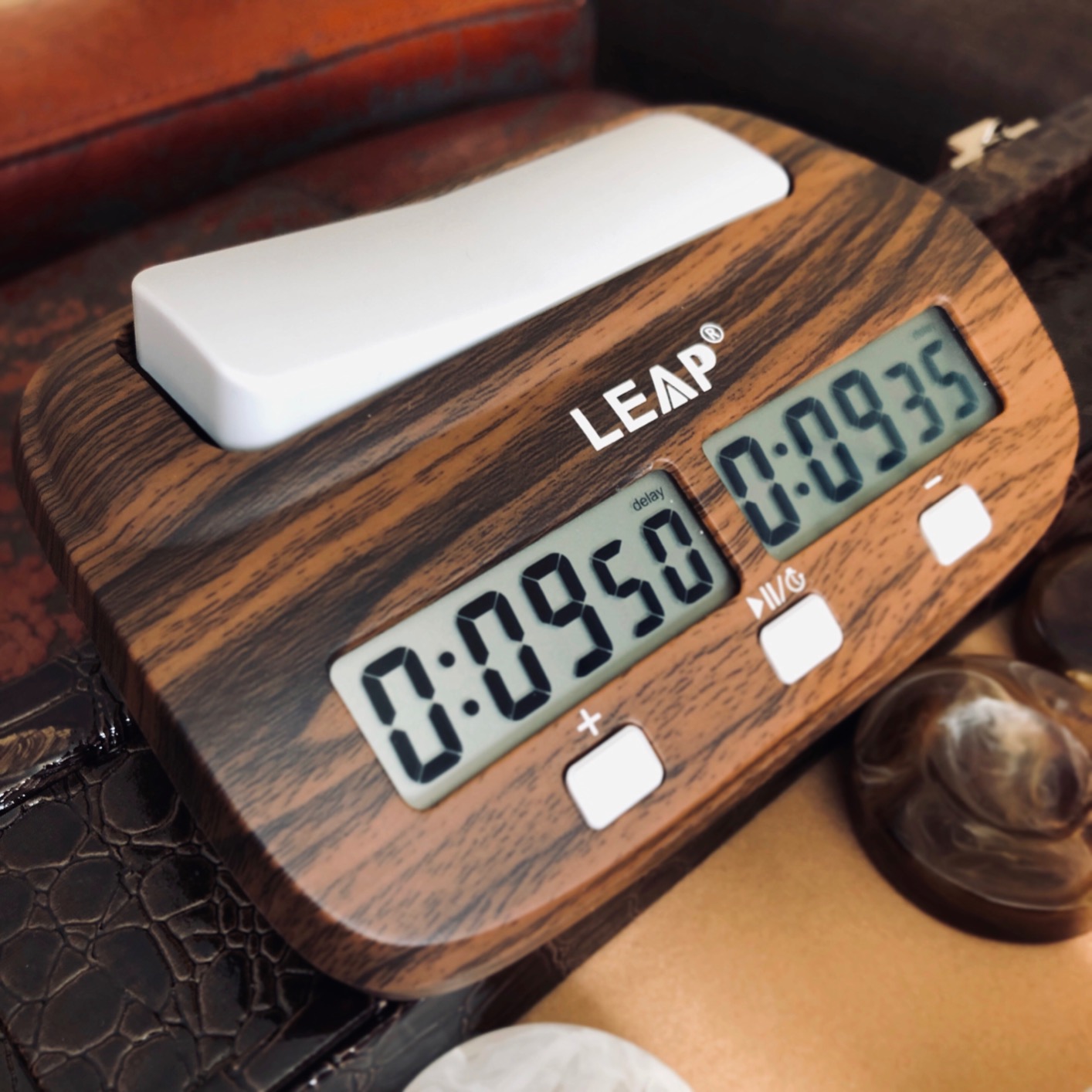
The LEAP Wood Appearance clock is functionally similar to the Black/Orange LEAP Advanced, but with one big difference: it looks gorgeous on a wooden chess board. The acrylonitrile butadiene styrene body has a convincing wood-grain finish that photographs beautifully and adds warmth to any chess setup. If you care about aesthetics as much as functionality, this is the budget clock to get.
Under the surface, it offers the same core features as its sibling: bonus and delay functions, count-up and count-down modes, alarm, and settings memory. The build feels solidly constructed despite the low weight. I was genuinely impressed by how sturdy it feels in the hand compared to the Chess Armory, which costs about the same. Multiple reviewers confirmed the same sentiment, calling it “solidly built” and noting it “does everything you need.”
The main frustration is the instruction manual, which multiple reviewers describe as confusing. Setting up basic time controls is straightforward enough, but programming countdown mode with bonus time requires patience and some trial-and-error. Once you figure it out, the clock remembers your settings, so you only need to suffer through the instructions once.
At just 249 grams, this is easy to toss in a bag for club nights or casual games at a friend’s house. It runs on a single AA battery, though like most budget clocks, the battery is not included. For the price, you are getting a reliable timer that looks like it belongs next to a nice wooden Staunton set.
Who Should Buy This Clock
This is the best choice for beginners who want a clock that looks as good as it performs. If you have a wooden chess board and want your timer to match the aesthetic, the LEAP Wood Appearance delivers without the premium price. It is also great for players who want a gift-worthy clock that does not scream “budget plastic.”
What to Watch Out For
The confusing instructions are the biggest barrier. Plan to spend 10 to 15 minutes experimenting before your first game. Also, the wood-grain finish is printed, not actual wood, so do not expect the tactile feel of real timber. It looks convincing from a distance but up close, it is clearly a plastic exterior with a wood pattern.
6. DGT 1001 Universal Gamer Timer – Simplest DGT Option
DGT 1001 Universal Gamer Timer
Trusted DGT Brand
Basic Time Controls
Sound On/Off Toggle
Counts Up After Expiry
Pros
- Trusted DGT build quality
- Simple and intuitive operation
- Durable despite light feel
- Settings retained after power cycle
Cons
- No increment or delay features
- Limited to basic time controls
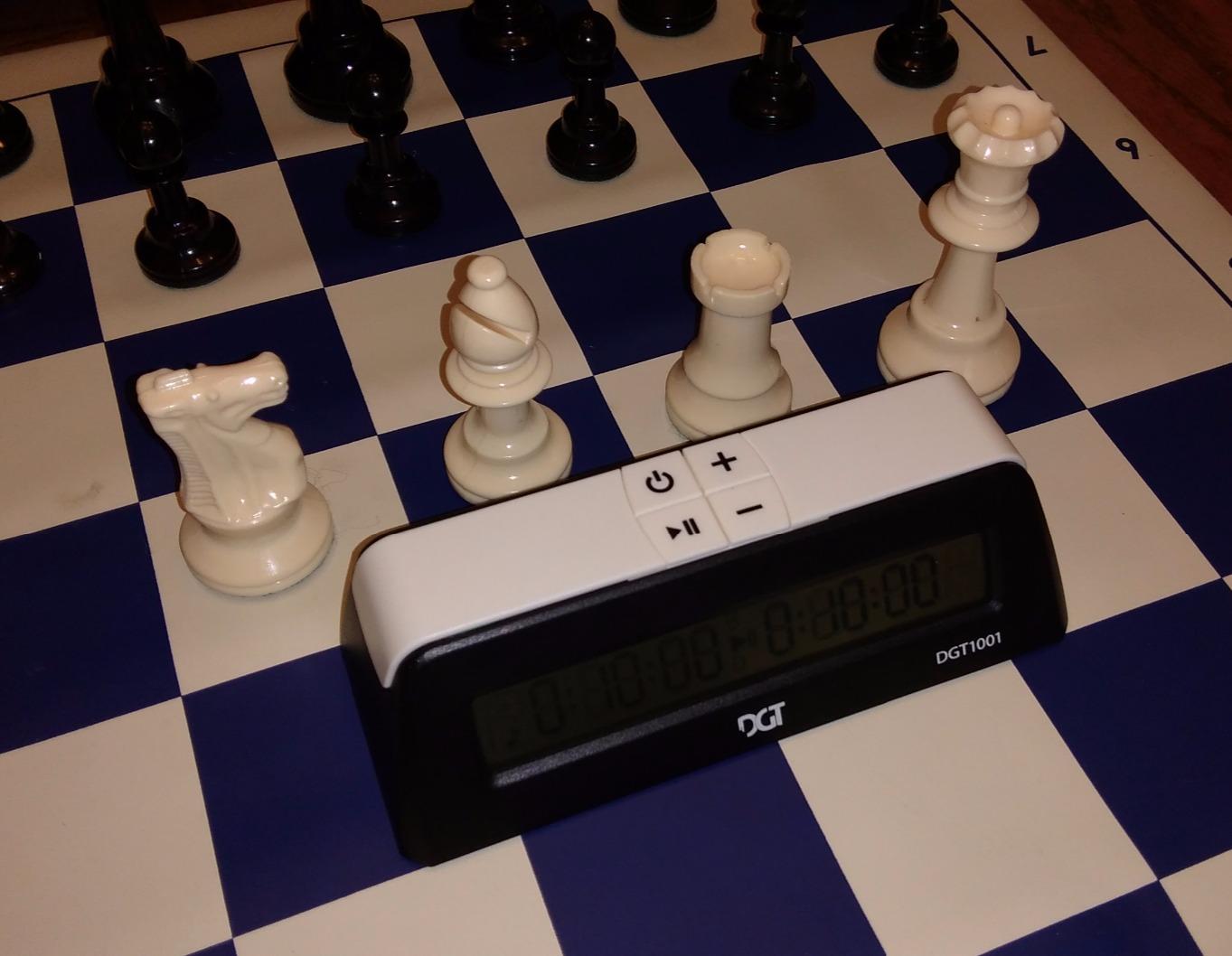
The DGT 1001 is for beginners who want the reliability of the DGT brand without paying for features they will never use. This clock does one thing and does it well: basic countdown timing. You set the minutes, press start, and play. No menus, no mode selection, no increment programming to worry about. It is the closest thing to an analog clock experience in a digital format.
One clever feature is that after your time expires, the clock switches to counting up instead of just flashing zero. This lets you see exactly how far over time your opponent went, which is useful for casual games where you might allow a few extra minutes. The sound can be toggled on or off, and settings are retained after you power down, so your preferred time control is always ready to go.
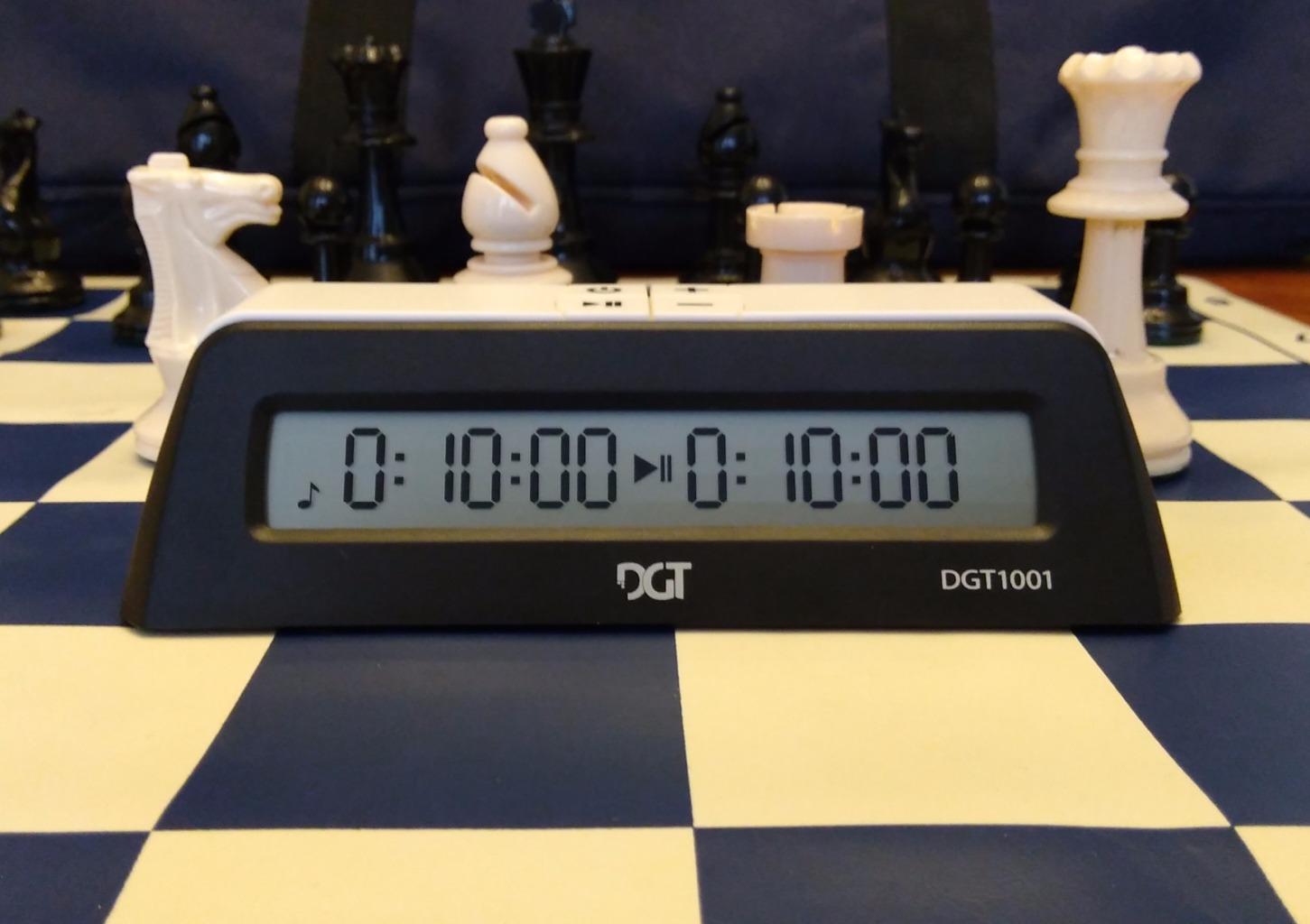
Multiple long-term reviewers praise the durability of this clock. One player from 2017 reported it still works perfectly after years of use, noting that while it “seems cheap by look and feel, it is durable.” DGT quality is real, and this entry-level model benefits from the same engineering standards as their tournament clocks.
The obvious limitation is the absence of increment and delay features. If you want to play with Fischer bonus time or Bronstein delay, this clock cannot do it. For beginners just starting with simple time controls like 15 minutes per player, that is not an issue. But as you advance and want to experiment with different timing formats, the DGT 1001 will not grow with you.
Who Should Buy This Clock
If you want the simplest possible chess clock from a trusted brand, the DGT 1001 is the answer. It is ideal for casual home players, seniors who prefer minimal technology, and anyone who finds menus and mode buttons frustrating. This clock is also a good choice if you primarily play classical time controls and do not need bonus or delay functions.
What to Watch Out For
The buttons are sensitive and can be accidentally triggered if you brush against them. More importantly, the lack of increment and delay support means this clock will feel limiting once you start playing at clubs that use Fischer or Bronstein time controls. If there is any chance you will join a tournament in the next year, the DGT North American is a better long-term investment.
7. Zmartfun II Digital Chess Clock – Best LED Display
ZmartFun II Digital Chess Clock – Black/Blue
Blue LED Display
Touch Sensor Controls
Made in USA
4 C Batteries
Pros
- Bright clear LED display
- Touch sensors work great
- Sturdy construction
- Made in USA
Cons
- Requires 4 C batteries
- Complicated setup process
- Hard to see in bright sunlight
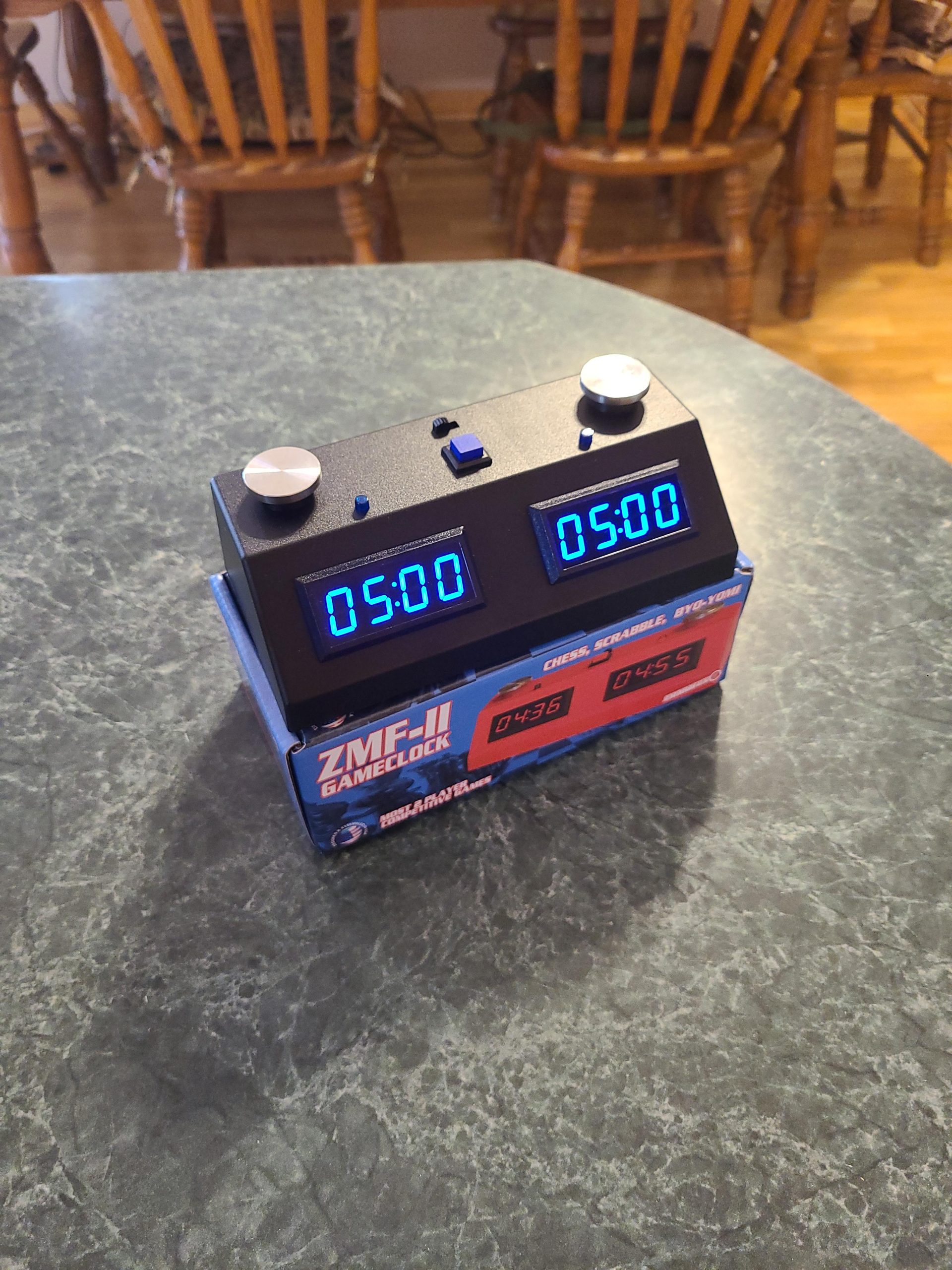
The Zmartfun II stands out from every other clock on this list because of its blue LED display. Instead of a standard LCD screen, it uses bright blue LEDs that are crisp and highly visible in normal indoor lighting. If you play in rooms with dim lighting or just prefer the look of LED over LCD, this clock delivers a genuinely premium visual experience.
The touch sensors are another distinguishing feature. Instead of pressing a physical lever or button, you simply tap the sensor on your side of the clock to switch the active timer. The touch response is excellent, with no lag or missed inputs in my testing. The construction feels sturdy and well-made, and Zmartfun is one of the few chess clock companies still manufacturing in the USA.
I also want to highlight Zmartfun’s customer service. Multiple reviewers specifically praised the company for going above and beyond when issues arose. In a market filled with generic import brands, having a responsive manufacturer behind your purchase adds real peace of mind. The clock also carries a limited warranty.
The trade-offs are significant for beginners though. First, it requires four C batteries, which are bulky and not something most people have lying around. The setup process is also more complicated than the other clocks on this list. You will need to spend time with the manual to understand how to program time controls, and the interface is not as intuitive as the DGT or LEAP options. At this price point, the learning curve feels steeper than it should be.

Who Should Buy This Clock
The Zmartfun II is best for intermediate beginners who want a distinctive-looking clock with excellent LED visibility and are willing to invest time learning the controls. It is also a great choice for players who value buying American-made products and want strong customer support behind their purchase.
What to Watch Out For
The four C batteries add weight and cost that beginners might not expect. The clock is also difficult to read in direct sunlight, making it a poor choice for outdoor or patio games. The complicated setup means this is not a plug-and-play option like the Chess Armory or DGT 1001. Budget at least 30 minutes with the manual before your first game.
8. DGT3000 LE – Best Premium Option for Ambitious Beginners
DGT3000 LE – Fide Approved Limited Edition Chess Timer…
FIDE Approved
Wood Effect Finish
Seconds Shown From Start
Professional Grade
Pros
- FIDE approved for tournaments
- Seconds visible from the start
- Beautiful wood-effect finish
- Same clock used by pros
Cons
- Menu system feels dated
- Priciest option on this list
- Wood grain is plastic not real wood
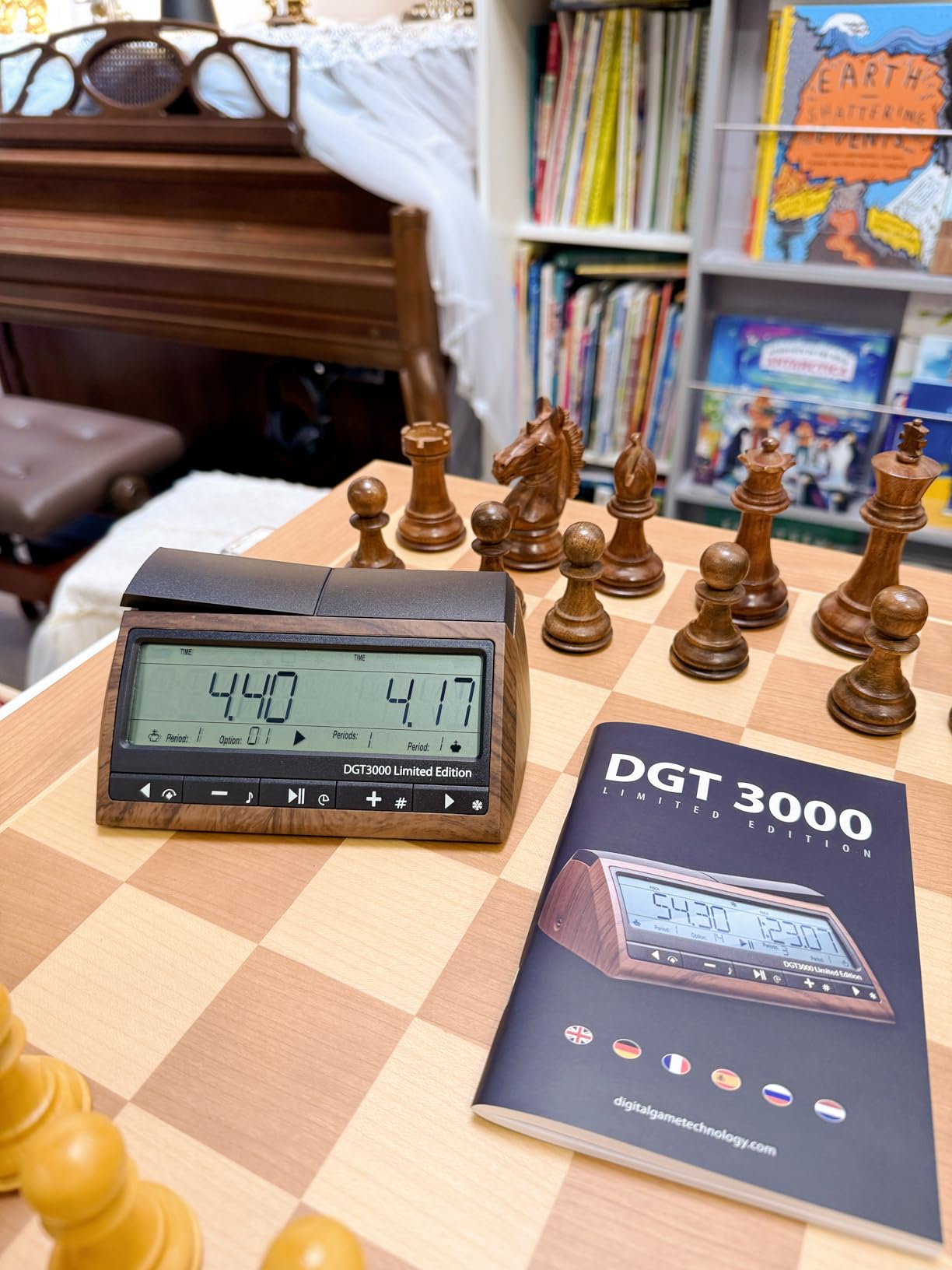
The DGT3000 LE is the clock you buy when you know chess is going to be a serious hobby. This is the same timer used in professional FIDE tournaments around the world, and it carries that pedigree in every detail. The limited edition wood-effect finish is genuinely attractive, and everywhere I take this clock, people comment on how good it looks next to a nice chess set.
For beginners, the biggest advantage is that seconds are displayed from the very start of the game. Unlike the DGT North American, which only shows seconds under 20 minutes, the DGT3000 LE gives you full precision from move one. This makes it much better for rapid and blitz formats where every second counts. The display quality is excellent, with clear, high-contrast digits that are easy to read under tournament lighting.
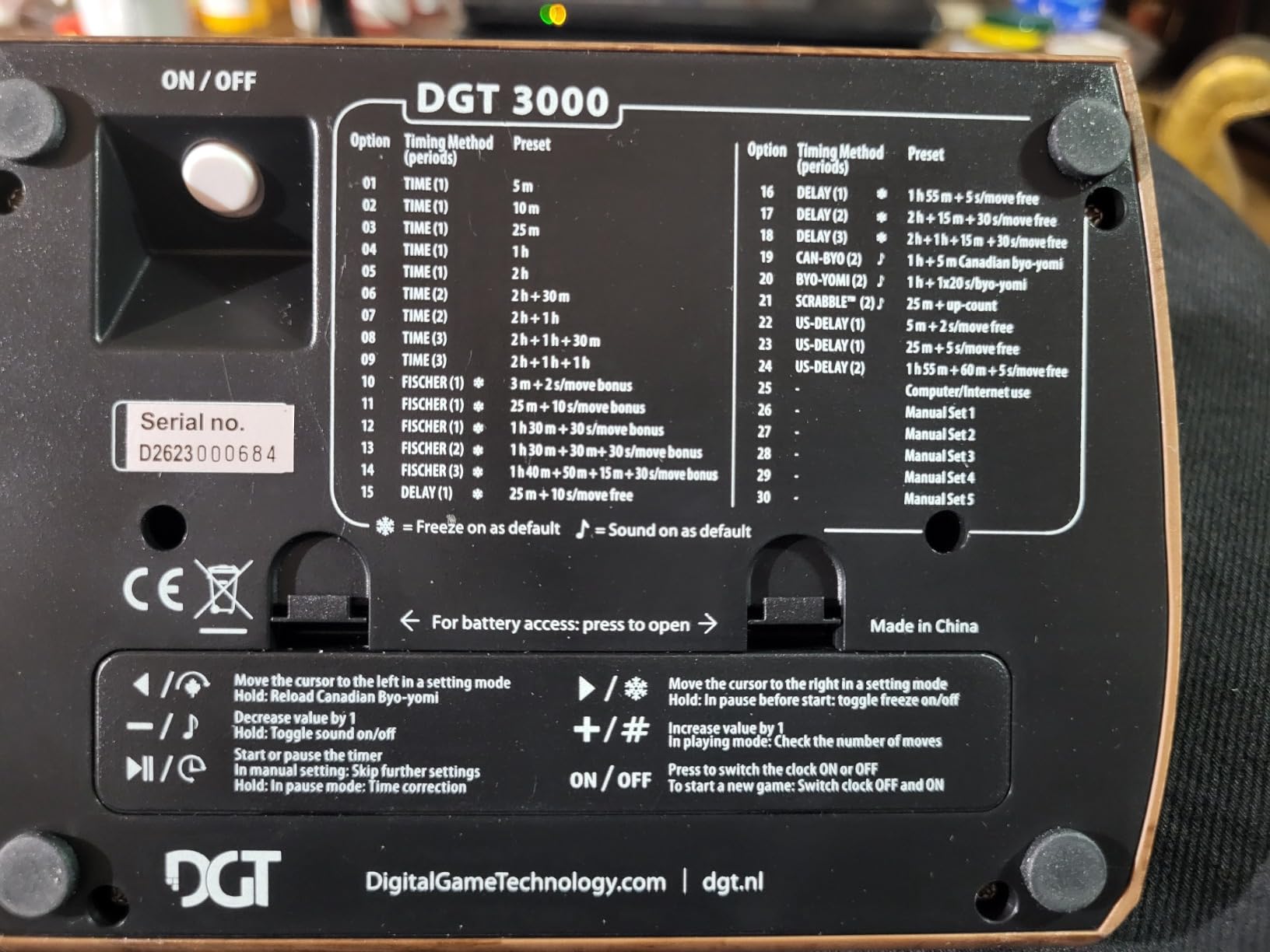
Setting up time controls is straightforward for standard formats, and the clock supports both increment and delay modes. It feels solid and professional in the hand, and the button response is consistently crisp. This is a clock that tells your opponents you take the game seriously before the first piece is even moved.
The menu system is the weakest point. It can feel dated and unintuitive, especially if you are coming from modern digital devices with touchscreens. Navigating through the options takes some getting used to, and the labeling is not always clear. The wood-effect exterior is also plastic with a printed grain, not actual wood. It looks convincing but does not have the tactile warmth of real timber.
Who Should Buy This Clock
This is for the ambitious beginner who knows they will be playing competitively. If you are already thinking about joining rated tournaments, attending club sessions regularly, or simply want the best chess clock on the market, the DGT3000 LE eliminates any need to upgrade later. It is also an excellent gift for a chess enthusiast who deserves something special.
What to Watch Out For
The price is the highest on this list, and for a pure beginner, it may be more clock than needed. The dated menu interface requires patience to learn, and the limited edition branding does not actually mean the clock is numbered or rare. If you are on the fence about committing to chess long-term, start with a less expensive option and upgrade to this one when you are sure.
Buying Guide: How to Choose a Chess Clock for Beginners
Choosing your first chess clock comes down to understanding a few key factors. I have broken down the most important considerations below so you can make the right decision without getting lost in technical jargon.
Digital vs Analog: Which Is Better for Beginners?
Digital clocks are the clear winner for beginners. They offer precise timing, multiple preset modes, and support for increment and delay formats that analog clocks simply cannot match. Analog clocks have a certain charm with their mechanical flag indicators, but they are harder to read, less versatile, and typically cost more for fewer features. Unless you specifically want the classic tournament aesthetic, go digital.
Key Features Beginners Actually Need
A good beginner chess clock should have large, easy-to-read digits, simple controls that do not require a manual to understand, at least one preset time control you can start using immediately, and a durable build that can survive being knocked off a table. Bonus features like Fischer increment, Bronstein delay, and move counters are nice to have but not essential on day one.
Understanding Time Controls: Increment, Delay, and Fischer Bonus
Three timing formats matter for beginners. Standard time control assigns each player a fixed amount of time per game, like 15 minutes. Fischer increment adds a set number of seconds after every move, so your time actually grows if you play quickly. Bronstein delay gives you bonus time per move but never more than the delay amount. For your first clock, make sure it supports at least standard and Fischer modes, since those are the most common formats at clubs and tournaments.
Common Beginner Mistakes with Chess Clocks
The biggest mistake I see beginners make is buying a clock with too many features they do not understand, then feeling too intimidated to use it. Start with a simple timer and learn the basics of time management first. Another common error is forgetting to press the clock after a move, which gives your opponent extra thinking time. Practice pressing the clock as part of your move routine until it becomes automatic. Finally, do not set your time control too short for your skill level. Beginners should start with 15 or 20 minutes per side and work their way down to faster formats as their instincts improve.
Battery and Power Considerations
Most digital chess clocks run on AA or AAA batteries, which last for hundreds or even thousands of hours. The DGT North American claims a 10-year battery life, while the A&A clock advertises over 4000 hours. Avoid clocks that require C batteries unless you do not mind the extra weight and cost. Always check whether batteries are included before ordering, as most budget clocks ship without them.
Which chess clock is easy to use?
The Chess Armory Digital Chess Clock is the easiest chess clock for beginners to use. It has simple controls, runs on a single AA battery, and requires almost no setup. The DGT 1001 is another very easy option if you prefer a trusted brand name. Both clocks let you start playing within minutes of opening the box without reading a complicated manual.
What chess clocks do pros use?
Professional chess players most commonly use the DGT3000, which is FIDE approved for official tournament play. The DGT North American is also widely used in clubs and rated events. At the highest levels, you will see DGT clocks connected to electronic boards that broadcast moves live online. Chronos clocks are another professional favorite known for their durability and ease of use.
How to choose a chess clock?
Choose a chess clock based on where you play, what time controls you use, and your budget. For home play, any basic digital clock with countdown mode works well. For club or tournament play, look for FIDE-approved models with increment and delay support. Key features to prioritize are large display digits, simple controls, and preset time controls. Beginners should spend between $20 and $50 for a reliable clock that covers all standard formats.
What clocks are FIDE approved for chess?
FIDE approved chess clocks include the DGT3000, DGT3000 LE, DGT North American, and several Chronos models. FIDE approval means the clock meets strict timing accuracy standards and supports all required time control formats for official tournament play. The DGT North American is the most affordable FIDE approved option on this list, making it an excellent choice for beginners who plan to compete.
How to use a chess clock for beginners?
To use a chess clock, first set the time control for both players using the clock’s controls. Place the clock on the side of the board so each player can easily reach their side. After making your move, press your side of the clock with the same hand you used to move the piece. This stops your timer and starts your opponent’s. The game continues with players alternating clock presses until one player runs out of time or the game ends by checkmate or resignation.
Conclusion
After testing eight of the most popular options, my top recommendation for the best chess clock for beginners is the DGT North American. It offers the best combination of ease of use, tournament readiness, display quality, and long-term value. For budget-conscious beginners, the Chess Armory Digital Clock gets you started for the lowest price, while the A&A Chess Clock delivers the best feature-to-price ratio in the mid-range. Whichever clock you choose, the important thing is to start playing with time controls. Your game will improve faster when every second counts.