

Running a scholastic chess tournament means getting the details right. The clock on each board has to work flawlessly, survive the occasional rough handling from an excited ten-year-old, and support the specific time controls your section requires. After testing and comparing dozens of models, our team put together this guide to the best chess clocks for scholastic tournaments so you can stop guessing and start equipping your event with confidence.
Whether you are a tournament director stocking up for a 200-player event, a school chess coach buying your first set of clocks, or a parent looking for the right timer for your child’s rated games, we have recommendations that cover every budget and need. Every clock on this list supports delay or increment time controls, which is non-negotiable for USCF-rated scholastic play in 2026.
We spent weeks evaluating each clock on display clarity, ease of programming, durability under repeated use, and how well it handles the standard scholastic time controls like G/30 d5 and G/25 d5. If you are also looking for ways to help young players improve their game beyond just equipment, check out our training plan for climbing from 800 to 1200 — it pairs well with the right clock for practice sessions at home.
Table of Contents
Top 3 Picks for Scholastic Chess Clocks
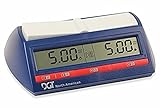
DGT North American Chess Clock
- 30 Programmable Settings
- Fischer Bonus up to 60s
- Delay Support
- Clear Display

LEAP FIDE Approved Chess Timer
- FIDE Approved
- 30+ Pre-programmed Modes
- Bonus and Delay
- Budget Friendly
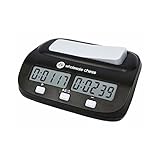
Wholesale Chess Basic Digital Clock
- Bonus and Delay
- Compact and Lightweight
- Simple Setup
- Under $20
Best Chess Clocks for Scholastic Tournaments in 2026
| Product | Specifications | Action |
|---|---|---|
| DGT North American Chess Clock |
|
Check Latest Price |
 DGT 3000 Official FIDE Timer DGT 3000 Official FIDE Timer |
|
Check Latest Price |
 DGT 2010 Digital Chess Clock DGT 2010 Digital Chess Clock |
|
Check Latest Price |
| LEAP FIDE Approved Chess Timer |
|
Check Latest Price |
 LEAP Chess Clock Advanced LEAP Chess Clock Advanced |
|
Check Latest Price |
 A&A Chess Clock 36 Tournament Modes A&A Chess Clock 36 Tournament Modes |
|
Check Latest Price |
 ZMF-II Digital Professional Chess Clock ZMF-II Digital Professional Chess Clock |
|
Check Latest Price |
 Chess Armory Digital Chess Clock Chess Armory Digital Chess Clock |
|
Check Latest Price |
| Wholesale Chess Basic Digital Clock |
|
Check Latest Price |
 Bobby Fischer Clock Powered by DGT Bobby Fischer Clock Powered by DGT |
|
Check Latest Price |
1. DGT North American Chess Clock – The Tournament Director’s Workhorse
DGT North American Chess Clock and Game Timer
30 Programmable Settings
Fischer Bonus up to 60s
Delay Support
2 AA Batteries Included
Pros
- Very easy to set and program
- Clear display readable at a distance
- Smooth lever action
- Durable and sturdy construction
- Fits in standard chess bag clock compartment
Cons
- Manual can be confusing for some time controls
- Only shows seconds below 20 minutes
- Reset requires turning off and on
I have run over 50 scholastic tournaments with the DGT North American, and it remains my go-to recommendation for any school or club that needs a reliable, no-nonsense chess clock. The lever action feels solid and deliberate, which matters when young players slap their side after a move. The display is large enough that a tournament director walking past a board can glance at both times without bending down.
The clock ships with 30 programmable settings, which covers every common scholastic time control you will encounter. Setting up a G/30 d5 game takes about ten seconds once you learn the button sequence. There is also a cheat sheet printed on the bottom of the clock, a small but genuinely helpful touch when you are scrambling to set up 30 boards before round one.
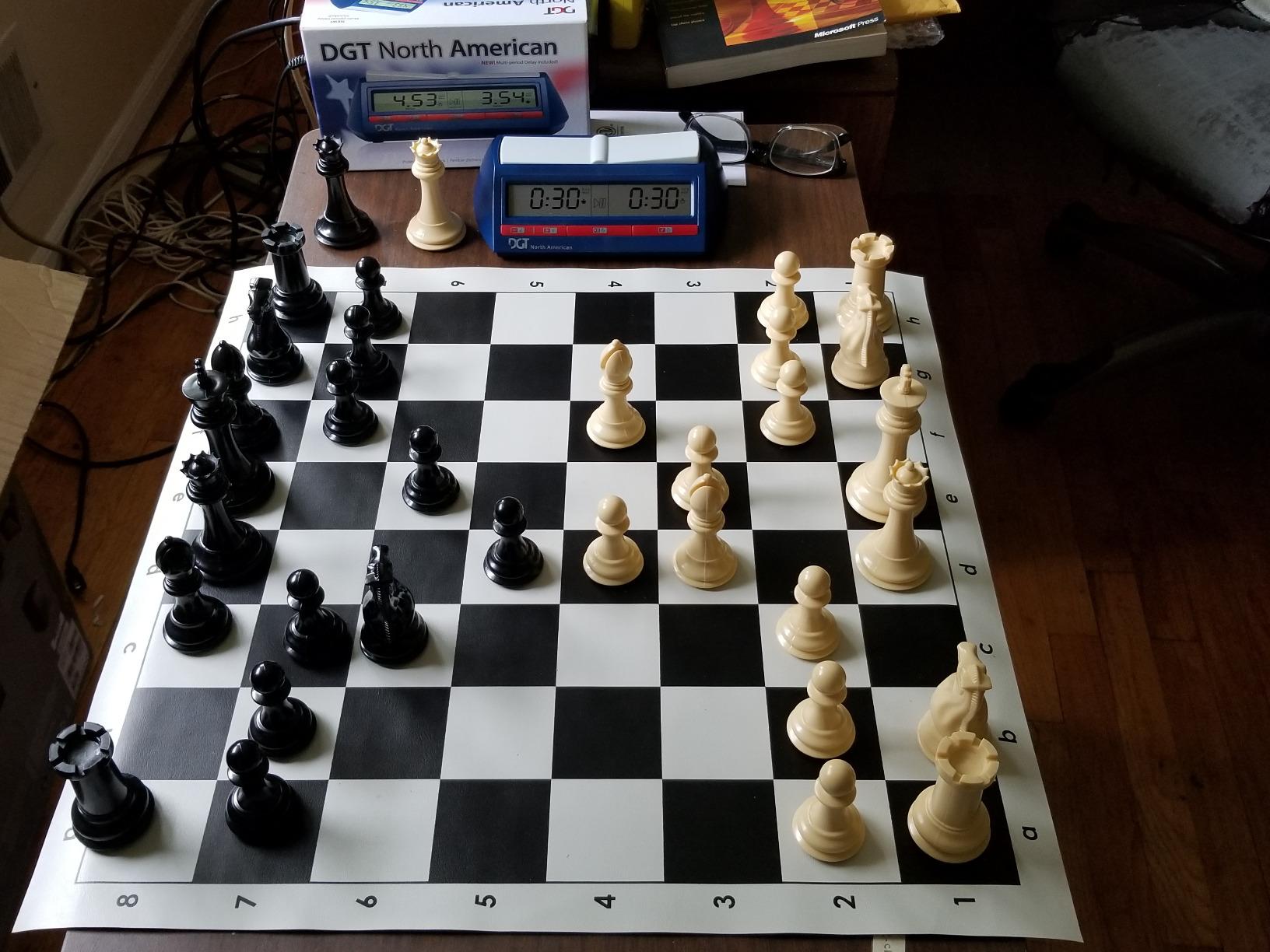
Fischer bonus support goes up to 60 seconds, and the delay function works cleanly for USCF-standard time controls. The two included AA batteries are rated for an estimated 10 years of use, which in my experience is optimistic but not wildly so — I have clocks that are still on their original batteries after three years of heavy tournament use.
The one thing I wish were different is the reset procedure. Starting a new game requires cycling the power off and back on, which adds a few seconds between rounds. It sounds minor, but when you are managing a large event, those seconds add up across dozens of boards.
Scholastic Tournament Compatibility
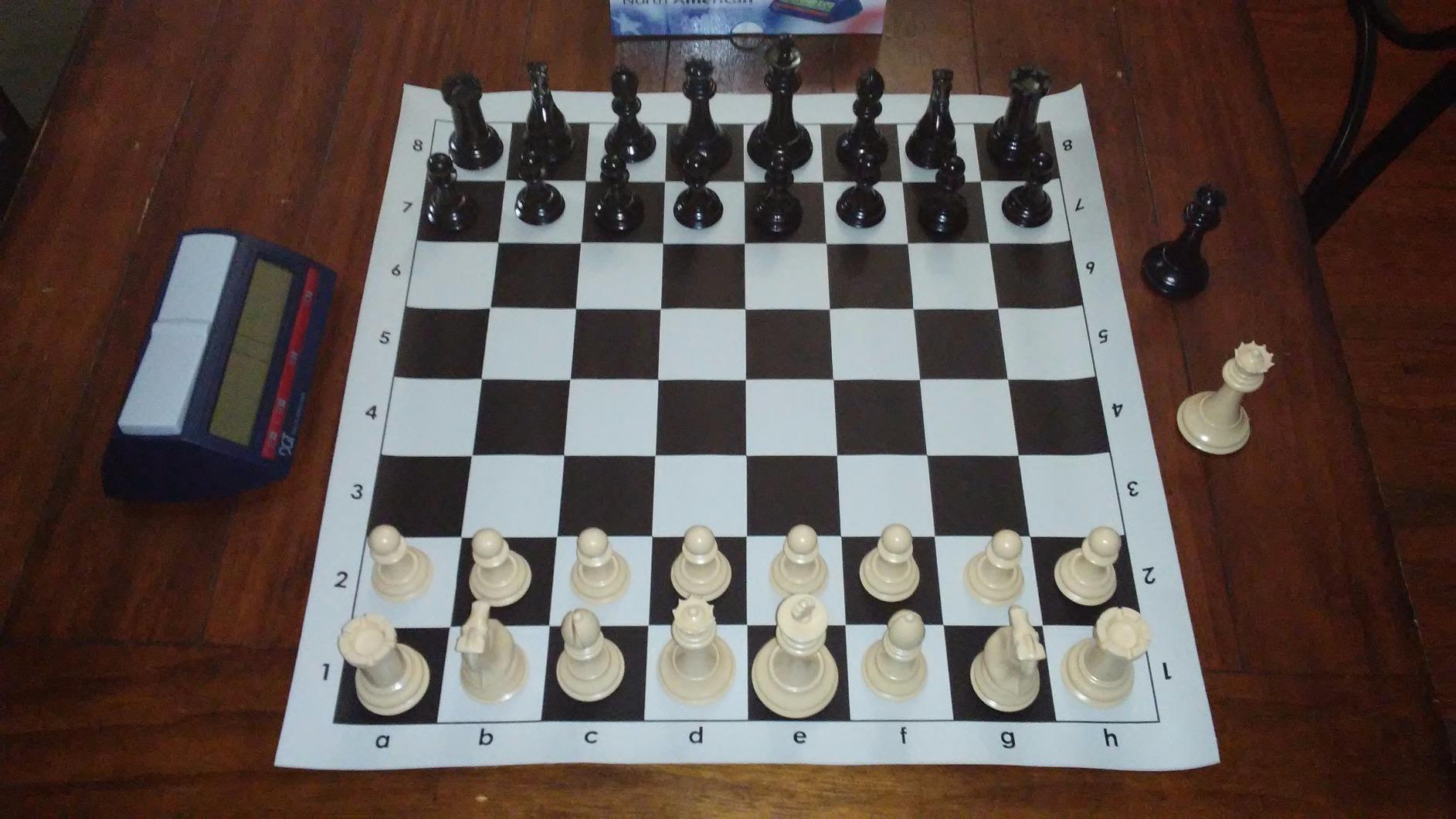
This clock handles every time control commonly used in USCF-rated scholastic events. G/30 d5, G/25 d5, and G/15 d0 all work out of the box with the preset options. The Fischer increment mode is available for events that use bonus time instead of delay, and you can set different base times for each side if you are running a handicap section.
The recessed power button deserves a mention — it prevents accidental shutoffs during play. I have seen kids lean on clocks, knock them around, and the DGT North American just keeps ticking. That kind of reliability is exactly what a tournament director needs.
Setup and Ease of Use for Tournament Directors
For tournament directors who need to train parent volunteers to set clocks, the DGT North American is the easiest model to teach. The button layout is straightforward: select your time control preset, verify the numbers on the display, and start the game. No scrolling through deep menus or deciphering abbreviated mode names.
The one downside is that the printed manual is not the clearest document. I recommend printing a one-page quick-reference guide for your volunteers rather than handing them the factory instructions. Once someone has set the clock two or three times, the process becomes second nature.
2. DGT 3000 Official FIDE Chess Timer – The World Championship Standard
Spel Timer DGT 3000
25 Presets + 5 Programmable
Move Counter
Large 3-Inch Display
FIDE Official Timer
Pros
- Largest clearest display of any digital clock
- Shows seconds at all times
- Move counter feature
- Supports all time control variants
- Professional tournament-grade quality
Cons
- Complex user interface requiring manual reading
- Battery door feels flimsy
- Reset procedure requires removing power
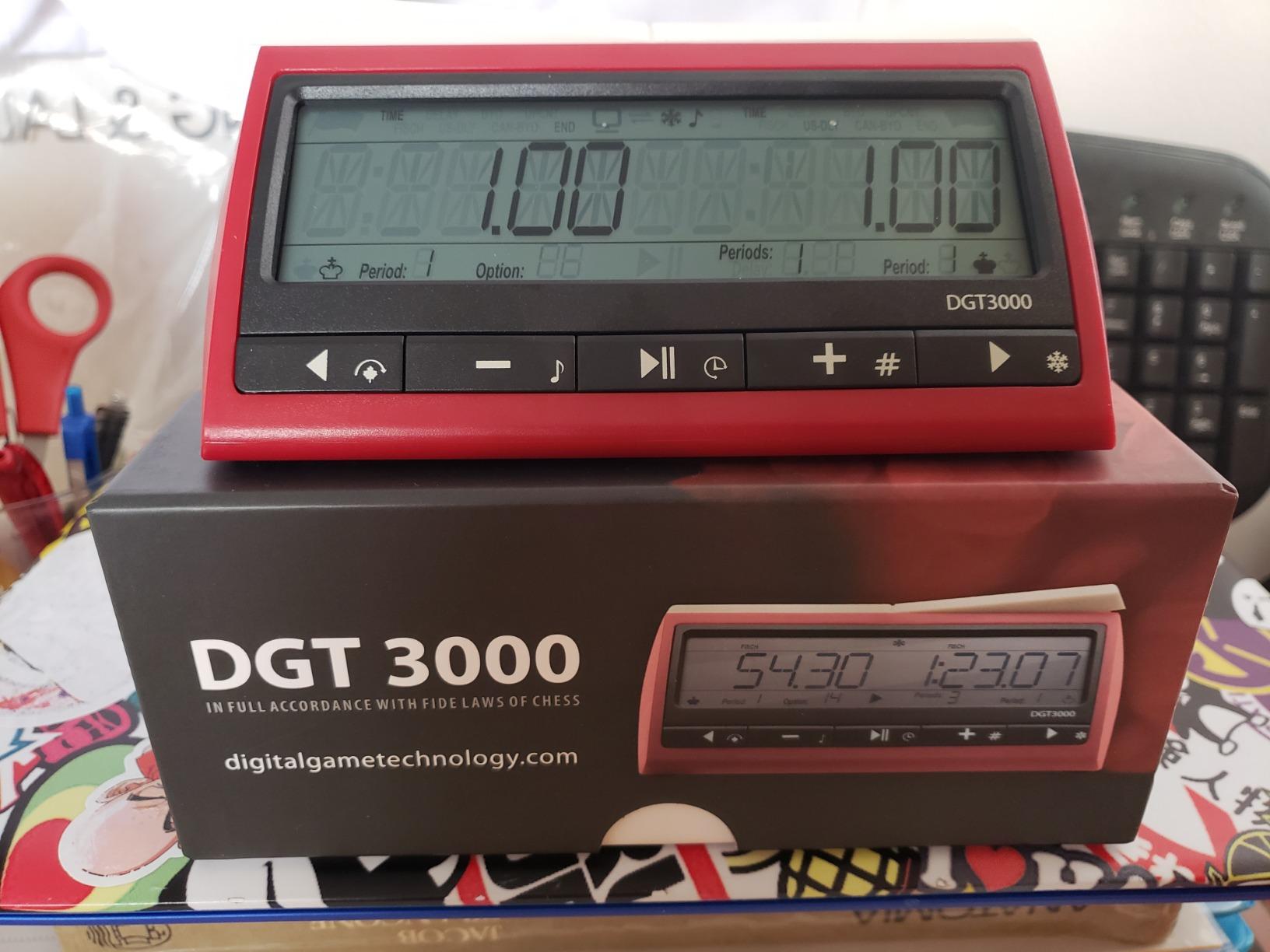
The DGT 3000 is the clock you see in World Championship matches and top-level FIDE events. It is the official FIDE chess timer, and for good reason — the display is the largest and most readable of any digital chess clock I have used. When you are running a scholastic event and need to check time from across the room, the DGT 3000 gives you that visibility without squinting.
It comes with 25 preset timing systems plus five user-programmable slots. Every standard time control is covered: Fischer increment, Bronstein delay, US delay, and simple countdown. The move counter is always active on screen, which is useful for tournaments that require a minimum number of moves before a time control change.
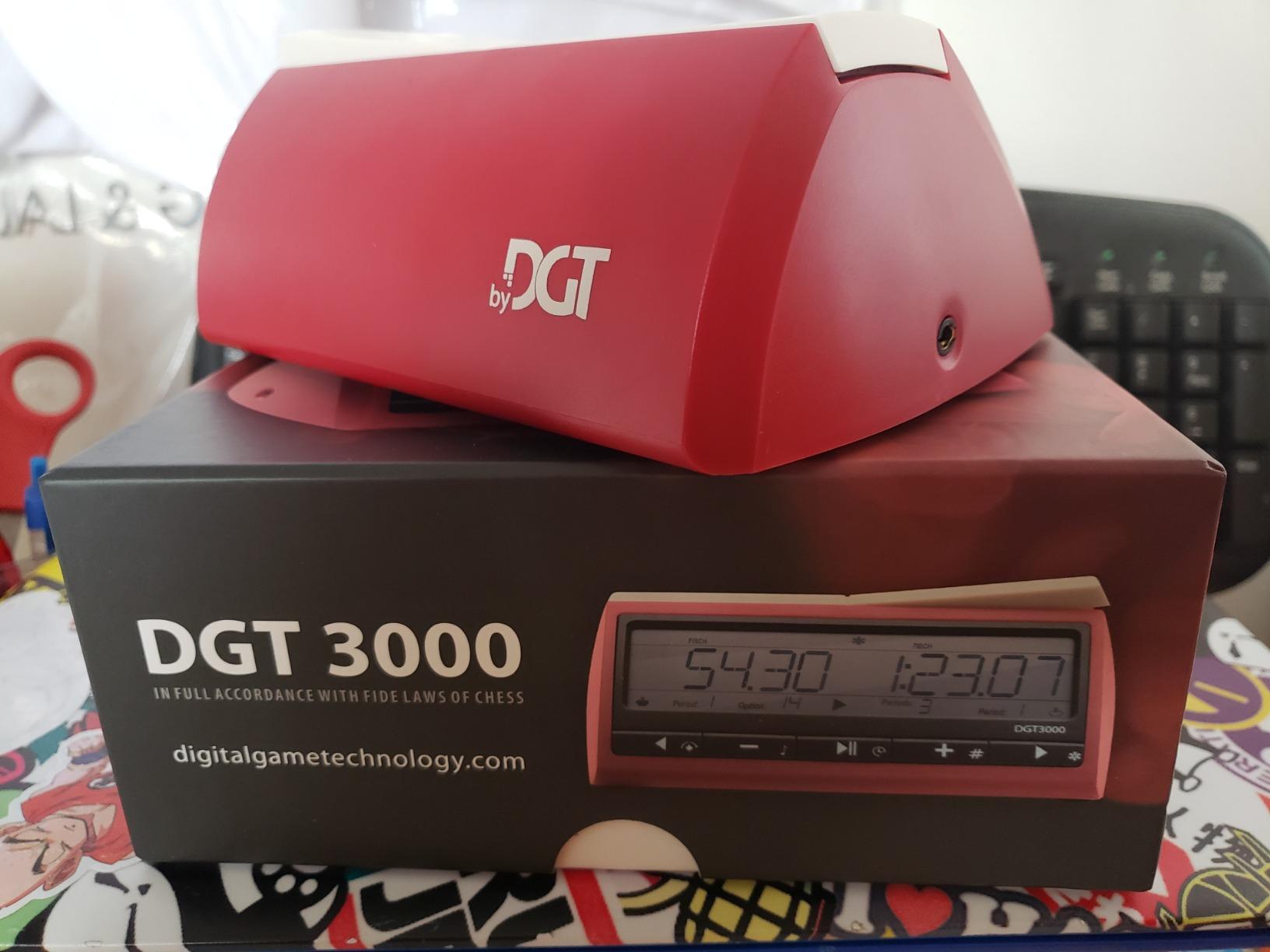
The lever action is smooth and the flag indication when time expires is clear and unambiguous. Young players have no trouble understanding when their time has run out. The six-language manual is helpful for diverse tournament environments, though the English section is thorough enough on its own.
My main concern for scholastic use is the complexity of the interface. Tournament directors who are comfortable with the DGT North American will find the 3000 has a steeper learning curve. It is not a clock you hand to a parent volunteer and expect them to figure out in 30 seconds. But for experienced directors running rated events, the feature set is unmatched.
FIDE and USCF Tournament Compliance
As the official FIDE timer, the DGT 3000 is approved for every level of rated play from local scholastic events to the World Championship. It also meets all USCF requirements for tournament clocks. If your school or club hosts rated events and you want a clock that will never be questioned by an arbiter, this is the one.
The clock connects to DGT electronic sensor boards for live game transmission, which is overkill for most scholastic tournaments but a nice feature if your event is being broadcast online. Some state championship events are starting to use this capability.
Display Readability for Young Players
The three-inch display shows hours, minutes, and seconds simultaneously at all times. This is a big deal for younger players who might get confused by clocks that only show seconds below a certain threshold. With the DGT 3000, there is never a moment of uncertainty about how much time remains.
The contrast is sharp and the digits are large. I have used this clock in gymnasiums with harsh overhead lighting and never had a readability issue. For young players who are still learning to manage their time, a clear display can make the difference between a well-played game and a confusing time scramble.
3. DGT 2010 Digital Chess Clock – The Versatile Professional
DGT DGT2010 – Digital Chess Clock with Fide Logo, Multi-Colour
36 Timing Modes
Bronstein and Fischer
Connects to DGT Sensor Board
2 AA Batteries
Pros
- Best digital chess clock for versatility
- Multiple time control options including Bronstein
- Smooth lever action
- Connects to DGT electronic boards
- Approved for FIDE and USCF tournaments
Cons
- Instructions could be clearer
- 5-step reset procedure is slow
- Complex for beginners initially
The DGT 2010 sits between the North American and the 3000 in the DGT lineup, and it offers something neither of those models has: 36 timing modes. That includes Bronstein delay, Fischer increment, and the ability to mix time controls within a single game. For tournament directors who run events with multiple sections at different time controls, this flexibility is valuable.
I have used the 2010 at club tournaments where we needed to switch between a rapid section and a classical section on the same set of clocks. The mode selection covers both without any custom programming. The display is clear and the lever action has that same solid DGT feel that makes their clocks the standard in tournament chess.
The standout technical feature is the ability to connect to DGT electronic sensor boards. If your scholastic organization is moving toward live-streaming games or running online simul exhibitions, the 2010 handles that integration seamlessly. Most school tournaments will not need this, but it future-proofs your investment.
The five-step reset procedure is my biggest complaint. Between rounds, you have to go through a sequence of button presses that feels slower than it should be. The instructions printed on the underside of the clock help, but it is still not as fast as the power-cycle reset on the North American model.
Advanced Time Control Options
The 36 timing modes cover every standard chess time control plus several non-chess options. For scholastic use, the Fischer and Bronstein modes are the most relevant. Fischer adds a fixed amount of time after each move, while Bronstein adds time up to the amount used on that move. Both are approved for USCF-rated scholastic play.
The clock also supports an upcounting mode for non-chess games, which makes it useful for school game rooms and after-school programs that run more than just chess. That versatility can justify the investment for schools on a tight budget that want one set of timers for multiple activities.
Electronic Board Connectivity
The DGT 2010 connects directly to DGT electronic sensor boards via a cable. This allows real-time move transmission to computers or broadcast systems. For a scholastic organization that hosts championship events or wants to stream top boards, this capability turns the clock from a simple timer into part of a broadcasting setup.
Setting up the connection is straightforward if you already have DGT sensor boards. The clock is recognized automatically and transmits move data as it happens. If you are not using electronic boards, this feature is invisible and does not affect normal clock operation in any way.
4. LEAP FIDE Approved Digital Chess Timer – Best Value for School Programs
LEAP Digital Chess Clock Fide Approved Chess Timer, 37 Time Pre Settings
FIDE Approved
30+ Pre-programmed Modes
Bonus and Delay
1 AA Battery
Pros
- Perfect balance of affordability and functionality
- FIDE approved for rated play
- Intuitive controls
- Compact and durable build
- Remembers last setting
Cons
- Plastic housing feels lightweight
- Clicks have a plasticky feel
- Reset process can be inconvenient
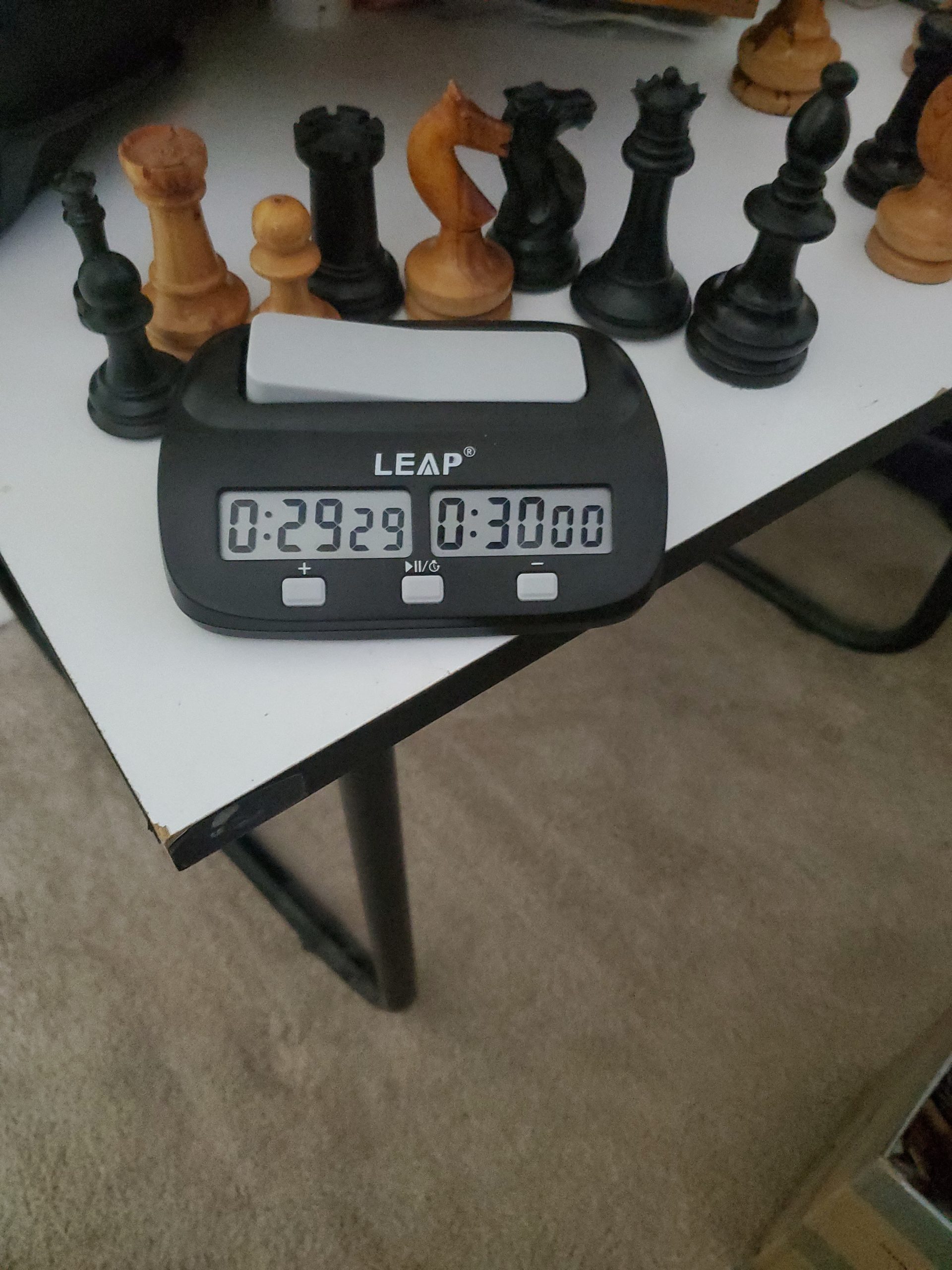
The LEAP FIDE Approved is the clock I recommend most often to schools and clubs that need to buy 10 or 20 clocks without blowing their budget. It carries an actual FIDE approval, which means it is legal for rated tournament play at every level. That is a remarkable achievement at this price point.
With over 2,200 reviews and a 4.5-star rating, this clock has been tested by more players than almost any other model on the market. The 30-plus pre-programmed timing modes cover standard chess, Chinese chess, and I-GO. For scholastic tournaments, the bonus and delay functions work correctly and the display is easy to read from a normal playing distance.
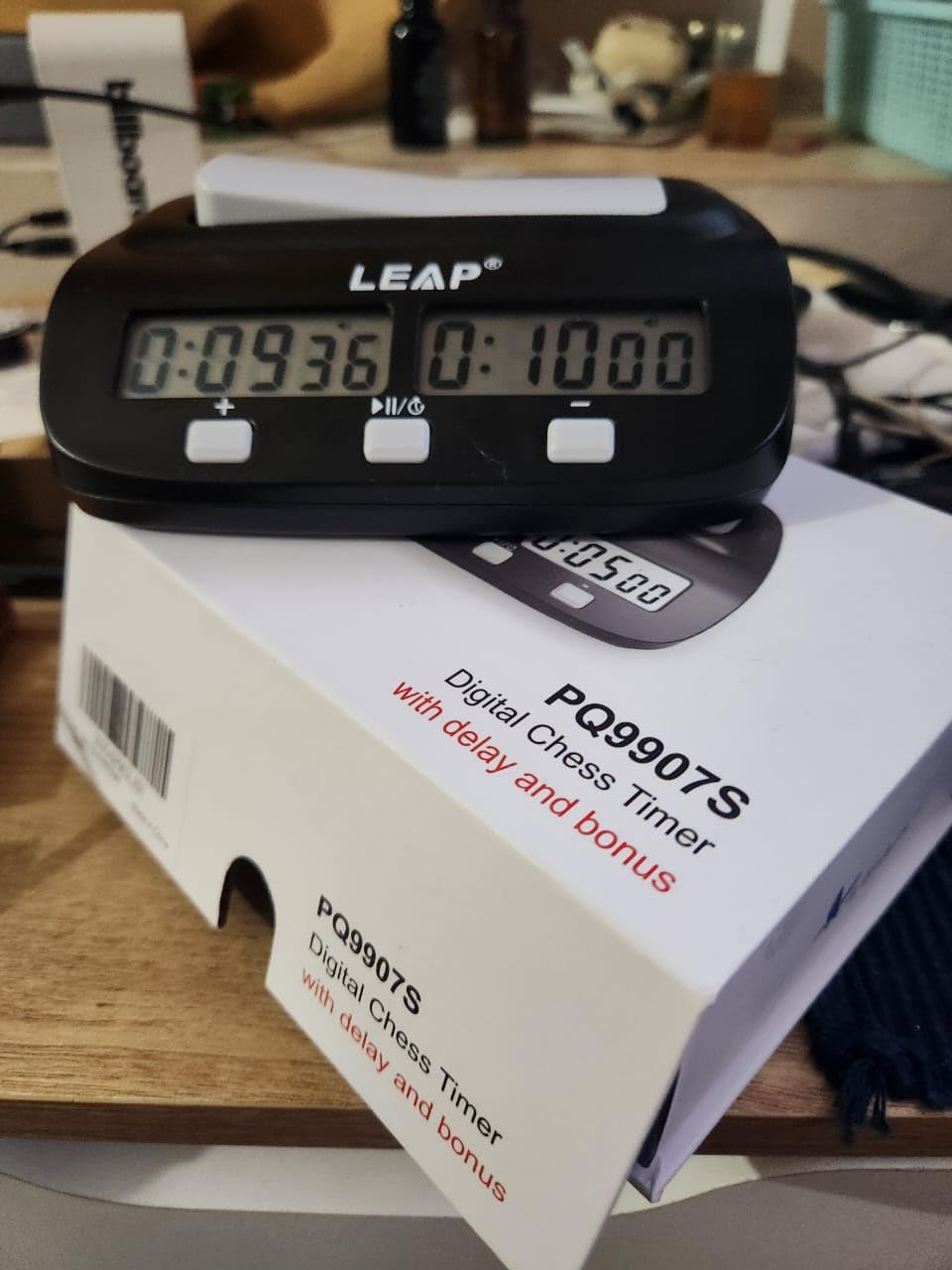
The lever action is functional but not as satisfying as the DGT models. The clicks are lighter and have a slight plasticky quality to them. For tournament use, this does not affect performance — the clock switches sides accurately every time. But the tactile difference is noticeable if you are used to premium clocks.
Battery life on a single AA battery is solid. I have run full-day tournaments on one battery without any issues. The memory function retains your last setting after power-off, which speeds up setup between rounds when all boards use the same time control.
FIDE Approval on a Budget
FIDE approval means this clock has been tested and certified for use in officially rated chess tournaments worldwide. For a school that wants to host its first USCF-rated event, the LEAP FIDE Approved gives you a tournament-legal clock at a fraction of the DGT price. You can equip an entire 20-board tournament for what two or three DGT clocks would cost.
The approval covers all standard timing methods including countdown, bonus, and delay. There are no hidden limitations or restricted features. It is a fully compliant tournament clock that happens to be affordable.
Durability for School Environments
School chess clocks get dropped, knocked off tables, and occasionally thrown by frustrated young players. The LEAP holds up reasonably well under these conditions. The ABS plastic housing absorbs impacts without cracking, and the internal components are protected by the compact form factor.
I would not describe it as rugged, but for the price, the build quality is more than adequate. Schools that buy a set of these can expect two to three years of regular tournament use before needing replacements. At this price point, replacing a damaged clock is not a budget crisis.
5. LEAP Chess Clock Advanced – Feature-Rich and Lightweight
LEAP Chess Clock Digital Chess Timer Advanced for Board Game and Chess Timer with Bonus & Delay Count Down up Alarm Black/Orange
Bonus and Delay Modes
Multi-Game Support
Lightweight 8.5 oz
1 AA Battery
Pros
- Excellent value for the price
- Intuitive and easy to use
- Large readable display
- Smooth lever action
- Setting memory retained after power cycle
Cons
- Instructions poorly written
- Battery not included
- One side activates slightly faster
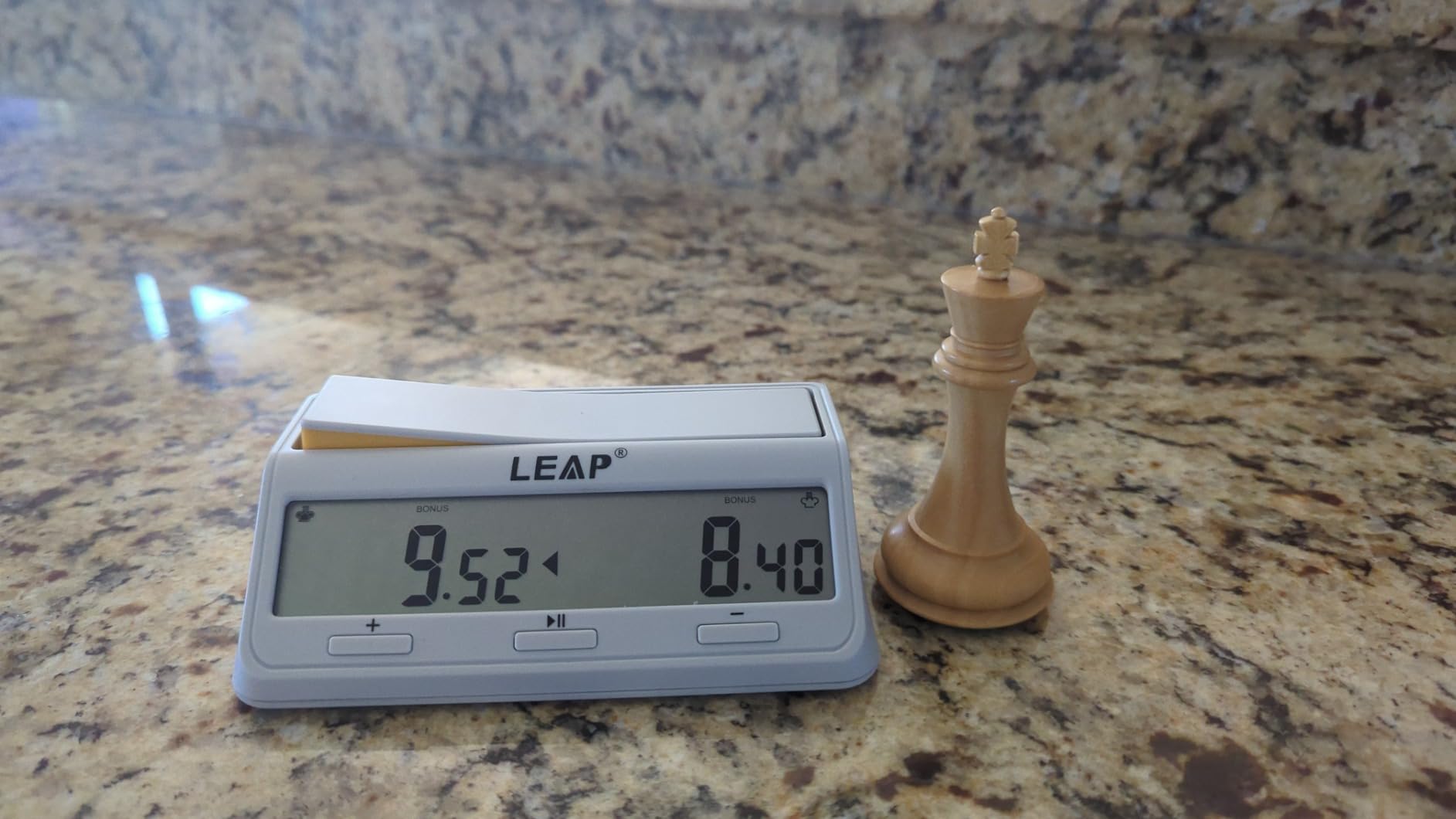
The LEAP Advanced is the upgraded sibling of the FIDE Approved model, and it brings a few improvements that matter for scholastic use. The display is larger and easier to read, the lever action is smoother, and the overall build quality feels a step up from the standard LEAP. With over 1,300 reviews and a 4.7-star rating, the user feedback is overwhelmingly positive.
What I like most about this clock for school tournaments is the simplicity of the programming interface. You select your mode, set the base time, set the bonus or delay, and start playing. There are only eight preset slots, but each one can be fully customized. For a scholastic event running one or two time controls across all boards, this is plenty.
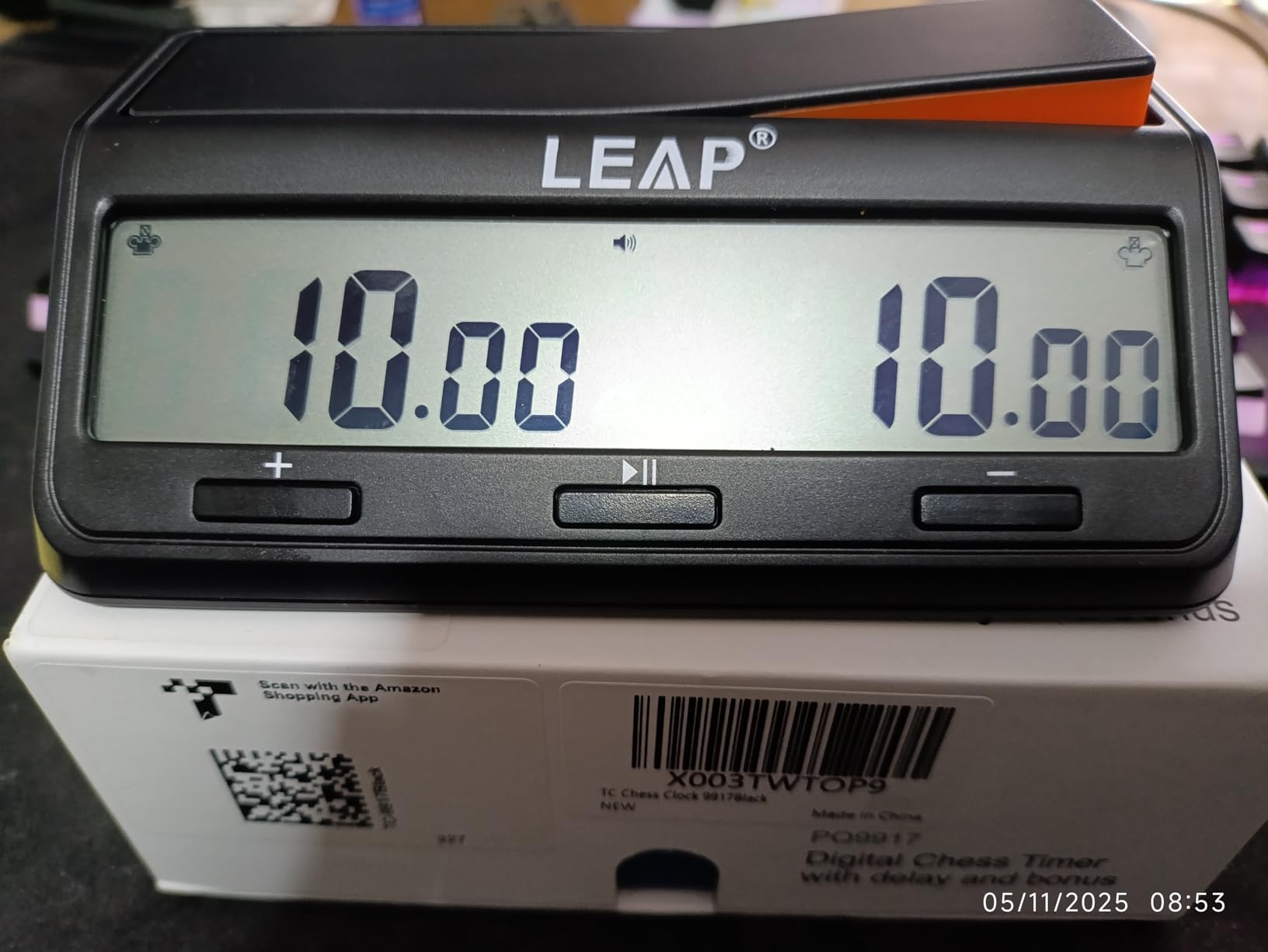
The clock supports countdown, count-up, bonus, and delay modes. It handles Fischer bonus timing correctly and the delay function works as expected for USCF time controls. Independent time settings for each player mean you can run asymmetric time controls if needed for exhibition matches or training sessions.
The lightweight design at 8.5 ounces makes it easy to transport a bag full of these to away tournaments. The trade-off is that the clock does not feel as substantial on the table as heavier models. Some tournament directors prefer a heavier clock that stays put when players press the lever.
Multi-Game Versatility
Beyond chess, the LEAP Advanced supports Chinese chess, I-GO, Scrabble, and other two-player games. For schools that run a general game club or use the clocks in math enrichment classes, this versatility extends the value of the purchase. The same timer can serve the chess team, the Go club, and the Scrabble group.
The move counter displays on screen during play, which is useful for tracking game progress. The alarm can be toggled on or off depending on whether you want an audible alert when time expires.
Battery Life and Portability
A single AA battery powers the clock for months of regular use. The battery compartment is easy to access without tools, which matters when you are swapping batteries between rounds at a large event. The clock does not ship with a battery included, so plan to buy a pack of AAs along with your clocks.
At 5 inches wide and just over an inch tall, the LEAP Advanced fits easily in a standard chess bag or backpack. For coaches who carry equipment to multiple school locations, the compact size and light weight are genuine advantages over bulkier models.
6. A&A Chess Clock with 36 Tournament Modes – The Club Player’s Choice
A&A Chess Clock, Digital Chess Timer with 38 Tournament Modes, Stylish Minimalist Design with Rocker, Portable Timer for Chess & Board Games (Black)
36 Tournament Modes
Arbiter Mode
4000+ Hr Battery
2 AAA Batteries
Pros
- 36 tournament modes covering all timing styles
- Premium rocker feels solid
- High contrast display easy to read
- Compact and portable
- Excellent materials for the price
Cons
- No batteries included
- Manual could be more detailed
- Not as heavy-duty as premium tournament clocks
The A&A Chess Clock packs 36 pre-set tournament modes into a compact, minimalist package that has earned strong reviews from club players and tournament directors alike. Users familiar with DGT models have described it as a pocket-sized version of the DGT 2500, which is high praise for a clock at this price point.
The premium rocker button is the standout hardware feature. It has a solid, responsive feel that compares favorably to the DGT lever action. For scholastic tournaments where players of all ages will be pressing the clock, a reliable rocker that registers every press without requiring excessive force is important.
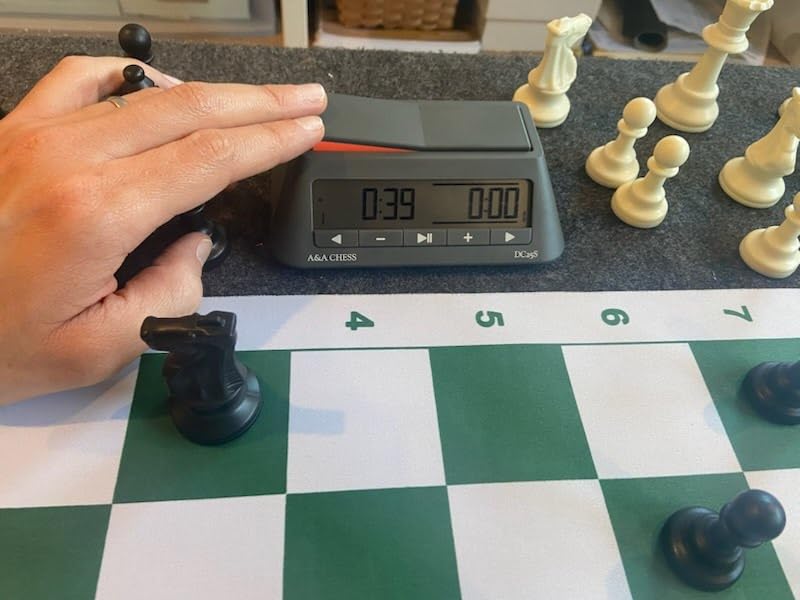
The 36 tournament modes cover Fischer bonus, Bronstein delay, Byo-yomi, and standard countdown. Every common scholastic time control is represented, and the Arbiter Mode is specifically designed for competition directors who need to monitor multiple games simultaneously. The forced move counter is a nice addition for events that track move counts.
Battery life is rated at over 4,000 hours on two AAA batteries. That is exceptional and means you can run an entire tournament season without worrying about battery changes. The clock does not ship with batteries included, which is a minor inconvenience at setup time.
Tournament Mode Coverage
The 36 pre-set modes are organized by timing method: Fischer, Bronstein, Byo-yomi, and simple countdown. Within each category, common time controls are pre-loaded so you can select and start playing without any manual programming. For scholastic directors who run G/30 d5 across all boards, setup is a two-button process.
The quick reset function allows you to restart a game without cycling through the full mode selection process again. This saves time between rounds and reduces the chance of setting the wrong time control when you are rushing to start the next round.
Arbiter Mode for Competition Directors
Arbiter Mode is a feature typically found on much more expensive clocks. It allows the tournament director to monitor timing information across multiple boards, which is useful during championship rounds or playoff situations. For a scholastic event where the TD needs to keep an eye on time situations, this mode provides additional oversight capability.
The forced move counter tracks how many moves each player has made, displayed clearly on the high-contrast screen. This eliminates the need for separate move-counting sheets at events that require a minimum number of moves per time control period.
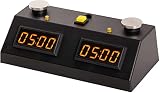
7. ZMF-II Digital Professional Chess Clock – Touch Sensor Innovation
ZMF-II Digital Professional Chess Clock – Black/Yellow
Touch Sensor Operation
Robust Construction
Alarm Function
4 C Batteries
Pros
- Good quality-price ratio
- Robust construction
- Many features for chess clock
- Easy to use for basic games
- Yellow high-contrast display
Cons
- Programming can be complicated
- Requires 4 C batteries
- Labeling and packaging issues reported
- Limited review data
The ZMF-II takes a different approach with its touch sensor operation instead of a traditional lever or rocker. Players tap the top of the clock to switch sides, which creates a modern feel that some young players find intuitive. With a 4.8-star rating across its reviews, the users who have tried it are genuinely impressed.
The yellow display is bright and high-contrast, making it readable in the kind of fluorescent gym lighting that plagues many scholastic tournament venues. The clock has a robust construction that stands up to regular use, and the alarm function provides a clear alert when time expires.
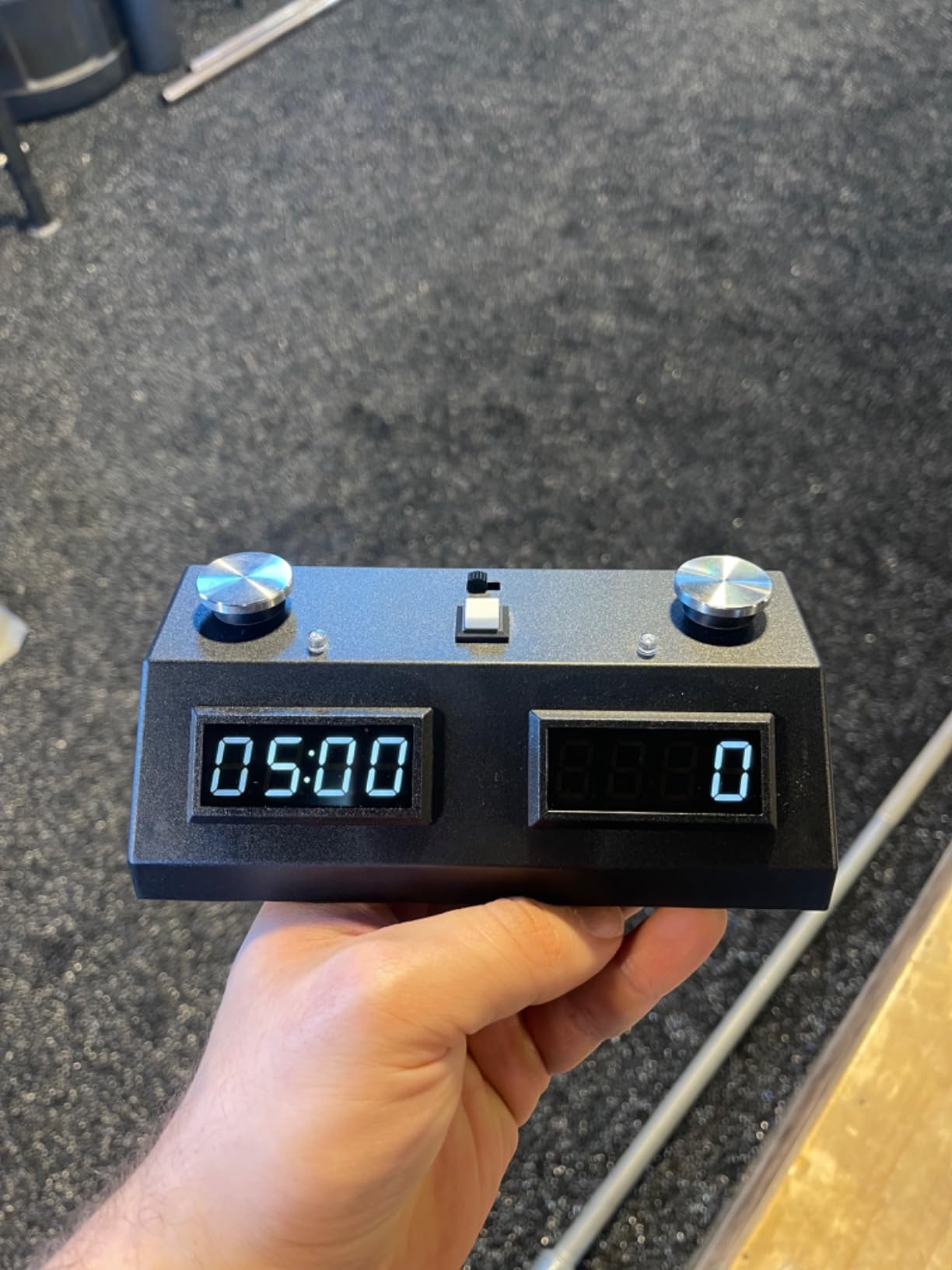
The main drawback for scholastic use is the power requirement. Four C batteries are heavier and more expensive to replace than the AA or AAA batteries used by most competitors. The additional weight does make the clock more stable on the table, but it also makes transporting a set of these clocks more cumbersome.
With only 29 reviews, this clock has a much smaller user base than the DGT or LEAP models. The ratings are excellent, but the sample size means we have less data on long-term reliability. For a school making a bulk purchase, this uncertainty is worth weighing against the strong initial feedback.
Touch Sensor Reliability
Touch sensor operation is still relatively uncommon in chess clocks, and it raises questions about reliability. Does it register every tap? Does it register false taps? In testing, the ZMF-II responded accurately to deliberate touches and did not trigger from vibrations or table bumps. Young players adapted to the touch interface quickly after a brief explanation.
The sensor does require a more deliberate touch than a simple brush. Players need to press with moderate pressure, similar to tapping a phone screen. This is not a problem for most players, but very young children with smaller hands might need a moment to get comfortable with the action.
Build Quality for Heavy Use
The ZMF-II has a solid, sturdy construction that feels like it can absorb the kind of punishment that school chess equipment regularly endures. The plastic housing is thick and the touch sensor area is flush with the surface, meaning there are no protruding levers to snap off or bend. This is a genuine advantage for environments where equipment is shared among many users.
The four C batteries add significant weight, which keeps the clock from sliding around on smooth surfaces. In a gymnasium setting with folding tables, this stability is actually a benefit. The trade-off is carrying that extra weight when transporting clocks to and from tournament sites.
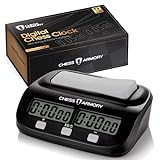
8. Chess Armory Digital Chess Clock – Portable and Proven
Chess Armory Digital Chess Clock – Portable Timer with Tournament and Bonus Time Features
Bonus Time and Delay
Portable Design
Single AA Battery
Supports Hundreds of Games
Pros
- Perfect for home play and chess clubs
- Easy to set up and use
- Lightweight and portable
- Good price point
- Durable for regular use
Cons
- Some quality control issues reported
- Plastic feels somewhat cheap
- Battery not included
- May not be as rugged as more expensive options
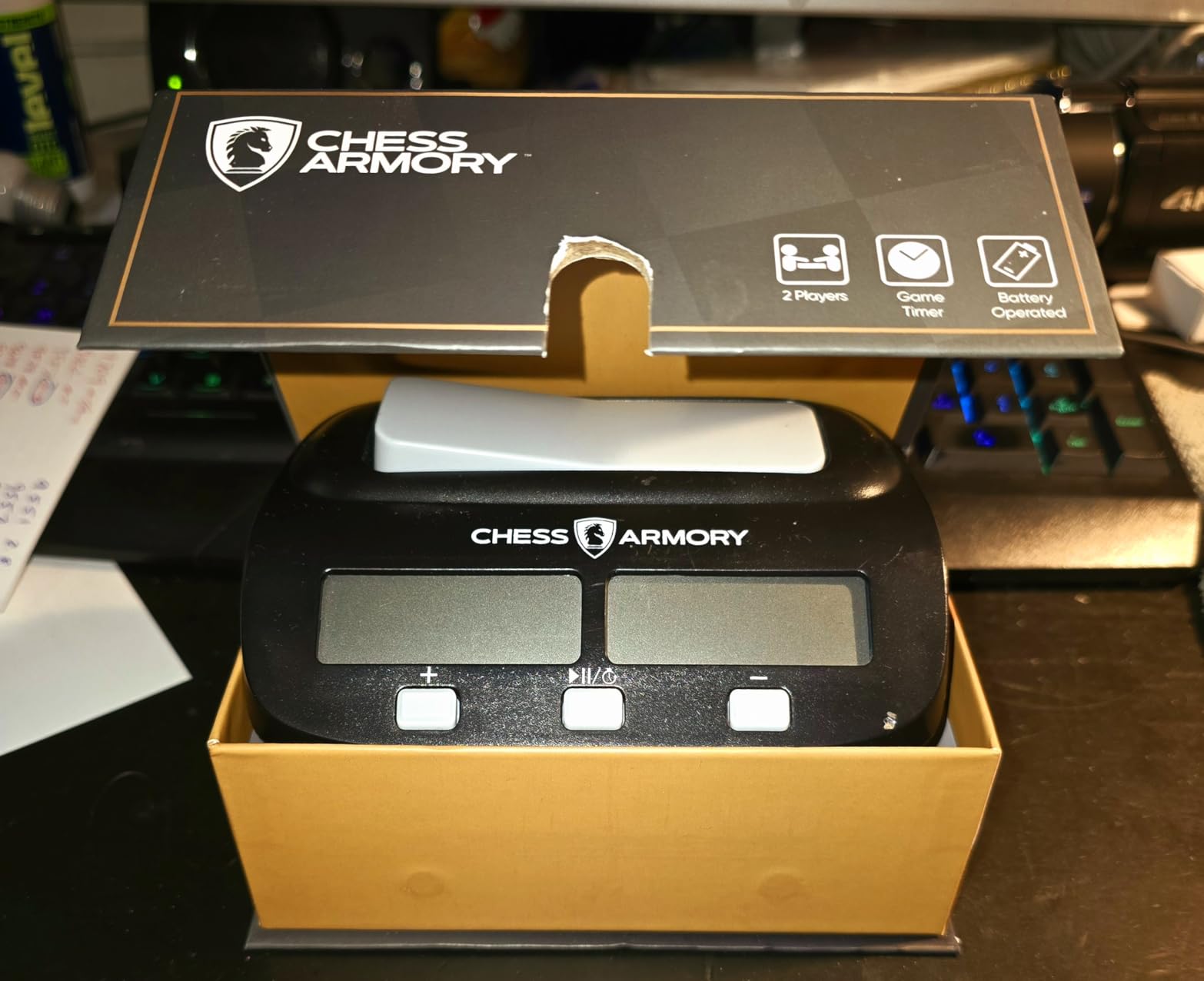
The Chess Armory Digital Chess Clock is one of the most popular budget clocks on the market with nearly 2,500 reviews. It offers tournament-appropriate features including bonus time and delay support at a price that makes bulk purchasing realistic for schools and clubs on a tight budget.
I have seen these clocks in action at several scholastic tournaments where the organizer bought 15 to 20 of them to equip a full event. The setup is straightforward: select your time control, set the bonus or delay, and start playing. The display is clear enough for normal play, and the controls are responsive.
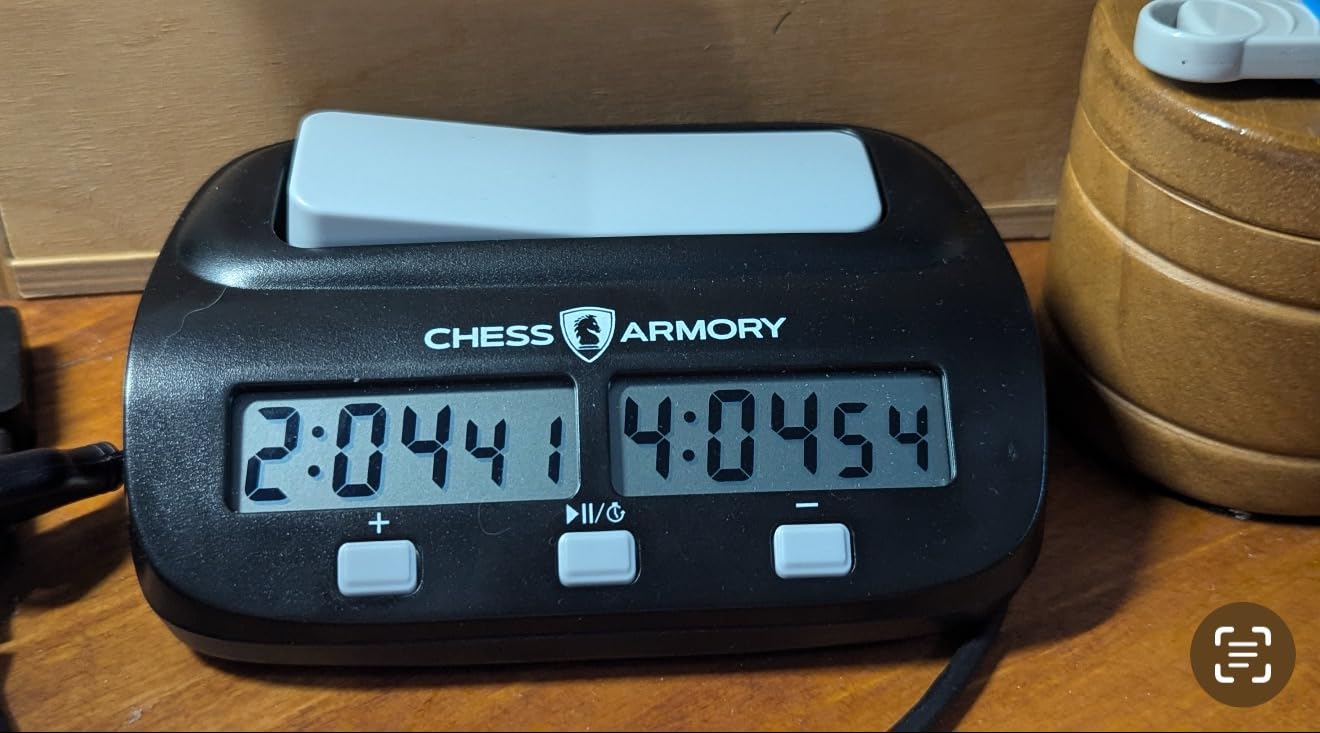
The build quality is where the cost savings show. The plastic housing is lighter and less substantial than DGT or even LEAP models. The lever action works correctly but does not have the satisfying click of higher-end clocks. For schools that prioritize affordability over premium feel, this is a reasonable trade-off.
A single AA battery powers the clock for extended periods, and the lightweight design at 249 grams makes it easy to carry a set of these in a equipment bag. The clock supports hundreds of two-player games beyond chess, which adds value for schools that run diverse game programs.
Portability for Traveling Teams
At 6 inches wide and 2.5 inches tall, the Chess Armory clock is compact enough to fit in a standard chess bag alongside a roll-up board and pieces. For school teams that travel to away matches, the light weight means you can carry several clocks without adding significant bulk to your equipment load.
The single AA battery keeps the total weight down compared to clocks that require multiple C batteries. For a coach who carries a full tournament setup in one bag, every ounce saved matters.
Setup Simplicity for Beginners
The Chess Armory clock is one of the easiest models to hand to a beginner and have them playing within a minute. The button layout is intuitive, the display shows all relevant information, and the time control options cover the basics without overwhelming the user with choices. For parent volunteers who have never set a chess clock before, this is a confidence-building model to start with.
The instruction manual is more readable than some competitors, with clear diagrams and step-by-step procedures for common time controls. If your school relies on parent volunteers to run tournaments, the simpler the clock, the smoother the event.
9. Wholesale Chess Basic Digital Chess Clock – The Budget Champion
Wholesale Chess Basic Digital Chess Clock & Game Timer with Bonus and Delay
Bonus up to 59s
Delay up to 59s
Compact 82g
1 AA Battery
Pros
- Clear and easy to read display
- Responsive and intuitive buttons
- Good weight and solid feel
- Excellent value for price
- Easy to set up for standard time controls
Cons
- Very small size may be an issue
- No backlight for low-light visibility
- Button can occasionally stick
- May not have all functions for larger tournaments
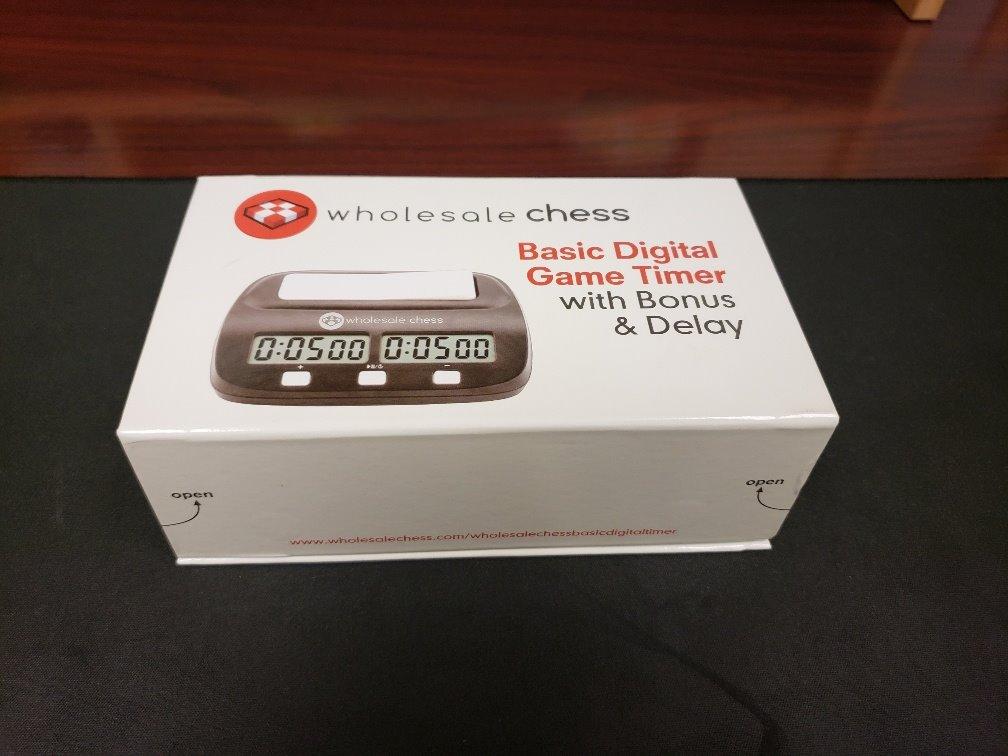
The Wholesale Chess Basic lives up to its name by delivering the essential features a scholastic tournament needs at the lowest possible price. With over 1,000 reviews and a 4.5-star rating, it has proven itself reliable enough for regular use despite its budget positioning.
Bonus time supports up to 59 seconds per move and delay works the same way, covering every standard scholastic time control. You can set different times for each side, which is useful for simultaneous exhibitions or training sessions where the coach gets less time than the student.
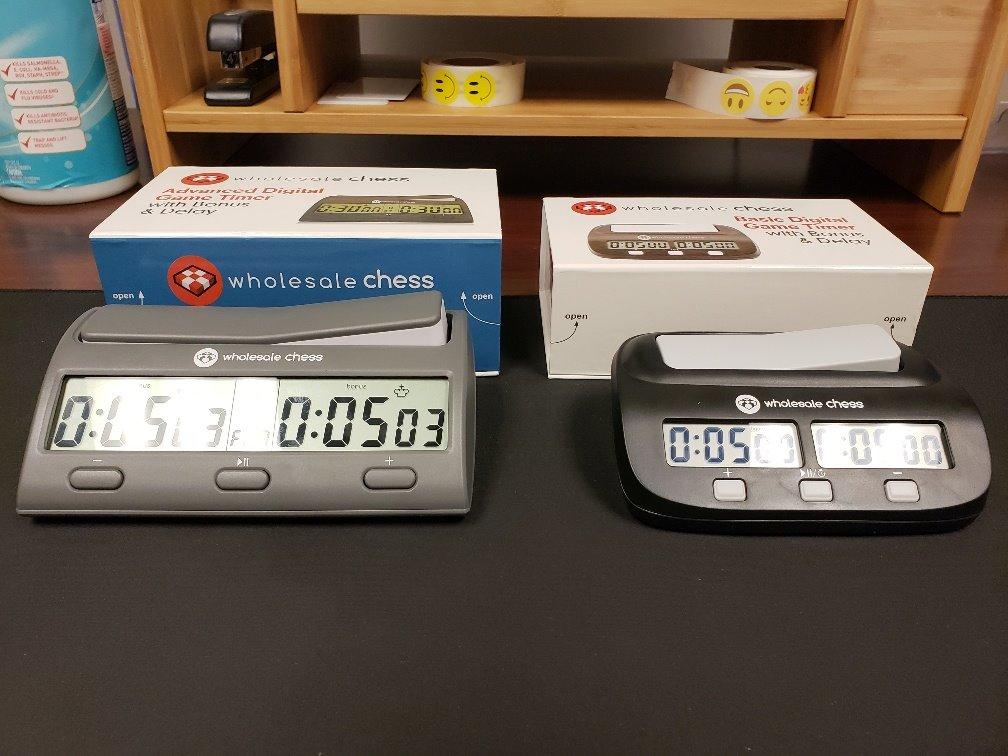
The build quality surprised me. At 82 grams, the clock is very light, but the plastic housing has a solid feel and the buttons are responsive. One reviewer noted that the lever action has a satisfying weight to it, and I agree — it punches above its price class in the tactile department.
The small size is both a strength and a weakness. It fits in any bag and takes up minimal table space, which is great for crowded tournament halls. But the display is smaller than competitors, and tournament directors walking the floor may need to get closer to read the times. For events with dozens of boards, a larger display saves time.
Bulk Purchasing for Schools
At this price point, schools can equip a 20-board tournament for a fraction of what it would cost with DGT clocks. For school districts that need to buy clocks for multiple locations, the Wholesale Chess Basic stretches the budget significantly. The money saved can go toward boards, sets, or entry fee scholarships for students who cannot afford them.
The clock is simple enough that you can train volunteers in minutes, and uniform equipment across all boards means there is no confusion about which clock does what. Consistency is underrated in scholastic tournament management.
Basic vs Advanced Time Controls
The Wholesale Chess Basic handles standard countdown, bonus, and delay time controls. What it does not offer are advanced features like Bronstein timing, move counters, or mixed time controls within a single game. For the vast majority of scholastic tournaments running G/30 d5 or G/25 d5, these limitations will never come up.
If your event uses complex time controls with multiple periods or requires move counting, you will need a more capable clock. But for elementary and middle school tournaments with straightforward time controls, the Basic delivers exactly what you need without paying for features you will not use.
10. Bobby Fischer Chess Clock Powered by DGT – A Name That Inspires
Bobby Fischer Chess Clock – Powered by DGT, Tournament Approved Digital Timer
Powered by DGT
23 Time Controls
FIDE and USCF Approved
2-Year Warranty
Pros
- Powered by DGT quality
- Tournament approved for FIDE and USCF
- Hard shell casing for durability
- 2 year warranty included
- Easy to set custom time controls
Cons
- Some reports of delay function issues
- Quality control concerns with batteries
- Small display issues with delay countdown
- Higher price for the feature set
The Bobby Fischer Chess Clock is built on DGT technology and carries the name of one of the greatest chess players in history. For young players who are just getting serious about tournament chess, using a clock named after Bobby Fischer carries a certain inspiration that goes beyond the specs on the box.
Under the hood, this clock functions very similarly to the DGT North American. It has 13 preset time controls plus 10 custom slots, and it is approved for both FIDE and USCF rated play. The hard shell casing is more rigid than standard DGT models, which provides extra protection against drops and impacts in a school environment.
The two-year warranty is a meaningful advantage for institutional buyers. Schools and clubs that purchase equipment with institutional funds often need warranty documentation, and DGT backing this clock with a two-year term provides that peace of mind. Batteries are included, which is a small but helpful detail when you are unboxing a batch of new clocks.
The main concern is the mixed reliability feedback. Some users report issues with the delay function not counting down numerically, instead flashing the word “delay” repeatedly. Other reviews mention quality control problems with the included batteries arriving dead or corroded. These issues are not universal, but they appear often enough in the review data to warrant caution for bulk purchases.
Warranty and Brand Support
The two-year warranty from DGT is one of the longest in the chess clock market. For a school or club that is investing in tournament equipment, having warranty coverage that extends beyond the first competition season is valuable. If a clock develops a fault, the replacement process through DGT is well-established and reliable.
The DGT-powered internals mean that replacement parts and service are available through the standard DGT support network. This is not a generic electronics product with no manufacturer backing — it is a chess-specific device supported by the most recognized name in tournament clock manufacturing.
Gift Appeal for Young Chess Players
There is something to be said for the motivational value of a clock that carries Bobby Fischer’s name. For a young player who just won their first tournament or is preparing for their first rated event, receiving a Bobby Fischer clock as a prize or gift can be a memorable moment. The clock looks sharp with its black and blue two-tone design, and the presentation is gift-worthy right out of the box.
For parents looking for a chess clock that doubles as an inspirational gift, this model serves double duty. It is a functional tournament clock with DGT internals and FIDE approval, and it carries the legacy of one of the game’s legends. That combination is hard to replicate with a generic branded timer.
How to Choose the Best Chess Clock for Scholastic Tournaments
Choosing the right chess clock for scholastic play comes down to four factors: time control support, durability, budget, and ease of use. Let me walk through each one so you can make an informed decision for your school or club.
FIDE and USCF Approval Requirements
If your school or club hosts USCF-rated tournaments, you need a clock that supports delay or increment time controls. USCF rules require a delay or increment for rated scholastic events, so any clock you buy must handle at least one of these. All ten clocks on this list meet that requirement.
FIDE approval matters if you plan to host FIDE-rated events or send players to events that require FIDE-approved equipment. The DGT 3000, DGT 2010, LEAP FIDE Approved, and Bobby Fischer clocks all carry FIDE certification. For purely USCF-rated scholastic play, FIDE approval is not required.
Delay and Increment Explained
Delay gives each player a fixed amount of time at the start of every move before their main time starts counting down. A 5-second delay means the clock does not start ticking until 5 seconds have passed. This prevents players from losing on time in a clearly winning position because they ran out of time on a simple recapture.
Fischer increment adds a fixed amount of time to the player’s total after each move. A 5-second Fischer increment means you gain 5 seconds after every move, building up a time reserve if you play quickly. Bronstein delay is similar to Fischer but only adds back up to the time you actually spent on that move.
For scholastic play, delay is more common in USCF events and Fischer increment is more common in FIDE events. Most scholastic tournaments in the United States use delay, so make sure your clock supports it.
Common Scholastic Time Controls by Age Group
Elementary school tournaments typically use G/30 d5 (30 minutes per player with a 5-second delay). This gives young players enough time to think while keeping the total game length manageable for a one-day event. Middle school events often use the same control or G/25 d5 for slightly faster rounds.
High school tournaments may use G/30 d5 or longer controls like G/45 d5 depending on the number of rounds and the schedule. Blitz events at the scholastic level use G/5 d0 or G/3 d2. Your clock should handle whichever time control your event uses, and most of the clocks on this list cover all of these.
State championship events sometimes use G/60 d5 or similar longer controls. If your school sends players to state-level competition, a clock that handles longer time controls with grace becomes more important.
Durability Considerations for Young Players
Scholastic chess clocks take more abuse than clocks used in adult tournaments. Kids drop them, knock them off tables, press the levers too hard, and occasionally throw them in frustration. A clock for school use needs to survive this environment.
The DGT North American and DGT 3000 are the most durable options on this list. Their plastic housings are thick, the levers are internal and protected, and the recessed power buttons prevent accidental shutoffs. The ZMF-II is also built tough with its flush touch sensor and heavy battery-powered base.
Budget clocks like the LEAP and Wholesale Chess Basic are adequately durable for their price but will show wear faster than the DGT models. Plan on replacing budget clocks every two to three years if they see heavy tournament use.
Budget Planning for Schools and Clubs
A typical scholastic tournament needs one clock per board. If you run 20-board events, that is 20 clocks. Here is a rough framework for budget planning:
For a bare-minimum budget, the Wholesale Chess Basic or Chess Armory clocks let you equip 20 boards for a very modest total investment. These clocks handle standard scholastic time controls and have the user reviews to back up their reliability claims.
For a mid-range budget, the LEAP FIDE Approved gives you FIDE certification and better build quality while keeping costs reasonable for a 20-clock order. This is the sweet spot for schools that want tournament-grade equipment without premium pricing.
For a premium setup, DGT North American clocks provide the best combination of durability, ease of use, and display quality. Schools that run frequent tournaments and want equipment that lasts for years will find the investment worthwhile.
Many schools buy a mix: premium clocks for top boards and budget clocks for the remaining sections. This approach gives you the best of both worlds — impressive equipment for the championship games and affordable timers for the early rounds.
Digital vs Analog for School Use
All ten clocks on this list are digital, and for good reason. Digital clocks support delay and increment time controls, which analog clocks cannot do. Since USCF scholastic tournaments require delay or increment, analog clocks are not suitable for rated play. For practice sessions and casual games, analog clocks work fine, but for any tournament application, digital is the way to go.
Digital clocks are also easier for young players to read. The large numeric displays show exact time remaining, while analog clocks require players to interpret clock hand positions. In time pressure situations, a digital display leaves no room for misinterpretation.
If you are also interested in helping young players develop their skills beyond equipment selection, our guide to climbing from 800 to 1200 in 90 days offers a structured training plan that works well alongside regular timed practice games.
What is the best chess clock for tournament play?
The DGT North American Chess Clock is the best overall choice for scholastic tournament play, offering 30 programmable settings, Fischer bonus, delay support, and a clear display at a reasonable price. For FIDE-rated events, the DGT 3000 is the official standard used in World Championships. For budget-conscious school programs, the LEAP FIDE Approved provides tournament-legal features at the lowest price point.
What clocks are FIDE approved for chess?
FIDE-approved chess clocks include the DGT 3000 (official FIDE timer), DGT 2010, DGT North American, LEAP FIDE Approved, and the Bobby Fischer Chess Clock powered by DGT. FIDE approval means the clock has been tested and certified for use in officially rated tournaments worldwide. The DGT 3000 is the most widely recognized FIDE-approved model and is used in World Championship events.
What is the time control for Scholastic chess?
The most common scholastic time control is G/30 d5, which gives each player 30 minutes with a 5-second delay per move. Elementary school events often use G/30 d5 or G/25 d5, middle school events use G/25 d5 to G/30 d5, and high school events may use G/30 d5 or G/45 d5. Blitz scholastic events typically use G/5 d0. USCF-rated scholastic tournaments require either delay or increment time controls.
What chess clock is used in the World Championship?
The DGT 3000 Official FIDE Chess Timer is used in World Chess Championship matches and other top-level FIDE events. It features a large 3-inch display, 25 preset timing systems, 5 programmable slots, move counter, and connectivity to DGT electronic sensor boards for live game broadcasting. It is the international standard for professional tournament chess.
Final Thoughts on Chess Clocks for Scholastic Play
Finding the best chess clocks for scholastic tournaments in 2026 does not have to be complicated. For most school programs, the DGT North American delivers the best combination of reliability, display quality, and ease of use. The LEAP FIDE Approved is the smart choice for budget-conscious buyers who still need tournament-legal equipment. And the Wholesale Chess Basic gets the job done for the lowest possible investment.
Every clock on this list supports the delay and increment time controls required for USCF-rated scholastic play. Pick the one that fits your budget and your tournament schedule, and you will be ready to run your next event with confidence. The right clock will not win games for your players, but it will keep the tournament running smoothly and fairly — and that is what matters most.