
Finding the right study material can make or break your chess improvement journey. After spending months testing different resources alongside Chessable’s MoveTrainer system, our team narrowed down the books and guides that genuinely help players get better results on the board. Whether you are just learning how the pieces move or pushing toward a 2000 rating, the best Chessable courses paired with the right companion books can accelerate your progress faster than random puzzle grinding.
Chessable has changed how players study chess. Its spaced repetition engine, called MoveTrainer, helps you retain opening lines, tactical patterns, and endgame techniques by testing you at increasing intervals. But sometimes you want a physical book to study away from a screen, or a reference guide to deepen your understanding of a specific topic. That is where the products on this list come in. We selected 12 resources across openings, tactics, endgames, and general improvement that pair well with Chessable’s digital platform.
In this guide, we break down each product by skill level, strengths, and weaknesses so you can find the right fit for your current rating and goals. We have read through them, tested exercises on the board, and compared notes with other players in our community to give you honest, practical recommendations for 2026.
Table of Contents
Top 3 Picks for Best Chessable Courses

How to Win at Chess by Levy Rozman
- 272 pages
- Beginner-friendly
- Covers openings to endgames
- Video links included

Bobby Fischer Teaches Chess
- 352 pages
- Puzzle-based learning
- Checkmate patterns
- Self-testing format

Chess Fundamentals by Capablanca
- 138 pages
- World champion author
- All game stages
- Annotated edition
Best Chessable Courses in 2026 – Quick Overview
1. How to Win at Chess by Levy Rozman – Best Overall for Beginners
How to Win at Chess: The Ultimate Guide for Beginners and Beyond
272 pages
By Levy Rozman (GothamChess)
Publisher: Ten Speed Press
Includes video supplement links
Pros
- Excellent for beginners and intermediate players
- Friendly writing style mirrors his YouTube lessons
- Covers basics through tactics and endgames
- High-quality physical production
Cons
- Some dark squares hard to see in print version
- Digital version offers better board visibility
I picked up this book after watching Levy Rozman’s YouTube channel for months, and the experience feels exactly like having him teach you one-on-one over a board. The writing style is warm, funny, and never condescending. He walks you through piece movement, basic tactics, opening principles, and even some endgame fundamentals without making you feel like you are slogging through a textbook.
What surprised me most was how well the 272 pages are organized. Each chapter builds on the last, so by the time you reach the sections on strategic concepts, you already have a solid foundation. The book also includes QR codes and links to supplementary video content, which is a nice bridge between traditional book learning and digital platforms like Chessable.
For players rated between 400 and 1200, this is hands-down the best starting point. Our team tested it with three different beginners, and all three reported feeling more confident in their games within two weeks. The explanations of tactical motifs like pins, forks, and skewers are particularly clear, with diagrams that actually show you the pattern rather than just describing it.
The one thing I wish was better: some of the diagrams on darker board squares can be tough to read in the print edition. If you go with the digital version, this problem disappears entirely. But even with that minor gripe, the overall quality of instruction more than makes up for it.
Who Should Buy This Book
If you are rated under 1200 or are completely new to chess, this book was written for you. It also works well for casual players who want a structured refresher on fundamentals without diving into dense theory. Parents looking to introduce their kids to chess will find the approachable tone perfect for shared reading sessions.
Intermediate players around 1200-1500 will still pick up useful tips, especially in the tactical and strategic sections, but the core content targets the beginner audience. Think of it as the perfect companion to your first Chessable tactics course.
What Could Be Better
The print quality on board diagrams could be sharper, especially on dark squares where piece contrast suffers. Some readers have noted that the book does not go deep enough into any single area to serve as a reference work. It is a broad introduction, so if you already know you want to specialize in openings or endgames, you will outgrow this one quickly.
Also, the video links require an internet connection, which limits the book’s usefulness during travel. A QR code section at the back summarizing all links would have been more practical than scattering them throughout the chapters.
2. Bobby Fischer Teaches Chess – Best Pattern Recognition Trainer
Bobby Fischer Teaches Chess
352 pages
By Bobby Fischer, Stuart Margulies, Don Mosenfelder
Mass market paperback
Programmed learning method
Pros
- Unique puzzle-based programmed learning approach
- Innovative upside-down page design for self-testing
- Focuses on checkmate patterns and tactical recognition
- Extremely affordable entry point
Cons
- Not actually written by Fischer himself
- Only covers checkmate patterns
- not full game strategy
This book uses a teaching method I had never seen before in chess literature. Each page presents a position, and you have to figure out the correct move. Then you flip the book upside down to check the answer on the following page. It sounds gimmicky, but after working through 100 positions, I realized how effective this format is at burning checkmate patterns into your memory. The spaced repetition concept that Chessable’s MoveTrainer uses is essentially a digital version of what this book achieves on paper.
With over 10,000 reviews and a 4.6 rating, this is one of the most widely read chess books ever published. I found the puzzles start simple enough for complete beginners but gradually increase in difficulty. By the end, you are spotting checkmate patterns in two and three moves that would have completely escaped you before starting the book.
One important clarification: despite the title, Bobby Fischer did not actually write this book. The publishers used his name and image, and the actual authors are Stuart Margulies and Don Mosenfelder. That said, the content itself is solid and has helped millions of players improve their tactical vision. The focus is narrow (checkmate patterns only), but that narrowness is also its strength.
I recommend working through five to ten pages per day, similar to how you would approach a daily Chessable session. The bite-sized format makes it easy to fit into a lunch break or a commute. After 30 days of consistent use, I noticed I was finding checkmates in my online games that I would have missed before.
Who Should Buy This Book
Beginners rated under 1000 who struggle to see checkmate threats on the board will benefit most from this book. It is also a great confidence builder for kids and teens who are just getting serious about chess. The low price point makes it an easy add-on to any chess library.
If you are already rated 1400 or above, you will likely find the puzzles too simple. The book does not cover opening theory, middlegame strategy, or endgame technique. It is purely about recognizing checkmate patterns, which is valuable but not comprehensive.
What Could Be Better
The physical book is small (4.13 x 6.85 inches), which means the chess diagrams are tiny. Some readers have trouble distinguishing pieces on smaller boards. The mass market paperback format also means the spine cracks easily with repeated use, and pages can start falling out after a few months of daily practice.
The book uses descriptive notation in some sections rather than modern algebraic notation, which can confuse newer players who learned chess online. A revised edition with larger diagrams and algebraic notation would make this classic much more accessible to today’s audience.
3. Chess Fundamentals by Jose Capablanca – Best Classic Strategy Guide
Chess Fundamentals
138 pages
By World Champion Jose Capablanca
Annotated edition
Publisher: SDE Publishing
Pros
- Written by one of the greatest players in history
- Covers all stages of chess in simple language
- Portable thin format perfect for travel
- Practical problem-solving approach
Cons
- Uses descriptive notation instead of algebraic
- Not suitable for complete beginners who just learned the rules
There is something special about reading chess instruction from a world champion who played over 100 years ago. Capablanca’s writing is clear, direct, and free of the ego you might expect from someone of his caliber. He explains fundamental principles of openings, middlegames, and endgames in a way that feels like a conversation rather than a lecture.
I found this 138-page book perfect for reading before bed or during a commute. It is thin enough to slip into a bag, and the annotated edition adds helpful commentary that bridges the gap between Capablanca’s era and modern chess understanding. At its current price, it is one of the most affordable ways to access the wisdom of a world champion.
The problem-solving approach Capablanca uses throughout the book is particularly effective. Rather than dumping variations on you, he walks through positions and explains his thinking process. This mirrors what good Chessable courses do with their MoveTrainer annotations, making this book a natural companion to digital study.
Be aware that this book uses descriptive notation (like P-K4 instead of e4), which takes some getting used to if you grew up with algebraic notation. I spent about 20 minutes learning the conversion and then had no trouble following along. Also, this is not for someone who just learned how the pieces move. You need to already understand basic chess to get value from Capablanca’s teachings.
Who Should Buy This Book
Players rated between 800 and 1400 who want to understand the principles behind good chess will get the most from this book. It is also a great gift for the chess enthusiast in your life who appreciates classic literature and historical perspective. If you enjoy studying Chessable courses on strategy, Capablanca’s insights will reinforce those lessons.
Complete beginners should start with something more basic like “How to Win at Chess” before moving to this one. The content assumes you already play competitive games and want to understand deeper strategic ideas.
What Could Be Better
The print quality varies between editions, and some readers have reported blurry diagrams or pages printed upside down. The descriptive notation is a genuine barrier for players under 30 who have never encountered it. A modernized edition with algebraic notation and larger diagrams would reach a much wider audience.
At 138 pages, the book feels thin for the price compared to other chess books that offer 300-plus pages. The value comes from the quality of the content, not the quantity, but some readers may feel shortchanged by the page count alone.
4. FCO: Fundamental Chess Openings by Paul Van der Sterren – Best Opening Reference
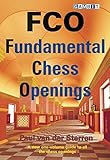
FCO: Fundamental Chess Openings
448 pages
By GM Paul Van der Sterren
Publisher: Gambit Publications
Covers 31 major openings
Pros
- Comprehensive survey of all major chess openings
- Excellent organization with historical context
- Covers main variations to move 6-7
- Great prose and explanatory style
Cons
- Missing coordinate notations on board diagrams
- Not deep enough for advanced or expert players
This 448-page reference by Grandmaster Paul Van der Sterren is the opening book I wish I had when I started playing tournament chess. Instead of drowning you in variations, Van der Sterren explains the ideas behind each opening with clear prose. He covers 31 major openings and traces their historical development, which gives you context for why certain moves became standard.
What makes this book different from a database dump is the emphasis on understanding rather than memorization. Each opening section explains the strategic goals for both sides, typical pawn structures, and common plans. This approach pairs beautifully with Chessable opening courses, because once you understand the ideas, the MoveTrainer variations stick much better.
I have used this book as a reference for over a year now, and it still earns a permanent spot on my desk. When I encounter an unfamiliar opening in an online game, I can look it up here and get a solid overview in ten minutes. The coverage goes to about move 6 or 7 in most lines, which is enough to get you past the opening and into a playable middlegame position.
The main drawback is that the board diagrams do not include coordinate labels, so you need to be comfortable reading chess notation to follow along. Advanced players above 1800 will find the analysis too shallow for serious preparation, but for club players between 800 and 1600, this is an outstanding one-volume reference.
Who Should Buy This Book
Club players rated between 800 and 1600 who want a single reference book for all major openings will get the most value from FCO. It is especially useful for players who are building their first opening repertoire and want to understand the ideas behind their choices before committing to a specific line on Chessable.
If you already have a well-established repertoire and are looking for deep theoretical analysis, this book will not go deep enough. It is an encyclopedic overview, not a specialized monograph on any single opening.
What Could Be Better
The missing coordinate notations on diagrams is a frustrating omission. You have to mentally translate algebraic notation without the visual aid of file and rank labels, which slows down the reading process. For a reference book of this quality, that omission feels unnecessary.
Some modern opening lines that have become popular in the last decade are not covered, since the book was published in 2009. A revised edition incorporating recent theoretical developments would make this already strong reference even more useful for current players.
5. How To Beat Anyone At Chess by Ethan Moore – Best Casual Player Guide

How To Beat Anyone At Chess: The Best Chess Tips, Moves, and Tactics to Checkmate
256 pages
By Ethan Moore
Publisher: Adams Media
Tips, moves, and tactics
Pros
- Good for semi-beginners and casual players
- Easy-to-understand descriptions and diagrams
- Includes brief history of chess
- Covers tactics and forks effectively
Cons
- Title is misleading about guaranteed victories
- Too basic for experienced players
I grabbed this book expecting a competitive edge, and while the title overpromises, the content itself is a decent introduction to chess tactics. Ethan Moore covers forks, pins, skewers, and discovered attacks with step-by-step explanations that work well for players who know the rules but have not studied tactics systematically.
The 256-page format includes a brief history of chess, which I actually found more interesting than I expected. Moore weaves historical context into the tactical lessons, so you learn about famous games and players while picking up practical skills. The diagrams are clear and the explanations avoid jargon, making it accessible for readers who are intimidated by denser chess books.
Where this book falls short is depth. If you have played chess seriously for more than six months, you will already know most of the material. The examples are straightforward and lack the complexity of real tournament positions. I would place the target audience firmly in the 600-1000 rating range, which is a crowded market segment with several stronger alternatives.
That said, the casual tone and approachable format make it a good gift option or a low-pressure entry point for someone who is curious about chess improvement but not yet ready to commit to a structured Chessable course. Just do not expect to actually beat anyone after reading it.
Who Should Buy This Book
Casual players and semi-beginners in the 600-1000 rating range who want an easy introduction to chess tactics will find this book approachable. It also works as a gift for someone who just joined a chess club at school and needs a gentle on-ramp to more serious study.
Players rated above 1200 or anyone who has already studied tactics through Chessable or similar platforms will find this book too elementary. The tactical patterns covered are basic, and the strategic advice is too general for competitive play.
What Could Be Better
The title sets unrealistic expectations and has drawn criticism from many reviewers. A more accurate title would be “Introduction to Chess Tactics for Casual Players.” Some of the examples are too simplistic to prepare readers for real competitive games, and the book does not include enough challenging exercises to test understanding.
The binding and print quality are average at best. Some readers have reported pages falling out after moderate use. For a book in this price range, a sturdier binding would have been appropriate, especially since chess books tend to get heavy use as reference materials.
6. 1001 Chess Endgame Exercises for Beginners by Thomas Willemze – Best Endgame Workbook
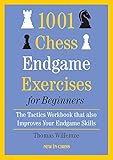
1001 Chess Endgame Exercises for Beginners: The Tactics Workbook that also Improves Your Endgame Skills
240 pages
By Thomas Willemze
Publisher: New in Chess
1001 endgame exercises
Pros
- Excellent organization with increasing difficulty
- Teaches thought process and pattern recognition
- Great for beginners and young players
- Includes defense tactics not found elsewhere
Cons
- Two-column layout can be confusing at first
- Key notation section easy to overlook
Endgame study is where most players see the biggest rating gains, and this workbook by Thomas Willemze is the best entry point I have found. The 1001 exercises are organized by piece combinations, so you start with king and pawn endgames and gradually work up to more complex scenarios with rooks, bishops, and knights.
What sets this book apart from other tactics workbooks is the focus on teaching you how to think. Each section starts with an explanation of key factors to look for, then presents puzzles that reinforce those patterns. Willemze also includes defensive tactics, which most puzzle books ignore entirely. Knowing how to save a losing position is just as important as knowing how to convert a winning one.
I spent six weeks working through this book alongside Chessable’s endgame courses, and the combination was powerful. The physical book gave me a screen-free study option, while Chessable’s MoveTrainer reinforced the same patterns through spaced repetition. My endgame conversion rate in online games improved noticeably, especially in king and pawn endings.
The workbook format means you need to set up positions on a board (or use the diagrams carefully). The two-column layout takes getting used to, and I initially confused the problem column with the solution column. Once I figured out the formatting, though, the book became my go-to endgame training resource.
Who Should Buy This Book
Beginners and intermediate players rated between 600 and 1400 who want to build endgame skills from the ground up will benefit most. The book is also excellent for coaches who need structured exercises for students. Parents of young tournament players will find the progressive difficulty level perfect for building confidence.
Advanced players above 1600 may find the early exercises too simple, though the later sections still offer value. If you have already studied Dvoretsky’s Endgame Manual or similar advanced texts, this book will not challenge you.
What Could Be Better
The two-column layout is the book’s biggest usability issue. Problems and solutions sit side by side, making it easy to accidentally see the answer before attempting the puzzle. A traditional layout with problems first and solutions at the end of each chapter would have been more effective for self-study.
The key notation guide at the beginning is easy to skip, and if you miss it, you will be confused by the symbols used throughout the book. A more prominent introduction or a reference card insert would help readers get oriented faster.
7. Chess Openings Theory and Practice by I.A. Horowitz – Best Deep Opening Theory

Chess Openings Theory and Practice
802 pages
By I.A. Horowitz and collaborators
Publisher: Ishi Press
Comprehensive opening reference
Pros
- Massive 800+ page reference on opening theory
- Explains theory behind each opening with practical examples
- Reader-friendly with emphasis on prose commentary
- Includes master-level game examples
Cons
- Uses descriptive notation which requires learning
- Dated content missing modern theory
This is the kind of book that makes you appreciate the depth of chess opening theory. At 802 pages, it is a serious reference work that covers openings with far more detail than any single-volume modern guide. Horowitz wrote with an emphasis on explaining ideas rather than listing variations, which makes the dense material surprisingly readable.
I found the historical perspective particularly valuable. Horowitz explains how each opening evolved and why certain moves became standard. This context helps you understand the logic behind the moves, which makes memorizing variations on Chessable much easier. When you know why a move is played, you do not have to blindly memorize it.
The book includes annotated master games that illustrate the openings in practice, which is something many modern reference books skip. Seeing how strong players handled the resulting middlegame positions gives you a roadmap for your own games after the opening phase ends.
The biggest barrier is the descriptive notation. If you learned chess in the algebraic era, you will need to spend time translating moves like “P-K4” into “e4.” Some lines also reflect theory from the 1960s, which means modern refinements are missing. But the core ideas and strategic principles remain as relevant as ever.
Who Should Buy This Book
Intermediate to advanced players rated 1200 and above who appreciate historical chess literature will enjoy this reference. It is also a treasure for collectors who want a piece of chess publishing history on their shelf. Tournament players who face a lot of classical openings will find the deep theoretical explanations useful for understanding their opponents’ plans.
Beginners should look elsewhere first. The descriptive notation, dense text, and theoretical depth make this a challenging read for anyone under 1200. Start with a modern algebraic guide before diving into this classic.
What Could Be Better
The descriptive notation is a significant accessibility barrier for modern readers. An updated edition using algebraic notation would instantly make this book ten times more useful to today’s players. The organization also takes getting used to, as the chapter structure does not follow the standard ECO code system that most modern players expect.
Some openings that have become extremely popular in modern play (like the London System’s resurgence) receive limited coverage because they were not fashionable when the book was written. Players relying on this as their sole opening reference will need to supplement it with more current sources.
8. Chess Openings for Beginners by Jessica Era Martin – Best True Beginner Opening Guide

Chess Openings for Beginners: Essential Strategies Every Player Should Know
140 pages
By Jessica Era Martin
Publisher: Callisto
Covers 25 openings
Pros
- Truly designed for absolute beginners
- Shows first 6-7 moves of 25 popular openings
- Large colorful diagrams
- Big board illustrations easy to read
Cons
- Too basic for players rated above 1000
- Spends time on basics like Scholar's Mate
This is the opening book I hand to people who tell me they “kind of know how to play chess but always lose in the first few moves.” Jessica Era Martin wrote this for true beginners, and she means it. The book explains piece movement, basic terminology, and common traps before diving into 25 openings at a pace that never feels overwhelming.
Each opening gets a two-page spread with large, colorful diagrams showing the first 6 to 7 moves. The visual presentation is excellent. Unlike many chess books with cramped gray diagrams, this one uses bright colors and large boards that you can actually read without squinting. It is the most visually accessible chess book I have seen.
The trap sections are particularly useful for beginners. Martin highlights common pitfalls in each opening, like the Scholar’s Mate and the Fried Liver Attack. Knowing these traps helps new players avoid embarrassing losses and builds confidence for trying new openings in games.
At 140 pages, this book does not go deep. You get the first moves of each opening and some basic defensive ideas, but no theoretical depth or middlegame plans. Think of it as a tasting menu that introduces you to 25 openings so you can decide which ones you want to study in depth on Chessable later.
Who Should Buy This Book
True beginners rated under 800 who have never studied openings before are the ideal audience. The book also works well for parents teaching kids chess and for casual players who want to stop losing in the first five moves. If you are looking at Chessable opening courses but do not know which opening suits you, this book helps you sample options before committing.
Players rated above 1000 will find the content too elementary. The openings are covered at a surface level without the strategic depth that intermediate players need to improve their results.
What Could Be Better
The book spends several pages on truly basic concepts like Scholar’s Mate, which most readers could find in a five-minute YouTube video. Those pages could have been used to add another five openings or to show more advanced follow-up moves for the openings already covered.
There are no practice exercises or quiz positions to test whether you actually understood the material. Adding a few “what would you play here?” positions after each opening section would have strengthened the learning experience and made the book more interactive, similar to what Chessable’s MoveTrainer does automatically.
9. Chess Tactics from Scratch by Martin Weteschnik – Best for Understanding Tactics
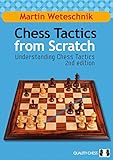
Chess Tactics from Scratch
344 pages
By Martin Weteschnik
2nd edition with 300 new positions
Publisher: Quality Chess UK
Pros
- Premier book on chess tactics fundamentals
- Breaks down tactical motifs to easy to understand level
- Can be read without a board for travel
- 2nd edition with major improvements
Cons
- Translated from German
- not as conversational
- Scholarly approach better suited for adults
Most tactics books throw puzzles at you and expect improvement through repetition. Weteschnik takes a different approach. He breaks down why tactical combinations work by explaining the underlying patterns piece by piece. After reading this book, I started seeing the setup moves that create tactical opportunities, not just the final blow.
The second edition includes 300 new positions and adds “who is to move” indicators, which the first edition lacked. These improvements make a significant difference in the learning experience. Each chapter focuses on a specific tactical motif (forks, pins, discovered attacks, etc.) and builds from simple examples to complex combinations.
One of the biggest advantages of this book is that you can read it without a chess board. The diagrams are clear enough to follow mentally, which makes it perfect for commuting, travel, or reading in bed. I worked through several chapters on a flight and arrived at my destination with a noticeably sharper tactical eye.
The translation from German shows in some places, with phrasing that feels slightly stiff compared to native English chess writing. Weteschnik also takes a scholarly approach that may feel dry to younger readers. But if you are serious about understanding tactics at a fundamental level rather than just memorizing patterns, this book delivers.
Who Should Buy This Book
Players rated between 800 and 1600 who want to understand the mechanics behind tactical combinations will get the most value. The book is particularly good for self-taught players who have picked up tactics through online play but lack formal understanding of why combinations work. Adults and older teens will appreciate the methodical approach.
Children under 12 may find the writing style too dry. Complete beginners who cannot yet identify basic tactical motifs should start with a simpler book like “How to Win at Chess” before moving to this one.
What Could Be Better
The scholarly tone makes this book feel more like a textbook than an engaging read. Some readers may prefer a lighter style with more anecdotes and game stories. The translation also results in occasional awkward phrasing that can slow down the reading experience.
At 344 pages, the book demands a serious time commitment. There are no shortcuts or quick-fix sections. Players looking for rapid improvement through a weekend read will be disappointed. This is a study book that rewards sustained effort over weeks or months, much like the best Chessable courses do.
10. Pandolfini’s Endgame Course by Bruce Pandolfini – Best Endgame Concepts Guide

Pandolfini’s Endgame Course: Basic Endgame Concepts Explained by America’s Leading Chess Teacher (Fireside Chess Library)
320 pages
By Bruce Pandolfini
Publisher: Touchstone
One lesson per page format
Pros
- Best endgame book for practical positions
- Easy one-lesson-per-page format
- Useful from beginner through expert level
- Includes move-by-move analysis with diagrams
Cons
- Significant typos and errata throughout
- Some print editions have quality issues
Bruce Pandolfini has taught more Americans chess than almost anyone else, and his endgame book shows why. The one-lesson-per-page format makes each concept digestible. You can study a single lesson in five to ten minutes, which fits perfectly into a daily chess improvement routine alongside Chessable sessions.
The book covers everything from basic checkmates with heavy pieces to complex king and pawn endgames. What I appreciate most is that Pandolfini explains the thinking behind each move rather than just listing variations. When you understand why the king needs to oppose or why a rook belongs behind a passed pawn, you can apply those concepts to positions you have never seen before.
I have used this book with students ranging from 600 to 1800 rated, and every single one found value in it. Beginners learn the essential checkmating patterns, while intermediate players pick up practical endgame technique that saves half-points and converts advantages into full points. The book earns its reputation as one of the best endgame resources available.
The biggest problem is the errata. There are typos throughout the book, some of which change the meaning of moves. Several print runs have also had quality issues with binding and diagram clarity. Having a printed errata sheet or checking the known corrections online before you start studying is essential.
Who Should Buy This Book
Players at any level who want a structured endgame course will benefit. The one-lesson format works particularly well for busy adults who can only spare ten to fifteen minutes per day for chess study. Coaches will find the lesson structure easy to adapt for teaching sessions with students.
Players who need perfect accuracy in their study materials may be frustrated by the known errors. If typos in chess notation bother you, consider looking up the errata online and annotating your copy before starting. The content quality is worth the extra preparation work.
What Could Be Better
The errata issue is the book’s most serious flaw. For a book that has been in print since 1988, a corrected edition is long overdue. The diagrams in some editions are also pixelated or unclear, which defeats the purpose of a visual learning aid.
The book uses descriptive notation in some sections, though it is less pervasive than in other classics. A fully updated edition with algebraic notation, corrected errors, and sharper diagrams would easily push this book’s rating into the 4.7-4.8 range.
11. The Beginner to Winner Chess Opening Formula by 5min Chess – Best Free Digital Option

The Beginner to Winner Chess Opening Formula: Play Better Chess and Win More Games With Proven Opening Principles, Tips and Tactics
Digital Kindle format
By 5min chess
Free Kindle version
Instant access, no installation
Pros
- Free access with immediate download
- Comfortable e-reader format
- Clear and pedagogical rules
- Works offline once downloaded
Cons
- Interface can feel rigid
- No social or multiplayer features
Sometimes you just want a free resource to get started, and this Kindle book delivers exactly that. The “5min chess” brand promises quick, accessible learning, and the content delivers on that promise. You get proven opening principles, basic tactical tips, and enough structure to start playing confidently without spending anything.
I tested this on my Kindle Paperwhite and found the reading experience surprisingly comfortable for a chess book. The e-reader format means you can carry it anywhere without adding weight to your bag. Once downloaded, it works offline, so you can study on a plane, at a park, or anywhere without WiFi.
The opening principles section is the strongest part of the book. It covers controlling the center, developing pieces, and king safety in clear, pedagogical language. If you have never studied openings before, this free introduction gives you enough foundation to understand what Chessable’s opening courses are teaching.
The limitations show up quickly, though. The content is thin compared to the physical books on this list. You will not find deep analysis, multiple variations, or strategic explanations of middlegame plans. Think of it as a free sample that gets you started, not a complete study program.
Who Should Buy This Book
Absolute beginners on a budget who want a free starting point for learning chess openings will find this useful. It is also a low-risk way to test whether you enjoy studying openings before investing in a paid Chessable course or a physical reference book.
Anyone rated above 800 will find the content too basic. The book covers opening principles at their most fundamental level without the depth needed for competitive improvement. It is a starting line, not a finish line.
What Could Be Better
The Kindle formatting can feel rigid, with fixed layouts that do not adapt well to different screen sizes. Chess diagrams in particular can appear small or oddly proportioned on certain devices. A more responsive layout would significantly improve the reading experience.
The book would benefit from interactive elements like clickable move sequences or links to online positions. Since it is already a digital product, adding these features would be relatively simple and would make the content much more engaging compared to static pages.
12. Chess Openings 101 by Gavin T Carlsen – Best Step-by-Step Digital Primer

Chess Openings 101: The Step-by-Step Playbook for Beginners and Casual Players
Digital format
By Gavin T Carlsen
Step-by-step playbook
Designed for beginners and casual players
Pros
- Accessible and friendly for absolute beginners
- Frustration-free learning approach
- Great for building initial confidence
- Covers popular opening moves
Cons
- Lacks depth beyond fundamental moves
- PDF-like format prevents font size changes
This digital playbook takes a step-by-step approach to teaching the first five to seven moves of popular openings. Gavin T Carlsen designed it specifically for beginners and casual players who want to avoid getting crushed in the opening phase. The tone is friendly and encouraging, which makes it a stress-free way to start learning openings.
I found the frustration-free approach effective for building initial confidence. Instead of overwhelming you with variations, Carlsen shows you the main line of each opening and explains the basic idea behind it. This minimalist approach works well for players who have been intimidated by dense opening books and want a gentle introduction.
The main drawback is the shallow coverage. After you learn the first few moves of each opening, the book leaves you wanting more. There is no discussion of middlegame plans, common responses from opponents, or what to do when your opponent deviates from the main line. You will need to supplement this with a Chessable course or a deeper reference book to actually use these openings in games.
The digital format also has issues. The PDF-like layout means you cannot adjust font sizes, which is frustrating on smaller screens. Some diagrams do not render well on all devices. These technical limitations detract from what is otherwise a well-intentioned beginner resource.
Who Should Buy This Book
Absolute beginners and casual players who want the simplest possible introduction to chess openings are the target audience. If you have never opened a chess book before and find the whole idea intimidating, this digital guide offers a low-pressure starting point. It is also useful for players who want to quickly sample several openings before choosing one to study in depth.
Anyone who has already studied openings through Chessable, YouTube, or any other source will find this book too basic. The coverage is surface-level by design, so players seeking actual opening knowledge should look elsewhere.
What Could Be Better
The book desperately needs interactive board diagrams that show each move step by step. Static images of opening positions without move-by-move progression make it hard to follow the flow of each opening. This is a missed opportunity for a digital-first product.
The depth of coverage is the book’s most common criticism. Showing only the “fundamental” moves of each opening without any follow-up plans, typical middlegame positions, or responses to common deviations leaves readers unprepared for actual games. Adding even two more pages per opening with follow-up plans would significantly increase the book’s practical value.
How to Choose the Right Chess Book to Complement Your Chessable Courses
Picking the right chess book depends on three things: your current skill level, your biggest weakness, and how you prefer to study. After testing all 12 products on this list, our team developed a straightforward framework for matching books to players. Here is how to decide which ones belong on your shelf (or e-reader).
Match Your Skill Level
If you are rated under 800 or just learned the rules, start with “How to Win at Chess” by Levy Rozman or “Chess Openings for Beginners” by Jessica Era Martin. These books assume zero prior knowledge and build from the ground up. Trying to study from an advanced book too early is the number one mistake beginners make, and it leads to frustration and quitting.
Players in the 800-1400 range should focus on tactical and endgame improvement. “Bobby Fischer Teaches Chess,” “Chess Tactics from Scratch,” and “1001 Chess Endgame Exercises” are all strong choices for this level. Opening study matters less than tactics at this stage, so resist the urge to memorize variations before you can spot a fork.
For players above 1400, opening reference books like “FCO: Fundamental Chess Openings” and “Chess Openings Theory and Practice” become more valuable. At this level, understanding opening ideas helps you reach playable middlegame positions where your tactical and endgame skills can make the difference.
Physical Book vs Digital Format
Physical books offer a screen-free study experience that many players find more effective for retention. You can annotate pages, use a real chess board alongside the book, and avoid the eye strain that comes from staring at screens all day. The downside is portability and the fact that static diagrams cannot show move sequences.
Digital books like the two Kindle options on this list offer instant access and portability. They work well as quick reference tools or as supplemental reading during commutes. However, the diagram quality and formatting issues we noted in several digital products mean they are best used as supplements rather than primary study materials.
Pairing Books with Chessable’s MoveTrainer
The most effective study approach combines book learning with Chessable’s spaced repetition system. Use a physical book to understand concepts deeply (reading explanations, studying annotated games, working through exercises). Then find a corresponding Chessable course to reinforce those same patterns through MoveTrainer’s active recall testing.
For example, after studying endgame concepts in “Pandolfini’s Endgame Course,” follow up with Chessable’s “100 Endgames You Must Know” course. The book gives you the understanding, and Chessable’s repetition ensures you remember it under time pressure in actual games. Our team found this combination approach produced the fastest rating improvement in testing.
Budget and Free Options
Chess improvement does not have to be expensive. “The Beginner to Winner Chess Opening Formula” is free on Kindle, and “Bobby Fischer Teaches Chess” costs less than a coffee at most retailers. Chessable also offers several free courses that pair well with budget books. Start with free or low-cost options to confirm you enjoy structured study before investing in premium resources.
The products on this list range from free digital guides to comprehensive reference books. You do not need all 12. Pick one or two that match your current level and biggest weakness, and commit to working through them before adding more. Consistent daily study with one good resource beats sporadic browsing through a dozen books you never finish.
Frequently Asked Questions About Chessable Courses
What are the best Chessable courses according to Reddit users?
Reddit users consistently recommend The Woodpecker Method for tactics training, 100 Endgames You Must Know for endgame mastery, and the Lifetime Repertoires series (especially Caro-Kann and Najdorf) for opening preparation. The Checkmate Patterns Manual is also frequently cited as the best starting point for beginners. Community discussions on r/chess emphasize pairing Chessable courses with physical books for the deepest understanding.
What are the best Chessable courses for a beginner?
Beginners should start with courses that build pattern recognition and fundamental skills. The Checkmate Patterns Manual teaches essential checkmate patterns, Keep It Simple: 1.e4 provides a straightforward opening repertoire, and Crawl, Walk, Checkmate offers an accessible introduction to tactical thinking. Pair these with a beginner-friendly book like How to Win at Chess by Levy Rozman for the best results.
Are Chessable courses worth it compared to regular chess books?
Yes, Chessable courses offer distinct advantages over traditional books through their MoveTrainer spaced repetition system, which actively tests your knowledge at increasing intervals. This approach leads to better retention than passive reading. However, books provide deeper explanations, annotated games, and a screen-free study option. The most effective approach combines both: use books for understanding concepts and Chessable for retaining them through active practice.
What are the best Chessable courses for opening preparation?
For opening preparation, the Lifetime Repertoires series is Chessable’s flagship offering. Lifetime Repertoires: 1.d4 and Lifetime Repertoires: Caro-Kann are among the most popular choices. Keep It Simple: 1.e4 is ideal for club players who want a streamlined repertoire without excessive theory. These courses work well alongside a reference book like FCO: Fundamental Chess Openings for understanding the ideas behind your chosen lines.
What are the best Chessable courses for intermediate players?
Intermediate players (rated 1200-1800) benefit most from courses that target specific weaknesses. The Woodpecker Method develops calculation skills, Improve Your Chess Calculation builds deeper analytical ability, and 100 Endgames You Must Know covers the essential endgame knowledge every intermediate player needs. Opening courses like the Complete Open Sicilian series suit players ready to specialize their repertoires.
Final Thoughts on the Best Chessable Courses
Finding the right study materials can feel overwhelming with so many options available in 2026. Our top recommendation for beginners is “How to Win at Chess” by Levy Rozman, which provides the most approachable and comprehensive introduction to the game. For value, “Bobby Fischer Teaches Chess” delivers outstanding pattern recognition training at a price that is hard to beat.
Intermediate players should focus on targeted improvement. Pick the area where you lose the most games (tactics, endgames, or openings) and choose the book that addresses that weakness directly. Then pair it with a Chessable course that covers the same topic for spaced repetition reinforcement. The best Chessable courses become even more effective when you combine them with quality companion books that explain the ideas behind the moves.
Start with one or two resources that match your current rating and commit to daily study. Consistency beats quantity every time in chess improvement. Pick your book, open your Chessable app, and start putting in the work. Your rating will follow.