
Getting teenagers to put down their phones and join a family board game night can feel like an impossible task. I know because I spent months trying different games with my own family before finding the ones that actually kept everyone engaged past the first round. The trick is finding games with enough strategic depth to respect their intelligence while keeping the social energy high enough that nobody reaches for their screen.
We tested over 30 titles across countless game nights to build this list of the best family board games for teens. From quick card games that spark instant laughter to strategy-heavy experiences that demand real thinking, every pick on this list earned its spot through genuine family testing. Our team looked at player count flexibility, replay value, how easy rules are to learn, and most importantly, whether teens actually asked to play again.
Whether you are shopping for a 13-year-old who loves strategy or a 16-year-old who prefers fast-paced party games, this guide covers 15 titles sorted by type so you can find the right fit fast. Every game here works for family game night in 2026, and most importantly, none of them feel childish to a teenager.
Table of Contents
Top 3 Picks for Best Family Board Games for Teens


Best Family Board Games for Teens in 2026
1. Asmodee Splendor Board Game – The Engine-Building Gem Strategy
Asmodee Splendor Gem Trading Strategy Board Game, 2-4 Players
Engine-Building Strategy
2-4 Players
Ages 10+
30 Min Playtime
Premium Poker-Style Chips
Pros
- Elegant mechanics easy to learn but hard to master
- High replay value with different strategies each game
- Works beautifully as a 2-player game
- Quick 30-minute sessions keep teens engaged
- Premium gem tokens feel satisfying to handle
Cons
- Some units report card quality issues
- Theme can feel thin for story-driven players
The first time I brought Splendor to our family game night, I was not sure what to expect. The box looks unassuming, and the concept of collecting gem tokens to buy development cards sounds dry on paper. Within ten minutes, every person at the table was hooked. There is something deeply satisfying about building an engine where each card you purchase makes the next one cheaper, creating a cascading sense of momentum that clicks with teen brains in a way few other games manage.
Our group ranged from a 13-year-old who normally avoids anything strategic to a 17-year-old who treats every game like a math problem. Both of them loved it. The rules take about five minutes to explain, but the strategy unfolds over dozens of plays. You can focus on quick cheap cards, save up for expensive noble-attracting developments, or block opponents by grabbing the gems they need. Every session feels different.

The gem tokens deserve special mention. These are heavy, poker-style chips in six colors that clink satisfyingly when you stack them. They elevate the tactile experience from a standard card game to something that feels premium. My teens actually asked if we could get a velvet bag to store them in, which tells you something about how much they enjoyed handling them.
The biggest drawback is that once you have played twenty or so rounds, the base game can start to feel samey. The Cities of Splendor expansion fixes this beautifully by adding four different modules you can mix in. Also worth noting: some buyers received cards with slightly softer cardstock than expected. A set of penny sleeves solved that for us quickly.

Who Should Play Splendor
Families with teens who enjoy thinking ahead but do not want to commit to two-hour marathons will find Splendor perfect. It plays equally well with 2, 3, or 4 players, making it flexible for whatever your household looks like. If your teen likes chess, card games, or resource management in video games, this one will click immediately. It is also one of the best gateway games for friends who claim they “do not like board games.”
Who Might Want to Skip It
If your family craves loud, laugh-out-loud party energy, Splendor will feel too quiet. It is a thinker’s game with minimal direct conflict, so teens who thrive on trash-talking and dramatic moments might find it subdued. Also, the two-player experience, while excellent, lacks some of the resource tension that makes four-player games so tense.
2. USAOPOLY Flip 7 – The Addictive Press-Your-Luck Card Game

USAOPOLY Flip 7 Card Game, The Ultimate Blend of Press Your Luck Strategy
Press Your Luck Strategy
3+ Players
Ages 8+
20 Min Playtime
94 Cards Included
Pros
- Incredibly easy to learn in under two minutes
- Works with any group size from 3 upward
- Generates genuine tension and excitement every round
- Compact enough to take anywhere
- 92% five-star rating speaks for itself
Cons
- No scorecard included so you track manually
- Box can arrive dented in shipping
Flip 7 became the surprise hit of our testing period. I brought it out as a filler between longer games, expecting it to be a quick distraction. Three hours later, we were still playing. The concept is beautifully simple: cards are dealt to you one at a time, each with a point value. You keep going to rack up points, but if you flip a card matching a number you already have, you bust and lose everything. That is the entire ruleset, and it creates more drama than games with twenty-page rulebooks.
What makes Flip 7 special for teens is the press-your-luck mechanic. Every single decision feels meaningful. Do you bank your 38 points and play it safe, or risk flipping again because you know the odds favor one more card? Watching a teenager calculate probabilities while their sibling yells “stop!” from across the table is pure family game night gold. The action cards like Freeze, Second Chance, and Flip Three add just enough variety to keep things interesting without complicating the core loop.
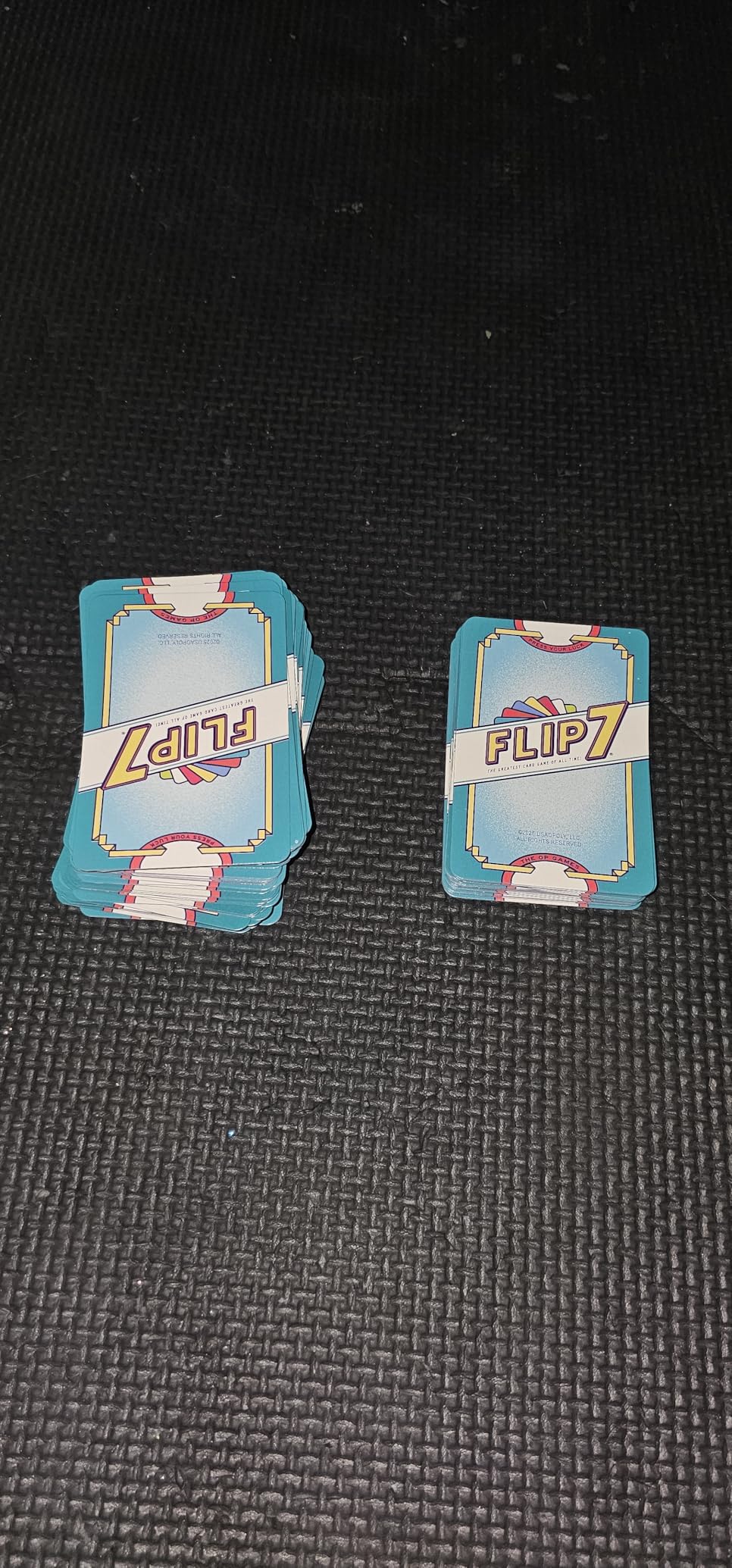
The compact size is a real advantage. This game fits in a jacket pocket, which means it came with us to restaurants, camping trips, and a family reunion where it got passed around between three generations. The cards are well-made with clear, bold numbers that are easy to read even in dim lighting.
The lack of a scorepad is my only real complaint. We started using a phone notes app to track scores, which works fine, but a small pad would have been a nice touch. Some reviews mention the packaging getting damaged in transit, so keep that in mind if you are ordering it as a gift.

Who Should Play Flip 7
Any family looking for a quick, addictive card game that scales perfectly from 3 to 8+ players. It works as a warm-up before a heavier game, a palate cleanser between rounds, or the main event when you want something light. The age 8+ rating means younger siblings can join without feeling lost, which makes it one of the best family board games for mixed-age groups with teenagers.
Who Might Want to Skip It
Strategic purists who want deep decision-making will find Flip 7 too simple. The luck element is real, and sometimes the best strategy still loses to a bad flip. If your teen only enjoys games where skill always wins, this might frustrate them. Also, players who prefer cooperative games over competitive ones should look elsewhere.
3. CATAN Board Game 6th Edition – The Classic Trade and Build Strategy
CATAN Board Game (6th Edition) Trade, Build & Settle in the Classic Strategy Game for Family, Kids & Adults, Ages 10+, 3-4 Players, 60-90 Min Playtime
Trade Build Settle Strategy
3-4 Players
Ages 10+
60-90 Min Playtime
Modular Board
Pros
- Perfect balance of strategy and social negotiation
- Modular board creates a new map every game
- High-quality wooden components feel premium
- 6th Edition adds useful card trays
- Universally recognized and loved
Cons
- Dice rolls introduce luck that can feel unfair
- Trading can stall when players refuse to cooperate
CATAN is the game that started the modern board game renaissance, and after testing it with multiple teen groups, I understand why it has sold over 40 million copies. The 6th Edition brings quality-of-life improvements that matter more than you might think. The included card trays alone eliminate the messy hand management that plagued earlier versions, and the updated components have a satisfying heft that teens appreciate.
The core loop is straightforward: roll dice to generate resources, trade with other players, and build settlements and cities to earn victory points. What makes it work so well with teenagers is the negotiation aspect. Every trade is a mini social puzzle. Do you give away the brick your sibling desperately needs, or hold out for a better deal? Watching teens who normally barely speak to each other suddenly become shrewd commodities traders is worth the price of admission alone.

Reddit users consistently report CATAN as a hit with teens, and our testing confirmed that. The modular hexagonal board means no two games play the same. Resource distribution changes the entire strategic landscape from session to session. One game might see brick shortages drive hard bargains, while the next features wheat surpluses that shift the power dynamic entirely.
The main frustration is the dice dependency. A string of bad rolls can leave you unable to do anything meaningful for turns at a time, which tests patience. Some families house-rule that each hex produces on its number and its neighbor, which smooths out the variance. Also worth noting: games can run longer than 90 minutes with players who deliberate over trades, so set expectations accordingly.

Who Should Play CATAN
Families who want a deeper strategic experience that still feels social and accessible. CATAN shines with 4 players who enjoy negotiation, deal-making, and friendly competition. If your teens liked the trading mechanics in video games or enjoy social strategy, this is the gold standard. The 10+ age rating means it works for younger teens without talking down to them.
Who Might Want to Skip It
If your family struggles with competitive tension or arguments over rules, CATAN’s trading and blocking mechanics might trigger conflicts. Players who dislike luck-based elements will find the dice rolls frustrating. Also, the 3-4 player count is rigid; it does not work well with just 2 players without buying the extension kit.
4. CGE Codenames 2nd Edition – The Word Association Party Game

CGE Codenames Board Game (2nd Edition)
Word Association Party Game
4-8+ Players
Ages 14+
15 Min Playtime
400 Codenames
Pros
- Creates hilarious team dynamics and inside jokes
- Massive replayability with 400 codenames on 200 cards
- 2nd Edition has revised words and better insert
- Works perfectly for large family gatherings
- Spymaster role rewards creative thinking
Cons
- Requires minimum 4 players to really work
- Downtime while spymasters think up clues
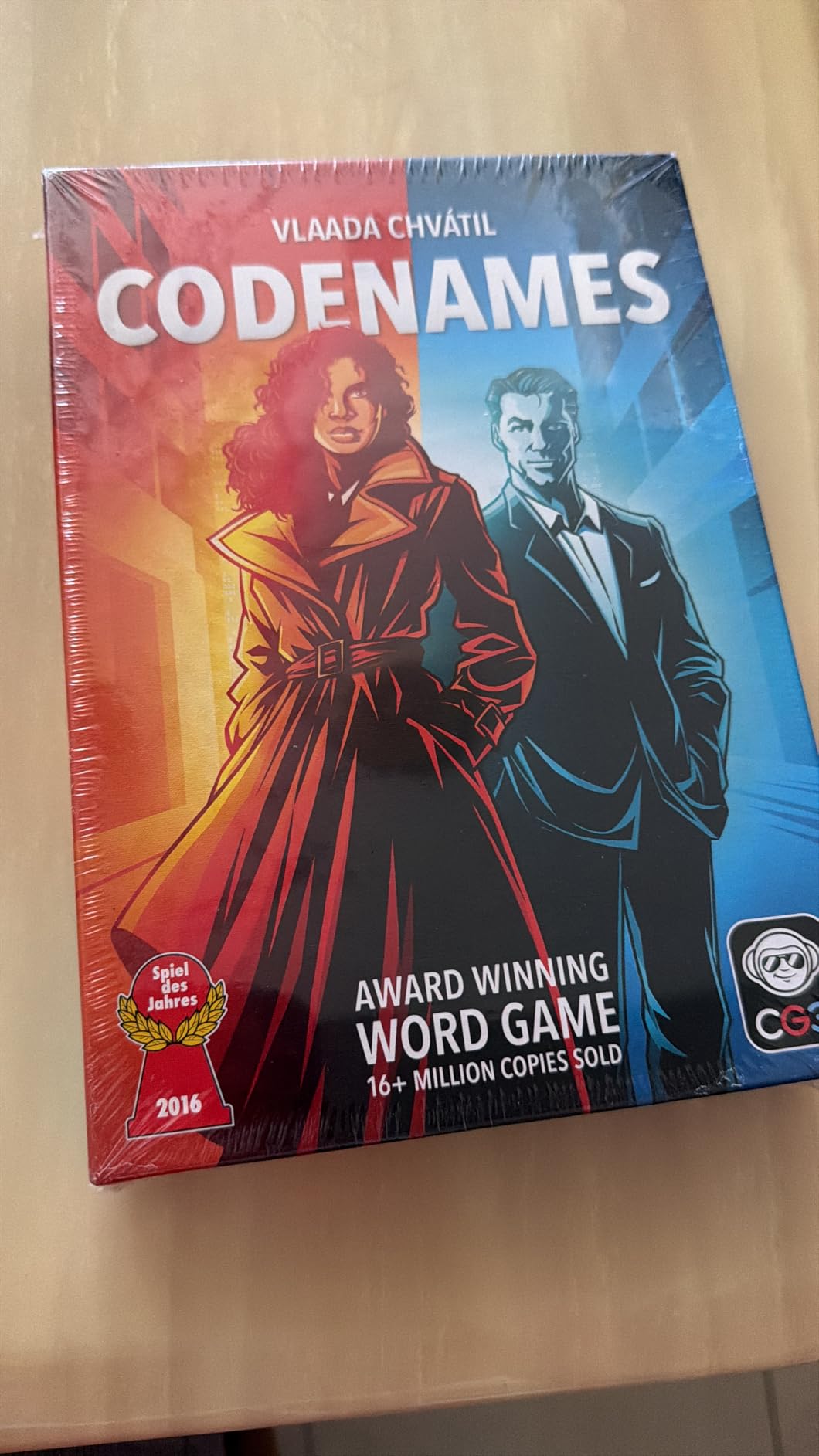
Codenames is the game I reach for when we have a big group and want something that gets everyone talking immediately. The setup is a 5×5 grid of word cards spread across the table. One player on each team is the spymaster, giving one-word clues that link multiple cards together while avoiding the other team’s agents and the game-ending assassin. It sounds simple until you are staring at 25 words trying to connect “shark,” “hospital,” and “lawyer” with a single clue.
Our teens absolutely thrived as spymasters. The creative thinking required plays right into how their brains work. One of our testers, a 15-year-old, gave the clue “drama” for three words that had us all laughing when we finally saw the connections. These moments of shared discovery are what make Codenames one of the best family board games for teens who enjoy wordplay and teamwork.
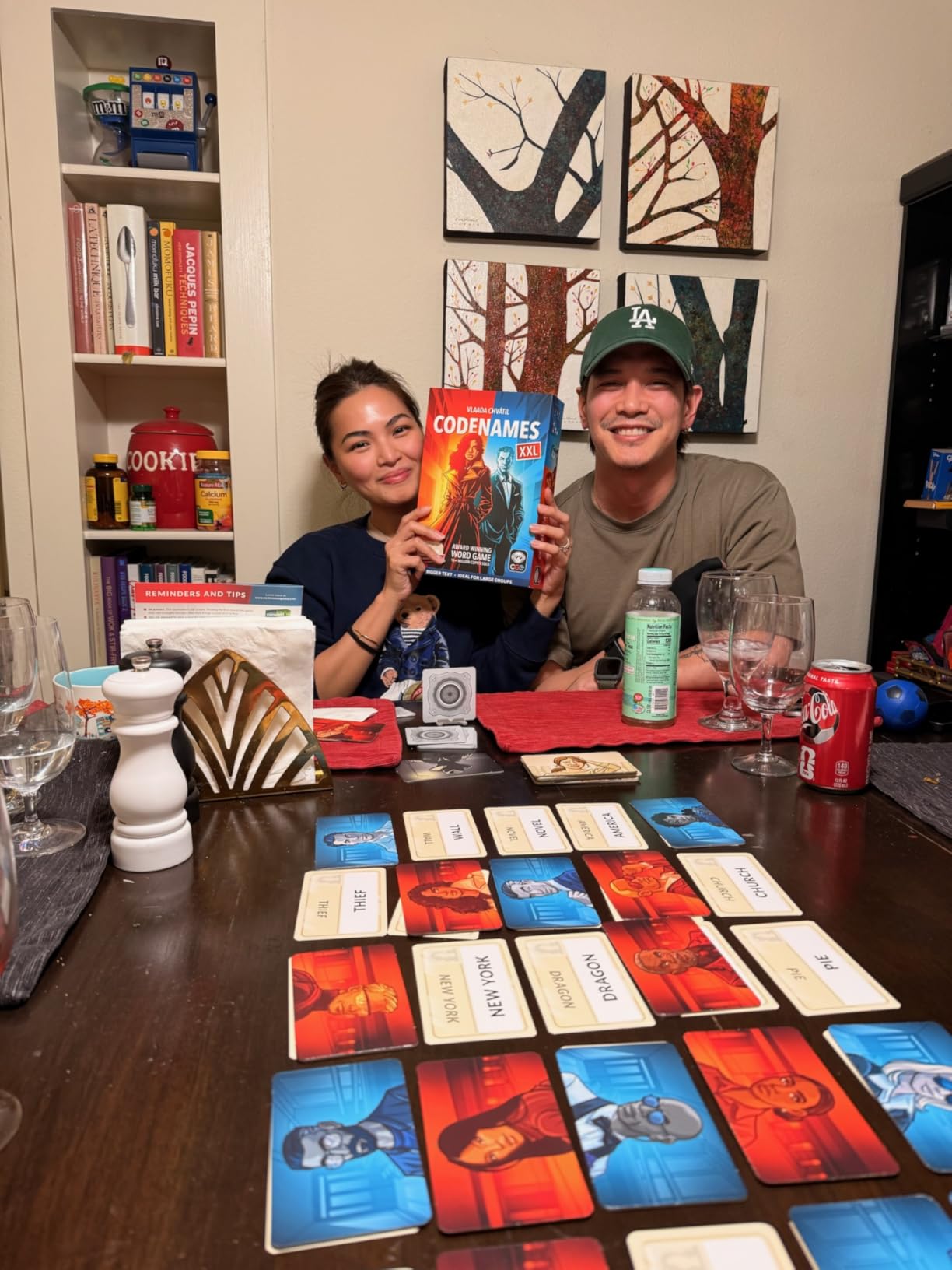
The 2nd Edition refreshes are worth having. Revised words remove some outdated or confusing terms from the original, and the new insert keeps everything organized. With 200 double-sided cards giving you 400 codenames, you will play dozens of rounds before seeing repeated grids. Even then, the combinations are different because the spymaster’s key card randomizes which words belong to which team.
The only real downside is that games with cautious spymasters can drag. When someone spends five minutes trying to find the perfect clue, the energy drops. We solved this with a one-minute timer, which actually made the game more fun because rushed clues tend to be hilariously bad.
Who Should Play Codenames
Families with 4 or more players who enjoy word games, team dynamics, and creative thinking. It scales up beautifully to large groups, making it perfect for holiday gatherings with extended family. The team format means less experienced players can lean on their spymaster, so skill gaps matter less than in pure strategy games.
Who Might Want to Skip It
Families who primarily play with 2 or 3 people will find Codenames underwhelming. The game really needs that team-versus-team dynamic to shine. Also, players who prefer fast physical action over verbal reasoning might find the pace too cerebral for their taste.
5. Taco Cat Goat Cheese Pizza – The Wildly Fast Card Slapping Game

Taco Cat Goat Cheese Pizza Card Game by Taco Cat Games, Age 7+, 2-8 Players
Fast-Paced Card Slapping Game
2-8 Players
Ages 8+
10-15 Min Playtime
Portable
Pros
- Instant fun that gets everyone laughing within minutes
- Supports up to 8 players effortlessly
- Develops reflexes and pattern recognition
- Super portable for travel and outings
- Affordable and accessible for all ages
Cons
- Cards are thinner than standard playing cards
- Can get extremely loud and chaotic with big groups
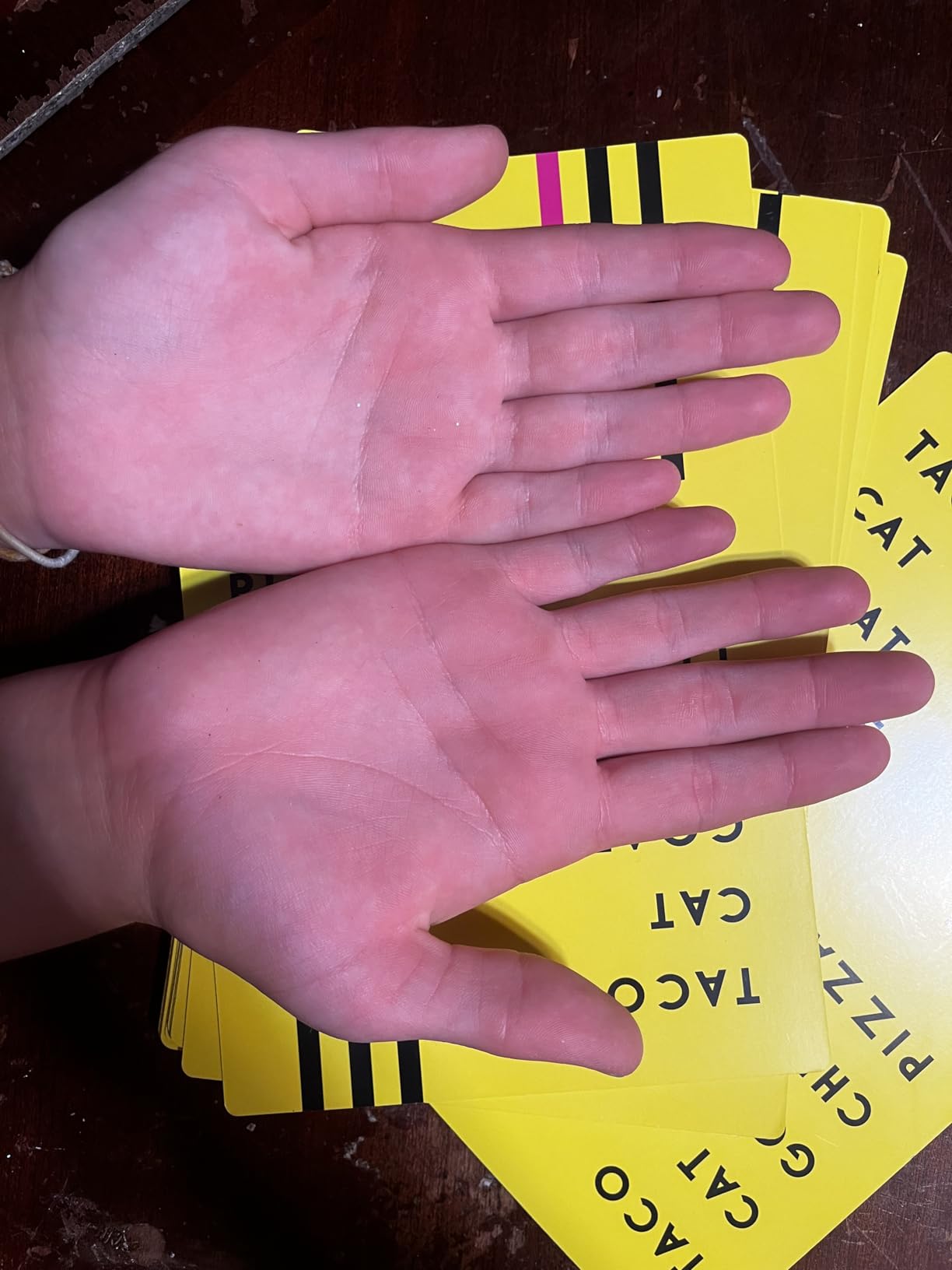
If there is one game guaranteed to get teens off their phones within thirty seconds, it is Taco Cat Goat Cheese Pizza. The name alone raises eyebrows, and the gameplay delivers on that promise. Players take turns flipping cards while saying the words “taco,” “cat,” “goat,” “cheese,” “pizza” in sequence. When the spoken word matches the card played, everyone races to slap the pile. Last one to slap takes the whole stack. It is that simple, and it is absolute chaos in the best possible way.
I have seen the most phone-addicted teenagers in our test group completely forget about their screens during a round of this. The combination of pattern recognition, reflexes, and social pressure creates a feedback loop of laughter and groans that builds on itself. Special action cards like the gorilla, narwhal, and groundhog add physical gestures into the mix, making it even more chaotic.
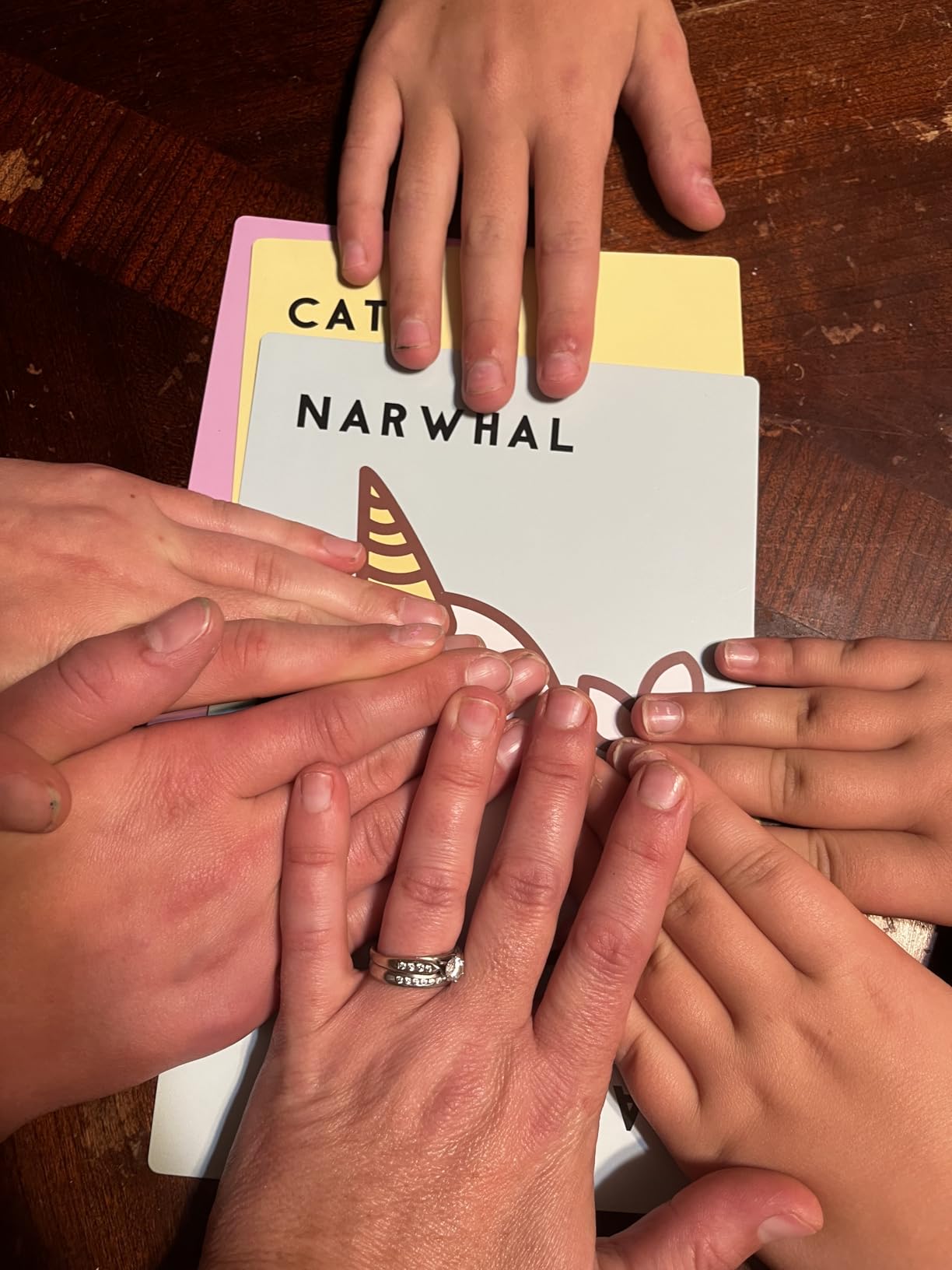
The portability is a major plus. At 3.2 ounces and the size of a small deck of cards, this goes everywhere. We played it waiting for food at restaurants, at a campground picnic table, and in an airport terminal. Every single time, strangers asked what we were playing because the laughter was so infectious.
Card quality is the one weakness. The cards are noticeably thinner than a standard Bicycle deck, and after a few dozen rounds of aggressive slapping, they start showing wear. Card sleeves help, but they also reduce the tactile snap that makes slapping satisfying. It is a trade-off worth knowing about before you buy.
Who Should Play Taco Cat Goat Cheese Pizza
Families who want instant, no-setup fun that works for any group size. This is the perfect icebreaker for gatherings with teens who do not know each other well. The rules take literally thirty seconds to explain, so nobody sits out while someone reads a rulebook. It also works great for multi-generational play because grandparents can pick it up just as fast.
Who Might Want to Skip It
Anyone who dislikes loud, physical games or has family members with sensory sensitivities should approach with caution. The slapping and shouting can be overwhelming in confined spaces. Also, competitive teens who prefer deep strategy over reflexes might find it too simple after a few rounds.
6. Azul Board Game – The Award-Winning Tile Placement Strategy
Azul Mosaic Tile-Placement Strategy Board Game, 2-4 Players, 30-45 Min
2018 Spiel des Jahres Winner
2-4 Players
Ages 8+
30-45 Min Playtime
Resin Tiles
Pros
- Beautiful tactile resin tiles feel premium
- Award-winning gameplay that is easy to learn
- Plays excellently with 2 players
- Quick 30-45 minute sessions
- High replayability with strategic depth
Cons
- Scoring system can confuse first-time players
- Rulebook could be clearer on endgame conditions
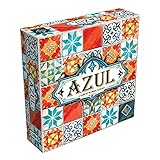
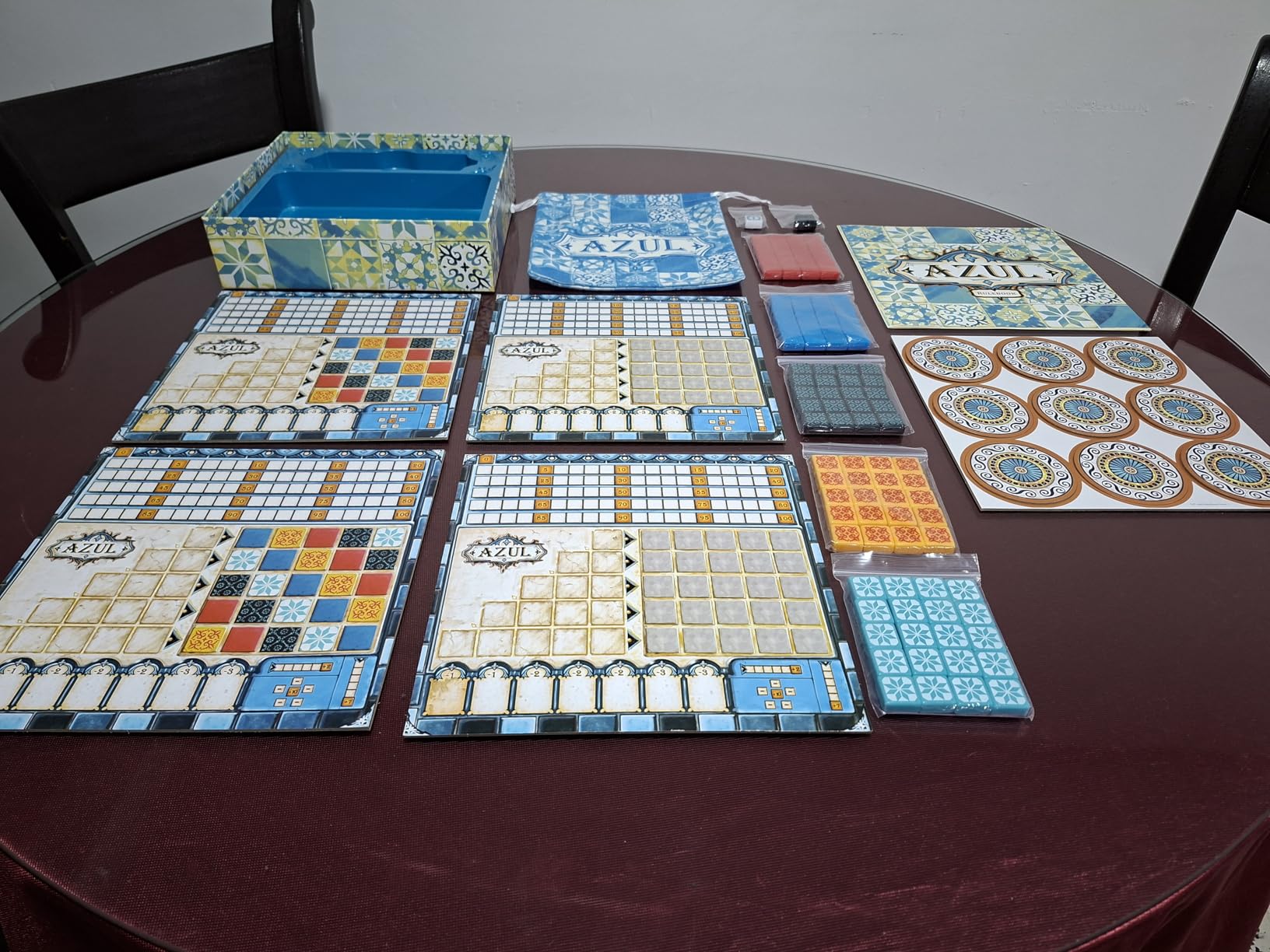
Azul won the 2018 Spiel des Jahres for good reason, and it remains one of the most visually stunning board games you can put on a table. Players draft colorful resin tiles from factory displays and place them on their personal boards to create mosaic patterns. The physical act of picking up these thick, smooth tiles and arranging them is genuinely satisfying in a way that few games manage.
What surprised me most during testing was how competitive it got. Azul looks peaceful and artistic, but the drafting phase is cutthroat. When you take tiles from a factory display, all remaining tiles of that color go to the center pool. This means every pick you make can feed your opponents or block them from completing their rows. Our teens figured out the blocking strategies within two games and the table talk got intense.
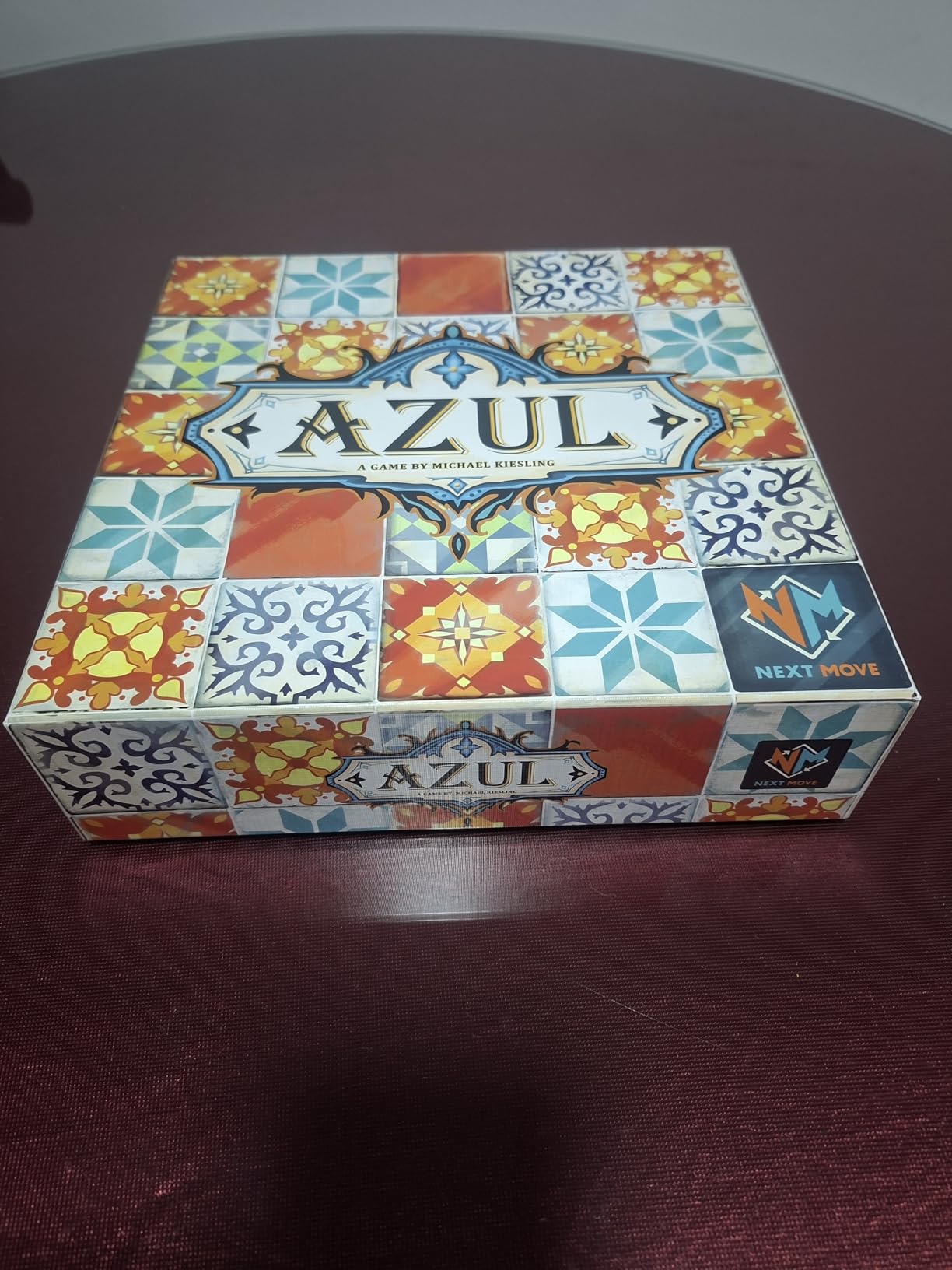
The game shines at two players, which makes it perfect for one-on-one time with a teen. The head-to-head drafting is tighter and more strategic than with three or four players. We had a stretch where my 14-year-old and I played Azul every evening for a week, and the meta kept evolving as we discovered new strategies.
The scoring system is the main barrier to entry. Understanding how completed rows, columns, and sets score takes a playthrough or two to internalize. The rulebook does not help much here. I recommend watching a five-minute tutorial video together before your first game to avoid confusion mid-play.
Who Should Play Azul
Families who appreciate beautiful components and strategic depth without marathon playtimes. Azul is perfect for teens who enjoy puzzles, patterns, and outthinking their opponents. The 2-player mode is strong enough that it works as a regular parent-teen activity. If your teen liked Tetris, Sudoku, or visual puzzles, this game will resonate immediately.
Who Might Want to Skip It
Players who prefer direct confrontation and player elimination might find Azul too passive-aggressive. The competition is real but indirect. Also, colorblind players may struggle with the tile colors, though the tiles do have distinct patterns that help somewhat. Families wanting loud party energy should look at the card games on this list instead.
7. Hasbro Yahtzee – The Classic Dice Game That Still Delivers

Hasbro Gaming Yahtzee Game, Fast-Playing Dice Games for Kids, Teens, and Adults, Strategy Games, Family Games for Kids, 2 or More Players, Ages 8 and Up
Classic Dice Rolling Game
2+ Players
Ages 8+
Fast-Paced Rounds
Includes Shaker and 5 Dice
Pros
- Timeless gameplay that every generation knows
- Perfect blend of luck and calculated risk
- Compact and travels easily
- Quick rounds with minimal setup
- Scorepad tracking adds a satisfying record
Cons
- Can feel too simple for serious strategy gamers
- Score tracking can become tedious over time
Yahtzee has been around since 1956, and I was skeptical whether it would hold up against modern board games during our testing. Turns out, the combination of dice rolling, probability decisions, and the thrill of yelling “Yahtzee!” when you roll five of a kind is genuinely timeless. Our teens had never played before and were genuinely into it by the second round.
The decision-making is more nuanced than it appears. On each turn you roll three times, keeping some dice and re-rolling others. Choosing between going for a large straight, banking a full house, or risking it all for a Yahtzee creates real tension. Teens who enjoy probability and calculated risks will find plenty to think about, while those who just want to roll dice and shout have fun too.
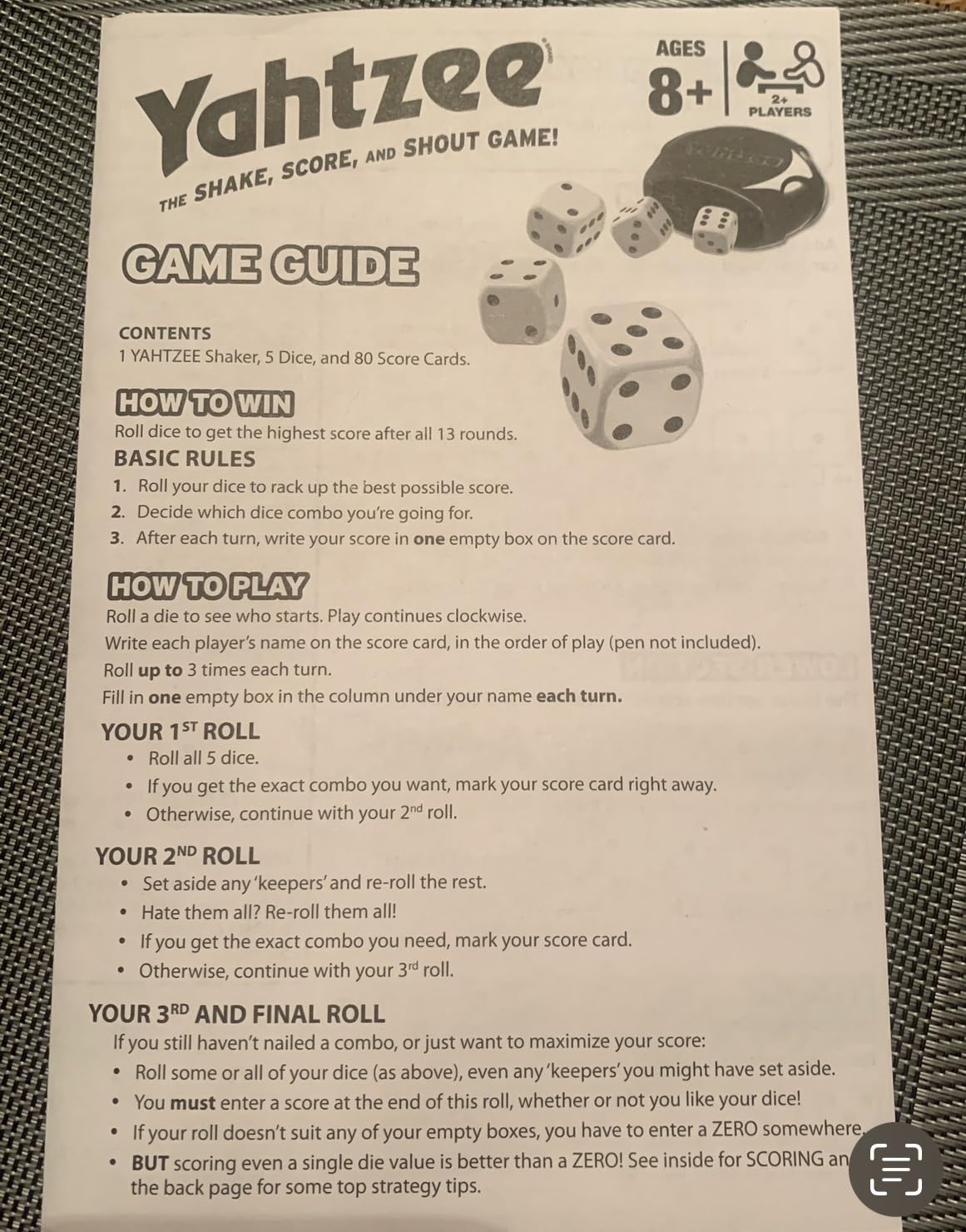
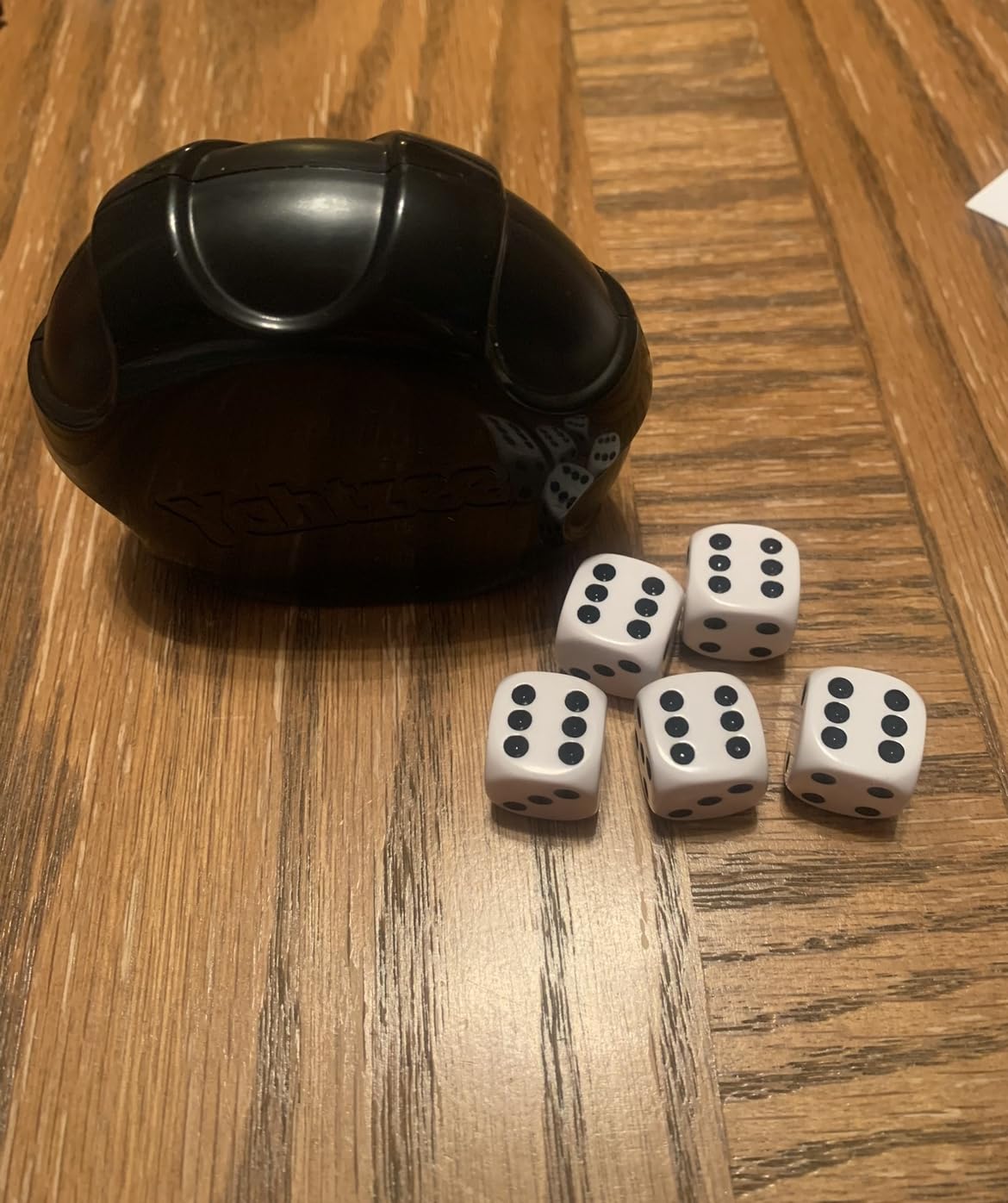
The included shaker cup and five dice are all you need, along with a scorepad. The simplicity is the strength here. No board to set up, no cards to shuffle, no rules to argue about. Open the box, grab a pen, and start rolling. We have taken Yahtzee on road trips, played it at the beach, and even brought it to a waiting room. It works everywhere.
The main drawback is that it is primarily a solo experience played in a group. You are rolling your own dice and making your own decisions without much interaction between turns. This makes it less social than Codenames or CATAN, though the shared anticipation when someone is going for a Yahtzee brings the table together.
Who Should Play Yahtzee
Families who want a no-fuss game that works with any number of players and requires zero learning curve. It is perfect for mixed generations because grandparents already know how to play. The portable format makes it ideal for vacations and travel. If you want something you can play with teens without a twenty-minute rules explanation, Yahtzee delivers.
Who Might Want to Skip It
Teens who want deep player interaction and strategic depth may find Yahtzee too simple. The luck element is significant, and skilled players can lose to beginners purely through dice outcomes. Families who already own and are bored of Yahtzee should look at the newer games on this list for fresh experiences.
8. The Chameleon – The Award-Winning Social Deduction Game

The Chameleon Social Deduction Board Game for Adults, Ages 12+
Social Deduction Bluffing Game
3-8 Players
Ages 14+
15 Min Playtime
Includes 80 Extra Words
Pros
- Two-minute rules explanation gets everyone playing fast
- Creates hilarious moments of suspicion and bluffing
- Compact and portable for any gathering
- Multi-award winning including Best Party Game
- 80 extra secret words extend replayability
Cons
- 14+ age rating excludes younger siblings
- Requires some comfort with deception and bluffing
The Chameleon is the game that made our teen testers the loudest they have been all testing period. One player is secretly the chameleon and does not know the secret word. Everyone else does. Players take turns giving one-word clues related to the secret word, and then everyone votes on who they think the chameleon is. If you are the chameleon, you have to bluff your way through giving a convincing clue without knowing the word. The accusations, finger-pointing, and dramatic reveals are absolutely electric.
What I love about this game for teens is that it rewards both social intelligence and creative thinking. The chameleon has to read the room, parse everyone else’s clues, and generate something plausible on the spot. The honest players have to give clues that prove they know the word without being so obvious that the chameleon can copy them. It is a balancing act that teens find fascinating.
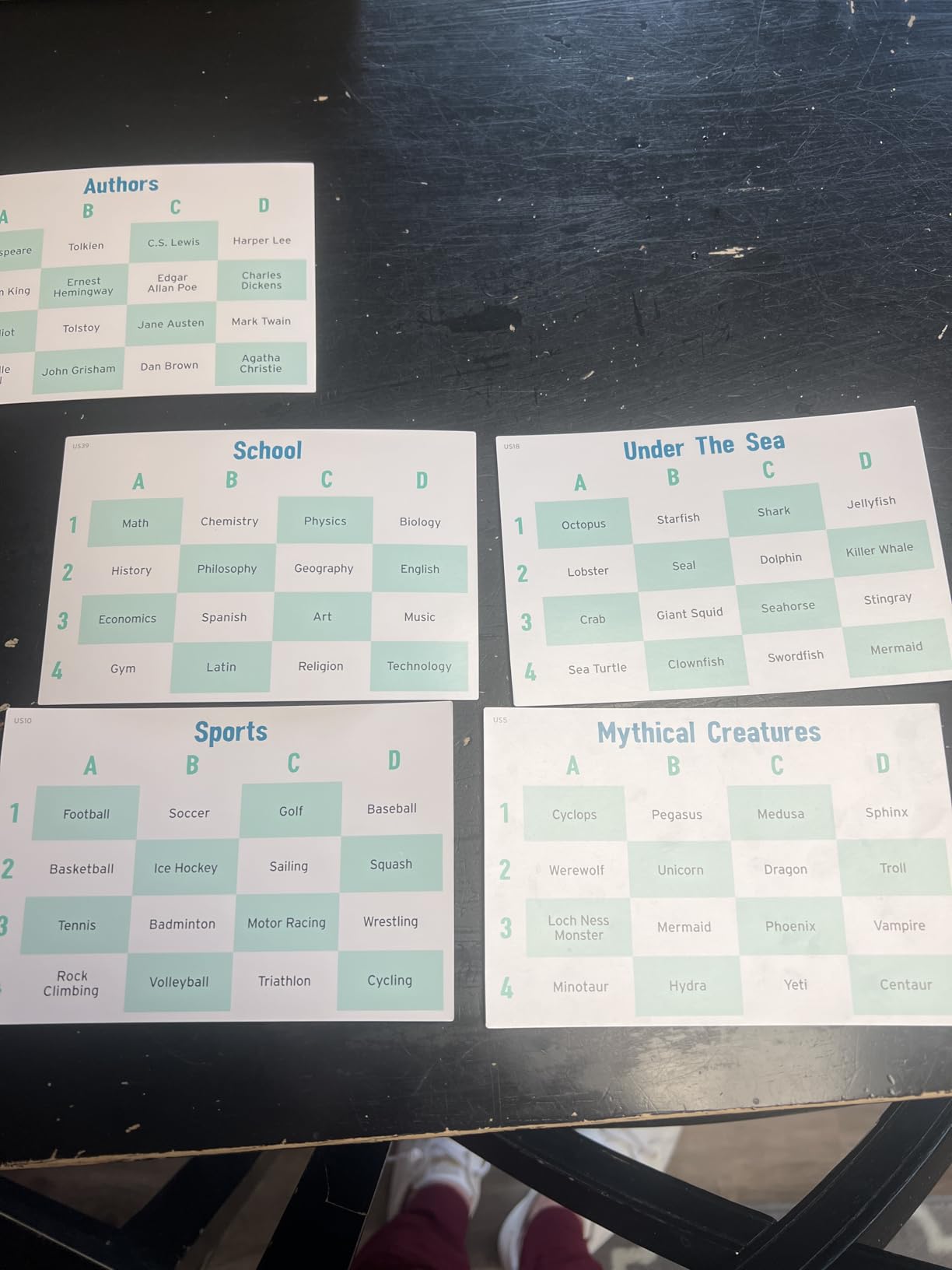
The included 80 extra secret words are a smart addition that significantly extends the game’s lifespan. Without them, you would burn through the original word list in a dozen or so games. With the expansion words, we have played over forty rounds without a repeat. The 15-minute playtime means you can squeeze in several rounds in an evening.
The 14+ age recommendation is accurate. Some of the concepts and the bluffing requirement might be tough for younger kids. Also, some teens feel uncomfortable with the deception aspect. If your family avoids games where lying is a mechanic, this will not be a good fit.
Who Should Play The Chameleon
Families with teens 14 and older who enjoy social deduction, bluffing, and games that create memorable stories. It works brilliantly at parties, family gatherings, or even as an after-dinner activity. The 3-8 player range makes it flexible for most group sizes. If your teen enjoys games like Among Us or Werewolf, this is the board game equivalent.
Who Might Want to Skip It
Families with younger children under 14 should skip this one, as the bluffing mechanic requires a level of social maturity. Players who are uncomfortable with deception, even in a game context, should avoid it. Also, groups of fewer than 4 players will find the deduction too easy.
9. Asmodee Just One Party Game – Cooperative Word Guessing Fun

Asmodee Just One Party Game (2025 Refresh) – Cooperative Mystery Word Guessing Fun for Family & Friends, Kids & Adults, Ages 8+, 3-7 Players, 15 Minute Playtime
Cooperative Word Guessing Game
3-7 Players
Ages 8+
15-20 Min Playtime
2025 Refresh
Pros
- Fully cooperative so no hard feelings or sore losers
- Unique mechanic where duplicate clues cancel out
- Easy to learn and play within minutes
- Great for mixed age groups
- 2025 Refresh with improved components
Cons
- Marker quality can be inconsistent
- Black marker hard to read on darker tray colors
Just One solves a problem I did not know board games had: it is a cooperative game where the biggest challenge is being too obvious. One player has to guess a mystery word. Everyone else writes down one-word clues to help them. Here is the twist: if two or more players write the same clue, those clues get erased before the guesser sees them. So you have to think of a helpful clue that nobody else will think of.
This anti-obviousness mechanic creates the most entertaining mental gymnastics. Our teens were agonizing over clues like “What is a word for ocean that nobody else would write?” and then watching three people simultaneously write “Pacific” and get cancelled out. The groans and laughter when clues disappear are priceless. It is cooperative, so there are no hard feelings, which is great for families with competitive siblings.
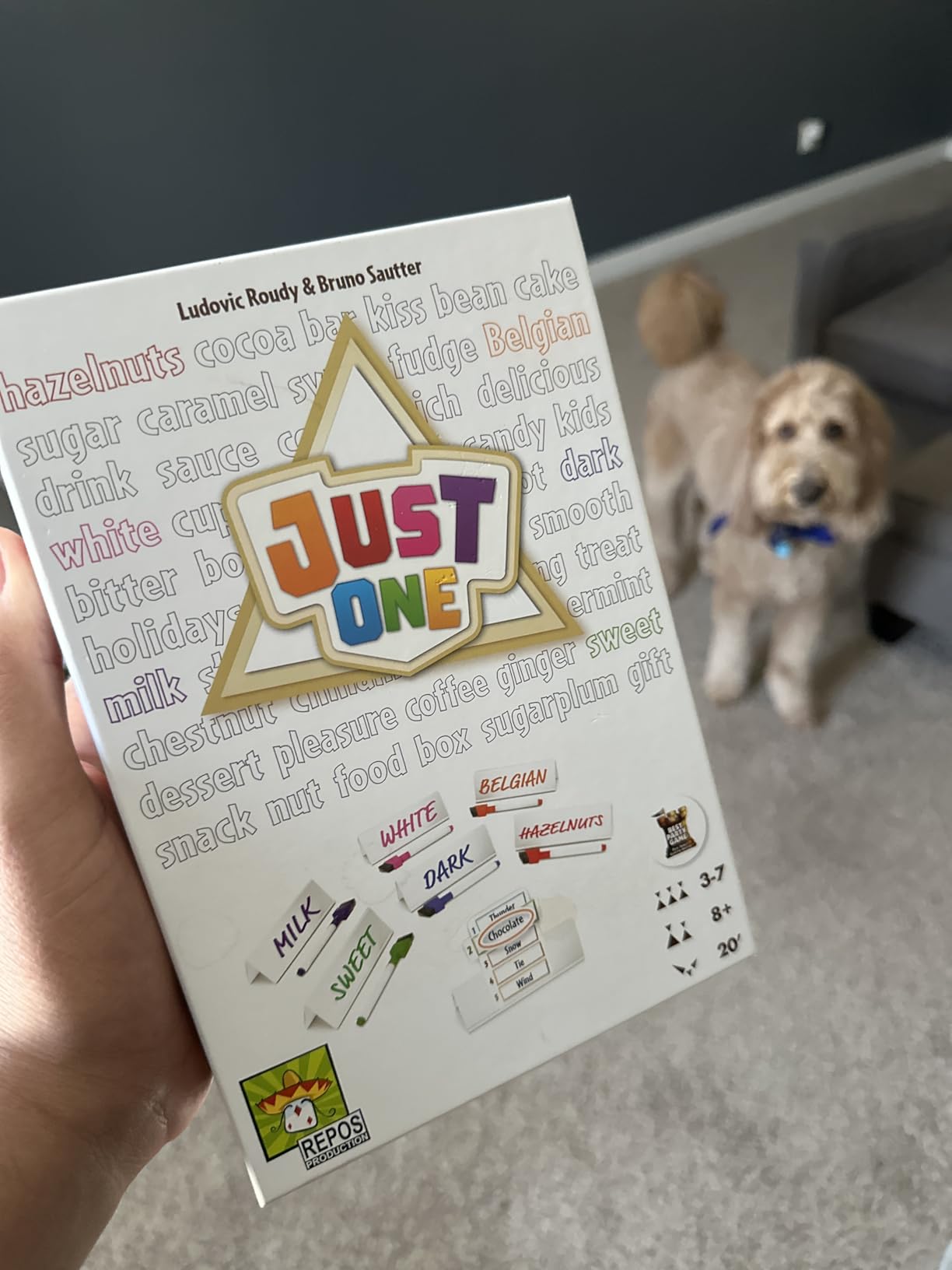
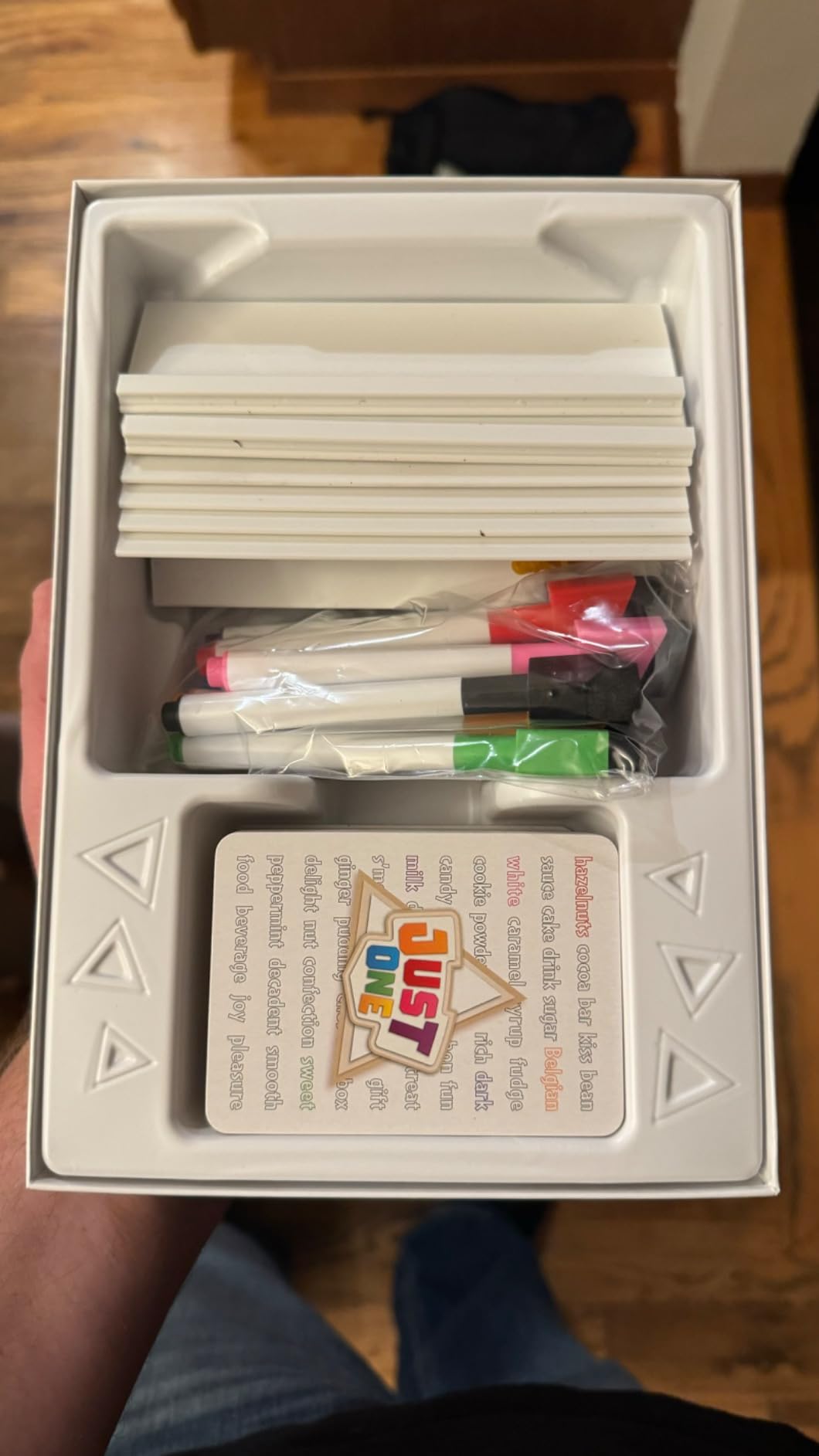
The 2025 Refresh edition includes 110 cards with updated words, colorful plastic stands, and erasable crayons. The components are a step up from the original. Each round takes about five minutes, so you can easily play ten or fifteen rounds in a sitting. The variety of words keeps things fresh even after extended play.
The marker quality is inconsistent, which is the main downside. Some of the dry-erase crayons in our set were nearly dried out from the start, and the black marker is hard to read against the darker colored stands. We ended up using our own dry-erase markers, which solved the problem but should not be necessary at this price point.
Who Should Play Just One
Families who want a cooperative experience without any competitive tension. Just One is perfect for groups where sore losers or uneven skill levels are concerns. The 8+ age rating means younger siblings can participate fully. It is also an excellent icebreaker for groups of teens who do not know each other well because the cooperative nature builds rapport quickly.
Who Might Want to Skip It
Highly competitive families might find the lack of head-to-head competition boring. Players who thrive on strategy and planning will find Just One too light. Also, the game loses some magic with only 3 players because there are fewer clues to cancel out, making the deduction too easy.
10. USAOPOLY Blank Slate – Where Great Minds Think Alike
Blank Slate Board Game, A Party Game of Addicting Predictions
Word Association Party Game
3-8 Players
Ages 8+
30 Min Playtime
250 Double-Sided Cards
Pros
- Low-pressure gameplay anyone can enjoy
- Encourages creative and surprising connections
- Massive word bank with 500 word cues
- Great for mixed age groups
- High replay value
Cons
- Included erasers wear out quickly
- Dry-erase slates can become permanently marked
Blank Slate is one of those games that seems too simple to be fun and then proves you completely wrong. A word cue card is revealed with a phrase like “Night _____” and everyone writes a word to complete it. You score points by matching exactly one other person. Match nobody and you get nothing. Match more than one person and everyone who matched scores. It forces you to think about how other people think, which is a fascinating puzzle.
Our teens had a blast trying to predict each other’s answers. The discussions after each reveal were the real entertainment. When three people wrote “Night Owl” and two wrote “Night Light” and one wrote “Night Terror,” the arguments about which answer was more obvious were more fun than the scoring. It is low-pressure, which means everyone stays relaxed and engaged.
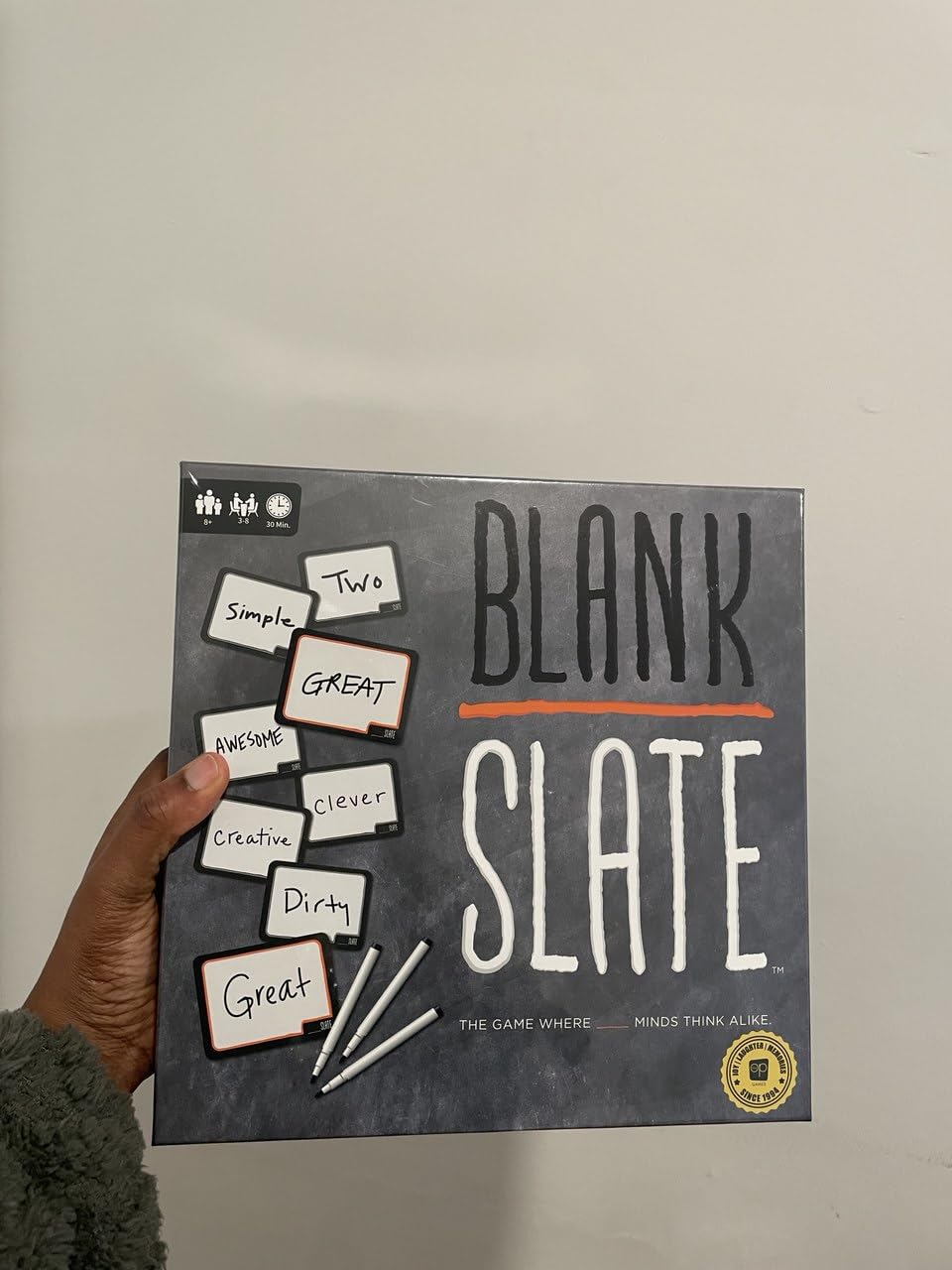
The 250 double-sided cards give you 500 word cues, which is more than enough to keep games feeling fresh for months. The dry-erase slates are a nice touch that makes the game feel more tactile than writing on paper. Setup is instant: draw a card, reveal it, and everyone writes.
The eraser quality is genuinely bad. Within a few sessions, the included erasers were smearing more than erasing. We switched to microfiber cloths, which work perfectly. The slates themselves can pick up permanent stains from certain markers, so use only the included crayons or high-quality dry-erase markers.

Who Should Play Blank Slate
Families who want a relaxed, conversation-sparking game that works with any group size from 3 to 8. It is ideal for multi-generational play because the word completion mechanic does not favor any age group. Teens and grandparents can compete on equal footing. If you enjoy games that create funny stories and inside jokes, Blank Slate is a winner.
Who Might Want to Skip It
Players who want strategic depth or direct competition will find Blank Slate too casual. The game is more about social bonding than winning, which might not satisfy hardcore gamers. Also, families where reading and writing in English is challenging should consider the language barrier.
11. USAOPOLY Tapple – The Fast-Paced Category Word Game

USAOPOLY The Original TAPPLE, The Fun & Fast-Paced Family Word Game
Fast-Paced Word Game
2-8 Players
Ages 8+
15-20 Min Playtime
144 Categories
Pros
- Built-in timer creates real urgency and excitement
- Portable wheel stores category cards inside
- Easy to learn within one minute
- Great for all ages that can read and spell
- Rechargeable batteries with on/off switch
Cons
- Does not include all 26 alphabet letters
- Wheel construction can feel flimsy
Tapple is essentially a category word game on speed. A category card is revealed, the timer starts, and the first player must press a letter on the wheel and say a word fitting the category that starts with that letter. Then the next player goes, and the next, until someone cannot think of a word before the timer runs out. That player is eliminated, and the round continues until one person remains.
The built-in timer is what makes Tapple work so well with teens. The ticking sound creates genuine pressure that leads to hilarious mistakes and creative answers. Watching a teenager panic and blurt out “QUINTUPLE!” for the category “Things at a Party” is the kind of moment that gets retold at every family gathering afterward.
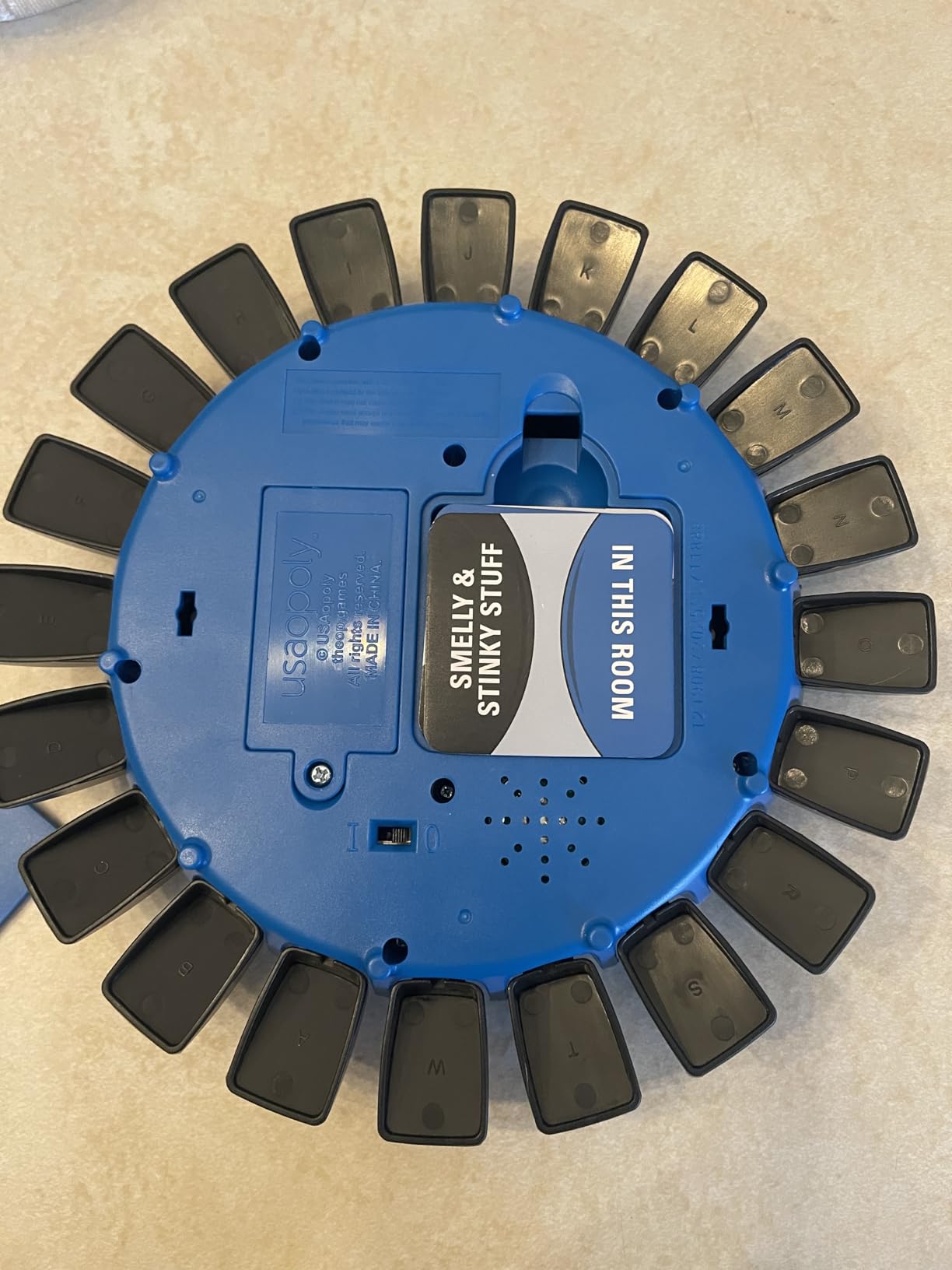
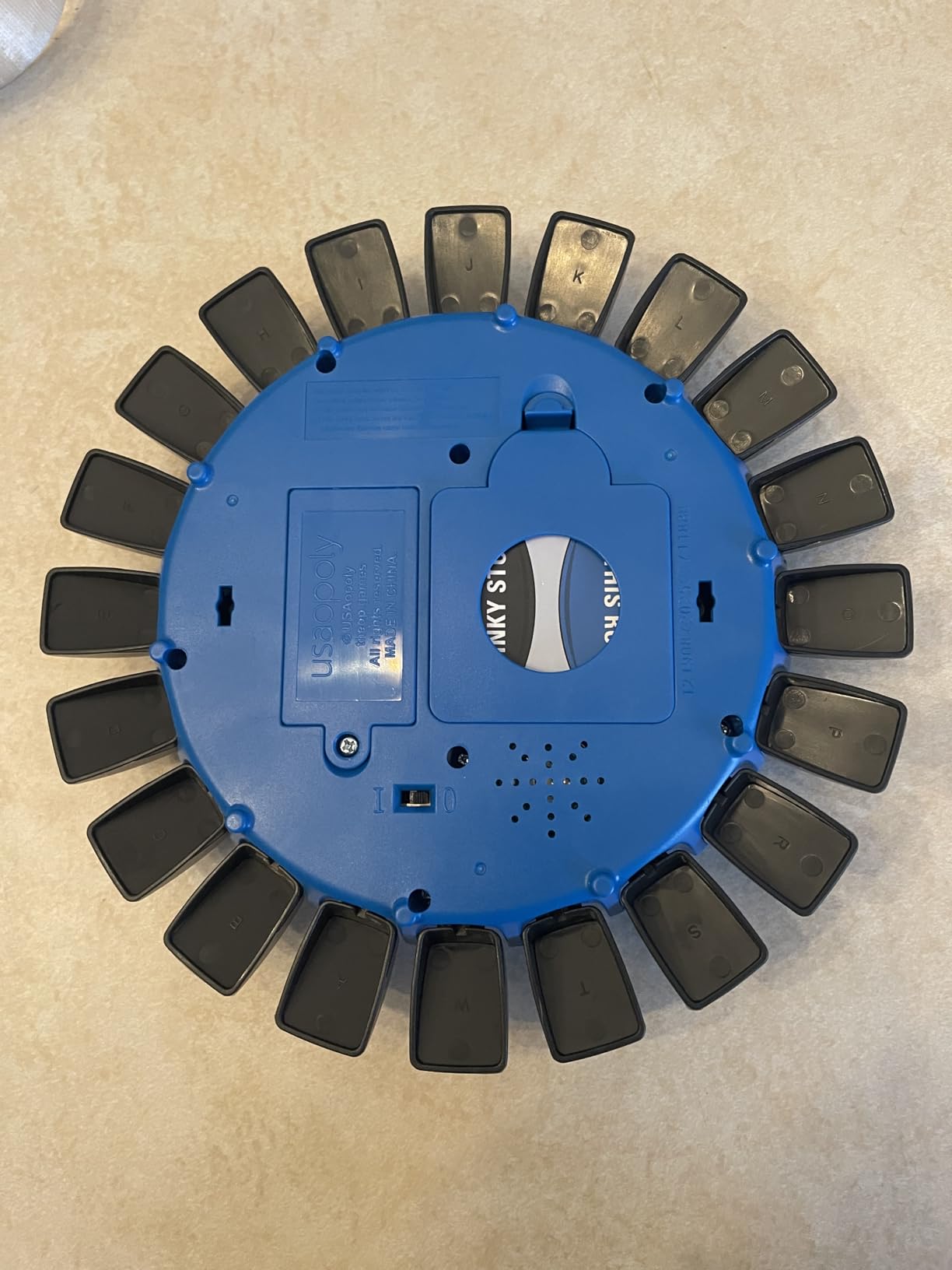
The portable design is clever. All 36 category cards (giving you 144 categories) store inside the wheel itself, so nothing gets lost. The wheel fits in a bag easily, making it another strong travel option. The rechargeable battery with an on/off switch means no fumbling for replacements.
The missing alphabet letters are a drawback. Several letters are excluded from the wheel, which limits the word pool and can feel arbitrary. Also, the plastic wheel construction is lighter than expected for the price. Ours has held up fine through dozens of rounds, but I can see it cracking if dropped on a hard floor.
Who Should Play Tapple
Families who enjoy word games and fast-paced competition. Tapple works exceptionally well for larger groups because elimination creates built-in drama. The 8+ age rating means it spans the whole family. If your teen enjoys word puzzles or quiz games, this will be a natural fit for your collection.
Who Might Want to Skip It
Families with members who have speech difficulties, processing delays, or anxiety around timed challenges should be cautious. The timer pressure is real and can be stressful for some players. Also, the game requires solid English vocabulary and spelling skills, making it less accessible for non-native speakers or younger readers.
12. Risk Board Game – The Classic Military Strategy Game

Risk Board Game, Strategy Games for 2-5 Players, Strategy Board Games for Teens, Adults, and Family, War Games, Ages 10 and Up
Military Territory Conquest
2-5 Players
Ages 10+
120 Min Playtime
Includes Dragon Token
Pros
- Deep strategic gameplay with real consequences
- Generations of players already know the rules
- High-quality army pieces with detailed sculpting
- Dragon token adds exciting variant gameplay
- Alexa skill compatibility adds digital dimension
Cons
- Games regularly exceed 2 hours
- Customer reports of receiving French language version
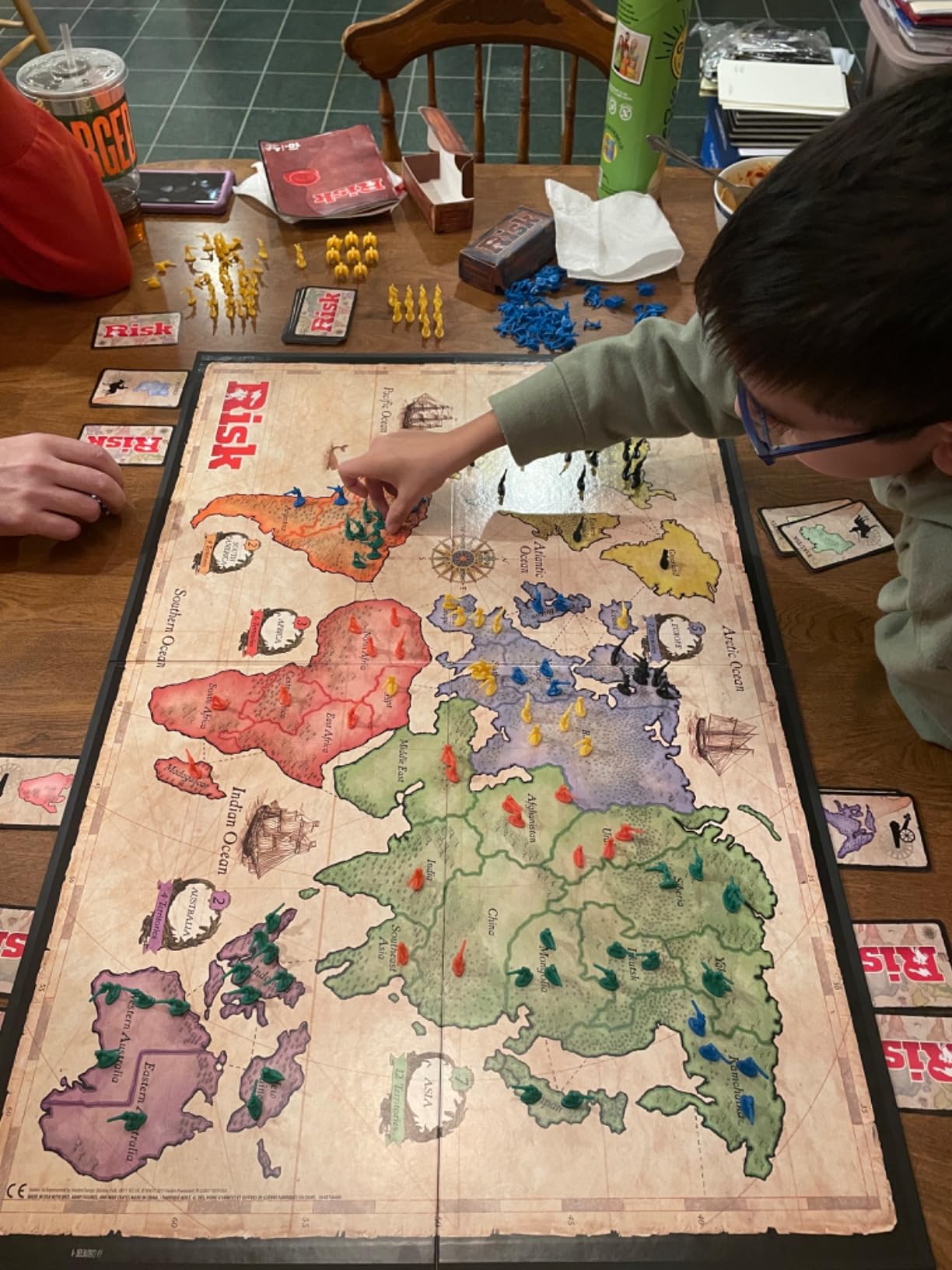
Risk is the game my dad played as a teenager, and the fact that it still holds up in 2026 says something about its design. Players command armies across a world map, attacking territories and defending borders in a quest for global domination. The latest version includes a dragon token variant that adds an unpredictable wildcard to the traditional gameplay, keeping even veteran players on their toes.
What makes Risk work with teens is the combination of long-term strategy and bold gambles. The decision to launch a massive attack across three territories versus fortifying your borders is the kind of calculation that appeals to the strategic thinking teenagers are developing. Our testers who enjoyed Risk in video game form found the board game version even more engaging because of the face-to-face negotiation and the physical drama of rolling dice to decide battles.
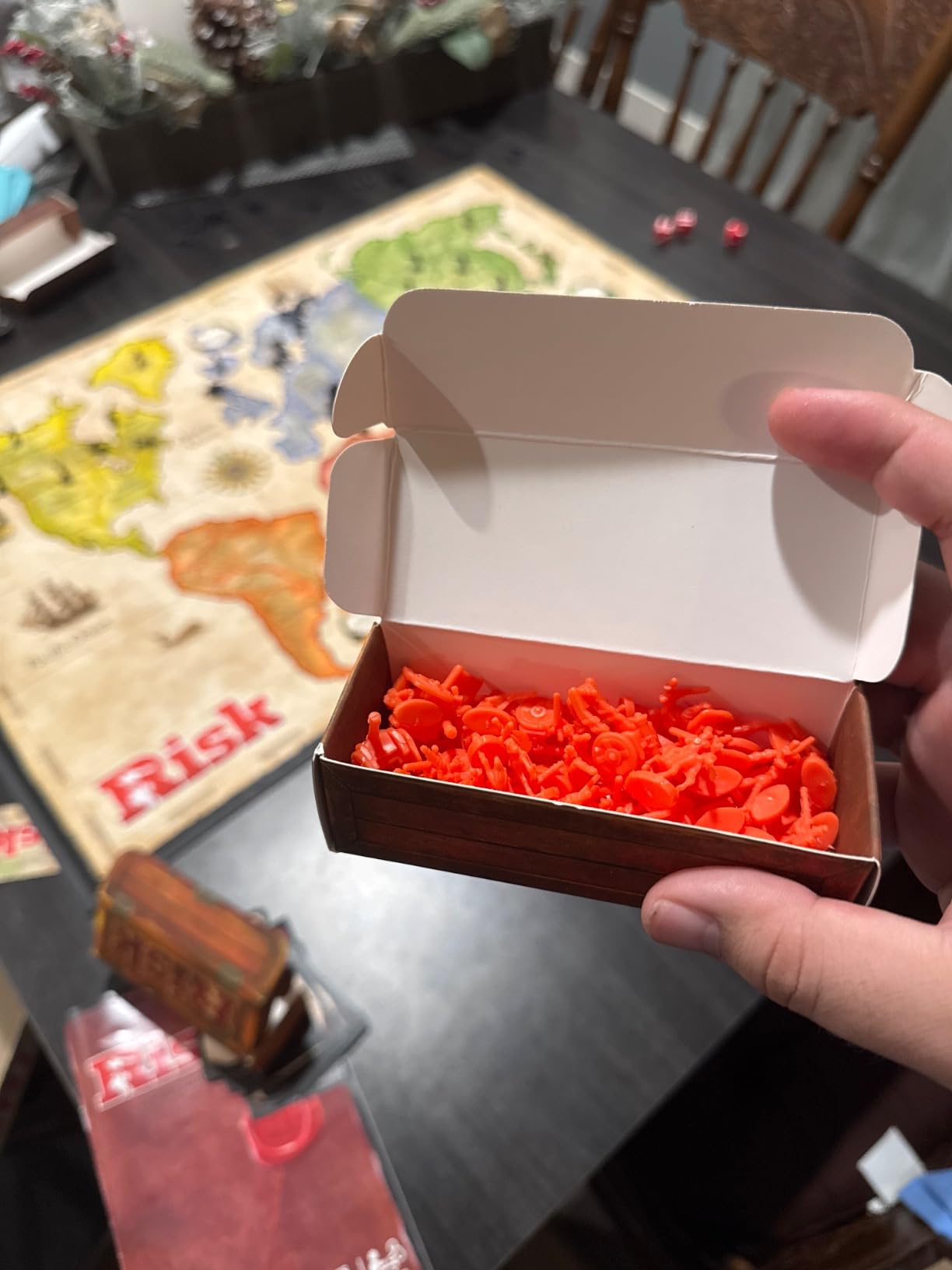
The components are solid. The army pieces are well-sculpted infantry, cavalry, and artillery figures that feel substantial in your hand. The included war crates help organize pieces between turns. The dragon token variant is surprisingly fun. It moves around the board and grants bonuses to whoever controls its territory, creating a moving objective that shakes up stalemates.
The elephant in the room is playtime. Risk regularly runs two hours or more, especially with 5 players who are all playing to win. This is not a quick filler game. It is an event. Some teens have the patience for it and some do not. We found it works best on a lazy weekend afternoon when nobody has anywhere to be. Also, several customer reviews mention receiving the French language version, so verify the language before ordering.
Who Should Play Risk
Families with patient, strategy-minded teens who enjoy epic game sessions. Risk rewards long-term planning, alliance-building, and knowing when to take calculated risks. If your teen enjoyed Civilization, Total War, or other strategy video games, the board game version will feel like a natural extension. The 2-5 player range works well for medium-sized families.
Who Might Want to Skip It
Families with short attention spans or limited time blocks should look elsewhere. Risk demands commitment. The player elimination mechanic also means someone will be sitting out watching for the last hour, which can cause friction. If your teen group prefers quick, social games, Risk will feel like a slog.
13. Exploding Kittens – The Hilarious Card Game Phenomenon

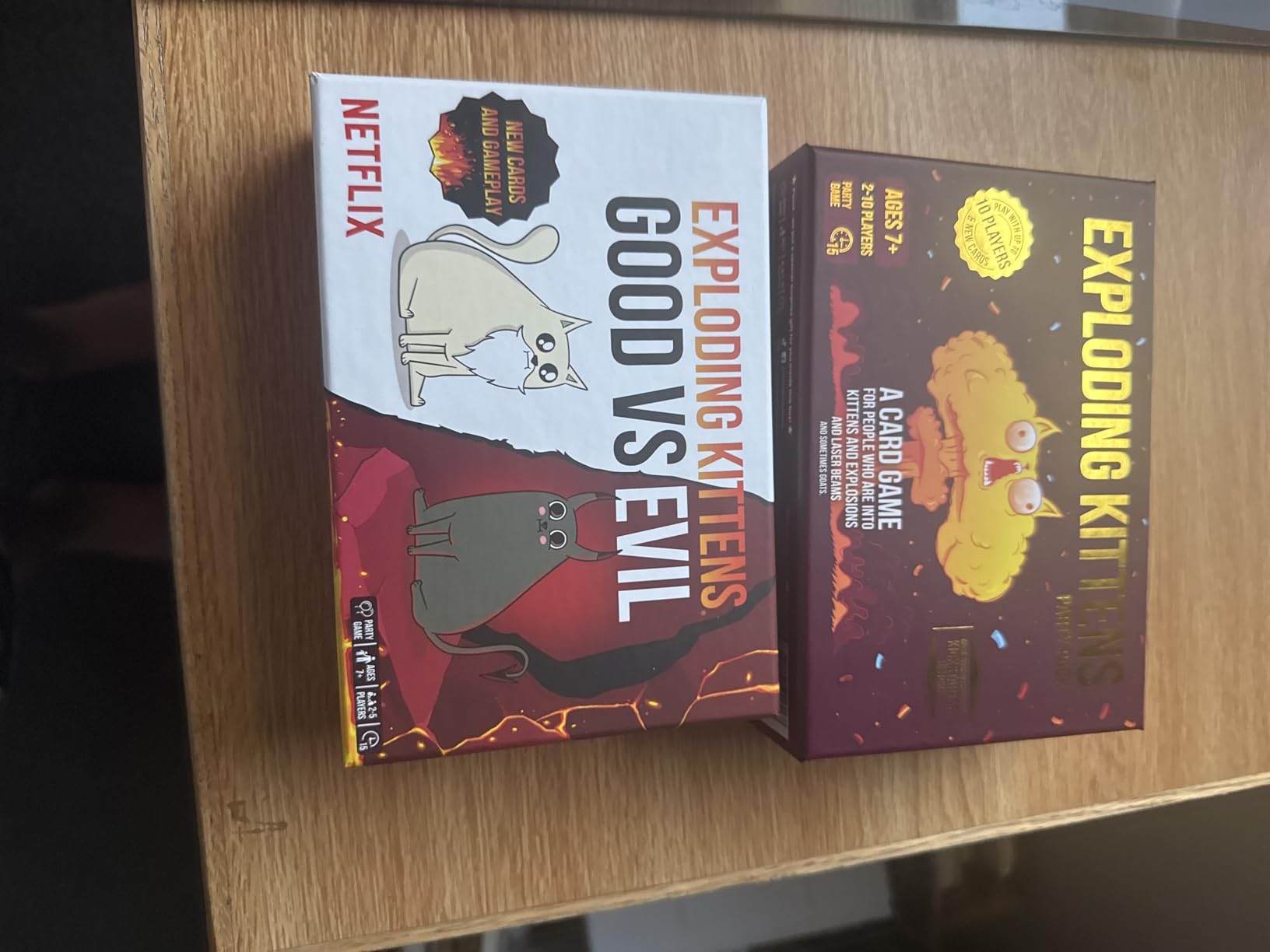
Exploding Kittens Original Edition, 2-5 Players, Ages 7+ Card Game
Strategic Survival Card Game
2-5 Players
Ages 7+
15 Min Playtime
56 Cards Illustrated by The Oatmeal
Pros
- Illustrated by The Oatmeal with hilarious artwork
- Easy to learn with engaging strategic action cards/Compact and travel-friendly
- One of the most successful Kickstarter games ever
- Works for kids/ teens/ and adults equally
Cons
- Card stock quality is below average
- Some action cards may not be appropriate for all ages in NSFW edition
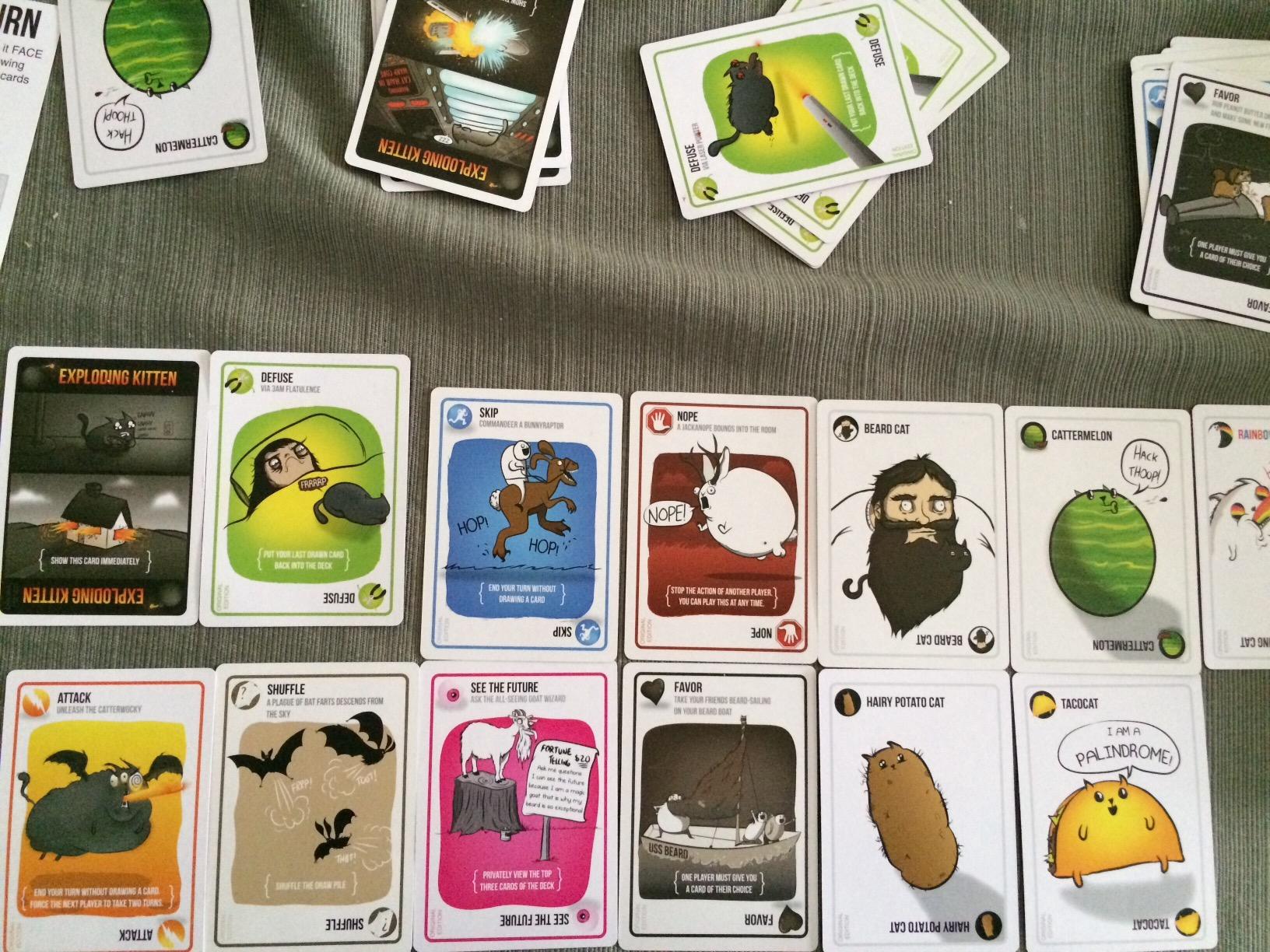
Exploding Kittens is one of the best-selling card games of the last decade, and after playing it with our teen testers, I understand why. The premise is simple: draw cards from a deck that contains Exploding Kittens. If you draw one, you are out unless you have a Defuse card. Action cards let you skip turns, peek at the deck, force other players to draw, and more. It is essentially Russian roulette with cats and strategy.
The Oatmeal illustrations are what push this game from good to great. Every card features absurd, funny artwork that teens genuinely appreciate. The All-Seeing Goat Wizard, Tacocat (yes, that is a palindrome), and Rainbow-Ralphing Cat became recurring jokes in our household long after game night ended. When teens are quoting your board game cards at the dinner table, you know it connected.
The strategic layer is deeper than the cute art suggests. Knowing when to play your See the Future card, when to force another player to draw, and when to hold your Defuse card creates real decision trees. Our teens developed specific strategies after a few rounds, and the meta evolved over multiple sessions.
Card quality is the primary complaint. The stock is noticeably thinner than standard playing cards, and after heavy play sessions, corners start to bend and edges wear. Card sleeves are almost mandatory if you plan to play regularly. The NSFW edition includes cards that are definitely not for younger players, so make sure you are getting the original all-ages version for family play.
Who Should Play Exploding Kittens
Families who want a quick, funny card game with enough strategy to keep teens engaged. The 7+ age rating means it works for the whole family, but the humor is sophisticated enough that teens will not feel like they are playing a kids game. It is perfect for travel, waiting rooms, and situations where you need a quick game that does not require a table.
Who Might Want to Skip It
Players who want deep, multi-layered strategy will find Exploding Kittens too light. The luck of the draw plays a significant role, and sometimes there is nothing you can do when an Exploding Kitten comes up. Also, families who prefer cooperative games should note this is purely competitive with player elimination.
14. Do You Really Know Your Family? – The Conversation Starters and Challenges Game
Do You Really Know Your Family? Fun Family Game for Kids, Teens and Adults
Family Trivia and Challenge Game
3-8 Players
Ages 8+
Quick Play
Portable Tin Case
Pros
- Sparks genuine conversations and family bonding
- Helps family members learn surprising things about each other
- Silly challenges create hilarious memories
- Super easy to learn and start playing
- Comes in a durable portable tin
Cons
- Some questions may be too challenging for younger kids
- Card durability concerns with very heavy use
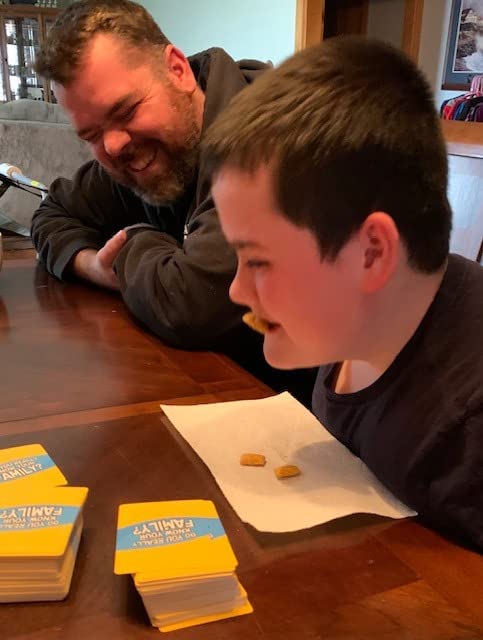
Do You Really Know Your Family? is less of a traditional board game and more of a conversation catalyst disguised as one. Players take turns answering trivia questions about each other or performing silly challenges. The questions range from “What is your mom’s favorite ice cream flavor?” to “Has your sibling ever snuck out at night?” and the answers often surprise everyone at the table.
I was genuinely caught off guard by how much our teens opened up during this game. Something about the structured format of asking questions through a game made it easier for them to share things they normally would not volunteer. One of our testers discovered that their step-sibling had the same favorite childhood movie, a conversation that never would have happened without this game as a prompt.
The challenge cards are where the biggest laughs happen. Things like “Do your best impression of your dad” or “Show everyone your most-used emoji” break down barriers and get even the most reserved teenagers participating. The scoring is secondary to the experience, which is exactly the point.
The limitation is replay value. Once you have gone through all the question cards, you know the answers. This makes it a game that is amazing for the first dozen plays and then needs a break before you cycle back through. Also, some questions assume a traditional nuclear family structure, which may not fit all households.
Who Should Play Do You Really Know Your Family?
Families looking to strengthen their connections and learn more about each other in a fun, low-pressure way. This is especially powerful for blended families, families with teens who have become distant, or anyone wanting to break out of routine conversations. The 8+ age rating and simple rules mean everyone can participate.
Who Might Want to Skip It
Families who prefer competitive strategy games will find this too casual. The gameplay is light and the focus is on conversation rather than winning. Also, families dealing with recent conflicts or sensitive topics should be aware that some questions might hit close to home unexpectedly.
15. Bameca Magnetic Chess Game – The Travel-Friendly Puzzle Strategy Game
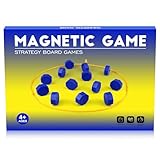
Bameca Magnetic Chess Game with Full-Size Stones, Magnet Game with String
Magnetic Push-Your-Luck Game
2-4 Players
Ages 4+
Portable with Storage Bag
20 Magnetic Stones
Pros
- Fun for an incredibly wide age range from 4 to 80
- Easy to learn with magnetic tension that adds excitement
- Great for travel with included storage bag
- Teaches magnetism concepts naturally
- Replayable and genuinely addictive
Cons
- Magnets may stick together too easily for advanced play
- Pieces can feel bulky for small hands
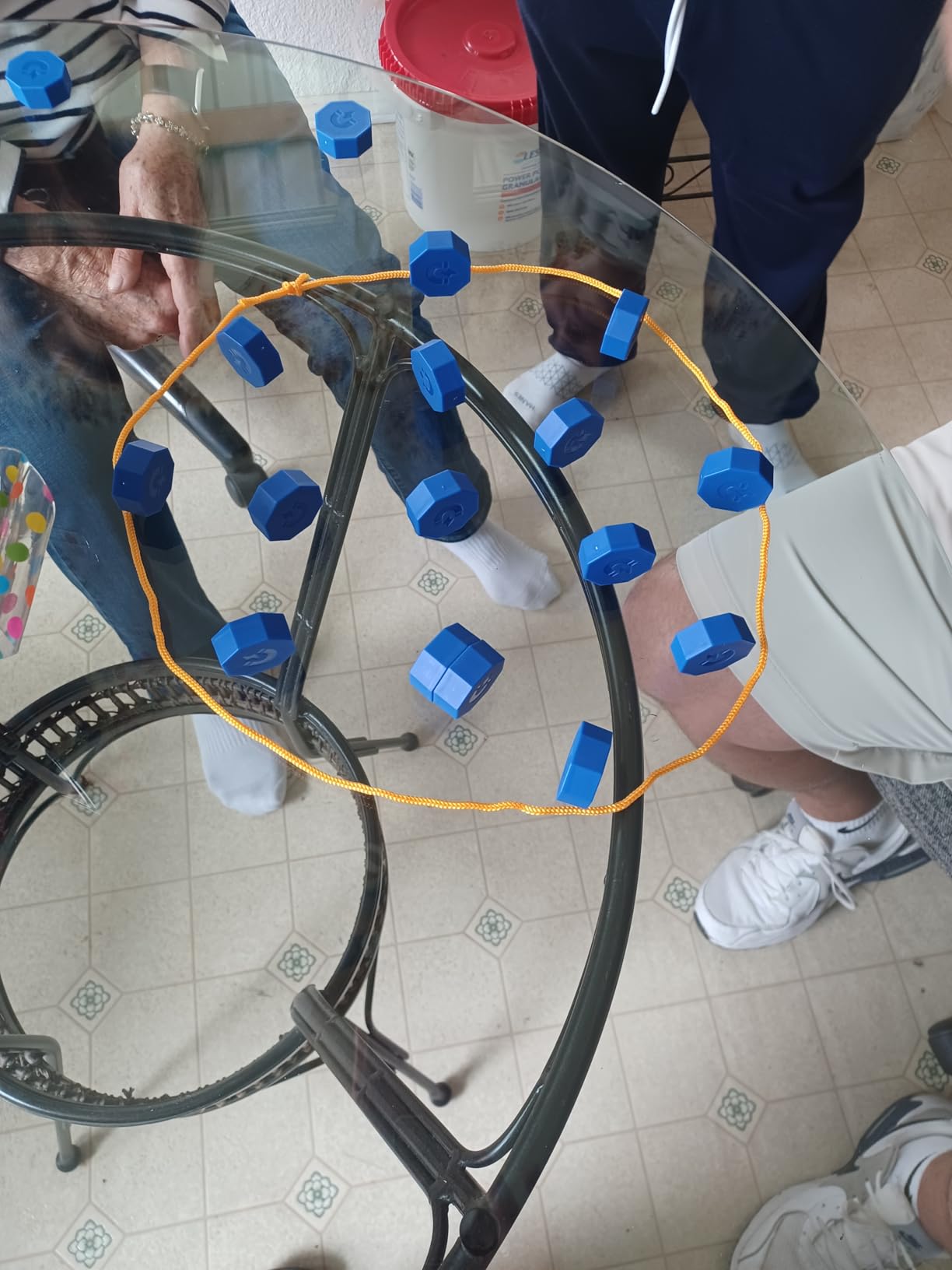
The Bameca Magnetic Chess Game is the wild card on this list, and it earned its spot through sheer novelty and genuine fun. Players take turns placing magnetic stones inside a rope circle on a flat surface. The catch? The magnets attract and repel each other, so placing your stone without causing a chain reaction of snapping magnets requires a steady hand and spatial awareness. If stones snap together or out of the ring during your turn, you collect them. Fewest stones at the end wins.
This game generated some of the loudest reactions during our testing. The tension of hovering a magnet over the play area, knowing it could snap to three other stones at any moment, had our teens holding their breath and then erupting in laughter when things went sideways. The magnetic forces create unpredictable, chaotic outcomes that level the playing field between experienced gamers and complete beginners.
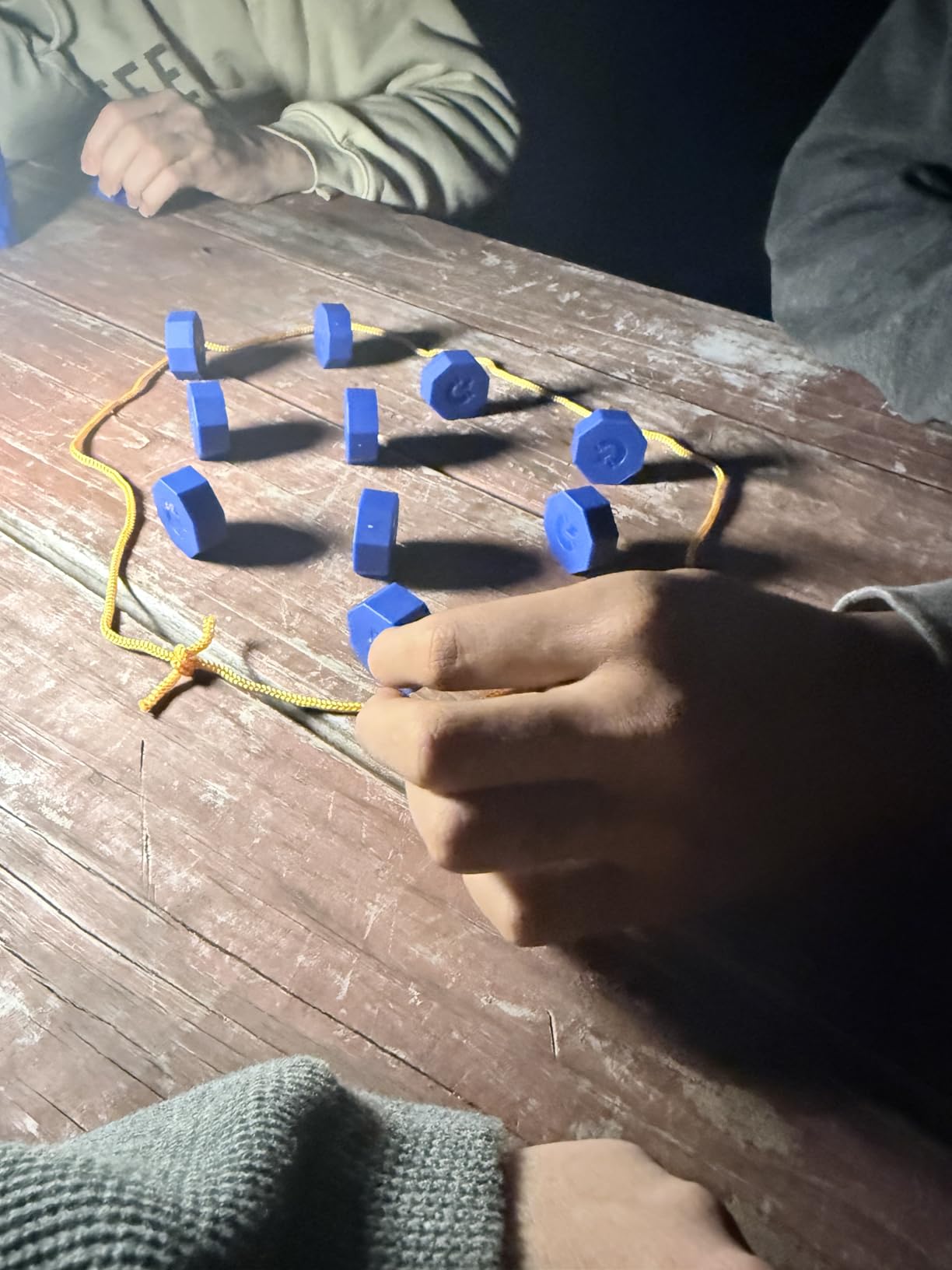
The portability is excellent. The game comes with a storage bag that holds the rope, all 20 magnetic stones, and the instructions. It weighs under a pound and fits in a backpack pocket. We played it on a restaurant table, at the park, and on a camping trip. The rope boundary means you can play on virtually any flat surface without a board.
The magnets are stronger than expected, which is both a feature and a drawback. When stones snap together, the sound and movement are satisfying, but sometimes the attraction is so strong that skilled placement becomes almost impossible in later rounds. The pieces are also a bit chunky for smaller hands, though the 4+ age rating suggests otherwise.
Who Should Play the Bameca Magnetic Chess Game
Families with a wide age range who want something unique and portable. This game works for everyone from young children to grandparents because the magnetic chaos equalizes skill levels. It is perfect for travel, camping, and situations where you need a quick game that requires no setup. Teens who enjoy dexterity games or physics-based puzzles will find it surprisingly engaging.
Who Might Want to Skip It
Players looking for deep strategic gameplay will find the magnetic randomness frustrating. The game is more about physical dexterity and luck than strategic planning. Also, families with pets or small children should be cautious because the small magnetic stones could be a hazard if swallowed. Serious board gamers might find it too light for dedicated game nights.
How to Choose the Best Family Board Games for Teens
Picking the right board game for your family is about matching the game to your specific situation. After testing all 15 games on this list with real families, here are the factors that matter most when making your choice.
Player Count Matters More Than You Think
The single most important factor is how many people will be playing. Games like Codenames and Taco Cat Goat Cheese Pizza scale from 3 to 8+ players, making them perfect for large families or gatherings. Splendor and Azul cap at 4 players and shine brightest with 2 to 3. CATAN needs exactly 3 or 4 to work properly. Before you buy anything, count your regular players and match it to the game’s supported range.
Game Duration and Teen Attention Spans
Reddit threads about gaming with teens consistently mention that quick games work better than marathon sessions. Games like Flip 7, Taco Cat Goat Cheese Pizza, and Exploding Kittens deliver satisfaction in 15 minutes or less. These are ideal for reluctant teens who need to be won over before committing to something longer. Save Risk and CATAN for teens who are already hooked on board games and ready for a bigger investment.
Match the Game Type to Your Teen’s Personality
Not all teens are the same, and neither are board games. Here is a quick breakdown by personality type. Social butterflies who love parties and group dynamics will gravitate toward Codenames, The Chameleon, and Just One. Strategic thinkers who enjoy chess, puzzles, or resource management will prefer Splendor, Azul, and CATAN. High-energy teens who want fast action will love Taco Cat Goat Cheese Pizza, Flip 7, and Tapple. Quiet, thoughtful teens might connect more with Blank Slate or Yahtzee.
Competitive vs. Cooperative
Most games on this list are competitive, which works great for families that enjoy friendly rivalry. However, if your family has sore losers or uneven skill levels that cause frustration, cooperative games like Just One remove that tension entirely. You can also modify competitive games by playing in teams, which softens the blow of individual losses while keeping the engagement high.
Getting Reluctant Teens to Play
This is the gap almost no one addresses. Based on our testing, the best approach is starting with fast, simple games that deliver immediate fun. Do not begin with a 2-hour strategy game. Start with Taco Cat Goat Cheese Pizza or Flip 7, which take under two minutes to explain and produce laughs within the first round. Once teens associate game night with genuine entertainment, they will be more open to trying heavier titles. The key is never making it feel like a chore or an alternative to screens. Frame it as something fun, not something educational.
Replay Value and Long-Term Investment
A board game is only worth owning if it stays interesting after the tenth play. Games with modular boards (CATAN), variable setups (Codenames with 400 codenames), or press-your-luck mechanics (Flip 7) inherently offer more replay value than games with fixed paths. Splendor and Azul have deep enough strategy that the meta continues evolving across dozens of sessions. Games like Do You Really Know Your Family? have finite question cards, making them better for occasional play rather than weekly rotation.
FAQ
What is the most popular board game for teenagers?
The most popular board game for teenagers is Exploding Kittens, with over 116,000 reviews and a 4.7-star rating. However, for family play specifically, Codenames and CATAN rank higher because they support larger groups and create more interactive experiences. Splendor is also a consistent favorite among teens who enjoy strategic thinking.
What board games do 14 year olds play?
Fourteen year olds enjoy a range of board games depending on their personality. Strategy-oriented 14 year olds tend to love Splendor, Azul, and CATAN. Social 14 year olds gravitate toward Codenames, The Chameleon, and Taco Cat Goat Cheese Pizza. Quick card games like Flip 7 and Exploding Kittens also rank highly because they fit shorter attention spans while still offering meaningful gameplay.
What is the best board game for a 16 year old?
For a 16 year old, Splendor is our top pick because it offers deep engine-building strategy in a 30-minute format that respects their time. Codenames is also excellent for 16 year olds who enjoy social interaction and creative wordplay. The Chameleon is ideal for 16 year olds who like bluffing and social deduction games similar to Among Us.
How do you get teenagers interested in family board games?
Start with fast, simple games that produce laughs within the first round rather than complex strategy games that require long rule explanations. Taco Cat Goat Cheese Pizza and Flip 7 take under two minutes to learn and create immediate engagement. Avoid framing game night as an alternative to screens. Instead, position it as a fun social activity. Once teens associate board games with genuine enjoyment, they become more open to trying heavier titles like CATAN or Splendor.
Final Thoughts
Finding the best family board games for teens is really about matching the right game to your family’s personality. After months of testing these 15 titles, our top three recommendations are Splendor for strategic depth, Flip 7 for quick addictive fun, and CATAN for the full epic game night experience. Each of these earned consistently positive reactions from real teenagers across multiple sessions.
The most important takeaway from our testing is this: start small and build up. A 15-minute game of Taco Cat Goat Cheese Pizza or Flip 7 can open the door to eventually playing CATAN or Risk on a lazy Sunday afternoon. The games on this list range from quick card games to deep strategy experiences, so there is something here for every family situation and every type of teen personality.
Any of these 15 games will serve your family well in 2026. Pick one that matches your group size and play style, clear off the kitchen table, and see what happens when the screens go off and the dice start rolling.