
If you love chess but want something fresh, the best abstract strategy board games deliver pure tactical thinking without dice, cards, or hidden information. Every move you make matters. Every mistake is on you. That is what makes this genre so addictive for competitive minds.
Abstract strategy games strip gameplay down to its essentials. You and your opponent share perfect information. There is no randomness to blame. The better thinker wins, period. Some games on this list have existed for decades, while others launched in just the past few years.
Our team spent weeks testing 12 of the top-rated abstract strategy games available right now. We played them head-to-head, taught them to new players, and brought them to game nights. Whether you want a quick 15-minute duel or a deeper 45-minute battle, you will find your next obsession below. If you are looking specifically for two-player board games, many of these fit perfectly.
Table of Contents
Top 3 Picks for Best Abstract Strategy Board Games
Out of all 12 games we tested, three stood out for different reasons. Hive Pocket earned our Editor’s Choice for its portable, boardless design and deep insect-themed tactics. Azul won Best Value because it scales from 2 to 4 players and won the Spiel des Jahres. Onitama grabbed Premium Pick status for distilling chess-like dueling into a 15-minute card-driven format.

Hive Pocket
- Boardless 2-player design
- Includes Ladybug and Mosquito expansions
- Portable travel bag
Best Abstract Strategy Board Games in 2026
Here is our complete lineup of all 12 games, ranked and ready for comparison. Each entry below includes detailed first-hand reviews, so you can jump straight to any game that catches your eye.
| Product | Specifications | Action |
|---|---|---|
| Hive Pocket |
|
Check Latest Price |
 Azul Azul |
|
Check Latest Price |
 Onitama Onitama |
|
Check Latest Price |
 Ravensburger Othello Ravensburger Othello |
|
Check Latest Price |
 Gobblet! Gobblet! |
|
Check Latest Price |
 Battle Sheep Battle Sheep |
|
Check Latest Price |
 BOOP BOOP |
|
Check Latest Price |
 Yinsh Yinsh |
|
Check Latest Price |
 Qawale Qawale |
|
Check Latest Price |
 Quoridor Quoridor |
|
Check Latest Price |
 Santorini: Second Edition Santorini: Second Edition |
|
Check Latest Price |
 Pylos Pylos |
|
Check Latest Price |
1. Hive Pocket – Boardless Insect Duel You Can Play Anywhere
Smart Zone Games Hive Pocket Game
2 players
Boardless hexagonal design
Includes Ladybug and Mosquito expansions
Bakelite tiles
Travel bag included
Pros
- Deep tactical gameplay with no board needed
- Highly portable with included travel bag
- Includes two expansion pieces for added variety
- Easy to learn in minutes but takes years to master
- Premium bakelite tile quality
Cons
- Smaller tiles may be tricky for large hands
- Bug theme does not appeal to everyone
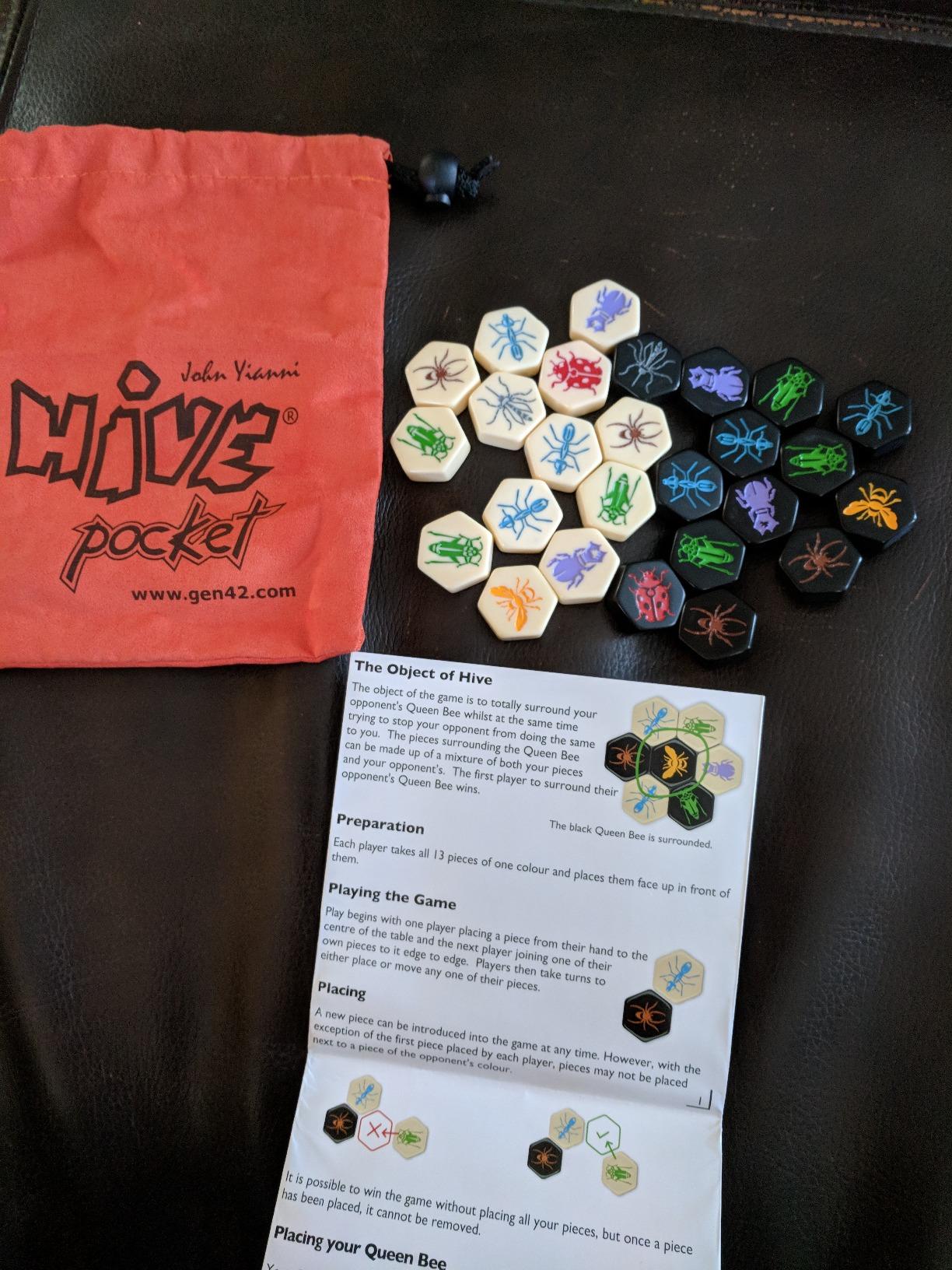
I brought Hive Pocket on a recent trip and ended up playing it on a hotel bed, a coffee shop table, and even an airport tray table. The boardless design means you play directly on any flat surface. Pieces connect to each other like a growing insect hive, and the shape of the hive shifts every turn.
Each bug moves differently. Ants scurry around the perimeter. Beetles climb on top. Spiders move exactly three spaces. Grasshoppers jump in straight lines. The goal is simple: surround your opponent’s queen bee. Getting there is anything but simple.

What hooked me was the spatial reasoning. Unlike chess where the board stays fixed, the Hive grows and morphs. A piece that was safe last turn can suddenly be pinned. The Ladybug and Mosquito expansions add even more tactical layers, giving you fresh movement patterns to exploit.
After 50+ games, I am still discovering new strategies. The community on Reddit consistently calls Hive the premium chess alternative, and I agree. It is one of those rare games where you lose and immediately want a rematch.
Best Situations for Hive Pocket
Hive Pocket shines as a travel game. The compact bag fits in a jacket pocket, and you never need a table setup. It is also perfect for lunch breaks at work or waiting at a restaurant. If you want a game that lives in your bag permanently, this is it.
Skill Level and Learning Curve
The rules take about five minutes to learn. Each bug has one movement rule, and that is it. However, the strategic depth is enormous. Beginners will have fun immediately, but skilled players develop multi-turn plans involving pinning, tempo, and queen-bee positioning. The learning curve is gentle at first and steep later, which keeps the game fresh for years.
2. Azul – Award-Winning Tile Drafting for 2 to 4 Players
Azul Mosaic Tile-Placement Strategy Board Game, 2-4 Players, 30-45 Min
2-4 players
Tile-placement strategy
Spiel des Jahres 2018 winner
30-45 minute playtime
Ages 8+
100 resin tiles
Pros
- Won the Spiel des Jahres for good reason
- Beautiful resin tile components
- Scales brilliantly from 2 to 4 players
- Easy rules with deep strategic layers
- Excellent replayability
Cons
- Two of five tile colors lack patterns
- Some players prefer wooden tiles over resin
- Rule book could explain scoring more clearly
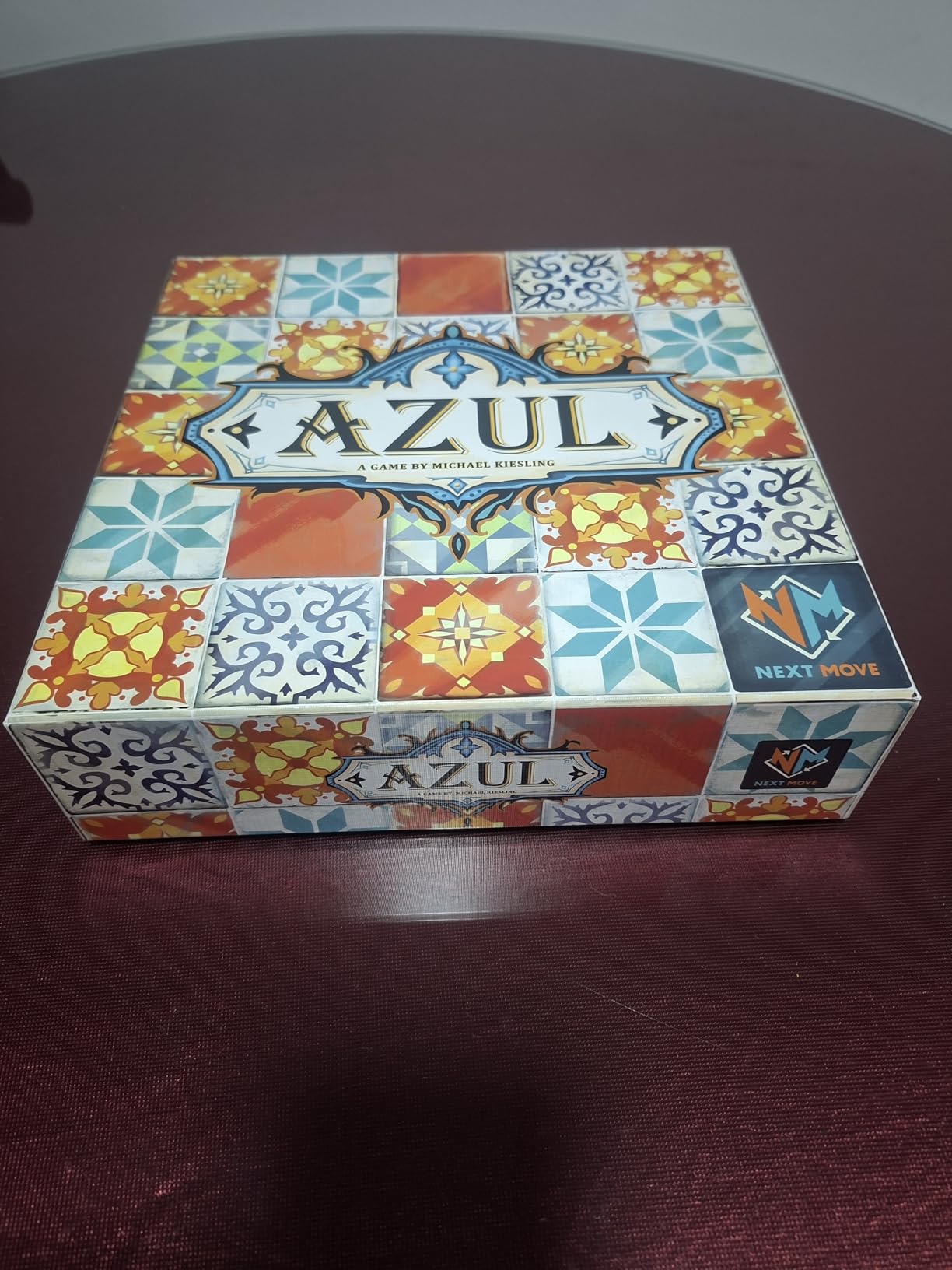
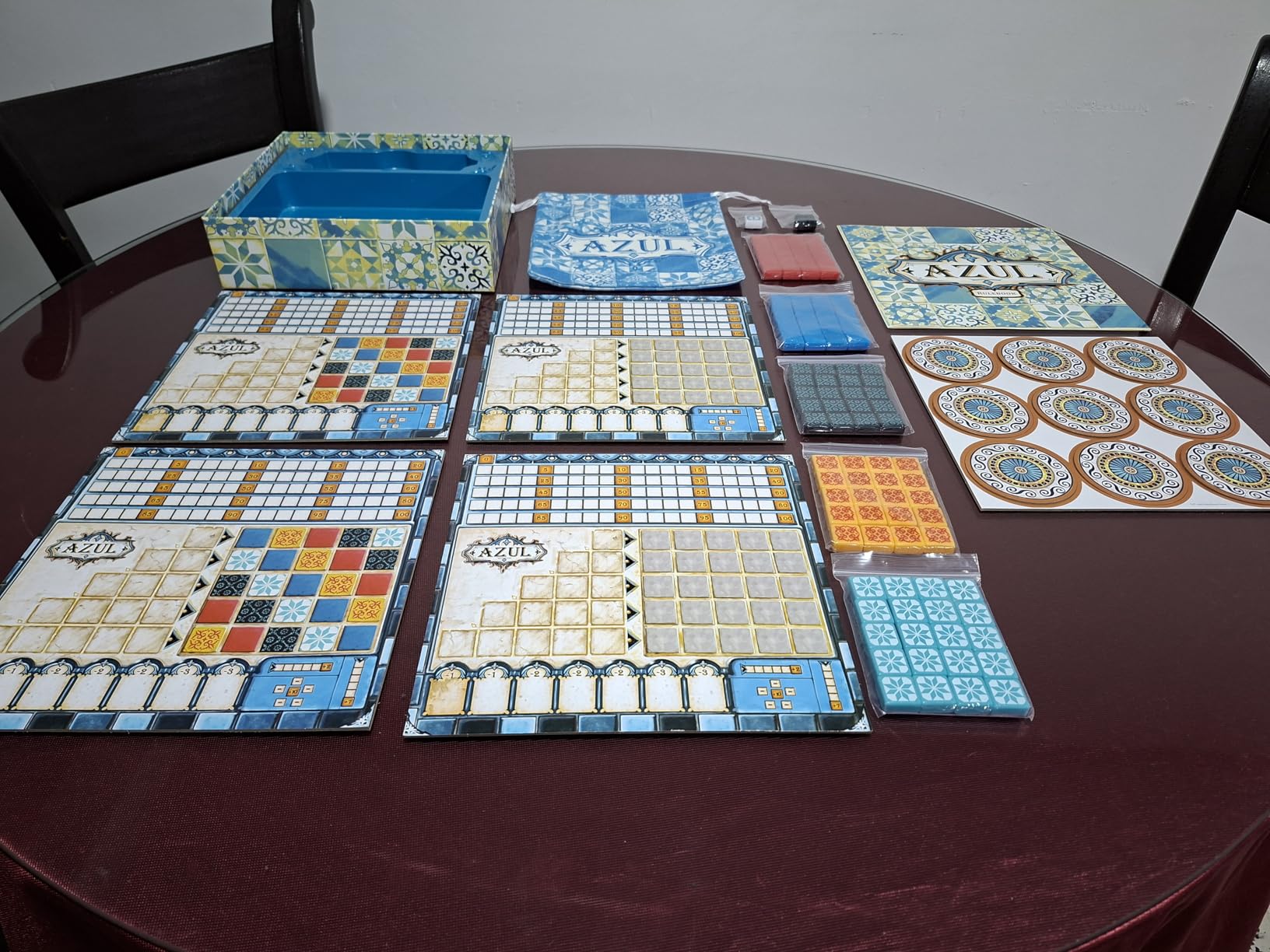
Azul was the first abstract strategy game that hooked my entire family. The concept is simple: draft colorful resin tiles from shared factory displays and place them on your personal mosaic board. Complete a row and you score points. The visual payoff of a finished mosaic wall is genuinely satisfying.
The draft-and-deny mechanic is where the strategy bites. When you take tiles, you leave tiles behind for your opponents. Sometimes you take tiles you do not even need just to deny them to someone else. That tension makes every selection feel meaningful.
What surprised me was how differently the game plays at different player counts. With 2 players, it feels like a knife fight. Every tile you pass up goes straight to your rival. With 4 players, it becomes a chaotic free-for-all where planning ahead gets tricky because two other players take turns before you.
The resin tiles have a satisfying weight and click when placed. My only complaint is that two of the five colors are plain without patterns, making them slightly harder to distinguish under dim lighting. For a deeper look at how Azul compares for families transitioning from chess, check out our guide for chess-loving families.
Player Count and Group Flexibility
Azul is one of the few abstract games that genuinely works well at 2, 3, or 4 players. The factory display count adjusts automatically. Two-player games are tight and mean. Four-player games are louder and more unpredictable. This flexibility makes Azul the best value pick on the list.
Strategic Depth vs Accessibility
New players can learn Azul in under 10 minutes and have a blast. But experienced players quickly discover advanced strategies like floor-line denial, column completion timing, and tile-hoarding. The gap between casual play and expert play is wide, which is exactly what you want in a game you will play for years.
3. Onitama – Pure 2-Player Duel in 15 Minutes
Arcane Wonders Onitama, 2-Player Abstract Duel with Modular Movement Cards
2 players only
5x5 grid
Shared movement cards
15-20 minute playtime
Chess-like tactics
Ages 8+
Pros
- Elegant shared-card movement system
- Quick 15-minute matches perfect for rematches
- Beautiful minimalist component design
- Dual win conditions keep games dynamic
- Travel-friendly compact box
Cons
- Strictly 2 players with no solo mode
- Can trigger intense just-one-more-game loops
- Neoprene mat may curl slightly at edges
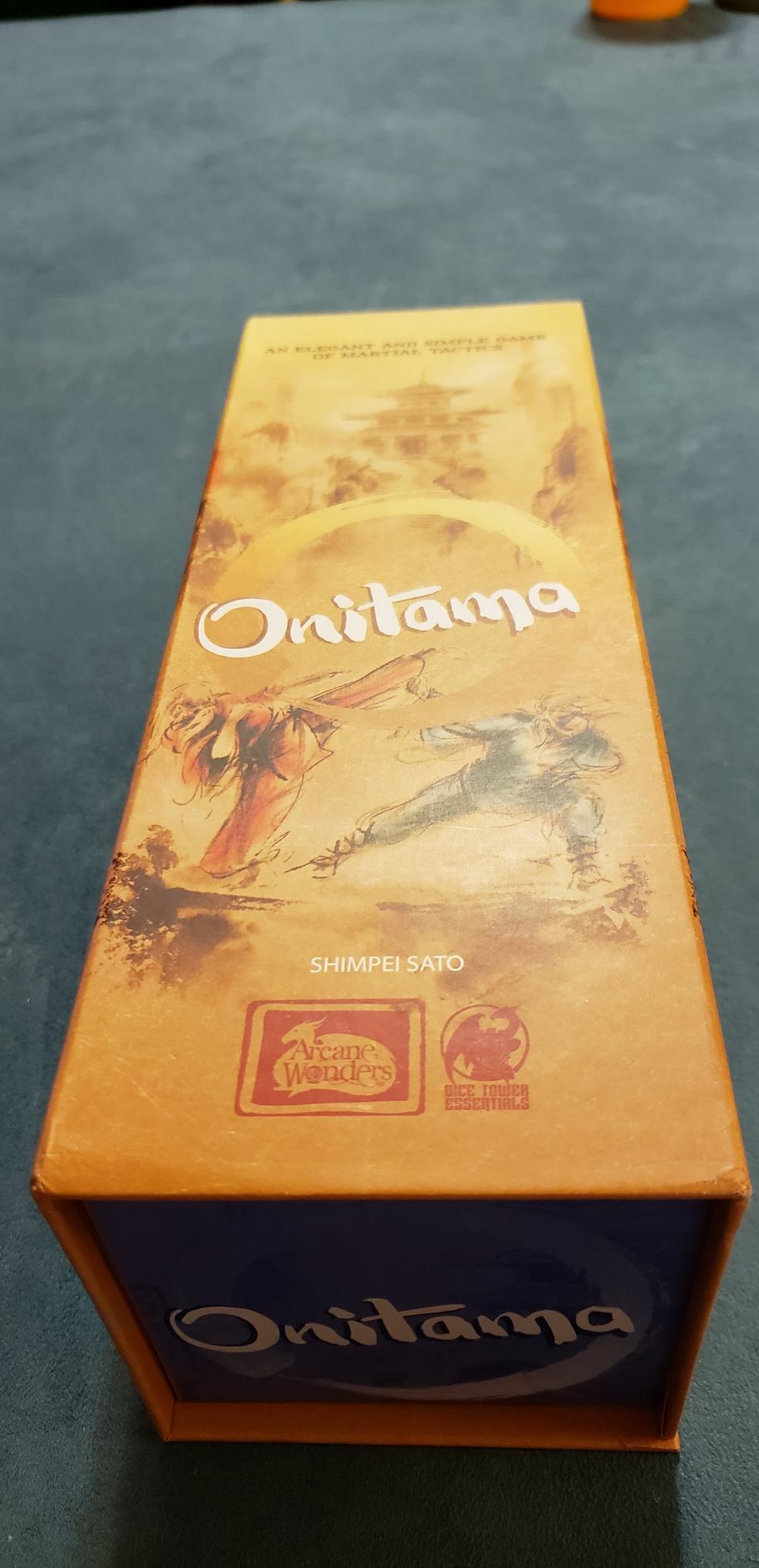
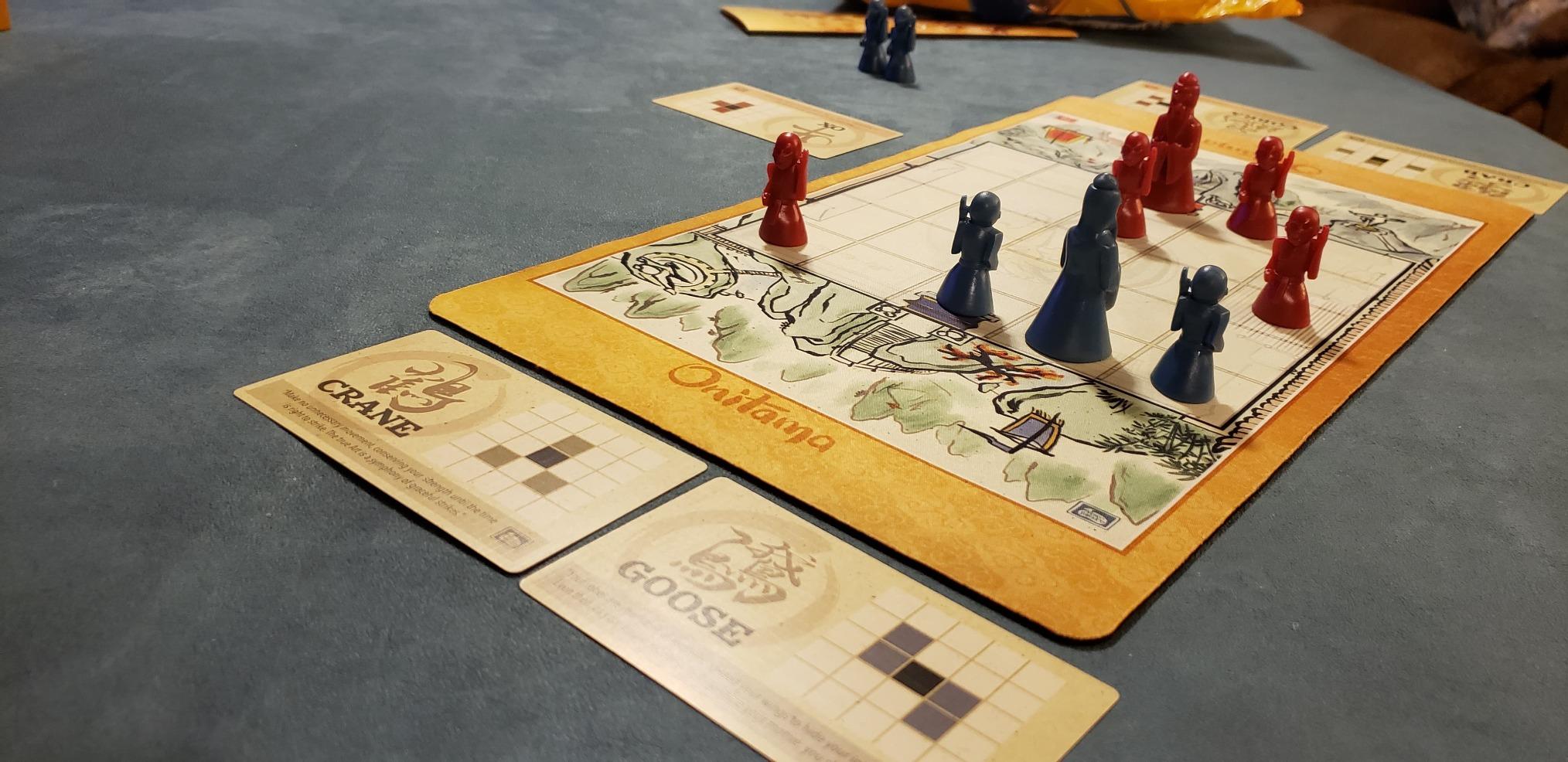
Onitama feels like chess compressed into 15 minutes. You get a 5×5 grid, one master pawn, and four student pawns. The twist is that movement options come from shared cards that pass back and forth between players. Use a card and it goes to your opponent.
This shared-card system creates brilliant mind games. If I use a powerful forward-lunge card to attack, my opponent gets it next turn. I have to think not just about what I gain but about what I give away. It is the kind of mechanic that makes you feel clever every single game.
I taught Onitama to a friend who had never played a strategy game beyond checkers. Within two rounds, she was planning two moves ahead and trash-talking my mistakes. That accessibility paired with depth is rare. For a full breakdown of why this game is perfect for chess players, read our Onitama review.
Win by capturing the enemy master or by moving your master into the opponent’s temple. Two completely different win paths mean every match feels distinct. You might play aggressively one game and defensively the next, and both approaches can win.
Replayability and Card Variety
Each game uses five randomly drawn movement cards from a deck of sixteen. That means the available moves change every session. A card set that favors aggressive lunges plays completely differently from one built around lateral slides. This variety keeps Onitama fresh even after hundreds of games.
Who Onitama Is Best For
Onitama is perfect for couples, lunch-break duelists, and anyone who loves chess but does not have an hour to spare. It rewards pattern recognition and forward planning without the opening-theory baggage. If you want a pure two-player duel you can carry anywhere, this is your game.
4. Ravensburger Othello – The Classic Flip-and-Conquer Game
Ravensburger Othello – Classic Strategy Board Game for 2 Players – Easy to Learn, Hard to Master – Fast-Paced Family Fun – Ages 8+
2 players
Classic flip mechanic
Felted green board
64 reversible discs
Slide-out storage drawers
Ages 8+
Pros
- Timeless gameplay loved for generations
- High-quality felted board with smooth discs
- Convenient slide-out storage drawers on both sides
- Easy to learn but strategically deep
- Perfect 20-minute playtime
Cons
- No lid to keep pieces secure during storage
- Pieces can scatter if box tips during transport
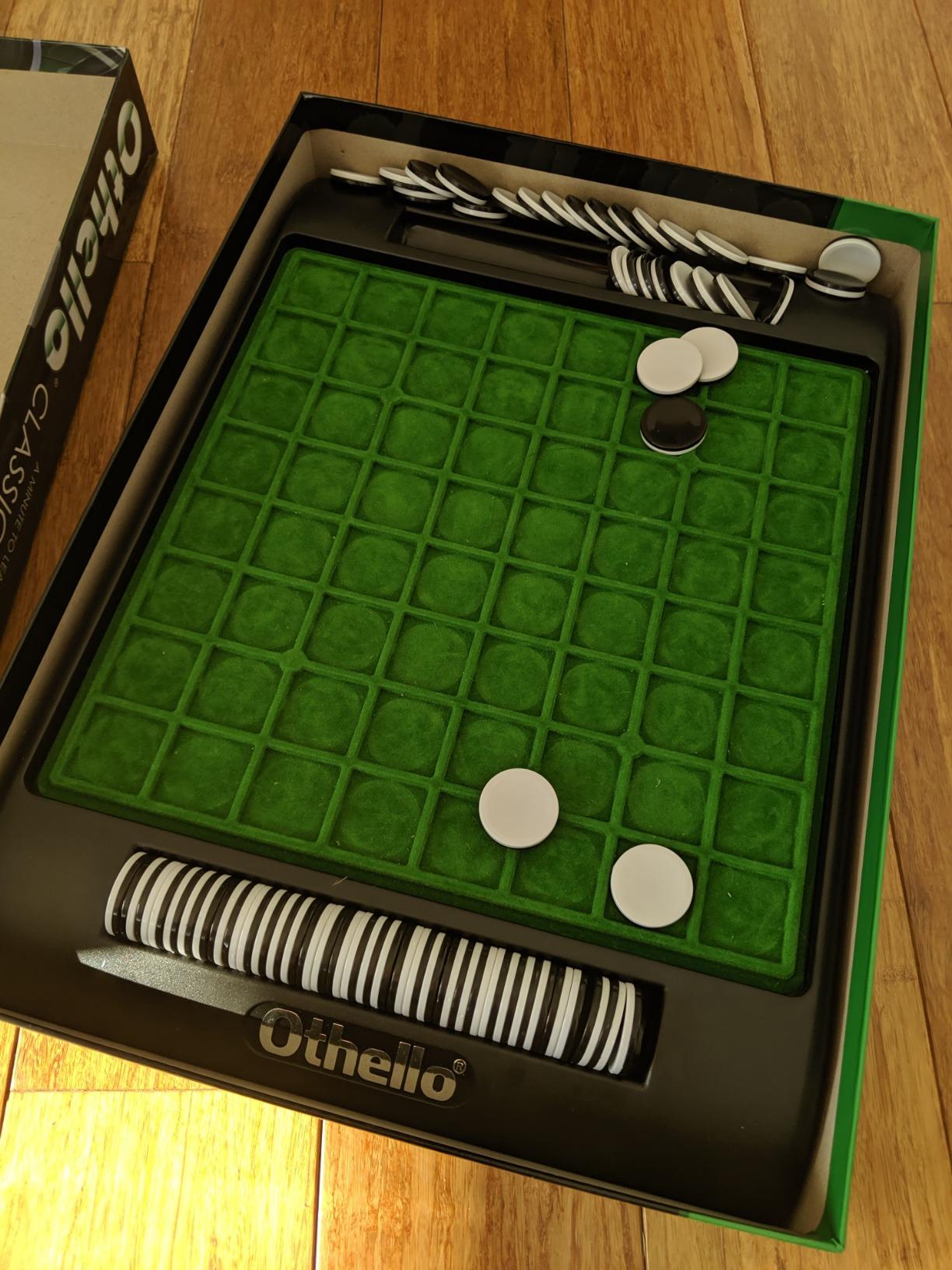
Othello is the game I grew up playing with my grandfather, and it has lost none of its pull. The rules are deceptively simple: place a disc to flank a row of opponent discs, and they all flip to your color. The board fills up, and whoever has more discs at the end wins.
What makes Othello brilliant is the volatility. You can flip 15 discs in a single move, then watch your opponent flip 20 right back. The famous tagline says it best: a minute to learn, a lifetime to master. That is not marketing fluff. It is genuinely accurate.
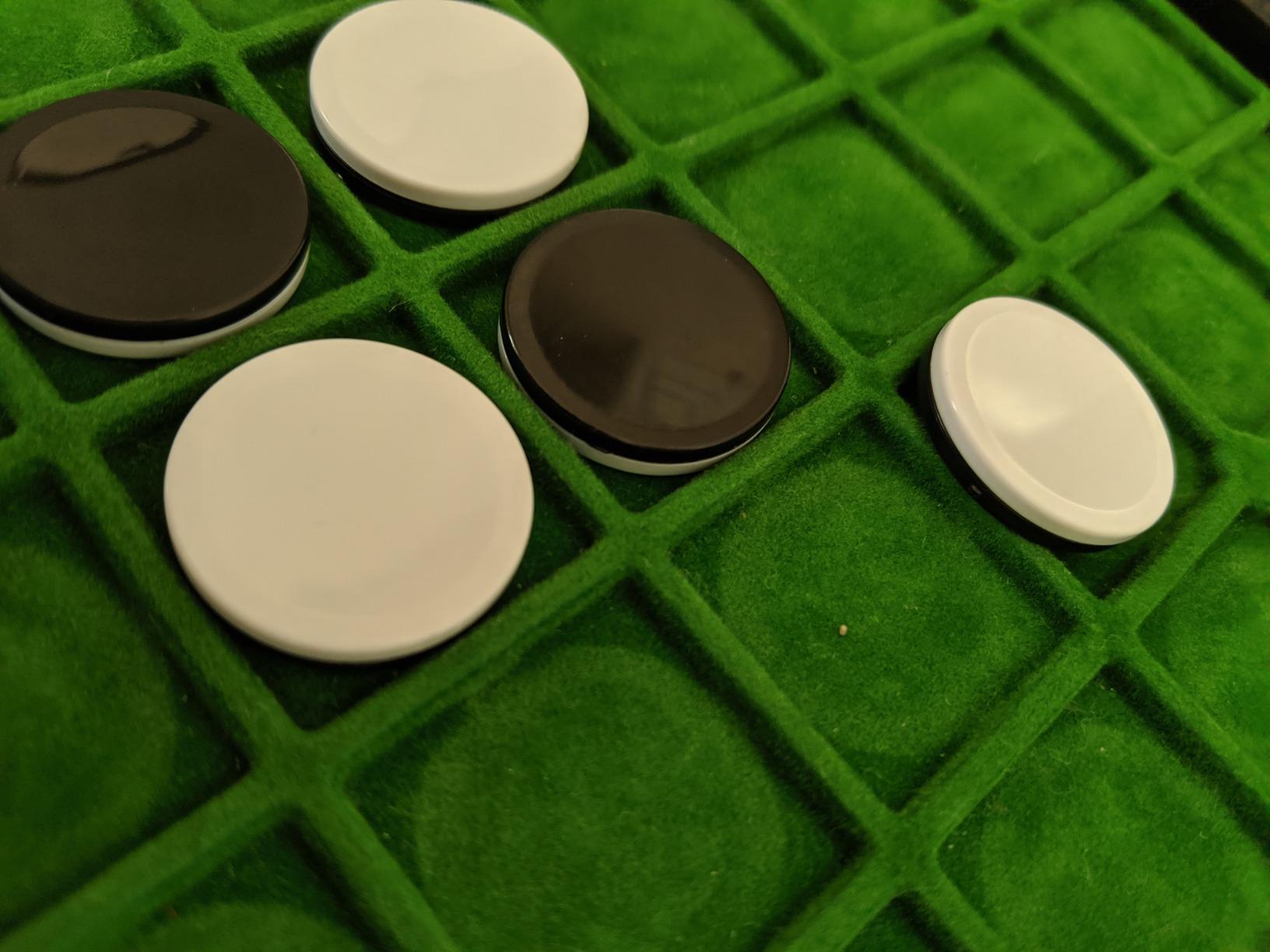
The Ravensburger edition is the best version I have played. The felted green board feels substantial. The discs are smooth and click satisfyingly when placed. Slide-out drawers on both sides mean each player has their own storage, which speeds up setup considerably.
Strategically, Othello rewards corner control and mobility management. If you have fewer moves available than your opponent, you are in trouble. Experienced players deliberately give up discs in the midgame to maintain move flexibility. That kind of counterintuitive thinking is what separates beginners from experts.
Corner Control and Mobility Strategy
Corners are the only discs that can never be flipped. Once you claim a corner, it is yours forever. Every advanced strategy in Othello revolves around setting up corner captures while denying them to your opponent. Mobility, or the number of legal moves you have, is equally important. Reduce your opponent’s options and you control the game.
Why Othello Still Matters Today
Othello has been played competitively since the 1970s and still has active tournaments worldwide. The depth is proven. If you want a classic abstract that costs less than a movie ticket and lasts forever, Othello delivers.
5. Gobblet! – 3D Tic-Tac-Toe with Nesting Wooden Pieces
Gobblet! Abstract Strategy Board Game – Award Winning Kids or Adults Original All Wooden Board Game by Blue Orange Games – 2 Players for Ages 7 to 99.
2 players
All-wooden construction
4x4 grid
Nesting piece mechanic
Ages 7 to 99
Pieces store in wooden box
Pros
- Innovative 3D nesting piece mechanic
- All-wooden high-quality construction
- Pieces store neatly inside the game box itself
- Develops memory and observation skills
- Works for kids and adults equally well
Cons
- Visual design could use a modern refresh
- First player advantage can emerge with optimal play
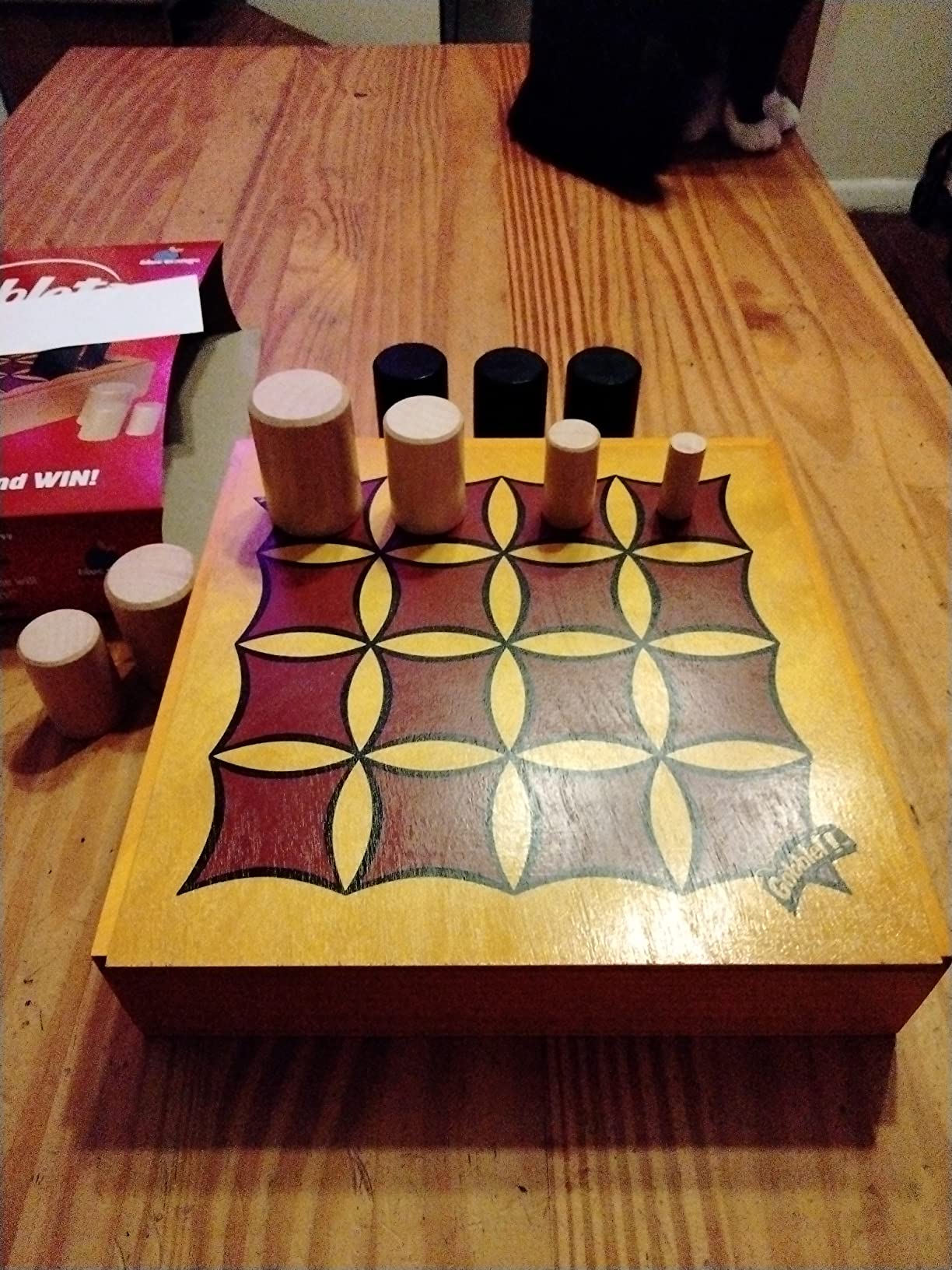
Gobblet! takes tic-tac-toe and adds a memory-bending twist. You have 12 wooden pieces in four sizes that nest inside each other. Get four in a row to win. The catch is that larger pieces can cover smaller ones, so a spot that looks like yours might secretly hold an enemy piece underneath.
The memory element is what elevates Gobblet beyond a kids game. You have to remember what is hidden under each stack. I have played this with my 8-year-old nephew and with adult gamers, and both groups get equally competitive. The wooden pieces feel great in hand and have held up through years of play.
One thing to note is that with perfectly optimal play, the first player can have a slight advantage. In practice, this rarely matters because human memory is imperfect. The game stays fresh because no two board states are ever the same.
The storage solution is elegant. All 24 pieces fit inside the wooden box itself, which doubles as the playing board. No loose pieces, no bag needed. You close the lid and you are done.
Memory Challenge and Cognitive Benefits
Gobblet! actively trains working memory. You must track which pieces are hidden under which stacks throughout the entire game. This makes it a stealthy educational tool for kids and a genuine mental workout for adults. Teachers and therapists frequently recommend it for building concentration skills.
Age Range and Family Appeal
The 7-to-99 age rating is accurate. Younger children can play because the rules are simple. Adults stay engaged because the strategy is real. If you need one abstract game that works for a mixed-age family, Gobblet! is hard to beat.
6. Battle Sheep – Modular Board Area Control for 2 to 4 Players
Battle Sheep Abstract Strategy Board Game with Animal Sheep Theme by Blue Orange Games – Family or Adult Strategy Board game for 2 to 4 players. Recommended for ages 7 & Up.
2-4 players
Modular hexagonal board
64 sheep tokens
Area control mechanics
Ages 7+
20 minute playtime
Pros
- Modular board creates fresh layouts every game
- Simple rules playable in 20 minutes
- Scales well from 2 to 4 players
- High-quality urea sheep tokens
- Great for families and casual gamers
Cons
- Tall token stacks can topple easily
- Some token pieces may not interlock perfectly
Battle Sheep is the game I bring when I need something light but still strategic. Each player builds the board at the start by placing hexagonal pasture tiles. Then everyone splits their sheep stack and starts spreading across the terrain, claiming territory by leaving sheep behind.
The modular board is the standout feature. Every game starts with a completely different landscape because players take turns placing tiles. A narrow board favors blocking strategies. A wide board favors racing. You never know what you are going to get.
Sheep move by splitting their stack and moving in a straight line until they hit something. The tension comes from running out of options. Once your stack is down to one sheep in a dead-end corner, that stack is stuck. Planning your splits to keep options open is the core skill.
The components are excellent for the price. Urea tokens have a nice weight, and the hexagonal tiles are sturdy. My only gripe is that tall stacks of sheep can wobble and fall if bumped, which happens more than you would expect during a heated 4-player session.
Player Count Scaling and Dynamics
At 2 players, Battle Sheep is a clean positional game. At 3 or 4 players, it turns into a chaotic scramble where alliances form and break spontaneously. The modular board means the game scales naturally without needing special rules. This flexibility makes it ideal for families with varying group sizes.
Strategic Depth for Casual Gamers
Battle Sheep does not have the depth of Hive or Go, and that is fine. It occupies a sweet spot between casual party game and serious abstract. You can teach it in 3 minutes, play it in 20, and still feel like you made meaningful decisions. It is the perfect warm-up game before something heavier.
7. BOOP – Adorable Cat-Themed Chain Reaction Strategy
Smirk and Dagger BOOP 2-Player Cat Strategy Board Game
2 players
32 wooden cat and kitten pieces
Quilted bed board
Chain reaction boop mechanic
Ages 10+
20 minute playtime
Pros
- Delightful cat and kitten wooden pieces
- Soft quilted fabric board feels premium
- Unique chain-reaction boop mechanic creates surprises
- Quick to learn with genuine strategic depth
- Excellent component quality for the price
Cons
- Fabric board surface can let pieces slide
- Pieces can shift during enthusiastic boops
BOOP caught me off guard. I expected a cute filler game and instead found a genuinely deep abstract strategy game wearing an adorable cat costume. You place wooden kittens on a quilted fabric bed. When you place a kitten adjacent to existing pieces, it boops them one space in the same direction.
That boop mechanic creates chain reactions that ripple across the board. A single placement can shove three pieces, open a new line, and accidentally set up your opponent. Planning around boops requires spatial thinking that feels fresh compared to any other game on this list.
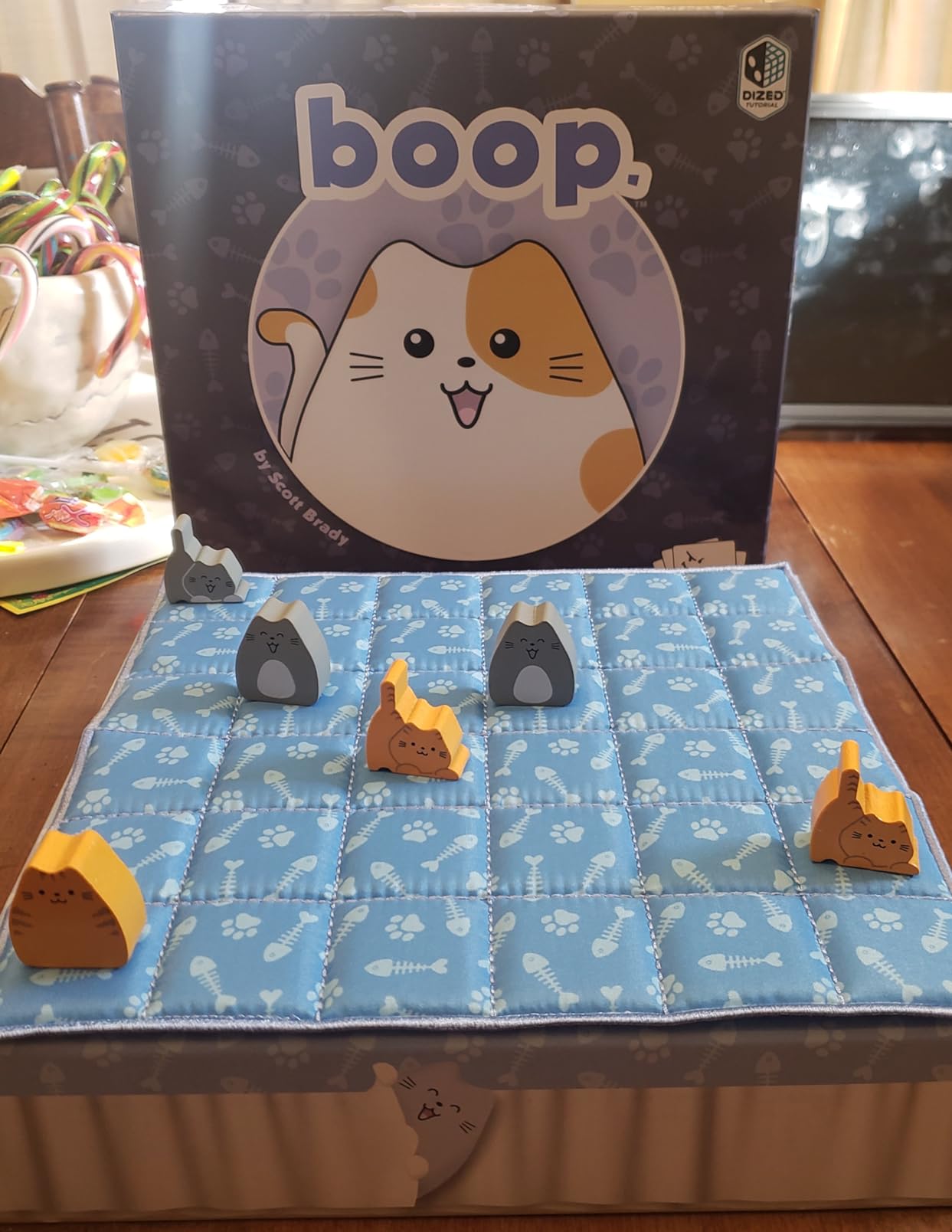
Get three kittens in a row and they graduate to adult cats, which cannot be booted by kittens. This creates a satisfying progression from fragile early placements to solidified late-game positions. The shift from kittens to cats changes the entire board dynamic.
The wooden pieces are beautifully crafted and the quilted bed board is surprisingly tactile. My one complaint is that the fabric surface lets pieces slide a bit too easily during aggressive boops. A slightly grippier board would solve this entirely.
The Boop Mechanic and Tactical Planning
Every placement in BOOP has consequences beyond where you set your piece. You must visualize the entire chain of boops before committing. This forward-thinking requirement makes BOOP deeper than it appears. Two moves ahead becomes a real puzzle when each move shoves multiple pieces.
Who Will Love BOOP
BOOP is ideal for couples, cat lovers, and anyone who wants a lighter abstract that still rewards careful planning. The theme is disarming, which means non-gamers will try it without intimidation. Once they start playing, the strategy hooks them. It is a perfect gateway abstract.
8. Yinsh – The GIPF Project Gem with a Brilliant Catch-Up Mechanic
Rio Grande Games Yinsh – 2 Player Abstract Strategy Board Game
2 players
Part of GIPF project
Ring placement mechanics
30 minute playtime
Ages 14+
Pure skill no luck
Pros
- Elegant catch-up mechanism keeps games competitive
- Pure skill with zero randomness
- Quick setup in under 5 seconds
- High-quality ring and marker pieces
- Part of the prestigious GIPF project series
Cons
- Can be difficult to find in stock at times
- Limited to 2 players only
Yinsh is the thinking person’s abstract game. Part of Kris Burm’s legendary GIPF project, it uses rings and markers on a hexagonal grid. You jump rings over markers, flipping them to your color. Line up five of your color in a row and you remove one of your rings.
Here is the genius part: the first player to remove three rings wins. But every ring you remove makes you weaker because you have fewer rings to work with. This built-in catch-up mechanism means games stay tense until the very end. I have never played a Yinsh game that felt decided early.
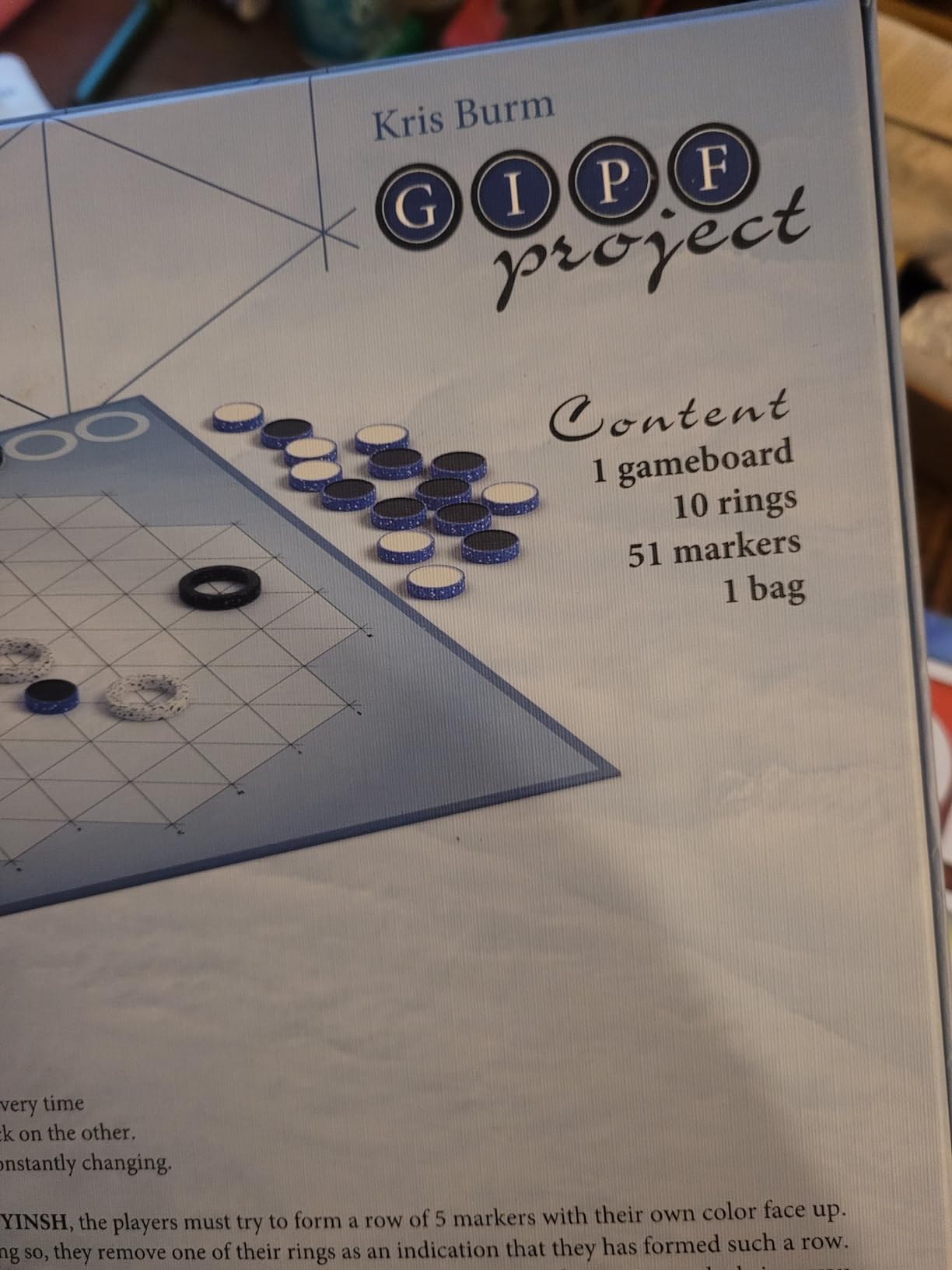
The rules are straightforward but the strategy is oceanic. You are simultaneously attacking, defending, and managing your ring economy. Every flip matters. Every ring placement constrains future options. The depth rivals Go in terms of how far ahead skilled players can plan.
Yinsh has a devoted following in the abstract strategy community for good reason. It is pure competition with no dice, no cards, and no hidden information. The better player wins, every single time. If you want proof that board games can be art, play Yinsh.
The Catch-Up Mechanic Explained
Most games punish the leader or reward the loser arbitrarily. Yinsh does it organically. Removing a ring brings you closer to winning but reduces your board presence. You must balance aggression with conservation. This tension is what makes Yinsh endlessly replayable and strategically rich.
Availability and Collectibility
Yinsh periodically goes out of print, which frustrates fans. If you see it in stock, grab it. The GIPF project games are collector’s items in the board game world, and Yinsh is widely considered the best of the series. Forum users on Reddit consistently recommend snapping it up whenever available.
9. Qawale – Mensa Select Stone Stacking with a Mancala Twist
Qawale – from Creators of Quoridor | Mensa Select | Award-Winning Wooden Abstract Strategy Board Game for Kids and Adults | Strategic Stone Stacking | 60 Secs to Learn | Ages 8+ | 2 Players | 15 Min
2 players
Stone stacking mechanics
Mancala-inspired movement
15 minute playtime
Mensa Select winner
Ages 8+
Wooden components
Pros
- Learn the rules in just 60 seconds
- Mensa Select award winner
- Beautiful quality wooden stones
- Genuine strategic depth requiring 3-move planning
- Doubles as attractive coffee table decor
Cons
- Requires a completely flat surface to play
Qawale comes from the creators of Quoridor, and it shows the same design elegance. You place colored stones on a grid and move them using a mancala-style sowing mechanic. Pick up a stack, drop one stone per space, and the last stone determines where the stack lands. Get four of your color in a row to win.
The mancala influence makes every move a puzzle. Where you pick up, how many stones you carry, and where you finish all change the outcome. A single move can redistribute stones across five spaces, opening new lines while closing others. The complexity emerges from simple rules.
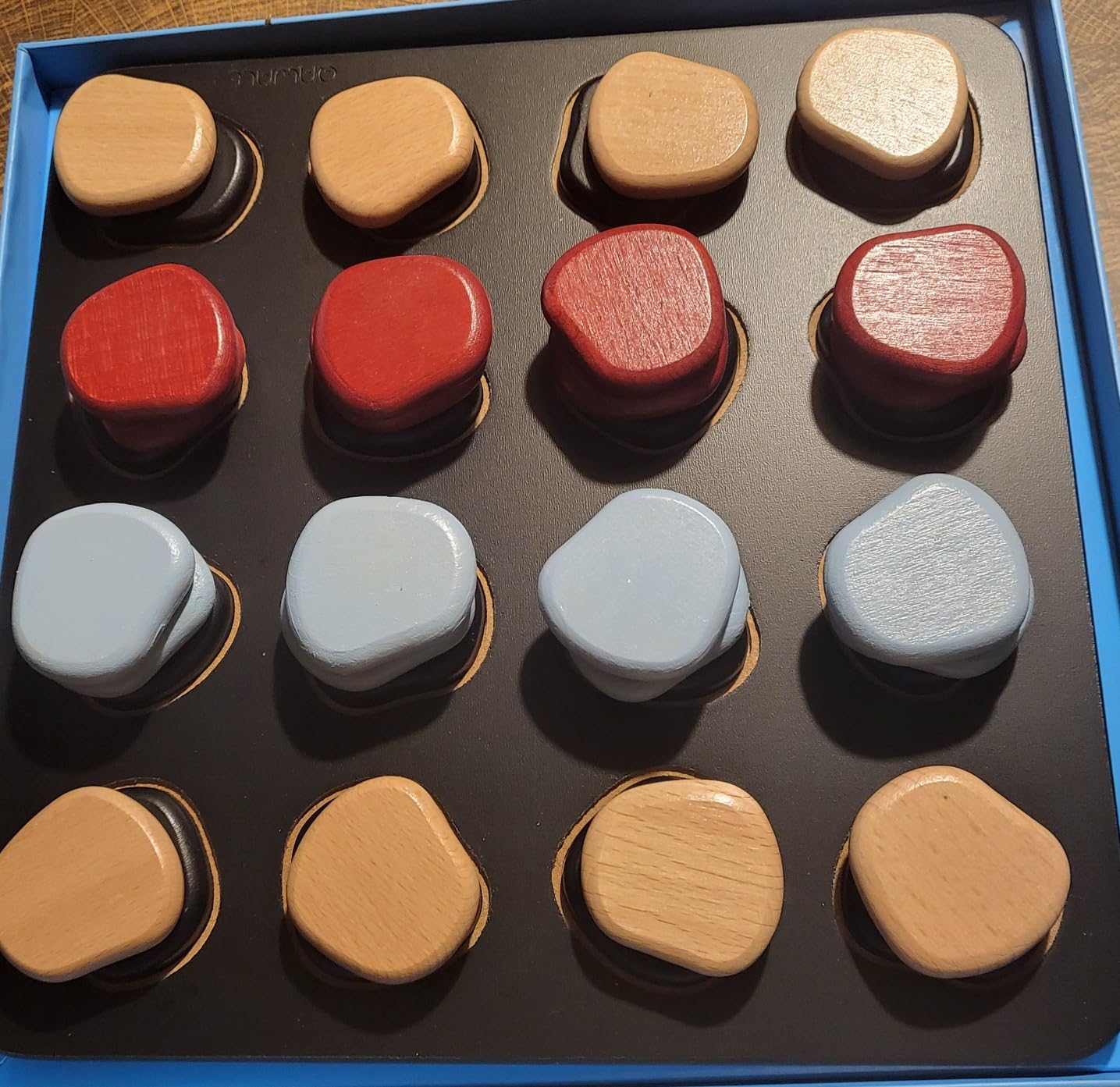
I was skeptical that a game learnable in 60 seconds could offer real depth. Qawale proved me wrong. After ten games, I was still discovering new tactical patterns involving stack height manipulation and cross-board sequencing. The Mensa Select award is well earned.
The wooden stones come in warm earthy tones that look beautiful on a table. Several reviewers mentioned using Qawale as coffee table decor between games, and I understand why. It looks like an art piece when not in play.
The Mancala-Inspired Movement System
Qawale borrows the pick-up-and-sow mechanic from mancala but applies it to a competitive grid. This means your moves affect multiple stones simultaneously, creating cascading positional shifts. Understanding how stack height changes sowing distance is the key skill. Taller stacks travel farther, which opens cross-board threats.
Quick Games and Replay Value
At 15 minutes per game, Qawale invites rapid rematches. The board setup is fast and the stone distribution changes every time. You will play five games in a row without noticing. For a game that fits in a small box and plays in a coffee break, the replay value is exceptional.
10. Quoridor – Maze-Building Classic With Over 1 Million Sold
Quoridor – Over 1 Million Sold! Mensa Select Winner | Wooden Abstract Strategy Game for Adults and Families | Ages 8+ | 2 to 4 Players | 1 Minute to Learn, 15 Minutes to Play
2-4 players
Maze-building strategy
Wooden board and fences
15 minute playtime
Mensa Select winner
Over 1 million sold
Ages 8+
Pros
- Over 1 million copies sold worldwide
- Mensa Select award winner
- Elegant rules learnable in 1 minute
- Quality stained wooden components
- Scales from 2 to 4 players seamlessly
Cons
- Pawns may be slightly oversized for the grid
- Quality control issues reported with fence pieces
- No dedicated storage for third and fourth player fences
Quoridor has sold over a million copies for a reason. On your turn, you either move your pawn one space or place a wooden fence to block your opponent. The goal is to get your pawn across the board first. That is the entire game, and it is brilliant.
The fence placement is where the strategy lives. You have 10 fences to use across the game. Place them wisely and you can funnel your opponent into dead-end mazes while you stroll to victory. Place them poorly and you trap yourself. The tension between advancing your pawn and building walls is constant.
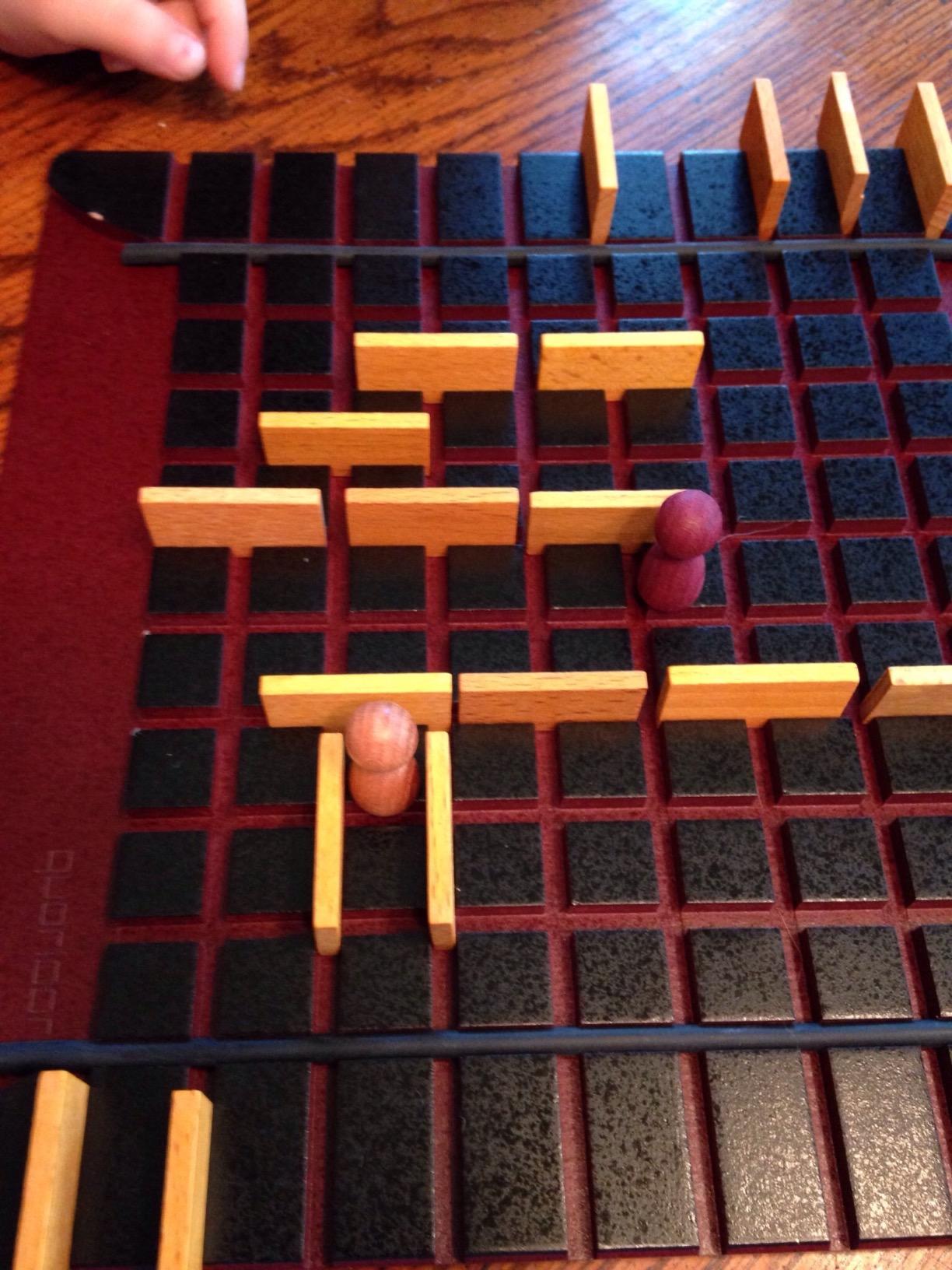
I love how Quoridor plays at different counts. Two players is a clean duel. Three players adds kingmaker dynamics. Four players turns into a chaotic wall-building party where alliances shift every turn. The rules scale without modification, which is a mark of excellent design.
The wooden components are stained rather than painted, giving them a warm natural look. The Mensa Select award validates the strategic depth. Forum users on BoardGameGeek consistently rank Quoridor among the best gateway abstracts ever made, and I agree completely.
Path Planning and Wall Economy
Your 10 fences are a finite resource. Spend them all early and you lose defensive flexibility. Hoard them too long and your opponent reaches the other side. The meta-game of fence conservation adds a resource management layer to what appears to be a simple race game. Planning your shortest path while maximizing wall efficiency is the core skill.
Best for Families and New Gamers
Quoridor is one of the easiest abstracts to teach. Move or wall. That is it. Kids understand it immediately, but adults quickly discover the depth. If you are introducing non-gamers to abstract strategy, Quoridor is hard to top. It rewards repeated play and rarely produces the same game twice.
11. Santorini: Second Edition – 3D Tower Building with God Powers
Santorini: Second Edition Board Game – 2–4 Player Greek Strategy Game with 3D Towers & God Powers
2-4 players
3D tower building
32 unique Greek god powers
20 minute playtime
Second edition
Ages 8+
Pros
- 32 unique god powers create massive replayability
- Beautiful 3D vertical tower components
- Fast 15-20 minute matches
- Accessible rules with chess-like depth
- Scales from 2 to 4 players
Cons
- Rules can be confusing on first read
- Packaging may arrive with damage
- Not ideal for 4-player team coordination
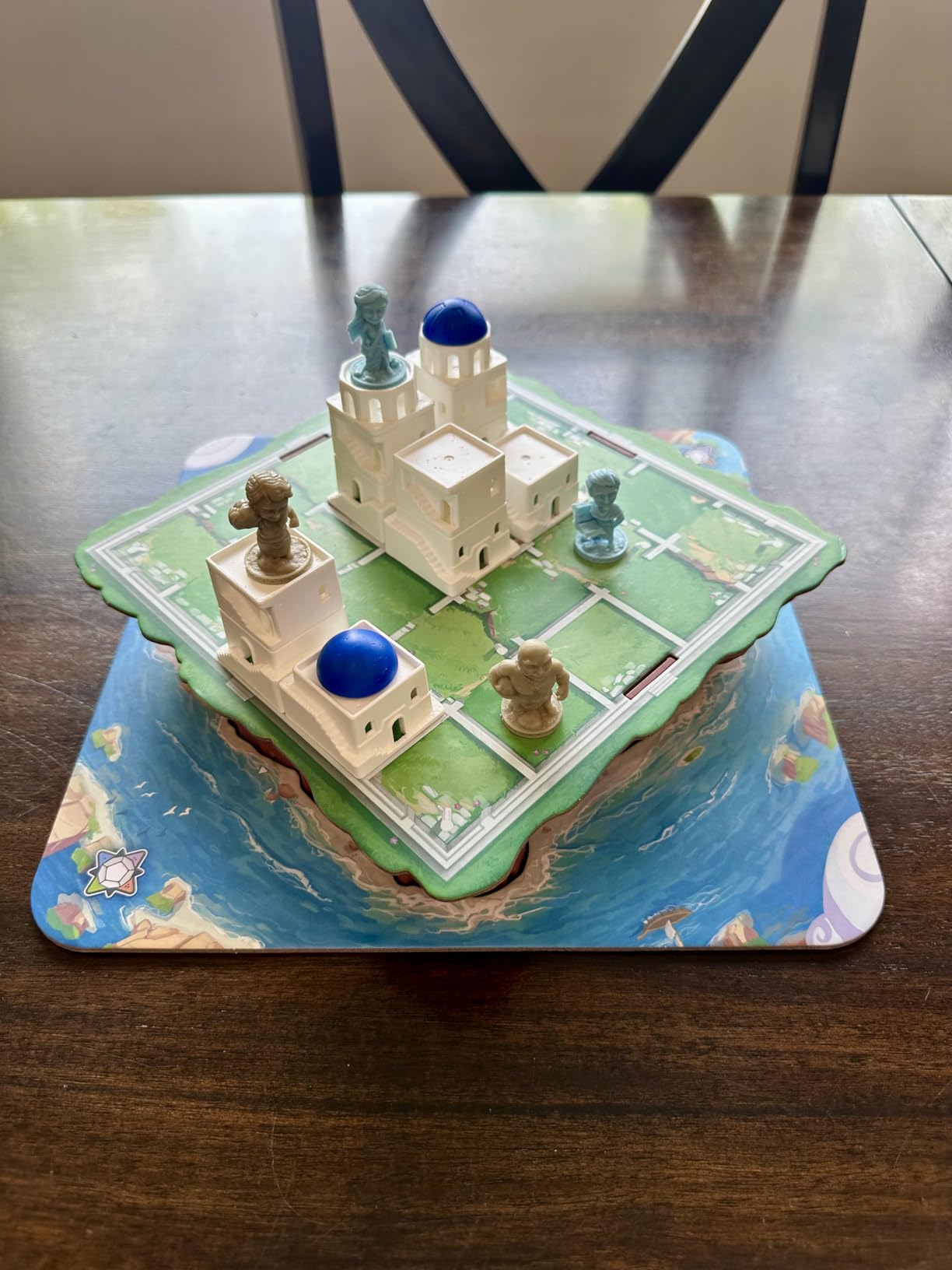
Santorini is the most visually striking abstract game I own. You build actual 3D towers on a grid, stacking levels and placing domes. Move your worker to the top of a completed three-level tower and you win. It sounds simple until the god powers come into play.
Each game, players draft from 32 Greek god cards that grant special abilities. Apollo lets you swap places with an opponent. Artemis lets you move twice. Zeus lets you build at a distance. These powers completely transform the strategy every game. With 32 gods, the combinations are nearly endless.
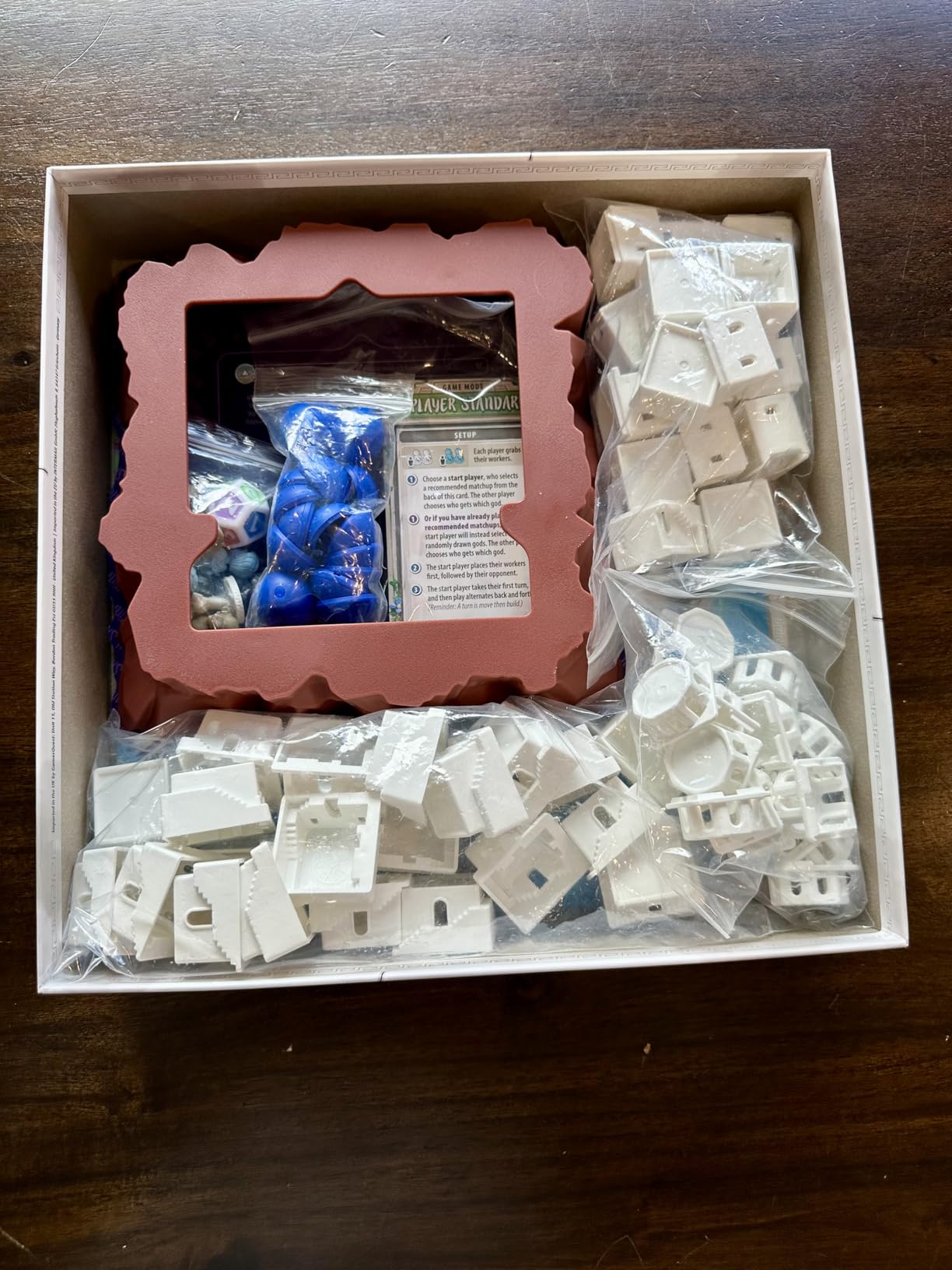
The base game without god powers is already a solid abstract. Add god powers and it becomes one of the most replayable games on this list. I have played over 40 games and still find new god combinations that create entirely different tactical puzzles.
The second edition fixes component issues from the original Kickstarter release. The buildings are sturdy, the board is clean, and the rulebook is improved. My only complaint is the initial rules read can be confusing for first-time players, especially around god-power resolution order.
God Powers and Replayability
The 32 god cards are the heart of Santorini’s longevity. Each one changes a fundamental rule of the game. Some affect movement, some affect building, some add entirely new win conditions. Drafting gods before the game starts becomes a strategic meta-game in itself. You could play Santorini for a year and never repeat the same matchup.
Visual Appeal and Component Quality
The 3D towers make Santorini look like a miniature Greek island on your table. The white and blue buildings are instantly recognizable. Even non-gamers stop to ask what you are playing when they see it set up. The second edition components are a significant improvement over earlier versions, with sturdier plastic and better color differentiation.
12. Pylos – Pyramid Stacking with Resource Conservation
Pylos | Wooden Abstract Strategy Board Game for Kids and Adults | Compete to Stack The Final Ball on The 3D Puzzle Pyramid | Award-Winning Family Game Night Favorite | Ages 8+ | 2 Players | 15 Min
2 players
3D pyramid stacking
30 wooden balls
Cloth bag included
15 minute playtime
Mensa Select Top 5
Ages 8+
Pros
- Beautiful wooden ball components double as decor
- Resource conservation gameplay rewards careful planning
- Mensa Select Top 5 award winner
- Three difficulty levels for skill progression
- Quick 15-minute playtime
Cons
- Limited to 2 players only
- Board size may differ from some expectations
Pylos is the most elegant stacking game I have played. You and your opponent place wooden balls on a grid, building upward into a pyramid shape. Place the final ball on top and you win. The catch is that you only get 15 balls, so wasting them means losing.
The resource conservation element is what makes Pylos special. You can reclaim balls from the board by completing squares of four same-colored balls. This creates a fascinating economy where efficient play literally gives you more ammunition. The player who manages their ball supply better usually wins.
The game includes three difficulty levels. Beginner rules are simple enough for an 8-year-old. Advanced rules add strategic complexity that challenges experienced gamers. This progression means Pylos grows with the player, which is a rarity in abstract games.
The wooden balls and board are gorgeous. Multiple reviewers mentioned using Pylos as a coffee table display piece between games, and I do the same. The natural wood tones look like Scandinavian design. It is a game that looks as good as it plays.
Resource Management in an Abstract Game
Most abstract games give you unlimited pieces or fixed setups. Pylos gives you 15 balls and forces you to manage them. Completing squares lets you reclaim balls, which means skilled players can essentially extend their supply through smart positioning. This resource layer makes Pylos feel distinct from every other game on this list.
Three Difficulty Levels Explained
Beginner level ignores the square-reclaim rule entirely, making it pure placement. Standard level introduces reclamation. Advanced level adds the ability to reclaim two balls when completing a line of four on the same level. This three-tier system means Pylos works for complete beginners and hardcore abstract fans alike.
How to Choose the Right Abstract Strategy Game
Choosing from the best abstract strategy board games comes down to four factors: who you play with, how long you want to play, how deep you want to go, and where you play. Let me break down each one based on what our testing revealed.
Player Count and Group Size
Most abstract games are designed for 2 players, but several on this list scale higher. Azul, Battle Sheep, Quoridor, and Santorini all support 3 to 4 players comfortably. If your group fluctuates in size, prioritize these multi-player options. For pure 2-player duels, Hive Pocket, Onitama, Yinsh, and Othello are unmatched.
For families looking for games that bridge age gaps, Gobblet! and Quoridor are the easiest to teach across generations. Both have rules simple enough for a 7-year-old but deep enough to hold adult attention.
Learning Curve and Skill Level
Abstract games split into three tiers of complexity. Entry-level games you can learn in under a minute include Quoridor, Qawale, Gobblet!, and Othello. Intermediate games like Azul, Onitama, BOOP, and Battle Sheep take 5 to 10 minutes to teach. Advanced games like Yinsh require real study to play well.
If you are new to abstracts, start with Othello or Quoridor. Both are classics that teach fundamental concepts like territory control and path planning. Once comfortable, move to Hive or Onitama for deeper two-player duels. Save Yinsh for when you are ready to commit to a game you will study for years.
Game Length and Session Fit
Quick games under 20 minutes include Onitama, Qawale, Quoridor, Pylos, BOOP, Gobblet!, and Battle Sheep. These are perfect for lunch breaks, waiting rooms, or best-of-three sessions. Medium-length games like Hive and Yinsh run 20 to 30 minutes. Azul is the longest at 30 to 45 minutes, making it better for dedicated game nights.
The shorter games on this list are ideal for what gamers call filler sessions. Play two or three in a row and sample different strategic flavors. The beauty of 15-minute abstracts is that they invite immediate rematches without fatigue.
Modern vs Classic Abstracts
Classic abstracts like Othello have decades of proven depth and tournament history. Modern abstracts like Hive, Onitama, and Santorini bring fresh mechanics and premium components. If you value history and competitive infrastructure, lean classic. If you want innovative design and beautiful presentation, lean modern.
For those interested in historical abstract games beyond standard chess, Hnefatafl offers a fascinating Viking-era alternative with asymmetric gameplay.
Component Quality and Portability
If portability matters, Hive Pocket is the clear winner. It comes with a travel bag and needs no board. Onitama is also compact. At the other end, Santorini and Azul have larger boxes suited for home play. Pylos and Quoridor occupy a middle ground with moderate box sizes.
Component quality varies but is generally strong across this list. The wooden games from Gigamic (Quoridor, Pylos, Qawale) are particularly well-crafted. Azul’s resin tiles have a satisfying weight. Hive’s bakelite pieces are built to last decades.
FAQ
What is considered an abstract strategy game?
An abstract strategy game is a board game with perfect information, no luck element, and gameplay focused purely on tactical decision-making and skill. Both players see the entire game state at all times, and outcomes are determined entirely by player decisions rather than dice rolls, card draws, or hidden information.
What are the best abstract board games for beginners?
The best abstract strategy board games for beginners are Othello, Quoridor, and Gobblet!. All three have rules learnable in under two minutes, play in 15 to 20 minutes, and cost under $35. They teach fundamental abstract concepts like territory control and path planning without overwhelming new players.
How many players do abstract strategy games need?
Most abstract strategy games are designed for exactly 2 players, but several support larger groups. Azul, Battle Sheep, Quoridor, and Santorini all accommodate 2 to 4 players. Games like Hive, Onitama, Yinsh, and Othello are strictly 2-player experiences.
Are abstract strategy games good for families?
Yes, abstract strategy games are excellent for families. Games like Azul, Gobblet!, Quoridor, and Battle Sheep are rated for ages 7 and up, require no reading, and develop critical thinking skills. They eliminate luck-based tantrums because outcomes depend purely on decisions, which makes them fair and educational.
Final Thoughts on the Best Abstract Strategy Board Games
The best abstract strategy board games share one quality: they reward thinking over luck. Hive Pocket remains our top pick for its portability and depth. Azul is the best all-rounder for groups up to four. Onitama is the perfect chess alternative for time-crunched duelists.
Every game on this list earned its place through real testing. Whether you want a 15-minute coffee-break duel or a 45-minute family centerpiece, there is an abstract game here that will keep you coming back. Pick one, find an opponent, and start thinking.