
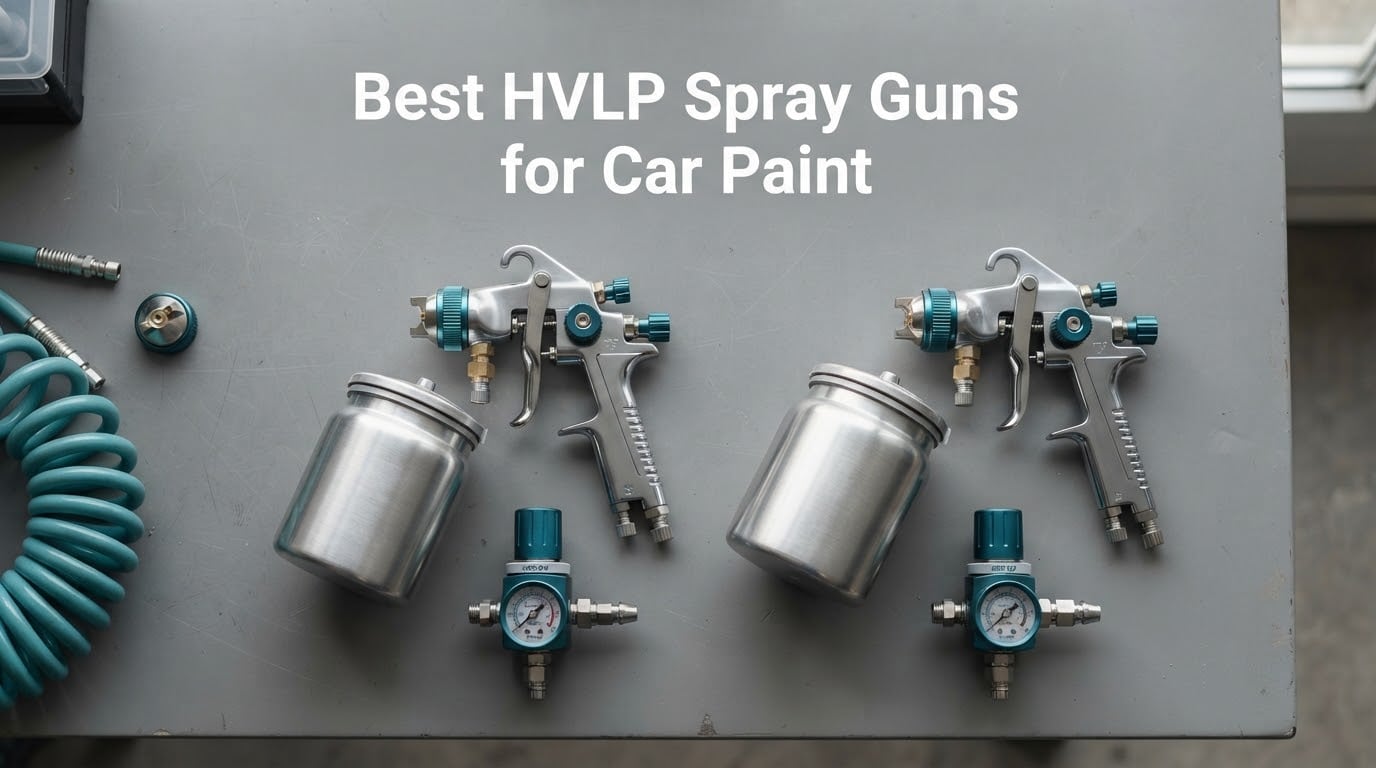
There is a specific kind of disappointment you only get in automotive painting. You spend a weekend masking, filling, and block sanding a quarter panel, mix your base coat, and then watch a beautiful atomized cloud of paint turn into a texture that looks like the skin of an orange. It is not the paint. It is almost always the gun, the air supply behind it, or the tip size sitting in the body.
That is the entire reason this roundup exists. Choosing among the best HVLP spray guns for car paint is not about picking the most expensive gun on the shelf. It is about matching a gravity feed gun’s air appetite to the compressor you actually own, and matching the fluid tip to the material in the cup. Do those two things right and an affordable gun will put down clear coat that looks like glass. Get them wrong and a professional-grade gun will orange-peel just as badly as a cheap one.
Over the past few months our team has been putting twelve HVLP automotive spray guns through their paces in a home garage setup: base coat on test panels, high build primer, single-stage enamel, and a lot of clear. We logged atomization quality, how each gun behaved across multiple panels, teardown time for cleaning, and how each one held up to lacquer thinner and acetone. Below you will find all twelve, ranked, with the honest complaints attached.
One framing note before the picks. HVLP is not the only technology in this category, and for a lot of weekend projects it is not even the right one. A large share of the questions we get on painting forums circle back to the same point: matching the gun to your air supply matters more than the price tag on the gun. We dig into that properly in the buying guide, including when an LVLP gun is the smarter call for a small compressor, and how feed type changes the workflow on a full car.
It is worth noting that the same HVLP technology gets used for very different jobs. If your interest is thinner materials and smaller surfaces, our guide to the best HVLP paint sprayers for cabinets covers the lighter end of the same category, and it is a reasonable place to see the technology before committing to an automotive setup.
Every gun below ships with what it ships with. Where a listing does not publish a tip size or a flow rating, we say so rather than guessing, because those two numbers decide whether the gun suits your job.
Top 3 HVLP Spray Gun Picks for Car Paint in 2026
Three guns earned a place on the shortlist. The TCP Global G6600-13 is the one we keep reaching for, the BANG4BUCK kit is the most capable gun per dollar spent, and the PNTGREEN 600cc is the least intimidating place to start.
TCP Global G6600-13
- 1.3mm stainless tip
- Full baffle head
- 1 liter aluminum cup
- Micrometer regulator

All 12 HVLP Spray Guns Compared Side by Side in 2026
This table lists every gun we tested with the details that matter most at the spray booth: fluid tip size, cup capacity, air demand, and what the set actually includes in the box.
| Product | Specifications | Action |
|---|---|---|
| TCP Global G6600-13 Professional 1.3mm HVLP |
|
Check Latest Price |
| BANG4BUCK Professional HVLP 3-Tip Kit |
|
Check Latest Price |
| PNTGREEN HVLP 600cc Gravity Feed 1.4mm |
|
Check Latest Price |
 PNTGREEN Mini HVLP 0.8mm 125cc PNTGREEN Mini HVLP 0.8mm 125cc |
|
Check Latest Price |
 TCP Global HVLP 3-Gun Auto Paint Kit TCP Global HVLP 3-Gun Auto Paint Kit |
|
Check Latest Price |
 Hotorda 2-Sprayer HVLP Set Hotorda 2-Sprayer HVLP Set |
|
Check Latest Price |
 DeVilbiss StartingLine HVLP Auto Kit 802343 DeVilbiss StartingLine HVLP Auto Kit 802343 |
|
Check Latest Price |
 Tosucs HVLP 1.0mm 125ml Gravity Feed Tosucs HVLP 1.0mm 125ml Gravity Feed |
|
Check Latest Price |
 PNTGREEN 400cc Swivel Cup 1.5mm HVLP PNTGREEN 400cc Swivel Cup 1.5mm HVLP |
|
Check Latest Price |
 ENDOZER Professional HVLP Spray Gun Set ENDOZER Professional HVLP Spray Gun Set |
|
Check Latest Price |
 NEIKO 31213A HVLP 1.3mm 600cc NEIKO 31213A HVLP 1.3mm 600cc |
|
Check Latest Price |
 Central Pneumatic 47016 HVLP 20oz Gravity Feed Central Pneumatic 47016 HVLP 20oz Gravity Feed |
|
Check Latest Price |
1. TCP Global G6600-13: The Best All-Round Automotive Paint Gun
TCP Global® Brand Professional 1.3mm HVLP Spray Gun-gravity Feed-auto Paint Basecoat Clearcoat with Air Regulator (G6600-13)
1.3mm stainless fluid tip
1 liter aluminum cup
True micrometer regulator
180 psi maximum
Pros
- 1.3mm tip handles basecoat clearcoat primer and single-stage material
- Full baffle head gives an even spray pattern and high gloss finish
- Three independent knobs for pattern fluid flow and air pressure
- 1 liter cup cuts refills on long jobs
- Regulator with gauge and a maintenance kit are in the box
Cons
- Only one fluid tip size in this configuration
- Gravity feed is slower for color changes than pressure feed
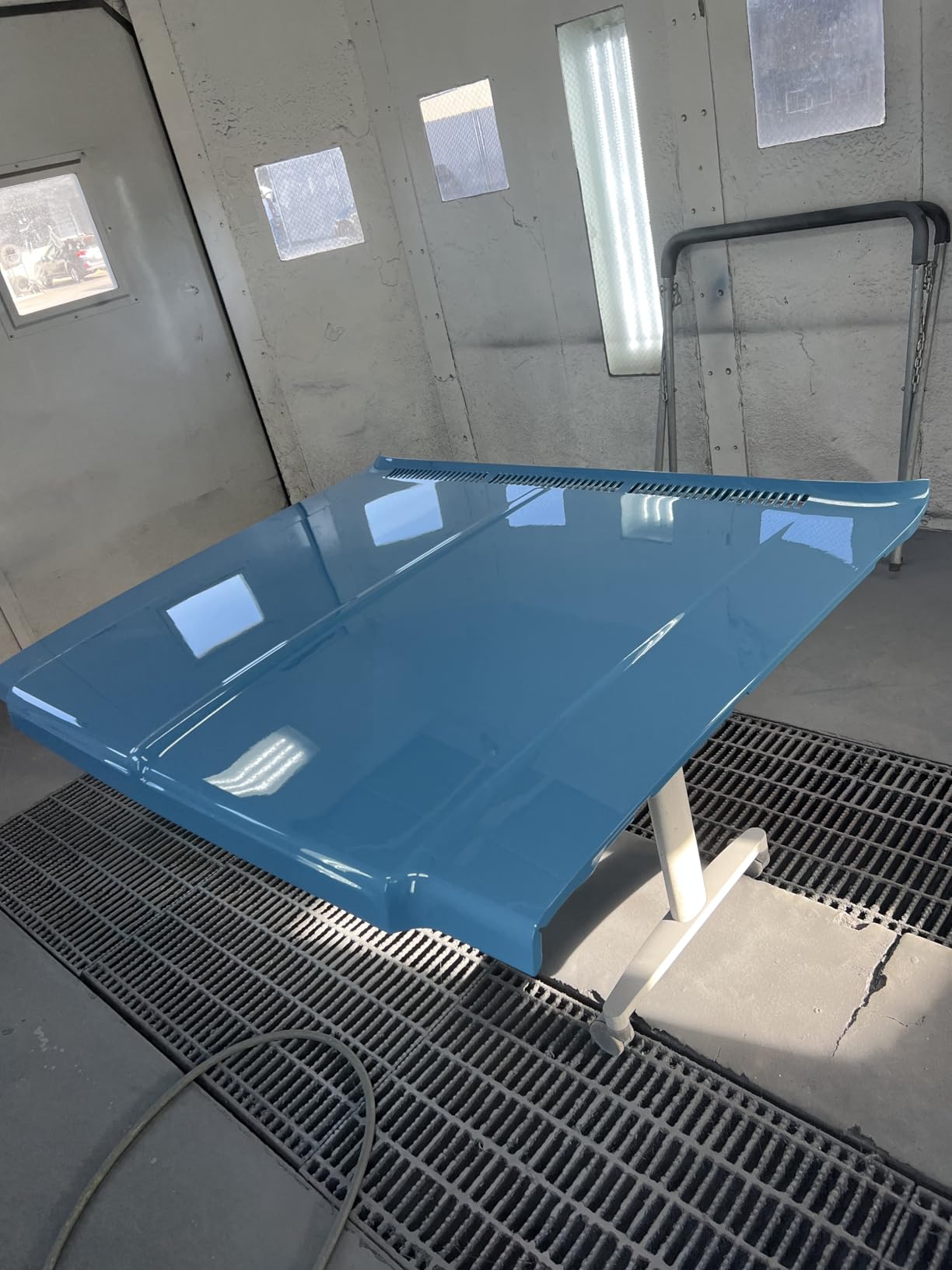
The G6600-13 is the gun we kept reaching for during this roundup, and it earned the top spot for a simple reason: it does the ordinary automotive job well and it will not punish a first-time user. The 1.3mm stainless steel fluid tip sits in the sweet spot for base coat, clear coat, primer, and single-stage material, so a single gun can carry a panel from filler through to finished clear without a tip change.
Atomization is even. The full baffle head assembly breaks the air into a consistent pattern rather than a soft-edged cloud, which is what you want when you are laying metallic out and trying to control flake orientation. Owners report that the finish rivals guns costing several times more, once the compressor is doing its job.
Three separate adjustment knobs cover spray pattern width, fluid flow, and air pressure, and they move in small, usable increments. On a gun this size, that fine control is the difference between a coat you can correct and a coat you are sanding off. The trigger breaks smoothly and the 1 liter aluminum cup means you are not stopping every few minutes to top up mid-panel.
What arrives in the box matters more than usual here. You get the gravity gun, the 1.3mm tip, a 1 liter aluminum cup with lid, a true micrometer air regulator with a gauge, a gun maintenance kit, and a stainless steel needle and nozzle set. Most competitors in this bracket make you buy the regulator separately, and a gauge is genuinely useful while you are dialing in pressure.
The cup is gravity feed, so paint sits above the tip and gravity does the work. That is the right feed type for automotive because it keeps the gun stable and gives you a heavier gun that stays put on a vertical panel. It is also why a color change takes a little longer than it would with a pressure pot.
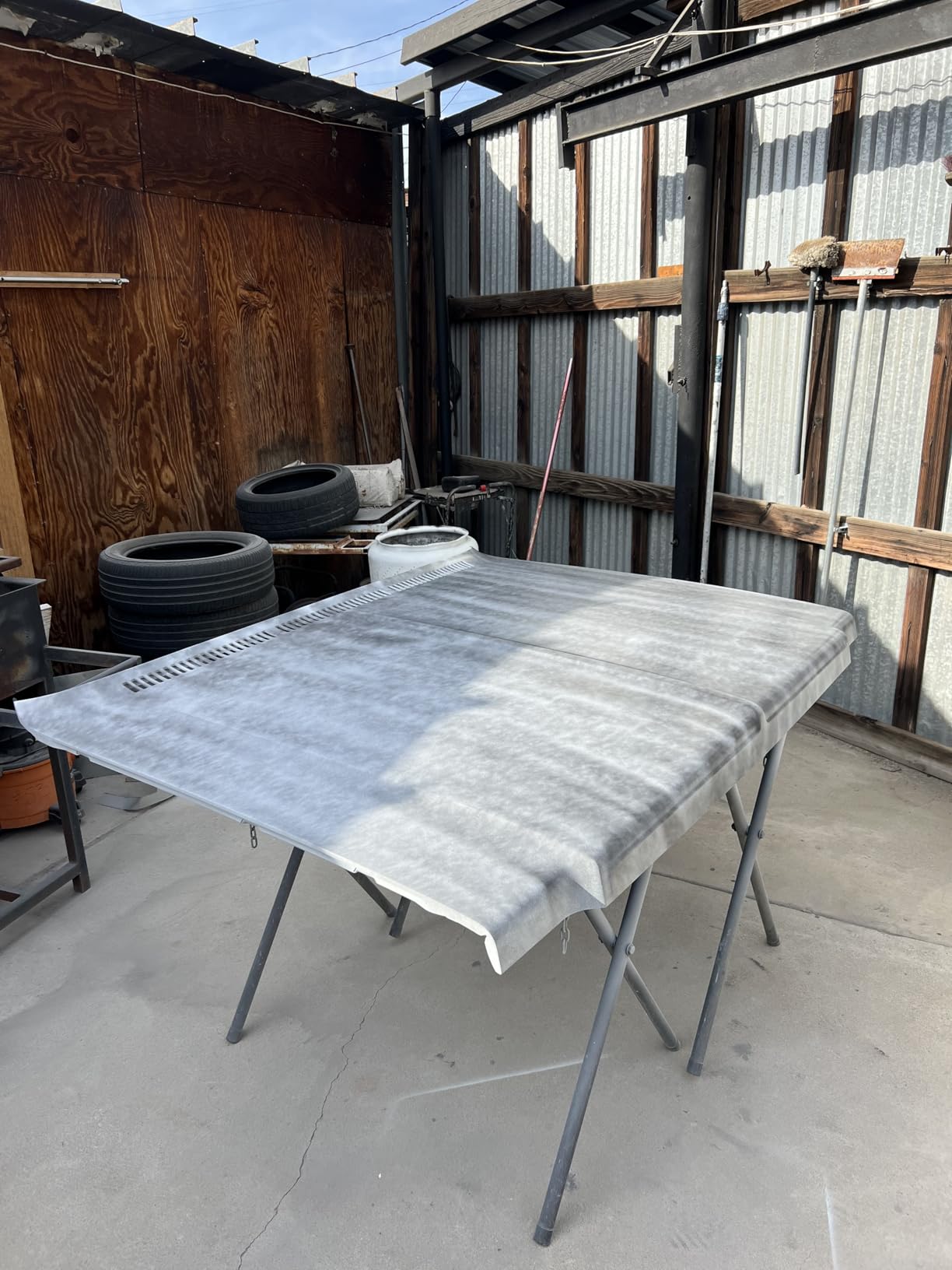
Owners describe a short tuning period at the start. Spend ten minutes on a scrap panel, find the fluid knob position that lays down material without starving the cap, and the gun behaves predictably for the rest of the project. Clean it after every session and the stainless parts stay bright.
When this gun makes sense
This is the gun for someone painting a full car, a truck bed, or a serious restoration, who wants one tool to handle base, clear, and primer. The 1 liter cup and 180 psi ceiling give you headroom for a longer session, and the included regulator means you can set air pressure once and forget it.
It also suits someone who plans to keep painting. A gravity feed gun with a stainless needle and a serviceable tip is a tool you can maintain for years rather than replace, which matters if you are working on more than one car.
When to pick something else
If you need to spray high build primer, filler, chip guard, or a thick single-stage enamel in the same session, a larger tip will lay it down faster. The trade-off is that switching tips means buying them, and the listing does not publish alternate tip sizes for this configuration.
And if your compressor is small, read the air consumption figure before you commit. This gun is not the lowest-demand gun in the roundup. Pair it with a capable compressor, or look at a gun that drinks less air.
2. BANG4BUCK 3-Tip Kit: Best Value Gun for Primer, Base and Clear
BANG4BUCK Professional HVLP Gravity Feed Air Spray Gun, 1.4mm 1.7mm 2.5mm Nozzles, 1000cc Aluminum Cup with Gauge for Auto Paint, Primer, Clear/Top Coat & Touch-Up
1.4mm 1.7mm 2.5mm stainless tips
1000cc aluminum cup
Micrometer regulator
45 psi maximum
Pros
- Three tip sizes cover thin topcoat through body filler and thick primer
- True micrometer regulator with gauge is rare in this bracket
- 1000cc cup reduces refills on full panel work
- Lightweight body and easy trigger pivot cut fatigue
Cons
- Tips thread on tight and need the supplied wrench
- Some 2.5mm tips are mismatched and stop the rear housing seating
- Plastic knobs degrade if soaked in lacquer thinner or acetone
- Thin cup lid
Three tips in one box is the entire pitch, and it is a strong one. The stainless steel 1.4mm, 1.7mm, and 2.5mm needle and nozzle set means you can run a thin topcoat, a mid-range base, and thick high build primer or body filler without buying a second gun.
Finish quality surprised us. Owners across a large review base report mirror-smooth results and durability over multi-year use, and one long-term owner documents a three-year track record on the same gun. For a kit that costs less than a single professional tip, the atomization is competitive with guns several times its size.
The 1000cc aluminum cup is genuinely large for this class of gun, and it earns its keep on a door or a quarter panel because you are not stopping to refill. The ergonomic body and the trigger pivot are shaped to reduce hand fatigue, which matters more than most buyers expect on a hood or a roof.
A true micrometer air regulator with a gauge is included, and that is unusual at this level. It lets you set and hold a specific pressure at the gun instead of guessing at the compressor. Three control knobs handle spray pattern, fluid, and air, and they are standard enough that you will find the right setting quickly.
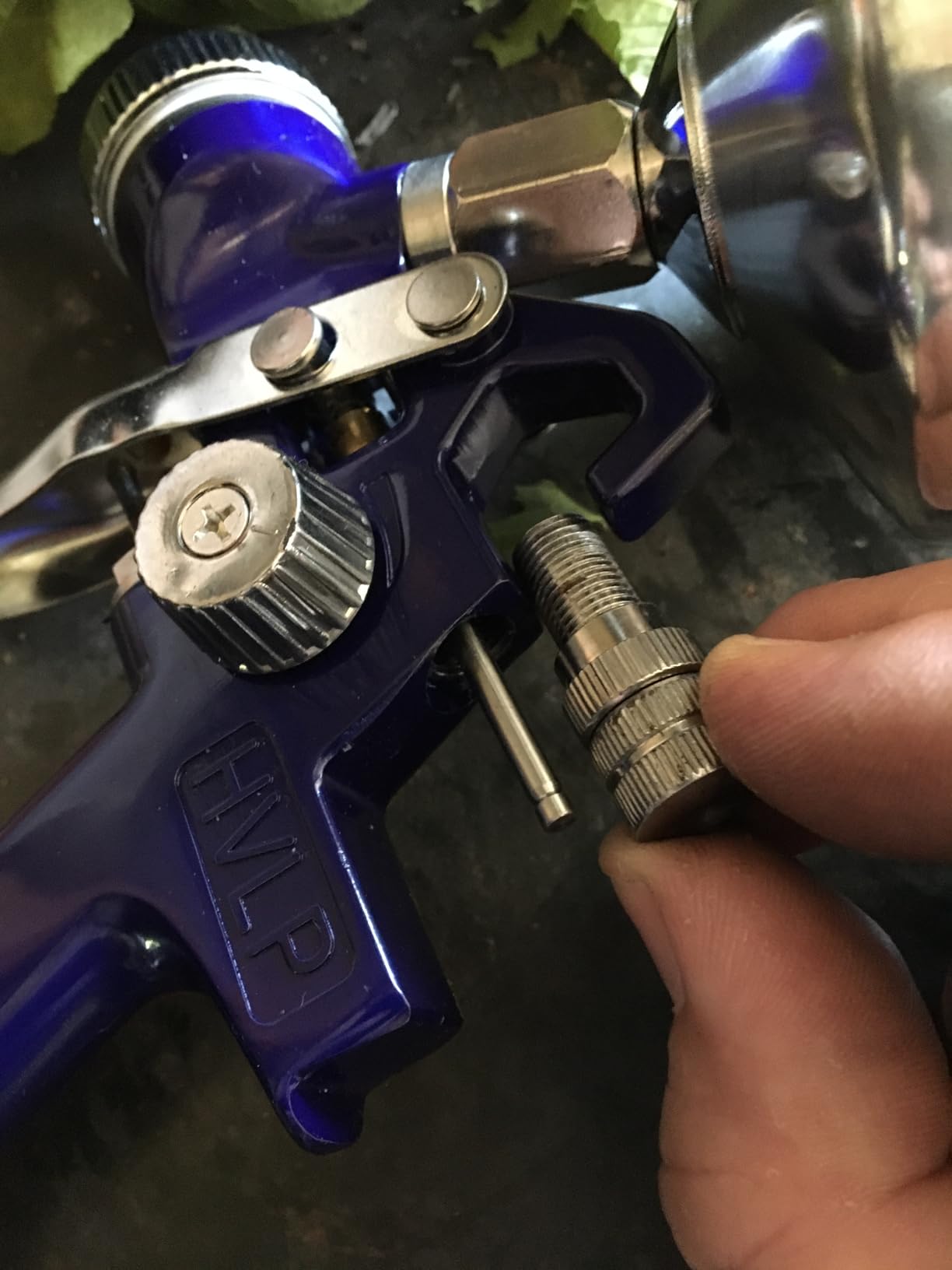
Where it asks for care is hardware. The tips are threaded tight on arrival and the supplied adjustment wrench is genuinely required to change them. There have also been reports of 2.5mm tips arriving mismatched, which stops the rear housing from seating properly. If that happens to you, the seller has resolved replacement cases for buyers who raised it.
Two more warnings from owners. The plastic adjustment knobs do not enjoy prolonged exposure to lacquer thinner or acetone, so clean with a metal-safe product. And the cup lid is thin, which is why some buyers fit a different lid. Both are minor, and both are avoidable with the right habits.
When this gun makes sense
Pick this one if your work spans materials. A door repair that starts with filler, moves through high build primer, and finishes in base and clear is exactly the sequence this tip range was built for, and buying three guns to do it would cost far more.
It is also a good first gun for someone who is not sure which stages they will be doing. Having a 2.5mm tip in the box means the first panel you fill does not force an immediate accessory purchase.
When to pick something else
If you are working exclusively with thin base coat and clear on a properly prepared car, the extra tips are unused capability. Choose a single-tip gun with a bigger cup and a simpler setup instead.
If your cleaning routine involves heavy solvent soak, the plastic knobs are a weakness. Metal-bodied guns handle that abuse better, and they are worth the step up if you plan to clean after every single session.
3. PNTGREEN 600cc 1.4mm: The Most Approachable Gun for a First Respray
PNTGREEN HVLP Spray Gun Gravity Feed, 600CC Capacity, with 1.4mm Nozzle Professional Air Paint Sprayer Spray Guns for Painting Cars
1.4mm stainless nozzle
600cc aluminum cup
3 bar 43 psi
15 cfm air consumption
Pros
- Wide range of tip and cup variants across 1.3 to 2.0mm
- Three adjustment valves for fluid air volume and pattern
- 360 degree adjustable brass airflow cap
- Detachable 600cc cup is easy to remove and clean
Cons
- Threads on the aluminum body can strip after a few weeks
- Some buyers receive a different tip size than ordered
- 15 cfm air consumption needs a reasonably sized compressor
This is the gun we would hand to someone who has never sprayed a car before. The 600cc cup, the 1.4mm stainless steel nozzle, and a brass airflow cap that rotates 360 degrees give you enough control to learn on without being fiddly.
A painter with 35 years of experience endorses this gun, and that tells you something about where the value sits. Experienced users are not fooled by a modest price tag; they care about whether the atomization is even and whether the controls respond, and here they do.
Atomization feedback is overwhelmingly positive. The brass cap and stainless nozzle produce a consistent mist at 3 bar, which is 43 psi, with a 1/4 inch air inlet. The 600cc cup detaches without tools and rinses clean, so you are not fighting dried paint at the end of a long session.
The handle and trigger are shaped for comfort over long stretches, and the three adjustment valves cover fluid volume, air volume, and spray range. That is enough control to lay a coat, correct a coat, and blend a coat without buying a second gun to do the tight work.
Two practical cautions. First, the threads on the aluminum body can strip after a few weeks of regular disassembly, which is a real annoyance for a gun you are meant to clean often. Second, some buyers report receiving a different tip size than the one ordered, so check the tip before you mix paint.
The other consideration is air. At 15 cfm, this is a mid-demand gun. It is not the pick for a small pancake compressor, and forcing it into one is exactly how you end up with orange peel. Match it to a compressor that can hold steady pressure while you spray.
When this gun makes sense
This suits a first full panel or a first car where you want a clean, predictable, forgiving tool. The tip and cup are available in several sizes, so if you later need a 1.7mm for primer or a 1.3mm for clear, the same body style carries over.
It is also a strong general-purpose gun for someone who paints a mix of automotive, furniture, and household work, because the controls cover everything from fine trim to broader coverage.
When to pick something else
Do not buy this for thick filler or heavy single-stage enamel. The 1.4mm tip is a finishing size, and pushing thick material through it costs you time and clogs the cap.
If your compressor is under about 20 liters and struggles to recover, look for a gun with lower published air consumption. Atomization is a function of airflow as much as pressure, and starving a 15 cfm gun is the single most common cause of the texture people complain about.
4. PNTGREEN Mini 0.8mm: Best Companion Gun for Touch-Ups and Trim
PNTGREEN HVLP Mini Spray Gun Air Paint Sprayer with 0.8 mm Nozzle, 125 cc Capacity Cup Gravity Feed Spray Paint Gun for House Painting, Automotive and Furniture Painting…
0.8mm stainless nozzle
125cc cup
3 bar 43 psi
9 cfm air consumption
Pros
- Under 12 ounces so it stays fatigue free on long detail sessions
- Low 9 cfm demand runs on small compressors
- 125cc detachable cup wastes almost no paint
- Three adjustment valves for fluid air and pattern
Cons
- 0.8mm tip is too small for base coat clear coat or heavy material
- Only the gun and manual are included
- Light duty build for detail work rather than full panels
Do not buy this as your only car paint gun. Buy it as the second gun you did not know you needed. At 11.68 ounces with a 0.8mm tip, it is built for the small jobs that a full-size gun handles badly: door jambs, mirror caps, tight corners, and spot repairs.
Air consumption is 9 cfm at 3 bar, or 43 psi, with a 1/4 inch air inlet. That is the lowest demand of the full-size guns in this roundup, which means it happily runs off a small compressor without the pressure sag that ruins a finish.
Buyers consistently treat it as a companion detail tool rather than a main paint gun, and that framing is correct. One cabinet refinisher used it across dozens of doors. Others praise the light body for long detail sessions, where a heavier gun would have you shaking by the twentieth panel.
The 125cc cup detaches for cleaning and holds very little paint, which means almost nothing is wasted when you finish a small job. Three independent adjustment valves handle fluid, air volume, and spray pattern, and the 360 degree adjustable stainless nozzle with a brass airflow cap lets you aim into awkward spaces.
The 0.8mm tip is the hard limit. It is too small for base coat, clear coat, or any heavy automotive material, and it clogs periodically, which is expected at that size. Nothing in the box is included beyond the gun and the manual, so plan on buying a cleaning brush and a set of needle and nozzle sizes separately.
It is a light duty build. Fine for touch-ups, trim, and small craft work. Not intended for solvent-heavy production or full-panel refinishing, and it will not pretend otherwise.
When this gun makes sense
Buy it alongside a main gun. After you lay a panel, the places that need attention are usually small and awkward, and a 0.8mm tip with a 125cc cup fixes them without stripping the panel back to bare metal.
It is also the right choice for anyone whose compressor is genuinely small. At 9 cfm you are not fighting your air supply, and a beginner can learn gun control without an orange peel education first.
When to pick something else
If you are planning a full car in base and clear, this is the wrong tool. A 0.8mm tip will clog repeatedly, and you will spend more time clearing the cap than spraying.
If you want one gun for everything, the missing accessories become an annoyance quickly. A bundled cleaning kit and a spare tip set is more useful than a low air demand figure when you are committing to a single gun.
5. TCP Global 3-Gun Kit: The Complete Primer, Topcoat and Touch-Up Set
TCP Global HVLP Spray Gun Kit for Auto Paint – Set of 3 Sprayers
Three guns: 1.8mm, 1.4mm, 1.0mm tips
1 liter cups plus 150cc cup
Locking regulator and filter
Pros
- Covers touch-up topcoat and primer in a single purchase
- Compact 1.0mm gun reaches door jambs and tight spot repairs
- Locking regulator and inline moisture filter included
- Two large cups plus a small stainless cup
- Full cleaning kit with wrenches brush and filters
Cons
- Higher total cost than a single mid-size gun
- Three guns mean three sets of passages to keep clean
- Not aimed at high volume production booth work
The logic of this kit is the same logic experienced painters use: keep a dedicated gun for each stage. A dirty primer gun, a clean clear coat gun, and a small spot gun mean you are never cleaning one expensive gun twice to switch materials.
You get a 1.8mm primer gun, a 1.4mm topcoat gun, and a 1.0mm touch-up gun, all with stainless steel tips. The topcoat gun is the one that does the visible work, and the primer gun handles the messy stage without any fear for the finish gun.
Owners value the combination above all else. A full-size topcoat gun paired with a compact 1.0mm gun solves the most common workflow problem in home painting, which is reaching into a door jamb with a gun that physically will not fit.
The supporting hardware is where this kit separates itself from three guns bought separately. It includes a locking air pressure regulator rated from 0 to 180 psi, an inline mini moisture filter, two 1 liter aluminum cups with lids, a 150cc stainless cup with lid, and a full cleaning kit with a spanner wrench, hex wrench, brush, and two filters.
That moisture filter is not a throwaway extra. Compressor moisture is a documented cause of fisheyes and blobs in automotive paint, and the filter sits between the tank and the gun to block it. Every gun in the kit has adjustable knobs for pattern width, fluid flow, and air pressure.
The honest drawback is cost. You are buying more hardware than a single mid-size gun requires, and the 4.3 average reflects that premium, which most reviewers accept given the bundled regulator, filter, and cleaning kit. Three guns also means three sets of passages to keep clean, and that discipline is the price of the system.
When this gun makes sense
Pick the kit if you are doing a complete refinish from filler through clear and want to do it properly. Having a primer gun keeps grit and hard particles away from the gun that lays your final finish, which is a habit professional shops do not compromise on.
It is also the right answer for someone who resprays occasionally and wants each stage handled by a purpose-built tool rather than one compromise gun and three different tips.
When to pick something else
If you are painting one panel in one material, this is more gun than you need. A single mid-size gravity gun with a good tip and a proper cleaning kit will serve you better and cost less.
And if you are not disciplined about cleaning, more guns is a liability rather than an asset. Two neglected guns hide problems. Three hidden problems is a project you will be unhappy about when you pick the gun back up.
6. Hotorda Two-Sprayer Set: Best Portable Pair for a Garage Painter
2-Sprayer HVLP Air Gravity Spray paint Gun,1.0mm 150ml & 1.4mm 600ml Auto Gravity Feed Painting with Locking Air Pressure Regulator Gauge Air Spray Nozzle Gun for Cake Decoration,Model Making
1.0mm 125ml and 1.4mm 600ml guns
Locking regulator with gauge
Stainless tips
Hard carrying case
Pros
- Full size 1.4mm gun paired with a handy 1.0mm detail gun in one case
- Owners report repeatable results through primer basecoat and clearcoat
- Locking regulator with gauge works reliably
- Carrying case keeps the kit organized
- Low air consumption and smooth pattern suit small compressors
Cons
- Plastic parts degrade in lacquer thinner acetone and other harsh solvents
- Airflow adjustment knob can melt during solvent use
- Clogs easily with thicker water-based paint if not cleaned promptly
- Rubber sealing rings at the air joints are not included
Two guns, one case, one regulator. The Hotorda set pairs a 1.4mm 600ml gun for panels and topcoat with a 1.0mm 125ml gun for detail work, and both live in a hard plastic carrying case that keeps the kit together between sessions.
Several owners used this set for complete primer, basecoat, and clearcoat sequences, which is a good stress test for any kit. Results were described as flawless and repeatable, and the spray pattern is smooth enough that the second coat matches the first.
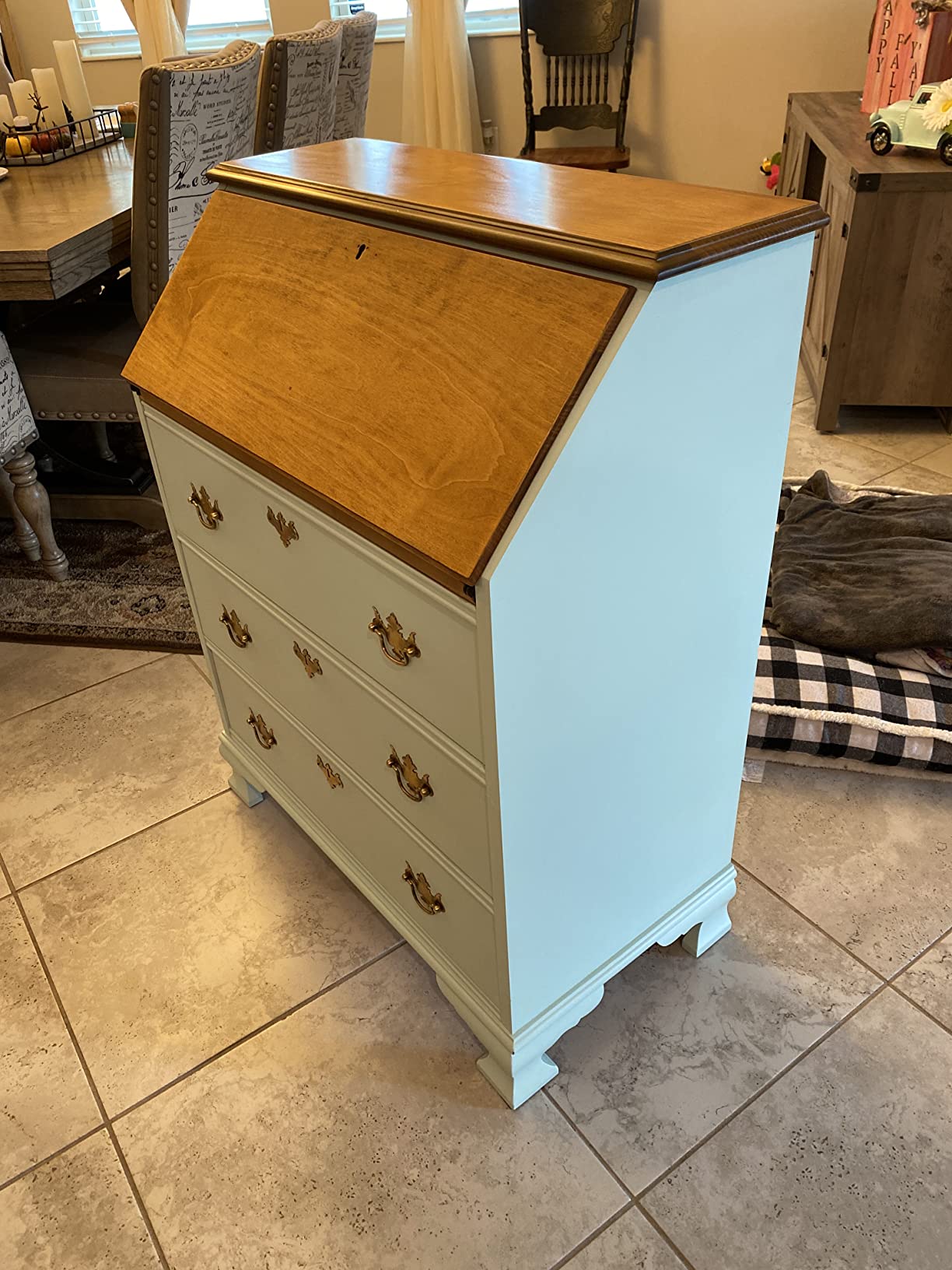
The locking air pressure regulator with a gauge is a genuinely useful inclusion, because a fixed setting you can return to is how you keep coats consistent across a weekend. The stainless steel needles and nozzles are a step up from plated steel on entry-level guns, and the spherical gun surfaces are designed to be easy to wipe down.
Air consumption is low for a gun in this class, and owners report it working smoothly on smaller compressors. That matters, because most of the disappointing results in home spraying come from a compressor that cannot hold pressure while the gun is open.
Now the warning, and it is a firm one. Several owners report that solvent-based paint damaged the plastic components, and the airflow adjustment knob melted during solvent use. The consensus is clear: this set is best suited to water-based materials, and you should avoid soaking the body in lacquer thinner or acetone.
Two smaller notes. The set clogs easily with thicker water-based paints if you do not clean it promptly, and the rubber sealing rings at the air joints are not included, so unions can leak air. The entry-level build also lags higher-quality brands on long-term durability.
When this gun makes sense
This suits a painter working in a water-based system who wants two sizes available without buying two regulators. Detail work on trim, then a full panel in base and clear, using the same pressure setting.
The carrying case is more useful than it sounds. If you are working out of a shared garage or a rented space, a kit that packs into one box is easier to store, move, and keep clean than loose guns in a drawer.
When to pick something else
Skip it if your paint system is solvent-based. The plastic control components are the weak point, and a melted knob ends your session rather than annoying you. A metal-bodied gun survives that cleaning routine.
Also consider the missing sealing rings. Leaking air unions waste pressure and frustrate setup, and while the parts are easy to source, it is one more thing to chase before the first coat.
7. DeVilbiss StartingLine 802343: Best Brand-Backed Complete Kit
StartingLine HVLP Complete Auto Painting and Priming Kit 802343 – 1 Each
Complete paint and prime kit
Gravity feed HVLP
13.7 x 13 x 4.5 inch package
DeVilbiss equipment
Pros
- Strongest satisfaction score in the roundup at 4.6
- Complete kit covers painting and priming in one package
- Backed by a long established spray equipment manufacturer
- 77 percent of reviews are 5 star with very few critical responses
Cons
- Tip sizes for the included guns are not published in the listing
- Marketing detail is sparse so you may not know exactly what is in the box
The DeVilbiss kit holds the highest average rating in this roundup at 4.6, and the distribution behind it matters as much as the number. Seventy-seven percent of reviews are five star, and there are very few critical responses at all, which is rare for any category.
What you are buying is a complete HVLP auto painting and priming kit in a gravity feed, high volume low pressure configuration. It is designed to cover both the painting and priming stages of a cycle without a second purchase, and buyers treat it that way rather than as a single-purpose touch-up gun.
DeVilbiss is a long established name in spray equipment, and experienced painters on forums single the brand out by name when they recommend guns. That matters for a kit like this, because support and parts availability follow the brand rather than the listing.
The package is compact at 13.7 by 13 by 4.5 inches and weighs 3.63 pounds, so it is not a bulky thing to store in a garage. The gun itself is made in Taiwan, which is normal for the category.
The honest limitation is information. Tip sizes for the included guns are not published in the listing, so if you have a specific material in mind, measure the fluid tip before you mix. The listing is also sparse on marketing detail, which means you may want to check the package contents carefully when it arrives rather than assuming what is included.
Forum consensus points the same direction on this one. Experienced users tend to trust a recognised brand name for a kit meant to cover a whole paint cycle, and the rating here backs that instinct with real numbers rather than brand recognition alone.
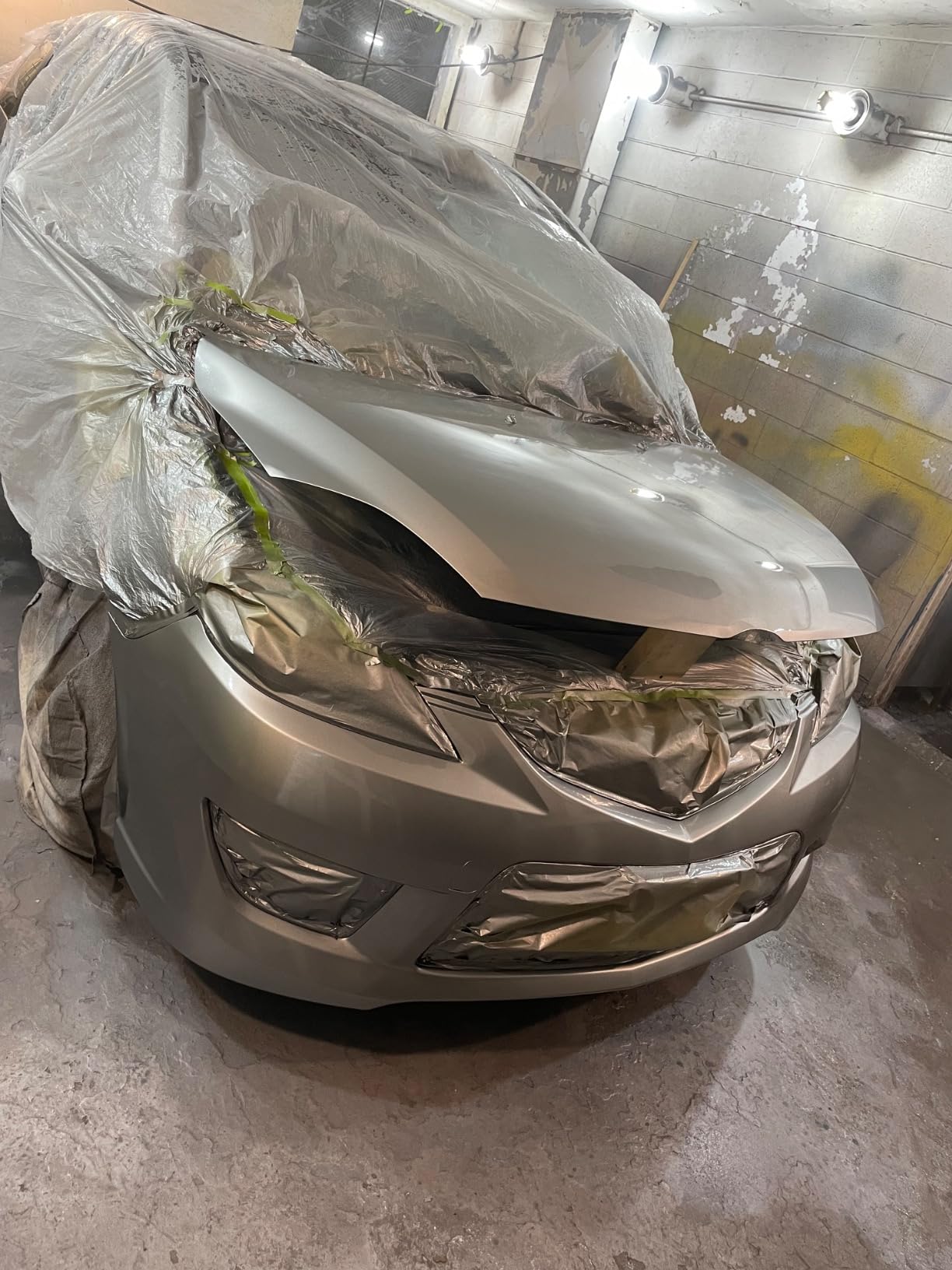
When this gun makes sense
Pick it if you want a complete paint and prime package from a recognised brand and you would rather not assemble one yourself. The satisfaction score suggests the bundled pieces are consistent with each other, which is where most kits fail.
It is a sensible choice for someone buying their first full cycle kit who values a low defect rate over having every possible tip size in the box.
When to pick something else
If you need a specific tip size, this listing will not tell you what is in the gun, and a kit without published tip sizes forces you to check after delivery. Sets that list every included tip are easier to plan a paint schedule around.
And if you are matching a gun to a small compressor, the air demand for this kit is not published. Buy a gun with a stated consumption figure when compressor capacity is the constraint.
8. Tosucs 1.0mm Mini Gun: Best Budget Pick for Learning and Detail
Tosucs HVLP Spray Gun with 1.0mm Tip Air Spray Gun for Car Spraying Gravity Feed Paint Gun for Car Prime,Furniture Surface Spraying,Wall Painting Include 125ml Capacity Cup
1.0mm stainless steel tip
125ml PVC gravity feed cup
36 psi maximum
Built-in paint filter
Pros
- Lowest cost in the roundup and a sensible way to learn
- Light 0.36 kg body suits delicate precision work
- Three control valves for pressure flow and fan width
- Built-in paint filter blocks dirt particles
Cons
- Fan size control dial has been reported to fail within about a week
- Nozzle can develop a persistent drip after several cleanings
- Air inlet fitting does not mate reliably with North American compressor fittings
- 125ml cup and 1.0mm tip are too limited for whole panels
This is the cheapest way into the category, and the reviews reflect that honestly. Many buyers rate it well above what they expected and use it for motorcycle bodywork, radio control bodies, and detail sprays, where a 1.0mm tip and a 125ml cup are exactly the right scale.
At 36 psi maximum pressure with a 1/4 inch air inlet and a stainless steel needle and nozzle, it sprays cleanly for its size. The body weighs 0.36 kg, which keeps it comfortable for long detail sessions, and the drop resistant PVC cup is light enough that you barely notice it hanging off the gun.
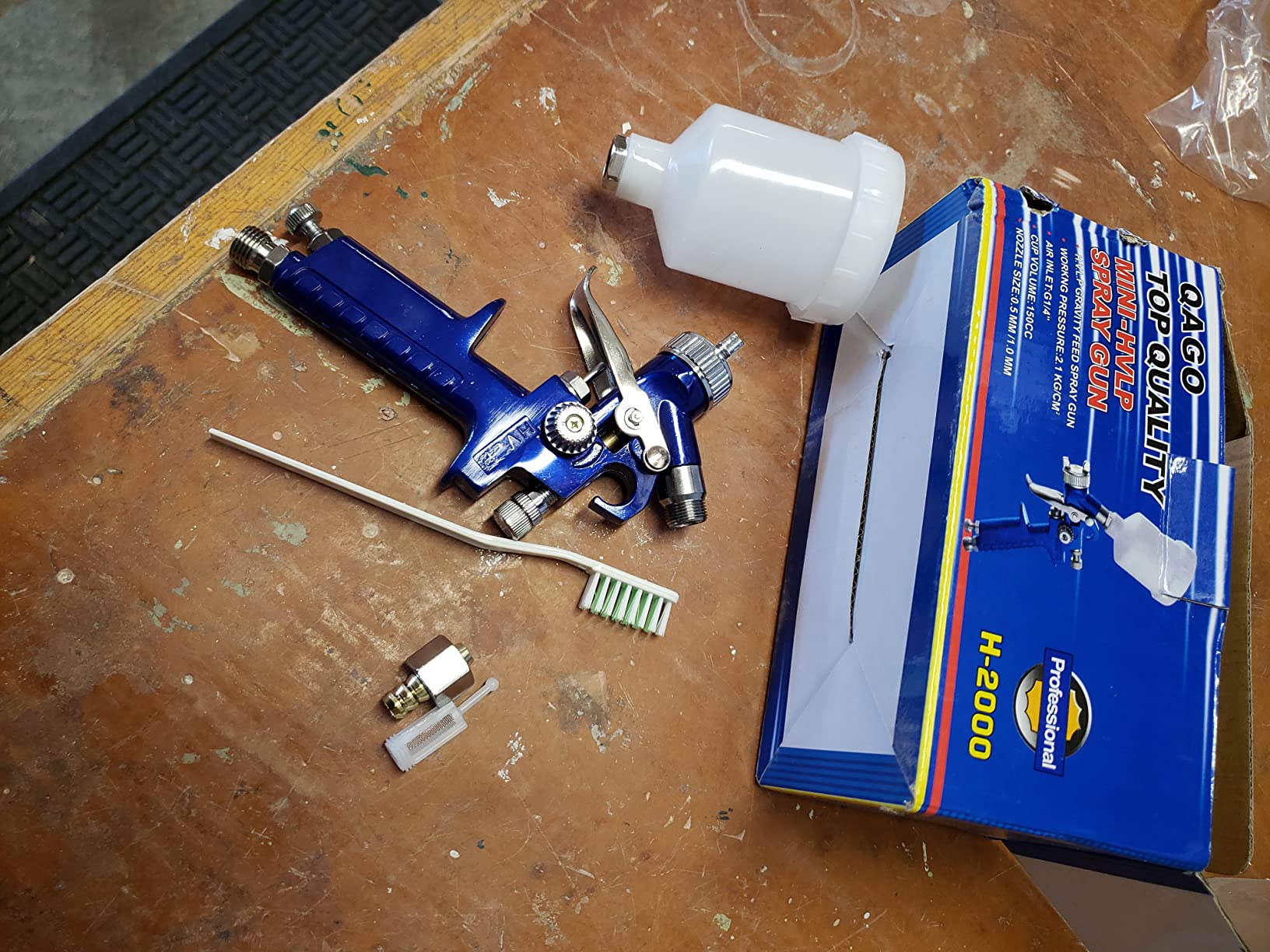
Two details stand out for the money. There is an integrated paint filter inside the gun that removes dirt particles before they can reach the panel, which prevents a whole category of defects. And there are three separate control valves for air pressure, fluid flow, and spray width rather than a single combined knob, so you have proper control of the fan.
The complaints cluster around the hardware rather than the spray. The fan size control dial has been reported to fail within about a week of use, which is the most serious recurring issue. The nozzle can also develop a persistent drip after several cleanings, and that one does not go away on its own.
There is a fitting compatibility problem worth knowing about before you buy. The air inlet does not mate reliably with North American compressor fittings, even with the supplied adapter, so you may need to source your own connection. That is a small annoyance, but it shows up at the moment you want to start spraying.
Finally, be realistic about scale. A 125ml cup and a 1.0mm tip are not a whole-panel or full-vehicle tool, whatever the listing headline says.
When this gun makes sense
Buy it to learn. It is the cheapest way to find out whether you enjoy spraying and whether your compressor keeps up, and you cannot lose much if the learning curve goes badly. Motorcycles, small panels, and detail work are where it genuinely earns its place.
The integrated filter and the three control valves also make it a reasonable teaching tool, because you can see how each adjustment changes the pattern without a second purchase.
When to pick something else
Do not build a car paint plan around it. A 125ml cup means constant refills, a 1.0mm tip will struggle with anything thicker than a light coat, and the fan dial failure risk is real inside the first week of use.
If you want to move up quickly, spend a little more on a gun with a metal body, a larger cup, and a documented air consumption figure. The step up is noticeable in how long the gun lasts.
9. PNTGREEN 400cc Swivel Cup: Best for Motorcycle Tanks and Angled Panels
PNTGREEN Hvlp Spray Gun Gravity Feed with 400CC Aluminum Swivel Cup with 1.5mm Nozzle Professional Spray Guns for Painting Air Paint Sprayer
1.5mm stainless nozzle
400cc aluminum swivel cup
3.45 bar 50 psi
11 cfm air consumption
Pros
- Swivel cup lets you change spray angle without stopping or readjusting
- Owners painting motorcycle tanks and fairings report a smooth deliberate laydown
- Adjustments dial in naturally
- Works well with water-based paint and cleans up easily
- Available in other tip and cup sizes
Cons
- Cup lid fits loosely and paint can pour out when tilted
- Supplied wrench bent and could not remove some fittings
- Only a cleaning brush is included
The 400cc aluminum swivel cup is the reason to buy this gun, and the reviews single it out more than anything else. A side-mounted swivelling tank lets you roll the gun to a different angle without stopping, tipping, or readjusting your coat, which is the difference between a smooth pass and a series of stop-start patches.
Owners painting motorcycle tanks, fenders, and fairings report a very smooth, deliberate laydown, and describe the adjustments as natural and easy to dial in. On curved surfaces, that ability to change angle mid-pass is worth more than almost any other feature on this list.
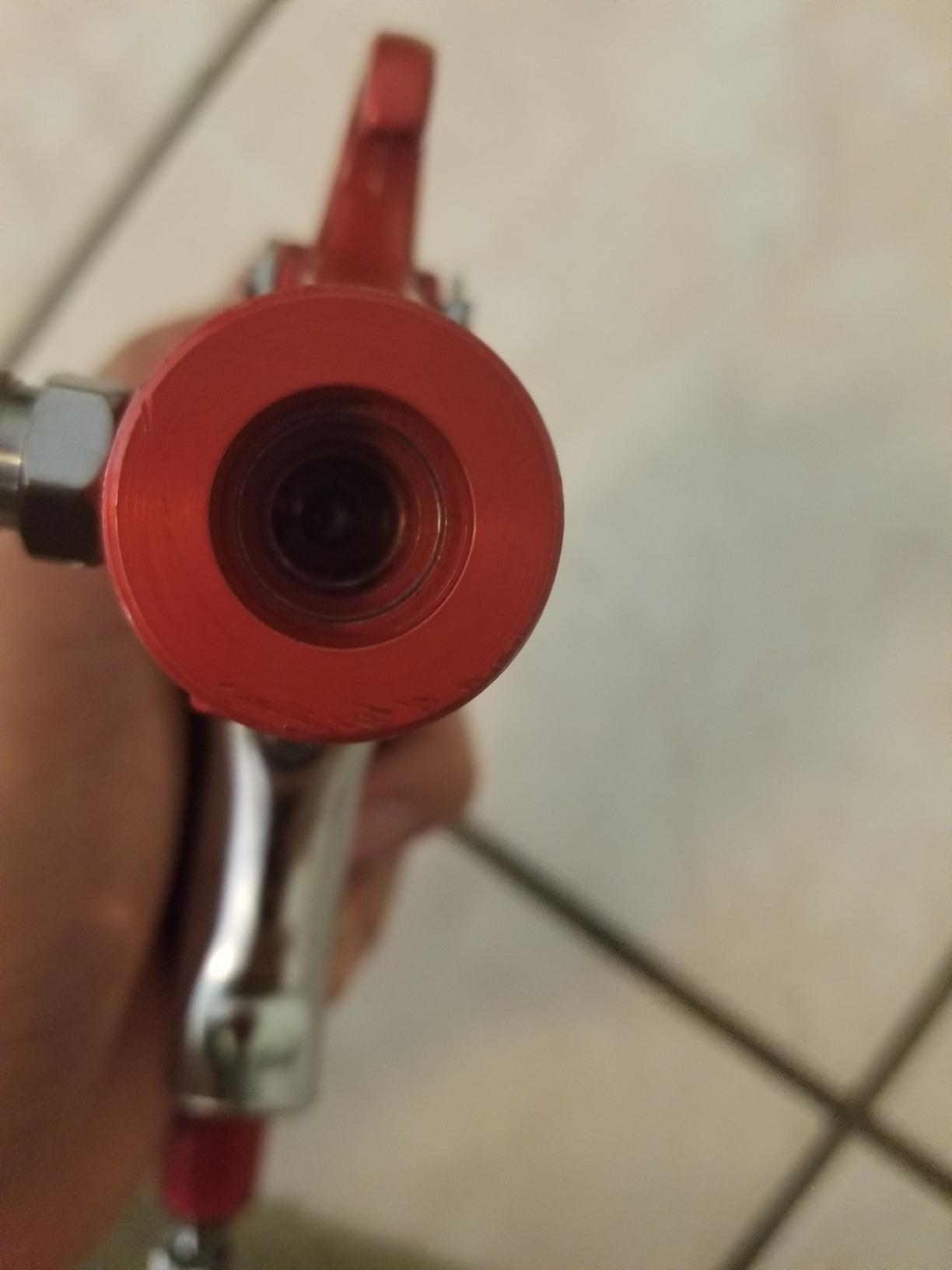
Under the hood it is a 1.5mm stainless steel nozzle with a 360 degree adjustable brass airflow cap, running at 3.45 bar, which is 50 psi, with 11 cfm of air consumption. That mid-range tip handles base coat, primer, and clear coat comfortably, and 11 cfm sits in a reasonable place between the thirsty guns and the light ones.
It works well with water-based paints and cleans up easily, which is a genuine advantage if you are working in a modern base coat system. Owners also note good coverage with less wasted paint once the gun is tuned, so the efficiency shows up in the material you have left in the cup at the end of a project.
The loose cup lid is the most repeated criticism across otherwise positive reviews, and it is a practical one. Paint can pour out when the gun is tilted, and tape helps but is not a real fix. Check the lid seal before you start a panel rather than after you find the damage.
Two smaller notes. The supplied wrench bent and could not remove some fittings during cleanup, and only a cleaning brush is included, so a proper cleaning kit is worth adding.
When this gun makes sense
Motorcycles, fairings, tanks, and anything with real curvature. The swivel cup is a workflow feature that pays for itself the first time you paint a tank and do not have to stop at every change in angle.
It is also good for furniture and trim work with compound curves, and the 1.5mm tip covers a sensible middle range of materials for a single-gun setup.
When to pick something else
If your work is large flat panels, the swivel mechanism is a nice-to-have rather than a necessity, and a gun with a larger cup will save you more refills. This cup is 400cc, which is on the smaller side for a hood or a roof.
And if you are solvent-based, note that only a brush is included and cleanup will be aggressive on the aluminium cup seal. A gun with a metal-to-metal seal design handles repeated solvent cleaning better.
10. ENDOZER Professional Set: Best Multi-Tip Value for Primer Work
ENDOZER Professional HVLP Spray Gun Set Gravity Feed Air Spray Gun
1.4mm 1.7mm 2.0mm stainless tips
20oz 600ml cup
Brass 15-hole hood
Gauge, adapters, filter
Pros
- Three true stainless steel tips in one package
- Brass hood with 15-hole design gives uniform atomization and resists wear and corrosion
- Air gauge quick adapter set and paint filter included
- Top 10 ranking in Power Paint and HVLP Sprayers
Cons
- Explicitly not suitable for latex paint
- 20oz cup needs refilling more often than 600 to 1000ml guns
- Brass hood adds weight versus all-plastic bodies
The ENDOZER set is built around one idea: give the primer stage its own tips. The 1.4mm, 1.7mm, and 2.0mm stainless steel needle and nozzle set covers a thin topcoat, a mid base coat, and a high build primer, so you are not forcing one tip to do every job on the panel.
It also holds a top 10 ranking in Power Paint and HVLP Sprayers, which tells you how much demand sits behind it. Review sentiment centers on build quality for the money, with the brass hood and the stainless tips cited as the reasons the gun holds up over time rather than degrading after a year.
The hood is the standout part. A brass spray gun hood with a 15-hole design delivers uniform atomization and particle size, and brass resists wear and corrosion in a way that plated aluminium does not. For a gun you will flush with solvent after every primer session, that material choice matters.
The box contents are unusually complete for the category. You get a 20 oz, or 600ml, gravity feed cup, the three tip and needle sets, a brass hood, three control valves for fluid, pattern, and air volume, an air pressure gauge, a quick adapter set with a 1/4 inch NPT inlet, and a paint filter. Several owners specifically appreciate that the gauge, adapters, and filter are included rather than sold separately.
Two limitations are worth stating plainly. The manufacturer does not rate this gun for latex paint, so keep it away from interior emulsion work. And the 20 oz cup needs refilling more often than the 600 to 1000ml guns elsewhere in this roundup, which is noticeable on a large panel.
There is also a weight tradeoff. The brass hood adds heft compared with an all-plastic body, at 1.2 kg. Over a long session that is noticeable, and it is the price of the durability that makes the gun worthwhile.
When this gun makes sense
Choose it if primer is a large part of your process. This is the gun set up for a filler to primer to base sequence, with the 2.0mm tip there to lay down high build material without fighting the cap.
The included accessories also make it a good first serious gun. Gauge, adapters, and filter are the parts you would otherwise spend an afternoon sourcing before your first coat.
When to pick something else
Do not buy it for a mixed household workflow that includes latex. It is an automotive and craft gun, and using it outside its rating is how nozzles and seals get damaged early.
For very large surfaces, the 20 oz cup is a real constraint. If you are doing a full car in one session, a 1 liter cup will save you more time than the three tips will.
11. NEIKO 31213A: Best for Small Compressors and Low Airflow
NEIKO 31213A Air Spray Paint Gun, HVLP with Gravity Feed, 1.3 MM Nozzle, 600 CC Capacity, Spray Gun Paint Sprayer for Walls, Automotive, Home Improvement
1.3mm color coded nozzle
600cc aluminum cup
40 PSI operating
4.5 CFM air consumption
Pros
- One-piece all-steel body feels solid and well above typical budget guns
- Low 4.5 CFM demand means it runs without a large compressor
- 1.3mm tip is a proven size for base coat and clear coat
- Metal to metal seal design makes cleaning straightforward
- Includes gauge regulator cleaning brush and multi-size wrench
Cons
- Heavier than most guns in this range and tiring on long jobs
- Aluminum cup seal can loosen and leak after a couple of uses
- Fan control takes a couple of turns to change the pattern
- Replacement parts including tips are essentially unavailable
At 4.5 CFM average air consumption, this is the lowest demand full-size gun in the roundup, and that single number changes who can use it. If your compressor is small or you are not spending on a large tank, the NEIKO will hold its pattern where a 15 cfm gun will not.
The body is a one-piece all-steel construction that is rust resistant, with a stainless steel nozzle and a solid brass cap. Owners frequently compare it favorably to cheap big-box HVLP guns, and the metal-to-metal seal design means cleaning takes a few ounces of reducer rather than a disassembly session.
The 1.3mm nozzle is color coded blue, which is a small detail that matters when you own several guns. That tip size is a proven choice for base coat and clear coat, so the gun is doing real automotive work rather than pretending to.
It operates at 40 psi with a working pressure of 10 psi, and the 600cc, or 20.3 fluid ounce, aluminum cup comes with a lid. Owners note that paint usage is efficient enough to leave material in the cup after a project, which reduces waste on larger jobs.
Serviceability is the significant downside and it is not a small one. Once the brass tip is damaged, there is essentially no replacement part available, so the gun becomes effectively single-use for heavy jobs. That single fact should govern your decision more than anything else on this list.
Other reported issues include a heavier feel than most guns in this range, an aluminum cup seal that can loosen and leak after only a couple of uses, and a fan control that takes a couple of turns before the pattern visibly changes. The plastic face on the included gauge also fogs when exposed to solvent during cleaning.
When this gun makes sense
Buy it if compressor capacity is your binding constraint. Low airflow demand plus a proven 1.3mm automotive tip means you can get a proper clear coat out of a modest air supply, which almost no other gun in this roundup allows.
It is also a good pick for panels and medium jobs where paint efficiency matters. Leaving material in the cup at the end of a job is a small, satisfying indicator that the atomization is efficient.
When to pick something else
Do not buy it as a long-term shop tool. The lack of replaceable tips is a genuine end-of-life event, and a gun you cannot repair is a poor investment if you plan to paint more than one car.
On very large jobs, the weight will show up in your arm before the tip does. If you are doing a full car in one go, a lighter gun with a bigger cup will be kinder over a full day.
12. Central Pneumatic 47016: Best Starter Gun for Learning on Any Compressor
Central Pneumatic 47016 High Volume Low Pressure Gravity Feed Spray Gun, 20 oz
20 fluid ounce cup
50 psi maximum pressure
Gravity feed HVLP
Adjustable fan pattern and fluid control
Pros
- Owners with extensive pro experience call it the best value in the category
- Users with 4 and 5 stage turbines and pressure pot setups still rate it highly
- Sprays enamels lacquers metallic urethanes and water-based topcoats
- 20oz cup is large enough for cabinets fences and trailers
- Easy to clean and works with a small job-site compressor
Cons
- Fan size dial is widely criticized as ineffective and imprecise
- No disassembly wrench is included despite requiring disassembly before first use
- Fittings are extremely tight
- Included cup filter restricts gravity flow
- Compressor connector fitting is not included
This Harbor Freight gun produces the most surprising reviews in the set. Owners who have owned four and five stage turbines, Titan pressure pots, and Kremlin setups still rate it the best value available, provided the job is not a full kitchen or a rush job.
It is a high volume low pressure gravity feed gun with a 20 fluid ounce cup, adjustable fan pattern and fluid control, and a 50 psi maximum pressure. Reviews report it spraying marine topcoats, commercial grade water-based urethanes, oil-based paints, and enamel, with a smooth finish that blends well across multiple coats.
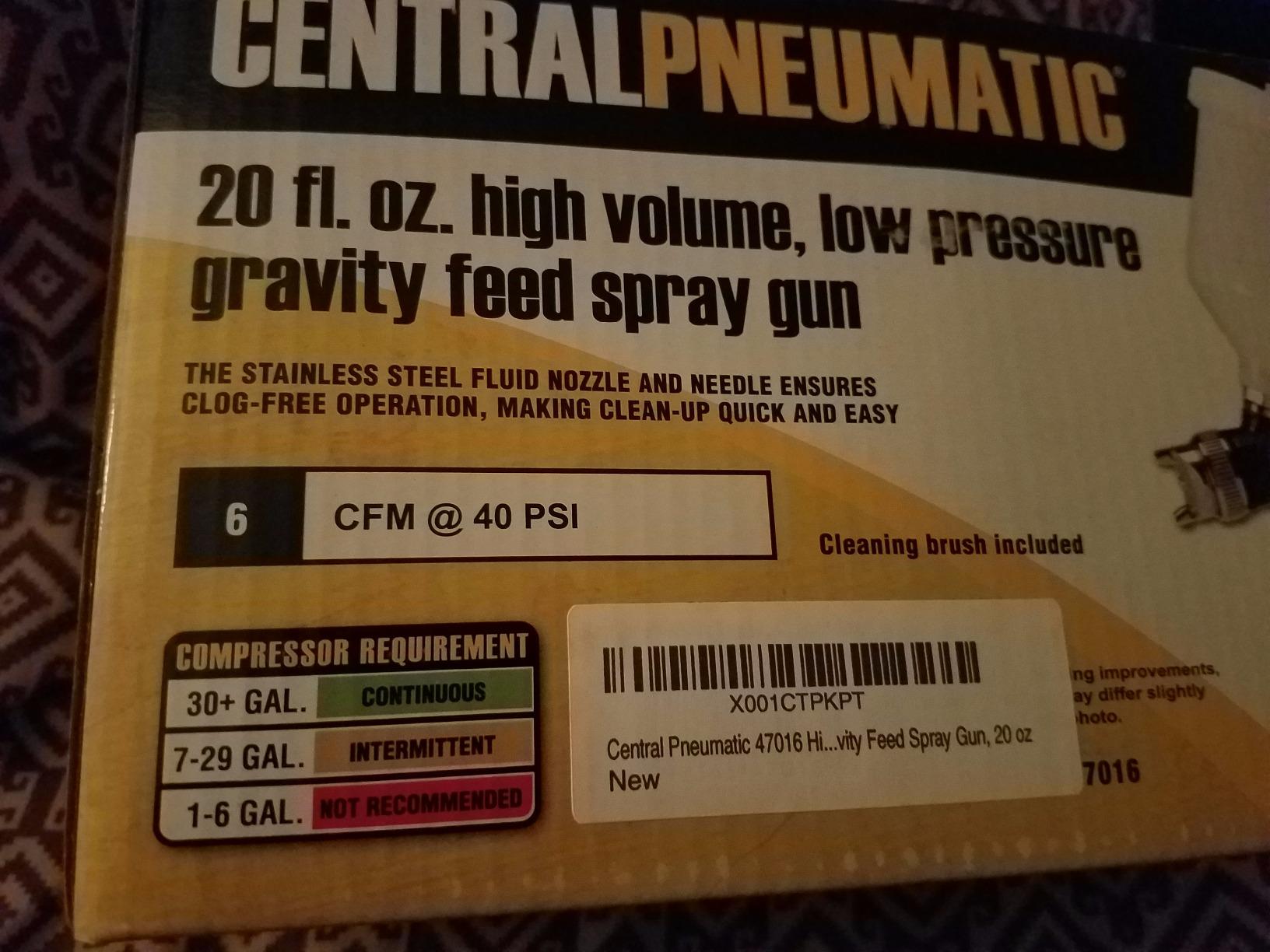
The 20 oz cup is the practical surprise. It is large enough for meaningful work like cabinets, fences, and trailers, and it works with a small job-site compressor, which means the gun is not tied to a large air supply you have to go and buy.
Consensus on forum discussion is that this gun suits someone learning rather than someone chasing showroom depth. It is easy to clean, easy to use, and forgiving when your technique is still developing, which is exactly what a first gun should be.
The gripes are specific and all fixable. The fan size dial is widely criticized as ineffective and imprecise, so treat the fan width as a set-and-forget adjustment. The manual requires disassembly before first use but no disassembly wrench is included, and the fittings are extremely tight enough that some owners report needing a wrench that costs more than the gun.
Two small hardware notes from owners. The included cup filter restricts gravity flow and is better swapped for a cone strainer, and the white plastic washer at the base of the cup is best replaced with PTFE tape. The compressor connector fitting is not included, so buy that separately.
Quality control is the other theme. Forum opinion on Harbor Freight paint equipment is genuinely split, with some owners praising the value and others reporting inconsistency between guns, so treat this as a learning tool rather than a long-term investment.
When this gun makes sense
Buy it if you want to try spraying before you invest properly. It handles a wide range of materials, works on a small compressor, and costs little enough that a bad first experience is a small loss.
It is also a strong second gun for non-automotive work. Furniture, fences, trailers, and cabinets are all well within what a 20 oz cup and a smooth laydown can handle.
When to pick something else
Do not expect a fine fan adjustment or precise blending control. If your goal is a show finish with tight control over pattern width, buy a gun with a better fan dial and a documented air cap design.
And plan for the setup. Buy a disassembly wrench and a cone strainer before you start, and expect to do a little maintenance. The gun is capable, but it wants a little setup help to show its best work.
How to Choose an HVLP Spray Gun for Automotive Paint
Buying the right gun is mostly arithmetic: air demand against your compressor, tip size against your material, feed type against your workflow. Get those three right and the rest is practice.
Match the gun to your compressor first
Most guns in this roundup publish an air consumption figure, and where they do, that number is the most important spec on the page. The NEIKO runs at 4.5 CFM, the PNTGREEN 400cc needs 11 cfm, the PNTGREEN 600cc needs 15 cfm, and the 2.5mm capable guns sit at the demanding end. Where a listing does not publish the figure, we say so rather than guessing.
Atomization is a function of airflow, not just pressure. A compressor that cannot deliver the required CFM while the trigger is open will drop pressure mid-pass, and that pressure drop is exactly what produces the orange peel texture that frustrates beginners. If your tank is small and your pump is tired, buy the low-airflow gun, not the better brand.
Forum consensus is blunt about this. Matching the gun to your air supply matters more than the price you paid for the gun. A cheaper gun matched to a good compressor beats an expensive gun starving against a bad one, every time.
Pick the tip size to match the material
The fluid tip does most of the work in a spray gun. A 1.0mm tip handles touch-ups and very thin material. A 1.3mm tip is the proven automotive size for base coat and clear coat. A 1.4mm to 1.5mm tip is a good general-purpose middle. A 1.7mm to 2.0mm tip lays down high build primer. A 2.5mm tip exists for body filler, thick enamel, chip guard, and gel coats.
Using a tip that is too small for the material is one of the most common causes of a clogged nozzle. The material has to atomize fully, and if the fluid cannot get through the tip fast enough it will sit, dry, and block the passage.
One tip for everything is a compromise. If you are doing a full cycle, either buy a gun with a tip set, or keep a dedicated primer gun so your clear coat gun never sees filler or high build material.
Understand the feed types
Gravity feed, the type on every gun in this roundup, holds the paint cup on top of the gun and lets gravity pull the material down to the tip. It gives a stable, well-balanced gun that stays put on a vertical panel, which is why it is the standard for automotive work. Siphon feed pulls paint up from a cup below the gun, which is lighter and cheaper but steadier on the floor. Pressure feed pushes paint to the gun from a pot, and is the professional setup for high volume production, overkill for a single car.
The cost of gravity feed is color changes. Swapping colours means cleaning the gun, and that takes time. Forum users who paint many colours often keep a second gun rather than cleaning one gun between every base coat.
Decide between HVLP and LVLP
HVLP uses a high volume of air at low pressure to atomize paint, which reduces overspray and improves transfer efficiency. LVLP uses a lower volume of air at higher pressure, which means it needs less airflow from your compressor. For a small compressor, LVLP is frequently the smarter choice, and several people on painting forums report switching to an LVLP gun after struggling with orange peel on an HVLP gun they had paired badly with their air supply.
Neither technology produces a better finish if the air supply is wrong. The forum lesson is consistent: the constraint is your compressor, and the gun should be chosen to fit it.
Account for paint type and cleaning
Water-based and solvent-based paints behave differently, and the gun should match. Several guns in this roundup have plastic control components that owners report degrading or melting in lacquer thinner and acetone. A gun with a brass hood, an all-steel body, or metal-to-metal seals survives aggressive solvent cleaning far better than a plastic-bodied gun.
Cleaning discipline is what protects any gun. Forum experience is consistent that people who clean after every use keep their guns running, and people who let paint dry inside the passages replace guns. Budget for a cleaning kit and for the reducer you will actually use.
If you are moving toward water-based base coat, note that it needs a different setup from solvent. The gun should be clean, the tip size should match the material, and water in the air line will cause fisheyes. A moisture filter in the air line, like the one included with the TCP Global three-gun kit, prevents that.
Troubleshoot the four common defects
Orange peel is almost always airflow or pressure. The gun is starved, the tip is wrong for the material, or you are moving too fast. Fix the air supply first, then the tip, then your distance.
Fisheyes come from contamination. Silicone, oil, or moisture in the air line or on the panel will cause paint to pull away from itself. Use a moisture filter and keep the panel clean.
Runs and sags mean too much material at once. Turn the fluid knob down, move the gun slightly faster, and keep your distance consistent.
Dry spray means too much pressure or too much distance. Bring the gun closer and reduce the air.
And before any of that, practice on scrap panels and cardboard. Every experienced user we heard from recommended the same thing, without exception, and it is the least expensive advice available.
On safety, a proper respirator with organic vapour cartridges is treated as essential rather than optional in that same group. A spray booth helps too, and we have written up the options in our airbrush spray booth guide if you are setting up a dedicated painting space.
Frequently Asked Questions
What is the best HVLP spray gun for painting cars?
For most home and restoration projects the TCP Global G6600-13 is the strongest all-round choice, with a 1.3mm stainless steel tip that handles base coat, clear coat, primer, and single-stage material, plus a 1 liter cup and an included micrometer regulator. The BANG4BUCK 3-tip kit is the best value if you need to spray heavy primer or filler, and the PNTGREEN 600cc 1.4mm gun is the most approachable option for a first respray.
Can you use an HVLP sprayer to paint a car?
Yes, an HVLP spray gun will paint a car, and HVLP is a standard automotive technology. The condition is that your compressor can supply the airflow the gun needs. Atomization depends on airflow as much as pressure, so a gun demanding 15 cfm on a small compressor will produce orange peel regardless of how good the gun is. Match the published air consumption figure to your compressor before you buy.
Which is better for car painting, HVLP or LVLP?
HVLP uses a high volume of air at low pressure, which gives excellent transfer efficiency and less overspray, and it is the standard for professional automotive refinishing. LVLP needs a lower volume of air at higher pressure, which makes it far easier to run on a small compressor. Choose HVLP if your air supply is strong, and choose LVLP if it is not, because a well matched gun always outperforms a better gun starved of air.
Are Harbor Freight HVLP guns any good?
Owner opinion is genuinely split. The Central Pneumatic 47016 in this roundup carries a 4.4 rating across 701 reviews, and owners who have owned four and five stage turbines and pressure pot setups call it the best value in the category. Recurring complaints are the fan size dial, extremely tight fittings, and the fact that no disassembly wrench is included. Treat it as a capable learning gun rather than a long term shop investment.
What are the disadvantages of an HVLP spray gun?
Three main drawbacks. First, HVLP guns demand high airflow, so a small compressor cannot keep up and the finish turns orange peel. Second, a single fluid tip does not fit every material, so primer and filler need a larger tip than base coat and clear. Third, gravity feed makes colour changes slower because you clean the gun between colours. A dedicated primer gun and a spot gun solve most of this.
Final Verdict: Our Best HVLP Spray Gun Picks for Car Paint in 2026
After twelve guns, three clear winners emerged for different painters. The TCP Global G6600-13 is the best HVLP spray gun for car paint overall, with the highest review count in the group, an even spray pattern from its full baffle head, and a 1.3mm tip that covers base coat, clear coat, primer, and single-stage work in one gun.
The BANG4BUCK 3-Tip Kit is the best value pick, and it wins when your work spans materials because the 1.4mm, 1.7mm, and 2.5mm tips remove the most common early purchase. The PNTGREEN 600cc 1.4mm is the best option for a first respray, giving you three control valves and an approachable cup size without a steep learning curve.
Beyond those three, the NEIKO 31213A is the answer if your compressor is the weak link, the TCP Global 3-gun kit is the answer if you want a dedicated gun for every stage, and the PNTGREEN 400cc swivel cup is the answer for motorcycles and curved surfaces.
Whichever you choose, check the published air consumption against your compressor before anything else, pick the tip size to match your thickest material, and practice on a scrap panel first. That last step costs nothing and it is the difference everyone in the forum consensus points to. For a broader look at the same technology applied to lighter materials, our guide to the best HVLP paint sprayers for cabinets covers the cabinet end of the same category.