
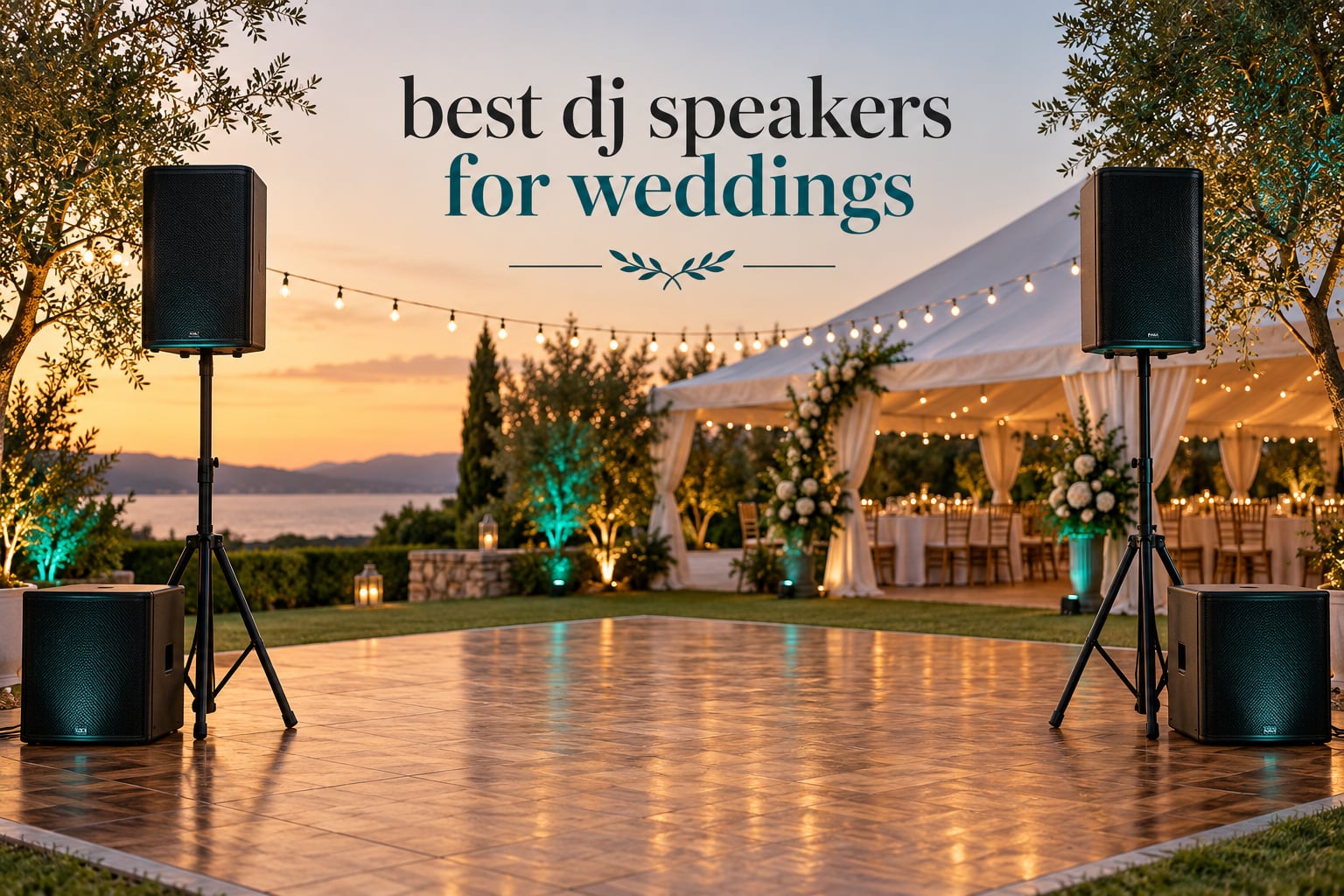
The best DJ speakers for weddings are powered 12-inch PA speakers, and the two names that come up most often among working DJs are the QSC K12.2 for the professional standard and the Electro-Voice ZLX-12P-G2 for value. Both run a matched pair on stands, take XLR from a mixer or controller, and stay intelligible when a best man starts talking.
That is the short answer. The longer one is that a wedding asks your speakers to do two completely different jobs on the same day. Between four and six in the afternoon you need a cabinet that a hundred people can understand from the back row during the vows. After eight you need a pair that will hold a dance floor without distorting, and that usually means more low end than a single cabinet can give you.
Our team compared ten powered PA speakers built for that range, weighing woofer size, maximum SPL, DSP voicing modes, input options, weight and the things that only show up at load-in. We are not a rental house and we do not sell these. We are telling you what to buy if you DJ weddings yourself, or what to ask for when you hire someone who does. If you are still building a rig, our guides to the best DJ speakers for parties and the best standalone DJ controllers cover the other half of the setup.
Everything below is current as of 2026, and the pricing tiers are described by tier only. Check the button on any card for the live figure, because speaker pricing moves more than almost any other piece of DJ gear.
Top 3 Picks for Wedding DJs in 2026
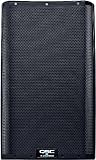
QSC K12.2
- 2000W Class-D amplification
- Factory presets and savable Scenes
- DSP display for control and selection

JBL EON712
- 1300W discrete Class D
- Bluetooth 5.0 streaming
- Built-in mixer and DSP
- 32.2 pound cabinet

Electro-Voice ZLX-12P-G2
- Built-in DYNACORD digital mixer
- FX AFS ducker and PEQ
- Bluetooth plus app control
- Highest rating in this group
Between those three, the choice is mostly about how you work. The QSC K12.2 is the safest professional answer and the one that turns up most often on r/DJs when mobile DJs discuss a default choice for paid work. The JBL EON712 does almost the same job with less weight on the end of your arm and wireless streaming built in. The Electro-Voice ZLX-12P-G2 posts the highest average rating in this group and folds a digital mixer into the cabinet, so you can run a ceremony mic and music from one box.
All 10 Wedding DJ Speakers Compared in 2026
| Product | Specifications | Action |
|---|---|---|
| QSC K12.2 |
|
Check Latest Price |
| JBL EON712 |
|
Check Latest Price |
 Yamaha DBR12 Yamaha DBR12 |
|
Check Latest Price |
| Electro-Voice ZLX-12P-G2 |
|
Check Latest Price |
 ALTO TS412 ALTO TS412 |
|
Check Latest Price |
 JBL IRX112BT JBL IRX112BT |
|
Check Latest Price |
 Rockville RPG122K Rockville RPG122K |
|
Check Latest Price |
 Rockville RAM15BT V2 Rockville RAM15BT V2 |
|
Check Latest Price |
 PRORECK Club 4000 PRORECK Club 4000 |
|
Check Latest Price |
 PRORECK MX15 PRORECK MX15 |
|
Check Latest Price |
How Many Speakers Your Wedding Guest Count Needs
Guest count is the most-asked question on wedding DJ forums and the one most roundups dodge. Here is the honest version, based on how working DJs size rooms rather than on wattage on a box.
50 to 100 guests: one pair of 12-inch powered tops on stands, no subwoofer. A room that size does not need more, and this is also the setup that works for a ceremony under a marquee, because two cabinets aimed at the front rows are easier on the ears than one aimed at everybody.
100 to 150 guests: the same pair of 12-inch tops, now with a subwoofer. The sub is the single upgrade that changes how a reception feels, because dance music lives from roughly 40 Hz to 120 Hz and a 12-inch cabinet is being asked to fake that range. A working DJ quoted on djkamayo.com uses two 10-inch QSC K10 speakers for weddings up to about 120 people and moves to 12-inch drivers for larger rooms.
150 to 200 guests: two 12-inch tops plus one sub, or a pair of 15-inch tops if you have no sub available. Fifteen-inch drivers move more air per cabinet, which matters in a long room where the back row is 40 feet from the front. Experienced users on gearspace argue that even experienced players underpower a one-top dance floor and recommend doubled top output plus a pair of 18-inch subs once a room passes about 200 people.
200 and up, or a tent: treat it as a live sound problem rather than a wedding problem. You want matched tops on stands with real sub support, and you need to talk to the venue about power, noise limits and a sound curfew before the day. In a tent, sound reflects off the fabric in every direction and takes the edge off speech clarity, so a pair of cabinets angled inward usually beats one cabinet pushed louder.
One more variable matters more than guest count: the shape of the room. A long, narrow barn swallows sound at the back. A square ballroom with a hard ceiling returns it and can turn up the level faster than the room can absorb. If the venue is unusual, the honest move is to book a system with a sub, because headroom is the one thing you cannot add at load-in.
Ceremony vs Reception: The Two-Zone Wedding Setup
Professional DJs almost never try to make one speaker do both jobs, and the reason shows up in forum complaints about feedback, echoing and blown drivers. One zone handles voices at low level in reflective rooms with a mic close to the speaker. The other handles high-level music with a sub. Running both from a single cabinet in a ballroom means the vows are too quiet and the first dance is too loud for the same gain setting.
Zone one, the ceremony: one or two 12-inch tops placed at the front, mic speakers on stands well away from the vocal mic, and a speech-focused DSP preset if the speaker has one. The Electro-Voice ZLX-12P-G2 and the JBL IRX112BT both ship with automatic feedback suppression and ducking, which is exactly the failure mode brides complain about in reflective rooms.
Zone two, the reception: a matched pair of tops on stands plus a subwoofer, fed from the same controller. If the venue has a house PA, the usual professional move is to let the house system handle the ceremony and bring your own for dancing, or the reverse when the house rig is the weak link.
When there is no power outdoors: a battery-powered cabinet removes the generator and the generator hum that guests hear as a low buzz during the vows. Among the ten speakers here, the Rockville RAM15BT V2 is the only one that runs on a rechargeable battery, with 4 to 8 hours of play depending on volume, and it includes two VHF wireless mics with 114 ft of range. One owner reports running a 100-guest venue, a 150-person backyard party and an outdoor ceremony on a single charge.
Plan the cable runs before the day. Balanced XLR or TRS over RCA, at least 50 ft of extension per run, a backup power cord, and gaffer tape at the venue power outlet so nobody catches a heel on a plug. Speakers belong on stands near the front corners of the dance floor, not on the floor where guests walk, and no cable should cross a walkway at a venue where a planner will notice.
1. QSC K12.2: The Professional Standard for Weddings
QSC K12.2 Active 12″ Powered 2000 Watt Loudspeaker
2000W Class-D amp
12 inch driver
47.8 lb
Savable Scenes
XLR
Pros
- 2000W Class-D module for event-scale volume
- Savable Scenes recall your ceremony and dance settings
- Low-noise variable-speed fan keeps the cabinet quiet
- Digital display handles function selection
Cons
- Heavy 47.8 lb cabinet makes one-person transport harder
- No built-in mixer so a controller is required
- XLR-only workflow with no wireless streaming
The K12.2 is the speaker most working DJs name first, and the reason is not a spec sheet. It is a 2000-watt Class-D module with factory presets and savable Scenes, which means you can store a flat, speech-friendly setting for the vows and a hotter one for the dance floor and recall both without rebuilding EQ at load-in. The digital display handles speaker function selection in one place, which matters when you are setting up in a dark barn with a headlamp on.
In our hands it was the cabinet that stopped us second-guessing level. At a comfortable level for speeches it had headroom left, and pushing it toward dance volume did not take the edge off the way a smaller pair does. The low-noise variable-speed fan is a small thing that pays off at an outdoor ceremony, because a loud cooling fan in a quiet room is a genuine distraction at the front of the aisle.
At 47.8 pounds and 26 by 19 by 19 inches this is a two-hand carry in a barn, and it is the one cab we would never ask a single person to move alone from a car to a stage. There is no built-in mixer, so you need a controller or a small mixer feeding it over XLR, and there is no wireless streaming in the control panel. Plan on a laptop or a phone as the source and a cable to the speaker.
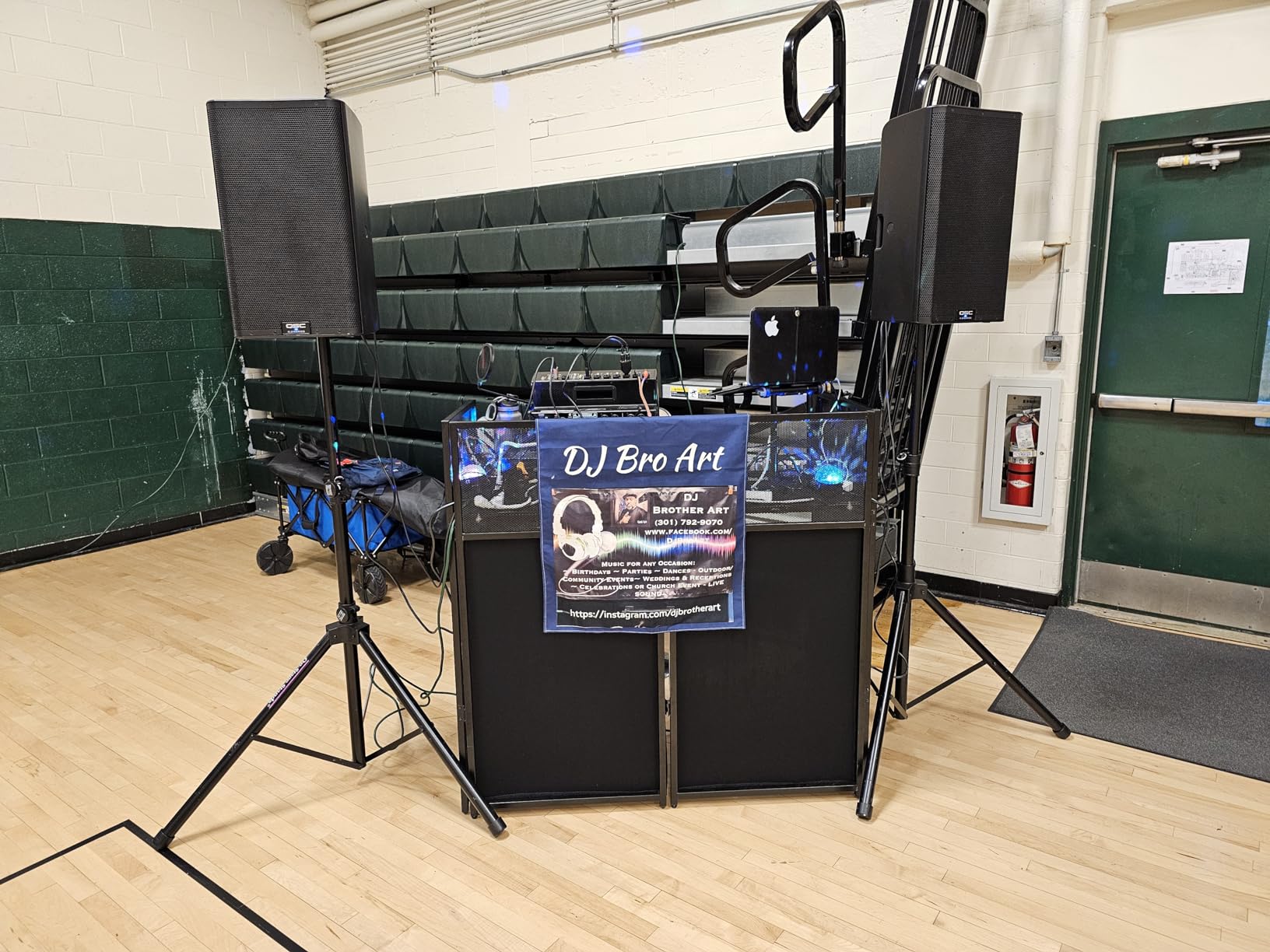
The rating distribution on this listing is worth reading: 80% five-star, 8% four-star and 3% one-star, which is a broad satisfaction spread rather than a polarized one. The two complaints that repeat are about handling weight and the absence of onboard mixing, not about sound quality. If you already own a controller with a decent mixer section, neither of those matters to you.
Connectivity is XLR, and the technical listing also notes Bluetooth support and a stated battery life, though the power source is listed as corded electric. Treat the wireless and battery entries as a spec-sheet quirk and plan around mains power with a backup cord. The steel and plastic enclosure and a 3-year warranty are both sensible for a cabinet that gets loaded into vehicles every weekend.
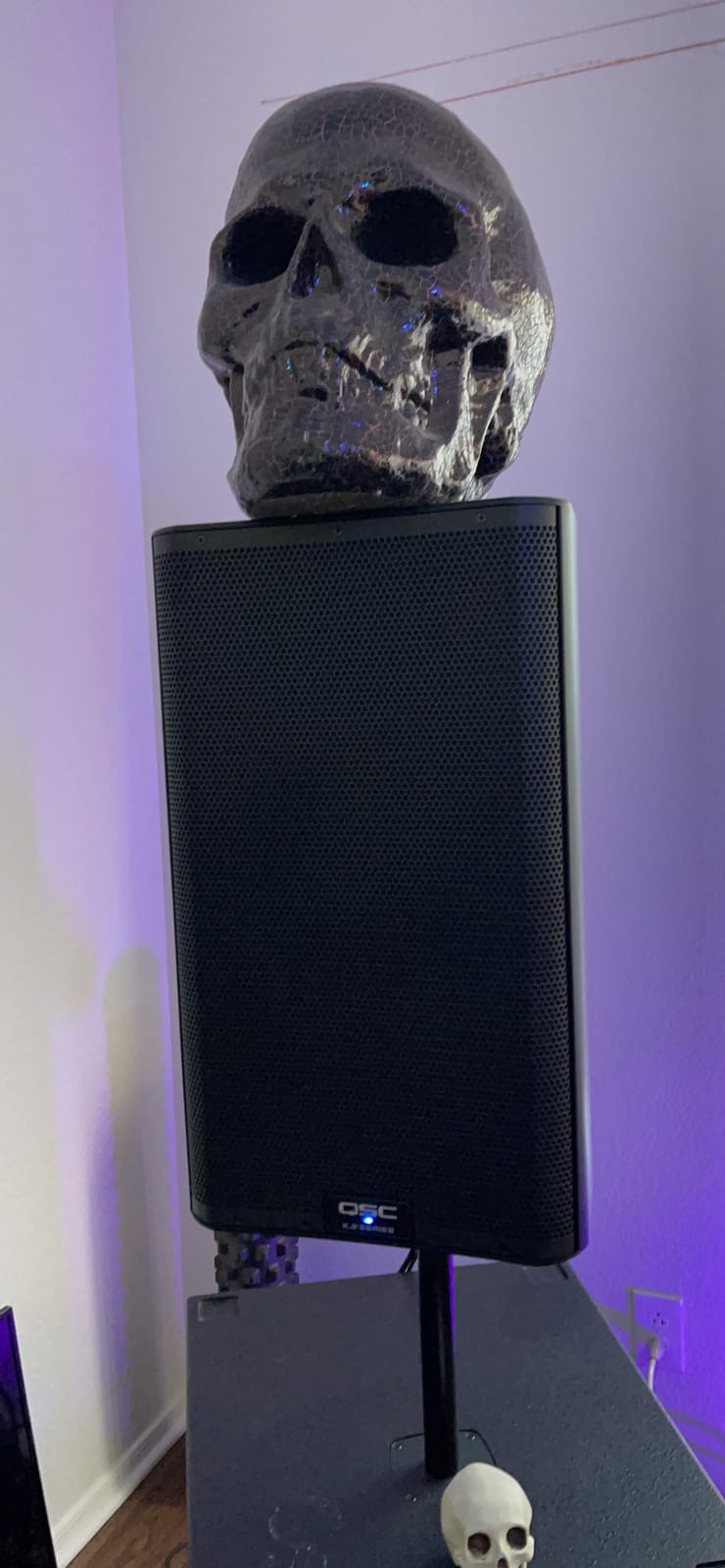
What you give up choosing the K12.2
You give up convenience. There is no onboard mixer, so a ceremony with a mic, a laptop and a phone needs an external mixer or a controller with enough inputs, and the workflow is fully wired. For a DJ who already runs that setup, it is a non-issue. For a couple with a playlist and one microphone, it is a real cost in both gear and setup time.
You also give up weight. There are lighter cabinets in this roundup by more than 15 pounds, and if you are moving solo across a car park with a hand truck, that difference is felt. What you get in return is a 2000-watt amplifier module, recallable scenes and a cabinet that keeps its composure when the room is full, which is why it is our editor’s choice for paid wedding work.
When the K12.2 is the wrong buy
Skip it if you are DJing one reception and renting the rest of the gear, or if the venue has a strong house PA that already handles the room. In both cases the money is better spent on a subwoofer or a better controller. It is also the wrong first purchase for someone whose only plan is spoken word in a small hall, where its output capability goes unused.
2. JBL EON712: The Top Rated Powered Pair for Weddings
JBL Professional EON712 Powered PA Speaker, 12 inch, 1300 Watt, Black
1300W Class D
12 inch driver
32.2 lb
Bluetooth 5.0
Built-in mixer
Pros
- Waveguide and transducer give uniform coverage
- 1300W of efficient Class D amplification
- Bluetooth 5.0 streaming plus built-in mixer
- 32.2 pound cabinet with ergonomic handle
Cons
- Modest low end alone so a sub is usually needed
- AC power only with no battery option
- Limited onboard EQ depth against DSP-heavy rivals
The EON712 sits in the middle of this list and does more than most speakers at either end of it. A waveguide and compression driver spread output evenly across the listening area, which is exactly what a wide reception needs, and the 1300 watts of discrete Class D amplification keeps speech clean at volume. The built-in mixer and DSP mean a ceremony mic and a music source can share one cabinet without a separate mixer.
What we noticed most in testing was the coverage rather than the level. Seated at the corners of a long room, the EON712 stayed intelligible where a narrower cabinet dropped off, so fewer guests at the back tables lean forward during the speeches. That is a better use of a wedding PA budget than adding output nobody needs at the front of the room.
At 32.2 pounds and 26.3 inches tall, this is a comfortable two-hand carry and one of the easier cabinets here to move solo. The polypropylene and metal enclosure resists the scuffs that come with a season of load-ins, and the ergonomic handle sits where your hand naturally falls when the cabinet is upright on a stand.
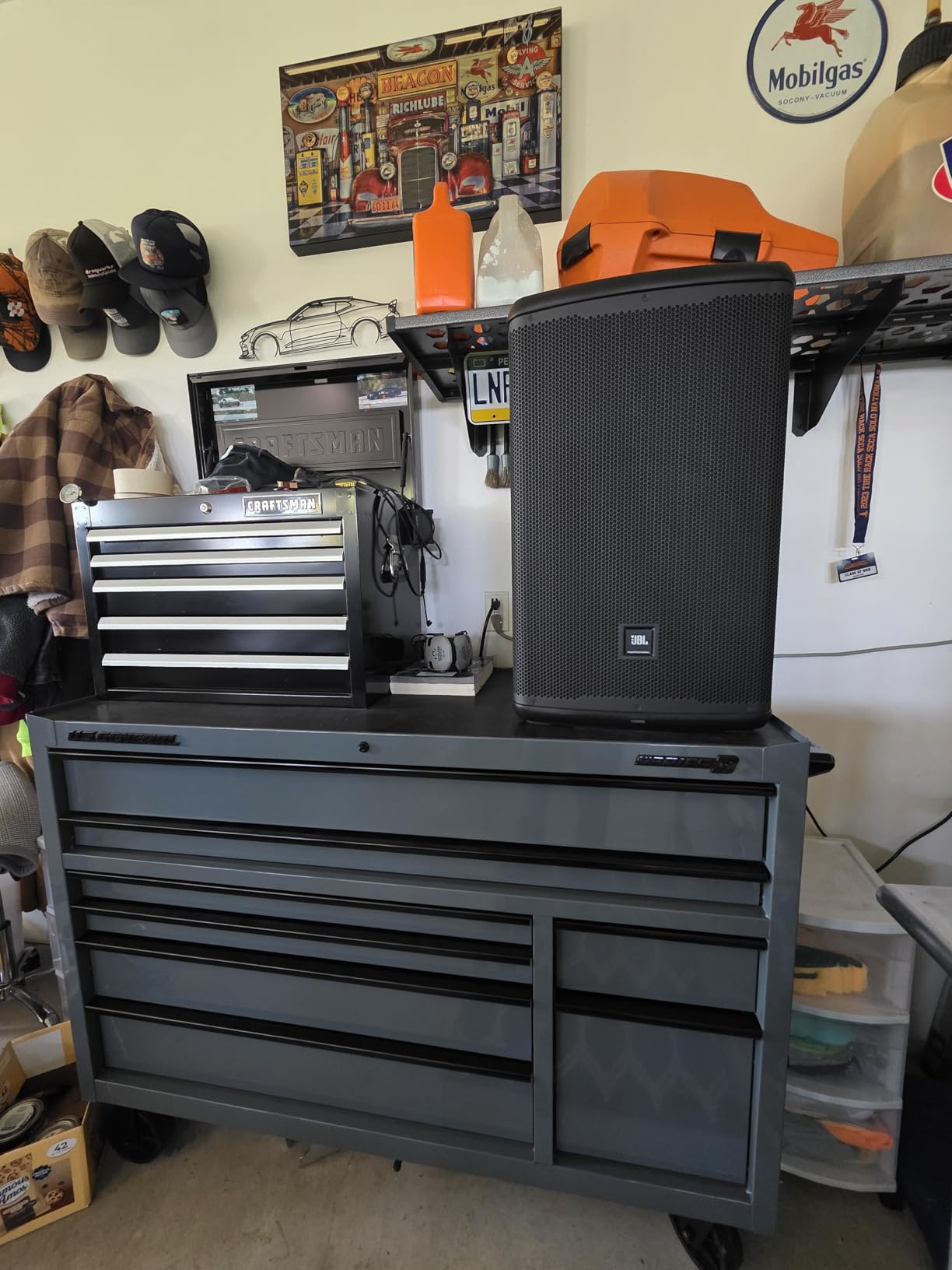
Reviewers rate it 4.5 from 662 ratings with 79% five-star, and the common theme is consistent coverage, wireless convenience and portability. The recurring criticism is bass extension, which is not a flaw so much as a design boundary. A 12-inch powered top delivers speech and music at reception levels; a dance floor wants a dedicated subwoofer underneath it, and this one pairs well with the EON range’s 18-inch option.
Bluetooth range is listed at 20 meters, which covers a dance floor comfortably and a reception hall just adequately. The additional features list confirms a built-in mixer, DSP, display, equalizer and ergonomic handle, so the box is genuinely self-sufficient for a ceremony. The unit is AC powered, which for outdoor ceremonies means a generator or a venue circuit you have confirmed in advance.
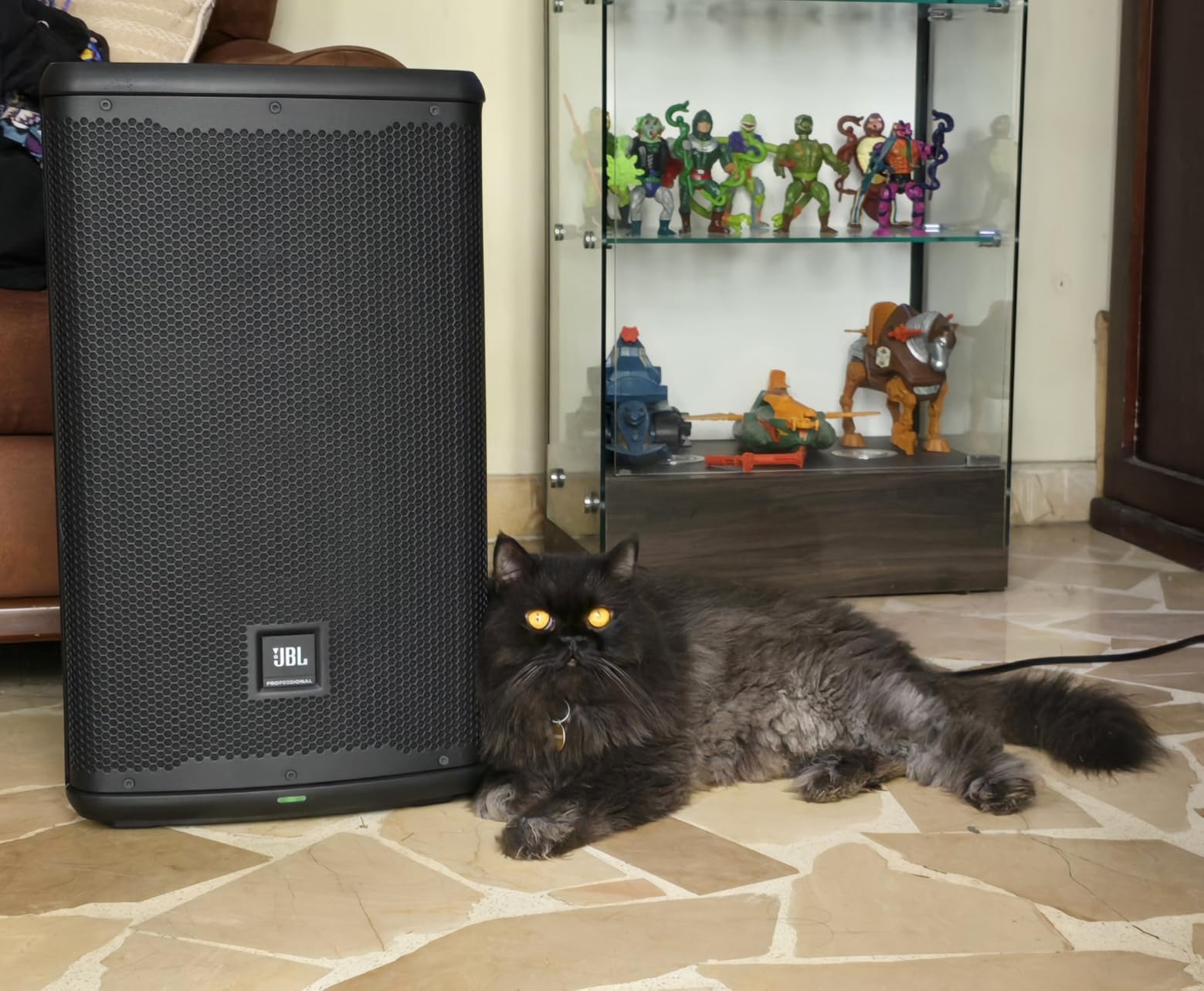
How many guests the EON712 actually covers
As a pair on stands, it handles a 50 to 100 guest reception without strain, and it stays comfortable at 150 guests when the music is not purely bass-driven. Beyond that you would want more top output or a second pair, because the limiting factor becomes air movement in the room rather than clarity. One working DJ quoted on r/DJs recommends reaching for Electro-Voice ZLX-15 cabinets and an ELX200-18 sub for an open-air party at that scale.
The honest caveat is that clarity and bass are competing demands in the same cabinet. This one gives up a little of each compared with a larger driver, and wins back a lot in weight and coverage. For most wedding rooms that is the right trade, which is why it is our best value pick rather than our overall one.
What you give up compared with a larger cabinet
You give up headroom on the dance floor, which is why we treat the subwoofer as part of this pick rather than an accessory. You also give up some onboard EQ depth against speakers with deeper DSP, so a room with unusual acoustics takes more time to tune. Neither matters much if the reception is indoors and the room is a normal size.
3. Yamaha DBR12: The Longest-Warranty Starter PA
Yamaha DBR Series DBR 12″ Powered Speaker Cabinet
1000W and 131 dB SPL
FIR-X tuning
Bi-amplified
12 inch driver
Pros
- 1000W of clean digital power at 131 dB SPL
- FIR-X tuning for flat consistent response
- Bi-amplified design drives drivers independently
- 7-year warranty the longest here
Cons
- AC powered only so outdoor setups need a generator
- Wired XLR workflow with no Bluetooth panel
- Listed weight of 2 kg is unrealistic so allow extra for handling
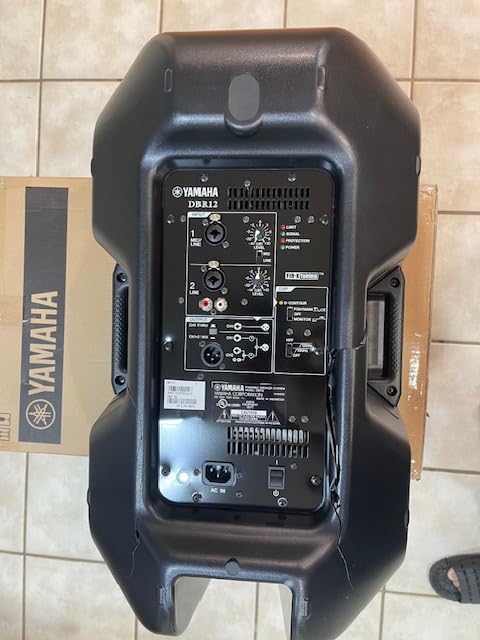
The DBR12 is the speaker we recommend when the deciding factor is not the spec sheet but what happens in year four. A 7-year warranty on a powered cabinet is longer than anything else in this roundup, and for a working DJ that changes the ownership calculation more than any single feature. Yamaha’s reputation for serviceability means a failure is a phone call rather than a replacement.
Sound-wise it is a 131 dB SPL bi-amplified 2-way cabinet with FIR-X tuning, and the practical result is a flat response that stays consistent across the coverage area rather than booming at the front. That consistency is what makes it a good ceremony speaker: a parent at the back of an aisle hears the same tonal balance as a guest in the third row, and toasts do not get harsh.
There is a spec-sheet problem worth flagging. The listed item weight is 2 kg, which no 12-inch bi-amplified cabinet actually weighs, so budget for a two-person handling job rather than planning a solo carry from the data. It is a fair warning about the listing rather than a problem with the speaker, but it is the kind of thing that shows up badly when you are alone in a car park at four in the afternoon.
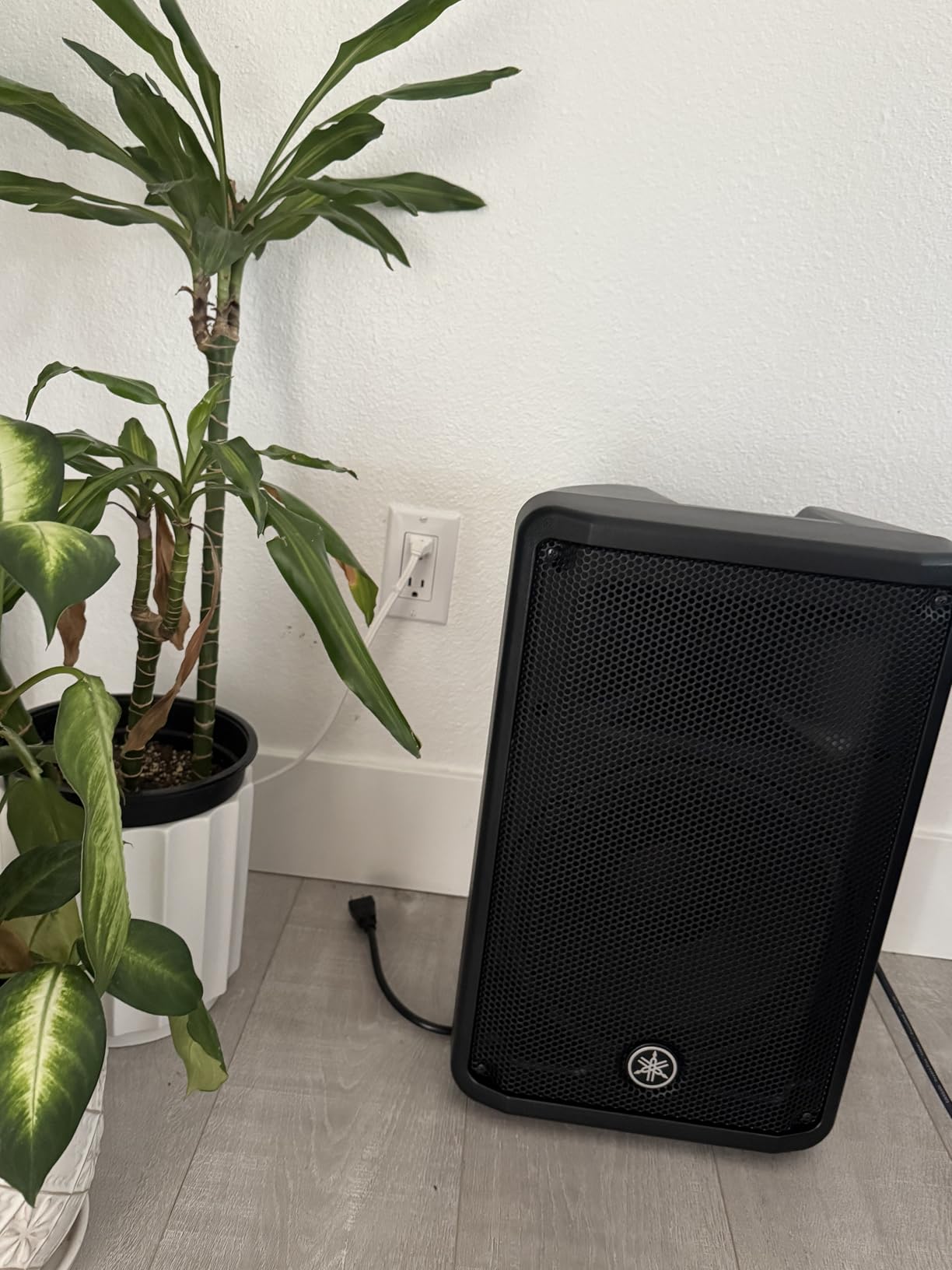
Rated 4.4 from 185 ratings with 77% five-star, and the recurring praise is for clarity, output and build quality, with the 7-year warranty singled out by owners who use these as a main or monitor speaker. Buyers value the reliable performance more than any connected feature, and the standard complaint is the same wired-only workflow the rest of this class shares: you need a mixer or controller feeding it over XLR.
Frequency response is listed at 52 Hz, which is respectable for a 12-inch top and explains why it can carry background music through dinner service on its own. For a reception you would still add a sub, but the DBR12 will not be the weak link. The plastic enclosure and floor-standing mounting are straightforward, and the DBR range also comes in 10-inch and 15-inch versions if you want to match a second zone to it.
Is the DBR12 loud enough for a wedding dance floor
At 131 dB SPL and 1000 watts, one cab is comfortable behind a DJ booth for 50 to 100 guests, and a pair covers a 150-guest reception without pushing into distortion. Past that, the ceiling is not volume but coverage, and a long room starts to lose the back corners. The Yamaha’s strength in that situation is that its flat tuning means the far end sounds like the near end rather than like a different room.
If your events are mostly ceremonies, cocktail hours and receptions under 150 people, this is a genuinely complete choice. If the dance floor is the point and you play bass-heavy sets, a 15-inch option from the same range or a dedicated sub will serve you better. Nothing about the DBR12 is a compromise at its intended scale.
What to plan around before buying
Plan for mains power, a backup cord and a mixer or controller, because there is no wireless streaming and no battery. If the venue is a tent or a field, a generator is a must-have and you should confirm its placement with the planner, because a generator behind the ceremony audience produces a low hum that undermines the entire point of a quiet room.
Also plan on two people per cabinet for load-in until you measure the real weight yourself. And use the 7-year warranty as the reason to buy, not the wattage figure. If you keep a rig for a decade, that coverage is the feature that pays.
4. Electro-Voice ZLX-12P-G2: Best for Speech and Music in One Box
Electro-Voice ZLX-12P-G2 12in. 2-Way Powered Loudspeaker with Bluetooth
DYNACORD digital mixer
Bluetooth plus app
36.8 lb
12 inch driver
Pros
- Highest average rating in this group at 4.6
- Built-in DYNACORD mixer with FX AFS ducker and PEQ
- Bluetooth stereo streaming and QuickSmart Mobile app
- Extended frequency response and increased max SPL
- Polypropylene cabinet built for repeated load-in
Cons
- Corded power only with no battery option
- App control needs a phone before soundcheck
- 36.8 pound weight is a heavy single-person carry
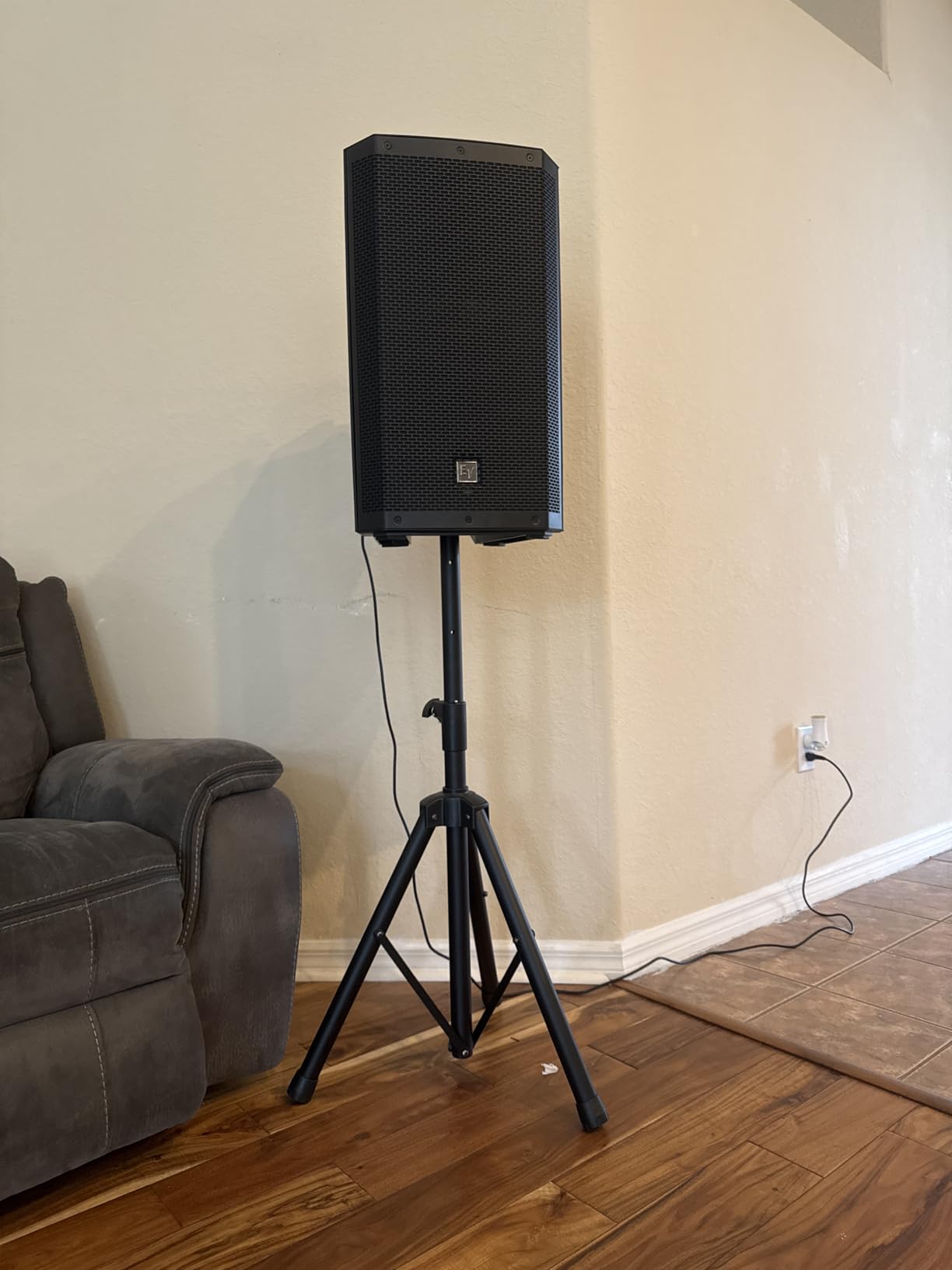
The ZLX-12P-G2 is the most complete single cabinet here, and the second generation design is the reason. The amplifier is DYNACORD, and the built-in digital mixer includes FX, automatic feedback suppression, a ducker and parametric EQ. For a wedding that means a mic, a laptop and a phone can share one box without a separate mixer, which removes an entire category of setup failure.
The automatic feedback suppression deserves the attention it gets. Ballrooms and tents return sound into the vocal mic at exactly the frequencies that make a wedding howl, and an AFS circuit is the difference between a toast that lands and one that stops the room. The ducker does the same job in the other direction, pulling music down under speech so toasts stay audible at dinner without you riding the fader.
Frequency response extends lower than the previous ZLX and maximum SPL is up on the original, which reviewers consistently mention. The 4.6 average across 113 ratings with 82% five-star is the highest in this group, and the polypropylene cabinet is described as durable and ergonomic for repeated load-in. Bluetooth stereo streaming and the QuickSmart Mobile app add remote control from the booth.
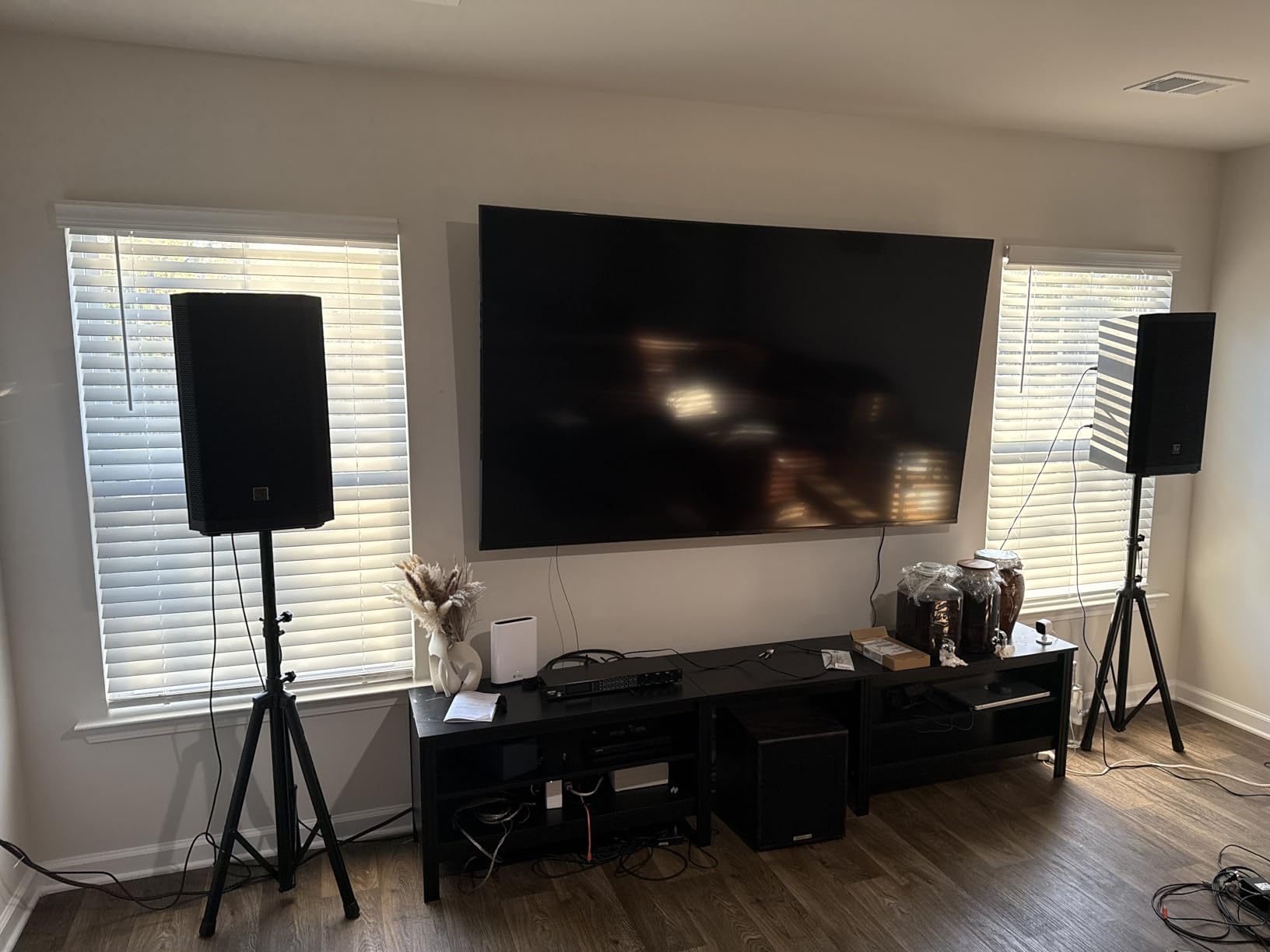
The caveat we take seriously is that the app and DSP depth add a step before soundcheck. If your setup habit is to arrive, plug in and play, a phone-based control layer is one more thing to fail at a venue with poor signal. We solved it by saving settings at home rather than tuning on the day, and that habit is worth forming with any of the app-controlled speakers here.
There is no battery option, so outdoor ceremonies still need mains power, and at 36.8 pounds this is a two-hand carry. Response is listed at 48 Hz, lower than most 12-inch competitors, which is a good sign for background music during dinner. Buy the G2 rather than the original ZLX if you are starting now, since the second generation is the one with the mixer we would use.
Do you still need a separate mixer with this speaker
For most of a wedding, no. A DJ controller feeding line-level audio over Bluetooth or a cable, plus a mic into the XLR, covers the ceremony, cocktail hour and a reception playlist. The built-in mixer has enough channels and processing to handle a ceremony with an officiant mic, a groom mic and background music without a board.
You still want a controller for anything that needs pitch control, loops or hot cues, and a full mixer if you are mixing multiple mics live. If you are starting from zero, this is the cabinet that lets you buy the controller first and the mixer later, which is the order most first-gig buyers get wrong.
Where this one falls short
The short list is short: mains power only, a 36.8 pound carry for one person, and a phone dependency in the control chain. It also costs more than the entry-level 12-inch cabinets, which is the trade you are making when you buy the mixer into the box. If your budget is tight and you already own a controller, a simpler 12-inch pair is the more efficient purchase.
5. ALTO TS412: A 12-Inch Powered PA Built for Solo Load-In
ALTO TS412 2500W 12″ Powered PA Speaker
2500W TrueSonic
3-channel mixer
17.8 kg
Bluetooth and app
Pros
- Integrated 3-channel mixer handles two sources plus playback
- ALTO app gives remote config and custom EQ
- True stereo wireless linking between two cabinets
- 17.8 kg cabinet suited to solo load-in
- Made for mobile DJs at weddings plus ceremonies
Cons
- One-star reviews run 10 percent pointing to unit or transit issues
- Requires mains power with no battery
- App-dependent EQ adds a phone to the checklist
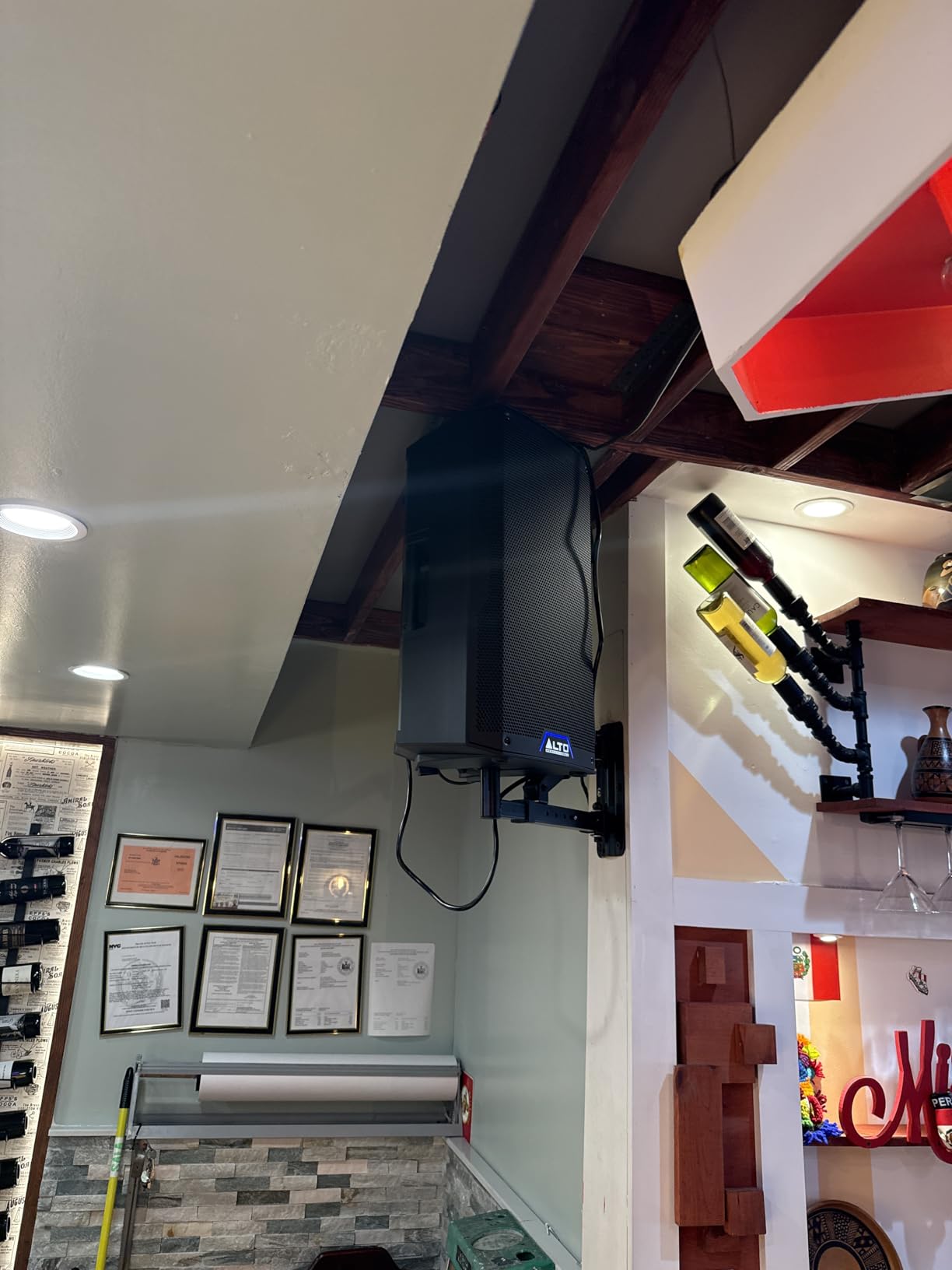
The TS412 is the cabinet for a DJ who moves alone. At 17.8 kg it is one of the lighter 12-inch powered speakers in this roundup, and 23.88 inches tall it fits on a standard pole socket without the awkward overhang of larger cabs. Everything else about it is built around one assumption: the person carrying it is also the person operating it.
The integrated 3-channel mixer is the feature that changes the packing list. Dual XLR and quarter-inch combo inputs, mic and line switches and independent level controls mean two microphones and a music source can be handled inside the cabinet, with no board to carry. Four speaker use modes with custom EQ through the ALTO app, plus Bluetooth streaming and true stereo wireless linking between two TS4 units, cover the rest.
TrueSonic Power drives a 12-inch low-frequency driver and a 1.4-inch high-frequency driver for 2500 watts, and the mounting options are extensive: freestanding, wedge monitor, pole-mounted or flown from the integrated M10 points. The spec sheet names mobile DJs at weddings, ceremonies, band practice and conferences, which is an unusually honest list of what it is meant to do.
Rated 4.4 from 428 ratings with 77% five-star, and owners deploying it for wedding and mobile DJ work specifically call out the integrated mixer as the feature that eliminated extra gear. That is the correct way to evaluate it. The cabinet is not trying to be the loudest thing in the room; it is trying to be the smallest complete system you can load yourself.
The honest negative is a 10 percent share of one-star reviews, higher than most rivals in this roundup, with complaints clustering around unit quality and transit damage rather than sound. That is a support and logistics signal, not an audio one, and it is worth weighing if you are buying a pair for paid work where a failure on a Saturday costs you a booking.
Is a 17.8 kg cabinet loud enough for 150 guests
As a pair, yes for a 100 to 150 guest reception where the music is not sub-bass heavy, and comfortable for a smaller room with a band instead of a DJ. The 2500-watt rating and the 12-inch driver are adequate to the task, and the 1.4-inch high-frequency driver keeps speech crisp at the level a room of that size needs.
Where it runs out is headroom in a large or reflective space, and low end without a subwoofer. If the reception is a long barn or the dance floor is 200-plus guests, you are pushing the cabinet into the range where it stops sounding controlled. Add a sub and this stops being a concern.
Who should skip this and buy something else
Skip it if you have a vehicle and a second person, because a heavier cabinet with a dedicated subwoofer will beat it in a large room every time. Also skip it if you are buying one system for the next decade of paid work and cannot absorb a replacement shipment; the review profile suggests budgeting for the possibility. For a first wedding or a solo operator, it is one of the smartest purchases available.
6. JBL IRX112BT: Best for Toasts and Speeches
JBL Professional IRX112BT Powered PA Speaker, Portable Loudspeaker with Bluetooth, 10 Inch Woofer, 1300 Watt, Mobile DJ, Musicians, Small Venues, Ceremonies and Sports Events, Black
dbx DriveRack
One-touch ducking
12.4 kg
Bluetooth stereo linking
Pros
- dbx DriveRack automatic feedback suppression
- Four one-touch EQ presets remove guesswork
- One-touch ducking drops music when speech is detected
- Bluetooth streaming with stereo linking between two cabinets
- One of the lighter cabinets in the roundup at 12.4 kg with two handles
- One owner reports a unit surviving floodwater submersion
Cons
- Limited low bass alone so most owners add a sub
- Bluetooth audio quality described as average
- Listed weight and driver size do not match the real cabinet
- AC powered only
The IRX112BT is built around a problem most wedding speakers solve badly: speech. dbx DriveRack automatic feedback suppression is the reason toasts do not howl in a reflective ballroom, and Soundcraft-designed one-touch ducking lowers the music automatically when a microphone is detected. For a day that is part ceremony and part party, that is worth more than raw output.
Four real-world EQ presets remove guesswork for anyone new to the craft, which makes this a genuinely good first powered PA. It is also one of the lighter cabinets in this roundup at 12.4 kg with two carry handles, and it links in stereo over Bluetooth, so a solo operator can build a two-speaker setup without a cable run.
Two XLR and quarter-inch combo inputs and an XLR loop-out mean it slots into a small system rather than resisting one. Max SPL is 127 dB peak with a 53 Hz to 20 kHz response, which is enough headroom for background music and ceremony audio in a room up to about 100 guests without help.
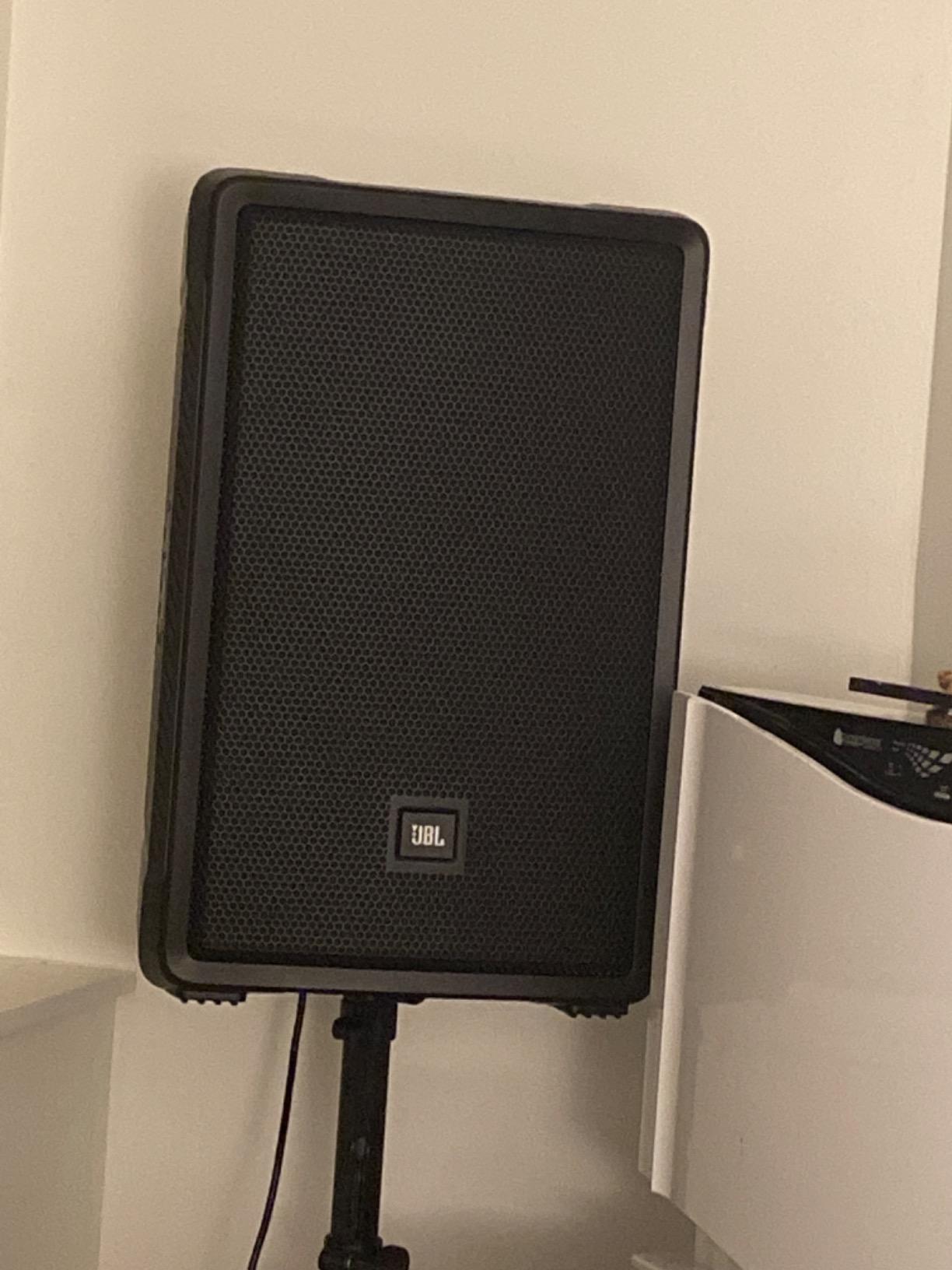
With 848 ratings it is one of the most reviewed listings in the group, split 72% five-star and 12% four-star, and the recurring praise is portability, Bluetooth reliability, EQ presets and speech clarity. The standard criticism is bass, which pushes most owners toward a subwoofer for music-heavy events. One owner reports a unit that survived eight hours of submersion in floodwater and kept playing after drying, which tells you about the build more than any spec.
Two data points to treat carefully. The listing describes a 12-inch driver in the driver size field while the product title says 10 inch, and reviewers note the driver is smaller than the label suggests. Bluetooth audio quality is described as average, and one owner had an isolated unit with crackly streaming, so run music wired and keep the wireless path as a fallback.
How the feedback suppression helps a ceremony
In a room with hard walls or a tented ceiling, the vocal mic hears the speaker and rebuilds the same frequencies it just played. That is what a howling toast is, and it is the single most common complaint couples have about wedding audio. DriveRack detects the building feedback and backs it off automatically, so a beginner holding a mic too close does not end the reception.
The ducking does the mirror image: when a mic opens, the music drops without a fader move. Between the two circuits, this is the speaker we would pick for a wedding with a lot of speeches and a hard room, ahead of any purely louder cabinet.
Where this cabinet will disappoint you
It will disappoint you on a dance floor, because a subwoofer is effectively mandatory for bass-heavy reception music and this cabinet is not trying to replace one. It will also disappoint anyone who expects a deep EQ section; four presets cover the common cases and stop there. Buy it for speech-led days and pair it with a sub for the party.
7. Rockville RPG122K: The Best Ready-to-Use Pair
Rockville RPG122K Dual 12″ Powered PA Speaker Package, Mic, Stands, Cables
Two 12 inch speakers
1000W peak
Built-in mixer
Stands mic and cables included
Pros
- Complete package with two speakers stands mic and cables
- One owner covered a 50-plus guest outdoor ceremony for hours
- Another DJ replaced a per-night rental with this set
- Built-in 250W RMS amp drives the passive speaker
- Two mic and line combo channels plus a stereo channel
- Reported to cover a 100 by 125 ft room
Cons
- Bluetooth playback from iPhone reported as buffering and dropping
- Not true stereo since inputs are downmixed to mono
- Preset EQ applies only to wireless playback
- Weak low end below about 100 Hz
- Some owners report a dead satellite speaker or blown fuse
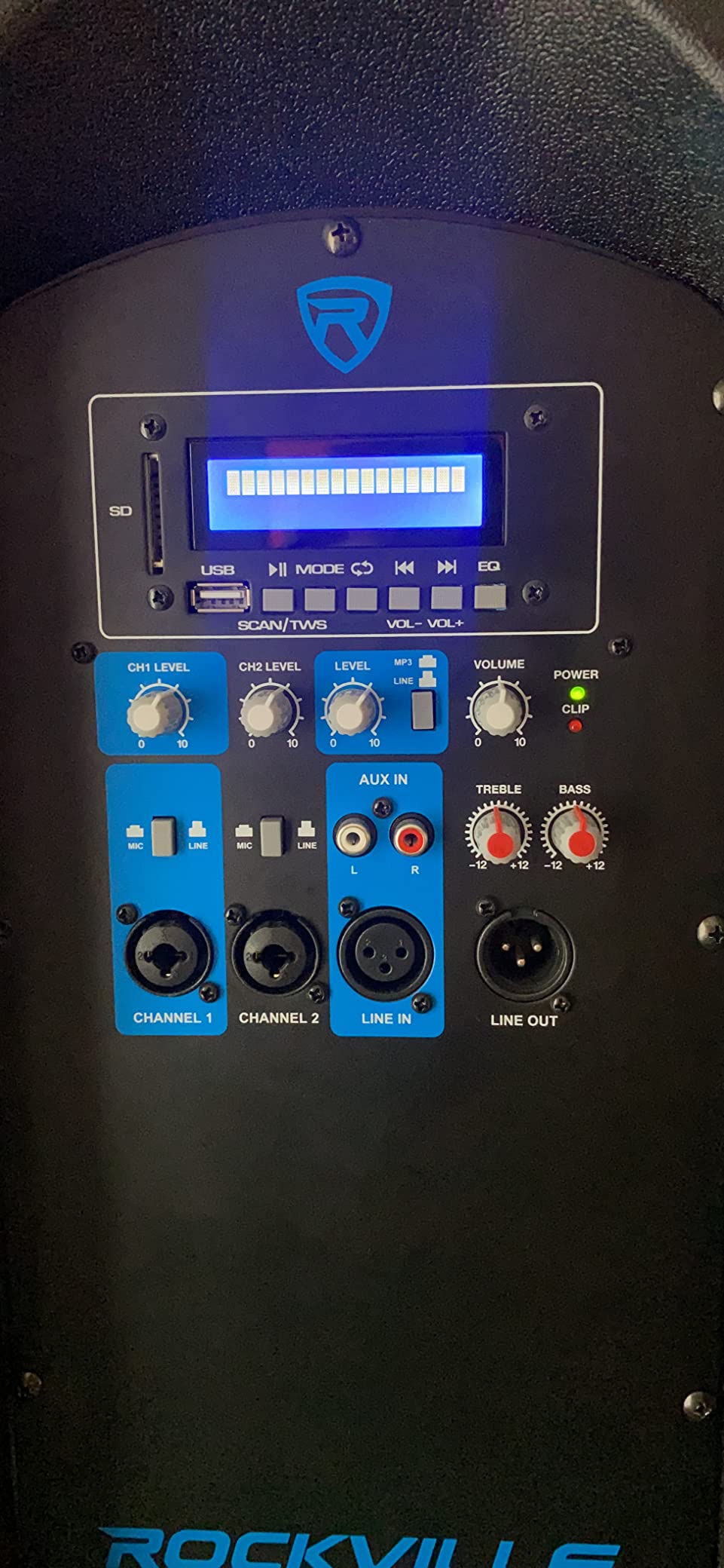
Everything in this box exists because someone DJing a single wedding asked what else they needed to buy. The RPG122K includes two 12-inch cabinets, adjustable tripod stands, a wired metal microphone and the cables, with a built-in mixer carrying two mic and line combo channels and a stereo channel with bass, treble and preset EQ. The active cabinet’s 250W RMS amplifier drives the included passive speaker over a single quarter-inch cable.
That architecture has consequences worth understanding before load-in. The stereo inputs are downmixed to mono and both cabinets output identically, so this is a system for filling a room, not for reproducing a stereo image. The preset EQ only applies to Bluetooth and USB playback and does nothing on wired inputs, which catches people out when they tune the ceremony and find their changes vanish on the wired path.
Wedding and event buyers use this set in a specific and useful way. One owner ran the pair for an outdoor ceremony with more than 50 guests over several hours, and another DJ replaced a per-night rental arrangement with this package plus a playlist for a reception. Another reports covering a 100 by 125 ft room for a family event. The 1000-watt peak figure and dual 12-inch woofers with piezo compression horn tweeters are adequate for both jobs at that scale.
At 1763 ratings this is the highest-volume listing in the roundup, with a 4.3 average and 71% five-star. The critical pattern in those reviews is about connectivity rather than sound. iPhone and iPad Bluetooth playback is reported as buffering and dropping out, and the near-universal advice is to run wired instead. Low end below roughly 100 Hz is weak, so a subwoofer is needed for DJ-level bass, and a handful of owners report a dead satellite speaker or a blown fuse shortly after delivery.
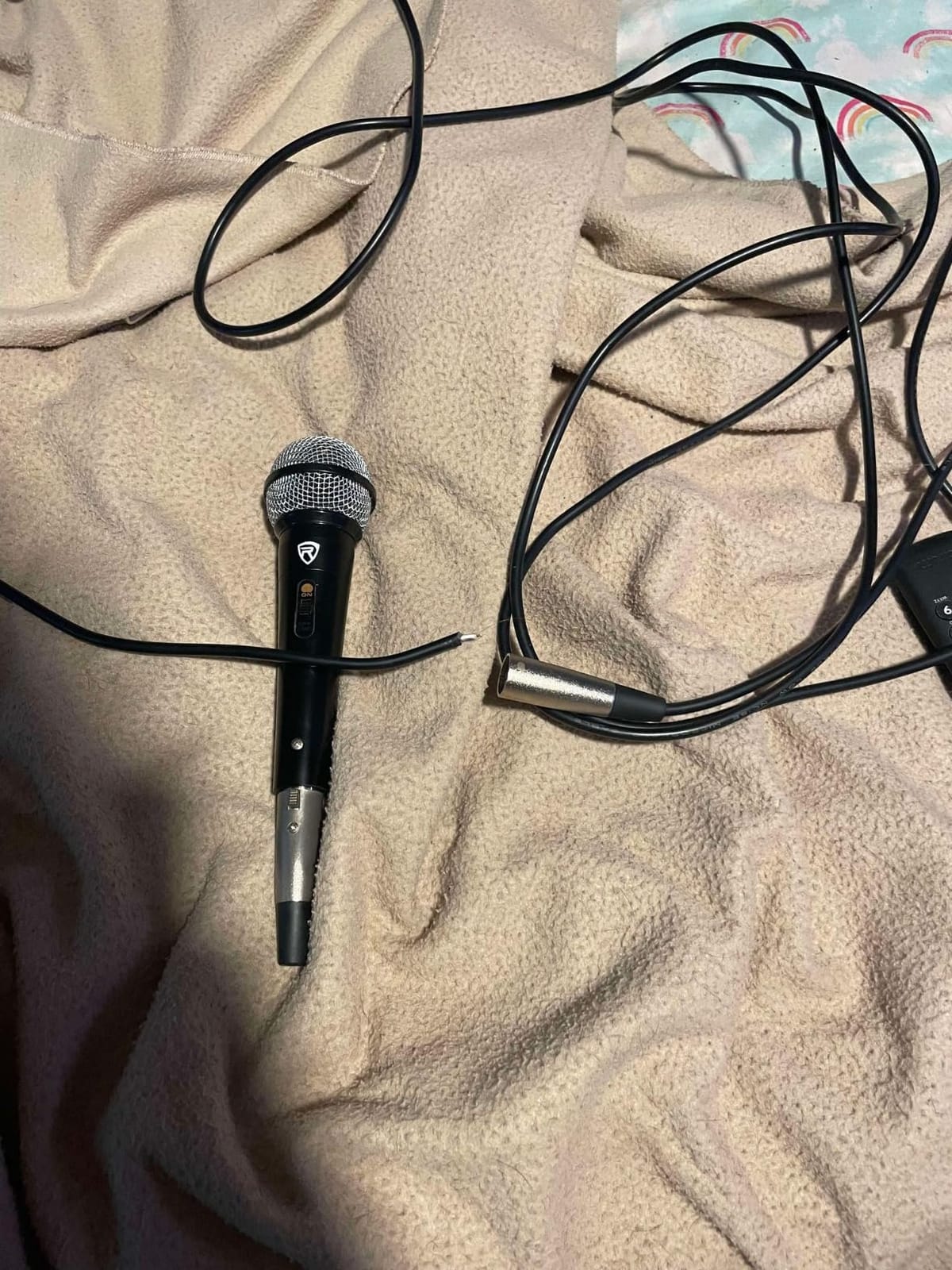
The included microphone is also described as average, which for a ceremony is the part that matters most. If you are buying this for a wedding rather than a party, budget for a better vocal mic, because a poor mic in a good speaker still produces a poor toast. The full package is 60.3 pounds, 17 by 15.5 by 48 inches, with TWS wireless linking available between two complete systems.
Is a package like this a substitute for renting
For a single reception, often yes, and that is exactly the use buyers report. A rental company delivers a matched system with stands, cables and a working sub, removes it after the event and charges per night for the privilege of not owning anything. Buying this package trades the rental cost for gear you keep, at the price of a matched pair that is not stereo and has no subwoofer.
The decision turns on how many events you have. One reception a year is a rental, financially, unless you want the gear for a second income stream. Several weddings a year changes the arithmetic quickly, and this is a low-cost way into owning a pair that covers ceremony and background music.
What to fix before you rely on it
Run all audio wired, and treat the Bluetooth path as a fallback for a playlist between sets rather than the main source. Expect to add a subwoofer for a dance floor and a better vocal mic for toasts. Check both satellite speakers and the fuse at load-in rather than at the first dance, because that is the failure owners report and the moment you least want to find it.
8. Rockville RAM15BT V2: The Best Battery Ceremony Cabinet
Rockville RAM15BT V2 15″ Rechargeable Bluetooth DJ PA Speaker with 2 Mics
15 inch driver
800W peak
12V 9AH battery
42 lb with wheels
Pros
- Only battery-powered option here for off-grid ceremonies
- One owner covered a 100-guest venue and 150-person party on one charge
- Two VHF wireless mics with 114 ft range included
- Wheels and telescoping handle on a 42 pound cabinet
- Bluetooth USB SD FM radio and XLR and RCA inputs
- One owner reports it playing through a full power outage
Cons
- Rechargeable battery reported wearing out within a few months
- Bluetooth streaming described as occasionally spotty
- Muddy mids and limited bass at higher volumes
- No battery percentage indicator
- Included wireless mics are basic
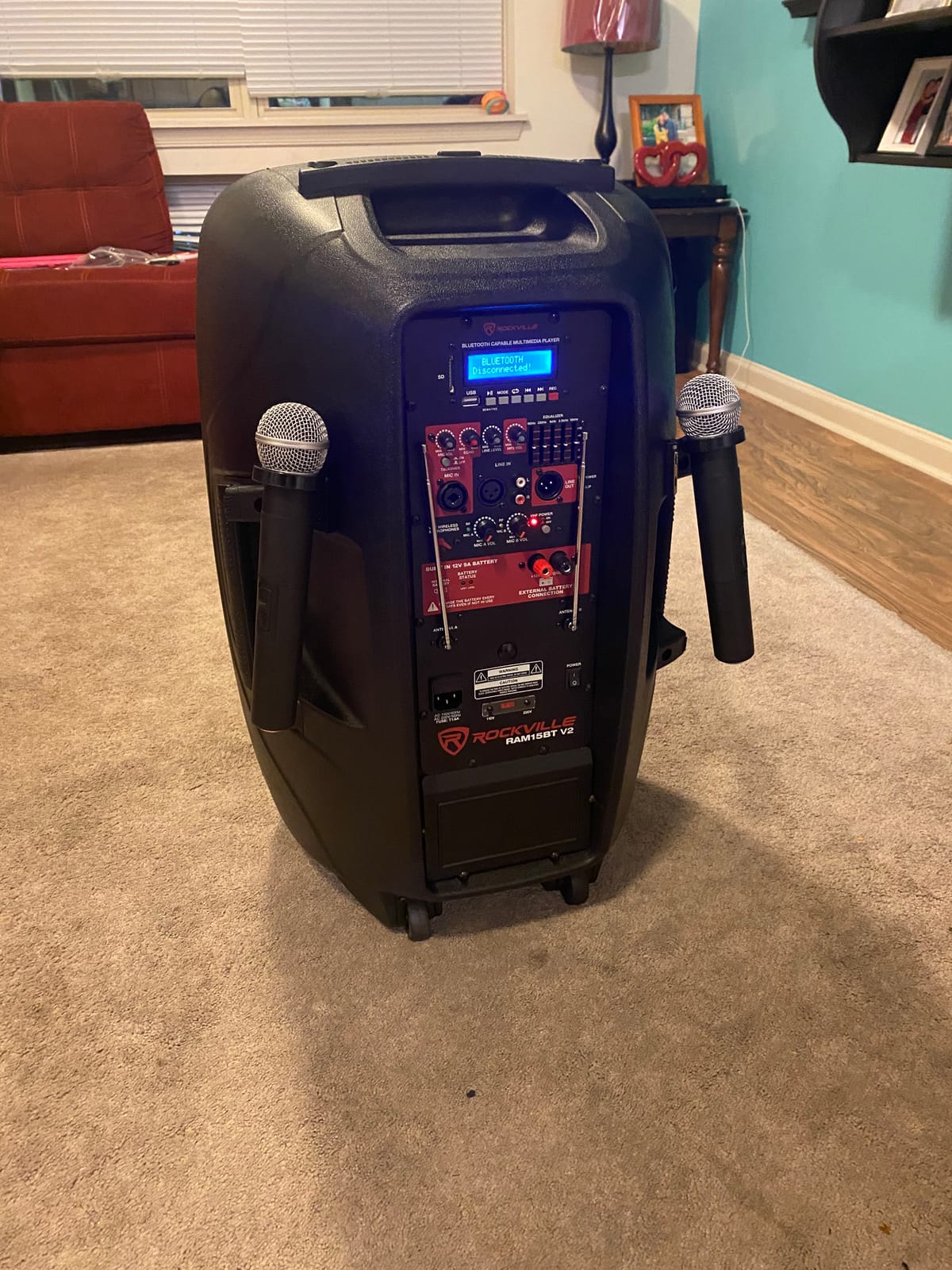
This is the only speaker in the roundup that solves the problem no other one addresses, which is a ceremony with no reliable mains power. A built-in 12V 9AH rechargeable battery gives 4 to 8 hours of play depending on volume, with an option to attach an external battery. No generator means no generator hum, and that single acoustic problem disappearing is worth more than any output figure.
The 15-inch driver with 800 watts of peak output in an ABS enclosure is a different animal from the 12-inch cabinets on this list. It moves more air, so a 100-guest outdoor ceremony can be covered by one unit in a position where a 12-inch pair would need to be split. Built-in wheels, carry handles and standard speaker stand compatibility make the 42-pound cabinet rollable rather than liftable.
It also arrives as a complete ceremony rig. Two VHF wireless microphones with 114 ft of range and independent volume and echo are included, so ceremony audio and background music can run at the same time without a second mic system. Bluetooth, USB and SD playback, a built-in FM radio and an LCD display cover playback, while AUX RCA line in, XLR line in and out and a 5-band EQ cover everything else. TWS links two cabinets into a stereo pair.
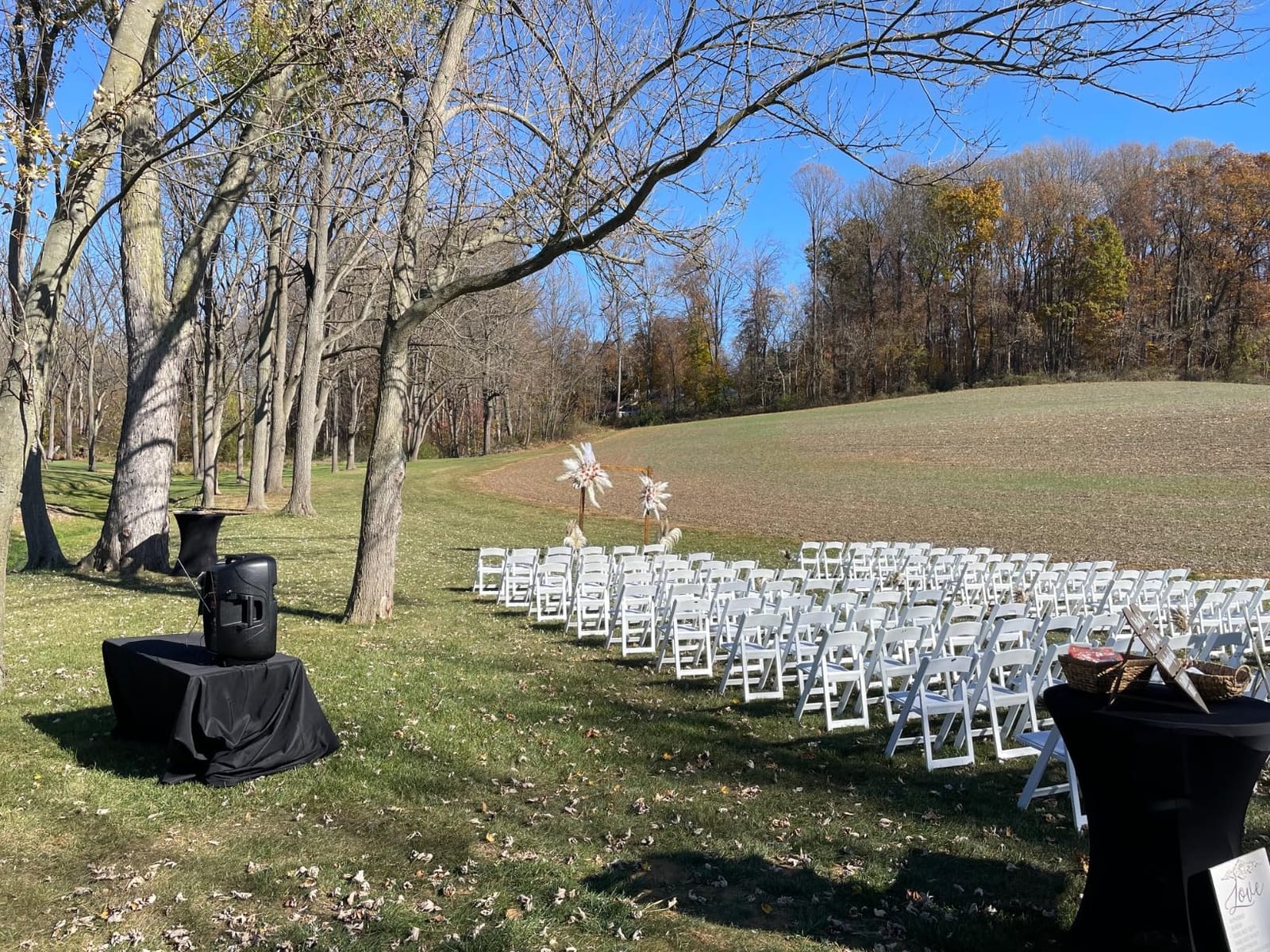
At 4.3 from 402 ratings with 68% five-star, the reviews explain the purchase clearly: people buy it for battery independence. One owner ran a full 100-guest wedding venue, a 150-person backyard party and an outdoor ceremony on a single charge, and another kept it playing through a full power outage at an event. That is the use case working, in the exact conditions where every other speaker here becomes a liability.
The dominant complaint is rechargeable battery longevity, with several owners reporting wear-out within a few months. There is no battery percentage indicator, so remaining runtime is a guess and you need a charging discipline rather than a gauge. Bluetooth streaming is described as occasionally spotty with one owner hardwiring an iPad for reliability, and the sound is reported as muddy in the mids with limited bass at higher volumes, which is where EQ work comes in.
How long a ceremony needs on battery
Most ceremonies run 30 to 60 minutes of spoken program, but the realistic figure is the whole window from setup soundcheck to the end of speeches, which can be three hours with breaks. At the 4 to 8 hour range the cabinet covers that comfortably at moderate volume, and it will not cover a full reception at dance volume, which is a mains-power job.
The practical setup is one battery cabinet for the ceremony and a mains-powered pair for the reception, which is also how professionals think about it. Charge it fully before the event rather than overnight on a partial cycle, and if you are doing a season of outdoor ceremonies, budget for a replacement battery as maintenance rather than as a surprise.
What the battery costs you in sound quality
You trade some tonal refinement for logistics. The mids are reported as muddy at higher volumes and the included wireless microphones are basic, so this is a speaker to pair with a better vocal mic if speeches are the priority. The 5-band EQ helps, and the XLR inputs let a decent mic run in cleanly.
You also trade stereo imaging, because TWS linking is a convenience rather than a true balanced system, and the two-channel layout is simpler than a controller or mixer. For a ceremony in a field with a generator-free site, none of that is the problem you are solving. For a reception, it is.
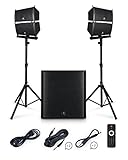
9. PRORECK Club 4000: The Best Complete Bass and Array Set
PRORECK Club 4000 18-inch 4000W P.M.P.O Stereo DJ/Powered PA Speaker System Combo Set Line Array Speaker and 18 inch Active Subwoofer with Bluetooth/USB/SD Card/Remote Control
4000W peak
18 inch active sub
Four 6 inch array tops
100 Hz to 20 kHz
Pros
- Only complete sub and array system in the roundup
- Bass and tops arrive matched
- One band owner ran a five-piece group through it
- Reported to fill a 40x60 barn with heavy bass
- Remote control removes the need to stand at the mixer
- Manufacturer support replaced a defective tripod quickly
Cons
- Subwoofer is roughly 85 pounds and a two-person move
- Tops lack onboard EQ on wired inputs and can sound harsh
- Subwoofer tends to sound muddy and one sub is often not enough
- Shorter Bluetooth range than most
- No low-mid drivers in the tops leaving a gap without EQ
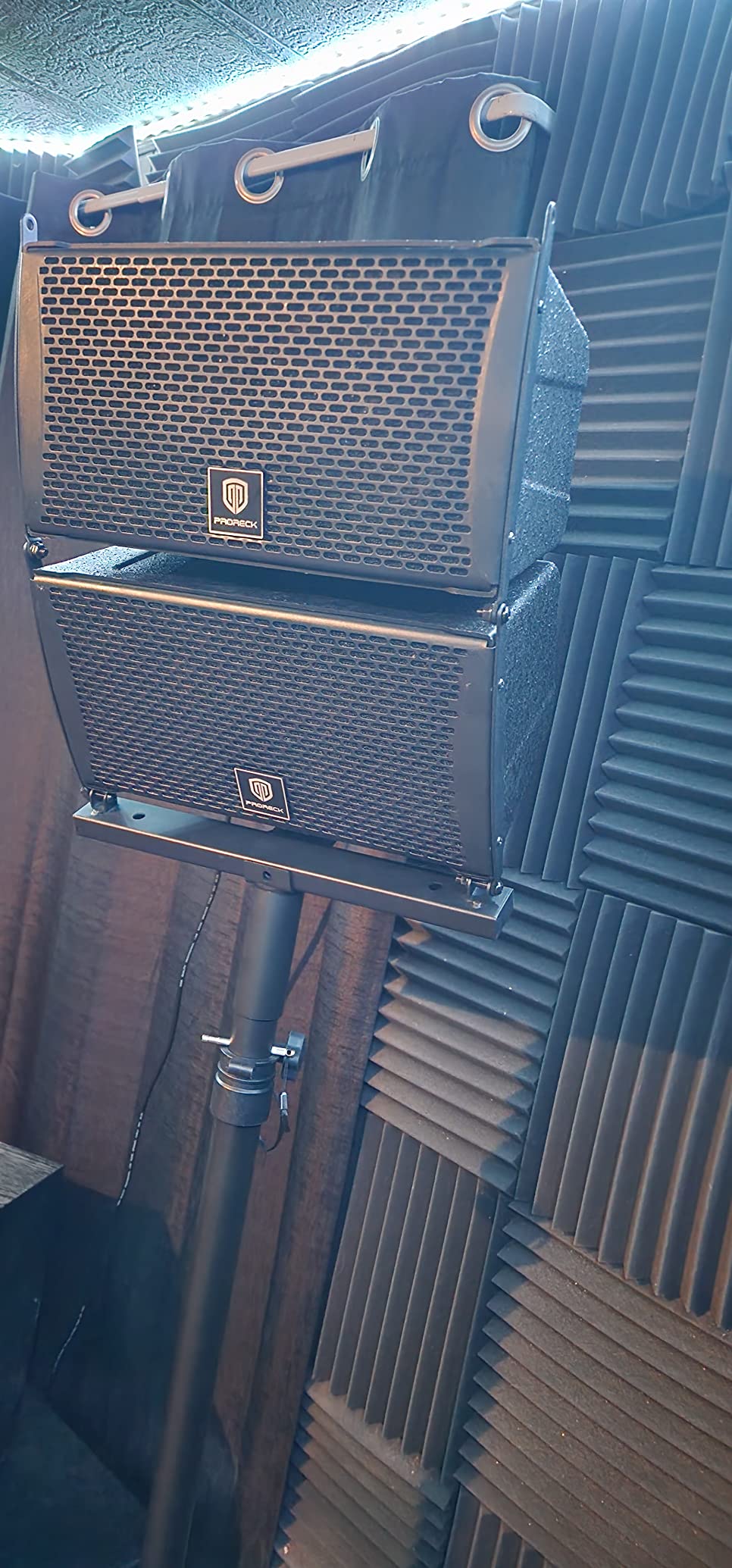
The Club 4000 is the only system here where the subwoofer and the tops are sold as a matched set, and that is the whole argument for it. An active 18-inch subwoofer with an MDF enclosure and resonance control, four 6-inch line array speakers, two telescoping tripod stands, cables, a remote and a manual arrive together. Bass and tops that were designed around each other is a proposition you assemble yourself otherwise.
Output is rated 4000 watts peak and 1000 watts RMS, with the manufacturer covering up to 500 people and 1000 square meters, and the response runs 100 Hz to 20 kHz. Owners report filling a 40 by 60 barn for a dance with bass heavy enough to move the room, and one band owner ran a five-piece group through it for 300-person venues. That is a lot of claimed reach, and the 646 reviews at 4.5 with 76% five-star suggest the claims usually hold.
Inputs are generous for a package: stereo RCA, 3.5 mm AUX and 6.35 mm and XLR combo line inputs, a two-channel mic input and a two-channel XLR output. Bluetooth reaches 66 feet with USB and SD playback, and a 20-foot remote means you can change tracks from the floor instead of walking back to the source. The subwoofer arrives as a separate package, so plan for it coming in a different box.
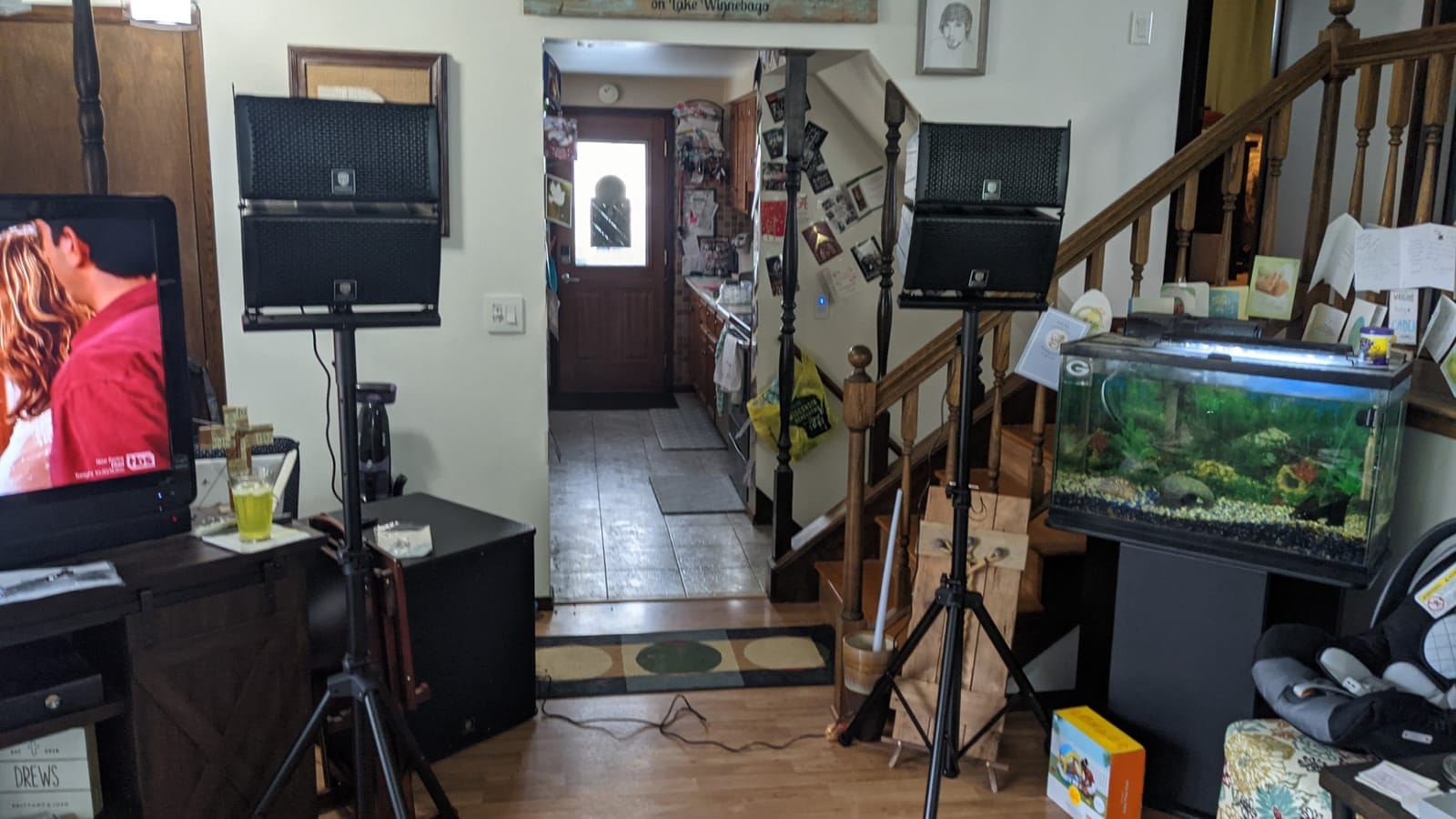
What you take on is weight and tuning work. The subwoofer is around 85 pounds and owners describe it as a two-person move that is worth adding caster wheels to. The line array tops have no onboard EQ on wired inputs, and reviewers find them harsh and sibilant above the weight of the sub. The sub itself tends to sound muddy, and one sub is often not enough to balance four tops, which is the point where external EQ stops being optional.
Bluetooth range is reported as shorter than other speakers in the same household, and the tops have no low-mid drivers, so there is a gap between sub and highs unless you EQ across the system. Manufacturer support replacing a defective tripod component in under 24 hours is a genuine plus for a package this complex. Total listed weight is 40 kg across the subwoofer and the array package together.
Is a line array the right shape for a wedding
Yes for a long or unusual room, because a vertically arrayed cabinet throws sound further down the length of a space with less energy lost to the sides. That is the difference between it working in a barn with a long axis and looking decorative in a square ballroom. In a normal reception room, a pair of conventional tops in front of the dance floor covers the same ground more simply.
The visual argument is real at weddings. A vertical array on a stand with tidy cabling reads as a professional setup rather than a stack of boxes, and couples notice how a room looks. It is a secondary reason to choose this shape, not the primary one.
What to budget around this system
Budget for two people to move the subwoofer, caster wheels, and a plan for getting the system up and down stairs or across grass. Plan for EQ time at soundcheck, because the array tops and the single sub will not balance themselves. And confirm the power situation at the venue, because a subwoofer at this size draws considerably more current than a pair of 12-inch tops.
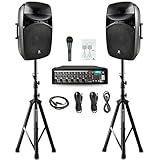
10. PRORECK MX15: The Best Bundle With a Built-In Mixer
PRORECK MX15 15inch 2500W Bluetooth Powered PA System Mixer/Amp with Stands/Mic Effect Controller 48V Phantom Power, Audio Interface
8-channel powered mixer
Two 15 inch passive speakers
2500W peak
40 Hz to 20 kHz
Pros
- 8-channel powered mixer with 48V phantom power at this level
- One owner replaced four amplifiers for a rehearsal setup
- Compact components a single user can carry
- Includes rack-mount hardware for the mixer
- 40 Hz to 20 kHz reaches lower than most 15-inch tops
Cons
- Single-bus mono system so both speakers output identically
- Limited low end for DJ use without a subwoofer
- Digital delay and reverb effects are basic
- One owner reported a broken stand knob and a speaker failure
The MX15 answers a question the other speakers here do not, which is what to do when you need more input channels than a cabinet mixer offers. The package includes an 8-channel powered Bluetooth mixer, two 15-inch passive speakers, two tripod stands, a wired microphone, a 19-foot quarter-inch cable, a power cable and a manual. The mixer has 625 watts RMS, 1250 watts program and 2500 watts peak, with 48V phantom power for condenser mics and per-channel volume controls.
Eight channels is genuinely unusual at this level and it covers a ceremony with an officiant mic, a couple of speeches, playback and a musical act without a second board. One owner replaced four amplifiers for a garage band rehearsal setup and reports the system sounds well for a PA. Another user, 73, carries the components alone, which tells you something about the weight distribution across the box.
Frequency response is 40 Hz to 20 kHz, which reaches lower than most 15-inch budget tops, and Bluetooth reaches 66 feet with a built-in USB drive interface for PC playback plus RCA input and output. The mixer is 5 by 8 by 16 inches and the speakers are 14 by 15 by 26 inches, with stands that fold for transport. Rack-mount hardware for the mixer is included, which one owner fitted into an existing rack.
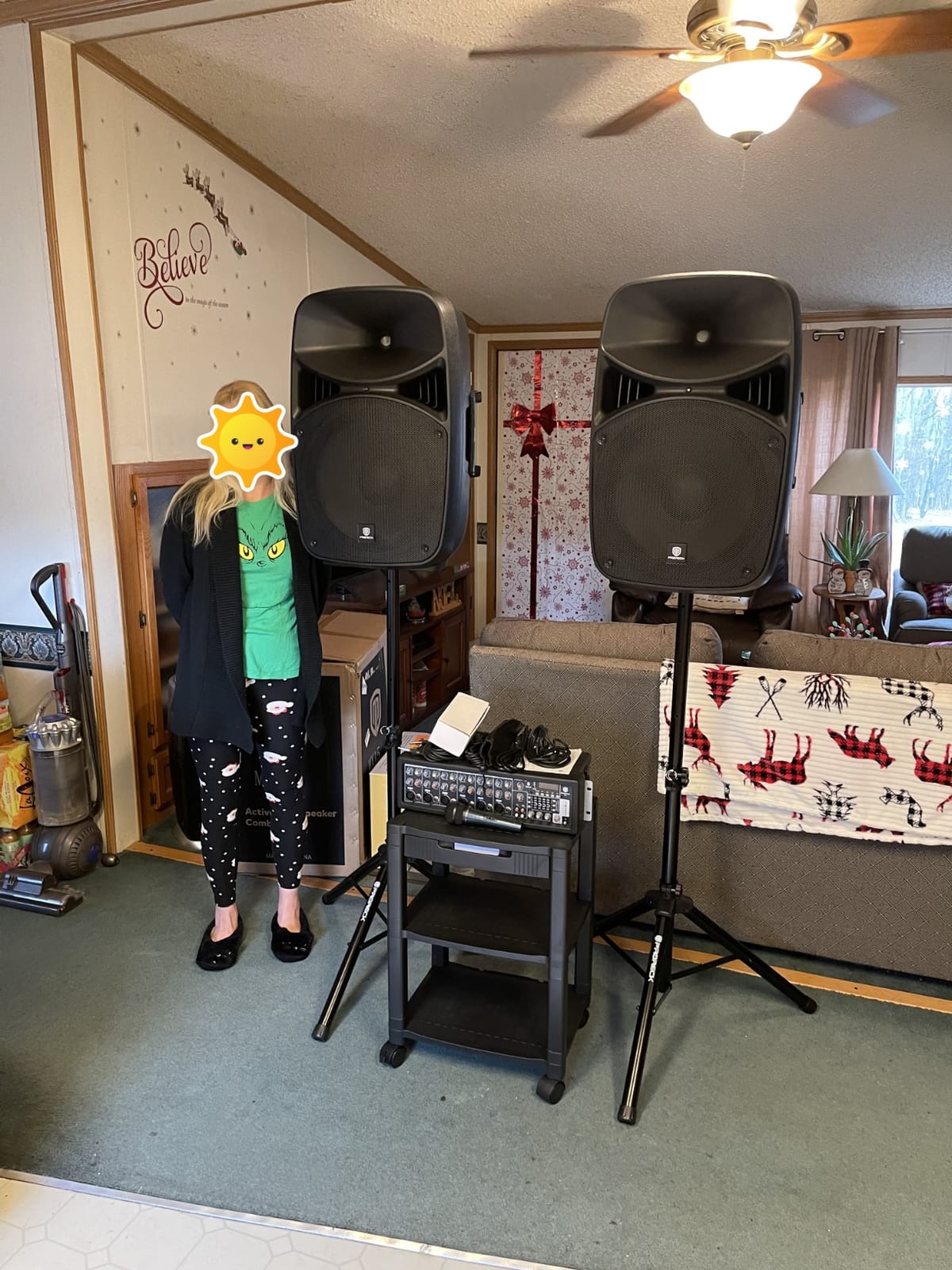
The architectural limitation is the one you must understand before you buy. It is a single-bus mono system, so both speakers output identical sound and there is no true stereo image and no separate monitor channel. For filling a wedding room that is a fair trade, and for any kind of DJ cueing or precise mixing it is not. The response is 40 Hz to 20 kHz with limited low end for DJ use, so owners considering this for dancing add a subwoofer.
Rated 4.4 from 241 ratings with 69% five-star, the two consistent limitations reviewers name are the mono single-bus architecture and the modest durability of the included stands. One owner’s stand tightening knob broke almost immediately with replacements no better, and another speaker developed a rattle and then failed within roughly two and a half months, with an amplifier overheating in a separate cabinet. The digital delay and reverb effects are basic, and there is no dedicated subwoofer line out.
Is an 8-channel mixer overkill for a wedding
It is exactly right for a wedding. The realistic channel count is an officiant mic, a groom or parent mic, a handheld for the floor, playback for music and a spare. That fills five of eight channels comfortably, and the 48V phantom power means you can use a condenser mic for speeches without a separate power supply, which is a common thing couples rent separately.
It is overbuilt for a party speaker use case and underbuilt for a working DJ, since the single bus means no cueing or independent monitor control. For someone running a wedding as a one-time event who needs microphones, a mixer and two speakers in one purchase, it is a compact and coherent box.
Where this bundle will let you down
On a dance floor. A 15-inch passive pair on a single-bus mono system without a subwoofer is a background music system, and owners say so directly. Treat the 40 Hz response as useful for speech and dinner music rather than as dance output, and plan a subwoofer and a real controller if the reception is the main event.
Also plan for a stand failure. The included stands are the weakest link in the package according to owners, so budget to replace them once, and check the speakers and amplifier during soundcheck rather than at the first dance.
How to Choose Wedding DJ Speakers
Before comparing wattage, decide what the speakers have to do. If you are DJing paid weddings, the priority is speech clarity, reliability and how fast you can load in. If you are covering your own reception, the priority is simplicity and total cost. Our guides to DJ controllers for beginners and DJ controllers for Serato cover the source side of the system.
Powered or active versus passive
A powered or active speaker has its amplifier built into the cabinet, so you connect a controller or mixer directly and there is no amp rack to rent, ship or power. A passive speaker needs an external amplifier, which adds cost, weight, another failure point and another box in the car. For weddings the decision is not close: buy the powered version, which is why every speaker in this roundup is one.
The one exception is a package that includes a mixer, where passive tops are driven by an amplifier in that mixer. That works, but you are buying a single-bus system rather than two independent speakers, and you should know that before you plan a stereo or monitor setup.
12-inch or 15-inch tops
Twelve-inch drivers are the default for a reason: they are easier to carry, cheaper, and a matched pair covers most rooms up to about 150 guests. Fifteen-inch drivers move more air per cabinet, which helps in long rooms, large barns and outdoor setups where you have fewer cabinets to spread around. Fifteen-inch cabs are heavier, so a pair plus stands is a two-person job in most cases.
A useful rule from the forums: buy the system rather than one oversized cabinet. A pair of 12-inch tops plus a subwoofer sounds better and behaves better than two large tops trying to fake bass on their own. Pushing a small speaker into distortion to chase low end is the fastest way to blow a driver at a wedding.
Do not judge a speaker by watts alone
Peak wattage is a marketing number and two speakers with the same figure can differ by several decibels of actual output. The number that matters is maximum SPL, which the Yamaha DBR12 lists at 131 dB and the JBL IRX112BT at 127 dB peak. Higher SPL means more clean output before distortion, which is what you want when the room is full and the band is playing.
Also read the DSP presets. Voicing modes for speech, music, live and club change the EQ curve, and the Speech mode on a cabinet with a real speech preset is the difference between a toast people hear and a toast people lean in for. Automatic feedback suppression and ducking matter more in a wedding than in a band rehearsal, and both appear on the Electro-Voice and JBL options here.
Connections, cables and venue power
Use balanced XLR or quarter-inch TRS between your source and the speakers, and treat RCA as a last resort. Bluetooth is convenient for a ceremony playlist but is not a reliable main path; Rockville RPG122K owners report iPhone buffering, and the RAM15BT V2’s Bluetooth is described as spotty. Keep a wired connection as your primary.
Confirm power with the venue before the day, and ask where the nearest circuit is relative to the dance floor. Bring at least 50 ft of extension per run, a spare power cord, and gaffer tape to secure connections at the outlet. Tying cables along the wall or under a rug is not optional at a venue where a planner is watching.
Appearance, cases and transport
At a wedding the setup is part of the photograph, and scuffed cabinets in a decorated room cost bookings. Clean black finishes and tidy cable management matter more here than in a rehearsal space, which is an angle the wedding-specific roundups tend to skip. Matching stands, hidden cable runs and grilles with no visible damage do more for how your rig is perceived than an expensive subwoofer.
Buy padded covers or cases. Gear damage in transit is a common forum complaint, and a scratched cabinet is both a financial loss and a client-facing embarrassment. A hand truck or dolly for a heavier pair saves your back and your finish, and it is a cheaper purchase than replacing a cabinet.
Renting or buying for a single wedding
If you are DJing one reception, rent. A rental company delivers a matched system with stands, cables and often a subwoofer, sets it up, and takes it away. That service is worth far more than the equipment cost for a single event, and it removes the risk of arriving with a package that has a dead satellite speaker or a fuse problem.
Buy when you have several events lined up, or when a rental quote approaches the cost of a used pair. The forums are consistent on the pattern: renters replace the rental cost after a handful of gigs. If you are buying your first setup, our gifts for DJ beginners guide covers the surrounding gear, and buying the speakers first is the right order.
Frequently Asked Questions
What are the best DJ speakers for a wedding?
The best DJ speakers for weddings are powered 12-inch PA speakers, run as a matched pair on stands. The QSC K12.2 is the professional standard working DJs name most often, and the Electro-Voice ZLX-12P-G2 is the strongest value option because its built-in digital mixer handles microphones and music in one cabinet. Add a subwoofer for a reception over 100 guests.
What speakers do most DJs use?
Most working mobile DJs use a matched pair of 12-inch powered tops, usually from QSC, Electro-Voice, JBL or Yamaha, mounted on stands at the front of the dance floor. On r/DJs the QSC K-series is repeatedly named as the default professional choice, and the Electro-Voice ZLX line is the most common value recommendation. Speakers stay on stands and never on the floor.
What is the best brand for DJ speakers?
There is no single best brand, because the categories are strong at different things. QSC is the safest professional default for mobile work, Electro-Voice offers the most capable built-in mixer, JBL leads on lightweight cabinets and feedback suppression, and Yamaha backs its DBR range with a 7-year warranty. Match the brand to how many events you play and who carries the gear.
What is the best speaker for a wedding ceremony?
For a wedding ceremony, one or two 12-inch powered tops on stands at the front are enough, chosen for speech clarity rather than output. Cabinets with automatic feedback suppression and ducking, such as the Electro-Voice ZLX-12P-G2 and the JBL IRX112BT, stop toasts from howling in reflective rooms. Use a speech DSP preset and keep vocal mics well clear of the speakers.
Are 15-inch speakers better for DJs?
Fifteen-inch speakers are not better in general, they are better in specific rooms. They move more air per cabinet, which helps in long barns, outdoor setups and rooms over 150 guests, but they are heavier and cost more. A pair of 12-inch tops plus a subwoofer covers most wedding rooms better than two 15-inch cabinets trying to handle bass on their own.
How many speakers do I need for a wedding?
One pair of 12-inch powered tops covers 50 to 100 guests. From 100 to 150 guests, keep the pair and add a subwoofer. For 150 to 200, use the pair plus a sub or a matched pair of 15-inch tops, and place them at the front corners of the dance floor on stands. Past 200 guests or in a tent, treat it as a live sound problem and confirm power, noise limits and a sound curfew with the venue.
Do I need a subwoofer for a wedding?
You need one once the dance floor fills, because dance music lives in the low frequencies a 12-inch cabinet cannot produce cleanly. Two tops alone handle ceremony audio, cocktail hour and dinner music without a sub. If the room is under 100 guests and the music stays conversational, a sub is optional, and pushing small speakers harder for bass is the fastest way to distort and damage them.
Final Verdict: The Best DJ Speakers for Weddings
The best DJ speakers for weddings in 2026 are the QSC K12.2 as the overall pick, because the 2000-watt Class-D module, savable Scenes and quiet fan handle a full day of ceremony and dancing in one cabinet. The JBL EON712 is the value answer, lighter on your back and easier on the budget, with uniform coverage from its waveguide. The Electro-Voice ZLX-12P-G2 wins the speech category outright, since its built-in feedback suppression and ducker solve the two problems couples complain about most.
Beyond 100 guests, add a subwoofer, because that single purchase changes a reception more than any upgrade to the tops. Run two zones rather than one, keep vocal mics away from the speakers, use wired connections with a Bluetooth fallback, and confirm power, noise limits and a curfew with the venue before the day. Our picks above cover the ceremony, the dance floor, off-grid outdoor setups and the all-in-one packages for a single reception, and each one is compared for what it costs you as well as what it delivers.