
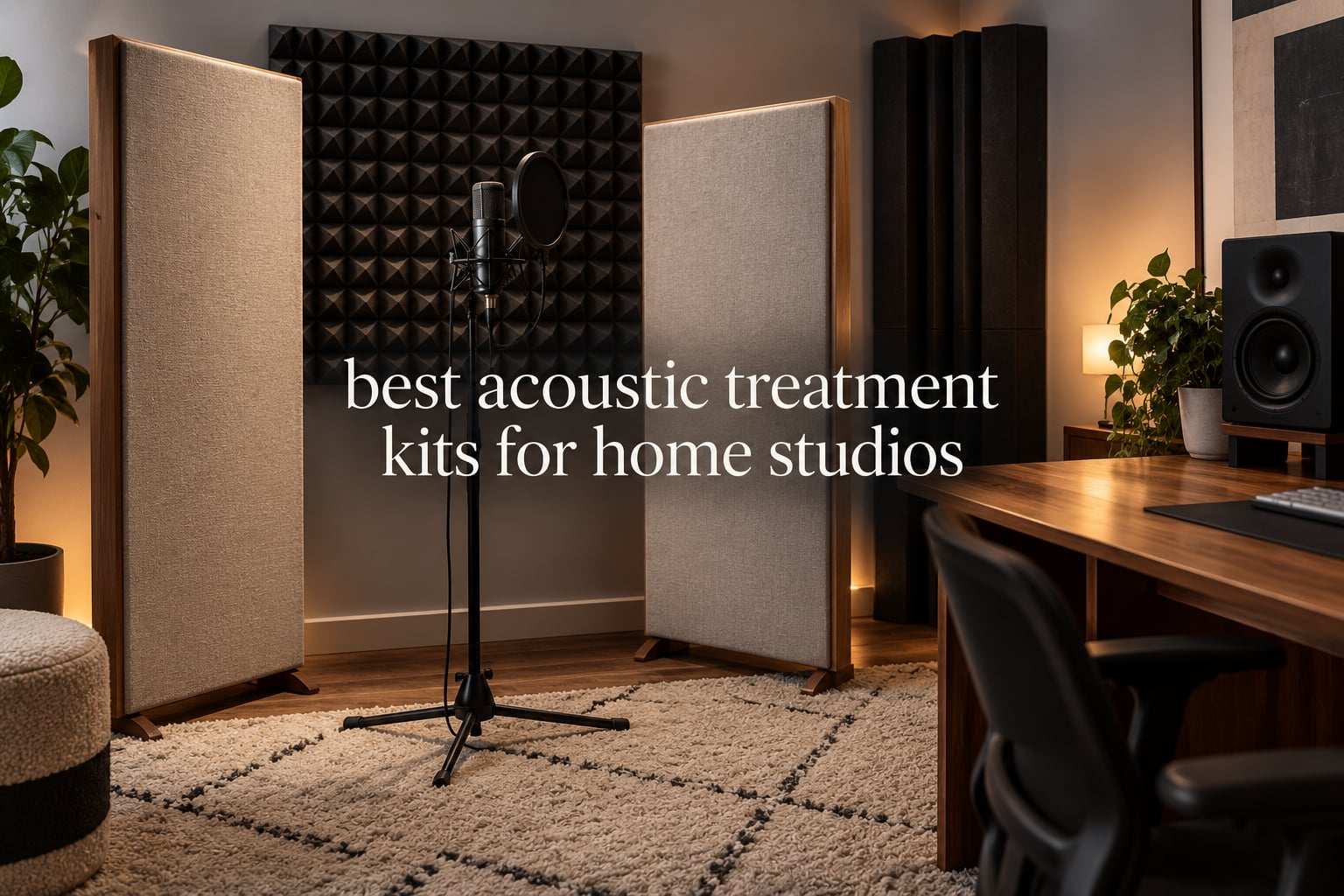
Most home studios are boxes. Carpet, a duvet on the wall and a foam wedge in one corner feel like progress, but the room still colours everything you record. What actually fixes it is broadband absorption in the right places, and an acoustic treatment kit is simply the fastest way to get that without building frames yourself.
We spent weeks comparing the ten kits below, checking published NRC figures, panel thickness, coverage in square feet, whether corner bass traps are included, and what mounting hardware actually comes in the box. We grouped them by what they actually fix, not by marketing language, and we called out the honest limits of each one. Our aim is simple: help you spend your money on the kit that matches your room and your problem.
If your setup lives in a spare bedroom rather than a purpose-built room, the geometry matters as much as the gear. Our guide to the best acoustic pianos for home covers the instrument side; this page is about the room around your microphone and monitors.
Table of Contents
What Is an Acoustic Treatment Kit?
The best acoustic treatment for a home recording studio is thick broadband absorption placed at corners and first reflection points, plus a ceiling cloud, sized to roughly 40-50% coverage of the room’s walls and ceiling. Foam wedges are not it. They handle high frequencies only.
An acoustic treatment kit bundles those absorbers into one purchase, usually a fixed piece count of panels, corner traps and sometimes a diffuser. The panel absorbs sound energy rather than blocking it, turning reflections into a tiny amount of heat so the room decays faster and your mix stops smearing.
Three numbers decide whether a kit is worth anything. NRC (noise reduction coefficient) runs 0 to 1, so a panel rated 0.8 absorbs roughly 80% of incident sound energy at its rated frequencies. Thickness sets how low the panel reaches: 2 inch panels get you to about 250 Hz, while 4 inch panels reach roughly 125 Hz where room boom lives. RT60, the time sound takes to decay 60 dB, is what you actually measure, and a studio target sits between 0.2 and 0.4 seconds.
Those three numbers are the only honest way to compare kits, which is why every review below leads with them.
Top 3 Picks for the Best Acoustic Treatment Kits
These three cover the most common home studio situations: a general-purpose panel pack, a thin high-value absorber set, and the highest-rated adhesive option here.
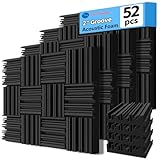
TroyStudio Foam Panels 52-Pack
- 2 inch thick broadband foam
- NRC 0.8
- 52 square feet of coverage


Dailycooper Panels 12-Pack
- Self adhesive backing
- 9.4 lb/ft3 polyester
- Highest rated pick in this guide
All 10 Kits Compared in 2026
Every kit below, with its real specifications. Read the thickness column before anything else, because a 0.4 inch panel and a 2 inch panel solve completely different problems even when the NRC numbers look similar.
| Product | Specifications | Action |
|---|---|---|
| TroyStudio Foam Panels 52-Pack |
|
Check Latest Price |
 JBER Corner Bass Traps 4-Pack JBER Corner Bass Traps 4-Pack |
|
Check Latest Price |
| BXI Sound Absorber 6-Pack |
|
Check Latest Price |
| Dailycooper Self-Adhesive Panels 12-Pack |
|
Check Latest Price |
 Burdurry Wedge Foam 50-Pack Burdurry Wedge Foam 50-Pack |
|
Check Latest Price |
 shipxinfuren Panels 4-Pack 48 x 24 shipxinfuren Panels 4-Pack 48 x 24 |
|
Check Latest Price |
 NEPIS Brick Panels 20-Pack NEPIS Brick Panels 20-Pack |
|
Check Latest Price |
 AudioSilk Room Kit 4-Pack AudioSilk Room Kit 4-Pack |
|
Check Latest Price |
 Knightsacoustic Wedge Foam 96-Pack Knightsacoustic Wedge Foam 96-Pack |
|
Check Latest Price |
 TroyStudio Corner Bass Traps 12-Pack TroyStudio Corner Bass Traps 12-Pack |
|
Check Latest Price |
Two patterns jump out. Every option with real broadband reach is 2 inches or deeper, and everything thinner is limited to mid and high frequencies no matter what its NRC sticker claims. Coverage also varies wildly, from 7.7 square feet per pack to 96, so the piece count alone tells you nothing useful.
1. TroyStudio Thick Foam Panels 52-Pack
This is the best acoustic treatment kit for most home studios because it pairs genuine 2 inch depth with 52 square feet of coverage in a single order. It handles reflection points and moderate boom at once, which is why it is our editor’s choice.
TroyStudio Thick Acoustic Foam Panels, 12 X 12 X 2 Inch 52 Pcs Broadband Sound Absorbing Foam, Dense Soundproof Padding Tile, Recording Studio Foam Absorber, Groove Decorative 3D Wall Ceiling Panel
2 inch thick foam
52 square feet of coverage
NRC 0.8
Black, 7.83 pound pack
Pros
- 2 inch depth reaches lower than thin tiles
- 52 square feet from a single pack
- Soft and cuttable with a knife
- Light enough for removable strip mounting
Cons
- Vacuum-packed panels can stay crushed or deformed
- Light foam absorbs but does not block sound
- Faint new-foam odour on arrival
- Sizes run slightly under 12 inches
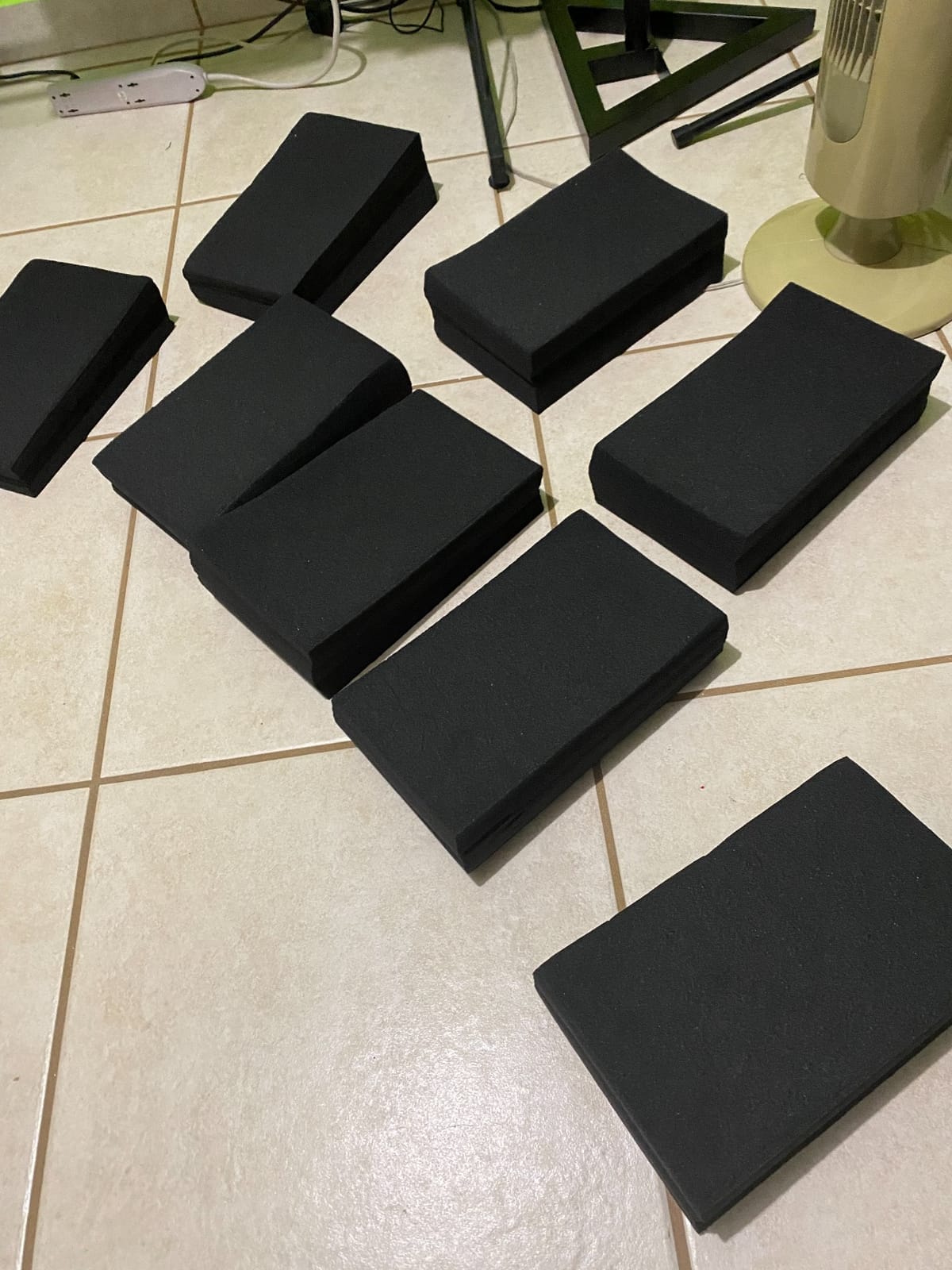
I have watched people peel these out of the bag and give up because the first few look like flat pancakes. Give them a day or two off the vacuum and they come back to full height, though the manufacturer still recommends a warm-water soak for stubborn pieces. Once expanded, the groove profile looks far better in a room than a plain pyramid tile.
The measurement that matters here is thickness, not the NRC sticker. At 2 inches, this pack works down to roughly the 250 Hz range, which is the region where a bedroom studio starts sounding boomy and muddy. It will not rescue a very small room from serious low-frequency buildup, because you need real depth in the corners for that.
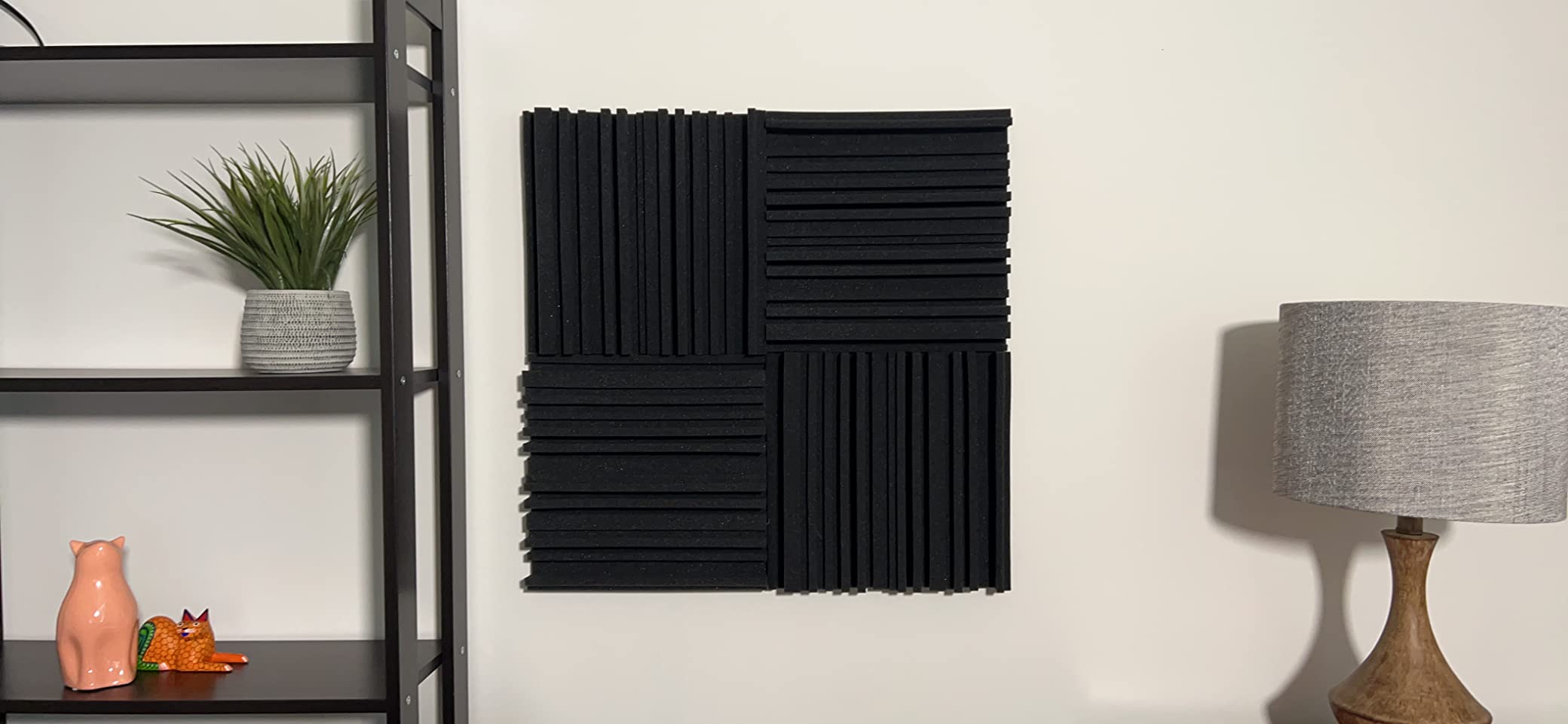
At 0.12 pounds per panel, mounting is unusually flexible. Reviewers report success with command strips, thumb tacks and removable tape, which matters a great deal if you rent. The soft polyurethane cuts cleanly with a knife, so you can fit odd wall and ceiling shapes without a saw.
Two honest limits. This is light, low-density foam, so it treats reflections without adding any isolation, and reviewers do report a faint smell for the first day or two after opening. Anyone expecting it to stop traffic noise from the street will be disappointed, because absorption and isolation are different jobs.
When this pack makes sense
Choose it when your problem is slap echo and early reflections in a room of roughly 10 by 10 to 12 by 14 feet, and you want one order rather than three. Fifty-two square feet covers a ceiling cloud and a full set of first reflection point panels with room to spare.
It also works well for vocal booths, home theaters and streaming rooms where the look matters, since the groove pattern reads as decor rather than industrial foam. Flame retardant to California Technical Bulletin 117-2013 is a plus for shared living spaces.
When it falls short
It will not fix deep bass in a small square room on its own. If your monitors boom or your kick drum blooms no matter where you sit, you need thicker corner traps first, and only then panels at the reflection points.
Buyers who expected soundproofing report disappointment, because no foam panel of this weight stops sound leaving the room. And if you are sensitive to smell, air the pack out for a day before it goes near your microphones.
2. JBER Corner Bass Traps 4-Pack
The JBER set is the cheapest corner treatment we found and a sensible first move if bass is the immediate complaint. It is designed to sit vertically between two walls, or horizontally along a wall-ceiling junction, and it mounts with glue, tape or nails.
JBER 4Pack Acoustic Foam Corner Bass Traps, Studio Foam Corner Block Finish
7 inch corner blocks
Set of 4
1.04 pounds total
Black foam
Pros
- Cheapest route to corner treatment
- Sharp square edges look clean
- Lightweight and mounts with tape or nails
- Targets low and mid frequency buildup
Cons
- Light foam has limited low-frequency authority
- Small blocks mean many packs for one room
- Too soft to block sound
Corners are where low frequencies pile up because three surfaces meet there, so filling them is the standard first move. Reviewers like the neat geometry, which reads as a proper studio fitting rather than a foam wedge stuck in a spare room, and the installation is genuinely a five-minute job with double-sided tape.
The catch is the material. These are light foam blocks, and at that weight the honest expectation is midrange control and some low-end help rather than true bass trapping. A user in a Gearspace treatment thread made the same point about cheap foam traps: build them from fluffy mineral wool if bass is the target.
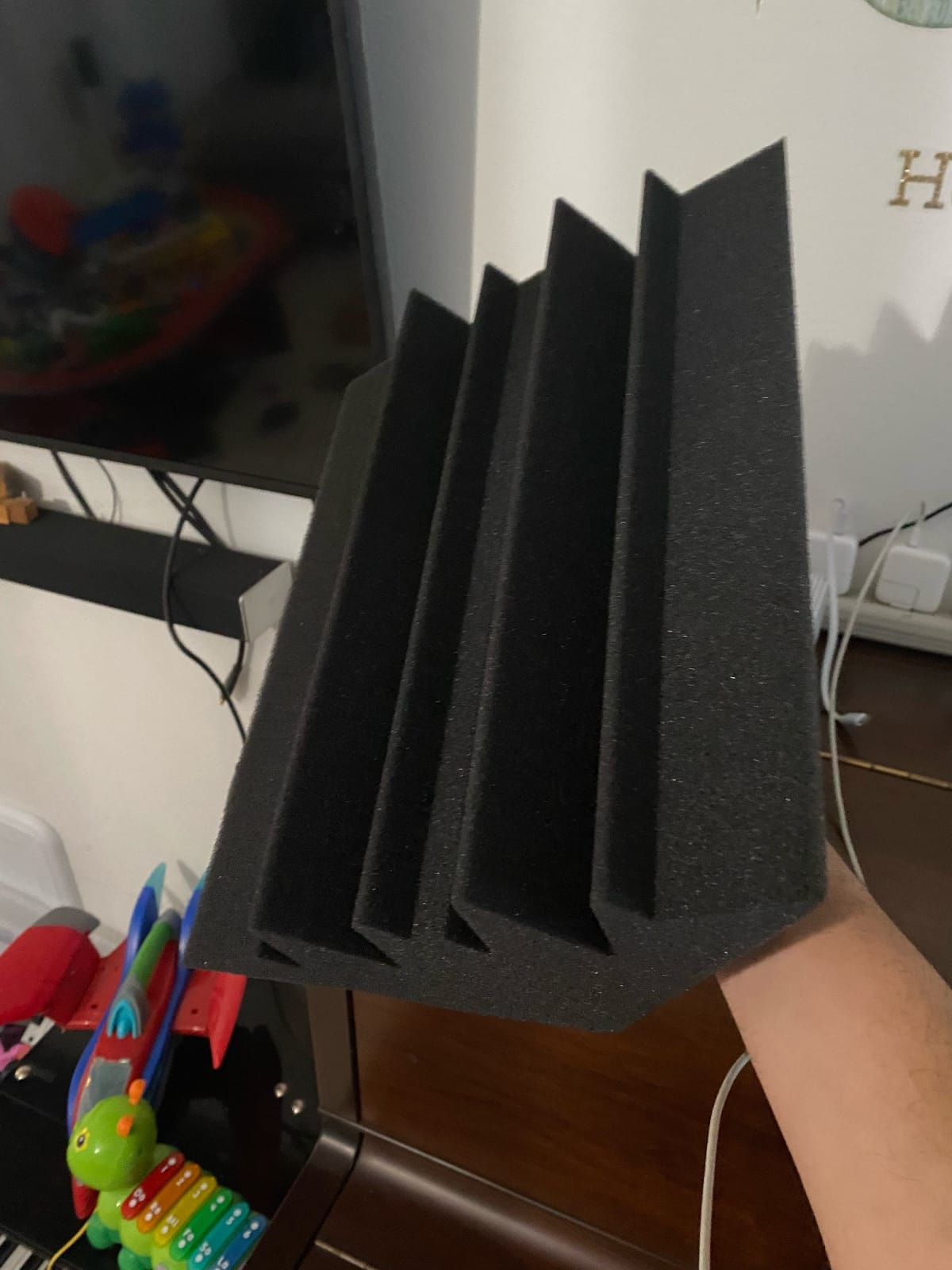
At four blocks per pack, sizing matters more than usual. A single room with four vertical corners and two ceiling junctions can eat several packs before you have covered anything, so check how many you need against the corner count before ordering once.
What you gain is speed and low commitment. Nobody regrets a small corner pack the way people regret a wall of panels in the wrong place, and it is a good way to test whether corner treatment makes a measurable difference in your room.
When this pack makes sense
Pick it for a bedroom studio, closet booth or home theater where you want to try corner treatment cheaply. It suits renters too, since double-sided tape on a flat wall or ceiling edge needs no drilling.
It also works as a top-up for a room that already has wall panels but still booms slightly in the corners. Used that way, it is doing the job it is actually good at.
When it falls short
If your problem is genuinely deep bass in a small room, this will disappoint you. The density is too low and the 7 inch footprint too small to move the room modes that cause boom.
Some buyers also find the foam too soft for anything beyond decorative finishing, and stacking several packs to reach real bass performance pushes the cost well past what a thicker broadband kit would cost.
3. BXI Sound Absorber 6-Pack
The BXI pack is the best value in this guide if your room only needs high-frequency control. It publishes an NRC of 0.95 from 0.4 inch polyester fibre at 200kg/m3 density, which is high absorption for a panel this thin.
BXI Sound Absorber – 16 X 12 X 0.4 Inches 6 Pack High Density Acoustic Absorption Panel, Sound Absorbing Panels Reduce Echo Reverb, Tackable Acoustic Panels for Wall and Ceiling Acoustic Treatment
16 x 12 x 0.4 inch panels
Set of 6
7.7 square feet
NRC 0.95
Pros
- Very high absorption for thin panels
- Dense stiff polyester rather than soft foam
- Square cuts tile into neat patterns
- Wide colour range in a decor-friendly finish
Cons
- Not a broadband absorber or isolation product
- Actual sizes run a little under 16 x 12 inches
- Some colours read lighter than listed
- Light plastic wrapping can dent corners
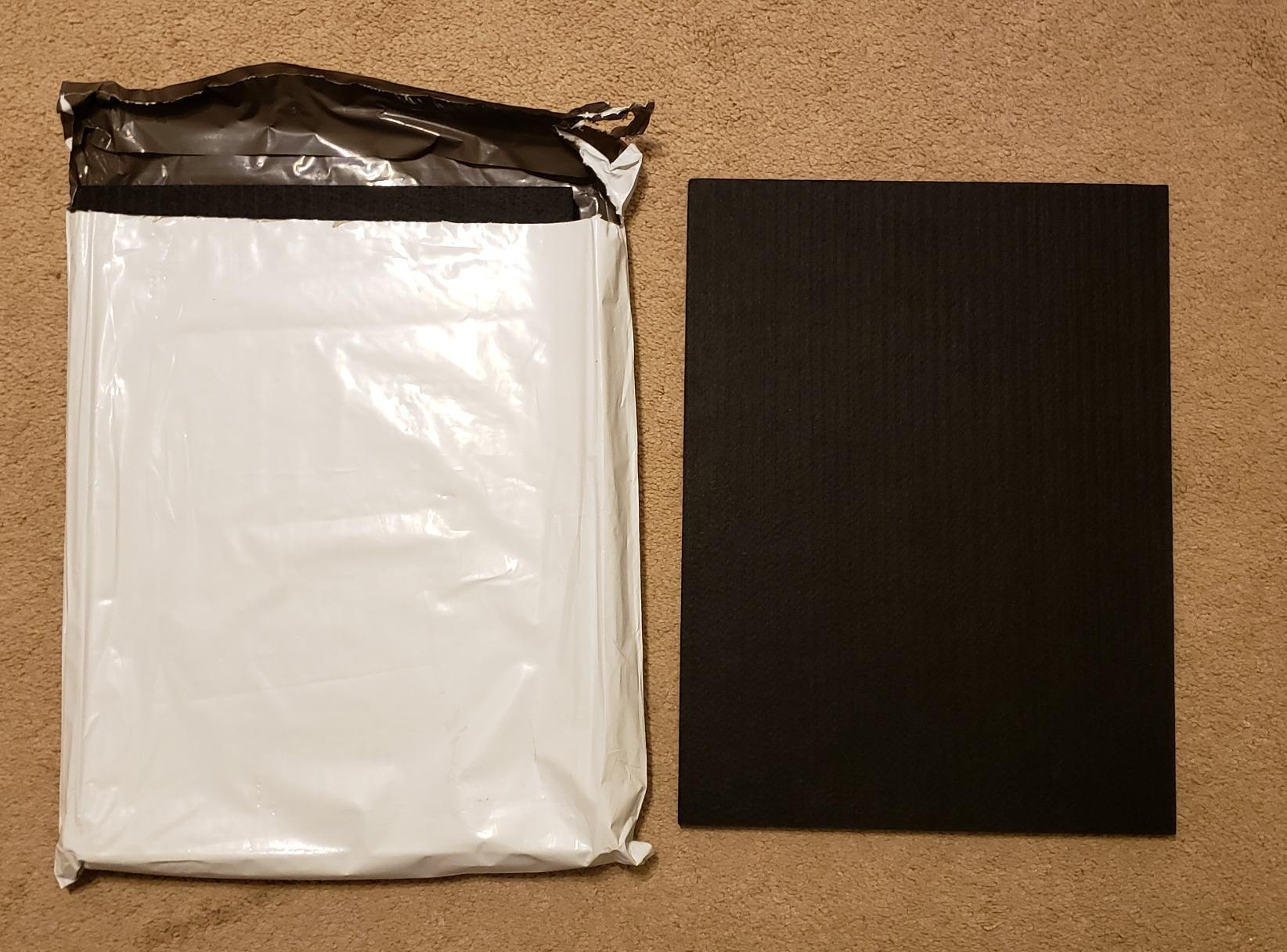
There is a real engineering reason polyester fibre behaves this way at such a thin depth. Unlike open-cell foam, dense polyester holds its structure right to the face, so a fraction of an inch of it still absorbs most of the energy arriving at 1 kHz and above.
In practice this is the panel that fixes a voice-over or podcast room, the harsh ringing above a desk, and the flutter echo between hard parallel walls. Reviewers consistently describe it as quieting a room rather than blocking noise from outside it, which is exactly the intended behaviour.
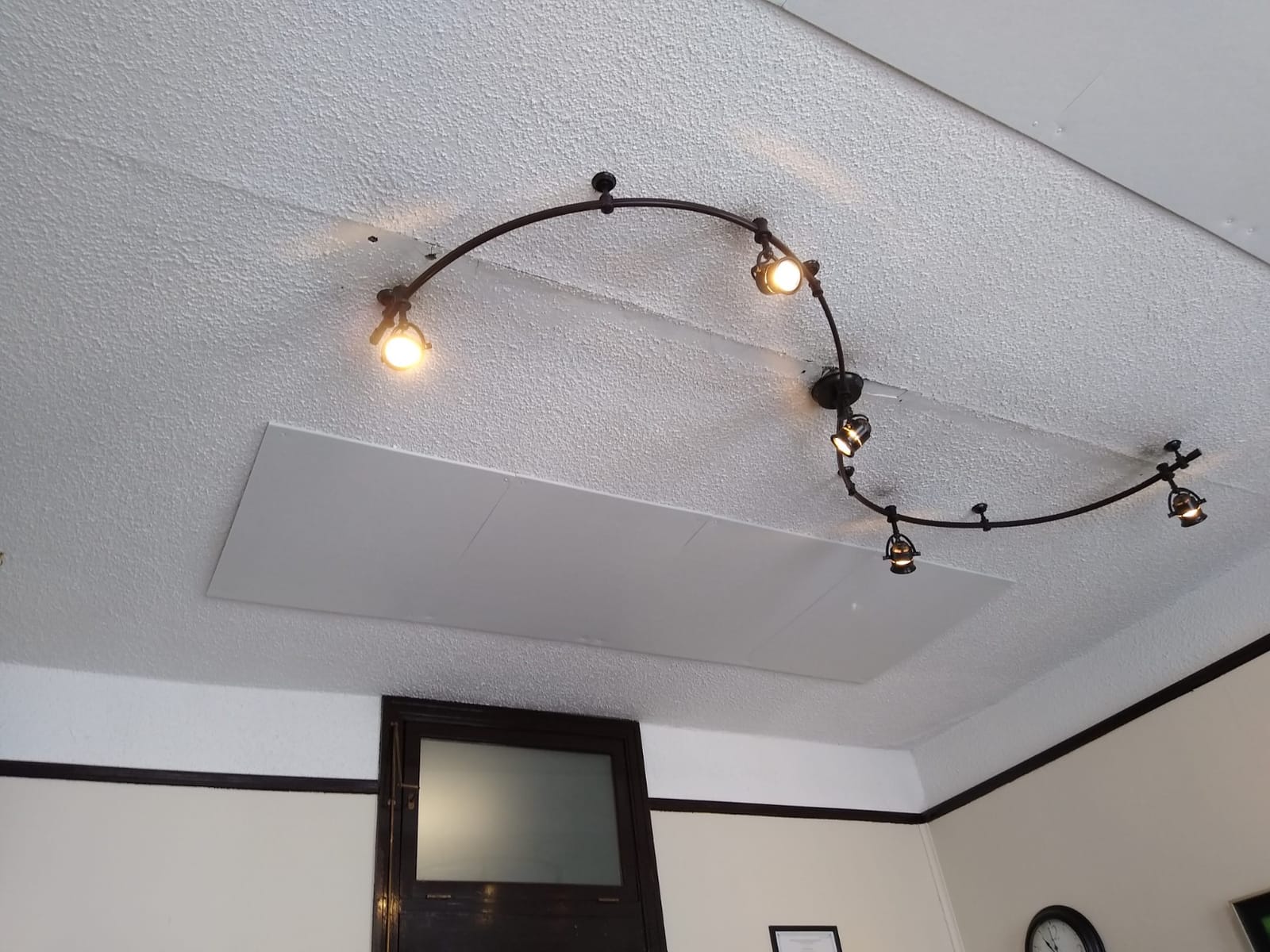
One practical note. Mounting adhesive is sold separately, so budget for VHB tape or construction adhesive, and account for a 2% cutting tolerance when you lay out a symmetrical pattern across two walls. Class B1 flame retardant and formaldehyde-free construction make it a safe choice for a child’s room or a shared office.
The main misconception is that an NRC of 0.95 on a thin panel makes it a full treatment. It does not. The coefficient applies across the panel’s rated frequency range, which for material this thin is the top end, and bass passes straight through.
When this pack makes sense
It suits vocal booths, podcast rooms, home theaters and any space where the complaint is echo and harshness rather than boom. Six panels is a sensible first step for a desk setup behind a monitor pair.
It also works well in a rental, mounted on hard surfaces with removable tape, and pairs naturally with a separate bass trap pack for the corners. The colour range helps if the room has to look like a room.
When it falls short
It will not touch low-frequency problems. Anything under roughly 500 Hz goes through 0.4 inch of material almost untouched, so a boomy small room stays boomy.
Owners also report slight undersizing against the listed dimensions and colour differences between batches. If your layout depends on exact square footage, measure a panel before you order four packs.
4. Dailycooper Self-Adhesive Panels 12-Pack
The Dailycooper pack has the highest average rating of anything in this roundup at 4.4 stars from 830 ratings, and the backing is already on the panels. If you want the fastest possible install with no separate tape, this is the one.
Dailycooper 12 Pack Self-Adhesive Acoustic Panels 12″ X 10″ X 0.4″ – Sound Proof Foam Panels for Walls with High Density, Y-Lined Design, Flame Resistant, Absorb Noise and Eliminate Echoes(Black)
12 x 10 x 0.4 inch panels
Pack of 12
7.5 square feet
9.4 lb/ft3 polyester
Pros
- Highest average rating in this roundup
- Peel and stick backing needs no extra tape
- Beveled Y-lined look doubles as decor
- Easy to trim with a knife
Cons
- Only about 7.5 square feet per pack
- At 0.4 inches thick isolation performance is limited
- Some buyers find panels smaller than the photos suggest
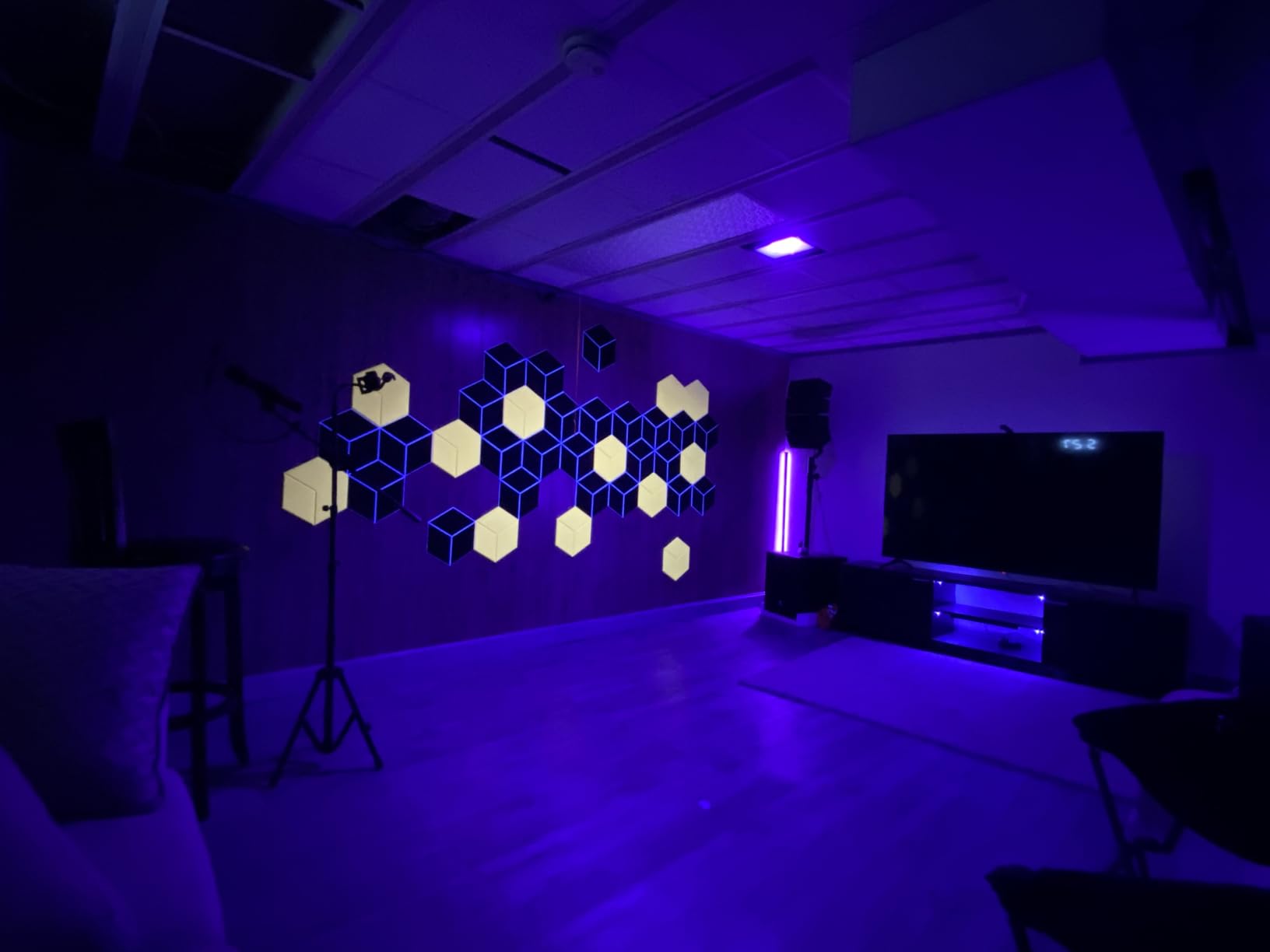
Installation speed is the real story here. You peel the backing, press the panel onto a clean wall, and reposition it before the adhesive sets. For someone who has never mounted a panel before, that removes the most common failure point, which is bad adhesive and a crooked first hole.
Add a bevel profile, which a low-density open-cell foam tile does not manage at this thickness, and you get a panel that decorates a gaming room or home office without looking like studio hardware. Reviewers like the modern styling and the visible reduction in echo between rooms.
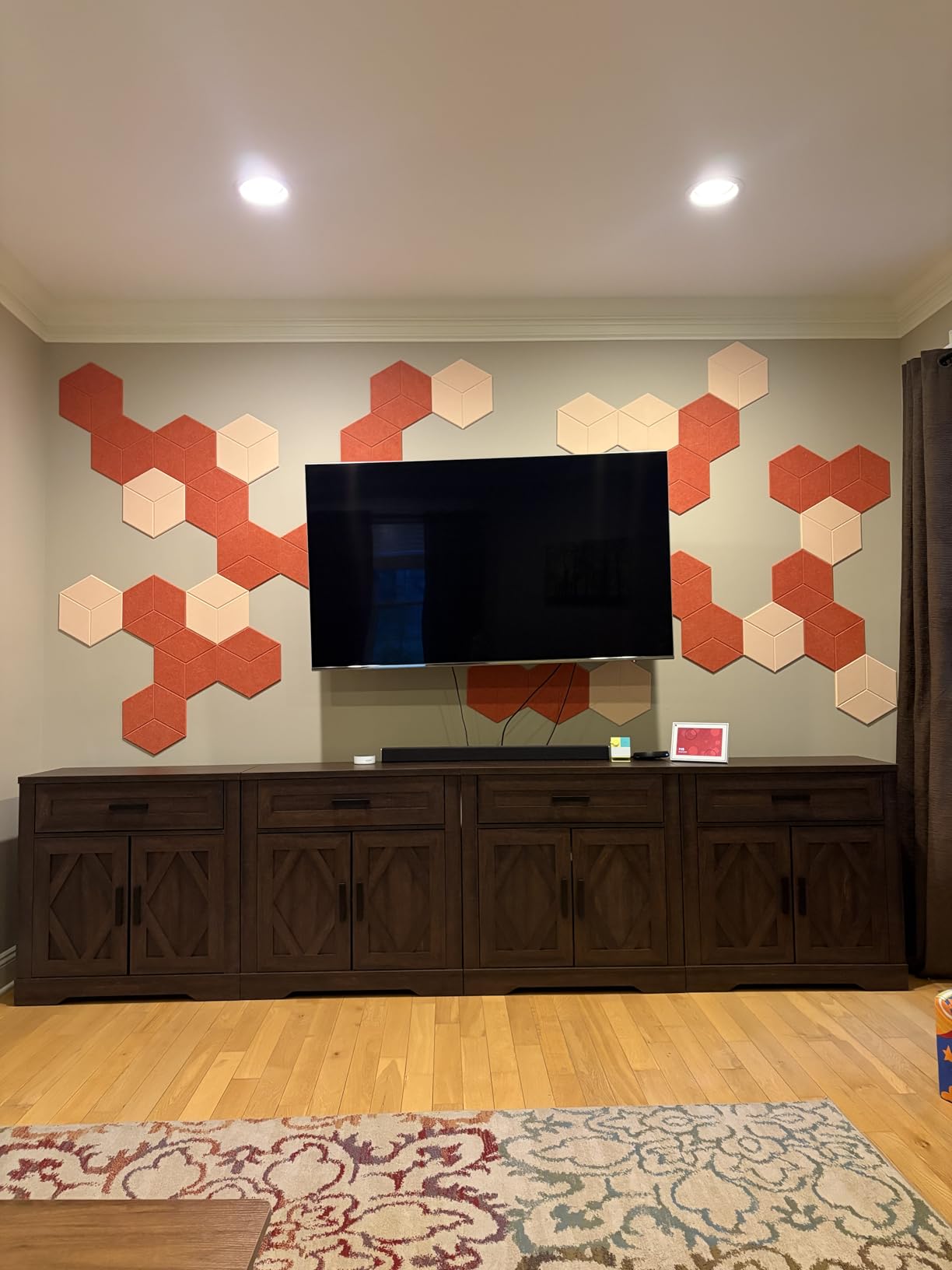
Keep expectations realistic on coverage. Twelve panels at 12 by 10 inches add up to roughly 7.5 square feet, so a serious wall or ceiling treatment needs several packs. Flame retardant and odourless construction is listed, and 100% polyester fibre keeps the material consistent.
Two practical cautions. At 0.4 inches this is a high-frequency panel, so do not buy it expecting bass control. And a self adhesive backing that is genuinely convenient for walls may disappoint on textured plaster or paint that is flaking, where a mechanical fastener holds better.
When this pack makes sense
It fits game rooms, home offices and streaming setups where echo control is the goal and the walls should still look good. It also suits anyone in a rental who wants removable panels with no drilling.
For a home theater with hard seating and a large screen, several packs of these cut the bright slap between ceiling and floor cheaply. The styling helps when the room is not a dedicated studio.
When it falls short
It will not fix a boomy small room, and some buyers who bought it for soundproofing found 0.4 inches far too thin for that purpose. Coverage per pack is modest, so the total cost of treating a room properly adds up quickly.
A minority of reviews also note the panels are smaller than the product photos suggest. Measure your intended layout first and confirm the adhesive will hold on your wall finish.
5. Burdurry Wedge Foam 50-Pack
The Burdurry pack is the cheapest route to a large amount of surface coverage, with 50 wedge tiles in one order. It works well for treating first reflection points and a ceiling across a wide area, and it cuts to size easily for odd shapes.
Burdurry 50 Pack Acoustic Panels, Wedge Soundproof Studio Foam for Walls
12 x 12 x 1 inch wedges
Pack of 50
Polyurethane foam
3.61 pounds
Pros
- Large panel count gives broad coverage
- Wedge profile suits reflection and ceiling points
- Fireproof and fade resistant foam
- Cuts to size without losing performance
Cons
- Vacuum packing needs 24 to 48 hours to expand
- 1 inch profile limits low-frequency absorption
- Some pieces arrive misshapen
Fifty tiles means you can cover a full ceiling and both first reflection walls in a single project, which is more than most small packs allow. Owners use it as general echo control across large surfaces rather than as targeted treatment.
The dominant theme in reviews is the recovery window. These arrive vacuum-packed and typically need a day or two to reach full height, and some people speed it up with a warm-water soak followed by drying. Plan the install for a weekend after the panels arrive rather than the day you need them.
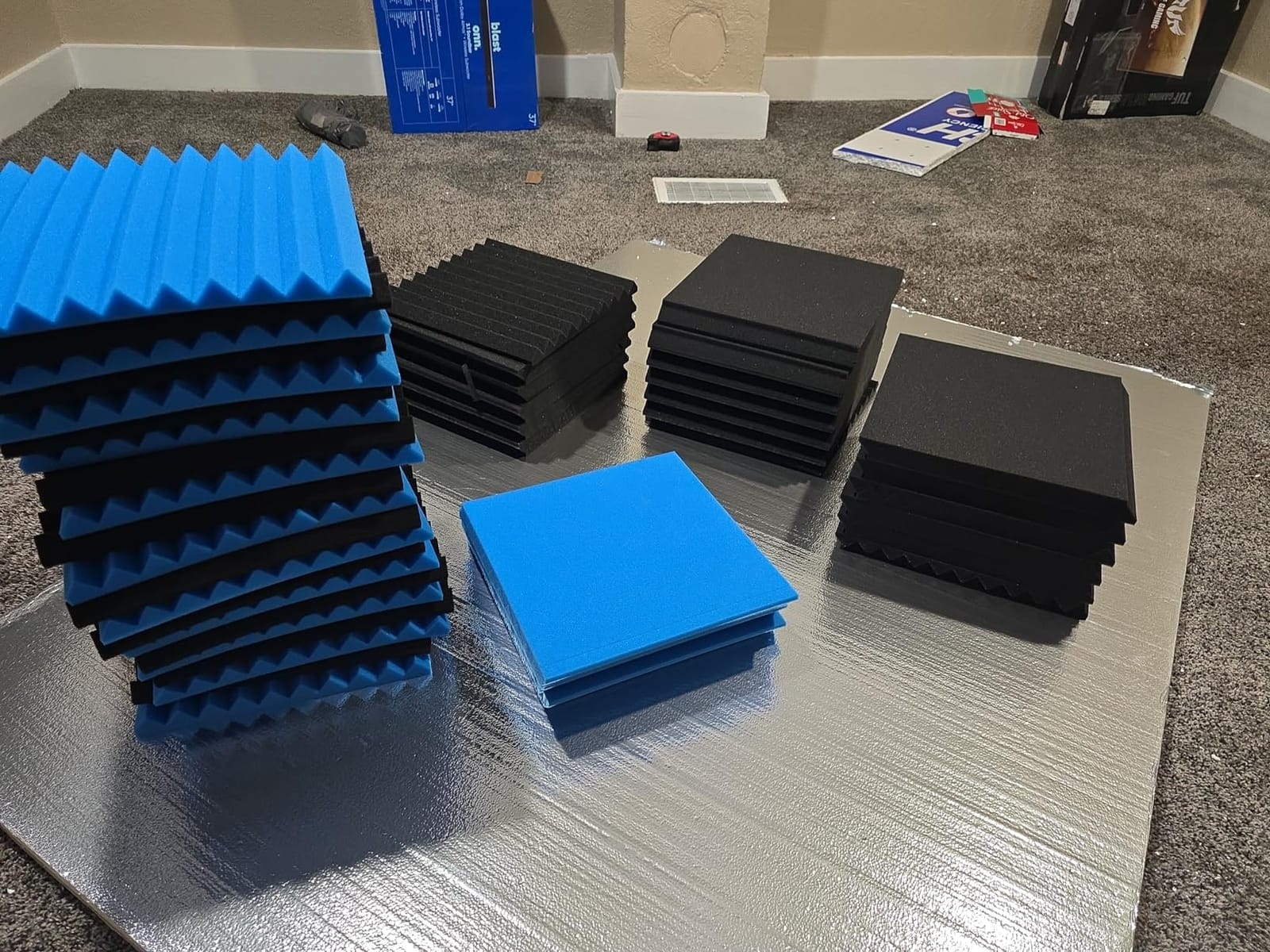
Mounting is flexible in a way that suits renters: double-sided tape, glue, staples, nails, screws or tacks all work. Fireproof, fade-resistant and odourless polyurethane means it will not yellow dramatically in a lit room, which matters more than people expect.
The honest limit is the 1 inch profile. That thickness handles mid and high frequencies well and does very little below about 400 Hz, so a room with bass problems will sound marginally cleaner and essentially unchanged. This is why we rate it for coverage rather than performance per panel.

When this pack makes sense
It suits a large untreated bedroom or basement studio where the budget is limited and the goal is broad echo reduction. It also works as a first layer of treatment before you invest in thicker panels.
For a home theater with many people and hard seating, fifty tiles remove the bright reflections that make dialogue ring. Being able to cut them freely makes them useful in rooms that are not rectangles.
When it falls short
It does not address bass, and any expectation that a large volume of thin foam will fix boom is a mismatch between the material and the problem.
The 24 to 48 hour expansion delay catches people out, as does the occasional tile that arrives misshapen. Check pieces before mounting and soak any that stay flat.
6. shipxinfuren Panels 4-Pack 48 x 24
The shipxinfuren set is the best broadband control pick in this roundup for a mid-size room, and the reason is size combined with depth. Four panels at 48 by 24 inches and 2 inches thick cover nearly 32 square feet of wall with very few seams.
4 Pack Acoustic Foam Panels, 48 x 24 x 2″ Sound Proof Foam Panels for Walls
48 x 24 x 2 inch panels
Pack of 4
Fire retardant polyester foam
6.07 pounds
Pros
- Very large panels cover a lot of wall with four pieces
- 2 inch depth feels like real broadband treatment
- Cuts easily with scissors or a blade
- Fast shape recovery after vacuum opening
Cons
- Supplied adhesive patches hold poorly
- Occasional units arrive compressed or off shade
- Foam is bulky to mount without a backboard
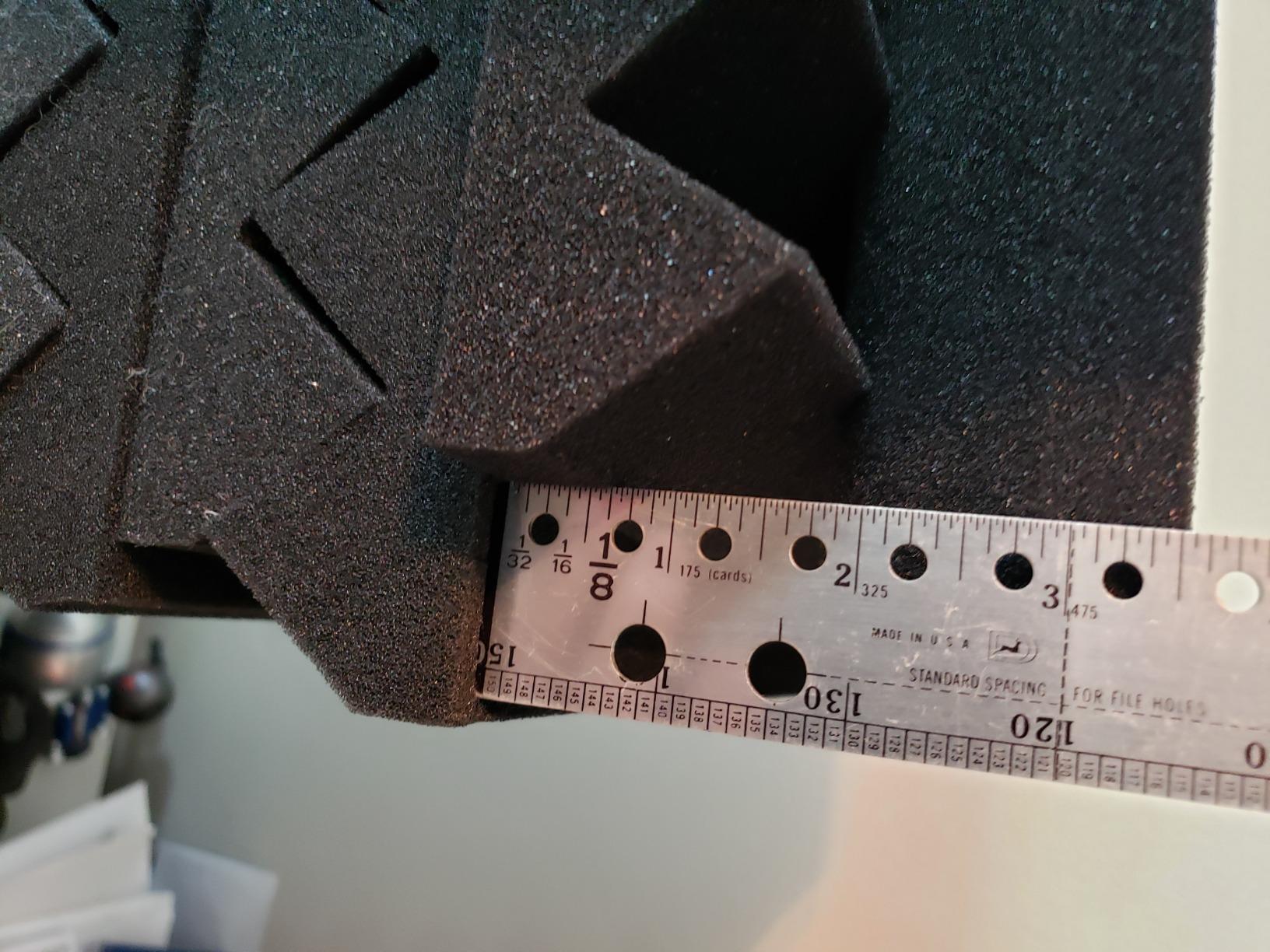
Large panels matter more than most buyers expect. Every seam between small tiles is a place where absorption drops, and a 48 by 24 inch panel lets you place one absorber exactly on a first reflection point rather than assembling it from four tiles.
At 2 inches thick, this set has the depth needed to work down toward the 250 Hz region, and reviewers report noticeably dead rooms and contained bass compared with thin panels. The polyester foam is fire resistant, and the material recovers its shape quickly once the vacuum packaging is opened.
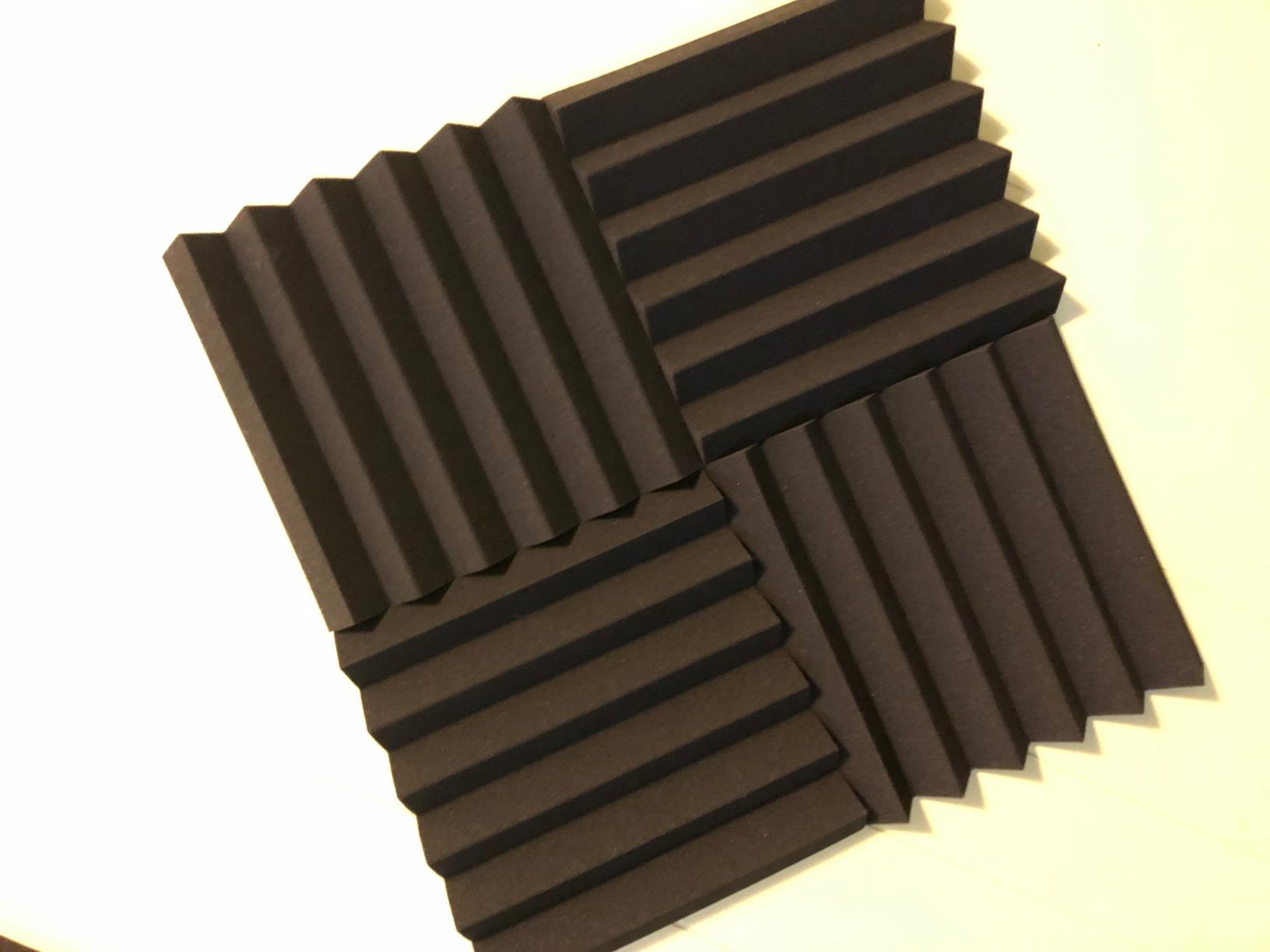
The mounting is where this set disappoints, and it is the same complaint in most reviews: the adhesive patches supplied do not hold reliably on a wall. Most people switch to thumb tacks, spray adhesive or a thin foam-core backboard, all of which work but take an afternoon.
These are also bulky objects. At 2 inches deep and this size, mounting them alone on a wall means you are holding a large, awkward rectangle of foam while driving a fastener, so plan a second pair of hands or build simple frames first.
When this pack makes sense
It suits a 12 by 14 or 15 by 12 control room where you want broadband treatment in as few pieces as possible. Four panels is enough for first reflection points on both side walls plus a front wall behind the monitors.
It also works for a vocal booth or rehearsal space where the depth matters more than the finish, and for anyone who wants real 2 inch performance without building frames.
When it falls short
Foam alone will not trap true bass. A room with severe low-frequency buildup still needs thicker corner traps, because 2 inch panels mounted to a wall are not the same as 6 inches of depth in a corner.
Budget for proper mounting hardware, and expect a few panels to arrive deformed or slightly off shade. Verify the wall surface is clean and flat before adhesive goes on.
7. NEPIS Brick Panels 20-Pack
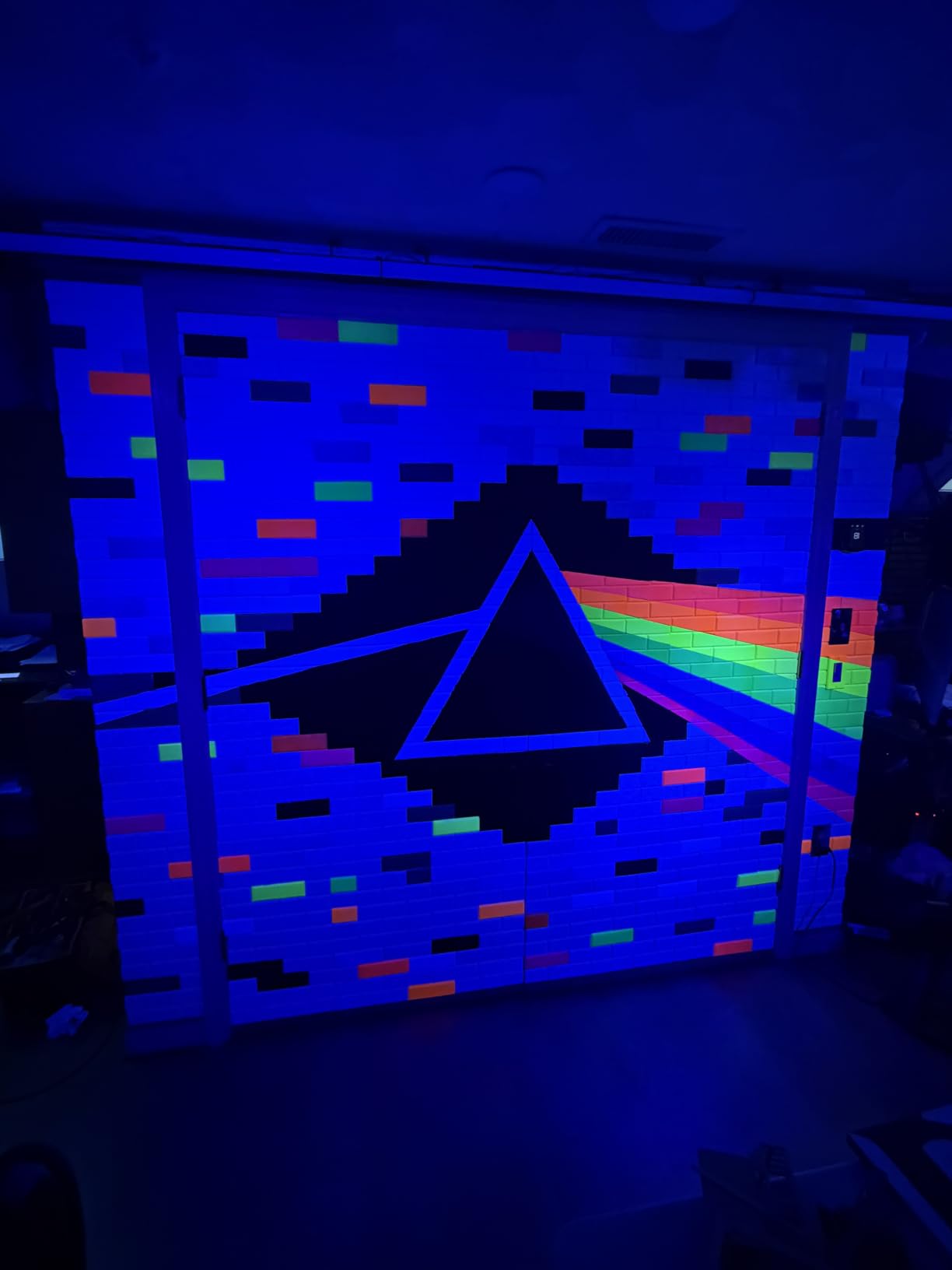
The NEPIS pack is the decor-friendly install option, and it delivers 20 square feet of coverage with a full-back self adhesive on every tile. The 3D brick pattern reads as a design element rather than studio foam, which is why it works in a living space.
20 Pack Acoustic Panels with Self Adhesive, 11.8″ X 11.8″ X 0.36″ High Density Sound Proof Foam Panels for Wall, Soundproof Wall Panel, Brick Sound Absorbing Panel for Home Studio Office Decor – Black
11.8 x 11.8 x 0.36 inch panels
Pack of 20
Up to 14.35 lb/ft3
NRC above 0.95
Pros
- Full-back adhesive grips well and allows repositioning
- 3D brick pattern doubles as decor
- Cuts with a box cutter and straight edge
- Effective at muffling echo between rooms
Cons
- At 0.36 inches absorption is high frequency only
- Dense material needs a sharp blade
- Several buyers find absorption below the marketing claim
At up to 14.35 lb per cubic foot, this is the densest material in the roundup, and that density is what lets a panel under half an inch thick still post an NRC above 0.95. Reviews describe strong adhesion that holds through a move and can be adjusted for a few minutes before it sets.
The visual is the differentiator. A grid of brick-pattern tiles on a wall or ceiling reads as deliberate interior styling, which matters in a home theater or an office where foam wedges would look like a dorm room. Owners also report good results muffling sound between adjacent rooms.

Be clear about the frequency range. At 0.36 inches, this is the thinnest material here, and the honest gain is in echo and mid-to-high frequencies rather than in bass or isolation. Reviewers who expected soundproofing report that this is not what the material does.
Cutting dense polyester requires a sharp blade and a straight edge, so lay out the wall first. Twenty panels at 11.8 inches square give roughly 20 square feet of coverage, which covers two moderate walls or one full ceiling treatment in a small room.
When this pack makes sense
It fits home theaters, offices, gaming rooms and studio spaces where the wall has to look finished. It also suits a rental, since the adhesive leaves no holes and panels can be taken down when you move.
For podcast and voice-over rooms the density and adhesive make it a strong choice, especially on doors and windows where hard reflective surfaces are concentrated.
When it falls short
It will not reduce bass at all, and a set of thin panels will not stop sound passing through a wall. Anyone with a boomy room needs thicker treatment in the corners before this kind of panel matters.
A minority of buyers feel the absorbed energy is less than the NRC figure implies, which is a fair criticism of any thin, dense panel used outside its frequency range. Budget for separate bass traps if that is your problem.
8. AudioSilk Room Kit 4-Pack
The AudioSilk kit is the best acoustic treatment kit for rented rooms, because the panels arrive flat with no expansion wait and no chemical smell. They mount on removable strips and come in a range of modern colours.
AudioSilk Acoustic Panels, 4 Pack ROOM KIT, Large, 46″ x 23″, Natural
45.7 x 22.8 x 0.4 inch panels
Pack of 4
Post-consumer recycled PET
NRC up to 0.91
Pros
- Recycled PET with no chemical smell
- Four large panels give about 28 square feet
- Arrives flat and ready to hang
- Removable strip mounting suits rented rooms
Cons
- Only 0.4 inch thick so bass needs separate traps
- Mounting strips are sold separately
- Thin shipping box can dent corners
- Material is thinner than most buyers expect
The advantage over foam is immediate and unglamorous: nothing to decompress, no odour, no panels sitting deformed for two days. That is a real quality-of-life difference when you are working around a desk in a spare room, and free placement advice is included with the kit.
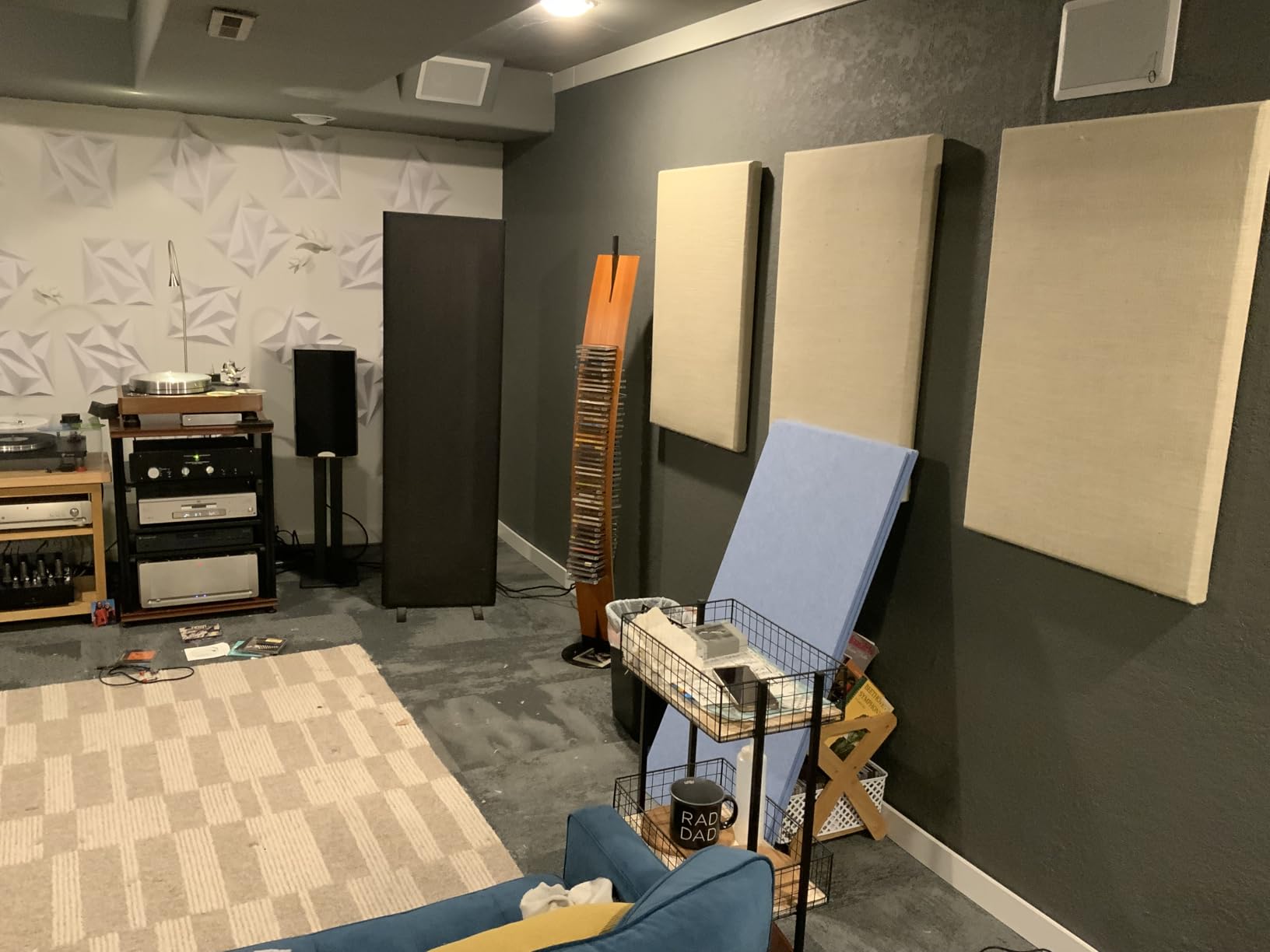
Because each panel is nearly 46 inches long, four of them give roughly 28 square feet. That is enough for a full ceiling cloud and first reflection points in a small bedroom studio, and the large surface has no tile seams to leak sound around.
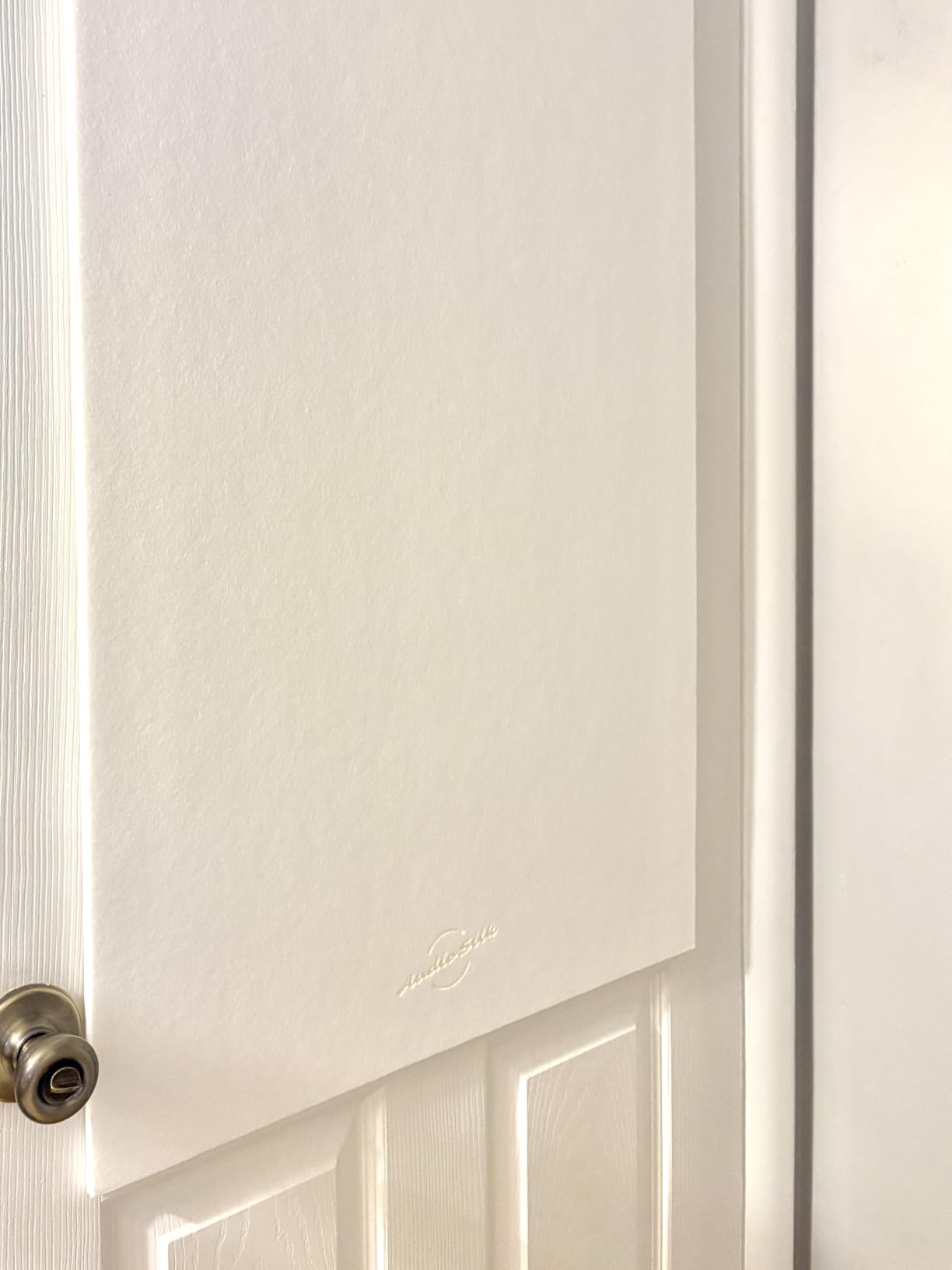
The recurring complaint in reviews is packaging. Panels arrive in a thin box and several buyers report a dented corner on every piece. Check them on arrival and note any damage before fitting.
Also note that the mounting strips are not included, and that 0.4 inches does not reach low frequencies. Reviewers are candid that bass requires separate traps, so treat this as the reflection and flutter-echo layer of your room rather than the whole solution.
When this pack makes sense
It is built for apartments and rented houses where drilling is not an option, since removable strips leave no marks and no holes. It also suits anyone bothered by the smell of new polyurethane foam.
For a home theater or a project studio that must look finished, the modern colours and large flat faces finish better than foam. Recycled PET is also a selling point for buyers who care about material sourcing.
When it falls short
It does nothing for bass on its own, and at 0.4 inches the honest use case is reflections and flutter echo. Owners also point out that the strips are extra and the box can damage panels in transit.
If your main problem is boom, this is the wrong starting point even though the finish is the best in the guide. Fix the corners first, then come back to panels.
9. Knightsacoustic Wedge Foam 96-Pack
The Knightsacoustic pack gives you the most square footage of any kit here at 96 square feet, and that single fact drives the decision. If your priority is soaking up reverb across a large room on a small budget, nothing else matches it.
Knightsacoustic 96 Pack Sound Proof Foam Panels for Walls, 1 X 12 X 12 Inches Acoustic Foam Panels, High Density Acoustic Panels Sound Absorbing, Black Noise Cancelling Studio Wedges(NOT ADHESIVE)
12 x 12 x 1 inch wedges
Pack of 96
Covers 96 square feet
Polyurethane foam
Pros
- Largest square footage coverage in this roundup
- Absorbs reverb and standing wave buildup
- Recovers shape in 3 to 5 hours
- Slim profile fits walls doors and ceilings
Cons
- Adhesive is not included
- 1 inch thickness means mid and high frequencies only
- Some panels arrive deformed and stay that way
- Bulk count needs storage and careful mounting
Coverage per unit of money is the appeal. A large open-plan room or a converted garage can absorb a lot of surface with a small number of orders, and reviewers pick this pack specifically because it changes the reverb in a big space quickly.
Recovery is faster than with most vacuum-packed foam, typically three to five hours, and if a tile stays lumpy a short water soak and low-temperature drying brings it back. The foam is low-odour and non-toxic, so it is comfortable in an occupied room.
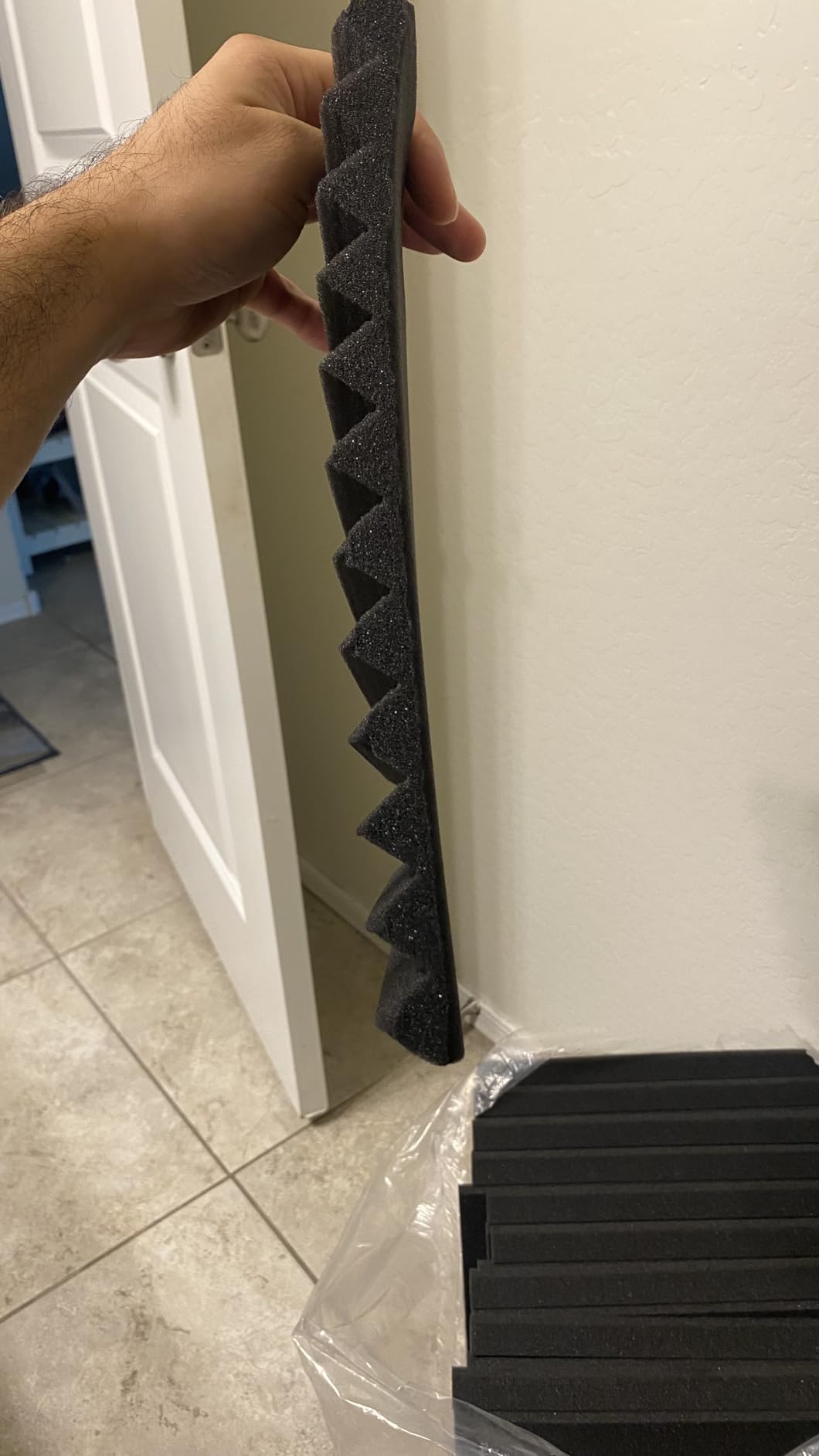
Two things to plan for. Adhesive is not included, so add mounting hardware to the same order, and ninety-six tiles take real space to store while you install, which is awkward in a small bedroom studio.
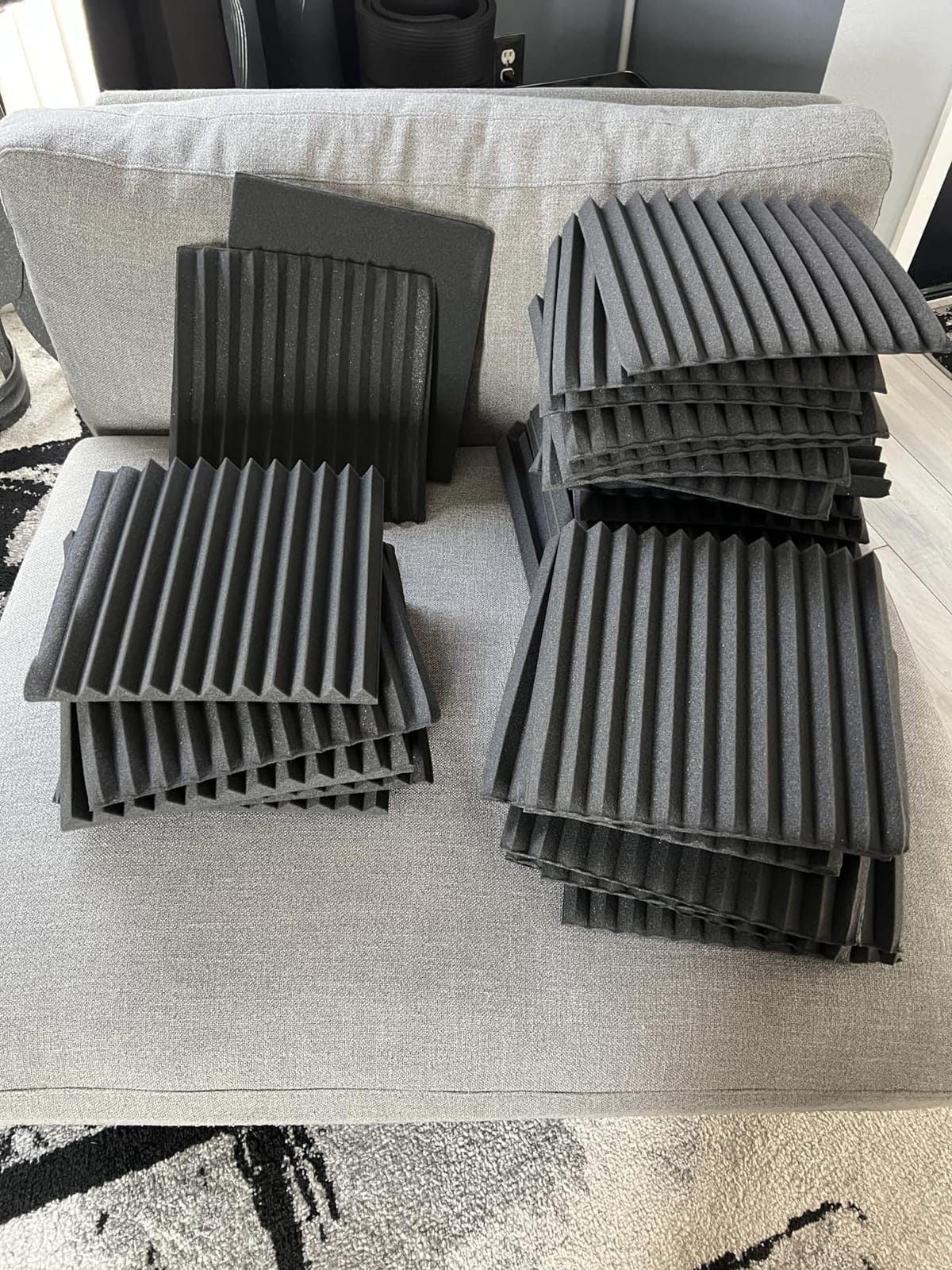
The 1 inch profile means this is a mid and high frequency tool. Owners are clear that it manages reverb and standing wave buildup without addressing deep bass, so pair it with corner traps if your room is small and boxy.
When this pack makes sense
It suits converted garages, basements and large open rooms where untreated surface area is the problem. It also works well for a rehearsal space or a home theater with a big, reflective seating area.
For anyone who wants a room to stop sounding live before spending more, this delivers the largest audible change per order. Doors and ceilings are easy targets because the profile is slim.
When it falls short
It will not fix bass, and the volume of thin foam can create a false sense of completion. Several buyers report panels arriving deformed that never fully recover, so inspect before mounting.
No mounting hardware is included, and 96 pieces is more than most people can fit in one session. If you only have a small bedroom studio, a smaller pack of thicker panels will serve you better.
10. TroyStudio Corner Bass Traps 12-Pack
The TroyStudio corner traps are a compact way to fill all six corners of a small room, since twelve 4 by 4 by 12 inch blocks cover every vertical corner, ceiling junction and floor junction without a large order. Design intent is clear: sit them in the corner, point inward.
TroyStudio Bass Traps – 12 Pcs 4 X 4 X 12 Inches Dense Thick Studio Bass Foam Corner, Acoustic Treatment Panel Absorbing Echo Reverb, Low Frequency Sound Absorber for Music Room Home Recording Studio
4 x 4 x 12 inch blocks
Pack of 12
Corner mounting design
1.01 pounds
Pros
- Low priced corner treatment
- Easy to cut and fit tight junctions
- Grooved profile looks more considered than plain wedges
- Compact enough for ceiling corners and small rooms
Cons
- Actual depth runs under the stated 4 inches
- Light foam is too thin for true bass absorption
- Some tiles arrive misshapen and never expand
- Adhesive is not included
Reviews are genuinely split on these, and that split is informative. Owners who place them in corners report calmer low-frequency energy at very little cost, while others describe them as corner fillers rather than real bass traps, noting you can breathe through the foam.
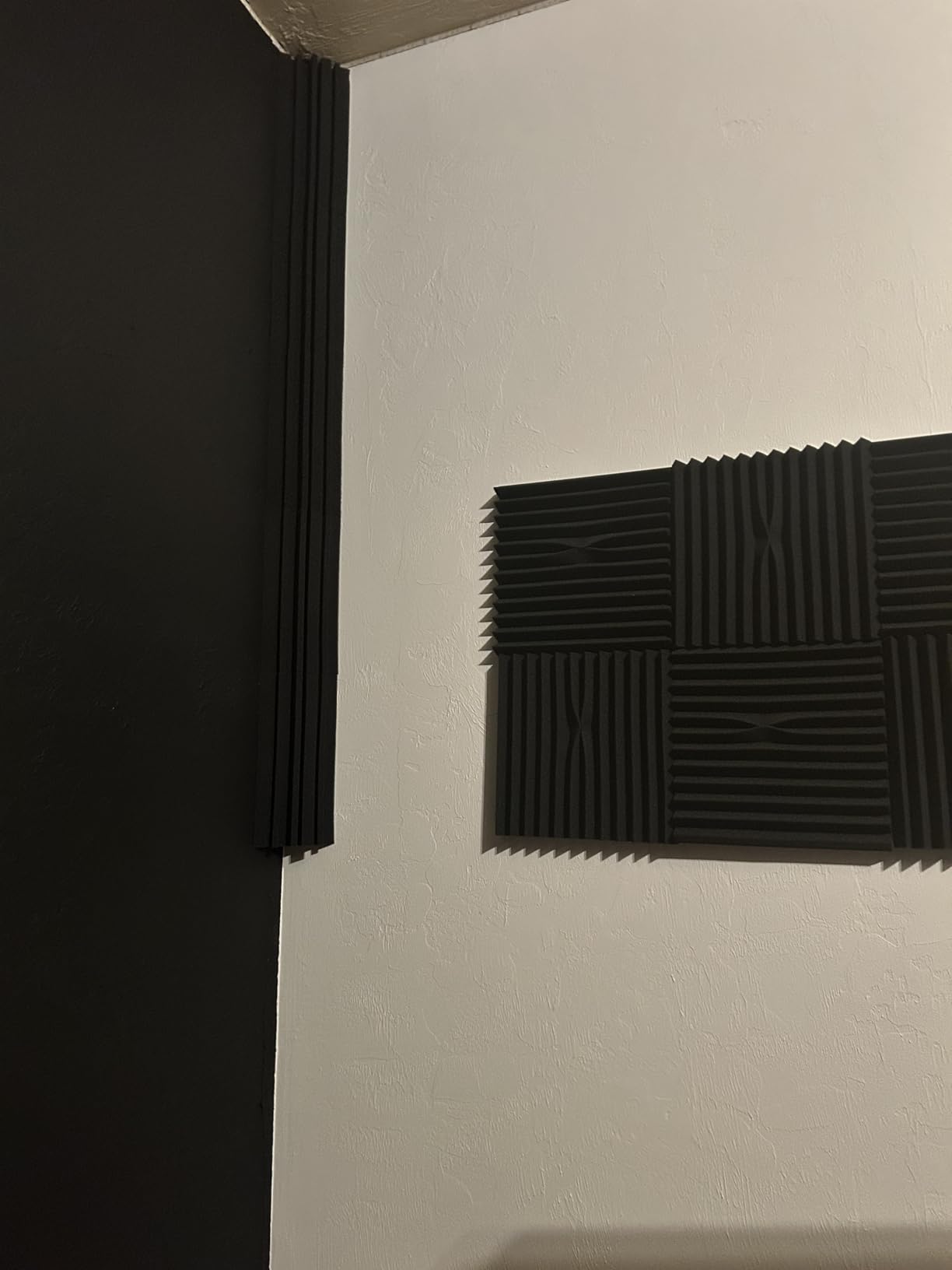
Where they genuinely earn their place is cramped geometry. A block that is under 4 inches deep is exactly what you need in a low ceiling, behind a couch, or in a corner where a thicker trap simply will not fit, which is a situation every small room has.
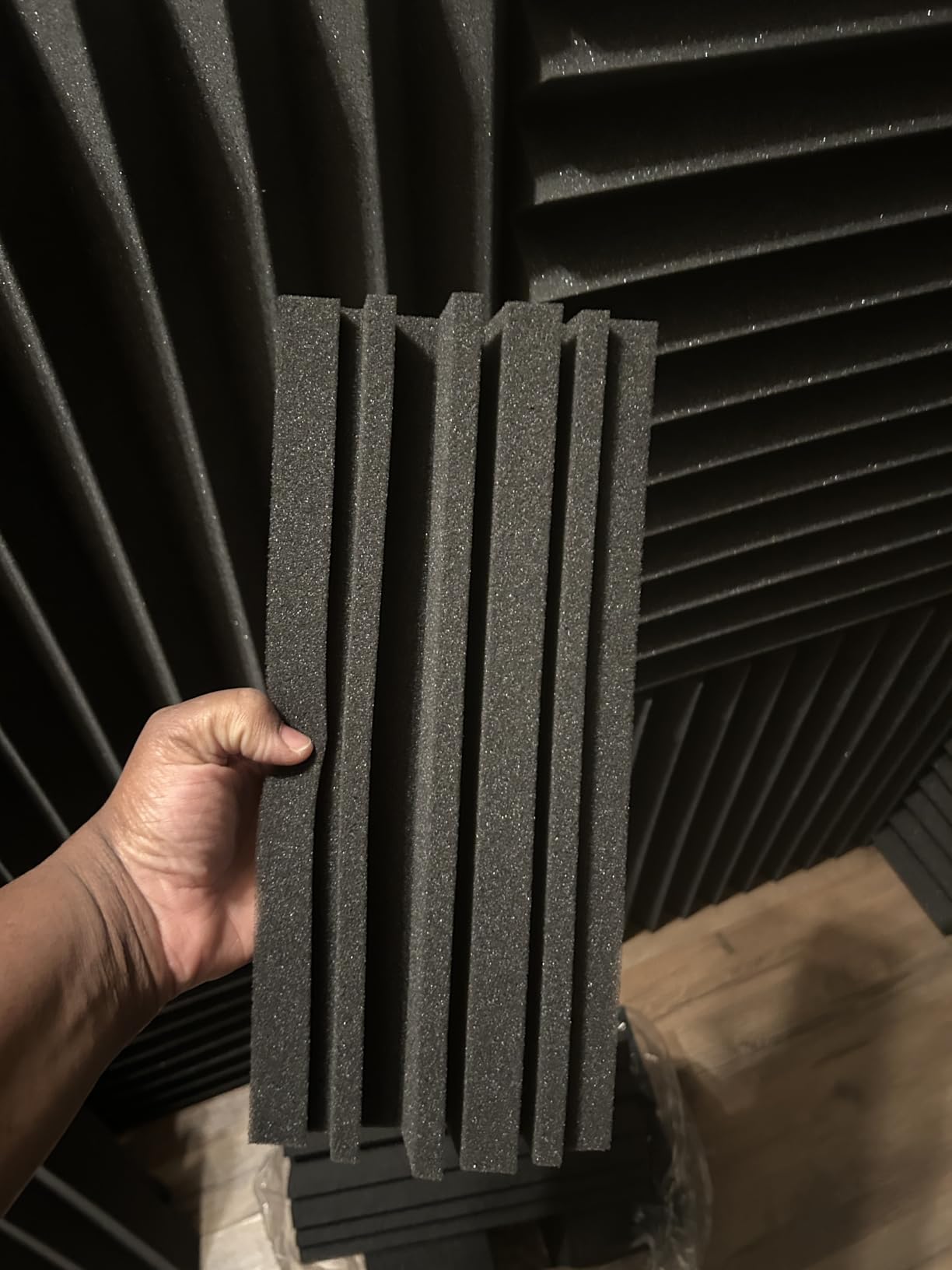
They are also easy to cut and shape, so you can taper a block to follow an uneven ceiling line. Flame retardant to California Technical Bulletin 117-2013 and odourless, with a periodic groove pattern that looks tidier than plain pyramids in a room where clients can see it.
Installation accessories are sold separately, and reviewers note that 3M tape alone grips poorly on this foam surface, so use spray adhesive or a mechanical fastener. A portion of tiles also arrive misshapen after vacuum packing.
When this pack makes sense
It fits small rooms with low ceilings or awkward corners where thicker traps cannot be installed. Twelve blocks is the right quantity to treat every corner of one room in a single order.
It also suits closets, vocal booths and small home theater rooms, and it works well as a first step before you decide how much low-frequency treatment you actually need.
When it falls short
If your room has serious boomy bass, these will not fix it. The foam is light and porous enough that real low-frequency energy passes through, and the undersized depth limits how much it can absorb.
Deformed tiles on arrival and weak tape adhesion are both recurring complaints. Check the pieces, and buy proper adhesive in the same order rather than assuming it is included.
Treatment vs Soundproofing
The best sound deadening for a studio is isolation: mass, decoupling and airtightness that stop sound travelling through walls, floors and doors. No acoustic treatment kit does this, and any listing that suggests otherwise is selling you the wrong thing.
Treatment works inside the room. It absorbs reflections so your microphones pick up your voice instead of the room, and so your monitors reveal problems instead of smearing them. Soundproofing works between rooms and between your space and the world outside.
Sound still travels by flanking paths even through a well-treated room. It creeps along the top of a wall, under a door gap, through a light switch, or along the floor joists, which is why an untreated ceiling or a bedroom door ruins an otherwise good studio.
There is one overlap worth knowing. A dense, airtight door with a sealed frame does improve recording conditions as well as isolation, and heavy curtains help both. But neither is a substitute for reflection control, and neither appears in any kit on this page.
How to Size a Kit for Your Room
Size a kit in four steps: measure the wall and ceiling area you intend to treat, pick a coverage percentage, choose a thickness, then divide the required area by the coverage listed for each pack. Coverage of 40-50% suits a control room, 25-40% suits a tracking or rehearsal space.
Worked example. A 10 by 10 foot room with an 8 foot ceiling has roughly 560 square feet of wall and ceiling surface. At 40% coverage you need about 224 square feet of absorber, which is four to five packs of a 52 square foot product, or seven sets of four large 48 by 24 inch panels, or a single 96 panel pack plus one broad panel set.
The most common sizing mistake is ignoring coverage per pack. Two kits with the same piece count can differ by a factor of ten in total area, which is why the table above lists square feet rather than panel numbers. A 20 pack of small tiles may cover less wall than four large panels.
Thickness is the second decision, and it is driven by frequency. Two inch panels reach roughly 250 Hz, 4 inch panels reach roughly 125 Hz. If your monitors boom in the low mids, buy depth, not more tiles.
One free step before you buy anything. Measure your room dimensions and check the 38% rule: the ratio between the shortest, middle and longest dimension should be around 1 : 1.26 : 1.59, and many people write it as roughly 1 : 1.3 : 1.6. A bedroom at 12 by 12 by 8 fails badly, because the two equal 12 foot dimensions pile low frequencies onto the same frequencies. You cannot fix the shape with panels, but knowing it changes which problems you treat first.
For odd-shaped or garage rooms, cover the two longest parallel surfaces first and keep the money for corners before decoration. Our guide to the best pottery kilns for home studios covers the other half of treating a garage, since heat and sound share the same concrete shell.
Where to Hang Everything
Hang treatment in five priority zones, and work through them in order: corners, first reflection points, ceiling cloud, front wall behind the monitors, then the rear wall. Corners come first because that is where bass energy accumulates, and Gearspace contributors consistently advise treating corners before anything else.
Corners get vertical triangular traps or, for more absorption per unit, horizontally stacked triangular traps against the two walls. The same thread makes the point that geometry matters, since upright triangles are less effective along the planes closest to the wall.
First reflection points sit on the side walls at ear height, roughly 42 to 52 inches, directly beside and behind your listening position. A simple test is a friend holding a mirror at ear height while you move the panel along the wall until you see your monitor reflected. Put the panel there.
The ceiling cloud sits above and slightly behind the listening position, and it is the single most effective surface for vertical flutter echo between parallel floor and ceiling. Mount it with an air gap and it works far better than a panel stuck flat to the ceiling.
That air gap is the detail most people miss. Leaving 2 to 4 inches behind a panel buys an extra 15 to 25% absorption at low frequencies, because the panel behaves partly like a double-wall absorber. Foam tiles are the exception, since they are usually installed flush.
For renters and anyone who cannot drill, the free-standing option is the answer, and the order of operations changes. Build a frame panel on a plywood base, or place the panel on a stand just off the wall, and treat corners first since free-standing traps need no fixings at all.
Two mistakes to avoid. Covering one wall only, which is the most common self-inflicted failure and does little for the room, and over-treating to the point of a dead-sounding space, where natural room character is lost along with the problems. Stop adding panels when your mixes stop changing.
Foam vs Polyester vs PET
Dense polyester and PET fibre earn their place in thin panels, while thicker builds gain more from depth than from material name. That is the short version of the material question, and it explains why the highest-rated thin panels in this guide are all polyester or PET.
Open-cell wedge foam is effective above roughly 500 Hz and essentially transparent below that. It has a legitimate job: taming flutter echo and high-frequency reflections in a small room, for very little money per tile. Where it fails is low frequencies, and thin foam marketed as full treatment is where most buyer disappointment originates.
Dense polyester fibre at 200kg/m3 and above holds its structure to the face, which is how a 0.4 inch panel can post an NRC of 0.95. Add a 3D brick or bevel profile and it also looks like decor, so you get high-frequency control in a room that still looks like a room.
Recycled PET such as the AudioSilk material is the same family, with no expansion step and no chemical odour. Mineral wool in a fabric-wrapped frame remains the choice when you need 4 inches of broadband depth or a real superchunk, but it arrives as a frame kit rather than a foam pack.
One safety note worth checking. Several kits here list flame retardancy to California Technical Bulletin 117-2013 or Class B1, and fabric-wrapped panels should carry a Class A ASTM E84 rating. That matters in a rented home or any shared space.
DIY Panels or a Ready-Made Kit?
A ready-made kit wins when you want results this weekend. A DIY panel wins when you need 4 inches of broadband depth in a specific shape and are comfortable building frames, filling them and wrapping fabric.
The cost comparison is closer than most buyers expect. Reddit users in music-production threads have estimated DIY rockwool panels at 600 to 800 in materials, which sits inside the range of a mid-tier commercial kit. The saving is not enormous, and you trade away the air gap precision and consistent density that a factory panel gives you.
The smart hybrid, which is what experienced contributors on Gearspace recommend, is to build cheap fluffy mineral wool bass traps in a large triangular or superchunk geometry for the corners, then buy denser factory panels with 4 inches of depth for the first reflection points.
Where DIY clearly wins is geometry and coverage. If your room needs an unusual shape, a full wall absorber, or treatment behind furniture, a kit with a fixed piece count will not fit, and building your own solves that in an afternoon.
The best of both worlds is what we recommend here. Buy a large broadband panel pack for reflection points and the ceiling, then build or add corner traps from mineral wool, since that is the one place where a cheap kit of 4 inch blocks simply is not deep enough.
Frequently Asked Questions
What is the best acoustic treatment for a home recording studio?
Thick broadband absorption at the corners and first reflection points, plus a ceiling cloud, sized to 40-50% coverage of the room’s walls and ceiling. Two inch panels reach roughly 250 Hz and four inch panels roughly 125 Hz, so bass problems need depth in the corners first. Studio RT60 targets sit between 0.2 and 0.4 seconds.
How many acoustic panels do I need for my room?
Measure the wall and ceiling area you want to treat, then multiply by your coverage target. Control rooms need 40-50% coverage, tracking and rehearsal spaces 25-40%. A 10 by 10 foot room with an 8 foot ceiling has about 560 square feet of surface, so 40% coverage means roughly 224 square feet of absorber.
Are acoustic foam panels worth buying?
For high frequencies above roughly 500 Hz, yes. Wedge foam is effective at taming flutter echo and early reflections at very low cost per tile. Below that range thin foam does almost nothing, so it cannot fix boomy bass. Check the thickness and the material: 2 inch foam or dense polyester and PET perform very differently from 1 inch open-cell wedges.
How thick should acoustic panels be for a home studio?
Two inches reaches roughly 250 Hz and is the practical minimum for a bedroom studio. Four inches reaches roughly 125 Hz, which is where room boom usually lives. Mounting with a 2 to 4 inch air gap adds another 15 to 25% absorption at low frequencies, which is often worth more than buying a thicker panel.
What is the 38% rule for room acoustics?
It is a room dimension ratio that avoids stacking low-frequency modes on the same frequencies. The shortest, middle and longest dimensions should be roughly 1 : 1.26 : 1.59, often written as about 1 : 1.3 : 1.6. A 12 by 12 by 8 bedroom fails because the two equal 12 foot dimensions reinforce each other at the same frequencies.
What is the difference between acoustic treatment and soundproofing?
Treatment absorbs reflections inside your room so recordings and mixes are accurate. Soundproofing, or isolation, uses mass, decoupling and airtightness to stop sound passing through walls, doors and floors. Acoustic panels do not block noise, and no treatment kit will keep traffic out of a bedroom studio.
What are the best acoustic treatments for home theaters?
Thin dense panels on the ceiling and the first reflection side walls work best, since dialogue clarity and high-frequency control are the priorities. Add thick corner traps if bass is heavy during films, and treat the ceiling cloud above the seating rather than the wall behind the screen, which does almost nothing.
Final Verdict
The best acoustic treatment kits for home studios are decided by one question: how much depth do you have room for. The TroyStudio 52-pack is our editor’s choice because 52 square feet of genuine 2 inch foam solves reflections and moderate boom in one order, which is the most common problem in a bedroom studio.
For a tight budget, the JBER corner traps are the cheapest way to start fixing bass, and the AudioSilk room kit is the best acoustic treatment kit for rented rooms, where removable mounting and no chemical smell decide it. If your room is large and mostly untreated, the Knightsacoustic 96-pack gives you the most square footage available here.
Whichever kit you choose, treat the corners first, leave a 2 to 4 inch air gap behind every wall panel, and start measuring your room in 2026 before you order anything. Check the current price for each kit below, and pick the coverage that matches your square footage rather than the panel count on the front of the box.