
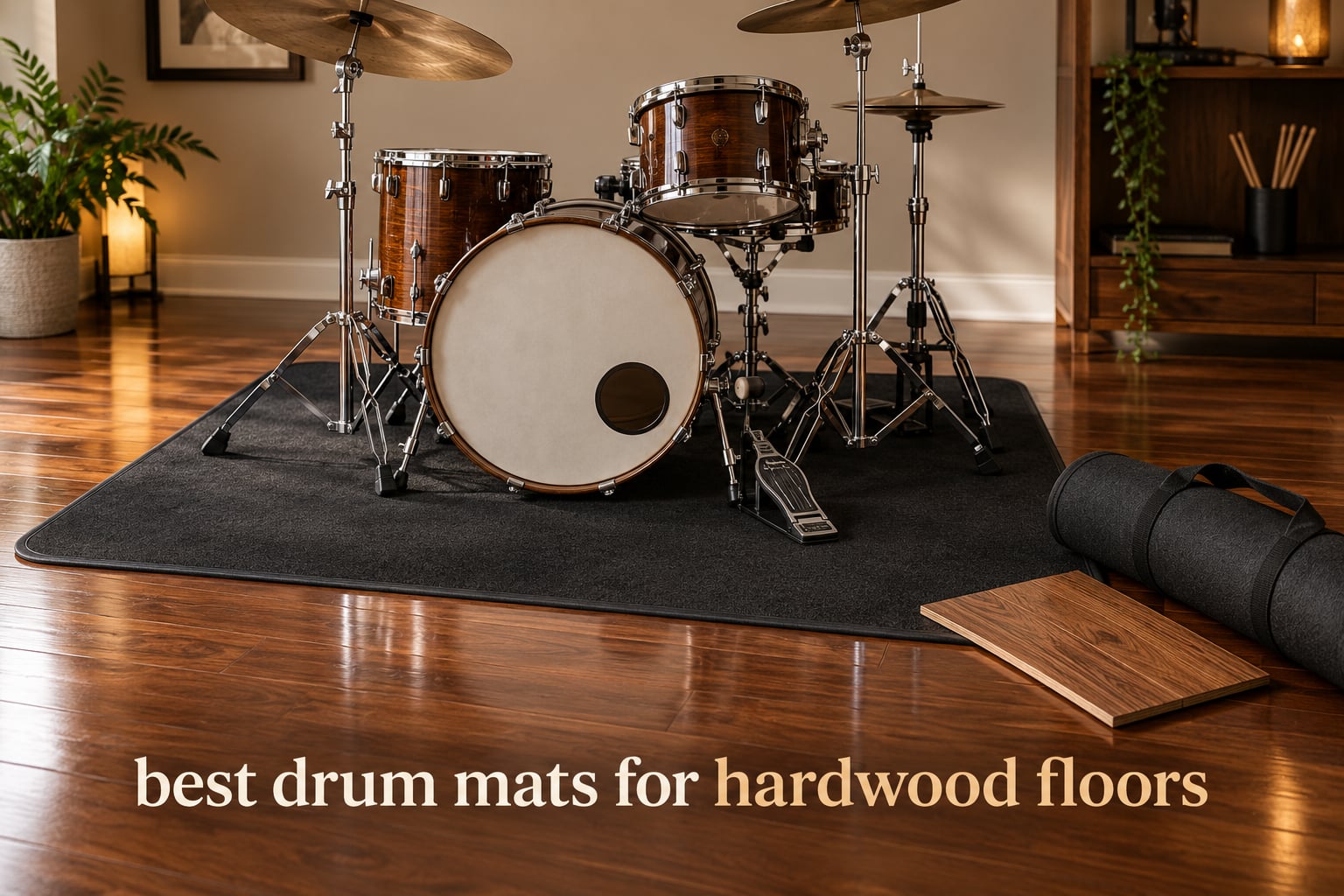
The best drum mats for hardwood floors are the ones built around a rubber or PVC non-slip backing and a surface large enough to contain your entire kit footprint. On sealed wood, that backing is the only thing standing between a kick drum and a scuff mark, and between a kick pedal and the ceiling of the apartment below you.
Ask any drummer with hardwood why they own one and you will hear the same sentence: the kit crept. Hi-hat stands wander, cymbal legs chase the neighbours’ TV, and the kick pedal drifts forward mid-song even with retractable spurs in. That pedal creep is the single most-reported complaint on the retailer review pages and in the drum forums, and it is the reason a mat is not optional gear when your floor is wood. If you are still choosing flooring, our engineered hardwood flooring guide covers finishes worth considering; if your problem is the throne rather than the floor, the tall drummer throne picks are worth a look too.
This roundup covers ten drum mats and drum rugs judged on the only criteria that matter on wood: what the underside is made of, whether the mat stays flat, whether pedal spikes punch through to the finish, and whether it survives being rolled into a car every week. No mat grips every finish the same way, so we tell you where each one is weak as clearly as where it works.
Table of Contents
Top 3 Drum Mats for Hardwood Floors
Three mats stood out once we sorted them by backing material and verified footprint rather than by pattern. Each has enough buyer history behind it that the grip claims are not guesswork.

On-Stage DMA6450 Non-Slip Drum Mat
- Non-slip PVC backing
- 6x4 foot surface
- Carry bag included

Aucuda 4×6 Non-Slip Drum Rug
- Tightly woven polyester
- Non-slip backing
- Velcro strap and 70 percent vibration claim

Meinl Drum Rug 78 x 63 Inch
- Rubber-lined underside
- Low-pile dense weave
- Carry bag and roll strap
Best Drum Mats for Hardwood Floors in 2026: Quick Picks and Full Comparison
Quick verdict list before the detail. The On-Stage DMA6450 is the all-rounder, with a PVC backing and the largest verified buyer base in this group. The Aucuda 4×6 is the highest-rated mat we found and the tightest weave. The Meinl 78 x 63 is the one to buy if your kit is large or you have a room that needs protecting. The RV MURTS 4×6 is the thickest budget mat, which matters most for noise. The Zildjian ZGIGRUG is the easiest to keep flat thanks to weighted corners and an integrated bass drum stopper.
| Product | Specifications | Action |
|---|---|---|
| On-Stage DMA6450 Non-Slip Drum Mat 6×4 |
|
Check Latest Price |
| Aucuda Drum Rug Mat 4×6 Non-Slip |
|
Check Latest Price |
 Qintan Drum Rug Mat 4×5.3 with Grip Bottom Qintan Drum Rug Mat 4×5.3 with Grip Bottom |
|
Check Latest Price |
 Black Widow Drum Web Anchoring Mat Black Widow Drum Web Anchoring Mat |
|
Check Latest Price |
 TORIBIO Drum Rug 4×5 Non-Slip Mat TORIBIO Drum Rug 4×5 Non-Slip Mat |
|
Check Latest Price |
| Meinl Drum Rug 78 x 63 Rubber Lined |
|
Check Latest Price |
 RV MURTS Drum Rug Mat 4×6 Grip Bottom RV MURTS Drum Rug Mat 4×6 Grip Bottom |
|
Check Latest Price |
 Invech Drum Rug 4×6 Non-Slip Invech Drum Rug 4×6 Non-Slip |
|
Check Latest Price |
 Zildjian ZGIGRUG Gig Drum Rug Zildjian ZGIGRUG Gig Drum Rug |
|
Check Latest Price |
 Gator Drum Rug 78 x 66 Non-Slip Gator Drum Rug 78 x 66 Non-Slip |
|
Check Latest Price |
1. On-Stage DMA6450 Non-Slip Drum Mat: the Best All-Rounder for Hardwood
On-Stage DMA6450 Non Slip Drum Mat w/Bag (for Drum Kits &Percussion Instruments, 6’x4′, Portable, Durable Construction, Ideal for Studio and Live Performances, Black Finish)
6x4 foot surface
Non-slip PVC construction
2 kg
Nylon carry bag
Pros
- Non-slip PVC backing grips sealed wood
- Highest review volume in this group
- 6x4 surface fits a full five-piece kit
- Carry bag included
- Also offered in 4x4
Cons
- PVC surface feels less forgiving than carpet pile
- Bulkier to pack than compact anchoring mats
- No manufacturer warranty listed
Best for: a five-piece kit on hardwood who wants a verified grip story and a large buyer base to learn from. This is the mat most drummers end up on, and the listing data explains why: it holds 4.5 stars across more than a thousand reviews, which is far more evidence than any other mat in this roundup.
The construction is a flat non-slip PVC sheet rather than a woven carpet. On hardwood that is a genuine advantage. A PVC underside is a continuous non-porous sheet with no loop pile for retractable spurs to burrow into, so pedal spikes plant and stop instead of slowly sinking and walking the pedal forward. A retail buyer on the Sweetwater listing for this exact mat reports that it stopped a kick pedal and hi-hat from sliding on hardwood floors and absorbed some of the shock, with the spurs kept retracted.
Size is the other half of the argument. At 6 by 4 feet, the DMA6450 is one of the few mats here wide enough to sit a kick drum, a snare, both toms and a hi-hat without hardware hanging over the edge onto bare wood. That matters more than pattern or colour, because any hardware off the mat is back on your floor. It is also offered in a 4×4 variant if your room is small.
Owners consistently praise portability: it folds or rolls into the included nylon carry bag, which is why it turns up at gigs as often as it does in practice rooms. The listed item weight is 2 kg, and the manufacturer is Music People. Note that no warranty is listed for this model, which is normal at this level of the category.
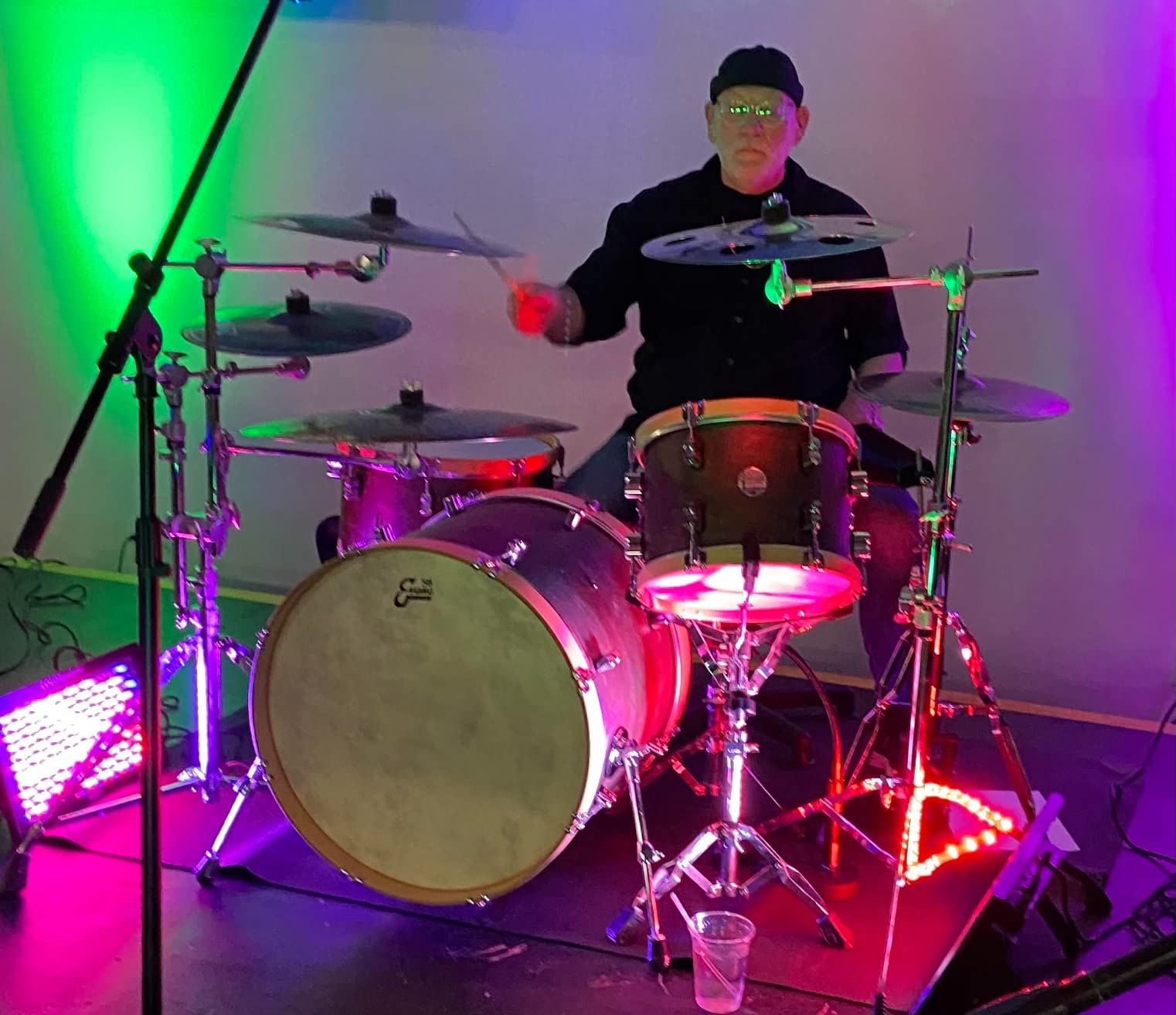
What you get on a sealed hardwood floor
Expect the kit to stay planted during loud playing and the pedal to stay under your foot. The PVC surface is firm rather than plush, so pedal boards sit flat and do not rock. That rigidity is a feature on wood: a soft mat lets a heel plate tilt and hunt, and a hunting heel plate is how creep starts.
The trade-off is feel under the stands and throne. Buyers who prefer carpet report the PVC surface is less forgiving than a plush rug, particularly for a fabric snare bottom and for sticks laid across the snare head.
Where it falls short
It is the bulkiest option to transport of the mats with full-kit coverage, since it is a rigid sheet rather than a foldable anchor. If your setup is an electronic kit in a small flat and you carry it on public transport, the weight and packed size are the things to weigh against grip.
It also covers fewer square feet than the Meinl and Gator rugs, so a large kit with a throne and spare hardware may overhang. Measure before you commit.
2. Aucuda 4×6 Drum Rug Mat: Highest Rated and the Tightest Weave
Aucuda Drum Rug Mat Non Slip 4×6 ft for Electric Set, Black Drumming Carpet
72 x 48 inches
Polyester over non-slip backing
0.8 cm thick
Velcro strap
Pros
- Highest rating in this roundup at 4.6 stars
- Tightly woven surface grips pedals and stands
- Velcro strap rolls it flat for gigs
- Claimed 70 percent vibration absorption
- OEKO-TEX and SGS certified
Cons
- Lightweight weave can shift under heavy double pedals
- Attracts dust in high-traffic rooms
- Occasionally arrives with pre-existing wear
Best for: players who want the highest-rated mat available and a surface dense enough that pedal spikes and stand feet bite instead of sliding. At 4.6 stars from 919 reviews, this is the strongest rated-and-reviewed combination in the group, and it is the mat we would put under an apartment kit where low-frequency control matters.
The top layer is tightly woven polyester with a low pile, listed with a polypropylene backing and described by owners as a non-slip TPR layer. That combination is the sweet spot on wood: the weave is firm enough to give a stand foot something to grip, and the backing underneath is a continuous sheet rather than a grid of rubber dots, so there are fewer places for the mat itself to buckle.
At 72 by 48 inches it covers a large double-bass configuration or a four-piece jazz kit without hardware spilling onto bare floor. The surface is described as Velcro-compatible, which means bass drum anchors and pedal spikes can dig into the weave and stay there without ever reaching your finish.
The manufacturer claims the acoustical structure absorbs 70 percent of vibrations, and buyers on hardwood and concrete confirm they can feel the difference on low-frequency bleed through a wooden floor to the room below. It is OEKO-TEX and SGS certified, carries a 6-month manufacturer warranty and is machine washable.
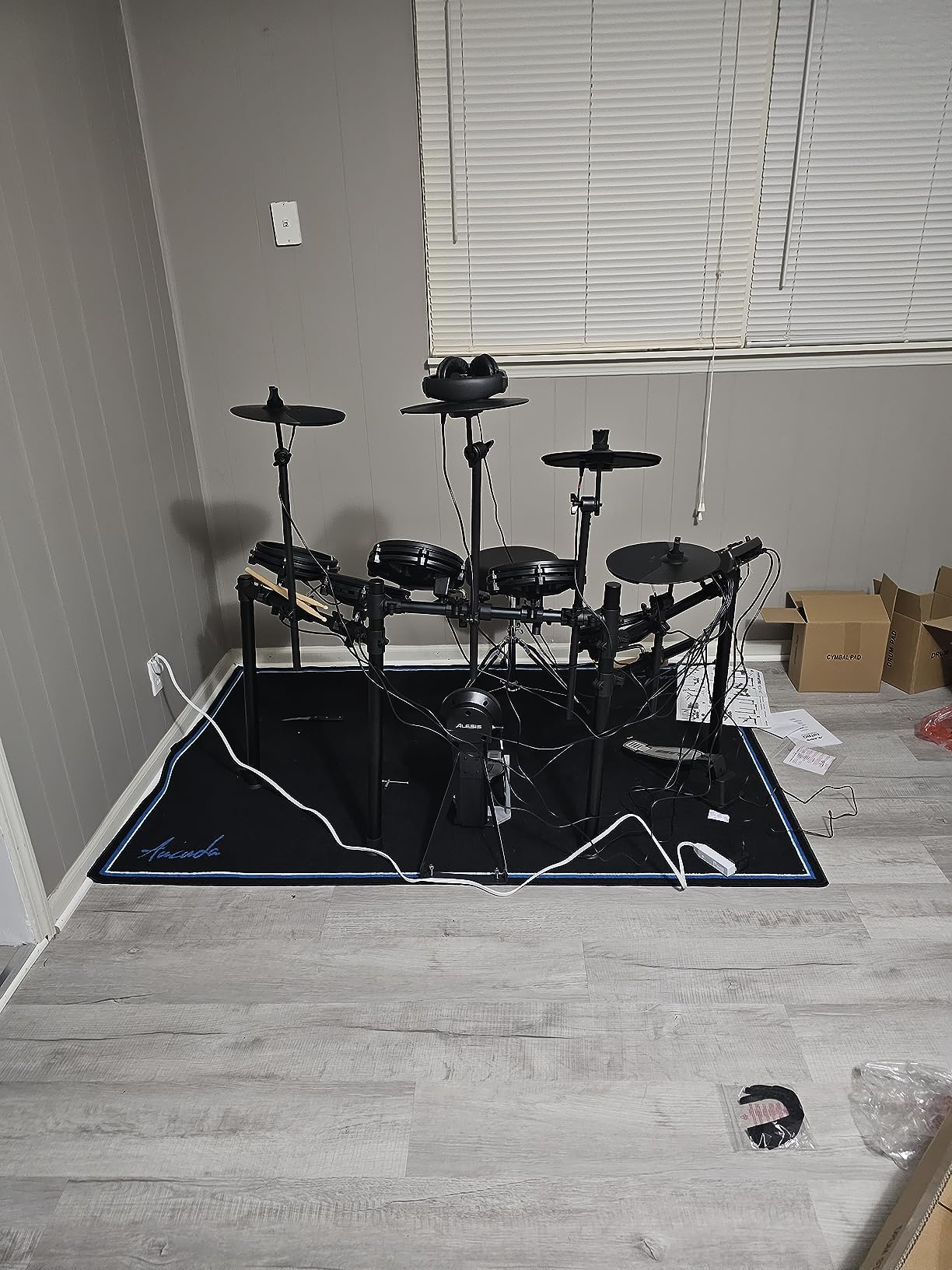
Grip and pedal behaviour on wood
This is where the tight weave earns its rating. Under a single kick and hi-hat, the mat stays put and the pedal does not migrate, which is the whole point on hardwood. Retailers list it for electric kits too, and the 4×6 footprint suits a mesh rack with room to spare.
Watch the weight under load. The most common critical note is that the lighter weave can bunch or shift while you are positioning heavy double-bass pedals. Lay it flat first, position from the back row forward, and check the edges before you sit down.
Where it falls short
It is a thin mat at 0.8 cm, so it does less for floor vibration than the thicker RV MURTS and it offers less cushioning under a stool than a plush rug. In a basement or a shared-wall apartment where downstairs neighbours are the main worry, thickness matters more than rating.
Low pile also means it collects dust and hair in a living-room setup, so plan on a quick vacuum rather than assuming it is self-maintaining.
3. Qintan Drum Rug Mat 4×5.3: Best Budget Pick for Practice Rooms
Qintan Drum Rug, Drum Mat with Non-Slip Grip Bottom(4×5.3Ft), Drum Carpet for Noise Reduction, Drum Pad for Jazz Drum & Electric Drum Set, Ideal Gift for Drummers, Drum Accessories, 47x63in, Black
47 x 63 inches
Polyester fibre with TPE grip
3.3 pounds
0.2 inch thick
Pros
- Dot-pattern non-slip backing grips hard floors
- Lowest-cost entry that still anchors a kit
- Suede-like surface wipes clean and resists spills
- Reinforced wrapped edge resists fraying
Cons
- Arrives folded with creases that need ironing
- Thin build wears through with heavy gigging
- Can shift under a full acoustic kit
Best for: a first kit, a spare room and anyone who needs the kit to stop sliding before they spend on a premium rug. At 4.2 stars from 366 reviews it is the lowest-rated mat here, and the rating is entirely explained by construction rather than grip.
The underside uses a dot-pattern grip in TPE across the full surface, which is why it holds on a hard floor at all. Dots rather than a continuous sheet means slightly less total contact, so under a heavy kick with the pedal pushed forward you may nudge the mat back into position between songs. Owners using it under electronic kits report the opposite result and report none at all.
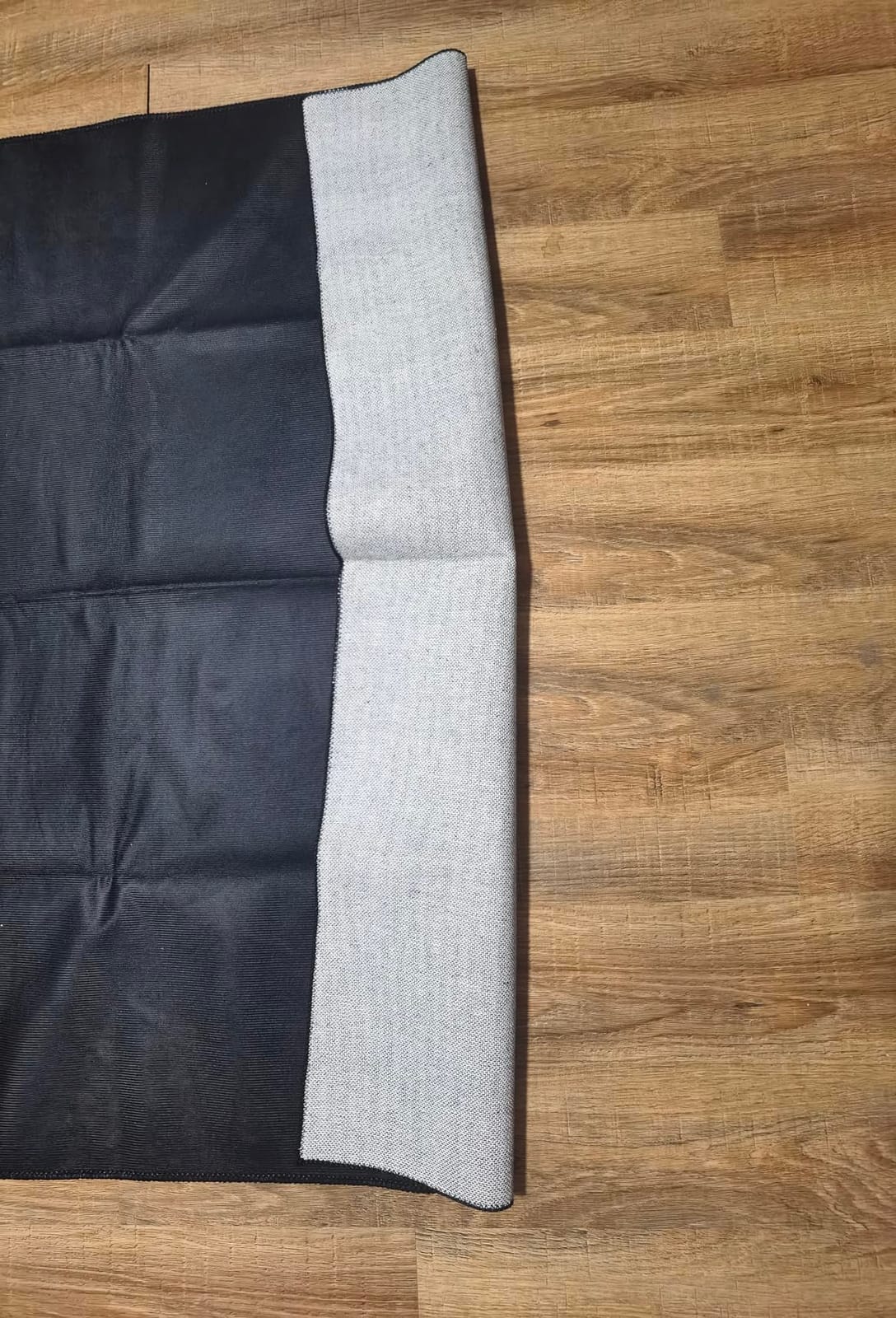
At 47 by 63 inches it suits a compact four-piece or a five-piece kit in a tight room, and it doubles as a general stand mat for hi-hat and cymbal hardware in a practice space. Listed use cases also include pianos and treadmills, which tells you how thin and light it is: 3.3 pounds and 0.2 inches thick.
The face is a sound-absorbing velvet-style fabric with a reinforced wrapped edge, and the surface is described as scratch-resistant and moisture-proof with a wipe-clean care instruction. Kick pedal fluid and spilled drinks are the two things that reach a practice-room mat most often.
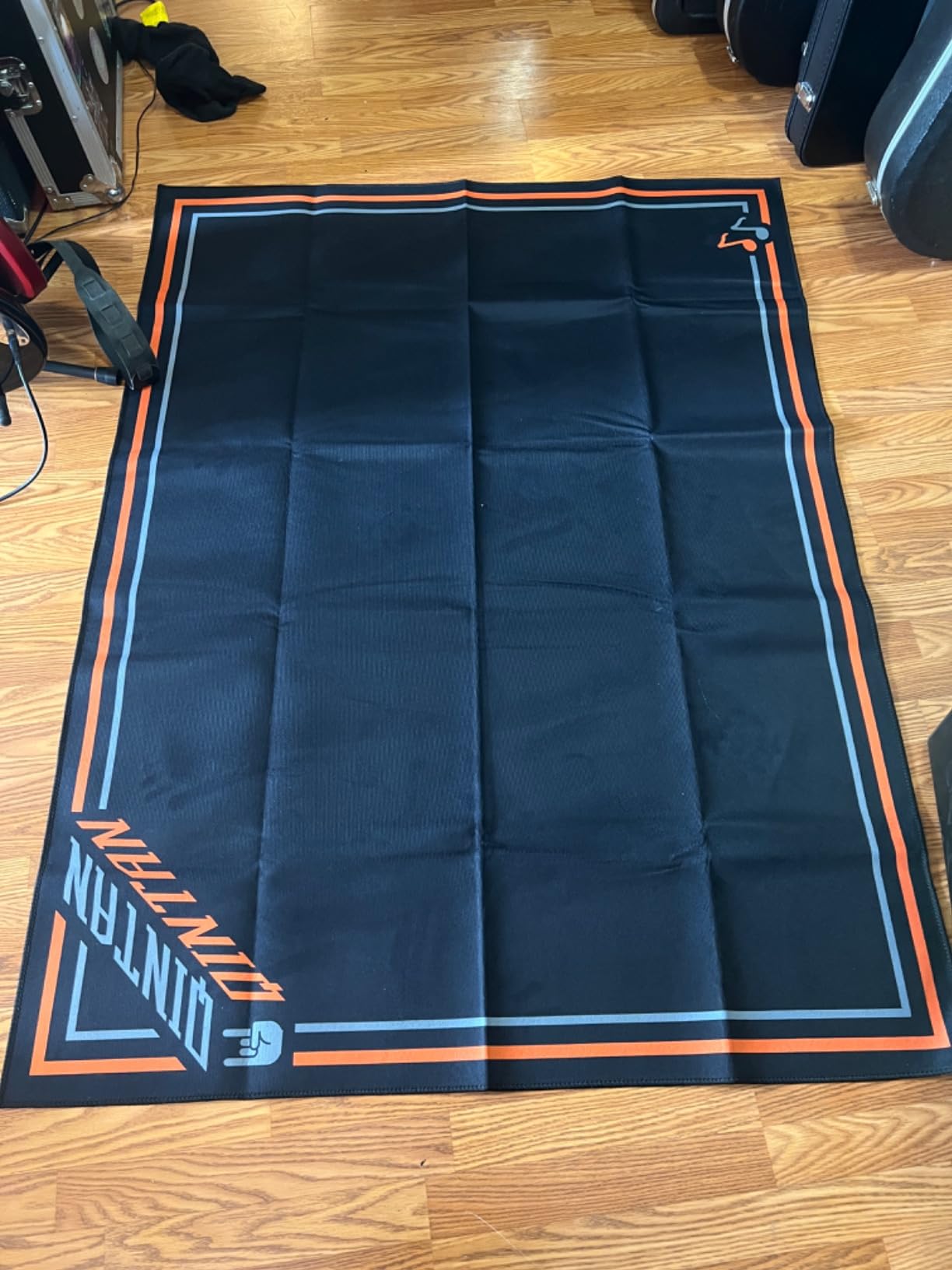
Grip performance on sealed wood
For stopping a stationary kit from wandering on hardwood, the dot backing does its job in a practice setting. The critical reviews describe it as sensible for home and studio rather than gig-level, which is a fair summary of where it belongs: a kit that stays parked between sessions.
If you gig, the failure mode is wear rather than grip. A thin build punctures and abrades faster than a 12-pound rubber-lined rug, and a punctured mat is a mat whose grip has gone.
Where it falls short
It arrives folded, so you should budget an evening to steam or iron out the creases before the first session, and a permanently creased mat is a mat that rocks under the pedal heel plate.
It is also the only mat here with a rating below 4.4, and reviewers consistently describe it as shifting under a full acoustic kit. If you play hard, buy one step up the list.
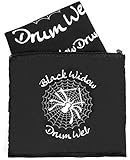
4. Black Widow Drum Web: Best for Anchoring Pedals Without a Full Rug
Black Widow Drum Web Anchoring Drum Mat, The Ultimate Drum Mat
Compact anchoring format
Self-adhesive Velcro strips
Under 2 pounds
Folds into carry case
Pros
- Locks pedal and hi-hat position to kill creep
- Folds into a case that fits a cymbal bag
- Marker strips repeat the same pedal layout
- Weighs under 2 pounds
Cons
- Too small to sit an entire kit on
- Supplied Velcro adhesive is weak and can peel
- Needs pedals with base plates to work as designed
Best for: gigging drummers whose creep problem is pedal creep specifically, and for anyone playing on a floor they do not want to cover with a large rug. This is the only product here that is not a full carpet, and that is the entire point.
It is a flat, self-adhesive anchoring system in nylon with a vinyl back, built to lock a bass drum pedal and hi-hat into a repeatable position. The drum forums describe pedal creep as the number one complaint about drums on hard surfaces, and this is the direct engineering answer: instead of relying on friction across a whole rug, you bond the pedal to a small rigid panel.
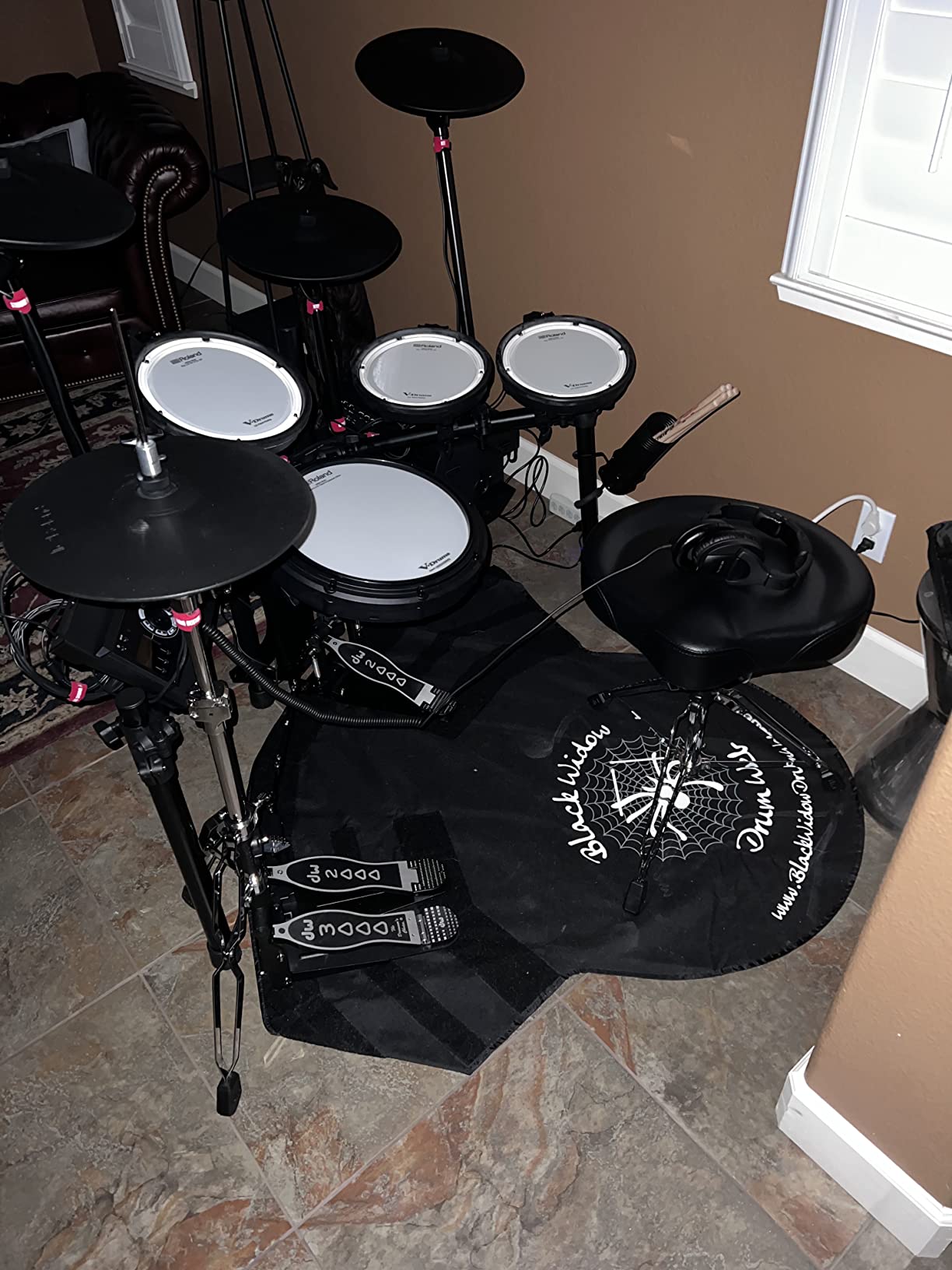
Included marker strips let you outline pedal placement and repeat the same setup at every show, which means your kick position does not change between rehearsal and stage. At under 2 pounds it folds into its own carry case and disappears into a cymbal bag, which is a genuine gigging advantage over a rolled rug.
The listed dimensions are compact, in a 12 by 5 inch panel format, and care is spot clean only. A limited warranty is listed.
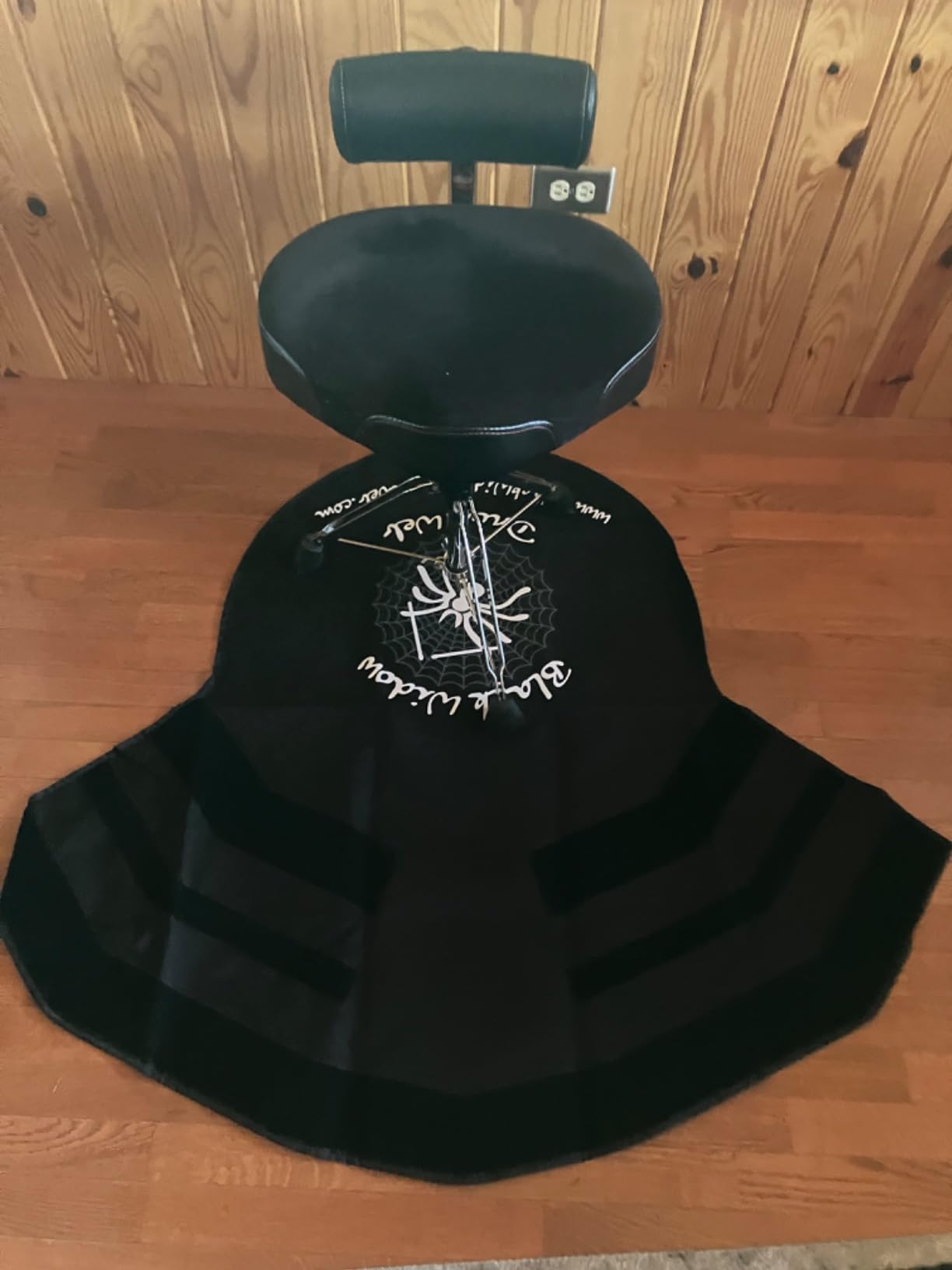
How it behaves on hardwood
It works because the panel spreads pedal load over a firm, vinyl-backed surface that grips sealed wood and does not let a spike sink in. On a glossy finish the vinyl backing is the element doing the anchoring, so clean the floor before you stick it down and press the panels flat.
Because it is small, cymbal and tom stands still need a mat, a rug or furniture-style leg weights on the stand feet. The forum consensus is that sandbags placed on the outside legs of kicks, snares and cymbal stands do that job well.
Where it falls short
It does not protect your floor. Snare stands, hi-hat stands and cymbal legs still land directly on the wood, which is exactly where scuff marks come from. If your floor is the reason you are reading this, you need a full rug.
Reviews also flag the supplied stick-on Velcro as the weak point: adhesive quality varies and it can peel or leave residue, so keep spare strips in your gig bag.
5. TORIBIO 4×5 Drum Rug: Best for Compact Kits and Small Rooms
Drum Rug, 4 Ft x 5 Ft Drum Mat Carpet Music Rug with Non-Slip Bottom, Noise Reduction Electrical Pads for Drummers, Black
60 x 48 inches
Rubber dot backing
1.62 kg
Medium pile polyester
Pros
- Rubber dot backing stops pedals and stands drifting
- Overlock stitching survives pedal spikes
- Rolls up for storage between sessions
- 14 size and colour variants available
Cons
- Arrives badly creased from folding packaging
- Attracts dirt quickly for the price
- Modest noise dampening versus thicker rugs
Best for: a four-piece kit in a room where a 6×4 rug will not fit, or anyone who wants the rubber-dot backing pattern without the 12-pound weight of a premium rug. At 4.3 stars from 291 reviews it sits mid-pack on rating and above the median on buyer volume.
The underside is an anti-slip rubber dot backing, described by the manufacturer as designed to reduce floor scratches. That is the honest two-for-one: the dots grip a sealed hardwood surface and they stop hardware from reaching the finish underneath. The face is a machine-made polyester with a medium pile, which is softer under a snare than the low-pile options and gives sticks somewhere to rest.

At 60 by 48 inches and 1.62 kg this is a genuinely portable mat. It rolls up for storage between sessions, and the manufacturer lists it for indoor and outdoor use, which makes it the pick for a patio or garage rehearsal spot as well as a bedroom.
One detail worth noting for hardwood owners: the manufacturer specifies yarn overlock tight stitching, which is what stops a bass drum spike from splitting the seam and letting the mat fray. Fourteen size and colour variants are listed from 4×4 up to 6×6.
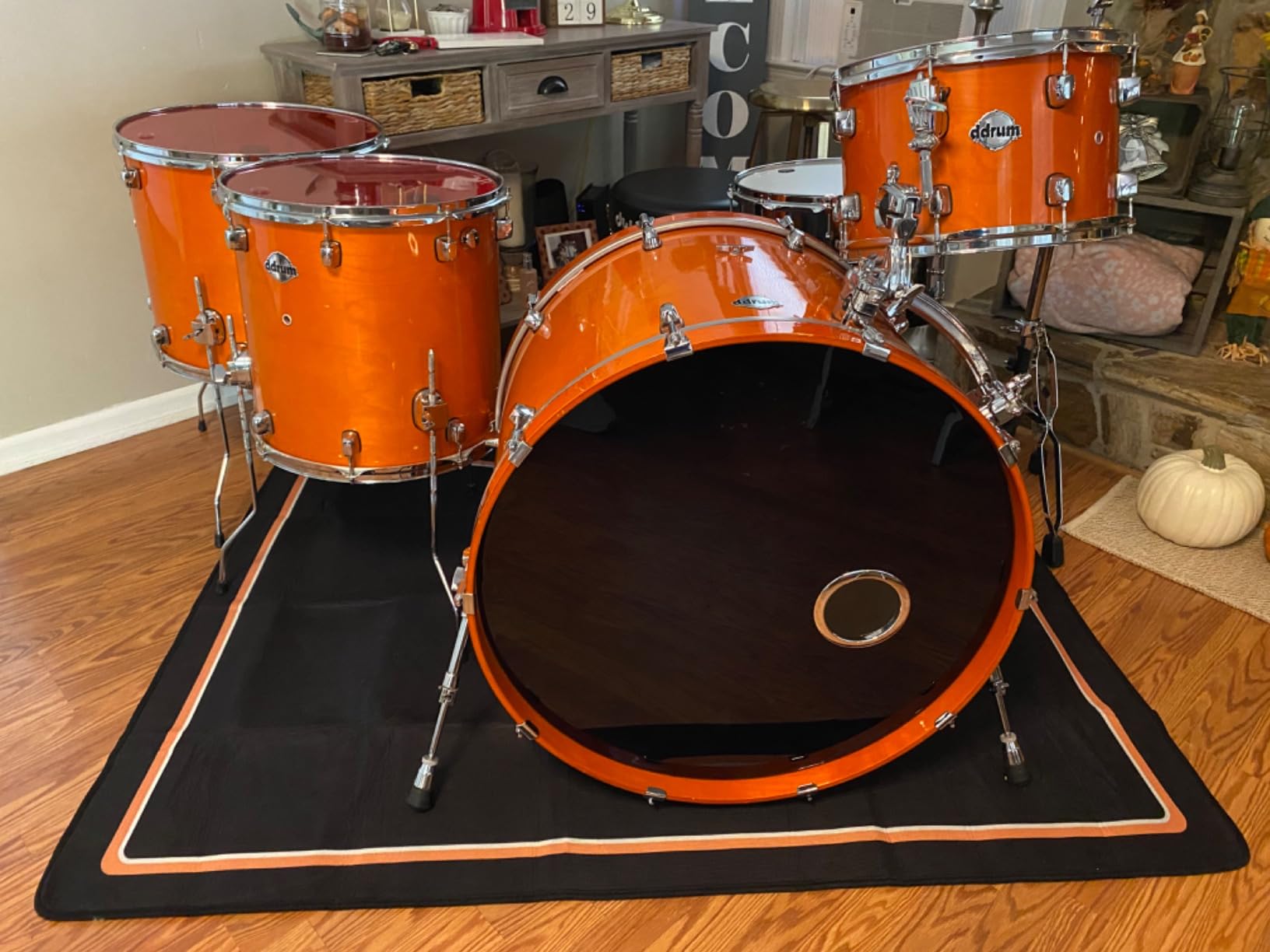
What it does for your floor
On a hard floor the dot pattern is doing the anchoring, and because dots are discrete there is slightly less total contact than a continuous sheet. In practice the mat holds a stationary kit well, and pedal creep drops sharply because the spike has rubber to bite into instead of lacquer.
Scratch protection is real but partial. Stand feet still concentrate load in a few square centimetres, and on a gloss finish you may see a faint sheen difference under the busiest stands.
Where it falls short
It arrives folded and badly creased, and buyers report the creases need lengthy steaming or ironing. Budget that time before you need the mat.
Dampening is modest at 0.23 inches. If your motivation is downstairs neighbours rather than floor protection, look at the thicker option further down this list.
6. Meinl Drum Rug 78 x 63: Best for Large Kits and Rubber-Lined Protection
Drum Rug Mat (78″ x 63″), Tightly Woven Durable Carpet Fabric for Spurs and Stands — Rubber Lined — Designed in Germany
78 x 63 inches
Rubber lining under synthetic fibre
12 pounds
2-year warranty
Pros
- Largest coverage here for a full kit plus hardware
- Rubber lining stops spikes puncturing hardwood
- Low dense pile grips stands with rubber feet
- Carry bag and roll strap included
- 2-year manufacturer warranty
Cons
- Corner stitching can fray after delivery
- Colours can read darker than listing photos
- Spikes may still reach the floor without leg pads
Best for: the drummer with a five-piece or larger kit, a throne and hardware to spare, or a rehearsal room where floor protection matters more than portability. This is the mat whose material specification most directly answers the hardwood question.
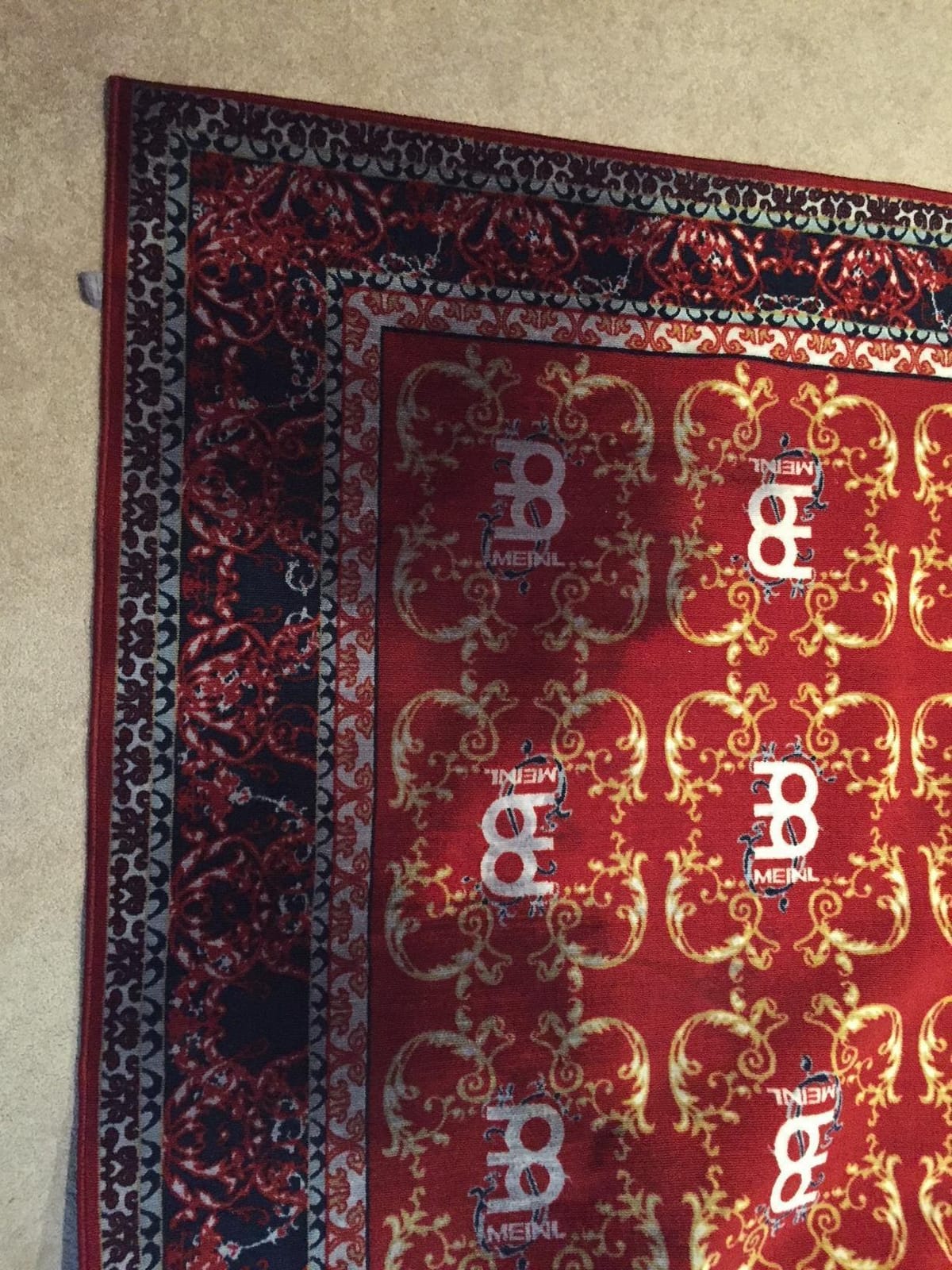
Meinl describes it as a low-pile, densely woven synthetic fibre surface over a rubber lining. Two things follow from that. First, low dense pile gives pointed spurs something to dig into and plant against, so a retractable or straight spur stops working as a creep escape valve. Second, the rubber lining underneath means that when a spike does punch through the pile, it meets rubber rather than your polyurethane finish.
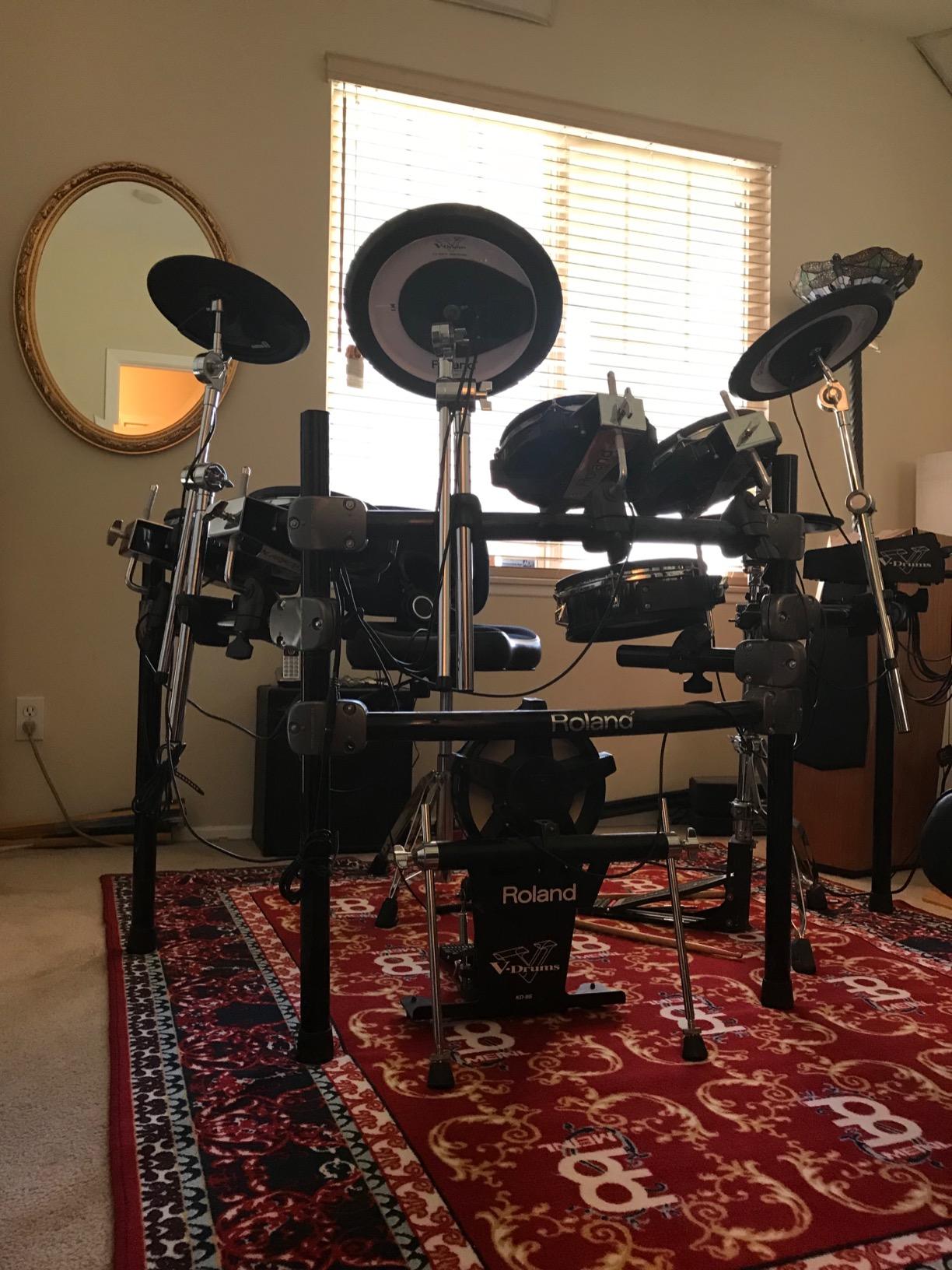
At 78 by 63 inches, covering 34 square feet, it is one of the two largest mats here and comfortably holds a full kit, extra hardware and a throne. Owners with hard floors repeatedly single out the rubber lining as the deciding factor, and the low pile stays flat under stands fitted with rubber feet.
It is also the heaviest mat in this roundup at 12 pounds, and it ships with a hook-and-loop strap and carry bag for rolling. Care is hand wash only, the surface is listed as water resistant, and it carries a 2-year Meinl warranty, the longest warranty in this group.
Why the rubber lining matters most
Every other mat here relies on friction alone or on scattered grip dots. A continuous rubber lining distributes contact across the whole footprint, which means the mat itself is far less likely to walk across your floor during a loud passage and drag your finish with it.
Buyers on hardwood also note the Oriental pattern reads as furniture rather than gym equipment, which matters if the kit lives in a living room rather than a basement.
Where it falls short
Corner stitching fraying is reported by some owners shortly after delivery, so check the corners periodically on a rug that sees pedal traffic.
At 12 pounds it is a two-person carry if you are loading a car solo, and the hand-wash care rule means no washing machine. Add furniture leg pads if you are worried about spikes reaching the floor at all.
7. RV MURTS 4×6 Drum Rug: Best for Noise Reduction in Apartments
Drum Rug Mat with Non-Slip Grip Bottom, 4x6ft Drum Carpet Noise Reduction, Drum Floor Mat for Electric Drum and Jazz Drum Set Splash Stands, Gift for Drummer, Music Drum Accessories, 48x72in, Black
72 x 48 inches
0.35 inch thick
Rubber dot backing
Machine washable
Pros
- Thickest mat here at 0.35 inches for vibration control
- Rubber dot backing anchors stands and splashes
- Roll packaging means no ironing and no creases
- Machine washable and wipe clean
- Water resistant
Cons
- Smaller independent review base
- Decorative pattern suits a practice room more than a stage
- Bulkier to pack than thinner budget rugs
Best for: apartment drummers whose real problem is transmission through the floor rather than creep. At 0.35 inches this is the thickest mat in the roundup, and thickness is what converts floor vibration into absorbed energy instead of transmitted thump.
The build is a flat-woven polyester and rubber construction with a 0.35 inch thickened velvet surface marketed for studio-grade noise reduction and a natural rubber non-slip dot backing that grips floors and prevents scratches. That pairing matters on hardwood because the same thickness that softens the kick also keeps the pedal heel plate from rocking.
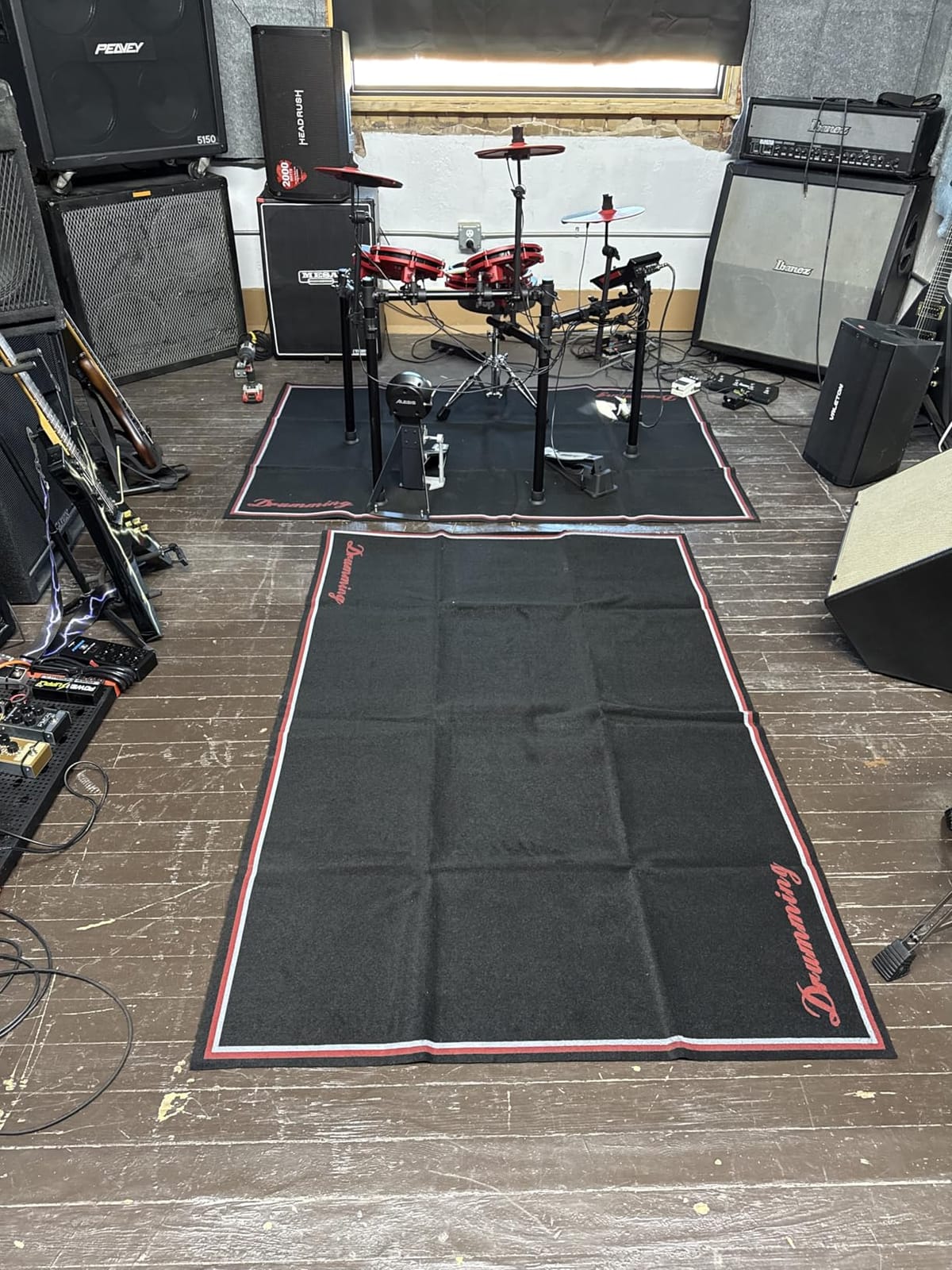
Two practical details set it apart from other budget rugs. It is roll-packaged, so it lays flat instantly with no ironing and no shipping creases, which sounds minor until you compare it with two competitors that arrive folded. And it is machine washable and water resistant, which matters in a living room where a mat collects pet hair and takes the occasional spill.
At 72 by 48 inches and 4.1 pounds it covers a standard five-piece footprint and rolls small enough for a rehearsal-room cupboard. Triple-stitched borders are built for stage and garage use, with a 6-month manufacturer warranty.
What thickness does for a downstairs neighbour
Low-frequency energy from a kick drum and a kick pedal travels through a wooden subfloor more effectively than most people expect, and a mat cannot fix that, but a thicker mat measurably reduces the initial shock at the source. Owners using this mat in rehearsal spaces report a noticeable drop in low-end bleed.
It also deadens a little of the rebound off a hard floor, so if you are moving from carpet to a wood floor, expect your kit to feel tighter and slightly brighter. That is not a flaw.
Where it falls short
The independent review text on this listing is thinner than the numbers suggest, with 179 reviews, so treat the claims as promising rather than proven. The decorative red pattern reads more practice-room than professional stage if your gigs are dressed.
And at 0.35 inches it is bulkier to pack than the thinner budget rugs, which can be awkward if your whole setup lives in one case.
8. Invech 4×6 Drum Rug: Best for Electronic Kits, Pianos and Shared Spaces
Invech 4 x 6 Ft Drum Rug with Non-Slip Grip Bottom, Soundproof Drum Floor Mat, Accessories Gift for Drummers (Black)
4 x 6 foot surface
Polyester with PVC point backing
0.2 inch
3 kg
Pros
- PVC point backing stabilises the whole assembly
- Three sizes offered including 5 x 6.6 ft
- Suits electronic kits
- pianos and treadmills
- Rolls up for storage under a bed
Cons
- Thin 0.2 inch build with little padding
- Backing grip described as marginal on some floors
- Folding packing can leave creases
Best for: electronic kits, hybrid setups and anyone sharing a room with a piano or treadmill who wants one flat surface that does several jobs. Three size options are offered, so you can size to a mesh rack or step up to a 5 by 6.6 foot footprint.
The underside uses PVC points rather than a continuous rubber or TPR sheet. On hardwood, points give good grip for a kit that stays parked and are less good for a kit that gets played hard enough to move it, because there is less total contact area resisting a sideways push. Owners credit it with keeping a bass drum planted; they also describe the grip as marginal on some floor types.
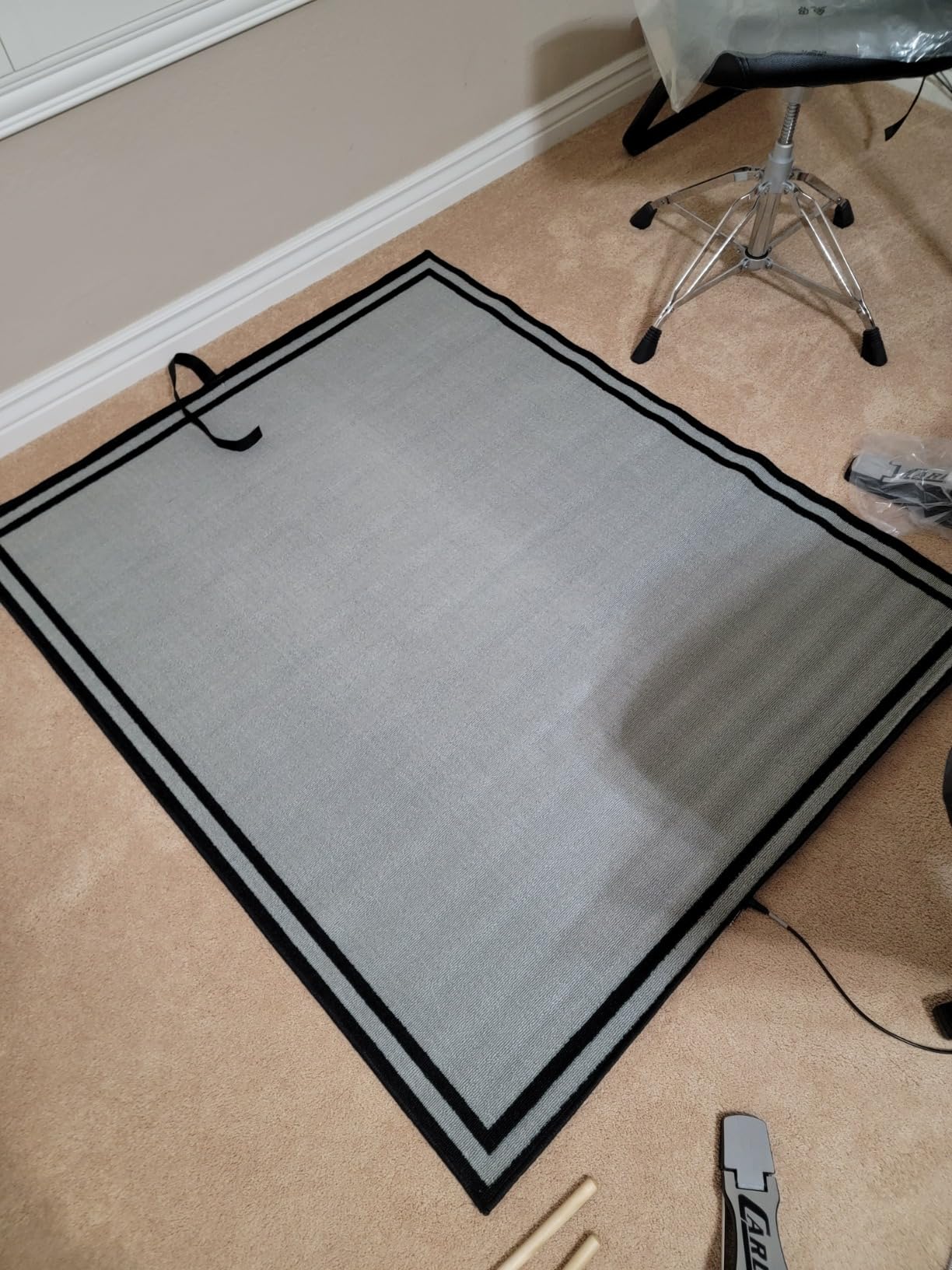
The top is a tight polyester fibre at 0.2 inch thickness. That is deliberately thin, which is why it is listed as protective and noise-reducing rather than isolating, and why the listed care is simple: washable, not water resistant.
At 4 by 6 feet and 3 kg it is heavy enough to stay where you put it but light enough to roll under a bed or into a closet between sessions, which matters in a flat where the kit lives in the living space.
Electronic kit sizing on wood
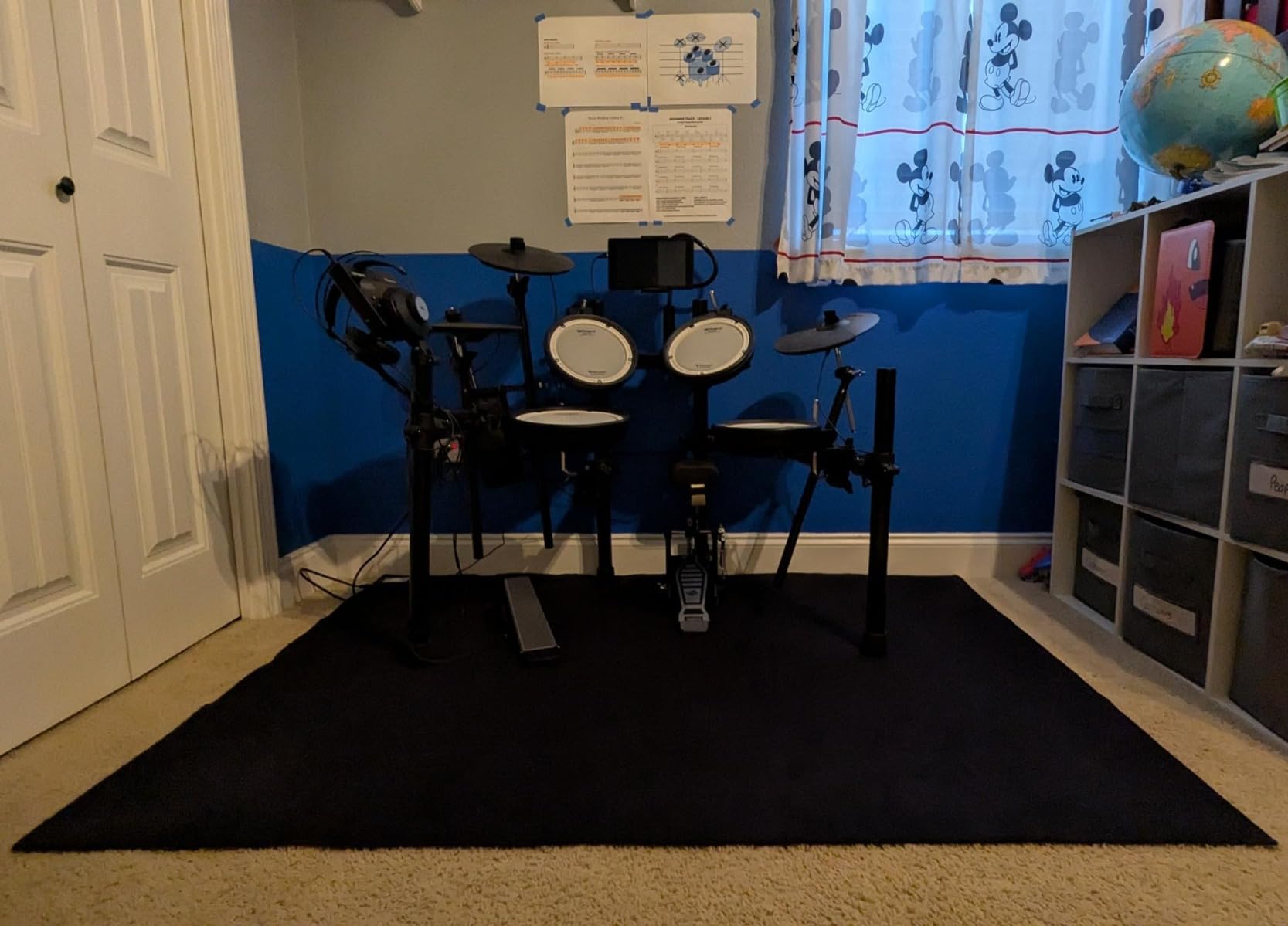
An electronic kit has no spurs and usually no moving kick head, so creep risk is lower and the calculation changes. What you need is a flat, rigid surface under the rack and a pad large enough that the module and any hi-hat pedal sit fully on it rather than half on the floor.
One tip that recurs in the electronic kit forums is to lay a rubber-backed rug rubber-side down. On a hardwood floor that removes the sliding entirely, and this rug’s PVC point backing serves the same purpose.
Where it falls short
At 0.2 inches it offers the least cushioning of any mat here, so an electronic drummer playing seated on a hard floor will feel the difference against a thicker option.
It also arrives folded, so expect creases that need ironing, and if your floor is very glossy you may want to test the backing in a corner before committing.
9. Zildjian ZGIGRUG Gig Drum Rug: Best for Keeping a Small Rig Flat
Zildjian ZGIGRUG Gig Drum Rug
66 x 54 inches
Nylon with non-skid rubber trim
Weighted corners
Bass drum stopper
Pros
- Weighted corners hold the rug flat without readjusting
- Non-skid rubber trim resists sliding on hard floors
- Integrated bass drum stopper as a dedicated anchor
- Nylon carry case included
- Understated charcoal styling for a stage
Cons
- Smaller footprint than the Meinl and Gator rugs
- Thinner and lighter than plush premium rugs
- Modest review base at 118 reviews
Best for: drummers whose mat curls or ripples at the edges and who want a rug that stays flat without readjusting. Weighted corners and non-skid rubber trim solve a problem that very few mats address, and on hardwood a flat rug is a stable pedal surface.
It is a heavy-duty polypropylene fabric in a flat weave with a low pile, backed by non-skid rubber trim around the edges rather than across the whole underside. The trim is what grips a sealed wood floor at the perimeter, which is where a rug actually wants to move: sideways, one edge at a time.
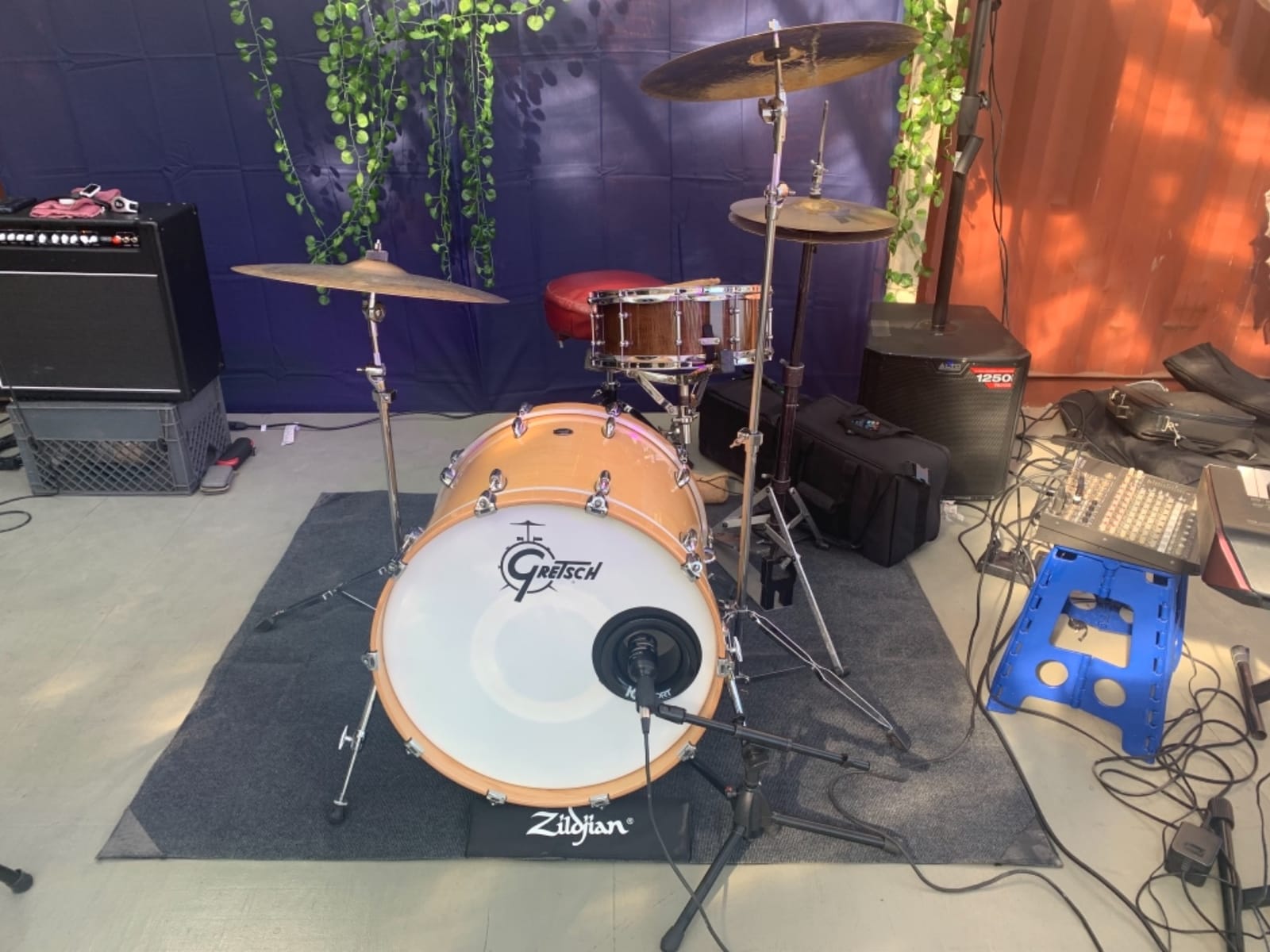
At 66 by 54 inches it is smaller than the Meinl and Gator rugs in this roundup, so it suits a compact four-piece kit or a rehearsal setup rather than a full five-piece with a throne and spare stands. At 3.5 pounds it is one of the easiest to carry, and it includes a nylon carry case.
The integrated bass drum stopper, finished with a Zildjian logo, gives the kick a dedicated anchoring point instead of relying on friction alone. The mat is machine washable.
Flatness versus coverage on hardwood
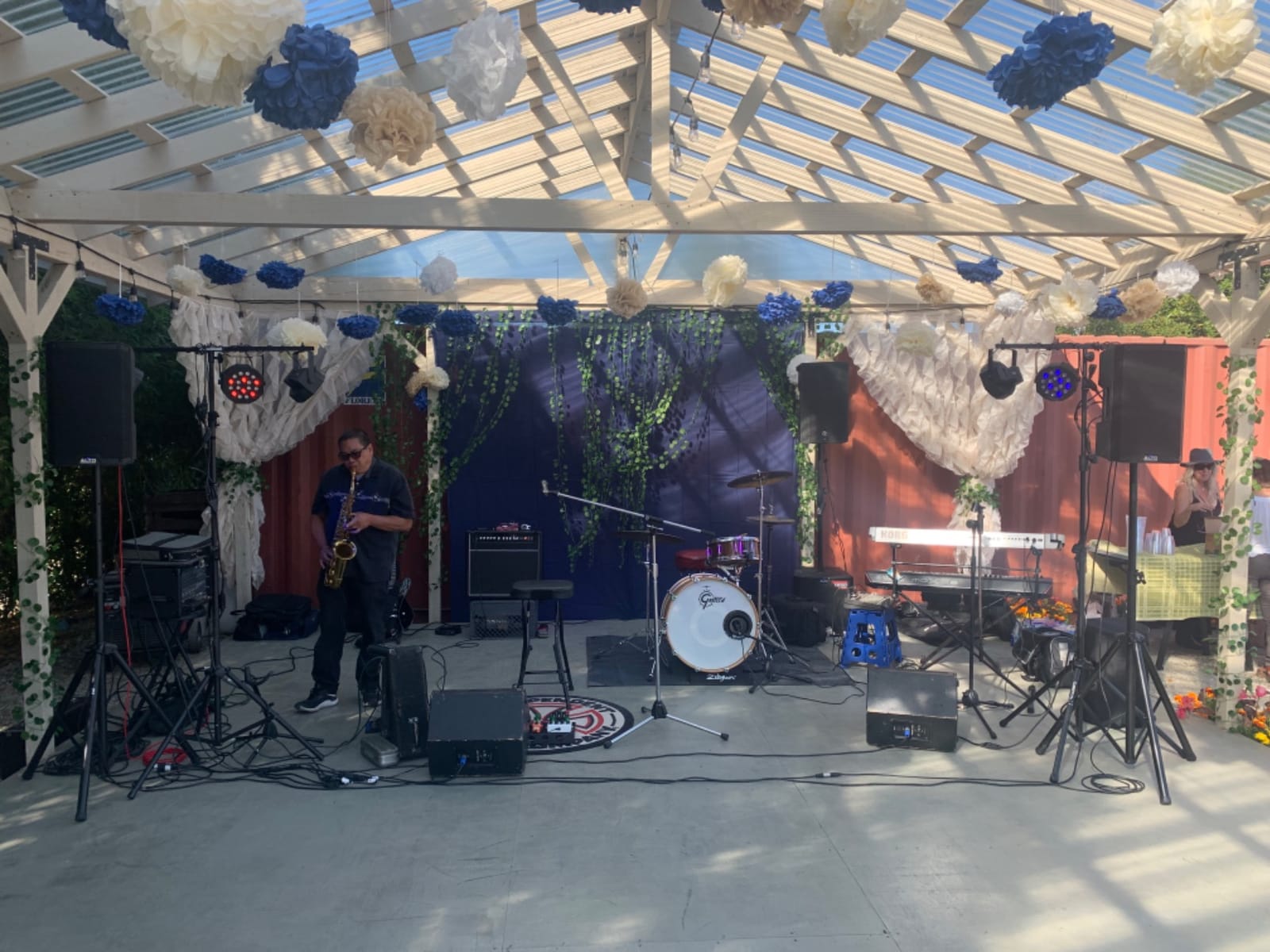
This is a grip-versus-area trade. The trim and corner weights give it very good resistance to shifting, but 66 by 54 inches means hardware sits closer to the edge than on a larger rug. Measure your footprint with the method below and decide whether the edges of your kick and hi-hat clear the mat.
Charcoal grey and black styling also reads well on a stage where a patterned rug looks out of place, which is the usual reason giggers reach for this one.
Where it falls short
It is thinner and lighter than the plush premium rugs, so it does less to absorb floor vibration and less to cushion a throne. If your motivation is neighbours rather than creep, this is the wrong end of the trade.
The independent review base is modest at 118 reviews, so the weighted-corner and trim claims are better supported by the spec sheet than by a large volume of buyer reports. Check the corner weights are not missing when it arrives.
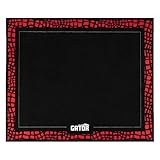
10. Gator GP-DRUMRUG-BK Drum Rug: Best for Maximum Coverage and Finish Safety
Gator Cases Drum Rug with Non-Slip Grip Backing, 78″ x 66″ Size, Safe for All Finishes, Black (GP-DRUMRUG-BK)
78 x 66 inches
0.25 inch plush
Non-slip rubber underside
Limited lifetime warranty
Pros
- Very large surface holds a full kit plus hardware
- Non-slip rubber underside grips hardwood and carpet
- Plush surface listed as safe for all drum finishes
- Arrives rolled and lays flat
- Limited lifetime warranty
Cons
- Smallest review sample at 34 ratings
- Black surface shows lint and debris easily
- May be oversized for a small practice room
- Can shift if you drag one side
Best for: drummers who want every piece of hardware and the whole throne footprint off the wood, and who are worried about drum finish transfer onto a nice floor. At 78 by 66 inches it is the largest surface in this roundup.
The construction is a tufted low-pile plush with stainless steel weighted elements and a non-slip rubber underside that grips both hard floors and carpet. It is listed as safe for all drum finishes and as protecting underlying surfaces from scuffs, which addresses the concern raised in the forums about drums leaving marks on hardwood.
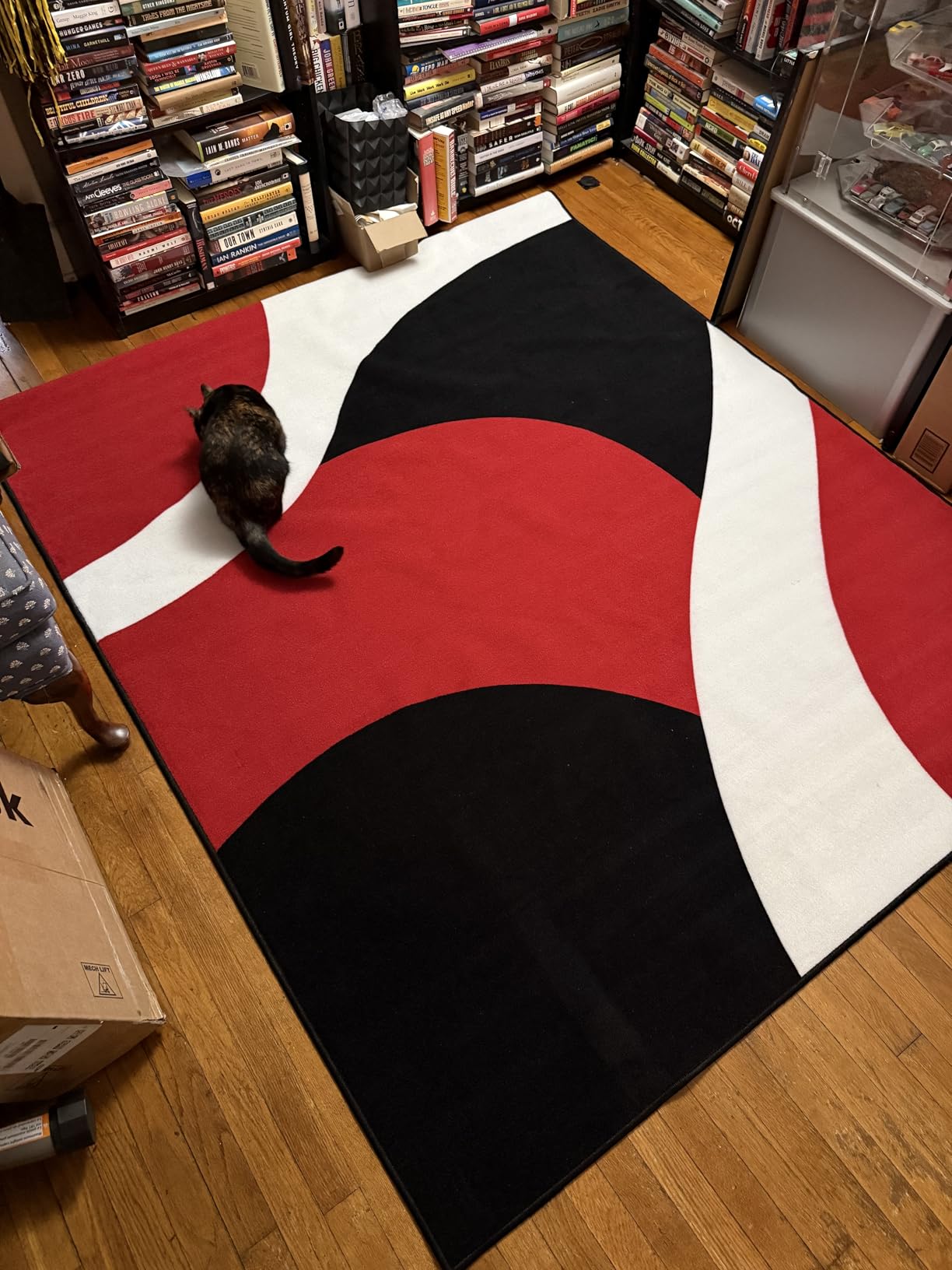
It arrives rolled and lays flat without persistent wrinkling, which is the single most common complaint about the cheaper rugs in this roundup. It is 0.25 inches thick, weighs 12 pounds with a listed net weight of 9.6 pounds, and covers 35.75 square feet.
Owners of full-size electronic and acoustic kits praise the size and the grip on slippery hardwood, and it doubles as a general area rug or an amp platform. It is designed and supported in Tampa, Florida, and carries a limited lifetime warranty, the strongest warranty in the group.
Coverage as the main feature
On hardwood, the scuff risk scales with how much bare wood your hardware can touch. At 78 by 66 inches you can position the kick, snare, both toms, three stands and a throne with margin to spare, and then move them around without ever putting a stand foot back on the finish.
The rubber underside is continuous rather than dotted, so it resists both sliding and the ratcheting effect a dragged rug can have on a gloss finish. Lift and reposition it rather than pulling it.
Where it falls short
The review base is the smallest in this roundup at 34 ratings, so treat the fit-and-finish claims as good but not as well proven as the On-Stage or Aucuda. It also carries the shortest list of verified drawbacks of any premium mat simply because fewer people have reported back.
Black plush shows lint and light debris readily, and at 12 pounds it is the heaviest option for a small room. If your practice space is tight, a 4×6 covers the same floor protection for a fraction of the bulk.
Backing Material Decoder: What Actually Grips Sealed Hardwood
Grip on wood is decided almost entirely by the underside, and the pile on top is close to decoration. Five backing types appear in this roundup, and they behave very differently against a sealed finish.
Rubber lining. A continuous rubber or rubber-lined underside gives the widest contact area of anything here, so it resists both sliding and dragging. It is the best answer for punctures, because a spike that gets through the pile meets rubber instead of lacquer. This is what separates the Meinl and Gator rugs from the rest.
PVC sheet. A non-slip PVC surface is a firm, non-porous sheet with nothing for a spike to sink into. It is the reason the On-Stage DMA6450 holds pedal position on hardwood, and it is also why it feels less forgiving than carpet under a fabric snare head.
TPR and PVC point patterns. Discrete dots grip well when a kit is parked and less well under a hard lateral shove. They are the most common budget solution and they work, provided you position the mat before you start rather than nudging it mid-set.
Non-skid rubber trim. Trim grips at the perimeter rather than across the whole underside, which is exactly where a rug tries to move. It pairs best with weighted corners, as on the Zildjian rug.
Loop pile with no non-slip backing. This is the one to avoid, and it leads into the next section.
How to Measure Your Kit for the Right Mat Size
Size confusion is the most common question in the drum forums, and it is a five-minute job. Getting it wrong means hardware hanging off the edge onto bare wood, which defeats the purpose entirely.
1. Tap your kick pedal and hi-hat into their playing position with the drum stool where you actually sit.
2. Mark the outermost leg positions of every stand, including the boom of a crash or ride cymbal.
3. Measure the width across those marks and the depth from the front of the kick to the rearmost stand leg.
4. Add 6 to 12 inches of margin on all sides so you can move a stand without reaching the floor.
5. Compare against the sizes here: 47 by 63 inches suits a compact four-piece, 60 by 48 a small five-piece in a tight room, 72 by 48 a standard five-piece, and 78 by 63 or 78 by 66 a full kit plus throne and spare hardware.
If you play an electronic kit, measure the rack footprint plus the module and hi-hat pedal instead, and step down a size if the floor is small. If you are still shopping for the throne itself, our drum throne picks for tall drummers explain how seat height and reach change the footprint you need to cover.
Pedal Creep: Why It Happens and How to Stop It
Pedal creep is the most-cited complaint about drums on hard floors, and it appears on retailer review pages and in the drum forums with equal frequency. The cause is rarely the pedal. It is almost always the surface combination under the heel plate.
1. Retractable spurs sink into loop pile. If your mat has a soft, looped backing, the spike finds purchase and the kick walks forward. Fix it by using a mat with a firm PVC, TPR or rubber-lining underside.
2. The heel plate needs a rigid surface. On a soft or uneven mat the plate tilts under stroke, and a tilting plate changes direction mid-hit. Fix it by laying a small rigid panel or a pedal anchor under the heel plate.
3. The mat must extend under the pedal’s full travel. If the pedal can reach the end of the rug and go over the edge, creep returns. Fix it by sizing up.
4. Check for edge curl. A curled corner lifts the mat’s contact patch and lets the whole thing shift. Fix it by weighting the corners or choosing a rug with weighted corners.
5. Add pedal anchors or a wedge block. The Black Widow system in this roundup exists entirely for this purpose, and a wedge block under the rear of the pedal board is the cheapest version of the same idea.
6. Use furniture-style leg weights as a last resort on stand feet. Forum advice consistently places sandbags on the outside legs of kicks, snares and cymbal stands for exactly this.
Your own weight often holds a kit in place, which is why the problem mostly appears when you stand up to play.
Rugs and Mats to Avoid on Hardwood Floors
This is the question that has no good answer anywhere else, and it is worth answering with names rather than principles. Some of these are the most popular mats on the market, which is why they cause so much confusion.
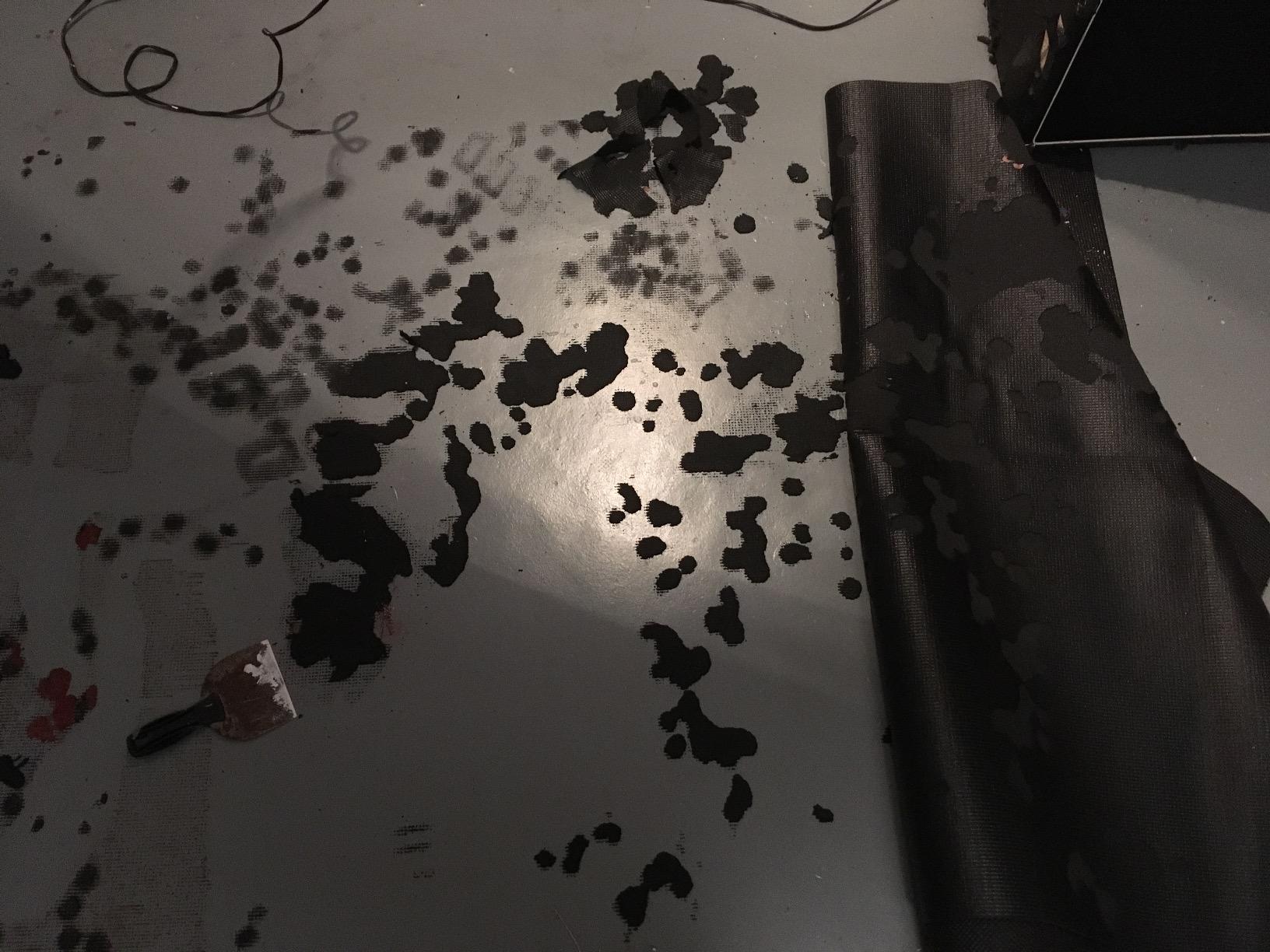
Loop-pile rugs with no non-slip backing. This is the worst category on wood. Retractable spurs dig into the loops, the pedal creeps forward, and the entire rug ratchets across the floor with it.
Rubber-backed bath and door mats. The rubber is designed to grip tile, and on a sealed floor it can leave a residue ring or a sheen difference that shows under every stand leg.
Yoga and exercise mats. They are too narrow for a kit footprint and too compliant under a pedal heel plate. They damp nothing and stop nothing.
Adhesive-backed carpet tile. It is permanent, it traps grit against the finish, and lifting it later can take a layer of polyurethane with it.
Area rugs with jute, sisal or other natural fibre backing. Natural fibres are smooth, absorbent and slippery on a sealed floor, and they will slide under any load.
Plush high-pile shag. It deforms under a pedal plate and deadens the response of your kit, turning a tight hard-floor feel into a muffled one.
Any rug smaller than your measured footprint. Not a materials failure, but the most common reason a purchased mat still ends up with hardware on bare wood.
Protecting Your Floor Finish
A drum mat generally protects your floor; the risk is mat-to-floor friction marring a glossy finish rather than hardware scratching it. A few practical rules cover nearly every case.
Sealed hardwood with a matte or satin polyurethane finish is the ideal surface for drumming, because matte texture gives the backing something to bite into and scuffs stay invisible. Gloss finish gives more reflection and shows every mark, so grip is actually better on gloss but the marks are more visible.
Unsealed or waxed-oiled solid wood is the risk case: it is more absorbent and marks more easily, so put the mat down on a clean, dry floor and lift it rather than dragging it when you move the kit. Moving a rug sideways across a finished floor is the single most reliable way to make a dull sheen appear.
Vacuum the floor before you lay the mat, and add furniture leg pads under any stand leg that stays off the rug. A mat does not stop a steel leg tip from finding bare wood on the one occasion you forget it. The same lift-don’t-drag rule applies to the other solid wood furniture in the room, whether that is a cabinet or a hardwood chess set on the same boards.
DIY and No-Buy Drum Mat Alternatives
The most common advice in the drum forums is that you do not need to spend anything at all. Several of these approaches work well, and forum consensus treats them as legitimate rather than as a compromise.
Big-box rubber-backed welcome mats. The grey industrial mats with a rubber bottom are the single most repeated recommendation. They are firm, wide and genuinely grippy on sealed wood.
Outdoor carpeting sold by the foot. A recurring favourite, partly because it is cheap and partly because the polypropylene construction is the material most often recommended for durability.
100% polypropylene. Forum consensus names this as the material baseline: inexpensive, hard-wearing and resistant to the liquid spills that reach a kit mat.
Traffic mats with stand blocks. Some drummers run a big-box traffic mat and add dedicated stand blocks and a kick block on top for the anchoring points a rug cannot provide.
Interlocking foam tiles under the rug. Foam gym or fatigue tiles under a rug layer add cushion and some isolation on a hard floor.
Sandbags on stand legs. Not a mat, but the cheapest fix for a kit that will not stay put, and it works on bare wood.
None of these match a purpose-built rug for portability, warranty or finish-safe coverage, but for a practice room they solve the actual problem at a fraction of the cost.
Frequently Asked Questions
What is the best drum mat?
The best drum mat is a correctly sized rug with a firm non-slip backing rather than a soft carpet. On hardwood specifically, choose a rubber, PVC or TPR underside so pedal spikes bite instead of sinking, and pick a surface large enough to hold your entire kit footprint plus 6 to 12 inches of margin. Top rated here is the Aucuda 4×6; the On-Stage DMA6450 is the strongest all-rounder.
What rugs not to use on hardwood floors?
Avoid loop-pile rugs with no non-slip backing, because retractable spurs dig into the loops and the pedal creeps forward. Also skip rubber-backed bath and door mats that can leave residue, narrow yoga or exercise mats, adhesive-backed carpet tile, area rugs with jute or sisal backing, and plush high-pile shag that deforms under a pedal plate. Pick firm backing, correct size and low pile instead.
Are drum mats worth it?
Yes, if your floor is hard or your kit creeps, because a mat fixes pedal drift and scuff marks at the same time. It is worth less if you already own a large rubber-backed rug and play gently. Forum consensus treats a big-box rubber-backed welcome mat as an adequate substitute, so the spending decision is about portability, warranty and finish-safe coverage rather than grip.
Should I put a rug under my drum set?
On hardwood, yes, and it does two jobs at once: it anchors the kit and it protects the finish. A rug stops retractable spurs from creeping the kick pedal forward, keeps stand feet off the lacquer, and softens floor vibration that otherwise travels into the room below. On carpet it is mostly about protecting the carpet and adding a stable pedal surface.
What size drum rug do I need?
Measure the outermost leg positions of every stand with the kit set up as you play it, then add 6 to 12 inches of margin on all sides. A 47 by 63 inch mat suits a compact four-piece, 72 by 48 fits a standard five-piece, and 78 by 63 or 78 by 66 holds a full kit plus throne and spare hardware. Electronic kits can usually step down one size.
Final Verdict for Hardwood Floors in 2026
After sorting ten mats by backing material, footprint and verified buyer history, the On-Stage DMA6450 is our pick for the best drum mats for hardwood floors in 2026. Its continuous non-slip PVC sheet is the most reliable answer to pedal creep we found, it covers 6 by 4 feet, and it carries more than a thousand reviews of real-world hardwood use.
The Aucuda 4×6 takes the rating crown at 4.6 stars and is the choice if tight weave and vibration damping matter more to you than rigidity. The Meinl 78 x 63 wins on pure floor protection, with the only continuous rubber lining among the large rugs and a two-year warranty behind it.
Whichever you choose, measure your footprint first, lay the mat flat, and position your hardware from the back row forward. That last habit does more for creep than any rug on this list.