
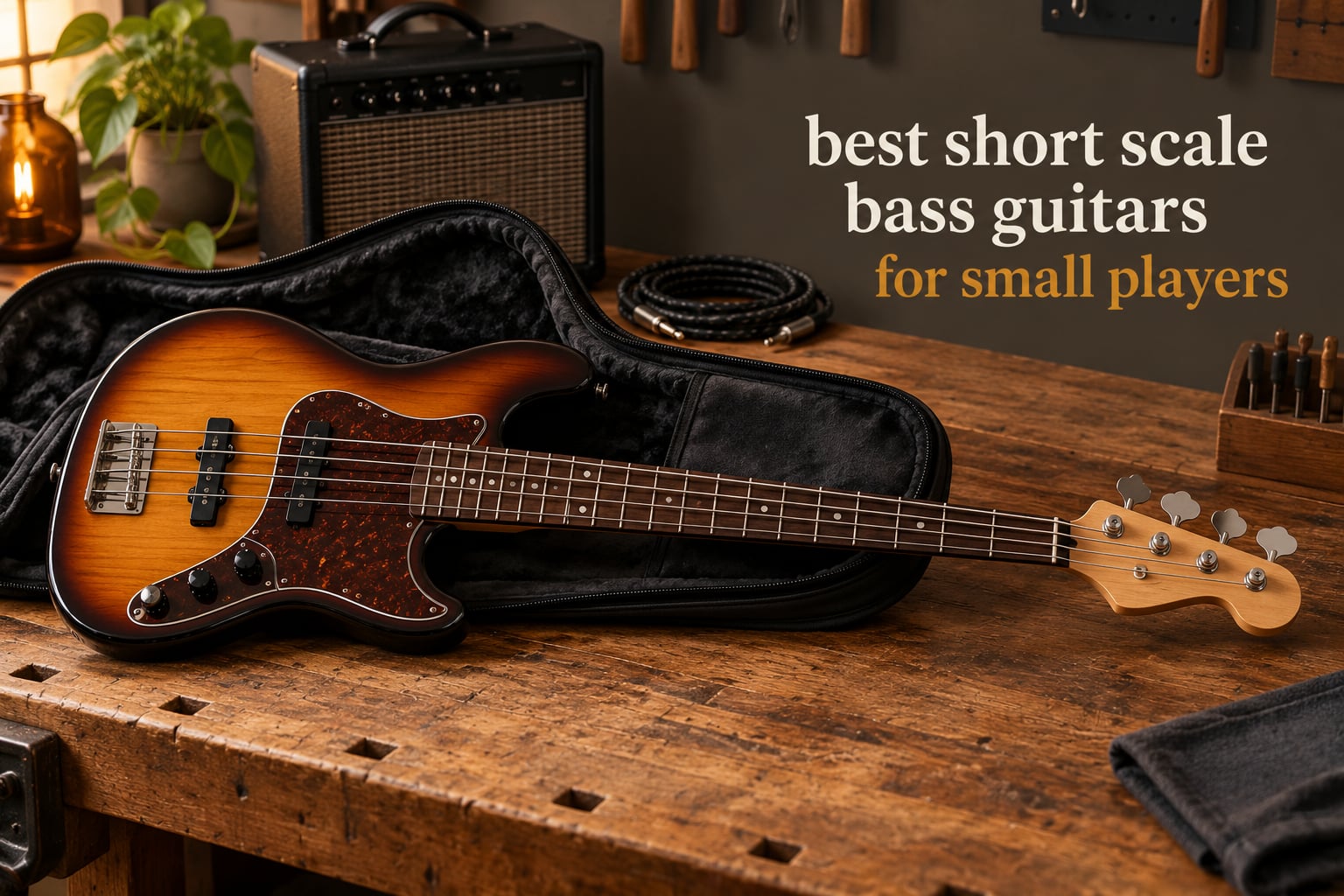
Ask a bass player with small hands what instrument they wish they had started on and you will usually hear the same complaint. The fret spacing on a standard 34 inch scale is too wide, the pinky falls off the top of the neck, and every high note costs a position shift.
The instrument most of those players are pointed toward is the short scale bass, a category covering roughly 28 to 30 inches of nut-to-saddle length instead of 34. That is a full inch and a half of extra reach taken away at the 12th fret, and it is why short scale instruments appear on nearly every list of basses for smaller players.
Short scale does not automatically mean small hands friendly, though. Scale length is one of four measurements that decide how a bass feels, and it is the one most roundups talk about. Nut width, neck profile and body depth matter just as much, and a 28 inch neck with a fat nut and a deep body solves nothing. We went through the specs of ten short scale basses to separate the ones that genuinely help a small hand from the ones that are simply short on paper.
This guide covers all ten in detail, each with its measured scale length, its materials and its real drawbacks, then answers the questions that forum threads keep arguing about: whether short scales are a myth, what they cost you in tone and tuning, and whether a 28.6 inch instrument or a 30 inch one is the smarter buy. If you are starting from zero rather than from a size problem, our beginner bass guide covers the general case first.
Table of Contents
What is a short scale bass? Scale length explained for small hands
A short scale bass is any bass guitar whose scale length, the distance from the nut to the bridge saddle, is roughly 28 to 30 inches instead of the standard 34 inches used on a Fender Precision or Jazz Bass.
Because the same number of frets is squeezed into a shorter length, each fret is narrower and the notes sit closer to your body. On a 34 inch scale the frets are about 1.1 inches wide at the nut; on a 28.6 inch scale they are noticeably tighter, and by the 12th fret the difference in reach is the whole reason these instruments exist.
Shorter strings also mean lower tension at the same gauge, which is why a short scale bass can use a lighter set without feeling slack. The trade is a lower, less rigid low string and a slightly less massive fundamental, which we cover in full further down.
Three terms get mixed together, and it helps to have them straight before buying anything. A true short scale runs about 28 to 28.6 inches and belongs to the Mustang and violin bass family. A short scale PLUS runs 30 inches and sits much closer to a standard instrument. A 3/4 size or mini bass is a body and overall length reduction, which is not always the same thing as a shorter scale.
Nut width is the number to check next. It is measured in millimeters at the nut, and a bass with a wide nut and a deep C profile can feel bigger in the hand than a longer instrument with a narrow nut. If a listing gives you only one measurement, ask the manufacturer for the nut width before you commit.
Top 3 short scale basses for small players right now

Ibanez GSRM20 miKro
- 28.6 inch scale
- Mahogany body with maple neck
- Passive combination pickups
- 6.8 lb weight

Squier Mini Precision Bass
- Three-quarter size
- Poplar body with maple neck
- Precision split single-coil
- 2 year warranty

Jackson JS1X Concert Bass
- 28.6 inch scale
- Graphite reinforced maple neck
- P/J pickup configuration
- 2 year warranty
The 10 best short scale basses at a glance
Every instrument below is listed with the number that actually decides hand comfort, plus the two or three features that separate it from its rivals. Prices move constantly, so the buttons handle that; the specs do not.
| Product | Specifications | Action |
|---|---|---|
| Ibanez GSRM20 miKro |
|
Check Latest Price |
| Squier Mini Precision Bass |
|
Check Latest Price |
 Cordoba Mini II MHE Cordoba Mini II MHE |
|
Check Latest Price |
 Ibanez GSRM25BK MiKro Ibanez GSRM25BK MiKro |
|
Check Latest Price |
 Ibanez Talman TMB30 Ibanez Talman TMB30 |
|
Check Latest Price |
| Jackson JS1X Concert Bass |
|
Check Latest Price |
 EDM 36 Inch Mini Bass EDM 36 Inch Mini Bass |
|
Check Latest Price |
 GLARRY GW101 GLARRY GW101 |
|
Check Latest Price |
 GLARRY GP36 GLARRY GP36 |
|
Check Latest Price |
 Traveler Guitar Ultra-Light Bass Traveler Guitar Ultra-Light Bass |
|
Check Latest Price |
Do you even need a short scale? The small-hands myth, honestly assessed
Short scale basses are not automatically better for small hands. Both camps on this argument have real evidence behind them, and the honest answer depends on what is actually limiting you.
The position shift argument comes from experienced players and it is sound. If your fret hand only struggles above the 5th fret, the technique-first camp says, you can slide your thumb back and carry the line a few frets lower instead of stretching. That is genuinely how most long-scale players deal with it, and it is why some experienced players with small hands never felt the need for anything shorter than 34 inches.
But that solution has a cost. Shifting takes time and it interrupts legato lines, and a hand that must constantly re-position never learns to feel the neck as one continuous shape.
The forum evidence splits cleanly in two. In one r/BassGuitar thread, smaller-handed players were told they would just need to move their fretting hand more. In a separate r/BassGuitar thread on players who switched to short scales, long scale players reported a real comfort improvement that position work alone had not delivered.
So the question is not whether short scales are a myth. It is whether your hand is short in span or short in practice. If you play mostly root notes in the first few frets, a standard instrument is fine. If you play lines up the neck and your pinky stalls around the 7th fret, the instrument itself is the problem, and no amount of technique fixes a hand that physically cannot span the frets.
There is a third group worth naming. Players with scoliosis, limited shoulder movement or joint hypermobility are not asking for a smaller span, they are asking for less weight and less reach to get a note. Our guide to basses for adults touches on sizing more broadly, and in this roundup the lightest instruments are the ones to look at first.
For parents, the anatomy argument settles most of it. Hands keep growing into your late teens, bodies do not. An instrument sized for a nine year old becomes badly undersized at fourteen, and a full size bass at nine is a stretch. A short scale is a reasonable middle.
1. Ibanez GSRM20 miKro – the 28.6 inch all-rounder
Ibanez Gio SR miKro Short Scale 4 String Electric Bass – Metallic Purple
28.6 inch scale
Mahogany body, maple neck
Rosewood fingerboard
6.8 lb, 4 string
Pros
- 28.6 inch scale suits small hands
- Lightweight at 6.8 lb for long practice sessions
- Combination pickup configuration covers more than one tone
- Consistently well reviewed across nearly 2000 owner ratings
- Multiple finishes available
Cons
- Factory strings often replaced straight away
- Some units need minor truss rod and action work
- Gig bag not included
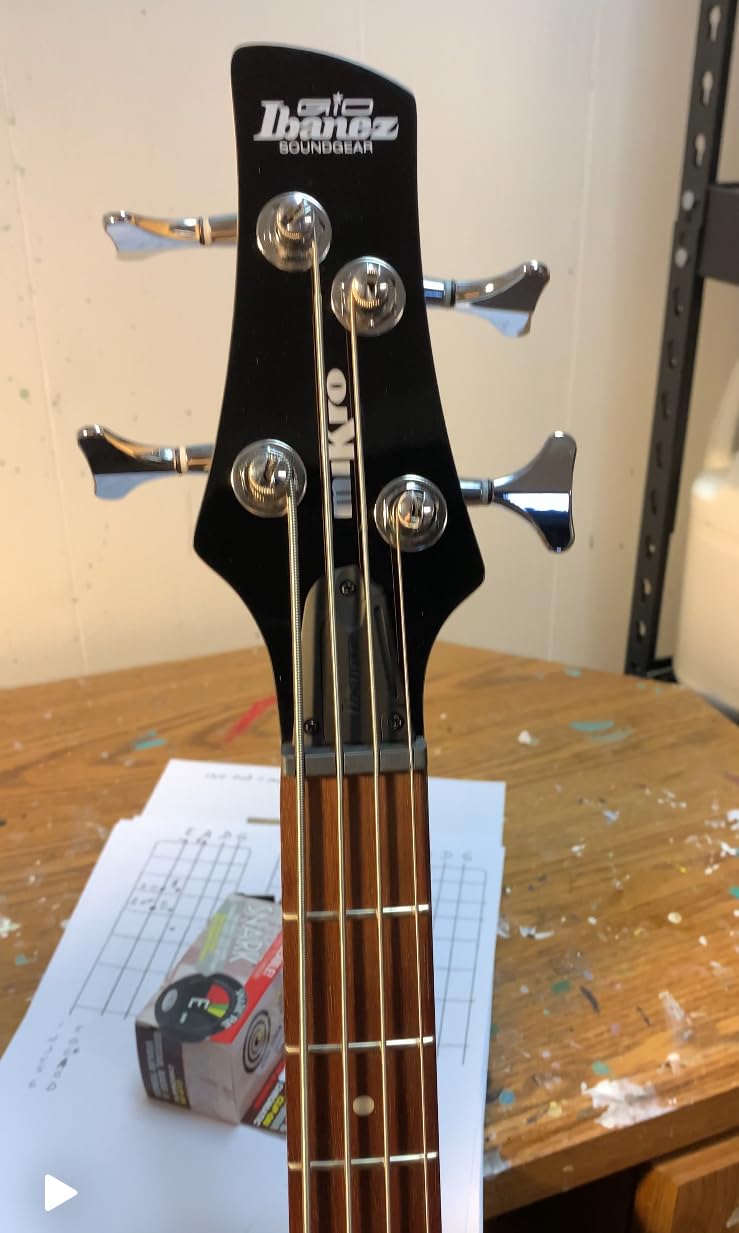
This is the one we kept coming back to. The 28.6 inch scale is short enough to take the pressure off the top of the neck, but the body underneath is still a full size solid body, so the instrument looks and behaves like a normal bass rather than a toy.
Weighing 6.8 lb, it is light enough for a long practice session without the fatigue that heavier short scale models cause. The mahogany body with a maple neck and rosewood fingerboard is a conventional combination that does not fight the player, and the passive combination pickup setup covers more ground tonally than a single pickup instrument.
Owner ratings average 4.6 out of 5 across 1992 reviews, more owner feedback than any other instrument here, and the tone in those reviews is unusually consistent. People credit it with being easy to learn on, comfortable for long sessions and surprisingly good sounding for the money.
On r/Bass, owners describe picking one of these up secondhand and finding it genuinely easy to learn on, which is exactly the experience a first bass should deliver.
What to check before you commit
Ask the shop to play it at the 12th fret on the low E with your own hand rather than trusting the scale number alone. Reach is what matters, and two basses at 28.6 inches can feel completely different once the neck profile is in the equation.
If you play in a band and need a fifth string, this is not the instrument. Our 5 string bass guide covers the extended range options, and the GSRM25 below is the short scale entry in that category.
Who should skip it
Players chasing a specific vintage P-Bass thump will find the combination pickup less focused than a single split coil. It is a passive instrument with no onboard preamp, so anyone wanting active electronics or a built in tuner should look elsewhere.
If you play in a band and need brightness at volume, test this against something with a humbucker first. For a first bass at home with a practice amp, it does the job properly.
2. Squier Mini Precision Bass – the smallest full-size-feeling option
Squier Mini Precision Bass, Black, Laurel Fingerboard
3/4 size short scale
Poplar body, maple neck
Slim C neck profile
Chrome die-cast tuners
Pros
- True 3/4 size suits small hands and younger players
- Precision split single-coil gives authentic P-Bass character
- Slim C profile is easy to slide the thumb along
- Thin basswood body keeps weight down
- 2 year limited warranty is longer than most here
Cons
- Factory strings are low quality and usually replaced
- Needs a basic setup out of the box including fret edges
- Small body can cause neck dive while playing
- Only offered in black
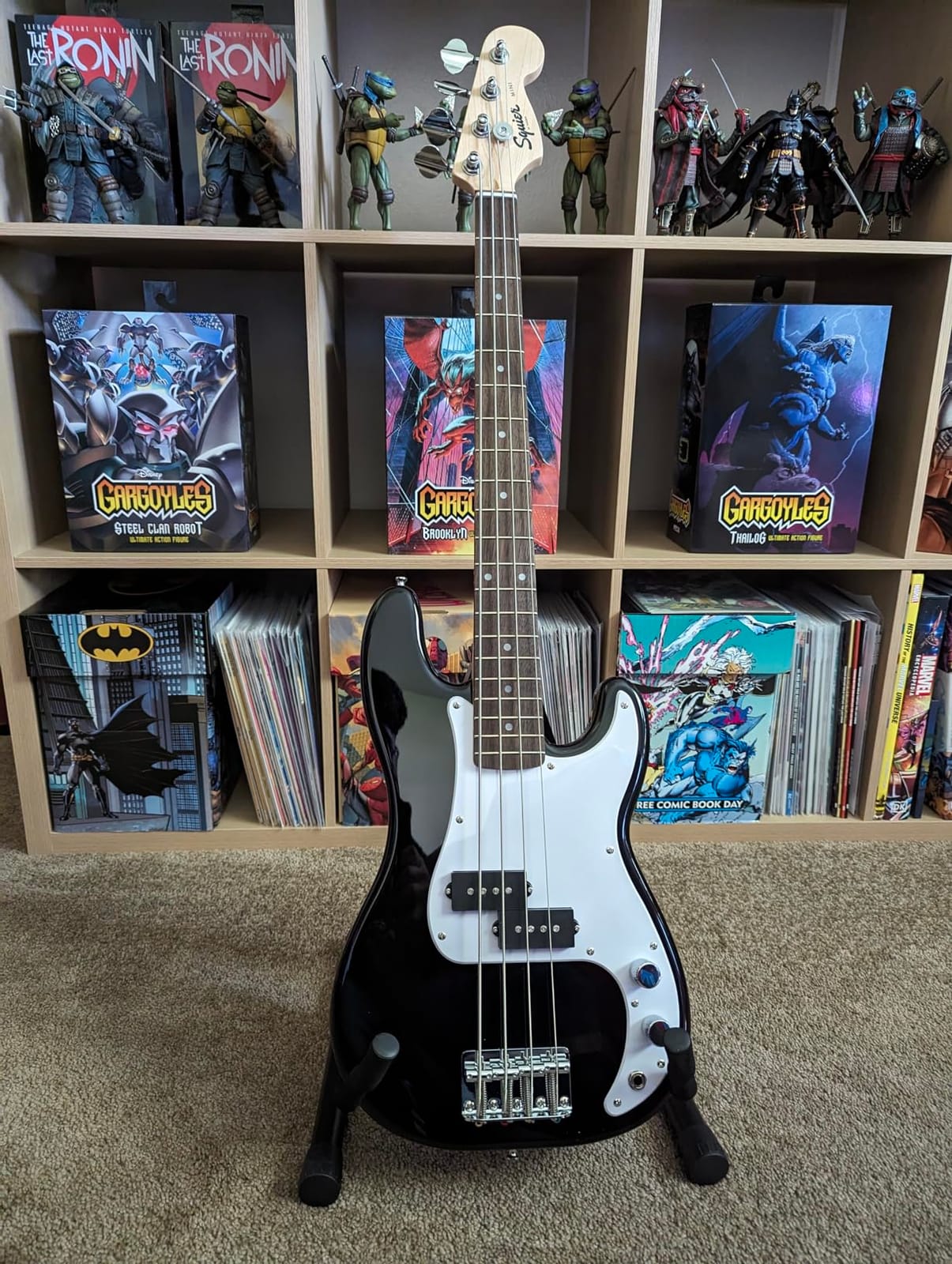
This is the answer for a child or a very small adult who wants to hold a real Precision Bass shape rather than a toy. The 3/4 size frame is the entire point, and the slim C profile means the thumb can move without fighting a thick neck.
The tonal argument is stronger than the size suggests. A split single-coil Precision pickup into a poplar body with a maple neck is a familiar recipe, and owners consistently report that the bass sounds like a scaled down P-Bass rather than a novelty instrument.
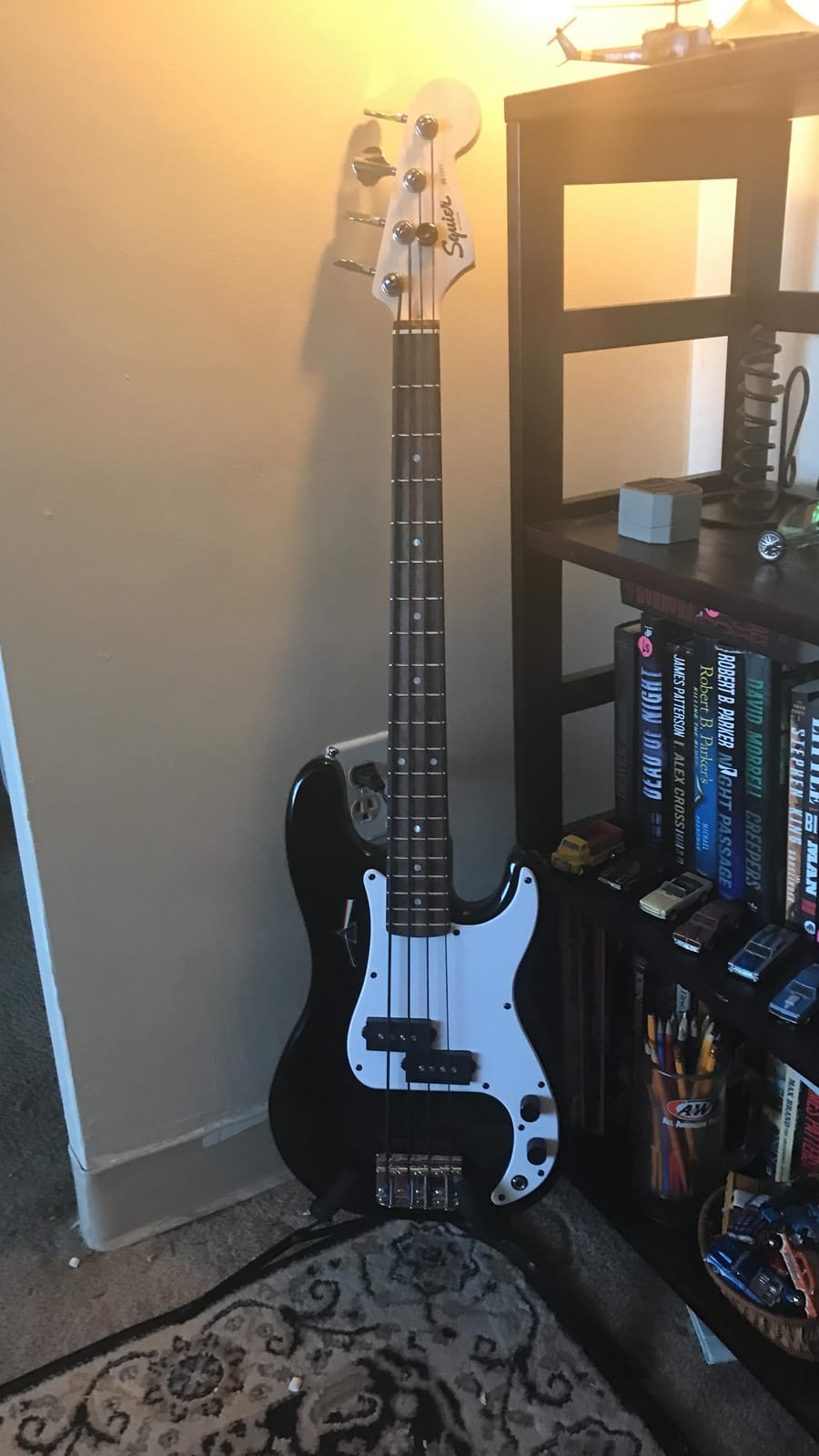
Reviewers rate it 4.5 out of 5 across 383 ratings, and the common theme in those reviews is comfort. People with arthritis, small hands and families buying for a first instrument all single out the compact dimensions as the reason their playing got easier rather than harder.
The satin neck finish comes up as a genuine plus for beginners because a satin surface does not stick the way a thick gloss neck can when your hands are still learning where to put them. Chrome die-cast tuners are also a step up from the plate tuners found on entry level kits.
How to handle the setup
Every reviewer mentions the same three things: change the strings, check the action and feel the fret edges. Those are inexpensive jobs at any music shop and they are the difference between a bass that feels cheap and one that feels good.
Watch for the neck falling back toward you as you play. With a body this light that happens easily, so strap the instrument higher than you think you need to or use a strap with a locking adjuster.
Who should skip it
The 3/4 frame is around forty inches overall, which makes it a first instrument rather than a teenager’s.
It is also fixed at four strings with a single pickup, so it is not a choice for a player who wants to experiment with low B or with a wide range of voicings on one instrument.
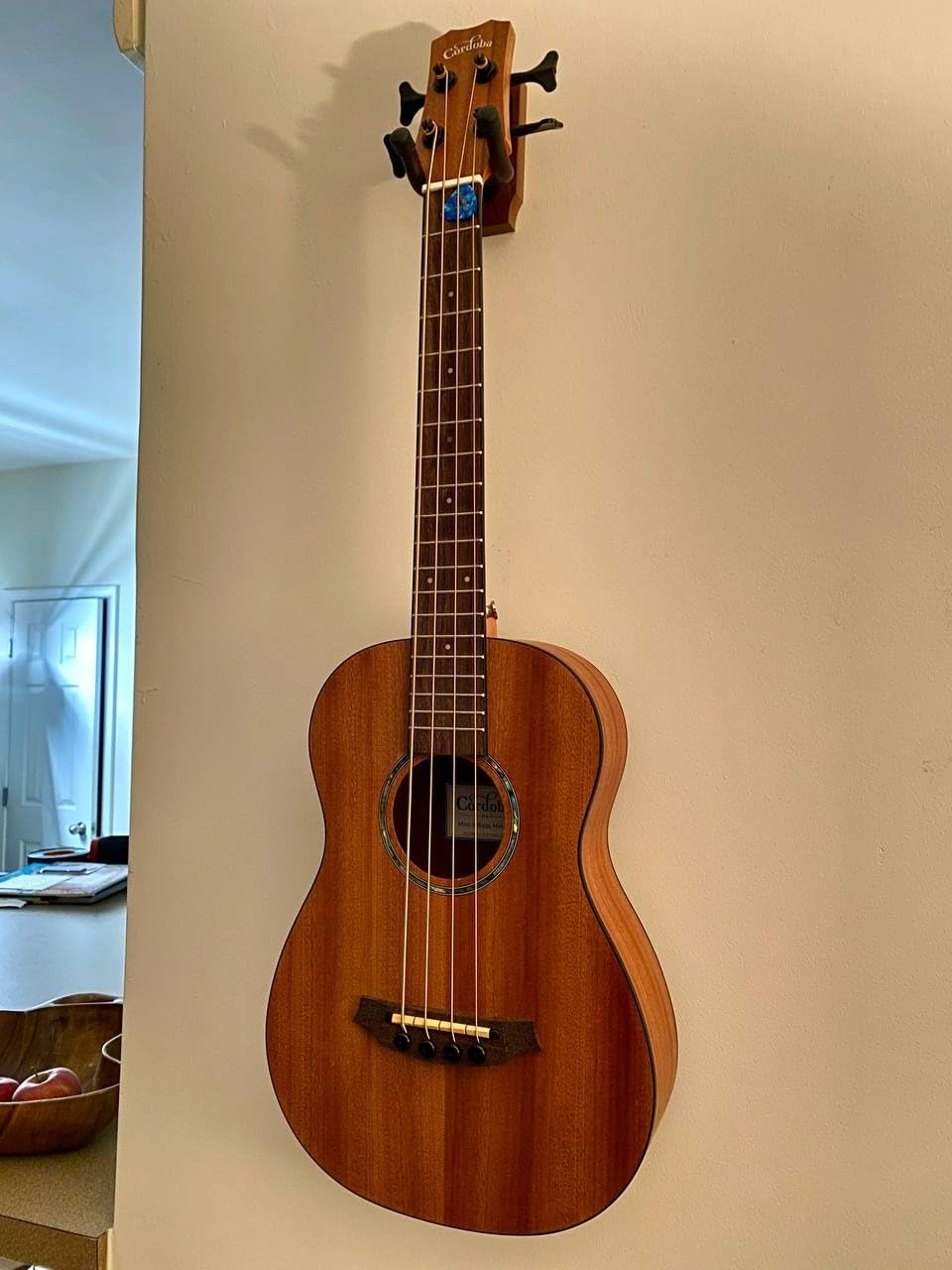
3. Cordoba Mini II MHE – the acoustic-electric that weighs 2.4 lb
Cordoba Mini II Acoustic Electric Bass MHE
22 7/8 inch scale (580mm)
All mahogany body and neck
Nylon core strings
2.4 lb
Pros
- Extremely light at 2.4 lb
- Compact 22 7/8 inch scale that still tunes to standard E
- All mahogany construction for a warm balanced voice
- Works unplugged and through a pickup
- 3 year warranty covers the instrument
Cons
- Nylon strings feel nothing like a steel string bass
- Piezo pickup can sound bright without EQ adjustment
- Lower acoustic volume than a full size acoustic bass
- Needs a setup for the right action
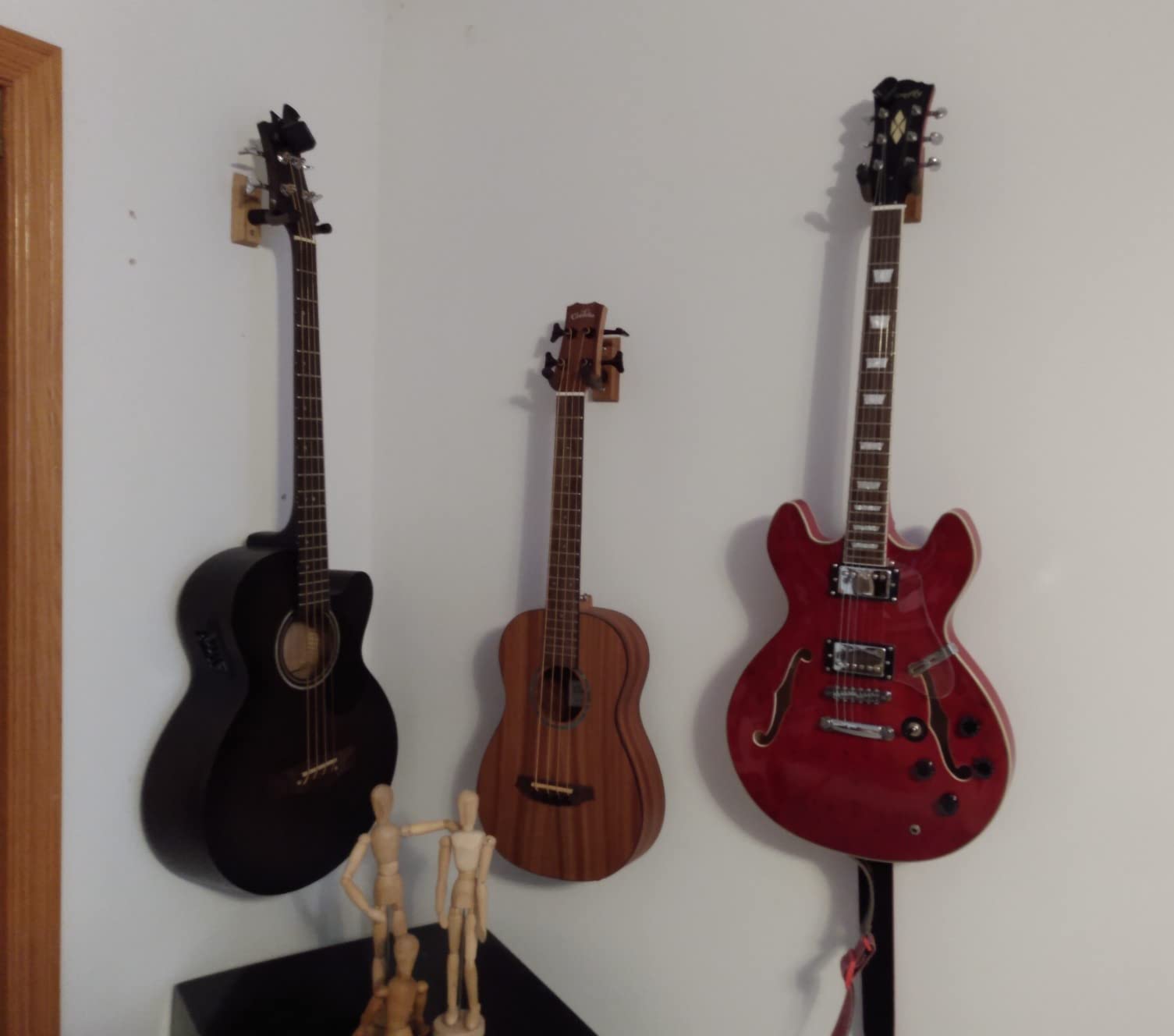
The Cordoba Mini II is the one acoustic-electric here, and that is why it earns a place. At 22 7/8 inches it is shorter than every electric bass in this guide, and at 2.4 lb it is less than half the weight of most of them.
It still tunes to standard E, so it is not a toy in disguise. The all mahogany body, neck and top give it a warm, balanced acoustic voice that reviewers describe as mellow rather than thin, and the deeper body depth helps it project properly when you play it unplugged.
The strings specified for this model are the D’Addario EXPPBB190GS nylon core set. That is convenient for a beginner, and it is the one aspect of this instrument that changes the playing experience completely, because nylon responds to a light touch in a way steel does not.
Rated 4.4 out of 5 across 320 ratings, the reviews concentrate on portability. People use it for travel, for practice in places where an electric is not practical, and as a first instrument for players who want to hear themselves without an amplifier in the room.
Where the tone comes from
The Cordoba MB103 pickup system is a piezo, which means it senses string vibration rather than the magnetic field. That is why it works so well acoustically, and also why it can sound bright and a little string-noisy through an amplifier unless you shape it with EQ.
Rolling off some high end and adding a little low end at the amp fixes most of that in seconds. Ask the shop to try it before you buy so you know how it behaves in a specific rig.
Who should skip it
Anyone who wants a solid electric tone with a magnetic pickup should not buy this. The low string response is different in character from a steel string electric, and players chasing growls or drive tones will find the piezo uninspiring.
It is also not the cheapest route into a first electric bass, and a beginner who plans to join a band will want an instrument that behaves like one from day one. For solo practice, unplugged playing and travel, that limitation does not matter much.
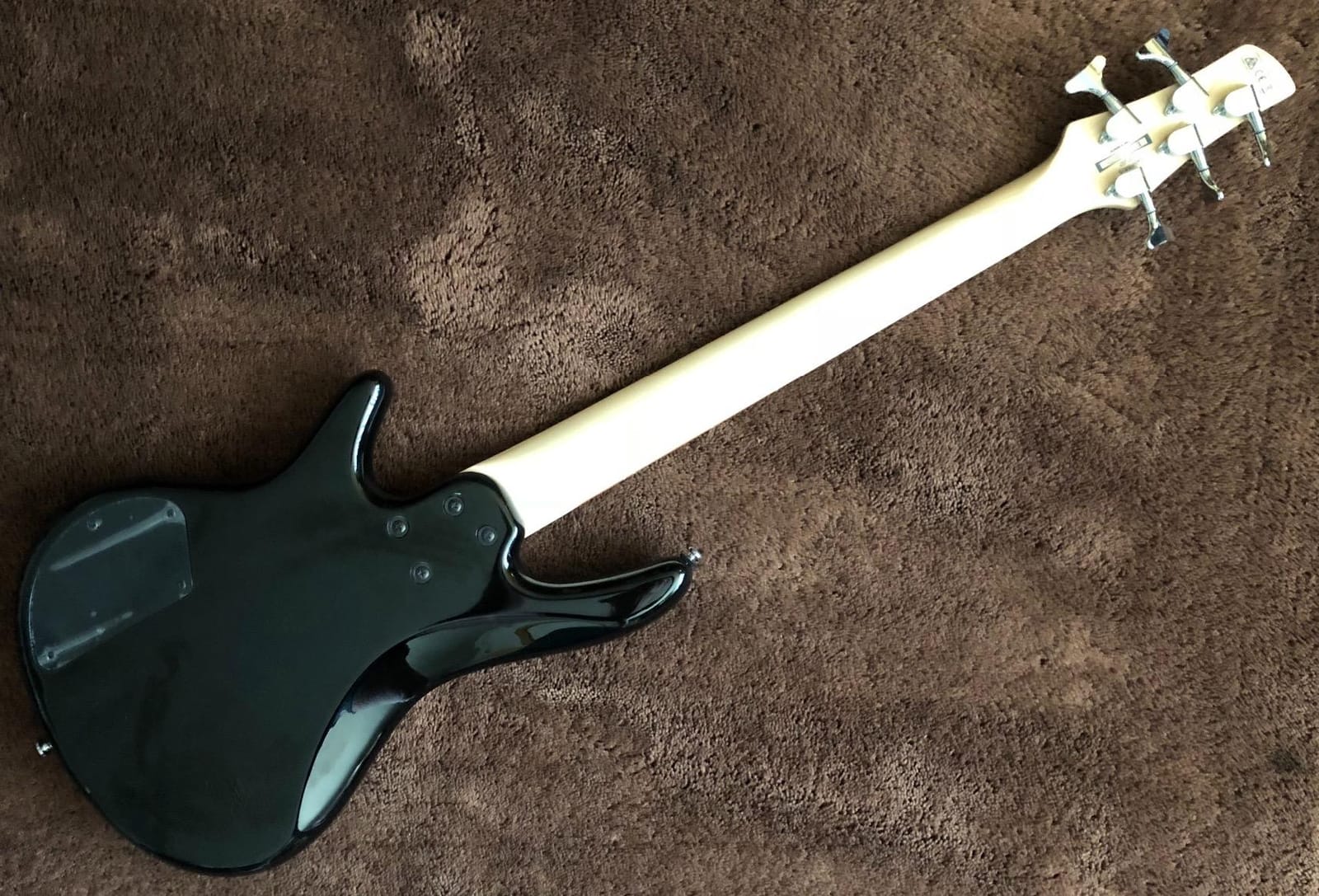
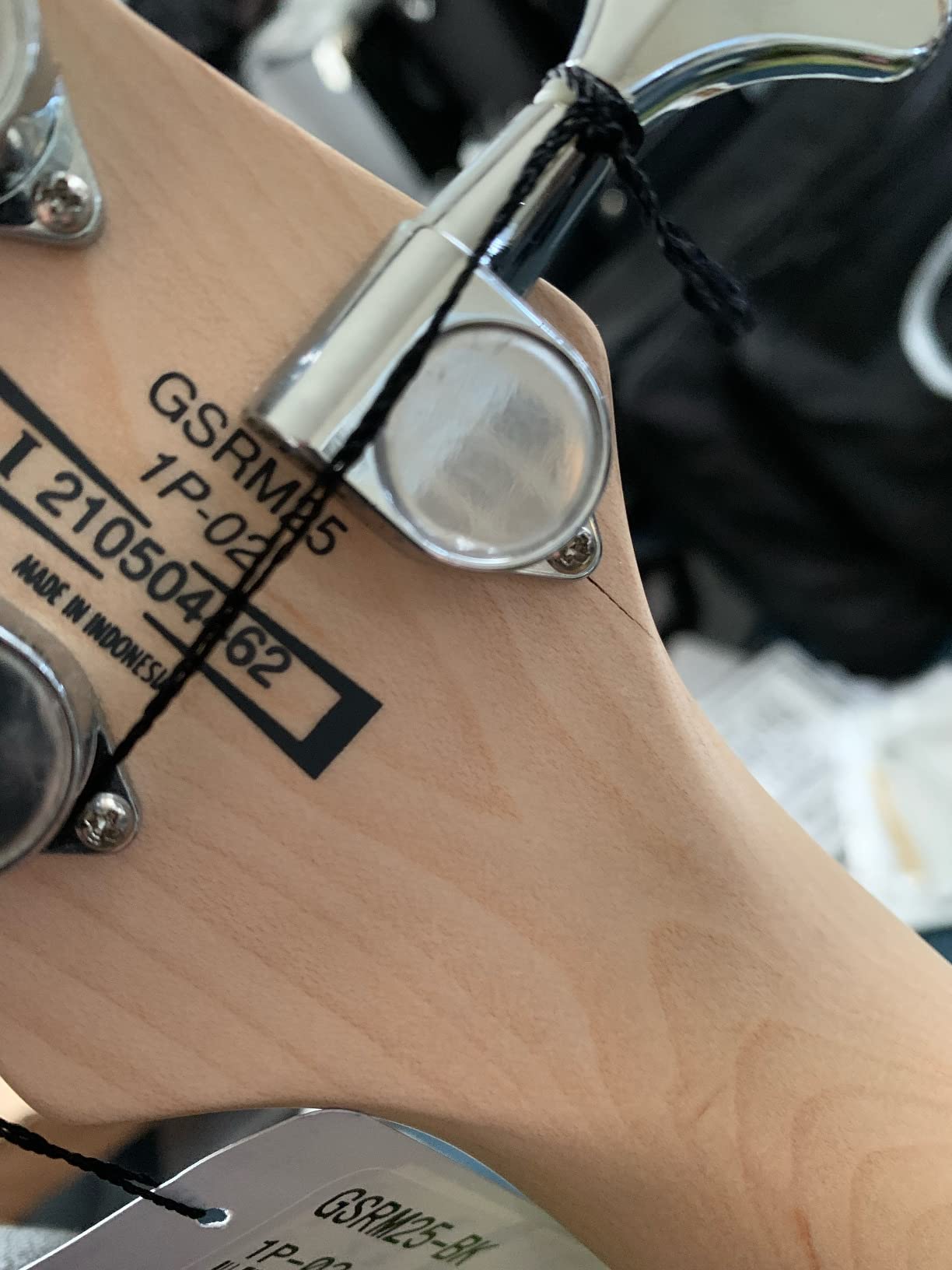
4. Ibanez GSRM25BK MiKro – the only affordable short scale 5-string here
Ibanez GSRM25BK MiKro – Black
28.6 inch scale, 5 string
Basswood body with poplar top
Maple bolt-on neck
7 lb
Pros
- Rare short scale 5 string option
- Low B extends the range usefully
- Same 28.6 inch scale as the four string miKro
- Two single-coil pickups give tonal options
- Lightweight at 7 lb
- Passive electronics are simple and reliable
Cons
- Bridge sits too far forward and causes intonation issues
- Some saddle screws need cutting to intonate properly
- Factory pickups are weak and often replaced
- B string tuner slot may need filing for thicker sets
Most short scale basses are four strings, which is why this one is unusual. A 28.6 inch five string with a low B gives you the reach relief of a short scale without giving up the extra octave that players of modern music use constantly.
The rest of the specification sheet is familiar miKro territory. Basswood body with a poplar top, a maple bolt-on neck, a Jatoba fingerboard, two single-coil pickups and a B15 fixed bridge, at 7 lb. It is a bigger instrument than the four string miKro but the scale length is identical.
Here is the honest catch, and it is worth reading before you buy. Reviewers consistently report that the bridge is mounted too far forward, which makes correct intonation above the 12th fret difficult without modifying the saddle screws. That is a setup job, not a defect you can shake off.
The second consistent note is that the pickups that come with it are weak. Many owners replace them early, and plenty of others just use the bass as it is for practice. Either way you should know the electronics are the entry level part of this instrument, not the neck or the body.
Who it actually suits
Choose this if the low B matters to what you want to play. Funk, modern rock, metal and anything where the low octave shows up constantly will use it constantly, and a five string at 28.6 inches solves two problems at once.
Budget for a pickup upgrade and a full setup at a local shop before you start. With those done it is a genuinely playable instrument, and owners rate it 4.4 out of 5 across 221 ratings.
Who should skip it
A complete beginner who wants zero projects should look elsewhere. The intonation work and the likely pickup replacement add friction that a younger player or a first time owner does not need.
Any player who does not use the low B is paying for a fifth string they will not touch. Four string players get more instrument, more tuning stability and fewer problems from the four string miKro instead.
5. Ibanez Talman TMB30 – 30 inches of reach and a full offset body
Ibanez Talman TMB30 Bass Guitar – Black
30 inch compact scale
Poplar body with mahogany back
P/J pickup configuration
Maple neck, Jatoba board
Pros
- 30 inch scale eases reach without going ultra compact
- P/J pickups cover P-Bass thump and Jazz Bass growl
- Classic Talman offset body shape
- Good build quality and lacquered finish
- Offered in three finishes including mint green
Cons
- Heaviest instrument in this roundup at 11.1 lb
- 30 inch scale may still stretch very small hands
- Factory pickups are average
- Often arrives needing a setup
- Four strings only
The Talman TMB30 is the compromise pick in this roundup, and compromise picks are frequently the most sensible ones. Thirty inches of scale removes a meaningful amount of reach from a standard instrument while keeping enough tension to feel like a real bass.
The body is a conventional offset shape. A poplar body with a mahogany back, a maple neck and a Jatoba fretboard, finished in gloss and sized like a Jazz Bass, means it looks entirely ordinary to anyone who walks into a shop.
The P/J pickup configuration is the specification that makes it versatile. Moving the selector into the neck position gives you the growly, articulate Jazz Bass character and moving it toward the bridge gives the flat, punchy Precision thump, all from one instrument.
At 11.1 lb it is by far the heaviest bass in this list, more than four pounds above the miKro and nearly five times the weight of the Cordoba. For an adult with a shoulder or back problem that is a genuine drawback rather than a rounding error.

How to tell if 30 inches is enough
Sit down, fret the low E at the 12th fret and then reach for the note four frets higher without shifting. If that works comfortably, 30 inches is fine for you. If your hand still stalls, step down to 28.6 inches rather than buying this and forcing it.
The other check is weight. Lift it with one hand and hold it in playing position for a minute. A bass you can hold comfortably for a long practice session is worth more than a marginally better fitting one you put down.
Who should skip it
A child under about twelve will find this too large in both dimensions. The body is a full size offset shape and the weight is designed for an adult, so it works against the very player who most needs a small instrument.
Players who want to travel with their bass have better options for a number this size. It is also strictly four strings, so the low B is not available here.
6. Jackson JS1X Concert Bass – short scale with a graphite-reinforced neck
Jackson JS Series Concert Bass JS1X, Satin Black, Amaranth Fingerboard
28.6 inch scale
Poplar body, graphite reinforced maple neck
Amaranth fingerboard
P/J pickups
Pros
- 28.6 inch scale in a full size solid body
- Graphite reinforcement adds stability to the neck
- P/J pickups cover a wide range of tones
- HiMass 4-saddle bridge improves sustain
- 2 year warranty
- Satin neck finish feels smooth
Cons
- Factory pickups often upgraded by owners
- Amaranth fingerboard is less common than rosewood or maple
- Published weight figure looks incorrect
- Arrives in need of a setup for best playability
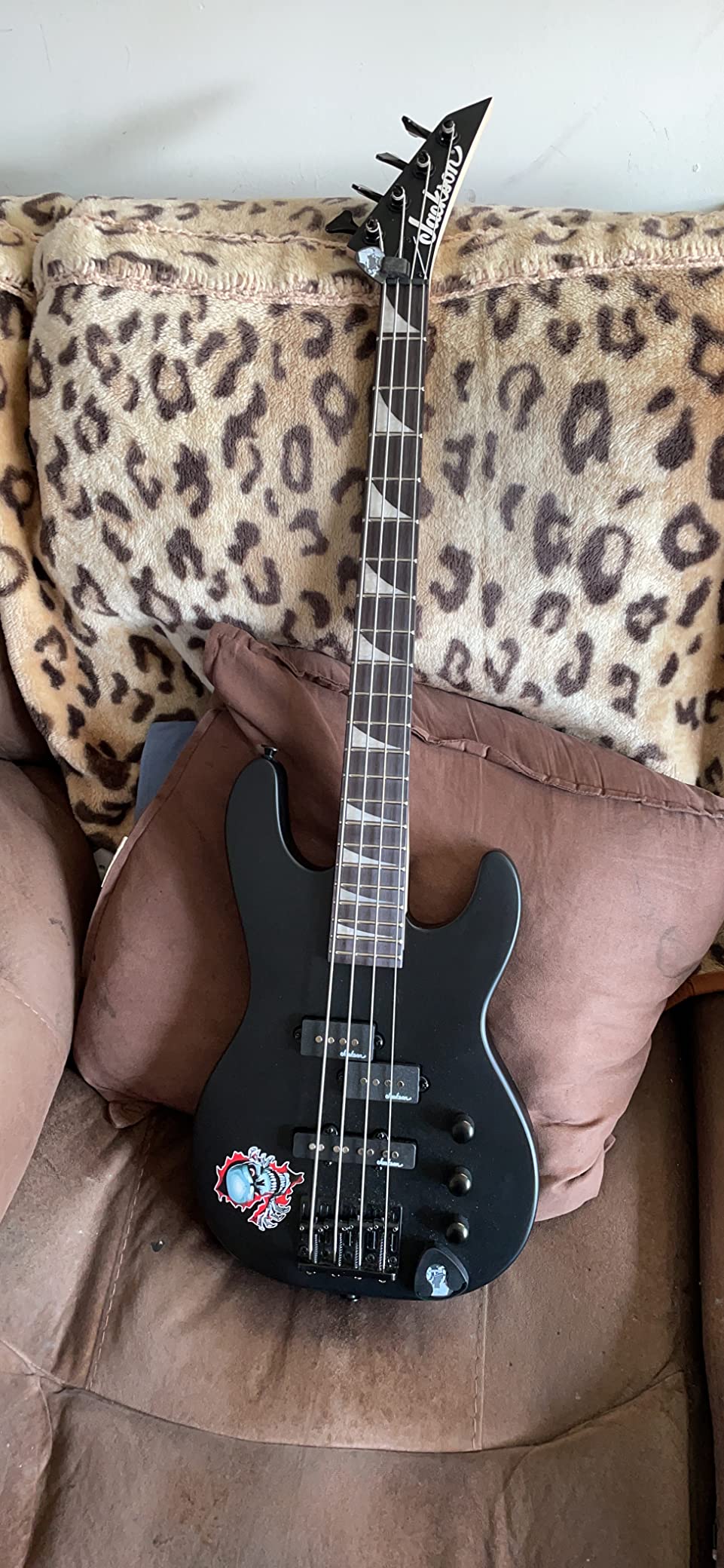
The Jackson JS1X is the pick for a beginner who wants the playability of a short scale without the visual clue that they are playing a student model. It brings the 28.6 inch scale to a full size body and a distinctive shape.
The one-piece bolt-on maple neck has graphite reinforcement rods running through it. That is what gives it stability, and it is a sensible thing to have on an instrument that will be carried to practice rooms and gigs while it is still new to you.
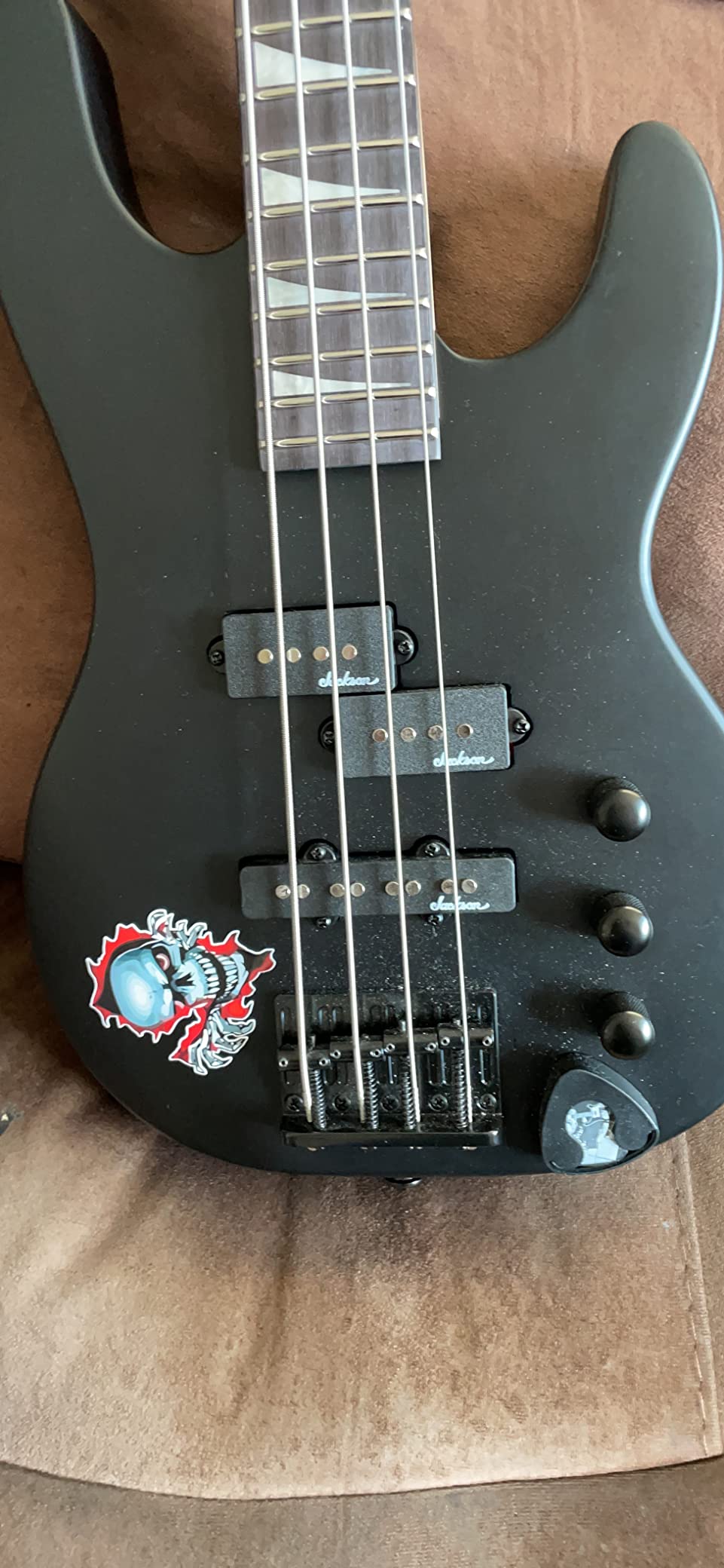
The HiMass 4-saddle bridge is the other specification that stands out, because bridge mass affects sustain. Owners describe longer sustain than they expected at this level, and the P/J configuration gives them a Jazz Bass character when they want it and a Precision thump when they do not.
Owners rate it 4.5 out of 5 across 160 ratings, and the 2 year warranty here is longer than the 1 year cover most brands in this roundup offer. Build quality and tone come up more often in the reviews than anything else.
What to look at in the shop
Check the neck straightness and the action at the 12th fret, because a full size body and a longer string length put more leverage on the neck than a small body does. A graphite reinforced neck resists twist, but the setup is still what determines how it feels.
Ask to hear it through a P/J switch position rather than one pickup. The tonal range is the reason to pick this over a simpler single pickup bass.
Who should skip it
Players who already know the tone they want and want a single focused voice should look at a single split coil instrument instead. The strength of this bass is range, not focus.
Children and small teens should note the body size. At 28.6 inches the scale is right for small hands, but the body is not, and an adult learning alongside a kid will need a smaller instrument for the kid.
7. EDM 36 Inch Mini Bass – a genuinely small instrument for children
Electric Base Guitar, Small Scale 36 Inch Children’s Sized Mini, Color: Blue
36 inch overall length
Wood body with polished finish
4 strings, single pickup
Cable and tools included
Pros
- One of the smallest overall lengths here at 36 inches
- Arrives ready to play out of the box
- Cable and Allen wrenches included in the box
- Polished gloss finish looks good for the price
- Suits young children and very short players
Cons
- Build quality reflects the entry level price
- No published scale length or nut width
- Single pickup gives one tone only
- Unknown brand with limited support
- Needs setup work before it plays well
This one exists for a specific buyer. If you are looking for a first instrument for a child aged six to nine, the 36 inch overall length is the whole pitch.
It is a four string with a wood body, a polished gloss finish and a single pickup. The box includes an amp cable and two Allen wrenches, so you can start on it without a trip to a music shop.
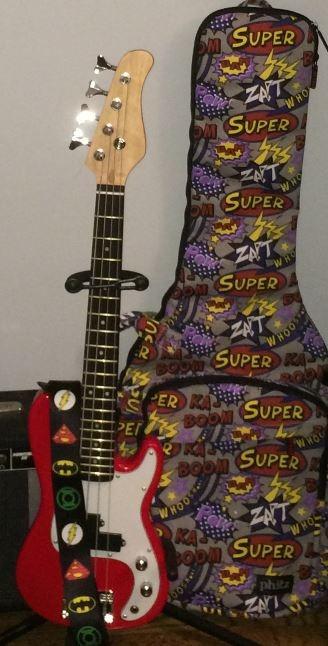
I want to be straight about what you are buying here. The specification sheet is thin: no published scale length, no nut width, no stated weight, no stated materials for the neck or fingerboard. Owner ratings sit at 4.3 out of 5 across 73 ratings, and the feedback is consistently warm but also consistently about the price rather than the instrument.
That is not a dig. For a seven year old who is going to outgrow the instrument anyway, spending heavily on a bass that will be sold in four years makes very little sense. A parent in this position can also look at the used market, which experienced players regularly recommend for a first instrument.
How to make it last longer
Have a technician look at the frets, the action and the tuning stability before the child gets serious about it. Budget instruments arrive with rough fret ends and high action, and a cheap setup prevents most early frustration.
Also set a mental clock. Most children outgrow a 36 inch body by their early teens, so plan the second instrument rather than resisting the change when it comes.
Who should skip it
Anyone past about eleven or twelve should skip it entirely. At that point a 28.6 inch scale on a proper body will feel much better and will survive the next few years of practice.
Adults should skip it too. The single pickup, the unspecified neck and the limited support network make it an instrument to learn on rather than one to keep.
8. GLARRY GW101 – the complete kids starter kit
GLARRY 4 String Electric Bass Guitar, 36-inch Bass Guitar Beginner Kit with Cable, Strap and Bag for Kids, Boy and Girl (Dark Blue)
36 inch overall length
Mahogany body, rosewood board
1.4 inch nut, C shaped neck
Two single-coil pickups
Pros
- Complete kit with gig bag and strap in the box
- Mahogany body and rosewood fingerboard at this level
- Two single-coil pickups give some tonal choice
- C shaped neck with a 1.4 inch nut suits small hands
- Available in dark blue and pink
Cons
- Quality control varies between units
- Warranty is only 180 days
- Factory strings and setup usually need attention
- Tuners do not hold tuning as well as named brands
- Electronics are basic
Where the EDM mini sells you a bare instrument, the GLARRY GW101 sells you a package. The bag, strap, cable, wrench and picks all come in the box, which removes the most annoying part of buying a first bass for a child.
The specifications are better than the price suggests. A mahogany body, a rosewood fingerboard and bridge, and a C shaped neck with a 1.4 inch nut width are real numbers rather than a vague claim, and the 1.4 inch nut is genuinely slim for a bass.
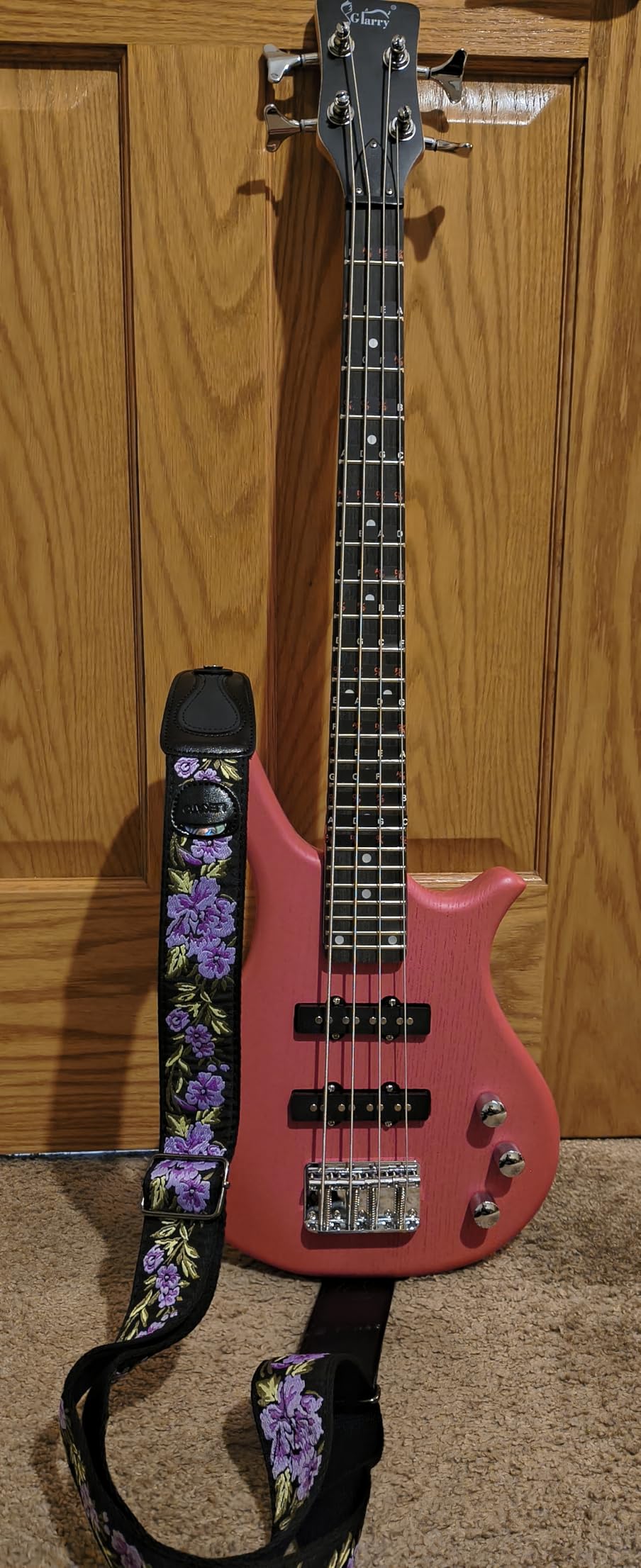
Two single-coil pickups with separate volume knobs give a young player something to experiment with, which matters more early on than it sounds. Learning what happens when you pull one down is a first step toward hearing how an instrument works.
Ratings average 4.2 out of 5 across 71 ratings, and the reviews explain the number. Owners like the specification sheet for the money and like the accessories, but they consistently note that quality control varies and that the strings and setup need work before it sounds its best.

Read the 180 day warranty carefully
That is the shortest warranty of any instrument here, and it is the main reason to buy from a seller who will handle a replacement without a fight. Check what the warranty actually covers before you commit, because electronics failures on budget hardware are the most common complaint.
If a local shop will do a setup for a small fee, take it. New strings, an action adjustment and a check of the tuning machines turn this into a noticeably better instrument.
Who should skip it
Anyone expecting long term reliability or a future resale should look higher up this list. A named brand with a longer warranty costs more at the start and usually costs less over five years.
It is also 36 inches overall, so it is a child instrument rather than an adult one. Players who already own a guitar and want a real bass should step up to a 28.6 inch model.
9. GLARRY GP36 – a 24 inch scale for genuinely tiny hands
GLARRY 36in Electric Bass Guitar, 4 String Beginner Starter Kit with Accessories including Cable, Strap, Bag for Adults (Red)
24 inch scale, ultra short
36 inch overall length
Basswood body, rosewood board
Split single-coil pickup
Pros
- The shortest scale in this roundup at 24 inches
- Complete kit includes bag and strap with cable
- 1 year warranty is better than most budget brands
- Split single-coil gives a P-Bass style voice
- Smooth frets reported out of the box
Cons
- Very short 24 inch scale means floppy low tension strings
- Replacement strings for 24 inch scale are hard to find
- Factory strings are rough and cheap
- Hardware and electronics are budget grade
- May need setup for action and intonation
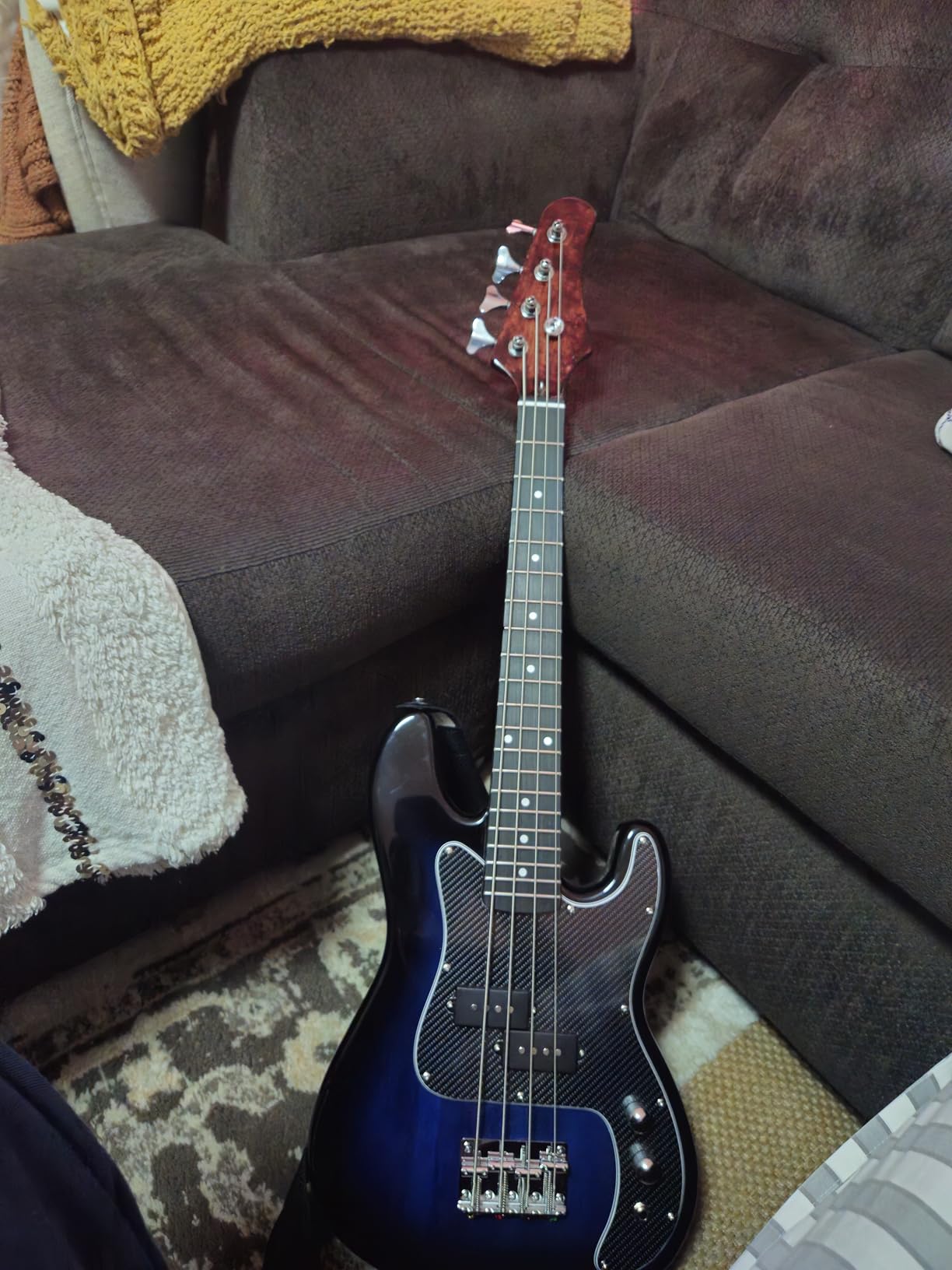
The GP36 is the most unusual instrument here. Twenty four inches of scale is barely more than half a standard bass, and the effect on the fretting hand is dramatic. Whatever a small hand struggles with on a 34 inch neck, it will not struggle with on this one.
You also get the whole kit in the box, including a bag, strap and cable, on a basswood body with a rosewood fingerboard and bridge. A split single-coil pickup with two volume knobs gives a more focused P-Bass style tone than the dual pickup kits above.
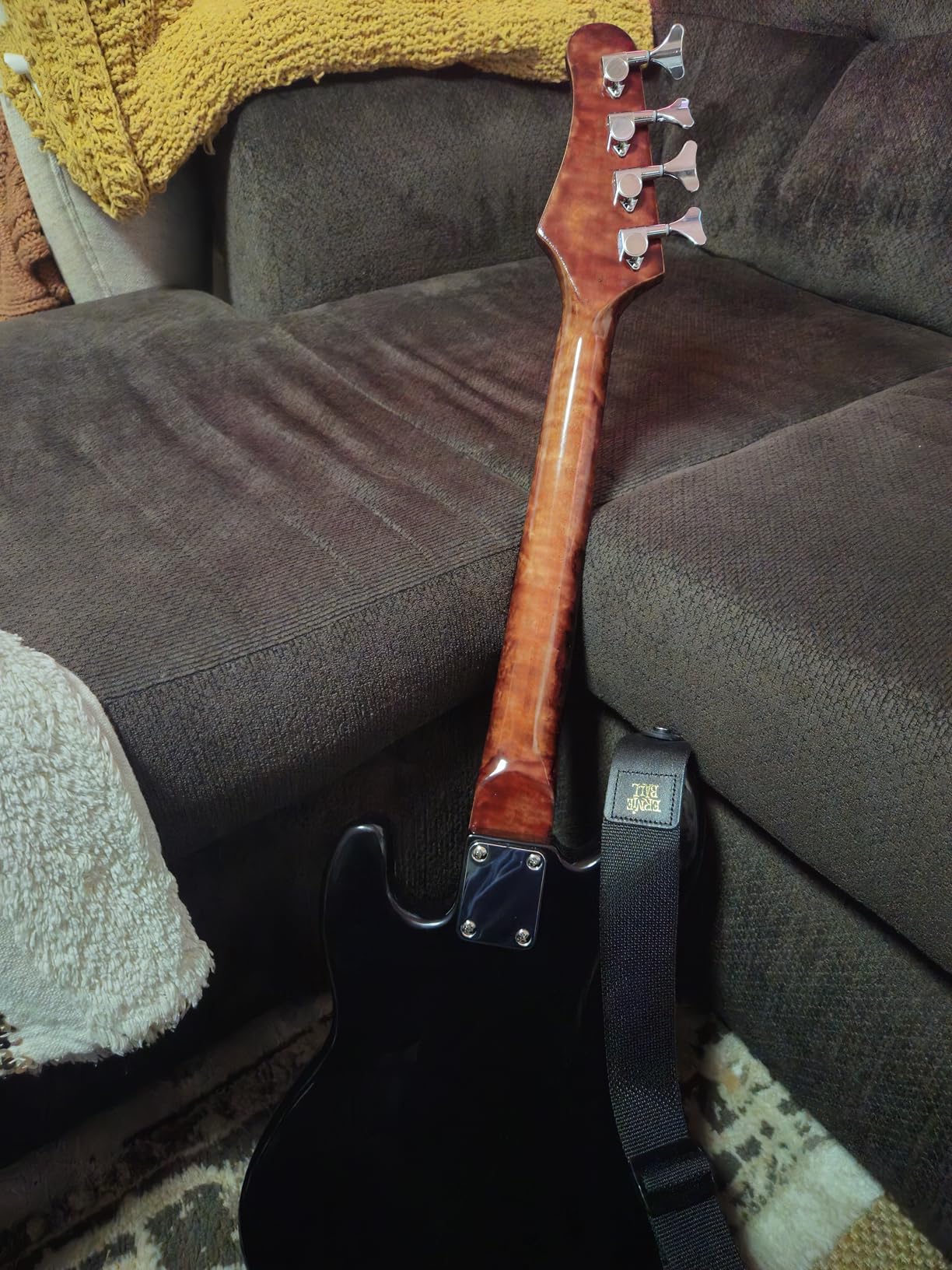
Owners rate it 4.5 out of 5 across 68 ratings, and several reviewers describe the out-of-box playability as far better than the specification sheet suggests, including one who specifically noted how smooth the frets felt.
The catch is the strings, and it is a big one. A 24 inch scale runs at very low tension, which is why reviewers describe the strings as floppy, and standard bass string sets do not fit the length properly. Finding replacements at short notice is genuinely difficult.
Who this is genuinely for
A child with a span that even a 28 inch instrument defeats, or an adult with a physical condition that makes a wider hand span impossible. For those players, nothing else on this list will work and this will.
Anyone who is already comfortable on a 3/4 size bass is overshooting with this. A 24 inch scale can feel cramped in the other direction once the strings are so slack that the instrument is hard to hear accurately.
Who should skip it
Beginners who plan to keep playing past the first year. You will grow out of this instrument quickly, and the string replacement problem arrives at the same time as the boredom.
Any player who wants to gig should skip it. The low tension and the budget hardware will not stand up to a band rehearsal, and the 1 year warranty here is the second shortest cover in this roundup.
10. Traveler Guitar Ultra-Light Bass – the travel and lap instrument
Traveler Guitar Ultra-Light Gloss Black Bass Guitar | Small Travel Bass with Removable Lap Rest | 30″ Scale Portable Headless Bass | Mini Bass with Custom Gig Bag
30 inch scale, 22 frets
3.7 lb neck-through maple
Headless in-body tuning
Removable lap rest
Pros
- Only 3.7 lb with a custom carry-on gig bag included
- 30 inch scale with 22 frets gives a full playable range
- Headless in-body tuning system removes the headstock
- Neck-through hard maple construction for sustain
- Removable lap rest included
- Limited lifetime warranty
Cons
- No onboard volume control so levels are set at the amp
- Piezo pickup can sound bright and string-noisy
- Sharp fret ends and loose output jacks reported on some units
- Customer service responses are slow
- Highest cost here for a travel focused instrument
This is the odd choice for a small player and the right one for a particular person. The Traveler Ultra-Light weighs 3.7 lb, comes with a custom carry-on gig bag, and pairs a 30 inch scale with 22 frets on a neck-through Eastern American Hard Maple body.
There is no headstock. The tuners sit inside the body behind a small cover, which is what makes it 33.75 inches long overall and what lets it go through airport security and into a backpack without a separate case.
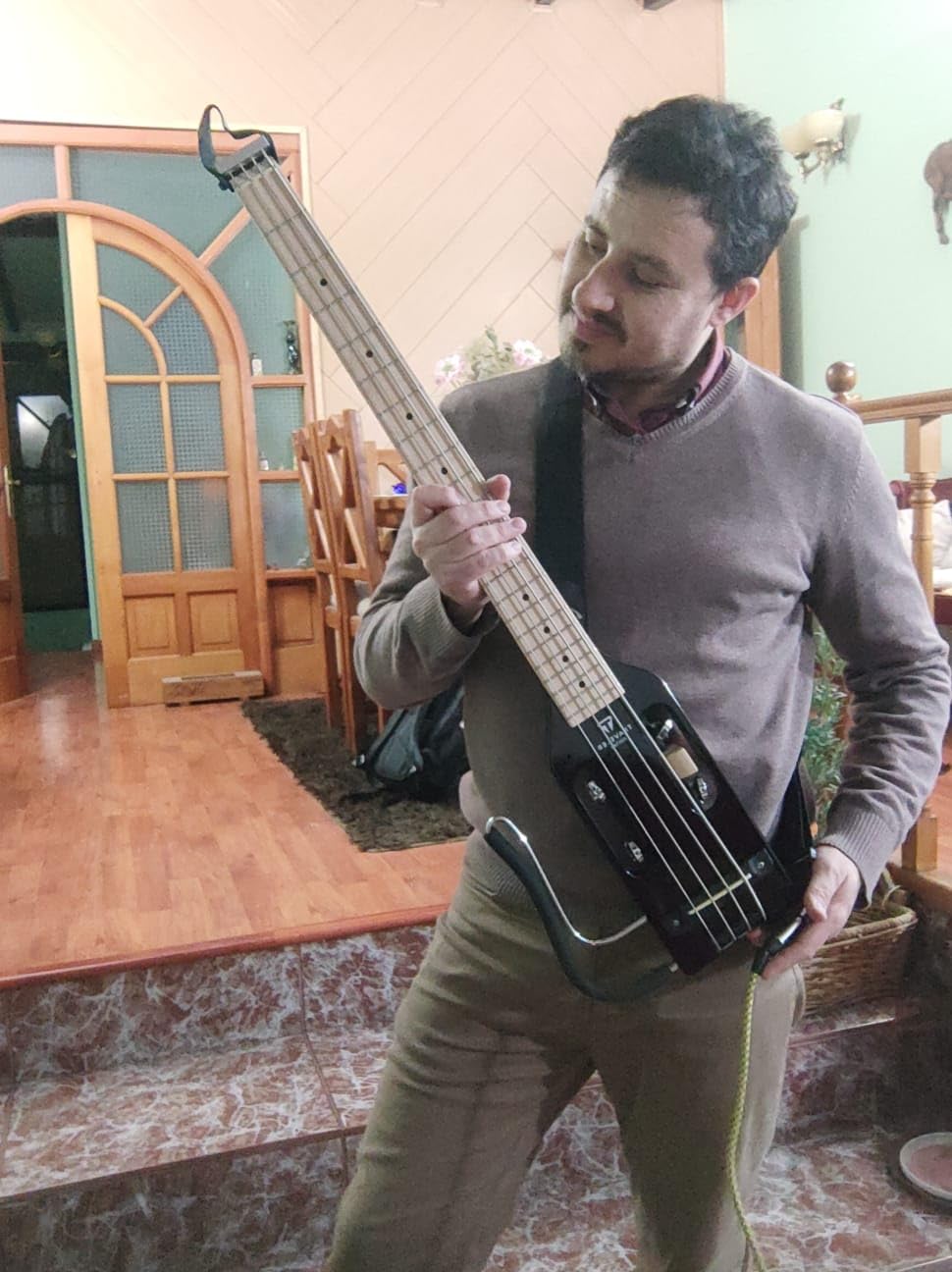
The removable lap rest is the part that matters for a small player, and it is a genuinely good design. It sits across your thigh, stops the instrument sliding, and turns a bass that would normally need a strap into something you can hold on a sofa or a train.
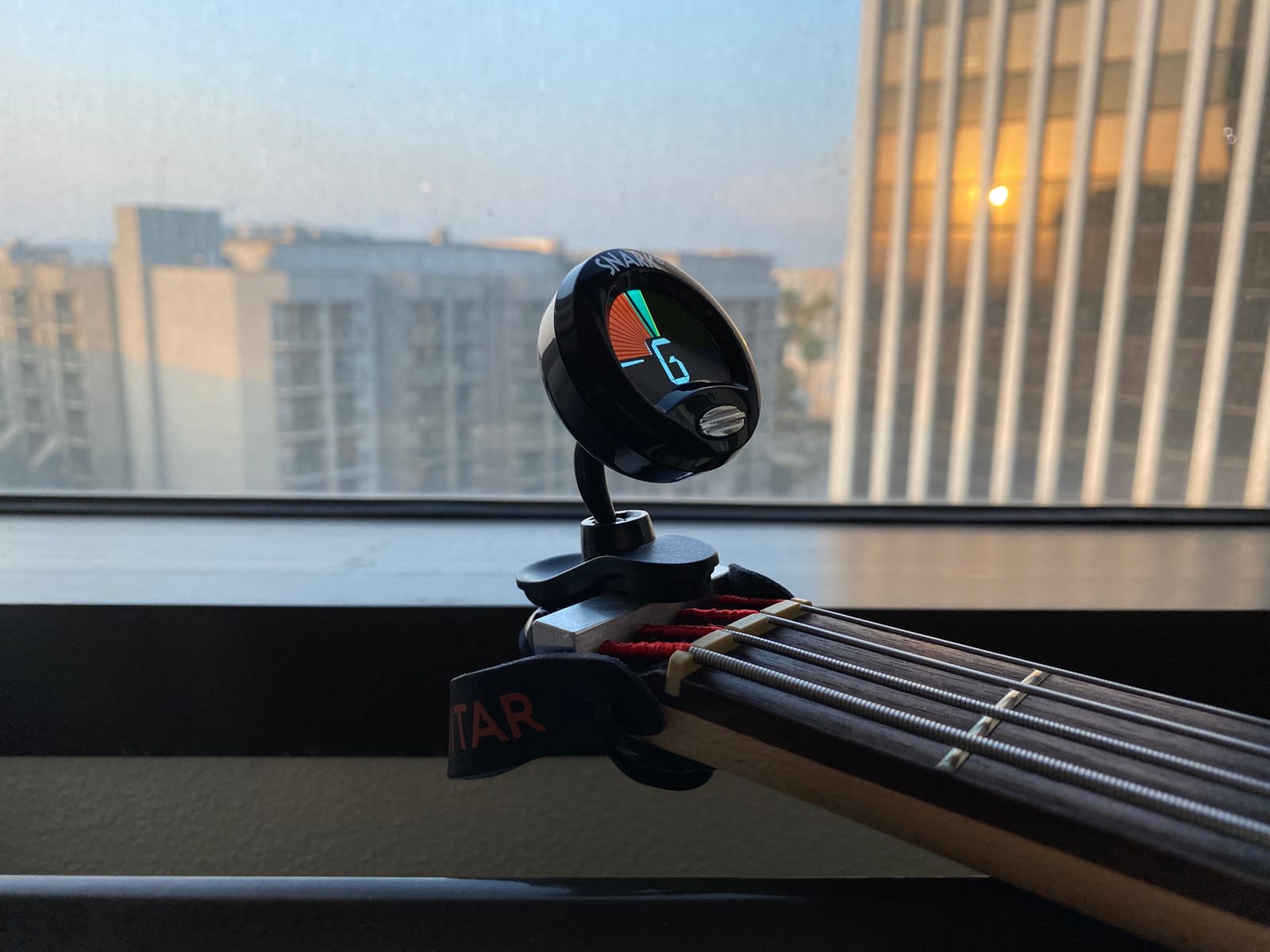
Owners rate it 4.0 out of 5 across 96 ratings, and the reviews explain the number. There is no volume control on the instrument itself, so the piezo pickup runs straight to the amplifier, and several owners report bright or string-noisy output on new strings. It sounds considerably better with flatwounds.
When it earns its cost
Compared with a full size bass plus an amplifier, a gig bag and airline fees, the maths changes quickly for a player who flies regularly, practices in hotel rooms and cannot leave a bass at home.
The limited lifetime warranty here is the longest in this roundup by a distance, and a neck-through body is a better starting point for long term repair than a bolt-on budget construction.
Who should skip it
Anyone who wants a primary instrument should skip this. A piezo-only bass with no onboard controls is a practice and travel tool, and owning one as your only bass will limit you.
Owners also report sharp fret ends and output jack problems on some units, and customer service responses are slow. Buy from a seller who handles returns, and inspect the frets before it leaves the box.
How to choose a short scale bass for small hands
Scale length is the number everyone quotes, and it is the one that matters least on its own. Work through these seven checks in order and you will make a better decision than someone who only filtered by scale.
1. Get the nut width in millimeters
A 1.4 inch nut is about 35.5 mm, which is slim. Anything around 1.5 to 1.6 inch is a standard bass nut and can feel wide on a short hand even on a short scale neck. If the listing does not state it, ask the manufacturer before you order.
2. Check the neck profile, not just the neck
A slim C profile like the one on the Squier Mini Precision is easier for a small hand to move along than a deep C or a U shape. Depth at the first few frets is what your thumb feels when you hook over, and it matters more than the body shape ever will.
3. Weigh the instrument in your hand
Weight figures here run from 2.4 lb to 11.1 lb. A bass that is heavy for you will produce shoulder pain that reads as a technique problem, so pick something you can hold in playing position for several minutes without fatigue.
4. Judge the body against the player’s height
A short scale on a full size body suits most adults and teens. A 36 inch body suits a young child. Mixing those up is the most common mistake parents make, because scale length and body size are separate decisions.
5. Decide on the string count honestly
Five strings add range and add work. More strings means more tension, a stiffer low B, more setup to get right, and often a bridge that needs adjusting. If you are not sure you will use the low B, four strings is the better buy.
6. Look for a real warranty
Warranties in this roundup run from 180 days to a limited lifetime. On a first instrument for a child, the longer cover is meaningful because it is the one part of the cost you cannot control later.
7. Plan for the setup before you plan the purchase
Every entry level bass on this list arrives needing something. New strings, an action adjustment, a truss rod tweak and a fret edge check are normal, inexpensive and take an hour. Budget for it and the instrument will feel far better than it did out of the box.
The honest downsides of short scale basses
Short scale basses come with real trade-offs, and this is the section most roundups leave out. Here is what you actually give up.
Less low string tension. A shorter string at the same gauge sits under lower tension. That is why light gauges work so well on these instruments, but it also means the low B or low E has less resistance and a little less definition under a heavy picking hand.
A different fundamental and fewer overtones up front. The same string under less tension produces a slightly different fundamental. Owners report that short scale basses sit closer to the mix and cut through a band faster, and equally that there is less low end weight when you plug in.
Less tuning stability on a rough setup. Lower tension means less restoring force holding a string in tune. A well set up instrument holds tuning well; a neglected one drifts more than a long scale would.
Stranger string options. Very short scales can leave you hunting for a set that fits. The 24 inch GP36 has this problem badly, and 22 7/8 inch instruments have narrower options too. 28.6 and 30 inch instruments use entirely standard string lengths.
A smaller ceiling if you grow. The honest limit of buying short scale as a child is that you will outgrow the scale before you outgrow the body. Plan the next instrument as part of this purchase rather than treating it as a permanent solution.
It does not fix a wide nut. The most common disappointment in this category is a 28 inch scale with a wide nut and a thick body. Reach is only one of the four measurements, and getting one of them right is not enough.
Short scale vs short scale PLUS: which one do you actually need?
Short scale PLUS is a 30 inch scale, and it is the middle ground most roundups never mention. It is longer than a true short scale and shorter than a standard bass, which changes who it suits.
Choose a true short scale at 28 to 28.6 inches when your hand cannot comfortably span a 30 inch instrument, or when you are buying for a child whose hands are still growing. The 28.6 inch miKro, the Jackson JS1X and the Ibanez 5 string all sit here.
Choose a 30 inch scale when you want a real body, a real neck and standard string tension but still want less reach than a standard instrument. The Talman TMB30 and the Traveler Ultra-Light both fall into this group, and in this roundup they are the two picks that make more sense for an adult than for a child.
The practical test is simple. Sit down, fret the low E at the 12th fret, and then try the note three frets higher without shifting. If you can do that on 30 inches comfortably, you do not need to go shorter. If your hand stalls, the extra inch and a half of a 28.6 inch instrument is exactly what you need.
How to test-play a bass in a store when you have small hands
You do not need to be a good player to test a bass for fit. Five steps in the shop will tell you more than any spec sheet, and you can do all of them in about ten minutes.
Sit down first. Standing makes every bass feel smaller than it will feel at a stool or a chair. Ask for a stool, sit at playing height and only then pick the instrument up.
Fret the 12th fret on the low string. Your index finger goes at the fret wire, not the fret space. This is the single most informative test on the list and it is where a long scale falls apart for a small hand.
Try four frets higher. Without moving your thumb along the neck, reach up four frets. If you cannot, the scale is too long for you right now, whatever the label says.
Hook your thumb over. Wrap it behind the neck at the first few frets and check the depth. Too deep and you will feel it within a week of regular practice.
Play something you know. A scale, a familiar riff, anything with a run up the neck. Comfort under pressure is the only test that matters, and a nervous hand in a music shop performs differently from a relaxed one at home.
If the shop staff are patient, ask them to put the bass down at playing height while you are still holding it. A bass that is comfortable only when you are reaching for it is not comfortable.
Frequently Asked Questions
What type of bass guitar is best for people with small hands?
A short scale bass with a 28 to 28.6 inch scale length, a slim nut width around 1.4 inch and a light body weight. Scale length removes fret width, but nut width and body weight decide whether the instrument actually feels small. The Ibanez GSRM20 miKro is the most balanced of the options we reviewed.
What is considered the best short scale bass?
Among the ten we tested, the Ibanez GSRM20 miKro stands out: a 28.6 inch scale, a 6.8 lb mahogany body, passive combination pickups and the highest owner rating in the group. The Squier Mini Precision is the pick if a 3/4 size body matters more than scale length, and the Jackson JS1X is the pick if you want P/J tonal range in a full size body.
What are the downsides to a short scale bass?
Shorter strings sit at lower tension, so the low string has less definition and less resistance. Tuning stability depends more on a good setup, very short scales can have limited string sets available, and a child will outgrow the scale before the body. A short scale also does nothing if the nut width or body depth is large.
What is the best bass guitar for someone with short fingers?
Start with a 28.6 inch scale and a 1.4 inch nut, then confirm it in a shop by fretting the 12th fret and reaching four frets higher. The Squier Mini Precision suits small adults, the Ibanez GSRM20 suits most adults and teens, and the GLARRY GP36 at 24 inches suits hands that nothing else fits.
How do I know if a bass will fit my hands?
Sit down at playing height, fret the 12th fret on the low string, then try four frets higher without shifting your thumb. Then hook your thumb over the neck and check the depth. If you can complete all three comfortably, the bass fits. A full setup from a technician changes the result more than most players expect.
Conclusion: the short scale bass to buy in 2026
The best short scale bass guitars for small players come down to three numbers and a shop test. Scale length in inches tells you how much reach you lose, nut width in millimeters tells you how the neck feels under the thumb, and weight tells you how long you can play before your shoulder complains. Check all three, then sit down and fret the 12th fret before you sign anything.
For most adults and teens the answer is the Ibanez GSRM20 miKro, which pairs a 28.6 inch scale with a full size body and the strongest owner feedback in this group. For a young child the Squier Mini Precision or the 36 inch GLARRY kits make more sense, and for a hand that nothing else fits, the 24 inch GP36 is the only instrument that will do it. The honest trade, whichever you pick, is lower string tension and a scale you will eventually grow out of.
Whatever you choose, spend the money on a setup before you spend it on anything else. That single hour does more for the way a short scale bass feels under your fingers than any specification on the sheet.