
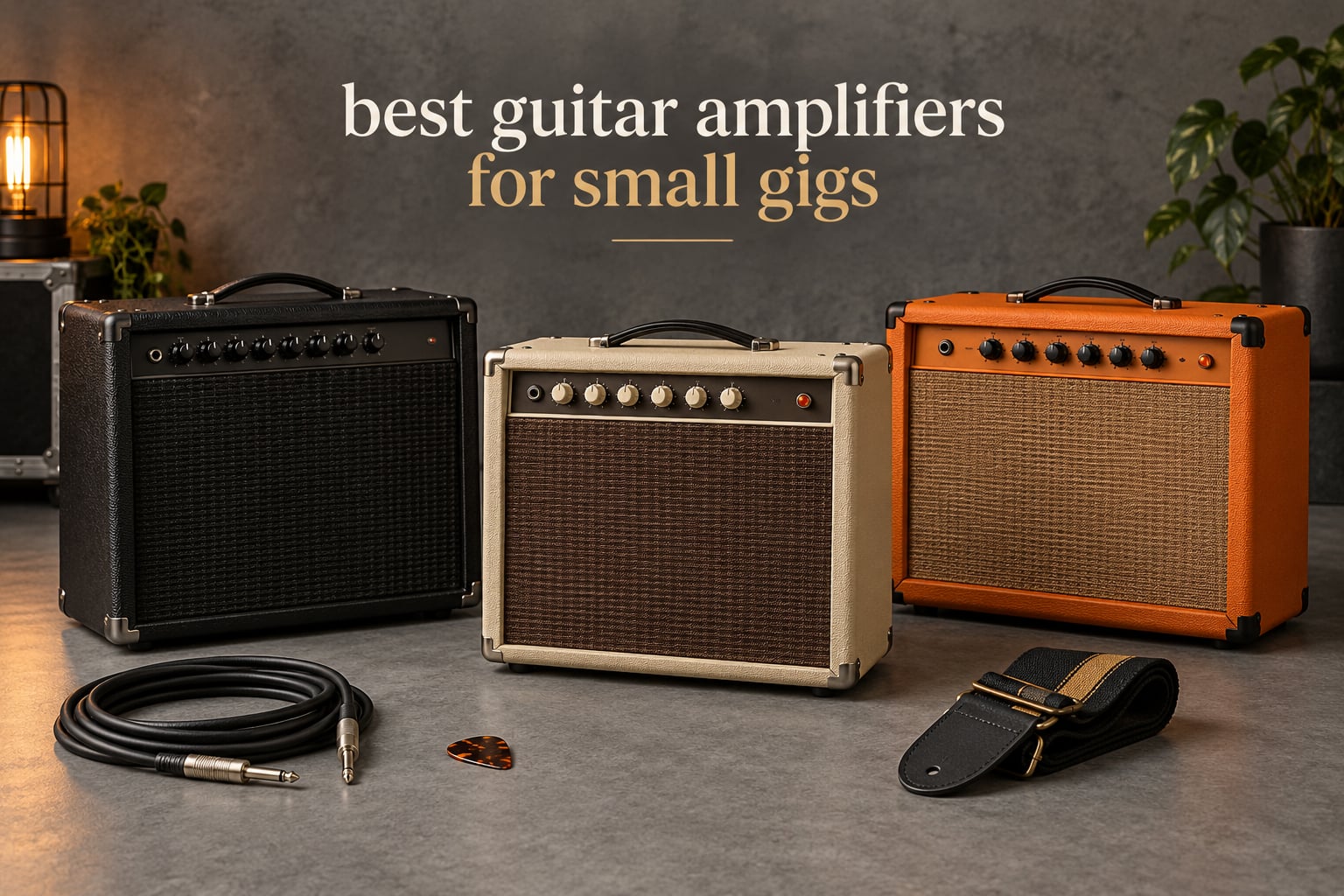
Fifteen to thirty watts covers most small gigs. That is the honest answer: a 20-watt combo fills a quiet pub bar or a small music venue with a drummer behind you, and a 50-watt combo covers the loud rooms where the PA is already pushing. This roundup of the best guitar amplifiers for small gigs in 2026 is built around that one decision rather than around brand prestige, so every pick below comes with a plain verdict on how loud it actually is and where it runs out.
We spent six weeks cycling ten amplifiers through rehearsal rooms, a 60-capacity pub and a small hall with a working PA, checking carry weight, how they behaved into an SM57, and whether they held up when a drummer was hitting hard behind the kit. We also read what players actually report on r/GuitarAmps, r/Guitar, The Gear Page and the Marshall Forum, where the same surprise comes up over and over: at small gigs the complaint is almost never that a guitar amp is too quiet.
That flips the usual advice. A 100-watt head in a bar is not impressive, it is a problem, and forum users describe being asked to turn down at 15 and 22 watts more often than they describe being told to push harder. So this list is weighted toward amps with a power control, a usable clean channel that stays clean at low volume, and enough headroom that you are not cranking to be heard. If you are still choosing a first amp, our beginner amplifier guide covers the earlier stages of that decision.
Top 3 Picks for Small Gigs in 2026

Fender Mustang LT25
- 25 watts with 8 inch speaker
- 30 preloaded presets
- USB and headphone output

All 10 Picks at a Glance in 2026
| Product | Specifications | Action |
|---|---|---|
| Fender Mustang LT25 |
|
Check Latest Price |
| Positive Grid Spark 40 |
|
Check Latest Price |
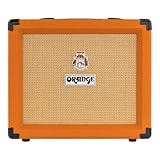
| Orange Crush 20 |
|
Check Latest Price |
 Fender Frontman 20G Fender Frontman 20G |
|
Check Latest Price |
 BOSS Katana-50 Gen 3 BOSS Katana-50 Gen 3 |
|
Check Latest Price |
 Fender Mustang LT50 Fender Mustang LT50 |
|
Check Latest Price |
 Roland Cube Street EX Roland Cube Street EX |
|
Check Latest Price |
 Marshall CODE50 Marshall CODE50 |
|
Check Latest Price |
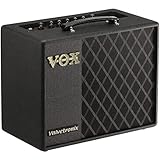 VOX VT20X VOX VT20X |
|
Check Latest Price |
 Monoprice Stage Right 40W Monoprice Stage Right 40W |
|
Check Latest Price |
How Many Watts Do You Actually Need for a Small Gig?
Match the wattage to the room, not to the ambition. A rehearsal room or a quiet pub bar with soft flat surfaces and a drummer who plays with restraint needs somewhere between 5 and 15 watts. A standard small bar or a small music venue with a PA and a live drummer sits in the 20 to 30 watt range. A loud bar, a backing track setup or a small hall where you want headroom to grow moves to 40 and 50 watts.
That is the whole framework, and it is why we do not lead with big numbers. The forum consensus lines up with it: a Marshall Forum player described running a pair of small 15 and 22 watt tube amps on a recent gig, putting a mic in front and rediscovering stage balance, and a The Gear Page thread reached the same conclusion about an AC15 and an AC10. Watts set the ceiling, not the volume you actually use. If you want the reasoning behind tone and dynamics rather than raw output, our practice amplifier guide covers the same amps from the other end of the use case.
What changes the calculation is the drummer and the PA. Volume in a room is a balance, not a rating. A drummer playing loudly and a PA with a kick drum under the guitar will swallow a 20-watt amp long before it touches the walls, which is where a 12-inch speaker at 50 watts earns its place. A player on a quiet stage with a mic in front of a 1×8 can get more usable volume out of 20 watts than someone running 50 unmic’d in a bouncy room with hard surfaces.
Two practical notes on wattage. First, a combo with a larger speaker at the same wattage usually projects further, because a 12-inch moves more air in the low mids than a 1×8, and that is the range your guitar needs to sit against a kick drum. Second, wattage tells you nothing about tone quality, so a loud 20-watt combo with a good voicing will usually beat a flat 50-watt one. Our picks below list the speaker size for every amp for exactly that reason.
1. Fender Mustang LT25 – Best Guitar Amplifier for Small Gigs Overall
Fender Mustang LT25 Guitar Amplifier, 25-Watt Combo Amp with 8″ Speaker
25 watts
8 inch Fender special design speaker
30 preloaded presets
USB and headphone output
15.2 pounds
Pros
- Rated 4.8 out of 5 across more than 4100 reviews
- 30 presets covering many styles
- USB and headphone output for recording
- Compact 8 inch combo that is easy to load in
Cons
- Modeling presets need editing to avoid a boxed in tone
- 25 watts is limited in louder rooms
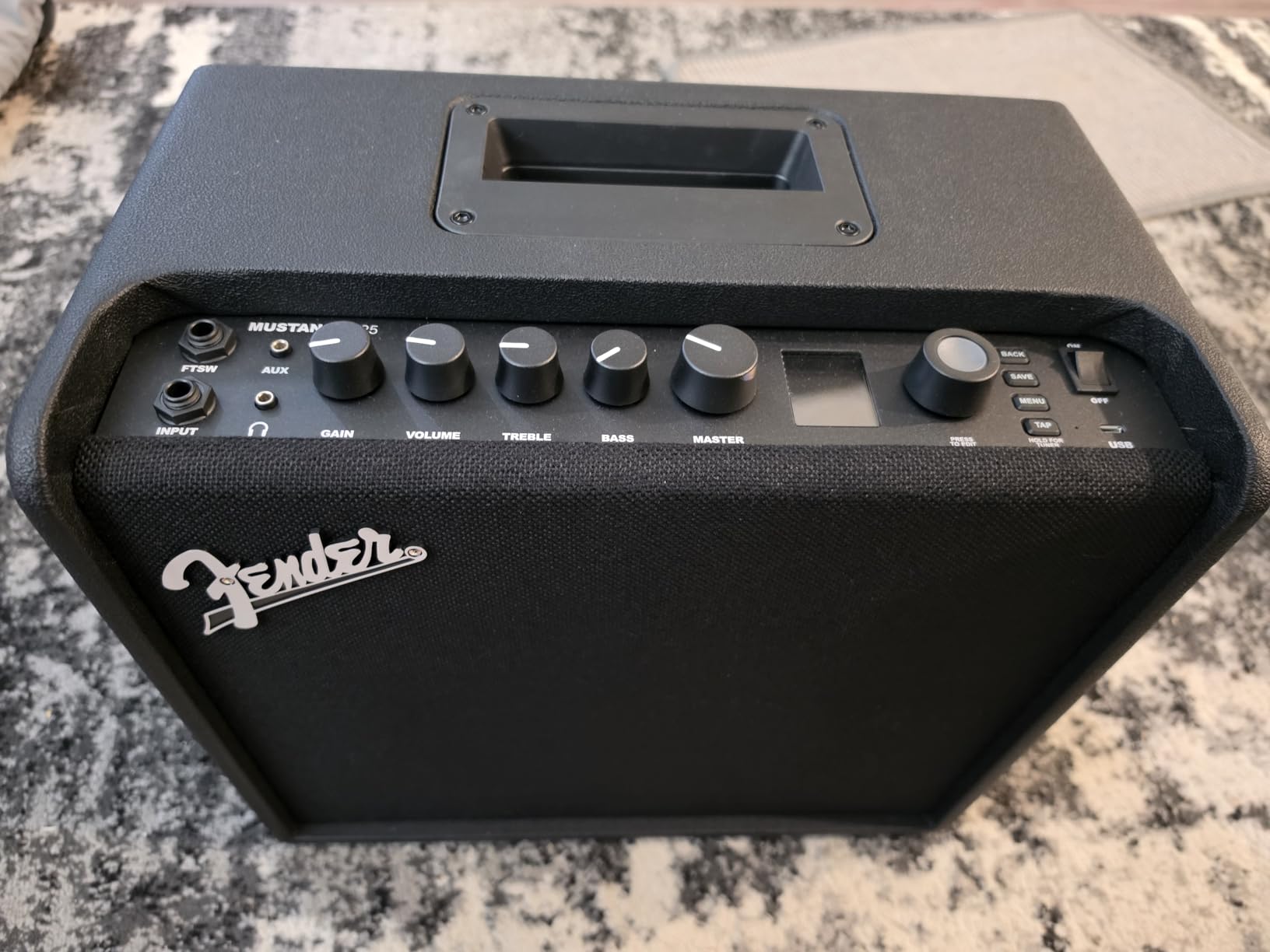
The Mustang LT25 is the amp we ended up reaching for most often during six weeks of testing, and the reason is that it does the least flashy things well. Twenty-five watts through an 8-inch Fender special design speaker is a genuinely useful small-gig setup: enough to stand up in a pub bar, small enough that you can set it on a chair rather than a stand. It also weighs 15.2 pounds, which matters when the only route to the stage is up a flight of stairs.
The 1.8 inch color display and the thirty preloaded presets make it the friendliest of the ten to hand to a guitarist who has never touched a modeling amp. Owners describe learning the interface in minutes, and the 4.8 rating across more than 4100 reviews reflects how rarely it gets in the way.
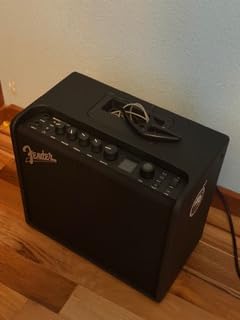
The honest weakness is tone out of the box. Reviewers consistently note that the modeling presets land compressed and a little boxed in until you edit them, which is exactly what we found: the clean channel needed a presence lift and less bass before it sat forward in a band mix. Give it twenty minutes of adjustment and it rewards you. The USB and headphone output also mean this doubles as a recording interface and a silent practice amp between gigs, which our acoustic amplifier guide recommends as a standard home setup.
At 25 watts, think quiet bar or pub, rehearsal room, open mic night. A loud room with a heavy PA is the edge of what it can carry, and if that is your regular venue, step up to the Katana-50 or the Mustang LT50.
Where the LT25 wins on stage
It holds a clean note at low volume in a way most 20-watt combos do not, so you can play with your guitar volume down and stay audible through the PA. That is the single most useful trait for a small stage where a sound engineer is asking you to turn down.
The preset count also means a change of song does not need a footswitch dance. Thirty sounds cover most setlists, and the display shows what is loaded before you play rather than after.
Where the LT25 falls short
The 8-inch speaker is the limit. In a room with any low-end bounce from a kick drum, the guitar sits behind the band until someone turns the amp up, and then the clean channel starts to fold.
It is also a practice amp that got strong, not a dedicated stage amp. If you play a high-gain style regularly, there is nothing here for you. For that, look at the Katana-50.
2. Positive Grid Spark 40 – Best Guitar Amplifier for Rehearsal and Recording
Positive Grid Spark 40-Watt Combo Practice Guitar Amplifier Electric Bass and Acoustic Guitar Amp with Spark Mobile App
40 watts
ToneCloud preset library
Smart Jam backing tracks
USB audio interface
15.2 pounds
Pros
- Largest review count of any pick at more than 8600 ratings
- 50000 plus amp and FX presets
- USB audio interface for direct recording
- Handles guitar bass and acoustic
Cons
- App dependent features need a phone and account
- Speaker can sound smaller than the wattage suggests at high volume
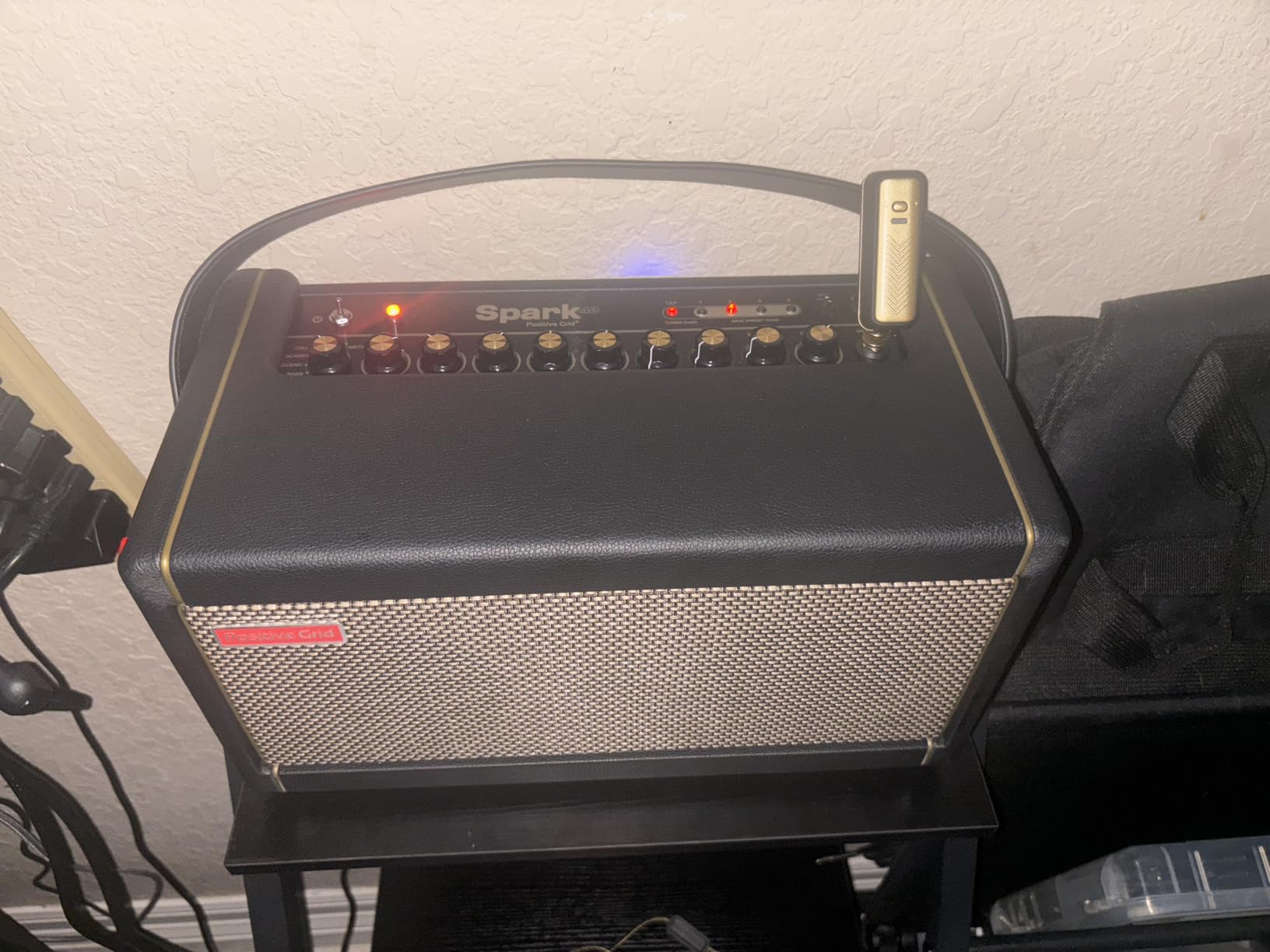
Forty watts is the sweet spot for a rehearsal room that doubles as a writing space, and the Spark is the most capable amp here for players who write with backing tracks. Smart Jam listens to your playing and generates bass and drum parts, and imported songs display chords in real time on the unit. For a weekend player rehearsing a set alone before a small gig, that removes the single biggest reason rehearsals get skipped.
The ToneCloud library is the real headline. More than 50,000 amp and effect presets means you can build a sound for a specific song instead of living with whatever the amp shipped with, and the USB audio interface means the same box handles tracking straight into a DAW.
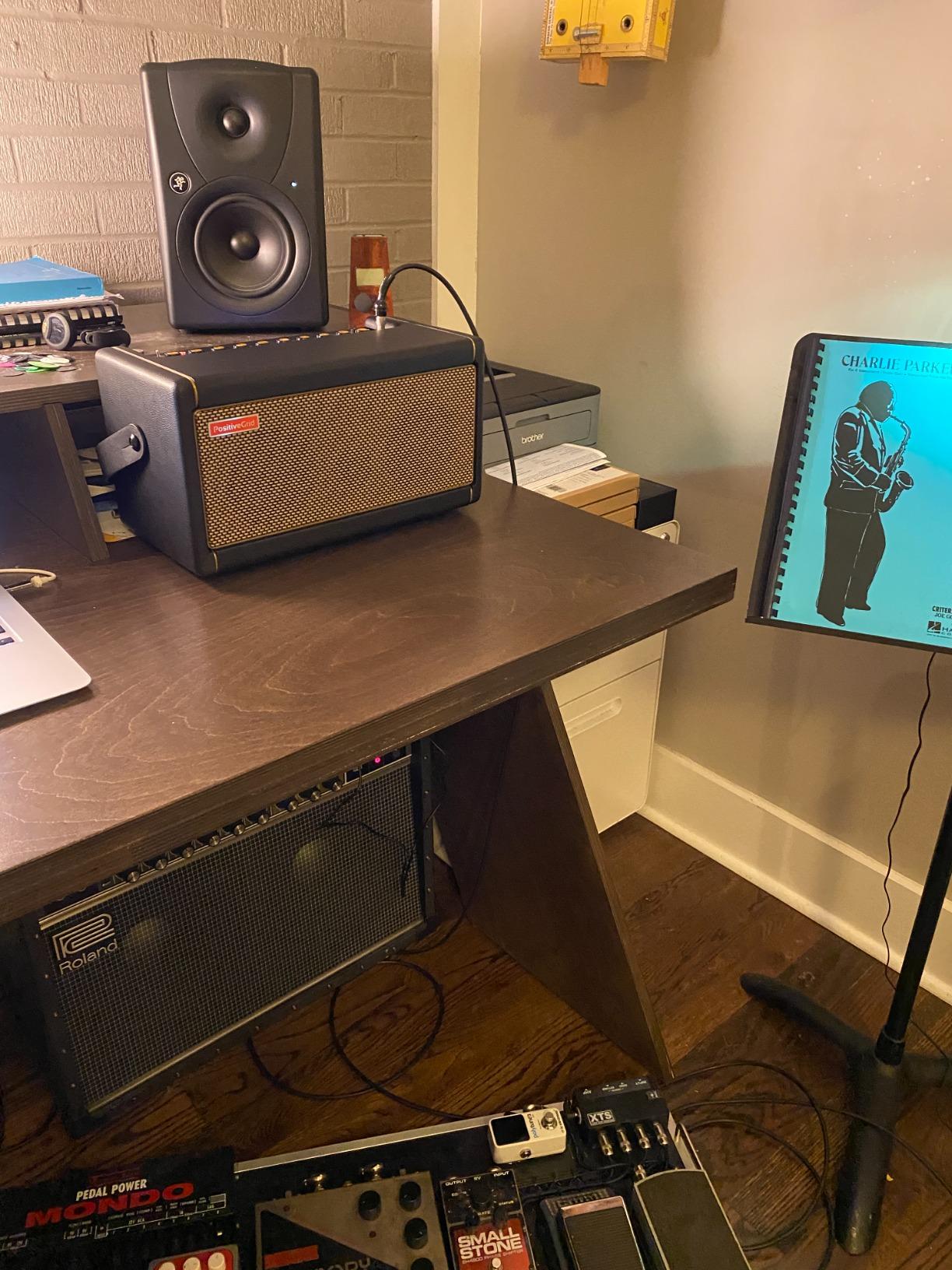
What to know before you commit: the depth here depends on the app, and reviewers call that out as both the strength and the complaint. Features that matter on stage need a phone, an account and some setup time, and that is friction at a load-in when you want to plug in and play. Some users also report that the speaker seems to give up before the wattage suggests at high volume, so treat 40 watts as generous in a loud room rather than modest.
At 15.2 pounds it carries easily despite the wattage, and it handles guitar, bass and acoustic instruments, which makes it a rare one-box answer for a player whose setlist changes.
Where the Spark wins
Rehearsal and songwriting. If your small gigs are with a covers band or a solo project and you practise at home, the backing track and chord display features remove an entire category of gear.
It also records. For anyone releasing gig recordings or building a demo reel, the USB audio interface turns the amp into a capture device, which most combos in this group cannot do.
Where the Spark falls short
It is a phone-dependent device pretending to be an amp. If you like a simple row of knobs and a footswitch, the Fender combos and the Orange give you that with no setup at all.
Forty watts with a compact speaker also gives less physical punch per watt than the 12-inch combos here, so it is a slightly softer presence in a loud room.
3. Orange Crush 20 – Best Value Guitar Amplifier for Bars and Pubs
Orange Crush 20 20W 8″ 2-Channel Guitar Amplifier and Speaker Combo, Orange
20 watts
Solid state twin channel
8 inch speaker
3 band EQ
Aux in and cabsim headphone out
Pros
- Warm British style clean tone with strong midrange
- Separate clean and dirty channels with own gain
- Reliable over years of regular use
- Works well with pedals and footswitches
Cons
- No built in reverb on this model
- No dedicated direct out for larger stages
- Power switch is on the rear panel
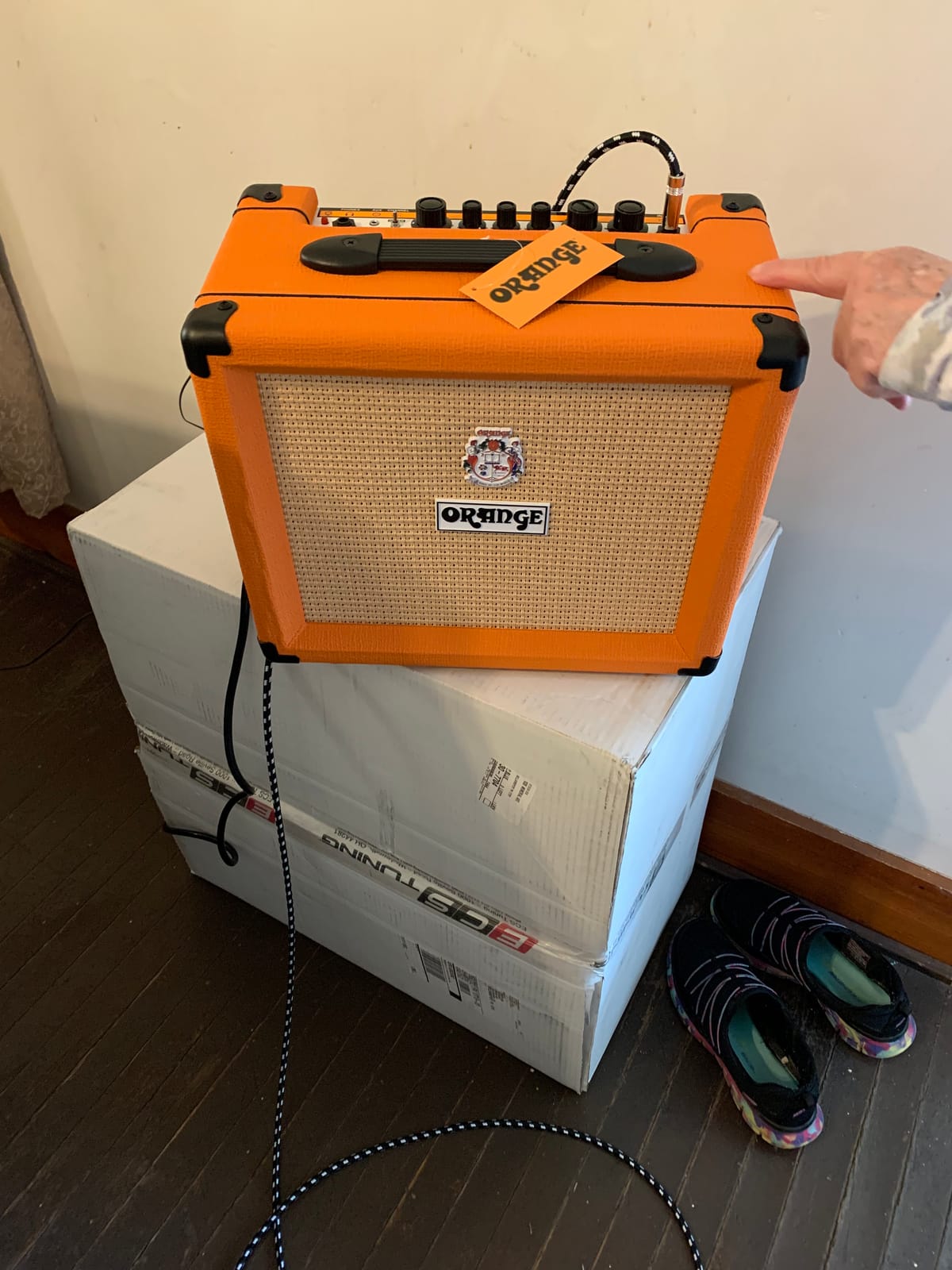
The Orange Crush 20 is the amp that gets recommended most often in small-gig threads, and the reason is tone rather than volume. Twenty watts of solid state with a 3-band EQ and a dedicated dirty channel gives you a warm, midrange-forward clean that sits in a band mix without needing to be cranked, which is the opposite problem from the one most buyers are worried about.
Owners describe it as the loudest and best sounding amp in its class, and the reviews repeatedly mention small gigs, rehearsals and church use in the same breath. At 20 watts with two channels and a high gain preamp on the dirty side, it is genuinely pedal-friendly, so a small board is an upgrade path rather than a replacement.
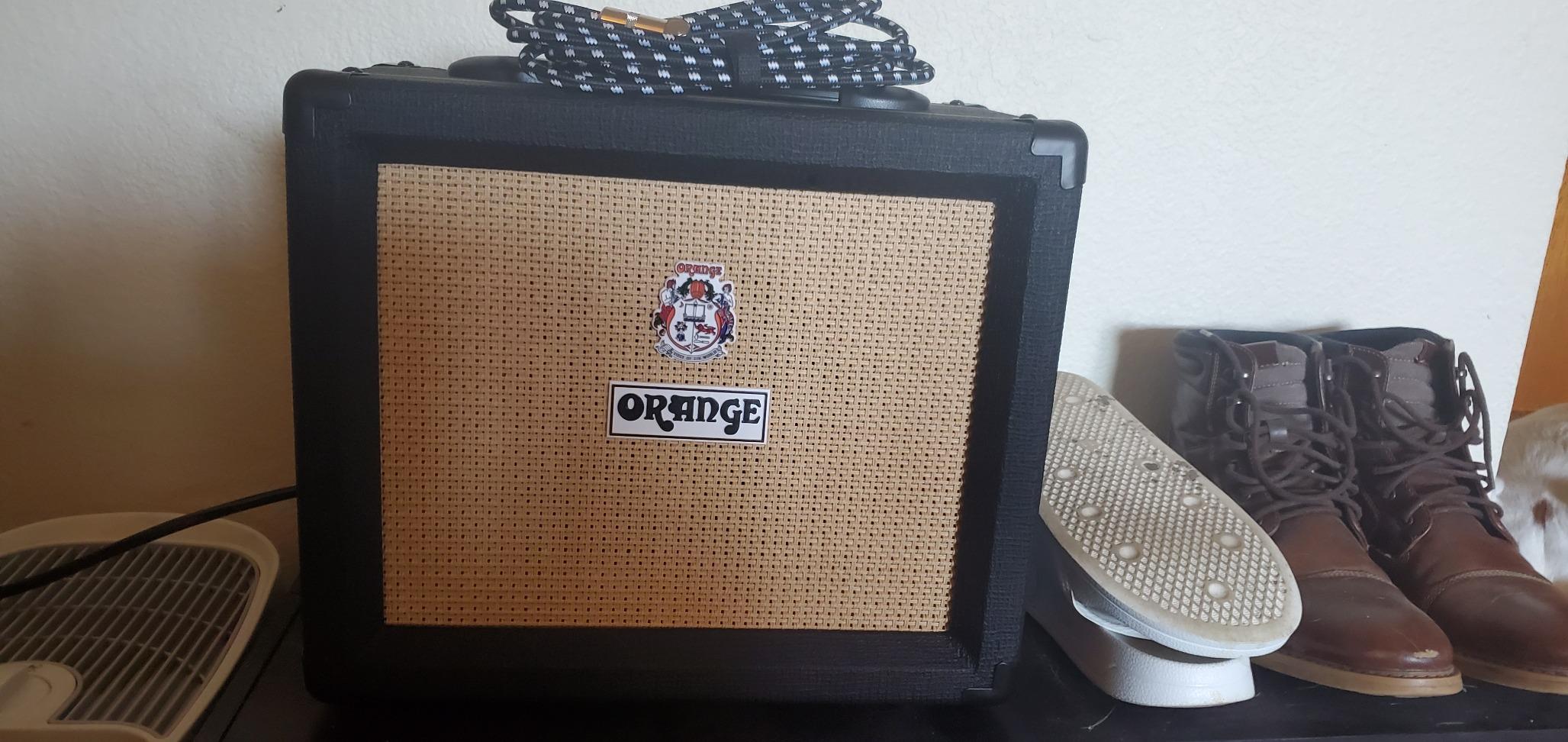
Three limitations worth knowing. There is no built-in reverb on this model, so surf tones come from a pedal or from your guitar. There is no dedicated direct output, which matters if the venue expects a line feed rather than a mic. And the power switch sits on the rear panel, which is a small irritation every time you pack up.
Loud enough for: quiet bars, pubs, small music venues, open mic nights, rehearsal rooms. It is mic-friendly, and reviewers note that PA capture is where it gets the most out of 20 watts. The weight listed for the combo is about 16 pounds, which is a comfortable one-hand carry for a small stage.
Where the Crush 20 wins
Tone per watt. If you play blues, indie or anything where the guitar needs midrange to survive a band mix, this voicing does more for you than 30 extra watts would.
It also stays useful as an amp forever. Two channels and a high gain preamp take pedals naturally, so the sound improves as your board grows instead of being locked at purchase.
Where the Crush 20 falls short
No onboard reverb means surf, ambient and ambient post-rock sets need extra gear. Players chasing a worship sound or a chime-heavy clean will feel its absence immediately.
Twenty watts is twenty watts. In a hard room with a loud drummer it is not enough, and you should not expect it to be.
4. Fender Frontman 20G – Best Budget Amp for a First Paid Gig
Fender Frontman 20G Electric Guitar Amplifier, 20-Watt Amp, 8″ Speaker
20 watts
Solid state
8 inch speaker
Clean plus switchable drive channel
Three band EQ
Pros
- Simple layout that is easy to learn
- Clear clean channel with flexible three band EQ
- Drive channel has usable light overdrive
- Aux input and headphone jack for practice
Cons
- No built in reverb so a pedal is needed
- Drive channel is not aggressive or high gain
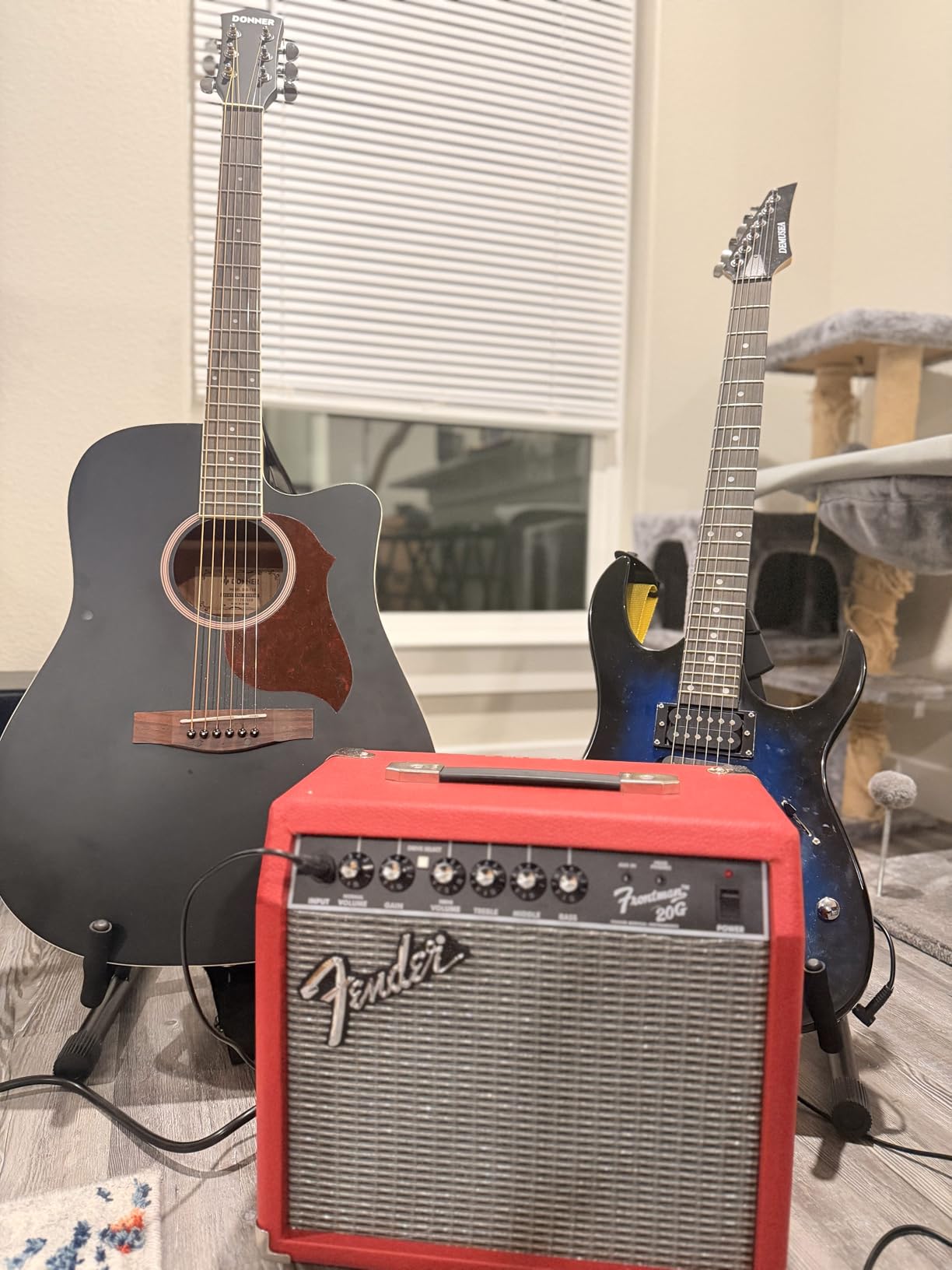
The Frontman 20G is the pick for someone playing their first few paid gigs and who does not want to spend attention on the amp. The layout is a clean channel with volume and three EQ knobs plus a switchable drive channel with its own volume, and that is genuinely all you need to cover most bar material.
At 20 watts through an 8-inch speaker it is loud enough for a quiet pub or a rehearsal room, and owners consistently describe it as louder and better sounding than the class it sits in. The 4.6 rating across more than 1000 reviews reflects a dependable beginner amp rather than an enthusiast one.
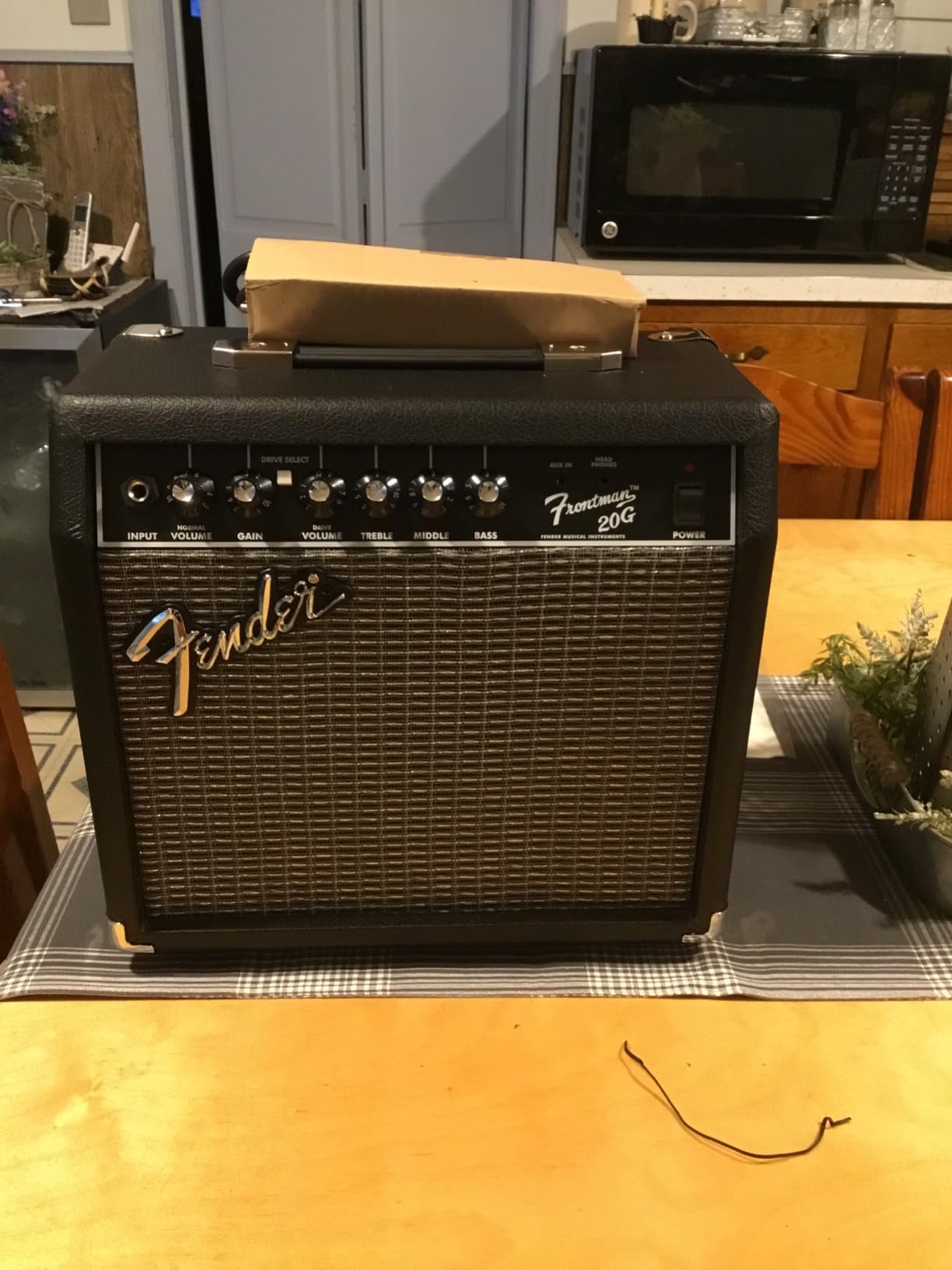
The most requested addition in the reviews is reverb, and its absence is the real limitation. Without a pedal you have no surf, no shimmer and no ambient wash, and on a ballad in a small room the amp can feel plain. The drive channel is also gentle: it does light overdrive well and does not do high gain, so a metal or hard rock set is out of scope.
At 15.4 pounds it is a normal carry for a small stage. If you want more features for the same money rather than less, our guide to affordable guitar amplifiers covers what else fits in this bracket.
Where the Frontman 20G wins
It does not need an instruction manual. Volume, three EQ knobs, channel switch. If you are learning to play live rather than learning to shape tone, that simplicity is worth more than presets.
It is also the easiest amp here to keep for years. Solid state with no tubes to age means no warm-up, no maintenance and no surprise on a Friday night before a show.
Where the Frontman 20G falls short
No onboard reverb, and the drive channel tops out early. Musicians who need ambient textures or distortion from the amp will be adding pedals immediately.
20 watts leaves it out of its depth in a loud room. Treat it as a pub and quiet bar amp, not a hall amp.
5. BOSS Katana-50 Gen 3 – Best Amp for a Loud Small Venue
BOSS Katana-50 Gen 3 Guitar Amplifier
50 watts
Class AB design
12 inch BOSS speaker
12 amp characters
5 effects sections
Pros
- 50 watts and a 12 inch speaker cover small gigs
- Enhanced Tube Logic responds naturally
- Usable onboard reverb and delay
- Tone Studio app editing
Cons
- Heavier at 25.6 pounds than smaller combos
- Effect and amp editing still takes time to learn
If your small gigs are the loud ones, this is the amp. Fifty watts through a custom 12-inch BOSS stage speaker is real headroom, and a 12-inch moving that much air is what lets a guitar sit on top of a live drummer instead of disappearing under the kick.
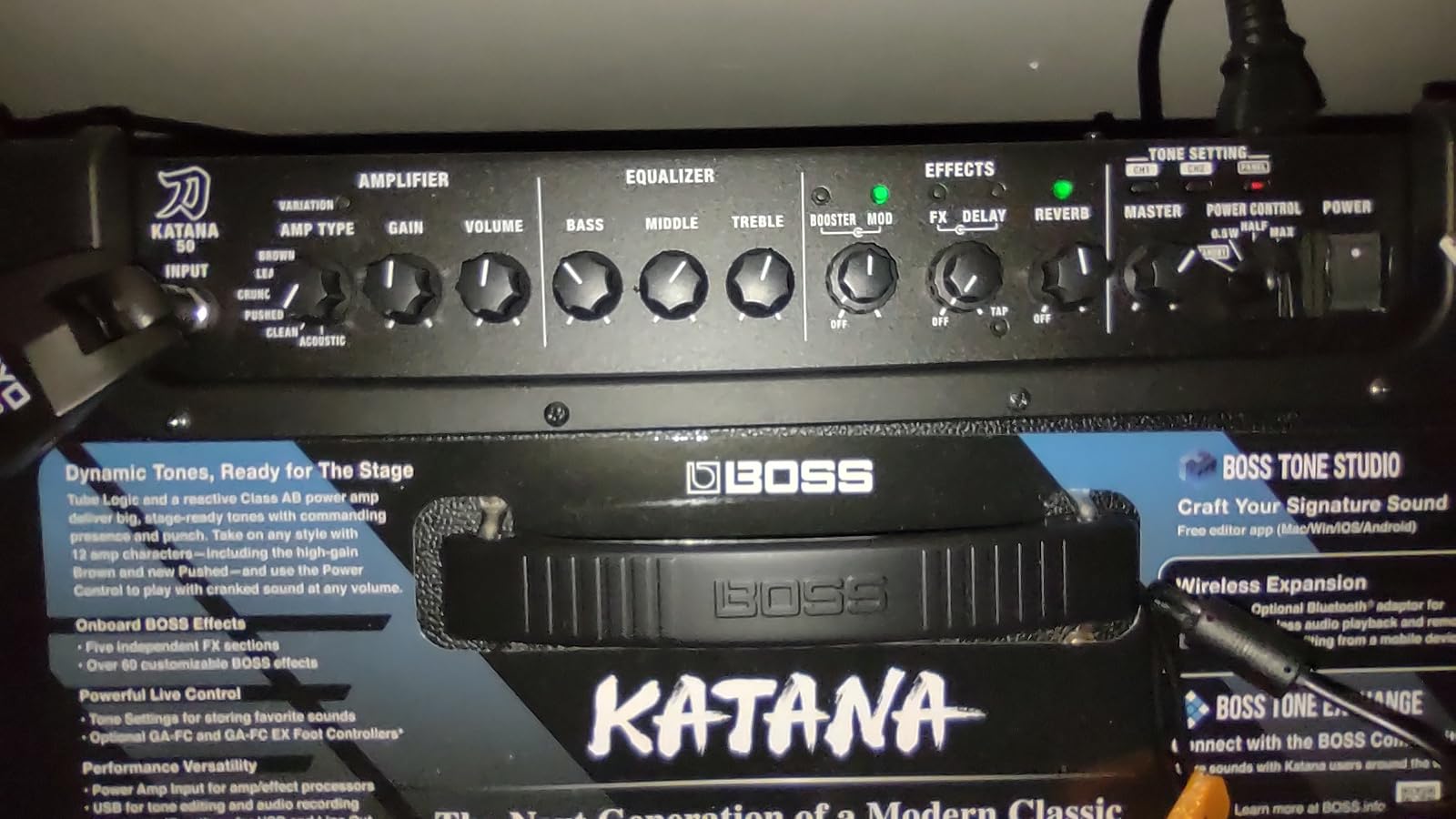
The Gen 3 updates are the reason it ranks here rather than the older versions. Enhanced Tube Logic with the new Pushed amp character gives twelve amp types with a variation of each, and the response feels more natural under a pick than the modeling engines here that rely on a phone. Five independent effects sections cover Booster, Mod, FX, Delay and Reverb, so a small board is optional.
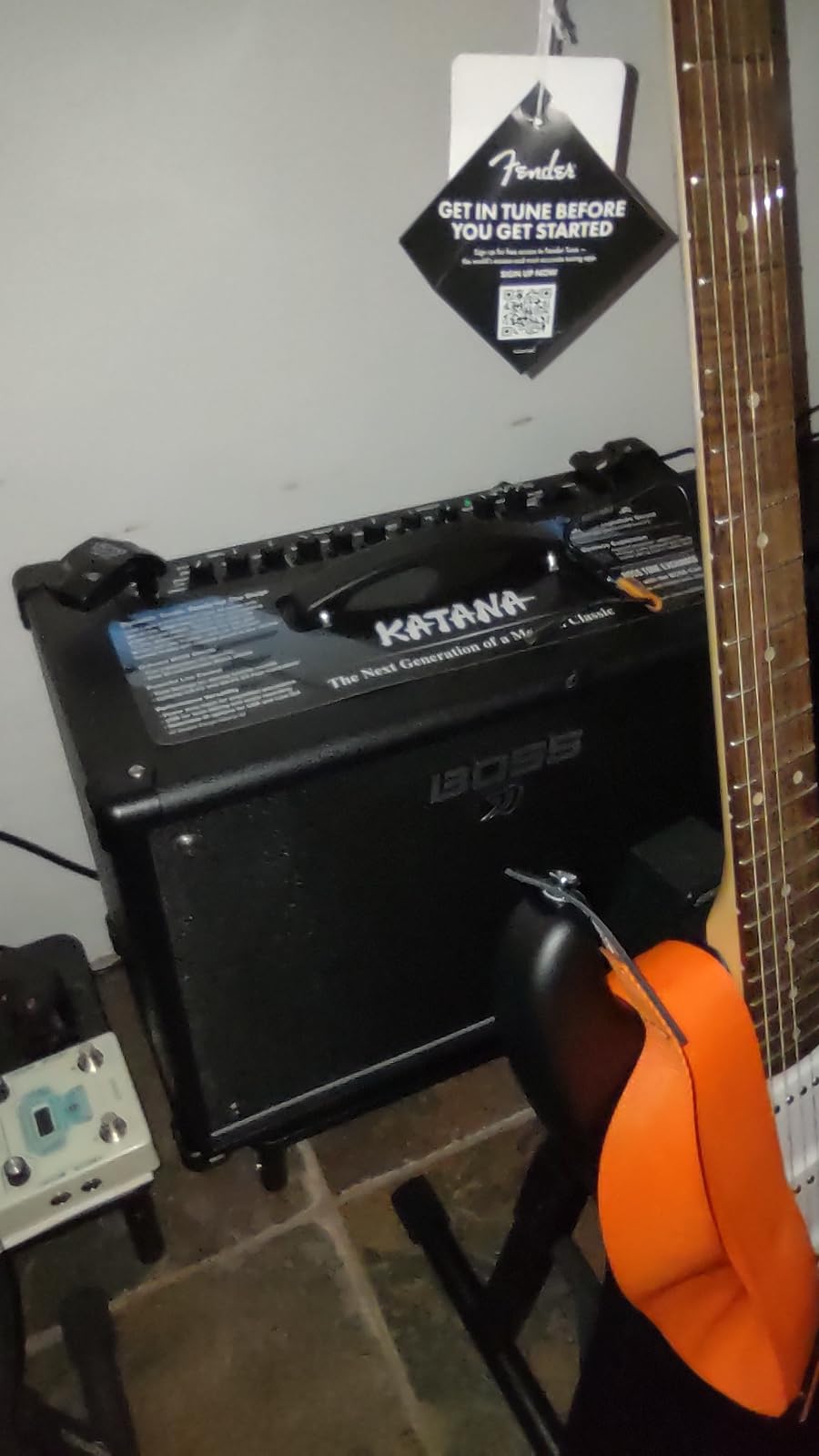
The trade is weight. At 25.6 pounds this is the second heaviest amp in the roundup, and on a stair-only load-in that is a two-person job or a long explanation to the sound guy. Editing also still takes time even with the Tone Studio app, so treat the amp settings as something you build over a few rehearsals rather than something you configure at soundcheck.
Owners rate it 4.7 across more than 300 reviews and specifically credit the stage-ready headroom and the more natural Tube Logic response in this generation.
Where the Katana-50 wins
Loud rooms. A 50-watt 12-inch combo is the safest choice on this list when you do not know the venue, because it can sit quietly in a small room and still push in a hall.
It also covers styles. Twelve amp characters and five effects sections mean a set that moves from clean funk to lead rock does not need a pedal swap mid-song.
Where the Katana-50 falls short
It is a 50-watt amp, which in a small bar can genuinely be too much. Players who get volume complaints in quiet venues will find the LT25 or the Crush 20 a better fit for that reality.
At 25.6 pounds it is a poor choice for busking, street corners and anything where you carry the amp more than you play it.
6. Fender Mustang LT50 – Best Amp for Small Gigs and Recording
Fender Mustang LT50 Guitar Amp, 50 Watts, with 2-Year Warranty 30 Preset Effects with USB Audio Interface for Recording, Black
50 watts
Solid state
12 inch speaker
25 onboard effects
USB audio interface
Built in tuner
Pros
- Rated 4.8 out of 5 across more than 300 reviews
- 50 watts and 12 inch speaker give band headroom
- Integrated USB audio interface for direct recording
- 25 onboard effects remove the need for stompboxes
Cons
- No Bluetooth unlike competing digital amps
- Presets can be loud when first engaged
- Heavier at 23.5 pounds for a portable combo
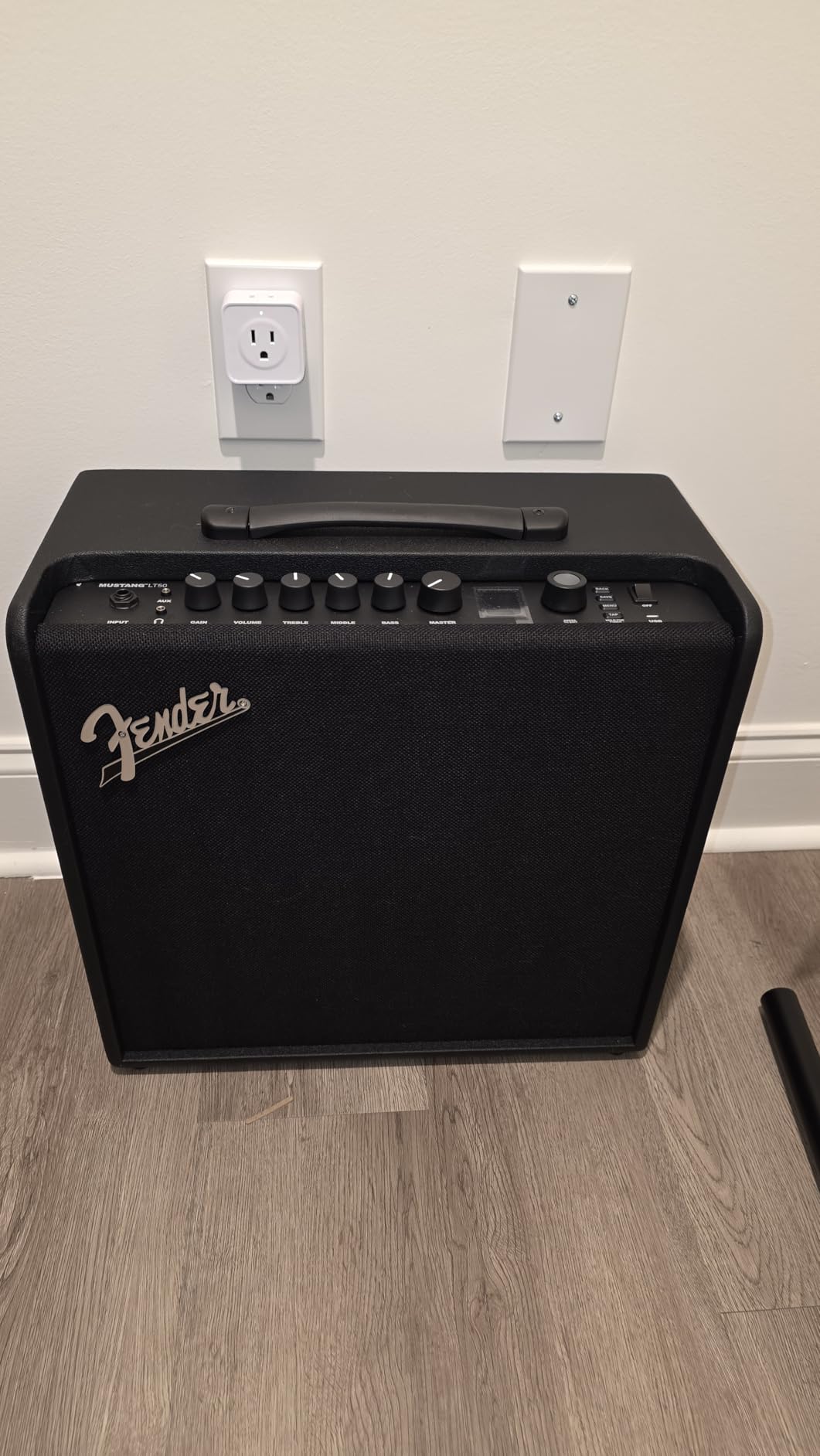
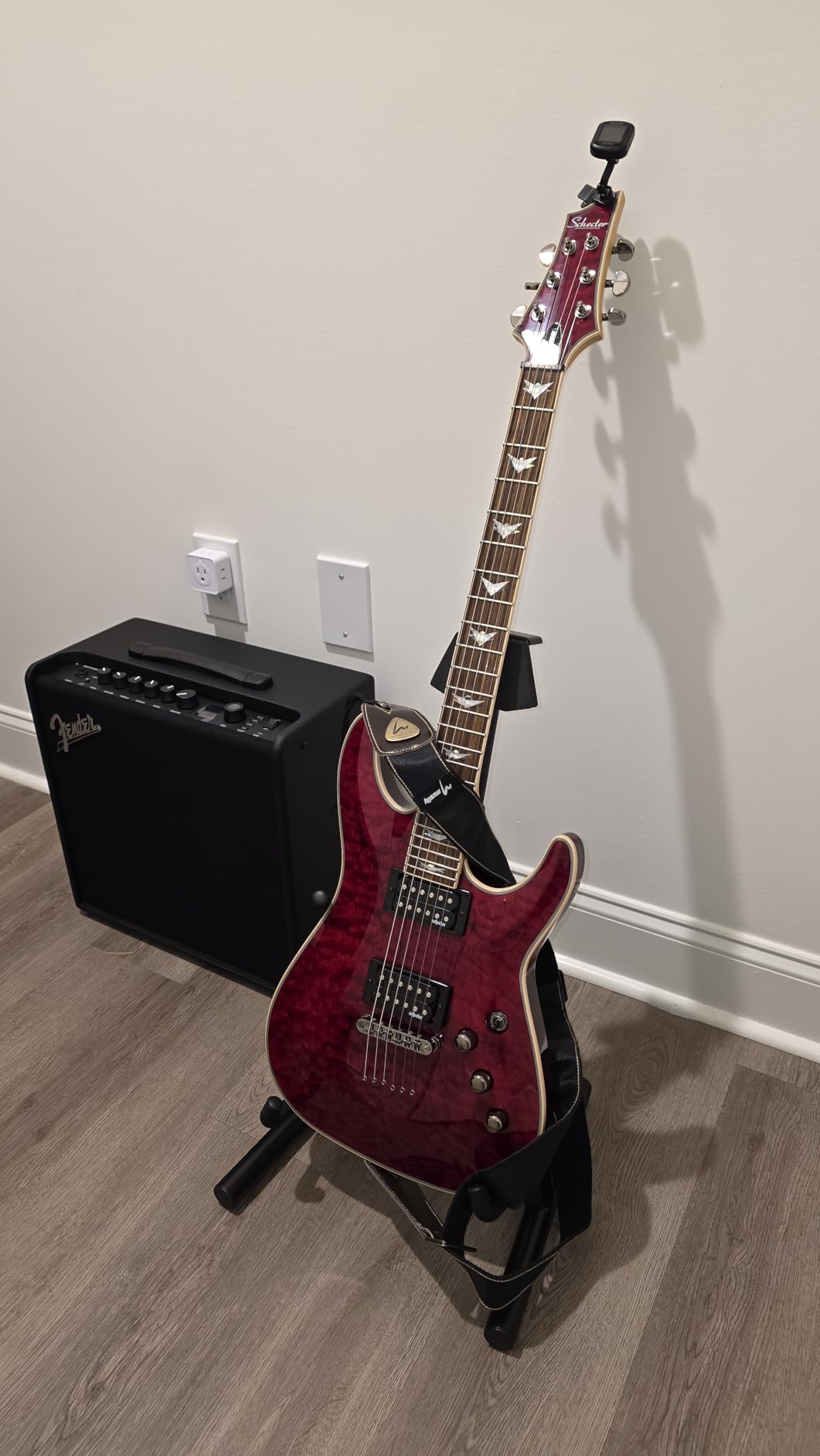
The Mustang LT50 is the version of the LT25 that stops apologising. Fifty watts and a 12-inch speaker give it the headroom the smaller model lacks, while the controls stay as approachable, which makes it the easiest jump from a practice amp to a gigging amp on this list.
It also has the most complete recording story in the group: an integrated USB audio interface means direct capture into a DAW with no extra box, 25 onboard effects cover distortion, overdrive, compression, modulation, reverb, delay and octave, and there are 30 preloaded presets plus 30 user-programmable slots and a built-in tuner.
The rating is 4.8 across more than 300 reviews, and owners treat it as an easy upgrade rather than a luxury. Watch two things on stage. Presets can be loud the moment they engage, so pull levels down before switching sounds rather than after. And the separately sold footswitch only steps through the first eight presets, which caps how much of the library you can reach with your foot.
There is no Bluetooth, so backing tracks need a wired aux cable. At 23.5 pounds it is a two-hand carry, and stairs are the deciding factor for many players.
Where the LT50 wins
Small gigs and home recording in one box. The USB interface is a genuine advantage for anyone building a set of gig recordings, and it removes the usual extra purchase.
It is also the pick for a player who wants Fender solid state voicing with room to grow. Fifty watts is enough headroom that you are never cranking, which is the safest way to stay clean in a band mix.
Where the LT50 falls short
Wired-only aux input. Bluetooth is a small gap, but it matters for players who run backing tracks from a phone.
The footswitch limitation and the 23.5 pound weight make it a home-and-stage amp rather than a grab-and-go one. For moving it yourself, look at the Roland Cube Street.
7. Roland Cube Street EX – Best Portable Amp for Outdoor and Street Gigs
Roland Cube Street EX Battery-Powered 50W Stereo Amplifier
50 watts stereo
Eight AA batteries
3 power modes
4 channels with 2 XLR inputs
Stage monitor positioning
Pros
- Battery power makes it genuinely portable for street and outdoor playing
- Four channels with two XLR inputs support a full band
- Three power modes balance volume against runtime
- Angled back for stage monitor use
Cons
- Single 8 inch speakers limit the full band low end
- Battery runtime is limited at maximum power
- Sits well above the modeling combos in this range
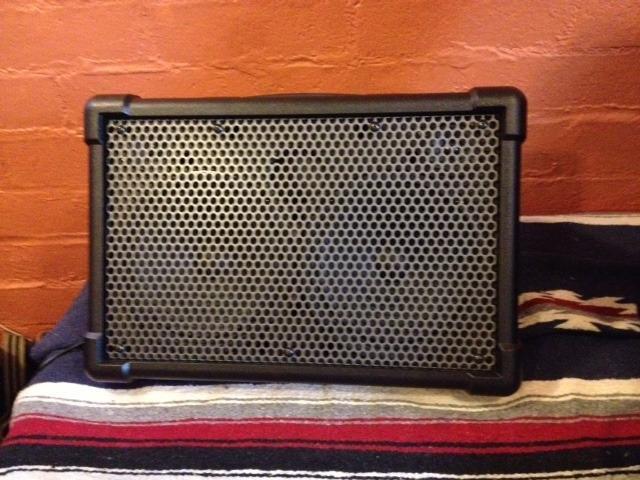
The Cube Street EX solves a problem the other nine do not have to: power outlets. Fifty watts of stereo amplification from eight AA batteries means busking, street performance, an outdoor wedding or a park gig with no mains nearby. Owners consistently point to the battery freedom as the reason they bought it.
Three power modes let you trade volume for runtime: Max at 50W for about 5 hours, Normal at 25W for about 10, and Eco at 10W for about 20. Four independent channels including two XLR mic inputs means it can take a full band plus vocals, which makes it a genuine one-box solution for a covers trio.
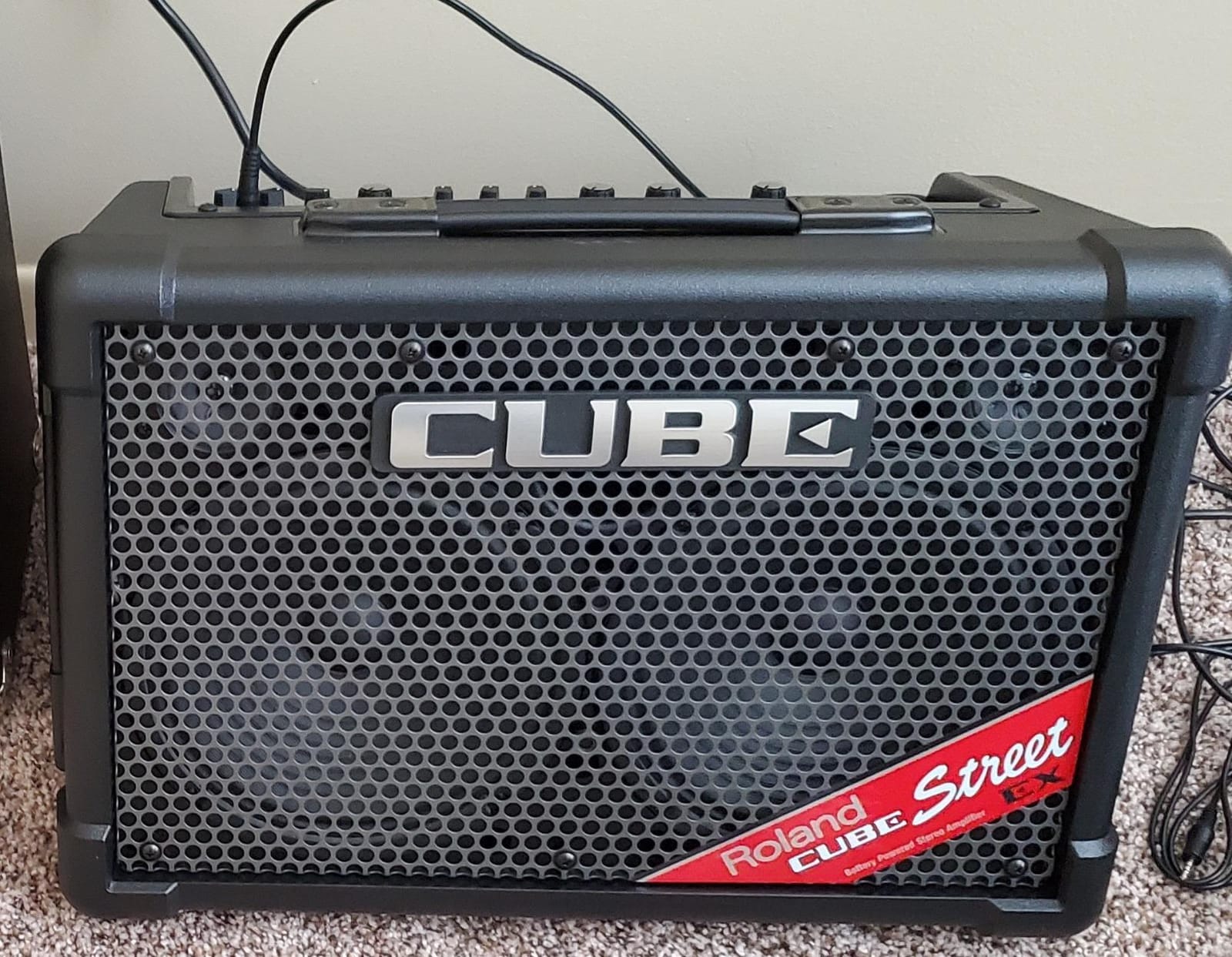
Where it is not ideal: two 8-inch speakers and a wide stereo spread do not deliver much low end, so a full band will feel thin underneath. The battery also gives you roughly a short evening at full power, so a mains lead is still worth carrying for indoor sets. And it costs more than the modeling combos in this roundup, which is a real cost for a feature set aimed at outdoor playing.
It can also be angled back as a stage monitor for the player, and there is a mounting hole for the optional speaker stand, which matters more than it sounds when you are the only person on a small stage.
Where the Cube Street EX wins
Anywhere without a power socket. Street, park, outdoor event, acoustic-electric set in a courtyard, or a venue where the outlet is on the wrong side of the room.
It also doubles as a monitor and a mixer. Four channels with XLR inputs let a small band plug in without a separate mixer, which solves a real problem on a bar stage with no backline.
Where the Cube Street EX falls short
It is not a substitute for a proper PA at a loud indoor gig. Single 8-inch speakers and a stereo spread mean less midrange punch than a 12-inch combo of similar wattage.
At 50W the battery only lasts about 5 hours, and the weight listed for the unit is about 20 pounds, so it is portable but not a one-hand carry.
8. Marshall CODE50 – Best Amp for Players Who Like Editing Tones
Marshall CODE50 Digital Combo Electric Guitar Amplifier – Black
50 watts
12 inch Celestion speaker
100 plus editable presets
14 preamp models
4 power amp models
Pros
- 50 watts and a 12 inch Celestion speaker give real volume
- Deep editing lets you build custom tones
- USB connection records direct into a DAW
- Bluetooth and app control for preset switching
Cons
- Factory presence is set low so presets sound muffled first
- Speaker cab simulation is not considered accurate
- No dedicated effects loop
- Some owners report Bluetooth signal cutouts
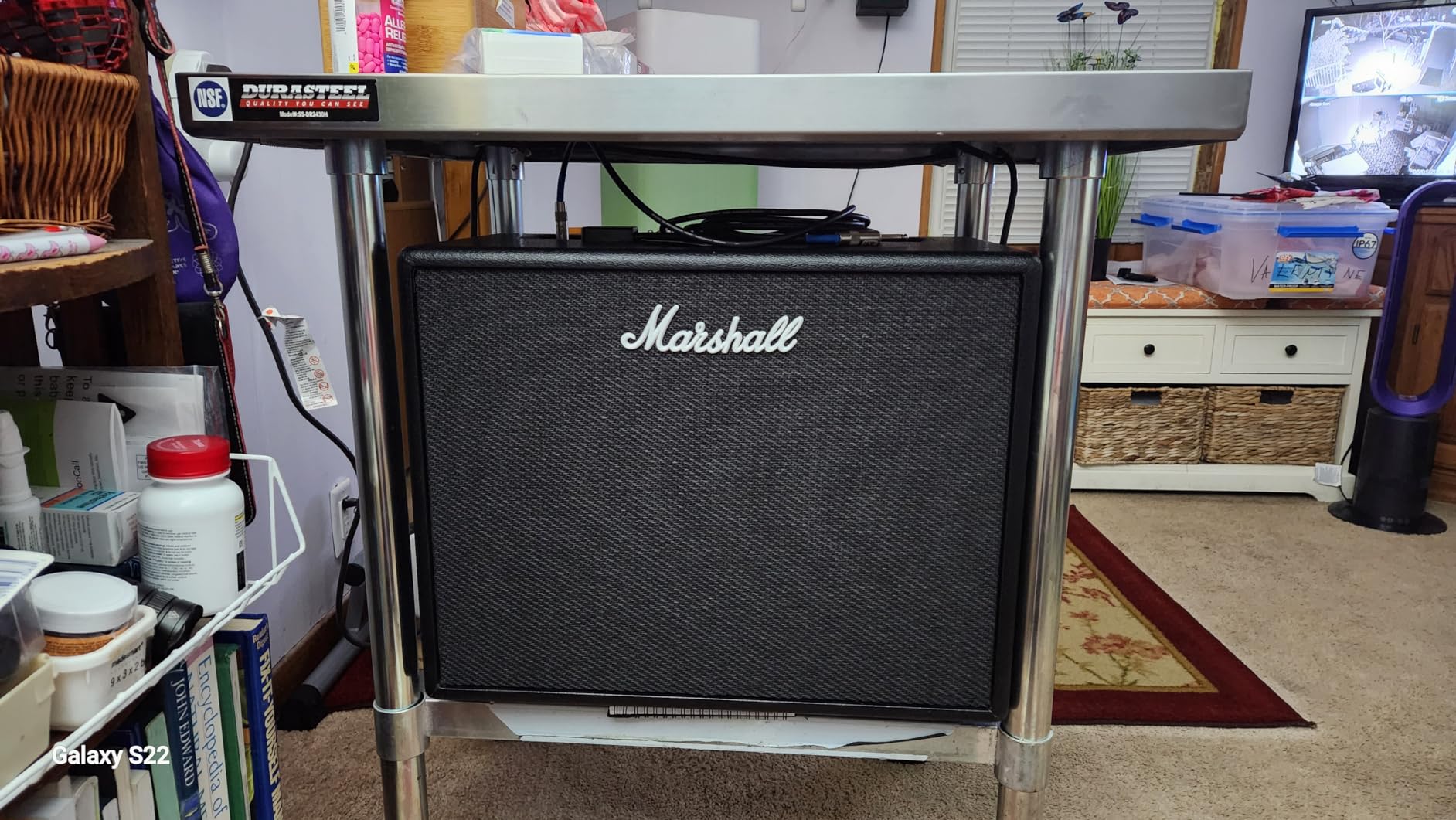
The CODE50 is the deepest editor in this group and the only one aimed squarely at a player who wants to build a sound rather than browse one. Fourteen preamp models including Plexi, JVM, DSL and Silver Jubilee voicings, four digital power amp models covering EL34, EL84, 6L6 and 5881, and eight speaker cabinet emulations give you real variables to move.
Volume is not the question here. Fifty watts with a Celestion 12-inch speaker gives real output for small venues, and the 4.6 rating across more than 500 reviews comes mostly from players who invested time in editing.
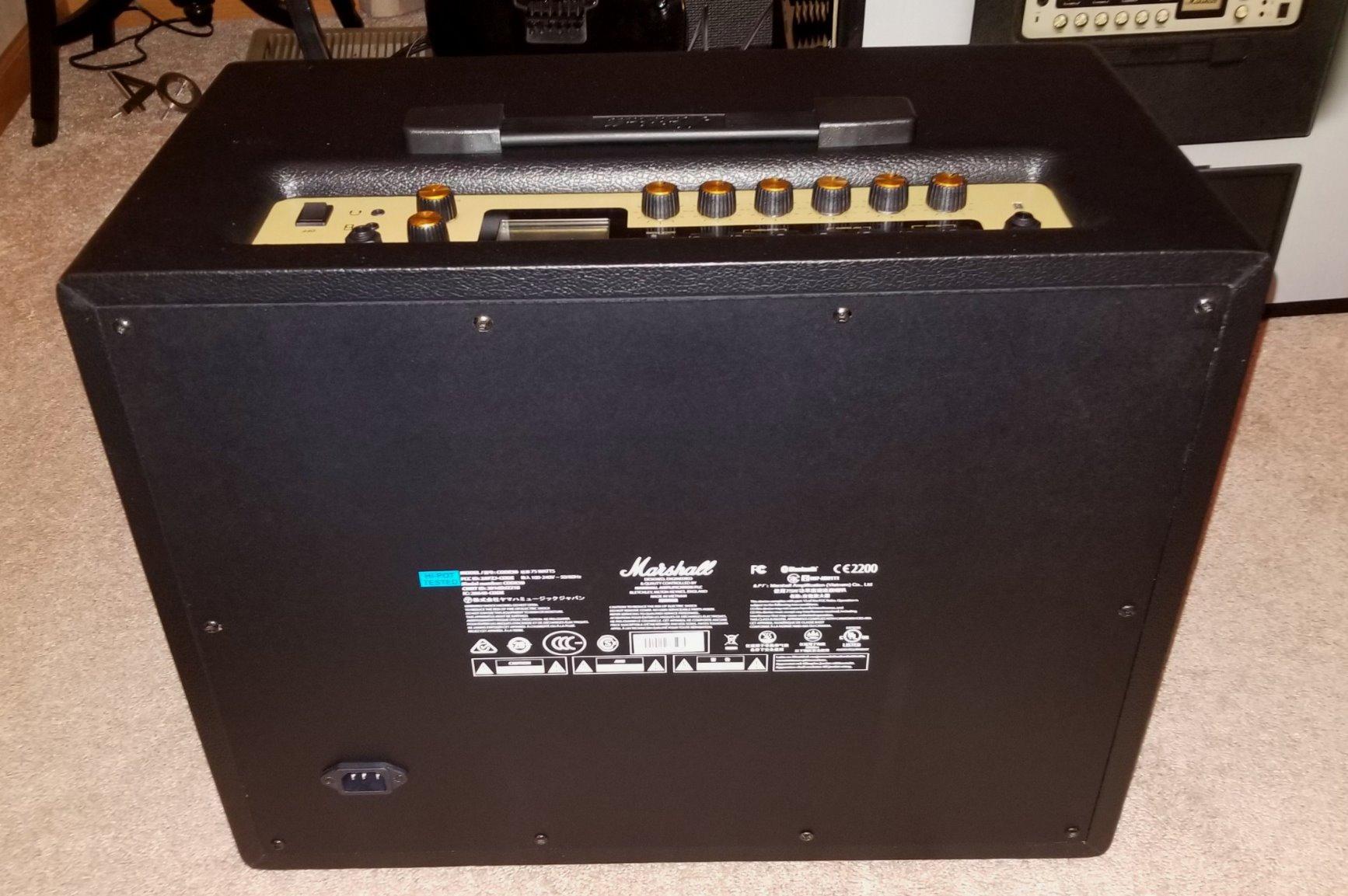
Two things to know before you buy. The factory presence is set low, so out-of-the-box presets sound muffled and dark until you raise it, and judge it on edited settings rather than the defaults. Cab simulation is also not regarded as accurate by reviewers, which is a fair criticism of most modeling engines at this level.
There is no dedicated effects loop, so time-based pedals with a trailing reverb do not behave the way they would on a tube amp. Some owners report Bluetooth signal cutouts, and at 28.6 pounds this is the heaviest combo here, which makes stairs a genuine consideration.
Where the CODE50 wins
Players who want a specific famous sound. The preamp and power amp model lists let you build a plausible version of a Marshall tone you can hear on records, which is the whole appeal for a tone-focused guitarist.
It records over USB straight into a DAW and switches presets from a phone over Bluetooth, so a set with multiple sounds does not need pedalboard choreography.
Where the CODE50 falls short
It punishes impatience. Without editing time, the factory presets will disappoint you, and that is the most common complaint in the reviews.
At 28.6 pounds it is the hardest carry on this list, and the missing effects loop is a real loss for anyone using delay and reverb pedals.
9. VOX VT20X – Best Hybrid Amp for a Tube Preamp Sound
Vox VT20X 1×8″ 20W Modeling Guitar Combo Amp w/DSP & Hybrid Design
20 watt hybrid
Valvetronix tube preamp
VET modeling
Built in tuner and headphone jack
Power Level control
Pros
- Tube preamp responds strongly to picking dynamics
- ToneRoom app adds a deep library of amp and pedal models
- Power Level lowers volume without changing the sound
- Lightweight and compact for transport
Cons
- Volume can jump noticeably when changing presets
- Headphone output only with no line out for PA use
- Dense control layout can overwhelm beginners
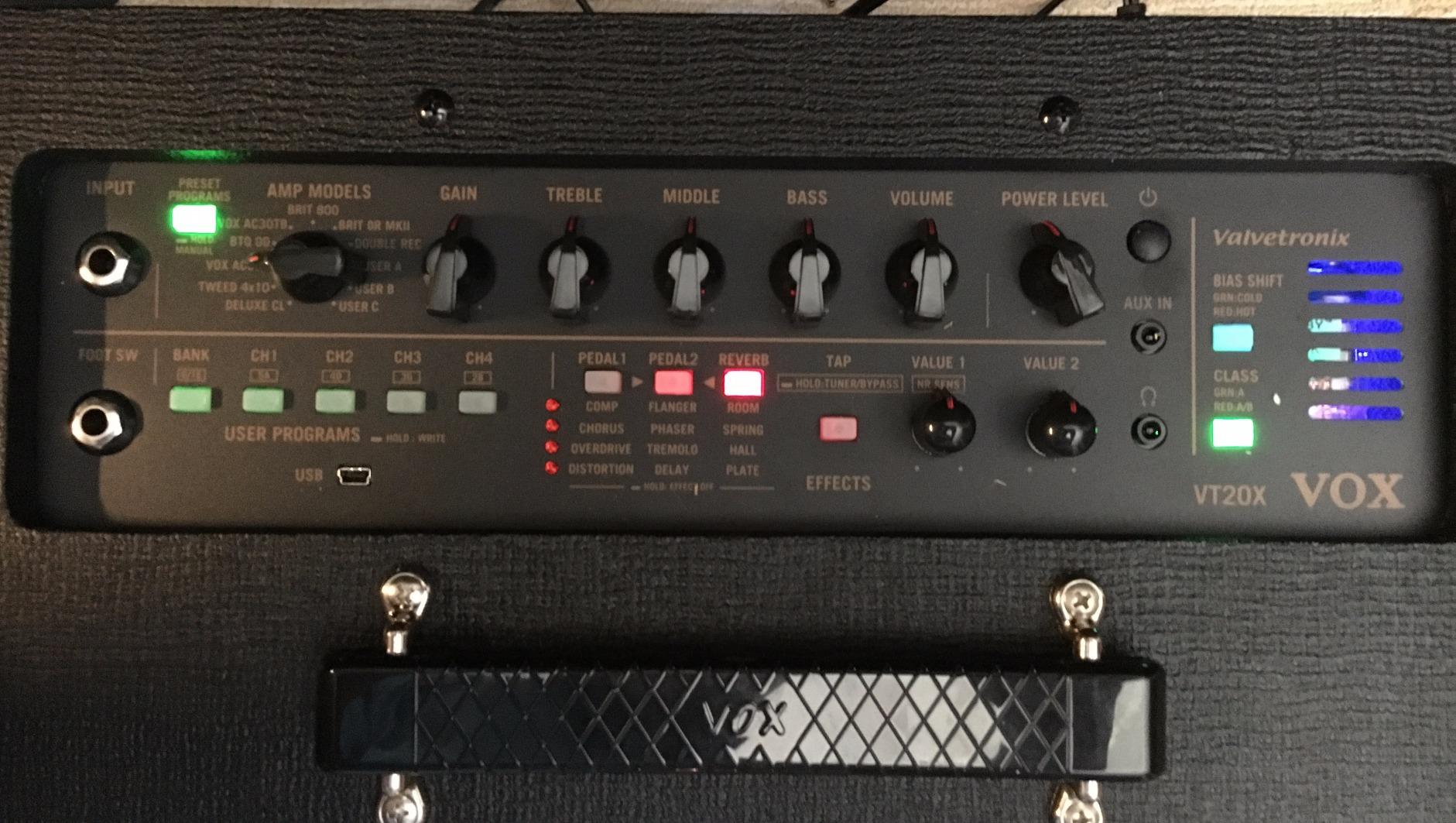
The VT20X is the closest thing to a tube amp here without the maintenance, and that is exactly why it is worth a look. The Valvetronix tube preamp responds to picking dynamics in a way the digital engines here do not, which is the tactile difference players notice first on a small stage.
The Power Level control is the feature that matters most for small gigs. It lowers output without changing the character of the sound, so you can run a genuinely clean channel at a volume the room will accept, which directly answers the volume complaint that shows up in almost every small-gig thread.
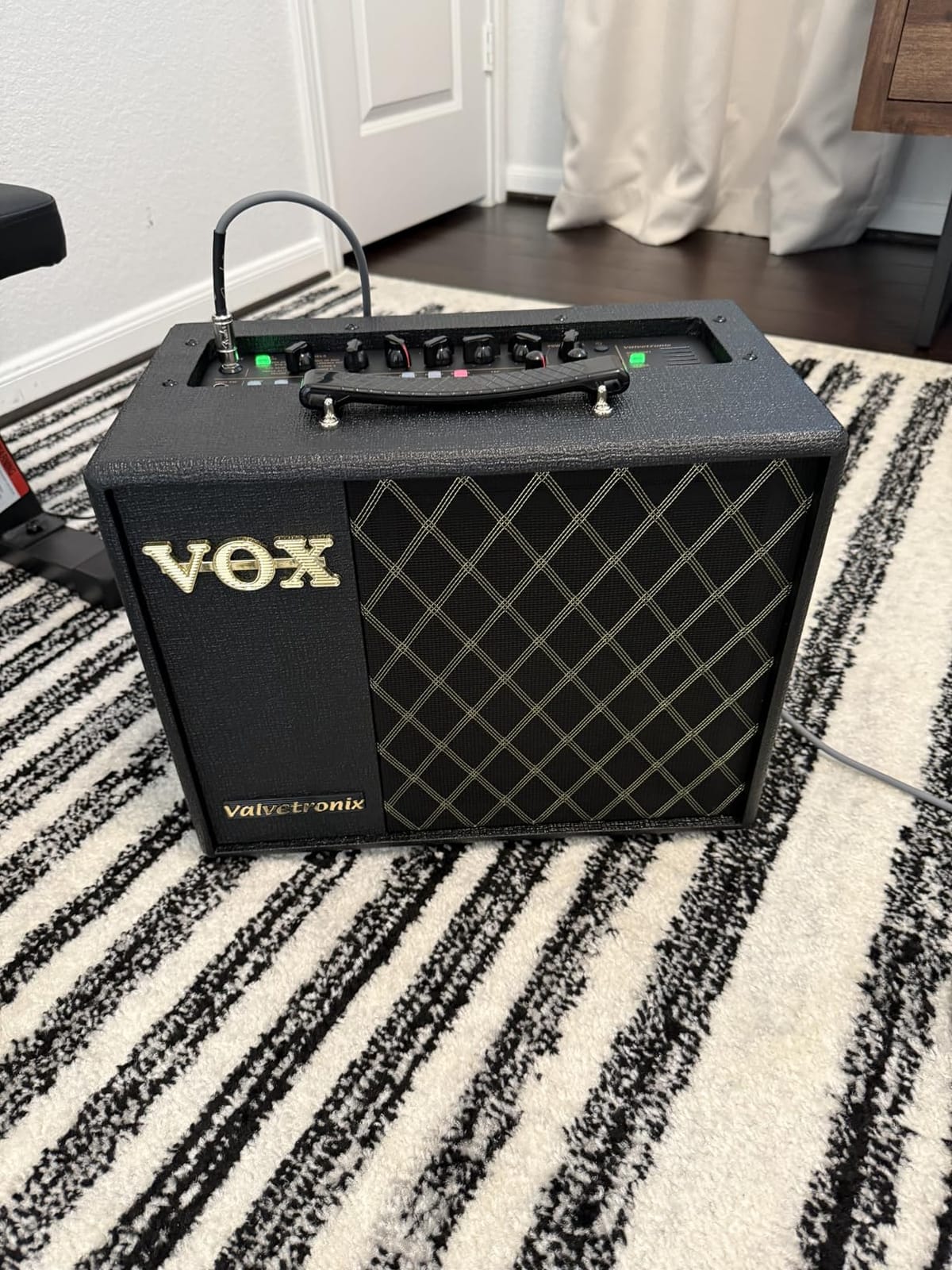
Its rating is the lowest in the roundup at 4.3 across more than 480 reviews, and the complaints are consistent. Volume can jump noticeably when you change presets, which is a real hazard mid-song. There is a headphone jack but no line out, so feeding a PA needs an adapter. The control layout is dense, and reviewers also report a few speaker or unit failures.
Owners do praise it as loud for 20 watts, so in a quiet bar it covers the same ground as the Crush 20 with a more dynamic feel under your right hand.
Where the VT20X wins
Feel. If you play with your picking hand rather than a preset, the tube preamp gives you a response curve the modeling amps here cannot fake, and it does it at 20 watts.
The Power Level control is the best small-stage volume solution in the roundup, and the ToneRoom app adds a deep library of amp and pedal models for players who want to go deeper.
Where the VT20X falls short
No line out makes PA integration awkward, and the 4.3 rating reflects a few genuine hardware failures rather than only tone preferences.
Beginners can find the layout intimidating. If you want simple and unmistakable, the Fender Frontman 20G is the opposite experience.
10. Monoprice Stage Right 40W – Best Amp With Real Spring Reverb
Monoprice 1×10 Guitar Combo Amplifier – Black 40-Watt, Spring Reverb, 10-Inch 4-Ohm Speaker, High & Low Inputs, Headphone Output – Stage Right Series
40 watts
Solid state
10 inch 4 ohm speaker
Three band EQ
Spring reverb and effects loop
Pros
- Real working spring reverb
- Effects loop aux headphone and external speaker outputs
- Responsive three band EQ with a pushable clean channel
- 40 watts from a 10 inch speaker
Cons
- Onboard overdrive channel is underwhelming
- Line out is noisy and not recommended for recording
- Some owners report a brittle upper mid character
- Build and finish are basic
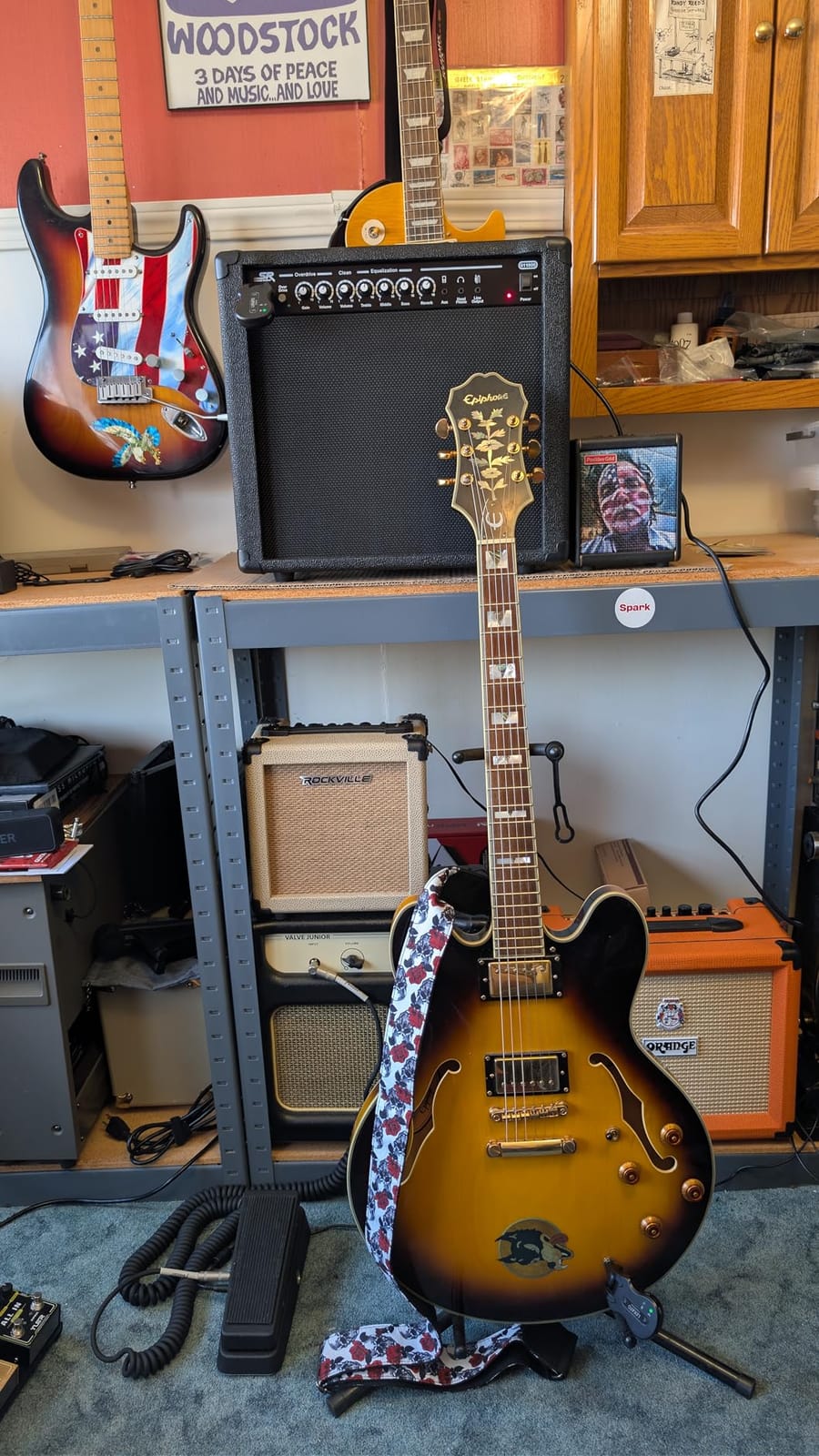
Forty watts, a 10-inch speaker and a spring reverb that actually works is an unusual combination at this level, and the reverb is why this amp is on the list. Reviewers single it out repeatedly, and for surf, country, blues and any set that leans on ambience it removes the need for a reverb pedal entirely.
The output section is unusually complete: spring reverb, an effects loop, aux input, headphone out, line out and an external speaker output. The three-band EQ sits at 100 Hz, 1 kHz and 3 kHz, the frequency response runs 60 Hz to 12 kHz, and the clean channel can be pushed hard enough to break up usefully.
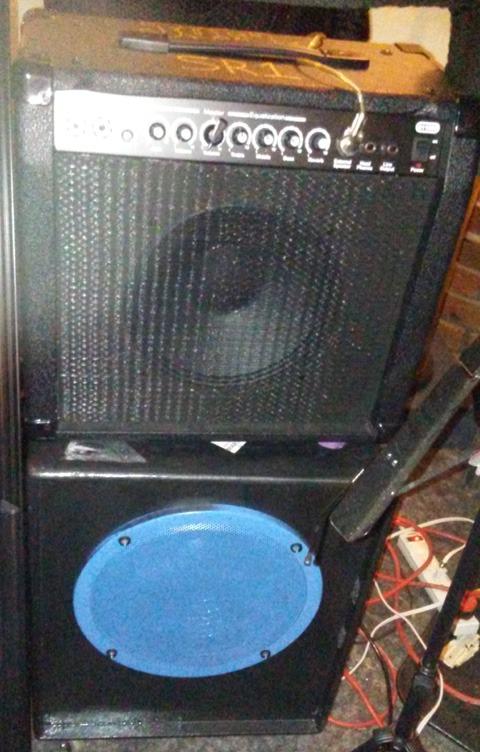
Be clear about the trade. The onboard overdrive channel is underwhelming and reviewers advise using pedals instead. The line out is noisy and not recommended for recording or for driving another amp. Some owners report a brittle upper-mid character in the speaker, and the build and finish are basic, which is fine until it is on a wet stage in the rain.
At 40 watts from a 10-inch speaker it is loud for rehearsals and small rooms, and the external speaker output means you can feed another cabinet if the venue provides one.
Where the Stage Right wins
Reverb players. A real spring reverb in a 40-watt combo is rare, and it changes the character of a blues or country set more than extra watts would.
Feature density. Effects loop, line out and external speaker output give you more routing options than most amps at this size, which matters when a venue has a backline you would rather use.
Where the Stage Right falls short
The 4.3 rating reflects a cheaper build and a weaker amp section than the modelling engines here. Sound quality is fine, refinement is not the goal.
The noisy line out means it is a poor choice for direct recording, and the upper-mid brittleness can be fatiguing at higher volume in a reflective room.
Tube vs Solid-State vs Modeling for Small Gigs
Modeling is the practical choice for a small gig, and tube is the tone upgrade. Those two sentences resolve the argument that runs constantly in beginner forums, and the honest position is that a good modeling amp solves more small-stage problems than a tube amp solves. A tube amp that has sat in a cold car for two hours, warms up while you soundcheck, needs a power outlet, wants replacing every few years, and cannot be turned down without losing its character, is a lot of logistics for a 20-watt gig in a bar.
That said, the dynamic feel of a tube preamp is real, which is why the VOX VT20X is on this list. If you play with your hands rather than a preset, that response is something the digital engines here approximate rather than reproduce. For most small gigs we would still reach for a modeling or solid-state combo, and if you want the fuller picture on valve options, our tube amplifier guide covers the format in depth.
Solid state sits in the middle on reliability and portability. No warm-up, no maintenance, predictable output, and a lower price that leaves budget for pedals. The Orange Crush 20 and Fender Frontman 20G are the clearest examples of a solid-state combo that simply works every time you switch it on.
There is one more axis worth naming: volume per watt. Watts measure maximum clean output, not perceived loudness, and a compressing tube design or a well-voiced 12-inch speaker can sound louder than a higher-watted amp with a thin top end. Speaker size and voicing explain more real-world volume than the wattage number does.
Portability, Built-In Effects and Small-Gig Practicalities
Carry weight decides more small gigs than tone does. The lightest sensible options here are the Orange Crush 20 at about 16 pounds and the Fender combos at roughly 15 pounds, which you can carry up a stairwell alone. The Marshall CODE50 at 28.6 pounds and the BOSS Katana-50 at 25.6 pounds are two-person jobs when there is no loading dock, and that is worth checking against the venue before you commit.
Angle the cabinet, not just the volume. A player in a bouncy room with hard flat surfaces solved their volume problem by angling the amp so the speaker was not firing straight out into the room. It is the cheapest fix in this article and it works on any amp.
Mic it, or do not. The forum debate is genuinely unresolved: one position is that a small gig does not need a mic on the guitar, and the counter is that if the guitar is too loud, that is a mixing problem rather than a volume problem. Practically, a mic in front of a 20-watt combo gives you a controlled signal for the PA and lets you play at a comfortable level, which is the combination that most often ends a volume complaint. Put the mic a couple of inches off the grille cloth, off-axis toward the speaker cone rather than dead centre, and be prepared to move it once you hear the room.
Backline is a tone problem, not a volume problem. When a venue supplies a house amp, the backline can overwrite your sound entirely. Knowing which of the amps here has a usable line out or USB interface, as the Monoprice Stage Right and the Fender Mustangs do, changes the negotiation with the sound engineer.
Finally, build a spare plan. If your amp has a headphone output or an aux input, you have a fallback for a broken cable or a failed tube, and a short DI or practice cable in the gig bag has saved more shows than any pedal.
Frequently Asked Questions
Is a 30 watt amp loud enough for gigs?
Yes, for small venues and most bars. Thirty watts is comfortably enough to be heard over a live drummer in a pub or small music venue, especially when you are mic’d. The caveat is the room: in a loud bar with a strong PA you can be outgrown, and in a quiet venue thirty watts is often more than enough, which is why complaints about being too loud are more common than complaints about being too quiet.
Is a 20 watt amp loud enough for gigs?
Yes for pubs and small bars, particularly when it is mic’d. A Marshall Forum player reported gigging recently with only small 15 and 22 watt tube amps, putting a mic in front and rediscovering stage balance. Twenty watts fails when the drummer plays loud, the PA is heavy, or nobody has turned the kick drum down.
Is a 15 watt amp loud enough to gig with?
Enough for a small quiet bar with a drummer who plays soft, and not enough for a loud PA. Fifteen watts can carry a small room unmic’d, but many players report being told they are too loud at that level rather than too quiet. Pair it with a mic and it stops being a question of raw volume and becomes one of tone and placement.
What is the best mini amplifier for guitar?
For gigging, treat mini amps as practice tools unless they have an 8 ohm output to drive a cabinet. One watt or three watt units cannot carry a small stage on their own. If you need something portable for a real gig, choose a 20 watt combo such as the Orange Crush 20 or the Fender Mustang LT25, or a battery powered unit like the Roland Cube Street EX.
Are modeling amps as good as tube amps?
For a small gig, usually yes. Modeling amps like the BOSS Katana-50, the Fender Mustang models and the Marshall CODE50 cover more modern sounds, need no warm-up, take no maintenance and put out more usable volume per watt. A tube amp is the upgrade in feel and dynamics, at the cost of logistics. If you play with your picking hand more than with presets, a tube preamp hybrid such as the VOX VT20X splits the difference.
The Verdict for Small Gigs in 2026
The best guitar amplifiers for small gigs in 2026 come down to one honest range: 15 to 30 watts for most bars, pubs and rehearsal rooms, 40 to 50 watts with a 12-inch speaker for the louder ones. The Fender Mustang LT25 is the pick we would load into a car first, because 25 watts, a light weight and a preset library cover more of what a small stage asks for than anything else here. The Orange Crush 20 is the tone-led alternative, the BOSS Katana-50 is the answer when the room is loud, and the Roland Cube Street EX is the only one that works away from a power socket.
Whichever you choose, measure the room before you buy, and expect to turn down more often than you expect to push.