
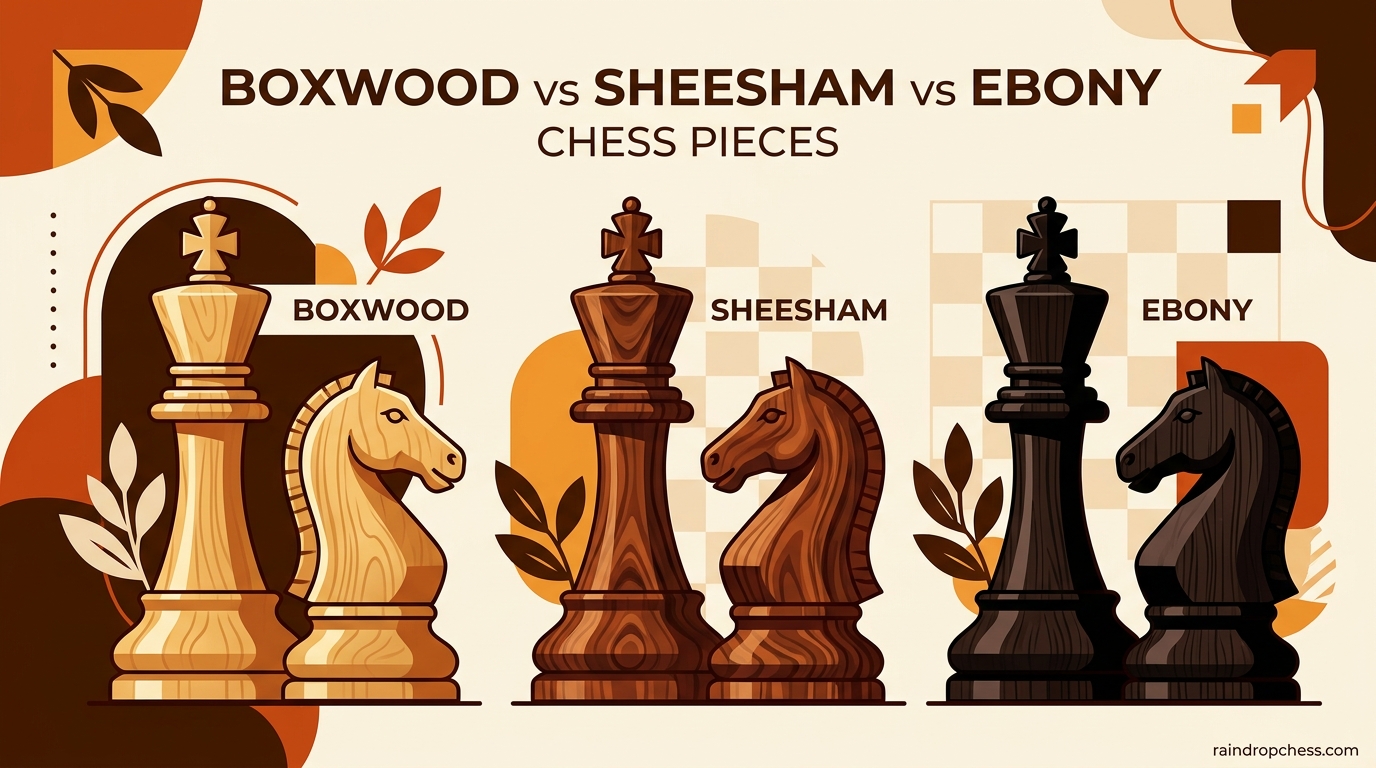
When investing in quality wooden chess pieces, understanding the differences between Boxwood vs Sheesham vs Ebony chess pieces can save you from costly damage and disappointment. I’ve spent years studying how these three popular woods perform under different conditions, and the differences in durability and cracking risk might surprise you.
The choice between these woods isn’t just about aesthetics—it’s about matching the right material to your climate, usage patterns, and maintenance commitment. Let me walk you through everything you need to know to make an informed decision that will protect your investment for years to come.
Table of Contents
Boxwood vs Sheesham vs Ebony Chess Pieces: Understanding the Basics
Before diving into durability specifics, it’s essential to understand what makes each wood unique. Boxwood serves as the universal choice for white pieces across virtually all chess sets. Sheesham (also called golden rosewood) offers a middle ground with its distinctive grain patterns and reliable durability. Ebony represents the premium choice with its striking dark appearance, though it comes with significant maintenance considerations.
Each wood has distinct characteristics affecting how it responds to environmental changes, handling during play, and the aging process over time. These differences become particularly important when you consider that chess pieces often last for decades when properly cared for—or can crack within months if you choose the wrong wood for your climate.
Boxwood: The Stable Standard for White Pieces
Boxwood has earned its reputation as the go-to wood for white chess pieces through proven performance over generations. This closed-grain hardwood offers exceptional stability, resisting warping and cracking even when environmental conditions fluctuate. I’ve examined boxwood pieces that have seen daily tournament use for over 15 years, showing nothing more than gentle patina development.
The natural properties that make boxwood ideal for chess pieces include its consistent density throughout the piece, minimal reaction to humidity changes, and resistance to the oils from our hands during play. Unlike more porous woods, boxwood’s tight grain structure prevents moisture from penetrating deeply or escaping too quickly, which is the primary cause of cracking in wooden pieces.
From a durability standpoint, boxwood ranks as the most forgiving of the three main chess woods. It tolerates occasional lapses in maintenance better than sheesham or ebony, making it an excellent choice for players who want beautiful pieces without demanding care routines. The light color also shows dirt and wear less visibly than darker woods, though this is more of an aesthetic consideration than a durability factor.
Sheesham (Golden Rosewood): The Durable Middle Ground
Sheesham, widely known as golden rosewood in the chess world, has gained tremendous popularity among both manufacturers and players for good reason. This Indian wood delivers an attractive balance between visual appeal and practical durability. The natural grain patterns create stunning pieces that look premium while maintaining excellent resistance to cracking and breakage.
What makes sheesham particularly valuable is its reputation as the most durable dark wood option available. Multiple sources in the chess community confirm that sheesham demonstrates fewer instances of cracking compared to ebony and sandalwood, even when subjected to similar environmental conditions. This reliability comes from sheesham’s natural flexibility—it can expand and contract with humidity changes without developing the stress fractures that plague denser woods.
The durability advantages extend beyond just crack resistance. Sheesham pieces maintain their structural integrity through years of regular play, showing minimal wear even at contact points. I’ve spoken with players who have used sheesham sets in club environments for over a decade, reporting that the pieces have never required professional restoration or developed significant cracks despite minimal maintenance attention.
From a practical standpoint, sheesham represents the budget-friendly middle ground that doesn’t sacrifice quality. It offers the rich appearance of rosewood varieties without the premium price tag of ebony, making it accessible to players who want professional-grade pieces without the luxury-level investment.
Ebony: Premium Appearance with Higher Cracking Risk
Ebony stands at the pinnacle of chess piece woods, delivering that sought-after jet-black appearance that signals quality and sophistication. The density of genuine ebony creates substantial pieces with impressive heft, adding to the premium playing experience that serious enthusiasts appreciate. However, this luxury comes with significant trade-offs in terms of climate sensitivity and maintenance requirements.
The very properties that make ebony desirable also create its greatest vulnerability. The extreme density that gives ebony pieces their satisfying weight and deep black color also makes the wood less flexible when responding to environmental changes. When humidity drops, ebony pieces lose moisture rapidly but cannot contract sufficiently to accommodate the loss, leading to the development of cracks—sometimes severe enough to split pieces completely.
This cracking risk isn’t theoretical. Ebony wood boards and pieces are notably more susceptible to damage from fluctuating temperature and humidity, particularly in dry weather conditions. The winter months in many climates create dangerous environments for ebony pieces, as indoor heating systems can reduce relative humidity to levels that cause significant stress in the wood.
What many players don’t realize until it’s too late is that ebony requires consistent, attentive maintenance to prevent cracking. This isn’t a wood that forgives neglect—extended periods without proper humidity control or oiling can result in irreversible damage. I’ve seen beautiful ebony sets develop hairline cracks within months of purchase when owners didn’t understand the environmental requirements.
The weight difference is another consideration. Ebony pieces typically weigh 10-20% more than their boxwood counterparts, which affects both the playing experience and storage considerations. While many players appreciate the substantial feel, the increased mass can accelerate board wear on softer wood surfaces and requires sturdy storage solutions.
Durability Comparison: Which Wood Lasts Longest?
When comparing the longevity potential of these three woods, several factors come into play beyond just the material itself. Usage patterns, environmental conditions, and maintenance commitment all influence how long chess pieces will remain in playable condition. However, we can establish some general expectations based on real-world performance data.
Boxwood consistently demonstrates the longest lifespan across varied conditions. Its natural stability allows it to perform well in virtually any climate when given basic care. I’ve personally examined boxwood pieces from the 1980s that remain structurally sound with only cosmetic aging. The wood’s resistance to both humidity fluctuations and physical wear makes it the most reliable choice for long-term ownership.
Sheesham follows closely behind, offering excellent durability that rivals boxwood in many situations. The key advantage with sheesham is its flexibility—literally. The wood can accommodate environmental changes without developing the stress fractures that affect more rigid woods. Under consistent humidity conditions with reasonable care, sheesham pieces easily last 10-15 years with professional tournament use and even longer for casual play.
Ebony presents the most complicated durability profile. Under ideal conditions—stable humidity around 45-55%, consistent temperature, and regular maintenance—ebony pieces can certainly last for decades. However, these ideal conditions rarely exist in typical homes or playing environments. The reality is that ebony requires significantly more attention to maintain its structural integrity, and even with proper care, it remains more vulnerable to environmental stress than the other two options.
For tournament players who transport their sets regularly, boxwood and sheesham offer clear advantages. These woods better withstand the inevitable changes in temperature and humidity that occur during travel. Ebony pieces, by contrast, are best suited for controlled environments where they won’t be subjected to rapid environmental changes.
| Wood Type | Expected Lifespan | Climate Tolerance | Maintenance Level | Cracking Risk |
|---|---|---|---|---|
| Boxwood | 20+ years | Excellent in all climates | Low | Very Low |
| Sheesham | 15-20 years | Very Good | Low to Medium | Low |
| Ebony | 10-15 years (with ideal care) | Poor in dry climates | High | Moderate to High |
Cracking Risk Deep Dive: Why Ebony Pieces Fail in Dry Climates
Understanding why wood cracks requires looking at the relationship between moisture content and environmental humidity. All wooden chess pieces contain some percentage of water even after proper kiln-drying—typically 6-8% for chess woods. This moisture content remains in equilibrium with the surrounding environment, expanding when humidity rises and contracting when it falls.
The problem occurs when this equilibrium is disrupted too rapidly. Dense woods like ebony have less natural flexibility than more porous woods, meaning they can’t accommodate significant moisture loss without developing structural stress. When indoor heating reduces winter humidity to 20-30% in many climates, ebony pieces that have acclimated to 45-55% humidity during warmer months suddenly find themselves in a dangerously dry environment.
This rapid moisture loss creates tension throughout the piece as the wood fibers shrink. Unlike more flexible woods that can expand and contract without damage, ebony’s density works against it. The internal stress eventually exceeds the wood’s structural capacity, resulting in cracks that typically form along grain lines or at weak points like the base of pieces.
The science behind this cracking risk has been confirmed through extensive discussion in chess communities. Experienced players consistently report that ebony pieces demonstrate higher cracking rates in dry climates compared to boxwood or sheesham. The white pieces in ebony sets—always made from boxwood—frequently outlast the ebony black pieces, leading to mismatched sets over time.
Humidity thresholds vary by wood type, but general guidelines emerge from community experience. Boxwood tolerates humidity from 30-70% without significant risk. Sheesham performs best between 35-65% but can accommodate brief periods outside this range. Ebony requires the narrowest range of 45-55% for optimal safety, with extended time below 40% creating substantial cracking risk.
Temperature fluctuations compound the problem. Rapid changes from cold to hot cause expansion and contraction that stresses already vulnerable wood. This is particularly problematic for ebony, which has less capacity to accommodate these changes. Players who store sets in unheated spaces during winter then bring them into warm homes for play subject their pieces to dangerous temperature swings that can trigger cracking even when humidity seems acceptable.
Geographic location plays a crucial role in cracking risk. Desert regions like Arizona and Nevada present extreme challenges for ebony pieces, while coastal areas with naturally higher humidity provide more forgiving environments. The key is understanding your specific climate and how seasonal changes affect indoor humidity levels where you typically play and store your chess set.
Climate-Based Wood Selection Guide
Selecting the right wood for your climate isn’t just about avoiding cracks—it’s about maximizing your enjoyment and minimizing maintenance headaches. Based on extensive research into how different woods perform across various environments, here are specific recommendations for matching chess piece wood to your geographic location and indoor conditions.
For Dry Climates (Desert Regions, High-Elevation Areas): Boxwood and sheesham are your safest choices. These woods tolerate lower humidity levels without developing the stress fractures that plague ebony. If you live in areas like Arizona, Nevada, or high-altitude regions where indoor humidity regularly drops below 35%, ebony pieces require constant humidity control that may not be practical. Sheesham offers the advantage of providing dark pieces with excellent crack resistance in these challenging conditions.
For Humid Climates (Coastal Areas, Southern Regions): All three woods perform reasonably well in humid environments, but sheesham and ebony truly shine here. The consistent moisture prevents the rapid drying that causes ebony to crack, allowing you to enjoy ebony’s premium appearance with significantly reduced risk. Boxwood remains reliable but may require more frequent oiling to prevent the grain from raising in consistently high humidity.
For Variable Climates (Four-Season Regions): Most of the continental United States falls into this category, where summer humidity gives way to dry winter heating. In these environments, sheesham often represents the optimal choice, balancing aesthetics with the flexibility to handle seasonal changes. Boxwood remains the safest option if you prefer minimal maintenance. Ebony requires serious commitment to humidity control during winter months, often necessitating humidifiers in the room where pieces are stored.
For Climate-Controlled Environments: If you maintain consistent indoor humidity year-round using climate control systems, you can successfully use any of these woods. Many serious collectors maintain dedicated display or storage spaces with humidity control specifically for their chess collections. This investment allows ebony ownership even in less-than-ideal climates, though it requires ongoing monitoring and equipment maintenance.
| Climate Type | Best Wood Choice | Acceptable Alternative | Avoid |
|---|---|---|---|
| Dry (Under 35% humidity) | Boxwood | Sheesham | Ebony (without humidity control) |
| Moderate (35-50% humidity) | Sheesham | Boxwood | Ebony (winter caution) |
| Humid (Over 50% humidity) | Ebony | Sheesham | None – all suitable |
| Variable (Seasonal extremes) | Sheesham | Boxwood | Ebony (without winter care) |
Maintenance and Care: Protecting Your Investment
Proper maintenance varies significantly between wood types, with ebony requiring the most attentive care and boxwood being the most forgiving. Understanding these differences helps you choose wood that matches your willingness to perform regular maintenance, while also knowing what’s required to keep your pieces in optimal condition regardless of which wood you select.
Boxwood Maintenance: The most forgiving of the three woods, boxwood requires basic care to maintain its appearance and prevent premature aging. A light application of chess piece oil or high-quality mineral oil every 3-4 months provides sufficient protection in most climates. Simply apply a small amount to a soft cloth, wipe each piece thoroughly, and buff off any excess after 10-15 minutes. This routine prevents the wood from drying out excessively and helps maintain consistent moisture content.
Sheesham Maintenance: Similar to boxwood but with slightly more attention to oiling frequency. Sheesham benefits from oiling every 2-3 months due to its more open grain structure, which can dry out faster than boxwood’s tight grain. The oiling process remains the same—apply sparingly, wipe thoroughly, and remove excess. Additionally, sheesham pieces may develop a richer patina over time that many players find attractive, so don’t over-oil in an attempt to maintain the original appearance.
Ebony Maintenance: This represents the most demanding maintenance commitment. Ebony pieces require oiling every 4-6 weeks during dry months, with attention paid to the base of pieces where cracks typically begin. Beyond oiling, ebony demands consistent humidity monitoring. A small hygrometer in your chess storage area helps you track conditions, with a target range of 45-55% humidity. During winter months or dry spells, you may need to run a humidifier in the room where ebony pieces are stored.
Storage Recommendations: All wooden chess pieces benefit from proper storage, but this becomes critical for ebony. Store pieces in a temperature-stable environment away from direct sunlight, heat sources, or exterior walls that might experience temperature fluctuations. A dedicated chess box with a lid provides protection from dust and helps buffer against rapid humidity changes. For ebony pieces, consider adding a small humidity indicator card inside the storage box to monitor conditions.
| Maintenance Task | Boxwood | Sheesham | Ebony |
|---|---|---|---|
| Oiling Frequency | Every 3-4 months | Every 2-3 months | Every 4-6 weeks (dry months) |
| Humidity Monitoring | Optional | Recommended | Essential |
| Climate Control Needed | No | No | Yes (in dry climates) |
| Storage Requirements | Basic box | Box with lid | Climate-controlled space |
Warning Signs and When to Seek Professional Help
Recognizing early warning signs can prevent minor issues from becoming serious problems. All wooden chess pieces may develop issues over time, but catching problems early makes the difference between simple maintenance and expensive restoration. Understanding what to watch for helps you protect your investment regardless of which wood type you choose.
For boxwood pieces, watch for gradual color changes that develop unevenly across pieces. While some darkening is normal as boxwood ages, sudden or patchy discoloration may indicate uneven drying or excessive oil exposure. The grain raising slightly is normal in humidity changes and typically resolves with gentle oiling and buffing. However, deep cracks that develop suddenly suggest environmental stress that should be addressed immediately.
Sheesham pieces may show their age through surface checking—tiny cracks that appear in the finish but don’t penetrate deeply into the wood. These are generally cosmetic and can be addressed with careful oiling. However, any cracks that extend completely through a piece or cause separation of components require professional attention. Additionally, if sheesham pieces develop a rough or fuzzy texture, this typically indicates humidity fluctuation and should be corrected before it progresses to structural damage.
Ebony pieces demand the most vigilant monitoring. The first sign of trouble often appears as hairline cracks, particularly at the base of pieces or along grain lines. These cracks may start small but can expand rapidly if environmental conditions aren’t corrected. Any visible crack in ebony should trigger immediate action: check humidity levels, begin a more frequent oiling schedule, and consider professional assessment for valuable pieces. Don’t wait for cracks to worsen—ebony damage progresses quickly once initiated.
When to seek professional restoration depends on the value of your set and the severity of damage. Minor surface issues typically respond well to careful DIY maintenance. However, pieces with structural cracks, loose components, or significant damage to valuable collector sets deserve professional attention. Chess piece restoration specialists can repair cracks, stabilize loose parts, and refinish pieces while maintaining their character and value.
The cost of professional restoration varies based on the extent of damage and the value of the set, but addressing problems early is always more economical than waiting until pieces become beyond repair. As a general rule, if you’re uncertain whether damage is cosmetic or structural, consult a professional—the assessment cost is minimal compared to the value of your chess set.
Boxwood vs Sheesham vs Ebony Chess Pieces: Making Your Final Decision
After examining the durability characteristics, cracking risks, and maintenance requirements of each wood type, the choice between Boxwood vs Sheesham vs Ebony chess pieces becomes clearer when matched to your specific situation. No single wood is universally best—the optimal choice depends on your climate, maintenance commitment, aesthetic preferences, and intended use.
Choose boxwood if you prioritize reliability and minimal maintenance. Whether you’re a tournament player who travels frequently, a casual player who wants pieces that will last for decades without fuss, or someone living in a climate with extreme humidity variations, boxwood delivers consistent performance. It’s the safest choice for gifting, as you can be confident the pieces will perform well regardless of the recipient’s location or maintenance habits.
Choose sheesham if you want the best balance of aesthetics, durability, and practicality. The natural grain patterns create visually striking pieces while the wood’s flexibility provides excellent crack resistance. Sheesham works particularly well for players who want dark pieces without ebony’s maintenance demands, making it ideal for club play, teaching sets, and anyone who values beauty without burden. It’s particularly well-suited for players in variable climates who want something more distinctive than basic boxwood.
Choose ebony if you’re committed to maintaining ideal conditions and want the ultimate in premium appearance. Ebony makes sense for serious collectors, dedicated players with climate-controlled environments, and those who appreciate the substantial weight and deep black color that only genuine ebony provides. However, this choice requires realistic assessment of your willingness to monitor humidity, maintain frequent oiling schedules, and potentially invest in climate control equipment.
For many players, the optimal solution is a mixed approach: boxwood white pieces (as virtually all sets use) paired with sheesham black pieces. This combination gives you the classic two-tone appearance with excellent durability from both woods, minimal maintenance requirements, and good performance across varied climates. You gain most of ebony’s aesthetic benefits with sheesham’s reliability, creating a set that will provide years of trouble-free enjoyment.
Remember that the best chess pieces are the ones you’ll enjoy using for years to come. By matching your wood choice to your climate, maintenance commitment, and aesthetic preferences, you ensure that your chess set will be a source of pleasure rather than a constant maintenance project. Whether you choose boxwood, sheesham, or ebony, understanding these characteristics helps you make an informed decision that protects your investment and enhances your chess experience.
FAQ
What is the best material for chessmen?
The best material depends on your climate and maintenance commitment. Boxwood offers the most reliable performance with minimal care, making it ideal for most players. Sheesham provides excellent durability with attractive grain patterns as a middle-ground option. Ebony delivers premium appearance but requires humidity control and frequent maintenance, making it best suited for collectors or those in consistently humid environments.
Is boxwood good for chess pieces?
Boxwood is exceptional for chess pieces and serves as the universal choice for white pieces across virtually all quality sets. Its closed-grain texture provides natural stability that resists warping and cracking even with environmental fluctuations. Boxwood tolerates humidity from 30-70% without significant risk, requires minimal maintenance, and can last 20+ years with basic care. These characteristics make it the most reliable wood for chess pieces.
Do ebony chess pieces crack more than other woods?
Yes, ebony chess pieces demonstrate significantly higher cracking rates than boxwood or sheesham, particularly in dry climates or during winter months when indoor heating reduces humidity. Ebony’s extreme density gives it premium appearance but also makes it less flexible when responding to moisture loss, creating internal stress that leads to cracks. The cracking risk becomes severe when humidity drops below 40%, requiring careful monitoring and climate control for ebony ownership.
What is the best wood for chess pieces in dry climates?
Boxwood is the best choice for dry climates due to its exceptional stability and low cracking risk even when humidity drops below 35%. Sheesham also performs well in dry conditions and provides the advantage of dark piece color without ebony’s vulnerability. Ebony should be avoided in dry climates unless you’re committed to maintaining humidity control through humidifiers and climate monitoring, which may not be practical for many players.
How can I prevent my chess pieces from cracking?
Prevent cracking by maintaining consistent humidity between 40-55%, avoiding rapid temperature changes, and following a regular oiling schedule appropriate to your wood type. Store pieces in a temperature-stable environment away from heat sources and direct sunlight. Use a hygrometer to monitor conditions, especially for ebony pieces. Address warning signs like hairline cracks immediately by adjusting humidity and increasing maintenance frequency before damage becomes severe.
What’s the difference between ebony and ebonized boxwood?
Genuine ebony is a naturally dark, dense hardwood with deep black color throughout the piece, while ebonized boxwood is regular boxwood that has been stained or dyed to create a dark appearance. Ebony pieces are typically 10-20% heavier than ebonized boxwood and have the distinctive density that makes premium pieces feel substantial. Ebonized boxwood provides the dark appearance without ebony’s cracking risk, making it a practical alternative for players who want the classic two-tone look without the maintenance demands of genuine ebony.
The choice between Boxwood vs Sheesham vs Ebony chess pieces ultimately comes down to matching the right wood to your environment and lifestyle. By understanding the durability characteristics and cracking risks of each wood type, you can select chess pieces that will provide years of enjoyment while maintaining their beauty and structural integrity. Whether you prioritize reliability, aesthetics, or premium luxury, there’s a wood choice that’s perfect for your needs.