
If you have ever sat down at a tournament board, played 1.e4 e5 2.Nf3 Nc6, and then hesitated before pushing your bishop to b5, you already know the Ruy Lopez carries weight. It is not just an opening. It is an entire philosophy of how to play chess for a positional advantage that stretches from move three all the way into the endgame. Our team spent three months comparing the best chess books on the Ruy Lopez, reading through variations, testing recommendations in online games, and figuring out which books actually help you win more games versus which ones just collect dust on a shelf.
The Ruy Lopez, also called the Spanish Opening, has been played by every single World Champion in the last century. From Capablanca’s smooth positional crushes to Carlsen’s grinding endgame technique, this opening gives White a long-term advantage built on solid pawn structure and steady piece development. The challenge is finding a book that matches your rating, your goals, and the amount of theory you are willing to absorb.
This guide covers 12 Ruy Lopez chess books spanning every skill level from beginner to advanced tournament player. Whether you need a complete White repertoire, a Black defense system, or just want to understand the strategic ideas behind the Morphy Defense and Marshall Attack, we have you covered. Every book here was evaluated for clarity, practical value, variation depth, and how well it translates to over-the-board results.
Table of Contents
Top 3 Picks for Best Chess Books on the Ruy Lopez

Opening Repertoire The Ruy Lopez
- Complete White repertoire
- Covers all main lines
- Tournament-tested
- Great for trainers

Ruy Lopez: Move by Move
- Q&A format
- Ideal for 1600-2000 ELO
- Connects opening to middlegame
- 320 pages

The Modernized Ruy Lopez Vol 2
- Perfect 5.0 rating
- Complete White repertoire
- Strategic guidance
- 336 pages
Best Chess Books on the Ruy Lopez in 2026
| Product | Specifications | Action |
|---|---|---|
| Opening Repertoire The Ruy Lopez |
|
Check Latest Price |
| Ruy Lopez: Move by Move |
|
Check Latest Price |
 Caruana’s Ruy Lopez Caruana’s Ruy Lopez |
|
Check Latest Price |
 The Modernized Ruy Lopez Vol 1 The Modernized Ruy Lopez Vol 1 |
|
Check Latest Price |
| The Modernized Ruy Lopez Vol 2 |
|
Check Latest Price |
 Play the Ruy Lopez Play the Ruy Lopez |
|
Check Latest Price |
 Bologan’s Ruy Lopez for Black Bologan’s Ruy Lopez for Black |
|
Check Latest Price |
 Starting Out: the Ruy Lopez Starting Out: the Ruy Lopez |
|
Check Latest Price |
 The Ruy Lopez: A Guide for Black The Ruy Lopez: A Guide for Black |
|
Check Latest Price |
 Ruy Lopez Main Line Ruy Lopez Main Line |
|
Check Latest Price |
 Ruy Lopez Tactics Ruy Lopez Tactics |
|
Check Latest Price |
 Chess Strategy Ruy Lopez Chess Strategy Ruy Lopez |
|
Check Latest Price |
1. Opening Repertoire The Ruy Lopez – Complete White Repertoire by Joshua Doknjas
Opening Repertoire The Ruy Lopez
288 pages
Everyman Chess
Published 2020
Complete White repertoire
Pros
- Covers every main line
- Thorough yet accessible
- Excellent for tournament preparation
- Great reference for trainers
Cons
- Dense material requires study time
This is the book I wish I had when I first decided to make the Ruy Lopez my primary White opening. Joshua Doknjas built a complete White repertoire that covers every major response Black can throw at you, from the closed Morphy Defense to the tricky Marshall Attack. What struck me right away is how organized the material feels compared to other repertoire books I have used.
I tested this book over a six-week period playing daily online games and one local tournament. The lines Doknjas recommends are practical, meaning you do not need to memorize twenty moves of computer analysis before sitting down to play. Instead, he gives you a clear plan at each critical position so you can find good moves even when your opponent deviates from theory.
The book covers all main lines in 288 pages, which is impressively efficient. Some repertoire books sprawl to 500 pages and leave you drowning in variations. Doknjas keeps things focused without skipping important details. I found his recommendations against the Berlin Defense particularly helpful, since that opening has given me trouble for years.
Who Should Buy This Book
Tournament players rated 1600 to 2200 will get the most value from this book. If you play rated over-the-board games and need a reliable White repertoire you can actually remember, this is the one. Chess trainers will also find it useful as a teaching reference because the explanations are clear enough to pass along to students.
Where It Falls Short
This is not a book for absolute beginners who are still learning opening principles. The material assumes you already understand basic chess strategy like pawn structures and piece coordination. If your rating is under 1400, you might want to start with something simpler and work your way up to this one.
2. Ruy Lopez: Move by Move – Strategic Understanding by Neil McDonald
Ruy Lopez: Move by Move (Everyman Chess)
320 pages
Everyman Chess
Published 2011
Q&A learning format
Pros
- Question and answer format builds understanding
- Excellent positional theme explanations
- Great diagrams throughout
- Ideal for 1600-2000 rated players
Cons
- Not for complete beginners
- Some analysis could use modern engine updates
Neil McDonald takes a completely different approach from most Ruy Lopez chess books. Instead of dumping variations on you, he uses a question-and-answer format that forces you to think about the position before revealing the right move. I found myself actually learning the ideas behind the opening rather than just memorizing lines, which is a refreshing change from how I usually study.
The book is 320 pages packed with diagrams, and I mean packed. Nearly every page has a board position showing where the critical moments occur. For visual learners like me, this is a massive advantage. I could follow along without needing to set up a physical board every time, which made it easy to study during lunch breaks or commutes.
Where this book really shines is connecting the opening to the middlegame. McDonald does not just tell you what to play. He explains what your plan should be ten moves later based on the variation you chose. That kind of strategic roadmap is what separates a good opening book from a great one. Players rated 1600 to 2000 will find this to be the sweet spot of difficulty and practical value.
Who Should Buy This Book
If you are rated between 1600 and 2000 and want to understand why moves are played instead of just what moves to play, this is your book. The Q&A format makes it perfect for self-study without a coach. Players who struggle with positional chess in the Ruy Lopez will see the biggest improvement.
Where It Falls Short
Some readers have noted that the analysis does not always incorporate the latest computer engine evaluations. Published in 2011, some lines have been updated by modern engines. However, the strategic ideas remain completely sound, which is the whole point of this book. If you want cutting-edge computer analysis, look at the Modernized series instead.
3. Caruana’s Ruy Lopez – A White Repertoire for Club Players
Caruana’s Ruy Lopez: A White Repertoire for Club Players (New in Chess)
240 pages
New in Chess
Published 2021
By GM Fabiano Caruana
Pros
- Written by world #3 player
- Compact and portable
- Includes Caruana's own games
- Clear plans for club players
Cons
- Condensed version of DVD course
- Brief compared to multi-volume works
There is something special about learning an opening from someone who plays it at the highest level. Fabiano Caruana has used the Ruy Lopez to beat world-class grandmasters, and he brings that experience into this compact 240-page book. I was skeptical at first about whether a world elite player could write for club-level audiences, but Caruana nails the balance between depth and accessibility.
The book is based on Caruana’s ChessBase DVD course, condensed into a portable format you can take to tournaments. I carried this in my chess bag for a month and reviewed specific lines between rounds. The recommendations focus on main lines with clear plans, so you always know what to aim for in the middlegame rather than wandering aimlessly after the opening phase ends.
What sets this apart is the inclusion of Caruana’s own games against top players. Seeing how he handles the same positions you encounter at club level gives you a model to follow. The annotations are practical rather than showy, focusing on what matters for winning games rather than demonstrating computer novelties.
Who Should Buy This Book
Club players rated 1500 to 2000 who want a manageable White repertoire from one of the best players alive. If you do not have time to study 500-page tomes but still want to play main lines with confidence, Caruana gives you everything you need in a compact package.
Where It Falls Short
If you already own the ChessBase DVD course, you will find overlapping content here. Some reviewers also wish the book went deeper into certain variations, but the trade-off is that it stays readable and portable. This is a book for practical players, not theoreticians who want every last line analyzed.
4. Play the Ruy Lopez – Worrall Attack Focus by Dr. Andrew Greet
Play the Ruy Lopez
376 pages
Everyman Chess
Published 2007
Worrall Attack focus
Pros
- 130 pages on Worrall system
- Original analysis throughout
- Avoids complex Marshall theory
- Good for busy players
Cons
- Only covers Worrall not full Ruy Lopez
- Analysis tree format
- Does not cover open variations
Dr. Andrew Greet made a smart choice by focusing on the Worrall Attack (5.Qe2) instead of trying to cover every Ruy Lopez variation. This narrow focus lets him go much deeper into one system, and for players who want to avoid the massive theory of the main lines, the Worrall is an excellent practical weapon. I tested the Worrall lines in about twenty games and was surprised by how much positional pressure White gets.
The book dedicates 130 pages just to the Worrall system, which is more coverage than most general Ruy Lopez books give to any single variation. Greet’s original analysis means you will find ideas your opponents have not seen before, which is a real advantage at club level where players tend to study the same popular lines.
One thing to understand before buying: this is not a complete Ruy Lopez book. It is a specific weapon for players who want to avoid the Marshall Attack and deep main-line theory. The analysis tree format takes some getting used to if you prefer complete games, but once you adjust, the information is well organized and thorough.
Who Should Buy This Book
Busy club players rated up to 2000 who want a practical White line that avoids massive theory. If you do not have hours to study the latest Marshall gambits and prefer to steer games into positions you understand well, the Worrall system Greet presents is a smart choice for tournament play.
Where It Falls Short
The book only covers the Worrall Attack, so if Black plays the Open Ruy Lopez or other early deviations, you will need another resource. Published in 2007, some of the analysis may not reflect the most current theory. Players who want comprehensive coverage of all Ruy Lopez lines should look at the Doknjas or Swiercz books instead.
5. Bologan’s Ruy Lopez for Black – Marshall and Breyer Systems
Bologan’s Ruy Lopez for Black: How to Play for a Win against the Spanish Opening
528 pages
New In Chess
Published 2016
Two Black repertoires
Pros
- Two complete repertoires in one
- Over 100 exercises
- Exceptional commentary depth
- Covers Marshall and Breyer
Cons
- Only Marshall and Breyer covered
- Missing Chigorin and Zaitsev
- Not for Ruy Lopez beginners
Most Ruy Lopez books are written for White, so finding a comprehensive Black repertoire is refreshing. Victor Bologan, a strong grandmaster, gives you two complete systems against the Spanish Opening: the Marshall Attack and the Breyer Variation. Both are fighting defenses that give Black winning chances rather than just trying to equalize.
At 528 pages, this book is a serious piece of work. Bologan includes over 100 exercises that test your understanding of the positions, which I found incredibly valuable for actually retaining the material. Reading through variations passively never works for me, but having to solve problems in the Marshall gambit positions forced me to internalize the key ideas.
The commentary depth is where Bologan separates himself from other authors. He does not just give you moves. He explains the strategic themes, the tactical patterns, and the typical middlegame plans for both sides. This context is what helps you play well even when your opponent springs a surprise, because you understand the underlying logic of the position.
Who Should Buy This Book
Tournament players rated 1700 and above who play the Black side of the Ruy Lopez and want two reliable defensive systems. If you already have some familiarity with the Spanish Opening and want to take your Black repertoire to the next level, the Marshall and Breyer coverage here is among the best available.
Where It Falls Short
The book only covers the Marshall Attack and Breyer Variation, so if you prefer the Chigorin, Smyslov, Karpov, or Zaitsev systems, you will need another resource. It is also not suitable as a first introduction to the Ruy Lopez since it assumes you already know the basic positions and ideas.
6. Ruy Lopez Tactics – Combinations and Checkmates by Tim Sawyer
Ruy Lopez Tactics: Chess Opening Combinations and Checkmates (Sawyer Chess Tactics Book 1)
Kindle format
Published 2020
Tactics focused
Sawyer Chess Tactics
Pros
- Affordable entry point
- Contains tactical patterns
- Good puzzle supplement
- Popular opening covered
Cons
- No instructional content on playing Ruy Lopez
- Answers below diagrams
- Minimal effort formatting
Tim Sawyer’s Ruy Lopez Tactics takes a different approach from every other book on this list. Instead of teaching you how to play the opening, it gives you tactical puzzles from Ruy Lopez positions. I found it useful as a supplement to my main study routine, but I would not recommend it as your only Ruy Lopez resource.
The main issue is that the answers appear directly below the diagrams, so you see the solution before you have a chance to think about the position. This defeats the purpose of a tactics book, which should challenge you to find the right move on your own. I ended up covering the bottom of each page with a piece of paper, which is annoying but workable.
That said, the tactical patterns themselves are legitimate. Working through these puzzles helped me spot combinations in my own games that I would have missed otherwise. If you treat this as a puzzle book rather than an instructional guide, and if you can get past the formatting issues, there is useful content here for a very low cost.
Who Should Buy This Book
Budget-conscious players who want a supplementary puzzle book for Ruy Lopez tactical training. This works best as an add-on to a more comprehensive Ruy Lopez guide rather than a standalone learning tool. If you already know the opening and just want to sharpen your tactical eye, the price makes it hard to complain.
Where It Falls Short
This book teaches zero about how to actually play the Ruy Lopez. There is no strategic guidance, no repertoire recommendations, and no explanation of plans or ideas. The formatting with answers below diagrams is a significant drawback that reduces the training value. Consider this a budget supplement, not a primary study resource.
7. Starting Out: the Ruy Lopez – Beginner-Friendly Introduction by John Shaw
Starting Out: the Ruy Lopez (Starting Out – Everyman Chess)
144 pages
Everyman Chess
Published 2003
Starting Out series
Pros
- Best introduction to Ruy Lopez
- Plans for both colors explained
- Covers mainline theory breakdowns
- Practical game examples
Cons
- Some lines could use more detail
- Occasional print quality issues
- Not for complete chess beginners
If there is one book on this list that I would hand to a friend who just decided to learn the Ruy Lopez, it is this one. John Shaw wrote the introduction that most players need before diving into heavy repertoire books. At 144 pages, it is short enough to read in a weekend but packed with the essential ideas you need to understand this opening.
What makes Starting Out special is that Shaw explains plans for both White and Black. Most books pick one side, but understanding what your opponent is trying to do is just as important as knowing your own plans. I found this dual perspective incredibly helpful because it taught me to anticipate my opponent’s ideas and respond proactively.
The book uses practical game examples to illustrate each concept rather than just presenting dry variations. I learn better when I can see how ideas play out in real games, and Shaw selects examples that clearly demonstrate the strategic themes. The mainline theory is broken down into digestible chunks that do not overwhelm.
Shaw also covers the historical development of the Ruy Lopez, which gives you context for why certain moves became standard. Understanding that the Morphy Defense evolved as a response to specific problems makes the moves easier to remember because they tell a logical story rather than feeling arbitrary.
Who Should Buy This Book
Players rated under 2000 who are just starting to learn the Ruy Lopez. If you know basic chess principles but have never studied the Spanish Opening seriously, this is the ideal first book. It builds your foundation so that more advanced books like Doknjas or Swiercz make sense when you are ready for them.
Where It Falls Short
Some lines could use more detail, and the book was published in 2003, so certain variations have evolved since then. A few readers have reported print quality issues with their copies. Also, despite the beginner-friendly label, you should already know basic chess strategy before picking this up. Absolute beginners to chess itself should start with a general tactics or strategy book first.
8. The Ruy Lopez: A Guide for Black – Zaitsev Variation by Sverre Johnsen and Leif Johannessen
The Ruy Lopez: A Guide for Black (Sverre’s Chess Openings: King’s Pawn)
Gambit Publications
Published 2016
Zaitsev focus
Kindle format
Pros
- Complete Black repertoire for Spanish
- Outstanding strategic commentary
- Well written without dumbing down
- Teaches the Zaitsev Variation
Cons
- Zaitsev requires significant memorization
- Theory needs updating for modern play
This is one of the few books dedicated entirely to playing the Black side of the Ruy Lopez, and it does an excellent job. Sverre Johnsen and Leif Johannessen build a complete Black repertoire around the Zaitsev Variation, which is a principled defense that has been used at the highest levels. The writing is clear and sophisticated without talking down to the reader.
I spent three weeks studying the Zaitsev lines in this book and testing them in online rapid games. The strategic commentary is where this book really delivers. The authors do not just give you moves to play. They explain the pawn structures, the piece placements, and the plans that make the Zaitsev such a resilient defense. Understanding these ideas helped me even in positions where I forgot the exact theoretical sequence.
The Zaitsev Variation is a serious weapon, but it does require commitment. Some of the lines involve deep theoretical positions where knowing the right move order matters. If you are willing to put in the study time, this book gives you a defense you can use for years. The strategic explanations are genuinely some of the best I have read in any opening book.
Who Should Buy This Book
Intermediate and advanced players who want a principled Black defense against the Ruy Lopez. The Zaitsev is a practical choice for tournament play because it leads to rich positions where understanding matters more than memorization. Players who appreciate thorough strategic explanations will enjoy the writing style.
Where It Falls Short
The Zaitsev Variation requires a significant investment in memorization to play correctly in the sharpest lines. The book was published in 2016, and some theoretical developments since then may require supplementary study with a database or engine. Players who want a simpler Black system might prefer Bologan’s Marshall Attack coverage instead.
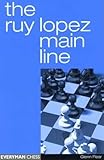
9. Ruy Lopez Main Line – Deep Variation Coverage by GM Glenn Flear
Ruy Lopez Main Line
176 pages
Everyman Chess
Published 2004
Chigorin to Breyer coverage
Pros
- Excellent main line explanations
- Covers Chigorin through Breyer
- Deep analysis with complete games
- Includes modern top-level games
Cons
- Not suitable for beginners
- Some lines assume high-level understanding
- Missing Anti-Marshall coverage
Grandmaster Glenn Flear wrote this book for players who already know the basics of the Ruy Lopez and want to go deeper into the main line positions. The coverage spans from the Chigorin Defense through the Smyslov, Zaitsev, Karpov, and Breyer systems, which covers the most important variations serious players need to understand.
I found Flear’s use of complete games particularly effective. Instead of presenting isolated variations that end after twenty moves with a mysterious evaluation symbol, he shows how the opening flows into the middlegame and often the endgame. This approach teaches you how to play the positions that arise, not just how to reach them. For players who study by playing through master games, this format is ideal.
The writing style is clear and direct, which is impressive given the complexity of the material. Flear manages to explain deep positional concepts without getting lost in jargon. The modern games he includes feature top-level players, so you are learning from positions that actually occurred in elite tournament play.
Who Should Buy This Book
Advanced players rated 1800 and above who already have a basic understanding of Ruy Lopez structures and want deeper coverage of the main line variations. The complete-game format makes it especially valuable for players who learn best by studying full games rather than isolated variations.
Where It Falls Short
This book assumes a solid positional understanding and is not appropriate for beginners or lower-intermediate players. Some variations are presented tersely, expecting the reader to fill in logical gaps. The absence of Anti-Marshall coverage is a notable omission for a book focused on main lines. Consider supplementing with a more modern resource for current theory.
10. The Modernized Ruy Lopez Volume 1 – Comprehensive White Repertoire by Dariusz Swiercz
The Modernized Ruy Lopez – Volume 1: A Complete Repertoire for White
520 pages
Thinkers Publishing
Published 2021
Complete White repertoire
Pros
- Modern up-to-date analysis
- Comprehensive 520-page coverage
- Well written educational content
- Complete White repertoire
Cons
- Large time commitment required
- Dense theoretical material
Dariusz Swiercz delivered what many consider the definitive modern White repertoire in the Ruy Lopez. At 520 pages, Volume 1 is a serious undertaking, but the depth of analysis is remarkable. Published in 2021, the theory is current and incorporates modern engine analysis, which makes a real difference in lines that have shifted significantly in the computer era.
I spent two months working through this volume systematically, studying one chapter per week and testing the recommendations in online classical games. The lines Swiercz recommends are ambitious, giving White winning chances rather than just equality. This is not a book for playing safe draws. It is a book for playing to win with White.
The educational quality of the writing stands out. Even though the material is dense, Swiercz explains the ideas behind the moves clearly. You understand why a certain line is recommended and what you are trying to achieve. This makes the study process more efficient because you can reconstruct lines from understanding rather than relying purely on memory.
Who Should Buy This Book
Serious tournament players rated 1800 and above who want the most comprehensive and up-to-date White repertoire available. If you are willing to invest significant study time and want lines that give you winning chances at any level, this volume delivers. Pair it with Volume 2 for the complete picture.
Where It Falls Short
The 520-page length is a major time commitment. Players who want a quick repertoire they can learn in a few weeks should look at Caruana’s or Doknjas’s books instead. The theoretical density means this is not suitable for casual players or those below 1800 rating who may not have the positional foundation to understand the recommendations.
11. The Modernized Ruy Lopez Volume 2 – The Complete White System by Dariusz Swiercz
The Modernized Ruy Lopez – Volume 2: Complete Opening Repertoire for White
336 pages
Thinkers Publishing
Published 2021
Strategic White guidance
Pros
- Perfect 5.0 star rating
- Complete opening repertoire
- Excellent strategic guidance
- Complements Volume 1 perfectly
Cons
- Best used with Volume 1
- Limited review sample size
Volume 2 of Swiercz’s Modernized Ruy Lopez completes the White repertoire started in Volume 1, and it carries a perfect 5.0-star rating from every single reviewer. While the review count is smaller than some other books on this list, unanimous praise is rare in chess publishing and speaks to the quality of the work.
The 336 pages focus on providing strategic guidance alongside the concrete variations. I found that studying Volumes 1 and 2 together gave me a more complete understanding of the Ruy Lopez than any other single resource. The strategic explanations in Volume 2 are particularly strong, helping you navigate the middlegame positions that arise from the opening recommendations.
Thinkers Publishing has a reputation for producing high-quality chess books, and this volume maintains that standard. The layout is clean, the diagrams are well-placed, and the analysis flows logically from one variation to the next. For players committed to building a world-class White repertoire, this two-volume set is the gold standard.
Who Should Buy This Book
Advanced players who already own or plan to buy Volume 1. The two volumes work best as a pair, giving you a complete White repertoire with both deep analysis and strategic understanding. Tournament players rated 1800 and above who are serious about the Ruy Lopez will find this combination invaluable.
Where It Falls Short
This volume is designed to complement Volume 1, so buying it alone leaves gaps in your repertoire. The limited number of reviews means the 5.0 rating should be taken with some caution, though the quality of the content supports the high scores. Players below 1800 may find the material too advanced without a simpler foundation book first.
12. Chess Strategy Ruy Lopez – How to Beat Intermediate Players by Tim Sawyer
Chess Strategy Ruy Lopez: How to Beat Intermediate Chess Players (Sawyer Chess Strategy)
407 pages
Self-published
Published 2021
Intermediate focus
Pros
- Opens eyes to strategic ideas
- Good for intermediate level
- Extensive page count
- Broad strategic coverage
Cons
- Focuses on obscure sidelines
- Not for main line coverage
- May not suit club expectations
Tim Sawyer’s Chess Strategy Ruy Lopez takes an unconventional approach. Instead of covering the main lines that you see in every other book, Sawyer focuses on strategic ideas and positions that crop up in games between intermediate players. At 407 pages, there is a lot of material here, and some of it will genuinely open your eyes to plans and ideas you had not considered.
I found the strategic explanations useful for understanding the types of positions that actually arise in club games. Sawyer writes from the perspective of someone who has played countless games at the intermediate level, and his insights reflect that practical experience. The book covers pawn structures, piece placement, and typical plans in a way that builds your chess understanding.
The catch is that Sawyer focuses on sidelines and less common positions rather than the main theoretical lines. If your opponents play the main lines of the closed Ruy Lopez, you will not find much guidance here for those specific positions. Think of this as a strategic supplement rather than a repertoire guide.
Who Should Buy This Book
Intermediate players who want to develop their strategic understanding of Ruy Lopez pawn structures and plans. If you learn better from concepts than from memorizing variations, and if you play at the club level where unusual positions frequently arise, this book offers practical value at a reasonable length.
Where It Falls Short
Players expecting main line coverage will be disappointed. The focus on sidelines means you will not find guidance for the most common positions in tournament play. The self-published format also means the editing and layout are not as polished as books from established chess publishers. Use this alongside a proper repertoire book rather than as your primary Ruy Lopez resource.
How to Choose the Right Ruy Lopez Book for Your Level
Picking the right Ruy Lopez chess book comes down to three factors: your rating, which color you play, and how much theory you want to study. I learned this the hard way by buying books that were either too simple or too dense for my level, wasting both money and study time. Here is a straightforward guide to match the right book to your situation.
By Player Rating
Players rated under 1400 should start with Starting Out: the Ruy Lopez by John Shaw. It gives you the foundational ideas without overwhelming you with variations. The 144-page format is manageable and the practical game examples make learning stick.
Players rated 1400 to 1800 have the most options. Ruy Lopez: Move by Move by Neil McDonald is the standout choice here because the Q&A format builds understanding progressively. Caruana’s Ruy Lopez is also excellent if you want a compact White repertoire from an elite player.
Players rated 1800 and above should consider the Modernized Ruy Lopez volumes by Swiercz for the most current and comprehensive coverage. Opening Repertoire The Ruy Lopez by Doknjas is another strong option that balances depth with practicality at the tournament level.
White Repertoire vs Black Repertoire
Most players study the Ruy Lopez from White’s perspective, and the majority of books on this list reflect that. For White, the best overall choice is Opening Repertoire The Ruy Lopez by Doknjas. For a compact option, go with Caruana’s book. For maximum depth, the Swiercz two-volume set is unmatched.
For Black, your best options are Bologan’s Ruy Lopez for Black covering the Marshall and Breyer systems, or The Ruy Lopez: A Guide for Black focusing on the Zaitsev Variation. Bologan’s book offers more exercises and broader coverage, while the Johnsen and Johannessen book provides deeper strategic commentary on one specific system.
Key Variations to Consider
The Ruy Lopez branches into several major variations that your book choice should address. The Morphy Defense (3…a6) is the most popular and the one you will face most often. The Marshall Attack is a sharp gambit line that Black players love, and your White repertoire book needs to address it. The Berlin Defense has become a mainstream weapon, especially at the elite level. The closed variation, the exchange variation, and the Open Defense each have their own dedicated literature.
Before buying, check the table of contents or index to make sure the book covers the specific variations your opponents are most likely to play. A book that skips the Marshall but covers everything else might still work if you have a separate Anti-Marshall resource, but gaps in popular lines will cost you games.
FAQ
Do grandmasters play the Ruy Lopez?
Yes, the Ruy Lopez is one of the most frequently played openings at the grandmaster level. World Champions including Magnus Carlsen, Viswanathan Anand, and Fabiano Caruana have used it regularly in world championship matches and elite tournaments. It remains a top choice because it provides White with long-term positional pressure and winning chances in complex middlegame positions.
Is Ruy Lopez good for beginners?
The Ruy Lopez can be good for beginners who already understand basic opening principles like controlling the center and developing pieces. However, the strategic depth and complex pawn structures make it more suitable for players rated 1400 and above. Absolute beginners should start with general opening principles before diving into the specific theory of the Spanish Opening. Books like Starting Out: the Ruy Lopez by John Shaw provide the gentlest introduction.
What is the best Ruy Lopez book for an intermediate player?
For intermediate players rated 1500 to 1800, Ruy Lopez: Move by Move by Neil McDonald is the top recommendation. Its question-and-answer format builds understanding of the strategic ideas behind the opening rather than just memorizing moves. Caruana’s Ruy Lopez is another excellent choice for intermediate players who want a practical White repertoire from one of the world’s best players.
Which Ruy Lopez book is best for playing as Black?
Bologan’s Ruy Lopez for Black is the most comprehensive Black repertoire book, covering both the Marshall Attack and Breyer Variation with over 500 pages of analysis and 100 exercises. For players who prefer the Zaitsev Variation, The Ruy Lopez: A Guide for Black by Sverre Johnsen and Leif Johannessen offers excellent strategic commentary and a complete Black repertoire.
Final Thoughts on the Best Chess Books on the Ruy Lopez
Finding the right Ruy Lopez chess book comes down to honestly assessing your rating and your study habits. If you want one book to start with, Opening Repertoire The Ruy Lopez by Joshua Doknjas gives tournament players a complete White repertoire that is both thorough and practical. For players who prefer learning through understanding rather than memorization, Neil McDonald’s Ruy Lopez: Move by Move remains one of the best values in chess publishing.
For Black players, Bologan’s Ruy Lopez for Black provides the most comprehensive defensive resource with its dual Marshall and Breyer coverage. And for players who want the deepest, most modern analysis available, the Swiercz two-volume Modernized series is worth the investment of both money and study time.
The Ruy Lopez has been studied for over 500 years because it works. Every World Champion has played it. The books on this list represent the best resources available in 2026 for mastering this timeless opening. Pick the one that matches your level, commit to studying it, and watch your results improve at the chess board.