
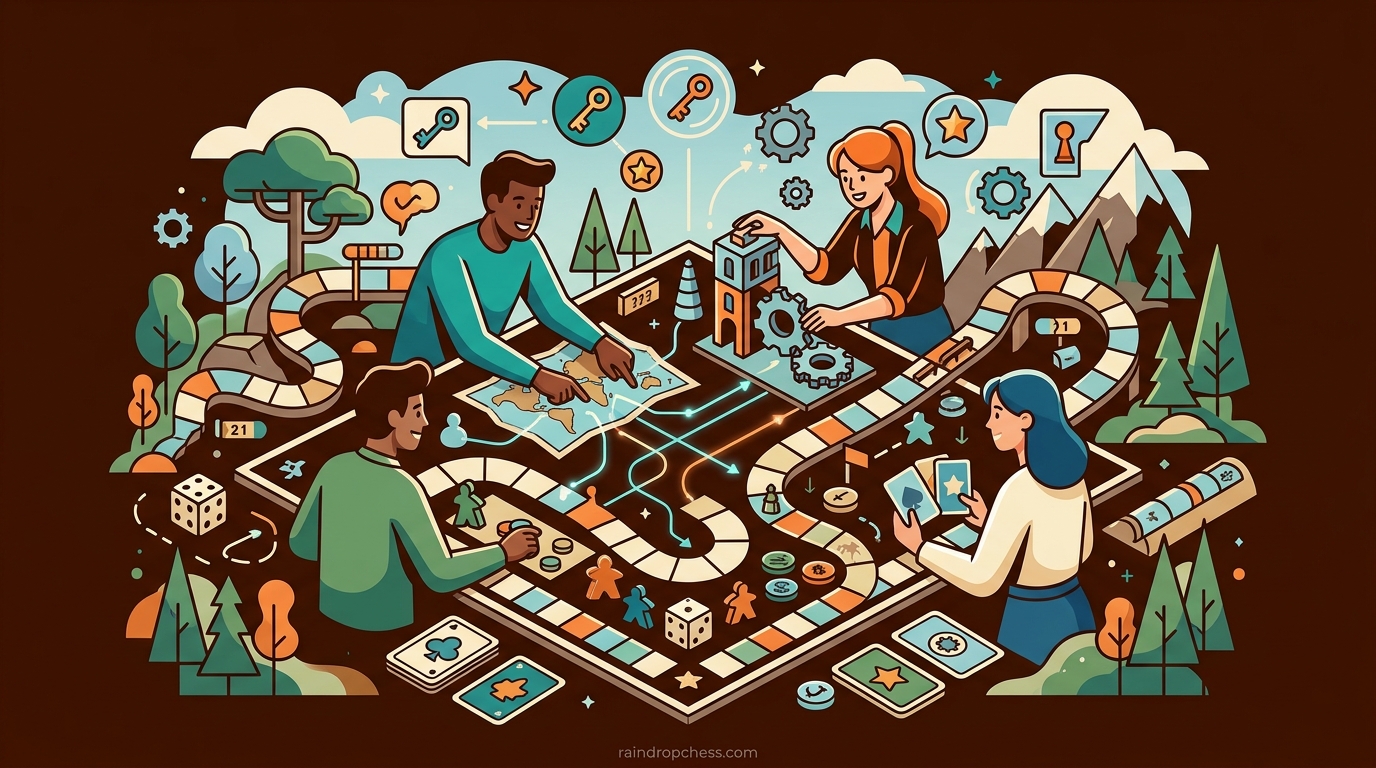
Nothing beats the feeling of huddling around a table with friends, working together to solve a problem that none of you could tackle alone. That is exactly what the best cooperative board games for adults deliver: shared victories, tense last-minute saves, and stories you talk about for weeks after game night ends. Whether you are defending an island from colonizers, landing a plane in silence, or escaping a sinking ruin, cooperative games create moments that competitive games simply cannot match.
Our team has spent the past year playing through dozens of co-op board games with different group sizes, skill levels, and settings. We tested each game at least five times across multiple player counts to get a real sense of how it performs. This guide covers 12 of the best cooperative board games for adults available right now, from quick 20-minute card games to deep strategic campaigns that eat up an entire evening.
We made sure to include options for couples, small groups, and larger parties. You will also find notes on which games avoid the “alpha player” problem (where one person tells everyone else what to do), which ones support solo play, and how long each takes to learn and set up. If you are looking for your next co-op adventure, you are in the right place.
Table of Contents
Top 3 Picks for Best Cooperative Board Games for Adults

Best Cooperative Board Games for Adults in 2026
| Product | Specifications | Action |
|---|---|---|
| Spirit Island |
|
Check Latest Price |
 Pandemic Pandemic |
|
Check Latest Price |
 Forbidden Island Forbidden Island |
|
Check Latest Price |
 Sky Team Sky Team |
|
Check Latest Price |
 The Crew: Mission Deep Sea The Crew: Mission Deep Sea |
|
Check Latest Price |
 Slay The Spire: Board Game Slay The Spire: Board Game |
|
Check Latest Price |
 Betrayal at House on the Hill Betrayal at House on the Hill |
|
Check Latest Price |
 The Night Cage The Night Cage |
|
Check Latest Price |
 Horrified: Greek Monsters Horrified: Greek Monsters |
|
Check Latest Price |
 Castle Panic 2nd Edition Castle Panic 2nd Edition |
|
Check Latest Price |
 Forbidden Desert Forbidden Desert |
|
Check Latest Price |
 Codenames: Duet Codenames: Duet |
|
Check Latest Price |
1. Spirit Island – The Deepest Strategic Co-op Experience
Greater Than Games Spirit Island – Cooperative Strategy Board Game
1-4 Players
90+ Min Playtime
Ages 14+
Area Control and Resource Management
Pros
- Highly thematic with deep strategic options
- No alpha player problem due to asymmetric spirits
- Scalable difficulty with multiple adversaries
- Outstanding replay value
- Beautiful art and quality components
Cons
- Complex rules need significant learning time
- Long playtime may not suit casual groups
Spirit Island grabbed our attention from the very first session and refused to let go. You play as powerful island spirits, each with wildly different abilities, defending your land against colonizing invaders. What makes this game special is how each spirit feels like playing a completely different game. One spirit controls weather patterns, another manipulates fear, and a third reshapes the landscape itself. Our group spent three games just learning the basics, and we were still discovering new strategies dozens of plays later.
The thing that pushes Spirit Island to the top of our list is how it solves the alpha player problem. Because each spirit has unique, complex abilities, no single player can understand and direct everyone else’s turns. You have to trust your teammates to manage their own boards while coordinating at a high level. That dynamic creates genuine teamwork rather than one person dictating moves.
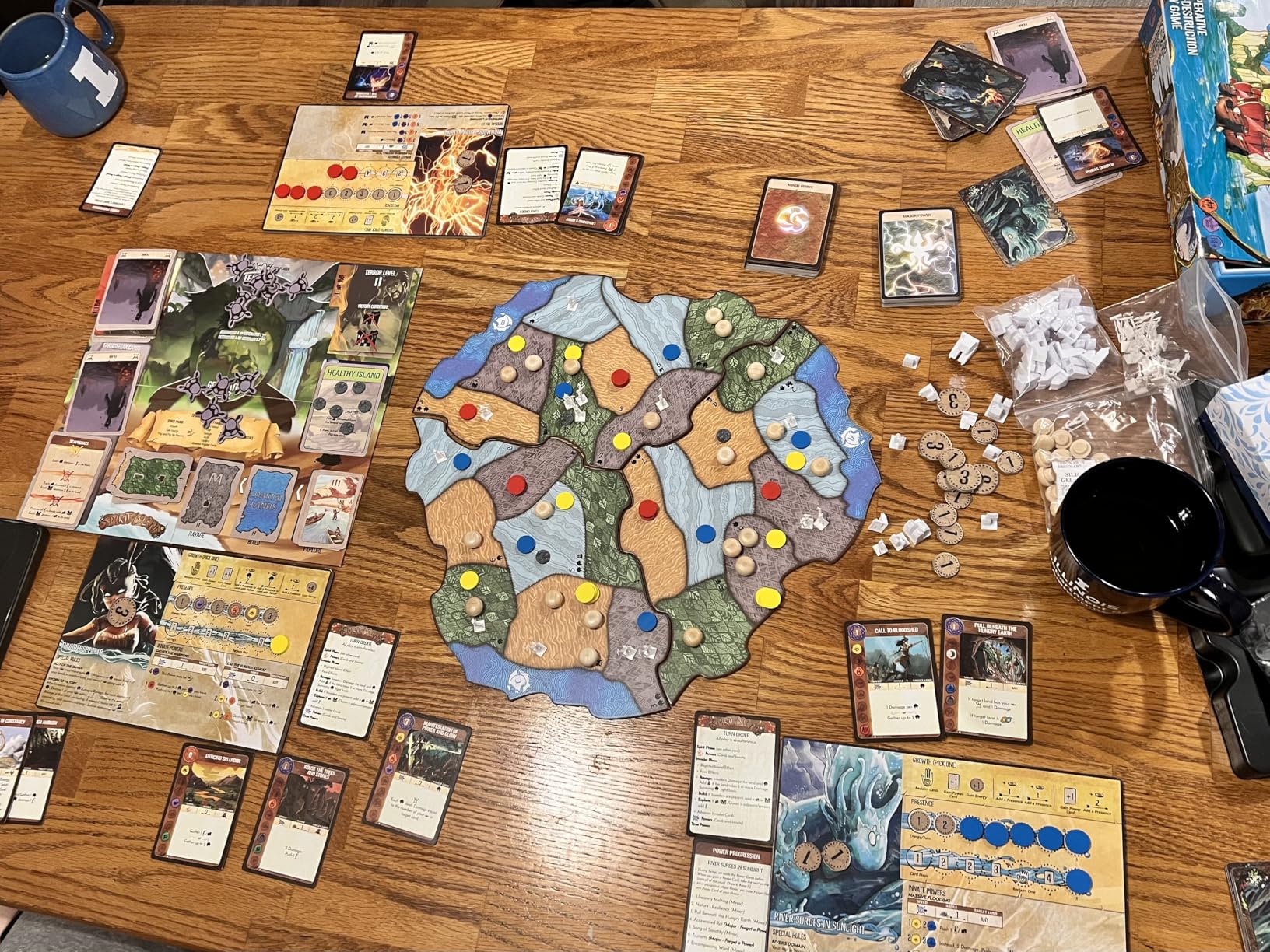
We found the game works best with 2 to 3 players at first. Four players is fantastic once everyone knows the rules, but that first learning game with a full table can drag past the three-hour mark. Setup takes about 10 to 15 minutes once you know where everything goes, and the rulebook, while thick, is well-organized with a helpful index.
The component quality is excellent. The board, cards, and tokens all feel substantial, and the artwork by Jason Hibbs captures the mystical tone perfectly. Our only real complaint is that the complexity means you cannot just pull this out for a casual game night with non-gamers. This is a game for people who want to think hard and plan carefully.

Who Should Play Spirit Island
Spirit Island is ideal for experienced gamers who want a cooperative experience with real strategic depth. If your group enjoys heavy eurogames and wants a co-op that matches that complexity, this is it. It also works surprisingly well as a solo game, since managing multiple spirits creates an engaging puzzle. Players who get frustrated by the alpha player problem in simpler co-ops will find this game refreshing.
This is not the right pick if your group prefers quick, breezy games or if you are introducing non-gamers to board games for the first time. The learning curve is real, and your first few games will involve frequent rulebook consultations.
Replayability and Long-Term Value
After 30-plus plays, our group is still discovering new spirit combinations and strategies. The game includes multiple adversaries at different difficulty levels, and each one forces you to adapt your approach entirely. Adding the Branch and Claw or Jagged Earth expansions dramatically increases the variety, but even the base game offers more content than most co-ops at any price point. You are getting years of gameplay in one box.
2. Pandemic – The Classic That Started It All
Pandemic Cooperative Strategy Board Game, 2-4 Players, 45-60 Min
2-4 Players
45-60 Min Playtime
Ages 8+
Cooperative Disease Control
Pros
- Classic cooperative gameplay that holds up after years
- Variable difficulty through epidemic cards
- Teaches teamwork and strategic planning
- High replay value with randomized setup
- Gateway game for new board gamers
Cons
- Some luck factor in card draws
- Can be challenging for complete beginners
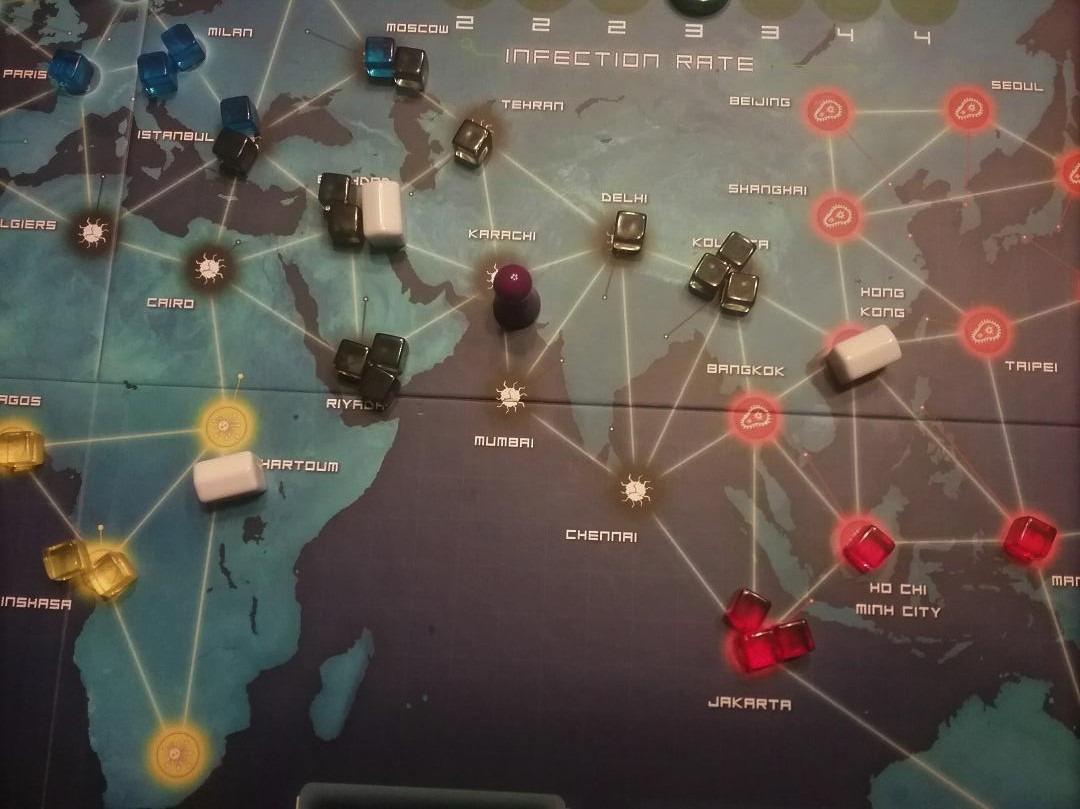
Pandemic is the game that introduced millions of people to cooperative board gaming, and it remains one of the best cooperative board games for adults nearly two decades after its release. The concept is simple: you and your team are specialists racing to cure four deadly diseases spreading across the globe. Each player takes on a unique role with special abilities, and you must work together to manage outbreaks before they spiral out of control.
What keeps Pandemic relevant is how elegantly it balances accessibility with genuine tension. Our group has played this game well over 50 times, and we still have sessions where we lose on the final turn. The difficulty scales smoothly by adding or removing epidemic cards, so you can tune the experience to match your group’s skill level. That flexibility makes it perfect for playing with mixed groups of experienced and new gamers.
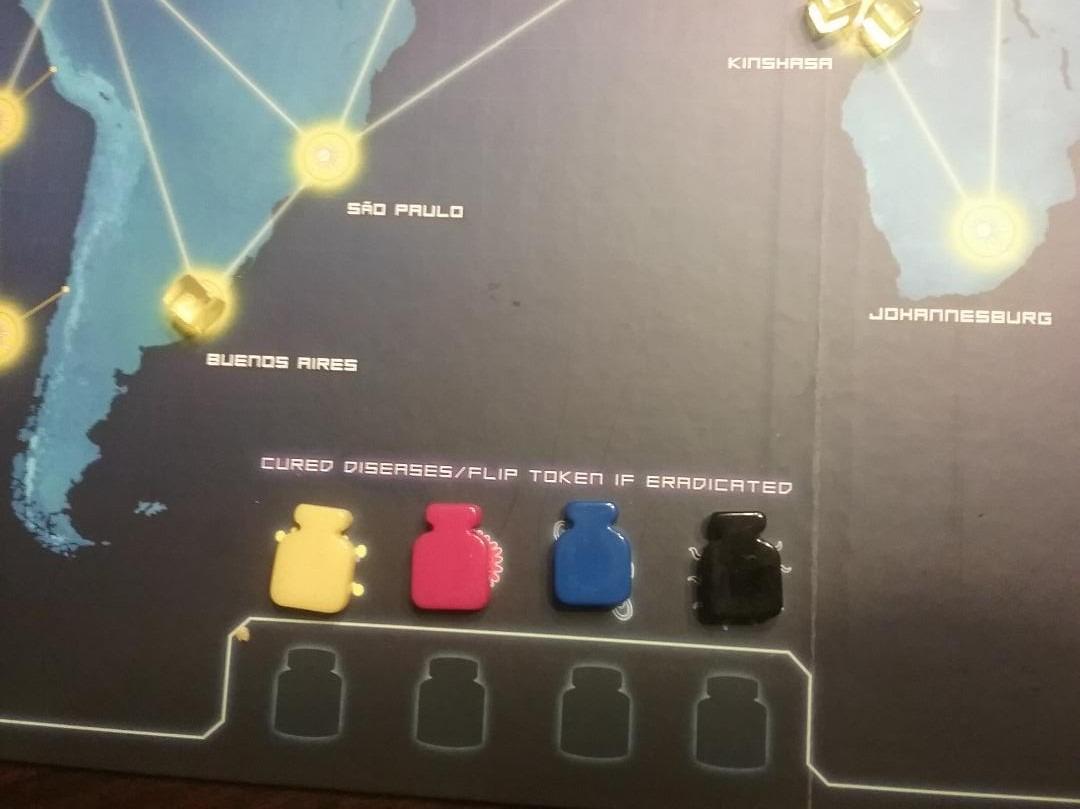
The updated edition features improved components and cleaner artwork. The board is colorful and easy to read, the role cards are clearly designed, and the disease cubes are satisfying to place and remove. Setup takes about five minutes, and most games finish within an hour.
One thing we appreciate is how Pandemic teaches the fundamentals of cooperative gaming. Once someone learns Pandemic, they understand concepts like action efficiency, role synergy, and threat prioritization that transfer to every other co-op game. It is the perfect starting point before moving into heavier titles like Spirit Island or Gloomhaven.
Who Should Play Pandemic
Pandemic is the best cooperative board game for adults who are new to the hobby or who want something they can play with anyone. It works at every player count from 2 to 4, scales difficulty easily, and finishes in under an hour. If you are building a board game collection from scratch, this should be one of your first purchases.
Highly experienced gamers might find Pandemic a bit light after dozens of plays, especially if they have moved on to heavier co-ops. The luck of the draw can also feel punishing in certain games, though that randomness is part of what keeps each session feeling fresh.
Expansions and Legacy
Pandemic has one of the strongest expansion libraries in board gaming. On the Brink adds new roles and events. In the Lab introduces a lab challenge. State of Emergency adds emergency events. And Pandemic Legacy Season 1 is widely considered one of the greatest board game experiences ever made, with a story that unfolds over 12 to 24 sessions. If you love the base game, the legacy version takes it to an entirely different level.
3. Forbidden Island – Accessible Adventure for Everyone
Gamewright Forbidden Island, 1st Edition Board Game, 2-4 Players, Ages 14+
2-4 Players
30 Min Playtime
Ages 10+
Tile-Laying Adventure
Pros
- Easy to learn in under 10 minutes
- Beautiful artwork and components
- Variable difficulty levels
- Great replay value with randomized tiles
- Compact and portable
Cons
- May be too simple for hardcore gamers
- Some components feel small
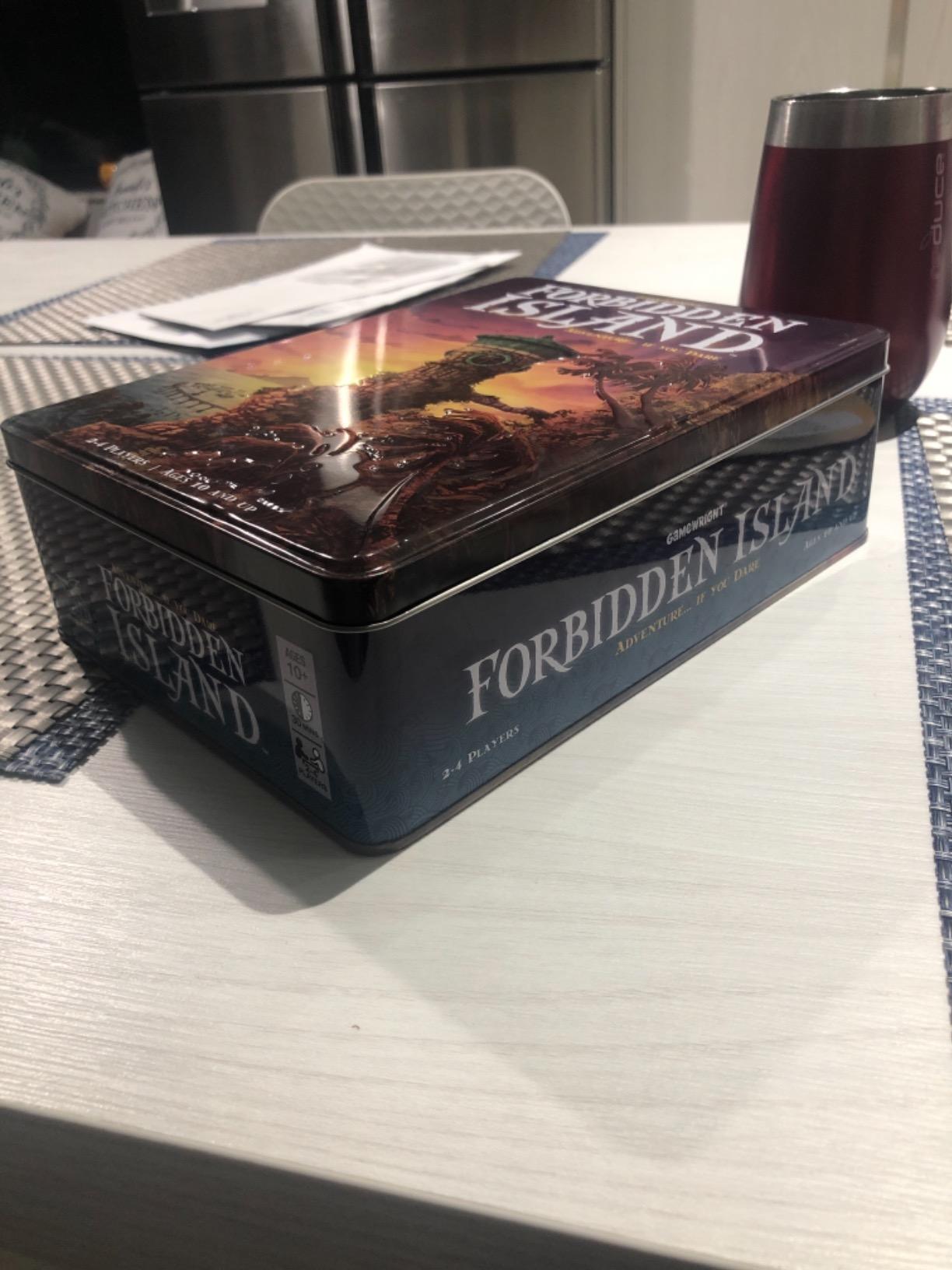
Forbidden Island is the game we reach for when we want a cooperative experience that does not require an hour of rule explanation. Designed by Matt Leacock (the same designer behind Pandemic), it tasks your team with collecting four treasures from a sinking island and escaping before everything goes underwater. The entire game plays in about 30 minutes, making it one of the fastest cooperative board games for adults on our list.
The sinking island mechanic is where Forbidden Island shines. Each turn, tiles flood and disappear beneath the waves, cutting off paths and stranding players. You have to balance treasure collection with keeping your escape routes open. Our group found that the tension ramps up beautifully toward the end, with narrow escapes that feel genuinely exciting.
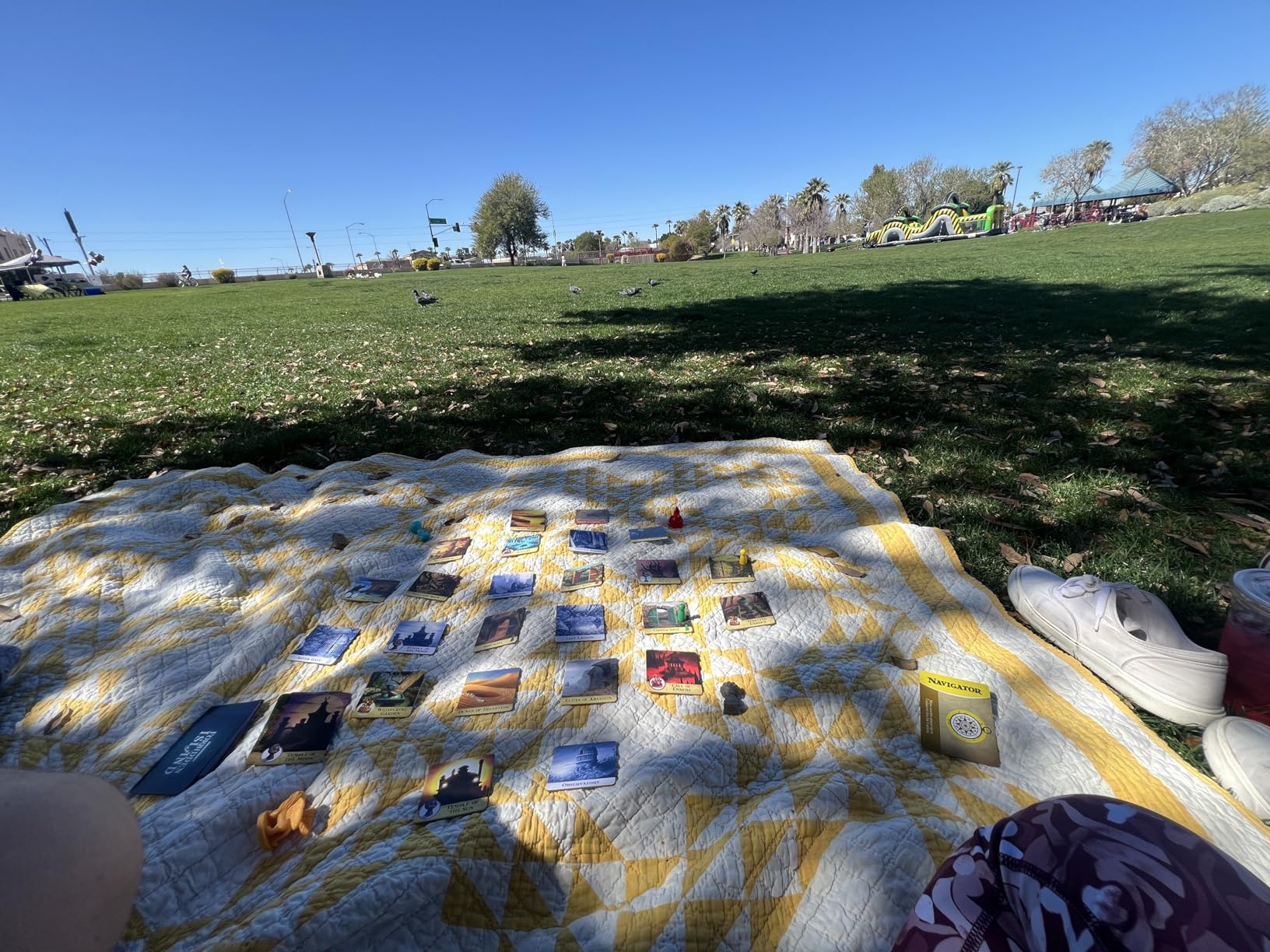
Setup is quick. You shuffle the island tiles into a random configuration, deal out role cards, and start playing. The rules fit on a single reference card, so even complete newcomers can jump in within minutes. We have successfully taught this game to friends who had never played a modern board game before.
The components deserve a mention. The treasure figurines are nicely sculpted, the island tiles are sturdy and colorful, and the overall presentation feels premium despite the affordable price. This is a game that looks great on the table and plays even better.
Who Should Play Forbidden Island
Forbidden Island is perfect for families, couples, and groups that include non-gamers. It introduces cooperative mechanics without overwhelming anyone, and the 30-minute playtime means you can easily fit in two or three games in a single evening. It also works well as a stepping stone before introducing players to Pandemic or other heavier co-ops.
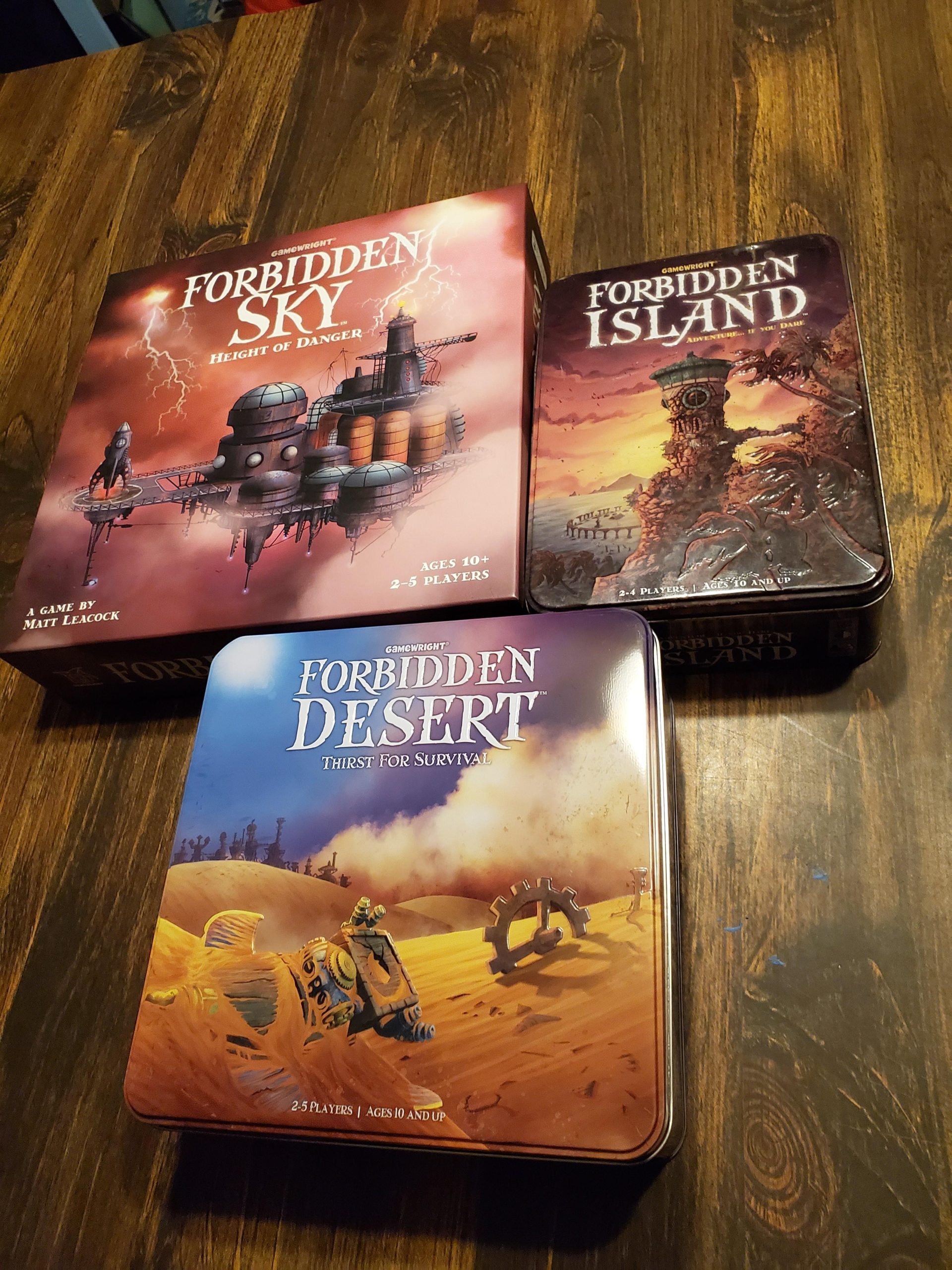
Experienced gamers looking for deep strategic decisions may find Forbidden Island too light. After 15 to 20 plays, your group might start craving more complexity. At that point, Forbidden Desert or Pandemic are natural upgrades that retain the accessible feel while adding mechanical depth.
How It Compares to Forbidden Desert
Forbidden Island and Forbidden Desert share the same designer and similar DNA, but they play differently enough to justify owning both. Forbidden Island is faster and simpler, while Forbidden Desert adds more moving parts with its storm mechanic and flying machine assembly. If you are choosing between them, start with Forbidden Island and upgrade to the desert if your group loves the format.
4. Sky Team – Silent Dice Coordination for Two
Sky Team | Work Together to Land the Plane | Ages 12+ | 2 Players
2 Players Only
20 Min Playtime
Ages 14+
Silent Dice Placement
Pros
- Brilliant silent communication mechanic
- Quick 15-20 minute sessions
- 20 different scenarios for variety
- Spiel des Jahres 2024 winner
- Solves alpha player problem completely
Cons
- Limited to exactly 2 players
- Some scenarios need practice to understand
Sky Team won the Spiel des Jahres in 2024, and after playing it with my partner for two straight weeks, I completely understand why. You and your co-pilot are trying to land a plane at various airports around the world. The catch? You place your dice silently. No talking about what you are going to roll or where you are going to put your dice. You just… place them, and hope your partner understands what you are trying to do.
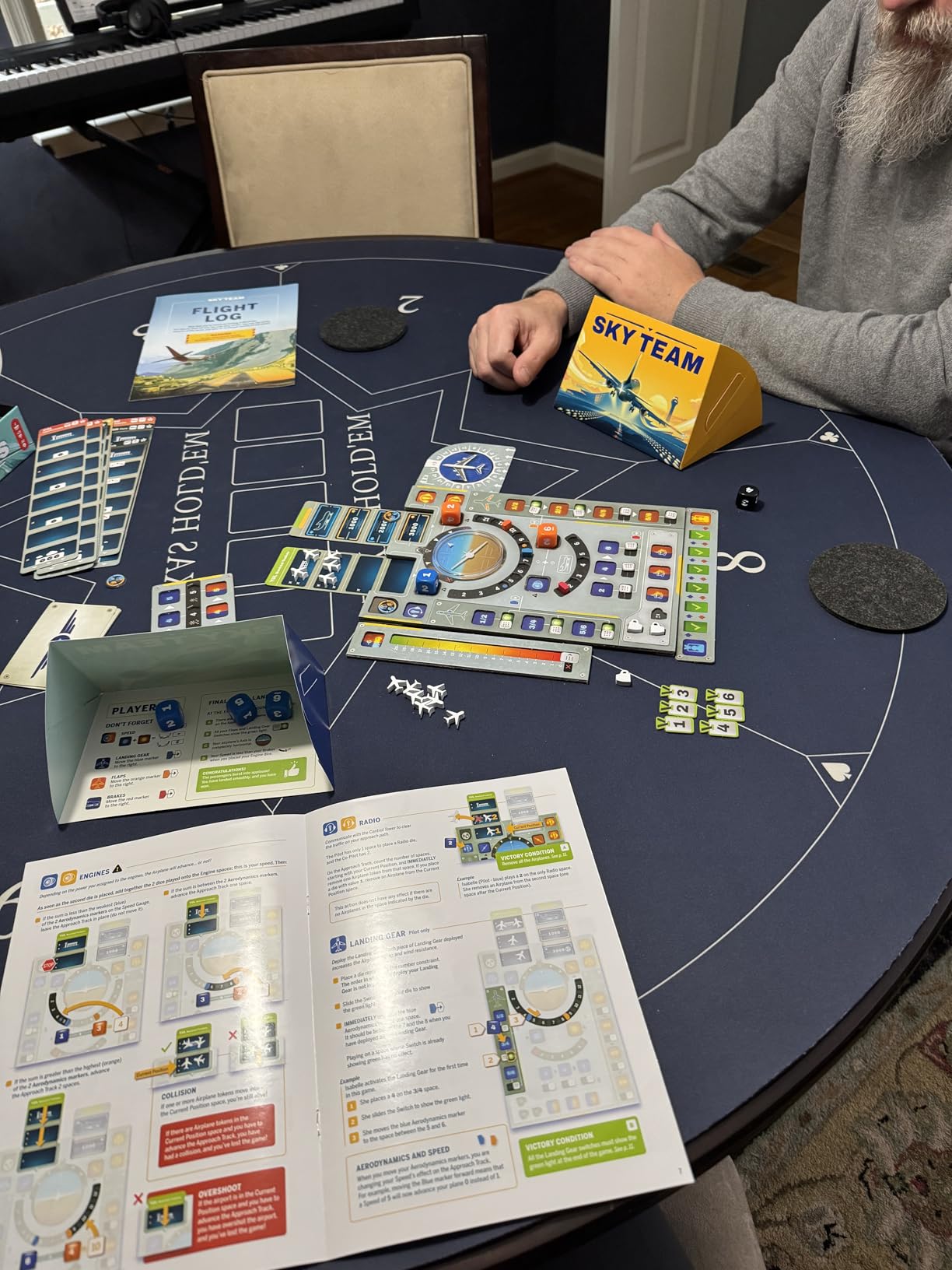
That silent communication creates an electric tension that I have never experienced in another board game. You roll your dice behind your player screen, look at your partner across the table, make eye contact, and place your dice on the cockpit dashboard. Sometimes your partner immediately understands your plan. Sometimes they do not, and you watch in horror as they place a die on the spot you needed. Those moments are what make Sky Team one of the best cooperative board games for adults looking for a two-player experience.
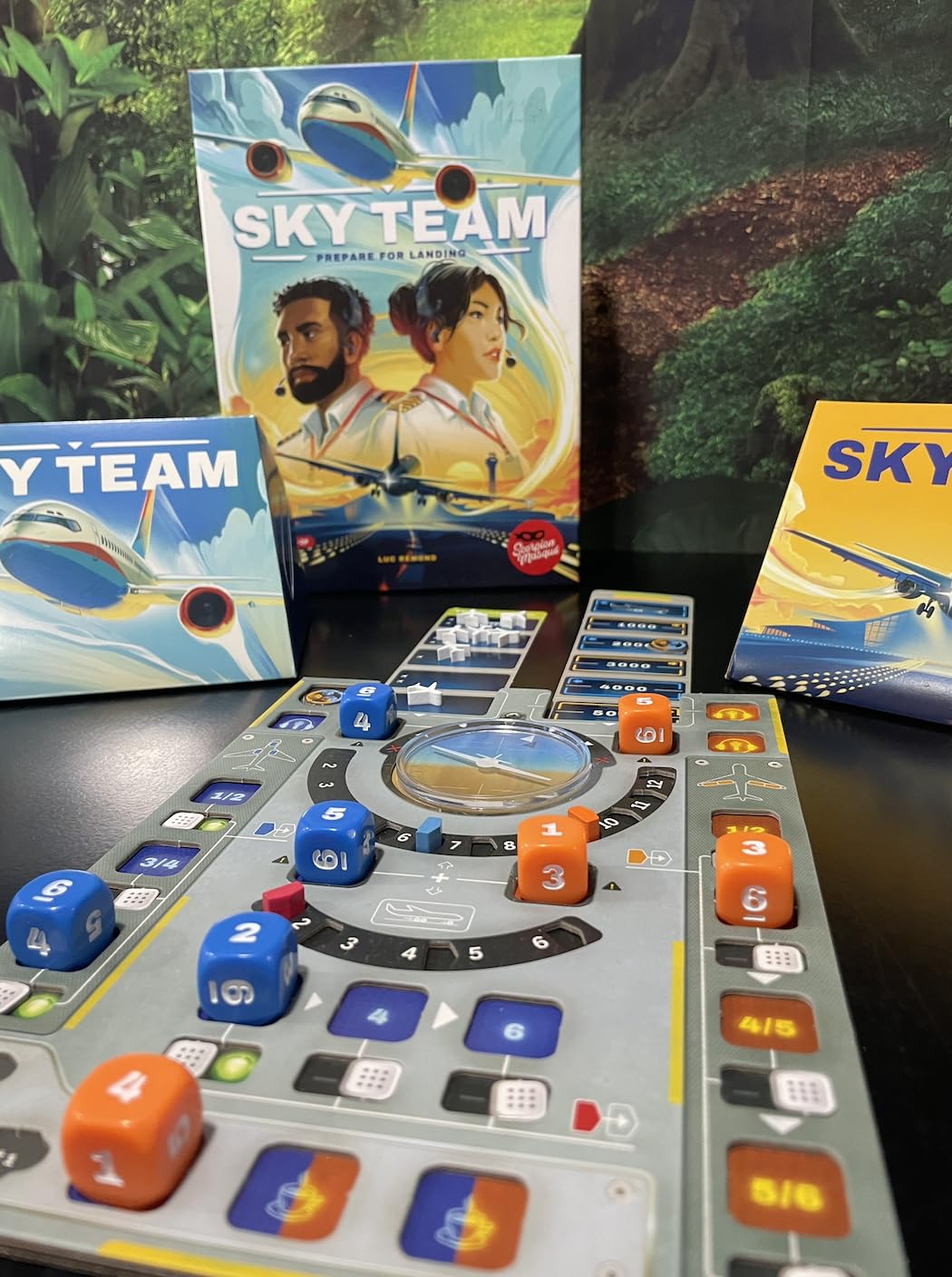
Each scenario introduces new complications. Some airports have crosswinds, others require specific approach speeds, and the advanced modules add kerosene leaks and icy runways. The campaign takes you to 20 different airports with escalating difficulty, and after finishing all of them, you can mix and match modules for endless variety.
The components are fantastic. The cockpit dashboard feels like a real instrument panel, the airplane axis disc rotates smoothly, and the dice have a nice weight to them. Everything fits neatly in the box, and setup takes under two minutes. This is one of those rare games that is always ready to play.
Who Should Play Sky Team
Sky Team is the best cooperative board game for couples who want something quick and intimate. The silent mechanic creates a unique bonding experience that feels completely different from any other game. It is also great for close friends who enjoy reading each other’s intentions. If you want a game you can play in 20 minutes that still delivers real emotional moments, this is the one.
This game is strictly for two players, so it will not work for your game night group. If you regularly host three or more players, pair Sky Team with a group-friendly co-op like Pandemic or The Crew.
Learning Curve and Accessibility
Sky Team teaches in about five minutes. The first scenario is intentionally simple, letting you learn the basics of dice placement, speed management, and altitude control before introducing complications. Even non-gamers can pick it up quickly, making it a great choice for introducing a partner to modern board games. The short playtime also means a bad game is over fast, and you can immediately try again.
5. The Crew: Mission Deep Sea – Cooperative Trick-Taking
The Crew – Mission Deep Sea | Card Game | Cooperative | 2 to 5 Players | Ages 10+ | Trick-Taking | 32 Levels of Difficulty | Endless Replayability
3-5 Players
20 Min Playtime
Ages 10+
Cooperative Trick-Taking
Pros
- Innovative cooperative trick-taking mechanics
- Limited communication adds real tension
- 50 missions with increasing difficulty
- Portable and quick to set up
- Works at different player counts
Cons
- Theme feels disconnected from gameplay
- Cards may be difficult for colorblind players
The Crew: Mission Deep Sea takes the familiar trick-taking format and turns it into a cooperative puzzle. Each round, players are dealt hands of cards and given specific task targets. You might need to win a trick with a particular card, avoid winning certain tricks, or win exactly the right number of tricks overall. The twist is that you cannot talk about your cards. You can only communicate through the cards you play and limited signal tokens.
Our group fell in love with how this game creates tension from seemingly simple decisions. Playing a high card early might seem wasteful until you realize your partner needed to win that specific trick. The limited communication forces everyone to pay close attention to what others are playing, and those “aha” moments when you finally decode your teammate’s plan feel incredibly satisfying.
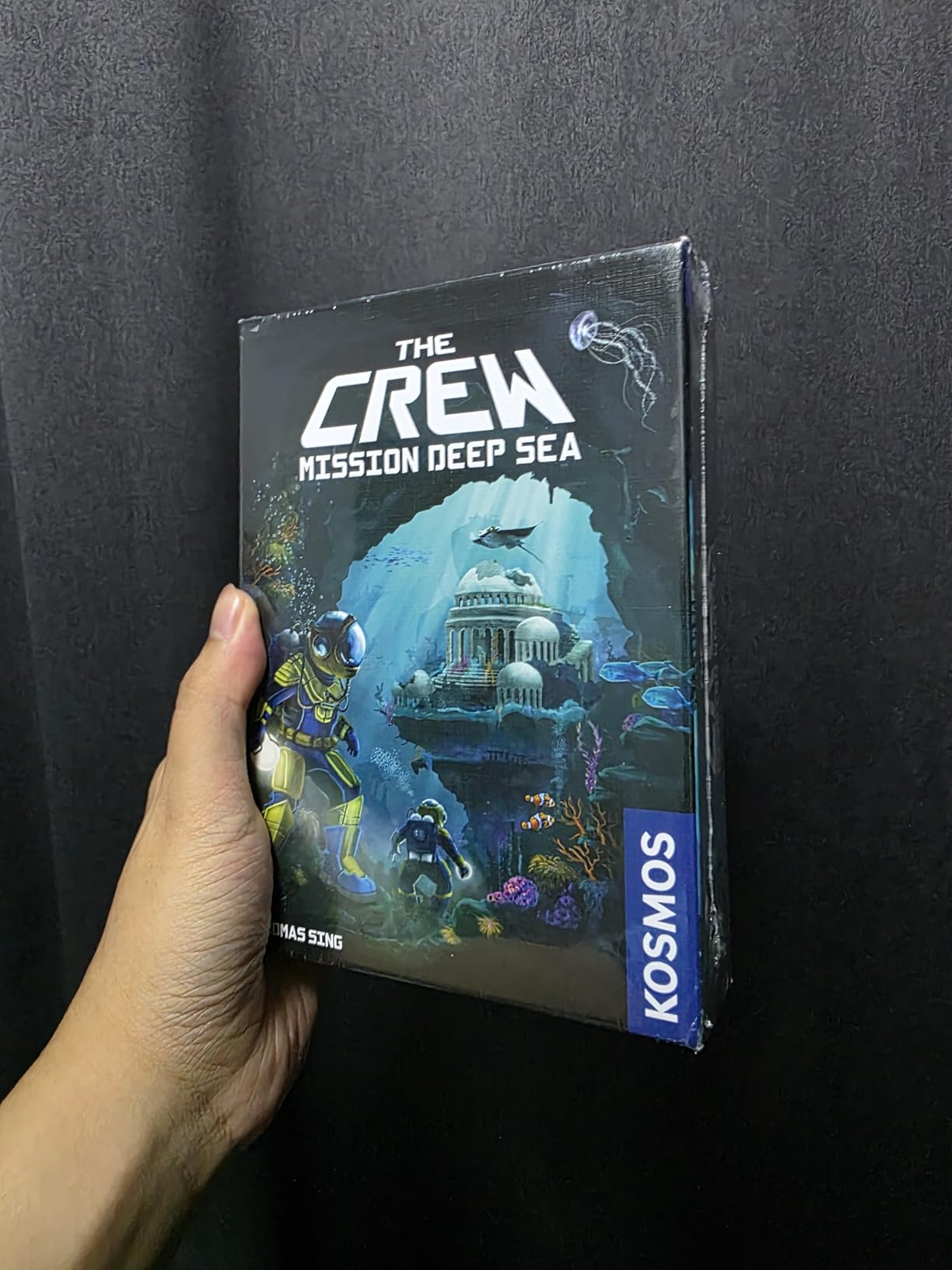
With 50 missions that gradually increase in difficulty, The Crew provides a structured learning experience. The early missions teach basic trick-taking strategy, while later missions layer in complex task combinations that require serious coordination. We played through the entire campaign over several game nights, and the difficulty ramp feels perfectly tuned.
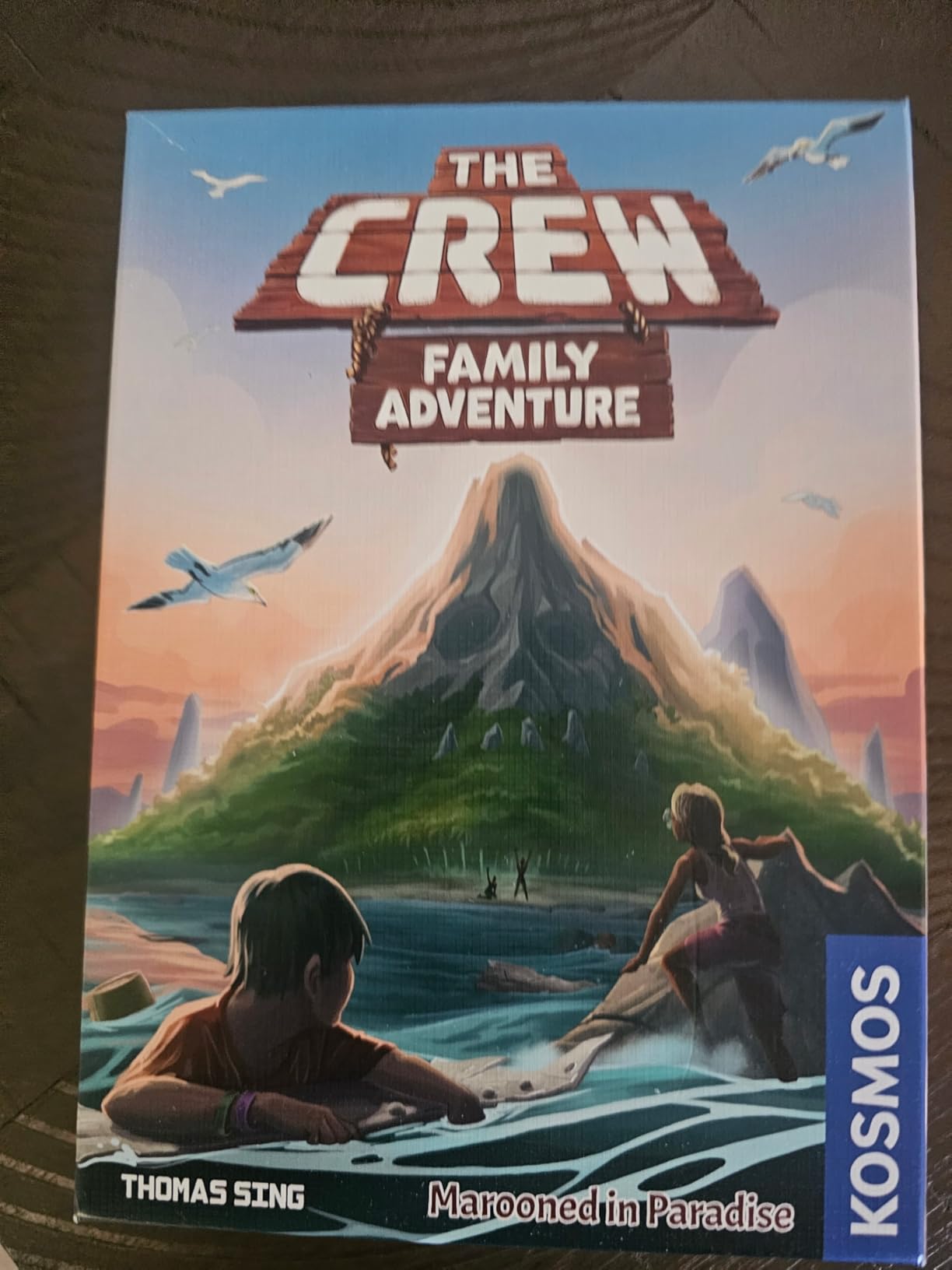
The physical product is compact and portable. You can easily take this to a coffee shop or on vacation. The cards are good quality, the rulebook is clear, and setup is as simple as shuffling and dealing. For the price, you are getting an enormous amount of gameplay in a tiny package.
Who Should Play The Crew
The Crew: Mission Deep Sea is ideal for groups of 3 to 5 who enjoy card games and communication puzzles. It works particularly well with players who like trick-taking games but want something cooperative instead of competitive. If your group enjoys games like Hanabi or The Mind, The Crew offers a similar communication challenge with more strategic depth.
Players who strongly dislike card games or trick-taking mechanics should probably look elsewhere. The underwater theme is also purely cosmetic, so do not expect an immersive narrative experience. This is a mechanical puzzle in card game form.
Player Count Considerations
The Crew plays differently at each player count. At 3 players, you have more control over your hand but fewer signals to read. At 5 players, the table talk restrictions create more chaos but also more dramatic moments. We found that 4 players hits the sweet spot, giving everyone enough information to make informed decisions while maintaining the communication tension that makes the game special.
6. Slay The Spire: The Board Game – Deck-Building Perfection
Slay The Spire: The Board Game – Cooperative Fantasy Board Game
1-4 Players
45 Min Playtime
Ages 14+
Cooperative Deck-Building
Pros
- Faithful adaptation of the hit video game
- Over 650 cards with session saving feature
- Achievements unlock more content for replayability
- High quality miniatures and components
- Works well solo or with a group
Cons
- Learning time is longer than stated
- Some rules require online research
- Box is large and heavy at 8.3 pounds
Slay The Spire: The Board Game accomplishes something remarkable. It takes one of the most addictive video games ever made and translates it to the tabletop without losing what made the original special. You choose a character, build a deck of cards through encounters, and fight your way through increasingly difficult enemies. The cooperative element comes from sharing the spire with your teammates, coordinating which rooms to enter and when to pool resources.
I played the video game for hundreds of hours before trying the board game, and I was genuinely surprised at how well the mechanics translate. The deck-building feels tactical and rewarding. Each character has a distinct playstyle, and discovering powerful card combinations is just as satisfying on the table as it is on screen. The session saving feature means you can tackle the spire across multiple game nights, which is essential since a full run takes longer than the stated 45 minutes.
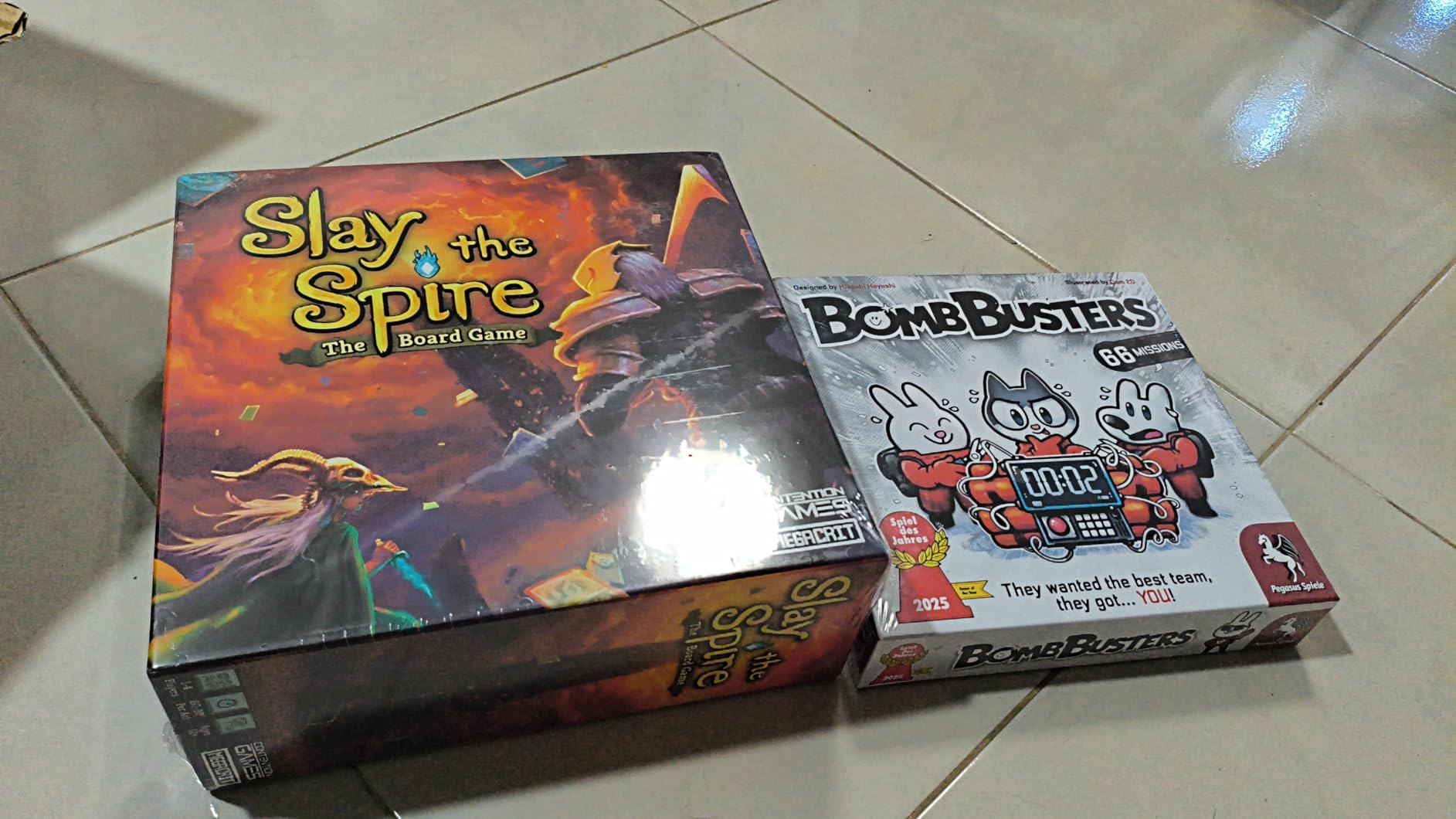
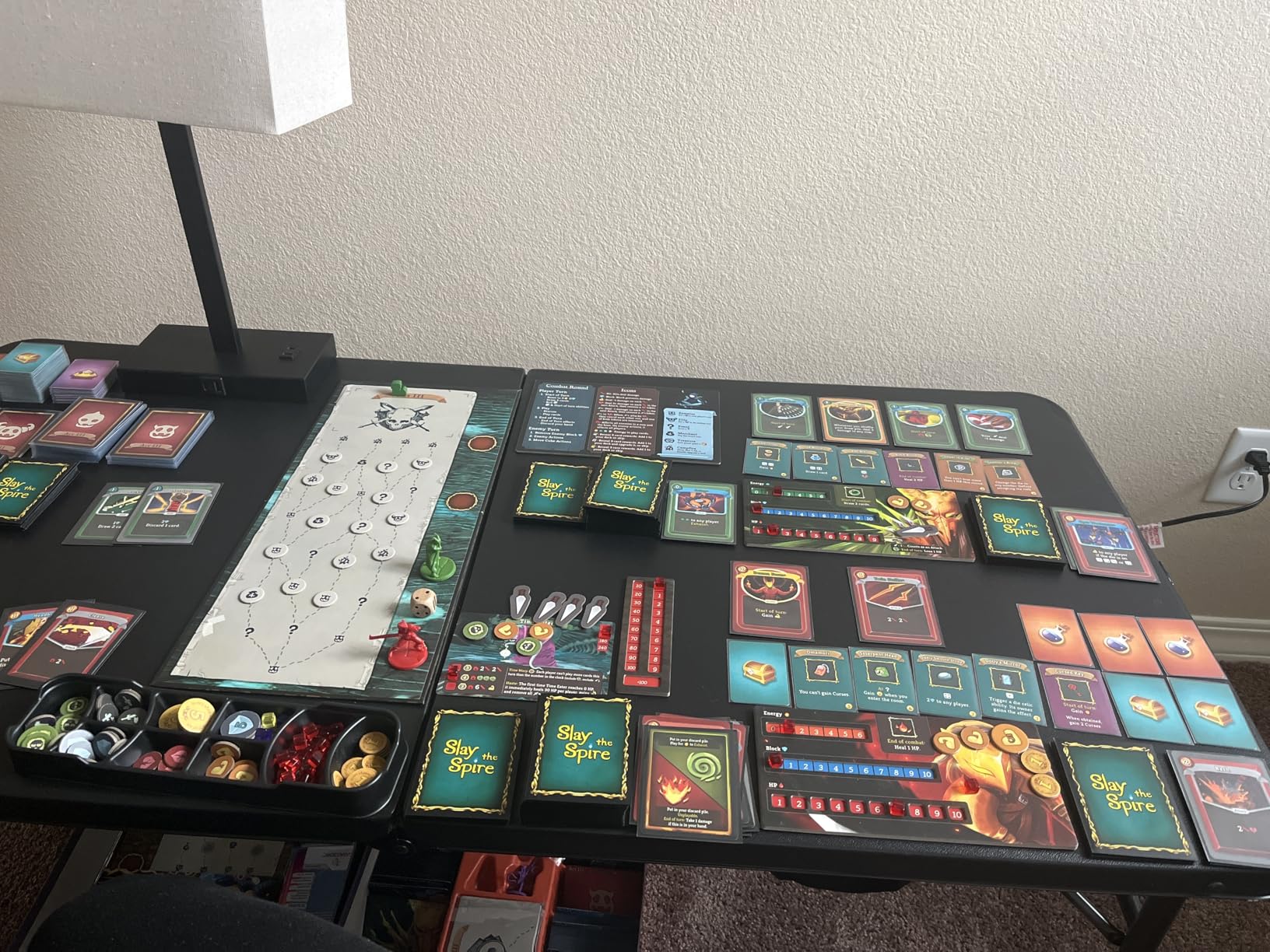
The component quality matches the premium price. You get four detailed miniatures representing the game’s characters, over 650 cards, dual-layered player boards, and a sturdy main board. Everything is organized with dedicated slots, though the box is massive at 8.3 pounds. Clear a good amount of shelf space before this arrives.
The achievement system adds a meta-game that keeps you coming back. As you complete runs and fulfill certain conditions, you unlock new cards and modifiers for future sessions. Our group treated these unlocks like milestones, and the excitement of opening a new pack of cards after beating a boss was genuinely thrilling.
Who Should Play Slay The Spire
This is a must-have for fans of the video game who want to share the experience with friends around a table. It is also great for deck-building enthusiasts who want a cooperative alternative to competitive deck-builders like Dominion or Star Realms. Solo players will find it just as engaging as the digital version, with the tactile satisfaction of physical cards.
If you have never played the video game and are not sure about deck-building as a mechanic, start with something simpler before committing to this. The rules are comprehensive, and your first game will involve frequent rulebook checks. This is a game that rewards patience and multiple sessions.
Session Management and Replayability
The session saving system is well-designed and easy to use. You simply place your deck and progress tokens in the provided bags, seal them, and pick up exactly where you left off next time. The achievement unlocks ensure that even after completing the spire multiple times, new content keeps appearing. With four characters and numerous card combinations, no two runs feel the same.
7. Betrayal at House on the Hill – Spooky Storytelling
Hasbro Gaming Avalon Hill Betrayal at The House on The Hill 3rd Edition Cooperative Board Game,Ages 12 and Up,3-6 Players,50 Chilling Scenarios
3-6 Players
60-120 Min Playtime
Ages 12+
Exploration and Hidden Traitor
Pros
- 50 different haunt scenarios for huge replay value
- Randomly generated house layout each game
- Updated 3rd edition with improved rules
- Great for game nights with friends
- Engaging narrative storytelling
Cons
- Learning curve for new players
- Best with 4 or more players
- First game can take up to 3 hours
Betrayal at House on the Hill is one of those games that creates stories you tell for years. You and your friends explore a haunted house by drawing room tiles one at a time, building the floor plan as you go. Then, partway through the game, one of you turns traitor, and the entire experience shifts into a survival scenario. With 50 different haunts, the betrayal and its consequences are different every single time.
The exploration phase is where the magic happens. Each room you reveal might contain an item, an omen, or a terrifying event. Our group found that even before the haunt begins, the atmosphere builds naturally. Someone draws a creepy room, someone else finds a cursed object, and the tension rises. When the haunt finally triggers, everyone leans forward in their chairs because the stakes just got real.
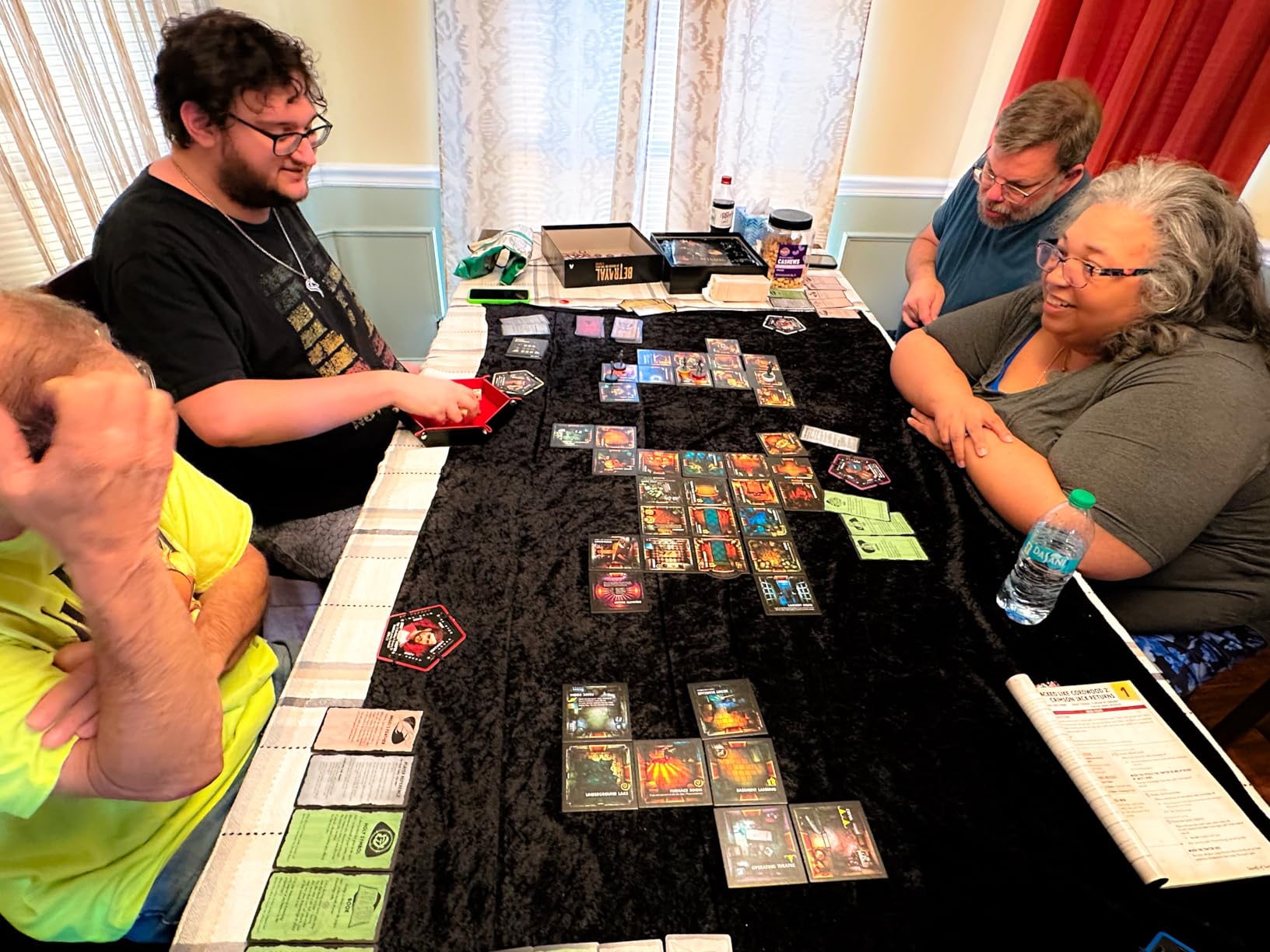
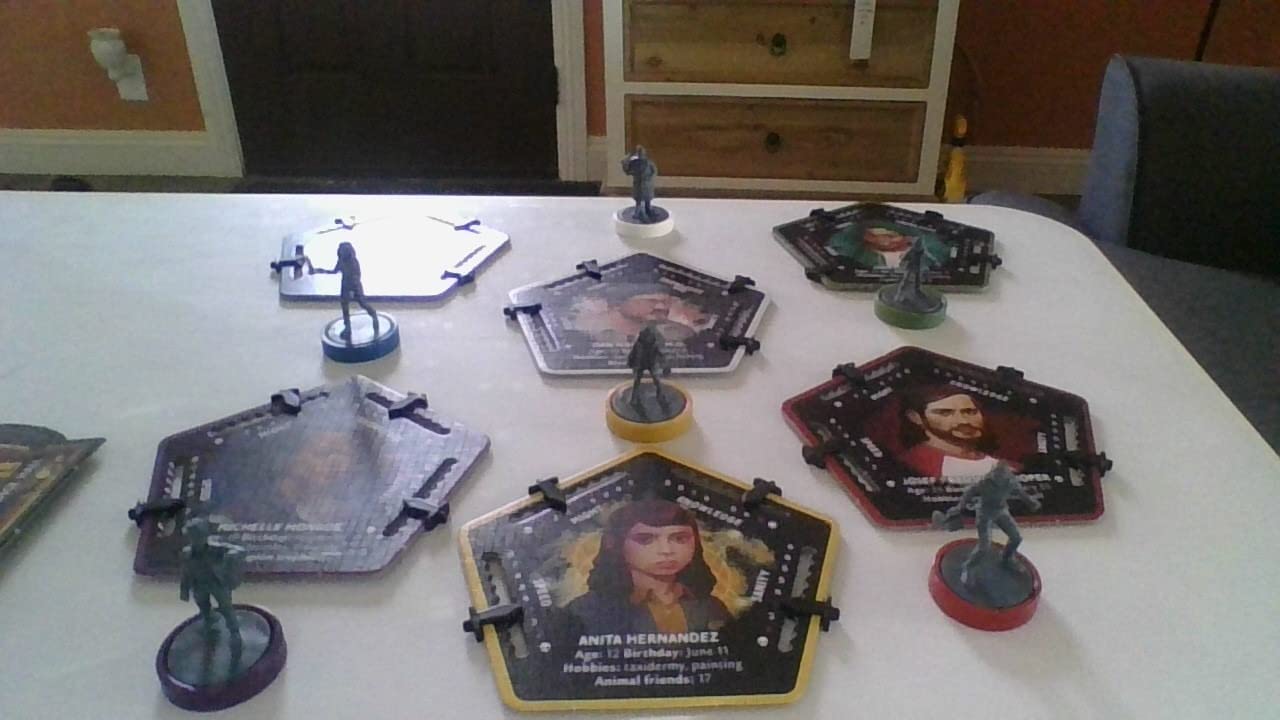
The 3rd edition brings updated artwork, clearer rules, and 12 new characters not seen in previous versions. The miniatures are detailed and come with colored bases for easy identification. The haunt books (one for the traitor, one for the heroes) are well-organized, though you will need to pass them around the table during the reveal.
One important note: this game works best with at least 4 players. With 3 players, the dynamic feels thin because the traitor reveal has less impact. With 5 or 6 players, the chaos reaches peak entertainment. Your first game will probably run long as everyone learns the rules, but subsequent sessions settle into the 60 to 90 minute range.
Who Should Play Betrayal
Betrayal at House on the Hill is perfect for groups who enjoy narrative experiences and do not mind a bit of randomness in their games. If your friends like horror movies, escape rooms, or storytelling games, this delivers all of those in one box. It is also a great choice for Halloween game nights.
Competitive gamers who want tight, balanced strategy should look elsewhere. The haunt scenarios are not all perfectly balanced, and some are easier for the heroes while others heavily favor the traitor. Embrace the storytelling over the competition, and you will have a blast.
The Hidden Traitor Mechanic Explained
Unlike pure cooperative games, Betrayal includes a hidden traitor mechanic where one player switches sides mid-game. The traitor receives their own secret objectives and rules from the Traitor’s Tome, while the remaining players consult Secrets of Survival. This creates an asymmetric endgame where both sides are racing to complete their goals. Some players love the surprise, while others find it jarring to suddenly work against their friends, so consider your group’s preferences before playing.
8. The Night Cage – Atmospheric Horror Puzzle
Smirk and Dagger The Night Cage
1-5 Players
60-90 Min Playtime
Ages 14+
Tile-Laying Horror Escape
Pros
- Unique candlelit horror atmosphere
- Award-winning design with adjustable difficulty
- Excellent cooperative teamwork mechanics
- High replay value with different setups
- Advanced mode adds more depth
Cons
- Rules can be complicated for new players
- Best experience requires 4 or more players
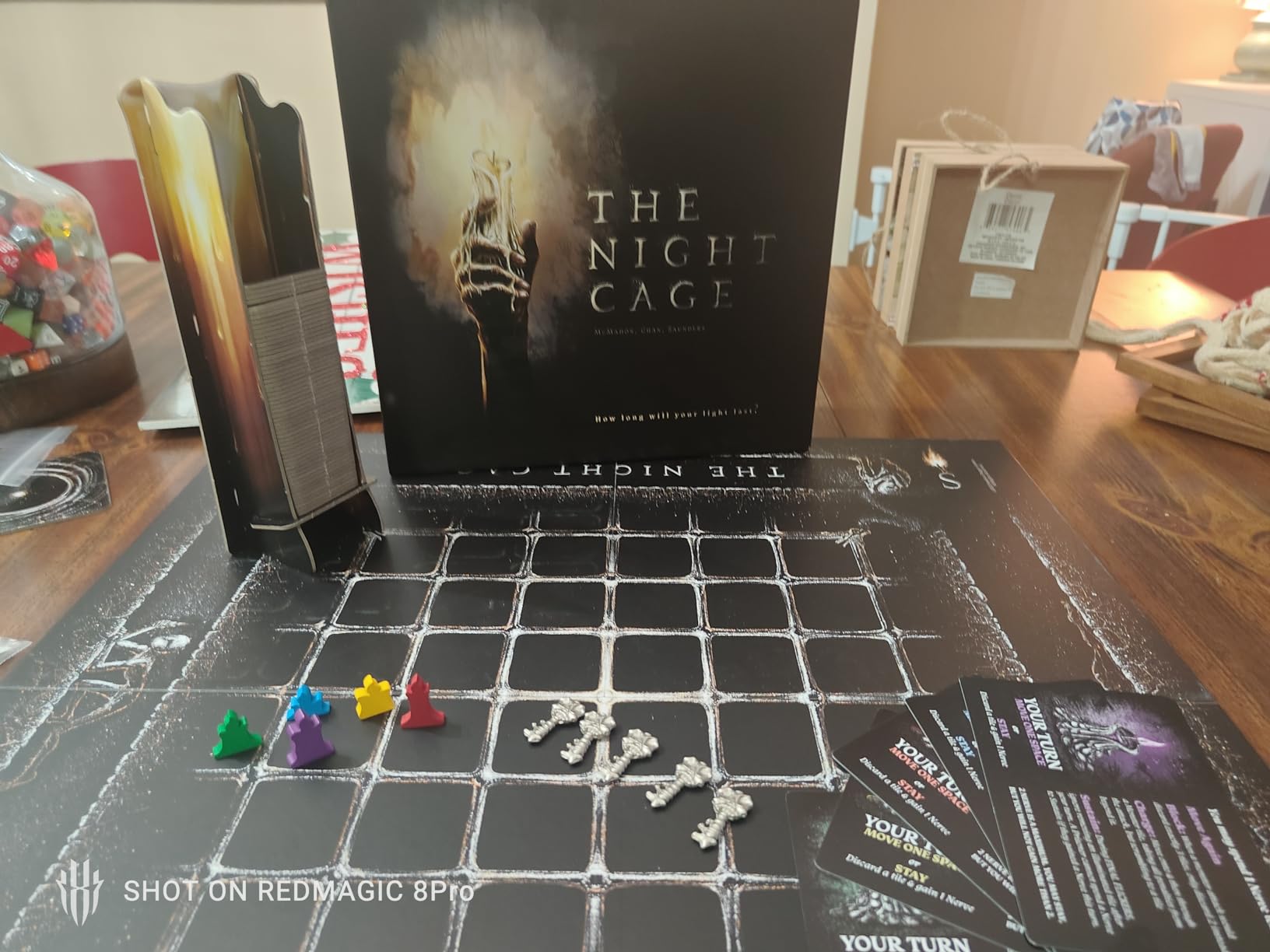
The Night Cage is the most atmospheric cooperative board game for adults on this list. You play as prisoners trapped in a shifting labyrinth lit only by candles. Each player holds a single candle that illuminates only the tiles immediately around them. Move too far from your teammates, and you are swallowed by darkness. Stay close, share light, and you might find the keys needed to escape through the gate before the maze collapses.
The candle mechanic is not just a gimmick. It creates a genuine sense of dread and claustrophobia as you watch the safe illuminated area shrink with every step. Our group found ourselves physically leaning in, whispering strategies like we were actually trying not to alert something in the dark. No other game on this list creates this level of immersion through such a simple mechanic.
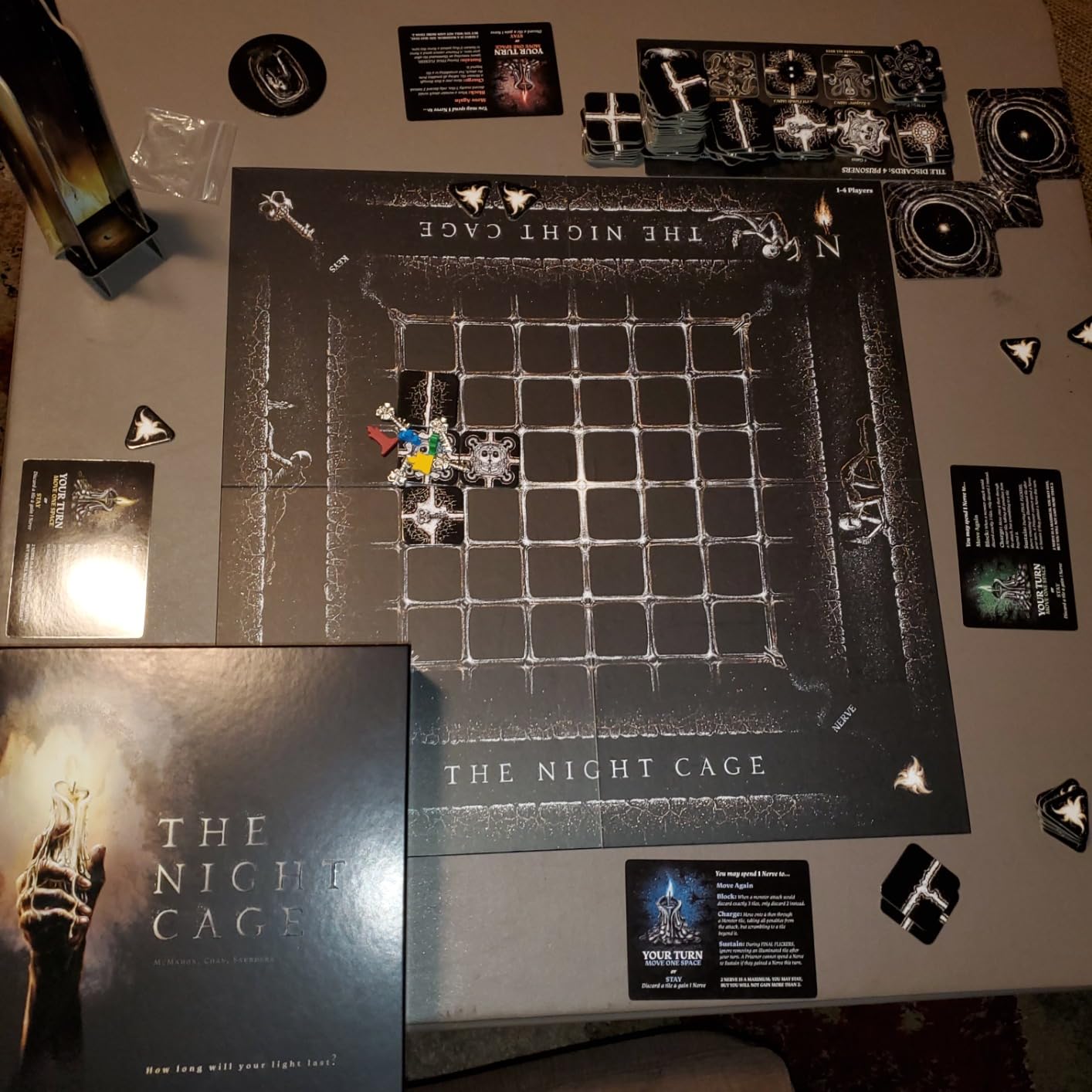
Gameplay revolves around tile placement and movement coordination. You must stay within the light radius of at least one other player, or your character is consumed by the darkness permanently. This creates a constant tension between exploring new areas and staying connected to your group. Keys are scattered throughout the maze, and you need to collect them and converge on the exit gate before time runs out.
The advanced game mode adds monsters and obstacles that significantly increase both difficulty and thematic richness. We recommend playing the base game three or four times before adding advanced rules, as the core mechanics are engaging enough without the extra complications. The award-winning design speaks for itself, and the adjustable difficulty means you can tailor the experience to your group.
Who Should Play The Night Cage
The Night Cage is ideal for horror enthusiasts and groups who love atmospheric, immersive experiences. If you enjoy games that create tension through limited information and spatial puzzles, this delivers in spades. It works at 1 to 5 players, but really shines with 4 or more because the coordination challenge becomes more complex and the shared dread feels more intense.
Players who prefer lighthearted or competitive games might find the horror theme off-putting. The rules are also more complex than they first appear, so expect a learning game or two before everything clicks. Once it does, though, The Night Cage delivers an experience unlike anything else in your collection.
Solo Play Quality
Solo play in The Night Cage is surprisingly engaging. Controlling multiple prisoners yourself removes the communication challenge but replaces it with a brain-burning spatial puzzle. You still feel the pressure of the closing darkness, and the satisfaction of a narrow escape is just as real. If you enjoy solo gaming and horror themes, this is one of the best options available.
9. Horrified: Greek Monsters – Mythological Team Defense
Ravensburger Horrified Games – Greek Monsters – Strategy Board Game – Boost Critical Thinking & Teamwork – Cooperative Gameplay – Unique Monster Challenges – 1 to 5 Players – Adults & Kids 10+
1-5 Players
60 Min Playtime
Ages 10+
Cooperative Monster Defense
Pros
- Engaging cooperative gameplay with teamwork focus
- Beautiful artwork and thematic Greek mythology design
- Easy to learn with unique monster challenges
- Great replay value across 6 different monsters
- Works well from 1 to 5 players
Cons
- Some monster mats can feel flimsy
- Rules are more streamlined than previous Horrified versions
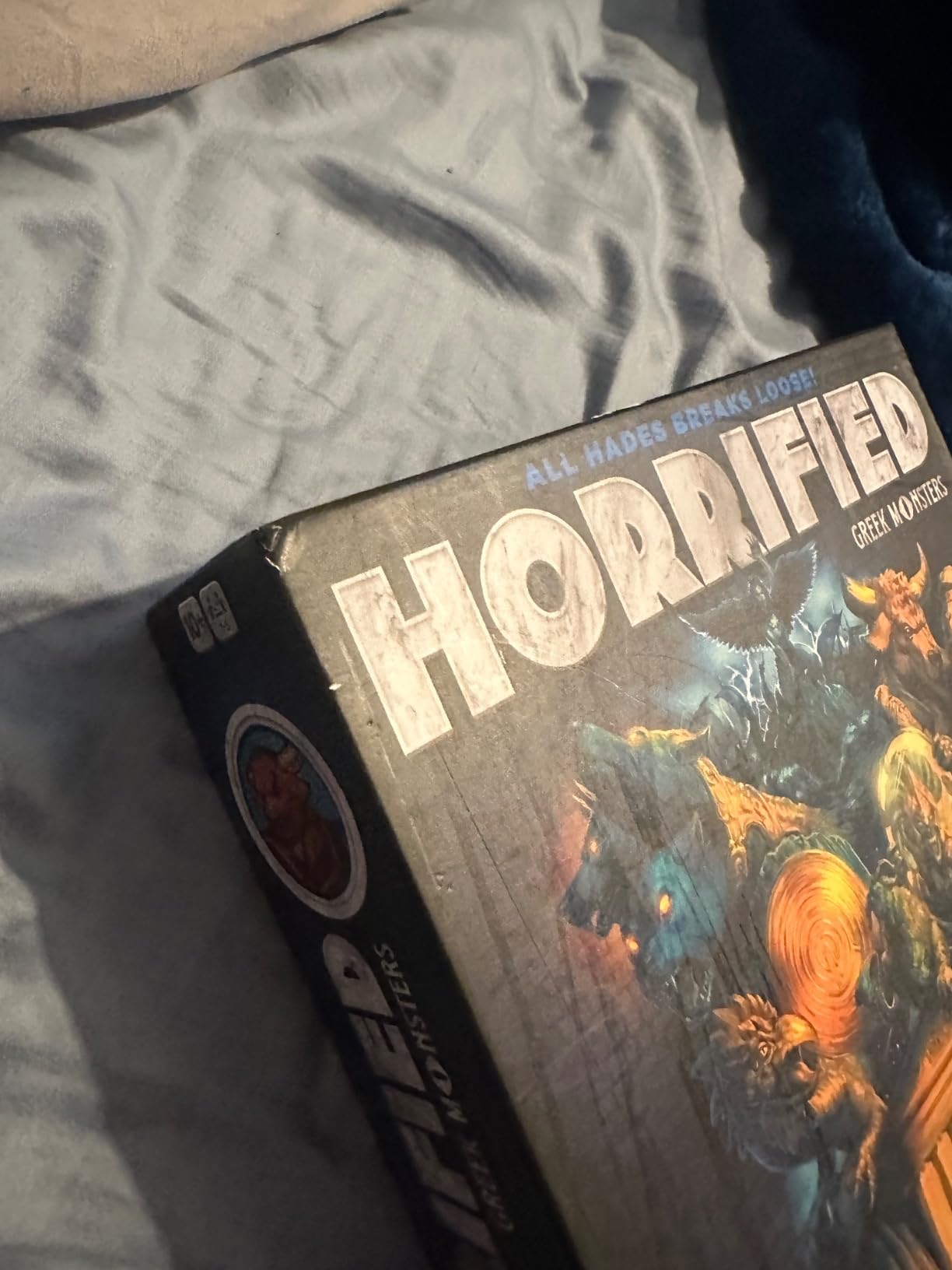
Horrified: Greek Monsters takes the beloved Horrified formula and transports it to ancient Greece. Instead of classic movie monsters, you are facing off against Medusa, Cerberus, the Minotaur, the Chimera, the Siren, and the Basilisk. Each monster has unique mechanics that require different strategies to defeat, and you can combine multiple monsters in a single game for an even bigger challenge.
What I love about this game is how approachable it is. We taught three new players the rules in under ten minutes, and everyone was making meaningful decisions by their second turn. The hero abilities are distinct and create interesting synergies. Coordinating who goes where, who collects which items, and who distracts which monster creates the kind of table talk that makes cooperative gaming so enjoyable.
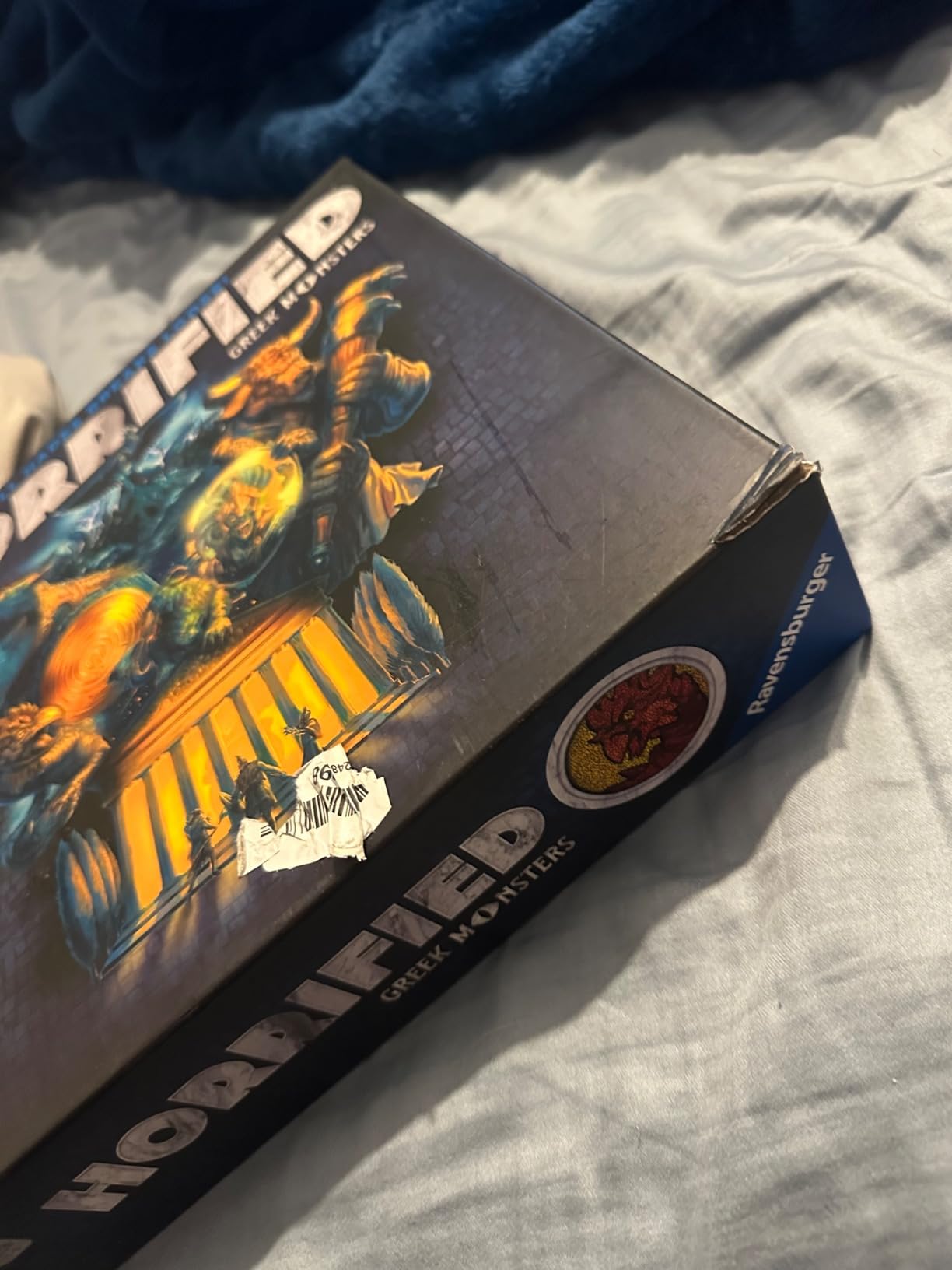
The artwork is gorgeous. Each monster mat features detailed illustrations that capture the mythological theme perfectly. The hero standees and monster figures are well-sculpted, and the item bag adds a nice tactile element to the treasure-hunting mechanic. Everything fits together in a sturdy box with good insert design.
The game plays differently depending on which monsters you face. Medusa requires you to avoid her gaze while collecting items. Cerberus demands that you feed all three heads simultaneously. The Minotaur charges through the labyrinth forcing you to stay mobile. This variety means each session feels fresh, even after a dozen plays.
Who Should Play Horrified: Greek Monsters
This is an excellent choice for families with older kids and groups that include both gamers and non-gamers. The rules are straightforward, the theme is universally appealing, and the difficulty is adjustable by choosing which and how many monsters to face. If you want a cooperative game that plays in about an hour and generates lots of table conversation, Horrified delivers.
Hardcore strategy gamers may find the decisions a bit too simple after extended play. There is less mechanical depth here than in something like Spirit Island or Pandemic, but that simplicity is part of what makes Horrified so accessible and enjoyable for mixed groups.
Comparing to the Original Horrified
The original Horrified featured Universal Classic Monsters like Dracula and Frankenstein. This Greek Monsters edition streamlines some rules and introduces new monster mechanics. Fans of the original will find familiar gameplay with enough variation to justify owning both. The Greek mythology theme also tends to appeal more to adults who might find the classic movie monsters a bit campy.
10. Castle Panic 2nd Edition – Tower Defense on the Tabletop
Fireside Games Castle Panic 2nd Edition Fantasy Board Game
1-6 Players
45 Min Playtime
Ages 8+
Cooperative Tower Defense
Pros
- Excellent cooperative teamwork gameplay
- Easy to learn for mixed-age groups
- Card trading adds strategic depth
- Four game modes including solo
- Great family game with high replay value
Cons
- Some rules require interpretation
- Components could use a visual upgrade
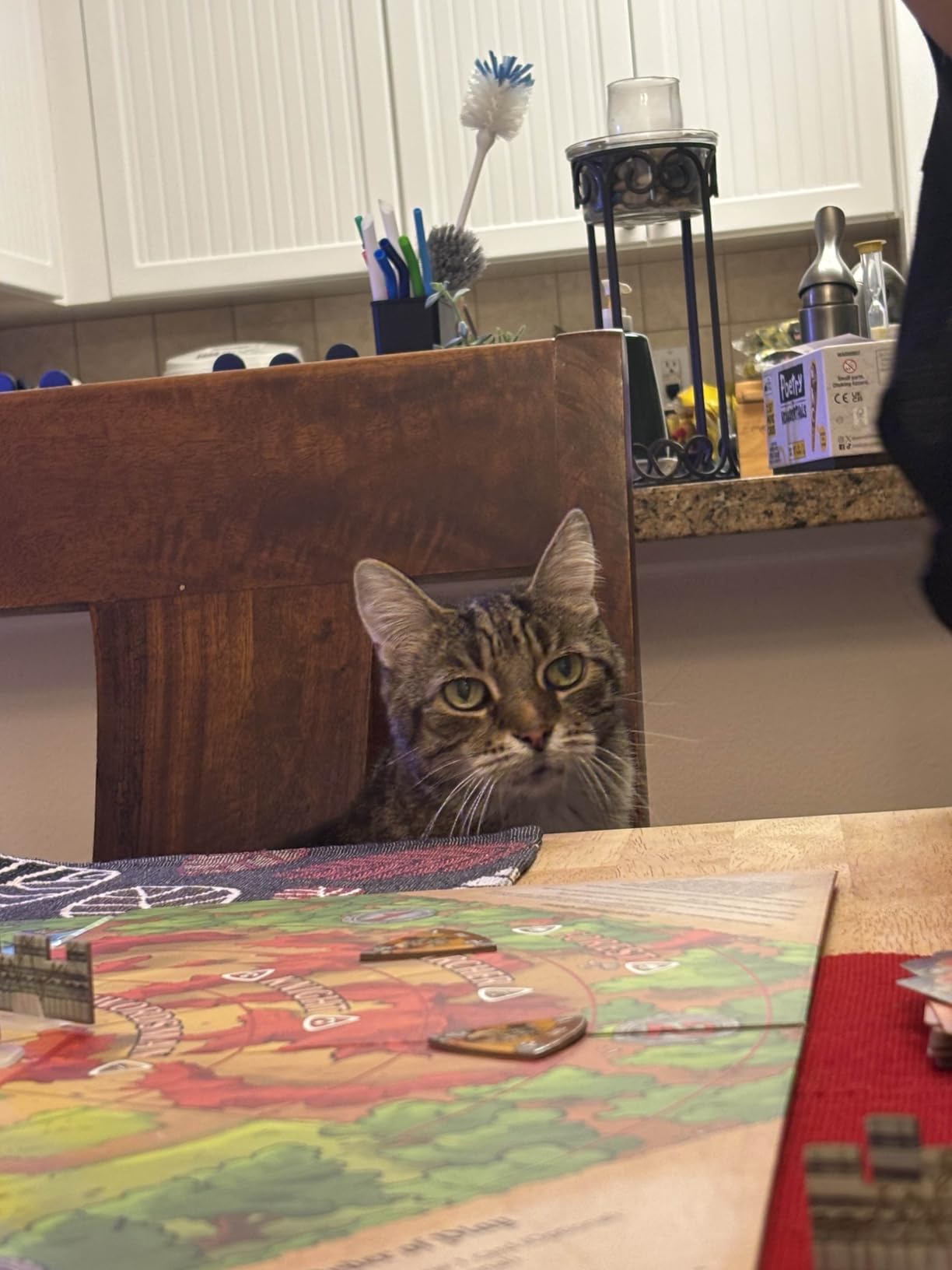
Castle Panic 2nd Edition translates the tower defense video game genre into a satisfying tabletop experience. Monsters are marching toward your castle walls from all directions, and your team must trade cards, plan attacks, and coordinate defenses to survive the onslaught. The 3D castle towers in the center of the board give the game a visual presence that makes everyone at the table feel the stakes.
The card trading mechanic is what elevates Castle Panic above a simple dice-rolling exercise. You can trade cards with other players on your turn, but only cards of the same type or color. This restriction forces communication and planning without creating the alpha player problem. Our group found that the best sessions involved constant negotiation, with players calling out what they needed and others offering trades that set up future turns.
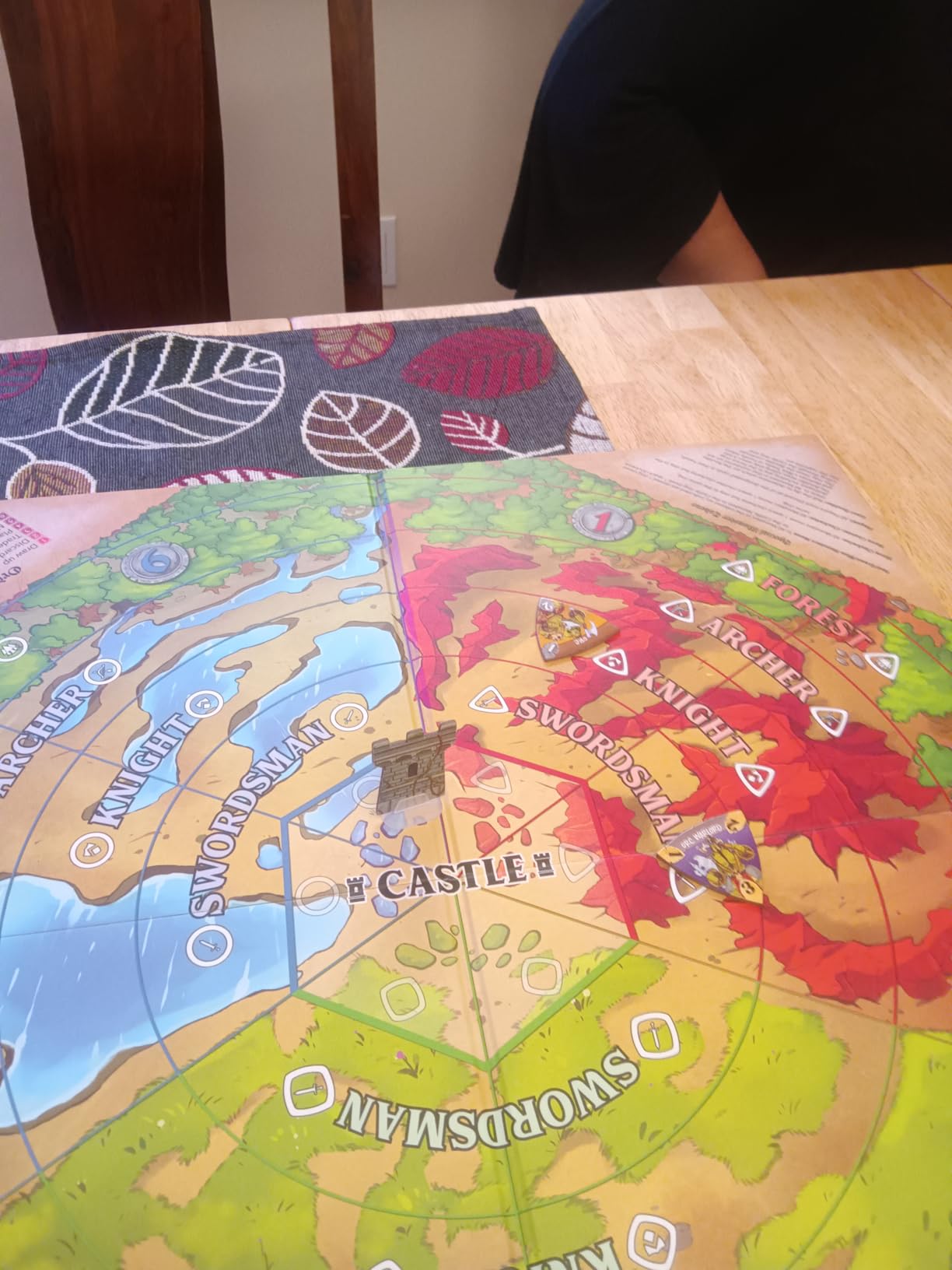
The second edition improves on the original with better components, clearer rules, and the addition of 3D castle towers. The four game modes add welcome variety. Standard cooperative mode is the most popular with our group, but the Master Slayer mode (where you compete to kill the most monsters while still cooperating to survive) adds a fun competitive edge for groups that want it.
At 45 minutes, Castle Panic fits nicely into a game night slot. Setup takes about five minutes, and the rules are simple enough that you can teach it while playing the first round. The game supports up to 6 players, which is higher than most cooperative games on this list, making it a great option for larger groups.
Who Should Play Castle Panic
Castle Panic is a great fit for families with kids, larger groups of up to 6 players, and anyone who wants a cooperative game with a fun, accessible theme. The tower defense concept is easy to grasp, and the card trading creates natural opportunities for table talk and coordination. It is also one of the few cooperative games that works well with very young players (ages 8 and up).
Strategy enthusiasts looking for deep decision-making might find Castle Panic a bit light. The card draws introduce a significant luck element, and experienced gamers may feel that optimal moves are obvious. Consider this a fun social game rather than a strategic challenge.
Solo Play Experience
The solo mode in Castle Panic holds up well. Playing alone, you manage multiple hands of cards, which creates an engaging puzzle of resource management. It loses some of the social trading dynamics but gains a meditative quality as you plan your defenses turn by turn. If you enjoy solo gaming and the tower defense theme appeals to you, Castle Panic works as a single-player experience.
11. Forbidden Desert – Survival Adventure With Shifting Sands
Gamewright – Forbidden Desert Cooperative Survival Adventure Board Game for 2-5 Players – Family Strategy for Ages 10+
2-5 Players
45 Min Playtime
Ages 10+
Cooperative Desert Survival
Pros
- Ever-shifting board creates unique challenges
- Easy to learn in about 15 minutes
- High replay value with randomization
- Beautiful design and quality components
- Variety of roles with different abilities
Cons
- Tiles can get damaged revealing hidden content
- Propeller piece may be fragile
- Requires a fairly large table to play
Forbidden Desert takes the cooperative survival formula and adds a relentless sandstorm that shifts the board beneath your feet. Your team crashes in the desert and must excavate the pieces of a legendary flying machine to escape. Meanwhile, sand piles up on tiles, blocking movement and burying equipment. The storm moves every turn, covering and uncovering different parts of the map in ways that keep every game feeling unpredictable.
What sets Forbidden Desert apart from its sibling Forbidden Island is the role system. Each character has abilities that genuinely change how you approach the game. The Archaeologist can clear sand faster. The Navigator can move other players efficiently. The Water Carrier manages the team’s hydration. Our group found that coordinating these abilities created richer strategic discussions than Forbidden Island, where roles felt more interchangeable.
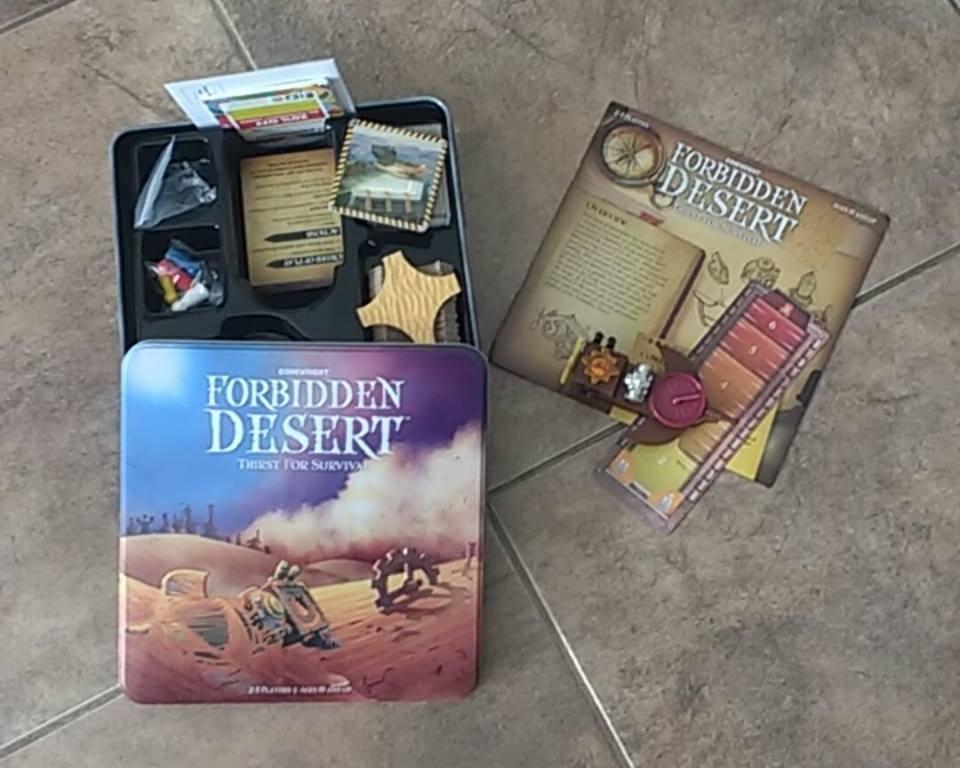
The components are beautiful and functional. The storm marker slides around the board showing wind direction, the sand tokens stack meaningfully on tiles, and the flying machine pieces are satisfying to excavate and assemble. The sun beating down mechanic (represented by a thirst track) adds constant pressure that prevents the game from ever feeling relaxed.
Learning the rules takes about 15 minutes. The rulebook is well-written with clear examples, and the reference cards summarize everything you need during play. Setup takes a bit longer than Forbidden Island because of the storm mechanics, but it is still under 10 minutes once you know the process.
Who Should Play Forbidden Desert
Forbidden Desert is perfect for groups that enjoyed Forbidden Island but want more mechanical depth without a steep learning curve. It supports up to 5 players (one more than Forbidden Island), making it better for slightly larger groups. If you like the idea of a cooperative adventure with meaningful role differentiation and a dynamic board, this is an excellent choice.
Groups that found Forbidden Island too simple will appreciate the added complexity, but those same groups might eventually find Forbidden Desert reaches its ceiling after 20 to 25 plays. At that point, Pandemic or Spirit Island offer the next level up in strategic depth.
Table Space Requirements
One practical consideration: Forbidden Desert requires more table space than you might expect. The board is a 5 by 5 grid of tiles, and with sand tokens, player pawns, the storm tracker, and excavated machine parts, you need a decent-sized surface. We found that a standard dining table works fine, but a small coffee table might feel cramped, especially at higher player counts.
12. Codenames: Duet – Word Puzzle Teamwork for Two
CGE Codenames: Duet Board Game (2nd Edition)
2 Players Only
15 Min Playtime
Ages 12+
Cooperative Word Association
Pros
- Perfect for two players and couples
- Easy to learn and quick to play
- High quality components with 400 words
- Replayable with multiple key card combinations
- Fun way to learn how each other thinks
Cons
- Some users wish for more word variety
- Less dynamic than the 4+ player version
Codenames: Duet adapts the wildly popular word association game into a purely cooperative two-player experience. You and your partner each see a different key card showing which words on the grid are your agents. You take turns giving one-word clues and a number to help your partner identify the correct words without picking the assassin tile that ends the game instantly. It is simple, fast, and surprisingly deep.
What makes this one of the best cooperative board games for adults, especially couples, is how it reveals the way you and your partner think. My partner and I discovered that we have completely different word associations, which led to hilarious miscommunications and eventually to a deeper understanding of each other’s thought processes. The game creates natural conversation in a way that few other two-player games manage.
The 400 words provide plenty of variety, and the key card system generates thousands of unique combinations. Each game takes about 15 minutes, making it perfect for a quick session before dinner or as a warm-up before a longer game night. The components are clean and functional, with sturdy cards and tiles that hold up to repeated play.
The difficulty is adjustable through the number of guesses you allow each turn and the number of timer tokens you use. Starting with more generous settings and gradually tightening the constraints provides a natural difficulty curve. Our group found that after about 10 games, we were ready for the tighter constraints that make each clue feel high-stakes.
Who Should Play Codenames: Duet
Codenames: Duet is the best cooperative board game for couples who want a quick, engaging activity that sparks conversation. It is also great for close friends or family members who enjoy word games and communication challenges. If you like the original Codenames but usually play with just one other person, this is the perfect adaptation.
People who dislike word games or abstract puzzles will not find much here. The game is purely a communication challenge without any theme or narrative to carry the experience. It is also strictly a two-player game, so it will not work for your regular game night group.
Combining With Original Codenames
One of the best things about Codenames: Duet is that the 400 word cards are fully compatible with the original Codenames. If you own both, you can mix the word pools for even more variety. You can also use the Duet rules with the original game’s grid for a cooperative party experience with larger groups. This cross-compatibility adds significant value if you are building a collection.
How to Choose the Right Cooperative Board Game
Finding the best cooperative board game for adults means matching the game to your group. Here are the key factors our team considers before every purchase.
Player Count
The most important factor is how many people will be playing regularly. Games like Sky Team and Codenames: Duet are strictly two-player experiences. Pandemic and Forbidden Island work best at 2 to 4 players. Castle Panic and Betrayal at House on the Hill accommodate up to 6. Before buying, check the supported player count and read reviews about how the game performs at your specific group size. Some games play very differently at different counts.
Complexity and Learning Curve
Be honest about your group’s tolerance for rules. Forbidden Island and Codenames: Duet teach in under 10 minutes. Pandemic and The Crew take about 15 minutes to explain. Spirit Island and The Night Cage require dedicated learning sessions. There is no shame in starting simple. A game your group actually plays is always better than a complex one that sits on the shelf because nobody wants to relearn the rules.
Play Time
Match the game to your available time. Codenames: Duet and Sky Team play in 15 to 20 minutes. Forbidden Island finishes in 30 minutes. Pandemic and The Crew run about 45 to 60 minutes. Spirit Island and Betrayal at House on the Hill can stretch past two hours. Having games at different time lengths means you always have something that fits your schedule.
The Alpha Player Problem
The biggest complaint about cooperative games is the “alpha player” problem, where one experienced player tells everyone else what to do. This ruins the experience for everyone at the table. Games that limit communication (like Sky Team and The Crew) naturally prevent this issue. Games with asymmetric player powers and complex individual decisions (like Spirit Island) make it impossible for one person to track everything. If this is a concern for your group, prioritize games with built-in communication restrictions or high individual complexity.
Solo Play Capability
Many cooperative games support solo play, but the quality varies widely. Spirit Island, The Night Cage, and Slay The Spire offer genuinely engaging solo experiences that stand on their own. Other games technically support solo play but feel like lesser versions of the multiplayer experience. If you plan to play alone regularly, read reviews specifically about the solo mode before committing.
Replayability
Some cooperative games lose their appeal once you solve the puzzle. Others generate new situations every time you play. Games with randomized setups (Forbidden Island, Forbidden Desert, Pandemic), multiple scenarios (Sky Team, Betrayal at House on the Hill), or deep strategic variety (Spirit Island, Slay The Spire) tend to offer the best long-term value. Consider how many times you expect to play before the experience becomes repetitive.
FAQ
What are the best cooperative board games for adults?
The best cooperative board games for adults include Spirit Island for deep strategy, Pandemic for a classic team experience, Sky Team for two-player sessions, The Crew: Mission Deep Sea for quick card-based cooperation, and Betrayal at House on the Hill for narrative storytelling with a hidden traitor twist. Your best choice depends on your group size, available time, and preferred complexity level.
What is the gold standard for cooperative board games?
Pandemic is widely considered the gold standard for cooperative board games. It popularized the modern co-op genre, has sold millions of copies worldwide, and remains a top-rated game years after its release. Spirit Island is often cited as the gold standard for heavy cooperative strategy, while Pandemic Legacy Season 1 holds that distinction for campaign-driven cooperative experiences.
What cooperative board games are best for parties?
For parties, the best cooperative games are ones with short playtimes and simple rules. The Crew: Mission Deep Sea (3-5 players, 20 minutes), Castle Panic (up to 6 players, 45 minutes), and Horrified: Greek Monsters (up to 5 players, 60 minutes) all work well with mixed groups because they teach quickly and keep everyone engaged throughout.
What is the alpha player problem in cooperative games?
The alpha player problem occurs when one experienced player dominates group decision-making, essentially telling everyone else what moves to make. This reduces other players to executing instructions rather than making their own choices. Games like Sky Team and The Crew solve this by limiting communication, while Spirit Island prevents it by giving each player unique, complex abilities that no single person can track simultaneously.
Final Thoughts on the Best Cooperative Board Games for Adults
Finding the right cooperative board game can transform your game nights from competitive stress-fests into shared adventures. Our top recommendation for most groups is Pandemic, thanks to its accessible rules, scalable difficulty, and proven track record as one of the best cooperative board games for adults. If your group craves deep strategic challenge, Spirit Island delivers an experience that rewards hundreds of hours of play. For couples, Sky Team and Codenames: Duet offer intimate, quick sessions that fit into any evening.
The best part about cooperative games is that nobody goes home feeling like a loser. Every win is shared, every loss is a lesson, and the stories you create together are what make game night worth having. Pick the game that matches your group size, time commitment, and complexity preference, and you are set for months of cooperative fun in 2026.