
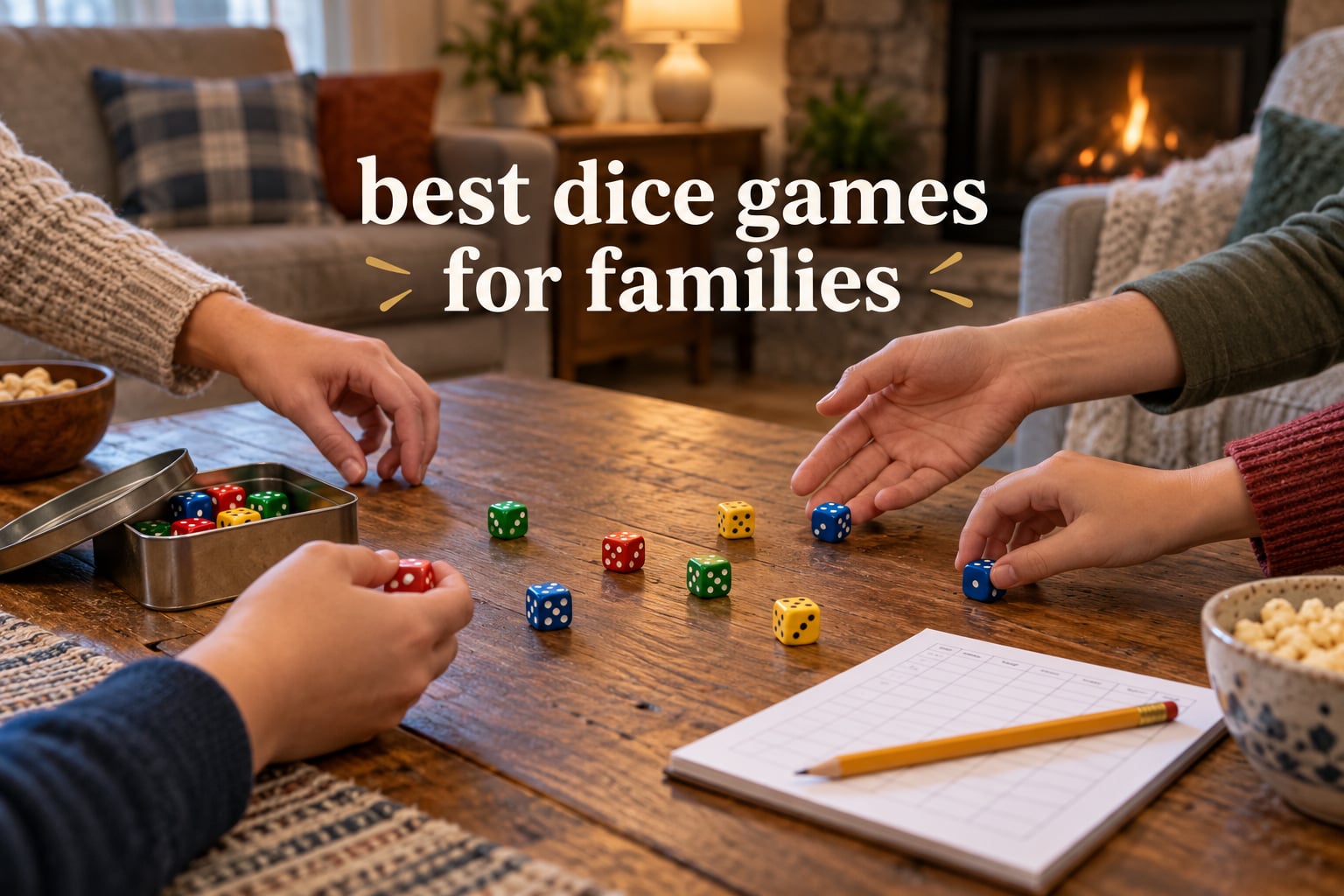
The best dice games for families are the ones where a child and a grandparent can share the same table without either of them feeling outmatched. After putting twelve of them through our family game nights, the three that kept coming back were LCR Left Center Right for its laugh-out-loud speed, Qwixx for the fact that nobody ever sits idle, and Yahtzee for the instant familiarity that needs no teaching at all.
That last point matters more than it sounds. Every parent we spoke to named the same frustration: explaining rules before the fun starts. Dice games beat that problem because the components are self-explanatory, luck keeps the playing field level across a nine-year age gap, and a round rarely runs past fifteen minutes.
What follows is the full roundup of the best dice games for families in 2026, organised so you can jump straight to your situation. We have flagged age ranges, player counts, and the honest drawbacks that show up after the fifth game, not the first.
Top 3 Family Dice Games for 2026

Three picks, three different reasons to own them. LCR wins on pure table energy, Qwixx wins on structure because there is zero downtime between rolls, and Yahtzee wins because it is already half-installed in most households.
Best Dice Games for Families in 2026
| Product | Specifications | Action |
|---|---|---|
| LCR Left Center Right |
|
Check Latest Price |
 Hasbro Yahtzee Hasbro Yahtzee |
|
Check Latest Price |
| Qwixx |
|
Check Latest Price |
 Farkle Farkle |
|
Check Latest Price |
 Pass the Pigs Pass the Pigs |
|
Check Latest Price |
 TENZI Party Pack TENZI Party Pack |
|
Check Latest Price |
 University Games Pizza Party University Games Pizza Party |
|
Check Latest Price |
 Shut The Box Wooden Board Shut The Box Wooden Board |
|
Check Latest Price |
 Dragonwood Dragonwood |
|
Check Latest Price |
 Yamslam Yamslam |
|
Check Latest Price |
 Liar’s Dice Liar’s Dice |
|
Check Latest Price |
 Bamboozled Bamboozled |
|
Check Latest Price |
One note on how to read the list. Games near the top are the ones we hand to guests and relatives who have never played before. The ones further down suit more specific homes, such as a family of two or a table of eight at a holiday gathering.
1. LCR Left Center Right: The Fastest-Laughing Dice Game in the House
LCR® Left Center Right™ Dice Game – Blue Tin
Players: 3+
Ages: 5 and up
Tin: 3 x 4 x 1.5 inches
Weight: 3.2 ounces
Pros
- Teachable in a single round
- Turns move quickly
- Compact tin stores and travels
- Works from young children to grandparents
- Mix of chance and suspense
Cons
- Plays best with three or more players
- Many players prefer real money to the plastic chips
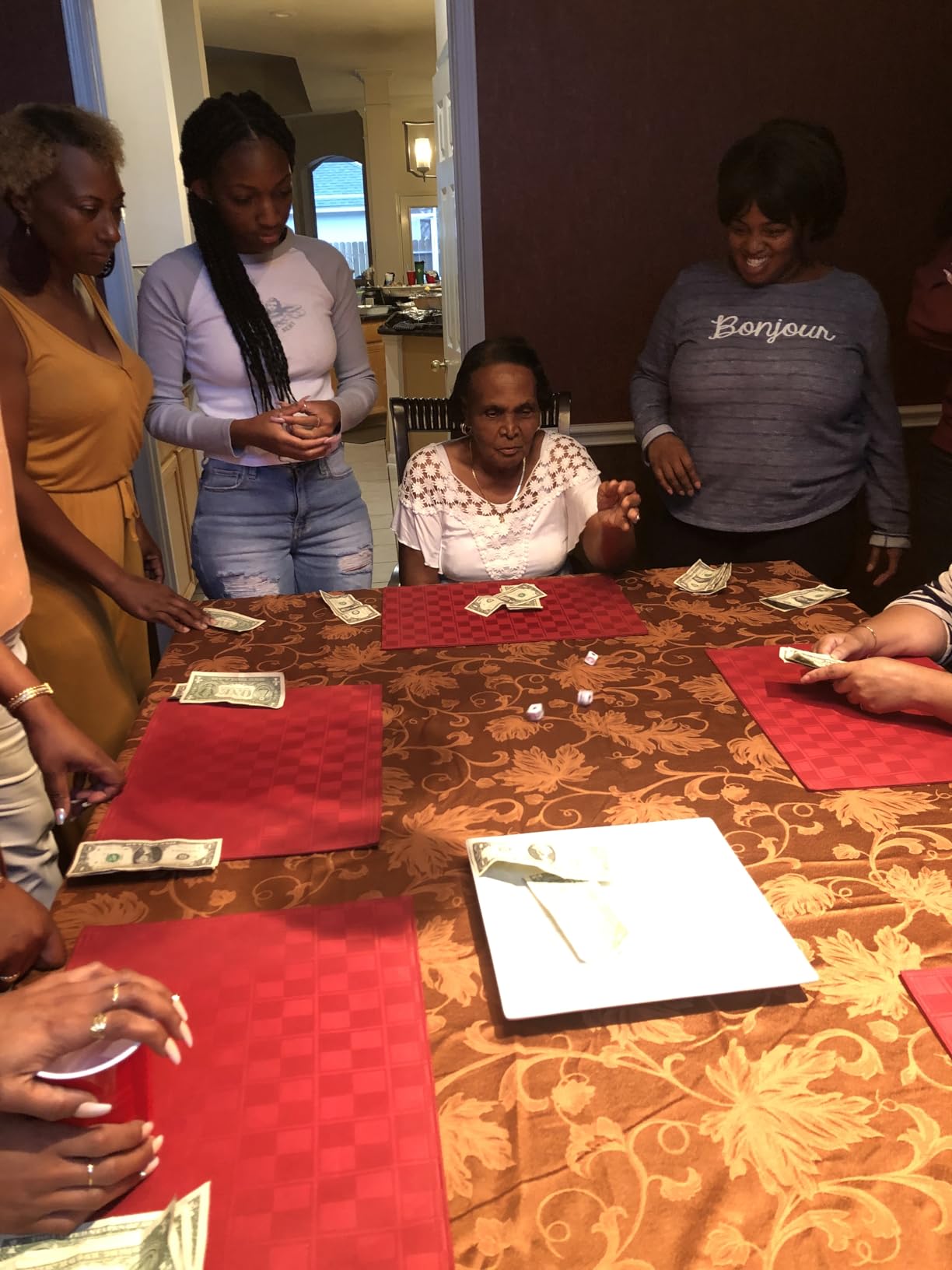
This is the game our group reaches for when there is no plan. You roll three dice, read off the three categories on the card in front of you, and advance your chip. The whole turn takes seconds, which means the game keeps moving even when a seven-year-old is still learning to read the board.
What surprised us was how funny it stays. The categories are Left, Center and Right, so a single roll can send your chip three directions at once, and that unpredictability produces the kind of laughter that has nothing to do with winning.
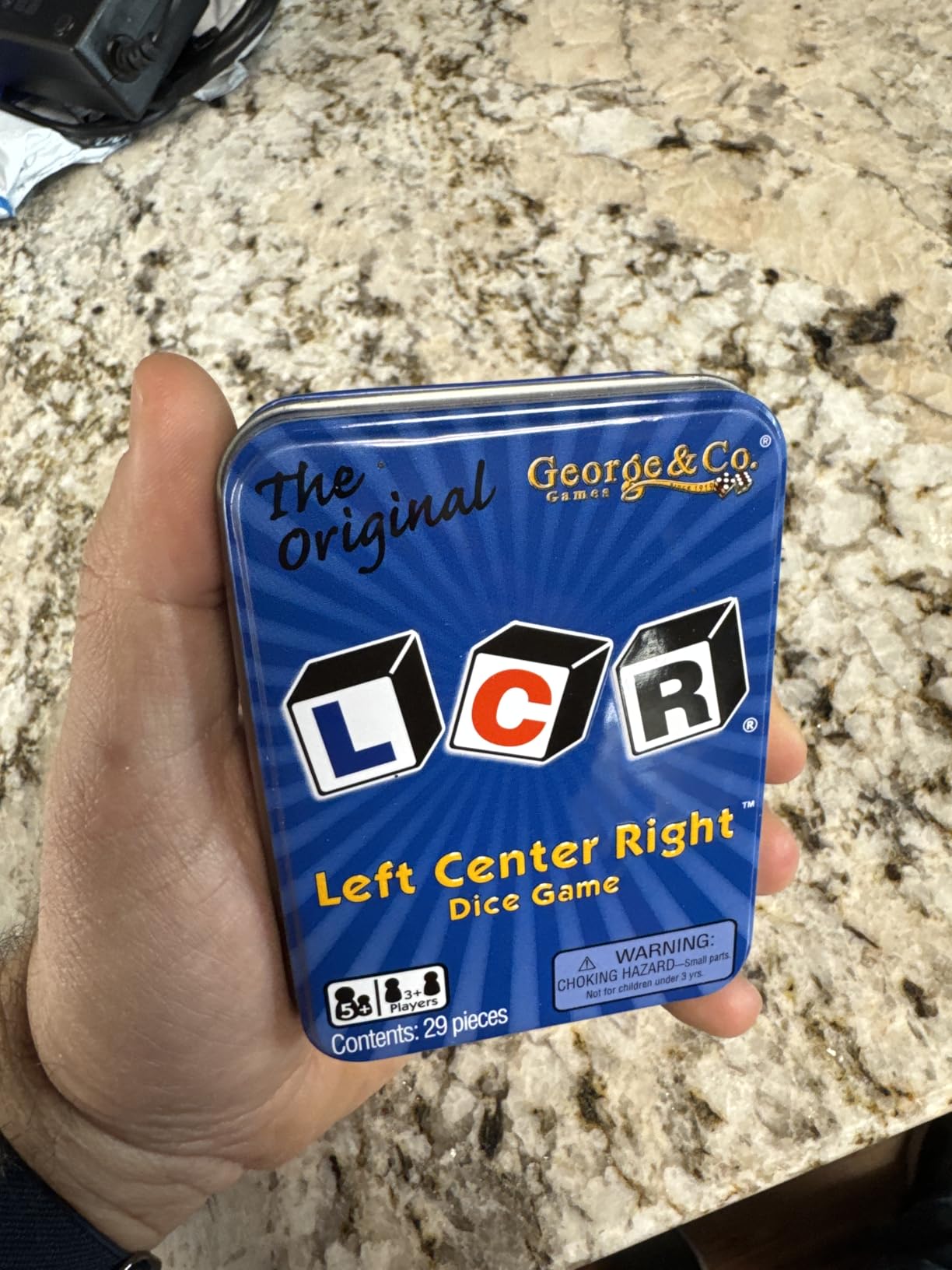
Reviewers consistently point out that the rules are simple enough for new players to understand after one round. The tin is small enough to live in a coat pocket, and the manufacturer lists a recommended age of five and up.
It is a pure luck game with almost no strategic layer, and at a serious play level that is a weakness. For a family with teenagers who want depth, that is a real ceiling worth naming.
Who It Suits Best
Families of three to six, mixed-age gatherings with grandparents visiting, and anyone who needs a game that is ready to play with no setup. It is also one of the most reliable travel games we own, since the tin fits anywhere.
Who Should Skip It
Skip it for pairs. It needs three or more players to work properly, and if your family game night is usually you and one child, this is not the game to build a habit around.
2. Hasbro Yahtzee: The Game Nobody Has to Explain
Hasbro Gaming Yahtzee Game, Fast-Playing Dice Games for Kids, Teens, and Adults, Strategy Games, Family Games for Kids, 2 or More Players, Ages 8 and Up
Players: 2+
Ages: 8 and up
Box: 1.58 x 7.87 x 10.51 inches
Shaker and 5 dice
Pros
- Instantly familiar to most players
- Fast paced for game night
- Strategy mixed with luck
- Portable gift that suits all ages
- Works for two or more
Cons
- Many households already own a copy
- Score sheet needs explaining to young first-timers
There is a reason this one is on nearly every shelf in the country. Sit down a mixed group of kids, teens and adults, say the word Yahtzee, and everyone immediately knows the goal. That single fact removes the entire teaching step that slows most family games down.
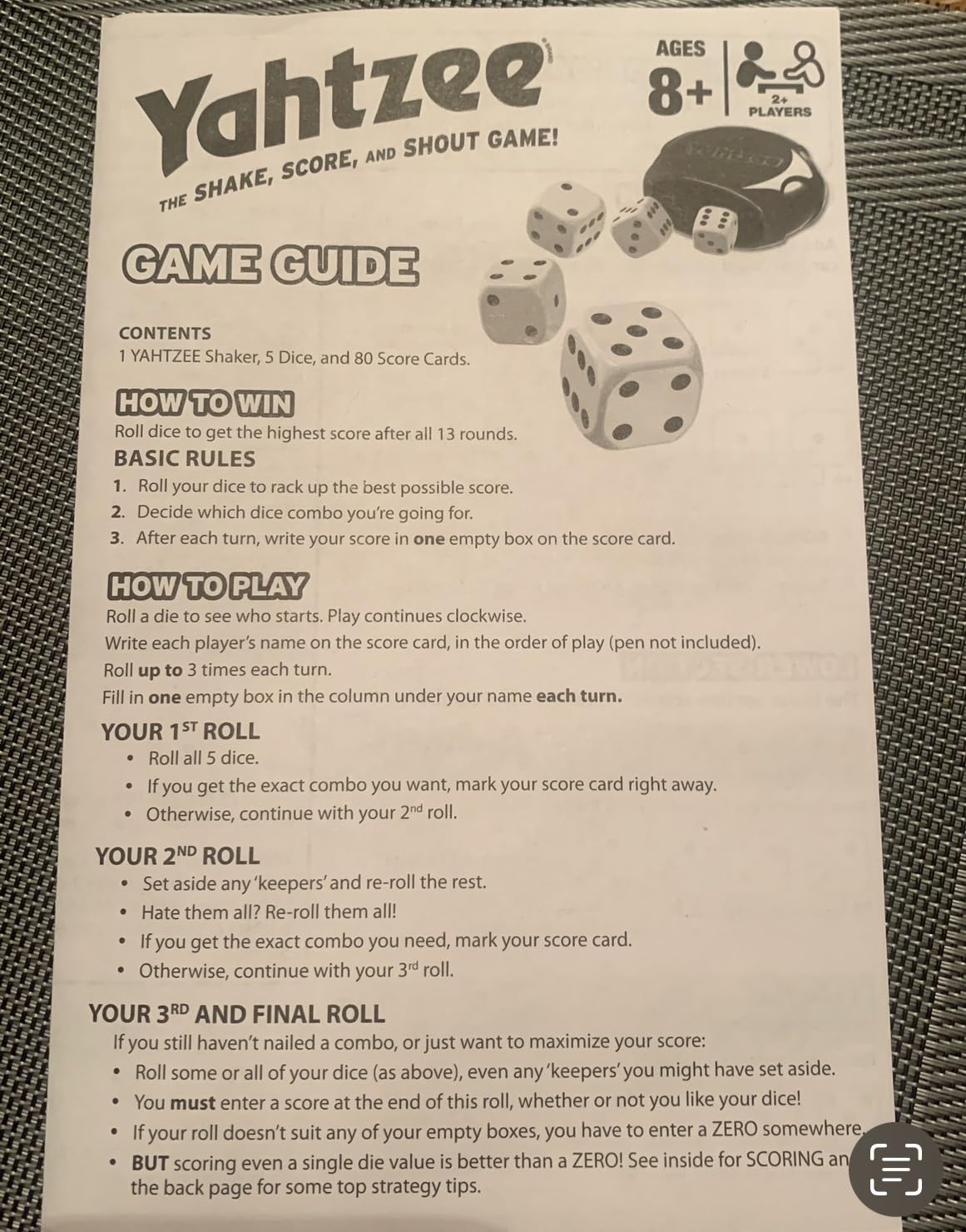
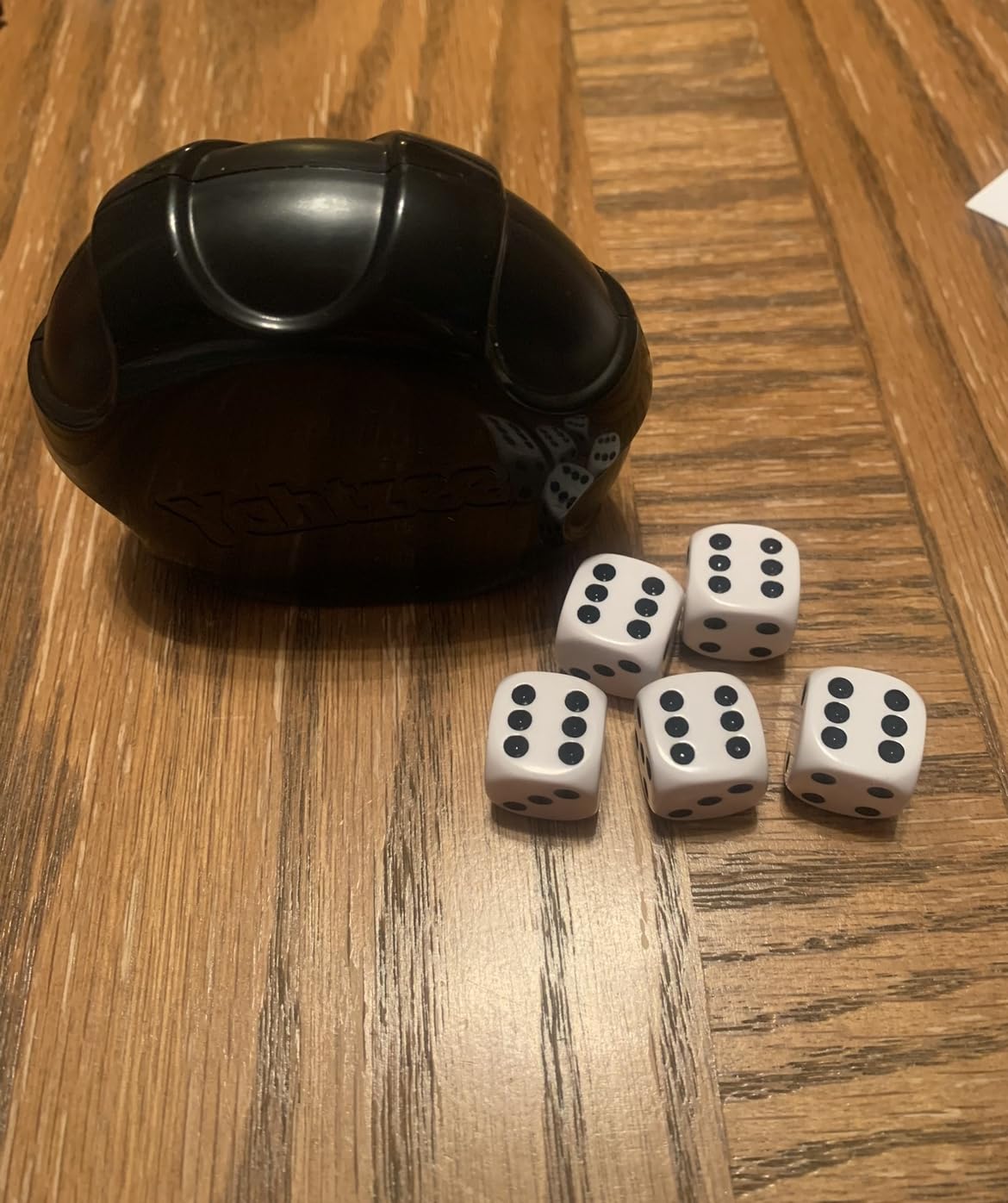
The gameplay is a clean mix of luck and strategy. You roll five dice up to three times, keeping the ones that build a straight or a full house, and the risk of chasing five of a kind is where the shouting starts.
Across family game night forums, Farkle, Yahtzee and LCR are repeatedly named as the reliable standards that always work when guests arrive without warning. That is exactly the role this box fills, and it does it in ten to fifteen minutes.
The catch is obvious and reviewers say it plainly: most families already own one. Buying it as a gift is easy, but buying it for yourself is a harder sell unless you are starting a collection from nothing.
Who It Suits Best
Households with kids aged eight and up, first-time board game buyers, and anyone hosting a group where half the table has never played a modern game. It is also the safest present you can give a family.
Who Should Skip It
Skip it if you are looking for depth or novelty. Older children tend to outgrow the scoring sheet, and there is no hidden strategy layer for adults to master after the twentieth game.
3. Qwixx by Gamewright: The Best Answer to Waiting Turns
Qwixx Fast Family Dice Game – Quick 15-Minute Gameplay, Easy to Learn, Strategy & Luck, Travel-Friendly Party Game for Kids & Adults Ages 8+, 2–5 Players
Players: 2 to 5
Ages: 8 and up
Play time: 15 minutes
Tin: 5.25 x 3.75 x 1.2 inches
Pros
- Everyone plays at once
- Finishes in 15 minutes or less
- Very easy to learn
- Travel friendly tin format
- Scores on every roll
Cons
- Score sheet needs running total tracking
- Fast pace is tricky for younger kids
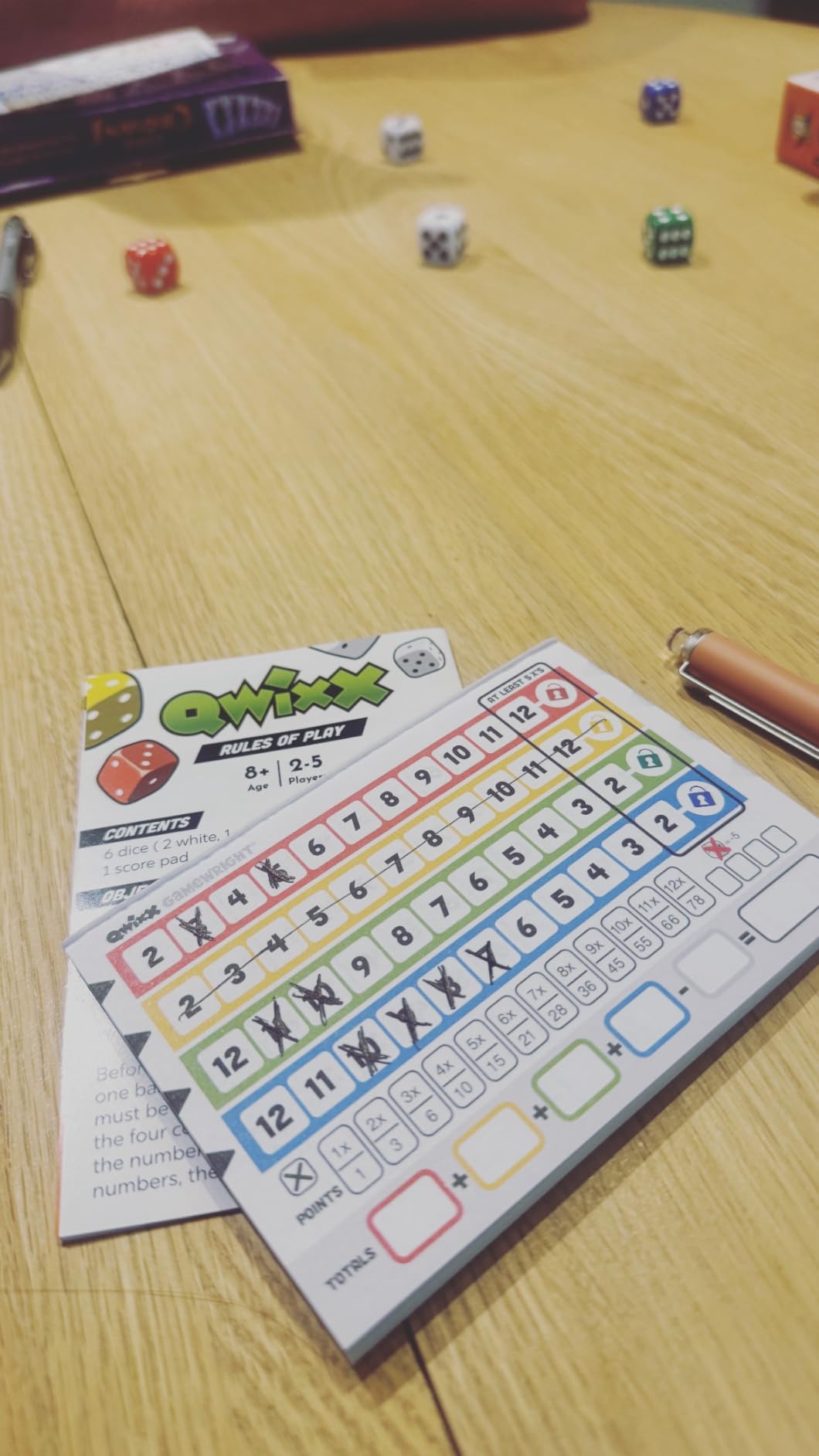
Qwixx solves the most common family game night complaint, which is watching. Everyone rolls on the same beat and marks their own card, so there are no quiet stretches where four people sit and observe one person think.
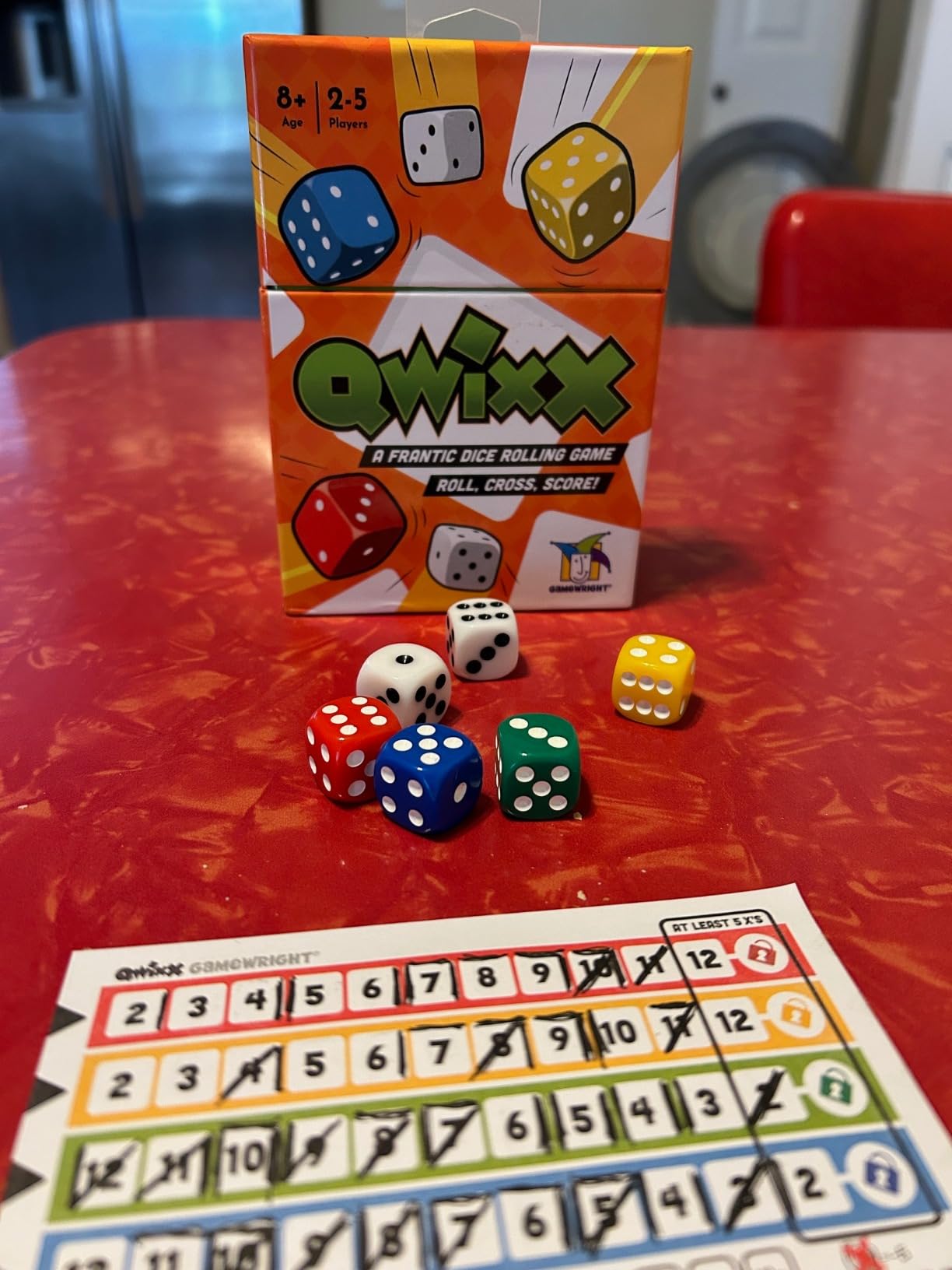
The rule fits in one breath: roll your four white dice, add them up, and cross off that number in one of your four rows. Everyone plays at once, and the more numbers you cross off, the higher you score.
On r/boardgames threads, Qwixx is praised for exactly one reason above all others, that there is no downtime between turns. The same reviewers note the estimated playing time of fifteen minutes, which makes it our most reliable after-dinner choice.
The design has one real cost. Younger children struggle to track running totals and rows while everyone is marking at speed, so under-sevens tend to need a hand for the first round or two.
Who It Suits Best
Families with children aged eight and up, groups who hate dead time, and travel situations where you want one tin holding six dice and a score pad. It also works well with only two players at the table.
Who Should Skip It
Skip it for very young kids and for very large tables. Five players is the ceiling, and the fast pace rewards players who are already comfortable with numbers.
4. Farkle: The Purest Push-Your-Luck Game in the Roundup
Farkle Dice Games for Kids, Dice Set, Score Sheets Inc, Family Game Night
Players: 2+
Ages: 8 and up
Box: 8.13 x 3 x 5.38 inches
Cup, 6 dice, score pad
Pros
- Ready to play straight from the box
- Simple push-your-luck scoring
- Works for two or a large group
- Lightweight and easy to transport
- Screen-free fun for all ages
Cons
- A single bad roll can wipe out a big score
- Needs a steady hand and risk appetite
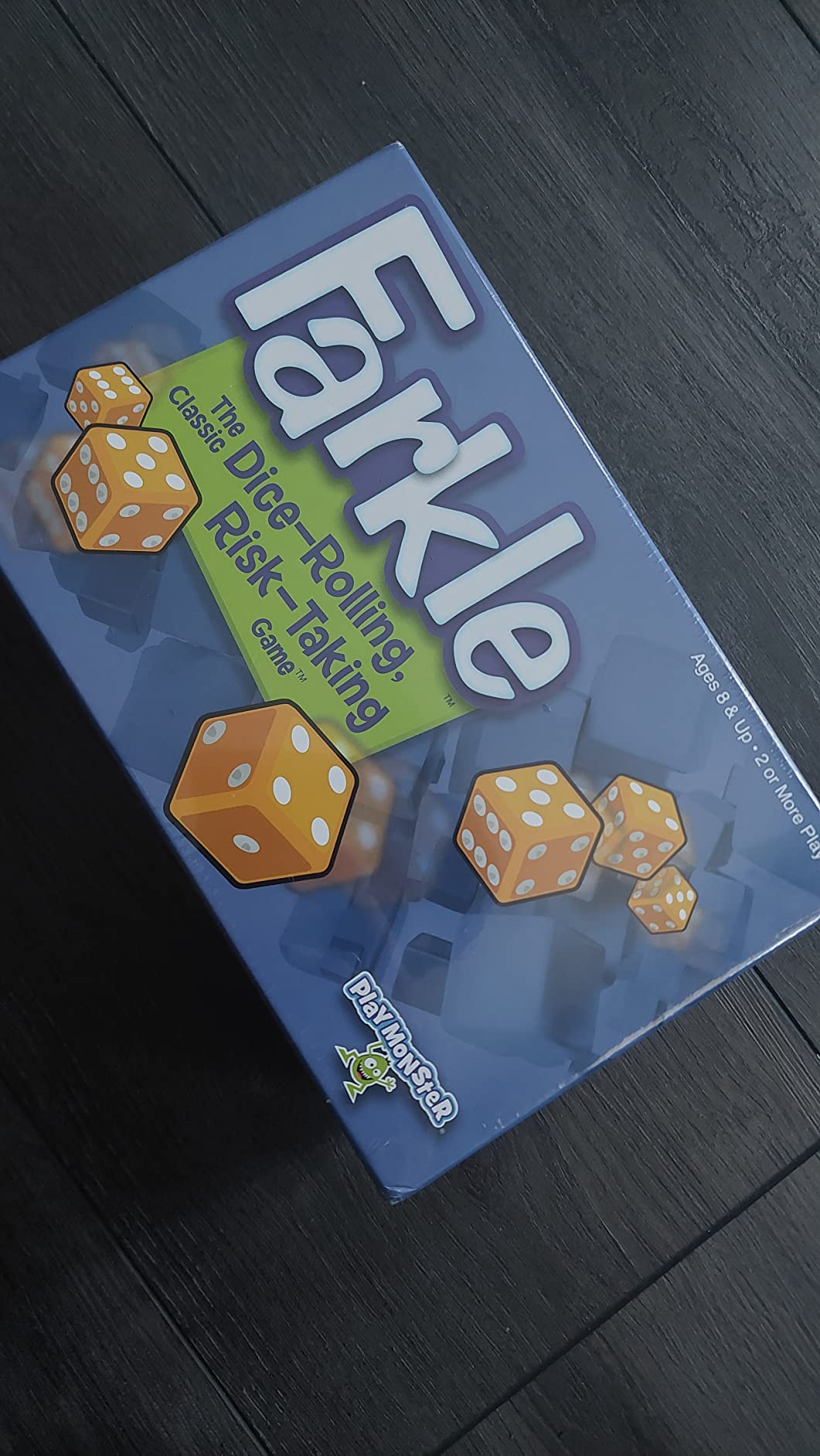
Push-your-luck is the term for the moment when a player holds a stack of points and decides whether to bank it or roll again. Farkle is that mechanic in its purest form, which is why it produces the most dramatic swings at the table of any game here.
You score by setting aside combinations such as straights, triples or pairs of ones. Roll something you cannot use and you lose your entire accumulated turn score, which is the moment half the table groans and the other half laughs.

Reviewers describe the set as a reliable family game night option that works well for two players or a large group, and the included cup, six dice and score pad mean you can play it within minutes of opening it.
Parents are most often warned about the wipeout. Forum discussions about family dice games describe the specific blow-up: a parent goes bust early, a child is still building a stack, and someone decides the game is unfair.
Who It Suits Best
Families with older children who understand risk, and any household that wants a genuine push-your-luck game without learning rules for an hour. It scales cleanly to a group of six or more.
Who Should Skip It
Skip it with children under eight or anyone who reacts badly to losing a large score in a single throw. The variance is the point, and that cuts both ways.
5. Pass the Pigs: The Best Dice Game to Keep in a Bag
Pass the Pigs, Hilarious Pig Dice Game by Winning Moves Games USA
Players: 2 or more
Ages: 7 and up
Case: 1.75 x 4 x 8.5 inches
2 pig dice and score pad
Pros
- Explains in about 30 seconds
- Handbag size hard-shell case
- Pig dice are durable and addictive
- Fun for children as young as six
- Everything needed is included
Cons
- Case lid pops off easily
- Pure luck with limited strategic depth
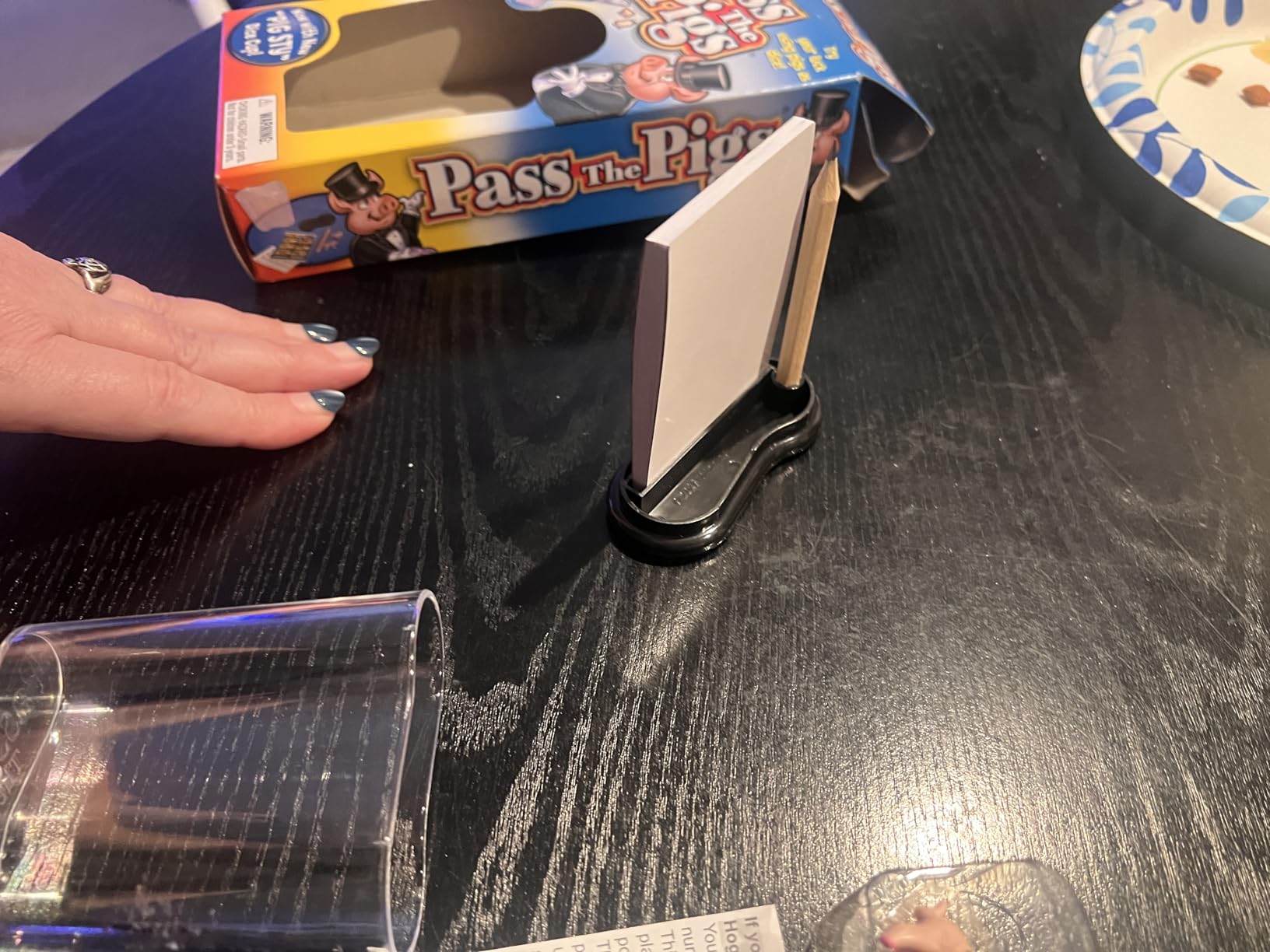
Two pig-shaped dice, a cup, a pencil and a score pad. That is the whole game, and it fits in a handbag. We have used this one in restaurant waiting rooms, on camping trips and in queues, and it has never once needed a table.
You shake the cup and score according to how the pigs land, from one point for a Sider up to fifteen for a Leaning Jowler. Roll a Pig Out and your turn score is gone, so it is a clean test of nerve across any age group.
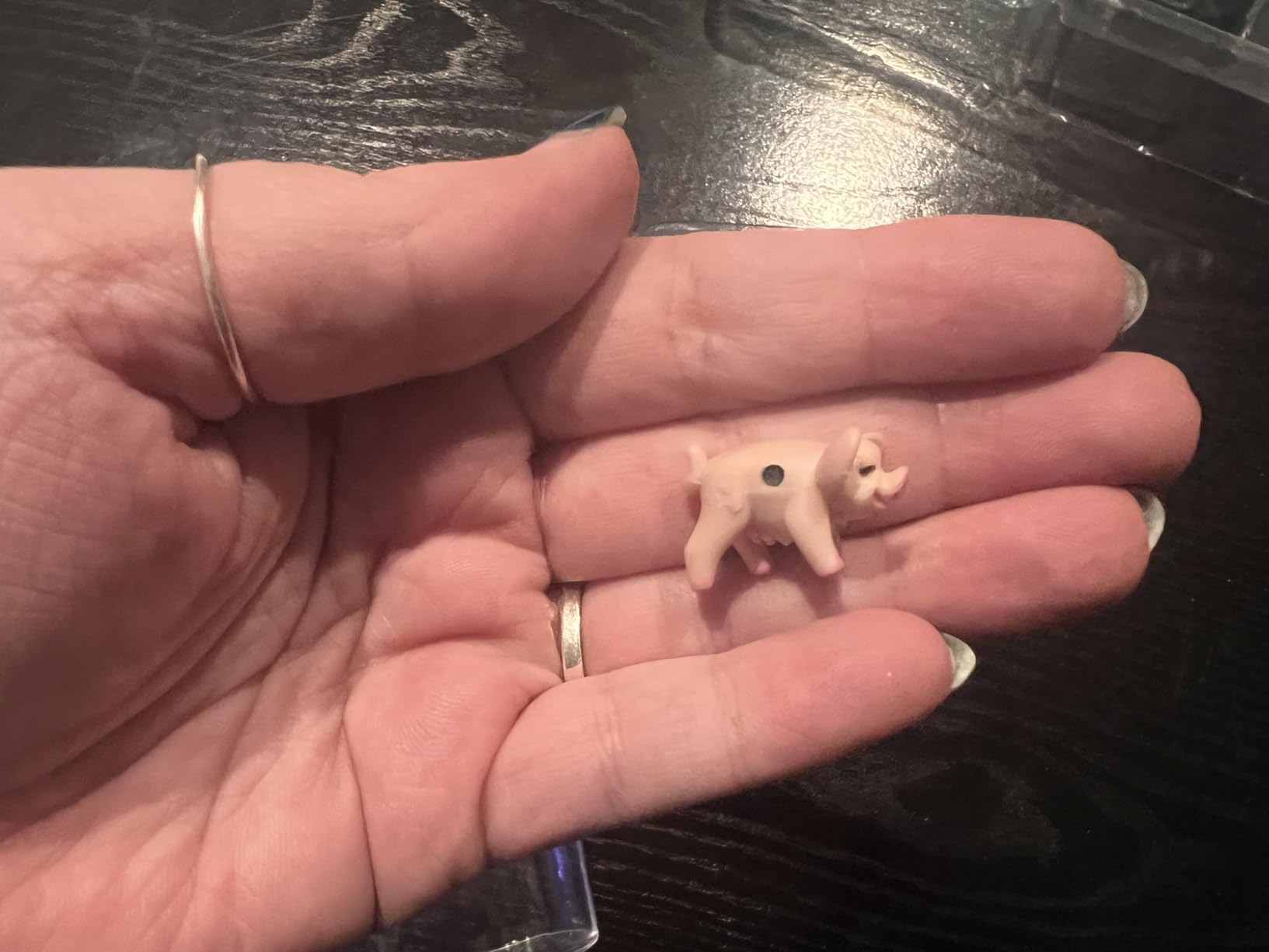
Reviewers call it a reliable purse game, and the near-instant teachability is what earns it that description. The manufacturer recommends ages seven and up, though the review consensus is that children as young as six handle the scoring fine.
Worth noting for parents who like math: the box lists an educational objective of teaching and reinforcing probability and statistics, and the game is used in that way in many classrooms. That makes it a genuinely useful pick for a family.
Who It Suits Best
Anyone who wants a dice game in a coat pocket, families playing at a table of two or three, and travellers. It works well as a quiet game alongside a louder one because the turns are so short.
Who Should Skip It
Skip it if you need strategy or a longer arc. The design is pure luck, and older children often lose interest after a handful of games because nothing changes between decisions.
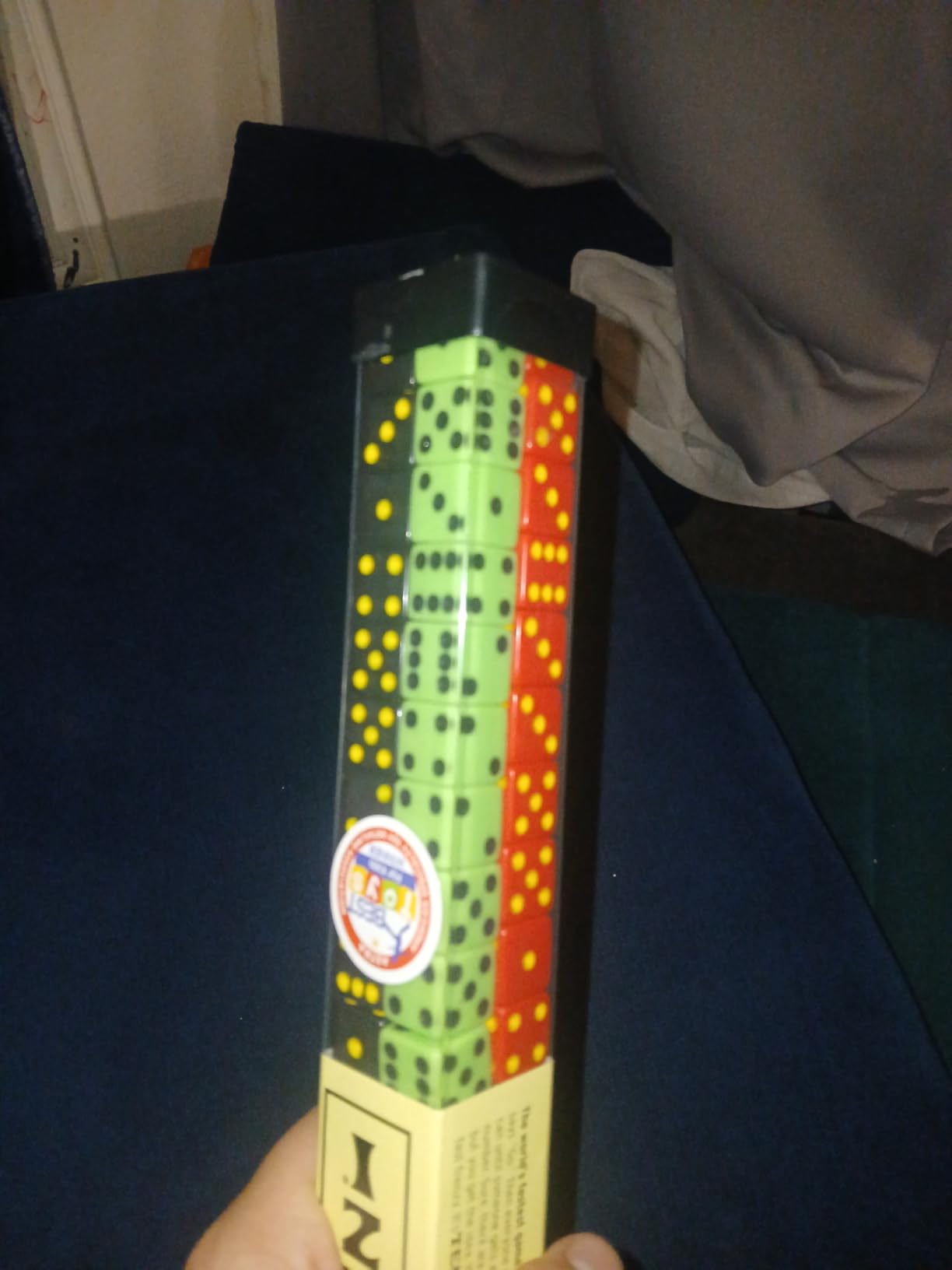
6. TENZI Party Pack: The Loudest and Quickest Game on the List
TENZI Party Pack Dice Game – A Fun, Fast Frenzy for the Whole Family – 6 Sets of 10 Colored Dice with Storage Case – Colors May Vary
Players: 2 to 6
Ages: 7 and up
Bag: 1.1 x 3.9 x 11 inches
6 sets of 10 dice
Pros
- Extremely fast to learn
- 6 sets of 10 dice serve 2 to 6 players
- Instructions cover nine ways to play
- Builds rapid number recognition
- Case keeps it organised
Cons
- Ten dice are loud on hard floors
- Dice colours vary between sets
TENZI is the game you play when the children have already lost interest in sitting still. You roll ten dice as fast as you can and call sets, and the round is over before anyone has time to get bored.
What makes the party pack version worth the extra components is the instruction sheet. It covers nine ways to play, including Splitzi, Mega Tenzi and Tenzi Tower, so the same six sets of dice produce a very different game depending on the group’s energy.
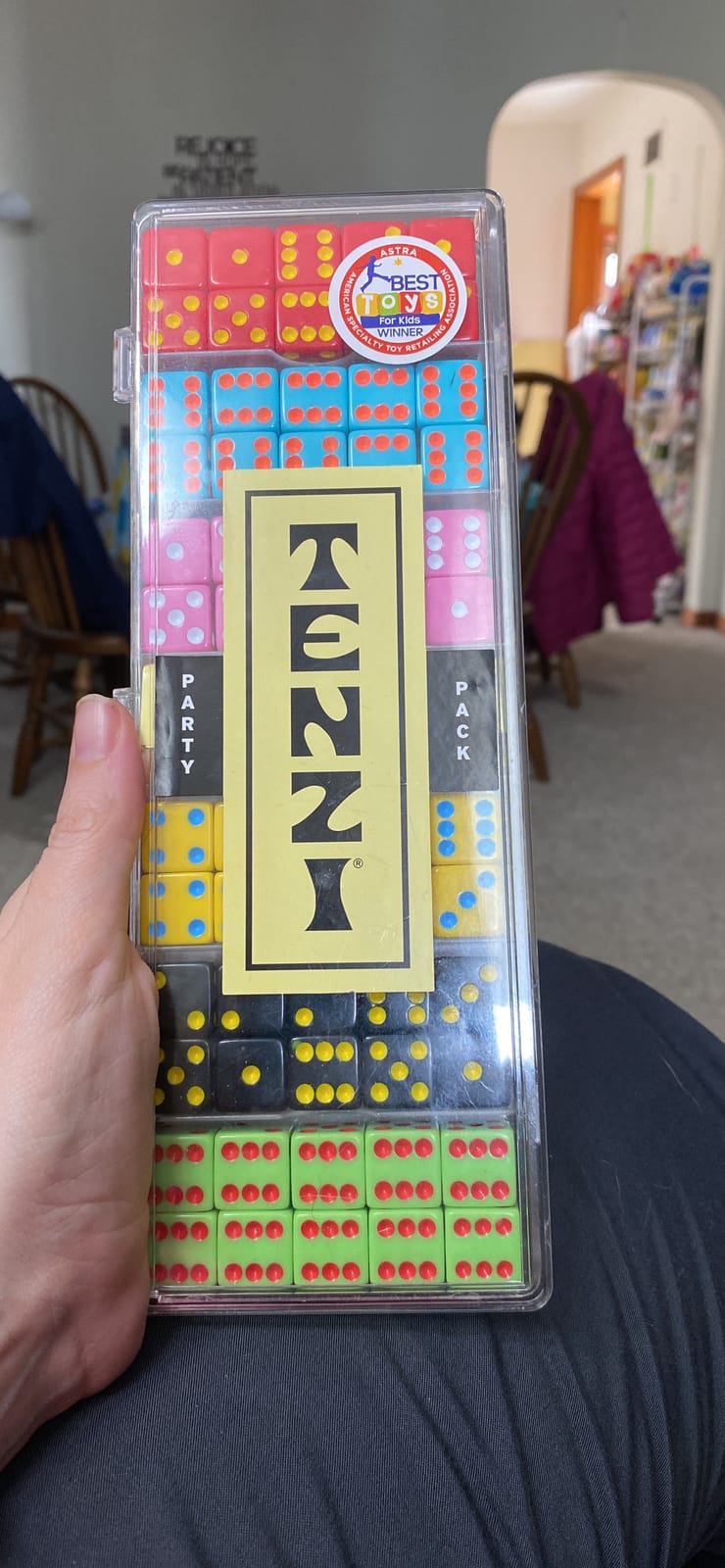
Reviewers describe it as an instant crowd-pleaser for family gatherings, parties and travel, with almost no setup time. Teachers also credit it with speeding up number recognition in children, which is a nice side effect of the chaos.
Two practical notes came up repeatedly. Ten dice landing on a hard floor is genuinely loud, so carpet or a mat works far better, and the dice colours in the pack can vary between sets.
Who It Suits Best
Families with high-energy children, birthday parties, and holiday gatherings where six adults can be roped in. It is also a good bridge game for kids who find turn-taking hard, because the pace is relentless.
Who Should Skip It
Skip it for quiet homes, small children prone to throwing dice, and anyone wanting a thinking game. The skill ceiling is low and the noise floor is high.
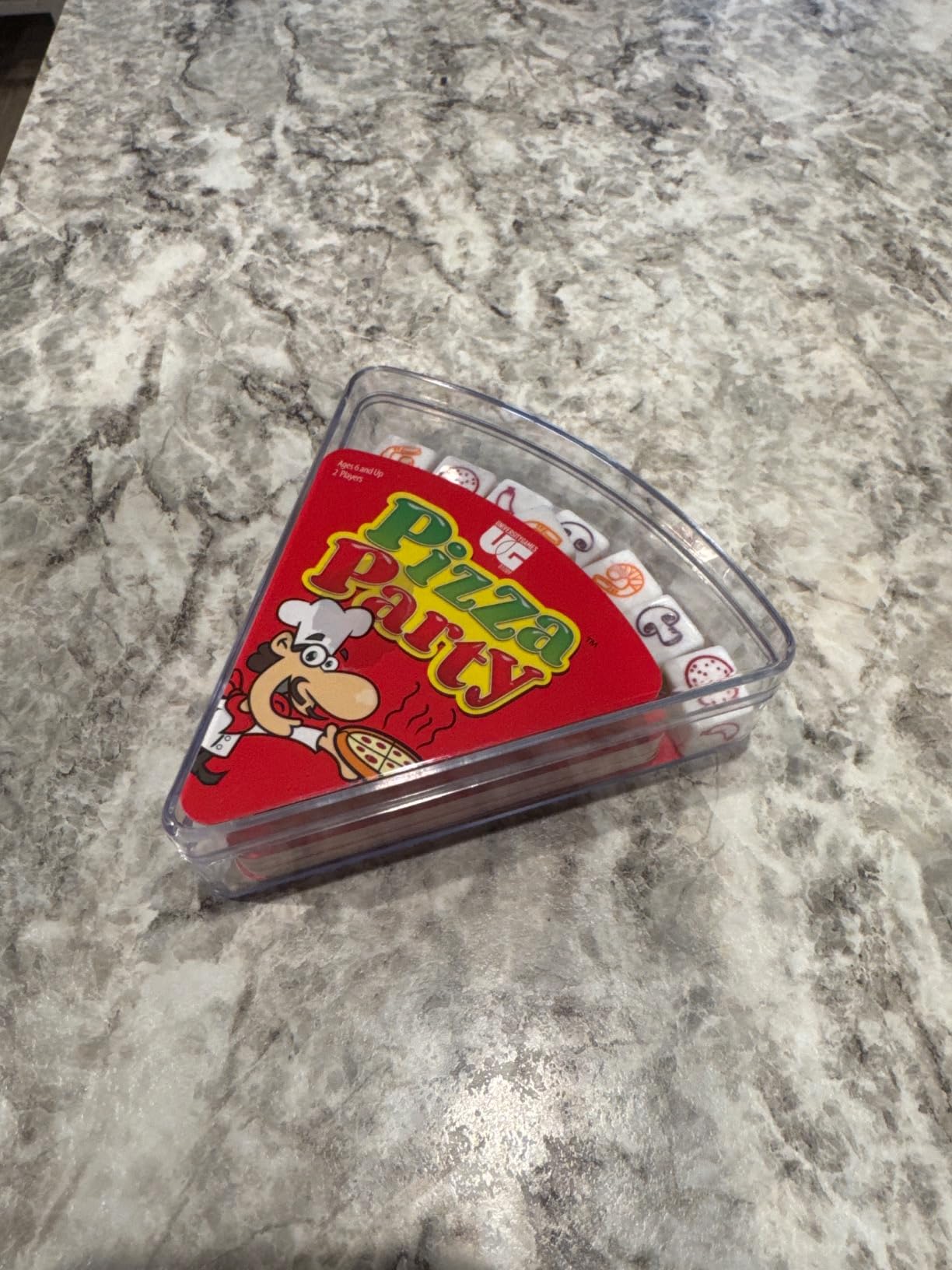
7. University Games Pizza Party: The Best Start for Ages 6 and Up
University Games, Pizza Party Dice Game, Dice Game for Kids and Families, Ages 6+
Players: 2
Ages: 6 and up
Box: 4.5 x 4.5 x 1.5 inches
10 dice, 40 cards, case
Pros
- Rules simple enough for pre-readers
- Small enough for a diaper bag
- Practices counting and matching
- Adjustable pace for younger children
- Screen-free travel entertainment
Cons
- Two players only
- Storage case does not latch shut
- Too simple for older children
Few games do what this one does for a five-year-old meeting dice for the first time. Ten pizza-topping dice and forty slice cards, and the whole goal is to complete a pizza. A child who cannot yet read the rules can play a round by matching pictures.
You roll to complete a slice and keep going until a full pizza is finished, with the first player to complete theirs winning. The pace can be slowed right down for younger children or pushed up for older ones, which makes it unusually flexible.
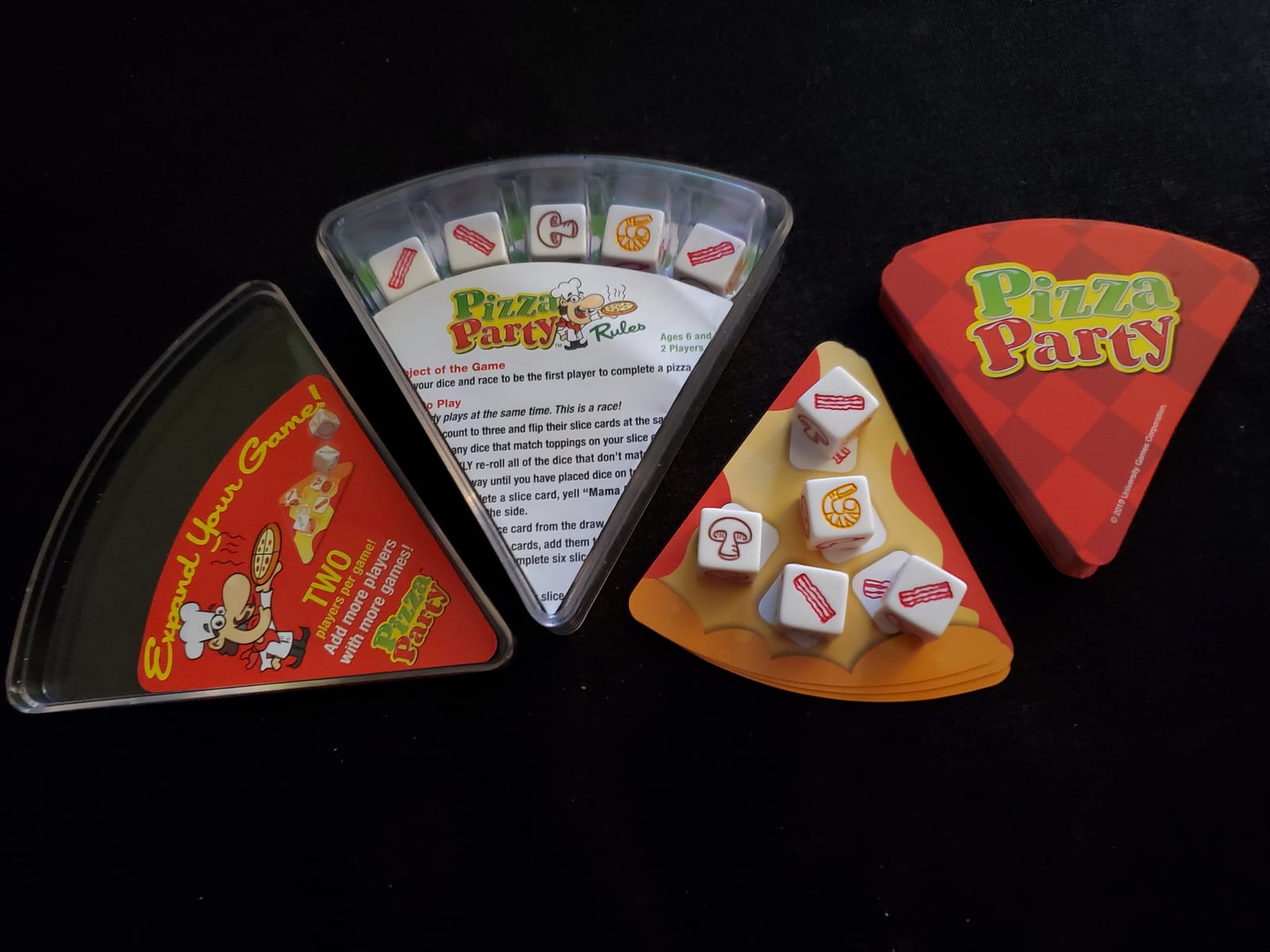
Parents and grandparents in the reviews treat it as a charming first introduction to dice games, and the box lists an educational objective of developing visual perception, hand-eye coordination and strategic thinking.
The limitation is built into the design: it is a two-player game, and the box says so plainly. A family of five needs more than one copy, which is a real cost multiplier at larger tables.
Who It Suits Best
Parents of children in kindergarten or first grade, grandparent and grandchild pairs, and anyone looking for a rainy-day activity. It also packs into a small bag without a separate container.
Who Should Skip It
Skip it for older children, who tend to find it repetitive after a few rounds, and for large families. The dice are also small, so supervise closely around babies and toddlers.
8. Shut The Box Wooden Board: A Four-Way Game That Teaches Math
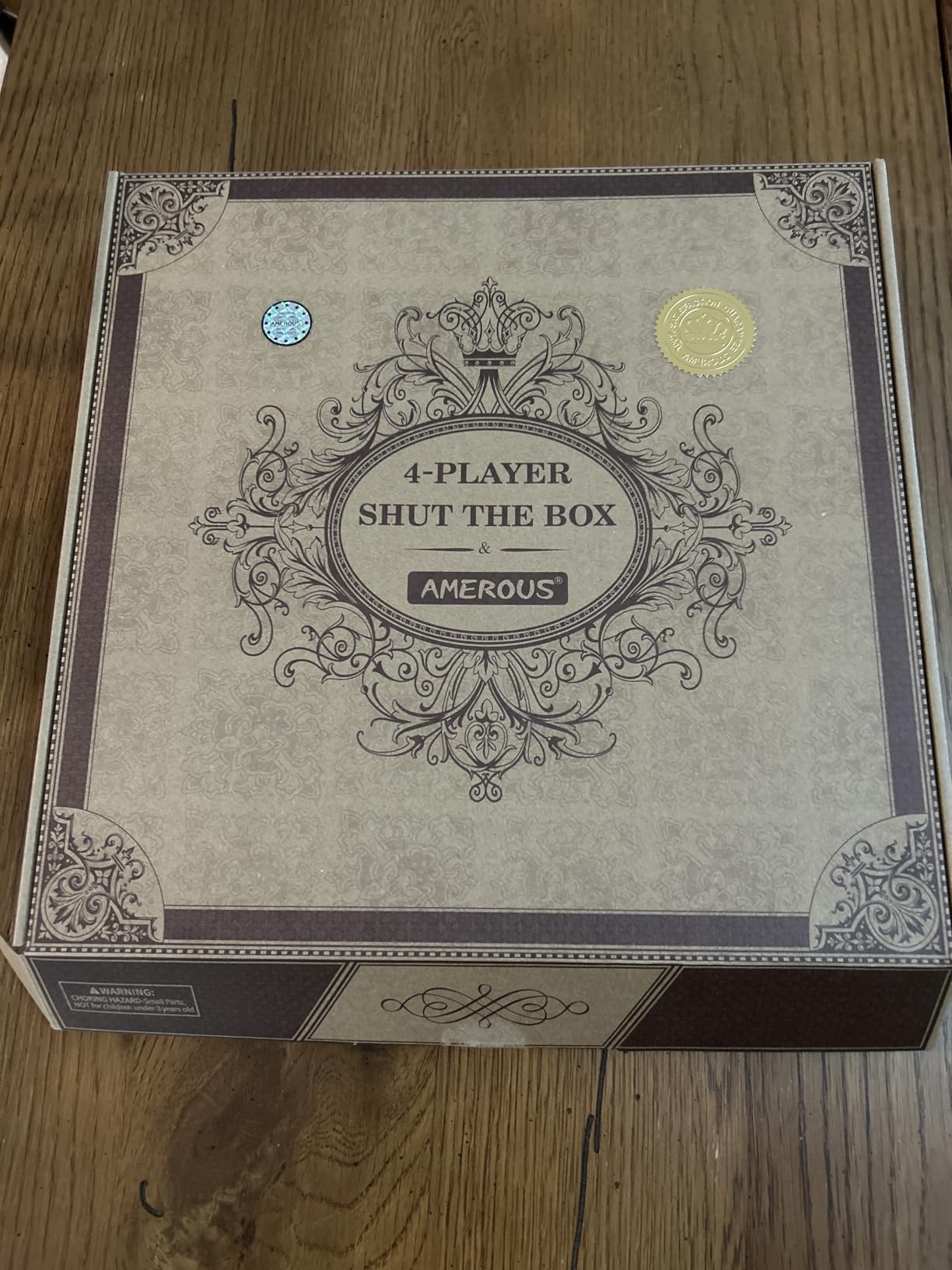
AMEROUS 1-4 Players Shut The Box Dice Game, Wooden Board Table Math Game with 12 Dice and Shut-The-Box Instructions for Kids Adults, Family Classroom Home or Pub (12 Inches)
Players: 1 to 4
Ages: 6 and up
Board: 12 x 12 inches
12 dice, 4 number boards, bag
Pros
- Solid wood 4-way board stores its own components
- Works for 1 to 4 players including solo
- Durable billiard felt surface
- 12 dice included with wooden spares
- Simple rules that can be customised
Cons
- 12 inch board is bulky for travel
- Four-way setup needs plenty of table space
Shut the Box is a numbers game first and a dice game second. You roll, then cover the matching numbered tiles with your hand, and the round ends the moment you cannot make the sum. The best hand you can form decides the score.
What makes this version useful in a family is the four-way wooden board. Each player has their own track of number tiles, the tiles and dice store on the board itself, and it works for one to four people, so a parent and a single child can play a full game together.
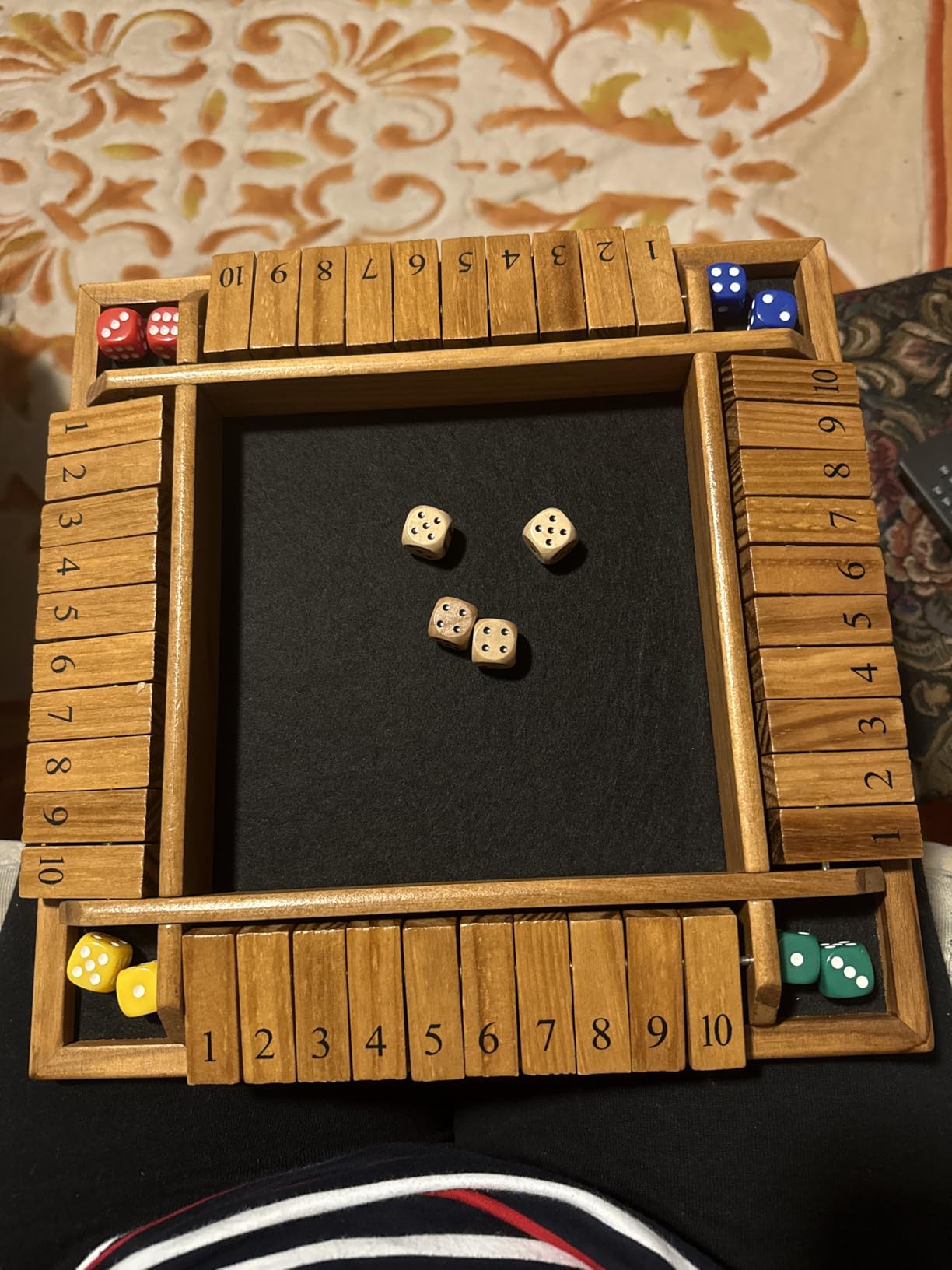
The stated educational objective on the box is improving math skills, and reviewers add that it works for quick thinking and probability practice. For homeschooling families or anyone trying to make dice time count for more than entertainment, that is the appeal.
The trade-off is size. A twelve inch board with four player stations needs a proper table, and while a storage bag is included, this is not a game to toss into a carry-on.
Who It Suits Best
Families of one to four, two-player parent and child pairs, and anyone who wants a dice game that quietly does maths practice. The wood and felt also make it a display piece rather than a plastic novelty.
Who Should Skip It
Skip it for travel and for crowded tables. The four-way layout is generous in space, and for a family of six it means somebody is always waiting to join a round.
9. Gamewright Dragonwood: The Best Pick for a Proper Board Game Night
Gamewright Dragonwood A Game of Dice & Daring Board Game Multi-colored, 5″
Players: 2 to 4
Ages: 8 to 15
Play time: 20 minutes
Box: 8 x 7 x 2 inches
Pros
- Brisk 20 minute games
- Easy to learn dice and card daring
- Beautiful artwork and fantasy theme
- Good for 2 to 4 across wide ages
- Reinforces probability without feeling like school
Cons
- Moderate strategy depth for older players
- 5 inch box has less table presence
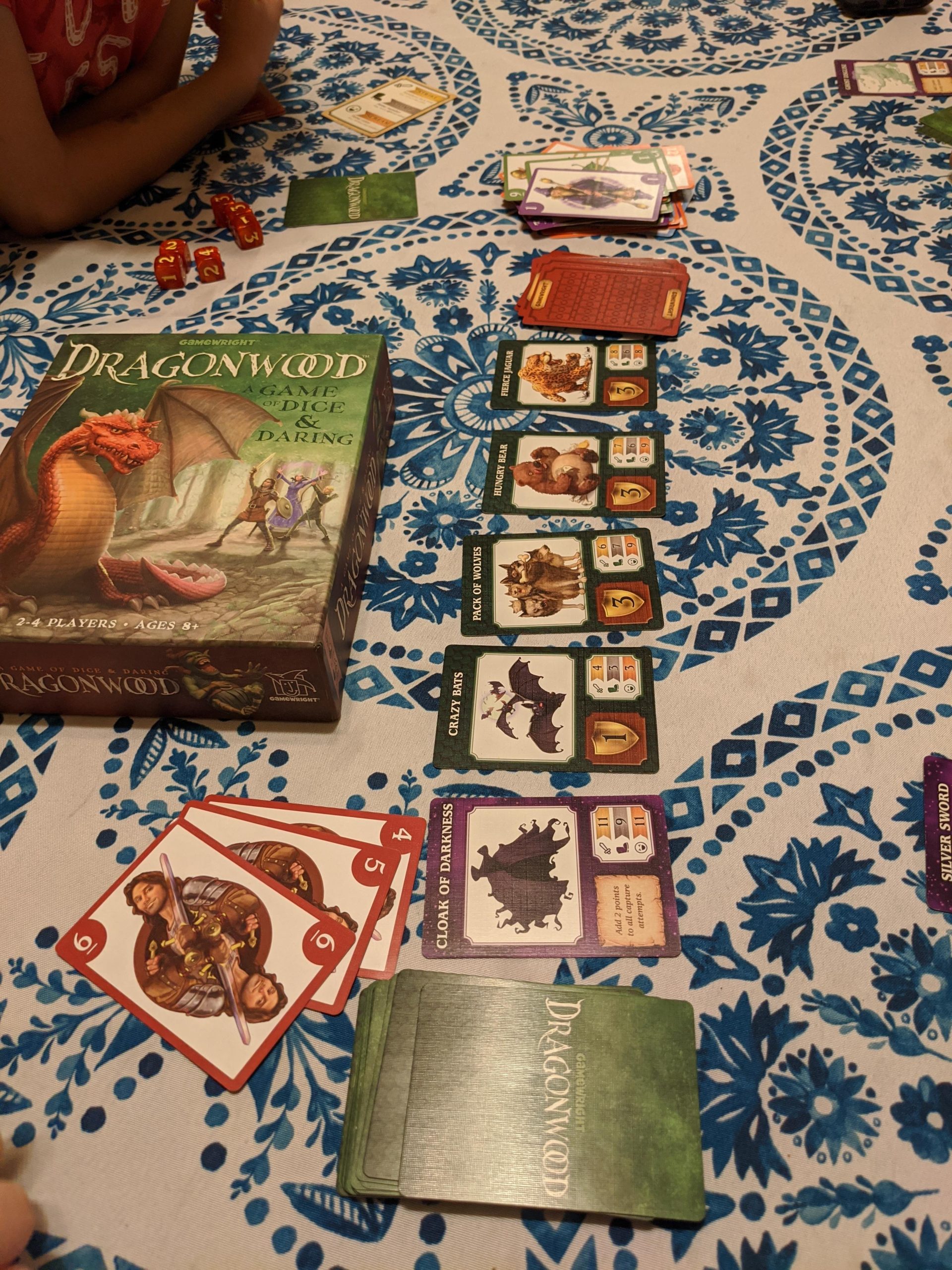
Most entries in this roundup are dice in a tin. Dragonwood is a genuine board game that happens to be driven by dice and cards, which makes it the one to reach for when the family wants an event rather than a filler.
You roll dice to hunt for a dragon, add matching symbols to a personal board, and use daring cards to take risks. The stated playing time is twenty minutes, and the recommended age range is eight to fifteen.
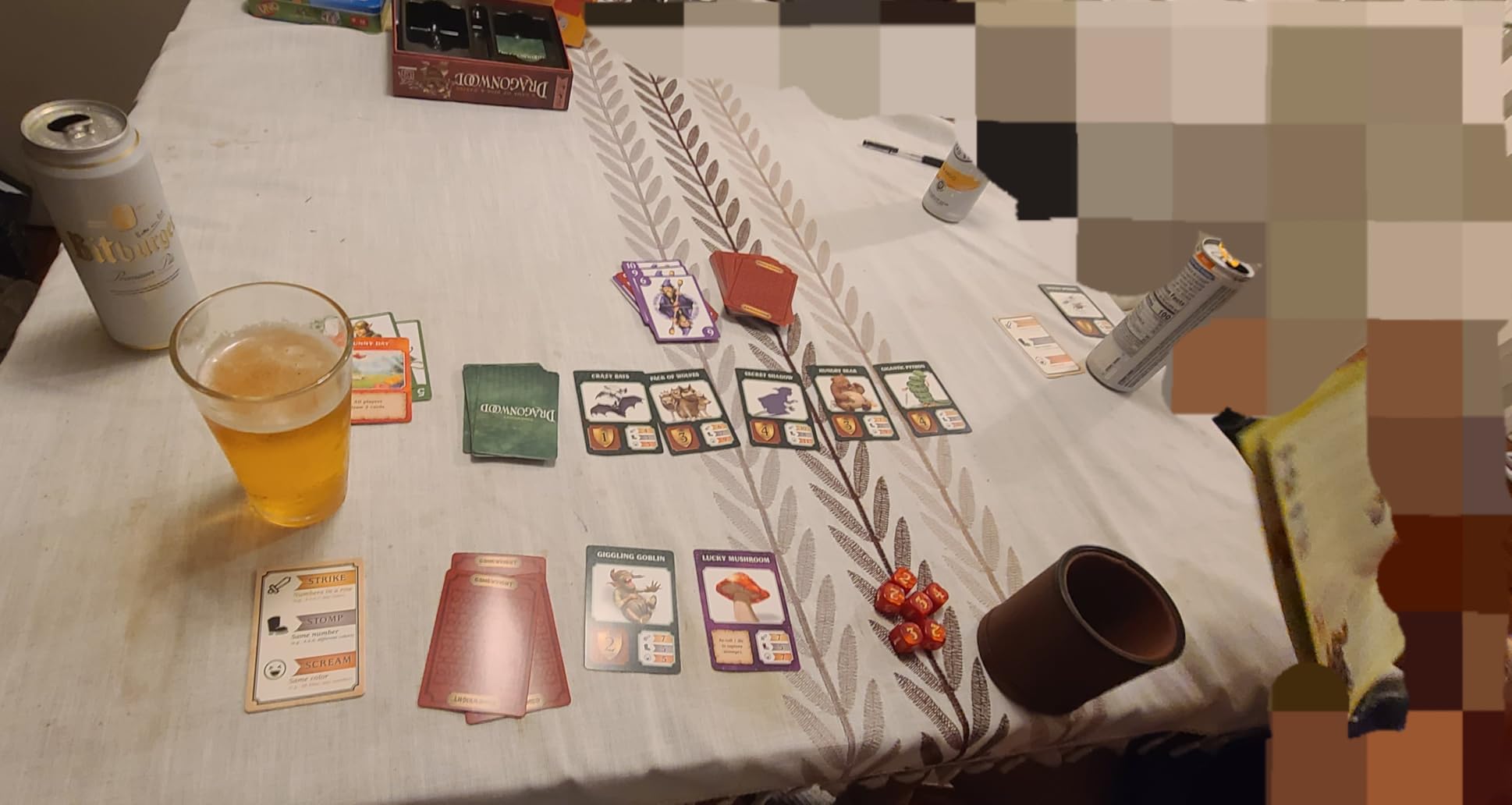
Reviewers highlight the short play time, the approachable rules and the strength of the theme and artwork. It is generally described as a good fit for families spanning several ages rather than a game for the serious strategy crowd.
Two limits are worth stating. The strategy depth is moderate, so older teens and adult strategists tend to exhaust it quickly, and the small box format gives it less physical presence than a standard board game.
Who It Suits Best
Families with children between eight and fifteen, and groups of two to four who want a theme and a board to look at. It also holds attention well for kids who find abstract dice games dull.
Who Should Skip It
Skip it for large gatherings and for experienced tabletop players. At four players maximum and moderate depth, it will not carry a table of eight or a heavy strategy night.
10. Yamslam: A Yahtzee and Poker Mashup in One Tin
Yamslam Fun Chance and Strategy Family Dice Game for Kids and Adults by Blue Orange Games – 1 to 4 Players, Ages 8+
Players: 1 to 4
Ages: 8 and up
Tin: 9.5 x 9.5 x 1.5 inches
Dice tray, 28 chips, 5 dice
Pros
- Fun mashup of Yahtzee and poker
- Self-contained tin with tray and chips
- Works for one to four players
- Builds math and probability skills
- Attractive retro tin design
Cons
- Scoring combinations need memorisation
- Less social with only two players
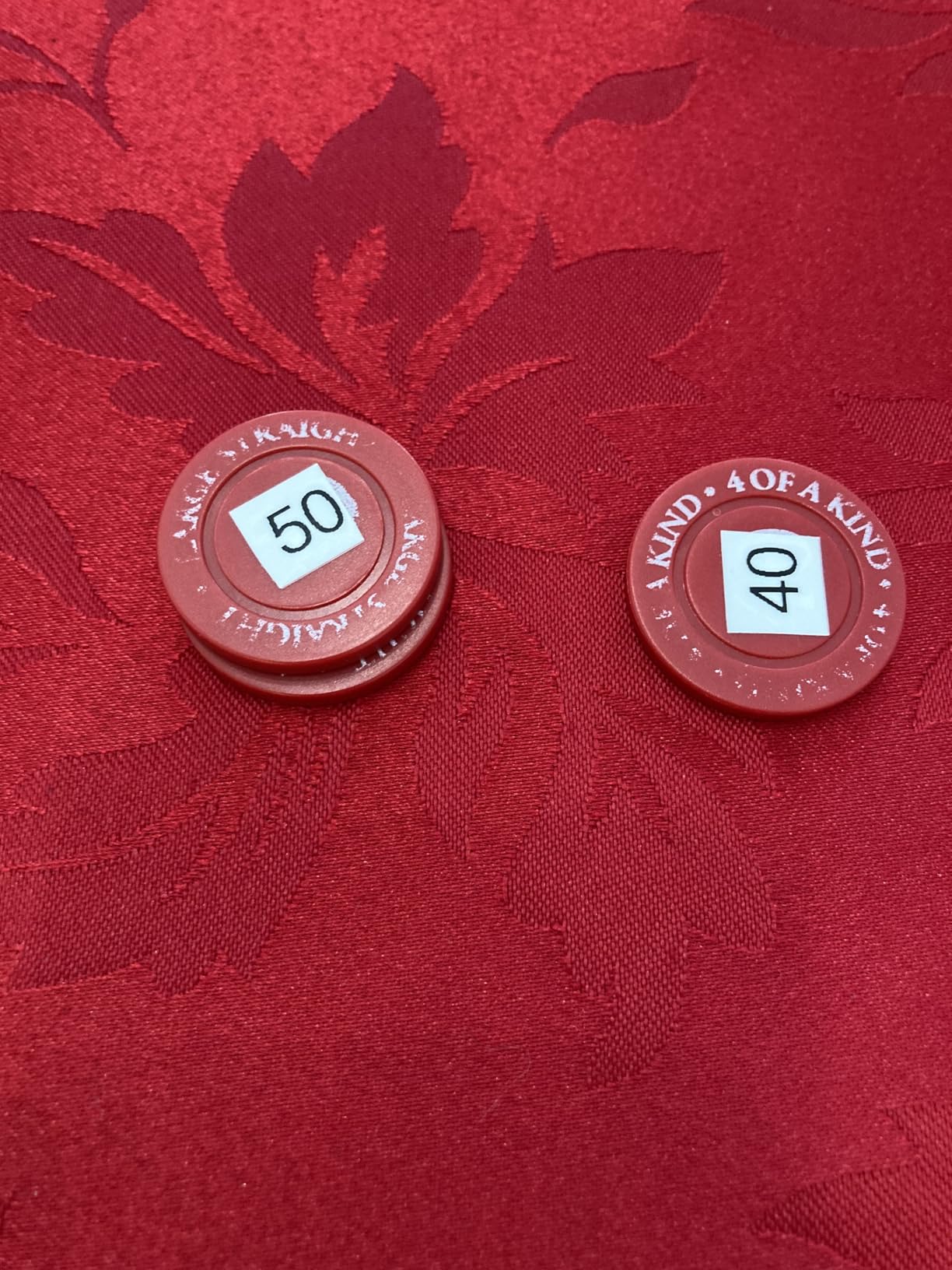
Yamslam takes the roll-and-keep structure of Yahtzee and adds poker hands, so you are racing to form the best combination before the chips run out. It is the only entry here that plays properly with one player, which makes it the pick for a solo practice round or a parent and one child.
You roll up to three times, choosing after each roll which dice to keep, and the object is to claim the highest-value combination from a shared pool of twenty-eight chips. Everything lives in one tin, including the dice tray, so nothing goes missing between sessions.
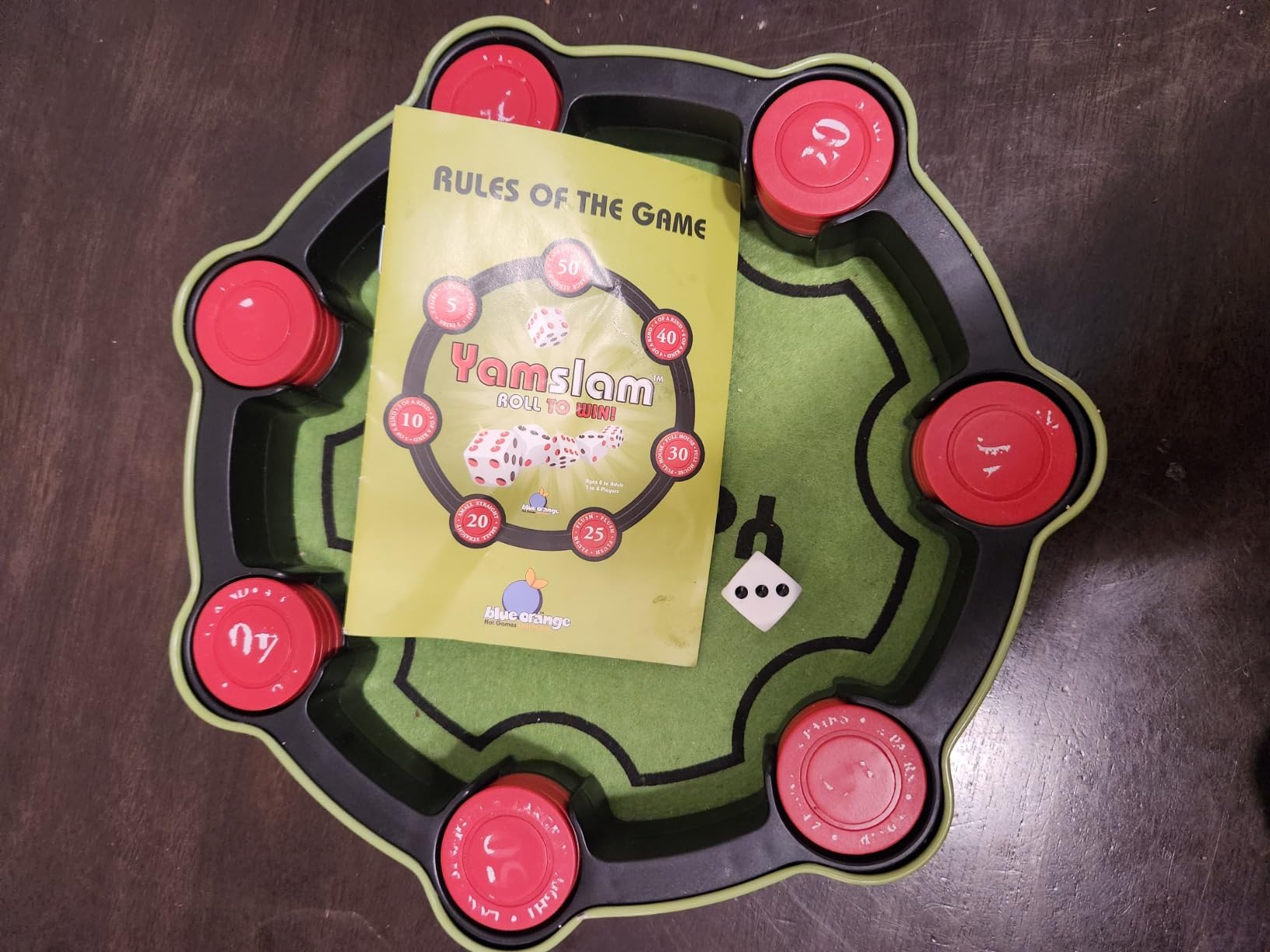
Reviewers consistently describe it as easy to learn and suitable across ages, and the manufacturer recommends ages eight to twelve. The educational framing is explicit: younger players practise maths while older players work on strategy.
It is not the loudest game here. With only two players the table can go quiet, because the tension lives in the decision about which dice to hold rather than in conversation between people.
Who It Suits Best
Two-player households, parent and child pairs, and older children who want more decision-making than luck. It is also the one to buy if a child wants to practise combinations alone before playing with others.
Who Should Skip It
Skip it for party tables and for children under eight. The scoring combinations need a short memorisation period, and the quiet pace loses a large noisy group.
11. Front Porch Classics Liar’s Dice: The Best Bluffing Set for Older Kids
Liar’s Dice Bluffing Family Game Set in Wood Case, 2-4 Players, Ages 8+
Players: 2 to 4
Ages: 8 and up
Case: 5 x 5 x 5 inches
20 dice, 4 shakers, storage bag
Pros
- Wooden case shaped like a die
- 20 dice and 4 shakers for lively play
- Simple format that creates table talk
- Suits adults and older kids
- Storage bag keeps it tidy
Cons
- Only 2 to 4 players so it does not scale
- Bluffing rules slow the first round
- Heavier and bulkier than most
Liar’s Dice is the only real bluffing game in this list, and that changes the texture of a family evening. You roll your dice in private, announce a total, and everyone at the table decides whether to believe you. Getting caught is loud, and the accusations go on for minutes afterwards.
This wooden version contains twenty dice, four plastic shakers and a storage bag, all inside a case shaped like a die. That presentation makes it the most display-worthy object in the roundup, and it suits a shelf as well as a game night.
Reviewers value the premium case and the tension the format creates, and they place it firmly with adults and older children rather than young families. The recommended age is eight and up.
Ratings sit lower than the simpler games on this list, and the reasons are consistent: a narrow two to four player range, a first round that needs the bluffing rules explained carefully, and a set that is heavier than a typical family dice game.
Who It Suits Best
Families with teens and adults, a group of three or four who enjoy mind games, and anyone who wants a dice night with real conversation. The wooden case also makes it a solid gift for an older child.
Who Should Skip It
Skip it for large gatherings and for young children. Nobody is being knocked out, but a four-player ceiling rules out most holiday tables, and the setup slows the first game down.
12. Bamboozled: The Best Fit for a Table of Eight
Bamboozled – A Hilariously Fun Bluffing Dice & Card Game, Family-Friendly Party Game for Kids, Teens & Adults, Ages 8+, Fast and Easy to Learn
Players: 2 to 8
Ages: 8 and up
Play time: 10 to 15 minutes
Box: 6.3 x 4.3 x 1.5 inches
Pros
- Plays in 10 to 15 minutes
- Scales to 2 to 8 players
- Action cards let you recover from a bad call
- Life and strike system keeps everyone involved
- Compact box fits a backpack
Cons
- Losing a life for a failed bluff frustrates cautious players
- Card rules add complexity
- Can feel random rather than strategic
At a gathering of eight, most dice games fall apart. Bamboozled holds together because it scales to two to eight players, finishes in ten to fifteen minutes, and gives every player three lives and three strikes, so a single mistake does not end anyone’s evening.
The loop is straightforward. Roll your dice in secret, call a number, and let the next player either back you or challenge you. The cards add recovery: you can reset the dice, skip a turn, regain a life or change what you rolled.

Reviewers highlight the short runtime, the flexibility across group sizes and the compact travel-friendly box, and the included video instructions help new players join within minutes. The box also includes two dice, a dice cup, thirty-six action cards and sixteen strike cards.
Ratings land below the other entries for consistent reasons. The lives-and-strikes penalty punishes cautious play, the card layer is more complex than a pure dice game, and some groups find the dice and card mix feels random rather than strategic.
Who It Suits Best
Holiday gatherings and birthday parties with six to eight players, families who want a party game in a small box, and groups that dislike elimination. The travel footprint is small enough for a backpack.
Who Should Skip It
Skip it for cautious younger players and for anyone who prefers pure dice. Bluffing penalties and cards together push the complexity above the level of the simpler games in this roundup.
How to Choose a Family Dice Game
The five criteria below come from the same complaints we heard while testing: rules that take too long, players who sit out, and games that end in tears rather than requests for a rematch. Judge any box against them before buying.
1. Can it be taught in one sentence?
Parents describe teaching complex games as a real chore, so the fastest rule sets win every time. LCR, Qwixx and Pass the Pigs can each be explained while the dice are still in the box. If a game needs a two-page briefing, expect the table to stall before it starts.
2. Does anyone get knocked out?
Early elimination is the single most reliable way to end family game night badly. A child who is out after two turns often talks, wanders off, or persuades everyone to stop. Farkle and Yahtzee avoid the problem entirely by keeping every player scoring until the final hand.
3. Is there downtime between turns?
With four or more players, quiet stretches are where attention dies. Qwixx and Tenzi solve this by having everyone act on every roll, which is a genuine advantage over turn-based games in a large group. If your family is often six or more, weight simultaneous play heavily.
4. Does it cover your whole age range?
Check the manufacturer age recommendation, since most roundups skip it. A game listing ages eight and up will lose a six-year-old, and one listing seven and up is generally safe for that age with a first-round hand-holding. We have tagged every entry above with its stated range.
5. How many players does it actually need?
Player counts are usually given as a minimum and a maximum, but the useful number is the comfortable one. LCR needs three or more to work. Pizza Party is a strict two-player design. Bamboozled is the only entry here that comfortably seats a table of eight.
One more practical point: dice games travel well, but not all of them. Anything in a tin or a small box suits a road trip, while a twelve inch wooden board like the Shut The Box set needs real table space. If you want games for the car and the coffee table, buy for both separately.
If you are still working out what fits your shelf, our guides to dice towers and dice trays cover the accessories that make a plain dice set easier to play at a crowded table.
Frequently Asked Questions
What are some fun dice games for families?
LCR Left Center Right, Qwixx, Yahtzee, Pass the Pigs and Tenzi are the strongest all-rounders. LCR and Pass the Pigs teach in seconds, Qwixx keeps every player active on every roll, and Yahtzee needs no instruction at all. Farkle adds genuine push-your-luck tension for older children.
What are the best dice games for young kids?
University Games Pizza Party is the clearest starting point at ages six and up, with rules simple enough for pre-readers. The AMEROUS Shut The Box wooden board also works from age six and adds useful number practice. Tenzi suits older children who find turn-taking hard.
What dice games work for a large group of 6 to 12 players?
Bamboozled is the strongest option in this roundup, scaling to 2 to 8 players with a 10 to 15 minute runtime and a life-and-strike system that keeps eliminated players involved. LCR works well at six or seven, and Tenzi Party Pack covers 2 to 6 with six sets of ten dice.
What are good two-player dice games for a parent and one child?
Yamslam is built for one to four players and works well as a parent and child pairing. The AMEROUS Shut The Box board supports 1 to 4 players. University Games Pizza Party is a strict two-player design with very simple rules. LCR needs three or more, so it will not suit a pair.
What is the most popular dice game?
Yahtzee and Farkle are the incumbents, named repeatedly in family discussions as the reliable standards that always work when guests arrive. LCR and Qwixx are the modern equivalents with higher ratings from large numbers of reviewers. Popularity aside, teachability matters more at a family table.
What makes a family friendly dice game?
Three things: rules a child can grasp in under a minute, no player elimination so nobody is knocked out and upset, and a runtime short enough that attention holds. Luck also levels the playing field between a six-year-old and a grandparent in a way strategy games rarely do.
Conclusion: Which Family Dice Game Should You Buy First?
Start with LCR Left Center Right if your household is three or more and you want a game that needs no explanation. Choose Qwixx if you have children aged eight and up and the biggest problem at your table is waiting. Pick Yahtzee if a gift is needed or a beginner is joining the group.
From there, the roundup splits cleanly. Farkle and Bamboozled suit older children and bigger gatherings, Pizza Party and the Shut the Box board cover the youngest players, and Yamslam is the one to buy for a pair. Whichever you choose, the best dice games for families in 2026 all share the same feature: nobody is waiting, and nobody is out.
Our guide to yard dice games covers the outdoor version of this list, and our picks for two-player board games and cooperative family games cover the cases where a competitive dice game is not the right call.