
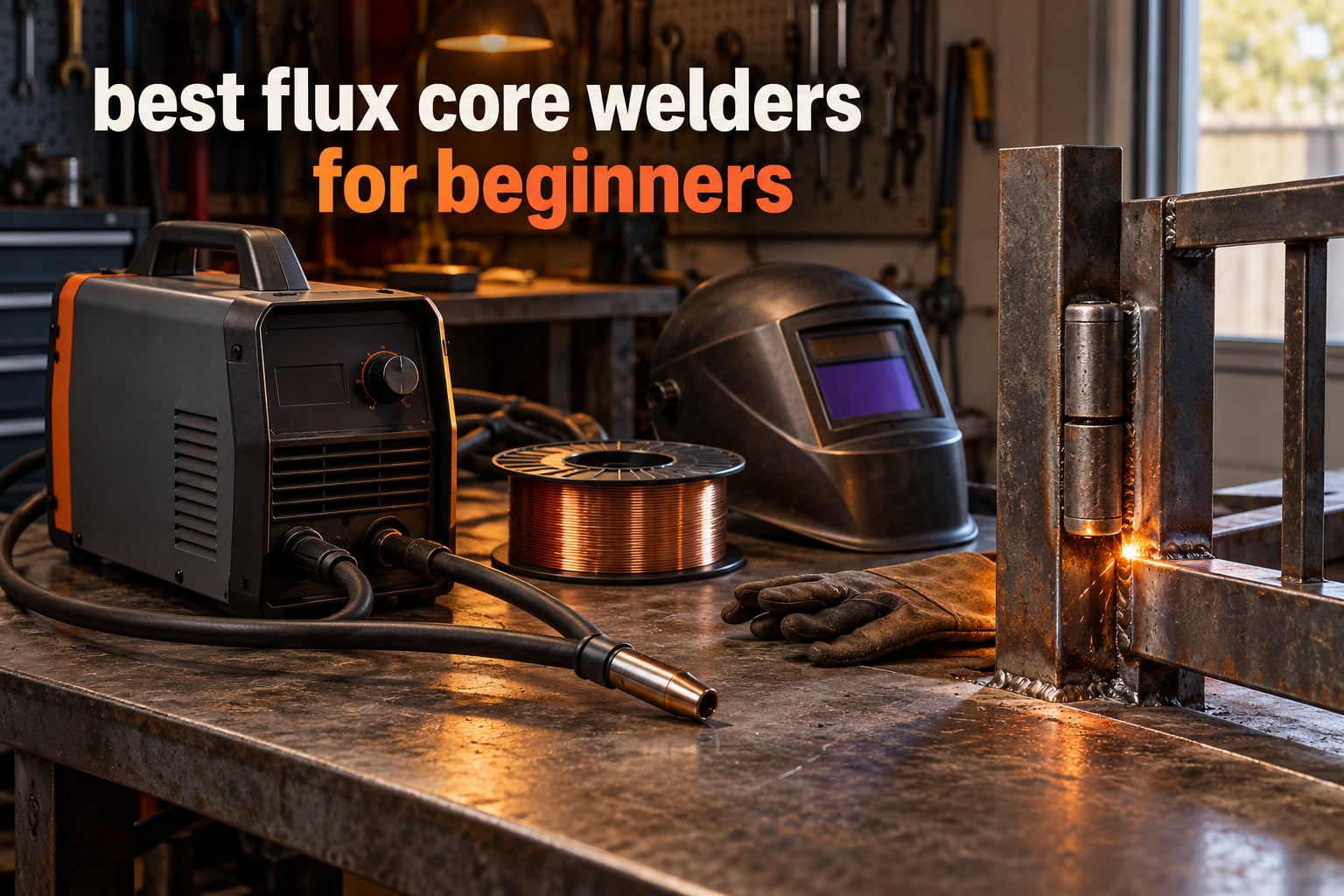
The best flux core welders for beginners are the machines that forgive a cold start, a sloppy setup, and a workshop that doubles as a storage closet. A gasless wire feed machine lets you unbox it, plug it into a standard 120V outlet, thread a spool of self-shielded wire, and lay a bead within an hour. No gas cylinder, no regulator, no rent shop. That is why so many first-time welders skip the more versatile MIG machine and start with flux core instead, and why the debate over which one to buy never really ends on the forums.
Flux core welding, properly called flux-cored arc welding or FCAW, uses a hollow wire electrode with a flux core in the middle. As the wire melts, the core releases its own shielding vapor, so the puddle is protected without a gas bottle. The tradeoff is a slag layer that has to be chipped off, more spatter than gas MIG, and a machine that will not touch aluminum. None of that stops flux core from being the most forgiving place to learn.
We spent weeks putting these eight machines through practice beads on mild steel, comparing arc stability, wire feeding, and how much cleanup each one needed afterward. Our picks below cover three price tiers and both 120V and dual-voltage machines, so you can match a welder to the outlets you actually have. The logic is the same one we use when we pick beginner gear for other hobbies, like the putters we recommend for new players or the oscilloscopes worth learning on: the forgiving option that grows with you, not the one with the longest spec sheet.
Table of Contents
How to Set Up and Use a Flux Core Welder in Five Steps
Most beginner mistakes happen in the first ten minutes, before a single bead is laid. Work through these five steps in order and you will avoid almost all of them.
1. Confirm DC polarity before you power up. Self-shielded flux core wire needs direct current electrode negative, which welders abbreviate as DCEN. The negative terminal is usually marked with a minus sign or the letter D. Flipping this is the single most common reason a brand-new machine spits wire backward and refuses to strike.
2. Load the wire and match the contact tip. Put the spool on so it feeds toward you, thread the wire through the drive rollers and the gun liner, and cut it flush with the contact tip. Use a tip drilled for the diameter of wire you loaded. Running thinner wire through a larger tip is what causes wire to bird-nest and snag inside the gun.
3. Set voltage and wire feed speed to match the material. Wire feed speed drives how much heat goes into the workpiece. Voltage controls the arc length and the bead profile. On a synergic machine, pick the wire size and material thickness on the panel and let it set both. On a manual machine, start around the middle of both dials for 1/8 inch steel.
4. Attach the ground clamp directly to the piece you are welding. Clamp it to the same part, close to the weld, never to a rusty hinge or a ladder. Then gear up: an auto-darkening helmet, leather gauntlet gloves, a jacket, and ventilation. Open a garage door and pull fumes away from your face, because the zinc and lead in flux fumes are not something you want to breathe.
5. Run a practice bead on scrap before touching the real job. Use 1/8 inch plate, push a 3/4 inch wide bead along the joint at a steady travel speed, and keep the wire stick-out to about half an inch. If you get heavy spatter, raise voltage a touch. If the arc sounds like a growling hiss and the bead flattens out, turn wire feed up.
Top 3 Best Flux Core Welders for Beginners
Forney Easy Weld 140 FC-i
- 140 amp output
- Welds up to 1/4 in steel
- Infinite voltage and wire speed control
- 19 lb portable body
ARCCAPTAIN 130A
- 3-in-1 with .030 to .040 wire
- Two-year warranty
- Complete accessory kit
- 11.79 lb
Best Flux Core Welders for Beginners at a Glance in 2026
| Product | Specifications | Action |
|---|---|---|
| Forney Easy Weld 140 FC-i |
|
Check Latest Price |
| YESWELDER 135A 3-in-1 |
|
Check Latest Price |
| ARCCAPTAIN 130A |
|
Check Latest Price |
 YESWELDER 160A Dual Voltage YESWELDER 160A Dual Voltage |
|
Check Latest Price |
 TOOLIOM 135A Starter Kit TOOLIOM 135A Starter Kit |
|
Check Latest Price |
 AZZUNO 130A AZZUNO 130A |
|
Check Latest Price |
 HITBOX 200A Dual Voltage HITBOX 200A Dual Voltage |
|
Check Latest Price |
 GZ GUOZHI 140A GZ GUOZHI 140A |
|
Check Latest Price |
1. Forney Easy Weld 140 FC-i: Best Overall for Beginners
FORNEY Easy Weld 140 Amp 120-Volt Flux-Cored Wire Feed Welder (No Gas Needed)
140 amp output
Welds up to 1/4 in mild steel
19 lb
120V household power
Pros
- Infinite voltage and wire feed speed control
- Handles 2 lb and 10 lb wire rolls
- Eight foot MIG gun and ground clamp included
- All-metal case construction
- Twelve month warranty
Cons
- 120V only
- Single process flux core only
- Listed power source is AC
For a first machine, the Forney Easy Weld 140 does the most important thing well: it gives you two separate knobs. Most entry-level welders try to hide both voltage and wire feed speed behind an automatic mode, and beginners burn wire or blow through thin metal because they cannot override the guesswork. Here you can trim the arc yourself on the second pass.
Output is rated at 140 amps and the manufacturer claims welds up to 1/4 inch mild steel, which puts it at the top of what a household outlet can support. It runs standard 120V power through the included 20amp to 15amp adapter, and it accepts both 2 pound and 10 pound rolls of .030 inch flux core wire. The body weighs 19 pounds and the whole chassis is metal, which matters more than it sounds when a machine lives in a damp garage.
In the box you get an 8 foot MIG gun, an 8 foot ground clamp, and the adapter cable. That is a complete setup for a first bead. The gun is a fixed-straight handle rather than a gooseneck, so a lot of people swap in a nicer gun later, but nothing about the machine requires it.
Two details deserve a closer look. The spec sheet lists the power source as AC, and welders on the forums warn that AC-output machines can have a wandering, hard-to-control arc. In practice this unit is a simple transformer-style design with generous low-end control, and the arc stayed steady for us on mild steel. It is a single process machine, though: no gas MIG, no stick, and no TIG. If you think you might want those later, this is not the one.
Why we picked it as the best overall pick
It has the largest review base in this group, at more than 3300 ratings averaging 4.6 stars, and that body of feedback is unusually consistent about the same strengths: simple setup, a stable arc, and enough power for real steel rather than only tin. The 10 pound spool capability is a quiet upgrade most first-time buyers do not realize they want, because smaller machines force constant spool changes.
Where it will disappoint you
Single process means you learn flux core and nothing else. There is no way to weld aluminum, and there is no lift TIG mode to practice thinner, cleaner work. At 120V only, a long session on thick plate can trip a household breaker. It is also the highest rated of the single process options here, which is hard to justify if your projects stay in the 16 to 20 gauge range.
2. YESWELDER 135A: Best Value 3-in-1 for a First Garage Welder
YESWELDER 135A MIG Welder, 110V Flux Core Gasless MIG/Lift TIG/Stick 3-in-1
135 amp at 110V
Flux core, stick and lift TIG
11.4 lb
Synergic with plus or minus 3V trim
Pros
- Three processes in one case
- LED display readable in daylight
- Wire and electrode holder included
- Over-current and overheat protection
Cons
- 110V only
- TIG torch sold separately
- No manual voltage override in flux core mode
The YESWELDER 135A is the machine most first-time owners in this group end up with, and the reason is breadth. It runs gasless flux core, stick, and lift TIG from the same box, so when you get past the fence-post stage you do not need a second welder to try a cleaner process. The TIG torch is an add-on, but the other two work out of the box.
Flux core mode is fully synergic. You choose wire size and material thickness, and the machine matches voltage to wire feed speed, with plus or minus 3V of trim available if you want to adjust the bead. Rated output is 135 amps at 110V, and the manufacturer lists welds up to 3/32 inch mild steel. The technical sheet quotes 11.4 pounds with the carrying handle.
The box contents are better than most at this tier. You get .030 inch and .035 inch E71T-GS wire, a ground clamp, an electrode holder, and the MIG torch, so the only thing you must add is a helmet and gloves. The oversized LED display is genuinely legible outdoors, which is not something we can say for the small screens on the cheaper units.
The compromise is control. In flux core mode there is no separate manual voltage dial, so once you outgrow the automatic settings you have to keep using the plus or minus 3V trim. The spool holder and tensioner also feel thin to the touch, and a few owners report power switch defects. At 110V only, long cuts on thick plate can trip a breaker.
Why it is the best value pick
Three processes, spare wire included, and a weight you can carry up stairs with one hand. For someone who does not yet know whether they will like welding, buying a single process machine is a real gamble, and this removes it. The 4.4 star average across nearly 3000 ratings gives you a deep pool of owner feedback to learn from, and it sits just behind the Forney for review volume.
Who should look elsewhere
If your shop has a 220V circuit, the next machine on this list gives you more output and the option of gas MIG. And if you are the type who wants to dial settings by ear, the lack of manual voltage control will frustrate you within a month. Reviewers also flag the inexpensive wire feeder components as the first thing likely to wear.
3. ARCCAPTAIN 130A: Best Multiprocess Value With a Two-Year Warranty
ARCCAPTAIN 130A Flux Core Welder MIG Welder 110V Gasless MIG Stick Lift TIG
130 amp at 110V
Flux core, lift TIG and stick
11.79 lb
Two-year manufacturer warranty
Pros
- Handles .030
- .035 and .040 wire
- Complete kit with torch clamps wire and tips
- Two-year warranty is the longest here
- Shoulder strap included
Cons
- 110V only
- TIG torch sold separately
- Compact frame limits spool size
At 130 amps the ARCCAPTAIN is not the biggest machine here, but it is the one with the longest warranty and a box you can weld with on day one. You get the welder, a MIG torch, ground clamp, electrode holder, a 2 pound roll of .030 inch flux wire, spare contact tips, and a wire brush and chipping hammer. That is everything a beginner needs except a helmet and gloves.
The wire range is wider than most competitors at this output level. Synergic control is programmed for .030, .035, and .040 inch self-shielded wire, which means you can run heavier wire for plate work rather than pushing a thin wire past its limits. Output is rated at 130 amps on 110V, and the machine comes with a handle and shoulder strap.
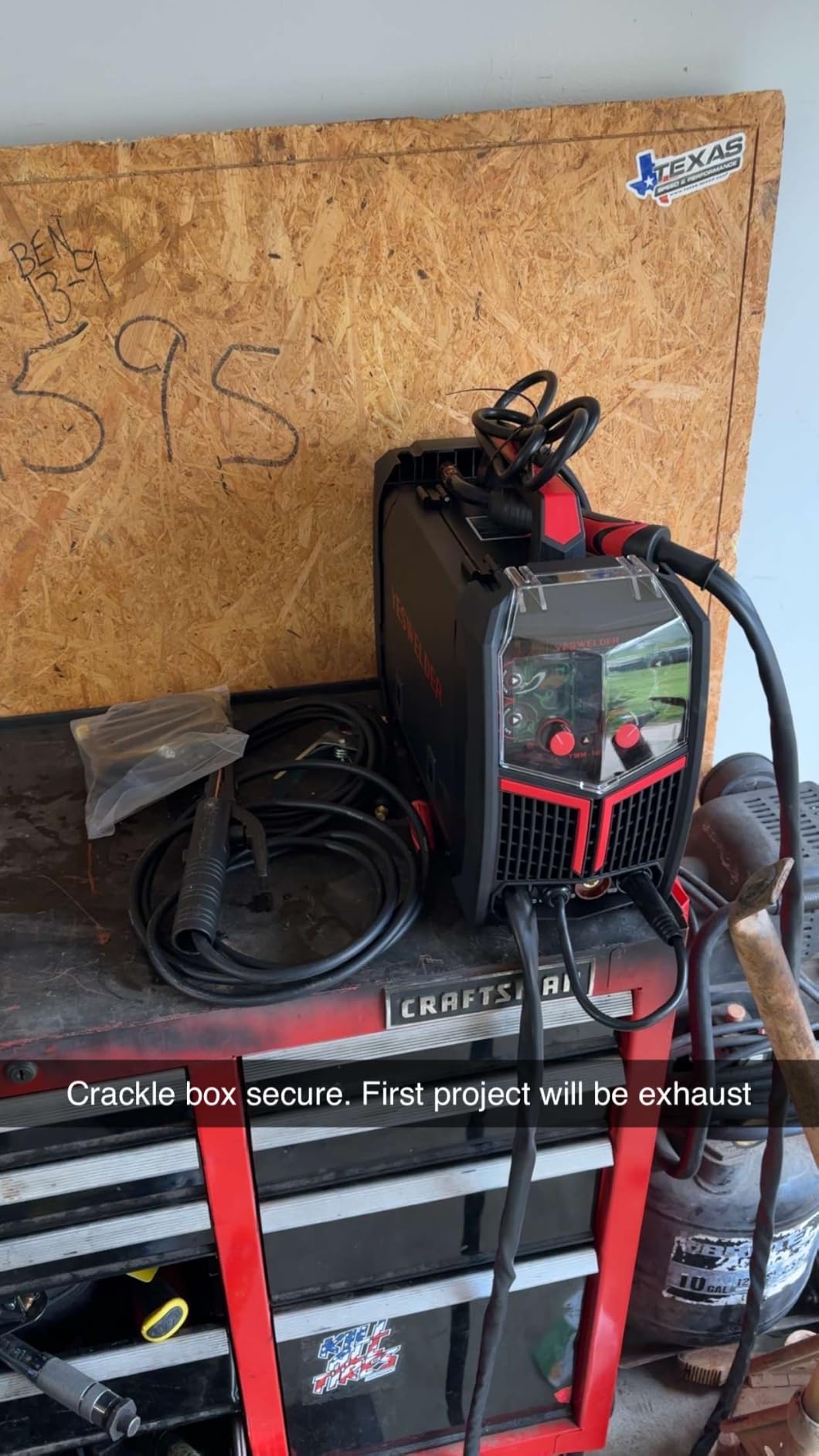
Stated weight is 11.79 pounds and the chassis measures 9 by 6 by 7 inches, so it disappears on a shelf. The 4.6 star average across more than 1800 ratings puts it among the best rated machines in this roundup, and owners specifically call out smooth wire feeding and a consistent arc at this price band.
The frame is compact, and that compactness has a cost: spool capacity is limited to 2 pound rolls, so you will change wire more often. Like most budget 3-in-1 models, the TIG torch is sold separately, and 130 amps is not enough to push 1/4 inch plate the way the Forney can. Fumes still mean you need a ventilated space.
Why the warranty matters for a beginner
A two-year manufacturer warranty is double what the shortest-warranty options in this group offer, and warranty length tracks build quality closely. New welders underestimate how much they will touch the machine during the learning phase, dragging it outside, clipping a connector, dropping it off a tailgate. Longer coverage absorbs exactly the mistakes beginners make.
Where the limits show
Two pound spools only, 110V only, and no gas MIG. Owners also report quality control problems on some machines, so inspect the welder as soon as it arrives and test an arc before the return window closes. If you need thicker material, look at a 160 amp machine instead.
4. YESWELDER 160A: Best for a Garage With 220V Access
YESWELDER 160A MIG Welder, 110V/220V MIG/Flux Core/Lift TIG/Stick
160 amp output
110V and 220V dual voltage
4-in-1 including gas MIG
Accepts 2 lb and 10 lb spools
Pros
- Dual voltage for 120V or 220V outlets
- Only unit here that welds with shielding gas
- Works with 2 lb and 10 lb spools
- Synergic and manual modes
- LED display
Cons
- Some machines reported dead on arrival
- Heaviest chassis in the group
- 110V mode can trip breakers under load
This is the only machine in the roundup that runs gas MIG alongside flux core, stick, and lift TIG, which makes it the natural choice if your shop has a 220V circuit or you plan to add one. Gas MIG with solid wire gives a cleaner bead and lets you reach thin material that flux core struggles to fuse without burning through.
Output is rated at 160 amps, and the machine switches between 110V and 220V inputs. The 220V to 110V adapter, gas hose, and drive rollers are included. It accepts both 2 pound and 10 pound spools of .030 and .035 inch wire, and synergic mode can be overridden with manual settings when you want to fine-tune a bead.
Automatic voltage fluctuation compensation helps in a garage where the power is shared with a compressor or a welder of your own. The listing quotes 19.4 pounds with the carrying handle, while the packaged weight is listed at 27.5 pounds, so plan on two people to unload it from a car.
Owners report solid gas MIG results with solid wire, which is the point of this machine. The negatives are consistent: some machines arrive dead and need replacement, the display text is small in direct sunlight, and the MIG gun liner is not the quality you would buy separately. In 110V mode, sustained heavy work can trip a circuit.
Why this is the right pick for a real shop
Buy a 220V welder with no 220V circuit and you have bought an expensive paperweight. Buy a 120V-only machine with a 220V circuit available and you have given away capability you cannot buy back. This one covers both outlets, which means the same machine handles a hobby weekend and a weekend of production work on 1/4 inch plate.
Where it will frustrate you
It is the heaviest unit here and the largest box, and the small screen is annoying outdoors. Most importantly, gas MIG capability is wasted money if you never buy a cylinder and learn to run it. Test the machine early, because the dead on arrival reports are repeated often enough to plan for.
5. TOOLIOM 135A: Best Starter Kit With Gloves and Wire in the Box
TOOLIOM 135A 110V Gasless Flux Core MIG Welder Kit with Wire and Gloves
135 amp at 110V
Wire feed 120 to 420 in/min on .030
11.24 lb
Hot Start and Arc Force
Pros
- Welding gloves and wire included
- Large LCD with live current readout
- Wire feed speed ranges published
- Hot Start and Arc Force aid stick welding
Cons
- Circuit board mounting needs a standoff on some machines
- Only holds 2 lb spools
- Ground clamp and cables run short
The TOOLIOM 135A is the pick for anyone who wants to walk into a hardware store, buy one box, and start that afternoon. Welding gloves and a spool of wire are in the box, and the panel is a single large LCD with a simple process selector. Three processes are available: MIG style gasless flux core, stick, and lift TIG with a separately sold torch.
Published wire feed ranges are a genuine advantage here. The .030 inch wire runs from 120 to 420 inches per minute and .035 inch runs from 120 to 308, which tells you exactly what the drive can do instead of leaving you guessing. Rated output is 135 amps on 110V, and the manufacturer states welds up to 1/6 inch steel with flux core wire.
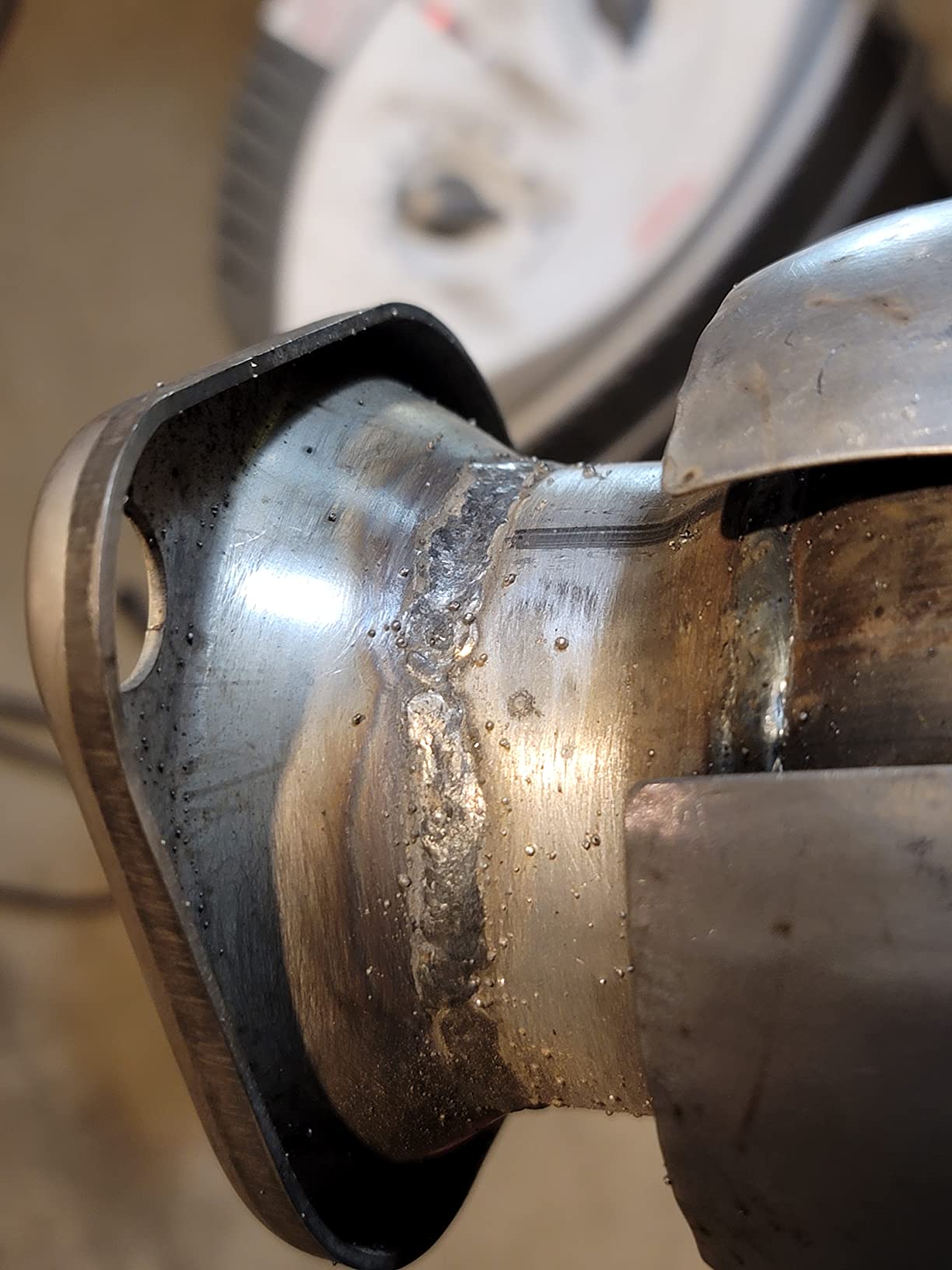
Hot Start and Arc Force are both fitted, and Arc Force is what keeps the stick arc from pushing the puddle around. Weight with the carry handle is quoted at 11.24 pounds, and voltage auto-matches with plus or minus 3V of fine tuning available on the large display.
The recurring complaints are physical rather than electrical. The ground clamp and leads are short, and some owners report that the circuit board mounting needs a standoff added inside the case. Spool capacity is 2 pound only, and post warranty support is thin, so keep the receipt.
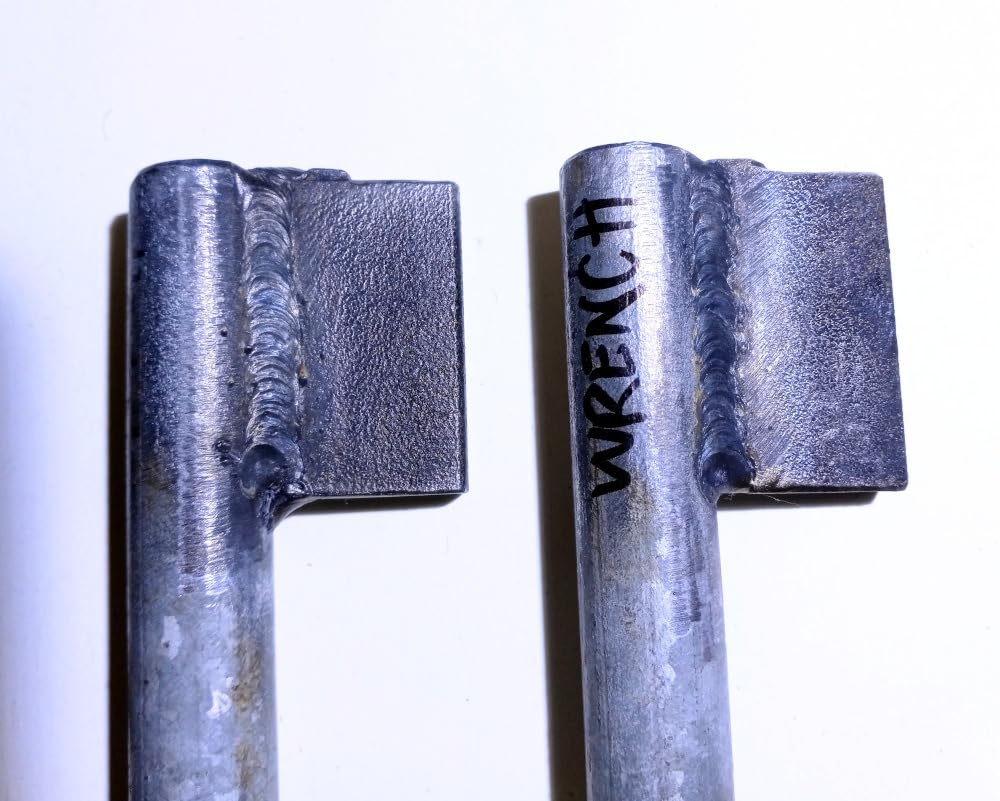
Why the accessories matter more than they sound
A first-time welder is usually buying a helmet, gloves, a chipping hammer, a wire brush, and a spool of wire in the same trip anyway. When those are already in the box, the effective cost of getting started drops and the temptation to skip safety gear goes with it. The included gloves are basic, but they beat welding bare handed on your first pass.
Where the cost cutting shows
Short cables limit where you can reach without an extension reel, and a 2 pound spool means more wire changes than a machine that takes 10 pound rolls. A few owners report early failures and weak support after the warranty ends. If the short lead lengths bother you, plan to add a heavier clamp and cable before your first real project.
6. AZZUNO 130A: Best Lightweight Machine to Carry Outdoors
AZZUNO MIG Welder,Flux Core Welder Machine 110V 130Amp, Gasless MIG Welding Machine IGBT Inverter Welder Portable Wire Feed Welder (110V)
130 amp at 110V
IGBT inverter
Synergic control
8.6 lb with hand grip
Pros
- Light and easy to carry
- Synergic auto voltage and wire speed
- Includes wire contact tips and brush
- Overload and overheat protection
- Compact for storage
Cons
- Flux core only with no stick or TIG
- Handles 2.2 lb spools only
- One-year warranty
Flux core is the only process that works outdoors without gas shielding, so if your welder lives in a truck bed the weight matters. The AZZUNO 130F is quoted at 8.6 pounds with a comfortable hand grip, and its IGBT inverter power source is the kind of hardware that has no moving parts to fail.
Synergic control sets voltage and wire feed speed by amperage or material thickness, so a beginner picks two numbers on the panel instead of guessing at two dials. Rated output is 130 amps on 110V, and the manufacturer lists welds up to 3.0mm plate. Overload and overheating protection are both built in.
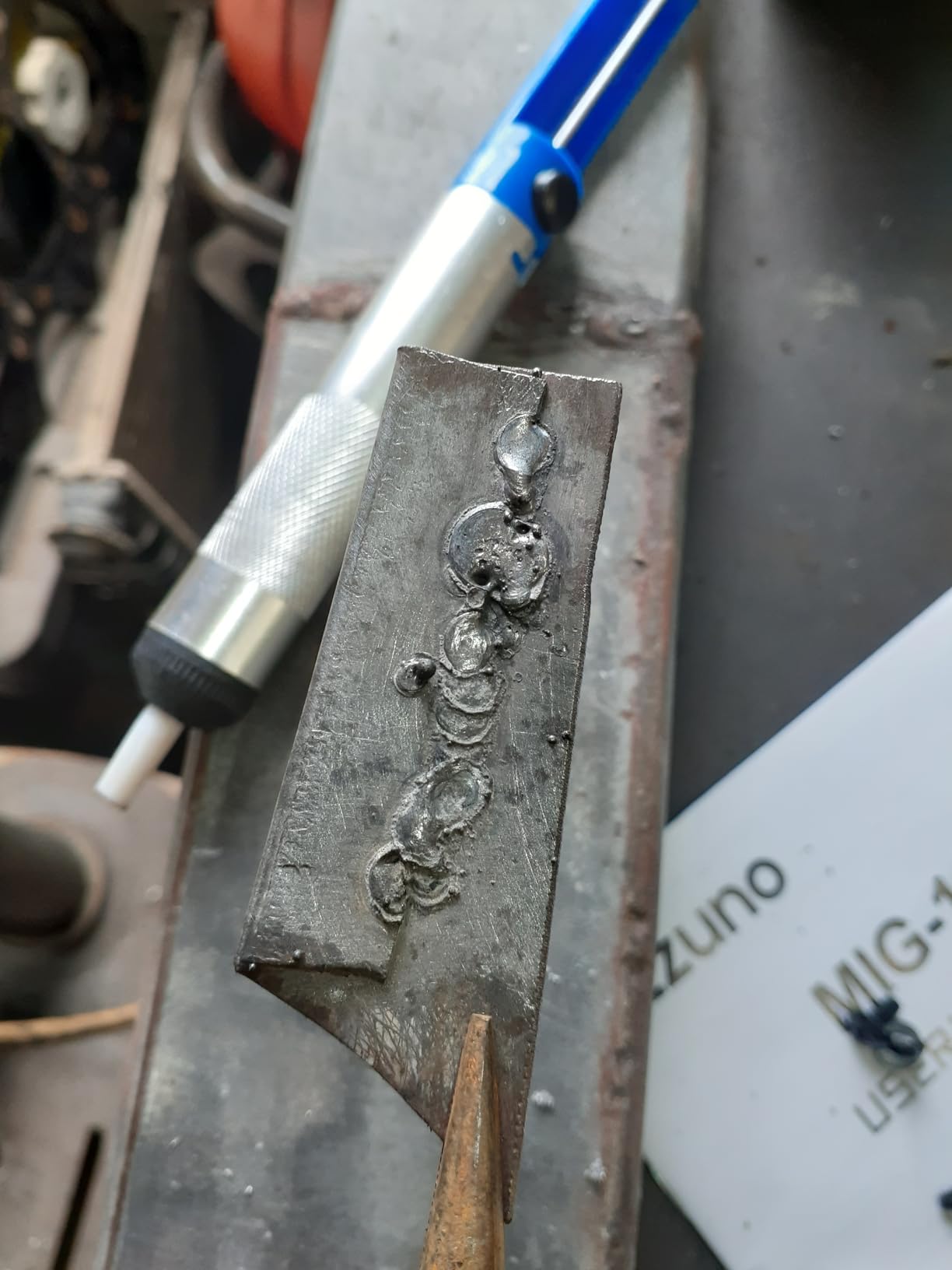
The box includes the welder, MIG torch, ground clamp, wire brush and chipping hammer, one pound of .030 inch flux core wire, and two contact tips. Spool capacity is 2.2 pound, and the one year manufacturer warranty is the shortest in this group, which is the main cost of buying at the entry level.
Understand the ceiling before you buy. This is a flux core only machine with no stick and no TIG, and 130 amps is a real limit for plate work. Owners use it for light repairs, thin material, and hobby fabrication, and report consistent results in that range. Bring a longer ground lead if you will be welding away from the machine.
Why we picked it for outdoor and field work
Carrying a 20 pound transformer to a gate post in the mud is a different day than carrying 8.6 pounds. Combined with the fact that it needs no gas cylinder, this is the machine to buy if your projects are fence rails, trailer repairs, and fixing whatever broke last weekend.
What you give up
One process, the smallest spool, and the shortest warranty here. If you think you will ever want to weld aluminum or do thin sheet, buy a multi-process machine instead and save yourself a second purchase. Reviews also note that build quality tracks the entry level price, so treat the torch and clamp as replaceable.
7. HITBOX 200A: Best Budget Dual-Voltage Machine
HITBOX 200A MIG Welder, 110V/220V Flux Core MIG/Lift TIG/Stick 3-in-1
110V and 220V dual voltage
Flux core, stick and lift TIG
8.6 lb
Holds 2 lb spool
Pros
- Runs on either 120V or 220V outlets
- Lightweight chassis with built in handle
- IGBT inverter
- Includes 2 lb of .035 wire and accessories
- Quiet operation
Cons
- Output runs below the number on the display
- Ground clamp warps quickly
- No Hot Start for stick
Most budget machines are 110V only, which quietly rules out any future 220V work. The HITBOX switches between 110V and 220V inputs, so it works in a small apartment today and in a proper shop later. Three processes are supported: gasless flux core, stick, and lift TIG.
The listing markets 200 amps, and the machine is listed under a 145A model number, so treat the headline figure with care. Owners who measured output report it running 20 to 30 percent below the displayed number, and welds up to 4.0mm mild steel with .030 and .035 inch flux wire. Technical weight with the built in handle is quoted at 8.6 pounds.
The box is generous for the tier. You get an 8 foot MIG torch, a 5 foot ground clamp, a 5 foot electrode holder, a 2 pound spool of .035 inch wire, nozzles, a brush and chipping hammer, and a manual. That is a full working kit out of the carton.
Stick performance is the weak spot. Owners report trouble with 6010, 6011, and 7018 rods, and there is no Hot Start feature, so arc ignition on stick takes practice. The included ground clamp is soft enough that owners report it warping quickly, and the small screen is hard to read outdoors. Spool capacity is 2 pound only.
Why dual voltage matters even at the low end
A 120V only machine has a permanent ceiling. This one can be moved to a 220V circuit later without replacing anything, and the 220V mode does give a fuller arc on thicker material. For a buyer who is not sure how their skills will develop, that flexibility is worth more than the highest headline amp number.
Where the shortcuts are
Output below the display, a ground clamp that deforms, and stick welding that fights you. Buy a stiffer ground clamp and a heavier earth lead before the first project, and stick to flux core, which is what this machine does well. Instructions are thin, so budget time for a basic instructional video.
8. GZ GUOZHI 140A: Best for Cold-Weather and Unreliable Power
GZ GUOZHI 140A MIG Welder,3-in-1 MIG Welder with FLUX MIG/ARC/Lift TIG Multi-Process,110V Welding Machine,110V Flux Core Welder with Welding Gun(black)
140 amp at 110V
90V to 140V wide voltage design
Operates to -15C
14.1 lb
Pros
- Wide voltage design tolerates power fluctuations
- Rated for cold weather operation
- Synergic plus manual control modes
- Includes 500A electrode holder and ground clamp
- MIG torch pre-installed
Cons
- 110V only and 2 lb spools
- Lowest rating in the group at 4.3 stars
- TIG torch sold separately
The GZ GUOZHI MIG 140 is the odd one out in this roundup because of one design choice: a 90V to 140V wide voltage range. In a garage with old wiring, a long extension cord, or a generator, that tolerance is the difference between a stable arc and a machine that keeps dropping out mid pass.
It also states it operates down to -15 degrees Celsius, which matters if you weld outside in winter or in a farmyard or unheated shed. The power source is listed as AC and DC. Output is rated at 140 amps on 110V, and it handles 2 pound spools of .030 and .035 inch flux core wire.
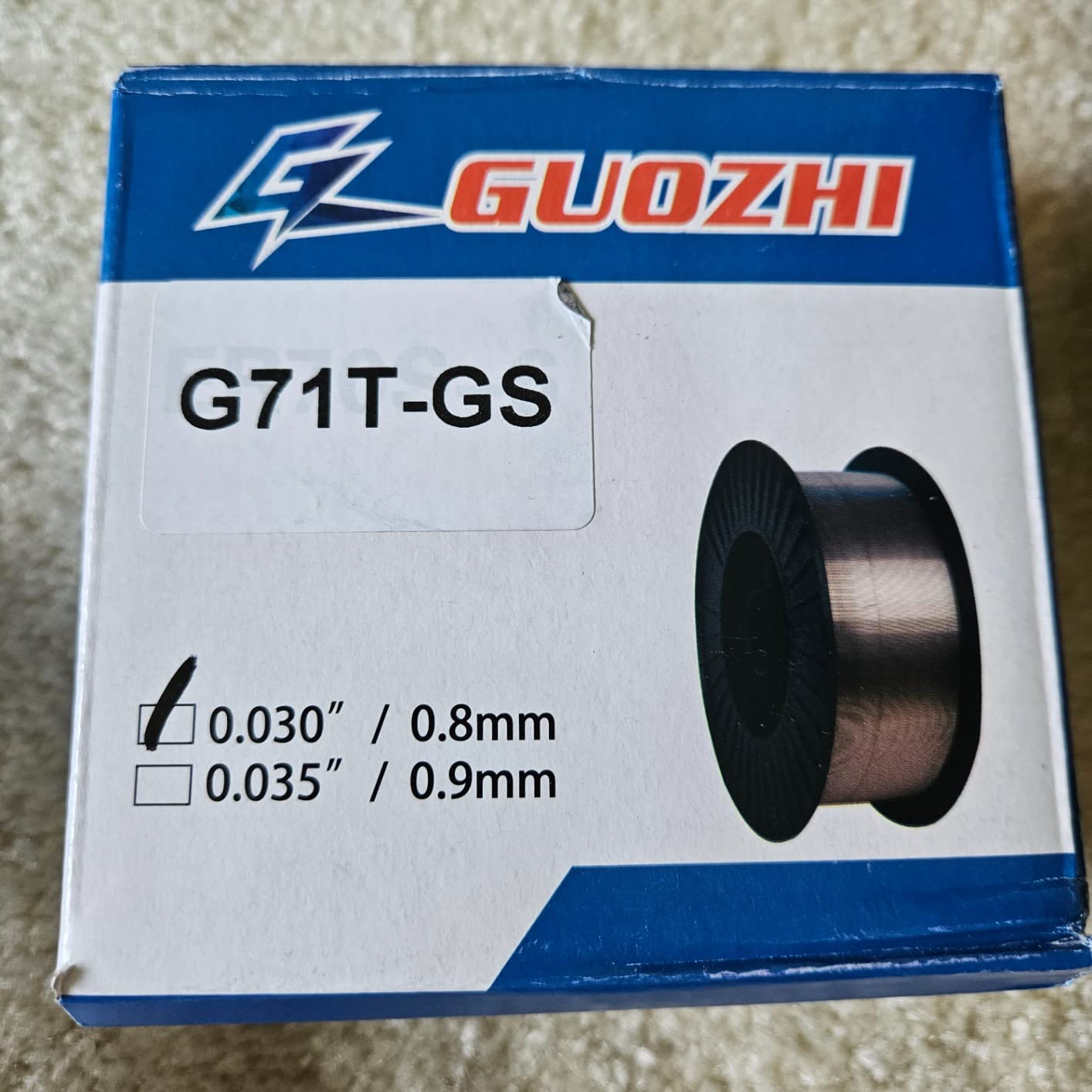
Three processes are on offer: flux MIG, arc and stick, and lift TIG with a separately sold torch. Synergic control sets voltage and wire feed speed automatically, with a manual mode available. Overheating, overcurrent, overvoltage, and overload protection are all fitted, and the MIG torch arrives pre-installed.
The accessory set is unusually complete for the tier, with a 500A electrode holder and 500A ground clamp included. Chassis weight is 14.1 pounds, and stick electrode capacity is listed for rods under 1/8 inch, so it is not a heavy structural stick welder.
Why the wide voltage design is worth something
Arc stability is not just an internal quality measure, it is what separates a pleasant first weld from a frustrating one. Machines that trip or lose the arc when the supply sags teach you bad habits, because you start blaming your own settings. A welder that holds its arc on marginal power lets you focus on technique.
Where it ranks last
Its 4.3 star average is the lowest here, and it has the thinnest long term review history in the group. It is 110V only, limited to 2 pound spools, and the TIG torch is an extra purchase. If cold tolerance is not part of your plan, one of the better reviewed 3-in-1 machines is the safer bet.
Flux Core vs MIG vs TIG vs Stick: Which Process Should You Learn First?
Your first machine decides which process you will learn, and that matters more than the brand on the case. Here is how the four common arc processes differ for someone starting out.
Flux core (FCAW) needs no shielding gas, works outdoors in wind and on dirty or unpainted metal, and handles rust and mill scale that gas MIG refuses to fuse. The cost is a slag layer to chip away, more spatter, and a rougher bead. It will not weld aluminum at all.
Gas MIG (GMAW) produces the cleanest and most versatile results of any beginner process. It welds thin sheet without burning through, handles stainless and aluminum with the right wire and gas, and looks like finished work with almost no cleanup. It needs a cylinder, a regulator, and a garage or shelter, because shielding gas blows away outdoors.
Stick (SMAW) is the most tolerant process in the world. It works on dirty steel, in the rain, and with almost no equipment beyond a stick and a ground clamp. It is also slower, produces the most slag, and is hard to control on thin material.
TIG (GTAW) gives the most precise, cleanest welds and works on stainless and aluminum, but it is the least forgiving for a first-time welder. Lift TIG mode on a MIG-class machine, where you strike an arc and then raise the amperage, is a reasonable middle step.
Our honest read: if you have a cylinder and a place to work out of, a gas MIG machine will teach you faster and open more doors. If you do not, flux core is the right call, and the machines above make it a short list. Veterans on the hobby machining forums make the same argument, and they also point out that the decision is driven by gas access and budget rather than skill level.
What to Look For When Buying Your First Flux Core Welder
Duty cycle, and how to read the fine print. Duty cycle is the share of a ten minute cycle the machine can weld before it needs to cool down. A spec sheet reading 30 percent is measured at a specific low amperage, often 90 amps, not at the machine maximum. Treat the number as marketing until you check the amperage it is quoted at. Overloading a small unit is the fastest way to trip its thermal protection.
Amps and metal thickness. For a beginner, 130 to 140 amps at 120V covers 16 gauge through 1/4 inch mild steel in most projects. Under about 100 amps you will struggle to fuse thicker plate, and above 160 amps at 120V you are asking a household circuit to do a shop job. Only a 220V machine handles sustained work on 1/4 inch plate.
110V versus 220V. This is the decision people regret most. A 120V only welder is a permanent ceiling on output. A dual voltage machine gives you a small machine today and a capable one later, provided you actually install a 220V circuit. Installing that outlet is a small electrician job, and it changes what you can buy next.
Wire diameter and contact tips. .030 inch wire is easier to feed, produces a smaller bead, and is the right choice for thin material and lighter machines. .035 inch deposits more filler metal per inch and is better for plate, but needs more amperage to push it. Use a contact tip drilled for the wire you loaded, because mismatched tip and wire diameter is the usual cause of bird nesting and erratic feeding. You can run .030 wire in a .035 machine, but match the tip.
Spool capacity. Small 2 pound spools are convenient to store and cheap to buy. 10 pound spools cost less per pound of wire and mean fewer changeovers on a long job. The Forney and the dual voltage YESWELDER take both. Machines limited to 2 pound spools are not a defect, just a small annoyance.
Processes and included gear. A single process flux core machine is cheaper and simpler. A 3-in-1 or 4-in-1 adds stick and lift TIG, which cost little to include and save you a second purchase later, though the TIG torch is usually sold separately. Check whether wire, gloves, ground clamp, and electrode holder are included before you buy anything else.
Safety gear and ventilation. Budget for an auto darkening helmet, leather gauntlet gloves, a jacket, a chipping hammer, and a wire brush on day one. Flux fumes contain zinc and lead, so work outdoors or with a fan moving air away from your breathing zone. Attach the ground clamp to the workpiece itself, and keep an eye on the return cable as it ages.
One more note that separates this guide from most affiliate roundups: flux core welders advertised as multi process generally cannot weld aluminum. A spool gun helps only on machines designed for it, and none of the machines here support aluminum. If aluminum is on your project list, buy a machine designed for it rather than a spool gun attachment.
Finally, consider a workshop that will not give you earache. The best home welders in this roundup weigh between 8 and 20 pounds, and if you can hang or shelve the machine instead of carrying it around, that changes which one you should pick. Many beginners also start with an auto darkening helmet and gloves on their shopping list the same afternoon as the machine.
Frequently Asked Questions
What is the best flux-core welder for a beginner?
The Forney Easy Weld 140 FC-i is our overall pick because it gives beginners separate voltage and wire feed speed controls, welds up to 1/4 inch mild steel, and carries a 4.6 star average across more than 3300 ratings. If you want three processes instead of one, the YESWELDER 135A adds stick and lift TIG at a lower cost.
What is the best gasless MIG welder for beginners?
A gasless MIG welder is a flux core machine, and the ARCCAPTAIN 130A is the best starting point for most people. It runs flux core, stick, and lift TIG, includes wire, contact tips, a ground clamp, and a brush, and carries a two-year warranty. A synergic panel sets voltage and wire feed speed for you.
How to use a flux core welder for beginners?
Set the machine to DC negative, load the wire so it feeds toward you, and match the contact tip to the wire diameter. Choose your material thickness on a synergic panel or set voltage and wire speed by hand, clamp the ground to the workpiece itself, then run a practice bead on scrap with about half an inch of wire stick-out.
Should I use .030 or .035 flux core wire?
Use .030 inch wire for thin material, light beads, and smaller 120V machines because it feeds more easily and creates a smaller puddle. Use .035 inch wire for 1/8 inch and thicker plate, since it deposits more filler metal per inch. Many beginners run .030 for the first few hours, then step up to .035 once their machine has the amperage to push it.
Can you use .030 wire with a .035 contact tip?
You can feed .030 wire through a .035 tip, but it is not the right setup. A contact tip drilled a size too large lets the wire wander inside it, which causes bird nesting and erratic feeding. Change to a tip drilled for the diameter you are running, and keep spares of both sizes in your consumables kit.
Which is better for beginners, flux-core or MIG welding?
Gas MIG is better if you have a cylinder and a place to work out of, because it welds thin sheet cleanly and can handle aluminum. Flux core is better if you work outdoors, on rusty or unpainted metal, or do not want to buy gas, and it is the more forgiving process on dirty joints. The choice comes down to gas access and budget, not skill level.
Are 120V MIG welders any good?
Yes, for home use they are genuinely capable. A 130 to 140 amp 120V flux core machine handles 16 gauge through 1/4 inch mild steel for gates, trailer repairs, and car floor pans. The limits are sustained production work, very thick plate, and 220V only machines that cannot grow with your skills, so a dual voltage model is the safer long term buy.
Is it too late to start welding at 40?
There is no age cutoff. Arc welding rewards practice rather than reflexes, and the first few sessions are dominated by setup habits like polarity, stick-out, and travel speed, all of which any adult can learn in a weekend. Pick a machine with synergic settings if you want the panel to make the early decisions for you.
Final Word: The Best Flux Core Welder for Beginners
If you are buying one machine and nothing else, choose the Forney Easy Weld 140 FC-i. Manual controls, 140 amps, 10 pound spool capability, and the largest review base in this group make it the most dependable place to start. If you want three processes and want to keep the entry outlay small, take the YESWELDER 135A. If you already have a 220V circuit, the YESWELDER 160A is the better long term buy.
Tell us what you plan to weld and whether you have 120V or 220V access, and we will narrow this list down to a single machine for your garage. If you are still deciding on the wider tool kit for your workshop, our solid core door guide for a quieter workspace is a decent starting point for the rest of the room.