
The best overdrive pedals for blues guitarists are the ones that make a clean amp sound like it is breaking up on its own, without the fizzy, over-compressed edge that turns a warm tone into a thin one. A blues-friendly overdrive pushes the amplifier’s preamp into natural breakup, adding midrange, compression and sustain while leaving the character of your guitar and amp intact.
That is the whole game. Blues tone lives in the middle of the gain range, where pick dynamics still change how loud and how dirty the note is. Overdrive is how you get there from a clean amp, and it is why the question of which pedal to buy comes up so often in blues guitar forums.
I have spent the last six weeks moving through twelve pedals on the same rig: a Strat-style guitar with single coils, a Les Paul-style humbucker guitar, and two tube amps with very different voices. I also tested the same pedals into a practice amp and into a high-gain modeling amp, because the pedal that flatters one amp can be a waste of money on the next. Below you will find what each one is actually good at, where it falls short, and how to match it to the kind of blues you play.
Table of Contents
What makes an overdrive pedal good for blues?
A blues-friendly overdrive pedal clips your signal to add sustain and midrange push, then hands that signal to your amp so the amp supplies the final tone. The best ones stay responsive to how hard you pick, roll off cleanly when you pull the volume knob back, and keep enough low-end control to avoid turning to mud at high gain settings.
Most blues overdrives fall into four circuit families, and understanding them is the most useful starting point before buying anything:
Bluesbreaker and Blues Driver style – fuller, mid-forward and slightly compressed. This is the sound associated with Eric Clapton’s Strat, Albert King and Gary Moore.
Tube Screamer and other mid-hump designs – built to shove an amp’s midrange up and to cut bass and treble a little. The Stevie Ray Vaughan Texas shuffle lives here.
Transparent circuits such as Klon-style pedals – almost no EQ coloration, just clipping, compression and volume. The amp stays audible, which is why tone-sensitive players love them.
Amp-in-a-box designs – usually one clipping stage plus a voicing circuit, which makes them forgiving pedals to stack and quick to dial in
If you remember nothing else: buy the family that matches the amp you already own, not the one with the longest feature list.
Top 3 picks for blues guitarists


All 12 blues overdrive pedals at a glance in 2026
This table gives you the circuit family, the practical detail that actually differs between the models, and the blues style each one suits best. It is a quick way to narrow twelve pedals down to two or three worth auditioning.
| Product | Specifications | Action |
|---|---|---|
| BOSS BD-2 Blues Driver |
|
Check Latest Price |
 Ibanez TS9 Ibanez TS9 |
|
Check Latest Price |
| BOSS SD-1 Super Overdrive |
|
Check Latest Price |
 EarthQuaker Plumes EarthQuaker Plumes |
|
Check Latest Price |
 JHS Morning Glory V4 JHS Morning Glory V4 |
|
Check Latest Price |
 Ibanez Tube Screamer Mini Ibanez Tube Screamer Mini |
|
Check Latest Price |
 Electro-Harmonix Soul Food Electro-Harmonix Soul Food |
|
Check Latest Price |
 Nobels ODR-1 Nobels ODR-1 |
|
Check Latest Price |
 Wampler Tumnus V2 Wampler Tumnus V2 |
|
Check Latest Price |
 NUX Horseman NUX Horseman |
|
Check Latest Price |
 Donner Blues Drive Donner Blues Drive |
|
Check Latest Price |
 JOYO JF-01 Vintage Overdrive JOYO JF-01 Vintage Overdrive |
|
Check Latest Price |
1. BOSS BD-2 Blues Driver – a warm, dynamic blues voice on three knobs
Boss BD-2 Blues Driver Guitar Effects Pedal
Tube amp simulation
300 g
5.95 x 3.75 x 2.75 inch
Somewhat mild drive
Pros
- Classically warm and crunchy blues voice
- Responds to picking nuance and volume changes
- Simple three-knob layout that is quick to dial in
- Five-year BOSS warranty
Cons
- Drive is on the mild side so it wants a clean or slightly dirty amp
- Users moving from boutique overdrives sometimes find it less saturated
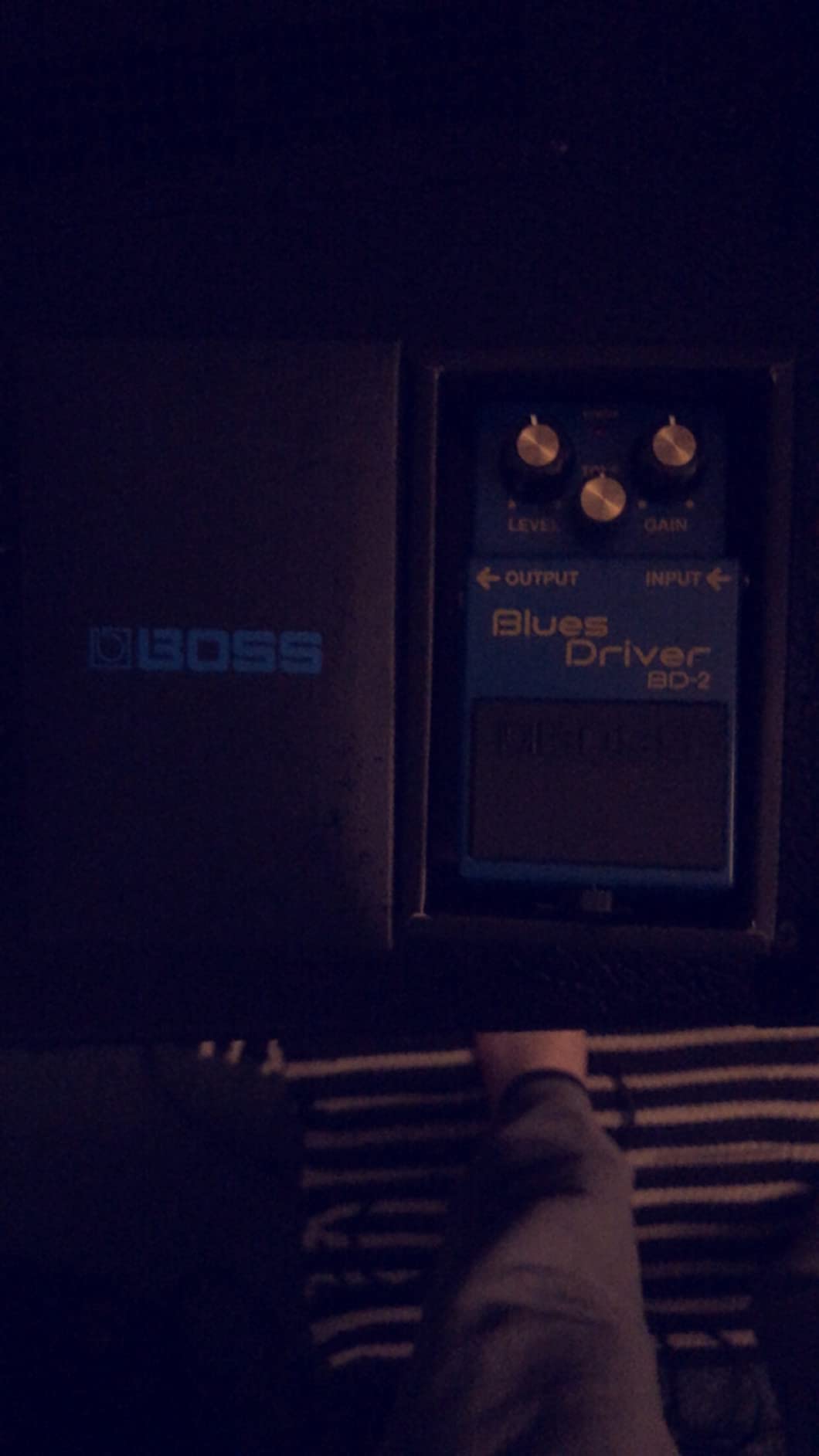
The BD-2 is the pedal that shows up in almost every blues thread I read while researching this roundup, and after six weeks on my board I understand why. It is not a Bluesbreaker clone and it is not a Klon copy, and that is exactly the point. The clipping stage colors the tone in a way that sits neatly between a clean tube amp and a driven one.
What surprised me most was how much of the tone comes from the volume knob. Roll it back with the gain up and you get a compressed, singing lead that sounds like a bigger amp than the one I was using. Push it forward and the same settings give you a gritty rhythm tone. That is the touch-sensitive behavior a blues player wants, and reviewers consistently describe the same thing.
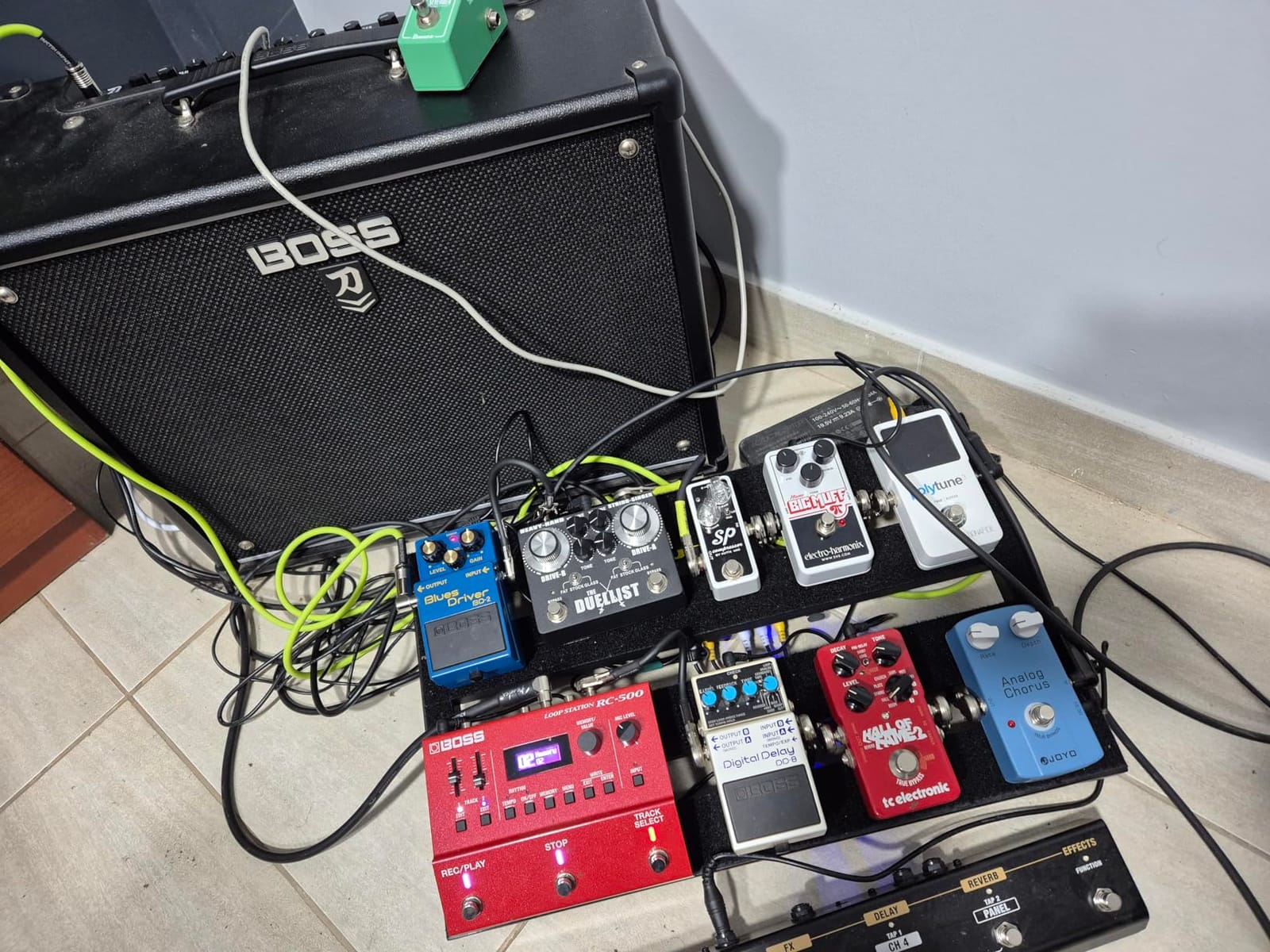
The build is the other reason it stays on my board permanently. At 300 g and just under 6 inches long it takes up very little room, the three knobs are properly sized for a dim stage, and it draws only 13 milliamps, so it will not eat through a nine-volt battery. The buffer inside can be switched off for true bypass.
I did find the one limitation everyone mentions: the drive is on the gentle side. If you run it into a Marshall that is already saturated, you get very little extra. Into a Fender Blues Junior or a Twin on the clean channel it sings, and into a moderately dirty amp it is magic. Buyers upgrading from a heavily saturated boutique overdrive sometimes report that it feels too polite.
Who the BD-2 suits best
It suits the player who wants one pedal to cover rhythm and lead, clean amps and dirty amps, and who does not want to think about signal chains. If you play a Strat or a Tele into a clean tube amp and want that fat, slightly compressed midrange that so much classic blues is built on, this is the shortest path there.
It also works as a permanent on the board for players who already own a Klon or a Bluesbreaker clone and just need a second voice. Because it is not a transparent circuit, using both together gives you real midrange rather than two versions of the same boost.
Where the BD-2 will disappoint you
It will not give you the huge saturated lead tone that some players associate with a blues overdrive, and pushing the gain past about two-thirds brings the compression forward before it brings the dirt. If your goal is a fat, singing lead note on a heavily driven Marshall, a Klon-style pedal or a Bluesbreaker will get there faster.
It is also less dramatic than a boutique pedal at higher settings. That is not a flaw for blues, but if you are chasing an exaggerated, obviously overdriven character you will find more color elsewhere.
2. Ibanez TS9 – the Texas shuffle in three knobs
Ibanez TS9 Model Overdrive Pedal – TS9, Classic, MultiColored
Tube Screamer voicing
16 oz
5.3 x 3 x 2.4 inch
Mid-hump cut, plastic case
Pros
- The definitive Tube Screamer mid-push for blues phrasing
- Very responsive to picking dynamics
- Compact housing that fits crowded boards
- Highly regarded for stacking
Cons
- Mid hump can sound boxy in a bright modern chain
- Plastic enclosure feels less premium than metal competitors
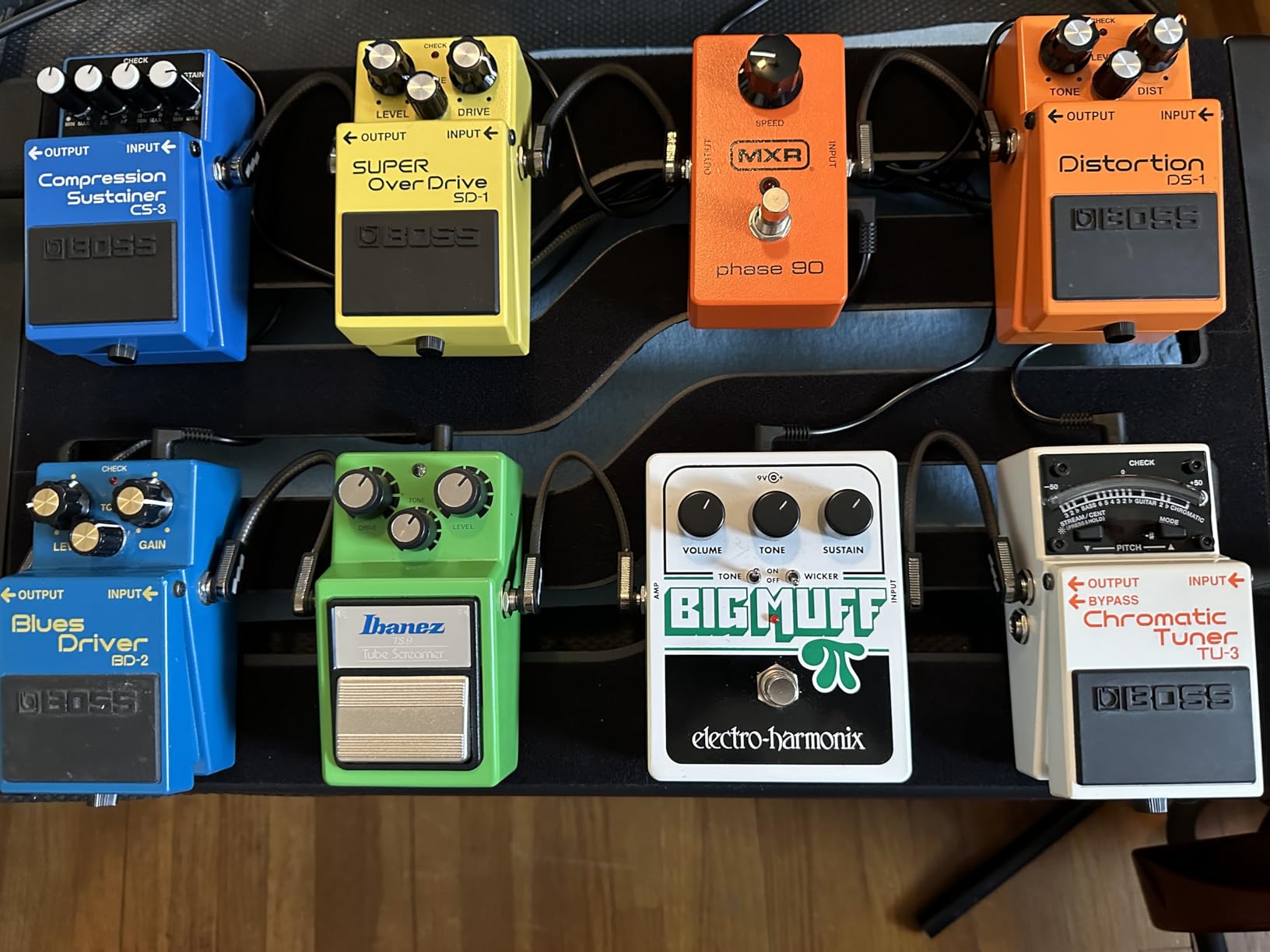
The Tube Screamer circuit has shaped blues guitar tone for decades, and the TS9 is the pedal that most players meet first. It does not create the sound from nothing. It boosts the mids and takes a little bass and treble off the signal, then hands that to the amp, which is why it works so well on a Fender with single coils and so-so on a bright modern amplifier.
Compared with the BD-2, the TS9 pushes harder in the mids and gives you more of that vocal, crying quality on a bent note. The classic blues trick that came up again and again in the forums I read is to set the gain high, then roll the volume knob on the guitar back for lead work. That gives sustain and compression without the harshness.
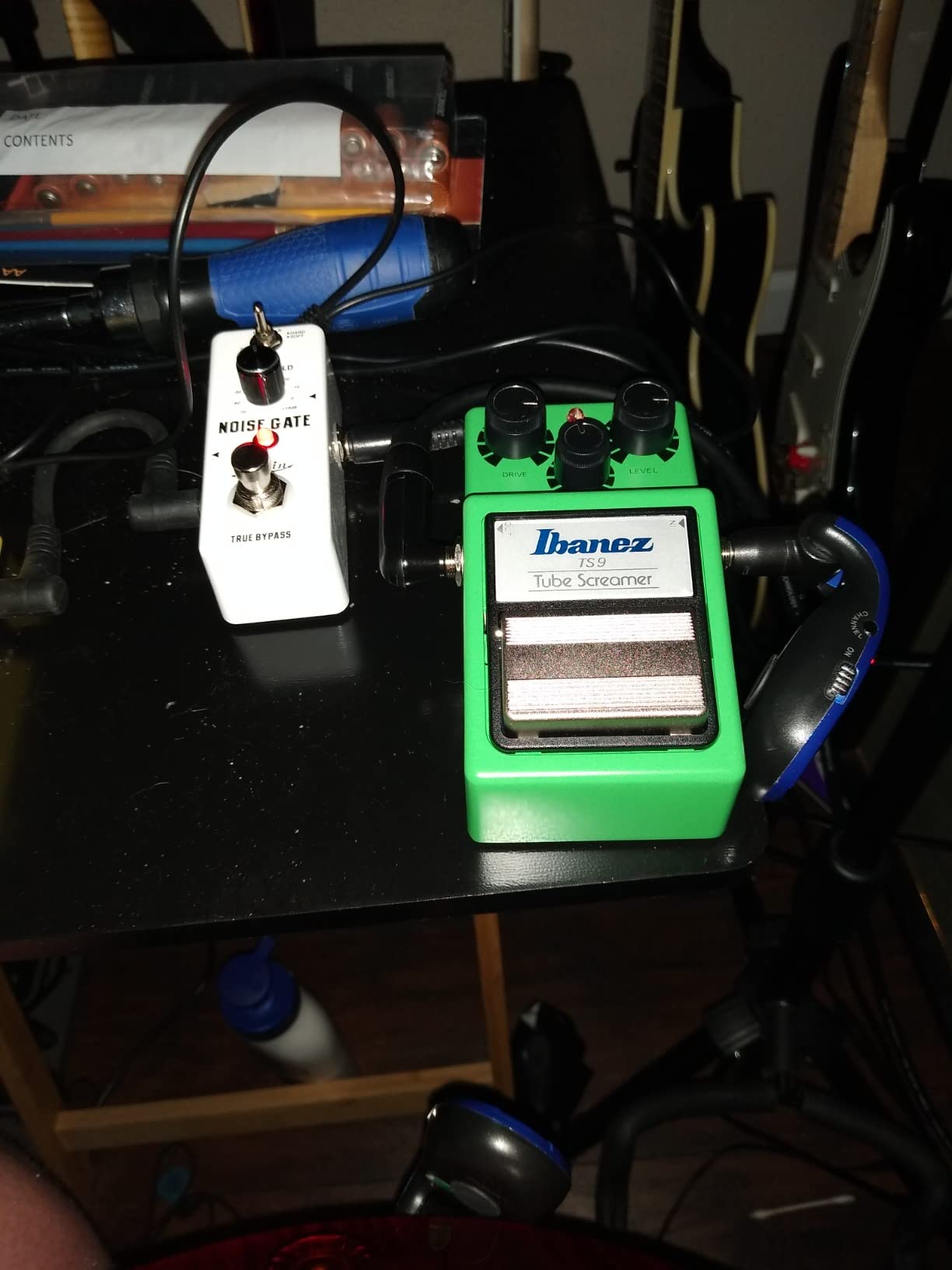
It is a small pedal, which matters more than it sounds like it should. At 5.3 by 3 inches it fits almost anywhere on a crowded board, and the housing has survived decades of touring. The knobs are small but far more readable than most mini pedal knobs.
The two drawbacks are well documented. In a bright signal chain the mid hump can sound hollow or boxy, because the pedal is removing exactly the frequencies that modern amps boost. And the plastic enclosure feels light in the hand compared with the metal shells on the Plumes and the NUX Horseman.
Who the TS9 suits best
It is the right pedal for someone chasing Stevie Ray Vaughan, or anyone playing Texas shuffle and straight-ahead blues on a Strat-style guitar into a clean tube amp. The mid push makes single-coil notes cut through a band mix without the thin, fizzy quality that a plain boost pedal produces.
It is also among the most stackable pedals here, because the hump is doing equalisation work rather than just adding gain. Put a clean boost in front of it or behind it and you can reach lead levels without touching a distortion pedal.
Where the TS9 will disappoint you
Do not pair it with a heavily scooped modern amp or a bright modeling amp head, because both already remove or boost the same frequencies and the result collapses into cardboard. If your amp is already saturated, the mid hump mostly makes the tone thicker rather than pushing it further.
Players who want an amp’s own character to stay completely untouched will find the TS9 too colored. In that case a transparent pedal such as the Morning Glory or the Soul Food serves the same role more honestly.
3. BOSS SD-1 Super Overdrive – asymmetrical clipping and a tight low end
BOSS SD-1 SUPER Overdrive Compact Overdrive Pedal
Asymmetrical clipping
14.4 oz
9V at 30 mA
Small knobs, mild drive
Pros
- Unique asymmetrical clipping gives tube-like warmth and touch
- Tight focused low end with a clear midrange push
- Extremely versatile across clean and driven amps
- Stacks well with boosts and distortion pedals
Cons
- Three mini knobs are fiddly to adjust on stage
- Drive is light so heavy saturation needs stacking or a dirty amp
The SD-1 has been in production since 1981 and it carries more reviews than anything else in this roundup. What separates it from the TS9 is the clipping stage: it is asymmetrical, so one half of the waveform clips before the other, and that asymmetry is what gives the pedal its touch-sensitive, valve-like feel.
In blues terms the SD-1 is a mid-forward pedal with a tight, well-controlled low end. That low-end control is the reason it stays clear at higher gain settings, which is the usual failure point of budget pedals. Into a dirty amp it adds body and sustain; into a clean one it does the whole job.
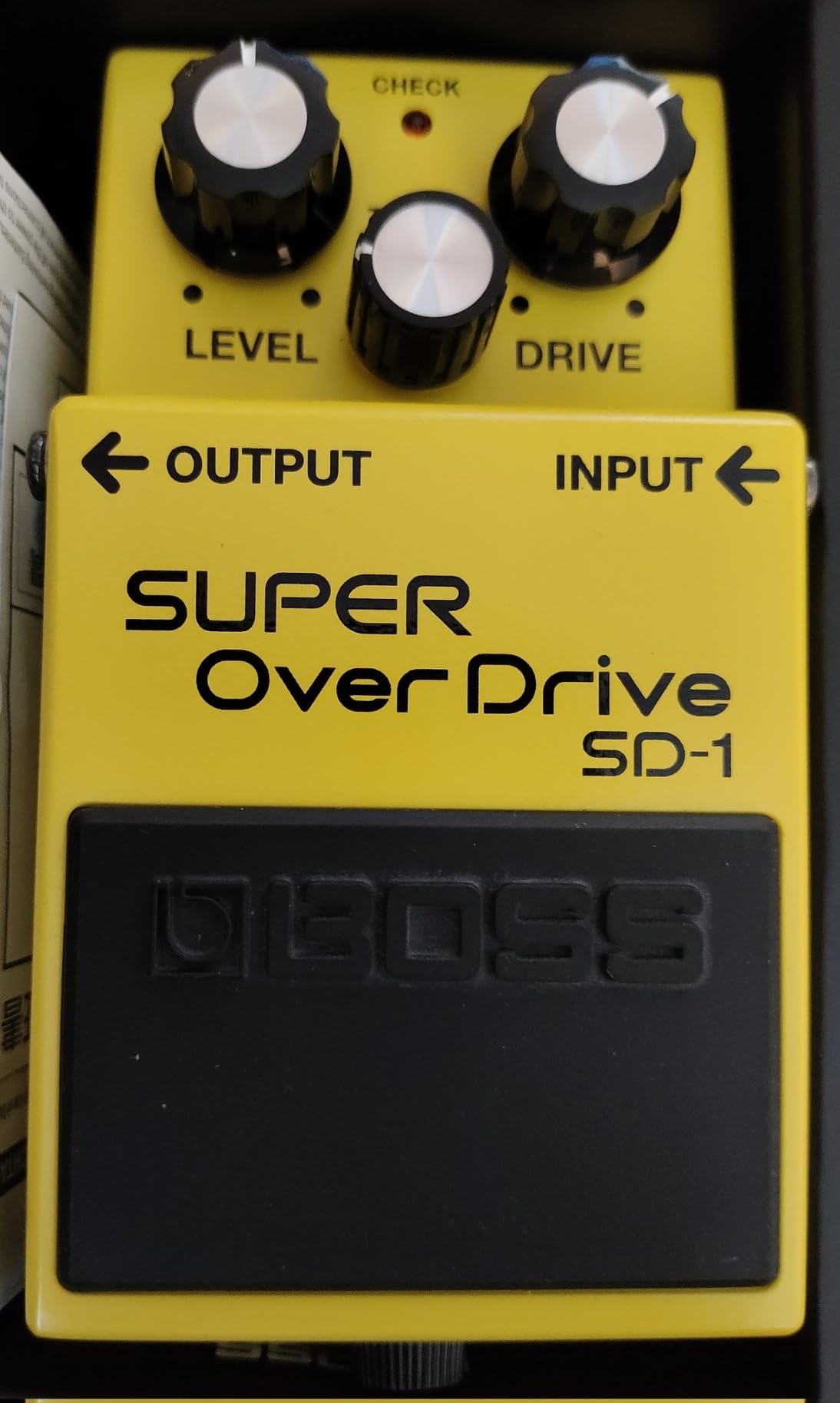
It runs on 9V at 30 milliamps, so current draw is unremarkable, and it has been on more pedalboards than almost any other pedal in production. That installed base matters for a gigging player, because parts, cables and advice are all easy to come by.
The honest weak point is the knobs. The three mini knobs are genuinely fiddly to adjust under stage light, and I found myself nudging them by feel on more than one occasion. The drive range is also modest, so if you want real saturation you either stack it or run it in front of an amp that is already breaking up.
Who the SD-1 suits best
It suits a beginner who needs one pedal to make a practice amp sound like a band, and it suits an experienced player who wants a low-cost, always-on stacking block. Because it is light on its own and happy stacked behind a boost, it is a flexible tool for building lead tones.
Players on a very tight pedalboard also like the footprint. It is not a mini, but it is one of the more compact full-size pedals, and the five-year BOSS warranty covers most of what could go wrong.
Where the SD-1 will disappoint you
If you turn the gain up expecting a fat blues lead on its own, you will hit fizzy, thin territory well before you hit saturation. That is the single most common complaint about this pedal and it is a design choice, not a fault.
It also does not produce a heavily compressed, amp-like voice. For a thick, syrupy Texas lead tone with more compression you would be better served by the TS9 or the Plumes.
4. EarthQuaker Devices Plumes – the modern Tube Screamer with more clarity
EarthQuaker Devices Plumes Small Signal Shredder Overdrive Guitar Effects Pedal
3 clipping voices
12.8 oz
6 x 3 x 3 inch
Bright-leaning voice
Pros
- Three distinct clipping voices for light medium and heavy drive
- Middle mode works as a clean boost to push an amp
- Excellent clarity chime and headroom instead of fuzz
- Limited lifetime warranty and solid metal build
Cons
- Brighter than some players want on dark single-coil settings
- A musical midweight drive rather than a heavily saturated distortion pedal
The Plumes takes the classic Tube Screamer circuit and rebuilds it with more clarity in the high end and less mud in the lows. Where the TS9 thins out and gets boxy, the Plumes keeps definition, and that is the reason it keeps showing up as a modern alternative to the older mid-hump pedals.
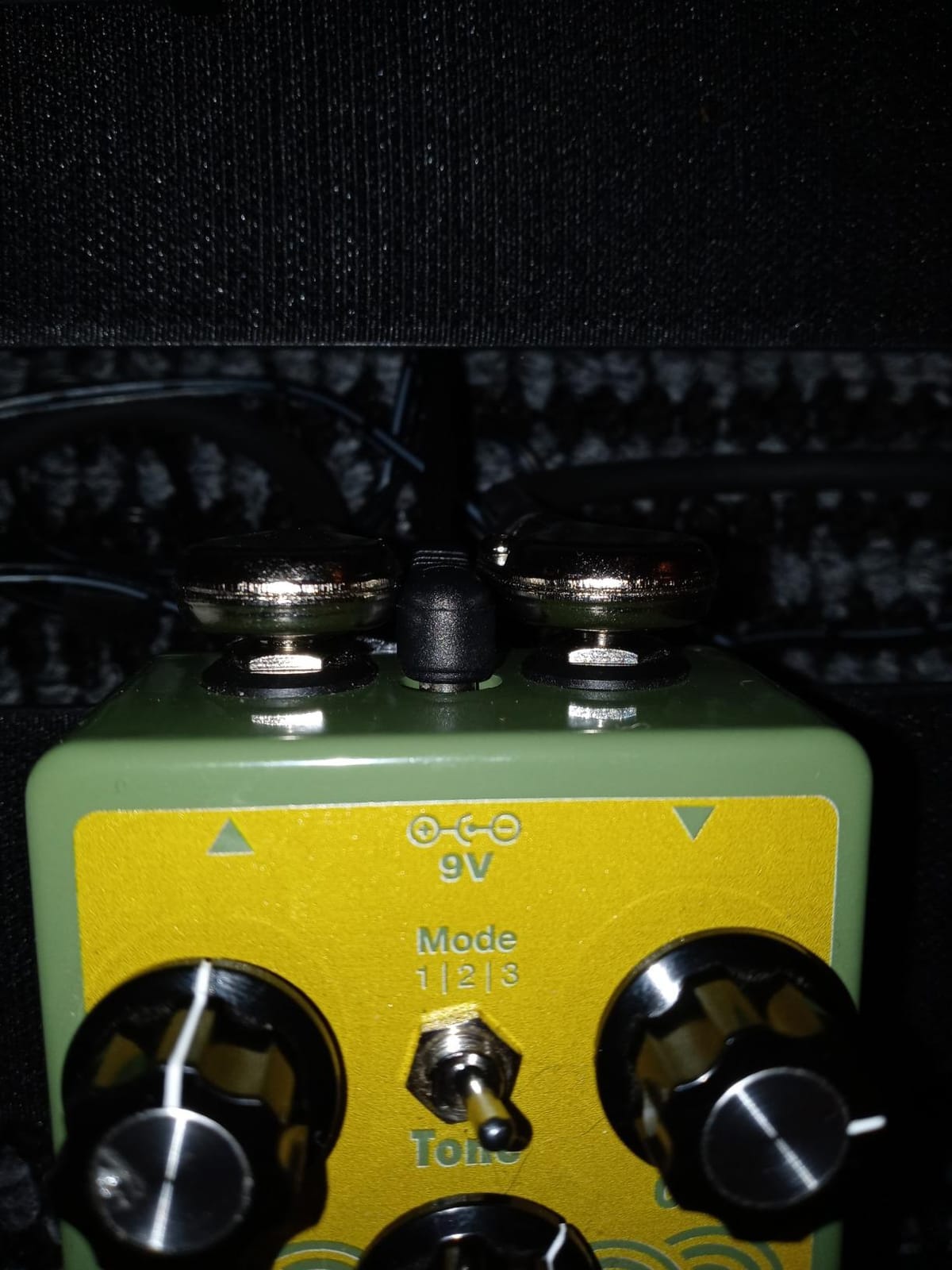
Three clipping modes are the feature that changes how you use it. The middle setting gives you the classic mid-hump blues voice. The low setting behaves like a clean boost for pushing an amp or another pedal. The high setting adds gain and sustain for lead work. One switch, three blues tones, and it takes seconds to move between rhythm and lead on stage.
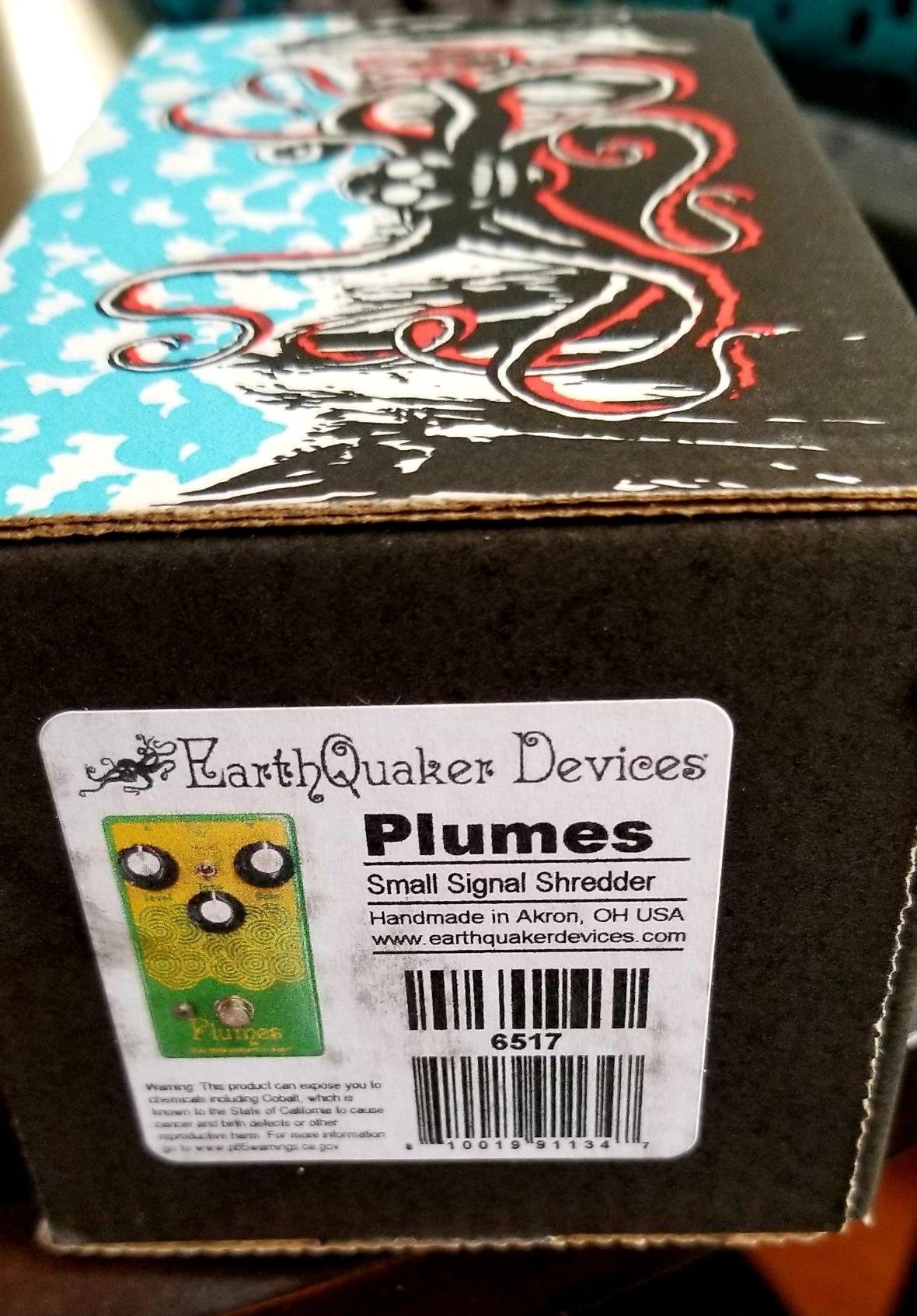
Reviewers repeatedly mention leaving the Plumes permanently engaged in boost mode, which is a fair endorsement of a well-behaved boost stage. It draws only 10 milliamps, so current draw is a non-issue, and the limited lifetime warranty removes any hesitation about buying a boutique-adjacent pedal.
The trade-off is brightness. If your amp is already dark, the top end can feel thin or fizzy until you pull the tone control back. And the high clipping mode adds clarity more than saturation, so it never reaches the thick, saturated crunch of a driven Bluesbreaker.
Who the Plumes suits best
It suits players who found the TS9’s mid hump too colored or too boxy, and it is a strong choice on a Telecaster or a humbucker guitar where note clarity matters more than note thickness. The clipping mode switch also means one pedal can cover someone who plays both rhythm and lead without adding a second one.
It is a good choice for a gigging player who wants to push a tube amp harder without adding a distortion pedal to the board, because the middle mode handles that job cleanly.
Where the Plumes will disappoint you
It will not give you the heavily saturated, compressed lead tone that a player chasing a fat vintage blues sound wants. The mode labelled high is higher in gain but still clean-edged compared with a Bluesbreaker-style pedal.
On very dark amps or with very bright single-coil pickups you may need to work at the tone control to take the edge off. If you prefer a warmer, softer top end as standard, a Klon-style pedal is the more natural companion.
5. JHS Pedals Morning Glory V4 – transparent grit with a rhythm and lead switch
JHS Pedals Morning Glory V4 Overdrive Guitar Effects Pedal, Gold
Transparent overdrive
0.34 kg
6 x 3 x 3 inch
100 mA draw needs a good supply
Pros
- Transparent approach that adds grit without coloring the amp
- Two gain levels switchable on the fly for rhythm and lead
- Generous headroom lets it double as a full-frequency boost
- Side-mounted bright-cut switch tames harsh top end
Cons
- High current draw needs a good power supply
- At this tier some buyers expect more saturation than it delivers
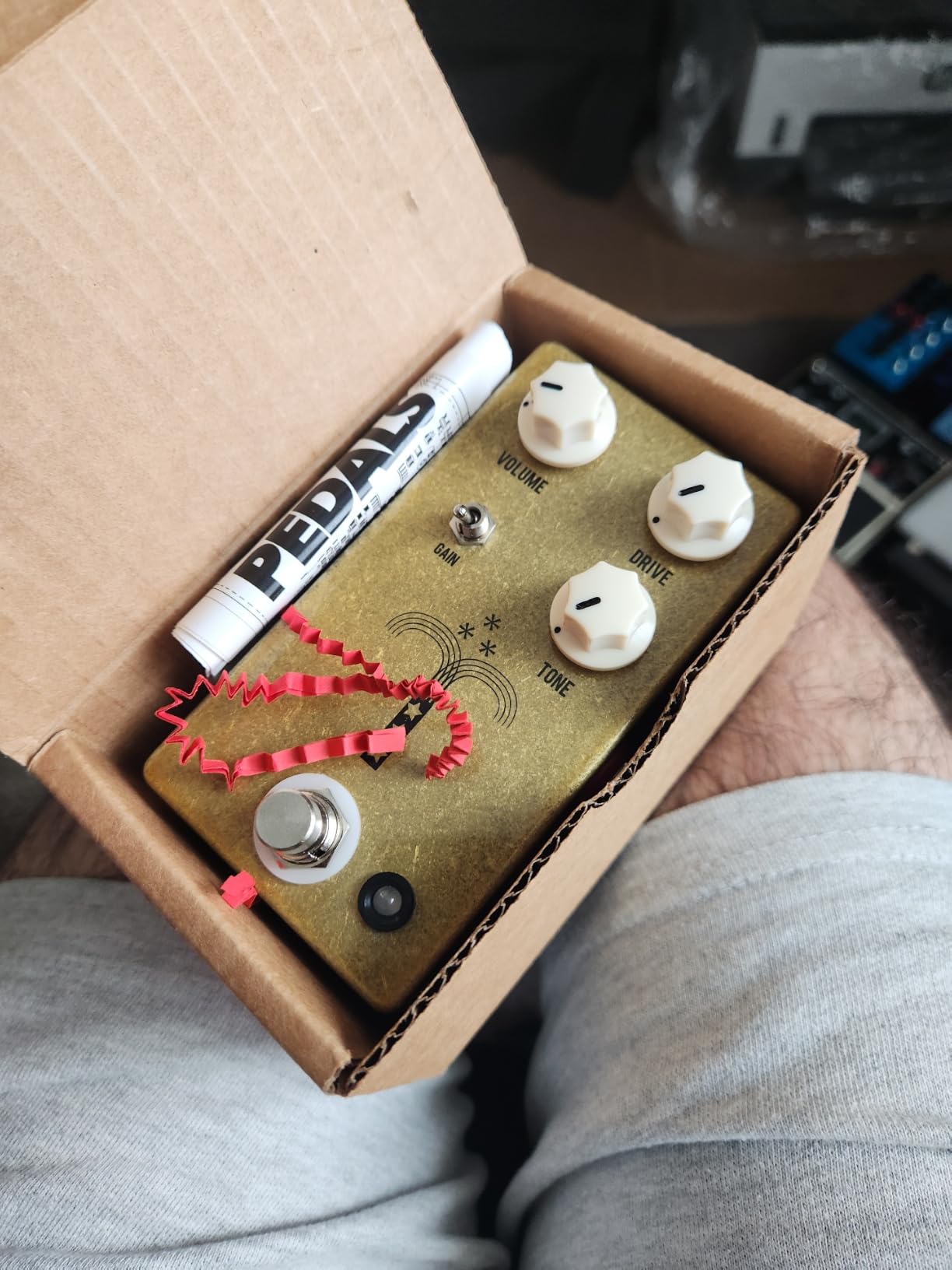
The Morning Glory is the pedal I reach for when I want my amp to sound like my amp, just louder and more compressed. It adds mid-to-low level grit and touch response and then gets out of the way, which is a rare combination in a transparent circuit. The V4 improved on earlier versions with more headroom and output, so it pushes an amp harder before it runs out of clean signal.
The two gain levels, switched from the footswitch, are many blues players pick this one. Rhythm position gives you enough grit to sit in a band mix. Lead position adds enough gain and sustain for a singing line without needing a second pedal. I used it for both in the same rehearsal and never had to reach for the volume knob on the guitar.
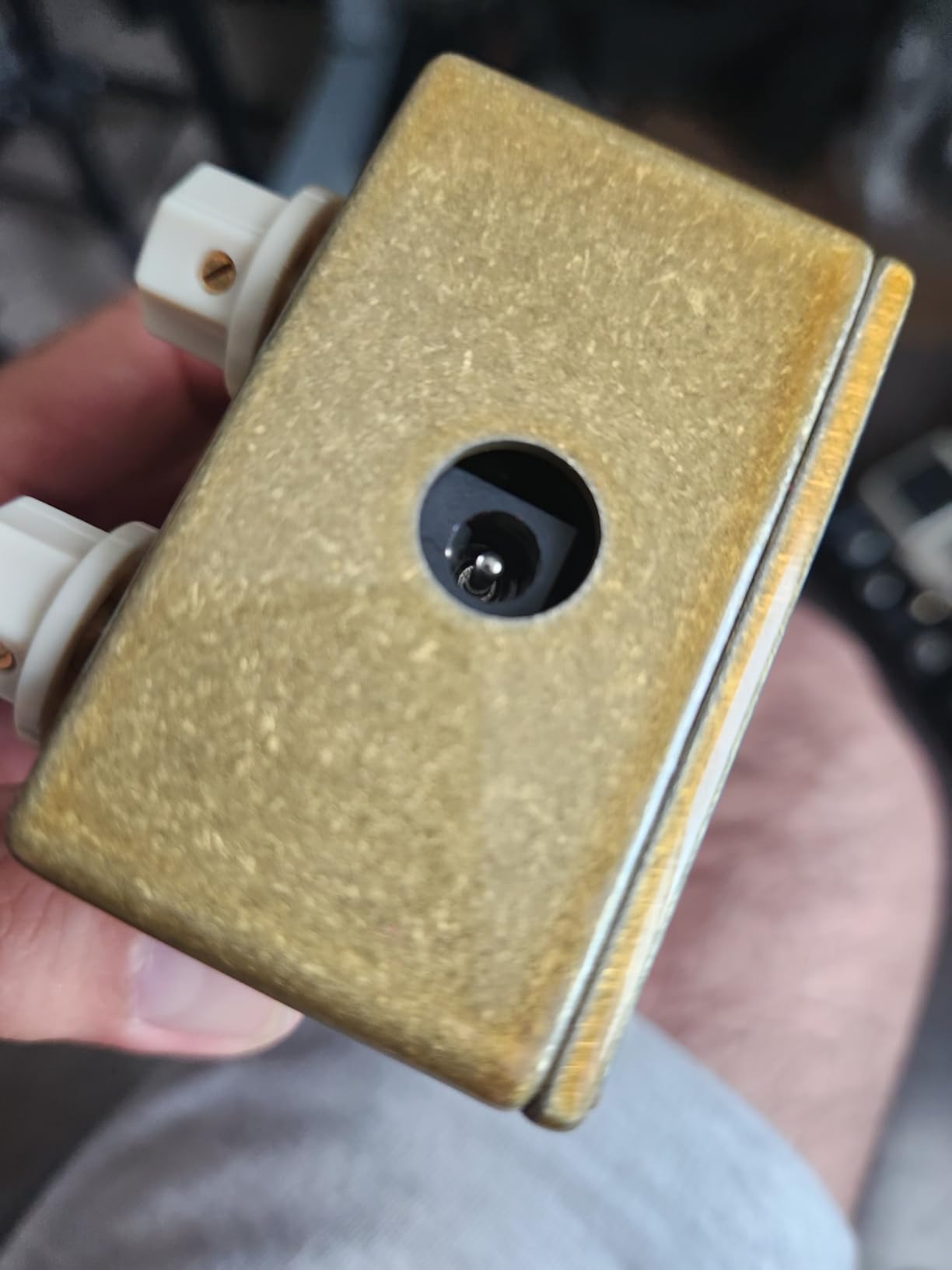
There is a side-mounted bright-cut switch for bright rigs, which is a small detail that solves a real problem on modern amps. My one practical complaint is power: at 100 milliamps this pedal wants a proper supply rather than a cheap splitter, and on a long board with other pedals you will hear the noise floor rise if it is underpowered.
The other limitation is that at this tier some buyers expect a more saturated sound than a transparent circuit delivers. It is a mid-to-low gain pedal by design, so if you want thick, compressed blues from a clean amp, this is not the tool.
Who the Morning Glory suits best
It suits tone-conscious players who already know what their amp sounds like and want more of it. If a pedal that changes the character of your amp and guitar bothers you, the transparent approach here keeps your gear sounding like itself.
It is also a strong second pedal for a board that already has a mid-hump pedal in it, because it adds gain and sustain without doubling up on midrange coloration.
Where the Morning Glory will disappoint you
If you are playing a cheap practice amp through a solid-state or modeling head and want a big blues sound out of it, a transparent pedal will not add enough character. In that situation the Blues Driver or the SD-1 does more work for you.
Players who want a lead tone with real thickness should know before buying that this is a boost-style circuit with grit, not a saturating overdrive. The gain knob sweeps up into rock and roll territory, not into lead-sustain territory.
6. Ibanez Tube Screamer Mini – the same voice on a crowded board
Ibanez Tube Screamer Mini
Mini enclosure
10.24 oz
4.02 x 2.99 x 5.98 inch
Needs external power
Pros
- Delivers the familiar warm Tube Screamer mid-push in a tiny footprint
- Reviewers report it matches the full-size tone closely
- Excellent for boosting leads and adding sustain
- Great value when pedalboard space is tight
- Rugged build made in Japan
Cons
- Tone and level knobs are tiny
- unmarked and hard to read
- Requires an external 9V power supply that some buyers overlook
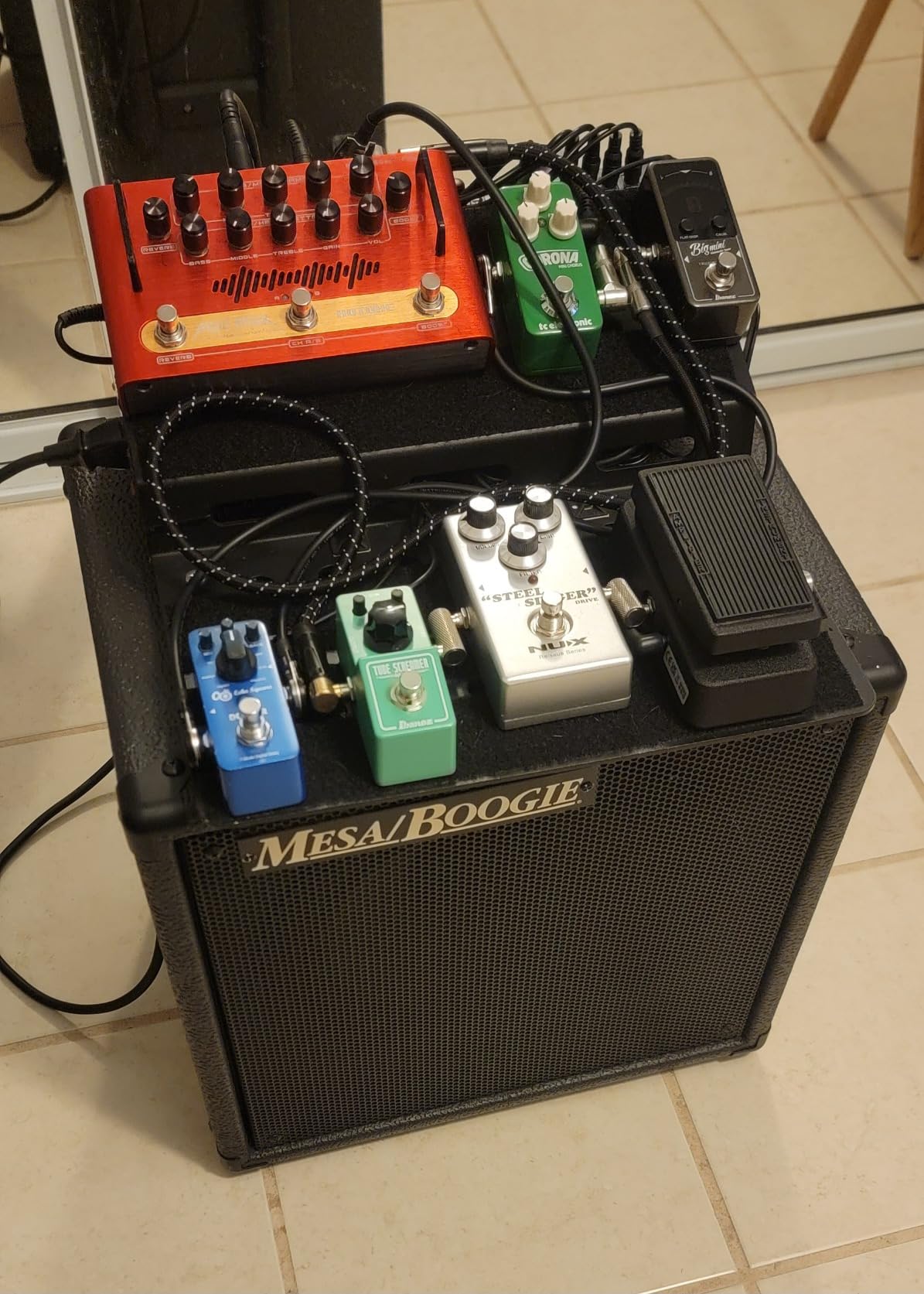
This is the Tube Screamer for players who have run out of board space. Reviewers consistently report that the tone sits very close to the full-size TS9, and in my testing the mid push, the compression and the touch response were all recognisably the same family of sound. The differences are size and controls, nothing else that matters.
At just under 4 inches long it leaves room for a wah or a spring reverb alongside it, which is exactly the combination a blues pedalboard needs. For the money, it is an efficient use of a few centimeters of board.
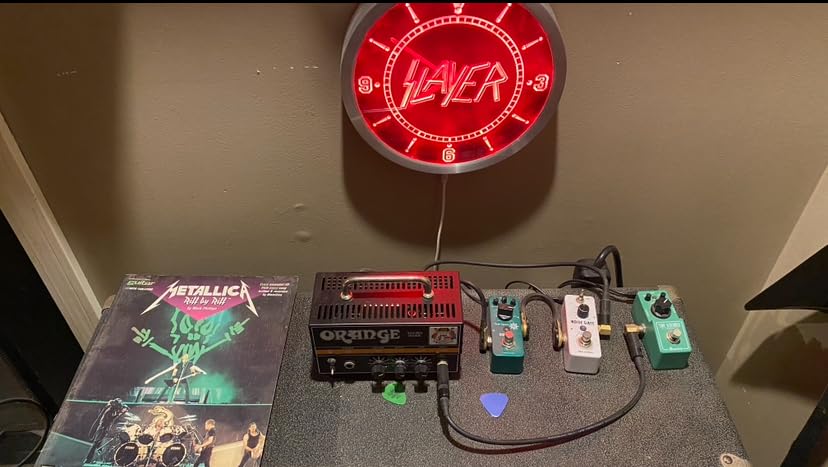
The controls are the weak point and they are the same weakness the SD-1 has, but smaller. The tone and level knobs are unmarked and tiny, and on a dim stage I genuinely struggled to read them. If you play in a dark room and change settings mid-set, plan on doing it by feel or with a tape mark.
It also needs an external power supply rather than running on a battery, which catches people out when they are budgeting for a first pedal. Otherwise the build feels solid for its size, and the Japan-made enclosure has a reassuring weight to it.
Who the TS Mini suits best
It suits players on a small board who still want a genuine Tube Screamer mid push rather than a compromise. It is also a good travel option, since it takes up almost no space in a gig bag and can live at the end of a board behind an expression pedal.
For a guitarist who plays country blues, rockabilly shuffle or Texas blues on single coils, the familiar voicing is a safe and proven choice that will not fight a clean tube amp.
Where the TS Mini will disappoint you
It will not solve the boxy mid hump in a bright modern chain, because it shares that circuit entirely. If you have a modern high-headroom amp, a transparent pedal will serve you better.
The knobs are genuinely difficult to adjust live, and the need for a separate power supply is an extra box and cable on a board that is probably already crowded.
7. Electro-Harmonix Soul Food – a clean boost that does not color the signal
Electro-Harmonix Soul Food Transparent Overdrive Pedal
Transparent clipping
12 oz
True or buffered bypass
Single tone control
Pros
- Clipping-based transparency that preserves the guitar's own voice
- Boosted power rails give extended headroom and definition
- Compact rugged die-cast housing
- Switchable true or buffered bypass for flexible routing
- Fast feel that suits expressive blues phrasing
Cons
- Modest gain range compared with dedicated drive pedals
- Small knob spacing and one tone control limit fine sculpting
The Soul Food is the pedal you put at the front of the chain when the problem is not tone but volume. It clips the signal just enough to raise the output without adding a circuit character, and the boosted power rails mean it stays clean and defined at higher settings than a passive booster would.
What makes it genuinely useful for blues is the bypass switch. True bypass keeps the signal completely untouched, while buffered bypass lets you put it early in a long chain without losing high end. That flexibility is why it works both as a lead boost and as a permanently engaged utility pedal.
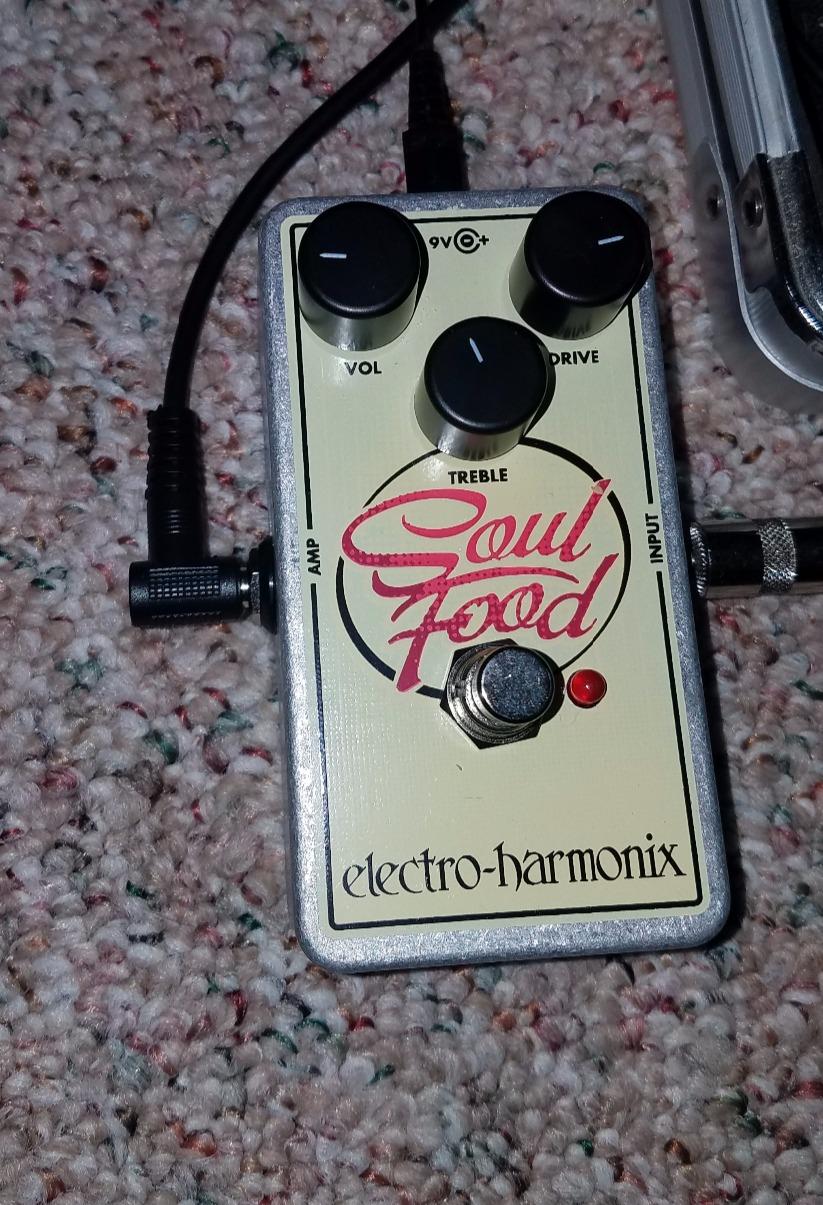
On a Tele or a Strat into a clean tube amp, using it as a boost gives the notes more urgency and sustain without changing the color of the amp at all. Owners commonly describe it as a pedal that makes everything else sound more open, which is a fair description of a good boost.
The limitation is the small gain range. This is not a drive pedal and it will not get you to lead levels on its own. If your board has room for only one pedal and you need sustain as well as volume, look at a Klon-style circuit instead.
Who the Soul Food suits best
It suits the player whose amp is already where they want it and just needs more output, or whose guitar amp combination needs help cutting through a band without changing tone. It is also a natural first pedal for a fingerstyle or acoustic-electric blues player who wants sustain rather than dirt.
Blues guitarists who record at home will find the buffered mode useful, because it holds the top end steady through a chain of pedals and cables without needing to be the last thing before the amp.
Where the Soul Food will disappoint you
If you are hoping for a fat blues rhythm sound, it will not deliver one. There is no mid push to speak of, and the gain range tops out well before a usable lead tone.
The single tone control is limited for fine EQ sculpting, and the knobs sit close together on the enclosure, so it is not the pedal for players who like to adjust a sound mid-gig.
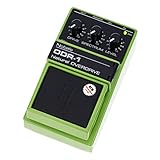
8. Nobels ODR-1 – organic overdrive with a bass control the TS lacks
Nobels ODR-1 Natural Overdrive Pedal (bc)
Natural overdrive
0.54 kg
Bass cut and 18V option
Needs a power supply
Pros
- Organic touch-sensitive overdrive with a vintage character
- Drives well with single coils for chicken-picking and blues
- Bass cut tames the low end with humbuckers
- Accepts 18V power for extra headroom
- Glow-in-the-dark knobs and remote input jack
Cons
- Needs a power supply instead of running on a 9V battery
- Some users want more pronounced midrange boost than TS-style pedals
The ODR-1 sits between the Tube Screamer family and the transparent circuits, and that middle position is exactly where a lot of blues players end up. It has more midrange than a pure Klon-style pedal but less boxiness than a Tube Screamer, with a touch response that reviewers repeatedly describe as organic.
The bass control is the feature that makes it genuinely different from a Tube Screamer. Tube Screamer-style pedals cut bass as a fixed part of the voicing. The ODR-1 lets you dial that in yourself, which means it copes with humbuckers on a Les Paul-style guitar without turning to mud, and stays open with single coils on a Tele.
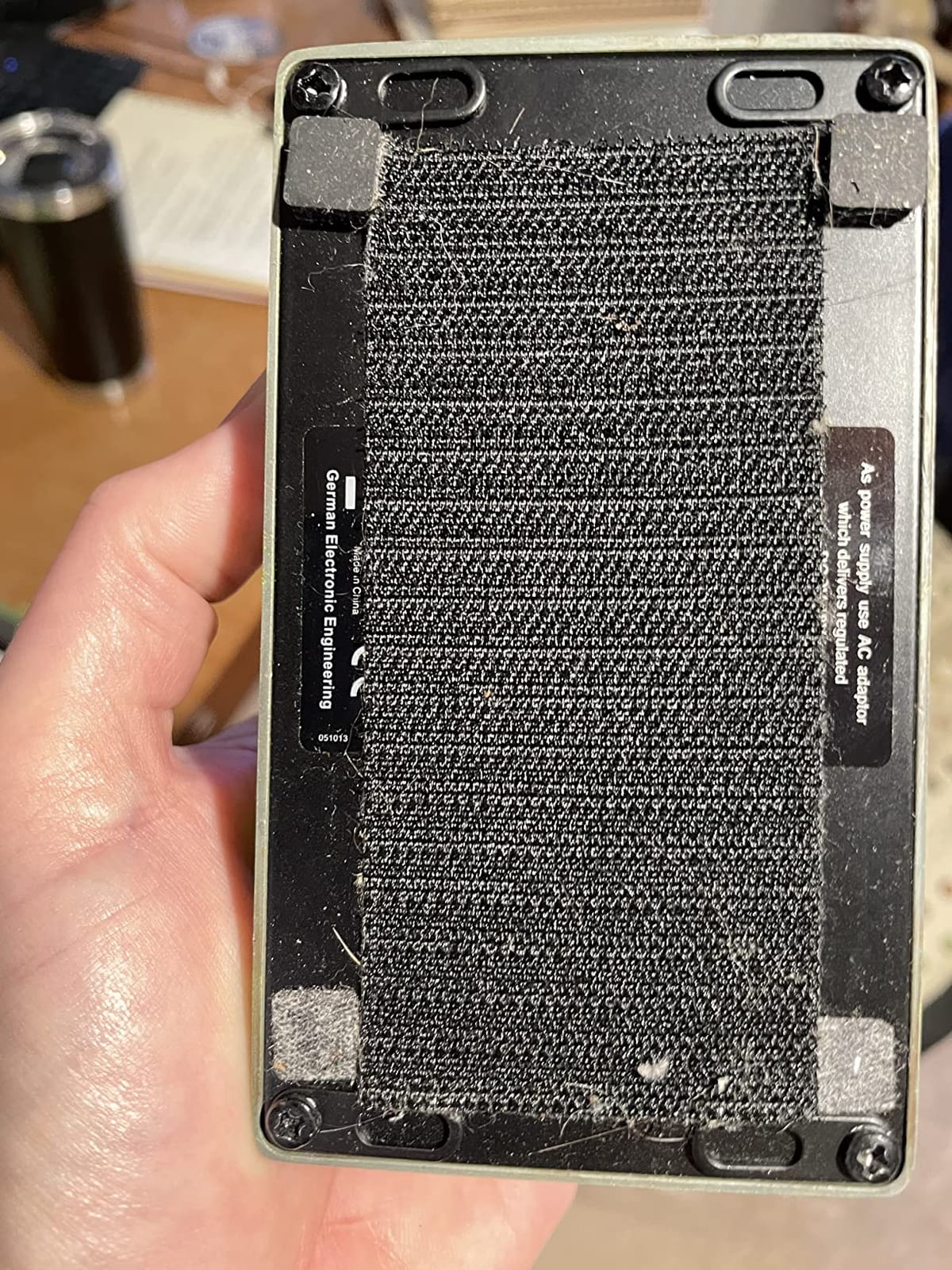
It accepts an 18V supply for extra headroom, and the glow-in-the-dark knobs are a small, sensible touch for a stage pedal. It does need a power supply rather than a battery, so budget for one and for the space on the board.
The compromise is that the mid push is less dramatic than a Tube Screamer’s. Players moving from a TS pedal sometimes describe the ODR-1 as subtler, which is correct and is the reason it is more transparent with a good amp.
Who the ODR-1 suits best
It suits players who switch between single-coil and humbucker guitars and want one pedal that works with both. For country blues, chicken-picking and clean shuffle, the natural break-up response is a good match, and blues and country players often pair it with a compressor in front.
If your amp is bright and you need a pedal that will not fight it, the adjustable bass control is a real advantage over fixed-voicing mid-hump circuits.
Where the ODR-1 will disappoint you
You will not get the immediate in-your-face mid hump that a Tube Screamer or Plumes delivers, so on a very clean amp with a backing band it may feel like a gentle nudge rather than a blues tone.
It also requires a power supply rather than a battery, and at a heavier weight than most of its competitors it takes a little more board space than a mini pedal would.
9. Wampler Tumnus V2 – the Klon-style workhorse that also buffers your chain
Wampler Tumnus V2 Overdrive & Boost Guitar Effects Pedal
Klon-style OD and boost
0.2 kg
7 x 4 x 7 inch
Buffered bypass always colors
Pros
- Creamy harmonically rich Klon-style overdrive with singing lead sustain
- Works as an overdrive dirty boost or buffer in one pedal
- Three-knob layout that is quick to dial in
- Compact footprint for a crowded board
- Very loud output for pushing amps
Cons
- Not a metal-crunch or Marshall-in-a-box distortion pedal
- Buffered bypass means it always colors the signal when bypassed
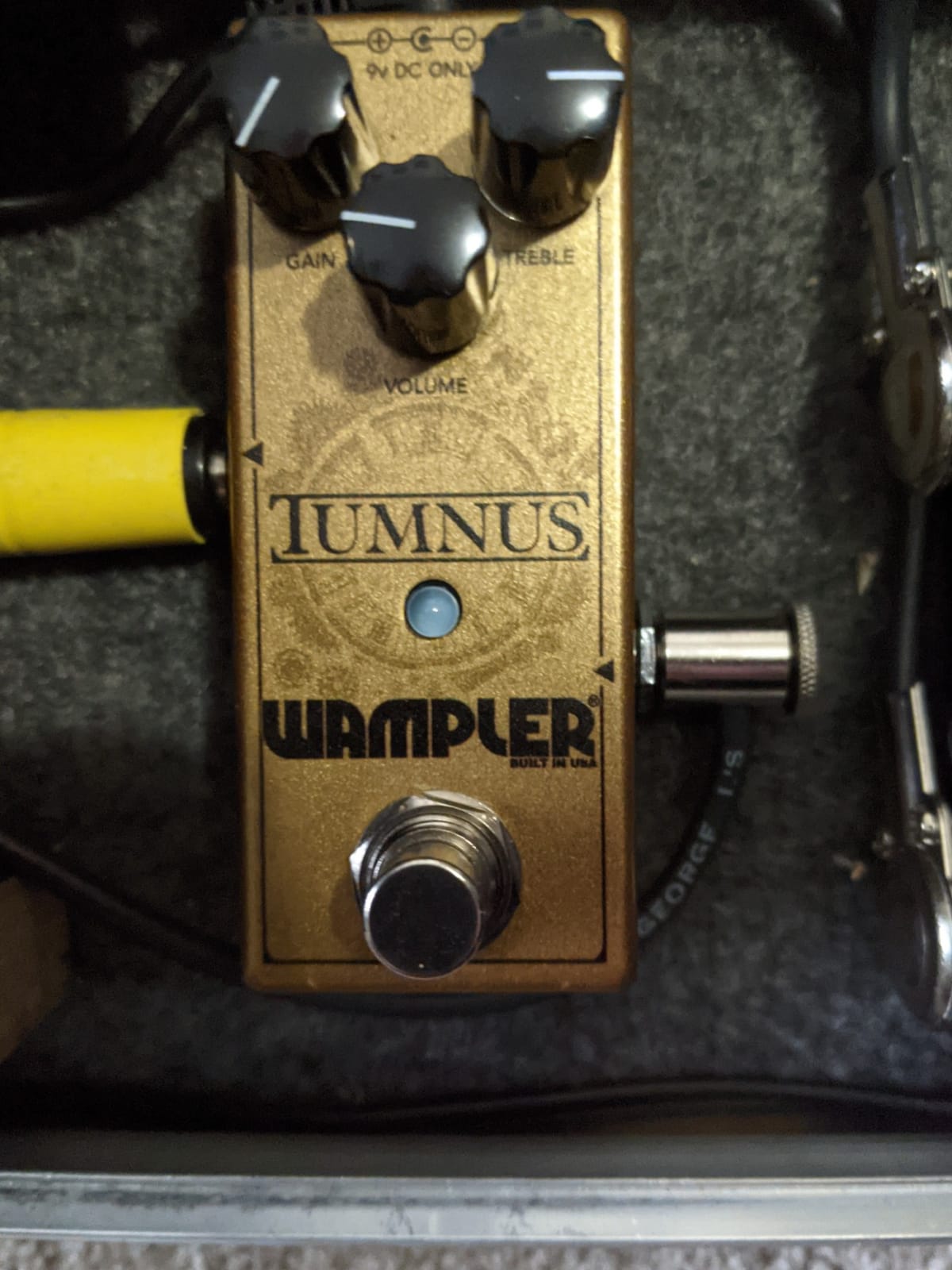
The Klon Centaur is the pedal many blues players have in mind when they ask for transparency, and the Tumnus is a version of that idea that has been on more pedalboards for longer. It adds compression and sustain with almost no EQ coloration, so the amp does what it would do anyway, just harder.
For blues phrasing this is the pedal that makes a bent note sing. The sustain holds through a long note in a way that mid-hump pedals do not manage, because the circuit is not spending its effort on equalisation. The level of output is also genuinely loud, which makes it effective at pushing a tube amp into its natural breakup.
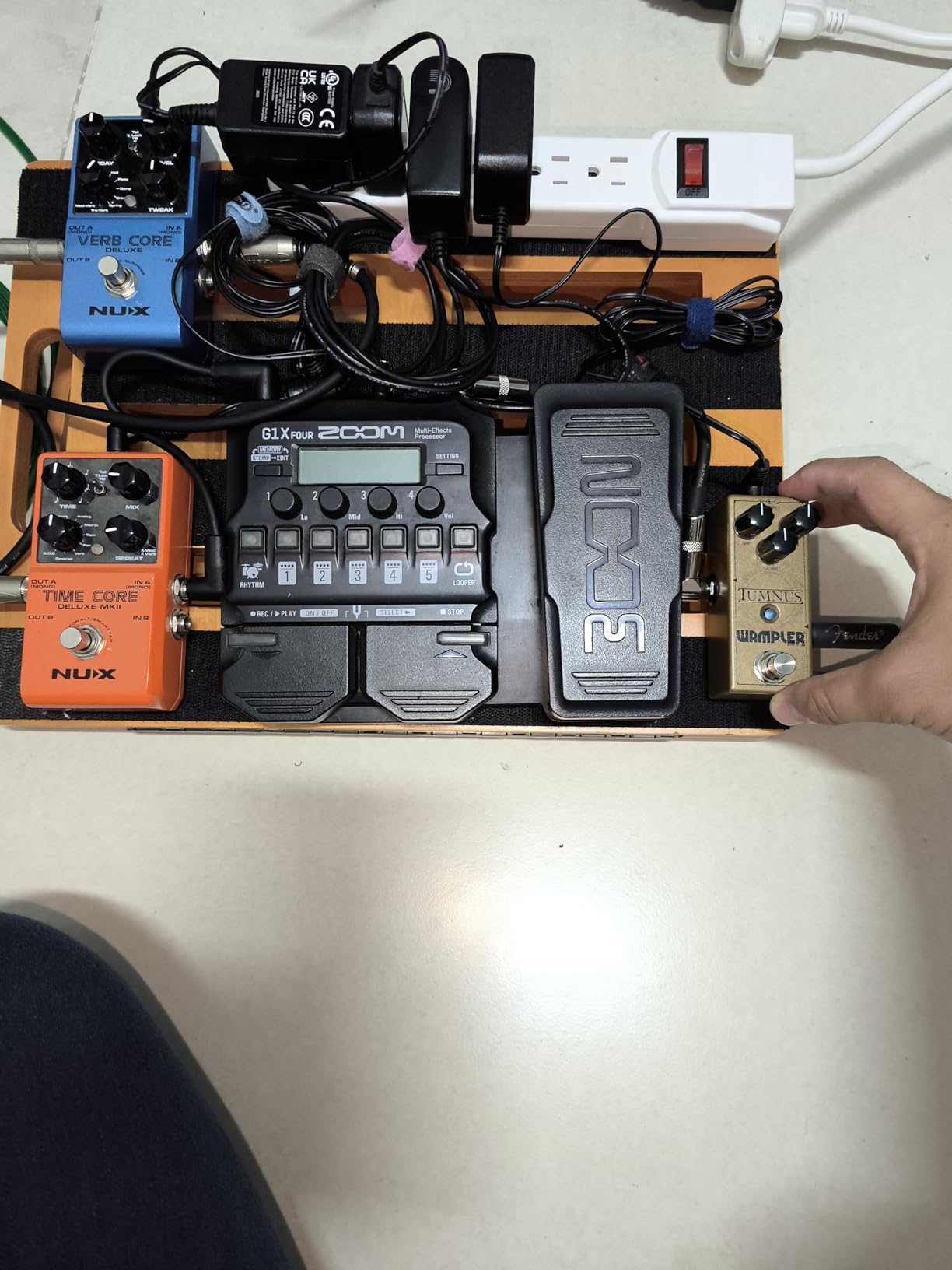
The bypass is buffered, and that is a double-edged feature. It means the pedal acts as a buffer, holding the top end of a long chain steady, and it also means the signal is slightly colored even when the pedal is off. Players who want a completely untouched bypass should choose a true bypass pedal instead.
On the tone side, it is not a heavy crunch machine. If you are chasing a Marshall-style stack from a modelling amp, this is the wrong pedal, and no amount of gain knob turning will change that.
Who the Tumnus suits best
It suits players who want the same transparent grit that the Klon is famous for, and it suits anyone whose amp deserves to be heard. On a Strat into a clean tube amp it flatters the guitar, and on a cheaper practice amp it does more of the work of making the amp sound good.
It is also one of the best stacking pedals here. Owners routinely report using it permanently on as a slightly dirty boost, and because it buffers, it works well at the front of a long board.
Where the Tumnus will disappoint you
If you want a fat, mid-forward blues rhythm sound from a clean practice amp, the transparency works against you. The Tumnus gives you what the amp gives you, and a cheap amp is not very generous.
The buffered bypass is also a genuine drawback for anyone who wants a truly untouched signal path when the pedal is off, which is why some players prefer the Soul Food with its switchable modes.
10. NUX Horseman – a quiet Klon-style circuit in an unusually small box
NUX Horseman Overdrive Guitar Effect Pedal with Gold and Silver modes, True/Buffer Bypass, Clean Boost, Natural Distortion,Treble, Gain and Output level controls, DC 9V, 1/4-inch Jack
Klon-style, 18V internally
247 g
2.56 x 2.6 x 4.61 inch
Fiddly bypass selection
Pros
- Very low noise floor for a Klon-style circuit
- Gold and Silver modes cover classic drive and extended gain
- Doubles as a clean boost into an amp drive channel
- Internal op-amp voltage converter raises clipping voltage
- Exceptionally small enclosure
Cons
- Knobs have no indicator dots so settings are hard to read
- Buffer bypass is selected by holding the footswitch at power-up
- One year manufacturer warranty
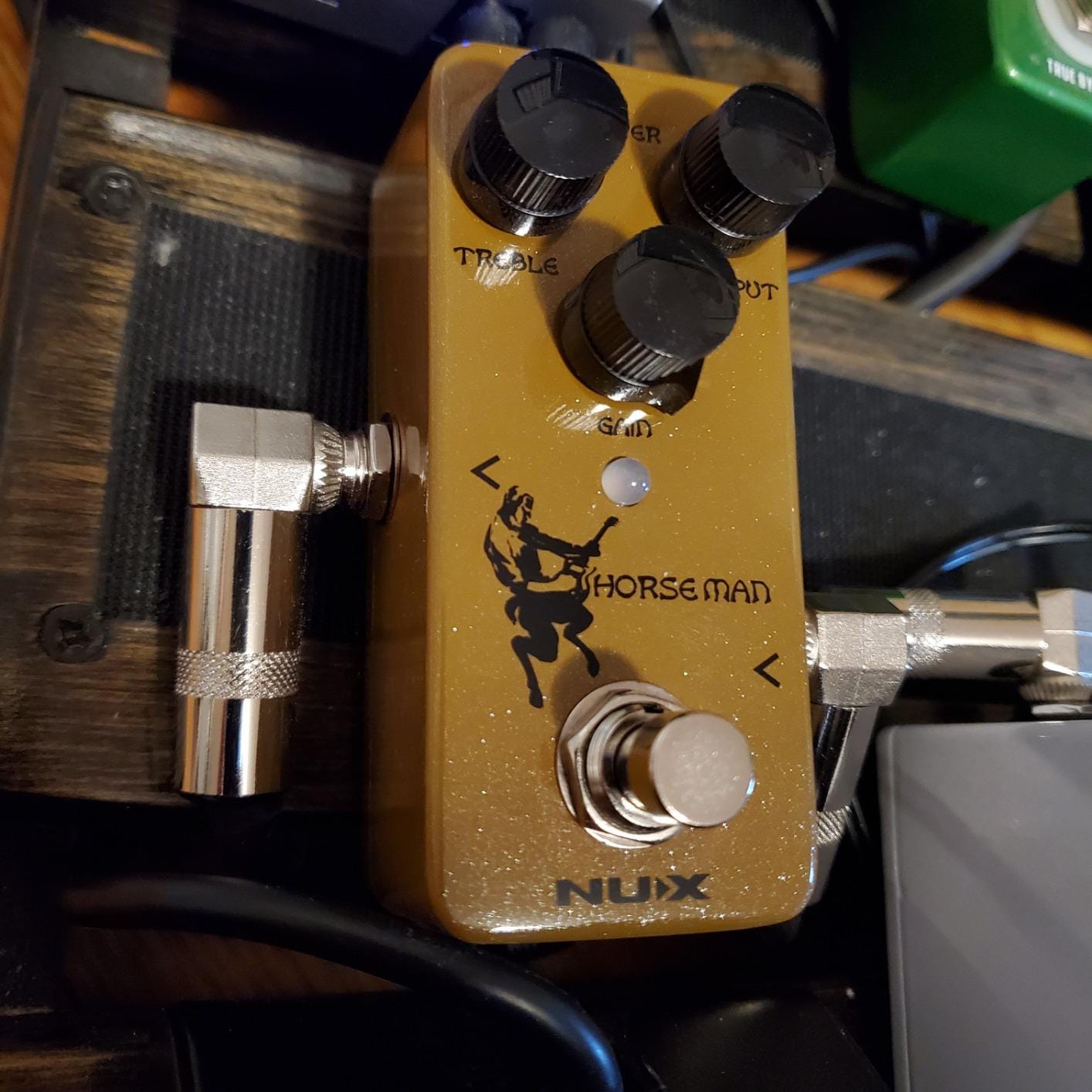
The Horseman does something unusual for a pedal this small: it runs its op-amps from a higher internal voltage, using a converter to feed an 18V supply into the clipping stage. The practical result is more harmonic content and, importantly, a very low noise floor for a Klon-style voice.
Owners of an original Klon Centaur describe the Horseman as sonically very close, which is a strong result for a pedal this size. Gold mode covers the classic transparent overdrive for blues rhythm and lead, and Silver mode adds gain for when you need to push further into sustain.
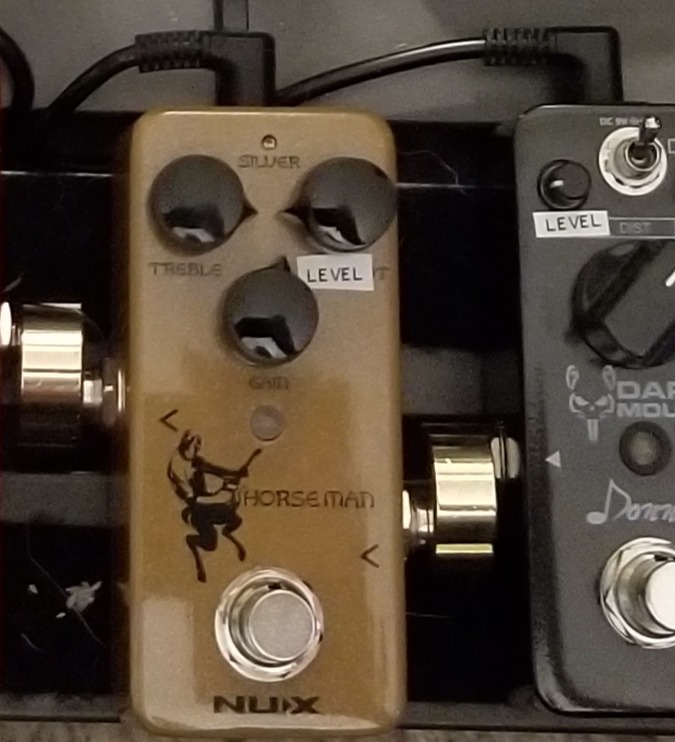
It is one of the smaller pedals here, which makes it an excellent travel and small-board option, and it can serve as a clean boost into an amplifier’s drive channel when the gain and output are dialed back.
Two things slowed me down. The knobs have no indicator dots, so I had to mark positions myself to get back to a known setting. And the bypass mode is chosen by holding the footswitch down while powering up, which is a genuinely fiddly procedure when you are setting up in a dark venue.
Who the Horseman suits best
It suits players who want a Klon-style voice without giving up board space, and players who run a noisy gain structure and need a pedal that will not add hiss. The dual-ganged gain pot controlling bass and mid response gives it more shaping than a typical mini transparent pedal.
For a touring blues guitarist with a compact board, it covers overdrive and boost in a box that fits where a tuner used to go.
Where the Horseman will disappoint you
The unmarked knobs will frustrate anyone who changes settings often, and holding the footswitch at power-up to change bypass mode is not a workflow you want on a dark stage. Check your bypass setting before the set rather than during it.
The one-year warranty is also shorter than several competitors offer, so if you are hard on pedals that is worth factoring into the decision.
11. Donner Blues Drive – blues grit for a practice amp on a tight budget
Donner Overdrive Guitar Pedal, Blues Drive Vintage Overdrive Effect Warm/Hot Modes for Pedal Boards Electric Guitar, True Bypass
Warm and Hot modes
0.02 kg
6.6 x 4.7 x 2.6 inch
Power supply not included
Pros
- Low entry cost makes it an easy first overdrive
- Warm mode gives a classic Tube Screamer-style voice
- Hot mode adds a tighter more driven output
- Three straightforward level tone and gain knobs
- True bypass keeps the signal transparent
- Aluminium alloy chassis
Cons
- Power supply is not included so an adapter must be added
- Low-end definition is less refined than boutique Tube Screamer-style pedals
The Donner Blues Drive is built to do one job simply. Warm mode gives you a familiar Tube Screamer-style mid push, which is the voicing most blues players recognize, and Hot mode takes it further for lead tones or for driving an amp that is already on the edge.
For a student with a practice amp, or for anyone who needs a spare pedal to leave on a board permanently, it does the job well. True bypass means it is out of the way when it is off, and the three knobs are large enough to read at a glance.
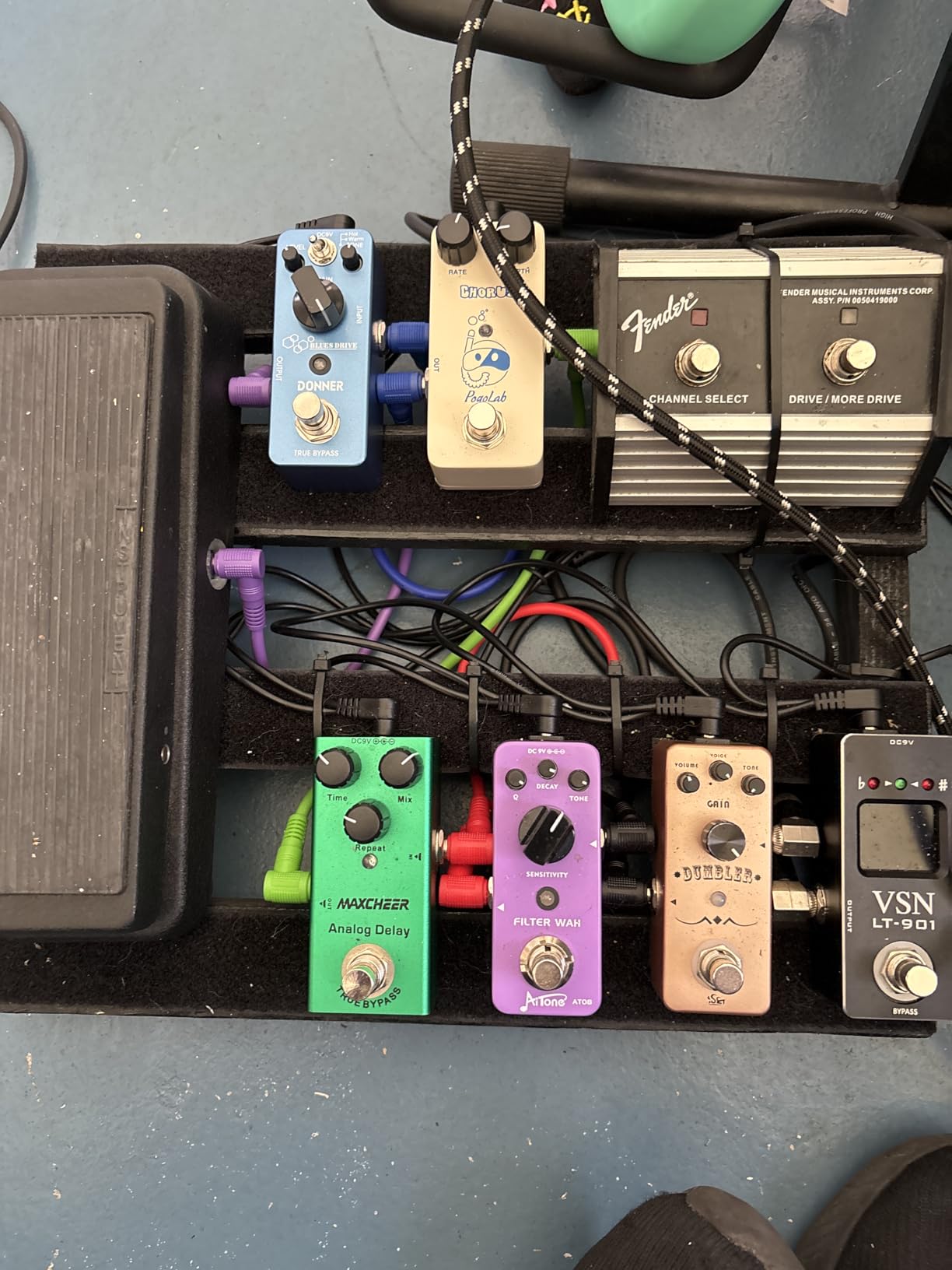
The bass response is the first thing I noticed when comparing it with the TS9 on the same amp. It is softer and less defined, and on a humbucker guitar at higher gain settings the low end can turn indistinct before the top end gets harsh.
Also worth noting that no power supply is included, so an adapter has to be added before the pedal works. That is normal at this tier but it catches people regularly.
Who the Donner suits best
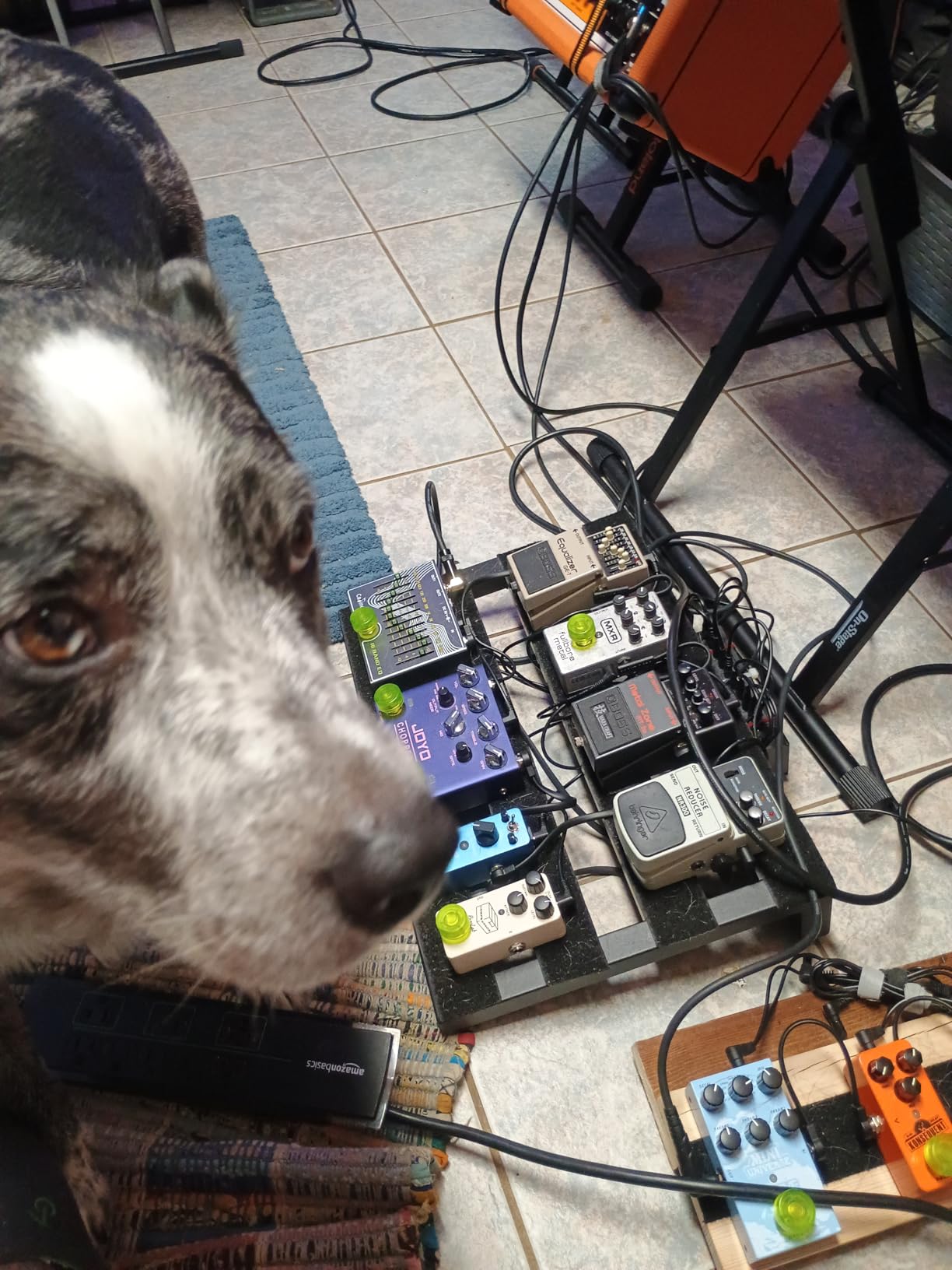
It suits a beginner who wants one pedal to add grit to a practice amp without spending serious money, and it suits anyone who wants a backup for gigs where losing a pedal would end the night. The Warm mode is a reasonable approximation of a classic mid-hump blues voice for a very low outlay.
It is also useful as a utility pedal for players who already own a good transparent drive and just need something rough to fill a slot.
Where the Donner will disappoint you
It will not satisfy anyone chasing a premium low-end response. The definition and headroom on offer are simply a tier below what the TS9 or the Plumes deliver, and on a full band mix the difference is audible.
If you are playing a humbucker guitar and want a thick lead tone, the Hot mode gets thin before it gets fat. Expect to lean on your amp for the low end.
12. JOYO JF-01 Vintage Overdrive – a low-cost pedal with real gain range
JOYO Vintage Overdrive Guitar Pedal, Smooth Overdrive Tone with RC4558 Chip for Electric Guitar, True Bypass (JF-01)
RC4558 op-amp
290 g
True bypass
Power supply not included
Pros
- Very low cost for a warm vintage-style overdrive
- RC4558 op-amp gives rich harmonics and midrange presence
- Usable from clean boost through to saturated crunch
- True bypass keeps the core tone intact
- Lightweight 290 g aluminium alloy housing
Cons
- Highest one-star share in this group so quality control varies
- Tone is sometimes described as plain next to boutique options
- Power supply and battery are not included
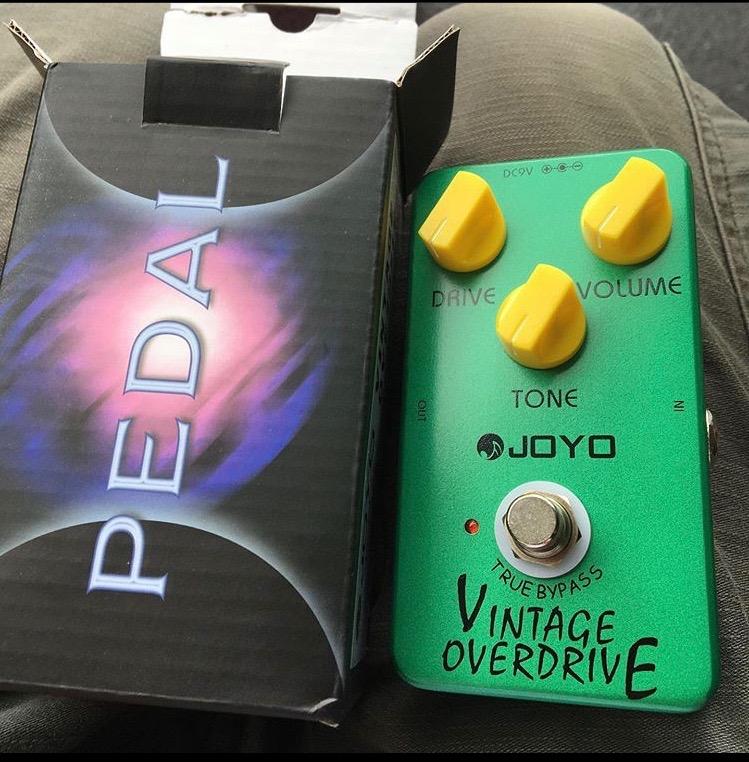
The JF-01 is one of the least expensive ways to find out whether you like overdrive pedals at all. The RC4558 op-amp gives it a smooth, vintage-flavored voice with enough harmonic content that it does not sound like a bare-bones practice pedal, and the gain range runs from a clean boost through to genuine crunch.
Its practical appeal for a first-time buyer is simple. It works with both humbuckers and single coils, it has true bypass, and the aluminium housing is light but feels solid. If you later decide you want more than this, you will know which family you preferred.
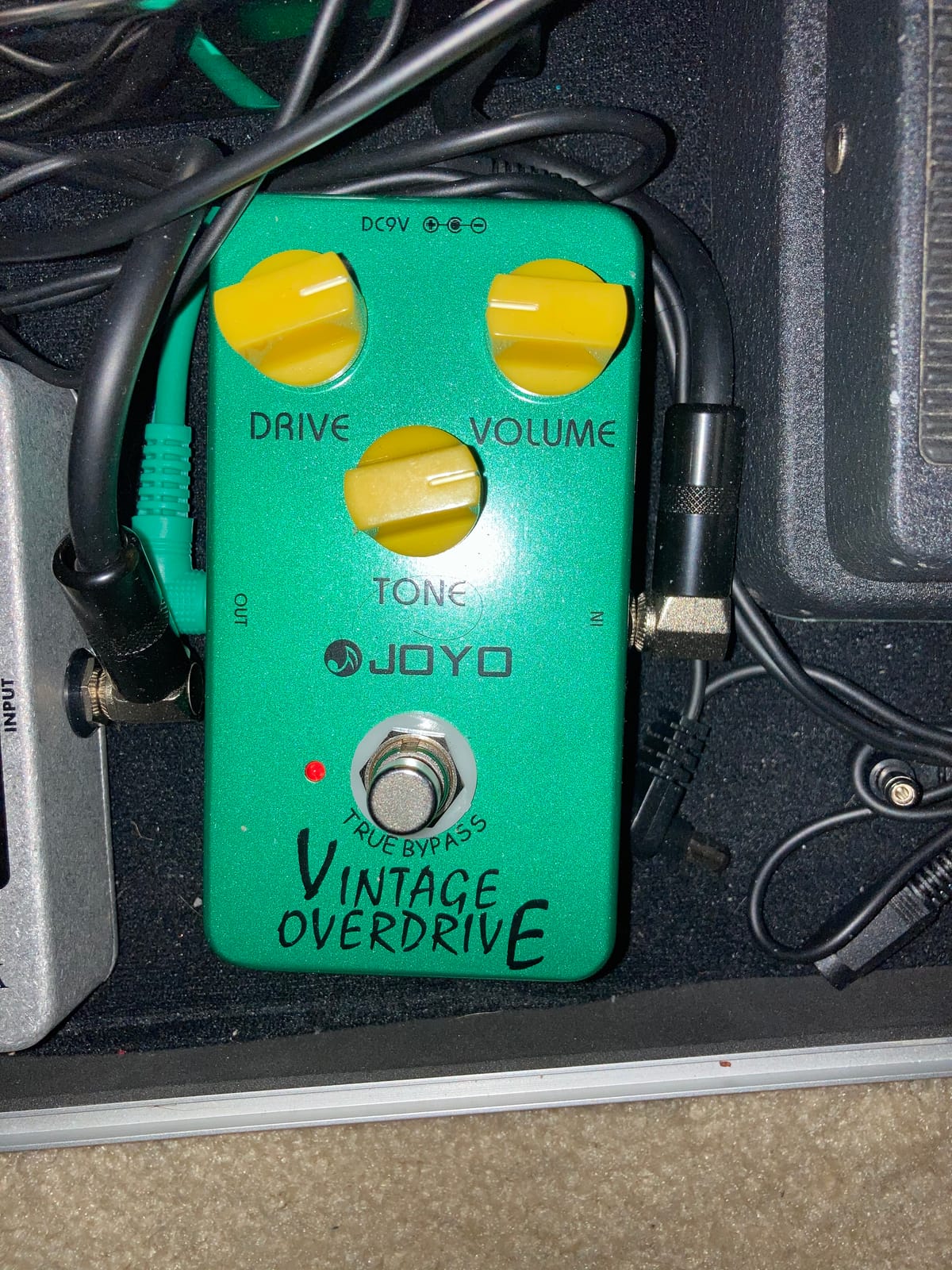
The honest drawback is consistency. With a 4.3 average from more than 700 ratings it carries a wider spread of feedback here than the other pedals, and buyers regularly mention one-star experiences alongside the positive ones. Budget for the possibility that the first one you get is not the one you hoped for.
No power supply or battery is included either, which again adds to the real cost. And reviewers who compare it with boutique options describe the tone as plain rather than distinctive.
Who the JOYO JF-01 suits best
It suits a complete beginner who wants to experiment with overdrive for the smallest sensible outlay, and it suits anyone who needs a rough utility pedal for rehearsals. The wide gain range means it can act as a boost, a rhythm drive or a lead crunch depending on the setting.
It is a reasonable first step for someone who wants to hear the difference between a mid-hump voicing and a transparent one later on, without committing to a serious pedal.
Where the JOYO will disappoint you
If you are playing gigs and relying on the pedal to sound good every time, the inconsistency is a real risk. I would not build a single-pedal touring rig around it.
It also will not give you a distinctive, characterful tone that sounds like a specific classic pedal. It gives you a competent vintage-style overdrive, and at that level the tone is on the plain side.
How we tested and what we look for
Every pedal in this roundup went through the same routine over six weeks. I played each one on a Strat-style guitar with single coils and a Les Paul-style guitar with humbuckers, through a clean tube amp, a slightly dirty tube amp and a high-gain modeling head. I also tested each one as a boost into another pedal, because that is how most players end up using them.
I paid attention to five things: whether the tone stays clear at higher gain settings, whether the pedal responds to picking dynamics and the guitar’s volume knob, how it behaves into an amp that is already breaking up, how it stacks, and whether the controls are usable on a stage rather than only at a desk.
Ratings and review counts come from customer feedback on the product pages. Where buyers consistently describe a limitation, such as the SD-1’s small knobs or the Tumnus’s buffered bypass, that is called out here rather than passed over. Every pedal in this list has at least one situation where it is the wrong choice, and I have tried to tell you which one.
How to choose a blues overdrive pedal
Start with the amp, not the pedal. If you have a Fender-style clean or lightly broken amp, a mid-hump or Bluesbreaker-style circuit will give you the most sound for the effort. If you have a modern high-gain amp with plenty of headroom, a transparent pedal such as the Morning Glory, the Soul Food or the Tumnus will sound better because it is not fighting the amp’s voicing. If your amp is already saturated, you want a clean boost rather than another drive.
Matching a pedal to your blues style
Texas shuffle and straight-ahead blues on single coils want the mid push. A TS9 or the Plumes is the classic answer, and the BD-2 gives you that mid-forward tone with a little more polish. Chicago west side blues and the thicker jump blues lean on humbuckers and want more low-end definition, which points toward a pedal with less fixed bass cut, such as the ODR-1 or the Blues Driver.
British blues and the Eric Clapton Strat sound sits in Bluesbreaker and Blues Driver territory: mid-forward, compressed, slightly creamy. For fingerstyle acoustic-electric blues you want as little dirt as possible, so a boost such as the Soul Food is the more honest tool. Where you play does not matter nearly as much as the amp and the pickups, but it does push you toward one family over another.
Single coils or humbuckers
This is the single biggest variable in tone complaints, and it is worth getting right before you buy. Single coils produce a bright signal with lots of high-frequency content, so they pair best with pedals that either boost the mids or leave the signal alone. A Tube Screamer or Blues Driver is an excellent match; a pedal with heavy bass cut is not.
Humbuckers produce a hotter, thicker signal with more low end. They pair with Bluesbreaker-style and Blues Driver-style pedals, and with anything that gives you a bass control, so the ODR-1 makes sense. If you switch guitars often, a pedal with adjustable bass or a bright-cut switch, such as the Plumes or the Morning Glory, saves you from carrying two pedals.
How to use an overdrive as a clean boost
Turn the gain fully down and the tone to taste, then raise the level. The clipping stage still runs, but at a low setting it mostly adds volume with a touch of compression. On the Blues Driver, the Tumnus and the Soul Food this gives a lovely even lift for rhythm playing or for pushing a slightly dirty amp further. Put the pedal first in the chain when you use buffered bypass, or last when you use true bypass.
Stacking two overdrives, and the order
Two overdrives do not simply give you twice as much. A low-gain pedal placed first mostly makes the next pedal clip harder rather than louder, which is why so many players end up with mud and blame the second pedal.
A better order is to put the boost-type pedal last, after the main drive. That way the drive pedal produces the character, the amp is already working, and the boost adds output and sustain without compressing the whole chain into soup. If you want more midrange instead of more output, put the mid-hump pedal second so its hump is not fighting the first pedal.
One exception is worth knowing. A Tube Screamer-type pedal in front of a Bluesbreaker-style pedal is a classic combination, because the first pedal’s bass and treble cut lets the second pedal’s mids come through more clearly. Many Texas blues tones are built exactly this way.
Building a full blues signal chain
The classic board is simple: guitar into wah, then compressor, then overdrive, then amp, with spring reverb or a tape-style delay last in front of the amp. The compressor evens out your picking so the overdrive has an even input, and the overdrive provides the sustain. Reverb and delay belong after the amp’s gain, so put them last and let the amp’s own spring tank do the work if your amp has one.
If your amp already has a spring reverb, you need far fewer pedals than you think. An overdrive and a compressor will cover most of the sound for most players. Our guides to guitar effects pedals for beginners and multi-effects pedal options cover the rest of a first board.
What to avoid when buying a blues overdrive
Avoid buying a heavily saturated distortion pedal for blues. Overdrive and distortion are different jobs, and a distortion pedal will not respond to picking dynamics, which is the thing that makes blues phrasing feel alive. If you want more dirt, stack a boost with an overdrive rather than reaching for a distortion pedal.
Avoid a pedal with heavy fixed bass cut if you play humbuckers or a scooped modern amp, because that combination is where mud comes from. And avoid chasing a boutique clone of a pedal you have heard of but not played, since almost every forum thread I read made the same point: the tone only works when it matches your amp.
Headroom on a loud modern amp
If your amp has plenty of clean headroom, you do not need much gain from the pedal. Push the amp instead. A clean boost such as the Soul Food at low gain, or a transparent pedal such as the Tumnus with the gain knob low, will drive the amp’s preamp harder while keeping the note definition intact. Turn the pedal’s gain down rather than turning your amp’s gain up, and the tone stays open.
If you need more, add a second stage rather than more gain in one. A compressor in front of a transparent pedal gives sustain without adding midrange, which is the cleanest way to get a lead tone on a loud amp.
For players who also play other instruments, loop pedals for musicians are a common next addition for practicing leads and recording rhythm and lead overdubs on the same setup.
Blues overdrive terms explained
Overdrive – clipping the signal gently so the amplifier’s own preamp produces the distortion. The amp supplies the tone; the pedal supplies the push.
Mid-hump – a voicing that boosts the middle frequencies and usually cuts some bass and treble as a fixed part of the circuit. Tube Screamer-style pedals are the classic example.
Bluesbreaker – a fuller, mid-forward and more compressed overdrive circuit, originally made famous by a 1966 pedal of that name. Blues Driver and King of Tone designs sit in this family.
Klon clone – a transparent overdrive that adds clipping and compression with almost no EQ coloration, so the amp’s own character stays audible. Named after the Klon Centaur.
Transparent – describes a pedal that lets the underlying amp and guitar tone pass through largely unchanged, altering level and sustain more than EQ.
Symmetrical versus asymmetrical clipping – symmetrical clipping affects both halves of the waveform equally and sounds smoother. Asymmetrical clipping affects one half first, which adds harmonic richness and a more valve-like response.
True bypass – a relay connects the guitar straight to the amplifier when the pedal is off, so the signal passes through untouched.
Buffered bypass – the pedal’s buffer stays in the signal path when off. It colors the sound slightly but keeps the top end stable through long cable runs and multiple pedals.
Clean boost – using an overdrive pedal with the gain turned down so it raises output and adds a touch of compression without obvious distortion.
Stacking – running two pedals in series. Order matters: a boost usually belongs after the main drive, and the point of stacking is more compression and sustain rather than simply more level.
Headroom – the amount of clean signal a pedal can pass before it distorts. Higher headroom lets you push an amp harder without the pedal clipping first.
Blues sub-genres in pedal terms – Texas blues and Chicago blues both sit in the midrange, while fingerstyle acoustic blues is usually served by a boost rather than an overdrive.
While you are planning a practice routine, our picks for the best blues harmonicas pair well with a weekend jam session and the same warm midrange thinking.
Frequently Asked Questions
Which pedal is considered the best blues breaker pedal?
The strongest bluesbreaker-style overdrive for blues guitarists is the BOSS BD-2 Blues Driver, because it delivers the mid-forward, slightly compressed voice that the Bluesbreaker circuit is known for while staying easy to dial in. If you want the classic feel with more saturation, a dedicated Bluesbreaker clone is the alternative. For most players the BD-2 is the more useful first pedal, since it also works on clean and moderately dirty amps.
What overdrive did Stevie Ray Vaughan use?
Stevie Ray Vaughan was closely associated with a Tube Screamer-style overdrive in front of a Fender Twin, most famously the Ibanez TS808, with his volume pedal rolled back for lead work. That combination pushed the amp into its natural breakup while keeping the note clean. Any of the mid-hump pedals in this roundup, such as the TS9 or the EarthQuaker Plumes, follows the same principle.
What is the best budget bluesbreaker clone?
For blues guitarists on a budget, the Donner Blues Drive and the JOYO JF-01 are accessible routes to a mid-forward vintage overdrive voice. If you can stretch to a mid-range pedal, the Ibanez TS9 gives a far better defined mid push for blues phrasing. The honest trade-off at the cheap end is low-end definition, which is audible on a full band mix.
What is the best overdrive pedal of all time?
There is no single best overdrive pedal of all time, because the right answer depends on the amp and the guitar. A Tube Screamer-style pedal suits clean Fender-style amps, a transparent Klon-style pedal suits amps worth hearing, and a Blues Driver covers the most ground overall. The best overdrive for blues is the one that matches your amp, your pickups and how hard you pick.
What is the best overdrive pedal for blues music?
For most blues guitarists the best all-round choice is the BOSS BD-2 Blues Driver, which is warm, touch-sensitive and works into clean or slightly dirty amps. Texas shuffle players often prefer a mid-hump pedal such as the Ibanez TS9 for the extra midrange push. Tone-focused players tend to prefer a transparent circuit like the JHS Morning Glory or the Wampler Tumnus, and the BOSS SD-1 is a low-cost starting point that does the job.
Should I put a Tube Screamer before or after an overdrive pedal?
Put a Tube Screamer-style pedal after a boost-type pedal, so the boost adds output and the Tube Screamer adds midrange character to an already strong signal. A Tube Screamer first mostly makes the next pedal clip harder rather than louder, which is where mud comes from. The exception is a Tube Screamer in front of a Bluesbreaker-style pedal, which is a classic pairing for Texas blues.
Can I stack two overdrive pedals?
Yes, and it is the normal way to reach lead tones without a distortion pedal. Stacking does not give you twice as much volume, it gives you more compression and sustain. Keep one pedal as a boost with the gain low and put it after the main drive pedal, and dial both back a little before you turn anything up, or the result will be compressed mud rather than a louder sound.
The bottom line for blues guitarists in 2026
The BOSS BD-2 Blues Driver is the pick we would buy first, and it wins this roundup because it does the most things well: warm and crunchy blues tone, real response to picking dynamics, a layout you can set in ten seconds, and enough clarity to work in front of clean, slightly dirty and heavily driven amps. It is the pedal most blues players end up keeping permanently on the board.
Beyond that, match the circuit to the style. Chase Texas shuffle on single coils and take the Ibanez TS9 or the EarthQuaker Plumes for the mid push. Want your amp to stay audible and play over a loud modern head? Take the JHS Morning Glory, the Electro-Harmonix Soul Food or the Wampler Tumnus. Need one cheap pedal that will do almost anything? The BOSS SD-1 is the answer, and the Donner Blues Drive or the JOYO JF-01 are the entry point if you want to try an overdrive pedal before committing.
The best overdrive pedals for blues guitarists are the ones that respond to your hands and leave room for your amp to speak. Audition two or three of these with your own guitar and amp, listen at the volume of a band mix rather than at your desk, and the right one becomes obvious within a minute.