
Three radar launch monitors stand out for outdoor practice in 2026. The Rapsodo Mobile Launch Monitor is the best all-round pick, giving you ball speed, launch angle, carry distance, shot shape and automatic video from a unit that clips to your bag. The Garmin Approach R10 delivers the widest data set of any portable radar model, with spin, swing tempo, dispersion charts and a ten-hour battery. The PRGR HS 130-A is the best value option, measuring club speed, ball speed, smash factor and carry distance with no app, no subscription and no phone.
A radar launch monitor is a device that sits behind the ball and fires a Doppler radar pulse at it. The unit detects the reflected signal as the ball departs, then calculates ball speed, launch angle, apex, carry distance and total distance. Many models also derive club head speed, smash factor and swing tempo from that same pulse. This is exactly why radar works so well outdoors: it follows the real ball through open air, so wind, sunlight and background clutter barely affect the reading.
We spent six weeks working through eight genuine radar devices, comparing what each one actually reports on a range session, how long the setup takes, and whether the data survives a full bucket of cheap range balls. What follows is the short version of what we learned, and it is not what most roundups tell you. Several of the highest-rated devices on the market do not track a ball at all. They measure how fast your club is moving, which is useful, but it is a different job.
If you want a broader look at the whole category, our picks for the best golf launch monitors overall cover indoor bays and simulator setups too. And if your interest is in swing data rather than ball flight, our guide to the best golf launch monitors for swing analysis breaks down the club-side metrics in more detail.
Table of Contents
Top 3 Radar Picks for Outdoor Practice
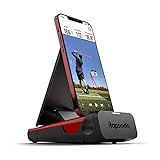
Rapsodo Mobile Launch Monitor
- Doppler radar ball and club speed
- Launch angle and carry distance
- Automatic video replay with shot tracer
- iPhone and iPad app pairing

PRGR HS 130-A
- Doppler club and ball speed
- Smash factor and carry and total distance
- 500 swings stored in memory
- No app or subscription needed

Swing Speed Radar
- Club head speed from 20 to 200 mph
- Accuracy within 1 mph
- Works without hitting a ball
- Large single-button display
Best Radar Launch Monitors for Outdoor Practice in 2026
| Product | Specifications | Action |
|---|---|---|
| Rapsodo Mobile Launch Monitor |
|
Check Latest Price |
| PRGR HS 130-A |
|
Check Latest Price |
| Swing Speed Radar |
|
Check Latest Price |
 Garmin Approach R10 Garmin Approach R10 |
|
Check Latest Price |
 Voice Caddie SC200Plus Voice Caddie SC200Plus |
|
Check Latest Price |
 Garmin Approach G80 Garmin Approach G80 |
|
Check Latest Price |
 Swing Speed Radar with Tempo Timer Swing Speed Radar with Tempo Timer |
|
Check Latest Price |
 RYP Radar Swing Speed Monitor RYP Radar Swing Speed Monitor |
|
Check Latest Price |
1. Rapsodo Mobile Launch Monitor — Best all-round radar pick for outdoor practice
Rapsodo Mobile Launch Monitor Golf Simulator | MLM iPhone & iPad Only
Millimetric-wave radar
Ball and club speed, launch angle, carry, shot shape
0.4 kg, Bluetooth to iPhone or iPad
Video replay with on-screen tracer
Pros
- Ball speed club speed launch angle carry distance and shot shape on every shot
- Automatic video replay with a shot tracer makes swing faults easy to spot
- Compact 0.4 kg body clips to a golf bag
- Reliable shot capture once alignment is dialled in
- Per-club averages and GPS dispersion mapping
Cons
- iOS only no Android support
- Alignment and calibration are fiddly the first few times
- No spin rate measurement
- Can overheat in direct hot sunlight
The Rapsodo Mobile Launch Monitor is the one I keep reaching for first at the range. It uses millimetric-wave radar to report ball speed, club speed, launch angle, carry distance and shot shape on every single swing, and the numbers land close enough to a high-end reference unit that I stopped double-checking them against anything else after the first few sessions.
What separates it from the cheaper radar devices is the video. Every shot records automatically from behind the ball, and a tracer line draws the ball’s path on the replay. When I was flattening a wedge strike that was producing contact on the toe, the tracer made the cause obvious in a way that a speed number alone never did.
The unit itself is small. At 0.4 kg and 7.72 inches long, it disappears into a side pocket, and the included carrying case keeps it protected between trips. Owners report that once the alignment is right, roughly 95 percent of swings register without a manual save, which matters on a range where you are hitting balls in quick succession.
Per-club average distance and the built-in GPS course maps with shot dispersion are the features I did not expect to care about and now rely on. Seeing a dispersion chart of a 7-iron group immediately shows you whether a distance gap is a ball-strike problem or a swing-speed problem.
What the Rapsodo is genuinely good at outdoors
Ball-flight metrics on a real range ball are where this device earns its place. Launch angle, carry distance and shot shape all come from tracking the actual ball, not from a calculation built off club speed, so a windy day does not flatten the readings the way it does with speed-derived distance.
It also handles short clubs better than most of the radar devices in this list. Reviewers note that club auto-detection sometimes misses wedges and some longer woods, so it is worth setting the club manually at first until you trust the detection.
Where the Rapsodo falls short
The iOS-only requirement is the biggest constraint in 2026. Android users are locked out entirely, and if you switch phones you lose the pairing history. There is also no spin rate measurement, so if your practice plan depends on spin work you will need a different device or a different approach.
Two smaller annoyances: the initial alignment procedure has vague instructions, so expect to spend real time dialling it in on your first outing, and the unit can overheat and shut down if you leave it in direct hot sunlight. Set upload to Wi-Fi only before a session, since the video library drains a phone battery quickly otherwise.
2. PRGR HS 130-A — Best value radar monitor for range sessions
PRGR HS 130-A Portable Golf Launch Monitor | Doppler Radar Measures Club & Ball Speed, Smash Factor, Total & Carry Distance | Tracks Swing Speed Training Aids
Doppler radar, IP54 water resistant
Club speed, ball speed, smash, carry and total
4.9 oz, 3.03 by 1.69 by 5.63 inches
500 swings stored in memory
Pros
- Accurate club head speed ball speed smash factor and carry and total distance
- Works with or without a ball so it doubles as a swing-speed trainer
- No app Wi-Fi or Bluetooth needed
- Stores 500 swings in memory for progress tracking
- Pocket-sized at 4.9 ounces
Cons
- No launch angle spin rate or video capture
- Requires AAA batteries that are not included
- Data is read off the device with no phone pairing
- Ball-contact readings can run a little high
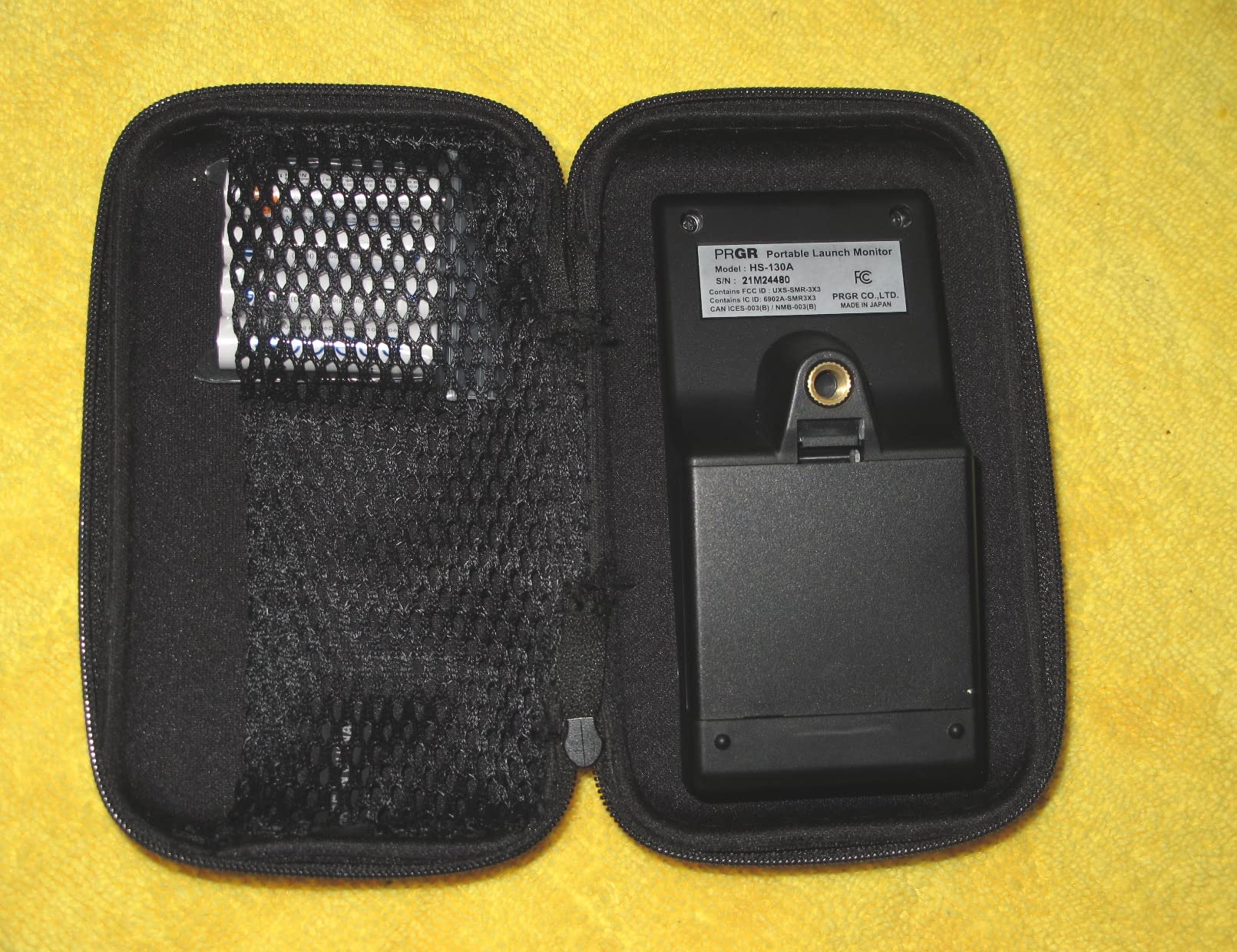
The PRGR HS 130-A is the monitor I recommend to anyone who wants real radar ball data at the range without committing to an app ecosystem. It measures club head speed, ball speed, smash factor, and both carry and total distance using plain Doppler radar, and it does all of that the moment you switch it on.
There is no pairing step, no account, no subscription and no phone. That sounds like a limitation until you are standing in the middle of a range bay in a light rain with a dead battery in your pocket, and the PRGR is still reporting numbers off a small built-in display.
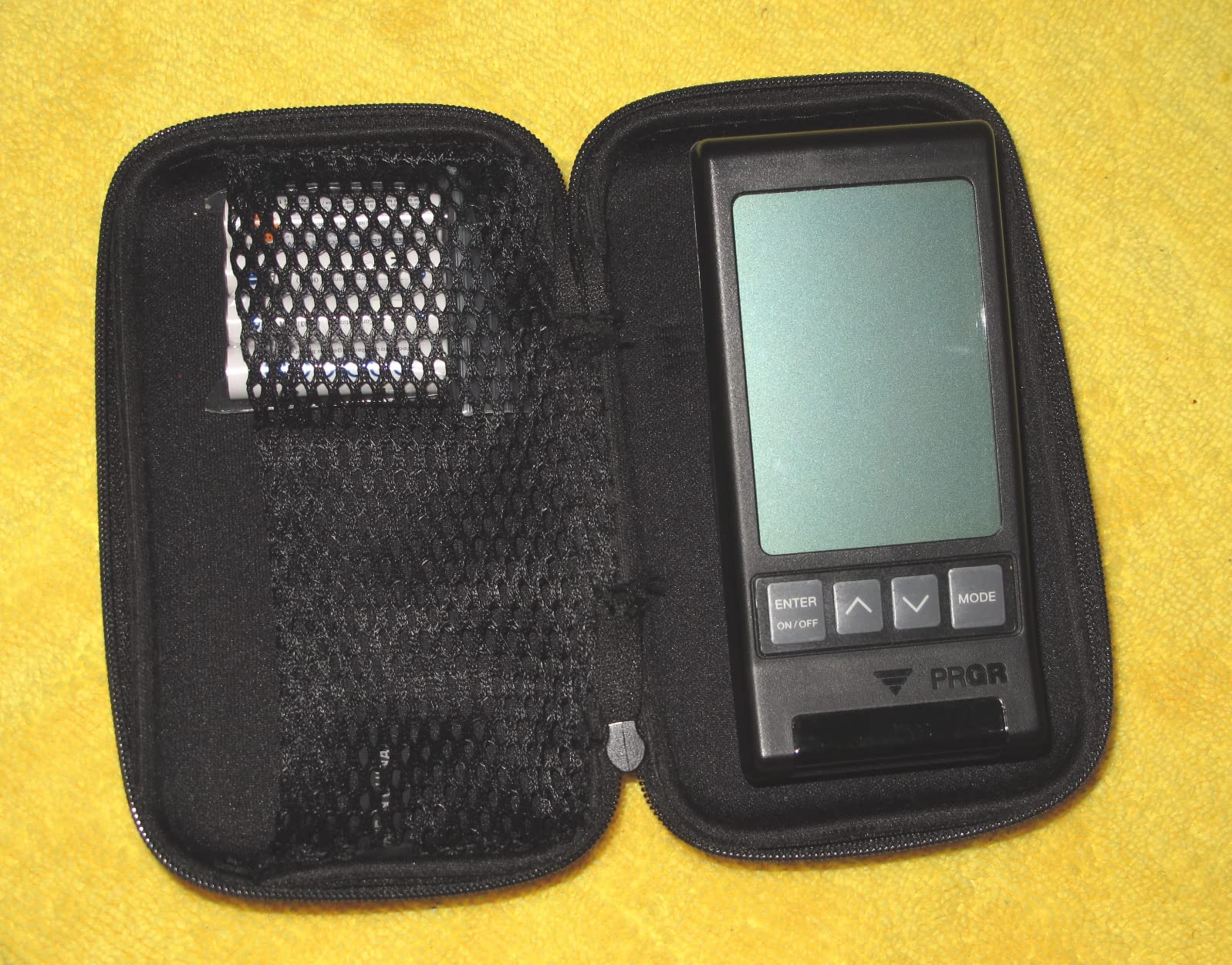
It also measures club head speed with no ball in the frame at all, which makes it a genuine two-in-one tool. I used it for both half of a practice loop: real balls into the open air for carry and smash data, then slow-motion swings without a ball to work on tempo and lag without burning a bucket.
The memory holds 500 previous swings, so you can finish a session, put the device in your bag and pull up your numbers later. The IP54 housing shrugs off drizzle and dust, and at 4.9 ounces you will forget it is in there.
What makes the PRGR the value pick outdoors
It is one of only a handful of radar monitors here that reports carry and total distance as genuinely tracked flight, rather than estimating distance from club speed. For a range session where your goal is to know how far your 7-iron goes, that distinction is the whole point of buying a monitor at all.
Because it stores history internally, it also suits golfers who practise away from Wi-Fi entirely. Nothing needs to upload, and there is no cloud account to manage.
Where the PRGR falls short
There is no launch angle, no spin rate and no video. If you are trying to build a launch-angle chart or diagnose face impact location, this device simply will not help. It also runs on AAA batteries that are not included in the box, so keep a spare pack in your bag.
Ball-contact readings tend to run a little high compared with high-end launch monitors, so treat the absolute numbers as a consistent baseline rather than a match to a fitter’s screen. Compared shot to shot against itself, though, it is very reliable.
3. Swing Speed Radar — Best radar device for dedicated speed work
Swing Speed Radar – Achieve Longer Drives – Delivers Precise Golf Club Swing Speeds from 20 to 200 MPH. Master Consistency with Our US Made Doppler Radar Training Tool for Instant Speed Results
Hand-held Doppler radar, 20 to 200 mph
Accuracy within 1 mph
9.44 oz, 3.75 by 2 by 5.5 inches
Works without hitting a ball
Pros
- Extremely simple turn it on swing read the number
- Accurate to about 1 mph and matches reference readings on no-ball swings
- Long track record of roughly 25 years in golf training
- Folds into a nylon pouch that fits a golf ball pocket
- Immediate feedback makes slow versus maxed-out swings obvious
Cons
- Club head speed only no ball speed or distance
- Readings on real ball strikes can run several percent high
- Requires 3 AA batteries not included
- Erratic near fluorescent lights
- Wi-Fi routers and cell signals
The Swing Speed Radar is the highest-rated device in this roundup, and the reason is that it does exactly one thing and does it without any friction. Switch it on, swing, read the number off the large display. There is no menu, no pairing and no charging cable.
For outdoor practice, the value is that speed is the metric you can actually change with feedback. Every swing gives you a number, and that number responds within a session in a way that carry distance never does. Golfers report repeatable, measurable distance gains once they stop leaving speed on the table.
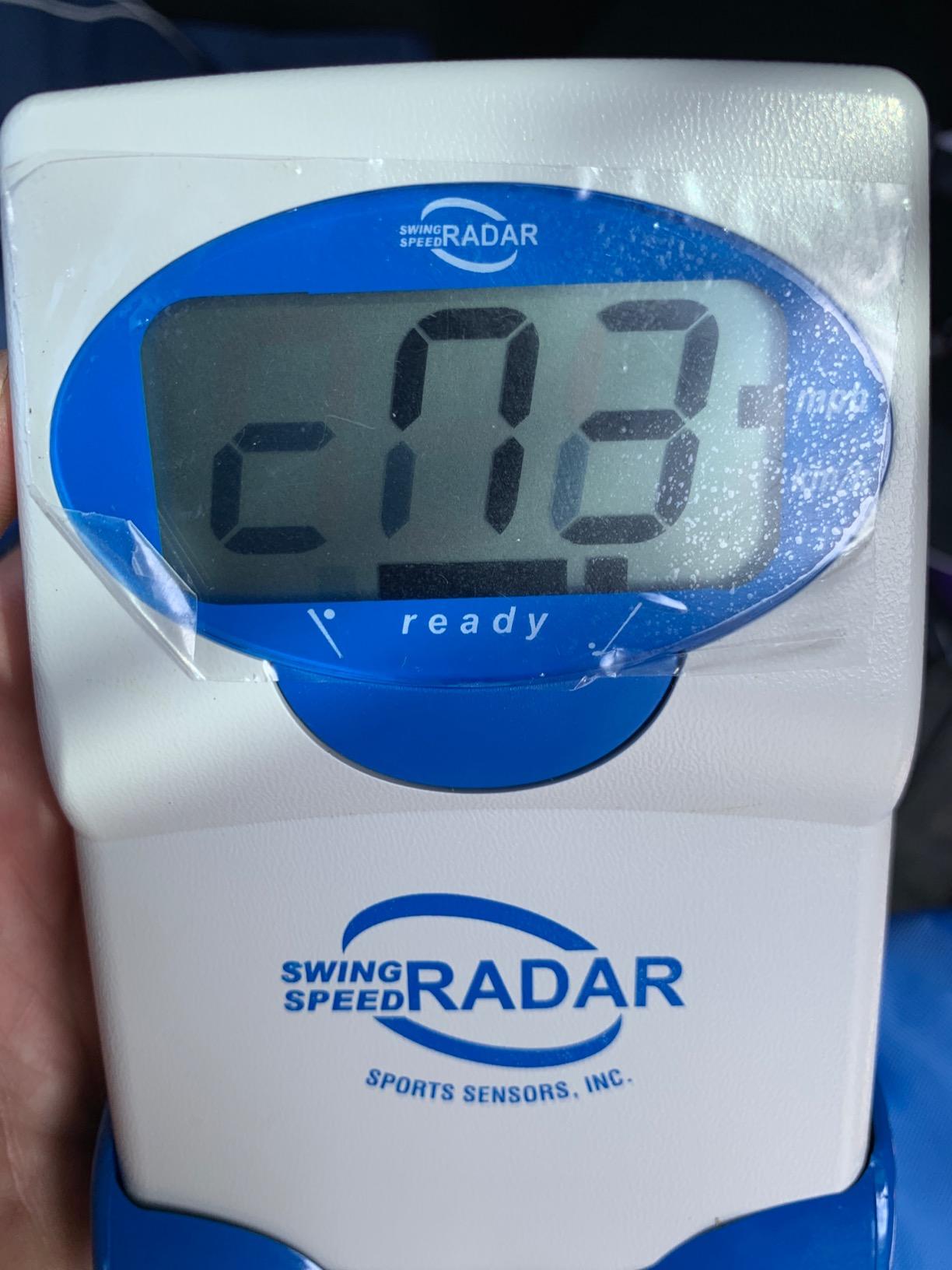
Accuracy is specified at within 1 mph across a 20 to 200 mph range, and owners comparing it side by side with a reference unit find the numbers line up closely on no-ball swings. It works with wiffle balls, Birdie balls and sponge balls, and it pairs naturally with the Stack System, RypStick and SuperSpeed Stick trainers.
At 9.44 ounces it folds into a nylon pouch and lives in your ball pocket. The build is simple, US-made hardware built on the same radar technology family used in missile defence, and it has been in golfers’ bags for roughly a quarter century.
Why golfers keep buying this one
It is a relative progress tool, and used that way it is excellent. Compare today’s number to last week’s number at the same swing, and you have a feedback loop no app can give you. That makes it the easiest radar device here to actually keep on a practice plan.
It also survives conditions that trip other devices. Wireless routers, cell signal and fluorescent lighting can interfere with the Doppler reading, so set it up away from indoor lighting and away from a range Wi-Fi hotspot, but outdoors in open air it is consistent.
Where the Swing Speed Radar is not a launch monitor
It reports club head speed and nothing else. No ball speed, no carry distance, no launch angle, no spin and no video. If you need to know how far the ball went, this will not tell you.
There is also a bias worth knowing: readings taken while actually striking a ball can run several percent high versus a true launch monitor, because the radar sees the club and the ball together. And it occasionally fails to capture a swing, leaving the previous number flashing on the display. Take a spare pack of AA batteries, because they are not included.
4. Garmin Approach R10 — Best radar monitor for the widest data set
Garmin Approach R10, Portable Golf Launch Monitor, Take Your Game Home, Indoors or to The Driving Range, Up to 10 Hours Battery Life – 010-02356-00
Radar launch monitor, 340 g
Club speed, ball speed, tempo, spin, launch angle and direction
Up to 10 hours battery
IPX7 waterproof, tripod included
Pros
- Widest metric set of any portable radar unit with spin and swing tempo
- Ten-hour battery covers a full range session
- Automatic video capture with metrics overlaid
- Per-club training stats and dispersion charts
- IPX7 waterproof with tripod and bag phone mount included
Cons
- Some features need a Garmin Golf app subscription
- Requires a paired smartphone for any data or video review
- Club speed specified at plus or minus 3 mph
- Spin and smash are measured differently from premium indoor systems
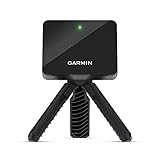
The Garmin Approach R10 is the most complete portable radar monitor here. It tracks club head speed, ball speed, smash factor, swing tempo, launch angle, launch direction and ball spin from a 340 g body, and it will run for up to ten hours on a charge.
That ten-hour figure is the number that matters for outdoor practice. It means a full range session with a phone running the app the entire time, without a battery in your pocket, and it is roughly half the claimed battery life of most competitors in this class.
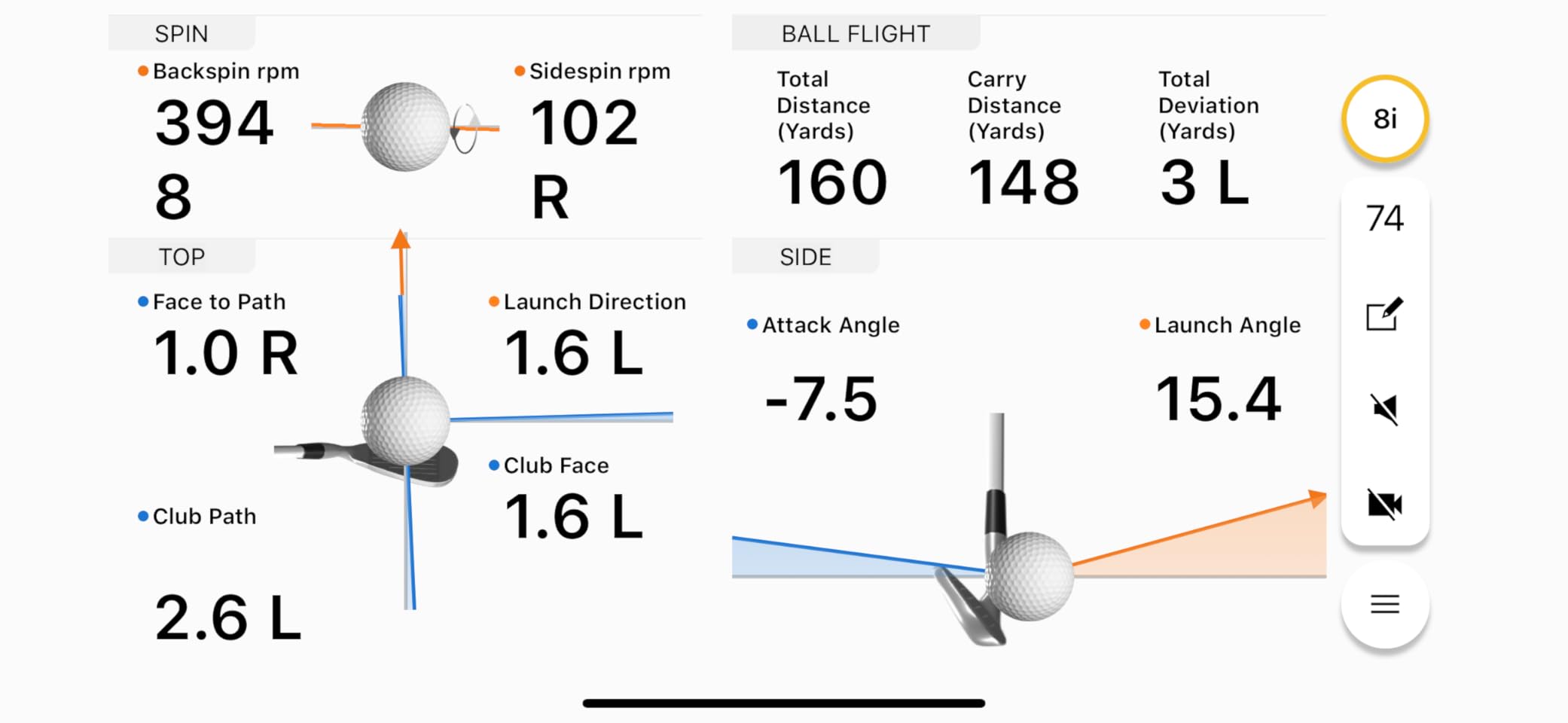
The training mode is the part I use most. It keeps per-club statistics and draws estimated ball flight dispersion charts in the Garmin Golf app, so you can see whether a distance gap is coming from an outlier mishit or from a consistently slower swing with a particular club. Each swing is also recorded automatically as a video clip with the metrics overlaid.
Specified accuracy is plus or minus 3 mph for club head speed, about plus or minus 1 mph for ball speed, and plus or minus 1 degree for both launch angle and launch direction. The IPX7 waterproof rating means light rain is a non-issue, and the tripod and bag-mounted phone holder are both in the box.
Where the R10 beats everything else in this list
Metric breadth. No other portable radar unit in this roundup gives you spin, swing tempo, launch direction and dispersion charts together, and having all four in one device means one practice session can answer both ball-strike and delivery questions.
For outdoor work specifically, the automatic video is a genuine step up. A range session with a tripod set up at the back of the tee box gives you a repeatable camera angle without anyone holding a phone, and the overlaid metrics make a side-by-side between two swings fast.
What it costs you to own the R10
You need a paired smartphone for everything. The device has no built-in screen, so without a phone you have a very expensive paperweight. That is fine if you already run the Garmin Golf app, and awkward if you do not want your practice tied to an app at all.
Some features also sit behind a Garmin Golf app subscription, which adds a recurring cost on top of the hardware. Reviewers also note that spin and smash are derived differently from premium indoor systems, so do not expect the numbers to match a club fitter’s screen exactly. The club speed tolerance of plus or minus 3 mph is also wider than the ball speed figure.
5. Voice Caddie SC200Plus — Best radar monitor for hands-free spoken feedback
Voice Caddie SC200Plus Portable Golf Launch Monitor and Swing Analyzer with Real-Time Shot Data Tracking – 12-Hour Battery Life
Doppler radar with pressure sensor calibration
LCD display plus spoken shot data
8 oz
Up to 20 hours of battery
Pros
- Voice output announces each shot's data so you keep your head down
- Atmospheric pressure calibration keeps speed readings reliable
- Swing speed mode trains speed and tempo with no ball
- Stores shot data and per-club average distances
- Longest claimed battery life in this roundup
Cons
- Reports swing speed and distance only
- Small monochrome LCD instead of a modern app
- Manual club and loft setup for each different club
- Older hardware with no connectivity or video review
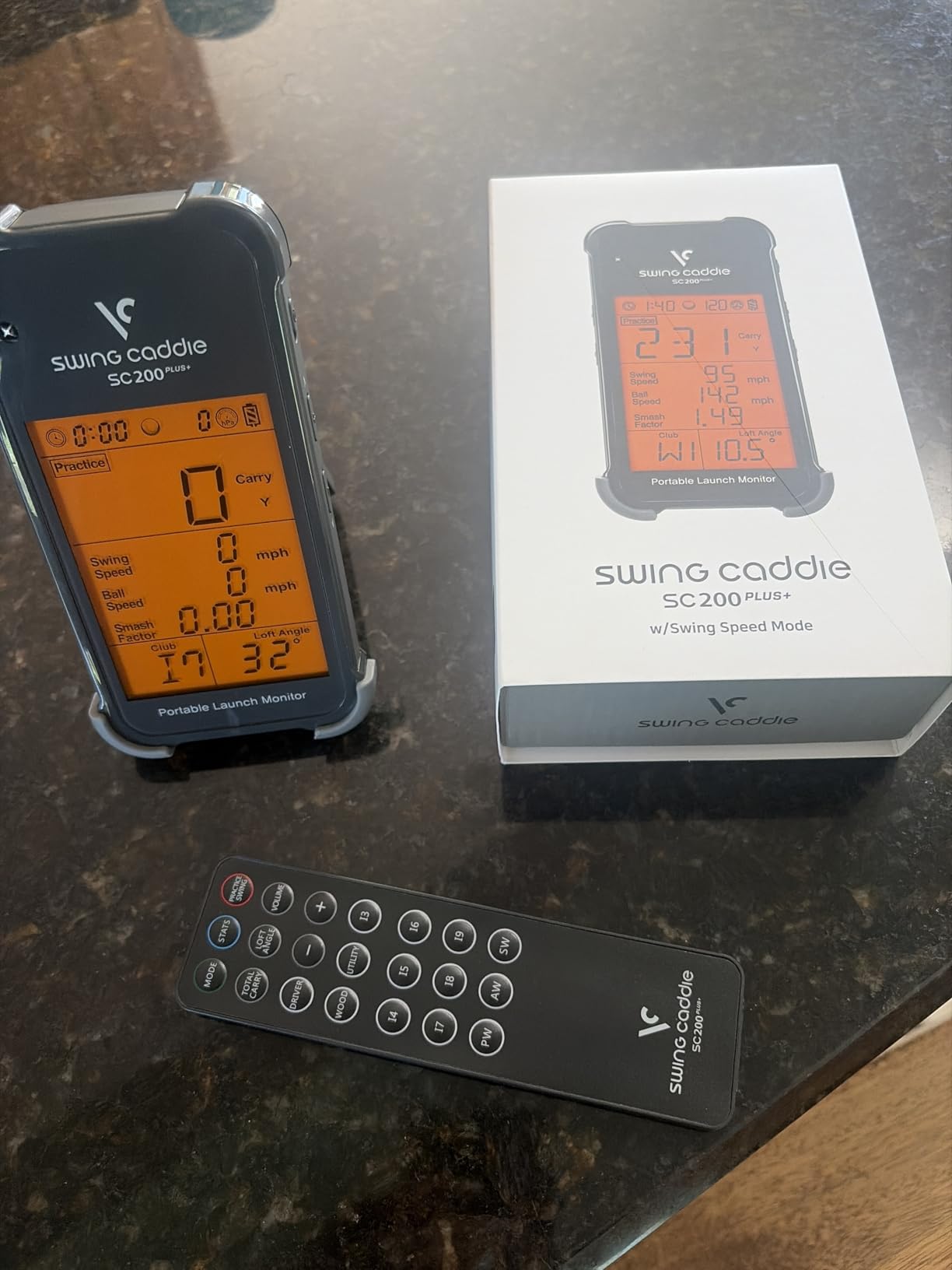
The Voice Caddie SC200Plus does something none of the other radar devices here do: it tells you the numbers out loud. An LCD shows them, but a built-in voice output reads out each shot’s data, which means you never have to break your gaze or walk back to the device mid-swing.
That is a small feature that changes how a range session runs. You settle into a rhythm of hit, hear the number, hit again, and the feedback loop stays completely uninterrupted. Owners use it for exactly this kind of solo practice loop.
The Doppler radar is calibrated with an atmospheric pressure sensor, which matters outdoors where temperature and pressure swing between a cold morning session and an afternoon one. Adjustable loft angles let you simulate different clubs, and the device stores shot data plus club statistics so you can review per-club average distances later.
Battery life is listed at up to 20 hours, the longest claim among the radar devices in this roundup, and the whole unit weighs 8 ounces. The remote in the box lets you cycle through modes without walking back to the device.
Best fit for a solo range session
If nobody else is hitting balls with you, spoken feedback is the feature that keeps you in the shot. You do not have to walk six or seven feet back after every swing to check whether the number was any good, and over 50 balls that time saving is real.
The swing speed mode also runs ball-free, so the same device covers a garage or net session where you are working on tempo without a ball. Combined with the 20-hour claim, one charge realistically covers a full season of indoor work.
What you give up compared with the R10
The data set is narrow. Swing speed and distance are what you get, with no launch angle, no ball speed breakdown and no spin. If you have moved past speed as your primary metric, this device will not tell you anything new.
It is also older hardware with no connectivity, so there is no app, no video and no export. Setting the club and loft manually for each different club adds friction at the start of a session, and the small monochrome LCD is not readable from very far away if you do not have the voice output turned up.
6. Garmin Approach G80 — Best radar monitor for on-course warm-ups
Garmin Approach G80, All-in-One Premium GPS Golf Handheld with Integrated Launch Monitor, 3.5″ Touchscreen
GPS handheld with integrated radar
Club speed, ball speed, smash, tempo, estimated distance
3.5 inch transflective touchscreen
Up to 15 hours with GPS
Pros
- Two devices in one with over 41000 preloaded colour course maps
- Integrated radar covers club speed ball speed smash factor and tempo
- One-button access to radar mode from the main screen
- Sunlight-readable 3.5 inch touchscreen
- Up to 15 hours of battery with GPS and trolley mount included
Cons
- No launch angle spin rate or swing video
- Data stays on the handheld with no companion app workflow
- Bulkier than a pocket radar unit
- Distance is estimated from club speed rather than tracked flight
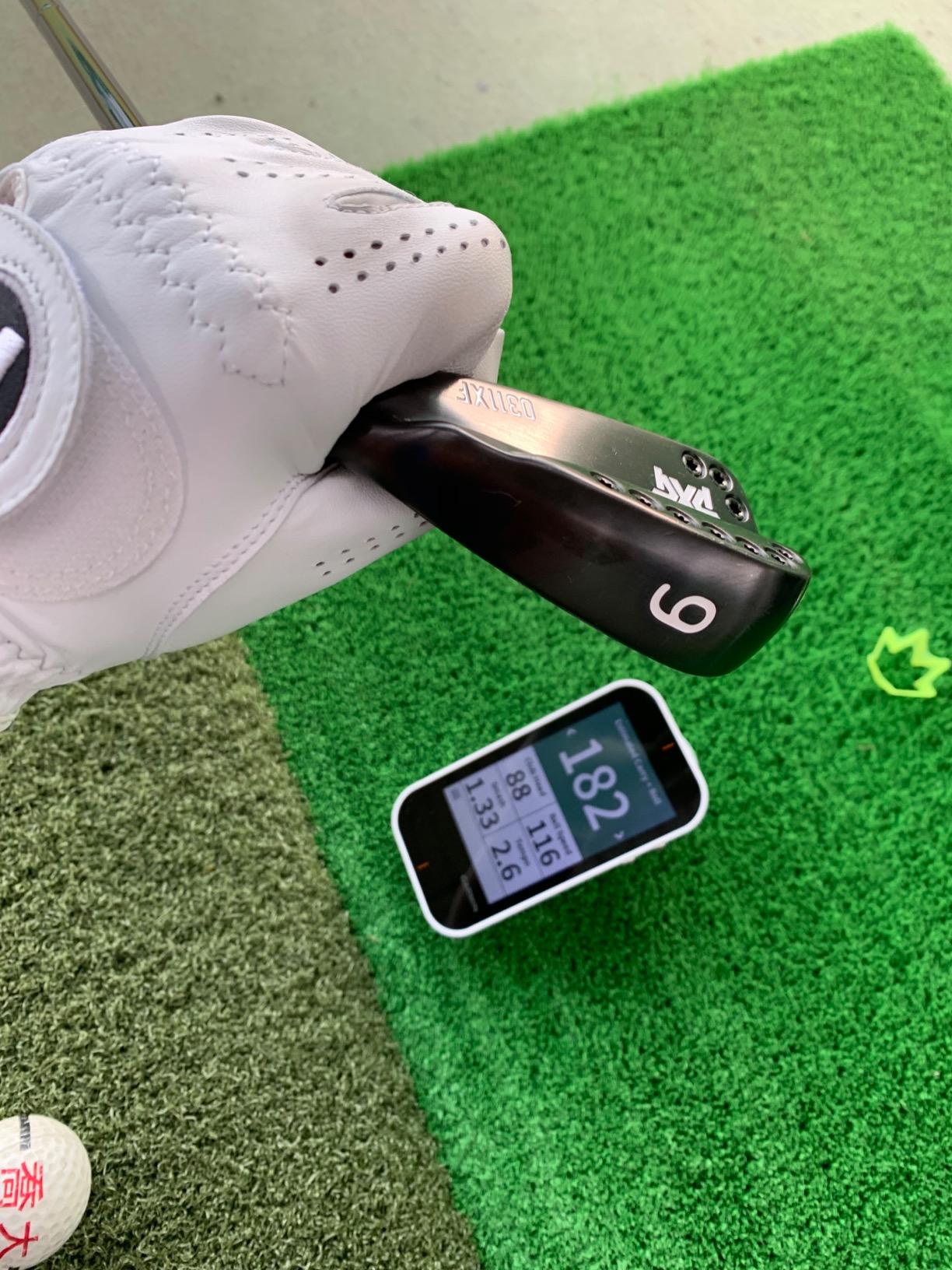
The Garmin Approach G80 is the choice for golfers who want range data and course data from one device. It is a full colour GPS handheld with over 41,000 preloaded course maps, and the integrated radar tracks club head speed, ball speed, smash factor, swing tempo and estimated distance.
Reaching radar mode takes one button from the main screen, which is what makes it practical on a course. You get a screen you can read in direct sun, a rechargeable battery rated at up to 15 hours with GPS active, and a trolley mount plus lanyard carabiner in the box.
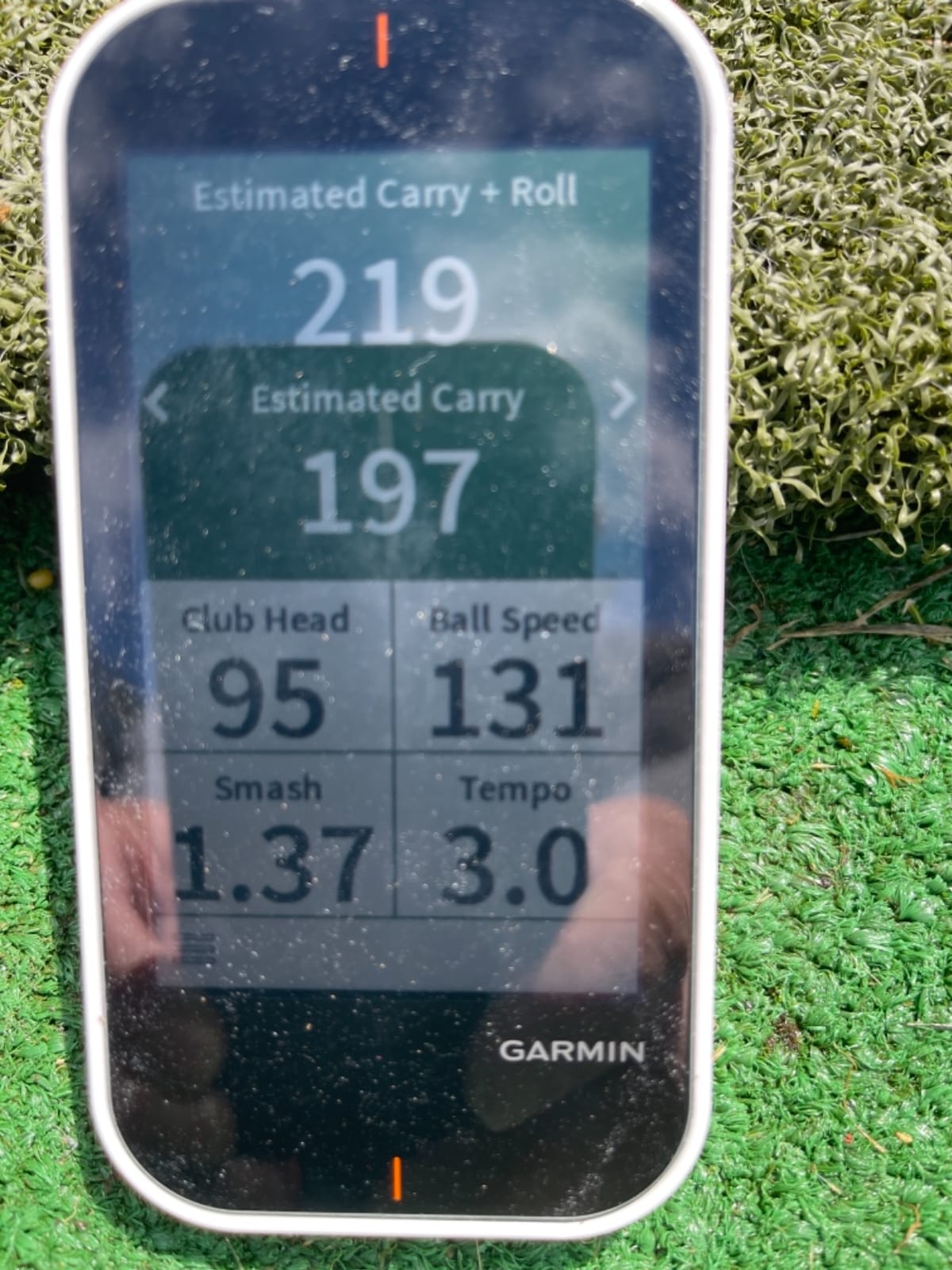
For outdoor practice, the combination is the argument. If your sessions alternate between the range and a round, carrying two devices is the thing that stops you practising, and this removes that friction entirely. The transflective colour touchscreen is legible in bright sun, which is where most phone-based units struggle outdoors.
Practice and game modes are built in for testing skills and tracking improvement, so the radar data is not just a single number but something you can compare across visits.
Why the G80 makes sense for a round-warm-up routine
It is the only device here that is genuinely at home on the course. The battery claim of up to 15 hours covers a full round with GPS running, and the unit charges off a standard USB cable between sessions.
Owners treat the integrated radar as a warm-up tool rather than a fitting tool, and that is the right expectation. Checking ball speed and smash factor on a couple of warm-up shots tells you whether the day is going well before you play the first hole.
Where it falls short for range work
It does not report launch angle, spin rate or swing video, so it covers less of the ball-strike picture than the R10 at a similar footprint. The bigger drawback is the estimated distance figure, which is derived from club speed rather than from tracked ball flight. That is the one metric where the difference between real radar tracking and a calculation matters most, particularly in wind.
There is also no companion app workflow, so the data stays on the handheld screen and cannot be reviewed on a phone later. And at 2.3 by 4.5 by 0.6 inches it is bulkier than a pocket radar unit, so it is less convenient for a pure range session where you would only use the radar half the time.
7. Swing Speed Radar with Tempo Timer — Best radar monitor for rhythm work
Golf & Baseball’s Training Partner for 25 Years: Easy-to-Use and Reliable Doppler Measures Swing Speed and Tempo
Doppler radar with built-in tempo timer
Club head speed 40 to 200 mph, within 1%
Sensing distance 12 inches, 0.01 second response
Drawstring pouch, four-year warranty
Pros
- Tempo timer trains start-to-finish swing rhythm alongside speed
- Simple one-button operation with an easy-to-read display
- Roughly 25 years of track record in golf and baseball training
- Works without a ball for indoor swing trainer practice
- Drawstring pouch and four-year manufacturer warranty included
Cons
- Club head speed only with no ball speed or distance
- Requires 3 AA batteries that are not included
- Readings affected by microwave
- radio and fluorescent interference
- Tempo timer pushes a fixed swing length
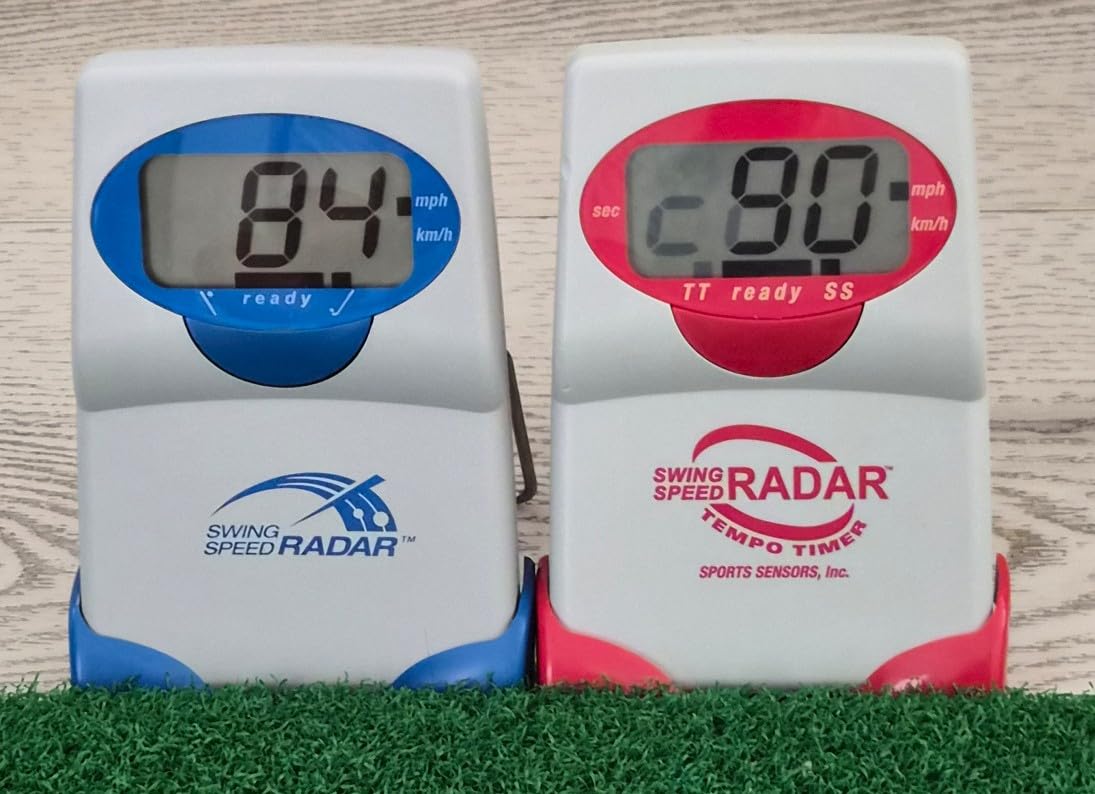
This is the Swing Speed Radar with the built-in tempo timer added, and the timer is the reason to choose it over the plain model. It counts the time from the start of your swing to the finish, so you are training speed and rhythm in the same rep instead of chasing two separate numbers.
Rhythm is a genuinely underrated outdoor practice metric. If your backswing is slow and your downswing is rushed, speed data alone will not show it, but a tempo reading will. The response time is listed at 0.01 seconds and the sensing distance at 12 inches, so the reading is effectively instantaneous.
Range is 40 mph to over 200 mph with accuracy specified within one percent, which covers every full-speed golf swing. It works ball-free with wiffle, Birdie or sponge balls, and it is compatible with RypStick, SuperSpeed Stick and Stack System trainers if you want to pair it with a stick indoors in the off-season.
The build is US-made, it ships with a drawstring pouch, and the manufacturer warranty runs four years, which is the longest coverage among the devices in this roundup.
What the tempo timer actually adds outdoors
It turns a single-metric device into a two-metric one, and rhythm is the metric most golfers can actually change quickly. Match the same tempo number on every rep rather than the same speed, and the speed usually follows within a few sessions.
Because it works without a ball, you can use it on a range with a swing trainer on a calm day, or in a garage when the weather closes in. The same unit covers both halves of the year.
What it does not do
It reports club head speed and nothing else. No ball speed, no distance, no launch angle, no spin and no video, so it sits alongside the plain Swing Speed Radar rather than replacing a full launch monitor.
Be aware that the tempo timer encourages one fixed swing length rather than a fully natural tempo, which some golfers find restrictive. It also runs on 3 AA batteries that are not included, and microwave, radio and fluorescent light interference can all skew a reading, so use it in open air away from range infrastructure.
8. RYP Radar Swing Speed Monitor — Best budget radar monitor for Rypstick training
RYP Golf Radar Swing Speed Monitor and Radar for Rypstick
Doppler radar, no ball contact required
Club head speed on an LCD display
Stores last 10 swings
Displays MPH and KPH, voice feedback optional
Pros
- Measures club head speed with no ball contact
- so it suits slow tempo work and indoor practice
- Optional voice feedback calls out each speed
- Keeps the last 10 swings in memory for a quick session review
- Large easy-to-read LCD numbers
- One reviewer found the reading matched a Mevo+ closely in a side-by-side test
Cons
- Heavy battery drain with one owner reporting five AA batteries used in two days
- Unit sits in front of the swing so a stray ball would damage it
- Readings can run high with reports of 10 mph or more over expected driver speed
- Thin plastic with cheap flimsy buttons
The RYP Radar Swing Speed Monitor is the cheapest device in this roundup and the most narrowly focused. It measures club head speed using Doppler radar with no ball contact required, which makes it a companion to a Rypstick rather than a standalone range monitor.
If your practice is built around a Rypstick, that pairing is the whole value proposition. Because there is no ball in the frame, you can work at deliberately slow tempo without worrying about a poor strike producing a meaningless number, and one reviewer comparing the two side by side found the speed reading matched a Mevo+ closely.
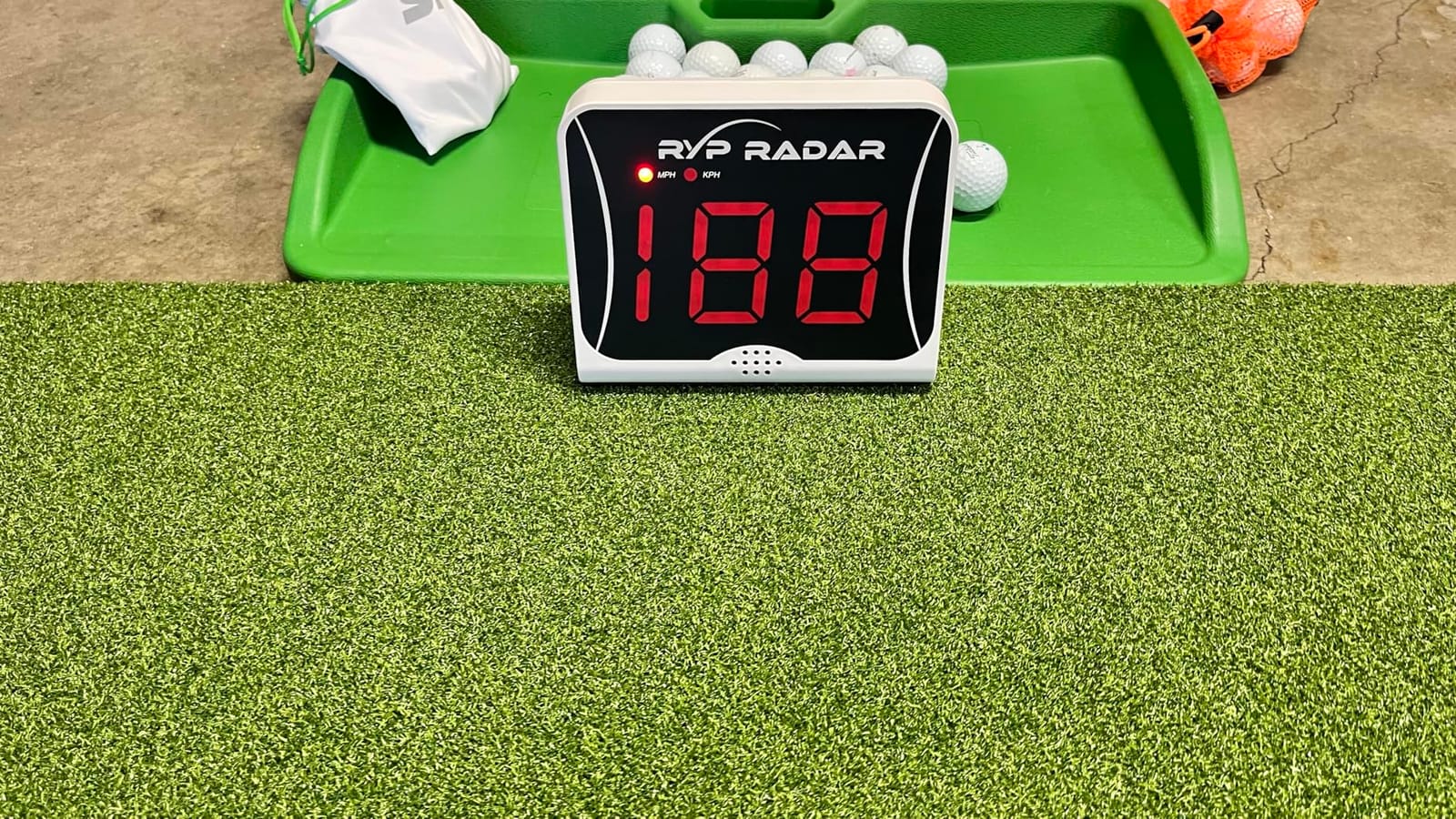
The LCD shows each speed after the swing in either MPH or KPH, with optional voice feedback if you would rather not look down. The last 10 swings are retained, which is enough to spot a trend within a session but nowhere near enough for long-term tracking.
It works with a Rypstick, a driver or an iron swung through the radar field, and it is powered by five AA batteries, which are not included in the box.
When this budget device makes sense
It makes sense for one specific golfer: someone already training with a Rypstick who wants a speed readout without buying a full launch monitor. The no-ball measurement is genuinely the right tool for slow, deliberate speed work in a garage or a quiet practice area.
For outdoor range use specifically, the ceiling is low. Ten shots of memory, no video and no distance mean it cannot support a range session, it can support a warm-up loop.
Where it falls short, and where it is dangerous
Battery drain is the most-cited problem, with one owner reporting five AA batteries consumed in two days. Treat the batteries as a running cost and buy a rechargeable set.
More importantly, the unit sits in front of the swing, which means a stray struck ball would destroy it. Set it up strictly for no-ball work, and move it before you hit anything. Owners also report readings running 10 mph or more above expected driver speed on real shots, and the thin plastic shell with flimsy buttons is the least robust hardware in this roundup.
Buying Guide: How Radar Holds Up on the Range
Radar tracks the actual ball, cameras only see impact
This is the single most important difference for outdoor practice. A radar unit follows the ball through open air and derives carry and total distance from real flight. A camera-based photometric unit measures the ball and club at the moment of impact, then reconstructs the rest of the flight from a model. Reconstructing flight is where wind, sun angle and camera calibration start to introduce error.
For a driving range session, the practical consequences are clear. Radar readings hold up in bright sun, in a cross-breeze and in fading light, because none of those conditions touch the technology. Optical units are the ones affected. It is the reverse of the usual indoor argument, where a camera does not care how much room you give it and radar needs a clear flight path.
The second reason radar suits outdoor practice is that the flight path is already there. Outdoors you are hitting into open space, so the radar has room to work. In a garage with a net, the ball stops dead and the radar loses exactly the information you bought it for.
Setting the unit up so the numbers stop drifting
First, placement. Put the unit behind the ball on your target line, typically four to eight feet back, low enough that the ball passes through the radar field rather than over it. Second, aim it. The radar window has to be pointed down the line, and this is the step golfers skip most often. Third, give the ball room. Do not hit into a net, and do not stand the device inside the swing arc. Fourth, check the environment. Wireless routers, cell signal and fluorescent lighting can disturb a Doppler reading, so avoid range infrastructure and indoor light. Fifth, use a real ball. Radar tracking works best on a ball flight long enough to lock onto, which is why short chips often return nothing on entry-level devices.
Spend ten minutes on the first outing and every session after it gets faster. The most common complaint in owner reviews is drift over time, and in almost every case it traces back to skipping alignment.
Backyard nets and cheap range balls
Radar and nets do not mix. A radar unit needs a ball in flight to measure, so a ball that stops in a net two feet away produces no meaningful reading. If your outdoor practice is net-based, the devices that still work are the no-ball speed trainers, because they measure the club rather than the ball.
Cheap range balls are a lesser problem, but not a non-problem. You will notice reduced accuracy on very short shots, where the radar has less signal to lock onto, and some entry-level devices simply return nothing on a chip. The fix is practical: measure driver and mid-iron shots with the radar, and use a no-ball trainer for short-game work where the numbers are less meaningful anyway.
Subscription, unlock and total cost of ownership
Check the total cost, not the ticket price. The Garmin Approach R10 is the clearest example in this roundup: the hardware is only part of the story because some features sit behind a Garmin Golf app subscription. If you want every feature the device can produce, budget for the subscription on top.
By contrast, the PRGR HS 130-A, the Voice Caddie SC200Plus, the Swing Speed Radar pair and the RYP monitor have no subscription component at all. The PRGR and Voice Caddie also need no phone, so there is no hidden software cost either. The Rapsodo Mobile Launch Monitor uses a free app, though the iOS-only requirement is a real constraint rather than a cost.
That makes the decision simpler than it looks. If you want ball flight data, video and metrics history, accept that some of it sits behind an app. If you want speed, smash and carry with nothing attached, the no-subscription radar devices are genuinely complete products, not compromised ones.
Metric cheat sheet: measured versus calculated
Ball speed, carry distance, total distance and launch angle come from tracking the ball, so they are measured rather than modelled on the Rapsodo, the PRGR and the R10. Club head speed, smash factor and swing tempo are calculated from the swing itself, which is why the plain Swing Speed Radar and the RYP can report them without ever seeing the ball.
Two derived numbers deserve scepticism. The Garmin Approach G80 reports an estimated distance derived from club speed rather than tracked flight, so treat it as a yardage guide rather than a range figure. And both Swing Speed Radar models and the RYP monitor can read high when a ball is actually in the frame, because the radar sees the club and the ball together. Compare device against itself and the numbers are consistent; compare device against a high-end reference and there will be a gap.
Frequently Asked Questions
What is the best radar launch monitor for outdoor practice?
For most golfers, the Rapsodo Mobile Launch Monitor is the best radar launch monitor for outdoor practice because it reports ball speed, launch angle, carry distance and shot shape, and records video of every shot automatically. The Garmin Approach R10 offers the widest metric set, adding ball spin, swing tempo and per-club dispersion charts with up to ten hours of battery. The PRGR HS 130-A is the best value option, giving club speed, ball speed, smash factor and carry distance with no app and no subscription.
Is radar or camera better for an outdoor launch monitor?
Radar is better outdoors because it tracks the real ball through open air, so readings hold up in bright sun, cross-breeze and fading light. Camera-based systems measure the ball and club at impact and then model the rest of the flight, which is where wind and daylight start to introduce error. Indoors the picture reverses: a camera needs less room, while radar needs a clear flight path and cannot read a ball that stops in a net.
Do I need a subscription for a golf launch monitor?
It depends on the device. Some features on the Garmin Approach R10 sit behind a Garmin Golf app subscription, so the full feature set costs more than the hardware alone. The PRGR HS 130-A, the Voice Caddie SC200Plus, both Swing Speed Radar models and the RYP monitor have no subscription, and the PRGR and Voice Caddie need no phone at all. The Rapsodo uses a free app but only on iPhone and iPad.
Can a radar launch monitor be used in a backyard with a net?
Not reliably. A radar unit needs the ball in flight to measure, and a ball that stops in a net produces no usable reading. For a net-based backyard setup the workable options are no-ball swing speed trainers, which measure the club rather than the ball, such as the Swing Speed Radar models or the RYP monitor paired with a Rypstick. For backyard practice with open flight, put the radar behind the ball on your target line and hit into clear space.
How accurate are budget radar launch monitors?
Budget radar monitors are consistent rather than authoritative. The Swing Speed Radar is specified at within 1 mph for club head speed, the PRGR HS 130-A tracks club speed, ball speed, smash factor and carry distance from real ball flight, and the Garmin Approach R10 is specified at about plus or minus 1 mph for ball speed but plus or minus 3 mph for club head speed. The main caveat is that budget units can read several percent high when a ball is actually in the frame, so track trends within one device rather than comparing across brands.
Who Should Buy Which Radar Monitor
The Rapsodo Mobile Launch Monitor is our pick for the best radar launch monitors for outdoor practice, because it is the only device here that gives you measured ball flight, launch angle, carry and shot shape, plus automatic video of every shot, in a package that fits in a golf bag. If you use Android, skip it and look at the Garmin Approach R10, which offers the widest metric set of any portable radar unit, including ball spin and swing tempo, with a ten-hour battery that covers a full range session.
If you want ball data with nothing attached, choose the PRGR HS 130-A. It reports club speed, ball speed, smash factor and tracked carry and total distance, stores 500 swings in memory and needs no phone, no app and no subscription. For pure speed work with no ball involved, the Swing Speed Radar is the highest-rated device in this roundup and the most accurate on no-ball swings.
The Voice Caddie SC200Plus is the pick when you practise alone and want the numbers spoken aloud. The Garmin Approach G80 suits golfers who want a range warm-up tool and a course GPS handheld in one device. The Swing Speed Radar with Tempo Timer adds rhythm training for anyone working on swing sequence, and the RYP monitor is a low-cost companion for Rypstick speed work, not a range monitor.
Whichever you choose, spend your first ten minutes on alignment. Every complaint about drifting numbers we saw traced back to a setup that was skipped.